

Please support the authors by reading Manhwas on the official websites. This is where you can read the Manhwa: Jinx But be aware that the Manhwa is a mature Yaoi, which means, it is about homosexuality with explicit scenes. Here is the link of the table of contents about Jinx. Here is the link where you can find the table of contents of analyzed Manhwas. Here are the links, if you are interested in the first work from Mingwa, BJ Alex, and the 2 previous essays about Jinx Wheels 🛞 and Waves 〰🌳 – p️art 2 (locked) and 𓇢𓆸 Prove Me Wrong Again 💢😂
It would be great if you could make some donations/sponsoring: Ko-fi.com/bebebisous33 That way, you can support me with “coffee” so that I have the energy to keep examining Manhwas. Besides, I need to cover up the expenses for this blog.

The recent developments in Jinx Chapters 65 and 66 provide a striking insight into the ongoing inner turmoil between Joo Jaekyung and Kim Dan. Many readers have long labeled Joo Jaekyung as a ‘red flag,’ and as such as a demon. Therefore when he used the idiom ‘defect,’  (chapter 66) they saw it as further confirmation of their perception—reinforcing the idea that he is terribly flawed. However, a deeper analysis suggests that this term reflects not just his character but also his evolving mindset and struggle with emotional vulnerability. This essay will explore the paradox at the heart of their dynamic—how both men refuse to acknowledge the emotional weight of their relationship, leading to a cycle of denial and misperception. It will examine how the concept of the jinx evolves, the continued influence of Park Namwook’s manipulations on Joo Jaekyung, and the role that mutual ingratitude plays in their emotional stagnation.
The Evolution of the Jinx: From Powerlessness to Repair
Initially, Joo Jaekyung’s jinx was a ritual designed to maintain control and secure victory. 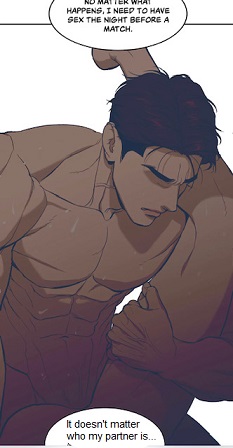 (chapter 2) This belief system dictated that, no matter what, he had to have sex with a man before every match—reinforcing the illusion that he could manipulate fate through repetition. The identity of his partner was irrelevant; what mattered was the act itself, which he perceived as a necessity rather than a choice. This routine provided him with a sense of control, but it also underscored a fundamental reliance on external factors rather than his own abilities. In Chapter 65, however, a subtle shift occurs. While the champion has not dropped his belief yet:
  (chapter 65), the nature of his principle has changed:
  (chapter 65)The athlete is admitting his dependency on doc Dan. The jinx is now directly tied to Kim Dan, not just as a concept but as a tangible element of Joo Jaekyung’s career stability. The second switch is that sex is no longer a condition to ward off bad luck. In fact, the celebrity is recognizing the importance of his daily training and, as such, his hard work.
 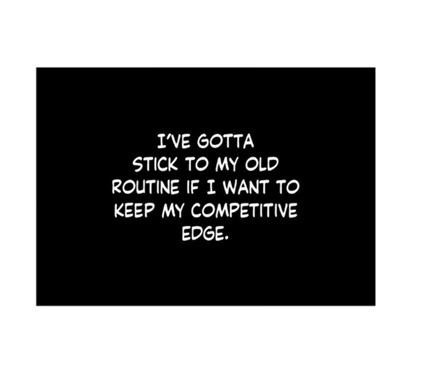 (chapter 65) The inner thoughts of the sportsman reveal that the champion is feeling less powerless than before. His champion status is no longer reliant on superstition but on tangible efforts—his “old routine” and, crucially, Kim Dan’s expertise as a physical therapist. This marks a significant transformation in his perception of Kim Dan, whom he now values for his professional skills rather than as a mere tool for maintaining a ritual. Thus, Joo Jaekyung should be less inclined to request Doc Dan’s sexual services. Then, in episode 66, a new change became visible. (chapter 66) The term defect emerges in his inner monologue, marking a transition from viewing the jinx as a form of dependency to seeing Kim Dan as someone in need of repair. This linguistic change is crucial—jinx implies something external, uncontrollable, and tied to fate, whereas defect introduces the notion of something that can be fixed or even improved.
Joo Jaekyung’s use of the term ‘defect’ stems from his deeply ingrained perception of both himself and others as products rather than individuals with intrinsic worth. Instead of saying that Kim Dan is ‘sick’ or struggling, he labels him as ‘defective,’ mirroring his own self-perception. The champion has long seen himself as nothing more than an athlete, a machine built for fighting—functional when at peak performance, broken when failing. This perception is reinforced by his manager, Park Namwook, who treats him as nothing more than an ATM  (chapter 11), a tool to generate money and maintain the gym’s reputation. Hence he blames him, when members leave the gym.
  (chapter 46) The manager used the incident with Seonho to justify the desertion of the other athletes. However, it is clear that some left the gym because they didn’t become successful like Joo Jaekyung. However, their lack of success is explained by their lack of talent
  (chapter 46) exposing the lack of ambition and commitment from the two hyungs. It is clear that Joo Jaekyung’s wealth and fame was used to attract the sportsmen creating a myth that they could experience the same success. Nevertheless, as time passed on, the fighters were confronted with reality. It was, as if the athlete’s achievement had become a curse for Team Black. Nonetheless, neither the manager nor the coach can admit it, the champion’s bad temper is utilized to cover the mismanagement within the gym. Striking is that by portraying the protagonist as a person with a bad temper and personality
  , (chapter 9) the manager and his colleague described their boss as defective. The contrast between Joo Jaekyung’s perception of ‘defect’ and the coach’s view of him as a ‘maniac’ is particularly telling. When the protagonist refers to Kim Dan as having a defect, there is an implicit acknowledgment that something can be repaired or improved. In contrast, Park Namwook’s statement about ‘handling that maniac’ suggests that the star is beyond fixing—someone who must be tolerated and controlled rather than understood or helped. This fundamental difference in perspective reveals how deeply the manager has shaped the champion’s self-perception, reinforcing the idea that he is nothing more than a force to be managed rather than a person who can change or grow.
Ironically, (chapter 11) Joo Jaekyung once accused Kim Dan of seeing him as an ATM back in Chapter 11, but in reality, it is his manager who exploits him as a financial asset rather than recognizing his humanity. Hence he wants him to return to the ring as soon as possible.  (chapter 54)
Under this new light, Jinx-philes can grasp why the “demon” (chapter 66) refers to Kim Dan’s condition as a ‘defect’ rather than acknowledging that the doctor is unwell. In doing so, he mirrors how he has been conditioned to see himself—not as a person who can be sick or in need of help, but as something that must either function or be discarded. The paradox is that without him, the gym can no longer attract members, hence Team Black would be forced to close its doors. That’s the reason why the manager is inciting the athlete to return to the gym.  (chapter 66) His presence is necessary to maintain the “myth” alive.
But let’s return our attention to the fighter. (chapter 66) Notice that the champion doesn’t say that Kim Dan is sick or suffering from sleeping problems. His words expose that Joo Jaekyung still views life through the lens of having rather than being, seeing both himself and others as assets to be maintained rather than individuals with intrinsic worth. Furthermore, this label is deeply connected to Kim Dan’s own sleeping problems, which mirror Joo Jaekyung’s insomnia.
By recognizing a flaw in Kim Dan, he unconsciously acknowledges his own suffering without explicitly confronting it. Therefore he is accompanying the protagonist to the sleep specialist. 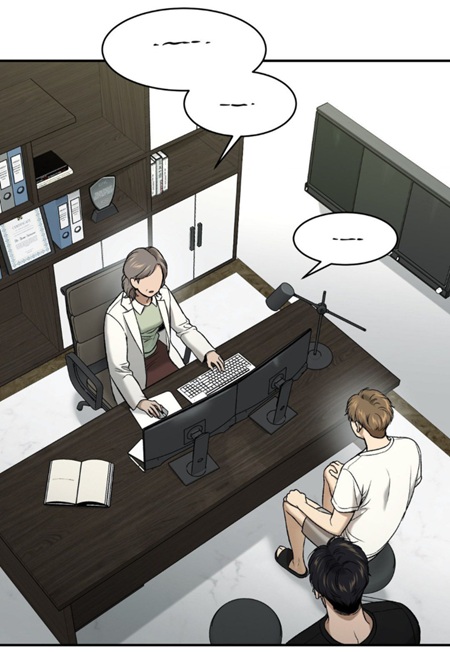 (chapter 66) In calling Kim Dan ‘defect,’ Joo Jaekyung is unknowingly projecting his own self-perception onto him. The term suggests something broken but also something that can be repaired, reflecting an unconscious shift in his perspective. Instead of simply using Kim Dan as part of a superstition, he is beginning to see his vulnerability, perhaps even recognizing a parallel to his own struggles. His choice of words also reveals his deeply ingrained belief in self-reliance.
 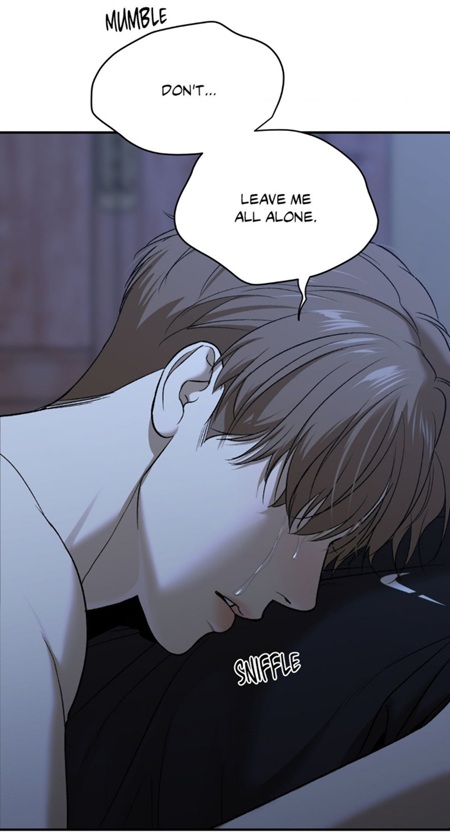 (chapter 66) Kim Dan’s nighttime distress contradicts this principle, as it suggests an inability to be alone. This mirrors Joo Jaekyung’s own realization in the garden (chapter 65), where he admitted to himself that he was no longer entirely self-reliant. By calling Kim Dan ‘defect,’ he not only acknowledges the therapist’s struggles but also his own growing dependency on him—though he remains unwilling to fully confront it.
This shift is significant because it alludes that Joo Jaekyung is beginning to see himself as capable of affecting change. For someone conditioned to endure suffering without seeking help, viewing another person as defective paradoxically offers him a sense of power and responsibility. (chapter 66) Hence it is no coincidence that he chose to bring himself the “hamster” to the hospital.  (chapter 66) Nevertheless, the idiom (“he’s got a defect”) reveal that Joo Jaekyung is still under the manager’s influence. This means that this shift is not immediate or conscious; it is restrained by his continued loyalty to Park Namwook and his ingrained avoidance of emotional vulnerability.
The Manager’s Manipulations: Control Through Information
Striking is that in season 2, the champion is almost never seen with the other members from Team Black.  (chapter 60) This scene represents the exception. For the most part of the time, the star only visited the gym because Park Namwook had contacted him.
 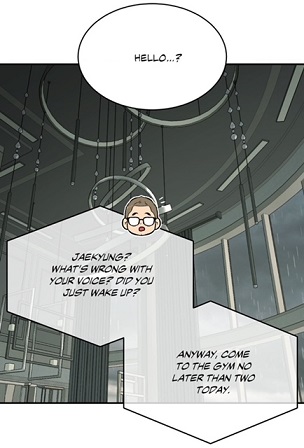 (chapter 54)
  (chapter 66) Striking is that by each meeting, the champion was alone with the manager. The latter was no longer followed by coach Yosep. It was, as if Park Namwook wanted to have some privacy with the celebrity. However, through this contrast, Jinx-lovers can detect a certain MO from the manager: he is isolating the champion, limiting his interactions with other members. This explicates why he remains a pivotal force in Joo Jaekyung’s stagnation.
A clear example of Park Namwook’s manipulative tendencies emerges in his interactions with Joo Jaekyung in Chapter 66. He subtly pressures the champion to return to the gym by implying that his current behavior—isolating himself—is not normal. 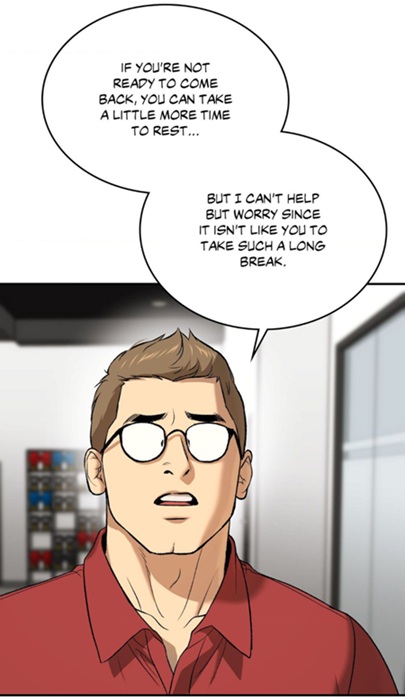 (chapter 66) Yet, just moments later, he tells him that he can take more time to rest, as if feigning concern. This contradiction is striking because it exposes his underlying agenda: he wants Joo Jaekyung back in the gym but doesn’t want to appear forceful. Instead, he makes it seem like Joo Jaekyung is the one making the decision, fostering guilt by implying that his long absence is unnatural.
What makes this irony even more apparent is that Park Namwook has, in the past, dismissed Joo Jaekyung as a ‘spoiled child with a bad temper.’  (chapter 52) His sudden shift—acting as though the champion is no longer himself—reveals his inconsistency. When Joo Jaekyung was compliant, he was simply a reckless athlete with an attitude. Now that he is exhibiting autonomy, Park Namwook implies that something is wrong with him. It was, as though he was missing the old version of the champion. 😂 But this is what he complained about him in the past: he was a workaholic!
  (chapter 27) This double standard highlights Park Namwook’s true role: he is not a supportive figure but a handler, ensuring that Joo Jaekyung remains under control and fulfilling his duties as a fighter. His words are not meant to provide genuine support but to keep Joo Jaekyung tethered to a system where his worth is defined solely by his success in the ring.
His subtle manipulations ensure that Joo Jaekyung remains dependent on his management, discouraging emotional entanglements that might threaten his control. This is evident in the way he frames Joo Jaekyung’s return to training in Chapter 66, focusing on ensuring compliance rather than addressing the champion’s personal struggles. (chapter 66) Park Namwook ensures that Joo Jaekyung remains confined within the narrow definition of an athlete whose sole purpose is to generate victories and revenue. By subtly invalidating the fighter’s autonomy, he fosters a cycle of dependency, discouraging any form of emotional connection or self-reflection that might lead Joo Jaekyung to question his control. The manager’s contradictions—both urging him to take his time yet implying his behavior is unnatural—serve to reinforce this conditioning, ensuring that the champion remains locked in a pattern of obligation rather than self-discovery. In doing so, Park Namwook not only suppresses Joo Jaekyung’s potential for growth but also reinforces the deeply ingrained perception that his worth is conditional and transactional.
His tactics extend beyond mere coaching—he controls information, as seen in his omission of lost sponsorships  (chapter 54) or (un)favorable interviews about the athlete.
  (chapter 54)
  (Chapter 57) As a manager, Park Namwook’s role involves overseeing Joo Jaekyung’s career, securing contracts, and ensuring his reputation remains intact. Yet, as seen in Chapter 66, his actual concerns seem remarkably narrow in scope. (chapter 66) When speaking to Joo Jaekyung, Park Namwook focuses exclusively on the gym—as if the athlete were merely a member rather than the actual owner. This detail is particularly ironic, as it reveals that the man with the glasses sees himself as the one in charge, entitled to dictate Joo Jaekyung’s movements and decisions. His fixation on the gym exposes why he shows no interest in other crucial aspects of the champion’s career, such as contracts, endorsements, or emotional and physical recovery. His management is driven not by genuine concern for the fighter’s well-being, but by a desire to uphold the gym’s operation and reinforce his perceived authority within it. To conclude, his true motivation lies in preserving the gym’s function and image, treating Joo Jaekyung as a means to that end rather than supporting him as a multidimensional individual with emotional and professional needs. That’s the reason why he shows no curiosity about his star’s private life: “I don’t know what you’ve been up to lately”. (chapter 66)
Because his failure to reveal lost sponsorships and unfavorable interviews in Season 2 suggests a pattern of withholding critical information, I couldn’t help myself thinking to see as another clue that his omission extends to the fateful meeting between Choi Gilseok and Kim Dan, which took place in front of “HIS” gym!  (chapter 48) Back then, there was a witness, Kwak Junbeom and the latter could have reported to the “hyung”. These incidents indicate a consistent effort to control what the champion knows, raising the critical question: why?? His silence on this matter suggests not only a strategic decision to keep the star uninformed, but also an attempt to avoid responsibility. The supervisor often hesitates to make decisive choices
 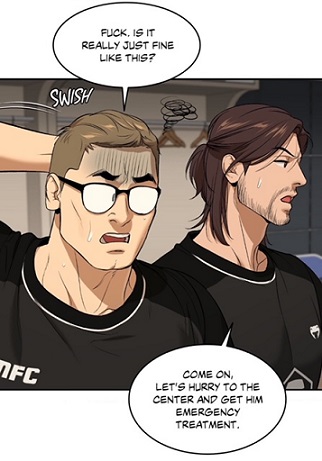 (chapter 50), preferring instead to remain passive so that any negative outcomes can be blamed on the champion. At the same time, this passivity helps him maintain control—as if Joo Jaekyung, without his guidance, would be left ‘alone’ and directionless. In this way, the man with the glasses sustains a dynamic in which the champion feels dependent on his presence, even as he is subtly undermined. By neglecting to inform him of these events, Park Namwook ensures that the champion remains unaware of external factors that could influence his choices. This pattern reinforces the possibility that Park Namwook was aware of the meeting with Choi Gilseok and deliberately ignored it, likely expecting that Joo Jaekyung would take care of it, while absolving himself of responsibility.
Park Namwook’s motivations become clearer when viewed through this lens. In his eyes, Joo Jaekyung is now physically perfect (chapter 66) —his shoulder has healed, and he should be able to return to the ring. However, at the same time, he regards him as defective (chapter 66) because he no longer displays the same single-minded devotion to fighting. Joo Jaekyung’s emotional distance from the gym and his growing attachment to Kim Dan mark a transformation that the manager interprets as a threat. Instead of embracing this evolution, the “supervisor” views it as a flaw—proof that the champion is no longer operating under the selfish, work-driven mindset he once encouraged. This contradiction reflects the “hyung”’s twisted priorities: he sees the gym as the center of value and promotes an ideology of workaholism, selfishness, and emotional suppression. Since he has no one by his side, he should come to the gym, as if he would nurture relationships there. To him, the ideal fighter is one who exists solely for the ring, forgoing connection or personal growth. In that sense, the protagonist becomes the Perfect Defect—flawless in form but, in Park Namwook’s eyes, failing in function by daring to become more human. The manager’s repeated emphasis on the gym reveals his narrow view of the champion’s purpose, treating him as a member rather than the rightful owner. This misperception reflects Park Namwook’s deeper worldview: he represents workaholism, selfishness, and greed, believing that the only acceptable behavior is unwavering devotion to the gym and career success.
The Slow Burn: Why The Characters’ Mindset Is Not Changing Abruptly
Despite these moments of introspection (chapter 65), the “wolf” does not immediately alter his behavior. 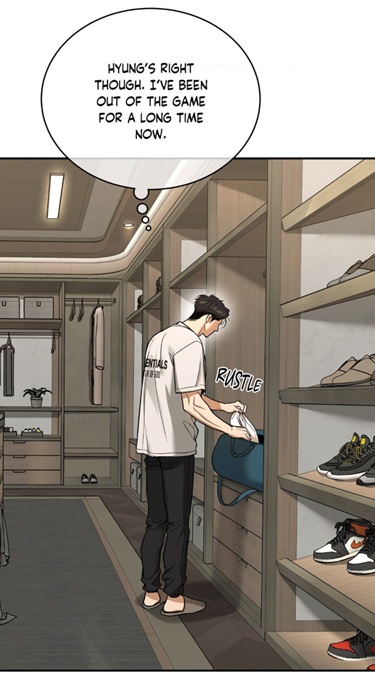 (chapter 66) This hesitation stems from deeply ingrained beliefs about relationships and fidelity. His loyalty to Park Namwook prevents him from fully confronting the possibility that his manager may not have his best interests at heart. Moreover, his own emotional repression makes it difficult for him to recognize his evolving dependency on Kim Dan as something beyond physical necessity.
But there exists another reason for his slow transformation, the influence of the location. Notice that he agreed to his hyung’s statement, when he was in the penthouse. The latter stands for civilization and as such “corruption”. Thus I came to the following interpretation. The penthouse represents the manager’s power over the champion, which explicates why Oh Daehyun and the other fighters spoke about that place in admiration in front of their coach. 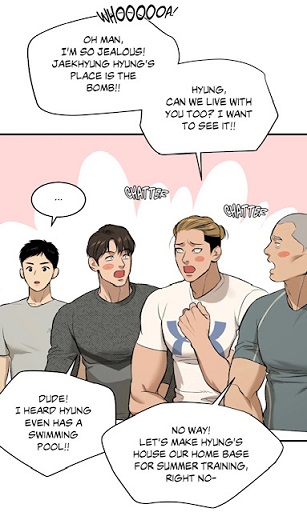 (chapter 22) They had heard about his place, for the manager must have talked about it. The protagonist is not someone who will talk about his private life to others. The manager must have dangled promises in front of them, making them believe that if they’re lucky enough, they too could live like the champion. However, their reactions reveal something crucial—they are not motivated by greed but by genuine admiration. They simply want to experience the luxury once in a while, reinforcing that their bond with Joo Jaekyung is rooted in camaraderie rather than material envy. This further highlights the contrast between Park Namwook’s manipulation and the sincere regard his teammates have for him. This scene is important, because it exposes the manager’s prejudices and lack of discernment.
  (chapter 46) Not everyone is the same and more importantly like him! It is clear that the man is projecting his own principles onto others and in particular onto the champion.
His reluctance is further reinforced by the lack of validation from Kim Dan.  (chapter 66) Neither of them fully understands how to acknowledge care or support. Just as Joo Jaekyung struggles to recognize his actions as stemming from concern
 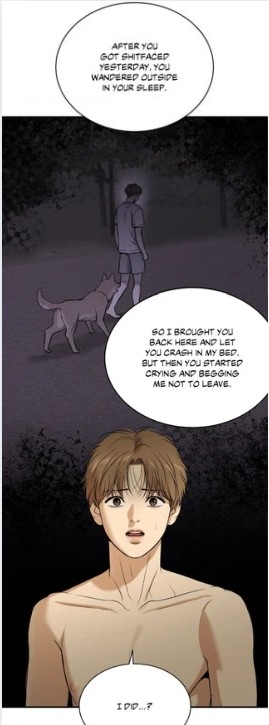 (chapter 66) rather than routine, Kim Dan fails to see Joo Jaekyung’s interventions as genuine help. This mutual misunderstanding deepens the emotional rift between them, ensuring that both remain trapped in their own perceptions of obligation rather than connection. In Chapter 66, he openly expresses frustration, stating,
 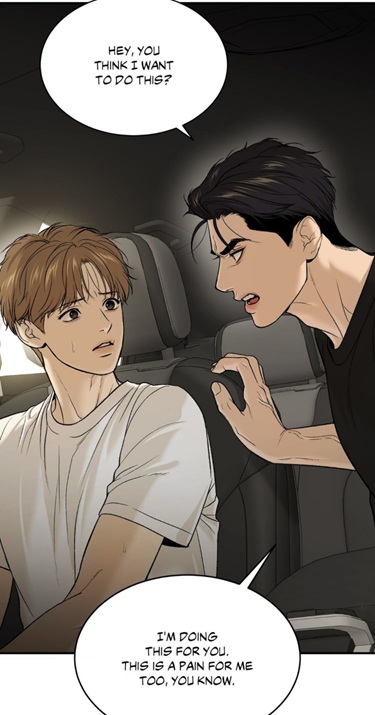 (chapter 66). This moment highlights a rare glimpse of honesty: he is not acting purely out of self-interest, but he frames it as an obligation rather than a choice. From my point of view, such a statement could only reach the physical therapist’s mind, for in the latter’s eyes, the champion has always been a “demon”: self-centered and inconsiderate. Observe the absence of reply from the “hamster”. He couldn’t contradict the star, as the latter was using this negative image: bad tempered and selfish.
Mingwa has long associated doc Dan with an angel.  . The reason is simple. He was portrayed as someone who would do favors to people constantly: his grandmother
 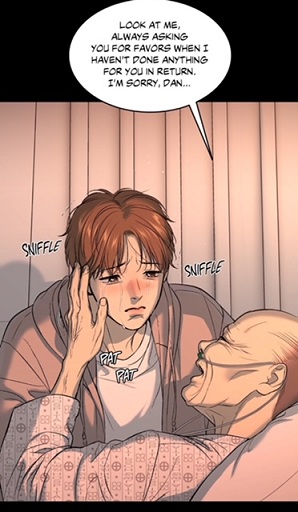 (chapter 53), the manager (chapter 9), the fighters
  (chapter 7) and even Choi Heesung. Hence the latter called him like that:
 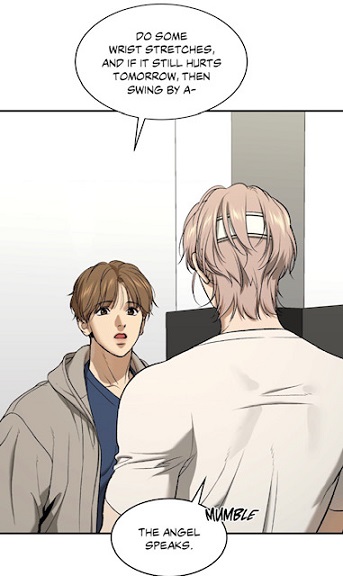 (chapter 30) Kim Dan’s perception of himself as an “angel” has long shaped the way he interprets his relationship with Joo Jaekyung. Reinforced by his upbringing and Park Namwook’s subtle manipulation
 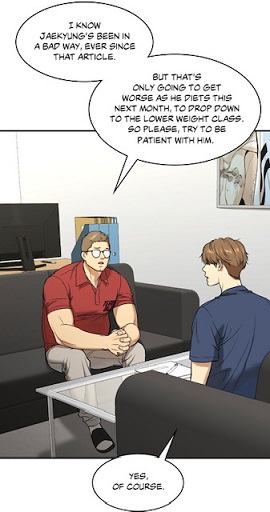 (chapter 36), he has unconsciously placed himself in a position of moral superiority. He is the patient, understanding figure, while Joo Jaekyung, in contrast, is violent
  (chapter 1), selfish, and emotionally stunted. However, this self-perception is deeply flawed. By believing himself to be inherently better
  (chapter 64) than the champion, Kim Dan avoids confronting his own emotional repression, his weaknesses, and his own form of “defectiveness.” He fails to see that he is just as human—just as fragile—as the man he silently judges.
 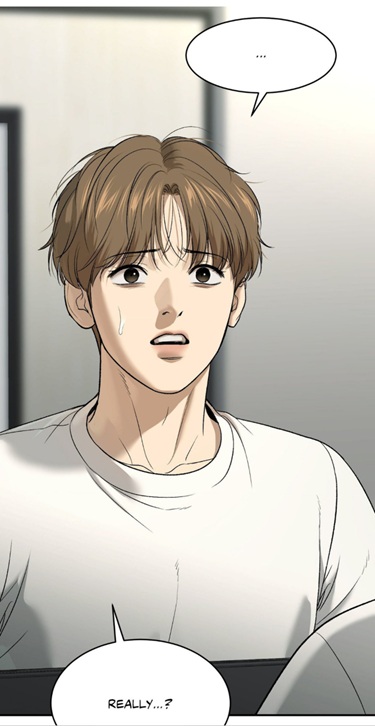 (chapter 66) The expression “Really…?” is not just about disbelief but also about a moment of confrontation with reality. Up until this point, Kim Dan has been dismissing his own suffering, suppressing his struggles, and functioning on autopilot. However, hearing a professional confirm that he is indeed sick forces him to acknowledge what he has been denying.
The word “really” acts as a bridge between doubt and acceptance, signaling that reality is crashing down on him. This corresponds to the downfall of an angel. He can no longer minimize or rationalize his exhaustion as something temporary—it’s a legitimate condition, one that requires attention. This realization is significant because it directly challenges his self-perception. He has always seen himself as someone who must endure, someone who cannot afford to be weak. But now, he is faced with undeniable evidence that he is not just tired—he is unwell.
This moment marks a turning point, where the truth of his condition is no longer something he can push aside. So far, he has always dismissed the champion’s remarks as “lies”:  (chapter 60) or exaggerations.
 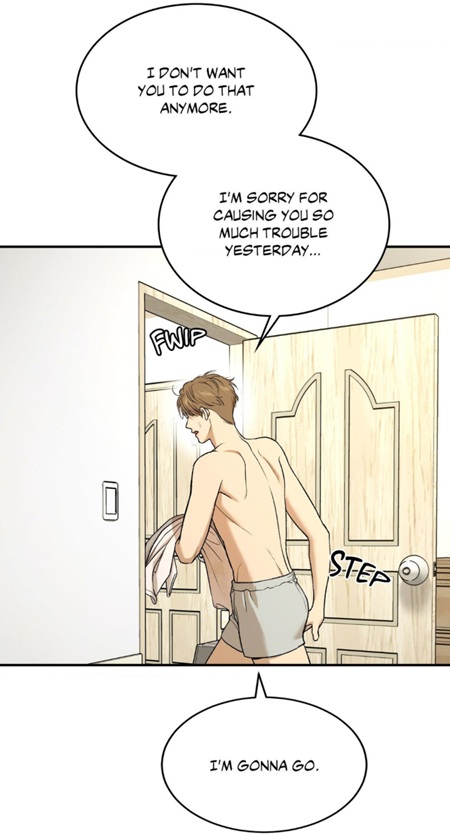 (chapter 66) It also forces him to consider that others—especially Joo Jaekyung—were right to be concerned, which in turn may lead to a shift in his perception of the champion’s actions.
Furthermore, Kim Dan grew up in an environment where repressing his desires was not just expected but necessary for survival. He was conditioned to associate sex 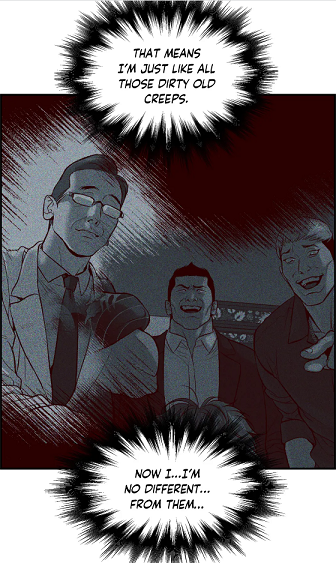 (chapter 20) with shame, something impure that should be avoided or hidden. This internalized belief made it difficult for him to separate his own experiences from moral judgment. When he encountered the champion —who treated sex as nothing more than a professional ritual (chapter 2)—this stark contrast reinforced his existing worldview. He saw the celebrity as reckless, immoral, and impulsive, someone who lacked restraint and viewed intimacy as just another means to an end. In contrast, Kim Dan unconsciously positioned himself as purer—someone who was above such base instincts.
However, this sense of superiority is deeply paradoxical. While he judged Joo Jaekyung for his behavior, he was also the one who allowed himself to be drawn into the transactional dynamic without resisting it. Instead of questioning or confronting the situation, he passively accepted it, reinforcing his own role within the dynamic. His moral disdain for Joo Jaekyung did not stop him from complying with the athlete’s demands. This contradiction highlights Kim Dan’s deeper struggle: he is caught between his ingrained judgment and his own passivity. He wants to believe he is different from Joo Jaekyung, yet his actions—or lack thereof—suggest otherwise. This explicates why he is projecting his own behavior onto the athlete’s: 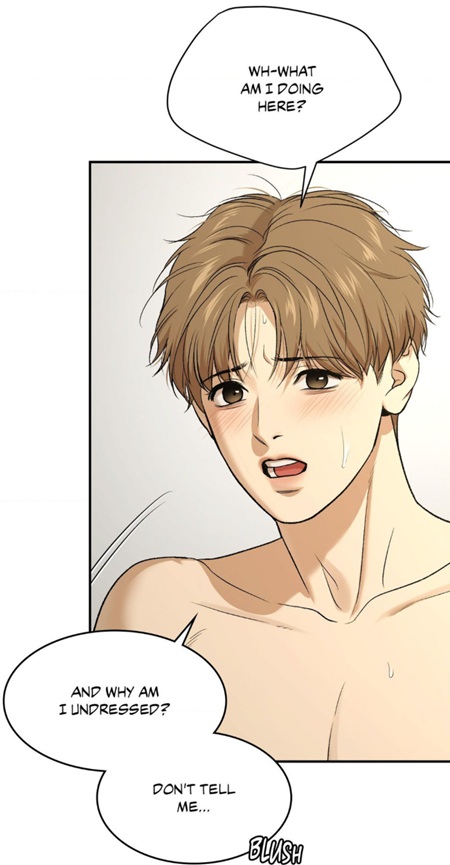 (chapter 66) He assumed once again that the star had taken advantage of his “drunkenness”, something Kim Dan had done himself in the past.
This internal conflict plays a crucial role in why he struggles to acknowledge the changes in Joo Jaekyung’s behavior. If he were to admit that the champion is not just a brute, that he is capable of genuine concern, it would force him to reconsider his own beliefs—not just about Joo Jaekyung, but about himself. To do so, however, means dismantling the rigid perception of morality and purity he has clung to for so long. Until Kim Dan comes to terms with his own contradictions, he will continue to misunderstand Joo Jaekyung’s intentions, keeping them both trapped in a cycle of mutual misperception.
Mingwa has frequently associated Kim Dan with angelic imagery, but this serves as a double-edged sword. While it elevates him in the eyes of others, it also creates a psychological barrier that prevents him from recognizing his own suffering. His insomnia, his malnutrition, his growing depression—these are all things he ignores or downplays (chapter 66), even as they take a visible toll on his body. If he were to acknowledge his own vulnerabilities, he would have to admit that he is not above needing help, something he has spent his entire life avoiding. Instead, he clings to the idea that he must endure in silence, reinforcing the very behaviors that keep him trapped in a cycle of self-neglect.
This ties directly into the slow transformation of both characters. The angel needs to be reminded of his own true nature: he is human, and like any human, he can get sick, he can struggle, and he can fail. On the other hand, the champion, who has long internalized to see people through the lens of function and utility, has to recognize that being “defective” can represent a source of strength. So far, for him defect meant being worthless. Their reluctance to break away from these ingrained perceptions of themselves is precisely what keeps them at odds. Kim Dan resents Joo Jaekyung for his supposed lack of morality, yet he does not realize that his own self-righteousness blinds him to the reality of their relationship. Likewise, Joo Jaekyung, having always been valued for his physicality rather than his emotions, fails to grasp that true strength lies in acknowledging weakness—not erasing it.
This is why their transformations are not immediate. Their beliefs have been deeply ingrained through years of conditioning, and it takes more than a few interactions to dismantle them. Imagine this: a demon speaking to an angel, it perfectly encapsulates why they struggle to find common ground. Their fundamental worldviews have been shaped by entirely different environments—Kim Dan, who has been conditioned to suppress his desires and associate sex with shame, and Joo Jaekyung, who treats it as a necessity detached from emotion. This contrast creates a deep chasm between them, where one views the other as morally inferior, while the other sees emotional attachment as unnecessary or even a weakness.
Yet, the only place they can truly meet is Earth—neutral ground where neither absolute morality (Heaven) nor pure instinct (Hell) dictates their actions. And that would be the little town on the coast. 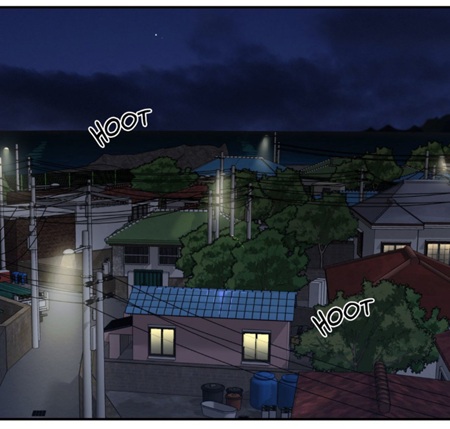 (chapter 65) Symbolically, this reflects their respective journeys. The demon (Joo Jaekyung) is slowly leaving the underworld of detachment and blind routine, stepping toward vulnerability. Meanwhile, the angel (Kim Dan) is descending from his idealized, self-righteous perception of himself, recognizing his own flaws, desires, and limitations. Both must step away from their extremes—Kim Dan from his unconscious moral superiority and passive victimhood, and Joo Jaekyung from his emotional repression and transactional mindset.
Until they meet in the middle—on Earth, where human connection, vulnerability, and compromise exist—they will continue to misunderstand each other. Their so-called defects are what ultimately bind them together, but until they acknowledge them, they will remain locked in their cycle of denial and emotional stagnation. Kim Dan must first recognize that his suffering is valid, that he is not above pain, and that needing help does not make him weak. Likewise, Joo Jaekyung must learn that genuine care is not a transaction, nor is vulnerability a flaw. Until both confront these truths, they will continue to misunderstand each other, pushing one another away even as they inch closer to genuine connection.
The Missing Gratitude: A Two-Sided Problem
The absence of gratitude on both sides serves as the linchpin of their emotional stalemate. Joo Jaekyung, for all his power and success, has never been properly acknowledged outside of his career achievements 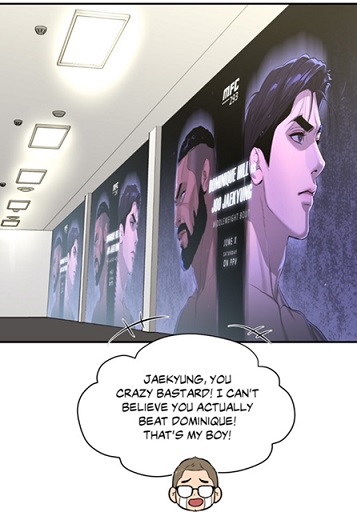 (chapter 40) , while Kim Dan, conditioned by years of emotional neglect, sees gratitude as a transactional exchange rather than an expression of genuine appreciation. (chapter This creates a vicious cycle—Joo Jaekyung continues to view Kim Dan as a ‘defect’
  (chapter 66) because Kim Dan does not recognize his efforts, while Kim Dan cannot see past his own survival instincts to notice that Joo Jaekyung’s actions are slowly shifting from obligation to care. Kim Dan, conditioned by years of neglect and survival-driven thinking, does not see Joo Jaekyung’s actions as genuine care. (chapter 66) He assumes everything comes with a price, failing to recognize moments where Joo Jaekyung acts beyond obligation.
Conversely, Joo Jaekyung, still in denial about his emotional investment, refuses to acknowledge any deeper attachment to Kim Dan. (chapter 66) And now, you comprehend why the champion employed the idiom “defect”. As long as Kim Dan does not express gratitude, Joo Jaekyung can continue convincing himself that his actions are dictated by habit or self-interest rather than care. Their inability to recognize and articulate their changing dynamic keeps them locked in a cycle of emotional detachment. Nevertheless, it becomes clear that this vicious cycle will stop, as now these two men are little by little influenced by the nice landlord: 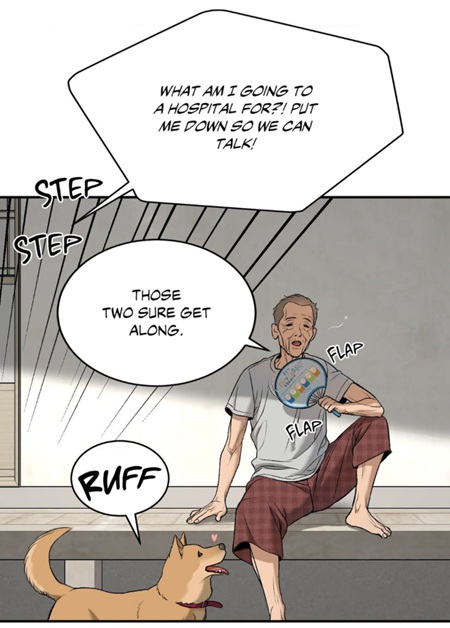 (chapter 66) And the latter can see beyond the appearances.
Conclusion: The Perfect Defect
In the end, the irony is that both characters see the other as defective in some way—Kim Dan as someone who is broken and in need of fixing, and Joo Jaekyung as someone incapable of expressing genuine care. Yet, it is precisely their emotional shortcomings that make them a perfect mirror for each other. The evolution of the jinx into defect signals an impending shift, but until gratitude is exchanged—until one of them acknowledges the other’s role in their life—the cycle will persist. As long as Kim Dan remains emotionally detached, Joo Jaekyung will continue denying his own feelings, making them each other’s Perfect Defect.
Feel free to comment. If you have any suggestion for topics or manhwas, feel free to ask. If you enjoyed reading it, retweet it or push the button like. My Reddit-Instagram-Twitter-Tumblr account is: @bebebisous33. Thanks for reading and for the support, particularly, I would like to thank all the new followers and people recommending my blog.


 (chapter 36), his tendency to retreat rather than challenge his own doubts
 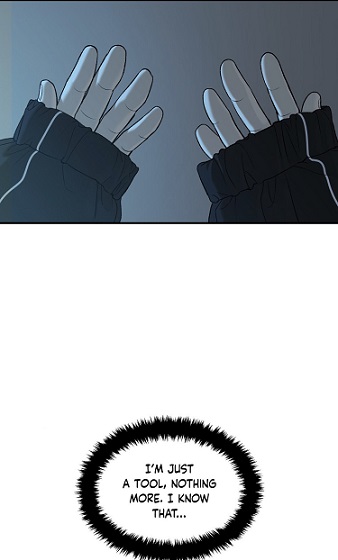 (chapter 36), and his overwhelming fear of disappointing others
  (chapter 51) are all reflections of these internalized obstacles. Recognizing them as external impositions rather than intrinsic truths is the first step to breaking free. That’s the reason why in the reflection of the broken mirror, you can detect an open window in the background. By focusing too much on his reflection, the physical therapist is trapped in his own negative world. One could perceive it as the opposite version of Narcissus. Yet rather than falling in love with his image, he sees only his flaws, reinforcing his belief that he is unworthy. The open window suggests an escape, a possibility for change, but the problem is that the main lead is too fixated on his shattered self-perception to pay attention to his surroundings. Hence he comes to neglect his own body and people next to him.
 (chapter 54) suggests he too is haunted by such internalized voices. Under this new light, you comprehend why I wrote in the introduction that the broken mirror was mostly alluding to the doctor. Both protagonists are suffering from mental hurdles, trapped in a psychological prison. The significant difference is that while Kim Dan is consciously recognizing his self-doubt
  (chapter 62), Joo Jaekyung does not. The evidence for this interpretation is the champion’s nightmare:
  (chapter 18) the doctor
 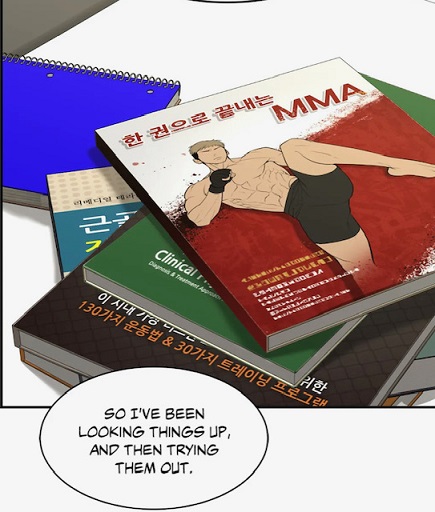 (chapter 25) Therefore the physical therapist bought books. Moreover, we should consider this argument
  (chapter 45) as a revocation of the star’s statement in episode 18. Kim Dan was no longer perceived as a tool, but as a real physical therapist. On the one hand, this request boosted the “angel’s ego”, on the other hand, he was put under immense pressure, for he was compared to his colleagues.
 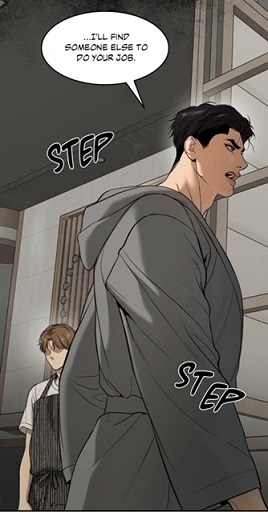 (chapter 45) Since in Seoul, Kim Dan has only been hired because of sex (Joo Jaekyung, the perverted hospital director)
 (chapter 6), he came to accept that he was not truly talented. The champion had no trust in him and later, the word jinx triggered a repressed bad memory.
  (chapter 62) Due to his bad past experiences, he concluded deep down that his CV was not reflecting the truth.
 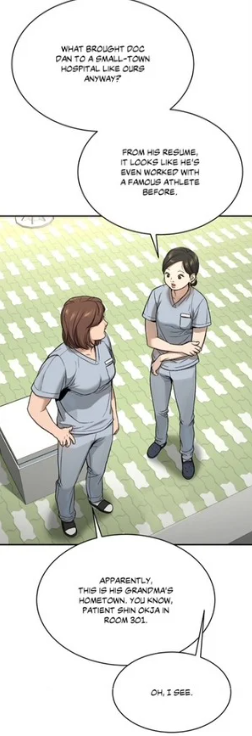 (chapter 56) That’s the reason why he was devaluing himself and as such not looking for a high position.
 (chapter 48) exemplifies this pattern:
  (chapter 48) It was not the right time. He assumed his voice held no weight, reflecting years of learned helplessness. It shows how Kim Dan internalizes responsibility for things beyond his control. He thinks that withholding information is an act of protection rather than avoidance. Yet in doing so, he denies himself agency in his own life.
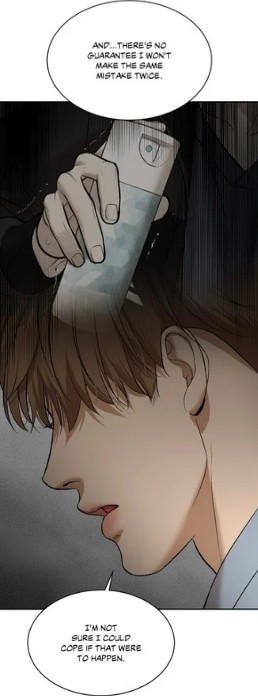 (chapter 62) completely devastated Kim Dan’s already fragile self-esteem.
 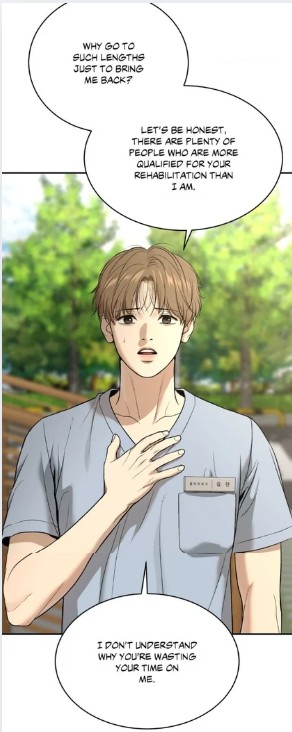 (chapter 62) First, he considers himself as waste. While in the past, he was at least a tool, he is now garbage. Hence his feelings are “trash”.
  (chapter 62) This means that in episode 62, he felt worse than in episode 18! The idioms “trash” and “waste” revealed the doctor’s own self-perception in episode 62: he saw himself as totally useless. He belonged to the “wastebasket”, just like the golden key chain.
  (chapter 46) Thus I deduce that the fate of this item echoes the doctor’s.
 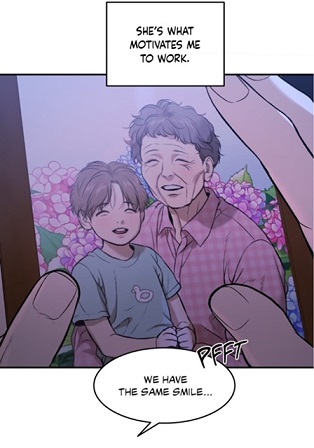 (chapter 47) He had selected this profession because of her. This shows that until now, he has never developed any ambition on his own. The loss of faith from someone he relied on for motivation made him feel completely worthless. This reinforces that his confidence and sense of direction were never self-sustained: they depended on others’ recognition. This pattern suggests that Kim Dan has never truly asked himself what he wants. His entire existence has revolved around meeting expectations, whether from his grandmother, Joo Jaekyung, or even his profession. His current crisis—feeling like waste—stems from the realization that without someone to validate his worth, he sees himself as nothing.
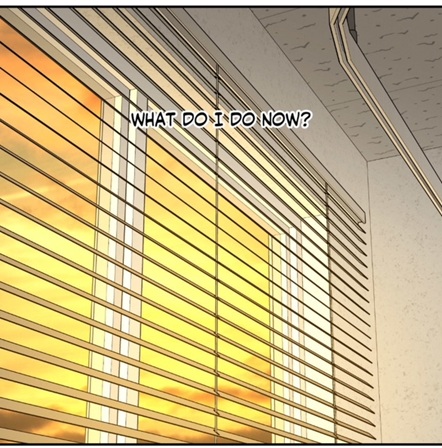 (chapter 59) However, observe that he is using the expressions “do” and “now”. This has nothing to do with the future and dreams. It is not a reflection on his own desires but rather an immediate reaction to his circumstances. His mindset is still trapped in survival mode, seeking a course of action rather than contemplating what he truly wants. His words reflect an urgency to act rather than an opportunity to dream. This highlights that he has spent his entire life making decisions based on necessity rather than personal fulfillment. Even when faced with uncertainty, he does not ask himself what he wants—only what he must do next. His transformation will only be complete when he begins to question not just how to survive, but how to live on his own terms. That’s how I realized why Mingwa put this question in front of the window covered with Venetian blinds [which made me think of this scene
  (chapter 39 – Venice, a travel to Italy]. The window with the Venetian blinds represents a metaphor for the doctor’s trapped dreams. This interpretation made me recognize another aspect. Kim Dan is pushed to meditate, when he is front of a window or better said close to the sky! Hence the hamster started thinking about his own future in the penthouse
 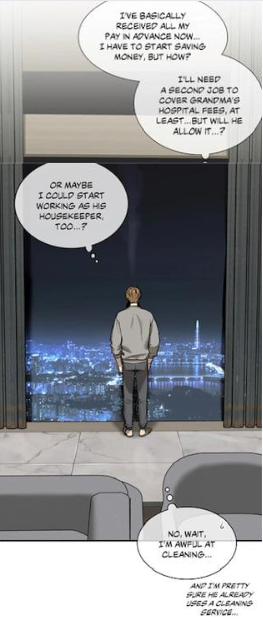 (chapter 19) or when he looked at the sun and sky:
  (chapter 41)
 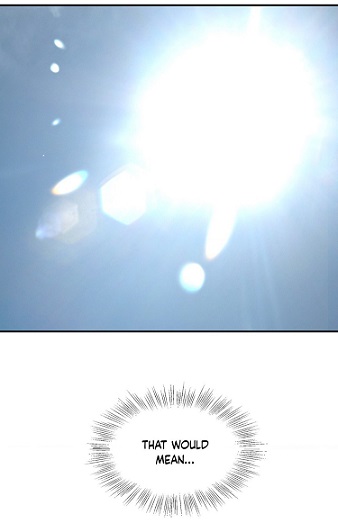 (chapter 41) And the best evidence for this interpretation and expectation is doc Dan’s cellphone screen display.
  (chapter 38) My avid readers will certainly recall that clouds embody dreams! Why? It is because in verity, doc Dan is a dreamer, an ambitious man. What caught my attention is that his contact Joo Jaekyung was not saved with a picture!! And what had motivated Kim Dan in the past?
  (chapter 47) The picture from his childhood: himself with his grandmother.
  (chapter 66) But the latter was not related to work, but to fun and nature. Striking is that Joo Jaekyung has an empty phone screen display indicating that he has no real dream on his own either:
 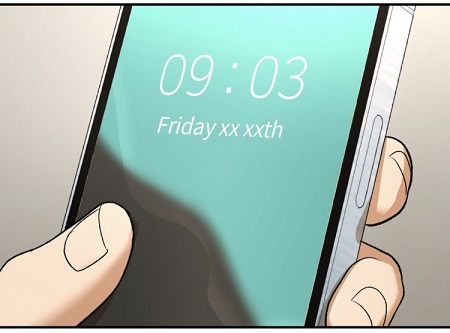 (chapter 38) No wonder why he questioned the meaning of his champion title:
  (chapter 54). He saw the belt as something rather “meaningless”.
  (chapter 43) This would boost the doctor’s self-esteem. He is not trash, but an acknowledged fan and friend. The picture would encourage the physical therapist to develop his own ambitions. As soon as I made this discovery, another detail caught my notice:
  (chapter 66) The celebrity has no picture of Park Namwook in his contacts divulging the superficiality of their relationship.
  (chapter 42) The problem is that the athlete took this recommendation personally. He felt as if his job as fighter was questioned.
 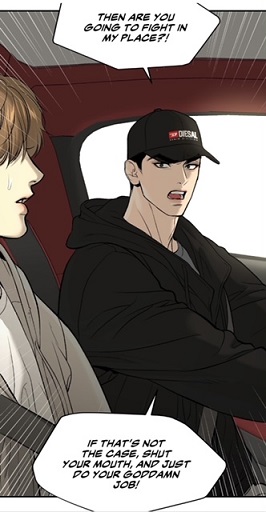 (chapter 42) As you can see, the doctor’s hesitations were exposing his mental obstacles, which was reflected in the champion’s attitude. No wonder why doc Dan chose to become a courier as a second job instead of finding a new VIP client. While the interaction between the athlete and Kim Dan in front of the hospice display the return of doc Dan’s past mental hurdles:
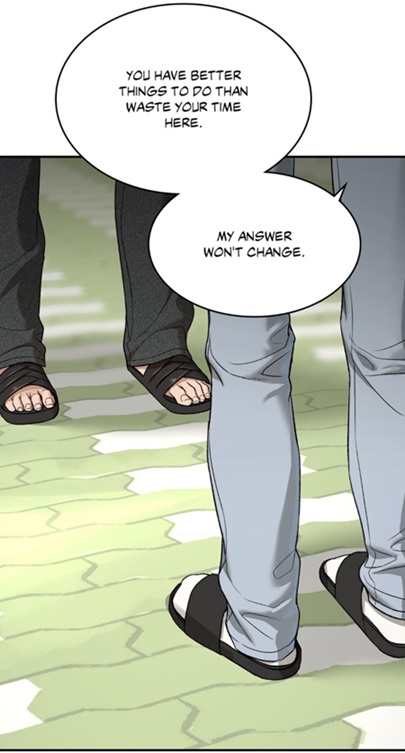 (chapter 62) According to the main lead, the champion is “wasting his time here”.
 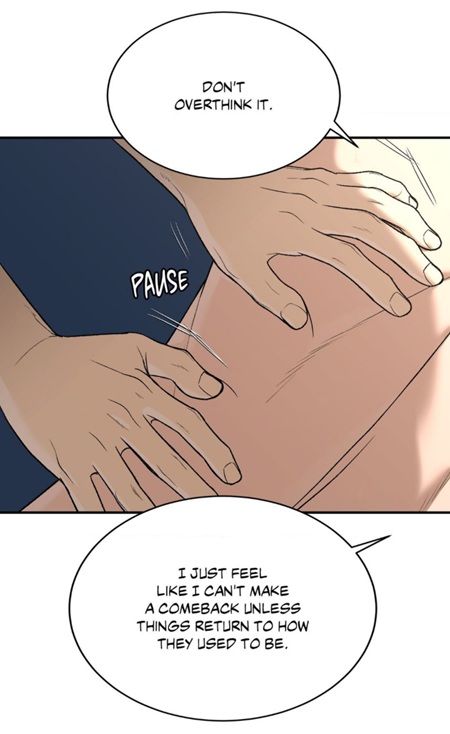 (chapter 62)
 (chapter 57) Hence it is clear that in the future, the physical therapist would refuse to use any kind of spray. On the other hand, it is important to recall that back then, Joo Jaekyung had made the request himself:
  (chapter 49) So in the doctor’s mind, if he agreed to the champion’s request, he would be treated like in the past. He would have to simply to follow the athlete’s lead. That’s why he is imagining that he might be put in a similar situation than in the past. But there exists another reason why he refused the champion’s offer right from the start. It is because he has always perceived himself as “hands” which stand for selflessness and generosity. The latter defined doc Dan. Hence he looked at them, when he declared himself as a tool:
 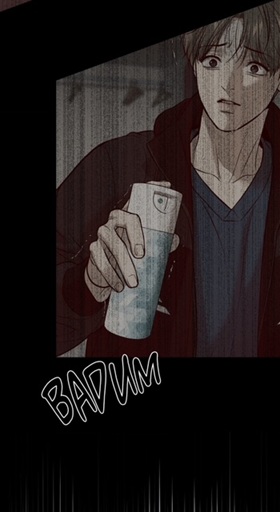 (chapter 57)
  (chapter 1) with a previous PT like the spray? No wonder why he called himself “trash” in the end.
  , people might wonder why I selected dandelions as a frame for the selected.. It’s clear that the dandelions aren’t just there for aesthetic balance. Their symbolism is profound. Dandelions are often associated with childhood innocence, wishes, and fleeting moments of beauty, yet they also wither quickly, easily scattered by the wind. In the context of Jinx, they represent a transitory force—something that struggles to take root, much like the intangible and fleeting elements in Kim Dan’s life. But there’s more to it. Before delving into deeper analysis, consider this: what is the common denominator in all these scenes?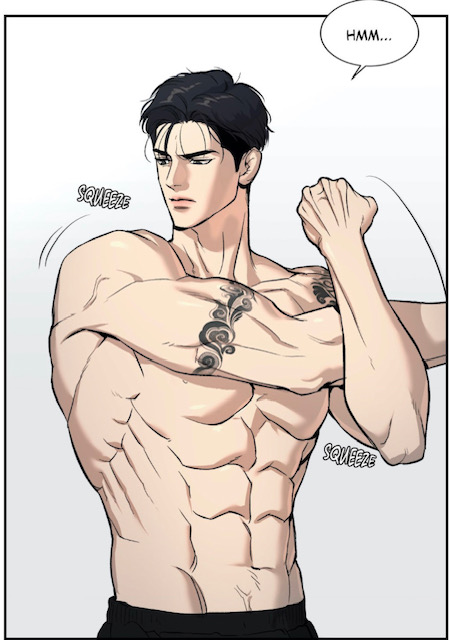


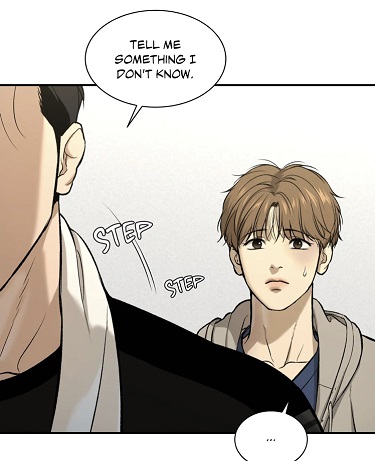

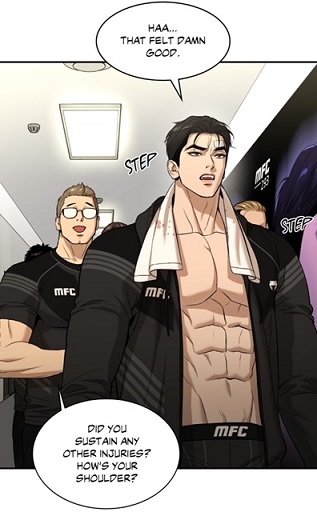
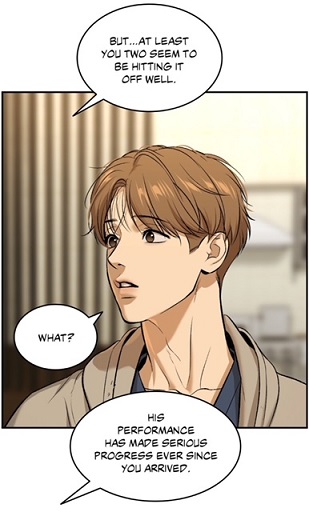
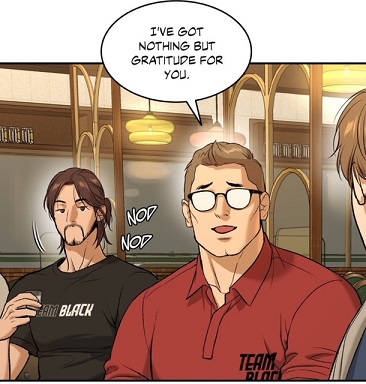
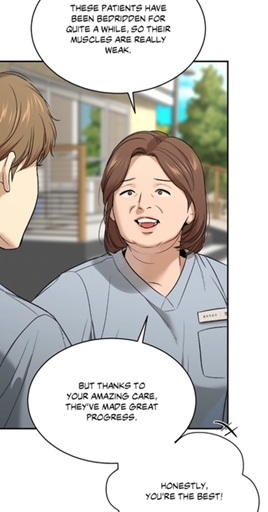


 (chapter 37) Therefore it is not surprising that the main lead couldn’t view the members as friends in the end.
  (chapter 41) And now, you comprehend why Joo Jaekyung has always disliked his birthday and the “congratulations” from people in general. The gifts and words were like poisoned praises to his soul. They were pushing him to live like a “god”.
 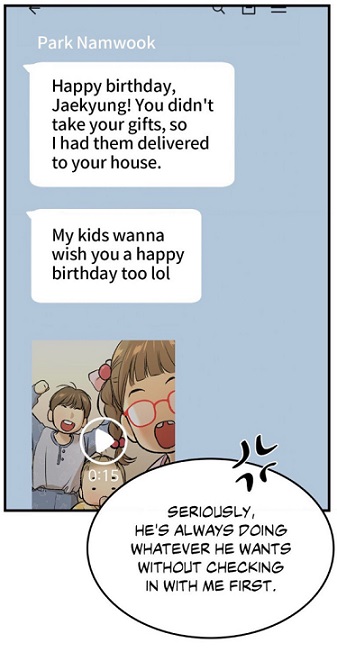 (chapter 45) Kim Dan’s only adult photograph, taken with Choi Heesung and Potato, ties into his professional world, reinforcing how his identity has always been defined by what he does rather than who he is.
  (chapter 59) While this photography was not a personal and intimate picture, it also symbolizes his first root in the little community: Light of Hope Hospice. He is part of the staff and as such of the little town. On the other side, we could say, he is gradually entering the scene as a PT. Note the contrast to the food truck:
  (chapter 30) In other words, it exposes the actor’s hypocrisy and wrongdoings. And now, you understand why I wrote genuine in parentheses above [proof of (genuine) human connection]. Photography in Jinx also represents the evidence of wrongdoing
  (chapter 48) and deception:
 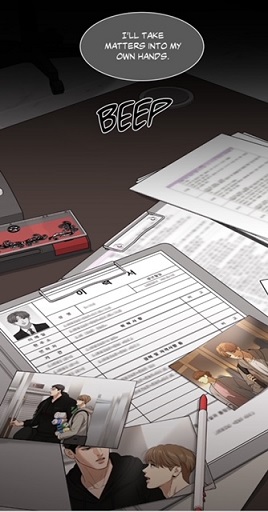 (chapter 46) The exact opposite of the dandelions.
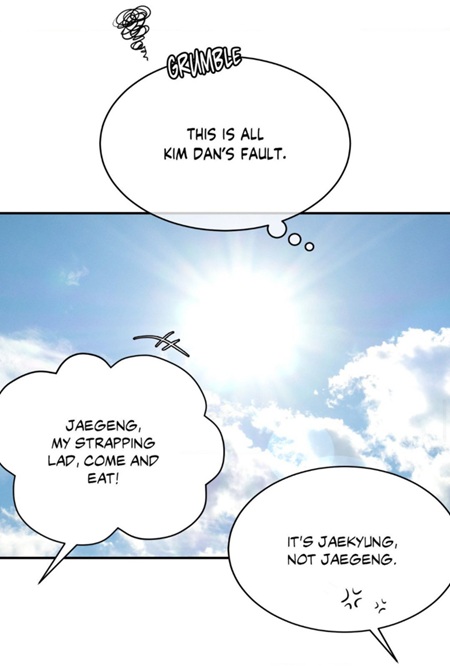 (chapter 62) This shows that deep down, he desires to obtain doc Dan’s gratitude. No wonder why he got so upset after hearing the displeased comment from Kim Dan.
  (chapter 66) reveals Kim Dan’s elevation in the champion’s life. The dressing room symbolizes privacy and closeness. No longer seen as a mere tool, Kim Dan has become an integral part of Joo Jaekyung’s world, not because of what he can do but because of who he is.
 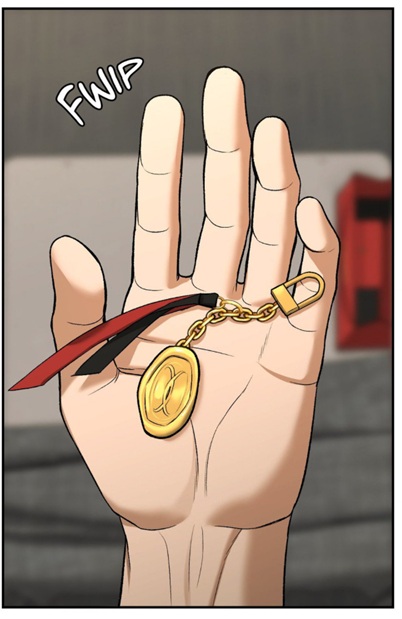 (chapter 66) Therefore the champion is holding the expensive gift with his whole hand contrary to the past:
  (chapter 55) As a conclusion, by bringing him to the sleep specialist, the star proved doc Dan’s words wrong! He told him something that doc Dan didn’t know: he is precious. He needs to pay attention to his health and body.
 (chapter 32) And now, you comprehend why the athlete didn’t fall for Park Namwook’s manipulations afterwards.
 (chapter 7)
 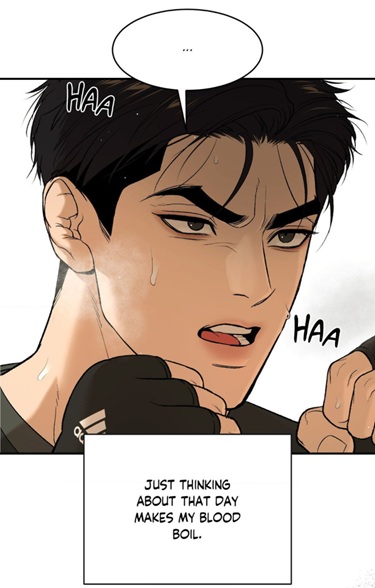 (chapter 65) At the same time, such a disapproval
 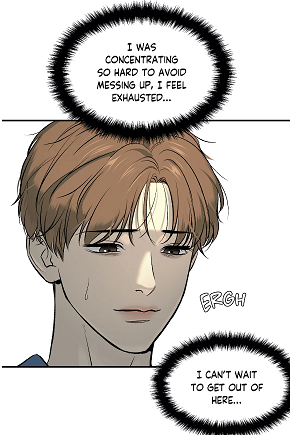 (chapter 1), hence his true desire was to run away from that place. For praise to be effective, the recipient must be open to receiving it, either by looking forward to feedback or having expectations of validation. Since Kim Dan was in a state of distress, he was unable to internalize the champion’s words, reinforcing his long-standing belief that he was invisible or unworthy of acknowledgment. That’s how the champion’s praise became a dandelion seed in the end.
 (chapter 65) or a smoker, hiding his sacrifices and the true causes for his struggles. Her words reinforce the idea that Kim Dan is only as good as his usefulness, that love and recognition are earned through labor, not freely given.
 (chapter 18)
  (chapter 45)
 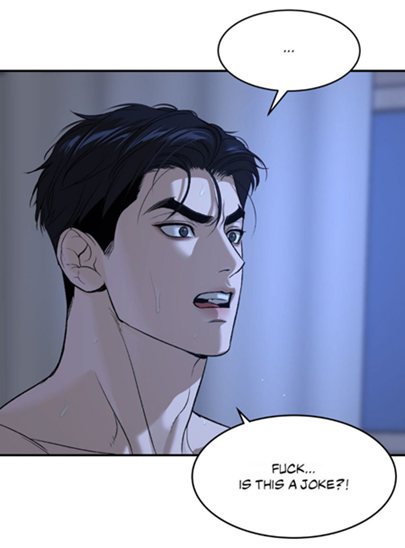 (chapter 64)
 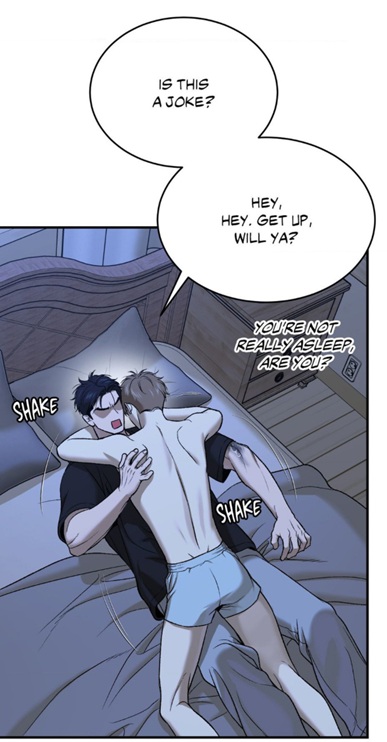 (chapter 66) Is this a joke?
 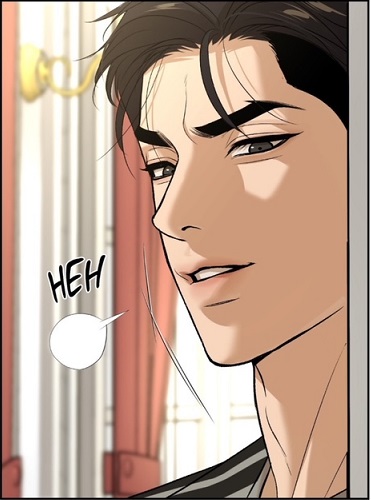 (chapter 40) However, Kim Dan has never realized it. Either he was sleeping or totally out of it (fear of sex)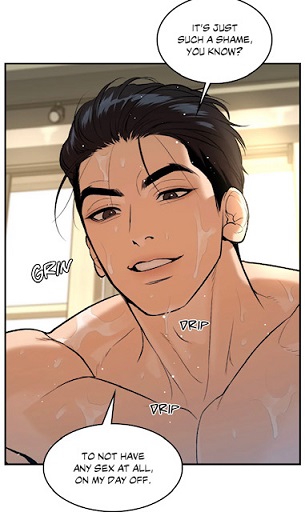
 (chapter 27) It is important to recall the importance of the receiver’s mind-set. The latter has to perceive the sincerity from the speaker. Hence I come to the following deduction: The moment Kim Dan notices Joo Jaekyung’s smile and laugh, then he should come to the conclusion that he matters to the protagonist. I would even say, the two protagonists are destined to make each other laugh and smile:
  (chapter 44) This would be the best “compliment” for both of them. With Kim Dan by his side, Joo Jaekyung desires to make “jokes”.
  (chapter 58) The friends ignored the main lead’s emotions and struggles. In order to be able to have fun, both main leads must be freed from their past and low self-esteem.
