
This is where you can read the manhwas. https://www.webtoons.com/en/mystery/dr-frost/list?title_no=371 https://www.lezhinus.com/en/comic/painter But be aware that this manhwa is a mature Yaoi, which means, it is about homosexuality with explicit scenes. If you want to read more essays, here is the link to the table of contents: https://bebebisous33analyses.wordpress.com/2020/07/04/table-of-contents-painter-of-the-night/
1. What is home?
Before starting analyzing the manhwa under this aspect, it is important to define the term home. In a dictionary, this is what you find:
- the house, apartment, etc. where you live, especially with your family
- the type of family you come from
- a place where people or animals live and are cared for by people who are not their relations or owners
- someone’s or something’s place of origin, or the place where a person feels they belong
- your own country or your own area https://dictionary.cambridge.org/dictionary/english/home
As the readers can detect, home has a lot of significations. The reason is simple. It depends on the perspective. When people are asked where their home is, some will answer that their home is the place they are actually living, others will reply that it is the place where their family lives or where they were born and raised. But all have something in common: Home is where the heart is. To sum up, home is very subjective and personal.
2. Home and identity
Since home is related to our disposition (liking, family), it means that home represents a part of our identity, it even defines us. This explicates why psychologists sometimes visit their patients’ home in order to better grasp their personality and issues.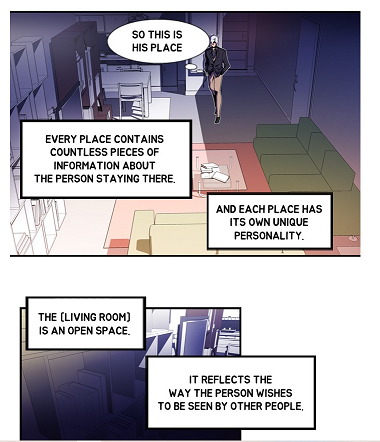 (Dr. Frost, chapter 8) As you can see, home is strongly connected to identity and personality. In other words, without home a person loses his identity. This is no coincidence that homeless people often have no ID.
3. Baek Na-Kyum’s home
Consequently, the manhwaphiles can comprehend why Baek Na-Kyum had huge abandonment issues and a low self-esteem in chapter 46.  He felt so lonely and lost, for he had no place he could call home. It was, as if he had no identity. When he deserted the mansion, he first thought of the kisaeng house and his noonas
 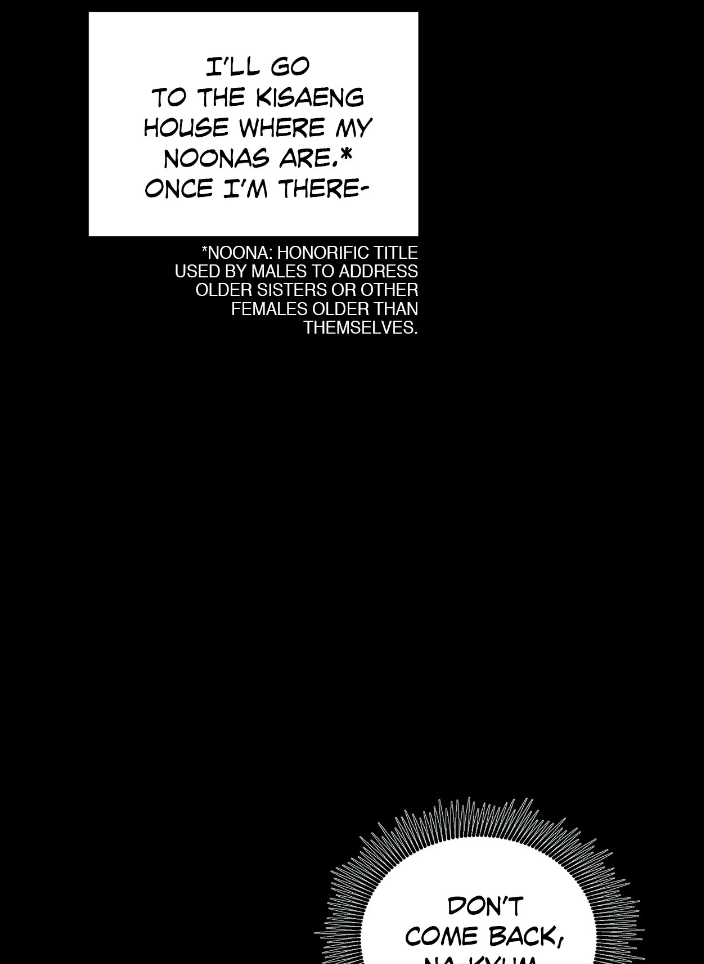 (chapter 46), until he remembered how he had been sent away by Heena noona.
 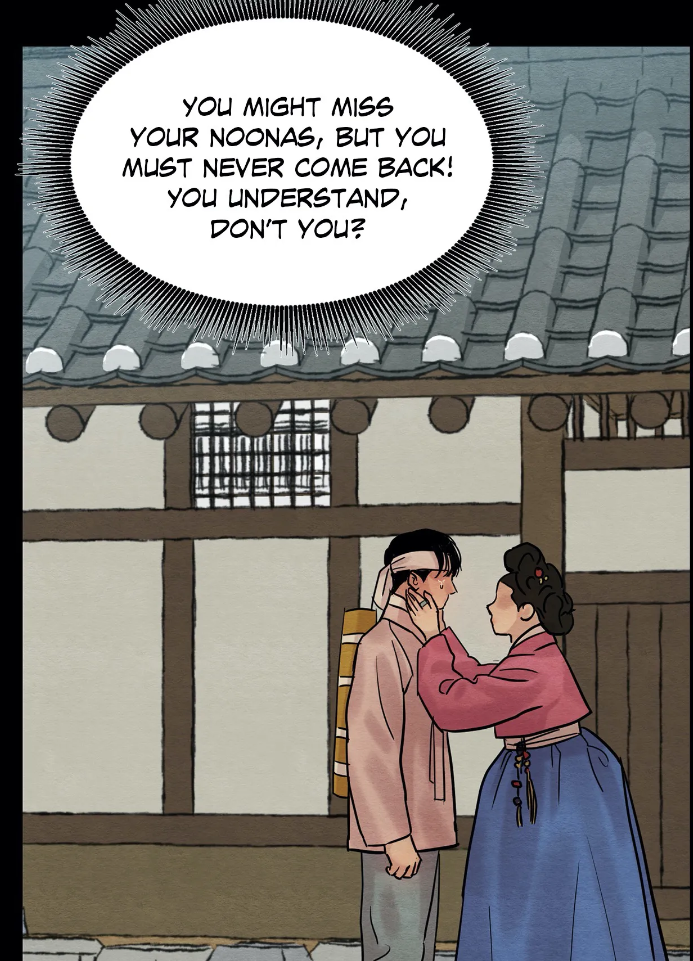 (chapter 46) This moment was terrible for the painter, because he had the impression to be abandoned a second time. Note that he is not calling the kisaeng house his home… for him, it was no longer a home, because his heart had been wounded there. Hence the manhwaphiles sense why the painter was using his mind in chapter 75
 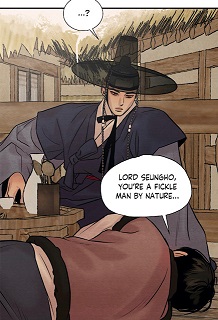 (chapter 75) and was restraining himself from falling more for Yoon Seungho. He had come to view the mansion as his home, and if he came to accept Yoon Seungho as his companion, then the latter would become his home, his family. Don’t forget my previous statement: Home is where the heart is. He was afraid of getting hurt a second time. If the lord came to have a change of heart, he could lose his new founded home.
Since the fight with Deok-Jae (which I am explaining more in details later), the painter had come to view the mansion as his home, hence he stated this to his lord: 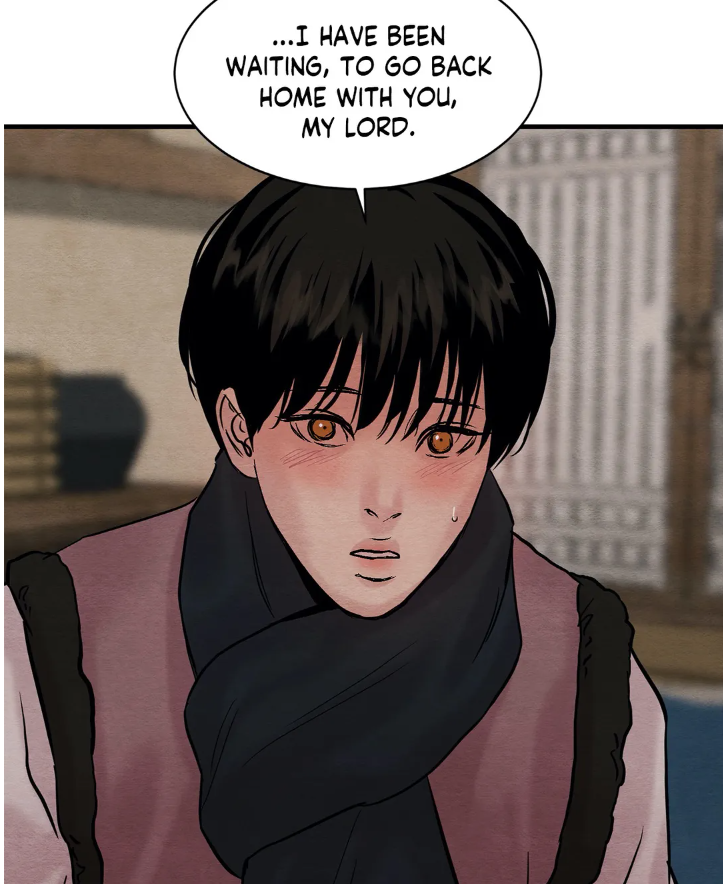 (chapter 58) And now, you comprehend why he stopped in the middle of the street during his escape. He had recalled how Heena had sent him away. (chapter 46) The painter had come to associate home to a family and as such to people. This explicates why the kisaeng had forbade him to bid farewell to his sisters. I am not saying that the kisaeng’s decision was ill-intended. She knew that if he met the kisaengs, the latter would have convinced him to stay. As you can see, he had experienced himself how his sister had abandoned him in the end. To conclude, for Baek Na-Kyum, in the past home was a synonym for family and a place.
4. Heena’s definition of home
But why would she coerce her brother to leave the gibang? Observe that she never gave her brother a choice. She never realized her wrongdoing, because she imagined that she had done it out of love, and it was for the painter’s best interests. Anyway, when Baek Na-Kyum reproached his lover his fickle nature (chapter 75), in my eyes, this perception should be applied to Heena noona who could send away her brother in such a way and never contacted him afterwards. That’s the impression she gives.  (chapter 68) Observe how she blames her brother for not contacting her, while she had strictly forbidden him to come back. At the same time, the readers should question her behavior. How come that she never showed any concern for Baek Na-Kyum for 18 months, until she found out that he was living with Yoon Seungho? Why didn’t she contact him in the first place in order to check out if he was living properly? She gave him instructions, and the main lead listened to her, and now she is reproaching him that he should have disobeyed her. In my eyes, Heena noona acts more like a person with a fickle nature. She shows great care and concern in chapter 65 and 68, but she never searched for her brother’s whereabouts before. So far, the readers can only assume that she had no idea that he had been living as a drunk, and she only discovered his whereabouts by hazard.
  (chapter 64) Yet, this is just an impression because of this scene. Yet, in season 3, Heena confided to Min, and the latter revealed the content of her confession:
  (chapter 99) The idiom “bittersweet affections” indicated that the learned sir had expressed regret and disappointment concerning Baek Na-Kyum. This means that Heena knew that Jung In-Hun’s affection towards the low-born had been changing. As you can see, I come to the conclusion that Heena was already aware of the existence of tension between the painter and his former teacher.
What caught my attention in chapter 68 is the following: 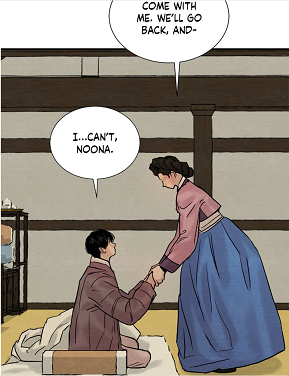 Heena noona is not even using the word “home”. At no moment, she employs this expression. When she parted from her brother in chapter 46, she mentions the noonas and when she asks her brother to follow her, she says: “Come with me”. As you can see, Heena doesn’t consider the kisaeng house her home. That’s the reason why I think that for her, the kisaeng house had been her workplace and she associated home more with people she cared about, similar to the painter. And this observation made me realize why the sister sent her brother away. Heena noona has never liked the kisaeng house, let’s not forget that she is a slave and she can not leave that place. And the guards could be judged as her wardens, they are keeping an eye on her, similar to the role played Yoon Seungho in chapter 45. For her, the kisaeng house was a synonym for prison and hell, where she kept meeting these terrible and violent rich nobles.
 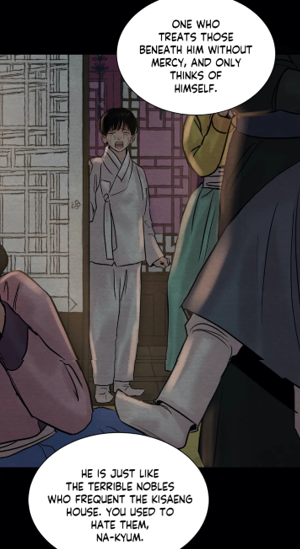 (chapter 68) Hence in her mind, when she asked her brother to leave the kisaeng house, she imagined that she was helping the painter to escape from prison. Since she admires the scholar so much, she saw in him her helping hand. He would assist her brother to become a free man. The readers should notice that the learned sir always left the kisaeng house with the low-born
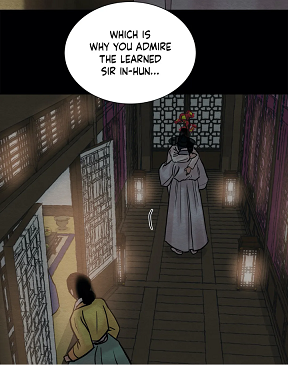 (chapter 68), when there was a ruckus. So when the kisaeng made the request to the teacher
 (chapter 46), she envisioned that he would acquiesce her request, since he had done it so many times in the past (taking care of Baek Na-Kyum and becoming responsible for him). Moreover, she knew that the artist liked and admired Jung In-Hun. For her, the scholar was a liberator, because he acted so differently towards the kisaengs and Baek Na-Kyum. That’s the reason why she thought, she was doing the right thing for her brother, while in reality she was just projecting her own desires into the artist. And this interpretation was proven correct, because when she vanished from the gibang in season 3, she was no longer dressed as a kisaeng.
 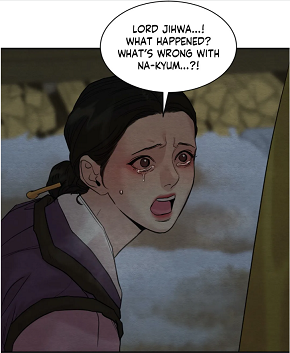 (chapter 99) She was deserting the kisaeng house, and as such the noonas. And note the parallels between chapter 46 and 97/99. In both cases, the painter couldn’t bid farewell to the other kisaengs. (chapter 46)
  (chapter 99) It is because she was using her brother. In the first desertion, her choice was influenced by her unconscious. She had just projected her own thoughts and desires onto the artist’s. In season 3, she had made a conscious choice. In exchange of her brother, she would gain her freedom. Thus she used the expression “us”
  (chapter 97) This time, it was for her own sake. But the price for her freedom was that she had to sell her brother. She could still have a clean conscience by convincing herself that Yoon Seungho had killed her idol. At the same time, she needed to fake her death.
 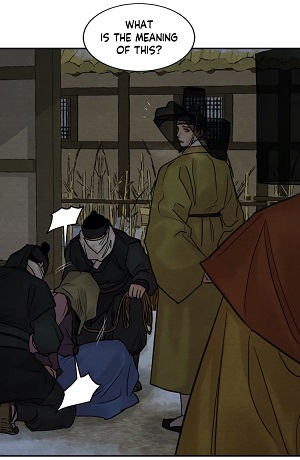 (chapter 99) [For more explanations read the analysis “Heena’s curtains”] This means that she was betraying the eonnies one more time. And that’s how I had another revelation. In my eyes, after their separation, Heena had come to view her life in the gibang differently. She had been able to perceive the good aspects of her life as a kisaeng. She could live a comfortable life and as such get new hanboks. (chapter 64) That’s why I believe that she came to forget her brother, like “out of sight, out of mind”. But how did she come to view the gibang as a place of hell? In my opinion, it is related to Yoon Seungho! She knew about his misery. Thus I am deducing that the painter’s vanishing from the gibang coincides with the end of the lord’s misery. Thus I have the impression that her definition of home came to change. It was less connected to the kisaengs and the painter, as such to family. She came to like the place.
But let’s return our attention to episode 46. (chapter 46) Because she didn’t allow her brother to speak his mind, she hurt his heart and created more wounds than before. That’s why I perceive the argument in chapter 68 as important. For the first time, Baek Na-Kyum is not listening to Heena. Since home is where the heart is, her brother could only reject her proposition to come back to the kisaeng house. He had been abandoned by the noona. However, because he was afraid of his own feelings towards the aristocrat, he created new problems with his confession. His description 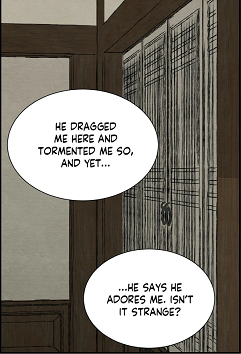
 reinforced her bad impression about Yoon Seungho. That’s why Heena noona will never believe that this place can become the artist’s true home. For her, this place can only represent a new prison, for she has a negative perception of nobles. Hence she needs to rescue her brother.
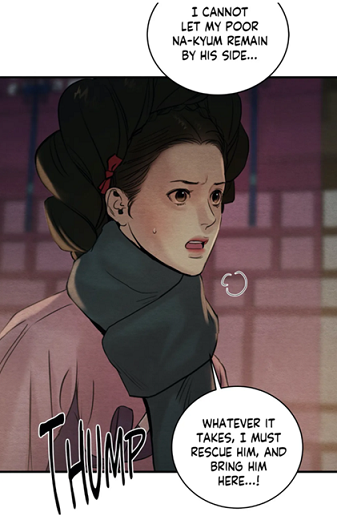 (chapter 69) Besides, I believe that she has another reason. The lord is connected to her own guilt, but she is not admitting her responsibility. In the first version, I had expected that due to his confession, the kisaeng would never trust Baek Na-Kyum’s words later. And this was proven correct. Why? First, Heena noona embodies a certain kind of knowledge: prejudices. Because she has already experienced many things, she has the impression that she knows everything. However, she is not realizing that her world view is based on her own perception. Secondly, her superficial knowledge turns her into a blind and deaf person. What she sees and hears will be interpreted the way she perceives the world. I had even written this back then:
“Even if her brother tells her how well Yoon Seungho treats him and how much he loves his companion, she will have the impression that he has been brainwashed or coerced. Why? It’s because she has always treated her brother that way.”
In addition, she knows a part of the truth, while her brother was left in the dark entirely. Thus she reproached her brother his stupidity:  (chapter 97) Contrary to him, she knows, because she saw and heard things, when Yoon Seungho suffered! Yet, her knowledge is totally superficial, like the last panel exposes it. She just jumped to (false) conclusions. That’s how she got herself manipulated. Because of her bias, she became an easy target of deceptions. That’s the reason why she believes herself in rumors. Like the scholar said it himself,
  (chapter 29) there exists a kernel of truth in the grapevine. Moreover, with her caresses and hugs, she used love to stop her brother from speaking his mind.
 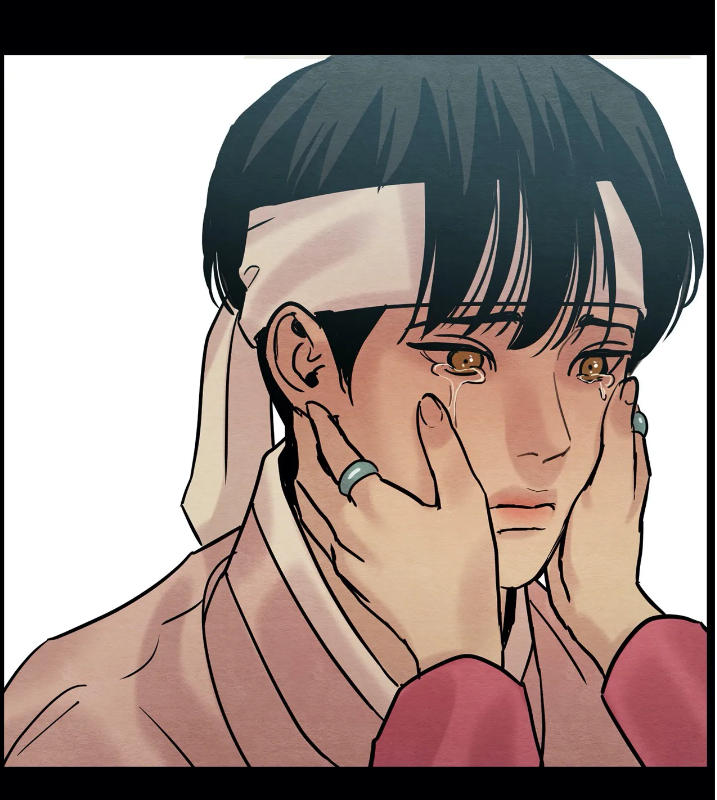 (chapter 46) That’s the reason why Baek Na-Kyum could only express himself through painting, as he had become mute. Due to her decisions and actions and the scholar’s, she contributed to turn the artist into a boy full of insecurities, unable to express himself. Consequently, Heena noona was put in front of the same choice in season 3. Note that the return of the painter to the gibang coincides with her departure. This means that due to the couple’s love session, she was reminded of her own past. She was forced to recall why she had associated the gibang to hell in the first place.
  (chapter 96) She was definitely scared in that scene. That’s the reason why at the end, she utilized her brother to leave the gibang. (chapter 97) However, the gods wanted to confront her with the true consequences of her choices. She wouldn’t live with her brother, their paths would get separated. (chapter 99) She had to choose between her brother and her life, and she selected freedom over Baek Na-Kyum. This is no coincidence that their bloody reunion happens in front of the scholar’s home.
 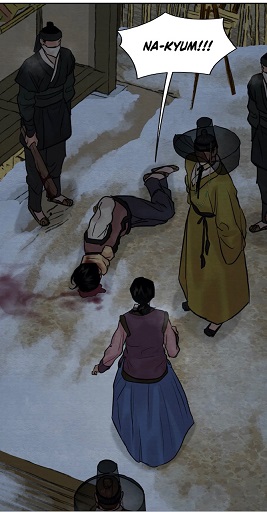 (chapter 99) This mirrors that her original dream was to live with her brother and the scholar, but this was just an illusion. She had hoped that once the artist was by Jung In-Hun’s side, the learned sir would come to buy her, and they would live together. She counted on the learned sir’s affection for the painter. But this was never Jung In-Hun’s intentions and he excused his behavior by putting the blame on the protagonist. (chapter 99) That’s the reason why the kisaeng mentioned the bittersweet affections. The scholar came to see the painter as a burden. This new approach gives us a clue why the artist chose the noble over his noona in chapter 68. The lord might have been violent, yet unlike all the other characters he allowed Baek Na-Kyum to be true to himself and to express his thoughts and emotions. Let’s not forget that in reality he was the only one encouraging the painter to paint, which was the commoner’s true passion. He even praised him, while even Heena couldn’t restrain herself from criticizing her brother. Freedom is an important condition for calling a place or people home, next to comfort and safety. But when the kisaeng left the gibang, it was just a fake freedom, as her safety is strongly intertwined to the benevolence of the noble protecting her! (chapter 97) Hence I come to the conclusion that Heena associates home to the learned sir and not to her brother. Exactly like the artist, she made a choice. She sided with Jung In-Hun, the poor learned sir, who got disappointed with Baek Na-Kyum. But she believes now that he is dead. Hence by leaving the kisaeng house, she doesn’t realize that she is abandoning everyone: the eonnies and Baek Na-Kyum. She has no one by her side… except the noble who sent the guards. From my point of view, she is trusting the butler.
5. What is home for the couple?
In season 2, we could see the transformation of the meaning of home. For Baek Na-Kyum, the mansion of Yoon Seungho had become his home, like we could perceive it in chapter 46.  or in chapter 58. Why? It is related to the way he was treated by the head-maid, the butler and even Yoon Seungho. All of them considered him as part of the mansion. The head-maid gave him advices, the butler through his comment indicated that he belonged now to the mansion.
 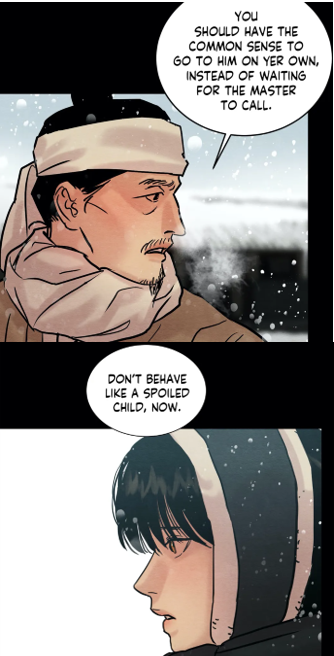 (chapter 52) And finally Yoon Seungho treated him well on different occasions by sharing his breakfast with him or sending him to the doctor or by protecting him from Deok-Jae. Yet I believe that the decisive factor is the momentary separation. Although the painter had lost his position as favored servant, the noble never sent him away. He let him live in the study and kept treating him well. The artist could sense that despite the distance, the noble was not willing to cut ties with him. This explicates why Baek Na-Kyum resisted to the vicious servant, when the latter tried to force him to leave the property.
 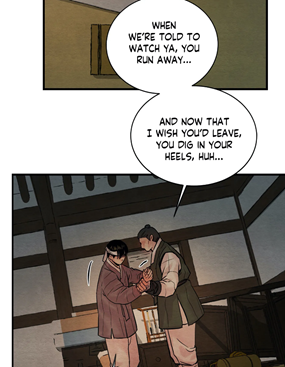 (chapter 53) This was his home now, and he wanted to protect what he had finally found. Despite the pain, he didn’t move. He was ready to do anything for his home. This gives us a glimpse of the painter’s future behavior, when his lover is targeted. There’s no doubt that he will fight for him. And now, if you compare the two following panels, you’ll realize the similarities between the two scenes: (chapter 46)
 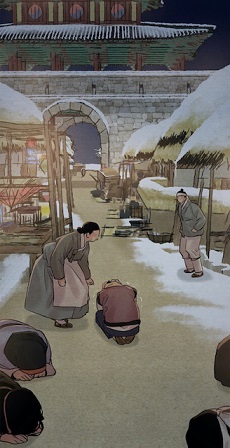 (chapter 76) In both scenes, the painter has a revelation. In chapter 46, he is alone and has no place to go. However, he is strong enough to stand on his feet, while in episode 76, he is paralyzed by fear and becomes so weak. Yet, exactly like in the first image, he feels lonely, but since he can’t escape, this position makes him realize his vulnerability. He needs help and protection. That’s why the moment he realizes the noble’s presence
 (chapter 76), he seeks his embrace and warmth.
 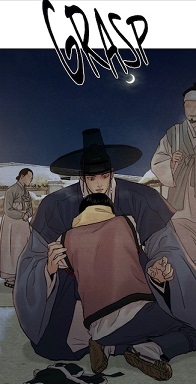 (chapter 76) Only there he feels safe. This terrible experience opened his eyes: he has to rely on someone.
 (chapter 76) Thus for the first time, he requests assistance. So while in the lord’s arms, the painter can slowly calm down, however he is still very shaken, as he has just experienced a life-threatening situation again, revealing the traumas left behind by the first abduction and the blackmail. Yet, after a while he expresses the wish to go home.
  (chapter 76) With these words, it truly outlines that the mansion has become Baek Na-Kyum’s real home, a place where he feels comfortable and secure, which represents a continuation of chapter 46. While in chapter 46, he just considered the mansion more like a refuge or shelter, now he connects it to family. It has truly become part of his identity. But the embrace on the street let him discover that Yoon Seungho could become a home too.
Striking is that there’s a difference between the Korean  and English version, when the lord replies to his request.
  In the original version, the lord is now admitting that the mansion is also his home now, whereas in the past it was just a prison and he wanted to have a companion by his side. In the English version, there’s only silence. This difference affects a lot the interpretation. By remaining silent, the noble is not acknowledging the mansion as his home, but this doesn’t mean that he has no home. In my opinion, Yoon Seungho perceives the painter as his home, hence he prefers remaining there hugging his lover. The painter gives him the warmth and love the lord has always been longing. That’s why he gives the excuse that they should stay there. It seems that the English version sounds colder than the original, yet I believe that Yoon Seungho is using his position in order to legitimate his refusal. Why do I think that the lord views the painter as his home? First, like I wrote above: Home is where the heart is. Secondly, I had already explained that Yoon Seungho would always follow the painter, because he considered him as his home and as such his family. So far, the lord has always perceived his mansion as prison and the bedchamber his cell. This explicates why the lord rejected the painter’s departure in season 3. He needed him by his side, as he had become his pillar.
 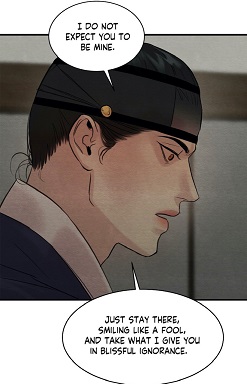 (chapter 85) Baek Na-Kyum represented the foundation of his home. Without him by his side, his “home” would crumble.
Striking in chapter 76, is that because the lord insisted to remain seated, the painter starts enjoying more and more the lord’s embrace,  hence his head moves closer to Yoon Seungho’s
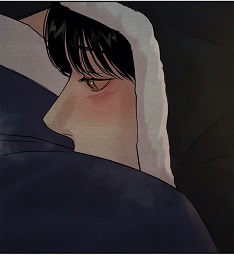 and at the end he even closes his eyes
 . From my point of view, this long and tender hug let him sense that the mansion was not truly his home, but the lord. But this was not entirely conscious. The latter has become his family. That’s why he had been longing for his presence and warmth in the last days.
  (chapter 74) This was a new version of the chapter 51 and 52. And you all know the saying:
“Absence makes the heart grow fonder”
This signifies that since both protagonists found their home, they found a part of their identity. Both protagonist could only become stronger. Thus the readers could assist to the return of the painter and lord’s memories. This is no coincidence that the painter could voice his wishes in front of his lover:  (chapter 78)
 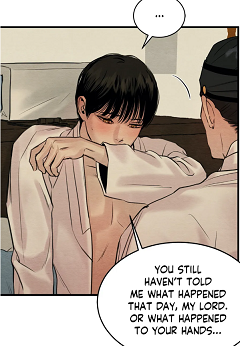 (chapter 84) And it was the same for the lord. That’s the reason why they both argued with each other and with others too. They could now stand on their own, but they still needed the support of the partner.
Under this new perspective, it becomes comprehensible why there was a change in season 3. There, both protagonists learned that home was not a place, but where the heart is. This is no coincidence that Yoon Seungho made the decision to renounce on his possessions, when he had the impression that his “bride” had died. That’s how he learned what home means. It is by his lover’s side, to be in his embrace, and not necessarily the mansion like during the argument exposed it. During the last scene, both protagonists were pushed to recognize that they are now a real family. Yoon Seungho is the painter’s home and it is the same for Baek Na-Kyum. This is perceptible in the final scene:  (chapter 102) It doesn’t matter where they are. Home is where the heart is. Hence the first question he has is:
 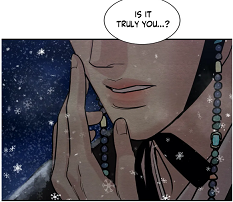 (chapter 102) As long as he is by his side, everything is fine. This new definition of home appeared, when the painter and the lord confessed to each other.
 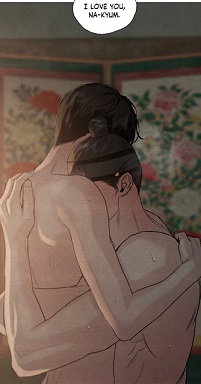 (chapter 96)
  (chapter 96) It didn’t matter where they were. Thus they could confess in a gibang. They felt safe together. And this is the same in the mountain. Observe that the painter is not asking why they are in the mountain and what the lord intended to do there. In fact, he was more focused on the past than the present. However, for the painter, home is not just a family, he liked to sleep in a warm bed and have a warm meal each day
  (chapter 68), since he had lived like a homeless for a while. Hence both will have to look for a real home, a house. Moreover, the lord will have to provide for the painter, and the latter will feel obligated to assist his lover. This means, in season 4, home should have a new definition. It is not just a family, but also the mansion and the country! Don’t forget that many people died in season 3.
6. Yoon Seungho’s bedchamber: a glimpse of his identity
Since I had elaborated above that home was part of an identity and the home would reflect the owner’s personality, I wish to examine Seungho’s bedchamber again. In other words, I will read his room: 
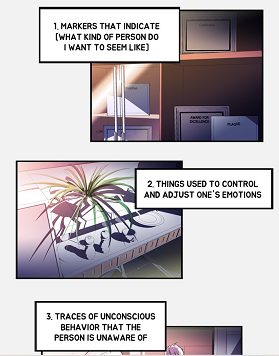 (doctor frost, chapter 9). What caught my attention is that the lord’s bedchamber is literally empty: There are only one big white vase, a red box, candles
  (chapter 55) and a windscreen.
 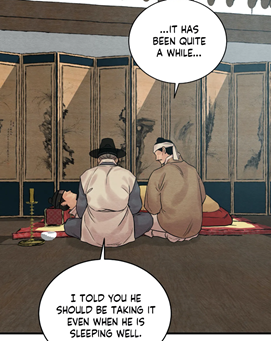 (chapter 55) The latter shows trees painted in black, there’s barely nature in the end. It mirrors the lord’s symbolic death. The emptiness of his room reflected the lord’s life. He was living like a zombie and avoided emotions, as he had no souvenir at all. Although he reads a lot, you never see them in his room. Why? It is because he separated his spirit from his body. In his bedchamber, he was a captive trapped in the past, hence he had nightmares. Moreover, I think that his bed is the source of his nocturnal panic attacks, as the colors are the same than the king’s. And now, the manhwaphiles can better comprehend why the noble has never considered his mansion a home. In this house, and in this room, he had traumatic experiences (abuse), which were so horrible that he had entirely repressed it. Nonetheless, the moment the painter calls the mansion his home, this has a huge impact on the lord’s life. The latter is now “forced” to consider the mansion as his home too. Hence in the Korean version, we have this panel: Then in season 3, the lord’s bedchamber became the painter’s bedroom too. Thus at the end of season 3, the painter visited the lord’s study in his lord’s absence.
 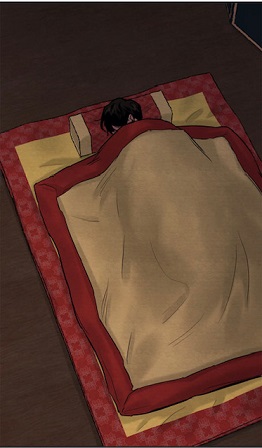 (chapter 98) This shows that he had conquered the bed. Season 3 exposes the painter’s conquest of the bedchamber. The turning point took place in chapter 87, when the artist went to the study on his own volition.
 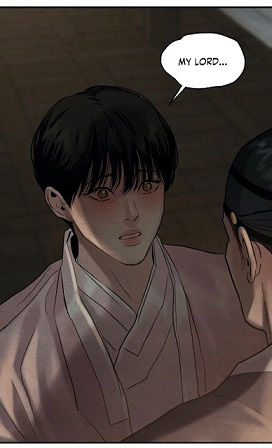 (chapter 87) I can’t help myself thinking that in season 4, the painter will bring his possessions to the bedchamber for good contrary to season 3.
 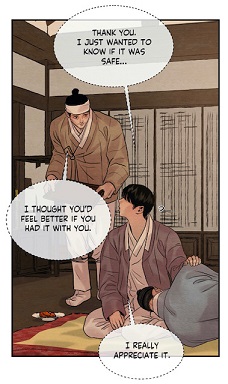 (chapter 79) The music box was brought back to the painter’s studio after the argument. Since the lord bought a music box for Baek Na-Kyum, and the latter treasures this item, it also has a special meaning for the lord too. The music box represents the lord’s heart, but the main lead didn’t grasp the true meaning, until it was too late. So far, the broken music box got neglected after their argument
 (chapter 85), yet I am still hoping for its return, for the lord had recognized its true signification to the painter afterwards.
 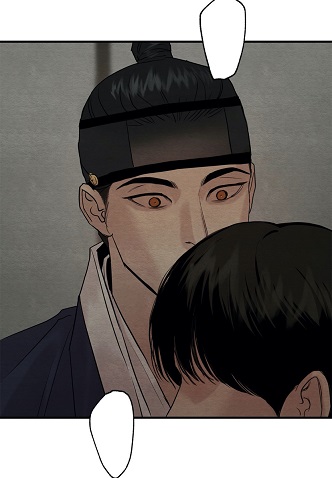 (chapter 85) But we shouldn’t forget the lord’s Spring poem
 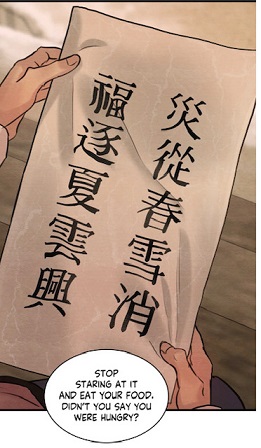 (chapter 92) Little by little, the lord’s study will be filled with treasures belonging to Baek Na-Kyum which are connected to the noble. This is relevant, because thanks to them, the lord can recall the good moments with the artist. Slowly the lord’s bedroom will become more and more a study. With the arrival of souvenirs, the bedchamber will be filled with life again. This will symbolize that the lord is slowly taking over the bedchamber, and filling his room with things he likes. Where is the orchid? So far, all the nobles had plants in their room:
  (chapter 43)
 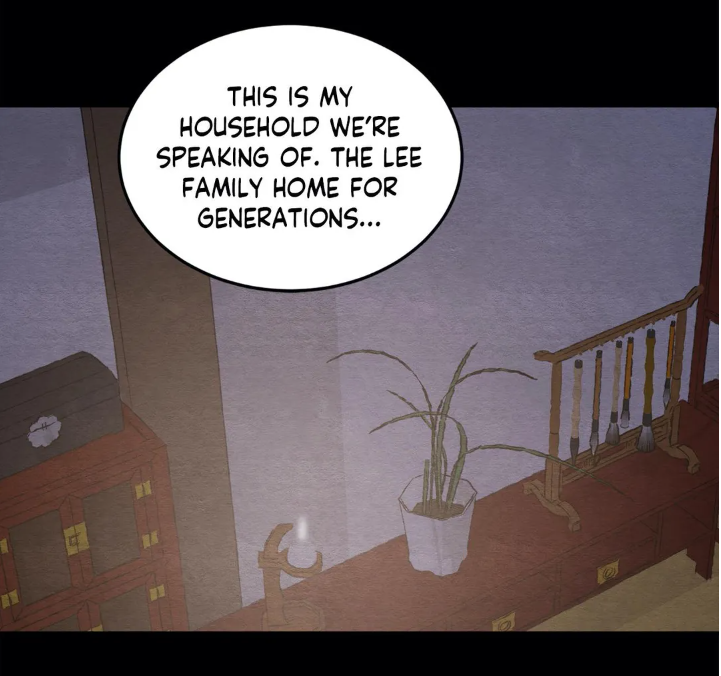 (chapter 82) Hence I am wondering if Yoon Chang-Hyeon didn’t punish his son by taking away the orchid, when he painted on the servant’s body:
  (chapter 36).
7. Conclusions
Through this examination, I could expose that each character had a different definition of home, and their perception of home was never constant. However, I have neglected one figure: Kim. The butler associates home to the mansion and nothing more. He is not even including the staff or the lords. That’s the reason why he is switching alliances all the time. But if he is on the verge of losing his mansion, he will do anything to stay there… like for example betraying Heena. Remember that she sold her brother for his own sake, and she didn’t feel deep remorse, when she saw her wounded brother. She even asked an explanation for his wounds:  (chapter 99) This new interpretation leads me to the following observation. In season 4, we will witness a new battle again, and it will be about the ownership of the mansion. Who is the true owner of the propriety? Kim, Yoon Chang-Hyeon, Yoon Seungho or lord Song?
Feel free to comment. If you have any suggestion for topics or manhwas, feel free to ask. If you enjoyed reading it, retweet it or push the button like. My instagram-tumblr-twitter account is: @bebebisous33. Thanks for reading and for the support, particularly, I would like to thank all the new followers and people recommending my blog.

 Back then, the identity of the “bride” was unknown. However, there were two witnesses: the wandering merchant and the servant Deok-Jae.
 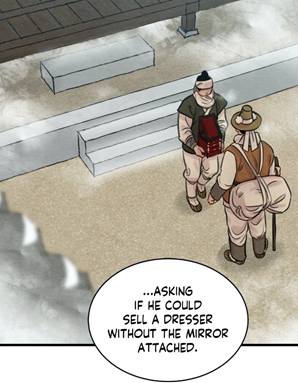 (chapter 45) The former mentioned this event to others so that a rumor started among the town folks. They were all wondering if Yoon Seungho was engaged due to the bridal carry. Since no marriage had happened, but simultaneously he showed great care in that person, they definitely perceived that the latter in his arm meant a lot to the master. They could judge that the noble was in love. At the same time, they were pleased, because they had realized that the black sheep of the Yoons seemed to have calmed down. Many painterofthenight-lovers couldn’t help smiling, when the entertainer praised the fiancée for her good sexual technics,
  (chapter 45) because the truth was that Yoon Seungho was so dissatisfied with the painter’s tricks.
  (chapter 45) And with such a contrast, it becomes obvious how strong and deep the noble’s affection for the artist already was. While the commoner’s comment diminished Yoon Seungho’s love for Baek Na-Kyum, as it was reduced to sensuality and seduction, the lord’s attitude clearly displayed that Yoon Seungho was expecting something else, but he had no idea what exactly. Striking is that the low-born was also clueless that the aristocrat had carried him like that, for he had fallen asleep. The fact that the wealthy man used his own hanbok to carry the commoner to the bathroom illustrated how caring Yoon Seungho was, but no one told him about this. Furthermore, this gesture outlined that the protagonist was taking great of the painter’s body. He shouldn’t get cold and he should get cleaned immediately, underlining that the first sex marathon had left a huge trauma on him. This incident (the bridal carry) was never mentioned within the mansion for two reasons. The domestic Deok-Jae had no interest in telling it to others, as he was filled with jealousy and still hoped that Baek Na-KYum would lose the lord’s favor. As for Kim, when he discovered that the incident had reached the ears of the inhabitants, he seized the opportunity to hide the fiancée’s identity in order to limit the damages. On the surface, it looked like he was protecting the couple’s interest, whereas in reality he feared a scandal. But more importantly, he wanted, just like Deok-Jae, this situation to be just temporary. Therefore he could only reduce the painter’s status: he was neither a bride nor a fiancée, at best a favored servant.
 (chapter 45) That way, if the low-born was to disappear, no one would connect Baek Na-Kyum to the bridal carry. All the men were convinced that it was a woman due to the smooth legs.
 (chapter 45) Since the painter had been kept in the dark about the noble’s action, he couldn’t realize the noble’s feelings. The only person pointing out the master’s affection for the commoner was the head-maid.
  (chapter 46) Since she had been kept in the dark by Deok-Jae and Kim about the bridal carry, she had to mention another conversation to prove her observation. Yet it was definitely less convincing, as it was more related to comfort and respect.
  (chapter 66) The manhwalovers will notice the progression. First, the identity of the “bride” is no longer hidden. This time, the lord’s attention is more focused on the head, as his hand covers the painter’s head. In other words, he pays less attention to the artist’s body. The latter is just wearing a shirt and nothing more. The reason for this divergence is simple. Baek Na-Kyum had just a flashback, a panic attack indicating that his spirit or mind was troubled. Yoon Seungho had recognized that the painter was injured mentally. Just like in the past, there’s a witness, but this time, it is the noble Min. Why only one witness? If you compare it to the first scene, you’ll note that Black Heart replaces the merchant and the servant Deok-Jae. The Joker is lusting after the low-born due to the smooth legs (a new version of this panel:
 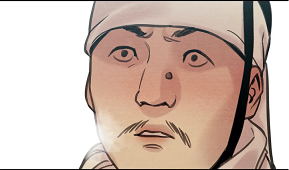 chapter 45) and he is definitely jealous of the main lead, similar to Deok-Jae. This made me realize why The Joker revealed Jihwa’s abduction right after. Imagine, if people got aware of this incident, then The Joker wouldn’t be able to taste the artist. Every one would know about Baek Na-Kyum and his importance to Yoon Seungho. He was no longer a low-born, but the lord’s official wife and partner. If he were to disappear, no one would be able to escape punishment. Therefore he needed to separate the couple… since the artist was in a poor condition
  (chapter 66). He could only assume that the painter wished to disappear, for he had been abducted and Yoon Seungho had failed to protect him. Later, Kim could report to him what Yoon Seungho had done to the painter in the shed, so that Min’s belief that Baek Na-Kyum would leave the mansion could only increased. Both imagined that the commoner would desert the lord’s mansion. Both hoped that Baek Na-Kyum would reject the “marriage”, although he was already chosen as the lord’s bride. As you can observe, the bridal carry plays a huge importance, it definitely symbolizes marriage, even if it is between two men. And this led me to the theory that Min had already envisioned the next scheme. The conspirators had no time… especially if other servants noticed the bridal carry too. Let’s not forget that before Min stood in front of the master’s bedchamber, other domestics were standing there: Kim, the maid and another servant.
  (chapter 66) It is definitely possible that they looked at their lord’s action from faraway. If so, this would signify that the news about Baek Na-Kyum as the lord’s bride has finally reached the ears of the staff.
  (chapter 71) This signifies that now the artist is well aware of the signification of that action. That’s why he is definitely moved. He is blushing and letting his head rest on the protagonist’s shoulder.
 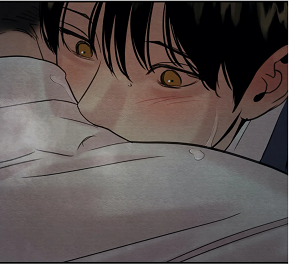 (chapter 71) He stares at the lord’s shoulder so intensively in order to confirm that this is real. More striking is that the painter’s nose is on the lord’s shirt implying that the commoner is smelling the lord’s fragrance. Furthermore, the painter senses the warmth from the master’s body, just like he hears Yoon Seungho’s footsteps on the wooden floor. To sum up, Baek Na-Kyum is using all his senses that he is not dreaming. Gradually, he is accepting it as reality, hence he can only blush.
 (chapter 71) to this one:
  (chapter 33). Back then, the butler was worried that Baek Na-Kyum would reveal his complicity in the escape. However, this time Kim is concerned for another reason: the painter is no longer a favored servant, but now the bride and as such Yoon Seungho’s official partner. But if the readers compare the two previous bridal carries, they’ll remember that there were more than just one testifier… although in the second case, it was just implied. Thus I think that there could be another witness. In the first version of this essay, I had imagined that the Joker could have been present:
  In chapter 44, he saw how the painter walked to the study. Secondly, he was present during the second love session:
  . (chapter 60) However, I was wrong here. Then it occurred to me that if there was a second witness, then it could have been the new version of Deok-Jae. He had been following the guest
  (chapter 66), when Min entered the propriety. And according to social norms, he should have followed the noble. So he could have seen the painter’s legs from a certain distance. And this also would explicate why the domestic had such eyes, when he approached the bedchamber in season 3.
 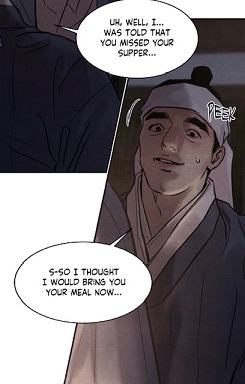 (chapter 80) He was interested in the painter. And there is another evidence that there are always two witnesses of that bridal carry, the love session in the gibang.
  (chapter 96) The noona was joined shortly after by Min who could now hear their love session.
  (chapter 96)
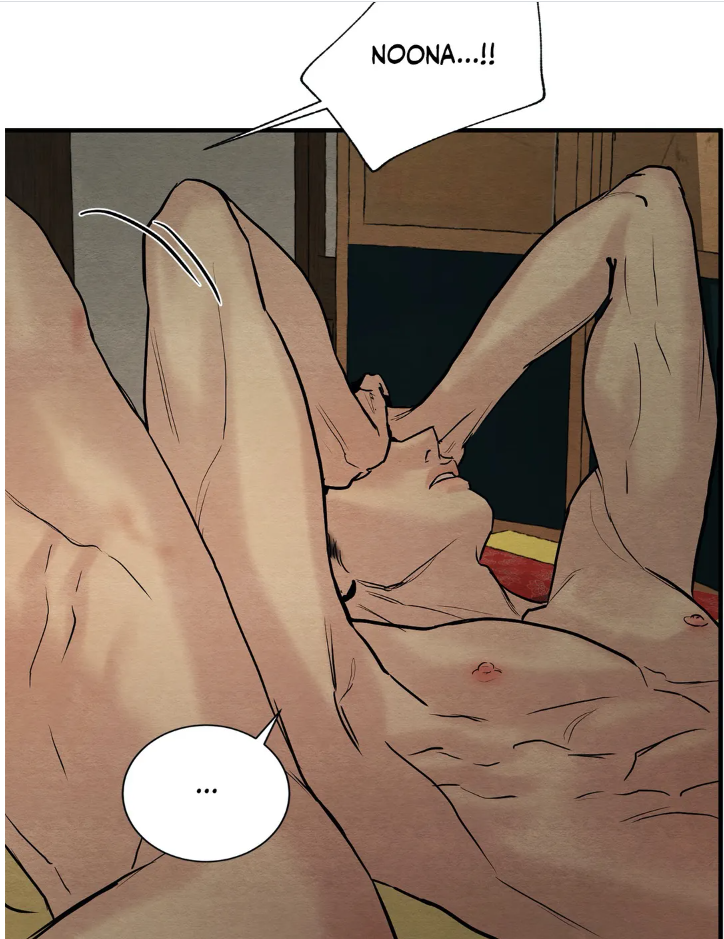 (chapter 65) This means that the painter was now the official partner of the protagonist. Nonetheless, the lord tied his bride so that the latter wouldn’t leave. The bridal carry was connected to forced marriage.
 Before the love session, though their intimacy began in delay. Note that the bride was the one who determined, when they should be intimate. However, they got interrupted. Then the consumption was quite painful, though the painter had masturbated before and as such prepared himself.
  (chapter 81) For me, this is an allusion to Yoon Seungho’s rape in his youth.
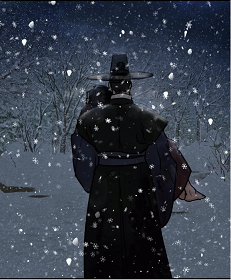 This happened after the sexual assault. The lord was acting like in chapter 66. He was full of regret and tenderness. We could say that he was acting like a knight protecting his bride. Here, again the bridal carry is intertwined with death and pain. Don’t forget his words in the bath:
  (chapter 70)
 and kisses.
  (chapter 77) and clean up his mess… no wonder why Yoon Seungho came to resent the man. He left the young master totally unprotected, exposed to all forms of abuse. And the man might have wondered why Yoon Seungho was so difficult to tame… Therefore he could never entirely trust the main lead. Consequently I view the gesture as the symbol of bravery, care, responsibility and strength. From my point of view, the main lead must have recognized that he was “married” much too young to the pedophile. During his conversation with Bongyong, the lord indicated that age mattered. He still had time.
 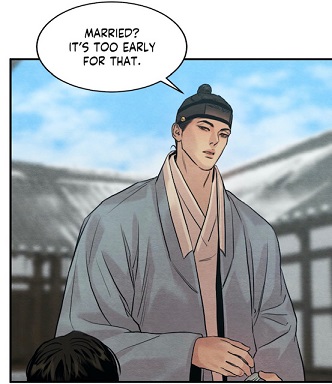 (chapter 78) They shouldn’t get married too young, and in my opinion, he was speaking out of experience.
 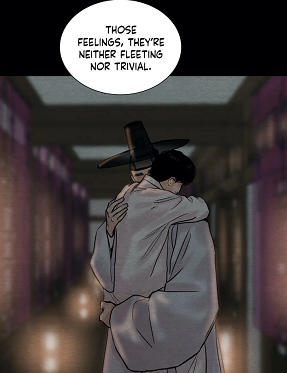 (chapter 68)
 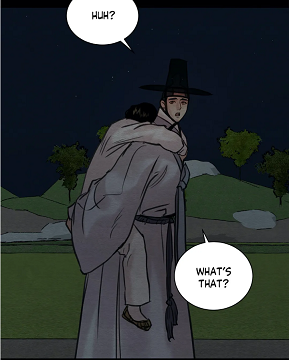 (chapter 70). The learned sir acted like a father and with the recollection of the piggyback, Baek Na-Kyum recognized the true value of this carry. He was never loved, like the commoner desired, the young man just viewed him as a child. He was innocent and pure and couldn’t realize the true nature of the scholar’s feelings: trivial and fleeting emotions, which turned into indifference, when the artist became an adult. That’s the reason why the artist is no longer upset… he judges this event in a different light. Back then, he was only a child for Jung In-Hun. This scene represents Baek Na-Kyum’s loss of innocence. He is now a mature man who makes decisions on his own. He is no longer idealizing Jung In-Hun, and the bridal carry reflects this maturity.
 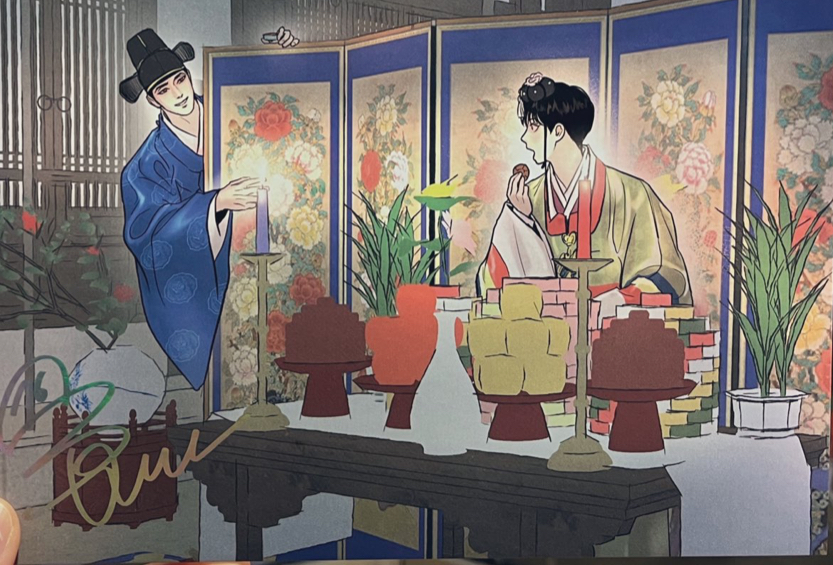 Thus expect new bridal carries in season 4, but some of them will be connected to death, pain and sorrow. 😥
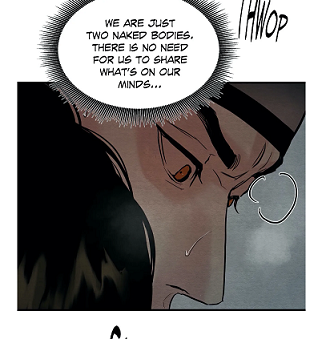 He wanted to communicate (“share what’s on our mind”) with the low-born, but the latter refused, because he just considered the noble as a sex toy to procure him pleasure out of fear to get hurt and deceived again.
  (Chapter 1) He expressed his genuine admiration for Baek Na-Kyum’s talent and creations. Yet, at no moment the painter noticed the compliments. He had been forced to touch the loins, which shocked him, and then he remembered the lord’s bad notoriety. Therefore all the lord’s good words fell on deaf ears. The painter was more concerned with appearances and rumors than anything else. That’s why the conversation failed. Since Baek Na-Kyum was not interested in the main lead’s feelings, he feigned ignorance first, and lied at the end.
  Striking is that their first conversation was connected to books and sex, therefore this already limited their exchange. Moreover, this first chapter clearly reveals the lord’s interest in the low-born. He not only sent a domestic for the investigation about the mysterious creator, but also asked about his recent whereabouts. And curiosity usually initiates a conversation. But there’s more to it. From my perspective, the main lead felt no longer satisfied with the erotic pictures. He wanted to share his emotions and thoughts, when he looked at them. However, he had no one to talk to, so in his mind, if he met the artist, he could come into a conversation with the creator. That’s why he wanted to invite him in the end. The painting of sex sessions would give him the perfect occasion to discuss with someone.
 (Chapter 8) Observe the contrast. The main lead doesn’t reveal his anger towards the noble with the mole, it is not worthy for Yoon Seungho of giving him an explanation for the humiliation. He just smiles
 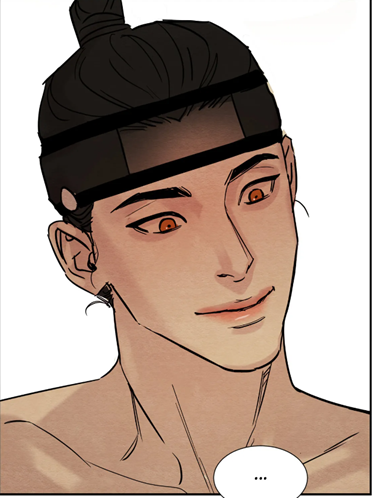 (Chapter 8) before grabbing him by the topknot. His words and behavior truly display a huge respect and a desire to exchange thoughts and observation.
 (Chapter 8) This mirrors the noble’s need to talk and now, you understand why the main lead had to evict the aristocrat with the mole in the end. By requesting to send away the commoner,
 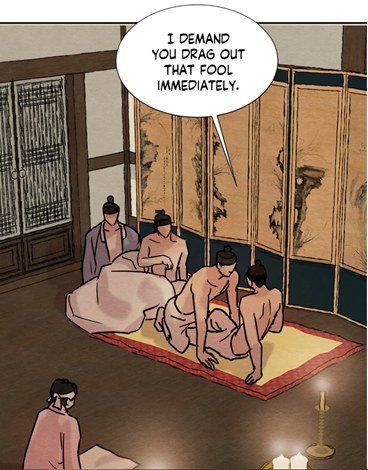 (Chapter 8) he was more or less asking from the host to remain silent.
 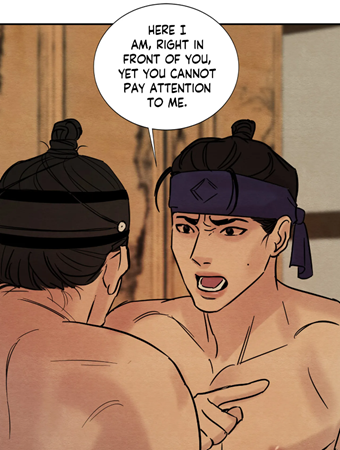 (Chapter 8) The latter just had to focus on the guest’s sexual desires which confirms my interpretation that the main lead is treated like a head-kisaeng. Since the noble showed him no respect, then the main character didn’t need to respect him either. But more importantly, the protagonist made sure that he would be treated the same way. He also wouldn’t listen to his words, because the noble with the mole didn’t want to hear him speaking either. Therefore the door is closed, before the man can protest. As a conclusion, the aristocrats only visited him for sex or other pleasures and nothing more, while the noble had to remain quiet. Hence we have a silent main lead in his relapse:
  (chapter 52) However, even here the manhwaphiles can notice the transformation. The guests are no longer here for sex, just for smoking opium and drink wine. That way, the noble doesn’t feel lonely.
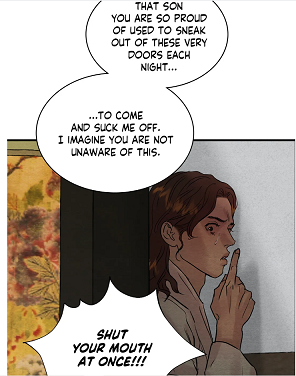 (chapter 67) the childhood friend would only visit him during the night (“used to”). However, it changed the moment the main lead paid a visit to the red-haired noble early in the morning (chapter 3). After that, Jihwa realized that he could also go to his friend during the day (chapter 5
  and 12
  ). And now, you comprehend why the lord questioned his presence in the morning and why he assumed that his visit was related to sex in the end. It looks like Jihwa never showed an interest in the lord’s thoughts and emotions too. And there exist two reasons for that. First, he had the impression he knew everything about his lover.
 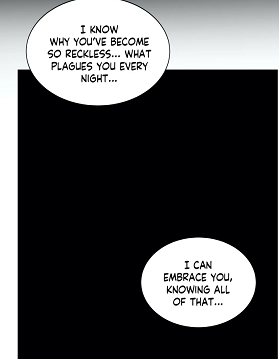 (Chapter 57) Secondly, there was a risk that the main character could talk about the past and as such mention Jihwa’s betrayal. The lord’s emotions (sadness, anger, pain) represented a huge burden to the red-haired master.
 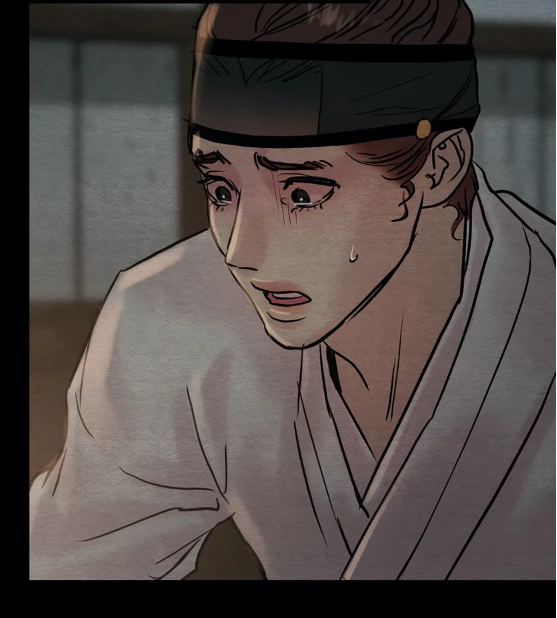 (Chapter 59)
  (chapter 18) Thanks to the artist’s presence, Yoon Seungho had been able to talk and people would actually pay attention to his presence and words. They started listening to his words. Imagine, one word and the straw mat beating was stopped:
 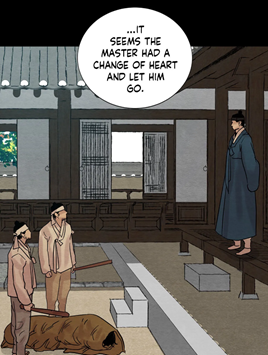 (Chapter 13) No wonder, why he thanked the painter in chapter 18. He could only be happy, when he confronted his childhood friend, as there was a real exchange for the first time.
  (Chapter 13) Argument is also a form of communication, and it happens between people in a relationship. Not only his words were finally noticed, but also he was able to draw lines to Jihwa.
  By influencing the host with the hope, Yoon Seungho would send away the painter, the childhood friend didn’t recognize that he was attempting to turn the protagonist into a puppet, therefore he could only fail. Moreover, Jihwa had no idea that Yoon Seungho’s true desire was to get close to someone, to engage a honest conversation. Therefore the main lead could only reject the friend’s words and proposition. As a conclusion, with the painter’s arrival, the lord’s words were little by little listened, he was able to communicate more with others: Jihwa, the nobles and the staff. After scolding the maids in the kitchen
  (chapter 38), the head-maid started showing her respect to her lord. But more importantly, he gave her the order personally to bring the painter’s lunch to his study.
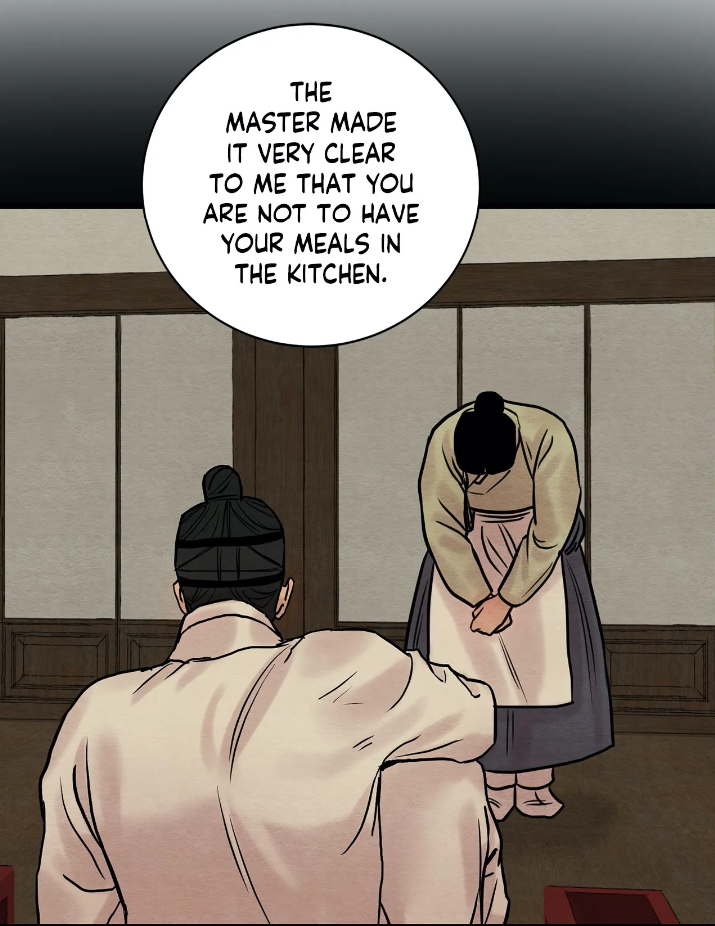 (Chapter 46) He could finally voice his thoughts, everything happened thanks to the painter. This explicates why Yoon Seungho kept seeking the artist’s proximity, although the latter kept rejecting him (his escape, his lies, his refusal to paint for him etc…). He had realized that his living conditions had improved despite the struggling with the low-born.
 (Chapter 5) This outlines the main lead’s isolation and loneliness. Simultaneously, with this new approach, the readers grasp why Yoon Seungho couldn’t anticipate to become Min’s target in the end. He noticed Black Heart’s envious gaze
 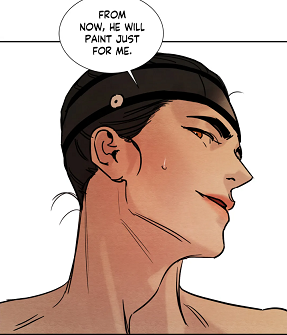 , (chapter 8) but he didn’t envision what jealousy and greed would provoke. In my eyes, he couldn‘t identify these emotions properly.
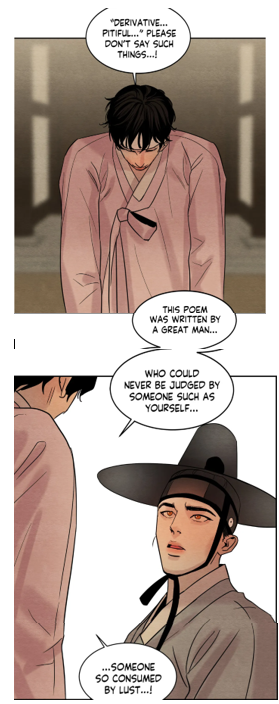 (Chapter 4) He was not worthy to comment this poetry, as he was just a man consumed by lust. However, the commoner never asked why the noble would judge the poem so poorly. He already assumed that he was just making fun in order to humiliate the scholar, while in reality the noble wanted to reveal the author’s true personality: Jung In-Hun was just a deceiver. And since he had been hurt by the painter’s comment, he retaliated too: since he was just a commoner, he had no right to criticize the lord.
  (Chapter 2) Baek Na-Kyum was the first who made the main lead realize the existence of his body. For the first time, he felt attraction through the gaze and saw something beautiful in himself. And what was the lord‘s immediate reaction? He started talking about his thoughts, though this was more a monologue than a discussion.
 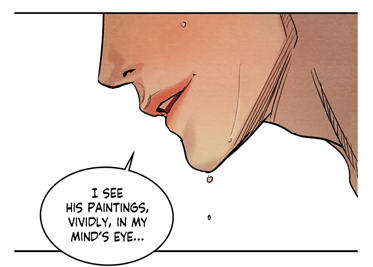 (Chapter 3)
 (chapter 3) Exactly like the painter, Yoon Seungho began talking while having sex. He even formulated his first desire in front of his childhood friend:
  (chapter 3) And now, you comprehend why his relationship with Lee Jihwa was doomed to fail. The red-haired master was more focused on sex and his own sexual emancipation than his lover‘s well-being.
 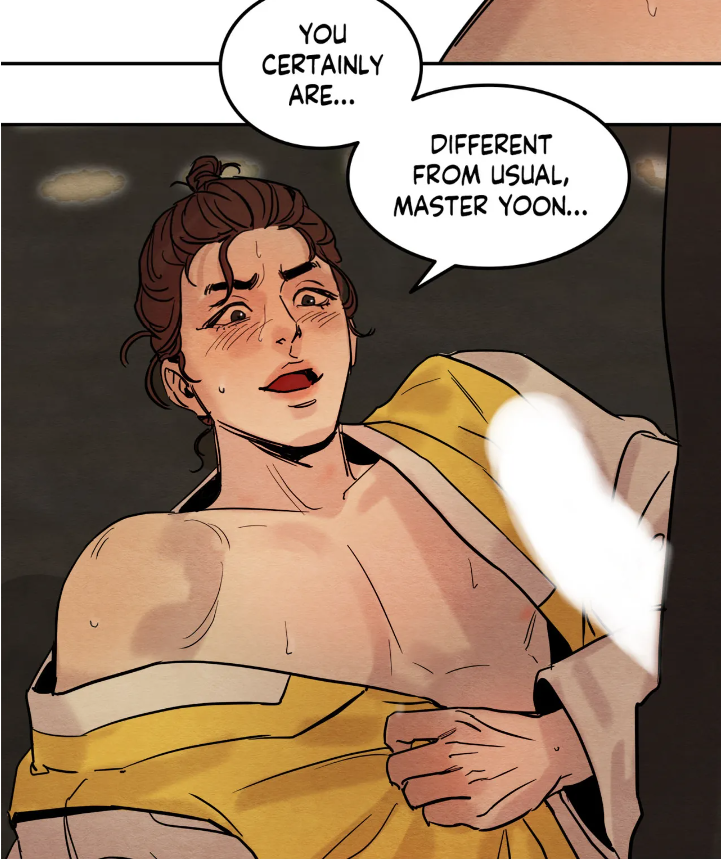 (Chapter 3) He never asked him why he was behaving so differently. He didn‘t notice that the lord was more communicative.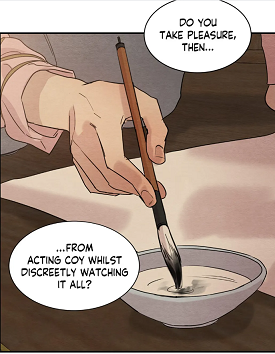


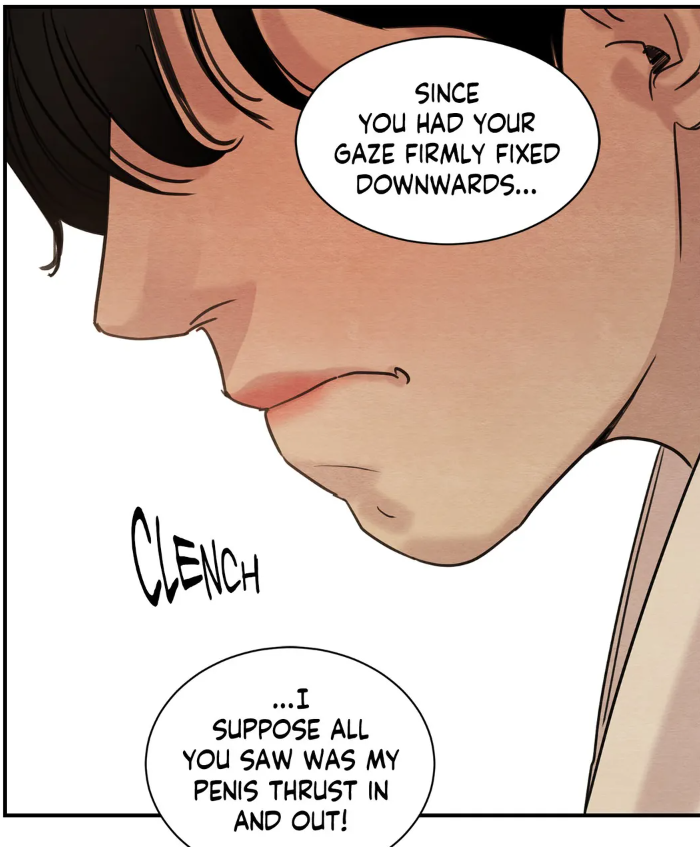 (chapter 16) On the surface, it looks like he is sulking, the reality is that he is already fighting against his urges. The hand is trembling due the arousal.
 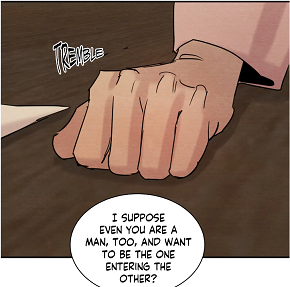 While you have the impression, he is bothered by Yoon Seungho, the truth is that the artist is getting more and more excited due the lord’s picturesque questions. Funny is that in this scene, the aristocrat is the more innocent one. He plays with the head-band
 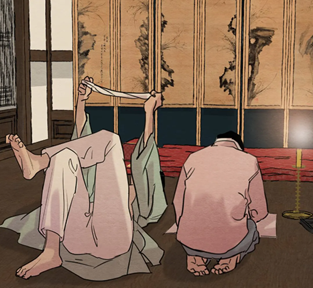 and his “innocence” is truly visible through his facial expressions too:
 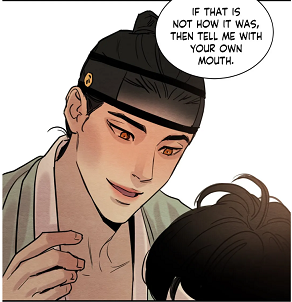 . What is the painter’s real sexual desire? We have the answer in this panel:
 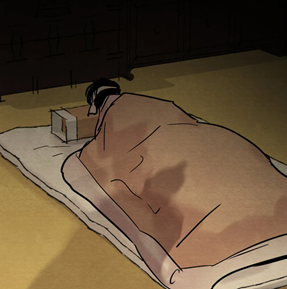 (chapter 6) a stranger in form of a shadow enters the artist’s room. The lord’s identity is only discovered at the end. But in his fantasy, the main lead was even grabbing him by the hair. It was definitely not a tender gesture.
 He was even caressing him against his will. And note that when Yoon Seungho questions when he got the most excited to the point that he had difficulties to breath, the commoner remembers this image and not the strokes.
 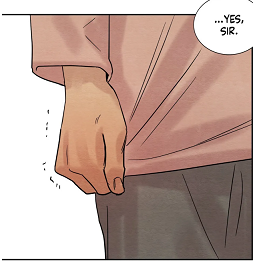 (chapter 12) triggered by fear. This new interpretation explains why the artist painted the sex at the pavilion in the end.
  (Chapter 41) If the forced sex had truly traumatized him, he wouldn’t have been able to do so. Furthermore, he questioned the authenticity of the lord’s affection, when he recalled the moment, he was offered to the other nobles. He was upset and offended.
  (Chapter 55) Yet he didn’t even think about the scene at the pavilion for one minute. This means that Baek Na-Kyum only accepts the main lead as his lover. Fear and pain are not perceived as something negative, they can evoke pleasure.
  (Chapter 16) Moreover, he didn’t get angry at Yoon Seungho for touching his phallus. He got more scared that someone had seen him enjoying the masturbation and I would even say, getting grabbed by force. Therefore the lord got an erection and was so happy at the kisaeng house. Finally, he had been able to talk to the painter. He even got to receive a honest answer for the first time, where he was even called “my lord”:
  (chapter 16) To sum up, Baek Na-Kyum showed a certain respect to the main lead in this chapter. But more importantly, the master was in a good mood, because he kept thinking how he could procure pleasure to the commoner.
 (Chapter 21) The painter reveals the truth by replying that he enjoyed it very much, it felt like a dream. As you can see, chapter 21 was a reflection of the episode 16: we had a discussion, where the lord tried to initiate a conversation, tears of joy connected with pleasure, the lord asking to be called “my lord” and the realization of a dream. But we have another evidence that despite his words, he wanted the main lead to continue:
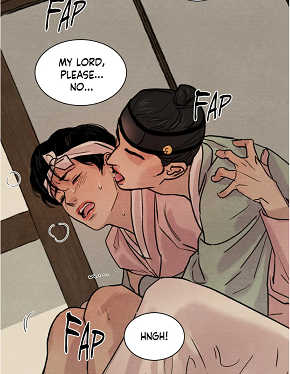 (chapter 16) The commoner’s hand is placed on the shoulder indicating that he is pushing Yoon Seungho to his side. He could have tried to remove the lord’s hand on his phallus, but he didn’t. The hand was even trembling from pleasure. That’s why the second sex marathon shouldn’t be judged as a rape in my opinion, although the painter kept saying no too. First, the painter makes the exact same expression than in chapter 16:
 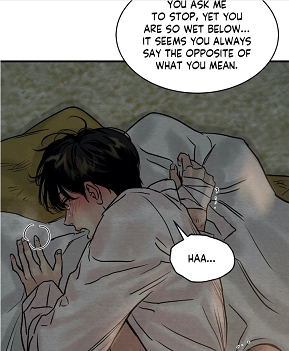 (Chapter 63) And even the lord notices that the painter is getting more and more excited by the roughness. He keeps describing how the painter is reacting below
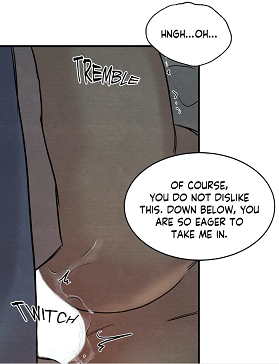 (chapter 63) which can only increase Baek Na-Kyum’s arousal, as his words are again very graphic. Note that the lord’s pictorial “filthy” expressions affect the painter deeply, exactly like in his second wet dream:
  (Chapter 63) Therefore I come to the conclusion that in chapter 63, the painter is not crying, because he is really hurt and angry at the main lead. These are tears of pleasure mixed with pain, which is linked to BDSM. That’s why he keeps blushing the whole time.
  (Chapter 63) This explicates why he kept ejaculating, despite saying “no” or recognizing that there was a witness. He felt no longer scared or embarrassed, like in chapter 16, where he ran away to hide. With this new version of the sex marathon, the painter truly discovered his sexual preferences. Therefore, when we see this
 (chapter 63), we shouldn’t project our own emotions into the artist: pain and disgust. Remember this: the painter felt his blood running hot, when the lord grabbed his hair violently in his wet dream.
  (Chapter 68) He is still scared and embarrassed of his own sexuality. It must have felt strange in that historical period. What caught my attention is that we have two chapters where tears are mixed with pleasure and happiness (chapter 16-21), while we have two chapters where the tears are associated to pain and sadness (25-26; 41-42). Besides, in the last sex session from the first season, the painter was the one asking the lord to be quite rough!
  (Chapter 42) Yet, the noble couldn’t help himself showing tenderness and affection at the end with the passionate kiss. As a conclusion, the second sex marathon contains all these elements: sadness, pain, pleasure, anger and happiness.
 (chapter 16), and in chapter 35 he accepts to be a servant or in chapter 49 a sex toy. Due their different sex sessions, he discovered that he likes being rough too. Therefore he couldn’t enjoy, when the painter was so passive. He recognized that he took pleasure, when the painter was showing resistance too.
 (Chapter 63) This explicates why he couldn’t stand the expression “I like it”. This was too insipid. So when he became rough in chapter 48, he truly hoped to provoke tears of happiness caused by the sensation of pleasure.
 (Chapter 48) However, since the painter ended up crying and criticizing the lord, he had the impression, he had failed. As you can see, the lord might have had a lot of sexual experiences, yet with the painter, he entered a totally new world: full of warmth and love, yet there was pain connected to pleasure as well. This explicates why he could open up and reveal that his real dream was to make the painter smile
 (chapter 63), which contrasts so much to Baek Na-Kyum’s dream: cry of happiness.
  (Chapter 79) Hence people saw the sex session in the shed as rape. Nonetheless, the manhwaphiles shouldn’t forget that Baek Na-Kyum was living in the mansion as a servant. Hence according to Joseon’s social norms, he was in no position to reject the main lead. However, for Yoon Seungho, it was different, for he was a young master. He had a title that was supposed to protect him. Consequently, the main lead can reproach the mysterious lord Song that he never asked for his consent and he would even treat him like a male kisaeng!
  (Chapter 36) While, it looked like he was protecting the painter, he was undermining their relationship. He was actually using triangulation.
  (chapter 50) Then he utilized the lord’s misconduct in the storage room. He should wait for the painter’s visit in his bedchamber.
 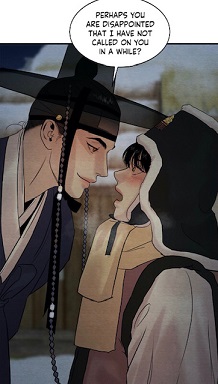 (Chapter 75) However, the valet could never stop the progression. The irony is that their first deep conversation took place outside the mansion.
 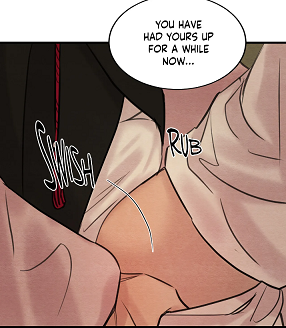 (Chapter 39) Once again, the lord had a teasing attitude, yet he was gentle and considerate. This is not surprising that due to their interaction, Baek Na-Kyum started listening to the lord. He took his questions and advices very seriously (chapter 40). Thus he confronted the learned sir about his future. As the painterofthenightphiles can detect, by communicating they began trusting each other more, and as such showing more curiosity and understanding to their counterpart.
  (Chapter 68) With these words, he was implying that the low-born suffered the same fate than Yoon Seungho, because it looks like that on the surface. He imagined that he would achieve his goal (sending away Baek Na-Kyum) by using his knowledge, but in my opinion the opposite happened, like I had expected. What caught my attention is that the butler only mentioned Yoon Chang-Hyeon
  (chapter 68), as he had sent the painter to the storage room like his father. Yet, at no moment he made an allusion about lord Song, though he saw the sex in the barn as sexual abuse. He was thinking of the pedophile’s crime. He couldn‘t bring up the pedophile for two reasons: As a domestic, he can‘t badmouth the king. Secondly, he has to blame the father, as his own responsibility in Yoon Seungho‘s suffering would come to the surface. Remember my theory: Kim was the one brought the young master to the king thinking that the latter would protect Yoon Seungho.
  (Chapter 88) Furthermore, the chronology is important. The painter communicated first his thoughts and wishes, before they initiated the love session.
 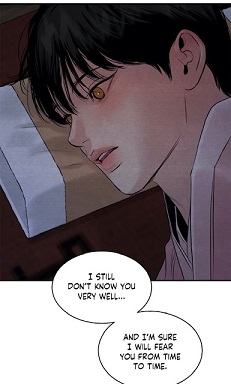 (Chapter 88) This contrasts to the sex session in chapter 48/49. The lord had used sex in order to force the painter to share what was on his mind. Finally, in the gibang, the painter had talked a lot about his childhood to his lover before kissing his lover.
  (Chapter 94) They had a long conversation, where the lord could ask questions. This conversation ended with a love confession.
  (Chapter 94) This is important, because sex had now a different function. Sex was now a real form of communication, they would share what was on their heart. With their bodies, they would convey emotions. They would use the hand
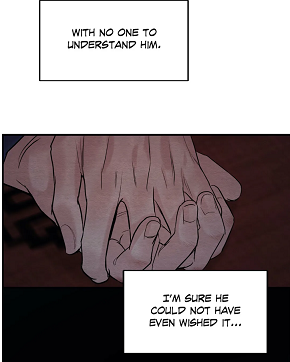 (chapter 88) or the kiss
  (Chapter 95) so that no misunderstanding would be created. Therefore it is not surprising that even during their love session, they would keep talking, and even express their desires: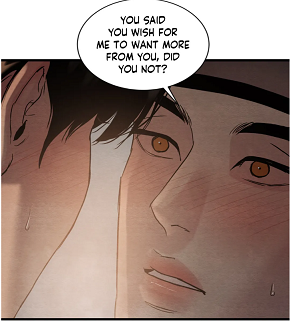
 (Chapter 96) And observe that even after the love session, they continued sharing what was on their mind and heart:
 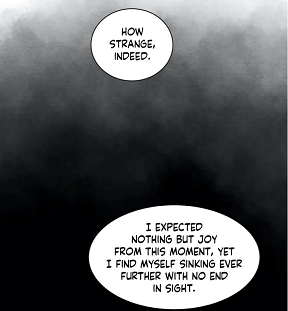 (chapter 97) And now, you comprehend why the schemers had to separate the couple! From this moment on, they would communicate constantly, and this outside sex. Thus when they are in the mountain, they can speak freely.
  (chapter 102) Here, the painter wished to understand why they were separated for so long. This means that Yoon Seungho has to discover the circumstances which led to this tragedy. That‘s how they will realize that the enemies are close to them. The lord has to recognize that he needs to share everything, like for example the discovery of Deok-Jae’s corpse.
  (Chapter 97) As you can see, the topics of their conversation will diverge more and more. I do think that he was incited to let the painter sleep in order to „protect“ him. Yoon Seungho needs to recognize that warning and drawing lines are not enough to protect the loved one. He will have to take real measures to turn his statement (taking responsibility for the painter) into a reality: he will have to fight for his right to happiness.
 (chapter 35). But what does the window symbolize?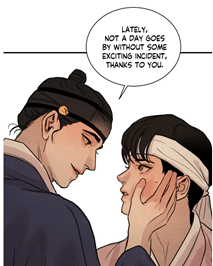
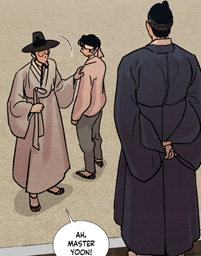
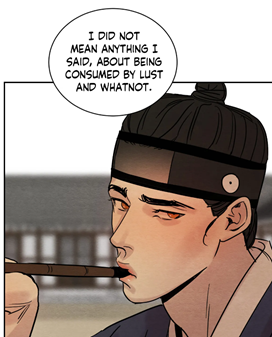 (chapter 5) and it is still there at the end of season 1.
 (chapter 44). It looks like there wasn’t much progression, yet this time, the painter walks towards his mansion and remains by his side.
 This is important, because I realized that with the vanishing of the learned sir, Yoon Seungho chose to remain in the lord‘s bedchamber. What caught my attention is that the lord always went to the courtyard because of the admired sir. We have two chapters for this interpretation: chapter 7 and chapter 35
 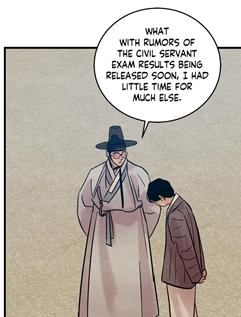 . What caught my attention is that when the lord visited the scholar for the first time, both were sitting in front of a door which looked like a window at the same time.
 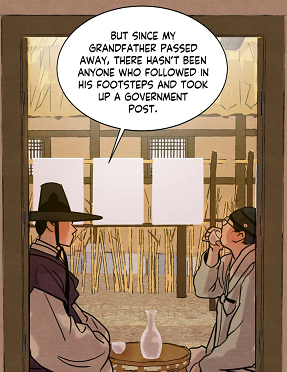 (Chapter 7) This is not random at all, as from my perspective, it introduces the role played by Jung In-Hun in the main lead‘s life. He will be the one forcing the lord to move away from the window so that he can leave the bedchamber. Thus we had this scene: Yoon Seungho is observing the learned sir and his student from far away.
  (Chapter 19) This explicates too why the noble remained so passive in season 2 in the end. Baek Na-Kyum was the lord‘s love interest, hence his „place“ is the bedchamber. So how can the lord move away from the window and as such from the bedroom? Jung In-Hun is the trigger. And note that only in season 2, we discovered how the learned sir used walks through the countryside to console the painter.
 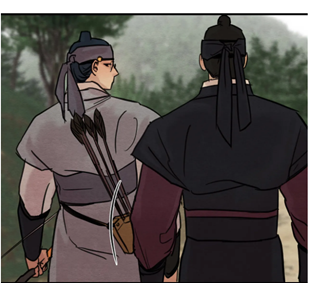 (Chapter 22) And if you recall the lord‘s behavior, you will notice that he left the city for the first time, when he wanted to meet the scholar.
 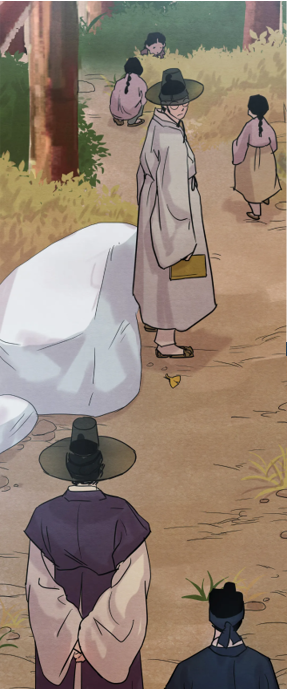 (Chapter 6) He encountered him in the woods. Under this new light, it reinforces my conviction that the learned sir‘s death will be the lord‘s motivation to become proactive and leave his past behind. Why? It is because of the painter‘s words.
 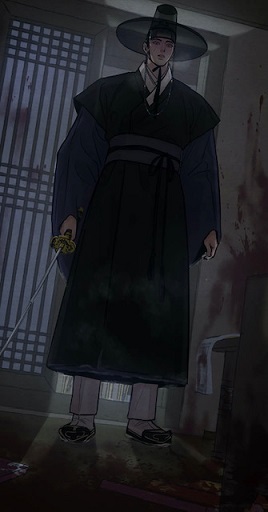 ( 100) Don‘t forget that the main lead saw the room covered in blood, though the latter had already dried. To conclude, the main lead was encouraged to walk thanks to the scholar, and as such to leave his window!
  (Chapter 100)
 (Chapter 44) It was the painter’s role. This signified that he was still trapped by his past and trauma, something that he hadn’t revealed to anyone. Since Yoon Seungho is still inside the room smoking in front of the window, it reveals that the lord had not really let go of his past at all, he had not expressed himself in front of Baek Na-Kyum yet. If he reveals his inner feelings and thoughts, this means he will disclose his secret and unveil his vulnerability. This explains why there was no confession from the noble’s side for instance [there were other reasons why he hadn’t confessed anything too], why he was still not sharing his inner thoughts and emotions to his partner.
  (Chapter 37)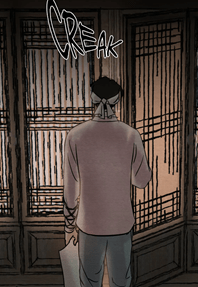

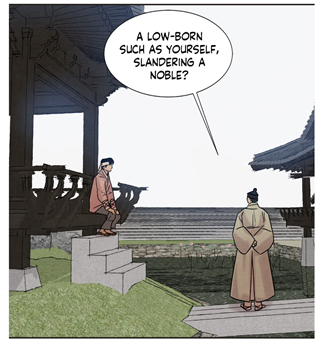 (chapter 10),
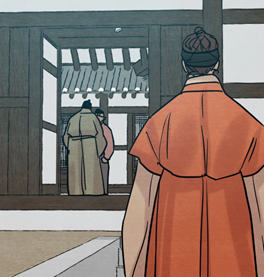 (chapter 12)

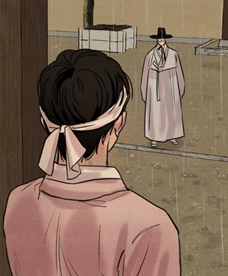
 (chapter 20)
 (chapter 29)

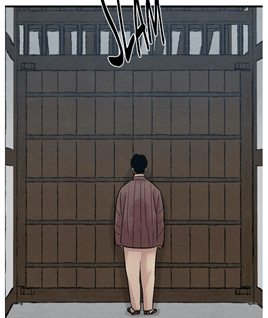


 It is still the same. Despite getting a blowjob, he still wants to hide his homosexuality to the outside. Hence he still gets scared and would like the noble to stop from exciting him. So for the first time, he is experiencing sex with someone.
 Note the opened door. The learned sir caught him by surprise. That’s how the learned sir was forced to repress and hide his homosexuality. This is no coincidence that in season 1, the scholar had the opposite attitude.
  By feigning ignorance, he actually encouraged the artist to become a sodomite. After their return to the mansion, the teacher showed leniency. He accepted that his student would paint erotic paintings, but he was well aware of their sexual encounter.
 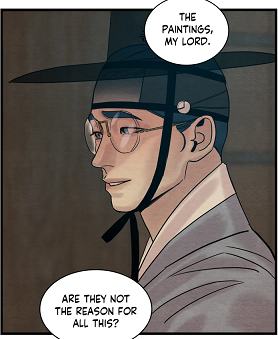 (Chapter 30) The moment he arrives back and the lord brings him back to his chamber, the nature of their relationship is no mystery any longer, though painting is used as a justification.
 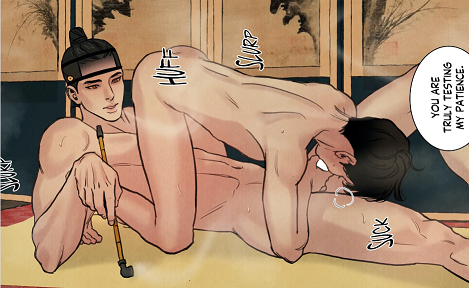 (Chapter 45) He just accepted him as his sexual partner, hence he went to his room and not to the lord’s side in chapter 44. If we compare their respective situation. Yoon Seungho hadn’t progressed much compared to the painter at the end of season 1, because he needed to express his emotions and reveal his secrets and vulnerabilities to Baek Na-Kyum. It took him a long time to open up, as he had been coerced to view himself as a bird of misfortune. He didn’t dare to voice any wish out of fear that these wishes would get ruined.
  (Chapter 96)
  (chapter 96) and Heena could hear his words. Hence at the end, the door got broken:
 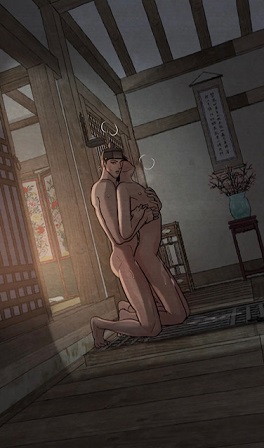 (chapter 96) This represented the final emancipation of the artist. He no longer cared, if he was seen. He was so moved that he didn‘t pay to his surroundings.
  (Chapter 96), while it was not the case for the noble. The latter knew about the artist‘s shyness. This truly shows that Heena was responsible for the sexual oppression of her brother. The painter was no longer hiding his affection for the main lead, when he decided to wait for his master‘s return in the bedchamber.
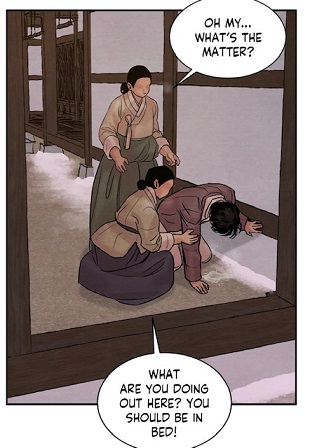 (Chapter 98) Observe that the artist was going there on his own will, and he was sharing his bed with his husband.
 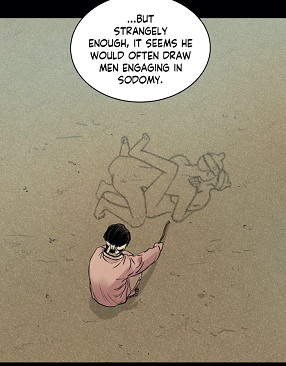 (Chapter 1) This memory was from the learned sir. Why was he approaching the painter during the day? Secondly, note that he only scolded the artist in his house!
 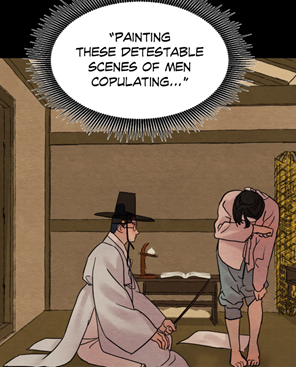 (Chapter 34) So he had discovered a secret, he imagined that the painter had assisted to an immoral love session.
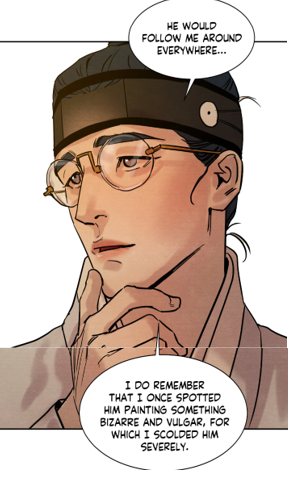 (chapter 6) In my opinion, the kisaeng was responsible for this incident. We have a clue for this interpretation:
 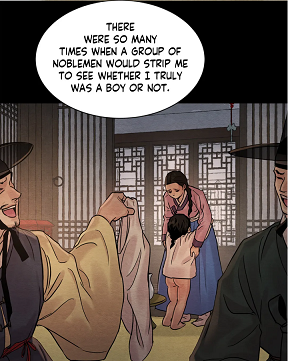 (Chapter 94) The noona is the one standing in front of the opened door with her donsaeng. Here, the artist was getting embarrassed and humiliated. That‘s how little by little, the artist associated the closed door to shame and safety. This is not surprising that the kisaeng is also standing behind the closed door, when she hears her brother making love to the main lead.
 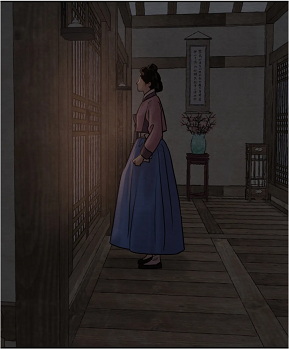 (Chapter 96) In addition, she is constantly seen in connection with an opened door, but this opened door is linked to anxieties, pain, shame and guilt:
  (chapter 66)
 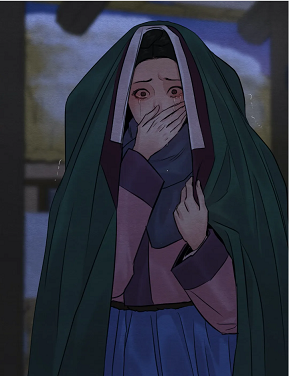 (chapter 88) I have the impression that she was acting out of jealousy, and she had intended to tarnish her brother‘s reputation.
 (chapter 7)
 (chapter 19)
 (chapter 29)
  (Chapter 22)
 which is connected to the expression “castles in the air”. His aspirations are boundless, he is aiming at the highest position without being competent or even trying to improve himself. He also attempts to air dirty laundry, when he is hunting with Yoon Seungho. He wants to force the lord to admit his lie so that he can criticize him. But here he fails. As you can observe, many expressions with air reflect his personality. However, there is one scene that contrasts to this observation, that’s when he is in his library in the chapter 40. We actually see him at the library in two occasions: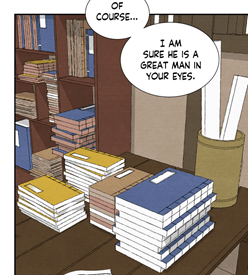

 His words there are suffocating the poor boy, that’s the reason why Baek Na-Kyum is left speechless.
  (Chapter 40) He can’t breathe properly. Since there is no view and no door to the outside visible in the drawing, we have to imagine this reflects his narrow-mindedness. He is surrounded by books (see the pictures from the chapter 7) therefore he lacks real experience and knowledge. He is literally buried behind his books, therefore his knowledge is superficial.
  (Chapter 27) Even in his bedroom there are books so his own bedchamber gives the readers a suffocating feeling. Since there is no window visible in his room and the library, there is no fresh air in the closed room which explains why it is asphyxiating. Usually, we say in a closed room that it smells musty. He only knows the world through his books and the moral standards. He is not even opened to the outside, only his words and thoughts count. Everything else has no value hence there is no life next to him. People living by his side will end up suffocated as he doesn’t allow them to breathe. He is stubborn and he will never change, a fake, empty and narrow-minded man with no conscience. Because of this connection, I realized that Jung In-Hun had no future in Hanyang. He would end up buried, and this became a reality. Because the moment he left for the capital, he ended up dead. And now, if you think carefully, you will recognize that the learned sir is associated to nature! Thus he was seen in the woods (chapter 6, 22) or in the countryside admiring the moon.
  (Chapter 70) Air means also breathing! Hence he represents the fresh air entering Yoon Seungho‘s bedroom, hence we had such a scene:
  (chapter 35) The lord witnessed the intimate interaction between the learned sir and the artist, thus he was incited to leave the bedroom. Strangely, we could say that he was the initiator for the lord‘s liberation. No wonder, why Kim wished to get rid of the learned sir in the end, and just viewed the artist as less annoying and evil!
 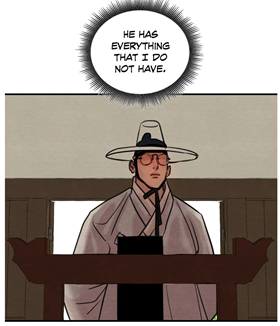 (Chapter 18) so that he ended up letting his guard down. He was not so competent and intelligent like Yoon Seungho, he relied more on the stupidity on others. He could deceive commoners, but not spies. In my first version, I had envisioned that the learned sir had many tricks up his sleeves so he would survive, but I had not realized that he had met a fake servant
 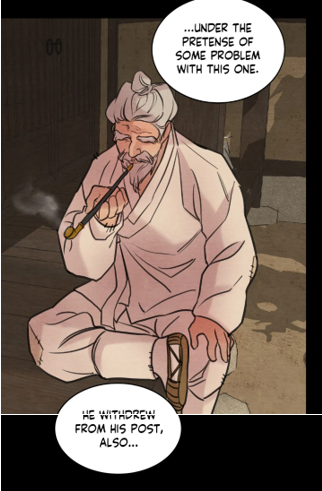 (chapter 37) definitely a noble who could see through him. For me, it was the pedophile himself. I had predicted that he would disappear into thin air, and it became a reality, especially if my theory about his assassination is correct. We could see the transformation of the scholar into a ghost,
 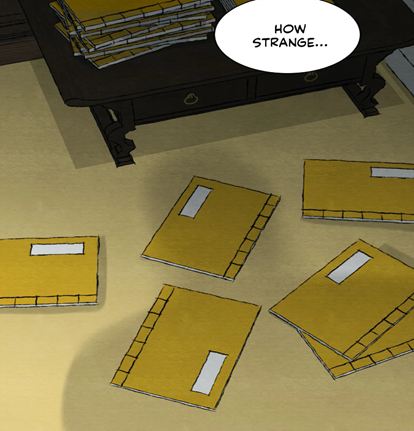 (chapter 50) who would come to haunt the couple because of his resent.
 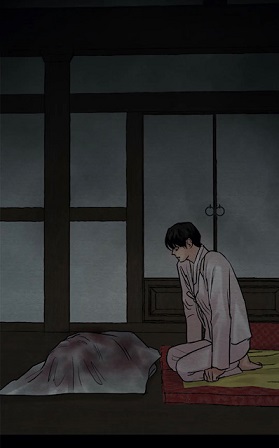 (Chapter 98) As the air, he became a spirit! And note that the lord was encouraged to stroll too!
