
Please support the authors by reading Manhwas on the official websites. This is where you can read the Manhwa: Jinx But be aware that the Manhwa is a mature Yaoi, which means, it is about homosexuality with explicit scenes. Here is the link of the table of contents about Jinx. Here is the link where you can find the table of contents of analyzed Manhwas. Here are the links, if you are interested in the first work from Mingwa, BJ Alex, and the 2 previous essays about Jinx Between A Squeeze And A Crack – part 2 and the Birth of A Flower (part 1)
It would be great if you could make some donations/sponsoring: Ko-fi.com/bebebisous33 That way, you can support me with “coffee” so that I have the energy to keep examining Manhwas. Besides, I need to cover up the expenses for this blog.
Sorry for the delay, but I am getting surged soon, thus I was busy preparing lessons for the time during my absence.
The Beginning of the End
The audience sensed it before it could fully articulate why: Jinx is nearing an irreversible threshold. Not an ending yet, not a climax in the conventional sense, but a point beyond which the story cannot return to its original configuration. 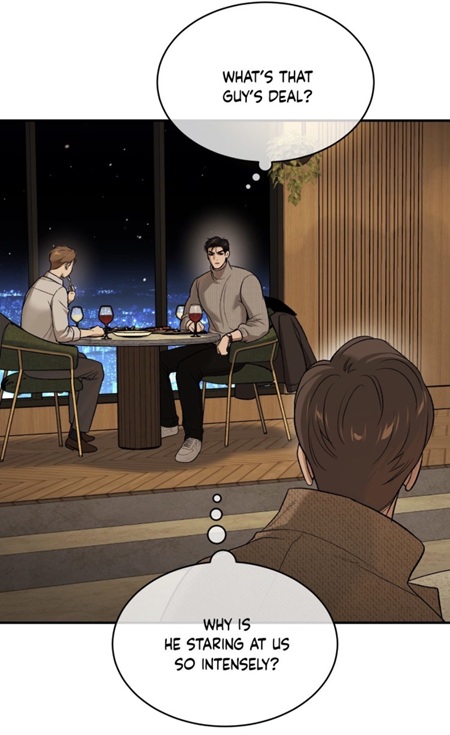 (chapter 89) Episode 89 does not rely on spectacle, confrontation, or confession. Instead, it performs something far more unsettling. It turns back toward the beginning
 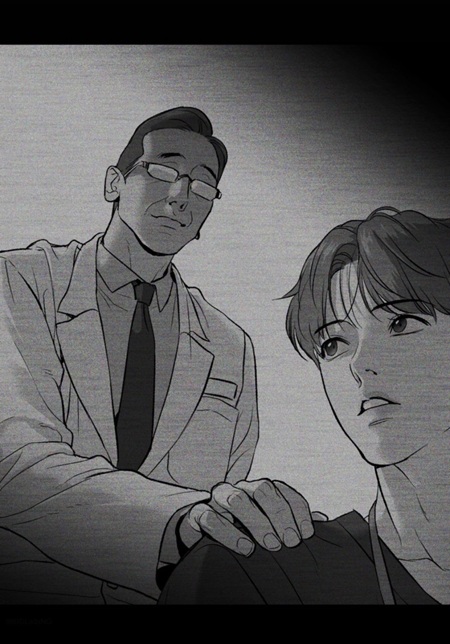 (chapter 89) and begins to unravel what was once deliberately sealed.
What makes this episode feel decisive is not merely a rearrangement of power, but the return of elements that were present from the very first chapter —elements whose meanings were never in doubt, yet whose consequences were never allowed to surface. 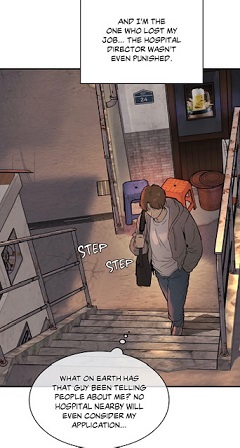 (chapter 1) At the start of Jinx, the readers were not ignorant. We knew that Kim Dan had been sexually harassed.
  (chapter 1) We knew there was a witness. We knew that what happened was not ambiguous in moral terms.
What was ambiguous was power.
A hospital director fired Kim Dan not because the truth was unclear, but precisely because it was clear—and dangerous. Using institutional authority, he covered the scandal, protected himself, and quietly ensured that Kim Dan would never be able to work as physical therapist and even speak again. (chapter 1) The outcome was not accidental, but Kim Dan didn’t experience it as a calculated purge or a conspiracy that must be fought. He accepted the loss of his job almost as a given, even as he recognized the injustice of it. What unsettled him was not the fear that others would disbelieve him, but the realization that responsibility stopped with him. He lost a prestigious hospital position and the professional future attached to it, while the hospital director faced no consequence at all. Kim Dan did not protest or seek redress; instead, he turned his attention inward, wondering what was said about him afterward, in rooms or institutes he was not allowed to enter. The truth was known, yet it changed nothing, because Kim Dan was silenced. No one listened to him or defended him, while the perpetrator alone was given the authority to determine the truth. The witness stayed silent, the institution spoke elsewhere, and Kim Dan was removed from his own story. And that’s how the asymmetry became something he quietly carried as his own burden.
This is why Episode 89 does not feel like escalation—it feels like unsealing.
The return of the perverted hospital director 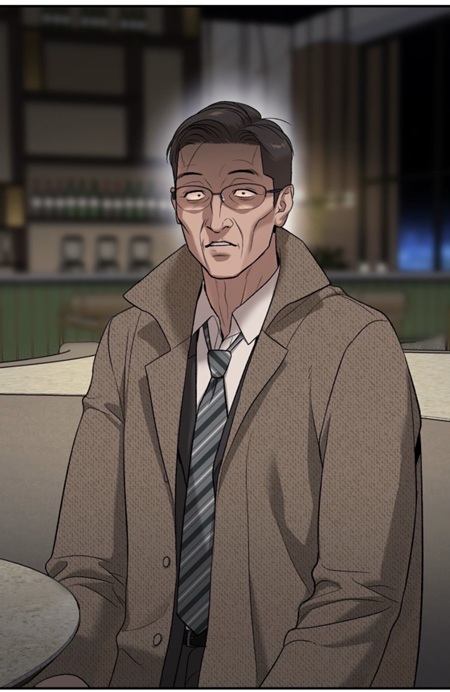 (chapter 1) is not a revelation of new information. It is the resurfacing of a figure who once proved that truth alone was insufficient. His reappearance signals that what was buried at the beginning of the story—harassment, witness, cover-up, professional erasure—is no longer content to remain inert. The silence that once protected the hospital director is beginning to fray, unwinding slowly, like a gift ribbon pulled loose thread by thread. What was known but unspeakable is approaching exposure not through confession, but through loss of insulation.
This return is mirrored by another, quieter but equally significant absence: the grandmother.
In Episode 89, she is no longer shown directly.  (chapter 89) Instead, the narrative offers a bird’s-eye view of the hospice Light of Hope as Joo Jaekyung’s car leaves the parking lot. The implication is unmistakable. Her death is imminent. But just as importantly, she is transitioning from presence to spectral force—no longer intervening, no longer negotiating, but lingering over the narrative as memory and obligation.
This, too, echoes the beginning of Jinx. 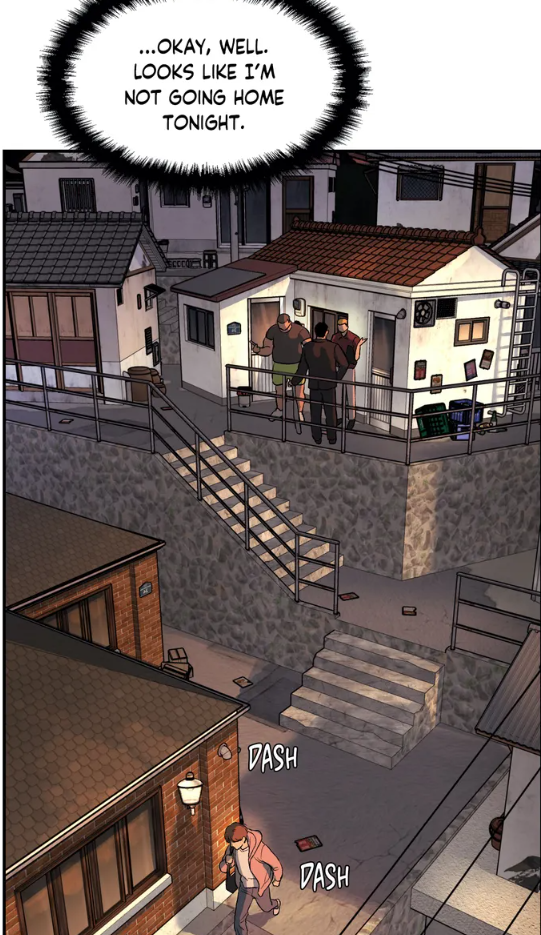 (chapter 1) Readers did not meet the grandmother until Episode 5.
 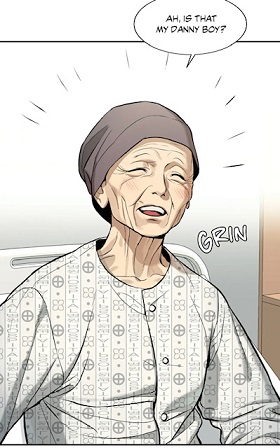 (chapter 5) Before that, her existence was inferred rather than seen: through debt, through responsibility, through the ruined house Kim Dan inhabited. Absence structured the story before presence ever did. The grandmother was a force long before she was a character.
Now the movement reverses. Presence recedes back into absence. But unlike in the beginning, Kim Dan’s life is no longer centered on her care. That responsibility has been entrusted elsewhere, and her absence no longer governs his choices. In Episode 89, the hospice is no longer framed as a home, but as a stop along the way. 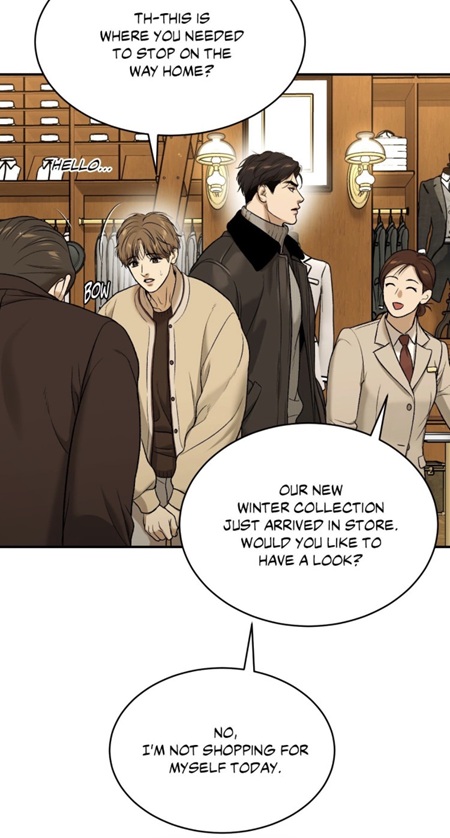 (chapter 89) When Joo Jaekyung speaks of “the way home,”
 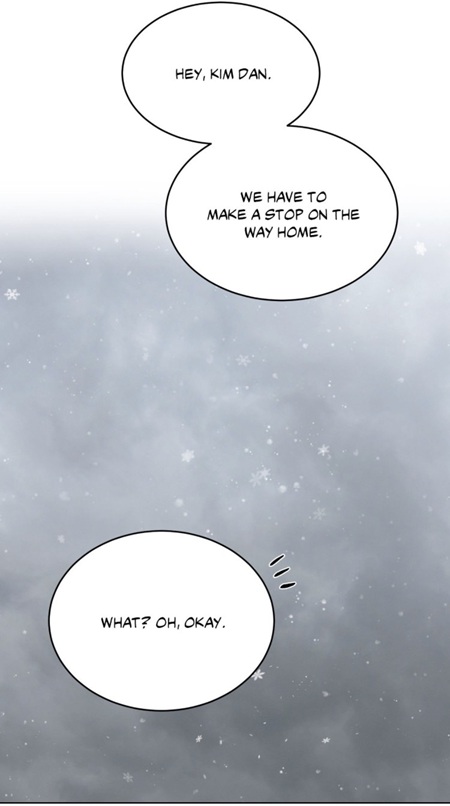 (chapter 89) and Kim Dan repeats the phrase without hesitation, the shift is unmistakable. Home has been reassigned. It is no longer the place where Kim Dan endures obligation or where his grandmother is
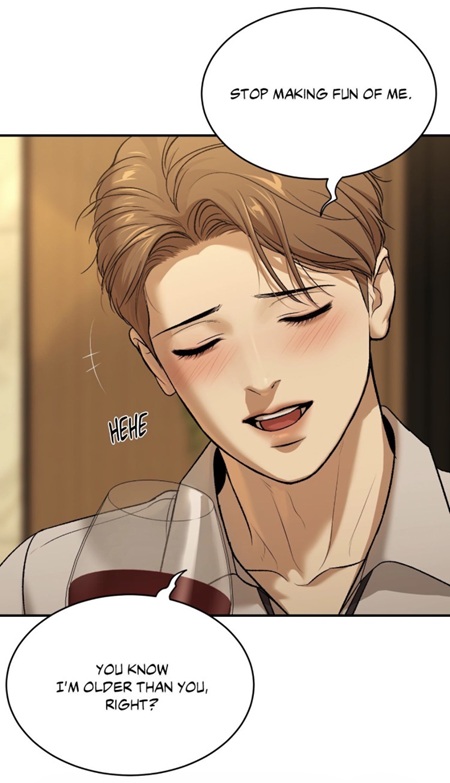
 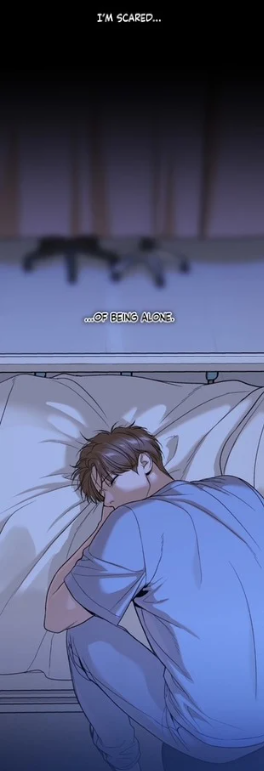 (chapter 56), but the place where he lives in the present: the penthouse. The grandmother’s influence has not vanished; yet it has been reduced to a short visit, while he spends time with his fated partner a long time on the road. Her absence no longer anchors him to a life of quiet survival. He is now enjoying life, hence he is seen smiling and talking informal to the athlete.
  (chapter 89)
This mirroring is not cosmetic. It is structural. The story returns to the conditions of its origin—sexual violence handled institutionally, professional precarity 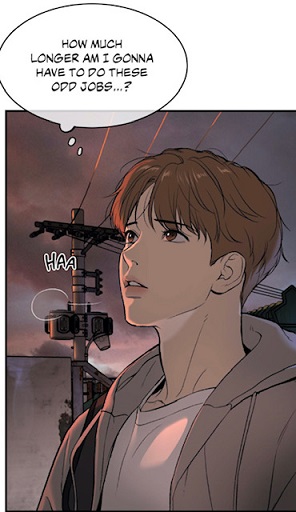 (chapter 1), unseen decisions made about Kim Dan without his consent (chapter 1) — but it does so in a transformed landscape.
 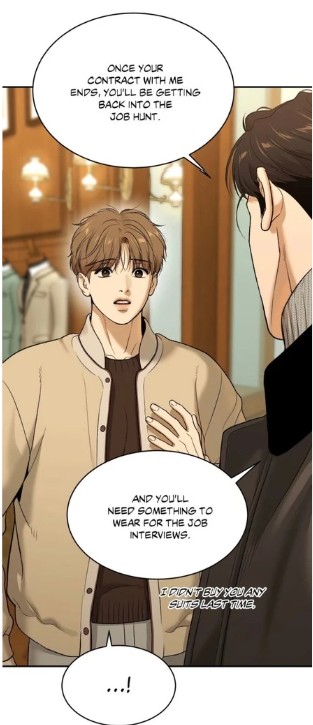 (chapter 89) Debts have been paid. Contracts are finite. A witness exists, though he doesn’t believe in the “angel”.
 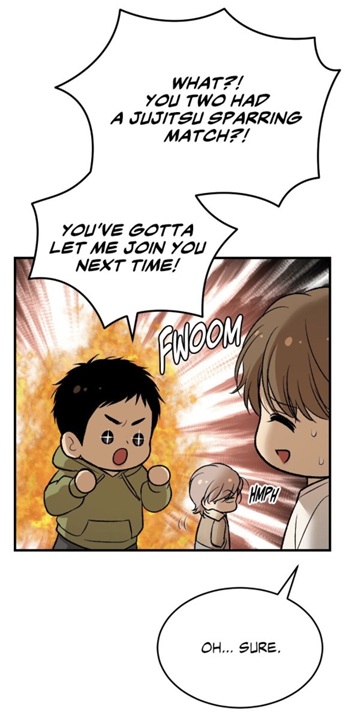 (chapter 89) Kim Dan is no longer isolated in his knowledge, nor alone in bearing its consequences. Joo Jaekyung detected the presence of a “predator”.
 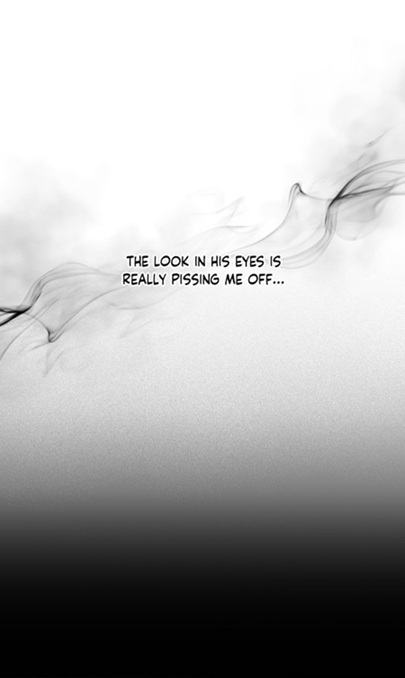 (chapter 89)
That is why Episode 89 feels like the beginning of the end. Not because everything is resolved, but because the story has reached the point where truth no longer needs to beg for permission to exist. What was once survivable only through silence can now be named, contested, and reclaimed.
By folding the opening of Jinx back into its present, the author signals that the love story between Kim Dan and Joo Jaekyung is approaching its final test. No longer a story of endurance under constraint, it is becoming a story about emancipation under scrutiny—about what happens when love, guilt, responsibility, and institutional memory are finally forced into the same frame, by those who were once excluded from it.
The Beginning of the End is not an announcement of tragedy. It is the moment when the story turns back on itself and says: now the truth can move.
Seeing Is Not Knowing
Episode 89 does not introduce this logic; it exposes it by repetition. From the very first chapter, Joo Jaekyung’s relationship with his former physical therapist already functioned as a negative prefiguration of Kim Dan’s own trajectory.  (chapter 1) The readers never saw what caused the unknown therapist’s departure. Instead, the incident is relayed second-hand, through Park Namwook’s narration—an account that reduces the event to temperament, friction, and inevitability. The physical therapist is said to have “rubbed him the wrong way.” An incident occurred and the athlete was exposed as the problem. The job was framed as undesirable. The departure was normalized.
Crucially, Joo Jaekyung accepted this explanation without investigation. He was surprised that the therapist quit  (chapter 1), but he did not question the narrative offered to him. He never tried to justify his own action either. Park Namwook, as manager, occupied the position of authority: the one who explained, interpreted, and closed the case. He never checked the facts, like for example “rubbing him the wrong way”. He acted as the prosecutor, judge and lawyer at the same time. What happened before remained unseen, and therefore unexamined. The truth did not need to be falsified; it only needed to be summarized.
Crucially, the manager also treated resignation as resolution. Once the physical therapist left, the problem appeared solved. Replacement substituted for accountability, and the consequences of this closure were never considered. The difficulty in filling the position  (chapter 1), the reluctance of applicants, and the need to recruit Kim Dan through informal channels all suggested that something else had already been circulating: a reputation formed in absence, not through evidence.
Like Kim Dan after him, Joo Jaekyung is first not confronted with accusations  (chapter 9), explanations, and silence. Only after the “hamster’s arrival”, the athlete is gradually exposed to gossip, badmouthing
 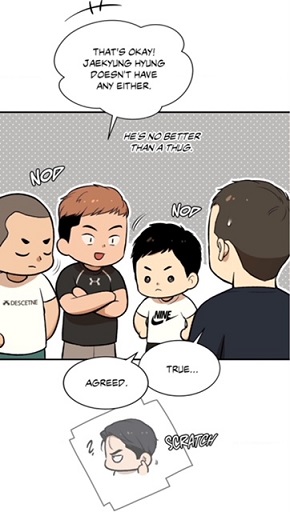 (chapter 47) and exclusion. This reached its peak with the famous slap at the hospital.
  (chapter 52) It shows that like doc Dan, the celebrity bears the effects of a narrative he did not author, one that no longer requires verification and questioning because it has already been administratively settled.
Episode 89 reactivates this same structure—but from another angle.
Heesung believes he knows the truth because he has seen something. 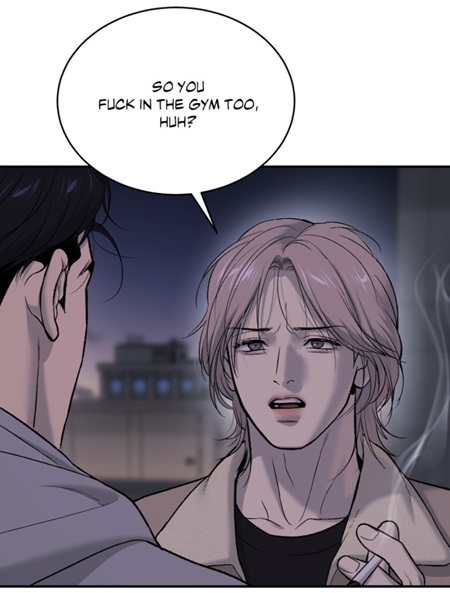 (chapter 89) He witnessed a kiss between Kim Dan and Joo Jaekyung, and from that single image, he constructs a complete narrative: a kiss is turned into something raw and sexual. For him, intimacy replaces training, desire replaces discipline, and the explanation Kim Dan gives becomes, in his eyes, a lie. (chapter 89)
Yet this is where the episode quietly undermines Heesung’s certainty. Kim Dan is not just fabricating an alibi. He is not inventing a cover story. They were indeed training. 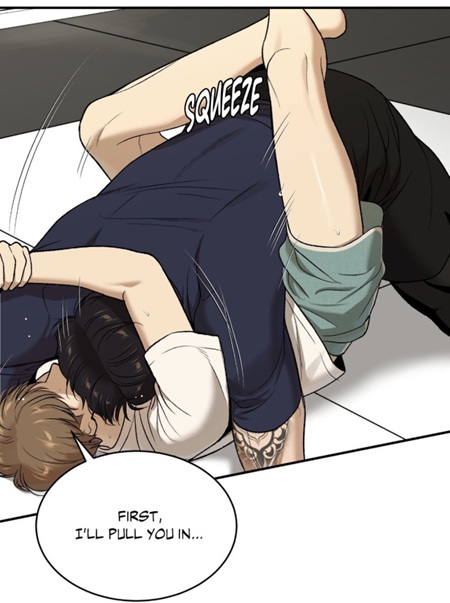 (chapter 88) The kiss does not erase what preceded it; it merely interrupts it. Kim Dan’s explanation is therefore neither wholly true nor wholly false. It is a partial truth, shaped by shyness, by a desire to protect, and by shame. Hence he is sweating, when he explains his presence to Potato. (chapter 89) To know the “whole truth” would require access not only to events, but to intentions, emotional thresholds, and timing—access no single witness ever has. Only gods have such power.
And that’s how Choi Heesung views himself. He considers himself as the “perfect lover”, thus his dream has always been to find his soulmate, another “perfect lover”.  (chapter 33) That’s the reason why he was attracted to Kim Dan in the first place. He is an angel
 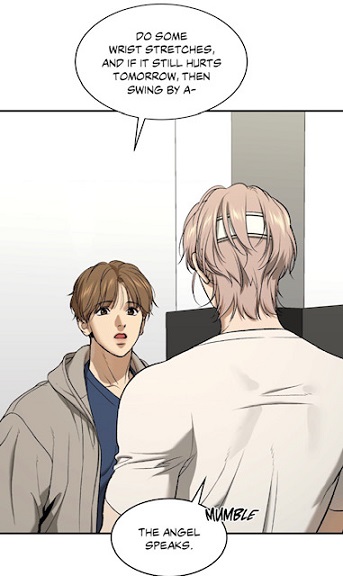 (chapter 30), as the latter is quiet, self-effacing. selfless, attentive, humble and absorbs blame instead of projecting it. Kim Dan initially fits the fantasy of the perfect lover — someone who would not disrupt Heesung’s self-image. Hence he doesn’t need to do anything.
 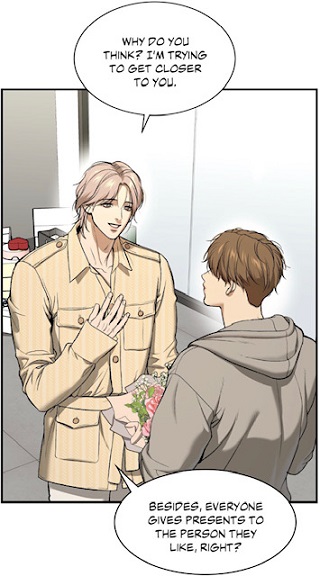 (chapter 31) By siding with doc Dan and acting as the angel’s advocate
 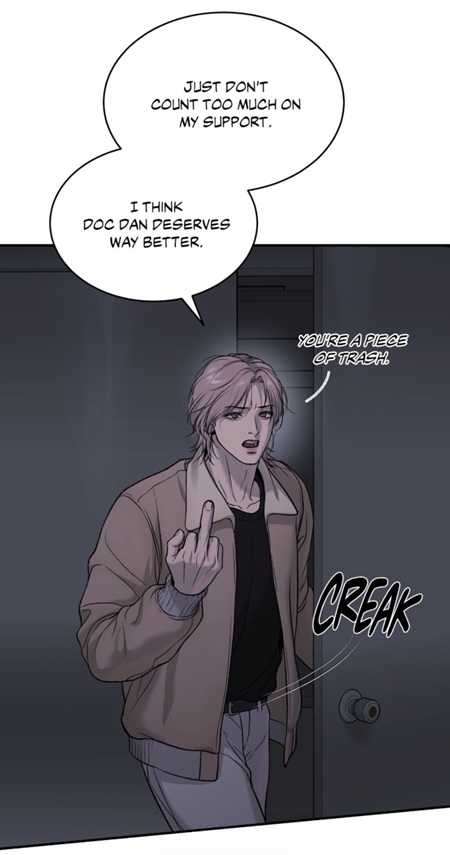 (chapter 89), the comedian can appear as a saint.
But the reality is that the “fox” is overestimating himself. He is just a human like Joo Jaekyung and as such a sinner. The actor’s error is not merely that he lies, but that he lies by omission 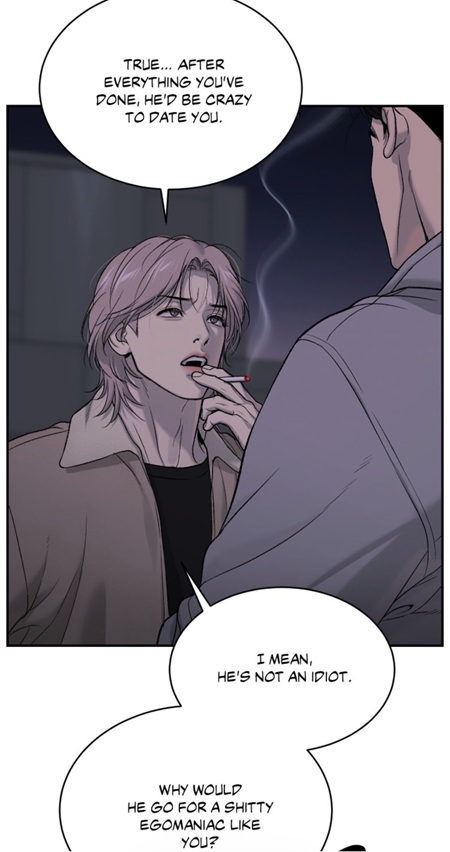 (chapter 89) and generalization. Because he saw one thing, he believes he knows everything. Because he believes he already knows Joo Jaekyung —his temper, his reputation, his past, his belief
 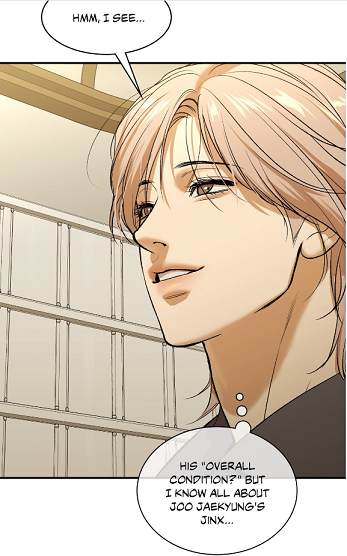 (chapter 32)— he believes that he can judge the celebrity. However, he does not consider that something else might have happened before the moment he witnessed. The kiss becomes totalizing. Training is retroactively erased.
This is precisely the same epistemic shortcut Park Namwook took in Season 1.
In both cases:
- authority or proximity substitutes for inquiry,
- a partial observation becomes a total explanation,
- and investigation is deemed unnecessary because the observer believes he already understands the subject.
- Crucially, judgment in these moments is driven not by facts, but by emotion. Resentment, jealousy, fear, and wounded pride shape perception long before evidence is considered. What presents itself as moral clarity is, in reality, affective certainty.
Yet justice—whether institutional or interpersonal—cannot emerge from emotion. It requires distance. It requires restraint. It requires a form of deliberate indifference: not apathy, but neutrality. The refusal to let feeling stand in for truth. Therefore a judge will always listen both sides (defendant, plaintiff). Neither Park Namwook  (chapter 52) nor Heesung exercises this control. Both act from positions of perceived authority, and both mistake emotional coherence for factual accuracy. Their confidence does not only arise from what they know, but also from how strongly they feel. The strength of conviction replaces the labor of verification.
This failure becomes especially visible in Heesung’s interpretation of Kim Dan’s departure. 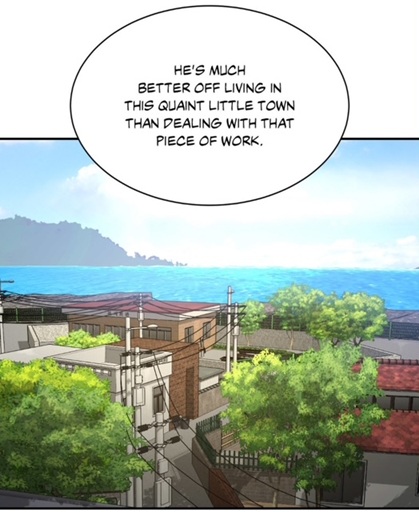 (chapter 58) He imagines a simple narrative: Kim Dan must have left because of Joo Jaekyung’s temper, his rudeness, his violence, probably due to the “defeat”. A quarrel, therefore, naturally leads to separation. From this assumption follows a paternalistic conclusion: the “hamster” must be hidden from the athlete for his own good. Protection becomes justification; concealment becomes virtue.
Heesung delivers this judgment 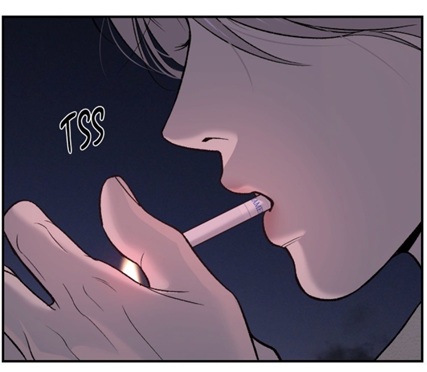 (chapter 89) while smoking—a detail the episode insists on repeating, and one that should not be aestheticized. The cigarette does not merely accompany his words; it alters the air in which they are spoken.
 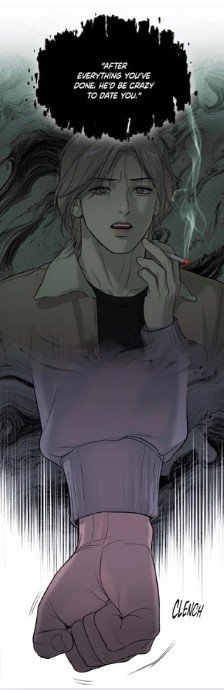 (chapter 89) Smoke replaces oxygen. What should be a space for clarification becomes a polluted environment where nothing clean can circulate. His speech is not only corrosive; it is toxic, dispersing blame without responsibility and judgment without accountability.
This is not the violence of a raised fist, but of contamination. Heesung does not attack Joo Jaekyung directly; he saturates the space with inevitability. His words do not argue—they suffocate. By framing Jaekyung as fundamentally unlovable (“after everything you’ve done”), he does not describe a reality; he reinscribes a conviction that already haunts the champion: that love is structurally inaccessible to him, that intimacy is something he can only damage, never deserve.
In this sense, Heesung’s intervention is not corrective but punitive. It does not open a future; it seals one. The smoke signals this closure. There is no fresh air, no possibility of reconfiguration—only the quiet assertion that the past defines the present absolutely. And because Heesung speaks from a posture of apparent control, he mistakes pollution for moral clarity. He leaves believing he has spoken the truth, while what he has done is reinforce the most destructive lie Joo Jaekyung already believes about himself.
What Heesung never questions is whether this narrative is complete—or even accurate. He doesn’t know about the incident with the switched spray, about doc Dan’s mental and emotional suffering, he has no idea about doc Dan’s past as well. It was, as if the young man had no past or no trouble before his interaction with the sportsman. He does not ask why Kim Dan stayed as long as he did, why he returned, or how the relationship itself has transformed. He doesn’t look at the physical therapist at all, thus he can see no change. (chapter 89) The possibility that Kim Dan acted with agency, discernment, or desire is excluded in advance. Kim Dan is reduced to a fragile and innocent object of care rather than a subject capable of choice. He doesn’t know what is good for himself. (chapter 89)
What Jinx exposes here is not dishonesty, but epistemic arrogance: the conviction that seeing grants mastery over meaning.
The irony, of course, is that Joo Jaekyung once occupied this very position. (chapter 1) He accepted Park Namwook’s account of the former physical therapist because it aligned with what he believed he knew about himself and others. Now, in Episode 89, he becomes the object of the same logic—reduced, explained, and judged by someone who believes that proximity equals comprehension. This repetition matters.
It shows that truth in Jinx is never neutral. It is filtered through:
- authority (Park Namwook),
- jealousy and wounded pride (Heesung),
- reputation and past violence (Joo Jaekyung),
- and self-effacing silence (Kim Dan).
To know the full truth is impossible—not because the truth is unknowable, but because every character approaches it already shaped by prior experience. What changes in Episode 89 is not the existence of bias, but the story’s willingness to expose it as bias.
Heesung believes he knows the truth because he has seen something. A kiss. A single image, isolated from its sequence, elevated into certainty. From that moment on, everything else becomes irrelevant. And because he saw this before 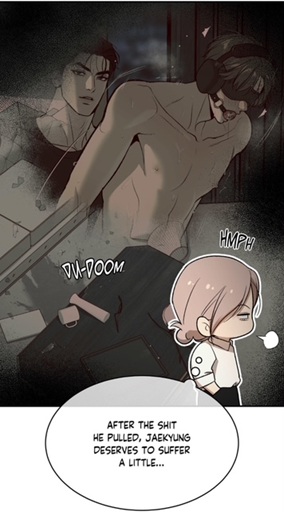 (chapter 58), he reinterprets the kiss as “fuck” and not as the expression of love and tenderness. In other words, he is witnessing “true love”, but he rejects it. This exposes that he has no true notion of real love. In his mind, Joo Jaekyung abused his position as “employer”. (chapter 89)
Heesung presents himself as morally superior because he does not resort to physical violence. 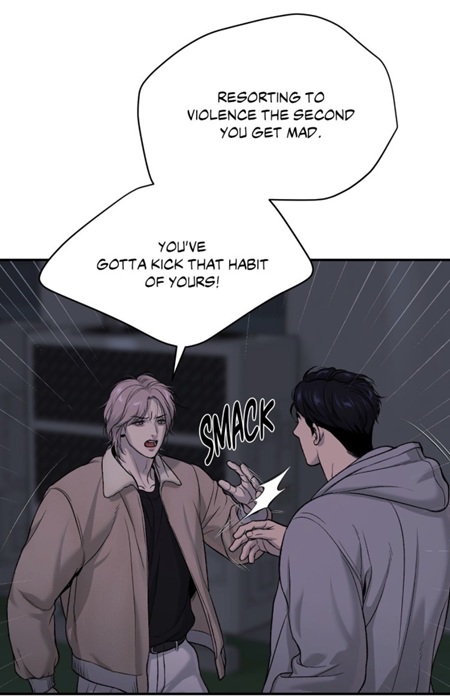 (chapter 89) But this distinction is hollow. Harm does not require raised fists. It can be inflicted through trick, insinuation, through speaking about someone rather than to them, through occupying the role of moral arbiter while denying the other person a voice. (chapter 89) Kim Dan has always disliked this — being spoken for, spoken over, spoken around. Episode 1 and 57 established this clearly. Episode 89 simply mirrors it back.
What makes Heesung especially dangerous is that he uses Kim Dan as a shield. He claims to defend him, but only in his absence. By positioning himself as Kim Dan’s advocate, he grants himself authority while quietly stripping Kim Dan of agency. His concern is not what Kim Dan wants, but what Heesung believes Kim Dan deserves. In doing so, he protects his own wounded pride — the pride of someone who cannot accept that Kim Dan rejected him.
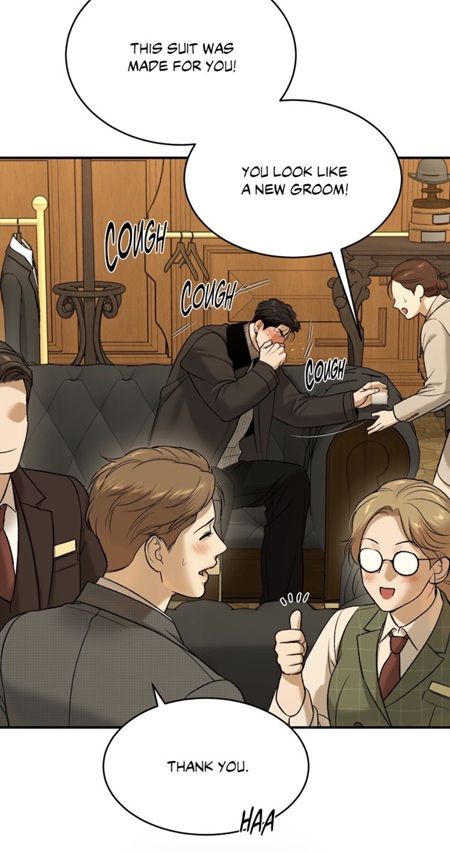
This refusal is key. Heesung cannot bear the idea that Kim Dan would choose Joo Jaekyung, even date him. 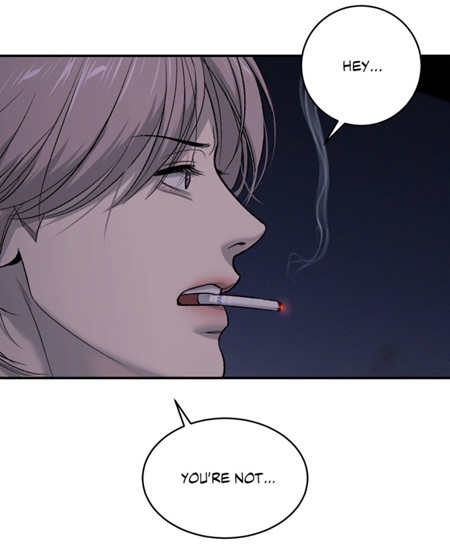 (chapter 89) His comment “You’re not ….” implies the expectation of a confirmation. Both are not dating. What Joo Jaekyung is actually doing exceeds the category Heesung understands. This is not casual dating. It is not secrecy. It is not consumption. It is preparation. Continuity. A future. Symbolically, Joo Jaekyung is already a step beyond “dating”: he is moving toward marriage — toward public, accountable union. He is closer to commitment than the cursed “Romeo”. That’s the reason why the author included such a reference at the store:
  (chapter 89).
And this is where the contrast becomes stark. Heesung, who performs moral responsibility, is not dating Potato openly. He keeps relationships provisional, deniable, suspended in ambiguity. He treats the young fighter more like a puppy or servant than as an equal partner. Joo Jaekyung, who is accused of being reckless and violent, does the opposite. He assumes responsibility. He spends time with doc Dan by teaching him swimming and fighting, he pays debts. He limits contracts. He buys a suit not for himself, but for Kim Dan’s future. He does not erase the past; he integrates it into a shared trajectory.
In this sense, Heesung is not the opposite of institutional power — he is its echo. He speaks confidently, withdraws responsibility, and leaves consequences to others. He does not strike, but he silences. He does not coerce, but he defines reality from a position Kim Dan never consented to.
The tragedy is not that Heesung lies consciously. It is that he is convinced he is telling the truth.
Not Seeing but Knowing
Episode 89 ends not with confrontation, but with a visual verdict. 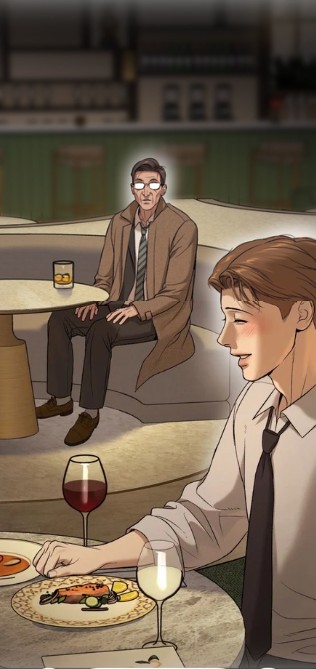 (chapter 89)
At one table sits the former hospital director. His presence is quiet, restrained, and deeply uncomfortable. Nothing about him suggests ease. His coat remains on, his tie loosened but not removed — a body prepared to leave rather than settle. He did not come to linger. He did not come to enjoy himself. His posture signals transience, not belonging.
The drink in front of him reinforces this distance. Whisky on the rocks is not a drink of sharing or unfolding; it is a drink of insulation. Cold, undiluted, contained. It is consumed alone, meant to harden rather than open. Even when accompanied, the director remains isolated. The person across from him seems to be talking to him 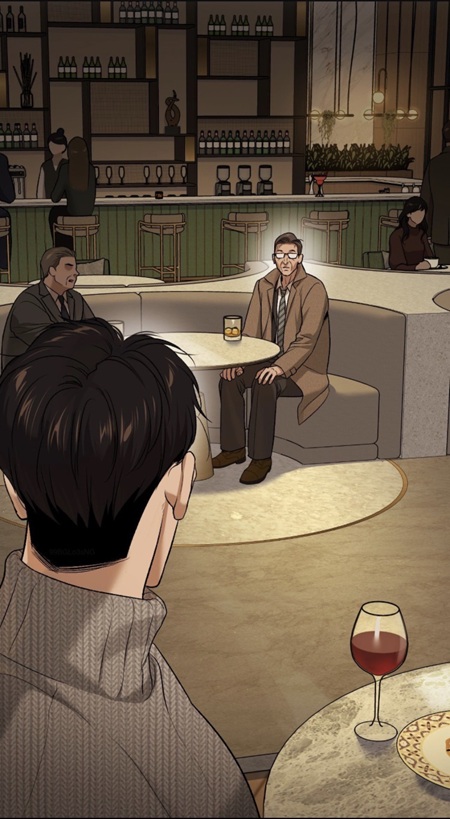 (chapter 89), yet the antagonist does not engage him. Conversation fails to circulate. Responsibility, like dialogue, stops at the rim of the glass.
This matters because the director is not merely observing Kim Dan — he is being corrected by him.
For a long time, the director believed he knew how Kim Dan’s story had ended. Fired, blacklisted, erased — a life quietly ruined by institutional power. That belief allowed him to move on without consequence. Silence had done its work. The trick had succeeded.
What sustained this belief was secrecy. Not ignorance, but managed invisibility. Power, in Jinx, does not primarily operate through open coercion, but through control of circulation  (chapter 48): who is seen, who is spoken about, and who is allowed to speak at all. By removing Kim Dan from institutional spaces and ensuring that the story of his dismissal was settled elsewhere, the director did not merely punish him — he rendered him socially invisible. Thus no one knew about doc Dan, when the athlete looked for him.
  (chapter 56) As long as Kim Dan remained unseen, power could continue to “know” without ever needing to verify.
The episode makes this collapse of power visible through contrast, not moral correction. In the flashbacks, the hospital director appears with controlled dominance 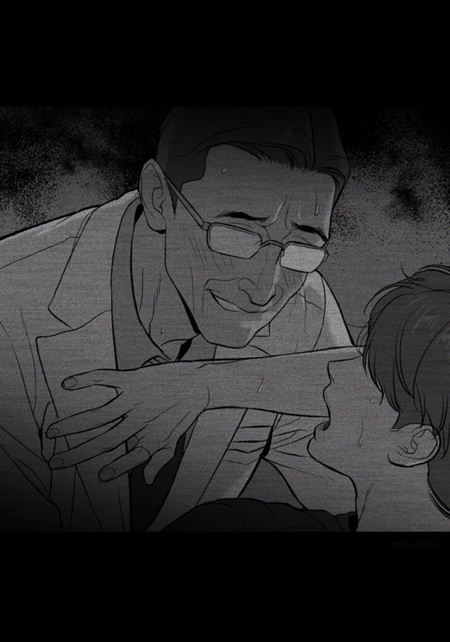 (chapter 89) rather than exposed guilt. His posture is upright, leaning in. His hand rests on Kim Dan’s shoulder without hesitation—uninvited yet unchallenged. His face shows satisfaction, not doubt. He smiles while Kim Dan sweats and is attempting to stop him. (chapter 1)
This is not the memory of a man who feared consequences. It is the memory of someone operating comfortably inside a system designed to protect him. (chapter 89) His confidence is instrumental, not emotional: the calm of someone who knows where authority lies and how silence will function afterward. The grayscale of the flashback does not condemn him; it preserves his former certainty. In memory, he is still the predator—not because he is crueler there, but because the environment still belongs to him: the hospital.
What has changed in Episode 89 is not his nature, but the terrain. (chapter 89)
In the restaurant, his stare freezes (chapter 1) not because he feels guilt, but because his old script no longer applies. He is no longer positioned above Kim Dan—neither institutionally, socially, nor visually. He cannot initiate contact without exposing himself. He is no longer buffered by uniforms, corridors, professional hierarchies, or closed rooms where truth can be settled elsewhere. The architecture that once enabled him—white coats, administrative silence, procedural opacity—is gone. And he can not confide to his colleague either, hence he keeps starring the main couple. 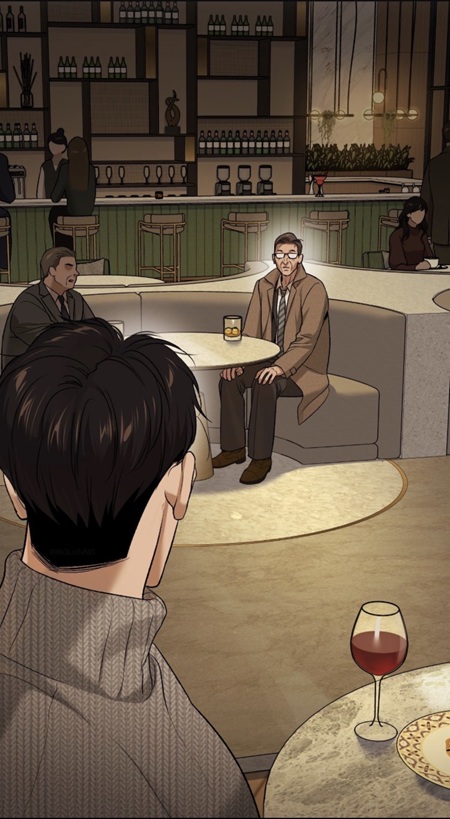 (chapter 89)
Predators rely on asymmetry and enclosure. Here, both have dissolved. This is why his reaction is not anger. Anger presumes leverage. What we see instead is hesitation: the moment a predator realizes the habitat that sustained him no longer exists. His disorientation is not ethical; it is strategic. He is recalculating risk. There is no redemption here, no moral awakening. He does not look ashamed. He looks uncertain—stripped of guarantees, not conscience. (chapter 89)
This makes the contrast with Kim Dan and Joo Jaekyung even sharper. Their interaction is openly intimate, casual, and socially legible. 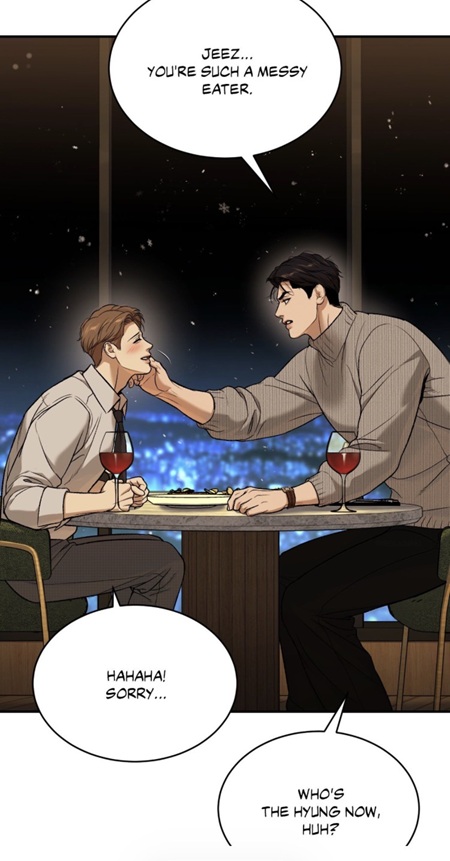 (chapter 89) They do not require shadows, isolation, or ambiguity to touch. Their closeness does not depend on secrecy or hierarchy. Where the director’s former power depended on institutional opacity, hierarchical distance, and Kim Dan’s vulnerability, Joo Jaekyung’s present intimacy depends on none of these. And no one seems to pay attention to the “main couple” at all.
 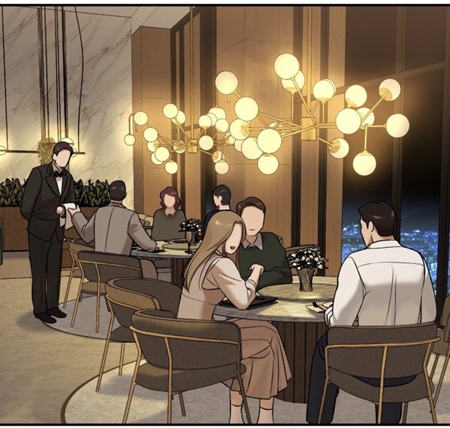 (chapter 89)
That is the true reversal the episode stages. Power has not disappeared; it has migrated. The table of the hamster and wolf is placed higher than the one where the perverted director is seated. (chapter 89) It no longer operates through enclosure and silence, but through visibility and mutual presence. What once required corridors and closed doors now unfolds in the open air of a shared table. And this, finally, is what the director is forced to see. (chapter 89)
What unsettles the director is not confrontation, but visibility: the realization that secrecy can no longer protect the knowledge he once mistook for truth. His wrongdoing can now get exposed, for doc Dan is now standing close to the “spotlight”. Joo Jaekyung is not just a face, but also a voice. Thus the latter could sue a hospital. 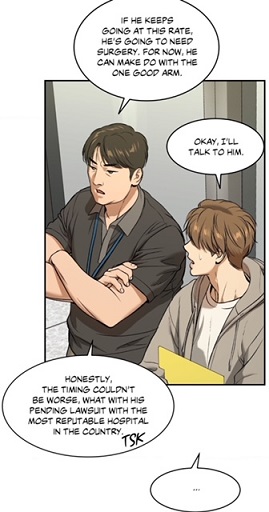 (chapter 42) This raises the following question: was the wolf suing the hospital where doc Dan got his first “gig”,?
What the nameless director sees now contradicts that certainty. (chapter 89) Kim Dan is not diminished. He is not withdrawn, anxious, or broken. He is smiling. Relaxed. Present. He laughs. He blushes. His body no longer carries the posture of someone living under constant threat. And he is not alone. He is sitting with a famous athlete — not as an accessory or subordinate, but as an equal. But more importantly, he is not pushing away the gentle gesture from the famous MMA fighter, while the “old creep” couldn’t forget doc Dan’s rejection. (chapter 89)
This is the shock. (chapter 89)
The director did not anticipate survival. He did not imagine joy. He certainly did not expect visibility.
Across the restaurant, a different table breathes. (chapter 89)
Kim Dan has removed his jacket. His body is at ease in the space. He is not preparing to leave; he is inhabiting the moment. The drink shared here — red wine — is not incidental. 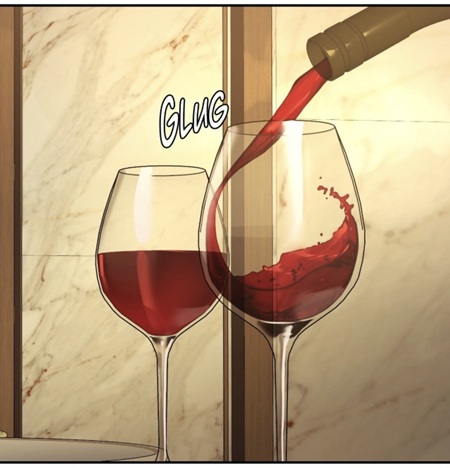 (chapter 89) Wine is relational. It opens, breathes, changes with time. It is meant to be shared, discussed, returned to. It presupposes duration. Where whisky seals, wine circulates.
Where the director’s table is suspended in cold certainty, Kim Dan and Joo Jaekyung’s table exists in a shared present. Air moves. Attention moves. When Joo Jaekyung looks at Kim Dan, he does not define him or speak for him. He responds to him. Kim Dan is not summarized. He is addressed. And observe that doc Dan is gradually imposing himself as the senior. He is now the athlete’s hyung. (chapter 89)
The contrast is not moralistic. It is structural.
The director represents a mode of power that knows without seeing. He once decided truth behind closed doors, believing outcomes were sufficient proof. Even now, his presence is shaped by that same logic: observe without engaging, remember without reckoning, drink without sharing. The irony is that he is exactly like Heesung. He thinks, what he sees is the truth. He believes to know. Because he is a hidden homosexual, he can only interpret such a gesture as the expression of love, (chapter 89) but also as commitment. In his eyes, they are dating, they are a couple. The irony is that he is only partially correct. They are not an official couple, but they act like one. Moreover, they are working together. So they are more than just a couple. Finally, this happy moment doesn’t indicate what doc Dan went through in the past, the switched spray, the drugged beverage and a huge depression.
Joo Jaekyung represents something else entirely. Not innocence, not purity, but responsibility. He does not deny the past; he incorporates it. He does not insulate himself from consequence; he assumes it. The space he shares with Kim Dan is not free of history, but it is no longer governed by silence. In fact, now their “history” is full of funny stories. 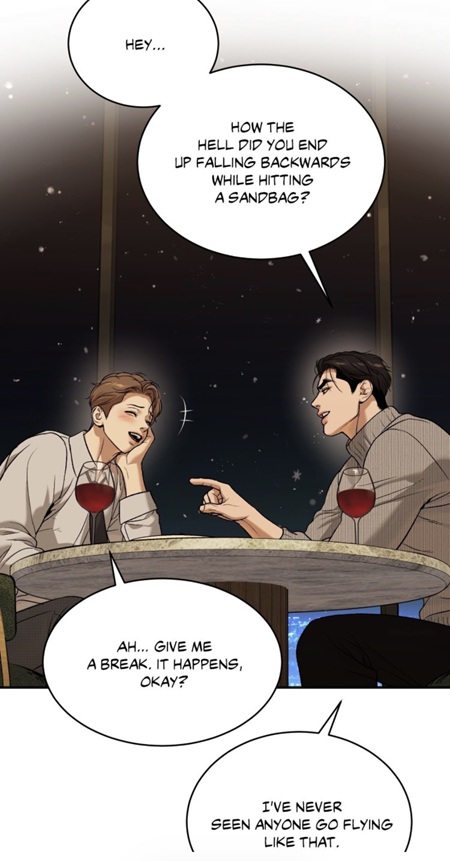 (chapter 89) But more importantly, he doesn’t hide his affection and attraction to doc Dan, while the other did it behind closed doors. Finally, thanks to doc Dan, Joo Jaekyung is learning to pay attention to his surrounding. That’s how he sensed the gaze from the perverted hospital director. (chapter 89)
This is why Episode 89 feels decisive without resolving anything.
The director’s return does not promise immediate punishment or exposure. It signals displacement. The world he once controlled through erasure no longer centers him. The person he believed he had reduced to nothing is not only alive, but visible — and no longer alone. He is even happy.
Power that relied on not seeing has lost its authority. What replaces it is not revenge, but relation.
And this is what marks The Beginning of the End, the final emancipation of Doc Dan. The latter does not arrive through confrontation or declaration, but through legibility. In the fitting room, the suit is not a costume of aspiration or disguise; it is a confirmation that he can now be seen without being reduced. He looks back, not down. He asks, 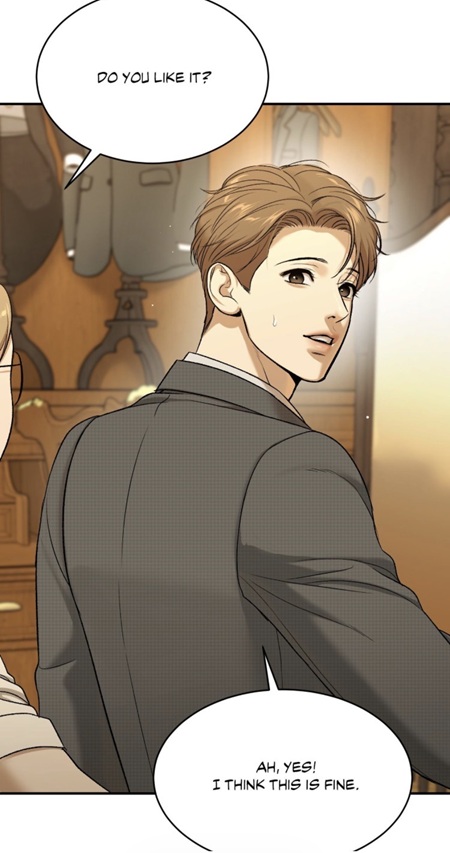 (chapter 89) not as a plea for permission, but as an invitation into a shared future. The pause of the older man watching him echoes a different kind of professionalism: not predatory authority, not performative control, but quiet recognition. Furthermore the doctor’s suit reminded me of the doctor in episode 13, Cheolmin (pattern, colors).
 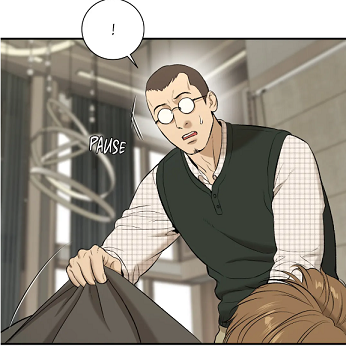 (chapter 13) The visual resemblance to Cheolmin is not accidental. It aligns Kim Dan’s future not with power that operates through secrecy, but with practice grounded in fun, care and responsibility. Earlier, suits belonged to those who decided outcomes behind closed doors (chapter 89); here, the suit becomes a sign of re-entry without erasure.
 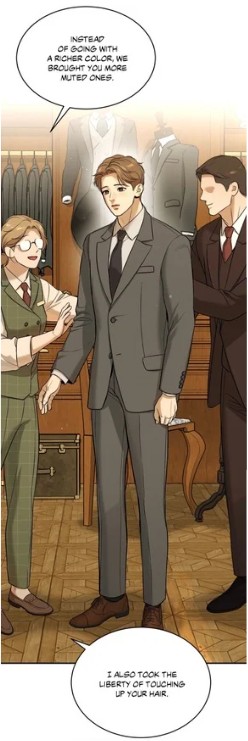 (chapter 89) Bought by Joo Jaekyung but chosen by Kim Dan, it marks the return of agency. What was once a symbol of exclusion now signals continuity. Kim Dan is no longer preparing to survive. He is preparing to live. Hence his birthday is approaching.
Not because justice has been delivered, but because those who once “knew” without seeing are finally forced to see—
and discover that their knowledge and power were never secure, only temporarily protected by illusion.
Feel free to comment. If you have any suggestion for topics or Manhwa, feel free to ask. If you enjoyed reading it, retweet it or push the button like. My Reddit-Instagram-Twitter-Tumblr account is: @bebebisous33. Thanks for reading and for the support, particularly, I would like to thank all the new followers and people recommending my blog.


 (chapter 86), gentle, attentive
 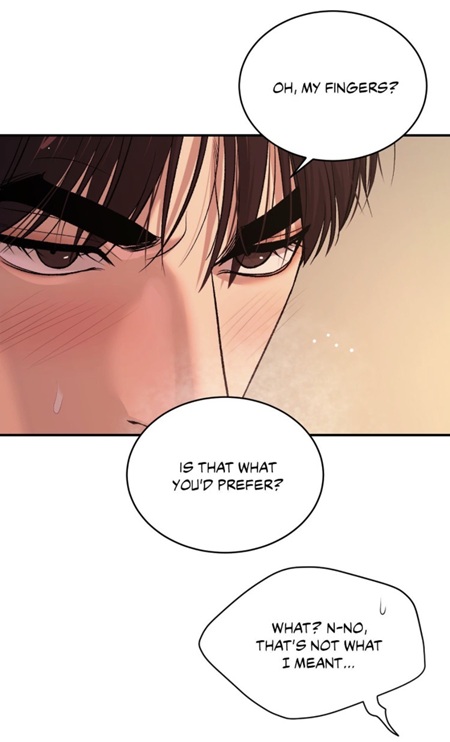 (chapter 86) — asking questions instead of imposing answers
 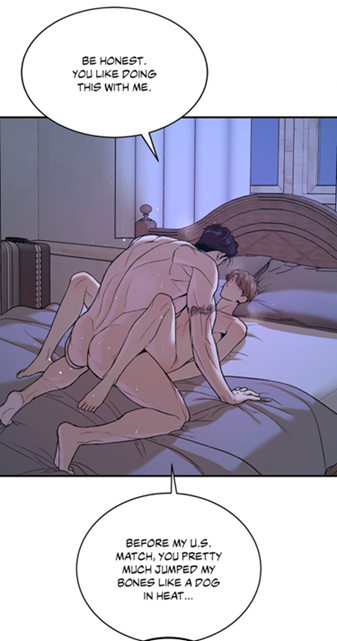 (chapter 64). For Joo Jaekyung’s unconditional stans (and I count myself among them), such an attitude
 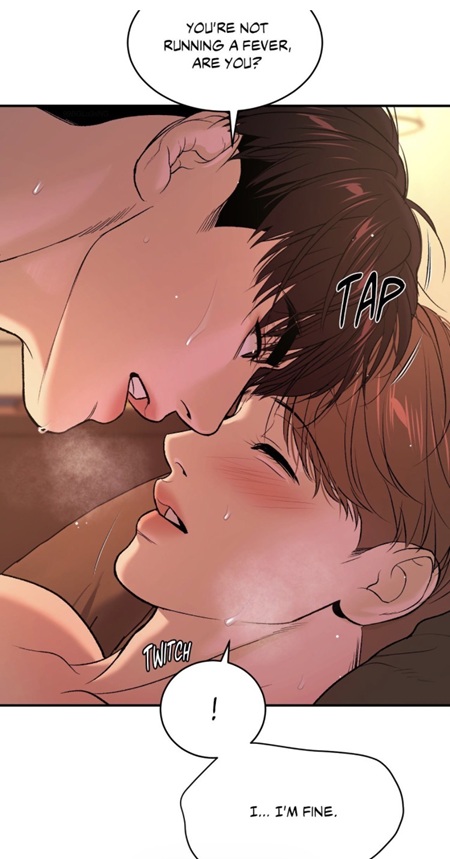 (chapter 86) can easily be read as proof that the protagonist’s good heart has always been existent, but it was barely visible. Compared to earlier chapters, the contrast is now undeniable. And yet, I would like to pause you right there.
 (chapter 61), sometimes awkwardly
 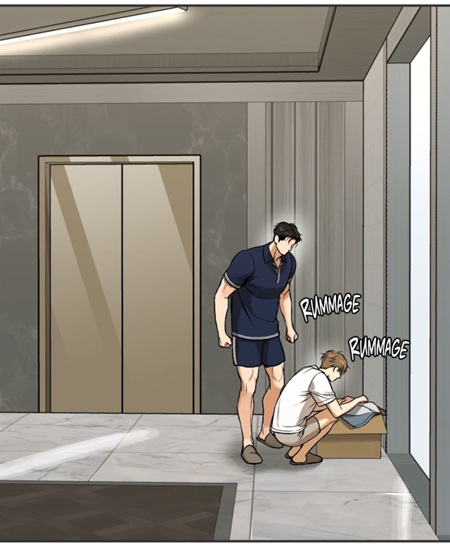 (chapter 80), sometimes inconsistently
  (chapter 79), but unmistakably
 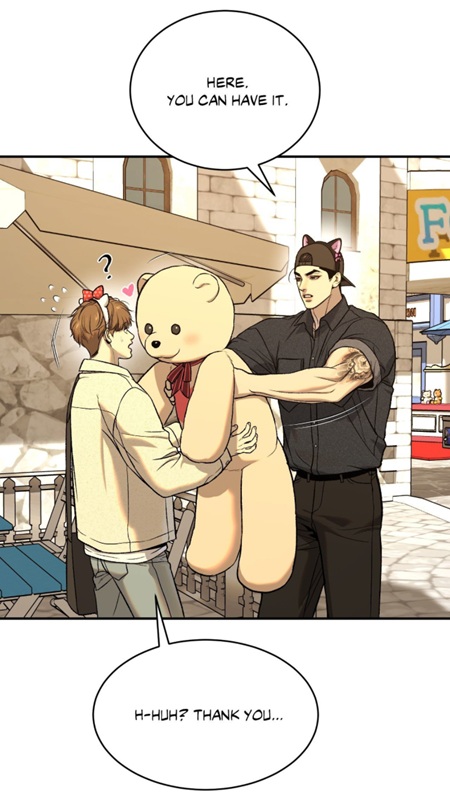 . (chapter 83) Tenderness, concern, even a certain form of devotion had appeared earlier
  (chapter 40), albeit in ways that were often overlooked,
  (chapter 18) misunderstood or poorly timed. This night
 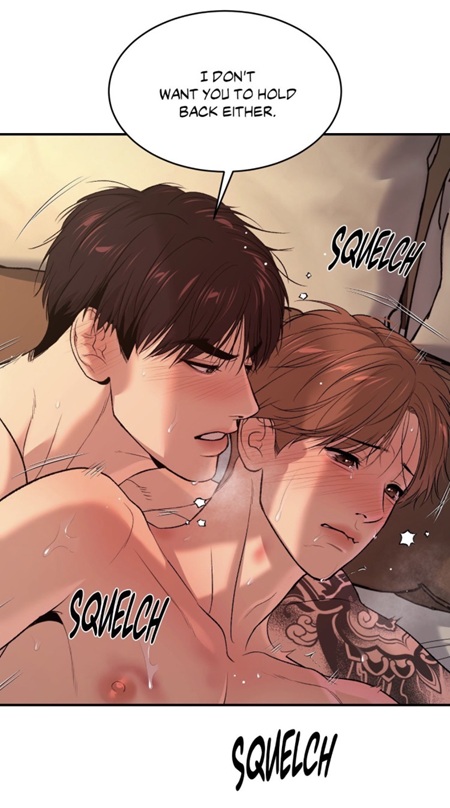 (chapter 86) does not initiate his metamorphosis.
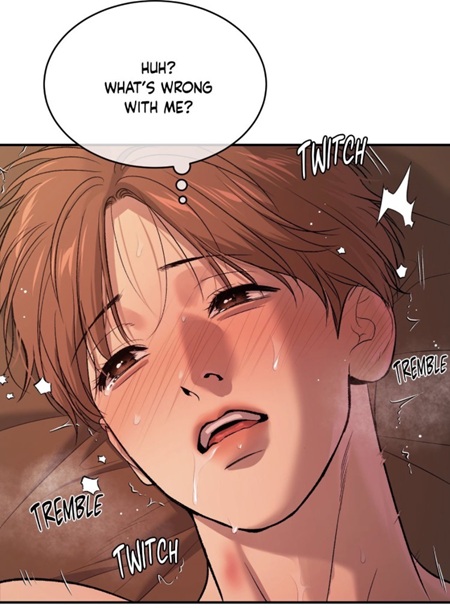 (chapter 86), sparks
 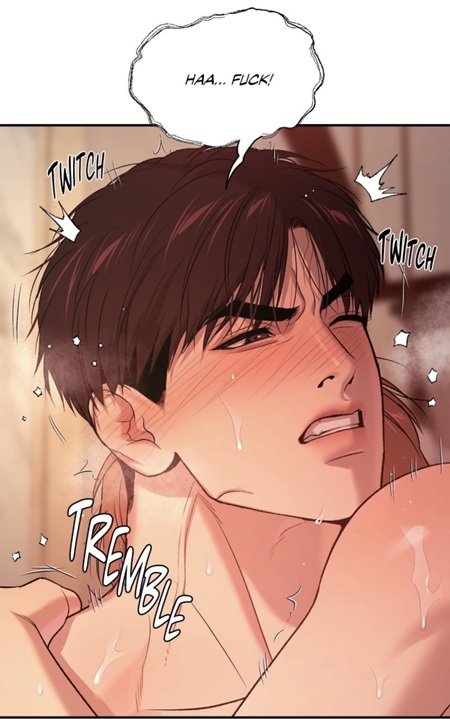 (chapter 86), and softness, many Jinx-philes might instinctively describe it as magical. The imagery invites such a reading. After all, we have seen similar nights before. The night in the States shimmered with illusion
 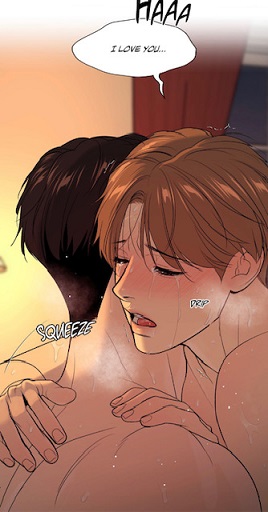 (chapter 39); words were spoken, confessions made — only to dissolve with memory.
  (chapter 41) The penthouse night echoed A Midsummer Night’s Dream
  (chapter 44), suspended between intoxication and desire, intense yet fragile. Both nights felt unreal, and both were later reframed as mistakes
 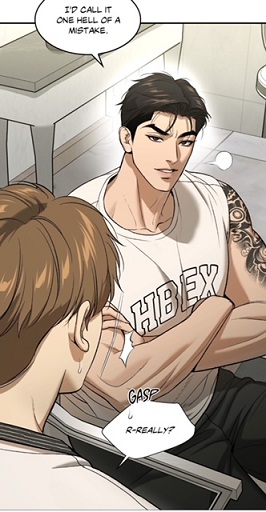 (chapter 41) — moments to be erased rather than carried forward.
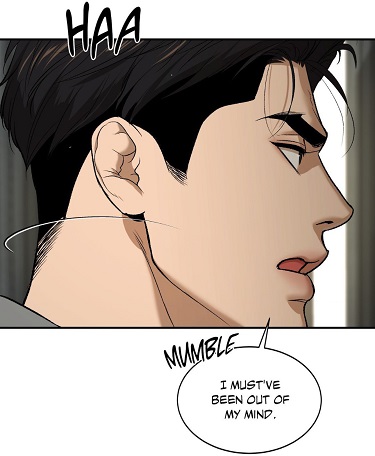 (chapter 45). This raises an essential question. Is episode 86
 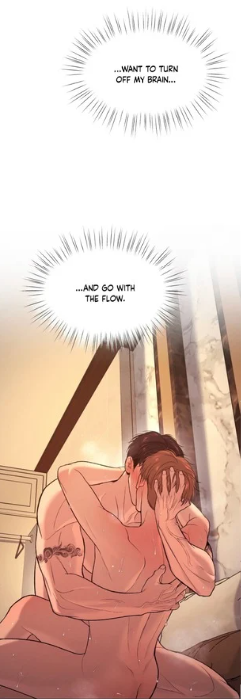 (chapter 86) a renewal of those nights? Another dream layered over the past? A repetition disguised as healing? Or, on the contrary, is this the first night that resists enchantment altogether?
 (chapter 4), in the return of light
  (chapter 66), in what remains once the sparks fade. A dream dissolves with daylight. Reality does not.
 (chapter 86) for final transformation. The real shift occurs elsewhere — more quietly, and perhaps more unsettlingly. To grasp the nature of this night, we must follow more importantly the doctor and his interaction with his fated partner.
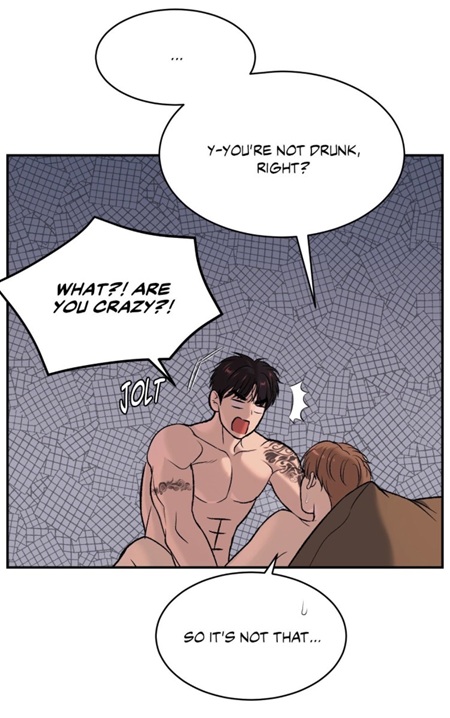 (chapter 86), processes, and responds to it. How he hesitates
 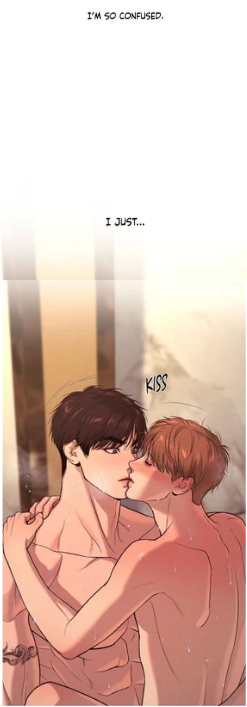 (chapter 86), reflects, and allows himself to reconsider what this moment can mean — and what it can lead to.
  (chapter 86), sparks, that strange shimmer that seems to hang in the air
 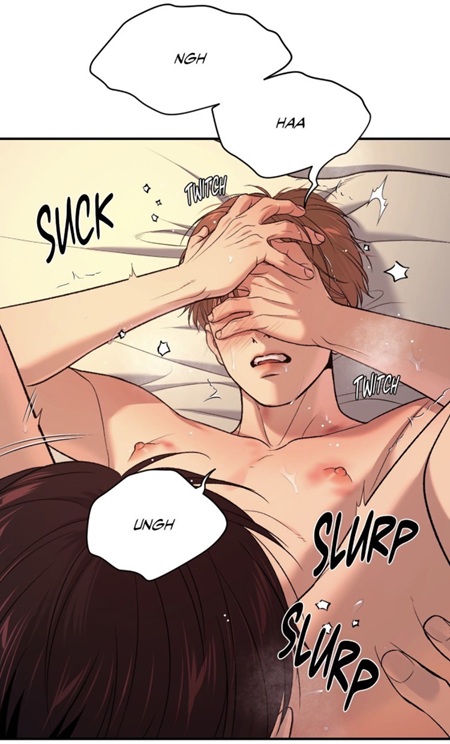 (chapter 86). Why? It was, as if their dream had come true. However, is it correct? Is it not wishful thinking? What if this night is not magical at all? What if its true signature is not enchantment, but electricity—a current that interrupts, tests, and resets? 😮
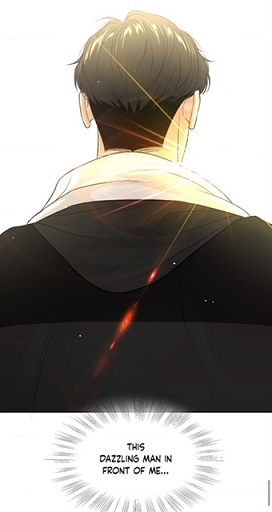 (chapter 40) in Kim Dan’s perception: overwhelming, radiant, dominant, a heat-source that does not negotiate.
 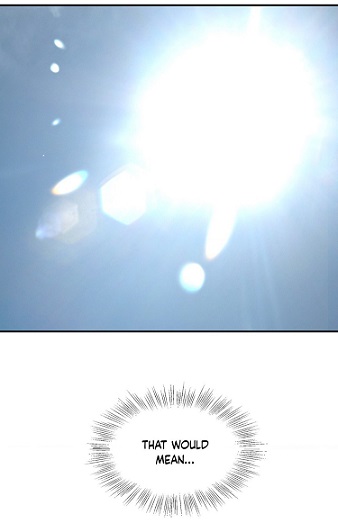 (chapter 41) The sun can be admired, feared, and endured—but it cannot be questioned.
  (chapter 58) It simply shines, and the one who stands in its light adapts. This explicates why the physical therapist would choose silence and submission over communication.
  (chapter 48)
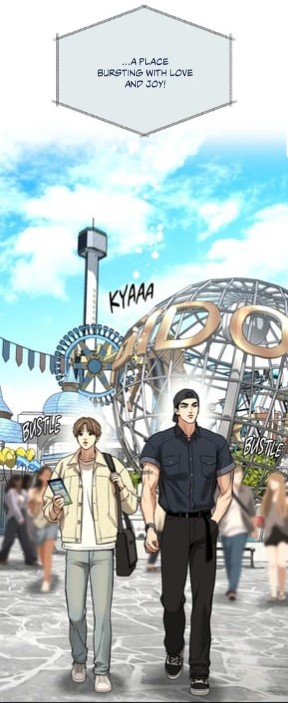 (chapter 83)
 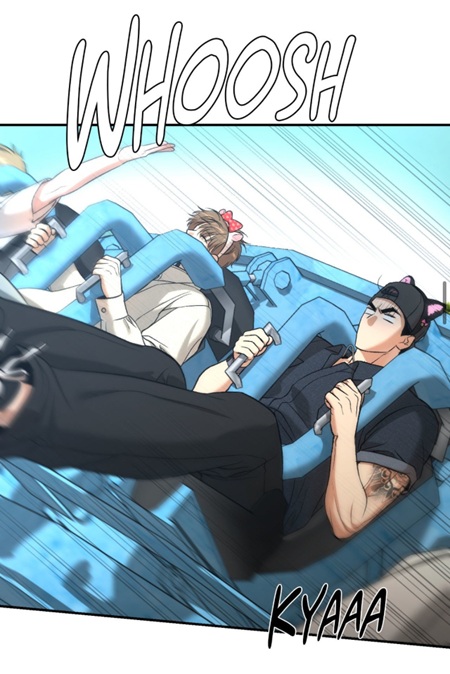 (chapter 83) Every ride, every light, every scream suspended in midair depends on current: motors accelerating and braking, circuits opening and closing, energy stored, released, and cut off.
  (chapter 83) Roller coasters do not move by heat, charisma, or sheer physical force; they move because electricity flows through them. The Viking ship swings
 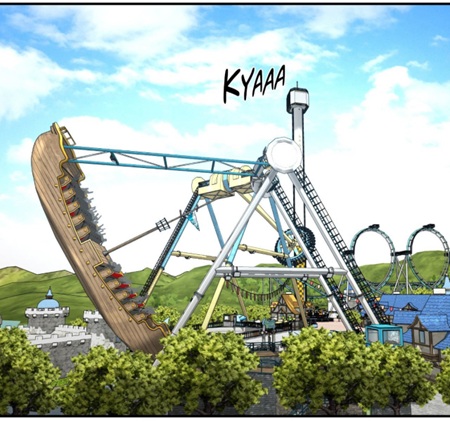 (chapter 83) because current allows it to swing. The Ferris wheel ascends
 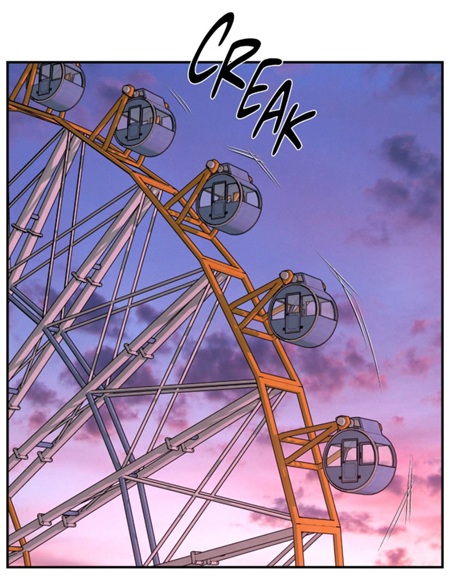 (chapter 83) because circuits hold — and descends because they release.
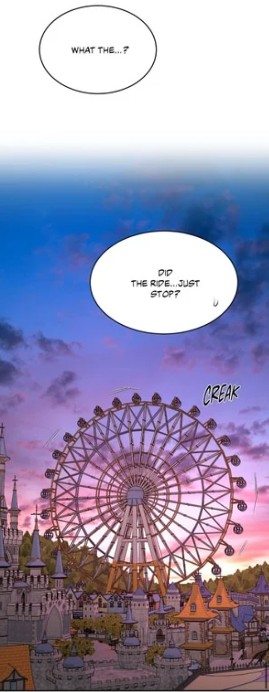 (chapter 84)
 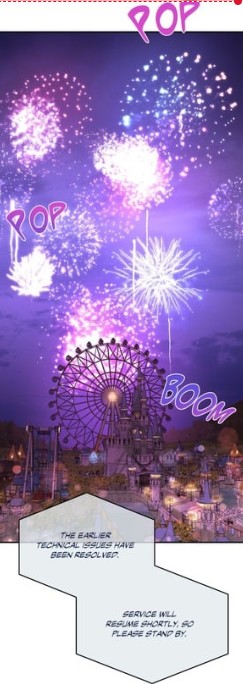 (chapter 84) explicitly names what had previously gone unspoken: the rides function only because current flows. When it disappears, the illusion of effortless motion collapses.
 (chapter 84) The Ferris wheel has stopped. The current is gone. The carefully regulated system that lifted, rotated, and sustained them is no longer in control. Yet movement does not disappear entirely. It mutates. When the champion shifts his weight, grips the structure, reacts instinctively, the cabin begins to shake. Panels emphasize instability: creak, swish, ack. The motion is no longer generated by electricity but by the body itself.
 (chapter 84) Stranded above ground, stripped of the park’s mechanical rhythm, he apologizes.
 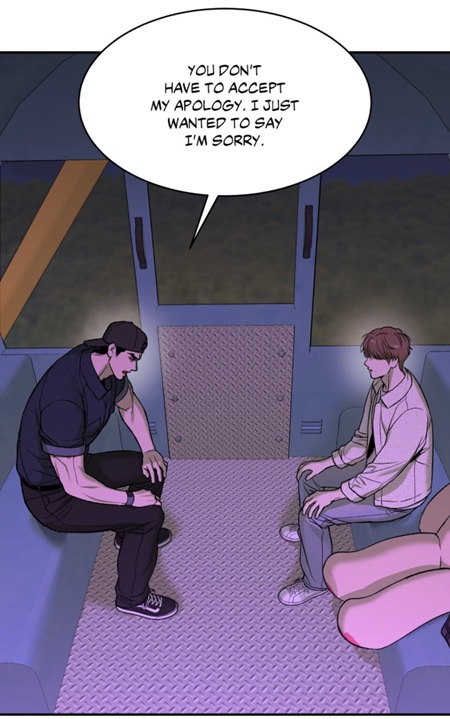 (chapter 84) Not theatrically, not performatively, but awkwardly, haltingly. His body exposes his discomfort
  (chapter 84) and fears. He avoids the doctor’s gaze, crosses his arms
 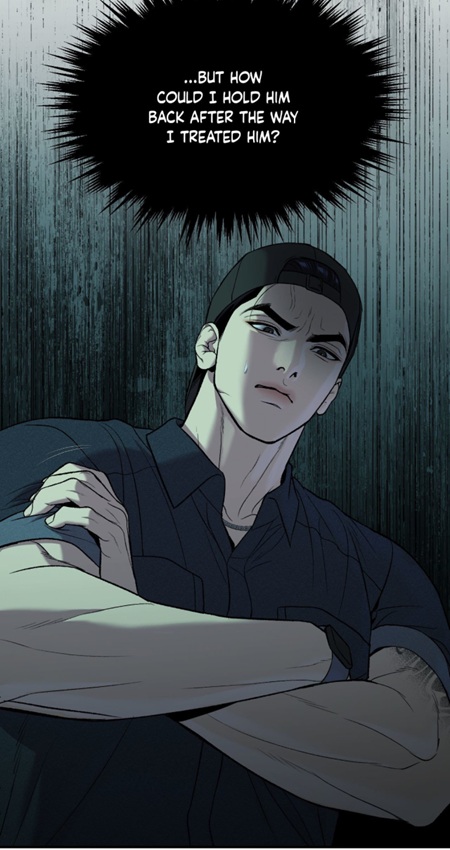 (chapter 84) or squeezes his arm
 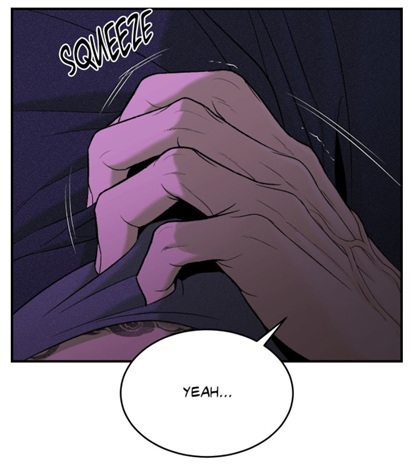 (chapter 84). The cessation of electrical motion coincides with a shift in his own mode of action. Where the park depended on current to keep things moving, he now moves without it. The absence of electricity forces something else to surface: responsibility, attention, presence. Additionally, this sequence anticipates what will later unfold more fully. Proactivity is no longer expressed through force or motion, but through articulation. Words stand for action and have weight. The champion’s future action is announced here, quietly: he will no longer push forward by shaking the structure. He will move by sharing thought, by naming feeling, by allowing himself to be affected.
  (chapter 86),
 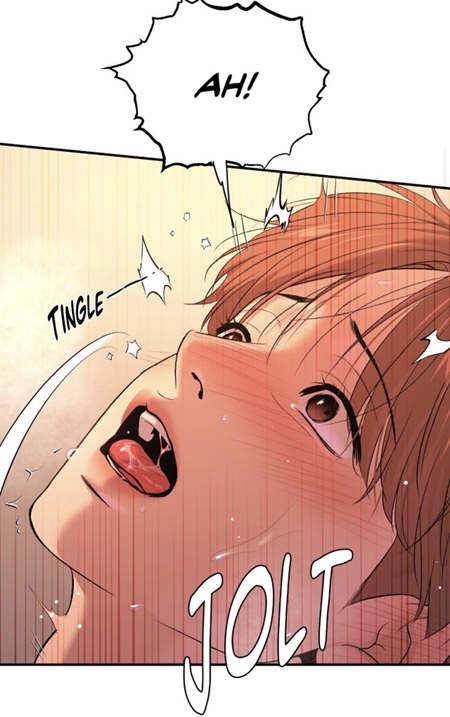 (chapter 86) jolts, sudden contractions of the body
 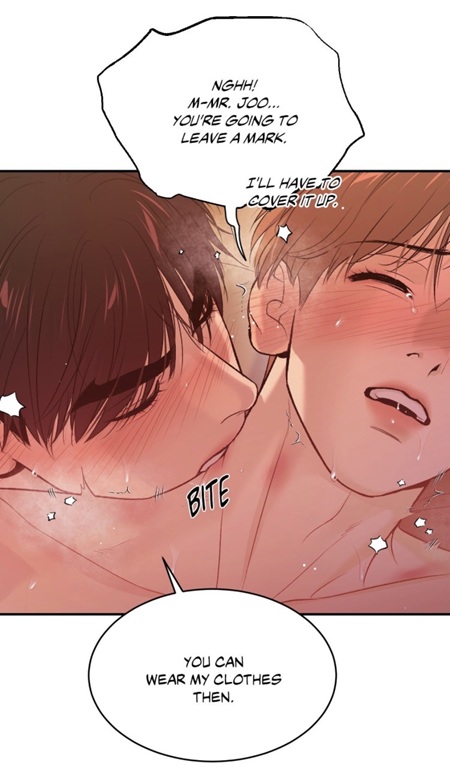 (chapter 86). Kim Dan is repeatedly shown convulsing, gasping, losing linear thought, and it is the same for the MMA fighter. Panels insist on interruption: jolt, tingle, broken breath, aborted sentences. The doctor’s body behaves as if struck, especially in this image.
 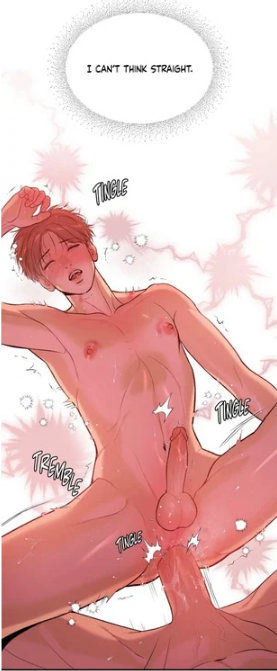 (chapter 86) It is at this point that a phrase surfaced in my mind — instinctively, almost involuntarily. A phrase we use in French when something intangible yet decisive occurs between two people: Le courant passe. Literally, the current passes. Idiomatic meaning: they are on the same wavelength, something connects, communication flows. However, here, the current is not the product of civilization, but of nature. Two people interacting with each other. And it is precisely because of the unusually high frequency of sparks and jolts in the illustrations that a belated realization imposes itself: nature, too, produces electricity — through storms, through thunder.
 (chapter 69) A storm was announced back then. And yet, upon closer inspection, no thunder was ever shown there. There was tension, there was excess, there were dark clouds
  (chapter 69) — but there was no strike, no discharge, no interruption. The imagery remained continuous, fluid, enclosed within the logic of escalation rather than rupture.
 (chapter 83). In Roman terms, Thursday corresponds to dies Iovis — Jupiter’s day — the god of thunder. Both gods are strongly connected to thunder and as such current.
 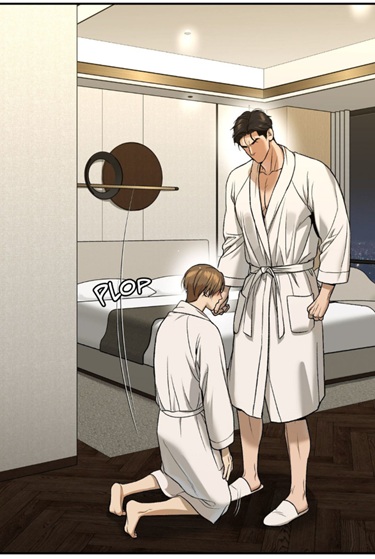 -chapter 67-; for more read my analysis
 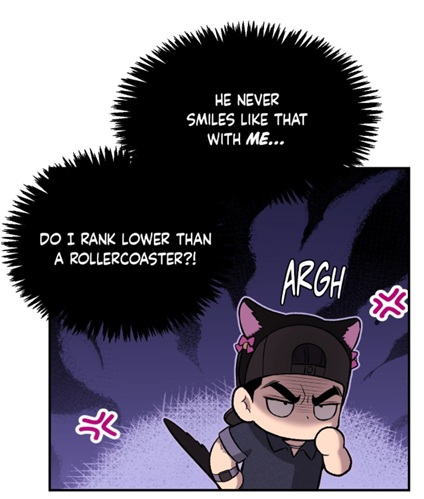 (chapter 83). Before striking anything, he is already unwell: angry overstimulated and complaining, visually reduced to a childlike register. This matters. The hammer does not create excess — it receives it.
  (chapter 34), the hammer gesture is not confrontational, for the machine is immobile. There is no opponent.
 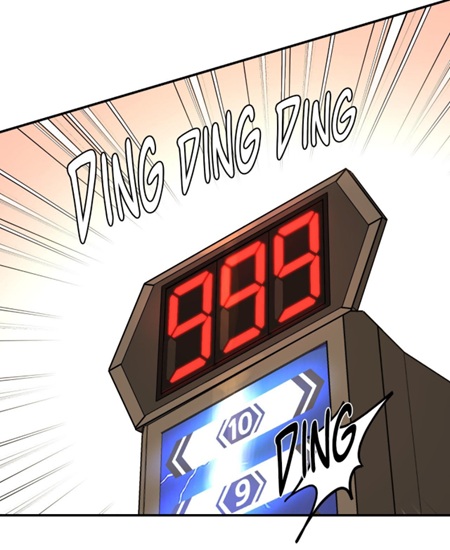 (chapter 83) Too much energy released at once. The system registers it, but cannot contain it. This means, the record won’t be registered and as such “remembered”. In fact what mattered here was the prize, the teddy bear, and restored self-esteem of the athlete. He could offer a present to doc Dan which the latter accepted without any resistance.
  (chapter 86) Therefore it is not surprising that doc Dan starts looking at his fated lover. Imagine what it means for the athlete, when the “hamster” is staring at him, though he is a little embarrassed. Finally, he is truly looking at him. The champion loves his gaze. And now, you comprehend why the “wolf” listened to the “cute hamster” and stopped leaving marks.
 (chapter 85), but this time, its nature has changed. It is no longer jealousy or anger, but love and desire. Hence the current is not colored in red, but white and pink.
  , but a thunder and as such it is still restrained and regulated.
 (chapter 86) or second-hand data. New information must now be gathered. New meanings must be negotiated. Because Joo Jaekyung acts differently (son-father), the doctor is incited to discuss with his fated lover and not to generalize. He is pushed to become curious about the main lead and even adapt himself in the end.
 (chapter 39) and the penthouse night
  (chapter 44) as emotionally charged, intense, even pivotal. Confessions were made. Bodies responded. Vulnerability appeared to surface. And yet, both nights collapsed almost immediately afterward. What was felt
  (chapter 39), arousal, and emotional exposure under the influence of a drugged beverage. His body reacts strongly, almost violently. His speech loosens. He confesses.
 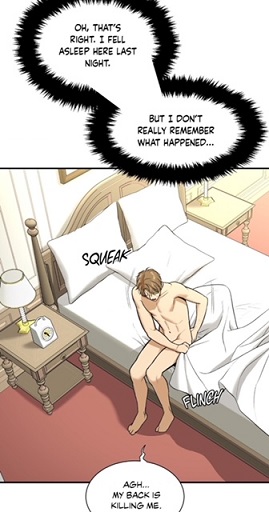 (chapter 40)
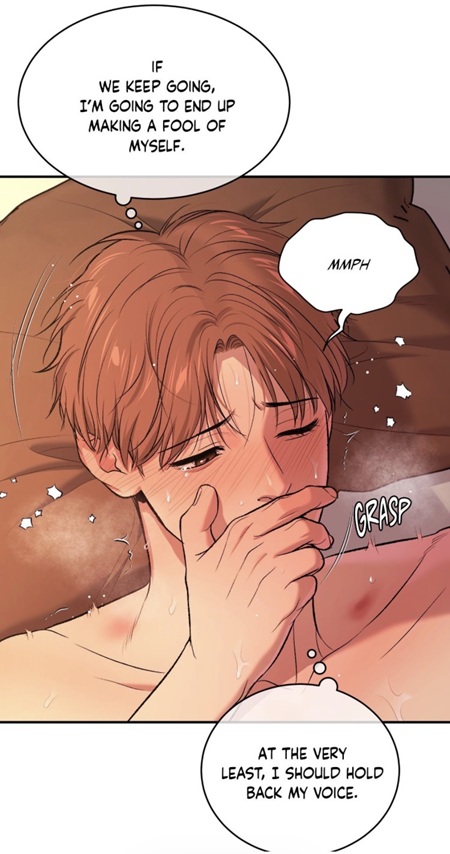 (chapter 86) In this panel, we should glimpse a reference to the night in the States as well, and not just to the night in the penthouse.
  (chapter 44) The setting is elevated, luxurious, almost theatrical. The doctor is brought into a space of power that is not his own.
 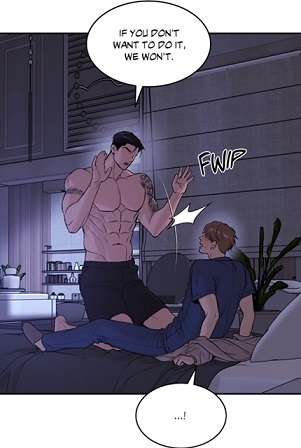 (chapter 44) By acting that way, the athlete created a false impression of himself, as if he was still rational and clear-minded. Again, desire unfolds.
  (chapter 44)
  (chapter 44) Again, closeness occurs. And again, the aftermath reveals the same fracture.
 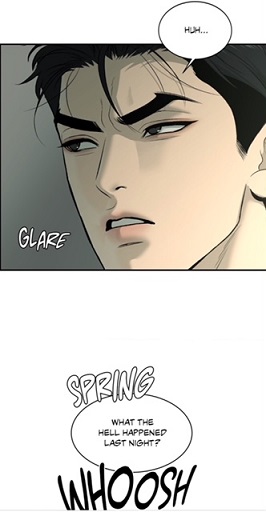 (chapter 45) and later wants to even forget it.
  (chapter 45) and he can not deny his own involvement and actions. Hence the doctor is left alone. Only he can recall this “dream”.
  (chapter 44) But memory alone is not power. Remembering without the other’s participation transforms recollection into isolation. Kim Dan cannot confront, confirm, or renegotiate what happened, exactly like the champion did in the past. Meaning freezes instead of evolving. Striking is that he came to associate feelings with addiction.
  (chapter 46) No wonder why later doc Dan had no problem to reject the athlete. And for him, the next morning became a cruel reality, even a nightmare. It wounded doc Dan’s heart and soul so much that he learned the following lesson: to not get deceived by impressions. Hence in Paris, Doc Dan tries to explain the change of the champion’s attitude with drunkenness.
  (chapter 44) One participant is altered. The other must carry the weight of meaning alone. The night does not end in shared reflection, but in silence and absence.
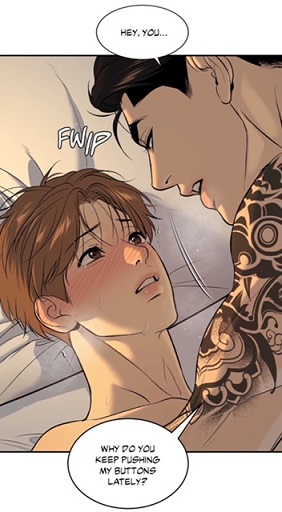 (chapter 44) Words blur, vanish, or are forgotten. Even gestures go unnoticed: a kiss, an embrace or a patting. Memory fractures. The morning after is defined not by continuity but by confusion. The body has moved forward, but the narrative has not.
  (chapter 84)
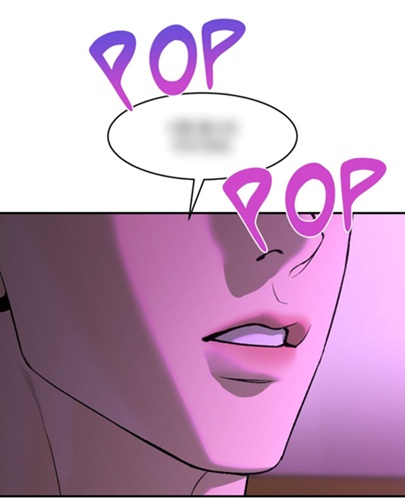 (chapter 84) Speech bubbles lose clarity. Confessions are obscured. The reader is denied access to meaning. Fireworks, like drugs, produce intensity without duration.
 (chapter 39)
  (chapter 44) It was as if these nights could only exist under altered states — as if clarity on either side would have made them impossible.
  (chapter 86)
 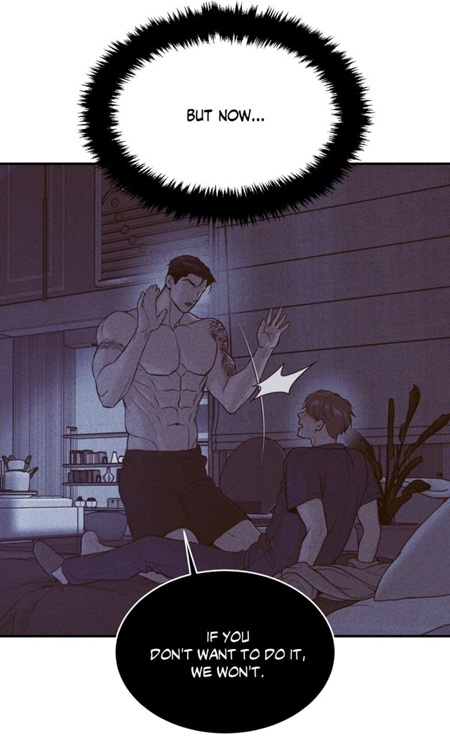 (chapter 86) This is why, when electricity returns in episode 86, it does not revive heat. It interrupts it.
 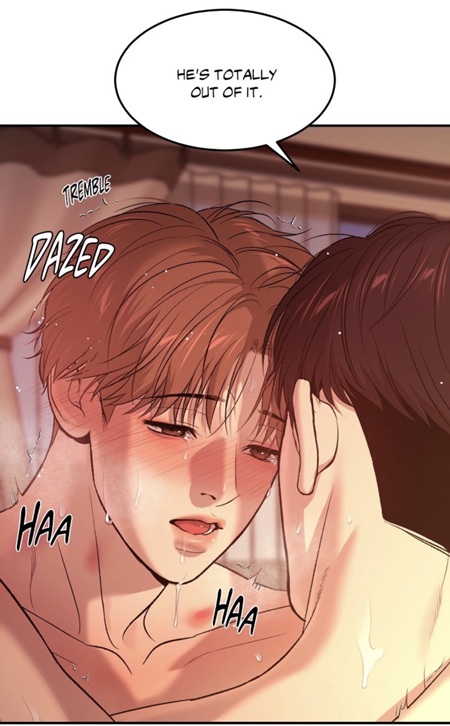 (chapter 86) That’s the reason why the athlete stops for a moment and asks doc Dan, if he needs a break.
  (chapter 86) This question is important because doc Dan admits his confusion and ignorance. He confesses to himself that he “knows nothing” not only about himself, but also about his fated lover.
 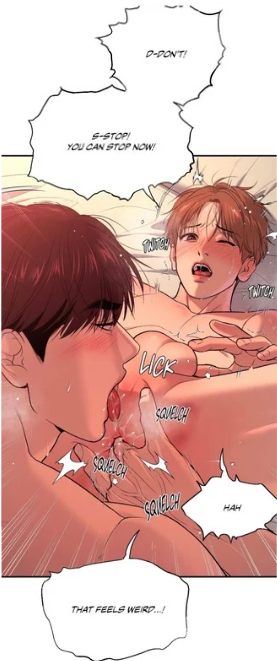 (chapter 86) They function as temporal markers. A spark exists only now. It has no duration. It cannot be stored, recalled, or anticipated. It appears — and vanishes. In this sense, electricity becomes the perfect visual language for the present moment itself.
 (chapter 10), statements blurred by drugs
 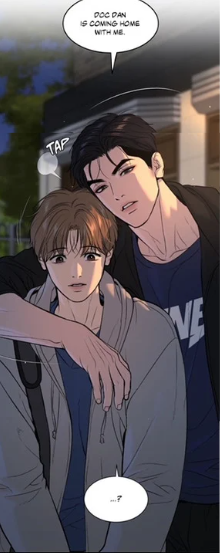 (chapter 43), sentences remembered by only one side.
  (chapter 44) and even laugh…. if only he could remember that night…
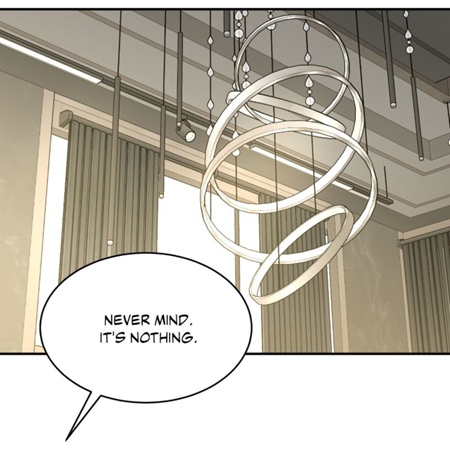 (chapter 79), the “never mind”,
  (chapter 84) or it is a mistake, the easy erasure that once dissolved meaning after the fact. The kiss interrupts that mechanism. It produces a pause that cannot be talked over. It forces reflection.
 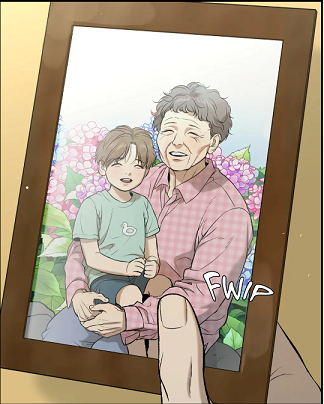 (chapter 19) The grandmother’s lap structured Kim Dan’s understanding of safety, endurance, and knowledge. Sitting there meant being held — but also being taught how to survive through sacrifice, silence, and self-effacement. That worldview sustained him, but it also confined him.
 (chapter 84) Readers have replayed the blurred panel again and again, straining to decipher the muffled shapes of his mouth. Some are convinced that this is the confession, the moment the wolf finally says aloud what his body has been whispering for months. One Jinx-phile,
  just enough to match the Korean 좋아해 김단 (jo-a-hae Kim Dan)—“I like you, Kim Dan.”
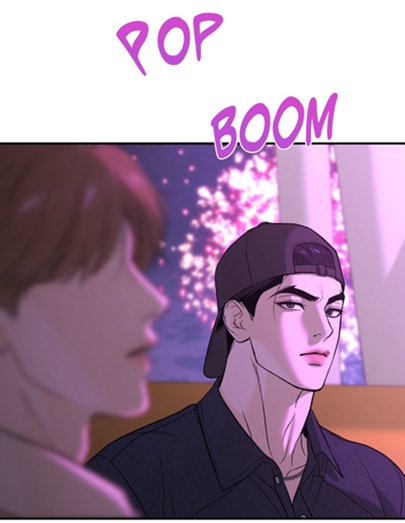 (chapter 84) —especially Japanese summer festivals where boys and girls, dressed in yukata, confess beneath crackling skies. Fireworks symbolize joy, romance, fleeting courage. It is no wonder many readers assumed that Mingwa was drawing on this cultural grammar: purple night sky, glowing lights, two lonely figures suspended above the world. A confession seems almost inevitable. And if it truly was a love declaration, then the champion’s refusal to repeat himself
  (chapter 62)
  (chapter 77) Why does Joo Jaekyung speak exactly when the fireworks begin, as if choosing the one moment when he is guaranteed to be drowned out?
 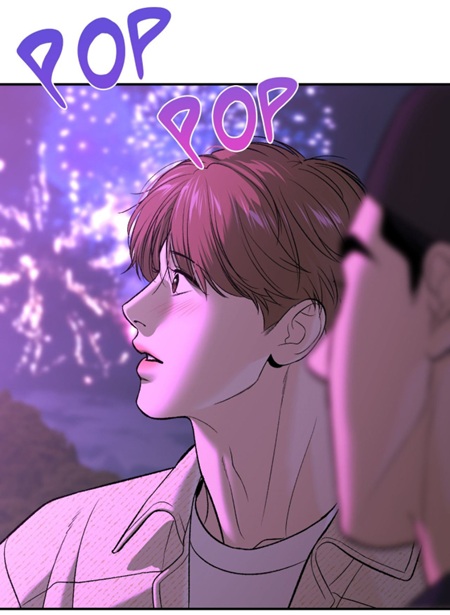 (chapter 84) Was he truly confessing love—or was he trying to verbalize something far more raw, far more primitive, far more difficult?
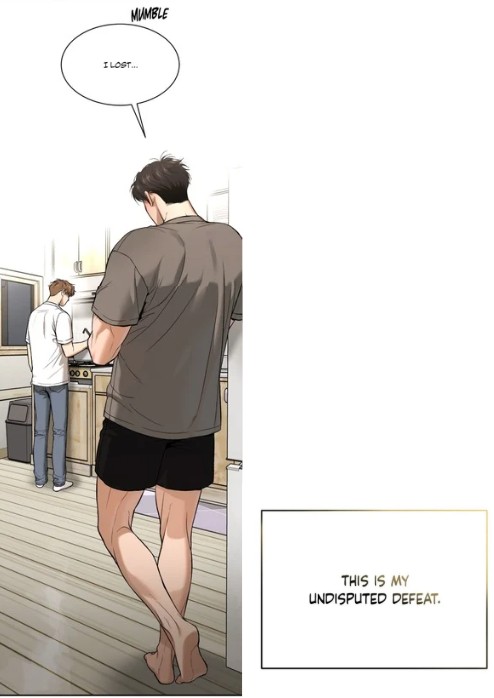 (chapter 76) and 79
  (chapter 79), where he “speaks” only when the other man cannot truly hear him. At the hostel, the mumbling was barely audible: yet according to my observation and deduction, doc Dan seems to have caught something. as later we discover this scene from the champion’s memory:
 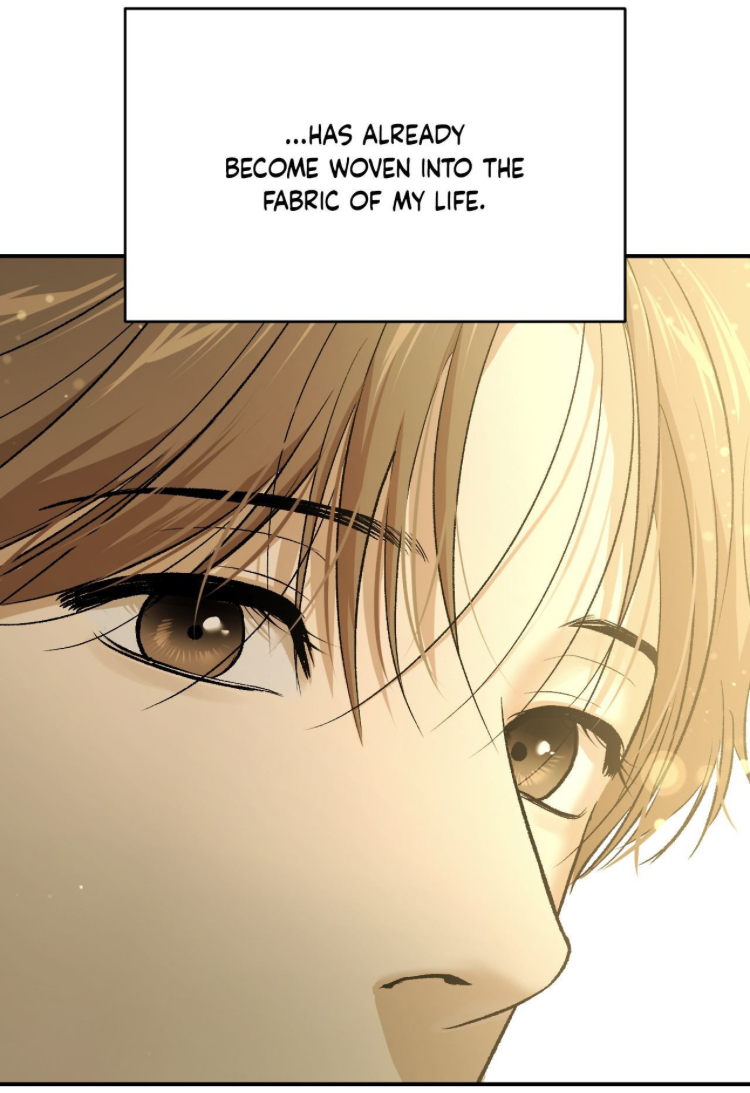 (chapter 77) He already knew that the athlete was standing next to him. However, observe that this vision focused on the doctor’s gaze was accompanied with silence. This means, doc Dan acted, as if he had heard nothing. So if he heard, what did the physical therapist catch exactly in the kitchen? “I lost…”, but it was devoid of any context. Doc Dan had no idea what the director Hwang Byungchul had advised to his former student.
 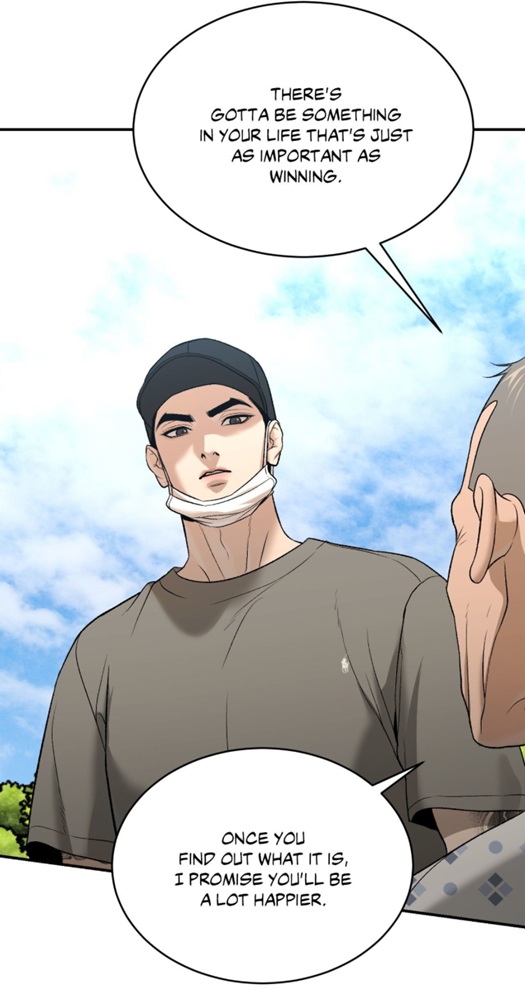 (chapter 75) He could not know that “I lost” referred to something far more intimate: Jaekyung losing control over his own emotional detachment, he was totally vulnerable in front of doc Dan. His heart was stronger than his “mind and fists”. Naturally, if Kim Dan interpreted the phrase at all, he would connect it to the only “loss” he understood: the tie with Baek Junmin. A humiliating defeat. A source of shame. This misinterpretation perfectly explains why in the cabin, the hamster immediately assumes that the champion is once again determined to regain his title:
 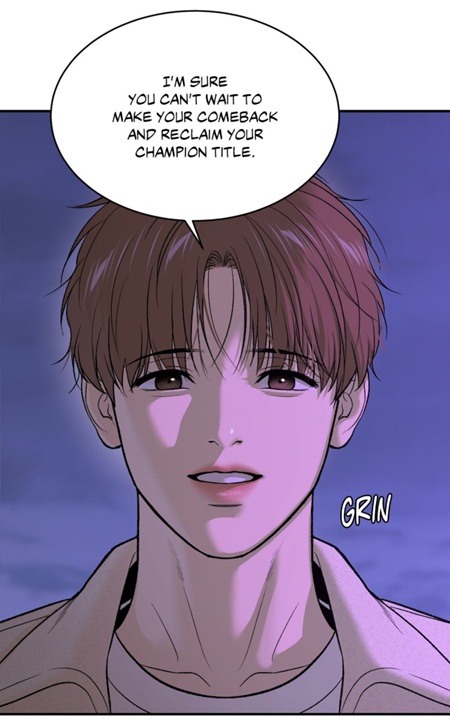 (chapter 84) He is taking the champion’s words at face-value.
  (chapter 77) He trusts the explanation Jaekyung himself gave under the tree. And here lies the deeper revelation: Kim Dan’s misunderstanding exposes the true meaning of the tree confession. Why did Jaekyung suddenly accept the match? Why frame it entirely in terms of “I need you for these two fights”?
 (chapter 84) A deadline designed to keep Kim Dan close without revealing the depth of the emotional dependency underneath. Finally, before we even analyze posture or timing, we must acknowledge the ghost that is sitting inside the cabin with them — Jaekyung’s own admission of dishonesty. Just minutes earlier, the narrative revealed again a thought he had never dared to voice aloud:
  (chapter 84) This is the language of surrender — not to defeat, but to vulnerability and selflessness. The champion who once insisted on keeping Kim Dan “one way or another” (chapter 84) now articulates the opposite impulse: the willingness to release him, to give him a choice.
 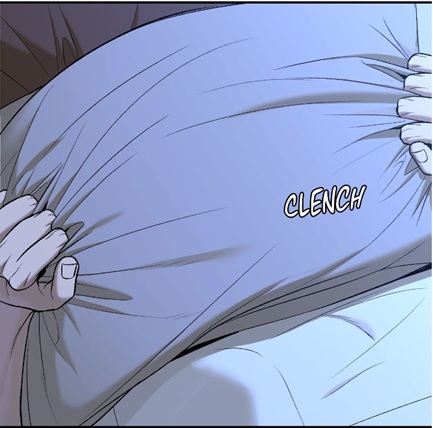 (chapter 84) Thus for me, in the cabin the champion became, for a moment, the boy with no mother’s gaze, no father’s protection, no safe place to rest. He must have said something cheesy, something a young person would say. Purity returns before experience does. Honesty returns before articulation. And in that moment inside the cabin, Mingwa makes a decisive artistic choice: we do not see Jaekyung’s eyes.
  (chapter 84) This pigment stands for innocence, purity, new beginnings and even equity.
 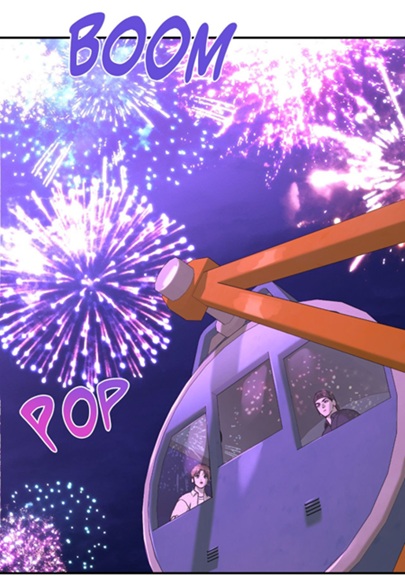 (chapter 84) Because they were not yet meant to be received, only meant to be released. The fireworks allow him to finally attempt a more honest sentence, but in conditions where it cannot reach its target.
 (chapter 81) Yet this is also the limit of what he can say.
 (chapter 79) Thus he could see the athlete’s mouth moving and hear sound. Nevertheless, observe that the moment the wolf reached to the doctor’s words, he bowed his head and looked down. From this
 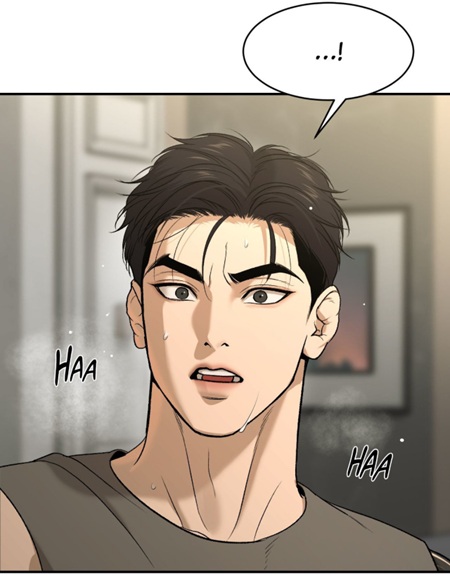 (chapter 79) to this
  (chapter 79) However, he doesn’t fear coldness, but ridicule and mockery, the father’s gaze:
 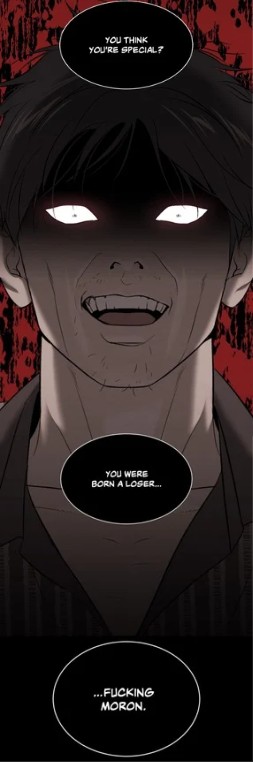 (chapter 73) Under this light, people can grasp why Joo Jaekyung was not facing doc Dan directly in the cabin. To conclude, the mechanism is identical, but amplified.
 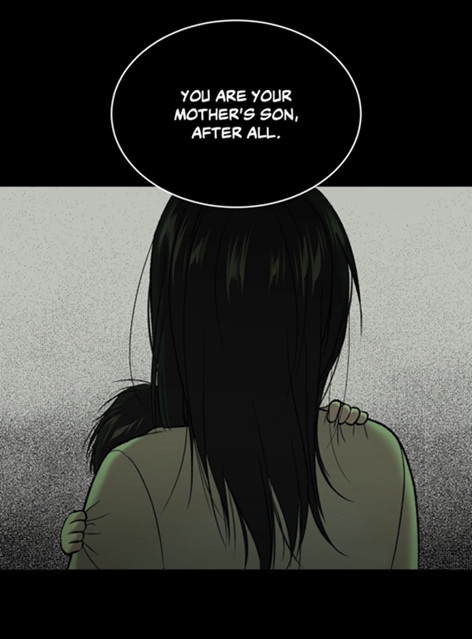 (chapter 73) Besides, the head of her position is indicating that she was not looking at her son, the boy was hiding his face from Joo Jaewoong and his mother. Then his father mocked him, degraded him, and used resemblance as an insult: “
 (chapter 74) or his mother (a poor but good mother), he was not seen for whom he was: a child, a boy. Jinx consistently links sight with recognition, and recognition with love.
  (chapter 53) Jaekyung has never been granted either.
  (Chapter 45) Thus when he got upset with the present, he indirectly expressed the wish to be « looked at ». Moreover, in his visions or memories, this is what he keeps seeing:
  (chapter 54)
  (chapter 75) Doc Dan’s gaze!
 (chapter 51) And for the first time, Jaekyung freezes.
 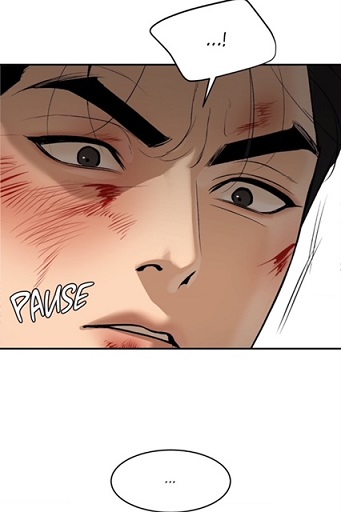 (chapter 51) His breath catches; his eyes widen. It is the moment he realizes his mistake. He never thought that doc Dan had been trusting him. That moment marks the first rupture in his emotional armor, not only because it hurt, but because it revealed. He realizes with terror that he wants to be seen by Kim Dan, but when he faced such a gaze, he could only feel guilty and bad. Thus it is not surprising that later, his nightmare let transpire his guilty conscience.
  (chapter 82), as the champion has always used his surroundings as a source of inspiration.
 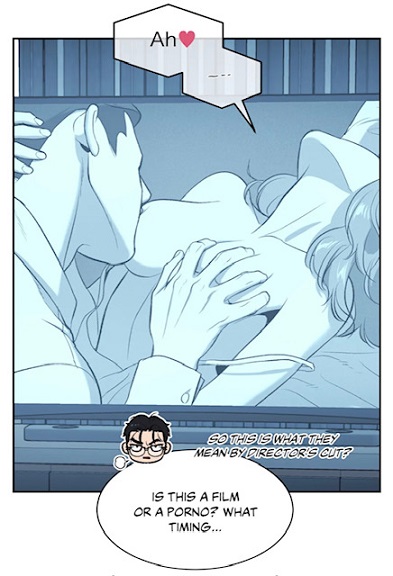 (Chapter 29) It would also fit with 5 syllabes in Korean. And it would be cheesy too. Yet, I have my doubts about this theory which I will explain further below. Nevertheless, one thing is sure. The champion loves the doctor’s eyes and they have the power to move not only his heart but also his mouth. He is encouraged to verbalize his emotions.
  (chapter 84) The gaze under the fireworks triggers emotions in him. Thus he blurted out something. But for me, he does not know how to say “I love you.” He cannot even say “I like you.” Those sentences belong to someone who has matured emotionally — someone who can identify feelings properly, but so far he keeps saying: “to stay by his side” and his « affection declarations » were all linked to negativity.. Thus my idea was that Joo Jaekyung could have said this: “I want to hold you!” (안고 싶어 너). Let’s not forget that so far, the champion had never expressed such a longing before; a warm embrace. He would always follow his instincts:
 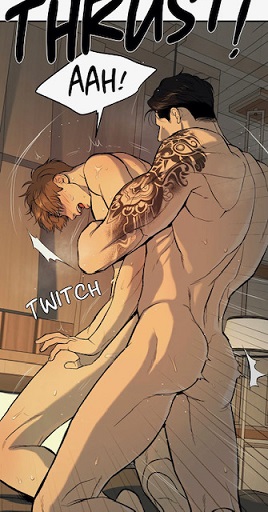 (chapter 4)
 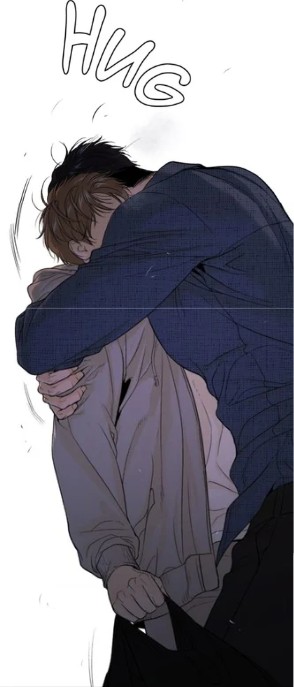 (chapter 69) The hug represents a metaphor for “staying by his side, for home and to be seen”. Moreover, in French embrasser can mean kiss and hug. And strangely, I noticed that the protagonists were never looking at each other during an embrace.
  (chapter 65) It is for “babies”. No wonder why he retracted immediately.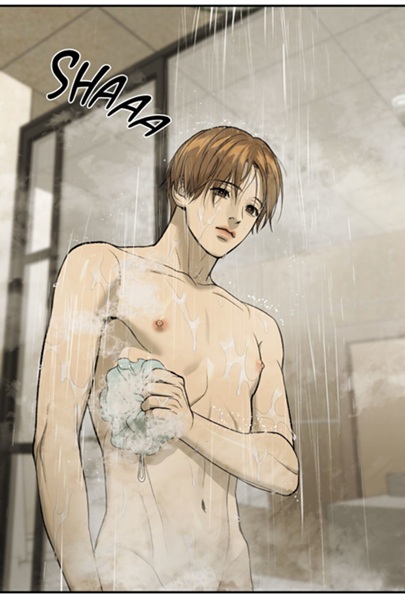
 (chapter 84) Here, the doctor looks sad and wounded. His eyes are unfocused — he is not seeing the present. The water running down his eyelashes gives the impression of tears, even though he is not crying. His gaze is distant, fixed on something internal. His mouth looks tense, almost trembling. The mouth especially is a clue: Kim Dan’s emotions always gather there when something from the past resurfaces.This is the expression of someone thrown into an involuntary flashback. He is inside a memory. This explicates why this scene is similar to the champion’s shower after the latter had met Baek Junmin:
 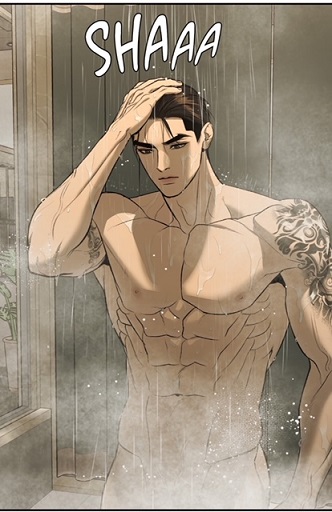 (chapter 49)
  (chapter 49) Both scenes show a man pulled violently into a buried memory. Thus, my assumption is simple: the champion said something that pierced straight into Kim Dan’s oldest wound and brought his trauma to the surface. And this brings me to my next observation. Inside the cabin, there are not two people — there are three: the champion, the therapist, and the Teddy Bear.
 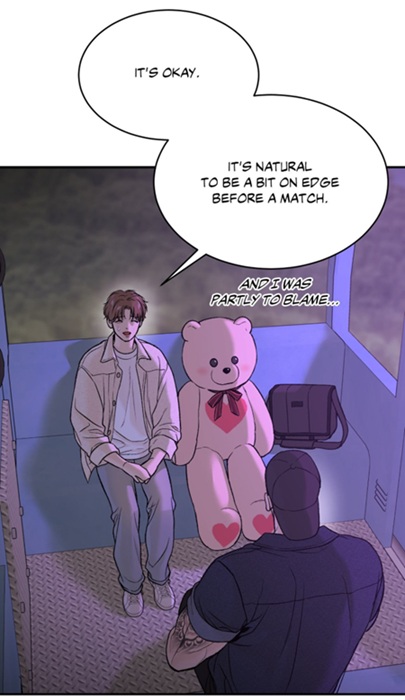 (chapter 84) Furthermore, we have a window. We have a phone (dead, but present). We have a childlike toy — symbol of stolen innocence.
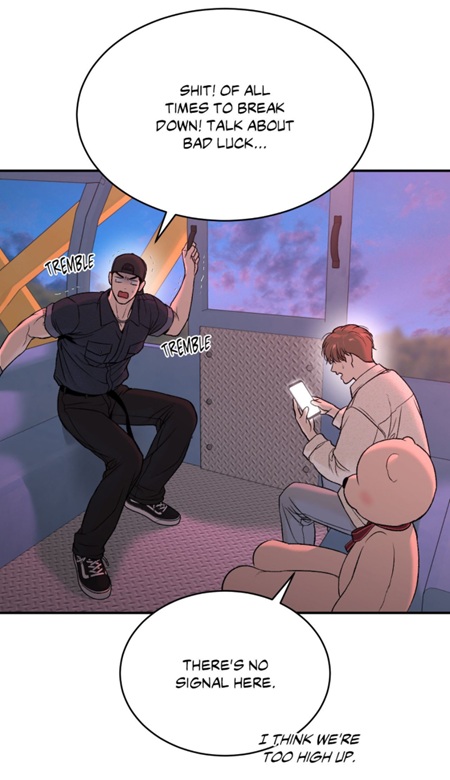 (chapter 84) And now, look again at episode 19:
  (chapter 19) A window with no view. Three figures: halmoni, the boy, and the phone placed between them like a knife. And the sound structure is identical, but reversed:
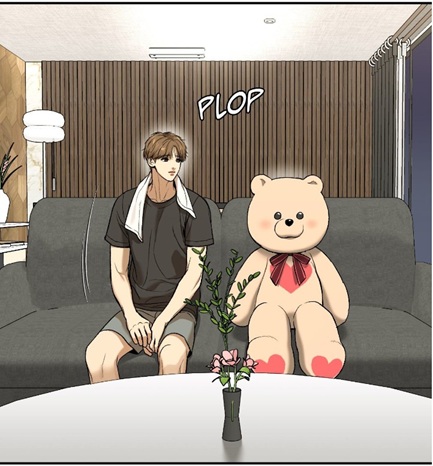 (chapter 84) It is not a fashion choice. It marks the moment when innocence collapses and the past reopens.
 (chapter 84) However, observe that doc Dan is holding, even squeezing the teddy bear’s hand, a sign that he is rekindling with his lost childhood. We are getting closer to the revelation behind the photograph — the day doc Dan has never willingly shown to Joo Jaekyung.
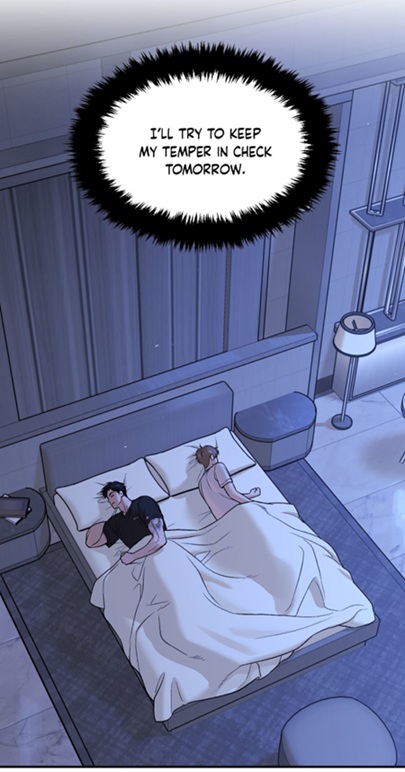 (chapter 79) on the night table.
  (chapter 21) and
  (chapter 47). Dan once had toys — proof that once, someone loved him enough to give him gifts which contrasts to the wolf’s childhood.
  (chapter 84) Every time innocence is ripped away, a teddy bear disappears from the story.
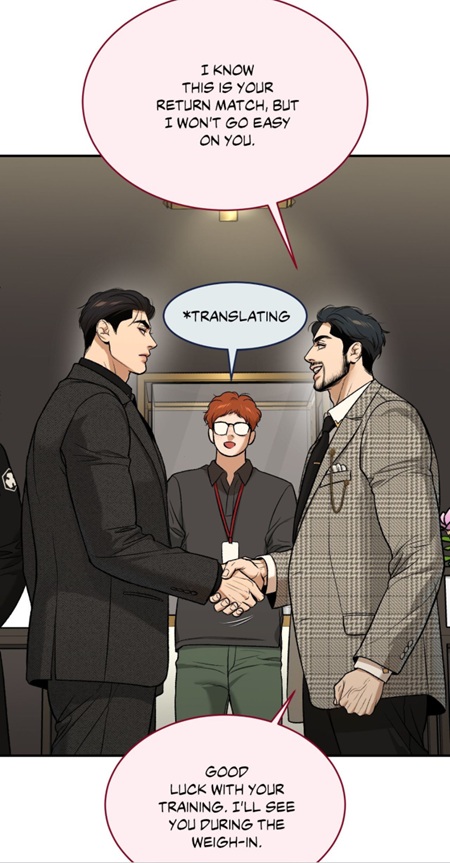 (chapter 82) will happen linked to the protagonists’ past (recent and childhood). Let’s not forget that doc Dan still has no idea what Joo Jaekyung went through after his departure: the slap, the drinking, the headache and the indifference of Team Black, just like the athlete has no idea about the blacklisting and bullying in the physical therapist’s past.
 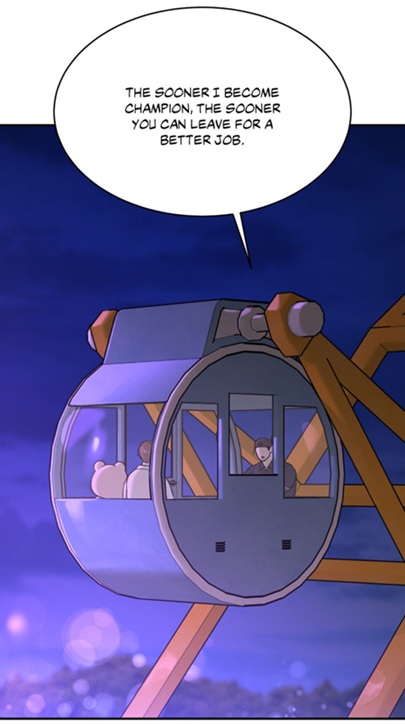 (chapter 84) So by wearing black, doc Dan indicates that he is gradually becoming responsible for Team Blackand Joo Jaekyung the athlete.

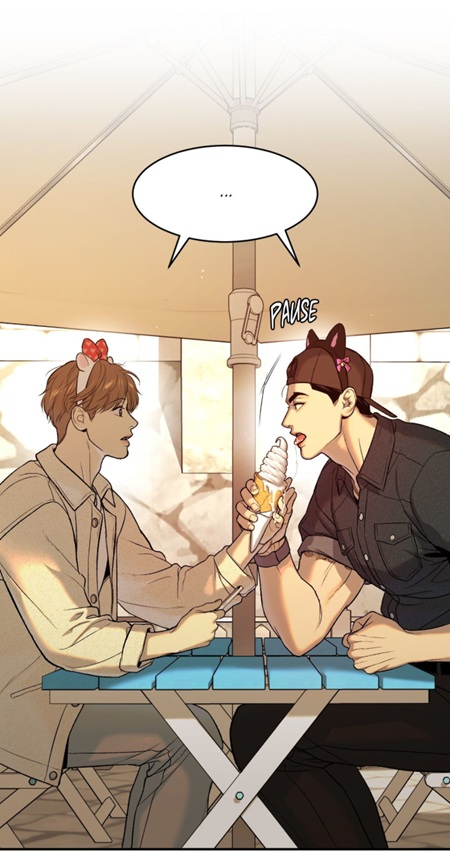 (chapter 83) mirroring the contrast of their clothes and their personalities — and the champion even leans in to lick a smear of ice cream from the therapist’s finger, an image so intimate that any passerby would mistake them for lovers. And yet, not quite. The physical therapist approaches the outing as part of his job, a therapeutic break meant to soothe his patient’s nerves
  (chapter 83), while the athlete approaches the day with a far more personal hope. He stages the rides strategically, intending to appear strong and reliable so that his companion might grow frightened and instinctively reach for him
  (chapter 83) — just as he once did in the swimming pool.
  (chapter 80) Beneath the surface, what looks like a date is a carefully orchestrated attempt to recreate closeness without naming it. To conclude, whereas the episode flirts with the aesthetics of a date, the intentions behind it remain mismatched, unspoken, and unresolved. It is not an official date, yet it does not behave like a simple work-related excursion either, and we as readers are left suspended in that tantalizing in-between space — as if the very moment were hanging weightless above the ground, waiting for someone to name what it truly is.
 (chapter 83), charged with a warmth that seasoned Jinxphiles will recognize immediately: a tension between joy and tension, duty and desire, wind and water. And then we see him — the usually anxious physical therapist — smiling with his eyes closed, arms raised, as if offering himself to the sky and joining his “companions”, the clouds. In this panel, his hands — so often clenched, overworked, or trembling from exhaustion, fear or anger — are finally resting, suspended in a gesture of pure lightness and ease.
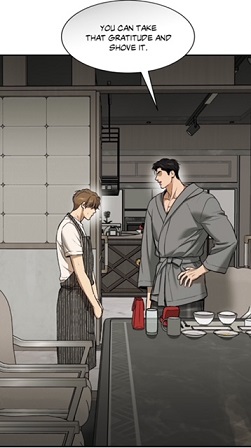 (chapter 45) reality collided with unspoken longing. The tension between dream
 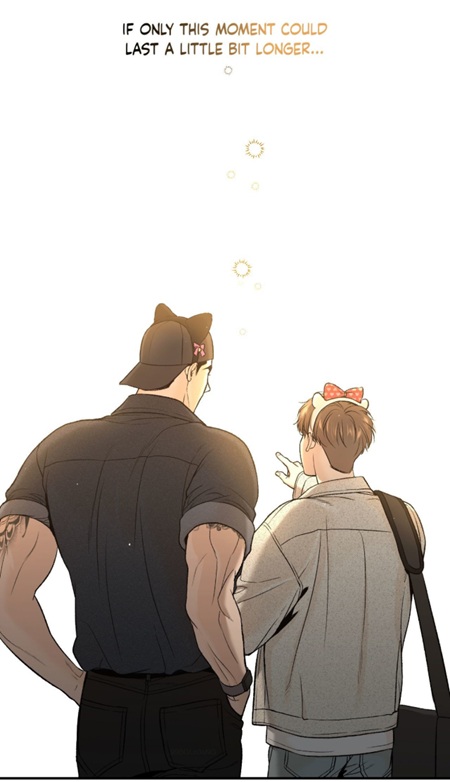 (chapter 83) and waking life, quietly present in the lyrics themselves, resurfaces at the park amusement as well — though its meaning will become clearer as we look deeper. In season 1, the boundaries between the celebrity fighter and his therapist were blurred in ways neither of them understood: professional on the surface, intimate in practice, yet undefined in essence. Physical closeness existed, but emotional clarity did not. Now, in the bright openness of this amusement-park afternoon and evening, we are invited to look again. What exactly is their relationship here? A supervised rest day? A moment of companionship? The first fragile step toward something tenderer that neither man is ready to articulate?
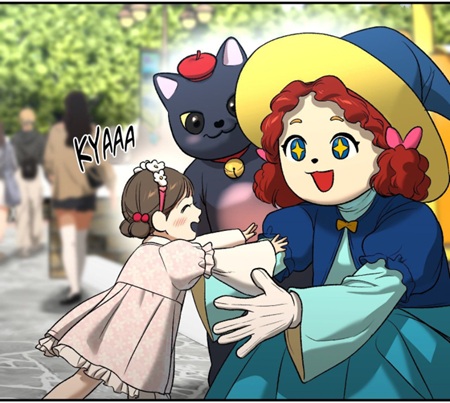 (chapter 83) or a family laughing together
  (chapter 83), something in him shifts so quietly that one might miss it at first glance: he smiles.
 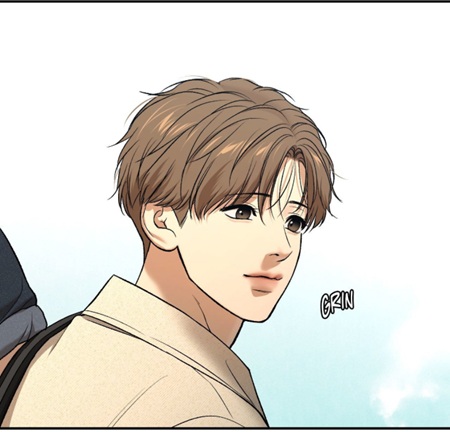 (chapter 83) Not out of politeness, not to reassure someone else, not through exhaustion or habit. He smiles because he witnesses joy — and for once, it does not make him feel smaller. It does not activate the reflexes of deprivation or fear that shaped his life from childhood to early adulthood. On the other hand, the smile he gives in that moment is not radiant, not wide, not unguarded. It is a grin, a restrained upward curve that reveals both warmth and hesitation. His joy is present — unmistakably so — but it is still contained, as if his body has not yet learned how to express happiness without caution. This small, hesitant grin shows us a man who is beginning to open, yet still holds himself back, afraid of wanting too much.
 (chapter 1) reminded him of responsibility , every sight
  (chapter 83), his gaze is finally unshackled. He looks outward and takes in the warmth of strangers’ affection without translating it into loss or longing.
 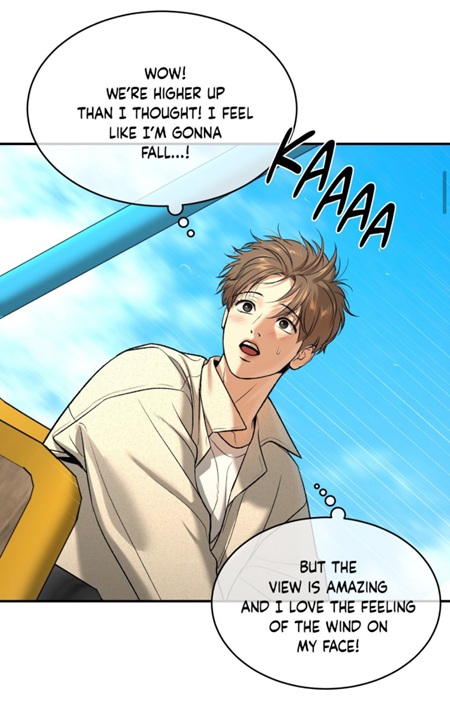 (chapter 83), though an accident could actually occur there. This contrasts so much to his thoughts in episode 1.
  (chapter 1) The amusement park becomes a place in which love exists openly, visibly, harmlessly. The lyrics capture this awakening beautifully: “And I don’t know if I’m being foolish… but it’s something that I must believe in.”
 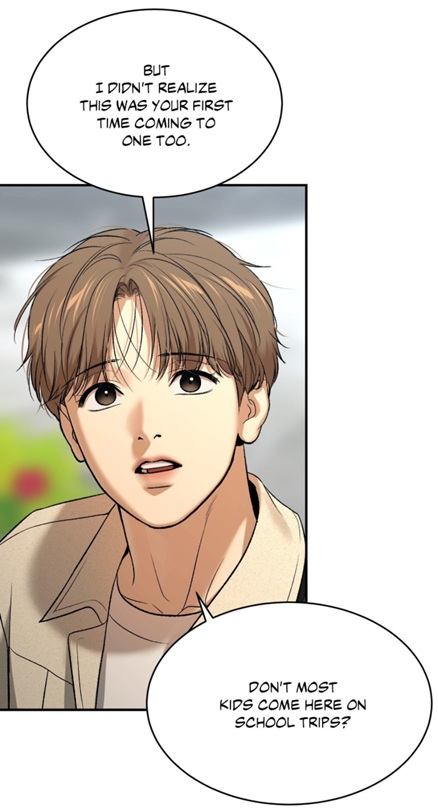 (chapter 83) — the man who seems invincible and superior in every domain — has never been to an amusement park, a spark ignites inside him.
  (chapter 83) His heart, which moments earlier beat quietly in observation, begins to race with excitement. For the first time, he is equal to the athlete. At the same time, for the first time, he is the one with experience or power. 😲 How so? For the first time, age becomes real
  (chapter 83): the physical therapist is twenty-nine, the athlete twenty-six.
 (chapter 83) He suddenly steps into a role he has never been allowed to inhabit before: that of the knowledgeable one, the guide, the hyung.
 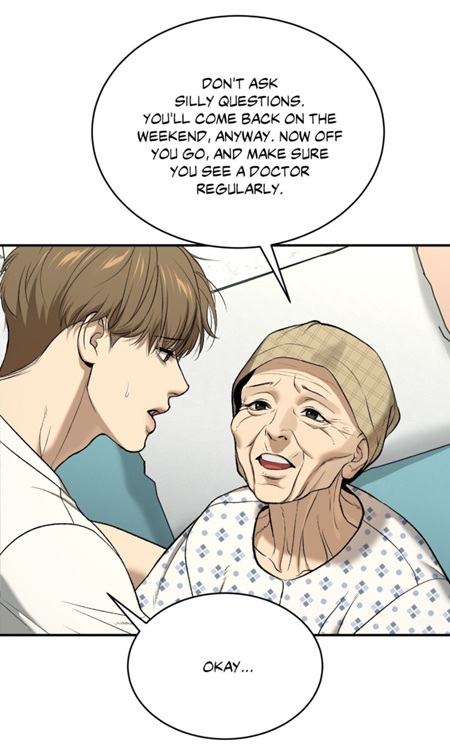 (chapter 78) Dan’s lifetime of passivity did not come from lack of intelligence or lack of will; it came from conditioning. He was raised by a guardian who loved him, yes, but who also unintentionally infantilized him. He was not allowed to question her words and decisions. His grandmother, who was not just older but twice his senior in authority, experience, and certainty, occupied every position of knowledge in his life. She decided what was dangerous, what was sensible, what was allowed, and what was forbidden. Her worldview dominated so completely that Dan’s own judgment never had room to form. His grandmother’s authority was absolute — not malicious, but unquestioned — and Dan learned very early that his role in the household was not to decide but to obey.
 (chapter 7) As if a twenty-nine-year-old man — a working professional — were incapable of making a responsible financial decision. Dan’s “Of course not!” is instinctive, defensive, almost childlike, exposing the emotional hierarchy between them. In her eyes, he is not an adult with agency, but a boy who must be corrected, cautioned, overridden.
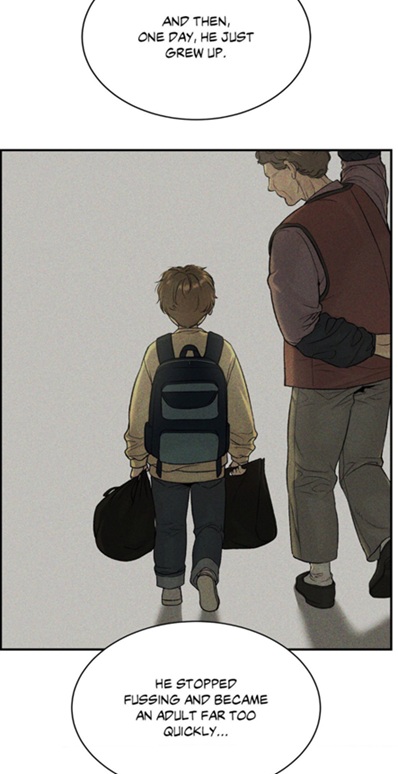 (chapter 65) However, observe that here, she feigns ignorance, she doesn’t know the origins of this metamorphosis. On the other hand, it is clear that she is well aware of the cause. He worked to support them both. He paid the hospital bills. He negotiated the debts. He shouldered the responsibility of survival.
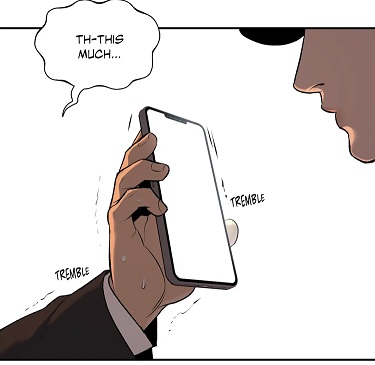 (chapter 17) Legally, financially, the burden is his. But emotionally, symbolically, he was never allowed to own that responsibility; it was neither recognized nor validated. Instead, his grandmother continued to treat him as a child incapable of navigating the world on his own — even though he was the one saving them both.
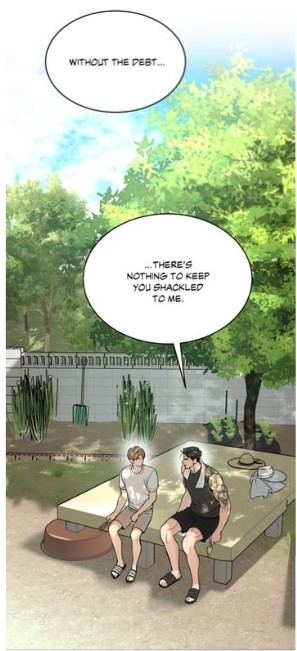 (chapter 77) and asking for his opinion
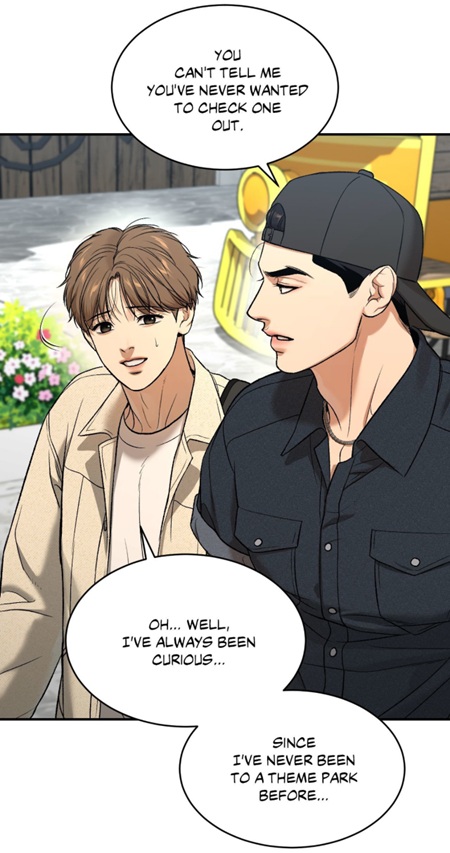 (chapter 83), Joo Jaekyung is liberating his fated partner.
  (chapter 83) He accepts the fighter’s generosity without guilt
 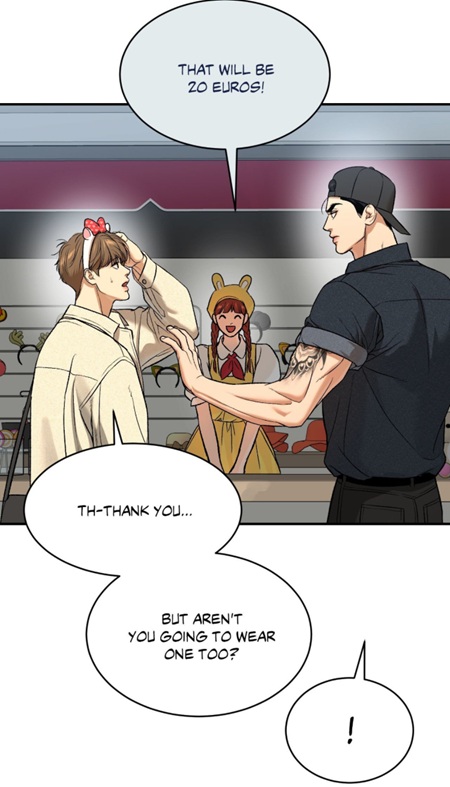 (chapter 83), yet offers his own in return — buying the drinks, fetching the ice cream, participating in the flow of giving rather than shrinking from it.
 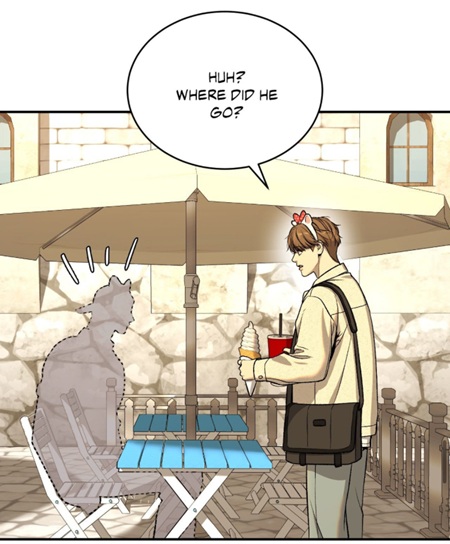 (chapter 83) No one questions cost; no one frames affection as financial burden. This reciprocity is gentle, natural, unspoken. It stands in stark contrast to Heesung
  (chapter 32), who immediately reduced generosity to calculation. He implied that doc Dan couldn’t afford it. His smile was a lure; his kindness, a transaction.
  (chapter 83) Someone who can choose.
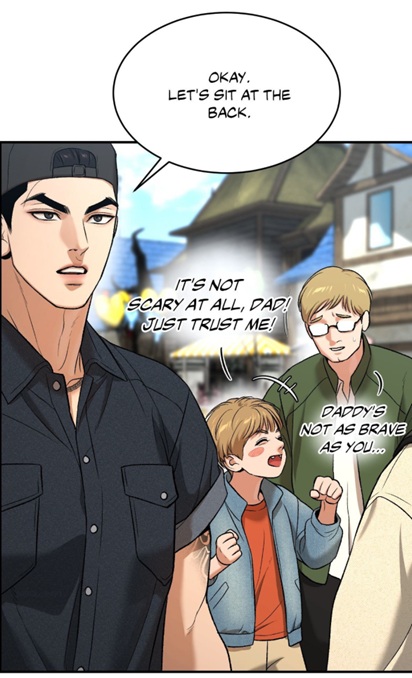 (chapter 83) That’s the reason why Mingwa placed a boy with his father between the couple in this image. At the same time, she also insinuated that Joo Jaekyung was acting not only as a father, but also as a “boy”. That’s why love is in the air… they come to accept their true self. The two protagonists are both adults and kids!
 (chapter 83) The second half of the verse — “in the thunder of the sea” — finds its embodiment not in waves or ocean spray, but in a wooden flying boat swinging high above an amusement park.
 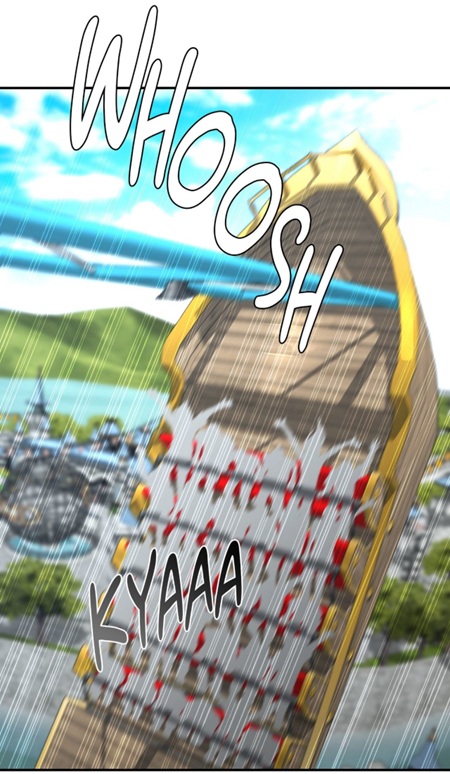 (chapter 83) It is here, of all places, that the façade of the undefeated champion bends, flickers, and reveals the frightened boy hiding beneath the man.
 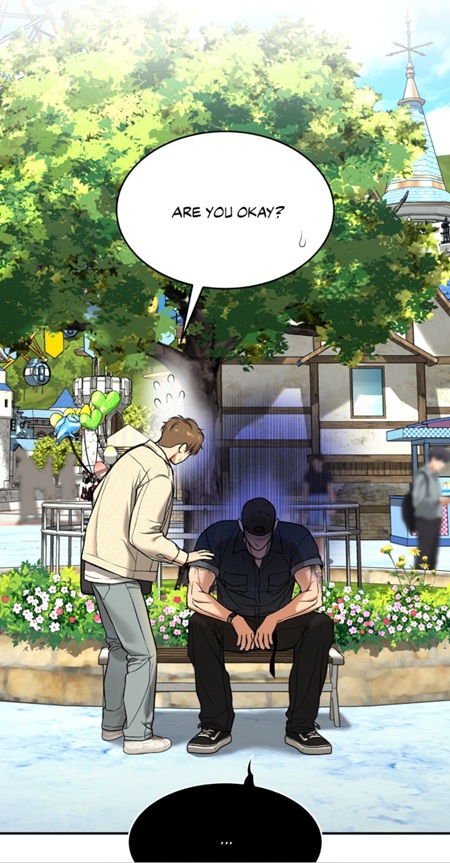 (chapter 83)
 (chapter 83), although the knowledge is borrowed, second-hand, quoted from “the guys at the gym.” He buys cute headbands
 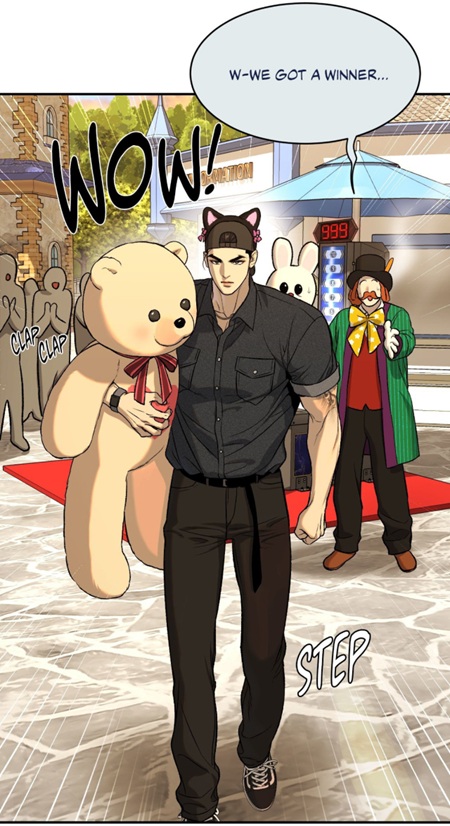 (chapter 83), selects a giant teddy bear as a prize. He tries to perform adulthood, to appear experienced, reliable, worldly — the one who leads. That’s why his reaction after the ride on the boat resembles a lot to the father: scared of rides
 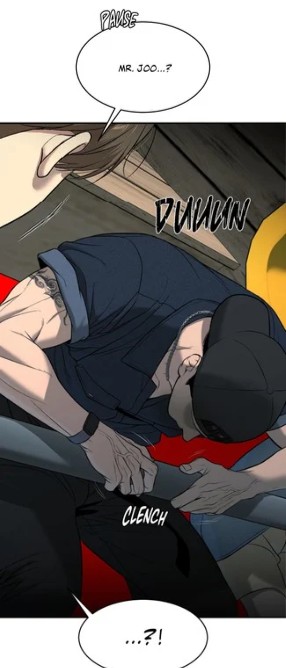 (chapter 83) Because the truth is that Jaekyung, too, is both an adult and a child. Thus the author used many “chibi” in this chapter:
  (chapter 83) He is the warrior who never loses, but also the boy who becomes jealous of a rollercoaster because it made Dan smile.
  (chapter 83) When he sees Dan laughing with the wind in his hair, he is first moved.
  (chapter 83) For the first time, he truly notices the doctor’s joy and happiness. However, later his thoughts tighten into a childish pout:
 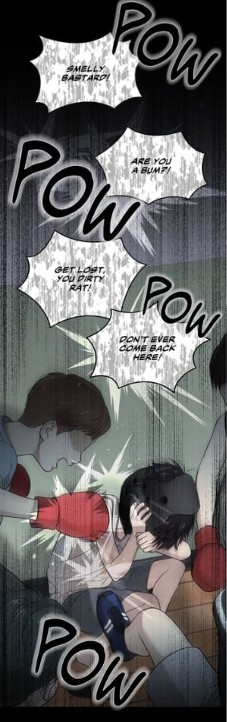 (chapter 72)— even those that fall short of a diagnosable concussion — accumulate inside the inner ear like invisible fractures. The system responsible for balance, spatial orientation, and visual stabilization becomes worn, over-calibrated to impact but under-prepared for fluctuation. A man can be conditioned to withstand punches that would floor an ordinary person, yet still falter when the world tilts beneath him.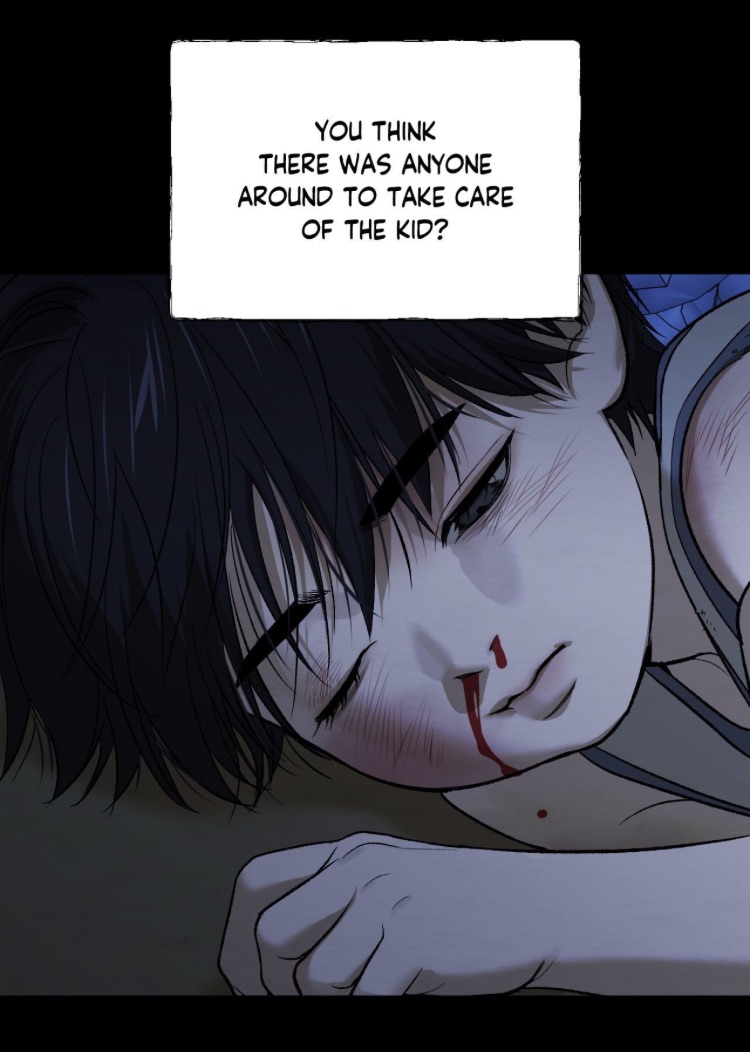
 (chapter 72) The body he trained into steel was built upon a nervous system shaped by violence. Let’s not forget that before his father died, the latter hit his head with a bottle once again.
  (chapter 73) Finally, he started fighting at such a young age,
  (chapter 72), actually boxing at such a young age is limited to non-contact activities like footwork drills, shadowboxing, jump rope, basic strength & coordination, bag work with very light gloves. So there is no sparring, no head contact.
 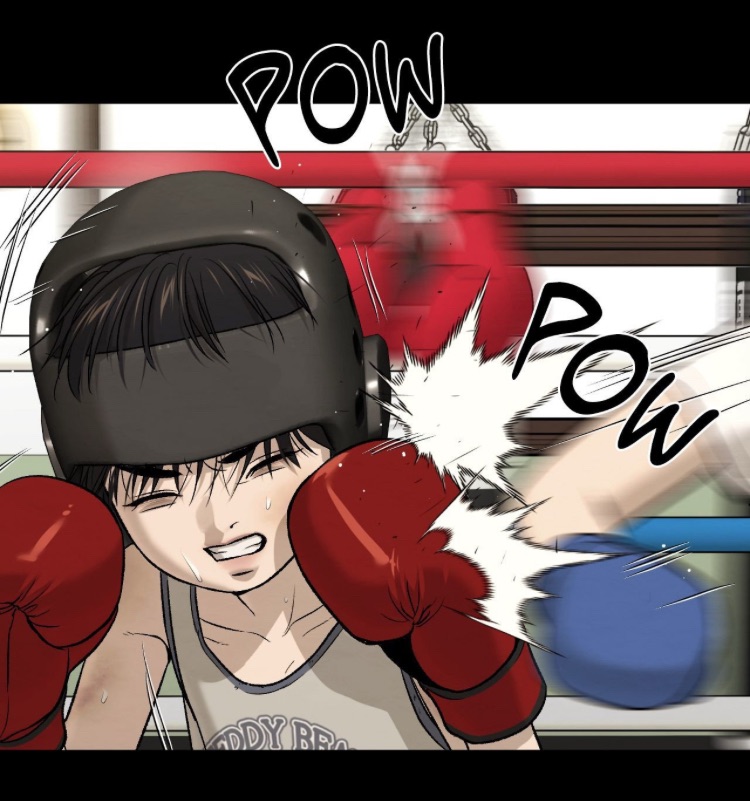 (chapter 72)
 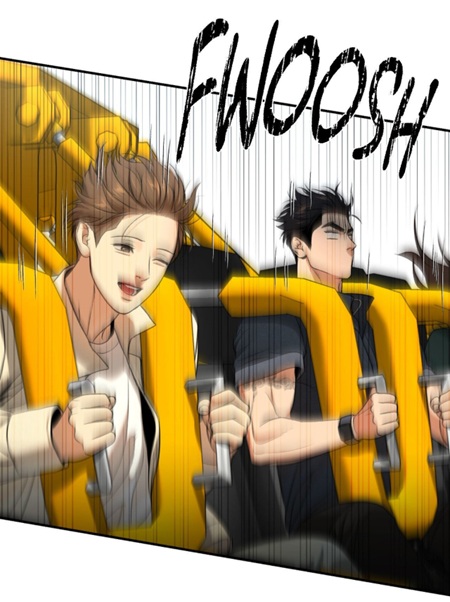 (chapter 83), thus they try other rides. It is important, because it implies that Joo Jaekyung is gradually leaving the water! This explicates why later something extraordinary happens.
  (chapter 83) Instead of retreat, there is reaching — a quiet but unmistakable reaching toward the man beside him. The problem is that he is still too scared to voice his thoughts in front of the physical therapist.
  , (chapter 29) a swarm of predators waiting for him to slow down. His career was an ocean of teeth and waves — constant motion, constant danger. Thus I detected a progression. In episode 69, he jumped onto the boat
 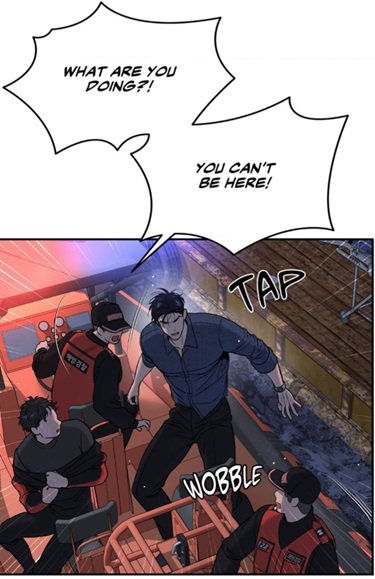 (chapter 69), then at the amusement park, the boat was in the air
  (chapter 83), he rises into air — the first air he has breathed without fear.
 (chapter 44) followed by a false dawn. Chapter 44 unfolds in artificial night — neon
  (chapter 44) and night lamp
 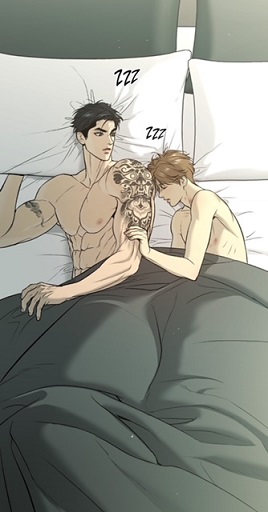 (chapter 45) Morning light becomes a scalpel. There is no magic left, no gentleness, no room for misunderstanding. Jaekyung’s bluntness
 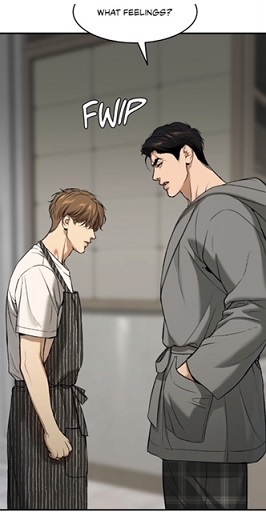 (chapter 45) annihilates the illusion Dan had constructed the night before. This is not heartbreak; it is disenchantment, the almost physical pain of realizing a moment meant nothing to the other person involved. Chapter 44 was the dream, and Chapter 45 was its punishment. Together they show a relationship out of sync, two people whose desires never touch at the same time. One wishes for home and attention, while the other has no idea that he is loved. So far, he has never heard this: “I love you”. One tries to reach out emotionally, while the other remains absent. However, when they are both lucid, none of them are totally honest, as they are self confused. Thus they are in two different worlds.
 (chapter 83) This scene confirmed my previous interpretation about the symbolism of the blue/golden hour.
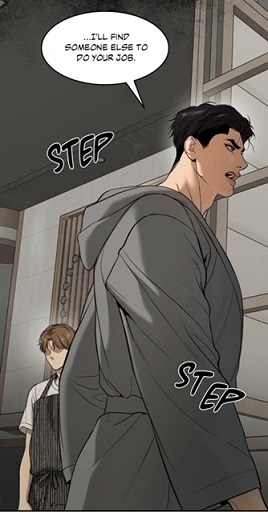 (chapter 45) Neither can pretend not to feel. Neither can avoid the other’s gaze. They must see each other as they are, in that moment. And miraculously, neither flinches. There is no denial, no deflection, no cruelty. Only two men who finally dare to look. Whereas Chapter 44 let them hide behind darkness and drunkenness, and Chapter 45 forced them into cold exposure, Chapter 83 holds them in a gentle, suspended in-between: the space where dream and reality finally meet.
 (chapter 84) and holding the bear’s hand.
  (chapter 84) The bear contains the view, the sunset, the air, the honesty — everything that neither of them can run away from now.
 (chapter 84)
 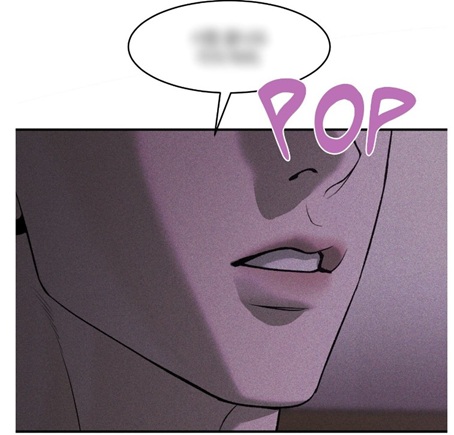 (chapter 84), but wise enough to regret immediately.
  (chapter 45)
  (chapter 46)
  (chapter 46) The champion also played “dumb”. Thus the pillow got punched later.
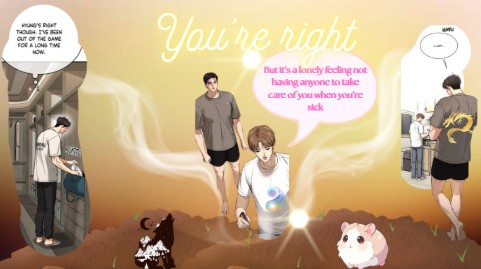
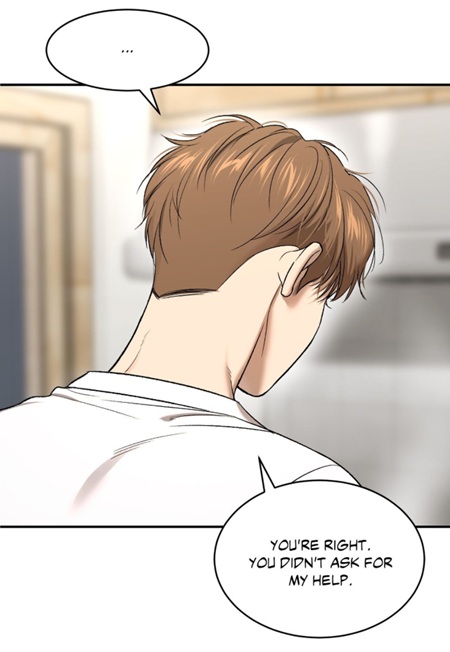 (chapter 76) For the first time, he uses the expression you’re right in front of his fated partner. He seems to concede with this idiom. Yet this apparent submission hides a deeper reversal. By admitting Jaekyung never asked for his help, he redirects the exchange toward his own truth: the loneliness of having no one to care for you.
 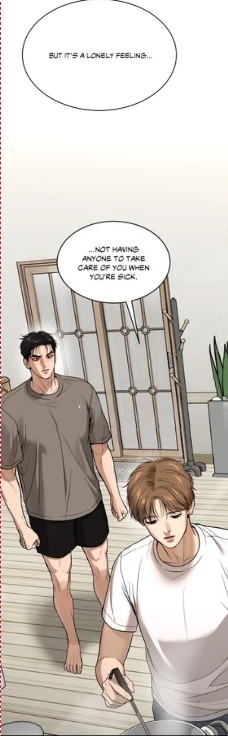 (chapter 76) What unfolds in the kitchen is not a quarrel about porridge but a fragile recognition. Dan’s “You’re right” acknowledges Jaekyung’s perspective without bitterness, while Jaekyung’s “I lost”
  (chapter 9)
  (chapter 76) The kitchen scene closes one cycle and announces another.
  (Chapter 76) In this view, his fixation would be the product of ambition, pride, or ego: the expected cost of survival in a cage where only victory pays.
  (chapter 76), because the adults in his life cut them off before they could exist. Winning became his only mode of survival because every formative argument in his youth ended in defeat, and not the kind decided by a referee. With his father, mother, coach, and manager, words never led to recognition — only to insult, silence, utility, or obedience. He learned early that dialogue could not protect him; only victory could. His victories were not chosen freely, but forced into being by guardians who made him feel like a burden, until relationships themselves became burdens.
 “(chapter 73). It was not just defiance; it was a vow that victory would silence abuse once and for all. When he returned with the trophy, he shouted triumphantly,
 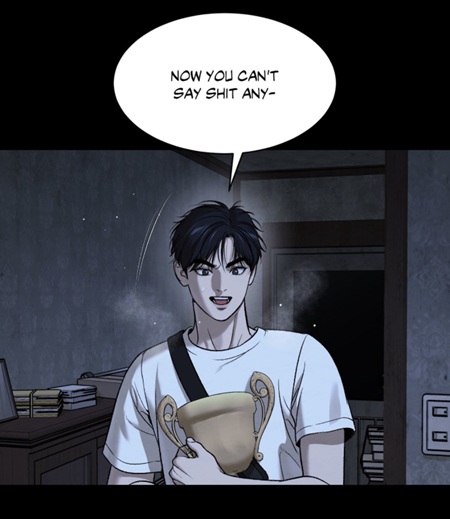 (chapter 73) ready at last to claim, “I was right.” Yet reality betrayed him. His father’s death denied him the only acknowledgment he had sought.
 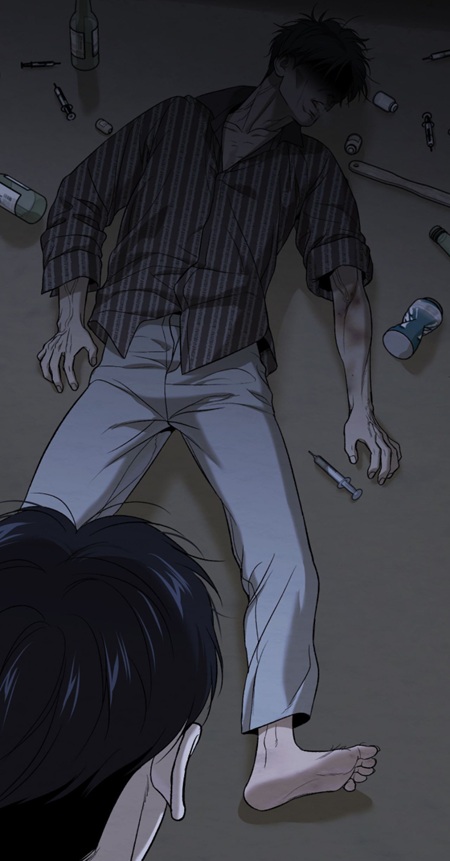 (chapter 73) The words “I was right” died in his throat. He had proved himself, yet there was no one left to recognize it. His own prediction — that his father’s death would mean nothing — proved false. The absence cut deeper than the insults had, leaving Jaekyung not with triumph but with the bitter aftertaste of self-loathing. Victory had silenced his father, but it also silenced the son. He had proved himself, yet there was no one left to hear it.
  (chapter 74) At the funeral he remained dry-eyed, his face locked in shame (ch. 74). No one saw his guilt, but it consumed him: the one man he needed to hear “I was right” from could no longer answer. At the same time, his smile and laugh were also linked to misery. For Jaekyung, laughter was never the sound of joy, but the echo of mockery and rejection due to the father. Just as tears became tied to betrayal and abandonment through his mother, so too did his father twist laughter into a weapon
  (chapter 72) To the boy, she was not silent at first: she must have definitely told him to become strong, to endure, to wait. She gave him her number, leaving the illusion that her departure was not abandonment but necessity. Victory and wealth became her conditions for love. That is why he swore over the payphone to work hard
 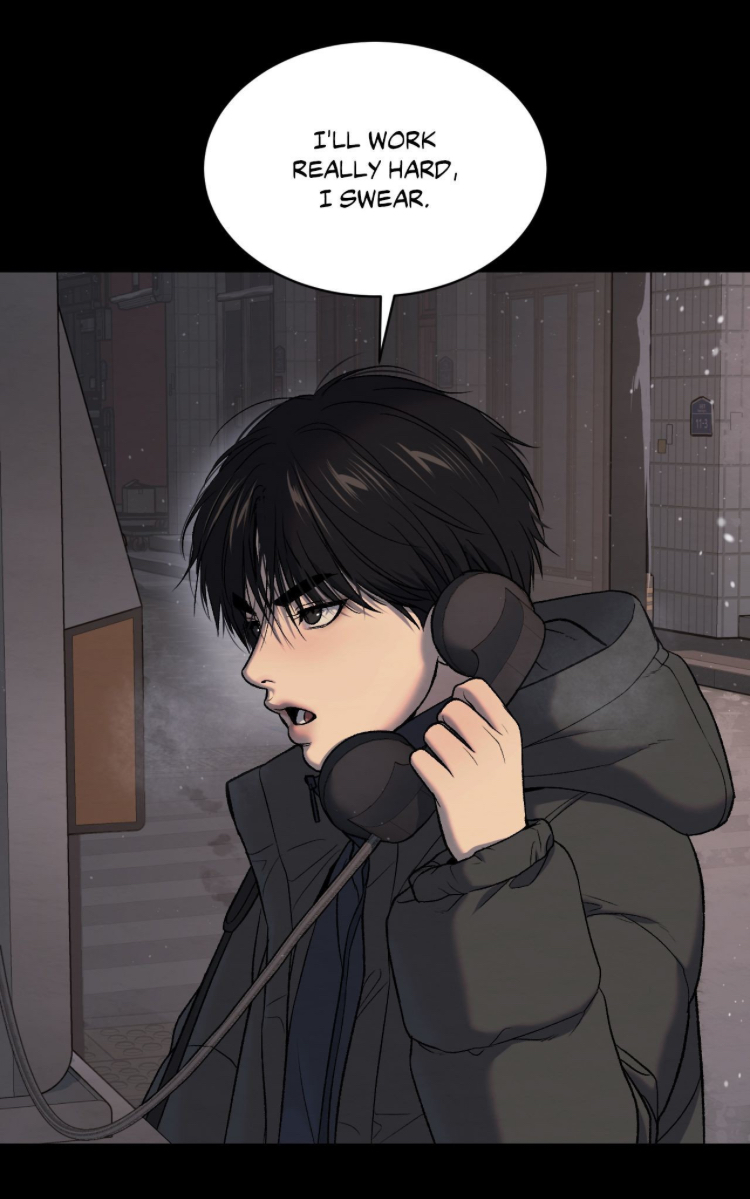 (chapter 72) and “make money” so she could return, and why after his father’s death he still hoped for her homecoming.
  (chapter 74) But when the calls went unanswered, her silence became the sharpest weapon of all. Her eventual reply
 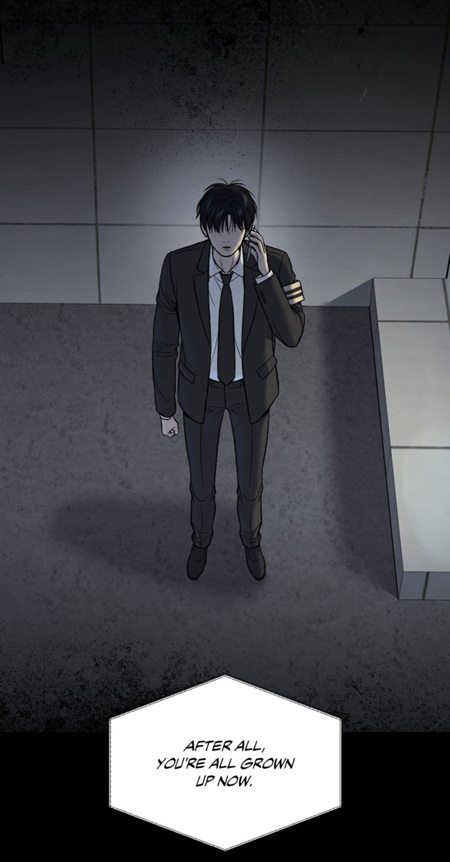 (chapter 74) confirmed that his effort had never mattered. For the first time, he cried
 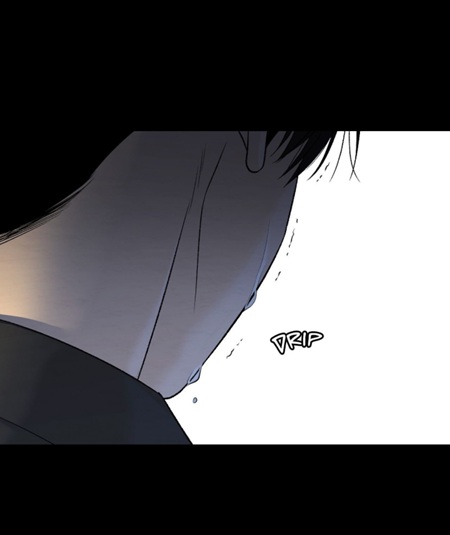 (chapter 74), his tears expressed not just grief but the recognition of betrayal. From then on, tears themselves became equated with loss, weakness, and abandonment. This is why, in the wolf’s nightmare, Dan’s crying form
  (chapter 76) appears: the sight of tears recalls the moment he unconsciously realized that even his mother’s “you’re right” was a lie. At the same time, those tears function as a mirror. The champion projects onto Dan the very weakness he has always forbidden himself to show.
 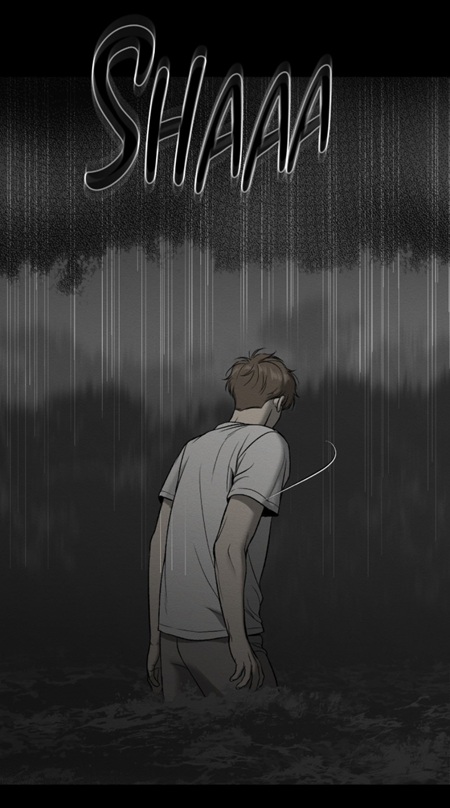 (chapter 76), the boy he once was who longed to weep but had to swallow it down. At the same time, Jaekyung himself occupies the place of the “adult” —
  (chapter 74) Hence the wolf’s tears were quickly replaced by rage and violence.
 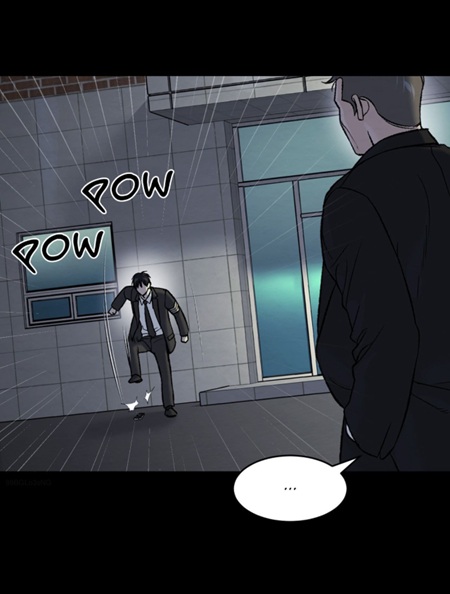 (chapter 74)
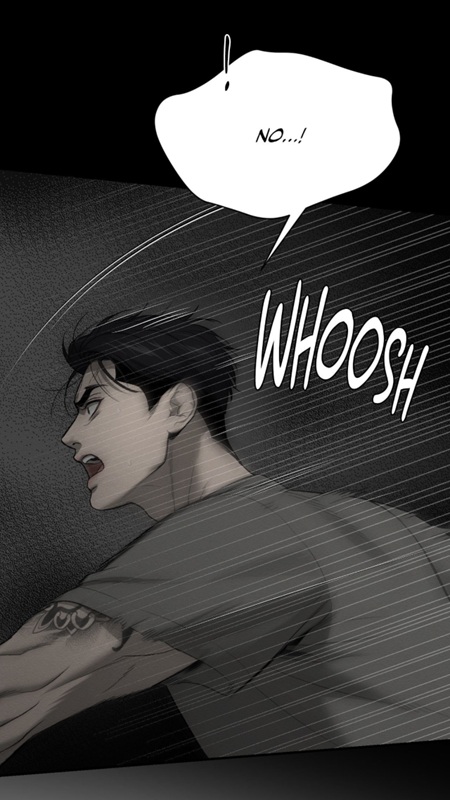 (chapter 76) His trembling hand upon waking
 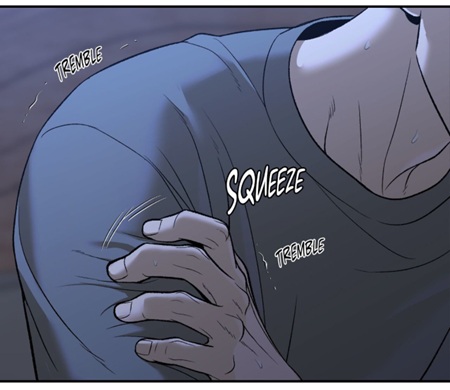 (chapter 76) shows the yearning to be held, comforted, reassured — something he never received from either parent. He is not entirely responsible for the physical therapist’s suffering. And here lies the difference: Dan’s tears are not manipulative or hypocritical , like the ones Jaekyung suspects from his mother, but unfiltered honesty. He expressed his emotions, not just through tears, but also through body language!
  (chapter 1) He was shaking, he was bowing and asking for forgiveness! Dan embodies a form of vulnerability that is real, legible, and forgiving contrary to the mother. When the teenager heard his mother’s voice after such a long time, the latter never brought up her past action. She never asked him for forgiveness.
  (chapter 74), whose quiet devotion and silence kept the gym alive, nor Jaekyung’s, whose absence he accepted without challenge.
 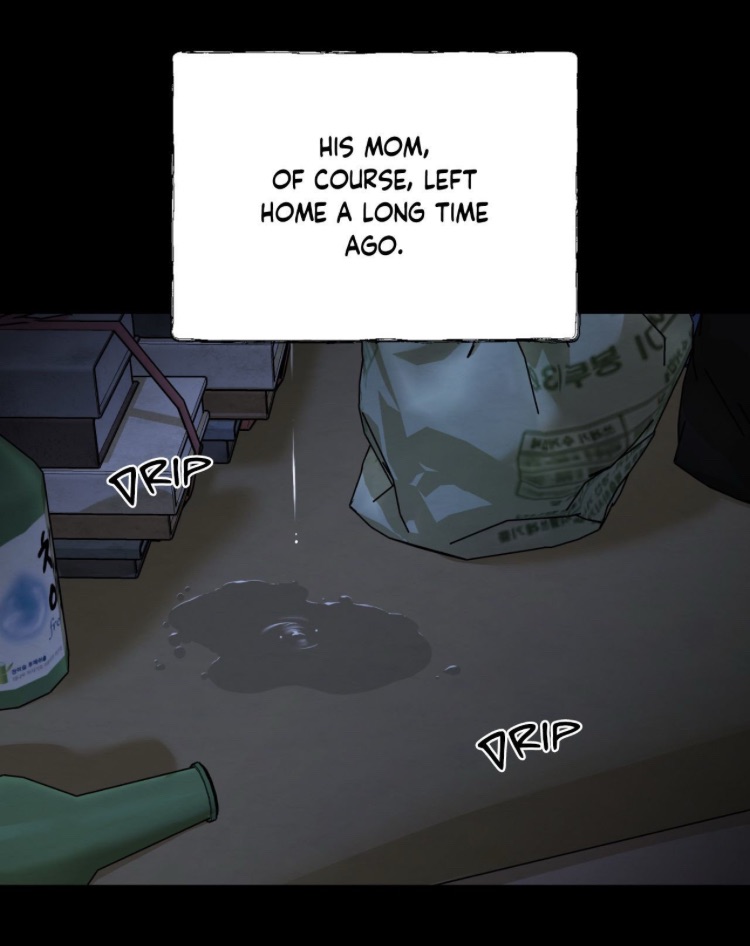 (chapter 72) In fact, his own mother’s submission reinforced this flaw: her blind trust in her son, her refusal to question his choices and the boxing world, taught him that authority need not be examined, only endured or seen as trustworthy. For him, hierarchy was unquestionable, and so he perpetuated it. Thus he stands for lack of critical thinking. This is why, with Hwang, the vocabulary of “right” and “wrong” was never about dialogue but about obedience. No wonder why he became so violent at the police station.
  (chapter 74) Unlike Jaewoon’s domination or the mother’s evasive silence, Hwang cloaked his authority in the language of advice — yet beneath it lay a black-and-white dualism: winners and losers, villains and victims. Thus Joo Jaewoon was blamed for becoming a thug
  (chapter 74), while the wolf’s mother was a victim. He viewed her as a selfless and caring mother:
  (chapter 74)And observe how he provoked the main lead.
  (chapter 74) When Hwang sneers, “What, am I wrong? Come on, answer me!” he is not inviting dialogue — he is staging a trap. The question is rhetorical, a demand for submission. Let’s not forget that he had witnessed the phone call in front of the funeral hall, but back then he had done nothing. And when the boy hesitates
  (chapter 74), unable to answer, Hwang strikes him in the chest.
  (chapter 74)and justifies his action behind social norms.
 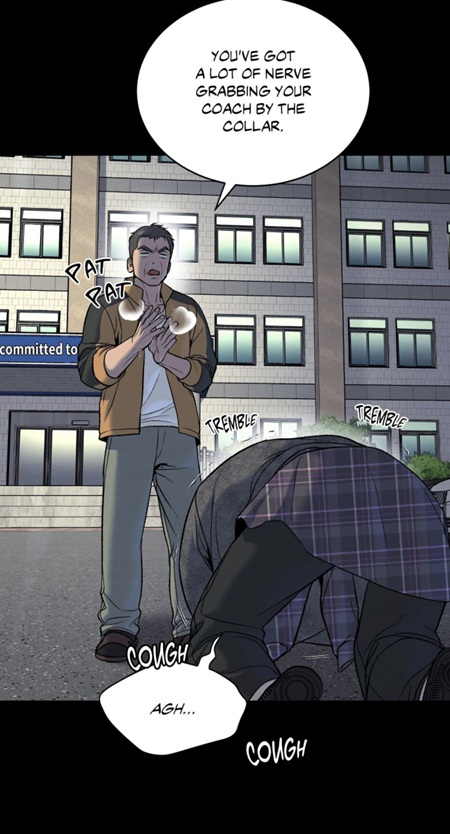 (chapter 74) In that instant, he takes the role of judge, referee, and executioner, collapsing “argument” into violence. The very words “Am I wrong?” contain the irony: the coach is less interested in truth than in reasserting his own authority. Silence is treated as guilt, hesitation as defeat.
 (chapter 74), he effectively admitted “you’re right” to the coach. Yet this wasn’t simply genuine agreement — it was submission, respect mixed with survival. The director misread it as validation of his worldview. This only reinforced his certainty, encouraging him never to reconsider his role.
  (chapter 74) When the protagonist finally left, the director could declare with satisfaction:
  t(chapter 74).
 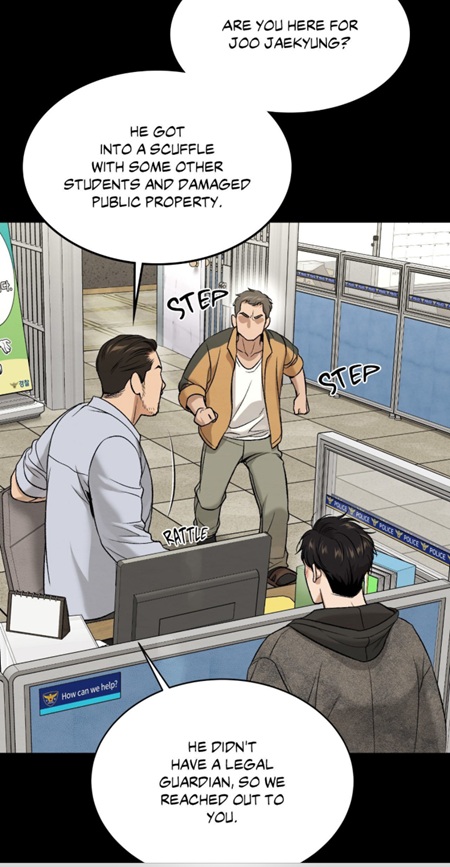 (chapter 74) The reality was that the old man had never truly become the star’s home and family, which explains why he constantly leaned on other adults, the mother or the father, to provide the guidance he himself refused to give. At the same time, I come to the following deduction: he must have lost his boxing studio, and with its vanishing, the elder was forced to face “reality”: loneliness, sickness and absence of happiness in his life!
 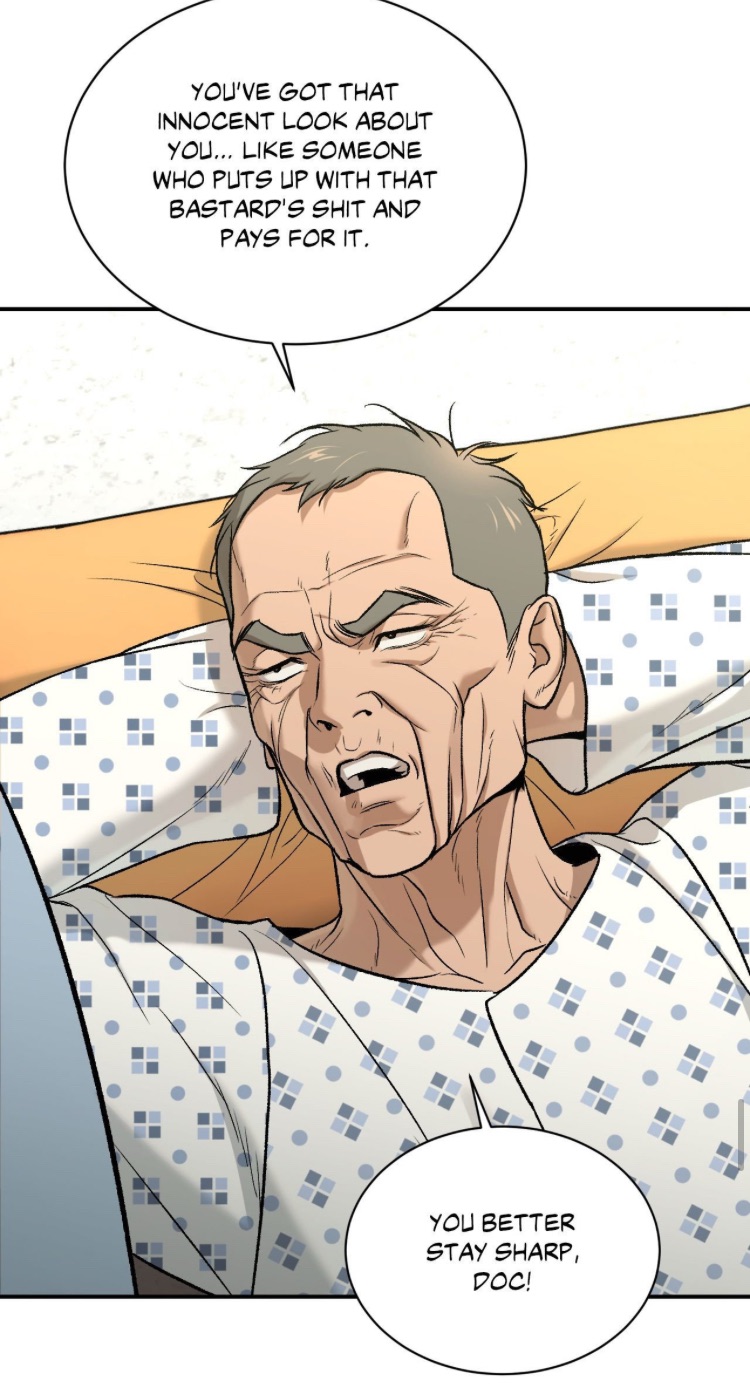 (chapter 70) Once again, Jaekyung is reduced to “that bastard” — a label, not a person — while Dan is framed as the pitiable victim. The old coot remains the righteous observer, untouched by guilt, protected by a rhetoric that always shifts responsibility elsewhere.
 (chapter 75) He was happy again, though he initially tried to hide it. We have to envision that before the wolf’s visit, the elder had to face what his own life outside the gym looked like: sickness, solitude, the collapse of the studio that had sustained him and came to resent the main lead. Yet, Joo Jaekyung’s behavior changed everything:
 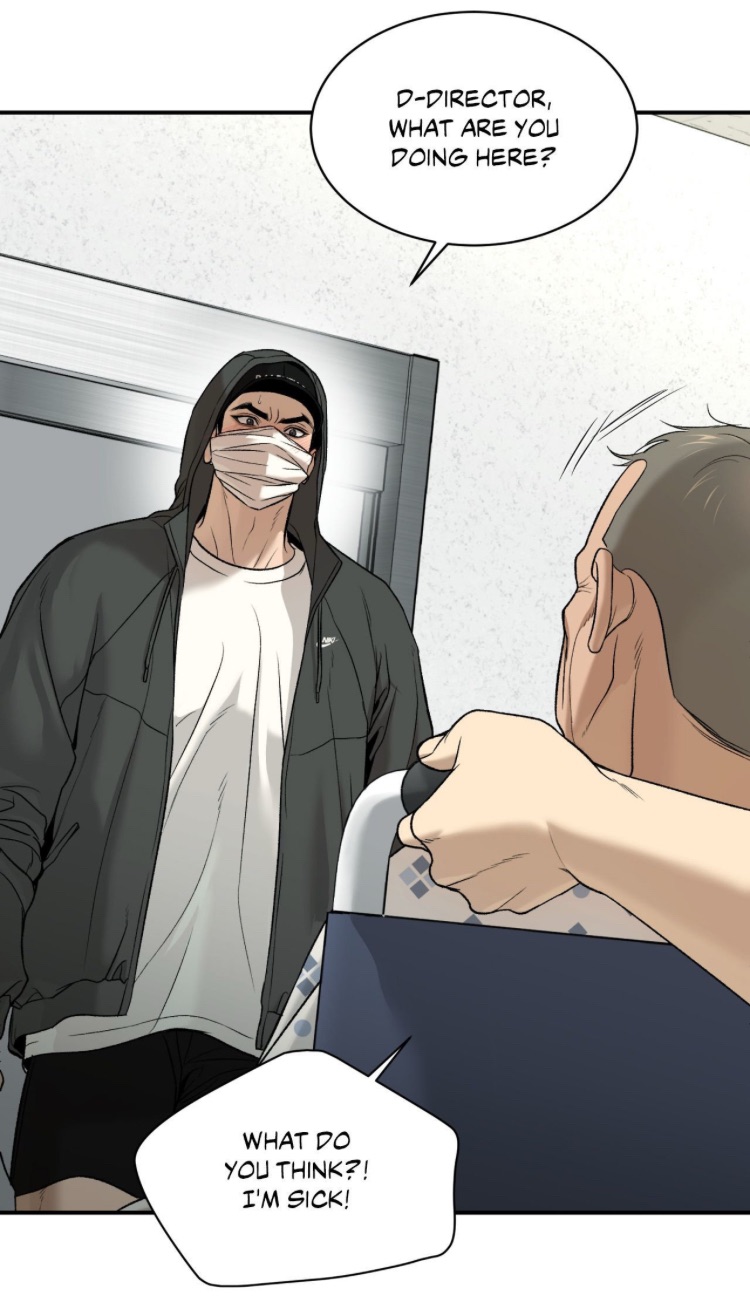 (chapter 71)
 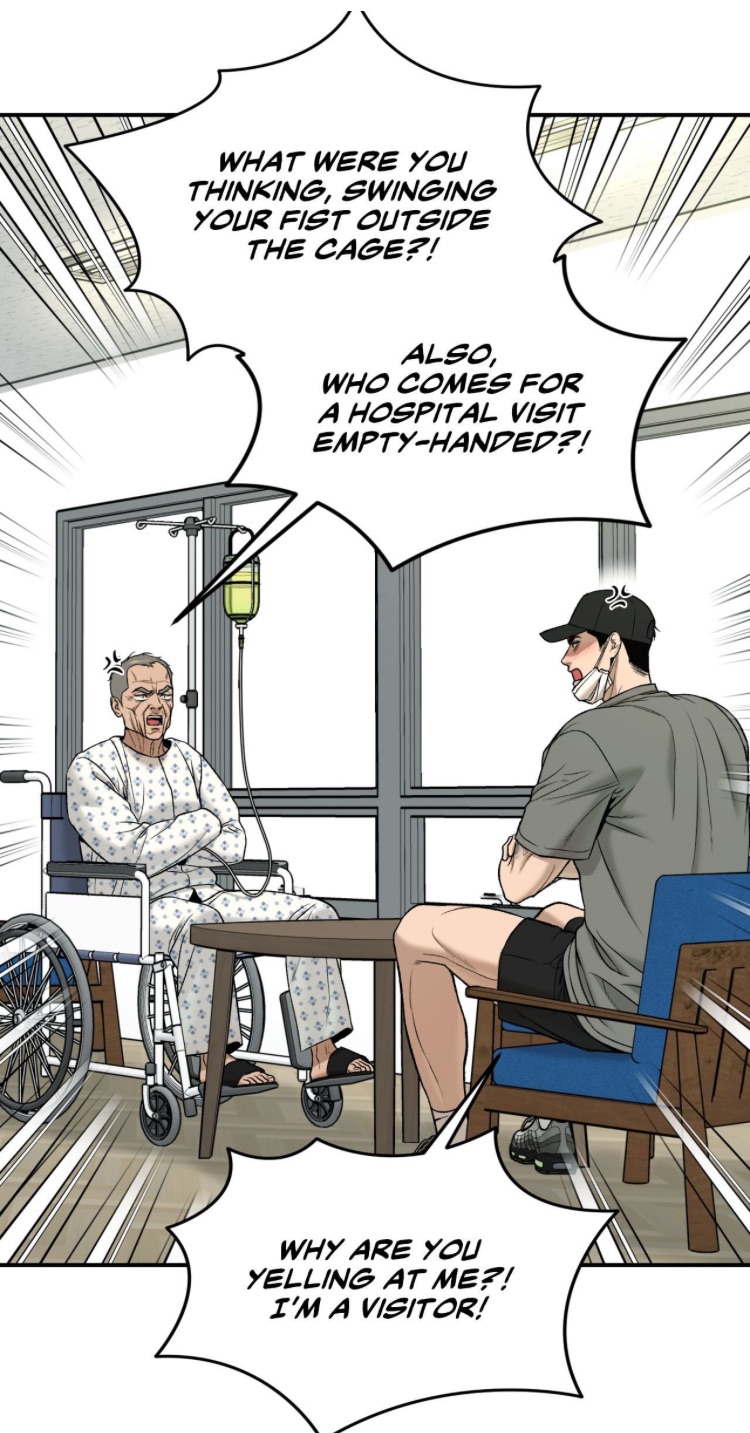 (chapter 71) Only during the champion’s visit, did his words alter.On the rooftop of the hospice, he finally tells Jaekyung:
 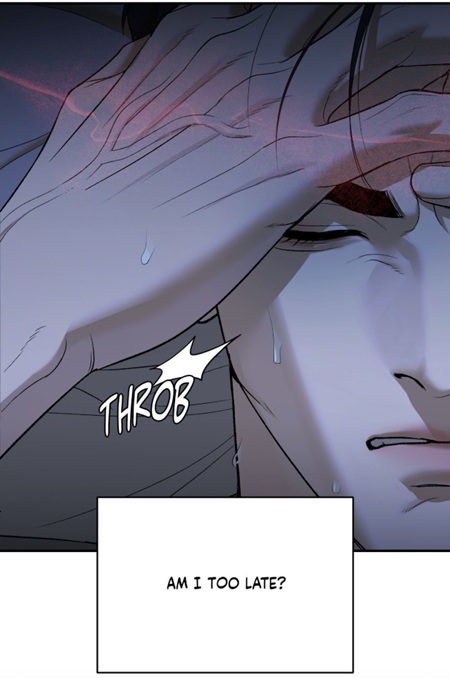 (chapter 76) It is not too late. The question “Am I too late?” is the consequence of Hwang byungchul’s words and it gradually indicates the switch in the champion’s mentality. It is no longer about being right or wrong. However, the nightmare reveals another aspect: the world is not black and white, but grey.
 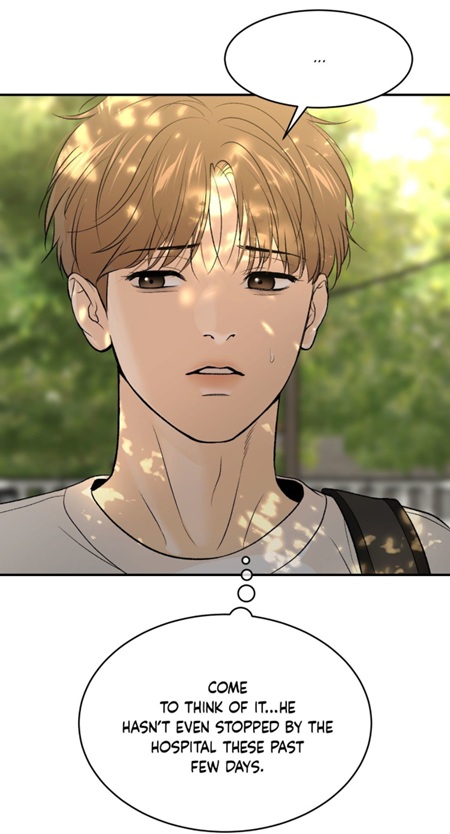 (chapter 76) Hence he remained silent and avoided his gaze. But like the director showed it, it is never too late:
  (chapter 76)
 (chapter 69) Thus my avid readers might jump to the conclusion that his biggest flaw is blindness, similar to the director. Besides, I had often criticized him for his blindness and ignorance. However, this is just a deception. The manager’s real defect is actually his deafness. How so? He does not hear Jaekyung’s words
  (chapter 17) at all. The verity is that he refuses to listen to his thoughts and emotions
 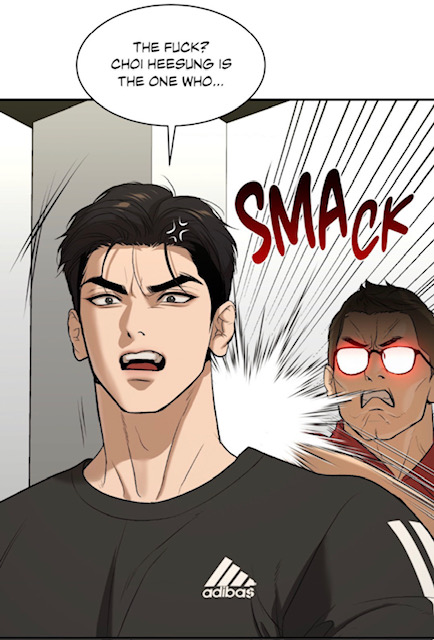 (chapter 31) in good
 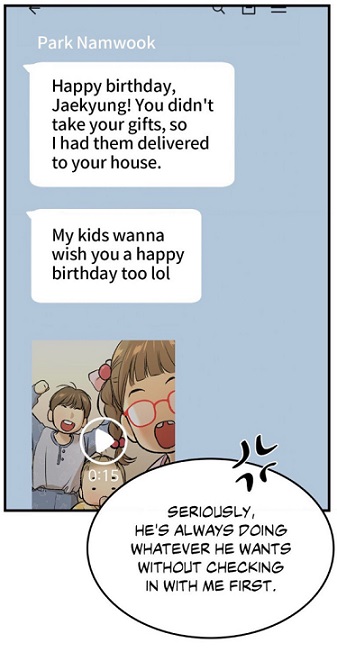 (chapter 45) or in bad times. It goes so far, he does not take his silences seriously, and does not register his pain. This explicates why the manager saw in the champion’s silence at the restaurant as an agreement for a new fight!
  (chapter 69) His role is not to guide or protect, but to extract: money, victories, publicity.
 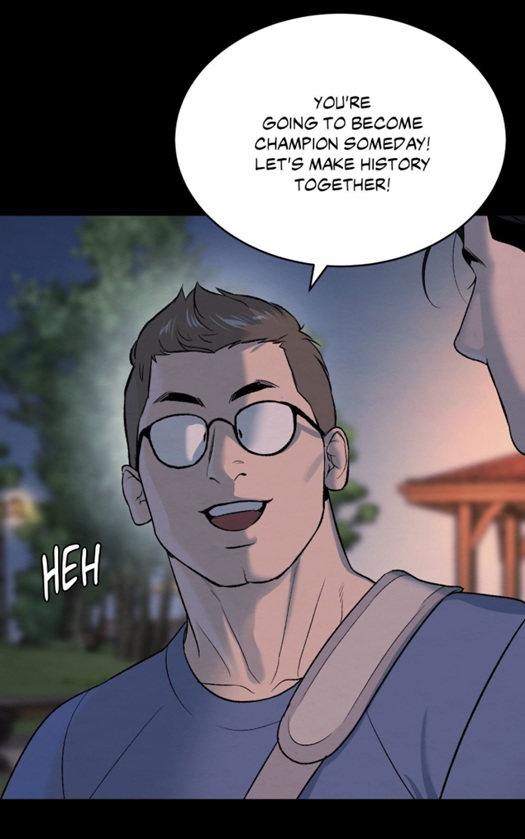 (chapter 75) In my opinion, he is fighting against oblivion through the star. This hidden disability explains why the coach can never truly connect with the champion. He listens instead to other voices – the CEO of MFC
  (chapter 69), the rumors among the directors
  (chapter 46), the media
  (chapter 52), the sponsors
  (chapter 41), the spectators or “authorities”
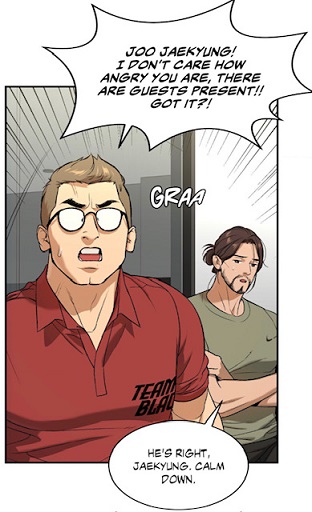 (chapter 36) — and reacts to them, even violently, as in chapter 52, when public criticism painted Jaekyung in a negative light.
 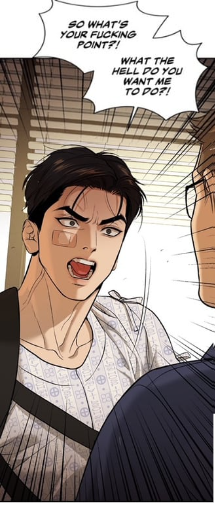 (chapter 52) His question is not mere anger. It is a confession of position — an inadvertent acknowledgment that he knows he is the true backbone of the gym. He is the one responsible, the one carrying the burden that Namwook refuses to admit. These words crack the illusion: the fighter is not subordinate, but owner. The gym lives because of him.
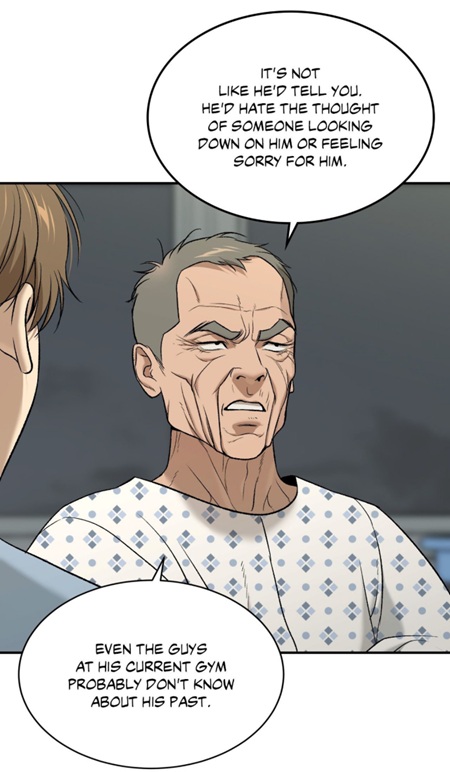 (chapter 71), hence he tried to help in his own way. On the other hand, Park Namwook shows clearly no sign to be interested in the private life of his boss. He is preferring ignorance over “knowledge and connection”.
  (chapter 66) Despite the incident, the manager hasn’t changed yet. He clinched onto the past, thinking that everything will be like before, as soon as the athlete enters the ring. He images a return to normality with the next match.
 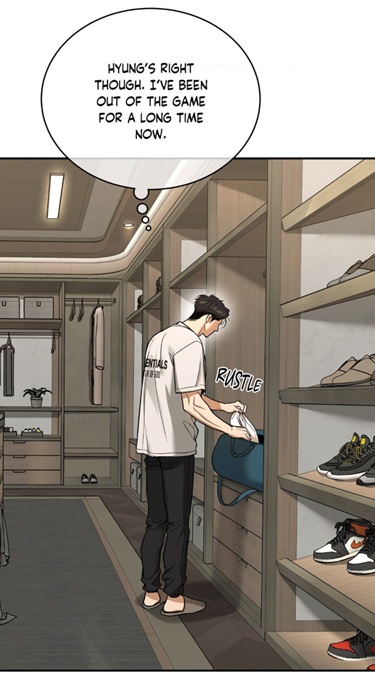 (chapter 66) For years, he had accepted his manager’s judgments out of habit, mistaking silence for consent. But here, for the first time, the repetition feels deliberate — not resignation, but reflection (“though”). The phrase becomes a question more than an agreement: is he truly right? He is admitting this out of habit.
  (chapter 69) His silence has shifted from obedience to suffocation. The weight of Namwook’s deaf authority is no longer bearable. And yet, even here, his confession is muted, confined to the private space of his car. He is not yet ready to speak the words aloud — not until someone appears who will listen.
  (chapter 48) This scene was observed by Kwak Junbeom, so the latter could have reported it to the coach. If it truly happened, this would expose the coach’s deafness and cowardice. He chose passivity instead of confronting the doctor or the champion. That way, he avoided responsibility. And this brings me to my final conclusion concerning the deaf manager. His main way to contact the celebrity is the cellphone:
  (chapter 66) It is both his mask and his crutch — a tool for barking orders, never for dialogue. The moment the line goes dead, his authority collapses, for he has no other means of contact. His power depends on Jaekyung’s reception, not his own strength. In truth, the manager’s disability is exposed here: deaf to Jaekyung’s voice, he has trained himself to hear only the ring of a phone. A fragile authority built on silence, ready to crumble the instant Jaekyung decides to switch it off.
 (chapter 76) must be read not as pride, but as a desperate shield against annihilation. In other words, in episode 76, the athlete is too harsh on himself, though I am not saying that he is innocent either. He only thought of himself because he had taught to behave that way. He was just mirroring the adults surrounding him who hid their weaknesses and wrongdoings behind “lies, social norms and hierarchy”.
 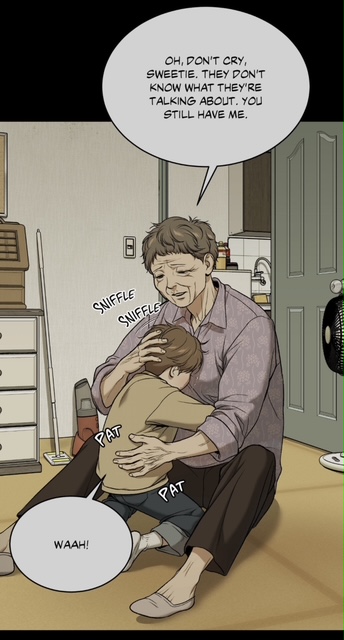 (chapter 57) With his grandmother and with every authority he encountered — doctors, employers, even predators — he believed unquestioningly that others were right and he was wrong. Hence he trusted others blindly. He was trained to accept decisions made for him or against him.
  (chapter 70) Thus he accepts criticism with defending his own interest. He was not taught how to fight back or resist or even argue.
  (chapter 6), both were forced to discuss with each other about the “content of the agreement”. That’s where the champion was trained to communciate with the physical therapist. Thanks to the champion, because of this victory/loss mentality, the doctor learned gradually to argue and “reply” with his “boss. However, due to his childhood, he couldn’t totally drop his old principles like for example “saying no”.
 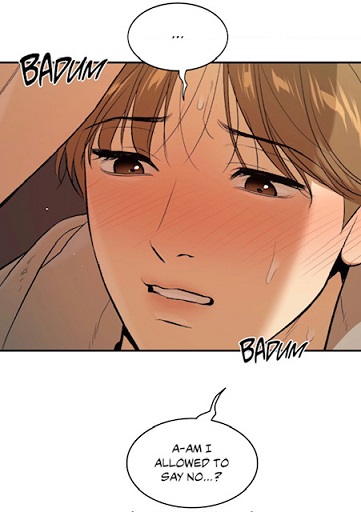 (chapter 34) To conclude, before their fateful meeting, neither man had learned how to argue as equals. But in the kitchen in front of the stove, this changed: both are right and wrong!
 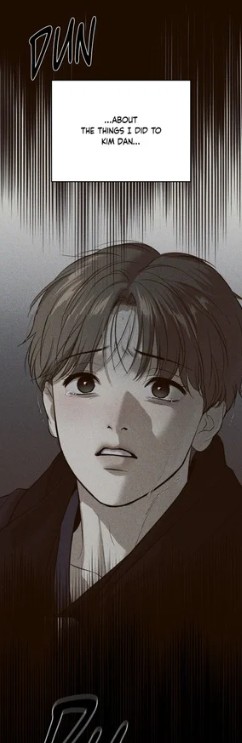 (chapter 76) He speaks like someone expecting rejection. Hence he keeps his distance. Yet the very fact that he says it at all signals change. Where once he would have doubled down — by barking an order, by firing Dan, by retreating into silence — he now admits defeat. The vocabulary of winning and losing, inherited from his father and reinforced by every adult in his life, collapses in the presence of Dan’s quiet honesty.
 (chapter 76) — an acknowledgment that he can no longer keep his walls intact. He is now willing to rely on doc Dan exclusively.
 (chapter 76). His confession reveals not strength but guilt. Kim Dan’s suffering was the price of his victories, and he knows it. “On the other hand, his mea culpa should be relativized, for both were the targets of a plot!
 (chapter 76) These words expose both responsibility and shame: he had prioritized survival over connection, career over compassion. What boils under his skin is not pride but remorse.
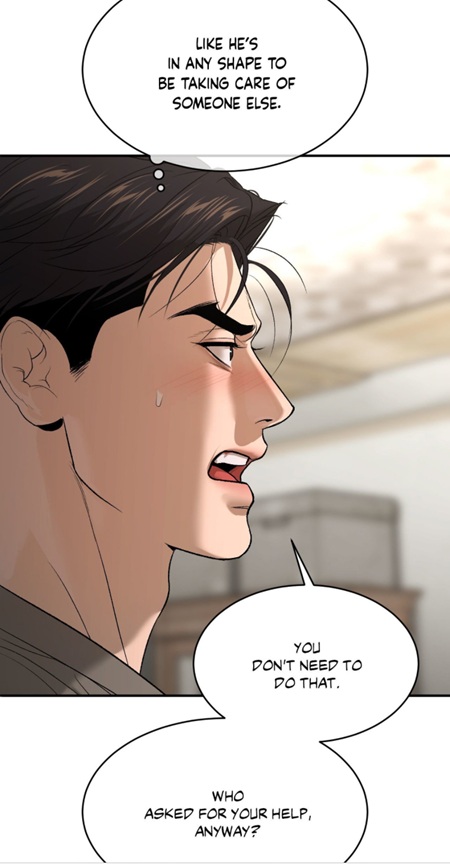 (chapter 76) The star’s thoughts in the kitchen are actually mirroring the ones in the bathroom:
  (chapter 68) In the bathtub, he still saw himself as the one in control, with the upper hand… but this is no longer the case in the kitchen. Through the physical therapist, the wolf is learning that even being in a vulnerable state doesn’t mean that this person is powerless. It is just that his “strength” lies elsewhere. In other words, someone struggling can also give comfort to another person in pain.
  (chapter 72) a place of solitary consumption rather than shared meals, the bed was the place where the little boy would drink his milk.
 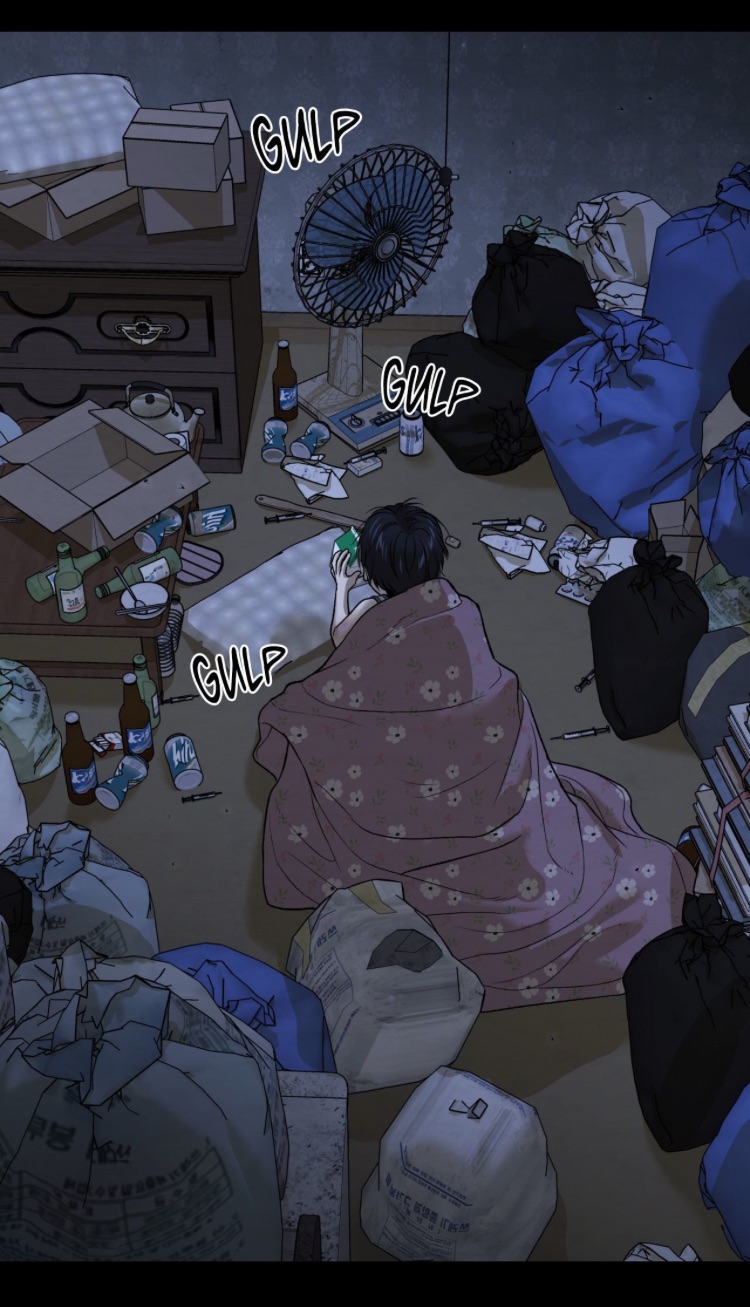 (chapter 72) It is interesting that actually, Doc Dan wanted to bring the porridge to Joo Jaekyung to his bed during that full moon night, thus the latter made the following request:
  (chapter 76) But the wolf didn’t understand the hamster’s intention and followed his “hyung” to the kitchen. That’s how a misunderstanding was born which is also reflected in this interaction:
 (chapter 76) However, doc Dan agreed to this, he remained calm.
  (chapter 41) The latter actually represented a hindrance between them, it marked their relationship: boss and “employee” (servant). Moreover, since the table in the champion’s childhood was linked to one person (the father), it is clear that the champion has never shared a table with someone. And this aspect brings me to my other observation.
  (chapter 22) Whether in meetings, weigh-ins, or dinners with the CEO
  (chapter 46) It was a place where others dictated terms, while Jaekyung’s silence was mistaken for consent. And now, you comprehend why the two main leads could get closer in front of the stove in the kitchen. This place stands for warmth, care and family.
  (chapter 13) a meal after his collapse. He refused to bring a meal to the bed, he asked him to join in the dining room and sit at the table. And what did they do there? The champion talked about his career, his fight etc…
  (chapter 13) the champion has long associated the table to business and not “care”. That’s why it is important for him to remember the significance of the bed in his childhood. It was the place where he could feel comfortable and safe, where he would eat!


 (chapter 14) For the physical therapist, this moment would later be confirmed.
 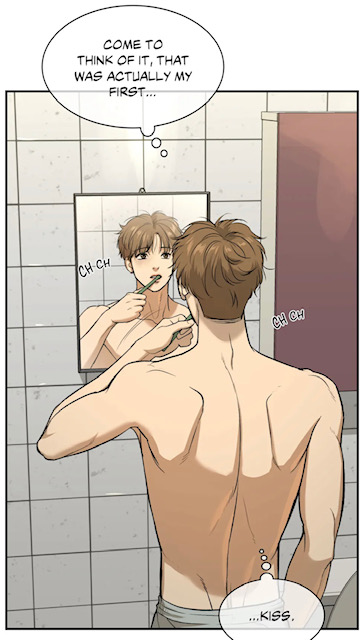 (chapter 16) —haltingly and with a trace of disbelief visible thanks to the points of suspension —as his first kiss ever. His stunned reaction and eventual admission offer a compelling lens through which to explore the symbolism of kissing in Jinx, but also the emotional landscape the two men must navigate.
  (chapter 55) Still, some readers have theorized the existence of a “special lover” in his past
 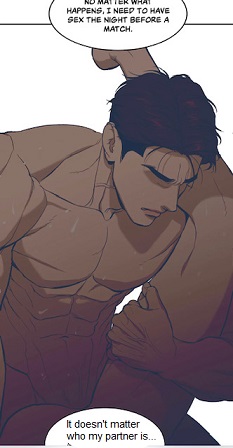 (chapter 2), someone who might have earned a different kind of intimacy. One cause for this hypothesis is that in the champion’s first memory, he was facing his partner, which contrasts so much to the way he had sex with his partners (from behind). This possibility casts the locker room kiss in a new light.
  (chapter 14) If it was his first, the gesture carries a far deeper meaning than either man realizes in the moment. And if it wasn’t, then why does this kiss—with Kim Dan—resonate so differently?
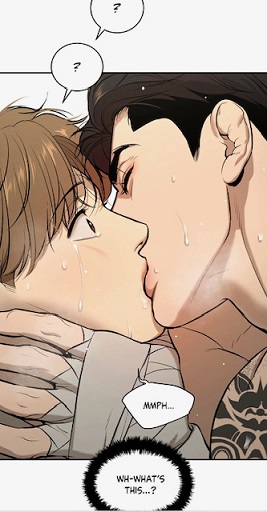 (chapter 15) she showed more than the physical therapist’s confusion with the interrogation marks, she added his inner thoughts. This question (“What’s this?”) already hinted that he had never experienced a kiss before. The ambiguity of his reaction suggested that the moment was unfamiliar, and not immediately recognizable as a kiss at all.
  (chapter 30) Recognizing his face, Dan mentions that his grandmother used to watch the drama A Fine Line, and that he had seen it with her.
 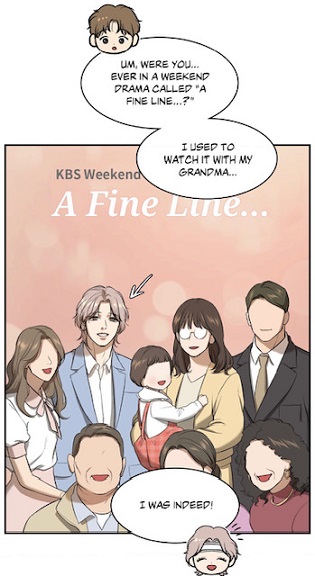 (chapter 30) The author even includes a framed shot from the fictional show, depicting Heesung as the smiling son-in-law in a multigenerational family. This visual insert is subtle, but telling: it wasn’t the story that stayed with Dan, but the faces—the aesthetics of family structure and polite emotional decorum.
 (chapter 16) it frightened him. The kiss broke an invisible boundary—one his upbringing had silently enforced. That’s the reason why he wasn’t sure if he could do it again.
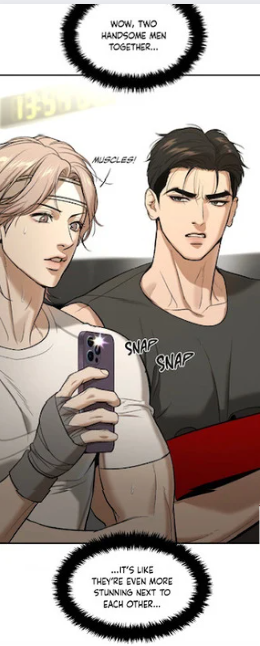 (chapter 30) He blushes and wonders why.
  (chapter 30) It’s a telling moment: Dan isn’t used to feeling attraction and desire, let alone recognizing it. He never bought posters of celebrities, never fantasized. That world—the glamorous world of affection, attention, and beauty—was never his.
 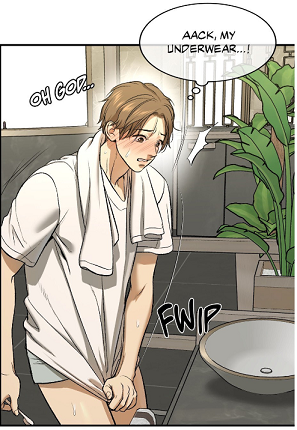 (chapter 30) —despite already having been seen naked by Jaekyung
  (chapter 30) —suggests something deeper than modesty. When he rushes to hide his underwear and blushes merely at brushing his teeth next to someone
 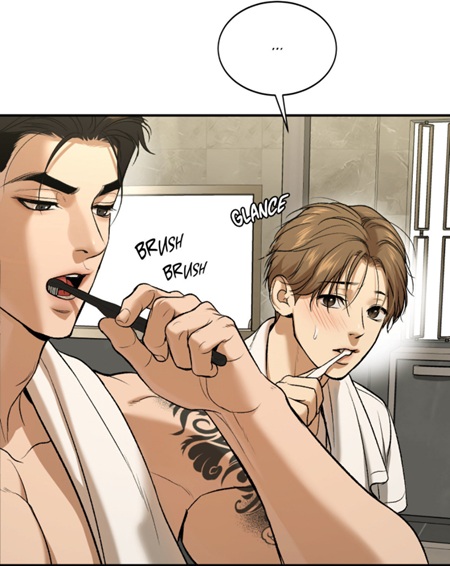 (chapter 30), it becomes evident: Dan is not accustomed to physical closeness or shared domestic spaces. These are not reactions of a man with just sexual trauma—they point to someone raised without the warmth of daily intimacy.
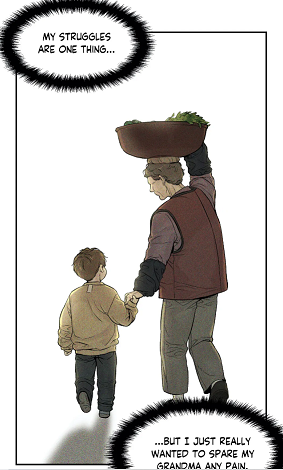 (chapter 5) He had to take care of himself, dressed on his own. He had to act like an adult, as his role was to assist his grandmother:
  (chapter 65) This hypothesis and interpretation gets reinforced with the champion’s first kiss on his cheek
  (chapter 44) and ear
  (chapter 44) For me, without realizing it, Dan reproduced those gestures. These actions can not come from Shin Okja, as we only see her caressing or patting her grandson. The progression is striking. It moves away from eroticism (kiss from the lips)
  (chapter 44) They suggest care, comfort, and emotional presence. This is crucial, because it reveals that for Dan, a kiss is not about arousal or conquest. It is a language of love. They carry the flavor of instinct. These are the kinds of kisses a child might have once received, or given, in moments of safety and connection.
 (chapter 44) is a behavior shared by felines and wolves alike: a subtle act of comfort, trust, and bonding. Wolves nuzzle to soothe and reassure. Leopards nudge to display affection without threatening dominance. Dan’s pecks
  (chapter 57) (chapter 57)—licking them not out of instinct alone, but to reassure and bond.
 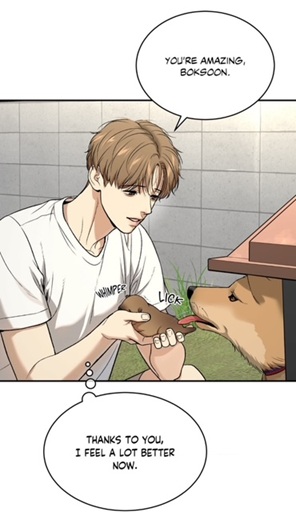 (chapter 57) During that summer night’s dream, Dan’s body mirrored this wordless care. That’s why he could laugh so genuinely like a child after witnessing his “pet’s reaction”.
  (chapter 14) Therefore the physical therapist astonishment, “What’s this?” was not naïve; it was disoriented. Somewhere deep within, Dan had internalized a different model of kissing: one that reflected comfort, not conquest; affection, not arousal. The kiss he received was too strange, too fierce—it violated a definition he didn’t even know he had. His body knew how to kiss, but it remembered a different type of kiss altogether. The latter stands for love and as such emotions. Under this new light, my avid readers can comprehend why the physical therapist made the following request from his fated partner:
  (chapter 15) He needed to be “warned” in order to control his “heart”. As you can see, doc Dan had an innocent definition of the kiss. Therefore it is not astonishing that the wolf’s first kiss confused him so deeply: it shattered the only blueprint he had for intimacy.
 (chapter 65) with success and fortune take on a new, darker meaning. Her restraint around love and sexuality wasn’t only generational—it was strategic. She reinforced a worldview in which success, debt repayment, and self-denial were Dan’s only legitimate currencies. For her, love, on the other hand, was frivolous, indulgent, even dangerous. She only treasures the relationship between the protagonists, as such a friendship is useful. It serves her interests, that way she can still control doc Dan’s fate. In other words, she only views relationship as transactional. The smiling family in A Fine Line
  (chapter 14) Jaekyung repeated such a gesture, as seen in chapters 24
 (chapter 24), and again in 64
  (chapter 64). These gestures were not expressions of tenderness, but acts of dominance, mirroring how the celebrity was taught to treat intimacy: not as an exchange, but as an imposition. His behavior echoes Cheolmin’s earlier suggestion
  (chapter 13) where a little touch was functional. On the other hand, the suggestion framed “affection” as a form of fun and entertainment, meant to soften the experience and shift the focus toward the partner. While Cheolmin’s comment was not malicious—in fact, it encouraged Jaekyung to become gentler and more attentive—it still fell short of true emotional connection. Why? It was a medical suggestion, meant to protect Dan’s fragile state. The kisses in episodes 14 were to protect the physical therapist. They were initially functional, a mean to achieve a goal before becoming a habit.
 (chapter 63) Fun is not the same as love, and this distinction matters deeply for someone like Kim Dan, who associates kissing with emotional safety and love, not performance or play. This explicates why he refused to be kissed in episode 63:
  (chapter 63)
 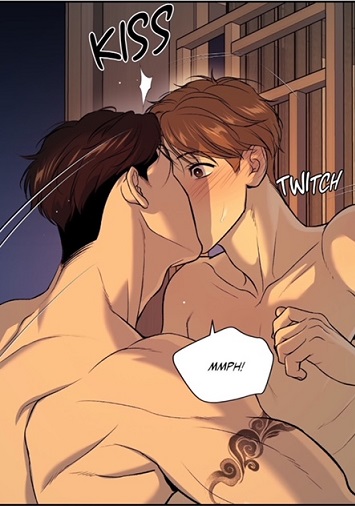 (chapter 44), Dan’s were soft, exploratory, almost reverent. His lips touched not just his lover’s mouth, but his cheek and ear—tender sites that bypass eroticism in favor of emotional intimacy. These weren’t prolonged, devouring kisses. They were pecks, small and deliberate. They mirrored affection, not possession.
 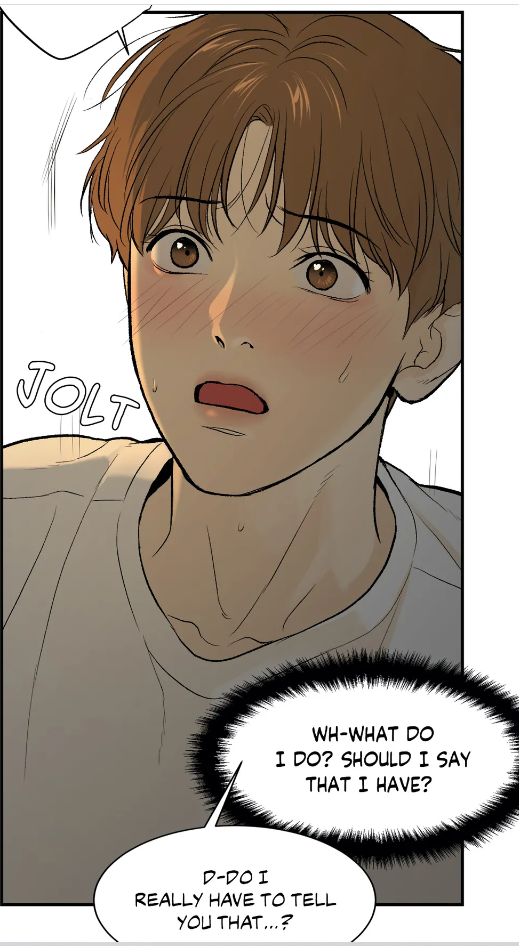 (chapter 3) —it forces the wolf to ponder on the meaning of a kiss and his relationship with the physical therapist.
 In that iconic artwork, the man does not kiss the woman on the mouth, the traditional locus of erotic desire. Instead, his lips are placed upon her cheek—a gesture that suggests reverence, not possession; vulnerability, not domination.
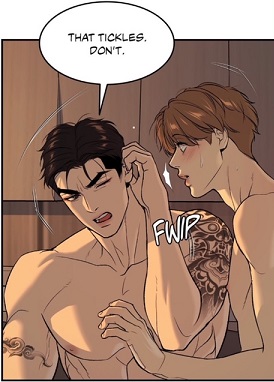 (chapter 44)
  (chapter 45)
 (chapter 54) When he was young, he had to face an abuser. Notice that the man’s face was very close to the champion’s
  (chapter 54). Thus I interpret that for the champion, the face represents not only his vulnerability, but also a source of danger. That’s the reason why he couldn’t hide his displeasure and frustration, when he faced this “lover”.
  (chapter 44) He couldn’t hide his joy by the champion’s funny reaction and laughed. And how did the protagonist react to this? Not only his face expressed his dissatisfaction, but also he silenced his partner with a kiss right away:
  (chapter 44) Joo Jaekyung is leading the kiss, he is regaining control over their relationship. It reinforces the idea that the wolf’s kiss was not merely about passion, but about reclaiming dominance and halting a shift in power. Just moments earlier, Kim Dan’s laughter had opened a space of emotional intimacy and lightness, which the champion was not prepared to face. The kiss, now prolonged and intensified, becomes the sportsman’s way of reasserting control over a situation that was slipping into unfamiliar emotional territory.
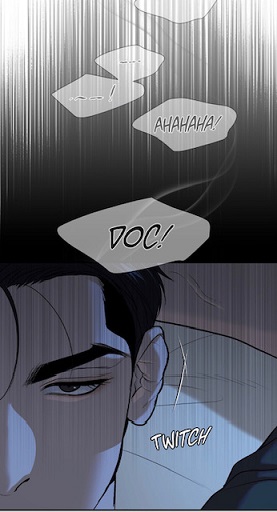 (chapter 37), and kissing becomes his emotional brake pedal. It’s not simply an act of love, but a means to regulate, or even drown out, what he cannot yet name or accept: that he is being loved. It is not random that I included the scene from episode 37: he heard laughs from the other room. For him, such a noise must have sounded like a disrespect and mockery, triggering his past trauma. And he was not entirely wrong in the sense that they were eating behind his back
  (chapter 37) It was, as if they were mocking him because of his forced “diet”. No wonder why the champion is barely seen laughing and prefers seriousness. At the same time, I can grasp why the athlete feels close to Park Namwook, as the latter stands for these exact notions: work, money and seriousness. Fun is not part of his world and vocabulary, therefore he punished Joo Jaekyung for sparring with doc Dan.
 (chapter 2) Though his face was close to the star’s, he didn’t attempt to kiss him. In fact, he proposed him a fellatio, a sign that the champion had never allowed anyone to get close to his “face”. Finally, observe how he reacted, when the uke in episode 55 attempted to kiss him:
 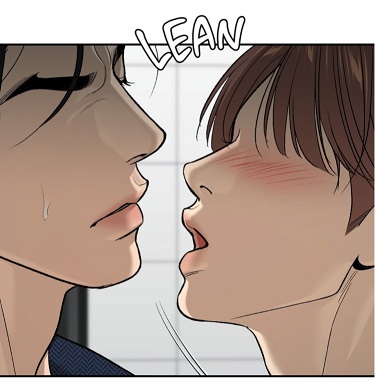 (chapter 55) Not only he rejected him, but also he pushed him violently so that the latter was on the floor.
 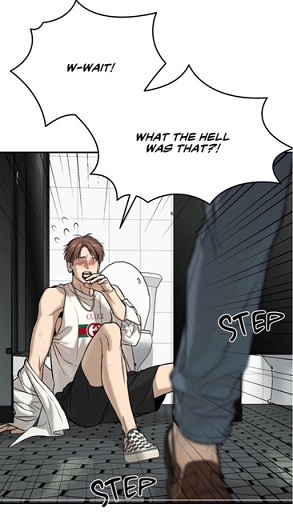 (chapter 55) The celebrity even ran away: a sign that the allowing someone approaching his face is perceived as something uncomfortable and threatening. At the same time, that moment exposes the kiss as something sacred—one that cannot be duplicated without emotional violation. This shows that for the champion, the meaning of a smooch has evolved. It is no longer perceived as a source of fun and a mean to gain something.
 (chapter 55) He couldn’t forget doc Dan’s face, the latter excited him, a sign that for the champion, the face in general has been a source of pain, yet thanks to doc Dan, the latter has become a source of “comfort and joy”.
  (chapter 66) When he saw his face for the first time, he didn’t realize that he was already under the hamster’s spell. Striking is that he even focused on his chin and lips, a sign that he desired to kiss them. One thing is sure. The champion treasured the doctor’s face. After their separation, it is not surprising that the wolf felt the need to see his face.
  (chapter 39) before requesting a fellatio:
  (chapter 39) The main lead’s head was very close to the champion’s face, thus he must have felt uncomfortable. Secondly by acting this way, the doctor was gradually gaining power over their relationship. For the wolf, dominance is everything, an indication that in his past he felt defenseless and weak. His “opponent”, the mysterious ghost, had the upper hand. Moreover, the fellatio created a distance between them, where the fighter could expose his superiority. And note how doc Dan behaved under the influence of the drug:
  (chapter 39) For the first time, he accepted Dan’s initiative—both physically and emotionally. Compare it to his attitude before:
  (chapter 39) here, he still has his eyes wide open, a sign of vigilance. These kisses from doc Dan
  (chapter 55) These memories represent the moment where the athlete felt strong and had the upper hand in their relationship. These images reveal that Joo Jaekyung hasn’t realized the signification of the kiss yet. For him, they don’t seem important. This exposes that the athlete has not associated kiss with love and affection yet. At the same time, we have to envision that a smooch is strongly intertwined with equity and trust.
  (chapter 28) And in episode 14, it was clear that the star still felt superior to his companion, therefore the kiss had no special meaning. As you can see, everything is pointing out that Joo Jaekyung had never been kissed before. And what does a kiss symbolize? Not only attachment, but also purity and innocence.
  (chapter 42) According to him, doc Dan was not different from him. However, he was wrong. It is because the champion had kissed him!! Moreover, the celebrity had allowed doc Dan to kiss him as well. Besides, how did the champion name his past lovers? They were toys… normally people don’t kiss playthings. And now, imagine that doc Dan were to discover that Joo Jaekyung had his first kiss with him. This revelation would not only make him realize that Joo Jaekyung loves him, but also he could be wondering why the athlete had never done such a thing before, though he had past lovers. YES, the “first kiss” could be the trigger for both characters to question their respective past and perceive their fated partner correctly.
  (chapter 15)
  (chapter 52) In that context, a kiss could never be affection, but vulnerability. A risk.
 (chapter 3), based on Dan’s vague claim of prior partners. Yet Dan has never kissed anyone before. The kiss becomes his true moment of loss, a quiet confession through action. Conversely, Jaekyung’s own discomfort shows that he, too, is untouched in this particular way. When Dan tries to kiss Jaekyung again, and he instinctively rejects it, it reveals just how unprepared he is for affection. They are both unaware that the other is emotionally “pure” in this regard, and that makes the kiss a shared revelation.
 (chapter 67), Jaekyung must reinvent his approach. He cannot rely on dominance, strength, or sexual performance to win Dan’s heart. If he wants true connection, he must learn a new language—one built on gestures of affection, softness, and presence. This process also involves separating his public persona from his private longing. Joo Jaekyung, the champion, cannot seduce with spectacle. But Jaegeng, the man, might learn to express love through a simple touch, or a well-timed kiss. The redefinition of seduction is not just about Dan’s healing; it is about the wolf’s reclaiming his own right to feel and give love. And in my opinion, that process has already started:
  (chapter 69) That moment was devoid of lust, stripped of performance, and free from power dynamics. Jaekyung didn’t lean in for a kiss; he didn’t touch Dan’s lips or body with any sexual intent. Instead, he wrapped his arms around the physical therapist in silent reassurance, tucking his face against Dan’s shoulder as though hiding from the world. This was not a champion claiming a prize—it was a man expressing affection. The embrace exposes that doc Dan belongs to his “world” and he trusts him. In this light, the embrace becomes a prelude to a kiss—not a literal one, but an emotional kiss: a meeting place of vulnerability and longing.
 (chapter 65) nor his past partners provided him with genuine and affectionate touch, Jaekyung must look elsewhere.
 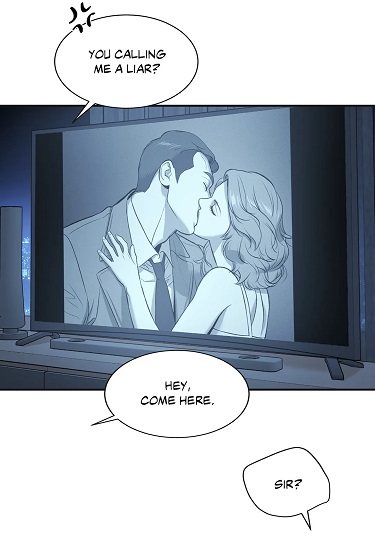 (chapter 29: note that he did not select this scene to rekindle with the doctor, but the other scene) He will learn it from life, from watching how the innocent express care without shame or purpose.
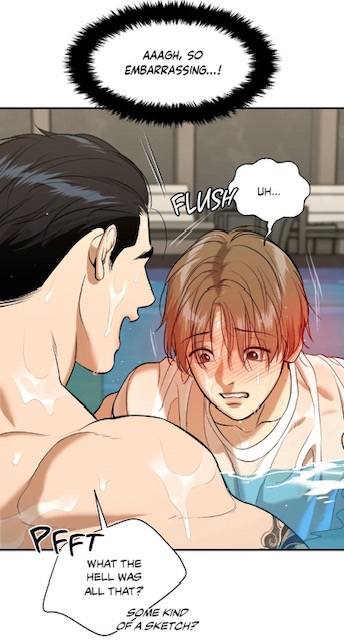 (chapter 27) In Jaekyung’s past, laughter had been a weapon—an expression of ridicule and cruelty from an abuser.
  (chapter 62) If someone had laughed in front of him and made fun of him, this would have reopened his old wounds.

 (chapter 69). For the first time in this story, we as readers were allowed to hear Joo Jaekyung’s heart
  — not in battle, not in passion, not in rage — but in that suspended instant when he imagined Kim Dan missing, possibly forever. Since the author linked the BADUM with doc Dan
  (chapter 69)
  (chapter 69), she created the illusion that the physical therapist was embodying the MMA fighter’s heart. This scene resonated with me long after I closed the chapter.
 (chapter 69) Suddenly, the pieces clicked: the heartbeat in Jinx is not just a narrative sound effect.
  (chapter 14)— yet no heartbeat is heard. One might think, the absence of the heart racing implies the lack of fear. His emotions are real, but they do not connect him to life or to others. Why?
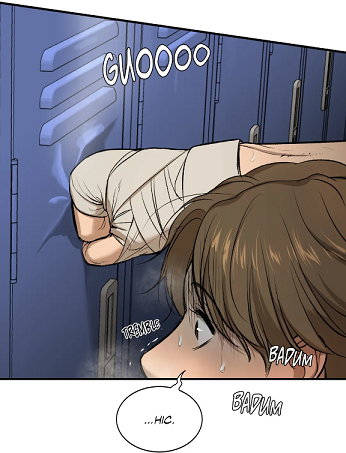 (chapter 14) — GUOOO, metal dented, yet no pain. Yet, Jinx-philes can see Badum Badum in that picture. Nevertheless it is connected to the physical therapist’s heart: he is scared of the athlete’s strength. On the surface, the champion’s gesture appears reckless — an act of a man who does not care for his body. But this is not pure “fearlessness.” In truth, the celebrity’s anger is masking deeper fear and suffering.
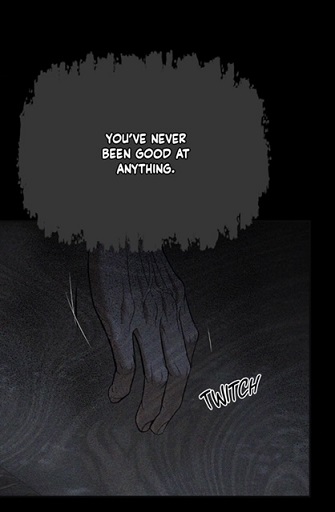 (chapter 54) The challenger, Randy Booker’s insult — calling him a “baby”
 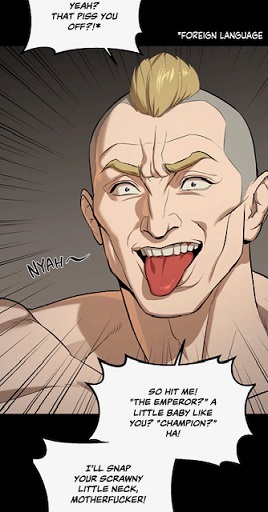 (chapter 14) — triggered this buried wound, igniting a desperate drive to disprove that old accusation.
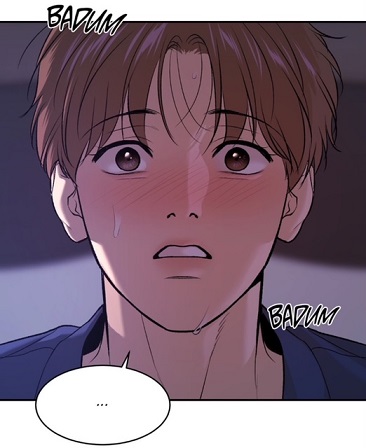 (chapter 44) BADUM BADUM from Kim Dan’s heart as Jaekyung makes a move on him. His blushing face, wide eyes, and parted lips all signal that this is not fear — it is love, excitement, and emerging attachment.
  (chapter 44) and tried new things. He gave his lover pecks on his cheeks and ear
  (chapter 34), we see the actor’s confidence gradually vanishing. His mask begins to crack. In that moment, he realizes that in the VIP spa his celebrity status offers no protection. No manager, no Park Namwook, no audience is present. He is utterly exposed to the raw force of the champion’s anger and fist — and the physical threat is real.
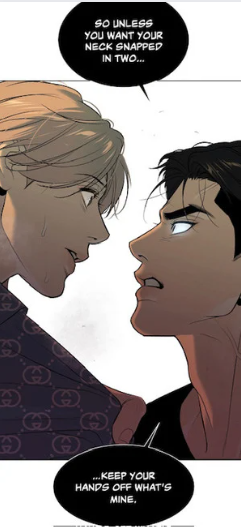 (chapter 34) The confrontation repeats — Jaekyung threatens once more. Yet, there is no visible BADUM, BADUM here. Why? Don’t forget that just before, the actor gulped and blushed
 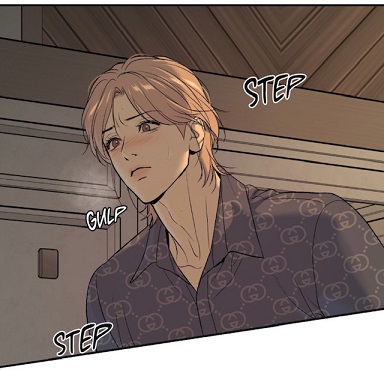 (chapter 34) — a clear sign of excitement, not fear. And still, his heart remains silent. This raises the question. Why was the actor not afraid of the MMA fighter? Because even if the words echo the previous threat, the perceived danger has changed. With doc Dan standing between them
  (chapter 34), the actor subconsciously knows: “He will not attack me here.” The champion made it clear that the physical therapist shouldn’t detect the actor’s presence. Doc Dan acts as an emotional shield, preventing true panic. The body no longer signals mortal danger — and so, no BADUM sounds.
 (chapter 43) Here, the doctor feared the celebrity’s rejection. This scene was actually announcing that doc Dan was already in love with the “wolf”.
 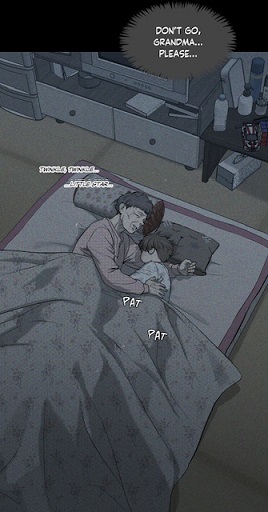 (chapter 21) — a sound of comfort and life. But it was a distant memory, not part of his adult world.
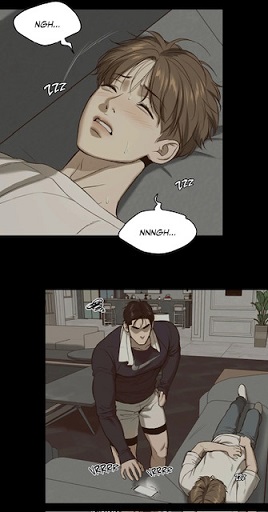 (chapter 21) — having a nightmare. It is only when the grandmother returned to the bed and began to sing that his body calmed.
 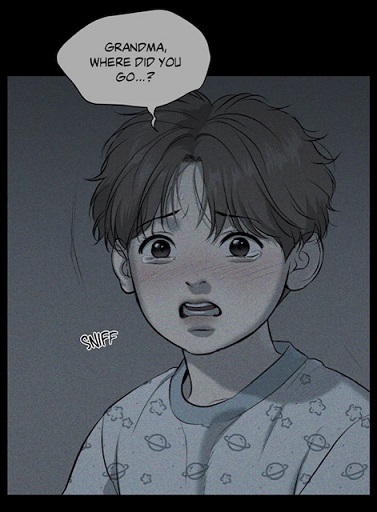 (chapter 21)
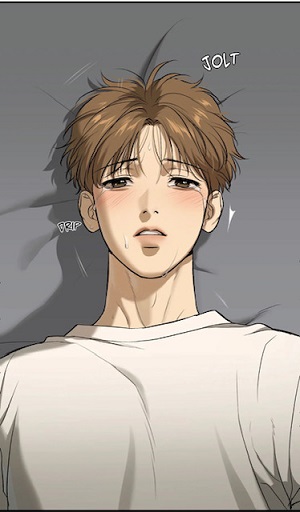 (chapter 21) — one that later echoes in his adult struggles with attachment and loss.
 (chapter 58) — vibrant, alive. But Dan sits apart. He is disconnected — his inner state does not resonate with the music. At that moment, he is preparing to abandon Jaekyung.
 (chapter 58) “I am happy and at ease, but… why does my heart feel so heavy?” — it is as if the external music has replaced his internal rhythm. The joyous sound outside contrasts painfully with his own muted emotions. The music underscores his emotional disconnection and the inner weight he carries.
 (chapter 65) finds his way back to the man he cares for.
 (chapter 65) is more than noise. It’s a resonant signal — not unlike the heartbeat. When she barks, it alerts Jaekyung to Dan’s trance.
  (Chapter 65) Moreover, the dog is capable of expressing her „worries and pain“. And for the first time, the champion follows a sound not of the crowd, not of a bell, but of life calling to life.
 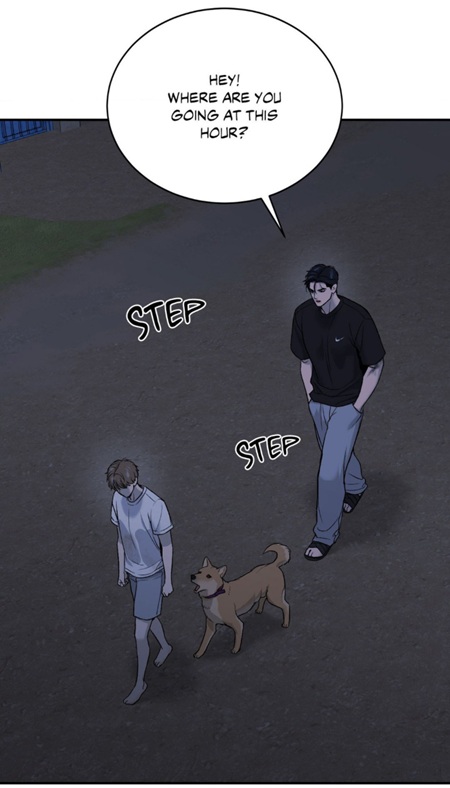 (Chapter 65) Her bark anchors him, just as Dan once did. And it marks the moment Jaekyung becomes emotionally receptive not only to Dan, but to care itself — puppies, vulnerability, connection. In other words, her presence foreshadows Jaekyung’s emotional readiness to care for others beyond the ring. Having rediscovered and embraced his own vulnerability, his heart is gradually open to softness — to animals, to dependency, to affection.
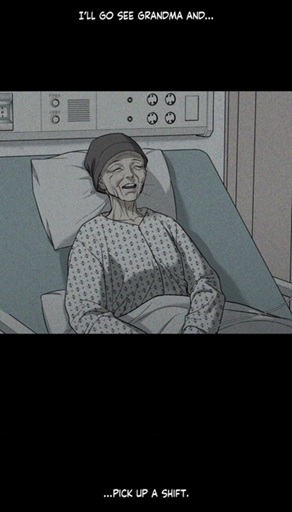 (chapter 59), the reality is that work has long lost its meaning. He has no goal in his life in the end. The emotional gravity of his loss regarding Jaekyung is palpable, though the physical therapist is not realizing it. Jinx-philes should keep in their mind that in season 1, the protagonist used his grandmother as a shield to justify his transactional relationship with the celebrity — and here, perhaps again, she becomes a cover for deeper pain.
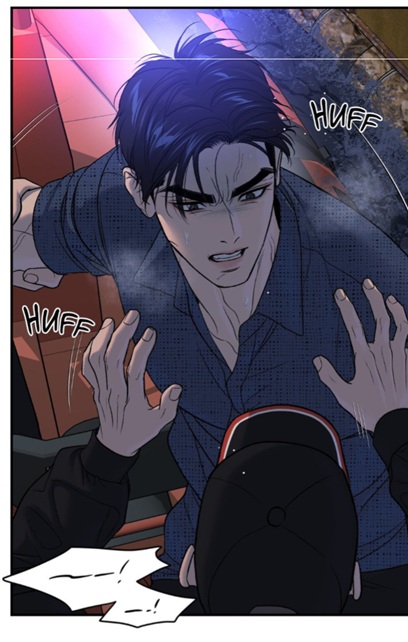 (chapter 69) There, as he sees a figure on the boat, his breath catches — for a moment, he believes it might be Dan. But as he draws closer, he recognizes his mistake. The man is not Dan.
 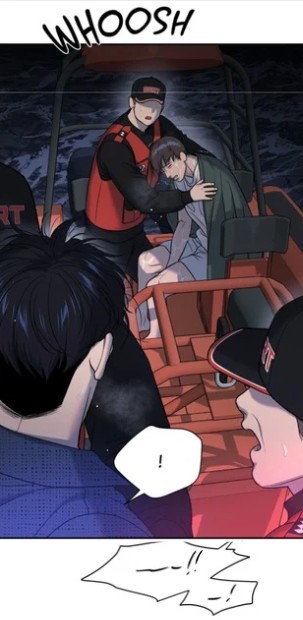 (chapter 69)
  (chapter 69), the audible HAA…, and in the dilated pupil.
  (chapter 69) His body speaks what the panel leaves unsaid — a visceral resonance of surprise, longing, and fragile hope.
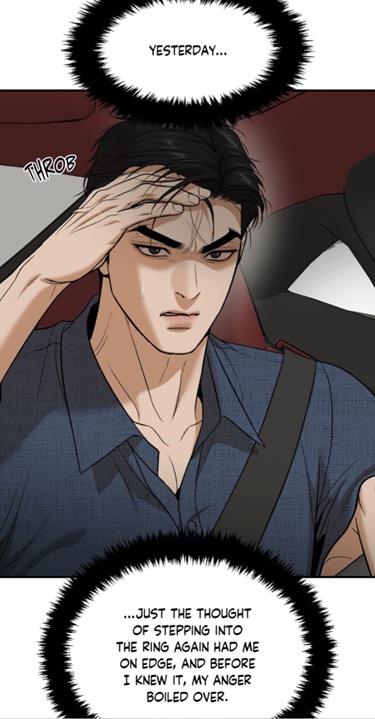 (chapter 69) — Dan does not scold him, reject him, or shrink away. He simply asks:
 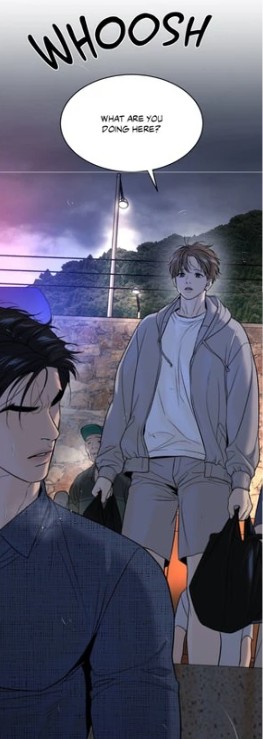 (chapter 69) There is no accusation, no resentment, no judgment.
 (chapter 49) the fighter’s vulnerability and punished his needs,
  (chapter 45), his heart raced. But he mistook this for irritation
 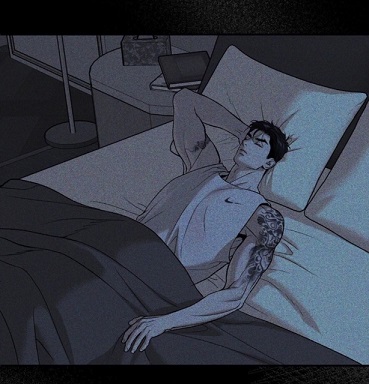 (chapter 45) — not attachment. That is why he threatened to hire another doctor the next morning: he feared dependency and as such vulnerability.
 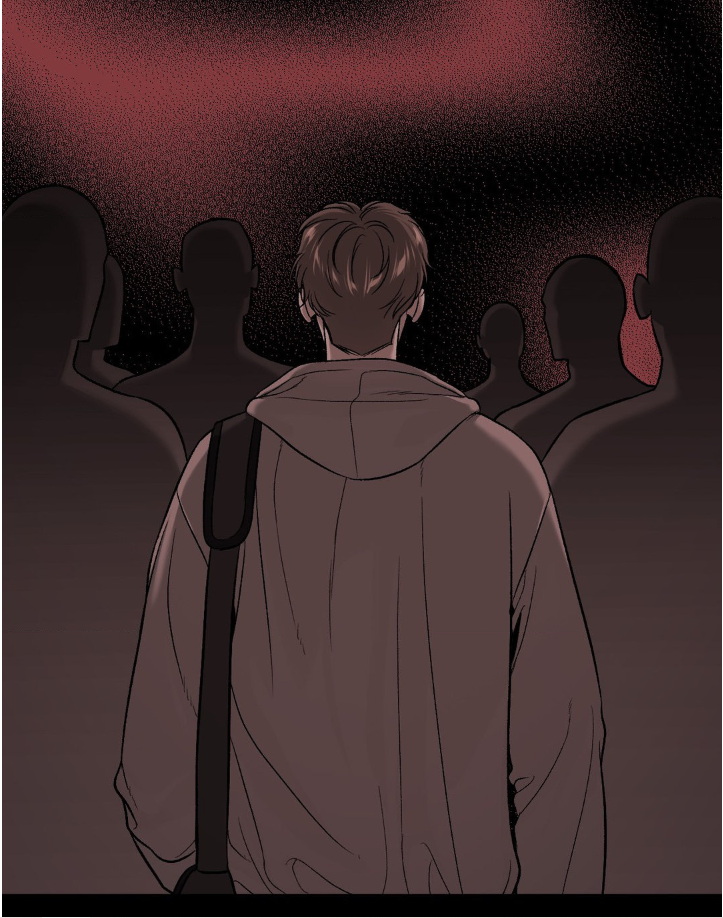 (chapter 55) In his mind, people leave — they live elsewhere — life goes on. He never imagined irretrievable loss.
 (chapter 26)
 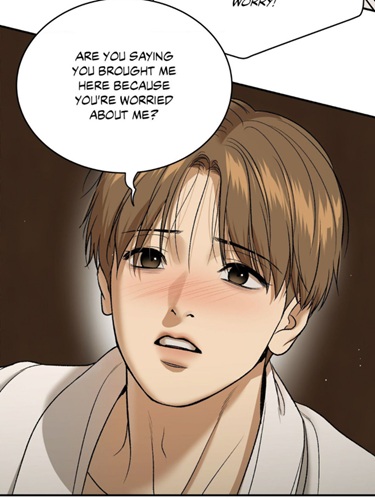 (chapter 67), Jaekyung could only remain silent.
 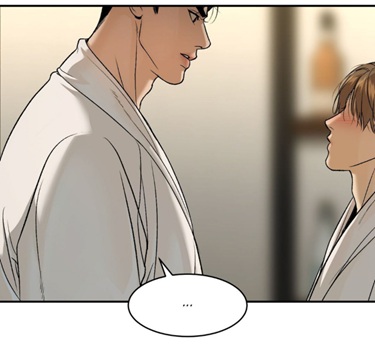 (chapter 67) He could not yet admit his worries, his vulnerabilities — not even to himself. To confess would be to risk blackmail, to risk being seen again as that helpless child.
  (chapter 65)

 (chapter 69)
 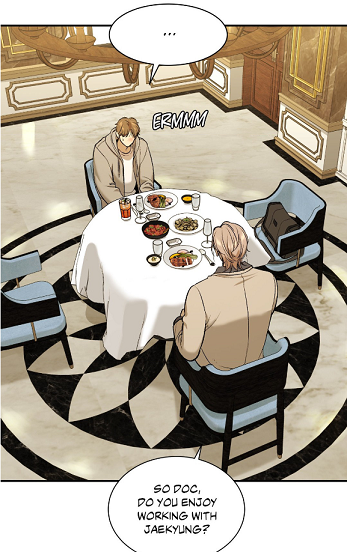 (chapter 32) Yet upon closer inspection, certain oddities stood out to me.
  (chapter 43) In that scene, Kim Dan poured soju into his water cup to pace himself during a drinking session.
  (chapter 43) Joo Jaekyung, unaware, mistakes it for his own and angrily reacts upon drinking it. This moment shows how closely water glasses are associated with Korean dining culture—even in casual or alcohol-heavy settings. Hence during a meal, the characters always have
  (chapter 32) two glasses on the table. In South Korea, it is customary for restaurants to provide a glass of water to every diner, regardless of the meal’s formality or complexity. This small gesture reflects hospitality, attentiveness, and the expectation of proper nourishment. The absence of water glasses, therefore, subtly communicates indifference or even disrespect—signaling that the recipient is not truly welcome to enjoy a full meal or rest. When applied to the “dessert meeting,” this detail becomes all the more striking: a cultural standard is ignored, revealing the performative nature of the gesture. Their absence at the “dessert meeting” feels deliberate, a symbol of superficiality and arrogance.
  (chapter 43) The reason for his mistake was that they had only placed a spoon and sticks.😮 He had no glass for himself. It was, as if they had forgotten him. In other words, he was not supposed to eat and drink at his own birthday party!! 😂
 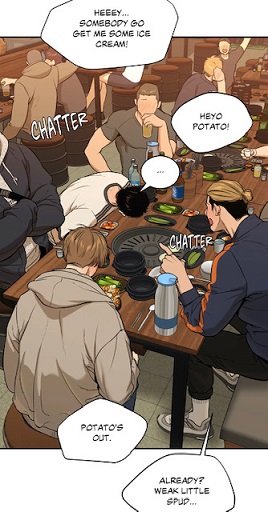 (chapter 9) It reflects a pattern: the champion is present but not included in the communal or emotional aspects of the gathering. His spoon and chopsticks function like a prop, much like the untouched knives and forks at the dessert meeting.
  (chapter 48), the meeting between Choi Gilseok and Kim Dan. The former invited him for coffee.
  (chapted 48) At first, the gesture seemed generous—he offers a home, a car,
 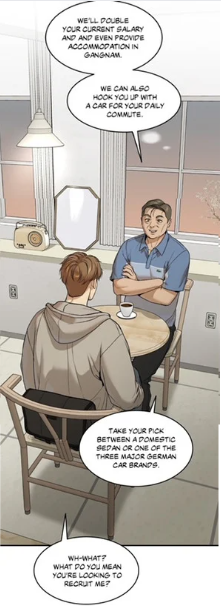 (chapter 48) and the promise to help doc Dan to get a new treatment for the grandmother.
  (chapter 48) But this so-called kindness is conditional: in exchange, Kim Dan must betray Joo Jaekyung. Striking is that director Choi only ordered coffee. But a coffee without a dessert is no real break, but a stimulant—fuel for continued work. In both this meeting and the previous one with Choi Gilseok, the core remains the same: “work”, stinginess and greed wrapped in the guise of generosity. Every sweet drink or dessert lies a hidden price. This comparison highlights that the current meeting is not for the athlete’s sake—it is meant to serve Park Namwook and the CEO, who share different but aligned goals.
 (chapter 66) linked to fire, summer (hence the reference to the trip in the States), passion, performance, and vitality—ironically twisted here into cold professionalism and superficial seduction. Her position contrasts with her symbolic warmth, highlighting the emptiness of her care. This explains why she is portrayed eyeless. She sold her “soul” to money and as such to the “devil”.
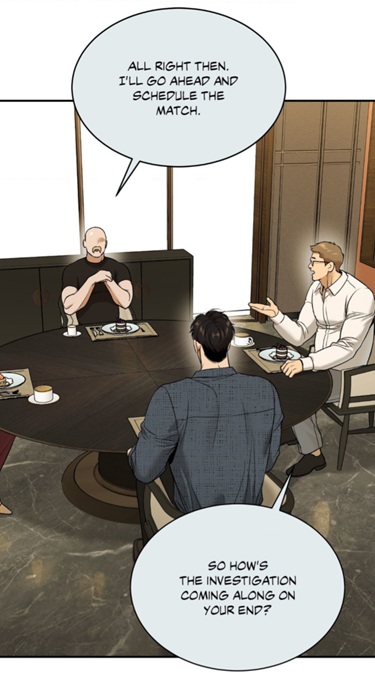 (chapter 69) wearing black, aligns with the North (흑, Heuk), associated with the color black, winter, water, authority, secrecy, and hidden control. It was, as if he was representing the missing glass of water. His position as the initiator of the meeting and his location near the window reinforce his dominance and detachment.
 (chapter 69), which evokes confusion and corruption. This artistic backdrop continues the theme from Voyage, Voyage (life is a journey), positioning Jaekyung as mentally “adrift” within this orchestrated trap. At the same time, the green might reference the “Black Forest”—a literal and metaphorical journey ahead. Like Hansel and Gretel, he is being lured with sweets into the forest. But unlike the fairy tale, the athlete’s breadcrumb trail will not lead him home—it will lead him to Kim Dan. On the other hand, by making this connection, I couldn’t help myself thinking that exactly like Hansel and Gretel, doc Dan and his fated partner will cross the witch’s path on their journey to independence and happiness.
 (chapter 69) Notably, this outfit marks a shift from his previous appearances: during his public pose with Baek Junmin
 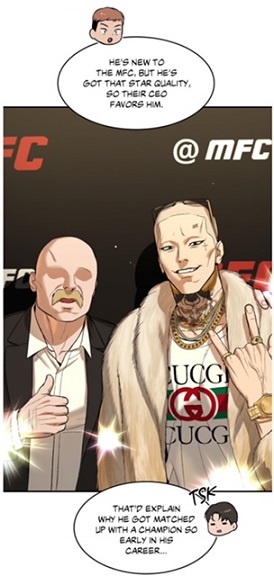 (chapter 47), he wore a formal black suit with a white shirt, signaling polished professionalism. When he met the champion in the States, his full black outfit resembled a manager’s uniform and a badge, signaling humbleness and authority but also a hands-on, corporate role.
  (chapter 37) Now, Joo Jaekyung mirrors this casual dark attire
 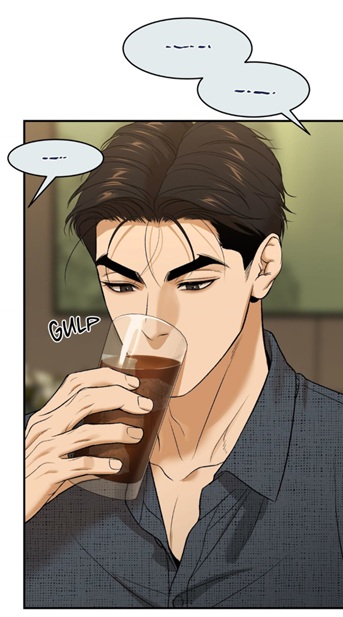 (chapter 69) —a signal of inner turmoil and his transition from his former life. Blue stands for loyalty, thought, and calm, while black alludes to his troubled past. He is evolving but not yet free.
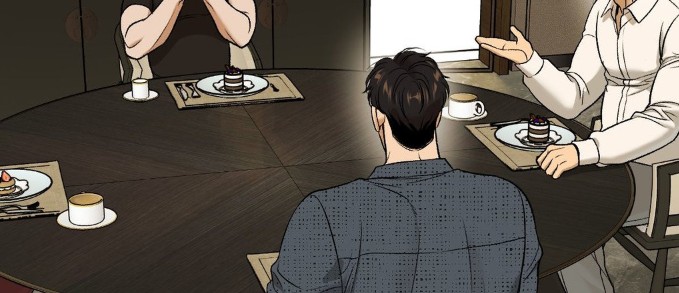 (chapter 69) the strawberry fraisier (chosen by the woman) stands for surface sweetness and seduction; the layered chocolate cake (perhaps a feuilleté) represents indulgence and opulence. Joo Jaekyung alone chose a square Black Forest cake—a form traditionally associated with structure, truth, and boundaries. Because the cake contains kirschwasser, subtly referencing the athlete’s brief brush with alcohol, it becomes clear that Park Namwook was not the one behind this order. Imagine this: under his very own eyes, the champion is encouraged to taste a strong alcohol. In my opinion, they must know that the star has been drinking. Yet, it was through Kim Dan’s presence that he stopped drinking, making this dessert an unconscious mirror of both his struggle and strength. Meanwhile, Park Namwook, ever the follower, selects the same dessert as the CEO and the same drink as the woman, revealing his pretense and pastiche once more. Since the manager has always bought junk food (chicken
 – chapter 26, hamburgers, ramen
  – episode 37), it becomes clear that the hyung simply has no idea about Western food in general and in particular expensive French or German dishes. That’s why he didn’t ask about the dish or questioned the champion if he should eat the deadly sweet cake.
  (chapter 22)
 (chapter 48), it created the illusion of “betrayal” as it looked like a secret meeting”. In episode 69, the meeting is hidden from the public. In contrast to the earlier public appearance alongside Baek Junmin for the cameras
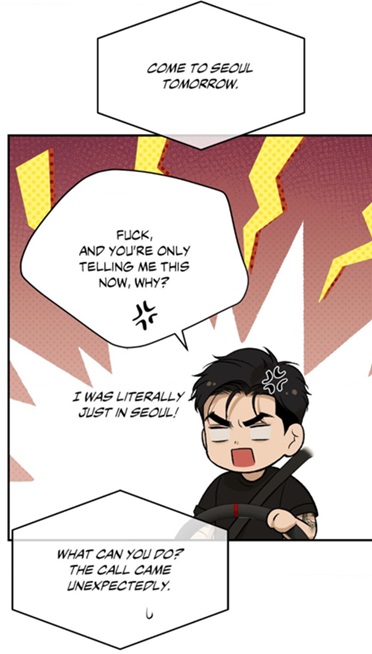 (chapter 69) This framing is deceptive: far from being a gesture of goodwill, it reveals the urgency and opportunism driving the meeting. However, this gesture is carefully staged: the CEO and the woman in red are the ones who selected the time and location of the encounter, placing the athlete in a reactive position where he must adjust his schedule to their convenience. It reinforces the illusion of privilege while concealing a dynamic of control. The meeting is designed to appear personalized, but it reflects MFC’s ethos that ‘time is money’—a business-centered logic that prioritizes efficiency over empathy. The CEO’s urgency to schedule a match, despite Jaekyung’s unclear health status, further exposes the commodification of the athlete. Notably, the proposed match is not even a title bout.
 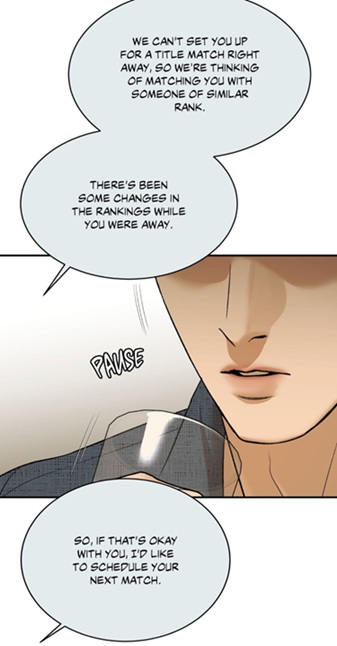 (chapter 69) This strategic omission likely serves to shield the organization from scrutiny, as a title match would demand full transparency around the champion’s ranking and physical condition—areas that may not withstand public examination. In truth, the meeting is not about offering the protagonist an opportunity, but about maintaining MFC’s narrative control while exploiting his fame. This framing is deceptive: far from being a gesture of goodwill, it reveals the urgency and opportunism driving the meeting. To conclude, the discreet setting implies that MFC is not interested in publicizing their dealings with the star, possibly to avoid scrutiny or backlash. The lack of transparency underscores the manipulative nature of this so-called “favor,” which ultimately serves the organization’s agenda, not the athlete’s interests. The problem is that this meeting is heard by doc Dan
  (chapter 69), hence the “future match” is no longer a secret.
  (chapter 67) He was not dropping the case. That’s the reason why the fighter is offered a match in the fall. If he is busy, then he might forget the “case”, especially since fall is right around the corner. He would be occupied training. Like mentioned in previous essays, my theory is that the CEO is involved in the scheme. This assumption got reinforced with this meeting. Striking is that the focus of the “chief of security” was the incident in the States.
  (chapter 69) By stating that the criminal belonged to a Korean gang in the States, she implied that this man had no direct connection in South Korea. In addition, with this statement, she claims that he is still in the States and the champion is safe. However, if the “fake manager” had been living in the States for a long time, he wouldn’t have spoken in Korean automatically.
  (chapter 37) In other words, she is trying to place the mastermind in South Korea.
 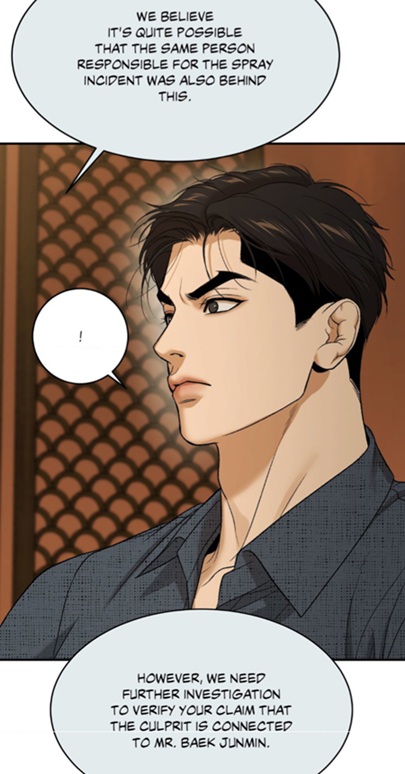 (chapter 69) This means that she is attempting to erase the involvement of MFC in the scheme. That’s why they are now offering an apology, which is naturally fake:
  (chapter 42), it dawned on me that MFC is actually treating the Emperor like a “cash cow”, they imagine that they can keep milking him. I could say, this encounter is exposing the reality to the athlete: Joo Jaekyung is treated like any other fighter. Hence there is no longer mention of Baek Junmin in the news. On the other hand, they have to vouch for Baek Junmin’s integrity
  (chapter 41) here the topic is avoided altogether—possibly due to the lack of actual clearance. Should a third-party hospital intervene, the match could be canceled. Secondly, Park Namwook assumes control of the timeline: a match in the fall means training now. But the champion is no longer dancing to his tune. He is meditating, admitting his exhaustion.
 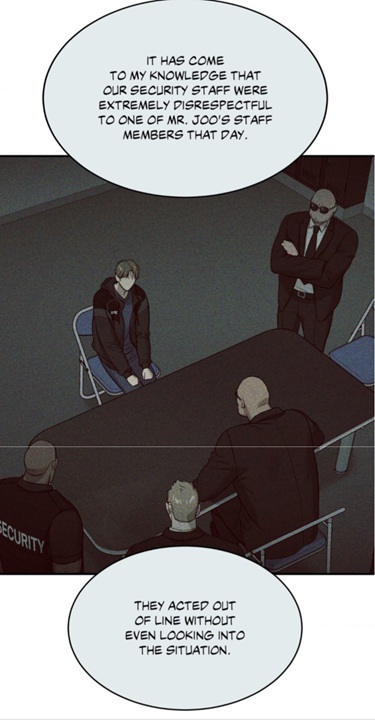 (chapter 69) So Joo JAekyung is more than a fighter and the apology (interrupted by the manager) is the evidence for this. Under this new light, Jinx-philes can understand Park Namwook’s interruption and embarassement. Not only he doesn‘t want to be reminded of his past mistakes (passivity, failure of his job, the slap), but also this apology serves as a mirror and reminder that he is not the true owner of the gym.
  (chapter 69) He is his unseen savior. Thanks to Kim Dan, the star remained silent and calm giving the impression that he had fallen for MFC’s trick.
  (chapter 40) This echoes Kim Dan’s confusion in Chapter 40 when interrogated in English. It also conveniently hides their ties to local authorities—acting as foreigners with no responsibility or rootedness in Korea. But this is what director Choi Gilseok confessed to the angel:
 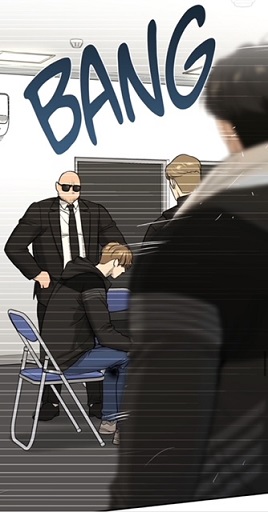 (chapter 40), effectively opening the metaphorical door to truth and protection. In this meeting, however, Park Namwook serves to contain and silence, not to defend. His placement underscores his complicity and fear—not just of the CEO or MFC, but of confronting the consequences of his own failures. But the manager is on his way for a rude awakening, he will be taught a lesson: don’t judge a book by its cover. The athlete won’t be the depressed, anxious, submissive and passive “boy” any longer. Moreover, he listened carefully to the chief of security:
  (chapter 69) he leaves during the day and arrives by night.
  (chapter 69) This spatial detachment echoes his emotional separation from MFC and its toxic grip. Distance, both literal and figurative, is now his strength. The fact that he chose to return to the little town outlines that he is now considering that place as his “home” and not the penthouse. He is not realizing that his true home is doc Dan.
  (chapter 32) During Kim Dan’s lunch with Choi Heesung, the floor beneath their round table shows a twelve-petal flower motif—evocative of the legendary Knights of the Round Table, who were said to sit twelve strong. That earlier scene featured Heesung testing Dan, much like the fake round table later hosts a veiled test for Joo Jaekyung. The repetition of round tables masks exclusion and betrayal. These early “false” tables pave the way for a true table—one that Jaekyung might one day forge with fighters like Heesung, Potato, Oh Daehyun, and others, where loyalty and respect, not manipulation, define the bond.


 (chapter 65) At first glance, the grandmother’s wheelchair and the ocean seem to represent opposing forces, yet they also reveal a complex relationship between power and vulnerability. Thus in this analysis, I will explore how these elements, rather than simply contradicting each other, might actually reflect a struggle to find balance between dependency and independence.
 (chapter 65), yet her portrayal of him seems unexpectedly harsh—emphasizing his flaws (smoking, drinking).
  (chapter 65) This description stands in opposition to the gumiho’s statement: he was an angel.
 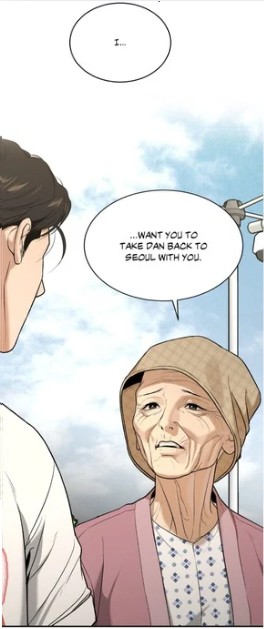 (chapter 65) Is she genuinely worried for him, or is there a hidden motive behind her request to send him back to Seoul? And why does Joo Jaekyung, usually so straightforward, respond with silence and hesitation
 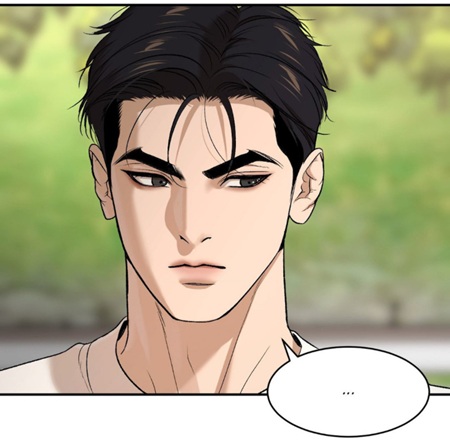 (chapter 65) or with shock?
 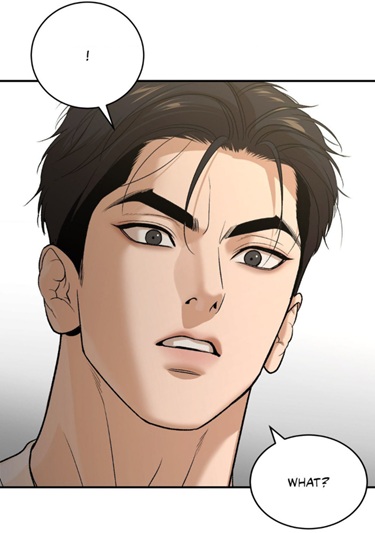 (chapter 65)
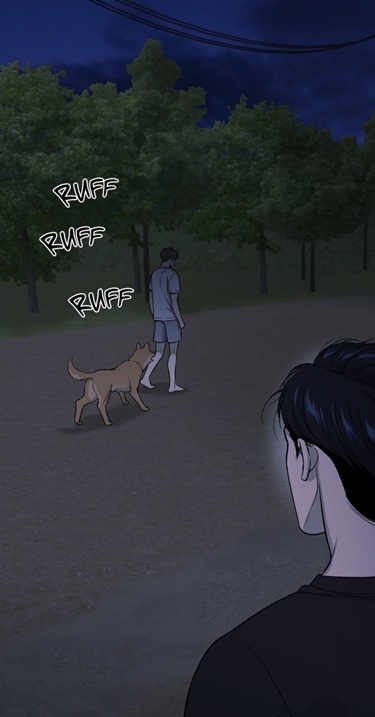 (chapter 65) His bare feet on the cold ground
  (chapter 65) suggest a longing for freedom, yet the direction of his steps remains uncertain. Whereas these walks reveal about his inner struggle, they don’t reveal the destination of his nightly strolls. Where was he going during that night? Was he going to the ocean—vast and untamed— like in episode 59,
 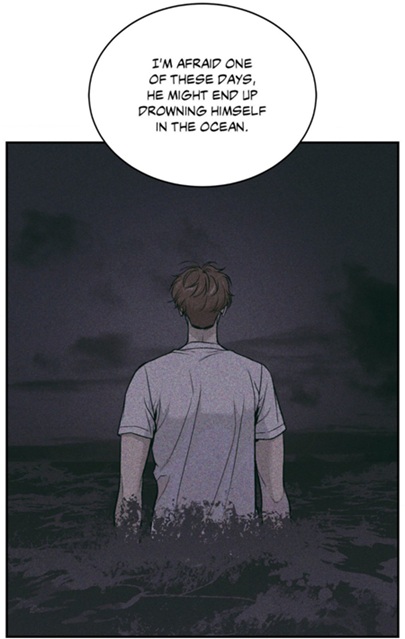 (chapter 65) or had his destination changed? These questions will be answered in the second part.
 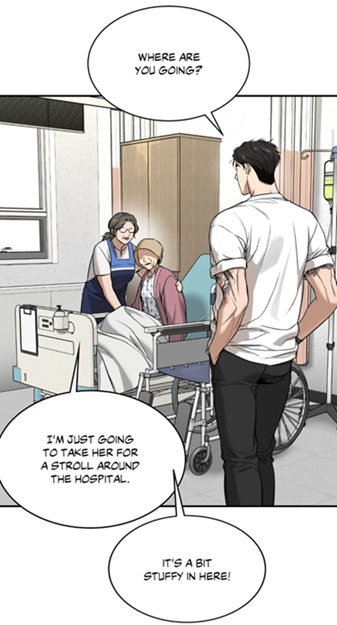 (chapter 65) This destination reflects the athlete’s desire and mind-set. He likes this place because it is quiet.
  (chapter 62) From my perspective, the man has now internalized the beach to nature and privacy. Striking is the way Mingwa introduced the scenery. First, she focused on the wheel and Joo Jaekyung’s feet.
  (chapter 65) The contrast between the creaking wheels of the grandmother’s wheelchair and the steady steps of the champion immediately establishes the theme of control versus freedom. The wheelchair’s wheels represent civilization, immobility, passivity, and the grandmother’s obsession with control—over her own fate
  (chapter 65) In fact, she is just looking ahead of her. The “nice little town” is reduced to the pathway next to the beach. This observation exposes her narrow-mindedness. Because she is not truly admiring the place, I feel like she is praising the town more based on her childhood memories. This explains why she mentions her youth afterwards. Moreover, the fact that she employed the expression “isn’t it” with her description, reveals her tendency to lead the conversation. It was, as if she pushed the young man to agree to her claim. The irony is that she didn’t even wait for his reply. She explained why she was so fond of the place: her childhood memories. In her eyes, because her companion didn‘t spend his youth here, he can not connect to this town, overlooking that people can create new memories anywhere. Moreover, they are not obliged to live in the same town their whole life or to live where they spent their childhood. In other words, this frail lady has no real notion of time as such. I would even say, her gaze is not truly directed in the present or the future, she is rather obsessed with the past.
 (chapter 59) The contrast between these two images—one of the halmoni accompanied by Joo Jaekyung and the other of Kim Dan sitting alone by the ocean—exposes the stark difference in their emotional worlds and the dynamics of control and isolation that define their lives.
 (chapter 65) The sunlight high in the sky bathes the scene in brightness, suggesting a façade of warmth and clarity. This lighting aligns with the halmoni’s belief that she can influence Kim Dan through the champion, using Joo Jaekyung as an intermediary to extend her authority. The fact that she is in a wheelchair, however, subtly contradicts this impression of power, revealing her true state of passivity and reliance on others to act on her behalf. The ocean, tamed by the pathway, symbolizes her attempt to domesticate nature—
 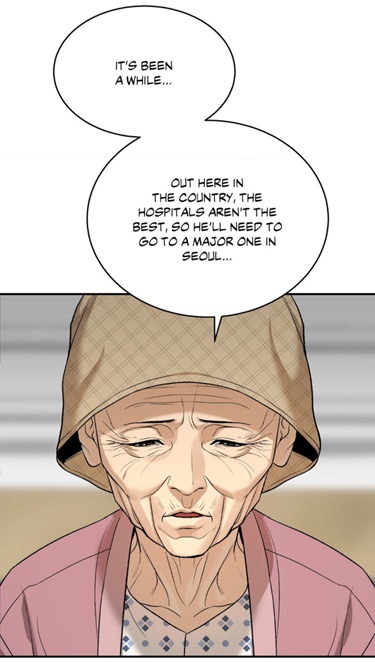 (chapter 65) just as she tries to domesticate Kim Dan’s emotions and decisions. At the same time, it exposes that the champion is still far away from his true self, but he is getting closer to become “reborn”.
 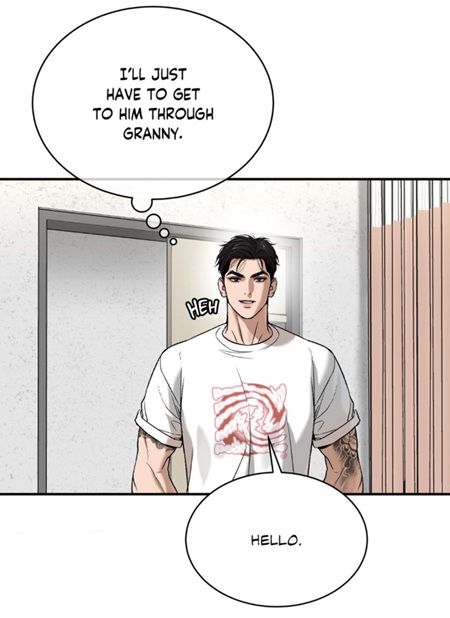 (chapter 65) the same illusion that the high sun implies. The latter can not shine if there are clouds.
  (chapter 59)
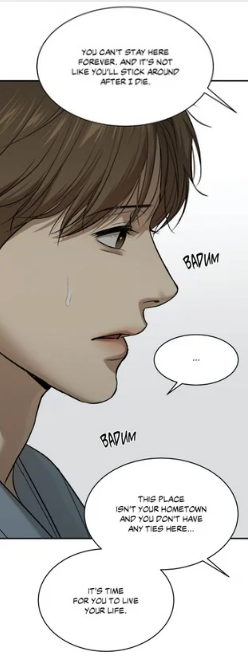 (chapter 57) By telling him that he had no ties here, she effectively erased their shared past and portraying him as a stranger in the very place she calls home. Thus I deduce that she is aware that she is racing against time. The longer the athlete stays in that place, the lower are the chances that her grandson will leave this town. She has to ensure that Joo Jaekyung doesn’t feel like settling here. I don’t think, she heard about the athlete’s involvement in the little town, for her only source of information comes from the staff
 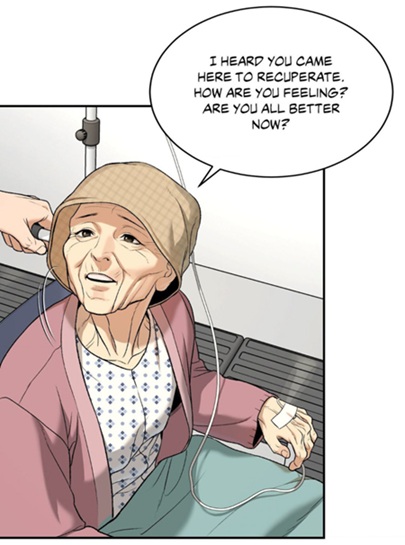 (chapter 65) and the residents from the hospice. She has no connection to the town chief and other inhabitants. This exposes how small her world is and little her knowledge is. However, her ignorance doesn’t make her an innocent “lady”, quite the opposite. – Don’t get me wrong, I don’t see her as a malicious person, just as a selfish person suffering from Peter Pan Syndrome.
  (chapter 65) Here, she claims that she only knows about the sportsman’s job thanks to the patient next door. However, she is lying, because she watched his match in the States.
  (chapter 41) The irony is that she is not realizing that she is showing her true colors.
  (chapter 21) In episode 21, the halmoni’s description of the champion as a “good friend” was, in hindsight, a superficial and self-serving characterization. At that time, she likely saw Joo Jaekyung as someone who could be beneficial for Kim Dan’s financial situation without truly caring about who he was as a person. Her interest in him was more about what he represented—a source of money and stability—rather than any genuine appreciation of his character or the impact of his presence in Kim Dan’s life. Thus she said this in front of the ocean:
  (chapter 65) If he was a good friend, then why didn’t she show more interest in him before? It is because she needs him now. Yes, this woman is a good-weather friend in the end. The term “good-weather friend” refers to someone who shows interest, support, or kindness only when it is convenient for them or when they stand to gain something. Hence she goes outside, when the sun shines. This perfectly encapsulates the grandmother’s attitude towards Joo Jaekyung. But it is the same with the champion. He only visited her,
  (chapter 61) when he thought, he needed her assistance. He used her to appear as a friend.
  (chapter 61) Yes, the conversation at the beach played an important role, for Shin Okja’s behavior serves as a distorted mirror to Joo Jaekyung’s actions and mindset, exposing the flaws and contradictions in both. When she voiced this wish
  (chapter 22) he acted out of a simplistic view of good deeds—believing that financial support alone could resolve problems and fulfill his moral obligations. His subsequent failure to visit her again reflects his tendency to distance himself emotionally once he has performed what he sees as his duty. This is reminiscent of his behavior towards Kim Dan: helping him materially but avoiding deeper emotional involvement or responsibility.
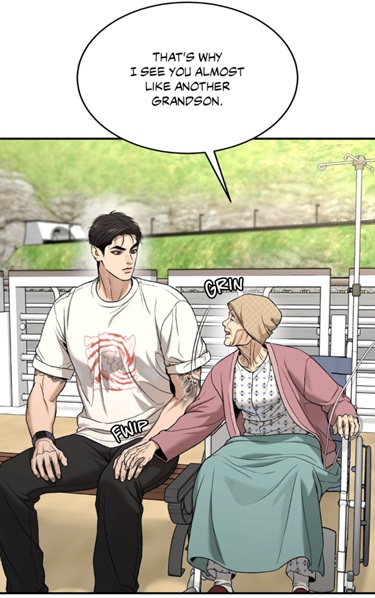 (chapter 65) is a way to offload responsibility for doc Dan while maintaining an image of concern. Both display a form of care that lacks true depth.
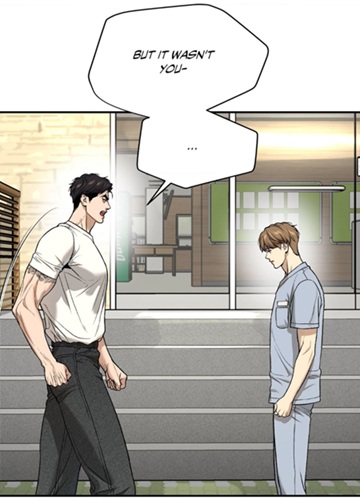 (chapter 62) Both avoid the emotional accountability that comes with their actions, preferring to distance themselves once a material obligation (debts)
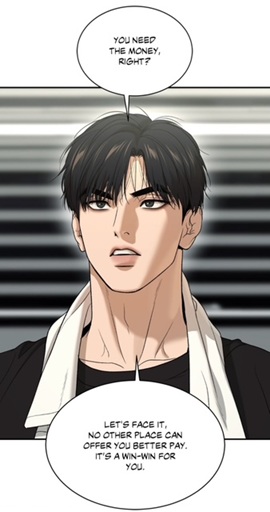 (chapter 60) is fulfilled.
 (chapter 22)
 (chapter 57) This displays that she is not entirely honest. She is not reaching out to Kim Dan in the end. Her excuse is that he refused to see a doctor
 (chapter 65), but so far we never saw her making such a suggestion. It is possible that she jumped to this conclusion because she heard about this incident:
  (chapter 60) If my assumption is correct, the woman didn’t realize that this rejection was linked to Joo Jaekyung’s intervention. So if she had talked to her grandchild himself, she could have had an impact… But they are actually avoiding each other. One thing is sure: the absence of communication and avoidance between these two family members reinforced the doctor’s suffering. Imagine the consequences of her request: she is preferring locking him up in a hospital receiving drugs than giving what doc Dan has been longing: warmth, love and a home.
  (chapter 65) where both were happily smiling. The picture is the evidence that she could make Kim Dan smile despite their poverty. Moreover, it is important to recall that she introduced Kim Dan as an orphan from birth:
  (chapter 48). Both the halmoni and Choi Gilseok embody betrayal and the theme of acting behind the back
  (chapter 48) mask a deeper betrayal. His real aim was never to assist but to control, using offers of support as bait to tie Kim Dan into a powerless position. The parallel between his proposition to Kim Dan—promising a better life in exchange for leaking information and compliance—and the halmoni’s push for Seoul’s hospitals underlines their shared strategy: make the target believe they have a choice, while the outcome is already decided. The fact that Heo Manwook, who collects Kim Dan’s debts, called Choi Gilseok “hyung” further hints at a deeper conspiracy, suggesting that the offer might have been a tool to ensnare Kim Dan from the start. He would have committed a crime (illegal drugs).
 (chapter 62) That’s the reason why he was seeking the grandmother’s support. He was hoping that she could influence him. But what he hears, shocks him:
  (chapter 65) Though they are next to each other, they are not sitting together. The wheelchair represents the invisible barrier between them. This scene contrasts with the conversation in the penthouse. And what had the athlete done during that night? He had not only shared his thoughts and issues to doc Dan, but he had asked for his wish and opinion.
  (chapter 29) He had even advised to think of himself first. As you can see, the fact that the two characters were just sitting next to each other reinforces my previous interpretation about the conversation. The grandmother was the one who had been leading the conversation, there is no real exchange of thoughts. In episode 29, the champion refused to accept the doctor’s help and suggestion. That’s the reason why I am more than ever convinced that the star won’t listen to the grandmother.
 (chapter 53) She was asking for a favor again, but this time, she was begging for someone else’s generosity. No wonder why she said that she was still the same!
  (chapter 53) and watch the ocean with her grandson
  (chapter 53), but they never did it. Why? One might respond that she refused to do it.
  (chapter 57) But it is only partially correct. The doctor only suggested this walk to the ocean much later, when he was already suffering emotionally. This means that the grandmother would have not been able to enjoy this walk. Yes, the timing played a huge role. In fact, she confessed her crime to the star:
  (chapter 53) She never had any intention to spend some time with him. Notice the personal pronoun “we” vanished. It is only about her request: “I wanted to see the ocean”. This means that at the hospital, she never had any intention to keep Kim Dan by her side. She employed the “with you, we” in order to achieve her goal. She acted, as if they were a family. She used her illness for her own advantage. In my opinion, her request was an excuse to avoid to return to the old broken home. For her, home is a place and not a person. Therefore she couldn’t love Kim Dan properly. Her “I’m so sorry” was actually fake. She had only thought of herself… She never thought of her grandson’s future at all. This observation corroborates my previous statement: she is unable to plan for the future. What only matters to her is the past or the present. Why? It is because she doesn’t want to be plagued by remorse or regrets. And now, she is doing it again with the champion. Using emotions and fragility for her own benefits. The paradox is that this is something Joo Jaekyung has always feared his whole life. Nonetheless, he doesn’t react so violently like in the past: rejection or outburst. One might say the reason is that she is weak and terminally ill.
 (chapter 65) However, I believe that her words reached the champion’s third eye. The latter was not focusing on the grandmother, but on his fated companion. He was trying to understand why he had changed. This question was already on his mind before:
  (chapter 62) And notice that the words from the grandmother
  (chapter 62) Once he has achieved his goal (reclaim his champion title), they will depart from each other. He would treat the doctor the same way than the grandmother! No wonder why doc Dan is getting angry and rejecting the offers from his destined partner. IT is only about his own selfish desires and not about doc Dan’s future and desires. Both have a similar mind-set: they don’t know what doc Dan plans to do with his life and the future…. And it shows that Joo Jaekyung was imitating the grandmother, though this suggestion was born from the following thought. Since Doc Dan was no reluctant to work for him, he imagined that maybe he would still accept to work for him for a limited time. But that’s not what Kim Dan is looking. He is longing for a home and at the same time for freedom.
 (chapter 65) The points of suspension are indicating that he is meditating on her words and suggestions. This stands in opposition to his past behavior where he got manipulated so easily.
  (chapter 36) The reason for this huge metamorphosis is that because of the lavender-tinted night, he learned to control his emotions.
  (chapter 65) He was forced to admit that he needed the “hamster”. He knew that if he reacted on these negative emotions, doc Dan would have another reason to put the blame on him. Consequently, his goal would be much further away. Secondly, though the conversation was private, their encounter was far from secretive. Both were visible, as it took place during the day. This means that the grandmother’s words in front of the ocean symbolize that they are in the open.
 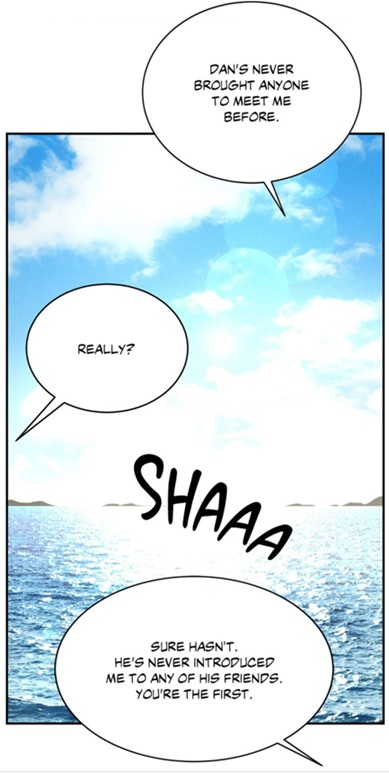 (chapter 65) According to her, Kim Dan has never introduced her to any of his friends. The celebrity would be the exception! But she is lying here. How so? Joo Jaekyung introduced himself to her on his own. It is because he answered a call from the nurse.
 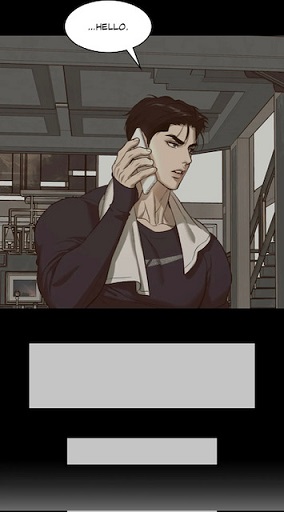 (chapter 21) It happened behind doc Dan’s back in the end. The latter was sick, but the old lady didn’t seem concerned. The second lie is this statement which is exposed with the memory:
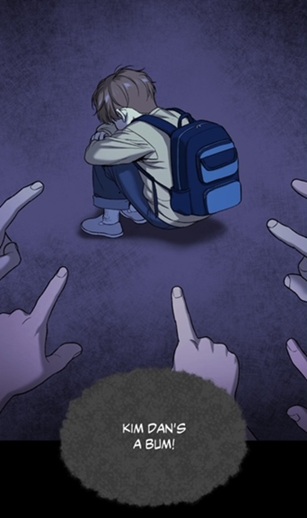 (chapter 57) She claims her ignorance why the little boy acted like an adult at such a young age. The reality is that she hasn’t forgotten the incident at all. This explicates why she confessed this to the “wolf”:
 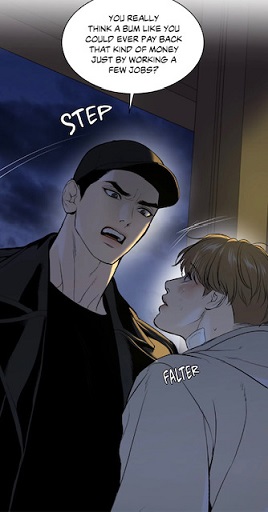 (chapter 18) What caught my attention in her revelation is her lack of enthusiasm for her own grandson.
  (chapter 65) “Is he that good?” exposes a lack of faith in her grandchild, a remark which caught the athlete by surprise. For me, he unconsciously sensed this negative aspect.
  (chapter 65) While this image is actually humorous, the grandmother’s words don’t match her body language. She is not showing any joy or smile. Therefore I comprehend why Kim Dan was so hurt by the champion’s behavior:
  (chapter 61) Finally, it is important that the athlete never agreed to her “demand” or suggestion.

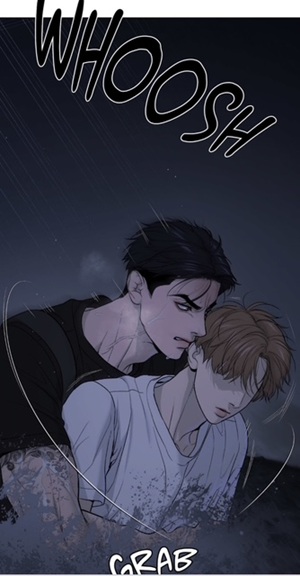 (chapter 59), the scene mirrors the iconic moment in The Little Mermaid where the mermaid saves the prince from drowning. Kim Dan, unconscious and seemingly following the voices of the hospice
  (chapter 54), performance, and the longing for a deeper connection.
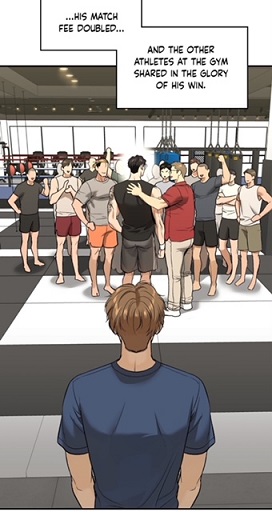 (chapter 41), and the mermaid, as he grapples with voicelessness and the pressures of his world.
  (chapter 36) Choi Heesung, representing another prince with Potato as his bride, benefits from others’ sacrifices
 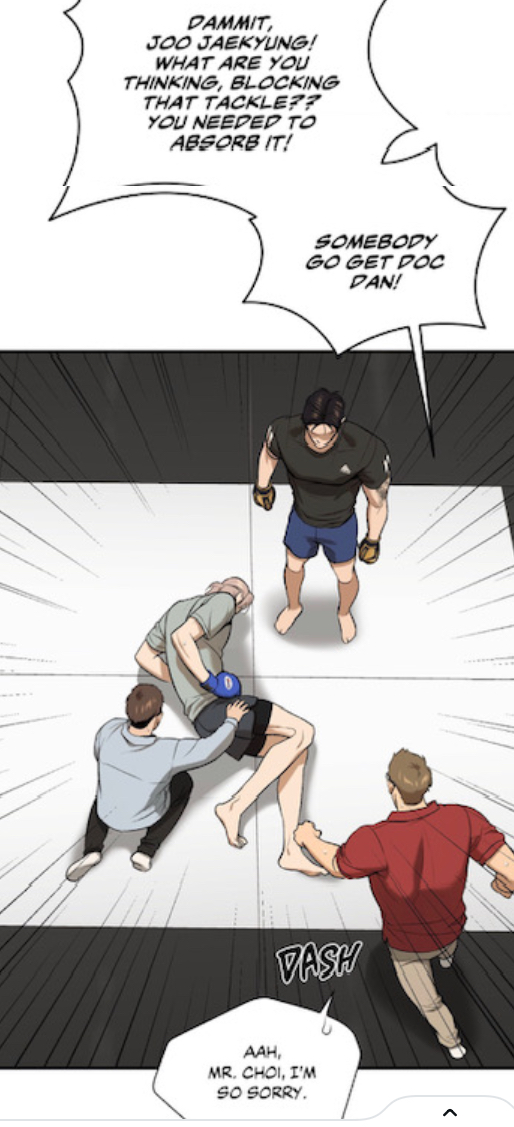 (chapter 31)
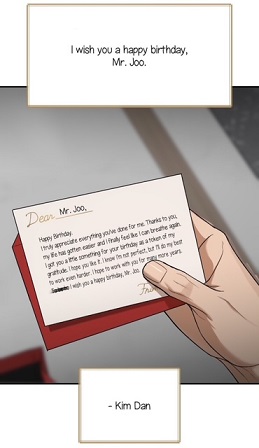 (chapter 55) and hardship
 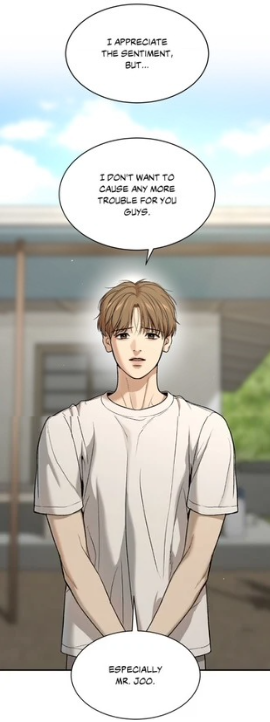 (chapter 58), yet it serves as the catalyst for his growth. Just as the little mermaid’s journey leads her to a higher spiritual purpose as a daughter of the air, Kim Dan’s experiences with Joo Jaekyung force him to confront his own worth, identity, and emotional needs. Just before he went to the ocean, he wondered about his own future and desires, a sign that he was standing at a crossroad:
  (chapter 59) However, let’s not forget that Kim Dan’s profession had been determined by Shin Okja, as the latter desired to have her grandchild taken care of her. Therefore his own desires and needs were overlooked. Traditions and social norms were used to decide about the protagonist’s life and future. His journey from voiceless suffering to self-realization echoes the mermaid’s transformation.
 (chapter 59) Like the mermaid, he has always lived disconnected from his own needs, burdened by the expectations of others—his grandmother, Heo Manwook, the doctors
 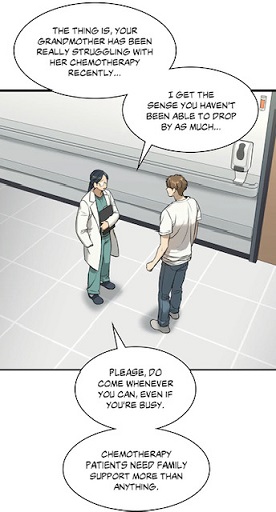 (chapter 21) , and even Joo Jaekyung.
  (chapter 59), he is not capable of crying. It is because he has been living like a ghost for the last two months. Depression, for both the mermaid and Kim Dan, manifests as a silent struggle, making their eventual transformations even more poignant.
 (chapter 1) hiding his true self behind a facade of strength and success. On the other hand, Joo Jaekyung also embodies the mermaid’s longing and sacrifice. Living in the world of MMA, a high-pressure environment where he is constantly pushed to perform, he resembles the mermaid in the underwater kingdom—a place of death and materialism where the mermaids feed on drowned humans. It is no coincidence that the fighters are displayed like mermaids in the water full of blood.
 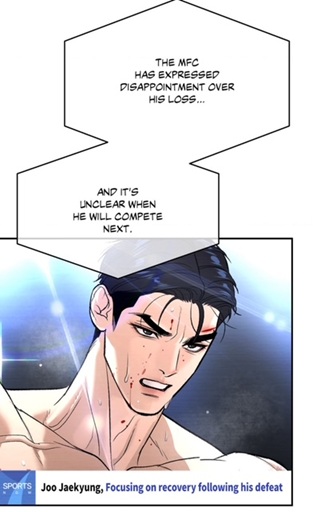 (chapter 57), only allowing him to speak when it benefits them financially.
 (chapter 27) reflects his connection to the mermaid. Water is his natural element, a place where he feels at peace, yet he has been forced to conform to a fiery world of intensity and relentless ambition.
  (chapter 19) Hence he never went to the swimming pool in his own penthouse, until Kim Dan triggered his memory and longing. This interplay of water and fire
  (chapter 52)
  (chapter 41) Joo Jaekyung’s image was exploited to lure these individuals down a darker path, highlighting how his light has been misused by those around him.
 (chapter 19)
 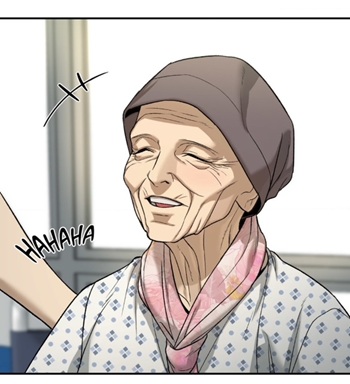 (chapter 56) as long as they were not associated with burden or suffering, while the mermaid’s grandmother celebrates the beauty and decorum of their underwater realm.
  (chapter 57) He even gets blamed for his illness. These elements further emphasize how the suppression of individuality leads to yearning and eventual transformation.
 (chapter 52) This dynamic parallels the members of Team Black in Jinx. Although they are treated like Joo Jaekyung’s co-workers
  (chapter 7), in reality, he is their boss and the foundation of their success. Their indifference mirrors the mermaid sisters’ behavior; they only notice his struggles and absence when his winning streak falters, prompting many to leave the gym for the rival King of MMA. However, if we take Andersen’s fairy tale as a source of inspiration, it signifies that at some point, the remaining members of Team Black might come to “sacrifice” themselves for their “little sister,” symbolically representing Kim Dan and Joo Jaekyung. This potential act of loyalty could mirror the mermaid sisters’ gesture, showing that even belated recognition and care can lead to transformative redemption for those involved.
 (chapter 1), attracting others seeking the same level of fame and fortune.
  (chapter 46) However, the gym’s inability to produce another champion reveals its “fake gardening” nature—focused on maintaining an image rather than fostering true growth.
 (chapter 22) and a “neglected child”
 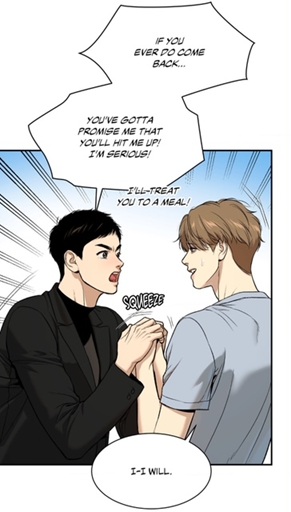 (chapter 59) further emphasizes the immaturity and lack of responsibility prevalent in this environment. In Andersen’s story, the mermaid sisters are given gardens to tend from a young age, instilling responsibility early on. Potato’s journey mirrors the mermaid sisters’ visit to the surface, as his trip to the sea represents a moment of exploration and self-discovery. While working as an actor for the first time, he realizes during his stay with Kim Dan that he has no intention of leaving Team Black.
  (chapter 58) Feeling lost without Kim Dan, he initially requests his return so that they can be together again. This longing for a companion reflects Potato’s deeper need for guidance and connection, much like the mermaid sisters who briefly visit the surface but ultimately return to their underwater world when the novelty fades. Yet, when they reach maturity and are allowed to visit the surface, the novelty of the human world quickly fades, and they return to their underwater realm indifferent to human suffering. However, notice that on his day of the departure, Potato tells Kim Dan that he won’t call him, the mermaid has to initiate the first step.
 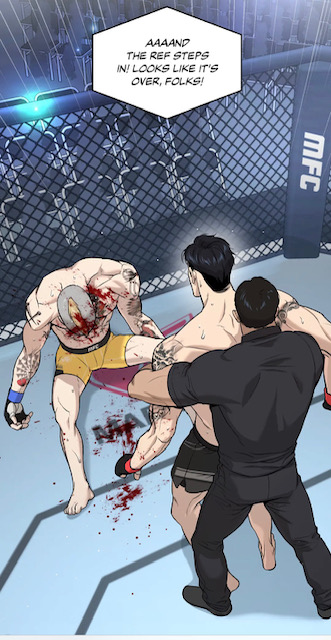 (chapter 15) strongly parallel the detached, high-pressure environment of MMA fighting. Joo Jaekyung, trained relentlessly since youth, embodies this world’s harshness, where vulnerability is a luxury rarely afforded.
 (chapter 59) suggests that Joo Jaekyung might reclaim his authentic self through activities like swimming, reconnecting with nature, and symbolically planting the seeds for a new life. Kim Dan, who cannot swim, learns from Joo Jaekyung, and together, they forge a path toward mutual healing and immortality—not in the literal sense but through finding their “soul” and purpose.
 (chapter 56) The city represents the oppressive expectations and artificial constructs that have shaped Joo Jaekyung and Kim Dan’s lives. By meeting again in the ocean, they reconnect with a more authentic and unburdened version of themselves. This transition echoes the little mermaid’s connection to the natural world as a place of solace and transformation.
 (chapter 59) They imagined that Kim Dan would be better off without Joo Jaekyung
  (chapter 58), but this assumption reveals their failure to truly understand Kim Dan’s plight. Their ignorance ties them to the selfishness and guilt that mark the couple in the fairy tale. Despite their faults, however, their actions indirectly contribute to Kim Dan’s transformation.
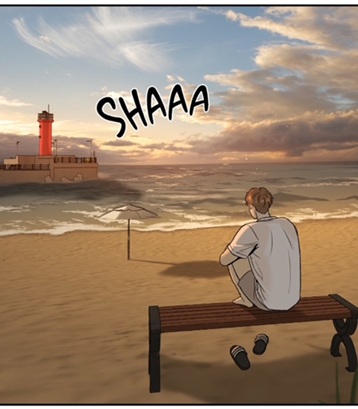 (chapter 59) finding light not in others but within himself. Through his hardships, he gains the strength to pursue his own identity and agency.
 (chapter 49) The maknae’s tears are an indication that he is no mermaid, but a human, I would even say, he still has the soul of an innocent boy.
 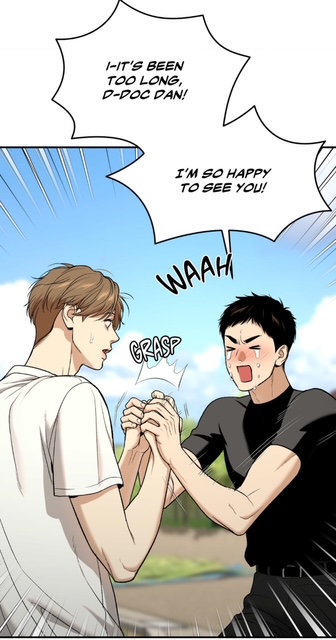 (chapter 58) reminding me of the princess looking for the voiceless mermaid. It is clear that in both stories, the mermaid left traces in the humans’ hearts.


 (chapter 53). Because the latter is slowly vanishing into the light, it looks like the champion will have difficulties to find his soulmate. However, if you pay attention to this picture, you will perceive that Kim Dan’s shadow is huge. In fact, we have to envision that the closer he gets to the “sun”, the bigger his shadow becomes. This metaphor is implying that the cute hamster is leaving a trail behind. This represents the traces he left in Joo Jaekyung’s life and heart. The farer he is, the clearer the fighter can only realize the importance of his roommate in his life. However, I believe that though Kim Dan is about to become a ghost, the huge shadow is implying that Joo Jaekyung will be able to find him quickly.
 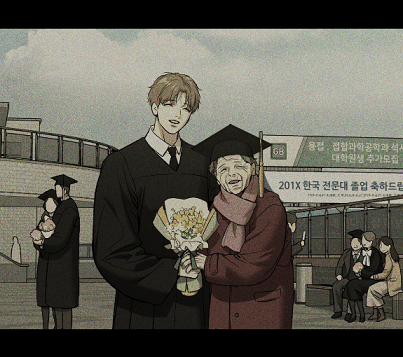 (chapter 47) You might find it strange, but everything started with the following question: where is the grandmother’s cellphone? One might argue that as an elderly woman, she doesn’t possess one. I can only reply that all the seniors I know (even my grandmother who is much older than Shin Okja) have one. Besides, let’s not forget that according to me, this image or this one
 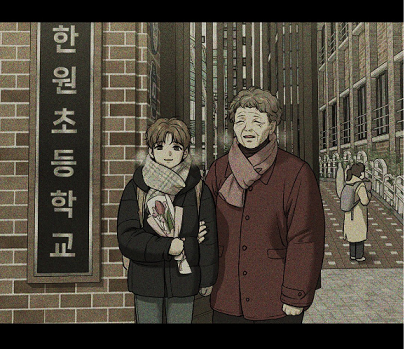 (chapter 47) represent moments where pictures were taken. I doubt that the grandmother had a camera. Then in the last picture, Kim Dan was definitely too young to have on his own cellular telephone. Finally, observe that in this panel
  (chapter 47) Before he was practically inexistent, only famous in the underground fighting ring
 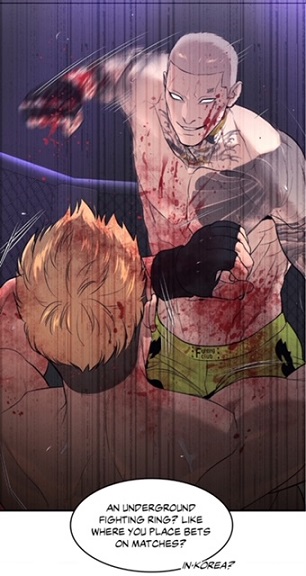 (chapter 47), and notice that the champion had even forgotten him.
 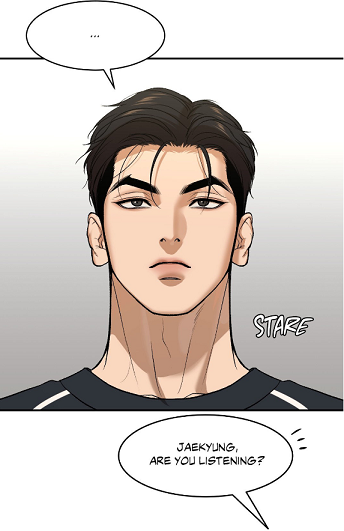 (chapter 47).Interesting is that disappearing without traces implies the notion of “the right to be forgotten”. But why would people make such a decision? Either they want to escape from their environment (abusive husband, debts, …) or they desire starting a new life afresh. So when we look back at Shotgun, it becomes clear that his new identity is to mask his dark past.
  (chapter 10)
 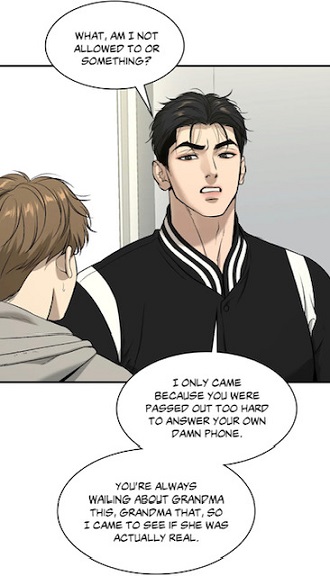 (chapter 22) He doubted her existence. Why? It is because he never heard Kim Dan talking with his grandmother over the phone. He had only mentioned her in his drunken state.
 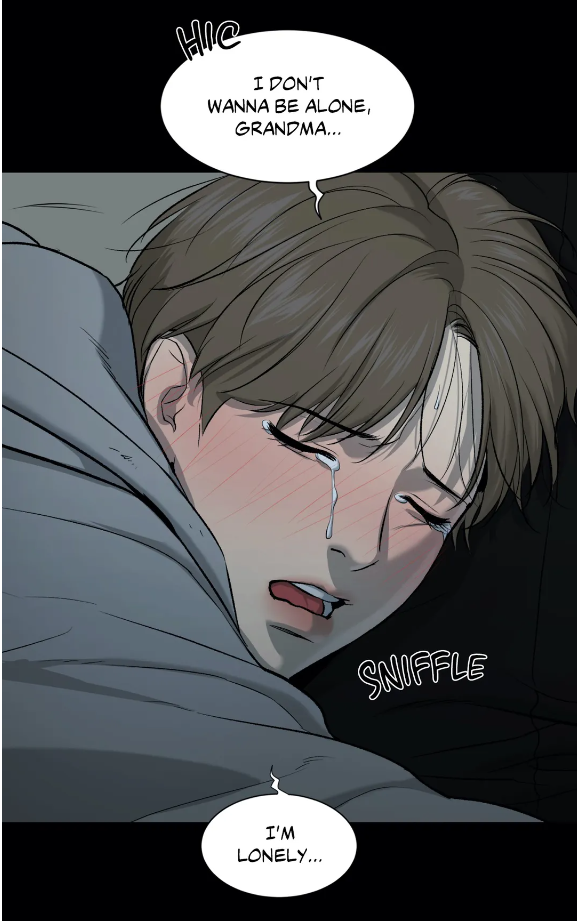 (chapter 10) Finally, he didn’t see the picture from her on the night table, for the doctor had not placed the image there yet. In other words, she appeared like a ghost to the champion. Is it a coincidence that readers only know this terminally ill woman unter the name “grandma” in Jinx (English version). I am calling her Shin Okja, because the Japanese version revealed a name. Nevertheless, by having no name in Jinx, it reinforces the impression that this woman is like a ghost.
  (chapter 21) Thus I deduce that the elderly woman must have got rid of it. One might say that at the hospital, she no longer needed it. Nevertheless, such a reasoning is too superficial and simple. I am convinced that the grandmother had other motivations as well. First, that way she was putting the whole responsibility on her grandchild. Why do you think the association called him and not the grandmother?
  (chapter 11) There is no ambiguities that she was registered there as a resident. But if she got rid of her phone, the authorities are forced to call her closest relative. Secondly, observe that Kim Dan used the cellphone to pay bills and have a look at his bank account:
  (chapter 11) In other words, by refusing to have any phone, she dropped all the debts on her grandchild. He was now responsible for their household and expenses. Yes, the question with the grandmother’s phone led me to the following observation. Little by little, Shin Okja was vanishing which reminded me of the action from Kim Dan’s parents. At the same time, with no cellphone, she forced her grandchild to visit her, to keep in touch with her. Hence I can’t stop restraining myself from feeling that the grandmother used the hospital and the nurse to control her grandchild’s moves. No wonder why Kim Miseon complained to Kim Dan about his neglect
  (chapter 22) Yes, by paying the bills, he got access to this information. However, for that he needs a person who can have access to such information:
  (chapter 13) Cheolmin who is also a doctor. Medical professionals often use the Resident Registration Number (RRN) or equivalent patient IDs provided by hospitals to manage medical records. Access to sensitive personal data like RRNs is restricted and regulated under South Korean privacy laws such as the Personal Information Protection Act (PIPA). This ensures that sensitive data is protected and only accessed when absolutely necessary for healthcare purposes. Only a doctor could detect the move to the Hospice “Light Of Hope”.
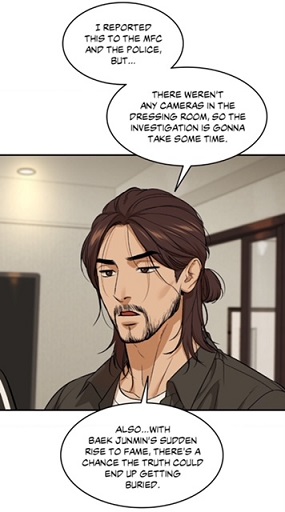 (chapter 52) If the champion doesn’t return to the gym and moves to the place where Kim Dan is without informing Team Black, they could fear the worst. The champion is the target of criminals. Finally, it is important to recall that Heo Manwook only knew how to contact Kim Dan with his address.
 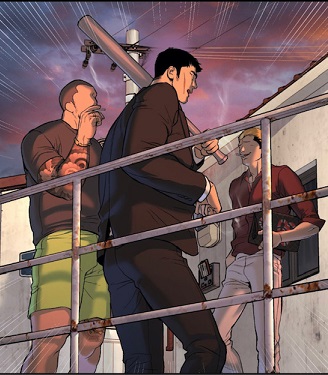 (chapter 1) He didn’t have his cellphone number at all. That’s the reason why he would come to his house to harass him. This explicates why he disliked so much the idea of Kim Dan’s move:
 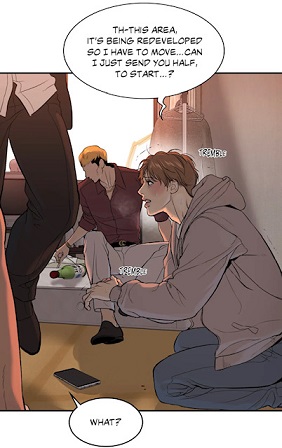 (chapter 16)
  (chapter 16) is an incorporated business. This means that Joo Jaekyung is the shareholder. So he is hiding his true power and identity behind Team Black. And since the Emperor was the victim of a hatred campaign in the media
 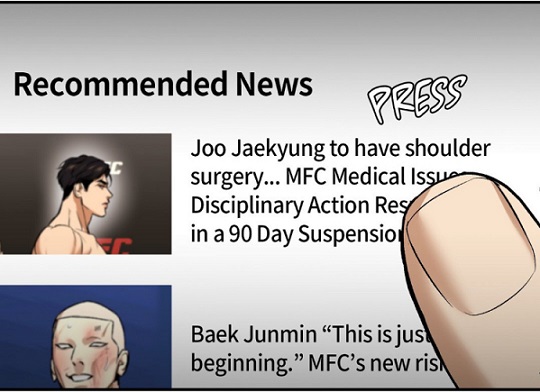 (chapter 52), his vanishing wouldn’t be surprising at all. It would be actually a normal reaction to be fed up of being online, and of being defined by the last match. What the schemers didn’t realize is that they pushed indirectly Joo Jaekyung to make the opposite decision than Baek Junmin. To disappear from the spotlight. But this can only lead him to create a whole new identity.
 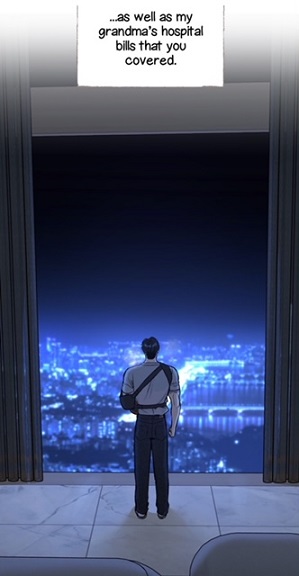 (chapter 53) It signifies that Joo Jaekyung has a way to track him down. On the other hand, should the MMA use the black card,
  (chapter 24), his relative could detect his whereabouts and moves. That’s why it is important if you desire to avoid of being detected, you need to use cash or prepaid cards to limit traceable transactions. That way, it reduces the risk of financial links to your old identity.
 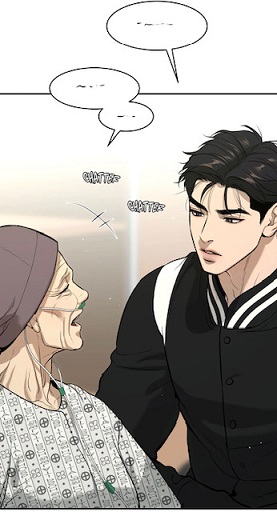 (chapter 21) Back then, many readers wondered about the content of their conversation. However, I believe, whatever it was, the champion didn’t forget her words. Furthermore, by joining Kim Dan’s side, the star will be forced to drop his routine and change his habits. And that’s how he will change.
  . He is wearing piercing, jewels and rings, and his clothes don’t look like designer clothes. Finally, remember how Kim Dan imagined his soulmate:
  (chapter 32) Yes, clothes make the man, and as such through new clothes and hair dress, you can appear as a different person. That’s how it dawned on me why the Webtoonist created such a scene:
  (chapter 35) Choi Heesung made a terrible mistake, he attracted the attention from the guests at the café by covering his face. In order not to be detected as a star, the athlete has to act and dress like an average person: no fancy dress or car. And this leads me to my final point: using public transportation or the bike would represent a huge change for the Emperor. Once again, no one would suspect that a biker is a celebrity, similar to this scene:
  (chapter 21)

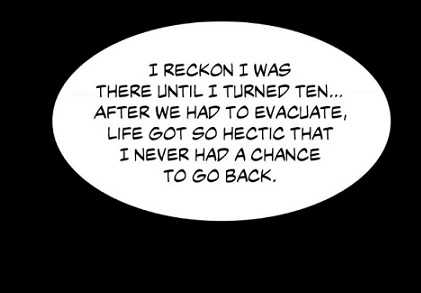 (chapter 53), she implied that she never got the chance to go to the West Coast because of him. It was, as if he had been a burden in her life (“life got so hectic”). This expression made me realize why Kim Dan came to live like a ghost. He embodies “life” for the grandmother: burden, responsibility, missed chance. It exposes her delusional mind-set. She is definitely chasing after an illusion. On the other hand, I detected that despite her words, she was not able to move her grandson’s heart. The latter was actually unwilling to leave the penthouse.
  (chapter 53) His decision was strongly connected to filial duty and not to “love”. Moreover, by fulfilling her request, he is one step closer to become free from self-blame and accountability.
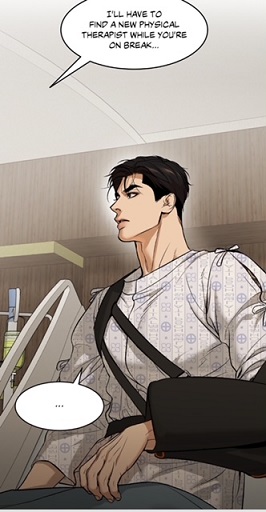 (chapter 53) Neither for the doctor nor for his “boy”.
  (chapter 40) Though he lacked awareness in the States, for he was not present in the interrogation room, he can no longer claim to be oblivious. He knows about Kim Dan’s innocence. But why didn’t he call the physical therapist then?
  (chapter 53) Notice that before leaving the penthouse, the main lead was holding the resignation in his hand. This means that the young man had not informed Park Namwook yet. This gesture exposes that Kim Dan was convinced that the manager was his boss, the master of Team Black. Nevertheless, Jinx-lovers should detect that the “hamster” left the flat during the evening. This signifies that the PT handed out his abdication the next morning, I can’t imagine that it happened during the night, for the man has a family with kids.
 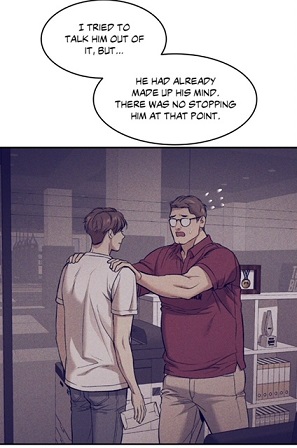 (chapter 53) By leaving the penthouse before going to the gym, it becomes clear that Park Namwook must have realized or even was informed that the doctor would no longer live with the champion, the opposite of this scene where he was caught by surprise:
  (chapter 22) That’s how I detected the second lie from the manager, lying by paltering. He just mentioned that Kim Dan was quitting, but kept silent about his departure from the penthouse. As you can see, Park Namwook was trying to reduce the main couple’s relationship to a boss-employee contract, while he was trying to act like a close acquaintance and relative from Joo Jaekyung.
  (chapter 53). This signifies that he must have spent some time at the office. To conclude, the young man didn’t vanish quickly from the gym like a ghost, similar to the PT from episode 1.
  (chapter 1)
  (chapter 13)
  (chapter 20) I selected only three scenes in order to prove my point, but I could give more examples (16, 17, 19, 35, 48). This new perspective corroborates my previous theory: the manager is not so innocent like he appears.
  (chapter 53) He gave the impression that he was telling the truth. This incident was used to explain the doctor’s resignation. But here is the thing. If the doctor spent some time at the office in order to organize the files, why didn’t Potato stop him or tried to talk him out of it? That’s how I came to the following deduction. When Kim Dan came to the gym, the latter was empty, only the manager was there!! A new version of this scene:
  (chapter 23) Thus I deduce that all the members from Team Black were busy due to the discovery of the scheme:
 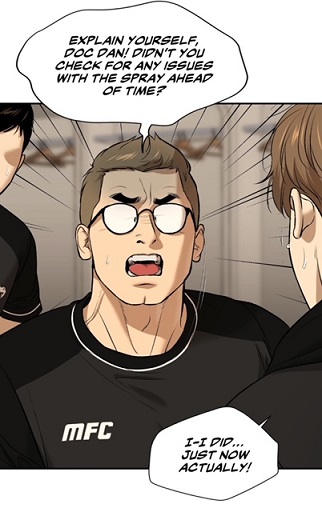 (chapter 50) Moreover, he could be blamed for the spray incident, for he failed to protect his own athlete. That’s why there was no apology from his side.
 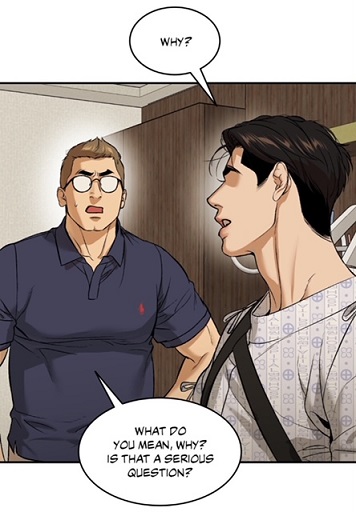 (chapter 53) Why would the physical therapist quit, if he is innocent? It is because Park Namwook said that Kim Dan did it because of the champion. It was, as if the man’s pride had been hurt:. The verity is that he was actually projecting his own thoughts onto the doctor.
  (chapter 53) He took his words to heart. Thus I come to the following deduction: Park Namwook already knew about the physical therapist’s innocence, but he chose to keep the truth from his boss to mask his own wrongdoings: his passivity and negligence. The reason is that the discovery of the scheme took place in the evening, and Kim Dan gave his letter in the morning. Moreover, some days had passed, when they showed up at the hospital. Potato’s vanishing injuries are the evidence. They waited for the right time to announce the terrible news, something similar to this:
  (chapter 50) And what did the manager say to the protagonist?
 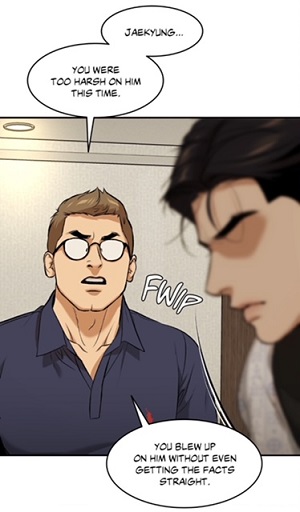 (chapter 52) He should have checked the facts. The letter is exposing the manager’s lie. He is expecting that Kim Dan vanished like the previous PT. However, contrary to the previous one, the “hamster” lived with the celebrity. Thus he left a letter to Jaekyung in the penthouse, and the manager had no way to know the existence of this message. And now, you comprehend why Kim Dan never received any phone call from Park Namwook. It is because he would have to inform him about the existence of the scheme. There was no emergency from his side, for he desired to hide his own wrongdoings (negligence, blindness and stupidity).
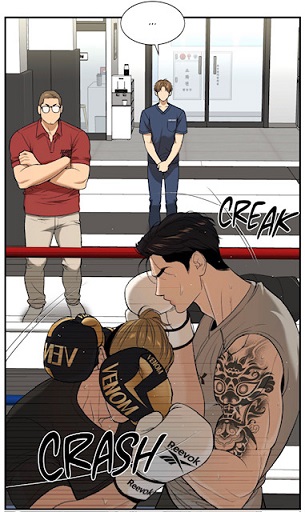 (chapter 36). No wonder why the man is passive. But his inactivity is the result of his indecisiveness (I had portrayed him as someone suffering from Decidophobia). Interesting is that making no decision is the worst people can do. Why?
 (chapter 46) In addition, this new discovery corroborates my connection between chapter 52 and 40. In my eyes, Park Namwook should be perceived as a representative of MFC. I had already compared the scheme in the States to a web and a spider, indicating that MFC is far from being a good organization. As a conclusion, the manager is an accomplice of the schemers, even if he was not involved directly. The reason is simple. With his inactivity and deceptions, he is assisting the villains. However, like explained in an earlier essay, the spider is not only connected to negative aspects. It represents wisdom, patience, creativity and even rebirth. Hence it is likely that this man will change or come to regret it at some point. Contrary to the halmoni, he has time in front of him and I am counting on the champion’s huge heart (for example like forgiveness).
 (chapter 53) Look at this. Back then, he was thinking of taking another job, a sign that he was not taking his job as PT seriously. The cause for this is that he didn’t view himself as a real PT. Nevertheless, this shows that he was not judging Joo Jaekyung as a champion, but as a man obsessed with sex:
  (chapter 19) This comparison outlines the PT’s metamorphosis. Not only his perception of Joo Jaekyung changed, but also he has become a responsible and dedicated physical therapist. He defines himself as a PT too. Hence he didn’t leave a mess behind with the files (chapter 53). His decision exposes that this was not an escape.
 (chapter 19) Striking is that this conversation is strongly intertwined with emergency and racing against time. Back then, I had already developed the theory of the involvement of a third person in their relationship. Why would the champion think of sex suddenly after training for 10 days without any break? Jinx-philes can detect two common denominators: Break and responsibility. How so? In that chapter, Kim Dan was asked to become responsible for the “intercourse” (“I don’t feel like doing it myself, so get your ass ready”). As you can see, the contrast between these two episodes reinforces my hypothesis that the champion will be taking a break, though Park Namwook had not this in mind. The fact that he desires to hire a new PT indicates that he is already anticipating the return of Joo Jaekyung.
  (chapter 32). Here, he prioritized his own needs and desires, he rushed things. He never took his time to understand Kim Dan or discover his life. The letter made him realize that he knows nothing about his PT. He has only noticed just now that he is reliable and honest. He is trustworthy. He even listens to him, accepts his words (he took his words to heart twice: the blame for the incident and the Wedding Cabinet). The other reason why he can not use the phone is this. He also knows that he could get blocked. This means that he will ponder how to find and approach his fated partner.
  (chapter 53) It is because for Kim Dan saying goodbye over the phone is not proper. The reason is simple. He experienced it himself as a child.
 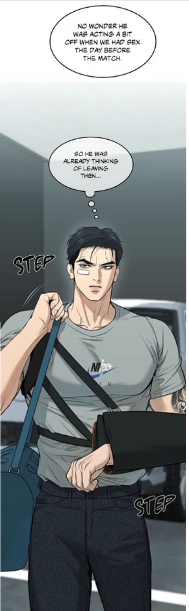 (chapter 53) He just left the hospital after a surgery and he is already carrying a heavy bag. No one is assisting him. There is no driver either. As a PT, Kim Dan can only get worried and feel bad. That’s how Kim Dan will realize that he is needed!
  (chapter 53) Even more than before!! Joo Jaekyung needs assistance and protection. From that moment on, he can grasp that his sacrifice was not the best for both of them, why his sacrifice was in reality pointless. He should have been more selfish and more confident.
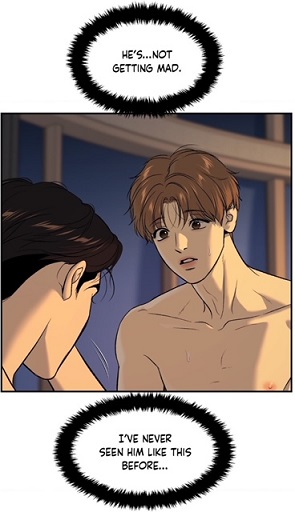 (chapter 44) This made the physical therapist’s laugh.
  (chapter 44) shows that in that moment, the physical therapist rediscovered his youth again. I would even add that Jinx-philes were witnessing in this panel how Kim Dan reconnected with his inner child.
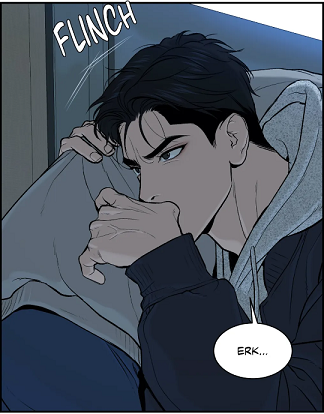
 (chapter 10) Under this light, it becomes comprehensible why Kim Dan’s beautiful night became a dream, an illusion. The young doctor had done something wrong from a moral point of view. However, because the young man had treated the champion so well before, his reward was to experience what love is.
  (chapter 44) The problem is that the physical therapist was reducing love to sex (“making love”). True love has to be expressed in a lot of different ways (spiritual intimacy, experiential closeness, responsibility etc) and not just through sex.
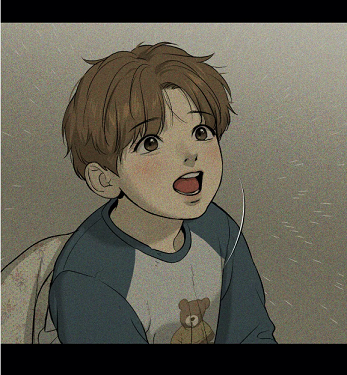 (chapter 11)
 (chapter 47) By saying that he was a puppy dog, she was implying that she would be responsible for him. Keep in mind that pet are linked to care and accountability. However, her wish is strongly connected to one single moment:
  (chapter 53) She is not thinking about the future at all. For her, it doesn’t matter, for her time is limited. Dog can be abandoned in the end, especially when the responsibility becomes a burden. That’s the reason why I believe that in verity, she was treating the protagonist more like an object than like an animal. Moreover, Jinx-philes should keep in their mind she used to describe him as a little boy, which also represents responsibility and care. Therefore I conclude that this scene didn’t stand for Kim Dan’s true home, it was just an illusion.
  (chapter 19) They were no deep lingering feelings towards the grandmother’s house. In fact, before leaving, he remembered an incident, a mysterious phone call which I consider as the moment, which broke the boy’s soul and heart. For me, he was almost glad to leave this place behind.
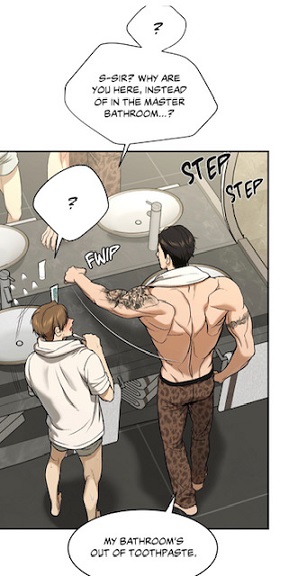 (chapter 30) The pajama pattern in the image appears to resemble a leopard print, which features distinct rosette-shaped spots that are commonly associated with this type of design. He also looked like a sulky “cat”.
  (chapter 30) And what was he trying to do here? To seek closeness to his new mate!
 (chapter 19), very territorial and disliking surprises. In literature, leopards often symbolize strength, courage, agility, and stealth. They are seen as solitary and powerful hunters, often representing independence or mystery. In totemic traditions, the leopard can symbolize resilience, adaptability, and personal power, often embodying a person’s inner strength and ability to face challenges.
  (chapter 26) One might argue that he laughed with Potato and Oh Daehyun in the States. But are you sure? We never saw him laughing. Only Joo JAekyung heard their laughs, but did it also belong to the hamster?
  (chapter 37) Puma was designed on it. As you can see, everything is pointing out that this man is a leopard which was mistaken to a sulky cat or a puma.
  (chapter 44) So since the champion was naked during this night, we could say that his true nature was slowly coming to the surface. As a predator, his annoyance to the strokes and kisses appears more normal and understandable:
  (chapter 52) Eye-contact! Making direct eye contact with a leopard can be dangerous. Leopards may interpret prolonged eye contact as a threat or challenge, triggering an aggressive response. In the wild, they rely on stealth and avoid open confrontation, so they may react defensively if they feel they are being stared at. This behavior is common among many predators, as eye contact often signals dominance or confrontation. It’s generally advised to avoid direct eye contact and back away slowly if you encounter a leopard in close proximity. Baek Junmin had totally underestimated the true nature of his opponent. This could explain as well why Park Namwook is wearing his glasses all the time and even avoiding eye-contact with the emperor.
 (chapter 24), Oh Daehyun the eagle…
 (chapter 9)
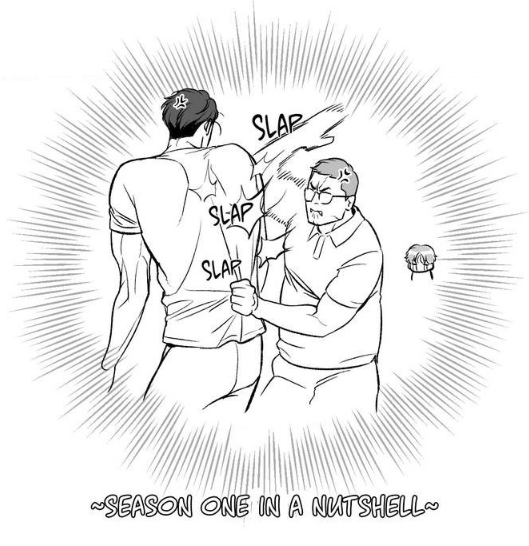 (note) and punches. But how do psychologists explain this creation?
  (chapter 26) He would destroy the arcade’s punching machines constantly, which led him to become blacklisted. This means that for the coach from Team Black, the young man was just a brutal and thoughtless thug and nothing more. He judged him based on his appearance and actions. Since he had money in order to open his own gym, he became a spoiled rich brat in the former wrestler’s eyes. But notice that the article is pointing out that the person suffering from Keinshorm Effect rejects any discussion from their counterpart because in truth, they actually dislike this person. This exposes the truth about Park Namwook: he actually resents the main lead. He only accepts him because of his success and fame. At the same time, this biased perception incites him to view himself superior to his pupil.
  (chapter 49) Like mentioned in a previous essay, I am suspecting that the athlete was a target of bullying and the perpetrators used his weakness and isolation to their own advantage. In other words, Park Namwook only saw the young man, once the latter had started training in order to protect himself. If he could ruin the machine, then it means that he had developed some strength. Thus I deduce that he never saw the future champion crying. At the same time, his negative perception led him to think that it was not possible to reason with him. He would only understand the power of the fists and nothing else. And this brings me to my next point.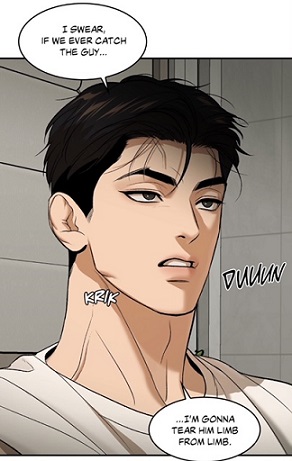

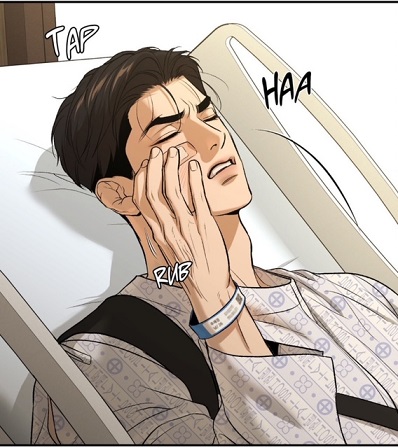
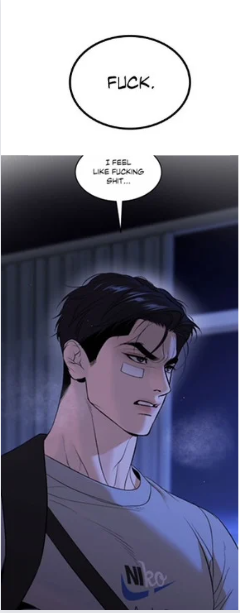
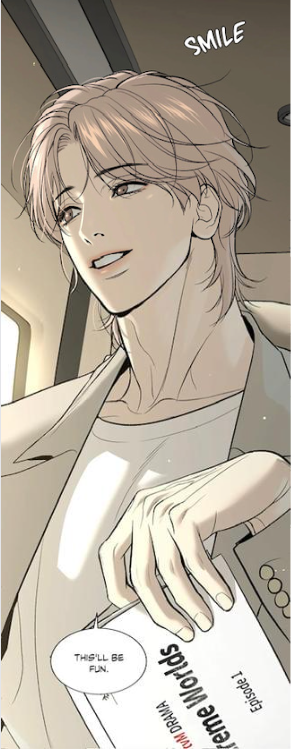 (chapter 29)
 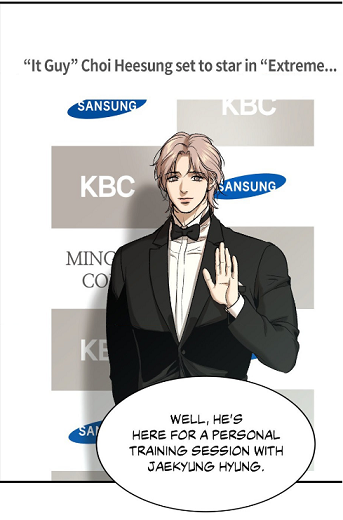 (chapter 30) In the past, I used to think that this title were referring to the existence of two worlds: celebrity versus criminal world. But now I am thinking that these extreme worlds should be seen as “emotions” versus “reason” and “love versus hate” too. Idols are exposed to such extreme emotions (stalking, adoration versus hate).
 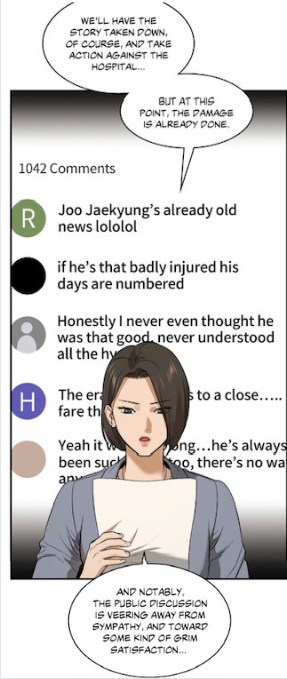 (chapter 36) In the second case, Joo Jaekyung could experience it twice during the first season. Whereas he got upset with the article from Shim Yoon-Seok
 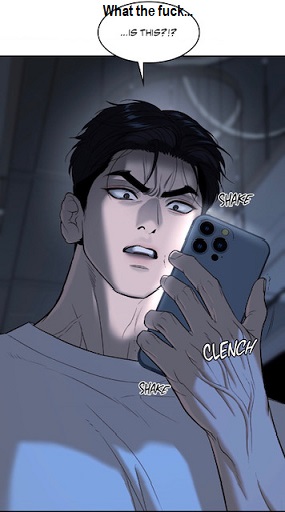 (chapter 35), in the second one he was more composed.
  (chapter 52) He was already learning that the media were not reflecting verity. He was already distancing himself from social media. He had slowly realized that his image as star was not his true identity. At the same time, the letter contrasts with the short messages from haters. It outlines that Kim Dan’s admiration and recognition is sincere and deep. He didn’t get influenced by the media.
  (chapter 52) Why was Baek Junmin place next to his opponent? Someone will have to confront this man for his negligence, unfairness, stupidity and incompetence.
 (chapter 1) However, despite his biased perception about the athlete, he came to overcome all his prejudices about his boss and came to truly love the fighter. And this brings me back to this comparison:
 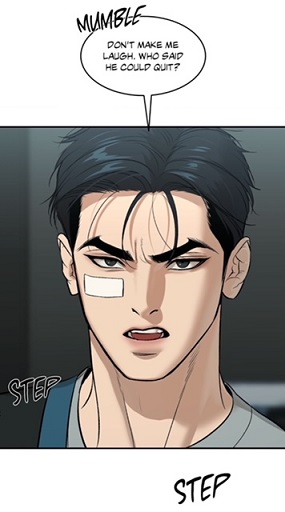 (chapter 53) This shows that he is now making his own decisions and this in the absence of his mentor. It somehow implies that the champion also stops communicating to Park Namwook. Finally, notice how he reacted after reading the letter: he truly felt bad. He was already attached emotionally and mentally to Kim Dan. As a conclusion, the season ends with the switch of the position between Kim Dan and Park Namwook. The former has already come to replace the manager. Indifference versus guilt and pain.
 (chapter 36) He wouldn’t have been allowed to voice his opinion. He would have been even suspected of spying and leaking information (lawyer and manager from the Entertainment agency). Kim Dan needed to realize and admit his love and admiration for the athlete. first in order to stop Keinshorm Effect. He needed to be a confident and competent PT and become a friend for the protagonist. Since Kim Dan stands for communication, tolerance, respect and openminded-ness, the former hyung embodies the opposite notions: silence, dislike, clouded judgement and mental rigidity. Thus I deduce that in the future, the discussions about fights will take place differently. Involvement from all the members, opening listening and Kim Dan as a PT will have the decisive right for allowing a fight or not.
 Bebebisous33s' analyses in K-Dramaland and Manhwas