

This is where you can read the manhwa. https://www.lezhinus.com/en/comic/painter But be aware that this manhwa is a mature Yaoi, which means, it is about homosexuality with explicit scenes. If you want to read more essays, here is the link to the table of contents: https://bebebisous33analyses.wordpress.com/2020/07/04/table-of-contents-painter-of-the-night/This is where you can read the manhwa.
Dreams play a huge role in people’s life since they serve as motivation and goal in order to become happy like for example The American dream. As you can observe, dreams have a strong connection to happiness, yet simultaneously to illusion too. When we sleep, dreams appear in our mind revealing our unconscious. Dreams allows us to escape from reality, because in dreams, there are no rule and no limit. This explains why dream has for synonyms goal and illusion.
In other words, dreams can become a source of beatitude, especially when it becomes a reality. On the other hands, they can be a source of misery, when the person realizes that everything was just an phantasm, and it can never turn into a reality, because in real world there exists limits and rules. Therefore it’s important in order to achieve a dream and as such to become happy to take into consideration facts and limits. I had already analyzed Baek Na-Kyum’s dreams, the daydream in the chapter 2 and the wet dream in the chapter 6,  in another essay. However both were influenced by the perception he had about Yoon Seungho and his attraction for that noble. In the analysis, I had pointed out that they reveal his repressed sexual desires. Nonetheless, the manhwaworms are well aware that Baek Na-Kyum felt that the lord was attracted to him, and he sensed the lord’s desires. Interesting is that these “illusions” became a reality, since the master became the painter’s sex partner and “husband”. Striking is that our artist is far from happy because his dream was to become the teacher’s bride.
- Baek Na-Kyum
The existence of these contradicting visions reflects the huge impact the coercive persuasion had on the low-born. Since the latter was no longer allowed to be attracted by men, he projected all his feelings on the scholar, as the latter was the only one Baek Na-Kyum was authorized to admire. This idea was even encouraged by his noona Heena. Thereby he was able not to lose his true self completely. That’s why the commoner could only dream of the teacher as a pure and untainted love which would never be fulfilled.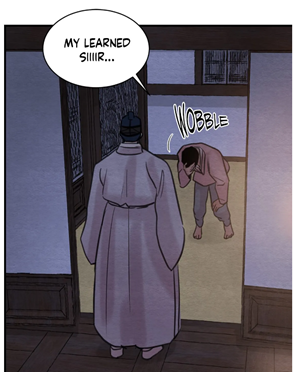 (chapter 19) In other words, being the scholar’s lover could only be a chimera. So the wet dreams came true, because real facts played a role: the mutual attraction between Yoon Seungho and Baek Na-Kyum, their sexual orientation as the lord never condemned sodomy per se, while his dreams with Jung In-Hun was just a chimera, because they had nothing in common. The scholar looked down on the painter initially, but his homosexuality and his success as anonyme author of erotic paintings reinforced his jealousy and resent. The low-born embodied everything the teacher hated hence he could never fall in love with the artist.
2. Jung In-Hun
In fact, the artist represented something Jung In-Hun wished to have himself: get recognition and fame among the high nobility. Let’s not forget that Yoon Seungho wasn’t the only buyer of these erotic publications, even Min showed an interest indicating the painter’s popularity. Hence the teacher had to destroy Baek Na-Kyum, because he saw in him a hindrance to realize his own dream. This is visible in episode 10, when the learned sire incites the low-born to stop painting. In the chapter 19, Jung In-Hun expresses his dream.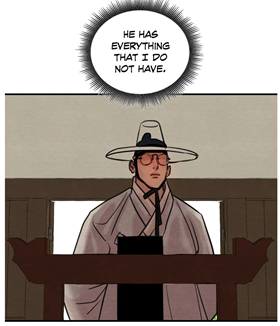 He would like to become rich and powerful like Yoon Seungho, the latter serves as example. Since he considers himself as morally upright and more educated, he has the impression that his dream will come true soon. He received such a good offer from the famous hell-raiser after all, even without working hard and using his knowledge.
Notice that the low aristocrat even admitted to the powerful protagonist that he was waiting for the right time (chapter 6). Nonetheless, we know that in order to live The American dream, efforts, skills and work are necessary. This illustrates that Jung In-Hun’s dream belongs to the second category, an illusion. The antagonist doesn’t take into consideration his own skills, his intelligence and his life conditions. He has no real talents (see his poor poetry skills) and his knowledge is quite shallow, as he could only become a teacher for commoners. Moreover, he’s quite lazy which was noticed by the lord. Even as a teacher, he didn’t put any effort, it was just a diversion after all. He justified his own laziness and lack of conscience that the commoners didn’t need to become literate, as they were destined to work on the fields.
Interesting is that Jung In-Hun’s vision about his future is strongly associated to fate. He has already envisaged that he’s destined to have a great career, to achieve greatness. That’s the reason why he is lazy in the end. The scholar’s entitlement is the foundation of his chimera. This explicates why he saw the artist as a threat to his own vision, for the rise of a low-born would contradict his fancy and his worldview. Through the commoner, he detected that his vision of a big career could be an illusion. Yet instead of changing his ways and his thinking, he chose to destroy the painter’s career, rather than change his own goal in life.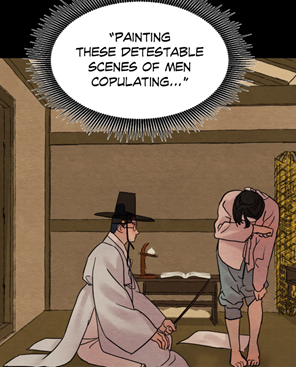 Let’s face it: the teacher could have achieved greatness by becoming a good and exemplary teacher so that the commoners would have come to admire him. This kind of fame could have reached the ears of an influential official. But the scholar never considered it as an option, because he disdains the commoners. As he feels superior to them due to his title, he didn’t want to rely on them for his career. For the low noble, it’s important that on the surface he achieves greatness on his own. What I mean with it is that he doesn’t want to share his fame and admiration. So on the one hand he imagined that he needed the help of an influential noble, on the other side he envisaged that once he got a high position in the government, he would be able to cut ties with Yoon Seungho so that only his name would get connected to that powerful government post. Once in position, Jung In-Hun could threaten his sponsor in case the latter refused to follow his request. He thinks so highly of himself that he doesn’t realize his own shortcomings. He’s not intelligent and cunning enough to perceive the protagonist’s raillery and empty promises
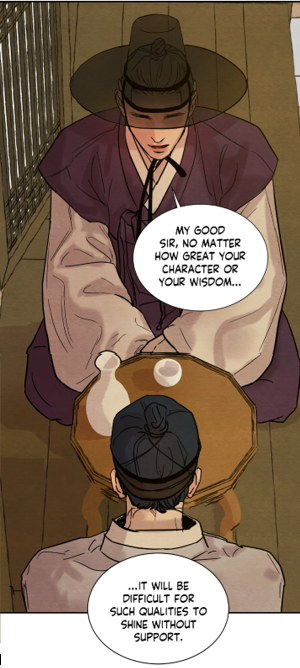 (chapter 7). He never anticipated that the lord would do something like that, while he had already imagined that his promise to support the lord would be just an empty promise. As a conclusion, fate and entitlement explicate why the teacher didn’t get famous in the past and why he is destined to fail.
He’s not trying to become happy in reality, his true goal is to obtain admiration, power and wealth. But with his disposition, he can never get it as he’s too weary and too self-centered. Furthermore, he’s overestimating his own abilities. His ream is just an illusion that will get destroyed the moment he lives at the capital. We could say, the low noble has been living in a soap bubble that’s about to explode. Consequently, the painting of the teacher’s inauguration will be a constant reminder of Jung In-Hun’s chimera and false hope.
3. Lee Jihwa
Now if we compare Jung In-Hun’s vision with the one from Lee Jihwa, we can sense some similarities. Just like the scholar, the red-haired noble waited for Yoon Seungho’s love, hoping that with time the latter would fall in love with him. The cheerful aristocrat dressed up and smiled in order to impress him. He was also his only sex partner, hence the young noble thought that Yoon Seungho would realize that he was privileged because of his affection. Yet at no moment Jihwa put a real effort to understand the noble. He prefers installing spies to get updated. This explains why Jihwa even cursed his sex partner after being humiliated. 
This expression « filthy libertine » and Jihwa’s facial mine indicate that his love for the main lead is too superficial. He never got to know what Seungho wished and needed, as he relied on rumors and observations through others. So for the red-haired lord, time, his special position as a long friend and his title were the reasons why Jihwa never worked hard to win Seungho’s heart. In other words, Jihwa’s dream was just a fantasy just like with the scholar. The only difference is that since the main character belongs to Joseon nobility, Jihwa thought that he and his friend had something in common, too stupid to realize that Seungho resented aristocrats and used sodomy to get revenge on them. His true purpose was to humiliate them.
Just because Jihwa knew about the protagonist’s past (chapter 36) , he had the impression that he understood him. He imagined, his childhood friend would only hate and resent his own family due the father’s abandonment and betrayal. He wasn’t sharp enough to perceive that Yoon Seungho saw beyond his family’s wrongdoings. Besides, he never got to know what truly happened to his childhood friend, as he was informed through Kim. For him, nobility was the real cause of his own suffering. First he got betrayed by his own family, sold as a concubine to the king, and when one of the aristocrats betrayed his family for his own benefit, the main lead’s father chose to backstab his own son and blame him for everything. Consequently, in Seungho’s eyes, nobility is a synonym for treachery, cowardice and selfishness. What Jihwa judged as common denominator represented in reality the barrier between him and his childhood friend. Yoon Seungho could never love someone from the aristocracy, though the main character has no idea about it.
This explains Jihwa’s delusion. He was too self-centered and too shallow to grasp the impossibility of his dream. Besides his passivity proves that his love for the main lead was never his true goal in life. He wasn’t motivated enough to work hard so that he could obtain the protagonist’s heart. Now the manhwaphiles are able to recognize the parallels with Jung In-Hun’s dream and illusion. Jihwa believes that if he gets rid of his rival, he will still be capable to turn his dream into a reality. He is acting exactly like the scholar, but we know that Jung In-Hun’s actions didn’t work out like he hoped. Seungho made the effort to discover the painter’s identity and to force him to paint again. The artist’s fame didn’t disappear just, because Baek Na-Kyum stopped painting. It’s the same for the lord’s feelings for the low-born. Hence there’s no doubt that Jihwa’s plan is doomed to failure. And this interpretation was confirmed in season 2. In chapter 61, the childhood friend admitted that he was responsible for his failure.

Yoon Seungho isn’t just a filthy sodomite, he’s strong and smart. He’ll retaliate against his childhood friend, and the former will judge Jihwa’s actions as a confirmation that nobles shouldn’t be trusted. This will bring the powerful noble closer to the low-born. I’m actually expecting that the attempted assassination will force the lord to open up and drop completely his mask in front of the artist.
4. Yoon Seungho
Now, we’ve already analyzed Baek Na-Kyum, Jung In-Hun and Jihwa’s dreams. What about Yoon Seungho? Did he have one? In my opinion, not really in the beginning because he was living like a zombie trying to bypass time. He just used his sex sessions to humiliate the nobles but this wasn’t a dream as such, just an occupation. For me, the main lead started dreaming the moment he discovered the erotic publications and the sudden end of these. Since Baek Na-Kyum stopped painting and Seungho was already addicted to his drawings, he made sure to get the painter and have him painted for him. Such a simple goal and yet with deep consequences.
From that moment, the master’s goal shifted little by little. At some point, he intended to taste the low-born. All these dreams or goals share the same aspect: they’re all short-term, he is not fancying something big in the distanced future, unlike his fellows Jihwa and Jung In-Hun. The explication is simple: he’s a disillusioned man, he thinks that he knows everything about life. In other words, he is not dreaming big due to his bad experiences. But he’s not prepared for the huge revelation that awaits him, when he opens the door of Baek Na-Kyum’s study. He anticipates that his short-term goal might come true, while in reality this moment foreshadows a huge change in Seungho’s mindset. He’ll start dreaming of getting love and getting married.
The real turning point in Seungho’s life is the wedding night. What the painter expressed resonated in the lord. (“I’m so happy, my heart is so full”) Although the latter said nothing, he felt the same hence he kissed the painter’s eyes so tenderly. Consequently this night symbolizes the moment where the main lead realized that love did exist and he could obtain happiness too. Since he was well aware that the love confession was addressed to the intellectual, he decided to work hard for his own dream and happiness.
His dream was to marry the uke and get his love, yet this was just a decision of his heart. This signifies that his “marriage” was not consciously done. In his unconscious, he imagined that by making the painter his official partner, he would get the artist’s heart and love. He had to struggle a lot and work hard to achieve this. Yet his goal is not reached, since he hasn’t gained Baek Na-Kyum’s love yet. So his happiness isn’t complete, which the manhwaworms could sense in the chapter 76. They are both not entirely open to each other. In chapter 45, the lord’s joy was not total, for he was not entirely satisfied. He smoked, he complained and talked a lot indicating a certain nervousness and insecurity. Their sexual encounters didn’t feeel like the one during the Wedding night. And there’s a reason for that. It was a chimera. Both protagonists were not honest to themselves.
Nevertheless imagine the effect Baek Na-Kyum’s words had on the lord, when he said “I like-My lord”. He must have felt that he got closer to his goal. He was definitely surprised but it moved him that’s why he ejaculates soon after.
What distinguishes the main character to the other nobles is that he doesn’t believe in fate or even thinks that time will come to help him. He knows that effort and work are the conditions in order to obtain happiness. That’s why the protagonist never admitted defeat, even when he was too exhausted and desperate. Even when he envisioned that the painter had betrayed him, he refused to drop his dream. The noble made the decision to never let him go. In my first version, I had expressed the idea that Yoon Seungho still had to learn that his own happiness was also dependent on his partner’s beatitude and he needed to discover what Baek Na-Kyum really wanted in the past before the latter met the fake and jealous teacher: education and climbing the social ladder through hard work thanks to his talented hands. And this observation was confirmed, for the noble realized after the abduction that he needed to treat his lover much better. He had to show true respect to the painter and not just give him food and a refuge. The abduction made him recognize his own hypocrisy. But he is still unaware of the painter’s dream and desires, that’s why he still has to improve his personality. The fact that Baek Na-Kyum wanted to learn how to read and write reveals his desire to change his social situation.
Let’s not forget that Yoon Seungho has never discovered the true reason why the painter vowed not to paint any longer. He knows now that the scholar is responsible (chapter 75), but he has no idea what the learned sir did to the artist. I’m waiting for that moment, when the master realizes what happened to his lover. He’ll comprehend Jung In-Hun’s real intentions behind the coercive persuasion. The lord will support the painter in his career to humiliate the low noble, but also get revenge for his “wife”‘s sake.
I have the feeling that sex will become a weapon, and the scholar will use it against the two protagonists. Let’s not forget that the learned sir is lazy and not smart, hence in his eyes, his goal will justify the means. Once the painter is no longer attached to the scholar, the latter can in the best case use Heena noona and send her to Yoon Seungwon. Yet, at some point, he will be on his own. Consequently, I am expecting that the scholar sells his body in exchange for favors.
“The mere sight of old, bearded men makes me shudder” (chapter 44)
Remember the warning Yoon Seungho expressed in front of the low-noble, this will come true, and the irony will be that the learned sir becomes the image he has always abhorred: a prostitute. By achieving his dream (a high position), he is forced to give up on all his principles. could be that the main lead is the one who used this for revenge.
Feel free to comment. If you have any suggestion for topics or manhwas, feel free to ask. If you enjoyed reading it, retweet it or push the button like. My instagram/tumblr/twitter account is: @bebebisous33. Thanks for reading and the support.
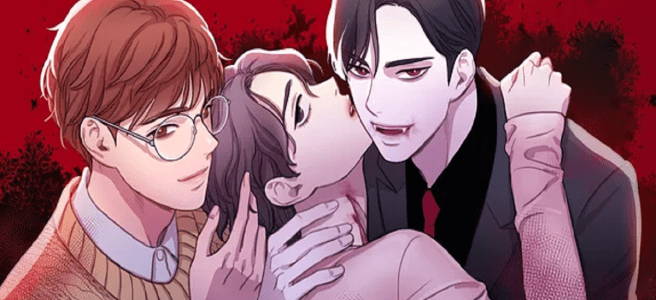



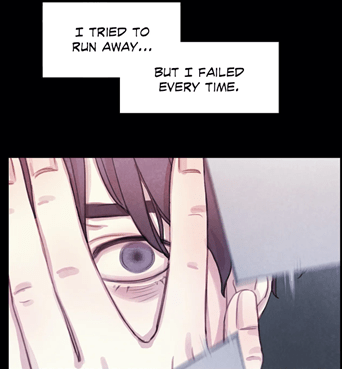

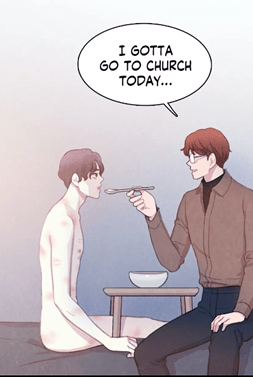


 He showed no empathy for him due to his sexual orientation. When we recall the uke’s question about Park Chi-Hwan, if the latter is a human, a person or a monster, the readers should apply this to Sungha. Is he a person, a human or a monster? The reply is quite obvious: Sungha is a monster, a parasite sucking on Sooin’s misery. This explains why the main lead’s body is covered with marks and bruises. These are the evidence of Sungha’s perverted nature, his monstrosity.
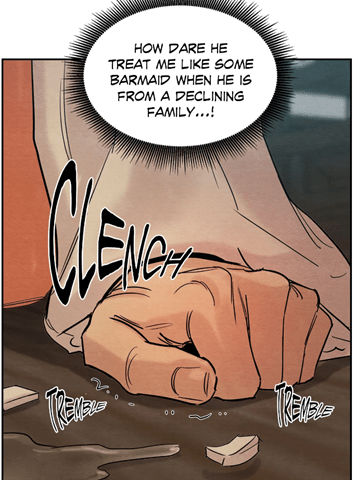
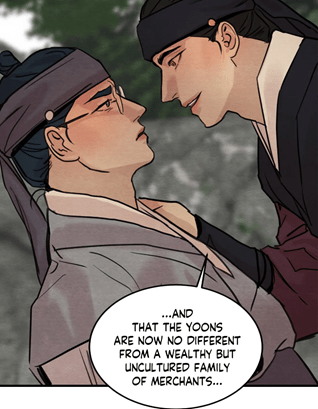
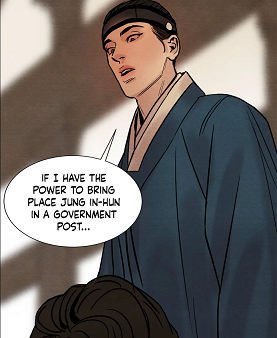 I doubt that he was lying to the painter, when he threatened him in the chapter 11.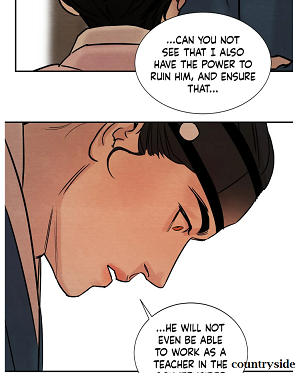
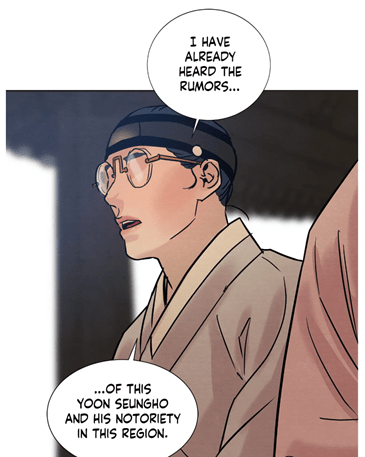

 Therefore the sex sessions with the seme were a sort of prostitution. They approached him for their own interests, however the main lead was aware of that and chose to humiliate them with his sex sessions. That’s why he abhors prostitution and was happy to have found someone so pure. Now, you realize the importance of the hearsay. The nobles are the ones spreading these rumors about Yoon Seungho. He is uncultured because he does commerce and deals with commoners. They need to spray this gossip in order to keep their dignity and remain honorable. They use grapevine in order to tarnish the main lead’s reputation as they can’t accept that they have to lower themselves in order to get what they need from the protagonist.
 As you can detect, the hearsay is among the young nobles and the red-haired lord is trying to use this as a weapon to weaken the rich master. This doesn’t surprise us that the seme refuses to submit to this kind of pressure and even replies that he will make sure that this rumor will become true.
 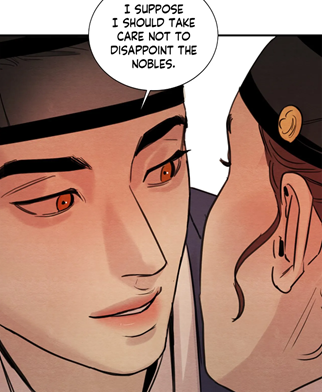 This would ridicule more the young nobles. Right from the start, the rumors are a weapon of the nobles targeting the protagonist. Consequently, the manhwaphiles grasp better why in the second season Yoon Seungho is also using gossip among commoners to get support, to change his reputation. He is a transformed man. At the same time, it outlines how powerful and influential Yoon Seungho is. He is not seeking for an official post because of his traumatic past, yet he learnt due to his bad experience that he needed money to protect himself and through his fortune, he could create his own network without getting too close to the government. This also explains why he hates nobility and even feels closer to merchants and commoners. This arrogance among the nobility towards Yoon Seungho doesn’t surprise me at all. In France before French Revolution, the bourgeoisie was also despised by the aristocracy, although the high bourgeoisie was even richer than some old families among the nobility.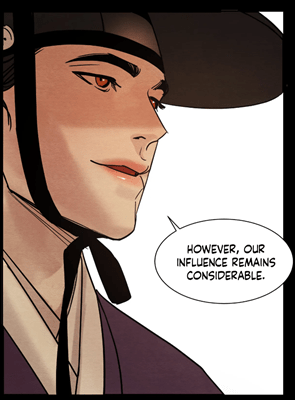
 When he says “our”, he is actually speaking about himself and not his other relatives.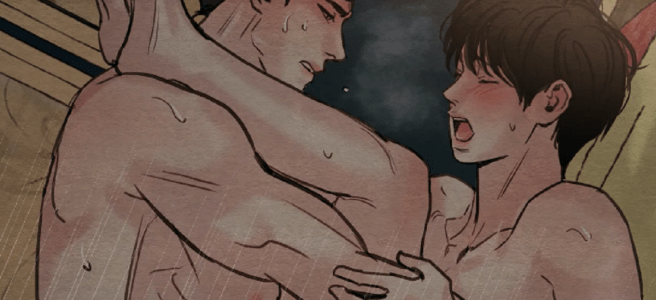
 A duck is not considered as beautiful per se but we have the fairy tale of the ugly Duckling. Here, in this story, the ducks are conceited and perceived themselves as pretty compared to the baby swan (vanity). Furthermore, in this fairy tale the ducks are excluding a family member because of his different appearance, just like in the manhwa. Yoon Seungho got abandoned by his father and his brother. In the ugly Duckling, the duck represents the family and their intolerant behavior outlines the strong bond between the ducks and their babies resembling them. Seung-Won is indeed supported by his father, the former even speaks for the family.
  The duck symbolizes the family and this isn’t surprising, when in Korea, couple of ducks are offered for a wedding. One of the purpose of marriage is to continue the family heritage.
  He is sweating and avoiding his older brother’s gaze. Then his hands are on his knees showing his discomfort. Yet he has no problem to lie about the father’s illness and to suggest Yoon Seungho to visit his parent, well aware of the significance of this visit. He is quite arrogant to think that his brother wouldn’t catch the meaning behind this visitation. He is underestimating the protagonist because he believes in the rumors that Yoon Seungho lives in debauchery. He has the impression that his older brother is not so smart, however the way his suggestion is rejected reveals that Yoon Seung-Won knows very well how his brother became a famous sodomite.
  This shows that the brother is neither cunning nor smart. The duck is not considered as a smart bird, compared to the magpie or the eagle.
  We have to envision that he even avoided to meet Yoon Seungho personally, until it became absolutely necessary due to the urgency of the matter. We should remember that the latter didn’t support his brother the moment he was abandoned by the father, he preferred following the father.
 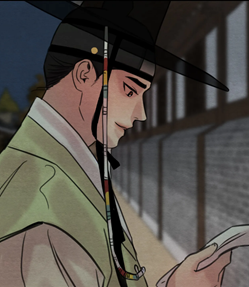 Look at the figure’s smile, he thinks that his move did succeed, whereas there is only raillery coming from Yoon Seungho. The latter remembered the words expressed by his loyal assistant the same morning.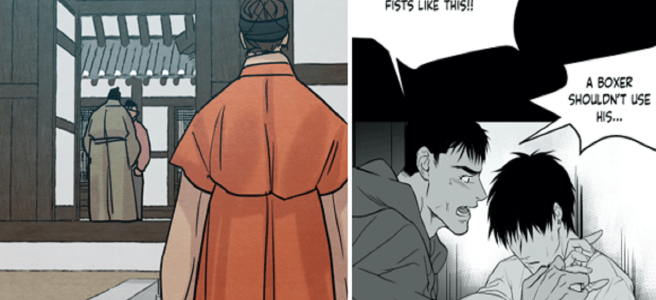
 The mirror helps him to witness his own arousal. Furthermore, in the chapter 42, he finally confesses that their first night together did affect him.
 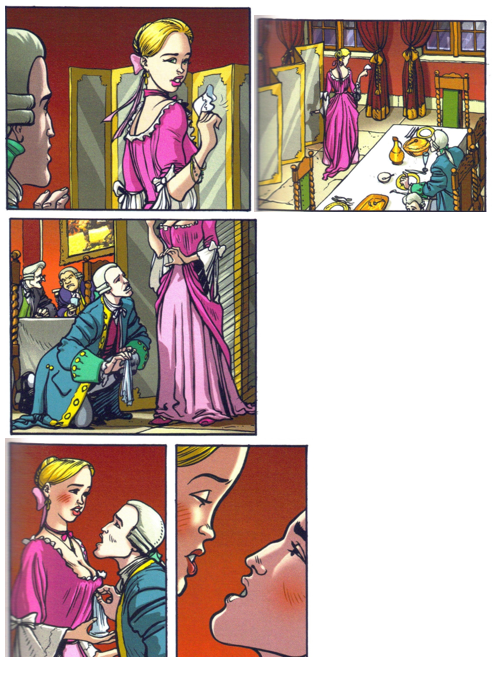 The reason for her behavior is the following. Cunégonde had witnessed in the woods, how the tutor Pangloss seduced a maid and decided to apply this new teaching onto our naive protagonist. Now, I am showing another drawing from the graphic novel:
 This is what Pâquette is saying: “Oh Master Pangloss, flood me with your knowledge.” In the next picture, she even adds: “How sweet is your teaching!” I am quite certain that you can sense the humor in this situation. We could call this sex education (LOL!).
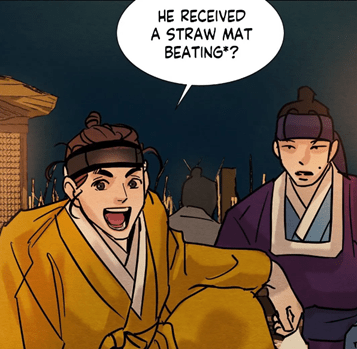
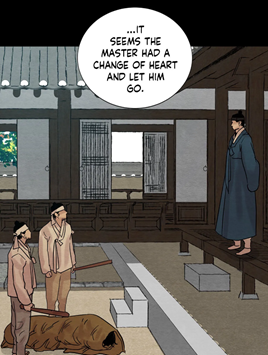 Baek Na-Kyum became the victim of an injustice and was punished by Yoon Seungho to the straw mat beating.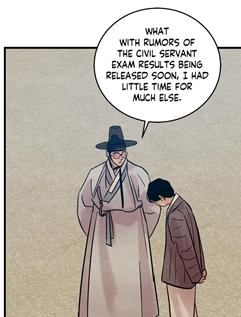
 , he could see Yoon Seungho’s exhaustion, vulnerability and real concern for his health.
 This explicates why the commoner decides not to betray Yoon Seungho and to lie to Jung In-Hun in the chapter 38. With his own eyes, he recognized the lord’s fatigue and weakness that’s why Byeonduck gave us each time a picture of the painter reacting to his observations.
 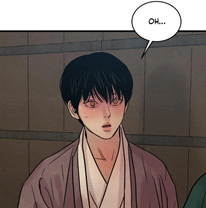 (chapter 35)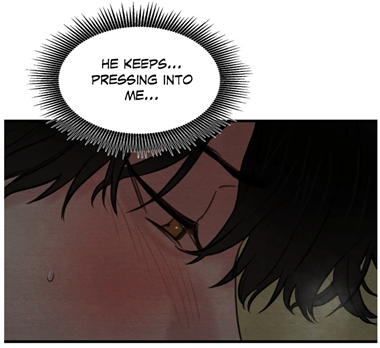
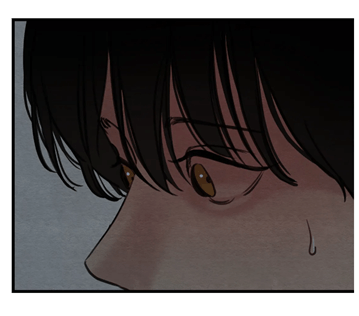
 As a first conclusion, Baek Na–Kyum’s apprenticeship looks a lot like Candide’s. At the end, he is no longer delusional about Jung In-Hun’s feelings for him and has been able to reject the teacher’s false preaching. He will now go his own way and has already abandoned his former teacher for real.
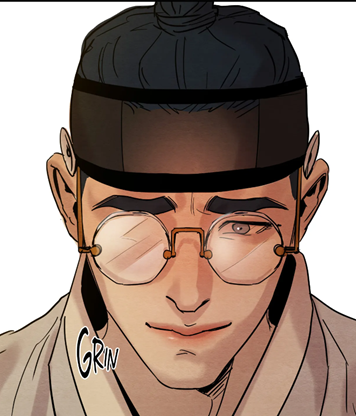 As a first conclusion, their respective personality is really similar.
 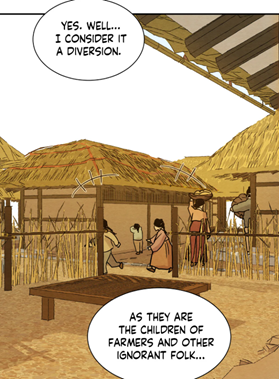 because the commoners should remain in their mountains and accept their conditions.
 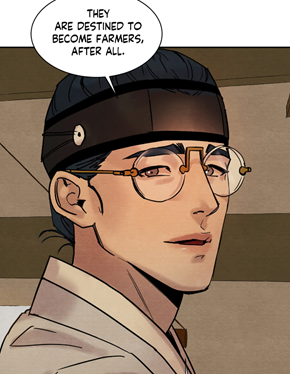 Their fate is already determined, just like Baek Na-Kyum was fated to become a prostitute.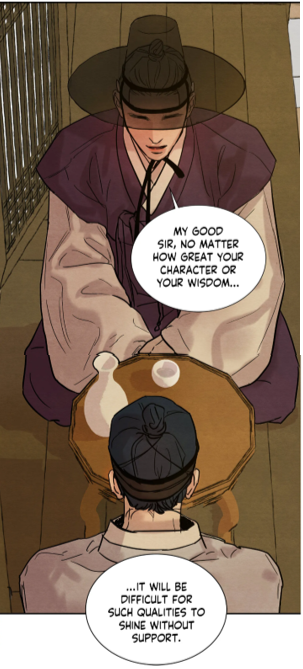
 After getting cured from syphilis, Pangloss loses an ear and an eye, increasing his blindness and deafness to the reality of the world. Let me remind you that glasses symbolize lack of foresight and judgement. That’s why Pangloss never changes till the end. He spent too much time living in his own world and his books that he is not capable to learn through experiences and observations. Jung In-Hun takes exactly after the former tutor. First, he has never mingled among scheming and treacherous nobles before, since he lived in the countryside among commoners. Besides, he only had his library to cultivate his knowledge as he refused to meddle with low-born. That’s why the low noble is either seen wandering in the mansion and on the streets alone or standing close to books. He has no real interaction with others.
  He has no idea what awaits him at the capital. The protagonist warned him but the latter didn’t comprehend the message or was unwilling to take the advice. He is too ambitious and arrogant to envision this possibility.
  And the powerful lord reminded him once what it means, when you get sponsored. You are not allowed to speak ill about your benefactor and you should know your own status. However, the scholar didn’t learn his lesson, blinded by his hurt pride and the suffered humiliation. Therefore I predict that the scholar will remain unreformed, although he has already dropped his doctrine about homosexuality for good. Like I said before, his immorality and duplicity are becoming more visible. Yet, his arrogance, his stupidity and his selfishness will be the cause for his own downfall. Pangloss found a refuge thanks to Candide as the former never schemed against the naive protagonist, he was just a stupid scholar, victim of a false belief.
 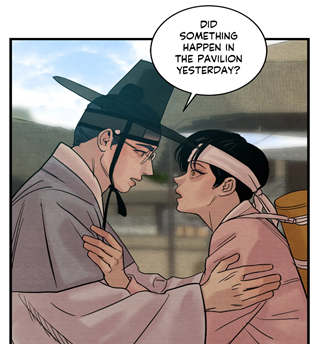 Besides, I have already shown in different analyses that the low noble has started acting like a pimp and a whore. That’s why we could say that sex has now become a part of his life.
  His passivity, reflected through his smoking, does somehow remind me of Martin’s attitude, although I have to say that Martin’s behavior diverges a little, the latter was not totally passive. He helped Candide and Pangloss with good intentions, yet he has the tendency to expect betrayal from anyone. And the source of their mistrust and negativity is their bad experiences. Both characters experienced betrayal and abandonment, therefore they have this negative attitude. Notice that the lord still refuses to meddle with politics and officials showing that he only sees government as a source of evil. This is normal, as he was used and betrayed by nobles. Just like Candide observed, having ambition is not source of happiness. Power can lead to misery as well. The French man witnessed the downfall of kings. Seungho thinks like Candide. However, the former is not able to realize the possibility what comes with a high post, he could change the situation of commoners, promote education among the low-born. It seems that Yoon Seungho’s wealth is also connected to trade as well, like he implied in the chapter 22. Martin never changes like Pangloss, however we know that this is not true for our beloved aristocrat.
 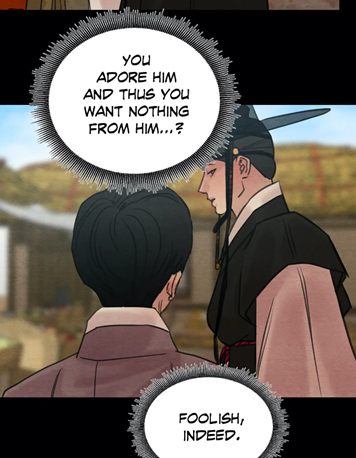 He arouses Baek Na-Kyum’s critical thinking, he admires the painter for his talent hence we could say that he advocates work. Notice that he is the one asking the artist to paint for him. He forced him to work again. Until their first meeting, the low-born had become a drunk and was not happy at all. So his social status as low-born was never a problem for the aristocrat because he recognized the painter’s real value. I would even add that he did admire the commoner for publishing erotic paintings and becoming successful. Baek Na-Kyum did want to change his situation through his talent and his passion. The seme doesn’t care about gossips, about social status and order society. In fact, he abhors nobility. Moreover, he is even willing to change his position and become the servant in his relationship with the painter. Finally, he isn’t averse to promote education for commoners which was detectable in the chapter 6, when he mocked the low noble


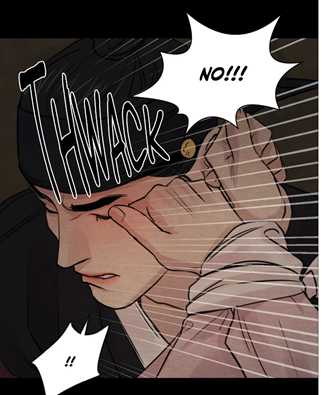 The scar or wound is visible from the chapter 25 to the chapter 32.
 In fact, they have the opposite effect. Instead of retreating, he retaliates immediately with composure. Striking is that the person involved in the dispute is never hurt personally illustrating that the protagonist is always in control of the situation. He shows no emotion at all, he is quite levelheaded. This outlines that during all these altercations, he was not harmed once.
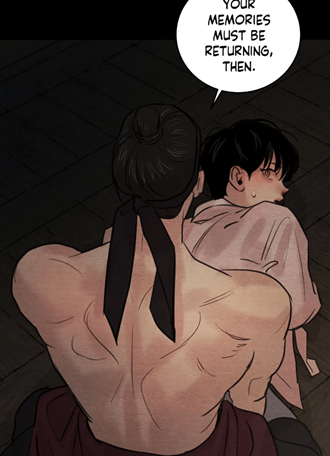

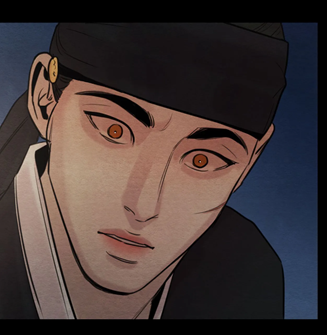 Baek Na-Kyum is not attacking the man with a bad reputation but the person in front of him: “you, sir!” The seme is literally left speechless as the reproach is correct. The aristocrat can’t deny the truth, he knew that the love confession was addressed to Jung In-Hun. Since he can’t refute this point, he needs to hurt the man physically.
  He pushes his head to the floor in order to shut his mouth. These are definitely the words he didn’t want to hear, since he wanted to become the loved one. He doesn’t want to admit defeat and keeps fighting. He is determined to win this fight that’s why he chooses to force himself on the painter. He is definitely not thinking clearly revealing that in this moment he is not two steps ahead like in the past. Observe the difference in his reactions. The low-born is the only one who is able to batter Yoon Seungho. That’s why the scar on the face is so significant. It embodies the master’s injuries.
  As a conclusion, even when he forced himself on the low-born, he didn’t win the fight. The painter kept thinking about another man in his presence. Yoon Seungho acted more on his instincts, he had the habit to perceive sex as a fight, hence he chose to treat this like in the past. Yet, it ended in a disaster. Therefore we can clearly understand why later the protagonist reflected on his behavior at the pavilion. He had never behaved like that during an altercation: losing his temper, letting his emotions taking control of his mind.
  The lord is showing more concern towards the painter’s face and eyes than to his own face. He even prefers wiping the tears on Baek Na-Kyum’s face.
  I interpret this scene the following. The master’s own injury and pain signify so little compared to the artist’s pain mirroring the deepness of his feelings for Baek Na-Kyum. Furthermore, I sense that he could have viewed the scratch as a sign of a small loss, as a reminder that he had been battered for the first time.
  The protagonist sent his own valet to treat the painter’s injury.
  On the other hand, when the valet Kim mentions the graze on his master’s face, he looks like lost and later the servant even receives a deadly gaze. So this shows that the noble is well aware of the existence of this wound but prefers not treating it.
 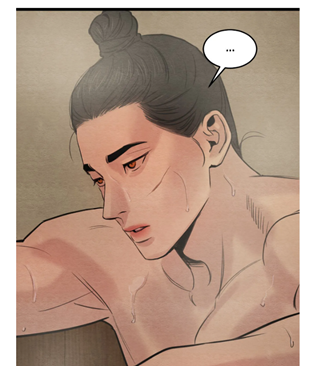 While he is taking his bath, he even remembers the events at the pavilion revealing his pangs of conscience. This underlines that he doesn’t care about his appearance and his own pain. Hence I conclude that he never treated his wound. Why? Like I mentioned above, he could have perceived this as a reminder of his first loss. Another possible interpretation could be that the lord was not admitting defeat. Treating the graze could be judged as a sign of retreat. Just like in a real fight, the aristocrat considered it as a small injury so that the battle was not lost in his eyes. Despite the terrible agony, Yoon Seungho was still fighting for the painter’s acceptance and love. He wanted to become his lover. Notice that the last time the readers can observe the scratch is in this picture. (chapter 32)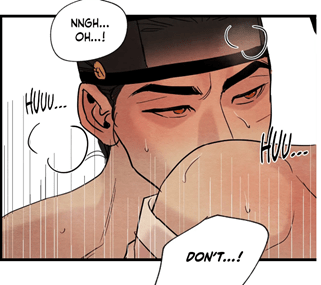
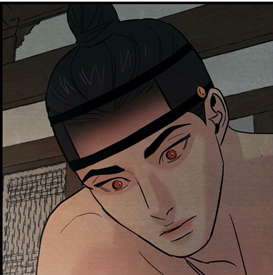 Therefore the lord’s gaze reveals his shock and negative inner emotions. He finally grasps that he might have been able to defeat the painter physically but this struggle could cost the artist’s life. All this coincides with the disappearance of the scar. The self-reproaches symbolize that the nature of the wound has changed, the scar was just the beginning of the lord’s transformation. Now, he is forced to pond and reflect on his bad actions. He tried to bury his remorse by having sex with others (chapter 33/34) but simultaneously he did think deeply about the reasons why he had acted so differently from all the previous quarrels and why he was so obsessed with the painter. The challenge with Min was the trigger for the lord to return to Baek Na-Kyum’s side, he preferred facing an infuriated man than losing his “possession” to another.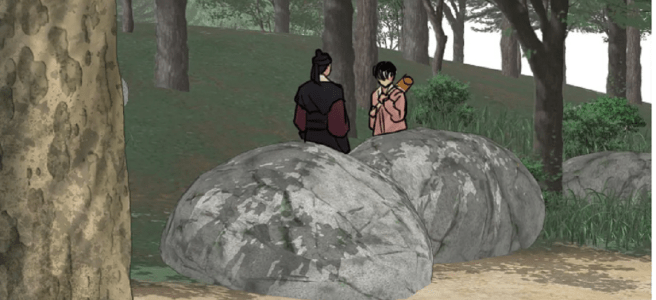

 Imagine what this scene represents to him. He has finally caught the attention of a strong backer through a trick and now he can to leave the shady place he was living in and live like a real noble. He can finally distinguish himself from the commoners he despises so much. Yet, he judges himself as smart enough to think that this proposition isn’t for free. So the offer sounds so good because the only request Yoon Seungho has is that the poor noble returns the favor, once he has become an official.

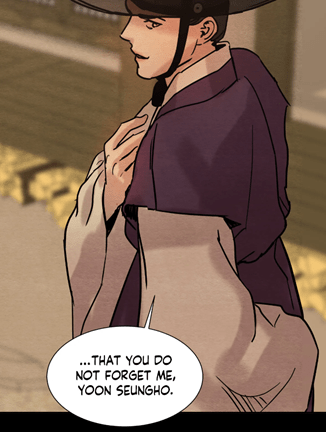
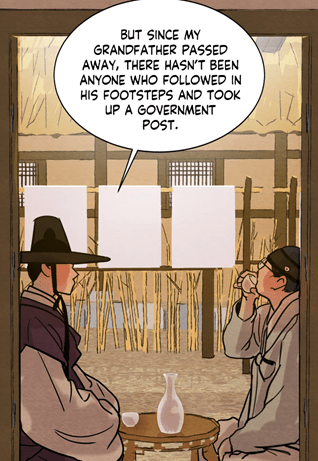
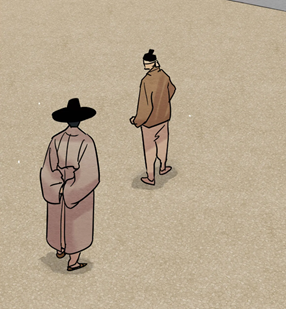

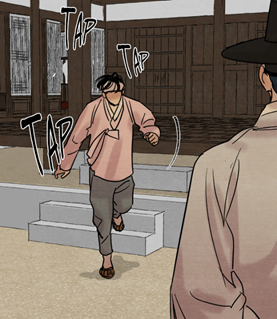 He is so happy that the low noble decided to call on him and can’t restrain himself to ask for a confirmation.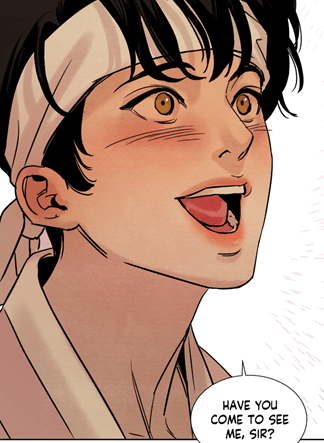
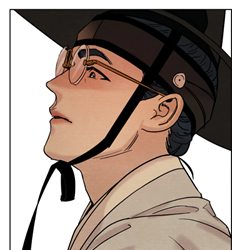 There is no mutual admiration and respect. The poor aristocrat abhors the idea of being touched by a commoner. Besides, we shouldn’t forget that his ego has been so amplified by the aristocrat’s fake praises the day before so that his arrogance and his disdain for low-borns has deeply increased. At the same time, he is reminded through the hard way that this is all thanks to the low-born that he could get such a good offer. So his self-pride takes a hit. Fact is that Yoon Seungho is toying with the poor aristocrat’s feelings. The other reason to send the painter first is to let the teacher know that Baek Na-Kyum is also favored. In the chapter 6, he just told him that the low-born was a servant, yet the artist comes from the mansion and the master only joins him after.
 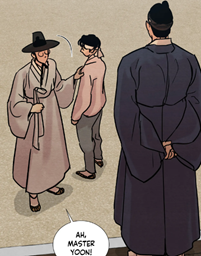 So the order of appearance reflects that the artist is more than just a servant. Kim was the one who welcome him first. Baek Na-Kyum could even run without being criticized. The powerful protagonist is rubbing under the teacher’s nose that the commoner is also sponsored, just like him. The irony is that he, a noble, is put on the same than the commoner. Moreover, notice the noble’s gesture towards Baek Na-Kyum in the drawing above, it was as if the painter was pushed away and is already considered as a rival. His arrival represents a huge letdown for the upstart, he thought that he had already won the jackpot only to discover that he is not the only one sponsored. Furthermore, he observes that the master doesn’t follow him to the library but remains by the painter’s side.
 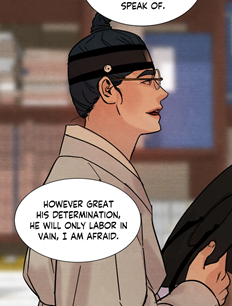 The loyal valet Kim is the one who leads him to his quarter and to the library. Right from the start, the teacher understands that Baek Na-Kyum is a hindrance for his own interest as he knows about the painter’s talent. If he remains at the mansion, then the other will be forced to work hard too. And he had thought, he just needed to rely on the noble’s generosity without working hard. However, he can’t expose his true thoughts right away, he needs to play the game, hence he stays courteous and even thanks the painter personally for the great opportunity.


 That’s why in the chapter 10, the teacher meets the painter and convinces him to stop painting. He uses his dogma in order to appeal to the artist’s guilt. If he is able to persuade the artist one more time to give up on painting, then his problem is solved. The powerful noble will only focus on him and he can enjoy the privileges linked to the favoritism.
  This shows the real value Baek Na-Kyum has in the lord’s mind. Furthermore, the learned sir witnesses how Yoon Seungho even caresses the painter’s cheek while complimenting him.
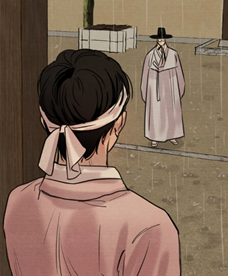 He discovers that the painter disobeyed his order and kept painting for Yoon Seungho. But for that, Baek Na-Kyum has to justify his disobedience. The low-born defends his action that he did it for the low noble’s sake.
 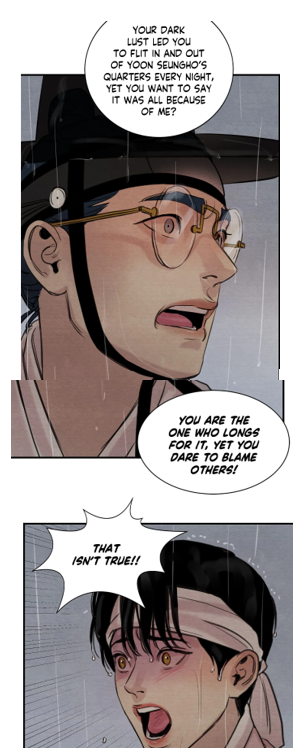 He implies that the painter earned the lord’s favor through immoral means (seduction, sex). He describes the artist as a man consumed by lust, whereas the former embodies honesty and purity. That way, he can reject the painter’s words. Based on his words, he is a honorable man, as he belongs to the nobility, while Baek Na-Kyum as a low-born is so perverted that he will do anything in order to get what he wants and to improve his situation. What the low noble is doing here is called projection. He is projecting his own mindset into the commoner’s. His criticism displays his true self: he is dishonest, lazy, corrupted and ruthless. Through his accusations, it becomes clear that for him and the readers, the end justifies the means. We already witnessed his scheming nature in the chapter 10. However, he failed and he is now attempting to put the blame on Baek Na-Kyum. He gained the lord’s benevolence through dishonesty and not hard work. Imagine the irony. Jung In-Hun wasn’t even working really hard until now which was shown in the beginning of the chapter 19.
  But for the first time Baek Na-Kyum has to refute the learned sir’s accusations and that’s how the existence of the deal is unveiled. Due to his arrogance, the teacher can’t accept the truth. He doubts the words from the low-born. He is skilled and intelligent in his eyes hence he doesn’t need the help from a commoner. Therefore he pushes the painter away. He doesn’t want to be associated with such a person, he needs to think things through. Now, he has some doubt about the frivolous and uneducated Yoon Seungho. He might have discovered the plagiarism, fact is that he needs to confront the lord in order to show him his superiority, if necessary. Since he is a scholar, he has more knowledge and skills than the hell-raiser and sodomite noble.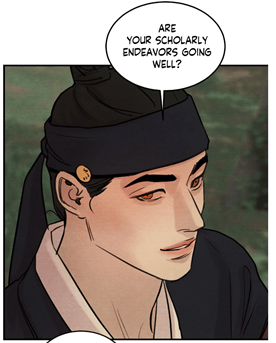


 He tried to impress him with a plagiarism but he never fell for it. The scholar doesn’t want to admit defeat and implies that because of the bad rumor about his reputation, he is not skilled and talented enough to judge his true talents. He refuses to acknowledge that such an aristocrat can judge him so poorly. He needs to prove his superiority in front of the lord, his ego can’t accept to be damaged like that by such a ruffian. However, the lord forces him to kneel in front of him proving him his strength and supremacy. He is not only educated but also athletic. He is much more than what the rumors describe him. And now compare this scene to the one in the chapter 7.
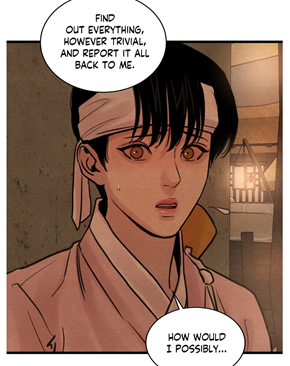
 He needs the latter to spy on the strong noble in order to blackmail him. Little by little, he is giving up on his dogma “sodomy is dirty and filthy” since he perceives that in such a short time, he has to use extreme measures. From my point of view, this is not just a matter of pride and humiliation. There is this sudden realization that he has been manipulated by Yoon Seungho and that if he fails the exam, the noble’s sponsor could end anyway. For the first time, he gets aware that he has to rely on his skills but the problem is that he never really worked hard in the first place. He thought that Yoon Seungho would deliver everything to him on a silver plate. This truly demonstrates that Jung In-Hun has somehow grasped that he might not be so smart and talented like he imagined, especially after getting a wake up call from the protagonist. So if the scholar fails, then the seme can decide to stop sponsoring him. That’s why the learned sir needs to dig some dirty secret so that he can blackmail the lord. Once he has found some info, he is sure that he has some leverage and can still benefit some privileges from Yoon Seungho.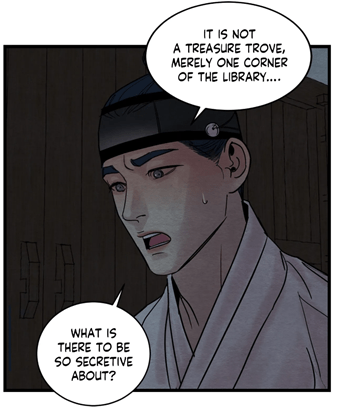

 The very next morning, he pays a visit to the craftsman and even gives him some money so that the latter can ask around.
 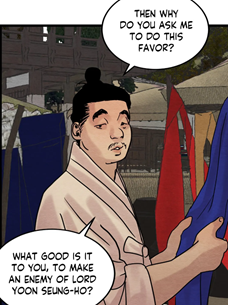 Let us not forget that the man doesn’t possess much money and this proves how desperate and worried he is. He needs to discover some dirty secret about Yoon Seungho at any mean and as soon as possible to force the main lead to support him. In the best case, he could use it later against the wealthy aristocrat. Besides, he can not just rely on the painter’s trust. He even believes that if he uses Baek Na-Kyum as his whore, then he will get some info. That’s why he attempts to sell off the artist to the infamous sodomite. He witnessed the rape hence he knows that the lord is interested in the artist. Nevertheless he thinks that Baek Na-Kyum is just a plaything for the lord. So by telling him (chapter 30) that the painter only obeys the scholar, he finally believes that he has found a way to gain the noble’s support for real.
  Yet, due the painter’s intervention, this deal falls through. What the short-sighted noble fails to realize is that he would have been killed. He hadn’t internalized the warning during the hunt, he should know his place and never act as if he was on the same level than Yoon Seungho. We can feel the urgency of the low noble, he needs to find some leverage in order to get some privileges. That’s the reason why he resents the painter so much. For him, it seems like the artist has it easy. He just needs to sleep with the lord and that’s it.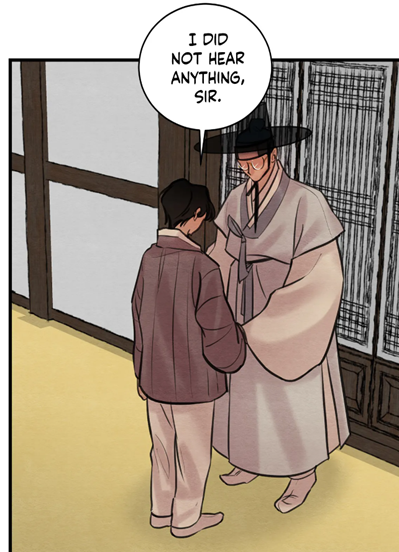
 He is not just jealous and envious. Imagine that he is asked by the painter if he will be responsible for him in the future. Yet the teacher is not even sure if he can succeed with the examination. He was put under pressure the whole time. He is so uncertain about his own future and now he needs to be responsible for a low-born. That’s quite daring and insulting for the scholar. Simultaneously he had to witness how the commoner, whom he considers inferior to him, was able to gain the favor of the lord. So he acts on the moment, he feels that his big dream has more or less escaped from his hands so he abandons the painter. What he fails to realize is that the moment he abandons the painter, he will never be able to gain anything from Yoon Seungho.
 The irony is that at the end of the first season, Jung In-Hun believes that he can still use Baek Na-Kyum as his tool because he gets aware of the lord’s affection for the painter. Yet he has just cut ties with him. But for him, this was nothing important. He is not even aware of the consequences of his past behavior. What caught my attention is that we only see two flashbacks from the second character in the first season. Jung In-Hun’s first flashback happens in the chapter 7 and the second in the final chapter of the first season. Striking is that all the flashbacks are revolving around him. First, he is thinking about the proposed deal and in the chapter 44, he is recalling the protagonist’s behavior towards the painter because he is so jealous. He even comments that Yoon Seungho only talks about Baek Na-Kyum. The flashbacks indicates the lack of conscience and remorse, the egoism of the scholar. He can’t see beyond his own interest and horizon.
  First, the master is with the learned sir but he doesn’t follow him outside, whereas he welcome in the courtyard in the chapter 7. Now, there is no pretense and hypocrisy. The powerful master just sends him away with a servant. In the final chapter, we sense a certain despair in the scholar that’s why he asked the lord to accompany him to the capital.
 He wants him to pass the exam too so that he can be his companion or assistant, if the infamous hell-raiser succeeds. Notice that now Jung In-Hun is finally admitting that Yoon Seungho could be more smart than him. He even hopes that if the lord accompanies him, the scholar can attract the attention of other aristocrats and officials.
  However, the main lead refuses any suggestion from the teacher showing that the rich noble doesn’t care about him at all. Till the end, the low noble hopes that he can get some favor, yet he fails. Furthermore, he is warned that the officials might not be what the naive and scheming scholar imagines. Then when he is about to leave, he is reminded to take his leave from the artist.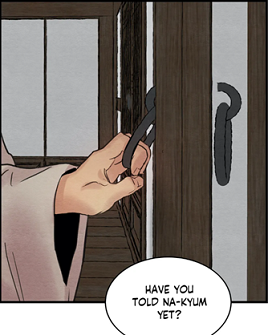
 Nonetheless Jung In-Hun refuses to do so because he is just a low-born.
  So the scholar’s disdain for commoners from the chapter 7 is still intact, yet this time he doesn’t want to fake his admiration for the painter. He leaves without saying goodbye, although he realizes the master’s love for the artist. This outlines his arrogance and stupidity.
 :max_bytes(150000):strip_icc():format(webp)/The-Fall-of-Man-58b5cae15f9b586046cb4b0c.jpg)
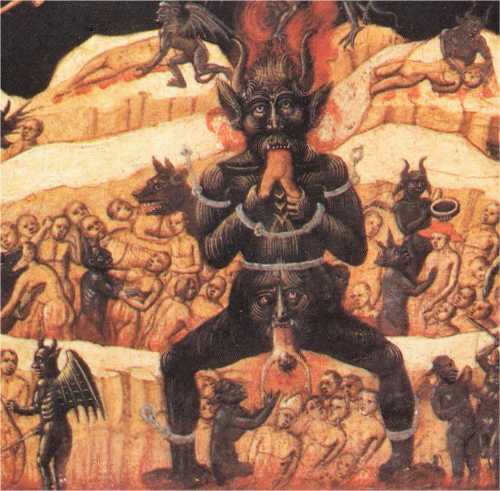


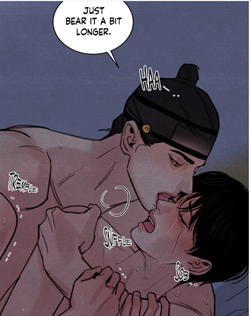 (chapter 20)
  (chapter 21) That’s why he is embracing the uke wholeheartedly and kissing him so gently. Once he has tasted the forbidden fruit, lovemaking, he can no longer return to his old-self. He wants to renew and even deepen their relationship but for that, he needs the painter to remember. He is well aware that the drunkenness had an impact on the artist’s consciousness hence the next morning after their lovemaking, he visits the artist’s chamber waiting for him. The latter had to go out because of nausea and vomiting.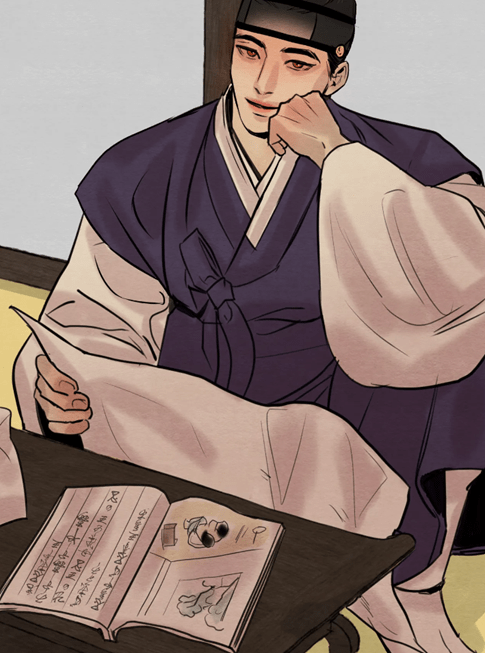
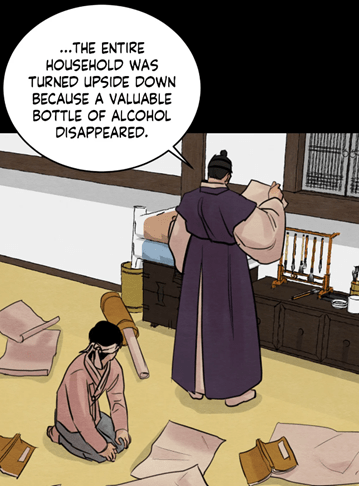
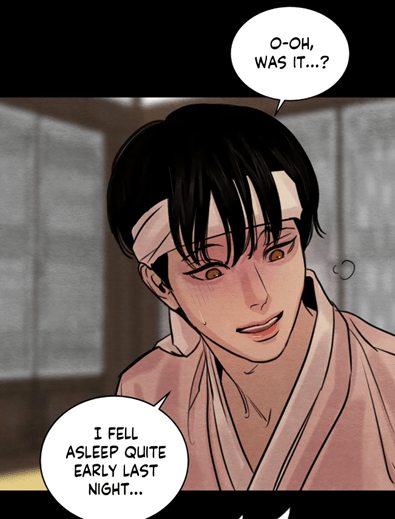

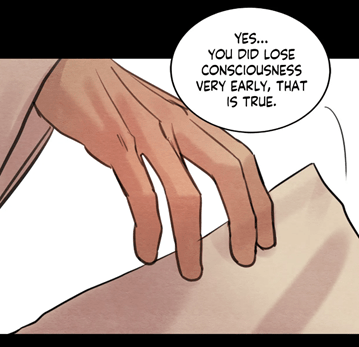

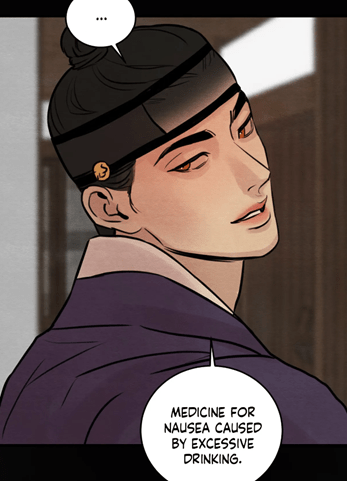


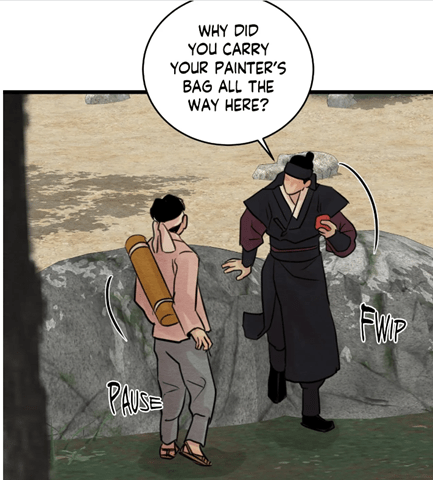

 (Chapter 25) But he is rejected. The forced sex seems to be the only way for the lord to claim the painter as his lover and partner (in his opinion), hence the rape becomes the expulsion of paradise for both men.
  (Chapter 23)
 (chapter 26) and the other is when the artist stole the bottle of expensive wine and lied about his action.


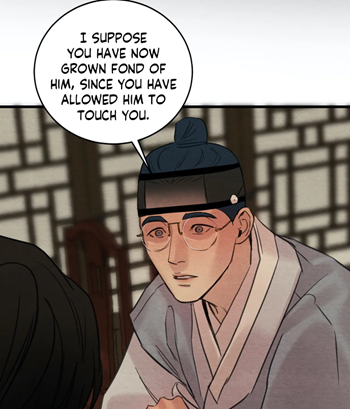 Sure, he immediately puts these back but the fact that in that particular scene he reveals his true self in front of his “fan” just after removing his glasses is significant. This gesture symbolizes and announces what is about to occur. He displays his true emotions and expresses his arrogance and contempt towards the painter. In his eyes, the artist is just a man consumed by lust hence he is a prostitute. He was raised in a brothel therefore he can only live like a whore. This signifies that if the noble takes away his glasses in the second season, we have to observe his future comments and attitude.
 He thinks that as a noble, he can touch the powerful lord so easily. He even comes to the belief that since he is controlling the artist, he stands on the same level than the main character. He doesn’t even notice the killing gaze Seungho is oozing. The learned sir has definitely a poor sight, when it comes to people and situations. He believes that his “intelligence” and knowledge gained through the books is enough for his career, but the man is definitely lacking experiences. He has no knowledge of the world and people, he has never meddled with other dirty, scheming and treacherous nobles before.


 During the hunt, he had chosen to confront the powerful lord and humiliate him by accusing him of hypocrisy and telling him that he was a talented man full of potential. It ended up in a disaster as he never expected the lord to know the origin of the poem he gave to Baek Na-Kyum. Furthermore he has to hear that he is far from being skillful, a terrible statement for the arrogant man.
 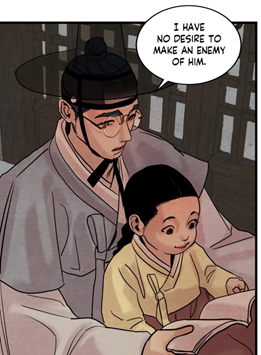 Then when he visits the artisan, he wants to impress him because he needs his help. He has to dress like a quite rich noble so that the craftsman will be willing to help him for the investigation in Yoon Seungho’s past. Remember that he even gave money to the man, yet we truly know his own financial situation. He has no real fortune and only his title that distinguishes him from the commoners.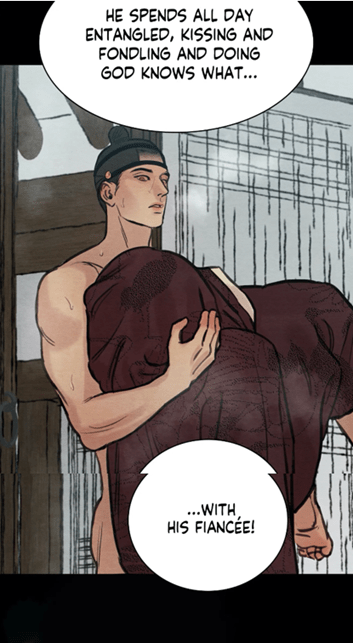

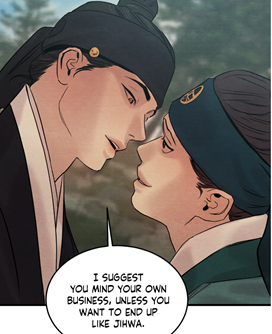 That’s why Min is now using Jihwa in order to hurt Yoon Seungho as he wants to dethrone the alpha in the sodomite community and become the new king.
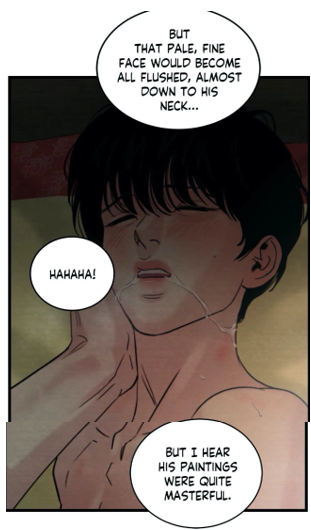 (Chapter 33) This image represents a flashback from the chapter 33, where our protagonist recalled the artist’s terrible face, while he has to hear the other aristocrats describing the person he loved. The memory outlines that this incident left a deep impression on Yoon Seungho that he could still remember the painter’s sick face. Therefore the protagonist wants to keep his painter safe, in the warmest room in the mansion where the noble can attend to the commoner’s needs (giving him water, cleaning his body). I even anticipate he will do everything himself. However, we shouldn’t forget that the master’s deepest wish is to share his own bed with the uke. Only with him, he can finally relax and sleep. We all know that the lord is suffering from insomnia since he hasn’t overcome his trauma from the past.

 (Chapter 40) By placing the red dot on the forehead, Yoon Seungho made the painter look like a bride. This wasn’t just a joke, he really wanted to assume his responsibility and become the painter’s “husband”. The rumor circulating now confirms my explanation about his actions.

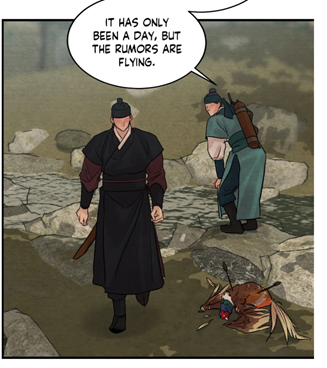 (Chapter 41) They all underestimated Yoon Seungho because they only judged him as “a man consumed by lust” and a “hell-raiser”. He has been hiding his cards and claws very well all these years in order to protect himself. He is definitely keeping an eye on what is happening at the capital. And this was already visible in the first season with following image:

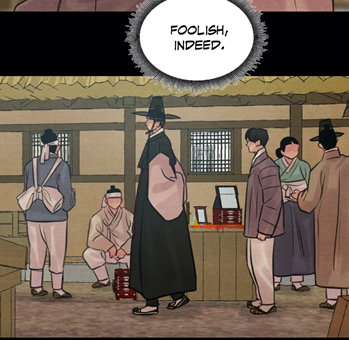 (Chapter 40) This symbolized that there was still a gap between these two men. Now, it is different. Baek Na-Kyum stands next to him so that we can say the painter’s status has been elevated. The artist is also dressed with expensive winter clothes that’s why the social disparity is less visible. Only the hairdressing reveals that Baek Na-Kyum is no lord. However, little by little, the crevice between Yoon Seungho and his loved one is disappearing. Now, we have to wonder why the painter at the end of the trailer turned his head.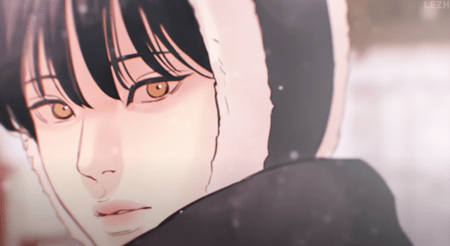


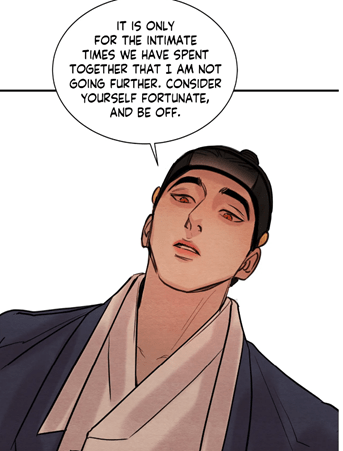
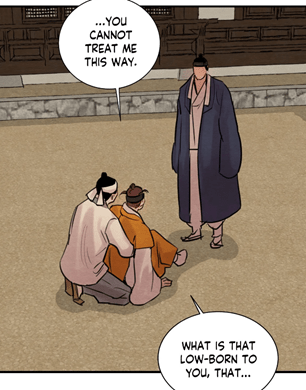
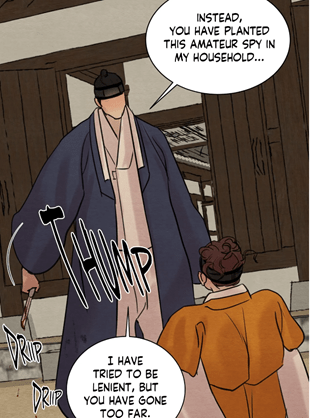
 But Jihwa overlooked it. From my point of view, the red-haired lord made two huge mistakes. First, he misjudged the warning because of a misunderstanding.


 (chapter 41) His chagrin is so deep that he is losing little by little his dignity. In chapter 41, he even has his hair loose and sleeps on the street like a commoner. He no longer acts and dresses like a noble. All this illustrates that Jihwa did love his friend but his lack of consideration and egoism were the reasons why he could never get close to the seme. The irony is that Yoon Seungho has already experienced Jihwa’s betrayal hence this is no surprise if the main lead will know right away who was behind the attempted assassination. The problem is that the main lead never thought that the moment he is in a relationship with the painter, he has to protect his loved one very well. This is no longer amusing and exciting when your loved one gets hurt. This will teach him a lesson so that he will be better prepared, when his other enemies start targeting him.


 (chapter 36)
  (chapter 19) Right from the start, the low-born is the one controlling their encounter. Like I had mentioned in another analysis, their “first night” together has two phases. The first one is when Seungho is just looking for sex but he is stopped by the artist, when the latter admits his fear since he is a virgin. The second phases is where both make love. In both phases, Baek Na-Kyum is the one affecting the lord’s actions and decisions. Yoon Seungho might have taken advantage of the situation, he is mistaken for the learned sir, but in reality Baek Na-Kyum was the one leading the sexual encounter. The alcohol made their “first night” possible, while for Jihwa it increased his pain and distance to Yoon Seungho.
  (chapter 25) It was as if they had an one-night-stand and the other has already forgotten their memorable night… because it meant nothing to the uke. Imagine the irony of the situation. The painter kept his virginity for the teacher but once he lost it to another man, he doesn’t want to enter into a relationship with the man who took his virginity. He values more the feelings than the sexual encounter. This explains why the master uses force in order to submit the painter. He can’t accept the rejection or we could say the breakup in Seungho’s eyes. Then since he has internalized that sex is war through his sexual encounters with the other nobles, he believes that he can act the same way with the commoner. He just needs to defeat the artist sexually and the latter will accept his fate. However, he never expected that the outcome would be different. He might have forced the artist to sex, in reality the painter was never defeated as he mentioned Jung In-Hun, the loved one.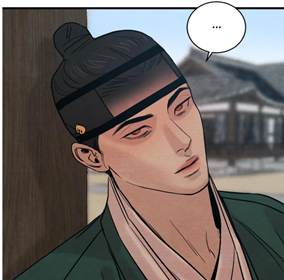
 (chapter 35) Only then he is able to have hope again because he no longer perceives hatred, rejection… he even catches the artist’s blushing. And this outlines the painter’s purity, strength and determination.
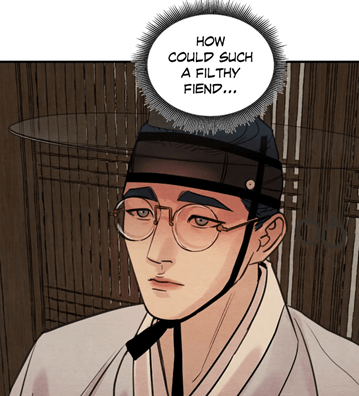


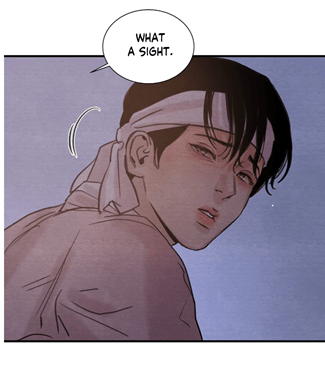


 (chapter 21) We have to wonder why. My explanation is the following. Deep down, the uke knew that Jung In-Hun would never have sex with him, would never accept his feelings. However, his unconscious, meaning his repressed sexual desires, was unleashed, he wanted to have sex with a man, he had already dreamed of it twice and each time, it was with the powerful noble. So the painter’s unconscious allowed him to reveal his true sexual orientation, something he had kept hidden due to the brainwashing. So the alcohol not only reveals the chagrin caused by the rejection, it helped the painter to reveal his true desires and identity. That’s why the artist couldn’t remember the night spent with the powerful lord, it was like a dream and we all know that we always forget dreams.
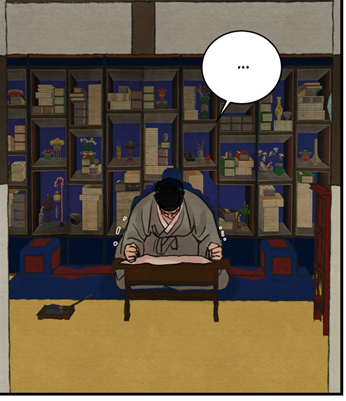 Based on one cloth, it is not enough, furthermore the color is difficult to discern: grey or khaki. We discovered that Byeonduck is very particular about the colors and the kind of clothes her figures are wearing. We already know what yellow, orange, black, red, burgundy, pink, green and blue mean. The clothing can give us clues about the person’s true personality. Besides, we have to observe if the headband will resurface again or not and if yes, under which condition, though I doubt it. Furthermore, I was always able to associate the figures to animals (Baek Na-Kyum as a lamb, Yoon Seungho as eagle, Min as magpie/crow and snake, Jung In-Hun as a chameleon, a peacock and a snake, Jihwa as pheasant). Since we will see the younger brother and his father more often, we should try to find the fitting animals. We should do the same for any new character. It helps to discern the person more correctly.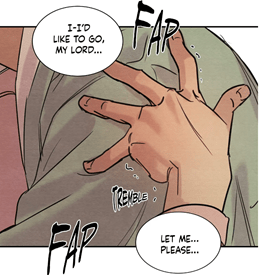
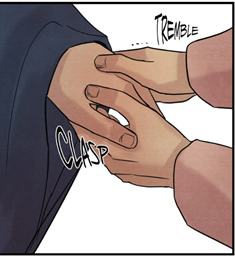 Then during the sex marathon, he brushed the man’s stomach.

 But here, the noble is taking the initiative again, attempting to show his feelings for the painter.
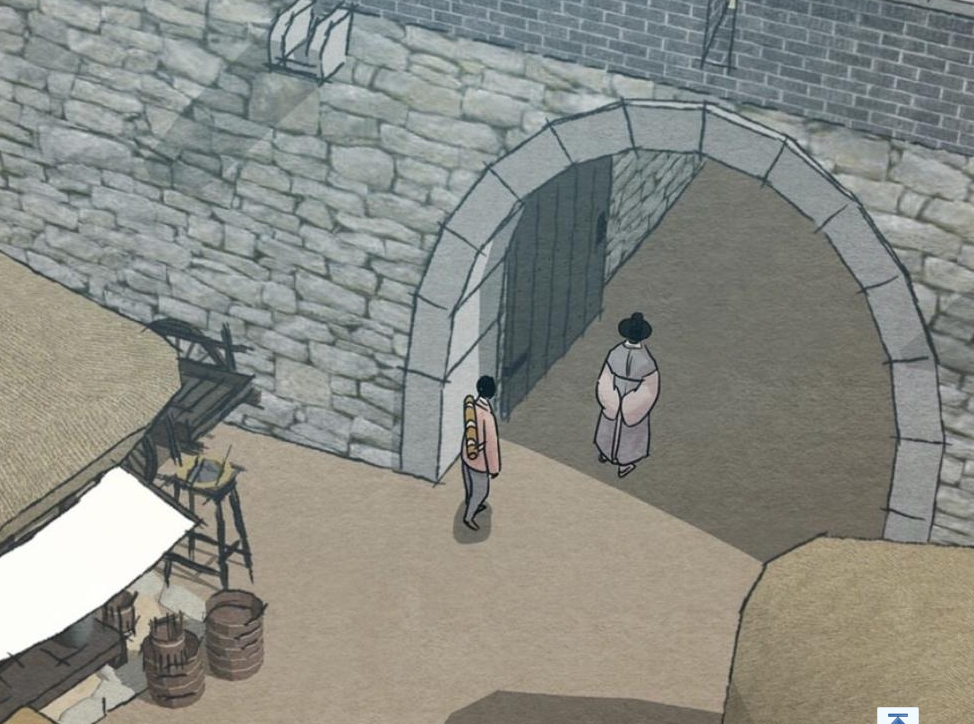 Striking is that he not only leads the painter to return to the mansion and as such allows him to become a sodomite officially, but also passes through the door himself. So does this mean that this door marks a turning point in Jung In-Hun’s life as well? Will the readers see him selling himself to an official for his own interests? I am inclined to believe so. Therefore pay attention to his gestures and his “lip service”. Will we see another progression where the teacher’s first sexual encounter symbolizes the climax of this evolution?
  Baek Na-Kyum could play a huge role as mediator so that the relationship between Yoon Seungho and the other servants improves. They finally accept him as their true master. Before they showed no respect and loyalty towards their lord (gossiping, the opening of the door of his bedroom, the expressed criticism from the maid in front of his loyal valet). Right now, they just fear him hence they are no longer talking about him behind his back.
  Nevertheless, their position will be different. The climax would be that Yoon Seungho lays under the cover just like the painter so that there is no longer a master-servant relationship. In the picture above, there is still a gap between our protagonists. Consequently the cover as wall will disappear. Strictly speaking, look at the position of the cover.
 The pavilion was important, because this is the location where Yoon Seungho liberated himself from his self-hatred and accepted his sexual orientation.
 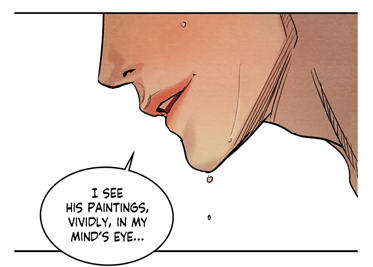 There he saw himself in a different light that’s the reason why he asked the artist to meet him there after the hunt. Therefore the pavilion is linked to a bad memory for Baek Na-Kyum. Will this place appear again and have another symbolic meaning? I have the feeling that the pavilion could become the place where the master will teach the commoner. This would erase the event of the rape but at the same time, become the location of Baek Na-Kyum’s emancipation, just like it occurred to Yoon Seungho. The pavilion could symbolize the protagonists’ liberation in the end. And this would also help the servants to perceive their lord differently and even accept his relationship with the low-born. They would no longer judge him as a sodomite but as an open-minded and caring lord. Remember that he is a supporter for the education of commoners (chapter 6). This could be what he defends later, when he has to go to the capital…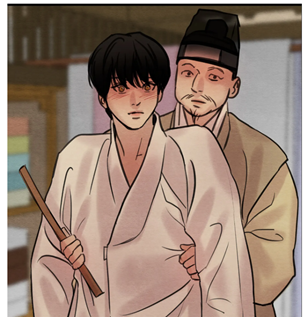
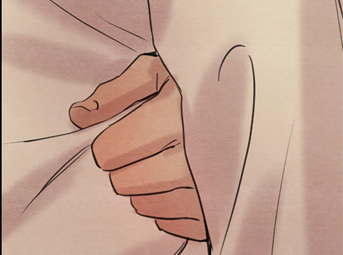
 The author wanted to let the bibliophiles recognize the jealousy of the main lead. He doesn’t say anything but the zoom on the hand represented the lord’s vision. Hence for the second season, we have to question the chronology. Why is there a zoom on the hand in this moment? How about the gaze? Or will the focus on Baek Na-Kyum’s hand reveal another progression, like f. ex. he finally caresses the lord’s face or chest? So far, we never saw him caressing his face or his arms with such a tenderness, while we could observe the main lead kissing the low-born tenderly twice.
 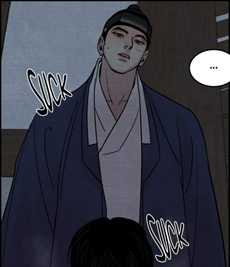 We sometimes had the impression we had entered the character’s mind and were witnessing things through the character’s eyes. I could name the fellatio as example. Here we can understand the seme’s fascination for the painter’s gaze. He saw the acceptance in his eyes.
 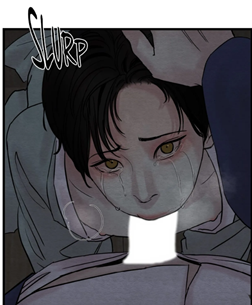 But we also entered Jihwa’s mind too.
 to foreshadow the future of our protagonists or reflect the painter’s natural desires or to liberate the uke from the coercive persuasion done by the vicious teacher.
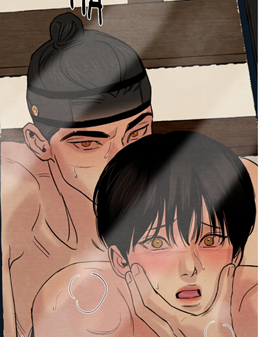 It would be interesting to witness this because this would mean that Seungho is finally able to accept his own identity and he no longer needs to perceive his own reflection in the painter’s gaze, he is longing for love and acceptance there.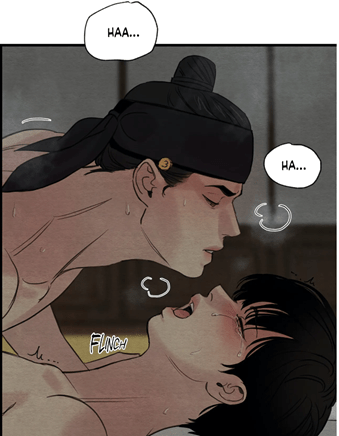
 They were not detail-oriented, especially the artist’s facial expressions were still missing. So we have to pay attention to his future creations. They will serve as an indicator of his feelings for the lord. Simultaneously, the drawings will reflect an improvement in his self-esteem. So far, Baek Na-Kyum has a low self-esteem created by the teacher.
 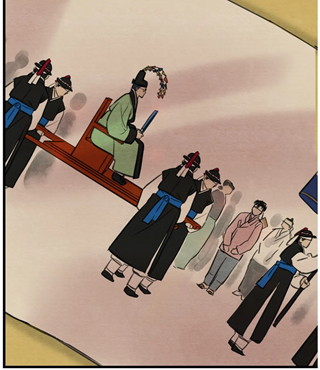 That’s why there is no facial expression on his face and he stands far away from Jung In-Hun in the painting of his inauguration. His erotic paintings should ooze love and warmth as time passes on and maybe the artist will be encouraged by Seungho to draw something else. In other words, the readers should look carefully to the future paintings.
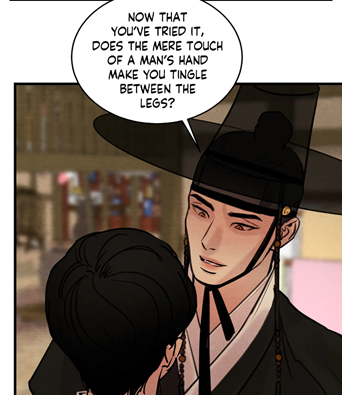 Savor the noble’s intelligence, sarcasm and his jokes.
  or “boy” (chapter 31). Even there he didn’t insult the low-born despite his jealousy and anger.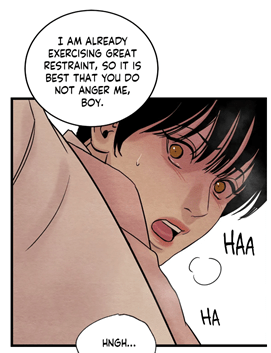


 (chapter 3)
 (chapter 5)
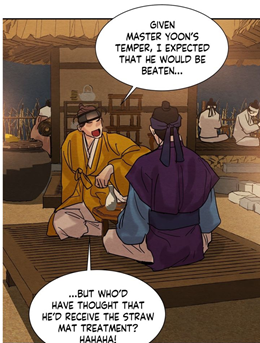 (chapter 12)
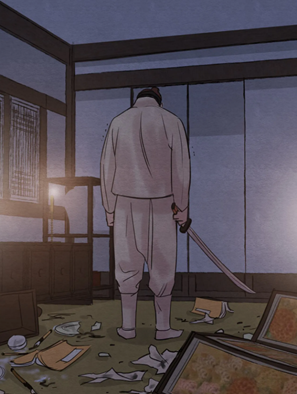 (chapter 21)
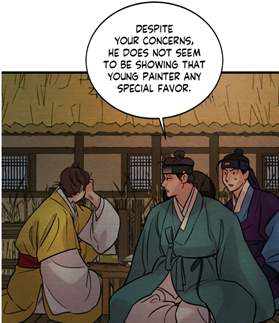 (chapter 36)
 (chapter 41)
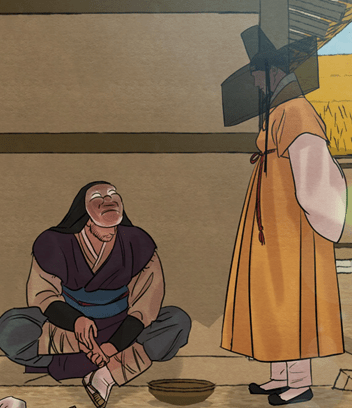
 , he didn’t feel the need to attract attention and admiration because he had already succeeded with his plot. He was so happy that he didn’t pay attention to his image. However, he is still wearing his topknot therefore he is demonstrating his power to others: he is a noble. This is totally different in the chapter 36.
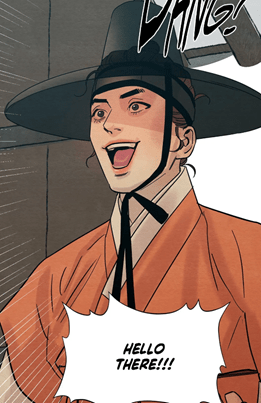
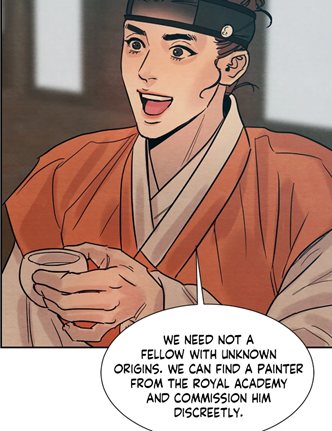 , the reader often sees the red-haired noble laughing and smiling so that we can definitely say that he is cheerful and good-humored. He likes wearing different clothes, drinking, having sex with Yoon Seungho and he even buys erotic books hence all this reminds me of an epicurean, someone appreciating life and its pleasures which is also linked to yellow. He can be sometimes analytical for he observed his childhood friend’s gaze and behavior in the chapter 14/15
  and remembered his friend’s words.
 He fears that the painter might become the protagonist’s new sex partner because his chamber is next to the master’s.
 He shows a certain creativity, when he plays a trick on Baek Na-Kyum by ruining the second painting. Simultaneously, this action revealed a negative side of Jihwa, he acted like a coward. I can even add that his cowardice is even confirmed, the moment he visits the artist’s room a second time without his friend’s knowledge. He never wanted Yoon Seungho to discover his presence. However, he can’t restrain himself when he sees the painting with the masturbation and slaps the poor painter. He is just too emotional that he admits his crime in front of the painter and his friend.
 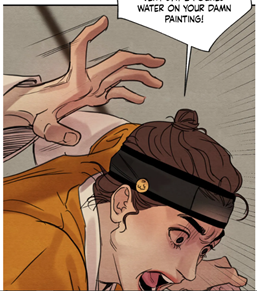 His impulsivity and his jealousy were the reasons why he got caught in the end.
 this picture reminds me of the myth of Narcissus who looked at his own image until his death. Here, Jihwa believes in the strength of his beauty. He can’t envisage that his friend is immune to his handsome face. Striking is that we have yellow and orange dominating in this drawing as if it was signalizing a danger, a bad omen for our second character.


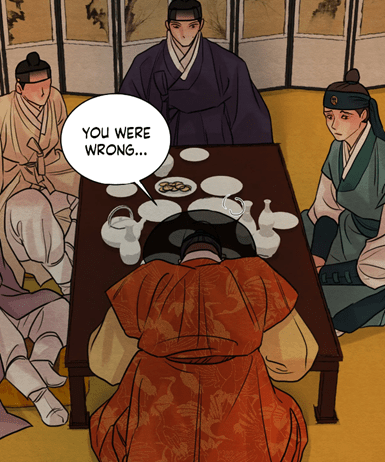
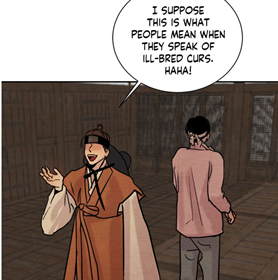 and he even shows no remorse for the unjust punishment (straw mat beating). He even laughs about it, not caring about the damage. For him, the painter is just a commoner hence he can do anything he wants. He has such a misconception about commoners, he is very prejudiced and judgmental. For him, all the low-born are uneducated, greedy and selfish. They would do anything in order to change their life and social status. Yet he he is totally wrong as he is generalizing. In reality, he just projects his own thoughts into Baek Na-Kyum. His entitlement leads him to believe that he can even mistreat any commoner, any servant.
 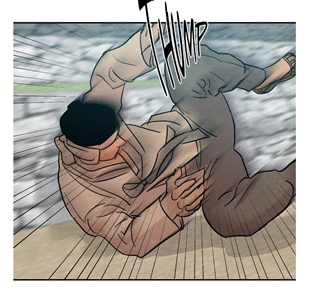 He is as ruthless and brutal as Yoon Seungho. Jihwa justifies every action. It is always for his friends’ best interest (revenge/Saving Seungho’s reputation), whereas in fact, it is for his own benefit. He is selfish but still shows a certain lack of confidence because he tries to get rid of a rival through tricks. As you can detect, he is a mixture of arrogance and lack of confidence. He uses others in order to hurt his rival (Seungho in the first case and the hired assassin in the second case). This is just another act of cowardice. Fact is that he feels threatened by the painter, he senses that his friend is attracted by the low-born.
  Another example for his boasting is when he dresses up to pay a visit to Yoon Seungho. He already imagined that the former would be hurting on his own because of Seung-Won’s call. That’s why he chose the robe with the crane. He definitely wanted to make a statement: “Without me, you’ll never be happy”. But the opposite happened. Once hurt, he can’t hide his pain and has to exteriorize it, hence he goes to his acquaintance, the man with the mole.
  He can’t hide his tears in front of the others…
  or without the seme’s knowledge in order to plot something against Baek Na-Kyum or to spy on his friend.
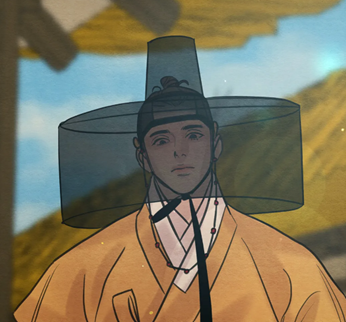 Finally, I would like to examine the last clothes Jihwa is wearing in the chapter 43 and 44. What caught my attention is that he is wearing an exterior robe with short sleeves, has a red belt and a huge hat covered with a veil. On the one hand, with his apparel he is attracting the attention of people, especially at a place where there are many commoners. At the same time, he is attempting to hide his identity. This contradiction reflects the character’s true personality: he is arrogant and stupid enough to believe that he can walk just like that without his identity being discovered. I am quite sure that people will remember his appearance. Besides, he chose his favorite color… So the pheasant who perceives himself as a crane is about to experience the harshness of life. He has no idea that this impulsive decision marks his downfall. He is too foolish and blinded to realize that he has been played by Min.


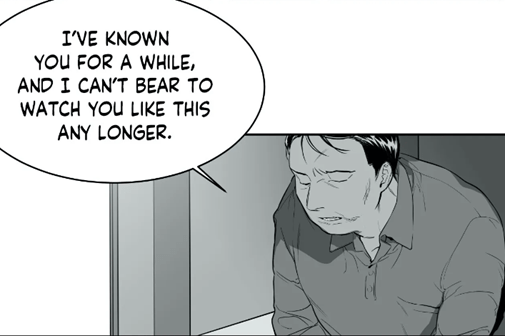
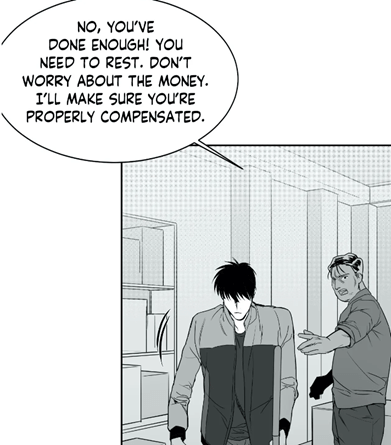
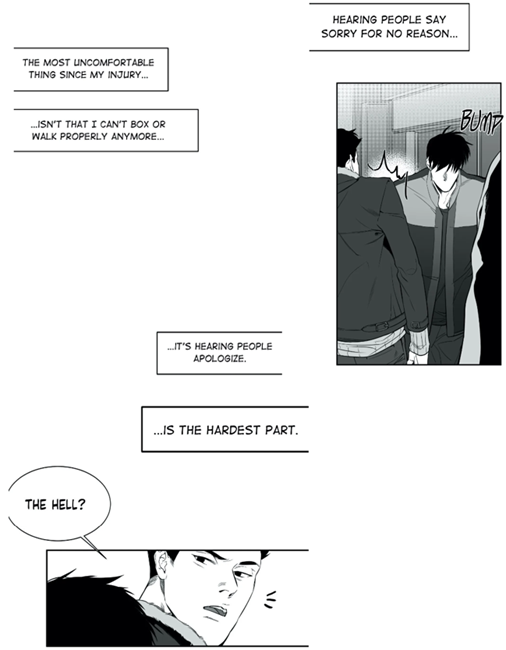 All the persons Kwon Soo-Young meets only view his crutch and his weird walking. It was as if his disability had taken over his identity and his existence that’s why the former boxer is so infuriated with their “sorry attitude”. Strictly speaking, first impressions scar the unfortunate man even more.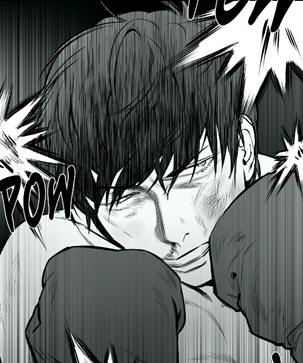

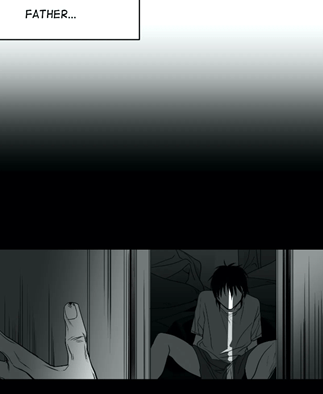
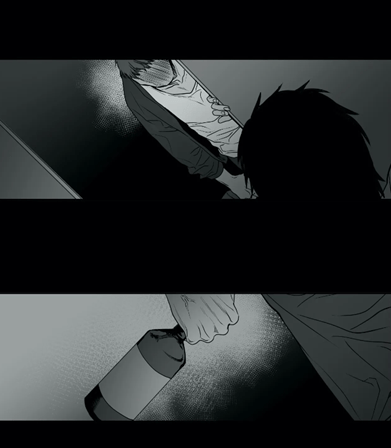
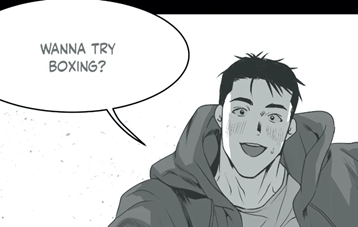 However, he never got to see the double personality of his admired hyung, his dark and violent side because the first impressions were deeply engraved in his memory. I haven’t read much of this manhwa but I have the feeling that the constant defeat of Soo-Young’s fights were actually no coincidence and his hyung was behind it. The more the main lead wanted to unleash his anger and fury due to the unfairness in his life, the more he punched into the air because hyung wanted him to rely more and more on him. The offer proposed at the end of the first chapter looks good on the surface.


 but because of the way they met for the first time
  and pushes him away, whereas on the other hand, he went to the boxing club and wished that his hyung would find and help him.
 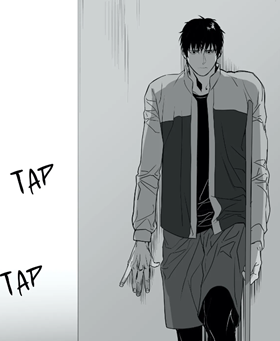 Deep down, Soo-Young has already sensed the danger of the offer and the violent personality but he is struggling to admit this because of the first impressions he had about Si-Jung and the experience he made through his abusive father. Bad people will never smile and be caring, they will always be violent. And this leads me to the introduction of the other protagonist: Park Tae-Sung.
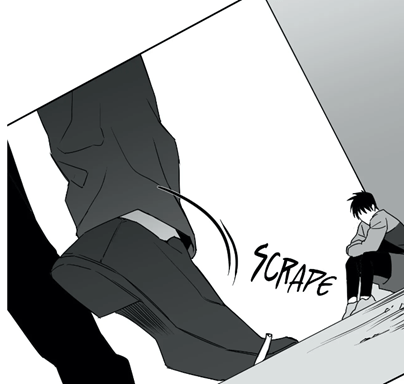
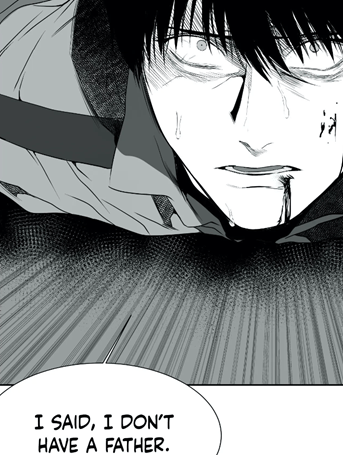
 Striking is that after seeing his bruised face, Tae-Sung wonders if he hasn’t met him before. And this underlines that so far, Soo-Young hadn’t made any impression on him, he expected that he would behave like the other creditors begging for more time aso. What caught the mafia boss by surprise is the sudden attack of the former boxer.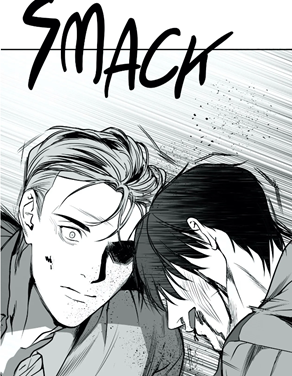
 Besides only when he is able to stand up, the chief gets to see Soo-Young’s handicap. As we can observe, the disability has another signification in the gangster’s eyes: he sees it as a strength. Despite his handicap and original disadvantage (position), Soo-Young didn’t fear him and was able to change his situation. The latter is even capable to overcome the mobster’s strength. At some point, he stands up in front of the gangster before going after him.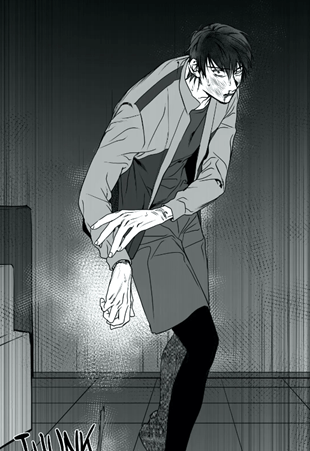


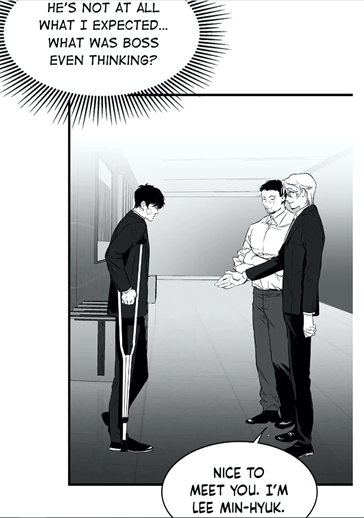

 Bebebisous33s' analyses in K-Dramaland and Manhwas