
Please support the authors by reading Manhwas on the official websites. This is where you can read the Manhwa: Jinx But be aware that the Manhwa is a mature Yaoi, which means, it is about homosexuality with explicit scenes. Here is the link of the table of contents about Jinx. Here is the link where you can find the table of contents of analyzed Manhwas. Here are the links, if you are interested in the first work from Mingwa, BJ Alex, and the 2 previous essays about Jinx Following the Teddy Bear (part 1) and Following The Teddy Bear (part 2)
It would be great if you could make some donations/sponsoring: Ko-fi.com/bebebisous33 That way, you can support me with “coffee” so that I have the energy to keep examining Manhwas. Besides, I need to cover up the expenses for this blog.

I have to admit, the ending of chapter 73 caught me by surprise. I never expected that the father would die like that — so abruptly, without proper redemption or resolution. Of course, I had long wondered how much longer such a drug-addicted man could survive. But chapter 72 seemed to suggest that he had managed to control his addiction. After all, we saw Joo Jaekyung mentioning his father to his mother—four years after the past events—implying the man hadn’t vanished but had remained in his son’s life.  (chapter 72) In fact, he stayed by his side for exactly ten years after the vanishing of the mother.
How do I know this?  (chapter 73) In chapter 73, Joo Jaekyung is shown as a first-year high school student—meaning he was sixteen. I suspect this turning point occurred in May, since the earlier fight happened on May 16th.
  (chapter 72) Additionally, the tournament he won was the 17th boxing competition
 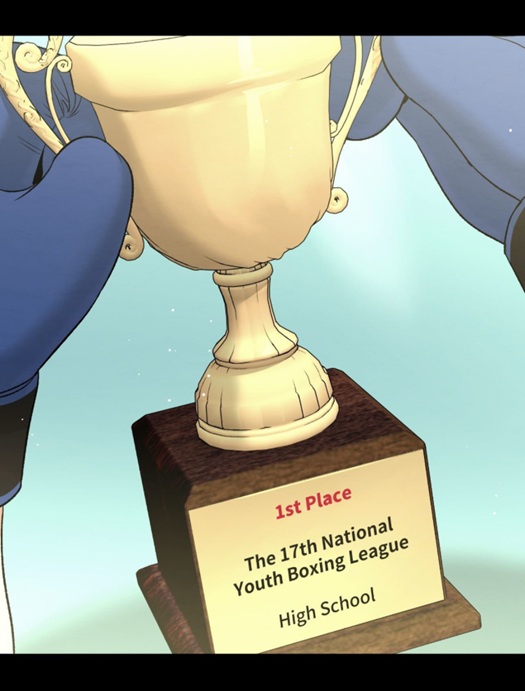 (chapter 73), suggesting he had likely participated from the very beginning of the event’s history. This places his debut—and symbolic birth as a fighter—at the very origin of the tournament itself.
But you might be wondering: why focus on the father and a boxing event when this essay is titled The Loser’s Mother: Fragments of a Mother?
The reason is simple. In this story, you cannot isolate the mother from the father—or from boxing. The three are intertwined in the champion’s childhood. 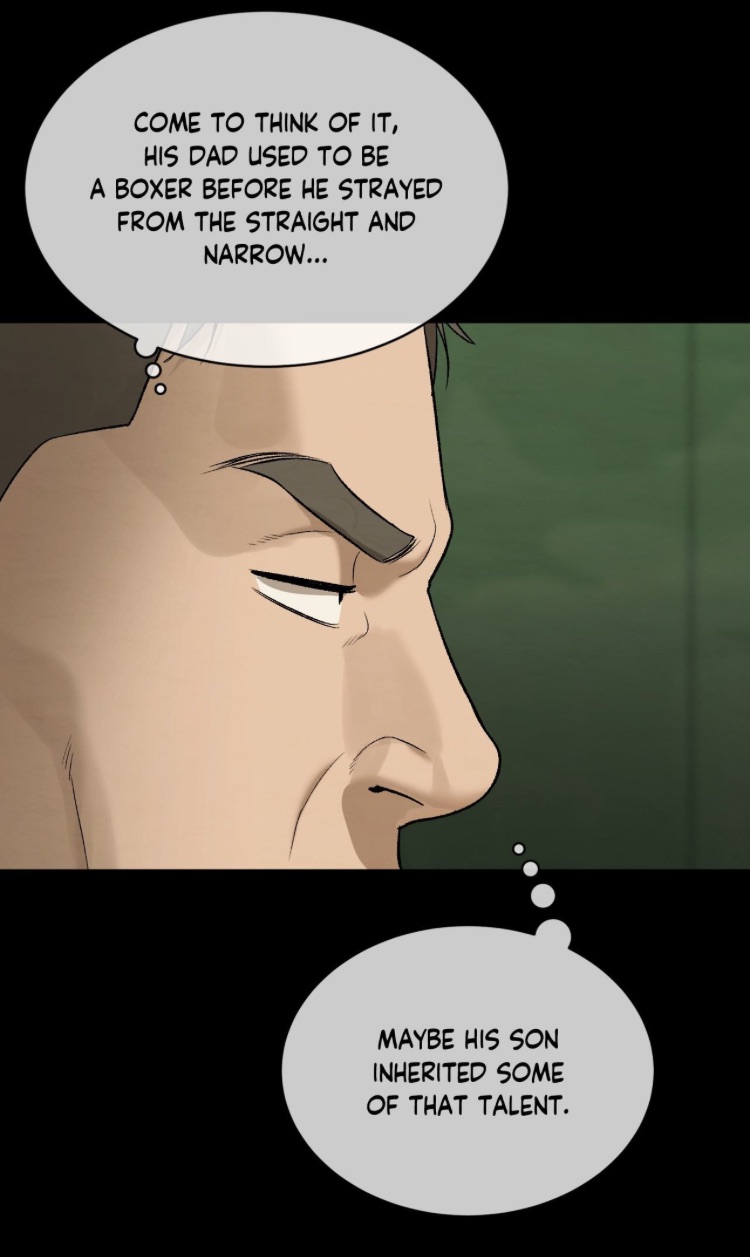 (chapter 72) This becomes painfully clear in the call to his mother, when young Joo Jaekyung promises to become strong,
 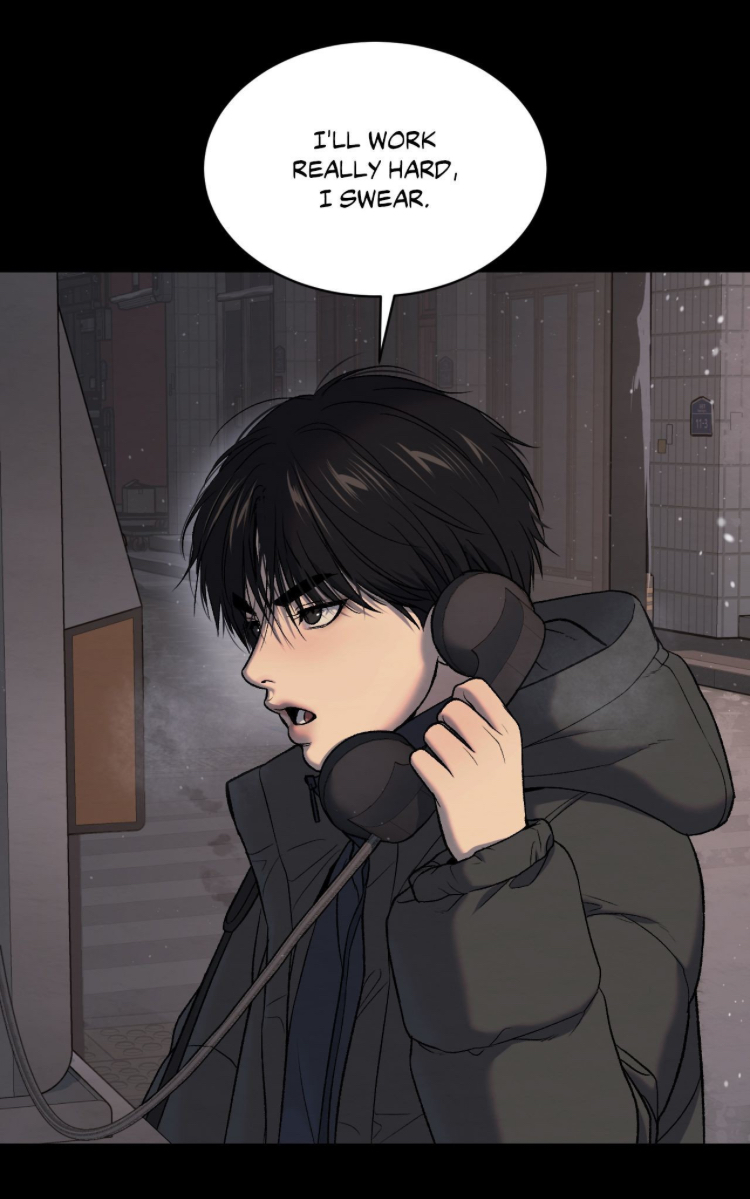 (chapter 72) to earn a lot of money, (chapter 72) so that they can have a home again where they can live together again. However, his dream of family is not separate from the ring, as he is envisaging that boxing will bring money.
  (chapter 73) The gloves are not just weapons—they are offerings, hopes, and wounds stitched into the fabric of his fractured household. Yet, the confrontation with his father marks a quiet but decisive shift.
In the past, the young Joo Jaekyung still envisioned the broken home as something worth saving—worth returning to— (chapter 72) if only he became strong enough. He believed his strength could reverse abandonment, mend silence, and bring his mother back. But now, in chapter 73, his dream has changed: (chapter 73) His words carry more than resentment—they signal resignation. The house is no longer a potential home, but a “dump”.
The father, once tolerated as a condition for reunion, is now a burden to flee. He is like a trash to be left behind. His intentions reflect the past: his mother had also left the garbage site. Over those ten years, the boy had come to accept an unbearable truth: that his mother was not simply absent—her silence had become indistinguishable from rejection. The longer she stayed away, the more her distance hardened into a perceived refusal to return to him. She didn’t just disappear—she left him behind. And by choosing not to return, she left him behind a second time, confirming his worst fear: that her silence was not weakness or helplessness, but rejection. Thus in his declaration that he will leave the house, the mother is conspicuously absent. He doesn’t say he will find her, or that he hopes to reunite with her. She is no longer the destination. This silence marks a definitive shift. The child who once saw boxing as a way to earn her return now sees escape as the only goal. The mother has faded from his future—not because he forgot her, but because she abandoned the role he once gave her: the symbol of “home”. What caught my attention is that in chapter 73, that vocabulary has changed. He no longer speaks of home—instead, he calls it a house, and not just any house, but a “dump.” This lexical shift is not accidental. The warmth has evaporated. Home—as a dream, a bond, a promise—is gone. All that remains is a shell, a building filled with ghosts.
This change in terminology also reflects the birth of his rootlessness. His decision to leave is not driven by a desire to return to someone, but by a need to escape something. His words give the impression that he no longer has an anchor—no person, no place, no dream of a family to tie him down. The loss of “home” is also the loss of belonging. Only Hwang Byungchul’s principle remains valid: 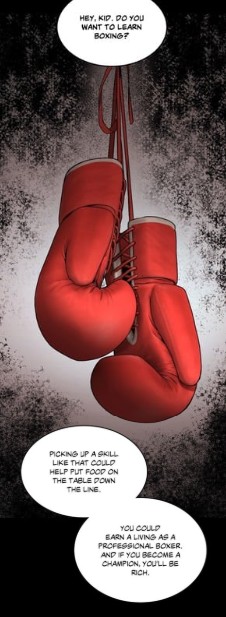 (chapter 72) And now, you know why the man was left behind and not contacted. Joo Jaekyung seems to, from this moment onward, emotionally homeless, unaware that his attachment to his father is still existent. Moreover he is forgetting his friendship with Hwang Byungchul. His words don’t truly reflect reality.
To conclude, the mother’s absence is no longer felt as a loss to be mourned, but as a reality to be adapted to. Her role as “symbol of home” has been erased—not just by her physical departure, but by the long silence that turned her into a stranger. Joo Jaekyung may leave the house, but the absence of home will haunt him far longer.
And yet, even in her absence, the mother continues to haunt this story. Not as a physical presence, but as a fractured silhouette—reflected in silence, in resentment, in projected guilt. We never truly see her, only her back. Instead, she is revealed in fragments: in the champion’s longing and disillusionment, in Hwang Byungchul’s evasive commentary, and in the flickering memories and reproaches of Joo Jaewoong and in the protagonists’ behavior. The Loser’s Mother lives through the behavior of others, through the narratives others impose on her, through the roles she is forced to occupy without ever being asked. This essay is an attempt to trace those shadows, to piece together the story of a woman who remains invisible—except through the pain she left behind.
A Fragment of a Mother – Her Back, Her Silence
The only direct visual glimpse we get of the champion’s mother is a scene in which she is holding her child. However, Jinx-philes only gets to see the back of the woman 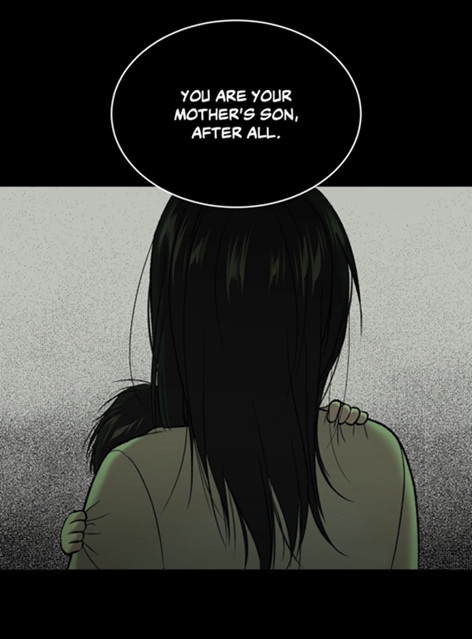 (chapter 73), hence her face remains first hidden. This image represents a memory from Joo Jaewoong, I would even add, this is the last time he must have seen her before her vanishing.
At first glance, it may seem like a moment of maternal tenderness, but on closer inspection, the image tells a more unsettling story. The mother is not actively cradling the boy. Instead, it is the child who clutches the fabric of her shirt, gripping as if he fears falling from her arms. The imbalance in their body language suggests a desperate, one-sided bond: the child seeks connection, while the adult appears emotionally absent.
Her posture reinforces this interpretation, if we compare it with the halmoni’s.  (chapter 65) Unlike Kim Dan’s grandmother—who is shown gazing downward at the baby she holds, visibly burdened yet emotionally present—the champion’s mother stares straight ahead. (chapter 73) She does not look at her son. This lack of eye contact signals emotional disengagement, not only from her child but perhaps from herself. Her slumped posture, loose clothing, and unkempt appearance evoke neglect, resignation, and even depression. She is not merely overwhelmed; she seems already halfway gone, erasing herself quietly from the role of mother even before her physical departure.
This subtle yet haunting visual speaks volumes. The boy’s need is visible; so is the woman’s withdrawal. This is the last trace of Joo Jaekyung’s mother in his household. And it is not a memory of love—it is a memory of pain, loss, resignation, and unspoken protest.
Her posture alone tells a story. There is no confrontation in her body language, no rage or dramatic departure. She is simply turned away. This act of turning her back functions on multiple levels: she is turning away from her abusive husband, yes—but also from her role as caregiver, from her child, and ultimately from her own life. The lack of eye contact reinforces this interpretation. In both psychological and cinematic language, the absence of eye contact is synonymous with emotional disengagement. Her refusal to face her son becomes her quiet yet devastating form of abandonment.
The nameless Mother
The texture and tone of the illustration deepen the emotional impact. (chapter 73) The background is rendered in muted, almost sickly hues—brown, beige, dirty green—which evoke a feeling of stagnation, discomfort and neglect. The lighting is dim and diffused, suggesting a home without warmth or vitality. It was as if the darkness wasn’t just filling the space—but emanating from the mother herself, as though her quiet despair had begun to pollute the air. Her presence lingered like a fog, thick and suffocating, long before she ever left. The child’s instinctive reaction—to cling to his mother—doesn’t offer her comfort, nor does it ground her emotionally. Instead, it underscores their disconnect. His need is palpable, but it does not reach her. Her body remains inert. This observation reinforces the idea that her emotional withdrawal is already contaminating the bond between mother and son. He holds on tighter because he feels her slipping away—not just physically, but emotionally and spiritually. The shadow isn’t something he escapes by clinging to her—it’s something he’s already inside of. It has become the air around him.
It’s important to recognize that this image is filtered through Joo Jaewoong’s perspective. The reader is not given a neutral memory, but one shaped by bitterness and abandonment. From the father’s point of view, the woman is no longer his companion—she has ceased to be his wife, hence she oozes no sex appeal. The framing of her back, her limp posture, and her silence reflect not only depression or resignation, but also his perception that she has emotionally defected. In his wounded eyes, she has transferred her loyalty: she now clings only to the child. Her identity is reduced to a single role—that of the mother. What he once saw as a partnership is now a hierarchy where he feels discarded. She is no longer “his,” and the child has become both the reason and the proof of her emotional betrayal. However, this is just a false perception, for the woman is not truly caring for the child.
One might even say that the very air in this space is thick with decay, an allusion to the waste in the flat. In this context, the mother’s worn-out clothing and her indistinct form blend into the surroundings: she is fading into the environment, disappearing into the background of her own story. This visual merging reflects how she has been reduced to a role—“the mother”—and is no longer perceived as a person with individuality, desire, or purpose.
And that is precisely how Hwang Byungchul refers to her in episode 72: 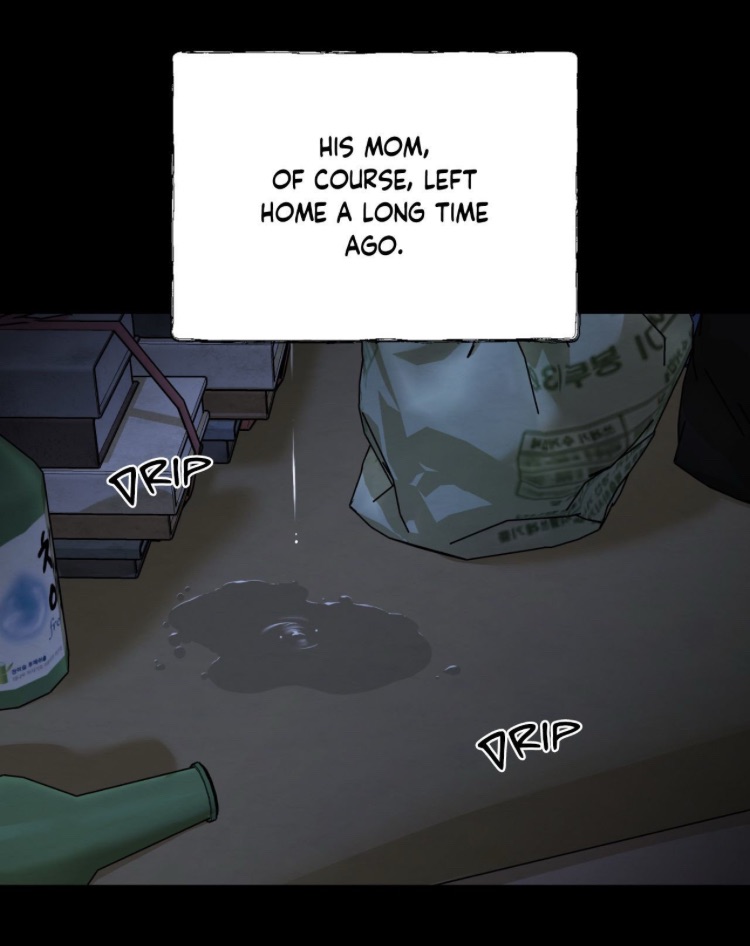 (chapter 72) The use of “of course” suggests inevitability, even justification. He is siding with the mother. His explanation for her departure is the father’s behavior: his abusive attitude.
 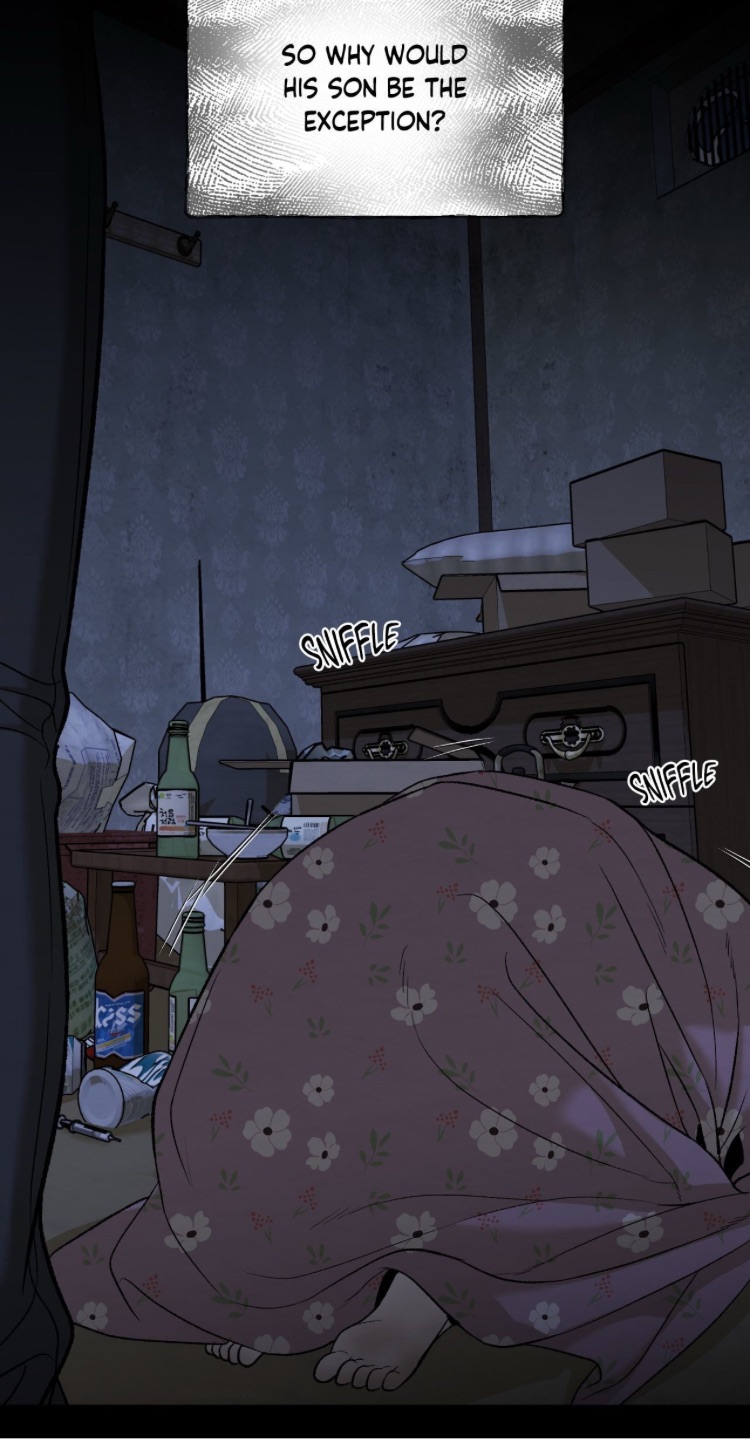 (chapter 73) However, what remains unspoken in this sentence is that she did not just leave her husband—she left her son too. Hwang Byungchul fails to mention this because he, too, is a man who has lived alongside a woman without truly giving her an official recognition. His own mother lived in his shadow, cooking for fighters, breathing life and love into the studio, yet she remained unnamed. Like Jaekyung’s mother, she was reduced to a supportive function. The crucial difference is that Hwang’s mother lived through her son, and stayed until her death.
  (chapter 73) Thus I deduce that the champion’s mother had a different mind-set. Either she had to give up on her dreams because of her husband and the birth of her son or she desired to live through her husband’s success, though I am more opting for the first possibility. However, both ideas have one common denominator: the mother was dependent on the “husband”.
Additional Reflections: The Son as Battlefield
When Jaewoong utters (chapter 73) he’s not merely criticizing his child for being weak or dependent, a loser. He’s targeting the trait he despised most in his wife—her defiance. In my opinion, the protagonist has the same gaze than the mother. And this is how the main lead looked at his father, when he argued with him. 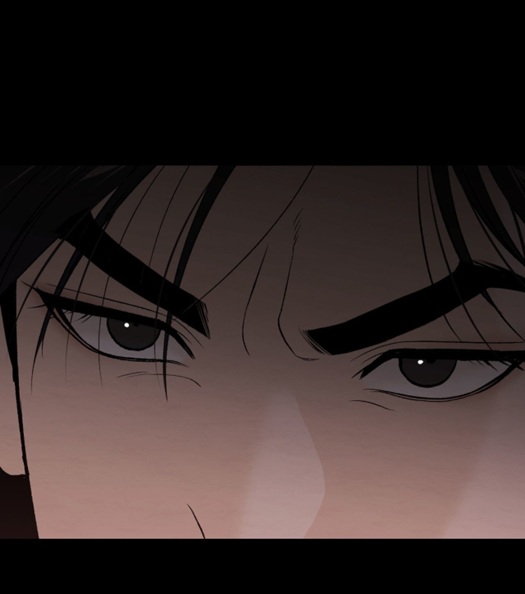 (chapter 73) Under this light, it becomes comprehensible why the man would avoid to meet his wife’s gaze and why the author hid Joo Jaekyung and his mother’s gaze in the last memory from Joo Jaewoong. Her gaze was for him painful, full of rejection. Consequently, I think that when Mingwa created this image for the champion’s birthday
  , she was revealing the arrival of the mother and her traits in her son: humbleness, water, darkness, a daring gaze and uncombed! But let’s return our attention to Joo Jaewoong and his vision:
  (chapter 73) This reproach is loaded with bitterness. He does not say this to demean the mother’s passivity; he says it to denounce her strength, her independence, and the wound she left behind by leaving him. But wait… I described her as dependent before. How do we explain this contradiction? His pride was shattered not because she was helpless—but because she made him feel useless. Joo Jaekyung is like his mother because he is earning his own money. He is the one “feeding” the father
 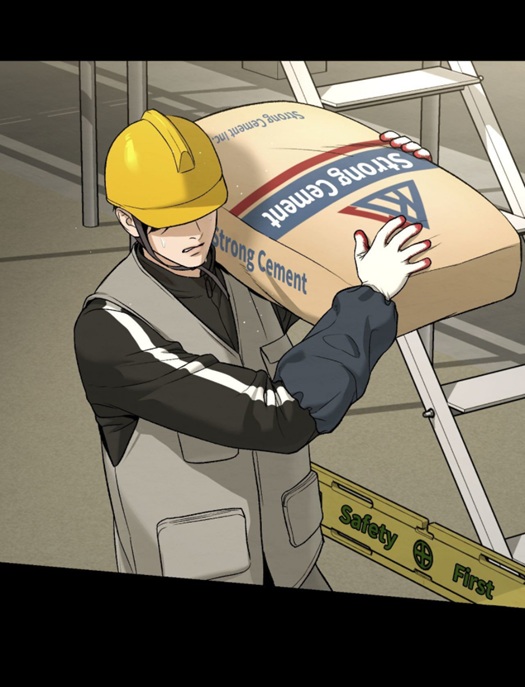 (chapter 73), cleaning the house. He felt like a kept man, emasculated by the very woman he expected to serve him. That’s why he says this to his son:
 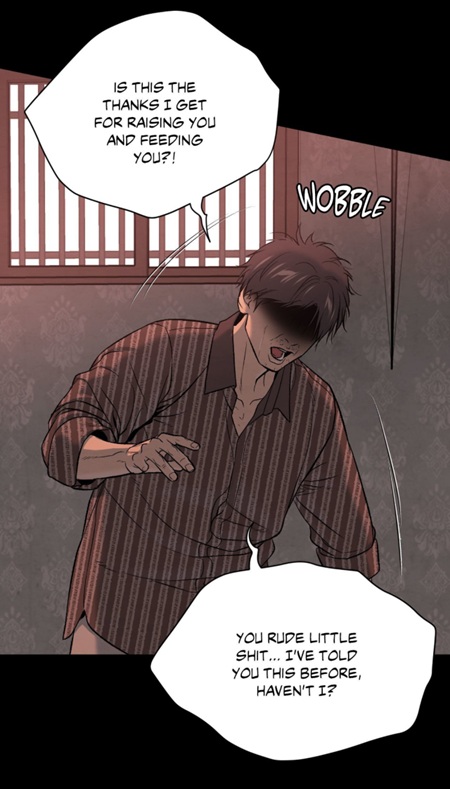 (chapter 73) He is clinching onto this image as the breadwinner and head of family. Thus, this sentence “You are your mother’s son, after all” becomes not a factual statement, but a projection, meant to degrade both wife and son by branding them as disloyal, ungrateful, and disobedient.
It becomes clear that the former athlete had a patriarchal mindset.  (chapter 72) He desired to be greeted properly, to be recognized as the head of the family. However, this is how the loser’s mother acted, when he returned home. (chapter 73) She would say nothing, and show him the cold shoulder. And that’s exactly what the son often did. He turned his back to him.
  (chapter 73) He didn’t greet him either and avoided to talk to him (points of suspension). This could only infuriate Joo Jaewoong, as the latter felt as a failure and denial of being a husband and father. And now, you comprehend why I see this picture as the evidence that the champion’s mother chose silence and cold treatment to express her thoughts and emotions. In my eyes, she was acting the same way than our “hamster” in season 2: depressive, yet distant, rebellious and resistant to Joo Jaekyung.
| Chapter 61 | Chapter 62 | Chapter 64 |
|---|---|---|
  It is no coincidence that the main lead has a similar vision than his own father about the mother. It is no coincidence that the main lead has a similar vision than his own father about the mother. |  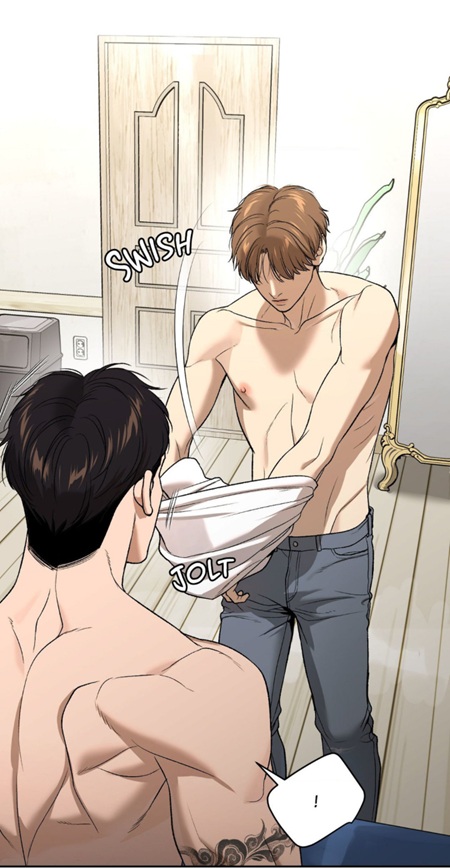 | 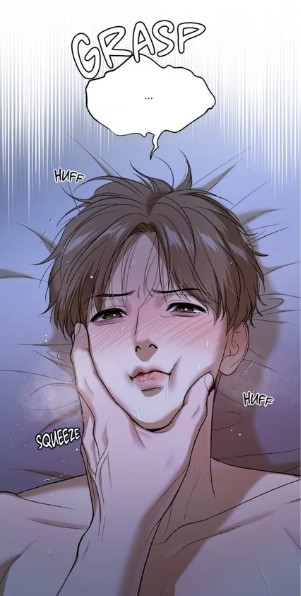 |
They might have had sex, but it was no longer connected to love and support. At some point, there was nothing left between them except the child. The latter became the symbol of their past union. The problem is that with his birth, their relationship could only get affected negatively. At that moment, there was a third person to take care for the mother. So the father resented the boy, as the latter not only was receiving her support, but also he resembled to his mother, especially his gaze. The abuse was the expression of his fears, pain and powerlessness.
The man’s dream was to escape poverty and leave this place. It was never about giving support and love to his wife. He saw her just as a tool to boost his ego, he hoped to see in her gaze “admiration and gratitude”, but reality crashed in. He failed and probably saw tears! So the moment his career as boxer was ruined, the man had nothing to give to his wife, but he could only see resent, the more time passed on. (chapter 73) And here it is important to recall the cause for the separation of our famous couple in season 1:  (chapter 51) Lack of trust and faith from the champion and the doctor! Both didn’t truly talk to each other. Their relationship was based on silence, power and mistrust, thus both chose not to talk about the meeting with director Choi Gilseok. But since reality is complex, we have to envision that absence of recognition and gratitude played a huge role in their failure as well. Why did the director’s mother remain by her son’s side and support his dream? It is because she believed in him. She loved him unconditionally. Hence I am inclined to think that one of the causes for their marriage was the lack of trust in each other, for the affection was rather conditional. I am also suspecting that the woman was always excluded from important decisions as well.
In my latest essay Following The Teddy Bear (part 2), I had made a connection between the mother and water, in particular swimming. And maybe the unknown woman was also an athletic person (swimming), but due to her husband, she was forced to give up on her career and dream. However, since the man’s career ended in a bad way, it is clear that they needed money. Thus it came to my mind that the woman could be related to water differently. She could have been working as a cleaning lady. My avid readers will certainly recall how the cleaning lady not only helped the champion to clean the house,  (chapter 55), but she gave him the necessary push to reconnect with doc Dan.
 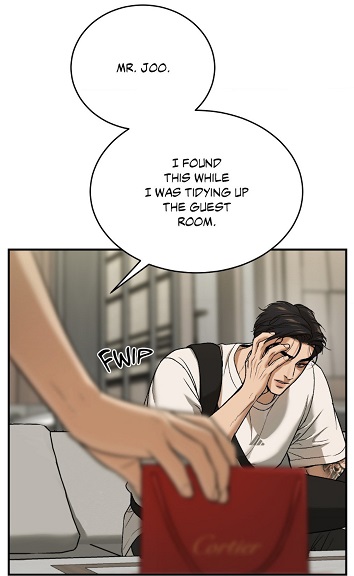 (chapter 55) In this scene,
  (chapter 55) we can detect similarities with the former home from the main lead:
  (chapter 72) greeting versus absence of greeting; respect versus abuse; birthday present (according to me, the t-shirt with the teddy bear was a present from the mother), alcohol, bags of trash and “departure”! Thus I came to the following deduction: the mother must have taken odd jobs too, similarly to her son and doc Dan, because she couldn’t have followed her “dreams”. having been forced to give up on any personal dreams. Her reality, like theirs, was one of survival, not self-fulfillment.
But the resemblance doesn’t stop at circumstances. It runs deeper, to the body itself. In my interpretation, the mother’s most vivid legacy was her gaze—alert, watchful, emotionally alive. 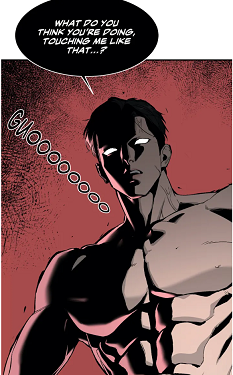 (chapter 1) . And now, compare this to the 26-year-old champion standing beside his father. His face mirrors the father’s almost exactly (jaw,nose), except for the eyes.
 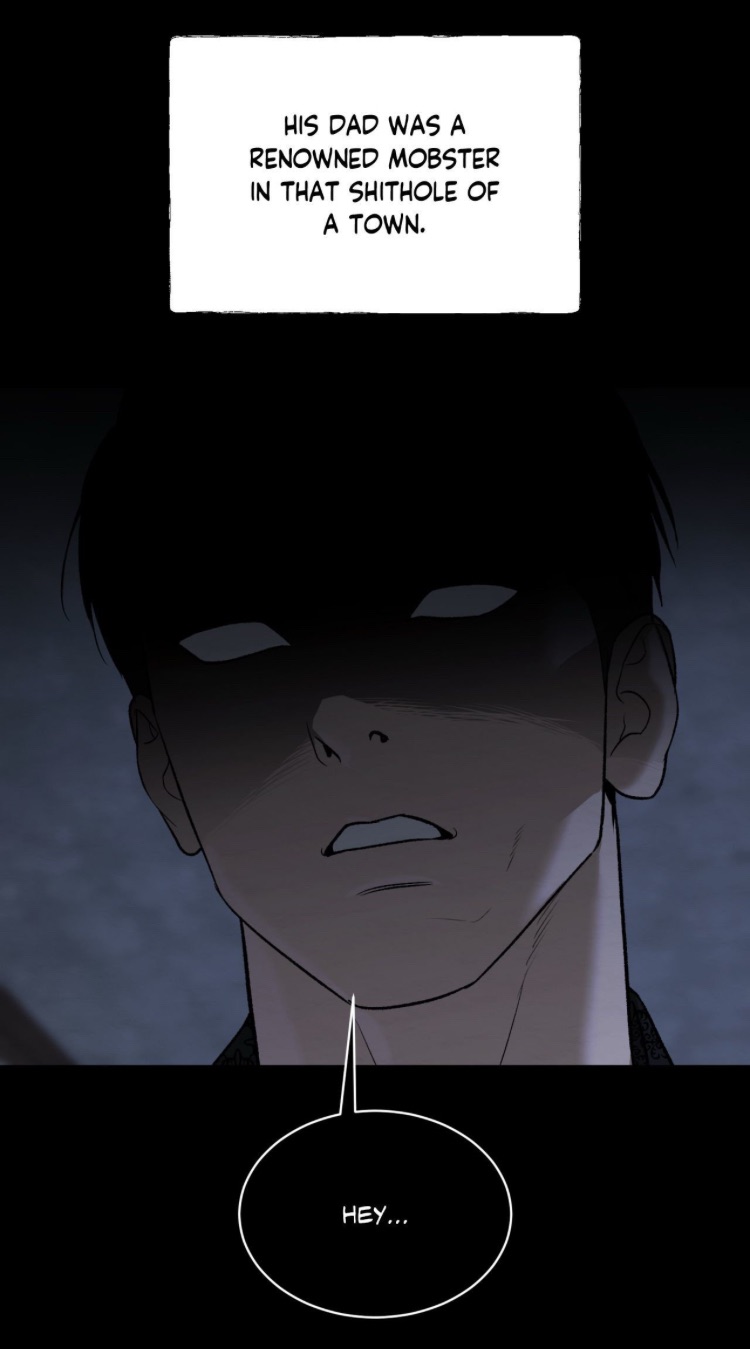 (chapter 72) That contrast is crucial. The difference lies not in bone structure, but in soul. And that difference, I argue, belongs to the mother. He is his mother’s child in spirit! However, with the loss of his father, the light in his light vanished.
 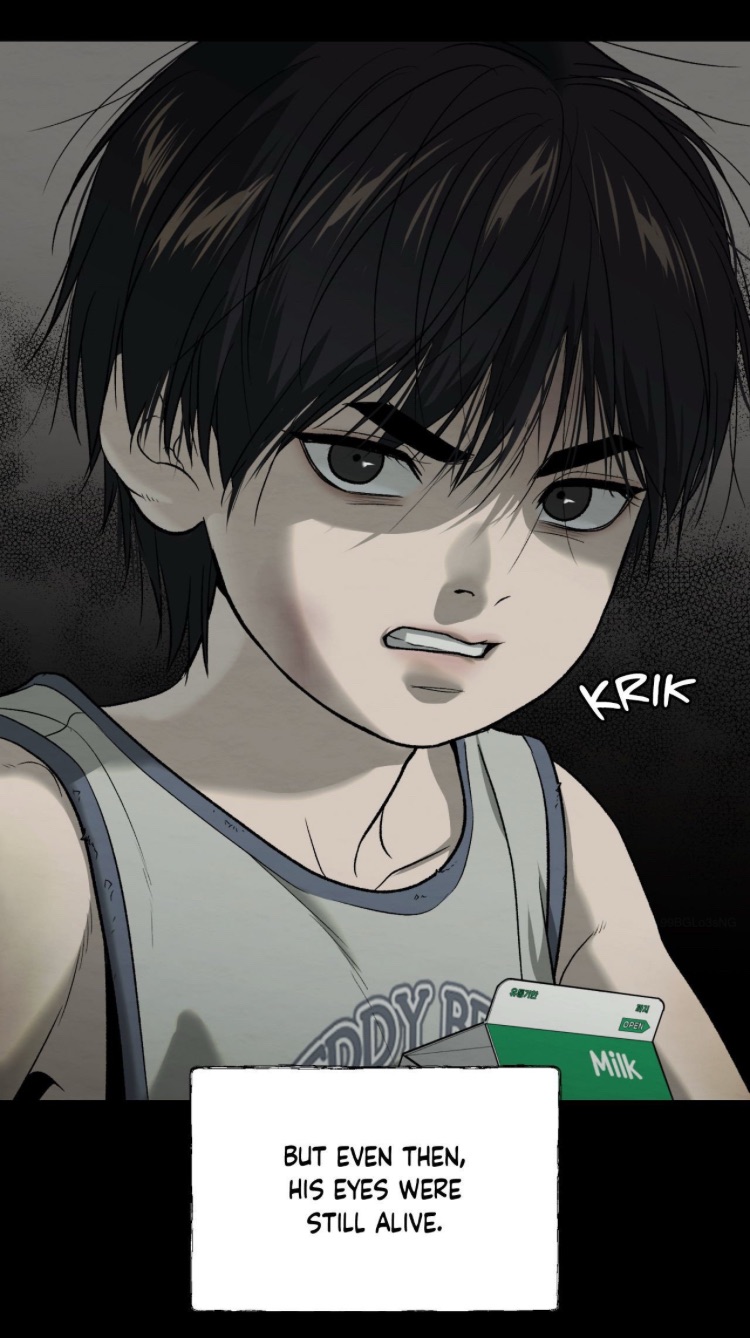 (chapter 72)
Yet even this connection carries a tragic twist. When the mother saw her son—clinging to her emotionally, even dependent on her—what did she see? A child? Or her husband? A younger version of the man who had failed her, and after 4 years the boy is expressing the same dream (chapter 72), even including the father in it? If so, it is possible that she recoiled. That her emotional detachment was born from the shock of recognition: he’s his father’s son after all. In this moment, she projected her disillusionment and weariness onto her child, just as the father did later. But she chose silence and absence.
And so we arrive at a cruel realization: Joo Jaekyung was never truly loved as a child—not for who he was. Thus he was never kissed and caressed by his mother. He was not perceived as a child at all. He was perceived as a mirror. The father saw in him the ghost of the woman who left. The mother saw in him the man who kept her trapped. Rather than embracing him, both projected their wounds, failures, and fears onto him. He was never held—only reflected. Jaekyung became the battleground of their broken marriage.
This emotional weaponization may explain why Jaekyung later developed such difficulty with attachment. His childhood was not just one of neglect, but of symbolic combat. He wasn’t raised; he was fought over—and ultimately abandoned.
A Reproach That Echoes Her Absence: The Father’s Words and the Mother’s Shadow
(chapter 73) This line is the only time the woman is directly mentioned in the father’s final confrontation with his son. And yet, it may be the most revealing statement in the entire chapter. Spoken with a sneer, this sentence condenses years of resentment, disappointment, and projection into one bitter accusation. He is not simply blaming his son—he is reliving the pain of his wife’s departure.
In this moment, the father equates failure with femininity, abandonment, and weakness. When he tells the boy he “won’t make it out of here,” that he will “never succeed” and “live a shitty life like the rest of us,” (chapter 73) he is not just dooming the son to failure—he is projecting his own failed aspirations and the perceived betrayal by his wife. His words are venomous, but they are not neutral truth; they are saturated with grief and bitterness.
The line “You are your mother’s son” weaponizes the boy’s maternal connection, transforming it from a source of comfort into a symbol of disgrace. And yet, this insult is revealing. It tells us how the father interpreted his wife’s actions—not as an act of survival, but of disdain and betrayal. In his view, she tried to escape poverty and failed. She used him, the boxer, as a ladder to a better life, and when he fell, she left. And even after she vanished from the household, she never managed to sever ties completely. The phone remained a bridge. Her role (mother) was never erased—but neither was it ever spoken. She was both gone and still there, unreachable yet always present in the father’s imagination, as a wound that never closed.
But here’s the tragedy: the father’s judgment may not be rooted in fact, but in projection. The notion that the woman tried and failed to transcend her station rather reflect his own failed dreams. Perhaps he, too, hoped boxing would lift him out of their grim neighborhood. And when it didn’t, he expected his wife to stay and support him no matter what —but she didn’t. She had her own breaking point. Her vanishing, then, becomes both a cause and a consequence of his ruin. She left, and he never recovered.
Thus, his reproach becomes a twisted echo of everything he never understood. In the boy, he sees the mother’s ghost: her silence, her detachment, her refusal to help him shoulder his failure. He doesn’t see a child—he sees a reminder. That’s why he resents the boy. He does not relate to him as a father would to a child, but as a man abandoned and betrayed by a woman, now faced with her embodiment. Thus he abused him physically and verbally. He was trash like the mother  (chapter 54), who used to clean the house and carry the bags of trash outside.
In the father’s eyes, the mother ceased being his wife or companion. She became “just the mother”—a role that, in his mind, usurped her loyalty to him. She prioritized the child, not him. And when she vanished, the son remained, an unwelcome legacy of their broken bond. Her absence redefined the household—she had withdrawn not only physically but emotionally. In the end, her disappearance wounded the father more deeply than he admits. He lashes out at his son because he cannot lash out at her. The boy became the scapegoat for a love that turned to ash.
And in this way, the mother’s absence shaped both men—one into a ghost, the other into a fighter.
The mother’s invisible hand
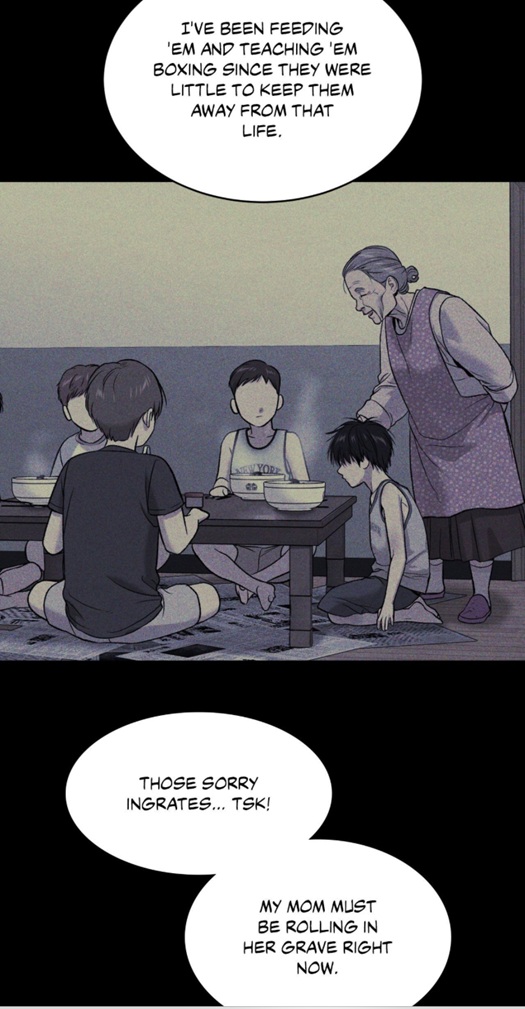
But I also believe that the mother was mentally unwell. How so? First, it is important to recall how the little Teddy Bear lived after his mother vanished. (chapter 72) The place was so dirty, full of garbage. Nonetheless, observe that most of the trash had been gathered in bags which were not brought outside. And now take a look at the place 10 years later: 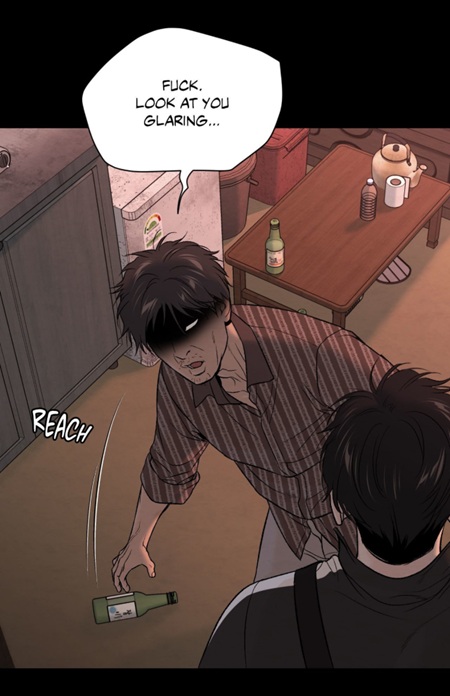 (chapter 73) The place is clean, there’s barely waste on the floor, the books are still wrapped together at the entrance. But who removed the bags and mopped the floor? Naturally, the main lead. One might say that he learned it from the boxing studio and the director’s mother. Nevertheless, it dawned on me what had happened 20 years ago. The mother had stopped cleaning the place, she no longer cooked either… she gathered the waste in the bags and left them there, as if she wanted her husband to bring them outside. As you can see, I see the dumpster as her way of expressing her unwell-being (depression, resignation) and her protest against Joo Jaewoong. She felt so burdened that at the end, she ran away.
Thus it is not surprising that the former mobster criticizes his son for resembling his mother. He has not only taken over her role in the family (cleaning the house, working etc…), but also her habits, turning his back to his father, when he sees him… avoiding a conversation with him. Naturally, don’t get me wrong. I am not accepting the father’s behavior, but I believe that the failure for their marriage was not simply the result of the father’s abusive behavior… It was the result of an imbalanced relationship and lack of communication which created a vicious circle. Like I have already pointed out before, life is complex, so are humans. Blaming the father for everything was not right. Hwang Byungchul blames the former boxer, overlooking the strong link between this sport and criminality. Besides, he judged the family from the outside. He saw the bruises on the boy, but he never visited their home and saw the garbage there. (chapter 73) Additionally, he never wondered why he hadn’t seen the little Jaekyung before, though they were neighbors. It was, as if the mother had refused to leave the house for a while. Based on the father’s words, even after the mother had left the place, it seems that she didn’t lead a better or happier life. And the son is no longer talking about the mother either. It is just about leaving the “place”. The former director assumed that abuse was the reason for her departure, an interpretation which the protagonist adopted later:  (chapter 73) However, like mentioned above, their toxic relationship played a role. Another is money. Observe how the the 10 years old boy added right after: (chapter 72) He’ll work hard and earn a lot of money. Let’s not forget that the man was gambling and drug-addicted.
 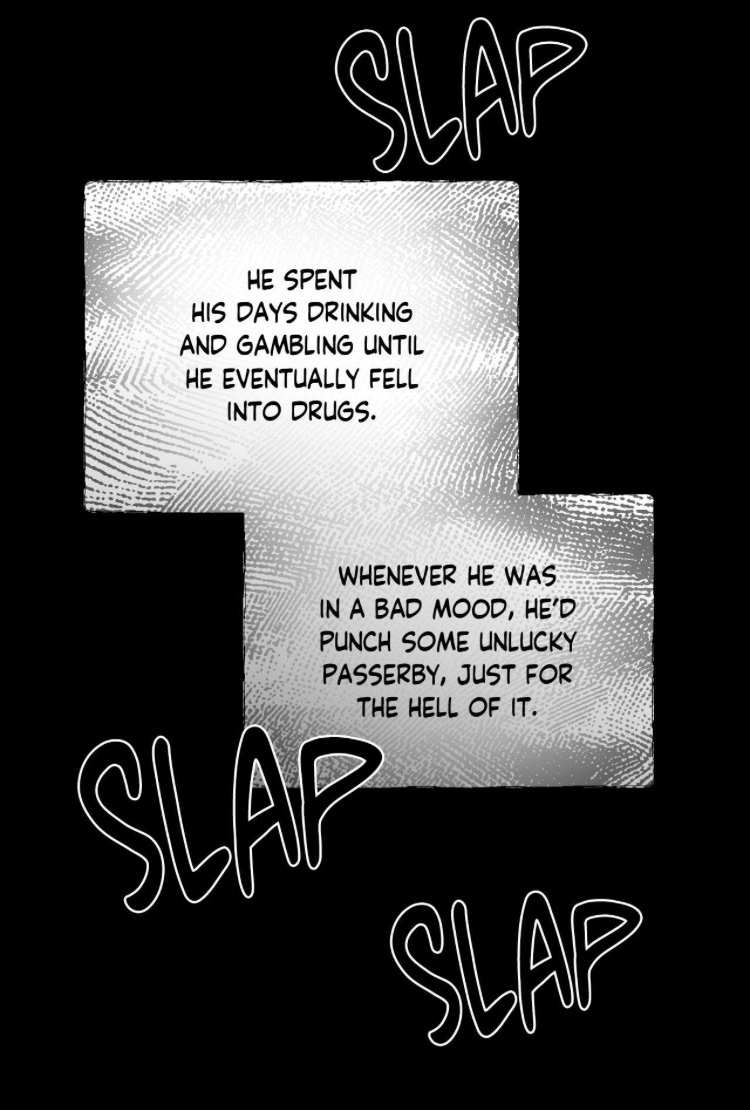 (chapter 72) She didn’t want to support such a behavior. It was like filling a bottomless jar. Since the man seems not to have listened to her, the only thing she could do was passivity and silence. Yet, in Jaewoong’s memory , (chapter 73) she doesn’t just disappear; she lingers, infecting the atmosphere with her silence, her perceived betrayal, and her withdrawal. Her absence becomes toxic not because she is gone—but because she never truly said goodbye.
And if this theory is true, the symbolism of the mother working as a cleaning lady while leaving her own home in filth is quite telling. She was never allowed to cleanse her own life—she simply gathered the trash and left it behind. She cleaned for others, but not for herself. Her job becomes a tragic irony, echoing her own inability to “take out the trash” of her marriage. She was stuck in a role she couldn’t escape.
Breaking the Pattern
And since Joo Jaekyung resembles to Jaewoong, I deduce that in season 1, the champion mirrored his behavior. Why? It was, his way to mourn his father… to keep his image alive, as he blamed himself for his death. His pride and happiness for winning the tournament  (chapter 73) became his curse, as his dream had become a reality.
  (chapter 73) The father had died, but the boy cared for his dad despite his flaws. He had loved his father unconditionally. And it is clear now that Joo Jaekyung blames himself for his passing and his harsh words before his overdoses. And how was Joo Jaekyung acting towards Kim Dan in season 1? He was not only denying his feelings, but also expressing jealousy
  (chapter 7) and possessiveness.
 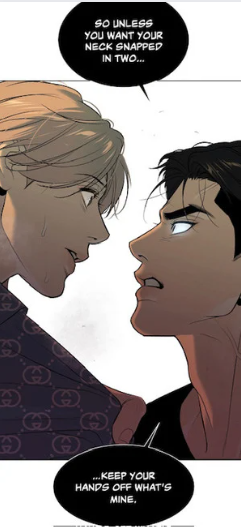 (chapter 34) I had already portrayed the ghost as a person suffering from narcissistic personality disorder, and since the ghost shares common traits with the father, I am assuming that the father is the ghost. Jaewoong’s narcissism was not simply paternal in my opinion.
 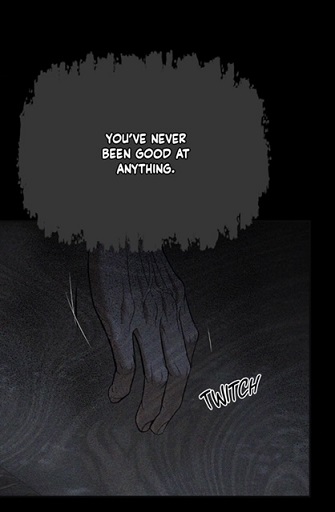 (chapter 54) I believe that it was also possessive and romantic in its jealousy. He wanted control, loyalty, and gratitude, but never offered love in return. He must have treated the wife the same way. That’s how the mother got almost broken. And observe how the main lead tried to control his lover’s time and professional life.
  (chapter 31) He didn’t support him to become independent professionally. That’s why I feel like the insecure boxer must have acted the same way, not allowing his wife to become successful in the end.
However, unlike his father, Jaekyung begins to break this pattern. He offers protection, support, even silent care—before he knows how to ask for love in return. When that bond was shaken in chapter 51,  (chapter 51) it’s not betrayal he reacts to—it’s the shattering of fragile trust, inherited from a family that never taught him what trust meant.
  (chapter 54) Is it a coincidence that in his nightmare, his loved one was looking back at him? No, the doctor was acting the opposite from the champion’s mother: (chapter 73) he is not only looking back, but also asking a question. He is also seeking communication and expressing his feelings. He has a face… a sign that he is special. This image oozes not only pain, but also love and trust!
What we see unfolding is a quiet revolution. Jaekyung is not becoming his father, but his mother’s son. He is unlearning the cruelty, slowly redefining love as something that doesn’t require submission. And now, you comprehend why I am suspecting that the father might have literally “suffocated” the son’s mother with his behavior. He never offered her assistance and support, it was only one sided. Thus I am assuming that the star will boost Dan’s name, not stifle it. He will support Dan’s independence, not fear it. And eventually, he will speak love—not commands. This is how he begins to undo the inheritance of violence and transform his lineage.
The Gratitude That Was Never Earned
Ultimately, Jaewoong’s demand for gratitude was hollow. (chapter 73) He didn’t feed his son, but he used his position to make such a claim. His statement—“Is this the thanks I get?”—reveals a man who never understood that gratitude must be earned through care, not extracted through fear or obedience. In contrast, Jaekyung struggles with the opposite problem: he gives everything and doesn’t know how to receive. He does not ask for thanks, but he is bewildered by affection, hesitant and unsure.
What we’re witnessing is the evolution of love across generations—from the narcissistic hunger of Jaewoong to the bruised generosity of Jaekyung.
And in that transformation, the invisible mother still lingers, not as a ghost to be feared, but as a shadow to be understood. She is a victim and perpetrator at the same time. And what did the father say to his son? (chapter 73) He was like his mother! But according to me, she was suffering from depression. This means that Joo Jaewoong cursed him to suffer the same mental illness: depression!
The Jinx of Depression: Inheriting the Father’s Defeat
A striking insight from a Lancet article on athletes and depression suggests that those who engage in competitive sports may be even more susceptible to mood disorders and depression than the general population. While physical overtraining can cause exhaustion, it is often the psychological burden—particularly burnout—that proves most damaging. Burnout arises not from sheer physical effort, but from sustained emotional stress and a dangerous mental habit known as goal linking: the belief that happiness and self-worth depend entirely on achieving success, such as winning a championship or escaping poverty.
In this light, the downfall of Jaewoong—the former boxer and father—is recontextualized. His failure may not stem solely from narcissism or fragile ego. He, too, might have suffered from the very condition that later threatens to consume his son: depression. He was not boxing for the sake of the sport, but as an escape route from misery, poverty, and insignificance. (chapter 73) That was his “linked goal.” When he failed to achieve it—when the victories didn’t materialize or failed to provide transcendence—he fell into despair. He was not training with the heart of a true athlete but fighting with the desperation of a trapped man. The drugs became his alternative exit. He gave up the sport not because he lacked strength, but because he lacked the psychological framework to stay committed. He was, in short, jinxed.
But the emotional curse that weighs on the champion does not come from the father alone. The mother, too, shows signs of long-term emotional numbness and psychological despair. Her silence is not only an act of abandonment—it is a symptom. The image of her back turned, the refusal to return, the trash in the house, the passive collapse into invisibility: all suggest that she, too, was suffering from depression. Yet unlike the father, who externalized his pain through aggression and substance abuse, the mother internalized hers. She faded. She withdrew from the family space. Her emotional descent polluted the home not with noise and violence, but with silence, garbage and shadow.
In this sense, both parents were marked by depression—each manifesting it differently. The father’s version was loud, consuming, and openly destructive. The mother’s was quiet, invisible, and slow-burning. Both reacted to stress, failure, to poverty, to broken dreams. Doc Dan combines both types of depression. And both passed on their despair to their son—not genetically alone, but symbolically. He inherited his father’s rage, his goal-linking, and his pride; from his mother, he inherited detachment, emotional restraint, and the silent ache of never being enough.
And this jinx is inherited. Joo Jaekyung is indirectly cursed by his father: (chapter 73) “… you’ll never succeed.” (chapter 73) But beneath this insult lies a more insidious transmission—depression itself. Both parents projected their pain onto him, and now their unhealed trauma threatens to echo in the son. Like his father, the champion ties his happiness to his athletic success. (chapter 73) His life has been structured entirely around victory, money, and symbolic escape. He never developed a concept of joy independent of achievement. The same goal-linking mechanism that destroyed his father now threatens to corrode his own identity.
Thus, the tragedy of Joo Jaekyung is not simply abandonment—it is repetition. His career, forged in rebellion, risks becoming a reenactment. But here lies the narrative tension: will he recognize the jinx for what it is—a legacy of unresolved psychological wounds? Or will he, unlike his father, break the cycle?
Kim Dan holds the key to this transformation, offering not just physical support but an alternate vision of worth. Not victory, but relationship: a long forgotten desire to have a home. Not escape, but emotional presence. Kim Dan is special, though  (chapter 42) the jealous and regretful ex-lover told him otherwise. How did the father describe his son?
 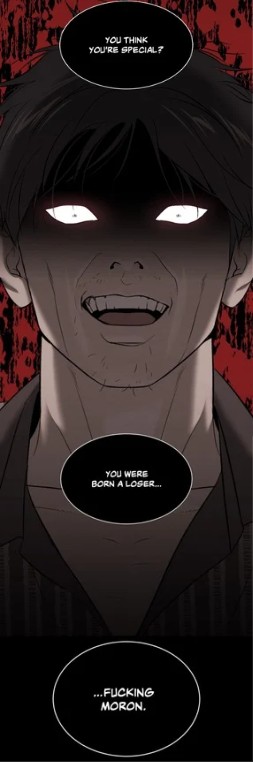 (chapter 73) He was ordinary, nothing special…. Why? It is because none of the parents had said: I love you! So the moment one protagonist confesses his feelings to the other, they will realize that they are special to each other.
This reading reveals that the jinx was never supernatural—it was psychological inheritance: the curse of tying self-worth to unattainable goals, and the inability to live without them. (chapter 73) And the jinx started right this moment, because he was “abandoning the father and the mother”. It was, as if he no longer needed anyone.
The boy she left behind is no longer clinging to a phone. He is walking away from the dump. Not to chase her—but to become someone new. Nonetheless, in reality he became the shadow of his father. 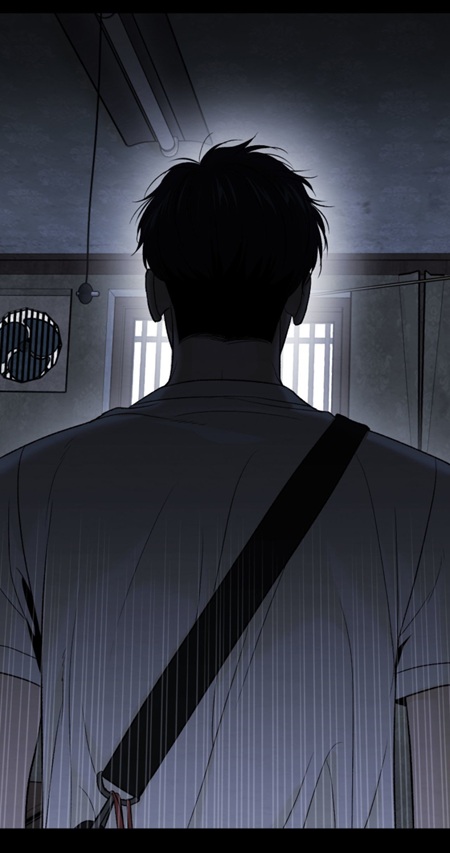 (chapter 73) And because the father is now dead, I am inclined to think that the mother is still alive. I am even thinking that the mother is living in this place:
 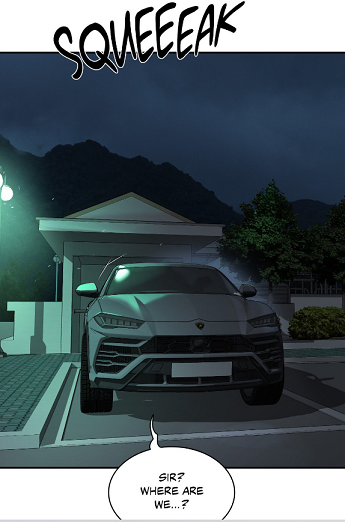 (chapter 33) This chapter stands not only under the sign of jealousy, but also of motherhood due to the number 6. If this theory is correct, then it signifies that he kept his promise. He gave her a place, but he didn’t want to return to her side for two reasons: her abandonment and his guilt concerning the death of his father. As for the mother, I would say… out of guilt and shame due to her “pride”. She knows that she did hurt her son. Naturally, I could be wrong… but I hope if she is alive so that the champion can talk with his “mother”. This will help him to move on. Breaking the silence between them would put an end to his self-loathing and misery
The Heart of the Gym
Since I outlined the importance of invisible support and faith in a couple, it dawned on me why Joo Jaekyung was fated to meet his older mentor and coach. The theme of abandonment does not stop at the domestic sphere—it extends to the professional world of fighting. Hwang Byungchul felt betrayed and abandoned after Joo Jaekyung’s departure for Seoul. But the latter was never his “son”, just a member of his gym. Besides, his gym, once lively and successful 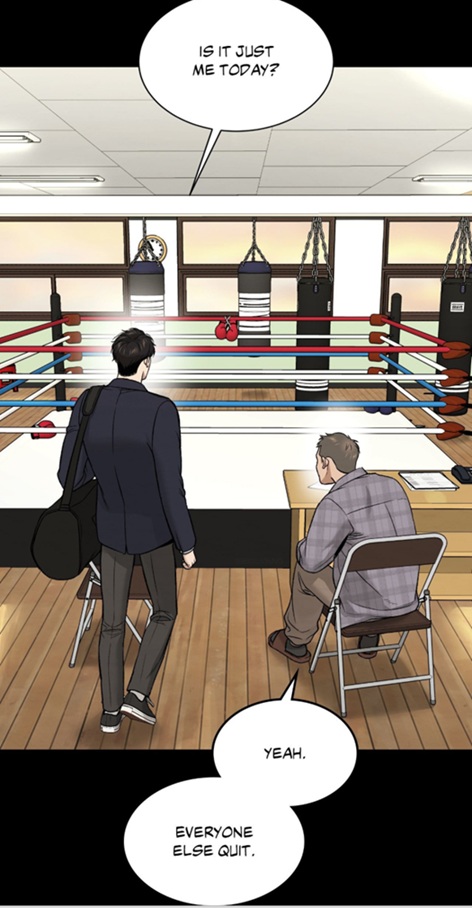 (chapter 73), gradually fell into decline after the death of his mother. She had been its soul, offering invisible support, care, and emotional warmth to the fighters. (chapter 73) But her contributions were never acknowledged officially—her name never even adorned the walls. The director attributed his success to his own guidance, never realizing that the fighters stayed because of the love and food that flowed from her presence. Her death exposed the truth: there was no emotional infrastructure beneath the trophies. And so the gym emptied out—just like the home had.
This same pattern now shadows Team Black. Joo Jaekyung’s gym, founded on discipline and success, is slowly being deserted after his “failure.”  (chapter 52) The gym’s foundation was never trust, fun, or teamwork—it was performance, money and fame. Without victory, it holds nothing. His teammates are not companions; they are shadows. The cycle is repeating: the gym becomes a sterile battlefield, not a second home.
And here lies the tragic irony: the champion has unknowingly recreated the same environment, because he relies on Park Namwook whose personality resembles a lot to the former coach and director. A space without love, only with money. A team without trust. A gym without a heart, until the champion makes the connection between doc Dan and the deceased halmoni! So far, the young man has been projecting the director’s mother 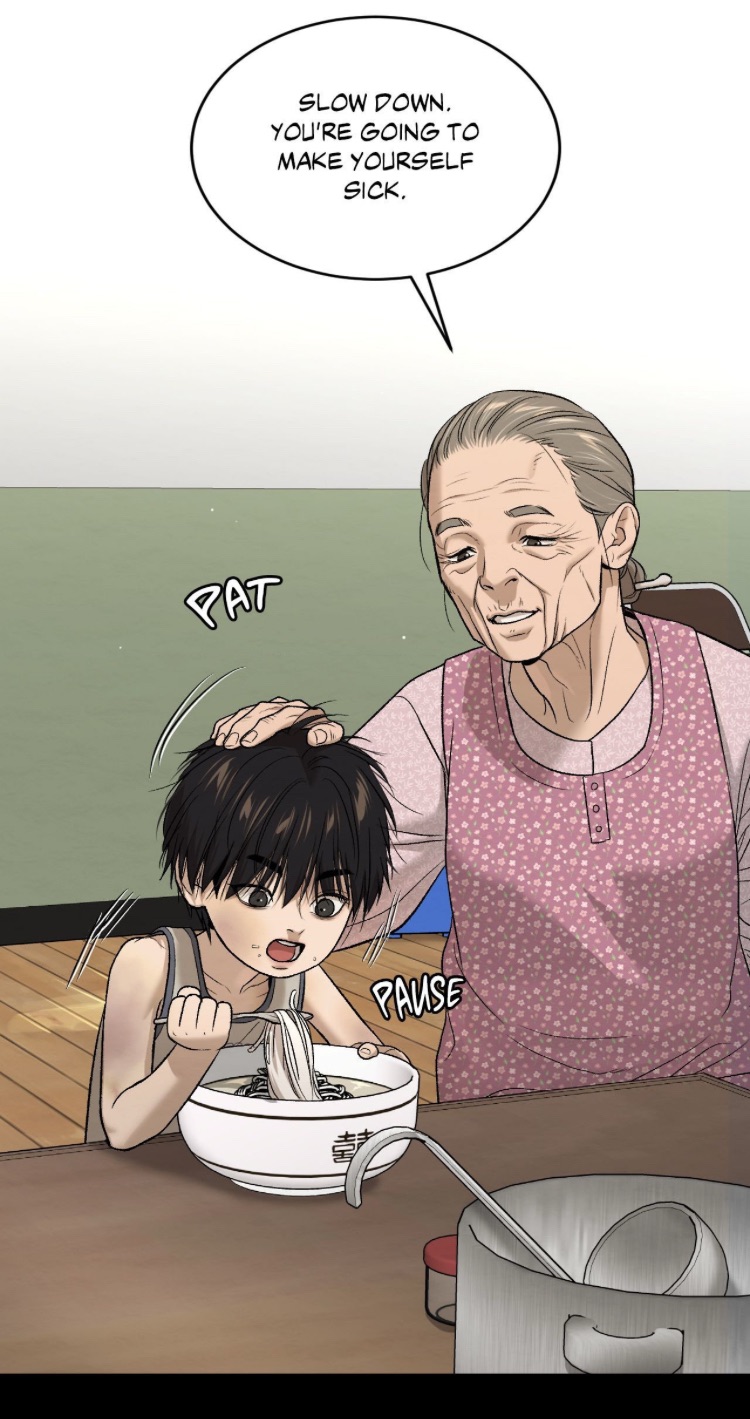 (chapter 72) onto Shin Okja
 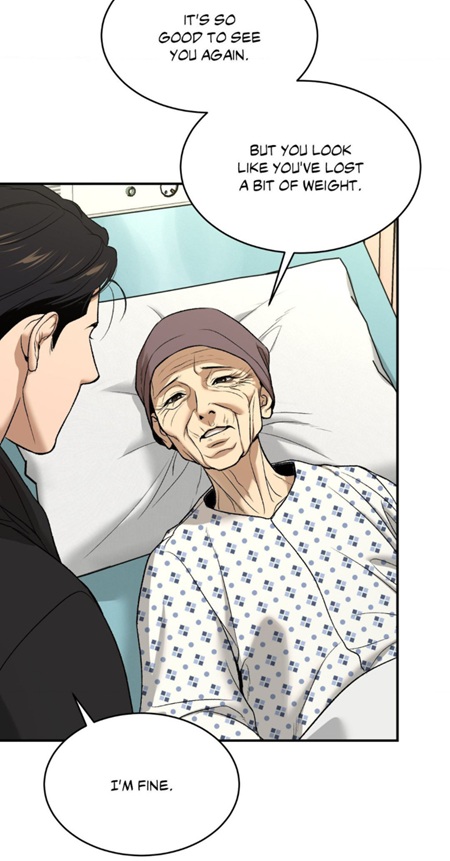 (chapter 61) due to her similarities in age, gender, gestures and words. However, he failed to detect her flaws, as he trusts seniors too much. I guess, it is related to Jaewoong’s death. Nevertheless, it becomes clear that doc Dan had become the soul of the gym:
 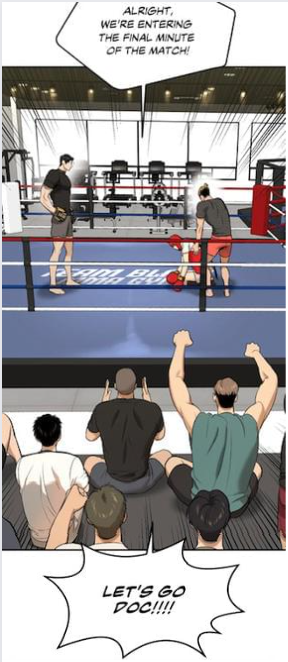 (chapter 26), but the latter was not recognized as a real member of Team Black. Besides, let’s not forget that he was only working for the champion and not Team Black!
Epiloque: The Loser’s Mother revisited
I just noticed that doc Dan was wearing boxing gears!  (chapter 26)
  (chapter 73) This detail, easily overlooked, reveals something poignant—boxing wasn’t just an obligation or a means to survive. It was once a source of joy for the boy, hence his smile is so genuine. In the early years, before it was poisoned by expectation and betrayal, the gloves were a connection—to his father, to his mother and to himself.
But with the death of his father, that connection was severed. The gloves no longer symbolized possibility.  (chapter 73) They became heavy with grief. Yet in Kim Dan’s presence—through his care, his quiet resistance, and even his occasional clumsiness—Joo Jaekyung glimpsed something forgotten. He was able to laugh
 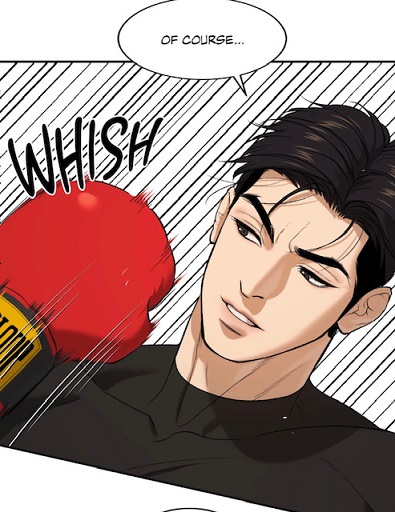 (chapter 26), to play, even to feel embarrassment—emotions far removed from the sterile discipline of professional sport. Through Doc Dan, the athlete briefly recovered his lost passion. Not just for boxing, but for being human.
And so, we return to the title: The Loser’s Mother.
The title was never just about the absent woman. It was about an inherited wound. Both parents passed on something to their son—not strength, not wisdom, but suffering and depression. The father, defeated by his own unmet dreams, cursed the boy to suffer the same fate. The mother, unable to sustain hope or protect herself, vanished into silence. Neither gave him tools for joy—only tools for survival.
But here’s the quiet rebellion: in allowing himself to be cared for by someone like Kim Dan, the champion begins to rewrite the script. He starts to question the legacy of “loser” handed down by both parents. He starts to reimagine the meaning of strength—not as endurance through pain, but as the capacity to love and be loved. The loser’s mother never got that chance. Her story faded into silence.
But her son might still find his voice. He already learned how to support in the shadow:  (chapter 62) So far, doc Dan hasn’t heard what his fated partner did while waiting for his “return from work”.
And maybe, just maybe, the gloves will resurface. But they won’t only be for fighting anymore—they might one day be used to connect, to protect, to teach, or even to hold.
Feel free to comment. If you have any suggestion for topics or Manhwa, feel free to ask. If you enjoyed reading it, retweet it or push the button like. My Reddit-Instagram-Twitter-Tumblr account is: @bebebisous33. Thanks for reading and for the support, particularly, I would like to thank all the new followers and people recommending my blog.

 Bebebisous33s' analyses in K-Dramaland and Manhwas