
Please support the authors by reading Manhwas on the official websites. This is where you can read the Manhwa: Jinx But be aware that the Manhwa is a mature Yaoi, which means, it is about homosexuality with explicit scenes. Here is the link of the table of contents about Jinx. Here is the link where you can find the table of contents of analyzed Manhwas. Here are the links, if you are interested in the first work from Mingwa, BJ Alex, and the 2 previous essays about Jinx Following the Teddy Bear (part 1) and Following The Teddy Bear (part 2)
It would be great if you could make some donations/sponsoring: Ko-fi.com/bebebisous33 That way, you can support me with “coffee” so that I have the energy to keep examining Manhwas. Besides, I need to cover up the expenses for this blog.

I have to admit, the ending of chapter 73 caught me by surprise. I never expected that the father would die like that — so abruptly, without proper redemption or resolution. Of course, I had long wondered how much longer such a drug-addicted man could survive. But chapter 72 seemed to suggest that he had managed to control his addiction. After all, we saw Joo Jaekyung mentioning his father to his mother—four years after the past events—implying the man hadn’t vanished but had remained in his son’s life.  (chapter 72) In fact, he stayed by his side for exactly ten years after the vanishing of the mother.
How do I know this?  (chapter 73) In chapter 73, Joo Jaekyung is shown as a first-year high school student—meaning he was sixteen. I suspect this turning point occurred in May, since the earlier fight happened on May 16th.
  (chapter 72) Additionally, the tournament he won was the 17th boxing competition
 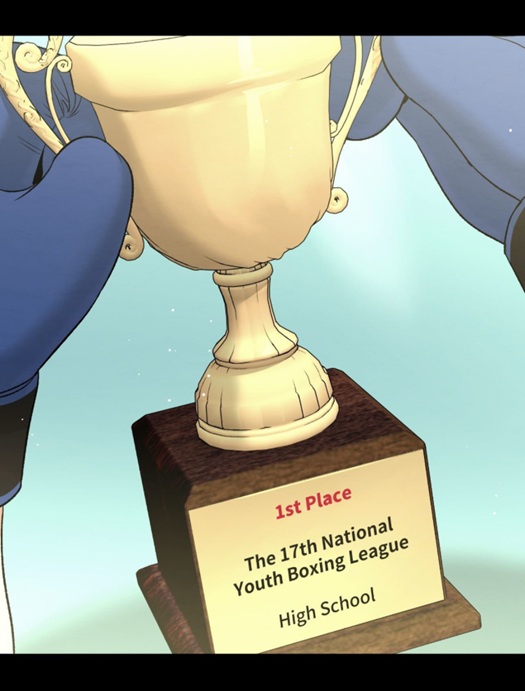 (chapter 73), suggesting he had likely participated from the very beginning of the event’s history. This places his debut—and symbolic birth as a fighter—at the very origin of the tournament itself.
But you might be wondering: why focus on the father and a boxing event when this essay is titled The Loser’s Mother: Fragments of a Mother?
The reason is simple. In this story, you cannot isolate the mother from the father—or from boxing. The three are intertwined in the champion’s childhood. 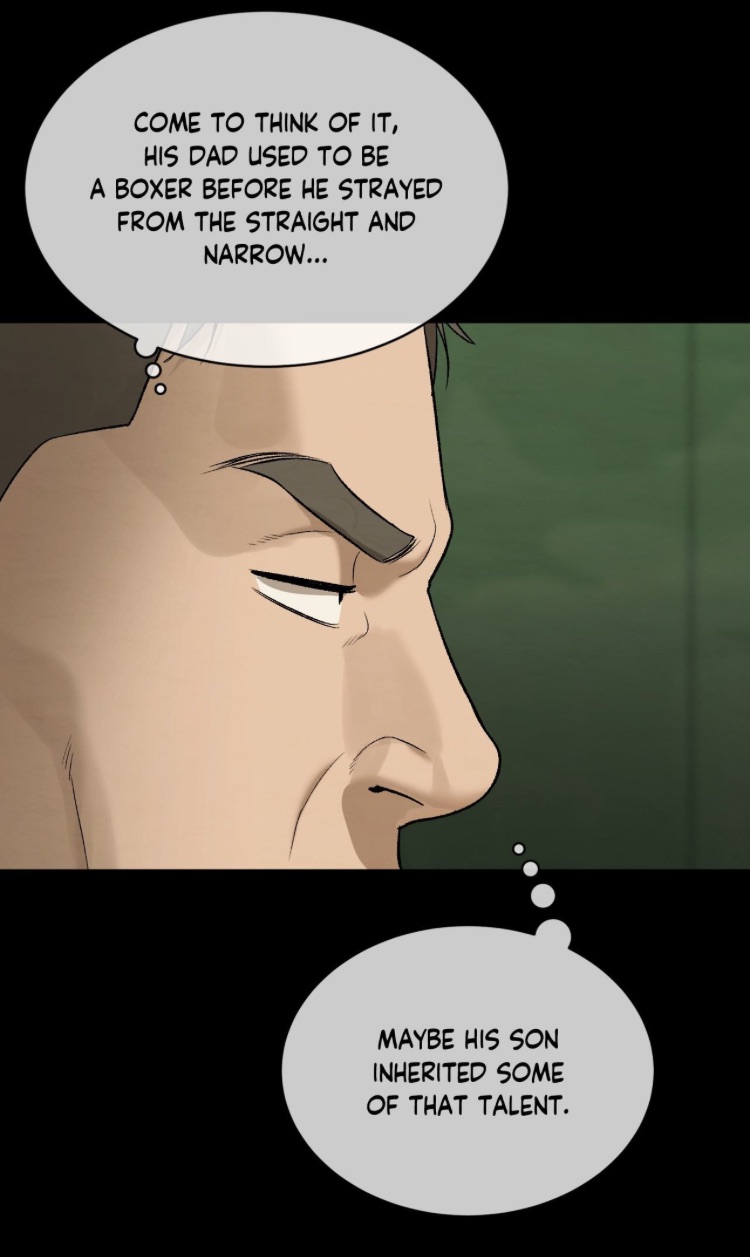 (chapter 72) This becomes painfully clear in the call to his mother, when young Joo Jaekyung promises to become strong,
 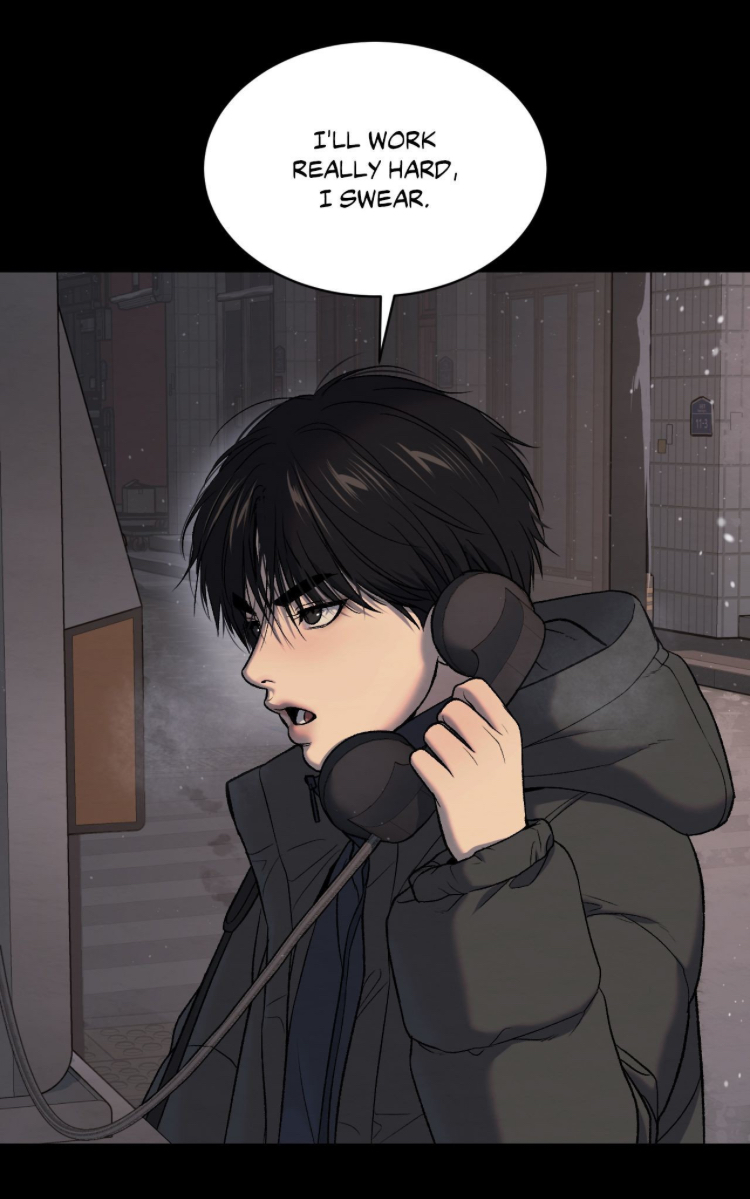 (chapter 72) to earn a lot of money, (chapter 72) so that they can have a home again where they can live together again. However, his dream of family is not separate from the ring, as he is envisaging that boxing will bring money.
  (chapter 73) The gloves are not just weapons—they are offerings, hopes, and wounds stitched into the fabric of his fractured household. Yet, the confrontation with his father marks a quiet but decisive shift.
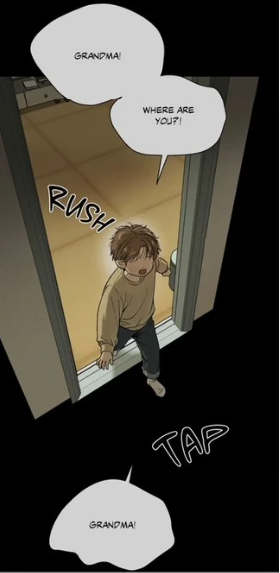
In the past, the young Joo Jaekyung still envisioned the broken home as something worth saving—worth returning to— (chapter 72) if only he became strong enough. He believed his strength could reverse abandonment, mend silence, and bring his mother back. But now, in chapter 73, his dream has changed: (chapter 73) His words carry more than resentment—they signal resignation. The house is no longer a potential home, but a “dump”.
The father, once tolerated as a condition for reunion, is now a burden to flee. He is like a trash to be left behind. His intentions reflect the past: his mother had also left the garbage site. Over those ten years, the boy had come to accept an unbearable truth: that his mother was not simply absent—her silence had become indistinguishable from rejection. The longer she stayed away, the more her distance hardened into a perceived refusal to return to him. She didn’t just disappear—she left him behind. And by choosing not to return, she left him behind a second time, confirming his worst fear: that her silence was not weakness or helplessness, but rejection. Thus in his declaration that he will leave the house, the mother is conspicuously absent. He doesn’t say he will find her, or that he hopes to reunite with her. She is no longer the destination. This silence marks a definitive shift. The child who once saw boxing as a way to earn her return now sees escape as the only goal. The mother has faded from his future—not because he forgot her, but because she abandoned the role he once gave her: the symbol of “home”. What caught my attention is that in chapter 73, that vocabulary has changed. He no longer speaks of home—instead, he calls it a house, and not just any house, but a “dump.” This lexical shift is not accidental. The warmth has evaporated. Home—as a dream, a bond, a promise—is gone. All that remains is a shell, a building filled with ghosts.
This change in terminology also reflects the birth of his rootlessness. His decision to leave is not driven by a desire to return to someone, but by a need to escape something. His words give the impression that he no longer has an anchor—no person, no place, no dream of a family to tie him down. The loss of “home” is also the loss of belonging. Only Hwang Byungchul’s principle remains valid: 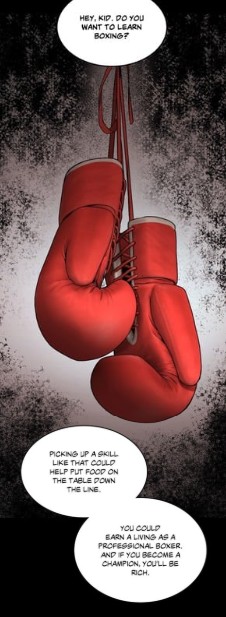 (chapter 72) And now, you know why the man was left behind and not contacted. Joo Jaekyung seems to, from this moment onward, emotionally homeless, unaware that his attachment to his father is still existent. Moreover he is forgetting his friendship with Hwang Byungchul. His words don’t truly reflect reality.
To conclude, the mother’s absence is no longer felt as a loss to be mourned, but as a reality to be adapted to. Her role as “symbol of home” has been erased—not just by her physical departure, but by the long silence that turned her into a stranger. Joo Jaekyung may leave the house, but the absence of home will haunt him far longer.
And yet, even in her absence, the mother continues to haunt this story. Not as a physical presence, but as a fractured silhouette—reflected in silence, in resentment, in projected guilt. We never truly see her, only her back. Instead, she is revealed in fragments: in the champion’s longing and disillusionment, in Hwang Byungchul’s evasive commentary, and in the flickering memories and reproaches of Joo Jaewoong and in the protagonists’ behavior. The Loser’s Mother lives through the behavior of others, through the narratives others impose on her, through the roles she is forced to occupy without ever being asked. This essay is an attempt to trace those shadows, to piece together the story of a woman who remains invisible—except through the pain she left behind.
A Fragment of a Mother – Her Back, Her Silence
The only direct visual glimpse we get of the champion’s mother is a scene in which she is holding her child. However, Jinx-philes only gets to see the back of the woman 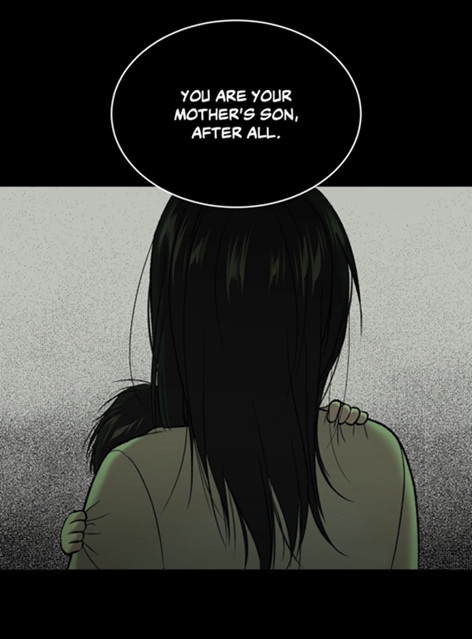 (chapter 73), hence her face remains first hidden. This image represents a memory from Joo Jaewoong, I would even add, this is the last time he must have seen her before her vanishing.
At first glance, it may seem like a moment of maternal tenderness, but on closer inspection, the image tells a more unsettling story. The mother is not actively cradling the boy. Instead, it is the child who clutches the fabric of her shirt, gripping as if he fears falling from her arms. The imbalance in their body language suggests a desperate, one-sided bond: the child seeks connection, while the adult appears emotionally absent.
Her posture reinforces this interpretation, if we compare it with the halmoni’s.  (chapter 65) Unlike Kim Dan’s grandmother—who is shown gazing downward at the baby she holds, visibly burdened yet emotionally present—the champion’s mother stares straight ahead. (chapter 73) She does not look at her son. This lack of eye contact signals emotional disengagement, not only from her child but perhaps from herself. Her slumped posture, loose clothing, and unkempt appearance evoke neglect, resignation, and even depression. She is not merely overwhelmed; she seems already halfway gone, erasing herself quietly from the role of mother even before her physical departure.
This subtle yet haunting visual speaks volumes. The boy’s need is visible; so is the woman’s withdrawal. This is the last trace of Joo Jaekyung’s mother in his household. And it is not a memory of love—it is a memory of pain, loss, resignation, and unspoken protest.
Her posture alone tells a story. There is no confrontation in her body language, no rage or dramatic departure. She is simply turned away. This act of turning her back functions on multiple levels: she is turning away from her abusive husband, yes—but also from her role as caregiver, from her child, and ultimately from her own life. The lack of eye contact reinforces this interpretation. In both psychological and cinematic language, the absence of eye contact is synonymous with emotional disengagement. Her refusal to face her son becomes her quiet yet devastating form of abandonment.
The nameless Mother
The texture and tone of the illustration deepen the emotional impact. (chapter 73) The background is rendered in muted, almost sickly hues—brown, beige, dirty green—which evoke a feeling of stagnation, discomfort and neglect. The lighting is dim and diffused, suggesting a home without warmth or vitality. It was as if the darkness wasn’t just filling the space—but emanating from the mother herself, as though her quiet despair had begun to pollute the air. Her presence lingered like a fog, thick and suffocating, long before she ever left. The child’s instinctive reaction—to cling to his mother—doesn’t offer her comfort, nor does it ground her emotionally. Instead, it underscores their disconnect. His need is palpable, but it does not reach her. Her body remains inert. This observation reinforces the idea that her emotional withdrawal is already contaminating the bond between mother and son. He holds on tighter because he feels her slipping away—not just physically, but emotionally and spiritually. The shadow isn’t something he escapes by clinging to her—it’s something he’s already inside of. It has become the air around him.
It’s important to recognize that this image is filtered through Joo Jaewoong’s perspective. The reader is not given a neutral memory, but one shaped by bitterness and abandonment. From the father’s point of view, the woman is no longer his companion—she has ceased to be his wife, hence she oozes no sex appeal. The framing of her back, her limp posture, and her silence reflect not only depression or resignation, but also his perception that she has emotionally defected. In his wounded eyes, she has transferred her loyalty: she now clings only to the child. Her identity is reduced to a single role—that of the mother. What he once saw as a partnership is now a hierarchy where he feels discarded. She is no longer “his,” and the child has become both the reason and the proof of her emotional betrayal. However, this is just a false perception, for the woman is not truly caring for the child.
One might even say that the very air in this space is thick with decay, an allusion to the waste in the flat. In this context, the mother’s worn-out clothing and her indistinct form blend into the surroundings: she is fading into the environment, disappearing into the background of her own story. This visual merging reflects how she has been reduced to a role—“the mother”—and is no longer perceived as a person with individuality, desire, or purpose.
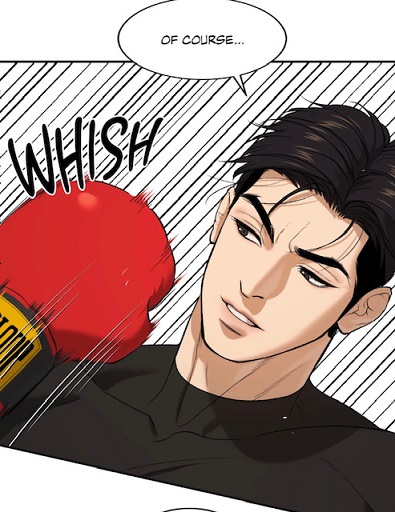
And that is precisely how Hwang Byungchul refers to her in episode 72: 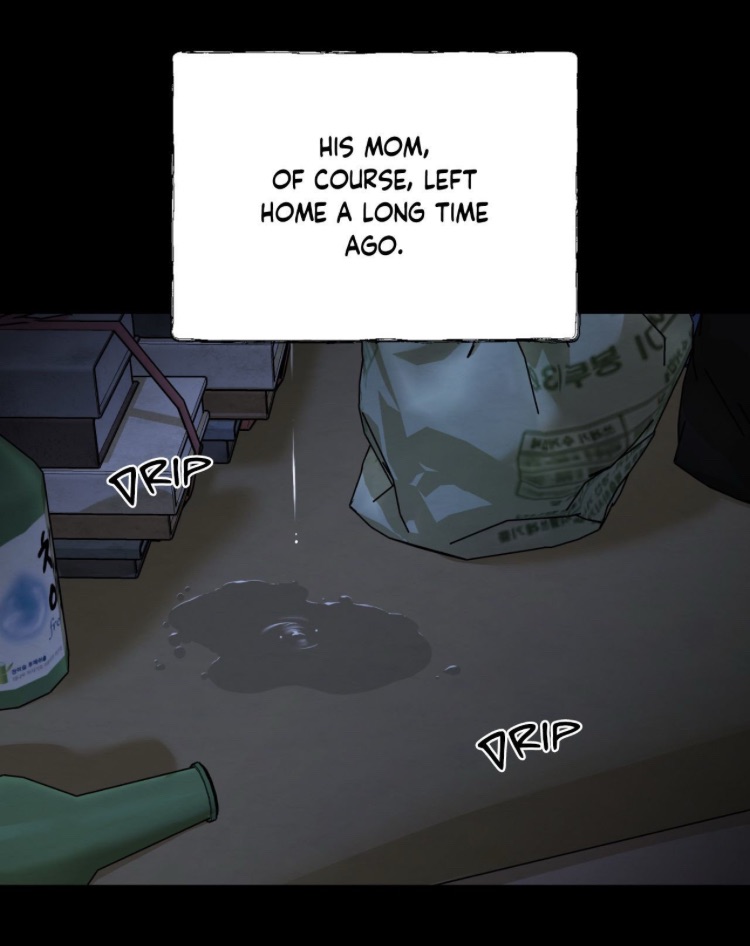 (chapter 72) The use of “of course” suggests inevitability, even justification. He is siding with the mother. His explanation for her departure is the father’s behavior: his abusive attitude.
 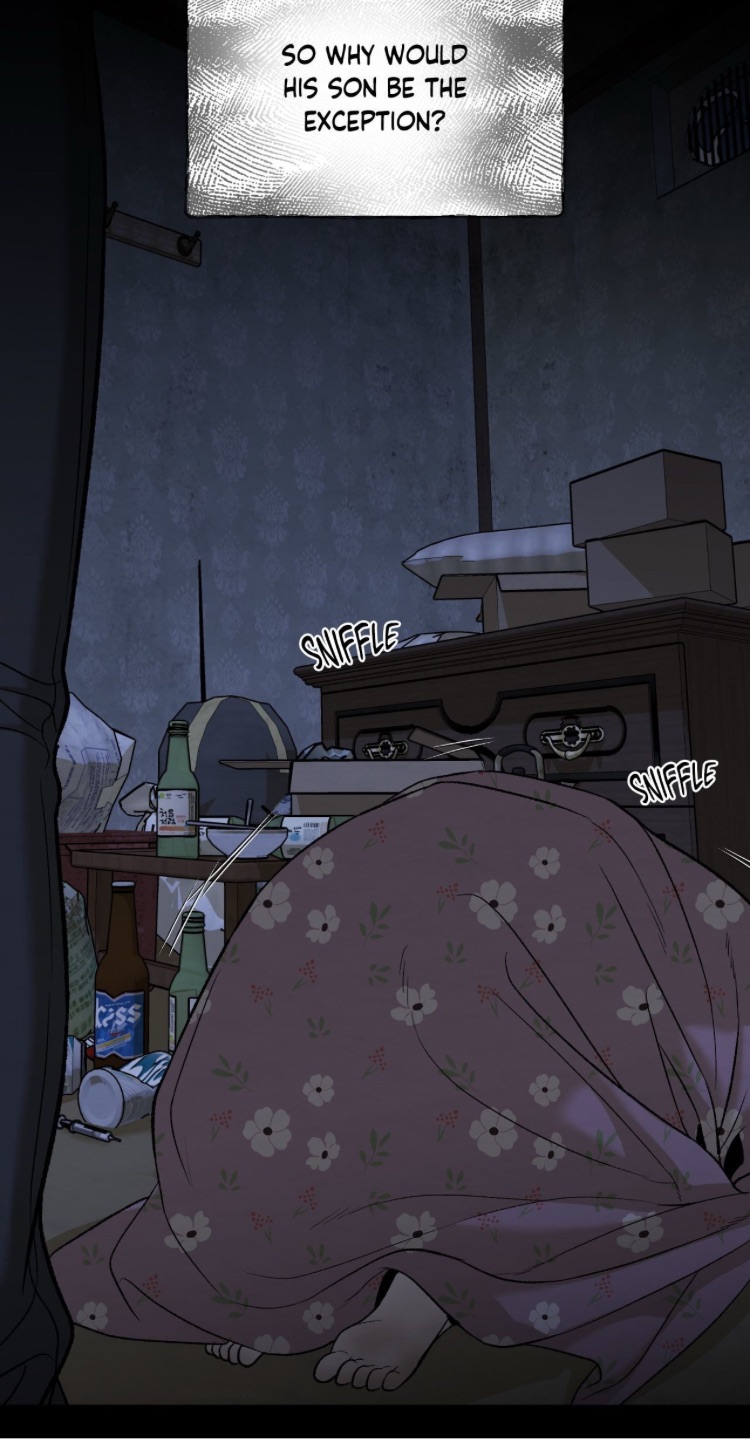 (chapter 73) However, what remains unspoken in this sentence is that she did not just leave her husband—she left her son too. Hwang Byungchul fails to mention this because he, too, is a man who has lived alongside a woman without truly giving her an official recognition. His own mother lived in his shadow, cooking for fighters, breathing life and love into the studio, yet she remained unnamed. Like Jaekyung’s mother, she was reduced to a supportive function. The crucial difference is that Hwang’s mother lived through her son, and stayed until her death.
 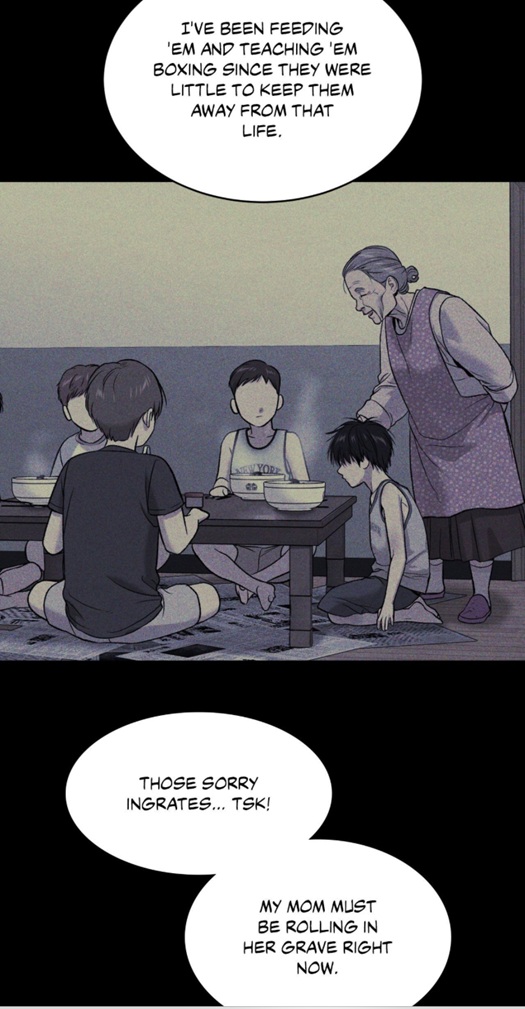 (chapter 73) Thus I deduce that the champion’s mother had a different mind-set. Either she had to give up on her dreams because of her husband and the birth of her son or she desired to live through her husband’s success, though I am more opting for the first possibility. However, both ideas have one common denominator: the mother was dependent on the “husband”.
Additional Reflections: The Son as Battlefield
When Jaewoong utters (chapter 73) he’s not merely criticizing his child for being weak or dependent, a loser. He’s targeting the trait he despised most in his wife—her defiance. In my opinion, the protagonist has the same gaze than the mother. And this is how the main lead looked at his father, when he argued with him. 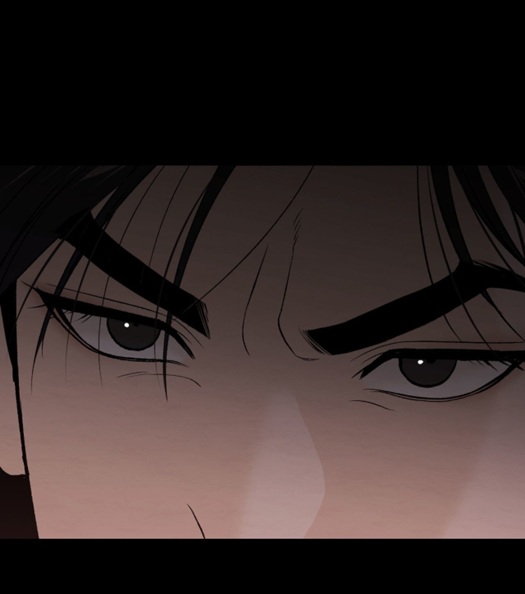 (chapter 73) Under this light, it becomes comprehensible why the man would avoid to meet his wife’s gaze and why the author hid Joo Jaekyung and his mother’s gaze in the last memory from Joo Jaewoong. Her gaze was for him painful, full of rejection. Consequently, I think that when Mingwa created this image for the champion’s birthday
  , she was revealing the arrival of the mother and her traits in her son: humbleness, water, darkness, a daring gaze and uncombed! But let’s return our attention to Joo Jaewoong and his vision:
  (chapter 73) This reproach is loaded with bitterness. He does not say this to demean the mother’s passivity; he says it to denounce her strength, her independence, and the wound she left behind by leaving him. But wait… I described her as dependent before. How do we explain this contradiction? His pride was shattered not because she was helpless—but because she made him feel useless. Joo Jaekyung is like his mother because he is earning his own money. He is the one “feeding” the father
 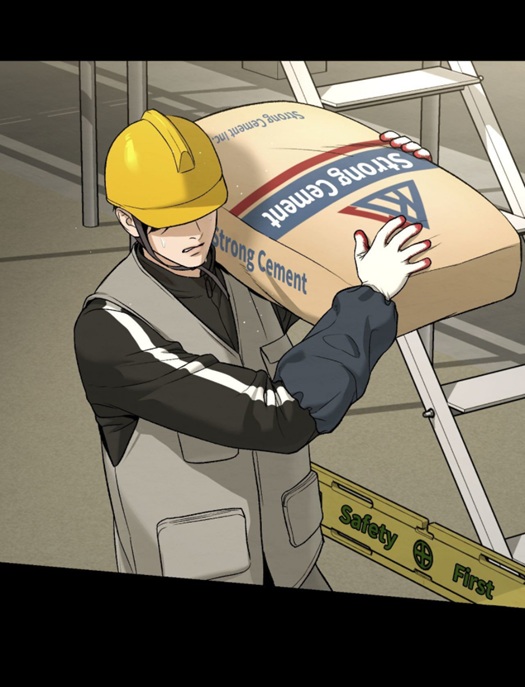 (chapter 73), cleaning the house. He felt like a kept man, emasculated by the very woman he expected to serve him. That’s why he says this to his son:
 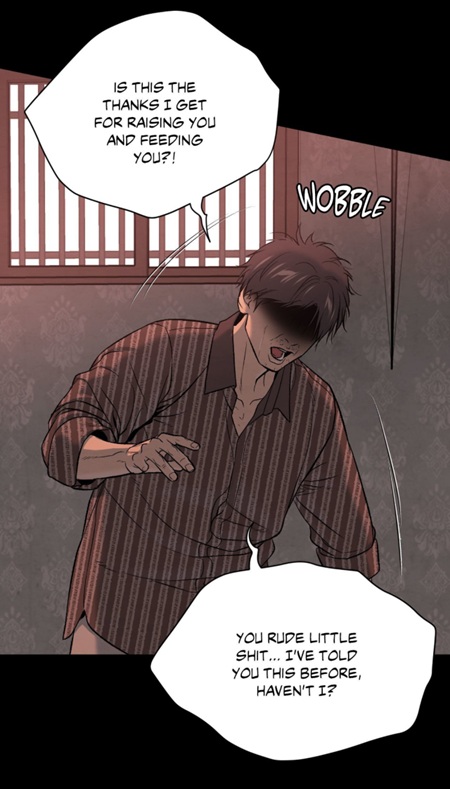 (chapter 73) He is clinching onto this image as the breadwinner and head of family. Thus, this sentence “You are your mother’s son, after all” becomes not a factual statement, but a projection, meant to degrade both wife and son by branding them as disloyal, ungrateful, and disobedient.
It becomes clear that the former athlete had a patriarchal mindset.  (chapter 72) He desired to be greeted properly, to be recognized as the head of the family. However, this is how the loser’s mother acted, when he returned home. (chapter 73) She would say nothing, and show him the cold shoulder. And that’s exactly what the son often did. He turned his back to him.
  (chapter 73) He didn’t greet him either and avoided to talk to him (points of suspension). This could only infuriate Joo Jaewoong, as the latter felt as a failure and denial of being a husband and father. And now, you comprehend why I see this picture as the evidence that the champion’s mother chose silence and cold treatment to express her thoughts and emotions. In my eyes, she was acting the same way than our “hamster” in season 2: depressive, yet distant, rebellious and resistant to Joo Jaekyung.
| Chapter 61 | Chapter 62 | Chapter 64 |
|---|---|---|
  It is no coincidence that the main lead has a similar vision than his own father about the mother. It is no coincidence that the main lead has a similar vision than his own father about the mother. |  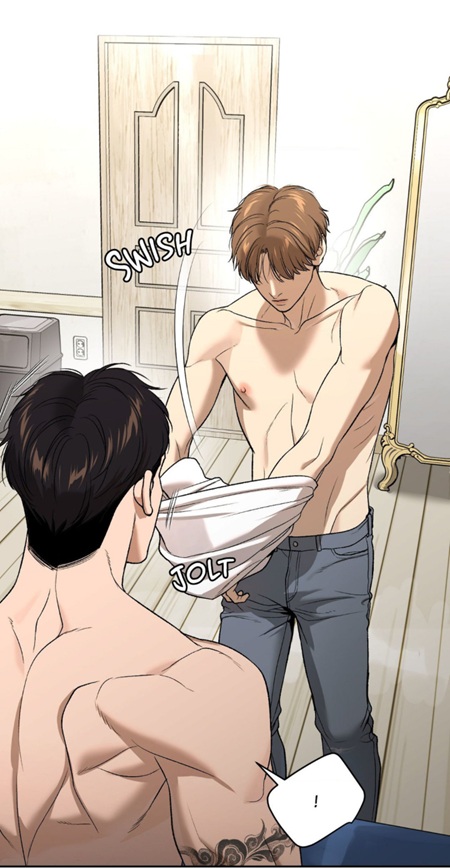 | 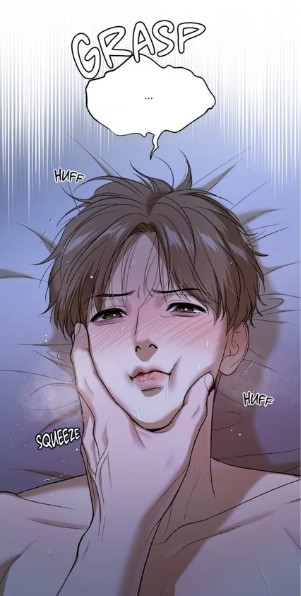 |
They might have had sex, but it was no longer connected to love and support. At some point, there was nothing left between them except the child. The latter became the symbol of their past union. The problem is that with his birth, their relationship could only get affected negatively. At that moment, there was a third person to take care for the mother. So the father resented the boy, as the latter not only was receiving her support, but also he resembled to his mother, especially his gaze. The abuse was the expression of his fears, pain and powerlessness.
The man’s dream was to escape poverty and leave this place. It was never about giving support and love to his wife. He saw her just as a tool to boost his ego, he hoped to see in her gaze “admiration and gratitude”, but reality crashed in. He failed and probably saw tears! So the moment his career as boxer was ruined, the man had nothing to give to his wife, but he could only see resent, the more time passed on. (chapter 73) And here it is important to recall the cause for the separation of our famous couple in season 1:  (chapter 51) Lack of trust and faith from the champion and the doctor! Both didn’t truly talk to each other. Their relationship was based on silence, power and mistrust, thus both chose not to talk about the meeting with director Choi Gilseok. But since reality is complex, we have to envision that absence of recognition and gratitude played a huge role in their failure as well. Why did the director’s mother remain by her son’s side and support his dream? It is because she believed in him. She loved him unconditionally. Hence I am inclined to think that one of the causes for their marriage was the lack of trust in each other, for the affection was rather conditional. I am also suspecting that the woman was always excluded from important decisions as well.
In my latest essay Following The Teddy Bear (part 2), I had made a connection between the mother and water, in particular swimming. And maybe the unknown woman was also an athletic person (swimming), but due to her husband, she was forced to give up on her career and dream. However, since the man’s career ended in a bad way, it is clear that they needed money. Thus it came to my mind that the woman could be related to water differently. She could have been working as a cleaning lady. My avid readers will certainly recall how the cleaning lady not only helped the champion to clean the house,  (chapter 55), but she gave him the necessary push to reconnect with doc Dan.
 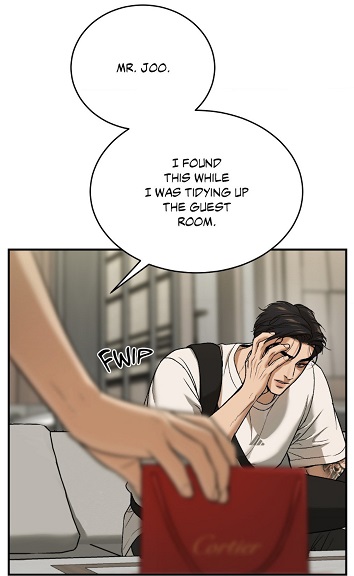 (chapter 55) In this scene,
  (chapter 55) we can detect similarities with the former home from the main lead:
  (chapter 72) greeting versus absence of greeting; respect versus abuse; birthday present (according to me, the t-shirt with the teddy bear was a present from the mother), alcohol, bags of trash and “departure”! Thus I came to the following deduction: the mother must have taken odd jobs too, similarly to her son and doc Dan, because she couldn’t have followed her “dreams”. having been forced to give up on any personal dreams. Her reality, like theirs, was one of survival, not self-fulfillment.
But the resemblance doesn’t stop at circumstances. It runs deeper, to the body itself. In my interpretation, the mother’s most vivid legacy was her gaze—alert, watchful, emotionally alive. 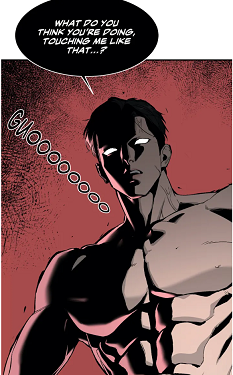 (chapter 1) . And now, compare this to the 26-year-old champion standing beside his father. His face mirrors the father’s almost exactly (jaw,nose), except for the eyes.
 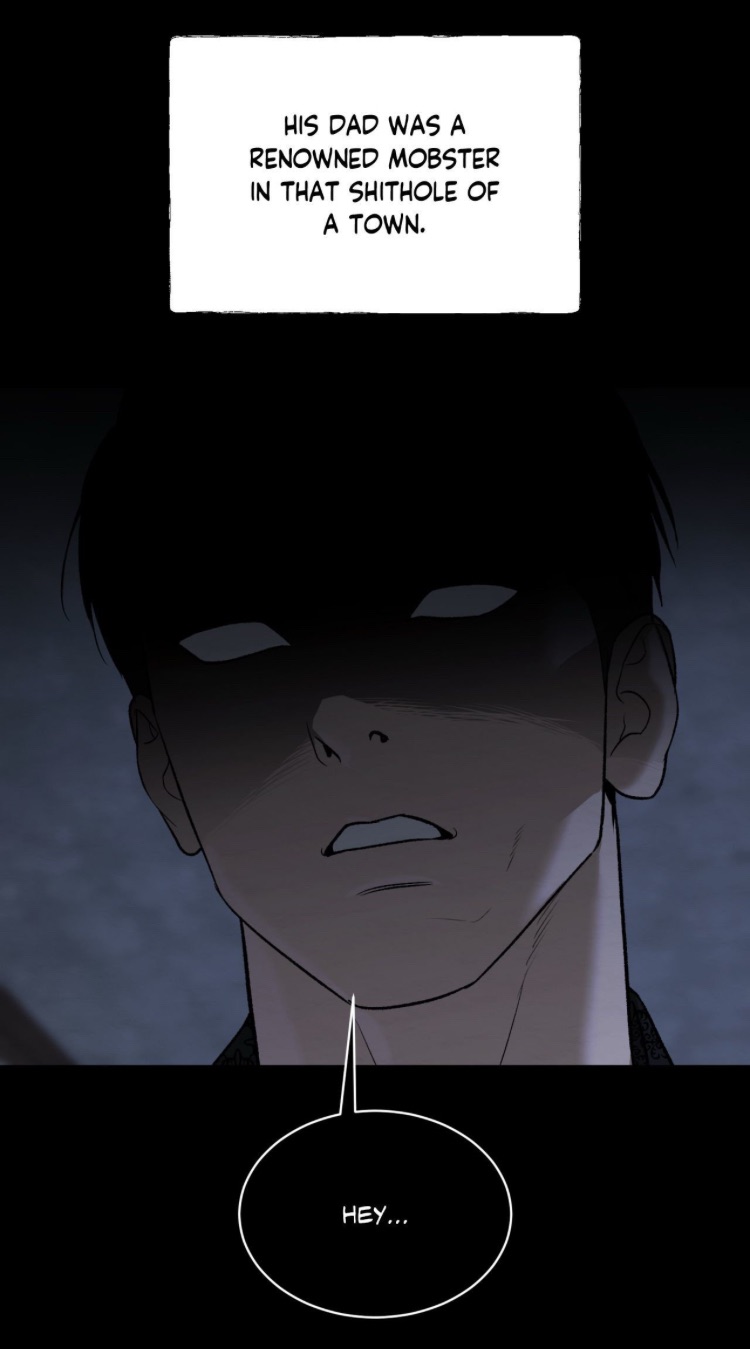 (chapter 72) That contrast is crucial. The difference lies not in bone structure, but in soul. And that difference, I argue, belongs to the mother. He is his mother’s child in spirit! However, with the loss of his father, the light in his light vanished.
 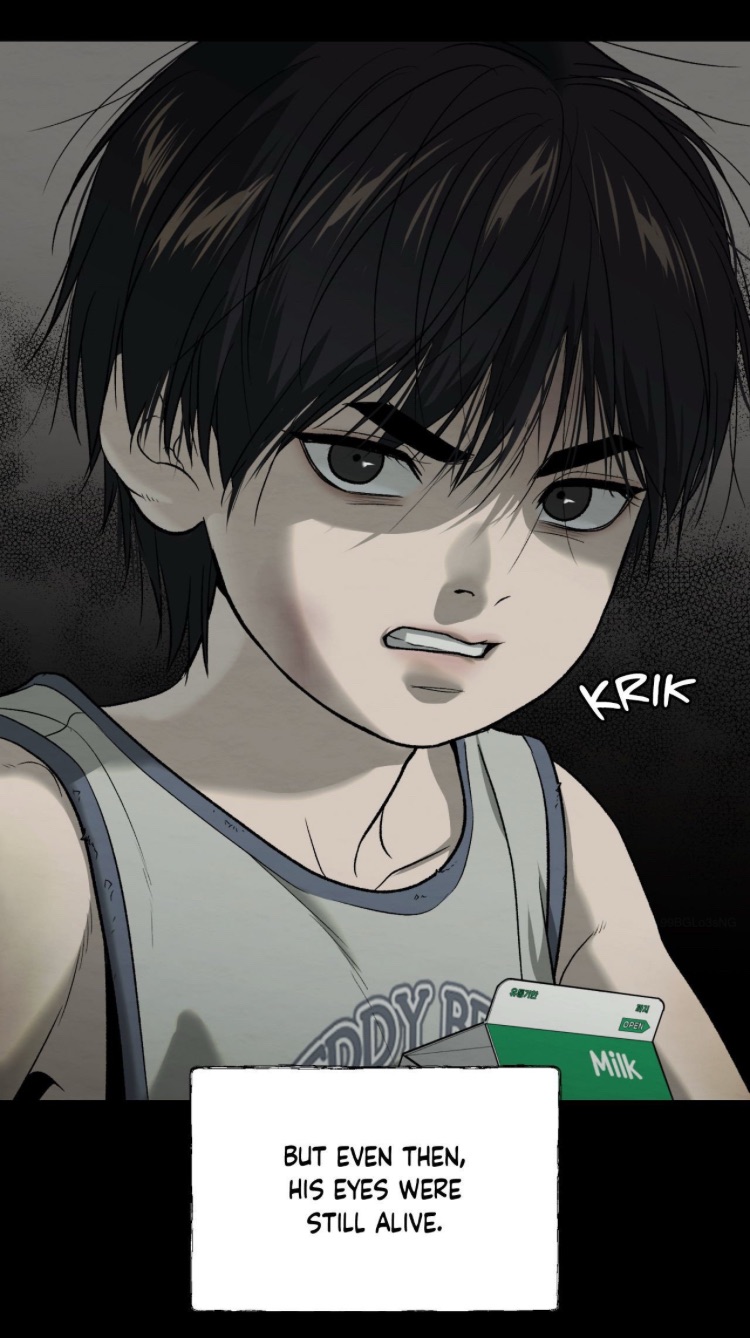 (chapter 72)
Yet even this connection carries a tragic twist. When the mother saw her son—clinging to her emotionally, even dependent on her—what did she see? A child? Or her husband? A younger version of the man who had failed her, and after 4 years the boy is expressing the same dream (chapter 72), even including the father in it? If so, it is possible that she recoiled. That her emotional detachment was born from the shock of recognition: he’s his father’s son after all. In this moment, she projected her disillusionment and weariness onto her child, just as the father did later. But she chose silence and absence.
And so we arrive at a cruel realization: Joo Jaekyung was never truly loved as a child—not for who he was. Thus he was never kissed and caressed by his mother. He was not perceived as a child at all. He was perceived as a mirror. The father saw in him the ghost of the woman who left. The mother saw in him the man who kept her trapped. Rather than embracing him, both projected their wounds, failures, and fears onto him. He was never held—only reflected. Jaekyung became the battleground of their broken marriage.
This emotional weaponization may explain why Jaekyung later developed such difficulty with attachment. His childhood was not just one of neglect, but of symbolic combat. He wasn’t raised; he was fought over—and ultimately abandoned.
A Reproach That Echoes Her Absence: The Father’s Words and the Mother’s Shadow
(chapter 73) This line is the only time the woman is directly mentioned in the father’s final confrontation with his son. And yet, it may be the most revealing statement in the entire chapter. Spoken with a sneer, this sentence condenses years of resentment, disappointment, and projection into one bitter accusation. He is not simply blaming his son—he is reliving the pain of his wife’s departure.
In this moment, the father equates failure with femininity, abandonment, and weakness. When he tells the boy he “won’t make it out of here,” that he will “never succeed” and “live a shitty life like the rest of us,” (chapter 73) he is not just dooming the son to failure—he is projecting his own failed aspirations and the perceived betrayal by his wife. His words are venomous, but they are not neutral truth; they are saturated with grief and bitterness.
The line “You are your mother’s son” weaponizes the boy’s maternal connection, transforming it from a source of comfort into a symbol of disgrace. And yet, this insult is revealing. It tells us how the father interpreted his wife’s actions—not as an act of survival, but of disdain and betrayal. In his view, she tried to escape poverty and failed. She used him, the boxer, as a ladder to a better life, and when he fell, she left. And even after she vanished from the household, she never managed to sever ties completely. The phone remained a bridge. Her role (mother) was never erased—but neither was it ever spoken. She was both gone and still there, unreachable yet always present in the father’s imagination, as a wound that never closed.
But here’s the tragedy: the father’s judgment may not be rooted in fact, but in projection. The notion that the woman tried and failed to transcend her station rather reflect his own failed dreams. Perhaps he, too, hoped boxing would lift him out of their grim neighborhood. And when it didn’t, he expected his wife to stay and support him no matter what —but she didn’t. She had her own breaking point. Her vanishing, then, becomes both a cause and a consequence of his ruin. She left, and he never recovered.
Thus, his reproach becomes a twisted echo of everything he never understood. In the boy, he sees the mother’s ghost: her silence, her detachment, her refusal to help him shoulder his failure. He doesn’t see a child—he sees a reminder. That’s why he resents the boy. He does not relate to him as a father would to a child, but as a man abandoned and betrayed by a woman, now faced with her embodiment. Thus he abused him physically and verbally. He was trash like the mother  (chapter 54), who used to clean the house and carry the bags of trash outside.
In the father’s eyes, the mother ceased being his wife or companion. She became “just the mother”—a role that, in his mind, usurped her loyalty to him. She prioritized the child, not him. And when she vanished, the son remained, an unwelcome legacy of their broken bond. Her absence redefined the household—she had withdrawn not only physically but emotionally. In the end, her disappearance wounded the father more deeply than he admits. He lashes out at his son because he cannot lash out at her. The boy became the scapegoat for a love that turned to ash.
And in this way, the mother’s absence shaped both men—one into a ghost, the other into a fighter.
The mother’s invisible hand
But I also believe that the mother was mentally unwell. How so? First, it is important to recall how the little Teddy Bear lived after his mother vanished. (chapter 72) The place was so dirty, full of garbage. Nonetheless, observe that most of the trash had been gathered in bags which were not brought outside. And now take a look at the place 10 years later: 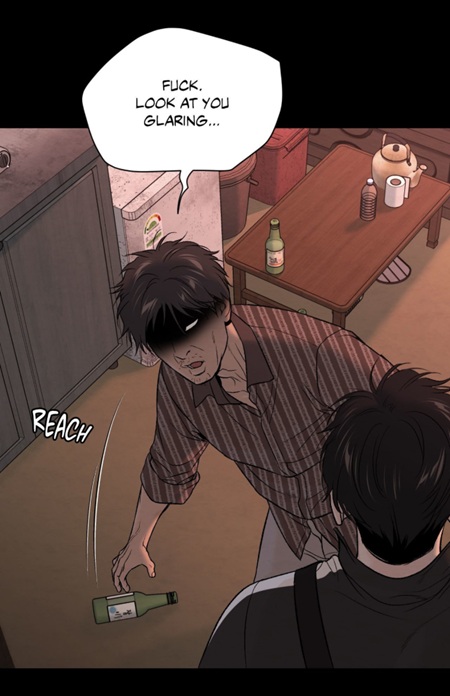 (chapter 73) The place is clean, there’s barely waste on the floor, the books are still wrapped together at the entrance. But who removed the bags and mopped the floor? Naturally, the main lead. One might say that he learned it from the boxing studio and the director’s mother. Nevertheless, it dawned on me what had happened 20 years ago. The mother had stopped cleaning the place, she no longer cooked either… she gathered the waste in the bags and left them there, as if she wanted her husband to bring them outside. As you can see, I see the dumpster as her way of expressing her unwell-being (depression, resignation) and her protest against Joo Jaewoong. She felt so burdened that at the end, she ran away.
Thus it is not surprising that the former mobster criticizes his son for resembling his mother. He has not only taken over her role in the family (cleaning the house, working etc…), but also her habits, turning his back to his father, when he sees him… avoiding a conversation with him. Naturally, don’t get me wrong. I am not accepting the father’s behavior, but I believe that the failure for their marriage was not simply the result of the father’s abusive behavior… It was the result of an imbalanced relationship and lack of communication which created a vicious circle. Like I have already pointed out before, life is complex, so are humans. Blaming the father for everything was not right. Hwang Byungchul blames the former boxer, overlooking the strong link between this sport and criminality. Besides, he judged the family from the outside. He saw the bruises on the boy, but he never visited their home and saw the garbage there. (chapter 73) Additionally, he never wondered why he hadn’t seen the little Jaekyung before, though they were neighbors. It was, as if the mother had refused to leave the house for a while. Based on the father’s words, even after the mother had left the place, it seems that she didn’t lead a better or happier life. And the son is no longer talking about the mother either. It is just about leaving the “place”. The former director assumed that abuse was the reason for her departure, an interpretation which the protagonist adopted later:  (chapter 73) However, like mentioned above, their toxic relationship played a role. Another is money. Observe how the the 10 years old boy added right after: (chapter 72) He’ll work hard and earn a lot of money. Let’s not forget that the man was gambling and drug-addicted.
 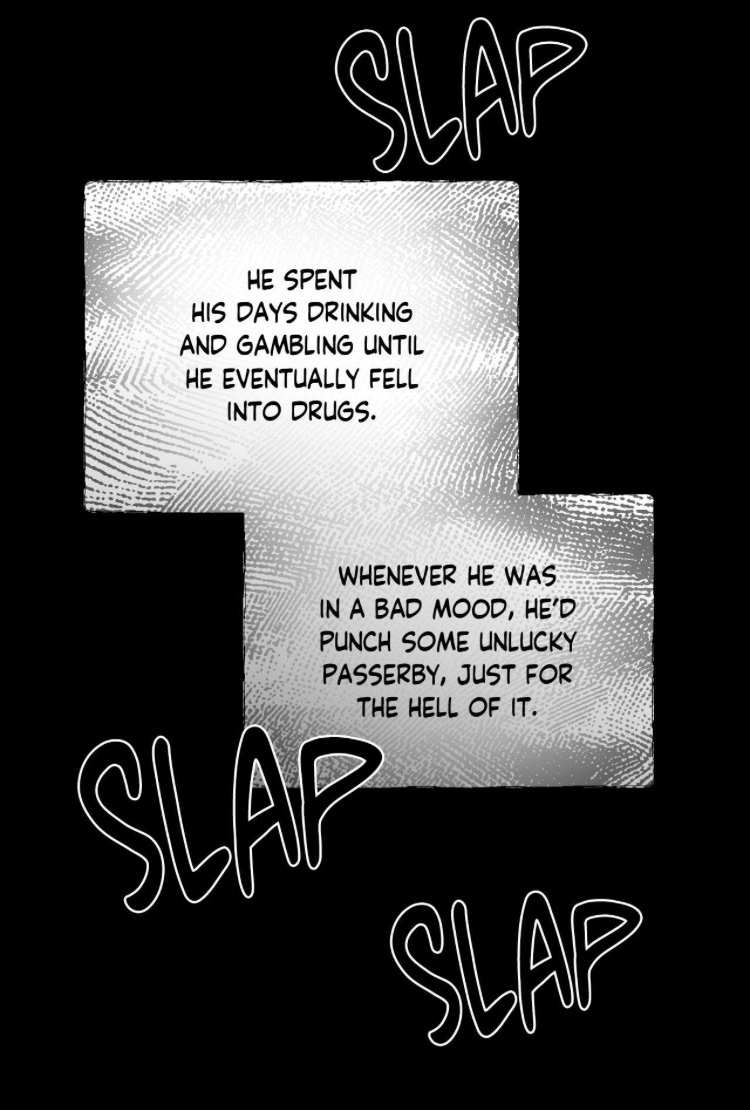 (chapter 72) She didn’t want to support such a behavior. It was like filling a bottomless jar. Since the man seems not to have listened to her, the only thing she could do was passivity and silence. Yet, in Jaewoong’s memory , (chapter 73) she doesn’t just disappear; she lingers, infecting the atmosphere with her silence, her perceived betrayal, and her withdrawal. Her absence becomes toxic not because she is gone—but because she never truly said goodbye.
And if this theory is true, the symbolism of the mother working as a cleaning lady while leaving her own home in filth is quite telling. She was never allowed to cleanse her own life—she simply gathered the trash and left it behind. She cleaned for others, but not for herself. Her job becomes a tragic irony, echoing her own inability to “take out the trash” of her marriage. She was stuck in a role she couldn’t escape.
Breaking the Pattern
And since Joo Jaekyung resembles to Jaewoong, I deduce that in season 1, the champion mirrored his behavior. Why? It was, his way to mourn his father… to keep his image alive, as he blamed himself for his death. His pride and happiness for winning the tournament  (chapter 73) became his curse, as his dream had become a reality.
  (chapter 73) The father had died, but the boy cared for his dad despite his flaws. He had loved his father unconditionally. And it is clear now that Joo Jaekyung blames himself for his passing and his harsh words before his overdoses. And how was Joo Jaekyung acting towards Kim Dan in season 1? He was not only denying his feelings, but also expressing jealousy
  (chapter 7) and possessiveness.
 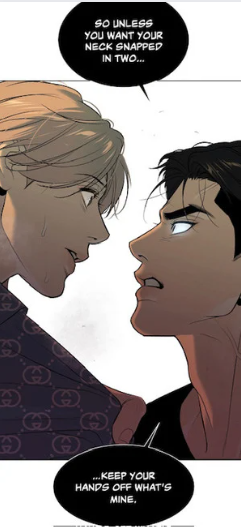 (chapter 34) I had already portrayed the ghost as a person suffering from narcissistic personality disorder, and since the ghost shares common traits with the father, I am assuming that the father is the ghost. Jaewoong’s narcissism was not simply paternal in my opinion.
 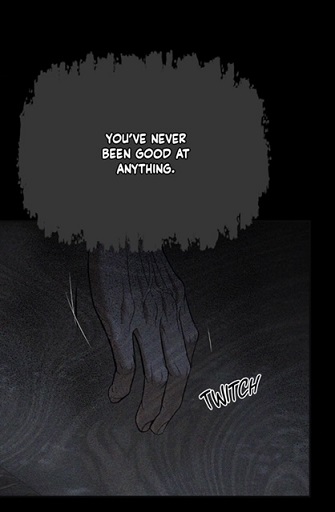 (chapter 54) I believe that it was also possessive and romantic in its jealousy. He wanted control, loyalty, and gratitude, but never offered love in return. He must have treated the wife the same way. That’s how the mother got almost broken. And observe how the main lead tried to control his lover’s time and professional life.
  (chapter 31) He didn’t support him to become independent professionally. That’s why I feel like the insecure boxer must have acted the same way, not allowing his wife to become successful in the end.
However, unlike his father, Jaekyung begins to break this pattern. He offers protection, support, even silent care—before he knows how to ask for love in return. When that bond was shaken in chapter 51,  (chapter 51) it’s not betrayal he reacts to—it’s the shattering of fragile trust, inherited from a family that never taught him what trust meant.
  (chapter 54) Is it a coincidence that in his nightmare, his loved one was looking back at him? No, the doctor was acting the opposite from the champion’s mother: (chapter 73) he is not only looking back, but also asking a question. He is also seeking communication and expressing his feelings. He has a face… a sign that he is special. This image oozes not only pain, but also love and trust!
What we see unfolding is a quiet revolution. Jaekyung is not becoming his father, but his mother’s son. He is unlearning the cruelty, slowly redefining love as something that doesn’t require submission. And now, you comprehend why I am suspecting that the father might have literally “suffocated” the son’s mother with his behavior. He never offered her assistance and support, it was only one sided. Thus I am assuming that the star will boost Dan’s name, not stifle it. He will support Dan’s independence, not fear it. And eventually, he will speak love—not commands. This is how he begins to undo the inheritance of violence and transform his lineage.
The Gratitude That Was Never Earned
Ultimately, Jaewoong’s demand for gratitude was hollow. (chapter 73) He didn’t feed his son, but he used his position to make such a claim. His statement—“Is this the thanks I get?”—reveals a man who never understood that gratitude must be earned through care, not extracted through fear or obedience. In contrast, Jaekyung struggles with the opposite problem: he gives everything and doesn’t know how to receive. He does not ask for thanks, but he is bewildered by affection, hesitant and unsure.
What we’re witnessing is the evolution of love across generations—from the narcissistic hunger of Jaewoong to the bruised generosity of Jaekyung.
And in that transformation, the invisible mother still lingers, not as a ghost to be feared, but as a shadow to be understood. She is a victim and perpetrator at the same time. And what did the father say to his son? (chapter 73) He was like his mother! But according to me, she was suffering from depression. This means that Joo Jaewoong cursed him to suffer the same mental illness: depression!
The Jinx of Depression: Inheriting the Father’s Defeat
A striking insight from a Lancet article on athletes and depression suggests that those who engage in competitive sports may be even more susceptible to mood disorders and depression than the general population. While physical overtraining can cause exhaustion, it is often the psychological burden—particularly burnout—that proves most damaging. Burnout arises not from sheer physical effort, but from sustained emotional stress and a dangerous mental habit known as goal linking: the belief that happiness and self-worth depend entirely on achieving success, such as winning a championship or escaping poverty.
In this light, the downfall of Jaewoong—the former boxer and father—is recontextualized. His failure may not stem solely from narcissism or fragile ego. He, too, might have suffered from the very condition that later threatens to consume his son: depression. He was not boxing for the sake of the sport, but as an escape route from misery, poverty, and insignificance. (chapter 73) That was his “linked goal.” When he failed to achieve it—when the victories didn’t materialize or failed to provide transcendence—he fell into despair. He was not training with the heart of a true athlete but fighting with the desperation of a trapped man. The drugs became his alternative exit. He gave up the sport not because he lacked strength, but because he lacked the psychological framework to stay committed. He was, in short, jinxed.
But the emotional curse that weighs on the champion does not come from the father alone. The mother, too, shows signs of long-term emotional numbness and psychological despair. Her silence is not only an act of abandonment—it is a symptom. The image of her back turned, the refusal to return, the trash in the house, the passive collapse into invisibility: all suggest that she, too, was suffering from depression. Yet unlike the father, who externalized his pain through aggression and substance abuse, the mother internalized hers. She faded. She withdrew from the family space. Her emotional descent polluted the home not with noise and violence, but with silence, garbage and shadow.
In this sense, both parents were marked by depression—each manifesting it differently. The father’s version was loud, consuming, and openly destructive. The mother’s was quiet, invisible, and slow-burning. Both reacted to stress, failure, to poverty, to broken dreams. Doc Dan combines both types of depression. And both passed on their despair to their son—not genetically alone, but symbolically. He inherited his father’s rage, his goal-linking, and his pride; from his mother, he inherited detachment, emotional restraint, and the silent ache of never being enough.
And this jinx is inherited. Joo Jaekyung is indirectly cursed by his father: (chapter 73) “… you’ll never succeed.” (chapter 73) But beneath this insult lies a more insidious transmission—depression itself. Both parents projected their pain onto him, and now their unhealed trauma threatens to echo in the son. Like his father, the champion ties his happiness to his athletic success. (chapter 73) His life has been structured entirely around victory, money, and symbolic escape. He never developed a concept of joy independent of achievement. The same goal-linking mechanism that destroyed his father now threatens to corrode his own identity.
Thus, the tragedy of Joo Jaekyung is not simply abandonment—it is repetition. His career, forged in rebellion, risks becoming a reenactment. But here lies the narrative tension: will he recognize the jinx for what it is—a legacy of unresolved psychological wounds? Or will he, unlike his father, break the cycle?
Kim Dan holds the key to this transformation, offering not just physical support but an alternate vision of worth. Not victory, but relationship: a long forgotten desire to have a home. Not escape, but emotional presence. Kim Dan is special, though  (chapter 42) the jealous and regretful ex-lover told him otherwise. How did the father describe his son?
 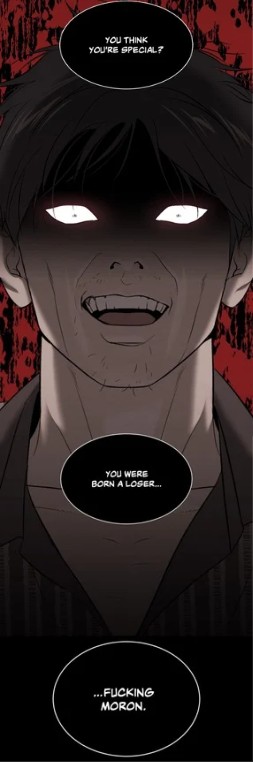 (chapter 73) He was ordinary, nothing special…. Why? It is because none of the parents had said: I love you! So the moment one protagonist confesses his feelings to the other, they will realize that they are special to each other.
This reading reveals that the jinx was never supernatural—it was psychological inheritance: the curse of tying self-worth to unattainable goals, and the inability to live without them. (chapter 73) And the jinx started right this moment, because he was “abandoning the father and the mother”. It was, as if he no longer needed anyone.
The boy she left behind is no longer clinging to a phone. He is walking away from the dump. Not to chase her—but to become someone new. Nonetheless, in reality he became the shadow of his father. 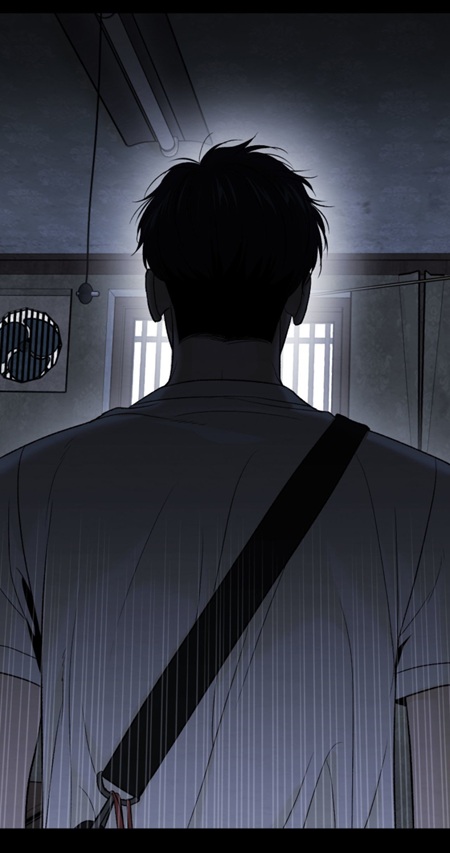 (chapter 73) And because the father is now dead, I am inclined to think that the mother is still alive. I am even thinking that the mother is living in this place:
 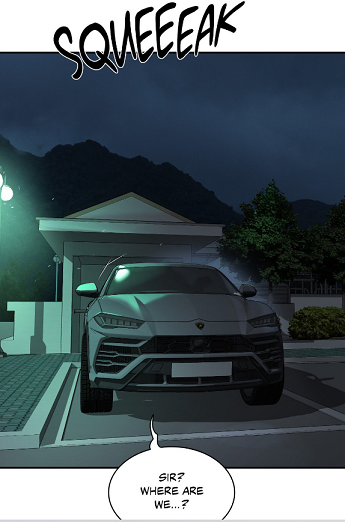 (chapter 33) This chapter stands not only under the sign of jealousy, but also of motherhood due to the number 6. If this theory is correct, then it signifies that he kept his promise. He gave her a place, but he didn’t want to return to her side for two reasons: her abandonment and his guilt concerning the death of his father. As for the mother, I would say… out of guilt and shame due to her “pride”. She knows that she did hurt her son. Naturally, I could be wrong… but I hope if she is alive so that the champion can talk with his “mother”. This will help him to move on. Breaking the silence between them would put an end to his self-loathing and misery
The Heart of the Gym
Since I outlined the importance of invisible support and faith in a couple, it dawned on me why Joo Jaekyung was fated to meet his older mentor and coach. The theme of abandonment does not stop at the domestic sphere—it extends to the professional world of fighting. Hwang Byungchul felt betrayed and abandoned after Joo Jaekyung’s departure for Seoul. But the latter was never his “son”, just a member of his gym. Besides, his gym, once lively and successful 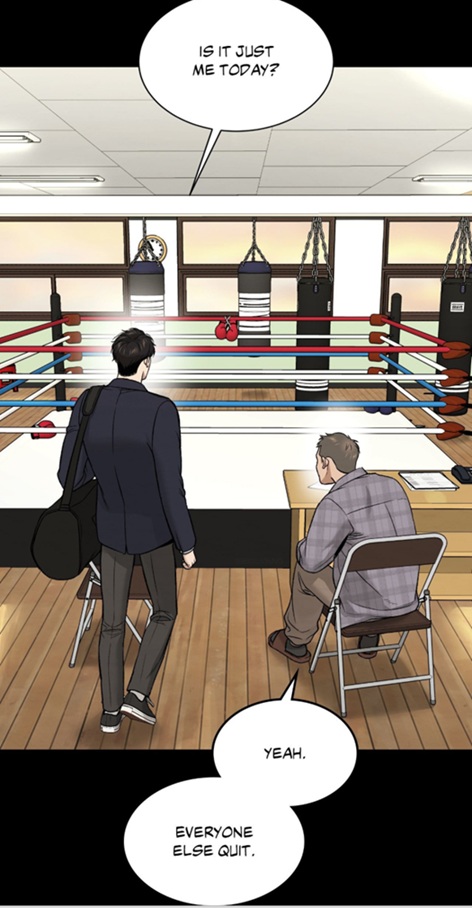 (chapter 73), gradually fell into decline after the death of his mother. She had been its soul, offering invisible support, care, and emotional warmth to the fighters. (chapter 73) But her contributions were never acknowledged officially—her name never even adorned the walls. The director attributed his success to his own guidance, never realizing that the fighters stayed because of the love and food that flowed from her presence. Her death exposed the truth: there was no emotional infrastructure beneath the trophies. And so the gym emptied out—just like the home had.
This same pattern now shadows Team Black. Joo Jaekyung’s gym, founded on discipline and success, is slowly being deserted after his “failure.”  (chapter 52) The gym’s foundation was never trust, fun, or teamwork—it was performance, money and fame. Without victory, it holds nothing. His teammates are not companions; they are shadows. The cycle is repeating: the gym becomes a sterile battlefield, not a second home.
And here lies the tragic irony: the champion has unknowingly recreated the same environment, because he relies on Park Namwook whose personality resembles a lot to the former coach and director. A space without love, only with money. A team without trust. A gym without a heart, until the champion makes the connection between doc Dan and the deceased halmoni! So far, the young man has been projecting the director’s mother 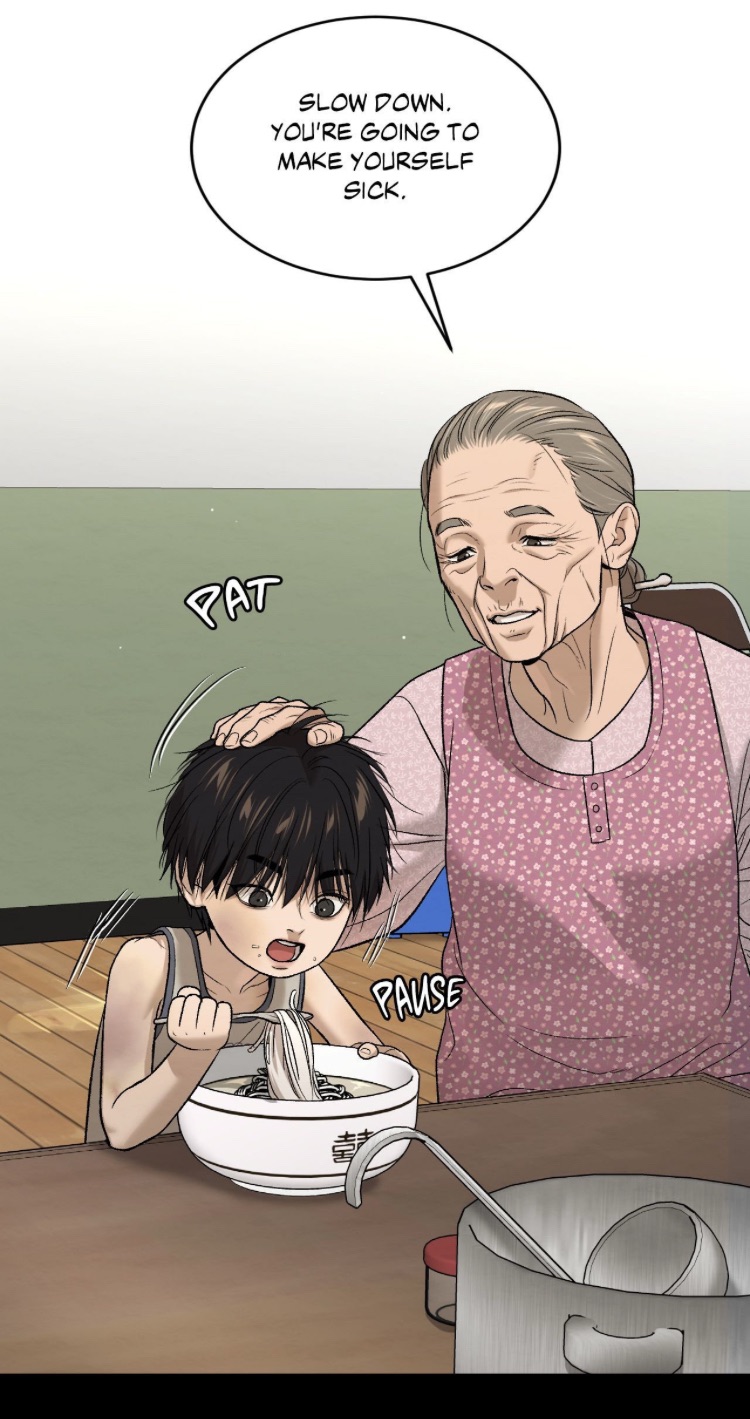 (chapter 72) onto Shin Okja
 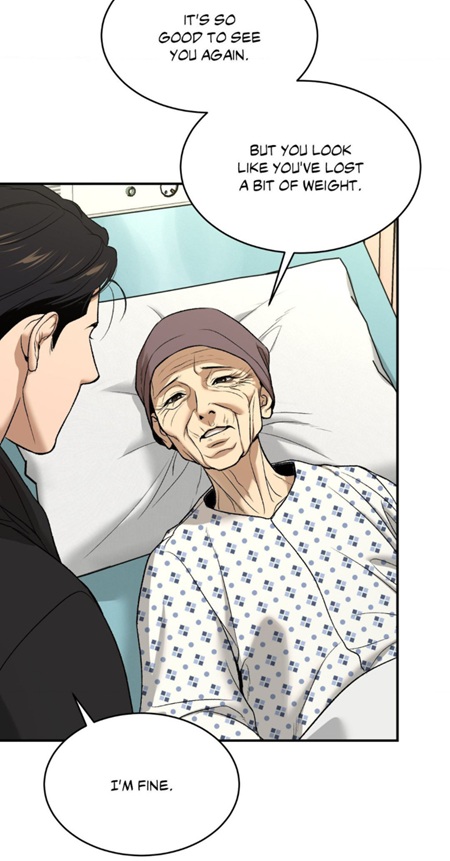 (chapter 61) due to her similarities in age, gender, gestures and words. However, he failed to detect her flaws, as he trusts seniors too much. I guess, it is related to Jaewoong’s death. Nevertheless, it becomes clear that doc Dan had become the soul of the gym:
 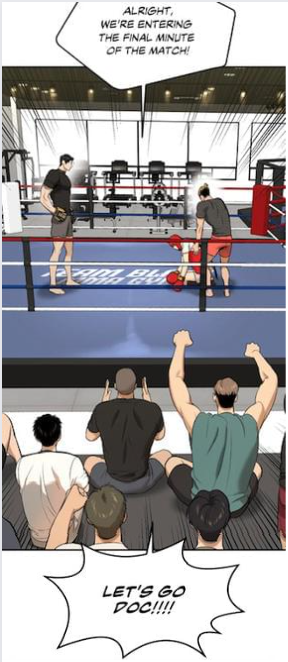 (chapter 26), but the latter was not recognized as a real member of Team Black. Besides, let’s not forget that he was only working for the champion and not Team Black!
Epiloque: The Loser’s Mother revisited
I just noticed that doc Dan was wearing boxing gears!  (chapter 26)
  (chapter 73) This detail, easily overlooked, reveals something poignant—boxing wasn’t just an obligation or a means to survive. It was once a source of joy for the boy, hence his smile is so genuine. In the early years, before it was poisoned by expectation and betrayal, the gloves were a connection—to his father, to his mother and to himself.
But with the death of his father, that connection was severed. The gloves no longer symbolized possibility.  (chapter 73) They became heavy with grief. Yet in Kim Dan’s presence—through his care, his quiet resistance, and even his occasional clumsiness—Joo Jaekyung glimpsed something forgotten. He was able to laugh
  (chapter 26), to play, even to feel embarrassment—emotions far removed from the sterile discipline of professional sport. Through Doc Dan, the athlete briefly recovered his lost passion. Not just for boxing, but for being human.
And so, we return to the title: The Loser’s Mother.
The title was never just about the absent woman. It was about an inherited wound. Both parents passed on something to their son—not strength, not wisdom, but suffering and depression. The father, defeated by his own unmet dreams, cursed the boy to suffer the same fate. The mother, unable to sustain hope or protect herself, vanished into silence. Neither gave him tools for joy—only tools for survival.
But here’s the quiet rebellion: in allowing himself to be cared for by someone like Kim Dan, the champion begins to rewrite the script. He starts to question the legacy of “loser” handed down by both parents. He starts to reimagine the meaning of strength—not as endurance through pain, but as the capacity to love and be loved. The loser’s mother never got that chance. Her story faded into silence.
But her son might still find his voice. He already learned how to support in the shadow:  (chapter 62) So far, doc Dan hasn’t heard what his fated partner did while waiting for his “return from work”.
And maybe, just maybe, the gloves will resurface. But they won’t only be for fighting anymore—they might one day be used to connect, to protect, to teach, or even to hold.
Feel free to comment. If you have any suggestion for topics or Manhwa, feel free to ask. If you enjoyed reading it, retweet it or push the button like. My Reddit-Instagram-Twitter-Tumblr account is: @bebebisous33. Thanks for reading and for the support, particularly, I would like to thank all the new followers and people recommending my blog.


 (chapter 27) Where and how did he learn swimming? Moreover, observe that he connected it to relaxation and fun. “This feels good”. This contrasts so much to the interaction between Hwang Byungchul and the little boy with the teddy bear.
  (Chapter 72) The man doesn’t know that the athlete can swim, he only knows the boxer, as he was only able to see him on TV.
  (chapter 71) Interesting is that Jinxphiles followed Kim Dan’s school career
 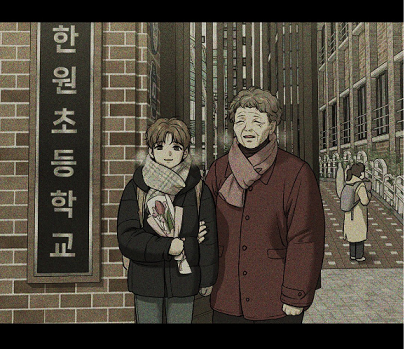 (chapter 47)
  (chapter 47), yet the latter can not swim!
  (Chapter 47)
  (Chapter 72) Nevertheless, with this panel, Mingwa indicates that the protagonist was visiting the Elementary school. The neighborhood he grew up in — as described by Hwang Byungchul — was “cutthroat.”
 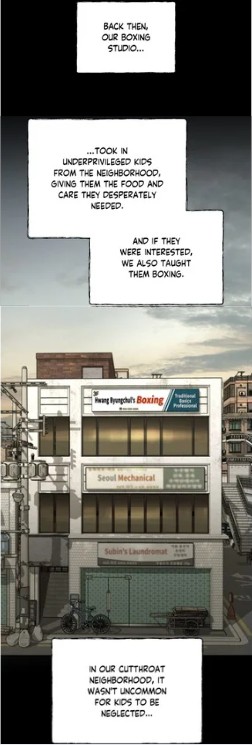 (Chapter 72) In such a place, swimming lessons would have been a luxury. Thus I deduce that the champion likely never learned to swim at school. The public school system there likely didn’t have the funds or infrastructure to build pools or train children in water safety. And yet, he did learn — and he swims confidently
 (Chapter 60) He even knows how to give first aid too.
 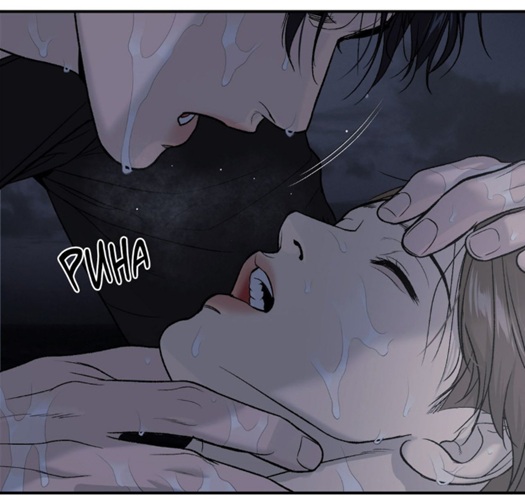 (Chapter 60) These aren’t casual skills. They’re not the product of school curriculum or street wisdom, especially not in a neighborhood described as “cutthroat.” These are taught skills — and not by someone who saw Jaekyung merely as a fighter. Swimming and first aid reflect something else entirely: a commitment to preparedness, not just for survival, but for helping others.
 (Chapter 27) That Jaekyung carries this knowledge — and uses it without hesitation — reveals a deeper emotional structure.
  (Chapter 13) His vocabulary revolves around water: “pond”, “fish”! Besides, I have already connected to him Poseidon, the god of the ocean. Moreover, this man is strongly intertwined with fun, a notion that doesn’t belong in Hwang Byungchul’s world! And now, you understand why this man could touch Joo Jaekyung’s shoulder
  (chapter 13) and even make jokes in front of him.
  (Chapter 13) He knew about the existence of the Teddy Bear inside the champion. And is it a coincidence that both men have the same name “Chul=Cheol”, though the order diverges: Cheolmin versus Byungchul? And both are connected to the color “green”.
  (chapter 72)
 (chapter 60) There was no witness, no coast guard, no institutional figure involved in his rescue. He was alone, only saved by one person. His generation was expected to take responsibility — to succeed, to repay debts, to endure hardship — but they were given no tools to survive when crisis struck. They were neither protected nor prepared.
 (chapter 65) So teaching him how to swim will help him to reconnect with his true self and to find a meaning to his life.
  (chapter 14) This fight took place in April… the same month than the Sewol ferry tragedy. And the color of the poster is once again green. Is it a coincidence? I have my doubt here. And what did Randy Booker say to his opponent? He called him a baby
 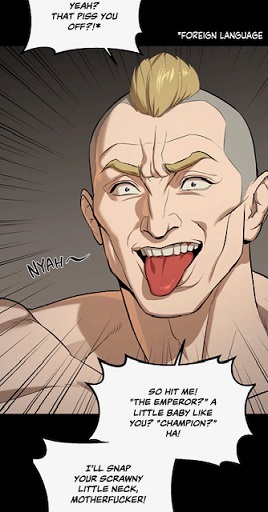 (chapter 14) which led the protagonist to seek refuge in the bathroom, but here he couldn’t relax.
  (chapter 14) That’s how I realized that water is an element linked to childhood and as such motherhood!
 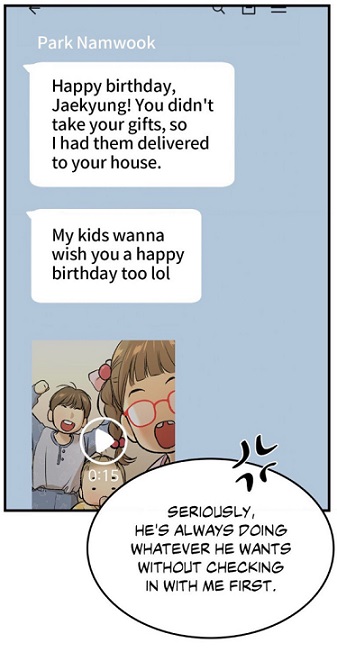 (chapter 45) And this brings me to my final thought: Kim Dan had to meet Hwang Byungchul for an important reason: to learn how to survive on his own, as he is still depressive. He is lectured how to become independent and how to find a real goal in his life. By confessing the terrible youth about the Emperor, the physical therapist gets to hear that he wasn’t the only one abandoned and in pain!!
 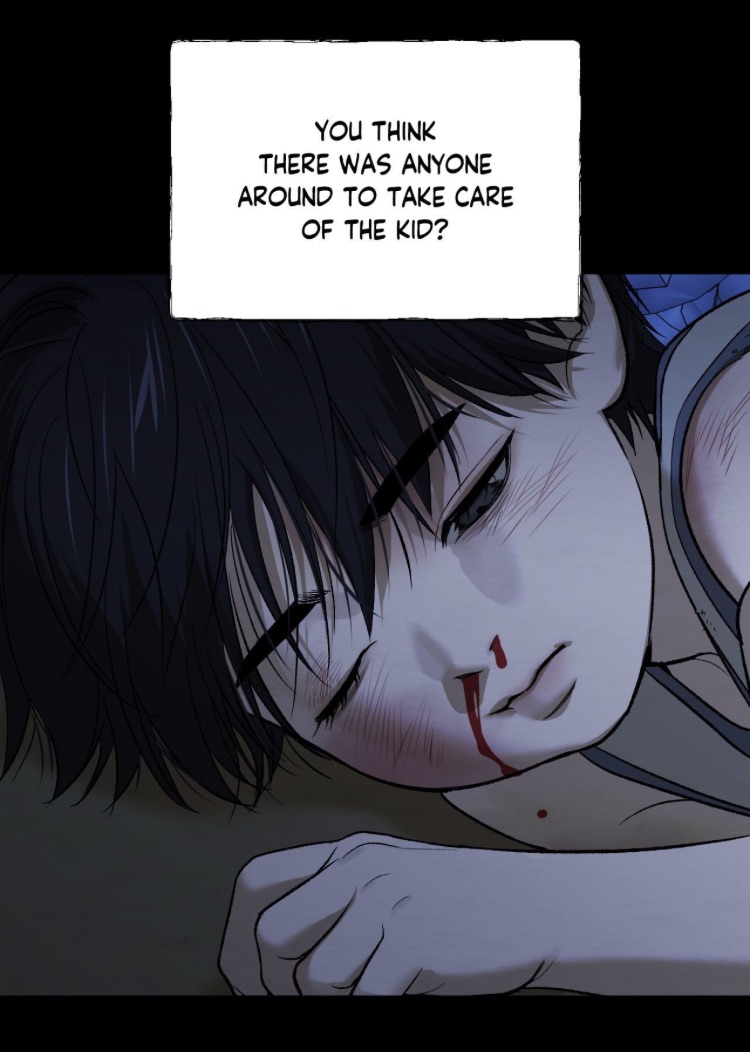 (chapter 72)
 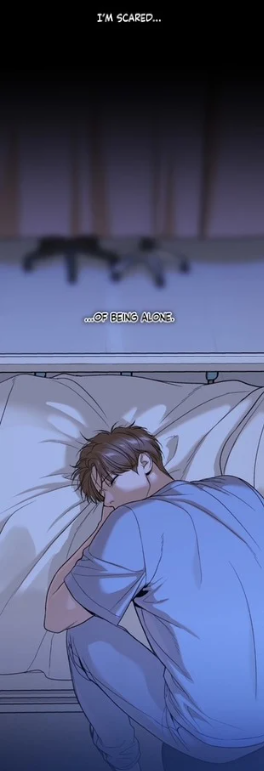 (chapter 56) Moreover, he gets the opportunity to understand why “usefulness” became so important in the MMA fighter’s life. Through this confession, the other teddy bear gets to perceive that he has so many things in common with his fated partner. Both experienced abandonment, loss, poverty, bullying and only worked in their life too! They never got the opportunity to enjoy life to the fullest.
 (chapter 72) —and not with fists, but with fabric.
 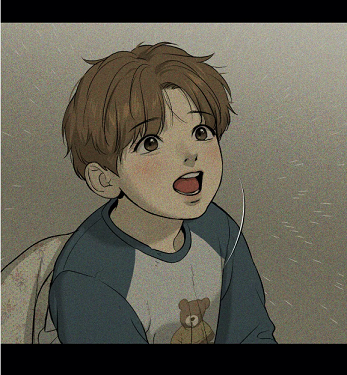 (chapter 11) Each boy is introduced wearing a shirt adorned with a teddy bear, a symbol that quietly carries the emotional weight of the entire narrative.
 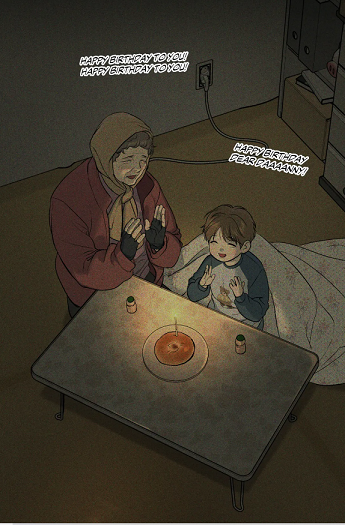 (chapter 11) [For more read
  (chapter 72)
  (chapter 68) In time, each man will become the other’s bear
  (chapter 66): a source of comfort, loyalty, and belonging. To follow the teddy bear is to trace this emotional path—from abandonment to connection, from injury to intimacy, from being held once to being held again.
 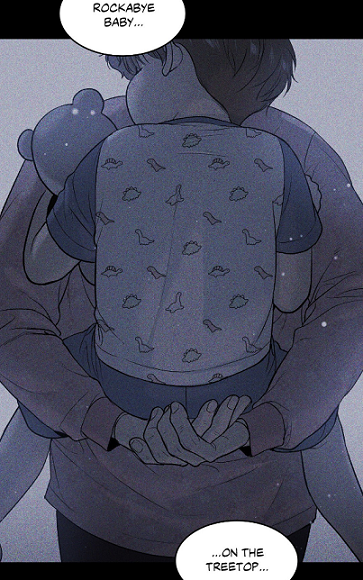 (chapter 47), and then claimed, just like his teddy bear. The fate of doc Dan’s toy bear reflects the boy’s. The former was pushed outside the embrace and bed before disappearing.
  (chapter 21) That’s how the toy bear vanished from the little boy’s life. Thus I deduce that the teddy bear on the pajamas was the last traces of his “childhood”.
 To follow the teddy bear is to trace this journey back to tenderness: the long path from abandonment to being held again.
 (chapter 72) The shirts are not only outgrown
  (chapter 72) but also replaced with t-shirts without any design alluding to the vanishing of their identity and forced maturity.
  (chapter 57) For Jaekyung, the beanie-wearing bear with its wounded arm and wise glasses is the last trace of comfort before reality hardens. What remains is not the child, but the instinct to survive. From the moment the bear vanishes, a new figure begins to emerge—not one held, but one who fights. The boy with the teddy bear becomes the man who can’t rest, who equates existence with usefulness, and usefulness with victory.
 (chapter 72)
  (chapter 72) —it makes one thing heartbreakingly clear: he wasn’t raised by a pack of wolves; he raised himself.
  (chapter 7) The cliché used by Park Namwook in chapter 7 is revealed to be not only ignorant, but cruel. Jaekyung had no home, no real guardian, no one to defend or guide him. He didn’t grow up in the wild—he grew up alone, navigating between violence (abuse and bullying), hunger, and neglect without true protection. This reframes the champion’s identity: not as someone untamable, but as someone who was never tamed because no one cared enough to try. What we witness is not savagery, but simple survival. Thus he had no friend.
  (chapter 71), performative masculinity and high expectations of Park Namwook, and the explosive violence of his father.
  (chapter 72)
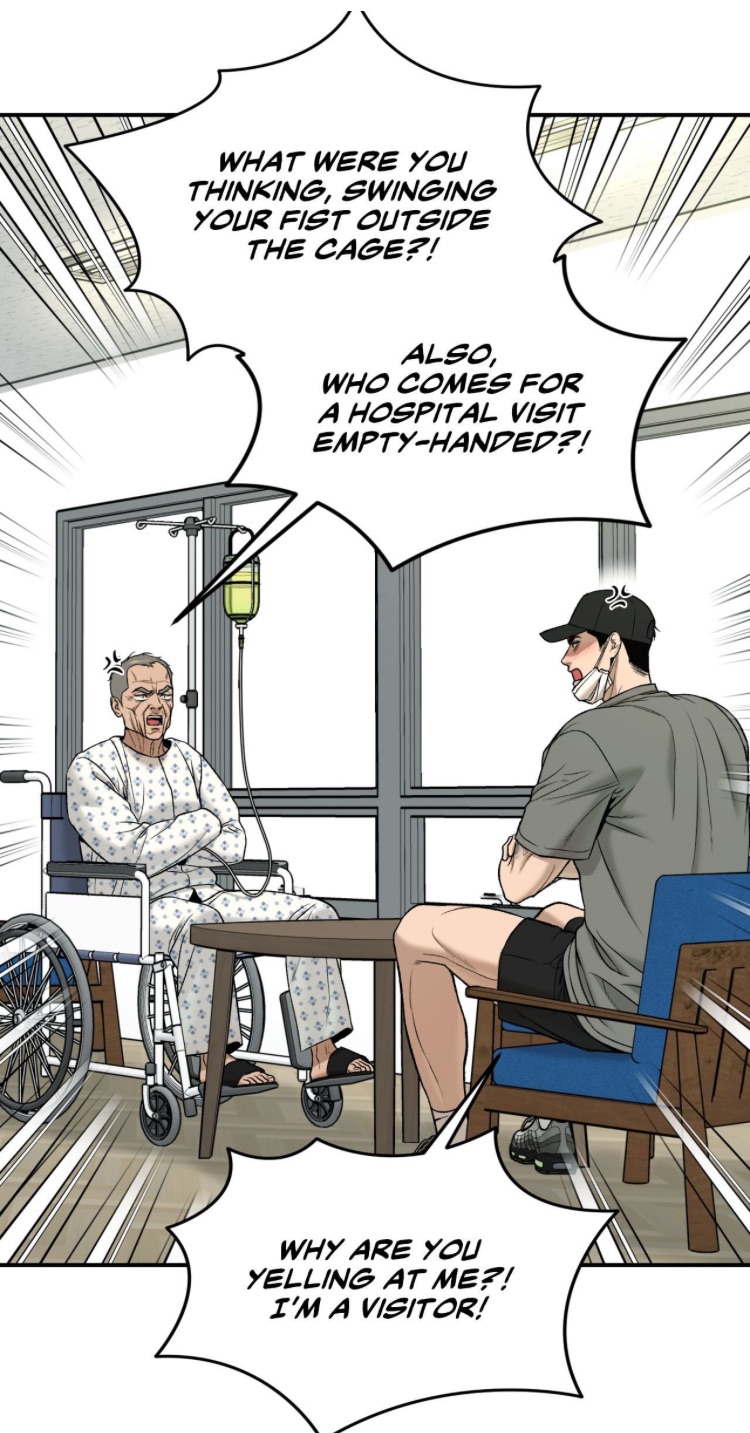
  (chapter 5) His behaviors—his hot temper, cold demeanor, blunt speech, and instrumental approach to others—were not innate traits. They were learned strategies, adapted from men who had likewise buried their vulnerability beneath strength or stoicism or brutality. Hence he brought no present to the patient at the hospice.
  (chapter 71) He became a wolf because he was surrounded by wolves—but deep down, his true nature is closer to a cat’s. This contrast becomes visible in Chapter 72, where his external persona appears as a shy, quiet, more sensitive self.
  (Chapter 72) Much earlier, in the summer night’s dream (Chapter 44), Kim Dan sensed that hidden nature: not the predator, but the man longing to be held.
 (Chapter 44) Doc Dan had sensed the real person behind the legend.
 (chapter 1), as he treats them as valid, not shameful. He cries, trembles, runs away, he apologizes… He asks questions rather than issuing orders. He names feelings
 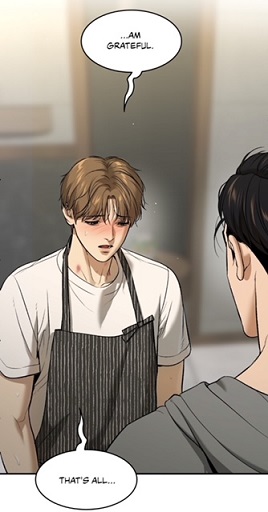 (chapter 45) and respects boundaries. He listens.
  (chapter 29) And so, like a child learning a new language, Jaekyung begins to mimic him too.
 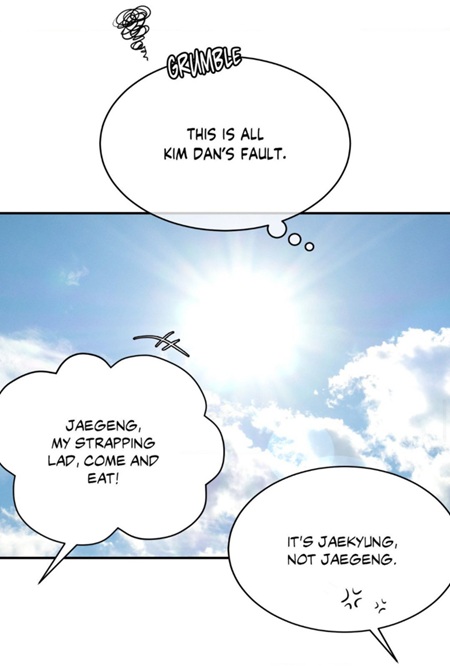 (chapter 62) The change is gradual but visible: helping the townspeople, accepting rest, asking to stay close, even touching and speaking more gently.
  (chapter 71) With Kim Dan, the fighter who once only mirrored power begins to echo tenderness.
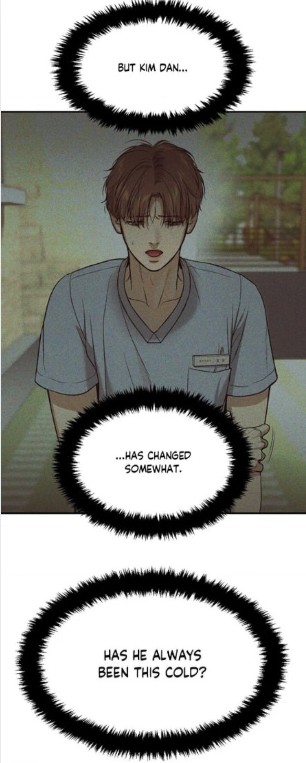 (chapter 62)
  (chapter 68). These are not just words—they’re the building blocks of intimacy, borrowed from the only person who ever saw through his armor. From mimicking strength, Jaekyung has begun to mimic care.
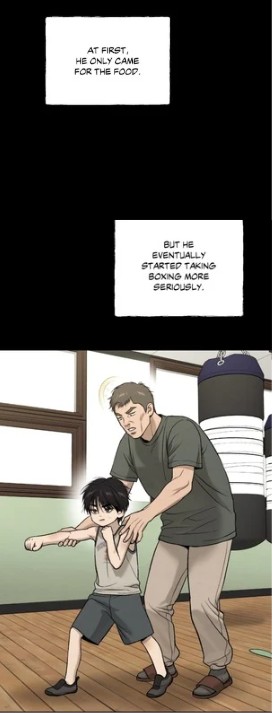
 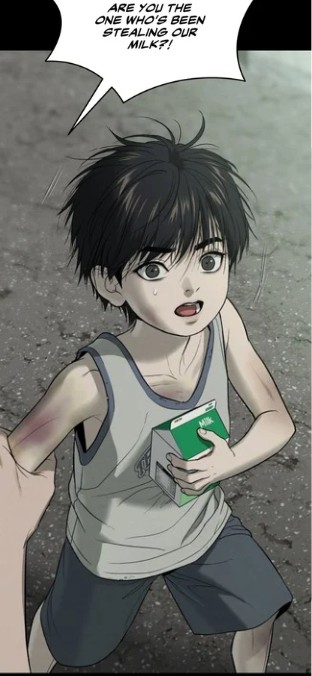 (chapter 72) So he fed him. But he never saw the deeper hunger: the absence of love, of being wanted. The coach assumed the problem was solved with food—because he had never gone without care.
  (chapter 72) He lived with his mother. He was never truly alone. And so he projected stability onto the boy’s silence.
 (Chapter 27) because the body, from the very start, was only a tool for survival.
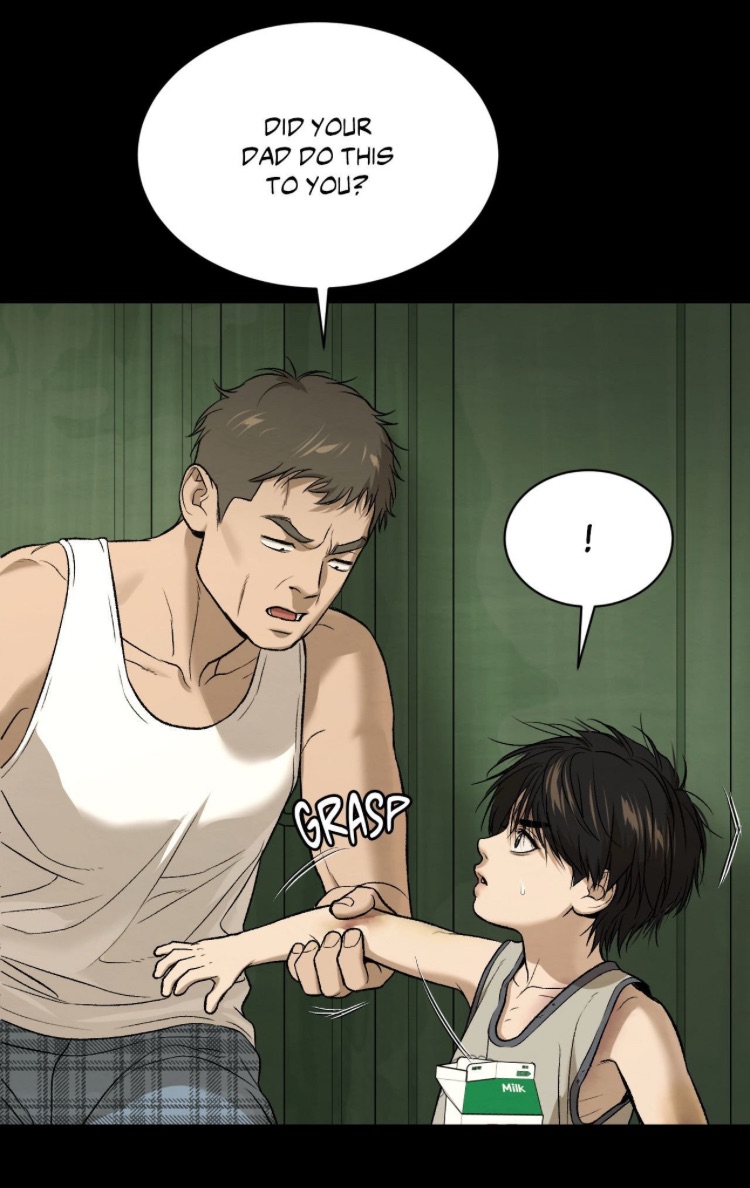 (Chapter 72) Instead, he redirects the situation:
 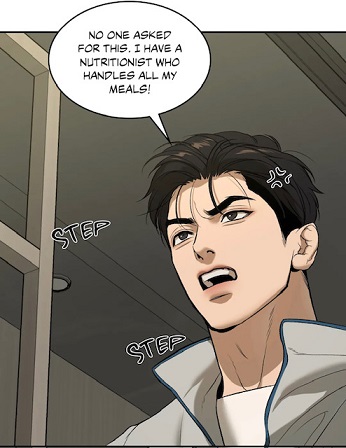 (chapter 22) There is no joy in eating, no comfort at the table. His body becomes a tool, and pain becomes the currency he pays to keep it running.
 (Chapter 26) This is how he enters adulthood, though he was still a child: not through love, but through function. The moment he steps into the ring, he’s no longer a child. He becomes, in the eyes of the adults around him, a product.
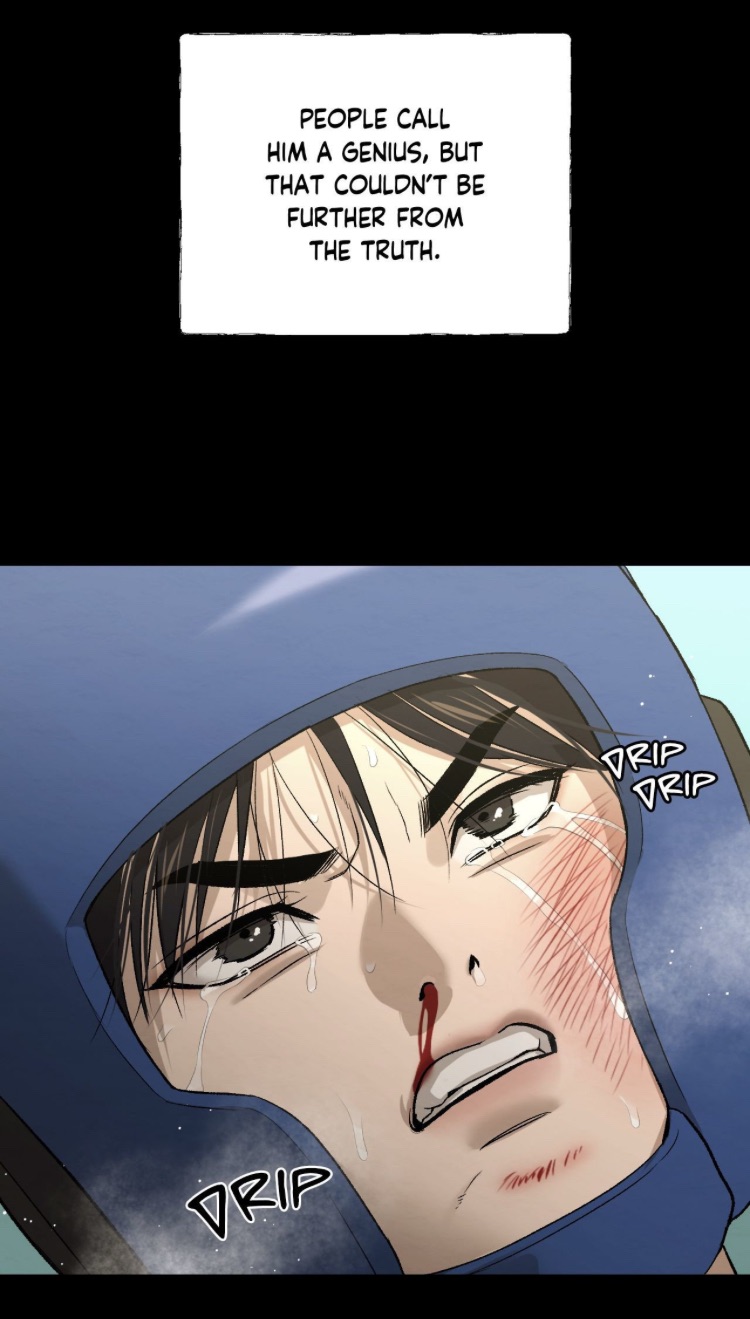
  (chapter 72) The expression (“But reality was like a punch to the gut”) suggests that even the coach himself was struck by how wrong or harsh the outcome turned out to be, but that realization came too late. Yet he blamed the young boy instead of convincing the young boy to postpone the fight. This scene shows that the man’s form of “help” was not rooted in empathy or protection—it was rooted in opportunity and perhaps even short-sighted hope for glory through the boy’s talent. He turned pain into performance.
 (chapter 71) why Joo Jaekyung never visited him or expressed his gratitude towards the boxing coach more openly.
 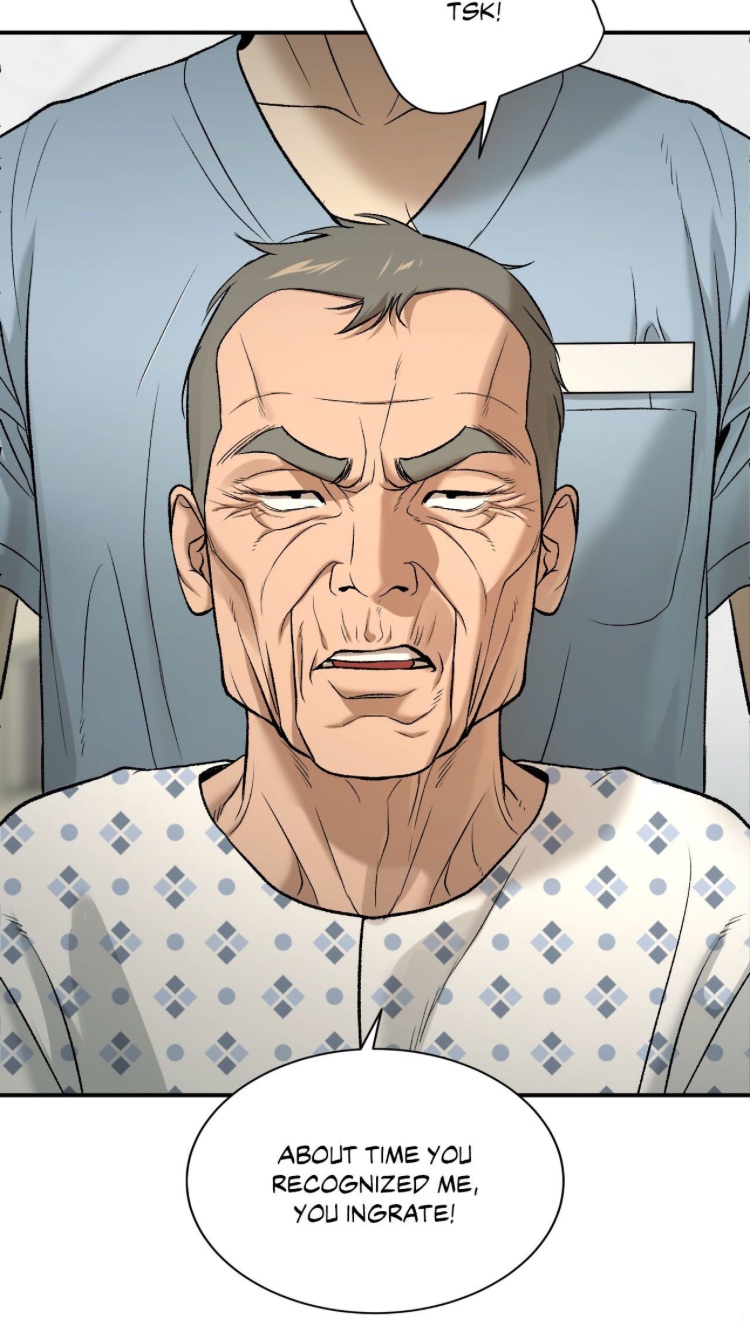 (Chapter 71) He became successful thanks to his own hard work. It was, as if he had followed the advice to the letter—make it on your own. I am suspecting that the charity event is linked to poor neighborhoods and children, so he didn’t totally erase the man from his memory, he just repressed him. However, it is not astonishing why the director is resentful and even bitter towards Joo Jaekyung. It was, as if he had never helped him. While he blames the man, the coach never recognized his own shortcomings. He didn’t see that his assistance was actually conditional.
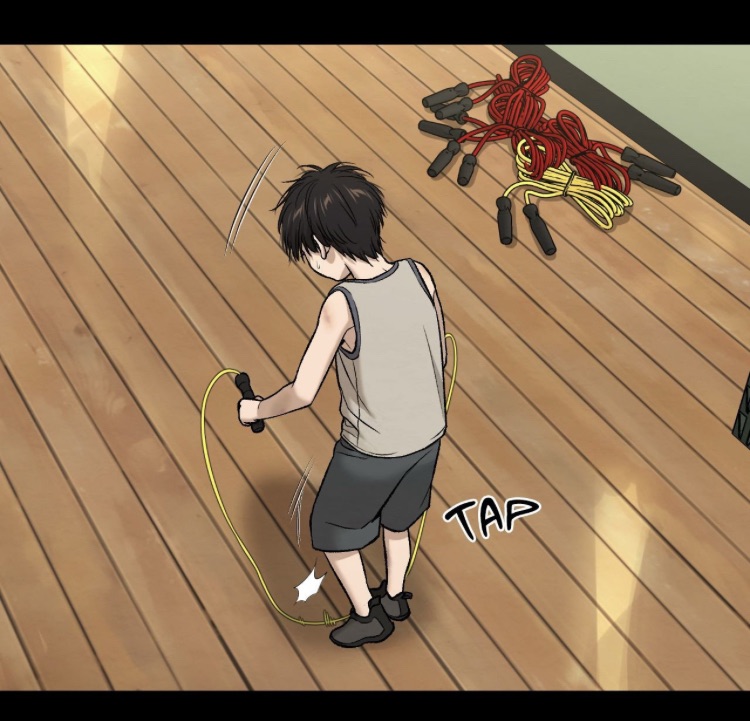 (chapter 72) They are all rivals. But from my perspective, there exists another reason why the main lead didn’t keep in touch with Hwang Byungchul exposing the director’s blindness. The adult Joo Jaekyung admits that seeing the director’s face brings back “old memories”—not of comfort, but of trauma.
  (Chapter 71) The implication is unmistakable: Hwang Byungchul reminds him of his father and the abuse. And the latter is strongly intertwined with the mother’s abandonment.
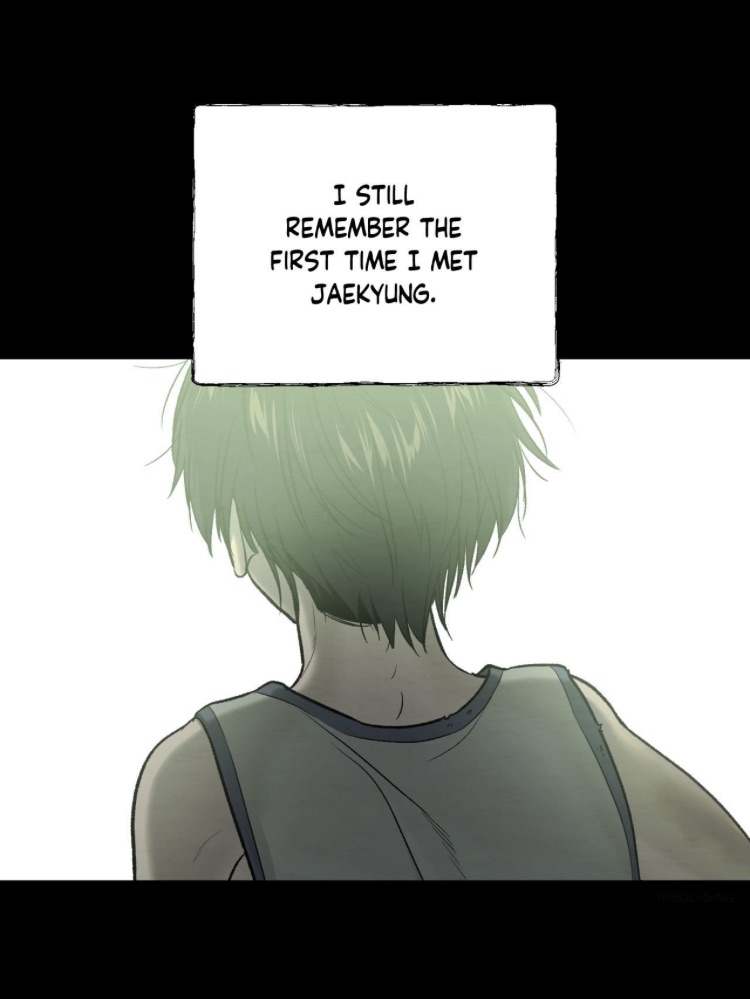 (chapter 72) The other is Jaekyung himself. How can we tell? Because the scene of the phone call contains no narration, no framing voice.
 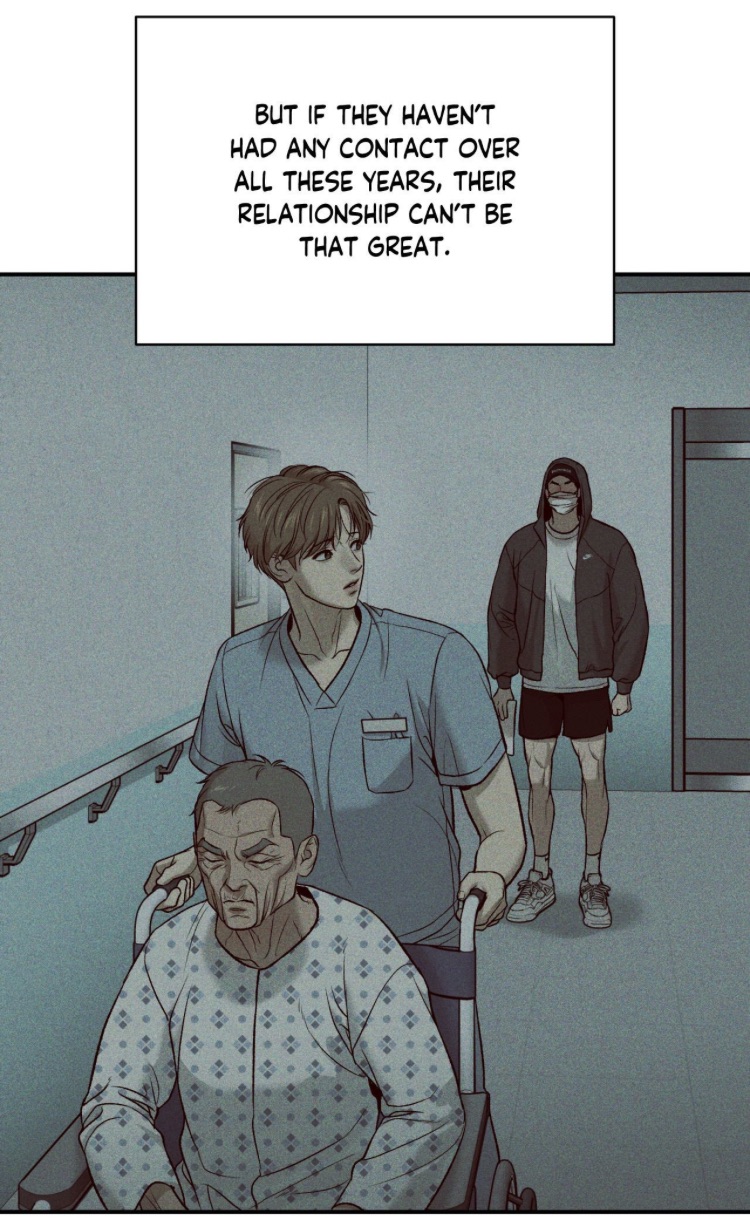 (Chapter 71) But here, doc Dan was making a huge mistake: he was just projecting his own feelings and relationship with him onto theirs. But he was behaving exactly like the former director: simplification.
  (chapter 9) Instead of listening, we assume. We choose clear lines—strong or weak, good or bad, useful or useless—over the tangled, uncomfortable truth that everyone is both hurting and trying. This refusal to reflect doesn’t just distort reality—it perpetuates it. When we simplify, we don’t heal; we reenact.
 (chapter 52),
 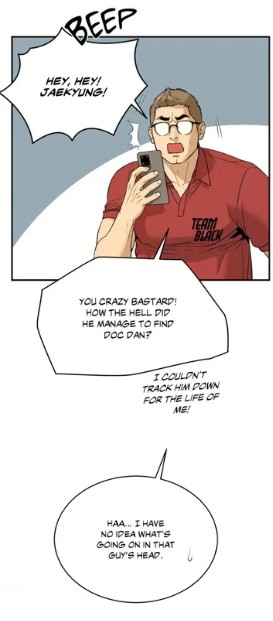 (chapter 61) In the panel where he sighs, “Haa… I have no idea what’s going on in that guy’s head,” he unintentionally exposes the shallowness of his approach. He imagines that by looking at Jaekyung’s brain—by cracking his psychology—he’ll “understand” him. That way, he can regain control. But this isn’t curiosity. It’s a veiled form of control-seeking. Namwook doesn’t want to know Jaekyung as a person—he wants him to be predictable, manageable, marketable. That line doesn’t reflect concern. It reflects frustration that the human being in front of him refuses to fit the role he’s been assigned. Hence it is logical that his solution to force Joo Jaekyung to return to the gym is to accept a new match.
  (chapter 69) Namwook’s failure is a professional one, but it’s also deeply emotional: he simplified Jaekyung into a product or spoiled child. And when the product malfunctioned—when pain erupted from silence—he didn’t ask why, he suggested how to make it stop. This is simplification in its most insidious form: not out of malice, but out of discomfort with emotional reality.
 (chapter 65) Her mindset follows a consistent logic: one problem, one person, one solution. Kim Dan is overworked and sick?
 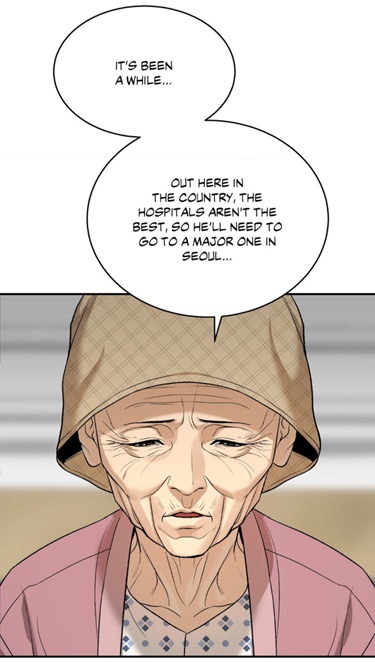 (chapter 65) Then someone stronger should carry him. That “someone” becomes Jaekyung. The doctor should take pills and that’s it.
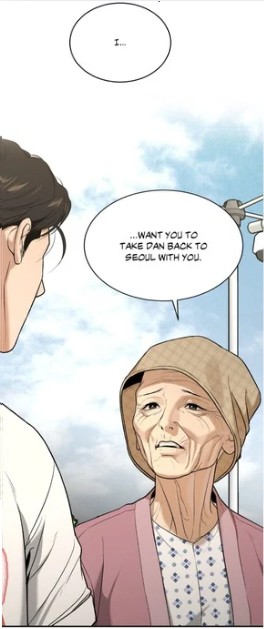 (chapter 65) Her logic is deeply utilitarian—Jaekyung is rich, strong, and dependable. Therefore, he must be fine. She does not consider whether he is emotionally stable, available, or even willing to carry such a weight. The haunted look in his eyes that Hwang Byungchul noticed in Chapter 72
  (chapter 65) This is totally naive, because certain parents like Joo Jaewoong are not capable of offering love and support. In Chapter 57, when Kim Dan was a child, bullied and humiliated, she told him: “They don’t know what they’re talking about. You still have me.”
 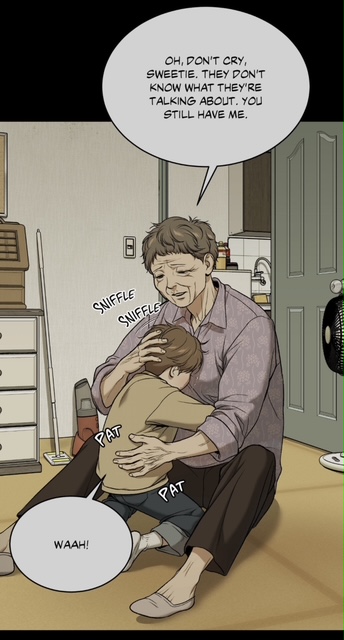 (chapter 57) This line, though comforting on the surface, is an act of simplification. She makes herself the sole solution to Dan’s complex emotional wounds. Her message: You don’t need justice, friends, or understanding. You need me. That’s how doc Dan was taught not to argue and not to fight back. He just needed to accept the situation.
 (chapter 65) she doesn’t know anything about his life. That’s the price of simplification: you get a clean answer, but not the truth.
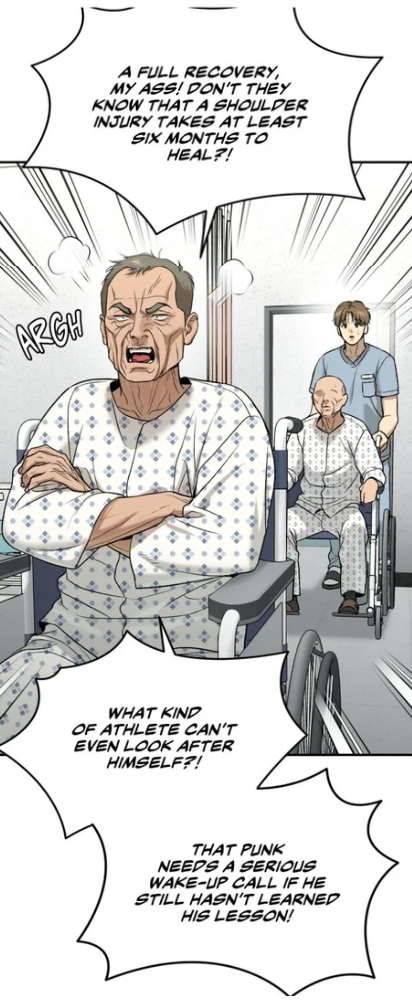 (chapter 70), as though he chose freely, overlooking how coercion and image control operate in their world. He accuses him of ruining his career with the suspension, even though it was orchestrated by others.
  (chapter 70) He judges him without knowing the circumstances. This projection is not new. In the past, he blamed the father,
 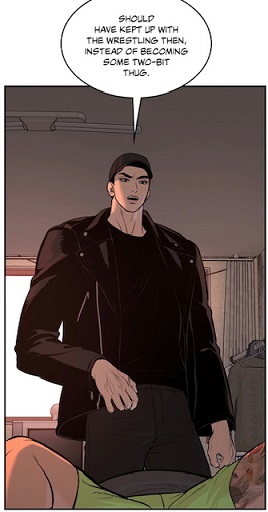 (chapter 17), it becomes clear that there exists a recurring link between athletic decline and criminal paths. The man fails to notice this connection. He sees these outcomes as individual moral failings, not systemic failures.
  (chapter 40) Kim Dan saw the result and got fascinated. And what we’re left with now is a man whose pain and exhaustion are almost unseen
  (chapter 64) He reproached him about being used and abandoned. But he was forgetting his own actions. He had also used the athlete, he had also left the bed in a hurry the next morning. Yes, he, too, simplified Jaekyung. That night, he said nothing. And in doing so, he confirmed the belief Jaekyung had internalized: I’m not someone who gets cared for. I’m someone who is tolerated, used, replaced. Like mentioned above, his mind-set was strongly influenced by Shin Okja. On the other hand, I noticed that the protagonist embodies complexity. How so? On the surface, he appears simple: obedient, quiet, weak, submissive, passive.
  (chapter 70) But beneath that surface lies a dense emotional world— love, grief, guilt, exhaustion, intelligence, empathy and moral clarity — that few characters in Jinx truly perceive. He stands for the heart! And everyone knows that “the heart has its reasons, of which reason knows nothing.” (Blaise Pascal) Because he acts from a place that defies the cold logic of power, hierarchy, and survival, he operates on emotional intelligence
 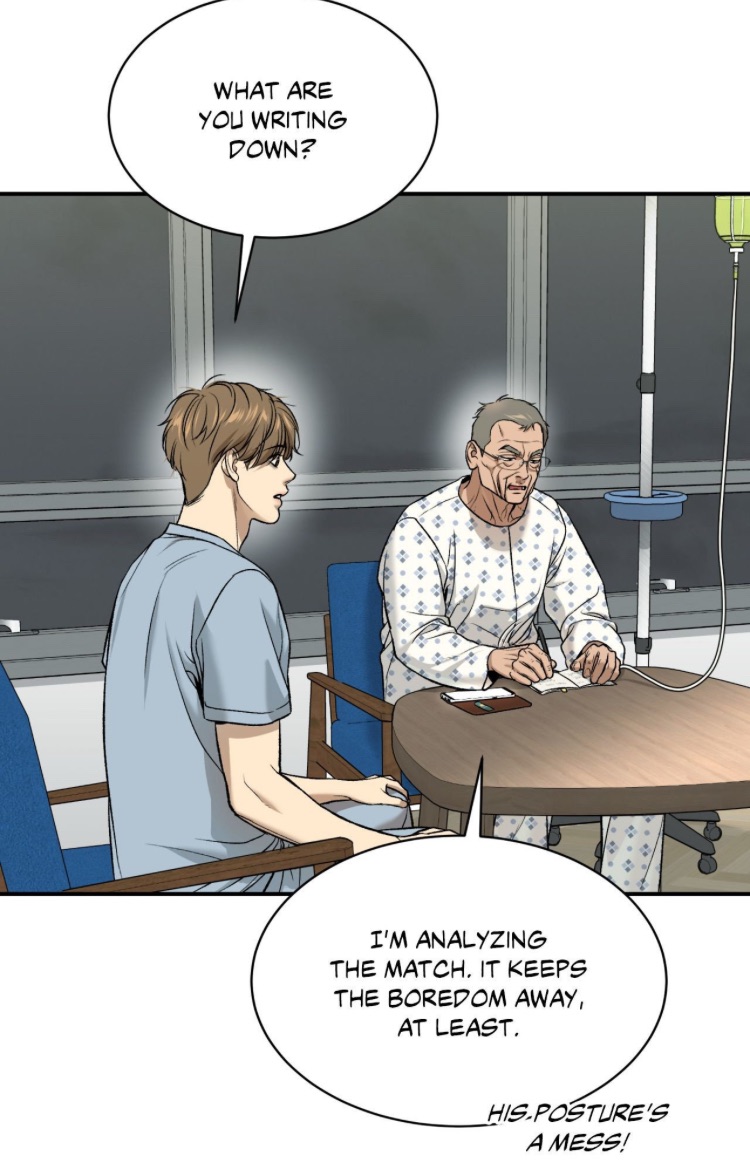 (chapter 71) —unspoken understanding, silent resistance, instinctive empathy. It’s no coincidence that his presence disrupts every system he enters: the gym, the hospital, the champion’s life.
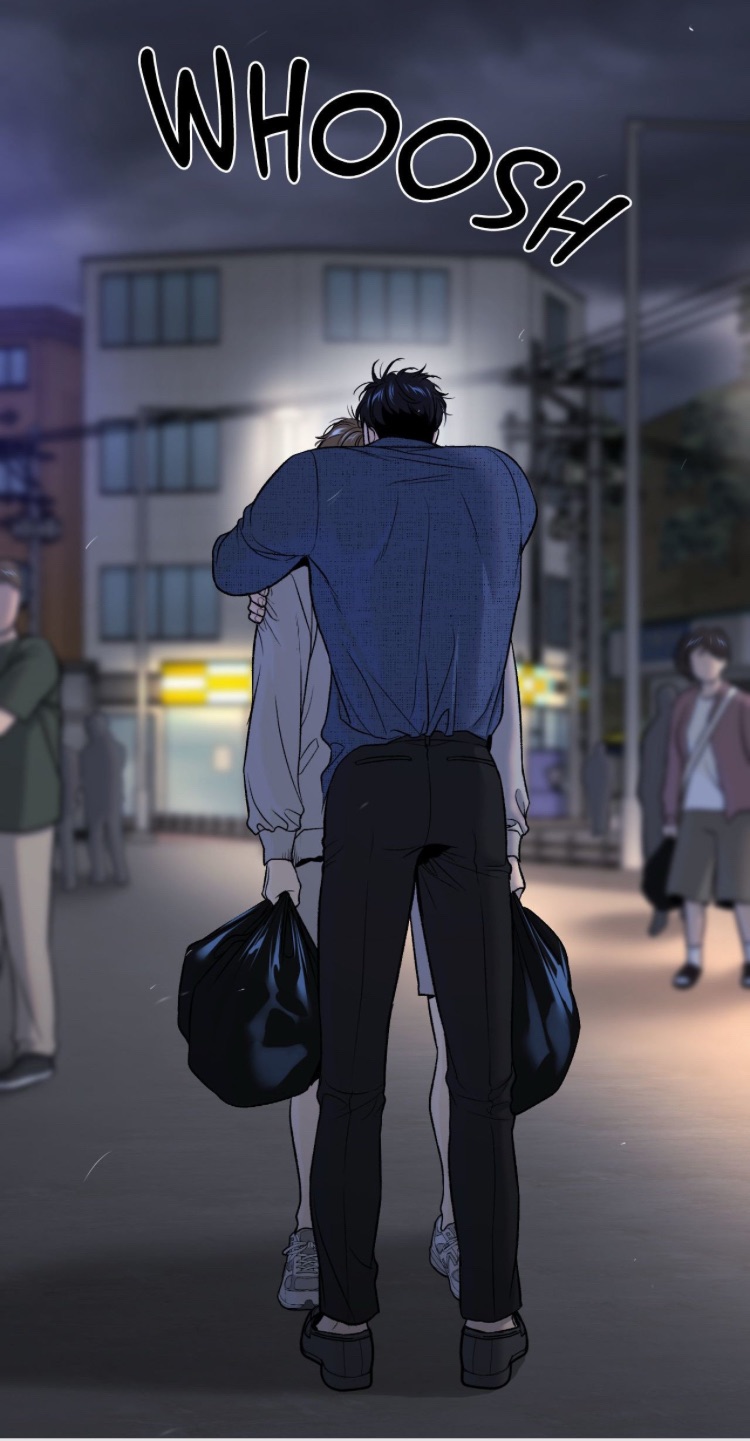 (chapter 70), and starts being a person. The racing heart… which has already happened. And this observation leads me to this scene:
 (chapter 58) Kim Dan was erasing this memory, he wanted to forget the star The Emperor. This act of forgetting wasn’t an escape from pain; it’s an active rejection of a myth that was keeping him emotionally paralyzed. As long as Jaekyung remained “The Emperor,” he could not be touched, questioned, or truly known. By forcing himself to forget that image, Kim Dan was making space for something more vulnerable and human to emerge. To conclude, thanks to this painful decision, he was able to perceive Joo Jaekyung the man. That’s why he acted so fiercely in front of him later. So by meeting the director, doc Dan is now able to see the child or the “cat” in his fated partner. That’s how it dawned on me why Mingwa let doc Dan suffer from addiction, depression and insomnia. Because these afflictions defy simplification. They resist instant solutions (pills). They demand patience, presence, and a refusal to look away.
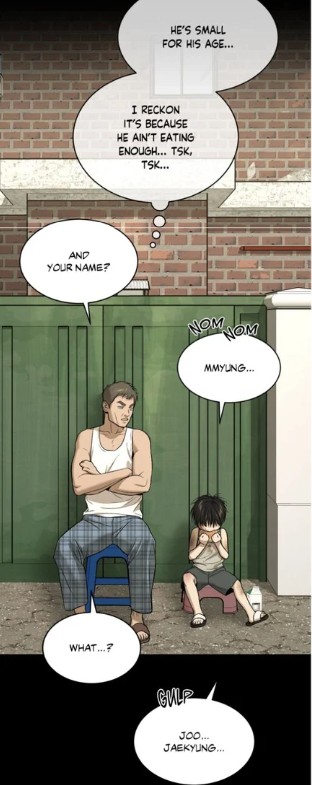 (chapter 72), his bruises
 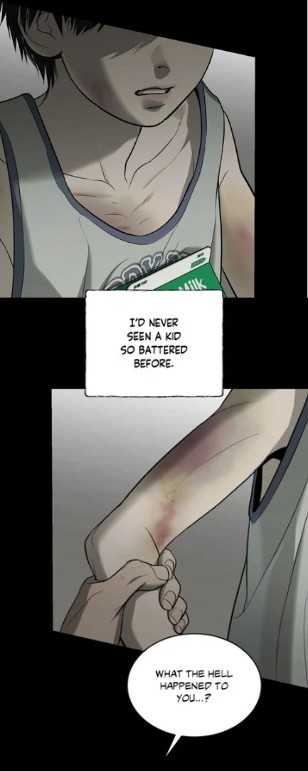 (chapter 72) and asked for his name. This exposes his priorities and his blindness. He didn’t truly perceive the child in him, he was seeing him through the lenses of a boxer and director. Hence he underestimated the absence and abandonment of the mother.
 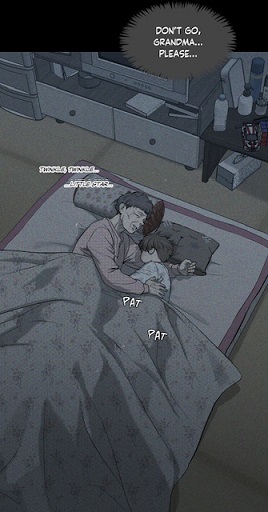 (chapter 21) Unlike Kim Dan, who grew up falling asleep next to his grandmother, accustomed to someone sharing his blanket, Jaekyung was emotionally and physically on his own from the start. Moreover, observe that the little boy had toys
  (chapter 53) He is a physical therapist. He had also arranged his books together:
 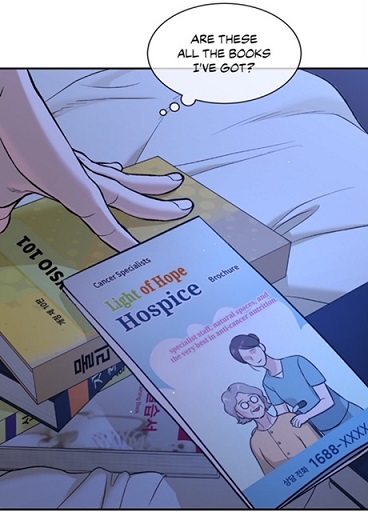 (chapter 53) And what did the hamster think while gathering his belongings?
 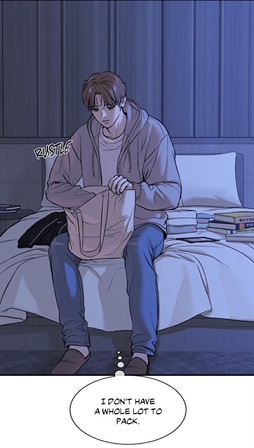 (chapter 53) So I deduce that the woman left them behind because she didn’t need them, she had enough or she no longer cared. But there is more to it!
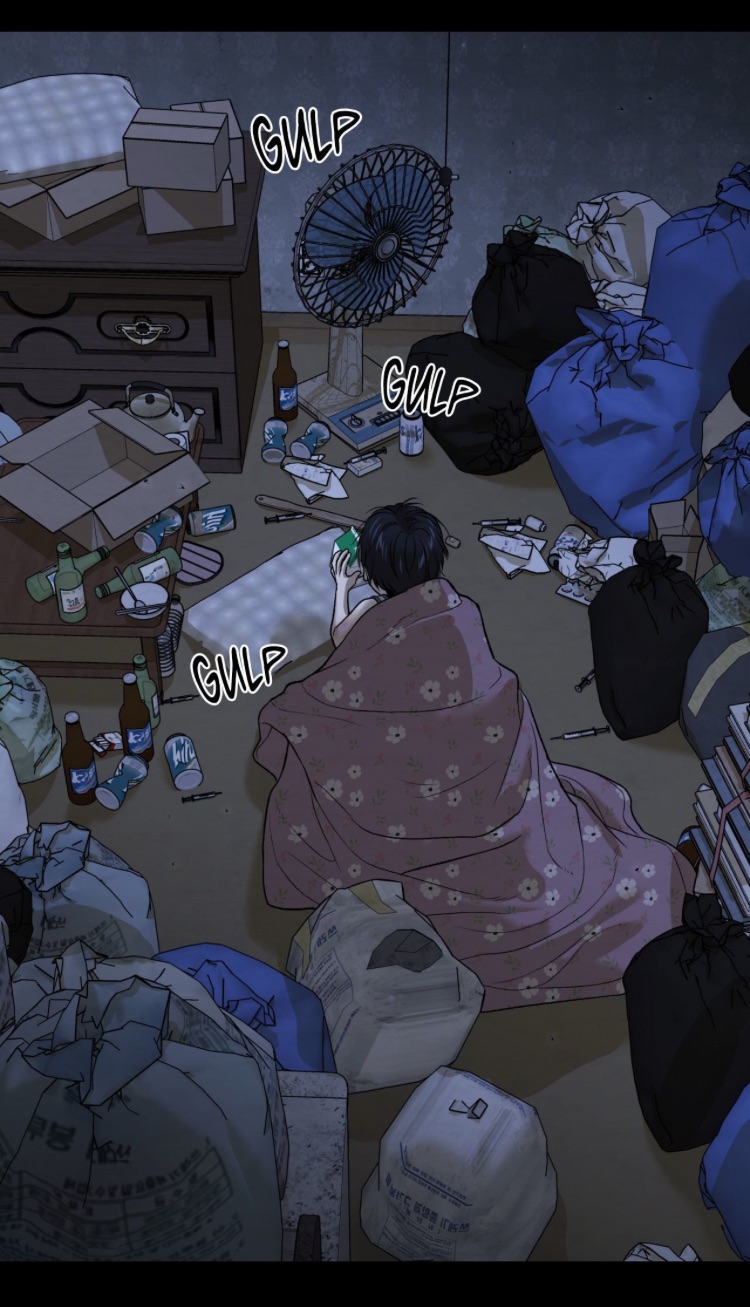 (chapter 72), there are parcels stacked on the commode and table—some of them are wrapped and seemingly untouched. Their presence is striking. Unlike the strewn bottles and plastic bags, these boxes don’t speak of decay, but of intention. They hint at a moment when someone had plans—however fleeting. And yet, their sealed state raises unsettling questions: Who were these parcels for? And why were they never opened?
 (chapter 27) There are no toys, no supplies for a child—just quiet evidence of a woman focused on herself, her escape perhaps already underway.
 (chapter 53) The jacket… Because of these parallels, I come to develop the following theory. Joo Jaekyung knew his age, because he had just celebrated his birthday. This scene definitely took place in the summer.
  (chapter 53) must have triggered the champion’s abandonment issues. He had the impression to relive the past. The mother had left him behind in the dark unexpectedly.
 (chapter 53) Thus Joo Jaekyung started drinking and recalling his repressed traumas. This explains why he didn’t look for doc Dan at first and why he hates his birthday and presents.
  (chapter 45) And now, you comprehend why I wrote above that I was not giving up on the idea that the champion could belong to a different world too. She was not accustomed to take care of a household. She wasn’t used to cook either. She would order food, hence we have the empty bowls.
  (chapter 72) Remember how the champion reacted, when he tasted his cooking for the first time?
  (chapter 22) He feared deception here, a sign that he must have experienced such a lie before. For me, everything is pointing out that this woman was incapable of becoming responsible for her own child. She left quietly and early enough that even Hwang Byungchul, who knew of her departure, didn’t recognize the boy
  (chapter 72). In other words, the mother was already emotionally absent long before she physically vanished. The bandaged bear thus becomes a silent accusation: you saw, and you left. Therefore it is not astonishing that Joo Jaekyung made such a mistake:
 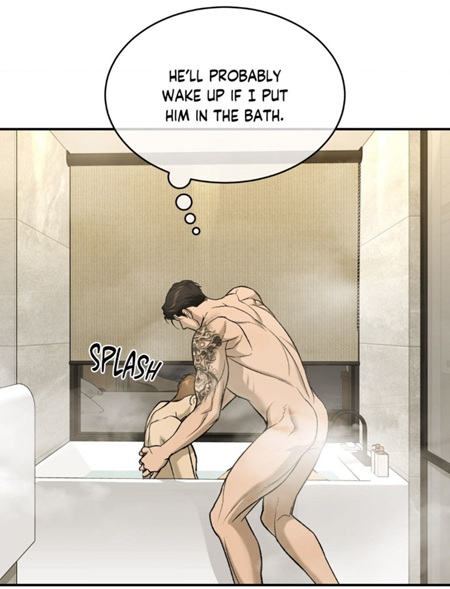 (chapter 68) His mistakes concerning doc Dan are the evidences that he was not taught how to take care of someone. His errors indicates his innocence and purity.
 (chapter 44) before he was abandoned. Jaekyung was never treated properly before. He was not claimed at all. It is important because the champion mentioned the word “home”
 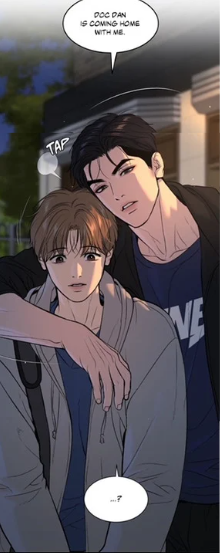 (chapter 43) for the first time shortly after receiving a mysterious phone call.
 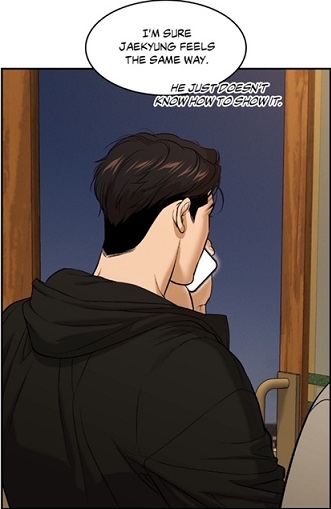 (chapter 43) And it is linked to his birthday. This resembles a lot to this scene:
  (chapter 37)
  (chapter 49) Is it the mother or someone acting as an invisible guardian who knows the champion’s past? What do you think?
 (chapter 72) Joo Jaewoong—whose name literally evokes the bear (웅, 雄 or 熊)—was not a gentle protector, but a violent alcoholic and drug addicted, a man who “strayed from the straight and narrow”
 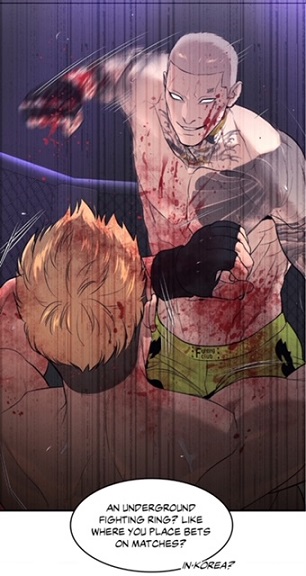 (chapter 47)
 (chapter 54) —Team Black—bears symbolic weight. Unlike other athletes who proudly attach their names to their legacy, Joo Jaekyung avoids personal branding. He doesn’t call it “Jaekyung’s Gym” or “Joo Athletics.” Instead, he opts for anonymity, for darkness. It’s as if he’s building a fortress rather than a legacy, a space that offers power and protection, but no trace of where he came from.
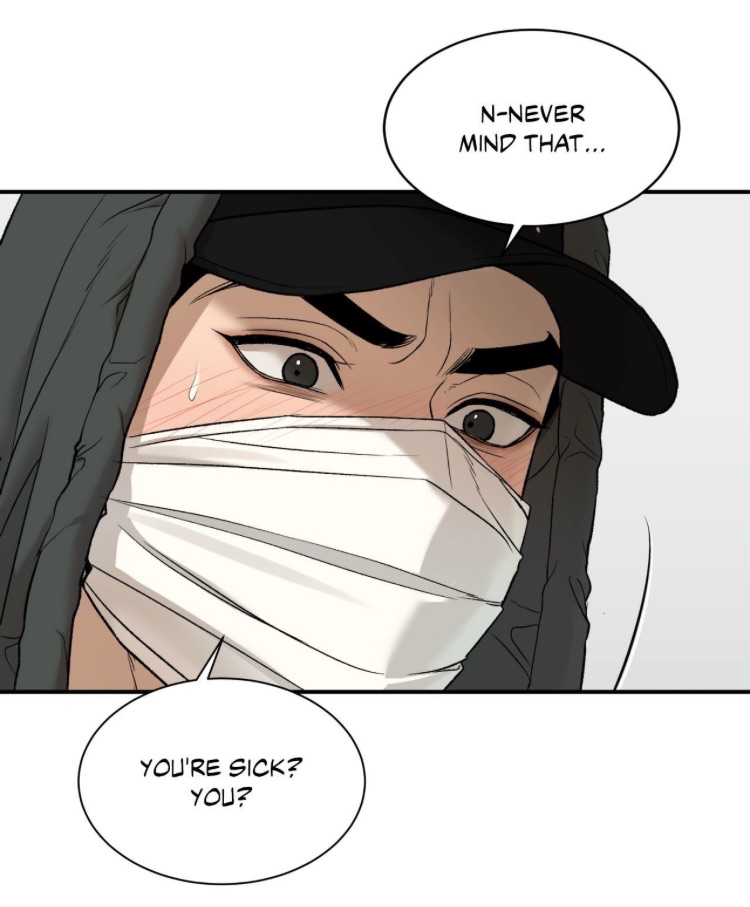 (chapter 71) I am quite certain that her vanishing must have pained him. She embodies the only good motherly role model in his life which explains why Joo JAekyung has a soft heart for Shin Okja. He knew to speak prettily and gently because of her. It is clear that the director influenced his dream, creating a gym where his mother would be part of it.
  (chapter 22)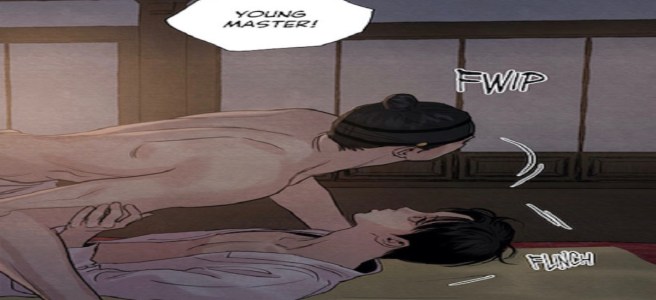
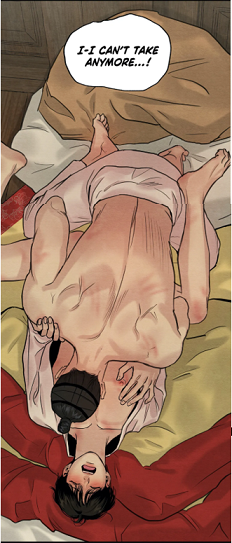 (chapter 89) The lord’s back is covered with marks. Yet, he was not brown-nosing here at all, for he was rejecting the lord’s advances. And now, it is time to take a closer look to season 1.
  (chapter 23) Baek Na-Kyum was seen holding an apple, here it looked like he was indeed polishing the fruit before eating it. Striking is that during that scene, valet Kim was interrogating him. He was acting, as if he was interested in him. It was, as if he was buttering up to Baek Na-Kyum. The purpose was to gain the artist’s trust so that at the end, he would listen to his advices.
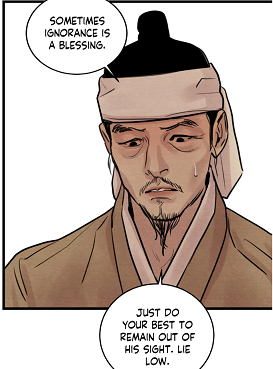 (chapter 23) However, the reality was that the valet was actually digging for information, spying on the main lead, so that he could create a new incident. As you can see, there were two apple-polishers in that scene, the painter and the butler. This was the reflection within the same episode. While Baek Na-Kyum was literally polishing the apple, the other was just cajoling Baek Na-Kyum in a figurative way. Yet, the former was not truly sweet-talking to the artist. He gave the impression that he was totally honest. And now, it is important to recall what happened to the painter in the next chapter. Jung In-Hun was kissing the painter’s hands.
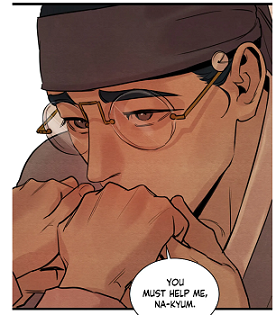 (chapter 24). He was flattering the painter with the hope that Baek Na-Kyum would spy on his account. But the scholar couldn’t succeed with his request. Why? It is because he only kissed the artist’s hands. He never licked his boot or his ass. We could even say that he did scratch his back, but in the wrong way:
  (chapter 24) In other words, he could never lower himself in front of the low-born. This was too much, explaining why the scholar failed with his request.
  (chapter 27) In exchange for saving Jung In-Hun’s life, Baek Na-Kyum was forced to do a fellatio. We could say that the artist was sucking up to the owner of the mansion. But the fellatio is not just an exchange of favors. It is also associated to forgiveness. At the tailor’s shop, the painter had blushed because of Yoon Seungho, The latter had embarrassed him. Thus the lord made the following suggestion:
 (Chapter 39) This was his way to apologize, though here he was teasing his lover. These were the principles he had been taught, therefore it is not surprising that he applied them for the painter. And now, you comprehend why in episode 71, Yoon Seungho sucked the painter’s phallus in the bathroom, he was also currying the artist’s favors. His goal was not to be pushed away, to be accepted.
 (chapter 71) He had wronged the painter so many times, that the blow-job was not enough. Thus he licked his ass in the bedchamber. He was hoping to seek his forgiveness.
 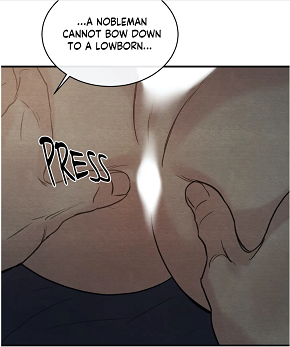 (chapter 71) It was, as if he was lowering his head, the kowtower. In this episode, the lord was on his knees in front of the painter, and this twice. One in the bathroom
 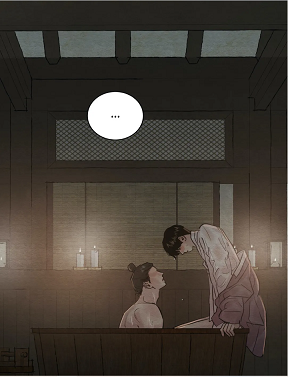 (chapter 71) and the other time in the bedchamber.
 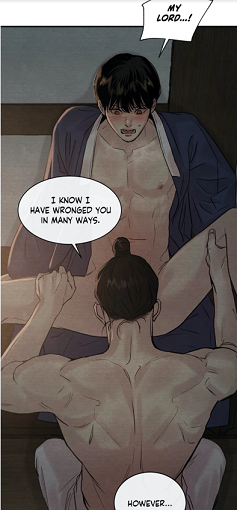 (chapter 71) However, his nose didn’t get brown, as the painter is a pure and innocent person. 😉 That’s how I realized why Baek Na-Kyum was sent to the bathroom. His role was to divert Yoon Seungho’s attention from Kim so that the master would forget to ask for the butler’s punishment. In other words, the valet used the low-born to seek his master’s favors. This shows that Yoon Seungho had been taught that the blow-job and the ass-kissing are the means to obtain forgiveness.
  (chapter 73) He was licking the painter’s foot so that he could keep thrusting. Don’t forget that during the whole night, he behaved like a servant… the one who was “sucking up to Baek Na-Kyum”.
 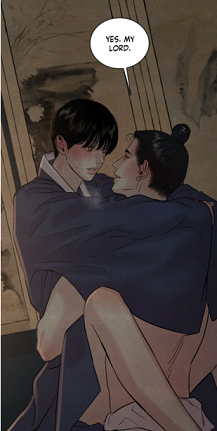 (chapter 72) On the other hand, the latter scratched the lord’s back for the first time during that night.
  (chapter 72) This was the reflection within the same episode, yet the “back-scratcher” was not doing it for his personal gain at all. We couldn’t say that he was currying favor or buttering up Yoon Seungho. He believed that he was just a servant and nothing more. From the outsider’s perspective, he was treated indeed like a favored servant, though in truth Yoon Seungho viewed him more like his new master and lord.
 (chapter 45) In this scene, the lord was acting like a teacher, and the painter was supposed to do a blow-job in exchange for a favor. But since the painter was heartbroken, he was doing it absent-mindedly. Thus the roles got switched. After the noble licked the painter’s ass,
  and masturbated him anal, the painter was able to confess his pleasure:
  (chapter 45) This shows that the lord was slowly “currying favors” to Baek Na-Kyum. And this is no coincidence that Kim brought the ink and brushes to the mansion.
  (chapter 45) Once again, he was acting, as if he was buttering up to Baek Na-Kyum and indirectly to the host. But the reality was that everything was done for Kim’s interest…. On the other hand, we could say that Yoon Seungho was not really different from his surrogate father, for in that scene, Yoon Seungho was more thinking about himself than the painter’s. Yet, there is a slight nuance, the lord was sensing that the painter was not himself. He was talking to him, so licking the painter’s ass was not just done in order to obtain the painter’s support. His true goal was to be noticed and looked by the painter. He desired to have a true exchange of thoughts. Interesting is that by licking briefly the painter’s ass, he indeed succeeded, Baek Na-Kyum started thinking about him afterwards. The irony is that Yoon Seungho was just applying what he had been taught. That’s how I discovered the other reason why the main lead is not suspecting the butler of treason. Contrary to Yoon Chang-Hyeon or the pedophile, Kim was never seen asking Yoon Seungho for sexual favors: no fellatio or no ass-kissing. But this is just a deception, for we could clearly see that the butler is connected to the sex parties:
  (chapter 33)
  (chapter 52) He was the one who separated the couple. Because of his intervention, the painter deserted the mansion and got sick afterwards. Then in chapter 50, he revealed the argument between Baek Na-Kyum and Jung In-Hun. Striking is that in that scene, he was standing on the lord’s left side!!
  (chapter 50) No wonder that Yoon Seungho got furious. Simultaneously, while Kim was acting, as if he was defending the painter’s interest and as such feeling sorry for the painter, this signifies that he was no longer sucking up to his own master. Therefore, it is not surprising that the lord scolded him.
  (chapter 50) In fact, he should have “buttered up” his master and not pitied the painter. And now, you comprehend why the main lead misinterpreted Kim’s behavior. In his mind, the valet was actually “apple-polishing” to the painter. He had somehow “witnessed” it in the woods. But he had misjudged the situation, in reality he had caught Kim spying.
 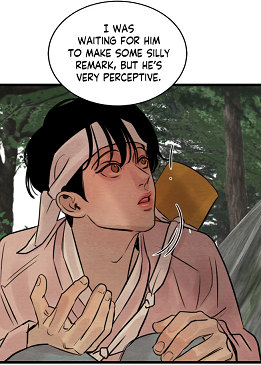 (chapter 23) Unfortunately, the lord was not perceptive at all.
 (chapter 80) He enjoyed seeing the painter’s facial expressions and reaction. He looked so shy and pure.
  (chapter 80) However, during that night, three people were trying to bootlick someone figuratively speaking: the new version of Deok-Jae, Kim and the messenger. Let’s not forget that before the arrival of the messenger, the painter made the following request to the butler:
  (chapter 79) One might say that he was currying favor to the butler, when he asked the butler about the music box. But what did Kim do? He brought the item to the bedchamber.
 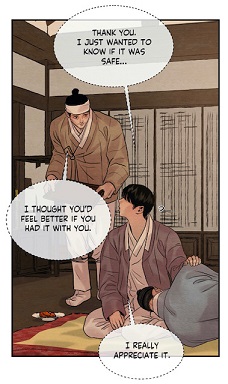 (chapter 79) But this is not what the painter had actually requested, since the butler said this “I thought”. He had taken the initiative on his own. In my opinion, the painter had just asked that the music box should be brought back to the study. However, Kim brought the expensive present to the bedchamber for one reason. He expected the arrival of the messenger. We could say that he was “ass-kissing” the painter in order to obtain his trust. Kim definitely imagined that Yoon Seungho was sleeping. As you can see, this scene was the reflection of Yoon Seungho’s action in chapter 80.
  (chapter 80) While Kim had asked the painter’s to clean his face himself, the lord was cleaning the painter’s ass himself. Or we could say that he was polishing the painter’s apples, for he has an apple-shaped buttock. 😂 This clearly indicates that Kim has never washed Yoon Seungho himself. In other words, while Yoon Seungho was totally selfless here, this was not the case for the valet. And this is no coincidence that right after, the new version of Deok-Jae appeared in front of the door calling his master. He was faking loyalty and dedication.
 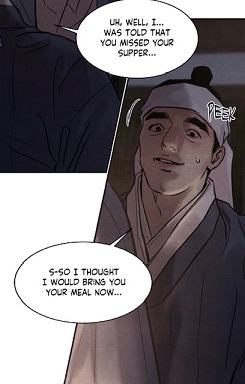 (chapter 80) Here, he was acting, as if he was sucking up to Yoon Seungho, but his gaze betrayed him. In my opinion, he had been deceived by the butler, for the latter expected that the painter would open the door. This situation was reflected within the same chapter. Notice what the messenger said to the young master in the study:
 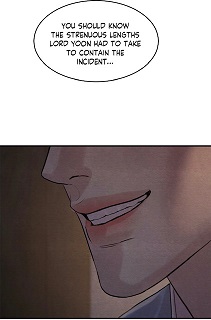 (chapter 80) He was implying that his father had to bootlick an official in order to hide the incident. And how did the lord react to this? He not only asked the servant to do him a fellatio, but also made an allusion to the sexual favor:
 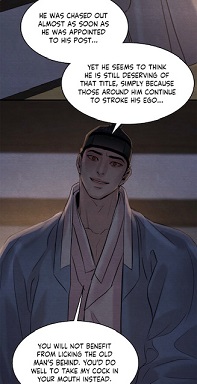 (chapter 80) His father must have kissed someone’s ass. But as you already know, Yoon Chang-HYeon is not someone who will do such a thing himself. And this shows that he has definitely used his son in order to obtain favors in such a way. Yoon Seungho had to do fellatios and let people lick his ass for his father’s sake, as he was a uke in the past. This is not surprising that the messenger received such a beating in the end.
 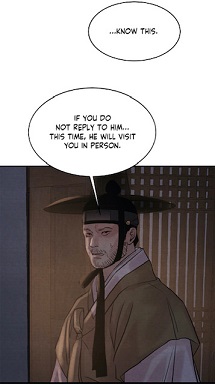 (chapter 80) He gave an order to the main lead, he threatened him. But actually, he was just a servant. He was not treating Yoon Seungho correctly. Interesting is that he showed more courtesy and respect to lord Lee than Yoon Seungho.
  (chapter 82) It was, as if the man was hoping to obtain father Lee’s support either. Another interesting aspect is that when the butler approached the wounded emissary, the former was definitely brown-nosing.
 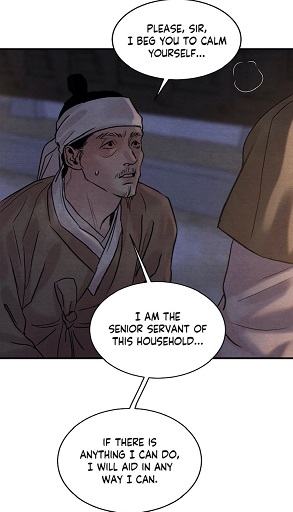 (chapter 82), until he heard that the scholar Lee had approached father Yoon. On the other hand, his introduction didn’t fool the courier, for he was aware of Kim’s meddling.
  (chapter 82) In my opinion, Yoon Chang-Hyeon had followed the butler’s suggestion. Since the painter would always sleep in the study alone, he envisioned that the messenger would suggest to the artist to meet Heena. The man could fake that he had been sent by his noona. He was dressed up for that reason!! Observe that the color of the hanbok is similar to this one:
 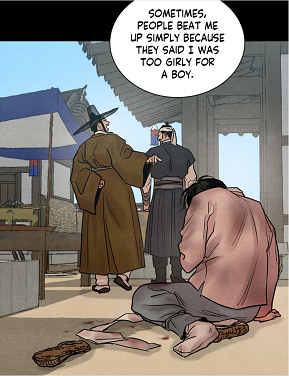 (chapter 94) Thus I had this sudden idea. What if the messenger was receiving his karma for beating the painter in the past? Remember how I had deducted that these two men could have been disguised as nobles!! And this new perception would fit my interpretation. But let’s return to our main topic. The courier refused the obsequious and submissive remarks from the butler. He was no fool, for he knew that because of his “plan”, he had become the biggest victim of Yoon Seungho’s wrath. This explicates why the author never revealed the father’s words, because the manhwaphiles would have discovered the valet’s plan and as such betrayal
  (chapter 82) This means that if father Lee or Yoon Chang-Hyeon are cornered, they could be forced to “ass-kiss” the king.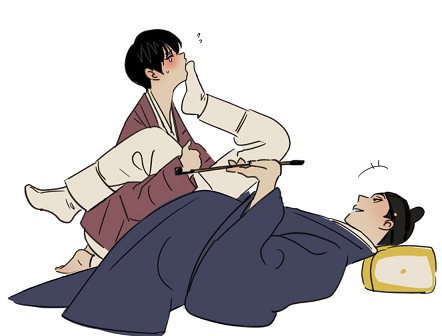
 Baek Na-Kyum is now imitating his lover. He is also licking the lord’s boot/foot. However, contrary to the signification, he is actually making love to his companion. This has nothing to do with selfishness and hypocrisy. We could even say that at the end of season 3, Yoon Seungho had become the teacher’s pet, the yes-man towards Baek Na-Kyum:
  (chapter 92) He could never refuse his lover’s requests. Thus in the gibang, he encouraged the painter to stay in the gibang.
 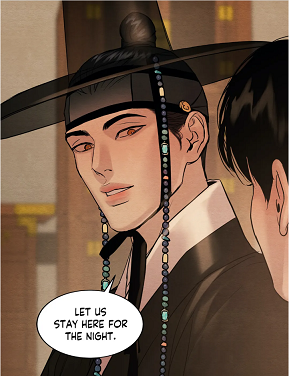 (chapter 93) It was, as if he was seeking the kisaengs’ support. Thus he chose leniency towards these women, though the latter had insulted him. At the same time, he was not hoping to receive any flattery from the noonas. He was the one “sitting on the painter’s right side”.
 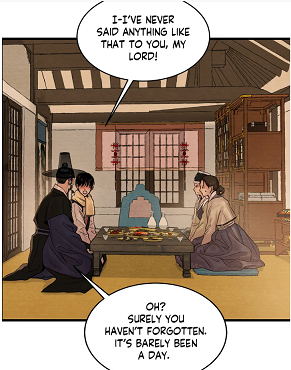 (chapter 93) To conclude, the lord had been “tamed”, he was apple-polishing Baek Na-Kyum, but not in a negative way. It is the positive reflection of Kim who will act behind people’s back, and definitely use sex for his own advantage. We have the perfect example with the 2 sex marathons. He always let the painter suffer in order to cover up his own wrongdoings. But by allowing the main lead to act this way indicates that he was not helping Yoon Seungho. What people thought as assistance was in truth “brown-nosing”.
 (Chapter 95) In his eyes, the lord didn’t need it, for he was already aroused. Remember in the beginning of the story, Lee Jihwa had to prepare his lover
 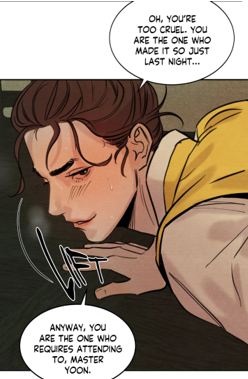 (Chapter 3) Secondly, the painter was in the position not to ask for favors, to suck up to Yoon Seungho. In their relationship, the low-born had the upper hand. Finally, Baek Na-Kyum had done nothing wrong before, so he didn’t have to beg for the main lead’s forgiveness. That’s the reason why the lord was actually rejecting the blow-job!!
  (Chapter 95) It is the expression of affection and love.
  (chapter 101) The painter had to do a fellatio to lord Jang in exchange for protection.
  (chapter 101) The artist was not acting like the teacher’s pet,
  (chapter 101), hence he needed to receive some lesson. In their eyes, Baek Na-Kyum should have licked their boot, sucked up to them… due to their power and social status. Therefore, it is not astonishing that at the end, they were executed. Why? It is because Min and the others could never “curry Yoon Seungho’s favor”.
  (chapter 102) Without the painter, the lord had no reason to continue living. Baek Na-Kyum was his source of joy and of strength. Without him, he was powerless. And this leads me to the following observation. Since we have a situation of brown-nosing concerning Black Heart in the shaman’s house, this signifies that we should have a reflection earlier in season 3. And now look at this:
  (chapter 92) In that scene, Min was indeed “flattering” his ex-sexual partner, while he was rather dismissing the painter.
  (chapter 92) He was also indirectly currying the lord’s favor. This was the reflection of the night in episode 52 either. However, contrary to season 2, Yoon Seungho had the upper-hand, as the painter had already sided with him. But one might say that this perception of “apple-polishing and buttering up” stands in opposition to my previous statement: sex is like a battle, a fight where there is only one winner. But that one doesn’t exclude the other, since Min had also tried to eliminate Baek Na-Kyum before changing his mind. This truly shows that we had two different philosophies, yet both were evolving around sex. This truly outlines that someone was “consumed by lust” in the end.
  (chapter 102) On the other hand, Baek Na-Kyum is slowly sensing the valet’s disloyalty towards the aristocrat.
  (chapter 86) Since the lord could see through Jung In-hun’s true personality, I believe that it is the painter’s duty to grasp the valet’s treason. In my opinion, since he caught Kim having sex with the maid, it is only a matter of time, until he realizes his true personality. In chapter 77, valet Kim had thought that he could rekindle with the owner of the mansion, hence he brought him tea and the medicine. He envisioned that if he acted like a loyal and dedicated servant, he could regain Yoon Seungho’s support.
  (chapter 77) In other words, he was buttering up to the young master. But observe that in that scene, he never lowered himself in front of the young man. He didn’t go on his knees or he didn’t bow to him either. This attitude exposes the valet’s true personality. He considers himself better than Yoon Seungho and Baek Na-Kyum, refusing to admit any crime or mistake. In that scene, he never said YES! In fact, he kept contradicting his master.
 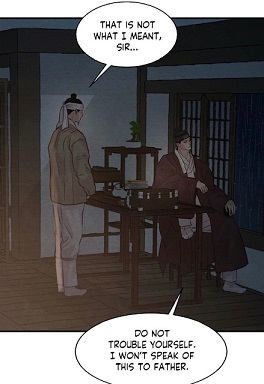 (chapter 77) Under this new light, the avid readers can understand why he contacted the patriarch in the end. He knew that Yoon Chang-Hyeon would listen to him, for he had been brown-nosing him for years. And the color brown of his shirt is no coincidence. Observe that when the father visited the mansion, he was wearing brown and red…
 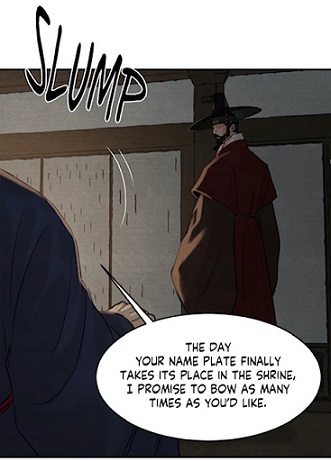 (chapter 86) He envisioned that his elder son would return him the seat and as such he would become the owner of the family mansion again. Why? It is because of the main lead’s words in the library. His so-called respect towards the father was just fake. That’s the reason why the father imagined that he just needed to show up and he would get the mansion back. However, in reality, he should have sought his son’s support, and as such kiss his ass in order to achieve his goal. But the man has never done it himself. He has always been used to being fawned and ass-kissed that it is not surprising that he barged in the mansion. And this is the same for Yoon Seung-Won. The latter might have sent letters in order to obtain his brother’s support, but we can’t say that he was sucking up to Yoon Seungho. Thus it is no coincidence that at the end, the latter advised his brother to follow the father’s principles.
  (chapter 37) Here, he was implying that Yoon Seung-Won should do fellatios and other things in exchange for favors.
  (chapter 40) Moreover, according to me, she used the young master Seungho and her brother to avoid sex. Furthermore, I would like to point out that when the kisaeng argued with her brother, this is what she said to her brother:
  (chapter 97) Here, she was referring to favors. Yet, shortly after she proposed this to her brother:
  (chapter 97) It is clear that the agreement was not selfless. No nobleman would spend money and energy for nothing. The noona was hiding the content of the deal to her brother, the negative reflection from season 1. And now, you comprehend why I am sensing that since her deal was to sell her brother in exchange of favors, her karma should be that she has no other mean than to sell herself in order to survive, as she is now on her own. And if this truly happen, this can only reinforce her resent and hatred towards the couple. But we will see, if Heena is the one “sucking up” in season 4.
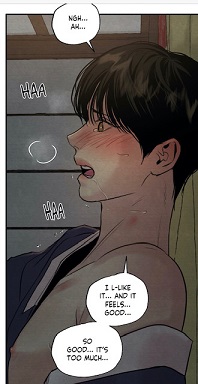 (chapter 73). But keep in mind, this is related to the painter’s education. He had been raised not only to hide his homosexuality, but also to reject sexuality as such. Naturally, in reality a no means no and nothing else.


 (chapter 12) The mention of a new toy implied the existence of an old plaything. But we know for sure that Yoon Seungho has never possessed anything. He was treated like a male kisaeng himself, for he was not allowed to refuse advances from anyone.
 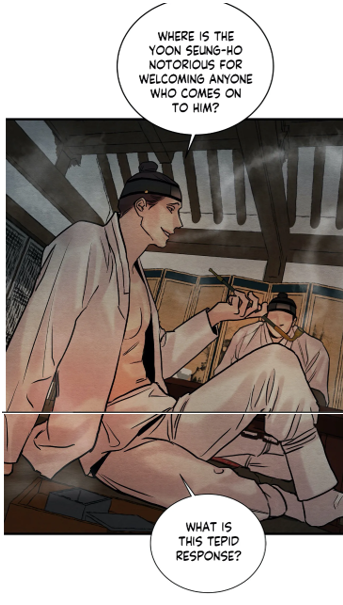 (chapter 52) Finally, he was forced to share anything he owned to others.
 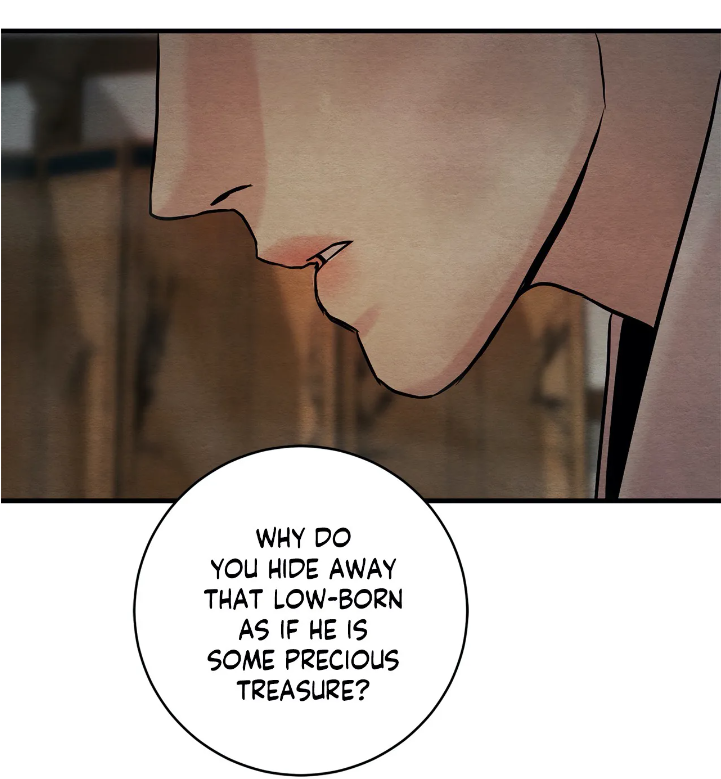 (chapter 52) That’s how I realized that the inner thought from Lee Jihwa was exposing his knowledge. The latter knew about Yoon Seungho’s true conditions. The latter had been treated like a plaything by the pedophile. As the red-haired noble had been raised as an filial son respecting elders, Lee Jihwa saw no reason to change the way Yoon Seungho was “trained”.
  (chapter 57) Besides, he could only benefit from it. Now, he could have sex to his heart content. He only started playing tricks, the moment he felt that his childhood friend was escaping from his claws.
 (Chapter 37) On the other hand, since the lord went to the authorities in season 3, I deduce that he must have gone there in the past too, yet not as a victim/plaintiff, but as an accused. Because of this new revelation, I made a new connection: sex and torture.
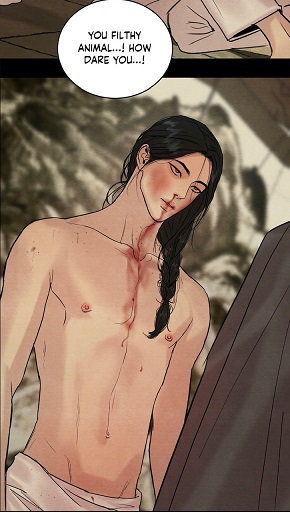 (Chapter 83) Why? He viewed him like a dog, for he was living in the shed. He even had no proper hanbok and no real hair dress, and the manhwaphiles can certainly remember the idiom: clothes make the man! If he was no man, then he was an animal, a dog. Even his food reminded me of dog food. But why was he living there?
  (Chapter 83) In this essay, I will answer to this question. As a first conclusion, the lord was not even treated like a male kisaeng in the past, but more like a dog. Consequently, I deduce that when Baek Na-Kyum met the lord in the inn (chapter 1), his status had already changed. He was slowly experiencing emancipation. He was living like a male kisaeng. Thus I conclude that Lee Jihwa contributed to his recovery to a certain extent.
  (chapter 59) However, don’t get me wrong. I believe that the change occurred thanks to Baek Na-Kyum’s intervention, the new version of this scene.
 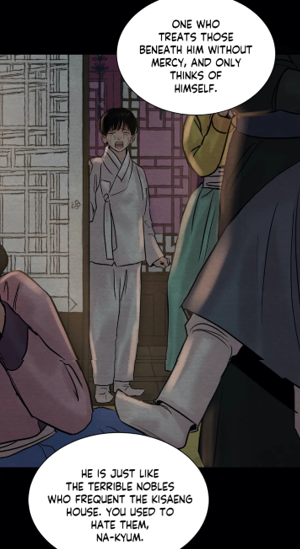 (chapter 68) Their path crossed a second time in the gibang which led to the painter’s expulsion which affected the lord‘s living condition. But let’s return our attention to the lord’s long suffering.
 (chapter 57)
 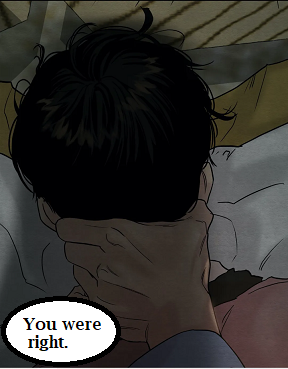 (chapter 62) This explicates why after reading episode 62 for the first time, I had suspected the father to have raped his own son. Yet this thought was dropped shortly after. Then when episode 77 was released, I realized that in the shed the lord was also reminded of Kim’s betrayal, for the latter would always drag him to the shed. Observe the way he was “carried away“. It was like an “embrace“.
 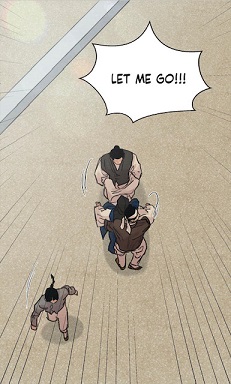 (Chapter 77) In episode 77, the readers can witness 2 incidents how the lord was brought to the storage house.
 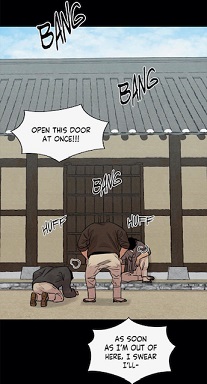 (Chapter 77, this is a different situation, for we have different servants except Kim) Therefore in the barn, Yoon Seungho behaved like his surrogate father Kim as well. This explicates why we have the fake embrace and the insincere apology.
 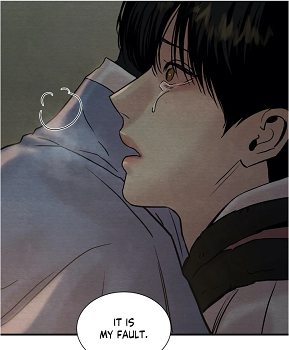 (chapter 62)
  (chapter 62) As you can see, the hug from the past was the symbol of violence and hypocrisy. It served to drag the lord to the storage room. And this new observation led me to the following conclusion: Yoon Seungho was copying the behavior from all his abusers from the past: his brutal father, the hypocrite butler and naturally the pedophile.
  (chapter 62) Hence the protagonist grabbed the painter by the hair. For me, the “mysterious lord Song“ used to hurt the main lead by the hair, when he got angry. How did I come to this interpretation? Note that at no moment we never saw Yoon Chang-Hyeon taking his son’s hair. First, the lord’s head was covered with a hat.
  (Chapter 83)
  (chapter 83) As for Kim, the latter would always restrain the main lead by the shoulders, the fake embrace.
  (Chapter 57) And now, you comprehend why the lord dragged the two nobles by the topknot.
  (chapter 8) For a long time, I have demonstrated that this gesture represented one of Yoon Seungho’s biggest traumas. But why would the pedophile do that? One might say that it is because of Yoon Seungho’s resistance and struggling. He needed to punish him for his disobedience. Note that the noble with the mole and Lee Jihwa got humiliated as sanctions.
 (Chapter 18) However, in my eyes there exists another explanation which I will elaborate in this analysis either. From my point of view, the shed and the humiliation are strongly intertwined. This was particularly visible, when the lord forced Baek Na-Kyum to have sex in the courtyard.
  (Chapter 64) But why would he do that in the end? It was to train him, to make him obedient.
  (Chapter 64) Remember how he had declared that the painter was now his sex toy. He should listen to his master or owner. That’s how I came to this deduction. The infamous lord Song is a sadomasochist. In the worse case, he is simply a pure sadist. I am inclined to believe more in the first view. With this, we would have the link between sex and torment. And the picture from the erotic book where you see the bearded man having a braided man on his lap outside indicates that Yoon Seungho was here getting punished. The pedophile loved seeing Yoon Seungho humiliated and in tears.
  (chapter 01) And now, we have the explanation why the lord could no longer cry and how he came to hate “fake apology”. This was the result of the exposure to the sexual assaults under the form of BDSM.
 (chapter 96) They ended up in the hallway, anyone could see them. Then in another website, I found the following principles:
 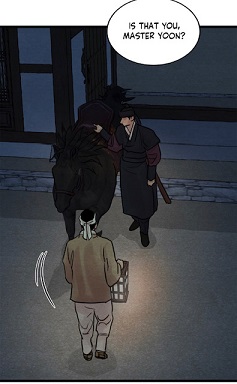 (chapter 25) He even brought the hanbok himself.
 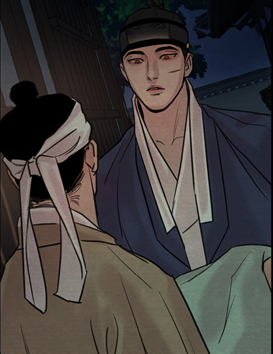 (chapter 26) The lord went so far to take his bath with his lover to clean him.
  (chapter 59) He made sure that his partner wouldn’t suffer.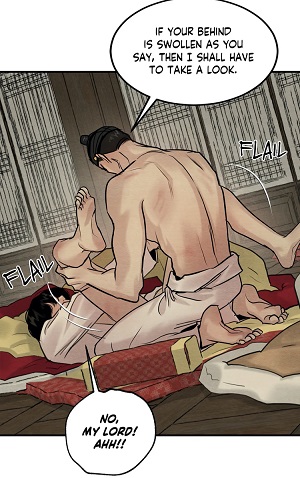
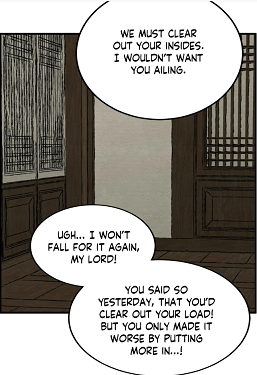 (chapter 89) Yoon Seungho knew by experience that the rest of semen in the stomach would cause him ailing.
 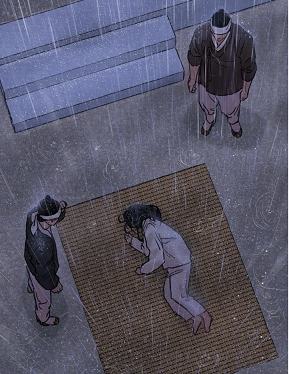 (chapter 77) This was the reason why Yoon Seungho had a fever afterwards. Don’t forget that the pedophile used Taoist sexual practices, this means the young boy had a sex marathon each time, he met the pedophile. Thus I interpret the bruise on Yoon Seungho’s eye not only as an indication of resistance, but also as a source of joy for the sexual predator. We have the reaction from lord Jang as the perfect example.
  (Chapter 101) He blushed, though he could see that Baek Na-Kyum was in pain, the face covered with blood. Remember what the painter did in the pavilion to the main lead: he scratched his face.
 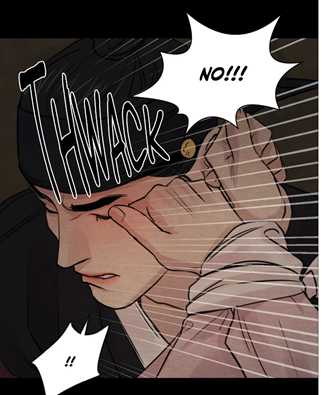 (Chapter 25) Thus we have to envision that the lord must have reacted the same way and wounded his abuser. And imagine the consequence if he had wounded the king on the face. This could be seen as a reason for a punishment.
 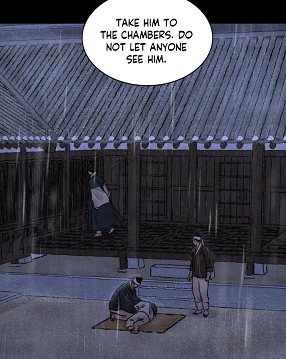 (Chapter 77) Remember Black Heart‘s warning in the shaman‘s house:
  (chapter 102)
  (chapter 33) This is an euphemism for aphrodisiac. Thus we had this confession from the physician.
  (chapter 57) Why did the butler visit the doctor without Yoon Chang-Hyeon? It is because he had been ordered to fetch the aphrodisiac. By feeding him with the drug, they wanted to force Yoon Seungho to accept the advances from the king, and as such to admit his sexual orientation. He was a sodomite.
 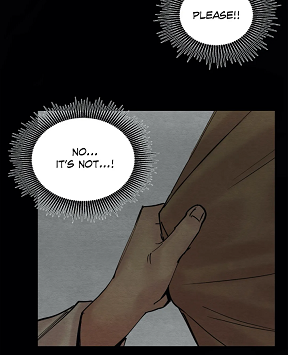 (chapter 65) They faked his “pleasure“ making him feel guity and dirty. That’s how he got tricked. This explicates why the main lead still has no idea of the use of the aphrodisiac.
  (chapter 89) If you pay attention to their interaction, the lord acts like the servant. The reason is simple. If you take into consideration the second list of recommendations, you will recognize that the roles are switched. Outside a sex session, the submissive becomes the “king“, and the dominant has to act like his servant. That way, a certain balance is created. But this was never the case between the pedophile and the teenager. The latter was always reduced to a plaything and at the end to an animal. The pedophile never called the protagonist by his name.
 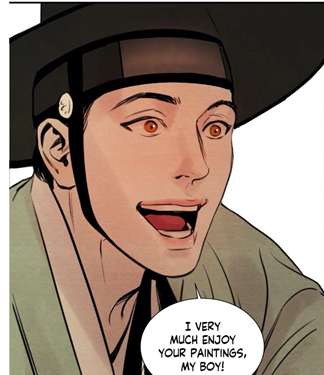 (Chapter 1) He was just called “my boy“. And that was it. He never created a real bound with the main lead. Therefore trust was totally inexistent. And because the young noble could only fear the man, he came to hate him to the point he could die. The latter made promises which he never kept!!
  (Chapter 55) I had this idea, for the story is going in circle, meaning that the lord must have done it before, just like he did in season 3. The possible death from the main lead and probably his own pain must have brought the mysterious lord Song back to reality. That‘s the reason why he sent for the physician‘s assistance. He was encouraged to keep his distance from the young man, just like the latter was incited to stay away from the painter in season 1 (sickness, Min), in season 2 (the scholar‘s insult) and in season 3 (the rough sex session in chapter 81-82). Thus I deduce that the pedophile has always kept an eye on Yoon Seungho and his recovery. In my opinion, the man has not forgotten the main lead at all. Why do I think so? It is because he kept the painting…
 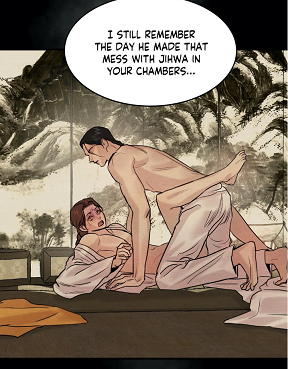 (chapter 82) a souvenir from their time together, just like Min who stole the painting in the study.
  (chapter 74) Thus I am deducing that Seungho-Ya will become the safe word between the two protagonists.
  (Chapter 72)
  The noble with the mole is trapped in a shed, and the color purple, a symbol for royalty, is dominant. From my point of view, the author revealed everything in this tweet. On the other hand, I would like to point out that here the man doesn’t look scared or rejecting the use of the bondage or the dildo.
 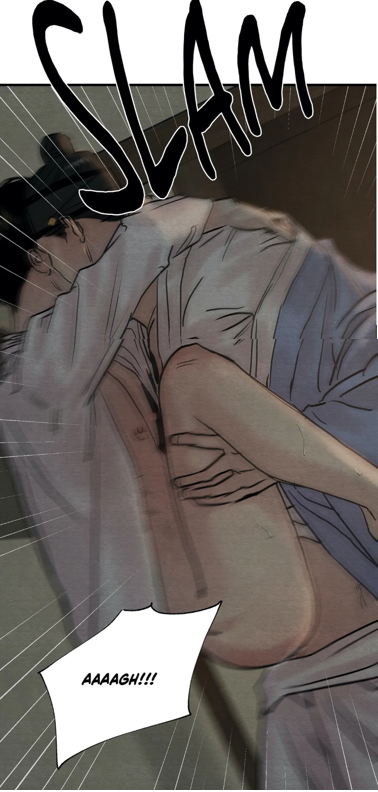 (Chapter 63) He was reliving his biggest trauma. Yet, he never went overboard in the shed. Note that the moment the painter called his lover “lord Seungho”, there was a switch.
  (chapter 63) That’s the reason why the lord changed the painter’s position and faced him.
  (chapter 63) The lord communicated his feelings and thoughts, and he even made a promise.
  (Chapter 63) This new perception reinforces my impression that there was no rape in the storage room. The painter kept saying “no“, because he was actually scared about his own reactions. Strangely he felt pleasure, thus he kept having climaxes. He was simply in denial. The irony is that the noble attempted himself to be cruel during the night of the revelation (episode 62, 63, 64), but he failed, because the night at the doctor’s house was still fresh in his memory. He couldn‘t forget the tender embrace from the painter.
  (Chapter 62) This explicates why he stood up during the penetration, he was forcing the artist to hug him, to clinch onto him. He wanted to relive it again.
 (Chapter 63) He had internalized the marks left by the bondage. This is no coincidence that the artist‘s wrist was covered by the bandage, the reflection from the torment in his youth. Under this new aspect, the presence of the bed in the shed was like a magical tool, which helped the lord to not turn into his tormentor. He was just a ghost from the past, and the word “lord Seungho“ worked like a magic spell, which stopped Yoon Seungho from becoming as vicious and cruel as lord Song. Moreover Lord Song sounds very similar to lord Seungho. And this new discovery confirms my interpretation that Kim was the helping hand of the king. He had to provide him with the white bands for the bondage, just like he had helped for the young master’s kidnapping in the gibang.
 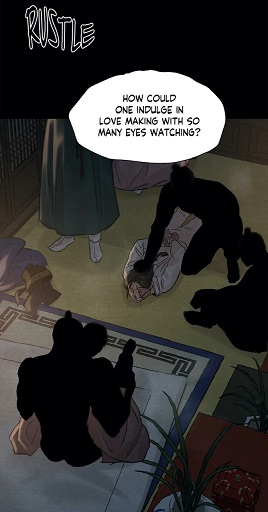 (chapter 86) But don‘t get me wrong. The king sent the main lead to the shed, when he wished to punish him. Yes, he repeated the same actions than Yoon Chang-Hyeon. And what is the common denominator between these two circles? The valet…
 Under this new light, I see it as another evidence that the infamous lord Song could only be the king! He is the only person who has absolute power in Joseon, and as such knows no “real boundaries“. Furthermore, as the ruler, he is expecting no rejection from his subjects. Anyone watching sageuks (historical Korean dramas), is aware that the Joseon king was never an absolute monarch, for he was always controlled by the officials, ministers, the Queen dowager and the Queen. There were also protocols which he was forced to follow. And we have an indication about the king‘s lack of power and wealth.
 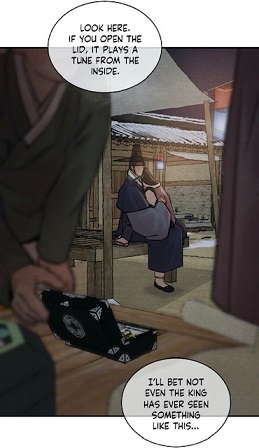 (Chapter 76) Thus I am assuming that the lord Song must have been frustrated about this contradiction. On the one hand, he was supposed to be the most powerful man in Joseon, on the other hand, he had to rely on the aristocracy. Hence I have the impression that the ruler vented his anger and frustration on Yoon Seungho unconsciously. That way, he could outlive his sexual fantasies, where he was powerful. But because of these terrible sexual habits, the young master could never get treated by a physician. Anyone would have recognized the sign of abuse.
 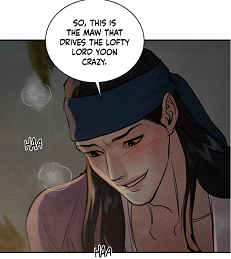 (Chapter 101) are a proof that they never discovered the importance of kisses, embraces, caresses and words during sex. They never recognized that they were denying the existence of love, too obsessed with their heritage and their reputation. The manhwalovers will remember my previous observation. The pedophile had never kissed the main lead. The king like all the nobles had disconnected sex from love. Why? It is because sex was a duty… to continue the lineage. And now, you have the explanation why the pedophile and all the others reduced sex to penetration.
  (Chapter 96) When she heard the noise (PLOP), she was brought back to the past, when she had witnessed a scene of BDSM, though the violence was real. A similar situation to this scene:
 (chapter 73) The pictures from the erotic publication are the evidence for this theory. After hearing the description from the butler about the events in the shed, the noona Heena believed to know what had happened in the shed.
 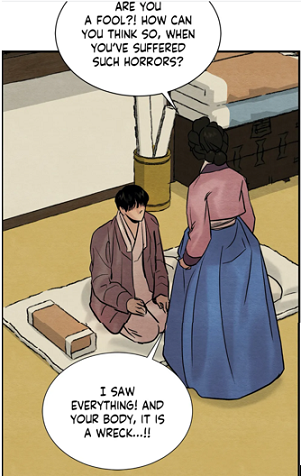 (Chapter 68) She could see the traces on the painter’s body, and conclude that the valet was telling the truth. However, the butler had been misled himself, for his perception was biased by his past experience.
 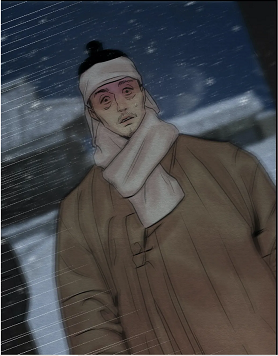 (Chapter 64) The butler thought that the “no“ from the painter was truly real, while the latter was just dishonest. It was the result from the “indoctrination“ from Heena and Jung In-Hun. The valet had been deceived in the end. The humiliation and punishment were not real, for the painter did ejaculate, and back then he was not under the influence of the aphrodisiac.
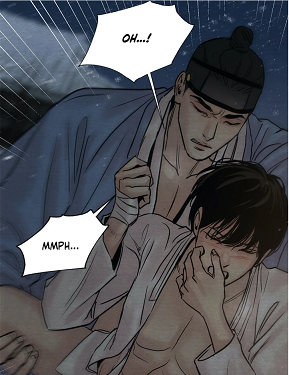 (Chapter 64) This was not like in the past, when the brutality was real. And now, you comprehend why Heena‘s resent towards her brother became more visible after witnessing the love session between the noble and Baek Na-Kyum.
 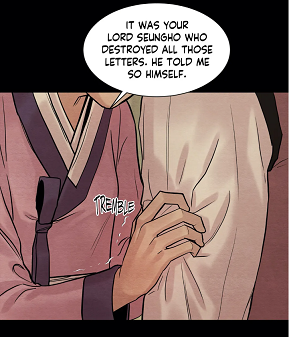 (Chapter 97) From my point of view, she had already internalized that the painter would never change, he was already too “damaged“ to change. However, since he was close to Yoon Seungho, he could become in danger, for she knew the connection between the ruler and the main lead.
  (Chapter 72) He was copying the habit from the pedophile in my eyes. The latter would never remove all his clothes on his own. As the king, he was used to get undressed by his own staff. Only the teenager as the uke was undressed, unless the lord was accompanied by the other nobles, like in this scene.
 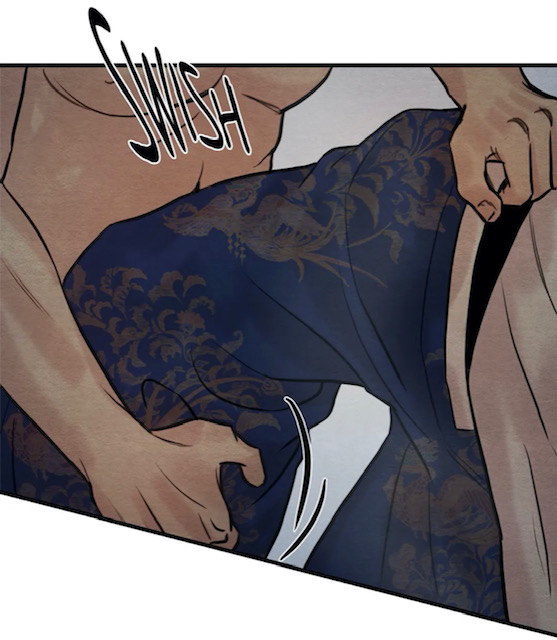 (Chapter 54) And because the ruler was too focused on his own pleasure, he never got to know the young noble. He only realized too late that he had made huge mistakes.
  (Chapter 72) Yoon Seungho was his prey.
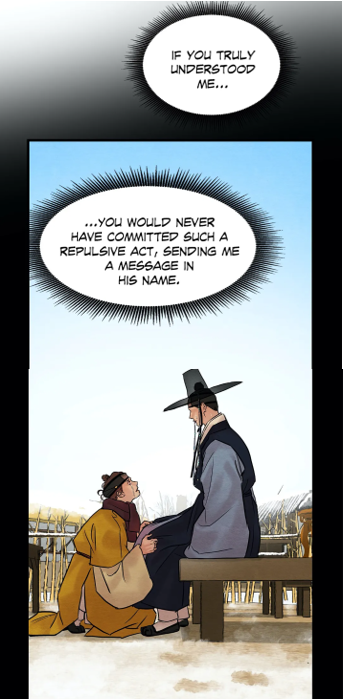 (Chapter 59) The main lead was supposed to meet his tormentor in a public place. Yet their relationship was based on “humiliation“! The “king“ loved to punish Yoon Seungho through humiliation and violence. This explicates why Yoon Seungho reacted that way.
  (Chapter 56)
  (chapter 57) This is what he experienced himself in the past. And observe that the childhood friend’s biggest punishment was actually his public humiliation, when he confessed and got rejected.
  (Chapter 59) In my eyes, the king sought to obtain Yoon Seungho’s affection, but he never realized this. He definitely confused it with submission. He definitely imagined that once the teenager would become submissive, he would have achieved his goal. But he was doomed to fail. In his mind, as the ruler no one could ever reject him. Besides, as the ruler, he was allowed to use his power and as such his strength to obtain what he desires. Don’t forget that in Joseon, people viewed all the monarchs als representatives of the gods. The latter would support them. However, since his youth Yoon Seungho had a strong opinion and mind. Therefore he had caused trouble to his father, as the latter viewed his critical thinking as a synonym for a lack of respect for traditions and the elders, the so-called illness from his childhood. Besides, I am suspecting that the lord must have had visions as well, which would contradict the father‘s dreams and expectations.
 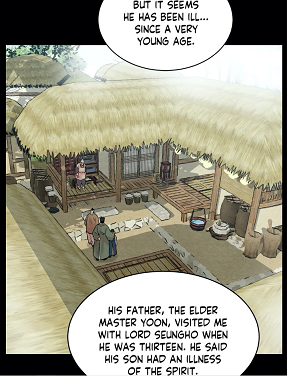 (Chapter 57) Yoon Chang-Hyeon looked down on his son’s critical thinking and came to doubt his words. The author left many clues for this interpretation:
  (chapter 101) Lord Jang got aroused, when he saw the bloodied lips from the painter. Moreover, Black Heart had brought a huge dildo.
 (Chapter 101) The item was huge, therefore it could only injure the artist’s anus.
 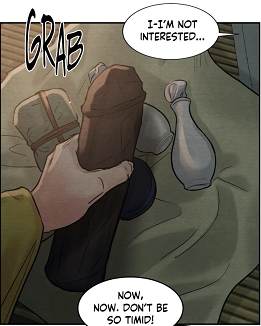 (Chapter 100)
 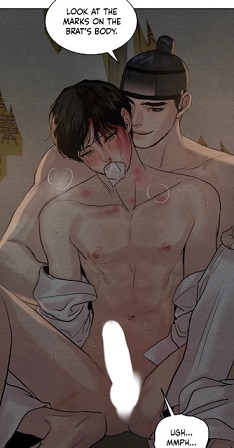 (chapter 101) Even the noble said that this must have hurt. The painter disliked being bitten in the neck.
  (Chapter 88) Furthermore, the lord said this to the painter in the study:
  (chapter 85) These were the words from the pedophile. He was repeating his sexual abuser‘s words. And this proves to me again that the lord was abused in the study, but if he rejected the man, he would be sent to the shed where he would receive his punishment. In other words, Yoon Seungho was punished with sex and violence. And now, you have the explanation why he got gangraped in the end. But the readers should keep in their mind that this was no real BDSM, for the brutality was real. The king couldn’t distinguish between reality and illusion. And this coincides with all my previous interpretations.
 (Chapter 65) Kim had brought him to the barn, because Yoon Seungho was punished there. This could only be suggested by the butler, as I don’t think that the king would ask for the owner of the mansion for permission. This room was definitely taboo, no one was allowed to approach the study or the shed. Yoon Seungho was exposed to rough sex, and Kim knew this, like mentioned above. But he never witnessed it himself, he only discovered the aftermath. From my point of view, this scene occurred after the lord’s loss of virginity.
  (chapter 18)
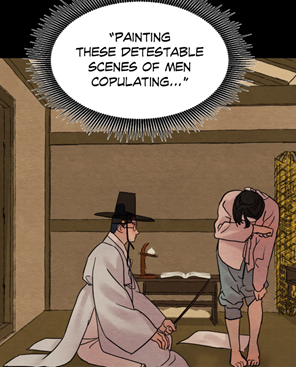 (chapter 34), only spiritual love was allowed
  (chapter 19)
 (chapter 68). This signified that in his education, not only sex was prohibited, but also sexual desires were denied. Although love was expressed through hugs
 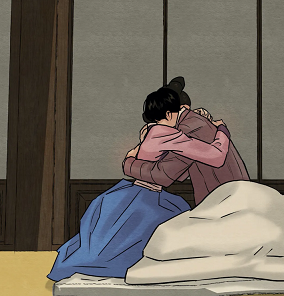 (chapter 66)
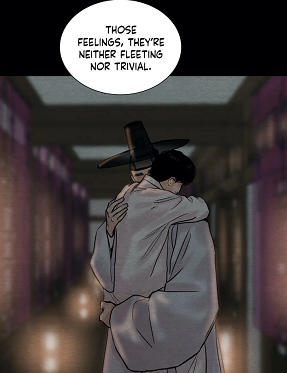 (chapter 68) and caresses
  (chapter 10)
  (chapter 68), they were devoid of sexuality. The painter experienced love, but was not allowed to experience sexuality. He was only authorized to paint it for the scholar’s sake. On the other side, Yoon Seungho was raised the opposite: love was not allowed, as it was a sign of submission and weakness. Sex was permitted, because it was considered as a fight in order to defeat his opponent. These were the butler’s doctrines. That way, he could still have a connection to the main lead. If he came to love someone (the pedophile), the lord could definitely abandon the valet and reveal his betrayals. In other words, he used pity as a way to tame the lord. At the same time, sex also served to gain some benefit, as it was an exchange of favors (giving versus receiving),
  (Chapter 71). I connect this philosophy to the king and indirectly to the butler. With sex, the nobles could exchange some favors. These huge divergences in the mindset explicate why there were so many misunderstandings between Yoon Seungho and Baek Na-Kyum, as their education diverged so much.
  (chapt45), as the painter had accepted him as his sexual partner, he had to realize slowly that he was wrong. He imagined that since the artist had remained by his side and was accepting to have sex with him, he had achieved what he wanted: in his unconscious it was to be loved. Yet, it was just an illusion. The painter saw himself as a whore and the master as a man consumed by lust. As you can see, the noble was forced to judge the nature of the sexual encounters differently. He had associated sex to love due to their Wedding night, therefore he imagined that the moment the painter was accepting him, the problem was solved. He would be able to relive this wonderful moment, but however nothing like that happened. He felt never satisfied, as there were no feelings at all. Hence he even had sex during the day
 , believing that the artist’s lack of experience was the problem.
  than a master- servant relationship, because the commoner was never treated like a domestic. He only had sex with the lord and had some privileges.
  (chapter 46) He was never asked to do other work, although the artist tried to change his situation. Since he was behaving like a whore, he felt that he had no right to express any thought and emotion. He couldn’t show any pleasure. That’s why there were no feelings in their sex encounters, and the lord could sense the difference. Consequently, when the lord realized that he was still perceived as a man consumed by sex
 (chapter 48), he changed his behavior. He acted like a real client at the brothel
 (chapter 48), but at the same time he cornered the painter to have multiple climaxes in order to let him experience that he liked having sex with him.
 (chapter 49) As you can observe, the lord linked sensuality to love. If he could provoke ejaculations, then it meant that the artist was definitely feeling something for him. However, the moment the lord liberated the painter from his pejorative perception about himself (he is a prostitute), the painter reacted the exact opposite. Now, he was the one using Yoon Seungho, the latter was his plaything.
  (Chapter 49), his prostitute, for he was the one procuring pleasure to Yoon Seungho. As you can see, the roles had been switched. This means that now the painter had the upper-hand in their relationship. We could even say that the noble was willing to accept his fate.
  (Chapter 49) Yet there was a difference from the past. Yoon Seungho would feel pleasure as well. This is not surprising that Kim chose to intervene and separate the couple right after. Without sex, the painter had no power over the master. That’s the reason why the butler revealed his knowledge the morning after. The protagonist had to hear from his butler the real cause for Baek Na-Kyum’s passivity and torpor:
  (chapter 50). Through this revelation, the lord was indirectly confronted by his own reflection: he was indeed asking from Baek Na-Kyum sexual favors in exchange for his stay at the mansion. That’s the reason why the lord had a “relapse“ and kept his distance from the painter.
  (chapter 52). This was important, because for the noble, it meant that he could no longer have sex with other partners. Without sex, the lord was forced to question himself and ponder on the true nature of his relationship with Baek Na-Kyum. He felt jealousy during that night, he was very protective as well.
  (Chapter 52) His sexuality had already become an expression of his love, although the main lead was still unaware of his own feelings. That’s why I come to the conclusion, chapter 52 was actually revealing Yoon Seungho’s monogamy, although it looked the opposite. And this becomes truly visible, when the gangrape was about to occur. He felt no urge, when he was with the guests, yet the moment he brought the artist to the bedchamber, he couldn’t stop himself from kissing his loved one.
  (chapter 54) He was definitely longing for his warmth. This explicates why the noble got so infuriated, when he was confronted with the consequence of his bad decision:
 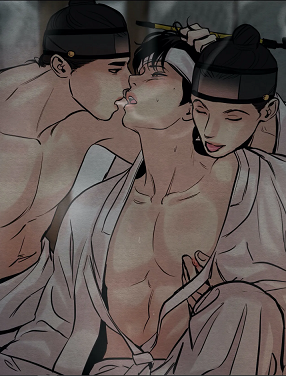 (chapter 54) the artist was on the verge to be no longer monogamous, as he would be tasted by other aristocrats. In this scene, the lord would have indeed become a client and pimp, if he hadn’t chased away his guests. Although the painter was indeed upset afterwards about this incident
 (chapter 55), deep down he sensed that his master had protected him. This night was important for the main lead: he was forced to admit his own feelings for the painter. Therefore, we could say that the issue with the prostitution was solved after chapter 54. Yoon Seungho thought that the moment he confessed, the painter would get scared and run away, but it didn’t happen. Why? Love among men and especially between a brutal noble and a commoner, was a taboo, like Min had underlined. Secondly, if the lord had indeed feelings for him, he had behaved like a beast during that night. He had mistreated Baek Na-Kyum. In his mind, the artist would never accept him.Besides, the painter had clearly denied the affection from the main lead. In his eyes, the painter’s words were indicating a rejection.
 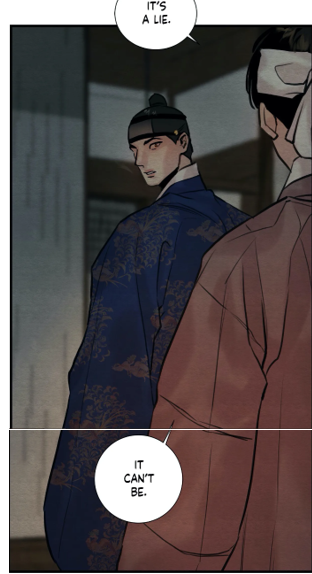 (chapter 54) Thus I conclude that Yoon Seungho and Baek Na-Kyum had come to an implicit agreement: they had a master-servant relationship
 (chapter 56), although Baek Na-Kyum started perceiving himself as a domestic from chapter 51 on again. He kept following the head-maid
  and Kim
  (chapter 51) in order to help them. Therefore the readers could witness the return of the white headband in chapter 52: his task was to paint for his master.
 (Chapter 52)
  (chapter 62) here, he whispered to Baek Na-Kyum that he adored him), he would bind the artist to himself.
  (chapter 63), exactly like he had wished in chapter 49. The only difference is that this time, the painter was here for the lord’s pleasure. The roles had been switched again. As the manhwaphiles can perceive, the noble and painter had a similar reaction: they both tried to deny the existence of love in their relationship. That’s the reason why the noble stopped the artist from confessing:
 (chapter 63) They just had a sexual relationship which could provoke pleasure, but that was it. But in order to ensure that the artist wouldn’t run away again, he used sex to “tame“ Baek Na-Kyum. If the main lead could procure multiple climaxes to the artist, then the latter was forced to admit that only Yoon Seungho could be his “partner“. This explicates why the noble kept pointing out how the artist would react to his lover’s body.
  (Chapter 63)
 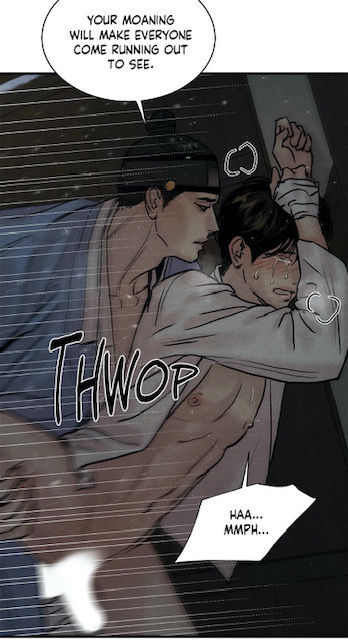 (chapter 64) He was moaning and would ejaculate constantly thanks to the main lead. Yet, during this second marathon, the noble was actually deceiving himself.
  (Chapter 62)
  (Chapter 65) This shows that the painter had gained a new position: he was indeed a favored servant. He was allowed to spend the night in his lover’s bed and he could see the lord getting dressed.
  (Chapter 65) The slight change was that now the main lead was aware of this. This truly exposes the lord’s affection for the artist. He might have treated him like a plaything in the shed, in reality he had attempted to show “his skills“ as a lover. He had licked him, bit him and the painter had felt pleasure, though he kept saying no! This is not surprising that Yoon Seungho had denied the kiss in the study.
  (Chapter 64) Because that’s how he had been deceived that night in the study.
  (Chapter 49) Baek Na-Kyum had silenced him with the kiss, as the main lead was about to protest.
  (chapter 65) What caught my attention is that the painter’s disappearance mirrored the lord’s wrongdoing. Lee Jihwa and the main lead had both kidnapped the artist. That’s why I believe that when he heard Heena’s words in the study
 (chapter 68), the noble could only come to the following conclusion: he could only let the painter choose his destiny. But the moment the artist decided to remain by his side, he needed to change Baek Na-Kyum’s position in the mansion. He was no longer a servant, but a noble guest. Hence the lord tied the scarf like aristocrats did.
 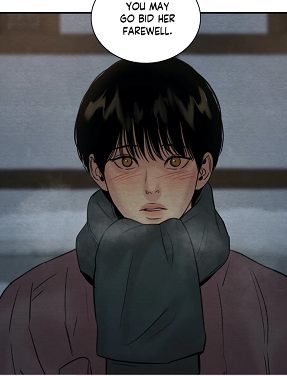 (chapter 69) Consequently, we could say that the painter had a similar status than Jung In-Hun. Yet, there was a huge difference: the owner of the mansion was now acting like the painter’s servant. Hence Deok-Jae’s words came true:
  (chapter 46).
  (chapter 71). Why? It is because the lord made the decision that the painter chose him, then this means that he became his wife, though at the end of season 2, he was not thinking about marriage yet. He was not aware of this perception. By becoming his official partner, the spouse obtains the status of his husband: nobility. This explicates why the lord ate with his lover
  (chapter 74) and allowed him to smoke. Then in season 3, he gave him ladies-in-waiting in order to give him some company.
  (Chapter 78) He even gave him the music box, which was mistaken as a dowry. However, the problem is that the painter was still fighting his own feelings for the protagonist due to Heena noona’s words and past experience with the scholar. He feared that this new situation was too beautiful to be true, hence he thought that the lord’s feelings would fade away. But there was another reason for doubting the lord’s affection: there was no sex.
  (chapter 74) The painter had come to associate sex with love too. Yet, the moment he relived his trauma, he only found comfort and safety in the lord’s embrace.
 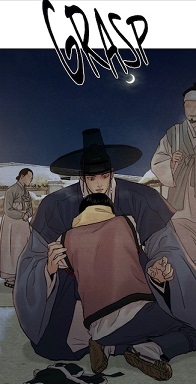 (Chapter 76) The main lead didn’t reject the painter’s urge for a hug in front of commoners. At no moment, Yoon Seungho felt embarrassment. He treated him like a special treasure. That’s how the painter came to realize that Yoon Seungho‘s love for him was true and genuine. Consequently, he decided to rely on him and to trust him. That’s why in this panel, the painter closed his eyes:
  (chapter 76) We could say that he was reminded of his own past. When he was a child, he sensed love through hugs and caresses. Since the painter could feel the lord’s genuine affection and warmth, he recognized that even when there was no sex, love was present. All his senses made him perceive the lord’s love:
 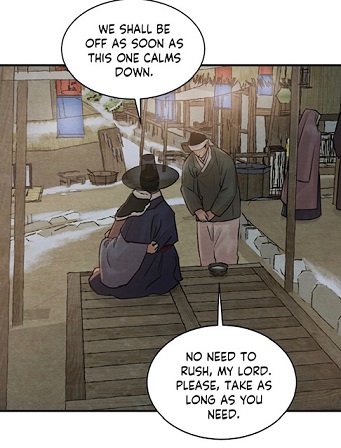 (chapter 76) His words showed his care and concern, then he bought him an expensive music box.
  (Chapter 76)
 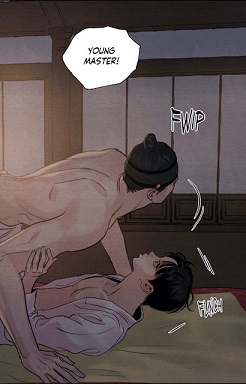 (Chapter 80) And now, you comprehend why the painter didn‘t confess during that night. He got interrupted. The kiss was the symbol for their love. Thus it is no coincidence that just after his confession,.
  (Chapter 94) the painter initiated a long and sensual kiss with his “husband“.
 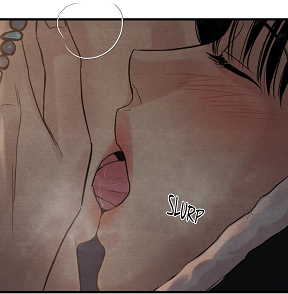 (Chapter 95) Since the painter had received caresses and embraces in his childhood, he came to view the kiss as the symbol for true love. And note that the kisses exchanged in the gibang were full of passion and love. This was the perfect combination of love and sex.
  (Chapter 95)

 (Chapter 96) This shows that Yoon Seungho has always longed for a pure and spiritual love in the first place. His sexual preferences were already palpable in the last love session (season 2):
  (chapter 72) We could say that he discovered all his sexual preferences thanks to the painter.
  (Chapter 80) But he failed due to the intervention of the butler and other schemers. Besides, the whispering of „Kyumah“ could only make his heart race. Let’s not forget that his painting in the sand
  (chapter 1) externalized his own philosophy: love and sex can’t be separated. Note that the couple is is hugging and kissing at the same time! 😍 This picture will represent the peak of their love! Striking is that when the couple confirmed their mutual affection, they did in the kisaeng house, the symbol for prostitution. This truly exposed that Yoon Seungho had been treated like a male night servant in the past. .
 (chapter 99)
  (chapter 102) This means that he is still viewing himself as a low-born. But note that contrary to the past, Baek Na-Kum is now wearing a hanbok and he has no other clothes. Thus I am deducing that the painter’s next lesson is to drop his notion that he is a commoner. He will be taught to view himself as an equal to Yoon Seungho. Only when he has internalized that there is no gap between him and his lover, then he will be able to address him as “Seungho-YA!“ At the same time, both protagonists will come to realize that they can express their love differently. Poetry, painting and more importantly through their desire to protect their loved one. The lord will start protecting Baek Na-Kyum more actively, just like the painter will decide to show more interests in his lover’s skills and past life. Baek Na-Kyum will feel responsible for the bloodshed in the shaman’s house. In my opinion, the lord will confide to him what happened to Min and the other nobles. I am assuming this, for the lord remained silent, when the messenger of his father came to the mansion. He didn’t want to scare his lover because of his brutal outburst.
 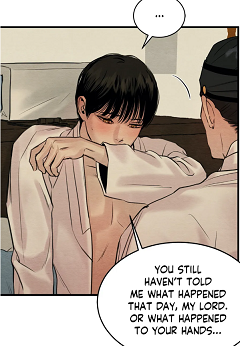 (chapter 84)
 The trigger for the change is the noble’s words. The latter keeps talking to the painter asking for an reply. Hence in my eyes, there are glimpses of love the moment Baek Na-Kyum said this:
  It sounded like a confession, hence the seme became more passionate:
 Here the lord acted like a client. Yet, notice that the lord is speaking again forcing to express himself. And the moment the painter cried and started voicing his own opinion, the sexual encounter was affected.
  (chapter 49) An expression of love and affection, but the painter rejected it, as he mistrusted his own judgement. He couldn’t help thinking of the learned sir’s fake embrace. Striking is that despite the rejection, the painter kissed and hugged back his lover
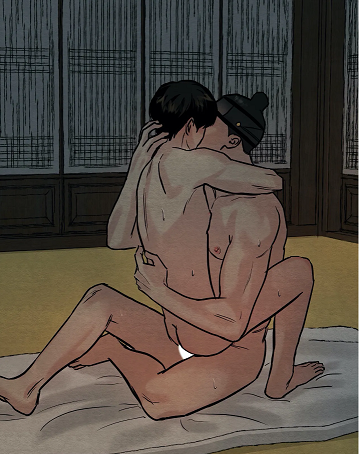 (chapter 49), which made the lord believe that he could only get embraced by the painter, if they had sex.
  . Although the second sex marathon starts like a pure sex session, the moment the painter calls Yoon Seungho differently
 However, due to his own insecurities and fear, the noble still can’t trust the artist’s words, therefore there’s no confession.
  , it is just that both main leads were in denial.
  (Chapter 58) Thus he should become responsible for him. Yoon Seungho was unconsciously trying to push the painter to reciprocate his feelings, an imitation of Lee Jihwa‘s confession. Nevertheless, the painter remained silent, therefore it meant that his love was still denied. That’s why it stands more under the sign of dream and illusion. Consequently, the night in chapter 70, 71, 72 and 73 contrasts so much to the one from chapter 58. This time, it symbolizes the lord’s pure love. As such, the sex is already a real expression of love. That’s why the lord asked to be called intimately: Seungho-Ya
 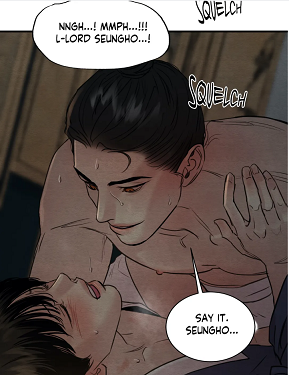 (chapter 72) On the other hand, this love session was strongly intertwined with the notion of forgiveness and punishment as well. This is important, it reveals that Yoon Seungho had internalized that sex was the expression to redeem himself. He had been tasked in the past that if he desired to obtain “forgiveness“, then he should have sex. And by comparing all these sexual encounters, I came to the following conclusion: the lord’s words definitely contributed to change the nature of the sex session, just like the hug.
  In chapter 66, he had a flashback, hence he couldn’t witness his lord’s attention and care.
 But the lord discovered this kind of embrace, when he helped the painter in chapter 53:
  That’s how the noble experienced the embrace as a source of comfort and affection. Therefore you can comprehend, why I wrote above that the painter was teaching the lord how to love properly, but also why the embrace became the symbol for love in the lord‘s eyes. He had never been embraced before by a man. And Lee Jihwa had recognized the true signification of this gesture, when he spied on the couple (chapter 43). That‘s how he knew the friend‘s biggest desire: and was deeply hurt after this discovery
  (Chapter 57) However, this shows that Yoon Seungho is a quick learner, because he knew what to do, when the painter was in pain and destress. At the same time, it explains why he could fake the embrace in chapter 62:
  (chapter 102) The artist was forgiving his lover! Love represents selflessness, tolerance, forgiveness, warmth, affection and assistance which is transmitted by the embrace. Now, you understand why Yoon Seungho was still not satisfied after the sex session in the study, he was longing for the hug.
  (Chapter 84) In his unconscious, he knew that if the artist hugged him, he would have forgiven him. But he had no idea about it, thus he couldn’t suggest this. So far, he had experienced the embrace from the artist while having sex. Deep down, he had already internalized the embrace to forgiveness. So we could say that the absence of the embrace in this scene was the lord‘s punishment for the fake hug in the shed. And the painter let him discover the true nature of a warm embrace:
  (chapter 88) This is not surprising that this hug was not connected to sex at all. Yet it moved the lord so deeply. As the manhwalovers could sense it, season 3 was focused on love and sensuality. During that season, the couple was able to voice about their sexual desires and their preferences.
  (chapter 91)
 (Chapter 86) No one close to him had grabbed his hand in order to show their support. This gesture in the picture embodies abandonment. On the other hand, the painter had been the first one to take his hand and to swear “loyalty“.
  (Chapter 30) The joined hands were repeated in season 3 , the only difference is that this time, Baek Na-Kyum was doing it willingly.
  (Chapter 88) The symbol for support, company and responsibility.
 and his request for help are strong indications that Baek Na-Kyum was now accepting his affection. He was now trusting the noble, hence he revealed an important clue about the abduction.
  (chapter 41) Under this perspective, it becomes understandable why the couple neglected these pictures. They were all devoid of affection, it was more about prostitution and battle! And here is now the question? Where are these drawings?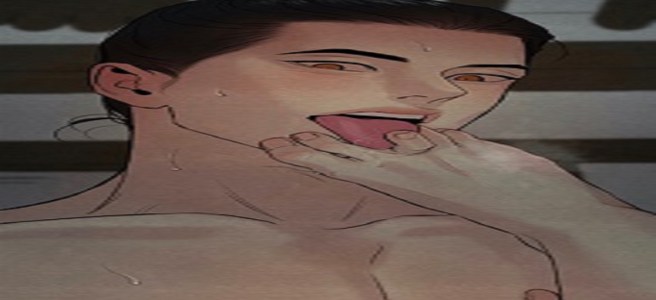
 (chapter 73) Here, the relevant word is “enter”, an equivalent for invade.
  (chapter 73) Mess is a synonym for chaos and wreck.
  (chapter 73) In the third panel, Yoon Seungho is implying that the painter just has to call him Seungho-Ya, and he will stop immediately. Strictly speaking, he is referring to the saying: your wish is my command.
  (chapter 73) Strangely, the word “bow” has two significations: a ribbon or a weapon.
  (chapter 73) In the fifth image, Yoon Seungho actually means seduction, yet he utilized the idiom “provocation”. Finally, we have Yoon Seungho’s favorite expression “fret”. During this night, he keeps mentioning it in connection to the painter:
  (chapter 73) I have to confess that in this situation, I can’t help myself associating this idiom to an anxious animal trying to escape. Now, I would like to sum up all the expressions the main lead employed: enter, mess, word as a synonym for command, bow, provoke and fret. As you can observe, they are all connected to war and conquest. However, since the lord dropped his armor for good, I believe that the aristocrat is thinking about something else: hunting, which coincides with his second hobby.
  (chapter 41) Baek Na-Kyum is his prey, and the lord is trying to catch his heart through sex. However, Yoon Seungho’s attitude is not consciously done, he is not aware that he is speaking like a hunter. More astonishing is that the painter’s vocabulary mirrors his lover’s:
  (chapter 73) The word spot is a synonym for target and prey.
  (chapter 73) the target is wounded (“it hurts”) and tied up. Even Yoon Seungho’s words are referring to a wound, as if the animal was bleeding to death
  (chapter 73) , as it keeps leaking
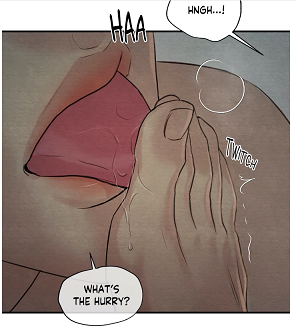 (chapter 73) His actions prove that he is definitely in a hurry.
 (chapter 42) And observe that this chapter confirms my interpretation. First, the noble has a similar facial expression
  exposing that he has to work hard in order to please his lover. He is still clinching his jaw, however the manhwaphiles can detect two huge differences: the mouth is more open and he is now blushing. This shows how much this hunt is touching his heart. And the comparison makes me realize that Yoon Seungho’s final sexual emancipation could be symbolized, when he moans his lover’s name while having an orgasm. That’s why we have the lord calling the painter so affectionately (Na-Kyum-Ah) before the second round.
  (chapter 73) showing that he was serious with his saying: Your wish is my command. In addition, he wanted to demonstrate that he hadn’t forgotten his promise: not to scare him.
  and a breather.
  (chapter 73) The noble and Baek Na-Kyum’s desires stand in opposition to the artist’s weakened physical condition. The latter can’t physically keep up, hence he faints at the end.
 (chapter 73) Yet, I doubt that this will be noticed by the aristocrat. He is definitely too shocked by the incident. His lover fainted. In my eyes, there is no ambiguity that Yoon Seungho will panic again. He has three reasons for that:
 (chapter 32) He felt so remorseful and was so worried that he ran away, too scared to face the painter and assume his responsibilities. However, he made sure that a physician was fetched. This terrible experience explicates why the lord panicked in chapter 50. He envisioned for one moment that he had overdone it again.
 The noble had such huge pangs of conscience that he couldn’t forget the painter’s poor condition. Hence he desired to verify if he had recovered in the bathroom.
 (chapter 72) He was worried, but the painter reassured him. In truth, the heavy breathing was caused by a climax, which the artist tried to hide from his lover. Therefore, there’s no doubt that after this chapter, the noble will question his behavior again. As a hunter, he overestimated the strength of his “prey”. Moreover he will realize that Baek Na-Kyum’s words contributed to this incident. Let’s not forget that Yoon Seungho was following the artist’s request.
  (chapter 73) This time, the painter’s exhaustion occurred due to both protagonists. That’s why Yoon Seungho will realize that he has to become more responsible and can’t just give the whole responsibility to Baek Na-Kyum. He should have paid more attention to the artist’s health and physical condition. And Kim took advantage of the situation. Thus from that night on, the lord kept his distance from his lover. From my point of view, the valet used these expressions against the main lead. He had been targeting the artist, turning him into a prey, hence the painter could not refused. Kim’s MO has always been to mix cause and consequences. Besides, since he heard such words, he could only have a negative impression. The manhwaphiles shouldn’t forget that the valet is a pessimistic person due to “fortunetelling”. [For more read the essay “Fortunetelling”] As you can see, due to this incident the main lead learned another important lesson: consent. Therefore the lord said this later
 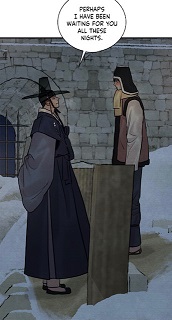 (chapter 75)
  (chapter 79) In the second case, he made sure that both were on the same page. He had felt coerced. Through this fainting, the main lead became more careful and responsible for both of them. The problem is that he was still influenced by his past experience: sex is like a battle… which was now transformed into a hunt.
 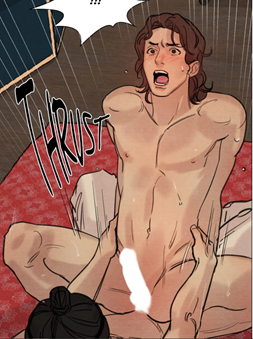 . (chapter 15) Secondly, Yoon Seungho repeats similar expressions:
  (chapter 14) And this is how I made the connection with this love session, as I was paying attention to the words.
  (chapter 14) It didn’t happen, because he was selfless… no, this was the consequence of Jihwa’s attitude who did nothing to “seduce” his friend. He refused to kiss him
 (chapter 14), but like he explained, his visit was because he was giving in to Yoon Seungho’s ways. But we have to question ourselves: who wanted whom here? The second lead did visit his friend, as he was seeking his company for sex. He could have refused, as his friend never forced him, but he did not. Moreover, the lord made it clear that Jihwa was just coming for sex and nothing more, yet the childhood friend never denied it.
  , he never allowed him to see his weak side. In addition, Jihwa’s words were full of criticisms.
 This is not surprising that Yoon Seungho was behaving in a similar way. He was reflecting the second lead’s behavior. In my eyes, Jihwa treated his friend like a real sex toy who was there to pleasure him, hence the fellatio is done to prepare the penetration. That’s why there’s no real exchange, the lord is very passive as well during the blowjob. He feels nothing at all
 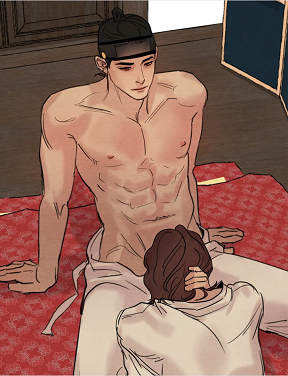 . When the sex session started, he seemed to be in a hurry too
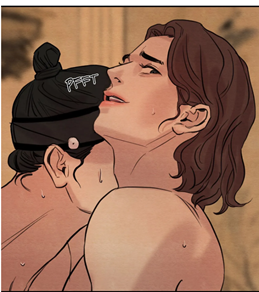 (chapter 15) However, Jihwa never truly invested his energy and effort to woo his childhood friend’s heart. This is no longer surprising why the second lead felt so lonely, even during their intimate time. Yet the irony was that the head-kisaeng was treated like a tool for Jihwa’s pleasure, and the latter never realized that.
  (chapter 72) Baek Na-Kyum’s words and reactions are the reason why the lord is so affected. But unlike in chapter 14, the painter asks for his lover’s help showing that making love implies the involvement of two persons and not just one. Like I had written in a previous analysis, the lord is discovering that giving pleasure to his lover is also receiving. Hence he blushes and becomes more passionate.
