

Please support the authors by reading Manhwas on the official websites. This is where you can read the Manhwa: Jinx But be aware that the Manhwa is a mature Yaoi, which means, it is about homosexuality with explicit scenes. Here is the link of the table of contents about Jinx. Here is the link where you can find the table of contents of analyzed Manhwas. Here are the links, if you are interested in the first work from Mingwa, BJ Alex, and the 2 previous essays about Jinx The Song Of Life (locked) and The Fabric of Silence
It would be great if you could make some donations/sponsoring: Ko-fi.com/bebebisous33 That way, you can support me with “coffee” so that I have the energy to keep examining Manhwas. Besides, I need to cover up the expenses for this blog.
People might have been wondering why I haven’t published anything after the release of episode 78. My silence is linked to my health. I was sick exactly like Joo Jaekyung. I had to remain in bed for a while. But enough about me.
When Doc Dan returned to Team Black, the fighters were so overjoyed that they immediately proposed to celebrate his comeback with a party. 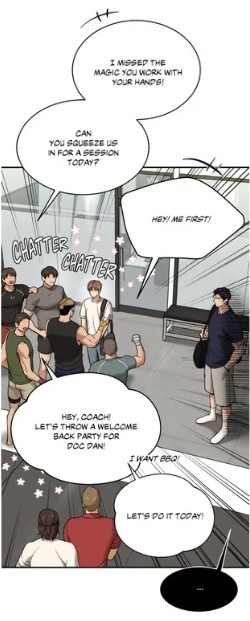 (chapter 78) Their noisy excitement — hugs, wishes, smiles, jokes, even talk of meat — gave the impression of a long-awaited reunion. Yet the suggestion was cut short by Jaekyung, who rejected it like this:
  (chapter 78) In other words, a party was “missed.” At first glance, this might appear to be an exception, a rare moment of denial in a story otherwise filled with shared rituals. Readers might recall the welcome party
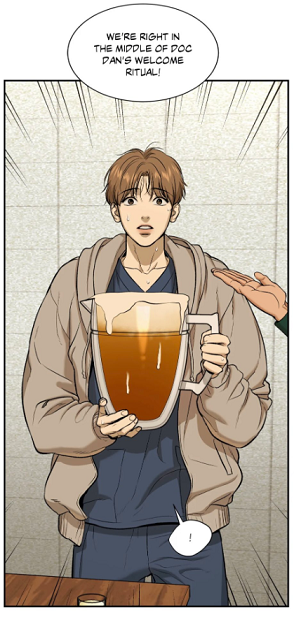 (chapter 9) in episode 9, the champion’s birthday dinner
  (chapter 43) in episode 43, the talk of hospital get-togethers
  (chapter 61), or the festive tone of fighters after director Choi Gilseok’s victory
  (chapter 52).
But the closer one looks, the clearer the pattern becomes. The missed party is not an isolated accident; it is the rhythm of Jinx itself. Whenever celebration hovers near — a victory, a birthday, a reunion, even a funeral — someone is not present. In addition, the celebration arrives too early, too late, in the wrong place, or in the wrong form. Jaekyung wins titles, but the gym shares the glory while he remains uncelebrated. 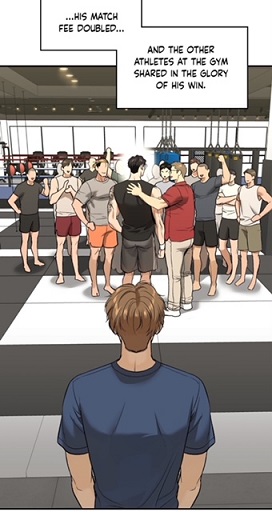 (chapter 41) Why did they not organize a party in Seoul to celebrate his victory in the States? Dan devotes himself to work, but his departures are marked by silence
 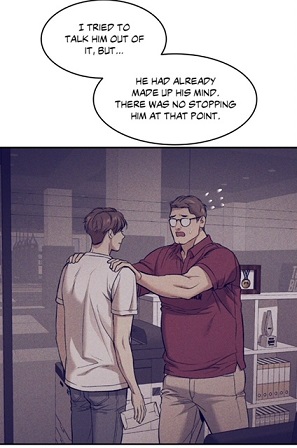 (chapter 53) rather than farewell.
 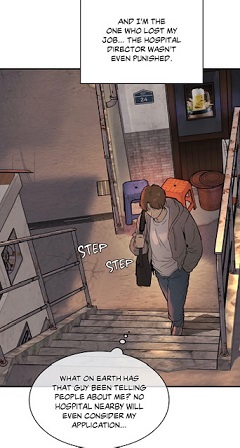 (chapter 1) The few rituals that do occur — a premature birthday cake, a noisy hug, puppies chasing after a car —
 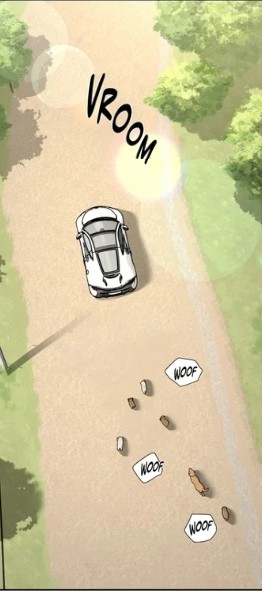 (chapter 78) always miss their mark, either hollow in substance or unseen by the very people who should be honored.
The title The Missed Party therefore names more than one canceled occasion. It captures the way the two protagonists move through a world where rituals of belonging are constantly distorted or denied. And in a culture where such celebrations carry deep social weight, the absence is all the more striking. The missed party becomes the haunting motif of their lives: recognition always promised, but never truly given.
The Meaning of Parties in Korea
In Korean culture, parties and team dinners (hoesik) hold a strong ritual function: they create bonds, display hierarchy, and confirm belonging within a group. Farewells, birthdays, and victories are all expected occasions for collective recognition. Yet in Jinx, these moments of celebration are strangely absent or hollow. When Jaekyung wins, his fee doubles, but no feast marks his achievement. Instead, the manager presents the “wolf” as his “trophy”. To conclude, others share in the reflected glory while the champion himself remains excluded, a fighter without a banquet. (Chapter 41) And this absence of recognition and respect is mirrored in the physical therapist’s position. He is not surrounded by the fighters and included by the manager. He is standing on the sideline. It was, as though his good work was not recognized  . (Chapter 43) Even the “dragon’s” birthday, supposedly a day of personal celebration, is reduced to an awkward dinner at his expense, with a cake arriving a day too early
 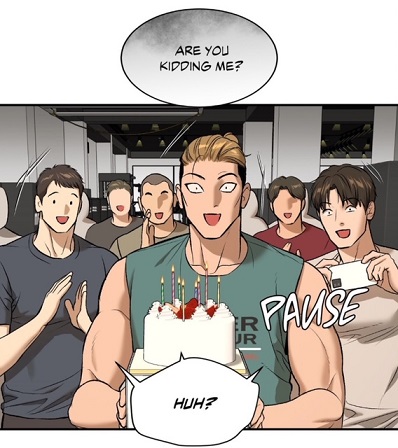 (chapter 43) or gifts from sponsors and fans he never wanted.
  (Chapter 41) In Germany, it is considered as a bad omen to celebrate a birthday too soon. Rituals that should affirm intimacy instead expose distance and lack of respect.
A striking contrast appears in chapter 52, when the fighters from King of MMA (chapter 52) gather at the very restaurant used for Jaekyung’s birthday. This time the feast is paid for not by him, but by Choi Gilseok — the rival director who had just won money betting against Jaekyung. The excuse for the banquet is twofold: the humiliation of the champion’s tie and the arrival of new members. Yet the sponsor of the event is absent, his presence felt only through the bill he covers. Unlike the wolf, whose victories go unmarked, Choi Gilseok uses food and drink to project power and buy loyalty. Yet, this celebration with the absent director displays not only hypocrisy, but also resent and jealousy due to the selection of the location. The cruel irony is that Jaekyung’s fall is more celebrated than his rise.  (Chapter 52)
This cultural backdrop makes the silences and absences in the Korean Manhwa all the more striking. Parties are repeatedly mentioned but rarely materialize, and when they do, they are strangely hollow. In chapter 61, for instance, a nurse suggests inviting the star to their next hospital get-together. (Chapter 61) The excitement is palpable — “loyalty” and celebrity sparkle in their eyes — but what stands out is the way Dan is erased in the process. They do not invite him; they want access to the famous fighter through him. His role is reduced to a conduit, the man who happens to be “close with Mr. Joo.” The irony is brutal: after two months of work in the hospice, Dan has never once been shown attending such gatherings himself. His own belonging is not on the table. He is used as a bridge to someone else’s fame, while his own exhaustion and lowered gaze silently testify to his exclusion.
But wait — is Dan not also responsible for his isolation? At no moment does he try to be close to them. He avoids their chatter, keeps his distance, and carries himself like someone already half absent. Chapter 56 seems to confirm this impression: even approached by one of the nurses, doc Dan uses work to avoid their company. 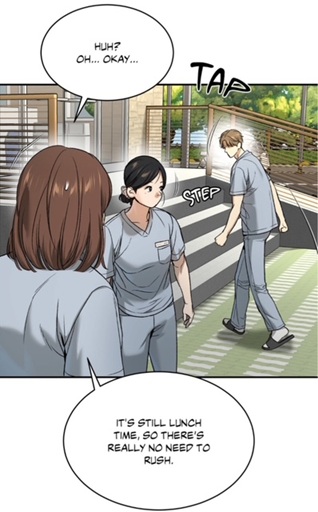 (chapter 56) However, this is just an illusion. What caught my attention is that the nurses wondered themselves why such a skilled therapist would come to a small-town hospital.
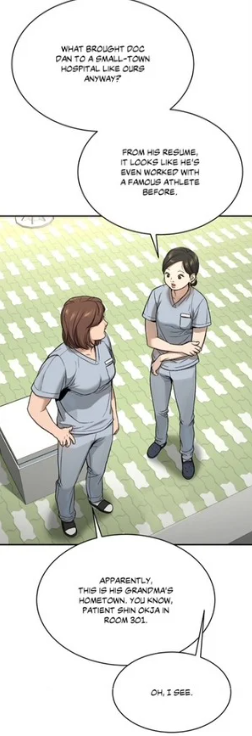 (chapter 56) They speak about him, as though he had no reason to stay there, as if he were a stranger passing through. Right from the beginning, he was treated unconsciously as temporary, someone whose presence required explanation rather than welcome. Finally, no party was held for him, no ritual of inclusion was offered. His distance and their detachment mirrored each other, producing the silence that would later define his departure.
  (chapter 78)
The paradox becomes even clearer when we turn to the star himself. Despite his status as champion, he never receives a proper victory celebration. After each match, we never see a celebration.  (chapter 5) It ends either in the car or in the locker room.
  (chapter 15) The high peak of his celebrated victories takes place at the gym where Park Namwook gather the fighters in front of the Emperor congratulating himself for his “good work” and the spectators for belonging to a winning team. (chapter 41) Yet no feast is held for Jaekyung, no toast to his perseverance. The two men at the center of the achievement are left without ritual acknowledgment, while the institution absorbs the honor. They remain a wolf and a hamster without a feast — fighting, winning, but never celebrated for who they are. And now, you understand why the manager could make such a suggestion at the hospital:
 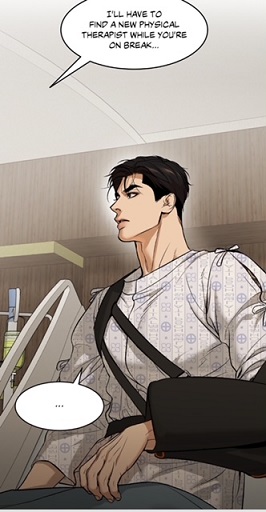 (chapter 53) For him, the physical therapists were just tools and as such replaceable.
Even Jaekyung’s birthday party in chapter 43 reveals this paradox.  (chapter 43) A birthday, especially in Korea, is typically a family-centered celebration, held at home or among close friends. Yet Jaekyung’s “party” takes place in a restaurant, under Yosep’s casual announcement that they would be having a “dinner party.” (chapter 43) The phrasing itself is odd, almost bureaucratic, as though the event were an obligation rather than a gift. Jaekyung himself had to pay the bill, reversing the usual logic of being celebrated. They even started eating before which is actually a huge violation of social norms. The cake appeared the day before his real birthday, an empty gesture more about timing than sincerity. And while fans and sponsors showered him with gifts throughout the month, Jaekyung revealed that he didn’t want any of them. The ritual forms were there — cake, dinner, presents — but the meaning was absent.
But there is another telling absence: Dan himself was left in the dark about the “surprise.” (chapter 43) The fighters never included him in the planning, as if they feared he might leak the secret. In reality, this exclusion only repeated his deeper past: once again, he was not considered part of the group’s inner circle. Had he been told, he might have brought the card and the gift of his own, softening the sting of Jaekyung’s reaction.  (chapter 45) By keeping Dan in the dark about the “surprise,” the fighters created another problem. Their silence pushed him to offer his own present on the same day as the gifts from sponsors and fans — exactly the kind of attention Jaekyung resented. He had already said he did not want those presents, and now Dan’s sincere gesture was placed in the same category, indistinguishable from the flood of unwanted offerings. What could have been a private, meaningful moment was absorbed into the hollow ritual of the group. Hence the champion never got to read his card! (chapter 43) In trying to celebrate, the team only ensured that both Jaekyung and Dan felt more isolated than ever. Instead, his silence reinforced the impression that he was peripheral. Unconsciously, Team Black treated him not as one of their own, but as an outsider to be managed. And even within the celebration, another absence was visible: Potato was missing, and no one seemed to notice. (chapter 43) The party did not affirm Jaekyung’s existence, nor Dan’s place beside him. It only reinforced their shared isolation, hidden under the noise of clapping and cheers.
Thus, Jinx presents us with a paradox: in a culture where parties are essential rituals of belonging, both Dan and Jaekyung remain excluded. They are surrounded by the signs of festivity, but the substance is always missing. Their lives are structured not by recognition but by its absence, not by celebration but by silence.
Dan’s Missed Parties
If the star’s parties are hollow, Dan’s are almost nonexistent. The only party where we see him smiling is his birthday, when he was a little boy. 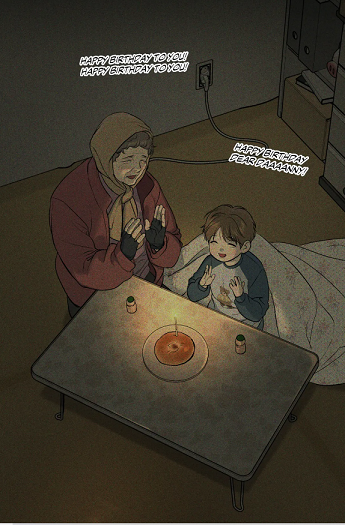 (Chapter 11) One might think, this celebration embodies a perfect birthday party. However, observe the absence of friends. It took place during the night too, a sign that his birthday was not celebrated properly. Everything implies his social exclusion. This made me wonder if this memory represents the only birthday party he ever had with Shin Okja. His life is a sequence of departures without ritual, absences without acknowledgment. Each time he leaves a place of work or community, he slips out like a ghost, denied the closure that parties are meant to provide.
At the hospital in Seoul, where he endured the predatory advances of the director, his dismissal was brutal and final. (Chapter 1) He was not only fired but blacklisted, erased from his profession’s networks. No farewell dinner was organized, no colleagues thanked him for his work, no one marked his departure.  (Chapter 1) His stay had been so brief as well. Besides, his absence was engineered to be total, as though he had never existed. The very ritual that should have affirmed his contributions instead became a ritual of erasure.
At the gym, the pattern repeated itself. The spray incident turned him first into a scapegoat. Park Namwook yelled, the fighters remained passive, and even Jaekyung rejected his presence. In the space of a few minutes, Dan was ostracized, his innocence ignored.  (Chapter 50) Then later the athlete questioned the physical therapist’s actions and told him this
 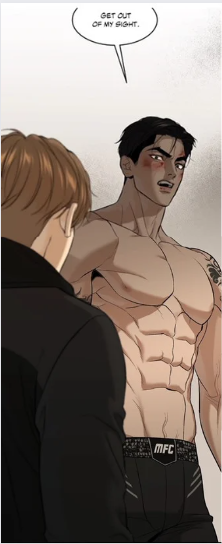 (chapter 51) out of fear and pain, the physical therapist thought, he was fired. Once again, he left in silence, unacknowledged. No one stood up for him, no one tried to reintegrate him, no farewell was offered. (Chapter 53) And keep in mind that according to me, in this scene, the manager already knew the truth. So he had a reason to dismiss a farewell party. The absence of ritual here was particularly cruel: Dan had given his skills and energy to the fighters, but his exit marked him only as disposable.
The hospice, where he briefly found genuine warmth, provided no closure either. When he left for Seoul, the staff were shocked, even saddened — but his departure was so sudden that no send-off was possible. (Chapter 78) Their affection was genuine, but the ritual was missing. Dan slipped away in silence, just as he had at the hospital and the gym. In the panel, what caught my attention is the reaction of the director. He is crying while keeping his distance, a sign that he is the one the most affected by doc Dan’s departure. For me, the author is alluding to the director’s regrets. If only he had treated doc Dan better… only too late, he had recognized that he had become accustomed to his presence. Doc Dan had always been a silent but active listener.
This absence of farewell may stretch back to his earliest traumas. If his parents truly died by suicide, it is possible that Dan never attended their funeral. Poverty, shame, and debt may have erased even that ceremony, leaving him with no closure for the loss of his own family. We can use Joo Jaewoong’s funeral as a source of inspiration. 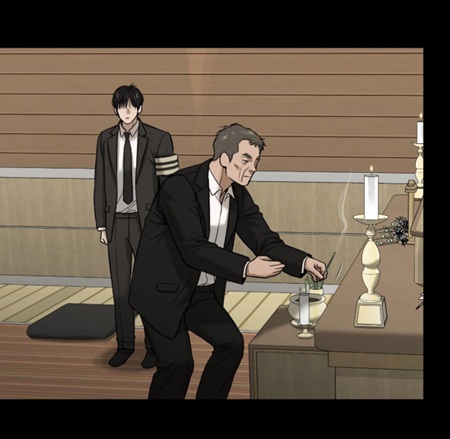 (chapter 74) The silence of his grandmother on this point suggests that even the most basic ritual of mourning was denied him.
The pattern becomes symbolic in the death of the puppy. 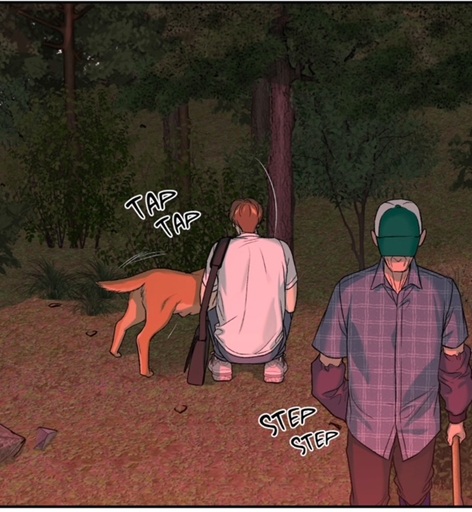 (Chapter 59) Only Dan and the landlord marked the event with a quiet burial. Since no one knew about it, it left the ritual incomplete. For Dan, the small act was meaningful, but its invisibility to the larger community echoed his own life: recognition always hidden, always partial, never public.
Even in moments that looked like parties, Dan was left on the margins. Jaekyung’s birthday party, with its cake and noisy cheer, contained an intimate truth: Jaekyung’s sudden, raw confession, “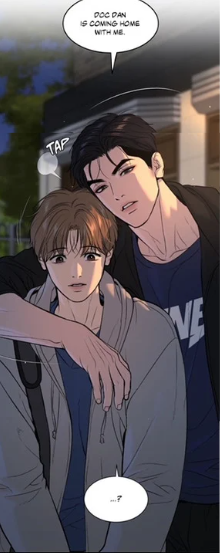 (chapter 43) This was the real heart of the evening, the only moment where ritual turned into intimacy. And yet even this was missed by Potato, who was absent at that crucial moment, lingering elsewhere with Heesung. The party’s form was there, but its essence — the recognition of Jaekyung’s loneliness and Dan’s importance — was overlooked by the two men at its center due to the presence of alcohol.
Thus, Dan’s life is a chain of missed parties. At the hospital, the gym, the hospice, even at funerals, he departs without recognition. And when celebrations do occur, the essential truth is missed — noticed only by those who are absent, while those present look away.
The Puppies’ Party
Nowhere is the irony sharper than in chapter 78, when the puppies run after the departing car.  (Chapter 78) To them, departure is not tragedy but play, a noisy farewell parade. Their barking and chasing become a spontaneous party, a joyous ritual of attachment. (Chapter 78) It is pure, instinctive, and alive. And yet, neither Jaekyung nor Dan sees it. Shut in the car, burdened by urgency, contracts, and exhaustion, they miss the little parade given in their honor.
The contrast is devastating. Humans, with their expectations of formal ritual, repeatedly fail to mark Dan’s contributions. They miss every opportunity to acknowledge him. But the animals, in their innocence, succeed where people fail: they celebrate simply because they care. The puppies recognize bonds better than the humans who claim to love him.
What makes this little parade even more striking is that the puppies do not separate between wolf and hamster. Their joy is directed at both men together, at the bond symbolized by the car’s departure. (Chapter 78) In this sense, the puppies achieve what the humans cannot: they recognize attachment without division, gratitude without debt. Their farewell is not tied to work, contracts, or hierarchy, but to presence itself. (Chapter 78) By running after the car, they express loyalty and responsibility, acknowledging the care they have received. It is the only party in Jinx that includes both protagonists as they are — not as worker and champion, not as scapegoat and boss, but as a pair worth celebrating. Finally, they have no idea that the couple plans to return soon, as they have no notion of time.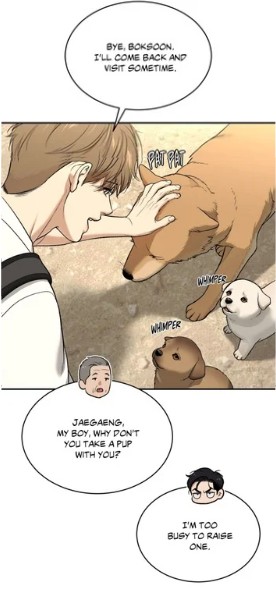 (Chapter 78) Striking is that here, doc Dan is making a promise to Boksoon and her puppies, but the latter have no idea. Therefore imagine this. On the weekend, the moment the car approaches the landlord’s house, the puppies will recognize them and celebrate their return! And this time, both characters will witness this welcome party: (chapter 78) How can doc Dan not be moved and even smile? Why did the champion reject the landlord’s suggestion (taking a puppy)? He had no time… Having a puppy will not just force him to slow down and take his time, but also attract real and genuine attention from the members of Team Black. (Chapter 78) The animals would even change Joo Jaekyung’s behavior and the fighters’ perception of their hyung.
 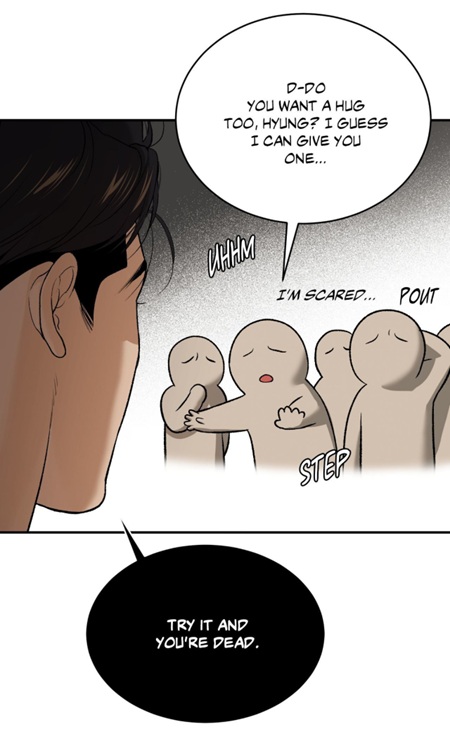 (chapter 78)
The Illusory Reset
When Dan returns to the gym, the fighters smother him with hugs and noisy affection. They beg him not to leave again, propose a welcome party, and act as if everything is back to normal.  (Chapter 78) But this “reset” is an illusion. Dan is only contracted for two matches. Interesting is that no one is capable of perceiving the truth, as the main lead’s explanation is ambiguous.
 (Chapter 78) He doesn’t limit the number of matches, only that he will focus on the “wolf”. So for them, his return is not limited in time. Nevertheless, his paleness and dark circles speak louder than their words: he is exhausted, fragile, still haunted.
The fighters, however, do not see his state. 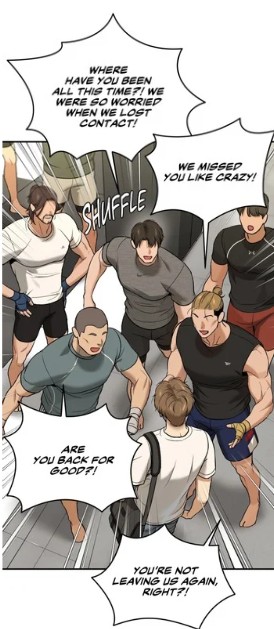 (Chapter 78) They are more worried about another possible departure than about his condition, as though his leaving again would be a greater tragedy than his ongoing suffering. This exposes that the members are not totally oblivious and their reunion is not a repetition of the past. On the other hand, warm words and a noisy welcome are enough for them. They take his generosity for granted, just as they always have. Therefore they ask for his magic hands. (Chapter 78) Their celebration is shallow, a ritual meant to restore their own comfort rather than acknowledge his reality.
Here, the cultural weight of parties in Korea sharpens the irony. Gatherings are strongly intertwined with alcohol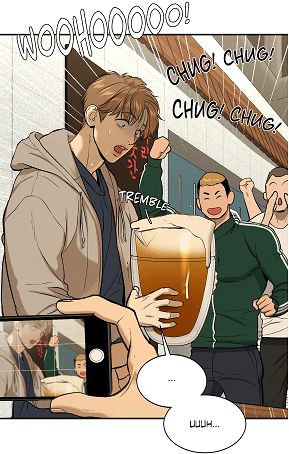 (chapter 9), and abstaining from drink often means being excluded from group belonging. Yet Dan, on medication, cannot drink. His doctor’s recommendation makes it impossible for him to participate in such “public” rituals. Even the customary sharing of a huge bowl — a symbol of intimacy and unity — must be avoided. For Jaekyung, who once used alcohol to dull his own struggles,
  (chapter 54) this becomes another reason to refuse such parties: they risk exposing Dan to temptation and harm. Park Namwook, knowing Jaekyung’s history of drinking, has no interest in promoting such events either.
 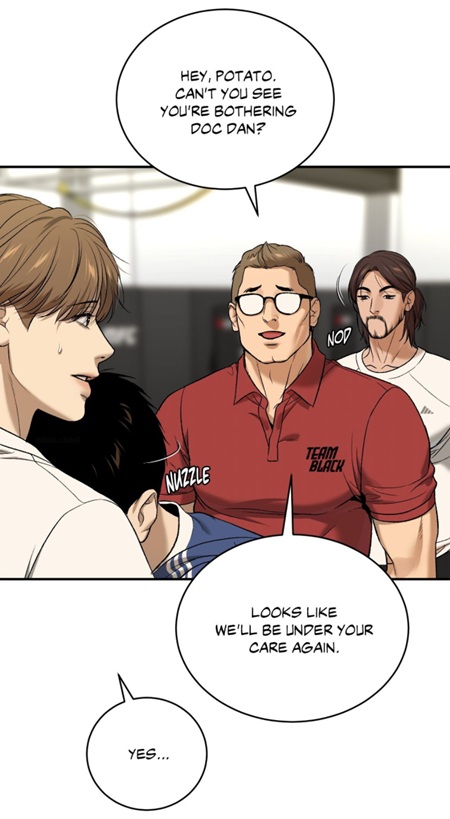 (Chapter 78) Hence the latter has no interest to organize a welcome party and even maintain the ritual with the bowl!! What might appear to others as grumpiness or stinginess is in fact a form of protection.
In contrast, Potato embodies another response. 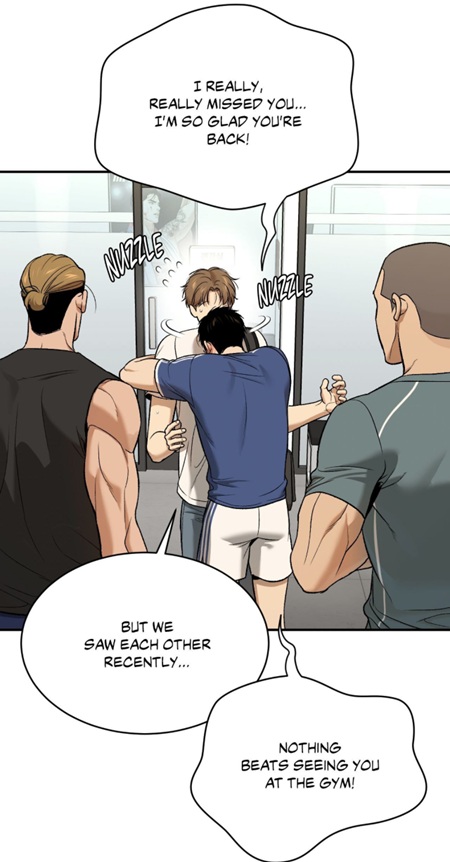 (Chapter 78) Having missed Dan most deeply during his absence, he now wishes to spend as much time as possible with his hyung. His longing shows that no party with Heesung and the landlord — no noisy drinking night —
  (chapter 58) could fill the hole left by Dan’s departure. But his form of attachment is still caught in the ritual of surface-level affection. What Potato craves is real closeness, hence he keeps hugging the physical therapist, (chapter 78) but what he proposes are the same shallow gestures that miss the truth of Dan’s fragility. The chow chow’s words — “Nothing beats seeing you at the gym” — unintentionally reveal this dependence. On the surface, it is a casual expression of joy and longing. Yet beneath it lies another truth: if the hamster were to leave Team Black for good, the gym would eventually lose all its members. From the start of the story, Dan has embodied teamwork. He is the glue that holds the fighters together, not by authority or charisma, but by care. Without him, unity dissolves into rivalry and noise. The irony is that the fighters sense this truth but cannot articulate it. They attempt to celebrate his return with hugs and the promise of a party, as if rituals could substitute for recognition. In reality, what they crave is not the feast but the fragile cohesion that Dan alone brings.
Striking is that Jaekyung’s refusal of the welcome party is linked to his position as director of the gym. It marks a turning point. Indirectly, he rejects the idea by redirecting the fighters’ attention. He points out their indifference toward him. For the first time, the athlete is voicing his dislike openly, he felt excluded. Due to this combination, the athlete doesn’t realize that he rejected the party, as if he refused to participate in hollow rituals that only disguise exhaustion and perpetuate harm. (Chapter 78) It becomes clear that for the athlete, such parties built on illusion can only harm Dan further. To conclude, thanks to his intervention, he protected the hamster from rituals that mistake noise for acceptance and even care. 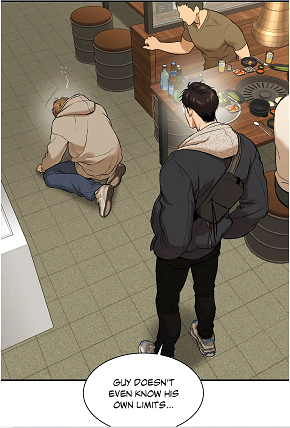 (chapter 9)
Park Namwook’s position within Team Black also sheds light on the dynamic of missed parties. In earlier chapters, he was the one who orchestrated gatherings  (chapter 26), or allowed whether welcome parties or surprise celebrations or pre-match meals
  (chapter 22). These events were never about genuine recognition but about maintaining power and appearances, boosting morale, or reminding the fighters of their dependence on the team structure he managed. The “surprise” birthday party in chapter 43 bore his fingerprints, (chapter 43) yet he stayed conspicuously absent when the cake was presented, only appearing later at the restaurant.
 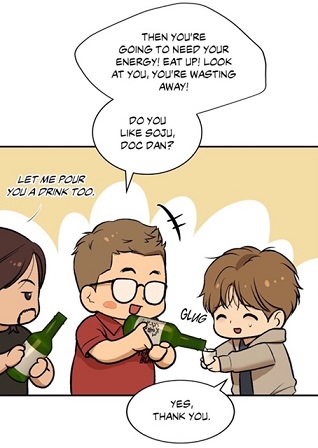 (chapter 43) This absence is revealing: Namwook preferred to avoid direct conflict with Jaekyung’s visible displeasure, leaving the awkward burden of paying and performing to the champion himself to Yosep. In other words, his parties were tools of control, not gifts of belonging. By chapter 78, however, the balance has shifted.
  (chapter 78) Standing in the back, Namwook watches as Dan returns and is embraced by the fighters. He notices a “different vibe” between the two leads, but fails to grasp what it means. Doc Dan is actually free and has the upper hand in their relationship. Hence he can no longer ask this from doc Dan:
 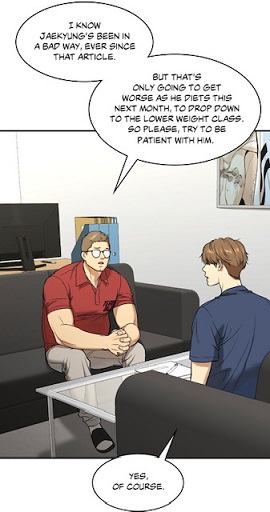 (chapter 36) Doc Dan should put up with everything. What he cannot admit is that Dan is no longer replaceable. (chapter 78) Once erased, the therapist now belongs; once central, the manager is now the outsider. Namwook is pushed into the very silence he once imposed on others. The irony is sharpened when Jaekyung openly asserts his authority: (chapter 78) With that, the wolf reclaims his rightful place. In other words, by respecting the hamster, the protagonist is learning to protect his own dignity and interests. (chapter 78) Namwook’s illusion of control dissolves, his “decisions” and rituals losing their force. Even the proposed welcome party collapses in an instant when Jaekyung refuses, proving that Namwook no longer directs the rhythm of the team. The missed party is thus his own as well: the final chance to assert authority through ritual slips away before his eyes, leaving him stranded on the margins of the very world he once managed. And in this reversal lies a striking symmetry: the silence that once excluded Dan now excludes Namwook, completing a cycle of poetic justice. What Dan endured in season one (chapter 41), sidelined and voiceless, is now mirrored in the manager’s quiet erasure.
If Dan’s health were to worsen, the most striking reversal might occur: a match could be cancelled not because of the champion, but because of his therapist. Such a possibility would mark a profound shift in the logic of Team Black. In season one, Jaekyung fought regardless of his condition; his insomnia, shoulder injury, foot injury and depression were ignored, never reasons to stop the machine. Dan was expected to keep patching him up in silence while the show went on. But if a fight were cancelled due to Dan’s weakness, it would confirm his irreplaceable place in the system. The team’s future would depend not only on the fists of the champion but on the presence of the man who heals him. For the wolf, this would be more than logistics: it would be a choice of care over profit, proof that he has reclaimed his authority to protect rather than exploit. And for Namwook, such a cancellation would represent his ultimate defeat. A missed party of the grandest kind — a fight night erased from the calendar — would signal the collapse of his management logic.  (chapter 69) Yet unlike all the hollow celebrations that came before, this missed event would finally have meaning. It would not be absence through neglect, but absence as recognition: proof that Dan’s life matters more than ritual, profit, or performance.
The Real Parties They Missed
If there was ever a “real” party in Dan’s life, it was the small gathering by the seaside with Heesung, the landlord, and Potato. (chapter 58) A simple evening of drinking and laughter, it gave him a fleeting taste of inclusion outside the world of gyms and hospitals. Yet even this was flawed: Dan’s health made alcohol dangerous, and Jaekyung never knew of the event. For him, it became another missed party, a moment of warmth hidden from his eyes.
The traces of this seaside evening resurface in chapter 78, when Potato joins the fighters to welcome Dan back. Unlike the others, however, he arrives noticeably later. 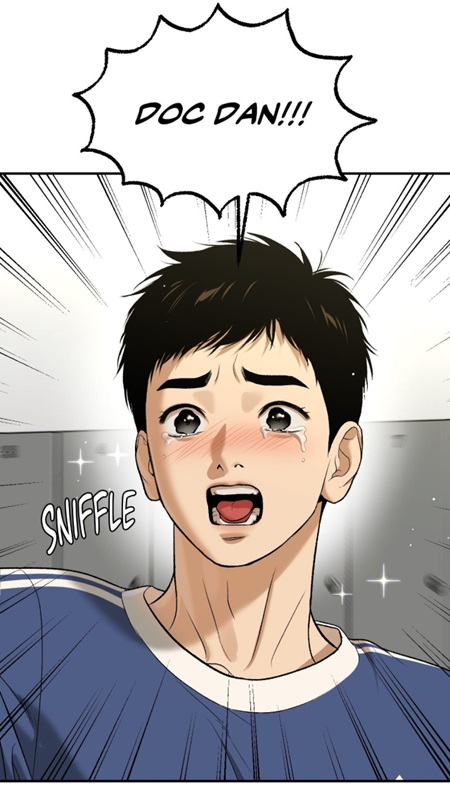 (chapter 78) This delay suggests a split loyalty: while the team is already celebrating, Potato is likely still tied to Heesung, perhaps even speaking to him on the phone. His tardiness betrays how his heart is pulled in two directions — caught between the actor’s orbit and the gym’s renewed center around Dan. Yet the embrace of the fighter, and his tearful reaction at seeing Dan again, show that his real place lies with Team Black. (chapter 78) The return of Dan shifts Potato’s focus: he no longer has to trail after Heesung, but can make his hyung and his own career a priority once more.
And here lies the seed of conflict. In chapter 59, 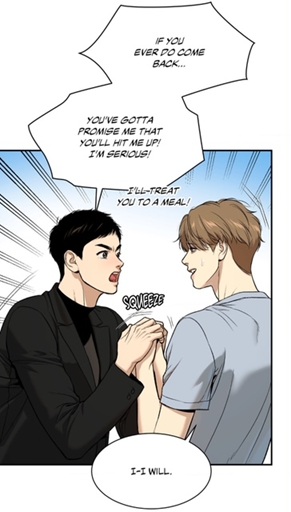 (chapter 59) Potato had made a promise to treat Dan to a meal if he ever returned, squeezing his hand with the sincerity of a puppy. That promise, innocent as it seemed, carried a hidden trap: in Korea, such “treats” almost always involve alcohol. And he could try to recreate the party on the coast. Potato, unaware of Dan’s medical restrictions, may offer him exactly what he must refuse. Only Jaekyung knows the truth of Dan’s fragile health; only he can act as his shield against such misplaced affection. Secondly, Potato possesses pictures of the puppies
  (chapter 60), which he took on the day one of them died!
What makes this tension more explosive is the role of Heesung. He alone knows that Jaekyung resorted to drinking after Dan’s departure 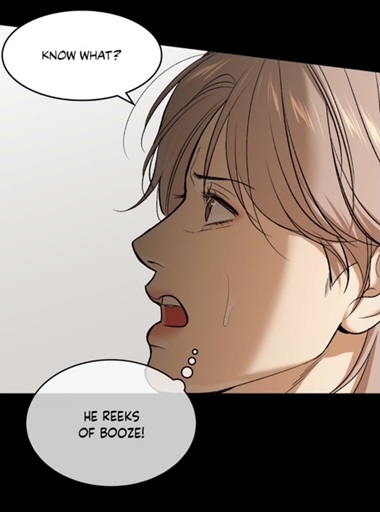 (chapter 58), and his presence ties alcohol directly to the champion’s vulnerability. At the same time, Potato’s loyalty is beginning to shift. He once orbited Heesung like a hidden lover, but Dan’s return rekindles his attachment to the gym and as such will affect his relationship with the gumiho. (chapter 78) The “puppy” now prefers Dan’s company at the gym to the actor’s beck and call. The small seaside party that once united them may become the fault line that divides them: an invitation, a bottle of soju, a clash between past habits and new priorities. For Jaekyung, it will be the ultimate test — not whether he attends the party, but whether he transforms it into something different, a celebration without alcohol, a ritual of care rather than destruction. As you can see, I am expecting the return of the fox Heesung.
And yet, even beyond the noisy welcomes and the hidden seaside gatherings, the theme of absence reaches into the most intimate farewells. When Dan prepares to leave the hospice, he leans toward his grandmother, seeking an embrace, a moment of warmth that could ease the separation. 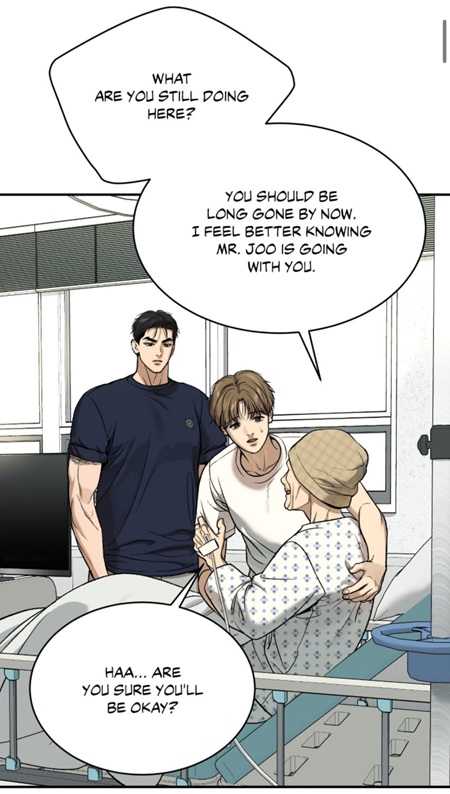 (chapter 78) But she does not return the gesture, as she might believe that he is just holding her straight. Her arms remain still, her body heavy with silence. Instead she talks, urging her grandson to leave the place as quickly as possible. So she doesn’t enjoy this moment. What should have been a small celebration of love — a hug of recognition, a party for two — dissolves into emptiness. Halmoni, who had always claimed to be his anchor, fails to give him the ritual of belonging he craves. The one gesture that could have affirmed their bond is withheld, turning tenderness into yet another missed ceremony.
Hwang Byungchul mirrors this failure in his own way. 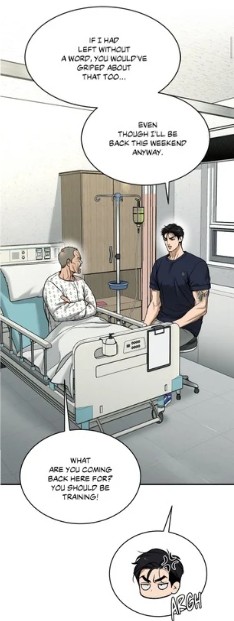 (chapter 78) Sitting stiffly in his hospital bed, he waves away any possibility of affection. His body language, arms crossed, his words reduced to commands about training, erase the emotional bond that might have connected him to Jaekyung. Where halmoni’s silence is passive, Byungchul’s is active — he refuses intimacy, replacing it with obligation. For both figures, farewell becomes an empty form, stripped of the recognition that makes partings bearable. In these moments, the absence of a hug, the denial of tenderness, is more devastating than the loudest rejection. It is a party that never begins, a rite of passage left unspoken.
This is crucial, because in Korean culture, embraces are rare, and when they occur, they carry profound weight. To hug someone is to cross into genuine intimacy, to declare loyalty and affection without words. The absence of such a gesture from halmoni and the director therefore marks not just emotional distance but outright exclusion. They cannot — or will not — celebrate Dan or Jaekyung as individuals worthy of deep affection. they only know pity, pride or annoyance. Their failure underlines the story’s central rhythm: the rituals that should affirm identity are constantly missed, postponed, or corrupted.
Placed against these failures, the quiet “parties” between Jaekyung and Dan acquire even greater weight. A home-cooked meal,
 (chapter 22)
  (chapter 13) a breakfast in silence
 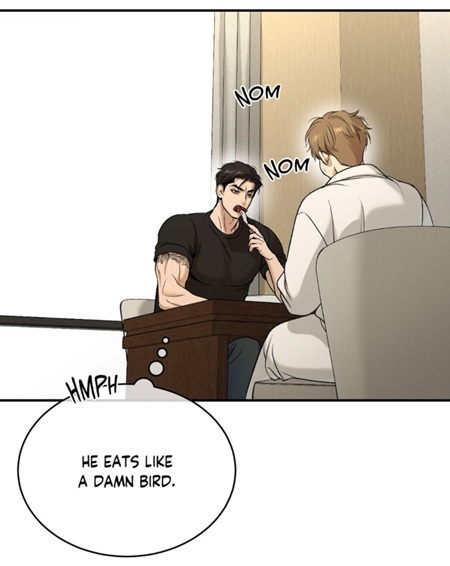 (chapter 68), the embraces in the dark
 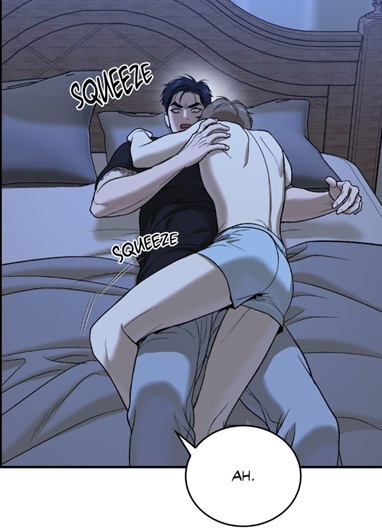 (chapter 66) (the wordless recognition of suffering) — these become the true celebrations of Jinx. They lack alcohol, noise, or spectacle, but they carry sincerity. They reveal that belonging can be built not through grand gestures but through repetition, through the transformation of fleeting kindness into ritual. This implies the existence of conscious and choice. And yet, these moments remain fragile. After their return to the penthouse, there is no shared meal, no laughter, only nostalgia and sadness.
 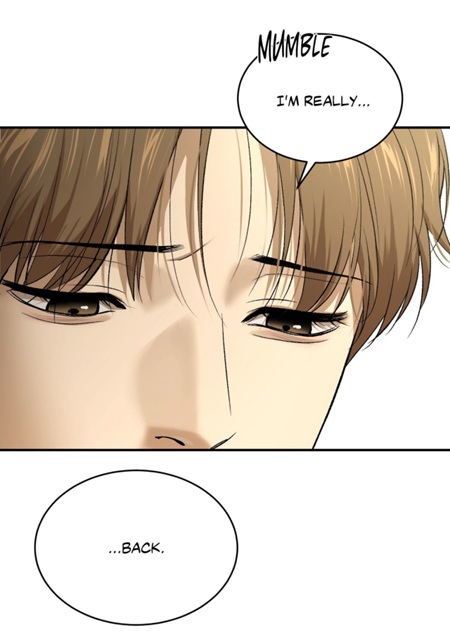 (chapter 78) Even Jaekyung is troubled by the reminder that Dan’s stay is temporary, as if the very walls of the penthouse resist turning into a home.
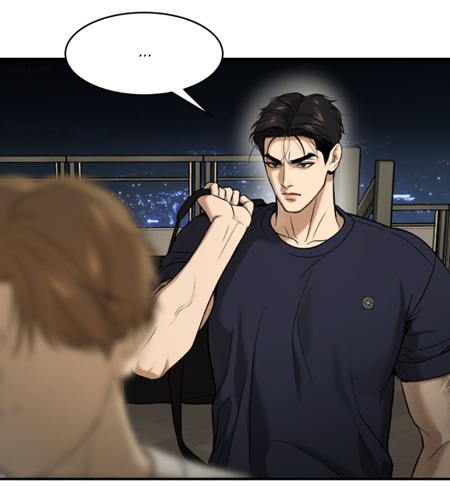 (chapter 78) In other words, the wolf’s task is no longer to win battles in the ring but to protect these fragile celebrations — to make Dan feel at home, to turn missed hugs into embraces, missed parties into warm meals, missed gestures into habits of care. Only then can the cycle of exclusion be broken. Only then can “The Missed Party” become, at last, a real one.
Conclusion
Both protagonists are marked by missed celebrations. Dan’s life has been a chain of exclusions: fired without farewell, blamed without defense, departing without closure. Even in death — (if we include the theory of his parents’ vanishing), the puppy’s burial — rituals of belonging were denied. Jaekyung, for his part, wins victories without feasts, carrying glory without intimacy.
The fighters and nurses offer illusory parties, mistaking noise for recognition, affection for change. But the true parties are elsewhere: in the puppies’ joyous run, in the hidden rituals of wolf and hamster [the embrace,  (chapter 68), the shared meal (chapter 68) and in the landlord’s quiet kindness
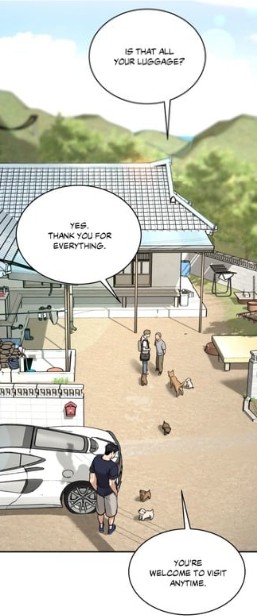 (chapter 78). For me, it is no coincidence that the senior followed them to the street and waved at them!
 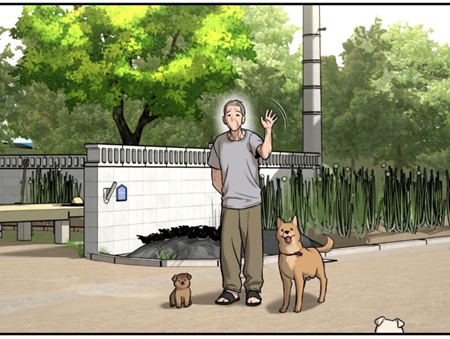 (chapter 78) He expressed not only his genuine feelings, but also his longing: he hoped to see them soon. He had come to appreciate their presence which is not related to their work. The Missed Party becomes not a single absence, but the haunting rhythm of the entire narrative: recognition always arriving too late, always seen by the wrong eyes. And perhaps the story’s promise lies here — that one day, the real party will finally be held, not in karaoke bars or gym halls, but in the unbreakable bond of two men who learn what true friendship and belonging mean. This means, the more the champion and his fated partner develop new routines, the more it will affect the gym and as such Park Namwook, which can only feel more and more excluded.
PS: If in the next chapter, the night continues, then I can’t shake the feeling that Joo Jaekyung might pat doc Dan’s head and not yank his hair, like he announced it. 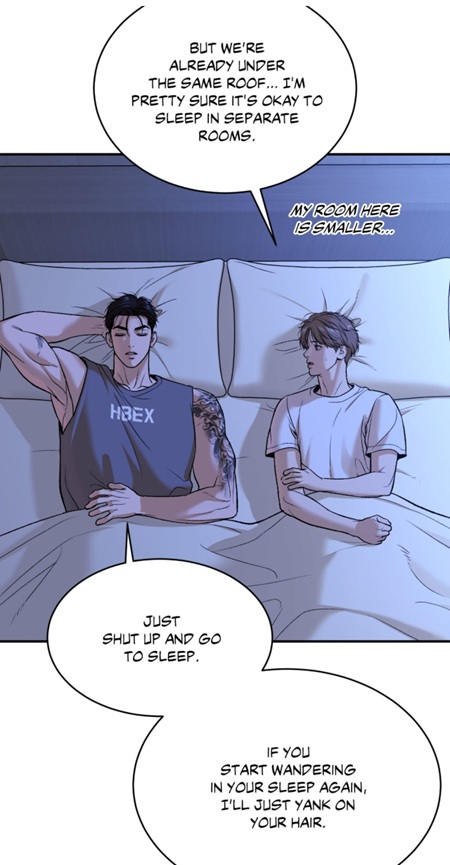 (chapter 78)
Feel free to comment. If you have any suggestion for topics or Manhwa, feel free to ask. If you enjoyed reading it, retweet it or push the button like. My Reddit-Instagram-Twitter-Tumblr account is: @bebebisous33. Thanks for reading and for the support, particularly, I would like to thank all the new followers and people recommending my blog.


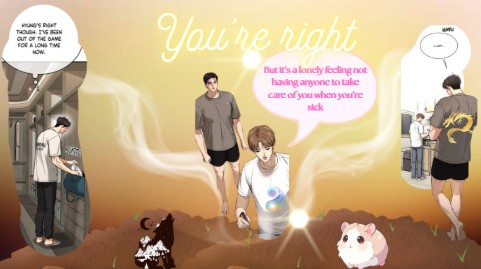
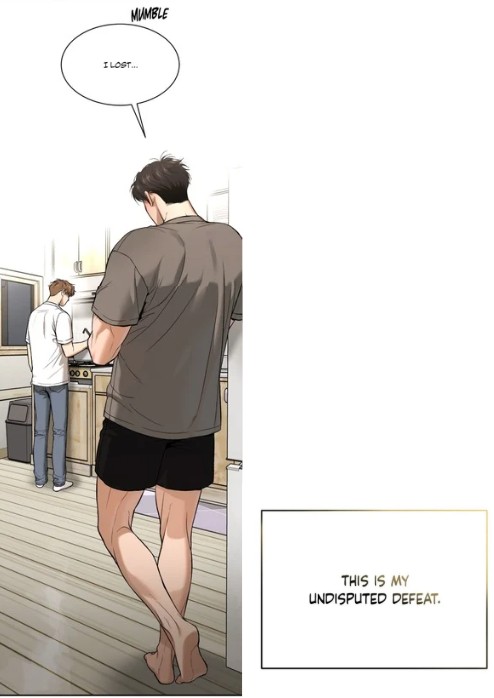 (chapter 76) This admission is no mere reversal of pride. It gestures toward something Jaekyung has never known: an exchange that does not end in domination or silence, but in dialogue. For Kim Dan, too, it marks a turning point.
 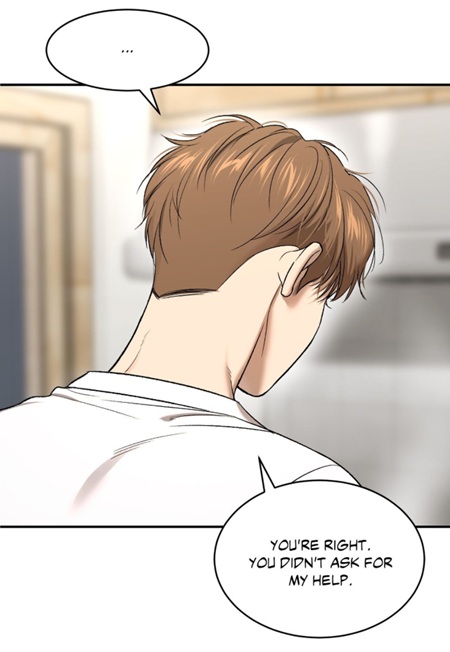 (chapter 76) For the first time, he uses the expression you’re right in front of his fated partner. He seems to concede with this idiom. Yet this apparent submission hides a deeper reversal. By admitting Jaekyung never asked for his help, he redirects the exchange toward his own truth: the loneliness of having no one to care for you.
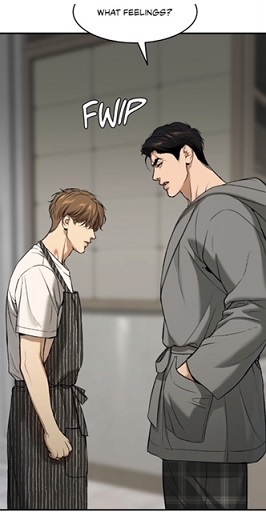
 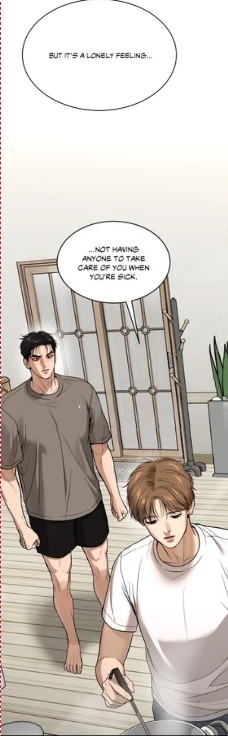 (chapter 76) What unfolds in the kitchen is not a quarrel about porridge but a fragile recognition. Dan’s “You’re right” acknowledges Jaekyung’s perspective without bitterness, while Jaekyung’s “I lost”
  (chapter 9)
  (chapter 45)
  (chapter 76) The kitchen scene closes one cycle and announces another.
  (Chapter 76) In this view, his fixation would be the product of ambition, pride, or ego: the expected cost of survival in a cage where only victory pays.
  (chapter 76), because the adults in his life cut them off before they could exist. Winning became his only mode of survival because every formative argument in his youth ended in defeat, and not the kind decided by a referee. With his father, mother, coach, and manager, words never led to recognition — only to insult, silence, utility, or obedience. He learned early that dialogue could not protect him; only victory could. His victories were not chosen freely, but forced into being by guardians who made him feel like a burden, until relationships themselves became burdens.
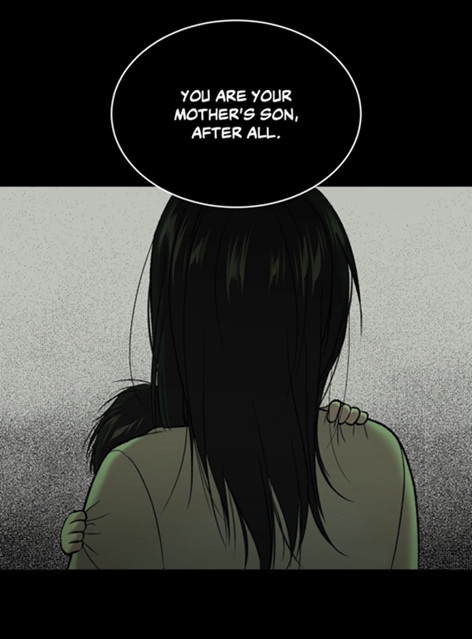 (chapter 73) He was a loser because of his mother. To lose meant humiliation and rejection; to speak at all meant to invite contempt. The only possible rebuttal was victory — to prove through strength that he was not the pathetic, worthless child his father saw in him. Winning became his sole argument against a man who would never listen, the only way to resist being branded a loser.
  “(chapter 73). It was not just defiance; it was a vow that victory would silence abuse once and for all. When he returned with the trophy, he shouted triumphantly,
 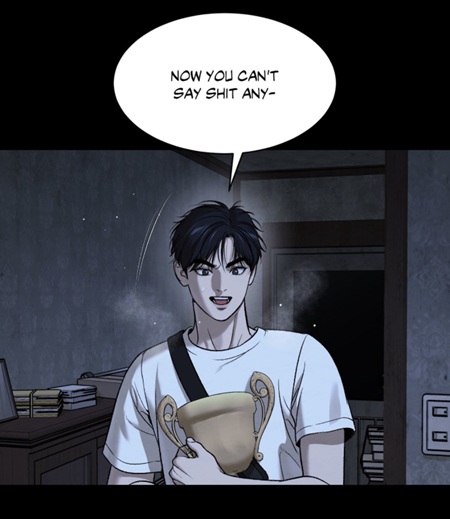 (chapter 73) ready at last to claim, “I was right.” Yet reality betrayed him. His father’s death denied him the only acknowledgment he had sought.
 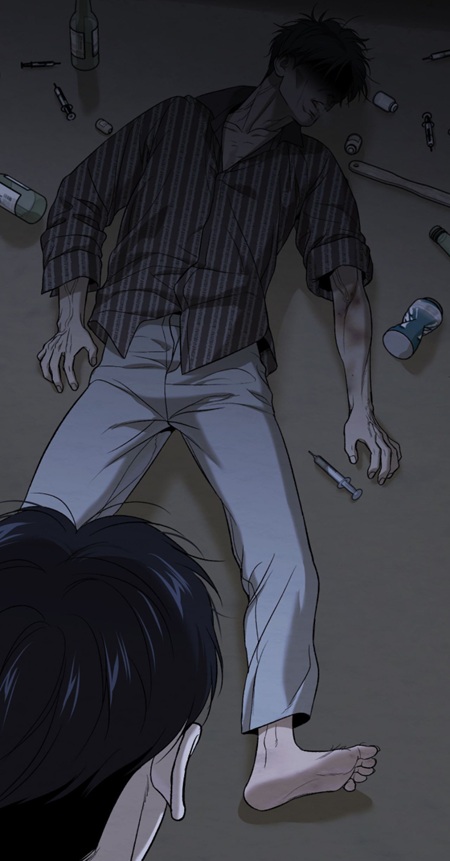 (chapter 73) The words “I was right” died in his throat. He had proved himself, yet there was no one left to recognize it. His own prediction — that his father’s death would mean nothing — proved false. The absence cut deeper than the insults had, leaving Jaekyung not with triumph but with the bitter aftertaste of self-loathing. Victory had silenced his father, but it also silenced the son. He had proved himself, yet there was no one left to hear it.
  (chapter 74) At the funeral he remained dry-eyed, his face locked in shame (ch. 74). No one saw his guilt, but it consumed him: the one man he needed to hear “I was right” from could no longer answer. At the same time, his smile and laugh were also linked to misery. For Jaekyung, laughter was never the sound of joy, but the echo of mockery and rejection due to the father. Just as tears became tied to betrayal and abandonment through his mother, so too did his father twist laughter into a weapon
 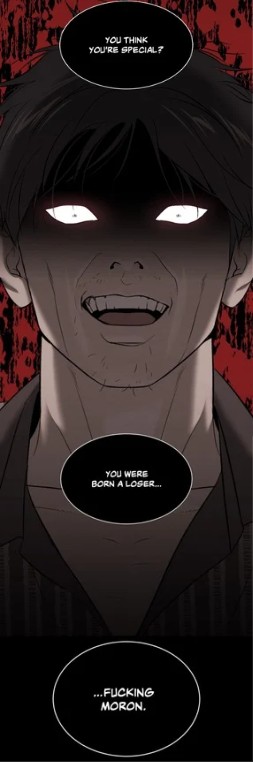 (chapter 73) — every laugh at his expense reinforcing the verdict that he was weak, pathetic, a loser. In Jaekyung’s childhood vocabulary, neither laughter nor tears could carry warmth. Both were stripped of comfort and redefined as signs of humiliation and pain.
 (chapter 72) To the boy, she was not silent at first: she must have definitely told him to become strong, to endure, to wait. She gave him her number, leaving the illusion that her departure was not abandonment but necessity. Victory and wealth became her conditions for love. That is why he swore over the payphone to work hard
 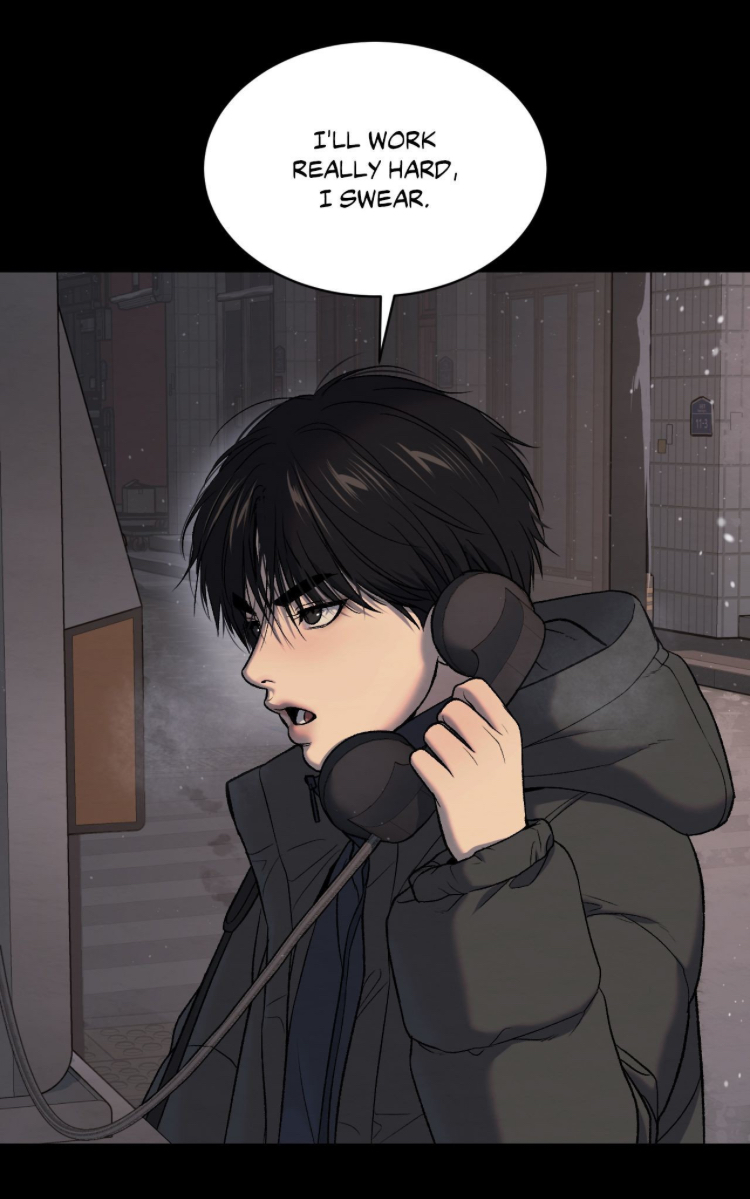 (chapter 72) and “make money” so she could return, and why after his father’s death he still hoped for her homecoming.
  (chapter 74) But when the calls went unanswered, her silence became the sharpest weapon of all. Her eventual reply
 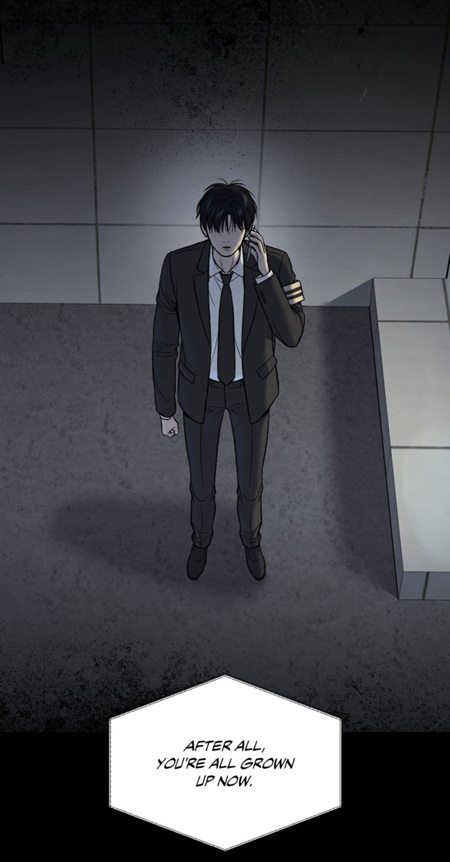 (chapter 74) confirmed that his effort had never mattered. For the first time, he cried
 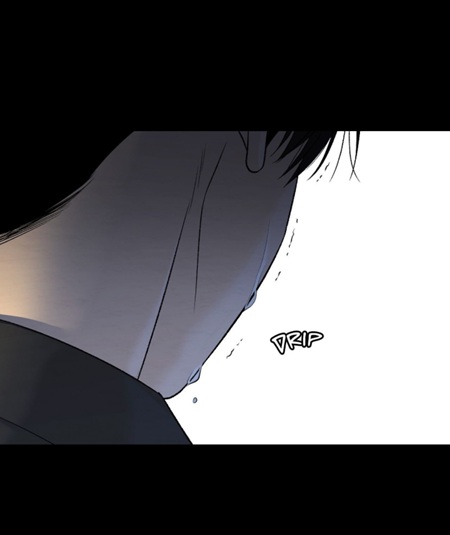 (chapter 74), his tears expressed not just grief but the recognition of betrayal. From then on, tears themselves became equated with loss, weakness, and abandonment. This is why, in the wolf’s nightmare, Dan’s crying form
  (chapter 76) appears: the sight of tears recalls the moment he unconsciously realized that even his mother’s “you’re right” was a lie. At the same time, those tears function as a mirror. The champion projects onto Dan the very weakness he has always forbidden himself to show.
 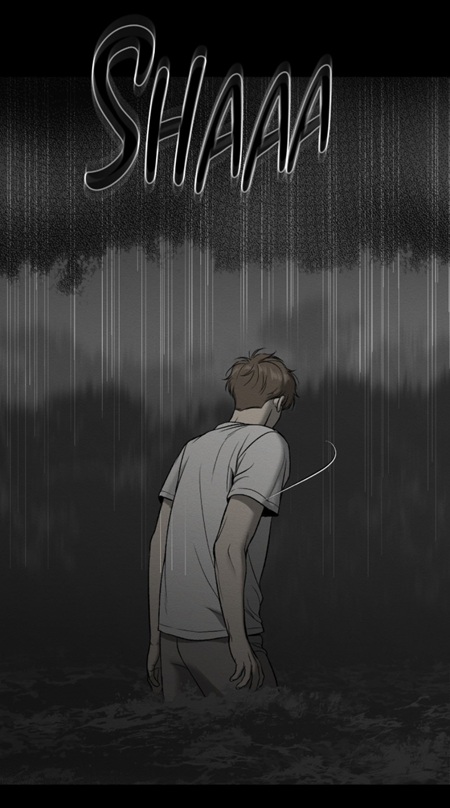 (chapter 76), the boy he once was who longed to weep but had to swallow it down. At the same time, Jaekyung himself occupies the place of the “adult” —
  (chapter 74) Hence the wolf’s tears were quickly replaced by rage and violence.
 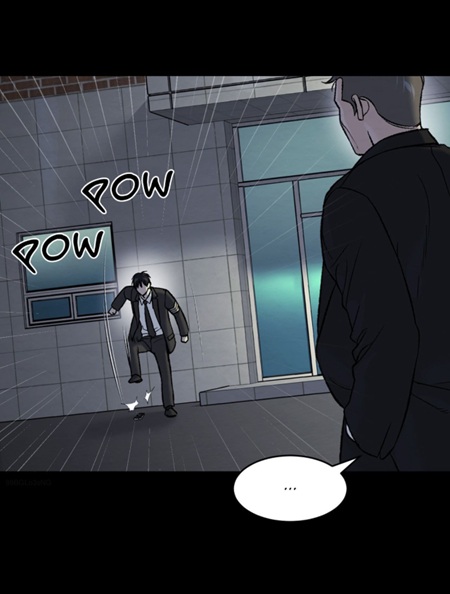 (chapter 74)
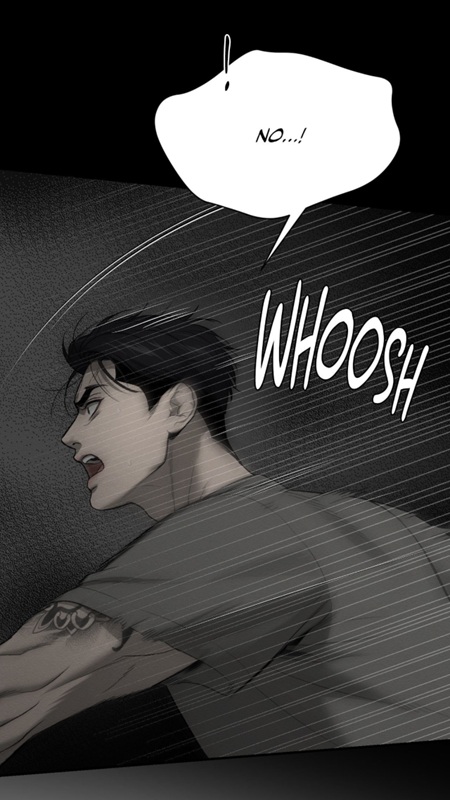 (chapter 76) His trembling hand upon waking
 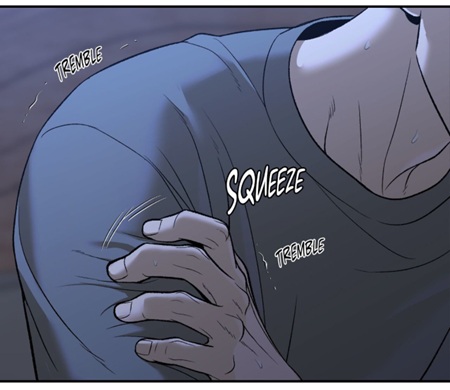 (chapter 76) shows the yearning to be held, comforted, reassured — something he never received from either parent. He is not entirely responsible for the physical therapist’s suffering. And here lies the difference: Dan’s tears are not manipulative or hypocritical , like the ones Jaekyung suspects from his mother, but unfiltered honesty. He expressed his emotions, not just through tears, but also through body language!
  (chapter 1) He was shaking, he was bowing and asking for forgiveness! Dan embodies a form of vulnerability that is real, legible, and forgiving contrary to the mother. When the teenager heard his mother’s voice after such a long time, the latter never brought up her past action. She never asked him for forgiveness.
  (chapter 74), whose quiet devotion and silence kept the gym alive, nor Jaekyung’s, whose absence he accepted without challenge.
 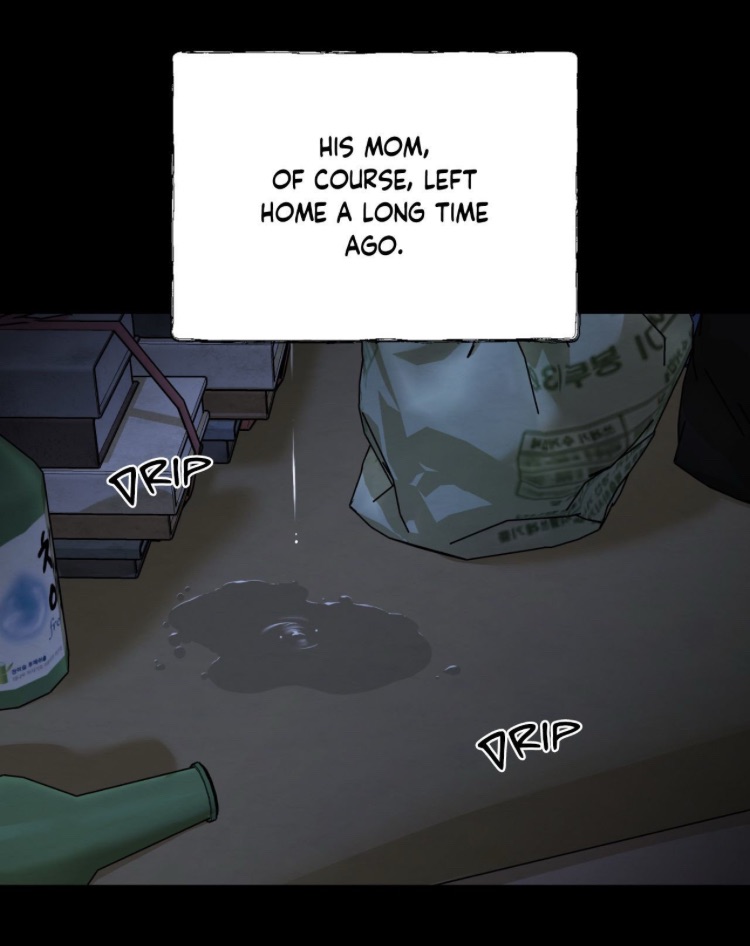 (chapter 72) In fact, his own mother’s submission reinforced this flaw: her blind trust in her son, her refusal to question his choices and the boxing world, taught him that authority need not be examined, only endured or seen as trustworthy. For him, hierarchy was unquestionable, and so he perpetuated it. Thus he stands for lack of critical thinking. This is why, with Hwang, the vocabulary of “right” and “wrong” was never about dialogue but about obedience. No wonder why he became so violent at the police station.
  (chapter 74) Unlike Jaewoon’s domination or the mother’s evasive silence, Hwang cloaked his authority in the language of advice — yet beneath it lay a black-and-white dualism: winners and losers, villains and victims. Thus Joo Jaewoon was blamed for becoming a thug
  (chapter 74), while the wolf’s mother was a victim. He viewed her as a selfless and caring mother:
  (chapter 74)And observe how he provoked the main lead.
  (chapter 74) When Hwang sneers, “What, am I wrong? Come on, answer me!” he is not inviting dialogue — he is staging a trap. The question is rhetorical, a demand for submission. Let’s not forget that he had witnessed the phone call in front of the funeral hall, but back then he had done nothing. And when the boy hesitates
  (chapter 74), unable to answer, Hwang strikes him in the chest.
  (chapter 74)and justifies his action behind social norms.
 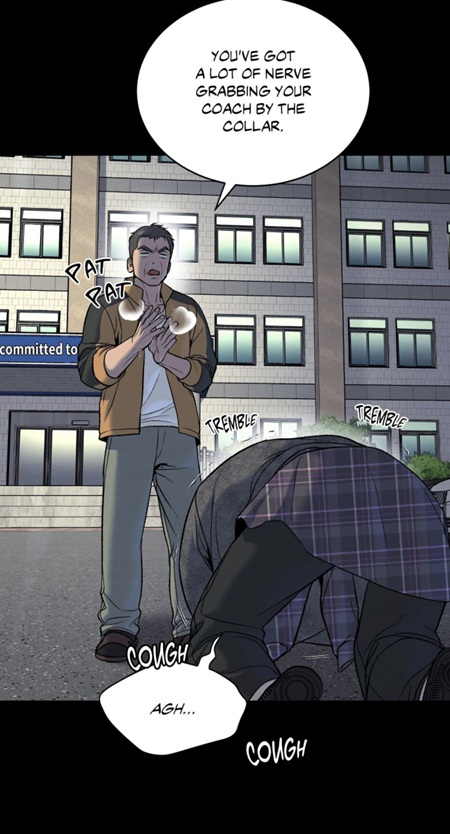 (chapter 74) In that instant, he takes the role of judge, referee, and executioner, collapsing “argument” into violence. The very words “Am I wrong?” contain the irony: the coach is less interested in truth than in reasserting his own authority. Silence is treated as guilt, hesitation as defeat.
 (chapter 74), he effectively admitted “you’re right” to the coach. Yet this wasn’t simply genuine agreement — it was submission, respect mixed with survival. The director misread it as validation of his worldview. This only reinforced his certainty, encouraging him never to reconsider his role.
  (chapter 74) When the protagonist finally left, the director could declare with satisfaction:
  t(chapter 74).
 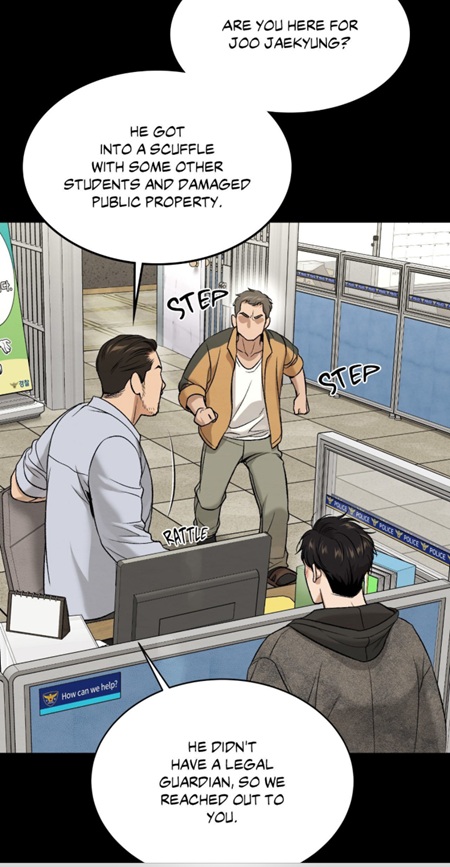 (chapter 74) The reality was that the old man had never truly become the star’s home and family, which explains why he constantly leaned on other adults, the mother or the father, to provide the guidance he himself refused to give. At the same time, I come to the following deduction: he must have lost his boxing studio, and with its vanishing, the elder was forced to face “reality”: loneliness, sickness and absence of happiness in his life!
 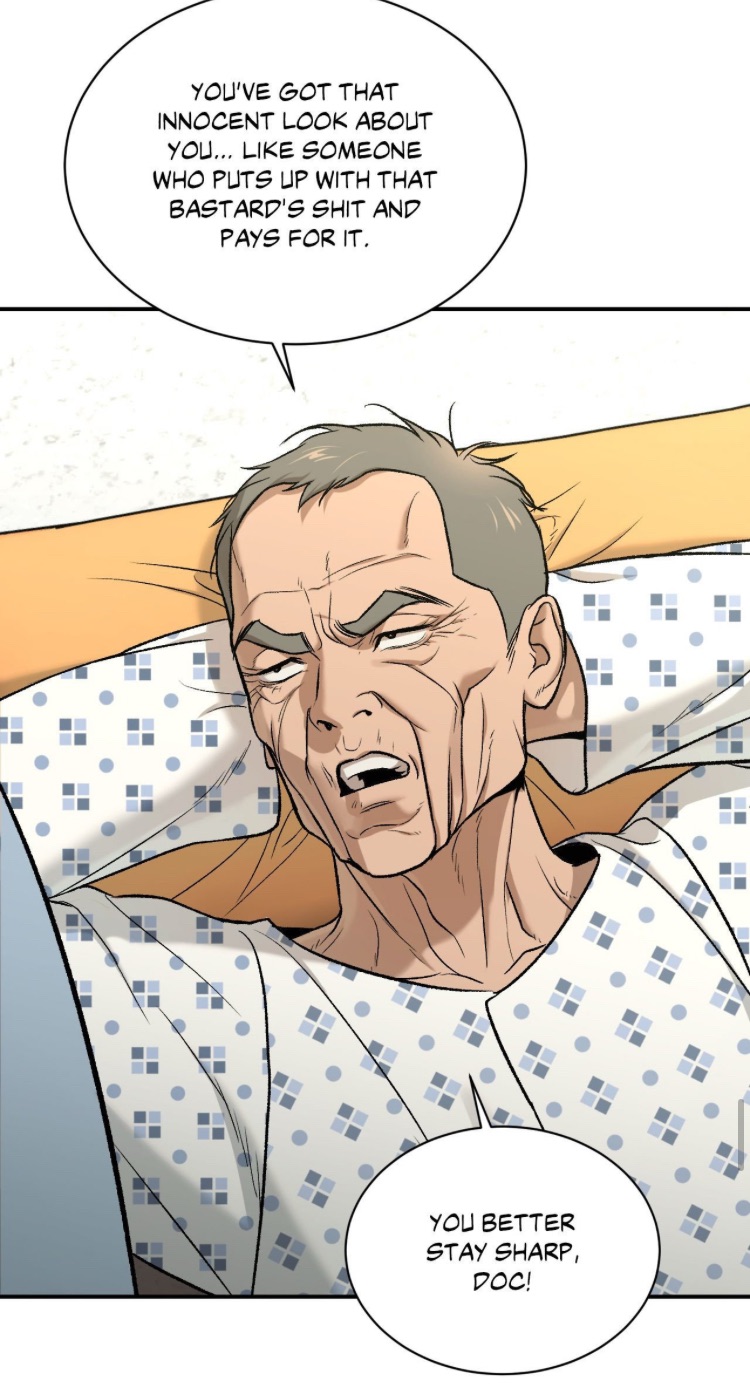 (chapter 70) Once again, Jaekyung is reduced to “that bastard” — a label, not a person — while Dan is framed as the pitiable victim. The old coot remains the righteous observer, untouched by guilt, protected by a rhetoric that always shifts responsibility elsewhere.
 (chapter 75) He was happy again, though he initially tried to hide it. We have to envision that before the wolf’s visit, the elder had to face what his own life outside the gym looked like: sickness, solitude, the collapse of the studio that had sustained him and came to resent the main lead. Yet, Joo Jaekyung’s behavior changed everything:
 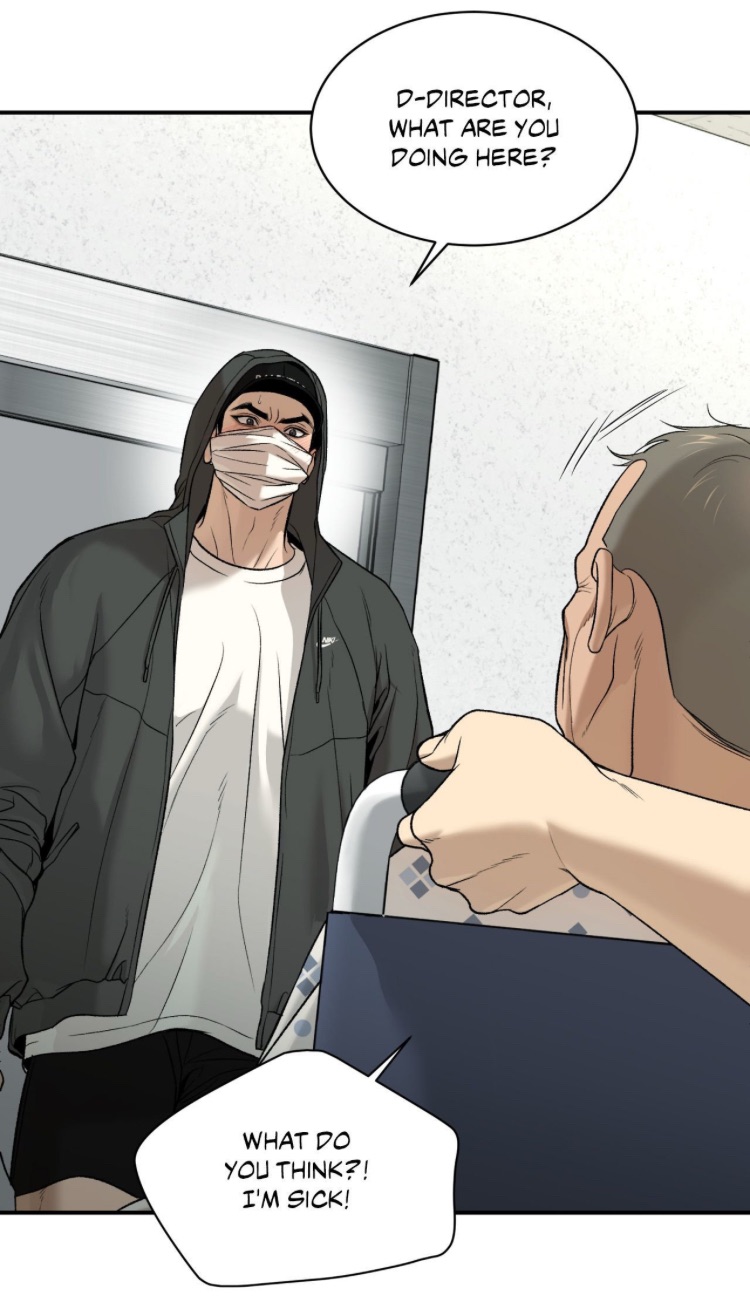 (chapter 71)
 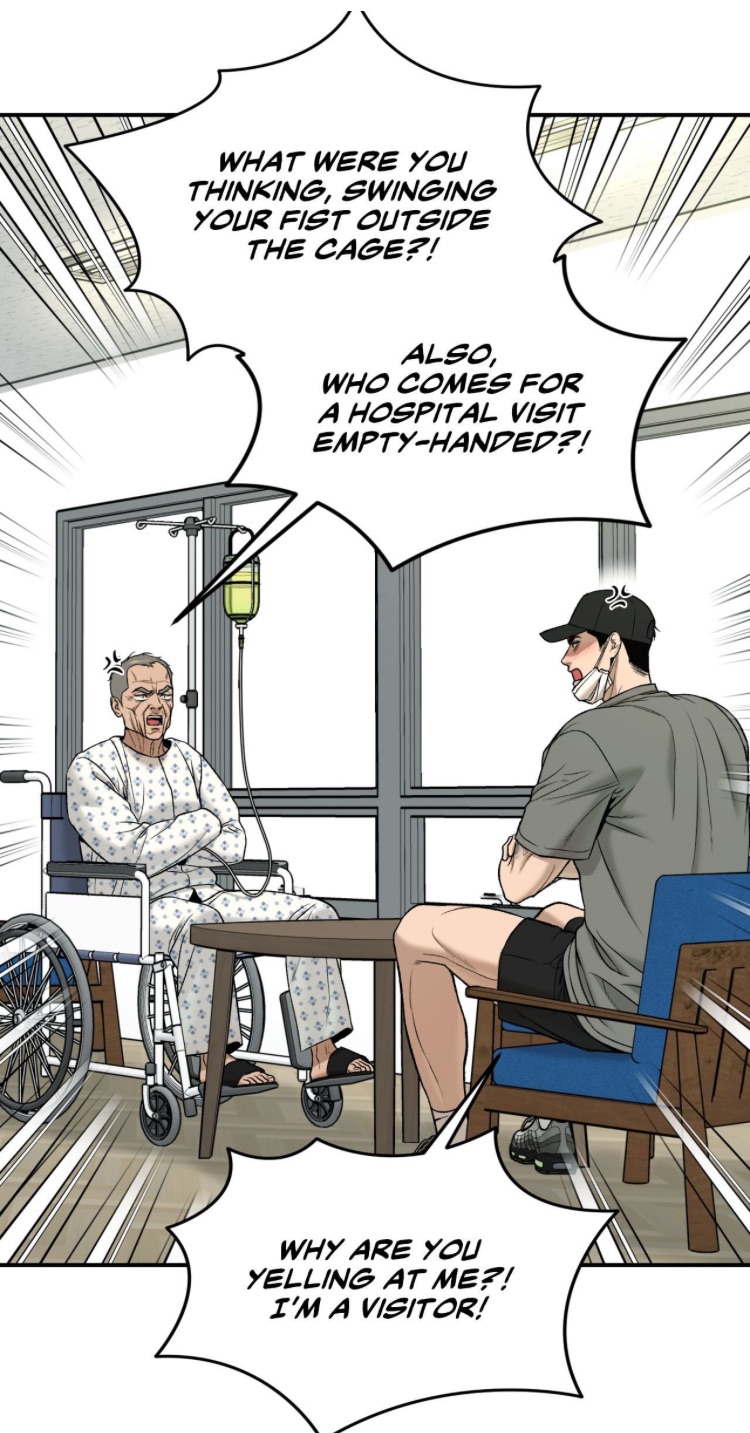 (chapter 71) Only during the champion’s visit, did his words alter.On the rooftop of the hospice, he finally tells Jaekyung:
 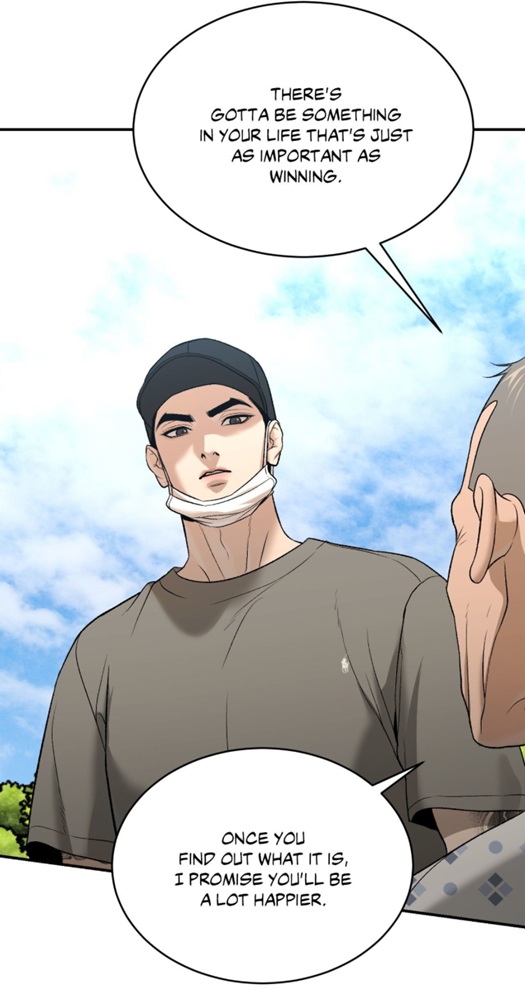 (chapter 75) This shift did not come from wisdom gained in the ring but from loss — the loss of health, the loss of the gym, the loss of illusions — and from Jaekyung’s loyalty, which pierced through his blindness. Interesting is that this time, he doesn’t give the answer to the athlete. He stops thinking “I’m right, you’re wrong”. He treats him as an adult, as a mature and thoughtful person. Through that fidelity, Hwang glimpsed at last what he had denied both himself and Jaekyung for decades: that victory alone cannot sustain a life.
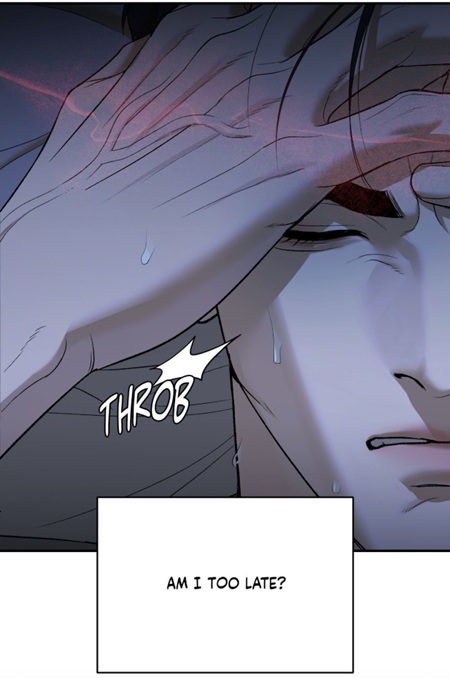 (chapter 76) It is not too late. The question “Am I too late?” is the consequence of Hwang byungchul’s words and it gradually indicates the switch in the champion’s mentality. It is no longer about being right or wrong. However, the nightmare reveals another aspect: the world is not black and white, but grey.
 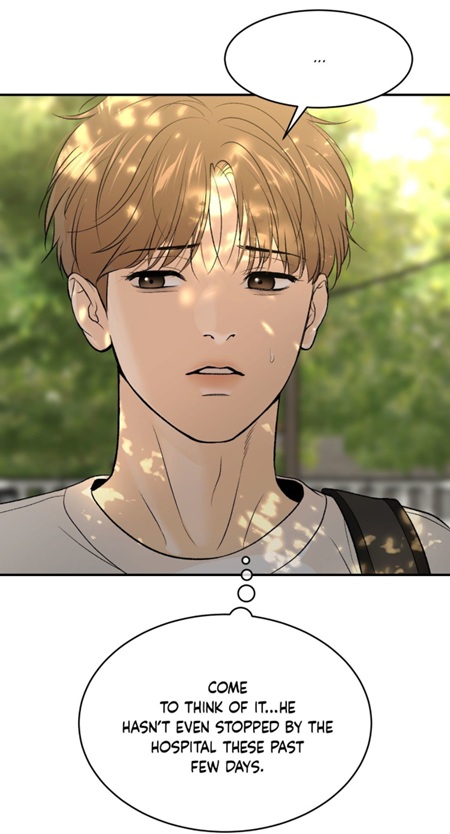 (chapter 76) Hence he remained silent and avoided his gaze. But like the director showed it, it is never too late:
  (chapter 76)
 (chapter 69) Thus my avid readers might jump to the conclusion that his biggest flaw is blindness, similar to the director. Besides, I had often criticized him for his blindness and ignorance. However, this is just a deception. The manager’s real defect is actually his deafness. How so? He does not hear Jaekyung’s words
  (chapter 17) at all. The verity is that he refuses to listen to his thoughts and emotions
 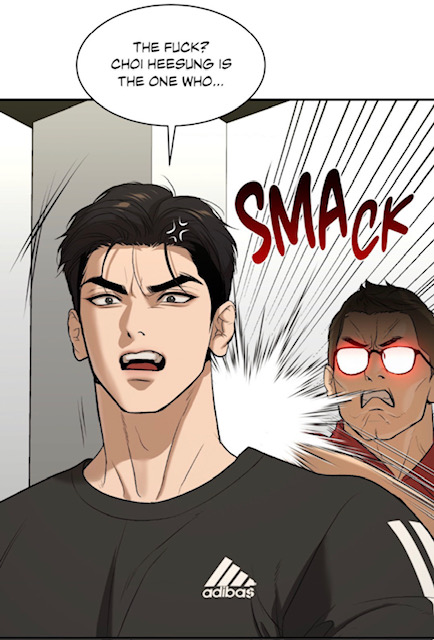 (chapter 31) in good
 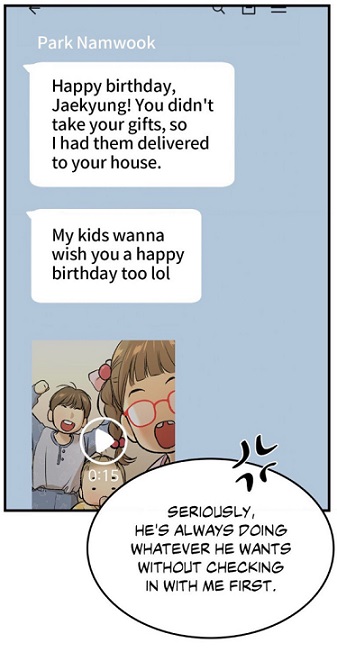 (chapter 45) or in bad times. It goes so far, he does not take his silences seriously, and does not register his pain. This explicates why the manager saw in the champion’s silence at the restaurant as an agreement for a new fight!
  (chapter 69) His role is not to guide or protect, but to extract: money, victories, publicity.
 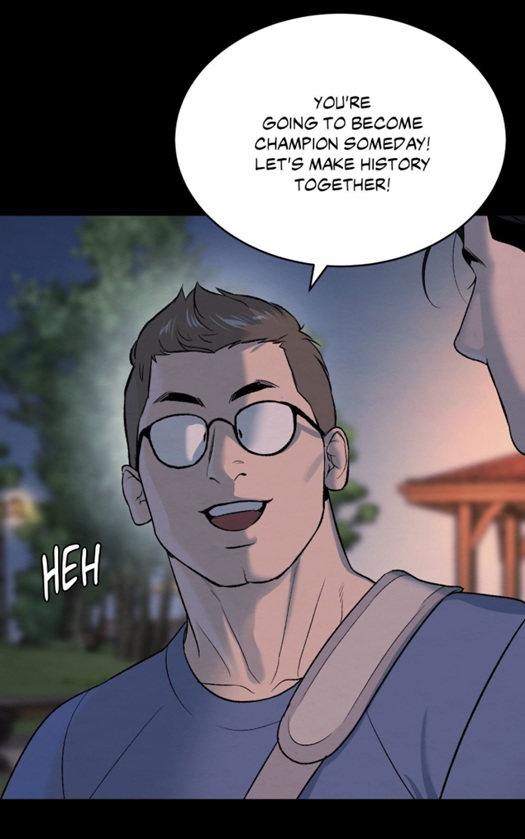 (chapter 75) In my opinion, he is fighting against oblivion through the star. This hidden disability explains why the coach can never truly connect with the champion. He listens instead to other voices – the CEO of MFC
  (chapter 46), the media
  (chapter 52), the sponsors
  (chapter 41), the spectators or “authorities”
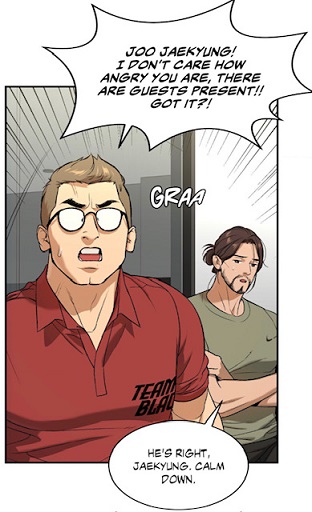 (chapter 36) — and reacts to them, even violently, as in chapter 52, when public criticism painted Jaekyung in a negative light.
  (chapter 52) The slap was less about Jaekyung’s behavior than about Namwook’s own fear of outside judgment. He was not listening to the man in front of him but to the noise around him. He feared losing control in the end, especially after the athlete’s words let transpire his true position at the gym:
 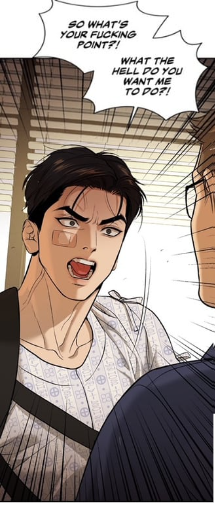 (chapter 52) His question is not mere anger. It is a confession of position — an inadvertent acknowledgment that he knows he is the true backbone of the gym. He is the one responsible, the one carrying the burden that Namwook refuses to admit. These words crack the illusion: the fighter is not subordinate, but owner. The gym lives because of him.
 (chapter 52) He acted as a child, faked “tears” in order to use empathy to his advantage.
 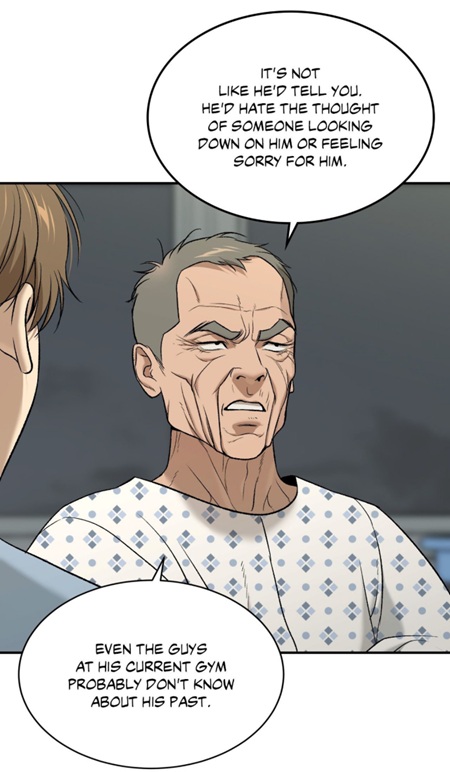 (chapter 71), hence he tried to help in his own way. On the other hand, Park Namwook shows clearly no sign to be interested in the private life of his boss. He is preferring ignorance over “knowledge and connection”.
  (chapter 66) Despite the incident, the manager hasn’t changed yet. He clinched onto the past, thinking that everything will be like before, as soon as the athlete enters the ring. He images a return to normality with the next match.
 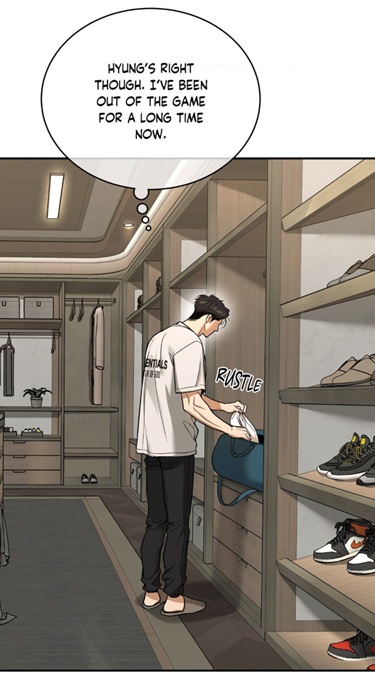 (chapter 66) For years, he had accepted his manager’s judgments out of habit, mistaking silence for consent. But here, for the first time, the repetition feels deliberate — not resignation, but reflection (“though”). The phrase becomes a question more than an agreement: is he truly right? He is admitting this out of habit.
  (chapter 69) His silence has shifted from obedience to suffocation. The weight of Namwook’s deaf authority is no longer bearable. And yet, even here, his confession is muted, confined to the private space of his car. He is not yet ready to speak the words aloud — not until someone appears who will listen.
  (chapter 48) This scene was observed by Kwak Junbeom, so the latter could have reported it to the coach. If it truly happened, this would expose the coach’s deafness and cowardice. He chose passivity instead of confronting the doctor or the champion. That way, he avoided responsibility. And this brings me to my final conclusion concerning the deaf manager. His main way to contact the celebrity is the cellphone:
  (chapter 66) It is both his mask and his crutch — a tool for barking orders, never for dialogue. The moment the line goes dead, his authority collapses, for he has no other means of contact. His power depends on Jaekyung’s reception, not his own strength. In truth, the manager’s disability is exposed here: deaf to Jaekyung’s voice, he has trained himself to hear only the ring of a phone. A fragile authority built on silence, ready to crumble the instant Jaekyung decides to switch it off.
 (chapter 76) must be read not as pride, but as a desperate shield against annihilation. In other words, in episode 76, the athlete is too harsh on himself, though I am not saying that he is innocent either. He only thought of himself because he had taught to behave that way. He was just mirroring the adults surrounding him who hid their weaknesses and wrongdoings behind “lies, social norms and hierarchy”.
 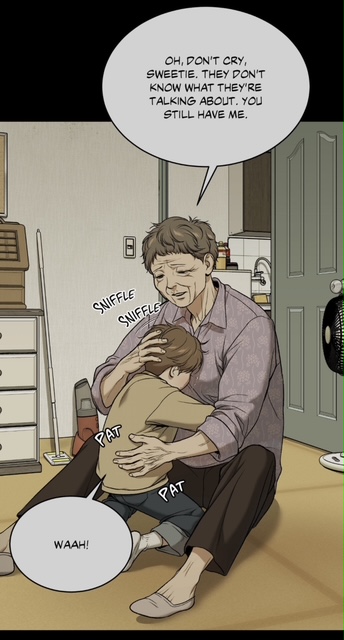 (chapter 57) With his grandmother and with every authority he encountered — doctors, employers, even predators — he believed unquestioningly that others were right and he was wrong. Hence he trusted others blindly. He was trained to accept decisions made for him or against him.
  (chapter 70) Thus he accepts criticism with defending his own interest. He was not taught how to fight back or resist or even argue.
  (chapter 6), both were forced to discuss with each other about the “content of the agreement”. That’s where the champion was trained to communciate with the physical therapist. Thanks to the champion, because of this victory/loss mentality, the doctor learned gradually to argue and “reply” with his “boss. However, due to his childhood, he couldn’t totally drop his old principles like for example “saying no”.
 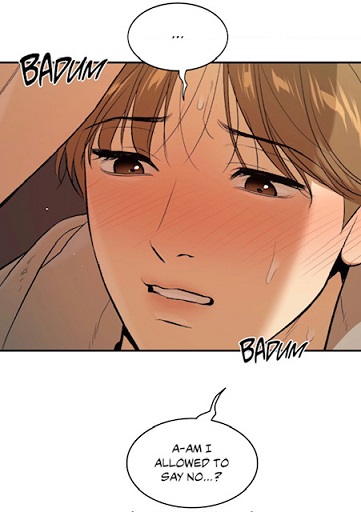 (chapter 34) To conclude, before their fateful meeting, neither man had learned how to argue as equals. But in the kitchen in front of the stove, this changed: both are right and wrong!
 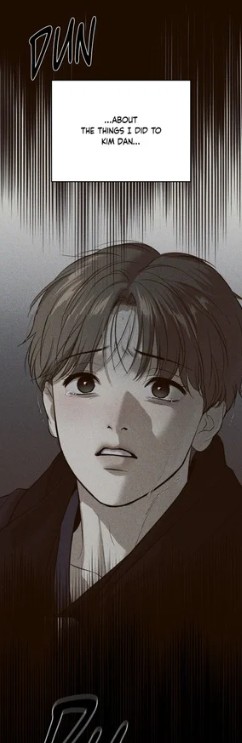 (chapter 76) He speaks like someone expecting rejection. Hence he keeps his distance. Yet the very fact that he says it at all signals change. Where once he would have doubled down — by barking an order, by firing Dan, by retreating into silence — he now admits defeat. The vocabulary of winning and losing, inherited from his father and reinforced by every adult in his life, collapses in the presence of Dan’s quiet honesty.
 (chapter 76) — an acknowledgment that he can no longer keep his walls intact. He is now willing to rely on doc Dan exclusively.
 (chapter 76). His confession reveals not strength but guilt. Kim Dan’s suffering was the price of his victories, and he knows it. “On the other hand, his mea culpa should be relativized, for both were the targets of a plot!
 (chapter 76) These words expose both responsibility and shame: he had prioritized survival over connection, career over compassion. What boils under his skin is not pride but remorse.
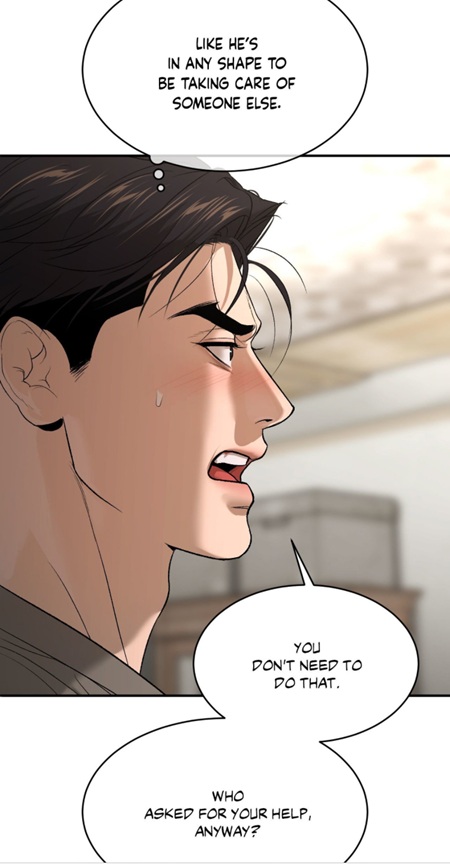 (chapter 76) The star’s thoughts in the kitchen are actually mirroring the ones in the bathroom:
 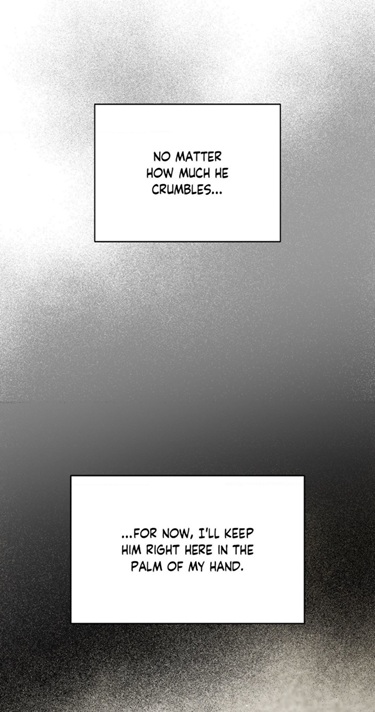 (chapter 68) In the bathtub, he still saw himself as the one in control, with the upper hand… but this is no longer the case in the kitchen. Through the physical therapist, the wolf is learning that even being in a vulnerable state doesn’t mean that this person is powerless. It is just that his “strength” lies elsewhere. In other words, someone struggling can also give comfort to another person in pain.
  (chapter 72) a place of solitary consumption rather than shared meals, the bed was the place where the little boy would drink his milk.
 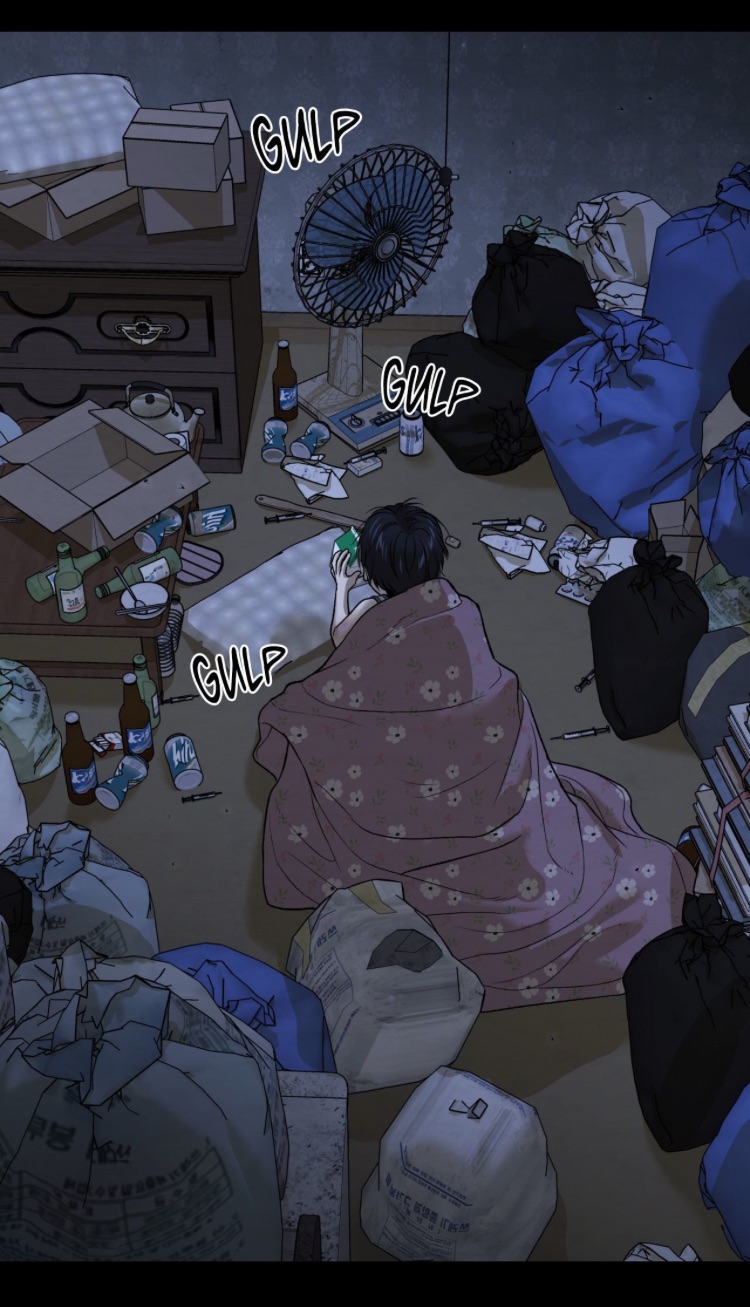 (chapter 72) It is interesting that actually, Doc Dan wanted to bring the porridge to Joo Jaekyung to his bed during that full moon night, thus the latter made the following request:
  (chapter 76) But the wolf didn’t understand the hamster’s intention and followed his “hyung” to the kitchen. That’s how a misunderstanding was born which is also reflected in this interaction:
 (chapter 76) However, doc Dan agreed to this, he remained calm.
  (chapter 41) The latter actually represented a hindrance between them, it marked their relationship: boss and “employee” (servant). Moreover, since the table in the champion’s childhood was linked to one person (the father), it is clear that the champion has never shared a table with someone. And this aspect brings me to my other observation.
  (chapter 46) It was a place where others dictated terms, while Jaekyung’s silence was mistaken for consent. And now, you comprehend why the two main leads could get closer in front of the stove in the kitchen. This place stands for warmth, care and family.
  (chapter 13) a meal after his collapse. He refused to bring a meal to the bed, he asked him to join in the dining room and sit at the table. And what did they do there? The champion talked about his career, his fight etc…
  (chapter 13) the champion has long associated the table to business and not “care”. That’s why it is important for him to remember the significance of the bed in his childhood. It was the place where he could feel comfortable and safe, where he would eat!

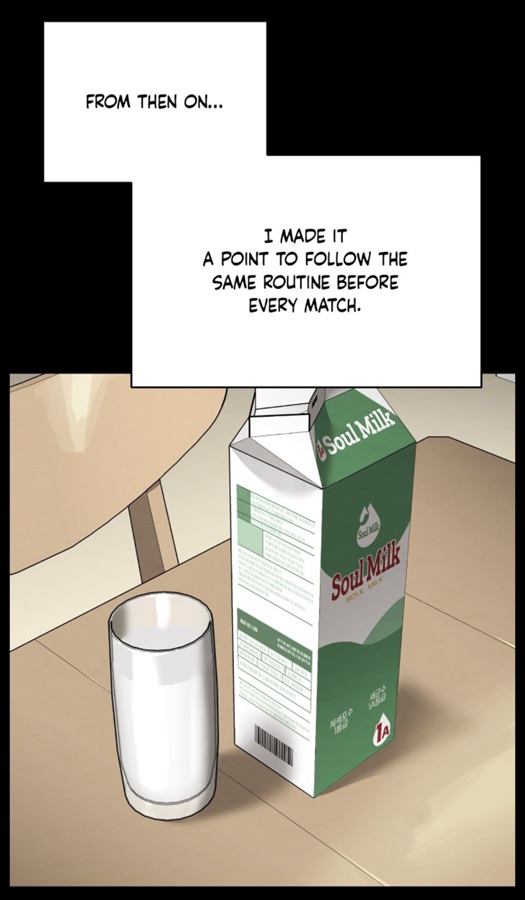 (chapter 75), the perfume
  (chapter 75), the nights of sex before a fight
  (chapter 75). His words seemed like a confession, a key to the riddle of the Night Emperor. But do we truly know him now? Yes and no. Yes, because his testimony reveals patterns we had only noticed before. No, because those patterns are only the ones he decided to share. The tattoos
 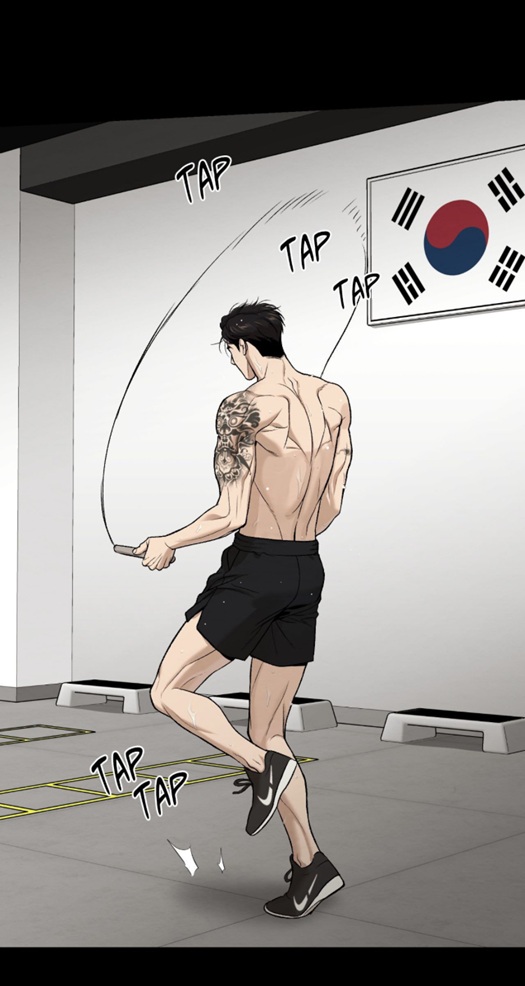 chapter 75) that suddenly appeared on his body
 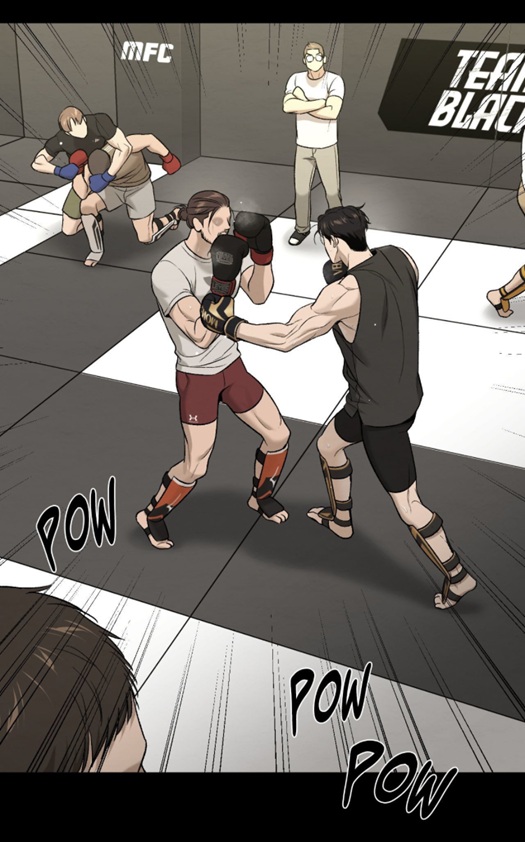 (chapter 75), for example, were left unmentioned — proof that silence still surrounds him.
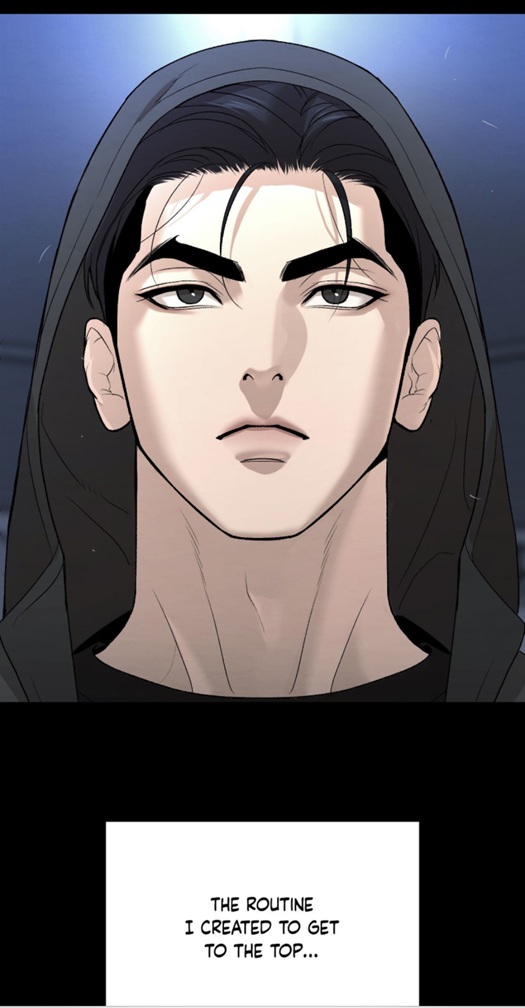 (chapter 75) Why fight as though every match were a matter of life and death? Why keep repeating the same acts, long after survival was secured?
  (chapter 75) What does the jinx truly represent for him — mere superstition, a ritual of control, or something he himself has not yet dared to name? For Jaekyung himself cannot fully explain it. He confesses what he knows — that sex steadies him, that milk soothes him, that perfume sharpens him — but he does not grasp what lies beneath these habits. The origin of the jinx remains hidden, lodged somewhere between memory and trauma, where even he cannot follow. Are these rituals mere superstition, a desperate bid for control? Or are they fragments of something deeper — pieces of a story he has never fully told, even to himself?
 .(chapter 75) They are the product of a long chain of humiliations, betrayals, and systemic exploitation, each layering onto the next until a young man’s raw talent was encased in a carapace of compulsions. To understand the jinx is to understand how the protagonist’s life collapsed around the word loser, and how the fighting industry transformed his private shame into public myth.
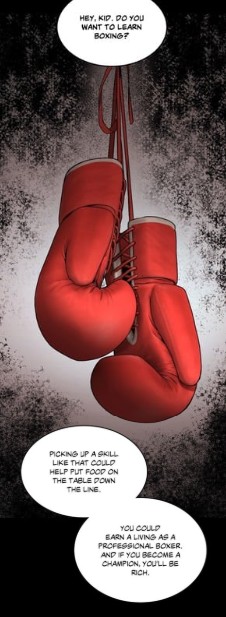 (chapter 72) Even before stepping into a professional cage, his life had been a series of trials to prove he was not worthless.
  (chapter 74) Hunger, poverty, bullying, insults— each branded his body with a language of violence. Among them came his father’s words, spat like a curse: loser.
  (chapter 75)
 (chapter 75) — a boy who fought with the desperation of someone who had nothing else. Victory after victory gave him the illusion that he had escaped his father’s shadow. As long as he was winning, he could suppress the pain, bury the insult loser, and silence the memory of that cursed night when his father died and his mother abandoned him. Triumph became his shield, proof that he was not what he had said he was.
 (chapter 75)
  (chapter 75) To them, a fighter’s struggles had only one explanation: weakness. Park Namwook and the other coach dismissed his losses as nerves
  (chapter 75), as if the only measure of worth were what happened under the spotlight. They never thought to ask what kind of weight he was carrying, what kind of nights he was surviving before he entered the cage. While the other fighters were well aware of the champion’s insomnia
  (chapter 75), Park Namwook still has no idea of the champion’s struggles. This shows how disconnected he is from his “boy”.
 (chapter 74) bodies to be tested, pushed, and discarded if they broke. Where Jaekyung’s defeat cracked open childhood trauma, they saw only performance failure. What he lived as suffocation and despair
 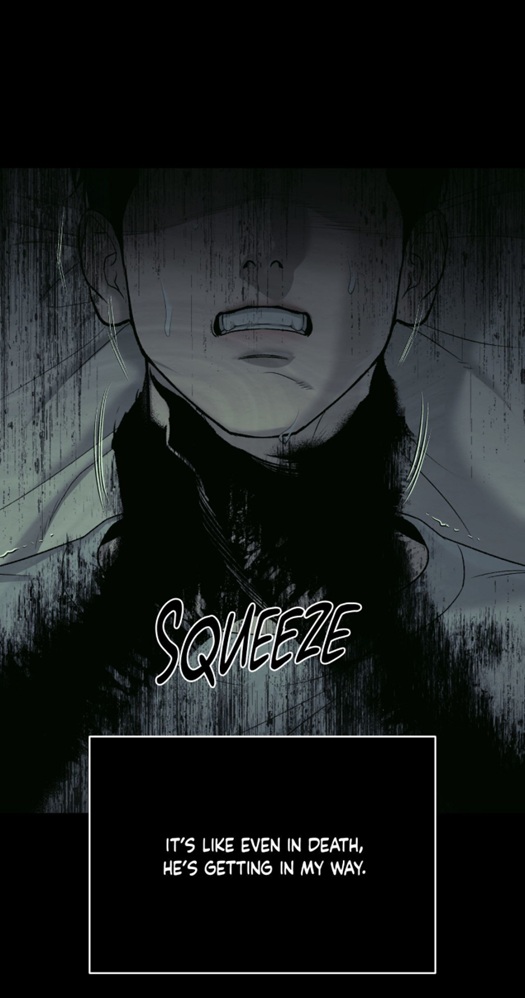 (chapter 75), they reduced to cowardice, bad luck or lack of discipline.
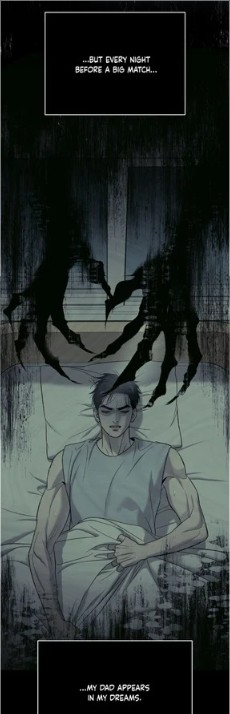 (chapter 75) Shadowed hands stretched over his body, pressing down, suffocating him as he tried to sleep. The man was dead, but still he choked the air from his son. It was, as if the father wanted to bring his son to the afterlife.
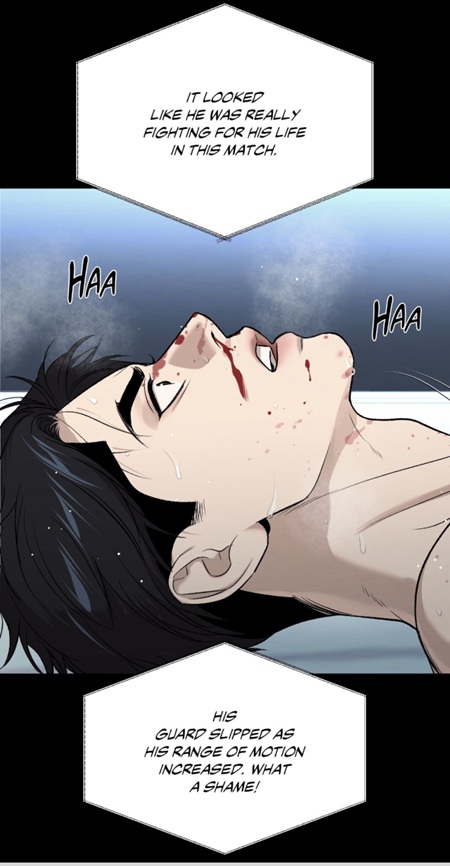 (chapter 75) Even before his first loss, Jaekyung fought like a cornered animal, pouring every ounce of strength into proving he could not be beaten. That’s why he rose so fast. But why? The reason is that all his opponents were reflections of his “father”.
  (chapter 29) Hence all the challengers have empty eyes and a smirk on their face, just like Joo Jaewoong.
  (chapter 75) Consequently, his matches always looked like life-and-death struggles. He wasn’t strategizing against a specific fighter; he was exorcising a ghost. That’s why he never refused a challenge. His opponent never mattered. Besides, as long as he could win, it didn’t matter.
  (chapter 75), the more the cracks showed — and the ghosts of his father and mother made every fight feel like a replay of abandonment and accusation. The five losses
  (chapter 75) were not just setbacks in his career; they were the repeated reopening of a wound that would never heal. Each one confirmed his father’s curse. Each one reinforced the sense that he was marked, that no matter how high he climbed, he would always be dragged down again.
 (chapter 73) To the boy, it was a cry for pain and survival — an instinctive urge to escape despair and criticism. To the father, it was betrayal. Already emasculated by failure and drink, he was reminded of his wife’s discontent, the specter of another abandonment. He lashed out the only way he knew:
 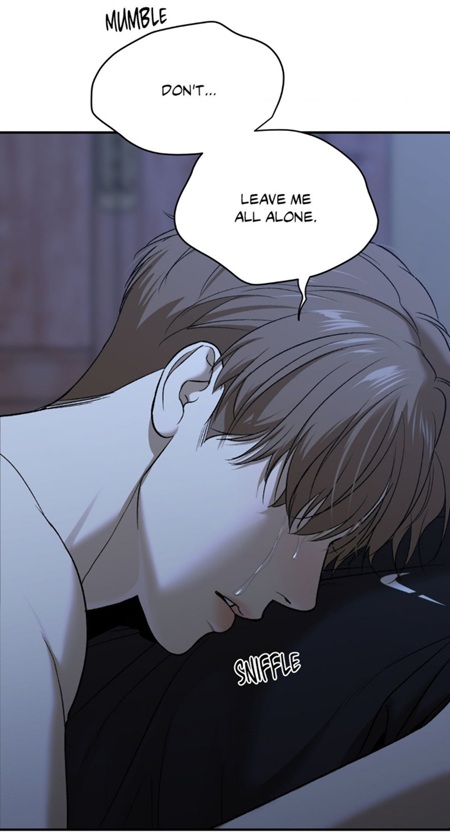 (chapter 66) — speaking not with fists or insults but with tears and an embrace.
  (chapter 66) His sleepwalking reacting to a simple touch
 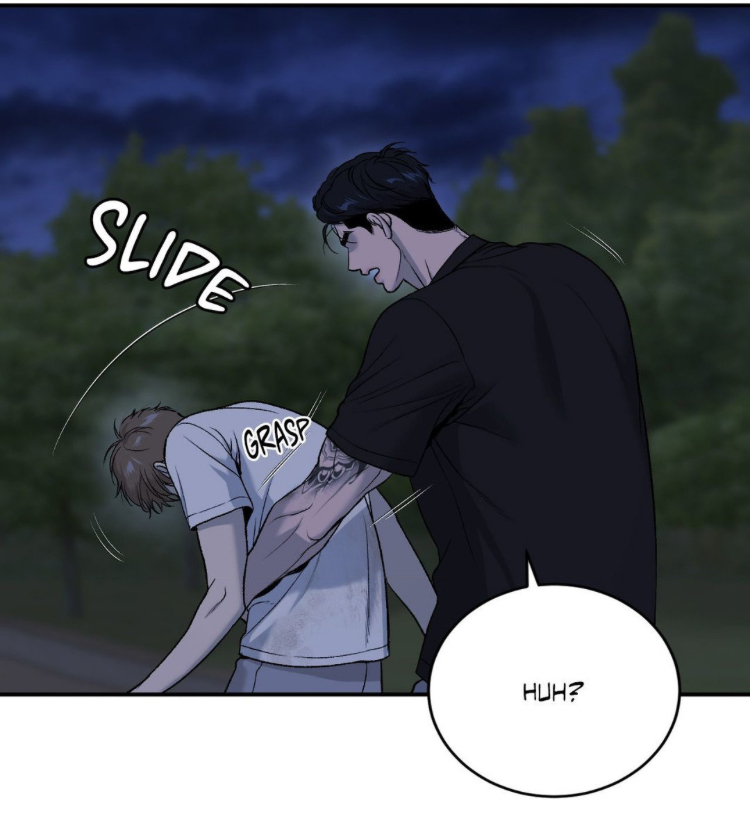 (chapter 65), his dissociative pleas
 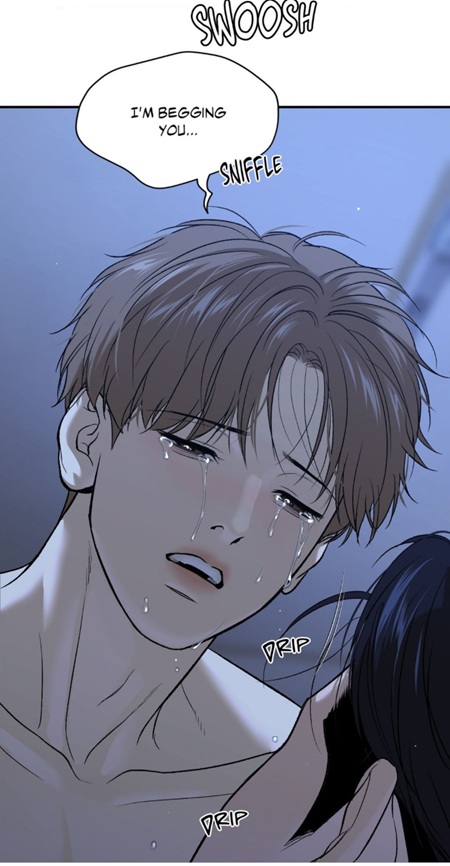 (chapter 66) give Jaekyung the words his father could not say. Where the father’s unconscious leaked out in aggression, Dan’s unconscious offers gentleness and honesty. Both men speak from a place deeper than reason; one chained Jaekyung to guilt, the other opens the possibility of release. In Dan’s trembling body, Jaekyung sees the tender reflection of his father’s hidden plea
  (chapter 73) Why does the champion have no grand-parents?
 (chapter 72) His violence expressed his powerlessness. And when his son shouted his desire to leave the “dump of a house,”
  (chapter 57) Violence and insult became his only idiom. “Loser” was not simply an accusation, but the displaced confession of his own defeat: I was abandoned. I failed. I have nothing.
 (chapter 73) The boy’s boxing talent was a source of pride — proof of strength — but also a threat. Strength meant escape. Escape meant abandonment. The father, who had already lost his wife and his dignity, projected onto his son the terror of losing everything once again. His resentment was not born of disappointment alone but of recognition (unconsciously): you are me, and you will leave me too.
 (chapter 65) The absence is not an oversight but a theme. Jaekyung comes from severed roots: no grandparents, no siblings, no extended family to lean on. Hence he was alone at the funeral.
 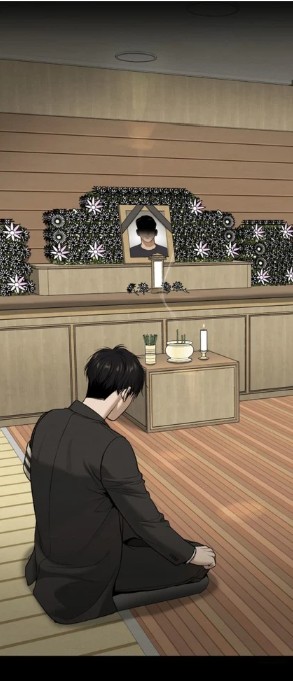 (chapter 74) His father may have been an orphan, just like his mother too. Therefore the latter was emotionally unavailable, and so he inherited not only trauma but also silence. By contrast, Dan has at least one surviving figure — flawed as she is — who keeps the family thread intact. That contrast makes Jaekyung’s bond with Dan all the more significant: it is not just romance, but an attempt to build a family line that never existed before him.
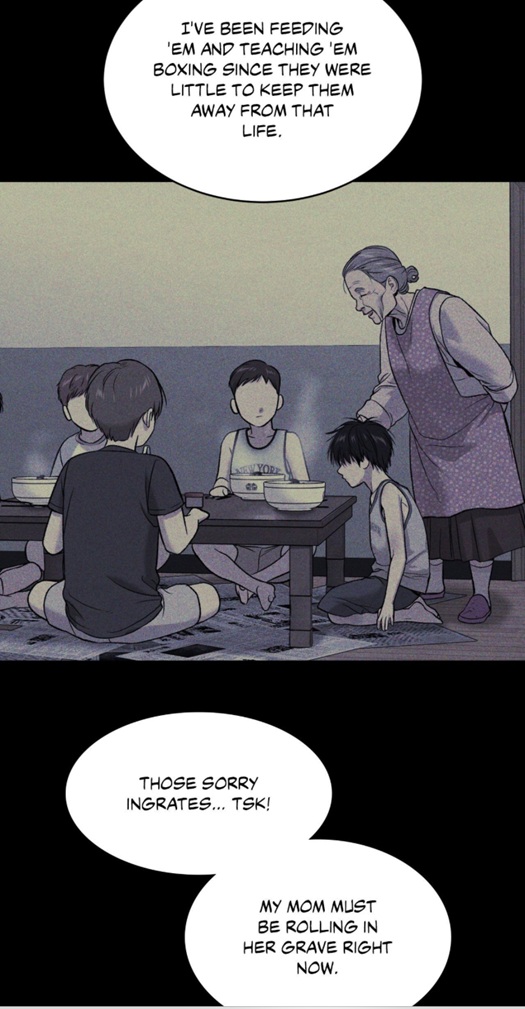 (chapter 73), while keeping Jaewoong’s own origins shrouded. Hwang had someone by his side — gentle, quiet, but present — while Jaewoong had no one, as according to me, the mother was counting on her “husband”‘s success and dream. The director’s stability, however fragile, was rooted in that maternal figure. Jaewoong had no such guide, and without it, he simply made the wrong choice.
 (chapter 73). To win was to prove his father wrong, but to stand alone in victory was to prove his mother right. Success and emptiness became inseparable.
 (chapter 56), seemingly fragile and dependent. But unlike her, he stays. Where the mother left, Dan endures. He only left because of the champion’s final words:
  (chapter 73) mirrors what the director later whispers to Jaekyung:
  (chapter 75) This is the wolf’s ritual in front of the tender mirror: the fighter who lived by curses and silence finally meeting their reflection transformed into gentleness and endurance.
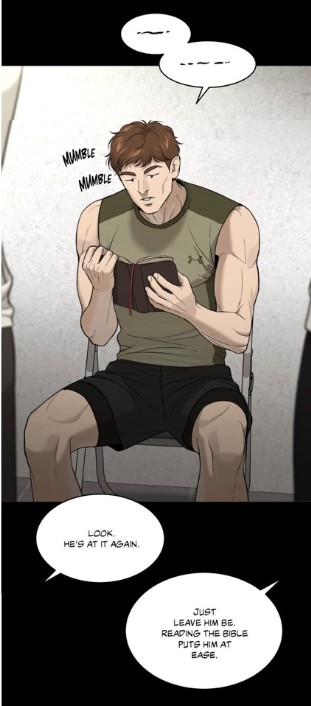 (chapter 75) This man’s jinx was startlingly simple: he read the Bible before every match. One book, one ritual, one anchor. To outsiders, it may have seemed quaint, even laughable, but to Jaekyung it was enviable.
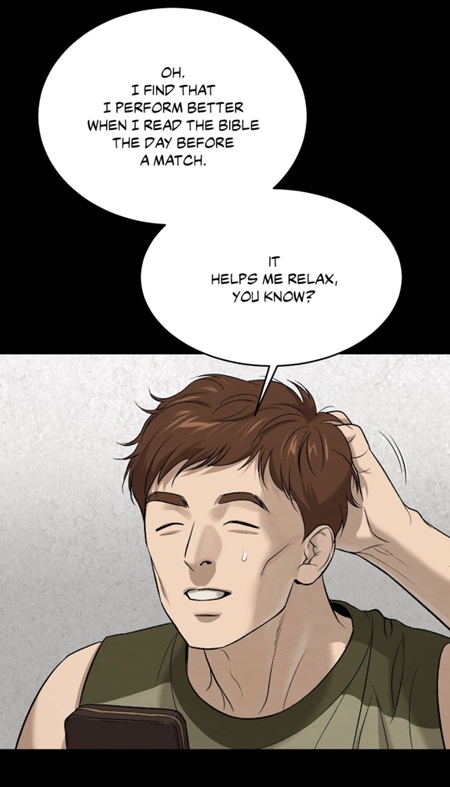 (chapter 75) When he prayed, it was not only for victory, but for coherence. Win or lose, the ritual bound him to a sense of belonging that Jaekyung had never tasted.
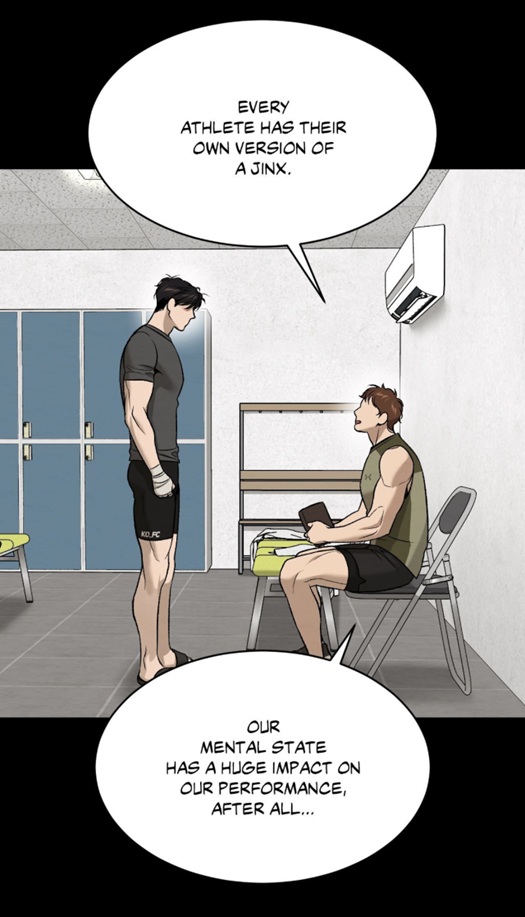 (chapter 75) If ritual could bend fate, he would build his own. But where the Bible fighter had a single, unifying story — scripture, God, fellowship — Jaekyung had nothing to draw on. No faith to lean on, no parental blessing to inherit, no safe home to return to. Instead, he began to stitch together a mosaic of rituals, each one disguising a different childhood wound. To outsiders it looked obsessive, neurotic, almost superstitious. To him, it was survival. Each gesture was both repression and remembrance, a scar disguised as armor. And this is the paradox: the rituals made him strong enough to survive, but too broken to live.
 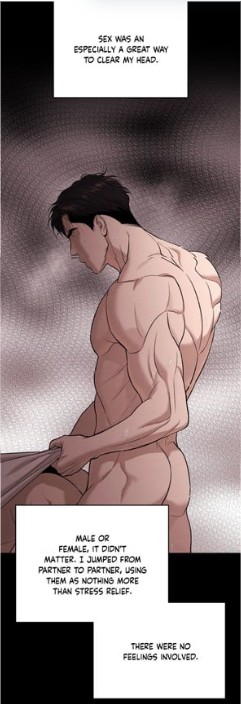 (chapter 75) By using another body, he cleared his head, numbed the loneliness, and convinced himself he was in control. But it was also a grim reenactment of abandonment: he could take without being left, dominate rather than risk being deserted. At the same time, he considered his sex partners as toys in order to avoid guilt. A toy can not die, it can be “thrown away”.
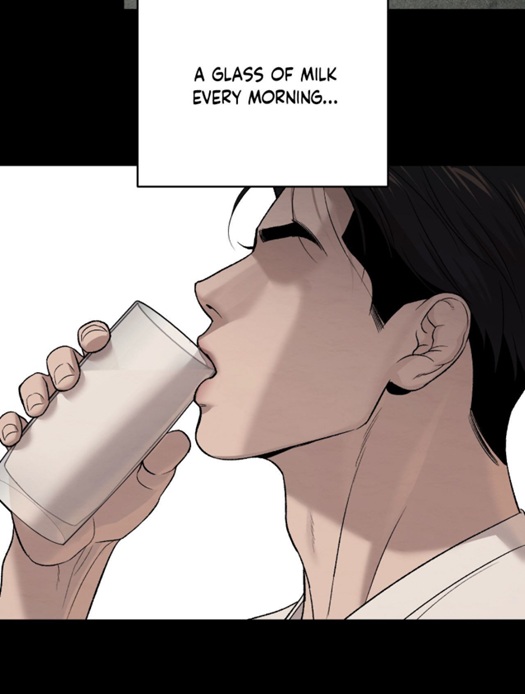 (chapter 75) But in truth it was a disguised memory of hunger
  (chapter 75) To drink milk was to rewrite the past: I will not go hungry again. Yet the act was also a reminder that he once had.
 (chapter 27) , self-punishment, the willingness to suffer endlessly for the cage. He didn’t fear pain. Their sudden appearance
 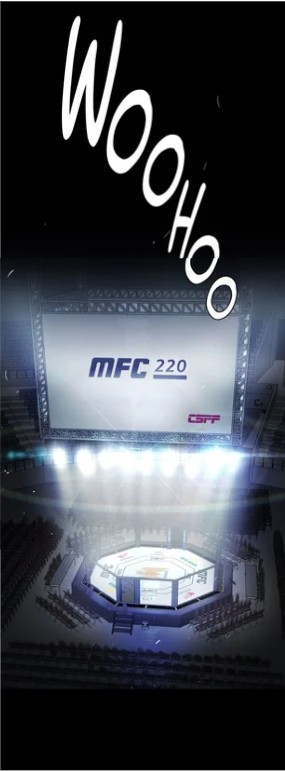 (chapter 75), a reminder that he had entered a machine in motion, a system that swallowed fighters whole and spat out statistics. From that point, the acceleration was merciless: by April, he was in the 272nd bout against Randy Booker
 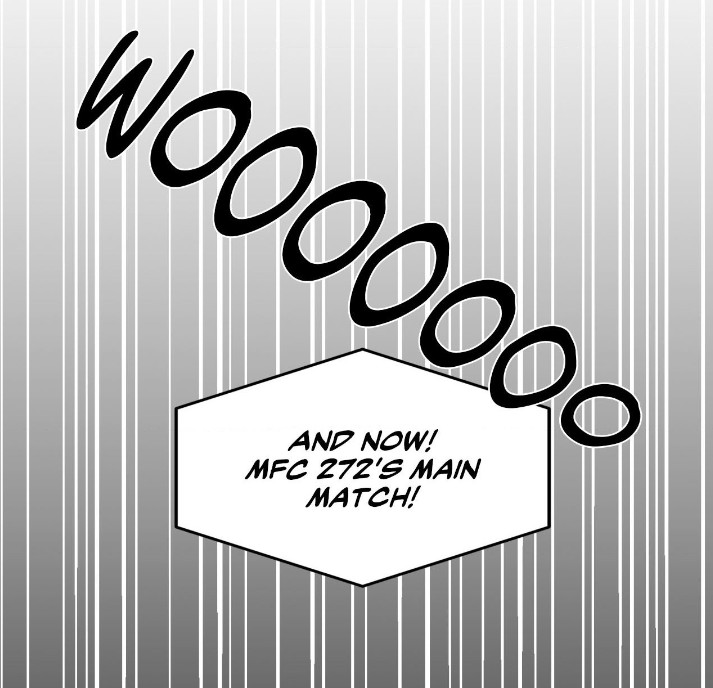 (chapter 14); by June, the 293rd against Dominic Hill
  (chapter 40); and by July, the 298th against Baek Junmin.
  (chapter 50)
 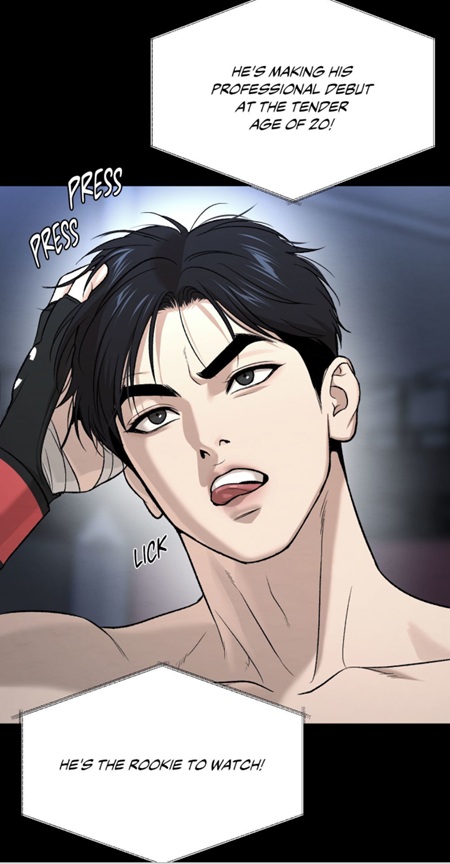 (chapter 75), he had not merely “built” a career, he had been consumed by one. There was no time to recover from injuries, no space to process victory, no room to integrate defeat. No wonder why his shoulders were in bad shape.
  (chapter 75) Every fight blurred into the next, every opponent older, stronger, more experienced. And yet Jaekyung fought them all with the same desperate, survival-driven ferocity.
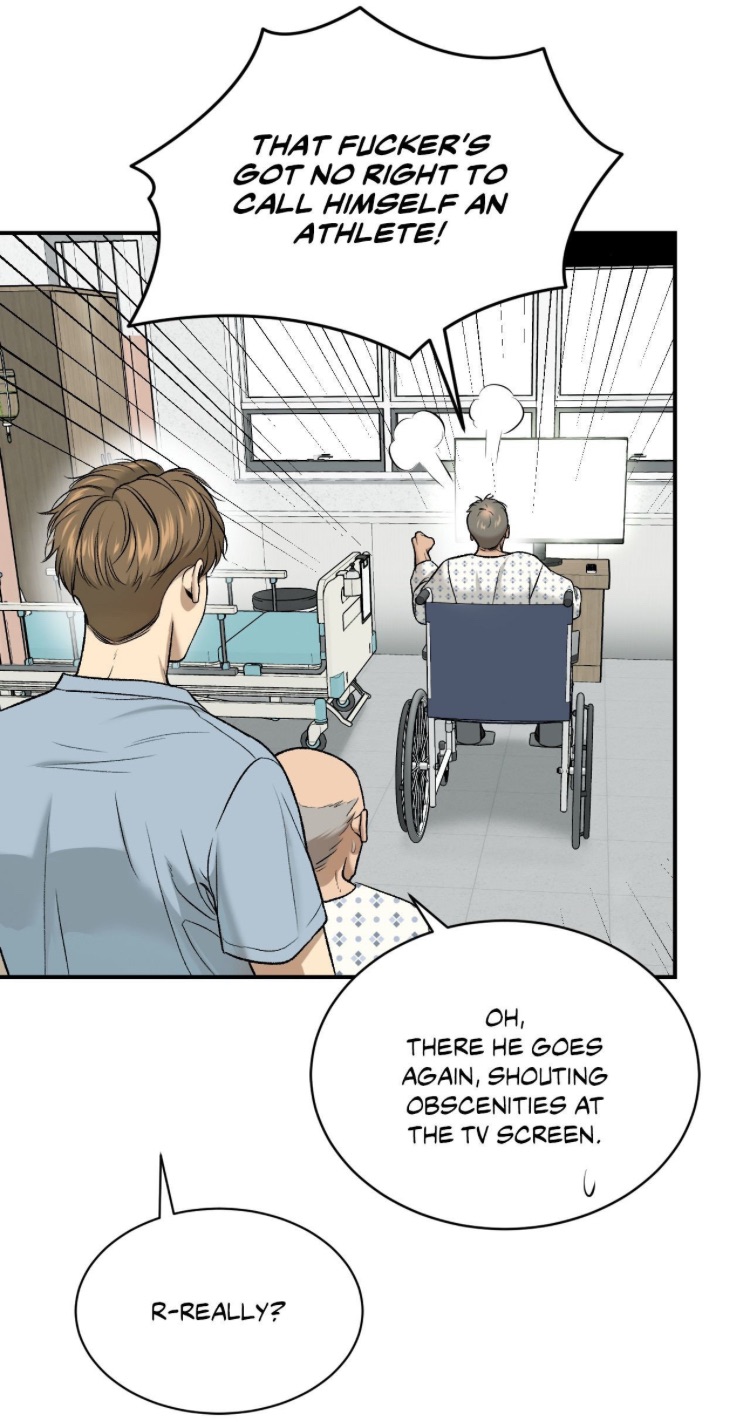 (chapter 71) and Dr. Lee
  (chapter 27) still called him an athlete — someone whose body required balance, protection, recovery. But MFC and KO-FC never did. For them, the main lead or his colleagues were addressed as
 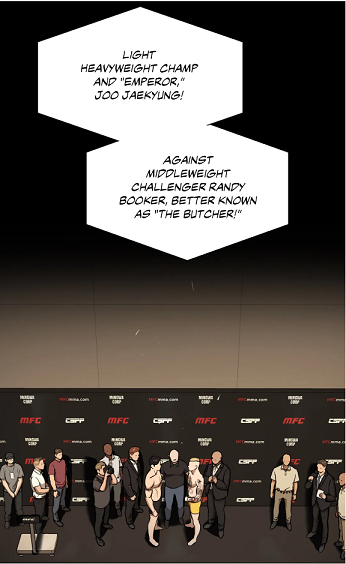 (chapter 14) “The Emperor”, “a crazy bastard”
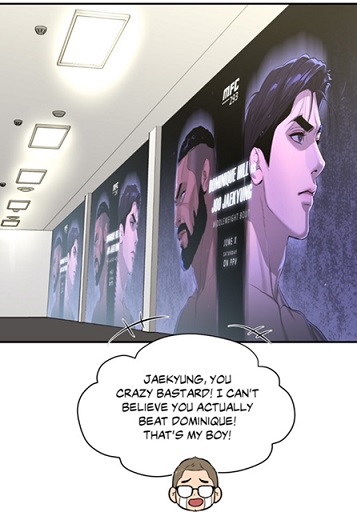 (chapter 40), “my boy”,
 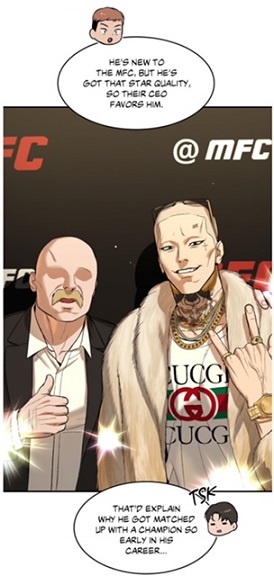 (chapter 47) “a potential star.” Not a person, not even a professional, but branding material — a body to be consumed by audiences and discarded once spent. The absence of the word athlete marks what he lost: recognition as a human being. And guess what?
  (chapter 47). Thus only doctors are allowed to do them officially. But Jaekyung’s rise shifted that meaning. As “The Emperor,” he normalized tattoos for the new generation of fighters, transforming what once marked marginality into a badge of visibility. This is why even Oh Daehyun, one of his admirers and members of Team Black, now carries one:
  (chapter 8) The celebrity’s suffering literally redefined the aesthetic of the sport. His body, turned billboard, became part of the league’s branding.
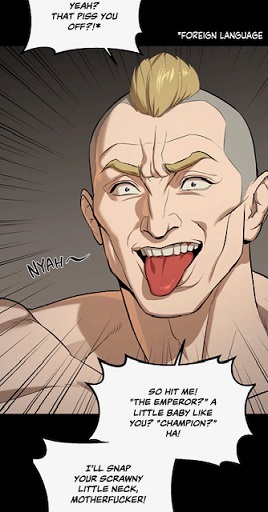 (chapter 14) ripping open the scar of his father’s “loser” and his mother’s absence and silent parentification. Not long after, an article exposed his shoulder injury
 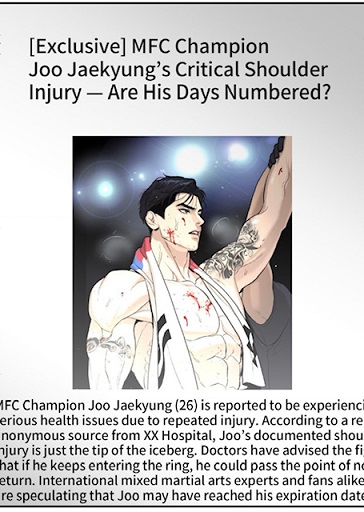 (chapter 35), reducing years of discipline to a liability on the page. Later came the suspension narrative
  (chapter 54), his temper framed not as the product of exploitation and scheme but as proof of unfitness, as if his rage were a crime instead of a symptom.
  (chapter 54) Even the match with Baek Junmin was twisted against him — accepted under pressure, then reframed as recklessness. To the system, his crown had been too secure, his presence too dominant. He had been champion for “too long.”
 (chapter 5) the name Seo Gichan appeared here for the first time… a faceless name!
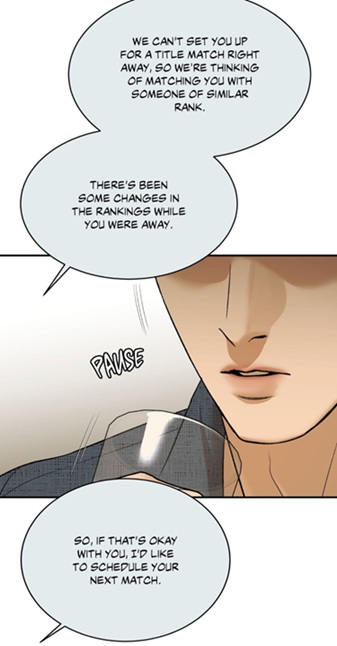 (chapter 69) The danger lay in the very identity of his next challenger. If they pitted him against a newcomer who had rocketed through the ranks as quickly as Baek Junmin once did
 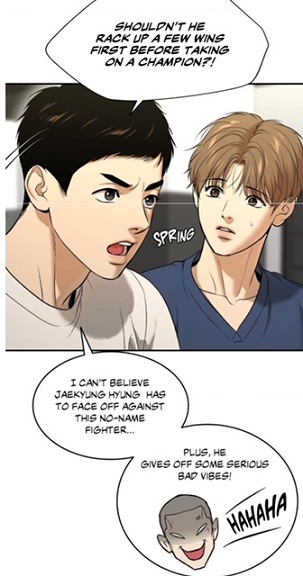 (chapter 47), questioning the selection of Baek Junmin, is so crucial. It shows that the manipulation of opponents was no accident — it was systemic. Matches were not about fair combat but about narrative management: making sure the emperor’s story served the company’s balance sheet.
 (chapter 51) On paper, it was a draw. In practice, it was soon reframed as a loss
 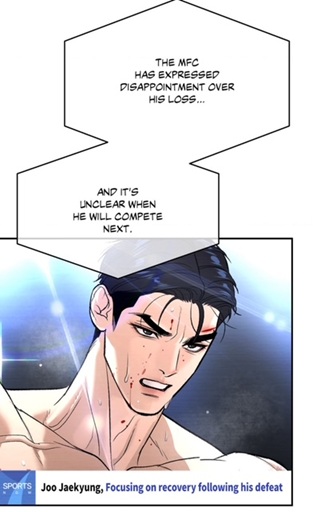 (chapter 57). By late August, Jaekyung had slipped to third place.
  (chapter 75) Here, it looks like a mirror, but naturally it is a fake one. It was not earned with fists alone; it could be stripped, reassigned, reshaped at will. One tie, one whisper, one adjustment in the rankings, and the Night Emperor was dethroned without ceremony.
 (chapter 75), not for intimacy but to clear his head and stave off loneliness, emptiness and his abandonment issues.
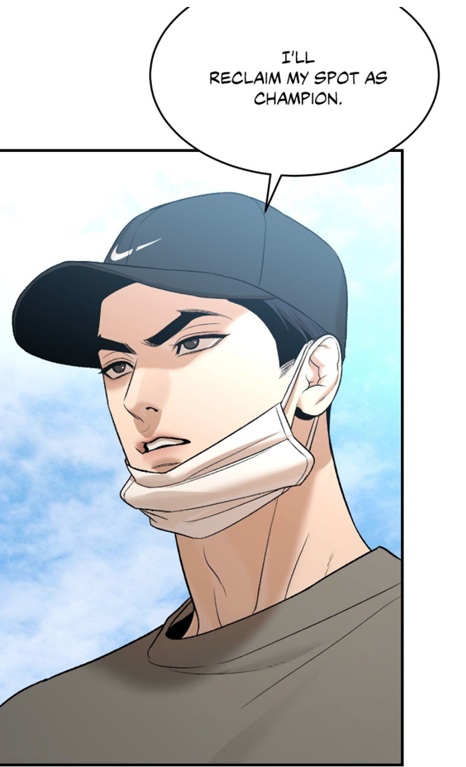 (chapter 75) must be read in this light. It is not a relapse into the system’s treadmill, nor a blind return to the pitfall laid before him. Notice that he does not say he will fight in the fall, nor does he mention the upcoming match that everyone else is waiting for.
  (chapter 71) Instead, he frames his goal with a word that changes everything: reclaim.
 (chapter 73), but he lost his father and his mother abandoned him.
  (chapter 51) When his world threatened to collapse again — the tie with Baek Junmin, the looming humiliation — he erupted in rage. He screamed at Dan, he let the words spill out violently, breaking the silence that had once shackled him. It was an act of defiance against the curse: if he could not silence the nightmare, he would shout it down.
 “Don’t you trust me?” (chapter 54) That moment reverses the old script entirely. Where his father’s last word was condemnation, Dan’s is invitation. Where his father’s voice ended the dialogue forever, Dan opens one. Where his father made trust impossible, Dan asks for it. Besides, the latter encouraged him to reflect on himself.
 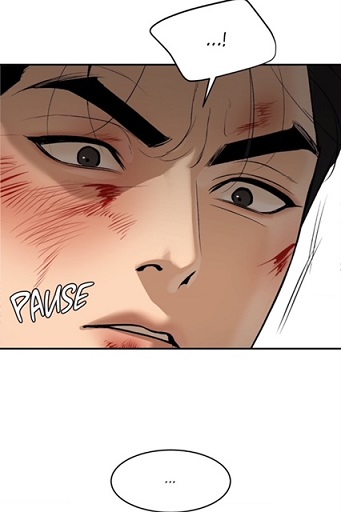 (chapter 51) The mirror is clear: the cycle can be broken, but only if he dares to answer the question that was never asked of him before. Therefore it is not surprising that the physical therapist’s question appeared in the champion’s vision:
  (chapter 54) His unconscious was telling him to have faith in his “doctor”. Thus later, the champion told the director of the hospital this:
 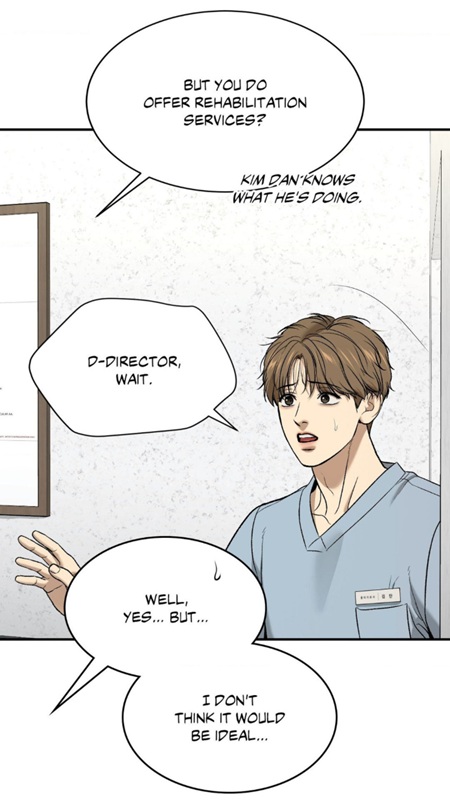 (chapter 61) He was acknowledging the main lead as a real physical therapist.
 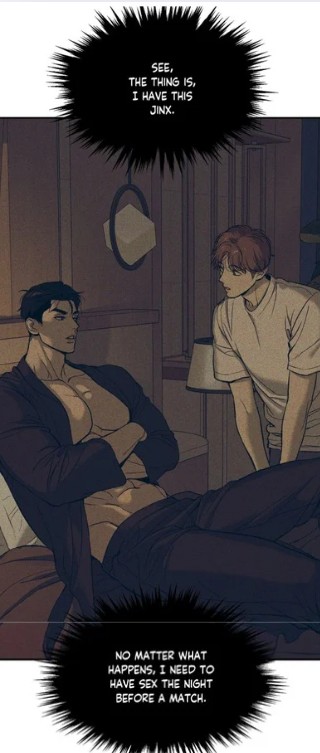 (chapter 62)— and even to those closest to his body — it looks like nothing more than sex. That was all the uke from chapter 2 saw, and it was enough for him to sneer:
 (chapter 2) The insult landed with devastating familiarity, not as a new wound but as an echo of his father’s curse: “loser.” Both words reduced Jaekyung to nothing — not a man, not an athlete, just a fraud kept alive by crutches.
 (chapter 2) In slamming his former partner against the wall, he was not merely silencing a lover’s cruelty. He was fighting the ghost of his father, the voice that had branded him weak, cursed, unworthy. The jinx that kept him alive was being twisted into proof of his failure, and he could not bear it.
  (chapter 2)
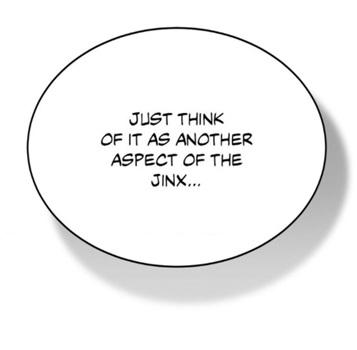 (chapter 62), Dan recoiled.
 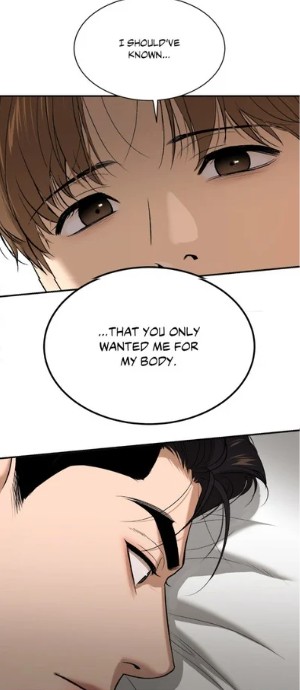 (chapter 62) To him, “jinx” meant objectification, a reduction of their bond to sex.
 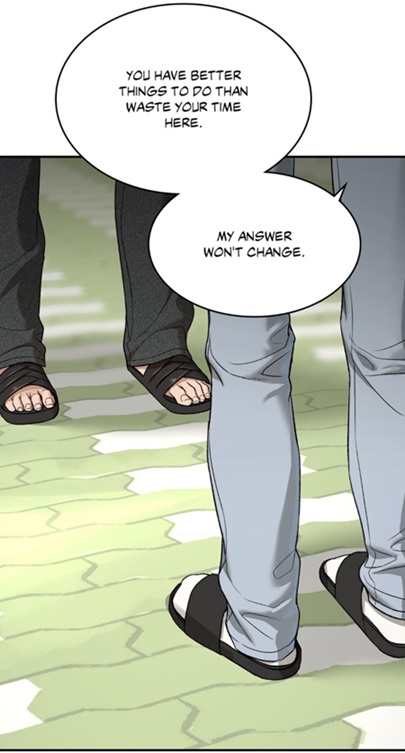 (chapter 62) but as a therapist he trusted. His words about wanting to return to the “usual pre-match routine”
  (chapter 62) were, in his mind, a way of saying: I need you to bring back wholeness, to help me steady myself again. But because Dan only knew fragments of the jinx, the message landed with devastating distortion.
  (chapter 62) For Jaekyung, the plea was about coherence; for Dan, it sounded like reduction.
 (chapter 22) He cooks breakfast for Jaekyung, offering something warm, homemade, human — a substitute for the cold, industrial glass of milk.
  (chapter 54) throws the plate away
 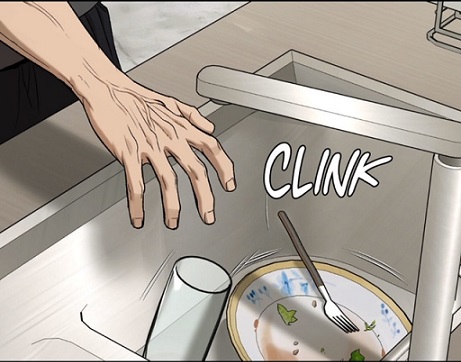 (chapter 54), or sits at a vast table in silence.
  (chapter 54) But when Dan cooks, Jaekyung is surprised, even touched. For once, nourishment is not consumption but connection. The milk was always a disguised memory of deprivation; Dan’s meal becomes the antidote — food as presence. So for him, the prematch-routine was also referring to the meals prepared by his fated partner. And I feel the need to bring another aspect. Since there was no “family” in the athlete’s life, he never got the chance to discover the joy of the table.
  (chapter 22) Hence it is not surprising that he looked at his phone, while the others were eating and discussing. He never had a real conversation with a family member around the table.
  (chapter 40) Perfume was one of Jaekyung’s protective rituals — masking shame, creating an armor against the memory of bullying and ridicule. Yet Dan shows that none of this is necessary. The panel where he clings to the bedsheets after their Summer Night’s Dream together
 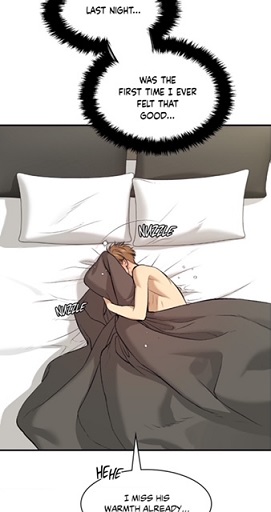 (chapter 45), whispering that he misses Jaekyung’s warmth, reveals that the champion’s natural scent is already enough. He never gets to see this — Jaekyung doesn’t know how deeply Dan treasures his smell.
 (chapter 40) Here he turned around and placed his lover in the middle of the bed. He even let him rest.
  (chapter 2), and not the other rituals? Because to admit the rest would be to expose the origin of the jinx: the father’s insult, the mother’s abandonment, the hunger, the bullying. Sex was the only ritual that could be spoken without directly dragging the past into the room. It was the “safe” shorthand — though tragically, it became the most dangerous. Homosexuality is definitely a stigma among boxers and MMA fighters.
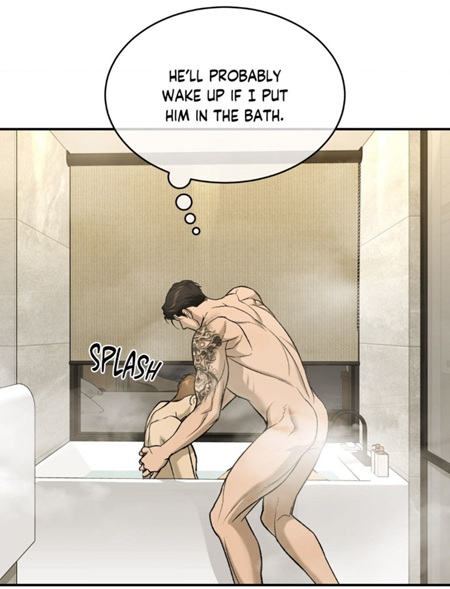 (chapter 68) In his own way, he was showing him that he did care! He was more than just a body… or even a physical therapist!!
 (chapter 35) It is the steady mirror of Kim Dan.
 (chapter 13) — helpless, cornered, often pleading. Thus the champion taught the doctor to overcome his fear and fight back:
  (chapter 26) This imbalance was no accident. It replayed Jaekyung’s own childhood roles: he became what his father had been to him (the better version naturally, for he is the mirror of truth), and forced Dan into the position he had once held himself. Through Dan, Jaekyung unconsciously re-enacted his trauma, reversing their positions as if to master what had once mastered him. That way, he was pushed to mature emotionally! That’s why he could connect with the main lead unconsciously. His trembling words in Chapter 51
 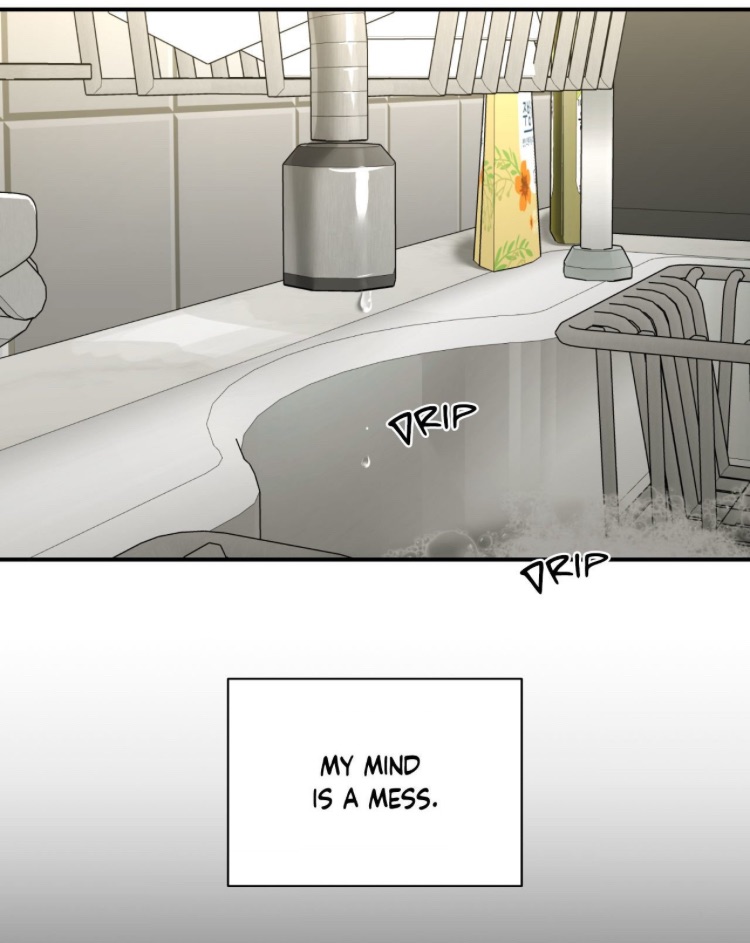 (chapter 71) He believes to know the truth, while he is ignorant. He is insecure, extreme in his behavior (drinking)
 (chapter 71), but also selfish and questioning, still fragile yet capable of protest. He is struggling with his own emotions and thoughts.
 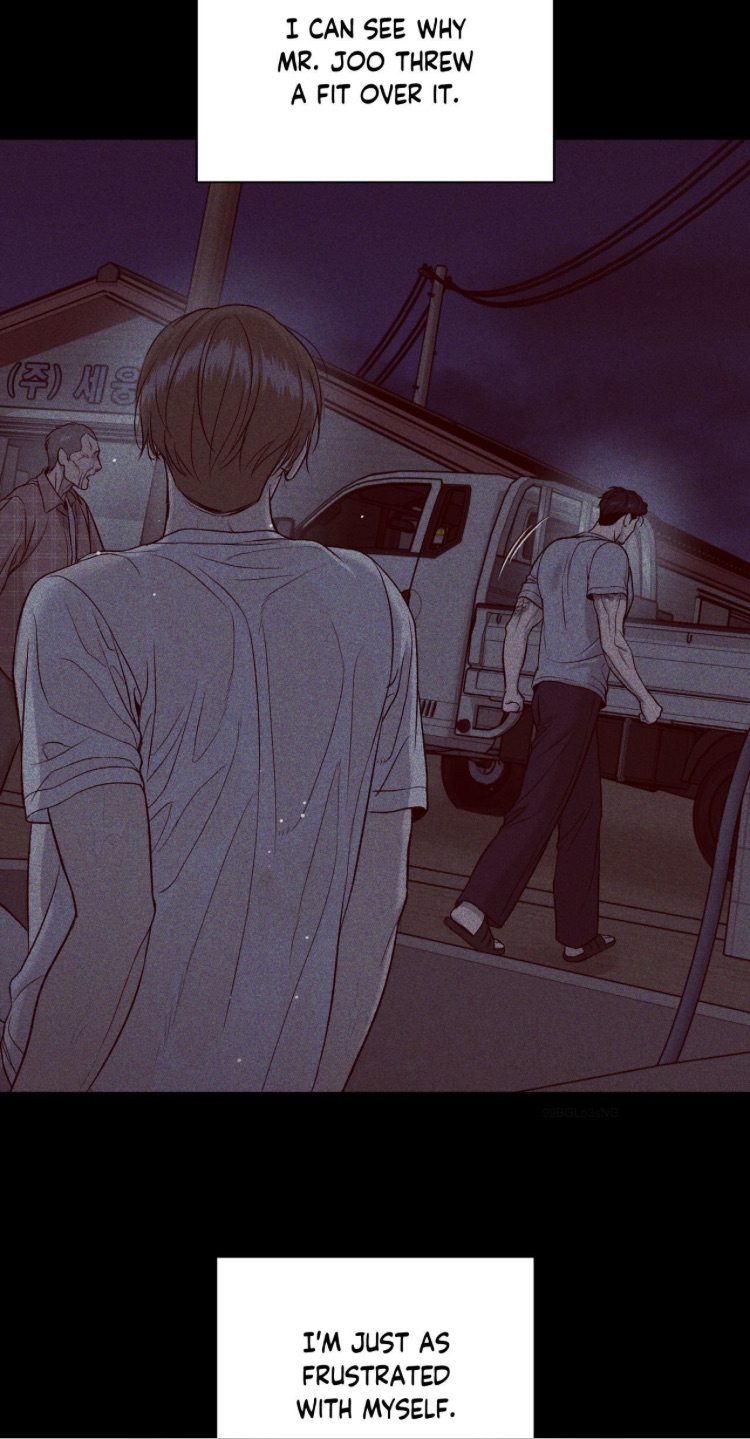 (chapter 71) How can he trust the athlete, when he doubts himself so much? From my point of view, he is on the verge of become “mature mentally” and as such “responsible”. At the same time, Jaekyung is revealed as the adult in crisis. His exhaustion
  (chapter 70)
 (chapter 74) It is because thanks to the director’s confession, the “hamster” is able to see the champion as a “a kindred spirit“, an orphan and as such as the younger “boy”.
 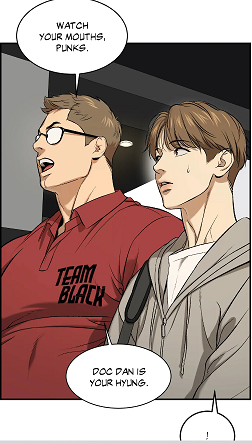 (chapter 7)
  (chapter 26), because it is play, because it is chosen.
 (chapter 69) It is not about treatment or jinx, but about presence. This hug reframes the meaning of strength. True strength is not the ability to fight endlessly, but the ability to hold and be held, to mirror” is like touching oneself! Let’s not forget that the mirror represents the reflection of a person. Respecting the physical therapist signifies respecting oneself!
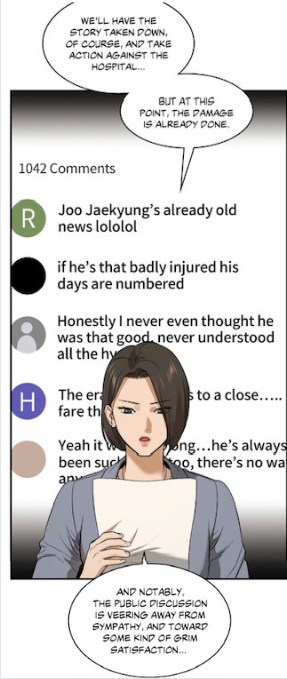 (chapter 36) He can remain indifferent to their “provocations”, as he has long matured emotionally.
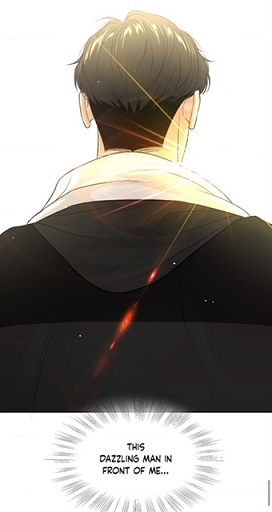
 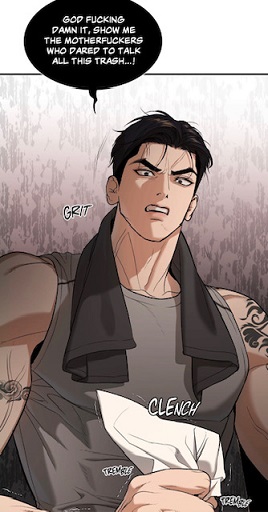 (chapter 36) He can retaliate differently. With his money and power, he can prove to them, he is no loser!
 (chapter 40)
  (chapter 53)
  (chapter 75) His eyes open after the dream, and they open to the same light. It’s the opposite of every earlier awakening
  (chapter 54) —no gasp for air, no clutching his throat
  (chapter 75), no father’s voice strangling him. This sudden awakening embodies enlightenment.
  (chapter 75)
 (chapter 70) He knows the athlete from the past. The latter was attached to people and not to places. Why does he speak of “something” rather than “someone”, if he knows? The lesson is not about fixing a new goal or object to chase, but about discovering how to live differently — how to live happily.
  (chapter 65)
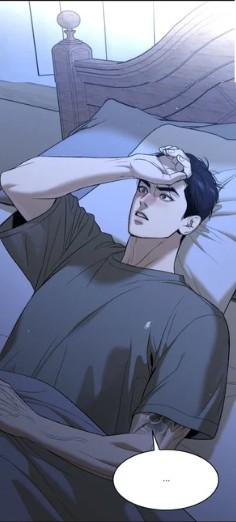 (chapter 75). Even before, he could only mutter to himself this:
 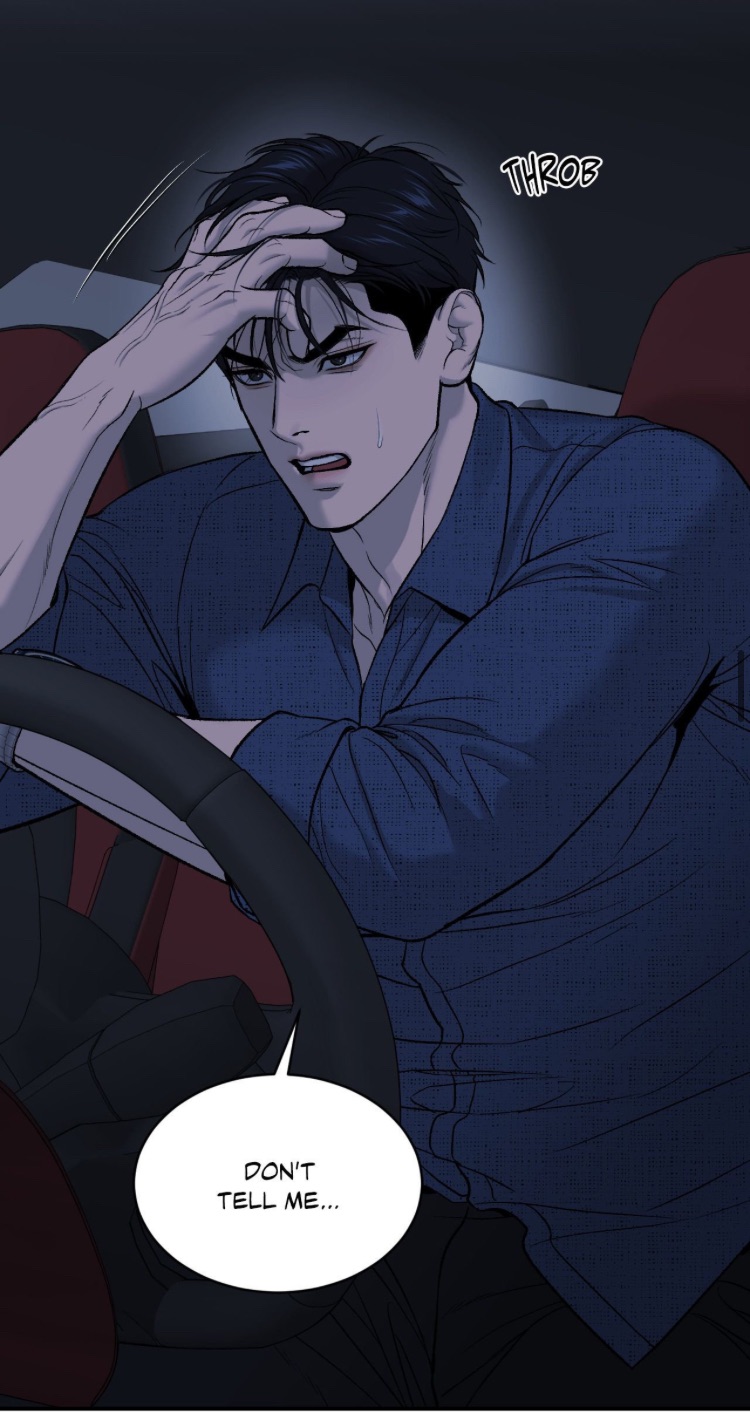 (chapter 70) The negation indicates denial, but observe that he couldn’t even use a noun. He cannot yet translate this vision into words, because he has never heard “I love you” himself
 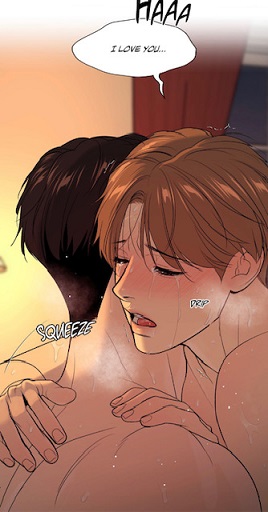 (chapter 39). The only one he heard was diminished to a mistake
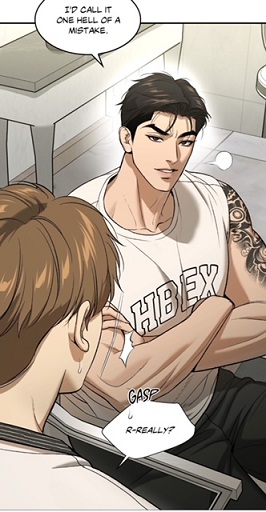 (chapter 41), and doc Dan claims to have no recollection of it. His father left him with mockery, his mother with resignation, his coach in the past with discipline, the grandmother-figures with burdens (honor, debt, favor).
 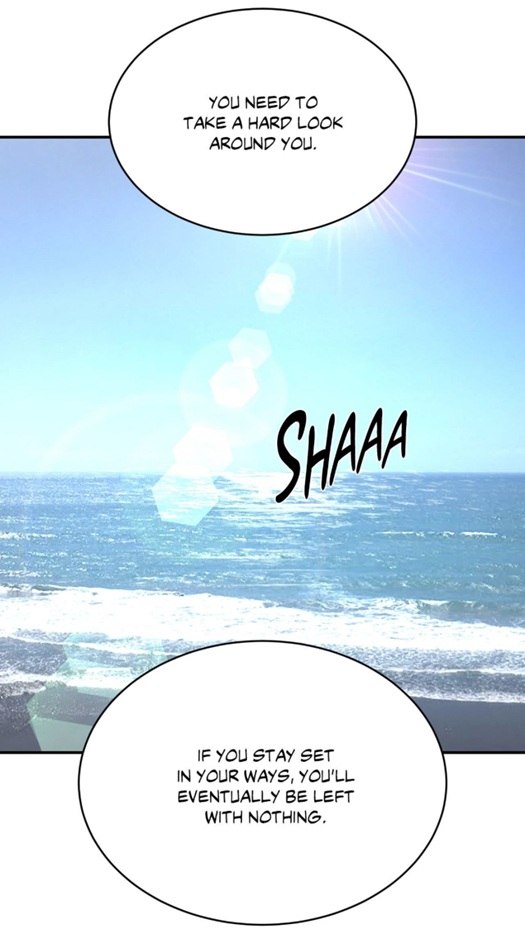 (chapter 75) The openness is what makes it love — it is respect.
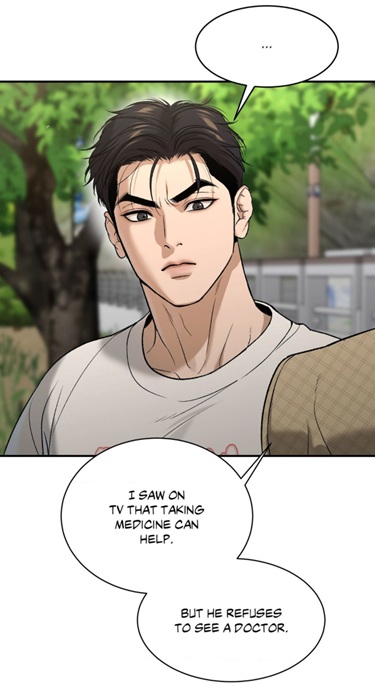 (chapter 65)
 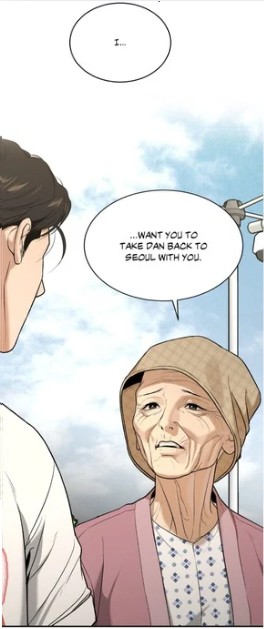 (chapter 65) Halmoni believed she already knew the solution to Dan’s suffering: sacrifice yourself, work hard, pay the debts or make money, endure. She closed off alternatives by imposing her narrative on him. Her love was distorted into certainty. The director, by contrast, recognizes the limit of his role. He has learned (belatedly) that he cannot dictate meaning for someone else. Instead, he tells Jaekyung:
  (chapter 75) His love is expressed through humility — through not knowing. At the same time, his words and facial expression ooze trust and confidence.
 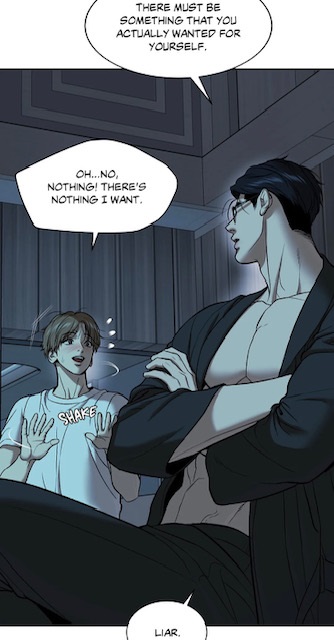 (chapter 29), Joo Jaekyung opened up a little to doc Dan! Thus the next morning, he visited the bathroom where doc Dan was!
 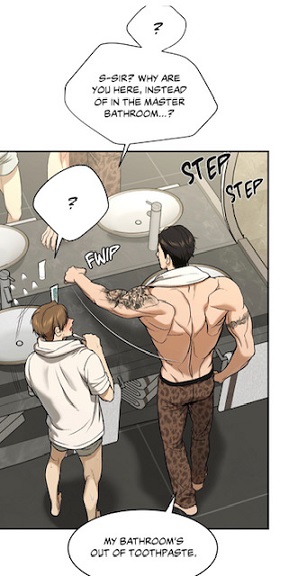 (chapter 30) It was just an excuse to spend more time with his fated partner.
  (chapter 74), no “dear,” no “I love you.” In the father’s memory, she used the child as an excuse to distance herself from her spouse. In that moment, Jaekyung is not a son to be cherished but a barrier in an adult quarrel.
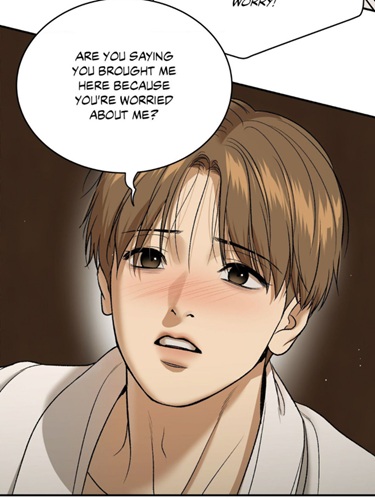 (chapter 67) His question is really an appeal for recognition. If Jaekyung answered yes, Dan could interpret it as proof of love, because in his own distorted framework being worried about equals being cared for. But Jaekyung answered with silence.
 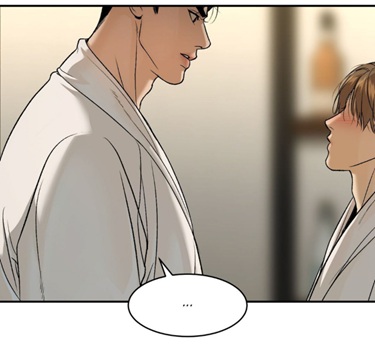 (chapter 67) Not because he felt nothing, but because he lacked the language to connect worry with love. In his conscious mind, conception of care was still bound to usefulness — Dan mattered because he was needed for training, not because he was loved as himself, while deep down, he had already moved beyond this aspect. He was just in denial in this scene,
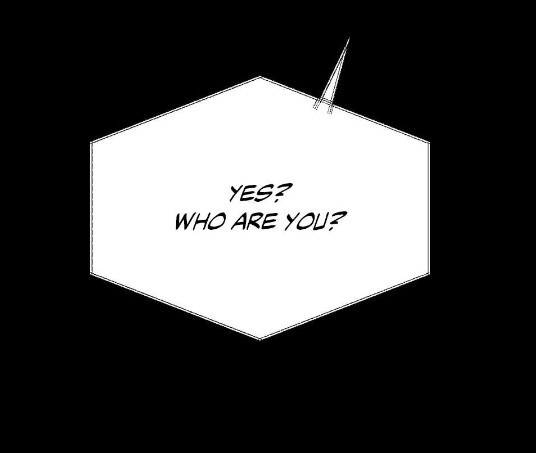 (chapter 74) On one level, she does not recognize his voice. But on a deeper level, her words ring as truth: she does not know her son. She has no idea who he has become, what defines him, what characterizes him beyond money and survival.
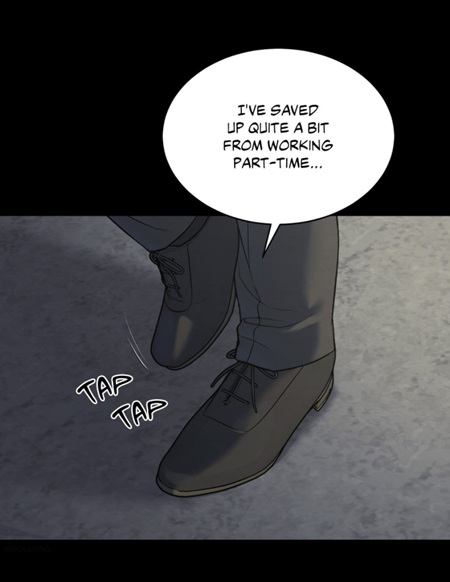 (chapter 74), promising to provide for her if she returns home. He unconsciously appeals to the only logic he has ever known: that love equals provision, that affection is secured by usefulness.
 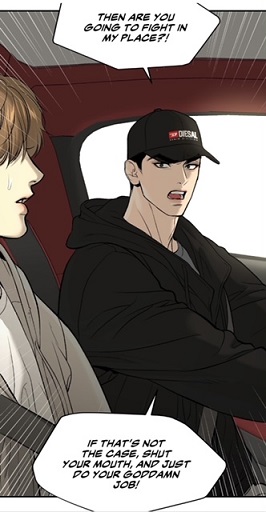 (chapter 42) His father’s voice was violent and scornful, but its framework remained lodged in him.
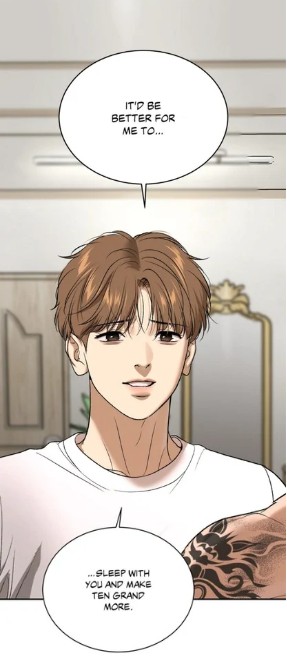 (chapter 62) That way, he can still be “free”.
 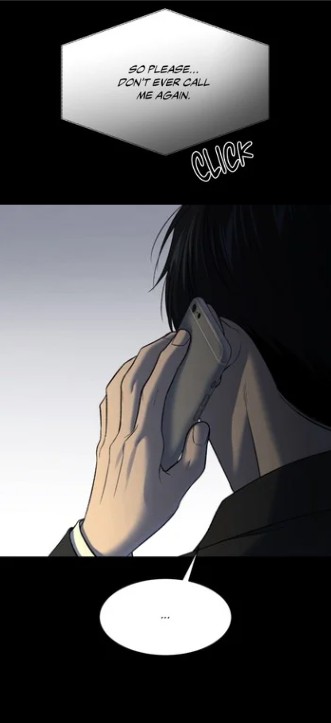 (chapter 74) She expected him to follow her request. I can definitely imagine her trying to reconnect with Joo Jaekyung, the moment he became a celebrity.
 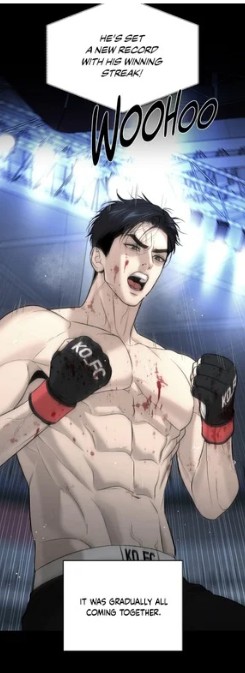 (chapter 75) Keep in mind that we have these mysterious phone calls:
  (chapter 37)
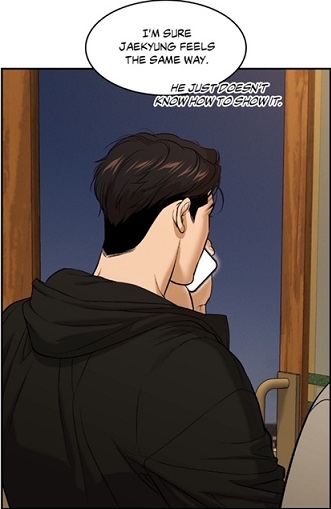 (chapter 43)
  (chapter 49)
 (chapter 75)
  (chapter 34), Jaekyung assumed later that the actor would have helped doc Dan to hide.
  (chapter 58) His violent intrusion into the actor’s home was the natural outgrowth of Namwook’s teaching: if love is real, it must show itself as service.
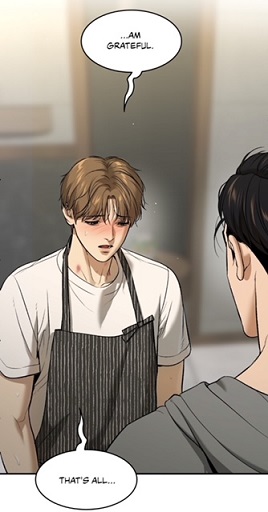 (chapter 45), Jaekyung struggled to even recognize it. Giving him a gift and expressing gratitude was not “helping the fighter”.
  “ (chapter 75) There’s a life outside the ring and the spotlight.
 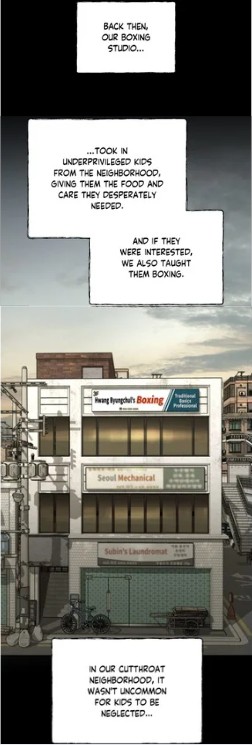 (chapter 72) was quite futile, for at the end, he ended up alone and felt lonely.
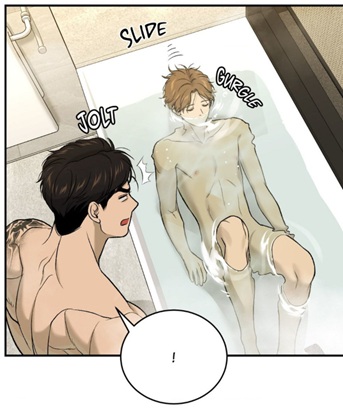 (chapter 68)
 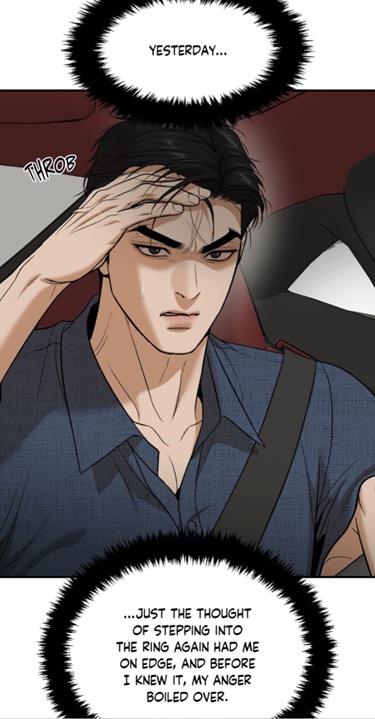 (chapter 69)
  (chapter 69) And that’s what makes him so human.
 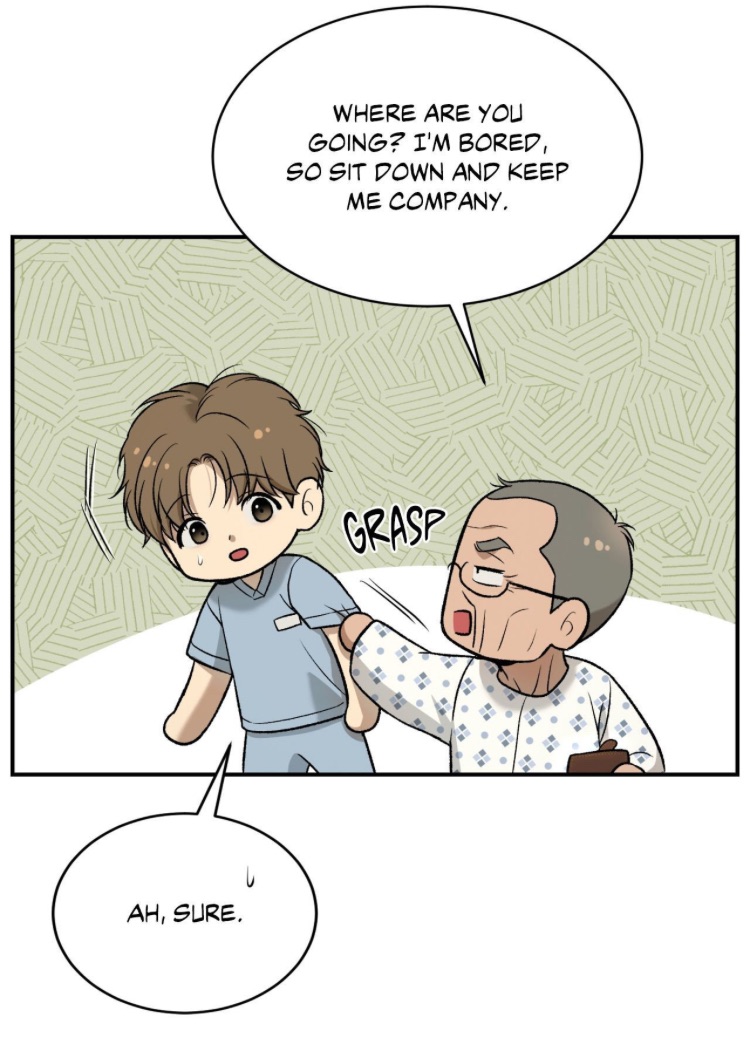 (chapter 71) This means that he lives now in the present. It looks like the “old coot” has been tamed by the “gentle hamster or duck”.
  (chapter 41) He didn’t know how to judge such a confession. Hence these words were reduced to a mistake!
  (chapter 19), and has been unable to say it since.
 (chapter 65) We know he once had toys (teddy bear,car)
 (chapter 21) , little signs of comfort that suggest he grew up in relative security, even if his parents were often absent for work. For me, his childhood was not defined only by poverty but by rupture: love was present, then violently cut short. To a child, such a disappearance feels like betrayal, even if it was no one’s fault. Dan would have been left with a terrible contradiction — that “I love you” was true, and yet those who said it abandoned him forever.
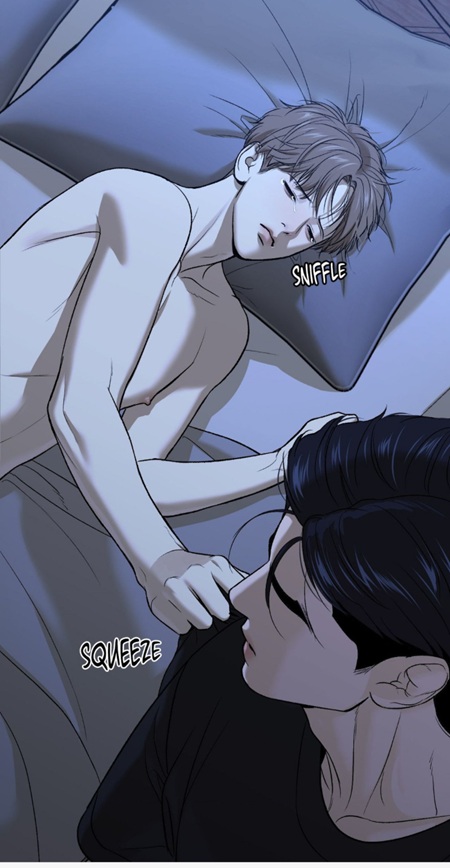 (chapter 66), whispers through tears
  (chapter 44) Dan once received love of a different kind — playful and tender. A kiss cannot have come from the grandmother, who expressed affection only in gestures of care, never of intimacy. That kiss belongs to his mother.
 (chapter 65)
 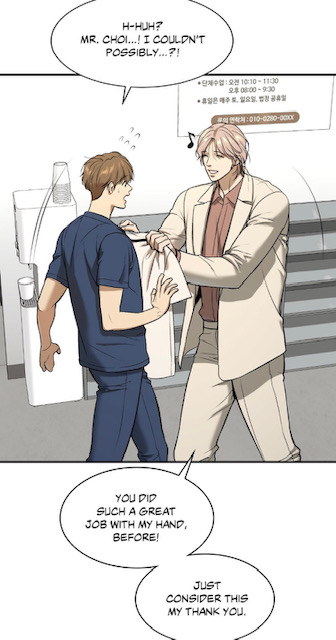 (chapter 31)— which he associates with unbearable debt. His mother’s final “gift” of love was one he could never repay. Any present risks reopening that wound: “What if I can’t repay this? What if I lose them too?”
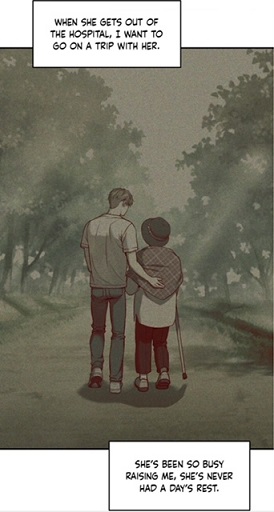 (ch. 47) throws this into sharper relief. There, Dan imagined taking her on a trip after the hospital, walking side by side, giving her what she never had: rest, companionship. The problem is that this image was still mixed with repayment, nevertheless doc Dan was gradually realizing that spending time together was important. This vision displays the importance of walking together. When Jaekyung dreams of Dan waiting in the sunlight,
  (chapter 74) — the quiet sign that the sun is about to rise. Dawn is not just a natural detail in Jinx; it is a symbolic hinge. It is the moment when night meets day, when moon and sun overlap, when endings bleed into beginnings. In myth and fairy tale, dawn often marks metamorphosis: the Little Mermaid turns to foam, the enchanted sleepers awaken, the beast becomes a prince. For Jaekyung, too, dawn is the threshold. His father cursed him at dawn
  (chapter 73), stripping him of worth, tying the rising sun to shame. But in this new dawn, another voice will have to intervene. Only Dan can replace the curse with a blessing. Only “I love you” can undo “you are not special.” And if it is not “I love You”, then it could be a kiss, the symbol of “affection”.
  (chapter 41), an invitation to walk together. Namwook’s long presence embodies the trap of quantity without substance. Dan’s brief but luminous presence reveals the power of quality: the kind of attention that transforms.
 (chapter 75) Namwook’s whispers, too, keep him chained to that rhythm of urgency — rankings, titles, deadlines. But once Dan’s whisper replaces Namwook’s, time itself shifts. The future is no longer a debt to repay but a horizon to approach slowly, hand in hand.
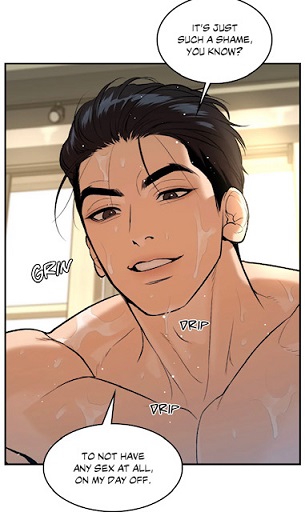 (chapter 27), joked
 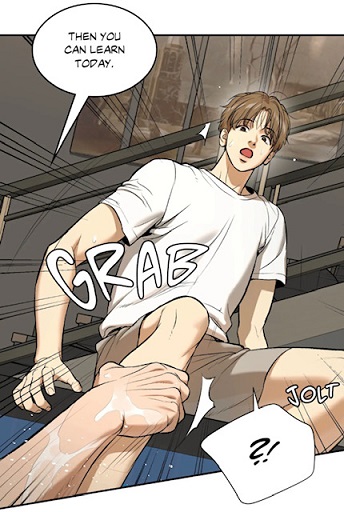 (chapter 27), even rediscovered his love for swimming. Water, his true element, was reclaimed as play rather than punishment.
  (chapter 27) That single day was a seed — a foreshadowing of what life might look like once the curse is broken for good.

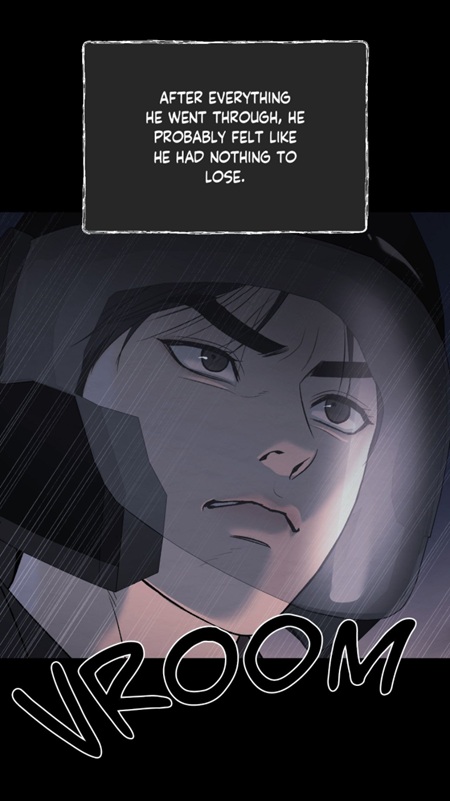 (chapter 74) What do they share? You might already have noticed it. At first glance, the answer seems obvious: each sentence turns around the word after. But if we pay closer attention, it is not just after that repeats, but after all. And here, the “all” quietly carries the weight of everything. A slight shift, but one that feels significant. But why this expression, and why here? Why does it resurface precisely in the context of Jaekyung’s family and past?
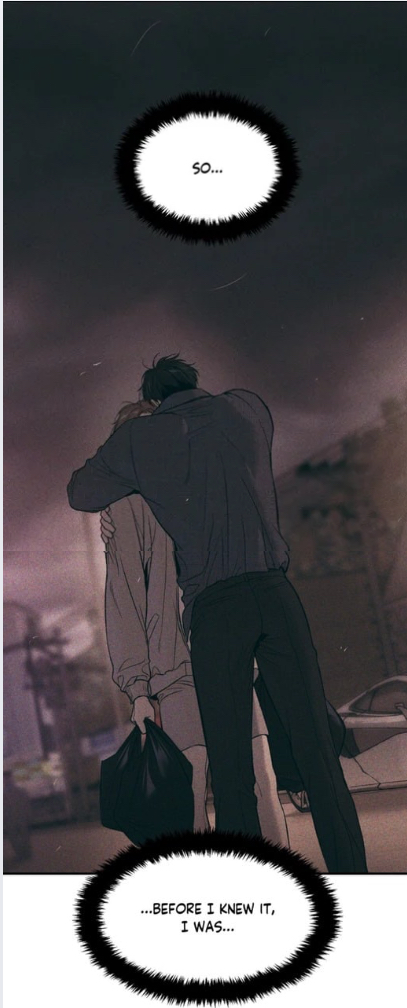 (chapter 70) For the first time, the flow of time shifted. Besides, no explanation, no certainty—just an admission that something happened beyond his planning or reasoning. Where the earlier lines spoke with closure, this one arrived without a verdict. But what does this “confession” signify for the athlete now?
 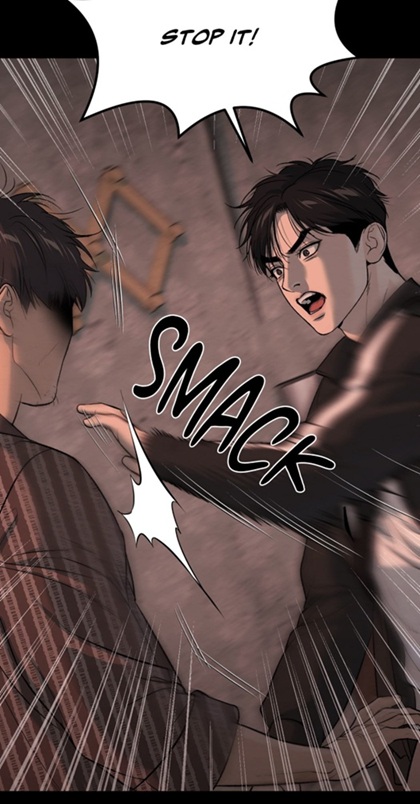 (chapter 73) locked in confrontation, while in the past, the woman had already shown her back — a gesture of refusal that foreshadowed her desertion. She had withdrawn in silence; the man, however, lashed out in noise. Both abandon, but in different registers: hers in silence and absence, his in noise and abuse. But the father’s gaze was selective.
 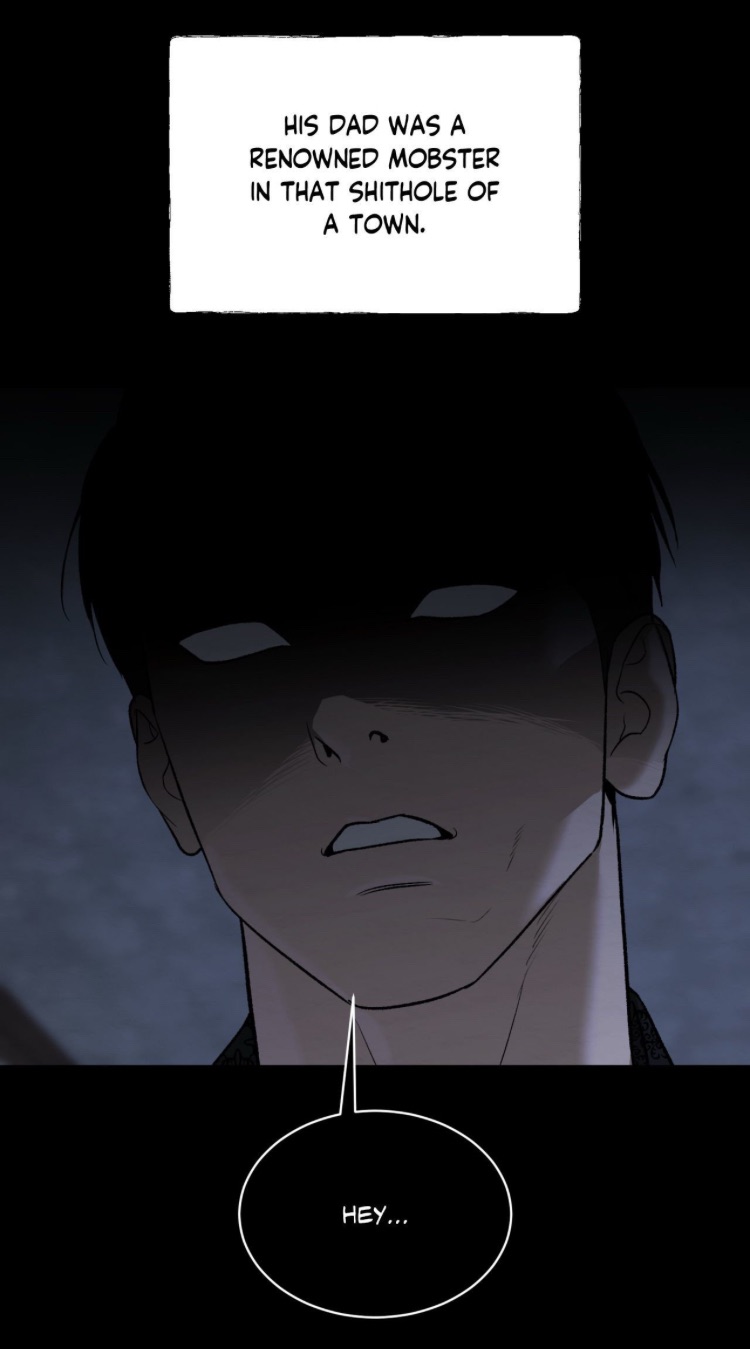 (chapter 73) — all were rewritten into a story where the woman was the sole traitor, and the child nothing more than her extension. In this way, the boy was denied recognition as a victim in his own right. He had been abandoned too. He had been abused either. He became instead a mirror in which his father projects the wound of being left behind.
 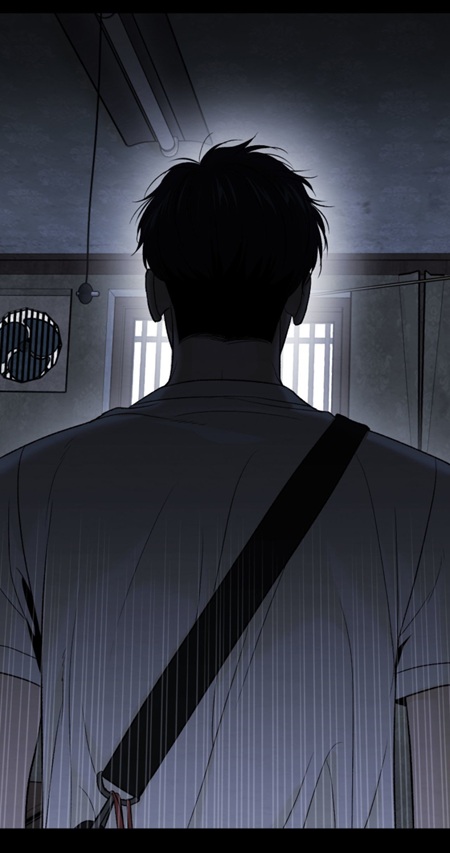 (chapter 73) To speak was to wound, to be wounded in return. Besides, the boy could never speak of this truth. He carried the memory of that last conversation in silence, crushed by the belief that he bore guilt for his father’s death. Shame and responsibility bound his tongue. That is how words, once used against him as weapons, became impossible for him to wield in his own defense. However, this was only the beginning of his withdrawal into silence. His fists would become his language, his body the only safe instrument of reply.
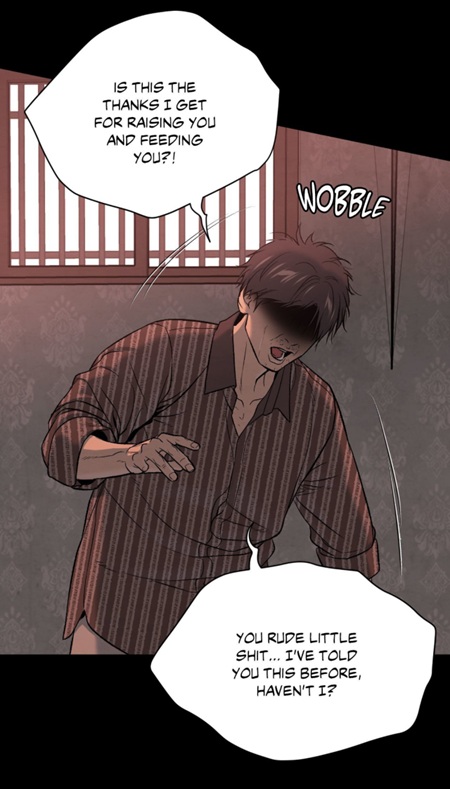 (chapter 73) The betrayal he lamented was nothing more than the logical outcome of his own principle. There had never been a we — only a man clinging to his pride, a woman turning her back, and a child caught in between. His after all
  (chapter 74) In the past, the boy had dialed her number from the same public booth
 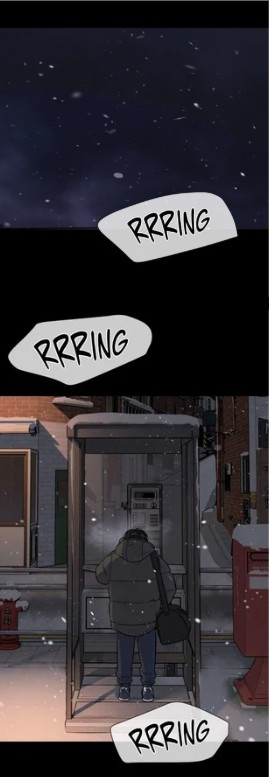 (chapter 72), clinging to the hope that she might answer one day. Eventually, those attempts ceased — but not the attachment. What remained was the number itself, saved under “Mom” on his phone
  (chapter 74) Here, he was old and rich enough to buy his own cellphone. The phone number was no longer a channel of communication, only a relic: a fragile thread he could not sever, because the fact that she never changed her number sustained the illusion that reunion was still possible. That dormant hope was shattered only when she finally picked up — not out of recognition, but by mistake, assuming the unfamiliar call must be important.
  (chapter 72) neglect, starvation, abuse, loneliness, betrayal — and yet the parents invoke it not to acknowledge his pain, but to hide their wrongdoings (justify their betrayal) and as such their failure! By placing after all at the front of her sentence,
  (chapter 74) In a city of anonymity, hearsay cannot replace documents. She left a paper trail — a legal identity that binds them together. Should the champion cause trouble in Seoul, or even become the victim of a crime, the police would have to turn to his legal guardian. And that can only be her.
  (chapter 26). Oh Daehyun mentions that the young fighter broke the punching machine so many times he was blacklisted. Such destruction could easily have brought police intervention — and if it had, they would have been forced to search for his legal guardian. That guardian is none other than the mother who abandoned him and her new family. In other words, her erasure was never complete: every act of the boy risked pulling her shadow back into the open. Furthermore, this is what Kim Changmin revealed to his friend and colleague:
  (chapter 26) But Joo Jaekyung had long discovered sports and MMA, when he arrived in Seoul and met Park Namwook for the first time.
  (chapter 74) who redirected him before he was swallowed by the wrong path. The discrepancy between these accounts exposes more than just the manager’s manipulation: it points to the shadow of another intervention. How could he afford to destroy machine after machine without consequence? The only plausible answer is the “mother” and her new family, whose money and silence allowed him to pass as the “self-made” Emperor while erasing their own responsibility from the tale. And now, you comprehend why The Emperor was made voiceless. [For more read
 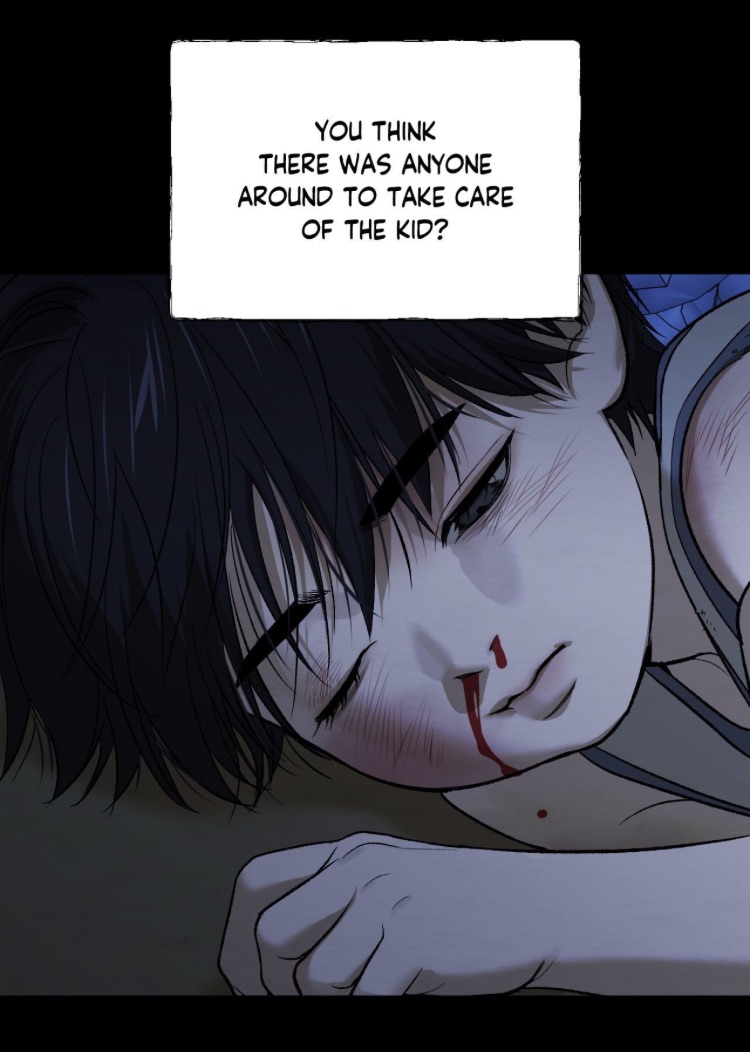 (chapter 74) For doc Dan who embodies the present, such a statement can only become the ultimate truth: the star had been an orphan like him.
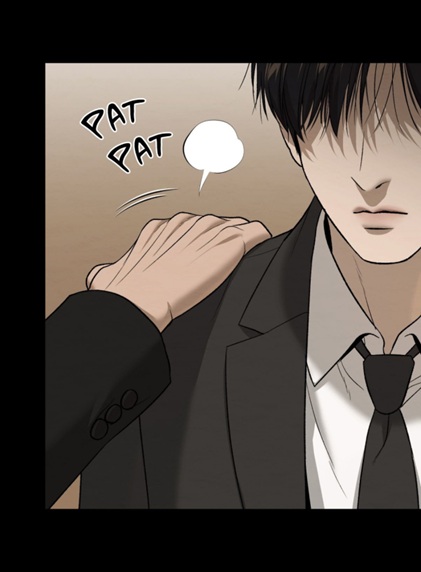 (chapter 74) Once again, the director was there — but his presence was mute. He placed a hand on the boy’s shoulder, yet he never lent him an ear. He never invited the boy to speak, never created a space where grief, anger, or longing could be put into words. In other words, he was present in body but absent in voice and heart. Thus the director’s pat was a gesture of pity. It was a substitute for words, a way of saying “poor boy” while protecting himself from deeper involvement. But precisely because he withheld speech and listening, it denied Jaekyung the chance to articulate his own grief. It comforted without connecting.
 (chapter 74), through fighting. Thus the director’s quietness, his refusal to engage, became a formative wound in itself. He chose the safety of distance over the risk of involvement, and in doing so, left the boy’s cries unanswered.
  (chapter 74)
  (chapter 74) He was given a chance to step in, to finally become the guardian he had failed to be on the night of the boy’s deepest collapse. Therefore it is no coincidence that he claims to have raised him, while the readers are well aware of the truth.
  (chapter 74) The father was dragged into memory as a warning: “Do you want to end up like him?” The mother, already gone, was turned into a conditional model: “Would she even want to live with you if she could see you now?” In both cases, the boy was denied his right to grieve. His parents were not mourned, but transformed into instruments of discipline. He was forced to run from one shadow and to chase another, leaving him no space to simply exist. The director maintained the future champion trapped in the chains of the past.
 (chapter 74) For him, discipline was always bound to her presence, her food, her care, her silent labor that sustained the gym. By invoking “the mother” as a motivator, he was, in truth, repeating the only model of loyalty and endurance he had ever known. But this was borrowed authority, not Jaekyung’s. What may have given the boy a flicker of purpose in the moment — to endure, to fight “for her sake” —
  (chapter 54) The director’s form of guidance could not sustain him; it was external, borrowed, conditional. Therefore, it is not surprising that he was never contacted after the main lead’s departure for Seoul. By then, the director had already become like his own mother — reduced to a memory
  (chapter 70) and nothing more. He neither possessed the boy’s number nor showed the desire to stay connected; worse, he had told him explicitly never to return.
  (chapter 56)
 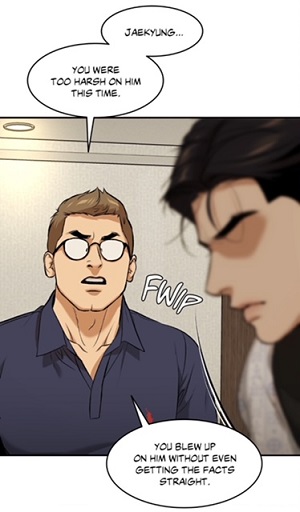 (chapter 52) That way, he could divert attention from the “before and circumstances”. And in season 2, the man hasn’t changed at all. Instead of asking what caused Jaekyung’s crisis, he chides him for straying from the routine — for not showing up at the gym, for being absent.
 (chapter 52) The slap at the hospital was more than a physical outburst; it was the eruption of long-repressed truth. Where he once swallowed pain in silence for his mother, and later endured fists in silence for his coach, here he answers back. Lately thus marks not only Namwook’s delay but also Jaekyung’s refusal to bear the weight alone anymore.
  (chapter 45)
 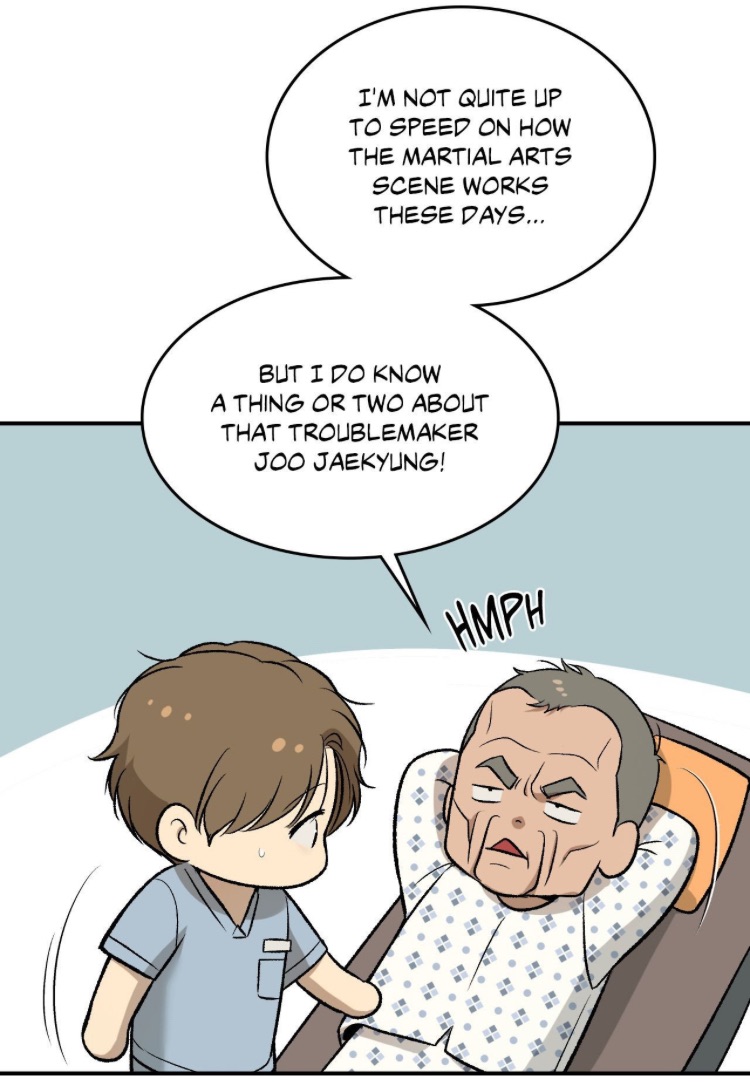 , (chapter 70), while remaining oblivious to the rot within their own world and the medical world. The director accused Joo Jaewoong of “choosing the wrong path,”
  (chapter 69): for the first time, a figure of authority assumed responsibility, however insincerely. What to others looked like shallow PR, to Namwook appeared as a dangerous break with the rule of denial. It highlighted the emptiness of his own guardianship, where reproach replaces protection and victims are erased from the narrative.
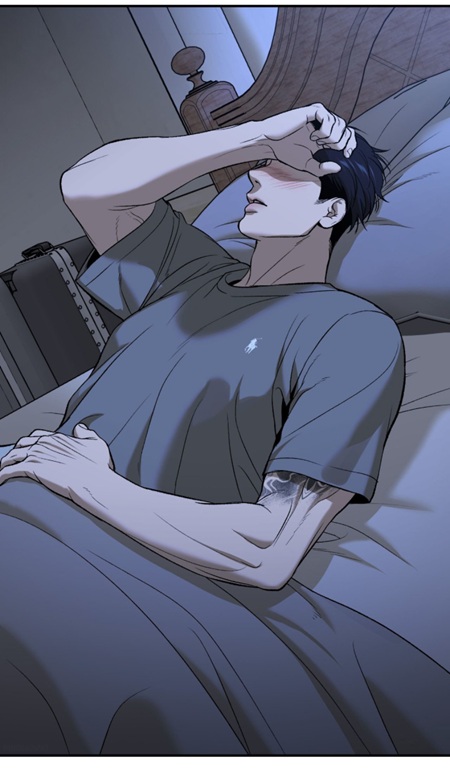 (chapter 74) Honestly, it would be funny, if the champion used the same words than his own mother against the manager
  (chapter 70) Thus the manager is confident that the star can return to the ring. By cutting the manager off in such a moment, Jaekyung would be affirming that he no longer accepts neglect disguised as toughness. Both “directors” are trapping the champion in the chains of the past and the future. For them, there’s no present and as such no happiness or fulfillment. Hence Hwang Byungchul is even bored, when he watched the MFC match.
 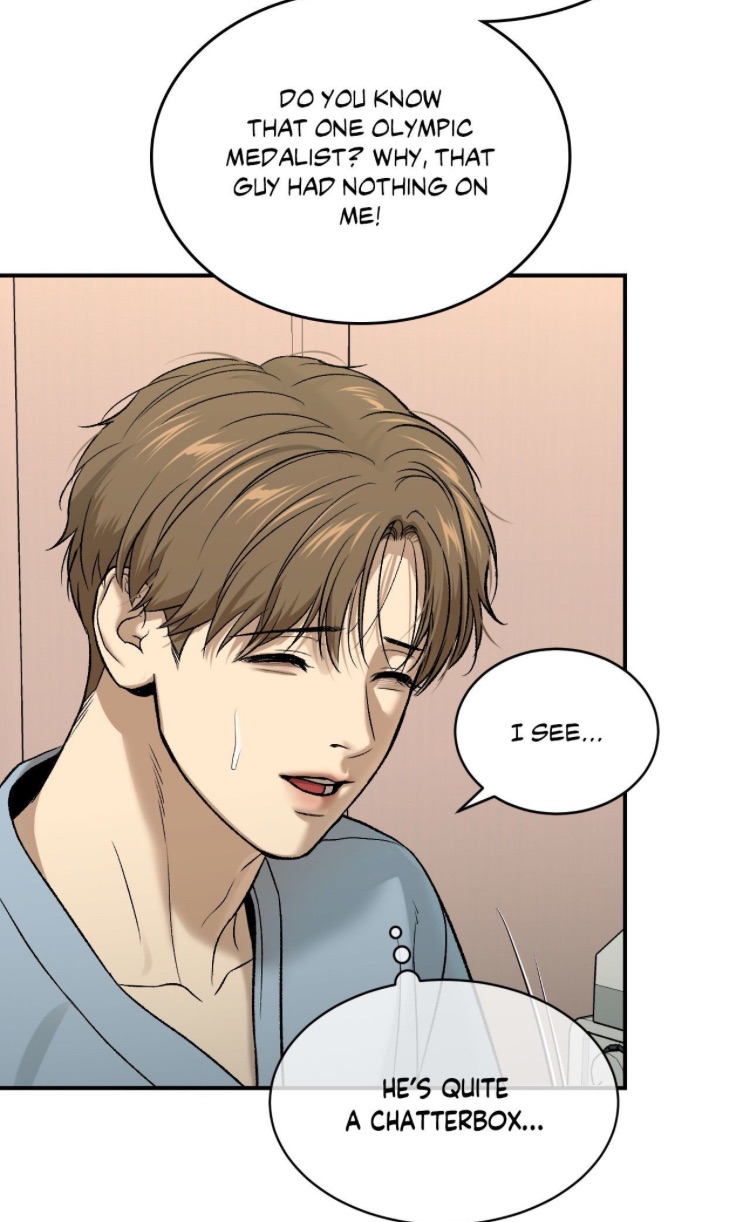 (chapter 70) As you can see, it is never too late… Thus we saw this on the roof of the hospital: a real and intimate conversation between the “guardian” and his pupil:
  (chapter 71) The director has changed!
 (chapter 65) She can appear as the perfect role model in the athlete’s eyes. No wonder why he listened to her and brought doc Dan to a huge hospital in Seoul. But here is the thing….
 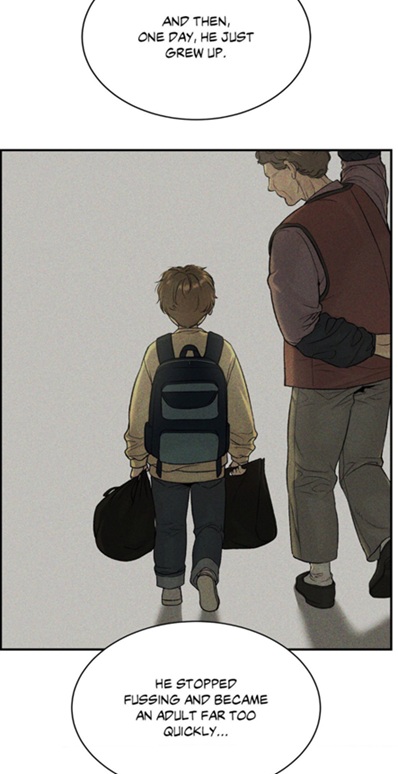 (chapter 65) The grandmother’s narrative culminates in a deceptively simple phrase: “And then, one day, he just grew up.” Unlike after all, which implies endurance, patience, and a long lapse of time, her then one day compresses everything into a brief, almost casual instant. In her telling, there is no slow accumulation of wounds, no process of wear, no history of pain to be endured. The transformation is presented as sudden and natural, as if nothing of significance had preceded it.
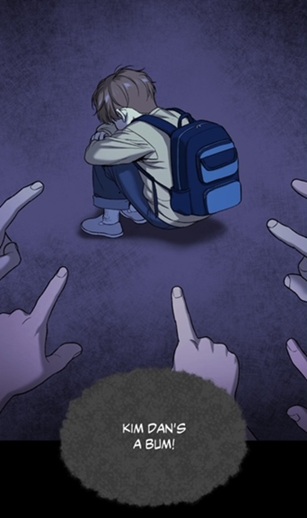 (chapter 57), and his forced maturity to a single, fleeting day. No trauma, no endurance — just inevitability. By collapsing years of hardship into a harmless “day,” she erases both the past and the victim. And now, you can understand why doc Dan is trapped in the present! By erasing the “before” (abandonment, trauma) and trivializing the process of “becoming an adult,” she collapses time into a single, static present. Kim Dan is not allowed a past that hurts (because she erased it), nor a future that could unfold differently (because “he just grew up” is presented as inevitable).
 (chapter 62) cannot, by themselves, sustain love. Emotions flare and fade, tied to the immediacy of the present. Thus the mother could break her promise and even lie to him later. What endures is not emotion alone, but the principles that Fromm identified as the essence of love: care, responsibility, knowledge, and respect. These qualities stabilize the fleeting nature of feeling and transform the present into something continuous, something that can grow. In this sense, the teddy bear bridges the gap between “present” and “future”:
 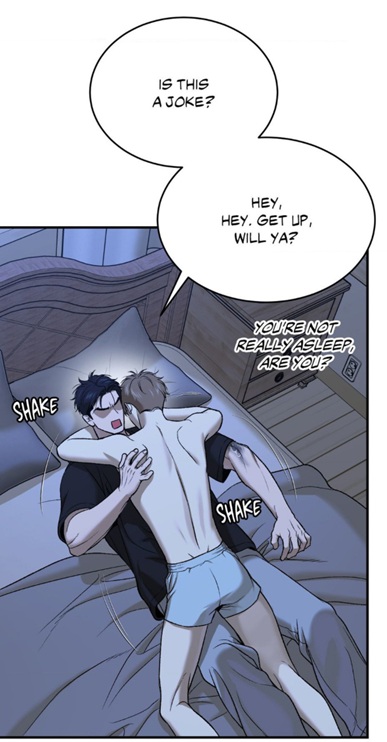 (chapter 65) it transforms the fleeting moment of emotion into a promise of constancy. After all, before it’s too late, what both men longed for was never glory or escape, but a home where they could rest — not alone, but in each other’s arms. By discovering emotions and learning to live in the present, the champion also rediscovers his inner child. His line — “Is this a joke?” — marks that shift, since jokes, like emotions, only exist in the immediacy of the moment. It is only a matter of time, until he laughs because of a joke. By embracing doc Dan like a teddy bear, he allows himself to cling and regress, no longer the wolf or the Emperor but simply a boy seeking warmth. Even his cold becomes symbolic:
 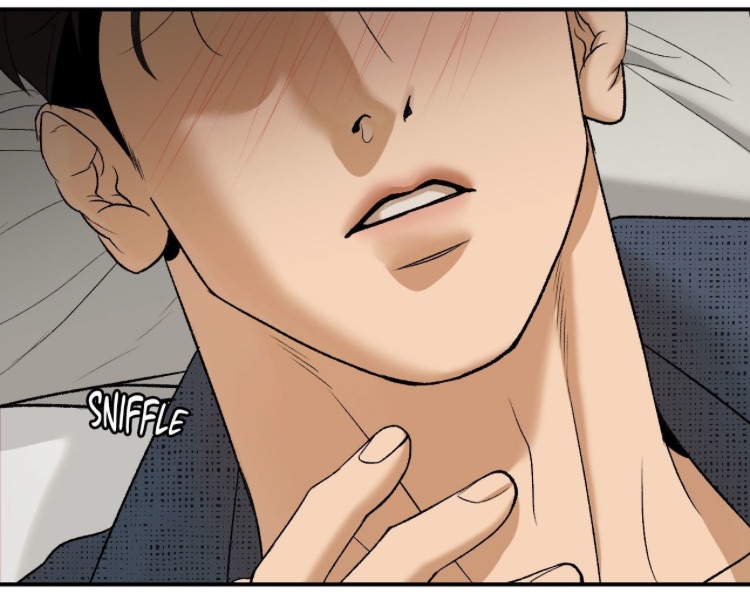 (chapter 70) illness forces him to slow down, to be vulnerable, and to receive care — something denied to him in childhood. In this way, love turns the regression into healing, transforming weakness into the possibility of renewal.

 (chapter 83) Besides, don‘t forget that Black Heart got fooled himself and ended up dead. But like I outlined it before, their plan won‘t work because of the butterfly „Baek Na-Kyum“.
  (Chapter 115) The reality was too painful, hence he chose the illusion, thinking that with his new position, he would be able to do anything, especially if he is getting the support from lord Song. In my opinion, he is falling into a trap. He would realize it, if he pondered and didn‘t let his emotions cloud his judgement. Lord Song waited for his suffering and humiliation. By rejecting reality, the learned sir chose the nightmare, a very unpleasant and frightening experience.


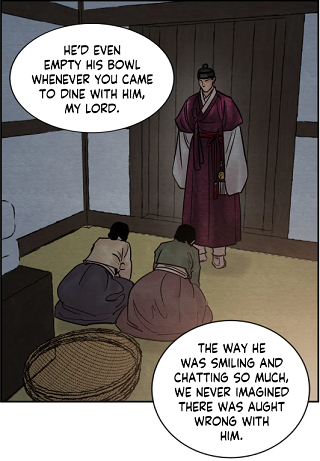 (chapter 108) But then I changed my mind about the lord, for Yoon Seungho didn’t rely on just one testimony contrary to his father:
  (chapter 86) Finally, thanks to the argument in the shed, I had another revelation which I will explain more details below.
 (chapter 108) He blames himself for everything. For me, these women were lying to their master. Why do I think so? The first proof is that the painter’s fate is to go through the same experiences than his lover. And what did the valet admit in the shed?
  (chapter 108) There was not a soul in this household who was standing by his side back then and now! This signifies that there is not a soul in the mansion truly standing on the painter’s side as well!! Back then (before the massacre) and even now… Moreover, while these maids’ attachment was sincere
  (chapter 51)
 (chapter 63), this doesn’t signify that it is the same for all the female servants. This would be just another prejudice.
  (chapter 108) Yes, this woman is not the same than the one from chapter 51, for her clothes diverge despite the same pigments. She is wearing a white ribbon around her waist.
  (chapter 108), whereas the other wears the belt more around the hips, hence her skirt has a bump on her butt.
  (chapter 108) First, when the manhwalovers saw him in the kitchen, he was eating to his heart content and enjoying his breakfast.
  (chapter 38) Moreover, the painter had long stopped eating with the maids, he would share his meals with the main lead.
  (chapter 46)
  (chapter 74) This explicates why the artist returned the table with the porridge to the kitchen himself.
  (chapter 98) This means that they couldn’t witness how the artist would eat. To conclude, the statement from the staff was once again a mixture of truth and lies, for they were combining different situations together. Hence their apology was not genuine despite their gesture.
 (chapter 62) The painter had been faking his “submission”, hence the “valet” got fooled. He had trusted the artist blindly. Thus the lord got angry, and resented the butler, for he wished the opposite. He didn’t want to admit that the artist had been acting. Yet, the seed of doubt was implanted in his mind. Consequently, in episode 108, we have the exact same situation, yet contrary to the past, the lord didn’t get angry at his lover. He never condemned the painter for his dishonesty, though he was not truly lying either. To conclude, chapter 108 is a reflection from episode 62. Thus it dawned on me that the valet could have attempted to fool his master once again. The artist was a hypocrite, for he was acting in front of the lord hoping that he wouldn‘t cut ties with him. It was for his best interests to send back to the kisaeng house. Yet, nothing like that happened.
  (chapter 104), a sign that he was recovering. But due to the two incidents during that day, Baek Na-Kyum had been feeling unwell and was hiding his discomfort out of fear of getting abandoned. This means that the deceivers were trying to portray the painter’s actual disposition as something unchanging. Since the painter had trouble with eating now, his eating disorder existed in the past. And this perception got reinforced, for the lord could notice afterwards that the maids’ statement had become a reality. What they had described, truly happened afterwards. Due to worries and anxieties, the artist lost his appetite. He would fake his “happiness”. The manhwalovers could witness how the painter had slimmed down
 (chapter 108), just like his “husband”
 . (chapter 108), a new version of episode 51. This time, the roles had been switched, the painter was sitting in the patio. To sum up, the schemers and the accomplices were creating a prejudice, a so-called universal truth. This is the negative reflection of season 1, where the gossips about Yoon Seungho were turned into a reality. In many of my previous analyses, I had outlined that these rumors about the protagonist had been false.
  (chapter 1) He couldn’t have a proper erection, and it was never his choice to have sex at any time and any place, because he was treated as a male kisaeng. And now, it is the painter’s turn. Gossips about him would become a verity. Yet the other difference to season 1 is that in season 4 the artist is exposed to the same “prejudices” than Yoon Seungho in the past: He is ill!! He needs to be treated and the “gibang” is the right place for that🤮. He would be with his noonas, a new version of the lord’s past. And now, you comprehend why father Yoon said this to the physician in chapter 57:
  (chapter 57) A single incident was turned into a generality, implying that it was the same in the past!! To conclude, the noble is put into the same situation than his own father, the only divergence is that Yoon Seungho has indeed the painter’s best interests in his heart. He is determined to provide him with the best!! Thus he blames himself contrary to the elder master Yoon.
  (chapter 104) This statement implies that the painter is responsible for the bloodbath, for he left the propriety. Yet, instead of confronting the painter, he was encouraged not to talk about the past. He was suggested that way, he would protect the artist’s mind and heart. Besides, his choice was influenced by his own anxieties. The lord fears argument, because the last time they had quarreled, the artist had threatened his lover to leave the place.
  (chapter 85) I would like my avid readers to keep in mind that the lord wished to keep the artist by his side, sending the artist back to the kisaeng house was just a temporary measure.
  (chapter 105), yet the painter had heard something different from his noona.
  (chapter 105) That’s how a misunderstanding was created, provoking the painter’s abandonment issues to resurface. The lord had selected secrecy and silence out of love for the artist. Therefore when the lord sensed Baek Na-Kyum’s agony, he could only jump to the conclusion that the painter was acting the same way than him. He was also hiding something from Yoon Seungho. That’s the reason why the lord didn’t argue with Baek Na-Kyum.
 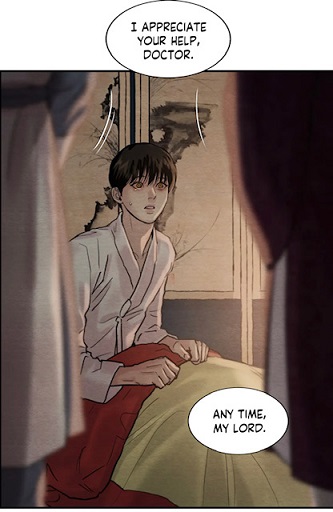 (chapter 107) He imagined that the artist was doing it out of concern for the noble. He was projecting his own thoughts onto the artist.
 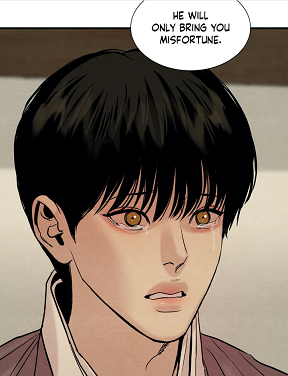 (chapter 68) According to this belief, the lord brings bad luck to others. This rule can only incite the main lead to doubt himself, to judge himself in a negative light, to doubt his own judgement. Moreover, the perfidy is that this principle pushes the protagonist to deny the existence of his own misery. It was, as though the lord had never suffered, only the others. This “faith” represents the biggest lie and hypocrisy. However, the main lead questioned this rule in front of Yoon Chang-Hyeon,
 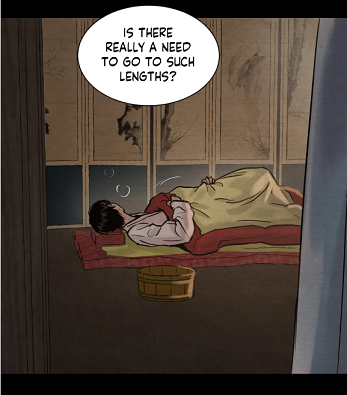 (chapter 108) He remains seated by his side, because he is projecting his own reaction onto his loved one. Remember how Yoon Seungho reacted in the past with Lee Jihwa: he pushed his childhood friend away.
  (chapter 59) It was, as if Yoon Seungho feared to taint the painter by sleeping next to him. However, the artist’s biggest wish is to share the same bed than his lover.
  (chapter 97) To conclude, Yoon Seungho’s life is still influenced by a false cult, by propagandism. This faith is is based on Rene Girard’s theories about mimetic desire and scapegoat mechanism.
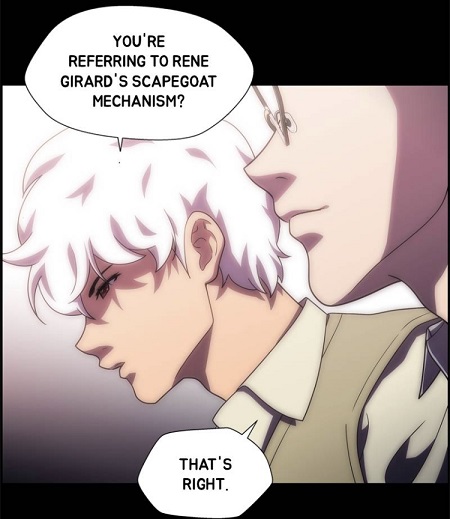 (chapter 250) Hence the man created the following theory which is inspired by religion.
  (Doctor Frost, chapter 250). Under this new light, it becomes comprehensible why the author from Doctor Frost utilized the image of a black sheep as the future scapegoat. IT was selected, because it stood out. And you comprehend why Yoon Seungho became the target in the end. His good reputation attracted envy and jealousy.
 (chapter 57) Why? It is because each noble family aspires to the same: power and wealth!
  (chapter 86) I had already detected father Lee’s jealousy and greed, just like Kim, Yoon Chang-Hyeon and Yoon Seungwon. The butler and the father might have desired the same (recognition and fame), but this could only end up in resulting in rivalry and jealousy.
  (chapter 107) This explicates why Yoon Seungwon was mentioned by the man with the purple hanbok. He implied that the son might have been well educated, yet he must be lacking elsewhere: his sexual education…. as his other task is to have a heir. This means that by standing out, Yoon Seungwon caught the jealousy and envy from other yangbans, though I have my doubts if he truly passed the civil service exam first. In other words, it is better not to stand out.
  (Doctor Frost, chapter 183) Since deprogramming is like brainwashing, it signifies that for the brainwashing, the victim needs to be isolated and even imprisoned too. And in order to be effective, the target of the brainwashing has to be exposed to stress and lack of sleep.
 (chapter 187) Fatigue and exhaustion are necessary in order to lower the target’s defense mechanisms. This explicates why it has to take place during the night, for the night is the time for humans to rest. Therefore the place of brainwashing is called “the fox’s hole” in Doctor Frost.
  (Doctor Frost, chapter 187).
 (chapter 187) The Ganzfeld effect happens when you undergo sensory deprivation for some time, and your brain tries to make sense of what is happening. Just 15 minutes of sensory deprivation can induce vivid hallucinations, according to researchers. This process involves muffling the ears and blindfolding, so people are unable to see or hear. And note what had happened to Baek Na-Kyum during the abduction. His head had been covered
  (chapter 66), and according to me, while his head was covered, he got strangled. Hence he had this nightmare.
  (chapter 61) But he lost notion of time and chronology, hence his nightmare is not coherent. One feature of altered states of consciousness during Ganzfeld exposure is an altered sense of time. In general, regardless of the induction method, altered states of consciousness can be characterized by changes in the sense of self and time. But this can only happen, when the brain is deprived of stimulations.
  (chapter 187) I had already outlined that Yoon Seungho had lost not only the notion of time, but also all his senses. And the nightmare is displaying the evidence of the Ganzfeld exposure. Hence the young master viewed himself flying
  (chapter 74), and at the end his eyes and ears got covered by hands and blood.
  (chapter 74) Besides, he was trapped in the dark room which looked like the servants’ quarters. Only thanks to the painter, the lord could recover his own senses, slowly he became the owner of his own body again. In addition, remember what he said to his own father:
  (chapter 86) The darkness he was referring to is the indication of “Ganzfeld effect”. Because he was trapped in this nightmare, he lost the sense of reality. He had to rely on someone else’s senses and words. That’s how his memories got repressed and even distorted. Consequently, a new past could get recreated. That’s the reason why the lord had no memories for a long time. The valet was the “owner of the truth and as such of the time”. We could say that till the meeting with the painter, he possessed the lord’s memories. Besides, one of the side effects of scapegoating is becoming vulnerable to gaslighting.
 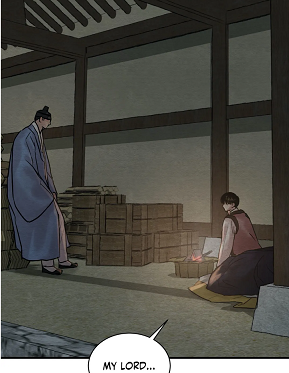 (chapter 62) Under this new light, it becomes comprehensible why the lord didn’t lose his whole sanity and as such didn’t fall completely into despair. The warmth and light served him as a guidance. Consequently, I deduce that in his childhood, he was trapped there in the dark for hours!! Because he was jailed in that room, he was exposed to the Ganzfeld effect. Therefore he relied on the valet’s words.
 (chapter 77) He trusted the butler, even after getting betrayed and abandoned each time. He developed blind faith in the butler. Why? It is because he was the only one “talking to him”. Though he wounded him so many times, he still remained by the lord’s side. That’s the reason why I come to the conclusion that the shed is not just a room for punishment, but also for “faith”, the place where the scapegoat was placed: “
 (chapter 77) That’s the reason why he got treated like an animal. This is no coincidence that in the storage room, the butler utilized such a religious vocabulary: “I do not believe”
  (chapter 62); “beg”, “trust” a synonym for faith,
 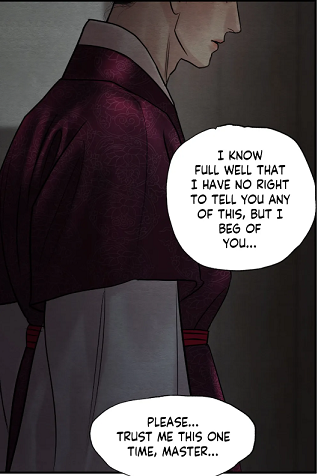 “soul”, ”
  (chapter 108) Moreover, I would like to outline that the main lead was seen sitting while looking up
  (chapter 83) It looks like Yoon Seungho was praying, when Lee Jihwa opened the door. This means that Yoon Seungho has been treating Kim as his idol, his highest priest. Besides, doctor Frost explained why people become victims of brainwashing.
  (doctor Frost, chapter 191). This description fits to the shed, the lord was not only cornered mentally, but also physically.
  (chapter 32) What was he doing there, and why was he looking at the bedchamber? It is because he imagined that after the sex session, Yoon Seungho would send the painter to the shed as a punishment for his desertion. Let’s not forget that during the day, the whole staff had been beaten by their master. Besides, I would like to point out that the staff in season 3 viewed the painter as a spoiled brat, for he was receiving the lord’s favors.
  (chapter 98) Consequently, I deduce that when the valet got punished in season 3, he portrayed the painter as a tattler for that reason. He didn’t want to become the scapegoat in the end.
  (Chapter 77) At the same time, receiving treatment from the physician, Kim could say that the lord regretted his decision. These new discoveries reinforce my prediction that the painter is doomed to become the next scapegoat!! Yet, chance is on the couple’s side. On the other hand, this signifies that someone will have to become sacrificed!
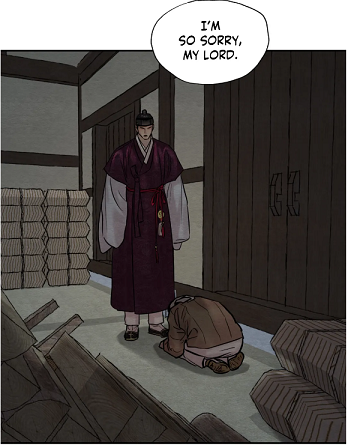 (chapter 108) for his wrong choices, I come to the opposite interpretation. Naturally, if the manhwalovers compare the butler’s apology in the shed to the one in the library,
  (chapter 77) it really looks like Kim is sincere. He is no longer standing, he is now weeping. Finally, he is not blaming someone else (the kisaeng), but himself.
  (chapter 108) Nevertheless, for me, everything is an illusion, and you can only detect the manipulations, the moment you examine closely Kim’s words.
  (chapter 108) Kim feigned ignorance, and the lord confronted him with his lie, he admits that in reality he knew something.
 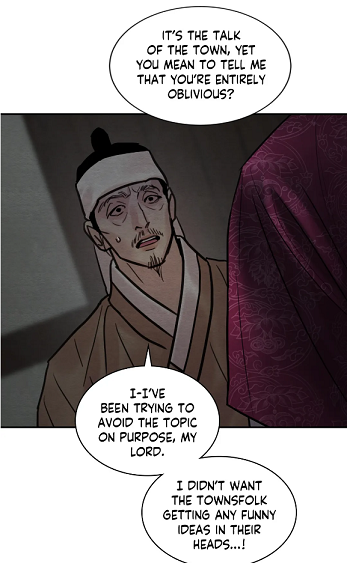 (chapter 108) He had not told him about the shaman’s house on purpose. He had hidden the truth by omission. He justified his decision by using the “townsfolk” and their liking of creating gossips. However his real task was to protect his lord’s interest and inform him about everything. He made a decision without his lord’s permission, and as such he usurped his authority. He acted, as if he knew what was the best for Yoon Seungho. But this doesn’t end. What infuriated me the most are these two declarations:
 (chapter 61) The red-haired master utilized the present perfect tense, which is a combination of the past and present!! This time reveals that the young man was about to move on. On the other hand, the butler is either referring to the past and to the future, but not to the now! This means, he has no regret right now. He is projecting himself in the future. He implies “regret”, but he is not truly admitting it. Finally, when the childhood friend came to regret his choice, he voiced it outside the barn!!
  (chapter 61) This contrast outlines that the storage room is the place of illusion or false faith.
  (chapter 108): Here, my blood was literally boiling, when I read his second “confession”, because here he was now omitting Yoon Seungho. It was, as if the protagonist was not existing. His words were actually reflecting a new betrayal towards the main lead. Here, he was vowing loyalty to Baek Na-Kyum and not to Yoon Seungho!! He insinuated that if he was taking care of the painter, he was protecting Yoon Seungho’s interests. However, the artist and the noble are two different persons. Imagine the following situation: The main lead gets arrested for “murder”, the butler could justify his vanishing, passivity and silence by saying that he needs to take away the painter from the mansion so that the latter avoids getting into trouble as well. As you can see, he would keep his promise, but he would sacrifice Yoon Seungho. With his words, he was insinuating that he only had two choices: the elder master Yoon or the painter. Besides, once the lord were to be removed, Kim could put the whole blame on the painter afterwards. If he had not left the house… That’s the reason why I viewed the last statement as the biggest treason. In reality, he was not vowing loyalty to the main lead. This scene was a reflection from episode 30, where the artist had pledged loyalty to the main lead
  (chapter 30) and this in front of people. This explicates why the butler got grabbed in the storage room
  (chapter 108) like the painter in the courtyard.
  (chapter 30) We could say that it was the butler’s karma for his past manipulation. He had been the one who had encouraged the painter to flee the mansion (chapter 29/30). But this doesn’t end here. When the artist vowed his loyalty to the protagonist in the courtyard, the latter was present, which is not the case here. The artist is left in the dark.
  (chapter 108) Where is the personal pronoun “I” here? Nowhere. Only the lord cares for the painter, this was the butler’s declaration in the end. But what about the tears? How could he fake the crying?
  (chapter 81) When the lord had wounded his lover, when he was in a dissociative state, he had perspired so much that his sweat was falling like tears!! As you can see, fear could be the reason why drops of water were falling. Let’s not forget that the main lead had treated Kim very harshly and even threatened to have him killed, something he had never done before.
  (chapter 108) Kim had reasons to get scared and to sweat.
 , chapter 108, or my lord
  (chapter 108) However, the manhwalover should question this. Why did he regret that day? It is because he had revealed his true thoughts about Yoon Seungho to the painter, and he got reprimanded from the artist. Besides, according to me, he had hoped that the artist would leave the mansion due to the altercation. In addition, when he mentioned this scene, he wanted to appear as honest, because he had no idea if the artist had leaked this conversation to Yoon Seungho. Finally, just because he told the truth here, we shouldn’t judge the butler’s confession as verity. To conclude, for me, the valet was not really remorseful, he was more acting.
  (chapter 108) However, this is another illusion which can be easily refuted.
  (chapter 108) This memory is the same than the painter’s
  (chapter 108) In other words, the butler had acted on his own, and informed his master afterwards, when this information was necessary in order to protect himself. As you already know, for me, the butler had definitely acted on his own. But why does Kim need to deform reality so much? It is because he was present, when the young boy was abused sexually and he did nothing. He needs to erase the “traces” of the rape so that his culpability will not come to the surface. Just like the painter, Yoon Seungho has totally forgotten the sexual abuse. Besides, he never mentioned the incidents about the shed to the painter, only the bedchamber.
  (Chapter 87) Here, he was already hiding his guilt by turning Yoon Chang-HYeon into the main culprit. He is responsible for the lord’s suffering.
  (chapter 68), but he had heard a different story from the painter.
  (chapter 93) However, now I understand why Yoon Seungho was not able to discern the hypocrisy from the assistant.
  (chapter 188) It is related to the long brainwashing he was exposed for so many years and the lord’s low self-esteem. Thus I perceive this argument in the storage room as a new version of episode 40, a confrontation between the painter and the scholar. But who had been defeated in the shed? Yoon Seungho was still the loser, for he kept his distance from his lover afterwards.
  (chapter 108) He was making sure that no one would know that the painter was his weakness.
  (chapter 108) The new version of episode 50-51!! However, this was totally pointless, for the painter was living his bedchamber. His position was the proof that the painter was still favored, though the artist feared to be abandoned by the painter.
  (doctor Frost, chapter 187) This means that the couple has to communicate and the painter will interrogate his lover.
  (chapter 187) But this deprogramming is not pleasant, for the destruction of believes leads the victim to question everything afterwards. What caught my attention is that the painter went to the library, the symbol for “knowledge and education” which stands in opposition to the shed. This is no coincidence. Brainwashing is the antonym for insight.
  (chapter 108) In addition, the lord was dressed like in episode 36, he had the green hanbok.
 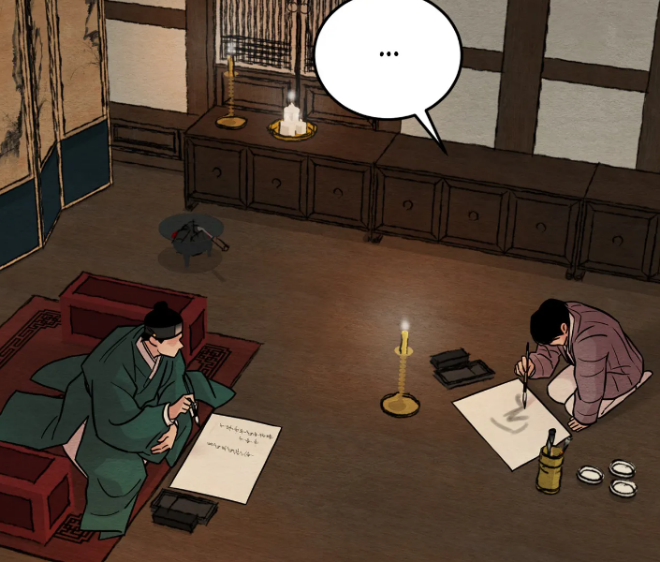 (chapter 36) Back then, the painter didn’t talk to the owner of the mansion. Finally, this episode is connected to the lord’s memories:
  (chapter 36) That’s how I had this revelation. The lord’s suffering is also linked to the library. From my perspective, the young master was dragged from the library to the shed at some point.
  (chapter 77) I had already pointed out that in episode 77, the main lead had been dragged on multiple occasions, for he was dressed differently, and the servants would be different. Because I had described that the lord’s mind had been manipulated by indoctrination and the butler had confessed, I deduce that the next episode will contain elements from episode 48/49.
  (chapter 49) That’s the moment the painter dropped the last principle from the scholar and kisaeng. For me, something similar will take place, but such a deprogramming is painful. From my point of view, Jung In-Hun will be mentioned, as in the same place, the scholar had mentioned the painter’s past and future.
 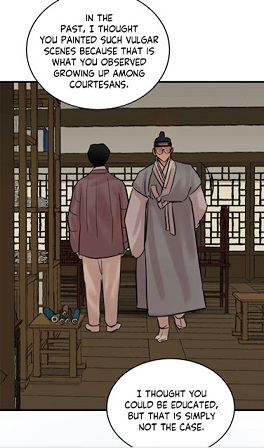 (chapter 40)
  (chapter 40) Since the shed embodies the valet’s betrayal, the lord voiced his abandonment issues there. On the other hand, the library symbolizes the teacher’s abandonment. This is not random. Baek Na-Kyum can not read, the symbol of the learned sir’s negligence. Hence I am expecting a new confession from the artist, like this scene:
 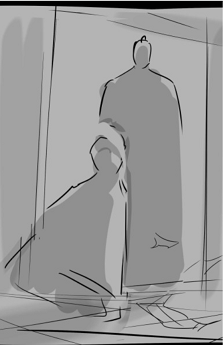 (Tweet) So far, the artist has never spoken ill of the teacher. To conclude, the library is the place where both protagonists will experience a new liberation! For me, episode 108 and 109 are focused on education, responsibility, memories and truth. That’s the reason why I am suspecting that the painter’s words will trigger the lord’s memories so that the verity about his own past will come to the surface.
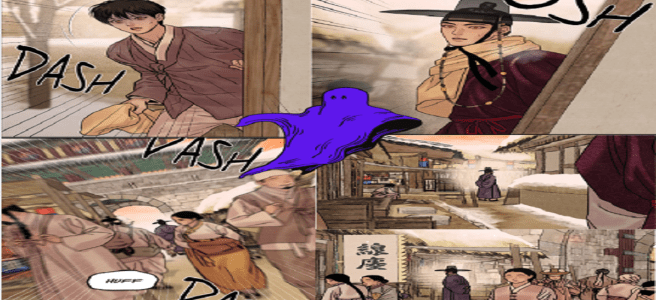
 (chapter 106) strolling through town, they jumped to the conclusion that this must be lord Song! They remembered the recollection from Lee Jihwa.
  (Chapter 83) However, since I have been examining Painter Of The Night so closely, I learned to pay attention to details. Consequently, I recognized very quickly that Yoon Seungho was not chasing one ghost, but he was running after 3 different people
  (chapter 106) impersonating „lord Song“
  (chapter 106) If you look very attentively at the hanboks, you will realize the slight differences. First, the shade of the cloth diverges, then one cloth has a pattern, the other hanbok none. The form of the gat is also a little different, just like the color of the hair diverges. Besides, the readers should keep in their mind that in season 3, we had at least 3 bodies, though I am suspecting 4 corpses:
  (chapter 94)
  (chapter 97)
  (chapter 97) and
  (chapter 101) Thus I come to the following conclusion that these 3 persons wearing the purple hanbok are not the “real lord Song”, the one who tormented the protagonist. In my eyes, he was watching the protagonist from the tower!
  (chapter 106) Let’s not forget that each scene is reflected in each season! And in episode 37, we had this memory from the fake servant:
  (chapter 37) The empty street was the indication that the monarch was present in the city. And now pay attention to the situation in episode 105:
  (chapter 105) Why is the street empty, when it was not the case during the night in episode 69?
  (chapter 69) For me, the pedophile was in the kisaeng house. But let’s return our attention to episode 37.
  (chapter 106) To sum up, for me, the 4th “lord Song” was present in this scene, but the protagonist couldn’t detect his presence, for the other “shadows” were there to divert his attention.
 (Chapter 106) As you can see, they used a prank to wound the artist. Their goal was to incite the painter to return to the kisaeng house. He should cut ties with the main lead, as the latter is a man with a fickle nature. Yes, episode 106 was the negative version of chapter 75.
  (chapter 75) That’s the reason why the couple was sent to the same inn. However, I don’t think that they had expected the painter’s fainting.
  (chapter 106) For me, this is a blessing in disguise.
 (Chapter 106) The latter had to be informed not to send the new clothes to the kisaeng house, but to his own mansion. That’s the reason why Baek Na-Kyum asked this question to the butler.
  (chapter 106) That’s how the schemer and his accomplices knew for sure that their original plan had not worked out. And if you read my previous analyses, you are aware that I had discovered the existence of two tailors!!
  (chapter 45) and 74
 (chapter 74) This tailor is wearing the scarf the same way than the artist‘s. Finally, in episode 64, the manhwalovers could see the face of the second tailor. :
  (chapter 64) In the past, I had already outlined the divergences in the body shape and the clothes, but the most visible evidence is the scarf!! Finally, I would like my avid readers to detect that the tailor from chapter 64 has been calling the main lead master Yoon, and not lord Yoon Seungho. This shows that this man is involved not only in the recent prank, but also in the main lead‘s suffering. He is not recognizing Yoon Seungho as a real lord. The usage of different hanboks is the proof that the tailor is an accomplice in the latest trick. But this also explicates why the tricksters had not planned the artist’s fainting. First, he had been able to run after his lover.
 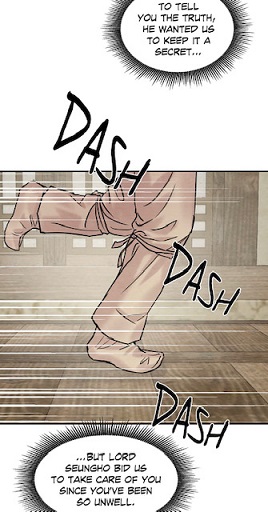 (chapter 105) Besides, this is how Baek Na-Kyum acted, when he saw his lord looking at him:
  (chapter 106) The fake smile from Baek Na-Kyum was hiding his true condition, he was still suffering from PTSD. Nonetheless, for the tailor and the other witnesses, it looked like the artist was strong. Nonetheless, since the main lead had learned in the past to fake his smile, he could detect that his lover was far from feeling well.
  (chapter 106) But there is another reason why they had not predicted such an outcome: the doctor!! They had to ensure that the lord’s path never crosses the physician’s! That’s the reason why the manhwaphiles never saw him in episode 106. He was like a ghost. But there is more to it.
 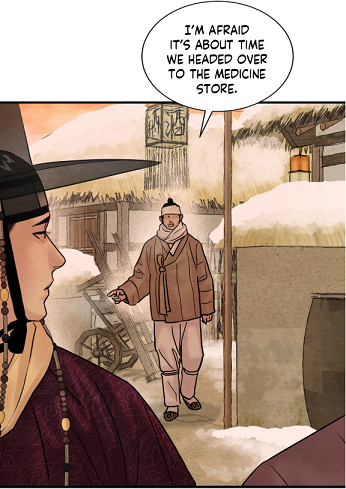 (chapter 106) Yet, in the Spanish version, the butler informs them that it’s soon their turn. This means that they are next to the medicine store. But let’s return to our main observation. Why was the couple pushed to „eat“? For the painter had wounded his hand, the first priority would have been to ask for an immediate treatment. Since the valet mentioned that it was about time to go to the medicine story, the manhwalovers should wonder why it was time. Thanks to the Spanish version, we know that according to the valet, the doctor had been treating other people before indicating that lord Yoon could not receive special treatment.
 (chapter 57) Yes in the kitchen of the physician! Then in a different image, you can the kitchen with the stool and the circle with the shamanism drawing right behind the lord’s back.
 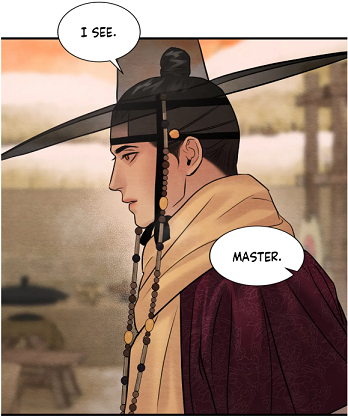 (chapter 106) We assumed that the couple was eating in an inn, but it is true? Finally, in the shelves, the manhwalovers can see small packages hanging around,
  (chapter 106), they look exactly like the medicine Kim fetched in episode 55.
  (chapter 55) Because of these parallels, I started wondering if the couple and the readers had not been fooled in the end. They were actually sitting in the medicine store, but due to the butler’s words and episode 75, the manhwalovers had the impression that the couple was in an inn. And the Spanish version seems to confirm my suspicion. I had already outlined that the furniture and shelves in the library had been switched. So it could be the same with the doctor’s office. Besides, the form of the building reminded me a lot of the house from the physician’s.
  (chapter 106)
  (chapter 74) Once you remove the cupboard from the side, you have a patio where you can eat. Under this new light, it explains why Yoon Seungho would say this to the butler:
  (chapter 106) It is because they were already there! And this would explain why the painter went to the restroom!
  (chapter 106) This coincides to the night of the abduction executed by No-Name!
  (chapter 59) To conclude, there was another ghost in episode 106, the invisible doctor. No matter what, the couple was not supposed to see the physician. Why? It is because he would have noticed the existence of two different doctors. That’s the reason why Kim acted as a mediator!
 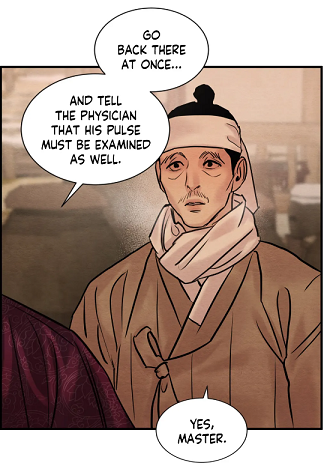 (chapter 106) This was not to help his master and the painter at all. Quite the opposite. He had to cover up his own wrongdoings and help the schemer. Therefore it is not surprising that the valet was confronted with the artist’s fainting!
  (chapter 106) The latter had played a mean prank on Baek Na-Kyum!! Yes, you are reading it correctly. Now, you are wondering when the valet fooled the pure painter. Observe that Kim had joined his master
 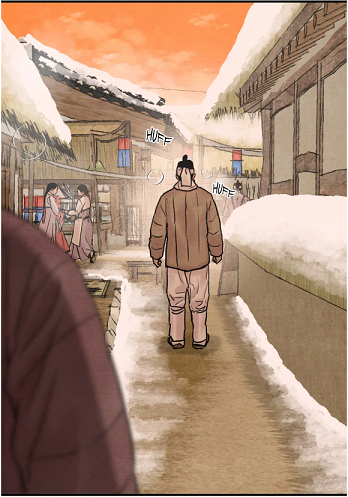 (chapter 106) He had barely moved… maybe run for 4 meters! How could he be out of breath? Besides, why would he scream like that, when the lord was standing next to him?
 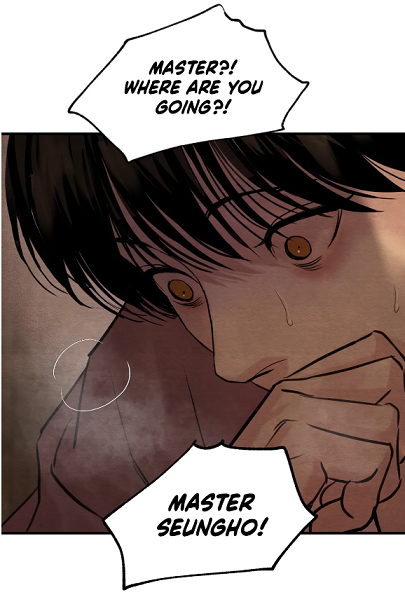 (chapter 106) It is because he needed Baek Na-Kyum to hear his lover’s departure!! Because we see this panel, we assume that the valet was left in the dark, especially after witnessing such a scene.
  (chapter 106) Our brain is trying to fill the blanks. But the moment you realize that Kim didn’t run such a long distance to be out of breath, you will realize that this “abandonment” was staged. This was the reflection of chapter 85, another fake run!
 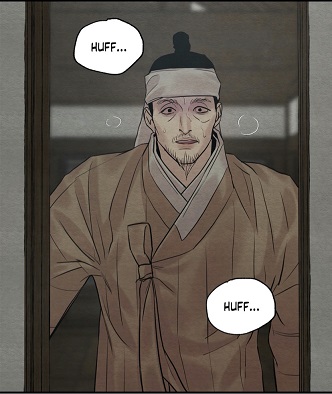 (chapter 85)
  (chapter 86) Thus the butler got punished for his acting. He has now to take care of an unconscious painter.
 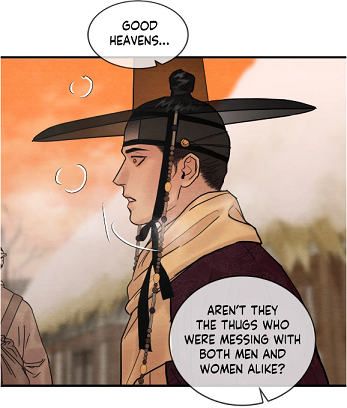 (chapter 106) Besides, I have another evidence that the painter got fooled by the valet. According to my observation, there is always a reflection within the same episode. Since the lord got fooled and was incited to follow the man with the purple hanbok, the artist had to experience the same. However, while the one got scared out of abandonment issues, the other got worried because of “lord Song”‘s obsession! Besides, because neither the butler nor the physician got punished for their crimes (passivity, silence, lies and disobedience), both need to receive their “punishment”. Let’s not forget what Yoon Seungho had said to the artist back then:
  (chapter 58) Kim had usurped his authority, he had made a decision without his master’s permission.
 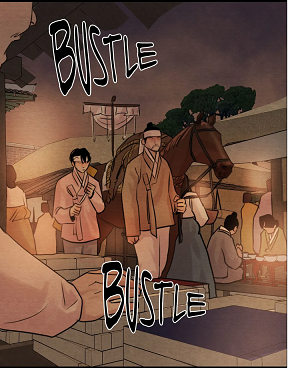 (chapter 24) The gate serves as the indication.
 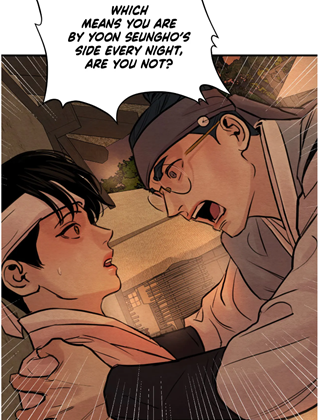 (chapter 24) And in that episode, the artist got dragged twice.
 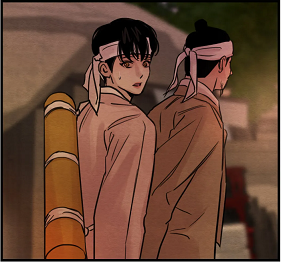 (chapter 24) First, it was the scholar, then the butler. However, in that scene, the butler had lied to the artist, for the noble had never requested to meet the artist in the pavilion. From my point of view, he was still hunting in the woods. As you can see, episode 24 contained all the elements of an abduction, though it was not perceptible. That’s the reason why I am suspecting that Yoon Seungho might think that his lover has been kidnapped again, especially after hearing such horrible gossips. Nonetheless, since the painter fainted, the valet will be forced to take care of Baek Na-Kyum. In addition, observe that the butler brought back the unconscious painter to the mansion, though the doctor was right next to them! This shows that Kim and the physician had not the artist‘s best interests in heart. He should have been treated right away.
  (Chapter 76) Coincidence versus trick! They wished to scare Yoon Seungho, to let him think that „lord Song“ knew about his crime and was about to denunciate him. Yes, in my eyes, the man with the purple hanbok embodies treason and was the reason why Yoon Seungho got arrested and tortured in the past!! Under this new light, it becomes comprehensible why the lord would get so mad at his childhood friend.
 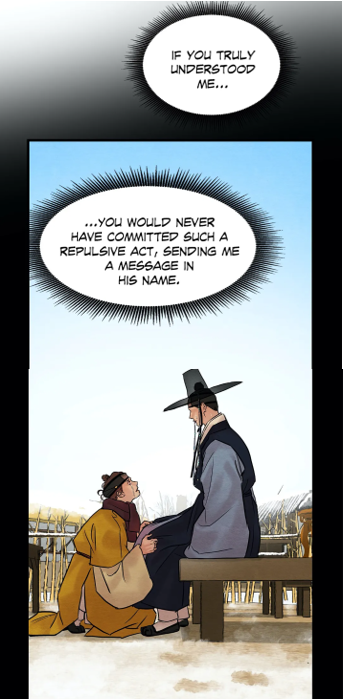 (Chapter 59) But the moment Yoon Seungho’s mother killed herself, it became clear that her son had been unfairly arrested and tormented. So someone had to take the fall for the injustice, the real lord Song.
  the (chapter 82) Nonetheless, there is no ambiguity that in reality the one behind the denunciation was father Lee. But the purple hanbok is connected not only to the arrest and torture, but also to the sexual abuse. Thus the painter had such a memory in the gibang:
  (chapter 102), Lee Jihwa was behind the scheme… and what had Lee Jihwa done in the past? He had sent a letter in his name.
  (chapter 59) Back then, Yoon Seungho assumed that his childhood friend knew nothing… but now, he is seeing the ghost lord Song circulating in town. So he could jump to the conclusion that the Lees have been helping lord Song. Finally, the manhwaworms will certainly recall the red-haired master’s confession, he knew everything!!.
  (chapter 57)
 (chapter 106) And this scene is a reflection of episode 64, where the two women were ignorant about the incident of the previous night.
  (chapter 64) Once again, this proves that the tailor is involved in the scheme.
  (chapter 106) The Spring Poem is actually reflected in this scenery:
  (chapter 92) Yet this doesn’t end here. Episode 92
  (chapter 92) is the positive reflection of episode 106:
  (chapter 106), she contradicted her statement right after.
  (chapter 106) If nobles were involved in this, why did they kill the son of lord Shin? Besides, let’s not forget that Yoon Seungho never ordered the fire in the shrine and he never killed lord Shin! This means that he is innocent. That’s the reason why I come to the conclusion that contrary to their expectation, the lord won’t decide to leave the painter behind because of the imminent misfortune! From my point of view, Yoon Seungho could ask his lover to paint a lucky charm on their house, the tiger!
  (chapter 105) That way, the artist would feel that his master needs his help and talent. Moreover, I have the feeling that the main lead will go to the authorities and ask for their assistance.
  (chapter 103) Why are such rumors circulating in town and who are the witnesses?
  (chapter 103) As you can see, the schemers are no longer able to control Yoon Seungho and his lover, for both are supported by the gods. Chance stands on their side!
  (chapter 100)
  (chapter 104) Though there is a manhunt, where is he?
  (chapter 106)
  (chapter 98) To conclude, while the schemers thought that due to his crime, Yoon Seungho would lie low and cut ties with his lover, due to their meddling, they achieved the opposite. The lord will request an investigation… something he has never done before. He could even denunciate Lee Jihwa
  (chapter 67), that way he can escape punishment. This means that Black Heart’s last confession (and lie) could help the lord to protect himself and his lover. Finally, if Yoon Seungho were to mention the purple hanbok to his lover, the latter’s memory could get triggered and he could remember this night:
 (chapter 105) „Thank god, he didn’t see nor hear a thing about that awful matter“. This is what Heena said in the original version. [Here I would like to thank my follower @katamins again for her help]
  (chapter 105) He desired to spare his heart. To conclude, “that awful matter” is referring to the whole prank and its consequences.
 (Chapter 97) At the same time, the idiom includes the staff‘s tricks as well: the corpse in front of the gate and the maids‘ badmouthing
  (Chapter 104) However, he had been silenced by his lover, when the latter suggested to him to view everything as a nightmare. The lord made the mistake not to listen to the victim and witness.
  (chapter 105) With such a contrast, the manhwalovers can detect the link between ignorance and absence of memories. To conclude, in both versions, the main lead is “lying” out of ignorance. This is the positive version of “ignorance is a blessing”. Hence the noona thinks herself safe.
 (Chapter 99) It was clear that her brother would meet the noble, as their meeting didn’t surprise her. She was more upset that Baek Na-Kyum was unconscious.
  (chapter 99) However, her question „What’s wrong with Na-Kyum?“ divulges her hypocrisy and acting. How could she not realize that her sibling had been beaten?
  (Chapter 99) His head was bleeding, and the black guards were carrying sticks. It was clear that his state was not caused by an illness. To conclude, the calling “lord Jihwa” is the proof of her complicity, though in front of Yoon Seungho it serves as an excuse to portray herself as a victim.
  (chapter 105) Thus I deduce that Heena thinks, the painter could not witness her acting in front of the scholar’s house, for his head was turned around and he was not moving. She feels secure concerning that night, while I am expecting the opposite. Nonetheless, her past behavior in the kisaeng house represents a source of danger for her. That’s the reason why she has to hide the “attempted murder” from her brother. The moment Heena mentions that she has been hurt, the painter won’t believe her. Why? It is because in the kisaeng house, he has not forgotten her words:
  (chapter 97) Even if she was “fooled”, the artist can only reproach her stupidity. Remember her harsh words, she had called him stupid:
  (chapter 97) She had helped Min, and she can not claim ignorance. As you can see, Yoon Seungho was encouraged to hide the “attempted murder” from Baek Na-Kyum for selfish reasons. Therefore it is no coincidence that when the lord visited Heena, he made sure that his lover wouldn‘t see Heena in bed.
  (chapter 105) She has now the perfect excuse to avoid nobles. She has been hurt, hence she can not work. The lord never questioned her attitude, for he wished himself that the painter would take a rest and remain in bed.
  (Chapter 104) This explicates why later the lord was hugging his lover under the cover.
  (Chapter 104) Hence I conclude that Heena must have thought the same way about Yoon Seungho. „Thank god, he didn’t see or hear a thing about that awful matter“. He has no idea about her altercations with her brother in the kisaeng house. It is important, because our beloved seme has the impression that the noona has her brother’s best interests at heart, but actually he is wrong. In my opinion, the relationship between Heena and his lover serves as a mirror to his relationship with Yoon Seungwon. So far, the young noble doesn’t suspect his brother to have betrayed him. Note that he blames his father more than his younger sibling.
  (chapter 105) Yet, this incident was presented as Yoon Seungho’s memory. This panel could be used as an evidence that my theory, Heena was present next to the shaman’s shrine during the bloodbath, was wrong. Nonetheless, this image didn’t make me change my mind. Why? I paid attention to details and judged this rescue as “fake” again. The servants had a drop of sweat on their face, the symbol for deception. Secondly, the kisaeng was wet, while the staff’s clothes weren’t damp. How did they save her then? Besides, where are the foot prints? Moreover, where was the head cover?
  (chapter 99) Finally, her hands and feet were not tied. So where did the items go? Since we saw her “execution”, we are the witnesses, and as such we know the truth about that “awful matter”, but it is not the case for the lord. This image contains so many errors, hence it can not reflect reality.
  (chapter 103) Hence he could have never been outside the mansion. That’s how I realized that the author was presenting us a false memory. This means that the manhwalovers are facing an implanted memory. But how could this happen? First, false memory is quite normal and is often of no consequence. But a false memory relayed during criminal testimony might lead to the conviction of an innocent person. As the manhwalovers can detect, it represents a serious problem.
  (chapter 58), it makes him particularly vulnerable to false memories.
  (chapter 104), the lord and even the readers imagined to see medicine in the white bowl!
  (chapter 105) Besides, the author had always connected the drug with the tray.
  (chapter 23) As you can see, the readers interpreted this scene due to associations. Nonetheless, like mentioned in the previous analysis, the different color and the traces on the edge were the evidences that it was ink.
  (chapter 36) Besides, Heena was in bed indicating that she was still weak. The circumstances led people to have a different perception of “verity”!! Only through the mind’s eye, the manhwalovers can detect that this scene was staged.
  (chapter 103) The protagonist projected his own thoughts and emotions onto one servant: shock!
  (chapter 61) This was interference by excellence. Besides, emotions can affect your memories. Since the lord was so under shock after witnessing the painter’s unconsciousness, it is not surprising that he imagined to have witnessed this scene. At the same time, when he left the shrine in trance, he could have overlooked the presence of a third person… similar to Lee Jihwa next to the shed. That’s how he doesn’t recall anything from that night except his crime. He didn’t see and hear the person by his side. Where is the sword? Where did he get the hanbok from?
 (chapter 102) Therefore it is not astonishing that he imagined a similar scenery.
  (chapter 1) This shows that the artist had only heard his name without seeing his face before. This explicates why the main lead’s gaze and facial expressions were similar
  (chapter 1)
  (chapter 1)
  (chapter 103)
  (chapter 104) My avid readers can certainly recall the rule I had detected: each chapter will be reflected in the next!
  (chapter 94) Furthermore, the painter is associating the learned sir to the moon and as such the night.
  (chapter 94) Thus I am now suspecting that this image
  is a false memory. But I have another reason to think that the painter’s idolization was more the result of “brainwashing” and as such “false memories”.
  (chapter 105) How can she date this incident so precisely? The moment I read her testimony, I discovered that in episode 94 the author had never shown us the painter crying!
  (chapter 94)
  (chapter 94)
  (chapter 94) It was, as if the noonas had never been informed about the painter’s suffering and tears. This shows that Heena has been hiding many things from her colleagues. But there is more to it! The manhwaphiles saw the artist’s tears in his childhood.
  (chapter 68) But here he was much older!! Under this new perspective, I realized that the following image could have been a false memory:
  (chapter 68) Heena was misremembering that night, and she was misattributing the painter’s tears. In other words, she was confusing two incidents.
 (chapter 105) It is the same facial expression, though the redness around the eyes is more pronounced. This observation confirms that the noona’s memories in the kisaeng
  (chapter 86), so the painter must have made a similar experience. In my analysis “
 (chapter 105) He had run after his lover in socks. While in “Baek Na-Kyum’s foot”, I thought that this memory was true, I come now to a different signification. It was a false memory in order to hide a crime related to Heena. I would like to outline that in the kisaeng’s comment, we have the notion of “shame” and as such “guilt”. First, I thought of rape, but then it could be much simpler. The painter could have witnessed his noona having sex with the learned sir. But because he was too young, he misjudged the situation… as a virgin, she had to bleed. Because he saw blood, he imagined that the learned sir had hurt Heena. This would explain why the artist was afterwards anxious around the teacher. One might think that this is not terrible. But let’s not forget that as a kisaeng, she can not have sex like that.
  (chapter 105)
  (chapter 96) A similar situation had happened in the past.But because of her brother’s reaction, his huge tears, she got scared.
 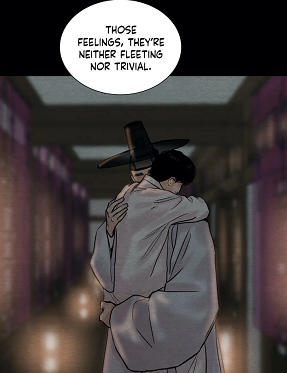 (chapter 68) Through suggestions, she had been able to convince her brother that the learned sir was a nice person. This explicates why the caresses and hugs were used to silence the artist. By repeating to her brother, he liked Jung In-Hun, he came to develop such feelings. The kisaeng’s statement implies that the admiration for the teacher was not constant.
  (chapter 46) A change of heart versus “eternity”. This shows that the painter’s decision to go to the learned sir’s house was never his choice. He had simply followed Heena’s suggestion. She was definitely distorting his past. Furthermore I detected a strong connection between love and memory.
  (chapter 94) If it is a loved one, then it can only be a good memory. Therefore it is not surprising that by saying constantly saying that the painter likes the scholar, he is repressing the bad memories with the scholar (the beating in episode 34, the betrayal in chapter 29, his words in the library and his reproach about his job). So far, he only mentioned one negative incident.
 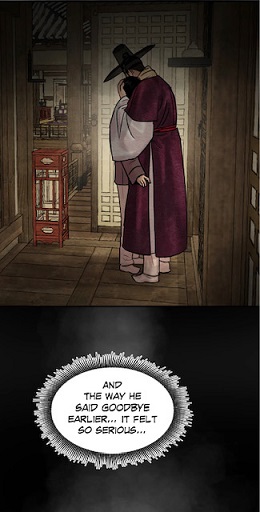 (chapter 105) In the original version, this is what the artist thought:
 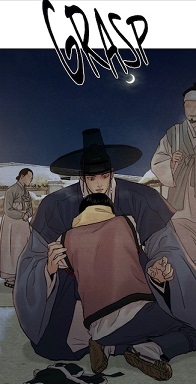 (chapter 76) So while the painter was following his lover, the latter turned around and hugged him. Afterwards, he asked him to go to his noonas, for he needed to talk to Heena. Moreover, contrary to Yoon Seungho, Baek Na-Kyum paid attention to time. He was not lost in thoughts or had lost the sense of time
 (chapter 105) But the latter acted, as if his hand was not wounded.
  (chapter 105) He ignored his physical pain and heartache.
 (chapter 105) This is important, because the stumbling symbolizes the intervention of the gods… We have the perfect example at the end of season 3. The lord fell on his knees in front of the scholar’s house, hence there is a hand print on the snow.
  (chapter 100) That’s how he refused to view Lee Jihwa as the murderer of his lover, Baek Na-Kyum”. YES, the falling is the real manifestation of CHANCE! How so? I would like the manhwaphiles to keep in mind that chance is the antonym of trick and scheme! The latter are connected to plan and organization. Thus I come to the conclusion that the noble will decide to go to the doctor’s office in order to treat his lover’s hand.
  (chapter 57) he was feverish so that he couldn’t pay attention to the physician. Besides, the man never remained by his side. Finally, in episode 74, the man never left the office!!
  (chapter 74) I conclude that Yoon Seungho never saw the physician for commoners! Besides, I doubt that he remembers him from his childhood. But this is not the same, when Baek Na-Kyum was ill. He met the other doctor twice.
  (chapter 33)
  (chapter 103) On the other hand, the artist assumes that the man in the office is Yoon Seungho’s doctor!! He heard his confession:
  (chapter 57) There exist two physicians in the city at least. That’s how a part of the truth will come to the surface! And who had fetched the doctor?
  (chapter 103) The staff… I would like to outline that in this panel, Kim was no longer seen next to the couple.
 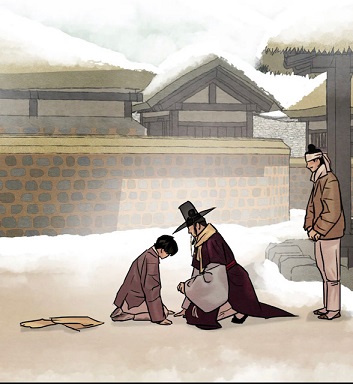 (chapter 105) So where did he vanish? Probably to the mansion, for he had to warn the domestics that the artist would be returning! But if he left the couple behind, this means that he can’t witness what Yoon Seungho and Baek Na-Kyum will do next. And if they don’t go to the doctor, there is no ambiguity that the main lead will send for the doctor again. But according to me, the man disappeared.
  (chapter 103) To conclude, I am expecting that Yoon Seungho will make a huge discovery in the next episode… just like the painter did in the gibang.
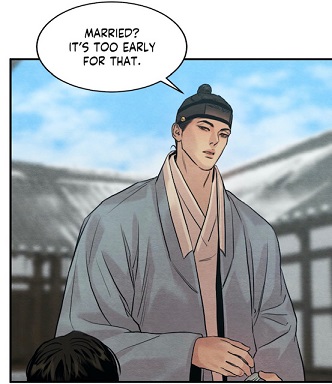 , as Baek Na-Kyum was still viewed as a boy. Moreover, according to social norms, it was impossible, for his lover is a man. Then in front of Yoon Chang-Hyeon, he made fun of his father.
  (chapter 87) That’s the reason why I consider the love session in chapter 88 more like a relationship between a sponsor and an artist.
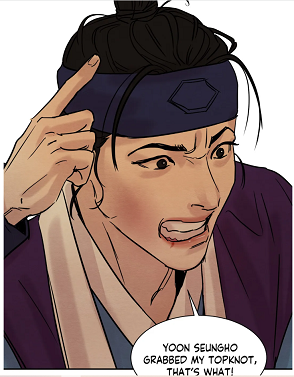 (chapter 9)
 (chapter 1) This means that no one had witnessed the wrongdoing committed on the anonymous lord. However, it is important, because it exposes how a person committing a wrongdoing could escape scolding and punishment, even from the readers. There was no witness! Only an attentive reader could detect this. Hence you have the explanation why Yoon Seungho suffered for so long. There was either no witness or the persons chose to close an eye and remained silent. Since it was the negative reflection from Baek Na-Kyum’s slap and the main lead had used his right hand
  (chapter 11), I deduced that the culprit was left-handed. That’s how I could identify the culprit, lord Min. The lord was in reality left-handed. We could observe this in chapter 8
 , episode 19
  , chapter 33
 and episode 43
 , but also in episode 76
 , in chapter 96
  , in episode 100
 and finally in chapter 102
  ! Yet, in other occasions like in episode 33
  or 43, or 52
 , he used his right hand! Thus one might argue that Min was simply ambidextrous. However, I can prove 100% that Black Heart is left-handed!😮 The evidence is the usage of the bow.
  (chapter 22) This is how a right-handed man shoots an arrow. On the other hand, we never saw Min using the bow. The bird was already wounded by the arrows, when the scene of the second hunt took place.
  (chapter 41) However, the manhwaphiles can discover the verity thanks to one detail: the bag of arrows.
  (chapter 22) As you can see, the bag is carried on the right side, but the arrows are almost touching the left shoulder. They need to be on the other side, since the scholar needs his right hand to grab the item. And now compare the position of Min’s bag. It is inclined in the opposite direction, hence the arrows are visible on his right side!
 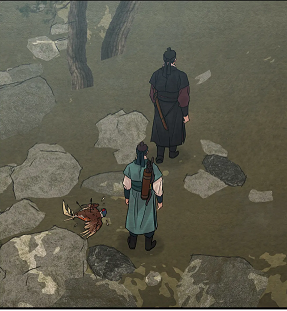 (chapter 41) Thus the noble is carrying the bag
  (chapter 41) differently from the painter too.
 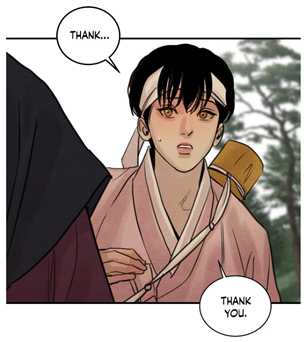 (chapter 22) Under this new light, it becomes comprehensible why Byeonduck never showed the Joker’s hunting skills. People would have noticed that he is left-handed immediately. She made sure to hide this important fact, thus within the same chapter Min was often portraying as using both hands. In episode 43, he employed his left hand to pour the alcohol in the glass
 (chapter 43), when he gave the drink to Lee Jihwa.
  (chapter 9) Here, he was still present, but even before the end of the sex session, he had already vanished.
 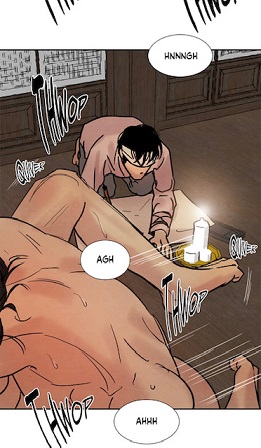 (chapter 9) Finally, when the noble with the mole visited Lee Jihwa, the latter claimed that he had spent a long time at Yoon Seungho’s.
 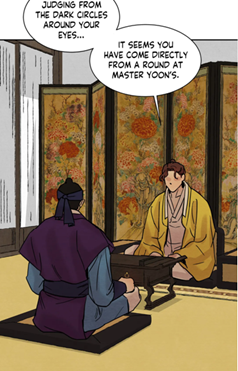 (chapter 9), and his friend never denied it. As you can see, the characters made sure to confuse the readers with the change of the chronology. As you can see, it took me a long time before noticing the bruised face (only during season 3), then to bring up the conclusive evidence that Min was the culprit of the slap. Then in the shaman’s house, he took the dildo with his left hand, because he was angry and frustrated.
  (chapter 100) too. This shows that he could barely control himself here. And once he faced the main lead’s sword, he got so scared that he showed Jung In-Hun’s glasses with his left hand again.
  (chapter 92) The irony is that in this scene, the main lead employed his left hand too, the positive reflection from the night in the pavilion (chapter 43). While here it was to bring him back to reality, in the pavilion, the Joker had the opposite intention: to lure Lee Jihwa to believe in illusions.
 (chapter 74) They announce the future events, though the information is not given properly. On the other hand, since they are memories either, this signifies that they contain insight about the lord’s tragedy. Thus I noticed that the anonymous perpetrator used his left hand to grab his hanbok!! I deduced that the perpetrator in the past is also left-handed!! Secondly, since this vision can also be seen as the announcement of the painter’s second kidnapping, this is no coincidence that Byeonduck created such panels during the painter’s last torment.
 (chapter 99) However, in the shaman’s temple, Black Heart grabbed Baek Na-Kyum with his right hand. He was trying to manipulate the artist, he was acting. He was not showing his true self. Yet, the vision was revealing the truth: the future mastermind of the last scheme was in reality left-handed!! It didn’t matter, because at the end, the main lead was able to discern the truth. He sentenced Black Heart, for he believed that he had killed his loved one! That’s how I realized why the author would focus so much on the hands and on the distinction between unconscious and conscious! The hand in Painter Of The Night represents the crucial clue to identify the culprits!!
  In season 1, we had the hands in the illustration. The hands were revealing the crime committed against the main lead. The latter was totally passive in this picture. The hands are touching and unclothing the immobile man. It also shows that Yoon Seungho was at the center of the conspiracy, in the past and in the present! The painting in the background indicates the presence of a hidden painter. Thus Baek Na-Kyum was not drawn in the cover. The painter of the night was in truth someone else, the painter from the past! Nevertheless, the main lead was looking at the readers, indirectly at Baek Na-Kyum, the young painter of the night. This describes the arrival of Baek Na-Kyum in his life. Striking is that the painting in the background was destroyed… indicating that the portrayed relationship was no longer existent. This represents another clue that the lord’s suffering is linked to a previous relationship. Then in season 2,
  the author revealed Baek Na-Kyum as the painter, who had now become the target of the plot. Yet behind him we see Yoon Seungho’s foot. The latter symbolizes the main lead feared to get close to him, but he wouldn’t leave his side. Moreover, this corresponds to the lord’s impulsive decisions, he let his foot guide him. Thus during the first night of the failed gangrape, he walked towards the study and stopped unconsciously, when he was next to the room.
  (chapter 53) Due to his strong denial, he was strolling not realizing that his feet were under the influence of his subconscious. And it was the same, when he opened the door with his foot at the Lees’
  (chapter 67) Nonetheless, I believe that the author had another reason to draw the foot in the cover. The foot prints are the evidence of the crime, and as such the deceptions and the culprits.
  (chapter 59)
  (chapter 60)
  (chapter 61) The shoes were the clues how to recognize the perpetrators and accomplices. That’s why I compared these feet
  (chapter 59) with those
  . (chapter 66) My avid readers are already aware of my theory. For me, we have two kidnappers, and one tried to kill the artist! To conclude, Byeonduck left the clues how to unveil the mystery from the past and the present in the illustrations of each season. The paper in the second cover
  (chapter 56), but also to the theft of the painting
 (chapter 56) and the painter’s break! At the end of season 2, he was no longer painting and in the beginning, he had also stopped due to his heartbreak. Simultaneously, we have the presence of water which serves as a connection to season 1 with the ruined painting and to season 3 with the well and drowning. The dark shades were an allusion to the lord’s darkness and suffering. The latter would come to the surface. However, since the cover only showed the lord’s foot, it exposes that the lord would not divulge his traumatic past.
  (chapter 78) In season 3, this time the main leads were facing each other, they were recognizing each other: their true self! But this stands in opposition to the deceased people without identity!
  , the back
  (chapter 44) And the nightmare exposed the number of persons involved in his suffering: 4 men!!
  (chapter 99) That’s the reason why I am anticipating a cover with the gibang. It would be the perfect place to find closure for the couple. It is a place where both suffered. Moreover, I think, belongings should serve as an evidence for the identification of the schemers and accomplices. Remember that we had the glasses as the evidence of a murder in season 3, yet I am sensing that the possession should serve to identify the perpetrators from the past and the present. Since the clothes were used to confuse people in season 3, I am assuming that in season 4, they should help to recognize people, but at the same time, it is totally possible that our main leads decide to employ the same method to fool the schemers and accomplices. And now, we have the cover for season 4. Both protagonists are not only facing each other, but also touching each other. They are no longer hiding their emotions and thoughts.
  This image represents the opposite to the other seasons. At the same time, the author is again referring to the bedchamber indicating that this place is strongly connected to the protagonists’ suffering. On the other side, since the painter is wearing a silk white shirt, it implies that he is not a commoner. This panel indicates that the main lead was able to the true owner of the study and even bed. However, due to the tears, the beholder can sense that this season will be painful as well. Striking is that in the cover, they were either alone, or they were just looking at each other, hence they didn’t pay attention to their surroundings. Consequently, they couldn’t sense the presence of a plot and the schemers. This indicates that the couple is still not prepared to face new schemes. To sum up, the author selected such covers because she had planned to leave clues there about the mystery! But wait… I had outlined that the person who grabbed the young master Seungho was left-handed, and he played a huge role in the main lead’s downfall and suffering! But who is left-handed in this story?
  (chapter 12)
  (chapter 56). But then I noticed that he carried his master on the left side.
  (chapter 74). Furthermore, don’t forget that in his nightmare, the author exposed the presence of plates with 3 candles
  (chapter 74) which were also used in the shaman’s house. Finally, in this picture, we have a right-handed person.
  (chapter 74) So Kim could have been the one silencing him with his hand.
 (chapter 86) Hence his right cheek was red and he had a wounded lip.
  (chapter 86) On the other hand, at the doctor’s office, he employed his right-hand to keep his son by his side.
  (chapter 57). Why is there this change? The turning point was the prank in the bedchamber.
  (chapter 83) During that scene, the father slapped his son with both hands. First with the right
 (chapter 83), then with the left! Striking is that the author never showed, when the patriarch employed his left hand. The readers could only hear the sound, and see the result of the beating. Both cheeks were wounded. From my point of view, he was conditioned exactly like Min! He was not allowed to use his left hand, but the angrier he got, the less he could hide his true self: he was left-handed and he was a stupid and brutal father!!
  (chapter 37) On the other hand, I am doubting that Byeonduck will introduce many new characters in season 4. That’s the reason why I believe that the man with the pipe is the real schemer, as the pipe was in the annex. Since Min grabbed Baek Na-Kyum in the shaman’s house, I am more inclined to think that the perpetrator grabbing the young master Seungho by the collar was just an accomplice and not the mastermind. In other words, he was the helping hand.
 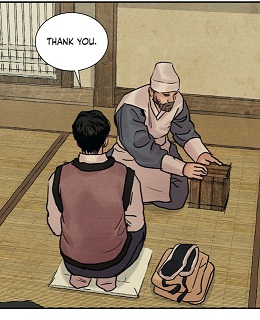 (Chapter 74) I don’t believe in hazard. Besides, the lord had his nightmare during the same chapter. This means that he could have leaked this information about Yoon Seungho to an outsider, like he did with the painter. As the manhwalovers can grasp, the physician is more suspicious than before.
  (chapter 92) Besides, observe that the angry man put the brush on the left side.
 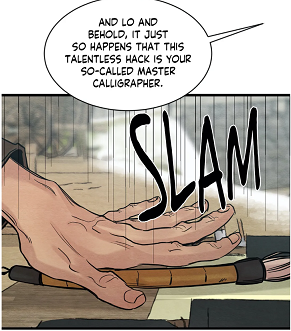 (chapter 92) The man is left-handed! And what did Yoon Seungho do?
  (chapter 92) He grabbed him by the collar! Exactly like in the dream!!
  (chapter 44) or patio of his mansion, similar to Heena’s. And since the young main lead suffered so much, it is normal that he doesn’t have such believes. IT is also possible that the young master Seungho played a prank which made the man angry and humiliated. As you can see, I come to the conclusion that jealousy and resent were the reasons why he got involved in the first place. Moreover, we shouldn’t forget that the calligrapher is linked to the kisaengs! He even recognized Baek Na-Kyum, as he called him a peasant.
  (chapter 92) Yet, he was either perceived as servant, a noblewoman or as a sir so far! He was never recognized as a peasant. Since he could identify the artist, it is also possible that he was also able to identify Yoon Seungho. But he thought that he was not well educated after living as a male kisaeng for so long. From my point of view, the man could have decided to get revenge on Yoon Seungho and participated in his abduction and gangrape!! Thus his karma was to lose his home!
  (chapter 91) The fact that Yoon Seungho grabbed him the same way than in the nightmare is not random. It was, as if he was getting justice. Honestly, I am more and more suspecting that in the past, Yoon Seungho got raped by commoners! Naturally, I have not changed my mind that the king was behind this plot: to get revenge on the Yoons! Who benefitted the most from the crime? Definitely the king, as he was able to ruin their influence.
  (chapter 39), the other only recognizes him as master Yoon.
  (chapter 83) disguised himself and hide his true identity behind “lord Song”. But is he the king or someone else? He was definitely a pedophile, but since we can’t see his face, it is not certain that it was the king.
  (chapter 86) Let’s not forget that in season 3, clothes were used to deceive Yoon Seungho, and the authorities played along. Besides, as the painter had become the love interest of Yoon Seungho and Black Heart, it is very likely that in the past, the victim was exposed to two different abusers, but they all hid behind the name: lord Song. Note that during this feast, one man had a moustache beard which is in Painter Of The Night the sign that he is no yanbang, not even chungin, the upper-middle class. He could be a rich merchant. Just because they are all wearing hanboks
  (chapter 22) This theory of the participation of a merchant got even reinforced, when I made the following discovery. The wooden boxes in season 1 were present at the tailor‘s shop!!
  (chapter 39) Thus I am deducing that the barn in season 2
  (chapter 51) could have belonged to the tailor or the owner of this shop. And note the couple was in the same position than with the kisaeng with No-Name in episode 51!
  (chapter 51) This was the negative reflection from episode 39: no penetration versus penetration, no interruption versus interruption, no rumor versus rumor etc. And this contrast clearly displays that the tailor shop is involved in Yoon Seungho’s suffering. And the best evidence for this is the nightmare. The main lead’s clothes had a design.
 (chapter 57) So in this short essay, I would like to present my new observations and interpretation concerning this intriguing man.
 (chapter 57), as it resembles a lot to the ones from the yangbans.
  (chapter 67)
  . (chapter 86) His beard is so different from the commoners’.
  (chapter 45) This is important, because it reveals that the doctor belongs to a different social class: Chungin, the upper-middle class.
 (chapter 57) He is the only one who portrayed the protagonist in a positive light. Why? In my eyes, it was to gain the painter’s trust. That way, the doctor would appear as impartial and neutral. Thus he said the truth first in order to divert attention from his own actions. He had been the one supplying the drug to the butler.
  (chapter 57) I had already criticized the doctor in the past, for he kept giving the medicine to the valet, and never made the connection to his “hot-headed” temper. He appeared as quite stupid. In my eyes, he already appeared as a passive accomplice, but mainly due to his lack of discernment. He would trust the butler too much. Thus in the composition „the purge“, I had predicted his involvement in a plot which would bring to light his complicity.
  (chapter 57). This shows that right from the start, he was already putting the whole blame on the elder master Yoon. That way, the physician was avoiding to become responsible. He had been giving the drug to the butler for a long time, while claiming that he had not been able to diagnose the illness. Besides, we shouldn’t overlook that in this chapter, we only have the physician’s version!! We never heard the testimony from the father. Just because we saw the bruises and the hand on the main character’s neck, this is no real guarantee that the father said this to the doctor.
  (Chapter 57) Yes, it was to protect himself!! He was diverting the painter‘s attention. From that moment on, I could no longer judge him the same way. He was now an active and smart accomplice, who would utilize innocence, truth and knowledge to his advantage.
  (chapter 57) However, the office is actually far away from the mansion. (For more read the essay
  (chapter 55) But like I have always pointed out, Yoon Seungho had no idea about the drugs and medicine. He was totally left in the dark, for the valet would call the drug ” medicinal tea”.
  (chapter 35) He employed an euphemism. This truly shows that the doctor and the valet were partners in crime, both accomplices due to their passivity, knowledge and silence. Nevertheless, I don’t think that the physician was directly involved with the kidnapping and assassination plot. The conversation between the valet and the physician displays the lack of honesty coming from Kim.
  (chapter 63) He felt bound by secrecy to the bearded man. On the other hand, this incident must have worried him, as it had taken place at his own mansion. Thus he could get into trouble. Kim realized that he needed to reassure the doctor. If the latter started speaking, he could get into trouble, for he had left the propriety during that night. He had no real alibi. Hence the valet visited the doctor during that night, but he never threatened him.
  (chapter 65) The doctor believed that the moment someone talked, someone could take the fall. Observe that in the yard, the butler followed the physician’s advice: he should say nothing.
  (chapter 65) This truly exposes that the doctor is not just a naive man, but an accomplice not only due to his silence and passivity, but also due to his own manipulations. He described himself as a concerned observer who had done nothing wrong. But no, this is not true, as the drug is the evidence of his participation. Who paid for the drug/medicine in the end? Since the elder master Yoon was no longer living in the mansion, the valet was the one responsible for the expenses. I doubt that Yoon Seungho would take a closer look to the accounts. Then when he said that he only saw the protagonist twice
  (chapter 57), this doesn’t mean that he was not involved in the main lead’s suffering. He could have affected Yoon Seungho’s life differently. We have the perfect example in season 3: he treated the butler
  (chapter 84) But like I pointed out, who gave the aphrodisiac to Lee Jihwa? This is a medicine!! To conclude, the physician was involved in the main lead’s suffering, though he only met him twice.
 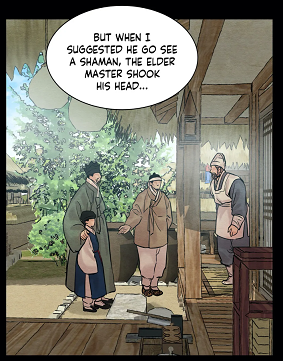 (chapter 57) But since my theory is that Kim was a shaman, this signifies that he should have recognized Kim as the shaman!! In that case, I deduced that the physician had been lying to the elder master Yoon by omission. Naturally, it is also possible that the father had hired the shaman, but out of fear for his reputation, he acted, as if he had no idea about the butler’s true identity. In other words, all three men acted, as if they knew nothing. This would explain why all the characters had no eye in the last picture. Anyway, because of my latest theory, I reexamined the physician‘s statement and found more incongruences
  (chapter 57) Here he doubted the elder master Yoon’s words, for he stated as a fact that the young master Lee Jihwa was not mentally sick. Keep in mind that according to the doctor, the protagonist was described as someone suffering from a mental illness. And this detail caught my attention: the physician took the Lees’ side. Furthermore, the patriarch Lee was thinking similarly than the doctor: the shaman and the mental illness.
 (chapter 82) Finally, I would like to point out that in that chapter, the physician was mentioned too, and this next to the patriarch Lee.
  (chapter 82) Thus I believe that the physician’s fate is linked to Lee Jihwa and his father.
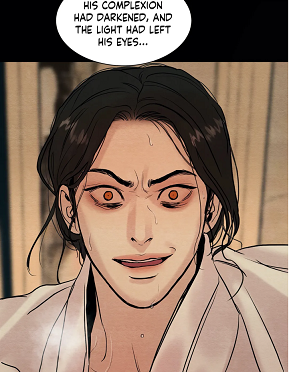 (Chapter 57) Finally, the manhwaphiles should detect that the doctor never mentioned the presence of the servants in the bedchamber. Both were restraining the wounded lord.
  (Chapter 57) This is also no coincidence that he didn‘t point out the absence of the elder master Yoon during the second visit. He couldn‘t, because his tactic to put the whole blame on the patriarch would have totally failed. And this leads me to the following observation:
 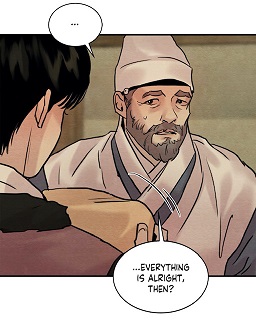 (chapter 74) The doctor was not honest here either. Exactly like in episode 57, he was faking his worries towards Baek NA-Kyum. First, we have the presence of the drop of sweat on his cheek, a sign of dishonesty, but more importantly, his question was just theoretical, he was influencing the painter. The latter just needed to agree. He hoped that the artist would never bring up the incident in his mansion, and as such would wonder about his whereabouts and his responsibility concerning the kidnapping. At the same time, he could have asked this with the hope that the painter would blame the protagonist for his misery. He would use the painter‘s suffering (the unfair judgement leading to his imprisonment) in order to divert attention from his own wrongdoing: his silence, his passivity and his lack of commitment. He never tried to look for Baek Na-Kyum‘s vanishing. He never felt responsible. But he had to give up, because the artist was truly ignorant.
 (chapter 74) He never made any reproach towards the main lead.

 (chapter 46) This was actually implied by Heena’s words and gestures, yet I had already questioned this, for Heena appeared as dishonest. Now, it is time to expose my new interpretation concerning Baek Na-Kyum’s eviction from home.
 The latter had given the poetry referring to exit to the painter as a farewell gift. Why was the lord thinking of Jung In-Hun in that moment? It is because he had read the letters from Heena and as such her accusation against him. He had killed the learned sir, hence in the lord’s mind, it was only a matter of time until Baek Na-Kyum would bring up the subject and decide to leave him. The letters are not destroyed, for he asked this to the painter:
  (chapter 94) Yoon Seungho had two reasons to expect such an outcome. First, it was related to Yoon Seungho’s offer to Baek Na-Kyum.
  (chapter 44) Secondly, Baek Na-Kyum had already showed to the main lead that he could leave him at any moment.
  (chapter 85) Finally, what mattered to the artist the most was the lord’s love and trust.
  (chapter 85) He believed in his affection while thinking that Yoon Seungho would keep his promises. But if there was a slight doubt about him, in Yoon Seungho’s mind, the painter would choose his noona over him, like he had experienced it in the study. To sum up, in the gibang, the lord was fearing the artist’s departure. Moreover, when the painter confessed his love to the noble, he was also leaving the scholar’s side. His path was no longer following the teacher’s. Thus when he said this
  (chapter 94), he was actually biding farewell to Jung In-Hun. He was moving on. Finally, if you include these panels from chapter 94,
  (chapter 68). She let her brother hear the laughs from the younger masters. It looks like she is consoling her brother, yet she is not, for she is not embracing him. She is grabbing him by the shirt which reminded me of this gesture:
 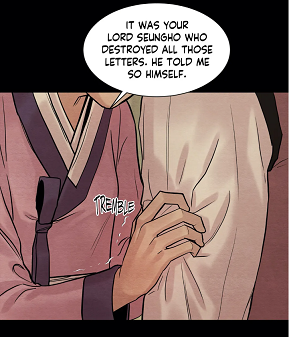 (chapter 97) Hence I deduce that this scene in the gibang (chapter 97) is a reflection of the incident in the painter’s youth.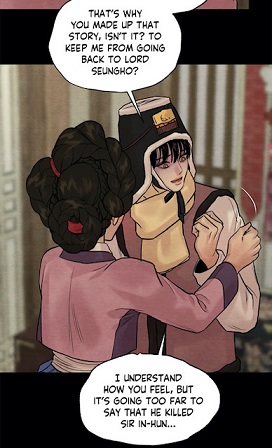
 (chapter 65). Thus she gave more the impression of being righteous and truly concerned.
 (chapter 82)
 But there exists another style of moustache beard.
 Striking is that Kim is also wearing such a moustache beard.
 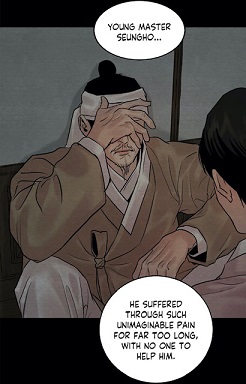 (chapter 87) However, so far in the story, this type of moustache beard was only present among commoners and not nobles!!
  (chapter 45)
  (chapter 45)
  (chapter 78) Hence I started suspecting if these two persons were truly nobles in the end.
  (chapter 99), Min was cosplaying Lee Jihwa, the guards were covering their mouths, Baek Na-Kyum had been wearing a expensive scarf and a headgear for noblewomen,
 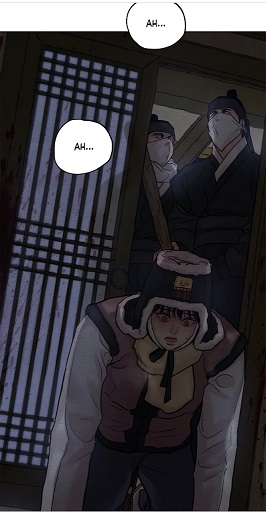 (chapter 99) so that he had been mistaken for a young master.
 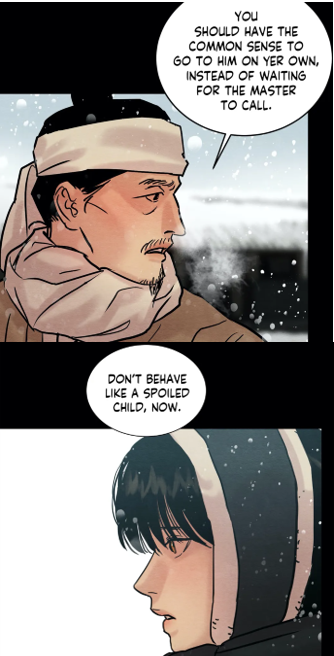 (chapter 52) However, the more time passed on, the more the butler kept pointing out that he was just a servant, so that this moustache beard is losing its meaning, the symbol for power and nobility. At the same time, the painter met more and more people with beards, like for example the tailor
 (chapter 78) and finally Yoon Chang-Hyeon
  (chapter 87). However, note that when the patriarch left, the main character only paid attention to his gaze and not his beard.
  (chapter 87) This explicates why Baek Na-Kyum is not mentioning the beard concerning nobility, while Yoon Seungho never made the connection between the old bearded men and Kim, though the latter has now a moustache beard! To conclude, I don’t think that this physical assault
 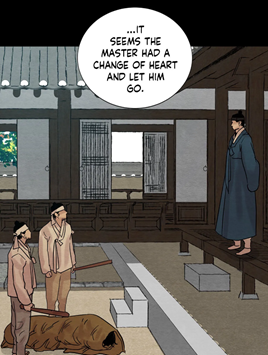 (chapter 13), the maid (though not intended)
 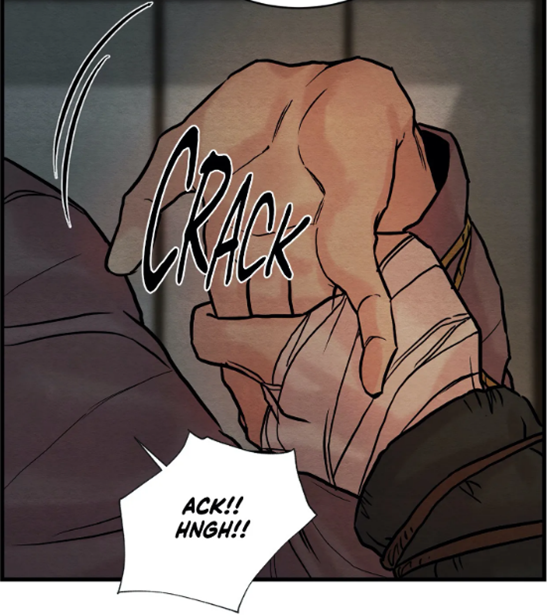 , Nameless,
 (chapter 60), Kim
  (chapter 78), the calligrapher with his insults
  (chapter 91)
  (chapter 98) and the black guards from Min.
  (chapter 97), two commoners who neglected him totally. By the way, the one with the green shirt and white jacket vanished later. He was not seen in the mansion. Anyway, the two domestics wouldn’t even follow the lord’s orders properly, for they never stayed by the painter’s side. And since it is a reflection from chapter 94, I deduce that the two “nobles” acted the opposite. They played their role perfectly to the point that the painter was terribly wounded and he never doubted their identities. They were just nobles! And that’s the point. That way, no person was truly blamed for the incident.
 (chapter 46) This was the “positive” reflection of this scene:
  (chapter 46) Moreover, I am now doubting that Baek Na-Kyum and Heena were seen in front of the gibang.
  (chapter 19)
  (chapter 69)
  (chapter 93) Secondly, there is no window next to the entrance of the building contrary to the image from chapter 46. Consequently, I deduce that Heena had left the gibang with her brother saying that she was meeting a client, and just before entering the mansion, she sent away her brother. This explicates why he had only taken his tools and nothing more. Remember what the noonas said in chapter 93:
  (chapter 93) She implied that the noona was not present in the kisaeng house, while in reality she was punished, trapped in a storage room. And now, you comprehend why Heena said this to her brother:
  (chapter 93) He had suddenly vanished without voicing such a desire before. And note that in chapter 97, she was already acting on Min’s orders, a sign that in the past, it was different. She had done it on her own accord. In the annex, the kisaeng was definitely scared, hence she was trembling.
  (chapter 64) This would explain why she never looked for her brother afterwards. This shows that unconsciously, the painter had judged her betrayal and abandonment correctly, but he had been deceived by her argumentation and attitude. In other words, he was in denial.
 (chapter 87) So in this scene,
 (chapter 68) The blue skirt is revealing her presence. She is next to the door and observe that there is a table to her right!! Exactly like in chapter 94!
  (chapter 70) Terrible, right? However, since the painter had been deceived by impressions, he came to believe her version and lies. But there is more to it. Because the artist was so young, he never realized that he could have detected her manipulations!! How? She should have become a wreck… have bruises on her body, but she never had any.
  (chapter 93) Since she excused her vanishing by saying that she had to remove the dishes and as such was busy in the kitchen, it is normal that she was imprisoned next to the kitchen 10 years later!! Here, we can recognize the kitchen by the door made of wooden planks:
  (chapter 95) But there exist two other evidences why Heena is associated to the kitchen. Remember the painter’s thoughts in the inn:
  (chapter 75) They let see that he was thinking of Heena, though he spoke of his noonas. However, the presence of religion was introduced with food.
  (chapter 75) This truly exposes that Heena preferred working in the kitchen. That way, she could avoid sex with the clients. Another interesting aspect is that when she was sitting at the table with nobles, she was not talking to her neighbors.
  . (chapter 93) She was not even serving the noble next to her.
  (chapter 93) Once again, she was passive and immobile. Since she was doing nothing, she could hear her brother’s name and turn her head.
  (chapter 93) Under this new light, it becomes understandable why Baek Na-Kyum didn’t detect her presence in the patio. It was not her usual place. At the same time, the readers can grasp why the artist didn’t mind eating in the kitchen with the maids and felt comfortable around the head-maid.
  (chapter 46) This was reflecting his past relationship with Heena. And now, you comprehend why Heena never paid attention to the painter’s education. She had not the time and the motivation to do so. She was busy in the kitchen during the evening and night, yet keep in mind that the painter was her excuse to keep her distance from the nobles in the beginning. This explicates why Yoon Seungho crashed the table in the gibang:
  (chapter 99) This was Heena’s karma. She could no longer use the table as an excuse to betray and abandon a young boy. Moreover, we could see this gesture as a compensation for the past incident.
  (chapter 68) How do I come to this idea? It is because there is a progression in the responsibility. But we will see, if the lord’s anger was caused by spoiled rice. One thing is sure: the butler is recreating events from the past. And shortly after the painter’s departure from his noona situated in chapter 46,
  . (chapter 47). That’s the reason why I am connecting the kisaeng to the food. And I had already demonstrated that there exists a link between the gibang and the lord’s kitchen.
  (chapter 60) And now, we know for sure that the chicken blood was used to stage the crime scene in the scholar’s house.
  (chapter 101) For me, Nameless was behind this prank. It sounded so harmless, but the reality is totally different. Consequently, Heena can become the prime suspect in the scholar’s disappearance. Remember that according to me, Yoon Seung-Won went to the gibang after leaving his brother’s mansion and discovered that he had been deceived. For me, there is no ambiguity that Yoon Seung-Won and lord Song are behind the learned sir’s murder, for both had a huge interest for his vanishing. But in my eyes, Heena is the link between the nobles, lord Song and No-Name, because the kisaeng house is frequented by all kind of people. I have already mentioned that the learned sir must have gone to the kisaeng house after meeting the fake servant.
  (chapter 38) This encounter took place during the day, however he returned during the night. So he must have spent some time elsewhere. Because of the connection between Heena and the kitchen, I think, she will have to take the fall for No-Name’s crimes. Under this new light, I comprehend why Byeonduck declared that she had no longer planned Mumyeong and Lee Jihwa. Both were already receiving their punishment, when they fled. But since I detected a connection between Heena and No-Name, I am quite sure that she is also responsible for the downfall of No-Name. And don’t forget that during the incident in the bedchamber, we had a party!!
  (chapter 65) So she could have worked in the kitchen… helping the other maids. To conclude, the kisaeng had committed the following wrongdoings. She had manipulated her brother with a mixture of belief and prejudices to cover up her own fears and wrongdoings. While in chapter 94, she stopped the painter from leaving the room unconsciously, it was no longer the case with Yoon Seungho, as she was standing in front of the door.
  (chapter 68) For her, sex had become a synonym for torture and death. Her wrong choices reinforced her fears about sex in my eyes. Every time, she decided not to face the truth, she preferred being blind. Thus the goddess chose to punish her by letting her deceived by impressions.
  (chapter 88)
  (chapter 66) Here, she couldn’t help her brother, though the “sequestration” was nothing compared to what Yoon Seungho had experienced at such a young age. She had deceived her brother in the past, and now she was put in the same position. She was the fool one. In addition, she was forced to be confronted with reality, because she needed to admit her wrongdoings. Since she was behind this assault
  . (chapter 96) She even got sequestered herself.
  (chapter 99), this means that her punishment will be that she will never see her colleagues again. Since she faked her death
 .(chapter 102) She is a Christian, hence she could be accused of sacrilege too. In my eyes, Heena will never be able to bid farewell to her brother again. His words in the mansion will become a reality.
 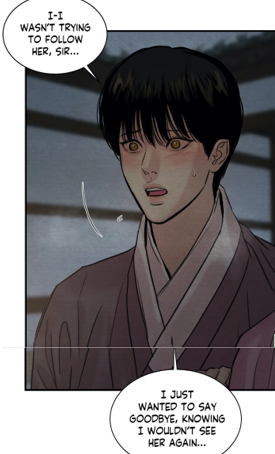 (chapter 69) As you can see, I am detecting a progression in her wrongdoings. She is getting more and more involved, though there is no ambiguity that she was deceived herself in season 3. But this doesn’t excuse her crimes, for she refused to listen to her brother and called him an idiot. At no moment, she pondered on the situation. Her decisions were strongly influenced by her emotions (fear, anger and hatred). That’s the reason why I am convinced that if she is not dead (my theory), her attitude towards her brother will worsen to the point that she will call her brother a bird of misfortune!
  (chapter 01)
 (chapter 97) Fake concern versus anger and resent
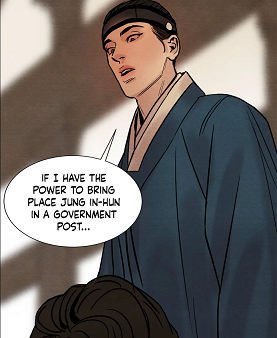 (chapter 11) Secondly, I had associated the main lead to the eagle which is the symbol for the kings and emperors in Europe. He was seen here flying
  (chapter 30), and his fingers reminded me of the eagle’s claws.
 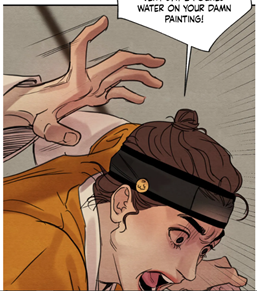 (chapter 18) And this perception got even reinforced, when I saw this panel:
  (chapter 52) In this scene, he was sitting like a king surrounded by his “court”. The hanbok had such a design that I couldn’t help myself associating it to Joseon’s monarchy.
  , I had another revelation. On the one hand, it actually confirmed that Yoon Seungho was somehow destined to become a king, yet he is not represented by the eagle or the phoenix, but by the dragon. Hence the moment I saw this image, one idiom came to my mind: Dragon king!
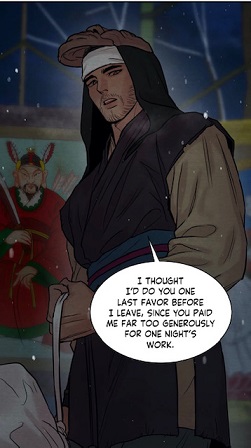 (chapter 100), though this deity is always accompanied with a dragon and in this picture, the readers couldn’t see one. However, it is possible that the author didn’t desire to reveal too much.
  (chapter 21) Why? It is because the lord was happy. These were the tears of happiness, which Yoon Seungho couldn’t express contrary to the painter. And this is no coincidence that in chapter 58, it started snowing, when the couple was making love:
  (chapter 58) And we had the same weather, when Yoon Seungho saved his lover.
 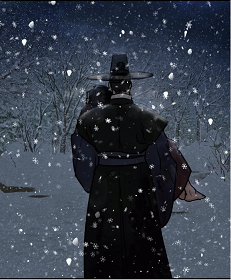 (chapter 102) The weather was expressing the main lead’s emotions: tears of happiness or sadness. We could say that the lord has the “power” to move the sky.
  (chapter 46) and we have so many jars next to the pond:
 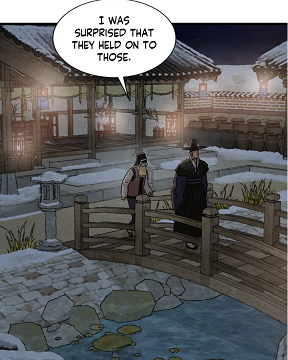 (chapter 94) [For more read the essay “The secret behind the library”]
 (chapter 91) This is no coincidence. To conclude, all these elements (rain, jar, well, soul of a deceased), connected to the dragon king, are present in Painter Of The Night. Thus I came to the conclusion that Yoon Seungho is like Dragon king. This reinforces my conviction that the main lead is not only connected to shamanism, but also embodies royalty. So he might not be the king of Joseon, but he is powerful in his own way, though he is not aware of this. And note that the moment he wished to commit suicide by drowning in the pond, he was brought back to life.
 (chapter 85) This means that in the Yoons’ mansion, people didn’t venerate this god. And since the aristocrat made such a statement to the elder Yoon Chang-Hyeon,
  (chapter 86), I have the impression that in season 4, we will assist to a real ritual to ward off evil and back luck, leading the tormenting souls to the afterlife peacefully.
  (chapter 100) and this altar
  (chapter 100) were exposing the presence of a ritual. However, my problem was that I couldn’t determine exactly the nature of the ritual. But by making the connection between the dragon and good fortune, I had now more clues. I have to admit that I can not be 100% sure for this, but this is what I found:
  (chapter 4)
 (chapter 6)
  (chapter 82)
  (chapter 83) and the deer
  (chapter 22). Then the lord compared Baek Na-Kyum’s eyes to a rabbit.
  (chapter 78) Since both resemble each other, I deduce that the main lead has the same eyes, the rabbit’s. Like mentioned above, he utilized his fingers similar to claws:
  (chapter 54) One might argue that this signification is totally impossible, for the lord doesn’t have the body of a snake. This point can be refuted very easily. What is the major characteristic of a snake is molting. A regularly recurrent event during the activity period of all snakes is the shedding of the skin. This coincides with the lord’s change of clothes. The latter reflected his downfall and rising. Furthermore, this animal is linked to death and rebirth. My avid readers are already aware that I had detected different scenes, where we could witness the lord’s spiritual death and rebirth, like for example in the shed:
  (chapter 62) When he discovered his misjudgment the next morning, he felt like dead. He no longer saw himself as a lord, but came to view the painter as his new lord :
 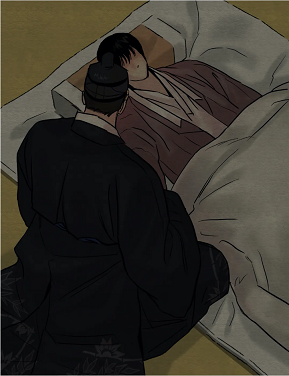 (chapter 66) As a conclusion, Yoon Seungho shares so many similarities with the dragon that I came to view him as one. This explicates why even after getting married, he will never wear a beard!
 (chapter 45)
 (chapter 55) and as such his heart and mind.
  He criticized the painter by stating that this was “filthy”.
  In this scene, the characters are caught by surprise, but it becomes obvious that there is no disgust or expulsion. In fact, the fall of man took place before, for Baek Na-Kyum was sent to Joseon. In this encounter, I detect attraction and curiosity. Hence I come to the conclusion that in the original story, when this scene took place,
  (chapter 50)
  (chapter 52) This means that the mysterious lord Song was actually claiming the main lead as his wife in the last scene. Min and his friends were sent there in order to entertain the protagonist, but they failed. This explicates why the next day, Black Heart was seen with a hanbok of lower quality.
  (chapter 56) It was, as if Min had been compensated for his bruised face by the mysterious lord Song. However, for the pedophile, Black Heart was just a concubine, and not his main wife! Hence the hanbok had not such a detailed and expensive design. This would explain the villain’s jealousy. And now, if you look back at the hanboks from the main lead, you will recognize his ascent. First, he is wearing green, which is similar to Yoon Chang-Hyeon’s color. At the same time, his hat resembled a lot to Kim’s.
  (chapter 1) Then later, he is mostly wearing blue which is actually the color of the Crown prince.
  (chapter 11) Yet, his robes initially have no design. Slowly, the lord is wearing colors and designs that are actually reserved for a king: blue, red, black and purple. This constant change of hanboks symbolizes the “snake molting” and as such his transformation and rising. This is not astonishing that on the night of the bloodbath, he had such a hanbok:
  (chapter 102) Here, he was no longer acting like a noble, but as a ruler. Don’t forget that according to me, the mysterious lord Song had proclaimed the main lead as his unofficial Queen by giving him hanboks with phoenixes. However, naturally, this was never mentioned to Yoon Seungho directly. Why? It is because Kim usually selects his clothes. However, this rise was not natural, as the lord had no real saying in this matter. The real metamorphosis took place in the shaman’s house, when the lord was sent back to the past and as such the darkness.
  (chapter 102) The moment he left the “cave”, he went to the mountain and surrounded by the wind and water, he changed into a dragon. This expulsion corresponds to the final release, the lord’s mind is finally freed from the darkness, while I believe that this scene
  (chapter 44) It is because the main lead was thinking that the painter would actually run away. Thus the door was left opened, and he was wearing warm clothes. Yoon Seungho never imagined that Baek Na-Kyum would remain by his side. Yet, during the previous night, the lord had consoled his lover by embracing him.
  (chapter 71) But this can be refuted easily. First, don’t forget that during this love session, the lord was acting like a servant pleasing his new lord. So this had nothing to do with Yoon Seungho’s feelings like sadness or happiness. He was determined to keep the painter by his side, and ignoring his own feelings. He never expected the artist to reciprocate his feelings. Secondly, Yoon Seungho’s nocturne vision is not just a nightmare, but also a DREAM! Yes, you are reading this correctly. Only recently, I discovered that all the artist’s visions are a combination of 3 elements: memory, nightmare and dream! I will give you three examples as illustration, for I am slowly running out of time.
  This vision is a combination of these three elements: memory, nightmare and dream. This had happened during the First Wedding Night (memory)
 (chapter 21), then we have a similar situation in chapter 49: ,
 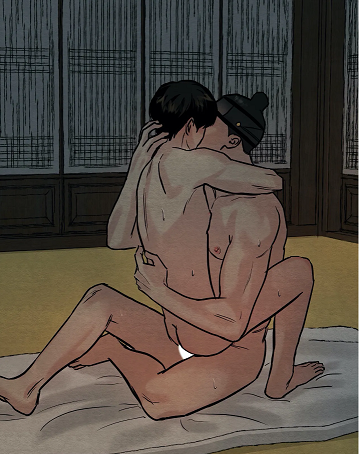 , but the painter was rejecting this future. Hence he considered it as a nightmare.
 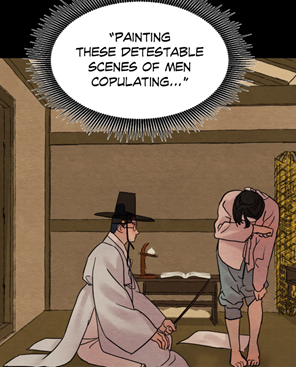 ; nightmare
  the lord becomes a ghost and confronts the painter with his biggest fears (admitting his attraction, passion for erotic paintings and homosexuality) and dream
 (The painter’s true desire was that the lord would kiss him, he was deeply longing for his lips, yet he was still in denial in this vision.
 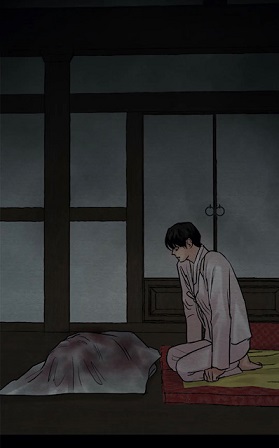 , for the painter was remembering the corpse in the courtyard, a dream, as he wished the return of his loved one
 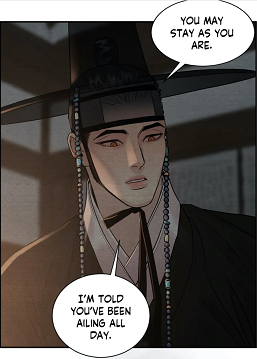 . He hoped that the lord would take care of him personally. Naturally, the “spirit” is the nightmare
  .
. 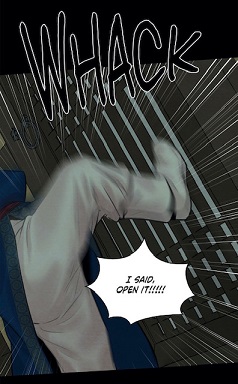 (chapter 74) This had already happened, but the lord had not grasped the significance.
 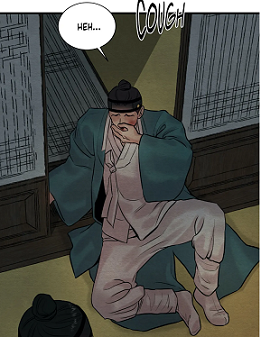 (chapter 53) Besides, he had not opened the door himself. Even when he went to the scholar Lee and opened the door with the his foot, the lord still felt trapped.
  (chapter 96) This shows that the lord’s wish to get released had not been fulfilled so far. In my eyes, it is connected to the torture Yoon Seungho suffered and as such to the purge organized by the authorities. That’s the reason why I deduce that the lord will break a door in season 4, and this won’t be by accident and it will be witnessed by many people contrary to chapter 53, 67 and 96! The broken door will reflect the lord’s rise and power, and no one will be able to stop this. In my eyes, this wish is connected to the door in the servants’ quarter. That’s how his imprisonment started.
 (chapter 74) The “dragon” wished to see Kim and his father, and confront them! And this did take place in season 3. Yoon Seungho confronted the butler with his attitude and betrayal
 (chapter 77), but this argument was just short-lived. He still viewed the valet as a hard-working and trustworthy person. He had just made bad decisions. Then in the bedchamber, the lord could blame the father for his suffering:
  (chapter 86) As you can see, the lord’s wishes were granted, but the nocturne vision was so difficult to grasp that neither the readers nor the main lead could interpret the message correctly immediately. Besides, the nightmare was mostly silent. But this doesn’t end here.
  (chapter 86) In reality, he was a dragon, who could bring luck and fortune to the person who would cherish him. This is no coincidence that the pedophile sent hanboks with the crane
 (chapter 34),
  (chapter 30), but much more brutal and violent!
 (chapter 1)
  (chapter 36) In addition, after realizing that each location is associated to a certain event in the past, I came to the conclusion that the inn represents no exception. Hence the tavern is full of symbolism too.
  (chapter 12) In episode 36, we have Min, Lee Jihwa and the noble with the mole.
  (chapter 57) In episode 59, the tavern owner asked No-Name to take away Lee Jihwa
  (chapter 59) And in episode 92, Black Heart joined the couple
  (chapter 75) However, this is just an illusion, for the ghost Jung In-Hun was present. And even before, the painter kept thinking about Heena noona. As you can see, the painter’s words were influenced by his “surrogate parents”, the third party. But let’s return to the major parallel: the confession leading to a rejection.
 (chapter 57) Though Yoon Seungho had punished his friend for his forged letter, he still listened to his confession before rejecting him properly. He gave an explanation why he would never reciprocate the affection towards his friend.
  (chapter 59) What caught my attention is that Lee Jihwa perceived the rejection as abandonment, while in truth the protagonist was not truly cutting ties with him. The real traitor was someone else: the noble with the mole, who ran away, when Yoon Seungho confronted his friend.
  (chapter 57) In that scene, the young master Jihwa had drunk before the arrival of his friends, though he was in full possession of his mind.
  (chapter 56) As you can detect, in this scene, the author employed the following elements: confession, sanity, tears, sadness, rejection, alcohol and abandonment.
  (chapter 75) He was heartbroken due to the loss of his passion and his loved one. At the same time, he was plagued by guilt. He felt responsible for Jung In-Hun’s failure. This is important, because it shows that guilt is another common denominator. In chapter 57, Yoon Seungho was guilty for the antagonist’s suffering.
  (chapter 75) Why? It is because he was also rejecting the lord. He couldn’t give him his heart, for the lord had such a fickle nature.
  (chapter 21) And this common denominator reinforces my theory that when Yoon Seungho got kissed in the study, he was not in full possession of his mind.
  (chapter 77) As you can see, the drug is not only strongly associated to rejection and broken heart, but also to delirium and insanity.
 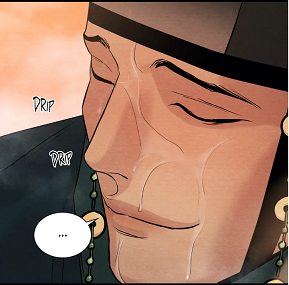 (chapter 92) It was, as if the noble was now crying. The water was displaying the hypocrisy of Min, the “fake tears”. He was not missing the main lead at all, in reality he was yearning for the painter’s gaze. Thus he expressed this in the shaman’s house:
 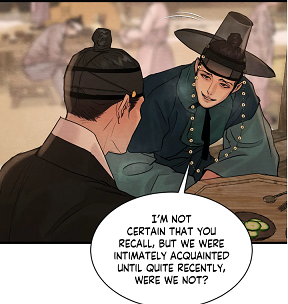 (chapter 92)
  (chapter 92) It was, as if he wanted to bring him back to reality, similar to this gesture:
 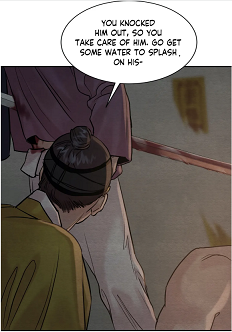 (chapter 102). He explained Black Heart’s attitude with the alcohol. Due to the liquor, Min had become insane and obscene. He was speaking about sodomy in a public place. Striking is that the Joker was portraying himself as a man consumed by lust. He needed the lord’s phallus to feel good. That’s how I detected another similarity: the presence of sex and sensuality in the conversation!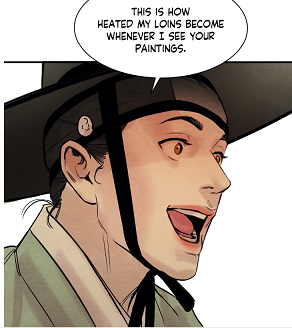

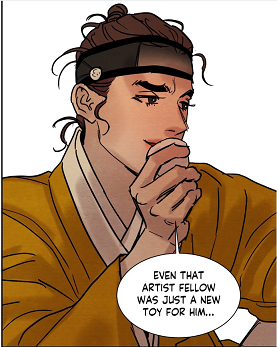 Here, the idiom “toy” was implying sex, though the main characters had not sex together yet.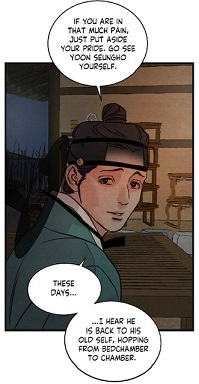

 (chapter 74) As you can see, Baek Na-Kyum was craving for sensuality. But he couldn’t voice it like Min! He was paying attention to social norms.
  (chapter 36) He kept crying, as he couldn’t bear the separation. At the same time, he explained his weeping with the main lead’s past. He was a pitiful creature, for he suffered a lot. Indirectly, he was comparing himself with the main figure. He had gone through a lot too.
  , (chapter 57) On the other hand, with this blame, Yoon Seungho was constantly reminded of the pedophile, lord Song. Thus Yoon Seungho replied this to the antagonist:
  (chapter 56) And observe that Kim never doubted the authenticity of the encounter.
 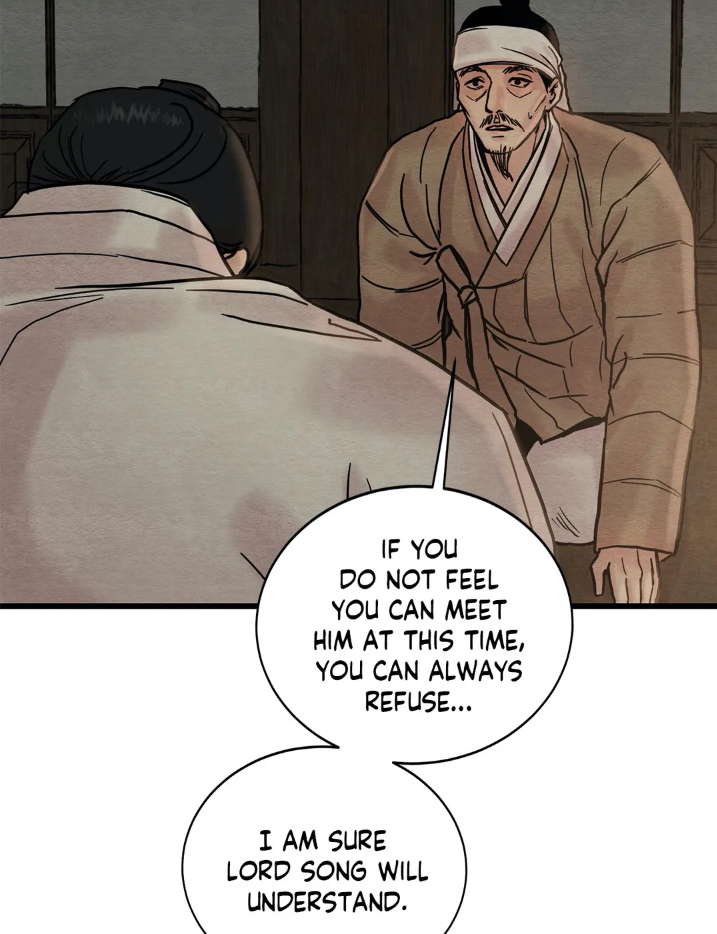 (chapter 56) This signifies that the pedophile must have gone there in the past. 😮
 (chapter 18)
  (chapter 14), whereas in verity, this passion was essential and even vital for Yoon Seungho. In his subconscious, the lord sensed the healing effect. This would make him smile and provoke emotions and arousal!
  (chapter 1) There was no witness for these reasons. No one should notice the execution of the commoner Baek Na-Kyum. Secondly, the book had been switched. The lord had shown this to the butler
 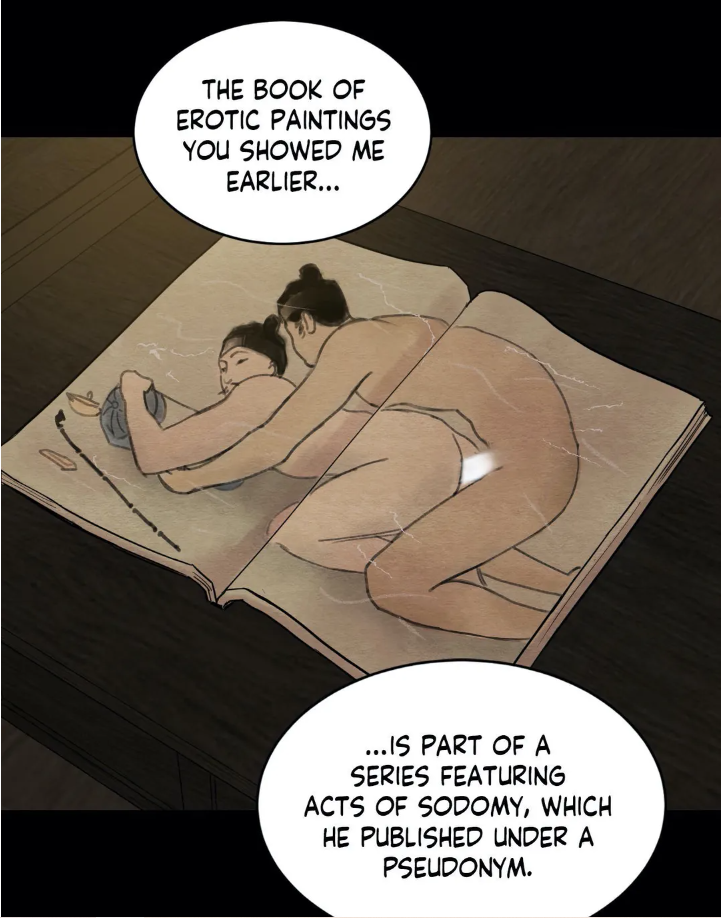 (chapter 1), but when Yoon Seungho interrogated the artist, he exposed a different publication:
  (chapter 1) It was, as if the painter was forced to deny to be the author of this book. There is no ambiguity that the servant had lied to Yoon Seungho, just like the painter was not entirely honest with Yoon Seungho. In my eyes, the painter had not noticed the divergence. As you can see, the meeting was staged. Unknown people were involved in this encounter so that we could say that the protagonists were just pawns during this scene.
 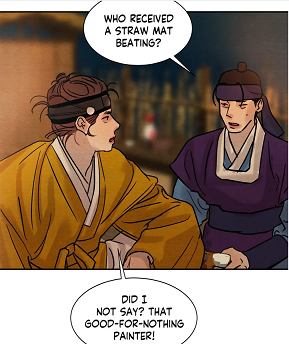 (chapter 12) The drop of sweat on his face clearly indicates that he was just feigning ignorance. This exposes that the noble with the mole was deceiving his friend and as such betraying him.
  (chapter 36) He was inciting the antagonist to return to the mansion so that he would catch the couple having sex together. That’s the reason why Black Heart made such a comment in the pavilion of his friend:
  (chapter 43) Yet, this trick didn’t work like Black Heart had anticipated. Why? He imagined that the red-haired noble would resent his friend for his abandonment and betrayal. The reality is that the antagonist reproached The Joker for his lies, he had been manipulating him.
  (chapter 43)
  (chapter 59) She wished to get rid of him as soon as possible. Thus she asked the Joker to take care of him.
  (chapter 92) However, he had been informed about the content of the paper, for he could already determine the genre of the text without seeing the writing. At the same time, he also deceived the couple by taking away the Spring poem.
  (chapter 92) We never saw him returning it. As for the second trickster, it was naturally Kim who hid under the hanbok which had a similar color than Jung In-Hun’s.
  (chapter 92) He desired to remind the painter of the existence of the scholar. However, this trick failed too. Why? It is because just before the painter had seen a kisaeng wearing the same robe.
  (chapter 92) He was just reminded of his noonas, and not just Heena and Jung In-Hun. Furthermore, the butler had overlooked another aspect: Yoon Seungho had been wearing a similar hanbok.
  (chapter 91) He was on the verge of losing his “sanity”😉, for the painter kept talking how important it was to protect from bad luck! As you can see, this scene is not different from the others: insanity, longing, trick, betrayal and rejection! The absence of tears and alcohol is easily explainable. The painter was not heartbroken, he just saw this as a necessity. Furthermore, this scene made me realize that the tavern is connected to arts. In almost all the mentioned chapters, the characters implied the erotic publications or arts. The spring poem is compared to a drawing by the painter, the calligraphy reminded him of snow flakes. Once again, the exception of this element is chapter 36! Here, Black Min and Lee Jihwa were only referring to sex and nothing more.
  (chapter 36) From my point of view, Lee Jihwa was aware that his friend had been forced to renounce on his passions. Thus he said this:
  (chapter 74) I had already explained in a different essay that in chapter 75, the painter had been thinking about his noonas and in particular about Heena, because he had seen the kisaeng. Thus he kept thinking about his sister’s words:
  (chapter 1) In chapter 12, the childhood friend praised the main character. He had acted like a true lord with the sentence.
  (chapter 75) As for Black Heart, he got insulted in the tavern. He was splashed with water. And what did the noble with the green hanbok reply to this insult? He announced that he would seek revenge on Yoon Seungho
  (chapter 92) Lee Jihwa was also full by resent and revenge, when he realized that the lord had made love to the painter after he had been rejected.
  (chapter 60) Thus shortly after, the young man had a weapon in his hand (though according to me, this tool was placed by Kim)
  (chapter 60). His intention was to kill the painter, though here he was just acting on affect. As you can see, the inn is in reality connected to a crime, and the desire of revenge! Don’t forget what Yoon Seungho said to the messenger:
 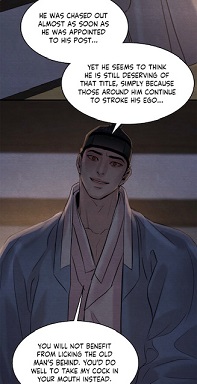 (chapter 80) According to his words, he had insulted the king by not utilizing the correct title. BUT we shouldn’t take this declaration as face-value, for the main lead is just repeating what he has been told. I have always said that the pedophile had been motivated by revenge and lust. The latter had been humiliated! Now, for the first time, I see a strong connection between the tavern and the wrongdoing linked to the mysterious lord. But what is the common denominator between all these scenes? CONFESSION! In chapter 1, Yoon Seungho confessed his admiration for the artist. In chapter 36, Lee Jihwa admitted the existence of a secret and his friend’s torment. In chapter 57 and 75, both ukes confessed their love (the main lead and painting). On the other hand, confession has a different meaning: admission of a crime! Thus I am suspecting that “lord Song” got rejected in this place. Thus he felt humiliated and his thirst for revenge took over. And it is related to arts!!
  (chapter 75) And now, if you take into consideration that the servant from episode 1 and 12 were acting on Kim’s behalf, you will realize that the servant in the past can only be KIM. And he was present in episode 92.
  (chapter 23) before drawing the orchid!
  (chapter 1) and the element “confession” which is associated to crime. Back then, there was no witness and this scene took place during the night. No ruckus!! People in Joseon were not allowed to walk during the night due to the curfew. This stands in opposition to these scenes: it was not too late, thus the tavern was not closed yet
 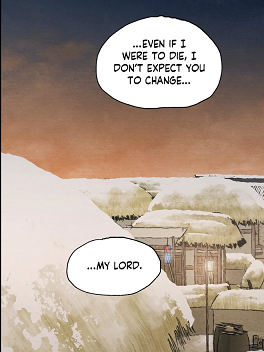 (chapter 75) Finally, I believe that this scene in the tavern is linked to Kim, he will report the painter to the authorities. However, this night won’t end like a nightmare, for the circle is about to get closed, the end of ouroboros, the circle of revenge and hatred!! .
