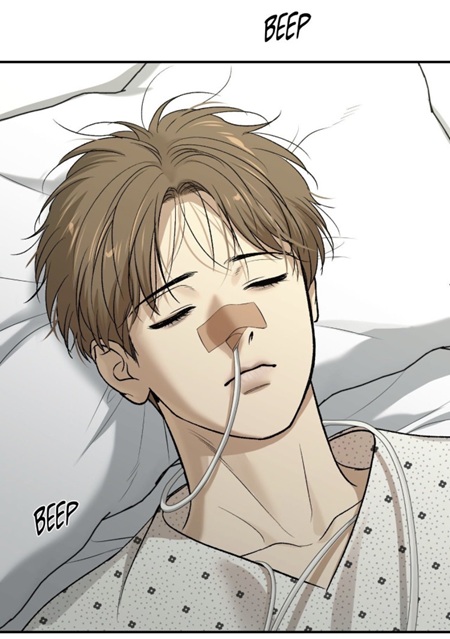
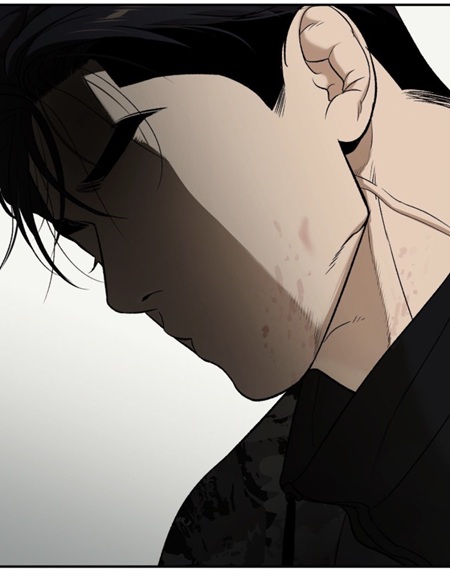
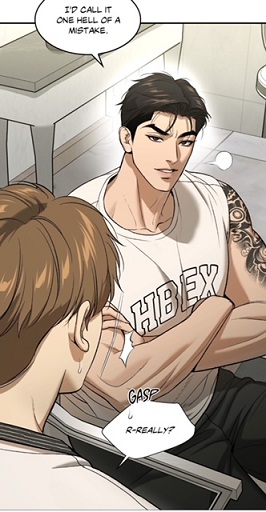
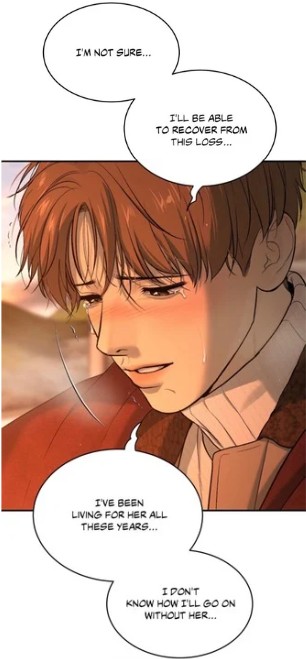
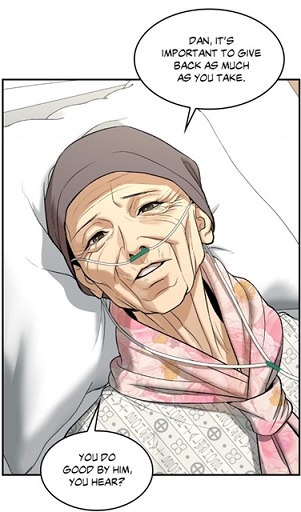
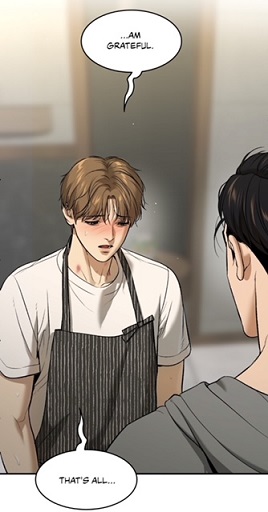
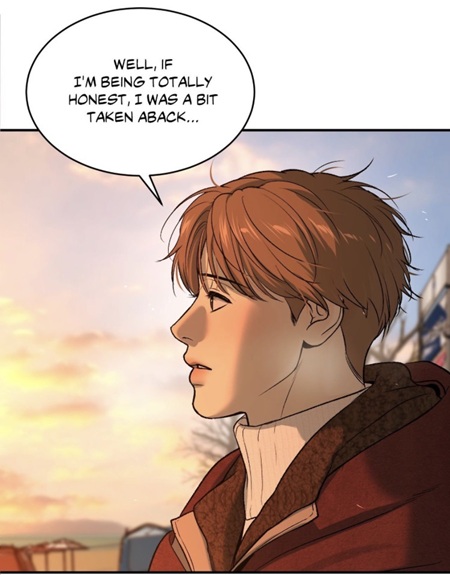
Jinx: Goodbye 🤝 Then … 😿 – part 3

The Warm Hand and the THUD

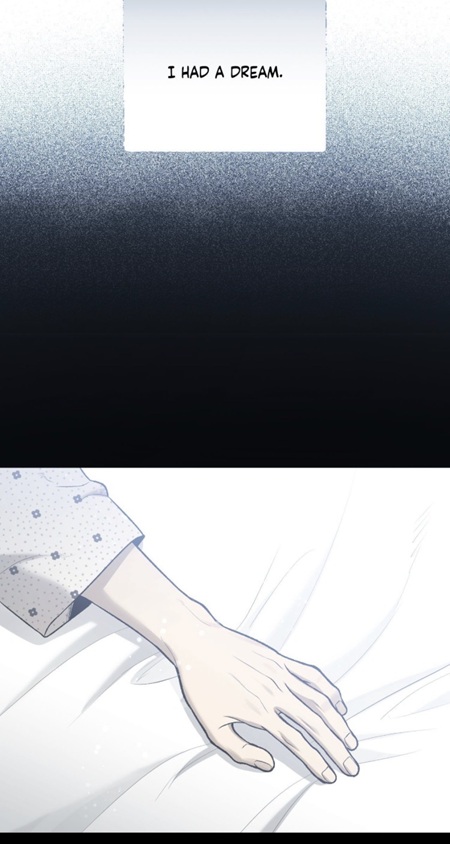
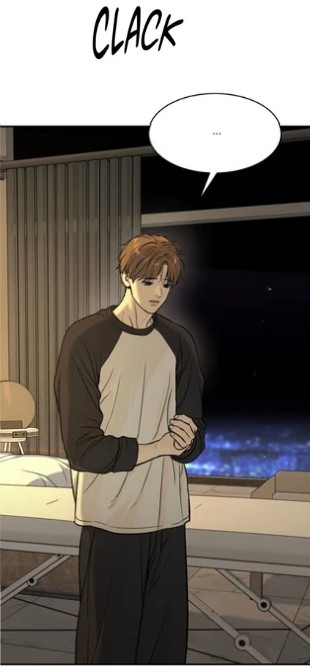
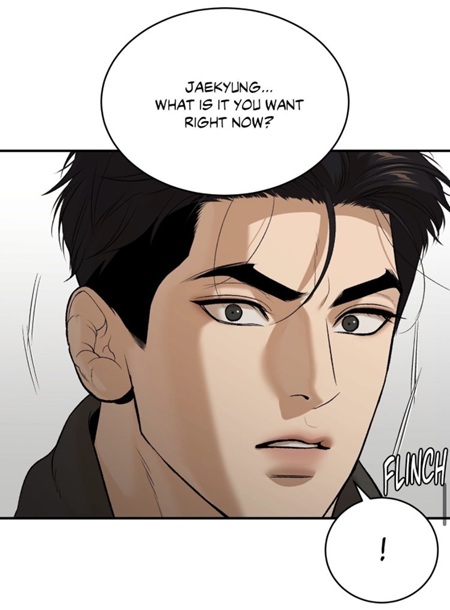
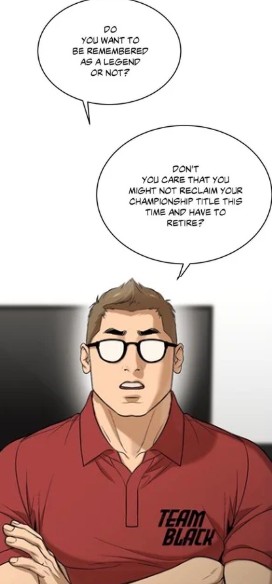
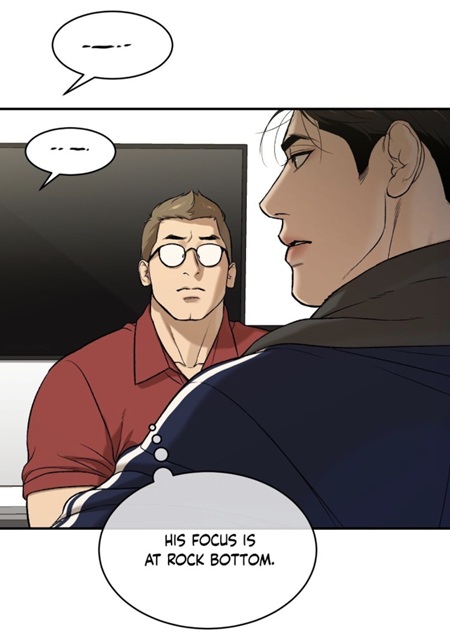
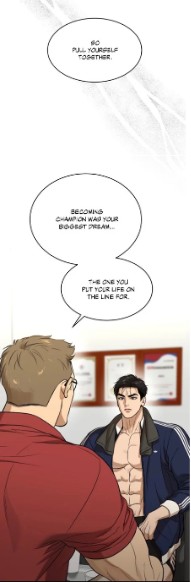
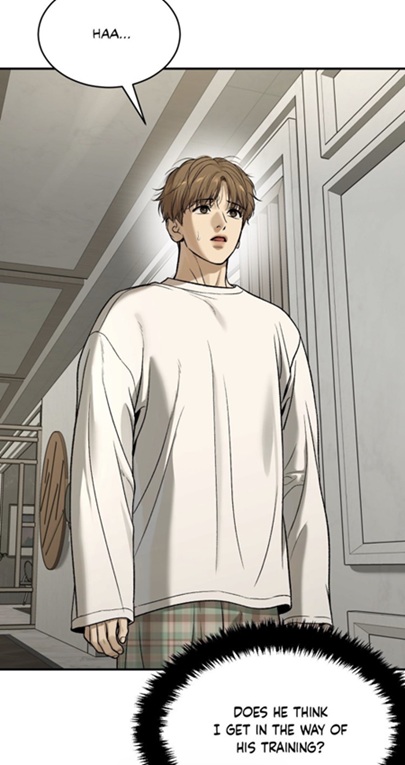
The final penthouse sequence becomes even crueler once one realizes that Kim Dan may be misreading the sensory evidence itself.

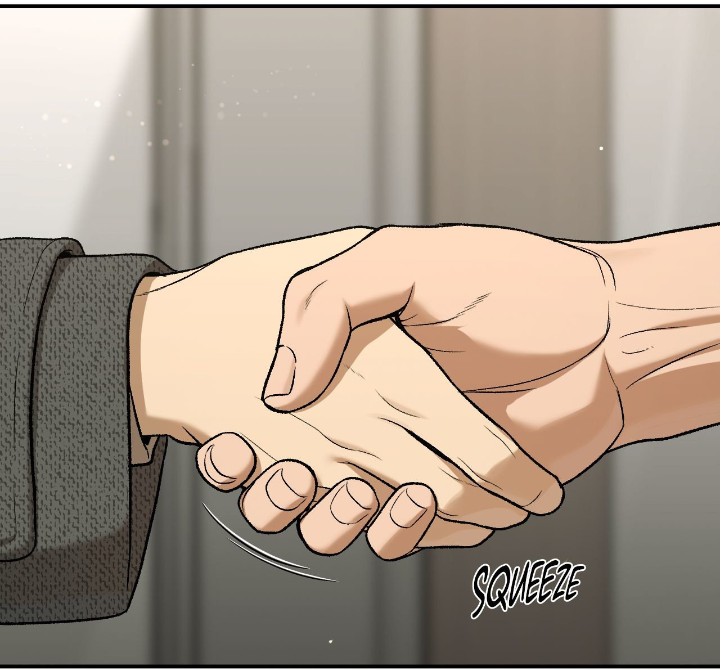
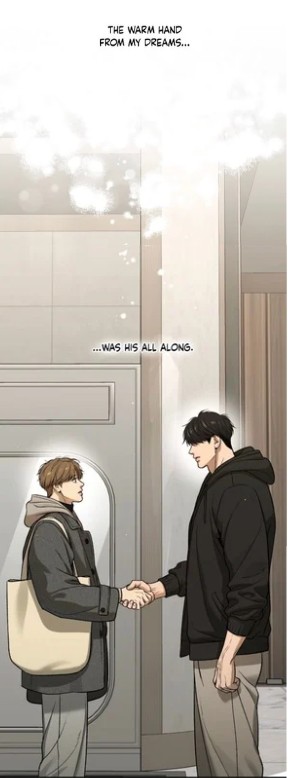
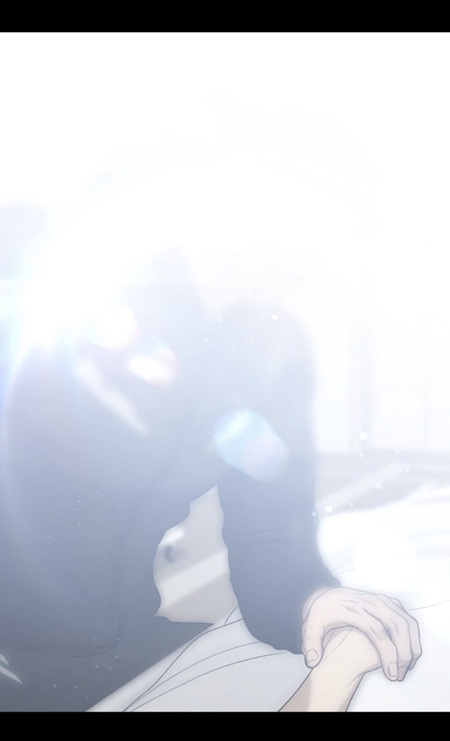
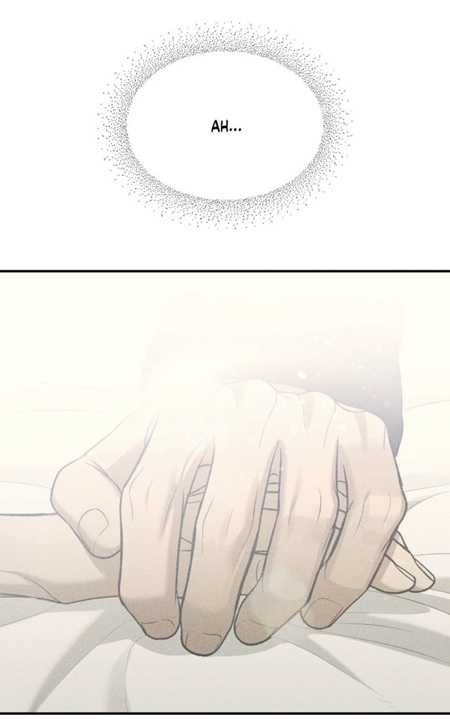
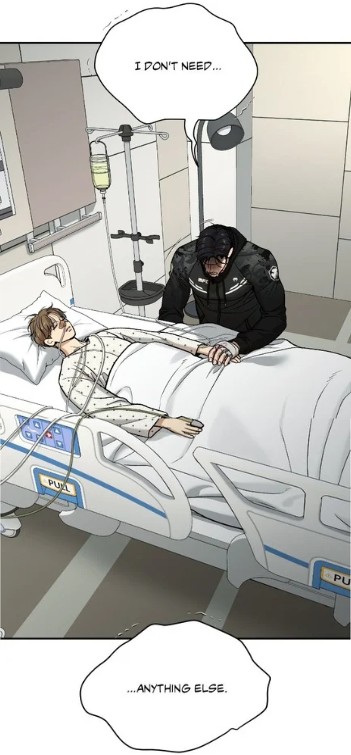
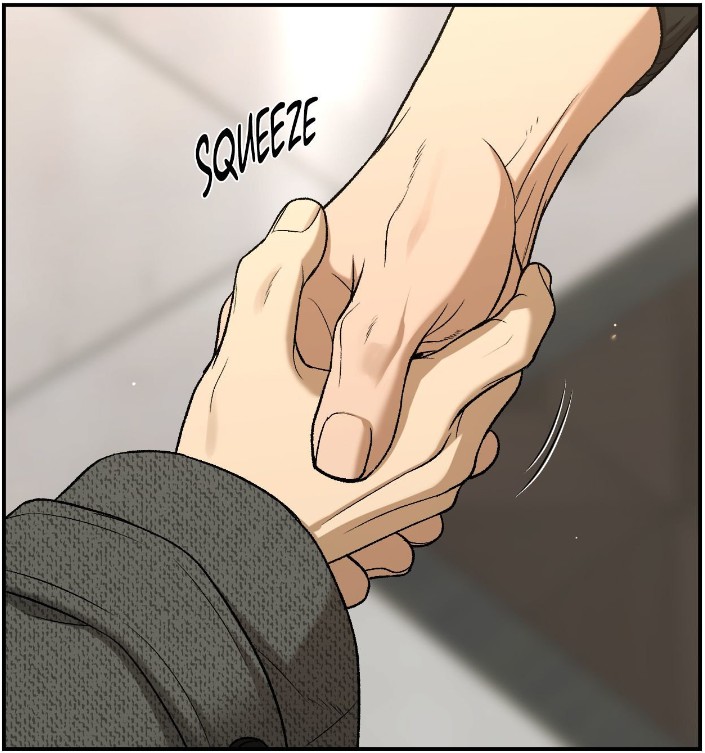
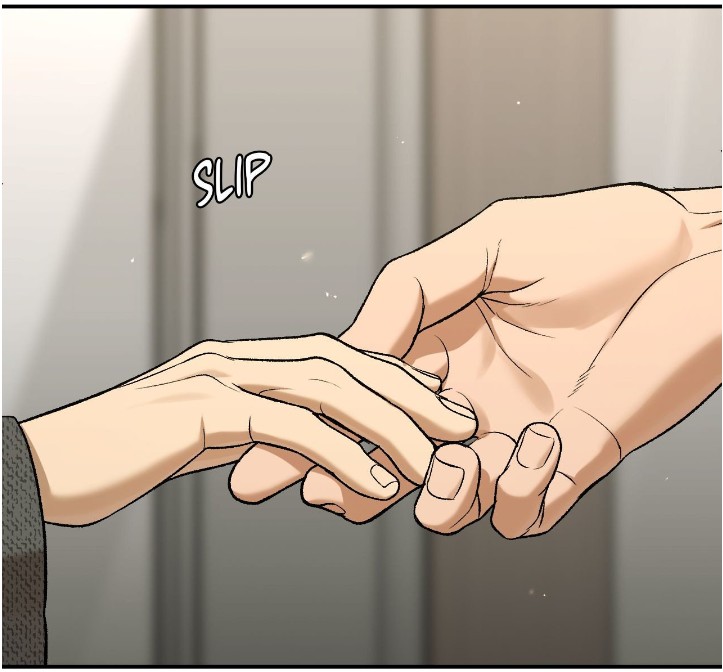
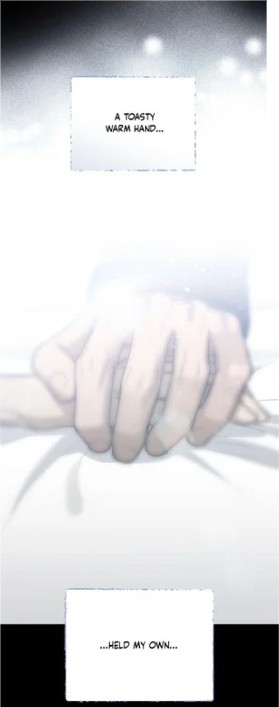
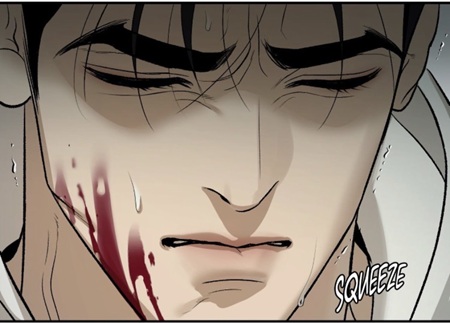
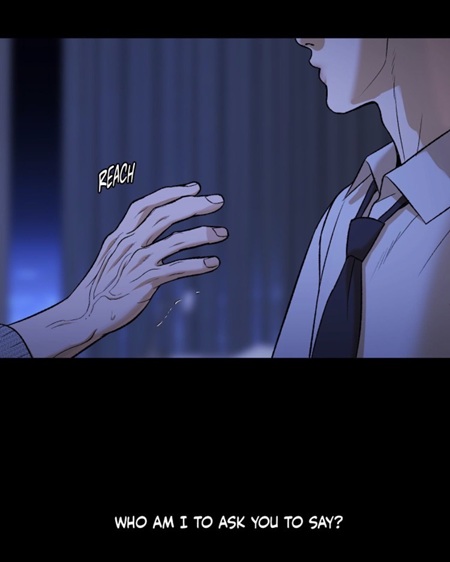
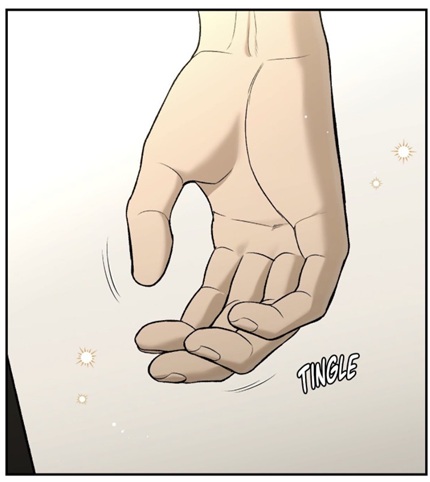
The squeezing and warmth of Jaekyung’s hand can function as comfort and reassurance (chapter 100), convincing Kim Dan that the champion is alive, stable, and therefore ultimately “fine.” But warmth does not necessarily signify health. It can also indicate fever, exhaustion, overexertion, and a body approaching collapse. Thus the tactile comfort Kim Dan clings to may actually conceal the severity of Jaekyung’s condition rather than disprove it.

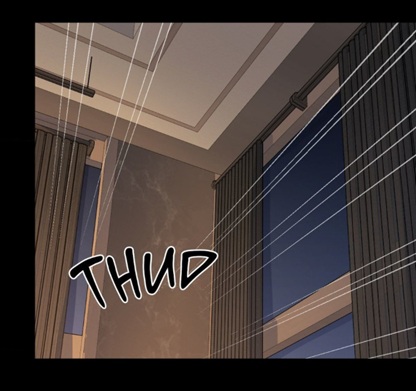
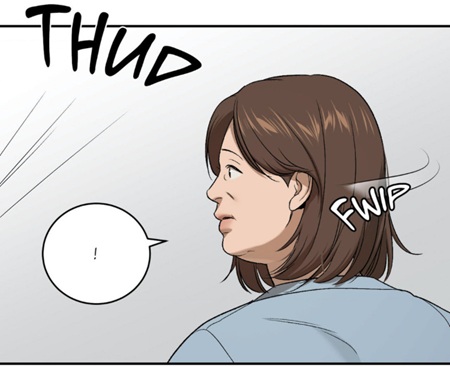
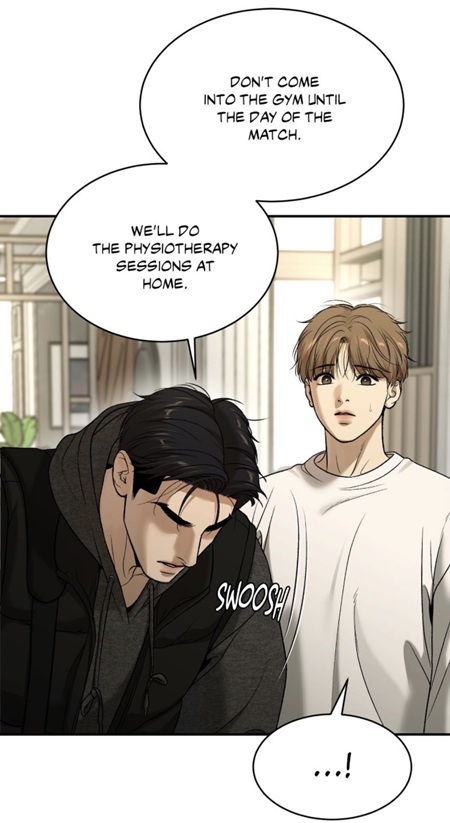
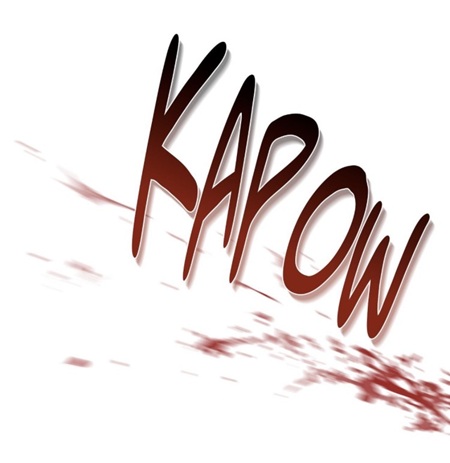
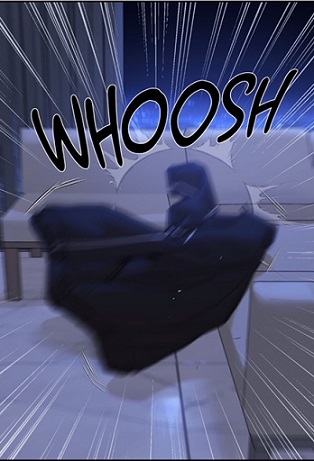
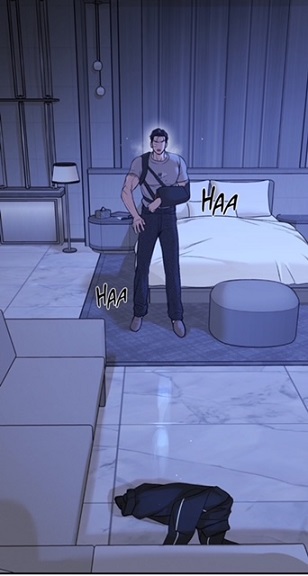
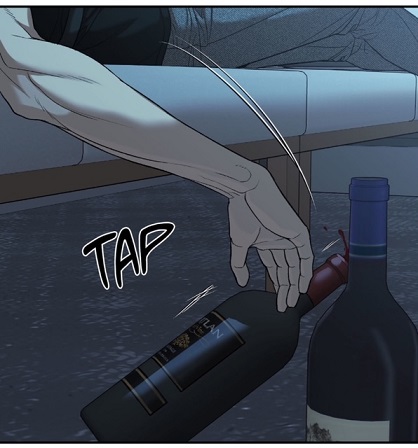
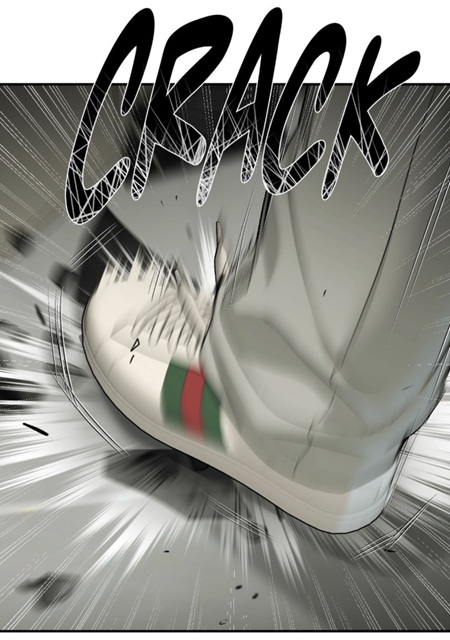
This reinterpretation fundamentally alters the meaning of the final “THUD.” (chapter 100)

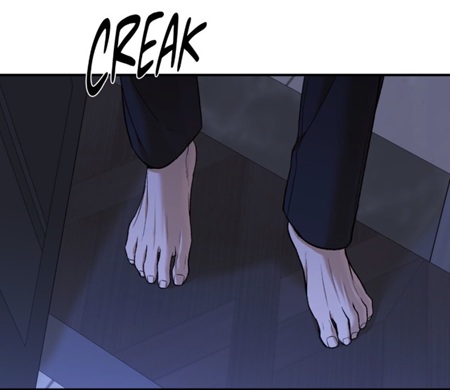
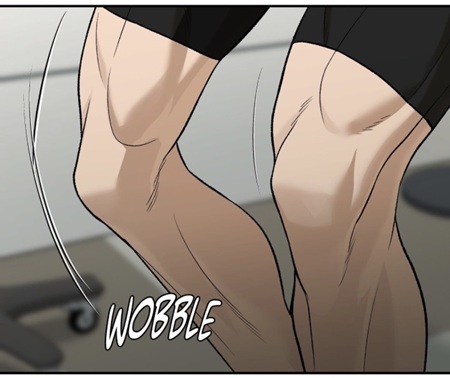
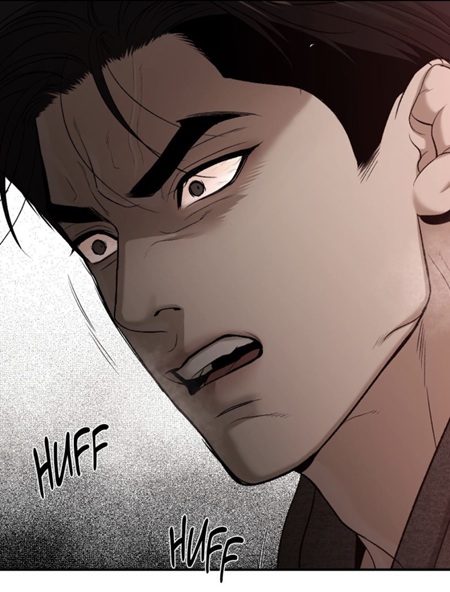
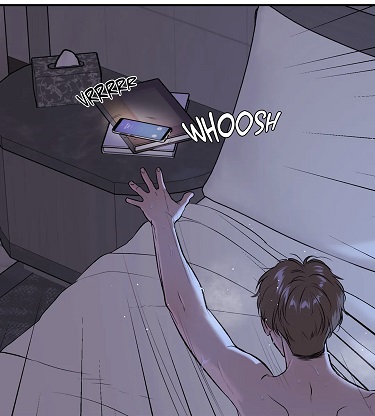
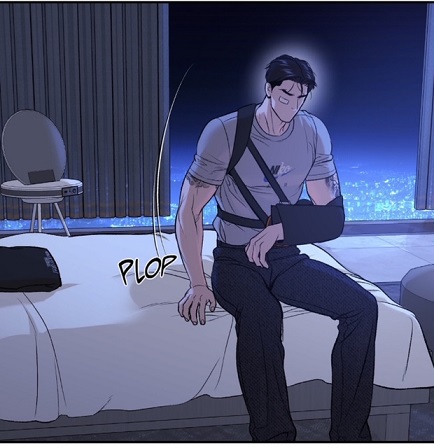
Importantly, Mingwa does not visually show the collapse or wobbling itself. Instead, she makes both Kim Dan and the readers hear it. That distinction matters enormously because if she had visually depicted Jaekyung collapsing onto the floor, the interpretation would immediately become fixed and undeniable. Instead, she traps both Kim Dan and the readers inside uncertainty or into a false illusion.

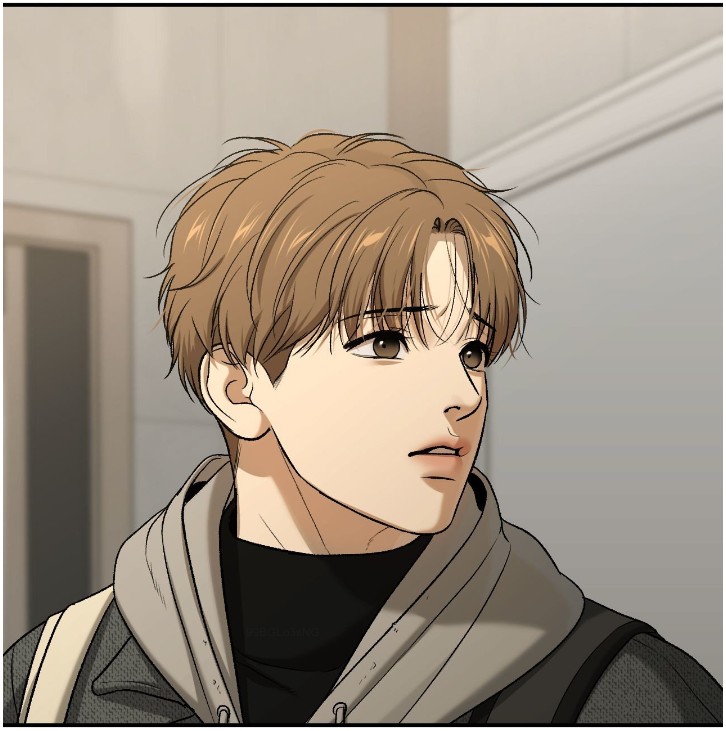
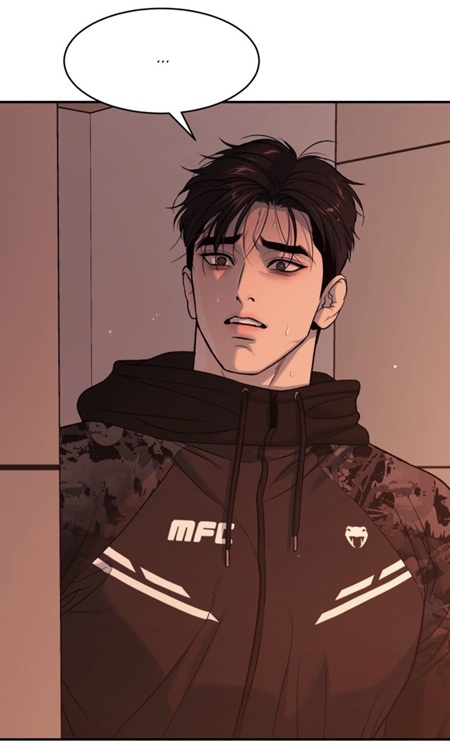
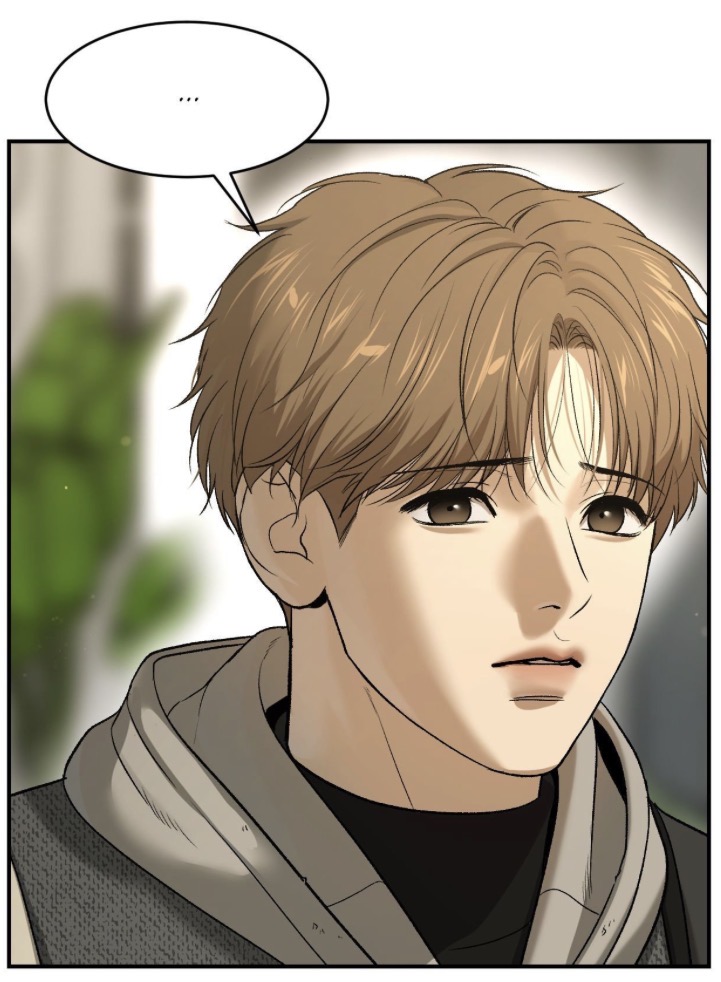
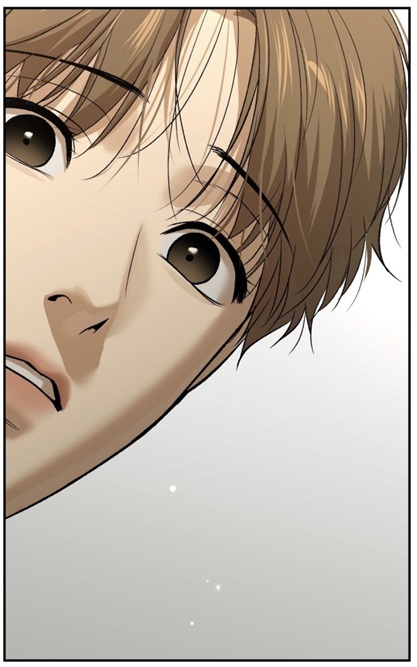
Kim Dan sees the hollow eyes, the trembling exhaustion, the devastated face (chapter 100), the passivity, and the emotional distance. Yet he doesn’t initiate any conversation. On the other hand, the warm hand even allows him to construct a safer narrative. (chapter 100) The champion was not hurt, he won the match. He is warm. He will recover. There is nothing to fear.

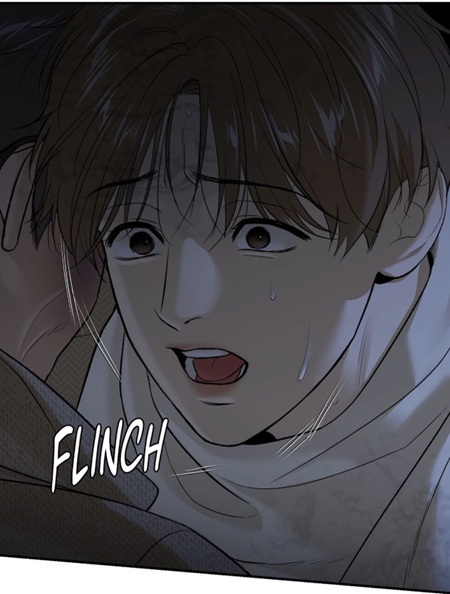
The “THUD” violently interrupts this emotional minimization.

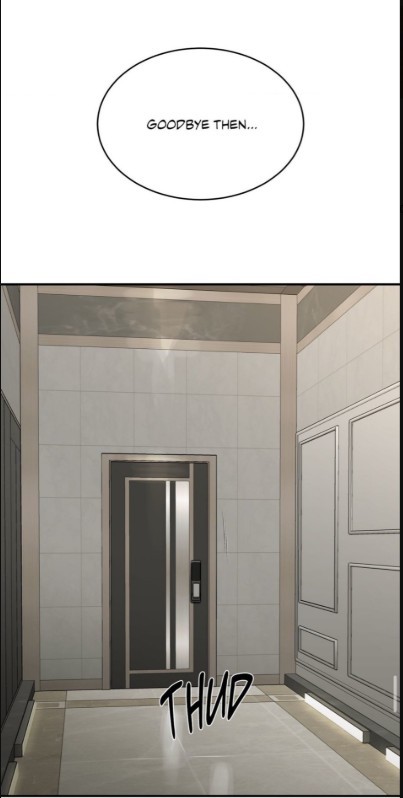
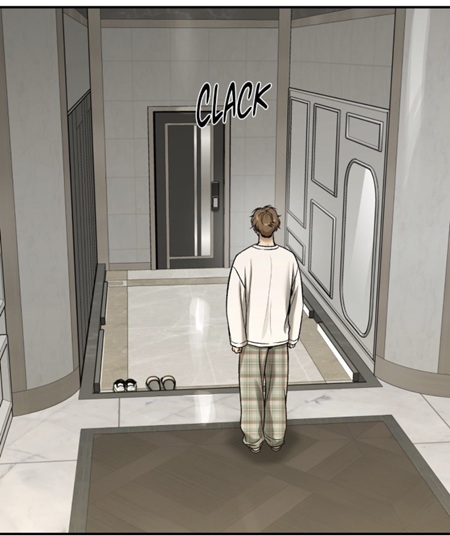
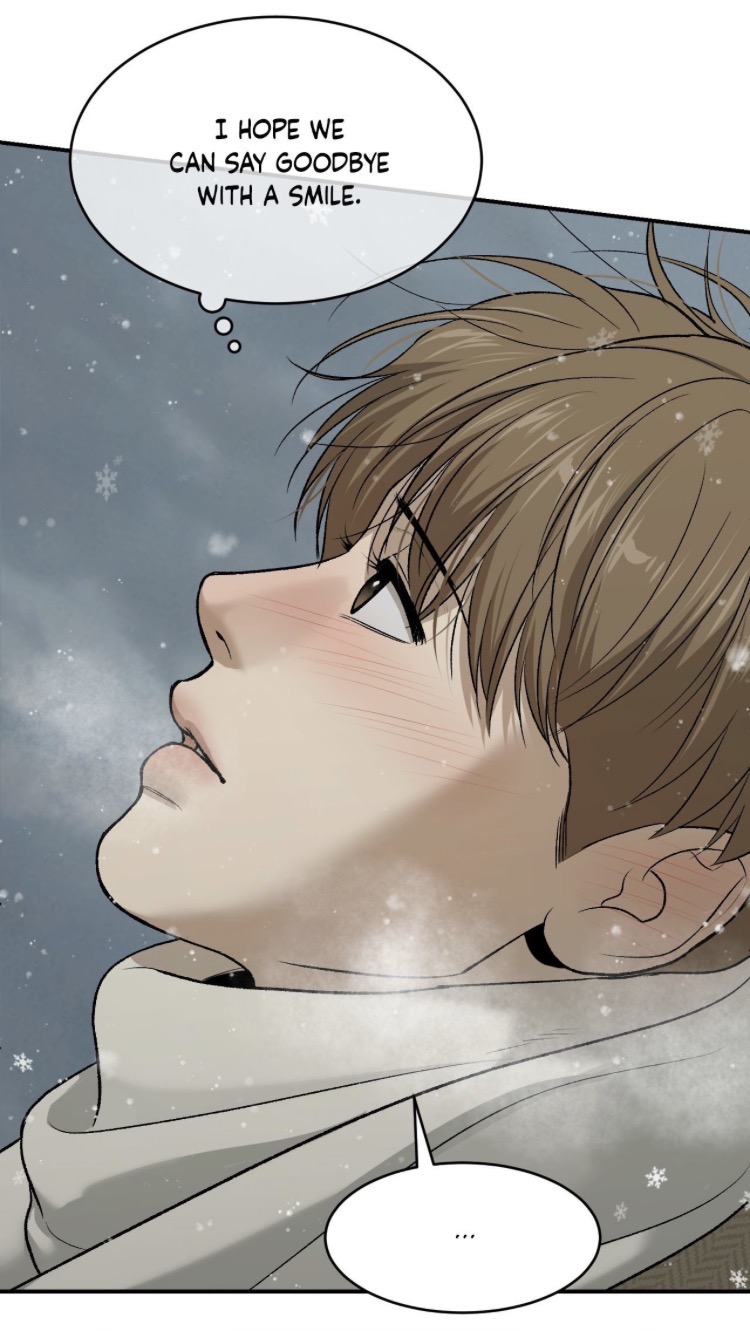
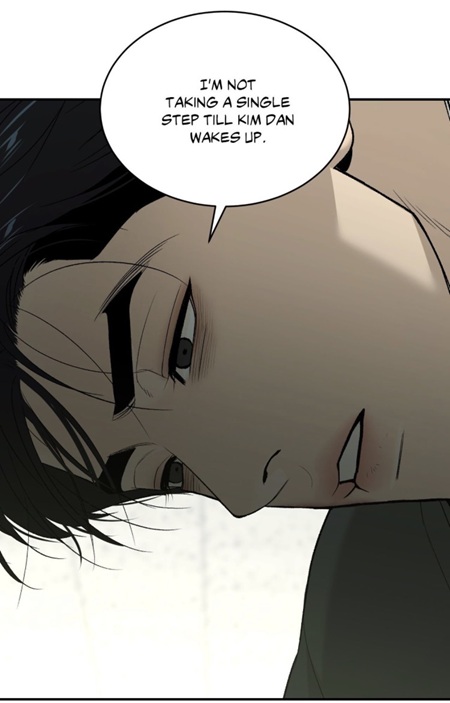
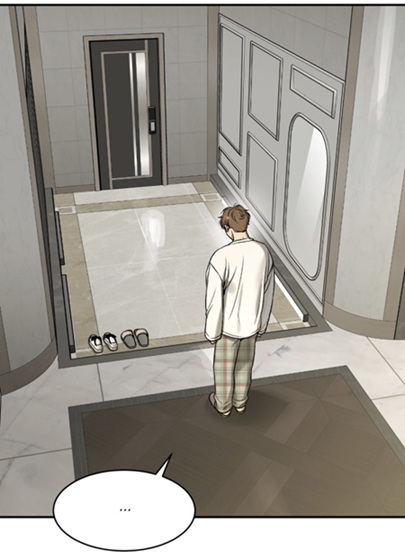
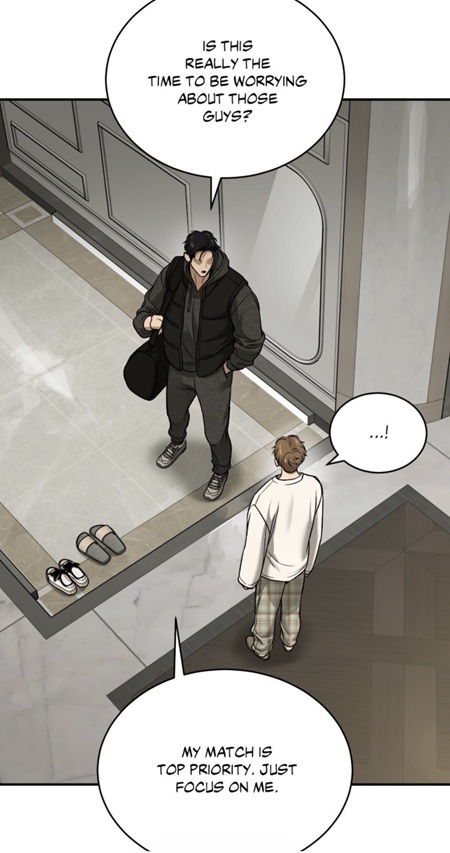
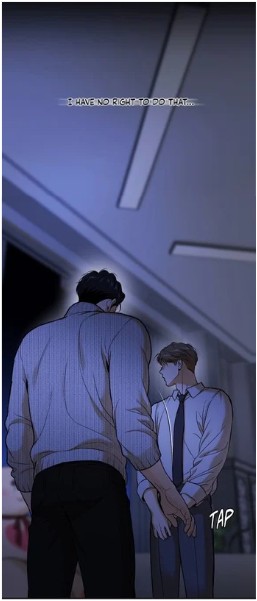
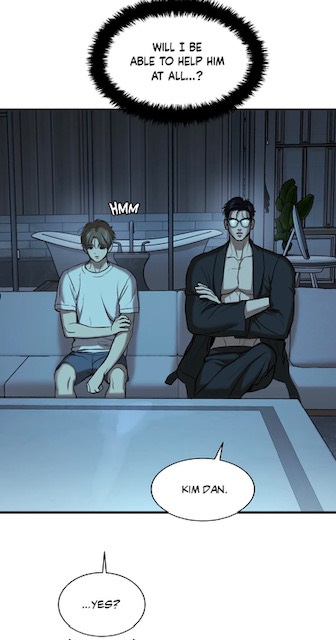
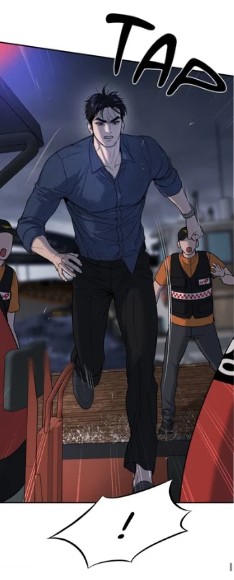
And the timing matters profoundly because according to me, Kim Dan has not actually left yet. The chapter only creates the illusion of departure. The words “Goodbye then…” remain suspended through the ellipsis itself. Kim Dan still stands at the entrance. He has not crossed the threshold yet. The goodbye remains emotionally unfinished. He is waiting for a response or word from his lover. By uttering the phrase, “Goodbye then…”, Kim Dan suddenly shifts from a passive observer of his own fate to the active arbiter of the narrative. He is the one stepping forward to single-handedly determine the meaning of the separation, dictating the final emotional framing, and drawing the absolute conclusion of the relationship itself.

(chapter 100) The sound forces reality back into the sensory field before Kim Dan can finalize the goodbye psychologically.

This pivot exposes a profound structural shift: it reveals the sudden emergence of power.

This is not a display of external authority, physical dominance, or toxic control. Instead, it represents something far more critical to his psychological survival: the reclamation of narrative and emotional agency. For the first time in the text, he is no longer waiting to be discarded or directed; he is attempting to author his own ending.

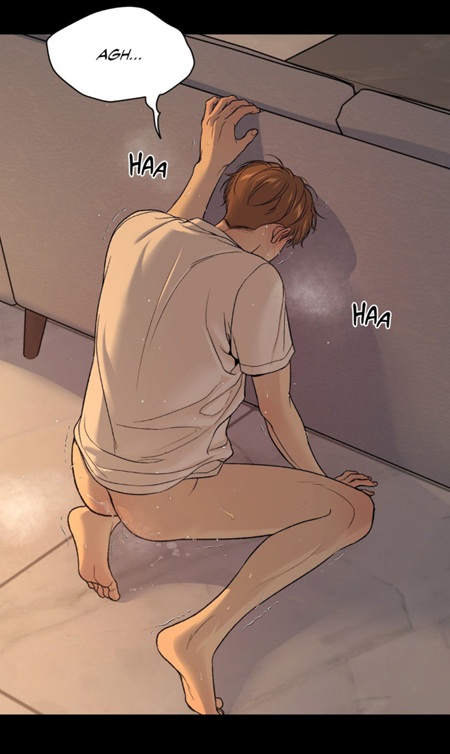
Thus the “THUD” becomes the sound of reality interrupting self-erasure before separation can become real. (chapter 100) By shattering his sensory anesthesia, the physical weight of that sound completely dismantles Kim Dan’s constructed fantasy of “noble self-sacrifice.” Up until this exact threshold, his mind had processed his departure as a perfectly balanced, clean transaction. (chapter 100) In his internal trauma script, he was performing a deeply logical, protective act: paying his final respects, leaving behind the material markers of a dissolved contract, and erasing his “toxic, burdening presence” so that the champion could return to unencumbered glory.

But the unyielding gravity of the “THUD” forces a terrifying realization into his consciousness: he has completely excluded his own personhood from his moral universe. (chapter 98) While Kim Dan possessed a fierce, uncompromising moral compass when defending the life of his grandmother—violently pushing the wolf’s hand away to establish that a dying human body is infinitely more important than sex, duty, or financial leverage (Chapter 21)—he systematically denies himself that same basic right to exist.

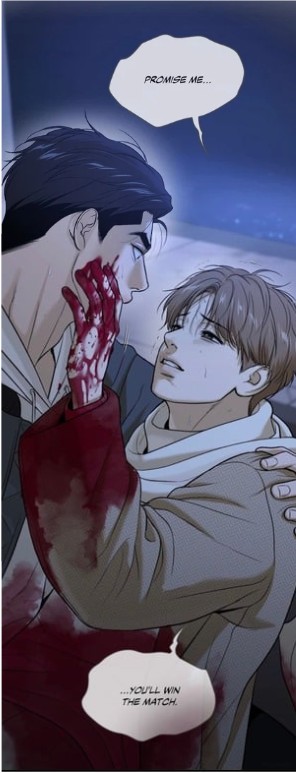
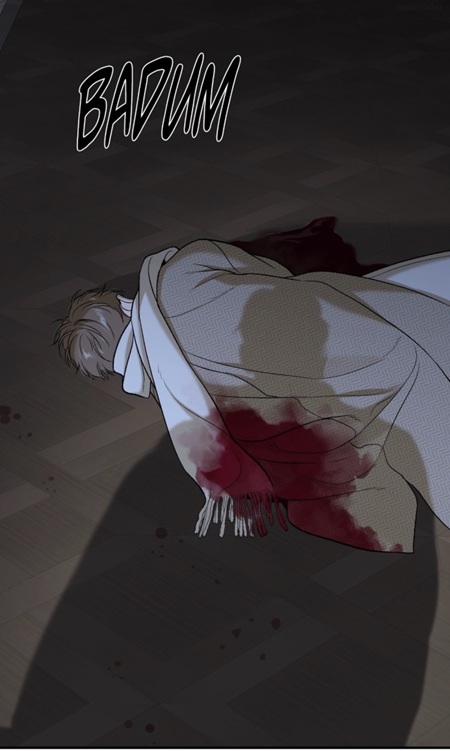
When lying in a pool of his own blood in Chapter 98, reaching up to touch Jaekyung’s face, he forced a desperate mandate upon the champion: (chapter 98) In that agonizing moment, Dan entirely broke his own foundational principle. He demanded that Jaekyung prioritize performance, utility, and a championship title over a dying human life. The irony is that here, he thinks he is being selfless. Nonetheless, Doc Dan, in his pursuit of self-erasure, accidentally acts with immense psychological cruelty. He forces Jaekyung into a horrific repetition compulsion: abandoning a dying loved one for the sake of the ring.

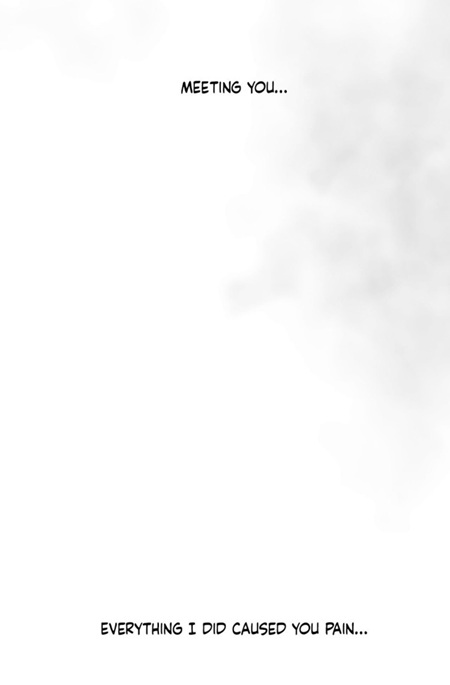
He remains tragically blind to the profound psychological heartlessness of this request which he repeats much later. (chapter 100) For Joo Jaekyung, the match had instantly lost all meaning; his entire world was paralyzed by the terror of losing Dan. By pushing the champion to abandon his bleeding body to go perform inside an octagon, Kim Dan did not save him—he unconsciously destroyed him. He pushed a man whose childhood trauma permanently fused athletic victory with the catastrophic death of his parents (Chapter 73) to go repeat his ultimate nightmare.

The “THUD” at the threshold is the precise moment Kim Dan is forced to face the real-world consequences of his own words. Throughout their entire history, Dan has remained completely unable to initiate emotional intimacy, perpetually waiting for a sign from Joo Jaekyung (chapter 100), as if he wanted to be “chosen” rather than face the terrifying vulnerability of making a conscious choice himself. He wanted to be selected by the champion, to be granted permission to exist in that space, rather than taking the emotional risk to claim it. If he continues to treat his own life as expendable and vanishes into the dark, his submissive endurance ceases to be a shield—it becomes an active weapon. (chapter 100) His passivity would effectively sentence Jaekyung to a lifetime of crushing, unearned guilt, forcing the champion to live as a monster in his own mind, convinced his presence only contaminates and destroys.

By attempting to slip away like a grateful ghost under the guise of an polite eviction, Kim Dan stands on the precipice of becoming the active architect of another person’s ruin. The hollow echo of the penthouse layout confronts him with the ultimate baseline of psychological responsibility: gratitude cannot engineer happiness (chapter 100), and if he walks away now, he will lose everything permanently—not because he was abandoned, but because he refused to choose to stay.

Toxic Positivity and Emotional Avoidance

Episode 100 repeatedly exposes characters trying to impose the illusion that everything will be alright now onto a reality that is psychologically catastrophic underneath.

Superficially, the chapter appears filled with healing imagery. Flowers, gifts (chapter 100), warm lighting, soft dialogue (chapter 100), survival, tenderness, and celebration aesthetically imitate recovery. And yet emotionally, the chapter feels suffocating.

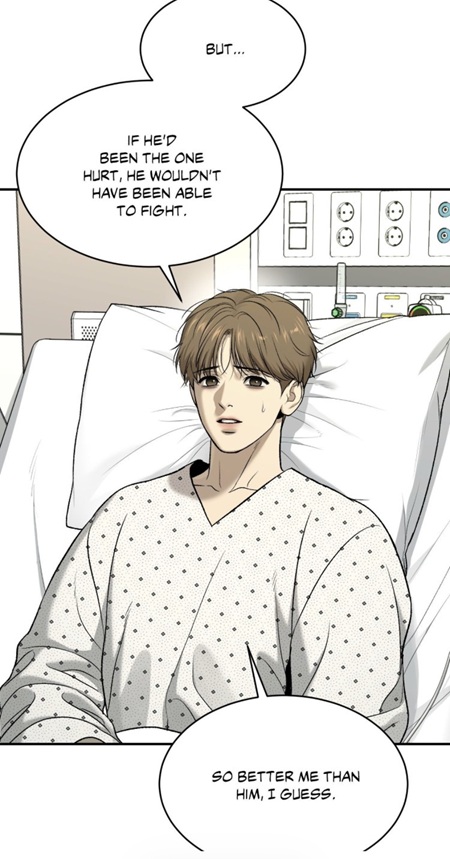
Kim Dan constantly reframes catastrophe into survivable meaning. (chapter 100) At least the champion could fight. At least the title was reclaimed. At least he survived. He will recover. Everything will return to normal.

This is not healthy optimism. It is emotional minimization.

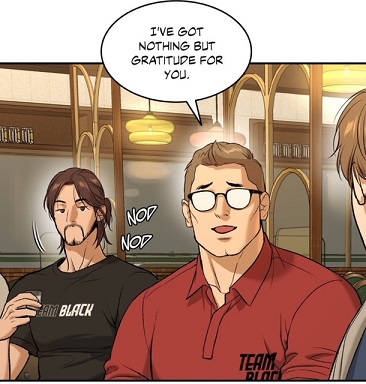
Team Black behaves similarly. Their affection is genuine, yet emotionally superficial. They celebrate survival, normalize the situation quickly, and soothe symptoms without confronting the psychological devastation underneath. Nobody openly says that something is deeply wrong. (chapter 100) In fact, they even praises him.

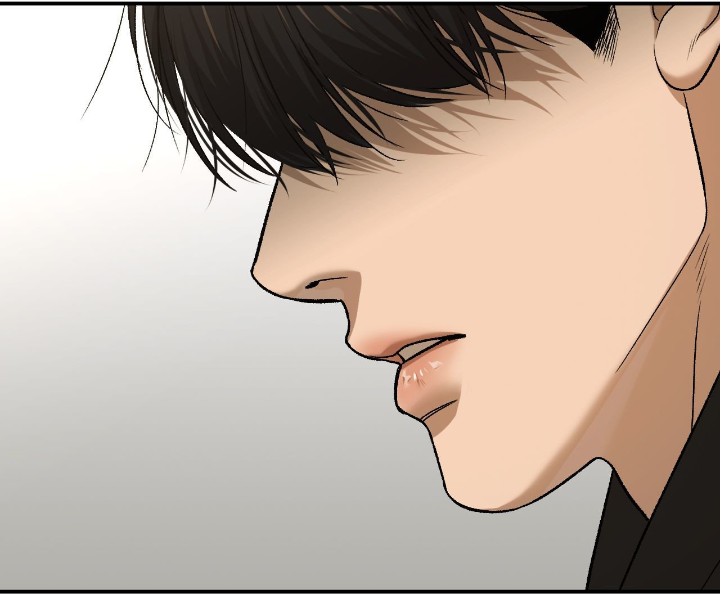
The final penthouse sequence therefore becomes a brutal dismantling of toxic positivity. Kim Dan tries to impose a healthy narrative onto reality. The debt is gone. The danger passed. Now he should leave. But Mingwa repeatedly inserts contradictions: the terrible face, the red eyes, the hesitation, the trembling silence, the disappointed mouth (chapter 100), the unfinished goodbye, the warm hand, and finally the THUD.

The chapter refuses emotional simplification. The body keeps revealing the truth the characters attempt to suppress verbally.

The Day Kim Dan Says “Stay With Me”

For this reason, Kim Dan’s emotional evolution cannot find its resolution in the moment Joo Jaekyung drops his armor and whispers, “Stay with me.” The phrase, though revolutionary within the champion’s own psychological history (chapter 97), remains entirely inaccessible to Kim Dan’s internal landscape. Within Dan’s trauma script, he remains the permanently expendable entity—the one who leaves quietly, adapts silently, apologizes constantly, and survives solely through systematic self-erasure.

Even after the profound physical and emotional crises of the hospitalization, his cognitive architecture is frozen in a state of hyper-vigilant transition; he prepares for a clean disappearance rather than a permanent settlement. He proceeds under the lifelong assumption that companionship is inherently temporary, strictly conditional, and destined to dissolve into an empty room the moment his immediate economic or physical utility reaches its natural expiration.

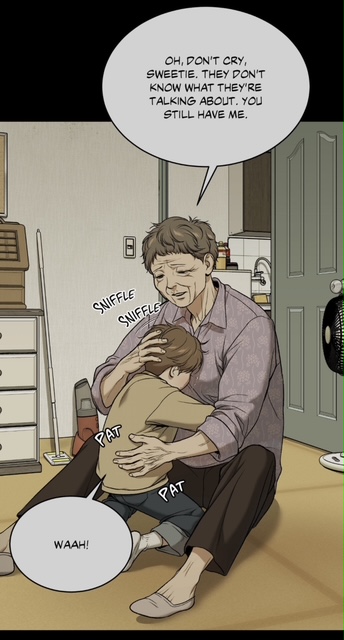
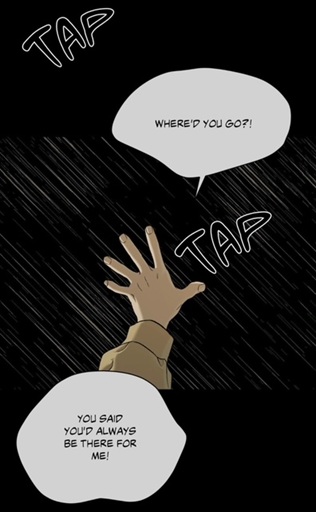
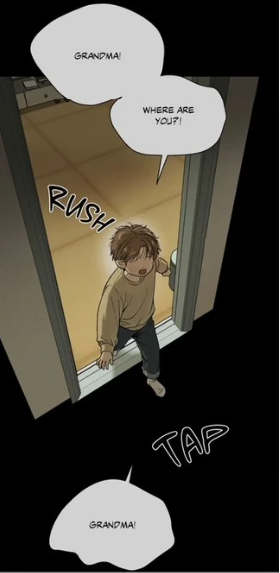
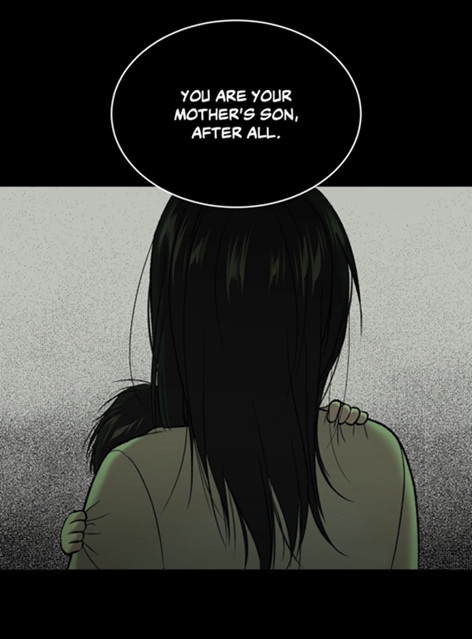
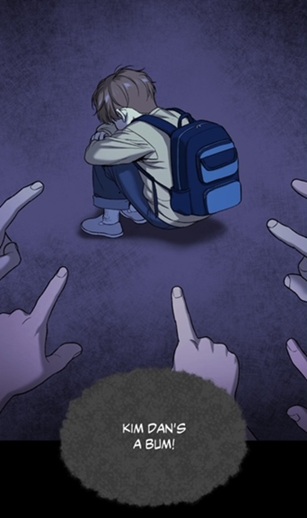
The roots of this profound emotional paralysis extend far deeper than his history with Joo Jaekyung, anchoring themselves in a foundational, intergenerational rupture. Episode 57 quietly exposes that Kim Dan’s defining psychological wound is not the surface-level humiliation of poverty, debt, or social isolation, but a deep-seated terror of broken permanence. (chapter 57) In the opening movements of his recurrent nightmare, the memory presents itself under an illusion of maternal comfort. Following an episode of childhood bullying (chapter 57), a young Kim Dan is met with the rhythmic, tactile reassurance of his grandmother: “Grandma will always be there for you. You still have me” (Chapter 57). However, the nightmare exposes the truth: the starting point of the little boy’s suffering is the opened door: (chapter 57), a symbol for departure which is strongly connected to loss and grief.

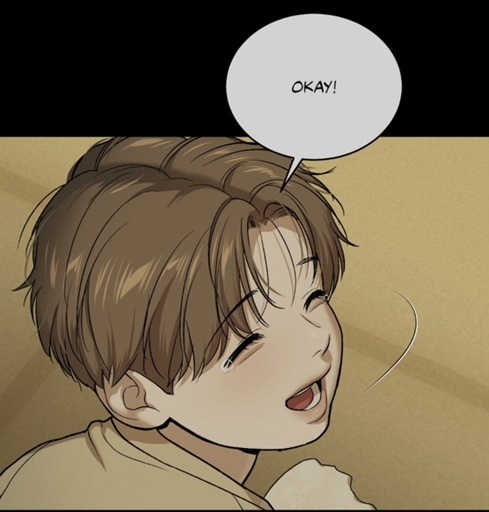
This tactile grounding is structurally paramount. (chapter 57) Within the visual language of the series, the physical act of patting and touch is established as the literal definition of safety, presence, and protection. The young Dan cries, yet he surrenders completely to the belief that emotional warmth possesses the power to permanently stabilize external violence. It is this total emotional vulnerability that renders his tearful, smiling response—“Okay!”—so retroactively devastating. (chapter 57) It represents an absolute, unhedged contract with permanence; a child’s clean surrender to the promise that an attachment figure will remain physically and emotionally reachable no matter what hostile forces gather outside.

The Trauma of the Unfinished Departure

The structural cruelty of the nightmare, however, lies in its precise chronological sequence: first comes absolute reassurance, and then comes immediate, total erasure. The bullying itself is merely an ambient hostility; the true catastrophe is the sudden mutation of safety into a void. (chapter 57) The visual transition occurs through one of the most chilling images in the work: a domestic door standing wide open, leading directly into an unyielding, featureless darkness. Kim Dan stands paralyzed before this threshold, staring into the empty entrance as he quietly whispers, (Chapter 57).

The emotional structure of the nightmare unfolds through a devastating chain of associations. It begins with maternal reassurance and the promise of permanence: “Grandma will always be there for you.” For a brief moment, Kim Dan experiences emotional safety, physical comfort, and the belief that attachment can protect him from the hostility of the outside world. Yet this reassurance is immediately shattered by sudden disappearance. The opened door leading into darkness transforms the promise of permanence into a terrifying image of absence and emotional unreachability.

The Ultimate Catastrophe: The Dissolution of Roots

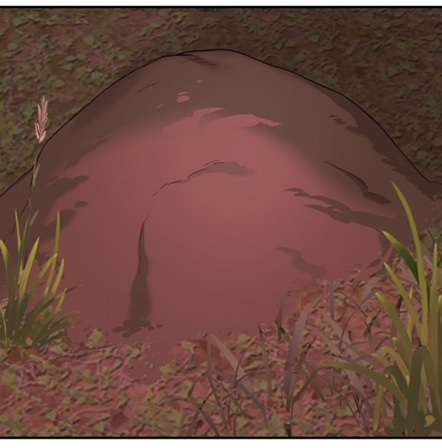
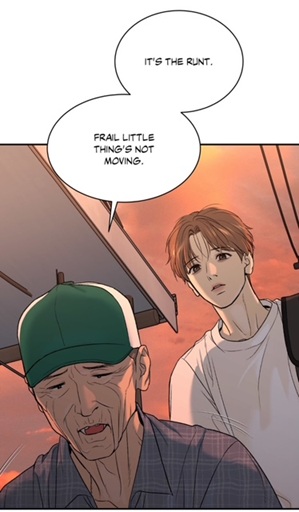
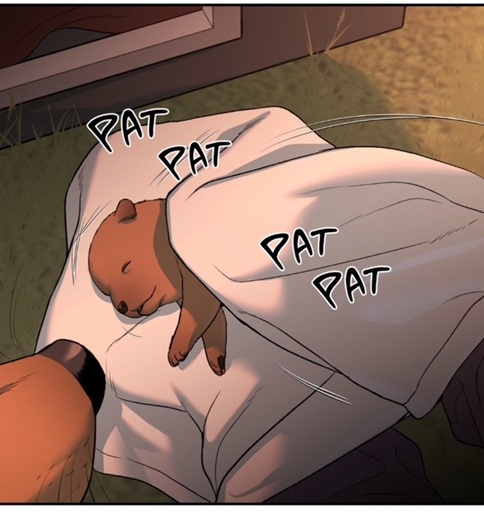
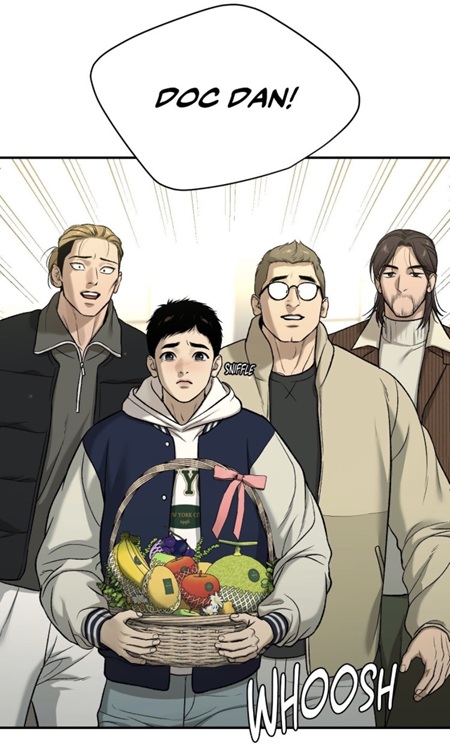
The small, raw mound of dirt that marks the final resting place of the unnamed puppy in Episode 59 (Chapter 59) functions as a tragic monument to emotional minimization. The animal is given no name, no formal ceremony, and no structural acknowledgment within the household’s narrative. For the elderly landlord, this loss is processed through a lens of pragmatic detachment, viewed merely as a rustic, natural occurrence (chapter 59) or a minor rut (chapter 59) in life’s ordinary routine. Because the grandfather dismisses the animal’s death as a trivial event, he lacks the psychological framework to connect it to Kim Dan’s rapid mental deterioration. He never mentions the loss to Joo Jaekyung, effectively sealing the entire event in absolute silence. (chapter 65) By treating the puppy’s death as an unnoteworthy blip, the narrative environment strips Kim Dan of the baseline right to grieve, signaling to him that his sorrow is disproportionate, inconvenient, and ultimately invisible to the outside world.

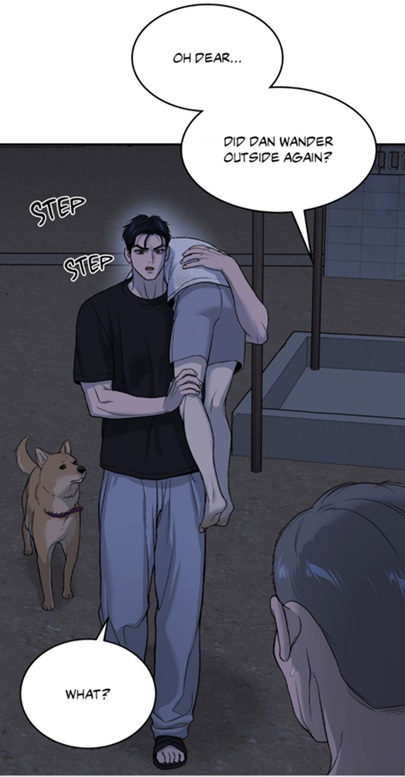
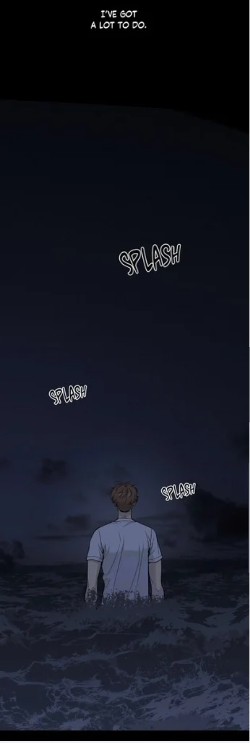
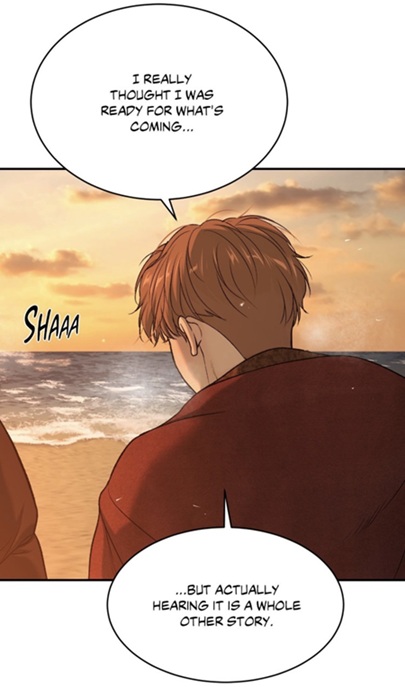
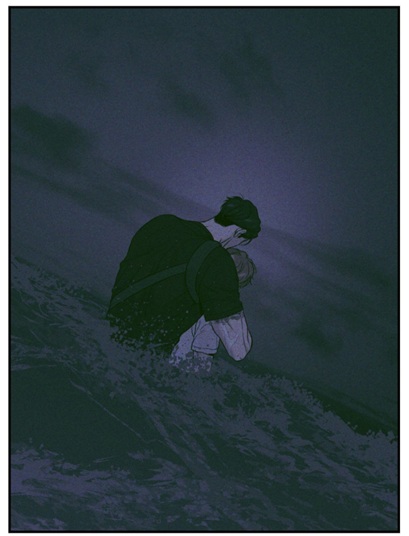
This absolute isolation of grief yields the catastrophic psychological state exposed in Chapter 65. When the grandfather notes that Dan slips out like he is in a trance and expresses a terrifying fear that the young man might end up drowning himself in the ocean, he is witnessing a literalized enactment of Kim Dan’s trauma script. This behavior is not simple drunkenness or passive depression, but an active, sleepwalking surrender to the void. The ocean represents the ultimate space of non-existence, a vast, featureless horizon where a burdened identity can be quietly dissolved without disrupting the lives of others. When Joo Jaekyung physically intercepts Dan, lifting him out of the darkness and carrying him away from the shoreline, the physical contrast is stark. Jaekyung acts as an anchor of brute force, yet he remains completely blind to the ghost haunting Dan’s mind, pulling his body from the surf without ever reaching the unmourned graveyard hidden beneath the silence.

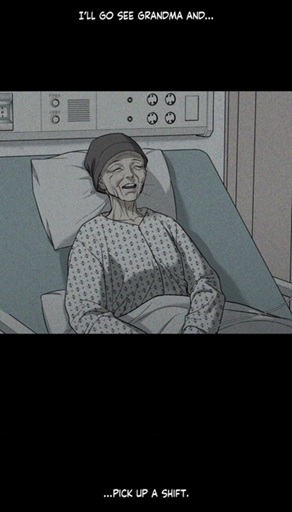
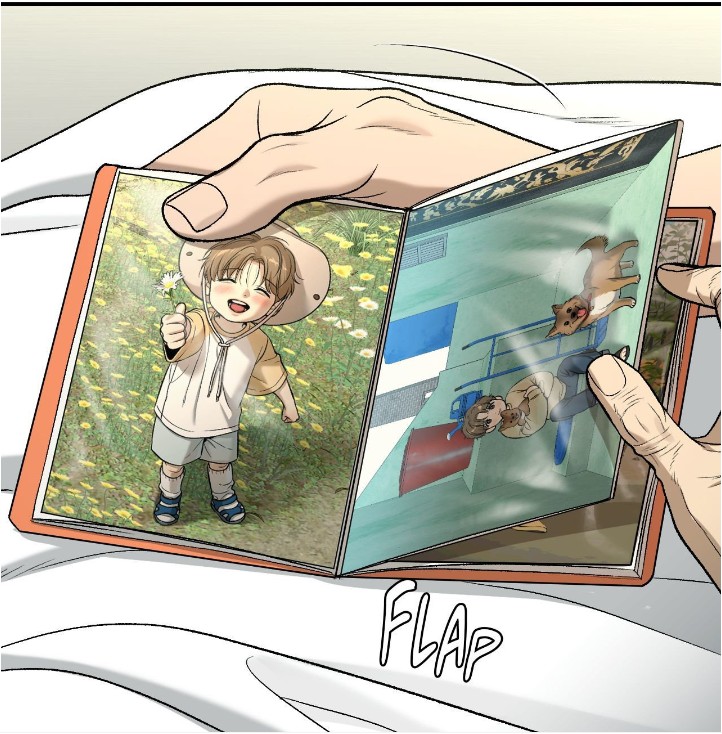
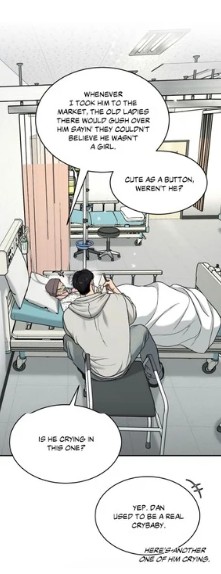
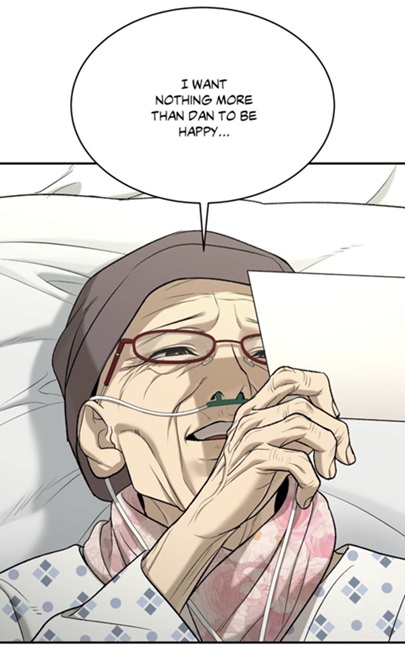
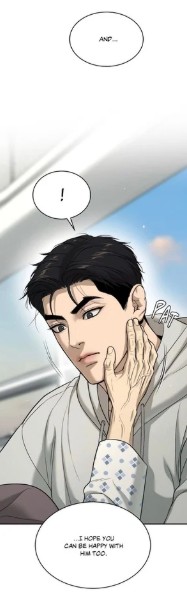
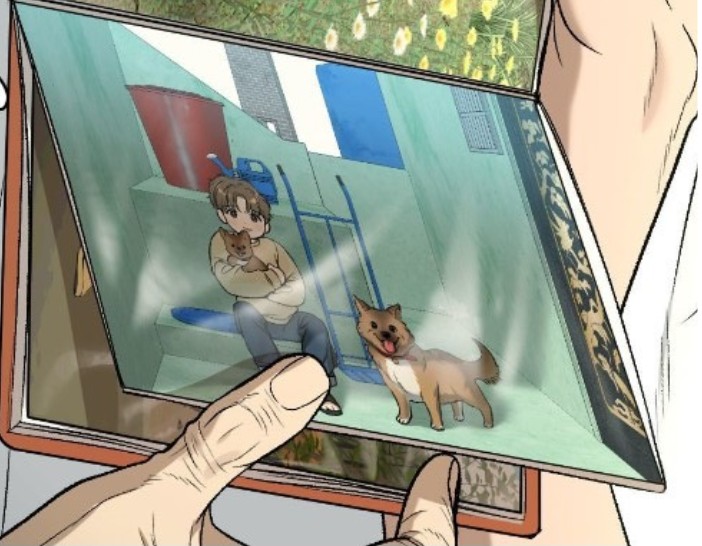
The true terror of this sequence lies in how the puppy’s death (chapter 59) interacts with Shin Okja’s terminal timeline. (chapter 59) With his grandmother’s days explicitly numbered, the sudden erasure of the unnamed puppy strips Kim Dan of his final buffer against the original, unresolved trauma of his life, which is the unmourned loss of his parents. While Dan consciously frames his terror as the fear of being left entirely alone in a hostile world, the deeper, more paralyzing horror is the total collapse of his past. Shin Okja is not merely his protector; she is the sole living witness to his childhood, his family, and his original identity. Because Kim Dan was never permitted to properly process, understand, or mourn the sudden disappearance of his parents, his psychological roots were already incredibly fragile. The photographs in Chapter 94 prove that his childhood was materially documented through images of flower fields and playgrounds (chapter 94), yet his parents were completely erased from that visual record. When the puppy dies unnoticed and the grandmother approaches the threshold of death, Kim Dan faces an existential erasure. If the last person who remembers where he came from vanishes, then Kim Dan ceases to exist in any meaningful, continuous reality, meaning his submissive endurance and his active steps toward the ocean are the desperate measures of a man who believes he has already become a ghost. However, what the physical therapist doesn’t know is that Shin Okja that Shin Okja already shared fragments of her memories and emotional legacy with Joo Jaekyung. (chapter 94) By showing the champion photographs from Kim Dan’s childhood, she quietly creates continuity where Kim Dan unconsciously expects only disappearance and erasure. In this sense, her final wish almost functions like a symbolic letter left behind through the athlete himself. (chapter 94) When she tells Joo Jaekyung that she wants nothing more than for Kim Dan to be happy and hopes he can be happy beside him too (chapter 100), she unknowingly entrusts Kim Dan’s future, memories, and emotional continuity to another person before disappearing herself.

The Ghostification of Memory

This disappearance does not function as an isolated fear connected only to Shin Okja herself. (chapter 57) Instead, it unconsciously reactivates Kim Dan’s primary unresolved trauma: the sudden loss of his parents in the accident. (chapter 94) Once again, someone leaves the domestic space and fails to return, forcing Kim Dan into the same helpless position of searching after an absence he cannot stop, explain, or emotionally resolve.

From this repeated experience of broken permanence emerges the survival script governing Kim Dan’s adult personality. He learns to survive not through emotional dependence or openly expressed need, but through usefulness, gratitude, debt repayment, minimization, and self-erasure. Because attachment repeatedly became associated with disappearance and loss, Kim Dan unconsciously prepares himself for abandonment before it fully arrives.

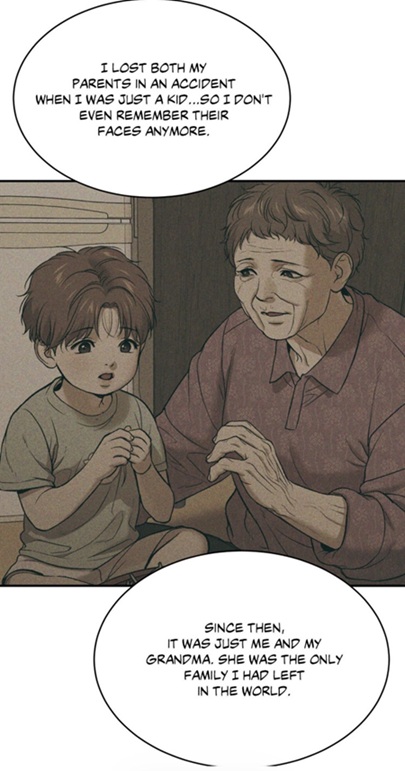
The psychological consequences of this unresolved loss extend even further than abandonment itself. Kim Dan does not simply lose people; he gradually loses the ability to stabilize their emotional reality internally. (chapter 94) When he quietly admits that he no longer remembers the faces of his parents, the statement appears deceptively simple. Yet psychologically, it reveals a catastrophic form of erasure. A face is not merely visual recognition. It anchors identity, continuity, emotional permanence, and existence itself. Without faces, loved ones gradually begin resembling ghosts.

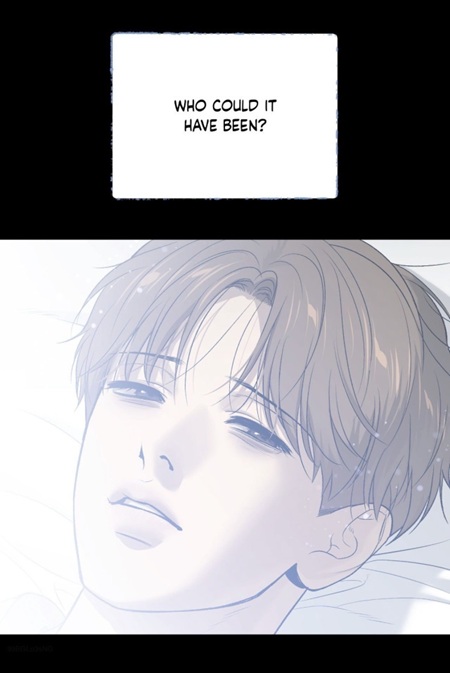
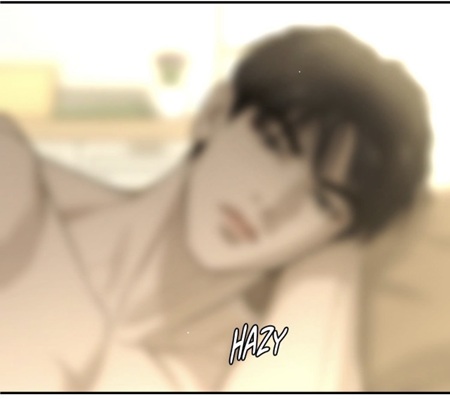
This realization retrospectively illuminates Kim Dan’s strange confusion between dream and reality throughout episode 100. (chapter 100) Even when Joo Jaekyung physically touches him, lies beside him, squeezes his hand, and leaves behind tangible traces of his presence, Kim Dan struggles to stabilize the champion visually and emotionally. The face repeatedly appears blurred, hidden by light, partially obscured, or emotionally difficult to grasp. The body says: someone is here. But the unstable face says: they may disappear again.

In this sense, Kim Dan’s fear is not merely abandonment. It is the dissolution of emotional reality itself around attachment.

Visual Continuity and the Ghostification of Memory

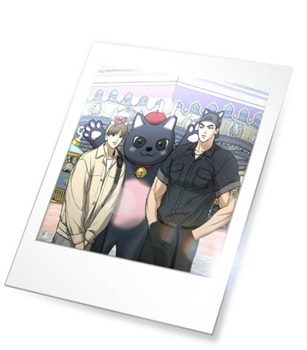
And yet Mingwa quietly introduces one object that resists this entire process of emotional erasure: the amusement park photograph. (chapter 87) Unlike the fragmented visions haunting episode 100, the picture materially preserves Joo Jaekyung outside the role of the “Emperor.” The champion appears awkward, calm, almost ordinary, participating in a shared moment rather than performing dominance publicly. For perhaps one of the first times in Kim Dan’s life, emotional continuity becomes fixed visibly instead of dissolving into absence.

This matters profoundly because the photograph directly opposes ghostification itself. Kim Dan cannot reduce the moment into pure dream, hallucination, or unstable memory. The image preserves:

  • a face,
  • a shared place,
  • a lived moment,
  • and emotional reality existing outside survival and obligation.

For perhaps the first time since the death of his parents, attachment becomes materially anchored to reality rather than threatened by disappearance. Unlike the faceless disappearance haunting his childhood memories, Joo Jaekyung remains materially visible inside the frame.

And this may explain why the present-day “champion” after the stabbing feels so emotionally disorienting. (chapter 100) The exhausted, sleepless figure wandering through the hospital at night no longer fully resembles the mythological Emperor constructed by MFC and Team Black. (chapter 100) Yet neither does he fully resemble the ordinary man preserved inside the amusement park photograph. (chapter 87) Kim Dan therefore stands psychologically between two competing realities: the collapsing public myth and the fragile private human being slowly emerging underneath it.

The photographs shown in episode 94 make this even more devastating. (chapter 94) Shin Okja preserves Kim Dan’s childhood materially: the flower fields, the playground, the puppy, the smiling child. Yet the parents remain entirely absent from the preserved emotional narrative. Even more importantly, the photographs themselves are shown not to Kim Dan, but to Joo Jaekyung. Symbolically, the champion becomes a witness to a forgotten continuity that Kim Dan himself can no longer fully access.

As a result, Kim Dan’s personal history becomes emotionally frozen around a single surviving relationship: himself and his grandmother. Everything surrounding that bond gradually dissolves into invisibility. The accident does not merely take his parents away physically; it erases emotional continuity itself. The lost family begins resembling something unreal, distant, and ghost-like inside memory.

This also explains the overwhelming terror surrounding Shin Okja’s eventual death. (chapter 57) If she disappears too, Kim Dan unconsciously fears losing not only companionship, but the final remaining anchor connecting him to his own past and identity.

The horror of this panel is entirely acoustic and structural rather than explicitly violent. (chapter 57) The grandmother has vanished. The room remains physically ordinary, recognizable, and static, yet the emotional center that validated the space has been instantaneously wiped clean. The open doorway stands as a permanent monument to an irreversible departure. Someone has left, and Kim Dan has once again arrived too late to stop the hemorrhage.

This specific visual configuration exposes a profound sense of absolute powerlessness before disappearance. Throughout his life, Dan experiences the people and animals (chapter 94) upon whom his emotional survival depends as slipping away into unreachability without warning, explanation, or the possibility of interception.

This nightmare sequence does not merely depict the fear of losing Shin Okja; it functions as a psychological screen memory that reactivates the original, unresolved catastrophe of his childhood: the sudden death of his parents in an accident. The parental loss functions psychologically not as an understood transition, but as a sudden, violent departure completely stripped of emotional closure. Someone leaves the domestic sphere and simply never returns. The child is left behind to wander the empty rooms (chapter 57), searching for an explanation, a destination, or a lingering trace of continuity.

When Shin Okja later assumes the role of his sole protector, she temporarily stabilizes this primary wound , but her eventual illness and death cause the old terror to resurface with unchecked force. The reassurance that “Grandma will always be there” collapses into the exact same darkness, rain, breathlessness, and panic that defined the loss of his parents.

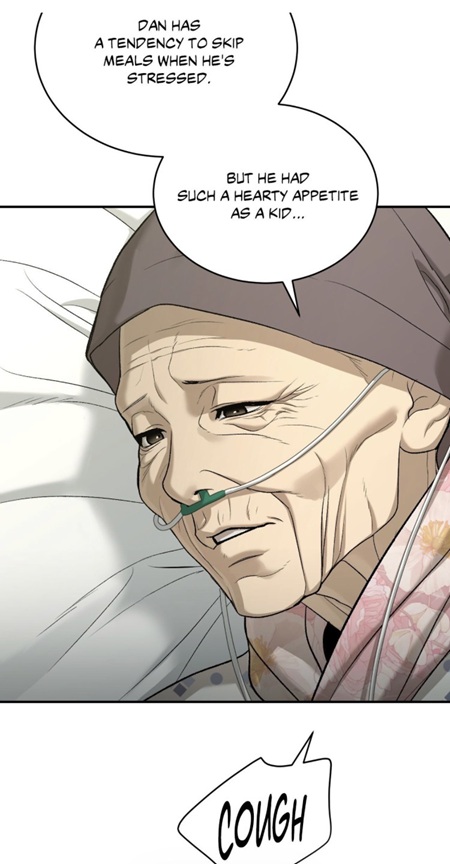
This cycle of sudden, unexplained abandonment implants a devastating psychological mechanism within Kim Dan: survivor’s guilt. He internalizes the catastrophic belief that his continued existence is a fundamental material and emotional burden to those around him. He adopts an identity of extreme minimization—reducing his physical footprint, eating nothing under stress, apologizing for occupying space, and preemptively preparing for his own eviction before the other person can abandon him first. Because he unconsciously links deep emotional attachment to sudden death, ruin, or disappearance, he learns to survive by never allowing himself to believe in permanence again.

To openly ask another human being to stay beside him is an act of agency completely prohibited by his trauma script. Such a request requires a fundamental faith in the stability of the future. It requires trusting that a shared warmth will not instantly mutate into an empty hallway or a clinical operating room. Trapped within the logic of the opened door in Chapter 57, Kim Dan cannot ask anyone to remain; he can only wait in silence for the inevitable moment they vanish.

Yet one of the cruelest aspects of the relationship is that Joo Jaekyung’s care alone cannot fully dismantle the psychological structure governing Kim Dan’s self-perception. The champion provides financial stability, physical protection, rest, fun (chapter 89), emotional attachment, and eventually even places Kim Dan above the championship itself. But none of these gestures automatically erase decades of trauma, survivor guilt, and self-erasure. Kim Dan continues interpreting himself through the logic of burden, usefulness, and temporary emotional permission. As a result, even genuine love becomes destabilized inside his perception. Care transforms into guilt. Freedom feels like eviction. Presence becomes dream-like. (chapter 100) And companionship itself remains emotionally difficult to trust.

From Ghost to Sinner: The Inversion of the Trauma Script

That is why the emotional reversal of the story likely requires something much more devastating: Kim Dan witnessing Joo Jaekyung collapse.

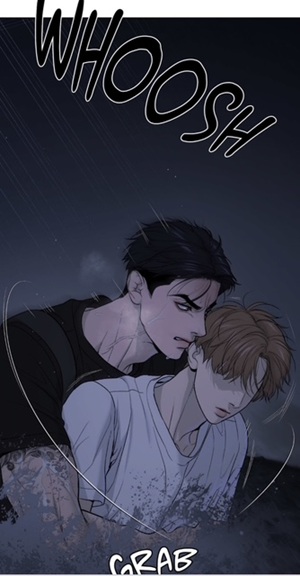
Until now, the champion has functioned almost like a force of nature inside Kim Dan’s mind. No matter how wounded, exhausted, or emotionally unstable he became, Jaekyung always remained standing. (chapter 69) (chapter 91)

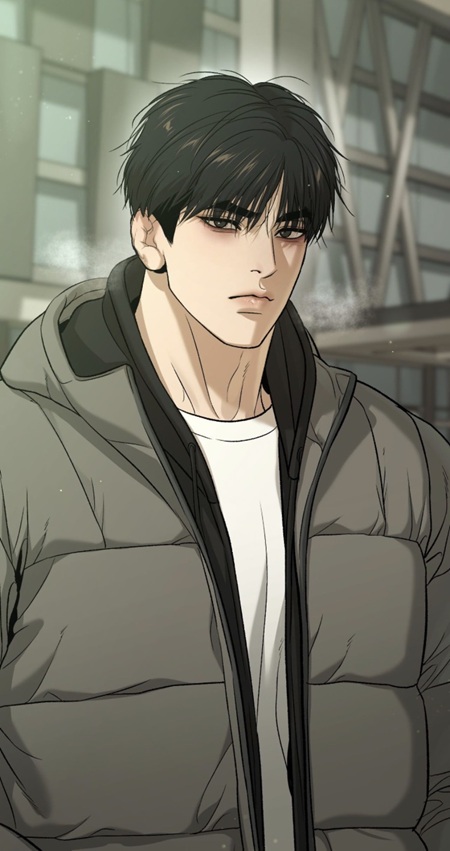
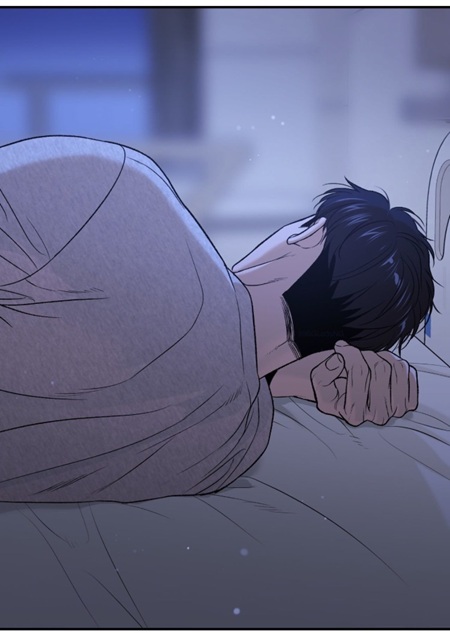
But episode 100 quietly dismantles this image. The disheveled hair, dark red eyes from crying and insomnia, starvation, (chapter 100) emotional distance, and nightly wandering all reveal someone slowly destroying himself from within.

If Joo Jaekyung’s body finally gives in — if exhaustion overwhelms him, if his legs give in or if he faints or loses consciousness directly in front of Kim Dan — then the emotional structure of the story would reverse completely. Kim Dan would suddenly experience what Jaekyung experienced in the hospital and at the seaside: the terror of watching someone he loves become physically unresponsive and getting really sick.

This matters profoundly because Kim Dan’s understanding of death has never been linked primarily to gore or violence. (chapter 59) His trauma seems connected instead to stillness, sleep (chapter 59), silence, unconsciousness, and disappearance.

Thus witnessing Jaekyung collapse would strike directly at the center of his childhood trauma.

More importantly, such a moment would destroy Kim Dan’s ability to hide love behind gratitude. He could no longer tell himself that he stayed because he owed something. Instead, he would finally confront the truth: he cannot lose him.

And only then could Kim Dan truly say:

“Stay with me.”

Not as repayment. Not as obligation. Not as gratitude. But as pure emotional need. At the same time, speaking openly about his childhood, the accident, and the disappearance of his parents would force Joo Jaekyung to confront an important truth:Kim Dan’s suffering did not begin with him. He doesn’t know everything about him either. The champion incited the physical therapist not only to confront his traumas, but also to gather courage and affirm himself. He might have caused him some pain, but he did not create the original wounds. Long before entering the octagon’s violent world, Kim Dan had already learned to associate attachment with disappearance, guilt, and emotional instability. Besides, in reality, he is no angel either, just like him a sinner. (chapter 100)

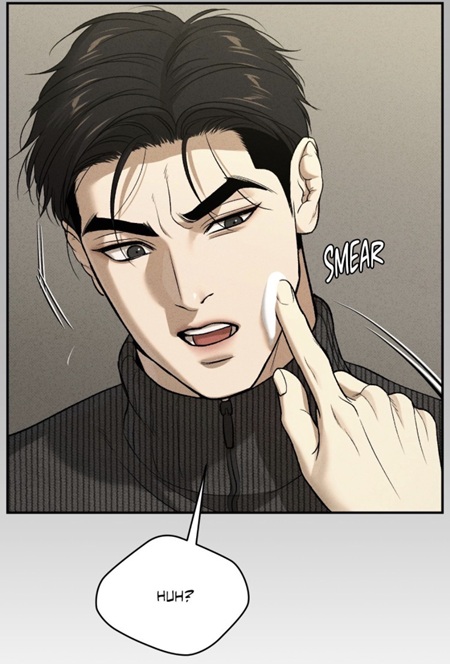
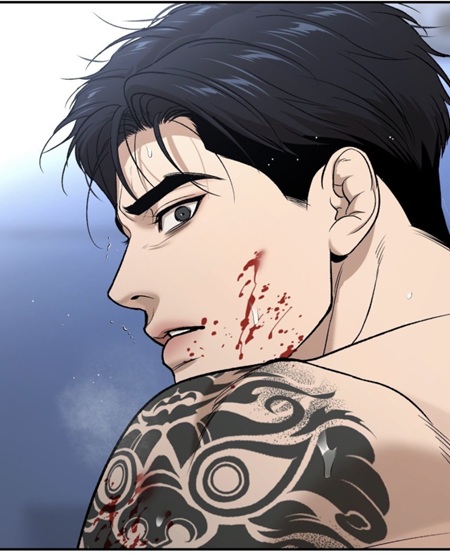
This pivot exposes the agonizing threshold where Kim Dan undergoes a profound psychological transformation: the loss of absolute innocence and the violent birth of true adult maturity. Throughout his life, Dan has operated under the survival script of a grateful ghost, a creature who believes he must minimize his physical and emotional footprint to ensure the survival of those around him. (chapter 53) A ghost leaves no tracks, carries no weight, and can be evicted or replaced without altering the fabric of the room it inhabited. However, the unyielding weight of the physical collapse at the threshold forces a terrifying realization into his consciousness. By witnessing the catastrophic toll his words and his impending departure have taken on Joo Jaekyung, Kim Dan is stripped of his narrative anesthesia. (chapter 98) He is forced to realize that he is not a ghost at all. Instead, he has become a sinner which is symbolized by the blood left on the athlete’s cheek that night.

This shift from ghost to sinner is monumental because a sinner possesses density, gravity, and the undeniable capacity to inflict a wound. For the first time, Dan cannot hide behind the convenient illusion of his own insignificance; he is confronted with the undeniable evidence that he has left permanent, indelible traces in the champion’s life. He is not replaceable, and he cannot vanish cleanly because his presence has already fundamentally altered the internal architecture of the celebrity. To acknowledge that he has the power to wound Jaekyung is to acknowledge his own personhood and agency.

Paradoxically, this recognition of his own capacity to cause pain becomes the first true validation of his existence as a real, impactful human being. For someone anchored in a trauma script of self-erasure, happiness always appears fragile and temporary, destined to dissolve back into an empty room. Pain, however, possesses undeniable reality. Discovering that he can wound Joo Jaekyung therefore destroys the illusion of his own insignificance.

By forcing the loss of his protective, childlike innocence, this realization marks the birth of his adult maturity. (chapter 100) He can no longer view himself as a passive victim of fate or an expendable burden. If his existence carries enough weight to cause ruin, then it also carries enough weight to cultivate healing. Consequently, his psychological survival ceases to be about achieving safety through total self-erasure. Instead, it matures into a conscious, courageous choice to engage in a mutual exchange of lasting impressions—willingly claiming the power to leave indelible traces in Jaekyung’s heart, while finally allowing Jaekyung to carve permanent, undeniable traces into his own world.

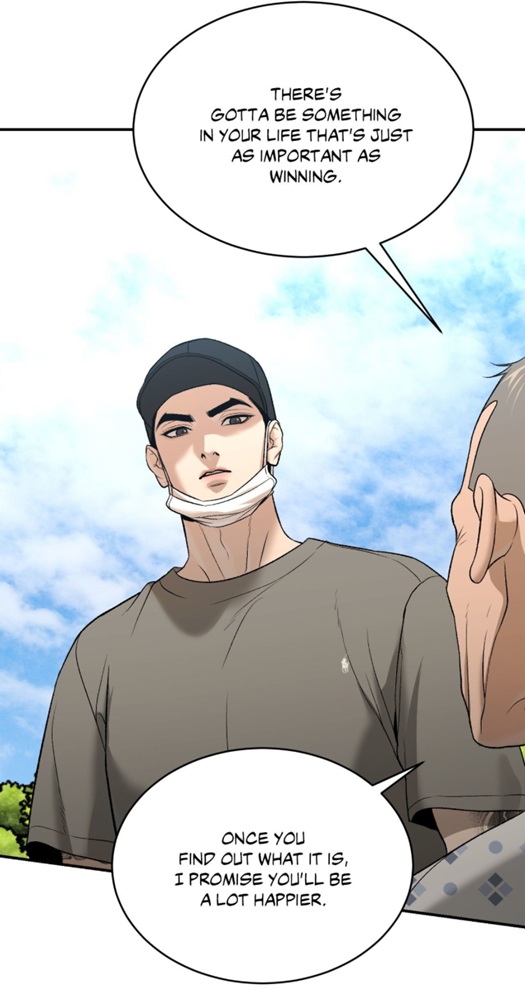
This transformation also fundamentally alters Kim Dan’s relationship to silence and moral judgment. (chapter 91) Throughout the series, he remains almost completely passive toward institutional abuse and exploitation. He never openly confronts the perverted hospital director, never pursues legal retaliation against those who destroyed his livelihood (chapter 11), and never truly challenges the structures that repeatedly reduce him to a disposable object. His anger emerges almost exclusively toward Joo Jaekyung because the champion emotionally reaches him deeply enough to wound him personally. (chapter 100) Yet the “THUD” destroys the illusion that passivity itself is harmless. Once Kim Dan realizes that his choices possess the power to devastate another human being emotionally, he can no longer maintain the fantasy of existential insignificance. A ghost silently endures injustice because it believes it lacks the right to leave traces behind. (chapter 1) A sinner, however, possesses moral weight. By recognizing his own capacity to wound, Kim Dan simultaneously acquires the adult authority to judge silence, cowardice, and passivity in others as well.

The Closed Door: The Acoustic Anchor of Reality

Throughout the series, and especially within Kim Dan’s recurring childhood nightmare in Chapter 57, the open door functions as the primal image of abandonment. (chapter 57) It marks the threshold where loved ones disappear into darkness while he remains behind, powerless to stop them from leaving. In Kim Dan’s trauma logic, an open doorway is never neutral. It is a wound left permanently unresolved.

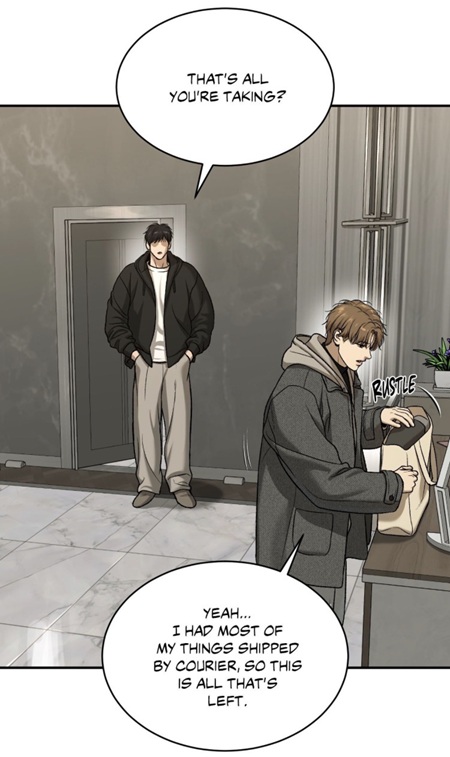
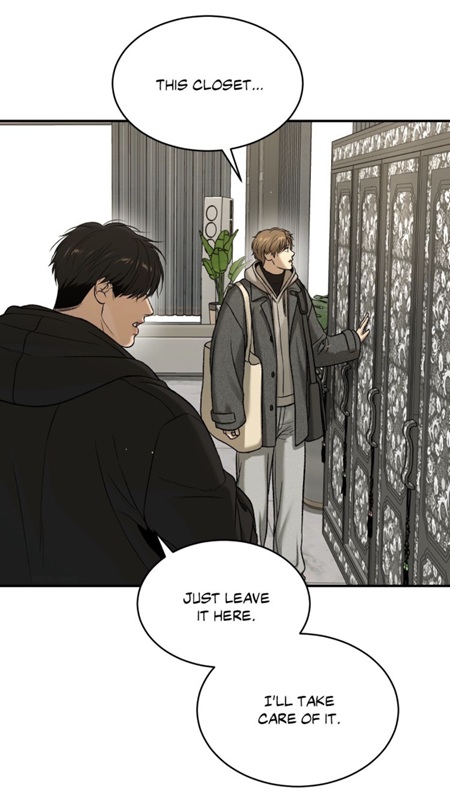
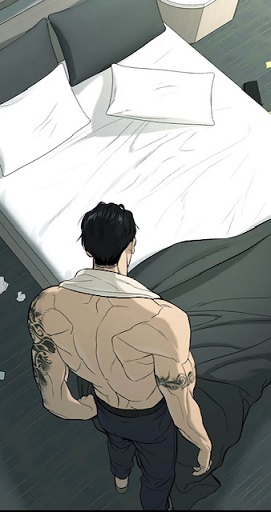
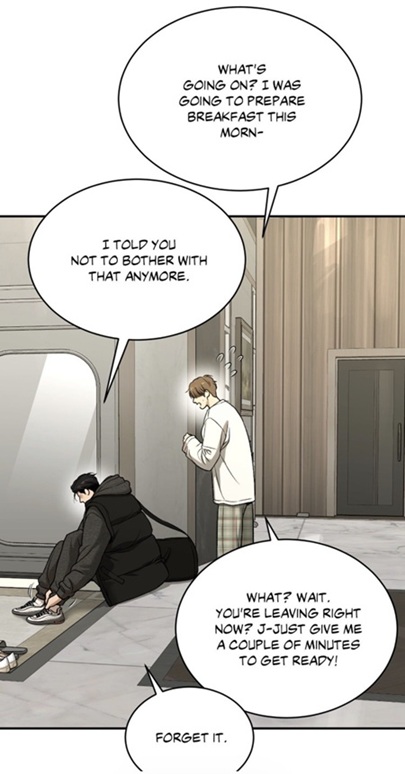
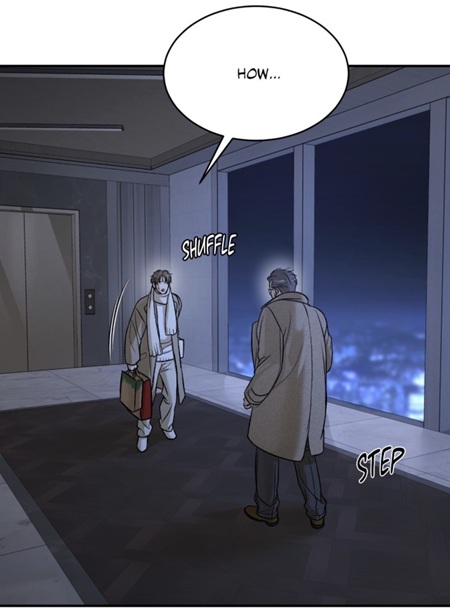
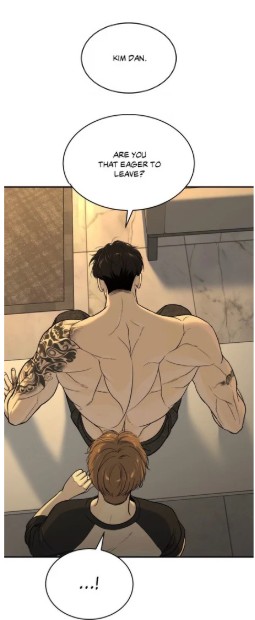
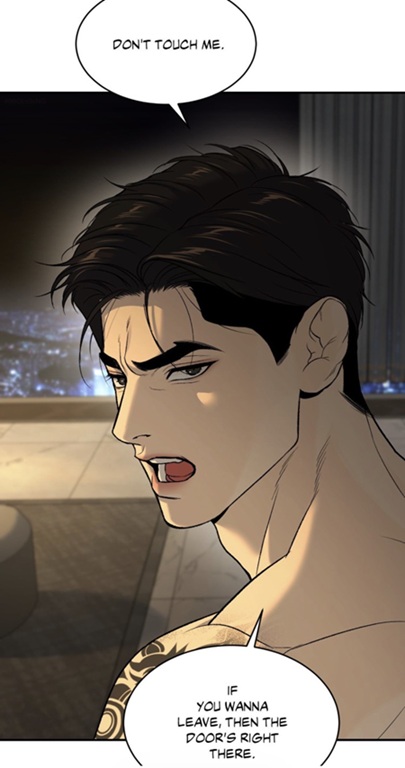
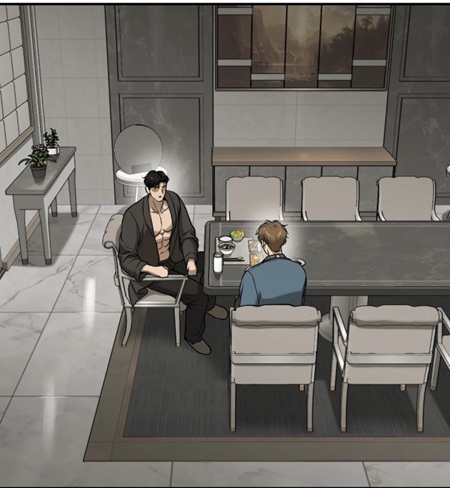
This symbolism returns with devastating force in Chapter 100. (chapter 100) Standing at the entrance of the penthouse, Kim Dan attempts to perform what he believes is a final act of noble self-sacrifice. His suspended “Goodbye then…” reflects the familiar survival strategy that has governed his entire life: leave quietly, minimize the burden, disappear before causing further damage. He still imagines departure as a clean emotional transaction, one in which he can slip away harmlessly like a grateful ghost.

The violent “THUD” of Joo Jaekyung’s collapse destroys this illusion instantly. It brings an end to the generational trauma repetition and as such Kim Dan’s jinx! (chapter 100)

The sound functions like an acoustic shockwave tearing through Kim Dan’s entire childhood survival script. For perhaps the first time in his life, he is forced to confront the catastrophic possibility that his passivity is not emotionally neutral. By attempting to erase himself quietly, he is no longer protecting the person he loves. He is actively destroying him. In this sense, Kim Dan unconsciously begins reenacting the very trauma that shaped his own childhood. Just like the parents who vanished beyond the open doorway of his memory (chapter 19), and just like Shin Okja repeatedly attempting to remove herself from his life for his “own good,” (chapter 65) Kim Dan convinces himself that disappearance is an act of love. The tragedy of the threshold scene lies precisely in this inherited logic of self-removal. He believes he is preventing suffering, while unknowingly reproducing the emotional catastrophe that destroyed him in the first place.

And this is where the scene undergoes its most profound symbolic reversal. (chapter 57) In the childhood nightmare, the open door represented irreversible disappearance and emotional hemorrhage. Here, however, the collapse effectively slams the threshold shut. The exit no longer exists psychologically. Kim Dan cannot continue drifting into the darkness as though his existence leaves no trace behind.

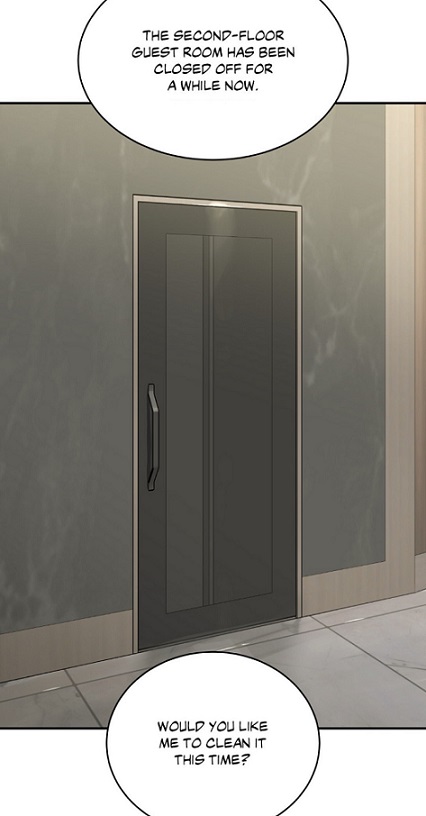
The apartment itself suddenly transforms. The hallway no longer offers escape into abstraction or self-erasure. The sealed space forces Kim Dan to confront the weakened body inside the room and the devastating evidence that his existence leaves real wounds behind.

This realization marks the destruction of the “ghost” identity he has inhabited for years. (chapter 97) A ghost passes through spaces invisibly, leaves no wounds behind, and can vanish without fundamentally altering the lives of others. Kim Dan has survived precisely by believing himself replaceable, temporary, and emotionally weightless.

But the body collapsing behind him proves the opposite.

For the first time, Kim Dan is forced to recognize that he possesses the power to wound another human being permanently. And paradoxically, this terrifying recognition becomes the first true confirmation of his own existence. (chapter 100) Pain carries undeniable gravity. Because suffering has always been the most concrete reality in Kim Dan’s life, discovering that he can inflict emotional devastation on Joo Jaekyung shatters the illusion of his own insignificance.

The threshold scene (chapter 96) (chapter 100) therefore becomes the site of an agonizing psychological transformation: the death of passive innocence and the birth of adult responsibility. Kim Dan can no longer remain a silent victim waiting to be chosen, summoned, or emotionally permitted to exist by someone else. The collapse forces him to understand that refusing to choose is itself a choice, and that disappearance can become cruelty when another person’s emotional survival depends upon your continued presence.

In this sense, the “THUD” becomes more than the sound of physical collapse. It is the acoustic force that seals the door against self-erasure. The fantasy of a painless goodbye is destroyed forever. Kim Dan is no longer allowed to vanish into darkness untouched by consequence. He must finally turn around, step away from the threshold, and confront the traces he has already carved into another person’s heart.

Two Ghosts at the Threshold

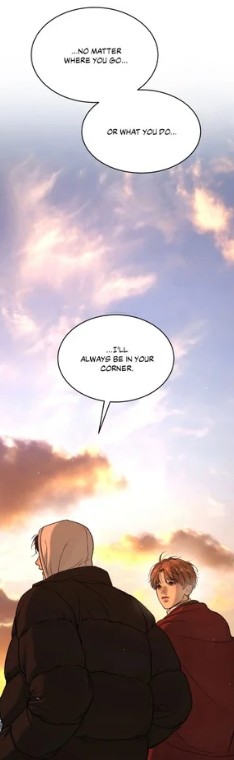
By the end of episode 100, both protagonists resemble ghosts trapped at an emotional threshold. Kim Dan believes that if he truly loves Jaekyung, he should leave and stop burdening him. (chapter 100) Joo Jaekyung believes that if he truly loves Kim Dan, he should let him go and stop endangering him. (chapter 100)

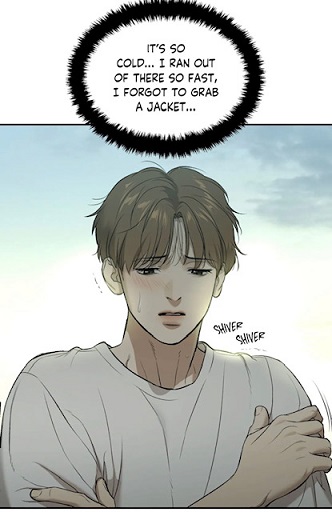
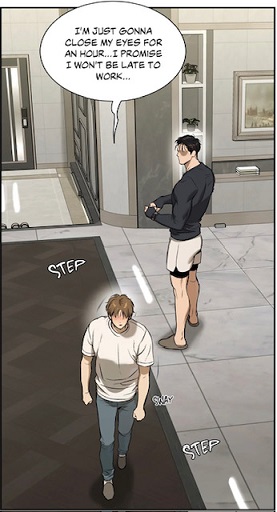
Both unconsciously reproduce the same inherited trauma logic: love through disappearance. Yet the webtoon author carefully situates this confrontation not during the stability of daytime, but at sunrise. (chapter 100) The timing matters profoundly. Throughout the series, dawn repeatedly appears after moments of emotional rupture, exhaustion, or psychological transition. (chapter 21) Kim Dan once returned from the hospital at the break of day after another traumatic encounter, intending only to “rest for an hour” before returning to work, as though emotional catastrophe itself had to be minimized and folded back into routine immediately. (chapter 100)

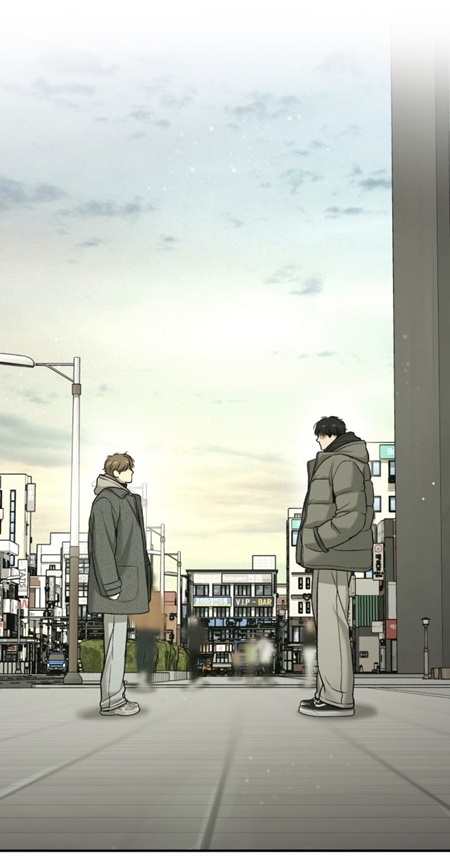
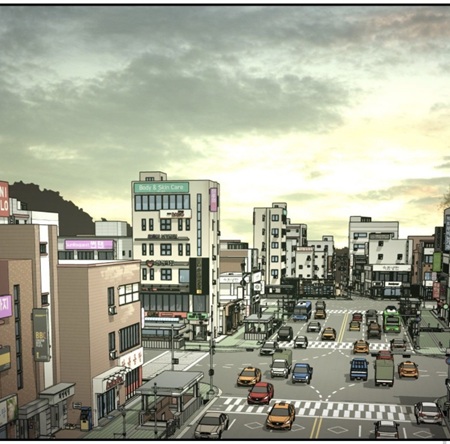
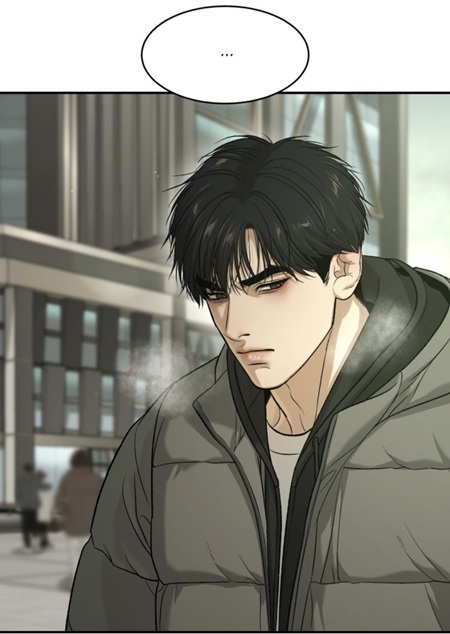
In episode 100, however, sunrise acquires a radically different meaning. (chapter 100) Mingwa carefully emphasizes the gradual awakening of the city itself through the changing atmosphere of the streets. When Kim Dan first exits the hospital, the urban environment still feels strangely suspended and emotionally empty. The streets remain quiet, the traffic sparse, and the pale sky carries the lingering stillness of night. Both men stand isolated within this transitional hour, suspended psychologically between separation and recognition.

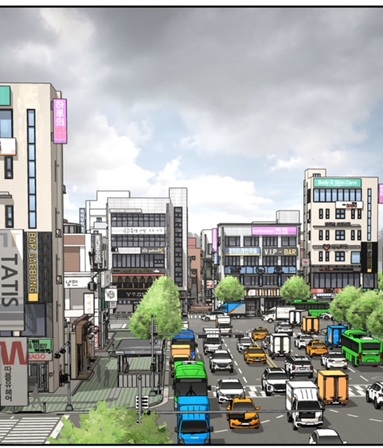
This is perceptible, once you contrast the traffic in the same street during the day. (Chapter 56) So we have to envision the following scenery in episode 100. Cars begin accumulating in the streets, intersections grow crowded, daylight strengthens, and ordinary life resumes around them. The world itself begins moving forward again.

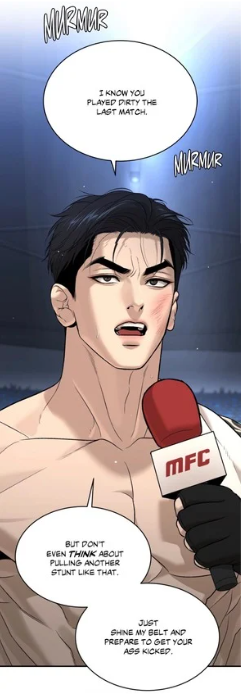
And significantly, this transition unfolds precisely while the “Emperor” identity starts destabilizing visibly. The sleepless figure (chapter 100) standing outside the building no longer resembles the untouchable public champion sustained by MFC, Team Black, spectacle, and violence. Instead, the growing daylight increasingly exposes exhaustion, emotional fragility, insomnia, grief, and human vulnerability. (chapter 100) In this sense, the awakening city does not accompany the rebirth of the mythological fighter, but the gradual emergence of the man hidden underneath the role itself.

This may explain why Joo Jaekyung increasingly appears ghost-like throughout the hospitalization arc. (chapter 100) He does not merely hide from Kim Dan physically. He is unconsciously shedding an identity built entirely around performance, dominance, and emotional suppression. The champion must temporarily become a ghost so that the man himself can finally emerge.

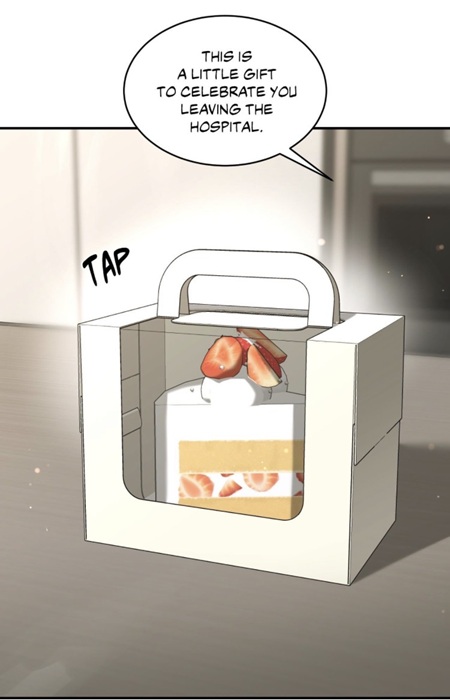
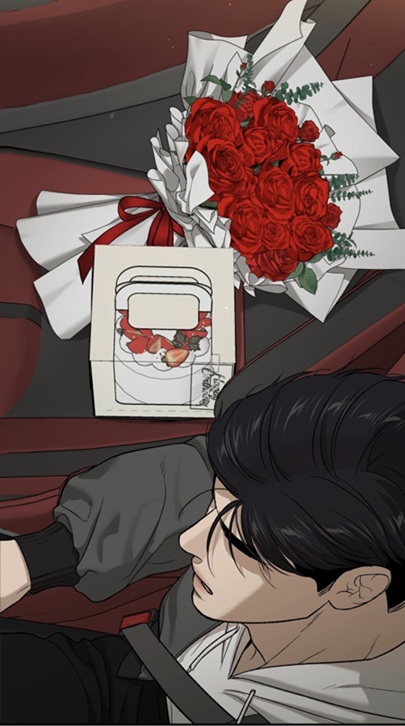
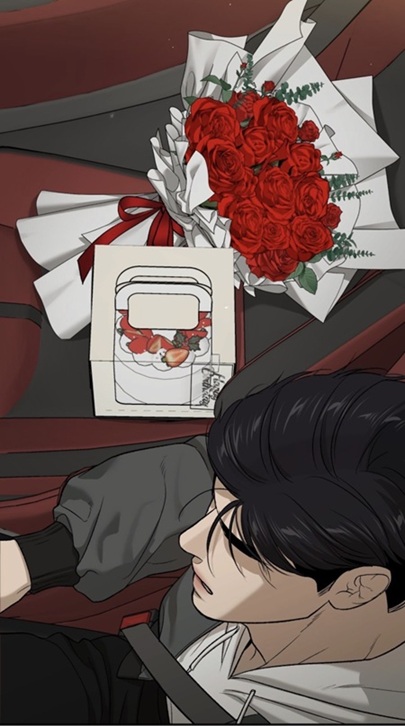
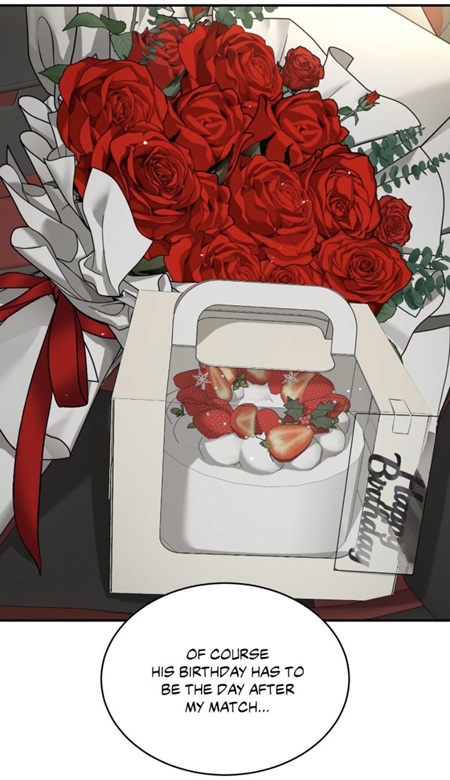
This is why the chapter feels so suffocating despite all its tenderness. The flowers are beautiful, but the giver disappears. The cake is sweet, but the celebration remains broken. The confession exists, but recognition becomes delayed. The warmth is real, but it arrives through traces left behind during darkness rather than open emotional presence.

The Managerial Ghost: Mobility versus Attachment

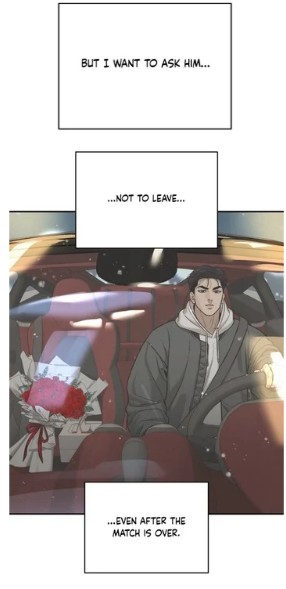
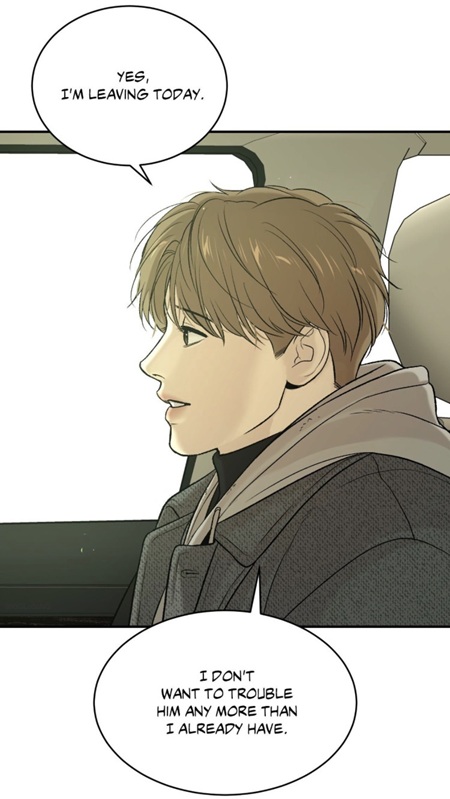
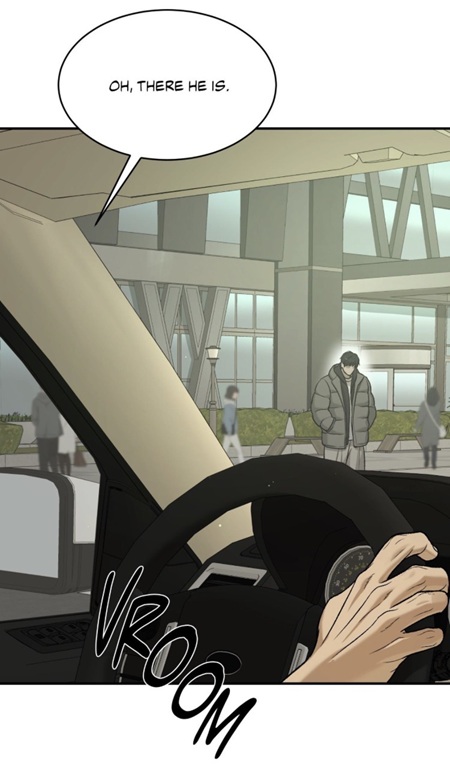
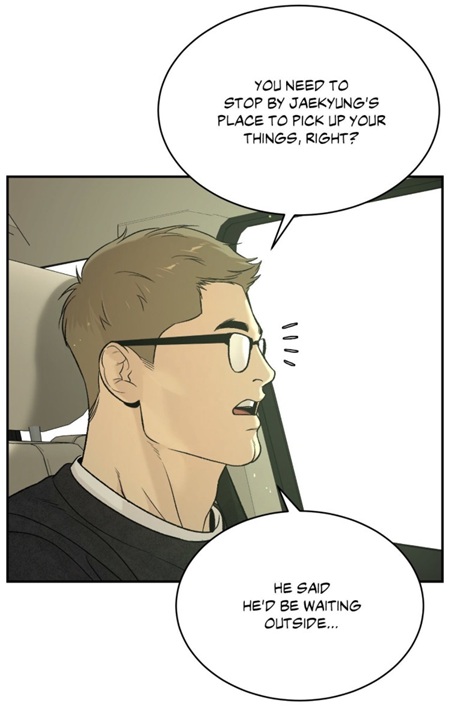
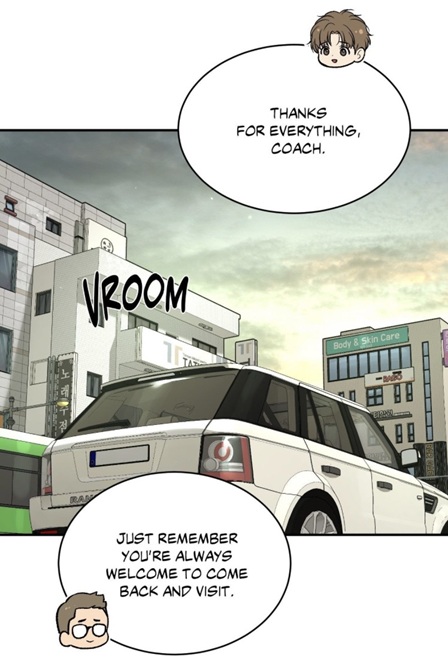
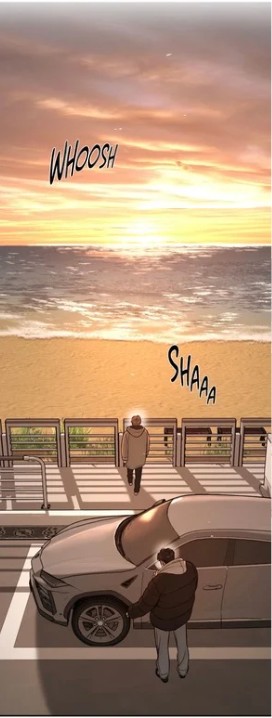
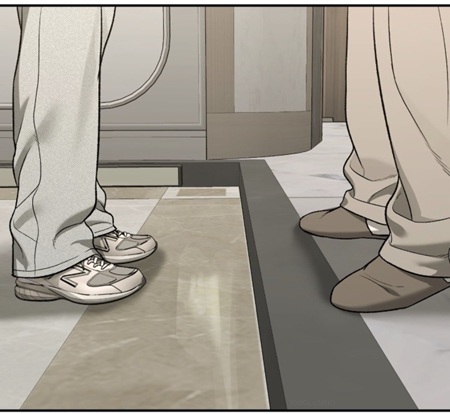
This transitional atmosphere becomes even more revealing once Park Namwook quietly exits the scene. (chapter 100) After dropping Kim Dan off in front of the building, the manager simply drives away without greeting Joo Jaekyung directly or remaining beside him. The movement appears emotionally hollow, especially when contrasted with the unresolved intensity surrounding (chapter 100) “Goodbye then…”. Namwook’s departure resembles transit rather than attachment. He arrives, transports, then disappears again.

The location itself quietly reinforces this instability. (chapter 100) Park Namwook leaves Kim Dan directly beside a pedestrian crossing: a place not meant for permanence, but for transition. Symbolically, Kim Dan stands neither fully inside the old structure nor fully outside it yet. He remains suspended between identities, relationships, and possible futures. Even Namwook’s language unconsciously reflects his belief that the previous system will continue functioning normally. (chapter 100) He assumes Kim Dan will simply “stop by” the penthouse to collect his belongings and perhaps “visit” Team Black again later. The manager still imagines continuity, routine, and return. (chapter 100)

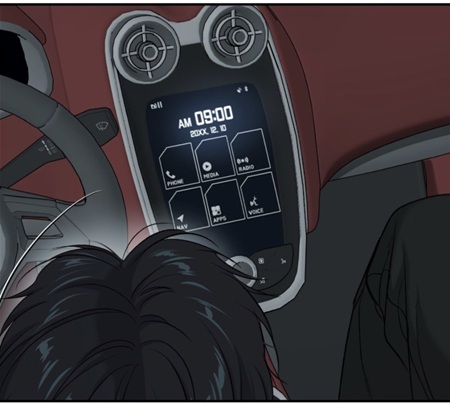
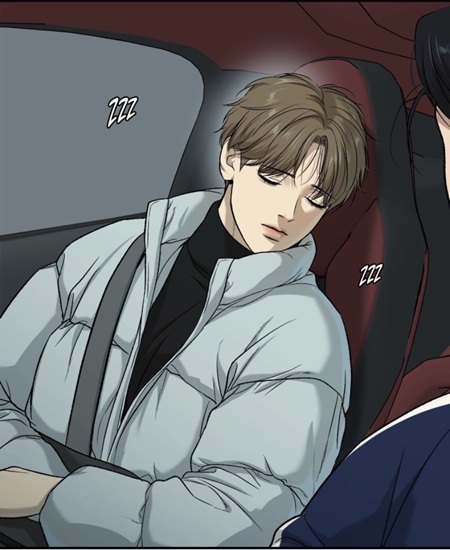
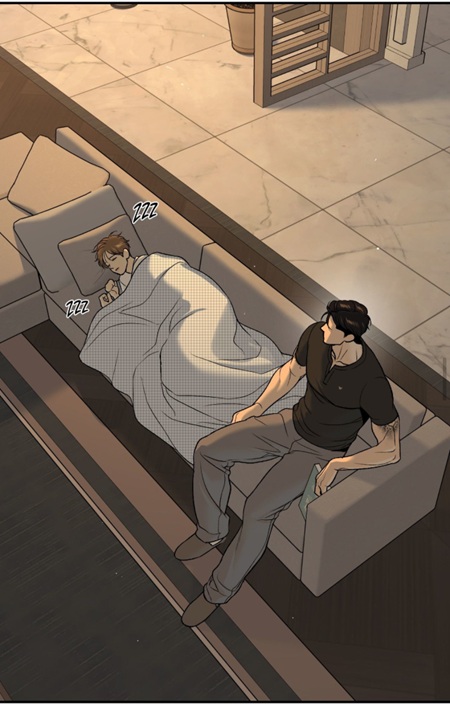
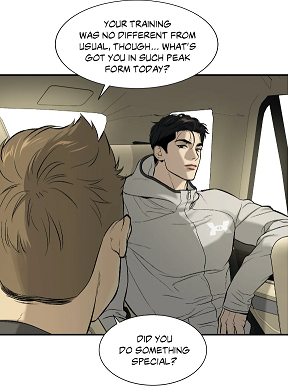
And significantly, he expects Joo Jaekyung to behave according to that same logic. In episode 95, the time visible inside the car showing 9 a.m., (chapter 95) reveals their routine, though here, a small transgression took place. Joo Jaekyung let Kim Dan rest a little: (chapter 95). This scene indicated that Joo Jaekyung had already started psychologically drifting far outside this structure. He was already prioritizing his lover. Joo Jaekyung does not wake him despite obligations, schedules, or practical inconvenience. Instead, he silently watches over him for a while and allows the moment of rest to continue. The car therefore temporarily stops functioning as transportation toward labor, treatment, or fighting. It becomes a protected space where exhaustion is permitted rather than suppressed.

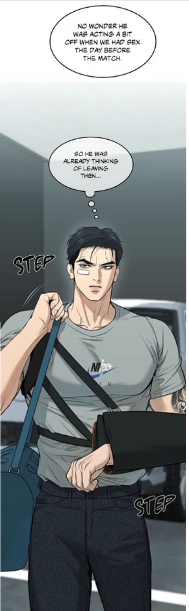
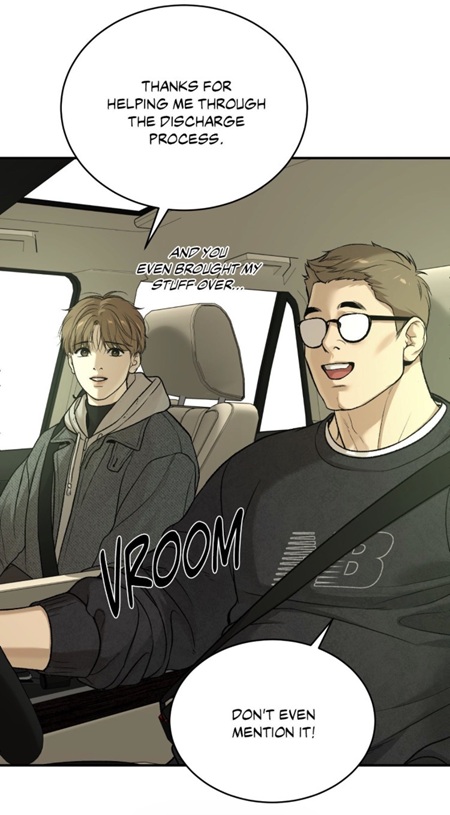
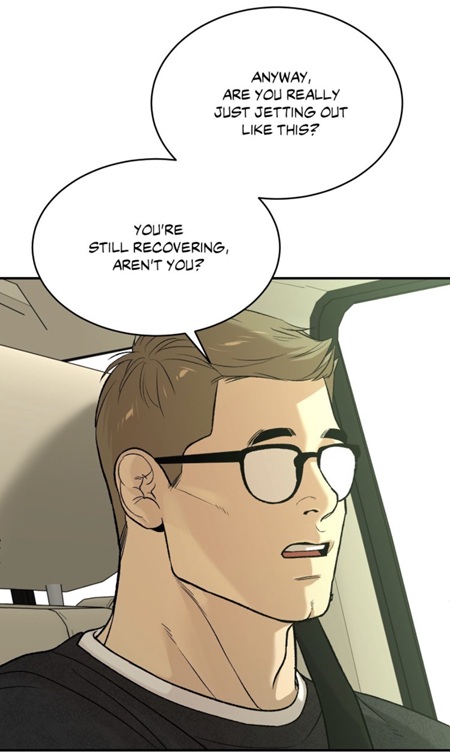
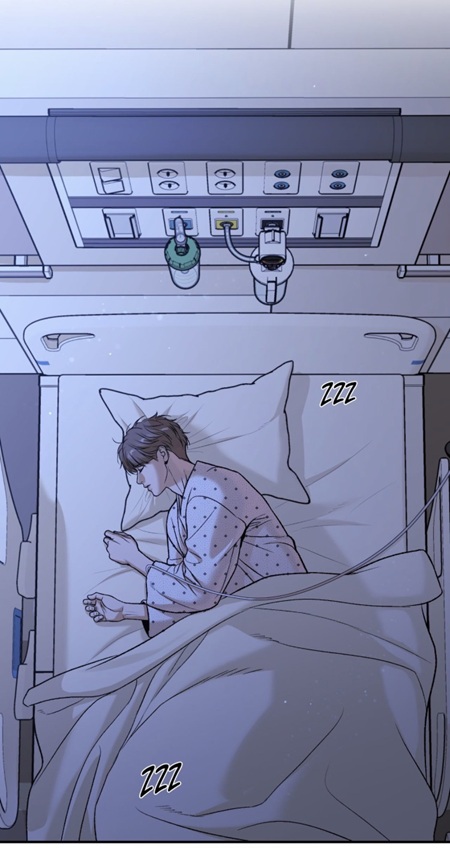
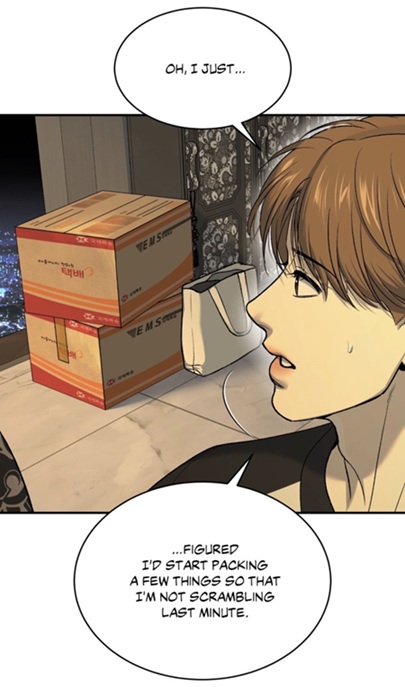
So the sunrise indicates that it is much earlier than 9.00 am, an indication that Park Namwook is already going to the gym in order to “welcome” the next physical therapist. By helping him with the discharge so early, the manager avoids a goodbye between the members of Team Black and Kim Dan. (chapter 100) The sleepless wandering through hospital corridors, the nightly visits, the emotional collapse after the stabbing, and the abandonment of ordinary rhythm (no shower and jogging) all reveal someone no longer functioning according to the predictable temporality of the fighting system.

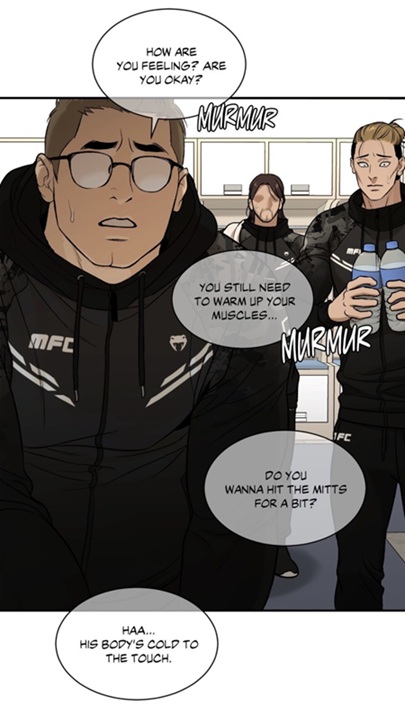
Park Namwook, however, continues organizing life through functionality, punctuality, and performance structure. (chapter 100) This explains why his farewell with Kim Dan feels emotionally procedural (chapter 100) rather than existential. He drops him off, tells him he is always welcome to visit again, then drives away. (chapter 100) The car itself begins symbolizing Namwook’s role inside Joo Jaekyung’s life: constant movement toward fights, schedules, media obligations, and professional continuity, yet strangely little emotional presence outside those structures.

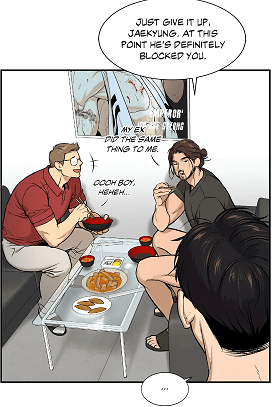
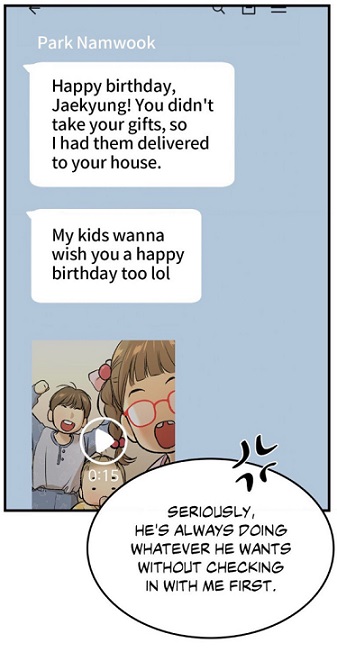
This irony becomes even sharper when connected to episode 5, where Park Namwook laughed about the circumstances concerning Yosep’s divorce. (chapter 5) Yosep had been “ghosted” emotionally by his wife, abandoned after years of prioritizing MMA over personal life. Yet episode 100 quietly suggests that Namwook himself increasingly resembles a ghost within Joo Jaekyung’s life. This explicates why he didn’t help him getting discharged from the hospital (chapter 53) contrary to the athlete. So this kindness toward the “hamster” is not truly selfless. He constantly orbits the champion professionally while remaining emotionally detached from the human being underneath the “Emperor” persona. And the best evidence is this video sent on his birthday: (chapter 45)

The contrast with Kim Dan therefore becomes profound. (chapter 100) “Goodbye then…” emerges from overwhelming attachment, fear of abandonment, survivor guilt, and anticipatory self-erasure. Park Namwook’s farewell, by contrast, remains rooted in managerial continuity. (chapter 100) One goodbye fears love too much. The other barely recognizes it at all.

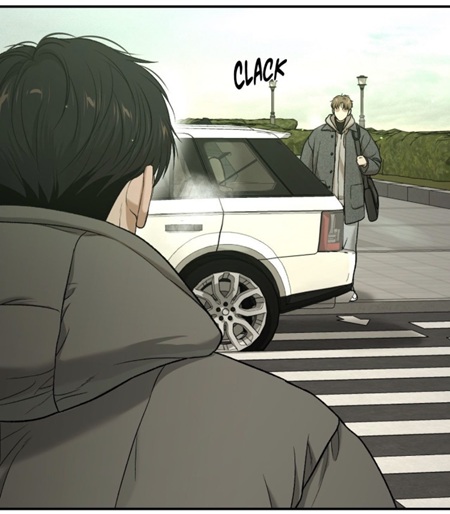
And significantly, Joo Jaekyung waits outside. (chapter 100) Not inside the gym. Not inside the penthouse. Not inside the institutional spaces that previously defined the “Emperor.” (chapter 100) He stands beyond them at dawn, beside the crossing itself, as though the story were positioning him between an ending identity and an unknown new life.

And perhaps this becomes the true tragedy of Jinx. The problem is not absence of love. The problem is that Shin Okja, Kim Dan, and Joo Jaekyung all mistake self-erasure for love itself.

Yet beneath all the silence, flowers, interrupted confessions, ghostly gestures, and unfinished goodbyes, one desperate emotional truth slowly begins emerging: Kim Dan’s journey may ultimately require something even more transformative than saying:

“Stay with me.”

Because throughout his entire life, he has always been the one left behind. (chapter 57) The child standing before the opened door. The survivor searching after disappearance. The person quietly remaining while others vanish into emotional unreachability.

Beyond the Penthouse: Moving Toward a Shared Horizon

This is why the true emotional resolution of the story may instead take the form of a radically different sentence:

“Come with me, a new version of this scene (chapter 43)

Unlike “Stay with me,” which still implies remaining inside someone else’s space, (chapter 100) “Come with me” fundamentally reverses the structure of abandonment itself. It completely changes the geography of their relationship. It grants Kim Dan absolute agency. He is no longer walking out of an open door into darkness; he is the one opening a path forward. (chapter 94) He is inviting the champion into a mutual, shared trajectory.

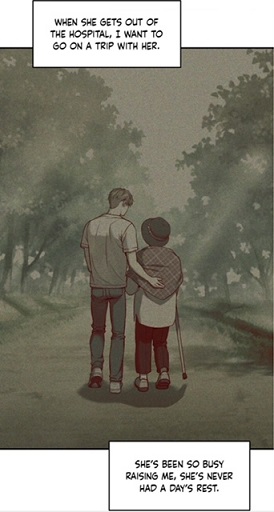
In many ways, the story quietly foreshadows this desire much earlier through Kim Dan’s simple wish to travel together after Shin Okja leaves the hospital. (chapter 47) At first glance, the statement appears almost painfully modest: a peaceful trip, rest, shared time, ordinary companionship. Yet symbolically, the fantasy already contains the emotional architecture of “Come with me.” The dream is not organized around labor, debt, treatment, fighting, or survival. It imagines movement detached from institutional obligation entirely.

This matters profoundly because throughout most of the series, movement itself remains tied to exhaustion and performance. Cars transport fighters toward matches. Hospital corridors lead toward illness and disappearance. The gym reduces bodies into instruments of labor and spectacle. The imagined trip in the woods quietly opposes all of these structures. It represents shared movement without destination anxiety, emotional utility, or professional function.

In this sense, “Come with me” does not simply mean romantic attachment. It signifies the possibility of constructing a life no longer governed entirely by trauma, survival, or institutional rhythm. For perhaps the first time, Kim Dan is no longer merely trying to endure another day. He is imagining a future someone else could walk beside him willingly.

It completely upends his lifelong belief that he is an expendable creature who must minimize his physical footprint to avoid being discarded.

And psychologically, this changes everything. For perhaps the first time in his life, Kim Dan would no longer be searching after someone vanishing into darkness. Instead, both men would be walking toward the same horizon together, carrying their ghosts openly rather than disappearing behind them. In this sense, the story quietly redefines the meaning of home itself. Home is no longer a fixed place haunted by abandonment, empty rooms, or opened doors. It becomes the place where the loved person remains beside you willingly. (chapter 69) “Come with me” would illustrate this principle: life is a journey and not a destination.

Feel free to comment. If you have any suggestion for topics or Manhwa, feel free to ask. If you enjoyed reading it, retweet it or push the button like. My Reddit-Instagram-Twitter-Tumblr account is: @bebebisous33. Thanks for reading and for the support, particularly, I would like to thank all the new followers and people recommending my blog.

Jinx: Goodbye 🤝 Then … 😿 – part 2

Introduction — The Sentence That Arrived Too Late

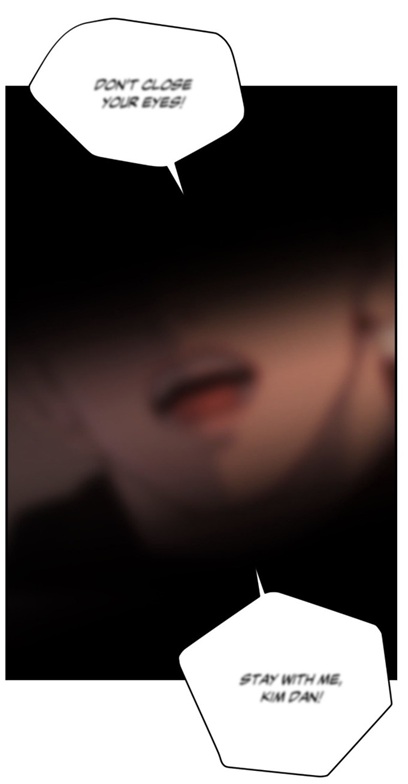
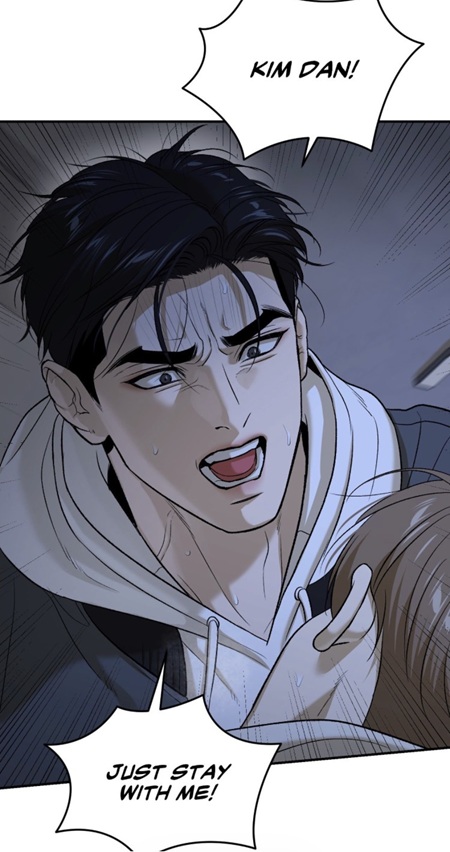
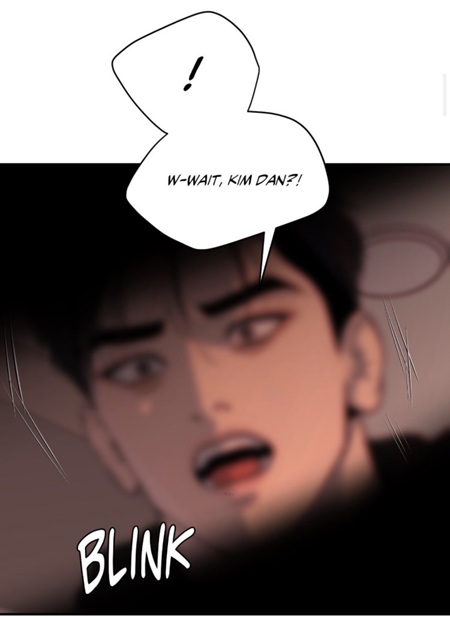
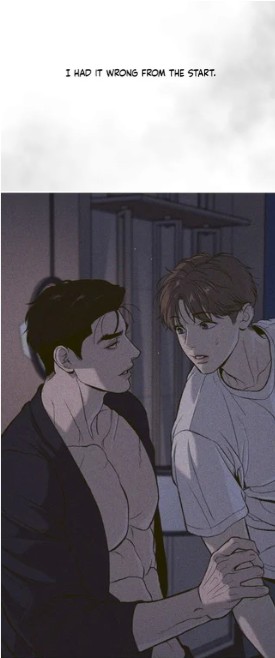
Episode 100 of Mingwa’s Jinx revolves around a devastating psychological and rhetorical paradox: the most critical confession of the narrative is openly spoken and yet remains entirely unheard at the exact same time. In the immediate aftermath of the chapter’s release, a singular, collective frustration rippled through the global readership, prompting many to focus heavily on the apparent emotional silence paralyzing the protagonists. Audiences repeatedly questioned why Jaekyung allowed Kim Dan to walk away after everything they had survived together, why he refused to openly intercept his departure at the entrance of the penthouse (chapter 100), and why Kim Dan continuously retreated into the sterile scripts of formal gratitude and apology instead of absolute emotional honesty. Yet, the cruel irony of the chapter is that the confession itself does not belong to a future resolution; it already exists, fully articulated, inside the physical boundaries of the narrative. While Kim Dan drifts precariously in the liminal space between life and death following the stabbing, Joo Jaekyung drops his hyper-masculine armor and desperately begs him: (chapter 100)

The structural tragedy of this relationship is not that the words of reciprocal need were never spoken. The problem is that they arrived too late. Earlier in the story, Kim Dan had already witnessed Joo Jaekyung’s mouth moving during emotionally charged moments, yet the meaning behind the words failed to fully reach him. (chapter 84) And in episode 100, the wish is yelled at a moment that was both physically and psychologically too late. Physically, the plea materializes while Kim Dan is actively losing consciousness (chapter 100), rendering the data inaccessible to his waking mind. Emotionally, it lands at the exact moment where Dan has unconsciously associated the champion’s victory with an impending separation. (chapter 100) Psychologically, the words arrive before Kim Dan has developed the cognitive architecture required to understand love outside the crushing frameworks of usefulness, debt, and transactional obligation.

This distinction is vital because Kim Dan’s formative trauma has never been structured merely around the abstract concept of abandonment. (chapter 95) His entire existence has evolved instead around the crushing mechanics of repayment, survival, and economic and emotional burden. (chapter 5) Having lost his parents at a young age, Dan did not grow up believing that attachment could exist freely, unconditionally, or safely. (chapter 94) Instead, he learned that his literal presence beside others required a continuous, exhausting material justification. He had to perform labor, adapt to volatile environments, sacrifice his own well-being, and make himself transactionally useful simply to deserve remaining in the same room as another human being. (chapter 97) Therefore he never rested.

Consequently, emotional attachment became permanently fused with transaction. Kim Dan does not possess the psychological tools to exist as someone who is freely and voluntarily chosen (chapter 47); he only understands relationships through the desperate lens of survivalist necessity. Hence the grandmother and Kim Dan are seen clinching onto each other.

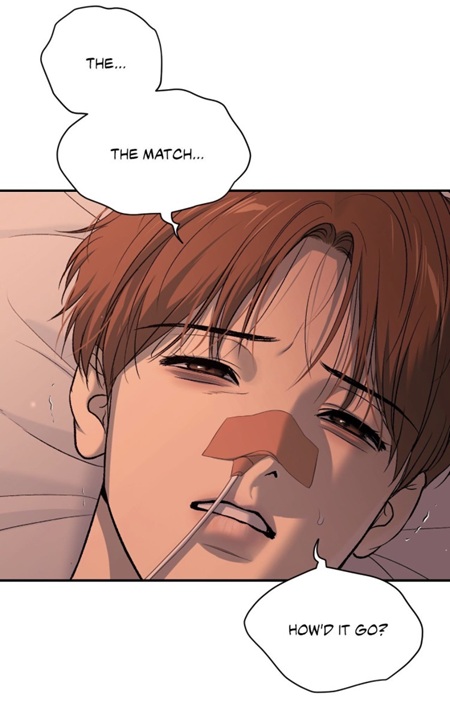
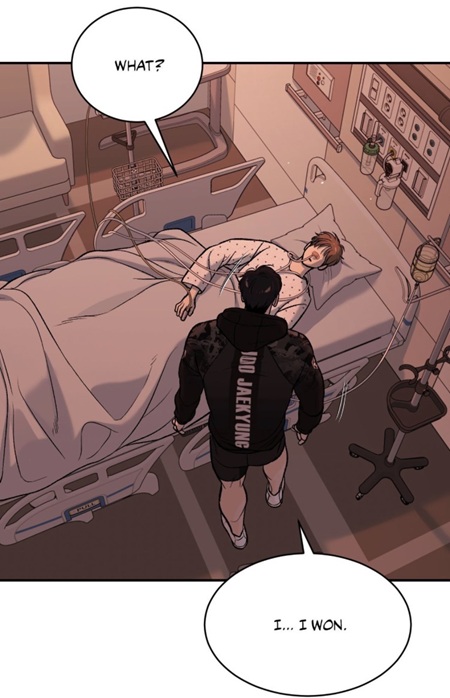
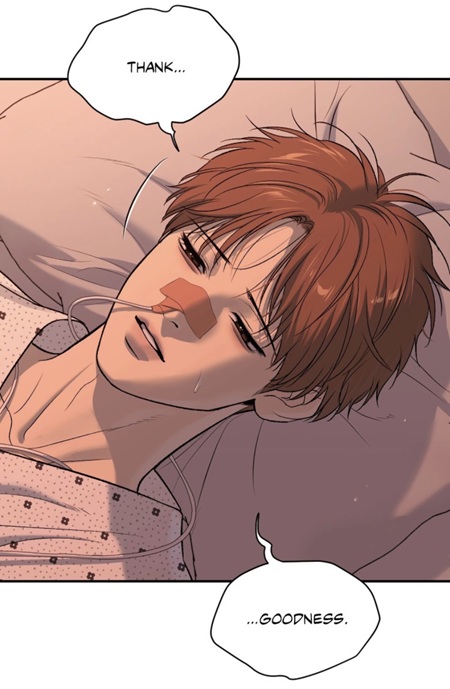
This is precisely why the subsequent hospital sequence becomes so profoundly devastating. When Kim Dan regains consciousness and hears that Joo Jaekyung has successfully reclaimed the championship title, (chapter 100) readers instinctively interpret his reaction through a lens of uncritical relief. (chapter 100) Yet, the formal pacing of the scene quietly suggests a far darker internal reality. For Kim Dan, the champion’s victory signifies nothing less than the absolute completion of their contract. The title has been recovered, the emotional and physical debt has been cleared, and the utilitarian role he assigned himself beside Joo Jaekyung has reached its natural endpoint.

This interpretation fundamentally changes the meaning of Kim Dan’s response: (chapter 100) On the surface, the sentence appears comforting and grateful. Yet the wording itself is strangely impersonal. At no point, Kim Dan does not ask how Joo Jaekyung won, whether he suffered, whether he was injured, or what emotional state he endured during the fight. He never expresses curiosity about the match itself and later shows no desire to watch it. Only the outcome matters.

This detail becomes psychologically revealing because Kim Dan instinctively processes the event not through emotional recognition, but through completed function. The objective has been achieved. The contract has fulfilled its purpose. Thus the sentence “Thank goodness” unconsciously redirects attention away from Joo Jaekyung’s suffering toward abstract successful resolution. Gratitude becomes displaced onto fate, luck, or providence rather than onto the terrified human being desperately begging him moments earlier: (chapter 98)

(chapter 98)

Meanwhile, Joo Jaekyung experiences the exact opposite emotional reality. For him, the fight was never merely about reclaiming a belt. It was about returning alive to Kim Dan after almost losing him forever. Thus while Kim Dan unconsciously interprets the victory as the natural endpoint of their relationship, Joo Jaekyung experiences it as proof that he cannot emotionally survive losing Dan. (chapter 100)

The micro-timing of this panel is extraordinarily deliberate. Upon hearing the news, Dan whispers, (chapter 100) but the linguistic script itself fractures through a heavy visual hesitation and pause. Almost immediately afterward, his body relapses into unconsciousness. (chapter 100) While a surface-level reading diagnoses this as mere physical exhaustion, psychologically the moment functions as an immediate emotional retreat. It is as though Kim Dan’s psyche reaches a instantaneous, catastrophic conclusion the second the victory is confirmed: everything is over; I am no longer needed. This interpretation achieves an exquisite, painful symmetry when placed against Joo Jaekyung’s own origin story, which similarly fused hyper-success with absolute loss, having lost both of his parents (chapter 74) on the exact night he triumphed as a boxer. Episode 100 constructs the perfect inverse of that trauma script for Kim Dan: the champion’s victory becomes structurally associated with emotional abandonment, proving that for both protagonists, success itself is a dangerous catalyst for isolation.

This deadlock explains why Jaekyung’s desperate plea carries such revolutionary weight (chapter 100), and simultaneously why a significant portion of the readership—particularly the English-speaking audience —initially overlooked its profound significance. The narrative deliberately buries the confession beneath the sensory noise of panic, medical urgency, and external interruption, causing many to interpret “Stay with me” as a generic, desperate plea for a dying patient to remain anchored to life.

Structurally, however, the sentence carries a much deeper emotional currency. It represents the very first non-transactional expression of pure need in their entire relationship. Joo Jaekyung is no longer commanding Dan to remain because of a contract, a financial advance, or a professional obligation; he is saying, with total vulnerability, I cannot bear your absence.

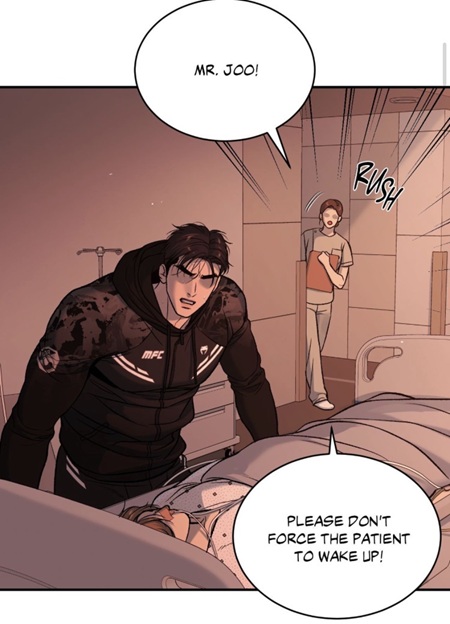
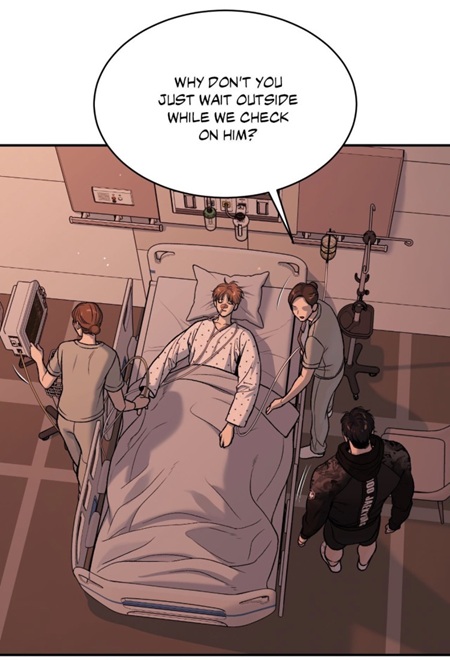
Yet, the confession is instantly and violently aborted by the intervention of the medical staff. (chapter 100) The nurses rush into the room, treating Jaekyung’s desperation as a physical disturbance to the patient’s recovery. While their actions are entirely reasonable on a clinical level, psychologically the scene becomes devastating. Unintentionally, the medical intervention reinforces the exact, toxic logic that governs both characters: your emotions are a disruption, your presence causes harm, and distance is the only metric of safety. (chapter 100) They show no understanding for his emotional outburst. Because Joo Jaekyung already suffers under the subconscious belief that his violent world has contaminated and ruined Kim Dan, this interruption silently validates his deepest fear. The confession is not merely delayed; it is actively policed and silenced before Dan can consciously receive it. So no wonder why he couldn’t ask later.

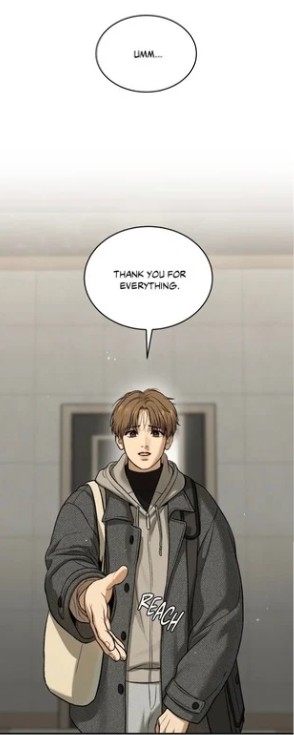
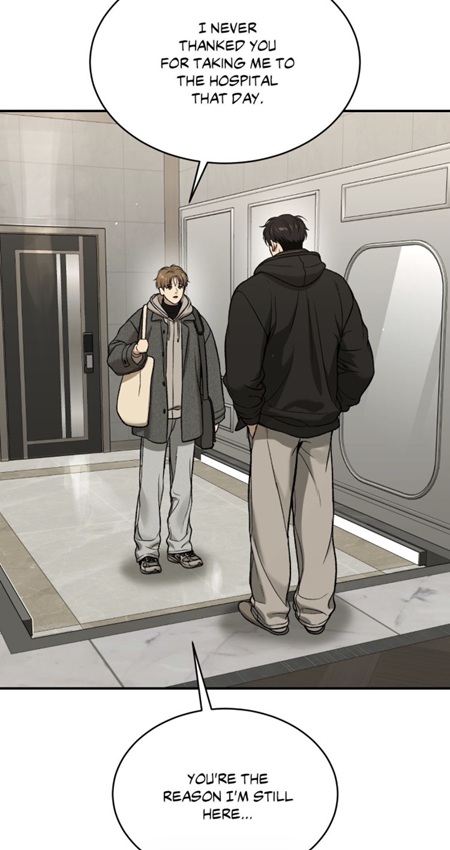
This emotional misunderstanding later reappears at the penthouse after Kim Dan’s release from the hospital. Throughout the recovery process, Dan instinctively continues operating through gratitude (chapter 100) because gratitude remains the safest emotional language he knows. When he thanks Joo Jaekyung for saving his life and bringing him to the hospital, he unconsciously falls back into the same survival mechanism that shaped his entire existence:

someone helped me,
therefore I must immediately repay them emotionally so I do not become an unbearable burden.

But for Joo Jaekyung, this gratitude becomes almost intolerable. The champion does not experience himself as Dan’s savior. On the contrary, he interprets himself as the very cause of the catastrophe. In his mind, Kim Dan was only hunted, targeted, and violently pierced by a blade because he became entangled in Jaekyung’s dangerous world. Thus every expression of gratitude silently transforms into accusation inside the champion’s psyche.

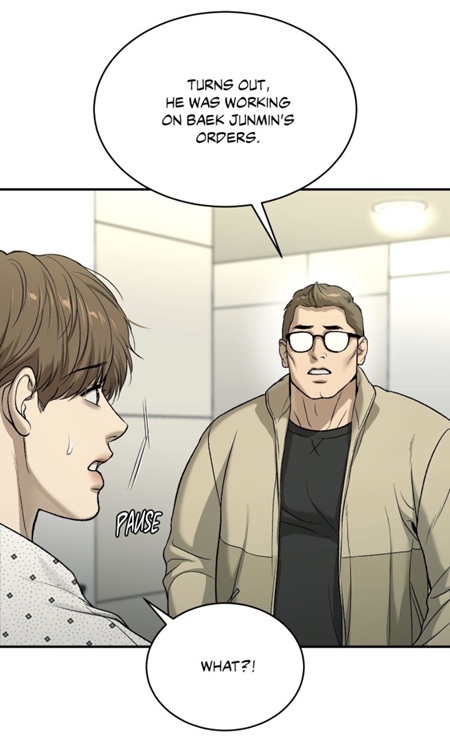
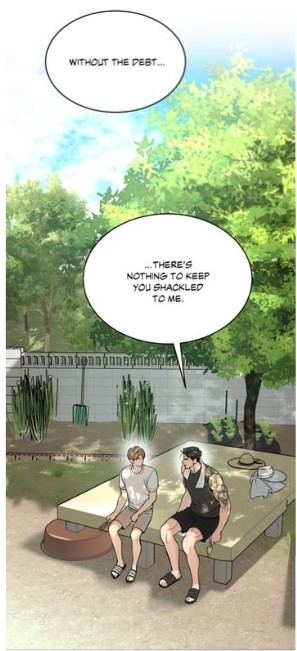
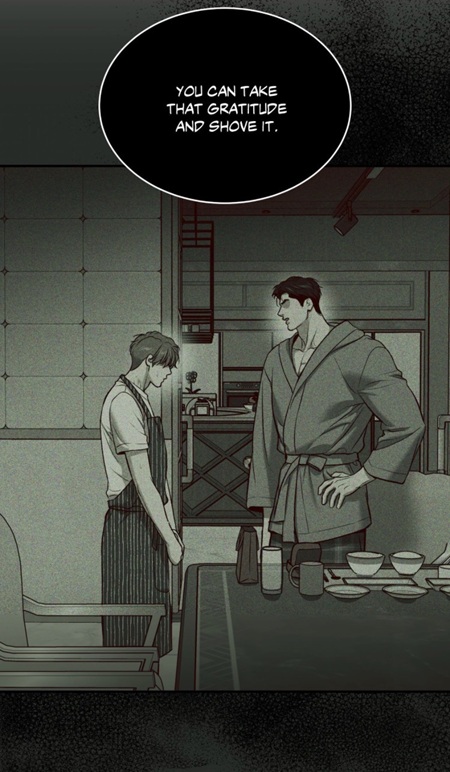
This is precisely why Jaekyung later grants Kim Dan total freedom without openly asking him to remain. (chapter 100) Objectively, he believes he is performing an act of love. He removes the contract, clears the financial burden, and breaks the cage open. But psychologically, his actions are also driven by guilt. If Kim Dan nearly died because of him, then holding him back would become another form of selfish violence.

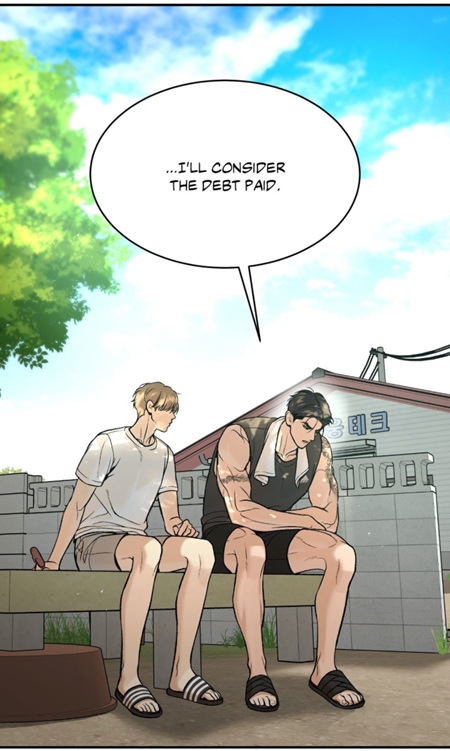
Yet to a profoundly traumatized person like Kim Dan, sudden freedom does not feel like protection. It feels like abandonment. Because Kim Dan does not know how to exist beside someone without usefulness, obligation, gratitude, or necessity. Once the transactional structure disappears, he loses the emotional framework through which he justified his own presence in Jaekyung’s life. Now, he even represents trouble and burden. (chapter 100) Thus both protagonists arrive at the exact same tragic conclusion from opposite directions:

From that moment onward, both protagonists slowly mutate into ghosts trapped within their own defense mechanisms. Jaekyung begins expressing his intense attachment indirectly through flowers, food, nighttime vigils, and silent traces, while Kim Dan continues translating his love into the safe, contained boundaries of formal gratitude (chapter 100), apology, and eventual self-erasure. Neither man can openly ask the other to stay because both are trapped in the catastrophic belief that their own presence is a toxic burden to the person they care about most.

The Bouquets of a Ghost

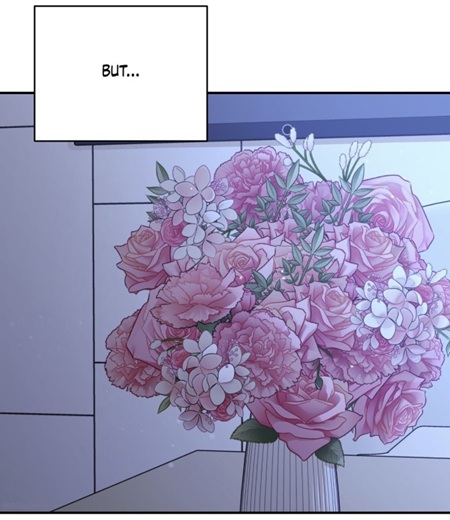
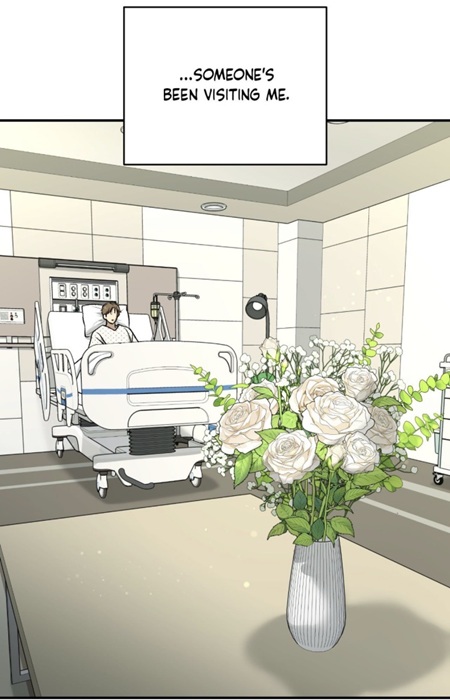
At first glance, the bouquets filling Kim Dan’s hospital room appear comforting and almost romantic. Naturally, many readers interpreted the flowers through traditional symbolism. (chapter 100) The pink roses evoke tenderness, admiration, vulnerable affection, and emotional attachment. The peonies suggest healing, compassion, sincerity, and quiet devotion. The smaller pale flowers evoke remembrance, enduring emotional bonds, and spiritual connection despite distance. On the surface, the bouquets seem to communicate something reassuring: someone deeply cares whether Kim Dan survives.

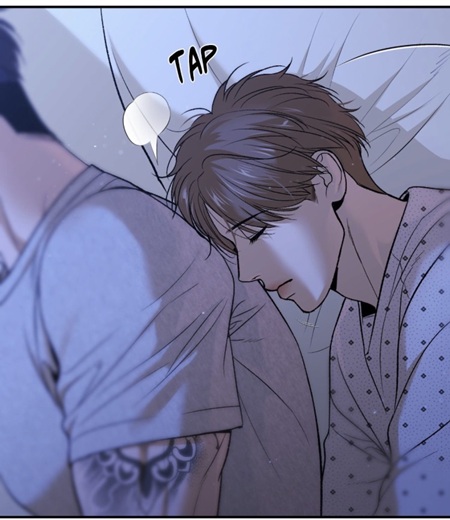
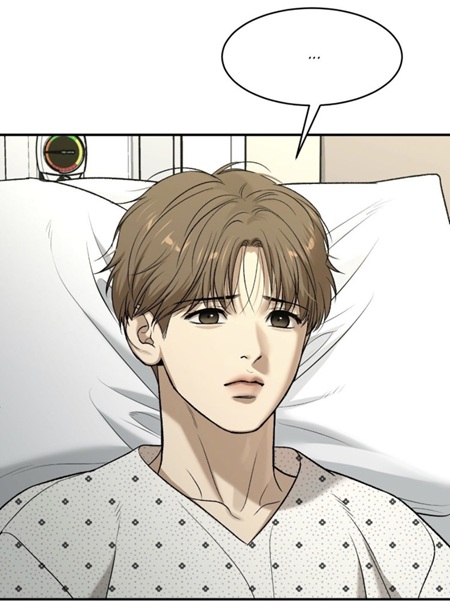
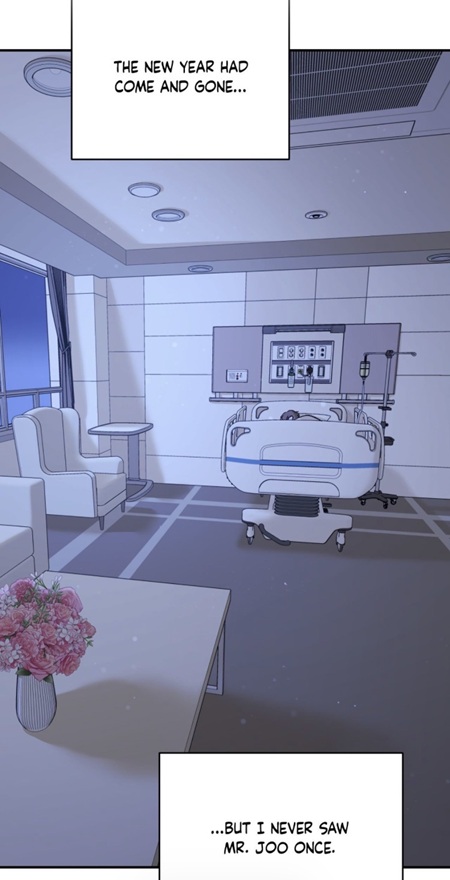
And yet, despite their beauty, the bouquets remain strangely disturbing. (chapter 100) The reason lies in the absence of the giver himself. Joo Jaekyung never openly remains beside Kim Dan during the day. Instead, the flowers appear during the night like traces left behind by someone haunting the room in silence. (chapter 100) Kim Dan wakes up surrounded not by Jaekyung’s physical presence, but by evidence that he had been there before disappearing once again. The flowers therefore become emotionally contradictory objects. They communicate affection, but simultaneously reinforce absence. They say: someone came, while also saying: someone vanished again.

This is precisely why the bouquets become psychologically unsettling. They reproduce the exact emotional structure underlying Kim Dan’s childhood trauma: warmth followed by disappearance. The gifts themselves are beautiful, but their emotional atmosphere resembles haunting more than stable companionship. Instead of openly remaining beside Kim Dan, Jaekyung expresses attachment indirectly through objects, much like a ghost incapable of fully entering the living world.

The first bouquet (chapter 100) becomes even more meaningful once one notices how strongly its colors resemble Halmoni’s scarf. (chapter 94) This visual parallel quietly transforms the flowers from romantic gifts into symbols of caregiving shaped by distance and self-removal. Shin Okja genuinely loved Kim Dan, but her solution to his suffering repeatedly became emotional disappearance. She believed that if she removed herself from the center of his life, he would finally become free and happy. Episode 100 reveals that Joo Jaekyung begins reproducing this exact same pattern. He leaves flowers, cake, comfort, and reassurance behind, but increasingly excludes himself from Kim Dan’s life physically and emotionally. Like Halmoni, he convinces himself that the person he loves suffers because of him.

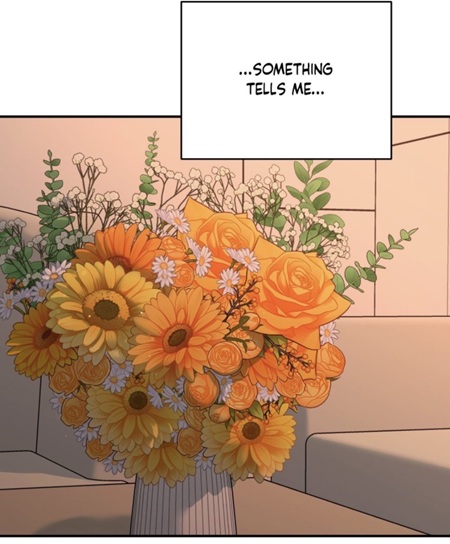
The progression of the bouquets themselves deepens this interpretation even further. Their colors gradually evolve from stronger emotional intensity (chapter 97) toward increasing emotional fading. Earlier arrangements contain reddish tones to vivid pink traditionally associated with attachment, tenderness, living warmth, and vulnerable affection. (chapter 100) Yet as the chapter progresses, the flowers become increasingly pale, soft, and washed out, eventually moving toward orange (chapter 100), cream and almost white tones (chapter 100). This transformation matters enormously because white flowers traditionally evoke mourning, farewell, remembrance, emotional resignation, and quiet grief. The bouquets therefore begin charting Joo Jaekyung’s own psychological deterioration throughout the chapter. What initially appears as devotion slowly starts resembling mourning. The flowers do not merely reflect Kim Dan’s fragile condition; they quietly externalize Jaekyung’s exhaustion, guilt, insomnia, emotional isolation, and gradual self-erasure. In this sense, the bouquets expose that the champion himself is beginning to wither emotionally and physically.

And yet the flowers become even more psychologically disturbing once one remembers Kim Dan’s earlier relationship to them. Earlier in the story, Kim Dan openly admits that he likes the smell of flowers because they put him in a good mood, while Joo Jaekyung bluntly responds: (chapter 31)

At first glance, the contrast appears humorous or merely reflective of personality differences. But episode 100 retrospectively transforms the scene into something much sadder. Joo Jaekyung now surrounds Kim Dan with the very objects (chapter 100) he once rejected because he desperately wants to comfort him emotionally. He instinctively tries to recreate psychological warmth through flowers because he knows Kim Dan associates them with peace and happiness.

However, in my opinion, this gesture unintentionally reproduces another hidden trauma at the same time. Throughout chapter 94, Mingwa repeatedly surrounds the young Kim Dan with flowers (chapter 194), plants, watering imagery, (chapter 94) and natural landscapes. We see him standing among daisies, holding flowers, and smiling inside an environment filled with softness, nature, and emotional warmth. If flowers symbolically belonged to the emotional world surrounding Kim Dan’s vanished parents, then the bouquets acquire an entirely different psychological meaning. Joo Jaekyung believes he is leaving behind comfort, reassurance, and evidence of care. Yet unconsciously, the flowers may also reconnect Kim Dan to memories of disappearance, loss, abandonment, and mourning. (chapter 100) Thus Kim Dan is not happy at all. The bouquets therefore become profoundly double-edged objects. They evoke tenderness while simultaneously reviving the emotional atmosphere of a childhood that vanished forever and departure.

The Emperor Learns Self-Erasure

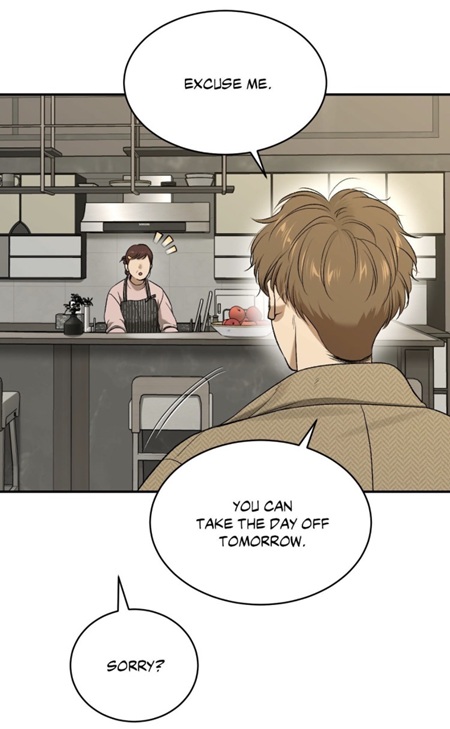
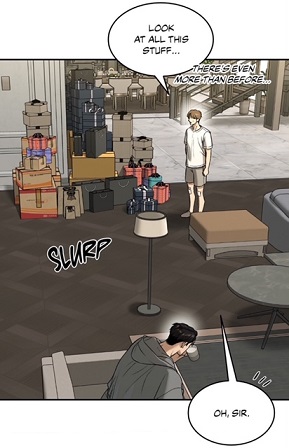
The terrifying irony of episode 100 is that Joo Jaekyung gradually starts resembling not only Kim Dan, but also Halmoni herself. Earlier in the narrative, Kim Dan embodied exhaustion, dissociation, starvation under stress, emotional collapse, and self-neglect. (chapter 61) But now the Emperor begins displaying the exact same symptoms. His hair is disheveled. His eyes are red from crying and sleeplessness. (chapter 100) His face appears hollow, wounded, and emotionally extinguished. The polished public image of the untouchable champion slowly collapses, revealing someone who has stopped taking care of himself entirely. Additionally, I assume that the cook did not return to the penthouse after Kim Dan had asked her to take the day off. (chapter 97)

At the same time, Jaekyung unconsciously adopts Halmoni’s emotional logic. He increasingly believes that Kim Dan’s suffering originates from proximity to him. (chapter 57) The harassment, the assault, the stabbing, and the violence surrounding the title fight all reinforce the terrifying idea that Kim Dan’s life deteriorates because he entered the champion’s world. As a result, Jaekyung arrives at the same conclusion as Shin Okja: perhaps the person he loves would be safer without him nearby.

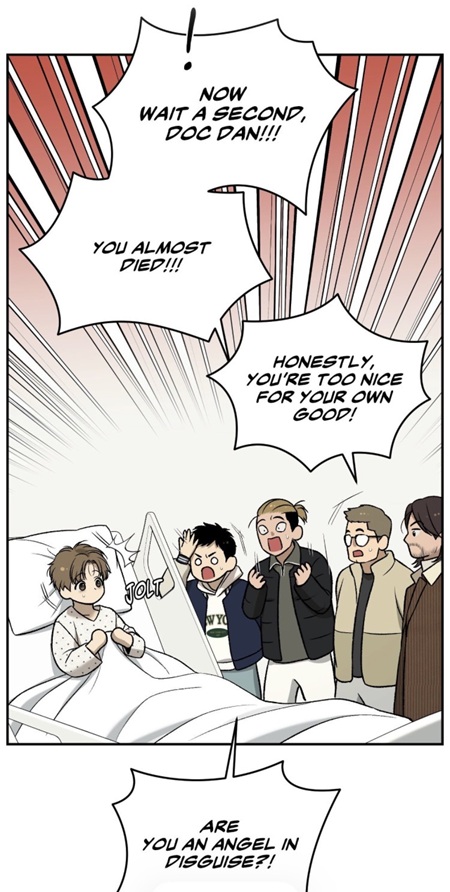
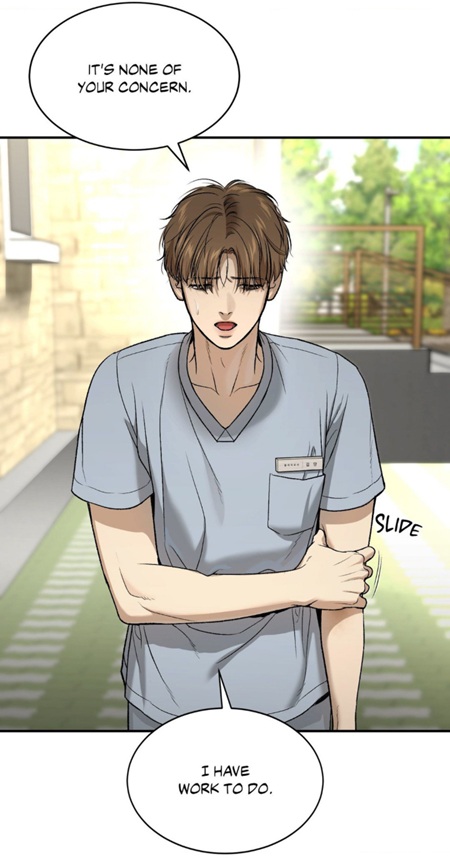
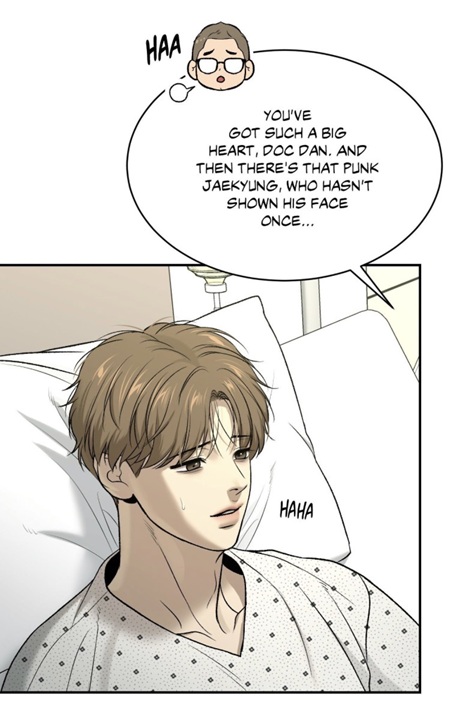
This is why the nighttime visits become so psychologically important. (chapter 100) Readers initially interpret them romantically, but the deeper emotional logic behind them is much darker. Joo Jaekyung is the only person who truly understands how little Kim Dan values his own life. (chapter 100) Team Black sees kindness, sacrifice, and goodness. (chapter 100) They call Kim Dan an angel. But Jaekyung sees passive self-destruction. He remembers the sleepwalking, the dissociation, the emotional emptiness, and Kim Dan’s willingness to suffer in silence. Thus when Kim Dan says that it was “better” for him to get stabbed so that Jaekyung could continue fighting, the sentence can only become horrifying to the champion, especially when it reaches his ears through Park Namwook, like this: (chapter 100) Others hear selflessness. Jaekyung hears someone quietly declaring that his own life matters less than the championship belt. Kim Dan is still behaving as though his own survival matters less than the well-being, expectations, or stability of others. Importantly, these self-destructive tendencies are almost never verbalized openly. Kim Dan does not explicitly speak about wanting death. (chapter 59) Instead, the pattern emerges behaviorally through starvation, bodily neglect, overwork, emotional resignation, rejection of care, passivity toward danger, and repeated willingness to sacrifice himself without hesitation. His self-erasure slowly extends toward the body itself.

And Joo Jaekyung witnesses this repeatedly. (chapter 79)

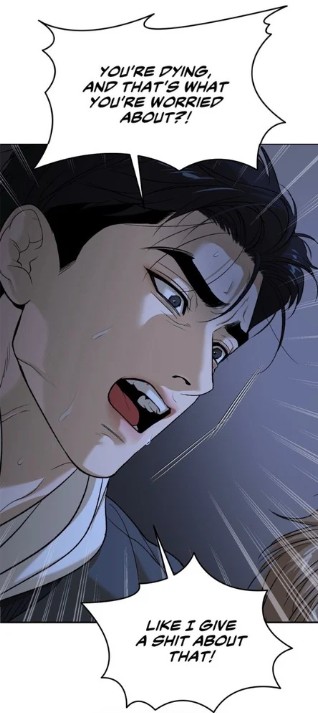
This is precisely why the stabbing scene affects the champion so violently. Even while bleeding out, Kim Dan’s immediate concern becomes the match and Jaekyung’s victory rather than his own survival. The moment therefore exposes something terrifying psychologically: Kim Dan still does not instinctively place his own life at the center of his emotional hierarchy. His survival remains negotiable inside his own perception. Thus when Joo Jaekyung screams:

(chapter 98) The reaction expresses far more than anger alone. It reveals panic, horror, and the unbearable realization that the person he loves may not value his own continued existence properly. From that point onward, the hospital arc becomes haunted not only by guilt, but by fear. Joo Jaekyung begins confronting the possibility that Kim Dan’s lifelong self-erasure could eventually become literal disappearance.

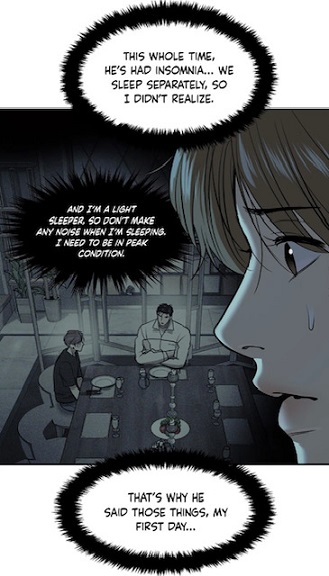
Because Kim Dan’s previous dissociative states occurred during the night, Jaekyung begins visiting him during darkness to ensure he is still resting safely. (chapter 100) In other words, the champion starts behaving like someone watching over a person with suicidal tendencies. He no longer trusts Kim Dan’s apparent improvement because the stabbing exposed something terrifying: Kim Dan’s mentality has not fundamentally changed at all. He still views himself as expendable and worthless.

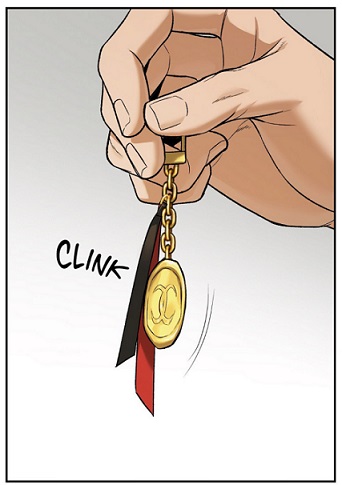
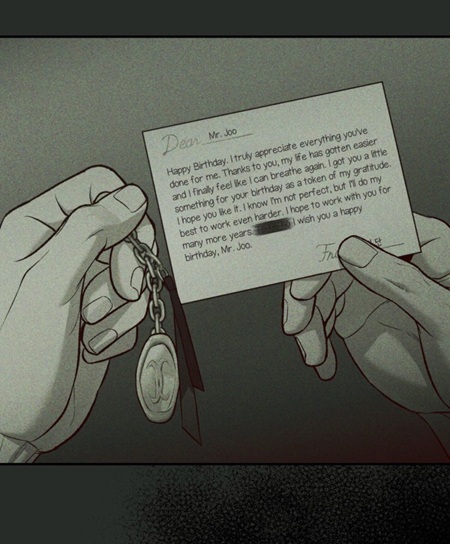
Yet, the tragedy deepens further because Jaekyung himself increasingly mirrors this self-destructive behavior. Like Kim Dan earlier in the story, he begins excluding himself emotionally from the life of the person he loves. He no longer eats properly, wanders aimlessly through the night, and expresses care indirectly through silent objects instead of speaking honestly, effectively becoming a ghost himself, similar to the way Kim Dan left the penthouse (chapter 45) to buy a key chain as a birthday present.

And yet Episode 100 simultaneously exposes the hidden shortcomings within Shin Okja’s worldview itself. Halmoni genuinely loved Kim Dan and desperately wanted him protected, financially secure, and emotionally cared for. (chapter 94) Joo Jaekyung initially fulfilled this exact role. He gave Kim Dan work, stability, material protection, and relief from crushing economic pressure. But the chapter quietly reveals that Jaekyung also begins inheriting Halmoni’s deeper pathology: self-removal mistaken for love. Like Shin Okja and his hyung, he increasingly convinces himself that Kim Dan would ultimately suffer less without him at the emotional center of his life. Thus he leaves behind flowers, comfort, financial freedom, and reassurance while gradually destroying himself psychologically through absence, guilt, and emotional isolation.

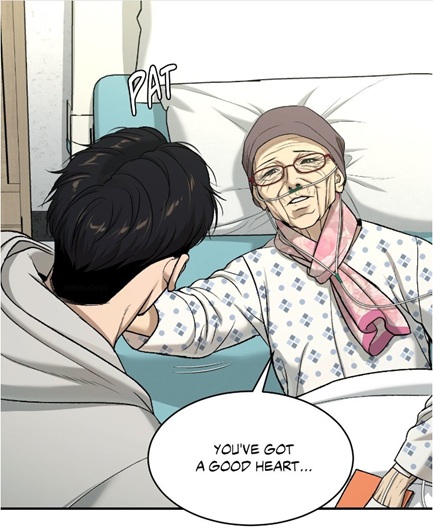
At the same time, this parallel also exposes Halmoni’s own emotional blind spots. Although she encouraged Jaekyung to remain beside Kim Dan and repeatedly expressed gratitude toward him (chapter 94), she showed remarkably little curiosity about Jaekyung’s inner world, trauma, loneliness, or emotional needs. She imagined that physical strength and wealth equaled an easy life, mental and emotional health. Then the problem was reduced to a simple solution: “Be happy with Kim Dan.” But Episode 100 demonstrates that companionship alone cannot heal trauma, when both individuals continue mistaking self-erasure for care and love. You can not love someone, if you don’t love yourself first. In this sense, Joo Jaekyung gradually transforms not only into Kim Dan’s protector, but also into someone unconsciously reproducing the very emotional logic that shaped Kim Dan’s suffering in the first place.

The Fragment of an Interrupted Happiness

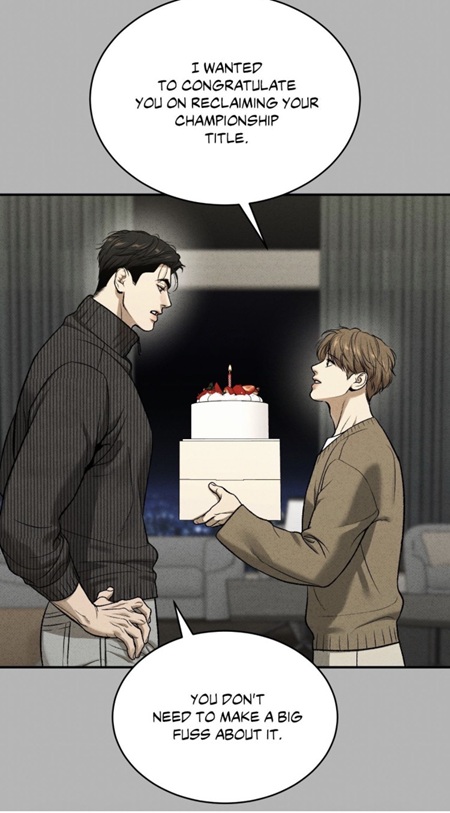
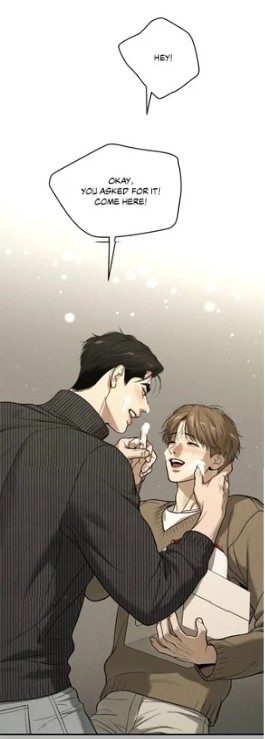
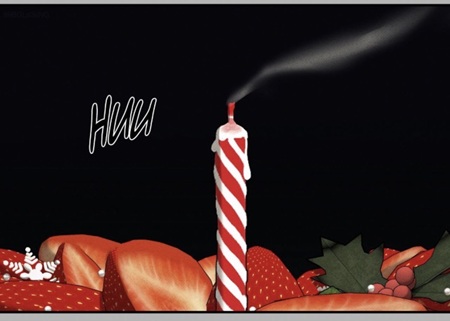
One of the most painful symbols in episode 100 is the small piece of birthday cake. (chapter 100) Before the stabbing, Kim Dan consciously bought a cake in order to congratulate Joo Jaekyung on reclaiming the championship title. (chapter 100) And on his way home, he started imagining what would happen with this cake. The atmosphere of the scene felt so real, though it was just a dream. Soft lighting, playful intimacy, teasing, physical closeness, and domestic warmth briefly isolate the two men from the violence surrounding the outside world. (chapter 97) For perhaps one of the first times in the narrative, Kim Dan acts not out of obligation, survival, or repayment, but out of genuine emotional desire. He wants to make Joo Jaekyung happy and have fun with him.

And then Mingwa quietly inserts the extinguished candle. (chapter 97) The smoke rising into the darkness transforms the celebration into visual foreshadowing. The dream of happiness exists briefly, warmly, beautifully… then immediately begins dissolving into air, as if this was already announcing the future stabbing. So the assault violently interrupts the vision before Kim Dan can fully inhabit it emotionally.

This interruption matters profoundly because the scene is not merely about happiness in the present. It also reveals the emotional future Kim Dan had unconsciously started imagining. (chapter 97) The celebration was not simply about the championship victory itself. It represented the possibility that warmth, intimacy, and laughter might continue after the fight, beyond the violence of the octagon. For a brief moment, Kim Dan allowed himself to believe that happiness could survive the match and extend naturally into everyday life.

And objectively, part of this dream actually became real. Joo Jaekyung did reclaim the championship belt exactly as Kim Dan had imagined. (chapter 97) The victory truly happened. (chapter 100) Yet the emotional continuation attached to that victory was shattered before it could fully materialize. Because the stabbing occurred before the match, the triumph itself becomes psychologically contaminated. The belt survives, but the celebration dies before it truly begins.

This is precisely why the small piece of cake becomes so emotionally devastating afterward. (chapter 100) The object itself destabilizes Kim Dan because it reconnects him not merely to loss, but to dream and possibility. (chapter 100) The cake silently reminds him that the happiness he imagined had not been absurd or impossible. For a brief moment, reality itself had begun moving toward that future. The championship victory happened exactly as expected. Yet the companionship attached to that imagined future never arrived.

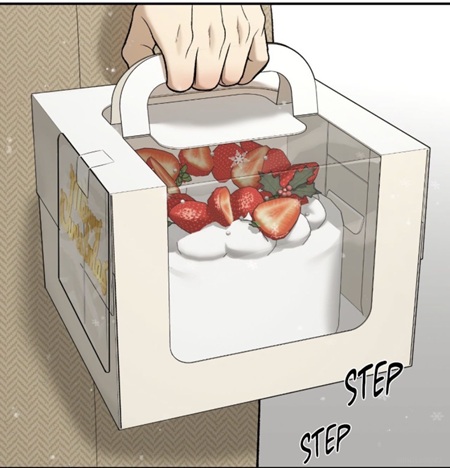
And this is where the symbolism of the strawberry cake becomes extraordinarily painful. (chapter 97) What remains afterward is no longer the original cake itself, but only a single detached fragment. The large celebratory cake bearing the visible message: “Happy Birthday” disappears entirely.

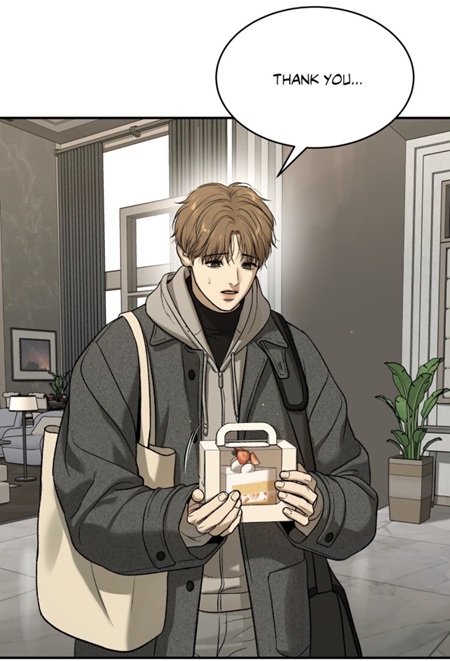
This disappearance becomes even more devastating once one realizes that Joo Jaekyung himself had also emotionally anticipated Kim Dan’s birthday. (chapter 97) The original celebratory atmosphere therefore belonged not only to Dan’s imagined future, but also to Jaekyung’s own silent desire to share happiness with him openly. Yet after the stabbing, the birthday itself becomes psychologically unbearable. Kim Dan spent that day unconscious, hospitalized, and hovering near death. Thus by offering only a small piece of cake instead of a full celebratory cake, Jaekyung unconsciously buries the birthday itself. (chapter 100) The candles disappear. The written greeting disappears. The celebration disappears. Even explicit acknowledgement of the occasion itself vanishes.

This transformation quietly reveals how deeply the stabbing contaminated Jaekyung’s relationship to happiness and celebration. (chapter 45) Birthdays and presents didn’t exist innocently for him before, but now with this new incident, they become psychologically more than ever associated with catastrophe, interruption, and the terror of almost losing Kim Dan forever. The fragment therefore no longer functions as a birthday cake at all. It becomes reduced to something emotionally survivable: a quiet gesture of care stripped of festivity, joy, and openly shared happiness.

to conclude, the original cake had been playful, communal, emotionally open, and deeply mutual. (chapter 97) The written greeting openly acknowledged celebration, intimacy, companionship, and shared happiness. It transformed the object into something profoundly personal. Even if Kim Dan could still outwardly disguise the gesture as simple congratulations for the champion’s victory, the emotional atmosphere already belonged to something much deeper.

But afterward, none of that survives intact. The candles vanish. The greeting vanishes. The imagined celebration vanishes. Even the shared nature of the cake disappears.

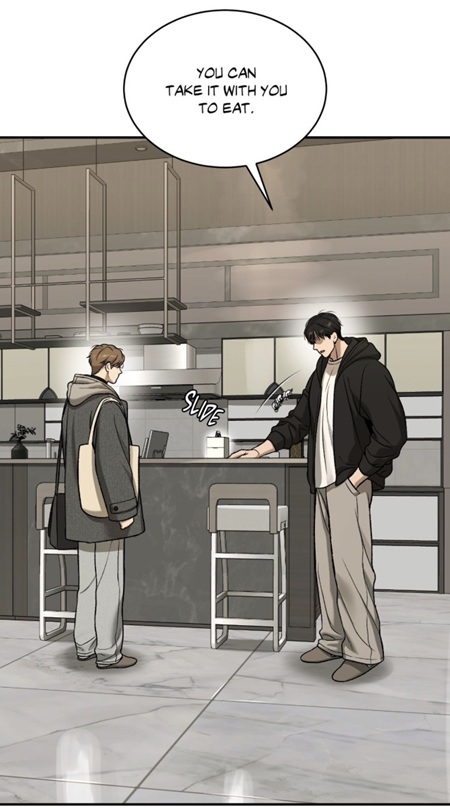
What remains is only a solitary piece quietly handed to Kim Dan in silence. (chapter 100)

And this fundamentally changes the emotional meaning of the object. By offering only a fragment instead of openly sharing the entire cake together, Joo Jaekyung unconsciously excludes himself from the celebration itself. The gesture becomes stripped of festivity and transformed into something sober, restrained, and painfully serious. The emotional atmosphere shifts away from: (chapter 97)

“Let’s celebrate together,” toward something much quieter: “You should eat.”

This transformation mirrors Jaekyung’s larger psychological movement throughout episode 100. After the stabbing, he increasingly removes himself not only from Kim Dan emotionally, but also from happiness itself. Just as the flowers become traces left behind without the giver openly remaining beside him, the cake becomes celebration without the celebrant. The surviving slice no longer belongs to fantasy, playfulness, or dream-like intimacy. It belongs to aftermath, guilt, recovery, exhaustion, and emotional restraint. (chapter 100)

At the same time, however, the surviving fragment still carries enormous symbolic weight because it silently preserves possibility. The cake is no longer whole, but it still exists. Happiness itself has not completely disappeared. What vanished was not the possibility of happiness, but the illusion that companionship would arrive effortlessly on its own.

This distinction becomes crucial for Kim Dan’s emotional development. (chapter 100)

Before the stabbing, the imagined celebration existed safely inside fantasy. (chapter 97) Kim Dan could briefly dream about warmth, intimacy, and emotional continuity because the future still remained unrealized and emotionally distant. But afterward, reality violently interrupts passivity itself. (chapter 100) Now the contract is ending. Jaekyung is beginning to erase himself emotionally. Separation becomes real. The future no longer unfolds automatically.

Thus the small piece of cake becomes much more than a symbol of interrupted happiness. It quietly confronts Kim Dan with a painful realization: (chapter 100) companionship itself still remains possible, but only if he consciously chooses it instead of retreating from it emotionally.

This confrontation exposes the ultimate psychological friction defining Kim Dan’s internal conflict: the toxic divide between gratitude and actual happiness. (chapter 100) Throughout his entire life, Dan has used formal gratitude as currency to buy his way out of being a burden. But episode 100 quietly poses a devastating question: does gratitude ever make someone happy? Is he smiling, when he is taking his fated partner’s hand and expressing his gratitude? (chapter 97) For a profoundly traumatized psyche, the answer is no. Gratitude is a defensive mechanism designed to restore a transactional balance; it is an acknowledgment of a debt that must be managed. It requires a strict, professional distance to remain safe. (chapter 100) Happiness, however, demands the exact opposite: it requires the total abandonment of the ledger, a surrender to vulnerability, and a willingness to occupy space in someone else’s life simply because you want to be there and are wanted as well, not because you are useful. The problem is life is not a fairy tale with a happy ending like “and they lived happily forever”.

But episode 100 quietly dismantles the fantasy that happiness means the absence of pain or struggle. The stabbing proves that suffering can violently invade even the warmest emotional moments. Life without fear, uncertainty, or wounds is ultimately an illusion.

And yet the small piece of cake simultaneously suggests something equally important. (chapter 100) A cake does not need a justification to exist. Sweetness is not something that must be earned through usefulness, victory, or repayment. Cakes are shared because human beings continue searching for warmth, companionship, and moments of joy even inside painful lives.

This is precisely what Kim Dan still struggles to understand. Throughout his entire life, he has treated happiness as something conditional:

  • something that must be deserved,
  • justified,
  • or safely postponed until suffering finally disappears.

But episode 100 quietly reveals that companionship cannot wait for a perfect future without pain. The dream collapsed. The celebration was interrupted. Trauma invaded the imagined happiness before it could fully materialize. Yet the small piece of cake still remains.

And that remaining fragment becomes emotionally crucial because it silently insists on something neither protagonist fully understands yet: sweetness and suffering can coexist. (chapter 81)

The object therefore no longer symbolizes naïve fantasy or guaranteed happiness. (chapter 100) Instead, it becomes material proof that companionship itself can still survive inside imperfect reality. The question is no longer whether life will remain painful. It will. The real question becomes whether Kim Dan and Joo Jaekyung are capable of choosing one another despite that pain instead of endlessly retreating into guilt, low self-esteem, gratitude, and emotional self-erasure.

The Architecture of an Excuse

This devastating pattern of protective alienation is exposed most cleanly by the logistical friction of Kim Dan’s return to the penthouse in Episode 100. Superficially, Dan presents his presence in the apartment as a purely transactional (chapter 100) administrative necessity: he must retrieve the final remnants of his worldly possessions. Yet, the narrative explicitly undermines this justification the moment Jaekyung questions the meager size of his single canvas tote bag. (chapter 100) Dan casually confesses that he had the vast majority of his belongings shipped ahead by a courier service.

This logistical detail betrays his entire psychological posture. If total self-erasure and a clean, unburdening departure were his true, absolute objectives (chapter 100), there was no logical reason to return to the penthouse at all. The remaining handful of items could easily have been included in the courier shipment or abandoned entirely. The return to the penthouse is, fundamentally, an excuse. It is a manifestation of what trauma psychology recognizes as a subconscious desire for interception. Dan has spent his entire life slipping away from rooms before he can be cast out, yet by physically placing his fragile, recovering body back into Jaekyung’s immediate sensory field, his actions betray an unuttered, desperate plea to be stopped. (chapter 100) That’s why each time Mingwa focuses on his facial expressions after each interaction with his lover. (chapter 100)

This staged closure is quietly facilitated by the manager, Park Namwook, who acts as the unwitting structural engineer of their final encounter. (chapter 100) The manager is the only entity who possesses the logistical knowledge of Dan’s whereabouts and timeline, making the deliberate choice to allow this meeting to occur. (chapter 100) For Park Namwook, bringing Dan to the penthouse is an attempt to foster a healthy, mature sense of closure between two heavily damaged men. That way, he won’t have to go through the trouble looking for the physical therapist like in episode 56 and Joo Jaekyung can move on.

Crucially, Joo Jaekyung did know Kim Dan was coming (chapter 100); as Namwook reveals in the car, the champion was actively waiting outside the penthouse threshold. Jaekyung anticipated the encounter, which makes his terrifying composure all the more devastating. He did not stumble upon Dan by accident; he prepared himself to face him. However, Jaekyung possessed absolutely no knowledge of the courier arrangement. (chapter 100) He stood waiting in the shadows expecting a standard move-out—a process that would require a massive physical effort, particularly to transport the traditional wedding cabinet that represents the absolute core of Dan’s history.

Thus, when Jaekyung stands in the doorway and questions, “That’s all you’re taking?” the query is laced with a hidden, profound panic. He looks at the tiny canvas bag and realizes, with sudden horror, that Dan did not come back to transition out of his life over days or hours; he has already systematically eradicated his own presence in secret. The revelation strikes Jaekyung like an emotional ambush. He realizes that Dan has almost left nothing behind to bind him to this home except the wedding cabinet.

This unexpected velocity of Dan’s departure triggers Jaekyung’s newly adopted script of self-erasure. Because he now believes his very proximity is a lethal contamination, he refuses to fight the departure openly. He stands paralyzed by his own guilt, operating under the catastrophic assumption that if Dan wants to vanish, letting him go is the only way to keep him safe.

The true emotional focal point of this tragic stalemate is manifested in the physical presence of the traditional Korean wedding cabinet. As Kim Dan stands before the massive, intricately patterned piece of furniture, his physical body freezes, and he trails off into a heavy, lingering silence: (chapter 100)

To understand the profound weight of this hesitation, one must contrast this moment directly with the visual composition of Episode 53. (chapter 53) Back then, when Dan believed he was fleeing the penthouse because of his failure and promise to his grandmother, acting under the absolute threat of emotional and professional ruin, his treatment of the cabinet was violent and definitive. (chapter 53) He had actively dragged it out of the domestic sphere, casting it out into the sterile, exposed isolation of the public hallway. In Episode 53, throwing the cabinet away was a desperate attempt to sever his connection to the space.

By Episode 100, the cabinet is standing there, and Dan’s psychological relationship to it has completely inverted. He cannot bring himself to discard it, nor can he bear to move it. (chapter 100) In the formal shorthand of the comic, the traditional wedding cabinet—an object culturally explicitly tied to domestic permanence, matrimonial continuity, and the building of a shared home—functions as a literal stand-in for Kim Dan himself. The cabinet is Kim Dan. It is an archaic, deeply sentimental object that does not naturally belong in the hyper-modern, sterile, concrete architecture of Jaekyung’s penthouse, yet it is the only item that infuses the space with genuine warmth.

When Dan hesitates before the cabinet, staring at its surface with a hand gently raised, he is wrestling with the agonizing divide between his trauma-driven narrative and his true emotional desire. His wide, hollow stare in the close-up panel reveals the terrifying vulnerability of a person who has completely run out of scripts. By leaving the cabinet behind, Dan is stripping away his final defense mechanism. He is presenting Jaekyung with a blank slate, silently begging the champion to fill the void, to make the first move, and to shatter the professional, civil boundary that is keeping them apart. His silence is a desperate holding pattern; he wants to stay, but his pathologically low self-worth prohibits him from asking for accommodation. He needs Jaekyung to claim him.

When Jaekyung breaks the silence by commanding, “Just leave it here. I’ll take care of it,” the tragedy achieves its absolute convergence. (chapter 100) Neither man can speak the truth. Dan cannot say, “Please keep this cabinet because it represents my desire to belong to you.” Jaekyung cannot say, “Leave it here because I will ensure that it is delivered properly.” Instead, they both hide behind the sterile language of property management.

Jaekyung takes custody of the cabinet just as he took custody of Dan’s medical bills, assuming that by taking the burden of the closet, he is performing a clean act of caretaking for a man who is leaving him. Dan receives this command not as an invitation to stay, but as the final, polite closing of the account. He interprets “I’ll take care of it” as a definitive statement that his presence is no longer required to maintain the home. They are two ghosts performing a ritual of mutual rejection, entirely blind to the fact that they are looking at each other through the distorted lens of their own inherited wounds.

The Ghost Beside the Bed

Perhaps the most unsettling aspect of episode 100 is not that Kim Dan confuses dream and reality (chapter 100), but that he repeatedly experiences Joo Jaekyung’s genuine presence as something psychologically unreal. Throughout the hospital arc, the champion increasingly resembles a figure existing at the edge of consciousness itself: someone who appears during the night, leaves warmth and traces behind, then disappears again before stable daylight certainty can fully emerge. (chapter 100) Yet the episode carefully distinguishes between two different nocturnal encounters, and this distinction matters enormously.

Yet the episode carefully distinguishes between two different nocturnal encounters, and this distinction matters enormously.

The first sequence begins with Kim Dan awakening to the sensation of warmth and physical presence beside him. (chapter 100) The atmosphere is soft, luminous, and emotionally unstable. Jaekyung’s face gradually dissolves into sunlight itself (chapter 100) while Kim Dan drifts between unconsciousness and waking reality. The sequence feels extraordinarily intimate, yet emotionally difficult to grasp. First, Kim Dan quietly concludes

Only then does he ask himself: (chapter 100) Part of him wants to move toward reality.
Another part immediately transforms the experience into dream-language before the emotional implications become overwhelming.

And this is why the panel is so powerful visually as well. Kim Dan’s eyes are half-open, suspended between sleep and waking, dream and reality, denial and recognition, emotional truth and emotional self-protection.

This order matters enormously because Kim Dan instinctively classifies the experience as unreal before even fully questioning it. The emotional reflex comes first. Stable tenderness automatically becomes dream-like inside his perception. Only afterward does uncertainty emerge.

And yet the sequence itself quietly resists pure unreality. The emotional structure strongly reflects behavior readers have already objectively witnessed in episodes 99 and 100: (chapter 99) Joo Jaekyung desperately holding Kim Dan’s hand, begging him to stay awake, refusing to leave his side, and remaining emotionally fixated on him after the stabbing. Because of this continuity, readers instinctively accept the warmth of the hand as emotionally real even while the scene itself remains visually suspended between dream and reality.

The second nighttime sequence becomes far more disturbing. (chapter 100) Here Kim Dan half awakens and perceives Joo Jaekyung lying beside his hospital bed. (chapter 100) The scene unfolds slowly, almost silently. Kim Dan shifts his body closer toward him (chapter 100), and then Mingwa inserts the sound: TAP!

This detail is extraordinarily important because the sound anchors the moment materially into physical space. The scene no longer functions purely as emotional atmosphere or symbolic vision. The bodily movement creates tactile interaction. Yet immediately afterward, Kim Dan appears alone in the bed. (chapter 100) It creates the illusion that the doctor had been hallucinating. But the sound “TAP” seems to indicate the opposite. Moreover, the narrative cuts toward the lonely hospital room accompanied by the statement: (chapter 100) And this is precisely where Mingwa quietly manipulates both Kim Dan and the readers simultaneously. Readers objectively know only one thing with certainty: Joo Jaekyung entered the room.

The flowers prove hidden visits. The warm hand proves physical contact. The hospital scenes confirm bodily presence. But everything concerning how long he stayed, whether he remained overnight, how exhausted he became, or whether he truly lay beside Kim Dan through the night is left deliberately unresolved. However, the sound TAP indicates that this was not only reality, but also how he acted during the night. (chapter 100) He couldn’t face his lover out of guilt, regret and pain, yet he ensured that he could fall alseep easily.

This ambiguity mirrors Kim Dan’s own fragmented emotional perception perfectly. He experiences warmth, touch, bodily closeness, and traces of companionship, yet he cannot emotionally sustain those experiences as stable reality afterward. Instead, his mind instinctively transforms presence itself into something dream-like before it can fully wound him emotionally.

This is why the lonely final bed panel becomes such an effective perceptual trap. Readers instinctively reinterpret the earlier intimacy as hallucination because the empty bed visually overrides the previous sensory evidence. But the narrative itself quietly resists this conclusion. The TAP remains. The warmth remains. The flowers remain. The tactile memory remains. Something continues contradicting the idea that Jaekyung had never truly been there. (chapter 100)

And this contradiction reveals the deeper psychological tragedy underlying Kim Dan’s behavior. Pain feels real to him. Absence feels real. Abandonment feels real. But stable companionship does not. Fully accepting the possibility that Joo Jaekyung may truly have remained beside him till he fell asleep becomes emotionally overwhelming because it would force Kim Dan to confront a terrifying realization: he is no longer merely being cared for, but genuinely accompanied.

That distinction changes everything.

A brief visit can still be rationalized. Flowers can still be interpreted as obligation or guilt. Even hidden care-taking can still remain emotionally distant. (chapter 100) But silently lying beside another person through exhaustion, darkness, and uncertainty belongs to an entirely different emotional category. It signifies companionship without function, intimacy without transaction, and presence without obligation.

And this is precisely why both Kim Dan and many readers instinctively hesitate before fully accepting the scene as reality. Mingwa deliberately traps the audience inside Kim Dan’s emotional logic. Just as Kim Dan downgrades overwhelming tenderness into dreams and unstable perceptions, readers also retreat toward the safer interpretation that the champion’s presence beside the bed must have been imaginary.

But the episode itself never fully confirms that interpretation. Instead, it quietly leaves behind tactile cracks inside the illusion of absence: a hand squeeze, bodily warmth, hidden flowers, unfinished intuition, and above all the sound of physical contact breaking the silence of the room.

Thus the true horror of the hospital scenes is not that Kim Dan hallucinates love where none exists. It is far more tragic. Kim Dan repeatedly senses genuine emotional presence, yet his trauma prevents him from fully believing in the reality of companionship before it disappears again.

The Fear of Believing in Happiness

There is another crucial psychological layer underlying Kim Dan’s confusion between dream and reality: he fundamentally does not trust happiness.

Whenever something emotionally comforting happens to him, he instinctively experiences it as unstable, unreal, or dream-like. Paris feels unreal upon waking beside Joo Jaekyung. (chapter 87) The champion’s desperate plea to “stay with me” (chapter 100) becomes fragmented by unconsciousness before Kim Dan can fully absorb it emotionally. Even the warm hand beside the hospital bed is transformed into something resembling a dream rather than accepted as tangible reality.

This is extraordinarily important because Kim Dan does not struggle to recognize pain. Pain feels real to him. Obligation feels real. Guilt feels real. Exhaustion, abandonment, sacrifice, and suffering all feel emotionally trustworthy because they correspond to the logic through which he learned to survive.

But tenderness destabilizes him. Safety destabilizes him. Being wanted destabilizes him. (chapter 100) The possibility that someone would remain beside him voluntarily, not out of obligation but genuine attachment, feels psychologically unbelievable.

As a result, Kim Dan’s psyche repeatedly converts emotional warmth into something unreal before he can consciously process it. It is not that he cannot perceive affection. On the contrary, his body and senses often recognize it first through warmth, touch, and presence. The tragedy is that his conscious mind and such his senses (chapter 100) instinctively downgrades these experiences into dreams because he has been conditioned to believe that lasting happiness is temporary, fragile, and destined to disappear.

Thus recognition itself always arrives too late. (chapter 100)

Feel free to comment. If you have any suggestion for topics or Manhwa, feel free to ask. If you enjoyed reading it, retweet it or push the button like. My Reddit-Instagram-Twitter-Tumblr account is: @bebebisous33. Thanks for reading and for the support, particularly, I would like to thank all the new followers and people recommending my blog.

Jinx: Goodbye 🤝 Then … 😿 – part 1

The Ghosts in the Warmth: Why Episode 100 Left Us Cold

Episode 100 of Jinx left many readers strangely unsatisfied. Some felt frustrated 😤, others emotionally empty. A few among us — readers, fans, longtime Jinx-lovers — even believed that this chapter resembled an ending so much that Mingwa herself had to clarify publicly (on X) that the story was not over. Some readers even considered dropping the story entirely. That alone says a great deal about the emotional violence of this chapter.

When a story’s atmosphere becomes so suffocating that readers instinctively want to step away from it, something unusual has happened. Dropping the story almost becomes a survival instinct. Remaining inside the narrative means remaining trapped in that freezing penthouse together with Kim Dan and Joo Jaekyung, surrounded by silence, distance, and unresolved pain.

But why did this episode create such discomfort? (chapter 100) Why does a chapter filled with flowers (chapter 100), warmth (chapter 100), survival, and reunion (chapter 100) feel so painfully cold? Why does “Goodbye then…” (chapter 100) sound more violent than the stabbing itself?

And perhaps the most disturbing question of all: how did Kim Dan and Joo Jaekyung end up acting like ghosts around each other?

For dozens of chapters, readers endured intense angst, toxic power dynamics, emotional repression, and physical trauma while holding onto a collective expectation: eventually, communication and emotional honesty would heal the damage. (chapter 99) Episode 100 appeared to be that turning point. The stabbing should have shattered the emotional walls between the protagonists. Many expected tears, confrontation, confession, catharsis. Instead, Mingwa deliberately subverted the classic romance payoff. Rather than an emotional embrace, readers received silence, hesitation, distance, and a strangely clinical handshake. (chapter 100)

For many readers, that absence of catharsis felt almost unbearable. The realization suddenly emerged that the road toward healing might be just as long, painful, and exhausting as the road toward destruction itself.

At the same time, episode 100 strips away much of the fictional distance that once existed between the protagonists and the audience. Earlier in the story, Joo Jaekyung often functioned as a larger-than-life “red flag” character: (chapter 96) dramatic, excessive, intimidating, almost unreal. But the tragedy presented in this chapter feels painfully ordinary in comparison. (chapter 100) Two people paralyze each other through assumptions, guilt (chapter 100), low self-esteem (chapter 100), fear of vulnerability, and lack of communication. Neither asks the questions that truly matter. (chapter 100) Neither says what they genuinely feel. (chapter 100) Almost everyone has experienced a relationship, friendship, or family dynamic damaged not by hatred, but by silence and emotional avoidance. That realism transforms the chapter into something deeply uncomfortable because the fantasy slowly disappears, leaving behind a frighteningly human mirror.

Readers blamed Kim Dan for his passivity and self-sacrificial tendencies. (chapter 100) Others condemned Joo Jaekyung for his emotional withdrawal and ghost-like behavior. (chapter 100) Yet perhaps the real mystery of episode 100 is not who was right or wrong. Perhaps the more important question is this: how did two people who clearly long for each other become so incapable of speaking honestly at the very moment they needed it most?

The deeper one looks into this chapter, the stranger and more painful it becomes. Like wine slowly revealing hidden notes over time, episode 100 transforms upon rereading. Details that initially appeared insignificant — a warm hand, a bouquet of flowers, a hidden night visit, a missing conversation, a closed penthouse door, a simple “THUD” (chapter 100) — gradually begin forming another story beneath the surface.

A story not about the absence of love, but about the terrifying consequences of silence and secrecy.

The Counterfeit Departure

The final emotional image of episode 100 is not the handshake between Kim Dan and Joo Jaekyung, but the empty entrance of the penthouse accompanied by the words: (chapter 100) and the unsettling sound effect:

This distinction is extremely important because the handshake itself does not yet create the impression of definitive separation. (chapter 100) On the contrary, the scene still contains physical proximity, warmth, gratitude, and mutual recognition. The handshake almost functions as an acknowledgment of everything the two protagonists survived together, but also as a quiet expression of thanks. Kim Dan recognizes the champion’s help, while Joo Jaekyung finally allows physical contact to occur without violence, coercion, or sexual tension. The emotional atmosphere only becomes truly haunting once Mingwa deliberately removes both protagonists from the frame itself, leaving behind nothing but the silent entrance and the implication of departure. (chapter 100)

Even the wording of the farewell creates ambiguity. Without the points of suspension, “Goodbye then” would sound definitive, emotionally sealed, almost like the final sentence of a completed story. Yet the ellipsis fundamentally changes the atmosphere of the phrase. The farewell suddenly becomes suspended, unfinished, hesitant. Kim Dan does not simply say goodbye; he trails off emotionally.

The word “then” itself is equally fascinating because it weakens the apparent finality of the separation. It functions as a temporal marker suggesting postponement:

The phrase therefore already contains the contradiction defining the entire chapter. Verbally, Kim Dan enacts separation. Emotionally, however, he still remains attached to Joo Jaekyung. The title quietly preserves the possibility of continuation, just as the chapter itself refuses to provide true emotional closure.

Why end the chapter there?

Doors in Jinx are never neutral architectural elements. Throughout the story, they repeatedly symbolize secrecy (chapter 7), emotional distance, hidden truths, privacy, abandonment, and separation (chapter 64). A closed door immediately creates the impression that something has ended. (chapter 100) Someone has left. Access has been denied. Naturally, many readers instinctively interpreted this panel in the simplest possible way:

Kim Dan has already left the penthouse.

And once this assumption is accepted, the chapter suddenly feels final. The emotional logic becomes brutally simple. The debt is gone. The fight is over. The criminals were arrested. (chapter 100) The protagonists separate. The door closes. The story ends. It almost resembles the conclusion of a dark fairy tale where the suffering has finally reached its endpoint.

The problem is that the panel itself is far more ambiguous than it initially appears. (chapter 100)

The entrance is empty, yes, but the image does not actually show Kim Dan leaving the apartment. On the contrary, the scene remains strangely suspended. Mingwa does not show the elevator descending, the street outside, or Kim Dan physically walking away. (chapter 4) Instead, she traps both the reader and the characters inside the penthouse itself, forcing us to stare at an almost silent threshold. (chapter 100)

This detail becomes even more significant when we observe the scene immediately preceding the “goodbye.” Kim Dan and Joo Jaekyung still stand physically facing one another. (chapter 100) Their feet remain oriented toward each other at the entrance. In Jinx, body positioning often reveals emotions that words suppress, and here the contradiction is devastating. Verbally, both protagonists are enacting separation. Physically, however, their bodies still seek connection. Neither truly turns away. The image therefore creates emotional suspension rather than emotional closure.

This is precisely why Mingwa does not show the actual departure itself at the end of the chapter. Emotionally, the separation remains incomplete because the protagonists themselves are incapable of fully separating from one another. The final panel traps both the characters and the audience inside the threshold between staying and leaving. (chapter 100)

The farewell scene itself becomes even more painful when placed beside earlier internal monologues from Joo Jaekyung that gain new meaning in retrospect. Earlier in the story, the champion silently admitted: (chapter 97) Another scene reinforces this same emotional desire: (chapter 97) These confessions reveal that beneath the aggression, possessiveness (chapter 82), and obsession with fighting and Kim Dan stood a much simpler fear: abandonment.

Yet when episode 100 finally confronts him with the possibility of Kim Dan truly leaving, Joo Jaekyung says the exact opposite of what he once desired. Instead of asking him to stay, he turns his head away and quietly says: (chapter 100) The Korean version with “가” (“Ka”) makes the moment even harsher because of its simplicity. It is short, direct, emotionally stripped bare:

Go.

And suddenly, the scene exposes the champion’s loneliness with devastating clarity.

Kim Dan stands before him carrying his bag, partially turned away, visually resembling the blurred image of departure from Jaekyung’s earlier imagination. (chapter 97) At the same time, Joo Jaekyung himself avoids looking directly at him. Both characters physically reproduce emotional withdrawal. Neither can fully face the other because both are trapped inside fear, guilt, longing, and self-suppression.

Most tragically, Joo Jaekyung participates in the very abandonment he fears. Rather than risking rejection by asking Kim Dan to stay, he verbally permits the separation himself. The scene therefore does not portray emotional indifference, but defensive surrender. (chapter 100) The champion who once appeared emotionally untouchable reveals himself incapable of expressing the one thing he truly wants:

“Please stay with me.”

At the same time, both protagonists are now attempting to love through self-removal.

This emotional mirroring becomes even more fascinating when connected to the idea of tactile dissonance developed earlier in the story. (chapter 95) Ironically, the eight-day separation did not emotionally distance the protagonists from one another. Quite the opposite. During this period, they became increasingly synchronized mentally and emotionally. (chapter 97) Their thoughts, fears, and desires slowly began aligning almost unconsciously. Yet this growing emotional attunement produces a tragic paradox: they become so psychologically similar that they can no longer recognize their own reflection inside the other person. (chapter 100) (chapter 100) The real tragedy of episode 100 is therefore not emotional distance, but excessive emotional synchronization without communication.

Kim Dan increasingly convinces himself that he represents a burden (chapter 100) and even a threat to Joo Jaekyung’s career. The harassment, the public humiliation, the scandal surrounding the championship, and the stabbing itself all reinforce the idea that remaining beside the champion will only continue damaging his reputation and future.

Joo Jaekyung, meanwhile, arrives at the opposite side of the same tragedy. He increasingly perceives himself as a source of contamination and danger. (chapter 100) The harassment, Kim Dan’s suicidal despair, the sleepwalking, the stabbing, and the violence surrounding the championship all reinforce the terrifying idea that Kim Dan suffers because he entered his world. In his eyes, Kim Dan’s life is now endangered because of him.

Ironically, this emotional synchronization does not bring them closer together communicatively. Instead, it pushes both men toward the same logic of self-removal. (chapter 100) Kim Dan leaves because he believes the champion will recover better without him. Like out of sight, out of mind! Joo Jaekyung lets him go because he believes keeping him close will only expose him to more suffering.

Thus, both silently cooperate in mutual abandonment while simultaneously longing for the exact opposite.

Even the sound effect deserves closer attention. (chapter 100) Many readers automatically interpreted “THUD” as the sound of a closing door. Well, the Spanish translation is indeed “Clack” and not thud. So one might jump to the conclusion that there’s an error in the English version. Yet visually, the effect does not fully behave like one. The vertical motion lines suggest movement from top to bottom rather than the lateral motion usually associated with a door shutting. The sound resembles impact, instability, or collapse more than simple departure. This becomes particularly interesting when compared to earlier scenes such as episodes 57 and 61 (chapter 61) (chapter 57), where emotional shock and physical weakness are visually connected to walls, imbalance, and bodies searching for support. The ambiguity becomes important because chapter 100 never clearly identifies (chapter 100) who destabilizes physically in that moment. Readers instinctively assume Kim Dan has already left, but the visual language simultaneously leaves open another disturbing possibility: that someone inside the penthouse is collapsing.

In other words, the panel may not depict emotional closure at all. It may instead depict destabilization. This possibility completely transforms the emotional meaning of the chapter. The “goodbye” no longer functions as a clean farewell, but almost like a psychological blow. Words can kill. And here, Kim Dan’s calm “Goodbye then…” lands with the violence of an invisible wound.

The choice of the empty entrance as the final image therefore reveals something important about reader psychology as well. The chapter creates the illusion of a completed fairy tale ending while simultaneously making that ending feel emotionally wrong. Earlier in the story, Kim Dan unconsciously adopted this exact logic himself through the expression:

(chapter 41)

Like a little boy trying to force reality into the structure of a fairy tale, he attempts to convince himself that the story has now reached its proper conclusion. (chapter 100) The champion won. The villains were punished. (chapter 100) The debt disappeared. (chapter 77) Therefore separation must be the correct final step.

Yet Mingwa visually undermines this interpretation at every turn. (chapter 100)

The penthouse feels too empty, too silent, too cold, and too unresolved. The atmosphere resembles not peace, but haunting. Instead of emotional catharsis, the reader experiences emotional suspension.

Perhaps this explains why so many readers reacted so strongly to episode 100. The chapter weaponizes absence itself. Mingwa does not simply separate the protagonists; she traps both the characters and the audience inside uncertainty. The zoom on the closed entrance intensifies this sensation even further. Readers feel suffocated because the panel transforms the penthouse into a frozen emotional space where communication has failed completely.

The door therefore symbolizes much more than physical departure. It becomes the visual embodiment of the chapter’s central tragedy: two people standing on opposite sides of an emotional threshold (chapter 100), unable to reach one another despite desperately longing to do so.

What A Little Wimp

Before examining the significance of the handshake itself, we must return to one of the earliest emotional patterns established in the story: Kim Dan’s awkward departure after treating Joo Jaekyung at the gym. After accidentally crossing a physical boundary (chapter 1) and leaving himself totally embarrassed (chapter 1), the physical therapist has only one thought in mind: to run away. Before opening the door, he nervously stammers (chapter 1) and hurries away. Joo Jaekyung’s reaction after his departure is dismissive and mocking: (chapter 1)

At first glance, the scene appears almost comedic. Kim Dan blushes, panics, avoids eye contact, and escapes after touching the champion too intimately. Yet retrospectively, this moment establishes an important pattern: touch (chapter 1), admiration (chapter 1), destabilization, and departure are already intertwined from the very beginning. Kim Dan does not simply treat Joo Jaekyung’s body; he admires it through his hands and eyes, marveling at how different it is from every other client he has known. The accidental touch breaks the professional frame, and the result is immediate flight. (chapter 1)

This early departure quickly becomes part of Jaekyung’s mental archive. In episode 4, he does not actually witness Kim Dan leaving the penthouse (chapter 4); he only discovers the empty bed afterward. (chapter 4) The absence itself triggers projection. He imagines Kim Dan walking away, already converting disappearance into an internal image. Later, in episode 53, this fear becomes reality: Kim Dan truly leaves the penthouse (chapter 53), and this time the departure is explicitly shown. In his own mind, the doctor does not intend to return. By episode 97, the image repeats once more (chapter 97) when Jaekyung admits that he wants to ask Kim Dan not to leave, yet immediately imagines him walking away if he refuses. Significantly, as the figure of Kim Dan recedes into the distance, a heavy, creeping darkness swallows the panel. The shadow beneath Dan’s feet bleeds forward, stretching into a profound black void that anchors itself directly to Jaekyung’s perspective. This visual graduation of shadow reveals that Kim Dan’s departure is no longer just a hypothetical exit; it is an oncoming emotional eclipse. Jaekyung’s subconscious recognizes that if Dan walks out that door, the ensuing darkness will be absolute—a trauma from which the champion will not be able to recover.

This is why the line “What a little wimp” becomes deeply tragic in retrospect. The supposedly untouchable champion has become the one haunted by departure. The man who once mocked Kim Dan’s awkward escape now fears being left behind so intensely that he projects abandonment before it even happens. Hence he turns away like Kim Dan in episode 1. (chapter 100)

This fear cannot be separated from Jaekyung’s family wound. The image of his mother, presented entirely through her back and her silence (chapter 73), suggests not only physical departure but permanent emotional inaccessibility. His father’s bitter line—“You are your mother’s son, after all”—reveals that this silence wounded him too. The father was not merely angry because the mother left; he was wounded by the way she left: without true confrontation, without emotional clarity, and perhaps with some distant promise that never became presence. The turned back, the heavy silence, and the unresolved farewell became the core of Jaekyung’s inherited trauma. He stops fighting for the relationship itself (chapter 72) and begins fighting merely against the clock, trying to finish a transaction before the countdown hits zero. This memory exposes a foundational trauma. To a young Jaekyung, his mother’s disappearance was directly tied to a transactional failure—his father’s inability to stop her or provide financial security. Consequently, Jaekyung internalized a distorted lesson: love is not protected through vulnerability, communication, or emotional pleading. Love is protected through material capacity and performance. In his child mind, a countdown began: he had to grow up, amass immense wealth, and become powerful enough to buy back his mother’s presence.

Tragically, this transactional clock is the exact blueprint he uses when Kim Dan enters his life. We see the definitive script for this transactional countdown written explicitly by Jaekyung himself in episode 77. Sitting on a wooden platform under a rare, open sky, the champion retreats into the safety of a contract to mask his growing vulnerability, declaring: (chapter 77) This is no coincidence that as he sets this absolute deadline, Mingwa frames Jaekyung from behind (chapter 77) He turns his back entirely, casting his face in shadow and physically reproducing the visual motif of his childhood trauma. He is verbally establishing a countdown while visually acting out an ending. By telling Dan that their proximity is strictly bounded by the final bell of the title match, Jaekyung constructs the very cage that will later paralyze him.

Consequently, as the title match draws closer in episode 95, this psychological clock accelerates to a suffocating degree Surrounded by chaotic media headlines speculating about his imminent match and the possible collapse of his career (chapter 95), Jaekyung’s mental space becomes a dark, claustrophobic cage. While sparring, his only internal thought is sheer exhaustion: “I just want to win this match and get it over with…”

Therefore it is not surprising why he chose to listen to his manager and distanced himself from his fated partner. In a sense, he first stops fighting for Kim Dan and begins fighting merely to reach the end of the timeline. The championship ceases to represent ambition, glory, or even personal desire; it becomes an expiration date. Increasingly, the champion loses the ability to project himself into the future at all.

This is precisely why his later thoughts become so devastating. When Jaekyung admits: (chapter 97),

the importance lies not only in the fear of abandonment, but in the word ask itself. For perhaps the first time in the story, Jaekyung unconsciously accepts Kim Dan’s freedom to choose. He no longer thinks in terms of ownership, obligation, or debt. Deep down, he already understands that once the match ends, Kim Dan will be free to leave him behind.

Yet even here, Jaekyung’s emotional framework remains tragically incomplete. Although he has begun abandoning the logic of ownership, he still cannot truly imagine a future built upon mutual existence rather than temporary possession. His thoughts remain structured around the championship timeline itself. The title match continues functioning as the organizing principle of reality. Even the phrase:

“…even after the match is over”

reveals the limitation of his emotional imagination. Jaekyung can imagine asking Kim Dan to remain. He can imagine losing him. He can imagine surrendering him. But he still cannot truly imagine simply living with him.

In other words, the champion still thinks in terms of “having” rather than “being.” [For more read the essay The Art of Loving] ]The relationship continues existing psychologically as something bounded by deadlines, countdowns, and expiration points. Once the contractual structure dissolves, Jaekyung unconsciously reaches the edge of his own emotional framework. The countdown ends, yet nothing replaces it.

And tragically, this realization does not awaken hope inside the champion, but resignation. Even before Kim Dan makes any choice himself, Jaekyung emotionally begins surrendering him. (chapter 97) The man once defined entirely by his monstrous willpower gradually loses his fighting spirit altogether. He no longer fights for a future with Kim Dan; he merely tries to endure the final countdown before the separation he already believes inevitable.

Therefore, when Kim Dan stands before him in episode 100 (chapter 100), Jaekyung is not reacting only to the present moment. He is reacting to a projected abandonment shaped by earlier departures, his parents’ history, the transactional contract he wound up himself, and the immense guilt he carries over the violence surrounding Kim Dan. The champion now knows about the harassment, the attempted sexual assault orchestrated through the former director of the hospital, the suicidal despair, the sleepwalking, the stabbing, and the terrifying chain of events connected to the championship itself. Increasingly, Jaekyung no longer sees himself merely as someone who might lose Kim Dan emotionally; he sees himself as the center of a destructive orbit that continually places Dan in danger. He seems to think, he is Kim Dan’s jinx. (chapter 100) That’s why Joo Jaekyung is no longer fighting, he has already anticipated the loss.

Ironically, by episode 97, Kim Dan himself has already begun unconsciously stepping into a completely different emotional mode. While Jaekyung remains trapped inside countdowns, departures, and anticipatory endings, the physical therapist instinctively begins imagining ordinary relational existence. This contrast becomes particularly visible with the hamster’s dream (chapter 97) , where Kim Dan arrives with a cake to celebrate Jaekyung reclaiming his championship title. The atmosphere of the interaction is striking precisely because of its normality. There is no treatment session, no debt, no violence, no professional obligation dominating the exchange. For this brief dream , Kim Dan behaves less like an employee or caretaker and more like someone already sharing daily life with the champion. (chapter 97)

The small gesture of smearing cream across Jaekyung’s face becomes symbolically important for this reason. Kim Dan momentarily strips the champion of his overwhelming public aura and interacts with him through casual intimacy rather than admiration or fear. Unlike Jaekyung, Kim Dan unconsciously possesses fragments of an ordinary emotional model inherited from his life with his grandmother and parents: shared meals, small celebrations, routine care (chapter 94), and domestic familiarity. While the champion imagines endings, Kim Dan quietly begins imagining continuity.

The Warm Hand against the Jinx

This is precisely why the handshake matters so much. (chapter 100) It takes place right before Jaekyung tells Kim Dan to go. For one fragile moment, the projected departure is completely interrupted. Kim Dan is still there. His hand is still warm. The contact is no longer like that first treatment at the gym, where touch was mixed with embarrassment and professional confusion. (chapter 100) This time, touch becomes mutual recognition and reciprocity.

The tragedy is that this recognition does not yet become speech. The handshake briefly suspends the counterfeit departure, but it does not break the silence. After this fleeting moment of contact, Jaekyung retreats straight back into fear and self-removal. Unable to ask Kim Dan to stay, he turns away and says the exact opposite of what he wants: (chapter 100)

The handshake is not the end of the separation. It is the last, desperate interruption before the logic of abandonment reclaims them both.

This is where the spatial layout of the penthouse entrance exposes the final structural contradiction. (chapter 100) When Kim Dan stands before the champion, he is positioned directly in front of the door as though physically replacing it, turning his own body into the threshold. Yet meticulously, Mingwa leaves a massive, artificial gap between the physical therapist and the actual exit behind him. This distance is no coincidence. The vast, empty space behind Dan acts as a visual vacuum—a psychological buffer zone proving that while he is verbally enacting separation, he has not yet crossed the literal threshold.

He is suspended inside a vacuum of his own making, his hand still reaching forward toward connection while the enormous void at his back quietly threatens to swallow the moment whole.

Crucially, this gap represents a profound, hidden chance. It is the positive reflection of “distance.” By leaving such a significant space between his body and the door, Kim Dan has physically delayed his own exit, leaving a literal runway of time and possibility open. The finality of the goodbye has not yet been sealed; the door remains far behind him.

The ultimate tragedy of episode 100 is that Joo Jaekyung completely fails to recognize this positive reflection. (chapter 100) Poisoned by the creeping darkness of his own nightmares, the inherited trauma of his mother’s silence, and the immense guilt surrounding Kim Dan’s suffering, the champion no longer recognizes the distance as a space to step forward and intervene. Instead, his fear of vulnerability completely distorts his perception. He reads the gap not as an opportunity to change the script, but as an approaching, inevitable eclipse.

To protect himself from the pain of watching Dan step backward into the void, Jaekyung surrenders defensively—he turns his head away, preparing himself not to look back, and actively seals the very abandonment he was given a chance to prevent.

No, Joo Jaekyung is no little wimp, but rather a lost puppy frozen upon a threshold of his own making, completely blind to the choice standing before him. Yet because the contract has dissolved and the debt has disappeared, this wide, uncrossed emptiness also remains a radical space of possibility. For the first time, the relationship is no longer mediated by obligation, transaction, or countdown.

And perhaps this finally becomes Kim Dan’s chance to recognize Jaekyung’s paralysis, step into the gap himself, and prove his love and care without expecting anything in return.

Before the counterfeit departure can fully reclaim the scene, Mingwa inserts one final, crucial interruption: the handshake (chapter 100). Significantly, this gesture does not function as a standard goodbye. In ordinary social language, a handshake belongs either to a formal greeting or to a completed farewell. Here, however, the contact appears before Kim Dan says goodbye and before any true separation has taken place. Structurally, the handshake suspends the departure rather than confirming it.

This detail becomes even more meaningful when contrasted with the protagonists’ first encounter at the gym. Back then, there was no mutual greeting ritual between them. (chapter 1) Kim Dan bowed nervously while Joo Jaekyung remained emotionally detached, dominant, and superior. Their relationship began asymmetrically: champion and therapist, admired body and embarrassed observer. After accidentally crossing a physical boundary during treatment, Kim Dan fled the room in humiliation, unable to withstand the emotional destabilization caused by touch itself. No reciprocal gesture softened the imbalance. There was no handshake, no equal acknowledgment, and no mutual recognition.

Episode 100 quietly upends that entire foundation. (chapter 100)

For the first time, both protagonists voluntarily reach toward one another at the exact same emotional level. Neither obligation, debt, nor treatment mediates the contact. (chapter 100) The gesture is entirely mutual and even reciprocated, both squeeze each other’s hand. (chapter 100) And unlike the first touch at the gym, which produced panic and flight, this touch produces a profound illumination. Kim Dan’s little gesture exposes a gradual metamorphosis, he becomes more proactive. Hence his fingers linger on the MMA fighter’s skin. (chapter 100) (chapter 87) It becomes even more obvious, once compared with their hand gesture in Paris.

Unlike chapter 1, however, Kim Dan does not flee from the emotional intensity created through touch. This time, he consciously remains present. While extending his hand, he hesitates softly: (chapter 100)

The hesitation still reveals vulnerability, yet vulnerability no longer produces escape. Instead, Kim Dan deliberately chooses acknowledgment. This detail is crucial because the gratitude expressed here cannot be reduced to money, debt, treatment, or material compensation. In fact, the scene occurs precisely after the contractual framework governing their relationship has dissolved. The debt is gone. The transactional structure has collapsed. Therefore, Kim Dan’s gratitude suddenly becomes profoundly human rather than functional. He is no longer thanking:

  • an employer,
  • a client,
  • or a benefactor.

He is thanking Joo Jaekyung himself.

For perhaps the first time in the story, Kim Dan consciously chooses to close the emotional distance between them instead of running away from it. The hand extended toward Jaekyung therefore becomes far more than a polite social gesture. It becomes Kim Dan’s first genuine attempt to acknowledge their relationship openly and properly.

The importance of this moment lies in what Kim Dan suddenly realizes through physical contact itself. (chapter 100) Until now, the physical therapist remained trapped inside a distorted emotional narrative shaped by silence, institutional misunderstanding, his grandmother’s sacrificial principles, and Park Namwook’s logic of performance (chapter 43) and Hwang Byungchul’s wrong interpretation (chapter 70). Kim Dan had unconsciously learned to interpret Joo Jaekyung primarily as “the champion”: an untouchable entity sustained solely by victory, driven by a hatred of losing, and emotionally fulfilled through performance alone. This explicates why the “hamster” had made the following request: (chapter 98)

This misunderstanding becomes painfully visible during the hospital scenes. When Park Namwook explains that the culprit acted under Baek Junmin’s orders (chapter 100) and that Jaekyung blames himself for the attack (chapter 100), the manager unintentionally frames the entire assault through championship logic. The implication quietly becomes that Kim Dan was hurt because he stood too close to the champion, because enemies targeted Jaekyung, and because the title match had to continue.

As a result, doc Dan immediately internalizes guilt through a logic of substitution. He responds: (chapter 100) The statement is devastating because it fuses the two oppressive ideologies that have shaped Kim Dan’s entire life. From Park Namwook and Team Black, he inherited the belief that the championship comes first and that Jaekyung’s happiness depends entirely upon winning. From his grandmother, he inherited the logic of total self-erasure: if suffering must exist in the world, it should fall squarely upon him. Yet the sentence also reveals something even more tragic: Kim Dan still cannot fully imagine the depth of Joo Jaekyung’s emotional attachment to him. By concluding that it was “better” for him to become the victim, he unconsciously reduces the wolf’s suffering to the temporary inconvenience of a threatened match. In doing so, he actually denies the existence of the champion’s true feelings altogether. Kim Dan still sees “the Emperor,” the fighter obsessed with victory, rather than the terrified man who would have suffered infinitely more from losing him than from losing any championship belt. Thus before losing consciousness, he still had this image of the main lead: The Emperor (chapter 100)

And perhaps this is the most disturbing implication of all. Even after the stabbing, Kim Dan still unconsciously evaluates the situation through the same brutal performance logic governing the fighting world itself: as long as the champion successfully won the match, the suffering required to secure that victory becomes psychologically acceptable. In this sense, Kim Dan does not yet fully confront what the championship truly cost Joo Jaekyung internally. (chapter 100)

After all, Kim Dan never witnessed the psychological destruction surrounding the fight itself. He did not see the emotional collapse hidden behind the title defense, the confrontation with Baek Junmin afterward, or the horrifying guilt poisoning the victory from within. Thus, while Kim Dan begins sensing the champion’s warmth emotionally, he still hesitates to recognize the full extent of the suffering hidden beneath the belt.

The tragedy, therefore, is not simple blindness. Kim Dan is beginning to perceive the truth, yet accepting it fully would force him to confront something unbearable: the possibility that the very victory he believed he protected may have shattered Joo Jaekyung psychologically instead and he might be responsible for his “ruthlessness and destruction”.

So the tragic irony is that the very thing Kim Dan believes he protected—the fight itself—is precisely what begins destroying Joo Jaekyung emotionally. Had the match been postponed, Jaekyung would never have encountered Baek Junmin afterward, never acquired the horrifying knowledge surrounding the assault, and never fused the championship psychologically with harassment, violence, guilt, and emotional collapse. Thus, while Kim Dan believes his sacrifice saved Jaekyung’s future, the victory title increasingly becomes a toxic poison inside the champion’s mind. Hence the young man looks so terrible despite his “victory”. (chapter 100)

And remarkably, almost nobody around them notices this internal collapse. Inside the hospital room, (chapter 100), Kim Dan is constantly insulated by a loud wall of warmth, visitors, food, and collective reassurance. Team Black worries boisterously about him (chapter 100), jokes around his bed admiring the comfort of the room (chapter 100), scolds him affectionately, (chapter 100) and celebrates his survival. This lively atmosphere gradually reconstructs a superficial sense of normality. Meanwhile, Joo Jaekyung exists almost entirely outside this emotional circle. To the world, the champion is still perceived as rude, unmovable, and heartless, (chapter 100) while the members of Team Black get to play the roles of “affectionate and concerned” companions. (chapter 100) Even when people discuss Jaekyung, they rarely speak about his exhaustion, fear, loneliness, or his disintegration as a human being. Why? Because they simply do not see it and believes in their hyung’s statement, the manager. They remain entirely blind to the human being beneath the title. They speak only of the match, the culprit, the belt, and his capacity to perform. Because he won the last fight, they treat him as an object that functions correctly, while keeping their distance from his harsh demeanor. They essentially avoid him as a temperamental monster, completely oblivious to the fact that they are leaving a deeply traumatized, lost puppy entirely on his own.

But there is a sharper edge to this scene: Team Black’s affection reveals itself as naive and profoundly superficial. They easily follow conventional social norms—bringing gifts (chapter 100), crying at a bedside—but their care lacks real, grounding intimacy. Neither Potato and Oh Daeyhun were present at the hospital in the hallway in front of the surgery room. None of them have stayed by Jaekyung’s side to offer real comfort (chapter 100), thus the manager doesn’t leave his car to greet his boss and champion. He simply drops the physical therapist and drives away. But let’s return our attention to the scene at the hospital. Crucially, none of them correct the physical therapist when he pathologically apologizes for getting hurt. When Kim Dan stammers, (chapter 100), his words expose a deep reservoir of guilt and fractured self-esteem. Instead of challenging this unhealthy mindset, the crowd validates it by accepting the apology and coddling him as an “angel”. (chapter 100) And perhaps this image of the “angel” explains the deeper tragedy perfectly.

An angel is expected to comfort, heal, protect, and endlessly give. People receive warmth from angels, but rarely ask whether angels themselves are bleeding internally. Thus, Team Black fails to recognize that Kim Dan’s goodness itself has become pathological. They cannot see that his self-sacrifice contains a hidden violence directed against himself.

Therefore, it is entirely unsurprising that when Kim Dan finally walks out of that hospital, his internal narrative remains completely unchanged. (chapter 100) Because none of the members around him possessed the depth to correct his self-sacrificial logic, he still views himself exactly as he did before: as an inconvenient burden, a magnet for trouble, and someone who brings nothing but danger into the champion’s orbit. And note that the manager not only is not thanking him for his services but also is not determined to stop him from leaving. (chapter 100) For him, physical therapists can be easily replaced. Hence no tears and no handshake before the separation.

This is precisely why the handshake becomes so overwhelming for Kim Dan. Through touch, he suddenly realizes the truth. Joo Jaekyung had visited him for real. (chapter 100) At the same time, he gradually grasps that beneath the terrifying public image (chapter 100), Joo Jaekyung had quietly remained anchored beside him all along. The warmth in the champion’s hand reveals a hidden emotional reality that words denied. Thus, when Kim Dan thinks (chapter 100), the scene becomes far more than a romantic revelation. It is an emotional awakening. For the first time, Kim Dan realizes that the ‘Emperor’ was never emotionally distant by nature, only buried beneath fear, silence, and performance. The warmth in his hand reveals something profoundly human beneath the armor.

Importantly, this tactile recognition also begins transforming Kim Dan’s own inner world. For most of the story, he defined himself through usefulness, shame, and emotional disposability. He believed people kept him nearby only because he served a practical function: grandson, therapist, debtor, caretaker. Even his relationship with Jaekyung remained psychologically filtered through utility. (chapter 100) Once the debt disappeared and the championship was reclaimed, Kim Dan instinctively assumed that his role in the champion’s life had ended too.

But the handshake completely destabilizes this entire belief system. Not only the dream became a reality, but also (chapter 100) the warmth in Jaekyung’s hand reveals that Kim Dan had never merely been “useful.” He had become emotionally necessary. For one fragile moment, Kim Dan experiences himself not as a burden, an obligation, or a temporary possession, but as someone genuinely cherished.

This is why the tiny sparks surrounding the scene matter so much (chapter 100). Earlier in the story, the relationship between the protagonists was repeatedly associated with an invisible, chaotic electricity pulling them together. (chapter 86) Episode 100 revives this visual motif, yet transforms its meaning entirely. (chapter 100) The sparks no longer represent physical attraction or dangerous obsession; they resemble embers of emotional recognition finally igniting inside Kim Dan’s consciousness.

Significantly, however, only Kim Dan’s eyes contain visible light in these panels. (chapter 100) He is finally seeing the athlete’s warmth and care. Joo Jaekyung himself appears emotionally dimmed, exhausted, and internally extinguished. (chapter 100) Here, he is even portrayed as eyeless, as if he had lost his soul. (chapter 99) The asymmetry is devastating. It almost feels as though the champion transfers his final remaining warmth and energy into Kim Dan through the handshake itself. (chapter 100) While Kim Dan awakens emotionally, Jaekyung continues withering inwardly beneath the weight of his guilt, his resignation, and his anticipatory loss.

And perhaps this is the cruelest irony of the scene. Through touch, Kim Dan is not yet fully understanding the love intellectually, rather he is beginning to sense it emotionally.

The realization remains tactile, intuitive, incomplete, and almost dreamlike. Yet at the exact same moment, the man extending that warmth no longer believes anyone will truly remain beside him once the final bell has rung. That’s the reason why the physical therapist looks back at his lover (chapter 100), he is detecting lingering feelings.

The handshake scene ultimately transforms not only Kim Dan’s perception of Joo Jaekyung, but the meaning of the jinx itself. (chapter 100) Until now, Kim Dan never truly questioned the existence of the curse surrounding the champion. (chapter 27) He simply accepted it as an immutable part of reality. The “jinx” appeared almost supernatural: an ominous, mechanical force attached to Joo Jaekyung’s body, his victories, his violence, his rituals, and his frightening aura. Even the title of the series carried something cold, clinical, and oppressive. The word itself evoked danger, misfortune, contamination, and inevitability.

But episode 100 quietly begins dismantling this darkness.

When Kim Dan grasps Jaekyung’s hand, something extraordinary happens psychologically. Human warmth suddenly illuminates what fear, silence, and mythology had concealed for nearly one hundred chapters. (chapter 100) Mingwa reinforces this revelation visually in a remarkable way. Immediately after Kim Dan describes the hand as “pleasantly warm,” the title Jinx itself reappears, glowing softly inside a luminous white space (chapter 100). The contrast with the earlier, heavy atmosphere of the story is striking. The title card no longer feels entirely dark. For the first time in the series, light enters the concept itself.

It is almost as though a hidden truth finally begins surfacing: the real curse was never supernatural fate, sexual ritual, or victory alone.

The true “jinx” was emotional isolation. It was the inability to communicate honestly. The inability to believe oneself worthy of love without usefulness, sacrifice, or performance. The inability to ask someone to stay. The inability to recognize the humanity hidden beneath fear, armor, and symbolic roles.

And perhaps this is why the scene begins subtly echoing Michelangelo’s The Creation of Adam.

For nearly one hundred chapters, Jinx maintained a distorted version of that hierarchy. Joo Jaekyung existed as the towering “God” of the ring, wielding sovereign physical control, while Kim Dan remained the fragile mortal perpetually subjected to debt, rules, contracts, and bodily domination.

Yet as their fingers meet, Mingwa quietly reverses the entire structure. (chapter 100)

Kim Dan now stands upright, initiating the contact himself and reaching voluntarily across the emotional void. Meanwhile, Joo Jaekyung has become the limp, exhausted, emotionally paralyzed figure. His hand no longer stops gripping or possesses. Instead, it grows passive, heavy, and fragile as the fingers slowly begin slipping away.

This is precisely why the handshake becomes symbolically revolutionary. For one brief moment, the protagonists connect outside the toxic logic that governed their relationship for so long: no debt, no contract, no treatment, no championship, no transaction, and no performance. Only warmth.

But this is precisely where the tragedy deepens. Kim Dan is not a triumphant savior breathing life into a grateful recipient. He is still an insecure young man desperately searching for confirmation (chapter 100) that the warmth he sensed was real. He needs Jaekyung to tighten the grip, speak honestly, or offer any sign that he is wanted for more than his usefulness.

Instead, Joo Jaekyung retreats behind silence once again and delivers the devastating command: (chapter 100) This instruction seals Kim Dan’s internal misinterpretation completely. Paired with the slipping handshake, the sentence convinces him that the timeline established back in episode 77 has finally reached its inevitable conclusion. The transaction is over. The debt is dead. He is free to leave.

Yet the tragedy runs even deeper because Kim Dan does not perceive his own departure as abandonment at all. On the contrary, he genuinely believes he is acting lovingly and correctly by removing himself from Jaekyung’s orbit.

And in doing so, he unconsciously reproduces the exact emotional logic that shaped his own life and suffering. (chapter 57) Long before episode 100, his grandmother attempted to push him away through almost identical reasoning. (chapter 57) Feeling powerless, burdensome, and guilty for his slow emotional deterioration, she repeatedly urged him to return to Seoul, live his own life, and stop “wasting away” beside her. Her love expressed itself through self-removal. Rather than openly asking Kim Dan about the reasons behind his pain, she tried to free him from herself before death could do it instead. She thought, she had the solution to the problem, because she believed she knew why!

Kim Dan internalized this worldview completely. Thus, when he prepares to leave the penthouse, he unknowingly imitates Halmoni’s sacrificial logic almost perfectly. He believes to know the athlete. Like out of sight, out of mind. Joo Jaekyung will stop suffering. (chapter 100) Love becomes synonymous with disappearing for the other person’s sake.

And devastatingly, Joo Jaekyung reproduces the exact same pattern simultaneously. Back on the beach, the champion promised: (chapter 95) At first glance, the sentence appears comforting and romantic. Yet retrospectively, the structure of the promise reveals a deeply corrupted blueprint for attachment. First, Jaekyung imagines Kim Dan leaving long before he ever asks him to stay. Even his love remains psychologically organized around future abandonment. Jaekyung’s words directly mirror the childhood promise made by his own mother—who told him she would watch over and support him from far away, leaving him with nothing but an inaccessible back and a heavy, permanent silence. (chapter 72) But the ultimate cruelty of the narrative is that his mother’s promise was an absolute lie. (chapter 74) She did not watch from afar out of tragic necessity; she remarried, built an entirely new family, and willfully discarded Jaekyung to start a life where he had no place.

Thus, by episode 100, both protagonists express love through identical acts of self-erasure.

Kim Dan believes:

“If I want to help him feeling less guilty, then I should leave.”

Joo Jaekyung believes:

“If I want to protect him, I should let him go. He is getting hurt because of me. I am his jinx.

Neither realizes that they are silently reproducing the same inherited trauma script. And so, while still standing inside the vast uncrossed emptiness of the penthouse entrance, Kim Dan quietly utters: (chapter 100) The sentence acts like a psychological blade directly through Jaekyung’s deepest childhood wound. It confirms the terror haunting him since his mother’s disappearance and rejection: once the transaction ends and usefulness expires, people inevitably walk away. They don’t stay willingly, only because of money.

Then comes the devastating thud. Not the sound of emotional closure, but the sound of total collapse.

The monstrous willpower that carried Joo Jaekyung through brutal title fights, public scrutiny, and lifelong isolation suddenly evaporates beneath the unbearable weight of abandonment. The Emperor collapses on the threshold of his own making, similar to this nightmare: (chapter 79) (chapter 99) Joo Jaekyung can only collapse under the weight of his immense knowledge and guilt: the hospital director, Baek Junmin, the switched spray (chapter 100). He almost killed a man, just like he did with his “father”.

And if my theory is true, then this is the moment where Kim Dan may finally begin understanding the champion properly for the first time. The terrifying realization finally emerges: beneath the armor, Joo Jaekyung suffers from the very same abandonment terror and low self-esteem that shaped Kim Dan’s own life. Because suddenly, the “Emperor” no longer resembles a distant monster at all.

He resembles a child, and not just a patient. Just like Halmoni. Just like Kim Dan himself.

The lost puppy hidden beneath the armor finally becomes visible. (chapter 59) And because Kim Dan still has not crossed the literal threshold , the collapse does not function as an ending, but as a confrontation with reality “sound THUD. (chapter 100) The counterfeit departure shatters completely. For the first time, Kim Dan stands before someone who is entirely incapable of saving himself.

And perhaps that is the true, revolitonary meaning of the scene. (chapter 100) The illusion of the untouchable Emperor cannot survive a collapse, and the myth of the unbleeding Angel cannot withstand a genuine psychological crisis. Episode 100 destroys both false frameworks simultaneously, leaving only two human beings at the entrance, waiting to see if anyone has the courage to reach back across the gap.

A HIDDEN REQUEST

Many readers walk away from this devastating cliffhanger feeling deeply frustrated with Joo Jaekyung. Across the fandom, the same complaint echoes repeatedly: “Why didn’t he just open his mouth?” “Why didn’t he ask Kim Dan to stay like he originally wanted to?”

The bitter irony, however, is that episode 100 already contains the request. I now invite my attentive readers to return carefully to the chapter itself and search for the exact panel where Joo Jaekyung’s true desire surfaces.

Once you find it, the emotional meaning of the entire chapter begins shifting.

Suddenly, episode 100 no longer feels like the story of a man incapable of asking someone to stay, but the story of two people trapped inside a far more complex emotional silence. And perhaps this is why episode 100 feels so haunting and terrible.

In the second part of this essay, we will examine why Joo Jaekyung gradually starts resembling a ghost himself — and how the chapter repeatedly buries his voice beneath misunderstanding, distance, and interruption.

Feel free to comment. If you have any suggestion for topics or Manhwa, feel free to ask. If you enjoyed reading it, retweet it or push the button like. My Reddit-Instagram-Twitter-Tumblr account is: @bebebisous33. Thanks for reading and for the support, particularly, I would like to thank all the new followers and people recommending my blog.

Jinx: A Ruthless Fight🩸🐺 , A Loverboy Break 💧😿

When does a curse truly disappear?

Episode 99 of Jinx initially appears to destroy the central superstition of the series. Kim Dan lies unconscious in a hospital bed. (chapter 99) He is absent from the ring. There was no sex before the match, no ritual, no “luck,” no physical reassurance. And yet Joo Jaekyung wins faster (chapter 99) and more decisively than ever before. (chapter 99) At first glance, the conclusion seems obvious: the jinx is broken.

But then another problem emerges immediately. Why does this victory feel so horrifying? To the audience in front of the octagon, the champion no longer appears heroic. Baek Junmin’s face is totally ruined. (chapter 99) (chapter 99) The moderator repeatedly describes him as ruthless. (chapter 99) The crowd boos when he leaves the cage. (chapter 99) He refuses the interview, (chapter 99), ignores the CEO, (chapter 99), abandons the championship belt behind him, and walks away as though the victory itself had become meaningless.

Without the hidden context surrounding Kim Dan’s assault, the public sees only one thing: a frighteningly violent champion who no longer behaves like a human being.

And yet the readers know something entirely different. We know that Joo Jaekyung entered the octagon after discovering that Baek Junmin was connected to Kim Dan’s assault. (chapter 99) We know that the fight was never truly about the belt. We know that the man appearing emotionally empty (chapter 99) inside the ring is, in reality, entirely consumed by one person lying unconscious in a hospital room.

This creates the real tension of episode 99. While outsiders witness monstrosity and rudelessness (chapter 99), the readers witness emotional clarity.

The chapter therefore reveals something far more unsettling. The jinx was never truly about sex at all. The real curse was hesitation and fear — the inability to escape the ghosts of the past. Kim Dan’s assault changes this completely. For the first time in the series, Joo Jaekyung stops fighting memory and focuses entirely on the present moment. (chapter 99) That is why episode 99 feels simultaneously triumphant and tragic.

The “loverboy” insult (chapter 99) intended to weaken Joo Jaekyung ultimately destroys the very hesitation that had governed him for years. But the result is terrifying to watch. The emperor wins, yet leaves the octagon looking less like a champion than like a ghost whose heart has already abandoned the arena long before his body does. (chapter 99)

The Champion Who Always Waited

One detail becomes impossible to ignore once we revisit Joo Jaekyung’s earlier fights. Again and again, his opponents attack first. Randy Booker rushes him aggressively, (chapter 15) Dominique lands the opening assault (chapter 40) while the athlete tried to avoid his attacks before (chapter 40), Gabriel initiates the violence (chapter 87), and even Baek Junmin, in their first earlier encounter, attempts to establish control first. (chapter 50) Joo Jaekyung’s usual fighting style therefore follows a recognizable structure. He absorbs the opponent’s aggression (chapter 40), studies it carefully, adapts to it, and only afterward retaliates with devastating precision.

But Episode 5 quietly introduces a striking exception to this pattern. For the first time in the series, Joo Jaekyung attacks first. (chapter 5) The moment is brief, yet Park Namwook immediately notices that something feels fundamentally different. Despite training normally, Jaekyung suddenly appears unusually sharp, aggressive, and emotionally accelerated. Namwook asks whether he “did something special,” instinctively recognizing the deviation without understanding its source.

Retrospectively, the scene becomes deeply revealing. Episode 5 already foreshadows the connection between Kim Dan and the temporary collapse of Jaekyung’s hesitation. Long before Episode 99, Kim Dan had already begun interfering with the psychological structure governing the champion’s violence. Yet the difference between Episode 5 and Episode 99 remains crucial. In Episode 5, (chapter 5) the hesitation merely weakens. In Episode 99, it disappears entirely. And this is precisely why the fight against Baek Junmin feels so terrifying. The emotional fragmentation that once forced Jaekyung to wait, analyze, and psychologically endure before retaliating suddenly vanishes. For the first time in the series, he no longer enters the cage divided between past and present. He enters it whole. (chapter 99)

For years, however, this hesitation was misunderstood by everyone around him. Earlier in the story, an older coach (chapter 75) remarked that Jaekyung performed perfectly during practice but somehow “fell short in important matches.” Park Namwook immediately interpreted this through the logic of sports psychology and asked whether the champion simply got “cold feet.” Episode 99, however, reveals how profoundly the manager and coach misunderstood him. Namwook consistently interprets Joo Jaekyung externally. (chapter 99) Before the fight against Baek Junmin, he asks whether Jaekyung wants to warm up, whether he wants to hit the mitts, and whether he has slept enough. He notices that Jaekyung’s body feels “cold to the touch,” yet even then he still assumes that the problem must be physical, routine-based, or performance-related. This misunderstanding reveals something important about Namwook himself. First, it is clear that he is projecting his own indeciveness onto his “pupil”. Besides, he represents the institutional mentality of the gym, a worldview in which performance functions almost like a mechanical equation. Training, preparation, discipline, and focus are supposed to produce victory. To Namwook, hesitation can therefore only mean athletic anxiety or fear of failure. In his mind, the match itself is the most important reality in the room. That is why he keeps trying to solve Jaekyung’s silence through professionalism, routine, and ritual. But what the hyung never truly graps is that Joo Jaekyung is not merely an athlete struggling with nerves. He is a man haunted by memory. The “coldness” in his body was never simple fear of losing. It was emotional numbness. (chapter 75) Joo Jaekyung entered fights carrying invisible ghosts with him: the father, violence, hierarchy, humiliation, fear of disrespect, and the expectation of punishment and rejection. The story repeatedly shows how his father enforced authority physically. (chapter 72) The elder struck first. (chapter 72) Resistance or even “presence” was punished. Submission and later avoidance became a survival mechanism. Even later, fragments of this mentality continued reproducing themselves through figures like Hwang Byungchul. (chapter 74) (chapter 74) As readers, we gradually realize something deeply unsettling. Joo Jaekyung unconsciously grants older men (Randy Booker, Dominic Hill, Park Namwook and Baek Junmin) the symbolic privilege of initiating violence. This explains why insults such as “baby,” (chapter 14) “child,” and “lost puppy” (chapter 96) carry so much narrative importance throughout the series. These words do not merely mock him. On the one hand they psychologically reflect his past fighting style (chapter 99), on the other hand they reduce him to the subordinate boy once again. But beneath this hesitation lies something even darker. Joo Jaekyung is not merely afraid of losing fights. He is afraid that his father might have been right about him all along. When his father insulted him, beat him, and treated him as worthless, the violence was never only physical. It implanted a deeper psychological curse inside the child. (chapter 54) Weakness became tied to identity itself. Hesitation became associated with inferiority. Emotional attachment became linked to failure and humiliation. This is why the champion’s mistrust persisted even after becoming the strongest fighter in the ring. Outwardly, Joo Jaekyung became “the Emperor.” (chapter 75) Inwardly, however, part of him remained trapped before the father’s judgment, still unconsciously waiting for the older man to strike first. The hesitation therefore was not simple caution. It was fear itself. It was the fear that he might truly be weak. It was the fear that he might truly be inferior. And, above all, it was the fear that he might ultimately become exactly what his father believed him to be: A loser! (chapter 73) And this is precisely why episode 99 changes everything. For the first time in the series, Joo Jaekyung stops fighting while carrying the father’s voice inside his mind. He is no longer hearing his voice, but only seeing his lover’s cold body. (chapter 99) The assault against Kim Dan forces him into a situation where doubt itself becomes impossible. Suddenly, something matters more than hierarchy, humiliation, fear, or inherited shame. Love overrides the old curse. And once that happens, the subordinate child disappears instantly.

The Shotgun That Backfired

Baek Junmin believes he understands the former champion perfectly. When he leans toward him before the fight and whispers, (chapter 99) he believes he has found the champion’s greatest weakness.

The insult is carefully calculated. “Loverboy” infantilizes emotional attachment and strips Kim Dan of dignity. Ironically, Kim Dan is actually older than Jaekyung — a hyung — yet Baek Junmin symbolically erases this hierarchy entirely. In his worldview, emotional attachment belongs to weakness, dependency, and humiliation. But there is another layer that makes the scene even darker. The antagonist uses the word “loverboy” through the logic of prostitution, possession, and mockery. For him, the insult reduces Kim Dan to an object of attachment, almost something transactional or degrading. Yet the wolf and Jinx-lovers know something Junmin himself does not fully understand. Kim Dan was not simply emotionally endangered. In the past, he was physically assaulted. (chapter 91) The “hamster” clearly showed clear signs of PTSD during the restaurant encounter in Chapter 90. (chapter 90) The trembling, the nausea, and the paralyzing fear were not just reactions to a “fight,” but to a perpetrator who had physically violated his agency. When the former hospital director attempted to “erase” the assault through further violence (the stabbing) (chapter 98), it proved that to the antagonists, Dan’s body was merely a canvas for their malice.

Consequently, when Baek Junmin whispers “loverboy” in Chapter 99, (chapter 99) he is unknowingly stepping onto a psychological landmine. He believes he is poking at a romantic weakness; in reality, he is mocking a victim of a coordinated assault. This is why the insult becomes so psychologically explosive. (chapter 99) For Joo Jaekyung, hearing Junmin use a “diminishing” term to describe a man who is currently lying in a hospital bed because of Junmin’s own schemes is the ultimate provocation. It transforms a standard pre-fight taunt into a disgusting trivialization of Dan’s suffering.

The “Shotgun” fires a bullet of mockery, but because of the hidden reality of the assault, it returns to him as a cannonball of absolute, righteous fury. The word therefore unintentionally collides with the reality of sexual violence and trauma. (chapter 99) This is why the insult becomes so psychologically explosive.

At the same time, Baek Junmin weaponizes morality itself. The implication is cruelly simple. While Kim Dan lies unconscious, Joo Jaekyung is here fighting for spectacle, money, and fame. The thug expects guilt, hesitation, emotional fragmentation, and inner collapse. Instead, he accidentally gives Joo Jaekyung the most powerful weapon in the entire series. Throughout the story, the “jinx” functioned as a psychological crutch disguised as superstition. The MMA fighter believed he needed the ritual beforehand in order to stabilize himself physically and mentally. (chapter 02) This is why the superstition held so much power over him. Kim Dan unconsciously became transformed into something functional, almost mechanical: a stabilizer, a ritual, a lucky charm. (chapter 87) But episode 99 destroys this illusion completely. The moment Baek Junmin says “loverboy,” Joo Jaekyung is forced to confront something openly for the first time. Kim Dan is not luck. Kim Dan is not a ritual. Kim Dan is not a tool. Kim Dan is the person he loves. (chapter 99) And this realization changes the entire structure of the fight. The irony surrounding Baek Junmin’s title, “The Shotgun,” (chapter 49) suddenly becomes extraordinary. A shotgun is a weapon of spread, chaos, and indiscriminate destruction. The antagonist’s psychological attack functions exactly the same way. (chapter 96) He fires insults everywhere at once: infantilization, guilt, mockery, emotional humiliation, and social shame. But Joo Jaekyung’s response becomes the complete opposite: a trigger for retaliation. (chapter 99)

Instead of psychologically fragmenting him, the attack compresses his entire emotional world into a single point of terrifying focus. Baek Junmin tries to blow Jaekyung’s mind apart; instead, he accidentally pressurizes it. This is why the fight immediately becomes so frightening to watch.

The moderator truly emphasizes that this is “not his usual style.” (chapter 99) Joo Jaekyung gives Baek Junmin no opportunity to speak (chapter 99), recover (chapter 99), breathe (chapter 99), or retaliate. (chapter 99) Yet despite the overwhelming brutality, his precision never disappears. The knee strikes, liver shots, uninterrupted combinations, and perfectly targeted blows reveal not emotional chaos, but emotional concentration.

And then Mingwa introduces one of the most disturbing visual details of the entire chapter: Baek Junmin’s face. (chapter 99) The shattered nose. The missing tooth. The blood covering his mouth. The trembling. Suddenly, “The Shotgun” no longer resembles a manipulative predator or rising star. He becomes reduced to raw, terrified biology. The smugness disappears entirely. And this is where the violence becomes deeply symbolic. Baek Junmin’s greatest weapon was never simply physical strength. His real power existed in his mouth:

  • the whispers,
  • the manipulation,
  • the destabilizing insults,
  • the weaponization of social morality,
  • and the psychological games.

He attempted to use language itself as ammunition. Joo Jaekyung’s response is therefore horrifyingly surgical. By destroying Baek Junmin’s mouth, nose, and face, he symbolically dismantles the mechanism of the “Shotgun” itself. (chapter 99) He silences the man who attempted to psychologically break him through words.

But there’s more to it. Baek Junmin’s identity as “The Shotgun” was never about his fists; it was about his mouth. (chapter 96) His smirk was his armor (chapter 96), a performative tool used to signal emotional superiority and untouchability. Throughout the series, he weaponized his smile to infantilize Jaekyung and degrade Kim Dan (chapter 99), positioning himself as the puppet master of the “last laugh.” (chapter 87) In Episode 99, Joo Jaekyung deconstructs this theatricality with surgical intent. He doesn’t target the body for a standard knockout; he targets the features of expression: (chapter 99)

  • The Mouth: The source of the “Loverboy” insult and the manipulative whispers.
  • The Teeth: The physical foundation of the smug, predatory grin.
  • The Nose: The center of the “arrogant” face that looked down on Dan’s trauma.

By shattering these specific points, Jaekyung pressurizes the “Shotgun’s” spread of insults into a single point of silence. The violence is not random; it is the literal destruction of mockery. The irony is absolute: the man who defined himself by his ability to laugh at others’ suffering is left with a face that can no longer form a smile. (chapter 99) Jaekyung didn’t just silence the “Shotgun”—he dismantled the very mechanism Junmin used to enjoy his own cruelty. To the audience, it was monstrosity; to the reader, it was the only way to truly kill the insult. This is why the violence feels so different from ordinary sports brutality. Joo Jaekyung is not simply aiming for victory. He is erasing the source of the violation.

And the irony becomes almost unbearable. Baek Junmin believes the word “loverboy” will emasculate the champion psychologically. Instead, the insult destroys the final separation inside Joo Jaekyung himself. The “Emperor” might once have fought for titles, legacy, spectators, or survival. But the “Loverboy” fights differently. (chapter 99) He fights personally. And that is precisely why he becomes so terrifying. The crowd boos because they expected a spectacle governed by sportsmanship, hierarchy, and ritualized violence. Instead, they witness sincerity stripped completely naked. The arena ceases to resemble entertainment and begins resembling execution. (chapter 99) The public therefore interprets Joo Jaekyung as monstrous. (chapter 99) But the readers understand the deeper irony. For perhaps the first time in the entire series, Joo Jaekyung is utterly sincere inside the cage.

The Crowd of One

To understand the true weight of the “loverboy” provocation in Episode 99, we must return to the subtle transformation that began much earlier in the story, long before Baek Junmin ever whispered the word.

The shift begins in Paris. (chapter 87) Chapter 15 quietly introduces one of the most important structural changes in Jinx: (chapter 15) Kim Dan’s transition from a private “function” of the jinx into a visible presence within the audience itself. At first glance, the scene appears insignificant. The arena is immense, saturated with blinding lights, cameras, and noise. Joo Jaekyung stands at the center of a gigantic machinery of spectacle that elevates him into the untouchable figure of “the Emperor.” At this stage, readers are still encouraged to view him primarily as a public myth sustained by victory, fame, and domination.

And yet something changes the moment Kim Dan enters the stands. For Joo Jaekyung, Kim Dan slowly becomes what we might call:

a crowd of one.

Before Paris, approval came from conquest itself. The cheers of the audience (chapter 15), the fear of opponents, the attention of cameras, the authority of the CEO, and the symbolism of the championship belt all participated in validating Jaekyung’s existence. The Octagon was not simply a workplace. It was the symbolic center of his identity.

But once Kim Dan begins watching him fight from the side, the emotional hierarchy quietly shifts. The roar of the stadium slowly fades into white noise. (chapter 40)

This transformation becomes unmistakable in Chapter 87. (chapter 87) Mingwa deliberately changes the visual framing. Instead of emphasizing the scale of the arena, she places Joo Jaekyung behind the chain-link fence while a camera lens continues filming the “Champion” in the background. Yet Jaekyung himself looks beyond the camera entirely. His attention bypasses the world in order to search for a single face.

Then comes the deceptively simple question: (chapter 87)

Psychologically, this moment marks a point of no return. Joo Jaekyung is no longer performing for twenty thousand spectators. He is seeking Kim Dan’s approval specifically. Public admiration has already begun losing emotional value because it is automatic, repetitive, and unconditional as long as he keeps winning. Kim Dan’s reactions, however, remain uncertain, emotionally complex, and therefore meaningful. (chapter 87)

Paris therefore functions as the silent diagnosis of Episode 99. Long before Baek Junmin calls him “loverboy”, (chapter 99) Joo Jaekyung has already begun emotionally abandoning the arena. The “Emperor” slowly hollows out from within because another identity quietly begins taking shape beneath it:

the lover.

And this is precisely why Episode 99 feels so unsettling. (chapter 99) Once the fight against Baek Junmin ends, Joo Jaekyung behaves almost as though the Octagon itself no longer exists psychologically. He does not celebrate. He does not acknowledge the audience. He does not look at the championship belt. He ignores the interviewer. Even the CEO becomes irrelevant. Instead of remaining beneath the lights as the symbolic center of the spectacle, he walks away immediately.

This refusal profoundly unsettles the public because spectators expect ritual closure. A champion is supposed to stand proudly beneath the lights, receive the belt, address the crowd (chapter 40), and transform violence back into entertainment. The spectacle depends on emotional resolution in order to preserve itself. But Joo Jaekyung refuses this transition entirely. He leaves the violence unresolved and emotionally raw. (chapter 99)

This rupture becomes visible even in Park Namwook’s reaction afterward. Earlier in the story, Namwook constantly spoke about Joo Jaekyung with possessive familiarity (chapter 40), treating him almost as “his” champion to manage, interpret, and direct. (chapter 88) But in Episode 99, his praise suddenly feels hesitant and emotionally uncertain. (chapter 99) The stutter in “G-good job, Jaekyung!” alongside the visible sweat drop transforms what should have been a triumphant moment into an awkward and deeply uncomfortable interaction.

Namwook instinctively rushes toward the champion as though trying to restore the old ritual structure of victory: praise the fighter, normalize the violence, and emotionally transition the spectacle back into professionalism. Yet Joo Jaekyung no longer participates in this structure at all. He does not emotionally return to the arena, the manager, or the system surrounding him.

For perhaps the first time, the manager appears confronted with something he cannot interpret, regulate, or emotionally reclaim. The discomfort visible on his face suggests an unconscious realization that the champion standing before him no longer truly belongs to him and the world of the Octagon anymore.

And this is where the “Crowd of One” dynamic becomes crucial. (chapter 99) Baek Junmin intended the “loverboy” insult to make Joo Jaekyung appear emotionally small, weak, dependent, and pathetic. Ironically, however, the insult produces the exact opposite effect. Instead of diminishing him psychologically, it radically compresses his emotional universe until everything outside Kim Dan disappears completely.

The crowd loses meaning.
The CEO loses authority.
The championship belt loses symbolic value.
Even the identity of “the Emperor” begins collapsing.

Only Kim Dan remains. And paradoxically, this narrowing of the world is exactly what makes Joo Jaekyung so terrifyingly effective inside the cage. (chapter 99)

Earlier in the series, he always fought amid psychological noise. (chapter 75) The expectations of others, the father’s ghost, the burden of hierarchy, fear of emotional weakness, public image, and the pressure to sustain the Emperor identity all occupied space inside his mind simultaneously. Part of him always remained divided between the immediacy of the present and the weight of the past.

But in Episode 99, that noise disappears completely. (chapter 99) By trying to weaponize Jaekyung’s attachment, The Shotgun inadvertently strips away the ghosts that had governed him for years. The father’s lingering shadow, the burden of legacy, and the fear of vulnerability all collapse beneath a single emotional imperative:

protect Kim Dan and his dignity.

And once this happens, Mistrust or doubt becomes impossible. (chapter 99)

This is why the fight appears almost inhuman to spectators. The audience and the moderator witness a fighter who no longer seems connected to the ordinary emotional economy of sports entertainment. (chapter 99) There is no vanity left inside him, no desire for applause, and no hunger for symbolic recognition. The crowd cannot understand what it is witnessing because Joo Jaekyung is no longer fighting for public validation at all.

He is fighting for someone specific. That is also why the booing carries such narrative importance. Earlier in the story, crowd approval still mattered (chapter 15) because the audience helped sustain the identity of “the Emperor.” But by Episode 99, the crowd has already lost its emotional authority over him. The boos therefore sound strangely hollow. They belong to a world Joo Jaekyung has already abandoned internally.

This is also why Mingwa’s depiction of the crowd earlier in Episode 99 becomes so significant retrospectively. (chapter 99) Before the match begins, both groups of supporters remain visibly divided. Some cheer passionately for Joo Jaekyung (chapter 99), while others support Baek Junmin with equal enthusiasm. Yet despite this rivalry, the audience still shares the same emotional framework. They participate in the same ritual structure of sports entertainment: choosing sides, anticipating victory, and emotionally investing themselves in the spectacle. But once Joo Jaekyung abandons the belt and walks away from the Octagon, this division suddenly disappears. (chapter 99)

The rival chants collapse into a single unified sound: (chapter 99) In other words, the crowd briefly becomes emotionally unanimous precisely at the moment Joo Jaekyung rejects it entirely.

Symbolically, this reversal is extraordinary. Earlier in the story, the collective audience helped sustain the identity of “the Emperor.” (chapter 75) But by Episode 99, Joo Jaekyung has already emotionally abandoned that entire system. The boos therefore no longer possess true emotional authority over him. They belong to a world he has already left behind psychologically. (chapter 99)

Ironically, while the crowd finally speaks with one voice, Joo Jaekyung himself no longer hears it at all. This is why he can leave the championship belt behind without even turning around. For years, the belt represented worth, hierarchy, legitimacy, and survival. In Episode 99, however, Joo Jaekyung silently chooses a fragile human body over the indestructible gold object waiting for him inside the cage. (chapter 99)

In other words, the insult intended to diminish him emotionally ultimately liberates him from the need to remain “the Emperor” at all.

The Ghost in the Ring

This emotional transformation explains why Joo Jaekyung appears so deeply unsettling throughout Episode 99. Mingwa repeatedly depicts him with shadowed or completely obscured eyes (chapter 99), while the backgrounds dissolve into blackness, fragmented speed lines, and empty space. The visual language of the chapter gradually strips away the surrounding world until only the violence remains visible. At first glance, this eyeless imagery makes him appear monstrous, detached, and almost inhuman. Yet the deeper irony is that the opposite is actually happening.

Joo Jaekyung is not emotionally absent because he enjoys the brutality of the fight. He appears ghost-like because emotionally he no longer wants to be there at all. This becomes especially important once we remember the scene before the match where he insists: (chapter 98) That sentence completely recontextualizes everything that follows afterward. Emotionally, Joo Jaekyung had already chosen the hospital over the Octagon. (chapter 98) The cage, once his kingdom, suddenly becomes a place of forced exile. He does not want the lights, the crowd, or the spectacle. He wants to remain beside Kim Dan. He wants proximity, silence, and reassurance. But the system surrounding him — the match, the organization, the expectations, and the machinery of professional fighting itself — forces him back into the arena before Kim Dan regains consciousness.

And this is precisely why he begins resembling Kim Dan himself. (chapter 97) Throughout the series, Kim Dan lived like a ghost. He erased himself emotionally and physically in order to survive. (chapter 57) He exhausted his body for others, suppressed his own emotions, accepted humiliation silently (chapter 90), and reduced himself to a functional object rather than a full human being. He moved through life almost invisibly, enduring suffering while abandoning parts of himself in the process.

In Episode 99, Joo Jaekyung briefly enters the same existential state. Hence he is not allowed to talk to the journalists before the event. Inside the Octagon, his body continues fighting, striking, calculating, and destroying with terrifying precision, but emotionally he has already left the arena behind. (chapter 99) Hence he is determined to finish this match as quickly as possible. His heart remains in the hospital room beside the unconscious man lying in bed. In this sense, the fight becomes profoundly uncanny because Jaekyung’s body operates almost independently from his emotional presence. Years of training allow him to perform absolute violence almost automatically. Baek Junmin is therefore not facing ordinary rage or uncontrolled fury. He is facing a perfectly functioning machine whose operator is psychologically somewhere else entirely.

And yet Episode 99 also contains brief ruptures where the “ghost” inside the cage suddenly reveals the human being still trapped within it. One of the most striking moments occurs when Joo Jaekyung screams: (chapter 99) At first glance, the panel appears to depict pure rage. His face is distorted, his eyes are wide open, and the violence reaches an almost frightening intensity. But even here, Mingwa carefully avoids portraying him as a man lost in uncontrolled fury. The strikes remain terrifyingly accurate. His body does not flail blindly. Every movement continues targeting Baek Junmin with surgical precision. (chapter 99) This distinction matters enormously.

Joo Jaekyung is not fighting like someone consumed by chaos. He is fighting like someone whose emotional world has collapsed into a single unbearable question. Why?

The scream therefore functions on multiple levels simultaneously. (chapter 99) On the surface, he is condemning Baek Junmin directly for his choices, for the assault, for the cruelty, and for reducing Kim Dan to collateral damage within a world governed by greed, hierarchy, and spectacle. But the question also reveals something deeper psychologically. For perhaps the first time in the series, Joo Jaekyung openly confronts the absurdity of the system surrounding him.

Why is he inside a cage fighting for a championship belt while the person he loves lies unconscious in a hospital bed? Why does this world demand violence, performance, and spectacle at the precise moment when he wants to be somewhere else entirely? Why must human intimacy constantly be sacrificed to sustain the machinery of “the Emperor”? This is why the panel feels so emotionally explosive. The “WHY?!” is not merely directed at Baek Junmin. It is directed at the entire reality trapping him inside the arena.

And this is precisely where the Emperor mask finally shatters completely.

Earlier in the series, Jaekyung’s violence usually remained emotionally controlled beneath layers of arrogance (chapter 15), intimidation, or performative dominance. Here, however, the emotional repression ruptures openly. Yet paradoxically, the loss of the mask does not weaken his precision. Instead, his years of training allow his body to continue functioning with horrifying efficiency even while his emotional state reaches a breaking point.

The result is deeply uncanny. His body performs violence automatically, almost mechanically, while his emotions remain entirely concentrated outside the cage. Mingwa reinforces this visually by stripping away the arena itself. The backgrounds dissolve into white speed lines and empty space until only Jaekyung and his target remain visible. The audience disappears. The spectacle disappears. Even the Octagon itself begins losing visual substance.

The fight stops resembling sports entertainment and starts resembling a private war. (chapter 99)

And this is why the public perceives him as monstrous. Joo Jaekyung no longer participates in the emotional economy of professional fighting. He is not trying to entertain the audience, preserve his image, or embody the symbolic role of “Champion.” To spectators, he appears frightening precisely because the normal rituals of the sport have collapsed entirely.

But the readers understand the deeper irony. The “ghost in the ring” is not a man incapable of feeling. It is a man whose feelings have become so painfully concentrated on one person outside the cage that everything inside the cage loses emotional reality in comparison.

And this is what makes the violence so terrifying. The body continues moving flawlessly, but the person inhabiting it has already departed emotionally. The Emperor’s shell remains inside the cage, mechanically “cleaning up” the threat standing before him, while the human being himself waits elsewhere.

This also gives new meaning to the “loverboy” insult. Baek Junmin intended the word to drag Joo Jaekyung back into the room emotionally through shame, humiliation, and guilt. He wanted to force the champion to confront emotional weakness publicly. Instead, the insult produces the exact opposite effect. By naming him a “lover,” Baek Junmin inadvertently gives Joo Jaekyung permission to stop caring about the Empire altogether.

The emotional hierarchy collapses instantly. The title stops mattering. The crowd stops mattering. The spectacle stops mattering. Only Kim Dan remains psychologically real.

This is why the fragmented speed lines and visual distortions (chapter 99) throughout the chapter become so significant. To spectators, they symbolize the overwhelming speed and brutality of the champion. But psychologically they also resemble static, interference, and white noise. Everything surrounding the fight begins blurring together because, from Jaekyung’s perspective, the world outside Kim Dan has already lost emotional clarity.

Even his eyes disappear.

Earlier in the series, Jaekyung’s gaze defined his identity. His eyes projected intimidation, dominance, confidence, and hierarchy before he even threw a punch. In Paris, however, that gaze had already begun changing direction. (chapter 99) Instead of seeking the crowd’s approval, he searched for Kim Dan’s reactions specifically. By Episode 99, Mingwa removes his eyes altogether because if Kim Dan is not there to watch him, then psychologically there is nothing left worth seeing inside the cage. (chapter 99)

And this is why the public completely misreads him.

To outsiders, the eyeless champion appears dangerous, emotionally detached, and frighteningly cruel. They cannot see the unconscious body waiting in the hospital room, the assault that triggered the fight, or the emotional clarity behind the violence. The audience believes it is witnessing a champion who has lost his humanity. But the readers understand something far more tragic. The “ghost” inside the ring exists precisely because Joo Jaekyung has finally discovered something more important than the ring itself.

For perhaps the first time in the entire series, the Emperor no longer wants the arena. He no longer wants the gold, the cheers, the cameras, or the “last laugh.” The ghost in the cage is merely the shell of an Emperor who has already abdicated his throne. What remains is simply a man waiting for another person to wake up. (chapter 99)

The Real Octagon

The true emotional climax of episode 99 does not occur inside the cage. It occurs afterward, inside the hospital room.

The contrast between these two spaces is extraordinary. The octagon is filled with noise, cameras, violence, lights (chapter 99), money, and spectacle, yet everything inside it suddenly feels false. The championship belt becomes meaningless. The real “octagon” is the hospital room. This is where Joo Jaekyung finally stops performing.

Inside the Octagon, his body continued functioning almost automatically. Years of training allowed him to strike, calculate, and destroy with terrifying precision even while emotionally he had already left the arena behind. But the hospital room strips away that final layer of mechanical control. For the first time in the chapter, there is no audience left to confront, no opponent left to destroy, and no role left to perform. Only Kim Dan remains.

And it is precisely this silence that transforms Joo Jaekyung completely. (chapter 99)

Throughout the series, Joo Jaekyung’s relationships were governed by an unconscious fear: the fear that attachment inevitably leads to rejection. His father did not merely punish him physically. He reacted to the child’s very presence with hostility and disgust. (chapter 99) As a result, Jaekyung internalized a devastating emotional logic. Being emotionally needy made him feel unwanted. Closeness became dangerous. Vulnerability became synonymous with humiliation.

This is why his relationship with Kim Dan remained so distorted for so long. Joo Jaekyung constantly sought proximity, yet he hid emotional dependence behind sex, money, possessiveness, irritation, or authority. Genuine emotional need terrified him because emotional dependence implied the possibility of rejection afterward.

And this is precisely why Baek Junmin’s words before the fight were so psychologically destructive: (chapter 99)

“You might never see him again.”

At first glance, the sentence appears to function like simple emotional manipulation designed to induce guilt. But its true impact runs much deeper. For a brief moment, Joo Jaekyung is forced back into the emotional position of the abandoned child once again: the boy not chosen, the boy left behind (chapter 73), the boy whose existence ultimately failed to make people stay.

Except this time, something changes fundamentally. Kim Dan cannot reject him. Kim Dan lies unconscious. (chapter 99) The feared separation is no longer tied to humiliation, disgust, disappointment, or emotional abandonment. It is tied to death itself. (chapter 99) And this distinction completely destroys the old psychological structure governing Joo Jaekyung’s relationships.

Earlier in the story, emotional distance could still be controlled through anger, domination, emotional withdrawal, or physical possession. (chapter 34) Pride could function as protection because rejection still belonged to the realm of human choice. But death cannot be negotiated with. Death cannot be emotionally controlled. Death strips away performance, ego, hierarchy, and pride.

This is why the hospital scene becomes emotionally revolutionary for Joo Jaekyung’s character. For perhaps the first time in his life, he experiences attachment without interpreting vulnerability as humiliation. And Mingwa visually announces this transformation even before Joo Jaekyung begins crying. (chapter 99)

One particularly striking panel depicts him in near-complete shadow after the fight. His eyes disappear entirely, but so does his mouth. The visual effect is deeply unsettling because the image no longer resembles the “Emperor” readers have known throughout the series. Earlier in Jinx, Jaekyung’s identity was strongly tied to his gaze, his smile and speech. (chapter 41) His eyes projected dominance, intimidation, hierarchy, and emotional control, while his words often functioned as weapons protecting him from vulnerability. But in this moment, both are symbolically erased.

The champion who once controlled others through violence, commands, mockery, and physical presence suddenly becomes silent and unreadable. (chapter 99) This panel therefore functions almost like a metamorphosis.

Joo Jaekyung appears suspended between two emotional states: the ghost-like fighter who mechanically completed the violence inside the cage and the human being about to collapse emotionally beside Kim Dan’s hospital bed. The “Emperor” identity has not merely weakened; it is actively dissolving.

And this is precisely why the following hospital scene carries such devastating emotional weight.

Ironically, Joo Jaekyung can finally speak honestly (chapter 99) only because Kim Dan cannot answer him. Kim Dan’s unconsciousness temporarily removes the immediate fear of judgment and rejection that had governed Jaekyung’s emotional life for years. His tears no longer emerge from wounded pride or fear of rejection. They emerge from something much more terrifying and much more human: the fear of irreversible loss.

That’s why his words gain enormous emotional weight.

These lines matter because they are entirely stripped of control. (chapter 99) There is no aggression hidden inside them. No transaction. No domination. No pride. The “Emperor” disappears completely in this moment. (chapter 99) What remains is simply a man terrified of losing someone he loves forever. We could say, the tears wash away the “Emperor.”

Why does the wolf become so ruthless inside the ring? Because Baek Junmin accidentally destroys the old fear governing him. The child who feared rejection disappears the moment the possibility becomes death rather than humiliation. Suddenly, protecting Kim Dan matters more than hierarchy, pride, the audience, the title, or even Jaekyung’s own identity as champion. This is why the fight appears so frightening to outsiders. The public sees only violence because they cannot perceive the emotional truth behind it. They witness a ruthless champion abandoning his humanity. But the readers understand the exact opposite. For the first time in the entire series, Joo Jaekyung is not fighting to protect his ego, his title, or the image of the “Emperor.” He is fighting because someone precious might disappear forever.

The Alchemy of Tears

This visual erasure of his features leads to the chapter’s true catharsis. (chapter 99) When the tears finally fall, they carry a symbolic weight that transcends simple grief. Throughout the series, Jaekyung’s body has functioned as a suit of armor—a fortress of hardness, discipline, and emotional immovability. In his world, pain was always displaced; it was never felt, only inflicted upon others through violence or control. He was the man who struck, never the man who collapsed.

But beside Kim Dan’s bed, that armor finally shatters. (chapter 99) For the first time, his agony is not converted into aggression; it is allowed to remain as grief. These tears accomplish what the brutality of the Octagon never could: they return the “Ghost” to his own skin.

This scene represents an emotional rebirth rather than a collapse. The “Emperor”—an identity built entirely on suppression and invulnerability—cannot survive this level of sincerity. (chapter 99) The tears act as a solvent, dissolving the emotional paralysis that has governed him since his childhood. At the same time, they also allow Joo Jaekyung to confront something he had carried unconsciously for years: the guilt, fear, and emotional burden surrounding his father’s death. (chapter 74)

Throughout the series, Jaekyung fought as though strength itself could protect him from becoming his father. (chapter 75) Victory became proof that he was not weak, not broken, not destined to fail the same way. But this also trapped him psychologically inside the father’s shadow. Every fight became tied to survival, worth, and the terror of becoming a “loser.”

In the hospital room, however, Kim Dan’s possible death suddenly reorganizes his entire emotional world. For the first time, Joo Jaekyung is no longer fighting to justify his own existence through violence or victory. He is simply afraid of losing someone he loves. (chapter 99)

And paradoxically, this finally allows him to stop reliving his father’s death through himself. (chapter 99) The tears therefore symbolize more than grief alone. They mark the moment when the son stops trying to survive through the Emperor identity and begins existing as a human being capable of mourning, loving, and fearing loss openly.

This is why the final irony of Episode 99 becomes so powerful.

The public interprets the champion’s violence as proof that he has lost his humanity. In reality, the tears reveal the exact opposite. Joo Jaekyung cries because, for the first time in his life, he allows himself to love someone more than he fears losing himself.

And that is why Episode 99 does not merely depict the breaking of the jinx.While the public looks at the carnage in the ring and sees a man who has lost his humanity, the readers see the exact opposite. The extraordinary irony of Episode 99 is that Joo Jaekyung has never been more human than in the moment he allows himself to cry. He finally accepts a reality where loving someone else is more important than the fear of losing his own ego. The “Jinx” wasn’t just a ritual; it was a barrier. By breaking it, Jaekyung doesn’t just win a fight—he finally allows the man hidden beneath the Emperor to breathe.

Feel free to comment. If you have any suggestion for topics or Manhwa, feel free to ask. If you enjoyed reading it, retweet it or push the button like. My Reddit-Instagram-Twitter-Tumblr account is: @bebebisous33. Thanks for reading and for the support, particularly, I would like to thank all the new followers and people recommending my blog.

Jinx: Why Sleeping Beauty 👸 Had to Bleed 🩸 (part 1)

A Violence That Demands Explanation

The stabbing arrives without warning (chapter 98), and perhaps that is precisely why it unsettles so deeply. Readers had anticipated tension, even escalation—an argument, a kidnapping, a sexual assault or perhaps an act of self-defense—but not this sudden and irreversible intrusion of violence. (chapter 98) The former hospital director does not merely attack; he interrupts the narrative itself, breaking the expected rhythm and replacing it with something harsher, more disquieting.

Such a development has divided reactions. For some (including myself initially), such a twist reinforces an uncomfortable pattern: Kim Dan once again appears as the one (chapter 98) who suffers rather than acts (chapter 98), the one who is endangered rather than decisive. He does not yell or attempt to run away while facing his ex-boss. Does this not reduce him to a passive figure, repeatedly placed in situations where others must intervene? (chapter 98) Does it not risk transforming him into a character defined solely by vulnerability?

Yet these objections may overlook a more fundamental question. Why does the story insist on placing him in this position? Why must the narrative return, again and again, to his exposure, his fragility, his inability to escape harm? Is this repetition a failure of imagination, or does it point toward an underlying structure that has not yet been fully understood? Rather than dismissing the scene as cheap or excessive, one might ask instead: what does this act of violence reveal that could not be shown otherwise?

PRIDE and the Persistence of Spectacle

The first answer lies in the world of combat sports itself. The downfall of PRIDE Fighting Championships, which I had already explained in the essay “Unsung Hero: Rescues in the Shadow” offers an important parallel, not because Jinx simply copies real history, but because it borrows the same atmosphere: spectacle, gambling, media glamour, backstage influence, and the uneasy proximity between sport and organized crime. PRIDE was not only a fighting organization. It was an entertainment empire, a televised ritual (chapter 95), and a financial machine. Its fall revealed that the ring was only the visible surface of a much darker structure.

This “darker structure” was not exposed through speculation alone, but through concrete events. In 2006, PRIDE’s collapse followed confirmed ties between Dream Stage Entertainment and the Yakuza, yet even earlier, a more disturbing incident had already cast a shadow over the organization. On January 13th 2003, DSE president Naoto Morishita was found dead in a Tokyo hotel room, officially ruled a suicide. However, given the later revelations about PRIDE’s connections to the Yakuza, his death has often been reinterpreted as part of a much darker context, raising the possibility that he became entangled in conflicts of rivalizing gangs that exceeded the boundaries of sport. What matters here is not the definitive cause, but the atmosphere it reveals: a world in which power, money, and organized crime intersect in ways that can turn lethal.

From Isolated Event to Structural Logic

In this sense, violence within such systems is never entirely accidental. It is embedded in structures where money, influence (chapter 47), and control intersect. This is precisely why figures like Baek Junmin cannot be reduced to mere competitors. His involvement in rigged systems (chapter 47) places him within a framework where outcomes are manipulated and where harm—even death—becomes a possible consequence rather than an exception.

As you can see, despite the DSE CEO’s death in 2003, the spectacle continued till 2006. The fights were broadcast, the audience remained captivated, and the façade held—at least temporarily. Yet something had already begun to fracture. The system did not collapse because violence existed, but because that violence could no longer be contained or ignored.

The Moment of Fracture – From Pride to Jinx

I initially considered a more radical narrative turn for Kim Dan—one in which he would become proactive and confront the system directly. However, the stabbing reorients that expectation. It places him, instead, in a position structurally analogous to that earlier fracture point (chapter 98): not as the agent who exposes the system through action, but as the figure through whom its hidden logic becomes legible. Like the DSE case, where a single event forced observers to reconsider the boundaries between sport, money, and organized crime, Kim Dan’s injury functions as a node of convergence. It connects debts, institutional failure, and coercion into a single, visible rupture.

In this sense, his role is not diminished by passivity. On the contrary, it is precisely his vulnerability that transforms the incident from a private tragedy into a potential point of disclosure. The system can absorb isolated acts of violence, but it becomes unstable when those acts begin to reveal the structure that produced them.

This is precisely what Jinx is now suggesting through MFC. The upcoming Christmas match is not presented as an ordinary bout. (chapter 95) It is broadcast worldwide, surrounded by articles, posters, speculation, and commercial pressure, though I doubt that the interview from Baek Junmin was broadcasted worldwide, as he spoke in Korean. The poster itself (chapter 97) already exposes the bias of the system: Baek Junmin is elevated like a golden idol, while Joo Jaekyung is portrayed more as a ghost from the past. The media does not simply report the match; it prepares the audience to accept a specific narrative. (chapter 95) The question is no longer “Who will win?” but ‘How will Joo Jaekyung’s defeat be made to appear inevitable?’”

The Displacement of Violence

This is where the stabbing becomes crucial. The violence has not disappeared; it has merely migrated. By moving from the illuminated cage to the invisible hallway of the penthouse, the assault transforms from a sporting spectacle into a strategic strike against the champion’s emotional center. (chapter 98) Away from the cameras, the violence is stripped of its rules and its audience, becoming a “private” crime that the system can more easily ignore—or exploit. The hospital only appears afterward—not as the site of the crime, but as the place where its consequences are contained and neutralized. (chapter 98)

The MFC’s ability to proceed with the fight depends on a calculated separation: the crime is relegated to the “offstage,” allowing the spectacle to maintain its legitimacy. The show is preserved not merely by hiding the wound, but by formally decoupling it from the arena.

This produces a chilling structural contradiction. While Kim Dan is the victim of an attempted murder, the organization’s apparatus—personified by Park Namwook and Yosep—. (chapter 98) processes the event as a private misfortune rather than a systemic failure. Their response reveals a hierarchy of value in which legal accountability is secondary, while the continuity of the event remains imperative.

Even institutional intervention reinforces this logic. The police treat the assault as an isolated criminal matter, severed from the corporate structure that made it possible. (chapter 98) Their words reveal the logic of the organization: the attacker may be pursued, but the event must continue. The absence of MFC representatives at the hospital is therefore not incidental, but symptomatic: it visualizes the system’s refusal of implication. Violence is acknowledged—but only insofar as it does not disrupt the spectacle. In a way, everyone seems to be focused on the fight and nothing else. No one publicly asks the most dangerous question (chapter 98): why was Kim Dan targeted on the eve of the match?

Thinking as Resistance

And yet, this question has already been voiced—just not where one would expect it. Not by the police, not by MFC, and not by the members from Team Black, but by the one who stands at the center of the spectacle. Joo Jaekyung does not ask who attacked or whether the culprit will be caught. Instead, he formulates the question that destabilizes the entire situation: (chapter 98) His words are met with silence.

This shift is decisive. It moves the focus away from the act itself and toward its intention. The attack is no longer perceived as random violence, but as a targeted action with a specific purpose. Yet this question does not emerge from uncertainty—it is grounded in prior knowledge. Joo Jaekyung is aware of the former director’s public downfall, having read the article detailing the accusations against him. (chapter 91) More importantly, he has encountered the man directly and witnessed his attitude toward Kim Dan. (chapter 90) In that earlier confrontation, the director reduced the physical therapist to an object of contempt (chapter 90), employing degrading language that revealed not obsession, but dismissal.

This memory creates a tension rather than a simple explanation. The director’s resentment is undeniable (chapter 98), yet it does not fully account for the nature and scale of the violence. His contempt explains hostility, but not the escalation into a calculated act carried out under coercive conditions. The panels themselves reveal that he was first cornered, threatened, and offered relief from his debts in exchange for compliance. (chapter 98) The act thus exceeds the logic of personal grievance without entirely discarding it.

By asking “Why Kim Dan?”, Jaekyung is therefore not seeking information—he is refusing to accept a situation in which no explanation is offered, as if it was fate. While the police and the manager concentrate on the perpetrator and his arrest, the question of motive remains entirely unexamined. His intervention disrupts this premature sense of closure, revealing that the event has been processed without being understood. (chapter 98) In this sense, Jaekyung emerges as a different kind of hero. Not through his fists, but through his capacity to think against the narrative imposed upon him. By refusing to accept a fact as reality, he becomes the first crack in the façade—an element the system cannot easily control or contain.

In this moment, he becomes resistant to manipulation. The system may provide a culprit, but it cannot impose a motive that contradicts his own experience. (chapter 98) His question exposes the gap between appearance and reality: the figure who committed the act is not necessarily the one who explains it. While the authorities treat the incident as an isolated crime and the organization continues to prepare the match, the champion instinctively senses a connection that others refuse to acknowledge.

In that moment, the true conflict shifts. It is no longer limited to the fight inside the cage. It becomes an inquiry into the forces that operate around it—forces that select targets, manipulate circumstances, and remain invisible as long as no one connects the dots.

This institutional silence mirrors the logic of corrupted combat organizations. In such systems, the official event must remain clean, even when everything around it is contaminated. The match poster shines, the broadcast schedule remains intact, and the champion is still expected to appear. (chapter 98) Meanwhile, the real cost is paid elsewhere, by bodies that are not supposed to be seen. Kim Dan’s bleeding body becomes the hidden underside of the spectacle. (chapter 98)

The Reversal of the Shadow

This also reframes Joo Jaekyung’s role as the “dark knight” from my earlier essay. Back then, his heroic actions remained in the shadow: he rescued Kim Dan from the loan shark Heo Manwook and his minions, paid the debts (chapter 17), and protected him without receiving public recognition. (chapter 60) The assault on Kim Dan in the “private” space of the penthouse hallway (Chapter 98) marks a decisive reversal of Joo Jaekyung’s agency. Initially, Joo Jaekyung used the shadows as a form of self-protection—a way to maintain control, conceal his vulnerabilities, and act outside the reach of others. Over time, however, this use of darkness evolved. Later, he trained Kim Dan in secrecy, but not in a dark room. (chapter 88) The same hidden space became a refuge not only for himself, but for Kim Dan, allowing him to protect the physical therapist’s dignity and safety away from the media’s gaze.
In the current moment, the system has appropriated that same darkness… The “offstage” nature of the crime is no longer a shield for the victim (chapter 98), but an asset for the perpetrators, allowing them to keep the violence “manageable” so the public spectacle of the match remains undisturbed. The location of the assault is not incidental. Because it occurs in a private space—the penthouse hallway—it can be framed as a private matter. This stands in deliberate contrast to earlier incidents, such as the drugged beverage (chapter 37) and the switched spray (chapter 49), which unfolded within MFC’s operational sphere. Those events were embedded in the organization’s jurisdiction and thus carried the potential to implicate it directly.

By displacing the violence outside that sphere (chapter 98), the system gains a crucial advantage: it can isolate the act, detach it from the match, and treat it as an unrelated incident. The crime does not disappear; it is reclassified. What might have been evidence of structural manipulation becomes a matter of individual wrongdoing. In this sense, space functions as a tool of narrative control. The public arena produces accountability, while the private setting permits containment. The earlier incidents threatened the integrity of the spectacle; this one is arranged so the spectacle can proceed undisturbed. And now, you comprehend why he had to be stabbed in front of the wolf’s lair.

This transformation is captured with precision in the visual composition of the scene. (chapter 98) As Kim Dan lies bleeding, the most striking element is the shadow of Jaekyung’s silhouette looming over him. In this moment, the protector and the vector of vulnerability collapse into a single image. The shadow that once signified hidden care now reappears as a visual marker of consequence: Kim Dan is not merely the victim of an assault, but a “pressure point” used to strike at the champion’s core.
The “shadow” has ceased to be neutral; it has been weaponized. By targeting Kim Dan in a space removed from scrutiny, the perpetrators transform invisibility into leverage. The injury is not only physical—it is relational. (chapter 98) It converts Jaekyung’s attachment into a site of vulnerability, forcing him into a position where his private life can be used against him.

What follows is a demand rather than a consequence. (chapter 98) He is expected to compartmentalize, to separate the private from the professional, and to enter the ring as if nothing had occurred. The very existence of this expectation reveals the system’s underlying logic: it does not need to confront him directly if it can destabilize him indirectly. By displacing violence into the unseen, it preserves the spectacle while exerting control over the one who stands at its center. Thus, the mechanism of control evolves.

Where Jaekyung once acted in the shadows to protect, the system now operates in the shadows to constrain. His earlier rescues demonstrated agency (chapter 17); this injury imposes limitation. (chapter 98) The hidden space that once enabled autonomy now enforces compliance. And this transformation marks a critical turning point: the private sphere is no longer outside the system—it has been absorbed by it.

That is why the comparison with PRIDE matters. The scandal did not simply concern fixed fights; it exposed how an entire organization could maintain spectacle while concealing coercion, gambling, and criminal influence behind it. In Jinx, Kim Dan’s stabbing threatens to perform the same function. (chapter 98) It may become the first visible crack in the façade. The attack is supposed to remain a private tragedy, but if its connection to the match surfaces, then MFC’s credibility collapses. The question will no longer be whether Baek Junmin can defeat Joo Jaekyung, but whether the fight itself was ever clean or it can even take place at all.

In this sense, Kim Dan’s wound is not a detour from the main plot. It is the key to it. The assault reveals that the “match” is not confined to the cage. The real contest is no longer between two fighters, but between spectacle and truth, between public narrative and hidden crime, between the golden image of MFC and the blood spilled in its shadow.

Weaponizing Attachment: Shame Beneath the Spectacle

If the previous section demonstrated how systems like PRIDE—and by extension, the MFC—sustain spectacle by concealing violence, the events of Chapter 98 reveal the next evolution of that logic: the targeted personalization of harm. (chapter 98) The assault on Kim Dan is not a mere byproduct of corruption; it is a calculated refinement of it.

The Tactical vs. The Structural

At first glance, the decision to target someone close to Joo Jaekyung appears purely tactical—a familiar psychological strategy intended to destabilize a champion before a decisive match. Disrupting focus, inducing emotional strain, and weakening performance are recognizable objectives. Yet this explanation remains insufficient to capture the full gravity of the act. Baek Junmin does not merely seek to win a fight; he seeks to reshape the conditions under which Joo Jaekyung can continue to exist as a fighter. (chapter 98)

While a defeat in the ring can be reversed (chapter 87) and a title reclaimed, guilt alters not just performance, but identity. By transforming Kim Dan into a victim, Baek Junmin attempts to implant a belief far more enduring than physical trauma: that proximity to Joo Jaekyung is dangerous. The objective is not simply to destabilize him temporarily, but to reintroduce a form of inner collapse that had once defined the champion, shifting him from a state of self-destructive detachment back into a cycle of shame. (chapter 98)

This strategy directly addresses a prior failure. (chapter 74) In earlier encounters, Baek Junmin was unable to obtain the champion’s submission (chapter 74) and even to provoke any visible fear from Joo Jaekyung. (chapter 74) His self-destructive indifference functioned as a form of armor. A man who places no value on his own survival cannot easily be coerced through threats of violence. He could not be rattled, because there was nothing to lose. Kim Dan changes that equation entirely.

The Activation of Responsibility

Joo Jaekyung’s resistance did not stem from strength alone, but from a particular psychological condition: he had already accepted loss as inevitable. (chapter 74) What he could not escape, however, was responsibility. His past is marked by a formative rupture (chapter 74) in which personal achievement coincided with irreversible loss, producing a lasting association between his own success and the suffering of others.

By targeting Kim Dan, Baek Junmin deliberately reactivates this structure. (chapter 98) The goal is to force the champion back into the familiar and agonizing position of the survivor—one who advances while others pay the price in blood. In this configuration, the match itself becomes secondary to the internal consequence: the resurgence of self-blame, the reemergence of guilt, and the deepening of self-loathing. (chapter 98) This is where the strategy reveals its full precision. A psychologically destabilized fighter is not only easier to defeat in the present, but far less likely to return in the future. By binding Joo Jaekyung to guilt, Baek Junmin seeks to neutralize the possibility of a future challenge at its source. What cannot be defeated externally is instead weakened internally.

The Mechanism of Psychological Inscription

Kim Dan is not merely close to Joo Jaekyung; he is the medium through which guilt is produced. (chapter 91) The violence inflicted upon him is designed to echo within the champion, transforming an external assault into an internal fracture. In this sense, the attack operates less as a physical strike than as a mechanism of psychological inscription.

This pattern mirrors an earlier dynamic established within the narrative. Joo Jaekyung’s father associated boxing with degradation and criminality, projecting his own failures onto his son. (chapter 73) The result was not empowerment, but internalized blame—a distortion in which ambition became inseparable from shame. (chapter 73) Rather than confronting Joo Jaekyung directly, Baek Junmin reproduces this logic with greater calculation, engineering a situation in which the champion is compelled to interpret harm as his own responsibility.

What emerges here is not an isolated strategy, but the repetition of an earlier structure. The mechanism through which Joo Jaekyung internalizes blame does not originate with Baek Junmin; it echoes a prior dynamic in which responsibility was displaced and redirected until it became inseparable from his identity.

In this sense, Baek Junmin does not introduce a new form of violence; he reproduces an existing one with greater precision. (chapter 73) He occupies the same structural position—not as a replacement, but as a continuation—forcing Joo Jaekyung to relive a pattern in which success, loss, and guilt converge.

Yet this mechanism reveals an important limitation. It depends on the immediate internalization of guilt, on the assumption that Joo Jaekyung will once again accept responsibility without question. The present moment, however, introduces a fracture in that process.

This fracture does not emerge suddenly. It has already been prepared. (chapter 91) Prior to the assault, Joo Jaekyung had begun to recognize himself within the very structure that now seeks to ensnare him. In his interaction with Kim Dan, he confronts the possibility that he, too, has abused his position—that he has coerced, rather than chosen. The comparison with the hospital director is not incidental; it marks a moment of moral destabilization in which guilt is no longer externally imposed, but consciously experienced. Crucially, this guilt does not remain internal. It is voiced.

In articulating his self-accusation, Joo Jaekyung exposes it to the possibility of response. What would otherwise solidify into self-condemnation is instead opened to interruption. Kim Dan’s presence becomes decisive at this point—not as a passive recipient of guilt, but as the one who refuses its absolute form. Through this exchange, guilt is no longer a closed structure, but a contested one.

The Architecture of a Staged Conclusion

This prior transformation fundamentally undermines Baek Junmin’s strategy. His attempt to reinscribe guilt encounters a subject who has already begun to interrogate the very mechanics of his “Jinx.” Faced with the violence inflicted upon Kim Dan, Joo Jaekyung refuses to simply internalize the trauma; instead, he formulates a series of structural questions: (chapter 98)

This reaction marks a significant departure from the past. When he encountered his father’s death (chapter 73), —not out of a failure of intellect, but because the setting presented itself in a way that foreclosed inquiry. The space appeared as a tableau organized for immediate legibility: the sudden proliferation of narcotics, the conspicuous placement of syringes, the absence of functional traces such as a tourniquet, and the layered excess of degradation all converged toward a single conclusion. The body did not merely signify a biological end; it performed an interpretation—self-destruction.

In this sense, the room functioned less as a site of evidence than as a mechanism of instruction. It directed perception away from causality and toward an already determined meaning. The question of how this death came to be was displaced by an immediate attribution of why. Overwhelmed by the coherence of this constructed image, the young Jaekyung accepted responsibility without establishing it. What should have remained open to investigation was instead sealed by a self-evident “truth.”

The Contamination of Victory

This event cannot be understood in isolation. It unfolds in direct proximity to a decisive turning point: Jaekyung’s inaugural tournament victory. (chapter 73) This convergence is not incidental. On the very day his public success becomes visible, his private reality collapses into a scene of absolute abjection. Achievement and catastrophe are not merely juxtaposed—they are structurally bound.

The father’s rejection of boxing—framed as a refusal to produce a “thug” (chapter 73) — intersects with the son’s triumph in a way that contaminates both. Victory no longer functions as emancipation; it becomes implicated in loss. From that moment onward, every success carries the imprint of the “Spindle.” It does not liberate; it binds.

This semiotic contamination persists within Jaekyung’s narrative memory. The victory, though formally recognized, is never integrated as a foundational origin—symbolized by the fact that the trophy was never kept. It remains a point of fracture. Within this configuration, the presence of Hwang Byungchul at the funeral acquires a more complex significance. (chapter 74) As the sole representative of the athletic world, he becomes the figure through whom the scene attains institutional closure. By accepting the event as it appeared, without interrogating its conditions, he contributes—structurally rather than intentionally—to the stabilization of its official meaning. Boxing and the mob are two separate worlds. The tableau remains intact, not because it is verified, but because it is not questioned.

The absence of any external presence at the funeral further complicates the narrative of continuity. If the father had remained embedded within a criminal network (chapter 74), one would expect traces of that affiliation to persist—not necessarily as mourning, but at least as presence. Yet none appear. No representatives, no residual ties, no indication that he belonged to a structure beyond the domestic sphere. This absence does not confirm a break, but it renders continuity uncertain. (chapter 73) What remains is a figure who dies alone, within a scene that admits no extension beyond itself. In this isolation, the event becomes self-contained, and responsibility is implicitly redirected inward. Without external actors to distribute causality, the logic of guilt finds a single, immediate anchor.

The Unstable Tableau

And yet, the scene itself contains the seeds of its own destabilization. The conclusion of self-destruction is not simply given; it is produced through a configuration that reveals, upon closer inspection, a series of tensions.

Earlier depictions of the household suggest a shift that complicates the final image. While signs of substance abuse saturated Jaekyung’s childhood (chapter 72), the later environment appears comparatively stabilized. (chapter 73) This shift does not indicate resolution, but it does mark an interruption. (chapter 73) The father’s rejection of boxing does not simply express fear for his son’s future; it reveals a retrospective awareness of the trajectory it represents. By framing boxing as a path that inevitably produces “thugs,” he speaks not from within that identity, but at a distance from it. His words suggest not a completed transformation, but a partial disengagement—an ability to recognize the logic of the system precisely because he has already been shaped by it.

In this context, the sudden re-emergence of extensive drug paraphernalia at the hour of death reads not as continuity, but as rupture. (chapter 73) The density of objects—the multiplication of syringes and the coexistence of pills and alcohol—exceeds functional necessity. It is an excess of legibility. The scene does not document a process; it presents a conclusion with overwhelming clarity.

For the young Jaekyung, these inconsistencies remain inaccessible. This inaccessibility is not merely the result of shock; it is structured by regression. The scene is not perceived through the analytical lens of a teenager, but through the affective memory of a child. (chapter 73) The visual emphasis on syringes and narcotics does not introduce new information—it reactivates an earlier image, one already internalized during his childhood. (chapter 72) In this sense, Jaekyung does not encounter the scene as something to be interpreted, but as something already known.

What appears in front of him is therefore not a set of contradictions, but a confirmation. The present collapses into the past. The drugs, the father, and the atmosphere of degradation align seamlessly with the memory of a six-year-old who had already learned to associate these elements with shame and danger. (chapter 73) Under these conditions, perception does not produce inquiry—it produces recognition. And recognition, precisely because it feels immediate and familiar, forecloses the possibility of questioning.The visceral shock of the image, intensified by the disturbing visibility of the body, produces an immediate withdrawal from analysis. The scene compels recognition without permitting interpretation. What might have functioned as clues instead reinforces certainty.

Only in the present, at the hospital in Chapter 98, does this mechanism begin to falter. (chapter 98) The emergence of the question—Why?—interrupts the automatic transition from event to guilt. What once functioned as necessity now reveals itself as contingent—and therefore resistible. The structure has not disappeared, but it has finally become visible.

In this sense, the strategy does not fully succeed. The structure is activated, but not completed. The repetition is no longer exact, because it is no longer unexamined. The jinx persists not because it is real, but because it was never questioned.

Yet to read this pattern solely as a psychological repetition would be to miss its full implication. What appears as an internal mechanism—guilt, shame, and the displacement of responsibility—cannot be fully explained at the level of individual experience alone. The recurrence of this structure points beyond personal trauma toward a broader configuration that organizes and sustains it. The scene does not document a process; it presents a conclusion with overwhelming clarity. It does not prove that a murder took place—but it produces the conditions under which such a possibility can no longer be excluded.

The Illusion of Separation: From Trauma to Structure

The opposition between an “official” and an “illegal” system is ultimately misleading. (chapter 47) What the narrative reveals instead is a single structure operating on two levels: a visible arena governed by rules, discipline, and public legitimacy, and an invisible layer sustained by coercion, debt, and manipulation. Joo Jaekyung’s father stands at the point where these two layers converge. (chapter 73) His trajectory—oscillating between boxing and criminality—reveals that the boundary between legitimacy and illegality was never stable to begin with. What appears, at first, as a personal failure is in fact the collapse of a system that offers no coherent separation between discipline and exploitation. The paternal figure thus ceases to function solely as a source of trauma; he becomes the site through which structural contradictions are transmitted.

Within this configuration, the figure of the “hyung” (chapter 96) acquires particular significance. Unlike the father, whose role has been reduced to memory, the hyung represents the active principle of authority within the hidden layer. if the Father was the curse’s origin, the faceless Hyung is its manager. This reinforces my point that Jaekyung was never “free,” only “transferred” from one owner to another. His presence signals that control does not disappear—it shifts location. Responsibility is no longer anchored in a single individual, but distributed across a hierarchy that regulates behavior through coercion rather than care. Baek Junmin operates within this structure, not as its originator, but as its agent. His actions do not create the system; they enact it.

This is precisely what reframes his confrontation with Joo Jaekyung. The conflict between them is not merely personal, nor reducible to rivalry or resentment. It reflects a structural tension between two modes of existence within the same system: one that remains embedded in its concealed mechanisms, and one that has, at least temporarily, emerged within its visible and legitimized form. By targeting Kim Dan, Baek Junmin does not simply attack the champion—he attempts to draw him back into the logic from which he appeared to have escaped.

The Visual Symbolism of the Trace

The spatial logic of the story undergoes a significant transformation as the assault occurs in the private hallway of the penthouse, a space removed from public scrutiny. (chapter 98) This displacement allows the act to be framed as an isolated incident. Yet the shadows that once concealed protection now enable the conversion of violence into guilt without external interference.

This transformation is rendered with striking clarity in the visual composition of the scene. As Kim Dan lies bleeding, Joo Jaekyung’s shadow extends over his body, functioning as a visual articulation of perceived implication. The image collapses the distinction between protector and source, suggesting not direct causality, but internalized responsibility.

At the same time, Kim Dan performs a gesture that introduces a counter-movement within this structure. (chapter 98) By placing his bloodied hand against Joo Jaekyung’s cheek, he leaves behind a visible trace—one that cannot be easily rationalized or dismissed. Unlike previous injuries, this mark originates from another’s suffering. It resists assimilation into the logic of sport.

What is most striking is the collective failure to acknowledge it. (chapter 98) Those present remain focused on the match, the perpetrator, or the urgency of treatment. The mark remains unaddressed, almost invisible in plain sight. Yet precisely because it is overlooked, it acquires a different kind of force. Unlike concealed wounds, this trace has the potential to enter the public sphere.

The Fracture of the Impervious

Ultimately, the conflict has extended far beyond the cage and into the domains of memory, responsibility, and self-perception. Baek Junmin’s strategy reveals its full complexity by weaponizing attachment and transforming care into a source of shame and vulnerability.

The spectacle of the MFC persists, sustained by media and profit, but beneath that surface, a different struggle unfolds between the maintenance of an image and the emergence of truth. The central question of the narrative is no longer whether Joo Jaekyung can win his next fight, but whether he can continue to exist without once again becoming the source of his own undoing. (chapter 98) This brings us back to the question raised at the outset: is this repetition a failure of imagination, or does it point toward an underlying structure that has not yet been fully understood? What emerges here suggests the latter. The assault does not merely repeat violence; it exposes the mechanism through which that violence acquires meaning.

In doing so, it does not remain confined to the present. It reopens the past. The logic that becomes visible in the stabbing (chapter 98) — the staging, the displacement of responsibility, the transformation of harm into self-blame—casts a new light on what had previously been perceived as a closed event. The death of Joo Jaewoong, once accepted as an act of self-destruction, begins to appear less as a definitive conclusion than as a scene whose meaning was prematurely fixed.

What the present reveals is not simply that violence persists, but that its earlier interpretation may have been structured in the same way. A single stab, precisely because it makes the mechanism visible, destabilizes the coherence of the past. The question is no longer only what is happening now, but what was already made to appear natural before.

In this sense, Chapter 98 functions as a reopening of a scene that had once been closed. Where the death of Joo Jaewoong presented itself as a finished conclusion (chapter 74) —coherent, legible, and therefore unquestioned—the present moment resists such closure. The structure that once foreclosed inquiry is no longer fully operative. The “jinx” reveals itself not as fate, but as the effect of an interpretation that had never been interrogated. (chapter 73)

Rather than functioning as an isolated or excessive event, the act reveals what could not be shown otherwise: that the true site of conflict is not the body, but the structure through which violence is interpreted and internalized. (chapter 98) It is only through such a rupture that the narrative makes visible how guilt is produced, how responsibility is displaced—and, crucially, how these mechanisms retroactively shape the meaning of past events. What appears as repetition thus becomes disclosure.

Meeting the Maker — The Refusal to See

If the previous sections have demonstrated that violence in Jinx does not emerge randomly but follows a concealed structure, then the question becomes unavoidable: why do those within the system fail to recognize it? (chapter 95) Why is the mechanism that produces harm repeatedly misidentified as fate, necessity, or personal failure? (chapter 74)

This moment of questioning is not only internal to the narrative; it is also reproduced at the level of perception. The presence of the knife in the hallway does not remain a neutral detail. (chapter 98) It triggers a memory—one associated with Heo Manwook (chapter 17), whose violence was never concealed behind the illusion of sport. His weapon was direct, explicit, and inseparable from his words. During that earlier encounter, he articulated a principle that now returns with unexpected clarity: (chapter 17)

At the time, this statement referred to rankings, to legitimacy, to the structures that present themselves as objective while masking underlying manipulation. Reencountered through the image of the knife, however, its meaning expands. What was once understood as a cynical remark begins to function as a key. The distinction between the “real” and the “fake” collapses, revealing that the spectacle itself depends on this separation remaining unquestioned. (chapter 98) The hallway scene, far from being an isolated act of violence, reactivates this earlier insight: the system does not merely contain violence—it organizes it while presenting its outcomes as natural and deserved.

To “meet the maker” (chapter 17) in this context is not to encounter a person, but to confront the conditions that make one’s position possible.—the structure that organizes perception, distributes responsibility, and determines what can or cannot be seen. What the narrative reveals, however, is not recognition, but refusal.

The Curse Rewritten: From Spindle to Knife

The recurrence of the knife within the narrative follows the specific logic of the curse in Sleeping Beauty. In that framework, the spindle does not generate the curse; it merely activates it. What appears as a sudden injury is, in fact, the visible manifestation of a condition that long precedes it. (chapter 11). This condition does not remain static; it intensifies. The violence directed at Kim Dan follows a clear trajectory—one that escalates in both form and intimacy. What begins as physical assault quickly extends into spatial violation: trespassing, intrusion into his living space, and the systematic erosion of any boundary that might protect him. From there, it evolves into abduction (chapter 16) and coercion (chapter 16), culminating in sexual violence. (chapter 16)

This progression is not incidental. Each stage strips away another layer of autonomy, reducing the subject from a person to an object of use. By the time the stabbing occurs (chapter 98), the narrative has already exhausted all intermediate forms of domination. The blade does not introduce a new type of violence; it functions as its logical culmination.

In this sense, the stabbing reads as the material echo of an earlier declaration—Heo Manwook’s injunction to “meet the maker.” (chapter 17) What was initially articulated as a threat becomes, at this point, structurally realized. The body is no longer merely controlled or violated; it is brought to the threshold where existence itself is placed into question.

The act therefore marks not a rupture, but a climax. It condenses the entire history of escalating aggression into a single, irreversible gesture, transforming what had been a sequence of violations into a unified structure of destruction. Likewise, the knife in the hallway does not introduce violence—it reactivates a structural lethality that has always already been in place.

The Knife as Narrative Convergence

The significance of the knife lies in its repetition. Its reappearance recalls Heo Manwook’s earlier use of the same object, along with his cynical insistence that the entire professional system is “fake.” (chapter 17) Through this echo, the boundary between past and present collapses, as does the distinction between underground coercion and institutionalized spectacle. What once appeared as separate domains—the illegal underworld and the legitimate sport—are revealed as two expressions of a single, continuous structure.

In this sense, the knife functions as the narrative equivalent of the spindle: not the origin of harm, but the point at which an underlying cause becomes legible. The injury it produces is not an isolated consequence of rivalry, but the activation of a pattern that transforms hidden structure into visible damage.

This convergence becomes even more striking when one considers what remains unseen within the act itself. The violence enacted through the knife does not originate with the hand that wields it. (chapter 98) It emerges from a structure already in motion—one that had previously manifested in a different form. The attempted sexual assault by the hospital director (chapter 90) and the later stabbing are not discrete events, but successive articulations of the same logic: the exploitation of vulnerability under conditions of asymmetrical power.

What connects these moments is not direct coordination, but continuity through concealment. The earlier violation was neither publicly exposed nor institutionally challenged. As a result, it did not conclude—it persisted. The system remained intact, and with it, the conditions that made further violence possible. (chapter 91) What returns in the stabbing is therefore not a new intrusion, but the intensification of an unresolved structure.

This is where the irony of Baek Junmin’s position becomes visible. His insistence on distance (chapter 98) —his attempt to sever himself from the act by delegating it and erasing traces—presumes that violence can be isolated and controlled. On the one hand his demand effectively reassigns the burden of protection. The former director, once shielded by institutional authority, is now positioned as the one who must protect another individual from exposure. Yet the very structure he activates exceeds his knowledge. (chapter 98) The assault he commissions intersects with a prior history he does not perceive, linking his intervention to an already existing chain of coercion. The knife may be common, interchangeable, untraceable—but the structure it activates is not. The system operates on the principle of absolute replaceability; the identity of the one who ‘takes the fall’ is irrelevant, provided the architect remains unexposed. But the problem is that behind him stands a vast criminal enterprise (chapter 93); the money laundering operation represents the material reality that must remain hidden behind the ‘fake’ spectacle of the sport.

The irony is structural. The medical institution that failed to protect its victims now disappears from the scene, while individuals are compelled to safeguard one another—not out of solidarity, but to preserve fragmentation. What is being protected is not a person, but the separation of domains. The director’s silence does not defend Junmin alone; it prevents the convergence of narratives that would reveal the continuity between institutional abuse and criminal violence.

This continuity does not end at the level of individual actors; it extends into the institutions that frame and legitimize them. The case of the hospital director (chapter 91) reveals that the structure had already been visible —yet not acted upon. Multiple victims had come forward, and the institution had delayed its response, allowing the pattern of abuse to persist before ultimately isolating the perpetrator as an individual anomaly. In doing so, the hospital produced a familiar resolution: the crime was acknowledged, but the conditions that enabled it remained intact. Responsibility was displaced onto a single figure, while the institution itself avoided deeper scrutiny. What appears as accountability is, in fact, containment. At no moment, it was reported to the police.

This structure does not remain confined to the domain of criminal violence. It extends into the institutions that claim to oppose it. The hospital’s treatment of Kim Dan already revealed this logic. (chapter 1) He was not merely fired after the incident; he was made professionally untouchable. By damaging his reputation and preventing him from being hired elsewhere, the hospital did not simply remove a troublesome employee—it attempted to silence the one person whose testimony could expose the system that had protected the director.

Yet this attempt at containment seems to have produced the opposite effect. The director’s later resentment (chapter 90) suggests that Kim Dan’s case did not disappear quietly. His words imply that the incident created a ripple, perhaps even a precedent: other victims may have recognized their own experience in his and understood that they were not alone. In that sense, Kim Dan’s dismissal became the first crack in the hospital’s façade.

This is why the stabbing carries such institutional danger. (chapter 98) Once again, violence is meant to isolate Kim Dan and reduce him to a private victim. But if the connection between the assault, the former director, and the hospital’s earlier retaliation becomes visible, the incident can no longer be contained as an individual crime. Like before, Kim Dan’s wound may become the point through which others begin to speak.

The stabbing (chapter 98) represents a terminal failure of the system’s containment strategy. This instability is intensified by the precarious position of the former director. (chapter 91) Having been isolated as the sole bearer of responsibility, he has been stripped of the institutional protection that once enabled his abuses. This displacement produces a structural contradiction: while the hospital maintains its façade of public legitimacy, the individual it sacrificed remains a repository of knowledge that can destabilize that façade. The very mechanism used to preserve institutional coherence—the isolation of a “bad actor”—simultaneously generates the conditions for its undoing. What was meant to sever the link instead preserves it in another form.

The assault on Kim Dan reveals that the domain has shifted, but the objective remains identical: the coercion of the vulnerable. (chapter 98) This convergence forces into visibility a question the system had previously deferred: How could such a figure have operated within the institution at all? The director’s survival outside the hospital walls proves that his “crimes” were not individual deviations, but functional features of the environment that birthed them.

The Return of the Repressed

By reintroducing violence into the present through a criminal channel, the director acts as a “living bridge.” He reconnects the “official” medical world with the “underground” world of debt and violence. The victim remains constant—Kim Dan—but the mask of institutional authority has slipped.

The stabbing is not just a physical attack; it is a forensic exposure. He used his knowledge to hurt a human violating the very ethical framework that legitimizes medical authority. (chapter 98) It reveals that the “Official Narrative” of the director’s expulsion was a lie of containment. The institution did not heal itself; it simply exported its violence to a darker room, and in Chapter 98, that violence finally found its way back into the light of the hallway.

In this sense, the knife does not merely expose the criminal underworld; it reflects back onto the medical system that failed to interrupt it. What was once treated as an isolated scandal now reappears as part of a broader continuity, revealing that the boundary between protection and exploitation was never as stable as it seemed.

In this light, the stabbing no longer appears as a singular escalation, but as the terminal expression of a sequence that has progressively stripped away resistance: (chapter 11) from physical intimidation to spatial intrusion, from coercion to attempted violation, and finally to the threshold of death. The act does not introduce violence—it renders its continuity undeniable What is brought into view is not merely injury, but the continuity of a system that persists precisely because its earlier forms were never fully confronted.

From Accident to Structure: The Protective Fiction

It is precisely this legibility that Kim Dan cannot sustain. Kim Dan’s use of the word “accident” (chapter 94), is not a neutral description—it is a mode of interpretation. It designates his parents’ death as an event without structure, a rupture that cannot be traced back to conditions or causes. In doing so, it preserves the image of a past that appeared stable: a childhood not yet governed by coercion, obligation, or threat.

Yet this framing stands in direct tension with the reality that organizes his present. What appears as accidental loss is followed by a life structured entirely by debt (chapter 5) —financial, social, and existential. This transition is not simply temporal, but conceptual. Where accident suggests contingency, debt imposes necessity. One denies causality; the other enforces it.

The insistence on “accident” therefore functions as a protective displacement. It isolates the past as an irreducible event, preventing it from being connected to the conditions that now govern his life. By maintaining this separation, Kim Dan preserves the possibility that what happened to him was random—rather than the first manifestation of a structure that has never ceased to operate.

In this sense, the language of accident functions as a protective fiction. It enables survival by dissolving causality into randomness, allowing him to remain within a predatory environment without confronting the forces that govern it. Yet this strategy carries a decisive cost: what cannot be traced cannot be resisted. By accepting accident, he relinquishes the possibility of explanation.

Sleep as Structural Recognition

Kim Dan’s unconscious state (chapter 98) cannot be reduced to a purely medical condition. It introduces a different mode of perception—one no longer governed by the interpretive framework that structures his waking life. Sleep does not simply heal; it suspends the language of accident.

Within this suspension, a different form of memory becomes possible. The past does not return as isolated images, but as connections—links between events that had previously appeared unrelated. To remember under these conditions is not to recover identity, but to recognize structure.

Sleep, therefore, does not erase the curse. It creates the conditions under which it can finally be understood.

Debt as the Primordial Curse

It is here that the parallel with Sleeping Beauty reaches its full force. In Perrault’s version, the curse is not accidental, but the consequence of an earlier exclusion—a structural imbalance that demands resolution. The spindle does not create the disaster; it enacts it.

Within Jinx, the knife occupies the same position. It does not originate violence—it marks the point at which concealment fails. The decisive question is not who wields the blade, but what conditions make the strike inevitable.

Those conditions are structured by debt. I don’t think, it is a coincidence that the deal between the champion and his fated partner ends, when he regains the title. (chapter 77)

From childhood, Kim Dan’s life has been organized around repayment—financial, emotional, and existential. Loan sharks, inherited obligations, and the constant threat directed at his grandmother reveal a trajectory shaped long before the present moment. Like the princess, he inherits a burden he did not create. The stabbing is not a rupture in this trajectory—it is its culmination.

His blood is not spilled by chance (chapter 98), but by a necessity that has been building all along—a form of inevitability that functions as his own Ananke.

The symbolism of the spindle introduces an additional layer that complicates the logic of violence. In its original context, the spindle is not merely an instrument of harm; it belongs to a domain associated with care, intimacy, and transmission. It is embedded within a space of protection—yet it is precisely there that the curse is activated.

A similar ambiguity emerges in Kim Dan’s final gesture before losing consciousness (chapter 98). His movement is not defensive, but relational. He reaches out, touches, and speaks—not to preserve himself, but to secure the other. The “promise” he articulates does not interrupt the structure of violence; it reproduces it in another form.

What appears as an expression of love is simultaneously an act of transfer. The burden does not disappear—it shifts. In this moment, protection takes the form of self-erasure, and affection becomes indistinguishable from obligation. In my eyes, his attitude must be similar to the mysterious phone call: (chapter 19)

This is why the transition into unconsciousness acquires a particular significance. If the waking world is governed by the language of accident and denial, then this gesture marks the threshold at which another form of memory becomes possible. What is encountered in “sleep” is not simply the past as image, but the conditions under which such gestures became necessary.

To “meet the maker”, (chapter 17) in this sense, is not just to encounter an origin in the form of a person, but also to confront the structure that binds love, sacrifice, and inevitability together. In this world, the past does not recede; it persists as the ground upon which every action unfolds.

The tragedy is not that the spindle was found, but that in a system structured by inherited debt, every path was already converging toward the hallway—the point at which the structure demands its due. And yet, for the first time, this necessity is interrupted. The curse does not fall; it unfolds. But in the unfolding, it becomes visible—and therefore resistible.

Conclusion — The Unfinished Structure

Is this repetition, Kim Dan becoming a victim of a crime, a failure of imagination… or a structure?

What emerges, then, is not the resolution of a mystery, but the exposure of a structure. The violence that culminates in the hallway does not belong to a single act, a single perpetrator, or even a single domain. It reveals a continuity—one that binds the underground, the institution, and the intimate sphere into a single, operative logic.

And yet, this exposure remains incomplete. (chapter 98)

If the knife renders the structure visible, it does not explain why it continues to be sustained by those who inhabit it. The question therefore shifts once more—not toward the origin of violence, but toward its endurance. How is it that individuals who are neither blind nor malicious continue to reproduce a system that harms them and others?

It is here that the figures left at the margins—Shin Okja, Park Namwook, Hwang Byungchul, the Entertainment agency with Choi Heesung, the members of Team Black —return with renewed significance. They do not wield the knife, nor do they stand at its receiving end. (chapter 98) And yet, without them, the structure would not hold.

The final question is therefore no longer what produces violence, but what allows it to remain unrecognized, reinterpreted, or accepted—even by those who suffer from it.

If the curse has begun to reveal itself, then its true persistence may lie not in its origin, but in the ways it is continually lived, justified, and passed on. The curse persists not because it is inescapable, but because its victims have been taught to read it as fate—to mistake debt or guilt for destiny

Feel free to comment. If you have any suggestion for topics or Manhwa, feel free to ask. If you enjoyed reading it, retweet it or push the button like. My Reddit-Instagram-Twitter-Tumblr account is: @bebebisous33. Thanks for reading and for the support, particularly, I would like to thank all the new followers and people recommending my blog.

Jinx: The Giant Of Paper 🗞️ and Laughter 🫢- part 2

After publishing the last essay, I had another realization. The problem is that with episode 97 being released today, I do not have the time—or the energy—to create a new illustration. And yet, the idea that emerged feels inseparable from my analysis of chapter 96 and its conclusion. It is not a new direction, but a continuation. A prolongation of The Giant of Paper and Laughter.

In the final part, I wrote:

At first glance, this moment appears to concern Kim Dan alone. (chapter 96) His hesitation, his position, his choice. But this would be too limited. Because episode 96 does not present a single decision. It constructs a field of decisions.

And within this field, Kim Dan is not the only one who must choose. His position becomes visible precisely because another figure, at the same moment, reveals the consequences of having chosen differently.

This is where Baek Junmin re-enters the analysis. His interview is not simply an attack, nor merely a rewriting of the past. It is the manifestation of a trajectory—a chain of alignments that began long before the present and that now reaches its visible form. What he says about Joo Jaekyung—about wrong choices (chapter 96), wrong people, wrong environments—does not only describe the other. It reflects himself. And with this reflection comes something else. Because choices do not only structure positions—they produce affects. What cannot be corrected becomes regret. What cannot be acknowledged becomes resentment. In this sense, the question that concludes the previous essay—what does it mean to choose?—cannot be answered by looking at Kim Dan alone.

It must be read against its opposite. Not the right decision in formation, but the wrong decision repeated.

Repetition without revision

The interview does not merely recount the past; it anchors itself in the present through the choices that continue to define Baek Junmin’s reality. (chapter 96) What begins as a critique of Joo Jaekyung (chapter 96) gradually reveals itself as a confession: a pattern of alignment from which the speaker cannot escape.

He insists—almost obsessively—that Jaekyung chose the wrong path: the wrong gym, the wrong environment, the wrong guidance (Chapter 96). Yet, the moment we shift our gaze from his words to his actions, a different coherence emerges. Baek Junmin is not correcting the champion’s mistakes; he is reproducing them. But this reproduction is not limited to structure. It extends into the relation he claims to describe. What he presents as guidance reveals itself as something else entirely. (chapter 96) He does not protect the past; he exposes it. He does not preserve proximity; he weaponizes it. The one who speaks as a former “hyung,” as someone who once stood close, reveals himself through the very act of speaking (chapter 96): not as a guide, but as the wrong companion.

Because to recount the past in this way is not neutral. It is to betray it. The intimacy he invokes becomes the condition of its distortion. What should remain within the bounds of shared experience is extracted, simplified, and made public. In doing so, he does not simply diminish Joo Jaekyung—he violates the relation that once connected them.

And yet, within this violation, another layer becomes visible. The betrayal he enacts is not only directed outward; it is already inscribed in the narrative he constructs. (chapter 96) In recounting their shared past, he attributes to Joo Jaekyung a form of abandonment without ever naming it as such. The figure that emerges is that of someone who turned away, who stopped looking back, who severed a bond that had once been taken for granted. This is never stated directly. It is implied, dispersed across fragments, but it remains perceptible. What appears as accusation begins to resemble projection—not as a declared grievance, but as something his discourse cannot fully conceal.

At the same time, he introduces a second distortion, more subtle but equally decisive. Success is no longer presented as the result of choice, effort, or trajectory, but reduced to chance. What had been built becomes “luck.” (chapter 96) In this shift, agency is erased. The champion’s path is no longer something he forged, but something that merely happened to him. This reduction is not incidental. It allows Baek Junmin to neutralize what he cannot replicate. If success is luck, then failure requires no explanation. If choice is denied, then responsibility can be displaced.

The authority he summons (chapter 93) to legitimize this narrative—a doctor presented as a voice of institutional truth—is fundamentally fractured. This is no neutral expert, but a fallen figure stripped of professional standing. The choice is not incidental; it reveals a structural flaw. Junmin does not distinguish between genuine authority and the mere veneer of it. And observe how he came to this choice: (chapter 93) He heard Heo Manwook call him by his former title and took it at face-value. For him, legitimacy is secondary to utility; if a figure serves his narrative, their instability is disregarded. In attempting to conceal his manipulation, he exposes it: his world is built upon figures who reside in the same gray zone he claims to have transcended.

As long as these figures remain unstable, (chapter 93) responsibility can be displaced. But the moment they act, that displacement collapses, and the weight of the compromised authority returns to the one who selected it. He speaks of “wrong choices” while trapped in a cycle of making them.

This repetition is not a new phenomenon; its roots reach back to the “hyung” he invokes. (chapter 96) This figure is not a neutral reference of proximity, but the terminal point at which Junmin’s trajectory was fixed. And Choi Gilseok resembles the hyung from his “youth”. He made a fortune on the tie, something that left the champion in paper “traumatized”. Unlike Joo Jaekyung—whose development remained anchored within the disciplined, visible structures of professional sport despite his volatility—Baek Junmin was initiated into a different system entirely. The mentor he followed did not lead him toward discipline, but into the underground (chapter 73); not toward a gym aimed at progression, but into a space governed by risk and illegality.

This distinction is decisive. Baek Junmin was not forged as an athlete, but as a combatant within a system designed for exploitation rather than recognition. Hence he became a thug. His skills were never oriented toward a title or a visible legacy; they were mobilized within a circuit that remains deliberately obscured. (chapter 74) To conclude, he did not fall outside the system; he was never inside it to begin with.

This explains why his status as “champion” remains fundamentally unstable. (chapter 96) He can occupy the position, but he cannot embody it. The void—the lack of a public image, the absence of the KOFC belt, the failure of his stage name to resonate—finds its explanation here. What he has acquired institutionally, he does not possess symbolically.

This void fuels the intensity of his rhetoric. Joo Jaekyung represents the one element Junmin cannot integrate: a trajectory that, despite its fractures, leads toward visibility and continuity. Jaekyung’s past cannot be reduced to weakness because it contains a structure that allowed for transformation. Faced with this, Junmin’s only strategy is inversion. Strength is recoded as arrogance (chapter 96); discipline as obsession; continuity as a series of humiliations.

He must rewrite the past because he cannot match it. Yet, this strategy produces the opposite of its intended effect. The more Junmin insists on a hierarchy in which he “knew better and was better” (chapter 96) the more he reveals his complete dependence on that very structure. Despite his title, Junmin remains the ‘lost puppy’ (chapter 96) of the narrative—a man who never outgrew the need for a ‘hyung’ to validate his existence. He seeks a vertical order not to lead, but to belong; he is a stray barking at the gates of a professional world that will never truly claim him. His identity requires a vertical order; without an opponent to place beneath him, nothing of Junmin remains.

Ultimately, the interview becomes unintentionally revelatory. It does not expose the champion; it exposes the speaker. The man who claims to be the superior guide reveals the limits of that claim through his own path. He embodies the “wrong choice”—not as a moral failing, but as a structural condition.

He did not choose his path; it was determined the moment he followed a mentor into exploitation. In the present, he does not deviate from that origin; he reproduces it, surrounding himself with figures that mirror his own instability. This is why his victory remains hollow. He has won the position, but not the meaning. He speaks, but cannot stabilize his narrative. He appears, but is never truly seen. In seeking to prove that Joo Jaekyung chose wrongly, he proves only that he is still choosing wrong himself.

The False Brotherhood and Its Collapse

The architecture of the past does not remain confined to memory; it persists in the present, manifesting in forms that are less visible and more socially acceptable, yet no less decisive.

On one side stands the specter of the underground “hyung,” (chapter 74) the figure who initiated Baek Junmin into a system of exploitation masked as guidance. On the other, Baek Junmin himself attempts to reproduce this exact position. (chapter 96) He presents himself as the one who “had it better ” and was better —the guide who observed, managed, and ultimately surpassed. What emerges is not an isolated trajectory, but a cycle: a form of brotherhood that offers protection while fundamentally structuring dependence, hierarchy, and control.

Joo Jaekyung has already detached himself from this cycle. What remains unresolved, however, is not his position, but Kim Dan’s perception.

The Institutional Guise of Care

In the present, the structure of the “hyung” reappears in a different guise: Park Namwook. (chapter 5) Unlike the underground mentor, his authority is institutional and his position legitimate. For Kim Dan, this distinction is decisive. (chapter 7) He perceives in the manager a form of empathy (chapter 36), a concern for the athlete’s well-being—a figure capable of managing what he himself cannot. Kim Dan’s trust does not emerge in a vacuum; it is built through a series of interactions that appear, at first glance, to confirm this perception (chapter 7). Park Namwook speaks the language of care, addresses him with familiarity, and repeatedly positions himself as someone who values both the fighter and the medical staff. If there was tension between them, he would side with him and not Joo Jaekyung. (chapter 37) Even when he intervenes critically (chapter 50) —questioning his decisions or demanding explanations—these moments are framed, in Kim Dan’s perception, as being in the champion’s best interest rather than as acts of control.

This interpretation is reinforced by Kim Dan’s own professional framework. As a physical therapist, he is accustomed to working within systems of authority where trust in doctors, managers, and institutional structures is not only expected but necessary. (chapter 27) He assumes coherence where there is only alignment of interests. What appears as consistency in Park Namwook’s behavior is therefore not examined as strategy, but accepted as sincerity.

As a result, isolated gestures—compliments (chapter 43), reassurances, even moments of apparent protection and respect (chapter 53) —acquire disproportionate weight. They become evidence of character rather than elements of a broader pattern. The contradiction between care and control does not disappear; it is simply reinterpreted. And it is precisely this reinterpretation that allows Kim Dan to maintain his belief in the manager’s integrity.

This belief produces a critical displacement. Trust becomes delegation; responsibility is transferred. When Joo Jaekyung is injured, Kim Dan does not follow. (chapter 95) He remains outside, convinced that the manager will provide what is needed—not only physically, but emotionally. The transparent door does not function as a barrier, but as an illusion of access. He sees, but he does not intervene. But more importantly, he is turning his back to the door, a sign of trust in the coach and manager.

What he fails to perceive is that this care is conditional. (chapter 36) It is directed toward the fighter, not the man. The gestures that appear protective reveal themselves, upon closer inspection, as instrumental. They aim at performance, recovery, and return—not at recognition. The same figure who speaks of concern is also the one who disciplines, who corrects, and who reduces the athlete to a function when he deviates. The language of care coexists with the mechanics of control.

Within this logic, another mechanism becomes perceptible: the gradual transformation of causality into coincidence. When tensions accumulate—injury, disqualification (chapter 95), conflict—these events are not articulated as consequences of decisions or structures, but as misfortune. What appears is a discourse of “bad luck,” (chapter 1) in which responsibility dissolves into circumstance.

Such a framing is not neutral. By presenting the sequence of incidents as accidental, it allows the figure who manages them to remain untouched. At the same time, it opens the possibility of displacement. If events are no longer the result of identifiable actions, they can be attached to a presence—to the one who arrived before their occurrence.

In this configuration, Kim Dan becomes vulnerable to a reinterpretation of his own role. His arrival can be recoded not as support, but as disruption; not as care, but as a source of imbalance. What he perceived as trust risks being inverted into suspicion.

This contradiction becomes fully visible in the moment where Park Namwook himself attempts to explain the incident. Faced with material damage, his first reflex is to neutralize causality: the event is described as if it had occurred on its own, as if timing, rather than action, were responsible. (chapter 96) The breakdown “chooses” its moment; no agent is named.

And yet, this neutralization cannot be sustained. The very next step—filing a police report—reintroduces what the discourse had attempted to erase: the necessity of responsibility. A report presupposes an act, an author, and a sequence that can be traced. In this brief oscillation, the limits of the managerial narrative become visible. What could previously be contained within the language of coincidence now demands articulation in terms of cause. The system that functioned through displacement is forced, however briefly, to acknowledge the existence of an origin.

It is precisely at this point that avoidance becomes impossible, though he is trying to hide behind the “we”, probably the institution MFC.

The Dissonance of Misrecognition

The dissonance between Kim Dan and Joo Jaekyung does not emerge from absence, but from misrecognition. Kim Dan does not abandon the champion; he entrusts him to the wrong figure. In doing so, he reproduces the very structure that had once shaped Baek Junmin. Thus it is no coincidence that in the interview, Hwang Byungchul is described as a bad coach. (chapter 96) The reality is that Park Namwook is indeed a bad coach and even manager. (chapter 31) Here, if the athlete had followed this recommendation, he would have injured himself badly. What appears as protection recreates distance; what is named as guidance results in isolation.

This repetition reveals a deeper continuity. The same logic that governed the underground now reappears within the institution. What changes is not the structure, but its appearance.

This distance is further reinforced by the way Kim Dan encounters the external threat. (chapter 96) By remaining at the level of headlines, he experiences the situation as a public disturbance to be managed rather than as a personal violation to be understood. If he had watched the interview, he would have noticed the lies in the narration. So the narrative reaches him already filtered and stabilized, removed from its affective core. In this sense, his reliance on headlines mirrors his reliance on Park Namwook: both provide a form of safety that depends on distance, and both prevent direct engagement.

The Collapse of Mediation

The collapse begins when this distance can no longer be maintained. Baek Junmin’s intervention forces a shift by dissolving the boundary that had sustained Kim Dan’s position. By targeting not only Joo Jaekyung, but also the physical therapist (through the former hospital director) (chapter 93), the discourse eliminates the possibility of neutrality. What had remained external becomes immediate. Kim Dan is no longer in a position to interpret from afar; he is implicated. The Shotgun needs a doctor to discredit a physical therapist in the end. And it is clear that Park Namwook has the tendency to avoid trouble and implication. Hence he protects institutions, in particular MFC.

At this point, delegation becomes untenable. The belief that another could assume responsibility reveals its limits. What is exposed is not only the failure of the manager’s care, but the consequence of having trusted it. Under this new light, I realized why Mingwa included this incident at the hospice. (chapter 59) He had indeed made a mistake here, but the director of the hospice had defended him. He was not fired after this incident. Hence I come to the following deduction: Kim Dan is about to be confronted not simply with an external threat, but with the realization of his own misrecognition.He trusted the wrong hyung, just like Joo Jaekyung did. (chapter 95) Until now, he has no idea about the champion’s losses (chapter 54) and the consequences of his “departure” to the seaside. The incident at the health center, the slap at the hospital (chapter 52) and the champion’s drinking (chapter 54)

Conclusion: Presence as Choice

The conflict that follows is not incidental; it is necessary. It marks the moment where presence can no longer be replaced by function. In this rupture, the structure of the false brotherhood becomes fully visible. Whether in its underground form or its institutional version, it operates according to the same logic: authority without recognition, proximity without understanding, guidance without responsibility.

The “hyung” is no longer the one who commands or stands above through proximity to power. (chapter 96) It becomes something else entirely: the one who remains, who sees, and who does not turn away.

This position is not given; it is produced through conflict. The argument that emerges is therefore not a deviation from the relation—it is its condition. It forces Kim Dan to confront not only the system, but his own place within it. Only then can he occupy a position previously unavailable to him: not as a subordinate or a function, but as the one who chooses to stand beside—even when no role requires it.

Within this shift, the structure of hierarchy itself begins to invert. The one who once stood below becomes the one who sees, who understands, and who remains. If the term “hyung” is to acquire meaning beyond formality, it can no longer designate authority, but recognition. And such recognition cannot be assumed. (chapter 96) It requires something both have avoided until now: to meet each other’s gaze.

Feel free to comment. If you have any suggestion for topics or Manhwa, feel free to ask. If you enjoyed reading it, retweet it or push the button like. My Reddit-Instagram-Twitter-Tumblr account is: @bebebisous33. Thanks for reading and for the support, particularly, I would like to thank all the new followers and people recommending my blog.

Jinx: The Giant Of Paper 🗞️ and Laughter 🫢- part 1

The Champion: A Giant?

Who is the giant? The answer seems self-evident—at least at first. (chapter 1) A towering figure, a champion, a name that carries weight across arenas and screens. Someone whose image is large enough to be printed, displayed, and recognized at a glance. And yet, that same image can be torn.

A poster is damaged. (chapter 96) Its surface scratched, its authority weakened. What was meant to represent strength suddenly appears fragile, almost replaceable. Around it, nothing changes immediately. The world continues, the match approaches, the voices keep speaking. (chapter 96) But something has shifted. The image no longer holds in the same way.

At nearly the same moment, another kind of intervention takes place. (chapter 96) Not physical, but verbal. A voice begins to recount a past—selectively, confidently, as if it had always been clear. (chapter 96) Details are rearranged, others omitted. What emerges is not a lie, nor entirely the truth, but something in between: a version that is easy to follow, easy to accept, and difficult to challenge. And with it, the figure at the center begins to change.

This is not a confrontation. It is a process. What appears to be under attack is a person. But what is actually being altered is something less tangible and far more unstable: the way that person is seen. An image, once fixed, becomes negotiable. A narrative, once assumed, becomes uncertain. And suddenly, the question of strength is no longer tied to the body, but to something else entirely. (chapter 96)

So we must ask again. If the giant can be reduced to paper, then perhaps the giant was never there to begin with. (chapter 96) Or perhaps it was never where Jinx-lovers were looking. Because if the Emperor is not the Giant, then the real one has yet to be named.

To approach this question, it is not enough to follow the fight itself. One must look elsewhere: at images that are destroyed as easily as they are produced, at voices that reshape the past in real time, and at the sequence of events that gradually transforms perception without ever appearing as a direct attack. Only by tracing these shifts—between what is shown, what is said, and what begins to disappear—can we begin to understand where power truly resides.

The Making of the Giant of Paper

Before it is destroyed, the image must first be made.

But this construction does not begin in the present. It has already taken place—earlier, more discreetly, and under different conditions. At that time, the narrative surrounding Baek Junmin followed a familiar pattern. (chapter 47) He was introduced as the “underdog,” the one rising unexpectedly, the figure whose ascent could be celebrated. The framing was simple, effective, and, to some extent, transparent. It invited attention, but it also raised suspicion.

There were signs. Voices questioned the legitimacy of the narrative (chapter 47) (chapter 47), suggesting that what appeared as spontaneous recognition might in fact be influenced, if not orchestrated. The idea that media coverage could be shaped (chapter 47) —financially or strategically—was not dismissed. It circulated, hesitantly, at the margins. Yet this suspicion remained limited in scope. It did not extend to the system itself. The integrity of the organization, and more specifically of the MFC, was not openly challenged. Instead, doubt was redirected toward the figure of the rising fighter. The question was not whether the structure produced the narrative, but whether Baek Junmin had benefited from it.

This distinction is crucial. By locating the potential manipulation at the level of the individual rather than the institution, the system remained intact, unquestioned, and therefore protected. What was perceived as irregularity did not lead to structural critique, but to localized suspicion. This also explicates why the main lead couldn’t find any information about Baek Junmin. (chapter 47) The system was not yet fully opaque. It could still be glimpsed—but only indirectly, through inconsistencies that were sensed rather than fully articulated.

The present situation is markedly different. As the match approaches, the same mechanisms reappear—but without resistance. The headlines no longer build an underdog (chapter 95); they reorganize an already established hierarchy. Joo Jaekyung is no longer presented as the stable center of the narrative. Instead, uncertainty surrounds him. One headline, in particular, reveals the logic at work with striking clarity:

“Joo Jaekyung’s sudden disqualification… is Baek Junmin at risk?”

At first glance, the headline appears contradictory. A disqualification, by definition, should settle a situation. It should close the case, eliminate ambiguity, and stabilize the hierarchy. And yet, here, it produces the opposite effect. This is not a simple inconsistency. It is a deliberate construction that operates on two temporal levels simultaneously.

On the one hand, the headline refers backward. By invoking a “sudden disqualification,” it reinterprets the past. What had previously been presented as a suspension — temporary (90 days), reversible, even later framed as recovery (chapter 57) — is now recoded as something definitive. (chapter 96) The shift is subtle but decisive. A suspension belongs to the logic of administration; a disqualification belongs to the logic of judgment. The suspension was grounded in medical authority. (chapter 52) It was issued by MFC doctors, as the incident took place there. It implies a temporary exclusion, a controlled interruption that does not fundamentally challenge legitimacy. The athlete remains inside—recognized, ranked, and, in principle, recoverable. Hence he was ranked as third in August. (chapter 69) A disqualification operates differently. (chapter 96) It does not merely suspend participation; it redefines status. It exceeds medical judgment and enters the domain of institutional authority. It relocates the athlete outside the system, not only temporarily but symbolically. What is questioned is no longer his presence, but his legitimacy. The issue is no longer whether he can compete, but whether he should have been recognized as a competitor at all.

This distinction is decisive. It points toward the involvement of the institutional hierarchy—figures such as the MFC CEO and those who operate alongside him. Hence his “invitation” for a match in Paris was never revealed to the public. (chapter 69) The panel from chapter 47 (chapter 47), makes this structure perceptible. The presence of executive figures, the proximity between management and select fighters, and the emphasis on “star quality” reveal a structure in which recognition is not solely determined by performance.

In this light, the shift in terminology acquires a broader significance. It does not simply reinterpret an event; it exposes the conditions under which decisions are made. The hierarchy of the organization is not neutral. It intervenes, adjusts, and, when necessary, redefines outcomes in order to preserve its own coherence.

By allowing the media to replace “suspension” with “disqualification,” the MFC does not intensify the punishment—it repositions the athlete. What had been a procedural measure becomes a moral and structural judgment. The shift authorizes a different interpretation of past events.

(chapter 95) In this sense, the change of terminology performs a protective function. If the situation remains a suspension, it can be contested. It leaves open the possibility of return, of reinstatement, and, crucially, of legal challenge. The athlete remains within the framework and can therefore claim rights—question prior decisions, contest irregularities, and potentially demand compensation.

A disqualification closes that space. By framing the exclusion as definitive and justified, it neutralizes the possibility of reclamation. It stabilizes the loss of the title by presenting it not as a consequence of circumstance, but as the logical outcome of misconduct. The narrative anticipates contestation and preempts it. It transforms a potentially disputable situation into one that appears settled.

This is where the broader context becomes relevant. The sequence of events—the unresolved tie (chapter 51), the irregularities surrounding the match, the incident with the switched spray—contains elements that could be reexamined. Joo Jaekyung’s public challenge in Paris reactivates these tensions. It signals not only resistance, but the possibility of escalation. By refusing to accept the existing narrative, he reopens questions that the system had already moved to close.

From this perspective, the headline does not simply report—it anticipates. (chapter 95) It prepares the ground for a conflict that has not yet fully emerged. By framing the situation as a disqualification and by presenting the athlete as a destabilizing figure, it redirects attention away from the structural irregularities and toward individual behavior. At the same time, it reassures those who depend on the system’s stability—sponsors, partners, and institutional actors—that the situation is under control.

The transformation of language thus serves a double function: it delegitimizes the athlete while protecting the structure. Moreover, if something were to happen again—another incident, another “sudden” event, it would not appear as an isolated occurrence, but as confirmation of an already established pattern. The result is a double bind. The past justifies suspicion, while the future is prepared to confirm it.

Within this structure, Baek Junmin occupies an equally unstable position. The question of risk does not truly endanger him; it legitimizes him indirectly. By presenting him as someone who could lose what he has gained, the headline acknowledges his status without fully affirming it. He is recognized, but conditionally. His position depends less on his own victory than on the continued framing of his opponent as problematic.

What appears, then, is not uncertainty in a general sense, but a controlled instability. The narrative does not aim to clarify the situation. It aims to maintain a tension in which one figure is constantly redefined as a potential threat, while the other is never entirely secured as a legitimate successor.

Even in apparent advantage, he is not affirmed. What is striking is that, even after his so-called victory, he continues to be referred to as the “underdog” (chapter 52), notably among the members of King of MMA. This persistence is not merely rhetorical; it reflects a deeper uncertainty regarding the legitimacy of his rise. Within the fighters’ own environment, the outcome of the match is not experienced as a clear victory. Baek Junmin himself acknowledges that he was “this close to winning,” (chapter 51) revealing that the tie has not been integrated as a legitimate conclusion. It persists instead as a wound: a result experienced not as confirmation, but as deprivation. In this sense, his current aggression does not only seek promotion; it seeks retrospective compensation.

The betting dynamics further reinforce this ambiguity. (chapter 52) While it is suggested that significant sums were placed on Baek Junmin, this perception proves misleading. The apparent support masks a more calculated position, in which the outcome itself—rather than the fighter—is the object of investment. The smile that accompanies the announcement of the tie reveals that the result was not a disruption, but a realization of expectation. (chapter 51) So he had not bet on the Shotgun’s victory.

This distinction is crucial. What appears as confidence in Baek Junmin is, in fact, confidence in the structure that produces the outcome. The fighter becomes the visible beneficiary of a system whose logic exceeds him, while the absence of a decisive victory prevents his recognition from stabilizing. He is supported, but not validated. The problem is not that he lost. The problem is that he never clearly won against Joo Jaekyung and that this unresolved result seems to have fixed him in a position of grievance.

In this light, the persistence of the “underdog” label is no longer paradoxical. It reflects the gap between institutional designation and experiential acknowledgment. This gap becomes even clearer when one recalls that Baek Junmin never earned the KOFC belt in the way Joo Jaekyung did. (chapter 75) The latter’s rise was marked by a visible title, publicly attached to his name and career trajectory. Baek Junmin, by contrast, occupies the position of champion without passing through the same symbolic sequence of recognition. All this time, he was working in the shadow, in the illegal underground fighting. What he inherits institutionally, he does not fully possess symbolically. He may occupy the position of champion, but the conditions of his ascent prevent that position from being fully recognized as legitimate. The label that once signified ascent is never replaced by one that would confirm his dominance. At the same time, his stage name The Shotgun (chapter 49) fails to establish itself. Neither his peers nor the media adopt it. Instead, he is consistently referred to by his real name: Baek Junmin. (chapter 95) This absence is not insignificant. In the world of competitive sports, a title or nickname is not merely decorative; it is a marker of recognition, a sign that an identity has been collectively validated. To name a fighter is to fix his position within the symbolic order of the sport. By refusing—or failing—to adopt his stage name, the media and his environment deny him that stabilization.

This absence of recognition is not limited to language; it extends to the level of the image. A champion, within the logic of modern sports media, is not only defined by a title but by the visual confirmation of that title. (chapter 52) Victory must be seen, fixed, and circulated in order to become real. In this respect, Baek Junmin’s position reveals a fundamental volability. His so-called victory does not produce a defining image. The match that secured his title was neither clearly decisive nor widely broadcast, leaving no shared visual reference through which his dominance could be established.

As a result, the media does not construct him as a figure. It names him, but does not show him. (chapter 95) It becomes more visible, if you contrast this show with the one about the celebrity in episode 52: (chapter 54) Instead, it continues to rely on the image of Joo Jaekyung. Even in defeat, the latter remains visually central: his body, his injuries, his presence provide the material through which the narrative is articulated. (chapter 95) The fallen champion supplies the image that the reigning one lacks. This imbalance has significant consequences.

Without a stable visual identity, Baek Junmin’s title remains abstract, insufficiently anchored in public perception. His victory does not become an event that can be collectively remembered, but a result that must be asserted repeatedly. In this sense, he occupies the position of champion without acquiring the symbolic legitimacy that would normally accompany it. He wins the position—but not the identity. He does not fight to win—he fights to be seen. And now, you comprehend why he did the interview on the day, the champion’s image got ruined. (chapter 96) The MFC may have declared him champion, yet this recognition remains institutional; it does not translate into collective acknowledgment among the masses. Hence he is never seen signing autographs. (chapter 93) He always appears sitting in the office separated from the other members. Hence, visibility must be manufactured for him to be recognized as a champion.

In doing so, it also redefines the role of Joo Jaekyung. Disqualified, he should disappear. Instead, he persists as a destabilizing presence—no longer a contender, but still a threat. His exclusion does not neutralize him; it transforms him into a figure whose very absence continues to structure the narrative. and the headlines with the sudden disqualification becomes a focal point. (chapter 96) Doubt replaces confidence. The questions posed are no longer about the rise of one fighter, but about the possible fall of another.

What is striking is not the content itself, but the absence of reaction. Where earlier moments revealed suspicion, the current ones are met with silence. Neither the fighters nor the surrounding figures openly challenge the narrative. (chapter 96) The possibility of manipulation, once acknowledged, is no longer articulated. It is as if the system no longer needs to hide. Its operations have become sufficiently integrated to function without being named.

It is within this context that the poster must be understood. (chapter 96) Its destruction does not initiate the process—it materializes it. What had been unfolding across media and digital spaces now appears in physical form. The gesture, however minimal, suggests a continuity between what is said and what is done. The narrative does not remain abstract; it produces effects.

And yet, this effect raises a deeper question about agency. At first glance, the figure associated with this transformation seems clear. Baek Junmin dominates the narrative space. His name circulates, his rise is emphasized, his position reinforced. It would be tempting, therefore, to identify him as the Giant—the one who displaces, replaces, and ultimately stands at the center of this reconfiguration.

But this identification does not hold. Because Baek Junmin does not control the narrative; he moves within it. He benefits from it, embodies it, and perhaps even believes in it—but he does not produce it. The coherence of the operation exceeds him. It extends across media outlets, digital platforms, and institutional structures that coordinate visibility, attention, and interpretation.

What emerges, then, is a different configuration of power. The Giant is not the figure that appears, but the structure that allows it to appear in a certain way. It is not located in the individual, but in the network that sustains and amplifies him. (chapter 95) Behind the visible face lies a set of interests that do not present themselves directly—economic, strategic, and, at times, illicit. The circulation of narratives is not neutral; it is tied to flows of capital, influence, and control that operate beyond the surface of the story.

In this sense, Baek Junmin is not the Giant, but its surface. (chapter 96) This becomes visible when one considers the asymmetry of representation between the two fighters. At Team Black, Joo Jaekyung’s presence is materially affirmed through the large poster displayed at the entrance. His image is fixed, visible, and collectively recognized. It establishes him not only as a champion, but as a figure whose status is publicly validated. (chapter 1) No such affirmation exists at the rival gym, King of MMA. That’s why Baek Junmin remains a champion on paper—validated by the system, but not embodied within it.

At the same time, this absence points beyond the individual. The figure that appears in the foreground conceals a more complex network of influence. Behind Baek Junmin stands not only the local structure of the gym (chapter 96), but also broader institutional connections (chapter 96), including corporate interests that extend beyond the immediate context of the sport. (chapter 48)

The image, then, is not missing by accident. Its absence reflects a displacement: what is not consolidated at the level of the individual is sustained elsewhere, within a network that organizes visibility without fully exposing itself. He gives it form, visibility, and direction—but the force that sustains it remains elsewhere, less visible, and therefore more difficult to confront.

The ruined poster (chapter 96), then, does more than signal the fragility of an image. It reveals the presence of a system capable of extending its influence from representation to action, from discourse to intervention—without ever fully exposing itself.

And yet, this configuration produces an unexpected reversal. The figure that appears largest—the one whose name circulates, whose presence dominates the narrative—is not the one that holds power. (chapter 96) Conversely, what truly determines the outcome remains largely unseen, operating through structures that do not present themselves directly. The opposition, then, is not between two equally visible figures, but between what can be perceived and what cannot, between a presence that can be attacked and a force that cannot be easily located. Under such conditions, the struggle cannot take the form it seems to promise.

And yet, this progression leads back to the initial question. Who is the Giant? If we must finally name the Giant, we find it is not a person, but an entity: Goliath. Yet, in this modern arena, the script of the ancient myth has been inverted. Unlike the biblical Goliath—a singular, towering physical presence—this Goliath is invisible and decentralized. It is a vast network of corporate interests, manipulated media headlines, and systemic corruption. The traditional ‘Giant’ is an easy target because of its scale, but the MFC remains untouchable precisely because it hides behind its ‘paper’ constructions. (chapter 11) It is a shadow that cannot be struck with a stone. However, this configuration reveals a fundamental weakness: the Giant is not just made of paper; it is rotting from within. If the foundation of the MFC is nourished by money laundering (chapter 48) and sustained by “paper companies,” then its strength is an illusion maintained by silence and complicity. In this light, the damaged poster in Chapter 96 (chapter 96) acts as a physical mirror for this hidden corruption. Just as the poster’s surface is scratched and its authority weakened, the system itself is rotting. The perpetrators here are not just sports managers; they are criminals operating under the guise of legitimacy—white-collar offenders hiding behind tax evasion and financial fraud.

This corruption signifies that the Giant’s power is entirely transactional. It exists only as long as the ‘papers’—the ledgers, the contracts, and the bribe receipts—remain hidden. The “paper” that grants the Giant its size is the same material that ensures its fragility. It implies that the removal of a single, strategic sheet—not a physical blow, but a structural one—could bring the entire edifice to collapse. In this light, the stone that brings down Goliath is not found in the ring, but in the hands of the law. A single police report (chapter 18), a testimony, a leak of financial records, or a documented truth becomes the only weapon capable of tearing through the Giant of Paper. To destroy the narrative, one does not fight the image; one strikes the ledger.

To conclude, the threat does not come from within the arena, but from outside it. Not from physical confrontation, but from the transformation of hidden records into acknowledged facts. The Giant of Paper does not collapse under force. It collapses when what sustains it can no longer remain concealed.

The Laughter That Rewrites a Life

So if Goliath is a “Giant of Paper” (Money and Shell Companies), then this interview is the “Ink.” The money laundering creates the Giant’s body, but Junmin’s laughter and rewritten history provide the Giant’s “skin”, the part the public sees. What unfolds in the interview is not a spontaneous outburst, nor the crude provocation of a rival seeking attention. It is something far more controlled. The tone oscillates between mockery and composure (chapter 96), between laughter and measured statements (chapter 96), as if two registers were deliberately intertwined. On the surface, Baek Junmin performs the role expected of him: the confident fighter, amused, dismissive, superior. The smirk, the laughter, the casual insults (chapter 96) — these elements construct an image of dominance that appears almost effortless. (chapter 96) And yet, beneath this performance, another layer becomes visible. The vocabulary shifts. The insults become structured. (chapter 96) The accusation of an “inferiority complex” does not belong to the same register as the crude remarks that surround it. It introduces a clinical tone, one that suggests interpretation rather than reaction. This is not the language of impulse. It is the language of framing.

This shift is not accidental. It indicates preparation. Baek Junmin does not speak as an isolated fighter improvising under pressure. His discourse bears the marks of prior construction, as if it had been shaped, filtered, and calibrated before being delivered. (chapter 96) This physical evasion—the refusal to meet the gaze of the lens—suggests a speaker who is not recounting a memory, but reciting a script. The ‘clinical’ term is a foreign object in his mouth, a tool handed to him by the ‘Giant’ behind the scenes. The alternation between vulgar insults and quasi-medical terminology creates a carefully controlled ambiguity: what is said can wound, but cannot be easily prosecuted. The insults remain indirect, the claims remain interpretative, and the responsibility is constantly displaced.

In this sense, the interview operates within a legally protected gray zone. It is not pure defamation, because it avoids explicit false statements that could be challenged in court. (chapter 96) Instead, it relies on suggestion, selective truth, and reframed memory. The figure speaking appears spontaneous, but the structure of his speech reveals constraint. Someone, somewhere, has ensured that the line is never fully crossed: lawyers, doctors… (chapter 96) Crucially, the author employs a recurring visual metaphor to mark the boundary between Baek Junmin’s calculation (chapter 96) and his true self. Whenever he is forced into restraint—when he must deliver the scripted, empathetic lie—his eyes are firmly shut (Chapter 96). As he claims his heart was ‘broken’ by the disqualification, he physically blinds himself to the truth of his own joy, locking his real expression behind his eyelids to maintain the professional mask. The public sees only his calculated composition.

This contrasts sharply with his open-eyed laughter elsewhere (Chapter 96). In this moment, the mask slips completely. His eyes are wide, his face is true to itself, and his smile let transpire pure disdain. Here, he reveals to the audience that he is no real friend. His words about Jaekyung’s ‘growth’ become an act of deep condensation. The closed eyes represent the restraint required to lie, but the open, mocking face is the true reflection of his contempt. However, the script lets transpire that he is the one suffering from a huge inferiority complex. (chapter 96)

This is where the role of the surrounding structure becomes visible. The discourse does not only protect the speaker; it protects those behind him. The gym, its backers, and the wider network that sustains him remain shielded. What is exposed is the target; what remains invisible is the mechanism that enables the attack.

The laughter, then, is not simply mockery. (chapter 96) It is part of the strategy. It softens the accusation, disguises intent, and transforms aggression into performance. It allows the speaker to say what must be said—while appearing not to say it at all.

This duality is essential. It allows the discourse to operate in a gray zone where it can neither be dismissed as pure aggression nor fully challenged as a verifiable claim. By alternating between vulgarity and pseudo-analysis, the speaker protects himself. The laughter and smile disarm, the terminology legitimizes. What emerges is a narrative that can circulate freely without exposing itself to direct contestation. It resembles testimony, yet avoids accountability. In this sense, the interview does not simply attack; it reorganizes.

The past becomes its primary terrain.

Rather than confronting Joo Jaekyung in the present, the discourse moves backward (chapter 96), selecting fragments of childhood and reassembling them into a coherent but partial story. Absence is introduced where complexity once existed. (chapter 96) The mother disappears, reduced to a simple fact—“he had no mom”—as if this absence were self-explanatory, requiring no further inquiry. The father is not mentioned at all. With this omission, an entire dimension of the champion’s history is removed, along with the implications it carries. What remains is a simplified figure, detached from lineage, stripped of context, and therefore easier to redefine. This absence becomes all the more striking, when one recalls that Baek Junmin only began interacting with the main lead after the death of his father, himself a former boxer. (chapter 74) The omission cannot therefore be reduced to coincidence. It suggests either a lack of knowledge regarding this dimension of the past, or a deliberate decision to leave it unaddressed. In both cases, the effect is the same: a crucial element of the champion’s formation is excluded from the narrative, preventing any recognition of continuity, inheritance, or transmission.

The moment his existence becomes publicly acknowledged, the narrative constructed by Baek Junmin begins to collapse. What was presented as a story of weakness and isolation is recontextualized through lineage and inherited proximity to the world of fighting. Even if the father did not train him—and indeed opposed boxing—his presence reintroduces continuity where the interview imposed rupture. At the same time, at no moment, the Shotgun brought up the physical abuse from Joo Jaewoong, so Baek Junmin’s hypocrisy gets exposed (“It breaks my heart…”). Besides, this revelation risks extending beyond the individual case. It reopens the question of the structural links between combat sports and illicit networks (chapter 73), a connection that the narrative had carefully displaced. What appears as a personal account thus becomes unstable, exposing not only its own inconsistencies, but the broader system it sought to conceal.

But let’s return our attention to the Champion in Paper. The latter inserts himself into that past. (chapter 96) He becomes the one who “looked out for him,” the one who was followed, the one who observed, judged, and ultimately surpassed. The relationship is rewritten as hierarchical and unilateral. He was the hyung who knew everything better, and Joo Jaekyung was just stubborn. (chapter 96) What might have been coexistence becomes dependence. What might have been proximity becomes subordination. In doing so, Baek Junmin does not merely diminish the other; he constructs himself as the necessary reference point through which that past can be understood.

And yet, this reconstruction is unstable.

Because it encounters a form of resistance that does not depend on counter-speech, but on the persistence of verifiable traces. (chapter 71) The photograph of the young fighter with his coach introduces a contradiction that the interview cannot fully absorb. It does not merely suggest discipline or continuity; it attests to a process that precedes and exceeds the narrative imposed upon it. The trajectory it reveals is not incidental, nor dependent on a single relationship, but anchored in duration, training, and transmission.

This contradiction is reinforced by another element. On the night of his father’s death, Joo Jaekyung had already won his first boxing tournament (chapter 73). This detail is decisive. It establishes that his development was already underway, and that his formation cannot be reduced to the simplified account presented in the interview. It also repositions Hwang Byungchul. Far from being the negligible or ineffective figure implied indirectly by the discourse, he appears as part of a structure that enabled this early progression.

What emerges, then, is not simply an alternative narrative, but the presence of a witness. A successful coach and gym owner (chapter 71) , the tournament, the documented progression—these elements introduce points of verification that resist the logic of selective reconstruction. The past is not entirely available for reinterpretation; parts of it remain anchored in events, relations, and figures that can contradict the imposed version. On the other hand, the Champion in Paper has only his recollection as evidence which is based on the narration of others.

This is precisely what Baek Junmin fails to account for. His discourse is structured by comparison and hierarchy, focused on the figure of the main lead as an isolated reference point. In doing so, it overlooks the broader network of relations within which that figure was formed. The result is a narrative that appears coherent, but rests on an incomplete—and therefore unstable—foundation.

This is precisely what the interview seeks to neutralize. By reducing the past to a series of humiliating details—isolation, poverty, neglect, weakness—it transforms development into deficiency. The years of training disappear behind anecdote. Dedication is replaced by ridicule. The champion is no longer someone who became strong, but someone who was once weak. The temporal movement is inverted. Growth no longer leads forward despite his claim, (chapter 96); it is used to anchor the subject in a diminished origin that can be continuously recalled and reactivated.

In this sense, the strategy aligns with the earlier shift from suspension to disqualification. It is not enough to destabilize the present; the past must also be rewritten. Only then can the figure be fully redefined. And yet, this operation produces an unintended effect.

By insisting on hierarchy, by constantly positioning himself above, Baek Junmin reveals the very limitation that structures his discourse. He can only define himself in relation to another. He only knows one world: social darwinism, while Mingwa via Shin Okja and the landlord are promoting “mutual aid”. His identity depends on comparison (chapter 96), on opposition, on the maintenance of a vertical order in which he occupies the superior position. This is why the notion of “inferiority complex” becomes central. It is projected outward, attributed to the other (chapter 96), but it simultaneously exposes the logic that governs his own position. Without that hierarchy, his discourse loses its foundation.

This dependency explains why his recognition remains incomplete. Despite the visibility granted by the interview, despite the circulation of his name and statements, he does not acquire a stable identity as champion. He is present everywhere, yet never fully constituted. The system amplifies his voice, but does not anchor his image. He speaks, but does not replace. The absence noted earlier persists. His figure remains suspended, contingent on the very narrative he helps to produce.

This is where the notion of a Pyrrhic victory becomes relevant. (chapter 96)

The attempt to destroy the opponent’s image does not result in consolidation, but in exposure. By bringing the past into public discourse, by mobilizing language that exceeds his own register, by aligning himself so visibly with a broader narrative apparatus, Baek Junmin reveals the conditions that sustain him. The interview does not conceal the system; it makes it perceptible. The coordination between discourse, timing, and prior events—such as the vandalized poster (chapter 96) —suggests an operation that extends beyond the individual. What was meant to appear as personal testimony begins to resemble a structured intervention.

Even the proximity to cyberbullying operates within this ambiguity. (chapter 95) The content humiliates, distorts, and circulates widely, yet it remains carefully calibrated. It avoids direct falsification, relies on selective truth, and frames interpretation as opinion. This positioning allows it to evade legal accountability while maximizing its effect. The attack is real, but its form protects it from being easily named as such.

In the end, the interview does not establish Baek Junmin as the Giant.

It confirms his role within the system that produces the Giant. He acts, speaks, and provokes, but the coherence of the operation does not originate with him. It passes through him. And in doing so, it exposes both his intention and his limitation. He seeks recognition through destruction, but what he ultimately reveals is the structure that makes such destruction possible.

The Echo of Laughter: When Others Begin to See

The interview does not end with the one who speaks. (chapter 96) What is said circulates, settles, and reaches those who were never meant to be its primary audience. Its impact is not measured by its accuracy, but by the way it interferes with existing perceptions. It does not simply construct a narrative; it tests how that narrative will be received, absorbed, or resisted. In this sense, its true effect becomes visible only when it encounters those who carry fragments of the past it attempts to rewrite.

The Bad Coach and his Dump Gym

For Hwang Byungchul, this encounter produces a rupture. Until this moment, his position had been defined by distance and partial understanding. He had witnessed certain events, sensed irregularities, and yet never fully questioned the structure within which they occurred. His interpretation of the past remained localized, focused on individual decisions (chapter 74) rather than systemic conditions. Thus he accepted that his body as a fighter got so damaged. (chapter 71) And he did not have a physical therapist back then either. The interview disrupts this equilibrium. By erasing his role (chapter 96) —by reducing the champion’s formation to failure, neglect, or insignificance—it forces a confrontation the coach had previously avoided.

Baek Junmin’s words disturb that stability in another aspect: the champion’s mother. For Hwang Byungchul, her absence had long been integrated into a tragic but coherent explanation. She had left (chapter 72), yes, but she had reasons. The father was violent, the household unstable, and escape could therefore be understood as a form of necessity. In this interpretation, the mother’s departure remained painful, but intelligible. What he failed to ask, however, was the decisive question: if she left to save herself, why did she leave the child behind? Why was the boy not taken with her? For him, absence did not mean abandonment. He still had a positive vision of the mother: caring and selfless. (chapter 74) The interview brutalizes this unresolved contradiction by collapsing it into a simpler formula: (chapter 96) That statement is false in one sense, since Hwang Byungchul knew she existed, but it also exposes the existential truth he had failed to confront. The child may have had a mother in biography, yet he was lived and treated as if he had none. What Hwang Byungchul had accepted as abandonment with reasons now reappears as a far more troubling failure of protection.

The same pattern returns in his understanding of bullying. Hwang Byungchul had once witnessed mockery (chapter 72) and humiliation directed at the young fighter. But he interpreted it as an isolated incident, something that could be resolved by intervention, discipline, or the simple restoration of order. (chapter 72) In doing so, he mistook a visible moment for the whole of the problem. He overlooked the impact on the little boy’s soul. What Baek Junmin reveals—despite his malicious intentions—is that (chapter 96) this mockery was not occasional. It was structural. It became a gossip. The insults about smell, weakness, dependency, and social inferiority do not describe a single event; they evoke an entire environment in which the child was continuously reduced, laughed at, and pushed to the margins. The director of the gym had believed that stopping one episode meant ending the problem. The interview forces a more painful recognition: he had not grasped that ridicule was not an interruption in the boy’s life, but one of its formative conditions.

This is why I believe that the interview must have affected him so deeply. Sure, he might have felt insulted by such comments, (chapter 96) Yet, Baek Junmin’s statement compels the former coach to revisit the foundations of his own understanding. He had totally misjudged the mother, his image of her was influenced by his own projection and experience. Thus he had not grasped the champion’s suffering: the longing for his mother and her betrayal. The bullying he had witnessed, he had not truly measured. The ruthlessness he later attributed to the champion(chapter 71), as if it were an exceptional trait now begins to look like the product of a much longer history of humiliation, abandonment, and misrecognition.

In this sense, Baek Junmin’s version does not become powerful because it is true. (chapter 96) It becomes dangerous because it exploits gaps that were already there. Hwang Byungchul is not destabilized by a complete fabrication, but by a narrative that twists fragments of reality he himself had once simplified. The interview therefore produces a delayed crisis of interpretation. It reveals that what he took for explanation had often been only a way of stopping inquiry too soon.

What is at stake for him is not merely recognition, but responsibility. The narrative he hears does not simply contradict his experience; it exposes its limits. What he once perceived as isolated incidents now appears as part of a larger configuration he failed to grasp. The figure he believed he understood is re-presented in a way that both distorts and reveals. In this tension, a new possibility emerges: not the recovery of a stable truth, but the realization that his previous certainty was incomplete.

This delayed recognition extends even further. Until now, Hwang Byungchul had been confronted with a fact he could not fully explain: Joo Jaekyung never contacted him. (chapter 71) Not once. Despite the years of training, despite the shared history, despite the role he himself believed to have played (chapter 74), the champion had cut all contact without explanation. This absence had remained unresolved, almost suspended—something to be accepted, but not truly understood. Hence he became resentful.

The interview alters that. By reconstructing a childhood marked not by isolated hardship (chapter 96) but by continuous ridicule, it introduces a new interpretative frame. The gym, which Hwang Byungchul had perceived as a place of discipline and formation, reappears under a different light. It was also a space where the young fighter had been exposed, diminished, and observed by others without protection. But furthermore, the mockery existed outside that environment and Hwang Byungchul had no idea about it.

This realization produces a shift that is both subtle and decisive. The silence of Joo Jaekyung no longer appears as distance, indifference, or ingratitude. It becomes legible as avoidance. Not of the coach as an individual, but of everything he represents: a place, a period, a configuration of relationships in which humiliation and growth were inseparably intertwined.

In this sense, the absence of contact is no longer a mystery. It is a continuation. What the interview does, then, is not simply distort the past. It forces Hwang Byungchul to recognize his own shortcomings. The bond he believed to exist was real—but it was not the only one. Alongside discipline and effort, there had always been something else: exposure, vulnerability, and the gaze of others.

The Grandmother’s Hero

If the interview unsettles Hwang Byungchul by forcing him to reinterpret the past, its effect on Shin Okja can only follow a darker, more intimate path. It does not invite analytical distance; it collapses distance altogether.

The words about the absent mother resonate with a haunting familiarity. For Shin Okja, (chapter 96) is not a piece of news; it is a recognizable configuration of suffering. (chapter 65) The simplified narrative offered by Baek Junmin aligns too easily with her own history of hardship. But this immediacy has a cost. By recognizing the pain, she risks accepting the distorted framework through which it is presented.

The Collapse of the “Best Effort” Myth

This recognition forces a reassessment of her own narrative. For years, Shin Okja’s internal conviction was built on a single idea: she had done her best to raise Kim Dan (chapter 65), even if it was never enough. Her role was defined by sacrifice, by the necessity to protect and sustain the “child” she still perceives in him—someone to be fed, guided, and contained rather than allowed to stand fully on his own.

Baek Junmin’s account destabilizes this framework. (chapter 96) By presenting a version of Joo Jaekyung who grew up without stable protection—without consistent care—the interview challenges the assumption that such protection is the decisive condition for survival. If the celebrity was once weak, isolated, and exposed, yet became the strong and composed figure she now sees, then his development cannot be fully explained through the model she has relied on. One could say that to Shin Okja, the black wolf is a “Giant of Flesh and Bone”—someone whose strength is real—which makes her realize that her grandson, and her own history, have been built on “Paper.” (the pictures of Kim Dan’s childhood).

At the same time, this confrontation extends beyond Joo Jaekyung and returns to Shin Okja’s own past. For years, she had described Kim Dan as an orphan—a term that appears factual, but in reality simplifies a far more complex history. The photographs contradict this reduction. (chapter 94) They attest to the existence of parents, of a prior life, of relationships that were not entirely erased but quietly set aside.

In this sense, Shin Okja did not simply care for Kim Dan; she also reshaped the narrative of his childhood. By presenting him as an orphan, she created a version of the past that was more coherent, more manageable, and easier to endure. In other words, she rewrote the past out of guilt and “protection”. The ambiguity surrounding his parents—their absence, their responsibility, their place in his life—was not explored, but neutralized.

This alteration, however, is not without contradiction. While Shin Okja presents Kim Dan’s past as one of absence, the present remains marked by a persistent trace: debts. Unlike Joo Jaekyung, who endured poverty but was not bound by it, Kim Dan’s life is structured by an obligation he cannot escape. (chapter 7)

This aspect is notably absent from her own account. When she speaks of the past on the beach, she evokes hardship, sacrifice, and endurance, yet she avoids addressing the existence of this burden. (chapter 65) The debt is not mentioned; it is simply endured. In doing so, its cause is displaced, if not entirely obscured.

But debt is never neutral. It implies a prior history, a chain of decisions and responsibilities that cannot be reduced to absence. In this sense, it contradicts the narrative of orphanhood she has constructed. It suggests that the past was not erased, but transformed into a silent obligation carried into the present.

The interview reactivates this contradiction. (chapter 96) By reducing Joo Jaekyung’s childhood to a simplified narrative of poverty and abandonment, it mirrors the very mechanism through which Shin Okja has spoken about Kim Dan. Yet the presence of debt prevents such simplification from holding entirely. It anchors the past in the present, making it impossible to maintain a version of events in which nothing preceded her care.

Baek Junmin’s interview reactivates this suppressed dimension. By reducing Joo Jaekyung to a child “without a mother,” it reproduces the very mechanism Shin Okja herself had employed. The parallel is difficult to ignore. What appears as manipulation in one case reflects a similar simplification in the other.

Taking Strength for Granted

This realization forces Shin Okja to confront a dimension of Kim Dan’s past she had long underestimated. When he was hurt, her response had always been immediate and absolute: to reassure him, to remain by his side, to insist that her presence was enough. (chapter 57) It was not only a gesture of comfort; it was a conviction. It implied that the absence of others could be compensated by her own care.

But this belief now reveals its limits. Kim Dan’s suffering was not confined to the private sphere. It extended into the social space, where absence became stigma (chapter 57), and where being “different” invited mockery and exclusion. What Shin Okja had perceived as a problem of loneliness was also a problem of exposure and humiliation.

In this sense, her care did not eliminate the wound; it coexisted with it. She protected him from being alone, but not from being seen by others in a way that diminished him. The interview reactivates this overlooked dimension. By describing Joo Jaekyung as a child who was mocked and reduced, it forces her to recognize that Kim Dan may have endured something similar—even while she believed she had protected him. (chapter 57) And exactly like the director of the gym, what she imagined as a single incident, was not. It followed the main lead constantly.

This realization reveals the limits of her perspective. Shin Okja had taken Joo Jaekyung’s strength as something self-evident. (chapter 21) She perceived him as a finished figure—healthy, solid, and self-sufficient—without questioning the conditions that made such stability possible. Even when she turned toward him with warmth (chapter 94), her perception remained structured by Kim Dan. She acknowledged his place beside her grandson, but not the history that had formed him. She had never asked him any question in the end.

A dissonance emerges. If a child can grow up and become strong without the form of protection she considers essential, then the meaning of her own care becomes uncertain. (chapter 65) The question shifts: not whether she cared, but how that care has shaped the one who received it.

The contrast takes on the form of a mirror. Kim Dan continues to struggle with basic acts such as eating (chapter 94), withdrawing under pressure rather than sustaining himself. While Jaekyung’s strength appears to have been forged under conditions of absence, Kim Dan’s fragility seems to persist within the structure of her presence.

In this sense, the interview does not only reshape her perception of Joo Jaekyung. It fractures the image she had constructed of her own life. For years, she had organized her story around sacrifice. She had done her best, endured hardship, and carried responsibility for Kim Dan. This narrative gave coherence to her actions. But the existence of another child—equally abandoned, yet differently formed—introduces a contradiction she can no longer ignore.

It displays her own shortcomings as well.

Not as a lack of care, but as a limit in perception. She acted, protected, and endured, but without fully questioning the effects of her own form of care. In doing so, she may have replaced one form of absence with another form of dependency.

The Hesitation of the Heart

Shin Okja does not reject the narrative, but she can no longer fully accept her own. The interview generates a space of hesitation—a subtle but decisive shift in which the image she had constructed begins to destabilize. For the first time, the narrative does not pass through her unchanged.

The interview sought to fix Joo Jaekyung’s meaning as a failure. Instead, it unsettles the foundation of Shin Okja’s identity as a caregiver. By exposing the champion’s past vulnerability, Baek Junmin unintentionally reveals the limits of her own understanding. The laughter that accompanies the discourse continues to circulate (chapter 96), but for Shin Okja, it no longer confirms anything. It becomes a source of volability.

And within that uncertainty lies a consequence that has yet to unfold. The past she had simplified can no longer remain closed. What was once presented as settled now demands to be reconsidered. The interview does not simply alter her perception of Joo Jaekyung—it compels her to reopen the question she had avoided: the story of Kim Dan’s parents, and the truth she chose not to tell.

The Hamster, The Stone and The Giant

If the earlier parts exposed how the image is constructed, manipulated, and weaponized, the final movement begins where all structures fail: in the body. Kim Dan’s injured hand is not a minor detail. (chapter 96) It marks the collapse of his function. Up to this point, his position remained stable precisely because it was limited. He could stay at Joo Jaekyung’s side (chapter 96) without confronting what that presence truly meant, because he occupied a role. He was the physical therapist. His gestures, his proximity, his care—all of it could be justified, contained, and, above all, depersonalized.

The injury disrupts this equilibrium. Without his hand, he can no longer act. He can no longer treat, no longer intervene, no longer define himself through usefulness. The role disappears, and with it, the distance it maintained. What remains is no longer a function, but a presence. No longer a professional relation, but a personal one. At this point, concealment becomes impossible. Because what had remained unspoken now demands articulation. If he is no longer “needed” as a therapist, then why does he remain? And if he chooses to remain, on what grounds?

For the first time, Kim Dan cannot rely on necessity. He must decide.

The Two Triangles: A Structure That Must Be Chosen

When you look at my illustration, you will realize that I added a star on the physical therapist’s shirt. The addition of the star on the therapist’s uniform is more than a “badge of office”; it is a geometric prophecy. It represents the intertwining of two disparate lives—the red triangle of Jaekyung’s force and the blue triangle of Dan’s empathy. When these two triangles overlap, they create a structure (The Star) that is far more stable than the ‘Paper Giant’ of the MFC. This star is naturally a reference to the star of David. But at the same time, I wanted to avoid any reference to religion as such. The star of David is created by 2 triangles intertwined together. And the moment you accept that each main lead represents one triangle, you realize that both can become the star of David, once they become a team and a couple.

Until now, the connection between Joo Jaekyung and Kim Dan existed, but it remained indirect. It was sustained through intermediaries, through roles, through asymmetries that prevented true alignment. Joo Jaekyung’s red triangle was defined by force, hierarchy, and isolation. Kim Dan’s by care, dependency, and containment. The two structures intersected, but they did not yet stabilize into a shared configuration.

The injured hand alters this balance. (chapter 96)

It removes Kim Dan from the passive stability of his role and forces movement. He can no longer remain the one who adapts, who follows, who responds. He must now step into the point of intersection—the space where both triangles meet. And this space is not given. It must be chosen.

At this stage, Shin Okja’s position becomes decisive. (chapter 94) Throughout the narrative, she functioned as a center of gravity, bringing both structures into contact without resolving them. She connected, but she also maintained separation—protecting, guiding, and, at times, limiting.

Now, this role shifts.

By confronting her own shortcomings—by recognizing both the limits of her protection and the reality she had obscured—she no longer holds Kim Dan in place. Instead, she allows for movement. Not through direct intervention, but through the collapse of her previous certainty. She does not create the union. But she makes it possible.

David Against the Giant

Within this configuration, the opposition can now be clearly defined. The Giant is not Joo Jaekyung. It is not really Baek Junmin. It is the structure that produces images, controls narratives, and sustains itself through circulation—media, institutions, capital, operating without a single visible center. It is Goliath.

Not because it is singular, but because it is diffuse, difficult to locate, and nearly impossible to confront directly. Against it stands not a figure of strength, but a transformation of position. Kim Dan does not oppose the Giant through force. He has none. His injured hand marks precisely this limitation. He cannot act within the logic imposed by the system.,

And yet, this limitation redefines the confrontation. Because David does not prevail by matching strength. He prevails by refusing the conditions under which strength is measured. The ‘hamster’—Dan’s symbolic identity—is the stone that brings down Goliath. Not because it strikes a blow, but because it represents a pure relation (family and companionship) that the corporate system cannot monetize or understand. Goliath falls because he cannot compute the value of a love that requires no ‘function.'”This is where Joo Jaekyung becomes decisive. (chapter 88) The “hamster” is not an isolated symbol. It has been shaped in relation to Joo Jaekyung—through proximity, through tension, through a form of attention that is neither hierarchical nor purely functional. If Kim Dan embodies connection, Joo Jaekyung embodies determination and direction. (chapter 94) What emerges between them is not dependency, but a potential alignment. That’s the reason why I believe that contrary to that morning (chapter 96), Kim Dan might decide to follow Joo Jaekyung. (chapter 96) Is it a coincidence that his pajamas are black and white, the two colors of the yin and yang?

Kim Dan’s decision—to remain, to speak, to step forward without the protection of his role—is therefore not an individual gesture. It is the moment where both trajectories intersect. He does not act as a therapist. He does not act as someone who is “needed.” He acts without function. He becomes the hamster, and as such the companion and family. And this changes the terms entirely.

Because the system depends on roles: the fighter, the doctor, the champion, the underdog. These roles can be named, framed, circulated, and manipulated. They can be turned into headlines, into narratives, into images. But what cannot be easily captured is a relation that escapes these definitions.

And now, let me ask you this: what does Joo Jaekyung desire from Kim Dan in the end? To be looked at (chapter 96) and as such to be loved, something his mother never did. (chapter 73) Even with an injured hand, he can do this. As you can see, I am full of hope.

From Laughter to Meaning

At this point, the motif of laughter undergoes a decisive transformation. Until now, laughter functioned as a weapon. (chapter 96) It diminished, exposed, and rewrote. In Baek Junmin’s discourse, it accompanied the reconstruction of the past, turning memory into ridicule and experience into spectacle. What he did not know is that he was acting like Joo Jaewoong. (chapter 73) His words are punctuated by smirks, interruptions, and mockery. The childhood he evokes is not one of growth or development, but of humiliation, hierarchy, and control. (chapter 96)

What is striking, however, is what is absent. (chapter 96) There is no trace of joy, only resent. No trace of play. No trace of shared experience (chapter 96) that would give meaning to the past beyond domination. Everything is reduced to struggle, inferiority, and dependence. Childhood, in his account, is not a space of formation, but a field of comparison.

This absence is not insignificant. It reveals a fundamental limitation. As Aristotle suggests, Pleasure in the job puts perfection in the work. (chapter 88) Without it, action becomes mechanical, external, and ultimately unsustainable. What is done without pleasure cannot reach completion, because it remains detached from the subject who performs it. (chapter 95)

In this light, Baek Junmin’s narrative exposes its own failure. He speaks of training (chapter 96), of hierarchy, of superiority—but never of enjoyment. His relationship to fighting is entirely structured by comparison and domination. It is something to win, to prove, to impose—not something to inhabit. As a result, his position remains fundamentally unstable. He can occupy the role of champion, but he cannot embody it. He performs strength, but does not internalize it. His smile contrasts so much to the champion’s after his first victory. (chapter 73)

This is why his laughter remains empty. (chapter 96) It is directed outward, against the main lead and others, and depends entirely on their diminishment. It cannot sustain itself. It requires a target. In contrast, Kim Dan is associated with a different form of laughter. (chapter 27) The hamster—seemingly insignificant—represents companionship, warmth, and a form of joy that does not depend on hierarchy or recognition.

This laughter is not directed at someone. It is shared. And this distinction is decisive. Because it introduces a form of meaning that cannot be produced or controlled by the system. It cannot be staged, monetized, or weaponized. It exists outside the logic of visibility that governs the Giant. At this stage, the opposition is no longer between two fighters, but between two forms of value:

one that circulates, amplifies, and consumes
and one that connects, sustains, and transforms

The End of the Circle, The Beginning of Another

Episode 96 marks the closure of a cycle. (chapter 96) The athlete voiced his distress, exhaustion and loneliness. The mechanisms that structured the previous movement—manipulation, narrative control, role-based identity—reach their limit. The image is destabilized, the past is rewritten, the system becomes visible.

But this closure does not conclude the movement. It opens a threshold. (chapter 96)

What follows does not extend what came before. It interrupts it. And this new cycle does not begin with a fight. It begins with a decision. The question is no longer external. It cannot be delegated, postponed, or reframed. Should he follow the champion’s words—or respond to what those words conceal? (chapter 96) “I want you to stay!” To obey the word is to remain a servant; to hear the silence behind the word is to become a partner.

Because Joo Jaekyung’s command to leave is not neutral. (chapter 96) It’s the consequence of pain, it belongs to the logic of rupture, of protection through distance, of a structure that resolves tension by separation. To obey would be to repeat the past—to accept absence as the only possible form of resolution. To follow the athlete, however, would be something else entirely. Not obedience to his words, but an understanding of what they conceal. Not submission, but a deliberate alignment: an act of commitment. A decision to remain—not because he is told to, but because he chooses to.

The Giant remains. The structure persists. But for the first time, it is no longer the only force shaping the outcome. Because David has entered the field. Not as a figure of opposition. But as a position that refuses to be absorbed.

PS: My prediction is that the doctor goes to the bathroom, where the athlete is! A new version of this scene, but here, the roles would be switched. (chapter 30) Let’s not forget that the champion’s “jinx” is linked to the smell, something which Baek Junmin revealed earlier. (chapter 96)

Feel free to comment. If you have any suggestion for topics or Manhwa, feel free to ask. If you enjoyed reading it, retweet it or push the button like. My Reddit-Instagram-Twitter-Tumblr account is: @bebebisous33. Thanks for reading and for the support, particularly, I would like to thank all the new followers and people recommending my blog.

Jinx: Tactile ✊ Dissonance: When Touch Falls Out of Sync

SMACK

It begins with a gesture that is refused. (chapter 96) A hand reaches out to continue what is not yet finished. Kim Dan tries to stop the champion, to maintain the contact, to complete the treatment. (chapter 96) The response is immediate: Joo Jaekyung pushes the hand away.

This gesture is brief, but not accidental. What is interrupted here is not simply a movement, but a relation. A touch meant to relieve tension does not create connection. It remains limited to the body, without opening any space in which the burden itself might be shared. Between intention and response, between movement and meaning, something falls out of sync. But let me ask you this. When does such a misalignment begin? Is it in the gesture itself, or long before it?

When I first composed the illustration Tactile Dissonance , episode 96 had not yet been released. That’s why the gesture in the picture is not included. Yet I had already sensed the coming rupture. I was not working from an abstract impression alone. Two specific scenes were already guiding my thinking: the one on the beach, where Kim Dan and Joo Jaekyung share a quieter, more immediate form of proximity (chapter 95), and the one in the office, where Park Namwook places his hand on the champion’s shoulder and directs him once more toward performance. (chapter 95) Both scenes belonged to episode 95, and together they already announced a growing dissonance.

Two spaces seemed to coexist without fully meeting. One was structured, directive, and oriented toward control and performance. (chapter 95) The other was quieter, grounded in proximity, shared time, and a more fragile sense of presence. (chapter 95) They did not openly clash, but they did not align either.

Seen in this light, chapter 96 does not introduce the disturbance. It makes visible what episode 95 had already begun to prepare. Now that episode 96 has been released, many readers perceive something familiar. They speak of a return, of repetition, of the “old” Joo Jaekyung resurfacing. Why? Because they adopt Kim Dan’s perspective. (chapter 96) From where he stands, the words and gesture appear as rejection, and the scene seems to confirm an old pattern. (chapter 96)

But is it really a return? What appears to be continuity may in fact be something else coming into view. Not a simple regression, but the surfacing of a misalignment that had already begun to emerge between those two earlier scenes. What chapter 96 reveals is not merely anger, but a growing lack of synchrony between different meanings of touch.

This disturbance does not remain confined to a single gesture. Once perceived, it begins to reappear elsewhere (chapter 95): in what is missing, in what is delayed, in what no longer coincides. A presence that is no longer acknowledged. (chapter 95) A response that arrives too late. (chapter 95) A touch that relieves tension, but does not invite the burden to be shared. (chapter 96) A hand placed on a shoulder as if the body itself could once again be used to solve what language, trust, or recognition have failed to address. (chapter 95) Nothing overtly breaks, and yet continuity begins to loosen.

Where, then, does this disturbance become perceptible? In absence? In timing? In the way bodies approach (chapter 95) — or fail to?

To follow this movement, we need to look more closely at what does not immediately impose itself: the gaps between exchanges, the intervals between actions, the subtle shifts that gradually alter how each scene holds together.

Absence Before Intrusion

The disturbance does not begin with noise. It begins with something much more unsettling: silence and absence.

When we examine the first scene in the office from episode 95, Joo Jaekyung is not surrounded. (chapter 95) There is no entourage (chapter 36), no managers, no advisors (chapter 47), no representatives from the entertainment agency (chapter 81). And yet, we know this moment matters: the match is approaching, the stakes are high, the narrative around him is already circulating. He only has 10 days left.

So we have to pause. Where is everyone? (chapter 95) In earlier moments, this kind of preparation was never solitary. There were always voices, intermediaries, people whose role was precisely to frame, manage, and anticipate what was coming. But here, none of them are present. Not even Yosep. And the latter was already absent in the meeting before the match in Paris.

At the gym, he is nowhere to be seen that day. (chapter 95) It becomes even more obvious, if you compare the sparring between the champion and Oh Daehyun (chapter 95) and the one in episode 1, where the other partner got injured. (chapter 1) He rushed to the injured fighter. But in episode 95, he is invisible. No explanation, no transition. His absence is not emphasized—and yet, it echoes. Especially if we recall episode 46, where he was on the verge of being sent out (chapter 46), tasked with gathering information, while Park Namwook positioned himself as the director of Team Black: (chapter 46) This detail is not incidental. It establishes a division of roles that is directly connected to a larger structure: the network linking gyms and the MFC. This network is not hypothetical; it is explicitly confirmed in episode 49 (chapter 49), when Choi Gilseok asks Park Namwook why he was absent from the Seoul managers’ meeting. In other words, coordination between gyms and directors is not occasional—it is organized, expected, and institutionalized.

If we return to episode 95 with this in mind, Yosep’s absence can no longer be read as a simple gap in the scene. It acquires a precise function. If Park Namwook is physically present at the gym (chapter 95), yet we know that meetings and exchanges between directors must still be taking place, then the question becomes unavoidable: who represents Team Black within that network at that moment?

The most coherent answer is that Yosep has now been tasked with that role. Let’s not forget that he is the one who reported the incident with the switched spray to MFC and the police. (chapter 52) His absence in episode 95 is therefore not passive. It indicates that he is operating elsewhere, in contact with the MFC and other gyms, possibly relaying information or participating in discussions that remain off-screen.

And if that is the case, then another implication follows. Yosep’s path cannot remain confined to Team Black. It necessarily extends into the same network of directors introduced in episode 49. Once this structure is established, his absence in episode 95 no longer appears accidental, but functional. He is positioned within a space where exchanges between gyms take place, where information circulates, and where decisions are coordinated beyond the immediate scene.

This has a direct consequence. (chapter 95) If Yosep is operating within that network, then his trajectory is no longer limited to internal interactions. It must, at some point, intersect with other directors—among them Choi Gilseok, whose role as the head of King of MMA places him at the center of that inter-gym structure.

And this is where episode 96 introduces a revealing shift. (chapter 96) Yosep is the one who calls Joo Jaekyung. He is already informed. More importantly, he is the one who presents the video—the interview in which Baek Junmin openly frames the confrontation.

This is not entirely new. Yosep had already acted as an intermediary in episode 52, when he reported the switched spray incident to the MFC and the police. (chapter 52) At that moment, his role was to transmit information upward within the system, in an attempt to clarify the situation and prevent it from being buried.

But in episode 96, this function takes a different form. Yosep no longer operates within a controlled, institutional framework. (chapter 96) Instead, he becomes the relay of a narrative that is already circulating publicly. What he transmits is no longer a report meant to establish truth, but a mediated version of events—one that exposes Joo Jaekyung to an external gaze shaped by others. (chapter 96) And this is precisely why the final panel echoes the earlier scene in the office. (chapter 95) In both cases, Joo Jaekyung is positioned in front of a surface that reflects him—not literally, but symbolically. In episode 95, the television interrupts the voice of strategy and replaces it with an image that speaks without dialogue. In episode 96, that image is no longer neutral. It carries a judgment, a narrative imposed from the outside.

The athlete is no longer simply receiving information. He is being confronted with a version of himself constructed by others. What appears on the screen, and what circulates among the surrounding voices, functions as a distorted reflection—one that does not emerge from within, but is imposed upon him.

This is where the shift becomes perceptible. (chapter 96) The space remains silent in structure (chapter 96), but the silence is now filled with a gaze. Not an exchange, not a dialogue, but an exposure. The crowd does not speak to him; it looks at him. What changes at this point is not only how he is seen, but how this gaze begins to affect him. The image imposed from the outside does not remain external. He is forced to just consume the image. It begins to function as a reflection—one that reduces him to weakness, to a past version of himself framed as inadequate.

This is where the psychological dimension emerges. The discomfort is no longer limited to exposure. It becomes internal. What he faces is not only the judgment of others, but the possibility that this image might coincide with something he already struggles to reject.

The fear, then, is not simply being seen. It is recognizing himself in what is being shown. What appears on the screen does not just distort him—it confronts him with a version of himself he cannot fully distance himself from. It is the moment when the external and internal critic shake hands.

Presence As A Barrier

The absence identified in episode 95 does not result in an empty space. (chapter 95) On the contrary, it reveals a configuration in which presence itself becomes insufficient—and, at times, obstructive.

Yosep’s displacement into the network has already altered the structure of mediation. His absence from the room signals that the circulation of information now takes place elsewhere, beyond the immediate scene. What remains, however, is not a neutral void. Park Namwook is present. (chapter 95) From his position, one might assume that he is watching Joo Jaekyung’s back—that his presence compensates for the absence of others.

But this interpretation depends on taking the scene at face value. And this is precisely where caution is required.

Because the sequence encourages a specific reading: we see the athlete hearing the comment from the moderator (chapter 95) while seated in front of the television (chapter 95), and only afterwards do we hear the manager’s voice (chapter 95) The arrangement leads us to infer that Joo Jaekyung must have switched on the TV himself in order to watch the program.

But is that what the scene actually shows?

A closer reading—one that does not rely on appearance alone—reveals a different configuration. The television is already on before any identifiable action is clearly attributed to him. (chapter 95) Then at the end of the scene, (chapter 95) the author reveals a table full of notes and a pen next to his left hand, while the champion is holding a sheet of paper. This image exposes that Joo Jaekyung was actually engaged in another activity: he was writing notes for his next fight. This implies that he was not oriented toward the act of watching, but toward a process of concentration. So why would he watch a show, when he is developing his game?

This is where Park Namwook’s position becomes crucial. (chapter 95) He is not seated beside the athlete. He does not share the table. He does not enter the space where the notes were being written and where strategy is being worked out. Instead, he stands behind him, physically present yet spatially removed from the process unfolding at the table. The distance matters. If he were truly participating in preparation, he would be positioned next to him, not outside that shared space.

The remote control matters just as much. (chapter 95) The hand with the remote control appears before the manager himself, a sign that the item was not placed on the table. It is in Park Namwook’s hand, not on the table, not by Joo Jaekyung’s notes, and not within the athlete’s immediate workspace. This detail does not prove with certainty that the manager switched the television on. But it does establish something important: control over the device is associated with him, not with the athlete seated at the table.

And there is another clue. In the key panels, Joo Jaekyung is depicted without visible eyes.. (chapter 95) In both panels, his eyes are obscured. (chapter 95) This is not a minor stylistic choice. In other moments (chapter 47), his gaze is sharply defined and functions as a marker of attention (chapter 36), recognition, or confrontation. Here, that anchor disappears. The subject is present, but not visually positioned as the origin of perception.

This is where the distinction between appearance and construction becomes decisive. From the perspective of appearance, he is watching. From the perspective of construction, he is being placed in front of an image, while the scene quietly encourages the audience to attribute that choice to him. (chapter 95)

Park Namwook’s words (chapter 95) sound protective, but they also reinforce the misleading impression that the athlete had chosen to watch in the first place. The instruction redirects attention toward Joo Jaekyung’s reaction and away from the more troubling question: who switched the television on?

That question cannot be dismissed, because the staging keeps it alive. The athlete was actually writing, before the manager arrived. The latter stands apart. The remote is in the manager’s hand. The broadcast is already running. Taken together, these details do not support a simple reading of self-exposure. They point instead toward a scene in which responsibility is subtly displaced.

In that sense, Park Namwook’s presence does not function as genuine protection. It becomes a barrier. He is close enough to shape the environment, yet too far from the table to participate in strategy. He intervenes, but only after the intrusion has already begun. And by framing the moment as if Joo Jaekyung were the one who chose to watch, he helps conceal the very conditions that made the exposure possible.

What appears, then, is not a straightforward scene of concern, but a more troubling configuration: a manager who is present, who holds the means of control, who stands behind the athlete rather than beside him, and whose intervention arrives too late while subtly shifting the burden of agency onto the one already exposed. In other words, it is not protection, but misdirection.

If the intrusion does not originate from Joo Jaekyung, then the question inevitably shifts: who benefits from this configuration—and why does it occur at this moment?

The answer may lie in a gradual shift that has already been unfolding in the background. (chapter 87) (chapter 89)

Park Namwook’s position is no longer what it once was.

Earlier, he functioned as a central figure of coordination—someone who structured preparation, mediated between systems, and directed the athlete’s trajectory within the network. But in episode 95, that role appears altered. He is present, yet no longer seated at the table where strategy is being constructed. The notes belong to Joo Jaekyung alone. The space of planning has become solitary.

This is not a minor detail. It signals a displacement. The manager is no longer actively shaping the game plan. He is no longer the one organizing knowledge, anticipating the opponent, or guiding the process. Instead, he stands aside—close, but not integrated.

Within this context, his interventions take on a different meaning.

His suggestion (chapter 95) appears, at first, as a return to fundamentals—a call to discipline, to physical preparation. But the scene contradicts this interpretation. (chapter 95) He is not training with the champion. He just stands by the side and yells some advice. The statement functions less as an instruction than as a repositioning.

A way to reassert relevance. (chapter 95) When Namwook can no longer contribute to the strategy (the mind), he retreats to the only place he has power: the body. He wants Jaekyung to be a machine again because you can “manage” a machine or tame a “beast”, but you have to “respect” a strategist. The same applies to the television sequence. If control over the device is indeed in his hands, then the intrusion is not random. It becomes part of a configuration in which he remains the one who can still act—even if he no longer defines the strategy itself.

This does not necessarily imply deliberate malice. But it does suggest a form of compensation. As his role within the system weakens, his mode of intervention shifts. He no longer leads the process (chapter 13); he intervenes at its margins. He does not construct the framework; he reacts within it. And in doing so, he creates situations in which his presence becomes necessary again —whether by interrupting, redirecting, or framing what is happening.

Within this context, even the exposure to the broadcast can be read differently. It may function as a trigger, (chapter 95) an attempt to provoke a reaction, to reignite aggression, to restore a version of Joo Jaekyung defined by instinct rather than reflection. This interpretation gains weight when we consider the recent disruption of routine. Because of Kim Dan (chapter 88) and Shin Okja (chapter 94), the champion’s schedule has already shifted: training has been interrupted, attention divided, priorities altered.

From this perspective, the intrusion is not only a breach—it is also an attempt to recalibrate. This is why the contradiction persists. He appears protective, yet the conditions of exposure remain unresolved.
He speaks of training, yet does not occupy the space where training is structured. What emerges is not a stable role, but a transitional one—marked by loss of authority and attempts to compensate for it. And this becomes even more obvious during the conversation in the office.

The Conductors of Dissonance

What emerges across episodes 95 and 96 is not a series of isolated misjudgments, but a structural shift in how mediation operates around the athlete. Both Yosep and Park Namwook remain present as intermediaries, yet their function has fundamentally altered: they no longer regulate the flow of external information (chapter 37) —they allow it to pass through unchecked. (chapter 96)

In high-level competition, this flow is never left unmanaged. Athletes are typically shielded from media exposure in the critical period before a match to prevent distraction conflict. As noted in contemporary sports psychology, unmediated scrutiny triggers cognitive overload and shifts an athlete’s identity from performer to victim. (for more read https://www.drpaulmccarthy.com/post/how-to-master-mental-preparation-in-sport-a-pro-athlete-s-secret-guide) This “blackout” is a fundamental principle of performance; external narratives impose an image from the outside, forcing the athlete to divide attention between performance and representation.

In Joo Jaekyung’s environment, the opposite occurs. (chapter 96) The boundary between preparation and exposure collapses as the interview is introduced directly into his workspace. (chapter 96) The consequences are immediate. Instead of focusing on process —evident in the strategic notes he is writing (chapter 95) —he is drawn into what cannot be controlled: public judgment and the reconstruction of his past as weakness.

This exposure disrupts the vital transition from “life” to “sport,” from the social self to the performing body. He is not allowed to “park” the external world; he is tethered to it. The image on the screen follows him into the space where focus should be consolidated.

From Buffers to Conduits

Management is not only about training the body; it is about structuring the conditions under which performance becomes possible—controlling timing and ensuring that what reaches the athlete can be processed without destabilization. Here, the figures who should operate as buffers instead act as conduits. They do not absorb pressure; they transmit it. This shift becomes even more visible in the episode of the destroyed poster. (chapter 96)

At first glance, the sequence appears straightforward: Park Namwook reacts with surprise (chapter 96), but he can clear grasp the situation: an act of vandalism. Then he questions the identity of the perpetrator (chapter 96), and turns suspicion toward the fighters present. (chapter 96) The scene frames him as someone discovering the vandalism alongside the others.

But the sequence does not hold under closer examination. (chapter 96) Yosep is already inside the gym before the others arrive. He opens the door from the inside. This detail matters. (chapter 96) It establishes that information about the incident could have circulated before Park Namwook’s visible reaction. The coach could have called the owner of Team Black. And yet, no such prior knowledge is acknowledged. Because of the interview, no one questions his previous behavior and whereabouts.

At the same time, the manager’s response contains a contradiction. (chapter 96) He expresses confusion, asks who could have done this—yet moments later, he states that the surveillance system had “chosen now of all times to break down.” This is not a neutral remark. It implies prior awareness of the system’s failure—knowledge that precedes the supposed moment of discovery.

The scene, therefore, operates on two levels.

On the surface, it presents ignorance. Structurally, it suggests awareness. So is it a coincidence that he has a drop of sweat on his face (chapter 96), when he reveals that the CCTV was not working?

This gap mirrors the earlier television sequence. In both cases, the framing directs attention toward immediate reaction—surprise, concern, intervention—while obscuring the conditions that made the situation possible. The question is not only what is seen, but what is withheld. Besides, observe that the fighter’s reply “We just got there” (chapter 96) seems to imply that it was not the case for the manager, which would explain why he knew about the broken CCTV.

Resistance and Distortion

This failure can be understood more precisely if we consider mediation as a system of circulation. Information, pressure, and expectation move continuously through the athlete’s environment. Management functions as a regulator of this flow—maintaining balance and preventing overload.

What we observe instead is the introduction of resistance. Resistance does not stop the flow; it transforms it. The information still reaches Joo Jaekyung—but no longer in a form that can be integrated. It arrives as pressure, as judgment, as an external gaze that destabilizes rather than supports.

Yosep relays the interview. Park Namwook allows—or in the best case fails to prevent—the broadcast. Both don’t report the intrusion of external events into the training space on time. In all these cases, they do not absorb or transform pressure before it reaches the athlete. They transmit it in a form that intensifies its impact. Their interactions stand in opposition to his relationship with Kim Dan which brought sparks in his life.

Energy is not removed from the system—it is converted to heat. (chapter 96) This transformation is not abstract. It is rendered directly in the body of the athlete. His breathing becomes labored, his skin flushed, his eyes reddened—as if the system itself were overheating. The excess cannot circulate; it accumulates.

What could have been directed toward performance becomes agitation. In this sense, the athlete is no longer simply exposed to pressure—he becomes its site of conversion. The system does not regulate energy; it displaces it, forcing the body to absorb what should have been filtered. Their role as managers does not disappear—it degrades. They continue to mediate, but only as points of resistance within the circuit, distorting the very flow they are meant to regulate.

And once this distortion is introduced, its effects are immediate: The athlete is not simply informed—he is destabilized. Even after his outburst at the gym, Joo Jaekyung does not collapse into uncontrolled reaction. When confronted with Kim Dan’s words and actions (chapter 96), he does not raise his voice. (chapter 96) He articulates his thoughts (chapter 96), maintains composure, and—most importantly— (chapter 96) attends to the other’s response before leaving. (chapter 96) This detail matters.

It reveals that the disturbance does not entirely override his capacity for regulation. The system overheats, but he does not fully give in to that state. Instead, he attempts to contain it. That’s why we can not say that the champion is like before. He has changed a lot, even much more than the physical therapist.

The imbalance, therefore, becomes more apparent. The failure does not lie in an absence of control within the athlete, but in the conditions imposed upon him. What should have been regulated externally is forced inward. He is left to process, absorb, and manage pressures that were never filtered.

In this sense, his composure is not evidence of stability—it is evidence of compensation.

The Architecture of Friction

If the first scene in episode 95 is structured by absence and intrusion, the second office scene introduces a different configuration: enclosure.

The glass door is closed. (chapter 95) At first glance, its transparency suggests continuity—the inside and the outside remain visually connected. And yet, the author frames the door in a way that emphasizes secrecy, separation rather than openness. The image functions less as a window than as a boundary.

This becomes clearer when we contrast two perspectives. (chapter 95) From within the office, the gym is reduced to indistinct chatter. Voices are present, but blurred, stripped of clarity and meaning. What was previously intrusive—the gazes, the noise, the surrounding activity—is now filtered, contained, pushed into the background.

But from the outside, the configuration appears entirely different. Through the glass, Joo Jaekyung should be visible. The space is not fully sealed; it remains exposed to observation. The boundary does not operate symmetrically. This asymmetry is crucial.

The office isolates him from participation, but not from visibility. He is removed from interaction, yet remains within sight. The result is not protection, but a controlled form of exposure—one in which the outside is muted for him, while he himself remains visible to the outside, but not accessible. (chapter 95) In this sense, the door does not simply separate two spaces. It reorganizes their relationship.

What disappears is not the presence of others, but the possibility of exchange. And yet, the office introduces a second layer of distortion—one that concerns not only interaction, but the staging of authority. (chapter 95) We are not allowed to see inside the office through the glass door. (chapter 95) The frame isolates the sign: Director’s Office. Function is foregrounded, identity withheld. The question of who truly occupies that role remains suspended.

Inside, the spatial arrangement resolves this ambiguity—without fully clarifying it. (chapter 95) The couch is positioned in front of the desk, not behind it. Park Namwook sits on that couch, facing Joo Jaekyung. He does not occupy the desk itself—the formal seat of authority remains physically unclaimed. And yet, the alignment of the space creates a different effect.

Because the couch is not neutral. It is placed directly within the axis of the desk. Sitting there, Park Namwook is not behind authority, but projected through it. The desk stands behind him like a backdrop, a silent structure that frames his position and lends it weight. This configuration produces a subtle inversion.

He does not sit at the desk— but the desk sits behind him. And that is enough to transform perception. From this position, he speaks as if the authority associated with the desk extended forward into the space he occupies. His words (chapter 95) —evaluations, warnings, directives—are no longer those of a participant within a shared process. (chapter 95) They take on the tone of someone who assesses from above, even though his position does not formally grant him that role.

At the same time, the visual field reinforces this ambiguity. (chapter 95) The diplomas and titles—belonging to the gym, to Team Black, to the fighter’s achievements—are aligned within the same spatial frame. They are not his, and yet they appear within his field of authority.

The result is not explicit appropriation, but positional absorption. He does not claim ownership. He occupies the frame in which ownership is displayed. This is what destabilizes the interaction. Because Joo Jaekyung, seated opposite him, is no longer addressed as a collaborator within preparation. He is positioned as the one being evaluated—measured against standards that are invoked from a place that is only partially legitimate.

Authority, here, does not reside in the desk itself. It emerges from the alignment between space, position, and speech. Under this new light, it becomes comprehensible why Park Namwook was surprised, when the sportsman selected the new physical therapist himself. (chapter 54) He imagined that the celebrity would entrust him the selection. To conclude, Park Namwook’s seat is not random. He represents a hindrance to the fighter’s emancipation, becoming the director of a gym.

Speech, Gaze, and the Burden Shift

Within this enclosed space, the manager’s discourse does not merely fill the silence—it structures it. His speech follows a consistent pattern (chapter 95), one that does not distinguish between statements and questions in the way one might expect. At first glance, he appears to ask. (chapter 95) (chapter 95)

But these questions do not function as openings. They do not create space for an answer, nor do they suspend judgment. On the contrary, they are immediately followed—sometimes within the same sequence—by conclusions that override any possible response:

Besides, when he observes (chapter 95), readers can detect a pattern emerging.

Each question anticipates its own answer. Each one narrows the field of meaning before the athlete can speak. There is no pause, no waiting, no negotiation. The form of dialogue is present, but its function is absent. Hence it turns more into a monologue, where the manager actually reveals his own desires and dreams. He wants to be remembered as the one behind the star’s success.

The sequence is revealing. The question does not lead to understanding; it leads directly to judgment. It serves as a transition, not toward exchange, but toward interpretation. What could have remained open is immediately closed. In this sense, the distinction between question and statement collapses. Both operate within the same structure: they define rather than explore, they impose rather than receive.

The misperception becomes even more striking when we consider the direction of Joo Jaekyung’s gaze. (chapter 95) It is not directed downward, as the phrase “rock bottom” would suggest. It shifts sideways, through the glass door, toward the outside. His attention is not absent, but displaced. He is focused elsewhere: he is observing Kim Dan interacting with the other members. Contrary to the past, he is no longer reacting violently. The jealousy has vanished from his gaze. Park Namwook misrecognizes this movement. He translates lateral orientation into vertical collapse, converting a gaze toward the outside into evidence of inner deficiency. What exceeds his framework is not explored; it is redefined.

This misrecognition is not incidental. It reveals the limits of the system through which he perceives the athlete. The gaze toward the outside signals precisely what had already been established: the disruption of the transition between life and sport. The external world has not been left behind. It persists, intrudes, and continues to shape the athlete’s state. He is not allowed to become a human it; he has to remain in the sport world.

But within Park Namwook’s framework, such a condition cannot be acknowledged. For him, there is no meaningful space outside performance. (chapter 95) There is no transition to negotiate, no boundary to maintain. There is only the fight. What appears, from this perspective, as distraction is therefore reinterpreted as failure. What is, in fact, a tension between two spheres is reduced to a flaw within one.

This reduction structures everything that follows. (chapter 95) If he loses the title, he will be reduced to nothing. What is striking is not only what is said, but what is systematically excluded. The recent intrusion—the broadcast, the circulating narratives, the external gaze—is never acknowledged as a possible cause. Its impact on the athlete’s mental state is not considered. Instead, the problem is located entirely within Joo Jaekyung himself. The disturbance originates outside, yet the responsibility is reassigned inside.

By framing the issue as a matter of “focus” or “headspace,” Park Namwook transforms a complex configuration into an individual deficit. The athlete is no longer someone reacting to pressure; he becomes someone failing to meet a standard.

This logic extends into action. When Joo Jaekyung is struck during training (chapter 95), the same structure reappears. There is no attempt to understand why the mistake occurred, no effort to connect it to distraction, fatigue, or accumulated pressure. Instead, the moment is isolated: “How could you let that punch land?” The error is treated as self-contained, detached from the conditions that might explain it. He shows no sign of empathy in the end.

Speech, here, does not investigate. It attributes. And it is at this point that speech, gaze, and gesture converge.

When Park Namwook places his hand on Joo Jaekyung’s shoulder (chapter 95), the contact appears supportive. It suggests reassurance, proximity, perhaps even solidarity. Yet within this configuration, the gesture performs a different function. It does not distribute the burden; it fixes it. The shoulder—site of weight and endurance—becomes the point at which responsibility is anchored. What has already been established through language is now reinforced through touch: everything depends on the athlete. At the same time, this gesture negates the existence of the shoulder injury and surgery.

The rhetoric intensifies this compression. The match is framed in absolute terms, almost as a matter of life and death. Alternatives disappear. Nuance disappears. What remains is a binary: perform or fail. (chapter 95) Within such a framework, there is no space left for external influence, emotional disturbance, or personal life. These dimensions are not contested; they are excluded in advance.

This narrowing of perception is also visible in the gaze. In one panel, Park Namwook’s eyes are fully rendered—sharp, focused, unequivocal. (chapter 95) This clarity signals a mode of perception that has already appeared elsewhere. When he looks at the main lead and calls him “fresh meat” (chapter 74), the same logic is at work. The individual is not encountered as a subject, but classified as a function, reduced to a body that can be evaluated and positioned.

The same reduction governs his reaction to the vandalized poster (chapter 96). His anger is immediate, but its object is telling. He does not interpret the act as hostility or as a symbolic attack directed at Joo Jaekyung. Instead, he speaks of damage, of responsibility, of compensation. The act is translated into material loss. What matters is not what it signifies, but what it costs. At the same time, he imagines that this is the work of a single person! But the broken CCTV (chapter 96) implies that different people were working together.

Meaning disappears. Across these moments, a coherent framework emerges. The fighter is treated as a body, the title as an objective, the image as an asset. Everything is brought back to function and value. Within such a system, there is no place for what cannot be measured or controlled. This is why no question can remain open, why no answer can be explored. To do so would require acknowledging that something lies beyond performance—that the athlete’s state might be shaped by forces that cannot be immediately quantified.

Speech and gaze align. They produce the same effect: a world in which only performance is visible, and everything that exceeds it is excluded. The consequence is a complete displacement of responsibility. What originates from the outside—the pressure, the exposure, the intrusion—is redefined as coming from within. The athlete becomes both the site and the cause of the problem.

And this has a direct impact on his relationships. If everything is reduced to performance, then anything that does not serve that function becomes secondary, if not obstructive. There is no conceptual space for Kim Dan within this framework. (chapter 95) Between the fighter and the title, no third position can be sustained. The growing distance between them is not arbitrary; it is structured. As the burden becomes internalized, it can no longer be shared. And now, you comprehend why later in front of the huge window, Joo Jaekyung chose to listen to his “hyung”. (chapter 95)

What appears as rejection is, in fact, the effect of a system in which there is no room for anything that cannot be reduced to function. The disturbance becomes perceptible not only in absence or timing, but in the way bodies are no longer allowed to coexist within the same space. That’s why the physical therapist was separated from his mate by the glass door.

And this is why the rupture (chapter 96) that follows does not emerge suddenly. It is already inscribed within this configuration—within a logic that isolates, reduces, and ultimately separates.

Static Presence

If the office reveals a system in which speech imposes and reduces, the scene on the beach appears, at first glance, to offer its opposite. (chapter 95) The spatial configuration changes immediately. There is no barrier, no desk, no imposed hierarchy. (chapter 95) Joo Jaekyung and Kim Dan sit side by side, aligned within the same horizontal plane. The asymmetry that structured the office—front versus opposite, speaker versus evaluated—seems to dissolve. The scene suggests proximity, even equality.

And yet, this alignment remains incomplete. Joo Jaekyung makes a promise first. His words introduce a form of commitment that exceeds the logic of performance: (chapter 95) The statement appears unconditional. It gestures toward continuity beyond the fight, beyond the system that had previously defined him. It is not framed as strategy, nor as obligation, but as presence.

But this movement does not return to him. (chapter 95) The promise is unilateral. There is no reciprocal formulation, no mirrored commitment, no re-articulation of the bond from the other side. What is offered outward is not taken up and extended; it remains suspended.

The image makes this asymmetry visible. (chapter 95) In Kim Dan’s gaze, Joo Jaekyung is not reflected. What appears instead is the lighthouse in the distance. At first glance, this suggests a displacement: the athlete’s presence does not fully register within his field of vision.

But this detail carries a second implication, if you compare it to the athlete’s night, where he felt relieved that Kim Dan was alive: (chapter 69) This panel implied that Kim Dan had become his whole world. The comparison exposes that the athlete is still not in the center of his life yet. The lighthouse is not only an external point of orientation. (chapter 95) It also reflects a position that Kim Dan begins to assume. Stable, distant, constant—it does not move toward the other; it remains where it is, offering direction without entering the movement itself.

In this sense, the gaze does not simply turn away from Joo Jaekyung. It aligns with a role. Kim Dan does not step into the relational space opened by the promise. He situates himself beside it, as a fixed point rather than as a participant. What Joo Jaekyung offers is presence—“I’ll always be in your corner.” What Kim Dan adopts is function: to remain steady, to support, to endure.

This is why the promise remains unilateral. It is not rejected. It is not contradicted. But it is not mirrored either. It is received from a distance, translated into a different register. The response (chapter 95) acknowledges the gesture without entering into it. The exchange closes without becoming mutual.

What emerges here is not rejection, but non-reciprocity. And yet, this position is not without expectation. To become a lighthouse is also to be looked at.

Even if he does not fully engage with the promise, Kim Dan places himself in a position of orientation—someone who remains, who supports, who is “there.” This stability carries an implicit hope: that the other will return to it, will recognize it, will rely on it. This position also sheds light on another element that remains present, yet unaddressed: Joo Jaekyung’s insomnia. (chapter 91) It lingers in the background, acknowledged but never truly treated. And yet, it is not incidental. Insomnia signals the inability to withdraw, to interrupt exposure, to let the body enter a different rhythm. In this sense, it mirrors the function of the lighthouse. A lighthouse remains on—it stabilizes, but it does not allow rest. Kim Dan’s care operates in a similar way: constant, attentive, but not rhythmic. It keeps the athlete oriented, but does not create the conditions for him to “switch off.” What appears as support therefore also sustains the very state it fails to resolve.

This metaphor is what makes the following moment so revealing. When Joo Jaekyung leaves the next morning without turning back and replying (chapter 96), without reestablishing that line of orientation, the structure collapses. What had been silently assumed—being seen, being turned toward—is no longer confirmed.

The wound does not emerge from contradiction. It emerges from absence. Kim Dan is not rejected in words. He is not dismissed explicitly. (chapter 96) But the position he has taken—the one of quiet constancy, of supportive presence—is not acknowledged. The lighthouse remains, but no one looks at it. Striking is that before the champion left, the doctor tried to reconnect with him by wishing him good luck.He is modest and hesitant. (chapter 96) At first glance, this appears simple. But it is not neutral. It is a repetition. Kim Dan tries to reactivate a shared ritual—the one established after the night in Paris.(chapter 87) A moment where touch, words, and intention aligned. (chapter 87) A moment where connection was not abstract, but embodied. (chapter 87) But in front of the entrance, something is missing. (chapter 96) The hands do not meet. Under this new light, it becomes comprehensible why the star did not reply to the physical therapist’s words. (chapter 96) He feared to waver. He is now treating the physical therapist as a distraction and a weakness.

The structure of the gesture is reproduced (chapter 96) —the wish, the proximity, the intention—but its core element is absent. There is no joining of hands, no shared contact that would anchor the exchange in the body. The movement remains incomplete. And it was the same on the beach.

There is no joining of hands, no shared contact that would anchor the exchange in the body. The movement remains incomplete.

And this absence is decisive. Because in the earlier scene, the hand was not just a gesture—it was the point of synchronization. It created a circuit: touch, recognition, response. The body confirmed what the words suggested. Here, that circuit does not close. Joo Jaekyung responds—he takes the hand, he squeezes it, he even leans closer, whispering: (chapter 87) But what he asks for reveals the shift. (chapter 87) He does not reciprocate the wish. He redirects it. The gesture is no longer shared—it is instrumentalized. The touch does not establish equality; it becomes a means. What is requested is not mutual presence, but support directed toward a single objective: the fight. (chapter 87) And yet, beneath this request, something else becomes visible. What he asks for is not only strength. It is connection. The whisper, the closeness, the physical proximity—all point toward a need that exceeds performance. But this need is not articulated as such. It remains displaced, translated into the language of the match. “Give me strength” replaces “stay with me.”

This is why the moment remains unresolved. Because what Joo Jaekyung seeks is not what Kim Dan offers—and what Kim Dan attempts to offer is not what Joo Jaekyung is able to receive. The misalignment persists, but it shifts its form. Kim Dan reaches through repetition (chapter 96) —through ritual, through care, through a reconstruction of what once connected them.
Joo Jaekyung reaches through intensity—through touch, through urgency, through a need that he cannot fully name.

But the two movements do not coincide. And this is where the earlier observation becomes fully visible. Kim Dan is not rejected in words. He is not dismissed explicitly. But the position he has taken—the one of quiet constancy, of supportive presence—is no longer acknowledged. This means, that the lighthouse is no longer working.

And yet, this is precisely where the scene opens toward a future resolution. Because the image of joined hands — earlier echoed outside the narrative—suggests a moment that has not yet been reached. A point where gesture, intention, and response will finally align.

Where support is no longer unilateral. Where presence is no longer translated into function. Where touch is no longer redirected, but shared. In other words: a moment where they become a team.

This introduces a different form of misalignment than the one observed in the office.

There, the problem lay in imposed meaning—in a discourse that defined the athlete from the outside. Here, the misalignment takes the form of incomplete presence. The relation is not constrained by speech, but it is not fully inhabited either.

This becomes more visible when we follow Kim Dan’s position across subsequent scenes.

At the gym, he asks, “Are you okay, Mr Joo?” (chapter 95), but the question remains confined to the immediate, physical state. When the athlete is injured, he treats the symptom. He wipes the blood, observes the body, intervenes where necessary. But he does not investigate the cause. The question of why the injury occurred—what led to the lapse—is never pursued.

This orientation continues in the penthouse. (chapter 96) Care is translated into technique. Emotional tension is approached through physical intervention. The body becomes the site where the problem is managed, even when its origin lies elsewhere.

Even when he recognizes the external pressure (chapter 96); this recognition does not lead to inquiry. It remains observational, not relational. He does not question the narrative, nor its effects. He adapts to it. I doubt that he even watched the interview, as the former coach and director Hwang Byungchul got insulted and diminished. (chapter 96)

This is not indifference. It is a limitation. Kim Dan does care. But his care operates within defined boundaries. He approaches Joo Jaekyung as a patient, not as a subject whose experience must be understood in its entirety. He does not impose a framework, as Park Namwook does—but neither does he challenge one.

And this has consequences. If everything is reduced to performance, as in the manager’s framework, there is no space for relationship. But if care remains confined to function, there is no space for shared experience either.

Between the fighter and the title, Park Namwook leaves no room. Between the patient and the body, Kim Dan does not fully enter. In both cases, something remains unaddressed.Joo Jaekyung is neither fully defined nor fully understood. He is managed, he is treated, he is supported—but not met in the space where his experience actually unfolds.

And this is why the misalignment persists. Not because there is no care, but because care itself remains incomplete.

Functional Distance

The misalignment on the beach—where Kim Dan assumes the role of a lighthouse (chapter 95) —finds its physical conclusion in the refused gesture of Chapter 96. When Joo Jaekyung pushes the hand away (chapter 96), he is not merely rejecting a movement; he is rejecting the limitations of the role Kim Dan has chosen to inhabit.

In this moment, the “Lighthouse” stance becomes a psychological shield. For Dan, retreating into his role as a physiotherapist provides a sense of safety and professional boundaries. Hence he watches his loved one from afar the entire time. (chapter 95) But for Jaekyung, this boundary is experienced as abandonment. By attempting to “complete the treatment,” Dan tries to force the interaction back into a patient-doctor dynamic at a moment of profound emotional crisis. (chapter 96) He feels like he is not even recognized as a friend. (chapter 96)

This is the core of the dissonance: Dan offers a functional touch where Jaekyung requires a relational one. By focusing on the muscles, Dan treats the body as a “thing” to be fixed—an object of study rather than a subject of experience. He fixes the symptom (the tension) while avoiding the cause (the humiliation). The “Smack” of the rejection is the realization that as long as Dan is “treating” him, he doesn’t have to “know” him.

Jaekyung does not reject the therapy; he rejects the distance that the therapy maintains. He pushes the hand away because he recognizes that a lighthouse, while constant, is fundamentally inanimate. It can guide him through the storm, but it will never enter the water to help him swim.

The Walk As Deferred Synchrony

If the rest of Joo Jaekyung’s world is structured by management, performance, and functional roles, the hospital room in episode 94 introduces a radically different configuration. (chapter 94) The space is quiet, contained, almost suspended—and within it, a gesture occurs that does not follow the logic established elsewhere.

When Kim Dan’s grandmother reaches out to pat his cheek, the touch does not regulate, correct, or demand. (chapter 94) It is not a gesture of control, nor of care defined by function. It is, instead, a gesture of recognition and affection.

This distinction is decisive. Because when she says, (chapter 94) she does more than offer a blessing. She disrupts the entire structure through which Joo Jaekyung has been perceived. Until this moment, he exists within systems that reduce him: to a body that performs, to a fighter who must win, to a patient who must be stabilized. His value is always defined externally—by outcome, by function, by necessity.

Here, for the first time, he is addressed as a subject and even as a “child”. Not as someone who must achieve, but as someone who can be happy. And more importantly, that happiness is not imagined in isolation. It is articulated as relational, inseparable from Kim Dan’s own. The statement does not position him outside the bond, but within it. It creates a shared horizon—one that neither the manager’s discourse nor the medical framework had allowed to exist.

This moment does not yet produce synchrony. It creates the conditions for it. The grandmother’s touch does not establish a reciprocal exchange, but it opens a space in which such an exchange becomes thinkable. It introduces a possibility that exceeds both control and care: the possibility of being seen without being reduced. And this recognition carries weight.

Because it introduces a new form of burden—not the burden of the title, not the pressure to perform, but the burden of being acknowledged as someone whose life can be shared with another. From this point onward, Joo Jaekyung is no longer only confronted with expectations. He is confronted with a possibility he does not yet know how to inhabit.

What follows immediately after makes this even more explicit. (chapter 94) When the grandmother suggests that “the three of us can go for a walk,” the gesture shifts from recognition to movement. The proposal is not incidental. It translates what has just been opened into a concrete form.

Walking implies more than proximity. (chapter 47) It requires alignment—of direction, of rhythm, of time. It transforms a moment into a duration, a shared presence into a shared trajectory. It is, in its simplest form, the embodiment of synchrony. This observation outlines the contrast to the champion’s promise on the beach. (chapter 95) They did not walk together, they remained seated. That’s why their lack of alignement was not truly perceptible.

And the stroll introduces something new: a structure of togetherness. Not a dyad, but a triad—the three of us. A temporary, fragile configuration that resembles a family. Not defined by roles, but by movement. Not by function, but by coexistence.

But this movement does not occur. Kim Dan refuses—gently, almost imperceptibly. “It’s late… we’ll go next time.” The refusal is not confrontational. It does not reject the connection. But it postpones it. And this postponement is decisive.

Because the synchrony that had just become possible is deferred. The transition from recognition to shared experience is interrupted. The moment remains suspended, unfulfilled. This hesitation reveals something fundamental about Kim Dan’s position.

He receives the grandmother’s words, but does not fully step into what they imply. (chapter 96) He remains within the logic that has defined him: that of care, of responsibility, of quiet support. Like the lighthouse that appears in his gaze, he positions himself as a fixed point—present, reliable, but distant. He does not move. He doesn’t follow his heart. And yet, to walk would require precisely that: to leave that position, to enter into a shared rhythm, to participate rather than to stabilize. Kim Dan cares, but he cares as a fixed point. He watches the ship struggle against the narrative, but he stays on the shore. The grandmother offers a rhythm. Kim Dan offers a delay. And in that gap, the walk remains a ghost, and the touch remains a dissonance.

This is where the misalignment begins to take shape. Because while the grandmother opens a space of relation, neither of them fully occupies it. Joo Jaekyung is confronted with a possibility he cannot yet sustain. Kim Dan is offered a movement he does not yet recognize. The result is not failure, but deferral. And this deferral reverberates through what follows.

But this is precisely where another form of presence emerges—one that operates through absence. During the night in the penthouse, Joo Jaekyung does not think of the grandmother. (chapter 95) Her words are not recalled, her figure is not evoked, her request is not consciously revisited. On the surface, she is absent. And yet, this absence is deceptive.

Because what structures his reflection in that moment is not the memory of her voice, but the transformation it has already produced. The opposition that surfaces—(chapter 95) —is no longer stable. It is immediately unsettled by another voice, another possibility: (chapter 95) And what follows is not an abstract idea. It is an image. Kim Dan appears. (chapter 95) This shift is decisive. The grandmother is not present as a figure, but as a function. She has already altered the internal configuration through which Joo Jaekyung perceives himself. Her gesture has been absorbed, displaced, and translated into a new form of questioning.

In this sense, she is no longer external to him. She has entered his inner world. Not as a memory—but as a structure. (chapter 95) This is why her absence matters. Because it reveals that the disturbance does not require constant visibility to persist. It has already taken root. The question she introduced—of a life beyond performance, of a relation beyond function—continues to operate, even when she is no longer present.

And it operates through Kim Dan. That’s the reason why the champion pushes away the physical therapist. The image that interrupts the logic of victory is not the grandmother—it is him. This substitution is not accidental. It shows that the possibility she opened is now anchored in their relationship.

But this anchoring remains unstable. Because while Kim Dan appears within that internal space, the relation itself has not yet reached synchrony. The image is present, but the connection is not yet fully realized.

This is what intensifies the tension.

The grandmother’s intervention has already reshaped the internal landscape. (chapter 94) It has introduced a new axis—one that opposes performance to relation, victory to something else that remains undefined, but essential. But this axis is not yet resolved. It exists as a fracture. And from this point onward, absence no longer signifies emptiness. It signifies transformation. What is no longer visible has already begun to act.

The recognition cannot be undone—but it cannot yet be realized either. It lingers, as a possibility that remains out of reach. It transforms the meaning of subsequent gestures, without stabilizing them.

What emerges from this configuration is no longer only an internal fracture within Joo Jaekyung, but the outline of an external conflict that has yet to fully surface. Because the three logics that now surround him cannot coexist indefinitely. On one side, Park Namwook—and beyond him, the structure of the MFC—continues to operate within a closed system of performance. Within this framework, there is no space for anything that does not directly serve the fight. (chapter 96) Thus the physical therapist is not included in the meeting. Distraction must be eliminated, influence must be controlled, and relationships are tolerated only insofar as they remain functional. The body must remain available, and the mind aligned.

On the other side, Kim Dan represents something that this system cannot fully integrate. Not because he opposes it openly, but because his presence introduces a different logic—one that is not reducible to performance. (chapter 95) Even in its incomplete form, his care interrupts the continuity of the system. It creates pauses, displacements, moments where the athlete is no longer entirely absorbed into the role assigned to him.

Up to this point, this tension has remained diffuse. It has manifested as misalignment, as silence, as failed gestures. But the conditions are now in place for it to become explicit. Because what the system requires—and what Kim Dan begins to represent—are no longer compatible. For Park Namwook, there can be nothing between the fighter and the title. For Kim Dan, there is something else—though he has not yet fully claimed it. This is why the dissonance intensifies around touch, around presence, around time. These are precisely the points at which the two logics intersect.

And this is where the conflict will inevitably emerge. Not as a simple opposition between individuals, but as a confrontation between two ways of relating to Joo Jaekyung: one that reduces him to a function, and one that—however imperfectly—begins to recognize him as a subject. What has so far remained unspoken is therefore not absent. It is gathering.

Feel free to comment. If you have any suggestion for topics or Manhwa, feel free to ask. If you enjoyed reading it, retweet it or push the button like. My Reddit-Instagram-Twitter-Tumblr account is: @bebebisous33. Thanks for reading and for the support, particularly, I would like to thank all the new followers and people recommending my blog.

Jinx: The Piercing 🪬Amber 🪙 Shore 🏖️

The Language of Foreshadowing

Have you ever noticed how Jinx often tells us what is about to happen, long before the characters themselves realize it? I am quite certain that my avid readers are already thinking about the puppy (chapter 57) and its future adoption which got reinforced with the reappearance of an old picture showing Kim Dan holding a puppy. (chapter 94)

Yet a small detail from episode 93 (!) caught my attention, and I couldn’t ignore it. Do you remember the breakfast scene in episode 18? (chapter 18) Kim Dan and Joo Jaekyung are sitting together, but there is still a distance between them. And between them, almost quietly, hangs a painting: a winter landscape. Bare trees, cold tones, a distant city. Everything feels still… almost frozen. (chapter 18) This image reflects their state at that moment, that’s why it is placed between them, even behind them. They are close in space, yet emotionally far apart — trapped in silence, routine, and roles. Alive, but not truly living. At the same time, this shows how they treat their past and themselves. Additionally, they seem to draw a line between themselves and others, as if hiding behind invisible walls. Present, yet unreachable.

The painting reinforces this impression. It is not shown as a single, unified image, but divided into separate panels. Fragmented—just like them. They are not whole.

Much later, in episode 93, we encounter a similar composition. (chapter 93) The setting remains, but the painting has changed. Winter has given way to a living landscape: trees with leaves, a mountain rising in the background, and beneath it a stretch of water reflecting the light. (chapter 93) The atmosphere is warmer, softer, alive … yet not fully bright. The colors matter. The trees are not green, but muted—brown, almost beige. Life has returned, but it remains subdued, as if the scene itself is hesitating between seasons. And yet, the structure persists. The image is still divided. The fragmentation remains—but the distance between the panels has narrowed.

This shift is not incidental. It reflects a transformation in both Joo Jaekyung’s and Kim Dan’s internal states. (chapter 93) The winter of isolation gives way to a quieter, emerging warmth—one that prepares the ground for the conversation on the beach. There, under the amber light of the setting sun, this internal change becomes visible: what was once buried in silence begins to surface, and what once signified loneliness is reinterpreted as endurance.

But the characters are not whole yet. The walls have not disappeared. They had only begun to soften, until the both of them went to the beach together.

So what exactly are we witnessing here? (chapter 94) A simple change in atmosphere? A moment of intimacy? Or the beginning of a deeper transformation in the way Kim Dan and Joo Jaekyung perceive themselves and, above all, each other?

To answer that question, we need to look more closely at what comes next. I would like to begin with a contrast: the expensive golden keychain on the one hand, and the beach conversation on the other. Why gold then—and why amber now?

Gold as Silence

The contrast began long before the beach. On his birthday, Kim Dan tried to express what he felt through a gift and a card. He chose an expensive golden keychain (chapter 55) —something polished, valuable, appropriate. Alongside it, he wrote a message that sounded careful, respectful, almost rehearsed: (chapter 55) “I truly appreciate everything you’ve done for me.” “I’ll work even harder.” “I hope to work with you for many years.” At first glance, nothing seemed wrong. The gesture was thoughtful, the words polite. And yet, something felt restrained.

The language belonged to a world of duty and hierarchy. It reflected the position Kim Dan believed he had to occupy: a subordinate expressing gratitude to someone above him. His words were correct—but they were not fully his. And the card itself revealed that.

He began to write “To be honest”… but stopped after “To be ho”. (chapter 55) The letters were erased before the sentence could even exist. This is not a correction. It is a hesitation made visible. The thought emerged—but it was interrupted. Before honesty could take shape, it was already suppressed.

What remained on the card was therefore not what he first intended to say, but what he allowed himself to say. What was missing was not sincerity, but freedom. He did not speak from a place of confidence, but from a need to maintain balance. The gift and the card functioned as a safe substitute for something he could not yet articulate. They allowed him to remain within the structure he knew: gratitude, effort, loyalty.

Gold, in this context, carried a precise meaning.

It represented value, recognition, and status. It was something that could be measured, offered, and accepted without ambiguity. But it was also impersonal. It created distance rather than closing it. The keychain was expensive, but carried no warmth of its own.

This only becomes fully clear later, on the beach. (chapter 94) There, when he finally spoke without the protection of formality, his words shifted. He admitted what had remained hidden at the time of the gift: To be honest, he did not think he could do it. He did not feel confident enough to stay by Joo Jaekyung’s side. (chapter 55) Though his words seemed clear, this “hope” was not entirely his. It was shaped by something that had not yet been severed. At that point, Kim Dan had not truly separated himself from his grandmother. (chapter 94) His sense of self was still tied to her—emotionally, morally, almost structurally. He was not yet standing on his own, but continuing a role he had long internalized: enduring, adapting, staying where he was needed.

So when he spoke of “many more years,” it was not the expression of a free decision. It was an extension of obligation. (chapter 41) A continuation of a life he had learned to accept, rather than one he had chosen. This is why the card feels so careful, so measured. Not because he lacked sincerity – but because he lacked strength in his eyes.

And the erased beginning—“To be ho”—makes this even clearer. Because what he had wanted to say was not a promise. It was doubt. He did not trust himself. (chapter 51) And because of that, he clung to Joo Jaekyung—not simply as an employer, but as a figure through whom he could stabilize his own sense of worth. Remaining by his side, working harder, staying useful… all of this allowed him to compensate for what he felt he lacked. (chapter 55)

His “hope” was therefore not an expression of desire, but a strategy. A way to hold himself together. This is why the confession on the beach reframed the entire birthday scene. (chapter 94) He can no longer use his grandmother or the champion to define himself, as their collaboration is limited in time as well.

What had once appeared as gratitude now revealed itself as restraint. What had sounded like commitment now exposed hesitation. And what looked like gold… turned out to be something else entirely. Under this new light, we begin to understand why Kim Dan could neither confess his affection—nor fully express his gratitude.” (chapter 45) Because gold, in that moment, could only represent value imposed from the outside—status, reward, recognition.

But the sunset on the beach spoke a different language. (chapter 94) And perhaps this shift is not only carried by words—but already visible.

If we look closely, something subtle emerges. (chapter 94) The colors of the scene echo the keychain itself. (chapter 55) The gold, of course—but also the red and black attached to it. On the beach, these same tones reappear in what they wear, in how they are visually composed within the frame.

What had once existed as an object—held, offered, external—now surrounds them. It is no longer something exchanged between them. It is something they inhabit together. (chapter 94) But there is more. They are not simply sitting side by side. They are looking at each other. And that gaze changes everything. Because for the first time, the connection is no longer mediated—neither by a gift, nor by roles, nor by unspoken expectations. It is direct. Mutual. Sustained. The gaze becomes the binding element.

It replaces the object. It replaces the silence. And in doing so, it creates something new. Without fully realizing it, they begin to form the outline of a team—one that is no longer defined by hierarchy or obligation, but by presence and recognition.

Not of display, but of transformation. Not of perfection, but of something preserved, altered, and made meaningful over time. And this is why I could no longer associate that scene with gold. The gold had spoken in his place—but it had spoken the wrong language. Only later did Kim Dan begin to replace that language with something more direct, more vulnerable. And it is precisely at that moment that the tone of the story begins to change.

The shift from gold to amber starts here.

Between Silence and Honesty

If we return to the beach scene, something immediately stands out—not only what Kim Dan says, but how he says it.

“To be honest…” (chapter 94)
(chapter 94) “If I’m being totally honest…”

This phrasing is not new, as we have seen its interruption before. On the birthday card, the sentence never reached completion. It stopped at “To be ho”. But what was interrupted there was not simply honesty. It was the fear of burdening someone else.

For Kim Dan, speaking honestly had never been neutral. (chapter 94) To express doubt, sadness, or uncertainty meant placing weight on another person. It meant becoming a problem rather than a solution. And this was something he had learned to avoid.

Even in small, seemingly harmless moments, this pattern had already been visible. Being called a “crybaby” may sound trivial (chapter 94), but it reveals something deeper: emotions were not meant to be expressed freely. They were something to control, to contain, to keep from overflowing. This means that by his grandmother’s side, he learned to hide his suffering behind a smile, something I had long detected.

Sincerity, for him, was inseparable from vulnerability. And vulnerability risked becoming a burden. This is why the sentence could not be completed. “To be honest…” was not just difficult to say. (chapter 94) It was something he believed he should not say.

And yet, on the beach, that same sentence returns. (chapter 94) Not once—but twice. Not as a clean declaration—but as something he repeats, almost carefully, as if testing whether he is allowed to continue. Each time, he creates a small distance before speaking, as if preparing both himself and the other for what might follow.

The hesitation is still there. Either he apologizes or he makes a pause. He lowers his gaze or looks at the horizon. He assumes that what he says might not be welcome. It even becomes truly palpable, when he employs this idiom for the first time on the beach: (chapter 94) He fears reproaches or discomfort. And this is where something shifts. Joo Jaekyung interrupts him: “Don’t say that.”

At first glance, this could sound like a refusal—as if he were rejecting what is about to be said. But in reality, it does something else. He is encouraging Kim Dan to speak. He rejects the assumption behind his words. Not the confession—but the idea that it is unwelcome. In that moment, Kim Dan is not silenced. He is allowed to continue. And this changes everything. He proceeds carefully, but he proceeds. So he is honest, but not yet free. And this is precisely what makes the moment meaningful. Because this time, he does not stop; not because fear has disappeared, but because it is no longer decisive.

And yet, something else becomes visible here. When he later says, (chapter 94), he does not look directly at Joo Jaekyung. His gaze shifts toward the horizon. At first, this might appear as hesitation reflected by the points of suspension, but it carries a different meaning. He is not withdrawing. He is protecting it. Because what he is about to say touches on something deeply personal—not only for himself, but for the other as well. By avoiding direct eye contact, he creates a space in which Joo Jaekyung does not have to respond, does not have to defend himself, does not have to expose what he may not yet be ready to show. In this sense, his restraint is not a sign of fear or shame. It is a form of respect. A way of allowing honesty to exist without embarrassing the other and forcing him into vulnerability.

To understand why he speaks here—and not before—we need to look at the place itself. (chapter 94) The beach is not a random setting.

But there is another reason why this place matters. Kim Dan does not only go there when he is alone. (chapter 59) He goes there when he is struggling—when something within him can no longer be contained. (chapter 94) In those moments, the usual mechanisms—enduring, adapting, maintaining balance—begin to loosen. The roles he has learned to perform no longer fully hold. And this is what links the beach to something more fundamental.

Honesty. Because if we think back, the first time this place was truly defined was not through him—but through his grandmother. (chapter 53) At the hospital, she spoke openly. She expressed regret, desire, and a final wish without filtering it, without protecting him from the weight of it. (chapter 53) It was a moment of sincerity that did not try to reduce itself.

And Kim Dan carried that moment with him. So when he returns to the beach, he is not only seeking comfort. He is returning to a place that has already been marked by truth—a place where emotions are not managed, but felt.

This is also why the scene in episode 59/60 becomes so significant. (chapter 60) When he reaches his breaking point, it is here that the boundary between control and collapse begins to dissolve. The beach is no longer just a refuge—it becomes a space where everything that has been contained threatens to surface at once.

And this is what Joo Jaekyung perceives as well. (chapter 80) For him, the place becomes associated with something dangerous: loss, disappearance, the possibility of not returning. Hence he taught him later how to swim.

But for Kim Dan, the meaning is different. The beach is not where he wants to disappear. It is where he can no longer pretend. He had come here before, in chapter 59, after Heesung and Potato had left. (chapter 59) It was already a place he chose in difficult moments. Not to avoid something—but to face it in his own way.

And this place carried meaning. (chapter 53) Through his grandmother , the ocean had been described as something beautiful, something capable of giving strength and comfort (chapter 53) — even when experienced alone. It did not require company to feel complete. Kim Dan held onto that idea.

So when he returned here, he did not come empty-handed. He came with an expectation. (chapter 59) That this place could give him something. That it could help him endure. That it might allow him to feel what she had felt—and, perhaps, soften what he himself was feeling. In that sense, the beach was more than a memory. It was a possibility. That’s why he visited the beach, when he was struggling.

But there is another layer to this. The beach was not only a place he returned to when he was struggling. It was also a place through which he tried to reconnect. (chapter 94) Not simply to escape— but to experience, in her place, what she had once described. To share that moment indirectly, as if the beauty of the ocean could bridge the distance between them, soften the absence, and momentarily silence his loneliness.

This is what gave the place its meaning in the past. Because if he could see what she had seen — if he could feel what she had felt — then perhaps he would not be alone in it. (chapter 59) And yet, this meaning does not remain stable.

In episode 94, he returns to the same place—but for a different reason. (chapter 94) Not to maintain the connection — but to bring it to an end.

But this possibility is no longer simple. Because the beach is also tied to his grandmother in another way. (chapter 94) When she suggested going for a walk together, he refused, for in his mind, the destination would be the ocean. To go there with her would have meant transforming that space into something else: a shared moment marked by what was about to end (chapter 53). It would have forced him to confront her condition directly, and don’t forget that this place is strongly intertwined with sincerity. He couldn’t mask his feelings. So he postponed it. And instead, he returns later—with Joo Jaekyung.

Now ask yourself: why here, and why with him? Because this is where the scene shifts. Kim Dan did not only come to the beach to find comfort. He also came to reach a form of closure. (chapter 94) For the first time, what had always structured him—enduring, adapting, protecting others—no longer works.

And in that moment, he is not alone. Joo Jaekyung is there. He could have stayed in the car. (chapter 94) He was even told to. But he didn’t. He chose to remain beside him.

This changes the situation entirely. Because Kim Dan is no longer speaking into silence. He is speaking in the presence of someone who stayed. And that creates a new tension. On the one hand, he still does not want to burden him. On the other, he can no longer remain silent. This is why his honesty takes this form: hesitant, repeated, apologetic—but expressed. So what are we witnessing here?

Not simply a confession. But a shift in conditions. The place offered meaning—but not enough to contain what he felt.
The memory of his grandmother gave direction—but not resolution. (chapter 94) And the presence of Joo Jaekyung created something new: A space where silence was no longer the only option. The sentence that once stopped at “To be ho” now reaches its end.

Not because fear has disappeared — but because, for the first time, it is no longer stronger than the need to speak.

The Shore: Where Two Worlds Meet

If we look more closely at the setting of this scene, we begin to understand why it had to take place here—and nowhere else. (chapter 94) The beach is not just a backdrop. It is a boundary.

A meeting point between two elements: Water and earth. Movement and stability. Depth and surface.

Water carries memory. It is fluid, unstable, impossible to fully grasp. It reflects what lies beneath—emotion, unconscious experience, everything that cannot easily be contained or articulated. The shore, by contrast, belongs to the realm of the tangible. Sand, ground, the space one can stand on. It represents reality, structure, adulthood—the world of roles and responsibilities.

And where are Kim Dan and Joo Jaekyung positioned? (chapter 94) Exactly at that threshold. They are not in the water. They are not fully on stable ground either. They sit at the point where both worlds meet. And psychologically, this position mirrors their state. Both men are suspended between two identities:

  • the child shaped by past experiences (chapter 94) (chapter 94)
  • the adult defined by roles, expectations, and survival strategies (chapter 94) (chapter 94)

The amber light of the setting sun intensifies this ambiguity. It does not belong fully to day or night. It merges opposites rather than separating them. Just like this moment. Just like them.

But the meaning of this place becomes clearer when we compare two moments that occur here. When the grandmother speaks about Kim Dan, her words establish a distance: (chapter 65) Even though they have lived together for years, she positions herself outside his inner world. She observes him—but does not truly reach him. And the image reflects this separation. The water and the sand remain clearly divided. The boundary holds.

Now compare this to the later scene. (chapter 94) Joo Jaekyung appears to create distance—but in reality, he reduces it. The “friend” is himself. What cannot be said directly is nevertheless expressed. And this time, the image of the shore changes. The colors warm. The boundary between water and sand begins to dissolve. The elements no longer remain strictly separated—they begin to blend.

This shift is decisive. Where the grandmother’s words maintained distance, Joo Jaekyung’s words—however indirect—open a space. And this is why Kim Dan can ask a question here. (chapter 94) Because he does not interrupt. He listens. (chapter 94) He allows the confession to unfold—even in its distorted form. And once it has been spoken, he does something no one else has done before. He recognizes it. (chapter 94) In that moment, indirect speech is no longer needed. What Joo Jaekyung could not say directly is named—clearly, without hesitation. And this act changes the structure of the exchange.

Because Kim Dan is not simply responding. He is translating. (chapter 94) Not simply because of the place. But because of who is beside him.

Joo Jaekyung does not fully understand him. But he does something essential. He stays, as he has come to associate solitude with boredom. (chapter 94) He waits and later listens. And he does not turn away. He shows an interest in his thoughts and inner world. (chapter 94)

For the first time, Kim Dan is no longer facing a boundary that reflects distance—but a presence that allows something to pass through it. The shore, then, is not only a line between two worlds. (chapter 94)

But this exchange is not one-sided. Because Joo Jaekyung’s confession does more than reveal something about himself—it creates a form of acceptance and reciprocity. By exposing his own vulnerability, however indirectly, he does not remain outside Kim Dan’s inner world. He steps into it—and, at the same time, invites Kim Dan to do the same. Hence he is now capable to express his true admiration: (chapter 94)

And this changes not only their exchange—but the meaning of the place itself. Because for Kim Dan, the beach had never been just a location. It was tied to a memory that was not his own. To something his grandmother had described—something beautiful, something meaningful—but always experienced alone. What he sought there, in the past, was not simply comfort. Like mentioned above, it was connection.

The hope that, by returning to that place, he might feel what she had felt. That the beauty of the ocean could bridge the distance between them. That it could, even briefly, soften his loneliness. But that experience had always remained incomplete. Because it was never shared. Now, for the first time, that changes.

He is no longer alone in front of the ocean. He is not imagining what someone else once felt. He is living something—here, in the present—with someone beside him. (chapter 94) A moment that is not remembered. Not borrowed. Not projected. But shared.

That’s why he will never forget this moment. Because what he had longed for was not only to be understood—but to experience something meaningful with another person, without distance, without roles, without having to carry it alone.

And this is where the difference with the grandmother becomes clear. She spoke about Kim Dan without ever truly entering his experience. The distance remained intact. Joo Jaekyung, by contrast, does something else. He does not know Kim Dan’s entire past —but he reaches toward him. Not by asking directly. But by making himself available.

And this movement carries an implicit request: (chapter 94) not to remain alone in what has just been revealed.

In other words, Joo Jaekyung is not only confessing. He is asking—quietly, almost unconsciously—to be trusted and as such accepted. And Kim Dan responds to that request. Not by withdrawing. Not by protecting the other through silence. But by speaking.

The shore no longer separates. It begins to connect. Not fully. Not clearly. Not without hesitation. But enough for something new to emerge.

And this “something” can now be named more precisely. (chapter 94): friendship.

Not as a completed bond—but as a shift in how they relate to one another. Until this moment, their interactions had been structured by roles: patient and therapist, employer and subordinate, champion and supporter. Each exchange was framed by function, expectation, or necessity. Here, that structure loosens. They are no longer speaking from their roles—but to each other. Hence they look at each other at the end.

Not to fulfill a function. Not to maintain a balance. But to share something that belongs to neither of those frameworks. The first moment that carries the shape of friendship.

Signs of Direction: Sun, Lighthouse, Pier, and Umbrellas

If the shore marks a boundary, the horizon introduces another question altogether: not where they are, but where they are heading. (chapter 94)

And here, the visual composition becomes extremely revealing. The scene does not simply give us a beautiful beach. It places in front of the reader several structures of orientation: the sun (chapter 94), the lighthouse (chapter 94), the pier (chapter 94), and, more discreetly, the red tent with the two umbrellas (chapter 94). None of them is accidental. But their meaning is not only symbolic. They reveal something that neither of them have not yet fully realized. That they were never entirely alone.

The Lighthouse and the Sun: Two Models of Survival

The contrast between the two protagonists is rooted in how they seek light. For Kim Dan, orientation was never about an abstract goal, but a concrete person: his grandmother. She was the fixed point that prevented him from drifting into total darkness.

This is why the lighthouse is his defining symbol. (chapter 94) It stands visible and steady—a structure built to guide and prevent loss. Yet, Kim Dan associates it with loneliness. The lighthouse embodies the gap between what is present and what he is able to perceive. It provides direction, but not warmth; it signals, but does not embrace. It stands near, yet remains fundamentally separate. For Dan, the lighthouse represents support without true intimacy—a guidance that keeps him vertical but leaves him emotionally shivering.

Joo Jaekyung operates by a different celestial logic. When he speaks of his “friend,” he associates survival with the sun—a distant, overwhelming source of power. (chapter 94) In Jaekyung’s philosophy, one endures by fixing their eyes on a high, unreachable goal. The sun provides the energy to keep moving, but like the lighthouse, it offers no closeness. It is a strategy of survival based on projection and distance. It kept him alive, but it also kept him isolated. His “goal” is like his life strategy: disciplined and bright, but emotionally unreachable. And what is the common denominator between them? By keeping their gaze on the sun or lighthouse, they couldn’t see that they are surrounded —by nature and by human structures. (chapter 94) They are in reality not alone. The sea, the sky, the light… but also the lighthouse, the pier, the tent.

The Pier: The Human Path

Between the verticality of the lighthouse and the distance of the sun lies the pier. Extending outward into the water, it represents something fundamentally different: not a distant point, not a fixed signal—but a path. A human construction.
A movement toward something not yet reached.

But more importanty, the pier leads toward the lighthouse. (chapter 59) In other words, it connects movement to orientation.

And this is exactly what happens in the dialogue.

(chapter 94) his words seem, at first, to reinforce isolation. They reduce human experience to sameness. They remove the possibility of being uniquely understood. But that is only one side of it. Because these words also do something else. They reach Kim Dan. They meet him precisely at the point of his fear: the fear of being alone, of being left behind, of losing the only structure that gave his life direction.

By framing loneliness as something universal, Jaekyung transforms it. Not into something to escape—but into something survivable. And this is where the visual composition becomes decisive. While he speaks, the pier extends behind him—toward the lighthouse. His words follow the same movement. They begin in distance— but they arrive at Kim Dan, the “lighthouse”.

Even if unconsciously, he builds a bridge. On the other hand, his advice reflects his past philosophy. One could say that he isn’t offering empathy, for he is erasing difference. By reducing everyone to a single condition, he creates a defense against true connection. If everyone is “the same,” no one is uniquely lovable or truly distinct. His words reflect his indifference towards others.

Yet, his life contradicts his cynicism. He speaks as if he survived by solo strength, ignoring the “piers” in his own life—people like Hwang Byungchul (chapter 72) or his mother. He resists any narrative of dependence because to acknowledge others is to acknowledge vulnerability. He looks at the horizon and overlooks the pier at his side, even though he has been standing on it all along. It is because he was constantly staring at the “sun”. Therefore his reaction is not surprising. (chapter 94) To acknowledge others would mean acknowledging vulnerability—not just as a condition, but as something shared. So instead, he generalizes. He replaces relationship with sameness. And in doing so, he protects himself from the risk of trust.

As you can see, each element reflects something about Kim Dan and Joo Jaekyung’s inner state and philosophy. This means that as soon as the athlete’s words reached the doctor’s lighthouse, the latter showed him that there was a light much closer to him than the “sun”… the “lighthouse”.

And then there are the more discreet signs in the background: the red tent and the two umbrellas. (chapter 94) These details are easy to overlook, and yet they may be among the most intimate symbols in the entire sequence. Observe that when Kim Dan admits that he wished he had met him sooner, the red tent and the two umbrellas already stand there in the background.

The symbolism is almost painfully clear. The red tent suggests shelter, enclosure, perhaps even the outline of a home. The two umbrellas echo the possibility of shared protection, of two people occupying the same protected space. And yet, neither character has stepped into that space. The tent remains in the distance, just as the umbrellas remain unused. Home exists as a possibility, but it is not yet inhabited.

This is what makes the image so moving. They are no longer completely separate, but they are not “inside” yet either. They are still outside the shelter that awaits them. The home is there, but it has not yet been entered. In other words, the beach scene does not conclude their journey. It stages the threshold of it.

And that is why all these directional symbols matter together.

The sun shows the old logic of survival through distant purpose. The lighthouse shows the old logic of attachment through lonely guidance. The pier shows the beginning of a path toward someone else and stands for connection, endurance and trust. The tent and the umbrellas show the possibility of a shared dwelling that has not yet been claimed.

So the horizon in this scene is not empty at all. It is crowded with future meanings. But none of them is fully realized. The characters are still between states, between models of life, between kinds of love. They can see direction now, but they have not yet arrived. And perhaps this is precisely the point.

The scene does not tell us that they are already safe. It tells us that they are no longer directionless and alone. (chapter 94) They are moving toward each other mentally and emotionally.

The Champion Without a Childhood

And yet, even within this setting, something is still missing. When Joo Jaekyung speaks about his past, the visual language becomes striking.´We do not see a child. (chapter 94)

We see an adult figure—walking through a space that should belong to childhood. A silhouette. A presence without age. It is not simply that the child is absent. It is that he was never allowed to exist. But this absence does not emerge in isolation. It is embedded in the environment itself. Look closely at the setting of his memory. The narrow streets. The damaged houses. The dense accumulation of structures. Everything is gray, as if there was no life at all.

And above all: the mountain in front of him—blocked, obscured, almost inaccessible. He is surrounded by civilization. But not in the sense of protection or community. Rather, as constraint. As enclosure. As a space already marked by hardship, deterioration, and survival. This is not a childhood landscape. It is a system.

And this observation leads me to the following deduction. Jaekyung does not know nature. Not as openness. Not as refuge. Not as something one can enter freely.

The mountain is there —but it is not reachable, as it has lost its true function. The sky is present—but it is not experienced. Everything is filtered through structures. Through walls. Through streets. Through necessity.

This is why the sun becomes so central in his narrative. (chapter 94) Not as beauty. Not as warmth in a relational sense. But as something else: as air. (chapter 94)

As the only available form of escape. When he speaks of finding “a goal to work toward,” and the image shifts toward the sun, this is not just ambition. It is survival. The sun is the only thing that cannot be blocked by his environment. The only thing that exists beyond the system surrounding him. He does not move toward nature. He looks upward—because upward is the only direction that remains open.

And this is precisely where Kim Dan’s response becomes so striking. (chapter 94) He can’t help himself asking him for a confirmation. When Joo Jaekyung begins with (chapter 94), the formulation appears to create distance. It suggests another person, another life, another experience. But this distance does not hold.

Because the narrative that follows immediately undermines it. The “friend” is described as someone who, at a decisive moment, felt as if he was completely alone in the world. (chapter 94) Someone who grew up without parents, without siblings, without any form of support. The statement is absolute. It leaves no room for exception. And this is where the logic of the confession reveals itself.

If this person truly experienced himself as entirely alone—if there was no one to rely on, no one to turn to—then the very idea of a “friend” becomes impossible. The term contradicts the condition it describes. (chapter 94) In other words, the story cancels its own premise. The “friend” cannot exist as a separate figure. He can only be the speaker himself. At the same time, the main lead’s confession displays that he has no true friend in his life in the end. These words expose his isolation and loneliness.

In addition, this allows us to understand the deeper structure of his trauma. This is not only parentification. It is deprivation on multiple levels. Emotional, yes. But also spatial. Experiential. He was not only denied care. He was denied an environment in which childhood could unfold. (chapter 94), the exact opposite of Kim Dan.

This is why the visual metaphor is so radical. (chapter 94) There is no rupture between past and present. No transition. No visible child. Only continuity. A life that begins already in function. A childhood replaced by endurance.

And this absence is reinforced later. When his mother denies this reality (chapter 74), she does not simply reject his suffering. She erases the condition that produced it. Which leaves him with no framework to understand what is missing.

This explains everything. Why he distances himself. (chapter 94) Why he reduces relationships to roles. Why he cannot understand his own emotions. Because there is no internal reference for them. The child is missing.

And this is precisely where the connection to the present becomes decisive. Because the landscape he carries within him—the enclosed streets, the obstructed mountain, the unreachable outside—stands in direct contrast to the image that surrounds him now.

The open horizon. The visible sea. The unobstructed light. (chapter 94) This shared experience makes him see the world in a whole new light. It is no longer gray, but colorful, as he is not alone anymore. He no longer needs to look at the horizon or the sun. (chapter 94)

And even more importantly: the painting. (chapter 93) The mountain.
The sunlight. A version of nature that is no longer blocked—but offered. This is not accidental. It suggests something fundamental: what was once inaccessible is now placed before him. But he cannot reach it alone.

This is where Kim Dan’s role becomes clear. Because Kim Dan is not only the one who listens. He is the one who already belongs to that space. He understands nature—not as distance, but as experience. (chapter 94) Not as something to look at—but something to enter.

And this is where we can return to the director’s words. (chapter 75) This was never only about people. It was about environment. About perception. About everything that exists beyond the narrow structure in which Jaekyung learned to survive: shared experience.

In that sense, Kim Dan does not simply recognize the child in him. (chapter 94) He represents something else: a path. Not upward, like the sun. But outward. Toward a world that was always there— but never truly lived.

The Piercing Amber Gaze

And this is precisely where Kim Dan’s role becomes decisive. When he says, (chapter 94) something subtle, but profound, happens. He is no longer addressing the champion, the figure admired by others for his strength and victories. He is speaking to the child. Not the one who succeeded, but the one who endured. That’s why later the author turned the adult Joo Jaekyung into a “child” (chapter 94) In that moment, admiration shifts into recognition. What is acknowledged is not performance, but survival.

This is where the symbolism of amber becomes essential. Amber is not merely a color. It is fossilized tree resin—something that once flowed from a living organism, exposed to light, warmth, and time. Over time, this fluid substance solidifies, preserving within it traces of what once existed: fragments of life, suspended and protected. For this reason, amber has long been associated with the preservation of time, with memory made tangible, with something that endures beyond its original state. But this preservation is not neutral. What amber holds within it are not only traces of life, but also moments of rupture —organisms (insects, pollen) that were caught, immobilized, unable to escape. In this sense, amber is inseparable from loss. It preserves not only what once lived, but also what was interrupted, what was wounded, what could not continue. It is memory—but memory marked by pain.

But amber carries another layer of meaning. Often described as “sunlight in solidified form,” it is linked to warmth, vitality, and life energy. At the same time, across many cultures, it has been used as a protective talisman—worn to ward off harm, to bring balance, to protect the vulnerable. It is both a carrier of memory and a source of protection. Something that does not erase what has been, but transforms it into something that can be held, endured, and even passed on.

This dual nature is crucial. Because Kim Dan embodies precisely this transformation.

Like amber, he originates from something living—from the “tree,” (chapter 41) from a place of growth, exposure, and vulnerability. This interpretation gets once again validated on the beach. (chapter 94) A tree is placed right behind the main lead. Doc Dan has experienced loss, abandonment, and instability. And yet, unlike Joo Jaekyung, he has not responded by distancing himself or hardening into detachment. He has not rejected what he felt. Instead, he has absorbed it.

What he carries is not untouched innocence, but something altered through time—something that has endured. His capacity to care, to attach, to return to others despite the risk of loss is not naïve. It is the result of transformation.

This is what defines his gaze. (chapter 94) When Kim Dan looks at Joo Jaekyung, he does not stop at the surface—the fame, the strength, the constructed identity. He perceives what lies beneath it, but he does not expose it in order to dismantle it. He preserves it differently. (chapter 94) And this is where the nature of his admiration becomes clear. Kim Dan does admire strength, but not the kind that needs to be constantly proven or displayed. (chapter 94) He recognizes something prior to all of that: endurance, resistance, the ability to survive without support, without childhood, without refuge.

When he says that enduring such hardship is a testament to Joo Jaekyung’s strength, he does not diminish that strength—he relocates it. (chapter 94) He shows him that it was never dependent on winning, never tied to performance or recognition. It existed long before the fights (chapter 94), long before the titles, long before anyone acknowledged it. And this changes everything. Because if strength has already been proven, then it no longer needs to be demonstrated again and again. It no longer needs to be defended, tested, or confirmed through every challenge.

This is why the moment is both destabilizing and liberating. It destabilizes Joo Jaekyung because it undermines the foundation of his entire system (chapter 94), which was built on proving himself through action and endurance. But at the same time, it frees him from that necessity. For the first time, strength is no longer something he has to chase: it is something he already possesses.

And this shift has a deeper implication, because it directly contradicts the words that had defined him for so long. The father’s voice that told him: (chapter 73) A statement that reduced his existence to failure from the very beginning, leaving him with only one option—to prove, endlessly, that this judgment was wrong.

Up until now, everything in his life can be understood as a response to that accusation. Every fight, every victory, every act of endurance functioned as a counterargument. Strength was not something he had—it was something he had to demonstrate, again and again, in order to negate that original condemnation. But Kim Dan’s words on the beach break that logic. (chapter 94) He even wishes, he had known him before so that he could express his admiration much sooner. That’s how the jinx gets removed.

By recognizing his endurance as strength, he removes the need for proof. He does not argue against the past. He does not deny what happened. Instead, he reframes it. What was once the basis for humiliation becomes the evidence of resilience. What was meant to define him as a “loser” is revealed as the very condition that required strength to survive.

In that sense, Kim Dan is not simply comforting him. He is undoing the structure of that internal voice. Because if Joo Jaekyung’s strength is already real—already proven through what he endured—then the accusation loses its power. It no longer requires an answer. It no longer demands a reaction. This is precisely why his response is not verbal, but visual. (chapter 94) He keeps looking at Kim Dan, unable to look away, as if held in place by something he cannot yet fully process. It is not fascination in the superficial sense, but recognition. The words reach a part of him that had remained unaddressed for years. (chapter 94) The child, who had long been denied acknowledgment, is finally being seen—and more importantly, affirmed.

If he no longer needs to disprove that he is “nothing,” then he is no longer bound to constant confrontation. He no longer needs to accept every challenge, no longer needs to measure himself through endless trials. For the first time, he can step out of that cycle. He can choose. He can decide what is worth engaging with—and what is not.

In other words, Kim Dan’s recognition does not simply validate him. It releases him. What he is responding to is not only kindness, but accuracy. For the first time, someone names his past without reducing it, without turning it into weakness or failure. (chapter 94) And this is what makes Kim Dan’s words so powerful: they do not impose meaning—they reveal it.

Because in that moment, the structure through which Joo Jaekyung had perceived both himself and others begins to shift. Kim Dan is no longer reduced to a role, no longer confined to the position of a physical therapist or a tool meant to counter his “jinx.” He becomes something else entirely.

A presence. Someone who sees him. Someone who understands him. Someone who reaches him. In other words, for the first time, Joo Jaekyung is able to recognize him not through function, but through relation. Not as a means—but as a person. And this is precisely what opens the possibility of something he has never truly experienced before:

friendship.

This is exactly what amber does. It does not erase the past, nor does it glorify it. It preserves it, but transforms its meaning. What was once a source of isolation becomes something that can be acknowledged. What was once hidden becomes something that can be seen without shame. This is why Kim Dan’s gaze is piercing—not because it is aggressive, but because it reaches what had been sealed away and makes it visible without destroying it.

And this transformation has consequences. Because if his past is no longer a source of shame, but of strength, then it no longer renders him silent. What he had once accepted—criticism, blame, humiliation—because he believed it reflected who he was, begins to lose its legitimacy. The internalized voice that reduced him to nothing is no longer left unanswered. And in doing so, it offers something new. Not judgment. (chapter 57) (chapter 89) Not expectation. (chapter 88) But a form of recognition that restores his position in relation to others. For the first time, he is no longer defined by what was done to him. He is no longer confined to enduring in silence. Instead, he gains something he had been denied: the ability to respond.

To speak back. To defend himself. To demand respect—not as a performance, but as a condition of his existence.

Seeing Each Other

This is why the final image of the scene carries so much weight. (chapter 94)

They sit on the same bench. They face the same horizon. There is no confrontation. That’s why they are no longer facing each other like rivals or challengers. (chapter 9) The tension that once structured their encounters has disappeared.No imbalance of power. No role to perform. For the first time, their positions align. (chapter 94)

Earlier, the movement seemed to come from Joo Jaekyung. (chapter 94) Like the pier, he extended something of himself outward—hesitant, indirect, not fully conscious—yet reaching toward the other. His words, even in their abstraction, had begun to bridge a distance. Now, something shifts. It is as if the lighthouse responds. (chapter 94) That’s why doc Dan is wearing the color than the lighthouse. Not by moving—but by illuminating.

By revealing how far that movement has already gone. (chapter 94) By casting light on a path that was not recognized as such. What Joo Jaekyung could not see—what he could not yet name—is made visible through Kim Dan’s recognition. The distance he believed to be absolute is shown to be already crossed, at least in part.

And this changes the meaning of the moment. Because for the first time, they are not approaching each other from opposite sides. (chapter 94) They are already there. Together. And this is why for the first time, they see each other.

Not as:

  • champion and employee
  • strength and dependence
  • giver and receiver

But as two individuals shaped by their past. Two people who have endured. Two people standing—at different points—on the same threshold between what was and what might still become. They are finally friends.

The Direction of The Gaze

So if we return, one last time, to the images that quietly accompanied them—the paintings—we might begin to see it differently. At first, it seemed to reflect distance. (chapter 18) A frozen landscape, divided, silent. Then, later, it changed: the trees regained life, a mountain appeared, water began to reflect the light. The scene softened, but it never became whole. (chapter 93) The fragmentation remained.

And perhaps this is precisely the point. Because what the painting was showing was not only a change in atmosphere—but a direction.

A destination. The forest. The mountain. The water.

Places that exist beyond the walls, beyond the roles they had learned to inhabit. And perhaps the scene in episode 93 makes this even clearer. (chapter 93)

This time, Kim Dan is the one facing the painting. He looks toward the landscape—the trees, the mountain, the water—while Joo Jaekyung sits beside it, almost turned away. The image is closer to him, placed on his side, and yet he does not truly see it. The distance between them has narrowed—but their orientations are not yet the same.

Kim Dan is already aligned with what the painting suggests. Joo Jaekyung is not. The destination is near him—but not yet accessible to him. And this is where their roles begin to shift. The painting is already announcing that doc Dan is taking the lead. Thus Joo Jaekyung followed him to the beach. (chapter 94)

Because if the painting indicates a direction—toward the woods, the mountain, a space beyond the structures that confined them—then it is Kim Dan who is able to recognize it. Not because he is stronger. But because he has already learned to move through loss without closing himself off. Hence he could confess in his drunken state and later recognize his feelings pretty quickly. (chapter 41)

And this is where the story quietly folds back onto itself. The puppy and the dog we are invited to remember… are no longer there. (chapter 94) They vanished from Doc Dan’s life, exactly like the puppy who is now buried near those same hills and trees. (chapter 59) The image of warmth we associate with it is, in reality, the trace of a loss. So he did not just lose his parents, but also pets.

Just like the painting. Just like the beach. What appears as beauty is never separate from what has been lost.

And yet—this is where Kim Dan becomes truly significant. Because despite that loss, he did not turn away.

He did not close himself off (chapter 57), nor reduce others to something distant or manageable. Instead, he remained capable of attachment. Of care. (chapter 7) Of returning, again and again, to places that carried pain—because they also carried meaning.

In this sense, the painting was never just a background. (chapter 93)

It was a quiet anticipation. Not only of the beach, or the conversation, or the emerging honesty—but of something more fundamental: a way of being. Not whole. Not free from fragmentation. But no longer frozen.

And perhaps this is why the image never becomes fully bright. Because what we are witnessing is not a completed transformation—but a movement. From silence to speech. From distance to presence. From loss… to the possibility of loving again.

And perhaps this is where the meaning of that moment on the beach becomes clearest. Because this is also where Joo Jaekyung begins to find an answer to a question he could not yet articulate: (chapter 93) “ The answer is not given to him directly. It appears in front of him on the beach. (chapter 94)

In the way Kim Dan looks at him—without distance, without calculation, without turning away. There is no performance in that gaze, no role to maintain. Only a quiet, unguarded presence. And in that moment, something shifts.

The one who had learned to distance himself, to objectify, to control… is now confronted with something he cannot reduce. Not strength. Not obligation. But something else. Something he does not yet fully understand — but can no longer ignore. Love. And perhaps this is why the image lingers. Because while the champion is still searching for words, the “child” has already sensed it.

Feel free to comment. If you have any suggestion for topics or Manhwa, feel free to ask. If you enjoyed reading it, retweet it or push the button like. My Reddit-Instagram-Twitter-Tumblr account is: @bebebisous33. Thanks for reading and for the support, particularly, I would like to thank all the new followers and people recommending my blog.

Jinx: The Man 👤 Who Knew Too Much 👮‍♂️ – part 2

I know that my avid readers were expecting an analysis of episode 94, especially because the conversation between the two main leads was so moving. Actually, the illustration and the title are already prepared. Beautiful, right? Yet I could not help myself returning once again to the criminals. My fascination with thrillers and investigations probably gives it away: when I read this story, I instinctively begin to examine every image, words and event like a detective reconstructing a case.

You may therefore wonder what triggered this sudden return to the question of conspiracy.

Surprisingly, it started with a very quiet panel. (chapter 94) In this moment we learn that Kim Dan lost his parents in an accident when he was a child, though we shouldn’t trust this confession as the truth due to the debts. Anyway, the word “accident” immediately resonates with a principle that has appeared again and again throughout the story: someone being at the wrong time, at the wrong place.

In Kim Dan’s case, however, the catastrophe is natural. It is not the result of manipulation or conspiracy. Fate simply intervened. The tragedy shaped his life, leaving him alone with his grandmother and forcing him to grow up prematurely. This explains the origins of his powerlessness and passivity. His entire existence is marked by the consequences of that accident. Yet precisely because this accident is natural, it casts a revealing light on the world of the criminals.

In their world, accidents are manufactured. (chapter 40) What appears to be coincidence is often carefully engineered.

The Criminal Method

When we examine the schemes surrounding Joo Jaekyung and Kim Dan, a recurring structure becomes visible. The antagonists rarely attack their targets directly. Instead, they create situations where events unfold in such a way that someone appears to have been caught at the wrong place, at the wrong time.

The pattern is remarkably consistent. First, the media narrative is prepared. Hence an article about his shoulder injury was leaked to the press. (chapter 36) At the same time, social medias were manipulated in order to stir public pressure and push the champion toward accepting the match in the States. (chapter 36) But we only discover this MO thanks to the match with Arnaud Gabriel and the Entertainment agency’s involvement. (chapter 81)

After the incident in the United States, the manipulation did not stop. On the contrary, it entered a new phase. The media reported that Joo Jaekyung had been suspended because of his temperament. (chapter 52) Officially, the story suggested that his own behavior had caused the problem. In reality, however, this removal also had another function: it cleared space for Baek Junmin’s rise. That’s the reason why the article with The Shotgun was placed directly below the star’s and why the director Hwang Byungchul accepted easily the disqualification of his former pupil. (chapter 71)

At the same time, the public image of the champion was gradually reframed. (chapter 54) He was increasingly portrayed as reckless and irresponsible for continuing to fight despite his condition. (chapter 54) In this new narrative, the original leak of confidential medical information was no longer treated as the real wrongdoing. The focus shifted entirely onto the athlete himself.

Rumors about the champion’s injuries, his unstable recovery, and his arrogance could now circulate in advance, so that any later setback—including a possible defeat in Paris—would appear understandable, even inevitable. (chapter 70) Once such stories enter public discourse—injury, temper, arrogance—every later incident can be read as confirmation. The narrative becomes self-reinforcing. The media no longer merely reports events; it prepares the framework through which future events will be judged.

Second, a destabilizing trigger is introduced. Often this takes the form of drugs or pharmaceutical substances. The drugged beverage in the United States (chapter 37) and the suspicious spray (chapter 49) used during the manipulated match both belong to this category. These substances create uncertainty about the athlete’s physical condition and about the legitimacy of his treatment. But this implies the involvement of the pharmaceutical industry. (chapter 41)

The third step in this pattern is the involvement of authorities and institutions. Once the destabilizing event has occurred, official actors step in: security personnel, referees, medical staff, health centers, or the sports organization itself. Their intervention transforms a chaotic incident into an officially documented event.

This stage is essential, because institutions possess something criminals do not: legitimacy. The incident in the United States reveals how institutional authority can be used to control the narrative. After the incident with the drugged beverage was reported to the MFC, security personnel intervened and brought Kim Dan into an interrogation room. (chapter 40) The scene resembled a police investigation, yet these men were not representatives of the state. Hence there was no translator and lawyer. They were dressed-up employees of a private organization whose primary objective is to protect the company from scandal and as such from losing money

During the interrogation, the agents attempted to frame Kim Dan by focusing on the “nutrition shake” he had allegedly consumed. He seemed to be part of a scheme. (chapter 40) At first glance, this strategy appears effective. By redirecting attention toward the therapist, the organization can distance itself from the real problem: the suspicious beverage that had been introduced into the environment of the fight.

However, the scheme overlooks an important detail. The incident did not remain entirely undocumented. (chapter 40) A doctor took a blood sample from Kim Dan, and the laboratory later produced a component analysis report. (chapter 41) This report becomes significant for two reasons. First, it confirms that the contamination was real. The substance had indeed been introduced into the environment surrounding the fight. Such a finding inevitably raises questions about how the drink entered the system controlled by the MFC. In order to avoid institutional responsibility, the organization therefore needed a convenient explanation—someone outside its sphere of influence who could be blamed for the incident, antis. (chapter 41)

Second, the timing of the report is revealing. The results of the component analysis appear in the very same episode in which the MFC doctors give their approval for the next fight. (chapter 41) This coincidence exposes another layer of the mechanism. While the laboratory analysis confirms that an illicit substance had been present, the medical authorities simultaneously authorize the champion to continue fighting. The two decisions cannot easily be separated. Together, they suggest that the involvement of the doctors helps stabilize the narrative: the suspicious beverage becomes a secondary issue, while the focus shifts toward the champion’s physical condition and his decision to fight despite his shoulder injury.

In this way, medical authority does not simply clarify the situation. It contributes to transforming a troubling incident into a new plot and manageable story. To conclude, the MFC medical authorities approving the fight are now part of the scheme, accomplices of the set up as well. Doctors have entered the chain of events. But why did all the employees (security agents, doctors) started helping? The fear of a scandal and the involvement of the media … and naturally loss of money (chapter 40) That’s why they needed a scapegoat. First Kim Dan, later antis and finally the athlete himself. And who fears a scandal in Jinx? One might say Park Namwook (chapter 31) who always hides behind authorities and shows distrust toward fighters. But he is just reflecting the attitude of the other MFC accomplices.

The same mechanism appears during the events surrounding the manipulated match and the switched spray. Joo Jaekyung’s ankle got injured after the substance had been used. (chapter 50) Observe that in the locker room, the coach declares the athlete as fit despite the injury before going to the health center. The chronology is important, as the MFC doctors have the final saying. So when the champion is taken to the health center before the fight. the responsibility is shifted.

By examining the athlete and clearing him for the match despite the injury, the medical authorities effectively became responsible for the decision that allowed the fight to proceed. In principle, such a medical examination should have resulted in documentation of several elements: the condition of the ankle, the treatment administered, and the circumstances surrounding the injury. But I am suspecting that the documentation was either ignored or deliberately minimized the ankle injury. Why?

Keep in mind that the narrative that later circulated in the media tells a different story. Instead of focusing on the injured ankle and the suspicious spray, the discussion shifted almost entirely toward the champion’s shoulder injury. (chapter 54) The public narrative portrayed him as reckless for continuing to fight despite his physical condition. The responsibility for the situation was therefore redirected toward the athlete himself. MFC’s notoriety remained clean, the employees were all safe, they were not facing any financial or legal repercussion contrary to the star. (chapter 54) Hence Park Namwook remained passive.

The later meeting at the restaurant confirms this strategy of containment. The CEO of the MFC (chapter 69) apologized for the behavior of the security staff toward one of Joo Jaekyung’s team members. (chapter 69) Significantly, this apology took place behind closed doors, not in front of the media, and doc Dan is still left in the dark about it. The goal was therefore not transparency but damage control. They were in reality attempting to bury everything, to buy some time, until the athlete would lose his next match.

By presenting the incident as the result of overzealous security agents, the organization could deflect attention from the more troubling questions raised by the drugged beverage and the switched spray, the lack of security and neglect. (chapter 69) The problem was reduced to a matter of manners rather than a potential security failure or institutional complicity. In this way, the apology functioned less as an admission of guilt than as a mechanism to close the case quietly before it reached the public sphere.

Interestingly, the executive describes the substance as a “fake supplement.” This terminology already reveals a subtle shift in language. The laboratory analysis had identified the compound as an aphrodisiac. In other words, a drug that can exist within the legal pharmaceutical sphere. By presenting the substance as a “fake supplement,” the organization avoids raising uncomfortable questions about the origin and distribution of the compound. The problem is no longer framed as the misuse of a pharmaceutical drug but as the circulation of a counterfeit product introduced by an external criminal actor. In this way, the language protects not only the organization itself but also the broader pharmaceutical system from scrutiny. And don’t forget that Doc Dan got informed about the connection between the rival gym and the parent pharmaceutical company in the States.

And now, the modus operandi of the villains and schemers becomes clear. When these incidents are considered together, a consistent criminal method emerges. The antagonists try to trap their targets like hunters. Instead, they construct situations in which events appear to unfold naturally while responsibility is quietly redirected elsewhere.

The structure remains remarkably stable: first a compromised situation is created, then a destabilizing act of sabotage is introduced, and finally responsibility is redirected toward a convenient scapegoat. In this way, institutions remain intact while the blame falls on expendable individuals.

This is how the underworld functions. Someone is always placed in the wrong place at the wrong time, and the lowest figures in the hierarchy—the minions—are left to take the fall. For this very reason, criminal organizations and drug cartels are notoriously difficult to dismantle: the system protects itself by sacrificing those at the bottom while the structures above remain untouched.

If this pattern truly governs the criminal strategy, then the attack against Kim Dan cannot be limited to a single incident. The physical therapist represents the most vulnerable element in the entire situation: he comes from poverty, lacks institutional protection, and his professional credibility can easily be questioned. For this reason, it is likely that the conspirators will attempt not one manipulation but several. And the last one will force them to expose their true nature: they are criminals and no doctors, directors or athletes (kidnapping).

These stunts will almost certainly revolve around the same thematic field that has already appeared in the story: wrongdoings, drugs and substances. Whether through medication (chapter 91), drinks , smoking, (chapter 65), or other forms of contamination, each incident would undermine Kim Dan’s credibility as a medical professional. If the therapist can be portrayed as irresponsible, incompetent, or compromised by substances, the institutional narrative could once again shift responsibility onto him.

Kim Dan and The Medical Trap

Once this mechanism becomes visible, the events in the locker room acquire a different meaning. At the very moment when the scheme reaches its decisive phase (chapter 52), Kim Dan is no longer present. After confronting him and suspecting a betrayal (chapter 51), Joo Jaekyung leaves the locker room alone and goes to the health center. And don’t forget that before, he even refused his treatment for the ankle injury before. (chapter 50)

As a result, Kim Dan is absent when the champion is treated at the MFC medical center and at the health center. (chapter 50) He therefore has no knowledge of what happens there: the medical examination, the decisions taken by the doctors, and the institutional narrative that later emerges from this encounter.

This absence is crucial. The criminal method described above requires the presence of a convenient scapegoat at the moment when the official version of events is constructed. (chapter 51) But this time, the pattern is disrupted. Kim Dan is not there when the institutions intervene.

Paradoxically, the accusation that drove Joo Jaekyung to distance himself from his therapist also removes him from the very situation in which he might once again have been blamed. The scapegoat has disappeared from the scene.

That’s why Joo Jaekyung had to take the blame for the outcome and the “scandal”, the brawl burying the incident with the switched spray!! (chapter 52)

To understand the consequences of this absence, we must therefore return to the locker room itself—where suspicion, photographs, and accusations first triggered the rupture between the two men. The confrontation in the locker room marks the moment when this criminal mechanism nearly achieves its objective. At this point in the story, suspicion has already begun to circulate around Kim Dan. (chapter 48) Photographs of him had been sent to Joo Jaekyung, suggesting that the physical therapist might have been communicating with Baek Junmin through the director of the other gym. (chapter 51) Confronted with these images and the growing confusion surrounding the match, the champion reaches a painful conclusion: that his roommate may have betrayed him.

In the locker room, this suspicion finally erupts into open accusation. (chapter 51) Joo Jaekyung confronts Kim Dan directly and demands an explanation. For the first time, the therapist is placed in the exact position that the criminal schemes had been preparing all along: the position of the possible traitor.

From the champion’s perspective, the logic seems simple. The photographs appear to show a connection between Kim Dan and his rival. While Joo Jaekyung believes he has finally uncovered the truth behind the sabotage, he is in fact reacting to a carefully constructed illusion. He is not realizing that the match was rigged, the jury and moderator had been bought. They had planned the tie. That way, MFc appears as a legitimate sports organization. The images and circumstances that appear to implicate Kim Dan are themselves part of the larger mechanism designed to redirect suspicion toward the most vulnerable figure in the entire situation. (chapter 51)

Timing, however, remains the key element in the criminals’ strategy: everything depends on placing someone at the wrong time and at the wrong place. Yet in this instance, the timing fails. The report of the incident surfaces only much later, after Potato hears about the situation. (chapter 52) By that point, the circumstances have already changed. The use of the switched spray introduces a new dimension to the case, and with it the possibility that another authority must intervene.

For the first time, the matter can no longer remain confined within the internal structures of the MFC. (chapter 52) The situation now risks attracting the attention of the police. As you can see, by remaining passive, Joo Jaekyung in his own way protected the physical therapist from real trouble. If he had truly blamed him, he could have “called” the police, but he did not.

In other words, the conspirators would have obtained their perfect scapegoat. The champion’s rejection therefore becomes a blessing in disguise. By removing Kim Dan from the scene, he prevents the therapist from being trapped inside the very mechanism designed to destroy him.

Baek Junmin and the Shadow of the Police

The appearance of the police in chapter 52 introduces an element that cannot be ignored. Up to this point, the incidents surrounding Joo Jaekyung have largely been contained within private structures: the MFC, its security personnel, and its medical institutions. These actors possess authority, but they remain part of a controlled environment where scandals can be managed internally.

The police represent a very different kind of authority. Interestingly, the narrative later reveals that Joo Jaekyung himself had previously spent time at a police station following an incident involving damaged property and a street fight. (chapter 74) The coincidence between these two moments—chapter 52 and chapter 74—suggests more than a simple narrative repetition. Both situations involve the same institutional actor: the police.

This connection raises an important question. Why does Joo Jaekyung immediately suspect Baek Junmin with the switched spray (chapter 51), when the pictures only show Choi Gilseok and he was not even present in the locker room?

The answer may lie in his own past experience. When the champion finds himself at the police station in the earlier incident, the situation appears similar to the pattern we have already observed elsewhere: a chaotic confrontation, witnesses present, and a narrative that quickly identifies him as the responsible party. Moreover, observe that during that night, the future champion (chapter 74) has a similar wound on the forehead than The Shotgun. (chapter 74) If Baek Junmin had orchestrated that earlier event, the strategy would have been simple but effective. Instead of attacking his rival directly, he could create circumstances that forced the authorities themselves to intervene. But why would he involve the police, when he is involved in the criminal world? Such a tactic would allow him to remove or weaken Joo Jaekyung without openly violating the protection imposed by his hyung (chapter 74), who had explicitly forbidden him from harming the champion.

In this scenario, the police become an instrument. By manipulating witnesses—perhaps even paying students who had previously been bullied (chapter 74) —Junmin could ensure that the story presented to the authorities pointed toward Joo Jaekyung. For the students involved, the arrangement would offer a practical advantage: financial compensation and a chance to escape their own precarious situation. But for that stunt, The Shotgun got to pay a heavy price: not only the scar on his forehead (chapter 93), but also a life in the shadow forever. It is clear that he could never get rich and famous through his illegal fights. Hence he resents the main lead so deeply.

The result would be a classic example of the principle that governs the criminal world depicted in the story: placing someone at the wrong time and the wrong place. His suspicion toward Baek Junmin does not arise from speculation alone. It is grounded in experience.

If this interpretation is correct, Baek Junmin’s strategy becomes clear. By orchestrating a situation that attracts police intervention, he can remove his rival without ever directly attacking him. IMO, he is on his way to play a similar trick than in the past. Hence he looks at the calendar, timing is essential. (chapter 93) The authorities perform the task that Junmin himself is forbidden to carry out.

Moreover, the champion understands another important rule of the criminal world: organized crime usually avoids the police whenever possible. The mob prefers to settle conflicts quietly through money, intimidation, or internal arrangements. Calling the authorities risks exposing the entire network. This interpretation also explains why Joo Jaekyung doesn’t report the trespassing and assault to the authorities. (chapter 18) He knows how the criminal world functions.

Thus I deduce that with this new offer to the former hospital director, the Shotgun is involving not only the medical world more deeply into the scheme, but also the police. (chapter 91) The article reports that the director of X General Hospital was accused of sexual harassment by several members of the hospital staff. The scandal eventually forced the institution to suspend his medical license. Yet the wording of the report also exposes an important detail: the hospital reacted slowly, and the affair was handled primarily as an internal disciplinary matter.

In principle, repeated sexual harassment by a hospital director should not remain merely an administrative issue. Such actions constitute criminal offenses and could have led to a police investigation. Instead, the institution appears to have contained the scandal within its own structures.

In other words, the hospital followed the same logic that we have already observed in the MFC and within the criminal world itself: avoid the police whenever possible. The reasons are obvious. Once law enforcement becomes involved, internal arrangements lose their power and other crimes could come to the surface. Reports are reopened, testimonies are examined, and the entire chain of responsibility may become visible.

Another important ingredient of this plot is silence. The scandals are not denied outright; they are contained, privatized, and buried. The MFC admits the set-up only behind closed doors. The hospital treats criminal behavior as an internal disciplinary matter. The underworld, for its part, prefers money and intimidation to police reports. In each case, silence becomes a tool of power. What remains unspoken protects the system. That’s why the witnesses and victims need to speak up and report the crimes. Doc Dan has not reported the assault yet: (chapter 90)

Seen from this perspective, the Shotgun’s proposal to the disgraced director acquires a new meaning. By recruiting a figure who already stands at the intersection of scandal and institutional cover-up, he introduces another fragile element into the situation. The director represents a man whose career collapsed precisely because a scandal nearly escaped the control of the institution that protected him. But in his eyes, he stands for “respectability and trust”, as he is called doctor. (chapter 93)

If such a person becomes involved in the scheme against Joo Jaekyung and Kim Dan, the consequences could extend beyond the criminal underworld or the sports organization. The medical world itself—and potentially the legal system—may be drawn into the conflict.

In that sense, the Shotgun’s move does not merely deepen the conspiracy. It risks bringing the one actor that all these systems usually try to avoid: the police. A lesson that he didn’t learn from the past.

And now you may wonder why I remain so focused on the earlier episodes instead of concentrating entirely on episode 94. The reason lies precisely in what this scene reveals.

The conversation between Joo Jaekyung and Kim Dan makes something suddenly clear: together, they embody the opposite principle of the one that has governed the criminal schemes throughout the story. (chapter 94) Up to this point, the antagonists have relied on a simple but effective strategy. By manipulating circumstances, they repeatedly place others at the wrong place and at the wrong time. Each incident—whether involving the media, drugs, or institutional authorities—follows this logic. Someone is caught in a situation carefully arranged by others and must carry the consequences.

Episode 94 breaks this pattern. (chapter 94) There is trust, recognition, admiration and open-mindedness. In their mutual confession, the two protagonists do something that none of the criminals ever achieve: they seize the moment at the right time and in the right place. They speak and listen to each other. Instead of being manipulated by circumstances, they recognize the opportunity before them and act upon it.

The result is not merely emotional reconciliation. It quietly undermines the very mechanism that has been used against them. For the first time, the logic of coincidence and manipulation no longer dictates the outcome.

Turning the Method Against the Criminals

Yet the story introduces an important twist. The main couple gradually learns to use the same modus operandi against their enemies: at the right time and the right place. (chapter 59) (chapter 79) (chapter 94)

A revealing example occurs when Joo Jaekyung publicly challenges Baek Junmin after the fight against Arnaud Gabriel. (chapter 87) By issuing the challenge in front of the cameras, the champion forces the MFC to respond. Even though the season had effectively ended, the public nature of the declaration creates pressure that the organization and the media cannot easily ignore.

In that moment, Joo Jaekyung takes control of the narrative.

Baek Junmin suddenly finds himself in the same position that his victims usually occupy: he cannot escape the situation. Instead of manipulating time and circumstances, he must react to them. His glance toward the calendar reveals his awareness that the timing is no longer in his control. (chapter 93)

The antagonists attempt to regain that control by scheduling events close to Christmas, a moment when institutions and public attention may be distracted. Time itself becomes another instrument within the conflict. A second possibility also emerges from the same logic of timing. If the grandmother were to pass away soon (chapter 94), the situation could disrupt the plans surrounding the anticipated fight with Baek Junmin.

A funeral represents the ultimate example of being at the wrong place and at the wrong time. Death does not follow the schedules of sports organizations or criminal schemes. It interrupts them. In such circumstances, Joo Jaekyung might decide not to appear at the match himself and instead send a replacement fighter, much as similar substitutions have already occurred in the past. (chapter 47)

But the champion’s public statement has already changed the balance of power. By drawing the attention of the media and the authorities, he forces figures like Choi Gilseok to operate under pressure and make mistakes. The latter must begin bribing officials and manipulating the environment simply to buy time. The system that once protected the criminals begins to turn against them.

The Man Who Knew Too Much

This development also explains the deeper meaning behind the title “The Man Who Knew Too Much.”

Knowledge in this story does not come from theory or speculation. It comes from experience. (chapter 94) Joo Jaekyung has survived the criminal world long enough to understand how its mechanisms operate. Through his actions, he gradually passes this knowledge on to Kim Dan. (chapter 88)

He taught him how to swim. He taught him how to fight. He taught him how to take care of himself and to express his opinion and desires. In other words, Kim Dan came to internalize that he also deserved respect. (chapter 91) The athlete exposed him to situations that forced him to grow stronger and more independent. He shared his thoughts and philosophy to his “pupil” as well (chapter 94) so that at the end, Kim Dan admits to see him as a “younger sibling”. (donsaeng in Korean) (chapter 94)

Yet his transformation has another consequence. Kim Dan has also become both a witness and a target of the champion’s jinx. By standing beside Joo Jaekyung, he has been drawn into the very chain of manipulations that once isolated the athlete. He can expose the existence of money laundering.

For the first time, the couple begins to grasp wrongdoings and even understand how this mechanism works. And once someone understands the trap, the outcome of the game can change.

The criminals may continue to rely on their favorite principles— money and placing others at the wrong place and at the wrong time. But the situation has now changed. In fact, the schemers will end up being caught at the wrong time and at the wrong place.

Until recently, however, Joo Jaekyung himself was unable to expose Baek Junmin openly. One reason lies in a more personal burden: shame. (chapter 94) The champion carried the weight of his past—his violent environment, the humiliation he endured, and the circumstances that shaped his rise. Speaking about these events would have meant revealing parts of his life he preferred to bury. (chapter 94) The conversation on the beach changes this dynamic. By confessing his past to Kim Dan, Joo Jaekyung frees himself from the silence that had protected his enemies. The shame that once prevented him from speaking begins to lose its power.

And once the athlete is no longer bound by shame, he can finally do something he had avoided for a long time: he can speak and reveal his knowledge to the media.

Feel free to comment. If you have any suggestion for topics or Manhwa, feel free to ask. If you enjoyed reading it, retweet it or push the button like. My Reddit-Instagram-Twitter-Tumblr account is: @bebebisous33. Thanks for reading and for the support, particularly, I would like to thank all the new followers and people recommending my blog.

Jinx: The Man 👤Who Knew Too Much 🕵️‍♂️-part 1

Sorry for the hiatus, but as you can imagine, it is related to my work. I recently got more responsibilities.

The Importance of Knowledge

Many classic thrillers have explored the dangerous consequences of knowing the wrong thing at the wrong time. Alfred Hitchcock once built an entire film around this very idea: someone who accidentally discovers too much becomes a threat. In The Man Who Knew Too Much, knowledge is not merely information—it is a liability.

The moment someone understands how the hidden mechanism works, that knowledge becomes dangerous. Insight is inseparable from the plot itself, because it exposes the existence of a conspiracy. To know too much therefore means to become a threat to those who depend on secrecy. Information stops being neutral; it transforms into a risk that must be contained, silenced, or eliminated. The moment a hidden truth surfaces, those who possess it risk becoming targets themselves. Episode 93 of Jinx seems to echo this logic. (chapter 93) Beneath the apparent calm of the chapter lies a growing tension: secrets circulate quietly, alliances remain uncertain, and certain characters may already know more than they should. (chapter 93)

At first glance, the chapter appears to focus on the evolution of the relationship between Joo Jaekyung and Kim Dan. (chapter 93) linked to their previous night together. During the night they shared, the invisible wall that once separated them seemed to disappear completely. Their intimacy was no longer defined by domination or obligation. Instead, the encounter suggested equality (position of 69)(chapter 92) and reciprocity—an exchange, as Joo Jaekyung himself described it, of “give and take.” (chapter 92) In a striking reversal, Kim Dan took the initiative (chapter 92), after being asked about his own desires. (chapter 92) He was no longer driven by shame, debt or obligation. (chapter 92) For the champion, the moment carried the weight of something deeper than physical pleasure (chapter 92), for he was able to give pleasure to his partner. Thus his self-esteem could only be boosted. For Kim Dan, however, it remained simply sex. (chapter 92) The imbalance between their interpretations already foreshadowed the tension that would emerge the following morning.

That tension becomes visible when Kim Dan calmly refuses Joo Jaekyung’s attempt to continue taking care of him. (chapter 93) For the first time, he establishes a clear boundary. The gesture signals a new stage in his personal development: for the first time, Doc Dan speaks as a professional, as a physical therapist (chapter 93) who knows his role and his responsibilities. He refuses the help with the meals not out of pride, but because he clearly frames it as part of his job. In the past, he would have simply listened, letting others decide or speak in their name (chapter 42); now he asserts his own authority and expertise. But just as this moment seems to mark a quiet step forward in their dynamic (chapter 93), the narrative abruptly widens its focus, drawing the reader away from this personal shift toward a far more ominous development unfolding elsewhere. (chapter 93)

Far from the intimacy of the penthouse, Baek Junmin appears surrounded by an invisible barrier (chapter 93) separating him from Choi Gilseok and Heo Manwook. The atmosphere of that scene is strangely detached. Junmin seems unconcerned with the financial urgency discussed around him; his attention is fixed instead on the cellphone. Yet the readers cannot see what he is watching (chapter 93), while he casually blows a bubble of gum, creating a small moment of distraction that contrasts with the tension of the conversation around him. Only when he eventually reaches for the calendar on the desk, (chapter 93) does the focus of his attention become clear: the approaching match. What matters to him is not money, but time. What seems to occupy his mind is not the money being discussed, but the ticking clock before the fight—suggesting he may be searching for a way to reclaim his standing, restore his reputation, and probably settle an old score. But if this is indeed his objective, one question inevitably arises: what kind of weapon does he intend to use?

The cover illustration accompanying this essay proposes one possible answer. Rather than depicting a single event, it visualizes the network of hidden connections surrounding Baek Junmin: the underworld figures who support him, the organizations that benefit from his actions, and the champion who stands at the center of these intersecting interests. In such a configuration, information itself may become the most dangerous tool. If certain characters possess fragments of the past — memories, secrets, or assumptions about who Joo Jaekyung once was or about the physical therapist — then exposing or manipulating that knowledge could prove far more destructive than any physical confrontation.

This leads to the central question of this essay: who, in this story, truly knows too much—or believes that they do—and what happens when that knowledge is finally brought to light?

The Office – Where the Readers Begin to Know Too Much 😮

Episode 93 opens in a location that immediately signals danger: the office of Heo Manwook (chapter 93). The place is recognizable because the interior furniture (chapter 93) matches the office previously shown in episode 46. (chapter 46) Yet even before examining the room itself, the exterior sign already introduces an intriguing ambiguity. The building is labeled (chapter 93) “Errand Center – Repo – Demo.” At first glance, the name suggests a mundane service business. An errand center typically performs small tasks for clients—delivering packages, transporting items, or running administrative errands. Thus shortly after, Jinx-philes discover that a package has been successfully delivered. (chapter 93) The additional terms reinforce this impression: “repo” evokes repossession services that recover unpaid property, while “demo” suggests demonstrations or promotional tasks. Taken together, the sign appears to advertise a collection of ordinary logistical services.

However, within the narrative context the meaning becomes far more unsettling. Each of these activities revolves around the same principle: carrying out tasks on behalf of someone else. (chapter 93) The vocabulary is deliberately neutral, but the logic easily translates into criminal practice. Errands can become intimidation missions, repossession can turn into violent debt collection, and demonstrations can serve as distractions or staged incidents. The apparently harmless name therefore functions as a façade, masking a network that organizes coercion, surveillance, and illegal gambling operations. Even the office furniture contributes to this illusion. (chapter 46) The couch and armchairs resemble the kind of seating commonly found in legitimate businesses—familiar from many office settings in K-dramas—suggesting a place where clients might calmly sit down to discuss matters. Yet the scene reveals a striking contrast: no one actually uses this furniture except Baek Junmin. (chapter 93) The debtor is instead beaten near the entrance, deliberately kept far away from the seating area. In this way, the loan shark and his men ensure that the couch and chairs remain untouched, almost as if they were props. (chapter 93) The furniture thus reinforces the same strategy as the office name itself: it maintains the appearance of a respectable business while the violence of the operation is carefully kept out of sight.

This principle of delegated action (chapter 93) reveals something deeper about the structure of the organization itself. (chapter 46) At first glance, the office appears to belong to Heo Manwook (chapter 93), who confronts victims and manages the loan shark operation. Yet the scene gradually reveals that he is less a true mastermind than a frontman—a visible intermediary who handles the dirty work. (chapter 46) Hence he calls Choi Gilseok “boss” and asks about the current situation. (chapter 93) Behind him stands Choi Gilseok, the director of King of MMA, who clearly exerts greater influence over the situation. He coordinates financial decisions, negotiates with outside contacts, and attempts to contain the consequences of the recent scandal. And yet even Choi Gilseok is not the ultimate authority. (chapter 48) In episode 48, he revealed that his actions were connected to a parent pharmaceutical company (F Pharmaceuticals), suggesting that the criminal activities surrounding the fights, betting, and intimidation may ultimately serve a larger financial structure. In that sense, the Errand Center name becomes almost literal: every actor in this network appears to be running errands for someone higher in the hierarchy, forming a chain of delegated power in which responsibility constantly shifts upward.

This ambiguity becomes even more striking when one considers Kim Dan’s own situation in season 1. In order to offer an expensive gift to Joo Jaekyung, he took a job as a courier (chapter 42), delivering food or packages across the city during the night. His work is built on the same basic principle: completing tasks and transporting items for others which exposed him to dangers and shame. (chapter 42) The parallel is subtle but revealing. While Kim Dan runs legitimate errands for the athlete’s sake, the criminals in the Errand Center perform their own “services” within the shadow economy. Both operate within a system of delivery and obligation—yet one side does so out of feelings, while the other exploits the structure for predatory purposes. Gratitude versus Greed.

Thanks to my friend @Rin_de_eegana, I discovered that the Japanese translation

even labeled the place as a “detective agency,” a term that evokes investigation, surveillance, and the gathering of information. At first glance, the presence of such an office might suggest a professional organization specialized in surveillance and intelligence gathering. Earlier in the story, this is precisely the impression the narrative created. Kim Dan’s background was carefully investigated: photographs were secretly taken, a dossier was assembled, and details about his personal life were documented (chapter 46). The operation looked methodical, almost professional, as if a genuine investigative agency had been hired to monitor the champion’s environment.

Yet, the office scene in chapter 93 quietly dismantles that illusion. (chapter 93) Choi Gilseok, Heo Manwook and his minions are not behaving like investigators at all. No one is collecting new information. No one is analyzing evidence. Instead, the conversation revolves around debts, payments, and damage control. The supposed detective agency suddenly looks much closer to what it truly is: a loan shark operation that had previously hidden behind the façade of investigation. (chapter 93)

This shift becomes particularly visible in the dialogue between the director of King of MMA and Heo Manwook. The latter asks whether the situation has been “sorted.” (chapter 93) The reply reveals the underlying problem: they have already spent a considerable amount of money cleaning up the mess connected to Joo Jaekyung. The champion’s televised revelation has created waves. People had to be silenced, favors had to be paid, and the organization now finds itself under financial pressure. Choi Gilseok even admits bluntly that money is tight.

The financial tension visible in the office scene becomes even more revealing when one recalls an earlier accusation made by Heo Manwook in front of Kim Dan. (chapter 11) At that moment, the loan shark explicitly raised the possibility of money laundering. This detail suddenly casts the entire network in a different light. The illegal gambling operations visible on Heo Manwook’s computer are therefore not merely a source of profit; they may also serve as a mechanism through which larger sums of money circulate and are quietly reintegrated into the legal economy. (chapter 46) In this structure, Choi Gilseok himself appears less like the true mastermind than another intermediary in a much larger financial chain.

In episode 48, Gilseok revealed that his activities were connected to a parent pharmaceutical company (chapter 48), suggesting that the underground fights and betting operations might ultimately serve broader corporate interests. Yet the director of King of MMA does not behave as a purely obedient subordinate either. (chapter 46) In chapter 46, he was already acting behind the back of that parent company, manipulating events to influence the outcome of the fight. Later developments—such as the conversation at the café with Kim Dan and the suspicious use of the spray—suggest that he may eventually have received support from that higher structure. (chapter 49) At the same time, however, the director of the gym clearly took personal risks. By secretly betting on the “underdog” (chapter 52) and manipulating the situation through the switched spray, he appears to have pursued his own strategy within the system.

This double game helps explain why the organization now finds itself under financial strain. The fake director of the gym was not simply executing orders; he was gambling within the laundering mechanism itself. When Joo Jaekyung publicly exposed the situation on television, the carefully balanced financial structure began to wobble. Joo Jaekyung’s public provocation therefore did more than damage reputations—it interfered with the flow of money itself, forcing the network to spend resources on bribes and damage control while threatening the laundering pipeline that sustained it. Yet earlier in the story, the logic had been very different. As Park Namwook once remarked, Jaekyung’s fame made him the fighter who would “rake in the most cash.” (chapter 46) In other words, the champion was originally the system’s most valuable asset. His visibility and reputation attracted attention, betting activity, and therefore profit. However, once he disrupted the carefully orchestrated mechanisms behind the fights, that same visibility became dangerous. The athlete who once generated the most revenue suddenly turned into the network’s greatest liability. From that moment onward, the logic of profit shifted into the logic of elimination.

The sequence of panels reveals another layer of the network. Choi Gilseok is first shown speaking with a person (chapter 93) who may be connected to the police in a surprisingly casual tone, thanking him and even suggesting they play golf together. The expression “I’m glad it arrived safely” implies that the unknown person must have received some hush money. Rather than a confrontation between criminals and investigators, the conversation suggests familiarity and mutual benefit. Only later does he mention that they need to “wrap this up before the fuzz makes a move.” On the surface, this sounds like fear of law enforcement, but placed after the friendly phone call, the line reads less like genuine concern and more like a reminder to settle matters quickly before any official attention becomes inconvenient. In other words, they are attempting to buy some time, to interfere in the investigation so that they don’t get caught.

This moment becomes even more intriguing when one remembers an earlier scene involving Yosep. (chapter 52) After the dressing-room incident, Yosep reported the situation to both the MFC and the police, turning this incident into an official and legal issue. Yet the investigation immediately encountered a convenient obstacle: there were no cameras in the dressing room, meaning the case would take time to resolve. If the officer Choi Gilseok is speaking with belongs to the same network (police or MFC), the investigation itself may already be entangled in the system it is supposed to expose. But the revelation in the media made it impossible to bury it for good, as it was exposed to the “world”.

But there is another visual clue that deepens this interpretation. (chapter 93) If attentive readers look closely at the surroundings of the office in chapter 93, they will notice the presence of the rival gym King of MMA located next to the loan shark’s headquarters. This small detail quietly reveals the proximity between the world of professional MMA gyms and the underground economy of illegal fights and gambling. The boundary between legitimate sport and criminal activity appears far thinner than it first seemed. The gym known as “King of MMA” stands almost literally beside the loan shark operation, hinting at the structural connections that bind them together.

In this sense, the office scene becomes a place where readers begin to perceive the outlines of a hidden system. Throughout the story, they have witnessed conversations from multiple perspectives: between the protagonists and villains (chapter 48), between the loan shark and the director (chapter 46), and within the MMA world (chapter 69). They know, for instance, that Heo Manwook once misunderstood the name “Team Black,” interpreting it as a brothel rather than a gym (chapter 16). Jinx-Lovers have seen fragments of the schemes unfolding behind the scenes and can therefore begin to assemble the existence of several overlapping plots.

And yet, despite these clues, the full picture remains incomplete. One crucial element still escapes both the characters and the audience: the identity of the person who secretly took the photographs of Kim Dan and Joo Jaekyung (chapter 46). If Heo Manwook’s organization—the supposed detective agency—had truly conducted that surveillance, they would already recognize Kim Dan and understand his connection to the gym. Moreover, the earlier phone conversation between the hyung and the loan shark indicates that Choi Gilseok already possessed those photographs while sitting in his own office at the gym. This strongly suggests that the person who gathered that information did not belong to the Errand Center at all.

The office therefore becomes the starting point of a different kind of investigation—not one carried out by the characters inside the story, but by the readers themselves. By piecing together scattered details across multiple chapters, Jinx-lovers gradually uncover the outlines of a conspiracy that none of the individual actors fully control. Somewhere in the shadows, (chapter 33) (chapter 46) (chapter 48) another observer must exist—someone who collected information long before Choi Gilseok revealed his second scheme to his right-hand. While the men in the office rush to repair their collapsing financial operation (chapter 93), the audience slowly realizes that the true structure behind these events may be far larger than any of them suspect.

Yet in this very moment another development quietly takes place. For once, Baek Junmin does not remain in the shadows behind his hyung, behind Choi Gilseok, or behind the criminal hierarchy. (chapter 93) He speaks himself. Addressing the disgraced hospital director, he offers to erase the man’s debt—on the condition that he carries out a task for him. (chapter 93) The threat that accompanies the proposal is unmistakable: failure will be punished with death.

In doing so, Junmin transforms the doctor’s debt into an instrument of coercion. (chapter 93) The indebted man is no longer merely a victim of the loan-shark system; he is being recruited as an expendable agent within a new scheme. Ironically, this moment also marks the point where Junmin unknowingly pulls another institution into the conspiracy. (chapter 91) By involving a former medical authority in an illegal act, he brings the corrupted medical world to the surface and connects it directly to the network of underground betting and money laundering.

What Junmin likely perceives as a safe and clever manipulation may therefore function as something far more dangerous. By offering to erase the doctor’s debt in exchange for a task, he believes he can remain safely removed from the action itself. (chapter 93) That’s why he is smirking. The wrongdoing will be carried out by someone else, allowing him to stay in the shadows as he always has. Yet Junmin underestimates the weight of his own words. (chapter 93) In both the criminal and the legal worlds, speech itself carries responsibility. A spoken order, a promise, or even the disclosure of information can create liability. The story has already demonstrated this elsewhere: the leaking of Joo Jaekyung’s patient file triggered legal consequences and led the champion to file a lawsuit against the hospital. (chapter 42)

Junmin’s proposal therefore does more than recruit a desperate man—it transforms him into the author of the scheme. (chapter 93) Hence the director asks him this question. He is now taking the lead. Knowledge and liability become inseparable. Once the doctor accepts the offer, Junmin’s words effectively pull the trigger: the moment the deal is spoken aloud, the hidden system that sustained the illegal fights begins to lose its stability. By drawing the corrupted medical world directly into the operation, the fighter who once thrived in the shadows may in fact become the spark that accelerates the collapse of the entire machine. I would even add, with this new stunt, he is not realizing that he could be blamed for the past crimes (drugged beverage, switched spray etc.).

Heo Manwook – The Hand of the Machine

Before turning to Baek Junmin’s intervention, it is worth examining the role of Heo Manwook more closely. Throughout the story, the loan shark repeatedly threatens the hands of his victims. (chapter 16) Doc Dan’s hand got crushed and the former hospital warden is warned that he might lose his fingers; thus he might no longer be able to work. (chapter 93) The threat is not random. It reveals the symbolic position Heo Manwook occupies within the criminal structure.

Heo Manwook represents the operational hand of the system. While others design schemes or manipulate financial flows, he executes the violence that keeps the network running. His task is not to think strategically but to enforce obedience: take care of the illegal gambling site (chapter 46), collect debts (chapter 11), intimidate victims, and ensure that money continues to circulate through the laundering mechanism. In this sense, the repeated focus on hands and fingers becomes meaningful.

The hand is the instrument of action (chapter 93) —the part of the body that allows people to work and generate the very income he seeks to extract. By threatening to destroy his victims’ hands, however, Heo Manwook undermines that capacity himself. The gesture exposes a certain narrow-mindedness: his violence contradicts the economic logic he is supposed to enforce, revealing not only his cruelty but also him as an enforcer who acts impulsively rather than strategically.

Yet the irony of his position becomes increasingly visible. Although he runs what appears to be a “detective agency,” he repeatedly demonstrates an inability to perform the most basic function of investigation. (chapter 11) When he confronts Kim Dan about the origin of the money used to repay his debt, he does not rely on financial records or systematic research. Instead, he interrogates the doctor through intimidation and violence. The encounter in episode 16 occurs almost by coincidence, when he meets Kim Dan on the street and hears about his imminent moving (chapter 16) rather than locating him through documentation or surveillance. This observation corroborates my previous deduction: he is not the one following the physical therapist in secret and taking pictures of him. Secondly, observe his reaction, when he reads the money transfer: (chapter 16) The loan shark reads the name quickly or without interest, so that he can only remember the most striking word. In this case, “Black” stands out, while “Team”—a generic word—disappears from his memory. So his phrasing suggests he did not pay attention to the full name. This displays his lack of professionalism. He doesn’t investigate carefully.

Even his interpretation of evidence proves unreliable. Upon seeing the name “Team Black,” his minions and Heo Manwook quickly assume that it refers to a brothel. (chapter 16) Instead of verifying the information, he projects his own criminal assumptions onto the situation. (chapter 16) The supposed detective agency therefore produces not knowledge but distortion. Rather than gathering reliable intelligence, it generates blind spots that weaken the entire network. In this sense, the situation ironically echoes the logic behind The Man Who Knew Too Much. In Hitchcock’s story, the danger lies in possessing knowledge that exposes a hidden conspiracy. In Heo Manwook’s case, however, the problem emerges from a different form of knowledge: experience. Years of operating in the criminal underworld have convinced him that he already understands how the world works. Hence he misjudged the champion’s skills. (chapter 17) Instead of investigating carefully, he interprets every new piece of information through the lens of his past encounters and knowledge. His boss is rigging fights, so the others must do the same. When confronted with the name “Team Black,” he immediately assumes it must refer to a bar or brothel. What appears to be practical experience therefore becomes a liability. The man who believes he knows reality best may in fact be the one most vulnerable to misreading it.

This failure becomes particularly significant when one considers his connections to the medical underworld. During his threats, Heo Manwook casually refers to organ trafficking (chapter 93), suggesting that his operations intersect with the shadow side of the medical system. Such activities require the knowledge and complicity of doctors. The earlier intimidation of Kim Dan and the threats directed toward his grandmother (chapter 11) (chapter 16) demonstrate that Heo Manwook was already operating within that gray zone where medicine, crime, and financial exploitation overlap. It is therefore not surprising that the disgraced hospital director later appears within this environment. The medical world has long been entangled with the loan shark’s activities and this through Choi Gilseok who has a connection to a pharmaceutical company.

At the same time, however, Heo Manwook himself occupies a precarious position within the hierarchy. Although he runs the office and commands his subordinates, his authority is ultimately dependent on Choi Gilseok. (chapter 46) The phone calls between the two reveal a relationship defined by obedience. When Choi Gilseok reprimands him for the failed scheme, Heo Manwook immediately accepts the criticism and follows his orders. (chapter 46) The “hand” of the organization may execute violence, but it does not decide the strategy.

Visually, the story even reflects his gradual loss of power. Earlier confrontations often depict Heo Manwook towering over his victim (chapter 16), emphasizing the asymmetry between predator and prey. Yet when he threatens the disgraced hospital director, the composition changes subtly. (chapter 93) The two men are positioned almost at eye level, confronting one another on the same plane. The shift is striking. The man who once dominated every encounter now appears lowered, forced into a confrontation with someone who mirrors his own corruption. The hierarchy begins to flatten. This visual transformation acquires an additional meaning when one recalls Joo Jaekyung’s realization in episode 91. (chapter 91) Reflecting on the men who had abused Kim Dan, the champion bitterly admits that he is “no different from the fuckers who took advantage of you.” Although Jaekyung is still unaware that Heo Manwook actually attempted to rape Kim Dan earlier in the story, the scene nevertheless establishes an unsettling parallel between different forms of abuse of power. The disgraced hospital director exploited his authority as a physician, while the loan shark uses violence and intimidation to dominate his victim. Both belong to the same shadow world where institutional positions become instruments of exploitation.

In this sense, Heo Manwook also resembles another figure hinted at by the narrative’s broader thematic references: the “man who knew too much.” As the operator of the supposed detective agency, (chapter 17) he possesses extensive knowledge about the hidden mechanisms of the criminal network — rigging fights, illegal betting, debt collection, organ trafficking, and even the exploitation of vulnerable individuals. Yet this knowledge does not grant him control; instead, it entangles him more deeply in the system’s corruption. The more he knows about its secrets, the less clearly he perceives reality. Years of operating within the criminal network have isolated him from the logic of the legal world. Surrounded by corruption, intimidation, and bribery, he gradually begins to believe that these mechanisms can shield him from any real consequences. The knowledge that once gave him power therefore becomes a distortion: it convinces him that he can act with impunity, imagining that the system protecting him will always remain intact. What once appeared to be power gradually reveals itself as liability. I would even add. This protection could only function as long as the system itself continued to run smoothly. It depended on the uninterrupted flow of money circulating through the laundering network. The moment that flow is endangered—when bets collapse, scandals emerge, and funds begin to disappear—the shield of protection weakens. Figures such as the director of the gym and the loan shark suddenly become far more exposed than before.

Another recurring element reinforces this tension: the knife. Earlier in the story, Heo Manwook is already associated with the sudden appearance of a blade during his confrontation with Joo Jaekyung. (chapter 17) The weapon signals impulsive violence rather than calculated strategy. (chapter 17) The knife belongs to the realm of direct physical force—the crude instrument of someone who acts rather than plans. At the same time, this weapon reveals why Heo Manwook believes that his power and strength are real. The latter stands for ultimate violence, someone can die with such a weapon. However, like exposed in a previous essay, MMA fighters can still die with bare hands. A wrong move or a mistake … (chapter 25)

Striking is that the attack with the knife did not occur in an open fight. (chapter 17) Instead, the weapon appeared abruptly from behind, transforming the encounter into an act of treachery rather than a fair confrontation. The knife therefore becomes a symbol of unfairness, backstabbing and betrayal. Rather than representing courage or open combat, the weapon exposes the opposite: deception, hypocrisy, and cowardice. Heo Manwook and his men do not confront their victims openly. Instead, they rely on tools—blades, bats, and intimidation—to frighten and wound those who cannot defend themselves.

This symbolism becomes even more striking when placed next to Baek Junmin’s later threat toward the disgraced hospital director. (chapter 93) When Junmin swears to “gut him like a fish,” the language itself evokes the imagery of a blade. Even though no weapon appears in the panel, the metaphor unmistakably suggests the act of cutting open a body. The threat therefore carries the same symbolic weight as the earlier knife attack: violence delivered through sudden, treacherous intervention rather than through open confrontation.

At the same time, Baek Junmin’s words unintentionally reveal something about the world he comes from. Earlier conversations among fighters hint that illegal matches often involve hidden weapons and brutal ambushes rather than regulated combat. (chapter 47) The underground arena operates according to entirely different rules, where knives are not anomalies but part of the environment. In this sense, Junmin’s threat does more than intimidate the former hospital director—it exposes the violent logic of the system that produced him.

This background also helps explain the visual markers associated with the fighter himself. (chapter 93) The scar crossing his face suggests past encounters with blades, while the demon tattoo carrying a knife in its mouth reinforces the imagery of violence as an ever-present companion. In the world of illegal fights, the blade is not merely a weapon. It is a sign of survival within a system where betrayal, ambush, and hidden violence are part of the rules.

Seen from this perspective, the knife becomes a recurring motif that links several narrative threads: the cowardly intimidation practiced by the loan shark, the brutal culture of underground fights, and the language of threats used by Baek Junmin. Each instance reveals a world where violence is rarely honorable. Hence it is rather fake, though both men believe that they are “real” and as such “strong”. Instead, it appears as something sudden, concealed, and treacherous—an instrument of systems that operate in the shadows rather than in the open.

Ironically, the greatest vulnerability of the loan shark is not a rival fighter, the police, or even the collapsing betting scheme. His true Achilles’ heel lies in a far more mundane object: the cellphone and as such the digital world. From the beginning, Heo Manwook demonstrates a profound distrust of digital evidence. Even after Kim Dan transfers the expected amount of money for the month, (chapter 11) the loan shark refuses to rely on the transaction itself. Instead of trusting the digital record, he personally visits Kim Dan and continues the physical abuse. In his worldview, confirmation must come through intimidation rather than documentation.

Yet this instinct reveals a crucial blind spot. The system he participates in increasingly operates through precisely the kind of digital traces he refuses to respect. (chapter 17) When Joo Jaekyung later transfers the money directly to him using his own phone (chapter 17), the transaction itself becomes a form of evidence. What Heo Manwook perceives merely as a convenient payment leaves behind a record — one that cannot be erased by violence. The phone quietly transforms the power dynamic: intimidation may silence witnesses, but it cannot erase a transaction history.

This weakness becomes even more visible when the narrative contrasts his behavior with Joo Jaekyung’s. (chapter 91) The champion carefully reads the news article exposing the former hospital director’s crimes. (chapter 91) Through that article, the audience learns that the man’s medical license has already been suspended.

Heo Manwook, however, never appears to read this information. (chapter 93) When confronting the disgraced hospital administrator, he still addresses him as “doctor.” He still thinks, he can treat patients. (chapter 93) The mistake is revealing. It shows that the loan shark operates not through careful verification but through assumptions and second-hand knowledge.

This vulnerability becomes even clearer inside the office itself. (chapter 46) The computer visible on Heo Manwook’s desk quietly contains a record of the entire operation. The illegal betting site displayed on the screen is not merely a tool for profit; it is also a potential archive of evidence—transactions, accounts, and financial flows that could expose the laundering system. In other words, the machine that allows the network to generate money simultaneously preserves the traces of its crimes.

The question, however, is whether Heo Manwook truly understands this danger. The computer is still on his desk, but this time unused, as he has other things to do. (chapter 93) Throughout the scene he appears less like an independent decision-maker than an obedient intermediary who follows the instructions of Choi Gilseok. (chapter 93) Rather than taking initiative himself, he waits for orders from the director of the gym. This dependency raises a crucial uncertainty: if the system begins to collapse, will he even recognize the need to erase these traces? If not, the very tools that enabled the network’s operations—the phone, the betting platform, the office computer—may ultimately become silent witnesses against him.

For this reason, the interaction with the disgraced doctor marks a turning point. As the system begins to destabilize, the “hand” that once enforced obedience now finds itself confronting forces it cannot fully control. The network’s operational executor is gradually being pushed downward, while another figure—Baek Junmin—steps forward with his own plans. The collision between these two trajectories appears increasingly inevitable.

Baek Junmin – The Man Who thinks Who Knows Everything

If the office scene exposes the true nature of Heo Manwook’s organization, the final figure sitting in that room introduces a different kind of mystery: Baek Junmin. (chapter 93) Unlike the other men present, he appears strangely detached from the conversation unfolding around him. While Heo Manwook and Choi Gilseok discuss debts, payments, and police connections, Junmin shows little interest in the financial urgency dominating the room. Instead, he lounges in the armchair typically reserved for the “CEO” or company owner, casually chewing gum while glancing at his phone.

This posture is revealing. In a room where the others are preoccupied with stabilizing a failing operation, Junmin behaves with the careless ease of someone who feels entitled to the space. The seat he occupies subtly reinforces this impression: he places himself in the position of authority without actually participating in the responsibilities that come with it. The attitude he projects is less that of a strategist and more that of a spoiled child, detached from the consequences of the situation unfolding around him. (chapter 93)

Only when he reaches toward the calendar, does the focus of his attention become clearer: the approaching match. (chapter 93) The fight appears to function as a deadline, a moment toward which his thoughts have been quietly moving while the others worry about debts and bribes. At first glance, this might simply indicate that he is counting down to the fight. Yet the gesture suggests something deeper. Unlike the others in the room, Junmin does not seem to experience time as a practical pressure linked to debts, bribery, or police intervention. His notion of time is psychological rather than material. He is not living in the present urgency of the criminal network; he is still trapped in an older temporal logic shaped by humiliation, resentment, and wounded pride.

This is why the televised revelation matters so much. (chapter 87) Joo Jaekyung’s public exposure of the stunt did not merely create financial problems for the organization. It inflicted a fresh narcissistic wound on Junmin himself. The humiliation was public, visible, and impossible to ignore. In that sense, the upcoming match is not only a sporting deadline but also a symbolic countdown: a chance to reverse the humiliation, reclaim his standing, and restore a damaged image. Time, for Junmin, does not move forward in a stable or mature way. It circles obsessively around injury, revenge and shame; he stores it.

(chapter 93) Seen in this light, the gum becomes more than a casual gesture. It reinforces his childishness. Junmin does not cry, does not openly rage, and does not confess weakness. Notice that he is not even training at the gym, though King of MMA is next door. This contrasts so much to Joo Jaekyung who continues to maintain a disciplined routine despite everything. Thanks to his determination, he was able to leave poverty behind and overcome a brutal childhood. As Kim Dan later remarks on the beach, this perseverance is (chapter 94)

The juxtaposition between the Shotgun watching the video (chapter 93) and the quiet conversation on the beach therefore reveals two radically different understandings of strength. For Joo Jaekyung, strength has gradually come to mean endurance: the ability to continue moving forward despite humiliation, hardship, and personal loss. (chapter 94) For Baek Junmin, by contrast, strength remains tied to wounded pride and the desire for retaliation.

Rather than transforming humiliation into growth, he remains trapped within it. This is precisely why his request to the doctor is immediately accompanied by a threat: (chapter 93) The sentence reveals the logic governing his actions. Authority, in his world, is not built on discipline, patience, or competence, but on intimidation. Violence becomes the only language through which he can assert control. In this sense, the panel exposes the profound immaturity behind his performance of indifference. While the champion disciplines his body and confronts his past, Junmin simply reproduces the brutality that once humiliated him.

But let us return to Baek Junmin and the bubble gum. His behavior only makes visible how immature his emotional world remains, exposing a lack of professionalism and inner strength. While the champion disciplines his body and confronts his past, Junmin sits idle, replaying an insult and waiting for an opportunity to restore his pride. The others are trying to save a criminal enterprise under pressure; Junmin is still silently thinking of the insult, fixated on the idea of revenge. Thus I deduce that he is watching Joo Jaekyung’s last match.

This deduction raises another possibility. If Junmin is indeed watching footage of Joo Jaekyung’s last match on his phone, the scene may contain a hidden clue. After that fight, the champion briefly turns toward the outside of the cage and asks someone whether he did well. (chapter 87) The moment appears insignificant to most spectators. Yet for someone who already knew the identity of the person standing there, the gesture could reveal something important.

If Junmin had previously followed Kim Dan and taken photographs of him (chapter 46) —as suggested by the anonymous surveillance images circulating earlier in the story—he would immediately recognize the pattern of Joo Jaekyung’s behavior. The champion’s glance toward the cage-side observer would no longer appear random. It would identify the person occupying that position: the physical therapist Kim Dan.

In this sense, the scene may quietly suggest that Baek Junmin already knows more than the other characters in the room. While Heo Manwook and Choi Gilseok remain unaware of Kim Dan’s real identity, Junmin might have been the one who first connected the champion to the young therapist. Doc Dan is the champion’s vulnerability, he has feelings for him. If this interpretation is correct, the invisible wall separating him from the others takes on a new meaning: Junmin is not merely detached from their conversation—he may already possess information that they do not.

Yet another detail complicates the situation even further. (chapter 93) Throughout the entire scene, Baek Junmin remains silent—but silence does not necessarily mean ignorance. While Heo Manwook and Choi Gilseok are focused on collecting money and resolving immediate problems, Junmin is still present in the room, quietly hearing everything that is being said.

One particular detail may therefore become significant: the repeated references to a “doctor.” The man being pressured by the loan sharks is clearly identifiable as the former hospital director who once fired Kim Dan. (chapter 93) His appearance leaves little doubt—he wears the same clothes and glasses seen in earlier chapters. (chapter 90) The only difference is the loss of his spectacles. They are not only broken, but also lying next to him. The loss of his glasses mirrors his situation: he is forced to face reality and as such he is discovering the true reasons behind doc Dan’s greed: despair and fear in front of the loan shark. (chapter 90) One could say, he is now receiving his karma. Like mentioned above, the behavior and words of the men (chapter 93) confronting him suggests that they are not left in the dark concerning the situation of the perverted hospital director. They are not truly interested in investigating his work place. Choi Gilseok and Heo Manwook appear not only impatient, but they don’t question his social status. Rather than asking questions about the man’s circumstances, he simply pressures him to produce money.

This urgency is revealing. If the loan sharks had taken the time to examine the man’s background carefully, they would almost certainly have discovered the recent scandal surrounding him. (chapter 91) An article had already exposed the accusations of sexual harassment and the suspension of his medical license. If Heo Manwook and Choi Gilseok had read that report, their reaction would likely have been very different. A disgraced doctor without a license represents a debtor with extremely limited means of repayment. Under normal circumstances, they would immediately question how he intended to pay them back.

The fact that they do not ask such questions suggests that they simply do not know. They are rushing the process, focused on immediate cash rather than information. Their attention is consumed by the financial damage caused by Joo Jaekyung’s televised revelation, leaving them little time to investigate the background of the man sitting in front of them.

But Baek Junmin’s position in the room is different. Unlike the others, he is not distracted by money or debts. While pretending to be uninterested—chewing gum and staring at his phone—he may in fact be absorbing every detail of the conversation. If Junmin has already connected Kim Dan to Joo Jaekyung, hearing the word “doctor” in this context could suddenly activate an entirely new chain of associations.

In that sense, the scene may represent a crucial turning point. The loan sharks believe they are merely collecting a debt. Yet the presence of the former hospital director introduces a piece of information that may be far more valuable than money. The moment Junmin realizes who this man is, a doctor, then he can jump to the conclusion that he represents a good tool against Joo Jaekyung and Kim Dan. The question is: did he read the news and does he know what role he once played in Kim Dan’s life (the sexual harassment)?, especially if he was the one following doc Dan. I have my doubt about it, as he could never forget the humiliation on TV. Moreover, let’s not forget that officially, the main lead got “fired” after the incident leaving a stain on his resume. (chapter 1) So what did he hear at the office the whole time? (chapter 93) Doctor, doctor… And why did Joo Jaekyung speak about the prank in the first place? It was for Doc Dan’s sake and to restore his honor. (chapter 87) Joo Jaekyung came to the conclusion that the prank had destroyed Doc Dan. (chapter 91) Thus I deduce that the physical therapist has become the real target of the next plot.

Yet Junmin’s behavior reveals another pattern that runs consistently through the narrative: he rarely confronts his enemies directly. Instead, he repeatedly hides behind authority.

Earlier in the story, he invokes the protection of his mysterious “hyung.” (chapter 74) Later, he relies on Choi Gilseok to approach Joo Jaekyung with an offer (chapter 48) designed to manipulate the outcome of the fight. When the doctor rejects the offer, the scheme unfolds in a different way. The manipulation involves not only gambling but also medical interference — the suspicious spray used during the match and Choi Gilseok brought it himself and gave it to one of his members. (chapter 50)

The same logic appears within the institutional framework of the sport. The CEO of the MFC openly praises (chapter 47) Junmin’s “star quality” and supports his rapid rise within the organization. Such endorsement provides him with a form of institutional legitimacy that shields him from direct scrutiny. His authority does not come from discipline or merit alone but from the structures that elevate and protect him. And observe how the lady in red protected the “champion’s reputation”. (chapter 69)

Even the medical system itself appears to participate in these manipulations. In episode 41, the medics clear Joo Jaekyung to fight (chapter 41), though it was clear that the champion’s shoulder condition had worsened. (chapter 41) The official report contradicts the observations of the physical therapist. Moreover, they had allowed the fight, though the athlete’s foot had been injured. (chapter 50) Later, after the match, the examination of the fighters at the health center takes place in conditions that clearly lack privacy (chapter 52) : there are no curtains separating the athletes during their medical checks and treatment. This unusual setup allows information to circulate freely between competitors. Authority, rather than truth, determines the outcome.

This pattern repeats again in the media narrative that follows the fight. (chapter 54) Experts criticize the champion’s decision to fight despite his condition, and news reports emphasize the financial damage caused by his brawl and declining brand value. (chapter 54) Responsibility is gradually shifted away from the structures that enabled the situation and toward the fighter himself.

Seen together, these elements reveal Junmin’s true modus operandi. Rather than confronting his opponents directly, he operates through a chain of authorities: criminal patrons, gym directors, corporate executives, and medical institutions. Each layer provides protection while simultaneously distancing him from direct responsibility. Violence, manipulation, and reputation damage are carried out by others, while Junmin remains positioned just outside the immediate line of accountability.

Seen in this light, the presence of the disgraced hospital director in the office may represent a new opportunity for the Shotgun. While Heo Manwook and Choi Gilseok focus only on collecting a debt, Junmin may recognize a different potential. The man in front of them is not merely a debtor. He is a doctor — a figure associated with knowledge, prestige, and institutional authority.

If such a figure could be used to shift blame onto Kim Dan, the consequences would be devastating. The young physical therapist already occupies a vulnerable social position: he comes from poverty, lacks institutional protection, and carries the stigma of having been dismissed from the hospital (chapter 1) and even he made a “mistake” at the Light of Hope once. (chapter 59) Finally, because of the perverted hospital warden’s assault, the main lead ended up blacklisted. He could never get hired at another hospital. If the narrative surrounding the injury were manipulated, the responsibility for Joo Jaekyung’s worsening condition and the schedules could easily be redirected toward him.

Several elements would support such a strategy. Though the doctor protested, the champion nevertheless continued to fight and used the report from MFC doctors as justification. In a manipulated narrative, these facts could be rearranged to suggest that the inexperienced therapist had mismanaged the situation.

This possibility becomes even more disturbing when one considers Park Namwook’s role within the system. (chapter 46) Throughout the story, the coach frequently appears wearing glasses—a visual symbol traditionally associated with knowledge and clarity. Yet despite this apparent vision, he repeatedly fails to recognize the dangers surrounding Joo Jaekyung. As the champion’s manager, Park Namwook is responsible for organizing his schedule and protecting his long-term career. In principle, this role should place him in the position of a guardian. But he does not intervene (chapter 41), he just stands by his side.

In practice, however, the opposite often occurs. Earlier in the story, Joo Jaekyung openly questions why he was scheduled for so many events in the first place. (chapter 17) Instead of acting as a protective barrier between the athlete and the pressures of the industry, Park Namwook frequently defers to the logic of the organization. When the CEO of MFC later invites the champion to an important meeting, the coach encourages him to attend, once again placing institutional expectations above caution. (chapter 69) In this sense, Park Namwook’s authority begins to resemble the same pattern visible in Baek Junmin’s behavior: responsibility is repeatedly shifted upward toward the organization MFC or Joo Jaekyung as the owner of Team Black (chapter 88)

The result is a chain of authority in which no single actor fully accepts responsibility. The manager defers to the organization (MFC or the star), the organization relies on medical clearance, and the medical staff produce reports that legitimize risky decisions (chapter 61). Each layer appears authoritative, yet together they create a system in which accountability becomes blurred.

Baek Junmin’s strategy exploits precisely this weakness. By bringing the disgraced hospital director into the situation, he introduces a figure whose authority once belonged to the medical world itself. The newspaper article reveals that the hospital had tolerated the director’s abusive behavior for a considerable time before finally suspending his license under public pressure. (chapter 91) In other words, the institution protected him as long as the scandal remained manageable. Only when external scrutiny became unavoidable did the hospital distance itself from him. Hence his face got almost exposed.

Seen from this perspective, Junmin’s decision to involve the former doctor does not merely introduce a new accomplice. It exposes the deeper corruption already present within the medical system. The “rotten apple” did not emerge from nowhere; he was produced and sheltered by the institution that now claims to reject him.

This development creates a dangerous convergence between two worlds: the criminal network surrounding illegal fights and the institutional structures of sport and medicine. By aligning himself with the disgraced doctor, Junmin believes that he is protecting himself, unaware that he is effectively importing the corruption of the medical sphere into the arena of professional fighting and as such endangering his own position. The boundaries separating criminal manipulation, corporate interests, and medical authority begin to collapse.

In that sense, the situation no longer concerns only a personal rivalry between fighters. It reveals the fragility of the entire system surrounding the champion. The figures who should protect him—the manager, the organization, and the medical staff—are themselves embedded in structures that can be manipulated.

At this point, Baek Junmin’s nickname begins to acquire a deeper symbolic meaning. (chapter 49) A shotgun is not a weapon designed for precision. When fired, it releases multiple pellets that spread across a wide area, striking several targets at once. Junmin’s strategy follows a similar logic. Rather than confronting Joo Jaekyung directly, he destabilizes the structures surrounding him: the media narrative, the medical establishment, the leadership of MFC, and potentially even the champion’s personal relationships. Each move strikes a different layer of the system protecting the fighter. The goal is not a single decisive blow but a gradual weakening of the entire structure around the champion.

Yet this strategy carries an inherent danger. By firing into multiple institutional spheres at once, Junmin risks exposing connections that were previously hidden. The medical world, the fighting organization, and the criminal network surrounding illegal betting are not isolated domains; they intersect. In that sense, Junmin does not merely act like a fighter seeking revenge. At this moment, he becomes “the Shotgun.” The weapon does not only wound a single opponent; it blasts open the structures that conceal corruption. By pulling the trigger, Junmin risks revealing the true nature of MFC, the sport itself and the network of interests surrounding them (the medical world and the pharmaceutical company).

So if this interpretation is correct, the office scene may foreshadow the next stage of the conspiracy. Junmin does not need to attack Joo Jaekyung directly. Instead, he may target the person the champion cares about most.

Kim Dan.

The Disgraced Director – Knowledge as Liability

The appearance of the former hospital director in Heo Manwook’s office introduces another crucial figure into the unfolding conspiracy. (chapter 93) Unlike the other men in the room, this individual already stands at the intersection of several narrative threads. He knows Kim Dan. (chapter 90) He has encountered Joo Jaekyung. And he has personally witnessed the dynamics between them.

Yet this knowledge is fundamentally distorted. Because of the circumstances surrounding their earlier encounters, the disgraced director arrived at a false conclusion: he believed that the physical therapist and the champion were romantically involved. Let’s not forget that he had blacklisted him in his career. From his perspective, the young doctor could only be the athlete’s intimate partner rather than his professional caregiver. (chapter 90) Secondly, he was doing it for the money, hence he called him a slut. (chapter 90) This misunderstanding fundamentally shapes how he interprets the situation. In this sense, the disgraced director resembles Heo Manwook. Both men rely heavily on their past experiences when judging others. The loan shark assumes that Kim Dan must have obtained the money through prostitution or some other illicit activity, while the former hospital director interprets the closeness between the athlete and the therapist as evidence of a romantic relationship. In both cases, what appears to be practical knowledge becomes a source of blindness. Their experience allows them to recognize familiar patterns, but it also prevents them from seeing the complexity of the reality before them. The relationship between Joo Jaekyung and Kim Dan does not fit into a simple category such as business, manipulation, or romance. Their bond evolves gradually and reflects a far more complex emotional dynamic. (chapter 93) Yet characters like the loan shark and the disgraced director attempt to reduce it to a single explanation that matches their own expectations. In doing so, they illustrate another variation of the same paradox: those who believe they know the world best are often the least capable of perceiving its truth.

A Dangerous Instrument

At the same time, his position is extremely precarious. Unlike Baek Junmin or the loan sharks, the disgraced director cannot confront either Joo Jaekyung or Kim Dan directly. Both men already recognize him. His earlier misconduct in the hospital and at the restaurant have exposed his character, and his recent public scandal has destroyed his professional legitimacy. (chapter 91)

This is precisely why indirect strategies are the only solution for him.

If Kim Dan indeed becomes the next target of Baek Junmin’s schemes, the director initially appears to offer a convenient opportunity. As a doctor, he possesses the authority and reputation associated with the medical profession. From Junmin’s perspective, such a figure could provide legitimacy to accusations directed at the young therapist. Yet this calculation overlooks a crucial reality. The man’s reputation has already collapsed. The public scandal surrounding the accusations of sexual harassment has stripped him of his professional credibility and resulted in the suspension of his medical license.

This loss of status drastically changes his position. The disgraced director can no longer act openly within the medical world. Any direct accusation coming from him would immediately be discredited because of his scandal. However, this does not mean that he has become powerless. On the contrary, his former position may still grant him access to personal contacts and informal networks inside the medical system. Instead of acting publicly, he could therefore operate indirectly—reaching out to former colleagues or institutions and encouraging them to question Kim Dan’s competence or responsibility, as this is something he experienced in the past. (chapter 1)

The Vulnerability of an Invisible Doctor

Such a strategy would exploit an existing weakness in Kim Dan’s situation. Earlier in the story, when Joo Jaekyung attempted to locate him after his disappearance (chapter 56), hospitals repeatedly responded that they had never heard of anyone by that name. (chapter 56) This reaction suggests that the young therapist had already been erased from the professional network in Seoul. Far from protecting him, this invisibility places him in an extremely fragile position: without institutional recognition, he has no professional community capable of defending him.

If rumors about Kim Dan suddenly begin circulating within the medical world—or even appear in the media—the contradiction would be striking. Only a few months earlier, no hospital acknowledged his existence. Yet now doctors or the media would suddenly be discussing him as a controversial figure linked to the champion’s injury. Such a sudden shift would inevitably raise questions.

For Joo Jaekyung, this discrepancy could become the first clear sign that something is wrong and lets not forget that in the past, he doubted the doctors. (chapter 5) The athlete might realize that the narrative emerging around Kim Dan does not match the reality he previously encountered while searching for him. What appears at first as professional criticism could therefore reveal the existence of a coordinated attempt to manipulate the story.

Medical Confidentiality as a Weapon

Another possibility makes the situation even more troubling. If Junmin or the disgraced hospital director wished to discredit Kim Dan, they could not necessarily need to rely solely on rumors or professional criticism. A far more effective strategy would involve the selective leaking of medical information.

Kim Dan’s own patient file could become a weapon. (chapter 91)

The young therapist’s history of psychological struggles and emotional distress is part of his medical record. Under normal circumstances, such information would remain strictly protected by medical confidentiality. Yet the story has already demonstrated how easily such boundaries can be violated when institutional interests are at stake. (chapter 36)

Earlier in the narrative, the medical system showed little hesitation in discussing Joo Jaekyung’s injury publicly. Experts speculated on television about the champion’s condition, and reporters openly discussed his worsening shoulder problem despite the obvious ethical implications of revealing medical information without the patient’s consent. (chapter 54) Striking is that no one in the medical world sided with the star because of his law suit against a hospital (chapter 42)

These scenes suggest that medical confidentiality in this world is far from absolute. When money, reputation, or institutional pressure become involved, private information can quickly turn into public material.

If the same logic were applied to Kim Dan, the consequences could be devastating. And don’t forget how the main lead reacted to this situation: he was rather indifferent. A leaked file describing his mental health struggles could easily be used to construct a narrative portraying him as unstable, unreliable, or professionally unfit. Under this light, you comprehend why I placed Choi Heesung in the illustration, as he was the first one bringing up the notion of mental illness. (chapter 89) In such a scenario, the young therapist would not simply be accused of incompetence. His entire credibility could be undermined, before he even had the chance to defend himself.

The strategy would also serve several interests at once. And like mentioned above, the medical institutions involved could shift responsibility for the champion’s worsening injury onto a crazy outsider. MFC could distance itself from the controversy surrounding the fight. And Baek Junmin could exploit the scandal to weaken both Joo Jaekyung and the man closest to him.

What makes this possibility particularly disturbing is that it would rely on a form of violence that leaves no visible wounds. Instead of physical intimidation, the attack would take place through information — through documents, rumors, and carefully constructed narratives.

In other words, the same system that once erased Kim Dan from the medical world could suddenly reintroduce him into public discourse under the worst possible circumstances.

The Man Who Knows Too Much

Yet the plan also contains a dangerous flaw. The disgraced director is far from a reliable ally. His public scandal has already destroyed his credibility, and his own actions in the past reveal a man driven by opportunism and self-preservation. If pressured too far, he may choose to reveal far more than Junmin expects. Instead of stabilizing the situation, his intervention could expose the corruption of the very system Junmin is attempting to manipulate. How so? It is because he was brought to Heo Manwook’s office. (chapter 93) In the past, the loan shark never brought his victims into his own headquarters. Debtors were usually confronted in their homes (chapter 5) or attacked in the street . (chapter 1) His office functioned as a hidden lair, carefully separated from the violence carried out by his subordinates. The presence of the disgraced director inside that office therefore represents a significant rupture in Heo Manwook’s usual methods. (chapter 93) Moreover, this time he is the one beating the victim, while one of his minions is standing. (chapter 16)

The doctor’s presence there represents a source of danger. He is no longer merely a possible instrument; he also becomes a witness. By hearing the conversation about bribes, police pressure, and debt collection, he acquires dangerous knowledge about the criminal network itself. (chapter 93) In that sense, the same man whom Junmin hopes to use as a tool against Kim Dan simultaneously becomes a liability capable of exposing the entire scheme.In other words, the former doctor could end up betraying the schemers, something the Shotgun is not expecting.

The urgency created by recent events has forced the organization to abandon its usual caution. At the same time, the visual composition of the scene creates a revealing illusion. (chapter 93) Seated prominently in the center of the room, Baek Junmin appears almost like the true authority figure — the one silently observing while others handle the negotiations. His posture suggests the role of a mastermind directing the operation from the background. Thus the scared director could misjudge the true position of the “champion”, he is the real mastermind behind this. And this time, he could no longer hide behind his hyungs or organizations.

This creates a striking contrast with Kim Dan himself.

Kim Dan also possesses knowledge about the hidden world surrounding Joo Jaekyung. He has witnessed suspicious medical decisions (chapter 41), manipulations within the fighting organization (chapter 37, the drugged beverage), and the athlete’s deeply personal belief in the so-called “jinx.” Yet despite these insights, Kim Dan remains largely excluded from the decision-making processes that shape the champion’s career. In several crucial moments—such as the incident at the health center—he was deliberately kept in the dark.

The contrast between the two figures could not be sharper. The disgraced director possesses knowledge but uses it as a potential weapon. Kim Dan possesses knowledge but has no idea about his own power. What distinguishes them is that the main couple is starting sharing their thoughts and insight to each other, while at the office, the schemers keep their insight to themselves. Yet, a plot can only work, if intel is exchanged. At the same time, the information has to be accurate as well. But for that, the villains have to expose their “knowledge” and as such “vulnerabilities”.

In the end, the question is no longer simply who knows too much. Baek Junmin believes he understands everything: Kim Dan, Joo Jaekyung, and the system surrounding them—especially the power of money. Yet his confidence rests on misinterpretations and assumptions. Kim Dan, by contrast, never claims such certainty. Still, he has witnessed the hidden mechanisms of that same system—its corruption, its manipulation, and its violence—without fully grasping their meaning. Yet the way he acquires this knowledge is fundamentally different. His insight does not come from intimidation or control, but from the confessions of others. He listens patiently and attentively, without judgment. (chapter 47) (chapter 48) (chapter 74) Joo Jaekyung represents yet another form of knowledge: the knowledge of experiences. Through hardship, defeat, and survival, he has learned to recognize the realities of the world step by step. By living next to doc Dan, he learned to listen and observe so that he is now more aware of the world surrounding him. The true tension of this arc therefore lies not simply between ignorance and knowledge, but between three different ways of understanding reality. One man believes he understands everything, another quietly carries knowledge that could expose it all without realizing it, while the third slowly learns the truth through experience.That is precisely why, in the illustration, they now stand facing each other.

Feel free to comment. If you have any suggestion for topics or Manhwa, feel free to ask. If you enjoyed reading it, retweet it or push the button like. My Reddit-Instagram-Twitter-Tumblr account is: @bebebisous33. Thanks for reading and for the support, particularly, I would like to thank all the new followers and people recommending my blog.

Jinx: The Hidden 🕸️ Predators 🕷️🐍⚕️(part 1)

Entering the Forest

A forest. Dense. Green. Familiar and yet uneasy. At its center, a clearing: a fragile figure, the terminally ill grandmother, Shin Okja, surrounded by watchful silence. At its edges, shapes barely visible. Eyes. Teeth. Stillness.

Anyone looking at this image will recognize the echo of a fairy tale. A red hood. A forest. A wolf. Yet something feels wrong. The danger does not come from a single direction. The forest hides more than one animal. That is the key.

In Jinx, predation does not wear a single face. It does not always announce itself through violence. It often arrives disguised as smile, care, opportunity, professionalism, or inevitability. Like the forest, the story teaches its characters and Jinx-lovers that what is most dangerous is rarely what is most visible.

The wolf is there, of course. He always is. But the wolf is not alone.

Something waits above, patient and still.
Something coils, slow and deliberate.
Something laughs from the margins, waiting for weakness.
Something walks close, warm and familiar—speaking softly, until trust opens the way.

This essay does not begin by naming these creatures. It begins by asking a simpler question: What makes a predator in Jinx?

Is it violence or power?
Intent or outcome?
Hunger or indifference?
Necessity or luxury?

Across hospitals, gyms, agencies, and intimate spaces, the same structure repeats itself: asymmetry. Of strength. Of money. Of knowledge. Of age. Of status. Those who stand higher decide the pace, the rules, the price. Those below learn to adapt, to endure, to apologize.

And yet, not all predators look the same. Some act openly. (chapter 14) Others hide behind systems. (chapter 1) Some exploit bodies. (chapter 11) Others exploit labor, fear, loyalty, or belief. The forest contains them all. The tragedy is not that the little red riding hood enters the woods. It is that she is taught to trust what should never have been neutral. This logic is already present at the very beginning of the tale, in both its major versions. In the seventeenth-century version by Charles Perrault, the child is introduced as “the prettiest creature who was ever seen,” excessively loved by her mother and even more so by her grandmother, who expresses affection not through instruction, but through gifts—most notably the red hood that gives the girl her name.

The Grimm brothers repeat the same structure: a sweet child, adored by all, especially by her grandmother, who again responds to love by giving rather than teaching.

In both versions, the child’s defining trait is not curiosity or disobedience, but being loved too much. That excess of affection becomes a curse. Because she is cherished, she does not expect danger; because she is protected in theory, she is never prepared in practice. The forest is not introduced as hostile, but as neutral — until it proves otherwise. Only later does Little Red Riding Hood learn what the forest truly is, and what kind of creatures have always lived there.

This essay argues that Jinx is not about identifying a single villain, but about learning to see: to recognize how predation hides behind smiles, contracts, concern, gifts, medicine, and “opportunity”; to understand why innocence is repeatedly punished for trusting the wrong voice; and to ask why those who survive often do so not by strength alone, but by forming true alliances.

In a forest like this, the most dangerous predators are not the ones we fear — but the ones we excuse or trust blindly.

Learning to See in the Forest

Before naming any creature, it is necessary to understand how predation functions. Not as moral failure, but as structure. Not as exception, but as pattern.

The word predator is deceptively simple. In everyday speech, it evokes an animal: claws, teeth, a chase in the forest. But that image is already an interpretation — and in an essay like this, interpretation must come after criteria. That is why I begin with language.

Most dictionaries (merriam) describe a predator first in biological terms (an organism that preys on others for food), then broaden the meaning toward human behavior: a person or business exploiting others for personal advantage, and, more specifically, a person who seeks sexual contact in a coercive or manipulative manner. It is precisely this lexical structure — the word expanding from nature to economy (cambridge) to sexuality — that makes the three-part distinction not arbitrary but necessary. The story itself demands it: in Jinx, harm is not produced by a single monster, but by a system in which bodies, labor, and vulnerability are consumed in different ways.

The first definition matters because it prevents moralism. If preying exists in biology, then predation is not automatically synonymous with “evil.” It is a function: one being’s survival depends on another’s depletion. From there, the question becomes not “Who is wicked?” but “What structure allows consumption without consequence?”

A predator, in the strict biological sense, is an organism that survives by consuming another organism.

One might wonder why I do not simply say “animal,” since predators are commonly associated with wolves, snakes, eagles or hyenas. Yet biology itself corrects this reflex: predatism is not limited to animals. A plant can be predatory (carnivorous plants that trap and digest insects). Parasites and certain worms can behave like predators, feeding on living hosts over time. Some predators kill quickly; others drain slowly. Some hunt actively; others wait. The key point is not the image of an animal, but the logic of consumption.

The green-haired man offers one of the clearest, and most unsettling, illustrations of predation as a relational process rather than a fixed identity. (chapter 42). When he speaks of Joo Jaekyung, his language is explicit: the champion was a source of milk, a body that could be “milked” for money, favors, and reflected status. In biological terms, this is parasitism rather than hunting — survival not through direct attack, but through prolonged attachment to a stronger host. As long as the host remains productive, the parasite thrives. When the bloodsucker is removed, flow stops, hunger turns first into regret (chapter 42) before resentment. (chapter 42)

What matters is not that the green-haired man misidentifies Kim Dan as a parasite (chapter 42), but why he does so at the precise moment he does. (chapter 42) His hostility does not emerge from poverty alone, nor from moral outrage. It is triggered by a rupture in his expectations.

At first, he assumes the relationship between Kim Dan and Joo Jaekyung has ended. The evidence, to him, is visual and economic: Kim Dan’s clothes, his delivery job, his visible precarity. From this perspective, Kim Dan appears to have lost access to the “resource.” The assumption is revealing. For the green-haired man, intimacy is legible primarily through consumption. If there is no visible benefit, then the bond must be broken.

The turning point occurs when Kim Dan defends Joo Jaekyung’s name (chapter 42) In that moment, the green-haired man realizes that closeness still exists without visible profit. This is intolerable to him. It contradicts the logic through which he has justified his own past behavior: the belief that proximity to power must be monetized, that relationships exist to be exploited, that affection without gain is either naive or dishonest.

His response is not to accuse Kim Dan of exploitation, but to collapse Kim Dan into his own worldview. (chapter 42) The insult is precise. He does not say Kim Dan is living well; he says Kim Dan is a toy. A tool. (chapter 42) Something used and discarded. In other words, he reframes Kim Dan’s loyalty as delusion and reasserts predation as the only intelligible model of intimacy.

This is where resentment replaces regret. In the past, the green-haired man convinced himself that he was “dating” Joo Jaekyung (chapter 02) and that the exchange of attention and money implied mutuality. Joo Jaekyung’s refusal shattered that illusion. What Kim Dan represents now is not competition, but refutation: proof that closeness does not require extraction, and that survival does not have to pass through exploitation.

The cruelty of the delivery-job remark lies precisely here. Kim Dan’s visible labor disproves the parasite fantasy — and therefore must be reframed as humiliation. If Kim Dan is still close to Joo Jaekyung and still poor, then the green-haired man’s entire understanding of relationships collapses. Rather than revise that understanding, he weaponizes it.

In this sense, the green-haired man does not simply enact predation; he naturalizes it. He believes relationships are ecosystems of use, where someone must feed and someone must be fed upon. What enrages him is not that Kim Dan is exploiting Joo Jaekyung — but that he is not.

This logic becomes even more ambiguous inside the shared apartment. (chapter 42) The green-haired man refuses to pay for food this, while implying that his roommate is taking advantage of him, as if he would barely contributes. On the surface, the image suggests exploitation: one man living off another’s labor. Yet the scene refuses to clarify who truly benefits. The roommate remains largely invisible, economically opaque, almost spectral. Is he a dependent quietly feeding off the green-haired man’s remaining resources? Or is the green-haired man himself the parasite, overstaying, consuming, and justifying his presence through grievance? The narrative does not resolve this tension — deliberately so. Predation here is not readable at a glance. It hides in everyday arrangements, in domestic negotiations, in the language of fairness and contribution.

This ambiguity is precisely the point. If predation in Jinx were a simple hierarchy, it would be easy to assign fixed roles: predator above, prey below. Yet the story repeatedly undermines this comfort. A predator is often also prey — and predation rarely exists in isolation. It circulates. Thus the wolf in the Grimm’s version gets killed by the hunter. Like an ecosystem under pressure, it adapts, redirects itself, and seeks new hosts when old ones disappear.

This nuance is important for Jinx, because the most dangerous forms of predation in the story are not always fast or visible. Sometimes the harm is incremental: a little more pressure, a little less rest, another shift, another compromise — until collapse looks “natural,” as if the victim simply lacked resilience. In that sense, the wolf is only the beginning of the forest, not its full population.

From this first definition, the second emerges naturally. If predation is a structure of consumption, then it can occur without teeth. In modern life, many forms of consumption happen through money, authority, and contracts rather than through jaws. This is what I call economic predation: a mode of survival or profit that depends on extracting labor, time, reputation, or risk from others while refusing to bear the cost.

A minor but telling example appears in the entertainment industry. In the panel where Heesung’s manager protests,

(Chapter 31), the contract is made visible: the manager’s income depends entirely on the star’s uninterrupted productivity. When work stops, pay stops. Yet neither the star nor the agency appears exposed. Heesung himself, who proposed the risky sparring, shows no empathy for his caring manager. He doesn’t feel concerned for this arrangement and makes no attempt to renegotiate it for his manager’s sake. Financial risk is displaced downward, onto the least protected figure. The manager is not the predator here, but a human buffer, absorbing the instability produced by a structure that benefits the star and the Entertainment agency while refusing to insure those who sustain them.

The same logic governs Heesung’s interpersonal conduct. He requests treatment from Kim Dan not only for free, but also late in the evening (chapter 34) or on Saturdays (chapter 32), treating the physical therapist’s work and time as indefinitely available. This is not an isolated lapse but a recurring pattern, later reproduced with Potato as well. (Chapter 88) In both cases, access replaces consent: labor and care are extracted on polite request, while the cost—fatigue, intrusion, and loss of private time—is borne entirely by the subordinate.

Economic predation often presents itself as normal. It hides behind professional language: discipline, opportunity, schedule adjustments, liability, brand value. (chapter 54) Its hallmark is externalization: the institution benefits while the vulnerable party carries the damage. A hospital extracts unpaid endurance and calls it devotion. A league extracts bodily risk and calls it career ambition. An agency extracts loyalty and calls it partnership. Even when no one screams, the asymmetry remains: those above set the terms; those below absorb the consequences.

In Jinx, this structure repeats across settings. Kim Dan’s exhaustion in institutional spaces is never read as a sign that the environment is predatory; it is reframed as personal weakness or incompetence. The moment he falters, the language shifts: not “We pushed too far,” (chapter 70) but “Take better care of yourself.” Not “We failed to protect you,” but “You caused inconvenience.” This is the core of economic predation: the harm is real, but the blame is displaced downward so the system remains clean.

The third definition is narrower but more intimate: sexual predation. Here, consumption is not primarily of labor or reputation, but of vulnerability and bodily boundaries. And again, the defining feature is not just “lust,” but also asymmetry. (Chapter 90) A sexual predator targets someone whose circumstances make refusal impossible or costly — socially, economically, professionally, physically, psychologically. The predator does not need to use overt violence to be dangerous; often the strategy is precisely to stay close to the border where the victim can later be blamed: You wanted it. You tempted me. You misled me. You didn’t say no clearly enough. This is why victim-blaming belongs structurally to sexual predation: it is a technique of retroactive absolution. This logic does not remain abstract in Jinx. It finds a concrete site where authority, legitimacy, and bodily access converge.

Hyenas at the Edge of the Ring

In the fight ecosystem, not every predator hunts. Some wait. This is where the logic of the hyena enters. Significantly, even the champion himself recognizes this dynamic: he explicitly identifies the other fighters as predators, likening them to hyenas. (chapter 29) Rival fighters do not need to engineer the champion’s collapse; they only need to anticipate it. What defines them is not ambition alone, but timing.

Seonho’s confrontation makes this explicit. He does not challenge Joo Jaekyung as an equal seeking fair competition; he frames the conflict around age and decline. (chapter 46) His words are exposing not restraint, but accusation. The implication is clear: the champion’s body is already failing; respect has become optional. Seonho is not trying to overthrow Jaekyung through skill alone. He is announcing that the moment of vulnerability has arrived, and that patience is no longer required.

This explicates why Arnaud Gabriel felt so sure that he would win after the champion’s surgery and recovery. (chapter 87) He thought, he had found his perfect “meal”. To conclude, Arnaud Gabriel articulates the same logic even more coldly. (chapter 87) There is no personal animosity here, only inevitability. The statement is not a threat; it is a forecast. Power, in this worldview, is temporary by nature, and the role of rivals is not to prevent collapse, but to be present when it happens. Like hyenas, they do not waste energy on the kill. They wait for age, injury, scandal, or exhaustion to do the work.

This is why rival fighters do not need to engineer the champion’s downfall. They rely on time, on wear, on the pressures already imposed by institutions like MFC. Their aggression surfaces only once dominance begins to crack. Vulnerability is the signal. From that moment on, restraint is no longer profitable.

What these scenes expose is not rivalry, but opportunism. The fighters circle the champion not as challengers, but as inheritors. They do not imagine a world without him; they imagine a world after him — and they are already positioning themselves inside it. They circle the edges of the ring and watch for the first sign of weakness—an injury, a scandal, a moment of public vulnerability—because collapse creates opportunity.

But the fighters are not the most powerful hyenas in this system. Above them stands MFC, and behind it, its CEO. (chapter 47) Their role is not to wait for blood, but to manage its visibility. When the switched spray incident and the drug-related harm threaten to surface, the response is not investigation, but orchestration. (chapter 69) A new match is organized. An invitation is extended. Noise is generated. Attention is redirected. The spectacle resumes.

This is not damage control; it is reputational predation. The federation feeds on the champion’s body and public image while ensuring that institutional responsibility never coagulates into blame. By pushing the fight forward, the CEO converts injury into productivity and scandal into momentum. The risk is displaced downward—onto the fighter, onto his body—while the institution remains untouched. This displacement becomes even more visible once Joo Jaekyung is no longer treated as an athlete, but as a celebrity (chapter 81) The distinction matters. An athlete is managed for performance and longevity; a celebrity is managed for visibility. Injury is a problem in the first case. Scandal is profitable in the second.

Thus Joo Jaekyung’s status becomes paradoxically more fragile at the very moment his visibility increases. A victory can no longer secure him; it can only be reframed. Once celebrity logic dominates, even success is vulnerable to contamination. A win can be tainted retroactively by narrative—by rumor, insinuation, or moral scandal.

This is why his public mention of Baek Junmin’s trick is so dangerous. (chapter 87) By naming the manipulation in front of an audience, he breaks the tacit agreement of silence that protects institutions. What should have remained backstage is brought into public discourse. From that moment on, the system has an incentive not to clarify the truth, but to reframe the speaker.

In such a configuration, scandal is not a possibility; it is a tool. The more Joo Jaekyung speaks, the more he represents a threat to MFC and its CEO. His credibility becomes the variable to be managed. And this brings me to the following conclusion: while readers saw in Joo Jaekyung the wolf because of Mingwa’s association, the reality is that he is the little red riding hood too! 😮 It is because he still trusts MFC. And who is the grandmother in his life? Naturally Hwang Byungchul who is himself sick. (chapter 78) The latter has always blamed the “boxer Joo Jaewoong”, but not the boxing world, the institution. (chapter 74) He never saw the ties between boxing and mafia. And this raises the following question: how can the Little Red Riding Hood discover the predator in MFC before getting eaten?

The waiting hyenas do not act alone. Their patience is enabled by authority. Again and again, it is the doctors who authorize the risk. (chapter 61) Joo Jaekyung accepts matches while injured (chapter 41), his shoulder still compromised, because he is “cleared” to fight. The phrase is decisive. Clearance does not mean safety; it means permission. The medics approve, the fight proceeds, and responsibility dissolves upward. When the body holds, profit is generated. When it fails, discipline follows.

The same doctors who allow him to fight while injured (chapter 50) later participate in his suspension. In both cases, the logic is identical: the body is usable until it is not. MFC remains intact; the cost is borne by the fighter. (chapter 52) The hyenas wait, the institution schedules, and the risk is displaced downward—onto the athlete, onto his body—while the structure that benefits from him remains untouched.

And this is why we must return our attention to the hospital—not as a place of healing, but as the space where predation receives its most legitimate language.

Predation with a license

The director from Saero-An hospital (chapter 90) is the first figure in Jinx who embodies all three dimensions of predation at once. He is a biological predator in logic, an economic predator in practice, and a sexual predator in effect — yet none of these appear as transgression. They are exercised under license.

Unlike the green-haired man, he does not operate from the margins. Unlike the entertainment industry, he does not rely on contracts alone. His authority is institutional, routinized, and already legitimized. He does not need to seek access; access is built into his position. This nameless man does not merely benefit from power asymmetries; he exploits them methodically. His behavior aligns with what research repeatedly identifies as sexual predation: manipulation, boundary erosion, grooming, sexualization of vulnerability, and retroactive inversion of blame. [for more read Major signs of a sexual predator]

Kim Dan enters a prestigious hospital without the markers that usually signal legitimacy there. No suit, no tailored coat — only a gray sweater. (chapter 80) In this environment, appearance is not superficial. It is a language of rank. To arrive without fluency in that language is already to be classified as provisional. (chapter 90) He has no network, no prior foothold either. Thus it was difficult for him to get hired in such a large hospital. Compare it with the hiring of the previous physical therapist: (chapter 54)

Episode 1 quietly reinforces this position. Kim Dan is not described as having secured a stable post, but as having found a “good gig.” (chapter 1) The expression matters. It implies opportunity rather than integration: freelance labor, paid by hours or shifts, without institutional protection. In such conditions, negotiation is not expected. The contract is accepted, not discussed.

This form of employment produces a very specific visibility. The freelancer must remain present, available, and accommodating, because income depends on accumulation. We have to imagine that Kim Dan works long hours, accepts double shifts, and does not refuse late schedules. Visually, Kim Dan already bears the marks of exhaustion: pale skin, dark circles, a practiced smile (chapter 90) — the same signs previously associated with the hospice. (chapter 57)

From within precarity, this is survival. Besides, the hospital warden has no idea about the debts. From the director’s position of security, it is read differently. (chapter 90) Constant availability is misrecognized as appetite. Endurance becomes ambition. Constraint is translated into desire. Vulnerability is reclassified as greed. This misreading is not accidental; it is functional. If Kim Dan is greedy, then the director is not coercive. If Kim Dan “wants more,” then nothing is being taken from him.

It is only on this basis that the first stage of predation becomes possible: calculated affability. The director does not begin with aggression. Kim Dan’s memory is explicit: (chapter 90) Trust precedes fear, exactly like in the Perrault’s version:

In French, the author presented him even as “acquaintance or friend” (compère le loup). Thus the girl saw no reason to mistrust him. In Jinx, by acting friendly, he singles him out, walks beside him, lingers in his proximity. This is not intimacy, but selection. Grooming here is spatial and temporal: being present, being familiar, being unremarkable.

Intrusion follows gradually. As shown in the corridor panel, the director’s hand appears on Kim Dan’s body while they walk. (chapter 90) The contact is quiet, progressive, and deniable. It blends into routine movement, into institutional normalcy. “After a while, he started getting really handsy… and it only got worse over time.” Each tolerated touch becomes precedent. Boundary erosion is not sudden; it is cumulative.

Then after a while, money is introduced. (chapter 90) In the doctor’s eyes, the predator knew about Kim Dan’s difficult financial situation, then he asked how much he would have to pay to sleep with him. The timing is crucial. The offer does not initiate desire; it tests whether vulnerability can be converted into consent. Payment reframes coercion as transaction, need as availability, and silence as something that can be bought in advance.

Only after this test fails does physical force appear: (chapter 90) Even then, the violence is controlled and incomplete — withdrawn before it can be named unequivocally. The goal is not consummation at all costs, but domination without consequence. What remains is fear, confusion, and isolation rather than proof.

The director’s later language reveals the logic that governs the entire process. (chapter 90) His regret is not moral but tactical — that he did not take Kim Dan “when he had the chance.” Value resides in the moment of breaking resistance, not in the person afterward. Once the prey yields, interest vanishes.

This is why he can later invert the narrative entirely, calling Kim Dan a prostitute,(chapter 90), despite never having paid him, never having offered gifts, dinners, or compensation. The hospital paid Kim Dan’s salary — and the director used his position as a low employee to see himself entitled. Hierarchy replaces money. Shame replaces consent. This is retroactive absolution perfected by institution.

This is also why the animal that best corresponds to him is not the wolf, but the anaconda. The anaconda does not hunt openly or strike once. It selects a vulnerable body, establishes contact that appears harmless, and tightens gradually. Each movement — a smile, a walk, a touch, a question — is small enough to be defended in isolation. Resistance is tested, then reinterpreted. By the time the prey cannot breathe, the struggle already looks self-inflicted. Collapse appears not as violence, but as consequence.

The whole scene makes one thing unmistakable: Kim Dan was not the first. The director’s later language completes the cycle. He speaks of “virgins” (chapter 90) as bodies that are “tough to crack,” with the confidence of repetition. The metaphor is consumptive: a shell broken to reach what is inside, then discarded. Once resistance is broken, interest disappears. This is practiced predation. The hospital is not merely the setting of abuse; it is his hunting territory — a space where authority guarantees access, exhaustion weakens refusal, and legitimacy ensures silence.

The Hospital as a hunting Ground

Predation in Jinx does not occur in isolation. It requires an environment that normalizes asymmetry, absorbs responsibility, and reframes harm as necessity. This environment is not the forest, but the hospital — or more precisely, a network of hospitals that operate as a single ecosystem, organized around different but complementary logics of extraction.

Saero-An Hospital establishes the baseline. (chapter 90) Its name promises renewal (saero) and safety (An), a place where bodies are meant to recover rather than be endangered. This promise is precisely what enables predation to operate without suspicion. The case of exhausted and sexually harassed doc Dan exposes its illusion.

What makes this system particularly dangerous is that Saero-An does not function in isolation. Visual continuity throughout the manhwa strongly implies institutional linkage with Sallim Sacred Heart Hospital. (chapter 21) The juxtaposition of two buildings, the rooftop park, the sterile façade, and above all the near-identical hallways collapse (chapter 90) distance between the spaces. Kim Dan works in corridors that mirror those where his grandmother is treated. (chapter 5) Professional and personal life are folded into the same architectural body. This is not decorative repetition; it signals circulation — of staff, of protocols, of information.

Sallim University Sacred Heart Hospital presents itself as a place of knowledge, care, and moral dedication. Each component of the name performs reassurance. Sallim evokes the household — maintenance, responsibility, everyday care. This would explicate why Shin Okja felt at home there. Sacred Heart invokes devotion and ethical purpose. But it is University that quietly governs the institution’s true orientation. A university hospital is not primarily a space of healing; it is a space of research. Treatment and experimentation coexist, and when they conflict, knowledge production takes precedence.

This semantic structure matters. Patients enter Sallim under the promise of care, yet are absorbed into a research-driven system where their bodies function as material for progress. The divergence is not accidental; it is institutional. What appears as dedication is, in practice, a hierarchy of priorities: data over comfort, results over well-being, advancement over recovery. Harm does not register as cruelty here because it is reframed as contribution.

Kim Miseon embodies this logic. She does not hunt bodies for pleasure, nor does she seek domination openly. Her motives are money and recognition (chapter 5) — professional legitimacy, research success, advancement within a system that rewards results over outcomes. Progress functions as an absolute good, one that authorizes human cost without requiring personal cruelty. Harm is acceptable so long as it produces data.

Her method follows directly from this orientation. Treatment is experimental, protocols are pushed to their limits, and suffering is instrumentalized rather than inflicted. Patients are not targets of desire; they are test cases. Bodies become variables (chapter 21), age and vulnerability become a risk factor, endurance becomes a resource. When the new drug fails and the grandmother deteriorates, the explanation is procedural: side effects, unpredictability, regulatory timelines. Failure is framed as scientific, not ethical. (chapter 47)

Affect is where this becomes most visible. Kim Miseon is repeatedly depicted as cold and eyeless. This is not incidental design. The absence of eyes signals a refusal of relational seeing. She does not look at patients as people, but as files: age, response, tolerance, decline. Emotional labor is therefore displaced onto the family. (chapter 21) Treatment patients “need family support,” she says — a statement that sounds compassionate, but functions as deflection. Psychological care is outsourced; responsibility for deterioration quietly migrates away from the institution (“we”). The setting of her disclosures reinforces this posture. She does not speak in a protected office, but in the hallway — a transitional, impersonal space governed by efficiency rather than care, as if she had nothing to hide. However, by behaving like that, she violated the confidentiality rights. Unlike the Saero-An director, who relies on enclosure and isolation, Kim Miseon operates through openness and institutional flow.

And let’s not forget that as soon as doc Dan had received the terrible news, (chapter 47), shortly after he was suggested a new drug treatment by director Choi Gilseok. (chapter 48) It is no coincidence.

In this sense, Kim Miseon is best understood not as a hunter, but as a poisonous snake. She does not pursue, corner, or constrict. She administers. Her harm is cumulative rather than spectacular, introduced gradually under the guise of treatment. Like venom, it operates through chemistry, delay, and plausibility. By the time consequences appear, causality has blurred. What remains is a weakened body, a revised file, and a new explanation. Painkillers become the narrative alibi: they allow the hospital to downgrade experimental failure into “management,” conceal the existence of an unaffordable authorized drug, and relocate responsibility onto the patient’s non-response (chapter 56)

This is what distinguishes her from the Saero-An director. He acts through proximity and pressure; she operates through protocol. He leaves visible trauma; she leaves deterioration that can always be explained. Poison does not look like violence. It looks like dosage, side effect, tolerance threshold, statistical risk. And when the body finally fails, the snake is already gone.

What emerges is not a monster, but something more dangerous: a practitioner perfectly adapted to a system that rewards distance. She does not violate boundaries spectacularly; she erodes them procedurally. Patients are not assaulted — they are used. And because the harm is administered under the banners of science, care, and progress, it remains difficult to name as violence at all.

The permeability of this ecosystem is confirmed by the circulation of information. Kim Dan’s CV appears on Choi Gilseok’s desk despite the fact that he never sent it. (chapter 46) This is not a coincidence. It is evidence. Personal and professional data move through institutional networks without consent. The same is true of medical information. Choi Gilseok knows about the grandmother’s illness despite having no clinical mandate. (chapter 48) That knowledge could only have reached him through leakage — informal, normalized, unremarked. Bodies are not the only things consumed here; information is too.

Gilseok’s suggestion of an experimental treatment abroad must be read in this context. (chapter 48) He is not the treating physician, nor the researcher, but a relay point within a performance-oriented system where medical knowledge circulates pragmatically. Illness becomes strategy. Vulnerability becomes a problem to be rerouted. Responsibility dissolves across institutions. What links Kim Miseon’s research discourse and Choi Gilseok’s pragmatic suggestions is not coordination, but dependence on the same pharmaceutical horizon. (chapter 48) The oncologist requires industry to produce the drug; the sports director relies on the existence of that drug to gesture toward hope elsewhere. In both cases, treatment is deferred to a system that exists beyond accountability.

And observe that both “main leads” were victims of “drugs”: (chapter 41) (chapter 49) In both cases, harm is delivered chemically, not physically — quietly, indirectly, and in ways that can later be reframed as accident, misuse, or personal failure. This symmetry matters. The same mechanism governs the grandmother’s fate.

Drugs in Jinx do not heal or harm by nature; they transfer responsibility. They allow institutions, predators, and systems to act on bodies while remaining one step removed from blame. What looks like treatment, sabotage, or accident is in fact the same logic at different scales: control without touch, violence without spectacle, predation without teeth.

Light of Hope Hospice completes the ecosystem by revealing its internal fracture. (chapter 56) Unlike Saero-An or Sallim, this space does not extract profit or prestige; it operates under scarcity. Kim Dan works there as a freelancer, not as protected staff. When he collapses, he is advised to take a day off, not sick leave — a telling detail. (chapter 70) It confirms that, even here, labor is contingent, negotiability absent, protection minimal. The vocabulary of care masks the reality of precarity.

The hospice director’s behavior must be read through this constraint. He does blame Kim Dan — but not to preserve power or reputation. His reaction is defensive, not predatory. The institution lacks resources; margins are thin; failure is expensive. (chapter 59) Thus he is happy to let a film crew use his building for a movie. This is why he sometimes works night shifts himself. (chapter 60) His authority does not shield him from exhaustion; it exposes him to it. He enforces discipline because collapse anywhere threatens survival everywhere.

This is where the structure turns back on itself. The director is neither an anaconda nor a poisonous snake. He does not benefit from harm; he absorbs it. (chapter 59) And yet, harm still occurs. Responsibility is displaced not upward, but sideways — onto the most vulnerable worker present. Kim Dan becomes the buffer once again, not because the director is powerful, but because he is trapped. Predation here is no longer driven by appetite, but by attrition.

The ambiguity intensifies with its name. (chapter 56) Light of Hope promises recovery, yet its function is palliative. Even the director refers to it as a hospital (chapter 61), preserving the impression of treatment rather than end-of-life care. This semantic slippage matters. For Joo Jaekyung, who has been treated there himself, the space remains associated with improvement. (chapter 70) He thinks, Hwang Byungchul is treated properly, as he still looks lively and strong. (chapter 71) The champion does not fully register that it is a place at the threshold of death. Care and closure blur. This confusion is not accidental; it mirrors the broader system’s refusal to name limits. By calling a hospice a hospital, death is softened into treatment. By calling resignation progress, responsibility is deferred.

The Grandmother in the woods

Shin Okja’s presence in Jinx initially recalls the grandmother from Little Red Riding Hood. She offers warmth, protection, and reassurance — most visibly through the gray sweater she gives Kim Dan. (chapter 80) But the main resemblance lies elsewhere: she is too trusting. In the fairy tale, the grandmother is eaten because she opens the door to the wolf. She mistakes familiarity for safety, appearance for intent. The danger does not force its way in; it is invited. This logic is crucial, because Shin Okja’s tragedy follows the same pattern — not through a single gesture, but through a lifetime of belief.

Her defining trait is not passivity, but faith in institutions. She believes in research. She believes in doctors. She trusts hospitals as places of knowledge, protection, and moral authority. (chapter 65) For her, medicine is sacred and progress meaningful. (chapter 65) This belief is not naïve in the childish sense; it is aspirational. It is tied to the idea of success, of legitimacy, of having “made it.” And in her mind, that idea has a name: Seoul.

Seoul represents the best life. (chapter 65) It is where competent doctors work, where advanced hospitals stand, where progress happens, where you can earn a lot of money. This belief structures her entire horizon. Corruption, abuse, and institutional predation do not register there, because acknowledging them would mean admitting that the space she has invested with hope is also capable of harm. Within Seoul, institutions are not suspect; they are self-justifying.

This worldview explains the limits of her concern for Kim Dan. She cares for him deeply, but her care is bounded by trust in authority. When he was bullied at school (chapter 57), she did not confront teachers. Her answer was always the same: he still had her. The implication was clear — institutions were there to protect him. To intervene would have meant questioning the very structures she depended on to make sense of the world.

This belief is not naivety; it is survival logic, shaped by poverty, loneliness and dependence. To question institutions would be to remove the last remaining structure she can rely on. This belief explains her blindness better than indifference ever could.

Kim Dan’s exhaustion did not suddenly appear. His pale face, dark circles, and emotional depletion existed long before she names them. (chapter 90) But when she finally does, she frames his condition as something that has been “a bit off lately”, (chapter 65) as if it was recent, temporary, and situational. The wording matters. What has been chronic is compressed into the present. Duration disappears. Suffering becomes recent, temporary, and therefore manageable. This is temporal minimization — not denial of harm, but deferral of its cause.

Crucially, her concern activates only once guilt enters the picture. She explicitly links his suffering to herself: (chapter 57) Only then does his condition become visible. Not because it is new, but because it now implicates her. Before that moment, his endurance could remain unnamed. After it, it must be explained. This is not cruelty; it is belief colliding with responsibility.

This is where money becomes revealing — not as reality, but as interpretation. The grandmother never speaks of debt. The loan is a taboo. This is her biggest fear, thus she raised her voice, when she imagined that doc Dan would pay the new expensive treatment from a loan shark. (chapter 7) This exposes her lack of trust in him, as she views him as too naive and trusting. This is where the irony crystallizes. Financial precarity is erased from discourse because acknowledging it would expose her responsibility. Money resurfaces, when Kim Dan presents an expensive gift. But she doesn’t mind, she is even aware of his lie: (chapter 41) He spends so much for her that he doesn’t have anything left for himself. (chapter 42)

From this emerges a crucial consequence: Kim Dan becomes legible as someone obsessed with money. Not because he is greedy, but because his suffering is interpreted as choice rather than constraint. This is precisely how the sexual predator reads him (chapter 90). It is also how Joo Jaekyung initially misreads him, triggered by the loan and the expensive gift (chapter 51). Different figures arrive at the same conclusion because they are operating within the same interpretive framework — one shaped first and foremost by Shin Okja’s mindset.

Her ignorance and blind trust do not merely endanger her; they shape how Kim Dan is perceived by others. Anyone who approaches her gently, with politeness and authority, passes as safe. (chapter 22)

As long as doctors speak, as long as contracts exist, as long as salaries are paid, the world remains intelligible. Within this logic, danger is not structural — it is personal. Thus she blames doc Dan for his “illness”. Violence comes from people (chapter 5), not systems. And so, she imagines that as long as Kim Dan is working, earning, and paying back what he owes, nothing truly irreversible can happen to either of them. To conclude, what governs Shin Okja’s thinking is a simple equation: payment equals safety. In her mind, debt is a temporary problem with a finite solution. Once money is paid back, danger ends. Order is restored. Life resumes. This belief explains her silence around the loan. To name it would be to admit uncertainty; to erase it is to preserve control.

What she does not know — and cannot imagine — is that the opposite is true. As soon as she left her grandson’s side, payment does not bring protection. It brings exposure. In chapter 1, the reality is immediate: missed interest is answered with physical violence. (chapter 1) Kim Dan is beaten not because he refuses to pay, but because payment structures domination. He accepts the abuse precisely because he believes it is temporary — a punishment that will end once the balance is cleared. Violence is normalized as consequence, not crime. This logic mirrors hers exactly. The more the main lead paid back, the more he was exposed to violence. (chapter 11) Here, he talked back to Heo Manwook, a sign that he was no longer tolerating the loan shark’s intrusion. The result was that he ended up being beaten more violently than before. (chapter 13) This reached its peak, when after sending his whole salary (chapter 16), Heo Manwook intended to rape him. As you can see, the more they got money, the more abusive they became… and all this time, the grandmother has no idea. But the best evidence is when Joo Jaekyung pays the loan in full, the pattern repeats at a higher level. (chapter 17) The debt is erased — and the danger escalates. Kim Dan might become free, but now the target is the champion. He becomes visible. Settling the debt marks him as someone worth targeting, someone who can be extracted from again. (chapter 46) What Shin Okja imagines as closure functions, in reality, as a signal.

This is the crucial inversion she never sees: payment does not end predation; it confirms vulnerability. Her worldview has no space for this possibility. In her mind, systems respond to fairness. Work is rewarded. Debts conclude. Violence belongs to mistakes, not structures. She believes that as long as Kim Dan works, earns, and pays, the world will correct itself.

But while she trusts institutions, she does not recognize that predators often operate through them. In her mental framework, illegitimate violence exists outside the system, not inside it. Even the loan shark is unconsciously processed as a distorted institution — closer to a bank with harsh rules than to a criminal threat. Debt, for her, is governed by terms, repayment, and closure, not by arbitrary violence.

This is why she never considers the police. Not because she condones what happens, but because, in her worldview, the situation does not yet qualify as disorder. As long as payments are made, as long as rules appear to exist, danger remains conceptually containable.

This is why she does not know that the moment she steps away, he is beaten. This is why she cannot imagine that clearing a debt can make things worse. And this is why I am assuming that her faith won’t bend when confronted with reality — it will shatter.

In the end, Shin Okja does believe in money — but not as wealth, and not as power. She believes in money as resolution. As the mechanism through which problems end, dangers recede, and balance is restored. Money, for her, is not corruption; it is order. Payment is imagined as protection. Salary replaces safety. Clearing a debt becomes synonymous with closing a chapter. This is why the loan remains unspeakable: not because it is trivial, but because it threatens her core belief that effort and payment are enough to secure life. What she trusts is not cash, but the promise attached to it: that the world is transactional rather than predatory.

That promise is false.

First Conclusions

What, then, makes a predator in Jinx?

Is it violence or power?
Intent or outcome?
Hunger or indifference?
Necessity or luxury?

The answer is money — not as greed alone, but as an organizing logic. Predation in Jinx is defined by who can extract value while displacing cost: who profits from risk without carrying it, who converts harm into an externality borne by weaker bodies. Violence may or may not occur. Intent can be denied. Hunger can be claimed. None of these are decisive. What is decisive is whether suffering becomes billable, excusable, and transferable.

This is why the three forms of predation constantly overlap. Bodies are consumed for performance, labor is consumed for stability, and vulnerability is consumed for access — and money is what makes each form look “reasonable.” Money turns coercion into transaction, exploitation into opportunity, and bodily damage into career necessity.

Joo Jaekyung’s body generates cash as long as it performs. (chapter 46) Each appearance sustains sponsors, broadcast value, betting volume, and gym economies. This is why he becomes the “biggest target”: not because he is weak, but because he represents the highest return.

Yet his continued success produces a paradox the system cannot tolerate. (chapter 41) A champion who keeps winning cleanly, visibly, and on his own terms becomes difficult to manage. His victories increase his market value, distribute prestige and income to others, and create expectations of legitimacy. At that point, success stops being profitable in a controllable way. It begins to threaten both institutional authority and informal economies that rely on predictability, influence, and narrative control.

This is where illegal gambling logic quietly aligns with institutional logic. Betting markets do not require excellence; they require steerability. (chapter 46) A dominant, credible champion reduces volatility, resists manipulation, and makes engineered outcomes harder to disguise. In such a configuration, continued victory is destabilizing. The problem is no longer his body failing — it is his body refusing to fail on schedule.

The system responds accordingly. Risk is displaced downward, onto the fighter, while control is exercised elsewhere. Medical clearance becomes permission rather than protection. Discipline replaces care. Scandal replaces investigation. When injury can no longer be exploited, reputation becomes the pressure point. The same structure that demanded endurance now demands silence.

This is the contradiction at the heart of Jinx: health was never the priority. Victory was tolerated only as long as it remained manageable. Once success itself threatens control — once it interferes with profit flows, betting structures, or institutional discretion — the champion must be reframed, restrained, or removed.

Predation here is not reactive. It is preventative. In the Korean Manhwa, the most dangerous moment is not collapse — it is independence.

As long as Kim Dan is indebted, he is controllable. As long as Joo Jaekyung fights injured, he is usable. As long as money flows upward, violence remains “contained.” The moment extraction ends, the system reacts.

When Kim Dan pays back the loan, the violence escalates. When he resists, domination intensifies. When the debt disappears entirely, the target does not vanish — it expands. This is the pattern Shin Okja never sees: payment does not end predation; it announces escape. And escape is intolerable to predators.

Revenge does not arise from wounded victims, but from frustrated systems. From loan sharks whose web has been cut.
From institutions whose silence has been broken. From federations whose profit model is threatened. From predators who mistake survival for disobedience.

This is why scandal follows autonomy. This is why credibility is attacked rather than truth clarified. This is why the risk is displaced downward — onto bodies, reputations, careers — while institutions remain intact.

So the final question is not whether Heo Manwook (chapter 46) is violent. The question is: what kind of predator is he?

He does not chase.
He does not roar.
He waits — and retaliates when the web no longer holds.

If the forest of Jinx teaches anything, it is this: collapse is survivable. Independence is not. And once the prey steps outside the web, the predators do not disappear. They reorganize. Revenge, in this landscape, is not the opposite of predation. It is its shadow.

Feel free to comment. If you have any suggestion for topics or Manhwa, feel free to ask. If you enjoyed reading it, retweet it or push the button like. My Reddit-Instagram-Twitter-Tumblr account is: @bebebisous33. Thanks for reading and for the support, particularly, I would like to thank all the new followers and people recommending my blog.

Jinx: The Silent Friend 🫂 in the Blue Light 🧿👮‍♂️

The Hand That Says Everything and Nothing

There is a gesture in episode 90 that unsettles me more than any act of violence, any argument, any explicit rejection. Joo Jaekyung reaches out (chapter 90) — and then he pulls his hand back. (chapter 90) No words are spoken to stop him. His hand is not even pushed away, like doc Dan did it before. (chapter 21) Everything happens in silence. The interruption comes entirely from within.

As readers, we could be tempted to read this as restraint, perhaps even growth. Yet the text itself resists that interpretation. The thought accompanying the gesture is not “I need you”, but “Who am I to ask you to stay?” The question is not directed at Kim Dan. It is directed at himself.

This hand says everything and nothing at once. It reveals a conviction without explaining it, a decision without justification and dialogue. In this moment, Joo Jaekyung no longer sees himself as a person capable of care, protection, or repair. He sees himself as the origin of harm — not merely someone who committed mistakes, but someone whose presence has become synonymous with violence and sin. It is, as if he has absorbed every accusation, every outcome, every imbalance of power, until he no longer distinguishes between what he did and what was done through him. He does not fear becoming abusive; he believes he already embodies it. To conclude, Joo Jaekyung has reached a point where he positions himself as the origin of Kim Dan’s suffering. (chapter 90) In his mind, everything that followed the hiring — the money, the contract, the protection, the conflicts — converges back onto him. Faced with this conclusion, he rewrites the past. The good moments lose their weight. (chapter 26) (chapter 27) (chapter 88) (chapter 89) The help he provided becomes irrelevant. What remains is a single narrative: meeting him caused harm.

To grasp the logic of this withdrawal, it is not enough to examine this scene in isolation. We must also contrast it with earlier scenes, with figures who shaped his thinking, and with patterns of responsibility and shame that predate Kim Dan. Only then does the withdrawn hand reveal its meaning: not respect, not restraint, but the first visible sign of self-erasure and sacrifice — a silence chosen in the belief that presence itself has become a form of wrongdoing.

The Art of Letting Go

What is striking in this scene is not only what Joo Jaekyung does, but what Mingwa deliberately withholds from view. (chapter 90) We never see his face while listening to his thoughts. The panels deny us access to his facial expression (chapter 90), his eyes, any visible articulation of emotion. Instead, we are positioned behind him, aligned with his back and his outstretched hand, while his inner thoughts unfold in silence. Meaning is displaced from facial expression to bodily interruption. Jinx-philes must infer everything from posture, movement, and absence.

The hand he extends is open, hesitant, and trembling. (chapter 90) In Mingwa’s visual language, this matters. An open hand is not an instrument of control but of appeal. It does not seize; it exposes vulnerability. He needs help and support. The tremor is equally significant. This is not the vibration of contained rage or adrenaline before a fight. It is a body that no longer commits itself fully to action. For the first time, Joo Jaekyung’s physical certainty fractures before a gesture is completed.

At that moment, what collapses is not his strength, but his fighting spirit. It becomes obvious, when you compare this gesture (chapter 90) to his old habit, (chapter 61) the clenched fist, when he expressed determination to achieve his goal (bringing back doc Dan or winning a fight). (chapter 81)

Until now, Joo Jaekyung has always responded to crisis through resistance. Even when cornered, he pushed forward—by clenching his fists, facing confrontation (chapter 74), or converting conflict into challenge. (chapter 73) Fighting was not only his profession; it was his primary mode of being in the world. Here, however, the impulse to fight dissolves. (chapter 90) The hand does not harden into a grip. It falters. The will to confront, insist, or endure gives way to resignation.

It is precisely this loss that recalls another scene—not because the gestures are identical, but because the logic of bodily collapse suddenly aligns. In episode 16, Kim Dan does not begin by pleading in front of Heo Manwook, the loan shark. (chapter 16) His hand is first crushed. The antagonist targets the very instrument of his livelihood, injuring what allows him to work, to treat, to survive. Only after this act of violence does Kim Dan cling to his aggressor. (chapter 16) The grasp that follows is not an invitation, but a reaction to damage already inflicted. Resistance has been broken through the body before appeal becomes possible. It symbolizes submission, exactly like in the penthouse.

Mingwa stages this sequence carefully: injury precedes supplication. Kim Dan’s grip is not a sign of agency, but of desperation. He does not extend his hand freely; he clutches because he has been made vulnerable. Survival no longer depends on strength or refusal, but on mercy extracted after harm.

The echo in episode 90 is therefore not visual symmetry, but structural reversal. Joo Jaekyung’s hand has not been crushed. (chapter 90) No external force has targeted his body, his career, or his means of survival. And yet the gesture falters all the same, as the damage has already occurred.

The violence here is not enacted through force, but through language. Heesung’s words on the rooftop —accusations of brutality (chapter 89), unlovability, moral contamination (chapter 89) — do not introduce a foreign judgment. They articulate what Joo Jaekyung already believes about himself. (chapter 84) Deep down, he thinks that he can not be forgiven and even loved. This is precisely why they take hold. Spoken aloud, they acquire the authority of truth. Once internalized, they no longer need to be repeated.

Mingwa makes this internalization visible not through dialogue, but through a remembered image. (chapter 89) The panel does not show Heesung speaking again; it shows Joo Jaekyung’s clenched fist, isolated, rigid, suspended in recollection. This is not the fist of imminent action. It does not precede a strike. It does not convert pain into confrontation. Instead, it freezes.

In earlier scenes, the clenched fist functioned as a promise—to endure, to retaliate, to win. Here, it marks the opposite. The body remembers the accusation, but no longer translates it into resistance. The fist no longer gathers force; it contains it, uselessly. What we witness is not suppressed violence, but the final struggle and imminent collapse of the impulse to fight at all.

This is the decisive shift. The accusation has done its work. Joo Jaekyung does not respond by proving Heesung wrong; he responds by accepting the premise. If violence defines him, then restraint is no longer ethical struggle—it becomes erasure. The fighting spirit does not turn inward. It simply disappears.

Unlike Kim Dan, whose resistance is broken by injury, Joo Jaekyung arrives at surrender through “self-recognition”, another false belief. His hand retreats not because it has been harmed, but because he has accepted the premise that his presence itself is harmful. The violence has migrated inward. It no longer needs an aggressor.

In this sense, Joo Jaekyung mirrors Kim Dan not at the moment of physical injury, but at the moment after domination has succeeded—when resistance feels illegitimate, and appeal itself begins to seem like an act of transgression.

The contrast, however, is just as important as the resemblance. Unlike Kim Dan in episode 16, Joo Jaekyung is not on his knees. (chapter 90) He is not physically lowered, cornered, or framed from above. His body remains upright, broad, and imposing. From the outside, he still appears strong, yet deep down, he is falling apart. The withdrawal of the hand is not restraint, but surrender. A strong body remains standing while the will to fight quietly disappears.

What deepens the tragedy of this moment is that Kim Dan does not witness the champion’s action. (chapter 90) His gaze drifts elsewhere, toward the teddy bear. He is oblivious to the trembling, the hesitation, or the aborted appeal. Nor does he meet Joo Jaekyung’s eyes—because the eyes are never shown. The scene is structured around a double absence: a plea that is never fully expressed, and a witness who never sees it. To conclude, the physical therapist has no idea about the inner turmoil of his fated lover.

After revealing his past with the perverted hospital director, Kim Dan had tried to calm Joo Jaekyung by touching his arm , (chapter 90) offering reassurance. That attempt failed, not because Kim Dan lacked care, but because reassurance can only reach someone who is still willing to fight for their place. Joo Jaekyung is no longer asking how to endure. He is asking whether he should exist in this space at all.

What blocks Kim Dan’s words from reaching him is not their content, but the position from which they are received. Joo Jaekyung hears them through a familiar filter — one that reduces Kim Dan to someone who must be protected from himself. In doing so, he unconsciously aligns himself with the very figures who shaped Kim Dan’s silence: the grandmother who decided for him (chapter 65), and Heesung who dismissed his agency (chapter 89) under the guise of concern.

Yet Kim Dan’s words are neither naïve nor dependent. He states them clearly: the arrangement was consensual; the price was his to set; what followed was his responsibility. He does not ask to be spared, corrected, or guided. He asserts authorship over his own choices. (chapter 90) But this assertion cannot be heard by someone who has already decided that Kim Dan must be shielded — even from himself.

The rooftop scene before that night exposes the same logic from another angle. Heesung, too, frames Kim Dan as “too nice for his own good,” implying that he does not know what is right for him, and that any involvement with Joo Jaekyung must therefore be exploitation. In both cases, concern becomes a form of erasure. Kim Dan’s agency is acknowledged in words (chapter 65), but denied in structure.

Faced with this, Joo Jaekyung does not challenge Kim Dan’s claim. (chapter 90) He does something more drastic: he removes himself. If Kim Dan cannot be recognized as an equal subject capable of choosing him, then the only ethical position left, in Joo Jaekyung’s mind, is disappearance. By refusing to claim a right, Joo Jaekyung does return choice to Kim Dan. But he does so by removing himself from the field of choice altogether. There is no negotiation. What appears as liberation is inseparable from abandonment, because it is grounded not in trust, but in the belief that his presence is illegitimate.

This is why the scene cannot be read as growth. It marks the moment when the champion loses the impulse that once defined him. The withdrawal of the hand is not restraint, but surrender. A strong body remains standing while the will to fight quietly disappears. At this point, the language of the jinx quietly inverts. Earlier, Joo Jaekyung spoke of it as something he had—a misfortune attached to him (chapter 2), an external curse that followed his steps. Here, that distinction collapses. He no longer experiences the jinx as an event or condition, but as an identity. He does not fear what might happen because of him; he accepts that he himself is what causes harm. The curse is no longer something he carries. It is something he has become. Once internalized in this way, it no longer requires rituals to contain it. (chapter 75) Practices that once functioned as talismans—gestures meant to ward off misfortune or secure victory—lose their meaning. (chapter 75) What collapses is not only belief in luck, but belief in the necessity of striving at all.

A Space Marked by Collapse

This collapse does not occur in a neutral space. (chapter 90) The room in which Joo Jaekyung withdraws his hand is not simply Kim Dan’s bedroom, nor a private refuge removed from the world. It is a place already marked by interruption, illness, and loss. Again and again, this room has functioned as a site where bodies fail, where care becomes urgent, and where stability quietly dissolves. Fainting, sleeplessness, sickness, drinking, and disappearance have all passed through it. Long before episode 90, this space had been associated not with recovery, but with moments when endurance gives way and something must be endured instead. What unfolds here does not begin with the withdrawn hand. The room has been preparing it all along.

The pattern begins early. In episode 10 8episode 10), Kim Dan wakes up there after drinking excessively, confused why he is sleeping in the penthouse. He doesn’t know that the night before in his drunkenness, his thoughts were turning toward his grandmother. He was mistaking the athlete for his relative. (chapter 10) He feared getting abandoned. When the doctor realized his whereabouts, he imagined that he had sex with the champion. As you can see, the bedroom is strongly intertwined with longing and sin, where consciousness returns only after collapse. This association deepens in episode 20, when sexual intimacy is immediately followed by a phone call announcing his grandmother’s critical condition. (chapter 20) Pleasure and threat coexist in the same space, binding the room to the anticipation of loss.

Later, in episode 29, Kim Dan wakes up there after fainting (chapter 29), his body once again giving way under accumulated strain. The room is no longer merely where exhaustion manifests; it is where it becomes undeniable. In episode 61, the association shifts again: Joo Jaekyung comes to the room seeking sex, but Kim Dan is unwell, unable to voice his own thoughts, unable to refuse. (chapter 61) Illness interrupts desire, and the room marks the moment where agency falters.

The most alarming incident occurs when Kim Dan sleepwalks and nearly falls from the railing (chapter 79). Once more, it is this room that frames the danger. (chapter 79) The body moves without consciousness, hovering at the edge between presence and disappearance. The room becomes a liminal space where life is not actively threatened by violence, but quietly endangered by exhaustion and dissociation (suicidal thoughts).

This accumulation reaches a turning point in episode 53, after Kim Dan leaves. Joo Jaekyung enters the now deserted room and finds the jacket left behind. (chapter 53) The object becomes a trace of absence, and the room transforms into a container of loss. Standing by the window, Joo Jaekyung is portrayed without eyes. (chapter 53) The visual choice is crucial: it does not indicate blindness in a literal sense, but an inability to see forward, to orient himself. He is present in the room, but detached from direction and purpose. This scene announces the falling apart of the athlete.

What follows does not mean that Joo Jaekyung begins to deteriorate inside this room. On the contrary. After Kim Dan’s departure, he avoids it. (chapter 55) The space is sealed off, preserved, treated almost as a forbidden zone. The cleaning staff is not allowed to enter. Nothing is moved, corrected, or neutralized. The room becomes a reliquary rather than a dwelling — a place frozen in the moment of loss. Joo Jaekyung does not confront what happened there; he keeps it intact, untouched, and therefore unresolved. At the same time, he imagines that avoiding that place will help him to forget doc Dan’s gaze and face.

Therefore it is logical that his collapse unfolds elsewhere. The displacement is visible. In episode 53, the jacket is thrown in the direction of the couch. (chapter 53) (chapter 53) In episode 54, wine bottles begin to accumulate beside the couch (chapter 54) in his own bedroom leaving a huge red wine stain on the carpet. (chapter 55) And in episode 90, the teddy bear now rests on the couch in Kim Dan’s room (chapter 90) — occupying the very place toward which the jacket once flew. Across these scenes, the hand and couch emerge as a recurring site of impact, exhaustion, and surrender. It is where bodies fall, where frustration lands, where the weight of what cannot be said is deposited. One detail caught my attention: because they are not sitting on the couch, the main leads are discussing together. They are able to face each other and as such to listen to each other. (chapter 90) Their respective position in this room reminded me of their previous arguments. (chapter 45) (chapter 51) (chapter 61) (chapter 64) Only when they would truly face each other, they would be more honest and expose their thoughts and emotions. As soon as there is a table, a bed or a couch, I detected some restrain and silence. In other words, the presence of the teddy bear and the couch in that scene explains why Kim Dan is silent and passive after their conversation. He is definitely remembering the day and conversation at the amusement park. (chapter 90) I am hoping that he finally talks about his past and childhood in the next chapter. But honestly, I am a little skeptical, as doc Dan has no idea how Joo Jaekyung suffered, while he was away (loss of money and contracts, members, reproaches from Potato and Park Namwook, the slap, no one showed a true concern for his well-being). They all expected him to return to his old self and become a champion again. He only learned recently that members had abandoned him. (chapter 88) On the other hand, it is about time that doc Dan becomes proactive so that they finally become a real team.

But let’s return our attention to the room. (chapter 90) The latter itself remains suspended, untrespassed. (chapter 55) But the logic it contains spreads. What cannot be processed there resurfaces around the couch: drinking replaces training; avoidance replaces discipline; headaches replace resolve. Insomnia leads to inertia and passivity. Joo Jaekyung does not resign, and he does not openly collapse. Yet something essential fractures. Here, the fighter remains active in form, but disengaged in spirit. His depression does not announce itself through breakdown, but through relocation — from the preserved space of loss to the furniture that absorbs its aftermath.It is a space where suffering does not explode but accumulates, where the narrative repeatedly returns to show that unwell-being is not an exception, but a condition that has been waiting to be acknowledged.

Within The Silent Friend in the Blue Light, this room becomes one of depression’s many disguises: familiar, enclosed, outwardly calm, yet saturated with vulnerability. It does not announce danger. It hosts it quietly.

The Hidden Mirror of Sacrifice

What emerges after this displacement is not merely grief, but inversion. Without naming it, the narrative stages a quiet exchange of positions. Joo Jaekyung begins to occupy the place Kim Dan once held — not in circumstance, but in moral posture. The champion who once advanced through force, certainty, and entitlement now adopts the logic of self-erasure (chapter 90) that defined the doctor’s earlier life.

For a long time, Kim Dan lived under the conviction that his presence imposed a burden. He apologized (chapter 79) for everything. He was to blame for everything. (chapter 37) He endured before being asked. He accepted harm as a condition of acceptance and staying. His silence was not passivity, but a learned ethics: if I ask for less, if I take up less space, if I disappear when necessary, others, in particular his grandmother, might be spared. (chapter 53) That posture did not originate with Joo Jaekyung. It preceded him. It was shaped by debt, obligation, omission, and by figures who decided on Kim Dan’s behalf what he could endure and what he deserved.

In episode 90, that posture reappears — but it is no longer Kim Dan’s. Joo Jaekyung does not lash out. (chapter 90) He does not argue. He does not demand. Instead, he blames himself for everything, thus he withdraws. He refuses to claim a right. He positions himself as the problem that must be removed so that something better might follow. (chapter 53) This is the same moral calculus Kim Dan once applied to himself: the belief that care becomes ethical only when it is accompanied by sacrifice, and that love, if it exists at all, must be proven through disappearance. The only difference is that he can not apologize as his existence has become the synonym of wrongdoing. Thus Kim Dan can not hear the distress from his “loved one”.

The mirroring is not obvious, because the bodies do not look alike. Kim Dan’s earlier suffering was visible: exhaustion, malnourishment, fainting, tears. Joo Jaekyung’s is not. He stopped crying a long time ago. (chapter 74) He remains upright. His posture holds. Yet, he is now voiceless exactly like the physical therapist in the past. From the outside, he still appears powerful, but the loss of cry or sound indicates loss of agency and choice. But structurally, the positions have reversed. The one who once endured now asserts authorship over his choices. (chapter 90) The one who once claimed authority now doubts his right to remain.

This inversion does not arise in a vacuum. It is prepared by encounters with figures who mistake projection for truth. Both Heesung (chapter 89) and the green-haired man (chapter 42) operate through the same mechanism: they reduce complexity into a single verdict. Like false mirrors, they collapse months into moments, gestures into essence, and relationships into accusations. They speak as if they own the truth — not because they see clearly, but because jealousy and greed demand certainty. Hence they are connected to the color green. Their words are not reflective (chapter 89); they are consumptive.

As I argued in my earlier essay on deceptive mirrors, the green-haired man is not a mirror at all, but a monster revealed by one. He does not reflect; he distorts. Kim Dan, by contrast, functions as the Ungaikyō — the mirror beyond the clouds — which does not invent monstrosity, but exposes it. In his presence, hidden motives surface: envy, entitlement, moral resentment. This is why certain figures cannot bear his gaze, and why others attempt to shatter the reflection by attacking the one who stands beside him.

This reversal also explains why Kim Dan cannot recognize what is happening. (chapter 90) He continues to address Joo Jaekyung as an athlete, a patient, a man who needs reassurance. He speaks clearly, claims responsibility, and insists on consent. He does everything that would have saved him in the past. But those words reach someone who is no longer negotiating endurance. Joo Jaekyung is not asking how to stay. He has already concluded that by keeping him by his side is wrong.

Here lies the fatal misalignment: because Joo Jaekyung possesses such a damaged self-image, he interprets his ability to expose corruption as proof that he belongs to it. He detects the hospital director’s moral rot instantly (chapter 90) — not because he shares it, but because the mirror he has become reveals it. Yet instead of recognizing this capacity as ethical clarity, he mistakes it for contamination. He equates himself with the very figures whose cruelty is laid bare in his presence. However, he is making a huge mistake, he is accepting this projection forgetting that he had it all wrong for one reason: (chapter 90) During their first meeting, the “hamster” had grabbed his “anaconda”. (chapter 1) Such a gesture could be interpreted as a seduction, and don’t forget that the previous physical therapist had rubbed him the wrong way: (chapter 1) Finally, observe that after this incident, Joo Jaekyung was looking at the embarrassed doc Dan (chapter 56) and thinking that they could have fun together in bed. (chapter 56) So doc Dan has his share of responsibility in the champion’s misjudgment.

In this sense, the mirror remains hidden because it reflects an earlier version of Kim Dan that the latter himself has begun to leave behind. That’s why he is looking at the teddy bear. (chapter 90) Earlier, in Paris, Kim Dan took its hand and squeezed it, drawing steadiness from what it represented rather than from struggle. (chapter 84) This gesture symbolized their reconciliation in the end, (chapter 84) the return of trust and faith in the “champion”. What Joo Jaekyung mirrors is not who the doctor is now, but who he once had to be in order to survive. The tragedy lies precisely there: the champion adopts a posture the doctor has already outgrown thanks to him.

And as with all mirrors in this story, the reflection is imperfect. Joo Jaekyung’s withdrawal is framed as ethics, not necessity. He believes he is restoring balance by removing himself. But this belief rests on the same flawed premise that once governed Kim Dan’s silence — that one person can decide alone what harm is, and who must vanish to prevent it. The mirror reveals continuity, not resolution.

What appears as role reversal is therefore also a warning. When responsibility becomes indistinguishable from self-removal, the structure of harm does not disappear; it simply changes hands.

The Inherited Horizon (Living for Others)

Joo Jaekyung’s collapse and resignation in episode 90 are not a new development. (chapter 90) It is the reactivation of an older logic — one learned long before Kim Dan entered his life. What surfaces that night is not a crisis born of romance, but the return of a childhood structure in which existence is justified only through sacrifice, and value is always deferred to someone else’s future.

From the beginning, Joo Jaekyung was never taught how to live for himself. Though he was initially encouraged to fight for himself (earning money) (chapter 72), the reality was that he longed for a home, which he came to associate with his mother. Thus over the phone, he promised to become strong (chapter 72) and earn a lot of money so that his mother could return home. As you can see, fighting was strongly intertwined with his mother and his longing for a family.

His entire horizon is shaped by adults who frame life as endurance in service of others. His father beats him and argues with him by asking for respect. (chapter 72), as if the boy’s role was to validate the father’s existence. Joo Jaewoong does not ask his son what he wants (chapter 73); he mocks his ambition (chapter 73) and reduces his dream to delusion. Yet even in conflict, Joo Jaekyung seeks recognition. (chapter 73) He does not reject his father’s gaze — he argues within it, hoping to prove him wrong through success. (chapter 73) As you can see, his life is always focused on the future, on one goal and as such one person: the mother, then the father.

Later, Hwang Byungchul reinforces the same structure. He offers MMA fighting not as a way to find joy or self-discovery, but as a means to “honor his mother’s sacrifice” (chapter 74) He warns against becoming like the father, to change for the sake of his own mother (chapter 74), not by encouraging freedom, but by replacing one obligation with another: win, endure, don’t disgrace the dead. Many years later, he encourages him to change his mind-set, because he could end up alone. (chapter 75) For the first time, it is no longer about winning or enduring. (chapter 75) However, observe how the main lead reacts to this well-meant advice: (chapter 75) He starts visualizing Doc Dan as his goal. It is once again focused on one person and future-oriented.

Striking is that the grandmother in Kim Dan’s life articulates the same ethic from another angle. Kim Dan stays for her sake. (chapter 65) He grows up too fast for her sake. (chapter 65) He suppresses desire, health, and rest for her sake. The moral lesson is identical: if your presence risks harm, reduce yourself; if your absence protects others, endure it.

This is the philosophy Joo Jaekyung inherits — and internalizes. This observation leads me to the following conclusion: the MMA fighters treats doc Dan the same way than doc Dan took care of Shin Okja. They both prioritize the well-being of a loved one over themselves. And could this happen? One might say that it is because of the grandmother’s request (chapter 65), because she did the same in the past with doc Dan: (chapter 53), but the truth is that this reversal of position started taking place, the moment the athlete paid the loan. It is no coincidence that the new contract is based on the debts. (Chapter 77) This means, the debts bring the terrible mind-set to the surface.

The night of episode 74 crystalizes this structure. Joo Jaekyung wins a title, believing victory might finally justify his sacrifices. Instead, he loses both parents at once: his father through death, his mother through abandonment. (chapter 74) The latter justifies her betrayal by saying that he is too late, as he is already too old. The promise that sustained him collapses. Winning no longer guarantees return. The future he fought for vanishes. And in the penthouse, we have the same thought again: (chapter 90)

Episode 90 repeats this pattern with devastating precision. Once again, Joo Jaekyung believes that his presence is harmful. Once again, he concludes that removal is ethical. Once again, he lives for someone else’s sake — this time Kim Dan’s. He withdraws not out of desire, but out of obligation. He does not ask what doc Dan wants; he questions himself whether he has the right to keep him by his side. But the gesture represents the answer: He has no right to hope that doc Dan will still live by his side.

Crucially, this is not about winning anymore. The logic of victory has already collapsed. Joo Jaekyung no longer believes that success can restore what was lost. He has internalized the jinx not as misfortune, but as identity. In his mind, Kim Dan has every reason to leave — not because Joo Jaekyung failed, but because he is the failure.

This is why episode 90 does not mirror Kim Dan’s past alone. It repeats Joo Jaekyung’s own childhood logic.

  • In episode 73, he claims to fight in order to escape the house.
  • In episode 74, he learns that victory costs him everything.
  • In episode 90, he stops fighting — because fighting no longer promises return.

The core belief remains unchanged: if you cannot guarantee a good outcome, remove yourself. The hand gesture symbolizes the loss of hope in the end. (chapter 90)

That belief once governed Kim Dan’s life. Now, it governs Joo Jaekyung’s. The tragedy is not that he lets go — but that he does so for the same reason he once fought: not for himself, but to justify his existence through sacrifice. He has never been taught another way to live. Heesung’s words poison him precisely because they echo this logic, arriving at the moment when he had just begun to enjoy life with Kim Dan.

The Silent Friend

At first glance, one might search for the silent friend in the room itself — perhaps in the teddy bear, quietly placed on the sofa where the jacket almost once landed. (chapter 90) The object evokes childhood, comfort, and a softened version of intimacy. It almost invites the idea that this silent presence could be something benign: a substitute for words, a witness that does not judge.

However, with silent friend I am referring to something else. It did not appear in episode 90. It has been there all along. Long before Kim Dan entered his life, Joo Jaekyung was already living with an unnamed mental burden — one he never recognized as such.

It is guilt and self-loathing (chapter 54) — longstanding, cumulative, and corrosive. (chapter 90) And these two “friends” return during that night. What inhabits the room in episode 90 is not nostalgia, nor an unprocessed sadness that merely needs to be named. The same shame that has structured his life since childhood resurfaces here, stripped of all justifications. Joo Jaekyung is not suffering because he feels abandoned in the present. He is suffering because he believes himself to be the reason others leave. (chapter 90) This conviction predates Kim Dan. It is rooted in the unresolved grief surrounding his father’s death, the mother’s disappearance, and the belief that he arrived too late — that he failed at the very moment success was supposed to redeem everything. That night taught him a lesson he never unlearned: love is fragile, and your existence may be what destroys it. So the childhood traumas led him to develop depression, the silent friend.

The clearest indication is his own confession in episode 29. (chapter 29) He cannot sleep. He cannot relax. His body remains permanently alert because, in his words, he could “be killed” at any moment. (chapter 29) For him, this is not a symptom. It is simply part of being a fighter. Insomnia is normalized, rationalized, and dismissed as a professional hazard. Yet his listener immediately senses otherwise.

Kim Dan does not react with admiration or resignation. He worries. He asks himself how he could help. (chapter 29) He understands that this state is unsustainable — that it is only a matter of time before something gives way. What Joo Jaekyung treats as discipline, Kim Dan recognizes as danger.

This asymmetry matters. It reveals something essential: the champion cannot perceive his own depression, while the doctor can perceive it in others. That is precisely why Kim Dan becomes its mirror.

When Kim Dan later decides to leave, the gesture reads as abandonment — even betrayal. But the motivation is the opposite. Blinded by his own low self-esteem, he believes he has failed as a physical therapist. He takes Joo Jaekyung’s harsh words literally and imagines that if he removes himself, the athlete will remain strong. The last memory he carries with him is not intimacy, but rejection. (chapter 53) In his mind, he is obeying a command.

And yet, Kim Dan never truly leaves. He remains present through memory. The abandoned jacket in episode 53 is not a simple object. It becomes the first catalyst. Joo Jaekyung interprets it as rejection, as loss of status — no longer a fan, no longer part of his team. He throws it away in anger. (chapter 53) Read superficially, this looks like karmic reversal for his cruelty on his birthday. (chapter 90) But that explanation is insufficient. What actually begins after is grief and recognition.

The memories associated with Kim Dan do not punish Joo Jaekyung — they unsettle him. They force him to confront something he has never allowed himself to name: that he is unhappy, unmoored, and profoundly insecure. He has never been at peace with himself. He has never known how to live outside of obligation and performance. This is why he has never truly lived.

This is where my earlier interpretation deepens rather than changes. After season one, the “hamster” functioned as a personification of the champion’s jinx. (chapter 54) Now the logic sharpens: Kim Dan does not merely embody bad luck. He embodies the champion’s mental state — depression, trauma, and chronic self-devaluation. He becomes the surface onto which Joo Jaekyung’s inner instability is projected.

This insight is inseparable from depressive realism.

What struck me when I first encountered this concept was how closely it resembled the main leads’ thinking. The absence of “pink-tinted glasses,” the accurate — sometimes brutally accurate — assessment of control, responsibility, and limitation. Kim Dan and Joo Jaekyung does not exaggerate hope. He minimizes it. And paradoxically, this allows Joo Jaekyung to justify not changing. His arguments in episode 29 are coherent, logical, and devastatingly persuasive. Kim Dan ends up convinced that the champion should not rest, should not slow down, should not alter course. (chapter 29) And now, in episode 90, Jinx-philes can sense that the athlete is wearing the glasses “depressive realism” once again, where everything seems so true. He recalls all his misdeeds and can only perceive himself as the source of unhappiness for doc Dan. And like mentioned above, during that night, he is just only recalling his wrongdoings. He is overlooking that thanks to him, Doc Dan’s mental and physical conditions (chapter 89) improved, that he could make doc Dan smile. Meeting the hospital director made him see everything in a bad light. As you can see, he still has a black and white mentality. However, the truth is that right from the start, the champion had not just been a terrible person. He could be generous, help someone in need. (chapter 17) He saved doc Dan’s life twice. (chapter 59) He is reducing everything to one single moment and emotion: pain. And his reasoning is resembling a lot to the grandmother‘s: (chapter 65) The only difference is that the grandmother doesn’t express guilt or responsibility for doc Dan’s suffering. For her, it is fate, as she is not responsible for the doctor’s childhood. (chapter 65)

Depression thus becomes mutually reinforcing — invisible to the one who carries it, hyper-visible to the one who mirrors it.

This is why the chapter numbers ending in 9 matter.

  • 19 introduces absence and the first rupture linked to family and death. (chapter 19) This image announces the vanishing of the parents.
  • 29 stages bodily collapse and unrecognized danger.
  • 59 flirts with disappearance through dissociation. Back then, the puppy died leading doc Dan to walk into the ocean.
  • 69 , when Joo Jaekyung imagines that doc Dan has once again fallen into the ocean and fears to lose him.
  • 79 when Joo Jaekyung stops him from falling. (chapter 79) gestures toward falling, both physically and psychologically.

None of these chapters announce suicide. But all of them circle it. They trace the gravitational field of depression — the slow erosion of self-preservation, the normalization of exhaustion, the quiet flirtation with vanishing. However, observe that in episode 89, the notion “suicide” is brought up for the first time by Choi Heesung. (chapter 89) Secondly, he is the only one referring to mental illness: (chapter 89): crazy, egomaniac. As you can see, the last arc linked to the number 9 seems to be focusing on depression and mental issues. Joo Jaekyung’s mental state as an athlete was never treated so far by doctors. And now, you understand my interpretation. The celebrity is now placed in the same situation than the physical therapist for another reason: it is to confront both men with their self-loathing and childhood traumas.

Episode 54 ( 54 = 5+4= 9) is the pivotal transfer point. It is the moment when Jinx-philes are confronted with reality, his mental issues and their origins. No wonder, why he started drinking. (chapter 54)

The dream seals this logic. Joo Jaekyung does not dream himself crying. He dreams Kim Dan crying. (chapter 54) The image functions as guilt, interrogation, and reflection all at once. It asks: Is he still suffering because of me? But the champion chose back then to read it differently: I am in pain because of you. Thus he tried to find a new “toy” shortly after. But it also reveals something more disturbing: those tears are the champion’s own. He feels them — but cannot express them.

He cannot cry because vulnerability still reads as danger. This is why episode 90 is so alarming.

The silent friend — depression, guilt, self-loathing — no longer needs a proxy. Joo Jaekyung internalizes it fully. He no longer misrecognizes it as insomnia or discipline. He recognizes himself as the problem. The jinx is no longer something that follows him. It is something he has become. But in order to be freed from this immense weight, he needs the support of a friend and a family.

And this is where the unspoken risk emerges. So far, Joo Jaekyung has never spoken about Kim Dan’s suicidal episodes. He has never named them. (chapter 78) Now, he is blaming himself for everything — and the narrative quietly aligns him with the same numbers, the same silences, the same logic of disappearance.

This does not mean he is suicidal. But it means the silent friend has returned — no longer mirrored, no longer shared, no longer displaced. And now, look at his eyes once again, (chapter 90) you will notice the redness, a sign that until that night, he is still suffering from insomnia. His insomnia and depression were never treated, and he took care of doc Dan all this time. He never rested properly, especially that there is another match around the corner.

And this belief — more than sadness, more than despair — is what makes episode 90 so dangerous. It marks the point where suffering no longer seeks relief, and responsibility turns inward, demanding disappearance as proof of care. But someone needs to notice how fragile Joo Jaekyung is. But why did the author choose to switch the character’s positions? Doc Dan assumes that during his absence, nothing changed in the athlete’s life. But the reality is that Joo Jaekyung lost contracts (chapter 54), while he tells the opposite to his partner. (chapter 80) Secondly, he doesn’t know how the champion was blamed for everything and was treated by the other members of Team Black: (chapter 52) No one listened to his unwell-being, they rather silenced him. They showed no support and didn’t take care of him. Thus later the athlete started drinking. The physical therapist has no idea what Potato heard either: (chapter 52) At the same time, I am suspecting that Mingwa is putting doc Dan in a similar situation than in the past, so that repressed memories about the parents will come to the surface. Keep in mind that the athlete is actually mirroring the parents’ behavior (abandonment and sacrifice as a sign of love and respect). Thus the teddy bear is placed on the couch and the physical therapist is looking at it. (chapter 21) A teddy bear was present in his childhood, until it vanished. (chapter 19) Let’s not forget that in episode 90, money plays a huge role and so far, the champion still thinks, the debts truly belong to the physical therapist. Finally, I believe that both could connect emotionally, when they talk about their respective past. In my eyes, it is now Doc Dan’s turn to assist Joo Jaekyung… by offering his hand as a friend. (chapter 87)

Feel free to comment. If you have any suggestion for topics or Manhwa, feel free to ask. If you enjoyed reading it, retweet it or push the button like. My Reddit-Instagram-Twitter-Tumblr account is: @bebebisous33. Thanks for reading and for the support, particularly, I would like to thank all the new followers and people recommending my blog.

Jinx: Between A Squeeze🤝 And A Crack ⛓️‍💥 – part 2

Please support the authors by reading Manhwas on the official websites. This is where you can read the ManhwaJinx  But be aware that the Manhwa is a mature Yaoi, which means, it is about homosexuality with explicit scenes. Here is the link of the table of contents about JinxHere is the link where you can find the table of contents of analyzed Manhwas. Here are the links, if you are interested in the first work from Mingwa, BJ Alex,  and the 2 previous essays about Jinx  The Secrets Behind The Floors and Between A Squeeze And A Crack – part 1

It would be great if you could make some donations/sponsoring: Ko-fi.com/bebebisous33  That way, you can support me with “coffee” so that I have the energy to keep examining Manhwas. Besides, I need to cover up the expenses for this blog.
The Power of Voice

In the first part of this essay, I lingered on two gestures that never fully entered language: the squeeze of a hand (chapter 87), and the destruction of black glass under Baek Junmin’s foot. (chapter 87) Both moments operate under pressure, yet they belong to radically different economies. One gathers force inward to protect, contain, and care. The other expels force outward to fracture, dominate, and erase. The biggest difference is not intensity, but direction—and whether the other is held, or destroyed.

What remained implicit, however, was something more unsettling. In both cases, movement begins with voice.

In the bed scene, the sequence is precise. The champion whispers first. (chapter 87) He asks for strength and luck (chapter 87). Kim Dan answers with a gesture, the offered hand accompanied with a wish: (chapter 87). Only then does the squeeze occur. Words initiate connection; the body confirms it. Speech and gesture align. Pressure becomes care.

In the other scene, words are also present (chapter 87) —but they are refused. Baek Junmin is denied any possibility of reply—no space to answer, to justify himself, or even to speak back. (chapter 87) The screen interposed between them (chapter 87) functions as both a physical and symbolic barrier: it delivers judgment without permitting response. Deprived of dialogue, Junmin is pushed out of language altogether. What remains available to him is not speech, but the body. His answer therefore does not come in words, but through the hand (chapter 87) and then through the foot. (chapter 87) Not as dialogue, but as rupture.

Read this way, the attack on the television screen becomes fully intelligible. (chapter 87) The violence is not misdirected; it is precisely directed at the medium that silences him. The screen is the site of exclusion, (chapter 87) the object that speaks at him while preventing him from speaking back. Striking it is not an attempt to destroy an image, but to break through a barrier—to replace blocked language with immediate, corporeal force.

And now, my avid readers comprehend the illustration for Between a Squeeze and a Crack The champion’s voice represents a turning point. The title displays this difference. In both moments, the champion’s voice carries weight. What changes is not the force of the words, but the space in which they fall—and whether anyone is willing, or able, to answer them.

Part II begins at the moment when this difference becomes irreversible.

An Invisible Revolution: The Rising of the Dragon

Something changes in episode 87. And that shift does not begin with shouting, provocation, or scandal. It begins with voice seeking alignment.

Before the interview (chapter 87), before the challenge (chapter 87), the champion turns around. (chapter 87) He looks—not at the crowd, not at the institution, but at Kim Dan. The gaze matters. It establishes a circuit. Like a phone call finally answered, it places both on the same wavelength. Only then does the question come. (chapter 87) Here again, language and body are aligned. (chapter 87) Kim Dan answers—first with a nod, then with words. The response is clear, immediate, and embodied. And what follows is decisive: the champion raises his arm. (chapter 87)

He does not wait for the referee. He does not wait for the jury. He does not wait for the organization.

This gesture is easy to overlook. It is not aggressive. It is not loud. Yet it is quietly revolutionary. When contrasted with his previous matches (chapter 15) (chapter 40) (chapter 51), its meaning sharpens. For the first time, Kim Dan no longer occupies the position of fan or witness. He functions as judge and jury. 😮 And the champion acts accordingly. He declares himself the winner. (chapter 87)

Authority shifts before exposure occurs.

This is the missing step. Validation has already taken place. (chapter 87) Legitimacy is no longer awaited; it has been secured within the relationship itself. What follows is not a request for recognition, but its declaration. (chapter 87) Doc Dan is the one turning Joo Jaekyung into a champion, into the Emperor. And I doubt, MFC noticed this revolutionary gesture.

Therefore it is not surprising that shortly after the champion takes the microphone. (chapter 87) Joo Jaekyung is no longer a puppet or zombie, but a man with a heart and voice.

And the microphone is not incidental. By taking it, the dragon deliberately secures visibility, recording, and irreversibility. But more importantly, he seizes narrative control. (chapter 87)

The microphone is the institution’s tool. (chapter 46) It regulates turn-taking, determines who may speak, in what order, and under which framing. As long as it remains in the moderator’s hand, speech is mediated, filtered, and contextualized. Questions lead; answers follow. Meaning circulates vertically.

By removing the microphone from that circuit, the champion disarms the moderator. (chapter 87) The interview collapses. What remains is not dialogue, but unilateral address. This is why the moderator’s only possible response is an apology. (chapter 87) He no longer moderates; he reacts. He cannot redirect the statement, soften it, or translate it into spectacle. He can only acknowledge that something has escaped containment. The apology is not moral—it is procedural. It marks the moment the institution loses authorship.

What was once private and contained now enters public time without mediation. The champion is no longer being narrated (chapter 57); he is narrating. He does not answer a question (chapter 87) —he establishes a position. (chapter 87) And because this occurs live, the statement cannot be re-sequenced, reframed, or quietly absorbed later. In this moment, authority shifts again—not from fighter to organization, but away from the organization entirely. The champion speaks, as if MFC and CSPP were already secondary. The conflict no longer belongs to the apparatus that stages it. Wait a minute… CSPP? What is that?

This logo only caught my attention in the latest episode. However, it was already present in the beginning, but barely visible. (chapter 14) Yet, CSPP appears more and more insistently (chapter 87), even in the cage (chapter 87), contrary to before. (chapter 15) Either you only see the C or the name is placed out of the frame. (chapter 40) Yet it remains unexplained. What does it stand for in the world of Jinx? A sponsor? A broadcaster? The story never defines it explicitly—and that absence matters. What goes unnamed is often what exercises the most power. I will elaborate about it further.

Exposure, then, is not the cause of rupture. It is its consequence. The rupture occurs earlier, at the moment the champion looks for doc Dan’s gaze and opinion. That’s when the narration changes hands. Thus he raised his arm. What was once private and contained now risks exposure. (chapter 87) Hence the behavior of the wolf is filmed. At the same time, doc Dan appears much closer to the spotlight and the camera. Thus I deduce that in the future, doc Dan is about to enter into the spotlight. Some Jinx-philes are already speculating that his face could have been noticed by the cameraman and as such by the institution MFC or the antagonists.

This matters because the system surrounding him—MFC, CSPP, broadcast commentary, and the managerial logic embodied by Park Namwook (chapter 36) —depends on mediation. Delay. Scoring. Interpretation. The quiet redistribution of meaning after the fact. As long as nothing is said outright (chapter 69), control remains possible. Once speech becomes public, control becomes fragile.

The live broadcast sharpens this rupture. (chapter 87) Live means witnessed. And once witnessed, meaning no longer belongs to a single institution. It circulates among viewers: patients at the hospice (chapter 87), people in the seaside town, a public that exists before commentary can shape it.

Even the visuals insist on this distinction. When red, green, and white are mixed (chapter 87), they neutralize one another. The result is a muted, earthy tone—balance achieved through cancellation. That palette dominates the opening of the episode. It signals containment and fragile harmony. (chapter 87)

Baek Junmin’s shoe tells a different story. (chapter 87) The same colors appear, but they do not blend. They exist side by side, unresolved. Rage, greed, jealousy, emptiness—none neutralize the others. In chromatic terms, this is not balance but erosion. Because red and green are complementary opposites, their refusal to merge points not toward power, but toward self-destruction.

So now the question is no longer why Joo Jaekyung spoke. His speech was anticipated. In fact, it was partially scripted. The system expected resentment, accusation, even open hostility toward Baek Junmin—and in that sense, the champion’s words remained within the frame that had been imagined for him. His anger was legible, manageable, and therefore harmless.

The failure lies elsewhere. What happens when speech is anticipated—but its emotional and physical consequences are not? What happens when words fail to remain governable once they enter circulation? When images detach from their managers? When words no longer stabilize power, but instead generate rupture and conflict?

Part II addresses these questions sequentially: first through the fight and its language, then through the broadcast and mediation, and finally through the asymmetry of responses it produces.

Between a squeeze and a crack lies the instant when pressure stops circulating quietly and begins to transform the field itself. This part of the essay is about that instant—and about what happens when containment gives way to exposure.

The Fight as Language: Technique, Tempo, and Control

Before the speech, before the microphone, before the question that pretends to offer a choice, there is the fight itself. (chapter 87) And the fight already answers the questions the system hopes to postpone. What we see in the cage is not merely a contest of strength, but a clash of communicative regimes. How one fights here is inseparable from how one speaks, evades, provokes, or withholds.

Arnaud Gabriel’s strategy is immediately legible. He does not seek resolution; he seeks accumulation. (chapter 87) His movement privileges distance, tempo (chapter 87) and visibility. That way he gives the impression that he is superior to the former champion. The middle kick appears not as a finishing tool (chapter 87), but as an instrument of disruption—enough to score, enough to interrupt rhythm, never enough to end the exchange. The rest of his offense follows the same logic: repeated punches to the face (chapter 87), the hands, the shoulder. Targets chosen not for collapse, but for points. Not to silence the opponent, but to keep him talking through damage. The choice of targets is not arbitrary. The hands and the shoulder are not neutral zones. They are sites of vulnerability that presuppose knowledge. Arnaud Gabriel does not fight, as if he were discovering his opponent in real time; he fights as if he were acting on prior information. (chapter 82) He anticipated a diminished MMA fighter at the end of his career who would train at the hotel gym. His punches repeatedly return to the same areas—not to finish, but to aggravate. Not to silence, but to extract fatigue.

This matters because these are not weaknesses produced inside the cage alone. (chapter 87) The shoulder carries the memory of surgery and recovery. The hands mediate both offense and defense; exhausting them degrades reach, timing, and confidence. And breathlessness (chapter 82)—noticed earlier during training—signals something even more fragile: limits that are physiological, not tactical.

What the fight reveals, then, is a second layer of mediation. Gabriel’s strategy appears reactive, but it is in fact anticipatory. (chapter 87) It aligns disturbingly well with what had already circulated outside the match: commentary about tension, exhaustion, time away from competition. Whether through media narratives, observation, or informal channels of intelligence, the opponent’s body has already been translated into information.

This confirms something the system prefers not to name. In Jinx, fighters do not enter the cage as blank presences. They arrive already annotated. (chapter 47) Already discussed. Already framed. Gabriel’s reliance on point accumulation is inseparable from this logic. (chapter 87) He does not need to dominate the body; he needs to activate its known limits and let the scoring apparatus do the rest.

Seen this way, the fight mirrors the economy of speech that surrounds it. Information circulates before confrontation. Weakness is spoken elsewhere, then reenacted physically. The opponent is not answered directly; he is managed.

Against this backdrop, Joo Jaekyung’s refusal to continue circulating (chapter 87) —his decision to close distance, to counter decisively, to end the exchange rather than prolong it—appears less like impatience than resistance. He does not correct the narrative. He interrupts it.

This is important. Gabriel’s fight is structured around being seen. He “circles”, he lands, he retreats. He performs control without assuming responsibility for outcome. The commentators name it explicitly: (chapter 87) if he sticks to this strategy, he can rack up points and win by decision. Victory here does not come from transformation, but from endurance within the rules. It is a fight designed to be judged, mediated, interpreted later.

Under this logic, victory does not belong to the fighter who transforms the exchange, but to the institution that interprets it. This is not new. In episode 47, Park Namwook (chapter 47) articulates the same principle explicitly: not a knockout, not a decisive end, but a strategy that stretches time, drains energy, and leaves judgment in the hands of referees and juries. (chapter 51) The fight is no longer about what happens between bodies, but about who controls evaluation. And that’s how they could rig the match between Baek Junmin and Joo Jaekyung. (chapter 51) without ever appearing fraudulent.

By encouraging endurance, point accumulation, and delayed resolution, authority shifts away from the fighters and toward referees and juries. Decisiveness becomes a liability. Ambiguity becomes profitable. Read in this light, the director’s remark about young fighters lacking fighting spirit and being arrogant (chapter 70) acquires a different meaning. What he condemns as arrogance is not a moral failure, but a structural adaptation. These fighters have learned that they do not need to finish fights with a knockout. They only need to prolong them—to survive them—because the system will finish the sentence for them. Therefore, the moderator’s commentary during the match introducing the new Korean fighter takes on a clearer function. (chapter 71) He frames the rookie as someone “waiting for the right timing,” subtly suggesting a coming knockout rather than prolonged survival. The language is important: it reassures the audience that decisiveness still exists within the system, that power is merely deferred—not absent.

But this is precisely where the narration fails. The moderator’s interpretation is not an analysis of what is happening in the cage; it is a reassurance directed outward, toward spectators who still expect resolution. (chapter 71) The director is not persuaded. Hwang Byungchul reads the situation differently. He recognizes stiffness, fear, and overreliance on structure—not composure, not strategy. Where the moderator sees patience, the director sees hesitation. Where commentary insists on strategy, experience detects rigidity and lack of instincts.

This discrepancy matters. It exposes the gap between institutional narration and embodied knowledge. Commentary works to preserve belief in the system’s fairness and coherence; the director’s reaction reveals how deeply fighters have been trained to survive judgment rather than risk transformation. The moderator speaks to maintain the illusion of control. The director sees through it because he understands what a fighter looks like when he is no longer fighting to win, but to last.

Read this way, Arnaud Gabriel is not an anomaly but a template. His method externalizes power. By avoiding resolution, he transfers authority away from the cage and into the system that counts, frames, and decides. The longer the match, the greater this discretion becomes.

Under this light, the absence of strategic advisors for the match in Paris is no oversight. (chapter 81) It is an assumption: that the outcome no longer requires athletic intervention. The champion is treated as a finished product, a celebrity whose role is to endure visibility, not to alter the terms of the fight itself.

And this is precisely how Arnaud Gabriel behaves outside (chapter 82) and inside the cage. (chapter 87) Publicly, he is courteous. Measured. Even complimentary. (chapter 82) His mockery arrives only after contact has been broken—after the bell, after the exchange, after safety has been restored. (chapter 82) He remarks, not as confrontation, but as commentary. Like his fighting style, his speech avoids commitment. It is designed to sting without escalating, to destabilize without consequence. Gabriel never needs to raise his voice because the system will finish his sentence for him. His confidence does not announce itself; it is delegated. He hides arrogance and cynicism behind smiles (chapter 82), gentle and polite gestures, and tactical distance— away from the spotlight, away from overt confrontation. His restraint is not humility, but alignment. He performs civility so that judgment, narration, and authority can be outsourced to the institution. That’s why for him, fighting is strongly intertwined with fun and he sees himself more as a star than as an athlete. He is definitely influenced by MFC. Hence we can say that his suit mirrors his mind-set. Gabriel’s suit does not soften his presence; it disciplines it. The patterned fabric signals rigidity rather than elegance—structure over fluidity. It mirrors his fighting style: calibrated, rule-bound, resistant to improvisation. Nothing about his appearance invites rupture. Everything is designed to hold form.

Baek Junmin operates according to the same economy, even if his temperament is different.

Like Gabriel, he relies on intermediaries. (chapter 52) He lets others speak, provoke, circulate images, manage money, create pressure. (chapter 54) His power does not come from direct address, but from displacement. When he does appear, it is rarely to argue. (chapter 49) It is to smirk, to whisper, to apply pressure obliquely. In both cases, the logic is identical: control is preserved by never being fully present.

What distinguishes Joo Jaekyung in this fight is that he refuses this grammar. (chapter 87)

In the first round, his so-called inability to land a hit is not simply frustration or decline. (chapter 87) It is more observation. He allows the opponent to speak first—to reveal the structure of the exchange. (chapter 87) Gabriel runs, scores points, performs mastery. The system recognizes this as competence. (chapter 87) But competence is not the same as authority. The main lead was simply waiting for the right time.

The shift comes with the back kick. (chapter 87)

A back kick is not a display technique. It is a counter. It requires timing, proximity, and commitment. It is thrown not to accumulate points, but to end conversation. (chapter 87) When it lands, it collapses distance. It forces the opponent inward. And crucially, it targets the center of the body—not the face that earns applause, but the core that sustains movement.

What the kick takes away is not balance alone, but breath. (chapter 87) This matters. Breath is what allows speech, rhythm, and continuity. By striking the abdomen, Joo Jaekyung does not silence Arnaud Gabriel symbolically; he silences him physiologically. The cough is not incidental. It is the visible sign of a system failure. The “eagle”—the aerial, circling, point-accumulating fighter—cannot stay aloft once the diaphragm collapses. Flight gives way to gravity.

The follow-up matters even more. After the back kick, Joo Jaekyung closes in (chapter 87) and delivers an uppercut. (chapter 87) This is not escalation; it is completion. Where Gabriel sought to keep the fight open, Joo Jaekyung compresses it. He refuses the long exchange. He refuses circulation. He refuses to wait for judgment. His strategy is not to be evaluated later, but to be undeniable now.

The back kick strips Arnaud Gabriel of breath. (chapter 87) The uppercut strips him of orientation. (chapter 87)

Once the diaphragm collapses, Gabriel is no longer capable of regulating posture or timing. The uppercut intervenes at precisely that moment—not to add force, but to resolve imbalance. It lifts a body that can no longer stabilize itself and interrupts any attempt at recovery. What follows is not resistance, but collapse. The eagle does not land; it falls. Arms and legs fail at once, and with them the capacity to stay airborne. (chapter 87) This is not silence imposed from outside, but silence produced by gravity. Once the body crashes, breath cannot return, and speech has nowhere to perch.

This distinction matters. Gabriel’s entire mode of fighting—and speaking—depends on continuity: light contact (chapter 87), controlled retreat, smiling commentary, damage spread thin enough to remain narratable. From my perspective, pain, for him, has always been something deferred (spread across rounds), translated (into points, commentary, statistics) and mediated (by rules, referees, judges, replay). (chapter 87) But the uppercut ends that translation. Crucially, it is Joo Jaekyung who calls this strike a “tap.” (chapter 87)

The word matters. By naming the uppercut this way, the champion reframes violence from the inside. He is not minimizing the impact; he is exposing a hierarchy of force. What appears decisive to the audience is, for him, secondary. The real rupture has already occurred with the loss of breath, with the back kick (chapter 87). Compared to that, the uppercut is merely punctuation.

This inversion reveals how far he has moved beyond a point-based or spectacle-driven economy of fighting. The strike that looks spectacular is not the one that matters most. The decisive action is the one that interrupts breath, rhythm, and continuity — the one that makes speech, posture, and recovery impossible.

After it lands, Gabriel does not speak. He does not smile. He does not reframe. He remains grounded, silent, and exposed. (chapter 87) This is why the moment feels disproportionate. It is not simply that Gabriel is hurt; it is that he appears unprepared for pain that interrupts language rather than ornamenting it.

The protagonist’s fighting style mirrors his communicative behavior exactly: alignment. (chapter 87)

Where Gabriel and Baek Junmin rely on deferral, Joo Jaekyung insists on alignment. Where they speak around conflict (chapter 74) (chapter 82) (chapter 87), he speaks into it. Where their power depends on systems that can reinterpret outcomes, his depends on moments that resist reinterpretation. It looks as though the athlete has internalized surprise as a mode of operation. (chapter 87) Not surprise as chaos, but as interruption. Each decisive movement arrives before it can be absorbed by the system—before it can be scored, reframed, or deferred to later interpretation. The opponent is caught off-balance, but so is the moderator, whose script assumes predictability. Surprise here is not a tactic for winning exchanges; it is a tactic for breaking mediation.

This is why the moderator’s question is not accidental. It is an attempt to pull the champion back into a familiar structure: (chapter 87) Two options. Two lanes. A controlled fork in the road. The equivalent of Gabriel’s point-scoring strategy translated into language. But the fight has already shown us why this will fail despite the appearances

Joo Jaekyung has no interest in winning by decision—whether athletic or rhetorical. He does not want to be interpreted. He wants to be answered. (chapter 87)

Seen this way, the fight is not a prelude to the speech. It is its proof. The jinx mattered because it did not merely weaken the champion’s body; it rendered him structurally mute. (chapter 2) While the jinx held, action could still occur, but speech could not carry consequence. Words dissipated, were deferred, or were absorbed by systems designed to neutralize them. Powerlessness expressed itself as speechlessness.

What breaks in episode 87 is not luck, but that condition. The jinx no longer governs his relation to outcome. And the clearest sign of that release is not victory, but articulation. (chapter 87) He can now act in ways that resist reinterpretation—and speak in ways that cannot be postponed.

Surprise becomes possible, only once the jinx loses its grip. While cursed, every move was anticipated, rerouted, or explained away. Once uncursed, the champion no longer needs permission, timing, or validation from the system. (chapter 87) His actions arrive before meaning can be reassigned. His words arrive where no answer is prepared. In this sense, episode 87 marks the moment Joo Jaekyung becomes fluent in his own discipline. Not merely competent, not merely dominant, but articulate. His movements surprise (chapter 87) because they are no longer designed to be legible in advance. They are not bids for approval; they are declarations.

Where Arnaud Gabriel’s fighting style depends on being read, scored, and explained—on allowing the system to finish his sentence—Joo Jaekyung’s now depends on interruption. Each movement cuts across expectation. Each decision arrives before mediation can begin. Surprise is no longer an accident; it is his mode of expression. That’s how it dawned on me why he won this match so quickly after his first night with doc Dan (chapter 5) which had surprised his manager Park Namwook. (chapter 5)

The system believes it still governs outcomes because it confuses movement with control. Gabriel moves. Baek Junmin circulates. But neither transforms the field. Joo Jaekyung does. First with his body. Soon with his voice.

And once speech enters the same register as the back kick (chapter 87) —direct, unmediated, irreversible—there will be no neutral ground left to retreat to. (chapter 87)

Commentary as Control: When Mediation Rewrites the Fight

Before the microphone is seized (chapter 87), the fight has already been partially rewritten. Not by the fighters, but by the voice that accompanies them.

The moderator’s narration does not describe the fight; it scripts how the fight should be seen. (chapter 87) Here, the man praises the French sportsman while omitting the action from the Korean athlete. This distinction matters. Commentary during the fight in Paris is not a neutral layer added after the fact. It intervenes in real time, assigning meaning, value, and legitimacy to movements as they occur. What counts as action, what counts as damage, and what counts as dominance are not decided solely by bodies in motion, but by the language that frames them.

A telling discrepancy appears early. Joo Jaekyung advances and throws a punch. (chapter 87) Visually, contact is registered: the onomatopoeia “TAP” marks the moment. Something happens. And yet the moderator declares, unequivocally: “Joo can’t land a single hit.” The issue is not that the blow lacks force; it is that it is rendered nonexistent. Contact is reclassified as absence.

By contrast, when Arnaud Gabriel touches (chapter 87) — repeatedly, often against guard or shoulder— those same gestures are narrated as accumulation. (chapter 87) Circling becomes “control.” Light strikes become “points.” Endurance becomes strategy. The same physical economy is not evaluated differently; it is counted differently. (chapter 87)

This asymmetry is systematic. Gabriel’s movements are framed as strong and intelligent, even when they produce no decisive effect. The thing is that Joo Jaekyung can withstand such punches. He has long internalized to use his body as shield. Besides, his movements, when they do not immediately collapse the opponent, are either omitted or framed as failure. (chapter 87) The moderator does not ask whether Joo is absorbing damage; he announces that Joo is being outmaneuvered. He does not note that Joo remains squared, grounded, and facing his opponent; he insists that Gabriel is “running circles around him.” (chapter 87)

What emerges is not analysis, but instruction. The commentary teaches the audience what to recognize as skill and what to dismiss as noise. It does not reflect the fight; it pre-interprets it, guiding perception toward a point-based, decision-oriented outcome. Victory, under this narration, is not something seized—it is something awarded later.

This is why the strategy attributed to Gabriel fits so cleanly within the system. His fight is designed to be judged. He circles, touches, retreats. He avoids moments that resist reinterpretation. He never needs to raise his voice or force a conclusion, because the system will finish his sentence for him. Commentary, jury, and scoring will translate minimal impact into legitimacy. Joo Jaekyung, by contrast, does not fight to be translated. He absorbs, advances, closes distance. His guard is not praised as strength and resilience but dismissed as passivity. (chapter 87) His contact is not evaluated but erased. The narration does not merely favor Gabriel; it prepares the conditions under which Gabriel’s approach can win without ever having to end the fight.

Seen this way, the fight is not merely athletic. It is already political. The moderator’s voice functions as an invisible hand on the scale, redefining what counts as action before the judges ever speak. It was already palpable during the match between the main lead and the Shotgun, but now it becomes more obvious.

This is the context in which the later intervention must be read. When Joo Jaekyung takes the microphone (chapter 87), he is not interrupting a fair narrative. He is reclaiming authorship from a system that has already begun to speak over his body.

Moderation as Deflection: The Interview as a Managed Choice

By the time the microphone appears, the fight is already over—but control over its meaning is not. (chapter 87) This is where the moderator enters the cage and becomes visible. His intervention is not neutral, and it is not merely journalistic. It is managerial.

The structure of his question reveals this immediately. He does not ask one question, then wait. He asks two at once: how the champion feels and whether he has words for Baek Junmin. This is not conversational clumsiness; it is a framing device. The champion is placed in front of a forced alternative: personal affect or rivalry hype. Either answer keeps the discourse safely within the register of sport. Both options redirect attention forward—toward the next match—rather than backward, toward responsibility.

This is a classic diversionary tactic. By introducing Baek Junmin at this precise moment, the moderator collapses multiple narratives into one convenient axis: fighter versus fighter. Institutional involvement disappears. The CEO of MFC disappears. Any irregularity becomes merely interpersonal tension. The interview is designed not to elicit truth, but to channel attention.

That this is happening on a live broadcast matters. The moderator is not improvising; he is containing risk in real time.

Who Is Watching—and Why That Matters

But what the moderator miscalculates is not the champion’s temperament, but his audience.

This match is not being watched only by fans or analysts. It is being watched by patients at the hospice. (chapter 87) It is being watched by staff. It is being watched by Hwang Byungchul—someone who knows the champion not as a brand, but as a body, a history, and a visitor and former patient of that very place. These viewers are not consuming spectacle; they are witnessing continuity. They know the fighter as a person, and I suppose, it is the same for the inhabitants of the seaside town.

For them, Joo Jaekyung’s presence is not abstract. It is personal. They are watching because of him, not because of the event itself. The dragon is not just a celebrity for them, but someone who once occupied the same space they do now. This shifts the interpretive frame entirely. They are not primed to receive hype or promotional narrative. They are primed to notice discontinuity—moments where what is said no longer matches what they know of the body, the risk, and the cost.

The moderator speaks as if he is guiding interpretation. (chapter 87) But live broadcast does not guarantee interpretive obedience. It only guarantees exposure. For the inhabitants and patients of the hospice, authority does not circulate through the microphone. It circulates through familiarity. They have no relationship with the moderator—no shared past, no shared vulnerability. With the champion, they do. His words carry weight precisely because they are grounded in recognition, not mediation. When he speaks, he is not framing the event for them; he is interrupting the frame itself. That’s why I believe not “motherfucker” will catch their attention, rather the other statement “playing dirty”. (chapter 87)

The Champion’s Speech as Refusal of Explanation

This is where the champion’s response becomes decisive—not because of what it clarifies, but because of what it refuses to clarify. (chapter 87) Contrary to the moderator’s method, Joo Jaekyung does not explain. He does not narrate. He does not contextualize. He speaks about a stunt. A trick. He names the existence of manipulation without supplying its mechanism.

This is not accidental. It is the inverse of commentary logic. Where the moderator’s role is to tell viewers how to see what just happened, the champion’s declaration does the opposite: it destabilizes perception. It introduces doubt without closure. It forces questions instead of answers. The speech functions less as accusation than as riddle. Let’s not forget that for that tie which was turned into a defeat, many people were involved: the MFC security guards, the intervention of doctors, the corruption of the jury, referee and moderator and the switched spray (its fabrication…).

This is precisely what the moderator and MFC did not anticipate.

Had the champion named the trick explicitly—had he described the spray (chapter 69) , the switching, the method—the institution could have responded. Clarifications could be issued. Liability could be managed. But by speaking elliptically, by pointing to manipulation without anatomizing it, the champion places the burden of interpretation onto the audience. And MFC can not deny the existence of an incident in the locker room.

And that audience includes people who already trust the main lead, his strength and his selflessness. (chapter 62) They are not close enough to trust the system blindly.

Why This Speech Is Dangerous to the System

For viewers in the seaside town, the declaration invites curiosity. For hospice patients, it resonates with lived vulnerability. For Hwang Byungchul, it can also activate memory (chapter 87) — of past matches, past compromises, past blindness. He is not being told what to think. He is being prompted to remember the suspension which he thought, his pupil deserved. (chapter 57)

This is the opposite of what moderation is designed to do. The moderator attempts to redirect attention toward Baek Junmin and the future. (chapter 87) There will be a match soon. The champion pulls it backward, toward unresolved causality. The moderator offers a spectacle that can be consumed. The champion offers a fracture that must be examined.

This is why the subsequent apology for profanity is so revealing. It is the only response available. Language has slipped beyond containment, so the institution retreats to formality. Civility replaces substance. That way, the athlete can be criticized for his language. He doesn’t appear as refined or proper. The reality is that he portrayed Baek Junmin as a cheater.

The Larger Diversion at Work

Seen in this light, the behavior of the CEO and the woman in red becomes legible. By foregrounding the incident in the States (chapter 69), by allowing attention to cluster around foreign misconduct (chapter 69) and public embarrassment (chapter 69), they redirect scrutiny away from the quieter, more actionable crime: the switched spray and the rigging of the game. Scandal abroad is survivable. Manipulation at home is not.

The champion’s speech threatens this balance. Not because it exposes everything, but because it exposes enough. (chapter 87) It disrupts the economy of managed ignorance. It creates a situation in which silence no longer stabilizes meaning. The incident is no longer buried, it is gradually coming to the surface,

The moderator was not asking two harmless questions. In reality, he was offering a script. And for the first time, the champion declined to read from it. Hence he insulted the actual champion.(chapter 87)

The Most Dangerous Word

The danger is not the profanity. It is what the profanity makes available.

When Joo Jaekyung says (chapter 87), he is not losing control. He is actually speaking on doc Dan’s behalf, as he has long recognized how the incident with the switched spray affected his lover. Hence he had pushed for further investigation later. He is more than just refusing the moderator’s script and naming his opponent directly, outside institutional mediation. The word does not function as an insult alone; it functions as a key.

Once spoken on live broadcast, it authorizes a shift in narrative terrain—from the fight to the past.

In a system that already treats Joo Jaekyung as a celebrity rather than an athlete (for more read my analysis “The Secrets Behind The Floors “], language is no longer evaluated for meaning but for usability. The insult “motherfucker” becomes extractable evidence. It invites biography. Not training history, but origins.

Raised by a single father who was not only violent, but also a drug-addict, a gambler and a mobster. Police records. (chapter 74) Early incidents reframed as character. Let’s not forget that he was stigmatized as a thug by the members from Team Black too. (chapter 47) Nothing new needs to be invented. Only reassembled. They know about the dragon’s past, because they brought Baek Junmin, someone who resented the celebrity for his wealth and fame.

This is how reputations are dismantled without contradiction. A scandal could finish his career, thus the manager silenced the incident with Choi Heesung’s fake injury. (chapter 31) The system does not deny the champion’s words ; it reclassifies them. What was a refusal of manipulation becomes “anger issues.” What was naming becomes “acting out.”

The word “motherfucker” is especially volatile because it summons the mother into the narrative. Her return—whether literal or discursive—does not need to accuse the champion. (chapter 72) It only needs to repeat an already accepted story: abandonment as necessity, violence as justification, disappearance as victimhood. A story the system knows how to circulate. And Hwang Byungchul never questioned her decision so far.

In that configuration, the champion’s speech is no longer debated. It is overwritten.

This is why the insult matters. Not because it is crude, but because it cannot be neutralized without reopening the past. The curse does not expose Joo Jaekyung. It gives the system permission to try. And this is the cost of refusing the script. However, what the schemers fail to recognize is that the champion is no longer influenced by the past and his origins. He received his absolution from the director Hwang Byungchul: (chapter 78) Secondly, Kim Dan is now able to distinguish the past from the present. Finally, thanks to doc Dan (chapter 62), he did so many good deeds in the seaside town that the inhabitants and the patients from the hospice won’t accept such accusations. I believe that such people won’t see “motherfucker” as a problem at all, they will rather see it as a part of his role after the match. What will remain in their mind is rather the accusation and riddle he voiced: the stunt Baek Junmin played.

CSPP and the Economy of Broadcast

What ultimately exposes the fragility of the system in episode 87 is not the champion’s aggression, but the infrastructure that was supposed to absorb it. The live broadcast does not merely transmit the fight; it reorganizes responsibility. And this is where CSPP becomes impossible to ignore. (chapter

CSPP is not presented as a television channel. The fight in the States was explicitly sold on PPV (chapter 87), which already tells us that CSPP does not function as a simple broadcaster. My idea is that CSPP operates as an intermediary apparatus: a company that packages events, sells broadcasting rights, coordinates visibility, and transforms violence into consumable spectacle. In other words, CSPP does not show fights; it produces events. This explicates why CSPP was present right from the start (chapter 14), but barely visible. But the moment it caught my attention in Paris, I realized that its increasing visibility displays the success of MFC as company. Observe that when the champion faced Randy Booker, the weight-in took place on the same day than the fight and in the arena, not at a prestigious hotel like in Paris. Here, the champion held a conference many days before the weight-in, and the latter took place the night before the match with Arnaud Gabriel. Secondly, you can observe the success of MFC through the banners. In Busan, the website of MFC was posed in the background next to CSPP. (chapter 14) In Seoul, when the star faced his old rival, there is no website on the banner (chapter 50), only MFC and CSPP. But in Paris, it is now totally different. (chapter 87) Thanks to CSPP, I noticed Joo Jaekyung’s true role. He is the one who made MMA fighting and MFC so popular! He is a trendsetter. He is indeed making history! And since CSPP and MFC are strongly connected to each other, it implies that CSPP as an organization is earning more and more money as well.

This is consistent with how the logo appears gradually in the narrative. In Paris, CSPP is omnipresent in the cage (chapter 87), on the banner, and on the stage and probably in promotional material , yet remains narratively undefined. That absence is not accidental. CSPP functions precisely where definition would impose accountability. It sits between MFC, sponsors, pharmaceutical interests (chapter 48), and distribution platforms, insulating each layer from direct responsibility. If something goes wrong, blame can always be displaced sideways.

CSPP and the Architecture of Visibility

CSPP enters the narrative quietly, but never innocently. Its function is not to comment on fights, nor to judge them. According to my observations and deductions, CSPP controls something more fundamental: when, how, and for whom events become visible. It is not a television channel. It does not merely broadcast. It packages, licenses, and distributes attention. And this becomes clear once we follow the timing.

Early revelations about Joo Jaekyung—his injury (chapter 35), his suspension (chapter 52), the causes for his defeat —usually surface in the evening or late at night (chapter 54). They circulate when attention is thin, fragmented, and easily exhausted. These disclosures are technically public, yet functionally muted. They exist without witnesses who can gather, discuss, or respond collectively.

As MMA gains popularity within the story, this pattern shifts. News about Joo Jaekyung begins to appear during the day. (chapter 57) (chapter 70) His matches are scheduled at hours accessible even to a Korean hospital (chapter 41) or hospice patients. (chapter 87) This is not coincidence. The schedule itself signals that Joo Jaekyung has become a ratings anchor—a figure around whom time is organized. He is no longer merely an athlete; he structures attention. Seen in this light, the late-night scheduling of the Korean rookie’s fight (chapter 71) becomes intelligible. It is not a mark of anticipation, but of expendability. The match is placed where attention is thinnest, where failure or success carries minimal consequence. By contrast, Joo Jaekyung’s fights are positioned to be seen. The asymmetry exposes how dependent MFC’s visibility economy is on him—not as a competitor, but as the primary organizer of audience attention.

This is precisely when CSPP becomes more visible.

CSPP’s logos multiply as control becomes more precarious. Its presence in the cage, on banners, and in broadcast framing (stage) increases not because it is expanding, but because it needs to be seen owning the frame. Visibility here is defensive. The more unstable meaning becomes, the more insistently CSPP marks the space as regulated, licensed, and sanctioned.

The contrast with Baek Junmin is instructive. His early fights are difficult to trace. Kim Dan cannot find information online. (chapter 47) His presence circulates through curated highlights and controlled conference footage rather than open broadcast. (chapter 47) His rise is engineered through selective visibility. (chapter 47) Weak opponents are chosen. (chapter 47) His image is inflated before he ever faces Joo Jaekyung. CSPP does not need to expose him fully; it needs only to prepare recognition. However, CSPP is an official company, they can not control rumors among fighters. (chapter 47) Thus the manager suggested this to his boss just before: (chapter 46) By mentioning the existence of spies, he incited the main lead to keep his distance from the doctor and the members so that the rumors about the underground fighting wouldn’t reach his ears.

This explains the asymmetry in scheduling as well. When defeat is anticipated for Joo Jaekyung—Busan (chapter 14), the United States, Paris—the fights are placed in high-visibility slots. Loss must be witnessed. Decline must be shared. By contrast, the fight between Baek Junmin and Joo Jaekyung takes place in the morning (chapter 49), a time of dispersed attention, private viewing, and reduced collective response. Visibility is not maximized; it is managed. (chapter 49) CSPP’s role, then, is not neutral mediation. It is temporal governance. It decides when exposure becomes dangerous and when it becomes profitable. It does not silence events; it times them.

This also clarifies why Baek Junmin’s championship appears so late, almost as an afterthought. (chapter 77) Once Joo Jaekyung does not contest the loss of his title—once he does not sue, demand more investigation, or interrupt the administrative process— MFC and CSPP no longer need to justify anything. Delay becomes normalization. Silence becomes confirmation.

What CSPP ultimately sells is not fights, but legitimacy through circulation. As long as conflicts remain within the frame of scheduled events (chapter 87), licensed images, and mediated commentary, the system holds. But the moment violence spills into spaces CSPP cannot package—off-camera, unsanctioned, criminal—the entire structure becomes vulnerable.

This is why Baek Junmin’s trajectory (chapter 87) is dangerous not only for MFC, but for CSPP itself. If his connections to the underworld surface, CSPP is no longer a distributor of sport, but a conduit for illicit spectacle. Contracts dissolve not because violence occurred, but because violence escaped framing.

CSPP thrives on controlled exposure. What it cannot survive is uncontrollable visibility. And by focusing on this aspect, it dawned on me that CSPP could have footage of the fight in Seoul. This distinction clarifies an earlier anomaly that otherwise remains unresolved: the Seoul fight.

Joo Jaekyung was injured, when he entered the scene. (chapter 49) Under normal medical protocol, this should have stopped the fight immediately. (chapter 41) No athlete should perform when injured. Yet MFC Medical remains silent, the staff simply treats the wound. The bout proceeds. Only later—after attention has shifted, after consequences have begun to circulate—does the same medical authority step forward to issue disciplinary sanctions and a suspension (chapter 52).

The reversal is telling. Medical authority here does not operate preventively, but retroactively. It does not protect the athlete at the moment of risk; it activates only once visibility becomes dangerous. This explains why a trick was played at the health center. It was to divert attention from their own complicity.

Seen through the logic of CSPP, this makes sense. If CSPP governs circulation, then footage of the Seoul fight does not disappear—it is archived. The problem is not the absence of evidence, but its containment. (chapter 52) There were cameras in the arena. What cannot be allowed to surface is proof of foreknowledge: that an injured athlete was permitted to fight under institutional supervision. Thus it raises the question if the match in the morning was broadcast on TV.

This explains the sudden relocation of scandal to the health center. By staging conflict there, the system launders responsibility. (chapter 52) Structural complicity is translated into an individualized incident. What occurred in the cage is no longer the issue; what occurred afterward becomes the narrative.

In this light, the suspension is not punishment. (chapter 52) It is a containment mechanism. It freezes exposure, recenters authority in bureaucratic procedure, and prevents uncontrolled questions from forming. CSPP’s role is not to deny visibility, but to delay and reroute it until meaning can be safely absorbed.

What emerges is not a conspiracy, but a pattern: intervention follows visibility, not injury. Authority responds to exposure, not to risk. CSPP is the mechanism that makes this inversion sustainable—until visibility escapes its frame.

What the system fails to recognize at this point is that the champion’s speech (chapter 87) and Baek Junmin’s reaction belong to the same event, even though they unfold in different spaces. (chapter 87) Joo Jaekyung speaks publicly, but sparingly. He does not explain. He does not accuse in detail. He names only enough to destabilize the frame: a “stunt,” “playing dirty,” a past match that no longer sits quietly in memory. His words are not designed to persuade; they are designed to unanswered. Joo Jaekyung doesn’t care about his rival’s opinion or innocence. The words remain unresolved. They enter broadcast time without closure.

CSPP and MFC attempt to absorb this rupture by doing what it always does: redirecting attention, normalizing tone, apologizing for profanity, and re-centering the narrative on rivalry and future spectacle. (chapter 87) From the perspective of the institution, the danger has been defused. The spotlight has been shifted back to Baek Junmin. The next fight is already being imagined.

But this is precisely where the miscalculation occurs. First, Baek Junmin hears something entirely different. What reaches him is not the insult, but the accusation. Not “motherfucker,” but “stunt.” (chapter 87) Not provocation, but exposure. This explains his reaction at the office. He destroys the television. And he does not prepare for a rematch, but for retaliation. But why is he so angry? He receives the words as theft. What reaches him is not the insult, but the suggestion that his victory—already fragile, already mediated—has been publicly reclassified. The words “stunt” and “playing dirty” do not accuse him in detail; they do something worse. They strip legitimacy. In his mind, he had finally achieved his goal: prove his superiority to Joo Jaekyung and live in the spotlight. (chapter 87) In a single sentence, the match is no longer remembered as a win, but as something tainted. He understands that the spotlight is no longer safe. Like mentioned before, he chooses to show his true self: a criminal. If the logic of broadcast begins to question tricks rather than celebrate rivalry, then CSPP becomes vulnerable. An underworld connection, once exposed, does not merely threaten a fighter; it threatens contracts, rights deals, and legitimacy.

This logic is not unprecedented. It echoes the historical trajectory of PRIDE Fighting Championships [which I had mentioned in a different essay Unsung Hero : Rescues in the Shadow], whose spectacular rise was inseparable from television exposure—and whose collapse followed once the connection between broadcast, organized crime, and event production could no longer be contained. In that case as well, violence was not the problem. What proved fatal was uncontrollable visibility. Once media circulation exposed what had previously been managed behind the scenes, legitimacy evaporated faster than contracts could protect it.

The parallel sharpens what is at stake in Jinx. MFC’s vulnerability does not lie in brutality, nor even in corruption, but in its dependence on televised containment. As long as speech, images, and outcomes remain governable, the system holds. Once television ceases to stabilize meaning—once it begins to expose rather than frame—power unravels from the inside.

Seen in this light, the danger is not that combat sports are violent, but that they are visible. And visibility, once it escapes its managers, has a history of collapsing institutions that believed spectacle would always protect them.

This is why CSPP and MFC become powerless in that moment. Thus the TV screen gets destroyed. CSPP and MFC can apologize for profanity, but it cannot erase the doubt now attached to Baek Junmin’s title, as the incident with the switched spray has been recognized by MFC and even treated by MFC medical. To conclude, the damage is semantic, not procedural.

The destruction of the television is therefore not rage at insult, but rage at loss of ownership over meaning. (chapter 87) Baek Junmin understands that what was taken from him is not a belt, but the story that made the belt matter. He has been repositioned—from winner to suspected cheater—without trial, without rebuttal, and without recourse.

From his perspective, the system has failed him. The apparatus that once guaranteed controlled visibility has allowed a sentence to circulate that cannot be neutralized. He has followed the rules of managed ascent, only to discover that a single, unscripted utterance can undo it.

This is the precise moment where institutional miscalculation becomes personal. And it is this perceived injustice—being robbed in full view—that makes Choi Gilseok’s permissive “by all means” possible. (chapter 87)

This is where CSPP’s position becomes the most precarious of all. If Baek Junmin’s ties to illegal fighting or organized crime surface publicly, CSPP is the first entity that cannot claim ignorance. It is the company that sold the event, packaged the narrative, and guaranteed its legitimacy. Unlike MFC, which can hide behind sport governance, or individual managers who can be scapegoated, CSPP’s value depends entirely on credibility. Once that credibility collapses, so do its partnerships.

Seen this way, Baek Junmin is not the mastermind of the schemes. He is their residual container. He absorbs the consequences of financial losses (chapter 46) that began elsewhere—losses already acknowledged when Choi Gilseok brought him into the system in the first place.

This is the deeper irony. The live broadcast was meant to neutralize confrontation by redirecting it. Instead, it amplifies instability. Words that were supposed to fuel hype begin to corrode trust. Visibility, once an asset, becomes a threat.

Conclusion: When Speech Breaks the Frame

The failure examined in this part does not lie in miscommunication, provocation, or loss of discipline. It lies in miscalculation. The system anticipates speech—but only as performance. It anticipates words that can be framed, apologized for, redirected, or folded back into rivalry and spectacle. What it does not anticipate are the consequences of speech once it escapes those circuits. The patients of Light of Hope and the inhabitants from the seaside town will definitely side with the athlete.

What happens, then, when speech is anticipated but not governable?

The fight provides the first answer. (chapter 87) Technique becomes language. Point accumulation, endurance, and delay reflect a world in which outcomes are meant to be evaluated rather than decided. Within this economy, decisiveness is a liability, and ambiguity is profitable. Joo Jaekyung’s refusal to prolong exchange—his choice to interrupt rather than circulate—marks the first rupture. The fight is no longer a prelude to speech; it becomes its proof. (chapter 87) The jinx that once rendered him powerless and speechless dissolves as he finds a language that cannot be scored.

The broadcast provides the second answer. (chapter 87) CSPP does not fail because it broadcasts the moment, but because it cannot contain what follows. Live transmission turns control into exposure. Apologies manage tone, not meaning. Scheduling governs attention, not interpretation. Once words enter circulation without mediation, images detach from their managers. Visibility ceases to stabilize power and begins to redistribute it.

The responses provide the final answer. Institutional calm persists. Procedures continue. But elsewhere, the effects are immediate and bodily. Baek Junmin experiences not insult, but dispossession. (chapter 87) His reaction reveals the asymmetry at the heart of the system: speech that appears harmless within spectacle can devastate outside it. A single unresolved sentence is enough to fracture legitimacy that took years to assemble. Neither MFC nor CSPP witness his outburst. Secondly, by grabbing the microphone, Joo Jaekyung is little by little taking control of the narrative, but more importantly he is choosing the timing! (chapter 87) So far, he only spoke in front of people during a conference or after a match. He could never choose the topic either. (chapter 30) This implies that he won’t remain passive and silent like in the past, relying on structure and institutions (Entertainment agency…) and accepting to become a scapegoat. (chapter 54)

Taken together, these moments show that power in Jinx does not collapse because truth is revealed. It destabilizes because meaning can no longer be timed, framed, or absorbed. (chapter 87) Once speech escapes governance, it does not clarify—it unsettles. It does not resolve conflict—it displaces it.

Part II has traced this shift step by step: from fight to broadcast, from mediation to rupture. What emerges is not the triumph of a voice, but the exposure of a system that depended on voices remaining manageable. Between a squeeze and a crack lies the instant when pressure stops circulating quietly and begins to alter the field itself. This is the moment when containment gives way to consequence—and when power, finally, has to reckon with what it can no longer control.

Feel free to comment. If you have any suggestion for topics or Manhwa, feel free to ask. If you enjoyed reading it, retweet it or push the button like. My Reddit-Instagram-Twitter-Tumblr account is: @bebebisous33. Thanks for reading and for the support, particularly, I would like to thank all the new followers and people recommending my blog.
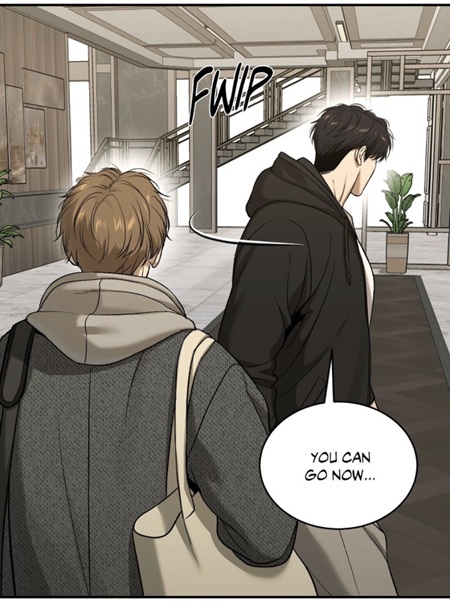
Jinx: Between A Squeeze🫶 and A Crack 💢 -part 1

They Held Hands, But…

They held hands.
They held hands. (chapter 87)
They are so cute. 😍

This refrain summarizes much of the immediate reaction to the chapter. Attention clustered around the opening scene: the quiet morning moment in which the champion squeezes the doctor’s hand after asking for luck. (chapter 87) The intimacy of the gesture (chapter 87), its tenderness, and its symbolic weight were widely commented on—sometimes to the exclusion of almost everything else.

In the aftermath of the chapter, the author Mingwa herself remarked on this reception. On X, she noted—half amused, half ironic—that although Baek Junmin appeared (chapter 87) and an entire match took place, readers were largely talking about the introduction alone. 그나저나 이번화 나름 ㅂㅈㅁ도 나오고 경기도 했는데 다들 맨앞 도입부만 얘기하셔서 너무나 커엽군요,, (손잡았어 웅성웅성) Mimicking the collective reaction with a playful “They held hands!”, she described this selective focus as 커엽군요—not reproachful, but gently teasing.

This imbalance is understandable. The preceding chapters centered predominantly on the main leads (chapter 84) and the progression of their relationship, attuning readers to intimacy (chapter 85), care, and emotional release. When the chapter opens with a tactile, reassuring gesture, it naturally confirms that reading mode. The squeeze feels like a culmination.
Yet the chapter does not end there. By focusing almost exclusively on that moment, readers risk overlooking the significance of the final scene (chapter 87), where a very different gesture unfolds. (chapter 87) There, Baek Junmin rejects restraint, pushes away guidance, and verbalizes a resolve shaped not by trust or release, but by anger and revenge. (chapter 87) This closing moment is not incidental; it is placed in deliberate contrast to the opening.

The chapter is structured around these two gestures. One dissolves a belief rooted in ritual and control, the champion’s jinx. The other inaugurates a trajectory driven by wounded pride and escalation. Read together, they form a single movement—one that unfolds between a squeeze (chapter 87) and a crack (chapter 87).

Between a Squeeze and a Crack: Two Gestures, Two Logics

The chapter is structured around two gestures that appear simple, almost inconspicuous, yet articulate two radically different ways of relating to control, desire, and action.

One is a squeeze of the hand. (chapter 87) The other is the crushing of glass underfoot. (chapter 87) Between them unfolds a decisive split. The squeeze is not an act of domination. It is measured, contained, and reciprocal —an act of protection. The champion’s hand does not merely touch the physical therapist’s; it covers it. (chapter 87) The gesture encloses rather than exposes, shielding the other instead of pressing down on him. Force is present, but it is regulated and oriented toward care. The champion does not grasp to hold on longer than necessary; he squeezes, then stops. The gesture culminates in a line that matters far more than it seems at first glance: “That’ll do.” (chapter 87) This sentence marks a limit. It is not indifference, but acceptance. The champion has just registered the doctor’s surprise (chapter 87) — the slight jolt, the hesitation—and he responds by stopping. The restraint is not automatic; it is chosen. He does not ask for more reassurance, more certainty, or more support, even though he clearly desires it. Instead, he recognizes sufficiency.

What unfolds here is a careful negotiation between selfishness and selflessness. (chapter 87) The gesture still serves his need—he seeks strength, grounding, and reassurance—but it refuses to extract more than the other can freely give. (chapter 87) He allows himself to receive without insisting, to take comfort without turning it into a demand. Let’s not forget that after the tap, doc Dan had already started moving his hand away, though his fingers were brushing slightly his. (chapter 87) So the doctor’s support was indeed limited in time. So the stop of the champion ‘s squeeze (chapter 87) is therefore not a withdrawal, but an ethical adjustment: the moment at which desire acknowledges the other’s boundary and accepts it as final.
In that sense, the squeeze does not prove generosity; it proves restraint. It shows a willingness to carry what remains unmet rather than convert it into pressure. This is why the gesture concludes where it does. Not because the need disappears, but because it is no longer permitted to override respect.

In doing so, he abandons the logic that previously governed him—the belief that repetition, ritual, or escalation could secure an outcome. He would have sex, until his partners passed out. (chapter 33) Humbleness here (chapter 87) is not merely the expression of modesty, but the conscious recognition of limits: the willingness to accept uncertainty without compensating for it through excess, and the refusal to impose oneself on another. The gesture exposes a desire for respect toward Kim Dan; the champion knows his shyness and calibrates his touch accordingly, stopping before closeness turns into coercion. (chapter 87) The hand, as an instrument, reinforces this meaning. It reaches horizontally toward another human being. It creates proximity, connection, and grounding. (chapter 87) Nothing mediates the gesture. There is no object, no talisman, no substitute. Meaning is produced entirely through contact.

The final gesture operates according to the opposite logic. (chapter 87) The foot does not protect; it exposes. It descends vertically, asserting weight rather than relation. Where the hand encloses, the foot bares. The glass shatters under pressure, turning reflection into sharpness. What was once a surface becomes a source of wounds. It does not regulate force but releases it. Where the hand stops (chapter 87), the foot escalates. (chapter 87) The glass shatters, not to restore anything, but to discharge tension. This is not violence directed at a person, yet it is unmistakably expressive. It replaces connection with spectacle and containment with excess. Unlike the squeeze, the crack does not conclude itself. It invites continuation. The gesture is driven not by sufficiency, but by the refusal of “enough.” Here, greed is not merely material; it is existential. It manifests as the desire for the last word, total vindication, and unrestrained agency.

The contrast extends beyond movement into atmosphere. (chapter 87) The opening scene unfolds in a space that feels inhabited and shared, composed in softer shades that emphasize stillness and presence. The final scene is colder, darker, sharper. (chapter 87) Motion replaces quiet. An object enters the frame, absorbing force and redirecting it away from human contact. Where the first scene restores continuity—between bodies, between effort and outcome, between present and future (chapter 87) —the second collapses time inward. Baek Junmin does not act toward what is coming; he reacts toward what has already been. His violence is not exploratory but recursive. (chapter 87) It invokes the past as a template, attempting to reinstate an earlier hierarchy in which domination was secure and uncontested.
The gesture is therefore not simply destructive, but regressive. By striking, he tries to repeat a former position—acting like he wasn’t my gopher back in the day—as if the present could be coerced into mirroring that memory. This is why moderation is impossible. Repetition does not recognize limits; it demands reenactment. What breaks under this logic cannot be repaired because it was never oriented toward the future in the first place. It leaves only fragments—evidence of an attempt to overwrite change rather than accommodate it.

What ultimately sharpens the contrast between the two gestures is not only the difference between hand (chapter 87) and foot (chapter 87), but the difference between human presence and object substitution. In the opening scene, meaning emerges exclusively between two people. Nothing stands in for the other; nothing absorbs the gesture on their behalf. The squeeze requires mutual presence and ends precisely because it is shared. Its limit is ethical as much as physical. The final gesture unfolds in the absence of such reciprocity. Baek Junmin does not direct his force toward another human being, but toward an object. This displacement is not incidental. The object absorbs what no one else does. It becomes the recipient of rage, humiliation, and wounded pride. In doing so, it exposes a fundamental loneliness. Violence no longer seeks recognition from another person; it settles for impact.

The object in question matters. The Shotgun does not destroy a random item, but a television screen (chapter 87)—the very surface on which images circulate, words are fixed, and visibility is regulated. The screen does not reveal truth; it organizes perception. It is where victories are staged, reputations stabilized (chapter 46), and statements acquire permanence through broadcast. (chapter 87)

By turning on the screen, The Shotgun does not challenge the system itself (chapter 87); he reacts to what it has already done to him. What breaks is not the logic of spectacle, but his ability to endure exposure. The screen cracks, yet remains standing. This first rupture interrupts the image, but not its effect. The words spoken through it persist. They cannot be retracted, reframed, or silenced after the fact.

Thus he strikes again. (chapter 87) Using the ashtray, the “demon” shatters the screen into debris. At this point, the object has already lost its function. The broadcast is long over; the image is long gone. Yet the violence continues. He steps forward and crushes the remaining black shards underfoot (chapter 87), as if determined to annihilate even the remainder. The escalation exceeds necessity. It is no longer about disabling a device, but about confronting something that refuses to disappear.

This escalation becomes even more revealing when read against the opening sequence of the chapter. The three acts of destruction mirror, in distorted form, the three steps through which closeness was established earlier. In the morning scene, proximity unfolds gradually and remains contingent on consent: first the whisper (chapter 87), then the pause; then Kim Dan’s tentative tap (chapter 87); finally the squeeze (chapter 87), held only until it must stop. Each step waits for response. (chapter 87) Each movement depends on acknowledgment. The sequence concludes because it recognizes a limit.

At the office of director Choi Gilseok (chapter 87), the same tripartite structure is emptied of reciprocity. The first strike cracks the surface. The second shatters it into debris. The third crushes what remains. Where the opening scene pauses, this one accelerates. Where the whisper waits, the blow overrides. Where the squeeze ends itself, the violence repeats because it cannot conclude. The symmetry is formal, but the logic is inverted: one sequence builds relation through restraint; the other pursues erasure through excess. (chapter 87) In the latter, escalation is uninterrupted. At no point does Director Choi Gilseok intervene. He does not place a hand on Baek Junmin’s shoulder again, does not issue a command, does not impose a limit. (chapter 87) Whether he has already left the room or chooses deliberate avoidance is ultimately secondary. What matters is the absence itself.

That absence exposes a failure of containment. Authority is present in name, but not in function. Choi Gilseok cannot—or will not—stop his fighter. His invisibility transforms into passivity and complicity, not because he endorses the violence, but because he allows it to proceed unchecked. Power here no longer circulates through guidance or control; it dissolves into abdication. Yet this abdication is not uniform. It is selective.

Earlier in the narrative, Director Choi reacts strongly when his authority is verbally challenged. (chapter 49) When Joo Jaekyung addresses him with open disrespect, the breach of seniority provokes immediate outrage. (chapter 49) Intervention follows quickly. The insult is not tolerated (chapter 49) because it threatens hierarchy itself. Choi’s anger is genuine in that moment and it reveals what he truly guards: status, order, and the visibility of respect.
In contrast, Baek Junmin’s behavior provokes no such response. He brushes past instructions (chapter 87), slaps away physical restraint (chapter 87), and continues escalating without repercussion (chapter 87). The difference is telling. Where Choi once asserted authority to defend rank, he now withdraws it in the face of volatility. Baek’s aggression does not offend hierarchy in the same way; instead, it destabilizes it. And Choi does not confront destabilization. He avoids it.

A final irony sharpens this configuration of power. Neither Choi Gilseok nor Baek Junmin is aware of the protagonist’s true rank. (chapter 78) Both continue to perceive Joo Jaekyung as nothing more than a fighter (chapter 87) —talented, profitable, but ultimately subordinate. (chapter 87) This assumption governs how they speak to him, how they threaten him (chapter 49), and how they imagine their leverage over him.
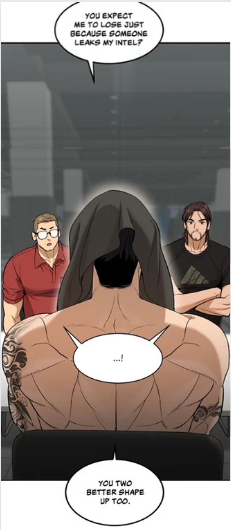
Yet this perception is false. Joo Jaekyung is not merely an athlete within the system; he occupies the same structural level as those who presume to manage him. He is the owner of Team Black. His position aligns not with fighters, but with directors. The irony lies in the fact that the system itself enables this misrecognition. Authority is not distributed according to legal ownership, but according to visibility and habit.

This is already visible earlier, when the “hyung” attends directors’ meetings on the champion’s behalf. (chapter 46) His presence creates a convenient fiction: those around the table come to believe that he is the owner, or at least the one who truly governs the gym. Joo Jaekyung’s absence is interpreted not as autonomy, but as immaturity or dependence. Authority, once again, attaches itself to performance rather than reality.

The warning issued by the gym’s leadership makes this distortion explicit. (chapter 46) Even after boundaries are formally stated, Park Namwook continues to rely on seniority to address the champion (chapter 46) as if he were a child or an employee—someone to be corrected, instructed, and disciplined. The warning does not alter behavior because it does not challenge the underlying assumption: that Joo Jaekyung’s place is below them.

This misreading has consequences. Because Choi Gilseok and Baek Junmin both believe they are dealing with a fighter who must answer to managers, coaches, and institutions, they overestimate their capacity to contain him. They imagine leverage where there is none. They threaten exposure, punishment, and exclusion—tools that function only if the target depends on the system for legitimacy.

What they fail to see is that Joo Jaekyung no longer does. He doesn’t care about his image after challenging Baek Junmin. (chapter 87)

But let’s return our attention to the scene at the gym office. (chapter 87) This asymmetry exposes the limits of Choi Gilseok’s power. His authority functions only when obedience is already plausible. It depends on recognition rather than enforcement. When faced with a figure who neither seeks approval nor acknowledges restraint, Choi’s authority collapses into silence. The absence of intervention is not neutrality; it is an admission of impotence.

In that sense, Baek Junmin is not merely uncontrolled — he is uncontrollable within the existing structure. Choi’s refusal or inability to intervene reveals that the hierarchy he enforces is performative, not structural. It governs appearances and etiquette, not escalation or consequence. What remains once those appearances are ignored is not authority, but avoidance.

This is why Choi’s passivity matters narratively. By failing to stop Baek, he becomes an accomplice to excess without ever authorizing it. He does not direct violence, but he creates the conditions under which it can proceed. Power, here, does not flow downward or circulate relationally; it evaporates at the moment it is most needed.

In this sense, Baek Junmin is not merely acting out of rage. (chapter 87) He is acting in a vacuum created by institutional withdrawal. Thus the thug starts talking to himself loudly. This is not a dialogue, but a monologue. It was, as if he was trying to reassure himself about his power and connection. The director’s inability to regulate his “star” mirrors the waves in the last panel. An ocean can not be contained or restrained. In addition, his lack of restrain reflects the broader collapse of moderation within this economy. Where restraint once required oversight, its absence permits excess to define the relationship. What unfolds is not rebellion against authority, but the revelation that authority was already hollow.

This repetition is revealing. Each act answers the same stimulus, yet fails to neutralize it. The destruction does not bring release because the provocation was never material. The television has already fulfilled its role; the words spoken live cannot be undone. (chapter 87) What Baek attempts to destroy is not the object, but what it represents: the irreversibility of public speech, the collapse of secrecy, the loss of narrative control.

The black glass fragments make this failure visible. (chapter 87) They do not restore darkness; they scatter it across the floor. The act does not erase visibility but multiplies its traces into debris. This is not a cleansing destruction. It is an attempt at erasure that arrives too late, producing residue instead of resolution.

Seen in light of Baek Junmin’s habitual reliance on whispers (chapter 49), handshakes, and private humiliation (chapter 49), the gesture becomes clearer still. He is accustomed to violence without witnesses, to domination shielded by proximity and secrecy. He was always the man in the shadow. The live broadcast deprives him of that refuge. (chapter 87) For the first time, he is confronted with words that circulate beyond his control.
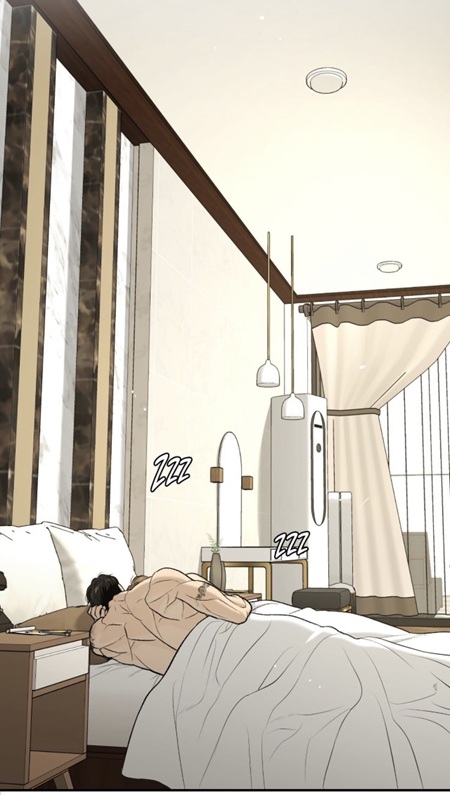
Both sequences (chapter 87) also unfold under the sign of privacy. (chapter 87) Nothing from either scene is leaked to the audience within the story. No cameras intrude on the morning room; no spectators witness the destruction that follows. In both cases, what happens remains offstage, contained within enclosed spaces.
Yet the function of privacy differs radically. In the opening scene, privacy protects vulnerability. It creates a space in which hesitation, consent, and restraint can exist without performance. The absence of witnesses allows closeness to remain unexploited and unrecorded. Privacy here is not concealment, but care. (chapter 87)

The destruction scene also takes place out of view, but for the opposite reason. Privacy no longer shelters vulnerability; it shields waste. Hence the thug used an ashtray to damage the TV screen. The object exposes the truth about this gym: it is just a cover for thugs. Additionally, the ashtray allows violence to escalate without immediate consequence, to repeat without interruption. What is hidden is not intimacy, but loss of control. The same absence of witnesses that preserves dignity in one scene enables denial in the other. This parallel sharpens the contrast further. Privacy is not neutral. It amplifies what already governs the gesture. Where restraint is present, privacy sustains it. Where limits have collapsed, privacy becomes an accomplice.

What surfaces here (chapter 87) is not pure aggression, but fear. Rage functions as its mask. The insistence, the repetition, the overkill all point to an inability to tolerate being seen, named, and fixed in public space. Crushing the screen is not an assertion of power, but a response to exposure—a desperate attempt to silence what can no longer be taken back. (chapter 87) He is announcing a shift of identity.

Up to this point, Baek Junmin still oscillated between two positions: the shadow fighter (chapter 74) seeking legitimacy, and the underground enforcer shaped by violence, order and debts (chapter 47). The broken screen already signaled that he no longer cares about how he is seen. (chapter 87) This line confirms what replaces that concern. He is ready to be seen as he is, without mediation, without justification. Leaving the shadow does not mean entering the light. It means abandoning concealment.

What he exposes are not hidden virtues, but true colors. The phrase is not a threat designed to intimidate an opponent into caution; it is a declaration of readiness to abandon restraint. He no longer intends to pass as a disciplined athlete governed by rules, training, or institutional limits. He is prepared to act as a bully and criminal —someone for whom violence is not a means within a system, but an identity in itself.

This is why the line follows the destruction of the screen so closely. (chapter 87) Once image no longer matters, there is nothing left to protect. Reputation, legitimacy, and future standing cease to function as brakes. What remains is the body and its capacity to harm. The statement therefore does not project confidence about the outcome of a match; it projects indifference toward consequences. In that sense, Baek Junmin is not stepping out of the shadows to claim recognition. He is stepping out to remove the mask. The system demanded that he appear controlled, profitable, and presentable. (chapter 47) By rejecting visibility and embracing excess, he also rejects the last requirement that tied him to that system.

What he is ready to expose is not truth, but himself.

Just as importantly, the damaged object does not belong to him. (chapter 87) Baek Junmin does not need to clean the mess, replace the screen, or account for the damage. He can afford indifference because responsibility is externalized. This is where materialism enters the gesture. (chapter 87) In his logic, what is destroyed can be replaced—by money, by compensation, by someone else’s labor. The gesture therefore carries no sense of loss. It is pure discharge. Where the hand-holding scene ends in sufficiency (chapter 87), this act ends in non-attachment. That non-attachment is not freedom; it is dispossession. Because nothing belongs to him, nothing binds him. The violence does not commit him to consequence. He does not have to stay, repair, or answer. (chapter 87) The object takes the blow and disappears from relevance, just as people do in his worldview once they cease to be useful or respectful. This is why the destruction feels so pronounced. It is not driven by concern for outcome. Baek Junmin does not care whether the screen works afterward, just as he does not yet care how events unfold. What matters is the act itself—the assertion that he can still act, still impact, still dominate a space that otherwise refuses him recognition. Under this new light, it becomes palpable that Baek Junmin’s resent and rage represent a liability to Choi Gilseok and his backers, the pharmaceutical company. (chapter 48) And their collaboration is founded on money laundering!! The shooting star is in reality (chapter 47) a meteor bringing calamity, once it lands on the Earth. Baek Junmin is about to face “reality” very soon.

Placed next to the opening scene, this contrast becomes stark. (chapter 87) There is no money, no power… between them. One gesture creates meaning because it acknowledges another human and accepts limitation. The other destroys an object precisely because no human is there to receive the force. One restores continuity; the other exposes isolation. Between them, the chapter reveals not only two trajectories, but two economies of value: one grounded in presence, the other in replacement.

Two pairs, two economies of power

What ultimately distinguishes the two dynamics is not intimacy versus violence, but how power is situated and what it depends on. In one case, power emerges through limitation; in the other, it is sought through displacement. The difference is not emotional, but structural. In the morning scene, power does not circulate vertically, but it also does not dissolve into symmetry. What changes is not the existence of power, but its source.

When the champion leans in and whispers, (chapter 87), he is not performing vulnerability for reassurance, nor delegating responsibility. He is explicitly naming Kim Dan as his source of energy. This matters. In earlier chapters, strength was something to be extracted through action—through sex, repetition, or coercive certainty (Chapter 2). Here, strength is no longer something he takes. It is something he receives. (chapter 87)

This is not a weakening admission. It is a reorientation. The champion does not ask Kim Dan to guarantee victory, to protect him from loss, or to secure the outcome. He asks for presence. What sustains him is no longer a ritualized act performed on another body, but the continued existence of a relationship in which he is accepted despite his flaws. (chapter 87) Kim Dan sleeping openly, showing his face, remaining there without fear—this is read by the champion as tacit trust. That trust becomes energy. In other words, this scene serves as the positive reflection of the argument in the locker room: (chapter 51)
The jinx (chapter 87) collapses precisely here. The old belief system operated on compensation: anxiety required action; uncertainty demanded escalation. Sex functioned as a mechanism to overwrite doubt. In this scene, no such mechanism is activated. The chapter makes this shift legible through space. When the champion rises from the bed, his movement is shown in full: he steps away from Kim Dan and crosses the room. (chapter 87) Yet he does not open the brown door. There is no pause at the threshold, no transition panel suggesting entry into another enclosed space. Instead, the next frame places him directly in the living area of the suite. The cut is continuous, not elliptical.

This matters because the brown door cannot be the suite’s entrance. (chapter 87) We have already seen the entrance elsewhere, and its placement does not align with this angle or proximity to the bed. Within the logic of a hotel suite, the remaining option is functional rather than transitional: the bathroom. In earlier chapters, that space was explicitly associated with ritual (chapter 75) —showering, cologne, self-regulation before a match. Here, that sequence is conspicuously absent.
The absence is not neutral. Mingwa does not show him choosing another ritual; she shows him skipping one. (chapter 87) No water, no mirror, no scent. The champion moves forward without cleansing, without recalibration, without the preparatory gestures that once framed his readiness. The bathroom—previously a site of purification and self-conditioning—remains closed, unused, and irrelevant.

What replaces it is not another ritual, but continuity. He enters the shared living space already grounded. The confidence he carries does not come from resetting himself, but from what has already occurred. Kim Dan’s presence, his sleep, the unguarded exposure of his face—all of this has already done the work that ritual once performed. There is nothing left to correct, neutralize, or overwrite. To conclude, this omission is not accidental. By abandoning the shower-and-cologne ritual, the champion abandons the idea that he must transform himself to be worthy of victory or public acceptance. He no longer needs to sanitize desire, image, or fear. What sustains him has already been secured before the match begins: recognition without conditions.

Power, then, is not extracted from superstition, domination, or bodily expenditure. It is grounded in continuity. Kim Dan’s presence does not ensure success, but it makes uncertainty bearable. That is the decisive shift. The champion no longer acts to silence fear; he acts while carrying it. And because he no longer believes that ritual determines outcome, he can later speak freely on live television. He is now confident, as he feels supported by doc Dan. (chapter 87) The profanity is not recklessness—it is evidence that image management has lost its hold. The champion does not stop caring about how he is seen; he narrows the field of recognition. Public perception no longer governs him (chapter 87) because it no longer defines his worth. What matters now is not the crowd, the broadcast, or the institution—but the single person whose presence already secured his sense of legitimacy before the match began. Thus after the match, he asked for the physical therapist’s approval and recognition: (chapter 87)

In short, the whisper does not mark dependence, but emancipation. (chapter 87) By replacing “I must do something” with “you are here,” the champion exits the economy of compulsion and enters an economy of trust. Victory will still matter—but it no longer needs to be purchased in advance.

The dynamic surrounding Baek Junmin operates differently. His position has always depended on external validation—rankings, victories (chapter 69), recognition, and above all visibility. Yet this visibility is curiously incomplete. Despite his victory, Baek Junmin is not immediately present as a public figure. He appears as a result (chapter 52) —his name, his win—but not yet as a narrative subject.

Only later, in episode 77 (chapter 77) does the story formally reveal his identity as champion. Until that moment, he remains strangely undefined, as if held back from full exposure. This delay is not incidental. It reflects a controlled form of recognition: Baek Junmin is allowed to win, but not yet to be seen. It already exposes that his success or victory is not clean. (chapter 87)

In this sense, the former underground fighter has not disappeared, but been contained. His past is not erased; it is suspended. (chapter 47) Visibility is granted selectively, not as self-expression, but as an institutional function. He exists within the system, but not yet fully in the public gaze. Even when violence or illegality intervenes, it does so in service of legitimacy. Until now, Baek Junmin has relied on the legal system (chapter 69) to carry him forward: sanctioned fights, official narratives, public status. Crimes may occur along the way, but they remain hidden, delegated, or absorbed by others. Power, for him, is something that must appear legitimate, even when it is not.

The destruction of the screen marks the point where this arrangement begins to fracture. (chapter 87) The legal economy no longer guarantees dominance. Public speech escapes control. (chapter 87) Visibility becomes a threat rather than a resource. In response, Baek does not retreat; he escalates. What we witness is not yet a full turn toward the underground, but the precondition for it: the realization that legality no longer secures power. (chapter 87) In this moment, Baek Junmin is no longer speaking as an athlete anticipating a rematch, nor as a rival operating within institutional rules. The phrasing “He has no idea who he’s messing with” does not refer to skill, ranking, or preparation. It signals a different register of power altogether—one that lies outside competition and beyond merit.

The threat is deliberately vague. He does not name a tactic, a plan, or a legitimate advantage. Instead, he invokes reach. The implication is relational rather than athletic: access, leverage, intermediaries. Power here is imagined as something that can be mobilized indirectly, through others, rather than exercised personally. This is where the “angel of death” reading becomes relevant—not as a literal figure, but as a symbolic posture. Baek frames himself as someone whose influence does not require visibility or accountability. Risk is no longer borne by the speaker. It is transferred, outsourced, or enforced through an unnamed elsewhere. Violence becomes atmospheric rather than explicit.

This is where the contrast between the two pairs sharpens. One trajectory exits the economy of compensation—the belief that force, ritual, or excess can neutralize uncertainty. The other moves toward a system where uncertainty is resolved through coercion rather than consent. One abandons the jinx by accepting risk. The other approaches a space where risk is relegated, outsourced, or enforced.

What separates them, then, is not morality, but dependency. The champion no longer depends on systems that promise control. Baek Junmin still does—and when that promise fails, the search for power does not stop. It changes terrain. Up to this point, Baek Junmin’s power has been structurally protected rather than personally secured. His victories, rankings, and public status were carried forward by the legal economy of the sport, even as acts of sabotage or coercion occurred in its margins. Crucially, this system did not require his full awareness to function. Violence was absorbed, displaced, or misattributed by intermediaries, allowing legitimacy to remain intact on the surface. Baek benefited from this arrangement without having to own it. Authority appeared lawful, outcomes appeared earned, and responsibility flowed elsewhere.

That arrangement begins to collapse here. Once public speech escapes control and visibility can no longer be managed retroactively, legality stops functioning as insulation. What follows is not yet a plunge into the underground, but the moment where reliance on institutional protection becomes untenable—and the search for power must change terrain. (chapter 87) Strangely, the director of King of MMA has just assured him his full support (chapter 87), but this was not enough for the “demon”. What the “new champion” failed to realize is that gaining the champion belt didn’t mean the end of his achievement. The reality was and is that he would be challenged constantly. Even when crimes are committed around him (chapter 50), they remain structurally hidden, absorbed by intermediaries, or misattributed. (chapter 69) Violence is laundered through legitimacy. The system continues to present him as a contender, even as it quietly tolerates sabotage and manipulation. Importantly, Baek Junmin does not need to know every detail for this economy to function; it protects him by design.

The scene in chapter 87 marks the moment where this economy begins to fail him. Public speech, live broadcast, and irreversible visibility introduce a variable that cannot be managed retroactively. Unlike clandestine acts or whispered humiliations, what is said on air cannot be displaced, denied, or quietly corrected. The legal system does not offer erasure; it offers record.

This is where the alternative economy becomes legible. Underground fighting (chapter 47), illegal gambling, and criminal enforcement operate on a different logic: outcomes are secured not through recognition, but through coercion and tricks; not through visibility, but through fear and secrecy; not through procedure, but through immediacy. There, a defeat is more like a death sentence. (chapter 47) Where the legal economy requires patience and exposure, the illicit one promises certainty and silence.

By contrast, the champion’s gesture in the opening scene binds him more firmly to the legal economy precisely because it accepts uncertainty. Redistributed power cannot be weaponized quickly. It resists conversion into domination. That resistance is what dissolves the jinx—and what makes the two trajectories incompatible.

This is how mediation works in that relationship. Kim Dan’s presence does not absorb excess; it sets a limit that is respected. Joo Jaekyung does not outsource control. He exercises it on himself.

The dynamic between Choi Gilseok and Baek Junmin operates according to a different economy. Formally, theirs is a boss–employee relationship. (chapter 52) In practice, hierarchy barely functions. Authority exists without discipline, protection without accountability. Baek Junmin is not positioned among other fighters, nor anchored in a collective. Thus he is not truly celebrated at the restaurant after the tie. Thus the fighters mentioned the director Choi Gilseok’s financial success or the odd behavior of Joo JAekyung. (chapter 52) Besides, he watches the match alone (chapter 87), from the director’s office—at the center of power, yet fundamentally isolated. This spatial detail matters. It signals both exclusion and entitlement. He does not belong, but he feels authorized to occupy the space.

When Choi Gilseok touches Baek Junmin’s shoulder, the gesture is corrective. (chapter 87) It is meant to halt escalation, to reassert moderation, to momentarily reintroduce limits. Baek’s response is immediate: he slaps the hand away. (chapter 87) This rejection is not rebellion in the classical sense. He is not trying to overthrow authority; he is refusing mediation. In his mind, limits no longer apply to him. He has been granted license without ownership. It was, as if the championship belt had freed the fighter from social norms and laws. Shortly after, “By all means” (chapter 87) removes the brakes while leaving responsibility elsewhere. It sounds like a free pass for the “criminal” in the end.

The final scene also marks the quiet dissolution of the association between Choi Gilseok and Baek Junmin. Although the director speaks in the plural—“we will use all means necessary”—the scene itself contradicts that claim. Spatially, Choi remains behind Baek, positioned as if backing him, yet excluded from his line of sight. The demon does not turn toward him, does not respond to him, and does not share affect or intent. The “we” exists only rhetorically. In practice, the scene contains only two figures: Baek Junmin and his imagined adversary. The director is already irrelevant.

This staging contrasts sharply with the earlier locker-room confrontation between Joo Jaekyung and Kim Dan, (chapter 51) where proximity forced acknowledgment and power was renegotiated face-to-face. (chapter 51) In the office, no such negotiation occurs. (chapter 87) Baek Junmin’s refusal is not confrontational; it is dismissive. (chapter 87) He does not reject authority—he bypasses it. The champion belt appears to function, in his mind, as a form of exemption: a signal that dependence, seniority, and mediation no longer apply. Whether this belief is justified remains open. What matters is that Baek Junmin acts as if it were. In doing so, he exits not only a partnership, but the structure that once contained him.

Placed side by side, the two pairs reveal two economies of power. In one, influence circulates through presence, restraint, and mutual risk. In the other, power is maintained through delegation, insulation, and the removal of limits. One dynamic produces responsibility by accepting vulnerability. The other produces entitlement by severing accountability.

This is why the outcomes diverge so sharply. Where one relationship closes a cycle of superstition and control, the other opens a trajectory of escalation and downfall. Not because one side loves and the other hates, but because one accepts limits—and the other has been told there are none.

Feel free to comment. If you have any suggestion for topics or Manhwa, feel free to ask. If you enjoyed reading it, retweet it or push the button like. My Reddit-Instagram-Twitter-Tumblr account is: @bebebisous33. Thanks for reading and for the support, particularly, I would like to thank all the new followers and people recommending my blog.

Jinx: The Words 🎆The Firework 🎆 Stole 🥷 (second version)

Finally a Love Confession?

Among all the scenes in Jinx, none has ignited more speculation than the moment inside the Ferris wheel cabin—those few seconds when Joo Jaekyung’s lips move (chapter 84), the fireworks erupt, and Kim Dan turns his head too late. (chapter 84) Readers have replayed the blurred panel again and again, straining to decipher the muffled shapes of his mouth. Some are convinced that this is the confession, the moment the wolf finally says aloud what his body has been whispering for months. One Jinx-phile, @4992cb even insisted she had cracked the code: five syllables, just enough to match the Korean 좋아해 김단 (jo-a-hae Kim Dan)—“I like you, Kim Dan.”
And truthfully, the scene encourages such a reading. Fireworks often accompany love confessions in East Asian media (chapter 84) —especially Japanese summer festivals where boys and girls, dressed in yukata, confess beneath crackling skies. Fireworks symbolize joy, romance, fleeting courage. It is no wonder many readers assumed that Mingwa was drawing on this cultural grammar: purple night sky, glowing lights, two lonely figures suspended above the world. A confession seems almost inevitable. And if it truly was a love declaration, then the champion’s refusal to repeat himself (chapter 84) would make perfect narrative sense—confession lost, moment gone, courage spent.

But before we accept the romantic surface, we must pause. Something about the staging feels off—deliberately off. Why would Mingwa construct a confession that the receiver cannot hear? (chapter 84) Why give Kim Dan the long-awaited moment he has yearned for, only to snatch it away with the noise of exploding light? Yes, despite his words, Kim Dan still had the hope to be loved by the athlete. Hence he kept thinking about the athlete’s motivations for his “stay and care at the seaside town”. (chapter 62) (chapter 77) Why does Joo Jaekyung speak exactly when the fireworks begin, as if choosing the one moment when he is guaranteed to be drowned out? (chapter 84) And most importantly: what emotion pushed him to open his mouth in the first place? (chapter 84) Was he truly confessing love—or was he trying to verbalize something far more raw, far more primitive, far more difficult?
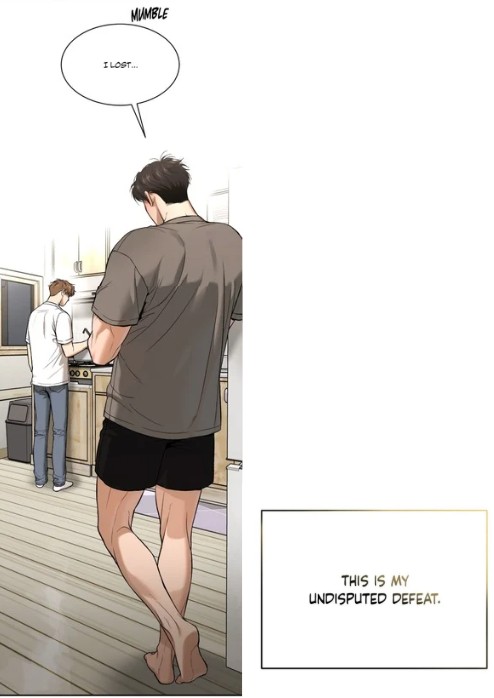
Before we can decode the stolen syllables, we need to examine the entire machinery around this moment: the champion’s posture, the lighting, the soundscape, the timing, and the emotional triggers accumulated over previous chapters. Only then can we begin to understand what he tried to say, and why the author ensured that Kim Dan—the boy who has always longed to be chosen—could not hear it.

The Mechanics of a Stolen Confession

Everything about the Ferris wheel cabin — the positioning, the posture, the lighting — undermines the idea that Joo Jaekyung was intentionally directing his words toward Kim Dan. The mechanics of his body say more than the bubble ever could. To begin with, Jaekyung is not fully facing Kim Dan when he begins to speak. (chapter 84) How do we know this? His body tells the truth before any words do: his torso is angled half-way toward the window and half-way toward Kim Dan, caught between desire and retreat. His arms remain crossed — a classic defensive posture — as if he is bracing himself against the very feelings he is trying to verbalize. This is not the stance of someone delivering a confident love confession; it is the posture of a man attempting something dangerous, something he is afraid to expose.

Only his head turns slightly toward Kim Dan, a diagonal tilt rather than a direct orientation. (chapter 84) It signals hesitation, testing the water, not a deliberate act of addressing someone face-to-face. And the light confirms this: the violet firework glow still falls on the same side of his face as in the previous panel, proving that he did not rotate his body or head enough to truly face Kim Dan while speaking. (chapter 84) He remains more oriented toward the window, toward the blur of lights outside — toward a safer, less intimate direction.

This halfway posture makes everything clear: Jaekyung is speaking from a place of longing mixed with fear, practicing honesty without yet daring to look directly at the person who provokes it. It is because as soon as his fated partner asks him to repeat, he turns slightly his head away, to the window. (chapter 84) When someone truly wants to be understood, they turn instinctively toward the listener. But when Jaekyung turns away, he is not refusing vulnerability — he is choosing fear. Turning his head toward the window is an instinctive retreat into the only safety he knows: distance.

This is crucial: he begins to speak while refusing to meet the therapist’s gaze. (chapter 84) The words escape sideways — literally.

Then comes the second mechanical detail: timing. He opens his mouth precisely at the moment the fireworks erupt. Deep down, he knows the noise will drown his voice. This is not accidental. It mirrors episodes 76(chapter 76) and 79 (chapter 79), where he “speaks” only when the other man cannot truly hear him. At the hostel, the mumbling was barely audible: yet according to my observation and deduction, doc Dan seems to have caught something. as later we discover this scene from the champion’s memory: (chapter 77) He already knew that the athlete was standing next to him. However, observe that this vision focused on the doctor’s gaze was accompanied with silence. This means, doc Dan acted, as if he had heard nothing. So if he heard, what did the physical therapist catch exactly in the kitchen? “I lost…”, but it was devoid of any context. Doc Dan had no idea what the director Hwang Byungchul had advised to his former student. (chapter 75) He could not know that “I lost” referred to something far more intimate: Jaekyung losing control over his own emotional detachment, he was totally vulnerable in front of doc Dan. His heart was stronger than his “mind and fists”. Naturally, if Kim Dan interpreted the phrase at all, he would connect it to the only “loss” he understood: the tie with Baek Junmin. A humiliating defeat. A source of shame. This misinterpretation perfectly explains why in the cabin, the hamster immediately assumes that the champion is once again determined to regain his title: (chapter 84) He is taking the champion’s words at face-value. (chapter 77) He trusts the explanation Jaekyung himself gave under the tree. And here lies the deeper revelation: Kim Dan’s misunderstanding exposes the true meaning of the tree confession. Why did Jaekyung suddenly accept the match? Why frame it entirely in terms of “I need you for these two fights”?
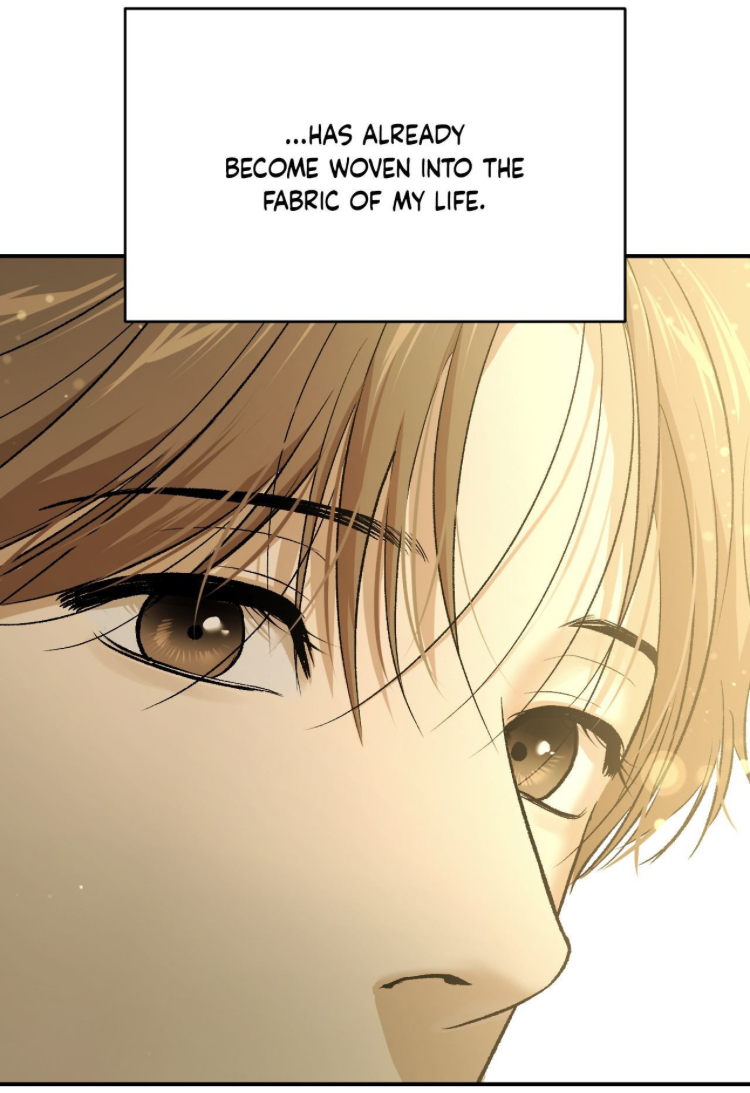
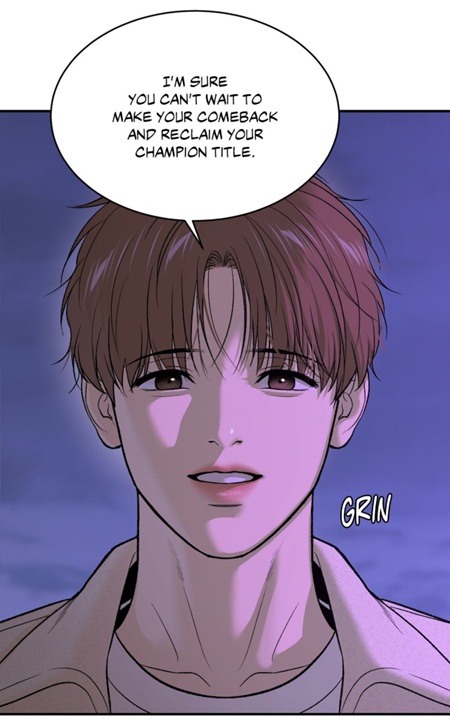
Because work was the only safe language he had left for reconnecting with the therapist. He could not say, “Please stay with me.” He could not say, “I don’t want to lose you.” So he said the only thing he believed he was allowed to say:
“I need you for my return match… and my title match.”

It is a substitution — a mask — a plea disguised as practicality. (chapter 84) A deadline designed to keep Kim Dan close without revealing the depth of the emotional dependency underneath. Finally, before we even analyze posture or timing, we must acknowledge the ghost that is sitting inside the cabin with them — Jaekyung’s own admission of dishonesty. Just minutes earlier, the narrative revealed again a thought he had never dared to voice aloud: (chapter 84) This line is essential, because it exposes the truth behind every failed confession that came before it: Jaekyung did not rekindle with doc Dan with honesty. His first instinct was deception (lie by omission), not vulnerability. Keeping Kim Dan near him mattered more than telling him the truth. So his “love” was still more influenced by possessiveness.

And that is precisely why his apology in the cabin lands with such weight. (chapter 84) For the first time, he admits wrongdoing without deflecting, without rage, without pride. This apology is not strategic; it is confessional. A tone we have never heard from him before. It is no coincidence that just before, he employed this expression: (chapter 84) This is the language of surrender — not to defeat, but to vulnerability and selflessness. The champion who once insisted on keeping Kim Dan “one way or another” (chapter 84) now articulates the opposite impulse: the willingness to release him, to give him a choice. (chapter 84) Kim Dan can actually never forgive him. He is giving up, on his possessive love — the possessiveness that fueled all his earlier attempts to hold onto Dan through contracts, pressure, intimidation, manipulations or work-related obligations.
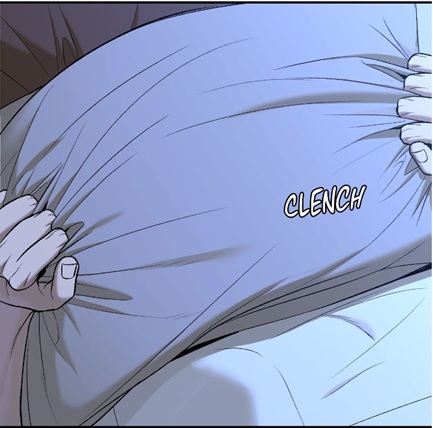
Here, his grip loosens. Here, his desire is no longer expressed as ownership, but as remorse. And this shift matters profoundly for the blurred confession. (chapter 84) By apologizing, Jaekyung crosses a threshold he has never crossed before: he speaks without power, without defense, without dominance.
For the first time, he tells Kim Dan something that is not a command, not a justification, not an excuse — but a truth about himself. Yet this emotional shift, as liberating as it is, does not make him ready to say “I love you” or even “I like you” in a clean, intentional, adult way. In fact, the opposite is true. When guilt falls away, he does not step into romantic maturity — he reverts to emotional childhood. This explicates why later he felt so embarrassed on his bed, hiding his face under the pillow. (chapter 84) Thus for me, in the cabin the champion became, for a moment, the boy with no mother’s gaze, no father’s protection, no safe place to rest. He must have said something cheesy, something a young person would say. Purity returns before experience does. Honesty returns before articulation. And in that moment inside the cabin, Mingwa makes a decisive artistic choice: we do not see Jaekyung’s eyes. (chapter 84) The panel hides them completely — not out of convenience, but out of protection. It is as if the author herself shields the wolf’s vulnerability from the reader, granting him a moment of privacy at the precise instant he attempts something emotionally dangerous.
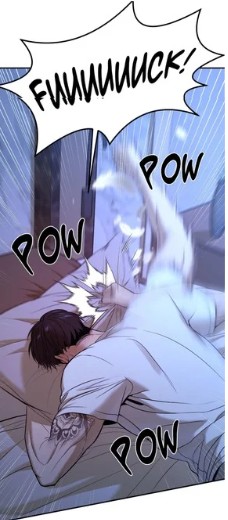
Just as in episodes 76 and 79, his words are not fully directed at Kim Dan. They are spoken near him, not to him.
They slip out sideways — half internal, half external — the verbal equivalent of a heartbeat too quiet to be called speech. In other words, what happens inside the cabin is not the flowering of romantic eloquence. It is the first trembling attempt of someone who has never been loved to express the only version of love he knows: instinctive, needy, unpolished, raw.

This is why he cannot possibly be saying a line as adult and structured as “I love you” or even “I like you.”
Such sentences require three things he does not possess yet:

  1. A sense that he himself is lovable → he does not. Hence he still views himself as nonredeemable and as a burden.
  2. A sense that Kim Dan feels the same → he has no proof. Besides, doc Dan keeps avoiding his gaze, feels uncomfortable in front of him. He is not speaking his mind. He keeps reminding him of their limited contract.
  3. A sense of equality in the relationship → they are not there yet. Joo Jaekyung feels now inferior with all his sins and wrongdoings. Due to his last words, it becomes clear that he is not expecting something in return.

What he can say at this stage — and what fits the emotional mechanics of the scene — is something far younger, far simpler, far more primal, like for example “Stay with me” or “I want to kiss you ” or “I want to hold you”…

These are not love declarations. They are the vocabulary of a neglected child whose first experience of safety has finally returned — and who now fears losing it more than anything else.

And crucially, this would explain everything about the staging:

  • why he chooses fireworks (the sound protects him from being truly heard),
  • why his body angles away (he speaks sideways, not directly),
  • why his voice is blurred (because the reader is not meant to hear it yet),
  • why he panics when Kim Dan asks him to repeat,
  • why he instantly retracts with “Never mind.”

A man confessing love does not recoil. A child confessing need always does. It is also why the author hides the line. Not because it is a grand romantic confession, but because it is too emotionally naked, too immature, too early, too cheesy. A sentence like “I wish to …”, whispered by a man who has never held anyone without ownership, is more intimate than any polished “I love you.”

And Mingwa knows it. The confession is blurred not because it declares love, but because it reveals Jaekyung’s inexperience with love. He can finally be honest — but he cannot yet be articulate.

He can reach — but he cannot yet claim. He is pure — but not ready. Hence later, he is seen wearing a white t-shirt for the first time. (chapter 84) This pigment stands for innocence, purity, new beginnings and even equity.
That is why the fireworks stole the words. (chapter 84) Because they were not yet meant to be received, only meant to be released. The fireworks allow him to finally attempt a more honest sentence, but in conditions where it cannot reach its target.
Noise replaces courage.
Light replaces eye contact.
Fear replaces clarity.
A man who has only just begun to tell the truth about his wrongdoing cannot yet tell the full truth of his love.
His apology creates the emotional opening — but it also exposes how unprepared he is to verbalize the feelings that have been building silently for 84 chapters. So far, he has never verbalized his desires and emotions, hence he kissed doc Dan right away in the swimming pool. (chapter 81) Yet this is also the limit of what he can say.

But let’s return our attention to the scene in the penthouse (chapter 79), which is similar to the scene in the kitchen and at the amusement park. Though the star was once again mumbling, this time Doc Dan reacted to his words. However, Jinx-philes can sense a divergence between the other two scenes (chapter 76) (chapter 84). It is because doc Dan was looking at him this time: (chapter 79) Thus he could see the athlete’s mouth moving and hear sound. Nevertheless, observe that the moment the wolf reached to the doctor’s words, he bowed his head and looked down. From this (chapter 79) to this (chapter 79) As you can sense, he fears his lover’s gaze, a new version of this situation: (chapter 79) However, he doesn’t fear coldness, but ridicule and mockery, the father’s gaze: (chapter 73) Under this light, people can grasp why Joo Jaekyung was not facing doc Dan directly in the cabin. To conclude, the mechanism is identical, but amplified. (chapter 84) Instead of mumbling, he lets the fireworks perform the silencing. It is not that the environment interrupts him; it is that he chooses a moment when interruption is guaranteed. However, one detail caught my attention: he’s getting physically closer to Doc Dan!! The distance is getting reduced. It was, as if he was practicing how to confess his affection. And so far, he never used the words « I love you ». (Chapter 44) (chapter 76) At the same time, Jinx-philes can detect the existence of another common denominator: the physical therapist’s gaze.
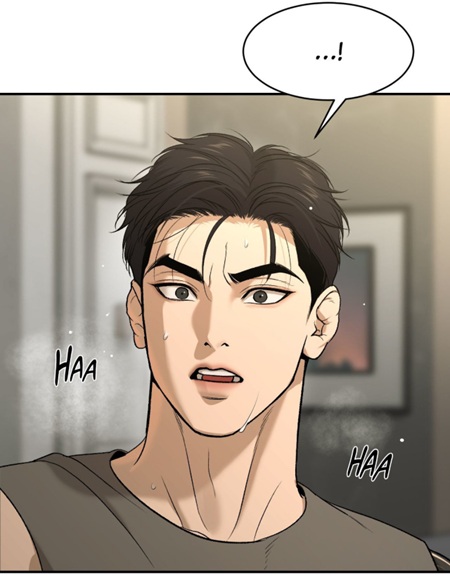
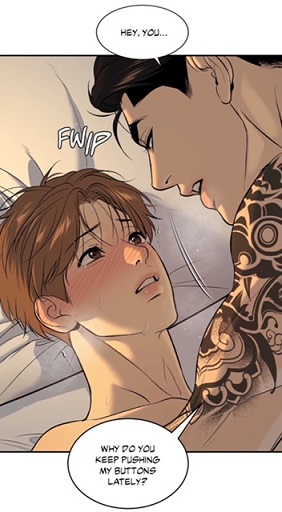
The Spark behind the Wolf’s Confession

To understand the blurred sentence — the words the firework stole — we must first shift our attention away from language entirely and back to what truly matters in this scene: vision. What drives Joo Jaekyung to the brink of confession in chapter 84 is not romance, nor timing, nor even the apology he had just managed to deliver. It is Kim Dan’s gaze. (chapter 84) He is moved by such a pure gaze, full of awe.

The panel makes this undeniable. Before speaking, the champion is watching the therapist’s face illuminated by fireworks, softened into wonder. (chapter 84) This is not the gaze of a caretaker, nor a tired worker, nor a subordinate fulfilling a duty. It is the open, trusting gaze of a child witnessing beauty. And for Joo Jaekyung, that gaze is both intoxicating and devastating.

The champion has lived his entire life without soft eyes directed at him. His mother, always drawn from behind, is eyeless — a woman who never truly saw him. (chapter 73) Besides, the head of her position is indicating that she was not looking at her son, the boy was hiding his face from Joo Jaewoong and his mother. Then his father mocked him, degraded him, and used resemblance as an insult: (chapter 73) Moreover, Hwang Byungchul reduced him to a lineage of failure or talent, not a person deserving recognition. He constantly compared him to his father (chapter 74) or his mother (a poor but good mother), he was not seen for whom he was: a child, a boy. Jinx consistently links sight with recognition, and recognition with love. (chapter 53) Jaekyung has never been granted either. (Chapter 45) Thus when he got upset with the present, he indirectly expressed the wish to be « looked at ». Moreover, in his visions or memories, this is what he keeps seeing: (chapter 54) (chapter 75) Doc Dan’s gaze!
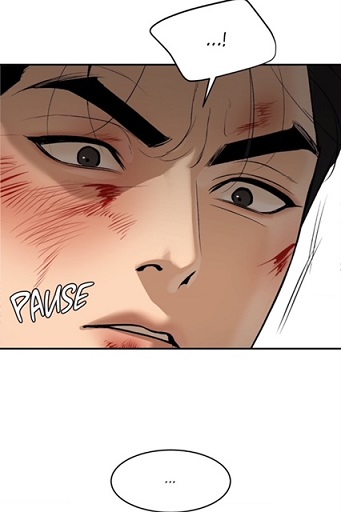
This is what makes the locker-room scene in chapter 51 so crucial. Kim Dan looks at him with shock, vulnerability, and a plea: (chapter 51) And for the first time, Jaekyung freezes. (chapter 51) His breath catches; his eyes widen. It is the moment he realizes his mistake. He never thought that doc Dan had been trusting him. That moment marks the first rupture in his emotional armor, not only because it hurt, but because it revealed. He realizes with terror that he wants to be seen by Kim Dan, but when he faced such a gaze, he could only feel guilty and bad. Thus it is not surprising that later, his nightmare let transpire his guilty conscience. (chapter 54) He is the one who made his fated partner cry. No wonder why he first tried to find a new toy, he felt uncomfortable.

In the Ferris wheel cabin of chapter 84, he encounters his fated partner’s gaze again — (chapter 84) but now it is purified, childlike, unguarded. Kim Dan glows under the fireworks, mesmerized by beauty instead of violence, by wonder instead of fear. And Jaekyung wants — desperately — for that softness to be directed at him. Not at his victories. Not at his muscles. Not at the persona he built to survive. But at the man beneath all of it. A man worthy of admiration, affection, safety. A man who could be held, kept, loved. That’s why I wondered for a while if Joo Jaekyung had not copied Arnaud Gabriel’s flirt (chapter 82), as the champion has always used his surroundings as a source of inspiration. (Chapter 29) It would also fit with 5 syllabes in Korean. And it would be cheesy too. Yet, I have my doubts about this theory which I will explain further below. Nevertheless, one thing is sure. The champion loves the doctor’s eyes and they have the power to move not only his heart but also his mouth. He is encouraged to verbalize his emotions.
This is the true trigger of the confession. Not desire in the adult sense, and certainly not a strategic “I like you” or “I love you,” but a longing to be seen — and therefore, to be wanted. Every wound in Jaekyung’s life is tied to vision: the eyeless mother who vanished, the father who asked whether she would even want to live with him if she saw what he had become, the locker-room moment that shattered his self-perception. All of this returns when he sees Kim Dan’s shining eyes reflecting the fireworks.

He wants those eyes turned toward him with love. Not gratitude. Not dependence. Not fear. Love. What he wants most
and what he fears most come from the same place: Kim Dan’s gaze. (chapter 84) The gaze under the fireworks triggers emotions in him. Thus he blurted out something. But for me, he does not know how to say “I love you.” He cannot even say “I like you.” Those sentences belong to someone who has matured emotionally — someone who can identify feelings properly, but so far he keeps saying: “to stay by his side” and his « affection declarations » were all linked to negativity.. Thus my idea was that Joo Jaekyung could have said this: “I want to hold you!” (안고 싶어 너). Let’s not forget that so far, the champion had never expressed such a longing before; a warm embrace. He would always follow his instincts: (chapter 4) (chapter 43) (chapter 69) The hug represents a metaphor for “staying by his side, for home and to be seen”. Moreover, in French embrasser can mean kiss and hug. And strangely, I noticed that the protagonists were never looking at each other during an embrace. (chapter 44) And let’s not forget that such a gesture is strongly intertwined with “childhood”. (chapter 65) It is for “babies”. No wonder why he retracted immediately.

To conclude, the words that escape him in the dark — too soft to be caught, swallowed by the firework’s explosion — become the linguistic equivalent of reaching toward warmth without daring to touch it. The sentence he forms must fit his emotional stage: childlike, inexperienced, driven by instinct rather than maturity. It must reflect longing, not possession; desire, not declaration. And it must match the blurred outline of five syllables we see in the panel. (chapter 84) 안고 싶어 너: I want to hold/hug you!

The Secret behind the Blurred Words

And now, you are wondering what other secret could be hidden behind these words. It is related to the physical therapist him. Why did Mingwa, the goddess of “narrative fate”, ensure that doc Dan couldn’t hear the athlete’s words? (chapter 84) First, recall that in the previous parallel scenes (76 and 79), doc Dan is portrayed as someone who doesn’t hear Jaekyung’s confessions. But as I argued earlier, we must question whether this is truly the case — especially the one in episode 76. The panel arrangement suggests that something was heard, but not acknowledged. Then during the fireworks, he does not say, “I couldn’t hear what you said.”
He says: “I didn’t catch that.” “Catch” implies arms, grasping, holding — the very things stolen from him as a child.

And then comes the detail that betrays everything: the small drop on his cheek. A sign of discomfort… and something deeper: recognition. The drop on his face was not present before. (chapter 84) For me, everything points to the same conclusion: doc Dan might have heard something — but he cannot yet allow himself to process it.
This denial explains his expression in the shower at the hotel: (chapter 84) Here, the doctor looks sad and wounded. His eyes are unfocused — he is not seeing the present. The water running down his eyelashes gives the impression of tears, even though he is not crying. His gaze is distant, fixed on something internal. His mouth looks tense, almost trembling. The mouth especially is a clue: Kim Dan’s emotions always gather there when something from the past resurfaces.This is the expression of someone thrown into an involuntary flashback. He is inside a memory. This explicates why this scene is similar to the champion’s shower after the latter had met Baek Junmin: (chapter 49) (chapter 49) Both scenes show a man pulled violently into a buried memory. Thus, my assumption is simple: the champion said something that pierced straight into Kim Dan’s oldest wound and brought his trauma to the surface. And this brings me to my next observation. Inside the cabin, there are not two people — there are three: the champion, the therapist, and the Teddy Bear. (chapter 84) Furthermore, we have a window. We have a phone (dead, but present). We have a childlike toy — symbol of stolen innocence. (chapter 84) And now, look again at episode 19: (chapter 19) A window with no view. Three figures: halmoni, the boy, and the phone placed between them like a knife. And the sound structure is identical, but reversed:
silence – sound – silence in episode 19
vs
sound – silence – sound in episode 84, as the Teddy Bear is a silent “witness”. In both scenes, something is stolen.
In both scenes, a child loses something he cannot name. Thus, what Jaekyung said must have resembled the emotional tone — if not the wording — of the words spoken over the phone on that catastrophic day.

This explains why Kim Dan ends the scene wearing black instead of white. (chapter 84) It is not a fashion choice. It marks the moment when innocence collapses and the past reopens.
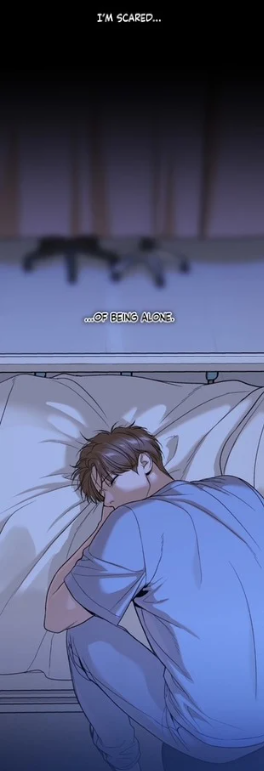
And now compare the cabin (chapter 84) with the memory that precedes the parents’ disappearance. You will notice the huge difference: the overwhelming silence inside the house. The halmoni sits beside the phone. She must have heard everything. She must have heard the child as well, if the latter spoke She holds him tightly by the shoulder — as if trying to support him. (Chapter 19) To conclude, she knew something was happening. This recollection represents a repressed memory, and so far doc Dan has always avoided to face his biggest fear: his abandonment issues and the loss of his “parents”. (chapter 56) In other words, wearing black is more than just a change of personality or mourning. It becomes the color of mystery, the beginning of descent into truth. (chapter 84) However, observe that doc Dan is holding, even squeezing the teddy bear’s hand, a sign that he is rekindling with his lost childhood. We are getting closer to the revelation behind the photograph — the day doc Dan has never willingly shown to Joo Jaekyung.
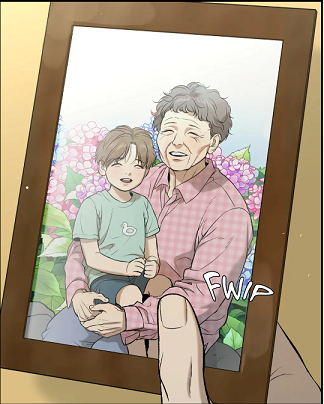
(chapter 19). Observe that in the penthouse, doc Dan has never placed the frame (chapter 79) on the night table.
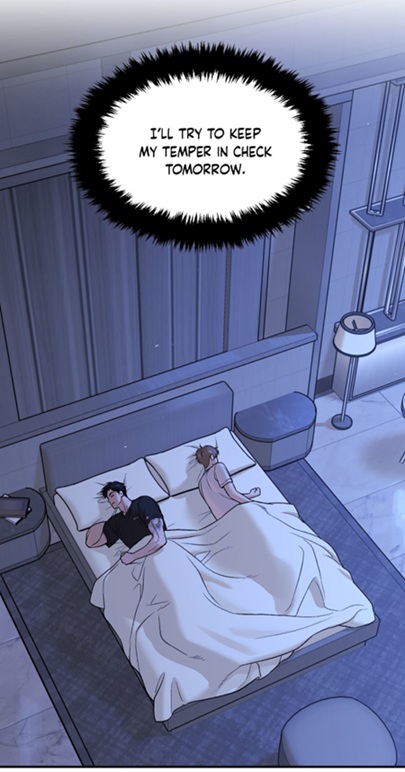
And what is the other denominator between episode 19 and the amusement park?

Theft.
Stolen childhood.
Stolen confession.
Stolen clarity. (chapter 84)

Exactly like in the cabin, (chapter 19) the words on the phone are inaudible. And now, you comprehend why I came to link the athlete’s blurred words to embrace and longing, as the grandmother’s embrace couldn’t diminish or erase the child’s pain. Finally, Jinx-philes can detect another pattern, the absence of gaze. Not only the boy can not see the person on the phone, but also the characters are turning their back to the readers which reinforces the mystery surrounding the conversation and the reactions of the listeners.

Now, connect it with the lost teddy bear (chapter 21) and (chapter 47). Dan once had toys — proof that once, someone loved him enough to give him gifts which contrasts to the wolf’s childhood. (chapter 84) Every time innocence is ripped away, a teddy bear disappears from the story.

So what if Jaekyung’s whispered sentence — a gift of raw affection — triggered the memory of another gift? What if the words under the fireworks echoed the tone of something said just before Dan’s world collapsed?

If this is the case, then doc Dan did not miss the confession entirely. (chapter 84) He remembered something far more painful. It is important, because by remembering his past, he can regain his own identity and get stronger mentally and emotionally. The scene in the cabin represents the positive version of the locker room, which signifies the return of “trust”. That’s why I am more than ever convinced that something at the weight-in (chapter 82) will happen linked to the protagonists’ past (recent and childhood). Let’s not forget that doc Dan still has no idea what Joo Jaekyung went through after his departure: the slap, the drinking, the headache and the indifference of Team Black, just like the athlete has no idea about the blacklisting and bullying in the physical therapist’s past. (chapter 84) So by wearing black, doc Dan indicates that he is gradually becoming responsible for Team Blackand Joo Jaekyung the athlete. (chapter 84) They should realize that their life is not so different from each other, in fact they share the same pain and trauma.

Feel free to comment. If you have any suggestion for topics or Manhwa, feel free to ask. If you enjoyed reading it, retweet it or push the button like. My Reddit-Instagram-Twitter-Tumblr account is: @bebebisous33. Thanks for reading and for the support, particularly, I would like to thank all the new followers and people recommending my blog.

Jinx: Breathless in the Light 🫀(Part 1)

The Wrong Forecast

Many readers were happy to discover that Joo Jaekyung and Kim Dan are about to spend a day at an amusement park. (chapter 82) Jinx-Lovers consider it as their first real date, a long-awaited moment of levity after so much pain. But perhaps we should pause and ask: why this place?

Among the brochures (chapter 82) scattered on the table, one displays the Eiffel Tower — the obvious choice, symbol of mastery and control. Built for the Exposition Universelle of 1889, it was meant to celebrate France’s industrial power and the centenary of the Revolution — proof that bourgeoisie and steel, not kings and nobility, now ruled the sky and ground. It was even supposed to be dismantled after twenty years, yet it remained, and has since become the symbol of Paris and of France. A monument to progress, modernity, freedom, national pride and endurance.
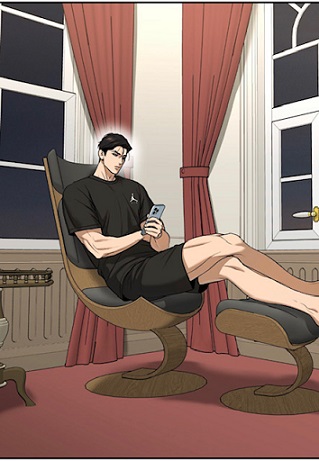
But the man who picked up these brochures was never a tourist. In the past, Joo Jaekyung would not have chosen any destination at all. He would have stayed inside or trained, untouched by the world outside his window or the gym. (chapter 38) Hence in the States he is here turning his back to the window and his only connection to others was through the cellphone. The cities he visited were backdrops, not experiences. He was always alone. And yet, here, something changes in Paris. (chapter 82) His hotel room opens onto a broad window and a balcony — an invitation to look out. Secondly, observe that he only proposed this activity after the other members had fallen sick. When doc Dan barged in his room, the champion was doing a one-handed handstand, holding his entire weight as if defying gravity itself (chapter 82) and proving his recovery. The posture seemed like control, yet it was closer to self-punishment — an immobility that devoured strength. Blood rushed to his heart and head, but his lungs stayed empty. It was, unconsciously, his way of treating his breathlessness. This also shows that he had no real expectation about the “rest” his manager had suggested (chapter 82) — the drinking, the empty and aimless trip (“check out the area”). For the wolf, such a downtime could only mean endurance, not release and excitement. By the way, such a suggestion from Park Namwook borders on stupidity and blindness. How could he propose drinking, when he had seen his “boy” indulged in alcohol before? (chapter 54) I guess, he must have taken the celebrity’s words at face-value. But let’s return our attention to the panel with the brochures selected by the champion. If you look carefully, you will detect the presence of 4 stars. (chapter 82) They reveal the protagonist’s thoughts and emotions. He is happy!! The news brought by doc Dan was actually good news! 😂 (chapter 82) How do I come to this interpretation? We have seen these stars before, during Kim Dan’s Summer Night’s Dream: the same glittering symbols of softness and excitement.
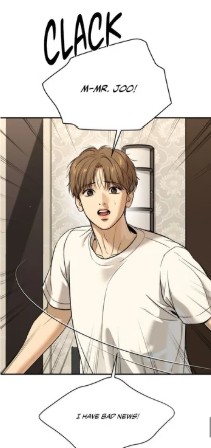
(chapter 44) Yet, this time, the little “stars” belong to the celebrity.
For once, the fighter blushes, smiles, and dreams. (chapter 82) His choice of the amusement park is not really about himself and his desires— it is an act of care, a wish to give happiness to someone else.

And here, I feel the need to add this information. The most famous theme park next to the capital is Eurodisney which is strongly intertwined with fairy tales (The Little Mermaid , Sleeping Beauty and Beauty and the Beast ).Hence there is the castle on the brochure. (chapter 82) This shows that my connection between the fairy tales and Jinx was correct. Eurodisney is a place built for children, stories, and families, where a person’s worth is measured not by conquest but by joy and time shared together. On the other hand, such a funfair cannot be separated from money; it is a space of paid joy, accessible only to families with a certain income. This alone explains why neither Kim Dan nor Joo Jaekyung has ever visited it before. (chapter 82) For both, it was financially and emotionally out of question. It grounds the symbolism of the amusement park in social reality, reminding readers that “fun” is also a form of privilege. This means that the champion is actually on his way to replace this picture: (chapter 65) So yes, this may look like a simple date. Yet beneath its playful surface lies the quietest revolution of all: the man who once ignored every view now opens the window, looks outward, and chooses wonder and fun over war.

When I first speculated about France, I imagined Cannes — the realm of spectacle, trophies, and bright façades. I was wrong about the destination (chapter 81), but not about the geography and air. I had truly detected the importance of this image and its symbolism. The plane that opened this arc spoke not of luxury, but of altitude — of a life lived too high, where oxygen is rationed by pride. Below the aircraft stretch the Alps, which I had correctly identified. From there flows the athlete’s own water – Evian (chapter 82) (written Evien in the manhwa) — drawn from the mountain that sustains him and starves him at once.
And now, let me you ask this: what happens to a candle’s flame at high altitude? It flickers, gasps, and finally dies for lack of air. This is exactly what Mingwa foreshadowed in the promotional poster (chapter 81): the rising smoke, the suggestion of a light already suffocated. The higher they bring him, the closer he moves to extinction. Besides, the higher he climbs, the harder the fall. In other words, they are trying to break him — to make him fall — something the athlete has already sensed. (chapter 82)

It is no coincidence that his opponent in France is an eagle (chapter 82) — a creature of heights and thin air, born to dominate the skies where others can barely breathe. The metaphor could not be clearer: altitude is his arena, but also his undoing.

Now they are in Paris, and it is fall — not yet cold because of the presence of the sun. (chapter 81) The air remains clear and generous, the sky washed in blue as if nothing could go wrong. Yet the trees, touched by the first copper tones, announce the slow turn of the year. It is a calm, lucid atmosphere, the kind of weather that hides transition inside serenity. The unseen Seine glides through the city like a long breath, steady and effortless.

In this luminous stillness, the champion tries, for the first time (chapter 82), to build joy outside the ring (chapter 82) — to borrow light for someone else’s smile. Paris welcomes him not with spectacle, but with ordinary clarity: air that holds both change and peace.

So yes, this may look like a simple date. Yet beneath the gentle brightness lies something deeper: the rest is supposed to treat Joo Jaekyung’s breathlessness. (chapter 82) Everyone has noticed that the athlete has been burning out quickly during training. (chapter 82)
So why is he struggling so much with breathing? It is more than just an altitude question.

Airport – Exhaling for the First Time

Like mentioned in the previous essay, the airport symbolizes transition, a sign that both protagonists are gradually changing, but their metamorphosis is not complete. Interesting is that Mingwa focused on the champion’s reaction at the airport which only Jinx-lovers could notice. (chapter 81) A single breath — huu — escapes, white against the air. It looks like calm, but it isn’t. It’s the sound of a man forcing his body to obey. The clenched fist that follows betrays him: anxiety condensed into muscle. (chapter 81) The champion has descended, yet the altitude still lives inside him.
Every cell of his body is trained to equate success with survival, control with oxygen. Even here, standing on solid ground, he breathes as if a fight were about to begin. His chest expands too sharply; his breath leaves in bursts. The nervous exhale isn’t relief — it’s containment. To conclude, he is tense, because he is anxious. This time, his shoulder is not betraying him (chapter 14), but his lungs and heart. Yet at the airport, the sportsman doesn’t realize it (chapter 81) — he is drawn eyeless, suspended in a state of self-control rather than awareness. His brief moment of meditation is still ruled by habit: the reflex of an athlete who measures calm through dominance. For him, success has always been synonymous with survival and such life. Hence later in his bedroom, he recalls his first tournament and defeat and makes the following resolution: (chapter 82) But there exists another reason why the athlete’s heart and lungs are betraying him.

The truth behind Joo Jaekyung’s breathlessness

Let me ask you this. When did we hear and see the champion’s breathlessness in the past? (chapter 69) Back then, he feared for doc Dan’s life and ran as if his own heart depended on it. His breathlessness wasn’t exhaustion but panic: the instinctive terror of losing the person who keeps him alive. Thus when he saw him alive on the dock, he could start breathing properly: (chapter 69) From HUFF to HAA… exhale versus inhale.

Seen under this light, his current symptoms are no mystery. What burns him out in training isn’t merely overwork—it’s fear disguised as stamina. (chapter 82) His brain and heart remember that night at the dock; every harsh inhale during practice echoes that same dread of separation.

Before his collapse, the opponent Arnaud Gabriel had casually flirted with his “fated partner.” (chapter 82) And how did the champion respond to that provocation? Like a cornered animal. (chapter 82) He became the wolf again, not out of jealousy, but out of survival reflex—his body screaming its panic in place of words. In that instant, he was reminded that he could lose doc Dan as a partner, that the bond he relies on might not belong to him forever.. The roar emptied his chest; his lungs gave out before his pride did. There was no air left in his body… thus the heart and lung couldn’t work properly.

That’s why the “burnout” (chapter 82) after training feels different this time. It’s not a failure of strength but a signal from the body, revealing what he refuses to confess: his greatest fear is no longer defeat—it’s loss. And that’s what makes him so human. For the first time, the indestructible champion stands on the same ground as Oh Daehyun—both breathless, both weary, both trapped between expectation and emotion. The difference is that Jaekyung’s fatigue is not born of rivalry but of love. In other words, this scene announces the vanishing of the monster the manager had tried to create and preserve. (chapter 75) The fearsome beast who once fought for dominance is gone. What remains is a tamed wolf, following his master’s voice (doc Dan) — not out of submission, but because he finally trusts where it leads. (chapter 82) He is now a tamed wolf following his master’s suggestions! (chapter 82) Thus the coach is now facing the couple. And now, my avid readers can understand why the champion seems almost radiant when he finds himself alone with doc Dan at the amusement park. It is not mere joy or freedom; it is the relief of finally acting from desire instead of duty (chapter 82) For once, he can do what he truly wants — to make the man beside him breathe.
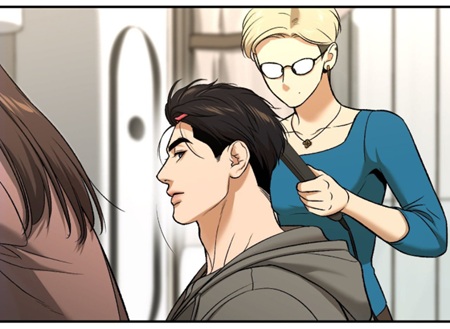
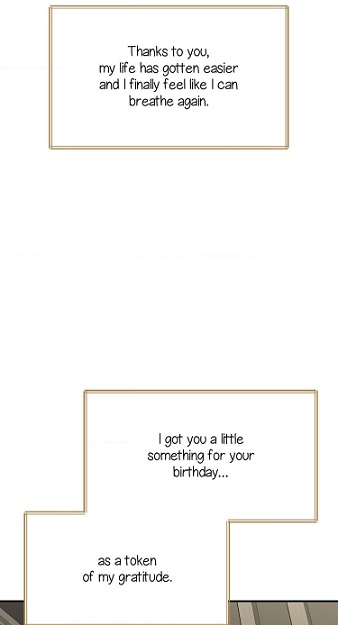
The motivation behind this “date” goes beyond playfulness. It is his way of returning the gift he once received. Remember the birthday card (chapter 55): (chapter 55)

“Thanks to you, I finally feel like I can breathe again.” That card became the emblem of hope — a promise of redemption. Joo Jaekyung had been able to bring the physical therapist comfort and support in the past, so he can do it again. If he can help doc Dan breathe freely, without fear or debt, then perhaps he himself can breathe without fear as well. In other words, we should expect a confession in the future episodes.

“I Won’t Fall Again” — Gravity, Shame, and the Vow

Falling is actually the champion’s biggest fear. (chapter 82) That’s why Mingwa confronted him with reality, when she stages doc Dan’s unconscious suicidal attempt in front of the railing: (chapter 79) The scene functions as both mirror and revelation: it forces the fighter to face the truth he has avoided all his life. In the past, he had never truly fallen. His defeats were painful, but never fatal; his failures never signified the end of a life. He could always stand up again — until now. Watching Kim Dan lean over the edge forces him to confront the difference between metaphor and mortality.

But this rises the following question. Why does he associate his first tournament (chapter 82) with fall (chapter 82)? After all, that match ended only in a knockout, not in death. The answer lies at home. The boy’s first image of defeat was not his own body in the ring, but his father’s corpse on the floor (chapter 73) – surrounded by bottles and syringes (chapter 73). Addiction, gambling, and intoxication: all ways of trying to rise above reality, to feel high, if only for a moment. Joo Jaewoong quite literally died from altitude, from chasing a false form of air. His father had tried to climb the social ladder through sport, to escape the poverty that trapped them, but he had failed. Those words (chapter 73), thrown like stones by the father at his son, buried themselves in the boy like shards.. They echoed like a curse — a prophecy Joo Jaekyung would spend his whole life disproving.

The young Jaekyung saw and understood. When he collapsed during his first tournament, finishing third because there were no other opponents (chapter 82), he has the same posture of that corpse — arms spread, breath gone, waiting for someone to call him back to life. Back then, his father was still alive, but didn’t care for him. However, such a position announced the future demise of Joo Jaewoong. He had fallen out of excess; he fell out of weakness. Both were conquered by gravity, one literally, the other symbolically.

But the mother’s departure turned that fall into reality. She left the house claiming that the father’s violence and failure were to blame (chapter 72) (chapter 72), yet she made no attempt to build an independent life. Her survival had always depended on his success — and when his career crumbled, she vanished with it. That’s the reason why the trash remained uncollected — a visual proof of abandonment (chapter 72) But the little boy failed to notice it, because he was suffering from the father’s abuse. Before leaving, she gave her son a phone number, as if absence were only temporary, as if love could be reached through a dial tone. That small gesture sustained an illusion: that she would come back if he became strong enough, rich enough, worthy enough. That illusion became the foundation of his life.
Thus he trained obsessively, demanding to compete even as an elementary student (chapter 72) His first fight was not about trophies — it was an act of filial negotiation: a promise to buy her return. But of course, 300 dollars could not rebuild a family. His first fall became the confirmation of her silence. This explicates why he recalls his first tournament and considers it as “fall”. He had not been able to win, thus the mother could not return. He doesn’t fight for glory or passion; he fights to avoid being discarded again. So, when he says “I won’t fall again,” what he really means is “I won’t let myself be unloved again.”

In other words, he wanted to climb in order to rebuild the missing bridge to his mother. (chapter 72) But the problem is that when he was finally able to reach his mother, the latter answered that Joo Jaekyung was too late. The mother’s words sealed the curse. He was “already grown up now” (chapter 74), hence he no longer needed her — as if maturity meant he no longer needed love. She actually implied that she had been all this time by his side. (chapter 74), while in reality, she had long abandoned him. Her departure turned growth into punishment, and independence into exile. This explicates why as an adult, he used money to buy people and turn them into toys. This could only make appear as a spoiled brat.
He built his entire life around that promise, standing against gravity like an inverted pillar. The body that once touched the ground became a monument to refusal. He had to reach the sky, to remain in the air. Thus he chose the penthouse as his new home.

But defying gravity comes at a cost. He trained to stay upright until breathing became difficult due to the thin air. Breathing itself became rebellion. Every gasp of air reminded him of the father’s last exhale. Every victory was a way of proving that he could resist both descent and inheritance. Yet the same vow that kept him standing also froze him in place: a man always in motion, never resting.

When Kim Dan almost fell from the railing (chapter 79), the scene echoed this primal fear. The champion’s hand reaching out was more than reflex — it was salvation in reverse. By catching the doctor, he was symbolically catching his father, his mother, and the child he once was. In that single gesture, he refused to let history repeat itself.

The sentence “I won’t fall again” is no longer just a boy’s defense; it is a man’s confession. It reveals the weight he carries: the fear of becoming the very body he once found on the floor, the terror of losing the one person who gave him air. Through doc Dan, Joo Jaekyung learns that grounding himself is not failure but healing: he must get closer to the ground to draw air back into his lungs.

And now, we can understand why he chose the amusement park over the Eiffel Tower. The fighter who once chased altitude now seeks balance at earth level. His goal is not to impress through grandeur or wealth, but to care, to laugh, to rebuild joy together.

By choosing play over pride, he is attempting to rewrite his history — to erase the legacy of his parents’ abandonment and failure. What once was a vow against falling now becomes a lesson in how to stand, breathe, and love on common ground. Hence he looked for attractions and found these brochures. He didn’t want to leave it to fate contrary to his hyung.

Breathlessness and Youth

Before focusing on the funfair, I would like to give another explanation for his sudden breathlessness. (chapter 82) In chapter 82, both Yosep and the manager interpret the champion’s shortness of breath in purely technical terms. Yosep assumes it comes from his long absence from the ring, while Park Namwook agrees — eager to reduce fatigue to mere physiology. Their reasoning sounds plausible, yet it misses the core truth.

Joo Jaekyung’s breathlessness was never an issue before. (chapter 79) Even Park Namwook himself, only days earlier, had described the French match as (chapter 81) “a breeze” — a fight so effortless that it would bring some fresh air into the champion’s career. But that metaphor betrays its irony: what was supposed to refresh him is now suffocating him. The “breeze” promised by his manager has turned into lack of air.

If his lungs are giving out, it is not from lack of training, but from an excess of negative feelings. This is the paradox of his transformation. The man who once lived like stone — unyielding, heavy, immovable — is now becoming light, emotional, alive. His body, once used only for control, now responds to affection, anxiety, and loss. He is breathless because he has begun to feel again.

Interesting is that (chapter 79), the break is perceived differently, depending on the situation. (chapter 82) In one scene, the break is seen as a good opportunity, in the other not(“out of the game”). Besides, at no moment, they are using the word “recovery”, as if the man had never been surged.

What neither man notices is that the athlete’s body had already changed during that so-called “break.”
In truth, he had caught a cold (chapter 70) — a detail no one around him ever learned. This simple fact overturns their interpretation. (chapter 70) The breathlessness they see now is not a decline in performance, but the residue of transformation. His body, once trained to suppress every weakness, had finally surrendered to nature.
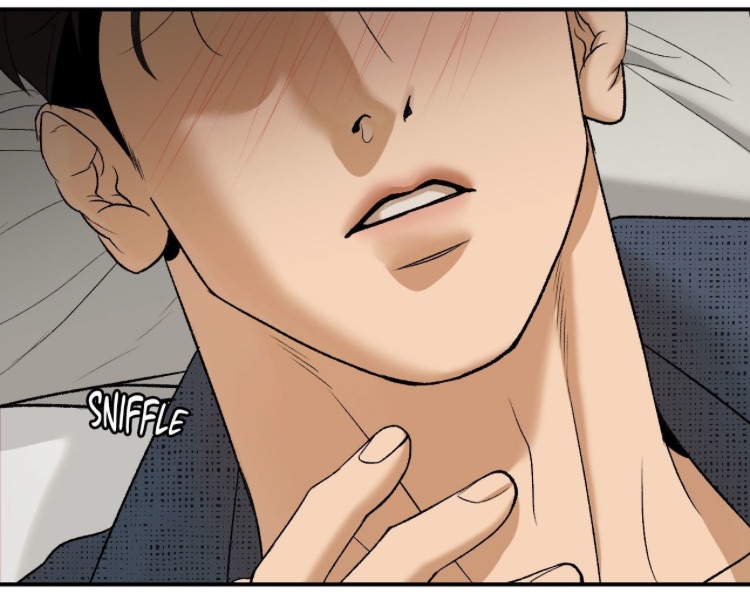
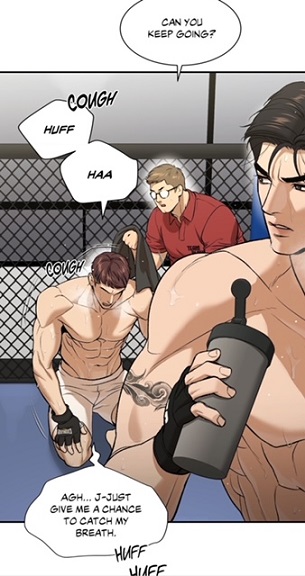
The cold, therefore, was not an illness but a rebirth — the first genuine sign of rejuvenation.
The first sneeze burst out like a leftover gasp from the night of panic at the dock (chapter 69): an involuntary release of fear and tension. Flooded with air and emotion, his body responded the only way it knew how — by collapsing into vulnerability. It was the moment when the emperor turned into a man, when the monument learned to breathe.

This was not simple fatigue; it was renewal.
For the first time in years, his system behaved like that of a human being, not a machine. The flushed cheeks, the runny nose, the dazed look — all marked a regression to childhood, an age when feelings could still flow freely. Before, he had never been breathless, because he was living like a zombie or a machine ignoring pain. Breathlessness had once been a symptom of repression; the cold became the body’s quiet revenge, proof that he could still react, still feel.

In this sense, the cold acts as metaphorical cleansing — an expulsion of the stale air he had been holding since childhood. The “monster” that Park Namwook wished to preserve (chapter 75) was finally dissolving. What replaced it was something fragile yet alive. But Yosep and Park Namwook, more obsessed with performance and profit, mistook this renewal for decline.

This connection between breathlessness and youth extends beyond Joo Jaekyung. We’ve seen another fighter gasping for air — Seonho (chapter 46), whose clash with the champion exposes two different forms of frustration.
It begins with Jaekyung’s own accusation. (chapter 46) He reproaches Seonho for using his title and image to promote himself, for bragging about their sparring sessions to boost his career. From his perspective, Seonho lacks both endurance and authenticity — he performs strength rather than living it. (chapter 46) For Jaekyung, such behavior is intolerable because it cheapens everything he has sacrificed to achieve.
But Seonho’s retaliation strikes closer to the heart. (chapter 46) He turns on Jaekyung and accuses him of arrogance — of using his champion title to look down on others. What Seonho perceives as disdain is, in truth, the athlete’s defense mechanism. The star’s detachment is not born from pride but from obligation and trauma (abandonment issues).
For years, he has been forced to be perfect — the faultless product that Yosep and Park Namwook can market and control. (chapter 46) His perfection is not freedom; it is captivity.

The irony is cruel: Seonho envies what Jaekyung himself resents deep down. He is not happy.
One gasps because he cannot reach the summit; the other because he can never descend and have a family. Both are breathless — trapped at different altitudes of the same illusion. In this light, breathlessness becomes the shared symptom of youth distorted by ambition. For Seonho, it signals decline — the body’s inability to keep up with the illusion of eternal strength.
For Jaekyung, it marks the end of the illusion itself — the beginning of human fatigue, emotion, and rebirth.

Under this light, it became comprehensible why Seonho (chapter 52) tried to recruit Potato, the youngest member from Team Black. He wanted to become the new idol of Hwang Yoon-Gu. He imagined that he could replace the main lead and Potato would be happy to become the new sparring partner of Seonho.

And this prepares the ground for his encounter with Arnaud Gabriel, the “eagle” who embodies yet another version of false air (chapter 82) — a beauty that glides but never lands. Like Seonho, Gabriel thrives on appearance — on surfaces polished by attention. His beauty, elegance, and social charisma are his weapons. He lives in the air of visibility, relying on wind — the shifting currents of social media (chapter 81) (chapter 82) and press coverage — to lift his name higher. That’s why Mingwa made sure to show him at the press conference. (chapter 82) Every post, every camera flash, every headline serves as borrowed oxygen.
We see him carefully maintaining this illusion of effortless flight: (chapter 82) posing in his new suit for the press conference, his public image as flawless as his wings.

(chapter 82) Yet beneath that composure lies dependency. Gabriel’s power exists only as long as others keep watching, as long as the wind keeps blowing. His world is made of altitude — but the higher one flies, the thinner the air becomes. But if there is no wind or air, the eagle can no longer fly. This is palpable on two occasions, his encounter with the two male leads.

When he flirts with doc Dan (chapter 82), Gabriel still speaks in French — creating an act of exclusion. The physical therapist can’t understand a word, but the eagle doesn’t care; comprehension isn’t the goal, impression is. The wink replaces language, turning seduction into spectacle. It’s not meant for dialogue but for display — a gesture meant to be seen, not felt. He imagines that he has wooed the physical therapist.

He doesn’t wait for a reply; he simply turns away, leaving Doc Dan behind. (chapter 82) The grin that follows is one of self-satisfaction and superficiality, not connection. It’s the smile of a man admiring his own reflection in another’s confusion — proof that he controls both the scene and the gaze. This shows that he had no intention to make the protagonist jealous. And it is clear that he never saw the wolf’s rage afterwards. (chapter 82)

But why did he approach the Emperor, after he had left the spotlight? One might say that it was to get his attention and provoke a reaction. The same arrogance colors his handshake with Joo Jaekyung. Gabriel greets him with a polished smile and an extended hand, yet his words carry a double edge: (chapter 82)

  • “I know this is your return match, but I won’t go easy on you.” Behind the polite phrasing hides mockery and calculation. The smile is diplomatic; the tone, predatory. By choosing to speak in French, through an interpreter, he asserts distance and superiority. It is not a language barrier — it is a form of hierarchy.
  • “Good luck with your training,” he pretends to wish him well while quietly diminishing its target. The implication is clear: you’ll need it. The eagle knows about the champion’s surgery and exploits that knowledge beneath a façade of charm. Every word he utters, whether to Jaekyung or Dan, is a performance — a test of power disguised as civility.

Everything is pointing out that Gabriel knows more than he admits. His remark reveals that he is fully aware of the champion’s surgery and the rumors surrounding it. He could even know about the drinking and his “lack of stamina”. (chapter 82) The line echoes in irony. On the surface, it invokes sportsmanship; beneath it, it suggests that Jaekyung’s previous victories were not clean — that his reign was tainted by aggression or controversy. Yet the true paradox lies elsewhere: Gabriel himself knows that this match is anything but clean. He is exploiting Jaekyung’s weakened condition, confident that he will prevail against a half-healed opponent. That’s why the athlete was encouraged to appear in a suit. (chapter 82) That way, his “vulnerability” would be masked. No one would question the champion’s health. And this brings me to my next observation.
This duplicity mirrors the logic of Hwang Byungchul, the old coach who once criticized Jaekyung for fighting too soon after his shoulder surgery (chapter 70). Both men embody the same cruelty disguised as professionalism — one in the ring, the other from the shadows. They blame the champion for the new match, none of them question the system.

Gabriel’s arrogance, therefore, is not personal but systemic. He represents the world that raised Jaekyung: a world where weakness is mocked, empathy is absent or a lip-service, and “clean fights” exist only as public performances. That’s why he stands for fun. He has never truly challenged “dangerous opponents”. The eagle’s flight is powered by the same wind that once blew through the director’s gym — the cold air of superiority. This means that unlike Joo Jaekyung, the eagle has never faced real turbulence.
Gabriel has lived in an atmosphere of praise, never subjected to the kind of hostility that constantly surrounded the champion. He has not endured the venom of hateful comments (chapter 36) or the media’s harsh verdicts after defeat (chapter 54), when analysts accused Jaekyung of recklessness for returning to the ring too soon, though he had problems with his shoulder. Gabriel’s fame soars above such storms — sustained by admiration, not endurance. Hence he is posting selfies.

(chapter 82) However,, Joo Jaekyung is no longer attached to his cellphone and the virtual world. What he truly wants now is real and true love from doc Dan. (chapter 82) This explains why he is seen interacting more and more directly with fans and this outside! (chapter 82) He is now seen signing autographs (chapter 82), whereas in the past, he was only seen in company of reporters in a secluded area. (chapter 40)
But this match carries a hidden danger. It was secretly arranged by the CEO, a fact still unknown to the public. Should Jaekyung win, the backlash could fall not on the loser, but on the victor. Critics could accuse the champion of avoiding a real challenge — of selecting an easy, lower-ranked opponent (chapter 81) rather than facing the fighters in first or second place. (chapter 69) The victory would be branded as hollow, a publicity stunt rather than an athletic achievement.

Yet this very accusation could threaten Gabriel as well. By calling him weak, the same commentators who once worshipped his image would strip him of his core identity: that of an athlete. (chapter 81) He wants to be admired as the hottest male figure in the sport, but admiration without credibility is only ornament. If his skill is questioned, his entire persona collapses.

Thus, both men stand on fragile ground — one condemned for winning, the other diminished by losing. Gabriel’s elegance and Jaekyung’s strength mirror each other’s curse: both are trapped in a world where value exists only in the eyes of others, and where even victory can feel like a fall. However, this can change, if this fight becomes a true spectacle, and is born out of love! But the air that sustains Gabriel is not the same that now fills Jaekyung’s lungs.
The eagle rises through applause; the wolf begins to rise through love. Liebe verleiht Flügel (German) — love gives wings — but these wings do not lift him away from the world. They carry him closer to it, toward the ground, toward life and fun.

The Amusement Park and its Ferris Wheel — Circles of Breath and Light

If the Eiffel Tower was built to celebrate height and conquest, the Ferris wheel, (chapter 82) first unveiled at the World’s Columbian Exposition in 1893, was created to transform height into play. Conceived by engineer George Washington Ferris as America’s answer to the Parisian tower, it sought to outshine France not through steel alone, but through motion — a structure that would rise and fall, carrying ordinary people with it. Unlike the fixed tower, the wheel invited participation: passengers would move together, share the air, rise and descend without fear. It was both monument and moment — a way to democratize the sky.
That is the kind of altitude Joo Jaekyung chooses.
After years of living at the top — in the isolating stillness of the champion’s penthouse, the rooftop — he now turns to a form of shared elevation. The Ferris wheel becomes his antidote to the rigid hierarchy that once defined his life. Here, there are no rankings, no first or second place, only circular motion. One rises while another descends, but both will meet again. It is the geometry of equality — and the perfect metaphor for breathing. This means that, by choosing the Ferris wheel, Joo Jaekyung and Kim Dan experience a gentle form of falling — one that no longer hurts.

Each rotation of the wheel is an inhale and exhale; ascent and descent, effort and release.
Inside the small cabin, air is shared. Love and life become visible through motion rather than achievement. The attraction’s design embodies the very thing Jaekyung and Dan have been learning all along: balance.

For the doctor, whose childhood was shaped by financial limits and emotional debt, the wheel offers what he never had — the chance to look at people from above, to rise without cost or guilt. For the champion, it restores what he lost — the ability to enjoy altitude without suffocating, to associate height not with fear, fame, or trauma, but with wonder. In that cabin, surrounded by laughter and sky, they can both breathe again.

But the symbolism extends further.
The Ferris wheel stands in sharp contrast to the highway, the modern symbol of depression and disconnection. As psychologists have noted, this kind of highway thinking characterizes the depressed and overdriven mind. It is the mental state of someone who keeps moving forward in a single direction — not out of purpose, but out of inertia. The brain becomes trapped in one lane, incapable of detouring, exploring, or slowing down. Over time, this creates a kind of perceptual tunnel: a world reduced to one goal, one fear, one story.

I watched this documentary, but it is in French https://www.youtube.com/watch?v=v5YcH5X5Xgo

In depression, this narrowing becomes pathological. The mind loses its ability to imagine alternatives, to see side roads or landscapes beyond the straight line ahead. Reality shrinks into a one-dimensional track — progress without perspective. The obsession with direction replaces the experience of life itself: one keeps accelerating or slowing down, chasing milestones, yet the inner landscape remains unchanged. This is how I came to connect these three scenes:

Chapter 33Chapter 56Chapter 69

That reflects the champion’s mind-set, his narrow-mindedness. But keep in mind that during that evening, the champion made a detour, he was disturbed by the destination/ goal:
Here the athlete has only one goal: talk to doc Dan and clean the air. He has no intention to truly rekindle with him Thus he is still stuck in a traffic jam. Here, there is a progression, because he can switch the lane. However, he is still driving in one direction, not looking out of the window. He is not taking his time either. These scenes illustrate the champion’s psychological confinement and mirror doc Dan’s mindset as well.
And now, look at the streets of Paris. (chapter 82) They look rather empty, yet we can see a crossroad — a sign that the champion’s mentality has improved. He is no longer narrow-minded or trapped in one lane. However, the high peak ahead represents the amusement park, because there, the destination is not important. There is no order or hierarchy either.

This is why healing requires not just rest but multi-perspectivity — the rediscovery of curves, loops, and crossings. The the funfair and Ferris wheel become the perfect antidote: it teaches that movement can be circular, playful, shared, and above all, reversible. Instead of racing toward a fixed destination, the wheel allows return, variation, and exchange. It reawakens the part of the brain that knows how to wonder. But the funfair offers other possibilities as well: the roller coasters. (chapter 82) The latter teach courage.They carry within them the echo of Jaekyung’s greatest fear: falling. But here, the fall is transformed into exhilaration. What once symbolized loss, shame, and trauma now becomes thrill and laughter. The mechanical descent reclaims the forbidden emotion; it gives the body permission to scream, to release control, to fall without dying.

Joo Jaekyung’s life before Kim Dan was precisely that: a mental highway.
Every victory led only to the next, every title erased the one before. The more he advanced, the less he lived. His body, disciplined into automation, had forgotten the curve of joy — the possibility of turning, pausing, returning. The Ferris wheel and the roller coasters break that pattern. The Ferris Wheel reintroduces circularity, where movement is not escape but rhythm, where the goal is not ascent but repetition with difference and observation. From there, you can look at your surroundings. (chapter 75)

This is where Mingwa’s visual irony reaches its height.
The man who once swore, (chapter 82) now voluntarily steps into a machine that promises nothing but falling — and smiles. What once represented humiliation now produces joy. This reversal is the purest expression of healing: when what once wounded becomes what restores.

Together, the Ferris wheel and the roller coasters offer two complementary forms of breath.
One teaches rhythm — the inhale and exhale of life. The other teaches release — the scream that clears the lungs. And then, it came to my mind that such a theme park could offer bumper cars — small machines of collision and laughter. Unlike the Ferris wheel or the roller coaster, they don’t offer height or speed but contact. Here, impact is stripped of danger; the crash becomes a form of play. The goal is not to avoid others but to meet them — to touch, collide, and burst out laughing. In this attraction, aggression loses its sting and turns into connection.

One shows that peace is possible in repetition; the other shows that freedom lies in motion. Laughter becomes medicine for the two breathless men, but contrary to the past, this time, doc Dan will see the happiness written on his loved one’s face. So far, he has never paid attention to his genuine smiles: (chapter 27) (chapter 80) He has not grasped that he can make the champion happy. In fact, this day would represent a real break and rest, as they would learn nothing, only make new experiences so that life can appear colorful again. Here, we can see two balloons in the form of heart: green and yellow. (chapter 82) Once they enter this world, they will discover a world full of magic and lights.

And now, imagine this. If there was a love confession in that theme park, this could bring tears of joy, the opposite of these scenes (chapter 52) a kid versus a grown-up, both rejected and silenced. (chapter 74) Joo Jaekyung would have achieved his goal: even vulnerable or childish, he is still lovable.

Both stand against the straight line of the highway — the depressive geometry of one-way thinking. The park and its attractions offer circles and loops instead, motions that bring one back to the self, not away from it. They turn fear into fun, control into connection.

If the highway is the architecture of burnout, the amusement park with its attractions is the architecture of recovery.
On the road, time accelerates; in the air, it expands.
On the highway, one is alone even among traffic; on the wheel, one is secluded but among people — the paradox of safe intimacy. Inside the cabin, the couple is both visible and hidden, surrounded by other voices yet enclosed in their own breath. It’s a fragile cocoon where public space becomes private moment, where affection can exist without fear of intrusion.

This is the healing structure of Jinx’s Paris arc. (chapter 82) The wheel is not a symbol of escape from the world but reconciliation with it. At the same time, it feels like a reverence to the fairy tales and their famous ending: (chapter 41) They were destined to be together and lived happily.
It redefines air: no longer something to conquer or control, but something to share. The circular motion mirrors the psychological rhythm that both men have been denied — the ability to rise and fall without shame, to let life move through them rather than resist it.

Even the mechanics of the wheel resonate with their journey. It turns slowly, patiently; it demands trust. Once aboard, there’s no way to force speed or direction. One must surrender — to the mechanism, to the air, to the view. It is the perfect opposite of Jaekyung’s former life, where every second was measured, every breath controlled. Now, he can do nothing but sit, look, and breathe.

And there is more. The wheel’s origin — a response to France’s Eiffel Tower — completes the symbolic circle between the two monuments. The Eiffel Tower represented competition between nations, a masculine monument to progress, mastery, and endurance. The Ferris wheel transformed that spirit into something inclusive: it turned height into experience, individual triumph into collective wonder. Hence the Ferris Wheel exists in France and in other cities. This is exactly the transformation Jaekyung undergoes. The fight is no longer vertical — him against the world — but circular, relational, shared.

Seen from a distance, the wheel glows like a moving constellation — a ring of stars rotating in the night.
In the earlier chapters, stars appeared above Jaekyung’s brochures (chapter 82) to signal his quiet happiness, mirroring the stars that once surrounded Kim Dan’s laugh (chapter 44). The Ferris wheel reanimates that motif. Each cabin is a star, and together they form a galaxy of moments — proof that light can move without burning out, that joy can repeat without fading.

In that sense, the Ferris wheel is more than a date setting. It is a machine of breath: a gentle, mechanical reminder that even steel can carry tenderness, that love — not ambition — is what truly gives flight.
Love gives wings — but not the kind that seek altitude. These wings move in circles, not lines. They return to where they began, bringing both men back to the ground lighter than before. To conclude, the birthday card contained the key how to rekindle with the physical therapist and win his heart: (chapter 55)

Feel free to comment. If you have any suggestion for topics or Manhwa, feel free to ask. If you enjoyed reading it, retweet it or push the button like. My Reddit-Instagram-Twitter-Tumblr account is: @bebebisous33. Thanks for reading and for the support, particularly, I would like to thank all the new followers and people recommending my blog.

Jinx: The Scent 🧴✨🌸Of The Jinx 🦈⚡☁️

It begins with smoke.
Not the scent of flowers or the sweetness of victory, but the cold breath of a machine crossing an unnamed sky. (chapter 81) No airport appears, no greeting, no applause — only movement, silent noise, and distance. The scene refuses arrival. It’s as if the air itself has become unwelcoming, unsure whether to receive or reject the traveler.

Below, the earth hides beneath a shroud of cloud, half revealing, half concealing its rivers and mountains. It is broad daylight, but only those inside the plane can see the sun. Its rays strike the cloud tops, scattering into pale reflections, almost unreachable from the world below. The light is real yet detached — dazzling, but emotionally cold. The illusion of motion comes not from the aircraft itself, which cuts the sky with mechanical steadiness, but from the slow drift of the countryside beneath — a glimmering landscape that seems to slide away on its own. The plane moves horizontally, neither ascending toward promise nor descending toward rest. It hovers in between — uncertain, as if trapped inside the very act of transition. The white smoke trailing behind is not visible, as if erased by the same sky that carried it — a trace that vanishes before it can mean anything.

How is this calm sky connected to the silence of a phone line from ten years ago? (chapter 74) What does it mean that a man who once reached for his mother’s voice is now suspended between clouds, unreachable himself? (chapter 74) Why does the same stillness that once followed a farewell now fill the air around his flight?

Both moments share the same structure of emptiness: movement without arrival, connection without recognition. Yet the meaning of that emptiness deepens when we remember that death itself is often framed as a journey. (chapter 65) Let’s not forget that the last poster of chapter 81 (chapter 81) echoes Joo Jaewoong’s burial in chapter 74. (chapter 74) In that earlier scene, the smoke rises from burning incense sticks which is linked to scent — the invisible bridge between the living and the dead. Here, it reappears as the airplane’s exhaust (chapter 81), the sterile modern echo of ritual fire. In both, the same element unites mourning and motion: smoke, a symbol that drifts, fades, and carries scent.
The father’s funeral and the champion’s flight belong to one continuous breath — the same air of transition. Each ascent, whether spiritual or mechanical, leaves behind a trace that cannot last. The scent of the jinx begins here: in this meeting of incense and engine, of devotion and pollution, where grief becomes a trail of vapor across the sky.

There is another layer to this scent. Mingwa chose the wolf to embody Joo Jaekyung — an animal torn between tenderness and hunger. In many cultures, the wolf carries the paradox of motherhood and ferocity: she nurses her young yet survives through the hunt. For such a creature, scent is language, memory, and map. It marks territory, reveals threat, and preserves kinship. Like a wolf, the champion used to live by following traces — the smell of victory, of fear, of money.

Now the trail has changed. For years, the wolf used rituals not to appease his hunger but to erase his senses — to make sure he would never taste, smell, or feel again, so that his hunger for warmth and belonging would vanish. Milk (chapter 75), perfume (chapter 75), sweat and sex (chapter 75) became instruments of anesthesia, each meant to silence the body that once betrayed him.That betrayal did not come from the body itself but from what it carried — his father’s shadow. (chapter 75) Every muscle, every breath, every instinct reminded him of the man he swore never to become. The body was a mirror of lineage, and lineage meant failure. In his dreams, that failure still reached for him: black hands emerging from the dark, the father who had lost everything. (chapter 75) The fighter calls it a “dream,” not a nightmare, because fighting was once his father’s dream — a dream of escape, of being seen, of proving that poverty was not fate. But for the son, that same dream turned into a curse. To fight was to repeat what had already destroyed the family.

Thus, he began to punish his own flesh for its resemblance to the dead. Every ritual — milk before a match, perfume after shower, sex before fighting — became an act of denial, a way to cut the bloodline out of himself. The body that once connected him to hunger and memory had to be silenced, sterilized, erased. Yet behind every gesture of control lay the same emptiness: a child’s thirst disguised as discipline. The milk that promised fulfillment was once the prize he had to steal (chapter 75), the forbidden comfort that ended in scolding. (chapter 72) When he finally received it, it was not from a mother but from the director — a man whose gift could fill the stomach but not the heart. From that day, nourishment and submission became one.

Each ritual since then has repeated that confusion. He learned to mistake obedience for care, power for affection, control for love. The milk before a match was not about luck; it was a way to silence the body that once trembled from hunger. The perfume on his neck, the sweat of victory, even the scent of sex — all were substitutes for what he never truly received: the warmth of being wanted and accepted. (chapter 72) And yet every attempt at purification only buried the rot more deeply. The more he washed, the more the stain spread inward — invisible, odorless, yet consuming.
The champion’s hickeys

Now the trail has changed. What he follows is no longer the fragrance of superstition, but the faint, human odor of the doctor. When Jaekyung presses his lips against Dan’s neck (chapter 81) — the same spot where he once sprayed his perfume (chapter 40) — it is more than desire: it is instinct, possession, and search. The gesture blurs the line between hunger and recognition, as if he were trying to inhale and keep what had always eluded him. The scent he once sought in bottles and rituals now breathes through another body, one that refuses to be contained. So when Jaekyung breathes against Dan’s skin, he is no longer trying to mask the stench of loss but to find the source of something living. The doctor’s scent does not erase hunger; it answers it. For the first time, the wolf eats without devouring.

Let’s not forget that during the Summer Night’s Dream, the wolf had already answered that silent call (chapter 44) — nuzzling the one destined to become his anchor. Jinx-philes can observe not only the presence of steam (which is similar to smoke), but also the effect of the scent. Back then, the champion had calmed down thanks to the hamster’s scent. (chapter 44) To conclude, that moment, half dream and half awakening, had already begun to rewrite the map of scent. There, the fragrance from doc Dan had triggered his appetite, hence he couldn’t restrain himself during that night. (chapter 45)

And because of that scent, the wolf will follow his loved one (chapter 65) He will make sure that doc Dan doesn’t smoke again and his scent remains pure. This signifies that the wolf will pursue its source through the smoke of deception, through the perfume of luxury and corruption. The doctor becomes both compass and contrast — the pure odor that exposes every false aroma around him. Through Dan’s scent he will breathe again—through that fragile, living fragrance the wolf begins to track the truth that stinks beneath luxury and lies.
The Plane and its Scent

In order to understand the meaning of this fleeting image (chapter 81) — a plane gliding through a noiseless sky — I had to return to an earlier flight. (chapter 36) When the champion left South Korea for the United States in episode 36, the plane glided through a void of light. There was no sky, no earth, no horizon — only a white expanse pierced by the sun’s glare. Even the boundaries of air and space seemed dissolved. The image radiated purity but felt sterile, stripped of texture. The machine was rising, not toward a destination but away from attachment itself.
That ascent not only announced the future victory, but also represented the Emperor’s ideal: perpetual motion without roots. He was a man of altitude, not of place. The whiteness surrounding the aircraft mirrored his own self-erasure — the body emptied through fasting (chapter 37), the heart disinfected of need. Hence the bed became an instrument of “torture”. The upward flight marked a beginning, yet it already smelled of exhaustion and futility. A life built on departure cannot land anywhere.
Episode 81 inverts everything. The plane is now seen from above, not below. (chapter 81) Clouds and land re-emerge, spreading like a map of memory. Gray veils hang overhead; far below, blue horizon and bright rivers glint in daylight. For the first time, the world has depth again. The point of view tells us two things immediately. First, this aircraft is descending: it is approaching foreign soil, France, a country framed by water and beautiful landscapes. Secondly, the inversion foretells the champion’s own descent — the fall of the myth into the realm of the human. It already implies the existence of a scheme and his anticipated “defeat”.

The earlier plane signified departure; this one signals arrival. What had been an escape from origin becomes a forced return to reality. The hero who once vanished into whiteness now re-enters color, gravity, and consequence. I therefore deduce that Joo Jaekyung’s past will resurface after arriving in France. (chapter 73) His origins—the father who once fought, gambled, and collapsed into addiction before dying of an overdose— will no longer remain hidden. The revelation will spread like a smell the public (Team Black) cannot ignore. Yet this descent is not disgrace alone; it is the beginning of embodiment. Exposure will give him weight. But what did the director say? (chapter 78) Through Hwang Byungchul’s blunt words, the Emperor finally realized that he possessed an identity of his own—one not confined by inheritance or shame. The insults that once defined him, (chapter 75) “smelly bastard,”dirty rat” have lost its power. What once clung to his name as odor now disperses into air. The fall will wash away the false scent of stigma and let the man emerge, bare but clean.

I come to the following deduction: the change of perspective is Mingwa’s quiet confession that the age of flight — of abstraction and denial — is over. The sky of episode 36 concealed both land and direction; the sky of episode 81 exposes them. (chapter 81) Beneath the clouds lie traces of the life he once ignored: the landlord who welcome him with toilet papers and invited him to dinner, the old coach who still mirrors his pain, the grandmother whose endurance defines family, and the doctor whose presence has become home itself. These human coordinates are his new geography.

The palette itself reinforces this shift. In America, everything dissolved into white, a color of anesthesia. Over France, tones mingle: gray above, blue below, gold reflected from the rivers. The air is alive, restless, and uncertain. Clouds thicken like unspoken doubts, yet the blue horizon opens a path. It dawned on me that Mingwa is painting the boundary between dream and danger. The gray warns of turbulence; the blue promises arrival. Between them hovers the aircraft, between illusion and embodiment — just like its passenger. The coexistence of colors and contrasts (light, cloud, turbulence) displays life! Life without pain, fear, struggles, is no life, but an illusion. At the same time, it implies the return of the protagonists’ agency. Their decisions will determine the outcome of this imminent match.

Time, too, changes nature. Both flights are bound to temporal formulas, but their logic diverges — and both are told through the doctor’s eyes. In episode 36, the line (chapter 36) emerges not from the champion’s mind but from Dan’s weary observation. It carries the cadence of someone watching life slip by from the margins, a spectator of discipline rather than its agent. The phrase, neutral on the surface, reveals quiet lethargy: days blending into one another, the monotony of service and the absence of urgency. This indicates the hamster’s distance and a certain emotional indifference toward his VIP patient. No wonder that, at the hostel, he chose the impersonal word “team” (chapter 36) instead of naming Joo Jaekyung himself. He might have stood beside the MMA fighter the entire time, yet he preferred to disappear behind collective language, as if the plural could shield him from personal involvement. It was a professional gesture, an attempt to efface the self, to stand beside the fighter without belonging to him. His role was service, not solidarity; his language confirmed distance. Thus his karma was that he got abandoned by the team after the match, while rescued by the celebrity himself!!
But in episode 81, the tone has changed. (chapter 81) The doctor’s narration “Eight days until his comeback” reveals far more than a schedule. Its tone pulses with nervous anticipation. Time, once something Dan merely endured, has regained texture. Back in chapter 36, he let the “days pass” like indistinguishable shadows — one more sign of his emotional detachment. Life moved, but he did not move with it. Now, every day counts. The number eight introduces tension, a sense of waiting and measure. He is not only aware of time; he feels it. The body trembles, breath shortens, nerves tighten. For the first time, Dan senses temporality the way athletes do: as pressure, as pulse, as future approaching.

His thought at the airport (chapter 81) translates that awareness into sensation. It’s no longer the passivity of a bystander but the heartbeat of someone invested. The count of days becomes a shared horizon between doctor and fighter, a bridge of feeling. (chapter 81) When Jaekyung exhales the same “huu,” their anxiety synchronizes, transforming fear into connection. The loop of repetition (“days passed”) has turned into a countdown of empathy (“eight days left”). Time itself has begun to belong to both of them. The same “team” has become real, but contrary to the past: there are only 2 members, Kim Dan and Joo Jaekyung. At the airport he wears the Team Black jacket, a subtle but deliberate signal that he has accepted inclusion. The jacket is not uniform; it is recognition. Both form 8, which is a symbol for balance and infinity.
Interesting is that this panel (chapter 81) looked like victory (due to the position of the plane) but smelled of vacancy. However, this trip was not, for the two protagonists, a symbol of rest — quite the opposite. Neither Jaekyung nor Dan ever got the chance to visit the city; the supposed journey abroad becomes another kind of confinement. (chapter 37) The others indulge in small pleasures — snacks, shopping, light rebellion — but the champion and his doctor remain trapped in routine, orbiting one another inside sterile rooms. I am suspecting that doc Dan must have bought the scarf at the airport, a small act of thoughtfulness before departure. (chapter 41) Yet the gesture, though sincere, carries a quiet irony. The scarf is printed with flowers, mostly roses, but as a piece of fabric it has neither scent nor warmth. It imitates life without containing it. What he gives her, in truth, is a copy of affection, not its essence — a bouquet that cannot breathe.
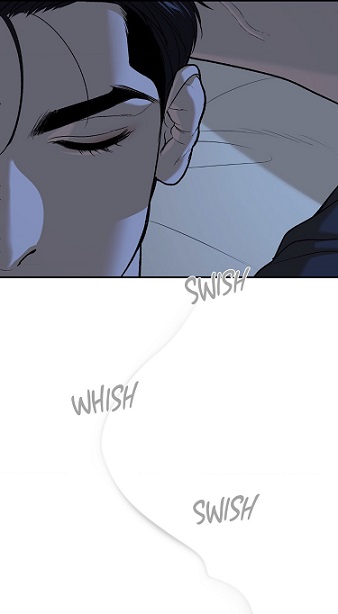
And now you may wonder how this connects to the scent of the jinx. (chapter 37) The answer lies in the contrast between the smell of life and the smell of emptiness. While others seek flavor in hot ramen or the sweetness of snacks, the champion’s room remains odorless, air-conditioned, antiseptic. Then, in the quiet of night, a faint aroma drifts toward him, the flavor of hot ramen. And now observe the progression of scents through Jinx.
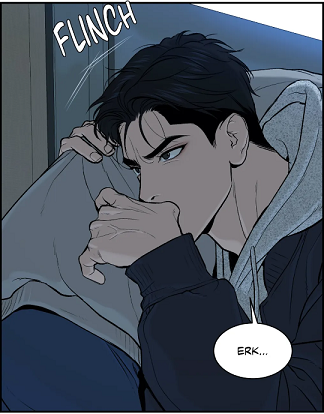
Chapter 10Chapter 22Chapter 32

It traces the slow resurrection of a man who had unconsciously silenced his own senses. In chapter 10, the wolf first enters the doctor’s home and flinches even before inhaling. The moment his eyes register the dim light, the narrow hallway, the disorder, his hand rises to his nose — a movement so quick it feels primal. Only once in the room does he mutter, “It reeks in here. The overpowering stench of poverty.” He doesn’t smell first; he remembers first through visuals. The odor exists only because his past floods the scene. The sight of a modest room resurrects the atmosphere of his own childhood flat (chapter 72) — the garbage, the spoiled food, the stale air of neglect. What he truly covers is not his nose, but his fear of returning there. Later, in episode 22, when Dan cooks for him, the champion instinctively associates food with corruption: (chapter 22) Nevertheless, Jinx-philes should realize that for the first time, we had a reference to the ocean through the dishes: fish, seaweed soup. (chapter 22) Interesting is that here fish has a negative connotation: intrusion and thoughtlessness. This shows how detached the champion was from his true self: water and the ocean. Moreover, cooking, warmth, nourishment—all evoked garbage, the chaos of his first home.
The reason lies in his earliest environment. In that cramped room buried in trash, the boy who would become the Emperor once tried to survive on milk—an industrial liquid without smell or taste, the very opposite of maternal care. (chapter 72) His father’s addiction, the filth, the absence of real home made food—all merged into a single sensory nightmare. Odor became shame. Flavor became fear. So he began to build a life that denied every sense. And now, my avid readers can grasp the role of Kim Dan during season 1. It was not just to replace the sex ritual. Unaware, he had replaced the ritual with the glass of milk with his food. So at the beginning of season 2, Joo Jaekyung got to learn that his “glass of milk” (chapter 54) couldn’t nourish him. Hence he replaced it with wine for a while.

So he built a life that denied every sense. That’s why he hates flowers. However, there’s more to it. When the doctor innocently talks about a bouquet he received in episode 31 (chapter 31), Jaekyung’s reaction (chapter 31) reveals more than irritation. For him, floral scent is associated with loss. The fragrance belongs to death. The first time he truly smelled flowers was at his father’s funeral, when incense and blossoms mingled with grief. (chapter 74) Their fragrance became the perfume of loss. To his senses, flowers never meant beauty or love or nice smell; they mean burial and as such pain. Every petal recalls the suffocating smell of the funeral room, the smoke, the artificial but painful peace of goodbye.

And that is precisely where the scent of the jinx begins to unfold. The scarf’s floral pattern recalls everything artificial in both their worlds: Jaekyung’s deodorant, the perfume of fame, the grandmother’s rehearsed kindness. Each object is meant to replace something that once had a natural smell — milk, skin, sweat, breath. The airport gift thus mirrors the champion’s life of rituals: beautiful but airless, made of gestures without fragrance.

The Location And The Fall

In season 1, Mingwa already left clues about a connection between France and South Korea. (chapter 32) The blue tie contains 3 striped colors: red, white and blue, which are quite similar to French flag, though the order has been switched. Secondly, Choi Heesung purchased (chapter 32) Hermès’ item, a French company famous its bags, scarfs and perfumes. So I am quite certain that once Jinx-philes discovered the identity of the next fighter (chapter 81) and saw the plane, they must have jumped to the conclusion that the next fight will take place in Paris! But France is more just than the capital. This country is called the Hexagon due to its form, and this name stands in opposition to the MMA ring, which is an octagon! (chapter 40) Interesting is that the team at the airport is composed of 6 people. (chapter 81) So we could say that despite the disadvantage being in a foreign country, they are “equal”, 6 colors against the team from the Hexagon, the blue light from the MMA ring. But let’s return our attention to Paris. The latter is widely recognized as the symbol of love, the global center for fashion, art, and stardom. The city has a deep historical connection to these fields, being the birthplace of haute couture and home to many of the world’s leading fashion houses and luxury conglomerates. Its cultural scene is equally rich, with a long history as a hub for artists and a more recent reputation for being a center for music and film stars. However, the image with the landing plane is actually revealing the truth. (chapter 81) There are no mountain close to Paris, the river La Seine is much smaller… Finally, the airport doesn’t look like Airport Paris – Charles de Gaulle, (chapter 81) for the hallway is much smaller and it is not crowded.
Finally, observe the vocabulary of the manager: “breeze” (chapter 81) and “splash” (chapter 81). They let transpire the presence of wind and water suggesting the presence of the sea. Thus, I deduce that they landed near the sea. And if one looks again at the image of the plane (chapter 81), the blue at the horizon seems to confirm this intuition: the aircraft is gradually descending toward the coast, not the capital. So for me, the destination is not Paris — the city of revolution and political upheaval representing popular sovereignty, as the schemers are planning a counter-revolution. They stand for conservatism and money. My theory is that this plane is arriving in the South of France, most likely Cannes, where spectacle and wealth converge. But there exists another reason for this assumption. Do you remember where the physical therapist witnessed the match between the Emperor and Randy Booker? It was in Busan, a city situated in the South of South Korea, a city closed to the ocean. (chapter 14) Here, exactly like in the States, his trip to Busan never gave him the opportunity to visit the city and the beach, exactly like the athlete. The next airport to Cannes is Nice- Côte d’Azur and it looks more like the one in the Manhwa. Furthermore, the South of France has a milder climate in the fall, hence it is still possible to swim in September. Besides, in my last essay, I had connected the champion to Bruce Lee and water: Finally, Naturally, here I could be wrong with Cannes. Nevertheless, Cannes, with its glittering shorelines and film festival glamour, symbolizes the marriage of money (millionaires, yachts) and illusion — the theater of appearances. It is where contracts are made, where bodies are displayed, traded, and consumed through the gaze, the very economy that has always governed the champion’s existence. The wolf, once born among garbage and hunger, now finds himself surrounded by luxury, in a world perfumed with artificial success. Yet beneath the surface of that “breeze” and “splash” lingers the scent of corruption. The coastal light hides what the smoke once revealed: exploitation, manipulation, and the unspoken violence of commerce.

And yet, the irony is striking. The Côte d’Azur, world-famous for its vivid palette and sensual abundance — the lavender fields, the herbs of Provence, the shimmer of olive trees, the salt air heavy with Mediterranean fragrance — stands in perfect contrast to the sterile, monochrome world the two protagonists once inhabited in the seaside town. There, the ocean had no scent (chapter 59); silence had replaced air; life was drained of flavor. None of them truly enjoyed the nature: the ocean or the mountain. The seaside town was strongly intertwined with work (chapter 77) or danger. Then, when they returned to that place, their time was limited to visit the grandmother and the landlord. (chapter 81) They had no time to walk through the woods or visit the hills. They had no time for themselves. Consequently, I believe that in The French Riviera, the two of them will discover “savoir vivre”. Everything breathes, glows, and stirs. It is a land overflowing with color, aroma, and taste — precisely the senses that the wolf had long sought to erase through ritual. Doc Dan had led a similar life too, dedicated to his grandmother and work. If they are close to the sea, they might decide to walk on the beach together.
And if my theory is correct, then the choice of Cannes would not be accidental but allegorical. While on one hand, it marks a return to the emperor’s original curse — being admired and used at the same time, it announces an imminent change: his emancipation, for the villains have planned to destroy him. The private match organized there recalls the old underground fights from the Shotgun arc, only now cloaked in legitimacy and wealth. The arena has changed, but the principle remains: rich spectators watching a man’s body perform until exhaustion, while those in charge profit from his pain. And because of his lineage, they could still look down on him. Despite his fame and fortune, the champion does not truly belong among them. To the powerful, he is entertainment — a body to be wagered upon, not an equal at the table.

Look again at this panel. First, you can detect behind the champion the reflection of water, another clue that the protagonist will shine next to the sea. Moreover, it also indicates that doc Dan’s dream is related to water. Furthermore it is not a costume he wears, but an image imagined for him (chapter 32) — the doctor’s vision of what the wolf could become. He doesn’t see the origins of the athlete, but his success: he is not only a self-made man but an artist, a star. The three-striped tie, reminiscent of American designer Thom Browne’s refined style, evokes order, discipline, and self-respect: qualities the doctor unconsciously longs to see replace the chaos of ritual and fight. In that imagined world, Jaekyung is not an object but a person, an artist, a real VIP — no longer the Emperor of violence, but a man capable of standing among other celebrities without fear or shame.

And here, I couldn’t help myself thinking of the movie The French Connection, the parallel deepens. The French Connection (1971) is a crime thriller directed by William Friedkin, inspired by real events. It follows two New York detectives, led by the obsessive Jimmy “Popeye” Doyle, as they uncover an international heroin-smuggling operation linking France and the United States. The film contrasts gritty realism with moral ambiguity, exposing how obsession and corruption blur the line between justice and criminality. That film, too, revolved around illusion and desire — the traffic between authenticity and disguise. The “connection” was both criminal and psychological, exposing how corruption travels unseen beneath surfaces of elegance. Here, the same word gains new meaning: the false connections built on money and fame will give way to a human one, forged through care, scent, and trust.

And now, the reason for setting the match in France becomes clearer. The CEO could no longer exploit the United States (chapter 69); the scandal there had linked the previous incident to the infiltration of a Korean gang. The American branch was compromised, its credibility tainted. France, on the other hand, offers a mask of neutrality — refinement, culture, and distance from scandal. By choosing it, they manufacture the illusion of glamour and innocence, pretending that Baek Junmin and his former hyungs have nothing to do with the coming event.

But the choice of France also hides a darker lineage. One only has to look back to Thailand (chapter 69), where Baek Junmin once fought for the championship belt. Thailand in Jinx is not a paradise but a mirror of corruption — the place where victory turns into prostitution, where the body becomes currency. There, the Shotgun won a crown but not respect; his triumph was drenched in manipulation, spectacle, and moral decay. He was admired by no one, celebrated by ghosts.

Thailand thus stands as the antithesis of recognition. It is the kingdom of false applause, the shadow-market of sport where the price of glory is humiliation. If France embodies elegance masking corruption, Thailand embodies corruption stripped of its mask. Both belong to the same chain of deceit — one refined, the other raw. Between them stretches the moral geography of Jinx: America (illusion of success), Thailand (the sale of the body), and now France (the stage of reckoning). Baek Junmin, out of jealousy, wants Joo Jaekyung to make a worse experience, to be exploited, humiliated,, discarded and forgotten, just as he once was. His wish is not for justice but for repetition: the recycling of pain. Despite his title in Thailand, he still feels unrecognized. He now wants the Emperor to taste the same degradation under the polished surface of France. What he endured in the raw heat of corruption, Jaekyung must suffer in the refined chill of sophistication. He needs to be reminded of his true origins.

Junmin’s resentment is not born merely from defeat but from invisibility. His triumph brought no admiration, no genuine acknowledgment. The crowd that watched him fight was faceless, bought, indifferent. Hence he is not named as “champion” at the restaurant. (chapter 69) He was crowned, yet unseen. In his bitterness, he mistakes vengeance for validation. If Jaekyung falls publicly, perhaps the Shotgun’s own shame will finally be understood. Thus, France becomes his stage of revenge — not through direct confrontation, but through orchestration. The game he once lost in Thailand, he now rewrites from the shadows.

But this repetition will not go as he imagines. The irony of the French Connection lies precisely there: the traffickers think they control the route, unaware that the real transformation is happening within the travelers themselves. The wolf, who once lived by rituals of survival, will now breathe a different air — one that carries both danger and redemption.

While the schemers imagine they are about to succeed and ruin the champion for good, I am expecting the opposite, as they form now a team. Immersed in an environment so rich in colors, fragrances, and tastes (which would be similar to Thailand), Joo Jaekyung and doc Dan may come to enjoy the very senses they both buried to survive. The air of the Riviera — fragrant, tangible, and alive — could become the breath that finally releases him from his gilded cage and fulfills, at last, the doctor’s unspoken vision.

The Airport as threshold

In episode 36 (chapter 36), the transition from flight to arrival unfolds with seamless precision: no airport, no customs, no luggage — only the honk of city traffic and the flags fluttering over a hotel entrance. Everything about that journey screams logistics. It was a corporate trip, arranged, timed, and contained. The athletes passed through invisible gates, their movement stripped of individuality. The champion, like cargo, was transported rather than welcomed. His arrival, though triumphant (chapter 36), was sterile — as if success itself had been reduced to a schedule.

By contrast, episode 81 opens the gates. The author deliberately inserts an airport scene (chapter 81). Airports are spaces of suspension, places where one stands between departure and arrival, past and future. They symbolize journeys, transitions, and connections, representing not only physical travel but also the passage between inner states of being. They are gateways to new experiences, opportunities, and, at times, spiritual awakenings.

That is precisely why we find the champion pausing in quiet reflection. (chapter 81) For a brief moment, he seems to meditate — neither fighter nor celebrity, simply a man caught in the stillness of transition. The gesture of breathing, the soft “Huu,” carries profound significance. It evokes purification, the act of expelling the stale air of superstition, trauma, and fear. What leaves his lungs are not only bad thoughts but remnants of the “jinx” itself — the invisible poison that once ruled his life.

The absence of his gaze does not denote blindness but introspection. His closed eyes signal a shift from vigilance to awareness, from the need to control to the capacity to feel. For the first time, the Emperor does not seek omens outside himself; he listens inwardly, acknowledging uncertainty, fragility, and the quiet pulse of change. In that single exhale, the wolf begins to shed his curse — not through combat or conquest, but through the simplest act of all: breathing. That’s why he looks so determined after this short break. (chapter 81)

And amid that uncertainty, one sound cuts through the sterile air: rattle.

(chapter 81) The suitcase becomes the true protagonist of this threshold. In that small vibration lies all the instability the white air once denied. It is his portable home, his compressed past, the fragile proof that he finally has something to lose. In the earlier arc, he could have vanished mid-flight and no one would have noticed; now, if the suitcase disappears, another heart will break. That difference measures his evolution. Yet it also marks new vulnerability: any hand can touch what he carries.

Like the wardrobe (chapter 41) and the wedding cabinet (chapter 80) before it, the suitcase belongs to the same symbolic lineage. It is the container of intimacy — filled with clothes, precious items like pictures or books, with the silent evidence of presence. But unlike its predecessors, it moves. The wardrobe once stood still, rooted in the domestic; the wedding cabinet invited intrusion within a private world, as it was once discarded. The suitcase, however, carries that vulnerability into the public realm. It is exposure on wheels — the private made portable. (chapter 81)
The object that symbolizes belonging also invites trespass. It holds what makes a person recognizable — garments, scents, textures — yet it can be opened, inspected, or stolen. That possibility haunts the scene. The suitcase is both protection and temptation, security and risk. Its rattle echoes the heartbeat of transition itself: the trembling awareness that what is finally one’s own can still be taken away. And here comes my next question: Whose suitcase is it? One might say, the champion’s naturally. If so, this signifies that in the suitcase, he placed the birthday card and the key chain (chapter 81) (chapter 81) and Kim Dan has still no idea that the athlete has kept them like cherished relics. He might have placed the notebook from Hwang Byungchul as well. However, the person carrying the suitcase is the manager: (chapter 81), while Yosep is pushing a card with the other luggage. By separating one suitcase from the others, the beholder can detect that Park Namwook is separating not only himself from the team, but also his “boy”, if he is indeed carrying his suitcase.
In that sense, the airport does not replace the hotel as a site of intrusion but extends it. If the manager were to open the suitcase by mistake and discover the physical therapist’s birthday card (chapter 55), where he expressed his desire to work for Joo Jaekyung for a long time. What would be the manager’s reaction, when he recalls this incident with the switched spray and Doc Dan’s sudden departure? Moreover, we have here “erased words”: to be ho… The timing of the discovery is really important. This could generate some tension and confrontation between the manager and the physical therapist. Besides, such a birthday card could generate negative feelings (like jealousy), Kim Dan is gradually taking more and more place in the athlete’s life. The violation that once occurred behind closed doors (the penthouse) now could happen in plain sight. The line between private and public collapses, just as the boundary between success and loss blurs.

Secondly, the scene at the airport could actually announces that the team will have some trouble at the hotel… Let’s not forget that in the States, Joo Jaekyung had to argue with one of the local coaches, probably because they needed a place to train: (chapter 37). So when the manager says this, (chapter 81), he is thinking, everything has been well planned and prepared. He has nothing to do, he can relax… and as such he is on “vacation” like in the States. Thus I deduce that the airport has a different signification for the manager: he is about to get confronted with reality.
The Birth of New Rituals

Until now, the champion’s rituals had been prisons disguised as protection. Each one — milk, perfume, sweat, sex — served to silence what his senses once knew. They were mechanical repetitions of comfort that had long since lost their source. But episode 81 quietly introduces a new vocabulary of intimacy: paper, metal, ink, and touch. The birthday card and the key chain, two small, ordinary gifts, begin to form a new scripture (chapter 81) — a Bible of another kind, not written in divine authority but in human handwriting. They contain no promise of victory, only the trace of another person’s care. His words represent now his motivation to win doc Dan’s heart.

The card is a voice materialized, the first object that speaks about dreams and wishes without demanding. IT is not about making history. When he opens it, he does not perform a ritual; he reads. And that simple act of reading — eyes moving line by line across words written for him — marks a profound shift. For the first time, his energy moves inward, not outward. Reading requires stillness, patience, trust that meaning will come. It is an act of surrender disguised as concentration. What once was sweat and breath now becomes quiet and language.

And this scene reminded me of the hyung’s comment: (chapter 75) While he was sick, he could recall this scene. (chapter 75) where the fighter could stay focused, though he was surrounded by noise and people. The advice had seemed trivial, when first given. Now it re-emerges as revelation. The emperor, once incapable of rest, now reads (chapter 81) beside someone who represents safety. The book becomes a bridge between wakefulness and sleep, a ritual that does not erase consciousness but calms it. Where his earlier practices sought to block sensation, this one restores it.
The birthday card and key chain together form a new kind of talisman. They do not protect him through superstition but through memory. One he carries near his heart; the other, in his hand. The materials themselves — paper and metal — symbolize fragility and endurance. (chapter 81) The paper bends, absorbs scent, bears traces of fingers and warmth; the metal resists, reflects light, carries weight. Together they represent the balance between tenderness and strength — precisely what his life has lacked. In contrast to the mechanical milk and odorless perfume, these objects are human, imperfect, touchable.

It dawned on me that these small tokens might become the new Bible for Joo Jaekyung. A Bible not of laws but of gestures, recording moments of real connection. Every page, every object carries a commandment: Breathe. Dream. Gratitude. Trust. Through them, the wolf learns to replace fear with curiosity, repetition with attention.

What makes this transformation more poignant is that it grows in the shadow of the oldest absence — the mother. For years, the wolf’s hunger had another name: longing for a touch that never truly existed. The embrace of the mother (chapter 73), which should have offered nourishment, attention and peace, had been replaced by absence and deceit. Her warmth was an illusion, a posture mimicked but never felt.

That embrace — the promise of milk, scent, warmth and safety — is the first lie he ever believed. The hug is strongly linked to the breast and breastfeeding. I doubt, his mother ever did such a thing. Thus it is no coincidence that later he had to steal milk to feed himself. Later, the director’s milk replaced hers: tasteless, industrial, stripped of scent. It filled the stomach but not the soul. From that moment on, he learned that comfort was conditional and care transactional. He mistook control for love because that was all love had ever resembled.

Joo Jaekyung doesn’t even remember his mother has ever bought clothes for him. (chapter 80) And here, I had imagined that the mother had offered this t-shirt as a birthday present.
Behind the father’s ghost, therefore, hides the true phantom — the mother. Her absence shaped his rage more than her presence ever could have. Let’s not forget that Joo Jaewoong’s resent and mockery toward the champion were triggered by the betrayal of the wife. Secondly, when the father died, she showed no feelings or concerns for Joo Jaekyung. He was the only one who was forced to carry the memory of his father and family. With her abandonment, she pushed him to never “forget” the father. However, since Joo Jaewoong had always been harsh and resentful toward his son, the latter could only repress him. The mother had withdrawn not only her body but also her sincerity. She had long cut off ties with Joo Jaekyung, but deceived him by giving him a phone number. Her last gesture was a symbol of infinite delay — a connection that could ring but never answer. (chapter 72) Each call was a prayer cast into emptiness, the sound of longing echoing against the wall of indifference. She taught him to expect nothing from tenderness. she had implied that she was weak, a victim of the husband’s tyranny, while she pushed the young boy to become a parent: cleaning the house, working, earning money. Her “warmth” had been performance; her concern, deception.

I come to the following deduction: she never gave him a teddy bear or any toy. The reason is not poverty but intention. The child himself had become her only comfort, her shield and excuse against the husband’s failure and disillusion. Instead of protecting her little boy, she used his body as a barrier, turning him into both witness and defense. This explains why, in his later memories, the room contains no bed of his own, no trace of play, not even a corner that belongs to him. (chapter 72) He did not sleep like a child but like an object kept near for safety. The woman lying beside him was a mother in name only — emotionally distant, physically present. No stroke, no kiss, hence the boy had to clinch onto her. (chapter 73) Her warmth was strategic, not maternal.The child might have slept next to her in the same room, she was like a stranger to him, similar to this: (chapter 78), without the good night! That missing intimacy was not a void but a distortion — a tenderness twisted into survival. The mother’s touch, meant to console, existed only to protect herself. She kept the child close not out of affection but out of anxieties and resent, turning him into a living barrier between her and the man she resented. What he experienced as warmth was, in truth, defense and rejection; what seemed like closeness was the choreography of avoidance. Hence she never looked at her child. The body that should have been cradled for its own sake was held as cover, its value defined by its usefulness.

From that confusion emerged the adult’s crisis: he could no longer tell care from control. The gestures of intimacy, once poisoned by self-interest, became impossible to trust. Every caress felt like potential deceit, every act of closeness a prelude to betrayal. This is why, later, the man built his life upon rituals — not to find comfort, but to contain danger. Each ritual became a kind of armor, repeating the same logic his mother had taught him: proximity without safety, touch without love.

Now, for the first time, another presence enters that space. That’s doc Dan. He had to replace not only the father, but the mother. Thus the champion sucked his nipples: (chapter 29) which reminds us of breastfeeding. And now, look at the embrace in the swimming pool: (chapter 80). The hamster was imitating the behavior of the little Jaekyung in the past, clinching onto the “parent” like his life depended on him. But how did the athlete react to this embrace? He looked at his fated partner (chapter 80) and got all warm and fuzzy by looking at him: (chapter 81) A sign that the mother had never reacted the way her son is doing now, the feel to kiss the loved one! The problem is that in the swimming pool, the doctor’s scent and taste are covered by chlorine. (chapter 81) The doctor’s nearness on the couch recreates the missing scene — not through erotic intensity but through quiet continuity. (chapter 81) The wolf falls asleep next to someone, not on top of or apart from them. That small preposition — next to — carries the weight of redemption. The couch, once a site of violation (chapter 61) or solitude, becomes again what it was meant to be: a place of rest and tenderness. Thus he touches his fated partner’s legs over the cover, showing his care and respect. (chapter 81)
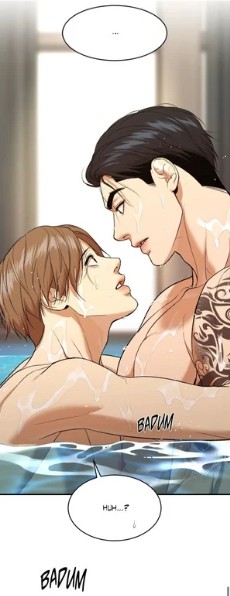
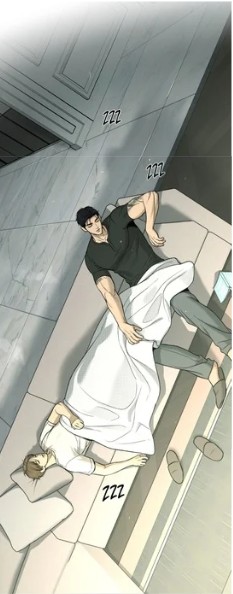
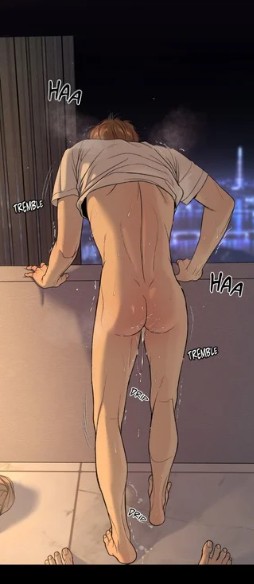
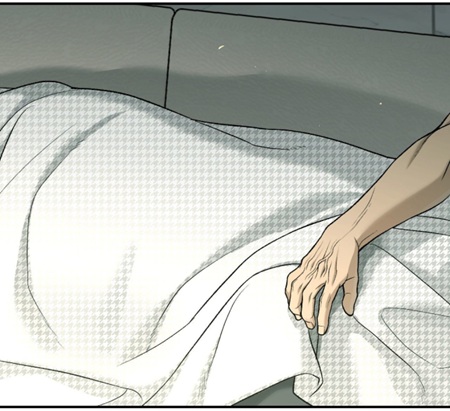
By acting like a responsible adult and mother full of gentleness and attention (chapter 81), he can recognize the false nature of his mother’s affection. What she offered was conditional, deceptive and self-centered; what the doctor gives is ordinary and consistent. No grand gestures, no promises — only presence. The doctor does not rehearse concern; he lives it through routine. And this ordinariness, paradoxically, becomes sacred. It was, as if the athlete was treating his own inner child through the physical therapist.
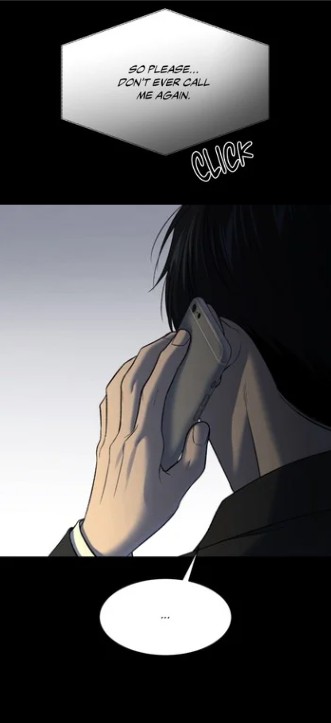
Touch, once an instrument of domination, turns back into a language of reassurance. The warmth of proximity (chapter 81) reactivates a sensory world the fighter had buried: the rustle of sheets, the rhythm of another person’s breathing, the faint scent of human skin. All the senses that the old rituals sought to erase now return — not as overwhelming floods but as quiet reminders that he is alive and no longer alone.

The breathing motif continues here. The earlier “Huu” (chapter 81) that marked his introspection at the airport now finds completion in shared respiration. (chapter 81) Two lungs exhale into the same night; the air that once poisoned him becomes communal. The act of breathing, once an attempt to purge, turns into a sign of harmony.

From this point on, every ritual he creates will carry an echo of this night. (chapter 81) — of reading, of calm, of nearness. The objects (card, keychain, book) become extensions of that experience. They are reminders that comfort does not depend on superstition but on memory and connection. They mark the rebirth of ritual as choice, not compulsion. Moreover, the couch becomes a place for rest and intimacy, the opposite to this scene: (chapter 37)

And this brings me back to the nameless and faceless mother. In a bitter twist, Joo Jaewoong was right in one aspect: (chapter 73): she thought she could become somebody else, but she never truly left. The woman may have escaped the home physically and socially, but she remains chained to it in spirit. How so? Because she cannot erase the child who once called her eomma. No matter how far she runs, Joo Jaekyung’s existence anchors her to the very life she tried to abandon.

Every denial she utters — every silence, every unanswered call — only deepens that chain. Hence she made this request: (chapter 74) At this moment, the page itself turns black, veined with smoky whorls of gray — as though her words had burned into the air rather than spoken. “I can’t live with you… please understand… let’s just go our separate ways.” The sentences rise like vapors, leaving behind the faint residue of a scent that refuses to vanish. This visual texture — half smoke, half ink — captures her true condition: she dissolves herself with every attempt at escape.

The mother’s rejection does not erase her presence; it transforms it into something atmospheric — invisible, invasive, impossible to contain. She becomes the ghost that still clings to the son’s breath, the odor that lingers in every space he enters. In that sense, her words are not final but volatile: they fill the air like perfume and smoke, leaving behind confusion between comfort and suffocation. The same element that once linked incense to mourning now binds her denial to memory. Her refusal to recognize him is not freedom but recoil; it keeps her frozen in the same emotional geography as the husband she despised. By cutting ties, she believed she could reinvent herself, but her disappearance became another form of captivity — the captivity of guilt, of fear, of unresolved motherhood. Under this light, you comprehend why I added a woman with clothes in the illustration. France itself mirrors her — beautiful, perfumed, wrapped in silk and secrecy. She definitely climbed the social ladders through her second marriage, hence she could offer toys to her second son. The nation of couture and fragrance becomes the stage for the mother’s unmasking. Once the name of Joo Jaewoong rises again, questions about her will inevitably follow. And here, she can no longer hide behind silence or excuses. The myth of refinement — both hers and France’s — collapses under the weight of exposure.
The woman who once fled to preserve her image (a victim of abuse, who couldn’t accept her husband’s choices) will now confront the reflection she abandoned: the son who embodies everything she tried to forget. France, the country of elegance, is also the country of appearances. In the 18th Century, the king and the nobility barely took baths, they relied on scent to mask their dirtiness. It is the perfect mirror for her story — beauty masking decay, luxury concealing guilt. The garbage left in the home is a heritage from the mother (chapter 72)

She carries Joo Jaekyung’s name in absence. The facelessness that once belonged to the child now belongs to her. In that reversal, the curse continues: both are trapped by the same invisibility, mother and son reflecting each other’s wounds across distance. And when he next confronts the ghost of his mother, the recognition will be complete. He will finally understand that the real betrayal was not abandonment alone, but false love — the performance of care without its substance. Thanks to his fated partner, he is learning to understand his feelings better and to improve his vocabulary. So he will be able to call things by its true name. Moreover, I am suspecting that doc Dan’s mother will serve as a counter-example. In discovering this truth, Joo Jaekyung will be able to free himself from this so-called love. He will no longer chase the illusion of her warmth; he will cease mistaking submission for affection. The warmth he sought was never hers to give. He will be able to move on and create his own home.

Doc Dan’s presence redefines it. His calm attention, his patience, his refusal to dramatize care — all these form a new maternal rhythm, one that heals without pretending to. Through the doctor, the wolf experiences what the mother only feigned: the safety of reciprocity. (chapter 73) And in that exchange, the jinx finally begins to dissolve.

Thus, new rituals are born — quiet, tangible, human. They don’t require smoke, nor scent, nor spectacle. Only the soft flick of a page, the weight of a key chain, the memory of someone’s voice and embrace. In those gestures, Joo Jaekyung rediscovers the senses his trauma had silenced. He no longer erases the world; he learns to breathe it in.

PS: Since the match takes place in 8 days (chapter 81) , it signifies that doc Dan and Joo Jaekyung won’t be able to visit the landlord and the halmoni like they did in the past. Moreover, I am expecting a new incident. All this could affect the grandmother’s health.

Feel free to comment. If you have any suggestion for topics or Manhwa, feel free to ask. If you enjoyed reading it, retweet it or push the button like. My Reddit-Instagram-Twitter-Tumblr account is: @bebebisous33. Thanks for reading and for the support, particularly, I would like to thank all the new followers and people recommending my blog.

Jinx: Behind The Emp’s Shadow 😶‍🌫️👻

First of all, I would like to thank my new readers from China. 😍 Nowadays, my blog is exploding again thanks to them.

The Poster as a Manifesto of Shadows and Smoke

When I first saw the new promotional image titled “The Return of the Emp”, I had to pause. Something in it refused to make sense — or perhaps, it made too much sense. Here stands the celebrity fighter alone, shirtless, his upper body carved out of darkness, while a faint cloud floats behind him accompanied by a hidden spotlight. Beneath him glows the number 317, a detail too deliberate to be accidental. And yet, where is the opponent? Every previous MFC poster — from Randy Booker’s green inferno (chapter 13) (chapter 40) to Baek Junmin’s red blaze (chapter 48) — had mirrored faces, two bodies, two lights. This time, there is only one. The duel has vanished. What remains looks less like a fight and more like a myth in the making. (chapter 81)

So I began to wonder, my fellow Jinx-lovers, who made this image? One might reply, of course, the marketing branch of MFC, eager to sell the comeback of their most profitable star. And yet, something doesn’t add up. Unlike the posters for Randy Booker (chapter 13) or Dominic Hill (chapter 40), this one shows no date, no place, no trace of logistics (no TV diffusion like in the States “On PPV”). Only a face, a body, a void. Why would MFC release such an abstract announcement, stripped of all practical information? Why design such a poster which makes this event look more like a secret rendez-vous?

At that point, another possibility emerged. Perhaps this is not merely MFC’s doing but Mingwa’s own design — a deliberate distortion, letting fiction expose the machinery that feeds it. The result, I believe, is an image that speaks in two voices at once: one belonging to the league’s publicity team, and the other to the storyteller who knows what must eventually rise from the smoke. But I am suspecting a third voice hiding behind MFC which I will reveal below.

But the first mystery is not the smoke or the color. It is the absence of Arnaud Gabriel, the French kickboxer (chapter 81) chosen to face the Emperor. According to Oh Daehyun, this man is fighting for the title of the hottest male athlete in the world. (chapter 81) So why is he not placed in the poster? Does he fear comparison — or has someone decided that no comparison should be allowed? Each missing element feels intentional — the kind of silence that makes the viewer uneasy, as though something essential was being hidden in plain sight. (chapter 81)
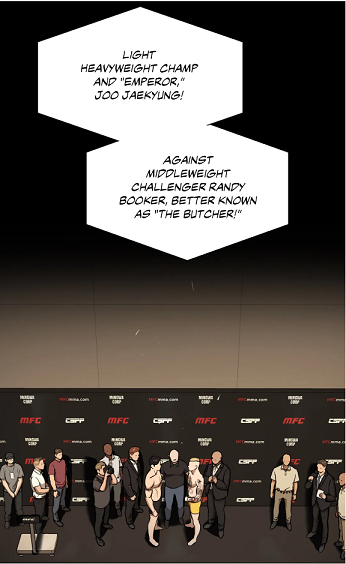
Then there is the pose — a quiet rupture in Mingwa’s visual language. Instead of the usual mirrored confrontation, the camera turns entirely toward the champion, revealing the torso and the raised fist. The MMA star faces not his rival, but the audience itself, as if daring the beholder to guess what has changed. For once, no familiar emblems frame him — no belt, no symmetry, only a body standing between light and smoke. Why this exposure now, and what does it conceal?

The light, too, behaves differently. In earlier posters, illumination came from behind (chapter 13) or within (chapter 48) — from the collision of two forces. Here, the glow seems to rise from below, slightly to the right, and yet the source remains unseen. Why there, and why invisible? What are we supposed to read in that slanted brightness — revelation or exposure, ascension or downfall?

And finally, the text itself: “The Return of the Emp.” (chapter 81) For the first time, words intrude upon the image — not just names, but a sentence, an unfinished promise. “Emp”: a fragment of Emperor, a crown cut short. (chapter 14) Why is there this abbreviation? Why does the image proclaim a return while simultaneously concealing the full title? What does it signify?
These details — the number 317, the smoke, the missing rival, the hidden light, the fractured title — weave a code of absence and expectation. They refuse to settle into one meaning, riddles disguised as design choices. From these visual clues, my previous theory seems to be corroborated: this event doesn’t announce the glorious comeback it pretends to be, but a carefully staged trap. However, there is more to it. The longer I examine the composition (chapter 81) — the fist aimed at the viewer, the smoke curling like a stage curtain, the void where the opponent should stand — the clearer it becomes that this poster already sketches the scene of the athlete’s anticipated demise. It reveals not just a fight, but where and how the next act will unfold 😲— before an audience that may not be what it seems.
The Absent Rival – Arnaud Gabriel and the Art of the Mask

Every puzzle begins with a missing face. And here, the first enigma is Arnaud Gabriel himself (chapter 81) — the man selected to stand against the Emperor, yet nowhere to be seen. Why choose him, a French fighter known less for his record than for his looks? (chapter 40) Where every previous MFC announcement balanced two visages, two auras, two lights, this one shows only the wolf. The French kickboxer has been erased before the match even begins. (chapter 81)

(chapter 81) According to Oh Daehyun, his goal is not victory but visibility — to be crowned the hottest male athlete. (chapter 81) That title alone tells us everything about his mindset. For Arnaud, competition is not victory but exhibition. His sport is not combat; it is choreography. Every gesture (the smile, the wink, the tilt of his head) (chapter 81) seems designed for the lens rather than the opponent.

And perhaps that is precisely why he was chosen. A kickboxer fights with distance. (chapter 81) His weapon is reach, not contact — the opposite of boxing, where rhythm and proximity create truth. Arnaud’s martial art allows him to attack without connection, to strike without touching — the perfect metaphor for a system built on façade. In this sense, he does not merely fight; he performs the idea of fighting. For him, combat is not confrontation but more dance, not survival but fun. It is sparring in its purest, most aesthetic form — controlled, rhythmic, pleasing to the eye. Every kick and grin seems rehearsed to delight the crowd.

His entire persona seems imported from the cinema rather than the cage. One cannot help but think of Jean-Claude Van Damme, the Belgian kickboxer and martial artist turned movie icon, whose blend of violence and grace transformed the fight into spectacle. Like Van Damme, Arnaud Gabriel stands at the crossroads between athlete and actor — between authenticity and artifice. And now, you comprehend why certain readers felt a connection between this fighter and Choi Heesung: (chapter 30) The latter had to learn fighting in order to play his role in the drama Extreme Worlds (chapter 29).
The fighter’s origin deepens this impression: France. The latter is famous for the spirit of savoir vivre — the art of living well, of savoring the moment. “Savoir vivre” is definitely part of his professional philosophy. Arnaud’s smile proclaims respect, pleasure and not perseverance or Schadenfreude. (chapter 81) He embodies a hedonism of the ring, a man who delights in admiration more than victory. Yet beneath the charm lies subtle anxiety. The beard that frames his grin functions as disguise — not to conceal aging, but to simulate experience, to appear older, to lend him a gravitas he has not earned. It is artifice masquerading as mastery.

It is funny, because in the analysis I had predicted that the match would take place in Europe. However, what my avid readers don’t know is that I was hesitating between France and Germany because of the desserts. And guess what… not only my prediction was proven correct, but also my hesitation. Why? Arnaud is a French name but its origins are Germanic. Arnaud, from arn (eagle) and wald (rule), means “he who rules like an eagle.” His name carries a certain arrogance. A creature of height and distance, he surveys from above, untouched by the chaos below. Gabriel, the angelic messenger, completes the illusion: an eagle crowned with divinity, a herald of light who never lands. Together they form the symbol of a man who rules through air — dazzling, distant, and hollow. Under this perspective, the smoke behind the champion could be interpreted as a veiled reference to Arnaud Gabriel. (chapter 81) He could attack him from behind or above. The smoke lingers behind both the title and the wolf, hinting that this elegant newcomer may have been placed as a pawn — not to challenge the champion’s skill, but to block his return to the title of Emperor. Consequently, he represents a real threat to Joo Jaekyung, while on the surface he looks harmless. That’s why for Park Namwook, Arnaud Gabriel seems to be an easy rival. No wonder why he described this encounter as a breeze (air element) (chapter 81), while in reality a “storm” is actually coming.

But in Jinx, there exists another eagle in the sky: Oh Daehyun. (chapter 8) His eagle is spreading his wings in front of his god, the sun, attempting to fly closer to the sun. According to me, Joo Jaekyung is the sun. This explains the loyalty of this purple belt fighter toward the protagonist!
Because of these parallels, I couldn’t help myself envisaging this possibility that Oh Daehyun ends up facing the other eagle. And that’s how the “novice” would get his breakthrough. (chapter 47) But that’s one possibility among others, one thing is sure. Oh Daehyun will play an important part during their stay in France.

And yet, for all this lightness, the Frenchman is nowhere to be seen. (chapter 81) His absence from the poster betrays the truth: he is not a rival but a tool. MFC’s marketing machine uses him as a prop, an emblem of beauty to bait the audience, to divert attention. The company doesn’t need his fists — only his face — and even that, now, has been erased. His omission signals that the game is fixed before it begins. Yes, the poster is implying the existence of a rigged match.

The same is true for the missing championship belt. (chapter 13) Once gleaming over the champion’s shoulder — as in the poster with Randy Booker — it has vanished. It absence in the fight against Baek Junmin revealed (chapter 48) MFC’s true intentions. The tie had long been decided in order to create a smooth transition. MFC’s goal becomes clear: to take away the belt and give it to someone else, while appearing clean. The wolf’s success represented a threat to their illegal business (gambling and money laundering). (chapter 46) People would bet on him and win… they needed him to lose and break his “lucky streak”. In other words, the organization betrayed the body they once sold. They had prepared the fall long before the injury, the surgery, or the suspension. But their plan failed. Despite every setback, the wolf remained beloved at home. People still admired him, not for the trophies, but for his kindness (chapter 62), humility and strength (chapter 62) In other words, what the champion did in the seaside town had a huge impact in his life and world. He lingered in the hearts of those he touched. He was not a fallen idol, nor a forgotten champion, but a living memory — proof that integrity leaves deeper marks than victory ever could. To conclude, his fame no longer comes from spectacle only but also from empathy and presence — from the very qualities the schemers and media system fail to grasp.

And so the game shifts. What cannot be destroyed by defeat will be targeted through image. (chapter 81) The new battlefield is the face. Under this light, Jinx-philes will grasp why the agents from the Entertainment agency were so zealous in defending the star’s reputation. If he were to lose his good looks, they would lose one of their most profitable clients. (chapter 81) They hadn’t intervened when he was suspended or stripped of brand value — back then, he was still only a fighter, not a product. The entertainment world belongs to artists, not athletes. In truth, the celebrity now stands between two worlds: the ring and the stage, the punch and the pose, the man and the myth. If the schemers cannot ruin his record, they will try to ruin his reflection.
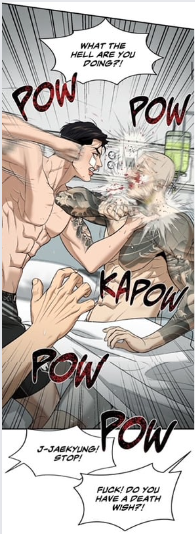
Here, I suspect, lies the invisible hand of Baek Junmin — the man whose own face was once disfigured (chapter 52), whose envy of beauty turned into a creed. Imagine this. Now he holds the championship belt, yet no one admires him. His ruined face became the excuse for his bitterness, (chapter 52) and his rival the embodiment of everything he lost. He had to flee to Thailand to claim glory and admiration (chapter 69), only to discover that ownership without recognition is hollow. Even with the title, his name barely circulates in the media. (chapter 77) MFC can not promote him so easily, as his title could get questioned. He remains unseen — a champion without a face.
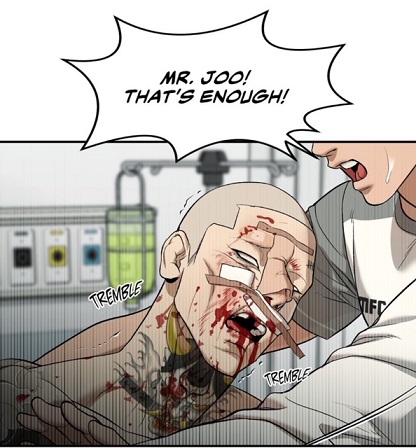
If Baek Junmin cannot be admired, he will annihilate admiration itself. (chapter 81) To him, visibility has become an offense. And this poster lets that mindset leak through. His presence is everywhere — not in the body of the opponent, but in the photograph chosen, in the smoke curling behind the champion, and in the raised fist, the same one that once struck him down. (chapter 52) In the past, his insult (chapter 74) merged anger with heat; now that very “hotness” materializes in the media and poster as smoke, an image of resentment turned into atmosphere. (chapter 81)
And yet, the smoke behind the celebrity’s silhouette may carry another, more literal association — one tied to France itself. (chapter 81)

The old blue packs of Gauloises Caporal, adorned with a winged helmet, were once the emblem of French masculinity and freedom — a breath of rebellion. “Gauloises,” meaning “Gallic,” evokes both the air of the bird (rooster/eagle) and the pride of the soldier. How fitting, then, that the French opponent, Arnaud Gabriel, should enter the narrative surrounded by air and smoke, like a man of wings rather than roots.

But here the image turns double-edged. To Baek Junmin, smoke is not freedom but submission (chapter 74): the visible trace of a man who dares to rebel. He once watched the fighter smoke a plain cigarette and sneered at him for it, precisely because he knew it was not a joint. In Junmin’s world, violation meant courage and power intoxication. He assumed that fearlessness linked to drugs would bring admiration and success. Jaekyung’s refusal to accept their drug wasn’t prudence; it was, to him, an insult — a quiet act of superiority. The wolf’s restraint exposed his indifference and own dependency, and that humiliation still burns.
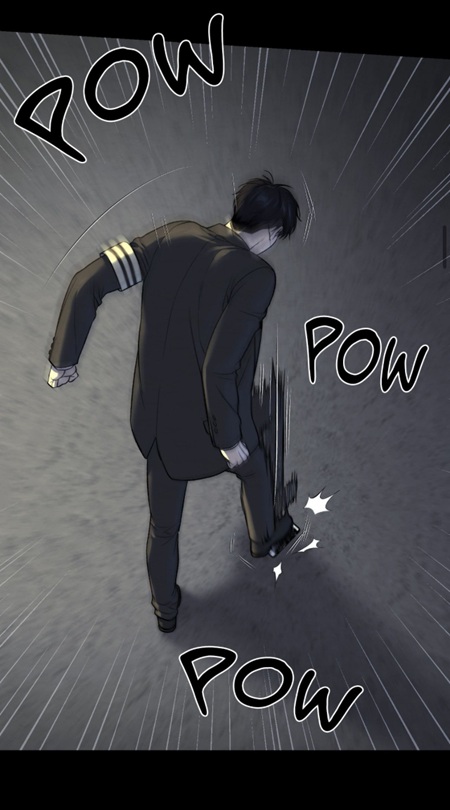
Now that same symbol returns, ready to be twisted. (chapter 81) The schemers can weaponize the image of smoke — turning a mundane habit into proof of moral decay. What once marked distance from corruption could now be rebranded as relapse. Under this light, the haze on the new poster reads like the resurrection of that old resentment: smoke as proof, as provocation, as the spark that might ignite the next fall.

Worse still, the smoke doesn’t surround the fighter, it floats behind him. The poster makes the celebrity appear like vapor itself: fleeting, unsubstantial, “hot air.” The man of iron and will is reduced to mist and memory, a puff of illusion dissolving under false light. And now, we can finally grasp why the word “Emperor” remains unfinished. Emp no longer stands for empire, but for emptiness in the schemers’ eyes — the very image of a man hollowed out by rumor, stripped of body and voice, left to vanish in someone else’s smoke.

The Message Behind The Colors

At first glance, the black-and-white palette of the new poster might seem to echo the timeless harmony of yin and yang — two forces locked in mutual creation (chapter 81), night feeding day, death feeding life. Yet the longer I stared, the more this equilibrium seemed broken. Instead of flowing into each other, black and white now collide: the darkness doesn’t cradle the light, it devours it. The world becomes gray. And that’s the intention of the creators, though yin and yang will be present in the match.

My fellow Jinx-lovers might also recall that in South Korea, black and white are not symbols of elegance or neutrality — they are the colors of mourning. (chapter 74) The main lead was seen “wearing a black suit with three white strips” showing that he was the chief mourner. (chapter 74) Once you recognize this (chapter 81), the image takes on an entirely different meaning. The smoke rises not like balance restored, but like incense burning for the dead, a soul leaving a body. This inversion transforms the poster into something closer to a memorial portrait.

And then there is the light purple haze — a color that at first might seem aesthetic, even noble. Yet in this context, it suggests something bleeding, rotting, fermenting, like wine left too long in the glass. It blurs the boundary between beauty and decay, pleasure and loss. In religious iconography, purple once stood for power and resurrection; here it becomes the color of corruption — the slow decomposition of glory. This could be seen as a clue that the authors of this poster are aware of the athlete’s past drinking. (chapter 54) The wolf is wrapped not in triumph, but in the faint perfume of something dying beautifully. He is shown before his decomposition, which reminds us of his father’s fate: (chapter 73)

(chapter 74) The dense, rising smoke recalls the funeral altar we once saw during Joo Jaewoon’s death scene — white blossoms, a dark frame, and a half-erased face. The emperor’s comeback has been reframed as his own commemoration: a legend embalmed in monochrome.

What makes this echo even more haunting is the photograph chosen for Joo Jaewoon’s funeral — his portrait as a boxer. One part of his face is covered. Moreover, his burial fused the professional and the personal, erasing the line between athlete and man. When his father died, he vanished both as a sportsman and as a person — an identity consumed by a role. And now, the poster of “The Return of the Emp” seems to repeat the same logic. The fighter clenching his MFC-branded fist mirrors that old photograph. It’s as if the marketing team were unconsciously recreating the father’s memorial, predicting the son’s fall. The image proclaims not revival, but elimination in advance — the death of the fighter, and with him, the man.

And that, I believe, is precisely what Baek Junmin desires. Unlike the champion, Junmin never lived the disciplined life of a true athlete; he was a thug from the very beginning, fighting not for mastery, but for longing and recognition. He has always been a man of the shadows (chapter 73), hiding behind his hyungs, the mobsters who granted him borrowed strength and false belonging. Joo Jaekyung, by contrast, was raised in the ring — the gym shaped him as both a professional and a person.

But here is the difference between the two “altars”: the smoke in the poster is placed not in front of the picture (chapter 74), but behind and it is going in the opposite direction: (chapter 81) Mingwa is announcing the failure of the trap. In other words, the athlete is about to earn his stage name “The Emperor” for good! Observe that so far, this stage name was only announced once and it was never written. Under this light, it becomes comprehensible why the fighter’s name is placed at the bottom. They are trying to erase his name, while he is about to become a real legend: the Emperor!

But let’s return our attention to The Shotgun and his relationship with the wolf! (chapter 49) If you have read my previous essay, you’ll remember that I connected the arc of chapters 80 to 89 to the theme of jealousy. Baek Junmin embodies that poison completely. His words — “ (chapter 49) “kid”, “coward,” “chicken” (chapter 74)— reveal not confidence but a profound inferiority complex. Obsessed with the Emperor, he wants to destroy the man he cannot become.

Yet in that obsession, Baek Junmin has frozen in time. His envy, greed, and resentment prevent him from truly living. He remains trapped in the past, mirroring the ghost of Joo Jaewoon, whose death also fused ambition and ruin. (chapter 73) Both men are haunted by the same delusion: that to win, one must erase the other.

That’s why the poster’s mourning tone resonates so powerfully — because it visualizes Junmin’s fantasy: to see the Emperor vanish, not only as a fighter, but as a man. And when he realizes that the wolf is not dying but living — that he has found peace, love, and laughter again — his envy will not fade. It will ignite.

And yet, the author behind this illustration — whoever designed it within the MFC hierarchy — does not realize how prophetic it becomes under Mingwa’s hand. (chapter 81) For what they intended as a visual obituary might instead signal transformation: the end of a man defined by violence and the birth of one reborn through empathy. Yes, the title of the match could be read like this: The return of Empathy. One might argue that this took place before. However, so far, none of the members from Team Black noticed it. In fact, the athlete stopped doc Dan from treating other members of Team Black. (chapter 79) And the hamster followed the wolf’s request. This explicates why Potato is wearing a knee support brace — a sign that he is now tending to his own injuries without the doctor’s assistance. (chapter 81) It is a subtle but telling detail: the physical separation mirrors the emotional boundary now forming within the team. The healer’s hands have been withdrawn. So the emperor’s empathy is incomplete, hence he is only EMP. It extends only toward his chosen one — the doctor — and not yet to the others around him. True empathy, however, cannot be selective; it must reach beyond intimacy to encompass even those who do not stand at the center of affection.
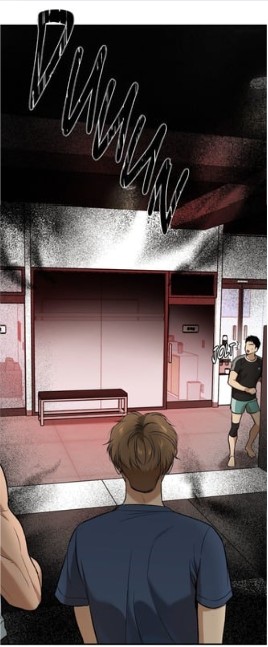
Potato’s knee brace exposes the current limit of the wolf’s compassion: he protects Kim Dan but neglects the rest. Yet the injured knee also foreshadows the coming fight. Arnaud Gabriel, the “eagle,” is a kickboxer — his power rests on his legs, his rhythm, his ability to stay aloft through movement. By highlighting Potato’s injury, the author discreetly reveals the eagle’s own weakness: the knee, the joint that bridges grace and collapse. Without his legs, the eagle cannot kick or dance — he becomes a chicken, earthbound and ridiculous. And how was the main lead described in the past? (chapter 1) He was a beast of destruction, someone who made sure to crush his opponents without mercy (chapter 15) Unstoppable in his rage, he moved like a man possessed — bloodthirsty, unrelenting, fighting not for glory but for survival. Each strike was a declaration: I will not die.
The French MMA scene, by contrast, stands for the opposite ethos — for entertainment, glamour, and spectacle, not mortal struggle. For the eagle, the ring is a stage; for the wolf, it has always been an arena. Thus, if the champion were to injure Arnaud Gabriel seriously, the audience’s outrage would be immediate. He would be condemned not as a fighter but as a monster. (chapter 81) Yet, this does not make the eagle harmless. He embodies dream and danger alike — beauty that glides above the earth, but also talons sharp enough to wound.

In my eyes, Arnaud Gabriel personifies both illusion and seduction, much like the cloud — an image that leads us back to Kim Dan himself. (chapter 38) The doctor, too, has always been associated with clouds: soft, elusive, shifting with emotion. Thus I deduce that their paths will inevitably cross, dream and danger meeting in vapor and light. But more importantly, I perceive the smoke as a reference to the rising of doc Dan as physical therapist. (chapter 81) So far, his efforts were never noticed. Park Namwook’s gratitude was rather a lip service than a true recognition, because after the debacle, he was ready to hire a new physical therapist. And according to me, the schemers are all expecting the arrival of a diminished “MMA fighter” reaching the end of his career. That’s why the light is directed at the cloud/smoke! The one behind him is his hidden support.
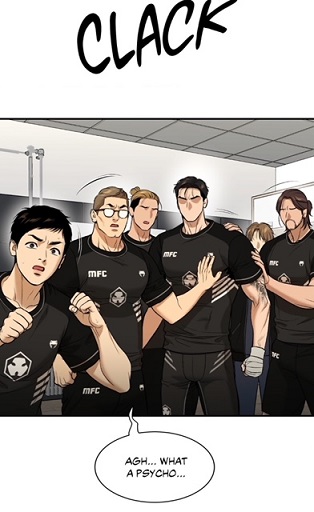
And if the match truly takes place, I believe the champion’s way to ruin the schemers’ plan will not be through annihilation but transformation. He has to become himself an ARTIST!! [I will elaborate more about this aspect below] This time, victory will not depend on blood, but on how he fights — by returning to his origins, to boxing, to the simplicity of rhythm and breath, to the era when his smile was genuine. By having fun… In that sense, Joo Jaekyung may no longer be fighting for MFC but as the living embodiment of his own gym — Team Black reborn as the Emperor’s court.

But before we reach that possibility, another layer of meaning unfolds through Team Black itself. (chapter 81) The team’s black-and-white uniform (chapter 81) echoes the same mourning duality: black in the center, white on the sides — precisely like the arrangement of smoke behind the poster’s title. Yet when the team steps into the airport, the palette explodes into the full five Korean colors (오방색):

  • Black (north, water): Kim Dan, wearing the Team Black jacket — still faithful, yet marked and exposed.
  • White (west, metal): Park Namwook, disciplined but cold. (chapter 81)
  • Blue (east, wood): Joo Jaekyung, vitality and growth, standing quietly at the center.
  • Red (south, fire): Potato, radiating warmth and impulsive energy.
  • Green (center, earth): Yosep, grounding the group in human normalcy.

Only Oh Daehyun’s clothing remains unseen, though his blond hair shines like yellow, the missing balance of the circle. Taken together, they form a living flag of South Korea, suggesting that for the first time, Team Black stands united not by uniform, but by spirit.

This silent unity contrasts sharply with their earlier appearance during the Baek Junmin match, when they were clothed alike but divided in heart and mind. (chapter 49) What looked like teamwork was mere coordination. Now, the visual disarray hides emotional harmony — the perfect yin-yang inversion of their past selves.

The poster may wear the colors of death, but the airport scene (chapter 81) quietly answers it with the colors of life, diversity, and rebirth. Behind the mourning veil, something in this team has already begun to live again.

As you could see, I detected parallels between the match in the States and the one in France. Everything is pointing out the existence of another trap. (chapter 81) People started wondering about the doctor’s jacket. Why is he the only one wearing it? It is clear that this cloth truly belongs to the physical therapist, because the sportsman’s has always been too big for the “hamster”. (chapter 36) One could think, the other members are not wearing it, for they don’t want to be associated with the champion. He has been stigmatized as a thug or a child losing his temper, the consequences of Park Namwook’s badmouthing. However, observe that even the star is not wearing it. (chapter 81) It, was if they didn’t want to be recognized.
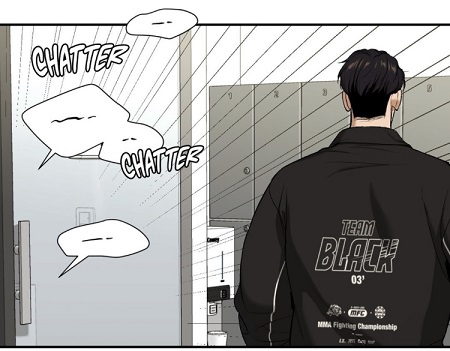
I think, there exists another explanation. Don’t forget that the jacket had different logos on the back: (chapter 36) What once symbolized sponsorship and solidarity has quietly disappeared. The explanation seems obvious at first: the loss of commercial partners following scandal and suspension. (chapter 54) Yet the deeper implication is far more unsettling. The jacket was more than a uniform; it was a contract, a visible bond between fighter and system. Its absence signals abandonment. The champion may still fight under the MFC banner, but the federation no longer claims him with pride. He is now a free agent trapped in an invisible cage — tolerated, not trusted. He questioned MFC and their competence (see chapter 67 and 69).

And what about the doctor? His jacket, now a solitary relic, must have arrived after his departure and given to him after his return. The Team Black jacket makes him a walking target. By still carrying the brand, he becomes the visible trace of a world that wishes to erase itself. He wears proof of loyalty in a landscape where faithfulness has become liability. If the upcoming match is indeed a trap, his uniform can mark him as bait or as a disguise! (chapter 37) He could be mistaken for the owner of the gym or a person involved in the scheme. And this leads me to my next observation: the champion’s picture and posture!

The Body That Faces the Crowd – From Defiance to Dialogue

If the smoke and the black-and-white palette whisper of death, the body posture roars of defiance. On the poster, the MMA fighter stands half-turned toward us, left fist raised, the logo MFC glinting on his glove like a brand or a curse. The light strikes him from below and from the right, revealing one side while leaving the other in shadow — a visual echo of his divided self: the professional mask and the wounded man beneath.

The position of that raised fist is crucial. It does not challenge the opponent — there is none in sight. It challenges the beholder. The blow is aimed outward, toward the audience, toward a world that has mocked, condemned, or abandoned him. The poster transforms the traditional stance of the victor into something closer to revolt. The “comeback” it advertises is not a return to sport, but a return against the crowd. Despite his handsomeness, he seems to have a bad personality (provoking, insulting, challenging the audience). They made him look like a bad guy: ruthless, arrogant and rebellious. As you can see, they are attempting again to ruin his fame and name.

Light purple bleeds through the smoke, carrying an undertone of resentment — bruised flesh, fermented wine, or the slow rot of disillusion. It’s the color of pride wounded yet unyielding, the hue of someone who refuses to forgive the world for its betrayal. In this light, the athlete seems less a man celebrating triumph than a revenant demanding recognition.

This reversal also tells us something about the system around him. In earlier matches, such as the one in the United States, both fighters were cheered, embraced as performers in a shared spectacle. Here, the scene will be different. No shared ovation, no brotherly arm around the shoulder, as with Dominique Hill. The poster prepares us for isolation, for a battle where the crowd itself becomes the enemy.

The schemers are expecting an angry and resentful man, while in verity this is a projection from the Shotgun. But because MFC is placed twice, it exposes the company’s greed and possessiveness. With the logo on the glove, they insinuate that they are the one deciding when Joo Jaekyung will fight or not. He is their puppet, and they decide when to discard him.

And perhaps that is the deepest irony. Team Black, still unaware that the previous match had been rigged — blind to the partial commentary, the biased jury, the manipulated outcome — walks toward a trap thinking it’s a stage. Neither the champion nor his coach nor his companion suspects that this time, the audience’s hostility has been engineered. The raised fist is both prophecy and warning: he will fight alone, not just in the ring, but against perception itself. Yet, he will supported by the “vapor”.

What the schemers read as fury, however, may become the seed of transformation. The same gesture that once meant aggression could turn, under a new light, into assertion — not of anger, but of presence. If the previous posters framed the fighter as spectacle, this one shows him claiming his body back from those who profited from it. I would even go so far to say that the athlete will end up challenging the authority MFC and even sue them. (chapter 81) And that’s how he could make history. He will be remembered as the Emperor, the one who put an end to crimes!

317 — The Date That Isn’t There

After the smoke, the colors and the picture, the next enigma lies in what the poster refuses to specify: no date, no location, no time. Every previous MFC announcement was anchored in visibility — April X, Saturday, on PPV , June — a fixed promise to the public. Here, all coordinates vanish.

That erasure extends beyond the poster. When Team Black lands abroad, the airport — once a stage for flashbulbs and microphones — stands eerily still. (chapter 81) That erasure extends beyond the poster. Behind Potato and Kim Dan drift a few gray silhouettes, barely human, half-formed shadows of what should have been journalists or fans. They look less like people than ghosts of publicity, residues of a crowd that never came. No banners, no reporters’ questions, (chapter 36) no cheering spectators — nothing recalls the hero’s welcomes of earlier arcs.

And yet, paradoxically, this match was an invitation from the CEO himself, supposedly a prestigious opportunity. The absence of press coverage therefore exposes a contradiction: the greater the supposed honor, the deeper the concealment. No one outside the organization has been informed; the public is deliberately kept in the dark. What pretends to be a triumphant comeback is, in truth, a private operation, an exclusive fight designed for a restricted audience. (chapter 81) Thus I deduce that the athlete won’t fight in a huge arena, but in front of a small circle, where people might smoke. A new version of this scene (chapter 74) but with a different public.

Still, one element gives the illusion of authenticity: the number 317. It appears on the poster like a seal of legitimacy — the next official bout in MFC’s timeline. And that is precisely the brilliance of the trap. The number suggests continuity, reassuring the team that everything follows protocol. The wolf and his court walk straight into the ambush because the system’s familiar numbering masks the rupture beneath.

In this silence, the gray figures become a visual metaphor for the event’s nature: visible enough to seem real, but hollow when touched. The “return of the Emperor” is not a broadcast — it’s a ghost match, orchestrated for unseen eyes, similar to the high-rollers who once financed Baek Junmin’s underground bouts for “commoners”. (chapter 47) Thus, 317 functions like a counterfeit signature — convincing enough to deceive even those inside the organization. What looks like promotion turns out to be execution by design, a fight that exists on paper but not on record. Hence no one is waiting for them at the airport.

At first glance, 317 might seem to follow the ordinary sequence of MFC events, yet the attentive reader will recall the last recorded bout — MFC 298 (chapter 54), the match where the Emperor faced Baek Junmin. That small arithmetic gap hides something extraordinary: eighteen events have supposedly taken place since then, in barely three months. Such acceleration borders on absurdity. It feels less like a sports calendar than a purge — as if the federation were rushing to overwrite history, to bury the memory of its fallen champion beneath a flood of new numbers.

The more I pondered this, the more the number 317 began to sound not like continuity, but conspiracy. The digits 3, 1, and 7 echo two pivotal moments in the narrative: chapter 16 (1+6= 7), where the doctor was almost raped (chapter 16), the moment Heo Manwook thought that the “hamster” was working as an escort due to the name “Team Black”. (chapter 16) So because of the jacket Team Black, doc Dan could be mistaken for a prostitute. Naturally, Jinx-lovers will remember the great fight between Heo Manwook and his minions, when the athlete saved his fated partner. Back then, no one discovered his great action. (Chapter 17) And how did the loan shark describe their world? Fake… he even called him a princeling, because he stands for the glamor and artificiality of MFC. He is the cover for the underground fights, drugs and money laundering. This connection reinforces my interpretation that the future match is « fake » and as such rigged. Then in chapter 37, the hamster met a Korean disguised as a MFC manager. (chapter 37) Both episodes revolve around misunderstandings, silence and deception. In this light, 317 fuses these numbers into a single cipher of repetition: history threatening to repeat itself.

The absence of any date or place only amplifies the unease. “The Return of the Emp” seems less like a public comeback than a covert operation. A fight that exists everywhere and nowhere. Its secrecy betrays its true nature — not an open competition, but a private spectacle designed for those already in the know.

And who are “those”? The answer leads us back to the high rollers. (chapter 47) In the past, they participated in the underground matches of Gangwon Province, where Baek Junmin reigned as a local legend — a thug made myth through blood and rumor. (chapter 47) There, they would even cheat with weapons to ensure the right outcome (chapter 46), as they didn’t want to lose money. And what did Park Namwook say in episode 46? (chapter 46) But now, the same hunger for spectacle has simply migrated upward. What once belonged to the alleys has climbed into the penthouses. The illegal thrill of the poor has become the curated decadence of the rich. And they were invited to witness the death of the “emperor”, someone who tried to escape from his origins. Thus I deduced that this is only a match that the high rollers (I suppose, mostly people from the Occident, though expect some from South Korea) know about.
Baek Junmin’s smoky basements have found their mirror in Arnaud Gabriel’s illuminated arenas. One fed the working man’s fantasy of domination, the other gratifies the elite’s appetite for risk (chapter 81) — both sustained by the same voyeuristic instinct to watch another man fall. That’s why he doesn’t need to be seen in the poster. His source of income comes from sponsors in the end. They come from the elite.

And this time, the high rollers know precisely what they’re buying. They have been definitely briefed: the celebrity has had shoulder surgery, suffers from headaches, drinks, and dismissed his own physical therapist. He avoided the gym for a while. He is someone who gets easily triggered, and once he is furious, he makes mistakes. They are not ignorant; they are investors in ruin, betting on a man already wounded. The match is not entertainment but a calculated execution disguised as sport. (chapter 46) Hence the French kickboxer can see his art as entertainment and fun, for he is facing a so-called injured opponent. To conclude, they have ascended into a new form of decadence. The same pattern persists, merely transposed to another altitude. Baek Junmin’s world of illegal betting has found its reflection in Arnaud Gabriel’s world of sponsored violence. One feeds the poor man’s fantasy of power; the other, the rich man’s craving for risk. At the same time, the Korean thug had connections to high rollers too, but mostly Korean people. And the CEO is the link between these extreme two worlds. In other words, this match is bringing up the corruption to the surface. However, they are not expecting “change” and as such coincidence. Consequently, I am assuming that their plan will fail. And if they bet against the champion, imagine their reactions, when the opposite happens. They might feel deceived and betrayed. They could even lose, if someone else takes his place and he acts as the director of the gym. And who agreed to this match? Park Namwook… He wanted a match at any cost thinking that this would revive his boy’s “reputation” and fame. And now, you comprehend why no advisor was sent to develop a strategy against Arnaud Gabriel, the angel of death from the CEO!! Both sides are underestimating and deceiving each other. In this case, Park Namwook’s blindness and ignorance becomes a virtue. The enemy is left in the dark.

Thus, 317 becomes the code of collusion — the bridge between the basement and the penthouse, between the mud of Gangwon and the marble of Paris. A number that hides a shared agenda: the silent elimination of the Emperor. And now, you are wondering how the main leads can escape from this trap! If he wins and its victory reaches the ears of the public audience, the schemers will definitely attempt to accuse him of selecting a wrong fighter. If he loses, he will be “disfigured” and forgotten. Don’t forget that according to me, the French kickboxer will aim at his face and shoulders, his weaknesses. By losing his second title, Joo Jaekyung won’t be able to appear in the covers or social media! Another possibility is that he lets someone else fight in the ring due to circumstances, yet I have my doubts about this. You will discover soon why. But if my theory is correct and the champion shines in that fight so that the downfall doesn’t happen, the VIP audience might get upset against the CEO. The latter deceived them in order to earn a lot of money! They have been tricked by his lies and bet against the athlete. And the high rollers could decide to switch sides and question the new champion’s victory. One might think, a tie could be a possibility, but the poster is suggesting otherwise: it is a rigged game at the athlete’s expense. There’s another way that the wolf can succeed: it is to become an artist!! But what does it mean exactly?

Be Water, my friend

The heading is an important quote from the famous martial arts fighter Bruce Lee:

After reading his definition about Martial Arts, it becomes clear that the pool scenes are not just there for the doctor’s sake, they’re the curriculum. In water, the champion rehearses the very balance Bruce Lee describes—moving without forcing (chapter 81), breathing without bracing, learning that flow is strength. The author placed the swimming lessons here so we’d see him practice calm under pressure before he performs it in the ring. But observe that when he is in the swimming pool, he is expressing more and more his emotions. (chapter 81) At the same time, he is also incited to control his pulsions and body. (chapter 81) In other words, during the swimming lessons, he was encouraged to find the right balance between instincts and control, which Bruce Lee recommended. It is no coincidence that he referred to the philosophy of yin and yang!
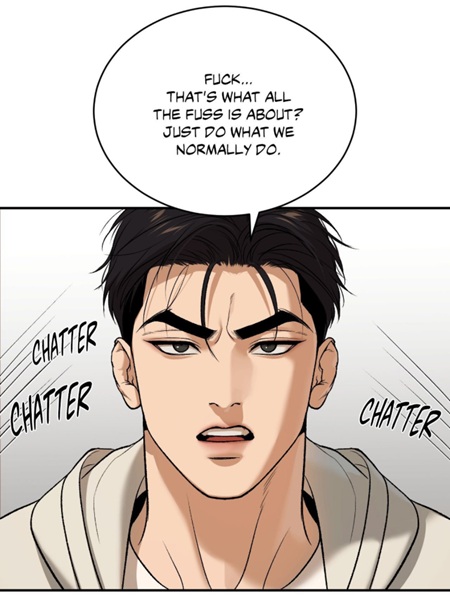
Bruce Lee warns: “If you have anger toward others, they control you.” That’s been the wolf’s trap from chapter 14 onward—rage as a leash. (chapter 36) The pool inverts it. Laps replace lunges; rhythm and love replace revenge and hatred. Anger loses its grip because water refuses to hold it. And now, you can grasp why the athlete was calm during the meeting: (chapter 81) His fear and anger were no longer controlling his heart and mind. “One of the best lessons you can learn in life is to remain calm.” The swimmer learns it; the fighter must now prove it. Thanks to doc Dan, the athlete was incited not only to accept himself, but also to get self-knowledge.

Across from him stands the eagle: instinct without control —aerodynamic, moving based on the circumstances. Arnaud Gabriel fights based on the reaction of his opponent. He is air: elegant, distant, untouched. But the problem is that he has no strategy at all (“the unscientific”), as he is dependent on the air, his opponent. This gives another explanation why the Entertainment agency offered no advisors to the athlete. (chapter 81) Arnaud Gabriel is totally unpredictable which makes him dangerous but also weak. So what happens when the athlete uses a totally different strategy? The eagle will get caught by surprise. Thus in the past, we have to envision that the wolf was the mechanical man, iron and fire, surviving by destruction. Bruce Lee’s middle path—instinct guided by awareness—is the only way out of this binary. That’s why the story moves him from steel to steam, from panic to presence.

Life itself is your teacher (chapter 62), and you are in a state of constant learning. (chapter 80) The seaside town and doc Dan taught him kindness, the pool teaches him composure and precision, the poster’s smoke teaches him restraint: you don’t swat at vapor; you breathe and move through it. “It is far better to be alone than to be in bad company”—so he steps out of the schemers’ frame. “When you accept yourself, the whole world accepts you”—so he stops fighting the audience and starts speaking to one person who matters, then to many. In my opinion, Joo Jaekyung will use this bout to express his feelings for Doc Dan (“to me, martial arts means expressing yourself“) and the birthday card (chapter 81) with the key chain represents now his motivation. Thus he resembles more and more to the physical therapist. 8chapter 81) Under this new light, it becomes comprehensible why the athlete has not confessed his feelings yet. In my eyes, the confession will be strongly connected to the imminent match. In other words, by spending time with the physical therapist, the Emperor regained his voice and body. He can now express himself in the ring, making sure to catch doc Dan’s gaze and admiration. And now, you comprehend why I mentioned that Joo Jaekyung will come to see this fight as a source of strength and inspiration: it will be more about love and recognition from his loved one than the money or hatred from the audience.

Practically, this means the bout must look less like slaughter and more like sparring—measured pressure, controlled power, no needless cruelty. That choice does two things at once: it denies the high-rollers their blood-script and leaves the kickboxer no “reason” to obey orders to ruin a face or a shoulder. Arnaud only embodies instinct — rhythm without reflection, showmanship without soul. So he is not guided by negative emotions. Be water becomes case law: adapt, absorb, answer—without being owned by anger.

So air meets water: (chapter 81) spectacle meets expression. The eagle can only descend to strike; water rises, falls, returns. And since Bruce Lee’s punch turn into water , I came to imagine that the athlete might strike him like “water”, hard enough to make him lose the balance and defeat him, but not too strong to damage his knee for good.

If he carries the pool into the cage, the “emp” on the poster will cease to read as emptiness. It will resolve into empathy—calm under fire, feeling without being ruled by it. And the smoke behind him? Not a death shroud, but iron turning to steam—a body once forged in rage, now speaking in flow. And now, look at the other tattoo on his left arm: it is a cloud or steam! (chapter 17) And once the cloud (doc Dan) meets the steam (chapter 81), they can be together as a couple. To conclude, though this poster was created as an epitaph, the reality is that it announces the emergence of Joo Jaekyung, the dragon! Kim Dan is the one who is turning the athlete Joo Jaekyung into an actor, the emperor! Even if his career as MMA fighter ends, he can still work as an actor or as the owner of his gym. He will never be forgotten as an athlete like his father or Hwang Byungchul. His name Emperor will remain forever in the memory of people and maybe because of his “fight” with MFC and thugs. At the same time, it displays the increasing conflict between Team Black and MFC. The fist could be seen as directed at MFC. The Emperor represents a menace for the CEO in the end. One thing is sure: since Baek Junmin chose the nickname “The Shotgun”, it becomes clear that he has become the negative version of his rival: he is now the mechanical man (control without any natural instinct). He lost his balance and can no longer rely on others. What he fails to realize is that by bringing more and more people in the schemes, he is actually endangering the whole organisation MFC! Furthermore, contrary to the past, the athlete will pay attention to his fated partner in France, so a meeting between Arnaud Gabriel and Kim Dan will definitely reach the athlete’s eyes and ears.

This is the longer interview of Bruce Lee:

Feel free to comment. If you have any suggestion for topics or Manhwa, feel free to ask. If you enjoyed reading it, retweet it or push the button like. My Reddit-Instagram-Twitter-Tumblr account is: @bebebisous33. Thanks for reading and for the support, particularly, I would like to thank all the new followers and people recommending my blog.

Jinx: This has to change 🌬️🌀🍃

Chapter 79 proved my previous interpretation correct: the number 9 announces the end of a circle. (chapter 79) However, let me ask you this. What kind of circle ends in episode 79? Moreover, how is this ending different from the past? Interesting is that episode 79 of Jinx doesn’t end with conflict, but with an awakening. For the first time, Joo Jaekyung does not rise to fight, command, or perform — he wakes up to a realization: “This can’t go on.” In the Korean version, his words carry an unusual clarity. It is not fate that changes, but choice. The champion, who once lived as if enslaved by habit and haunted by ghosts, now chooses transformation. The circle that has defined his life — power, silence, guilt, and repression — finally begins to close.
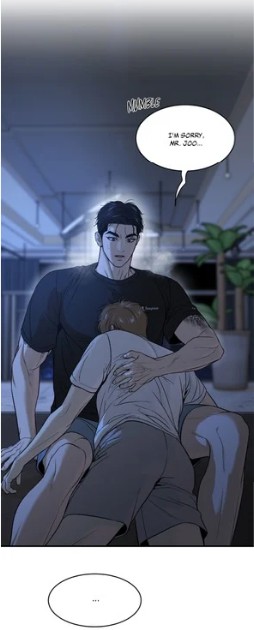
The decision is quiet but monumental: he will no longer live in a cycle of fear and self-loathing. (chapter 79) Until now, Jaekyung has moved through life as if carrying a curse — the belief that he is unworthy of care and love. (chapter 78) Every match, every order, every touch was an act of penance. Yet, in this episode, that belief dissolves. What vanishes in chapter 79 is not his strength, but the compulsion to suffer for it. Through the unconscious confession from Doc Dan, the wolf discovers that despite his wrongdoings, he is not hated by the “hamster”. (chapter 79)The words carry the same emotional weight as (chapter 39) from the magical night in the States. Both moments unfold in half-darkness, both break through inhibition, and both blur the line between consciousness and surrender. The verbal difference hides a deeper sameness: (chapter 79) is not remorse alone — it is an act of love, an instinctive reaching-out toward the other’s pain.
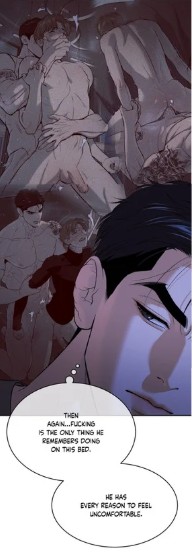
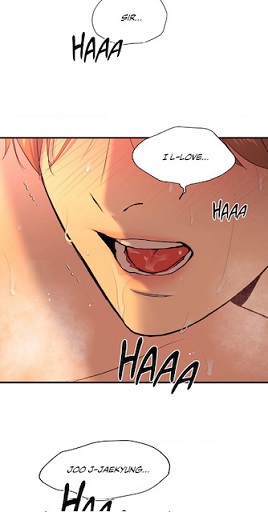
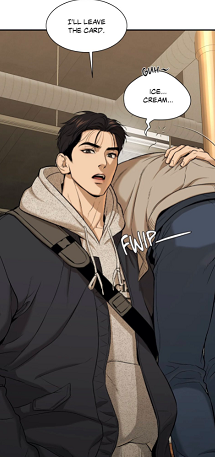
Mingwa mirrors the composition of these two scenes to stress their equivalence. The parted lips, the contrast between the heavy breath and the mumbling, the closeness of skin — all visual echoes that turn guilt into a language of tenderness. In chapter 39, the confession was drug-induced, raw and unfiltered, but afterward Jaekyung dismissed it with a laugh: (chapter 41) What could have been a moment of truth was repressed through mockery. His body language was betraying him: his closed arms reveal that he was on the defensive. By trivializing love, he protected himself from suffering and as such from facing his own capacity for harm. Behind the joke hid an immense self-loathing: to accept the confession as real would have required believing himself worthy of it. To trust himself…. he is not a loser, a nobody!

Chapter 79 reverses that denial. This time, the athlete cannot turn away or make light of what he hears. (chapter 79) The doctor’s voice — faint, sleep-bound, and sincere — forces him to listen. The “mistake” returns, transformed into absolution. Where laughter once erased meaning, silence now restores it. The champion finally grasps that Dan’s words, whether “I love you” or “I’m sorry,” spring from the same place: care that persists despite injury.

This is why the “blue night” cannot be read as accident or madness. It is revelation. The wolf sees, perhaps for the first time, that he can be forgiven — that love, for Dan, includes compassion for his flaws. The “I’m sorry” becomes the mirror image of the earlier “I love you,” not a repetition but a correction. What Jaekyung once labeled a mistake now stands as proof of connection, as if fate itself were rewriting the joke into a prayer.

The End of a Circle

Each chapter ending in nine has marked emotional completion: chapter 9’s first gesture of care (chapter 9), 29’s confession on the couch (chapter 29), 69’s first expression of feelings in the dark (chapter 69). In chapter 79, the circle closes once more. The night’s palette tells the story — deep blue softens into violet (chapter 64) (chapter 79), the color born from the fusion of blue (Dan’s sorrow) and red (Jaekyung’s intensity). For the first time, in the penthouse the color of their relationship is not pain but balance. And now, you comprehend why in the hallway, the purple had almost vanished: (chapter 79) The light purple – lavender that once filled their world turns (chapter 66) (chapter 79) fades into the cold blue of the night. The light shifts — not toward warmth, but toward fragility. The purple, symbol of fusion, nearly disappears, leaving behind the dominant blue of isolation and fear. (chapter 79) This chromatic regression visualizes what happens next: in the hallway, both men are still haunted by their separate pain. Dan, drawn by the pull of despair and self-loathing, almost falls over the railing. Jaekyung, still guided by fear, rushes to catch him. (chapter 79)
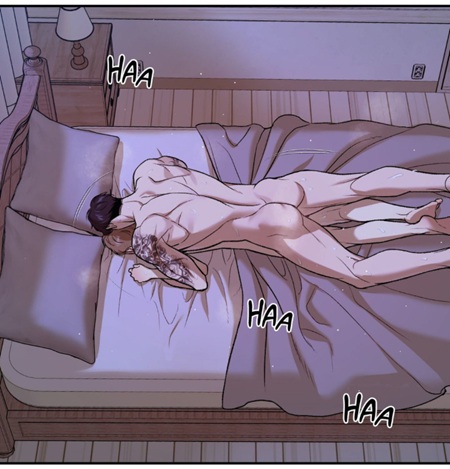
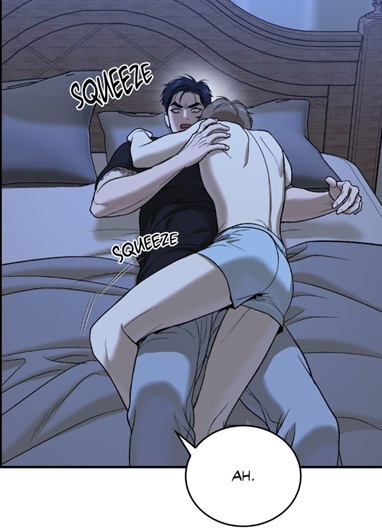
The blue in this scene is not mere sadness — it is the residue of old wounds resurfacing. It unites them through pain rather than peace, yet this unity marks the turning point. The absence of purple is what propels the wolf to make a decision: he is about to drop his routine and as such his past believes, like for example, his life is still his first priority or he is just a shackle. He realizes that color — the life and warmth in Dan — is fading. (chapter 79) To restore it, he will have to speak, to act, and ultimately, to smile again.
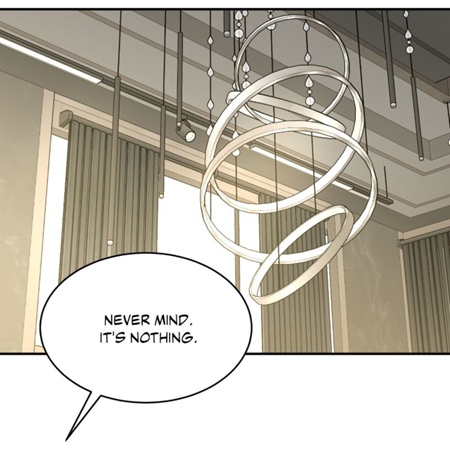
What truly ends here is the Emperor’s old language. The vocabulary of orders — (chapter 79) gives way to the silent recognition of fear. When the champion admits, (chapter 79), it is a confession disguised as complaint. For the first time, he voiced his dependency and vulnerability more clearly, as his body language is no longer expressing hesitation and shyness. Imagine that so far, he had lived following the principle of “self-reliance”. Yet when Dan asks, “What?” the champion retreats: (chapter 79) His feelings collapse into the void between words. Above them, the spiral chandelier glows — the perfect symbol of their unfinished circle. His unspoken fear hangs suspended, waiting to be voiced because of someone else’s actions: the doctor’s grin (chapter 79) and fall (chapter 79) That retreat exposes a deeper fear — not of rejection, but of mockery. The man who once endured his father’s contempt and smirks (chapter 54) still equates vulnerability with humiliation. (chapter 73) In the past, every sign of weakness was punished or laughed at; even longing arrived through ridicule. Hence the “grinning” Dan of his nightmare (chapter 79) should be perceived as a distorted echo of the father’s cruel smile. And now, Jinx-philes can grasp why the wolf woke up from this “dream”. (chapter 79) The vision forces him to confront the origin of his shame. He realizes, instinctively, that the real Kim Dan would never smile at his pain — and through that recognition, he begins to separate present from past. He has already experienced a silent, but warm gaze (chapter 77) from his fated partner after admitting his defeat: (chapter 76)
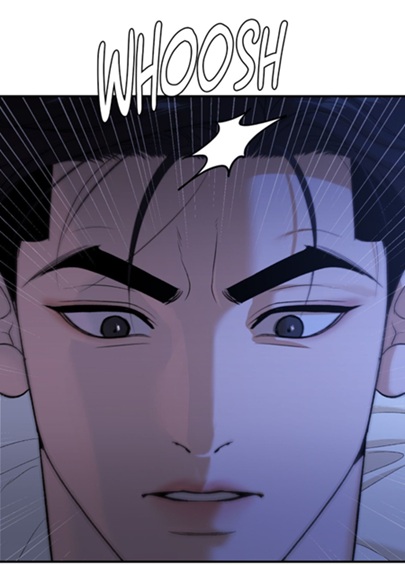
In silencing or voicing his fear, Jaekyung crosses the boundary between guilt and growth. He is no longer haunted by his father’s accusations like “you’re just trash” or (chapter 73) but by a new, fragile dread: the possibility of losing the one person who would never say it. What vanishes in episode 79 is not his strength, but the belief that to need someone is to be weak.

That completion arrives at night. In his sleep, Kim Dan murmurs, (chapter 79) The two halves of their dialogue finally meet: the fear Jaekyung silenced finds its answer in the apology Dan utters unconsciously. One speaks awake but retracts; the other speaks asleep but reveals. The night itself becomes their interpreter — turning “nothing” into meaning.

Until now, Jaekyung’s remorse had lived without a voice. (chapter 78) He has long recognized his wrongdoings — the pressure, the harshness, the selfishness (chapter 76) — but guilt without self-forgiveness remains sterile. What is the point of apologizing to someone when you cannot forgive yourself? His silence, then, is not arrogance but self-condemnation. Beneath his strength lies a man who believes that no apology can redeem him, because no one ever offered him one first. His father’s mockery, his coach’s reproaches (chapter 74) and expectations, his mother’s betrayal (chapter 74), his manager’s slap at the hospital (chapter 52) — none of them ever voiced regret and said “I’m sorry.”
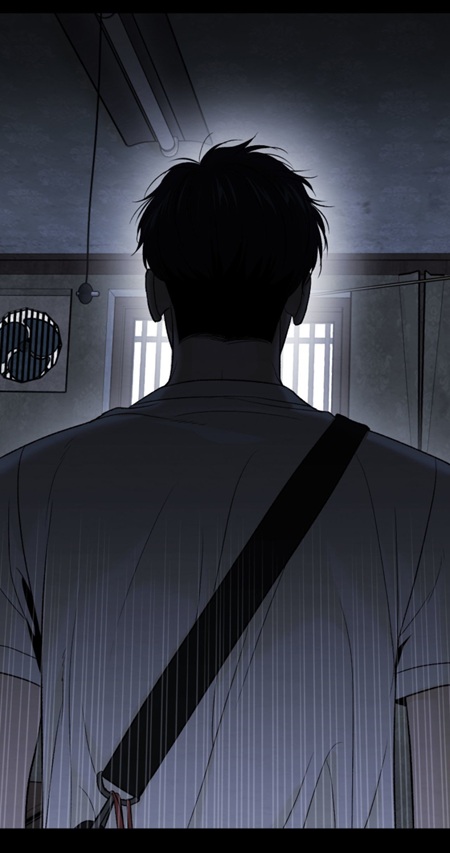
Fighting became his substitute for repentance. (chapter 73) Every punch was an act of self-erasure, every victory a brief anesthesia against the echo of his own self-loathing and regrets. He mistook exhaustion for atonement. But when Kim Dan whispers (chapter 79) in his sleep, something shifts. The word that once chained him to guilt now sounds different — tender, not accusatory. For the first time, he experiences apology as care, not as confession.
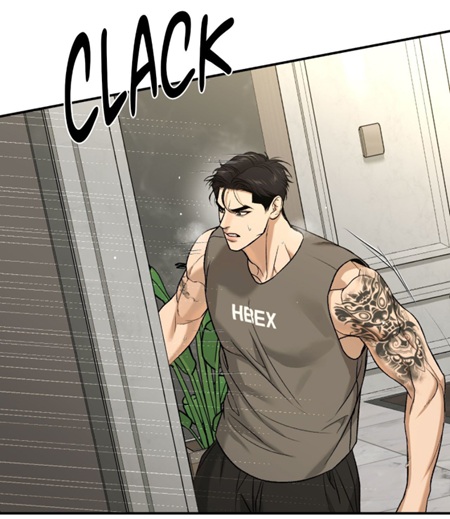
That is why this night matters. It teaches the champion what he was never taught: that forgiveness is not granted by punishment, but by connection and communication. Through Kim Dan’s unconscious words, he senses that he can be forgiven — that love does not vanish because of fault. He is still accepted despite his wrongdoings, not because he hides them. For the first time, Joo Jaekyung begins to believe that being loved and being imperfect can coexist. And in that fragile belief, change truly begins.

The Fall of the Angel

The dream of the wolf is not punishment — it is confession. It becomes the space where Jaekyung’s unconscious dares to speak what he hides from waking life. (chapter 79) His vision of Kim Dan’s false grin is not a taunt from the other (chapter 79), but a message from within: You shouldn’t have hidden your fear. You should have trusted me. What appears as irony is, in truth, the echo of a moment that had once wounded him — the doctor’s trembling question, (chapter 51) The dream revives that unspoken answer, revealing that what Jaekyung perceived as danger was, in fact, an offer of trust. In trying to protect himself from mockery, he denied the very connection that could have saved him. The dream reconstructs the very morning he had dismissed his vulnerability (chapter 79)— the breakfast scene (chapter 79) , the casual (chapter 79) By replaying it in this distorted form, his mind stages a confrontation with his own denial.

The wolf’s remorse takes the shape of fear. In his dream, Jaekyung finally admits that he cannot bear to lose the one person who makes him feel human (chapter 79) — yet even there, his confession is shadowed by dread. (chapter 79) The grin that startles him awake is his own projection of unhappiness and shame, the echo of the mockery he once received from his father. But the truth beneath it is different: his soul is telling him that vulnerability is not ridicule, that he must stop silencing himself.

The resemblance between dream and reality is deliberate. The kitchen reappears, the same domestic warmth, the same silence. The unconscious replays what the conscious has failed to complete — the moment he turned away instead of speaking his fear aloud. His body wakes before his mind does, moving instinctively toward redemption. When he finds Kim Dan by the railing (chapter 79), it is as if he is saving not only his partner but the part of himself that used to give up. He was living like a ghost denying his own emotions.

A few days before, the champion had called Dan’s drowning “an accident.” (chapter 78) That word revealed his blindness — the refusal to acknowledge pain that does not announce itself through wounds. The new incident at the railing shatters that illusion. It was never an accident, but the expression of mental illness (chapter 79) Both events spring from the same silent cry for help, the same exhaustion he once ignored. This time, he sees it for what it is: suffering, not weakness. The shock of recognition becomes his wake-up call — not to fight harder, but to understand deeper. The problem is that so far the champion never had a true companion, hence he has not learned how to share thoughts and emotions to others. This explicates why doc Dan is actually the one initiating the conversation. (chapter 77) (chapter 80) Each time, the physical therapist shows concerns for the athlete’s well-being. He perceives this change of behavior as the expression of unwell-being.
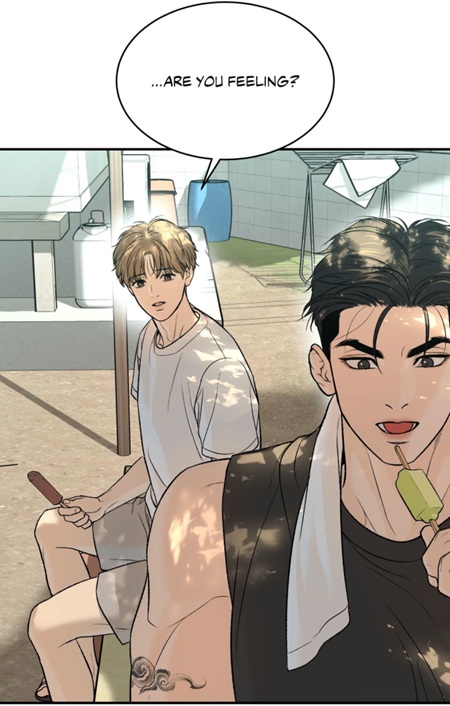
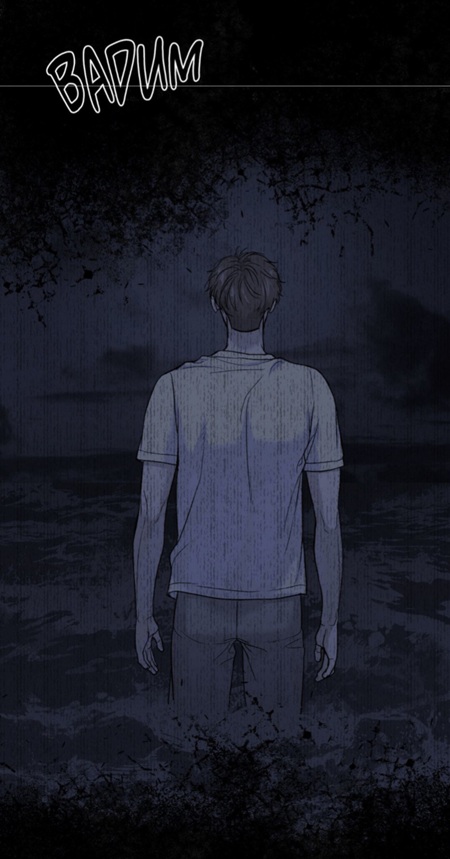
Symbolically, the near fall (chapter 80) represents the danger of repeating inherited unhappiness and despair — the impulse toward surrender that has haunted the doctor. Both the ocean (chapter 69), and the balcony (chapter 79) embody the same impulse — escape — yet they reveal two distinct forms of suffocation. In the sea, Kim Dan moves toward the element that promises oblivion through absorption: water swallows, erases boundaries, and offers rest through dissolution. It is the drowning of exhaustion, of someone who wishes to return to the womb of stillness. On the balcony, however, the element shifts to air — the emptiness between life and death. Falling from a high place is the asphyxiation: the lungs collapse not by immersion but by void. Both gestures — walking into the waves and leaning over the railing — spring from the same inner logic: the unbearable weight of pain and expectation. But if water and air unite, they create clouds (chapter 38) — the very image that defines Kim Dan’s being. The clouds on his phone screen are not incidental; they reflect his essence. A cloud has no home, no fixed form, forever moving, dissolving, reforming — just like the doctor’s life, endlessly displaced and redefined by others’ expectations. Clouds embody both dream and danger: they promise transcendence but conceal the storm. Besides, a cloud can fall as rain, return to the ocean, or vanish into the sky — an image of the soul that oscillates between grounding and escape.

As soon as I made this connection, I couldn’t help myself thinking of the painting in the background of chapter 37: (chapter 37) Behind the champion, the Golden Gate Bridge stands as a silent witness — a place where many have ended their lives by leaping into the void between air and water. The bridge fuses both symbols: it is where drowning and falling meet. Moreover, the bridge embodies the connection of two worlds. This backdrop, unnoticed by the protagonists themselves, prefigures the later arcs. Joo Jaekyung is the one standing between the bridge and the physical therapist. It was, as if the author was already announcing the huge depression doc Dan would face in the future. At the same time, I came to wonder if the unconscious suicidal attempts from Doc Dan were actually revealing the biggest secret in his life: the suicide of his parents and their death could be linked to a bridge. Striking is that while the members of Team Black were partying (chapter 37), death was standing behind the celebrity and this reminded me of the champion’s last genuine smile (chapter 73) before he discovered Joo Jaewoong’s corpse. The bridge thus becomes a metaphor for invisible grief: joy and pain occurring simultaneously, one masking the other. And keep in mind that according to my theory, the picture of Dan with his grandmother is hiding a tragedy. This would explain why doc Dan is so obsessed with this picture: (chapter 47) The smiles here are hiding the past reality.
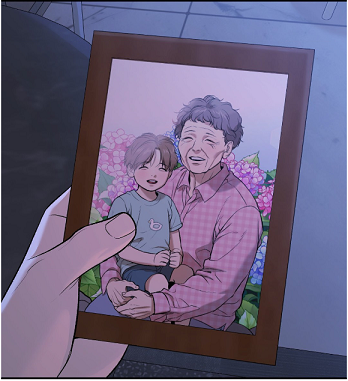
But let’s return our attention to the champion’s vision in episode 79. In that same duality (water/air) lies salvation. (chapter 79) The dream that wakes Jaekyung is not a nightmare but a revelation. He senses that the smirk is not the reality, but also the mask hiding misery. The greeting from the smiling Dan (chapter 79) — so unlike his real, exhausted self — is a vision of peace, of love unburdened by fear, while this grin exposes the truth. The dream, the realm of clouds, becomes a stage where the wolf shows and learns tenderness. The dream’s fear and indirect self-reproach (chapter 79) becomes action; remorse (chapter 79) turns into rescue.

That’s how I noticed that so far, the champion never greeted his room mate with a good morning and smile in the morning. (chapter 41) In other words, the dream is giving him clues as well how to behave: not only greeting, but also talking. What caught my attention is that during their two last breakfasts together (chapter 68), they didn’t talk at all (chapter 79) which contrasts to the star’s vision.
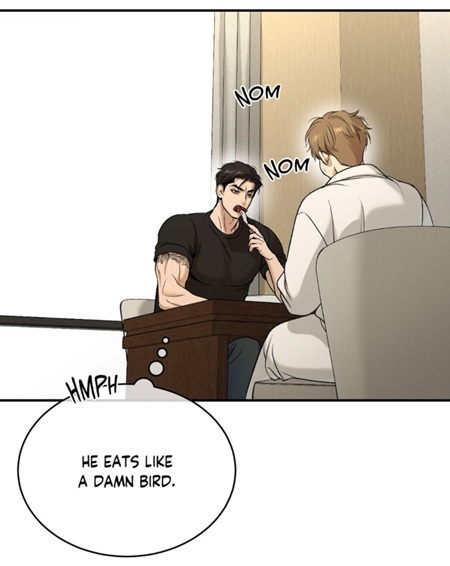
In the dream, he had fallen to his knees — a gesture of humility and unspoken remorse. Yet in reality, the fall takes a gentler form. (chapter 79) He does not kneel; he sits, his body settling softly against the floor as he catches Dan in his arms. The man once associated with dominance becomes a cushion, a pillow, a living anchor. His strength, once used to impose weight, now exists to absorb it. The fall is not toward repentance through pain, but toward tenderness through stillness.
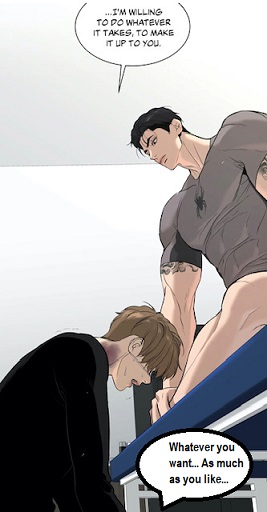
This inversion transforms descent into grounding. The wolf who once incited Dan to kneel (chapter 11) now becomes the one who receives the collapse. (chapter 79) His body — no longer an instrument of violence — turns into safety itself. In that moment, he is neither fighter nor emperor, but a quiet surface where another can rest. The fall that once signified defeat now marks awakening: the champion’s muscles, built for battle, finally serve their true purpose — to hold, not to harm; to bear, to protect, not to break.
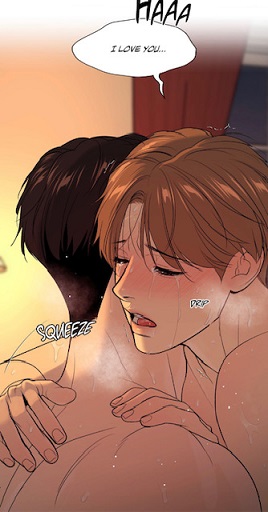
The Mercy Of The False Saint

That’s how I detected another pattern. Kim Dan’s speech is tethered to touch — every genuine confession or plea emerges only when he is held. Physical contact functions as emotional permission: the body grants what words alone cannot. His first “I love you” (chapter 39) escapes him in an embrace; his (chapter 66) (chapter 66) trembles out against Jaekyung’s chest; his (chapter 79) is whispered while clinging to the same body. Even as a child (chapter 57), he could only confide while being physically comforted. The grandmother’s embrace in chapter 57 becomes the prototype of this pattern — the last instance of safety tied to voice. Yet, crucially, that embrace was conditional and silencing. She soothed him but redirected his pain: (chapter 57) Instead of validating his pain and terrible experience, she absorbed it into her own narrative of endurance. The physical comfort coexisted with emotional invalidation — he was held but not heard.
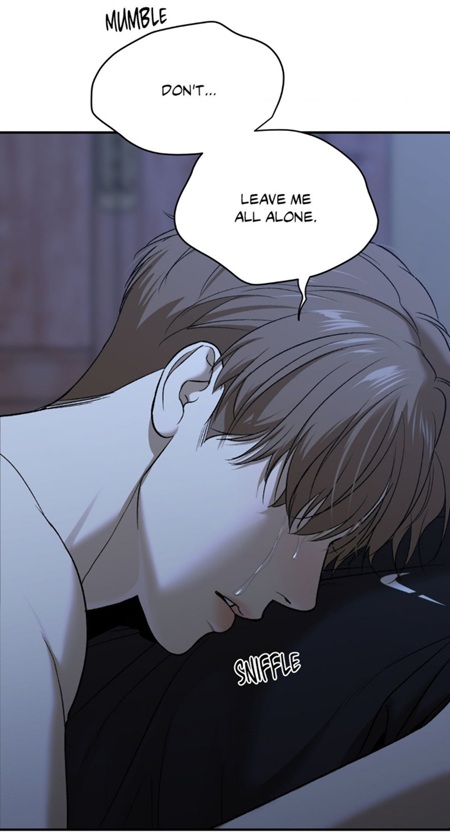
And this interpretation (the touch is triggering the doctor’s desire for communication) got even corroborated by the latest episode. (chapter 80) The moment the star was holding doc Dan’s hands, the latter started voicing more his emotions (fears, displeasure). (chapter 80) When Jaekyung takes his hands in the swimming pool, the gesture revives this primal language of reassurance. For the first time, the touch is neither coercive nor desperate; it’s sustaining. The handhold reverses the earlier dynamic — instead of silencing him, it gives him permission to speak. Furthermore, the champion is pointing out that he can rely on two things, the champion’s hands and the kickboard belt. This stands in opposition to the fake promise of Shin Okja. (chapter 57) (chapter 57) In other words, he is inciting the doctor to trust himself more and become independent. (chapter 80) (chapter 80) The champion’s words — “If you ever end up in the water, you can come back to shore as long as you know how to swim” — stand in quiet but radical opposition to the grandmother’s old reassurance: “You still have me.”
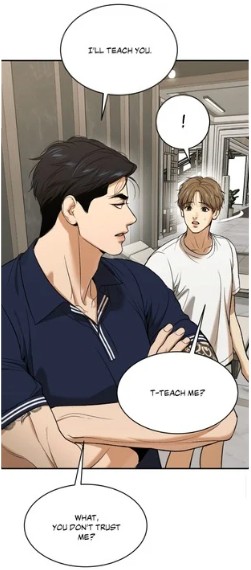
Both statements aim to comfort, yet they embody two entirely different philosophies of love. Shin Okja’s version of care was possession and control disguised as protection. Her “You still have me” offers solace by denying reality — her own mortality and it erased the boy’s suffering and loss and his capacity to cope. It promises stability but at the cost of autonomy: he is safe only through her. Love, in her logic, means dependence. Jaekyung’s line, by contrast, offers trust instead of control. (chapter 80) His comfort does not deny danger — he acknowledges the possibility of falling into the water — but he links survival to skill, not assistance and dependency. His statement affirms Dan’s agency: he can save himself. Once he can swim, he is strong enough. Where the grandmother sought to replace the absent parents (chapter 65), the champion seeks to restore the missing confidence.

This is why the swimming lesson in chapter 80 carries so much symbolic weight. It is not only about overcoming fear of water, but about learning to float between love and self-sufficiency. (chapter 80) He just needs to learn and trust his own body and skills. For the first time, someone tells Kim Dan that he doesn’t need to cling to live. The wolf’s hands do not promise eternal rescue; they teach assurance and confidence.

Through this opposition, Mingwa traces the transformation of care in Jinx: from the grandmother’s pitying dependency to Jaekyung’s empowering faith. The very moment the wolf steadies his trembling fingers, the doctor begins to voice his worries and fears, words that previously only surfaced through sleepwalking or half-conscious murmurs. That’s why I believe that this embrace (chapter 80) in the swimming pool carries transformative potential. It is not merely a gesture of survival, but an initiation into honesty. Surrounded by water, both men are stripped of pretense. And observe that Joo Jaekyung is not rejecting the physical embrace (chapter 80) contrary to the past. (chapter 28) (chapter 69) The wolf, who once relied on dominance and silence, is now allowing his fated partner to hug him. (chapter 80) He accepts his vulnerability and struggles. In the swimming pool, the athlete is also learning to reassure instead of command. Dan, who has long associated touch with consolation and suppression, begins to experience it as safety and trust.

In that moment, their bodies speak what their words still resist: trust me. (chapter 80) The embrace might become the very impulse that pushes them toward verbal honesty — toward saying what they have long hidden. For Dan, it means learning to voice his needs and desires without shame; for Jaekyung, it means acknowledging his feelings without fear of losing control or strength.

But let’s return our attention to the physical therapist’s childhood. (chapter 57) Dan came later to associate love with contradiction: touch equals permission to speak, yet speaking never brings resolution. His psyche learned that disclosure leads nowhere — the listener (the grandmother) offers affection, not change. That’s the reason why he came to suppress his thoughts and emotions and project onto his grandmother. Her way of dealing with pain was denial, rooted in her own fear of trouble and probably social judgment. From my point of view, it is related to the secrecy surrounding the family’s past.

Furthermore, for the hamster, the embrace is more than comfort — it is survival. (chapter 21) From childhood onward, being held becomes the only assurance that the world still contains care. When he woke crying and was taken into his grandmother’s arms (chapter 21), the patting gesture did not merely quiet his fear; it taught him that consolation requires contact. Yet this early lesson carried a hidden cost: it trained him to associate peace with submission and silence, and affection with dependency. Therefore the swimming lesson contains another important life lesson: it is about choice! Joo Jaekyung wants to be “chosen” by the physical therapist, hence he wants to conquer his heart. (chapter 80) That’s the reason why he can not change doc Dan’s heart and mind with the new clothes. For that, he needs to reveal his “weakness” to the physical therapist.

When the puppy died, Dan instinctively tried to recreate that lost safety. (chapter 59) His hand resting on Boksoon’s fur repeats the same motion — the pat once given to him, now returned to another being in pain. What he offers the animal is precisely what he has always longed for: warmth without judgment, touch without condition.

This explains why every later confession — “I love you,” “Don’t leave me,” “I’m sorry” — is born inside an embrace. Speech emerges only when his body feels that safety again. Yet, until now, the wolf’s touch has never been a true confession. The wolf initially held him through instinct (chapter 4), not intention: a reflex of possession, not communication. As time passed on, it changed, yet in the bathtub (chapter 68), Dan fell asleep against him so that he could never experience the athlete’s care (chapter 68); in the morning, Jaekyung acted as though nothing had happened. Then on the dock, Joo Jaekyung expressed his relief (chapter 69), yet he never explained the reason behind his behavior. Besides, he removed himself from Doc Dan very quickly. There was no continuity between touch and word, no bridge from body to heart. The embrace between them was marked by silence.

Only now, in the night of chapter 79, does that change. (chapter 79) The embrace that once silenced finally begins to speak. Dan’s trembling body against Jaekyung’s chest reactivates all those buried associations — fear, need, longing — but this time, the silence is attentive. The champion listens. The gesture that once merely soothed now confesses.

When Shin Okja finally apologizes (chapter 53), she frames her guilt in terms of debt, not grief. What she cannot say is: “I’m sorry your parents are gone, and I buried the truth.” Her compassion never touches the core wound. Instead, she redirects her remorse into pity (chapter 65), a safer, one-sided emotion that keeps her in control. Pity allows her to appear virtuous while avoiding responsibility. It transforms shared pain into hierarchy: she the giver, he the grateful recipient.

This emotional economy defines Kim Dan’s childhood. He was loved through guilt, not through recognition. Every tender gesture — the pat on the head (chapter 57), the hug after bullying — carries the unspoken message: “You’re unfortunate, but you still have me.” That is not empathy; as she is not showing any sign of distress and pain. In my eyes, it is containment. It keeps the child dependent, silent, and bound by gratitude.

Hence, her confession to the celebrity (chapter 65) reveal the same mechanism. The focus remains on her heart, her pain, her goodness, not on his loss. She centers herself within his tragedy. Pity becomes a mask for unacknowledged guilt — perhaps linked to the parents’ disappearance or to choices she justified under social pressure. Her “mercy” is, in truth, a way to maintain her moral purity at the cost of his emotional autonomy.

Through this lens, it becomes clear why Dan needs reciprocal touch to speak. Pity silenced him; touch, when offered without pity, finally frees his voice. This is why the doctor’s embrace in episode 79 marks such a decisive turning point: it is the first time doc Dan is holding someone and that person is taking his words and pain seriously. The champion does not silence or reinterpret what he hears; he simply receives it. For the first time, Dan’s trembling voice is met not with pity, denial, or instruction — but with presence. (chapter 79)

Finally, this moment also exposes Jaekyung’s awakening. Until now, he had followed the grandmother’s advice as if it were gospel: (chapter 65); “bring him to a big hospital so that he can take pills” (chapter 65) (chapter 65) He trusted her words and advises. I would even add that he believed that compliance equaled real care. Yet the night by the balcony teaches him otherwise. (chapter 79) Despite doing everything the “saintly” grandmother prescribed, Dan is still suffering. The illusion collapses: her mercy never healed, it merely concealed. Interesting is that she never brought up to the athlete the doctor’s loss of weight in front of the ocean. Yet, she had noticed it. (chapter 57). Everything evolved around his lack of sleep and his dependency on her. (chapter 65) However, in episode 79, for the first time, the champion notices it. (chapter 79) It is important because very early on, the doctor Cheolmin had already detected his malnutrition: (chapter 13) In other words, the physical therapist’s depression and eating disorder were already existent before meeting the “wolf”. And what did the mysterious friend tell to the “wolf”? He shouldn’t wait out of fear that he might regret it later! (chapter 13) As you can see, “sorry” is the link between the two doctors and the celebrity.
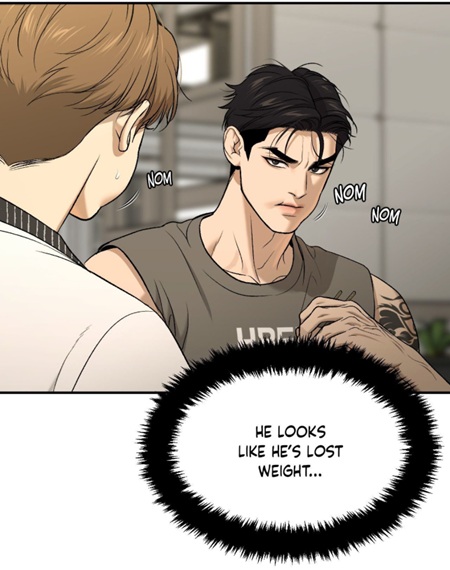
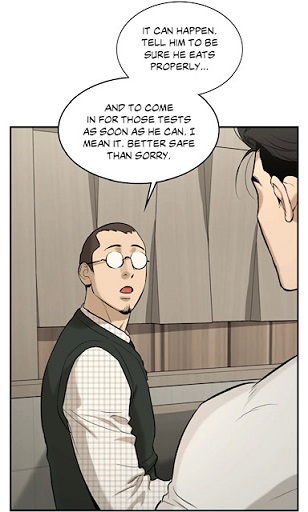
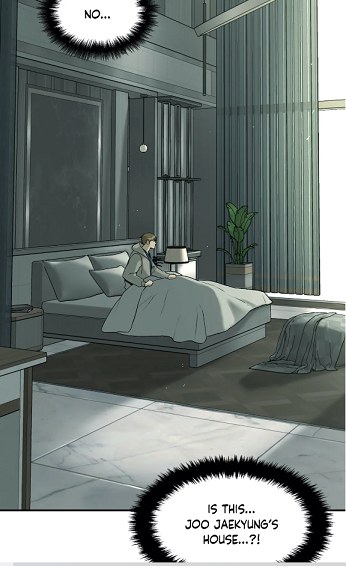
Thus, the “wolf” realizes that love cannot be delegated to duty. (chapter 79) What Dan needs is not obedience to the old woman’s script, but presence, dialogue, and trust. The champion must now do what she never did — look at pain without denial, listen without pity, and finally speak from the heart. This means that after that night, the wolf will gradually change not only his vocabulary, but also his tone and gestures. His metamorphosis will be complete with the birth of the kind and sweet Joo Jaekyung! (chapter 21) Imagine that I had written this part before the release of episode 80!

The secret behind doc Dan’s room

Another detail caught my attention in episode 79 which was confirmed with the publication of episode 80. Doc Dan’s bedroom has always been associated with illness and as such rest! (chapter 21) (chapter 29) (chapter 61) Hence it is no coincidence that while sleeping in his own bedroom, the physical therapist had a relapse. (chapter 79) Because the champion had come to the conclusion that his own bedchamber was linked to sex (chapter 78) and as such “wrongdoings”, the next day, he must have suggested to doc Dan to sleep together in his bed. This explicates why both main leads are sleeping in doc Dan’s bedroom at the end of episode 78: (chapter 78) This shows that the star is listening more and more to his fated partner (chapter 78) And though he had another “accident”, the former is never bringing it up to doc Dan. There’s no blame or accusation. The athlete is keeping these accidents as secrets. However, pay attention that he is making sure that doc Dan is resting. (chapter 80) Notice that he joined him later, acting as if they had not shared the same bed. Gradually, the champion is giving back doc Dan’s freedom and privacy. He is guiding him to take care better of himself by using his own words. (chapter 27) Striking is that the champion always chose the left side of the bed (chapter 79), while he came to sleep much better, when he slept on the other side of the bed: (chapter 66) Thus I deduce that doc Dan is destined to take over his grandmother’s position in the bed: (chapter 21) And this observation seems to be validated by chapter 80. (chapter 80) The star was sitting on the right side of the bed while watching his sleeping partner. Why? It is because he can see his face. But by lying on the left side, doc Dan came to turn his back to him. (chapter 78) But if they switch places, the wolf should be able to watch his partner’s face. And now, pay attention to the way Mingwa placed the new embrace in the swimming pool: (chapter 80) Doc Dan is placed on the left side…. and that’s where the heart is placed. Doc Dan’s racing heart is displaying not only the revival of his repressed affection for the champion, but also his desire to live. He is not truly suicidal, as all his attempts were unconscious choices.
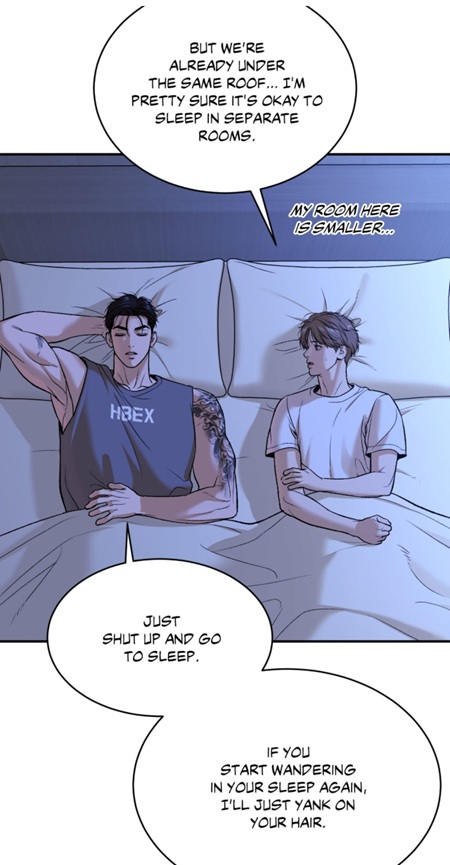
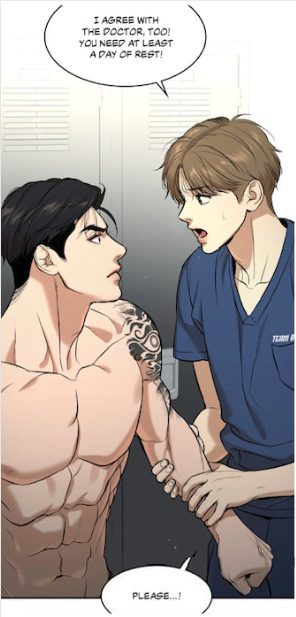
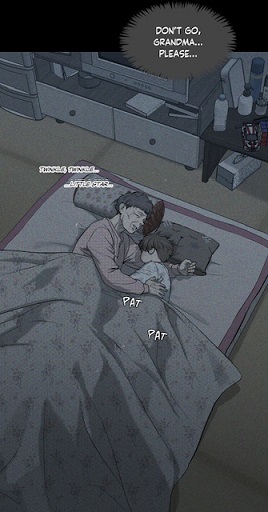
The second “accident”

I have to admit that after reading this image (chapter 78), it was clear to me that the doctor would make a new suicidal attempt during his sleep walking. I was already anticipating him to go to the rooftop, thus the new incident didn’t catch me by surprise. Yet, chapter 79 gave us an important clue about doc Dan’s dissociative state (sleepwalking). They were all triggered: (chapter 79) Because of the champion’s cold gaze, doc Dan felt rejected and even hated. (chapter 79) He had the impression that he wouldn’t meet his “expectations”. Observe the parallels between the champion’s dream (chapter 79) and the doctor’s reply in front of Shin Okja: (chapter 57) We have the doctor’s fake smile which is strongly linked to rejection (chapter 57) and expectations. And what is the other common denominator? His self-loathing and immense guilt. He has the feeling that he is not lovable. In my opinion, doc Dan is suffering because no one is listening to him at all. So far, they all projected their own thoughts onto him. The reality is that doc Dan already had a hard time before moving to the seaside town, (chapter 11) yet she failed to notice it or refused to face his struggles, as they were related to their poverty.

Because he lived alone for a long time without any physical touch (chapter 5), he lost his voice and became a ghost. It is no coincidence that in this scene, doc Dan was silent despite the caress. He was avoiding any topic that could trouble his grandmother. He accepted to remain a little boy in her eyes. But thanks to the wolf, doc Dan is learning to become strong and independent so that he can decide about his life. The swimming lesson is pushing him to overcome his abandonment issues.
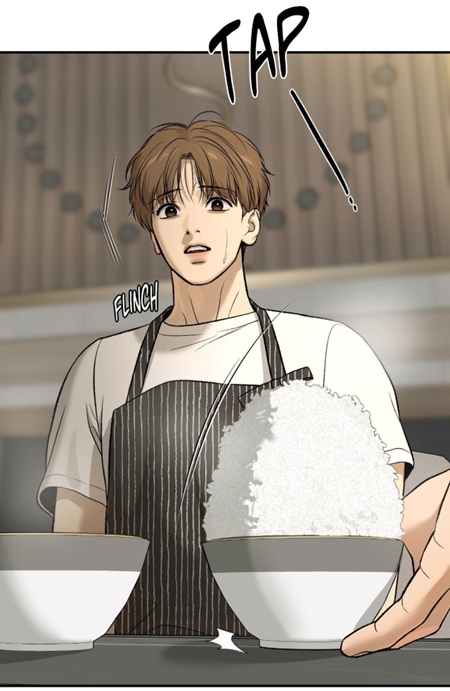
The Songs of Change

While I was on my way to visit my son ( a 6 hours trip), I listened to an old CD from French singer Jean-Louis Aubert entitled Ideal Standard. While listening to the music, three songs — “On vit d’amour,” “On aime comme on a été aimé,” and “Parle-moi” caught my attention. They reminded me a lot of the main couple.

If the previous night (chapter 79) marked the end of a circle, then the next day announces a new rhythm — one that no longer follows the tempo of fighting or guilt, but of tenderness. These 3 songs form a hidden soundtrack to this transformation. They mirror, with startling precision, the inner journey of the champion and his fated companion.

1. “On vit d’amour” — Living on Love

On vit d’amour / Et d’eau fraîche / On vit d’amour, de rien du tout…
We live on love and fresh water / We live on love, on almost nothing at all.

On vit d’amour FrenchWe live on Love English
On vit d’amour
Dans le regard des autres
On vit d’amour
Dans le mien et le votre
On vit d’amour
Quand il n’y a plus d’eau fraiche

On vit d’amour
Tout au fond de la dèche

Laisse le briller
Éclairer
Laisse le venir
Laisse le aller

Car on vit d’amour
On vit d’amour
Sous le bong et les pluies

On vit d’amour
Dans la boue et la suie
On vit d’amour
Jusqu’au bout de la nuit

Laisse le briller
Éclairer
Laisse le venir
Laisse le aller
Laisse lui vivre sa vie d’amour
Car on vit d’amour
On vit d’amour

Je mens, j’aime tant ta main


On vit d’amour
Et je bois à ta bouche
On vit d’amour
On vit d’amour
Toujours

Laisse le briller
Éclairer
Laisse le venir
Laisse le aller
Laisse à l’amour sa liberté

On vit d’amour
On vit d’amour
On vit d’amour
On en vivra
Toujours (2*)

Laisse le briller
Éclairer
Laisse le venir
Laisse le aller
Laisse lui vivre sa vie d’amour
We live on love
In the eyes of others
We live on love
In mine and in yours
We live on love
When there’s no more fresh water
We live on love
At the very depth of poverty
Let it shine,
Let it light,
Let it come,
Let it go.
For we live on love,
We live on love
Under the bong and the rain,
We live on love
In the mud and the soot,
We live on love
All the way through the night.
Let it shine,
Let it light,
Let it come,
Let it go,
Let it live its own life of love,
For we live on love,
We live on love.
I lie — I so love your hand,
We live on love,
And I drink from your mouth,
We live on love,
We live on love,
Forever.
Let it shine,
Let it light,
Let it come,
Let it go,
Let love have its freedom.
(We
Live on love, we
Live on love, we
Live on love,
And we’ll live on it
Forever.)

This refrain captures the quiet revelation at the heart of Jinx: love is sustenance.
Until now, Jaekyung has lived on adrenaline, duty, and pride — mistaking physical dominance for vitality. His meals with Dan were about nutrition (chapter 79), not communion; his affection, an extension of performance (chapter 79). Yet as the doctor grows thinner and more exhausted, the wolf begins to understand what “starvation” truly means. (chapter 79) Dan’s body becomes a metaphor for their shared deficiency — not of food, but of warmth. Although the athlete’s actions were all well-meant, he failed to touch doc Dan’s heart due to the way he spoke to his loved one: (chapter 79)

In On vit d’amour, Aubert contrasts material survival with emotional survival. “We live on love and almost nothing” rejects the capitalist or competitive logic that defines Jaekyung’s world (MFC, rankings, contracts). The line speaks instead to the simplicity of presence — the kind of nourishment that Dan quietly provides through care, routine, and wordless understanding. No wonder why the athlete failed to move doc Dan’s heart by offering so many clothes in episode 80.

This song thus signals the first shift: Jaekyung begins to eat differently — not just at the table, but emotionally. The wolf who once devoured life is gradually learning to taste it through love.

2. “On aime comme on a été aimé” — We Love as We Have Been Loved

On aime comme on a été aimé We love as we have been loved. English translation
On n’invente pas un sentiment
Les baisers donnent l’alphabet
L’amour nous griffe
Ouvre ses plaies
L’amour nous soigne
L’amour nous fait
On aime comme on a été aimé

C’est cela qui nous fait courir
De reproduire et faire grandir
Ce qui nous a été donné
Sans jamais pouvoir en parler
On aime comme on a été aimé

C’est dans les mains de nos parents
C’est dans les coeurs de nos amants
Regard aimé, regard aimant
C’est le plus clair de notre temps
Le plus obscur de nos tourments
On n’apprend pas un sentiment
Même si on veut faire autrement
On aime comme on a été aimé

On dit les chiens n’font pas des chats
Et que l’on est que c’qu’on connait
Qu’on désire ce qu’on n’connait pas
Un autre chien, un autre chat
On aime comme on a été aimé

Toutes ces secondes de tendresse
Dérobées à  l’emporte-pièce
Toutes les claques, les maladresses
Pour que ça dure, pour que ça cesse
On aime comme on a été aimé

C’est dans les mains de nos parents
C’est dans les bras de nos amants
C’est dans les yeux de nos enfants
C’est le plus clair de notre temps
Le plus obscur de nos tourements
On n’invente pas un sentiment
Même si on veut faire autrement
On aime comme on a été aimé

Et j’aime comme tu m’as aimé
We don’t invent a feeling.
Kisses give us the alphabet.
Love scratches us,
Opens its wounds,
Love heals us,
Love makes us.
We love as we have been loved.

That’s what makes us run —
To reproduce and to grow
What was once given to us,
Without ever being able to speak of it.
We love as we have been loved.

It’s in the hands of our parents,
It’s in the hearts of our lovers.
A loved gaze, a loving gaze —
It’s the clearest part of our days,
The darkest part of our torment.
You don’t learn a feeling,
Even when you want to do otherwise.
We love as we have been loved.

They say dogs don’t make cats,
And that we are only what we know,
That we desire what we do not know —
Another dog, another cat.
We love as we have been loved.

All those fleeting seconds of tenderness,
Stolen in haste,
All the slaps, all the clumsy gestures —
So that it lasts, or so that it ends.
We love as we have been loved.

It’s in the hands of our parents,
It’s in the arms of our lovers,
It’s in the eyes of our children.
It’s the clearest part of our days,
The darkest part of our torment.
We don’t invent a feeling,
Even when we want to do otherwise.
We love as we have been loved.

And I love as you have loved me.

On aime comme on a été aimé / On hait comme on a été haï…
We love as we have been loved / We hate as we have been hated.

This lyric exposes the chain both men must break. The author’s line suggests that love is not spontaneous but inherited — modeled through wounds and care. In his childhood, Jaekyung learned rather hatred and misguided affection as domination, silence, lies and endurance, while Dan learned it as sacrifice and appeasement in his grandmother’s care. Both were taught that affection or recognition was not free — through obedience, perfection, or pain.

Throughout Jinx, each reenacts the love they received: the champion demands submission, the therapist offers self-effacement. Yet chapter 79 introduces a turning point — they begin to unlearn this inheritance. (chapter 79) The unconscious apology “I’m sorry, Mr. Joo” is not submission; it is vulnerability freely given. The wolf’s fears in his sleep are not weakness (chapter 79); they are an echo of the love and tenderness he never received.

In this sense, Aubert’s line becomes prophetic: to love differently, they must be loved differently first. This means that b spending time with each other, they will learn how to love each other properly. This is the essence of growth: transforming the very grammar of intimacy they once feared. The story becomes a re-education of the heart — the rewriting of emotional syntax. And episode 80 is the perfect illustration for this change. In love we can make mistakes, but it is important to detect them and learn from them.

3. “Parle-moi” — Talk to Me

Parle-moi, parle-moi de toi / Qu’est-ce que tu veux, qui tu es, où tu vas…
Talk to me, talk to me about yourself / What do you want, who are you, where are you going…

Parle-moi, parle-moi de nous / Tous les deux, qu’est-ce qu’on veut, qu’est-ce qu’on fout…
Talk to me, talk to me about us / The two of us, what do we want, what are we doing…

Parle-moi Talk to Me
Parle-moi
Ce qui nous vient
Nous vient de loi
Ce qui nous tient
Jamais ne nous appartient vraiment

Ce qui nous tue
Gagné, perdu
Ce qu’on a cru
On en a perdu la vue vraiment

Parle-moi, parle-moi de toi
Qu’est-ce tu veux, qui tu es
Où tu vas

Parle-moi, parle-moi de toi
Qu’est-ce tu dis, fais entendre
Ta voix

Ce qu’on nous vend
Ce qu’on nous prend
Mais qu’est-ce qui nous prend
On dirait qu’on a plus l’ temps
A rien
Perdu de vue
Perdu tout court
Peau tendre, coeur pur
On dirait qu’on a plus l’ goût
A rien

Parle-moi, parle-moi de toi
Parle-moi de tes doutes de tes choix
Parle-moi, parle-moi de toi
Qu’est-ce tu dis, plus fort
J’entends pas
Parle-moi de toi

Alors parle-moi, parle-moi de nous
Tous les deux, qu’est-ce qu’on veut
Qu’est-ce qu’on fout
Parle-moi, parle-moi de nous
Avec toi j’irai n’importe où
Parle-moi de toi
What comes to us
Comes from afar.
What holds us
Never truly belongs to us.

What kills us —
Won or lost,
What we once believed —
We’ve truly lost sight of it.

Talk to me, talk to me about you.
What do you want, who are you,
Where are you going?

Talk to me, talk to me about you.
What do you say?
Let me hear your voice.

What they sell us,
What they take from us —
But what’s gotten into us?
It feels like we no longer
Have time for anything.
Lost from sight,
Lost altogether —
Tender skin, pure heart.
It feels like we no longer
Have the taste for anything.

Talk to me, talk to me about you.
Talk to me about your doubts, your choices.
Talk to me, talk to me about you.
What are you saying? Louder —
I can’t hear you.
Talk to me about you.

So talk to me, talk to me about us —
The two of us, what do we want,
What are we doing?
Talk to me, talk to me about us.
With you, I’d go anywhere.
Talk to me about you.

This is the anthem of the new cycle — the song of conversation.
In the beginning, Jaekyung’s language was pure command: “ (chapter 38) (chapter 79) ,” eat” . (chapter 79) His speech created hierarchy, not connection. Aubert’s plea, “Parle-moi”, reverses this logic: it is a call to dialogue, to mutual self-revelation. It embodies exactly what Jaekyung’s dream anticipates — the moment when he will learn to speak with Dan, not at him.

When, in the vision, Dan smiles and says (chapter 79) the tone has changed entirely. The greeting is not fearful or dutiful; it is gentle, open, normal — the image of domestic peace. The dream thus becomes prophetic: language, once the instrument of control, will become a bridge.

Aubert’s words — “Parle-moi de tes doutes, de tes choix” — invite the very vulnerability Jaekyung has never practiced. The wolf who only barked commands must now learn to whisper doubts. The day he speaks softly — “Parle-moi” — will be the day his transformation is complete. Moreover, observe that his repeated plea, “Parle-moi” (“Talk to me”), moves from singular to plural — from me to us. The pronoun shift is decisive: it marks the passage from individual solitude to the possibility of relationship. As long as the “me” dominates, there is distance; only when they learn to say “us” can love begin to exist as dialogue, not projection.

This last strophe, where me dissolves into nous, mirrors precisely where Jaekyung and Dan now stand. They share space, touch, even breath — but not yet language. They might be sharing the same bed, but they don’t talk really to each other and confide to each other. (chapter 80) So far, the nights were full of gestures, yet empty of conversation. Jaekyung would often command and Dan accept everything. Words, when spoken, were often either wounds or vanished into silence. Thus, Aubert’s refrain becomes prophetic: as long as they do not talk, they cannot become a couple.

The line “Avec toi j’irai n’importe où” (“With you, I’d go anywhere”) contains both promise and condition. It imagines a future that depends on mutual speech. To “go anywhere” is not to flee, but to move together — something the two protagonists have never managed. Their shared journey remains suspended in the present, circling between misunderstanding and longing. The dream in chapter 79 — where Dan finally greets him with a smile and a “Good morning, Mr. Joo” (chapter 79) is the first glimpse of this future tense, a promise that conversation will one day replace command. Strangely, this observation was confirmed the new episode:

For now, the song stands as both prophecy and warning: without dialogue, they remain me and you, parallel solitudes orbiting the same pain. There’s still no “we” between them yet. Only when Jaekyung learns to parler — not shout, not order, but truly speak — will me become us, and their love find a voice strong enough to last.

A Chanson of Renewal

Taken together, the three songs form a triptych of metamorphosis:

  • “On vit d’amour” teaches Jaekyung that love is nourishment and a source of happiness, not distraction.
  • “On aime comme on a été aimé” forces both men to face the ghosts of their past and their abandonment/trust issues so that they can love their partner properly.
  • “Parle-moi” charts the path forward — communication as redemption.

They are not merely songs; they are stages of awakening.
From hunger to empathy, from repetition to reinvention, from silence to speech — Aubert’s lyrics sketch the same arc that Jinx now traces.

If Jaekyung once fought to dominate the world, he now fights to pronounce gentleness correctly. And when he finally dares to speak — not as a champion, but as a man who listens — he will fulfill the promise implicit in Aubert’s refrain:

“Avec toi j’irai n’importe où” — With you, I’d go anywhere.

The biggest wish doc Dan has is to go on a trip and walk through the woods with a loved one. The old circle closes; the new begins — not with a punch, but with a word.

Feel free to comment. If you have any suggestion for topics or Manhwa, feel free to ask. If you enjoyed reading it, retweet it or push the button like. My Reddit-Instagram-Twitter-Tumblr account is: @bebebisous33. Thanks for reading and for the support, particularly, I would like to thank all the new followers and people recommending my blog.