

Please support the authors by reading the manhwas on the official websites. I am also using doctor Frost as reference again. This is where you can read the manhwas: Jinx and Doctor Frost. But be aware that the first Manhwa is a mature Yaoi, which means, it is about homosexuality with explicit scenes. Here is the link of the table of contents about Jinx. Here is the link where you can find the table of contents of analyzed manhwas. Here are the links, if you are interested in the first work from Mingwa, BJ Alex, and the previous essay about Jinx “(Un)Wanted Love“.
It would be great if you could make some donations/sponsoring: Ko-fi.com/bebebisous33 That way, you can support me with “coffee” so that I have the energy to keep examining manhwas. Besides, I need to cover up the expenses for this blog.
Anyone can imagine that with the name “emperor”, I am referring to the fighter Joo Jaekyung. That’s his nickname in the MMA world. 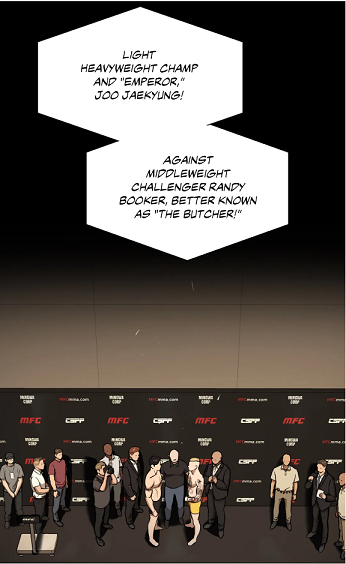 (chapter 14) On the other hand, some readers might wonder why I am connecting Kim Dan to princess (Prince S). I have many reasons for this association.
1. Princess Pyeonggang and Kim Dan
Have you ever heard about the Korean folktale of Princess Pyeonggang and her “idiot” husband Ondal? It is the story of a “stubborn” princess who helped her timid and poor husband Ondal to become a famous general during the 3 kingdoms era.
The Odd Couple
When she entered Ondal’s humble home, Princess Pyeonggang immediately explained to his weak mother that she wanted to marry her son, who was out fetching tree bark for food. His mother identified the princess as a person of noble upbringing by her perfume and soft skin. The mother explained that she and her son were very poor and that a woman of high birth had no place there.The princess, however, showed no change in her determination. When Ondal arrived, the princess once again explained her reason for visiting. Ondal was instantly suspicious, however, and angrily sent her away. After the princess spent the night outside his house and offered to buy him a new house, food, land and a horse with the money she earned by selling her gold ring, Ondal was soon won over by her sincerity. The princess not only brought Ondal and his mother out of poverty, but also paid for his education and gave him professional training in the martial arts. https://www.korea.net/NewsFocus/Culture/view?articleId=122048
Moreover, their marriage transcends social classes, which reminds us a lot of Jinx. On the other hand, if we compare the Manhwa with the legend, the champion resembles more to the princess due to his status, actions and personality. He is the one helping the doctor, and Kim Dan appears more like the fool “husband” with his weak and poor relative. However, I came to make the association between the famous Korean princess and the physical therapist, when I was rereading Doctor Frost. How so?  (chapter 30) This woman, named Sihyun, is suffering from Dependent Personality Disorder. And the author of the Webtoon Doctor Frost called her story: “The tears of Princess Pyeonggang”. Due to her personality, she was linked to the famous “princess”. She would do everything for her companions, yet she kept getting dumped. What caught my attention is that both women defined themselves through their partner. Their ultimate goal in life is to assist them, to make the other happy or recognized. But how is it a problem?
Let me give you an example with Sihyun and her first boyfriend.
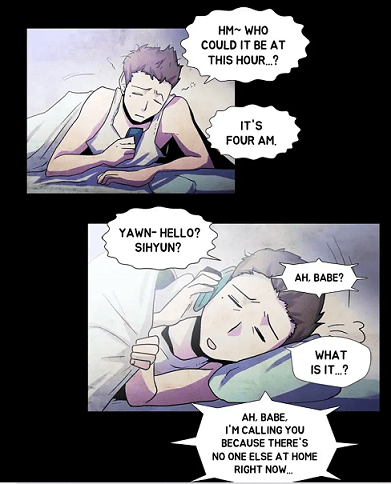
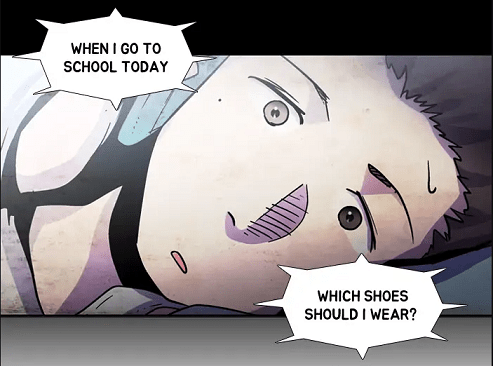
Yes, she asks her first boyfriend to make choices and as such decisions. She is unable to voice her own opinion, to make a statement. She needs the support and advices from her boyfriends. By asking for her partner’s judgment, she imagines that she is respecting him. Nonetheless, the call at such a hour looks more like intrusion and disregard. By acting this way, she burdened all her boyfriends so that at the end, they all felt the need to break up with her. 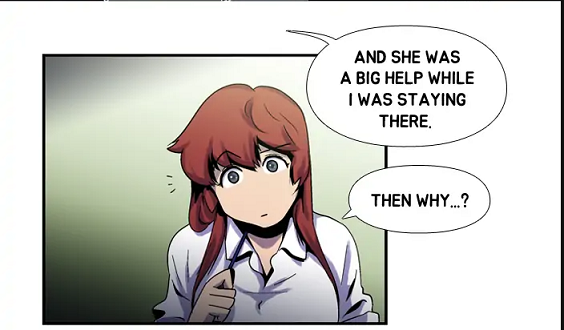
 (chapter 33) What appeared as caring turned out to be a load, for the partners were all forced to be responsible for her and in every aspect of her life. They definitely felt asphyxiated, hence they could only get sick of her. Interesting is that this person would find shortly after the separation a new boyfriend, a sign that she could not live on her own.
 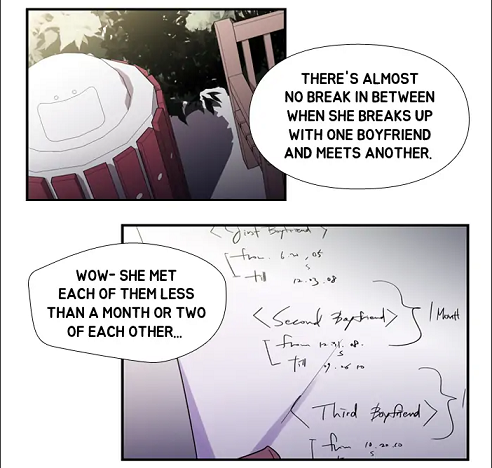 (chapter 33) And now, you are wondering how Sihyun is similar to Kim Dan, who only had one person in his life before he met the champion. It is related to traumas in their childhood.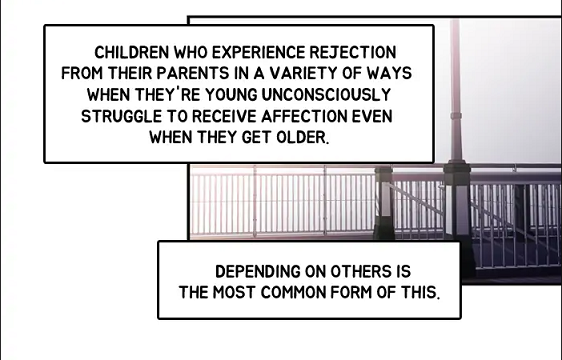

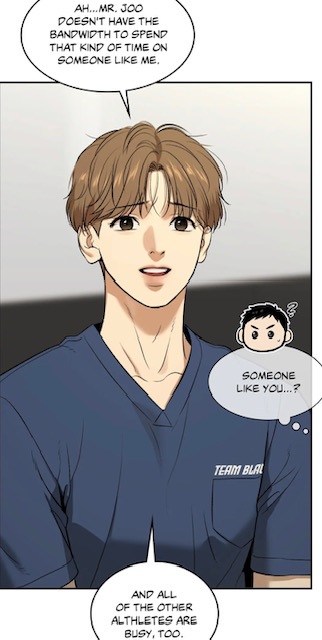
 (Doctor Frost, chapter 39) After reading this, Jinx-philes can realize that Kim Dan is also suffering from Dependent Personality Disorder, though it is less obvious. He got abandoned by his parents making him feel insecure.
 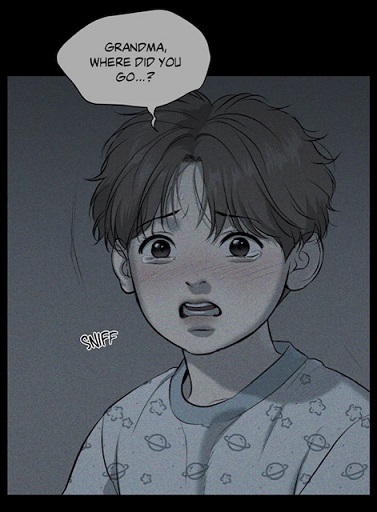 (chapter 21) We could detect his low self-esteem
  (chapter 25)
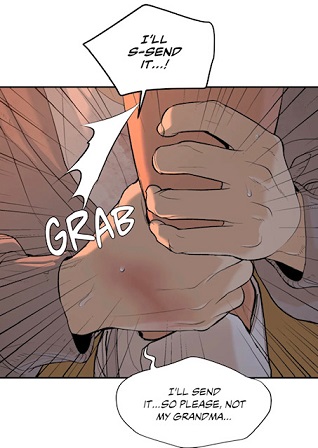
  (chapter 46) and his overprotectiveness
  (chapter 16)
  (chapter 26)
  (chapter 42) on many occasions. He was risking his livelihood and health for the sake of others (his halmoni, Potato and Joo Jaekyung). His selflessness is actually the sign of his DPD. He had no purpose or ambition in his life… That’s why he is not able to project himself in the future. Until chapter 45, his life and future was determined by the celebrity,
  (chapter 42) and before it was by his halmoni’s fate.
  (chapter 19) However, here please don’t get me wrong. For me, the athlete is the physical therapist’s emancipator. This huge argument in the dining room pushed him to differentiate himself from the champion. In my eyes, Kim Dan would have returned to his old bad habits… relying on someone else, sacrificing himself for someone’s else sake. He would have neglected his career in the end.
As you can see, the problem is that his personality is affecting his career. At no moment, he voiced his own opinion concerning the champion’s health. He always used other doctors as references 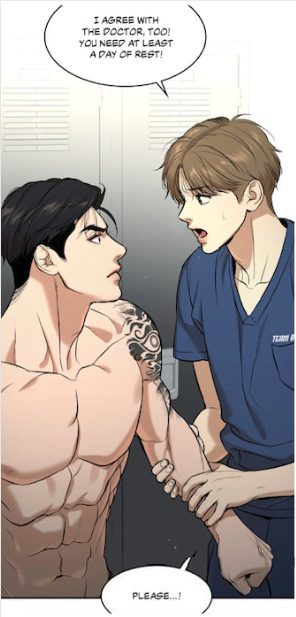 (chapter 27)
  (chapter 42) or he delegated the examination to a hospital.
  (chapter 31) Here, we get an explanation why he couldn’t detect the trick from Choi Heesung. He feared to make a diagnosis on his own, as he didn’t desire to question the words from the comedian. The hospital seems to be the sacred place in the doctor’s eyes.
 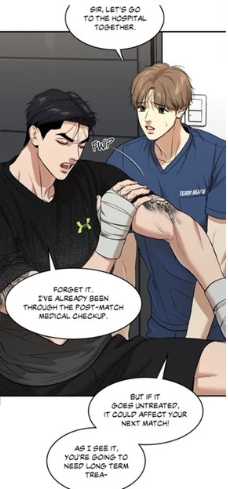 (chapter 41) There, nothing can go wrong. But by entrusting his patients to hospitals, he didn’t realize that he was appearing as untrustworthy or even “incompetent”. His lack of confidence and hesitation explicate why the athlete replied to his suggestion like this:
  (chapter 41) How could he question the doctor from MFC, when he kept hiding behind a hospital or the words from other physicians? That’s how the physical therapist got silenced. He couldn’t confront the athlete with his diagnosis. Interesting is that he never gave him the file later!
  (chapter 42) Consequently, it is not surprising why the champion complained about the doctor’s negligence. The latter was avoiding any responsibility in the end. On the other hand, the report is the symbol of his hard work, but also of his knowledge. That’s the reason why I am still considering the dispute in chapter 45 as a good omen for the physical therapist. He needs to develop his own identity. They are two different people. He needs to live for himself, to give a meaning to his life and not: (Doctor Frost, chapter 30)
Nevertheless, one detail caught my attention in this panel: (chapter 27) The presence of the personal pronoun “I”. Contrary to the conversation in the car (chapter 42), where there is no personal pronoun “I”, the doctor made a mini-statement. Jinx-philes can now grasp why the champion asked him to become responsible for his day-off.  (chapter 27) That’s how it dawned on me why the doctor reverted to his old habits (not participating to the meeting, taking odd jobs, not voicing his own judgment, relying on others) after the night, when he was treated as sex toy. However, in my eyes, the trigger for this switch was the release of the tabloid article.
  (chapter 35). Why did the doctor appear so confident in front of his client to the point that he could reject his hand after going to the hospital?
  (chapter 27) It is because his self-esteem had been boosted by Dr. Lee. The latter had complimented him which didn’t fall on deaf ears. However, the relationship between the respectable hospital and the athlete went sour due to his article.
 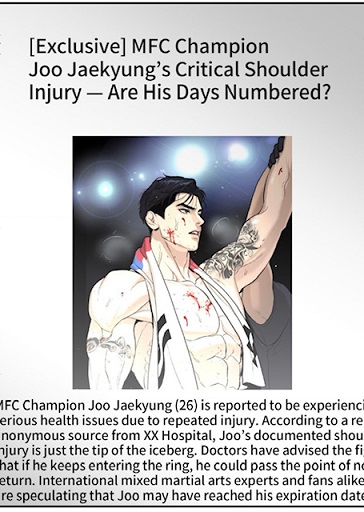 (chapter 35) Imagine what it meant for Kim Dan. He could only remain passive, as he is called “doctor”. He views himself as a member from the medical field. Furthermore, observe what the sports therapist told him during the treatment session:
 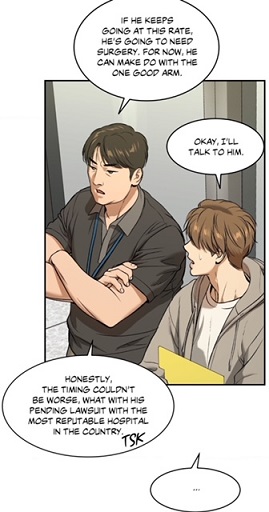 (chapter 42) He mentioned the lawsuit against the most reputable hospital. The dispute could only diminish his self-esteem. As time passed on, there is no ambiguity that this lawsuit must have burdened more and more the physical therapist. Besides, there is no doubt that he felt some loyalty towards doctor Lee who had been complimenting him. Secondly, let’s not forget that despite his “efforts”, he had not been able to convince his patient to stop training for one day.
 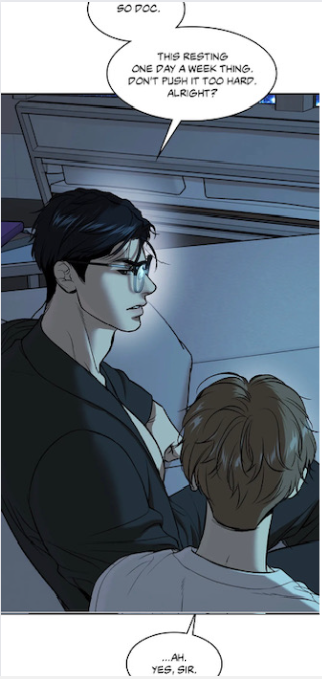 (chapter 29) Hence he jumped to the conclusion that his patient would not listen to him anyway. (chapter 42)
After being confronted with harsh reality, he is forced to reflect on his own situation, to worry about himself. That’s the reason why I judge this scene as a positive moment in the doctor’s life. He is no longer seeking love and reliance on others in order to value himself.  (chapter 46) This is not surprising that Mingwa zoomed on his feet.
  (chapter 46) It is full of symbolism. For the first time, he is standing on his own feet. His walk in direction to the trash bin illustrates his choice.
 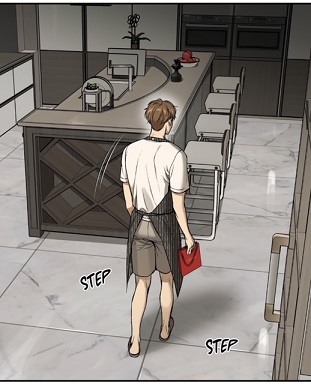 (chapter 46) Besides, he is using the personal pronoun “I”.
  (chapter 46) It is his Coming-Of-Age. He is on the verge to become independent. On the other hand, he didn’t fight back verbally against his boss. He accepted his reproach.
  (chapter 46) He was just a physical therapist and nothing more. This shows his lack of criticism. He is still not mentally strong enough to question the champion’s words and argue back. In the past, he could do it, for he was identifying himself with his grandmother and her values.
  (chapter 18) This signifies that he needs to develop his own philosophy and values. What does he treasure in his life?
And here I feel the need to bring up the green-haired guy.  (chapter 42) The latter was also dependent on the champion, but his “addiction” was money and not love or recognition. Therefore he picked up the money before leaving the flat
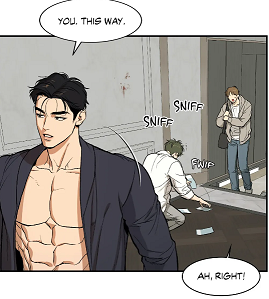 (chapter 2), while the other threw away the expensive keychain
  (chapter 46). This scene exposes the return of Kim Dan’s dignity. This comparison reinforces my interpretation that the champion misjudged the doctor’s present and actions. He imagined that Kim Dan had been acting like his “previous sex-partners” or stans. They would offer him some gifts in exchange of favors. Another contrast with the goblin is the absence of a fight and discussion.
 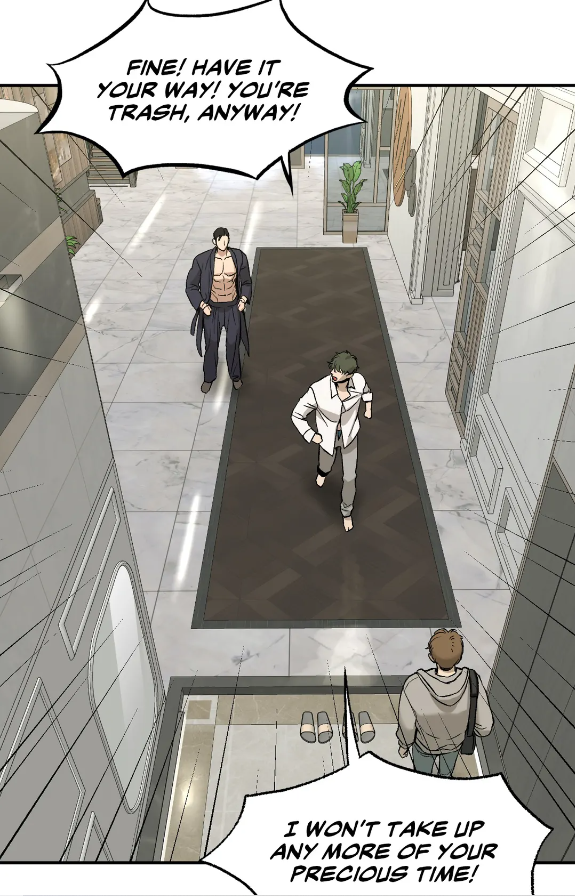 (chapter 2) I would even add that contrary to the green-haired guy, the doctor is not judging his patient’s personality, he is blaming himself. (chapter 46) Hence we should see it in a positive light: Kim Dan is not rejecting the athlete per se, but he is putting a distance between himself and his boss. Moreover, the presence of guilt is important, because in order to overcome DPD, the patient needs to recognize his own issues in order to change. By admitting his own flaws, he is able to move on. Our “Princess “Sihyun always put the whole responsibility on her boyfriends who dumped her. They were the bad guys, only interested in her money or body.
  (Doctor Frost, chapter 32) Interesting is that doctor Frost revealed to her later that her condition made her an easy target, as she kept relying on others.
  (Doctor Frost, chapter 39) And this observation brings me to my next conclusion: he will be approached by really bad guys, the mysterious Mr. Choi!
 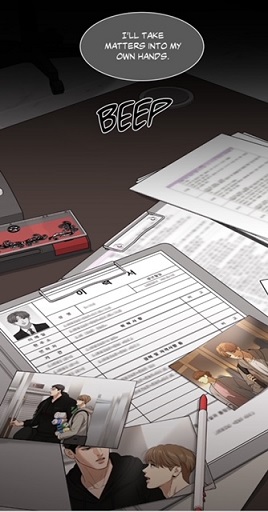 (chapter 46) Thus I assume that his next lesson is to judge people correctly, to question their true motivation. So far, he fell into the same trap twice:
  (chapter 1)
  (chapter 1) He even needs to learn the difference between good guy and nice guy, but this remark applies to the grandmother.
When the dating coach Ruby Le came on the show, she explained the fundamental difference between good guys, who are genuinely nice people, and so-called “nice guys,” who are men who carry a lot of toxic traits. Good guys do kind and generous things because they are kind and generous. Nice guys, on the other hand, only say nice things because they think they are entitled to a women’s body, time, and attention, quickly changing their attitudes when they don’t get it. For example, nice guys think that, if they pay for dinner and drive a woman home, they are entitled to sex. But good guys give without any expectation of anything in return. They are able to love without attachment. Quoted from https://www.zachbeach.com/how-to-love-without-attachment/
Here, I was thinking of Heesung and Joo Jaekyung. Both acted as generous and gentle guys (chapter 21), yet their actions were not truly selfless.
2. Dependence versus attachment
Finally, I don’t think that the doctor’s choice for the present  (chapter 45) is random, for it stands for “attachment”.
Attachment, or the attachment bond, is the emotional connection you formed as an infant with your primary caregiver—probably your mother. According to attachment theory, pioneered by British psychiatrist John Bowlby and American psychologist Mary Ainsworth, the quality of the bonding you experienced during this first relationship often determines how well you relate to other people and respond to intimacy throughout life.
If your primary caretaker made you feel safe and understood as an infant, if they were able to respond to your cries and accurately interpret your changing physical and emotional needs, then you likely developed a successful, secure attachment. As an adult, that usually translates to being self-confident, trusting, and hopeful, with an ability to healthily manage conflict, respond to intimacy, and navigate the ups and downs of romantic relationships.
Beyond categorizing attachment as secure or insecure, there are three subsets of insecure attachment which give us the four main attachment styles:
Secure attachment
Ambivalent (or anxious-preoccupied) attachment
Avoidant-dismissive attachment
Disorganized attachment
Quoted from https://www.helpguide.org/articles/relationships-communication/attachment-and-adult-relationships.htm
Because of his abandonment issues, there is no ambiguity that the doctor belongs more to the second type, whereas the champion is more connected to the third type. Since Joo Jaekyung is suffering from philophobia, the keychain could only be rejected, as it symbolized “restrain” and “attachment”.
In my opinion, the princess must learn how to love without “attachment” and as such without expectations. Yes, Kim Dan has to discover the existence of “love without conditions”.
Conditional love conveys to children the idea that they are only worthy and deserving of affection and attention when they behave as others want. It teaches them that something is wrong with their true self. Therefore, they learn that they cannot be themselves, which ends up affecting their self-esteem and their ability to create and maintain healthy social relationships. It is no coincidence that a study carried out at the University of Bielefeld with more than 500 adolescents revealed that those whose parents conditioned their love had a very vulnerable self-esteem, were not capable of treating each other with kindness, were too self-critical, were very insecure and had a lower satisfaction with life. Quoted from https://psychology-spot.com/conditional-love-parents-consecuences-children/
On my search about attachment and conditional love, I found this blog where the author’s statement opened my eyes to the princess’ destiny.
“For most people, the idea of non-attachment calls to mind images of separation, of not caring, not being involved at all. It brings to mind spiritual bypassing: people who simply preach spiritual clichés like “everything happens for a reason” or “this, too, shall pass,” and are totally uninvolved with the emotional reality of the situation.
However, non-attachment is not the opposite of attachment. Detachment is the opposite of attachment, and non-attachment resides between these opposite polarities, between getting too caught up in our experience and being completely cut off from them. This is an incredibly important distinction. Attachment is too much involvement, detachment is not enough, and non-attachment is that very special middle path that allows you to be fully present in what is happening without complicating it. […]
In Yogic philosophy, the word is vairāgya, and is sometimes translated as “dispassion.” Both ideas focus on the importance of noticing our mental, emotional, and physical experiences without getting so caught up in them.
They also point to the fundamental truth behind non-attachment: it is a state free from desire, not trying to get anything from anybody. It arises naturally when internal peace is cultivated and when we aren’t so dependent on the external world for pleasure or validation. It comes from an incredibly wise understanding that happiness is not to be found through the fulfillment of our sensory pleasures, but rather from being free from craving anything at all and enjoying this moment from a place of peace. Quoted from https://www.zachbeach.com/how-to-love-without-attachment/
Kim Dan is better than other characters in Jinx, as he is not greedy by nature. He is not motivated by money and fame. Nevertheless, what did the physical therapist think during the Summer Night’s Dream?  (chapter 44) He found fulfilment in sex, which stands in opposition to the recommendation of zackbeach. Moreover, I would like to underline that the doctor reduced knowledge to sex:
  (chapter 44) How could he get to know the champion better, when the latter was supposed to be drunk and they would have sex? Getting closer to someone means communication and not really sensuality. Hence his happiness could only be short-lived and illusory. He didn’t take the reality into consideration. Thus I see the physical therapist’s tears as a therapy session:
 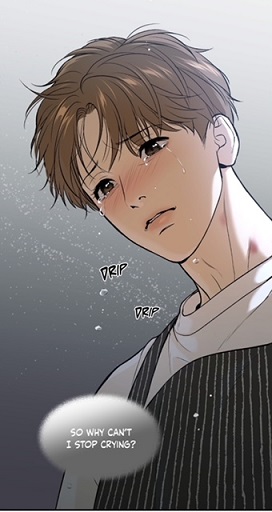 (chapter 46) He allows himself to cry, to grieve and to admit his pain and loneliness.
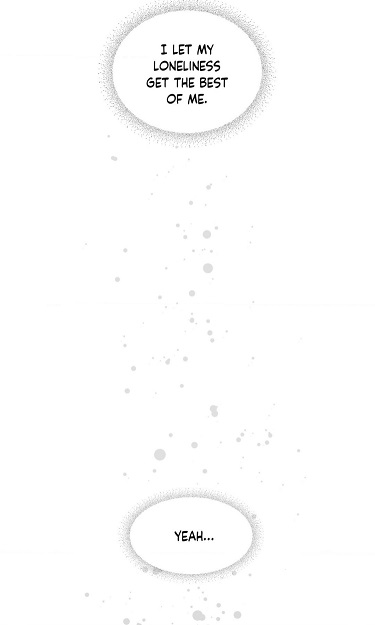 (chapter 46) It helps him to face reality. He is on his own, he needs to stop relying on others. I would even say, he is encouraged to make decisions and as such to become responsible for his own life. It is important, because this means that he will have to fight back, if he wants to survive. He can not make any desperate and hasty decisions, like this one:
  (chapter 1) However, since he listened to the champion’s reproach and became submissive again, their relationship seems to have returned to normality. They even appear as close. (chapter 46) But this is not real communication. It shows that Kim Dan is now waiting for the right time and opportunity to leave Joo Jaekyung. He doesn’t need to rush anything.
3. The Prince S Sleeping Beauty
But Kim Dan is not just connected to Princess Pyeonggang, but also to Sleeping Beauty. My avid readers will certainly remember my comparison between Kim Dan and Sleeping Beauty. [For more read Painful awakening of Sleeping Beauty] I have to admit that his mind-set  (chapter 41) reminded me of the ending of a fairy tale: they lived happily ever after. But the doctor was forgetting that life doesn’t end after the match in the States. Life ends with death. In verity, the champion is destined to be challenged, until he retires. What the doctor saw was not the end. This exposes his naivety. How could he have such a view? It is influenced by his grandmother. (chapter 19) His goal in life was determined by his familial and financial situation:
  (chapter 10) At no moment he pondered about himself. Happiness was never his goal, exactly like in fairy tales. Sleeping Beauty is rather passive. She sleeps, until the prince charming appears and kisses her. After that, they have kids. Interesting is that they don’t get married right away, so that the princess initially has the status of a mistress or concubine. Once the prince can secure his position, he marries her. Then the moment her husband leaves her side for war, she is tormented by her mother-in-law, the ogress. She can only escape death thanks to the intervention of her husband. We could say that happiness fell on her lap. Sleeping Beauty stands for passivity, dependence on her parents and husband and lack of critical thinking. Why? It is because the princess in fairy tales, in particular Sleeping Beauty, embodies toxic positivity.
But what is toxic passivity?
Toxic positivity is the belief that no matter how dire or difficult a situation is, people should maintain a positive mindset. While there are benefits to being optimistic and engaging in positive thinking, toxic positivity rejects all difficult emotions in favor of a cheerful and often falsely-positive façade. Quoted from https://www.verywellmind.com/what-is-toxic-positivity-5093958#toc-coping-with-toxic-positivity
This means that such a person is denying reality, for they refuse to face negative emotions. Thus they are unable to express their true human emotions and don’t receive unwavering support. And now, you are wondering where in Jinx, the author left traces of Toxic Positivity. The first example which could come to your mind would be this: 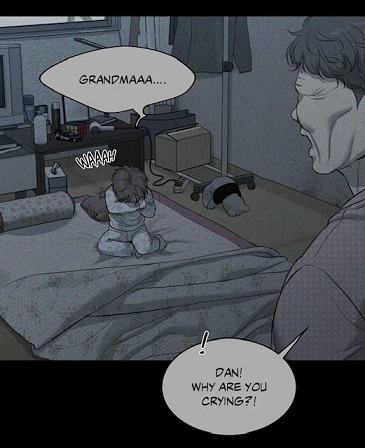
 (chapter 21) She rejected her grandson’s fear and tears. She didn’t allow him to express his abandonment issues. She diminished his anxiety by questioning his behavior: “It’s okay, grandma was just in the kitchen getting a glass of water.” Then in the present, we could use his visit at the hospital:
  (chapter 41) While the halmoni didn’t mention her suffering, the doctor gave expensive gifts to the nurse and his grandmother. He acted, as if money was no longer a problem… as if everything was fine, as if she would recover soon. Yet, he never mentioned his problems with the champion during his stay in the States (no drug incident, the humiliation, the harsh words). He is never voicing his problems to his grandmother. Both are putting smiles on their face. And the moment, I connected Kim Dan to Toxic positivity, I had another revelation. The best example for this negative attitude is actually his own birthday. 😱
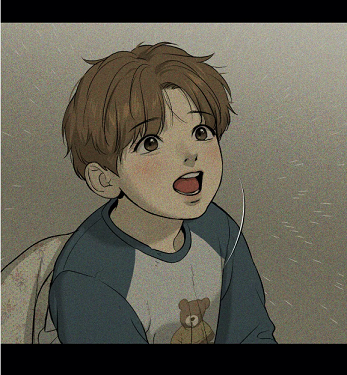
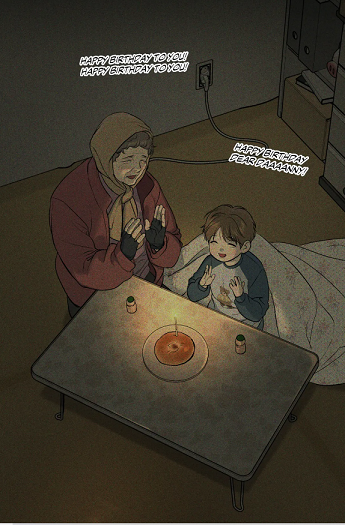 (chapter 11) Imagine that the grandmother had left the house without her grandchild. He was left behind in the house. Though she meant it well, for the child, this must have been a real torment, as he constantly feared to be abandoned. However, he knew that he was not allowed to cry or to complain. Hence when he saw her returning, he put a huge smile on his face. Moreover, this is what they had for dinner: a sweet bread and two yoghurts. The grandmother must have been hungry. Both acted, as if nothing was wrong.
  (chapter 45) With this contrast, the fear from the champion becomes more palpable. Joo Jaekyung got angry, for he had been put in the same situation. But the latter was never influenced by Toxic Positivity. Besides, he was fighting against his own inner demons. Nevertheless, this new interpretation of the birthday made me recognize why the author chose this chronology concerning Kim Dan’s past:
| Chapter 5 | Chapter 11 | Chapter 19 | Chapter 21 |
|---|---|---|---|
 | |  |  |
The longer Kim Dan lived on his own, the more he got confronted with reality. 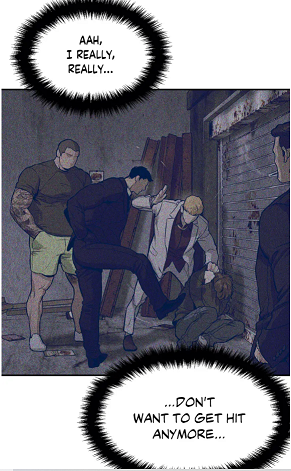 (chapter 1) However, he could never confide to his grandmother about the physical abuse from the loan shark. However, the moment his hope got up
  (chapter 11), as he imagined that he could pay off the debts, he recalled his birthday. He had a nice “souvenir”… convincing himself that everything was fine. He would be able to do it, like his grandmother had told him.
 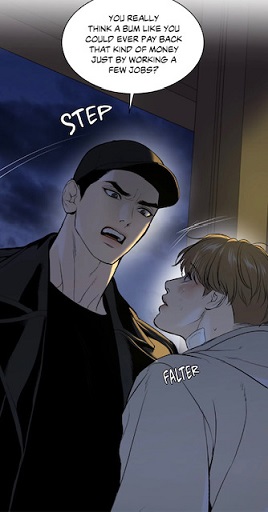 (chapter 18) Nevertheless, the moment he was forced to move out, he couldn’t help himself to recall how he got abandoned by his parents. And the moment he saw his halmoni fighting for her life, his abandonment issues resurfaced. Hence this terrible memory came through a nightmare. The betrayal from the parents is what had been deeply buried by the grandmother’s philosophy. The fact that the halmoni never allowed Kim Dan to talk about his parents and the circumstances of his arrival to the humble mansion, is the evidence of Toxic Positivity. In my eyes, the relative was already struggling herself, for she had also been left behind. But here it is important not to mix Toxic Positivity with Gaslighting.

But what are the consequences of Toxic Positivity? A low self-esteem, stagnation, constant anxiety and guilt. But there’s more to it.
It’s shaming: Receiving toxic positivity can lead to feelings of shame.3 It tells people that the emotions they are feeling are unacceptable. When someone is suffering, they need to know that their emotions are valid and that they can find relief and love in their friends and family.
It causes guilt: Being toxically positive can also cause feelings of guilt.3 It sends a message that if you aren’t finding a way to feel positive—even in the face of tragedy—you are doing something wrong.
It avoids authentic human emotion: Toxic positivity functions as an avoidance mechanism. When people engage in this type of behavior, it allows them to sidestep emotional situations that make them feel uncomfortable. Sometimes we turn these same ideas on ourselves, internalizing them. When we feel difficult emotions, we then discount, dismiss, and deny them.
It prevents growth: Toxic positivity allows us to avoid feeling things that might be painful. But this denies us the ability to face challenging feelings that can ultimately lead to growth and deeper insight.” Quoted from https://www.verywellmind.com/what-is-toxic-positivity-5093958#toc-coping-with-toxic-positivity
This explicates why Kim Dan kept his “innocence”, why he came to deny the existence of his own body and became a ghost. By denying all emotions, he got disconnected to his own body. 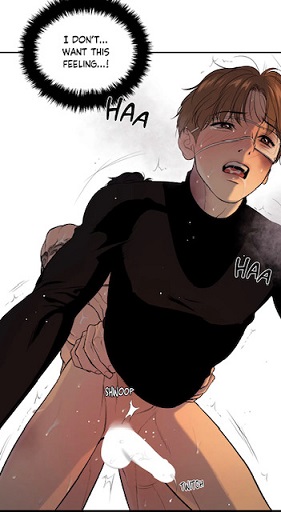 (chapter 12) Therefore I understand why the doctor didn’t fight back against Heo Manwook and his minions. (chapter 1) It was his way to deny reality, hence he was covering his face. Because he trusted his grandmother, he imagined that as long as he was paying the interest on time, nothing would happen to him.
  (chapter 1)
  (chapter 11) But the moneylender and his minions are no honest bankers, but criminals. They enjoy using their strength, that makes them feel powerful. It boosts their ego.
Yet, until now, I didn’t explain how a princess from fairy tales embodies toxic positivity.
- Perfection Expectation:
- The concept of a princess is often associated with an idealized, perfect image. At no moment, Sleeping Beauty voiced her pain or despair. When she got hurt, she felt asleep right away. Similarly, toxic positivity can perpetuate the idea that one should always maintain a perfect, positive façade.
- Dismissal of Struggles:
- Princesses in fairy tales often face challenges but are expected to handle them with grace and a positive attitude. Toxic positivity may similarly dismiss or downplay real struggles and difficulties, urging individuals to maintain a positive front regardless of their experiences.
- External Validation:
- The image of a princess often involves seeking external validation, and toxic positivity can encourage individuals to seek validation through projecting a constantly positive image, even if it’s not authentic. Sleeping Beauty’s fate hinges on an external event—the prince’s kiss. This external validation is necessary for her to be acknowledged, valued, and freed from the curse.
- Dependence on Others: The princess’s well-being and the resolution of her situation are not within her control. She is dependent on the actions of the prince for her happiness and liberation.
- Symbol of Approval: The prince’s kiss becomes a symbol of approval and acceptance. It signifies that the princess is worthy of love and that her life gains meaning and purpose through external validation.
To conclude, Kim Dan embodies two negative traits, Dependent Personality Disorder and Toxic Positivity, due to his raising and traumas in his childhood. The elephant in the room was never brought up, the “rejection from the parents”. Therefore this secret could only poison the air in the little house.
Keeping secrets is bad. Not only does it represent an added mental and emotional weight, but it even becomes a burden on the physical level since it has been shown that secrets exhaust us physically. However, he who has never kept a secret should cast the first stone. Sometimes we may even feel that we are “forced” to keep quiet about certain things. Quoted from https://psychology-spot.com/the-reason-we-keep-a-secret/
The heavy silence had terrible consequences, he turned Kim Dan into a puppet, even a ghost. This explicates his passivity. For the grandmother, it looked like everything was fine, because her grandson did everything for her. There was never an argument between them. That’s the reason why I see this crying as a liberation. He allows himself to accept his wounds and tears. (chapter 46) (chapter 46) He allows himself to voice his thoughts. He admits to have denied reality. Mind and body are now united and synchronous. Consequently, I deduce that he is determined not to get fooled in the future.
And this brings me back to the story of Pyeonggang and Ondal!! Thanks to the selfish and stubborn “Prince S”, the fool Kim Dan received money and got trained. He became a true man, because he is now making decisions on his own. This means that from that moment on, the champion will have to become proactive in order to keep his “partner” by his side. Thanks to Joo Jaekyung’s attention, the doctor is now getting noticed by people. (chapter 46) This is the rising of the prince S. But this harbors a problem: he is also about to become the target of real bad guys. Yes, like in any historical k-dramas, we are about to assist to a battle of power, and this outside the ring.
The essay is already so long that I chose to introduce the Emperor in the second part. Naturally, I will include the scenes from chapter 46.
Feel free to comment. If you have any suggestion for topics or manhwas, feel free to ask. If you enjoyed reading it, retweet it or push the button like. My Reddit-Instagram-Twitter-Tumblr account is: @bebebisous33. Thanks for reading and for the support, particularly, I would like to thank all the new followers and people recommending my blog.

 Bebebisous33s' analyses in K-Dramaland and Manhwas
I find the comparison of Kim Dan with Princess Pyeonggang very interesting and how negatively is she compared to the patient in Dr Frost. For I can imagine most people would fine the princess empowering . Since it is she who rescues her in laws and husband from destitution and the power of the narrative is in her hand. She raises her husband up and raises her own status and makes major decisions. However she is doing it for another person and cannot do it for herself so in another interpretation which is not invalid in some way, the comparison with that patient makes sense. Comparing Dan to Sleeping Beauty definitely makes sense to me. In a way if I take a more empowering view of Princess Pyeonggang’s tale , Dan seems to oscillate between Princess Sleeping Beauty and Princess Pyeonggang.
I also agree with the fact Dan has to develop of a sense of self in order to heal his attachment issues which also gives rise to his toxic positive attitude towards life. If he doesn’t do that he would never be able to rely on his own judgement to determine if a person is honest or a liar, means harm or is misunderstood etc especially now in light of latest chapter release where the dangers against Jaekyung and Kim Dan is only going to get worse not better and Jaekyung is too blinded by his own hardwork being able to solve problems to see, some sabotages cannot be foiled by honest hardwork.
I like the idea you inculcated of Vairagya when talking about loving without attachment . First I thought it could mean that maybe Dan should cut his losses but I do agree with you here that Dan’s love has to come from a place of selflessness rather than just wanting Jaekyung to love him back because he is doing everything he thinks he is supposed to ( aka following the method to “get love” aka “get people to stay” he followed with Halmoni) rather than evolve as a person who wants to understand someone as a person just to make them happy and derive love from that. I was saying this to someone who asked me predictions for future chapters that Dan just giving lavish gifts by working himself to the bone aka self harm to some degree is just another version of how Heesung operates with his lovers aka its just a low effort way to engage with people without forming a true bond. The difference is that Heesung doesn’t have to hurt himself to get means to give gifts and possibly doesn’t really takes himself seriously when he says that he wants to find his soulmate. Whereas Dan does truly love Jaekyung , its just his ingrained habits forces him to be passive rather than active , intuitive and emotionally intelligent.
So Dan needs to understand Vairagya to see that unlike his childhood mentality where he used to see not having love as something akin to the line between life and death, as an adult he can survive without people loving him back. He may be sad about it but as an older person he is strong enough to cope and that strength will give him the courage to be a caring person who can do his Karma without the worry of consequences or rewards ( like Bhagawata Gita preaches aka “Do your Karma and forget about the results”)
LikeLiked by 3 people