

Please support the authors by reading Manhwas on the official websites. This is where you can read the Manhwa: Jinx But be aware that the Manhwa is a mature Yaoi, which means, it is about homosexuality with explicit scenes. Here is the link of the table of contents about Jinx. Here is the link where you can find the table of contents of analyzed Manhwas. Here are the links, if you are interested in the first work from Mingwa, BJ Alex, and the 2 previous essays about Jinx Between A Squeeze And A Crack – part 2 and the Birth of A Flower (part 1)
It would be great if you could make some donations/sponsoring: Ko-fi.com/bebebisous33 That way, you can support me with “coffee” so that I have the energy to keep examining Manhwas. Besides, I need to cover up the expenses for this blog.
Sorry for the delay, but I am getting surged soon, thus I was busy preparing lessons for the time during my absence.
The Beginning of the End
The audience sensed it before it could fully articulate why: Jinx is nearing an irreversible threshold. Not an ending yet, not a climax in the conventional sense, but a point beyond which the story cannot return to its original configuration. 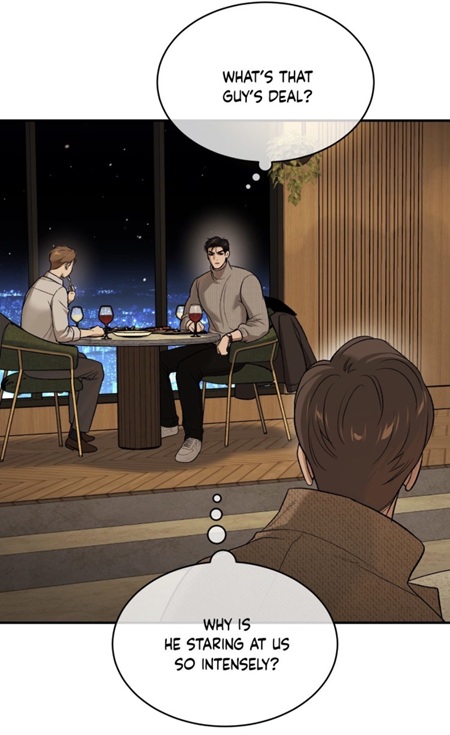 (chapter 89) Episode 89 does not rely on spectacle, confrontation, or confession. Instead, it performs something far more unsettling. It turns back toward the beginning
 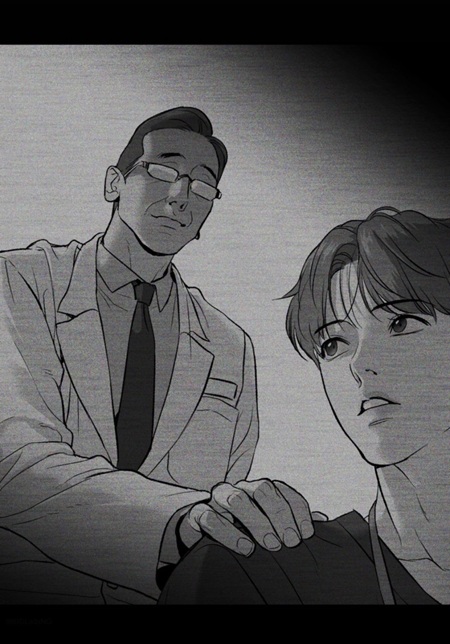 (chapter 89) and begins to unravel what was once deliberately sealed.
What makes this episode feel decisive is not merely a rearrangement of power, but the return of elements that were present from the very first chapter —elements whose meanings were never in doubt, yet whose consequences were never allowed to surface. 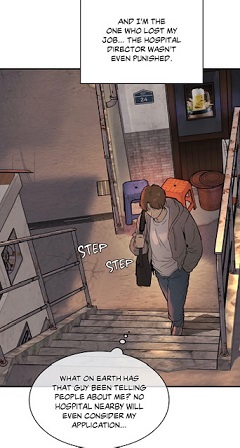 (chapter 1) At the start of Jinx, the readers were not ignorant. We knew that Kim Dan had been sexually harassed.
  (chapter 1) We knew there was a witness. We knew that what happened was not ambiguous in moral terms.
What was ambiguous was power.
A hospital director fired Kim Dan not because the truth was unclear, but precisely because it was clear—and dangerous. Using institutional authority, he covered the scandal, protected himself, and quietly ensured that Kim Dan would never be able to work as physical therapist and even speak again. (chapter 1) The outcome was not accidental, but Kim Dan didn’t experience it as a calculated purge or a conspiracy that must be fought. He accepted the loss of his job almost as a given, even as he recognized the injustice of it. What unsettled him was not the fear that others would disbelieve him, but the realization that responsibility stopped with him. He lost a prestigious hospital position and the professional future attached to it, while the hospital director faced no consequence at all. Kim Dan did not protest or seek redress; instead, he turned his attention inward, wondering what was said about him afterward, in rooms or institutes he was not allowed to enter. The truth was known, yet it changed nothing, because Kim Dan was silenced. No one listened to him or defended him, while the perpetrator alone was given the authority to determine the truth. The witness stayed silent, the institution spoke elsewhere, and Kim Dan was removed from his own story. And that’s how the asymmetry became something he quietly carried as his own burden.
This is why Episode 89 does not feel like escalation—it feels like unsealing.
The return of the perverted hospital director 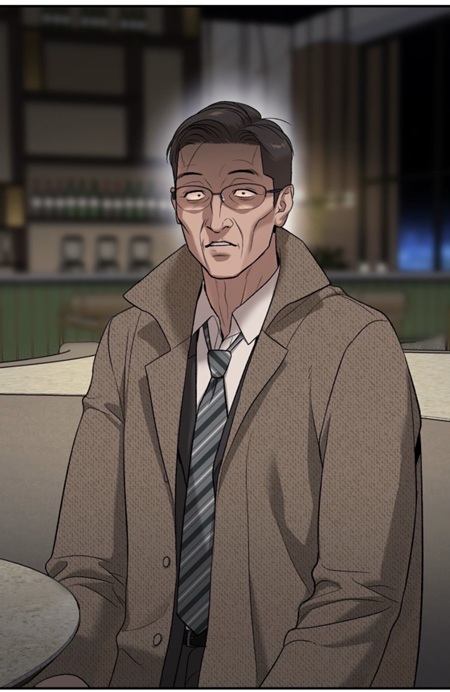 (chapter 1) is not a revelation of new information. It is the resurfacing of a figure who once proved that truth alone was insufficient. His reappearance signals that what was buried at the beginning of the story—harassment, witness, cover-up, professional erasure—is no longer content to remain inert. The silence that once protected the hospital director is beginning to fray, unwinding slowly, like a gift ribbon pulled loose thread by thread. What was known but unspeakable is approaching exposure not through confession, but through loss of insulation.
This return is mirrored by another, quieter but equally significant absence: the grandmother.
In Episode 89, she is no longer shown directly.  (chapter 89) Instead, the narrative offers a bird’s-eye view of the hospice Light of Hope as Joo Jaekyung’s car leaves the parking lot. The implication is unmistakable. Her death is imminent. But just as importantly, she is transitioning from presence to spectral force—no longer intervening, no longer negotiating, but lingering over the narrative as memory and obligation.
This, too, echoes the beginning of Jinx. 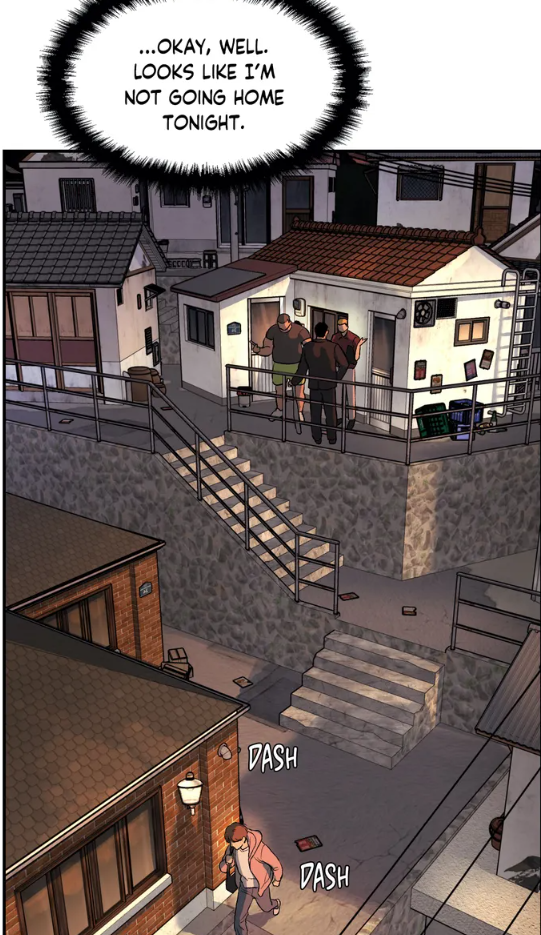 (chapter 1) Readers did not meet the grandmother until Episode 5.
 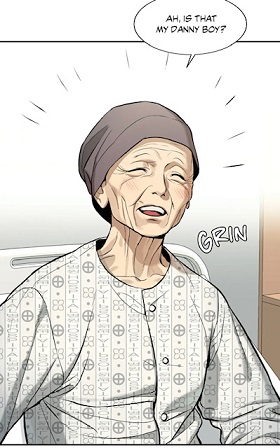 (chapter 5) Before that, her existence was inferred rather than seen: through debt, through responsibility, through the ruined house Kim Dan inhabited. Absence structured the story before presence ever did. The grandmother was a force long before she was a character.
Now the movement reverses. Presence recedes back into absence. But unlike in the beginning, Kim Dan’s life is no longer centered on her care. That responsibility has been entrusted elsewhere, and her absence no longer governs his choices. In Episode 89, the hospice is no longer framed as a home, but as a stop along the way. 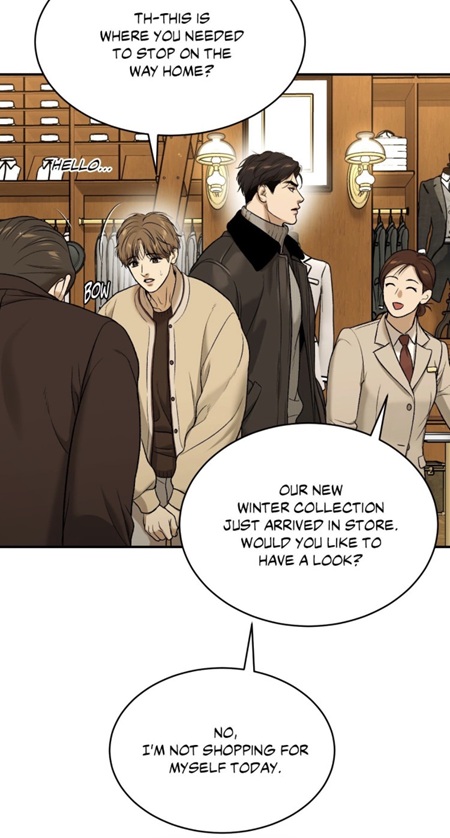 (chapter 89) When Joo Jaekyung speaks of “the way home,”
 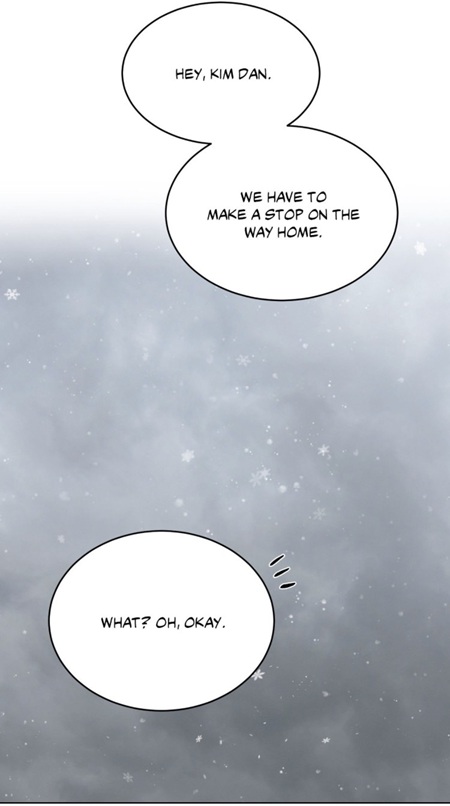 (chapter 89) and Kim Dan repeats the phrase without hesitation, the shift is unmistakable. Home has been reassigned. It is no longer the place where Kim Dan endures obligation or where his grandmother is
 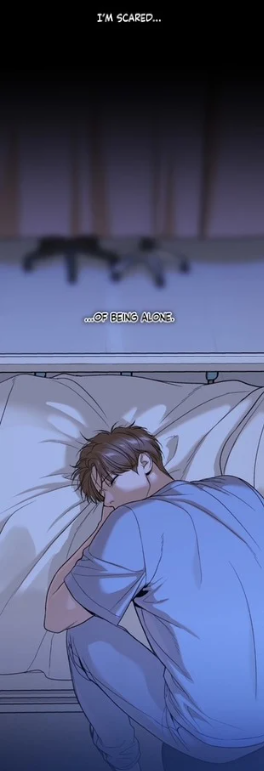 (chapter 56), but the place where he lives in the present: the penthouse. The grandmother’s influence has not vanished; yet it has been reduced to a short visit, while he spends time with his fated partner a long time on the road. Her absence no longer anchors him to a life of quiet survival. He is now enjoying life, hence he is seen smiling and talking informal to the athlete.
 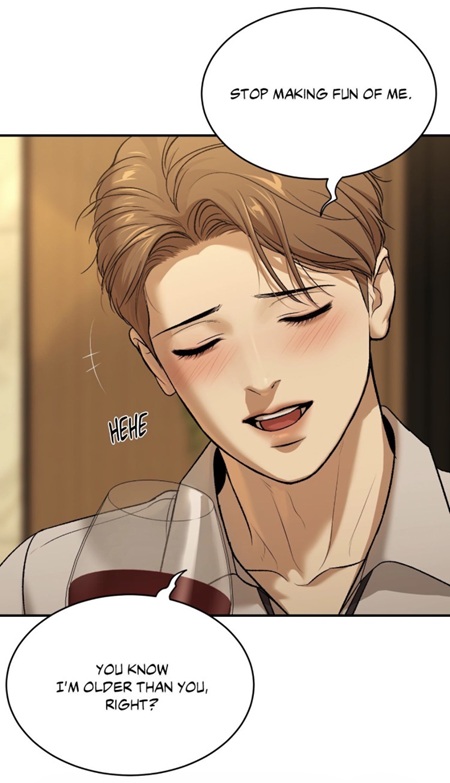 (chapter 89)
This mirroring is not cosmetic. It is structural. The story returns to the conditions of its origin—sexual violence handled institutionally, professional precarity 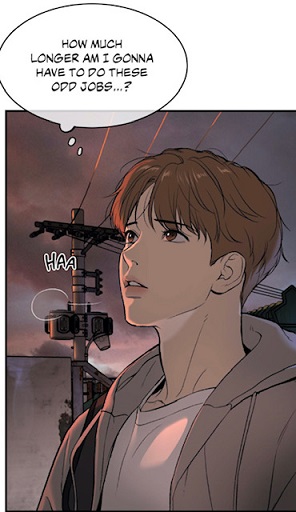 (chapter 1), unseen decisions made about Kim Dan without his consent (chapter 1) — but it does so in a transformed landscape.
 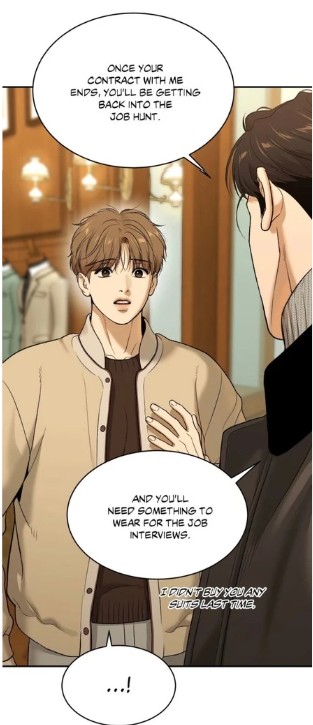 (chapter 89) Debts have been paid. Contracts are finite. A witness exists, though he doesn’t believe in the “angel”.
 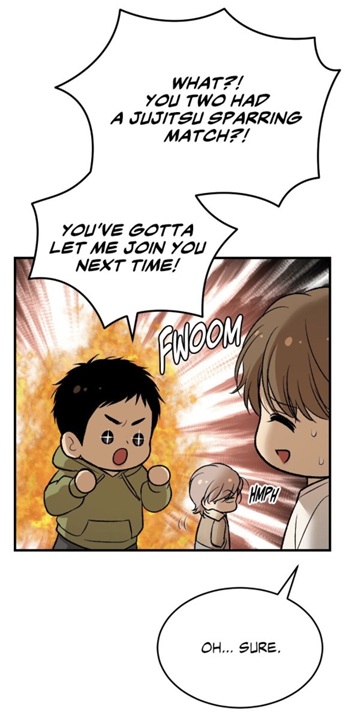 (chapter 89) Kim Dan is no longer isolated in his knowledge, nor alone in bearing its consequences. Joo Jaekyung detected the presence of a “predator”.
  (chapter 89)
That is why Episode 89 feels like the beginning of the end. Not because everything is resolved, but because the story has reached the point where truth no longer needs to beg for permission to exist. What was once survivable only through silence can now be named, contested, and reclaimed.
By folding the opening of Jinx back into its present, the author signals that the love story between Kim Dan and Joo Jaekyung is approaching its final test. No longer a story of endurance under constraint, it is becoming a story about emancipation under scrutiny—about what happens when love, guilt, responsibility, and institutional memory are finally forced into the same frame, by those who were once excluded from it.
The Beginning of the End is not an announcement of tragedy. It is the moment when the story turns back on itself and says: now the truth can move.
Seeing Is Not Knowing
Episode 89 does not introduce this logic; it exposes it by repetition. From the very first chapter, Joo Jaekyung’s relationship with his former physical therapist already functioned as a negative prefiguration of Kim Dan’s own trajectory.  (chapter 1) The readers never saw what caused the unknown therapist’s departure. Instead, the incident is relayed second-hand, through Park Namwook’s narration—an account that reduces the event to temperament, friction, and inevitability. The physical therapist is said to have “rubbed him the wrong way.” An incident occurred and the athlete was exposed as the problem. The job was framed as undesirable. The departure was normalized.
Crucially, Joo Jaekyung accepted this explanation without investigation. He was surprised that the therapist quit  (chapter 1), but he did not question the narrative offered to him. He never tried to justify his own action either. Park Namwook, as manager, occupied the position of authority: the one who explained, interpreted, and closed the case. He never checked the facts, like for example “rubbing him the wrong way”. He acted as the prosecutor, judge and lawyer at the same time. What happened before remained unseen, and therefore unexamined. The truth did not need to be falsified; it only needed to be summarized.
Crucially, the manager also treated resignation as resolution. Once the physical therapist left, the problem appeared solved. Replacement substituted for accountability, and the consequences of this closure were never considered. The difficulty in filling the position  (chapter 1), the reluctance of applicants, and the need to recruit Kim Dan through informal channels all suggested that something else had already been circulating: a reputation formed in absence, not through evidence.
Like Kim Dan after him, Joo Jaekyung is first not confronted with accusations  (chapter 9), explanations, and silence. Only after the “hamster’s arrival”, the athlete is gradually exposed to gossip, badmouthing
 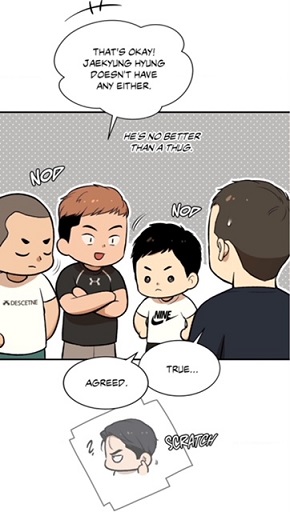 (chapter 47) and exclusion. This reached its peak with the famous slap at the hospital.
  (chapter 52) It shows that like doc Dan, the celebrity bears the effects of a narrative he did not author, one that no longer requires verification and questioning because it has already been administratively settled.
Episode 89 reactivates this same structure—but from another angle.
Heesung believes he knows the truth because he has seen something. 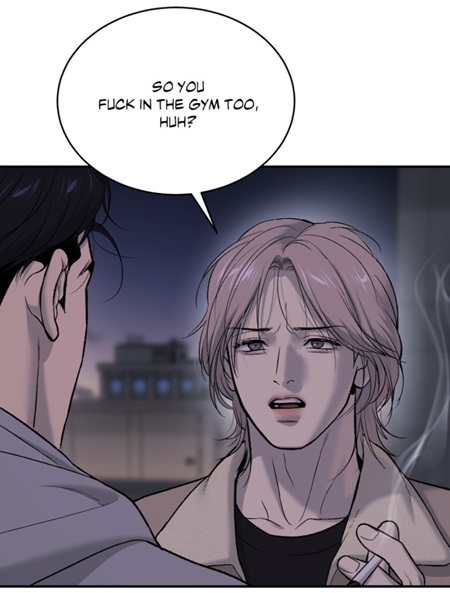 (chapter 89) He witnessed a kiss between Kim Dan and Joo Jaekyung, and from that single image, he constructs a complete narrative: a kiss is turned into something raw and sexual. For him, intimacy replaces training, desire replaces discipline, and the explanation Kim Dan gives becomes, in his eyes, a lie. (chapter 89)
Yet this is where the episode quietly undermines Heesung’s certainty. Kim Dan is not just fabricating an alibi. He is not inventing a cover story. They were indeed training. 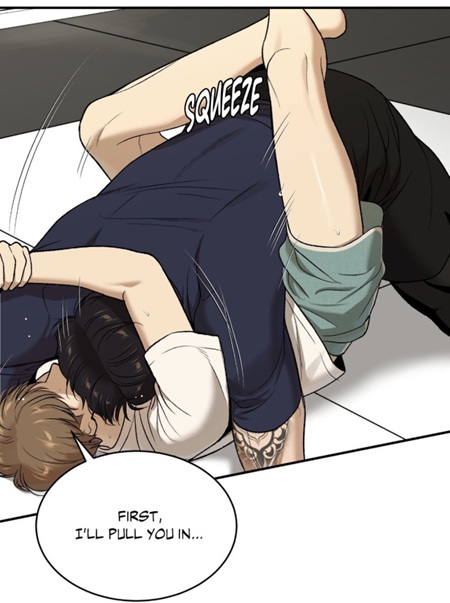 (chapter 88) The kiss does not erase what preceded it; it merely interrupts it. Kim Dan’s explanation is therefore neither wholly true nor wholly false. It is a partial truth, shaped by shyness, by a desire to protect, and by shame. Hence he is sweating, when he explains his presence to Potato. (chapter 89) To know the “whole truth” would require access not only to events, but to intentions, emotional thresholds, and timing—access no single witness ever has. Only gods have such power.
And that’s how Choi Heesung views himself. He considers himself as the “perfect lover”, thus his dream has always been to find his soulmate, another “perfect lover”.  (chapter 33) That’s the reason why he was attracted to Kim Dan in the first place. He is an angel
 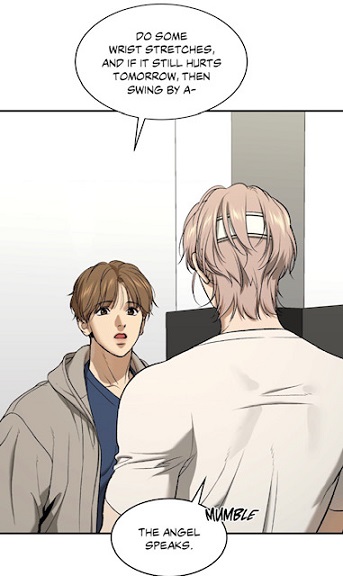 (chapter 30), as the latter is quiet, self-effacing. selfless, attentive, humble and absorbs blame instead of projecting it. Kim Dan initially fits the fantasy of the perfect lover — someone who would not disrupt Heesung’s self-image. Hence he doesn’t need to do anything.
 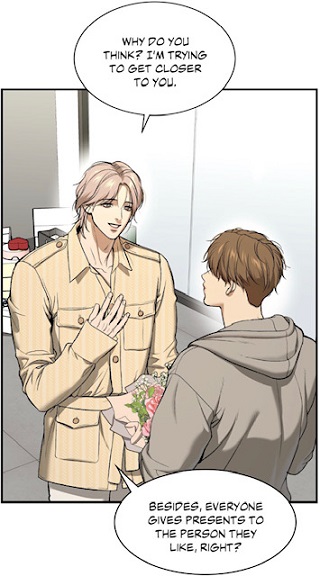 (chapter 31) By siding with doc Dan and acting as the angel’s advocate
 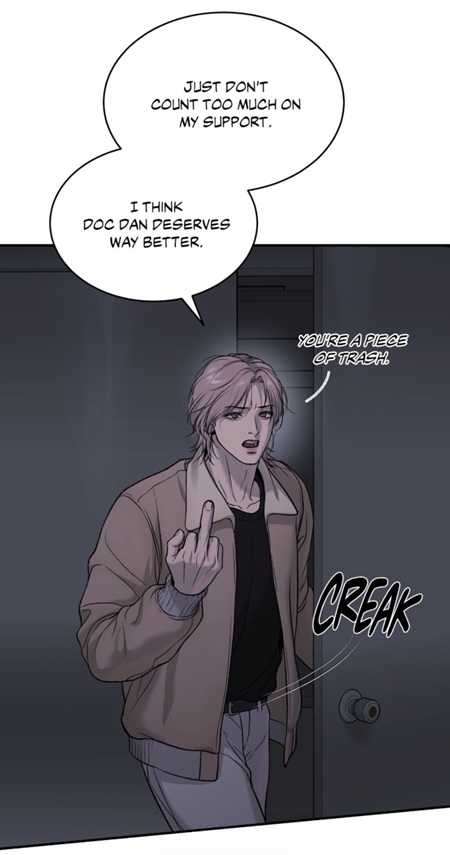 (chapter 89), the comedian can appear as a saint.
But the reality is that the “fox” is overestimating himself. He is just a human like Joo Jaekyung and as such a sinner. The actor’s error is not merely that he lies, but that he lies by omission 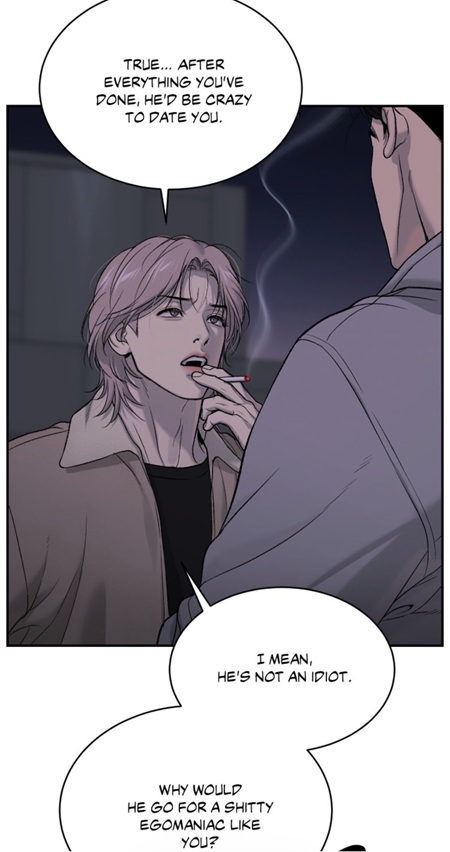 (chapter 89) and generalization. Because he saw one thing, he believes he knows everything. Because he believes he already knows Joo Jaekyung —his temper, his reputation, his past, his belief
 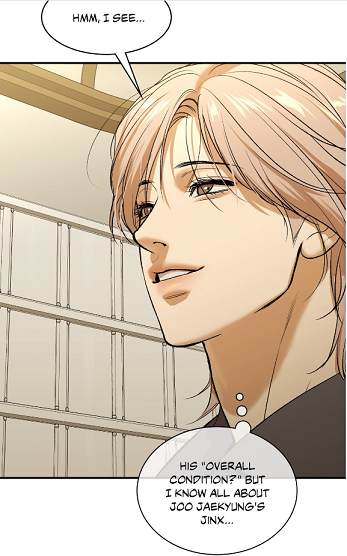 (chapter 32)— he believes that he can judge the celebrity. However, he does not consider that something else might have happened before the moment he witnessed. The kiss becomes totalizing. Training is retroactively erased.
This is precisely the same epistemic shortcut Park Namwook took in Season 1.
In both cases:
- authority or proximity substitutes for inquiry,
- a partial observation becomes a total explanation,
- and investigation is deemed unnecessary because the observer believes he already understands the subject.
- Crucially, judgment in these moments is driven not by facts, but by emotion. Resentment, jealousy, fear, and wounded pride shape perception long before evidence is considered. What presents itself as moral clarity is, in reality, affective certainty.
Yet justice—whether institutional or interpersonal—cannot emerge from emotion. It requires distance. It requires restraint. It requires a form of deliberate indifference: not apathy, but neutrality. The refusal to let feeling stand in for truth. Therefore a judge will always listen both sides (defendant, plaintiff). Neither Park Namwook  (chapter 52) nor Heesung exercises this control. Both act from positions of perceived authority, and both mistake emotional coherence for factual accuracy. Their confidence does not only arise from what they know, but also from how strongly they feel. The strength of conviction replaces the labor of verification.
This failure becomes especially visible in Heesung’s interpretation of Kim Dan’s departure. 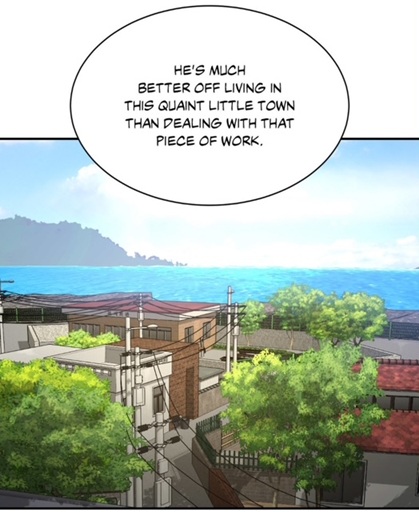 (chapter 58) He imagines a simple narrative: Kim Dan must have left because of Joo Jaekyung’s temper, his rudeness, his violence, probably due to the “defeat”. A quarrel, therefore, naturally leads to separation. From this assumption follows a paternalistic conclusion: the “hamster” must be hidden from the athlete for his own good. Protection becomes justification; concealment becomes virtue.
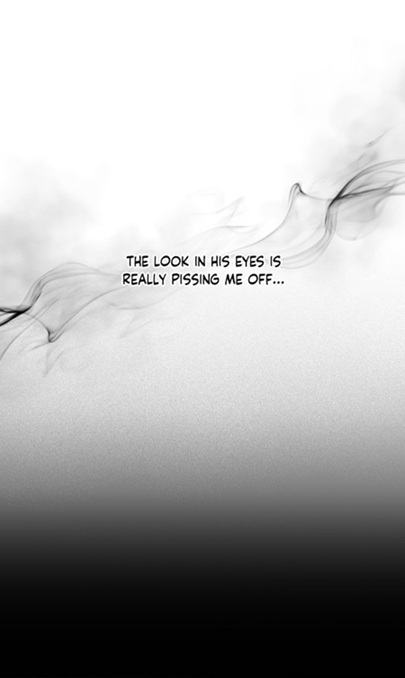
Heesung delivers this judgment 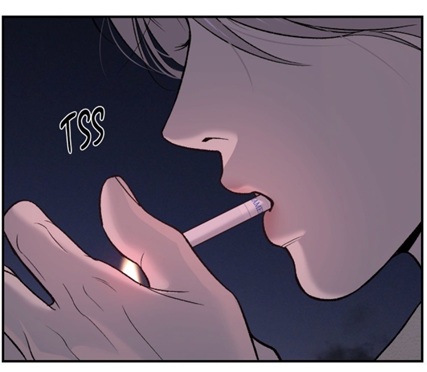 (chapter 89) while smoking—a detail the episode insists on repeating, and one that should not be aestheticized. The cigarette does not merely accompany his words; it alters the air in which they are spoken.
 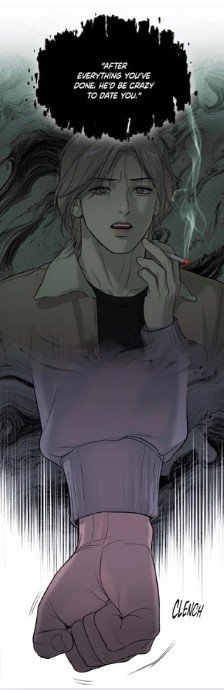 (chapter 89) Smoke replaces oxygen. What should be a space for clarification becomes a polluted environment where nothing clean can circulate. His speech is not only corrosive; it is toxic, dispersing blame without responsibility and judgment without accountability.
This is not the violence of a raised fist, but of contamination. Heesung does not attack Joo Jaekyung directly; he saturates the space with inevitability. His words do not argue—they suffocate. By framing Jaekyung as fundamentally unlovable (“after everything you’ve done”), he does not describe a reality; he reinscribes a conviction that already haunts the champion: that love is structurally inaccessible to him, that intimacy is something he can only damage, never deserve.
In this sense, Heesung’s intervention is not corrective but punitive. It does not open a future; it seals one. The smoke signals this closure. There is no fresh air, no possibility of reconfiguration—only the quiet assertion that the past defines the present absolutely. And because Heesung speaks from a posture of apparent control, he mistakes pollution for moral clarity. He leaves believing he has spoken the truth, while what he has done is reinforce the most destructive lie Joo Jaekyung already believes about himself.
What Heesung never questions is whether this narrative is complete—or even accurate. He doesn’t know about the incident with the switched spray, about doc Dan’s mental and emotional suffering, he has no idea about doc Dan’s past as well. It was, as if the young man had no past or no trouble before his interaction with the sportsman. He does not ask why Kim Dan stayed as long as he did, why he returned, or how the relationship itself has transformed. He doesn’t look at the physical therapist at all, thus he can see no change. (chapter 89) The possibility that Kim Dan acted with agency, discernment, or desire is excluded in advance. Kim Dan is reduced to a fragile and innocent object of care rather than a subject capable of choice. He doesn’t know what is good for himself. (chapter 89)
What Jinx exposes here is not dishonesty, but epistemic arrogance: the conviction that seeing grants mastery over meaning.
The irony, of course, is that Joo Jaekyung once occupied this very position. (chapter 1) He accepted Park Namwook’s account of the former physical therapist because it aligned with what he believed he knew about himself and others. Now, in Episode 89, he becomes the object of the same logic—reduced, explained, and judged by someone who believes that proximity equals comprehension. This repetition matters.
It shows that truth in Jinx is never neutral. It is filtered through:
- authority (Park Namwook),
- jealousy and wounded pride (Heesung),
- reputation and past violence (Joo Jaekyung),
- and self-effacing silence (Kim Dan).
To know the full truth is impossible—not because the truth is unknowable, but because every character approaches it already shaped by prior experience. What changes in Episode 89 is not the existence of bias, but the story’s willingness to expose it as bias.
Heesung believes he knows the truth because he has seen something. A kiss. A single image, isolated from its sequence, elevated into certainty. From that moment on, everything else becomes irrelevant. And because he saw this before 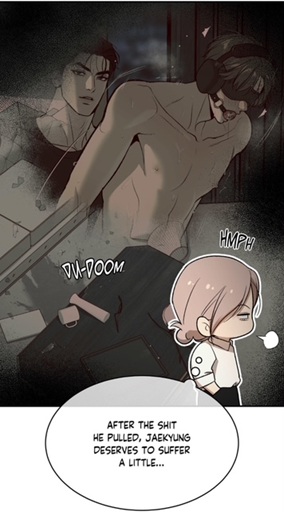 (chapter 58), he reinterprets the kiss as “fuck” and not as the expression of love and tenderness. In other words, he is witnessing “true love”, but he rejects it. This exposes that he has no true notion of real love. In his mind, Joo Jaekyung abused his position as “employer”. (chapter 89)
Heesung presents himself as morally superior because he does not resort to physical violence. 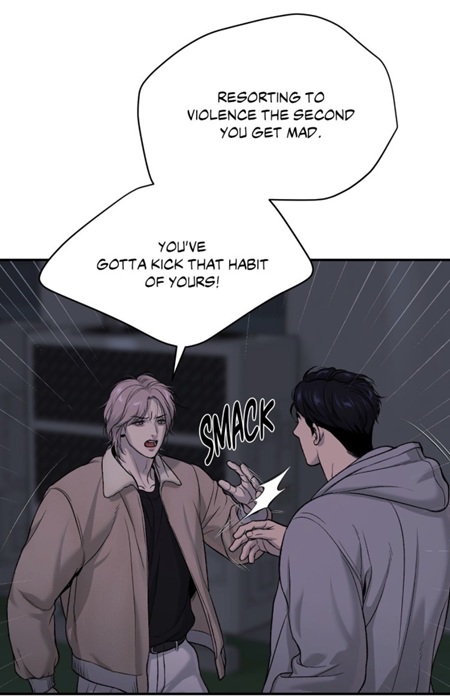 (chapter 89) But this distinction is hollow. Harm does not require raised fists. It can be inflicted through trick, insinuation, through speaking about someone rather than to them, through occupying the role of moral arbiter while denying the other person a voice. (chapter 89) Kim Dan has always disliked this — being spoken for, spoken over, spoken around. Episode 1 and 57 established this clearly. Episode 89 simply mirrors it back.
What makes Heesung especially dangerous is that he uses Kim Dan as a shield. He claims to defend him, but only in his absence. By positioning himself as Kim Dan’s advocate, he grants himself authority while quietly stripping Kim Dan of agency. His concern is not what Kim Dan wants, but what Heesung believes Kim Dan deserves. In doing so, he protects his own wounded pride — the pride of someone who cannot accept that Kim Dan rejected him.
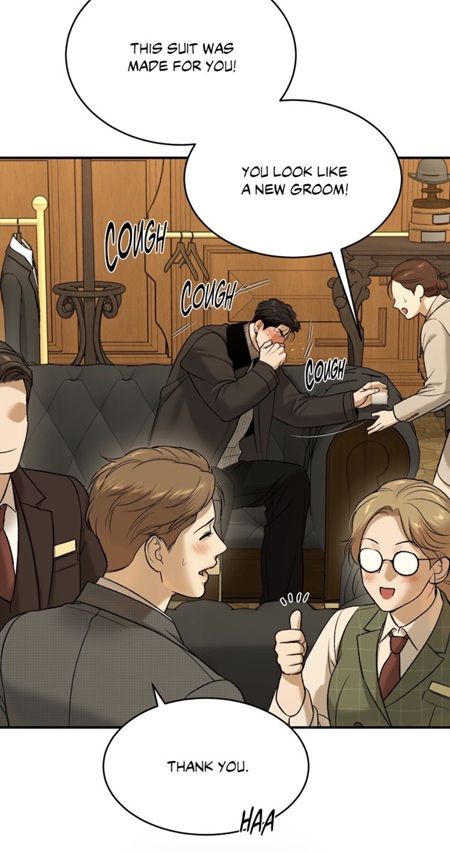
This refusal is key. Heesung cannot bear the idea that Kim Dan would choose Joo Jaekyung, even date him. 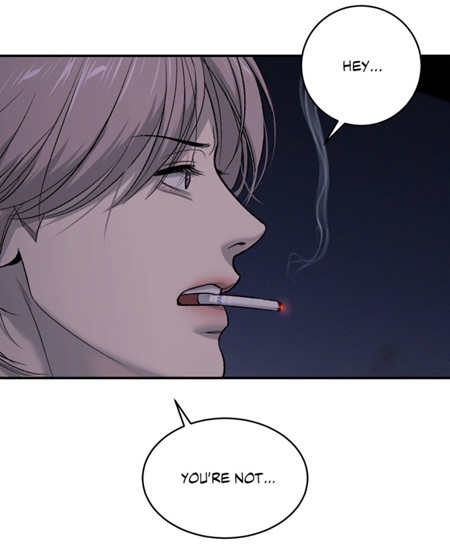 (chapter 89) His comment “You’re not ….” implies the expectation of a confirmation. Both are not dating. What Joo Jaekyung is actually doing exceeds the category Heesung understands. This is not casual dating. It is not secrecy. It is not consumption. It is preparation. Continuity. A future. Symbolically, Joo Jaekyung is already a step beyond “dating”: he is moving toward marriage — toward public, accountable union. He is closer to commitment than the cursed “Romeo”. That’s the reason why the author included such a reference at the store:
  (chapter 89).
And this is where the contrast becomes stark. Heesung, who performs moral responsibility, is not dating Potato openly. He keeps relationships provisional, deniable, suspended in ambiguity. He treats the young fighter more like a puppy or servant than as an equal partner. Joo Jaekyung, who is accused of being reckless and violent, does the opposite. He assumes responsibility. He spends time with doc Dan by teaching him swimming and fighting, he pays debts. He limits contracts. He buys a suit not for himself, but for Kim Dan’s future. He does not erase the past; he integrates it into a shared trajectory.
In this sense, Heesung is not the opposite of institutional power — he is its echo. He speaks confidently, withdraws responsibility, and leaves consequences to others. He does not strike, but he silences. He does not coerce, but he defines reality from a position Kim Dan never consented to.
The tragedy is not that Heesung lies consciously. It is that he is convinced he is telling the truth.
Not Seeing but Knowing
Episode 89 ends not with confrontation, but with a visual verdict. 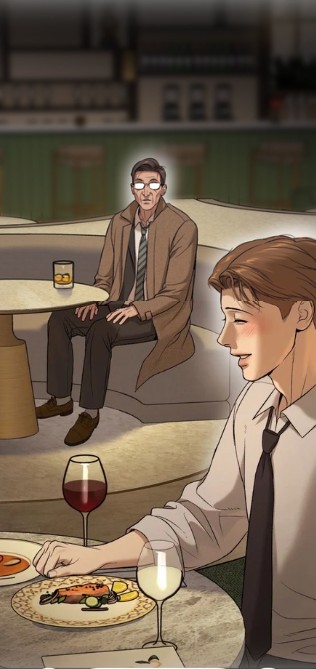 (chapter 89)
At one table sits the former hospital director. His presence is quiet, restrained, and deeply uncomfortable. Nothing about him suggests ease. His coat remains on, his tie loosened but not removed — a body prepared to leave rather than settle. He did not come to linger. He did not come to enjoy himself. His posture signals transience, not belonging.
The drink in front of him reinforces this distance. Whisky on the rocks is not a drink of sharing or unfolding; it is a drink of insulation. Cold, undiluted, contained. It is consumed alone, meant to harden rather than open. Even when accompanied, the director remains isolated. The person across from him seems to be talking to him 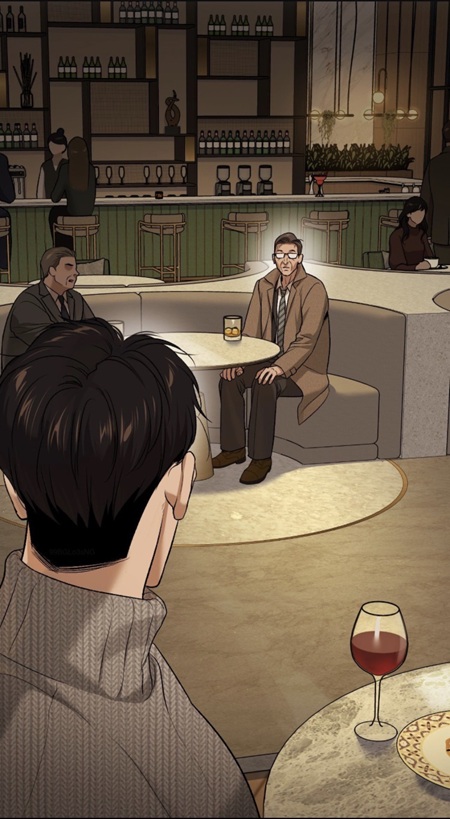 (chapter 89), yet the antagonist does not engage him. Conversation fails to circulate. Responsibility, like dialogue, stops at the rim of the glass.
This matters because the director is not merely observing Kim Dan — he is being corrected by him.
For a long time, the director believed he knew how Kim Dan’s story had ended. Fired, blacklisted, erased — a life quietly ruined by institutional power. That belief allowed him to move on without consequence. Silence had done its work. The trick had succeeded.
What sustained this belief was secrecy. Not ignorance, but managed invisibility. Power, in Jinx, does not primarily operate through open coercion, but through control of circulation  (chapter 48): who is seen, who is spoken about, and who is allowed to speak at all. By removing Kim Dan from institutional spaces and ensuring that the story of his dismissal was settled elsewhere, the director did not merely punish him — he rendered him socially invisible. Thus no one knew about doc Dan, when the athlete looked for him.
  (chapter 56) As long as Kim Dan remained unseen, power could continue to “know” without ever needing to verify.
The episode makes this collapse of power visible through contrast, not moral correction. In the flashbacks, the hospital director appears with controlled dominance 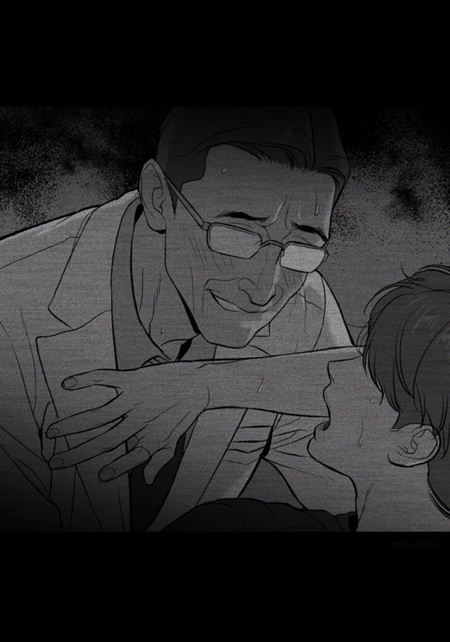 (chapter 89) rather than exposed guilt. His posture is upright, leaning in. His hand rests on Kim Dan’s shoulder without hesitation—uninvited yet unchallenged. His face shows satisfaction, not doubt. He smiles while Kim Dan sweats and is attempting to stop him. (chapter 1)
This is not the memory of a man who feared consequences. It is the memory of someone operating comfortably inside a system designed to protect him. (chapter 89) His confidence is instrumental, not emotional: the calm of someone who knows where authority lies and how silence will function afterward. The grayscale of the flashback does not condemn him; it preserves his former certainty. In memory, he is still the predator—not because he is crueler there, but because the environment still belongs to him: the hospital.
What has changed in Episode 89 is not his nature, but the terrain. (chapter 89)
In the restaurant, his stare freezes (chapter 1) not because he feels guilt, but because his old script no longer applies. He is no longer positioned above Kim Dan—neither institutionally, socially, nor visually. He cannot initiate contact without exposing himself. He is no longer buffered by uniforms, corridors, professional hierarchies, or closed rooms where truth can be settled elsewhere. The architecture that once enabled him—white coats, administrative silence, procedural opacity—is gone. And he can not confide to his colleague either, hence he keeps starring the main couple. 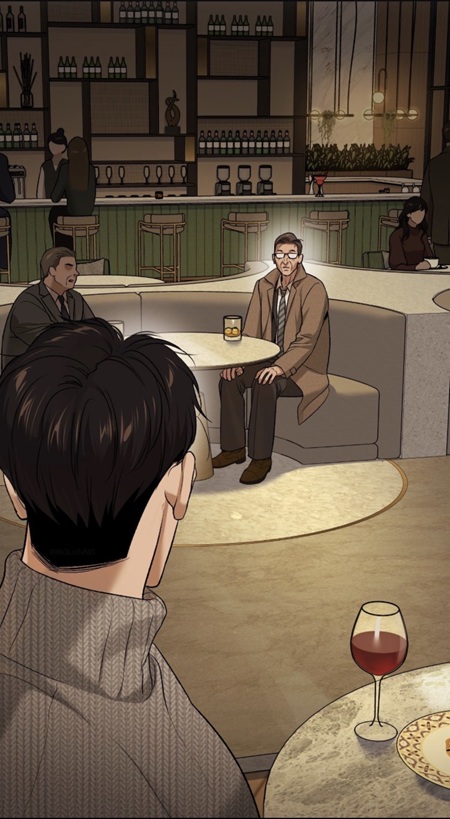 (chapter 89)
Predators rely on asymmetry and enclosure. Here, both have dissolved. This is why his reaction is not anger. Anger presumes leverage. What we see instead is hesitation: the moment a predator realizes the habitat that sustained him no longer exists. His disorientation is not ethical; it is strategic. He is recalculating risk. There is no redemption here, no moral awakening. He does not look ashamed. He looks uncertain—stripped of guarantees, not conscience. (chapter 89)
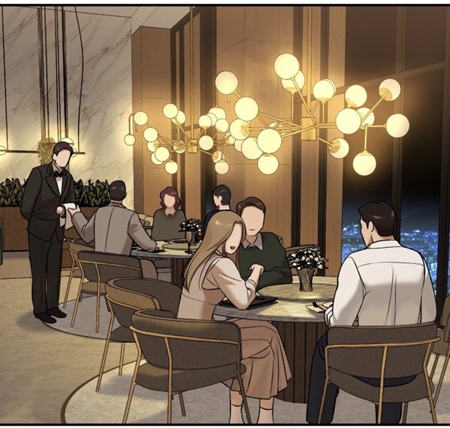
This makes the contrast with Kim Dan and Joo Jaekyung even sharper. Their interaction is openly intimate, casual, and socially legible. 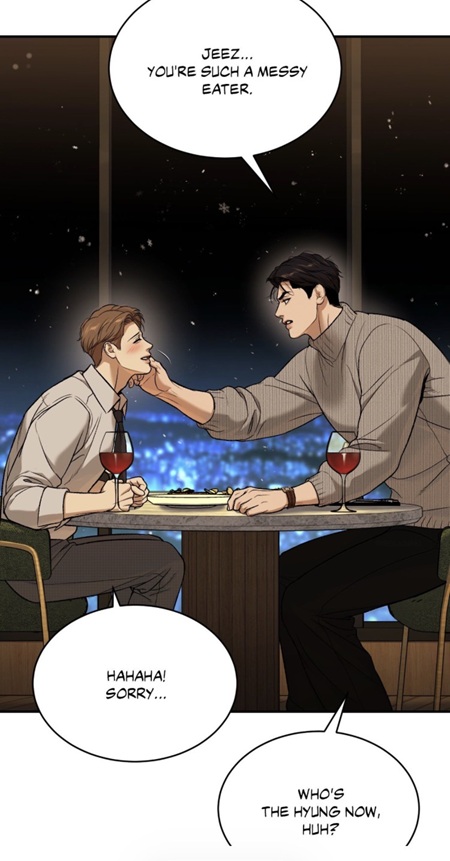 (chapter 89) They do not require shadows, isolation, or ambiguity to touch. Their closeness does not depend on secrecy or hierarchy. Where the director’s former power depended on institutional opacity, hierarchical distance, and Kim Dan’s vulnerability, Joo Jaekyung’s present intimacy depends on none of these. And no one seems to pay attention to the “main couple” at all.
  (chapter 89)
That is the true reversal the episode stages. Power has not disappeared; it has migrated. The table of the hamster and wolf is placed higher than the one where the perverted director is seated. (chapter 89) It no longer operates through enclosure and silence, but through visibility and mutual presence. What once required corridors and closed doors now unfolds in the open air of a shared table. And this, finally, is what the director is forced to see. (chapter 89)
What unsettles the director is not confrontation, but visibility: the realization that secrecy can no longer protect the knowledge he once mistook for truth. His wrongdoing can now get exposed, for doc Dan is now standing close to the “spotlight”. Joo Jaekyung is not just a face, but also a voice. Thus the latter could sue a hospital. 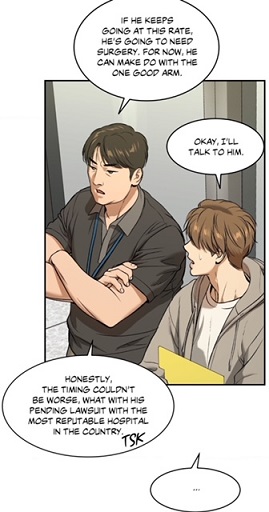 (chapter 42) This raises the following question: was the wolf suing the hospital where doc Dan got his first “gig”,?
What the nameless director sees now contradicts that certainty. (chapter 89) Kim Dan is not diminished. He is not withdrawn, anxious, or broken. He is smiling. Relaxed. Present. He laughs. He blushes. His body no longer carries the posture of someone living under constant threat. And he is not alone. He is sitting with a famous athlete — not as an accessory or subordinate, but as an equal. But more importantly, he is not pushing away the gentle gesture from the famous MMA fighter, while the “old creep” couldn’t forget doc Dan’s rejection. (chapter 89)
This is the shock. (chapter 89)
The director did not anticipate survival. He did not imagine joy. He certainly did not expect visibility.
Across the restaurant, a different table breathes. (chapter 89)
Kim Dan has removed his jacket. His body is at ease in the space. He is not preparing to leave; he is inhabiting the moment. The drink shared here — red wine — is not incidental. 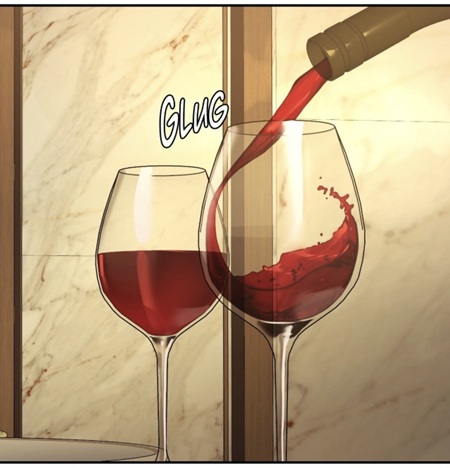 (chapter 89) Wine is relational. It opens, breathes, changes with time. It is meant to be shared, discussed, returned to. It presupposes duration. Where whisky seals, wine circulates.
Where the director’s table is suspended in cold certainty, Kim Dan and Joo Jaekyung’s table exists in a shared present. Air moves. Attention moves. When Joo Jaekyung looks at Kim Dan, he does not define him or speak for him. He responds to him. Kim Dan is not summarized. He is addressed. And observe that doc Dan is gradually imposing himself as the senior. He is now the athlete’s hyung. (chapter 89)
The contrast is not moralistic. It is structural.
The director represents a mode of power that knows without seeing. He once decided truth behind closed doors, believing outcomes were sufficient proof. Even now, his presence is shaped by that same logic: observe without engaging, remember without reckoning, drink without sharing. The irony is that he is exactly like Heesung. He thinks, what he sees is the truth. He believes to know. Because he is a hidden homosexual, he can only interpret such a gesture as the expression of love, (chapter 89) but also as commitment. In his eyes, they are dating, they are a couple. The irony is that he is only partially correct. They are not an official couple, but they act like one. Moreover, they are working together. So they are more than just a couple. Finally, this happy moment doesn’t indicate what doc Dan went through in the past, the switched spray, the drugged beverage and a huge depression.
Joo Jaekyung represents something else entirely. Not innocence, not purity, but responsibility. He does not deny the past; he incorporates it. He does not insulate himself from consequence; he assumes it. The space he shares with Kim Dan is not free of history, but it is no longer governed by silence. In fact, now their “history” is full of funny stories. 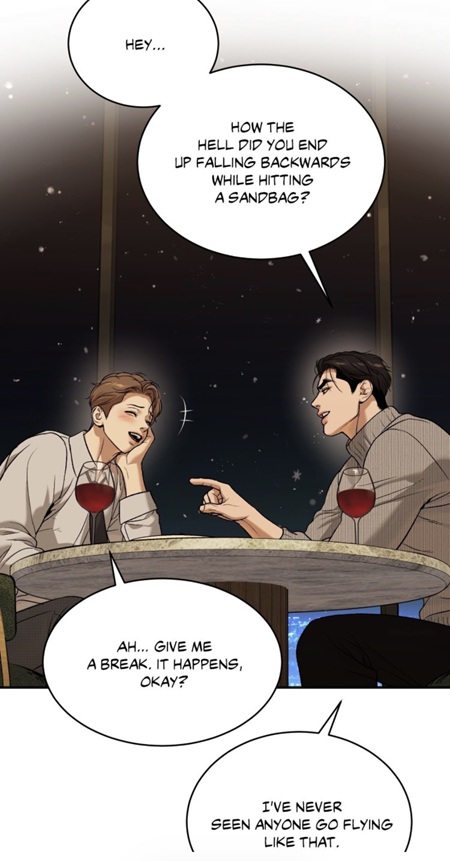 (chapter 89) But more importantly, he doesn’t hide his affection and attraction to doc Dan, while the other did it behind closed doors. Finally, thanks to doc Dan, Joo Jaekyung is learning to pay attention to his surrounding. That’s how he sensed the gaze from the perverted hospital director. (chapter 89)
This is why Episode 89 feels decisive without resolving anything.
The director’s return does not promise immediate punishment or exposure. It signals displacement. The world he once controlled through erasure no longer centers him. The person he believed he had reduced to nothing is not only alive, but visible — and no longer alone. He is even happy.
Power that relied on not seeing has lost its authority. What replaces it is not revenge, but relation.
And this is what marks The Beginning of the End, the final emancipation of Doc Dan. The latter does not arrive through confrontation or declaration, but through legibility. In the fitting room, the suit is not a costume of aspiration or disguise; it is a confirmation that he can now be seen without being reduced. He looks back, not down. He asks, 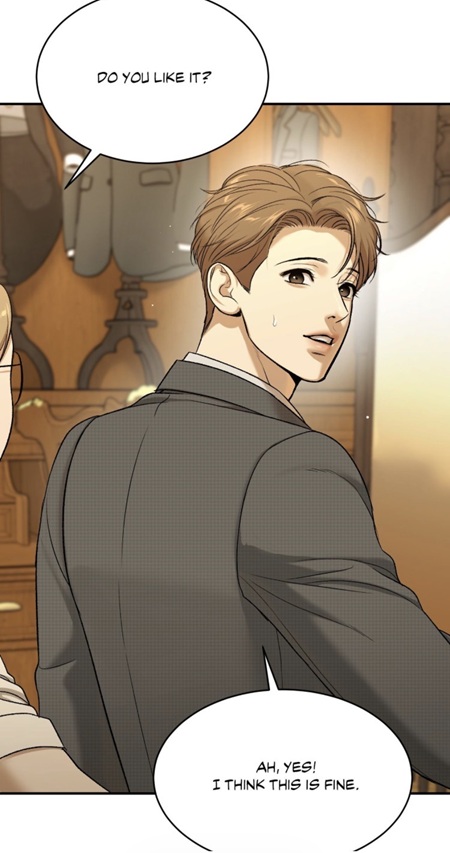 (chapter 89) not as a plea for permission, but as an invitation into a shared future. The pause of the older man watching him echoes a different kind of professionalism: not predatory authority, not performative control, but quiet recognition. Furthermore the doctor’s suit reminded me of the doctor in episode 13, Cheolmin (pattern, colors).
 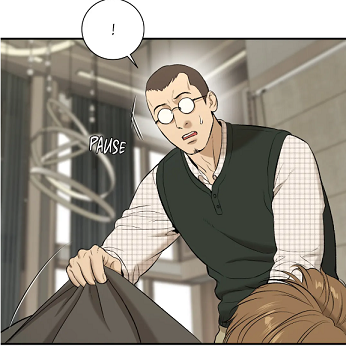 (chapter 13) The visual resemblance to Cheolmin is not accidental. It aligns Kim Dan’s future not with power that operates through secrecy, but with practice grounded in fun, care and responsibility. Earlier, suits belonged to those who decided outcomes behind closed doors (chapter 89); here, the suit becomes a sign of re-entry without erasure.
 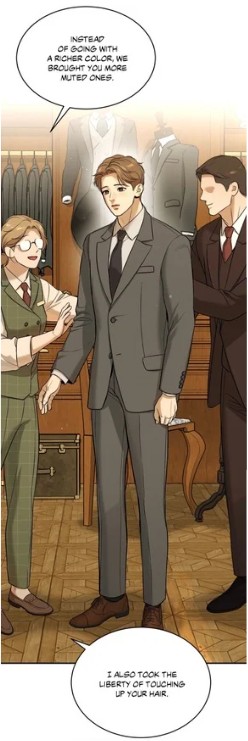 (chapter 89) Bought by Joo Jaekyung but chosen by Kim Dan, it marks the return of agency. What was once a symbol of exclusion now signals continuity. Kim Dan is no longer preparing to survive. He is preparing to live. Hence his birthday is approaching.
Not because justice has been delivered, but because those who once “knew” without seeing are finally forced to see—
and discover that their knowledge and power were never secure, only temporarily protected by illusion.
Feel free to comment. If you have any suggestion for topics or Manhwa, feel free to ask. If you enjoyed reading it, retweet it or push the button like. My Reddit-Instagram-Twitter-Tumblr account is: @bebebisous33. Thanks for reading and for the support, particularly, I would like to thank all the new followers and people recommending my blog.

 Bebebisous33s' analyses in K-Dramaland and Manhwas