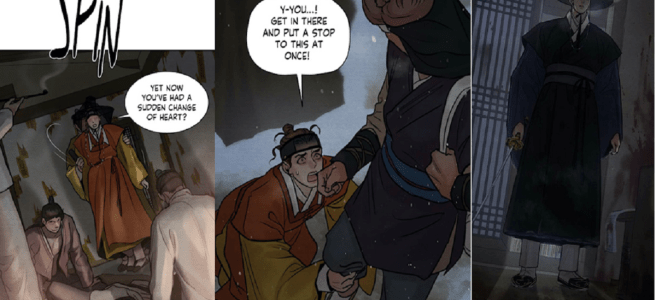
This is where you can read the manhwas. https://www.lezhinus.com/en/comic/sip_poison This manhwa is mature. https://www.lezhinus.com/en/comic/painter But be aware that this manhwa is a mature Yaoi, which means, it is about homosexuality with explicit scenes. If you want to read more essays, here is the link to the table of contents: https://bebebisous33analyses.wordpress.com/2020/07/04/table-of-contents-painter-of-the-night/ I also used briefly Doctor Frost again which I highly recommend to my readers. https://www.webtoons.com/en/mystery/dr-frost/list?title_no=371 If you want to read more essays about other manhwas, here is the link to the table of contents: https://bebebisous33analyses.com/2021/06/06/table-of-contents-of-analyzed-mentioned-manhwas/
It would be great if you could make some donations/sponsoring: Ko-fi.com/bebebisous33 That way, you can support me with “coffee” so that I have the energy to keep examining manhwas. Besides, I need to cover up the expenses for this blog.
1. Castration or abandonment?
Anyone reading my previous analyses about Painter Of The Night will certainly recall that I had perceived the loss of the topknot as a castration. Why? In Joseon, the topknot was given to men the moment they became adults and this Coming-Of-Age ceremony took place just before a marriage. [For more read the essay “Coming Of Age”] In other words, no topknot meant no marriage and as such no responsibility and maturity. However, this is important to recall that the loss of the topknot was brought up in a different context. It was mentioned for the first time in the painter’s statement.  (Chapter 1) When Baek Na-Kyum remembered his noona’s words about Yoon Seungho, he connected it to the loss of his future lover’s topknot. Here, the gesture had a different meaning. By cutting off his hair, the father was acting, as if he was abandoning his son. According to social norms, the hair was considered as a heritage from the parents. So if Yoon Chang-Hyeon had truly done it, the latter was showing that he was no longer considering the main lead as his son. While the rumor about the haircut gave the impression that the elder master Yoon was a honest and honorable noble, anyone can perceive the elder master’s action differently: the father is a coward, a selfish, ruthless and disloyal lord, especially the moment it is revealed that Yoon Seungho was abused sexually, physically and mentally. Let’s not forget that the protagonist used to live in the shed, for he was viewed as an animal. His situation reflected the father’s betrayal and abandonment. It doesn’t matter if he had been manipulated, because in the end, he made the decision to treat his son as a slave. He refused to send for a physician. To sum up, the loss of the topknot in this rumor would be judged as the epitome for cruelty and intolerance!! This shows that the loss of the hair in Painter Of The Night has actually many significations: castration, mercilessness and abandonment.
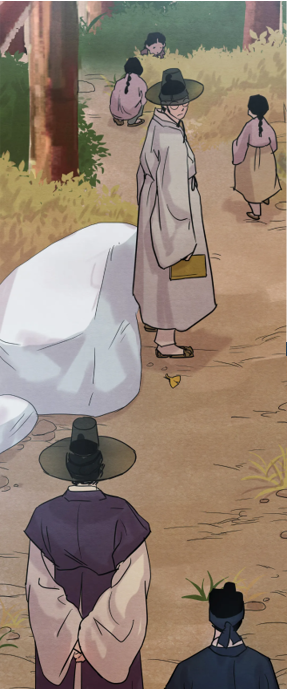
Then it occurred to me that the painter has been cutting off his hair all this time because of his noona. 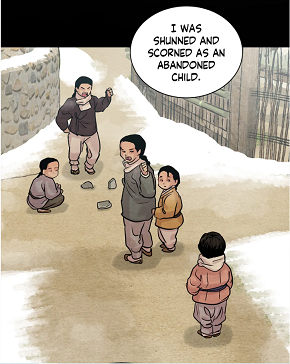 (Chapter 94) In this scene, the painter was rejected by the children, for he had no braid. Due to his hair dress, he was recognized as orphan immediately. The justification was that that way, the artist would appear more boyish. But by mentioning the loss of Yoon Seungho’s topknot, Heena was actually revealing that she knew the true signification of the haircut: abandonment and intolerance. Her words to her brother exposed her hypocrisy, though she attempted to portray the elder master as respectable. One might argue that when Na-Kyum was just a child, she had suggested the short hair, for she had good intentions. But after this experience with the children, the noona should have grasped the wrongness of her decision. She should have admitted her bad decision and stopped the painter from cutting his hair. Moreover, don’t forget that Na-Kyum was just a young boy, so the haircut must have been done by Heena herself. This shows that her gesture actually divulged her future behavior: she would betray and abandon the painter constantly (season 1, 2 and 3). At the same time, since the painter was seen with short hair in chapter 68
  , this indicates that Heena kept cutting Baek Na-Kyum’s hair. So even in the past, she was betraying her brother, though the latter never realized it. The loss of hair could never be viewed as a sign of love or empathy, for it contributed to the painter’s abandonment issues and his self-loathing. He was suffering as an outcast and due to his girly features. The men in the gibang could mistreat him, for he had no long hair or topknot. Why?
 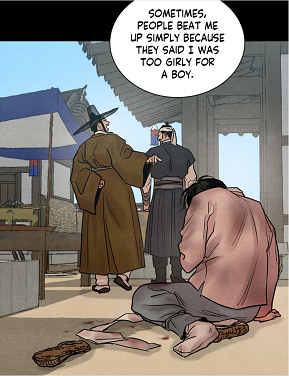 (Chapter 94) He had no parents or guardians protecting him which is true, for here he was exposed to violence. Heena, as the head-kisaeng, had not protected him at all, she must definitely have portrayed herself as powerless. Yet as a slave of the state, she was belonging to the king. So she had connections to officers and the court. In my eyes, the head-kisaeng made sure that the artist could never get a topknot, and as such he would never be able to become a “noble” or even a man. Hence Baek Na-Kyum was constantly called boy
  (Chapter 56)
 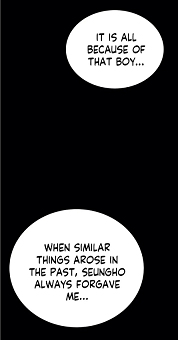 (Chapter 59)
  (chapter 66) and treated as one too. This observation made me realize that Heena’s belief could be used as an explanation for her action (cutting off his hair): she hates nobles so much that she didn’t allow her brother to have a topknot. But why would she do that? My idea is that deep down, she resented him, for he was a free man, while she was a slave. It went so far that he was encouraged to wear a white headband, the symbol for servitude, though he is no slave! To conclude, the loss of hair in Joseon should be perceived as a brutal and harsh punishment. Without a topknot, one is left unprotected, is not viewed as an adult. But this stands in opposition to Yoon Seungho’s action in front of Jung In-Hun’s home.
  (Chapter 101) Here, the lord had spared his friend’s life.
2. The loss of the topknot: Symbol for forgiveness?
As you may have noticed, I often use other manhwas as a source of inspiration for my interpretations concerning Painter Of The Night. In the story “A Sip of Poison”, the main lead, the prince Nan-Woo  (Chapter 23) cuts off the hair of the general Woo Jong Han, because he had committed crimes. First, he hid the fact that his sister had had a child before getting married to the emperor, which was actually a huge sin. The future Empress should have been a virgin. To sum up, he had committed treason, for he had allowed his sister to become Empress unrightfully. Then the field marshal had treated his niece as a slave violating social norms.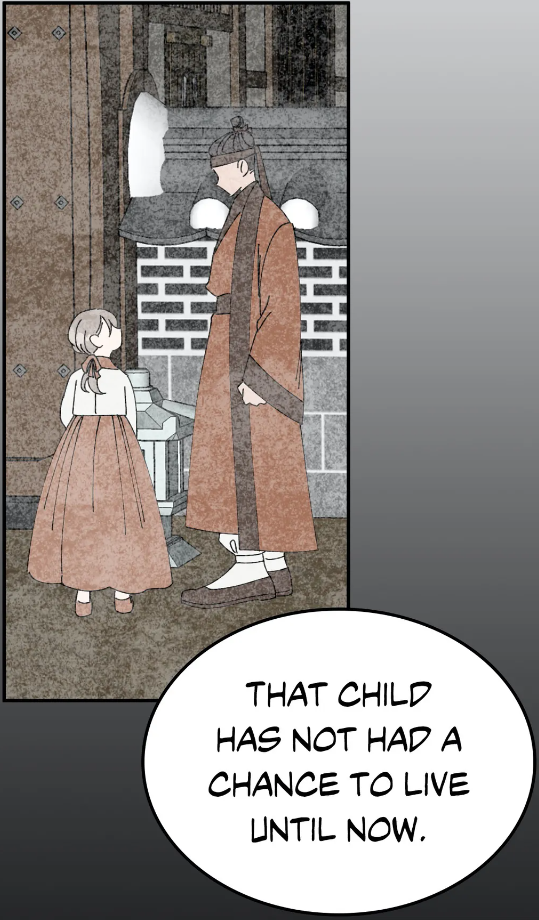
 (chapter 34) That way, he assisted his sister to become powerful by covering up for her crimes (silence and passivity). She had killed many people to hide her previous relationship and to increase her power. Striking is that the prince still spared Baek-Ha’s uncle, and this for many reasons. First, the latter had not only saved both protagonists, the empress’ illegitimate daughter Baek-Ha and the prince Nan-Woo, but also had admitted his sins. Secondly, he was thinking of his wife Baek-Ha who is kind-hearted. He knew that his death could upset his bride.
 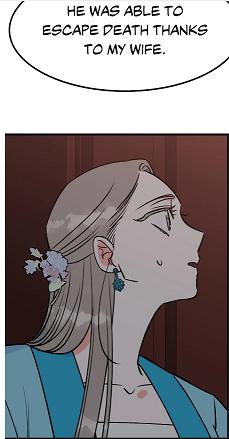 (chapter 26) But there is more to it. Nan-Woo didn’t spare the man out of benevolence.
 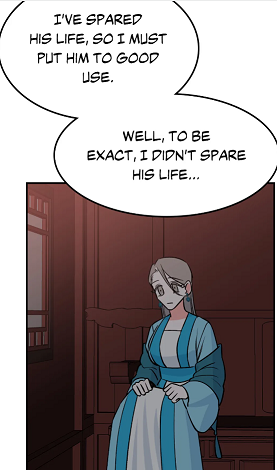 (chapter 26) He had a role to play. By cutting off his topknot, the general lost his “power”, he became the prince’s pawn! Nan-Woo wished to use the uncle in order to get rid of the Empress.
 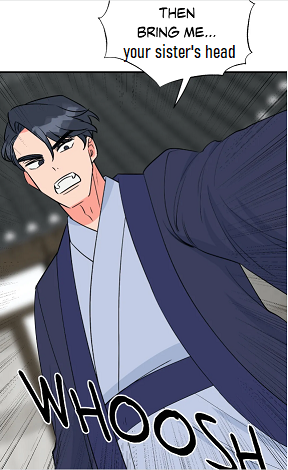 (chapter 23) That way, the protagonist wouldn’t even have to dirty his own hands. On the other hand, we could also say that Nan-Woo was forcing the Empress’ brother to undo his bad decision.
  (chapter 23) Since he had protected his sister Seo-Ha out of affection, it was normal that now he had to show no mercy towards her. By presenting Baek -Ha to Nan-Woo, the general was well aware that the future ruler would recognize the female lead’s origins due to her resemblance to her mother. Therefore, we could interpret that Nan-Woo had spared the general, for the latter had switched sides and expressed the wish to undo his wrongdoings.
As you can see, Woo Jong Han shows many similarities with the second lead from Painter Of The Night: he was an accomplice of the real culprit, as he never intervened. He is connected to the notion: pity, knowledge, silence and passivity. Because Seo-Ha was his sister, as a dutiful older brother, he felt obligated to protect her. He was not blinded by greed like his donsaeng. This explicates why on the one hand, he saved Baek Ha’s life, on the other hand he still treated her as a slave in order to hide his sister’s wrongdoing. He felt torn between his obligation towards his younger sister and his empathy for his niece, Baek-Ha. Consequently, it is no coincidence that he once warmed her feet with his hands after the young girl had complained about her cold feet. Moreover, she received an education contrary to all the other slaves. He was caught in the middle, exactly like Lee Jihwa who had an attachment towards the main lead, yet he was still bound by social norms to his father. He needed to protect the family’s reputation. So when I saw this scene, (chapter 23) I couldn’t help myself thinking of Lee Jihwa and Yoon Seungho. How could the latter view the loss of a topknot as a gesture of leniency?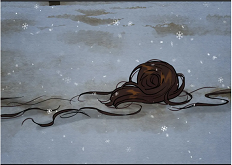 (Chapter 101) It is because he must have witnessed it himself in the past. I have already pointed out that Yoon Seungho would imitate people, especially his tormentors. So where did he learn from? I believe, Yoon Seungho copied it from someone… and this can only be “lord Song”. And now, the first loss of Lee Jihwa’s topknot can be perceived in a different perspective. The red-haired master was well aware that he had been spared, when he had lost his hair for the first time.
 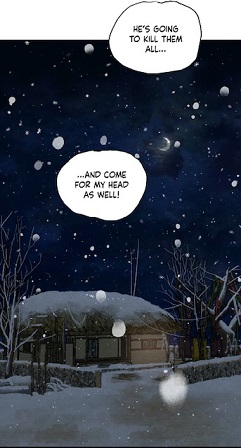 (Chapter 101) He knew deep down that thanks to his friend, he had been able to escape the worst. Since he had been spared once, he was well aware that this time, the ruler would show no leniency and would ask for his head, as the main lead was no longer protecting him. Remember what the lord had whispered to Baek Na-Kyum:
 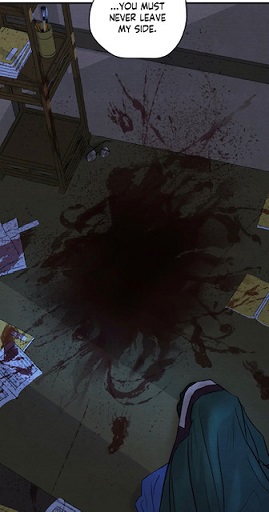 (chapter 88) (chapter 88) By cutting off the friend’s hair, he was showing that he was abandoning his friend. He was leaving him behind, and Lee Jihwa was forced to face lord Song alone.
  (Chapter 83) This time, he had not his father by his side either. The latter could not protect him too. I had already voiced this theory before, as it would explain why Lee Jihwa is masking the man’s face. And note that Nan-Woo from A Sip Of Poison cut off the topknot, as he is already acting as the future ruler. Another important detail caught my attention. Just before receiving his sentence, Woo Jong-Han made an oath,
  (chapter 23), he swore loyalty to the future emperor. This signifies that the topknot also symbolizes faithfulness, especially because it is connected to marriage. Thus I deduce that when Lee Jihwa lost his topknot for the first time, he was already judged as disloyal. Hence it is no coincidence when the antagonist screams that he would become the target of lord Song’s fury.
But the red-haired noble could never reveal the king’s meddling, as his relationship with Yoon Seungho was a secret. Hence he needed to blame someone: The Yoons! I had already exposed that the words from the noble with the mole were ambiguous and as such deceiving. 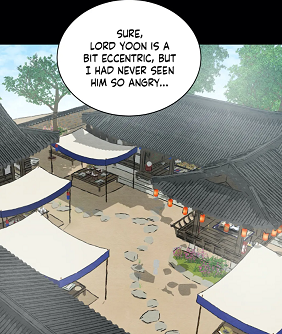 (Chapter 59) First, lord Yoon could be a reference to the father and not only the son. Secondly, he implied that he had witnessed the scene, yet in reality he could have been referring to the outcome: the friend’s hair cut, just like the noona had only seen the hickeys on her brother’s neck. She had never witnessed the sex session. The noble with the mole assumed the perpetrator’s behavior, rage, based on the hair loss. Moreover, he could have been telling the truth: he had never seen Yoon Seungho so angry before, as the latter used to be weak in the past due to his social status: he was a male kisaeng due to his braid. This explicates why the noble with the purple robe would give an order to the host
 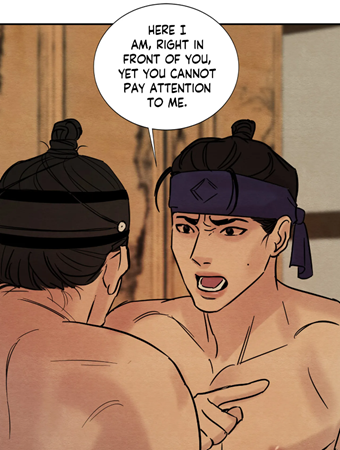 (chapter 8) He felt himself superior to Yoon Seungho, and never expected “disobedience” or “rage” from the protagonist. Striking is that the lord didn’t vent his anger onto him, he first smiled before grabbing him by the topknot.
 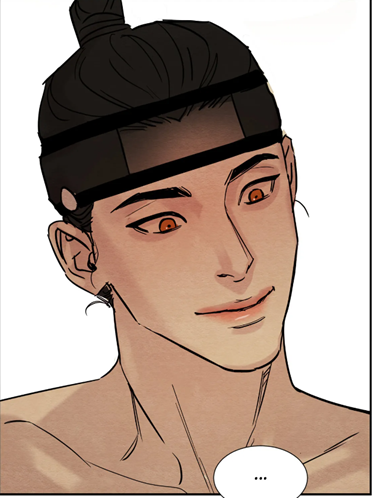 (Chapter 8) A simple change of hair dress had transformed the main lead. This exposes the gods’ intervention in this story. They let the man with the mole see the wrongness of his manipulations. Since he had stated that he had never seen the man so angry, his words became a reality in 3 occasions: chapter 8 like mentioned above, chapter 53
 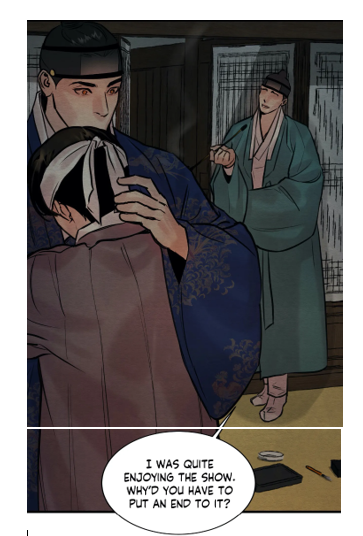 , for he was not present, chapter 57
  in the inn. Here, he chose to run away, yet despite everything he still helped his friend Black Heart, for he was present in the gibang.
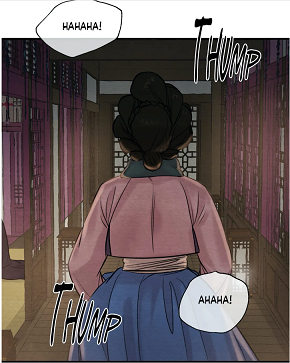 (Chapter 69) Under this new light, this panel from Twitter get a total new meaning:
  The aristocrat knew about the true identity of “lord Song”, and he had indeed never seen the man so angry that he would cut off the topknot of a noble!! This means that the fate of the noble with the mole should be to end up as the lord’s new plaything. In other words, he takes over the main lead’s previous status. He becomes the male kisaeng and ends up living in the shed like the protagonist in the past where the pedophile vents his rage and resent him for his tricks. But we will see.
Another important detail caught my attention: the noble with the mole judged the loss of the topknot as a harsh punishment 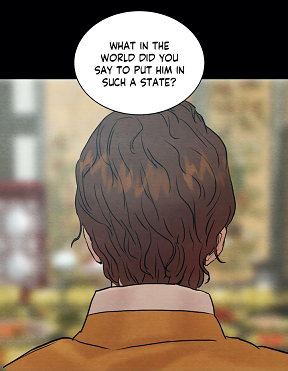 (chapter 59) Furthermore, he associated it to abandonment too.
 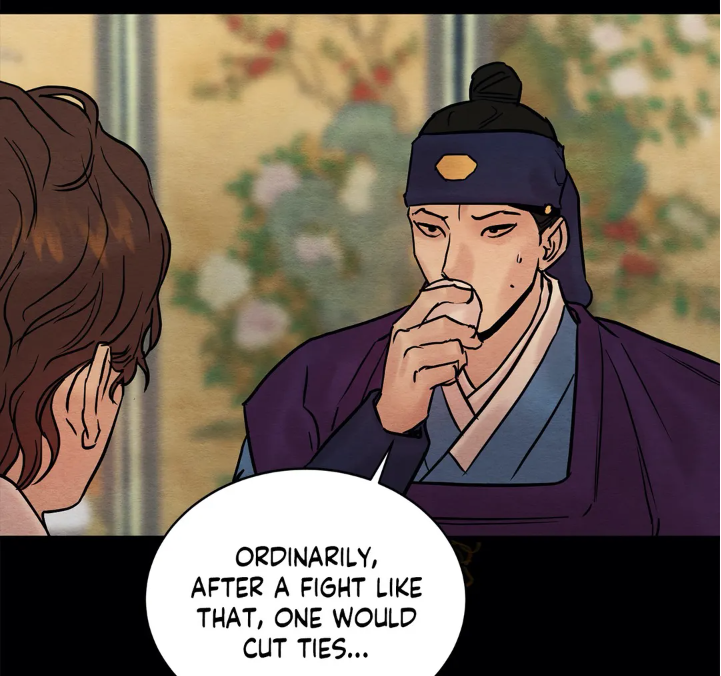 (Chapter 59) Yet, observe the drop of sweat. This exposes that neither Min nor the noble with the mole were expecting that Lee Jihwa would be spared!! They acted, as if the loss of the topknot couldn’t be a sign of mercy. But observe what Lee Jihwa was recalling, when the “friend” was talking about abandonment.
  (Chapter 59) He was by the protagonist’s side! This means that lord Song had spared Lee Jihwa’s life, for he had been present, when Yoon Seungho was suffering. Till the middle of season 2, no one was aware of the fallout between Lee Jihwa and the protagonist. None of the incidents in season 1 was leaked to the outside, hence the “pedophile” was not officially aware of the red-haired master’s wrongdoings. But the loss of hair in front of the learned sir’s house becomes the proof that the main lead has now left his friend’s side. He will be blamed for his suicide. Therefore it is not surprising that the young master chose to run away.
 (Chapter 101) He knew that the ruler would show no leniency or understanding. Thus the noble with the mole’s karma should be to keep his topknot. That way, he will realize that if he had lost his topknot like Jihwa, his torment would be short-lived and as such it was a sign of mercy. But in this image, it doesn’t look like it. He will suffer for hours and even days before even losing his life. Now, he will be able to see and experienced how enraged or lenient the culprit for the loss of Lee Jihwa’s topknot was towards the antagonist.
The manhwaphiles should keep in their mind the following two rules: the painter’s fate mirrors the lord’s, since the story is constructed like a kaleidoscope. And now, look at this:  (chapter 27) The painter had saved his teacher’s life, and later the lord had restrained himself from hurting the scholar in the courtyard despite Jung In-Hun’s lies and lack of respect (he had touched the man’s shoulder).
  (Chapter 30) Here again, the scholar had been spared. Then in episode 53, the painter had embraced the lord to stop him from killing Deok-Jae. This means that Yoon Seungho must have also saved people in the past by using his body, and this twice, for I had detected the presence of two circles: Yoon Chang-Hyeon and Lee Jihwa. That’s the reason why the father could survive the purge, and why Lee Jihwa only lost his topknot. And the heroine from A Sip Of Poison can serve as an example. (chapter 26) The red-haired noble was able to escape death thanks to Yoon Seungho. But Lee Jihwa had to hide from others that he had been punished by the king, hence Father Yoon and Yoon Seungho got blamed (chapter 1 and 59). And now, you have the explanation why father Lee accepted to receive the main lead in his mansion.
 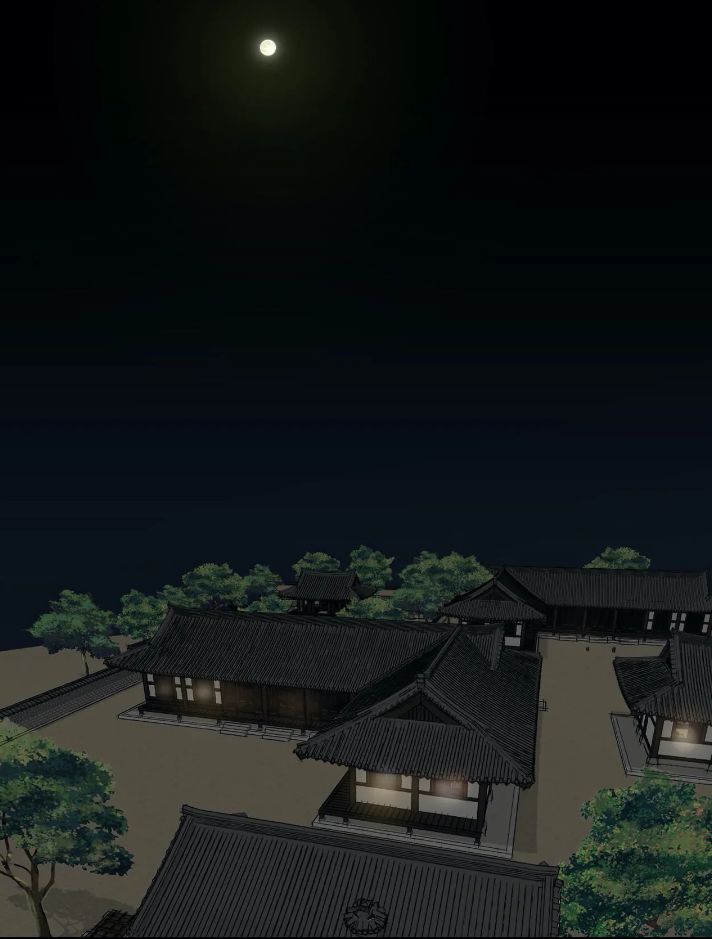 (Chapter 1) As long as the latter was living there, the Lees had nothing to worry. The main lead was protecting them from the king. However, the manhwalovers should keep in their mind that Nan-Woo had showed mercy to the general for his own interests. He should become his helping hand in order to obtain the throne. Hence I come to the following deduction: neither Nan-Woo nor the “perpetrator” had cut off the topknot out of real leniency. This shows that for these characters, the loss of the topknot is not the symbol for forgiveness which is not true for the last incident with Lee Jihwa. (chapter 101) Why? It is because the main lead had no intention to use his friend as a pawn. There was no pledge of loyalty… in truth, in this scene, Yoon Seungho was truly cutting ties with the second lead.
But if the pedophile chose to employ the young master after the loss of the topknot, what was his role? In my opinion, it was to keep Yoon Seungho by his side. The pedophile had slowly recognized that he could never separate these two boys, and without him by his side, Yoon Seungho would still reject him. In my eyes, the main lead had followed his friend. Under this new light, the manhwaworms can comprehend why father Lee accepted to let the main lead stay in his mansion. He could secure his position, yet pay attention that despite the topknot, he was still dressed so poorly. 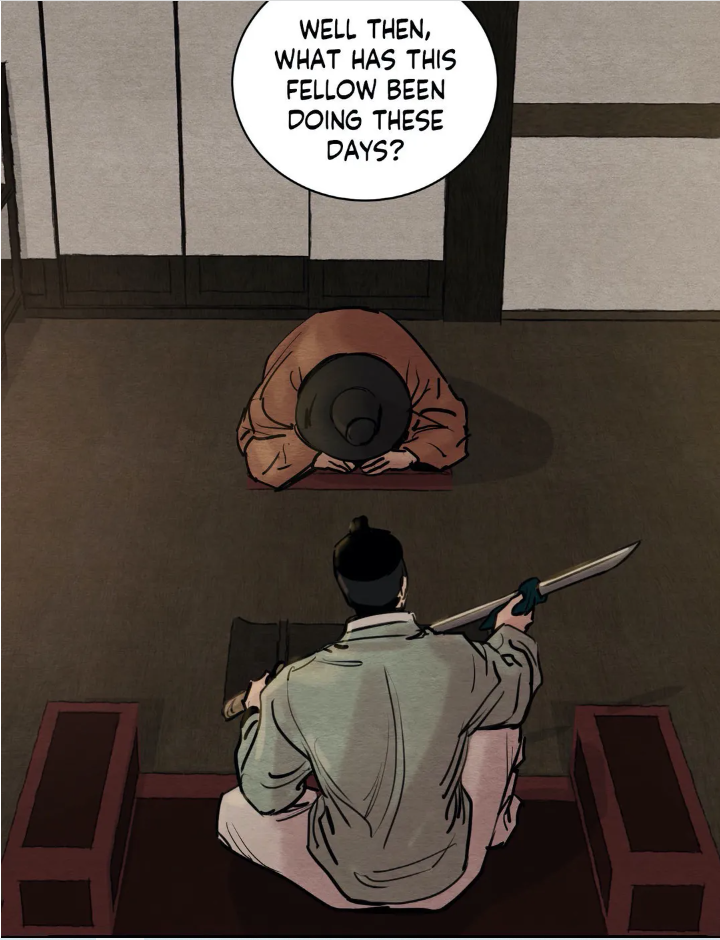 (chapter 1) Even the headband was different. This was no coincidence. He should never develop confidence and act as a lord. That’s how I recognized the following pattern. In front of the painter who looked like a minor, the main lead was forced to act like an adult. Thanks to the painter, he was encouraged to mature. Simultaneously this meant that at some point, while living with the Lees, the elder master Lee had to be confronted with the truth: his son’s sodomy.
Under this new light, it becomes understandable why Heena and Kim called the main lead a bird of misfortune. 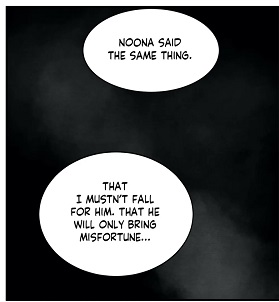 (Chapter 86) The reality was that the pedophile was the bad omen, but they couldn’t insult the king. Hence the young main lead became the scapegoat, people couldn’t separate the pedophile from Yoon Seungho. The “mysterious lord Song” would never give up on the protagonist. No matter what he would keep him by his side.
But like pointed out in an earlier analysis, Black Heart and his friend were definitely the reason why the red-haired master had to lose his topknot. From my point of view, this is related to this night, (chapter 1) and Lee Jihwa had no idea about it. Hence the painter got framed. On the other hand, Black Heart and his friend had to spy on Lee Jihwa in order to know about his ignorance concerning their “prank”. At the same time, they could only get intrigued, why the mysterious lord Song would behave that way, though he had been treating the main lead as a male kisaeng. Towards Yoon Seungho, he was quite selfish and cruel. The discrepancy in the treatment (mercy versus ruthlessness) could only surprise the young nobles. And this observation led me to the following question. Why would Heena mention the topknot to her brother in order to manipulate him? The kisaeng was well aware that he had witnessed the sex party in the kisaeng house, for this image represents a memory from the artist. It is to divert his attention: he should never connect Yoon Seungho to the braided man!! If he had a topknot, then he could never be the one doing the fellatio to the man with the purple hanbok!! But if the painter had pondered a little more, he should have realized his noona’s lies. She mentioned the loss of a topknot, but yet the smiling hell-raiser still had a topknot: 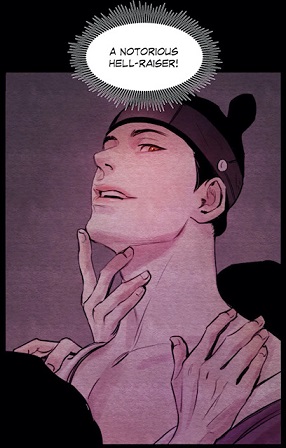 (chapter 1) Moreover, we shouldn’t overlook the publications with the braided man:
  (Chapter 1) Baek Na-Kyum was not supposed to recognize the identity of the man having sex with the bearded man. From my point of view, Heena made sure to confuse her brother. Lee Jihwa’s humiliation became Yoon Seungho’s stigma. He became the culprit. Since in the past, the main lead had been blamed for everything, the perpetrators and accomplices chose to follow this “tradition”, because so far, they had been able to cover up their crimes. But thanks to the painter, it is no longer possible. Why? It is because the painter’s hair dress will serve as a mirror of truth: the absence of a topknot due to the braid and the hair cut will be perceived as an evidence for abandonment, cruelty and huge wrongdoing. This won’t be seen as a gesture of mercy or leniency by the two protagonists, for they suffered because of it!! That’s the reason why I am thinking that the pedophile’s karma should be the loss of the topknot which he viewed as a gesture of mercy and tolerance. But without the topknot, he is actually “castrated”, and as such humiliated for he can not wear his golden sangtu.
  Yet, contrary to Lee Jihwa’s haircut, the loss of the topknot should not be judged as the symbol of mercy and forgiveness, in fact, the lord would officially cut ties with him. That’s how the mysterious Lord Song would be taught an important lesson: he was a huge hypocrite and a violent and ruthless pervert.
3. The tool for the loss of the topknot
Once again, A Sip Of Poison inspired me. The prince Nan-Woo asked his assistant Yoon 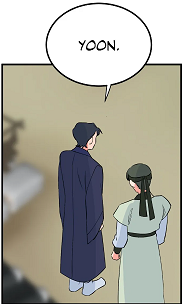 (chapter 23) to give him a knife:
 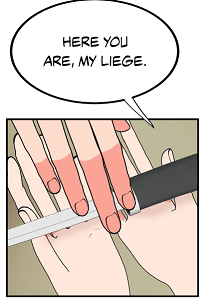 (chapter 23) before grabbing Woo Jang-Hon by his topknot
 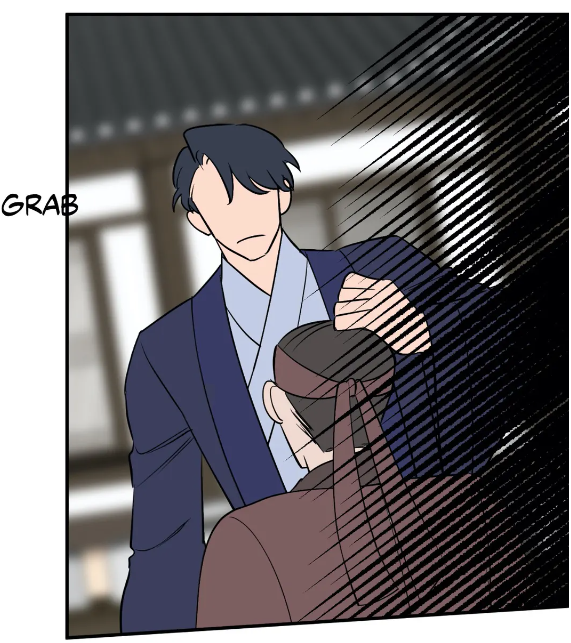 (chapter 23). Hence the hair fell between the men.
  (chapter 23) And now, let’s return our attention to Painter Of The Night. Compare the position of the aristocrat’s topknot after Yoon Seungho had punished his friend.
  (chapter 101) It was behind him!! Thus I deduce that he had used the sword, when Lee Jihwa had approached his friend. But wait… in season 1 and 2, Byeonduck drew scenes with a knife:
- Chapter 18:
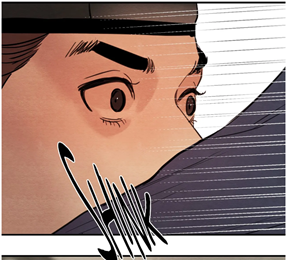
 And what had happened before? Yoon Seungho had dragged his friend by the topknot before stabbing the amateur spy. This is no coincidence.
 - Chapter 57:
 When this chapter had been released, I had assumed that this must have happened, when Yoon Seungho had lost his topknot! As you can see, I had already connected the knife to the loss of the topknot incident.
 - However, note that the weapon was used to threaten the painter
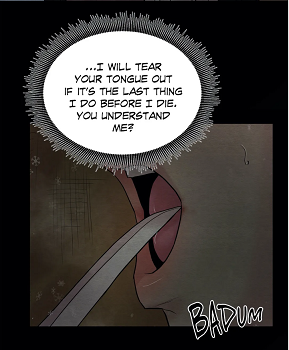 (chapter 66)
That’s the reason why I am assuming that when Lee Jihwa lost his topknot for the first time, the mysterious lord Song must have used a knife and cut off the young master’s hair. Hence Byeonduck created such a picture where Lee Jihwa was put in a similar situation: (chapter 18) It was to trigger his memory. I am even assuming that the butler must have given lord Song the knife before while remaining in the shadow. But I also think that after the incident with the loss of the topknot, the pedophile must have also threatened him. If he were to reveal anything about this incident and his identity, then he would lose his head. So imagine Lee Jihwa’s reactions in chapter 101. (chapter 101) He had now faced a sword and not a knife contrary to the past. Therefore it is not surprising that the young master got so scared and chose to flee. Lee Jihwa had betrayed lord Song by telling an anecdote from the past. He had more or less leaked the name “lord Song”. 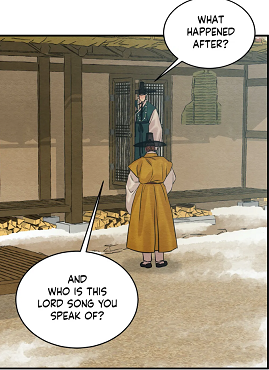 (chapter 83) (chapter 101) For the first time, he had been confronted alone with the sword directly. There was no one and nothing to protect him. When Yoon Seungho had barged in his bedroom, Lee Jihwa had fled behind the folding shield. Furthermore, his father and the domestic were also present.
 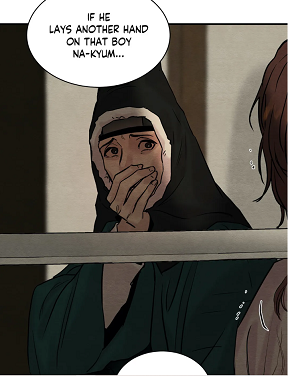 (chapter 67) This shows that till season 3, Lee Jihwa had never been exposed to real justice. There was always someone ready to intervene for him. And now, you comprehend why the red-haired master felt no remorse to blame his friend for his humiliation in the past. He must have thought that if he had not been in his bedchamber during that night (chapter 59), he wouldn’t have lost his topknot. Moreover, he could also use the other incident in the bedchamber as a justification. If Yoon Seungho had not dragged him there…
  (chapter 83) This explicates why Lee Jihwa said this to Black Heart and his friend:
  (chapter 59) The antagonist had witnessed his friend’s humiliation and suffering in the past, just like Yoon Seungho had been present, when the first topknot incident occurred. From my point of view, the lord must have even protected Lee Jihwa. But the problem is that Lee Jihwa was just receiving his punishment in delay for the stolen kiss and his lies
  (chapter 77) He had kissed him without his consent, thus he got “castrated”. Let’s not forget that the main lead was forced to become a male prostitute, an uke, for he had not been able to perform, to have an erected phallus. On the other hand, Lee Jihwa had done nothing wrong in the bedchamber (chapter 59), for he was consoling his friend, so the loss of the topknot appears as a harsh punishment. Moreover, it looks unfair, for the real perpetrators and accomplices got scot-free. Yet, this is just an illusion. Min and his friend were punished too. They got “castrated” too!! How so? It is because from that moment on, they were not allowed to treat Yoon Seungho as a uke, a male kisaeng. (Chapter 1) This means that the painter’s vision was turned into a reality. That’s the moment Yoon Seungho got turned into a seme. Now, Black Heart and the noble with the mole should become his “playthings”, which signifies that they had switched positions. In my opinion, the pedophile had decided to no longer share his “companion” to others. As you can see, they got punished too, but since this was not painful, they never realized that they were receiving their karma. This was a symbolic “castration”. Under this new approach, it becomes understandable why Min was so obsessed with Yoon Seungho, why he wished to “fuck” Yoon Seungho in a figurative way. This is what he had desired in the past, in the gibang, but he had failed. Thus we have this gesture from Black Heart in the woods.
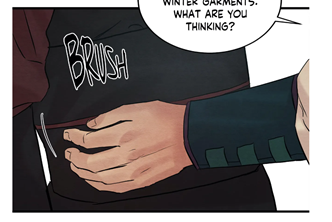 (Chapter 41) Due to the incident in the kisaeng house, Min had lost his privileged position with the king. Hence he got jealous. He could no longer screw” the protagonist, while he had to watch the lord’s slow ascension. To sum up, the loss of Jihwa’s topknot led to the “symbolic castration” of the infamous couple: Min and the noble with the mole.
But it is time to return our attention to the knife and the loss of the topknot. First, it is relevant to remember the following rule. Baek Na-Kyum will through the path than the main lead’s. Since the painter has been constantly cutting his hair, he never had the chance to get long hair and as such a topknot. And the lord was in a similar situation. He only got his topknot very late… but the only difference is that he had a long braid the entire time. This hair dress was the symbol of his servitude. (chapter 57) Hence the author drew slaves with braids constantly. 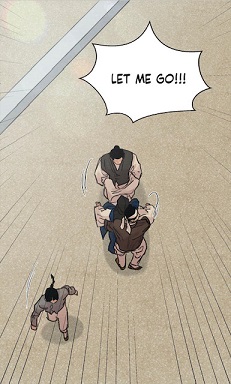 (chapter 77) And now, you comprehend why the pedophile cut off Lee Jihwa’s topknot! The latter had been blamed for the lord’s change of hair dress. (chapter 59) Because of this, Yoon Seungho had become a lord, a noble. That’s the reason why we are not able to distinguish the main lead’s hair dress properly, neither in the last picture and in this one:
 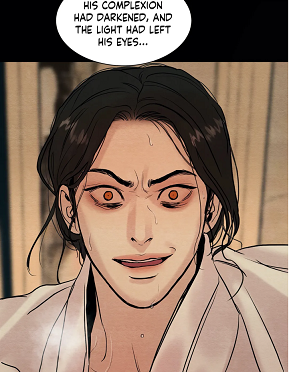 (chapter 57) The hair was short or not? Now, I don’t think so. The mystery of Yoon Seungho’s suffering is linked to the hair dress, yet the readers shouldn’t realize it too quickly. According to me, he still had the braid, until the doctor questioned why Yoon Seungho still had no topknot. (chapter 57) Don’t forget that in each visit of a physician, the latter would question the butler:
  (chapter 33)
 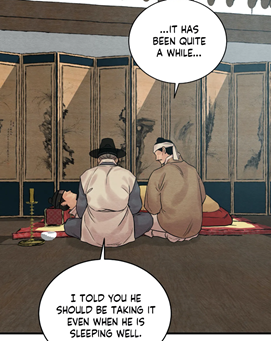 (chapter 55) And who had given him the topknot? Naturally… Kim! Because he didn’t want to be perceived as someone who was violating social norms. However, there is no ambiguity that he hid his responsibility. That’s how Lee Jihwa and his “servant” got framed. They were responsible for giving the main lead the new hair dress. On the other side, I still believe that Yoon Seungho must have lost his hair too, but only once to the difference of Baek Na-Kyum! My reason is simple. Since the painter and Lee Jihwa lost their hair, and Yoon Seungho’s destiny is mirroring his lover’s, it signifies that the lord’s hair must have been cut too. But who did it? Let’s not forget that when Yoon Seungho punished his friend in front of the scholar’s home, (chapter 101) the loss of the topknot had four significations: admission of a sin, mercy, forgiveness but also ABANDONMENT! He was cutting ties with his childhood friend. So he must have known the last meaning, but from a different source, as the first incident represented a sign of leniency. Consequently, I ended up with the following theory. Yoon Seungho must have cut off his own hair, yet he had been manipulated by Kim. Let’s not forget that the painter continues cutting his own hair and there is no sign of trauma linked to such an event. He had been encouraged to lose his hair by his noona. From my point of view, this must have happened between these two scenes:
 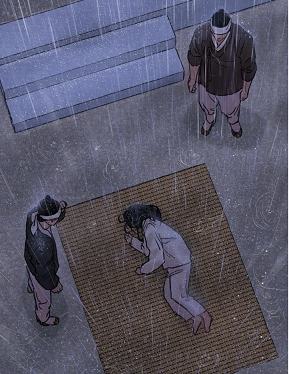 (chapter 77) and this one
 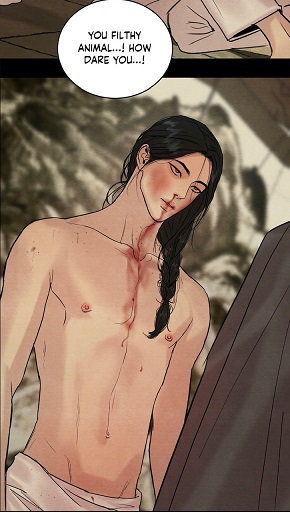 (chapter 83) The length was almost the same, yet 3 or 4 years had passed in the main time. Let’s not forget that this scene represents the patriarch’s abandonment
 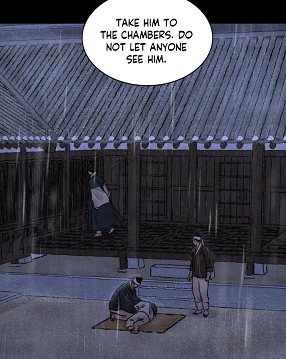 (chapter 77) and Kim had also experienced rejection from Yoon Seungho
  (chapter 77) in that scene. For the butler, this gaze could be judged as betrayal and abandonment. Under this new perspective, it becomes comprehensible why the main lead was encouraged to blame and resent his father. If this theory is true, Kim pushed the main lead to cut off his braid, he did it out hatred and anger towards the Yoons. This would mask his own manipulation and culpability too. At the same time, the pedophile could benefit from it. The main lead was now an orphan, thus the bearded man could use him like he wished. I have an evidence for this interpretation. This is what Baek Ha said to her husband:
  (chapter 23) Being slave meant being orphan. The pedophile could feign ignorance about the main lead’s true origins. If he truly cared for him, he just needed to ask this: papers!
 (chapter 24) This shows that in Painter Of The Night, all the elders were depraved and violent hypocrites. Like mentioned above, the pedophile had a huge interest to keep the main lead as his slave, thus he was turned into an orphan and asked to keep a braid. And Yoon Seungho’s mother could do nothing, for the son had cut off his own hair, a huge symbolic act. He was no longer considering her his mother. But because of his status as slave, the pedophile could never trust the main lead. Then the suicide from the mother put an end to this farce. Hence lord Song could tell his sex partner that he had become the head of the Yoons and let him “have” the properties, while it was never his intention to let him become responsible. If he had become a lord, he could escape from his claws. He needed him to remain in an infantile and dependable state.
Since I detected that rumors often become a reality, I deduce that after the lord’s vanishing, Heena’s words will come to the surface and become the verity: (chapter 1) While in the past the father could judge this grapevine as positive, for he was portrayed as a honest and respectable man, the town folks will perceive him as the opposite: cruel, depraved and selfish. And this because of the false accusation:  (chapter 94) By framing the elder master Yoon, Kim can deny any responsibility in the loss of hair of Yoon Seungho and in the messenger’s death. It was the father’s doing. The nobles like the Lees and Yoon Chang-Hyeon are now accountable for the corpses. In the gibang, Yoon Seungho never killed anyone and he even spared his friend, though the latter had kidnapped Baek Na-Kyum. Finally, the town folks are now aware of Lee Jihwa’s homosexuality and his relationship with the protagonist. So I believe that people will jump to the conclusion that father Yoon had turned his elder son into a sodomite and sold him him to the Lees which is not false too. The king has a reputation to maintain and he needs scapegoats in order to hide his involvement and his crimes from the past.
4. The reason behind the loss of the topknot
And before closing this essay, I would like to point out another similarity between A Sip Of Poison and Painter Of The Night. Though Baek -Ha is the daughter of Nan-Woo’s enemy, the prince couldn’t hurt her in the end, for she saved him:  (chapter 33)
  (chapter 33) She not only treated his wounds, but also helped him to overcome on his guilt. He felt responsible for his brother’s death, for Nan-Woo had attempted once to commit suicide on the battlefield, and his brother had sacrificed himself to protect him. He was definitely plagued with remorse, self-loathing and shame. And that’s exactly what Baek Na-Kyum has been doing too: by simply loving him so selflessly and purely. Finally, Baek-Ha’s fate made him realize the Empress’ immense culpability. She was so greedy and selfish that
 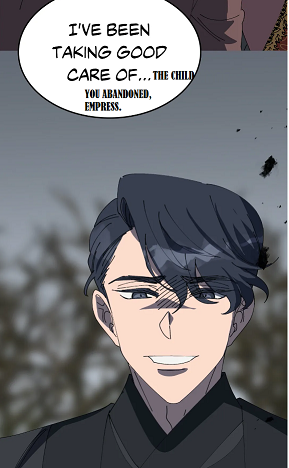 (chapter 34) she had abandoned her own child! Thus he was freed from his hatred and guilt. Nan-Woo was able to perceive the wrongness of this social norm which was common in Joseon: the child is responsible for the parents’ sins!
  (chapter 33) Being an orphan outlined her innocence. And since I have already connected Baek Na-Kyum to the mysterious lord Song, I am quite sure that the painter will have a similar attitude than Baek Ha:
  (chapter 33) He will feel responsible for Yoon Seungho’s martyrdom. And if he is truly his son, his abandonment can serve an evidence of his innocence. On the other hand, the readers shouldn’t forget that his surrogate parents, Jung In-Hun and Heena, played a role in lord Yoon’s torment as well. Thus he can only indebted towards his husband.
Chyomchyom and Byeonduck explained perfectly why the protagonists would suffer so much: ambition.  (Doctor Frost, chapter 225) With this picture, the manhwaphiles can detect the presence of the endless vicious circle, the ouroboros, which I had described as a kaleidoscope. The absence of empathy in both stories was the reason why no one stopped the main perpetrators. Woo Jang-Hon felt guilty, for he had raised his younger sister who had become a monster. Kim felt deep down guilty, but chose to reject his responsibility by putting the blame on others. Out of fear, he preferred hiding his wrong decisions and later wrongdoings. And now it has become his MO. This distinguishes him from the general who chose to put an end to his guilty conscience and paid for his crimes..
 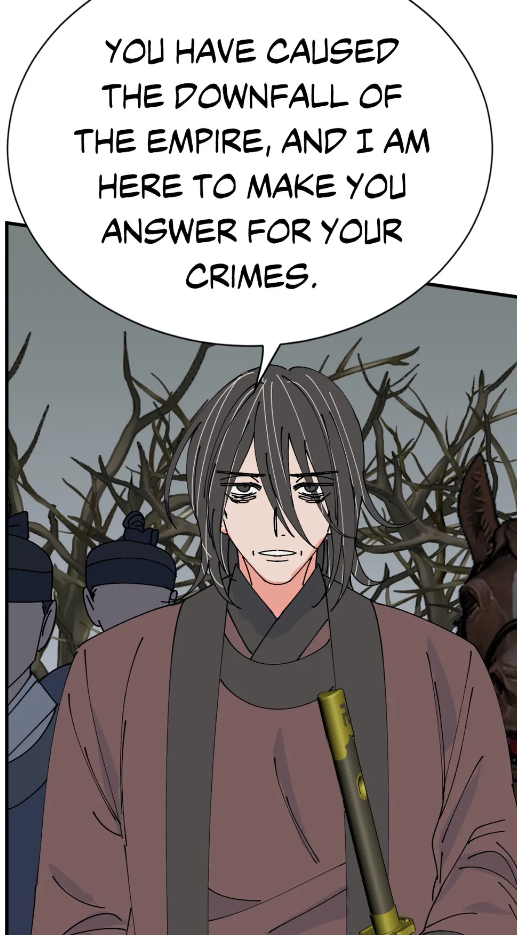 (chapter 34)
To conclude, the loss of the topknot has many significations: punishment, castration, loss of power, servitude, guilt, abandonment, absence of protection, cruelty, betrayal, but also freedom, loyalty, leniency and forgiveness. As you can see, the gesture is associated to opposite notions: servitude versus liberty, betrayal versus loyalty etc…. as it depends on the perspective.
Thanks to Yoon Seungho, Lee Jihwa was able to free himself from his guilt and he could liberate himself from social norms (peers pressure, his father’s expectations,) and his shame due to his sexual orientation. Before losing his topknot, he had admitted his sins to his friend and it also indicated his loyalty towards Yoon Seungho. And this was the same for the general. The latter could finally find peace in his mind and redeem himself. Yet, now, he is no longer a powerful general, he is just the puppet of the prince. However, the moment the red-haired aristocrat lost his topknot, he was no longer the king’s puppet. Therefore he was no longer useful for the mysterious lord Song. That’s the reason why the antagonist got aware that he shouldn’t expect any forgiveness or mercy from “Captain Hook”. No matter what he would say, he would be suspected of a crime (chapter 101) and this because of the first incident with the topknot!! Since Black Heart and the noble with the mole had been able to avoid punishment after this incident in the kisaeng house (chapter 1), he assumed that he could repeat his actions!! But he got proven wrong, for he ended up losing his life.
Feel free to comment. If you have any suggestion for topics or manhwas, feel free to ask. If you enjoyed reading it, retweet it or push the button like. My Reddit-Instagram-Tumblr-Twitter account is: @bebebisous33. Thanks for reading and for the support, particularly, I would like to thank all the new followers and people recommending my blog.
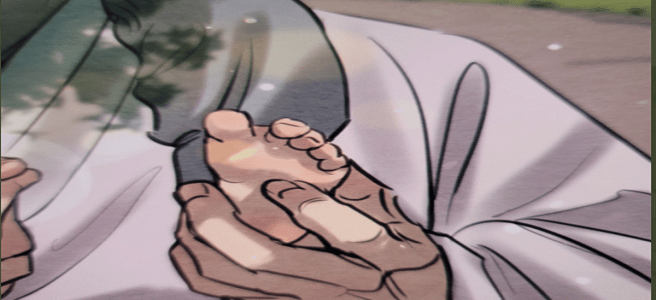
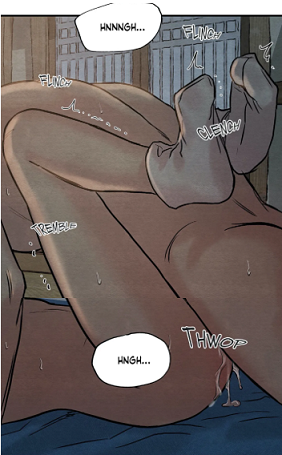
 on Twitter yesterday, and naturally this made many people happy, for Jung In-Hun was stroking Baek Na-Kyum’s foot gently. How could people identify the characters, though we don’t see their faces? Simply by the clothes! The manhwaphiles remember the painter’s grey pants and the learned sir’s favorite color, lavender,
 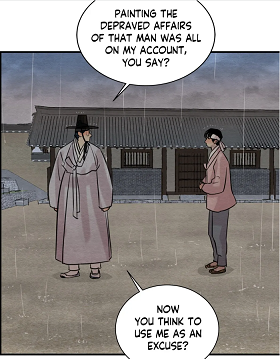 (chapter 19)
 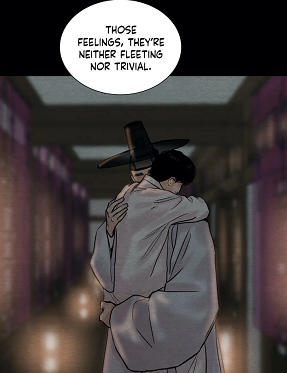 (chapter 68). While many manhwalovers found this image cute
  (chapter 70) The manhwalovers can immediately detect the contrasts: the visages of the protagonists versus the hand and the foot, day versus night, sun versus moon. That’s the reason why I came to the deduction that this image embodies a happy memory of the painter: sadness versus happiness.
 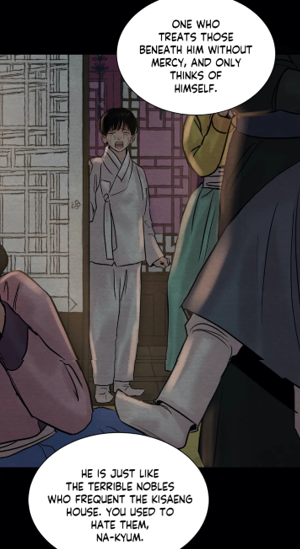 . (chapter 68) This means that Baek Na-Kyum was removed, because he was a witness and could generate a scandal. He is beloved by the kisaengs. However, back then, he got misled due to Heena’s indoctrination and false impressions. When he saw this, he was only looking at his noona, hence he didn’t pay attention to the actions of the black guard. Moreover, he had no idea why Heena and Yoon Seungho were behaving like that. So when the painter recalled Jung In-Hun from that night, he was no longer heartbroken, because the stroll with the scholar came to his mind.
  (chapter 70). The trigger for this recollection was his farewell to Heena. This time, he could say goodbye to Heena properly by embracing her and giving her a scarf so that she would remember him. In the painter’s mind, after that night, he would never see her again.
 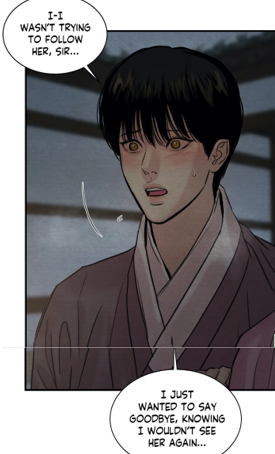 (chapter 69) In other words, this night represented a closure for Baek Na-Kyum, the end of his abandonment issues. In episode 70, Jung In-Hun had consoled him, he had tried to cheer him up. Thus the learned sir was smiling. Yet, this couldn’t cover the painter’s scar. He felt that he had betrayed Heena, for he had not been able to protect her. It was, as if he had run away. Nevertheless, when this incident occurred, the learned sir had not run away from the gibang, because you could see that Baek Na-Kyum was wearing socks and shoes.
 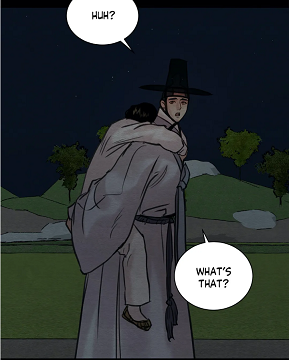 (chapter 70) The man had put the shoes on the child, as in the building, the painter only had his socks on. Because of the presence of the socks,
 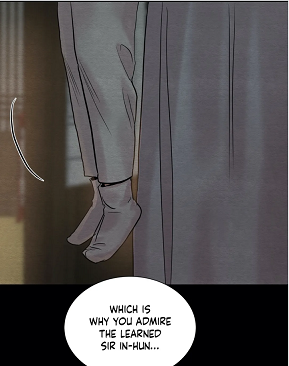 (chapter 68), I deduce that this walk must have taken place in a colder season (fall)
  while in this picture, Jung In-Hun was carrying the painter on his shoulders in the summer.
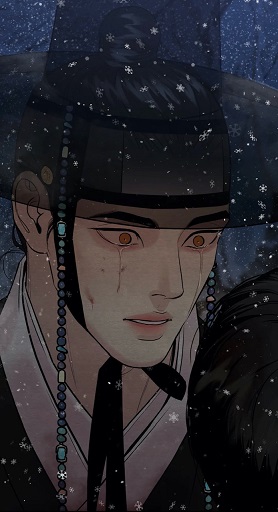
 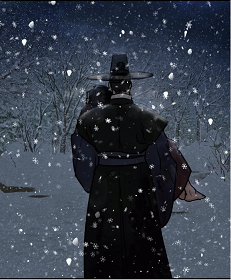 (chapter 102) In both scenes, the main lead is seen with bare feet. He is also carried by his loved one. But here, it is snowing, hence this signifies that it is winter. On the other hand, the manhwalovers can detect the presence of a purple flower on the right side. This signifies that Spring is on its way. That’s how I came to realize why Baek Na-Kyum is now recalling the learned sir’s gesture from the past.
  (chapter 102) where it is even colder than in the valley, secondly it is snowing and there is no sun, only the moonlight. So the moment Yoon Seungho witnessed that Baek Na-Kyum was alive, he must have recognized the seriousness of the situation. Since Baek Na-Kyum had only a hanbok on, he could die of hypothermia. What he had imagined for himself, death, had terrible consequences. He could be the reason for the painter’s curtains. So in my opinion, he must have warmed the painter’s feet with his hands, a new version of this scene:
 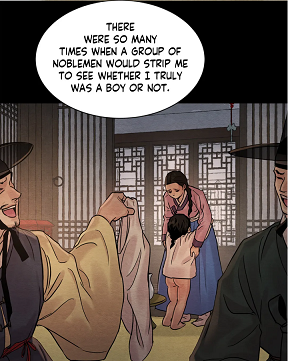 (chapter 94) His presence was to divert the attention from these men so that she wouldn’t be asked to have sex with them. And since I have already detected that each time, the painter suffered, karma would retaliate, the logical consequence is that Heena got punished for her wrong action. This signifies that while the painter was following the learned sir, his noona was abused in the kisaeng house. This would explicate why later she had no remorse to turn Yoon Seungho into a victim. And don’t forget that the painter was much younger than in this scene.
 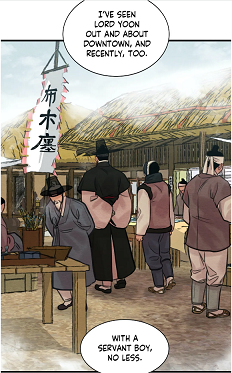 (chapter 45)
  (chapter 75) The latter would let his partner walk through town in order to please him. He would even follow the painter. In other words, it was always for the painter’s sake, and in the mountain, it was the same. But it was not the same for Jung In-Hun, it was for his own benefit. We have the best example in chapter 10:
  (chapter 10) Here, he desired to separate the couple. Baek Na-Kyum should refuse to paint erotic pictures.
  (chapter 29)
 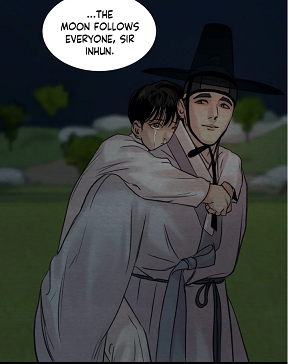 (chapter 70): The artist is dressed with good clothes, he looks more like a young master than a commoner, only the shoes are indicating that he is a commoner. That’s the reason why I believe that during that night, the learned sir was avoiding people. They could have wondered why the young boy was carried in his night clothes outside. From my point of view, this scene
 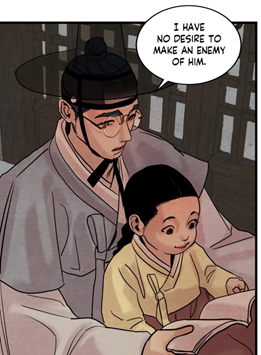 (chapter 29) He had already been seen with a girl before who seems to like him either.
  (chapter 6) Thus I couldn’t help myself wondering if the learned sir was not directly involved in prostitution, bringing girls to the gibang and even covering up for the sexual child abuse. We shouldn’t forget that the pedophile was portrayed as a man consumed by lust who would never pay attention to the time and the hour.
  (chapter 6)
 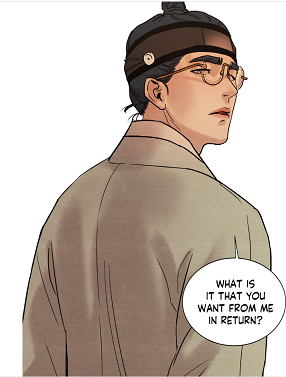 (chapter 7)
 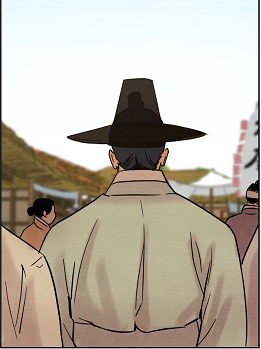 (chapter 7) This change is not random in my eyes. I had already associated the learned sir to a chameleon. This change of color seems to validate my theory that Jung In-Hun had been sponsored by Min, hence we have the light green. Black Heart is symbolized by green. However, the light pigment reflects that he had been abandoned and betrayed. Nonetheless, when he encountered Yoon Seungho, the latter was wearing a purple hanbok.
  (chapter 6) That’s how the man got influenced and chose to wear his lavender hanboks again. But he never realized that behind the young noble, there was standing the pedophile, someone he had helped in the past. From my point of view, the change of the learned sir’s hanbok was the indication of his betrayal. According to me, the old bearded man
  (chapter 37) was not a former servant, but the pedophile. So he could have recognized the learned sir thanks to his hanbok… just like the readers did with this picture:
  (chapter 73) From my point of view, the intimacy in the bedchamber stands in opposition to the teacher’s gesture in the countryside. His caress was just a casual gesture with no real deep meaning in the end. This explicates why he could betray and abandon the artist on so many occasions in season 1 (chapter 11, 24, 25, 29, 35, 40). The learned sir had always prioritized his own interests.
  (chapter 102), the painter should realize the difference.
  (chapter 70) talk and ask questions before apologizing and hugging him. The lord never acted, as if nothing had happened,
  (chapter 102) This was true love and Baek Na-Kyum’s feet always reflect his emotions:
  (chapter 58)
  (chapter 80) So now, imagine how the painter must feel if the lord took his feet in his hands! This is no coincidence that there is this saying:
  (chapter 100)
 (chapter 102) and the zooms on the feet:
  (chapter 53)
  The couple was following their heart!! But this was not the case with the scholar. Baek Na-Kyum had no other choice than to follow Jung In-Hun.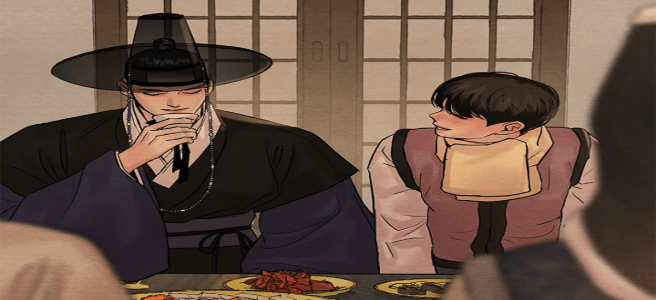
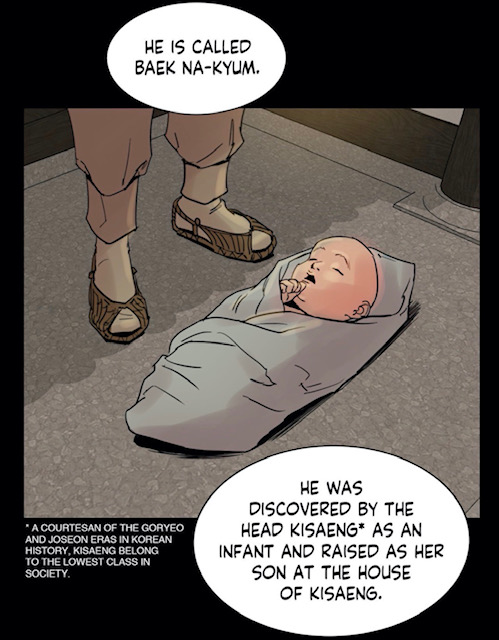 (chapter1) Or was she simply the noona?
 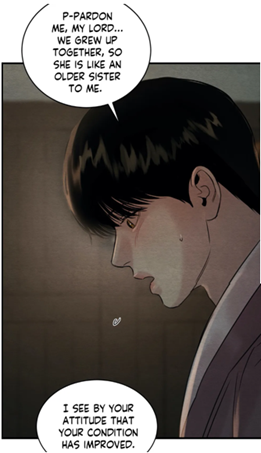 (chapter 70) At some point, I came to realize that Heena had acted as the surrogate mother, but she had never clearly stated that she was the painter’s mother. In other words, his adoption was never official, which explicates why the main lead only considered her as his older sister. This is important, because her ambiguous status can not only generate problems, but also expose her betrayal towards Baek Na-Kyum. Note that in chapter 97, the noona treated Baek Na-Kyum as her “child” who wouldn’t listen to her
  (Chapter 97), while later she implied that they were both equal, for she employed the personal pronoun “us”.
  (chapter 97) On the other hand, she used her seniority as status, when she called him a fool
  (Chapter 97). He lacked experiences, hence he was too naïve, and as such he would trust the protagonist too easily. As you can see, Heena herself had an ambiguous relationship with her brother. Nonetheless, thanks to chapter 93, I got finally a definitive answer about Heena’s true identity. She is indeed the head-kisaeng in the gibang. I realized that the protagonists were invited to stay in Heena’s personal room.
  (Chapter 93) That’s the reason why the seat of the host was empty and why Yoon Seungho didn’t go there. He would have violated social norms, if he had taken her seat.. Moreover, by doing so, he would have revealed that he knew where the woman was. This could have raised questions.
 (Chapter 93) This means that the figures were not sitting in the room shown in the last panel. On the other hand, their voices in the hallway exposed their location. The noonas and Heena were not far away from that door hidden by the veil. That’s how I got aware where Heena’s room was situated. In the last picture, the readers are turning their back from Heena’s study, which is right after the corner. Thus I could recognize the design of the building: ][ In the center, there is this huge hallway with the purple veils, but at its end, on each both sides, there exists a corridor perpendicular to the one with the purple curtains. What the beholder imagined as a door at the end of the hallway,
 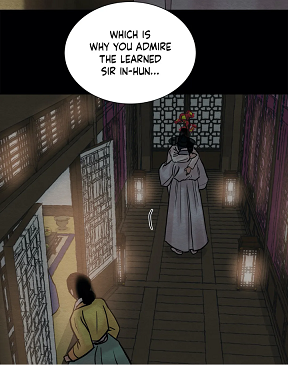 (Chapter 68) was in truth a huge window. How do I know this? First, in this scene, the scholar was hiding a huge white vase with red flowers. Hence I deduced that Jung In-Hun couldn’t have walked through that “gate”, it was just a window. Therefore I assumed that he had to walk past the flowers, either turn to the right or the left. Secondly, observe that next to the lantern on the left, there is a small white panel. This means that the view from chapter 93 was more or less taken from the right corner. Moreover, in the next chapter, Heena is not facing this “window”, when she is in the same building.
 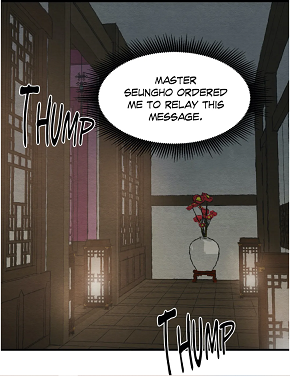 (Chapter 69) This time, the white vase with the flowers is standing in front of a wall. That’s how I deduced that Heena had to turn to the left in order to go to the hallway.
  (chapter 93) which is not present in episode 69.
  (chapter 93) Since I came to the conclusion that Heena’s private room was on the right side after the corner, I deduce that the kisaeng was not on her way to her room. Moreover, since the kisaeng was walking in the same direction than the scholar, I can only conclude that Heena was actually approaching the entrance of the building. I believe that she had turned around, but the author didn’t reveal this. One might argue that it is possible that in chapter 68, the learned sir could have gone with the painter to Heena’s bedroom. However, back then the latter was not the head-kisaeng. We know this due to the presence of a kisaeng standing right behind Yoon Chang-Hyeon during the sexual lesson.
  (chapter 86) She was the superior. Moreover, we saw the teacher walking through the countryside during the night.
 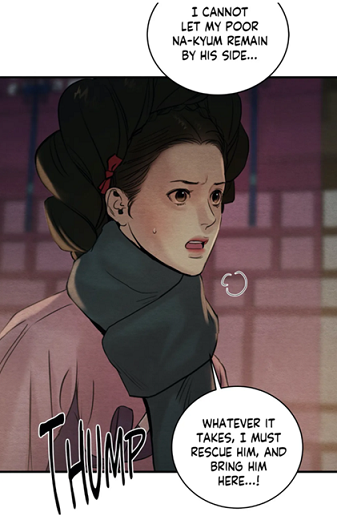 (chapter 69) It was done on purpose!! She wished that Min would take care of her brother. Under this new light, it becomes comprehensible why the noona has a drop of sweat on her cheek. She is faking ignorance, she is acting, as if she was very protective of her brother. She uses illusion to manipulate people. In reality, she was acting here. One might argue that I am overthinking again. This is not possible, for Heena didn’t know Min at all. Hence she couldn’t manipulate him. The latter had heard of her for the first time in Yoon Seungho’s mansion.
  (chapter 66) But let me ask you this. How could Heena have never met Min, when she was the head-kisaeng? Secondly, just because the servant had never heard of the noona, this doesn’t mean that it was the case for Black Heart. The domestic assumed Black Heart’s ignorance, just like the readers. Moreover, recently I had detected that Heena had been standing in front of a mansion belonging to a noble.
 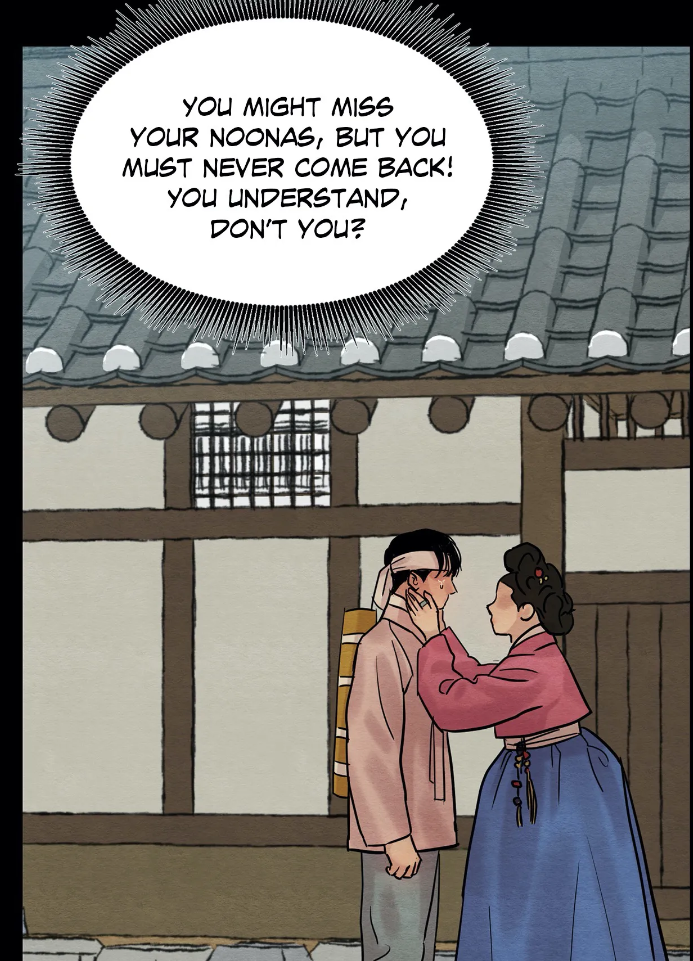 (chapter 46) This was not Yoon Seungho and Lee Jihwa’s mansion, for the gate and walls
  (chapter 67) diverge. Moreover, Min has been seen in the kisaeng house in so many chapters
  , (chapter 19)
  (chapter 59). Here, I would like to point out that in episode 59, Lee Jihwa had visited the kisaeng house on different occasions, for his hair was slowly growing.
 (chapter 1)
  (chapter 19) This image was showing us that Yoon Seungho was visiting the gibang. However, pay attention to the pattern of the doors in the last picture and the next:
  (chapter 19) The motive diverges, it looks like the one from the hallway with the purple veils. This means that the party was not taking place in the room shown in the former picture. What caught my notice is the presence of the white vase with the red flowers in front of the building. It was present in each scene taking place in the gibang.
  (chapter 93) For me, the red flowers symbolize Heena noona. This explicates why during the painter’s dream, the flowers were not present.
 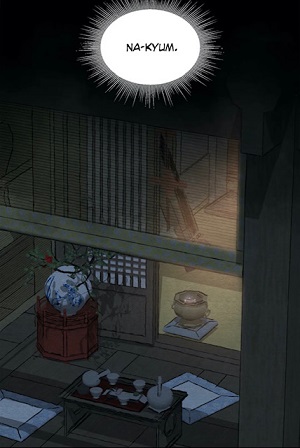 (chapter 87), as Heena was not included in his vision. And this image
  (chapter 44) Due to the similarities, I believe that in chapter 19, Byeonduck was actually exposing the ghost head-kisaeng. Exactly like the father, she was hiding. Why? It is because she is involved in Yoon Seungho’s suffering. And now, imagine her reaction, when she hears that Black Heart has organized a feast for the main lead’s honor. The woman could only avoid the main character. And now, you have the explication why Heena as the head-kisaeng was not present during that festivity. It was deliberate.
  (chapter 19) Striking is that the kisaeng had a similar hair dress than Heena, This is no coincidence. She was acting as the head-kisaeng. The manhwalovers will certainly remember that only two kisaengs had no braided bun or braids: this one
 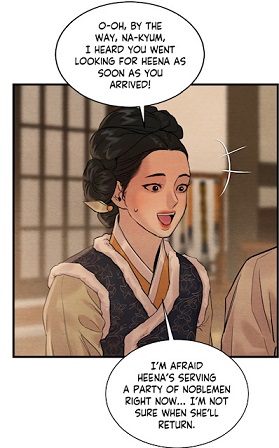 and Heena. Look at all the others:
 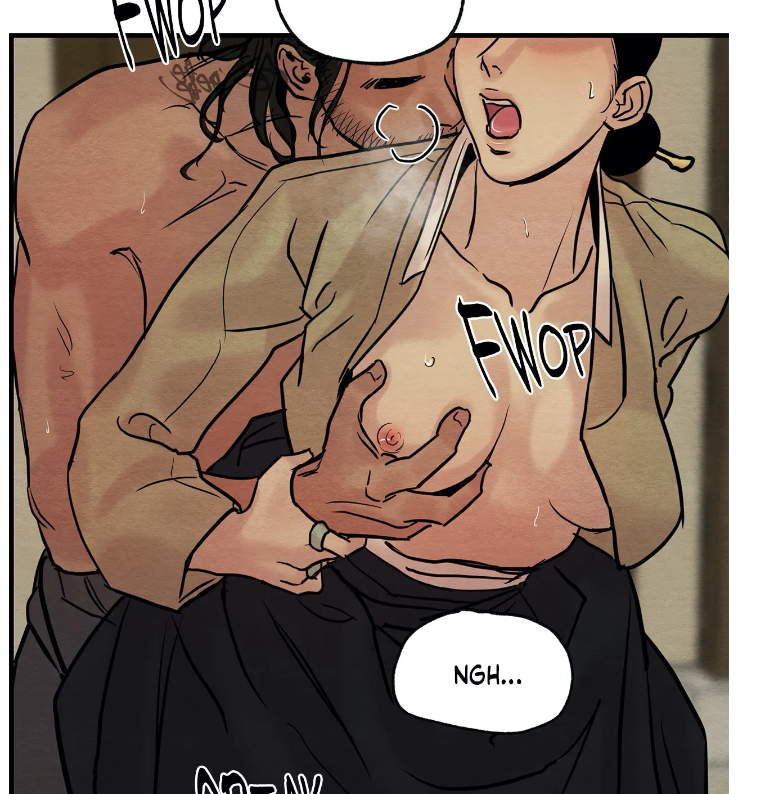 (chapter 51)
  (chapter 93)
 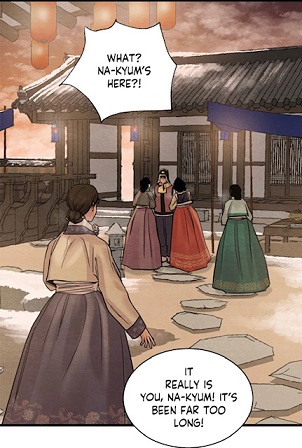 (chapter 93)
  (chapter 95) The extravagant hair dress was exposing the kisaeng’s status. And now, you comprehend why the other noona explained the disappearance of Heena during that night.
  (chapter 19) But how could she sense that the noble was in a good mood? The latter was silent and not even smiling.
 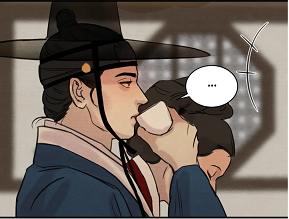 (chapter 19) How could she claim this? In reality she was actually spying on him. Heena had no idea why the lord would come to the gibang, especially after suffering there so much. The kisaeng’s task was to dig up information. This visitation must have bothered the head-kisaeng.
 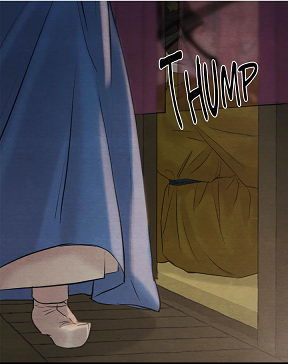 (chapter 69) She was even turning her back to him. But actually, she could have detected his presence, exactly like I had recognized him: through his laugh!!
  (chapter 99) He was wearing a veiled hat, yet in chapter 69, this was not the case.
 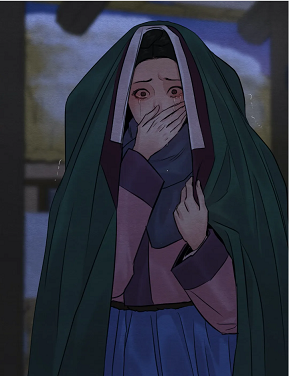 (chapter 88)
 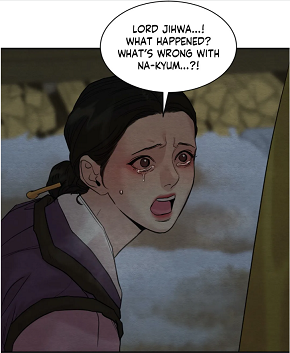 (chapter 99) Under this new light, Min’s words get a new signification:
  (chapter 99) He was implying that they knew each other for a long time! The irony is that the manhwaphiles had the impression that their relationship was recent, and his cynical tone contributed to it. Secondly, he called her Heena, a sign that they were close to each other. Note that Lee Jihwa never mentioned her name.
  (chapter 99) His words even insinuate that Black Heart had just given the following order. The red-haired master should just fetch a kisaeng and in my opinion, Heena was waiting for Lee Jihwa’s arrival to leave the gibang. According to his words, he had no idea about the kisaeng’s identity. But is it true? I have my doubts now, and this for two reasons. Why would he ask about her identity, when he already knows that she is a kisaeng? The drop of sweat on his face is an indication that he is lying. But the problem is to determine if the deception is only referring to “I heard not a word” and to all the questions. Let’s not forget that he knew about Min’s initial intention. The moment Lee Jihwa arrived in the gibang, she just followed him. That way, they would avoid to attract attention, and with her new hair dress
  (chapter 93), the gibang had lost its “leader”. This explains why this noona as her right-hand had to explain the absence of the owner.
 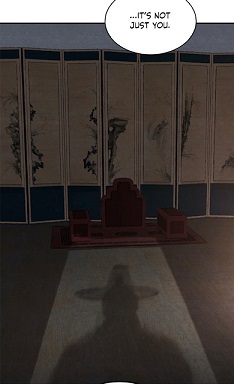 (chapter 86) The latter had been eyeing the throne in the family mansion, but he failed to take over the mansion. This was the negative reflection of Heena. Whereas the kisaeng had a powerful position in the gibang, it was the opposite for the patriarch. He was no longer recognized as the head of the Yoons. Yet, both have something in common. Both lost their position for good, for Heena and Yoon Chang-Hyeon couldn’t take or keep the seat. We could say that both got defeated by Yoon Seungho. In chapter 93, the main lead acted as a respectful and calm master, whereas in the bedchamber he showed no respect to his own father. He talked back and even made fun of him.
  (chapter 87) This picture stands in opposition to this one:
  (chapter 93) To conclude, the surrogate mother and the patriarch made a similar experience in season 3. Both got deceived by manipulations and in both cases, letters played a huge role.
 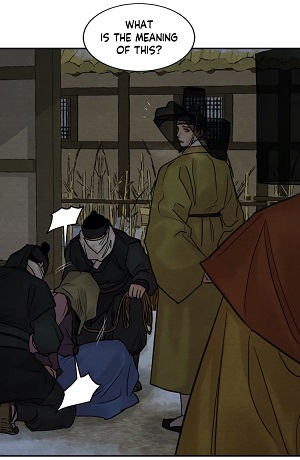 (chapter 99) No one would be looking for her. The problem is that the witnesses of her curtains all vanished. Lee Jihwa ran away, Black Heart got killed with his friends, and the only survivor, lord Jang, was confronted with real corpses in the shaman’s house.
  (chapter 102) That’s why I come to the deduction that her murder will be questioned. Why? There is no blood contrary to the bloodbath in the shaman’s house and there is no corpse!! Since Black Heart used different corpses in order to deceive Heena and the couple, there is no ambiguity that the head-kisaeng’s curtains will be doubted. Striking is that Heena staged her death out of cowardice and selfishness, while Yoon Seungho made the opposite decision. He was resolute to commit suicide in order to follow his lover in his death. During that night, Heena and Yoon Seungho lost their “home”, but at the end, he found his true home: the painters embrace.
 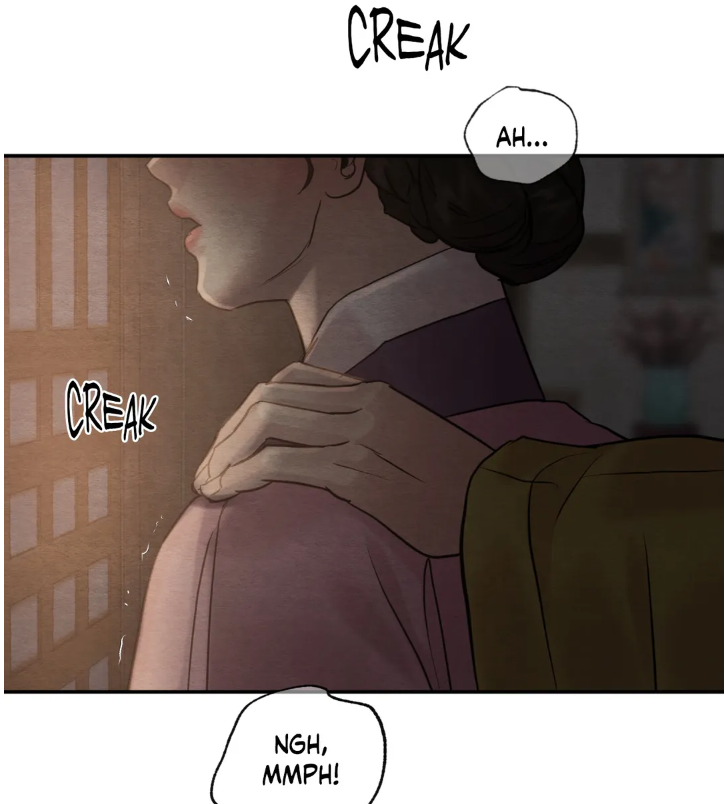 (chapter 96)
  (chapter 96), though he is a noble. Besides, I am suspecting her of suffering from genophobia (fear of sex and intimacy) Their behavior exposes closeness and a certain trust. But how is this possible? It is because she knows that Min is a sodomite, and he is not looking for sexual favors. That’s the reason why she trusted Black Heart in my opinion. Moreover, he is smiling like Jung In-Hun. Therefore it is not surprising that she was speaking like the Joker in chapter 97. Here, the man had actually projected his own thoughts onto Yoon Seungho, and due to her own belief, Heena was more than willing to believe Black Heart.
 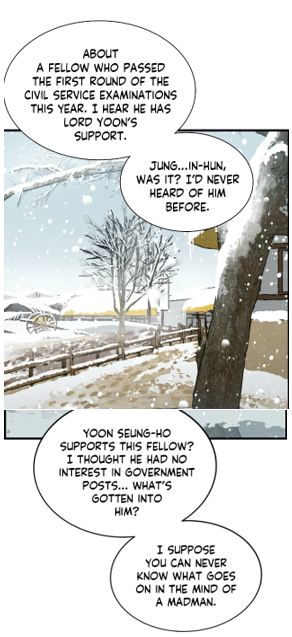 (chapter 52) It is because Black Heart knew Heena! I even believe that he had already met the scholar. Note that the man with the black hanbok was repeating the rumors about the learned sir. And the other questioned the main lead’s action exposing that he had never heard about this grapevine before. Hence I am deducing that the one spreading this rumor could only be MIN!! That’s the reason why he just said this
 (chapter 52) That means that the noble knew the teacher in the end. Therefore it is no coincidence that Min was aware where the learned sir lived!!
 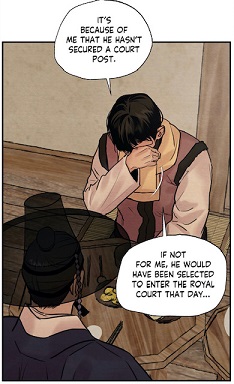 (chapter 52). Why? It is because there was an incident in the gibang!!
 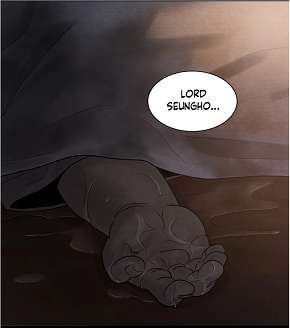 (chapter 94)
  (chapter 97)
 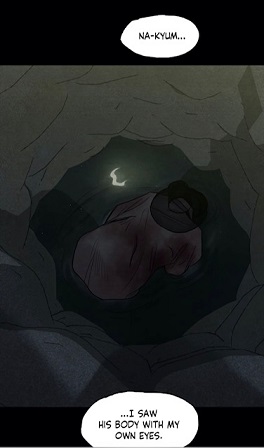 (chapter 97)
 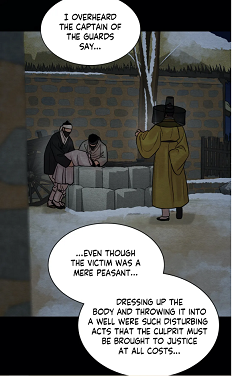 (chapter 101), and even Kim hid his face under a hanbok.
  (chapter 92) That’s the reason why I believe that in season 4, the visage will play a major role! The couple will recognize people due to the face!! In my eyes, the former head-kisaeng knows the identities of all the persons involved in Yoon Seungho’s suffering.
 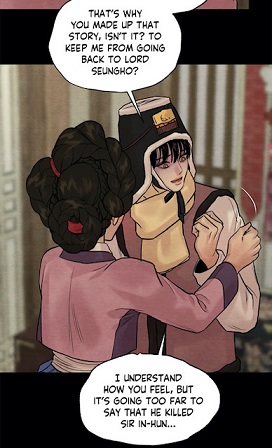 (chapter 97) her brother is detecting her deception.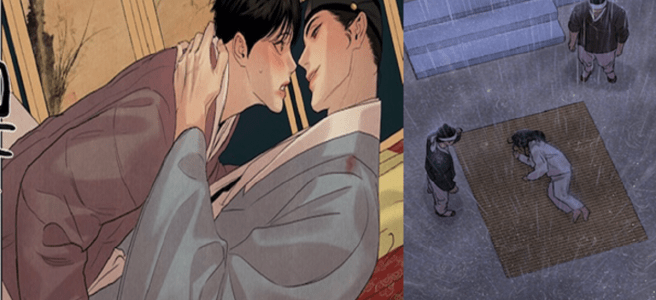
 (chapter 102) The painter had confessed too late, for the schemers were already pulling the strings in the shadow. To conclude, the main leads’ self-deceptions were connected to love and time. The importance of self-manipulation leads me to the next observation. All the antagonists and villains were liars, because they were also deceiving themselves. They refused to admit their own fears and flaws, therefore they chose to commit a wrongdoing and manipulate others in order to hide their true thoughts. This means that not only the crime was covered up with a deception, but also the manipulation was hidden by another lie. This means that the list of their sins increased. Therefore it is not surprising that the gods chose to confront the liars with the verity, as they kept refusing to admit their sins. Now, it is time to focus on the antagonists and villains’ manipulations and the scenes where they were facing the mirror of truth. However, the readers are probably wondering where the mirror of truth is. The answer is simple. The mirrors of truth are not only the two main figures, but also Kim and Min, though they are their negative reflections. Remember that in Snow White, the item led the evil Queen to her doom, for the latter refused to accept reality. At the same time, the mirror of truth was not entirely honest either, for it never explained the definition of “Beauty”. In other words, it lied by “omission”. I realized that I can not examine all the antagonists and villains in one text, as I am so detail-oriented. Consequently, I selected Lee Jihwa and Yoon Chang-Hyeon first, for both characters’ lies are strongly intertwined.
  (chapter 77) However, since he had been caught by the valet, he was facing the butler’s visage. And what did he see in his facial expressions? Shock and horror!! That’s how Lee Jihwa realized the gravity of his sin and chose to blame his friend. Thus I imagine that he must have blushed again and this time out of shame and embarrassment. It is very possible that in that moment, he must have copied the valet’s facial expressions before leaving Yoon Seungho behind and lying to the butler. Why do I think so? It is because the butler had made such an expression in front of the barn, when he had been caught.
 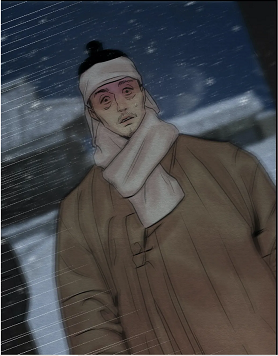 (chapter 64) And what did the main lead say?
  (chapter 64) Since the painter seems to have forgotten it, I deduce that it was the reverse for Lee Jihwa which explains why he felt so guilty in the end. As for the butler, when he had barged in the study, he had committed a wrongdoing himself. He should have asked for the main lead’s permission, but he did not. Consequently, he decided to believe in Lee Jihwa’s deception. One hand washes the other. He was covering up the guest’s sin, while the latter was doing the same thing for the domestic, though I doubt that Lee Jihwa truly realized it. Simultaneously, Kim had the perfect justification to hide the violation of social norms. He had caught the main lead red-handed, hence no one would question his own action. As you already know, I associate the butler to Pilatus, therefore he is connected to the bucket.
 (chapter 13) However, in my eyes, this doesn’t represent the biggest confrontation with the mirror of truth. For me, it is the altercation in episode 17, for it took place in the same place than the aristocrat’s crime. When the red-haired master looked at the picture, he was suspecting that the painter had seduced his friend due to the insinuations by the staff. And his fear reached the peak, when he saw the painter’s reaction:
 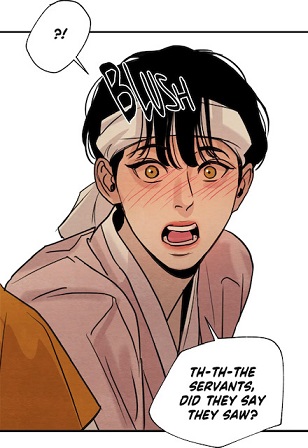 (chapter 17) As you can see, in this episode, the gods were recreating the same situation: a servant had witnessed how the two men “were fooling around”
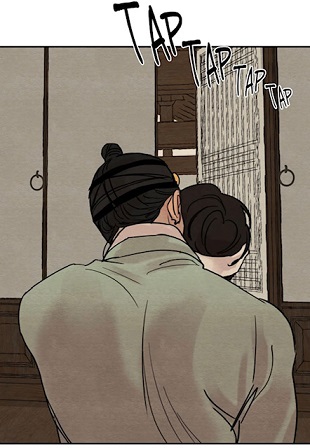 (chapter 16), though this was definitely not the case!! And this is exactly like in the past, Yoon Seungho was totally pure and innocent. And what was Lee Jihwa’s reaction? A slap!
 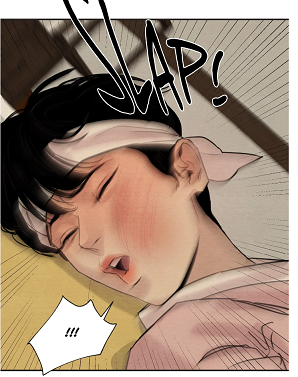 (chapter 17) This is what Yoon Seungho had experienced in the past. Yoon Chang-Hyeon had definitely abused him.
  (chapter 57) Thus the main lead’s cheek was bruised. Then exactly like in the past, Lee Jihwa accused someone else of committing a crime. In the past, it was his friend, in the present it was Baek Na-Kyum. Both were portrayed as immoral seducers.
 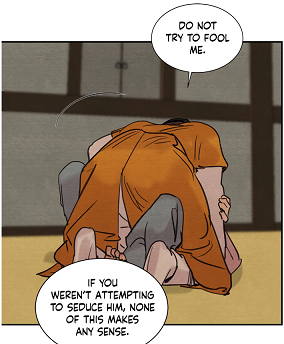 (chapter 17) These words were exposing the verity about the past. Lee Jihwa was admitting in front of the painter that his friend would never act like that, and as such he had not attempted to woo him in the past. Striking is that in front of the painter, the red-haired master was misinterpreting the incident. Why? It is because he was influenced by his past experiences. Since he had lied twice, he jumped to the wrong conclusion that it was the same in the present. And back then, he had even achieved to fool Kim. Therefore he couldn’t allow himself to be fooled like the butler. That’s the reason why he couldn’t imagine that someone was innocent.
  (chapter 17) He was a liar in the past, so it must be the same for the painter. Yet, this was the negative reflection from the past. Thus his karma was to get caught by his childhood friend. Striking is that this time, he was put in his friend’s place. He was turning his back to the door. Moreover, due to his anger, he didn’t hear Yoon Seungho’s steps and the opening of the door!
 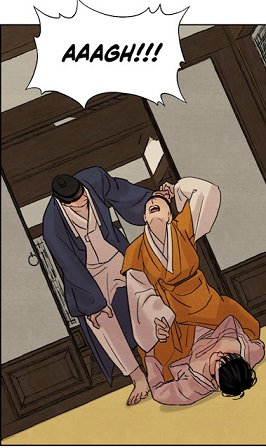 (chapter 17) But the childhood friend refused to face reality in that moment, and as such to admit his guilt and responsibility. Why? It is because he had committed another crime in the past. This is related to the bedchamber incident.
  (chapter 83) However, here he had been caught by his father, hence I believe that this confrontation represents mainly the elders’ punishment. As for Lee Jihwa, despite the humiliation and abandonment in chapter 18, he refused to give up on his friend.
  (chapter 18) One might say that he was motivated by love, yet I think that it is related to his denial about his sexual orientation. And this coincides with his lack of honesty. He had not confessed his own sins and lies yet. Therefore
  (chapter 36) he presented himself as a pitiful creature, as he was sharing the protagonist’s suffering due to his knowledge. However, this was not empathy, just sympathy. The person only feeling sympathy will always put a distance between himself and the counterpart. There‘s a “I“ and “you“, but no „we“. The person might come to pity the other, yet he won‘t intervene and help. He will just understand and that‘s it.
 (chapter 36) This panel is the evidence for this interpretation. Lee Jihwa never used the personal pronoun “we”, even during the abduction.
 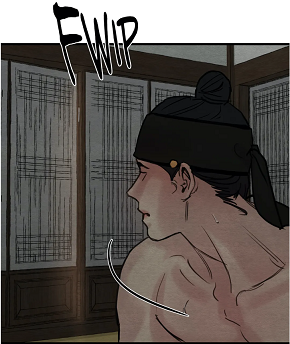 (chapter 43) Based on this panel, Lee Jihwa had more or less barged in the study, but his presence was detected too late! One detail caught my attention in this picture, the presence of the light reflected on the door. Hence I assume that the main lead detected the presence of a witness because of the light!!
  (chapter 43) Let’s not forget that the room was dark, when they were having sex.
 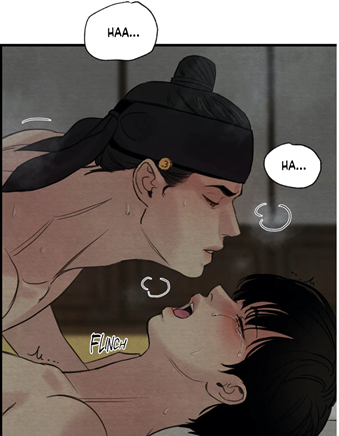 (chapter 42) He was still looking at his lover’s face, when he perceived the change of the light. Hence he turned his head in direction of the light reflected on the door. My friend Luzaly brought my attention to this detail. The couple was turning their back to the door before.
  (chapter 42) The form of the light reflected on the door doesn’t come from behind the gate
 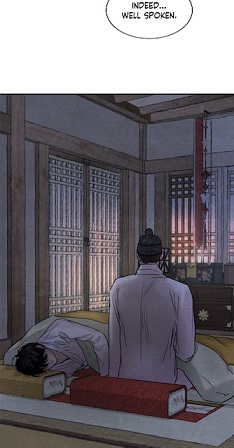 (chapter 97) And now, you comprehend why I came to the deduction that Lee Jihwa had witnessed the love session not from this door,
  (chapter 41) However, in the next episode, Byeonduck showed us a slight change.
 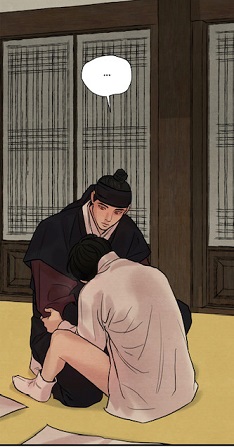 (chapter 42) The door was now close. This means that the butler had intervened at some point. This was the negative reflection from episode 20.
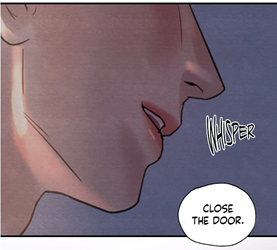 (chapter 20) This time, the main lead had not requested for more privacy, for he had not detected the presence of his right-hand. And this leads me to the following conclusion. Since this is not the door
 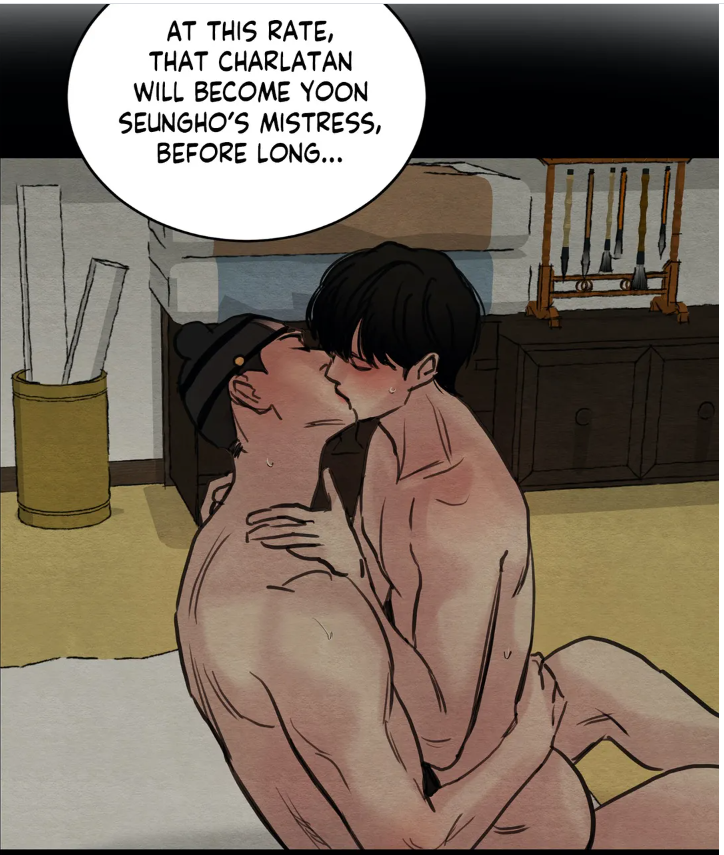 (chapter 43) I am even suspecting that he didn’t view this scene at all, because logically, the light should be coming from the other side!! But on the other side, there is no door!!
  (chapter 49) But there is the window…. And now, you comprehend why Yoon Seungho never investigated the matter with the “door”. It had never been opened in the first place. But how could Lee Jihwa imagine such a scene?
  (chapter 57) However, here it is necessary to remind the readers of my previous character’s examination. I had described Lee Jihwa as trapped in a dark room, because he had lost his auditory and visual sense due to his guilt!! This was the price to pay for his sins. He had imagined to see the friend’s smile and he had lied to the butler. And since in episode 17, his visual senses were triggered (the painting, the painter’s facial expressions), I deduce that in chapter 42/43, this time Lee Jihwa was confronted with the mirror of truth through words. Through the window, he could hear the moaning of the couple, hence he couldn’t see the painter’s sadness. Moreover, this is what the painter said:
  (chapter 42). It sounded like he was indeed seducing the main lead. As for the embrace, he couldn’t hear it, but someone had heard the longing from the painter.
  (chapter 43) The gods were punishing Lee Jihwa for his lie: his friend’s smile!! But I have more evidences for this theory. First, it is important to pay attention to Min’s words, when he manipulated Lee Jihwa. First, he portrayed the painter in a pejorative light with the idiom “indecent life”.
 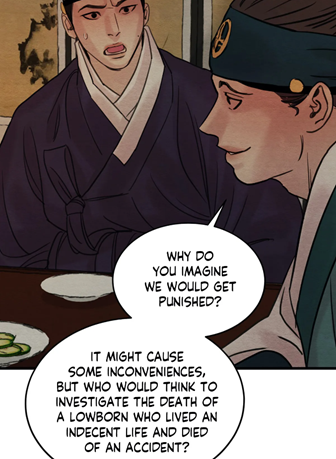 (chapter 43) Moreover, the noble employed the personal pronoun “we”, which is not typical for the selfish and hypocrite villain. This means that he was repeating Kim’s words. Then he added how the couple would have sex in the barn
  (chapter 43) (“vulgar roll in the hay”), but this was not true. However, this is what had happened in the past with Lee Jihwa. The latter would have sex with his childhood friend in the storage room. This explicates why Lee Jihwa came to believe in Black Heart’s words and manipulations. With such a description, he was reminded of his own past!! Therefore it is not surprising that Lee Jihwa had such a vision.
  (chapter 43) Moreover, since this night was a reflection of the first Wedding night, this means that the author left a clue there. And now, look at this…
  (chapter 21) The windows!! As you can see, the door is not the only place to spy or interrupt intimacy. Secondly, we should have reflections of the spying through the window in season 2.
  (
( Chapter 49) In this episode, the light in the study had suddenly vanished, and this is what we had before:
  (Chapter 70) I had already suspected back then, that someone was listening to their conversation, and with this new discovery, Lee Jihwa hearing the love session from the window, this interpretation gets reinforced. Furthermore, in chapter 96, the main lead had explained the opening of the door with this:
 (chapter 96). This signifies that in the past, the lord had explained the sudden opening of a window and the vanishing of the candle light with the wind during the night of chapter 49.
 (chapter 36) The reality is that he couldn’t cut ties with his friend. He had lied in the past, therefore he got manipulated in the present. And since he was confronted with his auditory and visual senses in season 1, he was put in a similar situation in season 2. However, there was a slight change, now the red-haired master was confronted with a real crime: murder!!
  The darkness of the room and the silence from Yoon Seungho and the painter were referring to the master’s loss of senses and his guilt. Deep down, the young master knew that the assassination was not right. And note that the aristocrat had this nightmare in his own bedroom confirming that the room is the symbol for the subconscious. Finally, in season 3, Lee Jihwa got confronted with another uncomfortable truth: his friend’s sexual abuse. Lee Jihwa had acted, as if this stolen kiss was nothing. However, due to his silence, he let his friend get raped. And he knew about this, but he chose to close an eye to this. First, Lee Jihwa refused to share his friend with the painter
  (chapter 5) Therefore it is no coincidence that in the shaman’s house, he was put in the same position than Yoon Seungho. He couldn’t select his partner
 (chapter 100), he had to rape Baek Na-Kyum. This is no coincidence that the Joker was standing in front of the door. He was pushing the young man to face his repressed memories and lies. That’s the reason why exactly like in the pavilion (chapter 43), Black Heart coerced the antagonist. He used words to manipulate the second lead, but there is a huge difference. The shaman’s house was representing the young noble’s unconscious and as such his true personality, while it was not the case in the pavilion. The room in chapter 43 was more embodying the Joker’s unconscious. Why? It is because Lee Jihwa was speaking the truth in that scene.
  (chapter 43) He reproached Black Heart to have deceived him. On the other hand, the scene in the shaman’s house corroborates my interpretation that Lee Jihwa had not seen the embrace from chapter 42, for Black Heart was voicing the butler’s thoughts and emotions.
  (chapter 100) This shows that during the night of chapter 42/43, the valet had intervened. Thus Min was acting, as if he was a victim in the recent past. He had been deceived by Lee Jihwa’s lies by omission or commission. This is what had happened in the past. Besides, I realized that when the man confessed the incident in the bedchamber
 (chapter 83), Min couldn’t see the whole story. He had to rely on the second lead’s words. Just because we could observe the whole scene, this doesn’t mean that this was the case for the character. It is very likely that Lee Jihwa left details out, especially as he portrayed himself as a victim. Due to the narration, Min could have been misled. He could have envisioned that the childhood friend was living in the study and had dragged his friend to the bedchamber. Hence you comprehend why I consider it as another evidence that Lee Jihwa didn’t view the love session in the study from chapter 42 with his own eyes. He had to rely on his ears and naturally Kim played a role before Black Heart’s intervention. The servant hoped that Lee Jihwa would decide to do something…. in other words, he had been gradually manipulated by Kim and Min to hire an assassin. That way, he could be blamed for the murder of the scholar. He would become guilty by association. And the one pulling the strings behind the scene can only be the mysterious lord Song, for he can no longer interfere directly, though I am certain that he was not aware of the butler’s own meddling. Why? It is because in the past, Kim had never become proactive like that. Moreover, I think that even in the past, the man was not omniscient and omnipotent either. He over-estimated his own abilities, and didn’t recognize that he had been fooled himself either.
  (chapter 100) This is no coincidence, for the sexual abuse is the reason why Yoon Seungho’s heart and soul got destroyed. This had the same effect than killing someone, especially if the person is so innocent and pure. Because he recognized the truth, he had the courage to abandon and betray Black Heart. That’s how he could redeem himself in the end.
  (chapter 100) At the same time, this is not surprising that Lee Jihwa met his friend and admitted his wrongdoing. For the first time, he didn’t remain silent and chose to intervene!! I also believe that during that night, he apologized to the protagonist before vanishing. In other words, Lee Jihwa had to face 4 different mirrors of truth, until he was able to admit the verity. He was responsible for Yoon Seungho’s suffering. He had lied, therefore he got deceived, until he had no other choice to confess his guilt and sins.
 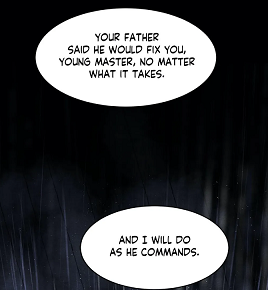 (chapter 77) He would do anything to cure Yoon Seungho implying that he wouldn’t mind spending money for the main lead’s treatment. However, the truth was that he refused to send for the physician, when the young boy was sick after the straw mat beating.
  (chapter 77) This means that he broke his promise. Striking is that the vow to the butler was introduced in connection to the patio!! When the readers hear this promise, this is what we see shortly after.
 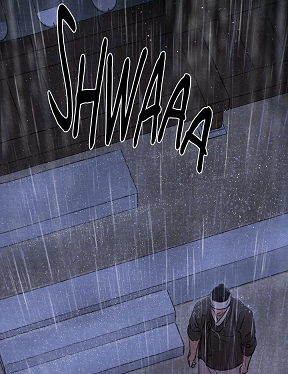 (chapter 77) Secondly, the elder master Yoon was seen shortly after there.
  (chapter 87) Finally, there exists the flashbulb from Yoon Seungho’s memory:
  (chapter 55) My avid readers will certainly recall how I had claimed that this scene was representing Lee Jihwa and father Lee. I am not changing my mind, but I would like to point out that this story is built like a kaleidoscope and as such, each image is actually a reflection. Thereby I come to the conclusion that in this panel, the young boy and the elder are in verity embodying 4 people: the boy is Lee Jihwa and Yoon Seung-Won, as for the elder, it is father Lee and the elder Yoon. Why? It is because the punishments were related to the Lees’ behavior and words. There is no ambiguity that elder Lee intervened to protect his son’s reputation. In other words, father Yoon was seen in the patio in chapter 55. Then when he visited the physician, he remained outside too contrary to the main leads.
 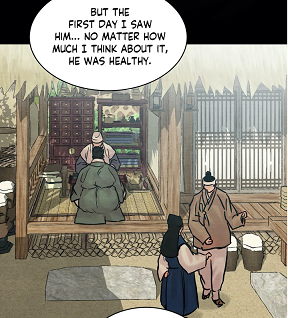 (chapter 57) It was, as if the elder master had nothing to hide, for the domestic and the butler could hear him. However, the latter got deceived. There is no ambiguity that the valet and the young master trusted him. On the other hand, the valet was the one who introduced him to the physician, like we could see here.
 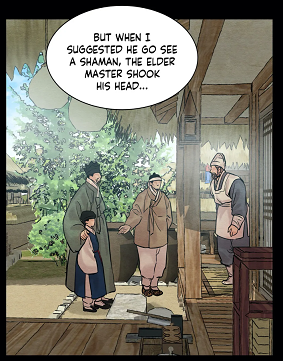 (chapter 57) But what does it mean? First, it shows that Yoon Chang-Hyeon was never seen in the bedchamber!! In other words, his power was fake. This interpretation gets validated, when I use the confrontation between Heena and Yoon Seungho.
  (chapter 65) In that very same place, the protagonist had been insulted and could do nothing, for neither Kim nor his staff intervened. And this perception reinforces my perception that the patriarch has always been delusional and arrogant, over-estimating his own power. Moreover, the lord was not honest either.
  (chapter 65) This shows that the patio is connected to violence, hypocrisy, deceptions and offenses.
 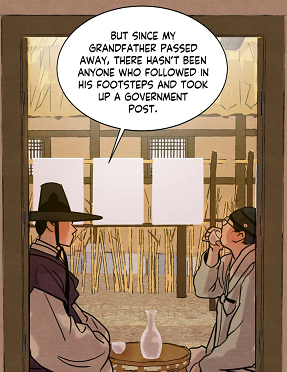 (chapter 7) Then in the study, Yoon Seungho confessed that his father had been dismissed from his post which contradicts the previous statement.
 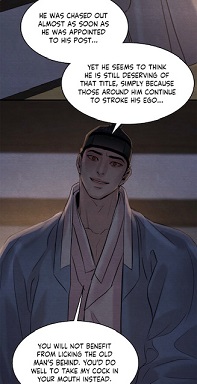 (chapter 80) But how did Yoon Chang-Hyeon obtain his office then? Then the expression “follow in his footsteps” caught my attention. That’s how I realized that the elder master never passed the civil service examination!! In truth, he failed terribly. How can I be so sure about this? First, the civil service examination consists of different tests. Secondly the idiom from Yoon Seungho indicates an gradual rise in the grandfather’s career which is not reflected in the lord’s confession to the messenger. Finally, in front of the mirror of truth, the father voiced the following wish:
  (chapter 86) This expectation exposes that this had not happened in the past. But why didn’t he expect this from Yoon Seungho earlier, though the latter had such a good notoriety? It is because he desired to be admired himself. He viewed himself as the Yoons. Thus he said this to his son:
  (chapter 86) This means that he was using his own sons for his own career, though he claims that he is doing for the Yoons’ notoriety. In other words, the patriarch’s position was obtained through sexual favors. But since the king was the sponsor, there is no ambiguity that at some point, the elder master must have started dreaming even bigger, similar to the scholar:
 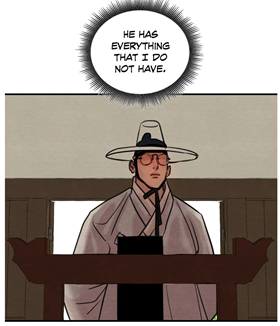 (chapter 18) Hence I have the impression that he must have acted, as if he was the king’s relative. Hence he asked to be called by a certain title. This could only infuriate the mysterious lord Song, for the latter was hiding his sodomy and debauchery behind closed doors. No one was supposed to make a connection between him and the Yoons. However, I don’t think that the elder master Yoon had planned everything from the start. He had definitely been misguided, for in season 1 and 3, we could see that he was believing blindly what people would say to him. He never doubted his son’s words, when the latter said that Yoon Seungho had given him such a paper.
  (chapter 44) And it is the same with father Lee. That’s the reason why I still think that he had been manipulated. He was pushed to sell his own son, thinking that the Yoons would benefit from it. However, this was just a delusion, as he was dependent on the monarch’s benevolence.
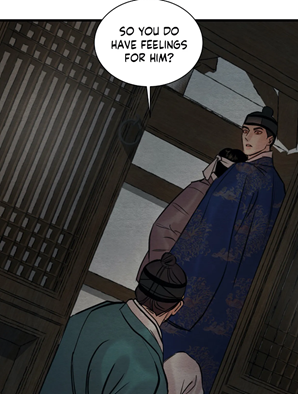 (chapter 53) But Yoon Chang-Hyeon refused to admit it, it went so far that he was denying his relationship with Yoon Seungho. He was just an animal.
  (chapter 87) He was paying the price for his lies about the cure. Furthermore, the manhwaphiles will realize that he is no longer seen in the patio.
  (chapter 86) Why? It is because the young lord was supported by the “king”. But since he had cut ties with the main lead in the past, treating him like a servant, there is no doubt that the pedophile doesn’t view Yoon Chang-Hyeon in a good light. Hence the son became the true owner of the mansion. In the bedchamber, the father was confronted with the consequences of his decisions and lies. He had lost everything: his position as the head of the family, the propriety, the wealth and the connections. Thus he was left speechless.
 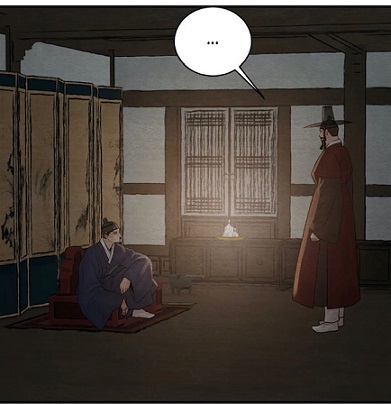 (chapter 86) But when he arrived in the study, this is what he saw. This picture revealed his greed and ambition
  (chapter 87) This was another self-deception. Without the main lead, the latter would have lost everything. Note that he is living comfortably in the house in Hanyang. So if the young master were to disappear, I doubt that the mysterious lord Song will allow the father to take over the mansion. His regret implied that he shouldn’t have sent for a doctor. This is important, because this signifies that he will be punished the same way, it will be even worse. No one will be by his side to protect him and to save him… no one will request for the physician’s assistance. Similar to the broken promise in the patio:
  (chapter 87), while Yoon Seungho was compared to a monster!
  (chapter 86) The outcome of his lie can only be that he will be perceived by people as a monster, as an immoral father who had no conscience at all. How do I come to this conclusion? First, the painter could see right through the father’s gaze.
  (chapter 87) He was a cruel and resentful father. Moreover, the lord’s words always become a reality. Hence the father can only be condemned as the licentious and depraved degenerate.
  (chapter 86), the black sheep! Furthermore the moment Yoon Chang-Hyeon loses the house in Hanyang, he has no place where he can hide himself from public gaze. He can only ended up as a powerless outcast. I am suspecting that since he longed to be admired and fawned, he could end up committing suicide, for he is unable to tolerate people’s rejection and insults. To conclude, the father refused to admit his guilt and wrongdoings till the end. Even cornered, he chose to avoid reality, preferring to trust father Lee and the butler’s lies. Why? It is because he envisioned that by removing the main lead, he could take over the mansion, and act, as if nothing had happened, as if Yoon Seungho had never existed. The gods will fulfil his wish so that he can be confronted with reality. Besides, note that the patriarch never stopped his son from kissing the painter, he even followed him to the seat.
  (chapter 87) This shows that deep down, the man was not truly against sodomy and prostitution. The father resented the son, for he could only achieve “glory” through debauchery and sodomy. I believe that the elder master Yoon was thinking like this: “no matter what” the Yoons’ power and notoriety must increase. In the bedchamber, the man exposed his true personality, while in the patio he was just the fake image of a powerful, decent and righteous man. This explicates why it took the teenager so long to realize the father’s betrayal.
 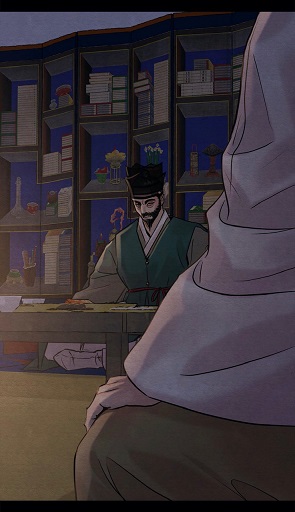 (chapter 82) He was just an empty shell, his knowledge, experiences and possessions were just an illusion.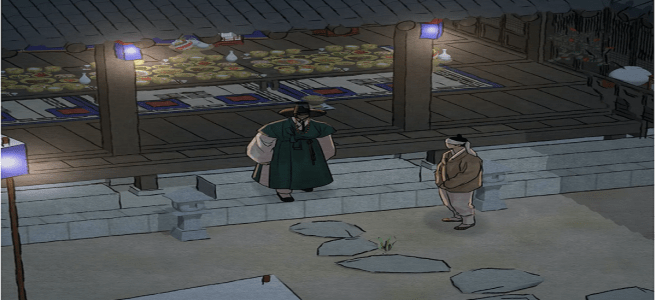

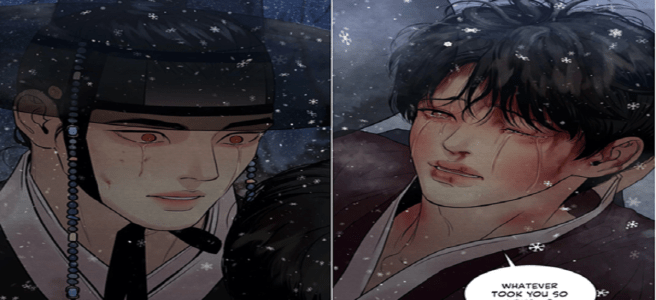
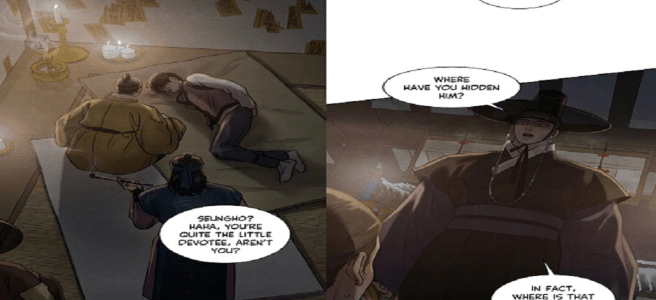
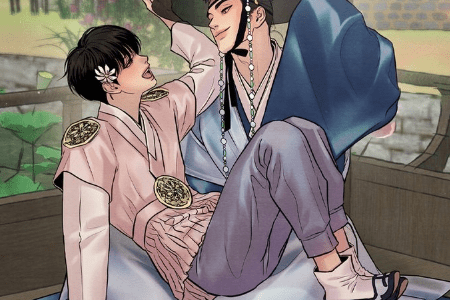
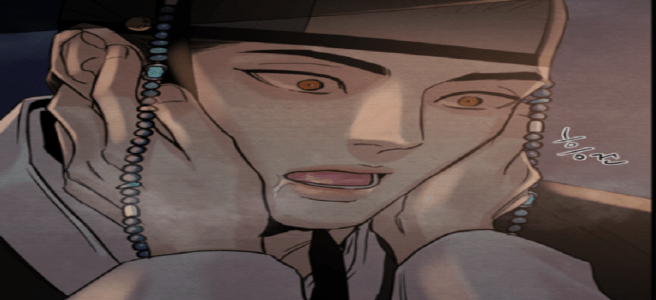


 (chapter 1), and he was no longer living with his single mother and brother Lee Hansoo. He described himself as a small but confident delinquent, as he used to work for a loan shark in order to earn money very easily.
  (chapter 1) And one day, his brother Lee Hansoo met him in order to ask him for money. Their mother was sick and they needed to pay the hospital bills. Lee Yohan agreed to help, thus under pressure, he chose to threaten a debtor’s son. Observe that the main lead chose to use a knife and take the child as hostage. He was walking on a thin line between legality and crime. As you can see, Lee Yohan was no saint. But it didn’t matter to him so far, for he had no faith at all. He refused to believe in karma.
  (chapter 1) He was definitely a disillusioned teenager, therefore he was not thinking about the future. However, the fact that he became totally reckless during that day indicates that he still valued his family. He might not have been close to them, but he still cared for them. That’s the reason why he agreed to accept the brother’s request. We can sense his worry here.
  (chapter 1) However, since he had given up on his dreams and had no hope, Yohan didn’t take the threat seriously, until he was confronted with reality.
  (chapter 1) The same man killed his brother Lee Hansoo in front of the main character. The man had acted like that, for he had lost everything: his home and as such his family. I would add that he had failed to protect his son. Out of despair and anger, he decided to retaliate, to make the young man suffer, like he had been hurt before. An eye for an eye, a tooth for a tooth. The assassination was like a wake-up call for Lee Yohan. From that moment on, he turned a new leaf.
  (chapter 1)Why? He considered himself as the murderer of his own brother.
  (chapter 2) In his eyes, it was, as if he had killed himself the brother and his own mother!
  (chapter 27) He recognized that his actions had been the trigger for the debtor’s crime! At no moment in the manhwa, the main lead blamed the real culprit, not even his own mother who had given up on him. He admitted that in the end, it had always been his own choice to live like a thug! Striking is that he considers himself as responsible for his mother’s death, as because of his terrible way of life, he had caused her worries. As you can see, Lee Yoohan could not be considered as guilty for his relatives’ death, but he had definitely his share of responsibility in his family’s suffering.
  (chapter 27) No, he didn’t cry, hence the owner of the club wept for him.
  (chapter 27) He could sense Lee Yohan’s agony. He had lost his family at such a young age, he might have been a sinner, but anyone could sense his affection and conscience! He might have lived like a thug, but he was not a bad person per se. It is just that he had made wrong choices, just like the man who had stabbed his brother. In the main lead’s eyes, it was not karma, like the culprit said:
  (chapter 15) Thus he rejected the advances from Yoon Jae. In chapter 15, we could sense that the main character was preoccupied about the existence of god. Was there a divine punishment or not?
  (chapter 15) And Yoon Jae denied such a thing, but added then:
  (chapter 15) But is it not the same? Yes and no… For Yoon Jay, if someone acts badly towards another person, the former will be treated the same way. On the other hand, each kindness will be returned. But one might argue that the gods can interact through humans and use them as pawns to give people their karma. And this is what we are discovering in Payback. Lee Yohan helped Yoon Jae and even showed him a crying man. The famous director Yoon got moved by the main lead’s tears
  (chapter 15) proving that not all humans were cold and distant. They could express regret and admit their mistake. For the first time, Yoon Jae discovered warmth and sensitivity.
  (chapter 1) The most terrible thing is that the actor had been helped constantly by the protagonist. Since the former had a dream of becoming an actor, the “thug” was generous to help him financially and emotionally. The assassination worked for Song Myungshin, for he had planned to steal the money from Lee Yohan.
  (chapter 1) That’s the reason why he didn’t even call the police. The murder would divert the main lead’s attention from the theft. When Lee Yohan heard this confession, he got upset for two reasons. Song Myungshin showed no remorse and a total indifference towards Lee Hansoo and the main lead.
  (chapter 1) But most importantly, he never suffered any karma. In fact, he could benefit from his sins and crimes. This could only reinforce his impression that there was no god out there giving punishment to the sinners. The actor took pride of his bad action, as he decided to take Song Yohan as his stage name! Yohan was a reminder that thanks to him, he could enter the entertainment scene. As a conclusion, karma hasn’t punished the actor Song Myungshin yet. Therefore Lee Yohan was determined to take his revenge. What he didn’t realize is that his first encounter with the other main lead would help him to achieve his goal: to give “punishment” to Song Myunshin. So he didn’t know yet that the gods were aware of this injustice, thus they let him meet the famous director Yoon Jay.
  (chapter 15) On the other hand, the existence of Lee Yohan gave the director hope, he could smile again and as such find happiness. The rabbit announced the return of innocence in Yoon Jae’s life. In other words, the two main leads were quite similar in their disposition: both had been wounded by their past, and had no hope. And thanks to the famous and powerful director Yoon Jay, the main lead is slowly starting living again. Little by little, he is interacting with people again, helping others, though he never does it openly. The best example is the actor Lee Hansoo who has the same name than his own brother.
  (chapter 6) In this scene, he refused to be addressed as hyung, as in his eyes, he didn’t deserve such a title. He had not acted like a hyung to his true little brother.
  (chapter 14) I couldn’t myself thinking of the antagonist Lee Jihwa, for he was put in a similar situation.
 (chapter 100) on different occasions, and both went to the scholar’s home together? Yes, this time Min’s threat had become a reality.
  (chapter 76) He could no longer back out. He couldn’t put the whole blame on the Joker, because this means that he would have to admit his own complicity. Yes, Lee Jihwa was trapped. He could sense that he had been framed by Black Heart, but the former couldn’t claim his innocence because of his knowledge! That’s how I realize why the young man was punished this way. Remember how he had blamed his childhood friend for his misery, and had used his knowledge as a proof for his reproach!
 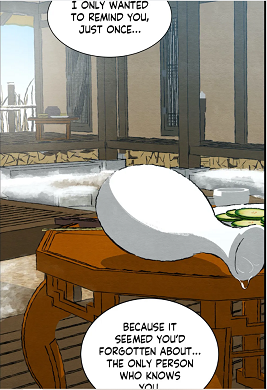 (chapter 57)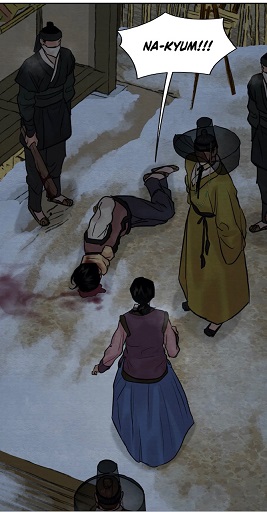
 (chapter 99) But what did he do? Nothing. Secondly, he witnessed how the kisaeng was dragged away to get killed, though it was staged. Here again, he did nothing.
  (chapter 100) He turned his back on Baek Na-Kyum. But that means that he abandoned the artist once more time. In three occasions, he was well aware what was happening and he could have intervened. Yet, he let it happen. Besides, he handed over the drugs and dildo to Min. As you can see, he was never an innocent person, but not just a sinner. He was an accomplice. And he knew this, thus he couldn’t go to the bureau of investigation. Min was well aware of this.
  (chapter 101) Naturally, his crime was nothing compared to Min’s.
  (chapter 50) By fleeing, he didn’t stop his friend from committing a murder. Thus he is responsible for their deaths. And he knew that Min and the other nobles would die.
 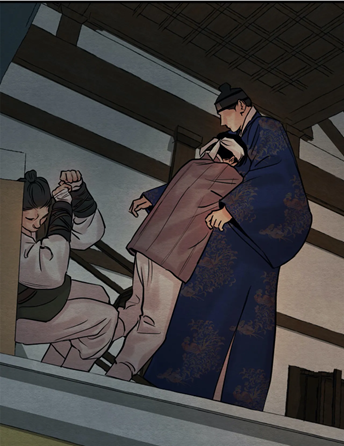 (chapter 53) and even follow his friend. And this distinguishes him from Lee Yohan so much. The latter recognized that each decision he made had consequences. And note that the idiom “choice” was connected to silence and assistance.
  (chapter 50) It was, as if he had murdered the nobles himself. The gods were teaching him a lesson: Knowledge and passivity are crimes. In other words, Lee Jihwa became a sinner and a criminal because of this night. And this because he refused to face reality.
 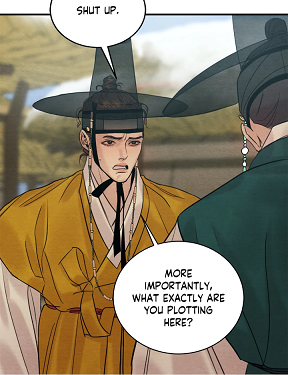 (chapter 83) But was he really ignorant here? I came to a different interpretation recently. How? First, why does the second lead have a drop of sweat in the last picture? This is an indication for a lie. But there exist stronger proofs. Don’t forget the following rules: there’s always a reflection within the same chapter, and each chapter is reflected in the next. In the antagonist’s memory, Lee Jihwa was portrayed as someone who would disobey his father!
  (chapter 83) He would trespass the house of the Yoons and enter the shed, even the lord’s bedchamber!
  (chapter 83) As you can see, Lee Jihwa was acting as a rebellious son in the past. He was not respecting social norms and the elders. This signifies that we have the exact opposite in the present. Observe the seasons: summer versus winter. Thus I come to the following deduction. He is following the order from his father, he is not dragged
 (chapter 83), but he brought Min there. Why would Min say this?
  (chapter 83) Why would he come to see the mess? His words are indicating that someone must have told him about the scholar’s death. Since we saw this,
  (chapter 83) we thought that when the plotters came, Min was leading the way. But if we take into consideration chapter 76, we realize that back then the childhood friend brought Min to Nameless’ barn.
  (chapter 76) Thus it could have been the same! Lee Jihwa had brought Min to the scholar’s house, then Min was the one giving the signal to leave the humble dwell, just like in chapter 76. The red-haired master let Min meet The Joker, before Min was the one asking Lee Jihwa to follow him, when he realized that Nameless refused to help him.
  (chapter 76) So when we view this,
  (chapter 43), so from my point of view, we could have a similar situation, someone had asked him to bring lord Min to that mansion! It can not be Min… From my point of view, Lee Jihwa was acting on his father’s orders. That’s the reason why Lee Jihwa never entered the mansion, and he told Min the story about the incident in the bedchamber. Father Lee had been the one who brought it up first.
  (chapter 82) Why would Lee Jihwa suddenly mention this story to Black Heart, when he had remained silent the entire time? Even Min wondered about this!
  (chapter 83) Another clue for this signification is the vocabulary of Black Heart. The latter is speaking like father Lee: lunacy
  (chapter 82)
  (chapter 82)
  (chapter 92). Finally, don’t forget what Min said about Yoon Seungho.
  (chapter 99), the servant Seokdae or even his son Lee Jihwa. The loss of hair was the proof of his leniency.
  (chapter 82)
  (chapter 27) On the other hand, contrary to Lee Jihwa, he grew up in a poor environment, thus he had to work in order to live. He could never live carefree like the spoiled only son of the Lees. Finally, I would like my readers to question themselves this: Will Lee Jihwa come to admit his responsibility in the death of the nobles and in Yoon Seungho’s suffering? I have to admit that I am hoping for his return, for the two friends need to have a proper talk, and according to me, Lee Jihwa apologized or at least expressed regret in front of his friend, thus he got spared. Yet, I would like very much to see such an apology to the main lead. But before his departure, he still viewed himself as a poor victim who had been wrongly framed exposing that he had not grasped the true nature of his wrongdoings.