

Please support the authors by reading Manhwas on the official websites. This is where you can read the Manhwa: Jinx But be aware that the Manhwa is a mature Yaoi, which means, it is about homosexuality with explicit scenes. Here is the link of the table of contents about Jinx. Here is the link where you can find the table of contents of analyzed Manhwas. Here are the links, if you are interested in the first work from Mingwa, BJ Alex, and the 2 previous essays about Jinx Drama Queen and The Joker – part 2 and Steady Passionate Devotion
It would be great if you could make some donations/sponsoring: Ko-fi.com/bebebisous33 That way, you can support me with “coffee” so that I have the energy to keep examining Manhwas. Besides, I need to cover up the expenses for this blog.
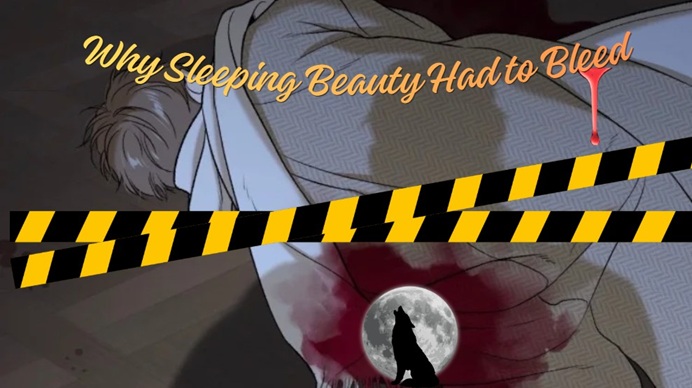
A Violence That Demands Explanation
The stabbing arrives without warning 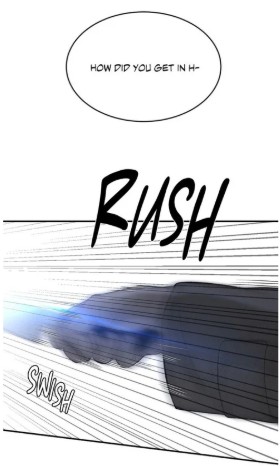 (chapter 98), and perhaps that is precisely why it unsettles so deeply. Readers had anticipated tension, even escalation—an argument, a kidnapping, a sexual assault or perhaps an act of self-defense—but not this sudden and irreversible intrusion of violence.
 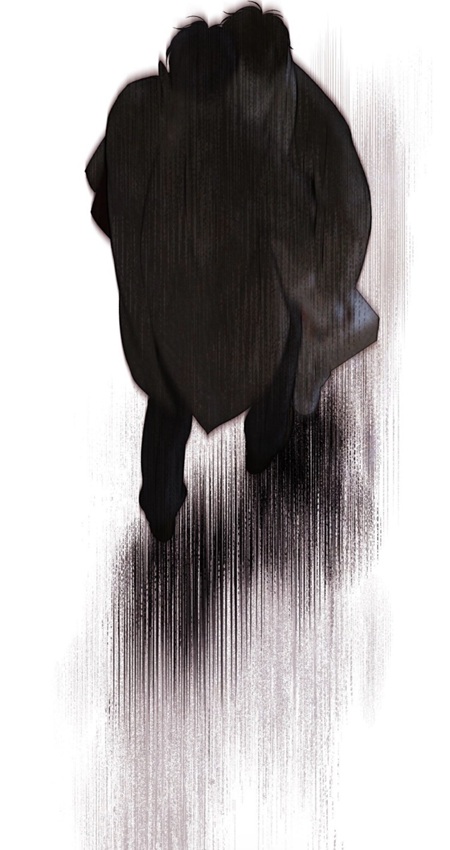 (chapter 98) The former hospital director does not merely attack; he interrupts the narrative itself, breaking the expected rhythm and replacing it with something harsher, more disquieting.
Such a development has divided reactions. For some (including myself initially), such a twist reinforces an uncomfortable pattern: Kim Dan once again appears as the one 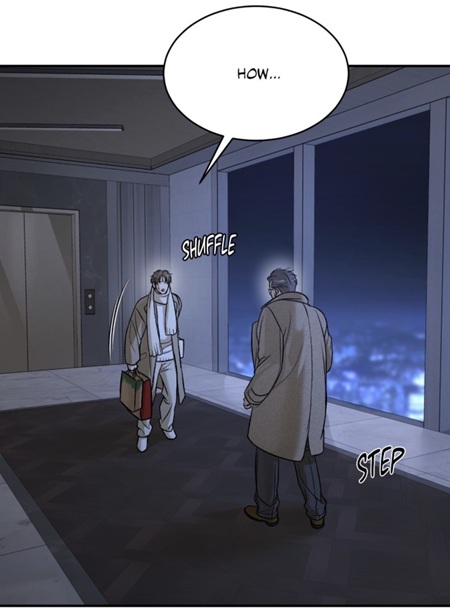 (chapter 98) who suffers rather than acts
 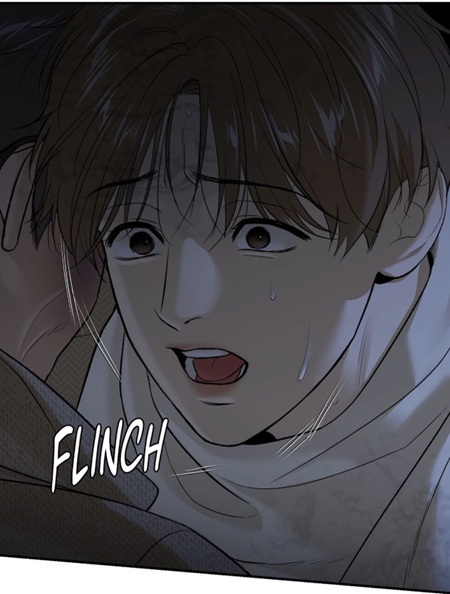 (chapter 98), the one who is endangered rather than decisive. He does not yell or attempt to run away while facing his ex-boss. Does this not reduce him to a passive figure, repeatedly placed in situations where others must intervene?
 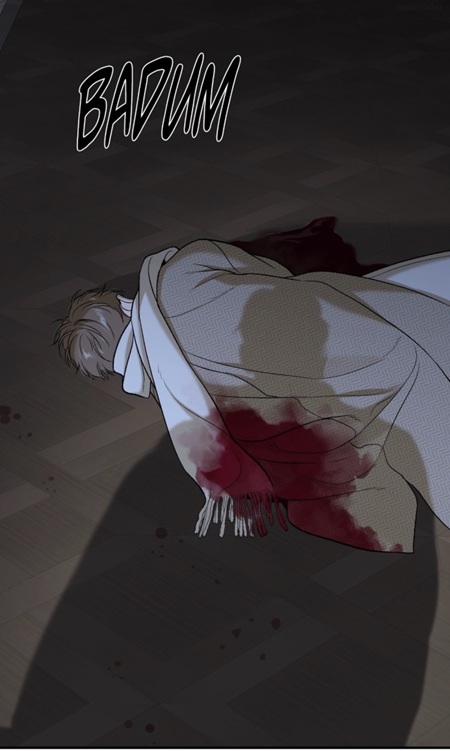 (chapter 98) Does it not risk transforming him into a character defined solely by vulnerability?
Yet these objections may overlook a more fundamental question. Why does the story insist on placing him in this position? Why must the narrative return, again and again, to his exposure, his fragility, his inability to escape harm? Is this repetition a failure of imagination, or does it point toward an underlying structure that has not yet been fully understood? Rather than dismissing the scene as cheap or excessive, one might ask instead: what does this act of violence reveal that could not be shown otherwise?
PRIDE and the Persistence of Spectacle
The first answer lies in the world of combat sports itself. The downfall of PRIDE Fighting Championships, which I had already explained in the essay “Unsung Hero: Rescues in the Shadow” offers an important parallel, not because Jinx simply copies real history, but because it borrows the same atmosphere: spectacle, gambling, media glamour, backstage influence, and the uneasy proximity between sport and organized crime. PRIDE was not only a fighting organization. It was an entertainment empire, a televised ritual 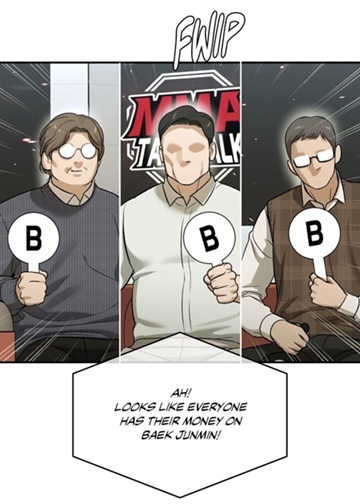 (chapter 95), and a financial machine. Its fall revealed that the ring was only the visible surface of a much darker structure.
This “darker structure” was not exposed through speculation alone, but through concrete events. In 2006, PRIDE’s collapse followed confirmed ties between Dream Stage Entertainment and the Yakuza, yet even earlier, a more disturbing incident had already cast a shadow over the organization. On January 13th 2003, DSE president Naoto Morishita was found dead in a Tokyo hotel room, officially ruled a suicide. However, given the later revelations about PRIDE’s connections to the Yakuza, his death has often been reinterpreted as part of a much darker context, raising the possibility that he became entangled in conflicts of rivalizing gangs that exceeded the boundaries of sport. What matters here is not the definitive cause, but the atmosphere it reveals: a world in which power, money, and organized crime intersect in ways that can turn lethal.
From Isolated Event to Structural Logic
In this sense, violence within such systems is never entirely accidental. It is embedded in structures where money, influence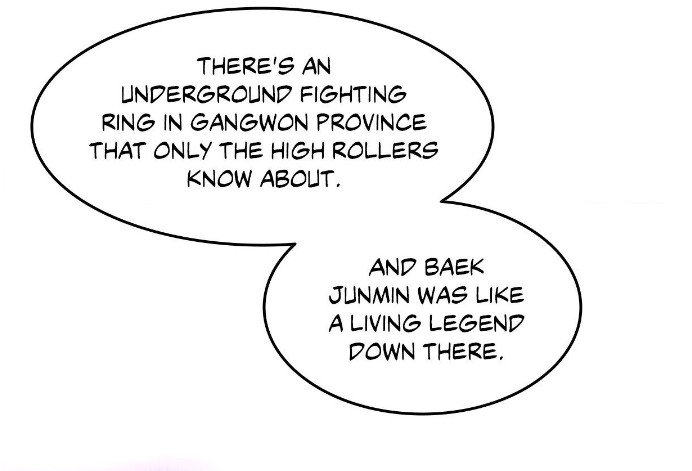 (chapter 47), and control intersect. This is precisely why figures like Baek Junmin cannot be reduced to mere competitors. His involvement in rigged systems
 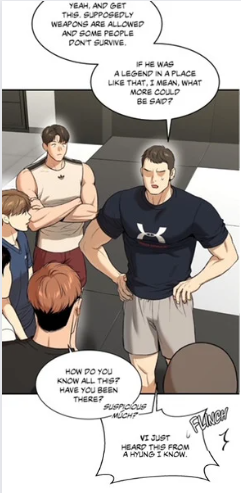 (chapter 47) places him within a framework where outcomes are manipulated and where harm—even death—becomes a possible consequence rather than an exception.
As you can see, despite the DSE CEO’s death in 2003, the spectacle continued till 2006. The fights were broadcast, the audience remained captivated, and the façade held—at least temporarily. Yet something had already begun to fracture. The system did not collapse because violence existed, but because that violence could no longer be contained or ignored.
The Moment of Fracture – From Pride to Jinx
I initially considered a more radical narrative turn for Kim Dan—one in which he would become proactive 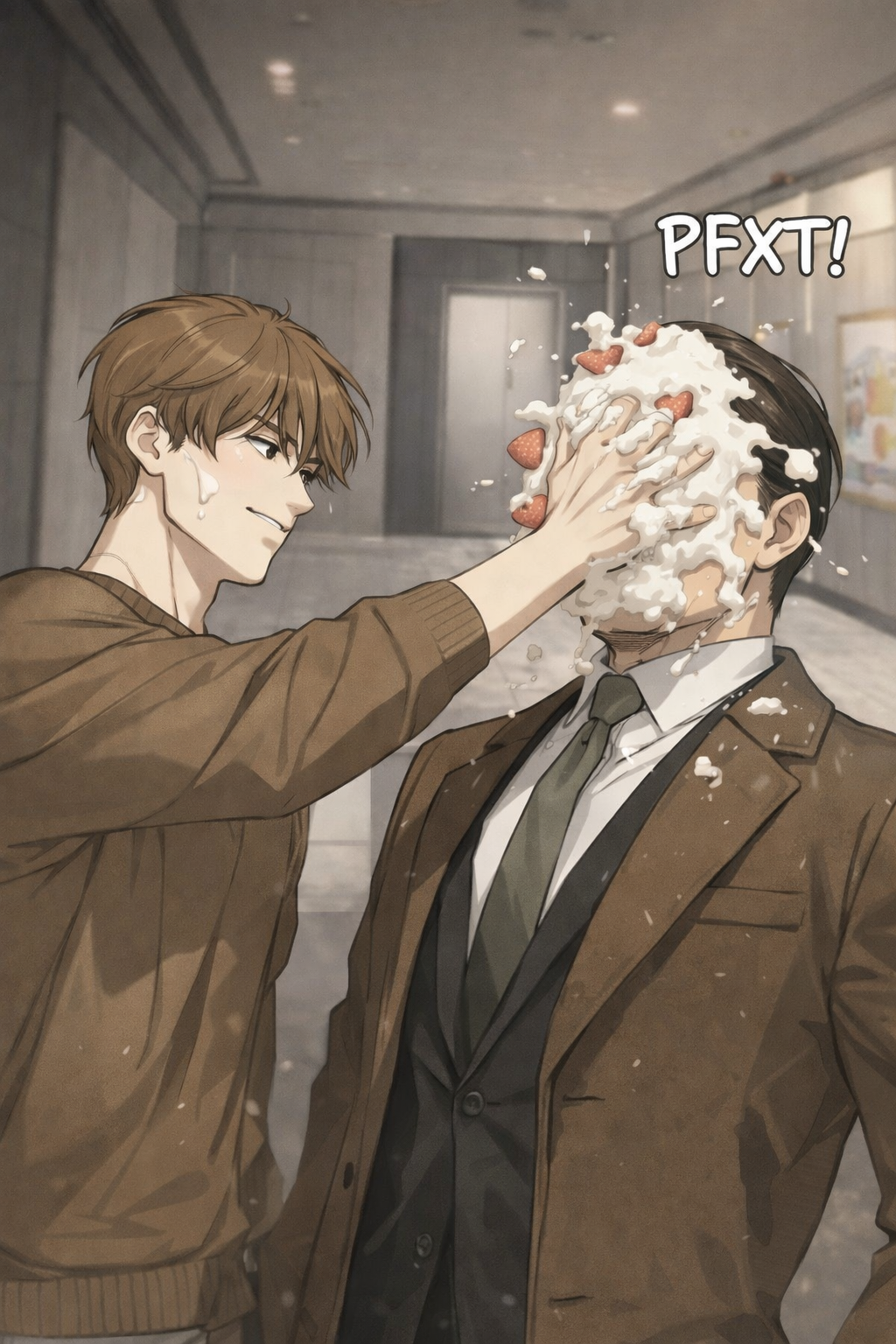 and confront the system directly. However, the stabbing reorients that expectation. It places him, instead, in a position structurally analogous to that earlier fracture point
 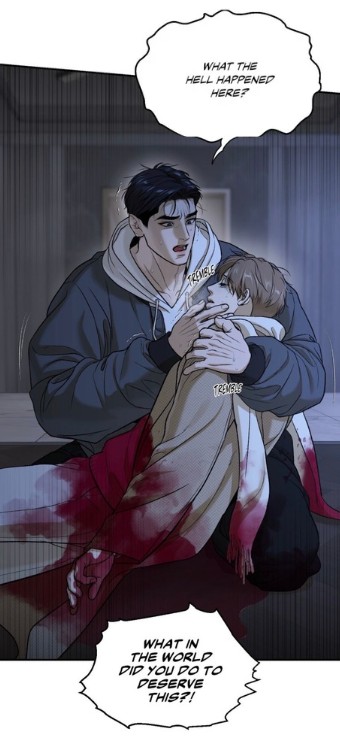 (chapter 98): not as the agent who exposes the system through action, but as the figure through whom its hidden logic becomes legible. Like the DSE case, where a single event forced observers to reconsider the boundaries between sport, money, and organized crime, Kim Dan’s injury functions as a node of convergence. It connects debts, institutional failure, and coercion into a single, visible rupture.
In this sense, his role is not diminished by passivity. On the contrary, it is precisely his vulnerability that transforms the incident from a private tragedy into a potential point of disclosure. The system can absorb isolated acts of violence, but it becomes unstable when those acts begin to reveal the structure that produced them.
This is precisely what Jinx is now suggesting through MFC. The upcoming Christmas match is not presented as an ordinary bout. 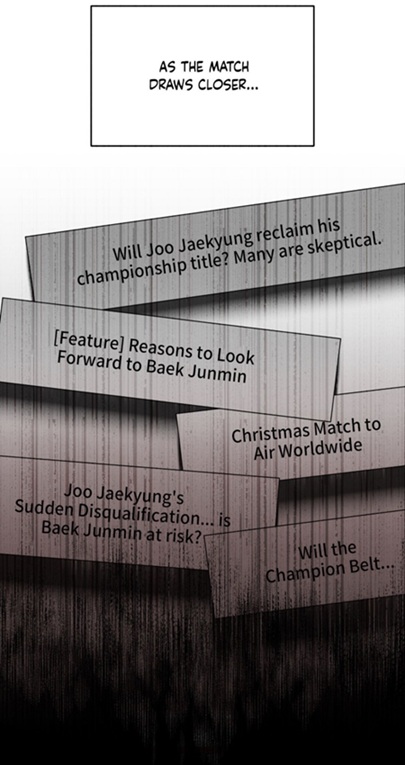 (chapter 95) It is broadcast worldwide, surrounded by articles, posters, speculation, and commercial pressure, though I doubt that the interview from Baek Junmin was broadcasted worldwide, as he spoke in Korean. The poster itself
 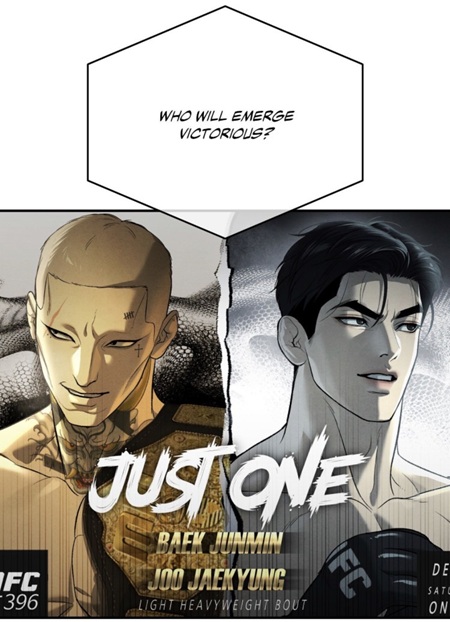 (chapter 97) already exposes the bias of the system: Baek Junmin is elevated like a golden idol, while Joo Jaekyung is portrayed more as a ghost from the past. The media does not simply report the match; it prepares the audience to accept a specific narrative.
 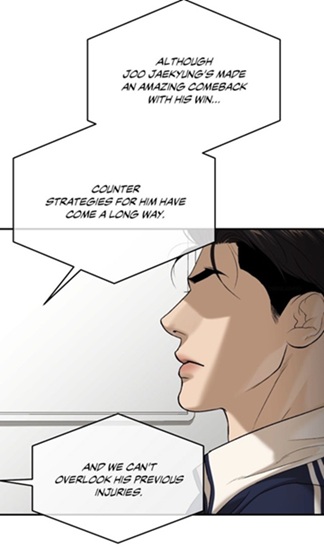 (chapter 95) The question is no longer “Who will win?” but ‘How will Joo Jaekyung’s defeat be made to appear inevitable?’”
The Displacement of Violence
This is where the stabbing becomes crucial. The violence has not disappeared; it has merely migrated. By moving from the illuminated cage to the invisible hallway of the penthouse, the assault transforms from a sporting spectacle into a strategic strike against the champion’s emotional center. (chapter 98) Away from the cameras, the violence is stripped of its rules and its audience, becoming a “private” crime that the system can more easily ignore—or exploit. The hospital only appears afterward—not as the site of the crime, but as the place where its consequences are contained and neutralized. 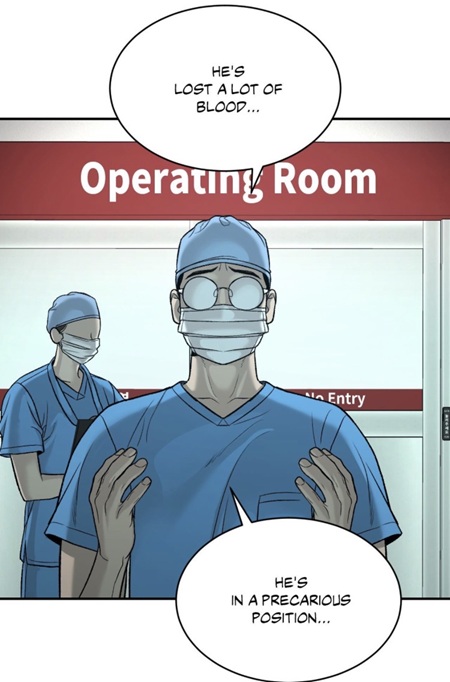 (chapter 98)
The MFC’s ability to proceed with the fight depends on a calculated separation: the crime is relegated to the “offstage,” allowing the spectacle to maintain its legitimacy. The show is preserved not merely by hiding the wound, but by formally decoupling it from the arena.
This produces a chilling structural contradiction. While Kim Dan is the victim of an attempted murder, the organization’s apparatus—personified by Park Namwook and Yosep—.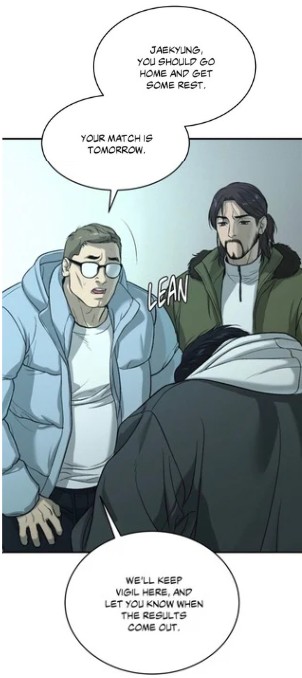 (chapter 98) processes the event as a private misfortune rather than a systemic failure. Their response reveals a hierarchy of value in which legal accountability is secondary, while the continuity of the event remains imperative.
Even institutional intervention reinforces this logic. The police treat the assault as an isolated criminal matter, severed from the corporate structure that made it possible. 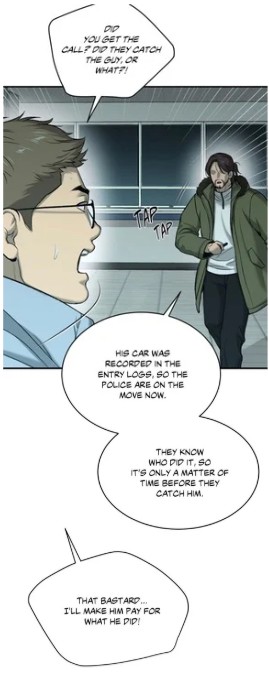 (chapter 98) Their words reveal the logic of the organization: the attacker may be pursued, but the event must continue. The absence of MFC representatives at the hospital is therefore not incidental, but symptomatic: it visualizes the system’s refusal of implication. Violence is acknowledged—but only insofar as it does not disrupt the spectacle. In a way, everyone seems to be focused on the fight and nothing else. No one publicly asks the most dangerous question
 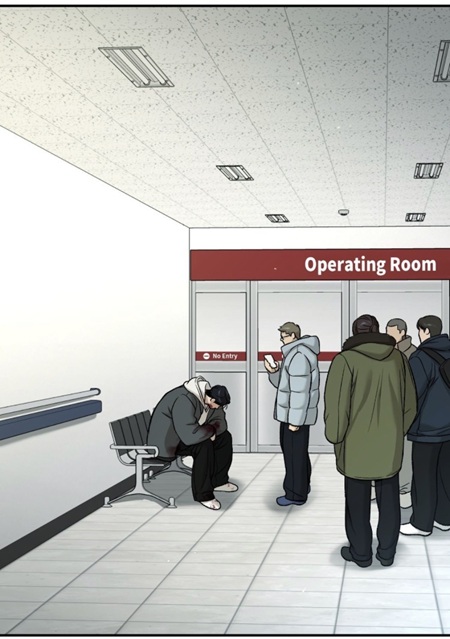 (chapter 98): why was Kim Dan targeted on the eve of the match?
Thinking as Resistance
And yet, this question has already been voiced—just not where one would expect it. Not by the police, not by MFC, and not by the members from Team Black, but by the one who stands at the center of the spectacle. Joo Jaekyung does not ask who attacked or whether the culprit will be caught. Instead, he formulates the question that destabilizes the entire situation: 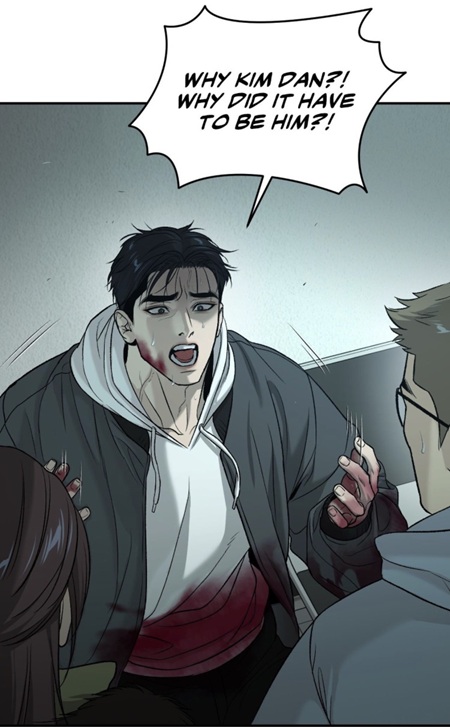 (chapter 98) His words are met with silence.
This shift is decisive. It moves the focus away from the act itself and toward its intention. The attack is no longer perceived as random violence, but as a targeted action with a specific purpose. Yet this question does not emerge from uncertainty—it is grounded in prior knowledge. Joo Jaekyung is aware of the former director’s public downfall, having read the article detailing the accusations against him. 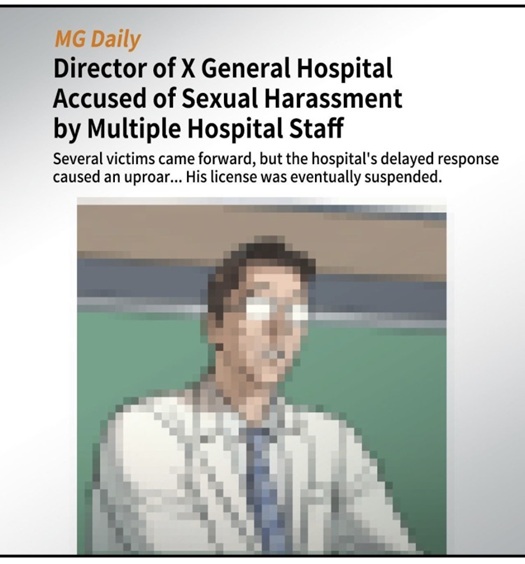 (chapter 91) More importantly, he has encountered the man directly and witnessed his attitude toward Kim Dan.
 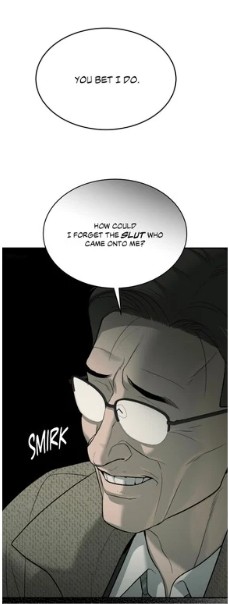 (chapter 90) In that earlier confrontation, the director reduced the physical therapist to an object of contempt
 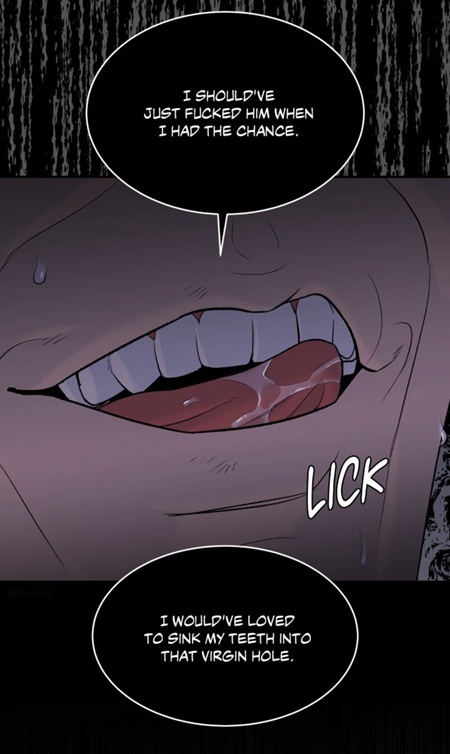 (chapter 90), employing degrading language that revealed not obsession, but dismissal.
This memory creates a tension rather than a simple explanation. The director’s resentment is undeniable 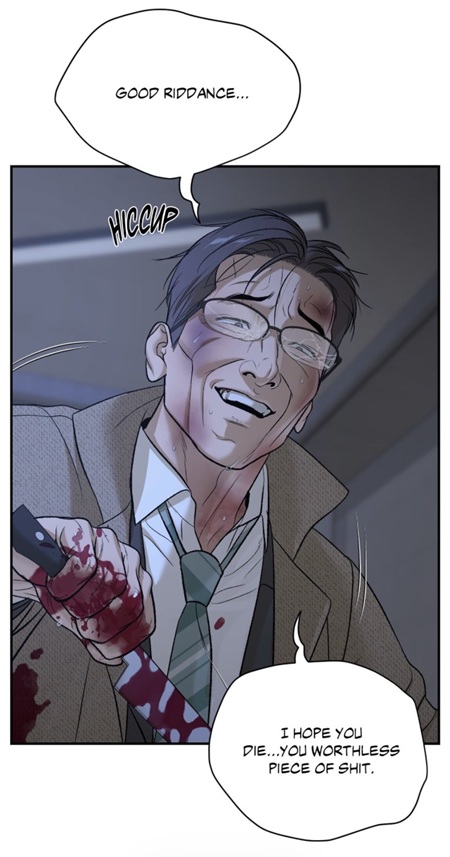 (chapter 98), yet it does not fully account for the nature and scale of the violence. His contempt explains hostility, but not the escalation into a calculated act carried out under coercive conditions. The panels themselves reveal that he was first cornered, threatened, and offered relief from his debts in exchange for compliance.
 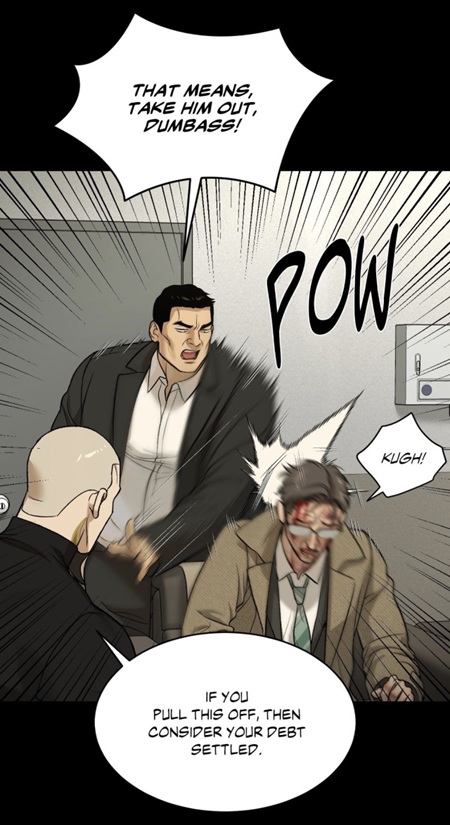 (chapter 98) The act thus exceeds the logic of personal grievance without entirely discarding it.
By asking “Why Kim Dan?”, Jaekyung is therefore not seeking information—he is refusing to accept a situation in which no explanation is offered, as if it was fate. While the police and the manager concentrate on the perpetrator and his arrest, the question of motive remains entirely unexamined. His intervention disrupts this premature sense of closure, revealing that the event has been processed without being understood. (chapter 98) In this sense, Jaekyung emerges as a different kind of hero. Not through his fists, but through his capacity to think against the narrative imposed upon him. By refusing to accept a fact as reality, he becomes the first crack in the façade—an element the system cannot easily control or contain.
In this moment, he becomes resistant to manipulation. The system may provide a culprit, but it cannot impose a motive that contradicts his own experience. (chapter 98) His question exposes the gap between appearance and reality: the figure who committed the act is not necessarily the one who explains it. While the authorities treat the incident as an isolated crime and the organization continues to prepare the match, the champion instinctively senses a connection that others refuse to acknowledge.
In that moment, the true conflict shifts. It is no longer limited to the fight inside the cage. It becomes an inquiry into the forces that operate around it—forces that select targets, manipulate circumstances, and remain invisible as long as no one connects the dots.
This institutional silence mirrors the logic of corrupted combat organizations. In such systems, the official event must remain clean, even when everything around it is contaminated. The match poster shines, the broadcast schedule remains intact, and the champion is still expected to appear. 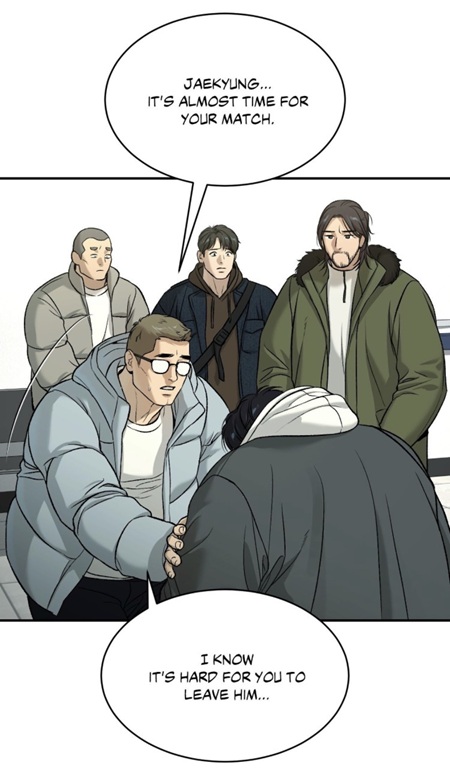 (chapter 98) Meanwhile, the real cost is paid elsewhere, by bodies that are not supposed to be seen. Kim Dan’s bleeding body becomes the hidden underside of the spectacle. (chapter 98)
The Reversal of the Shadow
This also reframes Joo Jaekyung’s role as the “dark knight” from my earlier essay. Back then, his heroic actions remained in the shadow: he rescued Kim Dan from the loan shark Heo Manwook and his minions, paid the debts  (chapter 17), and protected him without receiving public recognition.
  (chapter 60) The assault on Kim Dan in the “private” space of the penthouse hallway (Chapter 98) marks a decisive reversal of Joo Jaekyung’s agency. Initially, Joo Jaekyung used the shadows as a form of self-protection—a way to maintain control, conceal his vulnerabilities, and act outside the reach of others. Over time, however, this use of darkness evolved. Later, he trained Kim Dan in secrecy, but not in a dark room.
 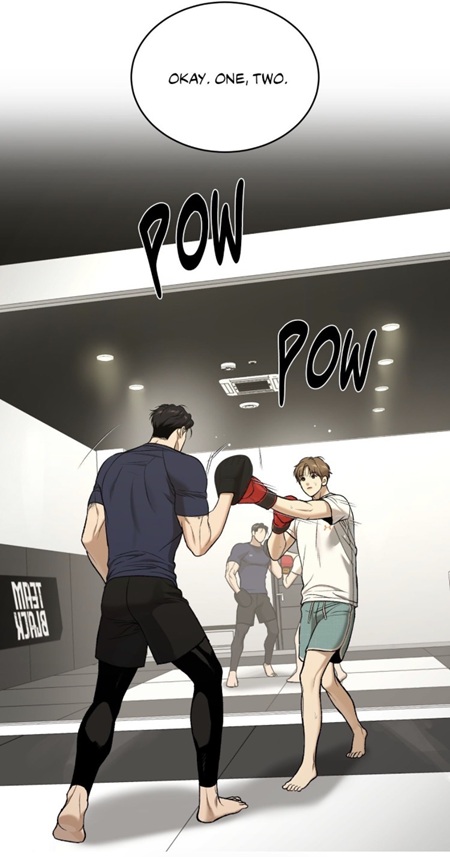 (chapter 88) The same hidden space became a refuge not only for himself, but for Kim Dan, allowing him to protect the physical therapist’s dignity and safety away from the media’s gaze.
In the current moment, the system has appropriated that same darkness… The “offstage” nature of the crime is no longer a shield for the victim (chapter 98), but an asset for the perpetrators, allowing them to keep the violence “manageable” so the public spectacle of the match remains undisturbed. The location of the assault is not incidental. Because it occurs in a private space—the penthouse hallway—it can be framed as a private matter. This stands in deliberate contrast to earlier incidents, such as the drugged beverage  (chapter 37) and the switched spray
  (chapter 49), which unfolded within MFC’s operational sphere. Those events were embedded in the organization’s jurisdiction and thus carried the potential to implicate it directly.
By displacing the violence outside that sphere (chapter 98), the system gains a crucial advantage: it can isolate the act, detach it from the match, and treat it as an unrelated incident. The crime does not disappear; it is reclassified. What might have been evidence of structural manipulation becomes a matter of individual wrongdoing. In this sense, space functions as a tool of narrative control. The public arena produces accountability, while the private setting permits containment. The earlier incidents threatened the integrity of the spectacle; this one is arranged so the spectacle can proceed undisturbed. And now, you comprehend why he had to be stabbed in front of the wolf’s lair.
This transformation is captured with precision in the visual composition of the scene. (chapter 98) As Kim Dan lies bleeding, the most striking element is the shadow of Jaekyung’s silhouette looming over him. In this moment, the protector and the vector of vulnerability collapse into a single image. The shadow that once signified hidden care now reappears as a visual marker of consequence: Kim Dan is not merely the victim of an assault, but a “pressure point” used to strike at the champion’s core.
The “shadow” has ceased to be neutral; it has been weaponized. By targeting Kim Dan in a space removed from scrutiny, the perpetrators transform invisibility into leverage. The injury is not only physical—it is relational. 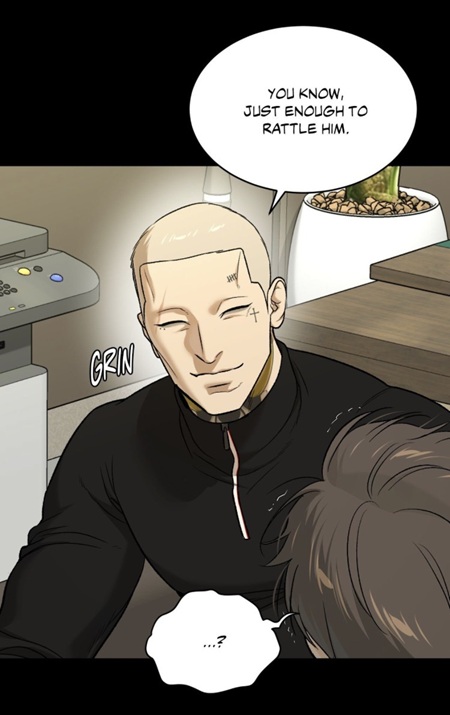 (chapter 98) It converts Jaekyung’s attachment into a site of vulnerability, forcing him into a position where his private life can be used against him.
What follows is a demand rather than a consequence. (chapter 98) He is expected to compartmentalize, to separate the private from the professional, and to enter the ring as if nothing had occurred. The very existence of this expectation reveals the system’s underlying logic: it does not need to confront him directly if it can destabilize him indirectly. By displacing violence into the unseen, it preserves the spectacle while exerting control over the one who stands at its center. Thus, the mechanism of control evolves.
Where Jaekyung once acted in the shadows to protect, the system now operates in the shadows to constrain. His earlier rescues demonstrated agency  (chapter 17); this injury imposes limitation. (chapter 98) The hidden space that once enabled autonomy now enforces compliance. And this transformation marks a critical turning point: the private sphere is no longer outside the system—it has been absorbed by it.
That is why the comparison with PRIDE matters. The scandal did not simply concern fixed fights; it exposed how an entire organization could maintain spectacle while concealing coercion, gambling, and criminal influence behind it. In Jinx, Kim Dan’s stabbing threatens to perform the same function. 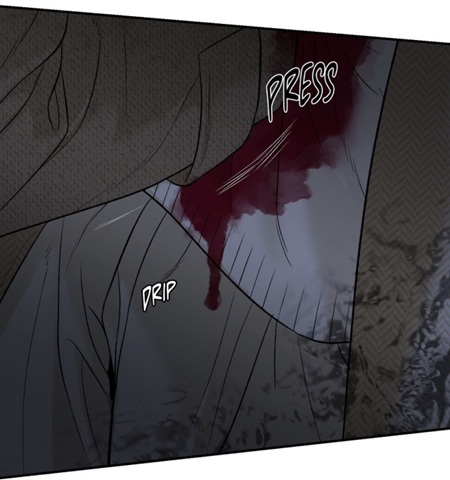 (chapter 98) It may become the first visible crack in the façade. The attack is supposed to remain a private tragedy, but if its connection to the match surfaces, then MFC’s credibility collapses. The question will no longer be whether Baek Junmin can defeat Joo Jaekyung, but whether the fight itself was ever clean or it can even take place at all.
In this sense, Kim Dan’s wound is not a detour from the main plot. It is the key to it. The assault reveals that the “match” is not confined to the cage. The real contest is no longer between two fighters, but between spectacle and truth, between public narrative and hidden crime, between the golden image of MFC and the blood spilled in its shadow.
Weaponizing Attachment: Shame Beneath the Spectacle
If the previous section demonstrated how systems like PRIDE—and by extension, the MFC—sustain spectacle by concealing violence, the events of Chapter 98 reveal the next evolution of that logic: the targeted personalization of harm. (chapter 98) The assault on Kim Dan is not a mere byproduct of corruption; it is a calculated refinement of it.
The Tactical vs. The Structural
At first glance, the decision to target someone close to Joo Jaekyung appears purely tactical—a familiar psychological strategy intended to destabilize a champion before a decisive match. Disrupting focus, inducing emotional strain, and weakening performance are recognizable objectives. Yet this explanation remains insufficient to capture the full gravity of the act. Baek Junmin does not merely seek to win a fight; he seeks to reshape the conditions under which Joo Jaekyung can continue to exist as a fighter. (chapter 98)
While a defeat in the ring can be reversed  (chapter 87) and a title reclaimed, guilt alters not just performance, but identity. By transforming Kim Dan into a victim, Baek Junmin attempts to implant a belief far more enduring than physical trauma: that proximity to Joo Jaekyung is dangerous. The objective is not simply to destabilize him temporarily, but to reintroduce a form of inner collapse that had once defined the champion, shifting him from a state of self-destructive detachment back into a cycle of shame.
 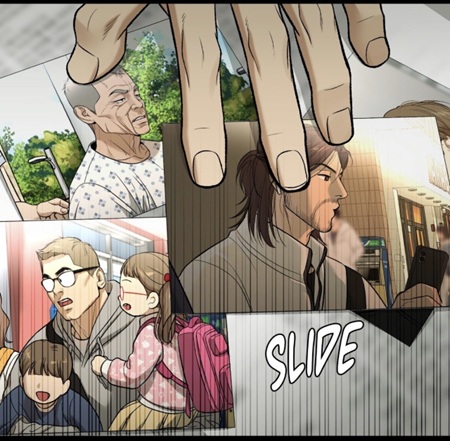 (chapter 98)
This strategy directly addresses a prior failure. 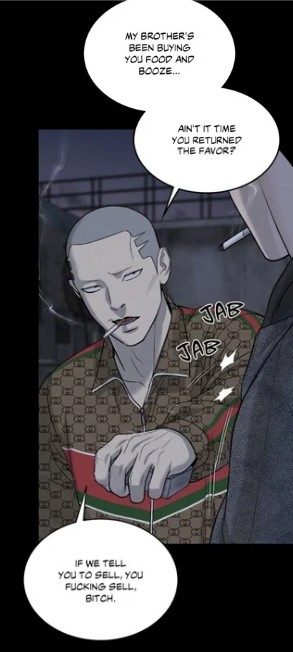 (chapter 74) In earlier encounters, Baek Junmin was unable to obtain the champion’s submission
 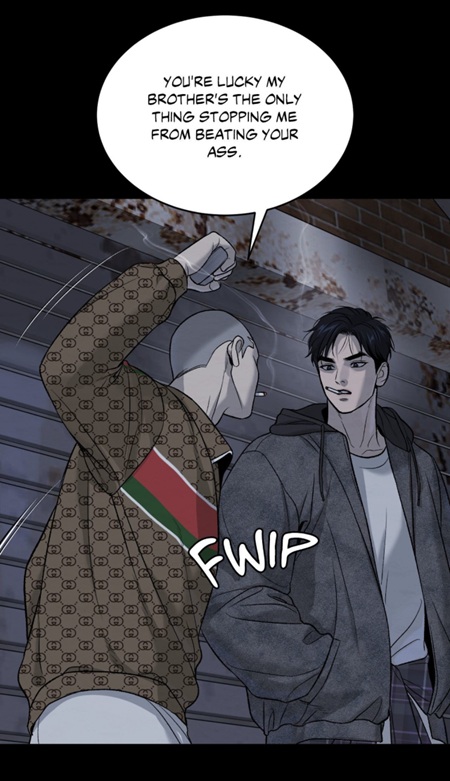 (chapter 74) and even to provoke any visible fear from Joo Jaekyung.
 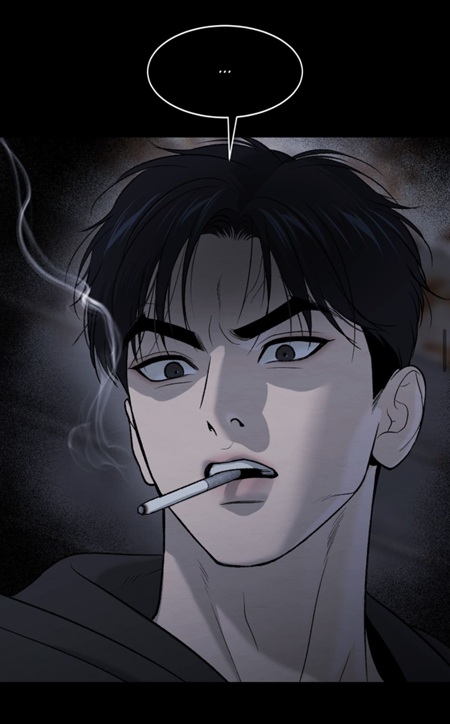 (chapter 74) His self-destructive indifference functioned as a form of armor. A man who places no value on his own survival cannot easily be coerced through threats of violence. He could not be rattled, because there was nothing to lose. Kim Dan changes that equation entirely.
The Activation of Responsibility
Joo Jaekyung’s resistance did not stem from strength alone, but from a particular psychological condition: he had already accepted loss as inevitable.  (chapter 74) What he could not escape, however, was responsibility. His past is marked by a formative rupture
 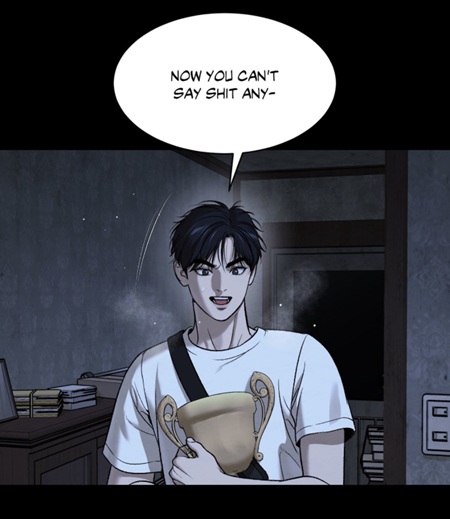 (chapter 74) in which personal achievement coincided with irreversible loss, producing a lasting association between his own success and the suffering of others.
By targeting Kim Dan, Baek Junmin deliberately reactivates this structure. 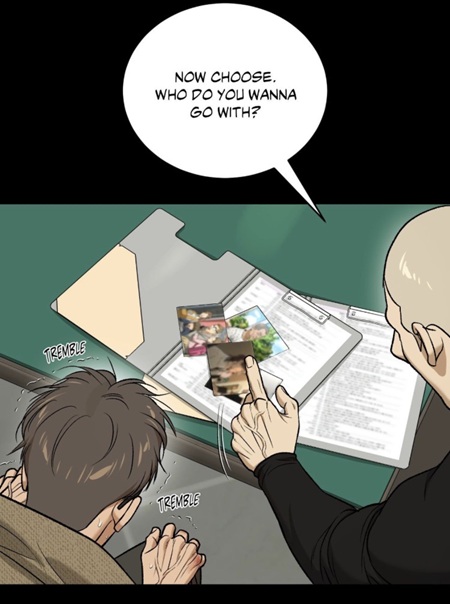 (chapter 98) The goal is to force the champion back into the familiar and agonizing position of the survivor—one who advances while others pay the price in blood. In this configuration, the match itself becomes secondary to the internal consequence: the resurgence of self-blame, the reemergence of guilt, and the deepening of self-loathing. (chapter 98) This is where the strategy reveals its full precision. A psychologically destabilized fighter is not only easier to defeat in the present, but far less likely to return in the future. By binding Joo Jaekyung to guilt, Baek Junmin seeks to neutralize the possibility of a future challenge at its source. What cannot be defeated externally is instead weakened internally.
The Mechanism of Psychological Inscription
Kim Dan is not merely close to Joo Jaekyung; he is the medium through which guilt is produced. 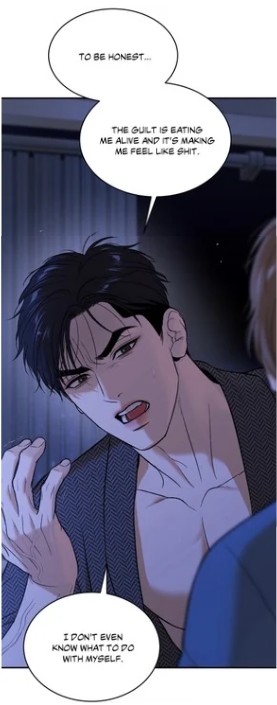 (chapter 91) The violence inflicted upon him is designed to echo within the champion, transforming an external assault into an internal fracture. In this sense, the attack operates less as a physical strike than as a mechanism of psychological inscription.
This pattern mirrors an earlier dynamic established within the narrative. Joo Jaekyung’s father associated boxing with degradation and criminality, projecting his own failures onto his son.  (chapter 73) The result was not empowerment, but internalized blame—a distortion in which ambition became inseparable from shame.
 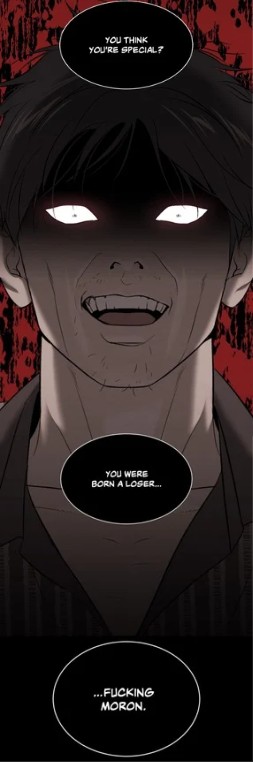 (chapter 73) Rather than confronting Joo Jaekyung directly, Baek Junmin reproduces this logic with greater calculation, engineering a situation in which the champion is compelled to interpret harm as his own responsibility.
What emerges here is not an isolated strategy, but the repetition of an earlier structure. The mechanism through which Joo Jaekyung internalizes blame does not originate with Baek Junmin; it echoes a prior dynamic in which responsibility was displaced and redirected until it became inseparable from his identity.
In this sense, Baek Junmin does not introduce a new form of violence; he reproduces an existing one with greater precision. 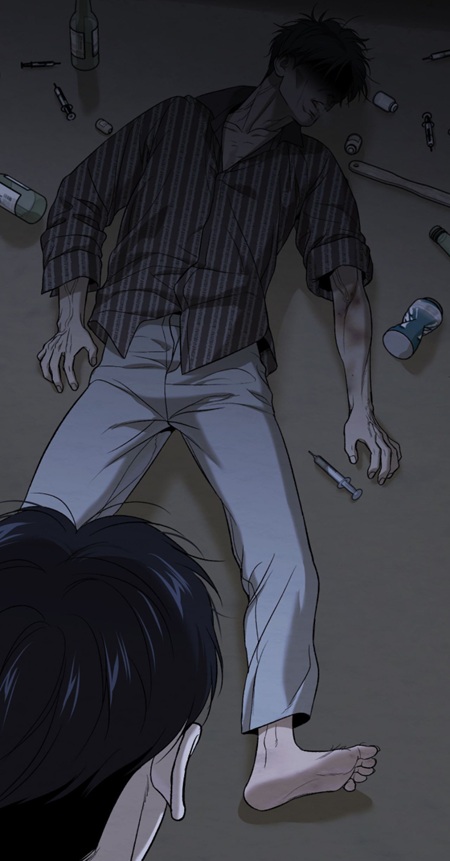 (chapter 73) He occupies the same structural position—not as a replacement, but as a continuation—forcing Joo Jaekyung to relive a pattern in which success, loss, and guilt converge.
Yet this mechanism reveals an important limitation. It depends on the immediate internalization of guilt, on the assumption that Joo Jaekyung will once again accept responsibility without question. The present moment, however, introduces a fracture in that process.
This fracture does not emerge suddenly. It has already been prepared. (chapter 91) Prior to the assault, Joo Jaekyung had begun to recognize himself within the very structure that now seeks to ensnare him. In his interaction with Kim Dan, he confronts the possibility that he, too, has abused his position—that he has coerced, rather than chosen. The comparison with the hospital director is not incidental; it marks a moment of moral destabilization in which guilt is no longer externally imposed, but consciously experienced. Crucially, this guilt does not remain internal. It is voiced.
In articulating his self-accusation, Joo Jaekyung exposes it to the possibility of response. What would otherwise solidify into self-condemnation is instead opened to interruption. Kim Dan’s presence becomes decisive at this point—not as a passive recipient of guilt, but as the one who refuses its absolute form. Through this exchange, guilt is no longer a closed structure, but a contested one.
The Architecture of a Staged Conclusion
This prior transformation fundamentally undermines Baek Junmin’s strategy. His attempt to reinscribe guilt encounters a subject who has already begun to interrogate the very mechanics of his “Jinx.” Faced with the violence inflicted upon Kim Dan, Joo Jaekyung refuses to simply internalize the trauma; instead, he formulates a series of structural questions: (chapter 98)
This reaction marks a significant departure from the past. When he encountered his father’s death (chapter 73), —not out of a failure of intellect, but because the setting presented itself in a way that foreclosed inquiry. The space appeared as a tableau organized for immediate legibility: the sudden proliferation of narcotics, the conspicuous placement of syringes, the absence of functional traces such as a tourniquet, and the layered excess of degradation all converged toward a single conclusion. The body did not merely signify a biological end; it performed an interpretation—self-destruction.
In this sense, the room functioned less as a site of evidence than as a mechanism of instruction. It directed perception away from causality and toward an already determined meaning. The question of how this death came to be was displaced by an immediate attribution of why. Overwhelmed by the coherence of this constructed image, the young Jaekyung accepted responsibility without establishing it. What should have remained open to investigation was instead sealed by a self-evident “truth.”
The Contamination of Victory
This event cannot be understood in isolation. It unfolds in direct proximity to a decisive turning point: Jaekyung’s inaugural tournament victory.  (chapter 73) This convergence is not incidental. On the very day his public success becomes visible, his private reality collapses into a scene of absolute abjection. Achievement and catastrophe are not merely juxtaposed—they are structurally bound.
The father’s rejection of boxing—framed as a refusal to produce a “thug” (chapter 73) — intersects with the son’s triumph in a way that contaminates both. Victory no longer functions as emancipation; it becomes implicated in loss. From that moment onward, every success carries the imprint of the “Spindle.” It does not liberate; it binds.
This semiotic contamination persists within Jaekyung’s narrative memory. The victory, though formally recognized, is never integrated as a foundational origin—symbolized by the fact that the trophy was never kept. It remains a point of fracture. Within this configuration, the presence of Hwang Byungchul at the funeral acquires a more complex significance. 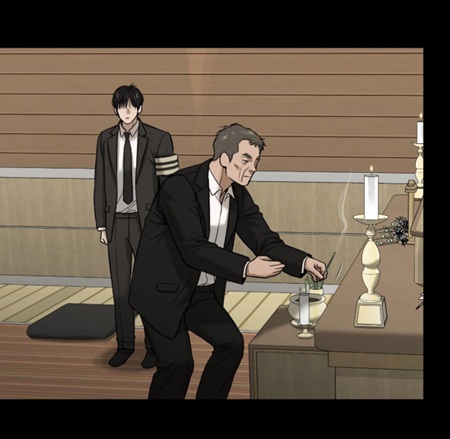 (chapter 74) As the sole representative of the athletic world, he becomes the figure through whom the scene attains institutional closure. By accepting the event as it appeared, without interrogating its conditions, he contributes—structurally rather than intentionally—to the stabilization of its official meaning. Boxing and the mob are two separate worlds. The tableau remains intact, not because it is verified, but because it is not questioned.
The absence of any external presence at the funeral further complicates the narrative of continuity. If the father had remained embedded within a criminal network  (chapter 74), one would expect traces of that affiliation to persist—not necessarily as mourning, but at least as presence. Yet none appear. No representatives, no residual ties, no indication that he belonged to a structure beyond the domestic sphere. This absence does not confirm a break, but it renders continuity uncertain. (chapter 73) What remains is a figure who dies alone, within a scene that admits no extension beyond itself. In this isolation, the event becomes self-contained, and responsibility is implicitly redirected inward. Without external actors to distribute causality, the logic of guilt finds a single, immediate anchor.
The Unstable Tableau
And yet, the scene itself contains the seeds of its own destabilization. The conclusion of self-destruction is not simply given; it is produced through a configuration that reveals, upon closer inspection, a series of tensions.
Earlier depictions of the household suggest a shift that complicates the final image. While signs of substance abuse saturated Jaekyung’s childhood 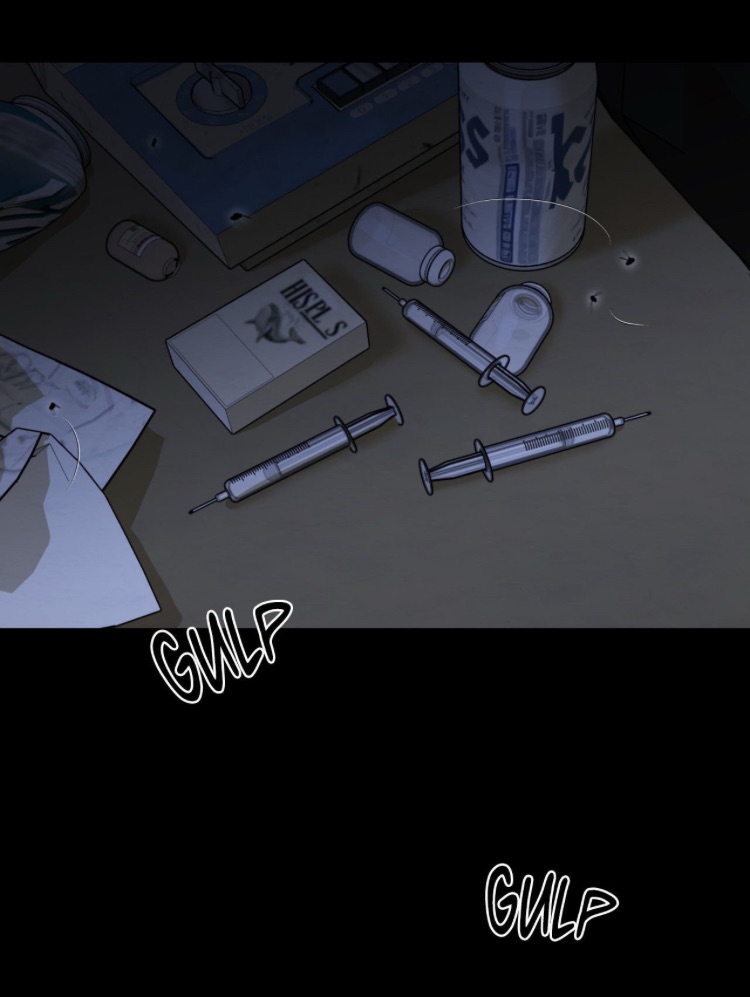 (chapter 72), the later environment appears comparatively stabilized.
 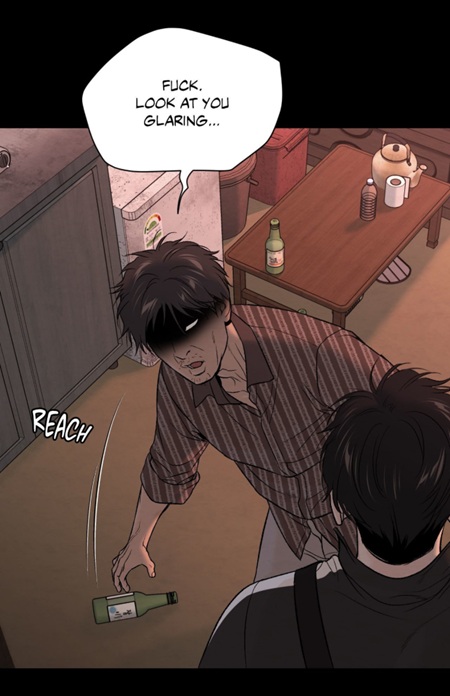 (chapter 73) This shift does not indicate resolution, but it does mark an interruption. (chapter 73) The father’s rejection of boxing does not simply express fear for his son’s future; it reveals a retrospective awareness of the trajectory it represents. By framing boxing as a path that inevitably produces “thugs,” he speaks not from within that identity, but at a distance from it. His words suggest not a completed transformation, but a partial disengagement—an ability to recognize the logic of the system precisely because he has already been shaped by it.
In this context, the sudden re-emergence of extensive drug paraphernalia at the hour of death reads not as continuity, but as rupture. (chapter 73) The density of objects—the multiplication of syringes and the coexistence of pills and alcohol—exceeds functional necessity. It is an excess of legibility. The scene does not document a process; it presents a conclusion with overwhelming clarity.
For the young Jaekyung, these inconsistencies remain inaccessible. This inaccessibility is not merely the result of shock; it is structured by regression. The scene is not perceived through the analytical lens of a teenager, but through the affective memory of a child. 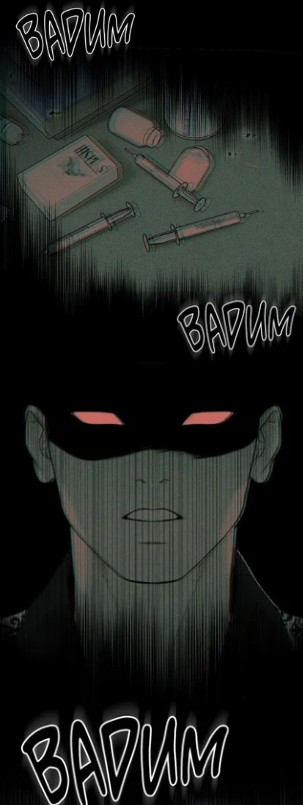 (chapter 73) The visual emphasis on syringes and narcotics does not introduce new information—it reactivates an earlier image, one already internalized during his childhood. (chapter 72) In this sense, Jaekyung does not encounter the scene as something to be interpreted, but as something already known.
What appears in front of him is therefore not a set of contradictions, but a confirmation. The present collapses into the past. The drugs, the father, and the atmosphere of degradation align seamlessly with the memory of a six-year-old who had already learned to associate these elements with shame and danger. (chapter 73) Under these conditions, perception does not produce inquiry—it produces recognition. And recognition, precisely because it feels immediate and familiar, forecloses the possibility of questioning.The visceral shock of the image, intensified by the disturbing visibility of the body, produces an immediate withdrawal from analysis. The scene compels recognition without permitting interpretation. What might have functioned as clues instead reinforces certainty.
Only in the present, at the hospital in Chapter 98, does this mechanism begin to falter. (chapter 98) The emergence of the question—Why?—interrupts the automatic transition from event to guilt. What once functioned as necessity now reveals itself as contingent—and therefore resistible. The structure has not disappeared, but it has finally become visible.
In this sense, the strategy does not fully succeed. The structure is activated, but not completed. The repetition is no longer exact, because it is no longer unexamined. The jinx persists not because it is real, but because it was never questioned.
Yet to read this pattern solely as a psychological repetition would be to miss its full implication. What appears as an internal mechanism—guilt, shame, and the displacement of responsibility—cannot be fully explained at the level of individual experience alone. The recurrence of this structure points beyond personal trauma toward a broader configuration that organizes and sustains it. The scene does not document a process; it presents a conclusion with overwhelming clarity. It does not prove that a murder took place—but it produces the conditions under which such a possibility can no longer be excluded.
The Illusion of Separation: From Trauma to Structure
The opposition between an “official” and an “illegal” system is ultimately misleading. 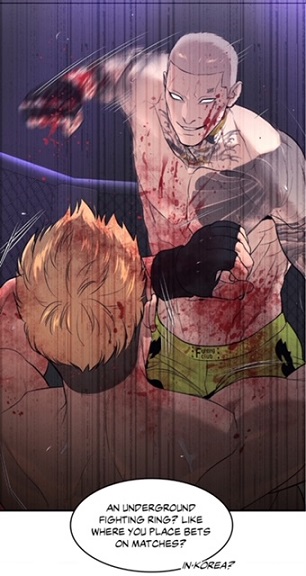 (chapter 47) What the narrative reveals instead is a single structure operating on two levels: a visible arena governed by rules, discipline, and public legitimacy, and an invisible layer sustained by coercion, debt, and manipulation. Joo Jaekyung’s father stands at the point where these two layers converge. (chapter 73) His trajectory—oscillating between boxing and criminality—reveals that the boundary between legitimacy and illegality was never stable to begin with. What appears, at first, as a personal failure is in fact the collapse of a system that offers no coherent separation between discipline and exploitation. The paternal figure thus ceases to function solely as a source of trauma; he becomes the site through which structural contradictions are transmitted.
Within this configuration, the figure of the “hyung” 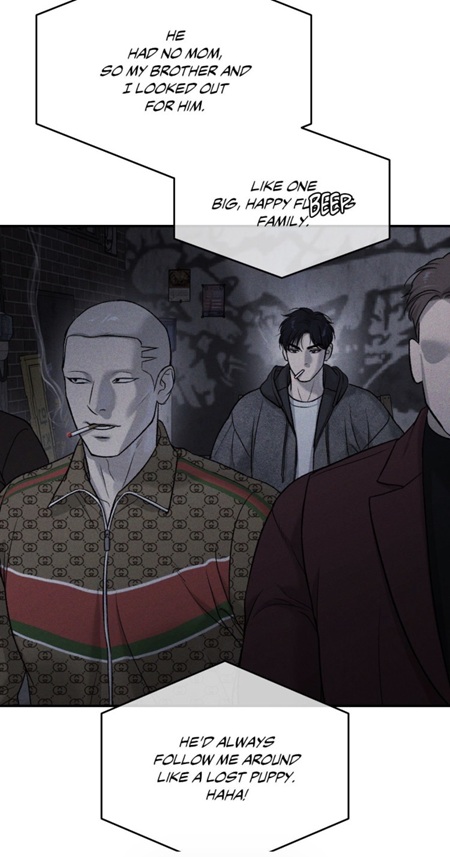 (chapter 96) acquires particular significance. Unlike the father, whose role has been reduced to memory, the hyung represents the active principle of authority within the hidden layer. if the Father was the curse’s origin, the faceless Hyung is its manager. This reinforces my point that Jaekyung was never “free,” only “transferred” from one owner to another. His presence signals that control does not disappear—it shifts location. Responsibility is no longer anchored in a single individual, but distributed across a hierarchy that regulates behavior through coercion rather than care. Baek Junmin operates within this structure, not as its originator, but as its agent. His actions do not create the system; they enact it.
This is precisely what reframes his confrontation with Joo Jaekyung. The conflict between them is not merely personal, nor reducible to rivalry or resentment. It reflects a structural tension between two modes of existence within the same system: one that remains embedded in its concealed mechanisms, and one that has, at least temporarily, emerged within its visible and legitimized form. By targeting Kim Dan, Baek Junmin does not simply attack the champion—he attempts to draw him back into the logic from which he appeared to have escaped.
The Visual Symbolism of the Trace
The spatial logic of the story undergoes a significant transformation as the assault occurs in the private hallway of the penthouse, a space removed from public scrutiny. (chapter 98) This displacement allows the act to be framed as an isolated incident. Yet the shadows that once concealed protection now enable the conversion of violence into guilt without external interference.
This transformation is rendered with striking clarity in the visual composition of the scene. As Kim Dan lies bleeding, Joo Jaekyung’s shadow extends over his body, functioning as a visual articulation of perceived implication. The image collapses the distinction between protector and source, suggesting not direct causality, but internalized responsibility.
At the same time, Kim Dan performs a gesture that introduces a counter-movement within this structure. 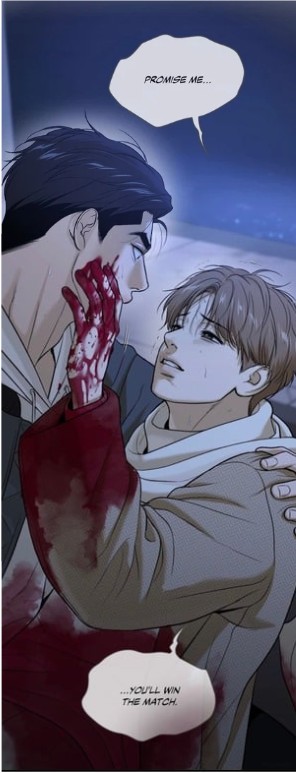 (chapter 98) By placing his bloodied hand against Joo Jaekyung’s cheek, he leaves behind a visible trace—one that cannot be easily rationalized or dismissed. Unlike previous injuries, this mark originates from another’s suffering. It resists assimilation into the logic of sport.
What is most striking is the collective failure to acknowledge it. 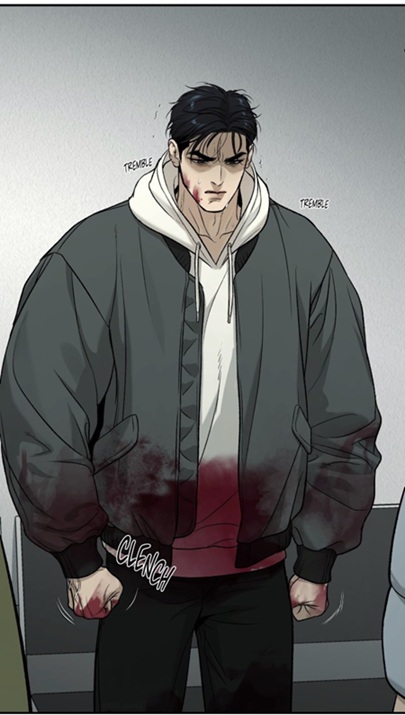 (chapter 98) Those present remain focused on the match, the perpetrator, or the urgency of treatment. The mark remains unaddressed, almost invisible in plain sight. Yet precisely because it is overlooked, it acquires a different kind of force. Unlike concealed wounds, this trace has the potential to enter the public sphere.
The Fracture of the Impervious
Ultimately, the conflict has extended far beyond the cage and into the domains of memory, responsibility, and self-perception. Baek Junmin’s strategy reveals its full complexity by weaponizing attachment and transforming care into a source of shame and vulnerability.
The spectacle of the MFC persists, sustained by media and profit, but beneath that surface, a different struggle unfolds between the maintenance of an image and the emergence of truth. The central question of the narrative is no longer whether Joo Jaekyung can win his next fight, but whether he can continue to exist without once again becoming the source of his own undoing. (chapter 98) This brings us back to the question raised at the outset: is this repetition a failure of imagination, or does it point toward an underlying structure that has not yet been fully understood? What emerges here suggests the latter. The assault does not merely repeat violence; it exposes the mechanism through which that violence acquires meaning.
In doing so, it does not remain confined to the present. It reopens the past. The logic that becomes visible in the stabbing (chapter 98) — the staging, the displacement of responsibility, the transformation of harm into self-blame—casts a new light on what had previously been perceived as a closed event. The death of Joo Jaewoong, once accepted as an act of self-destruction, begins to appear less as a definitive conclusion than as a scene whose meaning was prematurely fixed.
What the present reveals is not simply that violence persists, but that its earlier interpretation may have been structured in the same way. A single stab, precisely because it makes the mechanism visible, destabilizes the coherence of the past. The question is no longer only what is happening now, but what was already made to appear natural before.
In this sense, Chapter 98 functions as a reopening of a scene that had once been closed. Where the death of Joo Jaewoong presented itself as a finished conclusion 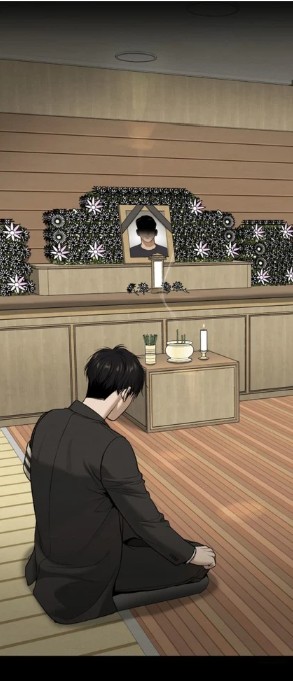 (chapter 74) —coherent, legible, and therefore unquestioned—the present moment resists such closure. The structure that once foreclosed inquiry is no longer fully operative. The “jinx” reveals itself not as fate, but as the effect of an interpretation that had never been interrogated. (chapter 73)
Rather than functioning as an isolated or excessive event, the act reveals what could not be shown otherwise: that the true site of conflict is not the body, but the structure through which violence is interpreted and internalized. (chapter 98) It is only through such a rupture that the narrative makes visible how guilt is produced, how responsibility is displaced—and, crucially, how these mechanisms retroactively shape the meaning of past events. What appears as repetition thus becomes disclosure.
Meeting the Maker — The Refusal to See
If the previous sections have demonstrated that violence in Jinx does not emerge randomly but follows a concealed structure, then the question becomes unavoidable: why do those within the system fail to recognize it? 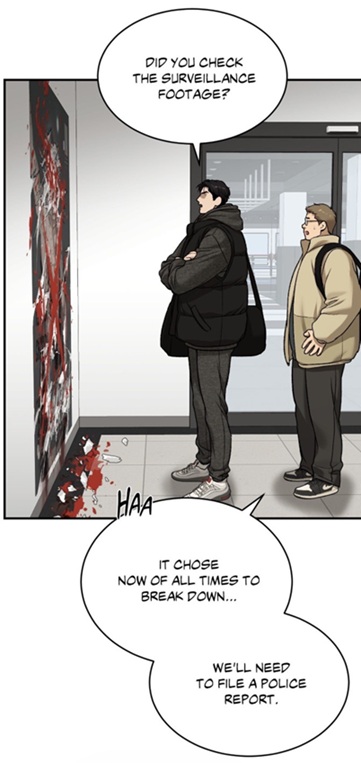 (chapter 95) Why is the mechanism that produces harm repeatedly misidentified as fate, necessity, or personal failure?
  (chapter 74)
This moment of questioning is not only internal to the narrative; it is also reproduced at the level of perception. The presence of the knife in the hallway does not remain a neutral detail. (chapter 98) It triggers a memory—one associated with Heo Manwook  (chapter 17), whose violence was never concealed behind the illusion of sport. His weapon was direct, explicit, and inseparable from his words. During that earlier encounter, he articulated a principle that now returns with unexpected clarity:
 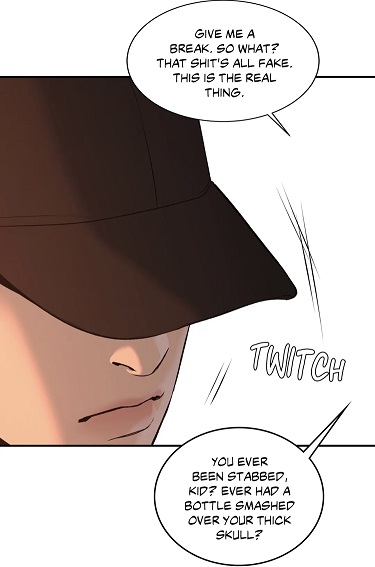 (chapter 17)
At the time, this statement referred to rankings, to legitimacy, to the structures that present themselves as objective while masking underlying manipulation. Reencountered through the image of the knife, however, its meaning expands. What was once understood as a cynical remark begins to function as a key. The distinction between the “real” and the “fake” collapses, revealing that the spectacle itself depends on this separation remaining unquestioned. (chapter 98) The hallway scene, far from being an isolated act of violence, reactivates this earlier insight: the system does not merely contain violence—it organizes it while presenting its outcomes as natural and deserved.
To “meet the maker” (chapter 17) in this context is not to encounter a person, but to confront the conditions that make one’s position possible.—the structure that organizes perception, distributes responsibility, and determines what can or cannot be seen. What the narrative reveals, however, is not recognition, but refusal.
The Curse Rewritten: From Spindle to Knife
The recurrence of the knife within the narrative follows the specific logic of the curse in Sleeping Beauty. In that framework, the spindle does not generate the curse; it merely activates it. What appears as a sudden injury is, in fact, the visible manifestation of a condition that long precedes it.  (chapter 11). This condition does not remain static; it intensifies. The violence directed at Kim Dan follows a clear trajectory—one that escalates in both form and intimacy. What begins as physical assault quickly extends into spatial violation: trespassing, intrusion into his living space, and the systematic erosion of any boundary that might protect him. From there, it evolves into abduction
  (chapter 16) and coercion
  (chapter 16), culminating in sexual violence.
  (chapter 16)
This progression is not incidental. Each stage strips away another layer of autonomy, reducing the subject from a person to an object of use. By the time the stabbing occurs (chapter 98), the narrative has already exhausted all intermediate forms of domination. The blade does not introduce a new type of violence; it functions as its logical culmination.
In this sense, the stabbing reads as the material echo of an earlier declaration—Heo Manwook’s injunction to “meet the maker.” (chapter 17) What was initially articulated as a threat becomes, at this point, structurally realized. The body is no longer merely controlled or violated; it is brought to the threshold where existence itself is placed into question.
The act therefore marks not a rupture, but a climax. It condenses the entire history of escalating aggression into a single, irreversible gesture, transforming what had been a sequence of violations into a unified structure of destruction. Likewise, the knife in the hallway does not introduce violence—it reactivates a structural lethality that has always already been in place.
The Knife as Narrative Convergence
The significance of the knife lies in its repetition. Its reappearance recalls Heo Manwook’s earlier use of the same object, along with his cynical insistence that the entire professional system is “fake.” 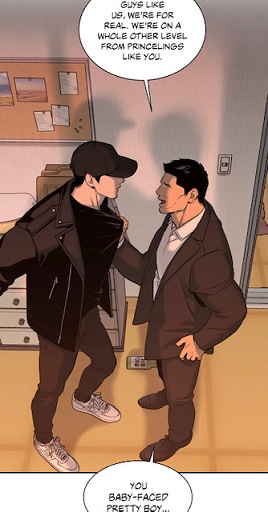 (chapter 17) Through this echo, the boundary between past and present collapses, as does the distinction between underground coercion and institutionalized spectacle. What once appeared as separate domains—the illegal underworld and the legitimate sport—are revealed as two expressions of a single, continuous structure.
In this sense, the knife functions as the narrative equivalent of the spindle: not the origin of harm, but the point at which an underlying cause becomes legible. The injury it produces is not an isolated consequence of rivalry, but the activation of a pattern that transforms hidden structure into visible damage.
This convergence becomes even more striking when one considers what remains unseen within the act itself. The violence enacted through the knife does not originate with the hand that wields it. 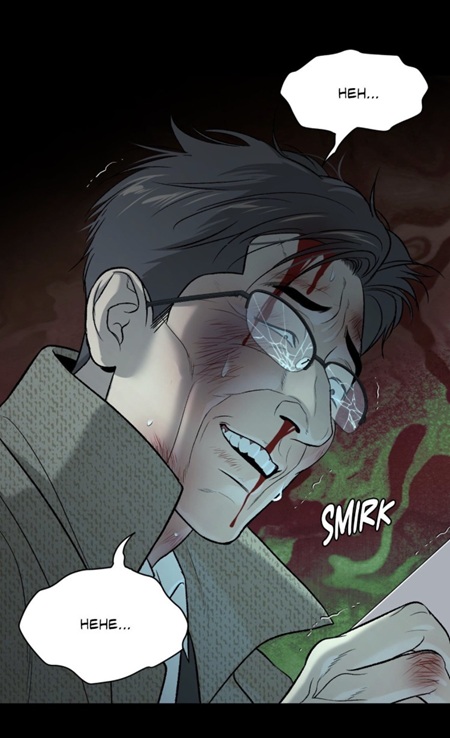 (chapter 98) It emerges from a structure already in motion—one that had previously manifested in a different form. The attempted sexual assault by the hospital director (chapter 90) and the later stabbing are not discrete events, but successive articulations of the same logic: the exploitation of vulnerability under conditions of asymmetrical power.
What connects these moments is not direct coordination, but continuity through concealment. The earlier violation was neither publicly exposed nor institutionally challenged. As a result, it did not conclude—it persisted. The system remained intact, and with it, the conditions that made further violence possible. 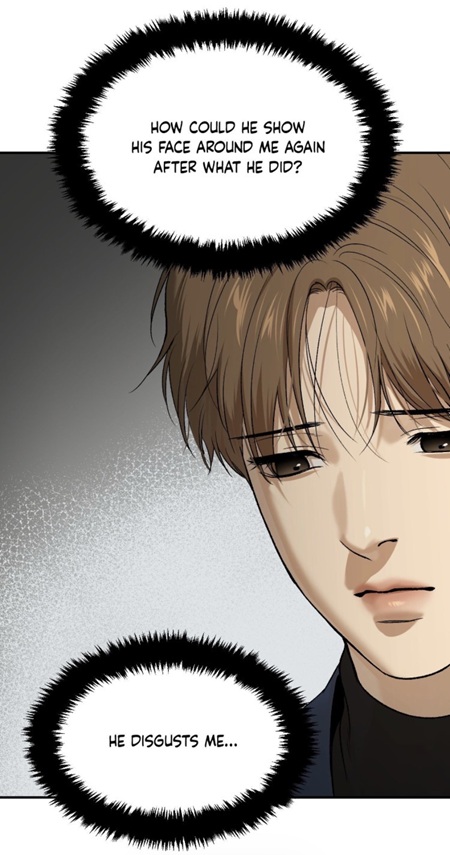 (chapter 91) What returns in the stabbing is therefore not a new intrusion, but the intensification of an unresolved structure.
This is where the irony of Baek Junmin’s position becomes visible. His insistence on distance 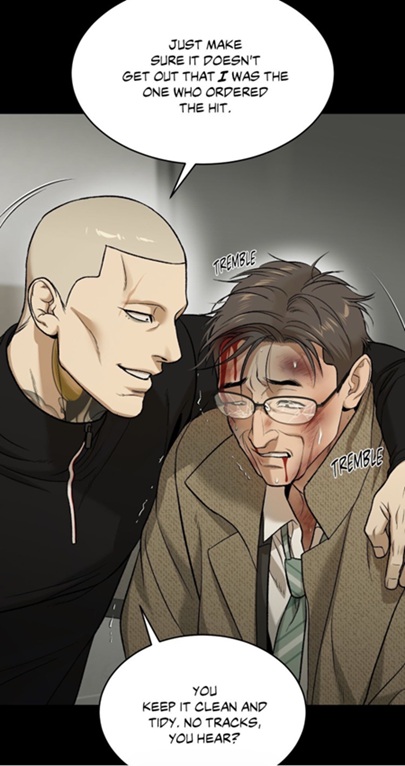 (chapter 98) —his attempt to sever himself from the act by delegating it and erasing traces—presumes that violence can be isolated and controlled. On the one hand his demand effectively reassigns the burden of protection. The former director, once shielded by institutional authority, is now positioned as the one who must protect another individual from exposure. Yet the very structure he activates exceeds his knowledge. (chapter 98) The assault he commissions intersects with a prior history he does not perceive, linking his intervention to an already existing chain of coercion. The knife may be common, interchangeable, untraceable—but the structure it activates is not. The system operates on the principle of absolute replaceability; the identity of the one who ‘takes the fall’ is irrelevant, provided the architect remains unexposed. But the problem is that behind him stands a vast criminal enterprise
 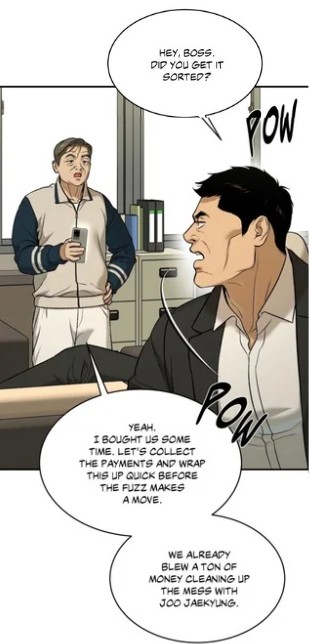 (chapter 93); the money laundering operation represents the material reality that must remain hidden behind the ‘fake’ spectacle of the sport.
The irony is structural. The medical institution that failed to protect its victims now disappears from the scene, while individuals are compelled to safeguard one another—not out of solidarity, but to preserve fragmentation. What is being protected is not a person, but the separation of domains. The director’s silence does not defend Junmin alone; it prevents the convergence of narratives that would reveal the continuity between institutional abuse and criminal violence.
This continuity does not end at the level of individual actors; it extends into the institutions that frame and legitimize them. The case of the hospital director (chapter 91) reveals that the structure had already been visible —yet not acted upon. Multiple victims had come forward, and the institution had delayed its response, allowing the pattern of abuse to persist before ultimately isolating the perpetrator as an individual anomaly. In doing so, the hospital produced a familiar resolution: the crime was acknowledged, but the conditions that enabled it remained intact. Responsibility was displaced onto a single figure, while the institution itself avoided deeper scrutiny. What appears as accountability is, in fact, containment. At no moment, it was reported to the police.
This structure does not remain confined to the domain of criminal violence. It extends into the institutions that claim to oppose it. The hospital’s treatment of Kim Dan already revealed this logic. 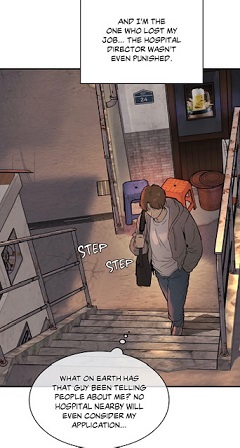 (chapter 1) He was not merely fired after the incident; he was made professionally untouchable. By damaging his reputation and preventing him from being hired elsewhere, the hospital did not simply remove a troublesome employee—it attempted to silence the one person whose testimony could expose the system that had protected the director.
Yet this attempt at containment seems to have produced the opposite effect. The director’s later resentment 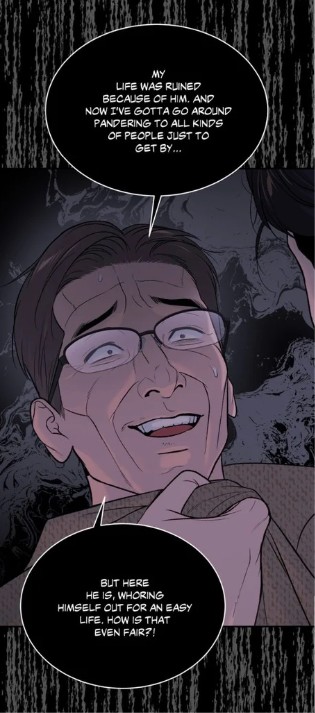 (chapter 90) suggests that Kim Dan’s case did not disappear quietly. His words imply that the incident created a ripple, perhaps even a precedent: other victims may have recognized their own experience in his and understood that they were not alone. In that sense, Kim Dan’s dismissal became the first crack in the hospital’s façade.
This is why the stabbing carries such institutional danger. (chapter 98) Once again, violence is meant to isolate Kim Dan and reduce him to a private victim. But if the connection between the assault, the former director, and the hospital’s earlier retaliation becomes visible, the incident can no longer be contained as an individual crime. Like before, Kim Dan’s wound may become the point through which others begin to speak.
The stabbing (chapter 98) represents a terminal failure of the system’s containment strategy. This instability is intensified by the precarious position of the former director. (chapter 91) Having been isolated as the sole bearer of responsibility, he has been stripped of the institutional protection that once enabled his abuses. This displacement produces a structural contradiction: while the hospital maintains its façade of public legitimacy, the individual it sacrificed remains a repository of knowledge that can destabilize that façade. The very mechanism used to preserve institutional coherence—the isolation of a “bad actor”—simultaneously generates the conditions for its undoing. What was meant to sever the link instead preserves it in another form.
The assault on Kim Dan reveals that the domain has shifted, but the objective remains identical: the coercion of the vulnerable. (chapter 98) This convergence forces into visibility a question the system had previously deferred: How could such a figure have operated within the institution at all? The director’s survival outside the hospital walls proves that his “crimes” were not individual deviations, but functional features of the environment that birthed them.
The Return of the Repressed
By reintroducing violence into the present through a criminal channel, the director acts as a “living bridge.” He reconnects the “official” medical world with the “underground” world of debt and violence. The victim remains constant—Kim Dan—but the mask of institutional authority has slipped.
The stabbing is not just a physical attack; it is a forensic exposure. He used his knowledge to hurt a human violating the very ethical framework that legitimizes medical authority. 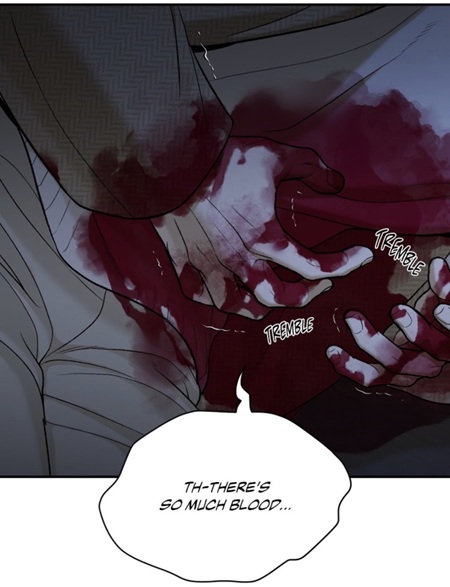 (chapter 98) It reveals that the “Official Narrative” of the director’s expulsion was a lie of containment. The institution did not heal itself; it simply exported its violence to a darker room, and in Chapter 98, that violence finally found its way back into the light of the hallway.
In this sense, the knife does not merely expose the criminal underworld; it reflects back onto the medical system that failed to interrupt it. What was once treated as an isolated scandal now reappears as part of a broader continuity, revealing that the boundary between protection and exploitation was never as stable as it seemed.
In this light, the stabbing no longer appears as a singular escalation, but as the terminal expression of a sequence that has progressively stripped away resistance: (chapter 11) from physical intimidation to spatial intrusion, from coercion to attempted violation, and finally to the threshold of death. The act does not introduce violence—it renders its continuity undeniable What is brought into view is not merely injury, but the continuity of a system that persists precisely because its earlier forms were never fully confronted.
From Accident to Structure: The Protective Fiction
It is precisely this legibility that Kim Dan cannot sustain. Kim Dan’s use of the word “accident” 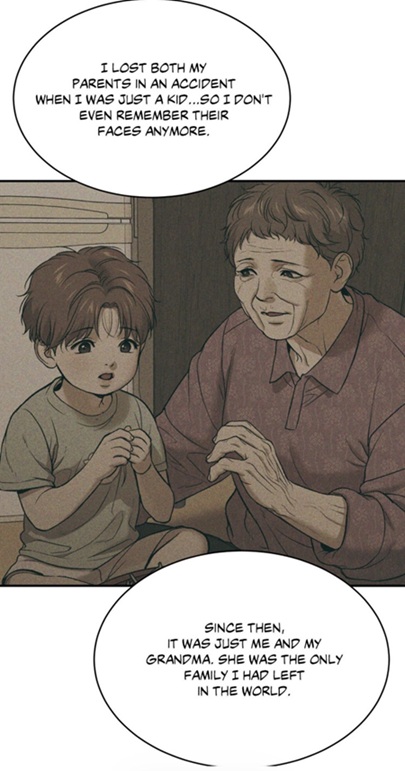 (chapter 94), is not a neutral description—it is a mode of interpretation. It designates his parents’ death as an event without structure, a rupture that cannot be traced back to conditions or causes. In doing so, it preserves the image of a past that appeared stable: a childhood not yet governed by coercion, obligation, or threat.
Yet this framing stands in direct tension with the reality that organizes his present. What appears as accidental loss is followed by a life structured entirely by debt 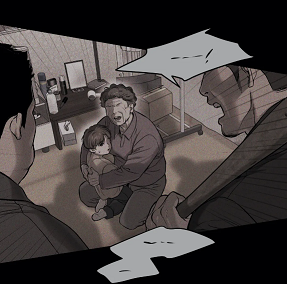 (chapter 5) —financial, social, and existential. This transition is not simply temporal, but conceptual. Where accident suggests contingency, debt imposes necessity. One denies causality; the other enforces it.
The insistence on “accident” therefore functions as a protective displacement. It isolates the past as an irreducible event, preventing it from being connected to the conditions that now govern his life. By maintaining this separation, Kim Dan preserves the possibility that what happened to him was random—rather than the first manifestation of a structure that has never ceased to operate.
In this sense, the language of accident functions as a protective fiction. It enables survival by dissolving causality into randomness, allowing him to remain within a predatory environment without confronting the forces that govern it. Yet this strategy carries a decisive cost: what cannot be traced cannot be resisted. By accepting accident, he relinquishes the possibility of explanation.
Sleep as Structural Recognition
Kim Dan’s unconscious state 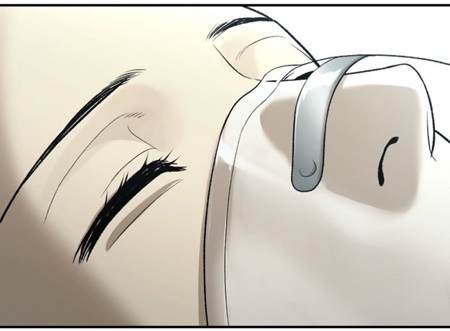 (chapter 98) cannot be reduced to a purely medical condition. It introduces a different mode of perception—one no longer governed by the interpretive framework that structures his waking life. Sleep does not simply heal; it suspends the language of accident.
Within this suspension, a different form of memory becomes possible. The past does not return as isolated images, but as connections—links between events that had previously appeared unrelated. To remember under these conditions is not to recover identity, but to recognize structure.
Sleep, therefore, does not erase the curse. It creates the conditions under which it can finally be understood.
Debt as the Primordial Curse
It is here that the parallel with Sleeping Beauty reaches its full force. In Perrault’s version, the curse is not accidental, but the consequence of an earlier exclusion—a structural imbalance that demands resolution. The spindle does not create the disaster; it enacts it.
Within Jinx, the knife occupies the same position. It does not originate violence—it marks the point at which concealment fails. The decisive question is not who wields the blade, but what conditions make the strike inevitable.
Those conditions are structured by debt. I don’t think, it is a coincidence that the deal between the champion and his fated partner ends, when he regains the title. 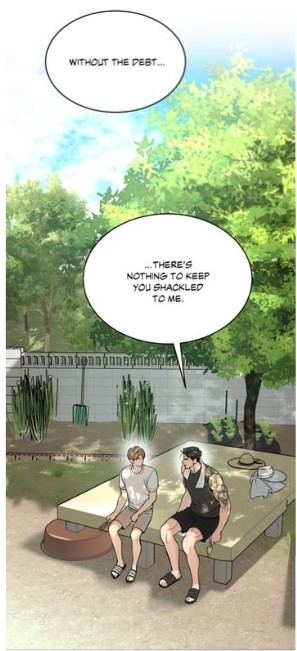 (chapter 77)
From childhood, Kim Dan’s life has been organized around repayment—financial, emotional, and existential. Loan sharks, inherited obligations, and the constant threat directed at his grandmother reveal a trajectory shaped long before the present moment. Like the princess, he inherits a burden he did not create. The stabbing is not a rupture in this trajectory—it is its culmination.
His blood is not spilled by chance (chapter 98), but by a necessity that has been building all along—a form of inevitability that functions as his own Ananke.
The symbolism of the spindle introduces an additional layer that complicates the logic of violence. In its original context, the spindle is not merely an instrument of harm; it belongs to a domain associated with care, intimacy, and transmission. It is embedded within a space of protection—yet it is precisely there that the curse is activated.
A similar ambiguity emerges in Kim Dan’s final gesture before losing consciousness (chapter 98). His movement is not defensive, but relational. He reaches out, touches, and speaks—not to preserve himself, but to secure the other. The “promise” he articulates does not interrupt the structure of violence; it reproduces it in another form.
What appears as an expression of love is simultaneously an act of transfer. The burden does not disappear—it shifts. In this moment, protection takes the form of self-erasure, and affection becomes indistinguishable from obligation. In my eyes, his attitude must be similar to the mysterious phone call:  (chapter 19)
This is why the transition into unconsciousness acquires a particular significance. If the waking world is governed by the language of accident and denial, then this gesture marks the threshold at which another form of memory becomes possible. What is encountered in “sleep” is not simply the past as image, but the conditions under which such gestures became necessary.
To “meet the maker”, (chapter 17) in this sense, is not just to encounter an origin in the form of a person, but also to confront the structure that binds love, sacrifice, and inevitability together. In this world, the past does not recede; it persists as the ground upon which every action unfolds.
The tragedy is not that the spindle was found, but that in a system structured by inherited debt, every path was already converging toward the hallway—the point at which the structure demands its due. And yet, for the first time, this necessity is interrupted. The curse does not fall; it unfolds. But in the unfolding, it becomes visible—and therefore resistible.
Conclusion — The Unfinished Structure
Is this repetition, Kim Dan becoming a victim of a crime, a failure of imagination… or a structure?
What emerges, then, is not the resolution of a mystery, but the exposure of a structure. The violence that culminates in the hallway does not belong to a single act, a single perpetrator, or even a single domain. It reveals a continuity—one that binds the underground, the institution, and the intimate sphere into a single, operative logic.
And yet, this exposure remains incomplete. (chapter 98)
If the knife renders the structure visible, it does not explain why it continues to be sustained by those who inhabit it. The question therefore shifts once more—not toward the origin of violence, but toward its endurance. How is it that individuals who are neither blind nor malicious continue to reproduce a system that harms them and others?
It is here that the figures left at the margins—Shin Okja, Park Namwook, Hwang Byungchul, the Entertainment agency with Choi Heesung, the members of Team Black —return with renewed significance. They do not wield the knife, nor do they stand at its receiving end. (chapter 98) And yet, without them, the structure would not hold.
The final question is therefore no longer what produces violence, but what allows it to remain unrecognized, reinterpreted, or accepted—even by those who suffer from it.
If the curse has begun to reveal itself, then its true persistence may lie not in its origin, but in the ways it is continually lived, justified, and passed on. The curse persists not because it is inescapable, but because its victims have been taught to read it as fate—to mistake debt or guilt for destiny
Feel free to comment. If you have any suggestion for topics or Manhwa, feel free to ask. If you enjoyed reading it, retweet it or push the button like. My Reddit-Instagram-Twitter-Tumblr account is: @bebebisous33. Thanks for reading and for the support, particularly, I would like to thank all the new followers and people recommending my blog.
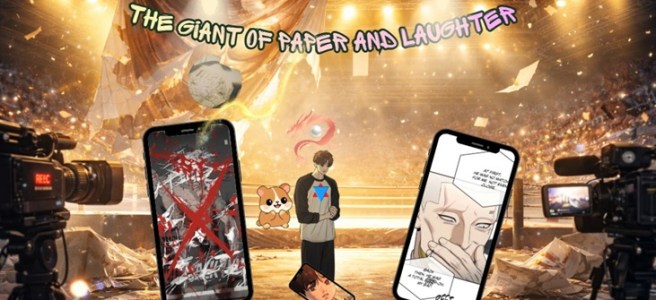
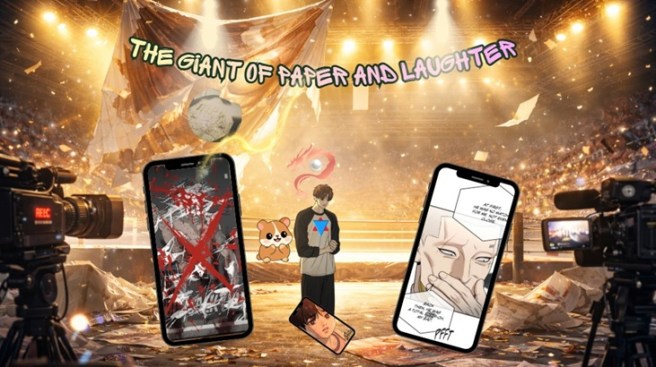
 (chapter 1) A towering figure, a champion, a name that carries weight across arenas and screens. Someone whose image is large enough to be printed, displayed, and recognized at a glance. And yet, that same image can be torn.
 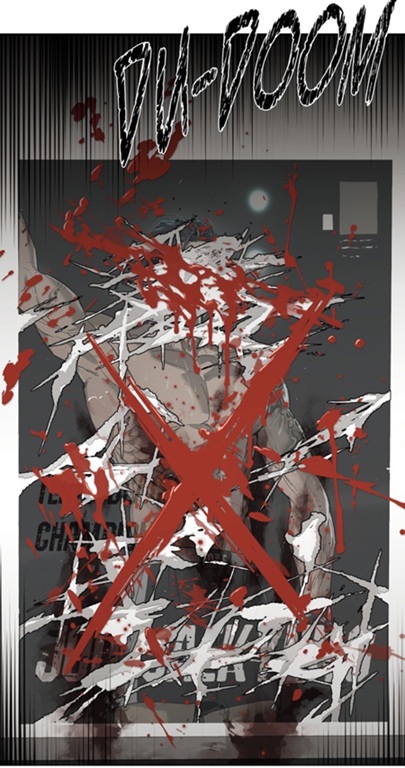 (chapter 96) Its surface scratched, its authority weakened. What was meant to represent strength suddenly appears fragile, almost replaceable. Around it, nothing changes immediately. The world continues, the match approaches, the voices keep speaking.
 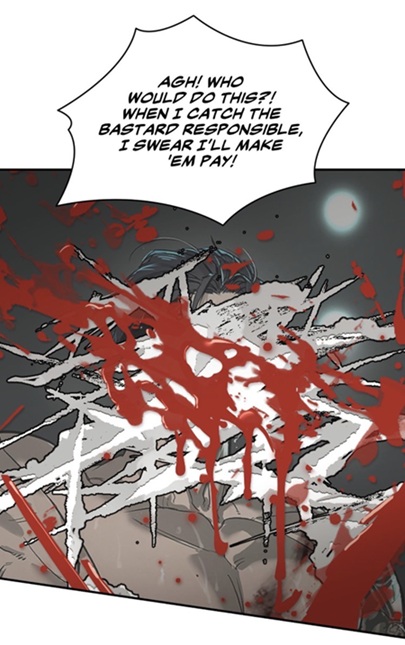 (chapter 96) But something has shifted. The image no longer holds in the same way.
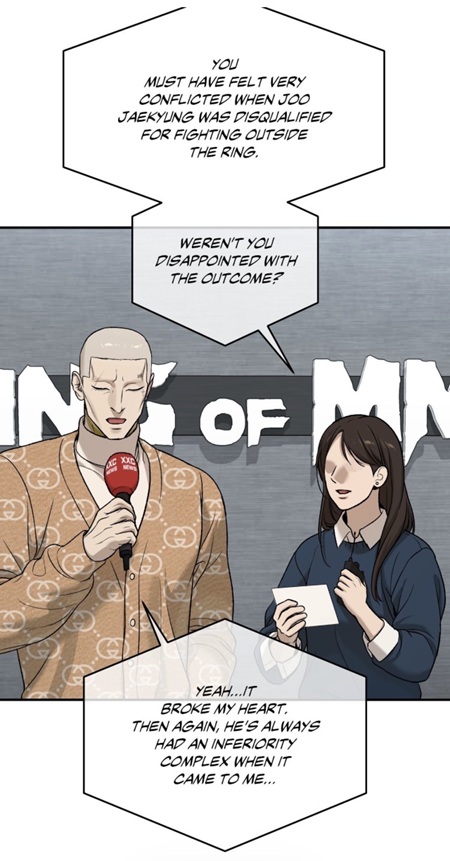 (chapter 96) Not physical, but verbal. A voice begins to recount a past—selectively, confidently, as if it had always been clear.
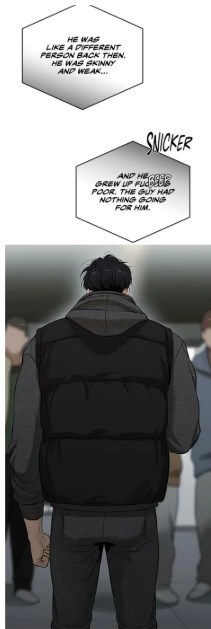 (chapter 96) Details are rearranged, others omitted. What emerges is not a lie, nor entirely the truth, but something in between: a version that is easy to follow, easy to accept, and difficult to challenge. And with it, the figure at the center begins to change.
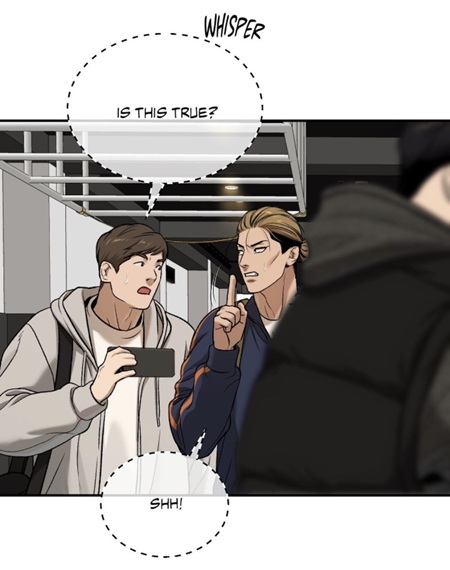 (chapter 96)
  (chapter 47) He was introduced as the “underdog,” the one rising unexpectedly, the figure whose ascent could be celebrated. The framing was simple, effective, and, to some extent, transparent. It invited attention, but it also raised suspicion.
 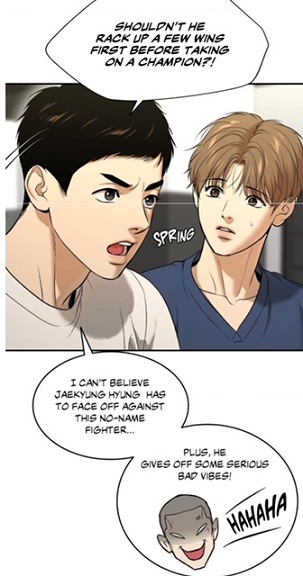 (chapter 47), suggesting that what appeared as spontaneous recognition might in fact be influenced, if not orchestrated. The idea that media coverage could be shaped
  (chapter 47) The system was not yet fully opaque. It could still be glimpsed—but only indirectly, through inconsistencies that were sensed rather than fully articulated.
 (90 days), reversible, even later framed as recovery
  (chapter 57) — is now recoded as something definitive.
  (chapter 69) A disqualification operates differently.
  (chapter 69) The panel from chapter 47
 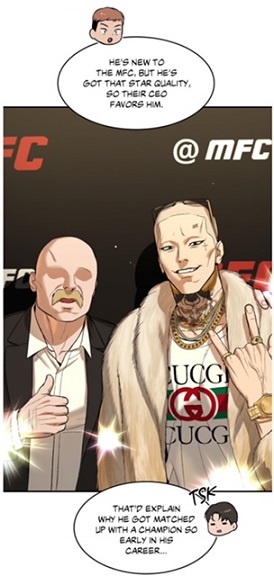 (chapter 47), makes this structure perceptible. The presence of executive figures, the proximity between management and select fighters, and the emphasis on “star quality” reveal a structure in which recognition is not solely determined by performance.
  (chapter 51), the irregularities surrounding the match, the incident with the switched spray—contains elements that could be reexamined. Joo Jaekyung’s public challenge in Paris reactivates these tensions. It signals not only resistance, but the possibility of escalation. By refusing to accept the existing narrative, he reopens questions that the system had already moved to close.
  (chapter 52), notably among the members of King of MMA. This persistence is not merely rhetorical; it reflects a deeper uncertainty regarding the legitimacy of his rise. Within the fighters’ own environment, the outcome of the match is not experienced as a clear victory. Baek Junmin himself acknowledges that he was “this close to winning,”
 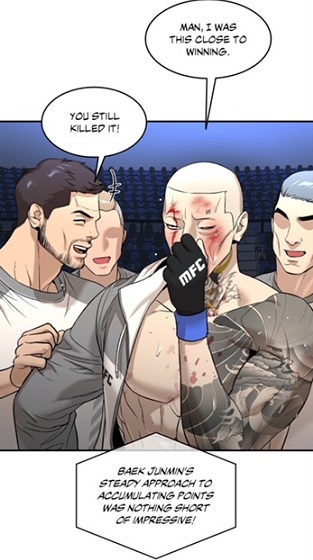 (chapter 51) revealing that the tie has not been integrated as a legitimate conclusion. It persists instead as a wound: a result experienced not as confirmation, but as deprivation. In this sense, his current aggression does not only seek promotion; it seeks retrospective compensation.
 (chapter 51) So he had not bet on the Shotgun’s victory.
  (chapter 75) The latter’s rise was marked by a visible title, publicly attached to his name and career trajectory. Baek Junmin, by contrast, occupies the position of champion without passing through the same symbolic sequence of recognition. All this time, he was working in the shadow, in the illegal underground fighting. What he inherits institutionally, he does not fully possess symbolically. He may occupy the position of champion, but the conditions of his ascent prevent that position from being fully recognized as legitimate. The label that once signified ascent is never replaced by one that would confirm his dominance. At the same time, his stage name The Shotgun
  (chapter 49) fails to establish itself. Neither his peers nor the media adopt it. Instead, he is consistently referred to by his real name: Baek Junmin.
 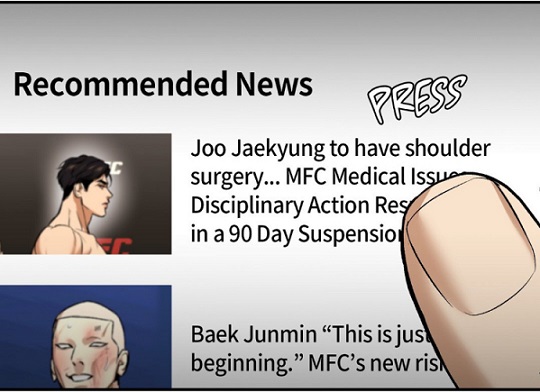 (chapter 52) Victory must be seen, fixed, and circulated in order to become real. In this respect, Baek Junmin’s position reveals a fundamental volability. His so-called victory does not produce a defining image. The match that secured his title was neither clearly decisive nor widely broadcast, leaving no shared visual reference through which his dominance could be established.
 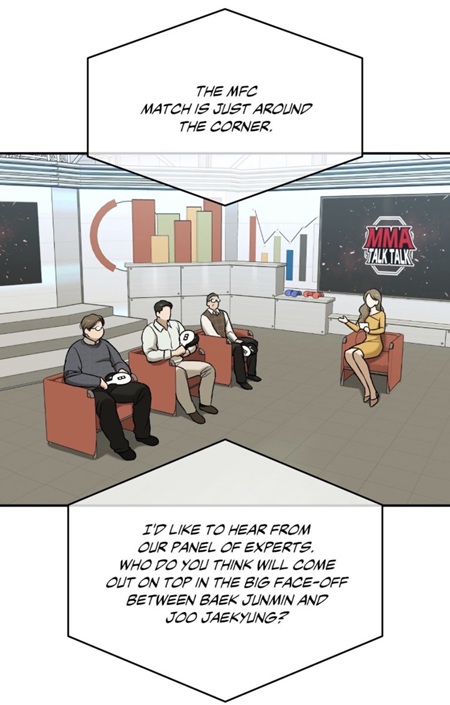 (chapter 95) It becomes more visible, if you contrast this show with the one about the celebrity in episode 52:
  (chapter 54) Instead, it continues to rely on the image of Joo Jaekyung. Even in defeat, the latter remains visually central: his body, his injuries, his presence provide the material through which the narrative is articulated.
 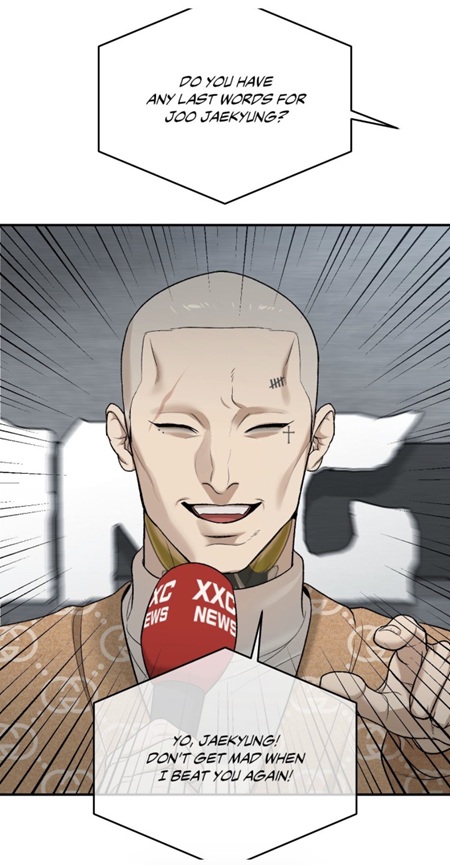 (chapter 96) The MFC may have declared him champion, yet this recognition remains institutional; it does not translate into collective acknowledgment among the masses. Hence he is never seen signing autographs.
 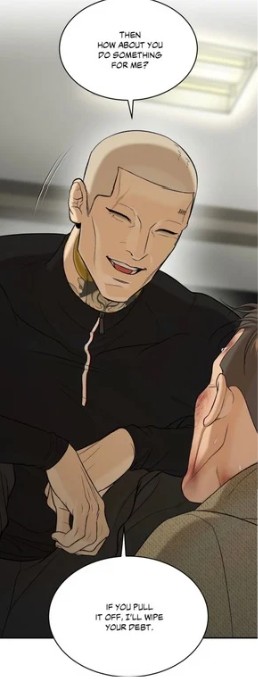 (chapter 93) He always appears sitting in the office separated from the other members. Hence, visibility must be manufactured for him to be recognized as a champion.
  (chapter 48)
 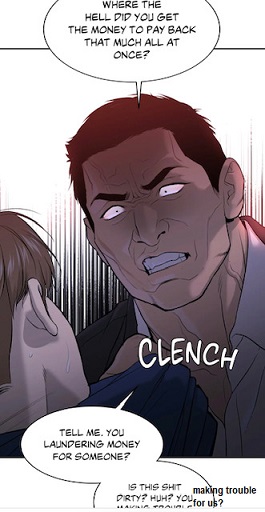 (chapter 11) It is a shadow that cannot be struck with a stone. However, this configuration reveals a fundamental weakness: the Giant is not just made of paper; it is rotting from within. If the foundation of the MFC is nourished by money laundering
 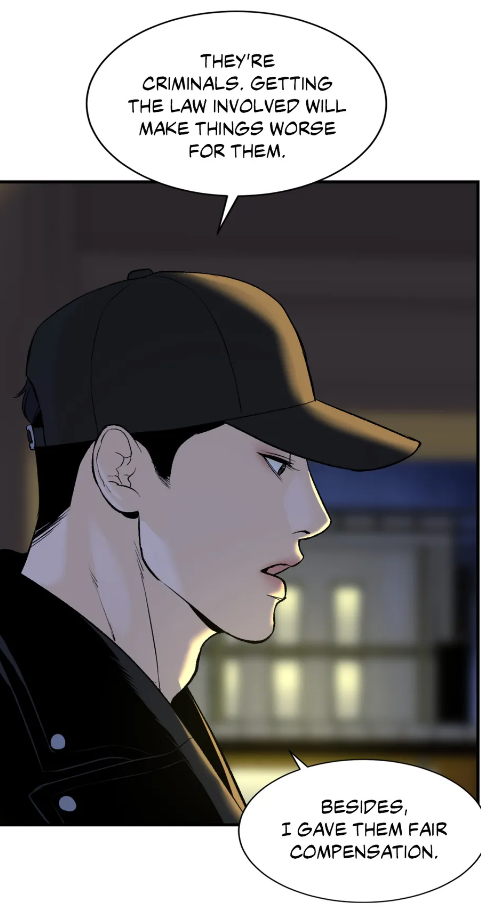 (chapter 18), a testimony, a leak of financial records, or a documented truth becomes the only weapon capable of tearing through the Giant of Paper. To destroy the narrative, one does not fight the image; one strikes the ledger.
 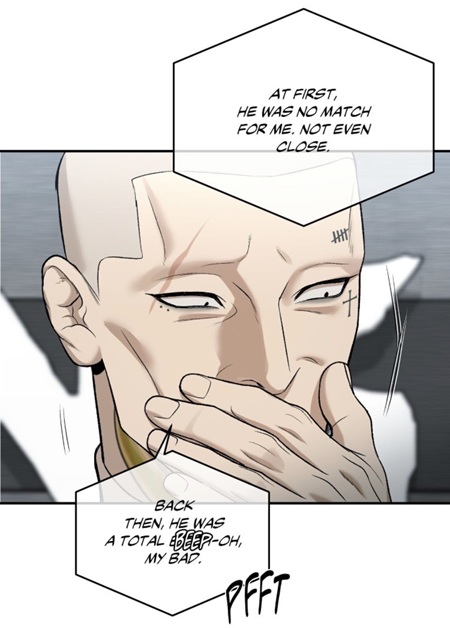 (chapter 96), between laughter and measured statements
 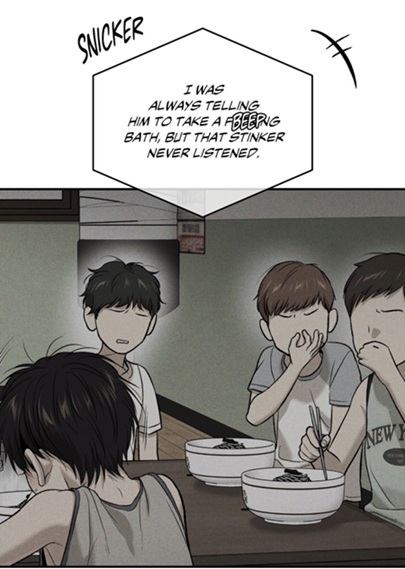 (chapter 96) — these elements construct an image of dominance that appears almost effortless.
 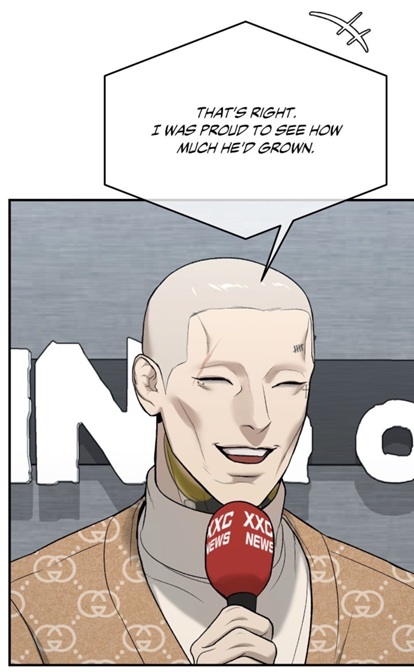 (chapter 96) and his true self. Whenever he is forced into restraint—when he must deliver the scripted, empathetic lie—his eyes are firmly shut
 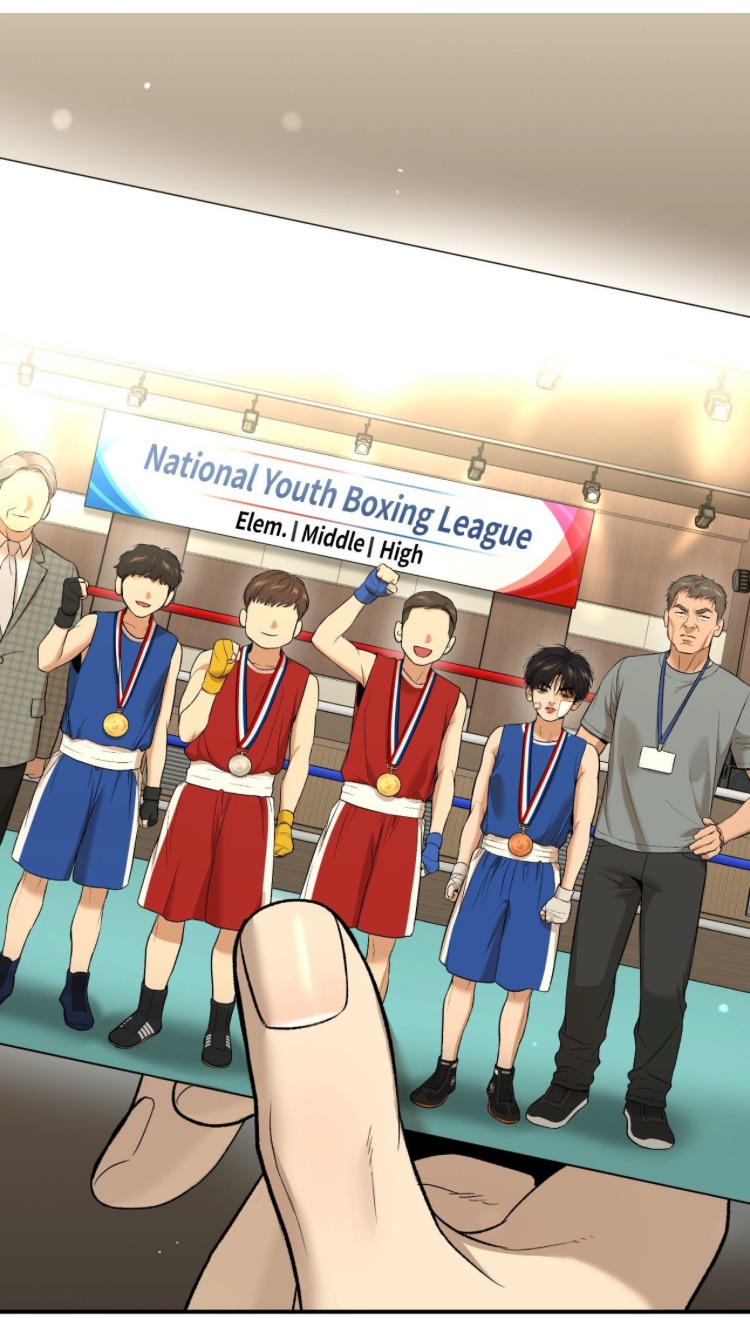 (chapter 71) The photograph of the young fighter with his coach introduces a contradiction that the interview cannot fully absorb. It does not merely suggest discipline or continuity; it attests to a process that precedes and exceeds the narrative imposed upon it. The trajectory it reveals is not incidental, nor dependent on a single relationship, but anchored in duration, training, and transmission.
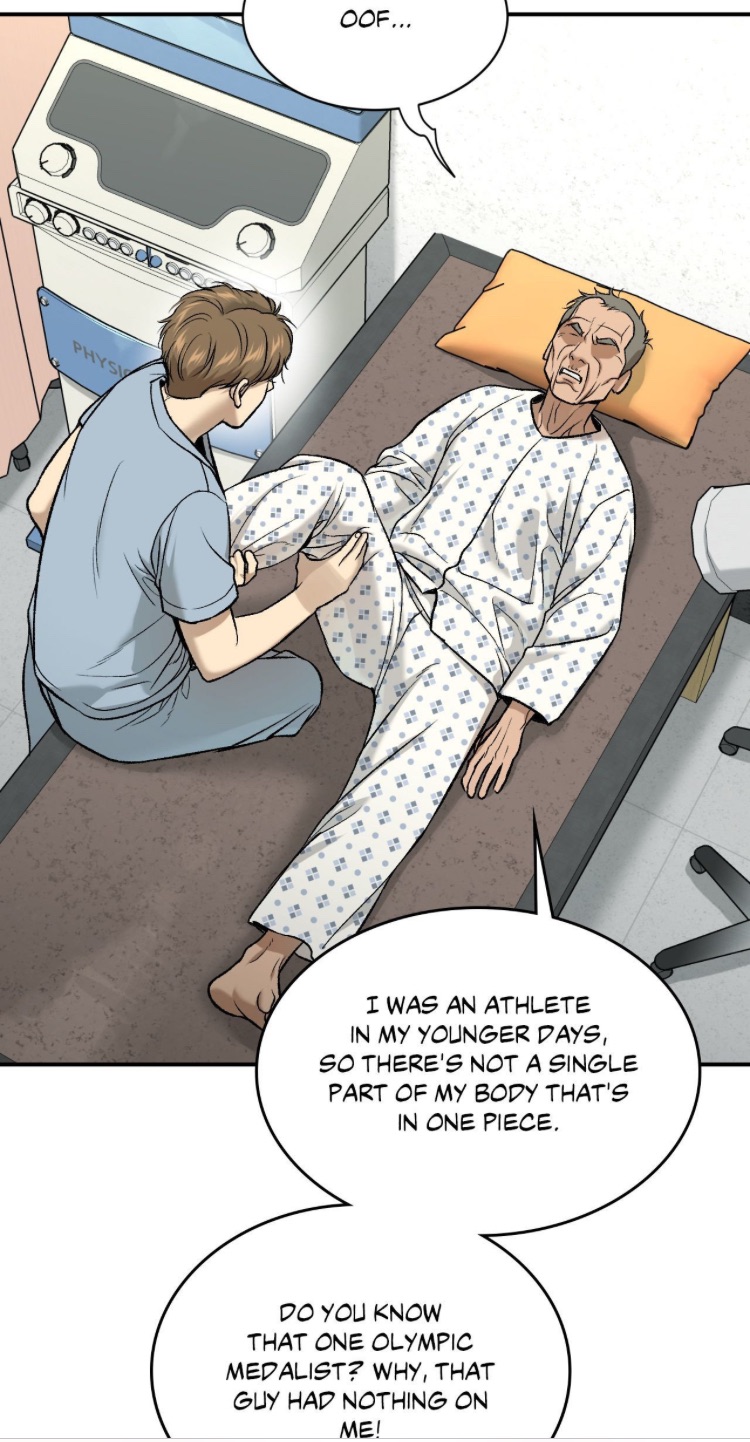 (chapter 71) , the tournament, the documented progression—these elements introduce points of verification that resist the logic of selective reconstruction. The past is not entirely available for reinterpretation; parts of it remain anchored in events, relations, and figures that can contradict the imposed version. On the other hand, the Champion in Paper has only his recollection as evidence which is based on the narration of others.
 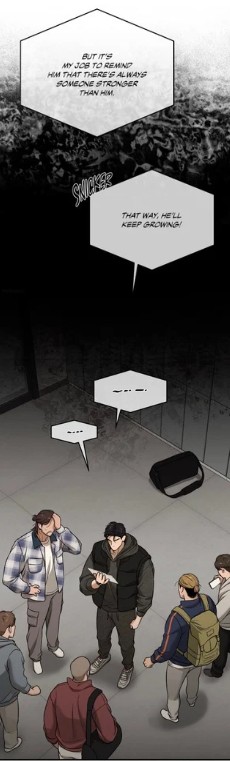 (chapter 96); it is used to anchor the subject in a diminished origin that can be continuously recalled and reactivated.
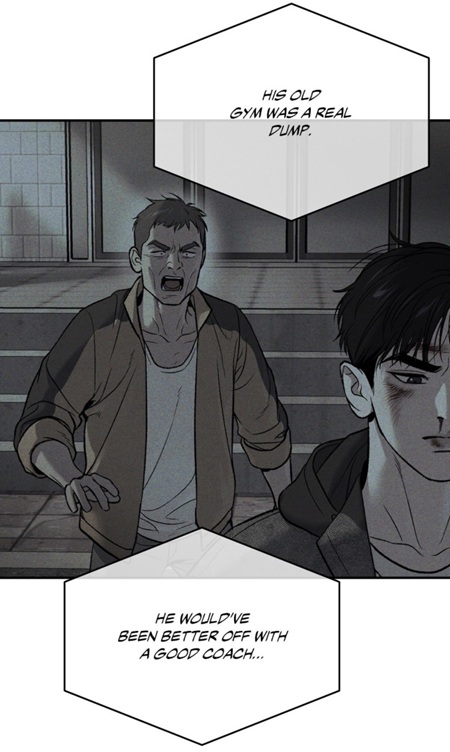 (chapter 96) —by reducing the champion’s formation to failure, neglect, or insignificance—it forces a confrontation the coach had previously avoided.
 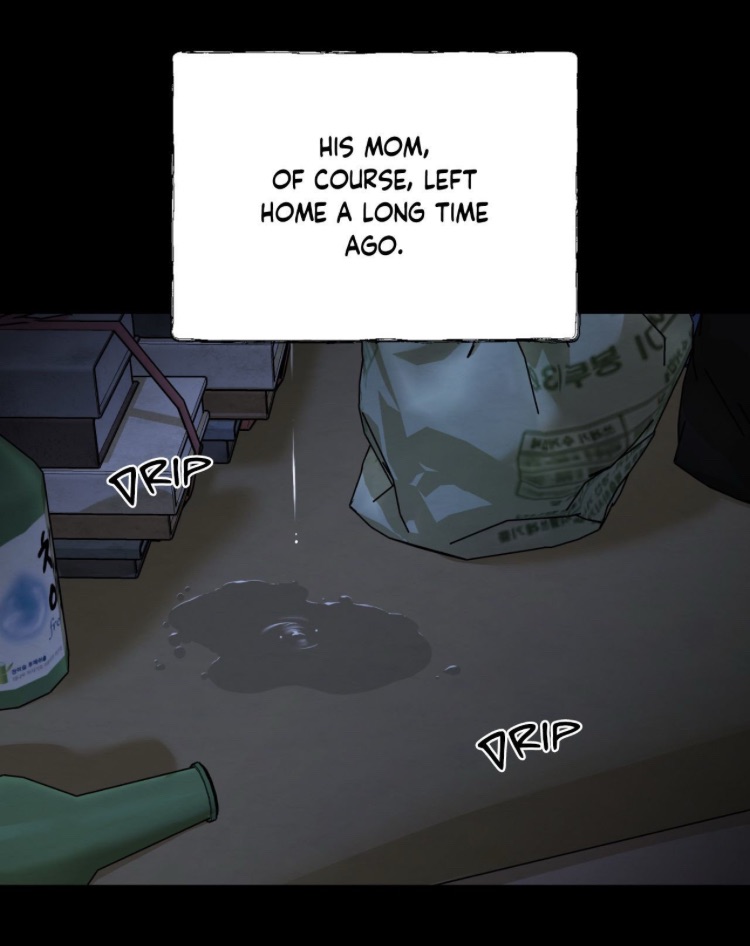 (chapter 72), yes, but she had reasons. The father was violent, the household unstable, and escape could therefore be understood as a form of necessity. In this interpretation, the mother’s departure remained painful, but intelligible. What he failed to ask, however, was the decisive question: if she left to save herself, why did she leave the child behind? Why was the boy not taken with her? For him, absence did not mean abandonment. He still had a positive vision of the mother: caring and selfless.
  (chapter 74) The interview brutalizes this unresolved contradiction by collapsing it into a simpler formula:
 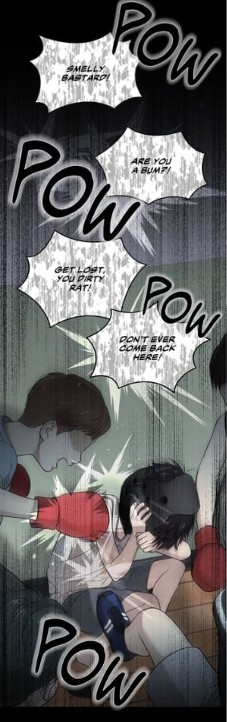 (chapter 72) and humiliation directed at the young fighter. But he interpreted it as an isolated incident, something that could be resolved by intervention, discipline, or the simple restoration of order.
  (chapter 72) In doing so, he mistook a visible moment for the whole of the problem. He overlooked the impact on the little boy’s soul. What Baek Junmin reveals—despite his malicious intentions—is that
 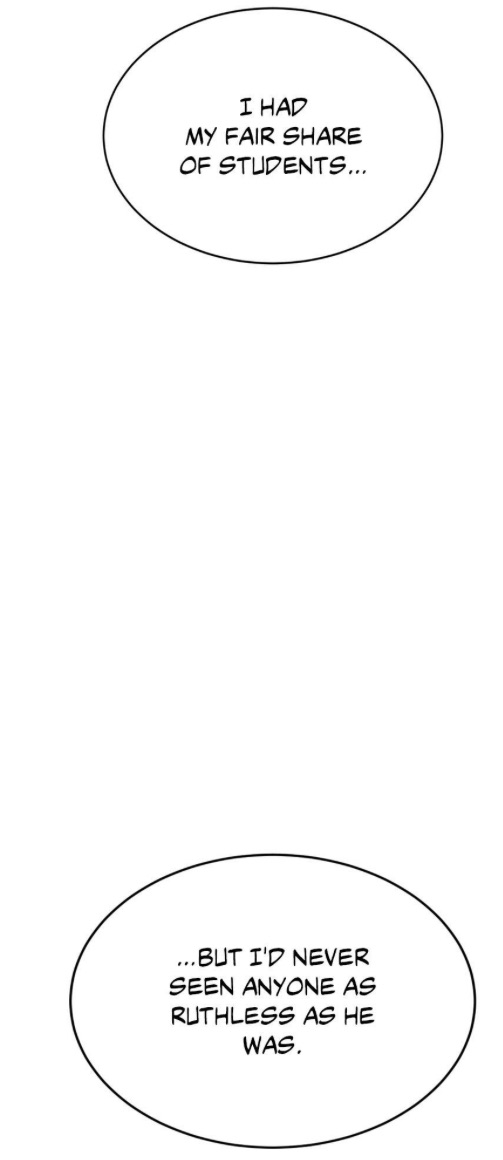 (chapter 71), as if it were an exceptional trait now begins to look like the product of a much longer history of humiliation, abandonment, and misrecognition.
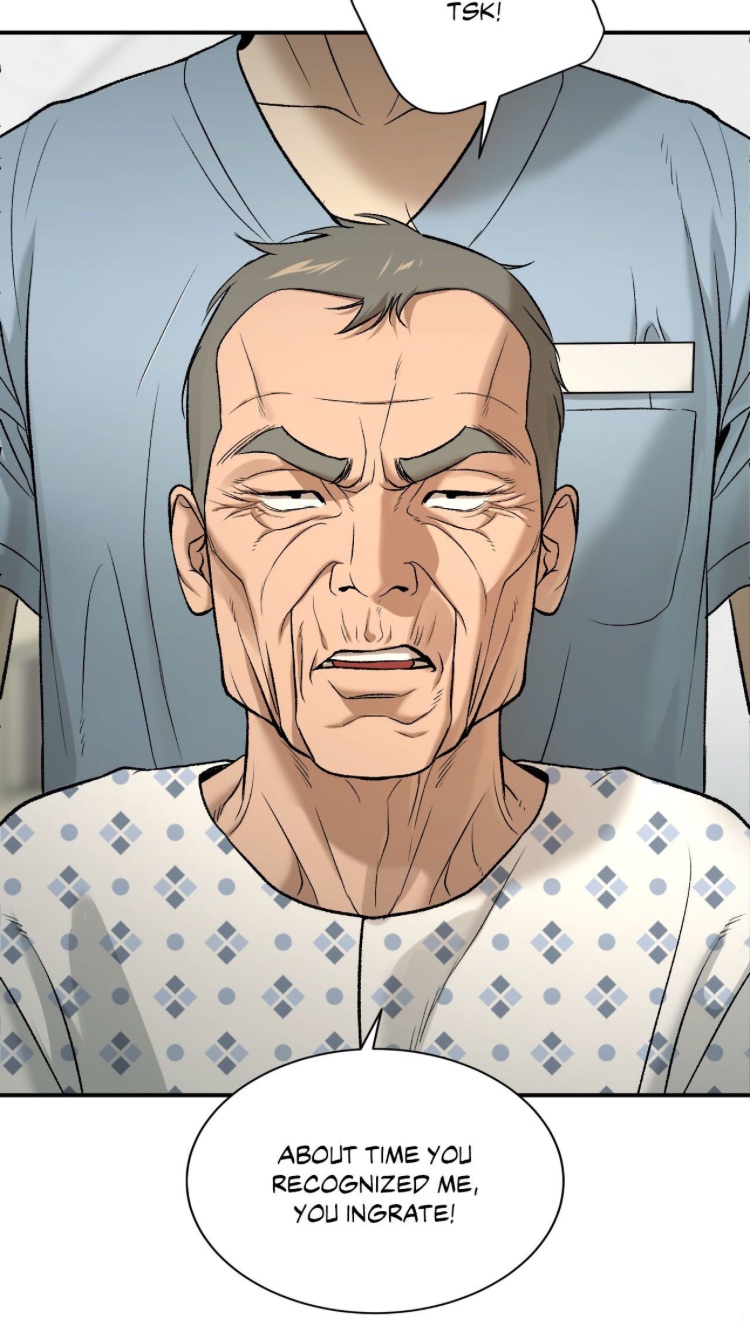 (chapter 71) Not once. Despite the years of training, despite the shared history, despite the role he himself believed to have played
  (chapter 74), the champion had cut all contact without explanation. This absence had remained unresolved, almost suspended—something to be accepted, but not truly understood. Hence he became resentful.
 (chapter 65) The simplified narrative offered by Baek Junmin aligns too easily with her own history of hardship. But this immediacy has a cost. By recognizing the pain, she risks accepting the distorted framework through which it is presented.
 (chapter 65), even if it was never enough. Her role was defined by sacrifice, by the necessity to protect and sustain the “child” she still perceives in him—someone to be fed, guided, and contained rather than allowed to stand fully on his own.
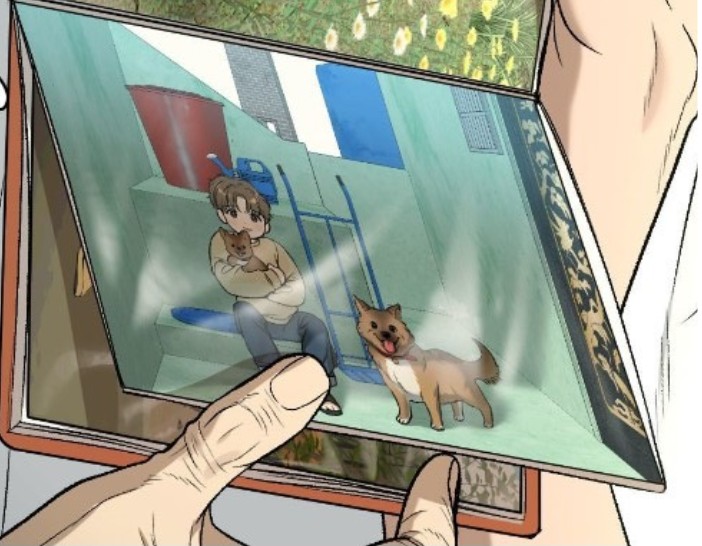 (chapter 94) They attest to the existence of parents, of a prior life, of relationships that were not entirely erased but quietly set aside.
 (chapter 7)
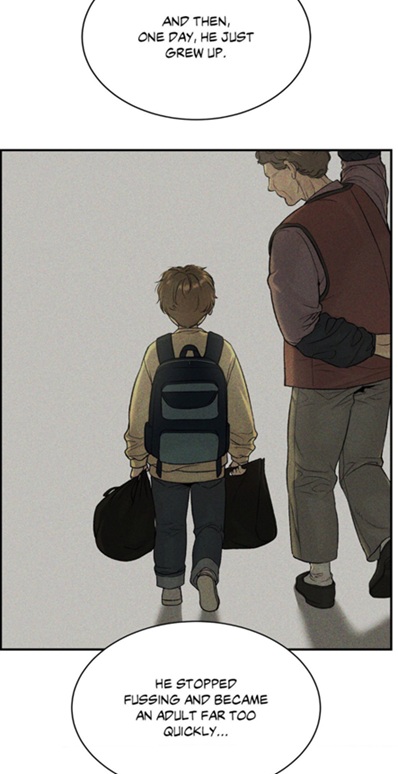 (chapter 65) The debt is not mentioned; it is simply endured. In doing so, its cause is displaced, if not entirely obscured.
 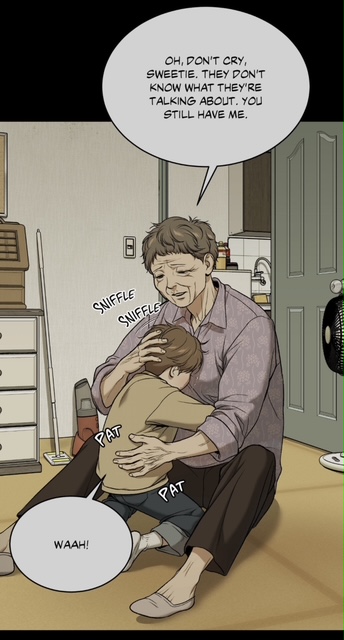 (chapter 57) It was not only a gesture of comfort; it was a conviction. It implied that the absence of others could be compensated by her own care.
 (chapter 57), and where being “different” invited mockery and exclusion. What Shin Okja had perceived as a problem of loneliness was also a problem of exposure and humiliation.
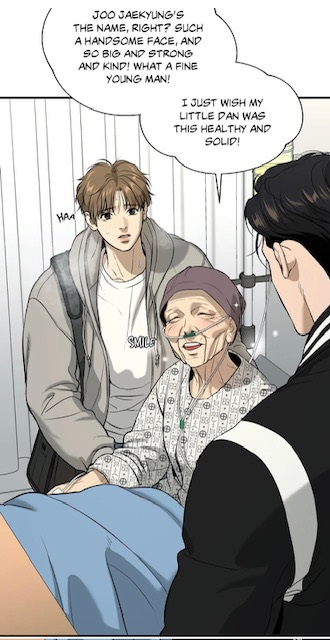 (chapter 21) She perceived him as a finished figure—healthy, solid, and self-sufficient—without questioning the conditions that made such stability possible. Even when she turned toward him with warmth
 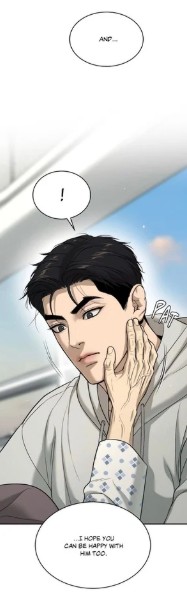 (chapter 94), her perception remained structured by Kim Dan. She acknowledged his place beside her grandson, but not the history that had formed him. She had never asked him any question in the end.
 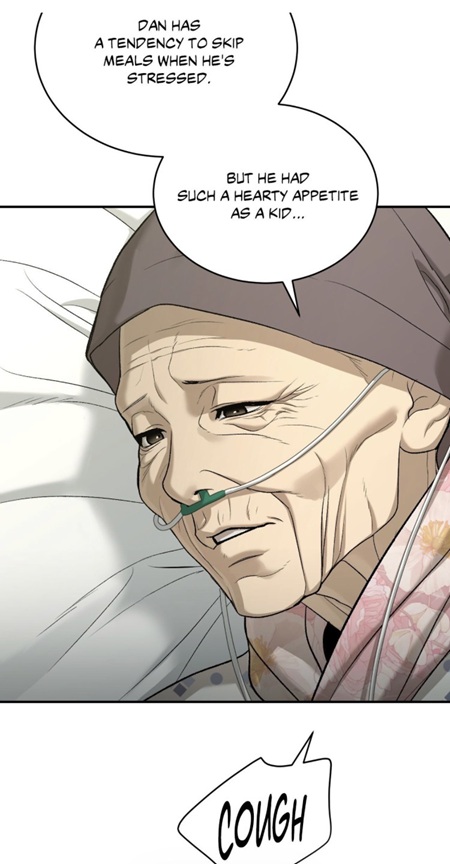 (chapter 94), withdrawing under pressure rather than sustaining himself. While Jaekyung’s strength appears to have been forged under conditions of absence, Kim Dan’s fragility seems to persist within the structure of her presence.
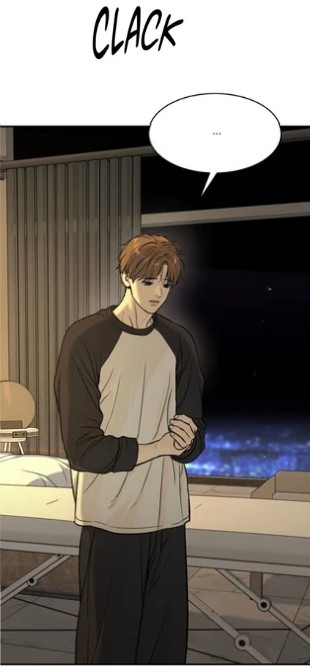 (chapter 96) It marks the collapse of his function. Up to this point, his position remained stable precisely because it was limited. He could stay at Joo Jaekyung’s side
 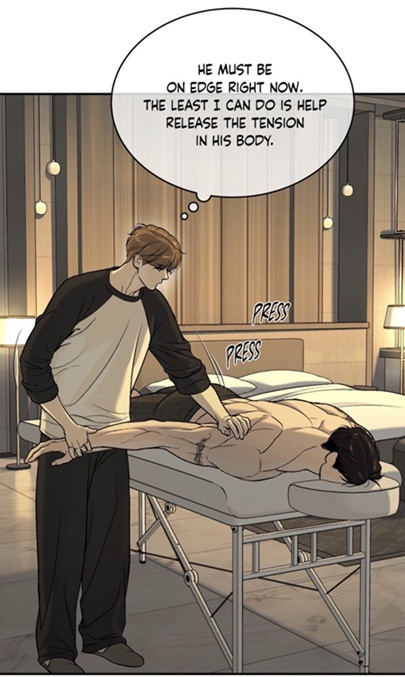 (chapter 96) without confronting what that presence truly meant, because he occupied a role. He was the physical therapist. His gestures, his proximity, his care—all of it could be justified, contained, and, above all, depersonalized.
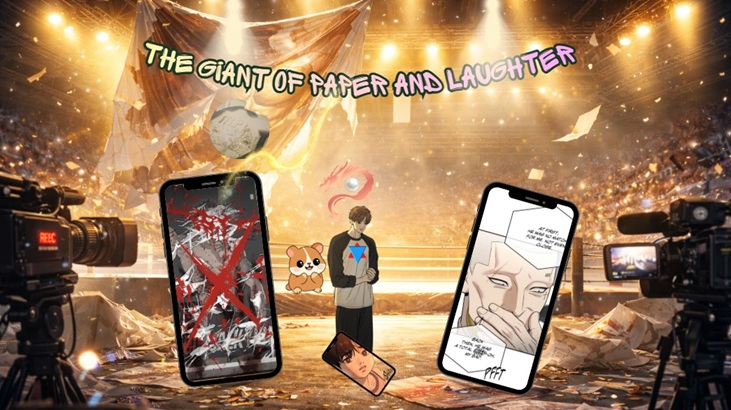 The addition of the star on the therapist’s uniform is more than a “badge of office”; it is a geometric prophecy. It represents the intertwining of two disparate lives—the red triangle of Jaekyung’s force and the blue triangle of Dan’s empathy. When these two triangles overlap, they create a structure (The Star) that is far more stable than the ‘Paper Giant’ of the MFC. This star is naturally a reference to the star of David. But at the same time, I wanted to avoid any reference to religion as such. The star of David is created by 2 triangles intertwined together. And the moment you accept that each main lead represents one triangle, you realize that both can become the star of David, once they become a team and a couple.
 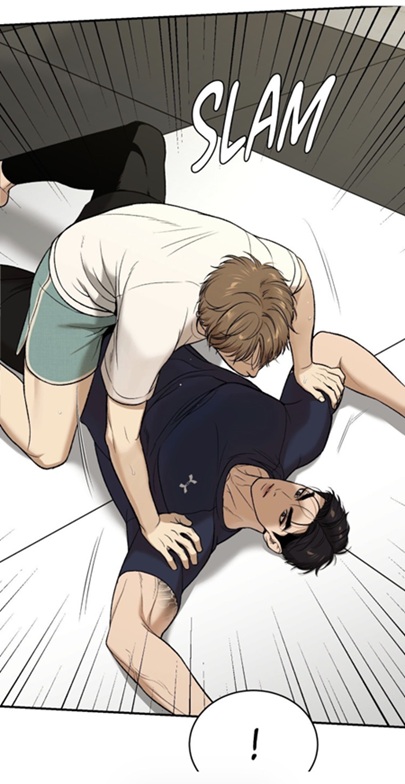 (chapter 88) The “hamster” is not an isolated symbol. It has been shaped in relation to Joo Jaekyung—through proximity, through tension, through a form of attention that is neither hierarchical nor purely functional. If Kim Dan embodies connection, Joo Jaekyung embodies determination and direction.
 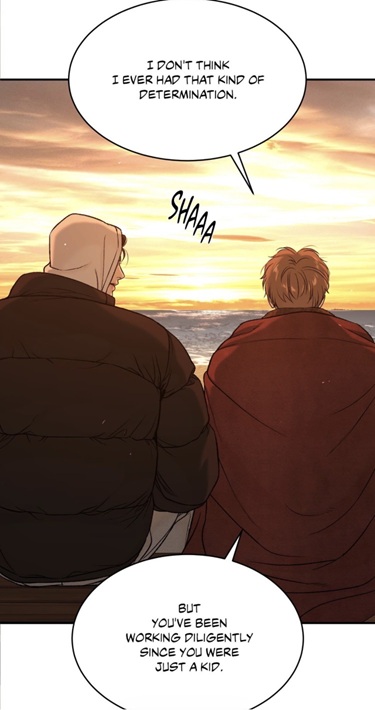 (chapter 94) What emerges between them is not dependency, but a potential alignment. That’s the reason why I believe that contrary to that morning
 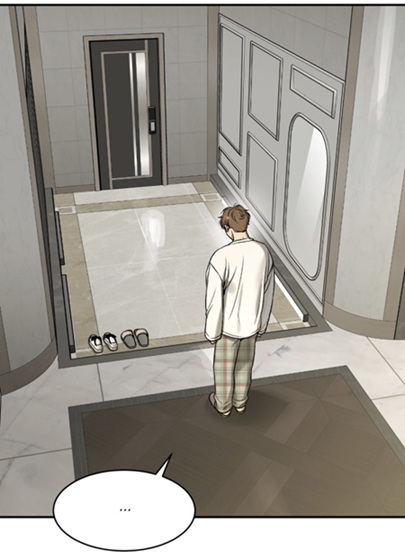 (chapter 96), Kim Dan might decide to follow Joo Jaekyung.
 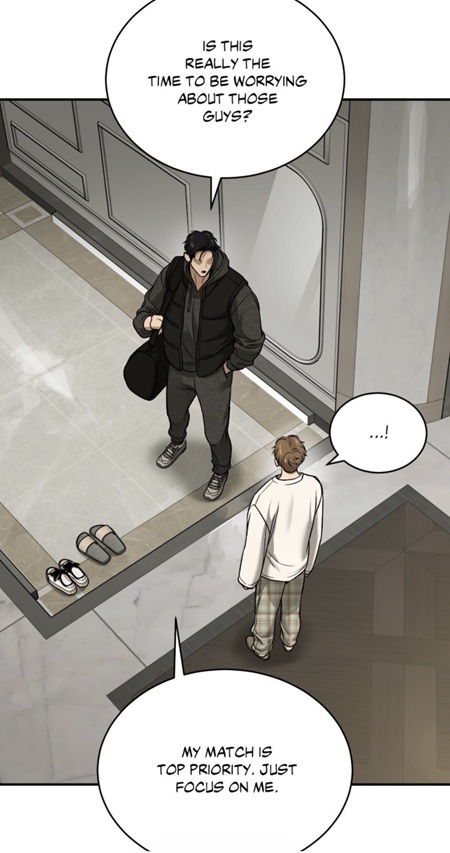 (chapter 96) and as such to be loved, something his mother never did.
 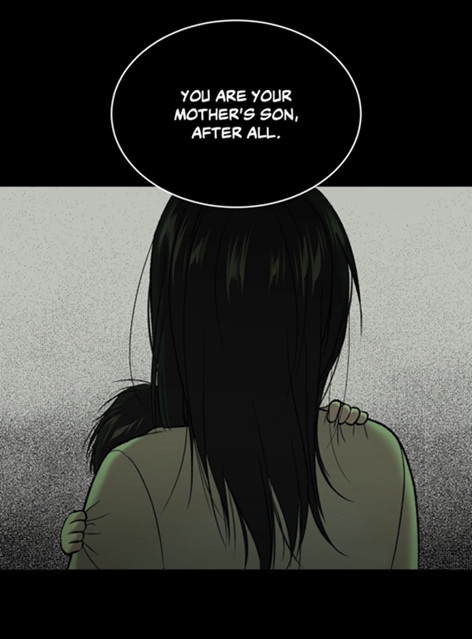 (chapter 73) Even with an injured hand, he can do this. As you can see, I am full of hope.
 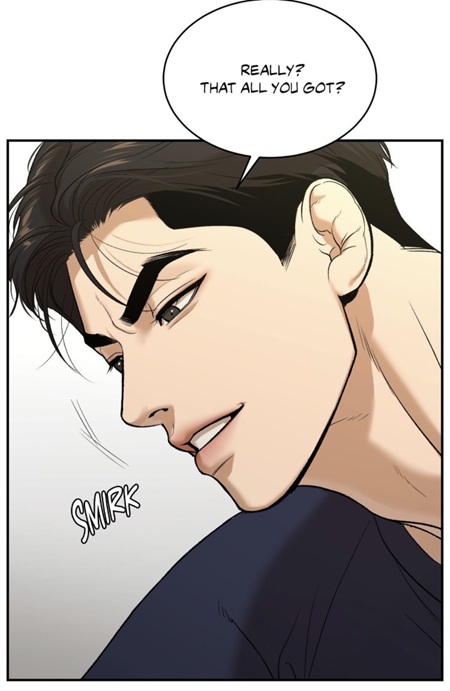 (chapter 88) Without it, action becomes mechanical, external, and ultimately unsustainable. What is done without pleasure cannot reach completion, because it remains detached from the subject who performs it.
 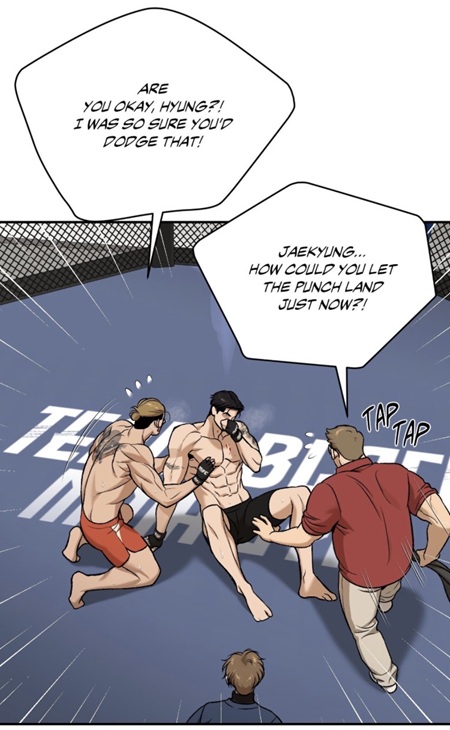 (chapter 95)
 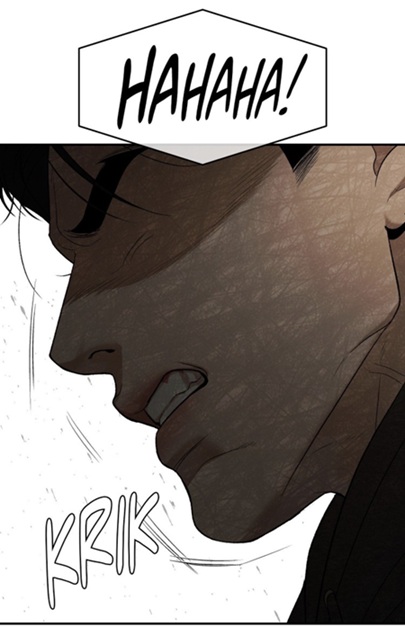 (chapter 96) It is directed outward, against the main lead and others, and depends entirely on their diminishment. It cannot sustain itself. It requires a target. In contrast, Kim Dan is associated with a different form of laughter.
 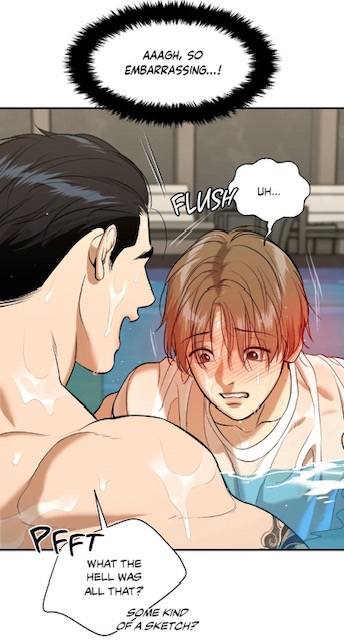 (chapter 27) The hamster—seemingly insignificant—represents companionship, warmth, and a form of joy that does not depend on hierarchy or recognition.
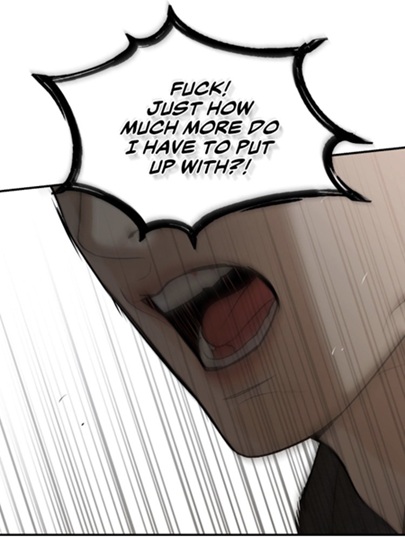 (chapter 96) The athlete voiced his distress, exhaustion and loneliness. The mechanisms that structured the previous movement—manipulation, narrative control, role-based identity—reach their limit. The image is destabilized, the past is rewritten, the system becomes visible.
 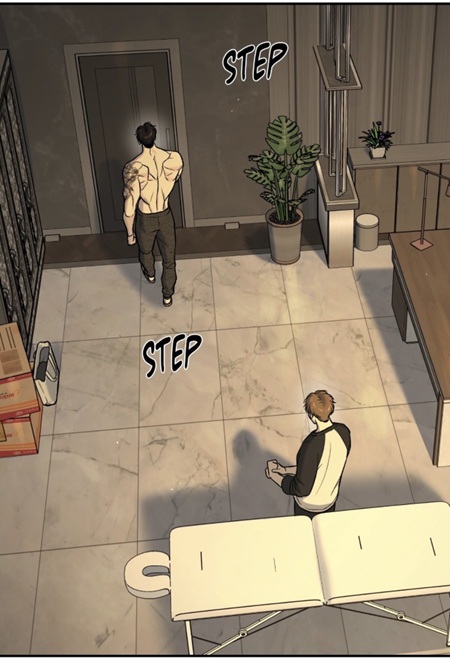 (chapter 96)
 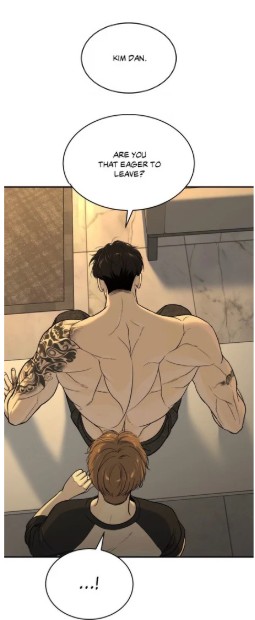 (chapter 96) “I want you to stay!” To obey the word is to remain a servant; to hear the silence behind the word is to become a partner.
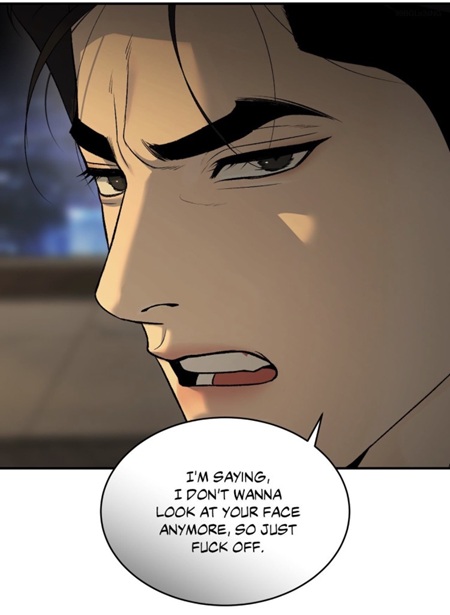 (chapter 96) It’s the consequence of pain, it belongs to the logic of rupture, of protection through distance, of a structure that resolves tension by separation. To obey would be to repeat the past—to accept absence as the only possible form of resolution. To follow the athlete, however, would be something else entirely. Not obedience to his words, but an understanding of what they conceal. Not submission, but a deliberate alignment: an act of commitment. A decision to remain—not because he is told to, but because he chooses to.
 (chapter 30) Let’s not forget that the champion’s “jinx” is linked to the smell, something which Baek Junmin revealed earlier.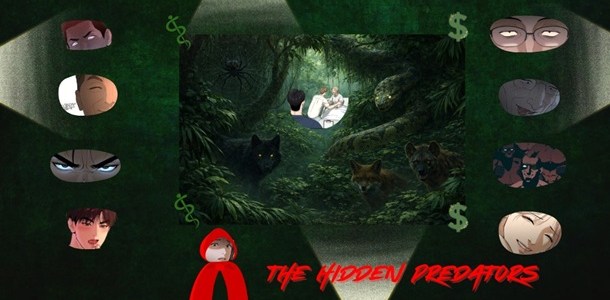
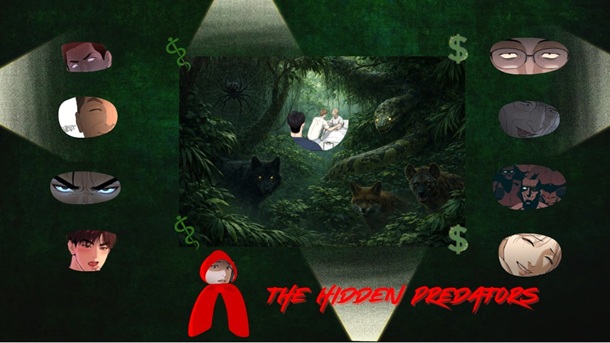
 (chapter 14) Others hide behind systems.
 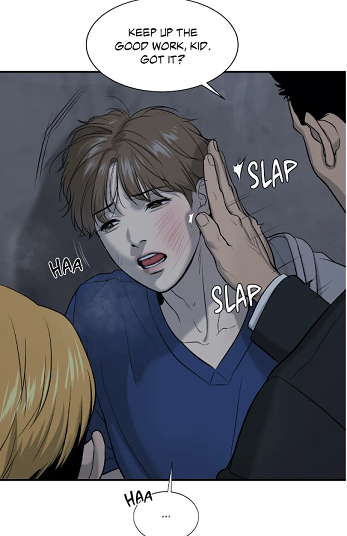 (chapter 11) Others exploit labor, fear, loyalty, or belief. The forest contains them all.
  (chapter 42). When he speaks of Joo Jaekyung, his language is explicit: the champion was a source of milk, a body that could be “milked” for money, favors, and reflected status. In biological terms, this is parasitism rather than hunting — survival not through direct attack, but through prolonged attachment to a stronger host. As long as the host remains productive, the parasite thrives. When the bloodsucker is removed, flow stops, hunger turns first into regret
 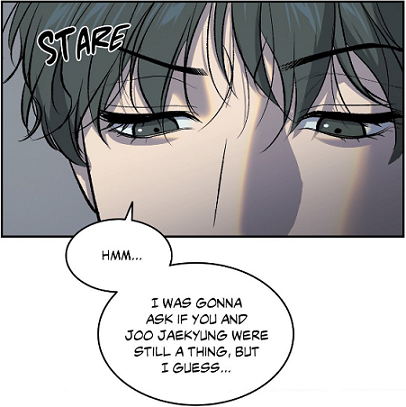 (chapter 42) before resentment.
 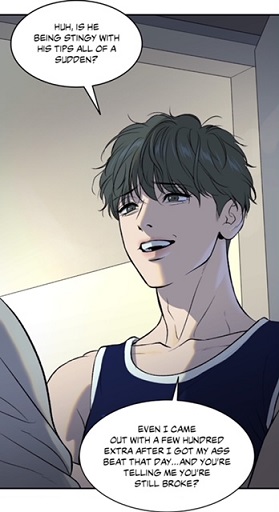 (chapter 42)
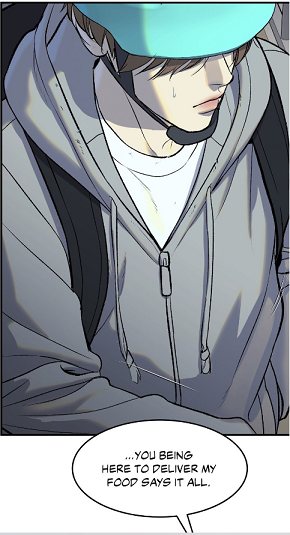 (chapter 42), but why he does so at the precise moment he does.
  (chapter 42) His hostility does not emerge from poverty alone, nor from moral outrage. It is triggered by a rupture in his expectations.
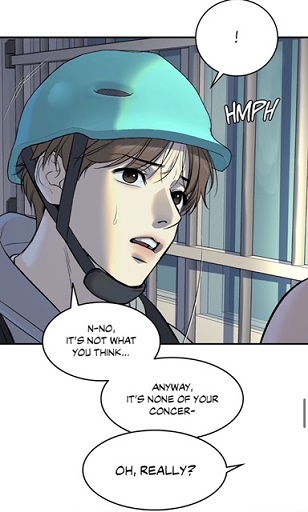 (chapter 42) In that moment, the green-haired man realizes that closeness still exists without visible profit. This is intolerable to him. It contradicts the logic through which he has justified his own past behavior: the belief that proximity to power must be monetized, that relationships exist to be exploited, that affection without gain is either naive or dishonest.
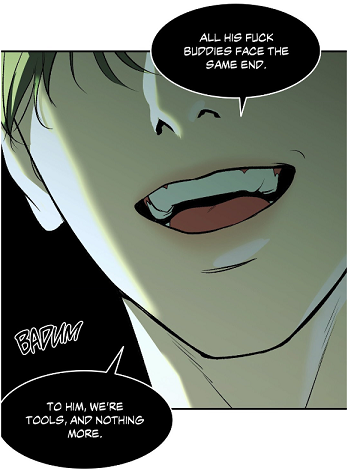 (chapter 42) Something used and discarded. In other words, he reframes Kim Dan’s loyalty as delusion and reasserts predation as the only intelligible model of intimacy.
 (chapter 02) and that the exchange of attention and money implied mutuality. Joo Jaekyung’s refusal shattered that illusion. What Kim Dan represents now is not competition, but refutation: proof that closeness does not require extraction, and that survival does not have to pass through exploitation.
 (chapter 42) The green-haired man refuses to pay for food this, while implying that his roommate is taking advantage of him, as if he would barely contributes. On the surface, the image suggests exploitation: one man living off another’s labor. Yet the scene refuses to clarify who truly benefits. The roommate remains largely invisible, economically opaque, almost spectral. Is he a dependent quietly feeding off the green-haired man’s remaining resources? Or is the green-haired man himself the parasite, overstaying, consuming, and justifying his presence through grievance? The narrative does not resolve this tension — deliberately so. Predation here is not readable at a glance. It hides in everyday arrangements, in domestic negotiations, in the language of fairness and contribution.
 (Chapter 31), the contract is made visible: the manager’s income depends entirely on the star’s uninterrupted productivity. When work stops, pay stops. Yet neither the star nor the agency appears exposed. Heesung himself, who proposed the risky sparring, shows no empathy for his caring manager. He doesn’t feel concerned for this arrangement and makes no attempt to renegotiate it for his manager’s sake. Financial risk is displaced downward, onto the least protected figure. The manager is not the predator here, but a human buffer, absorbing the instability produced by a structure that benefits the star and the Entertainment agency while refusing to insure those who sustain them.
 (chapter 34) or on Saturdays
 (chapter 32), treating the physical therapist’s work and time as indefinitely available. This is not an isolated lapse but a recurring pattern, later reproduced with Potato as well.
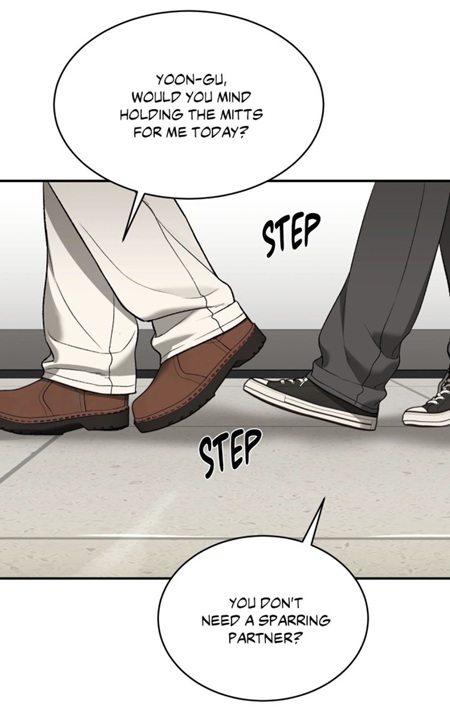 (Chapter 88) In both cases, access replaces consent: labor and care are extracted on polite request, while the cost—fatigue, intrusion, and loss of private time—is borne entirely by the subordinate.
 (chapter 54) Its hallmark is externalization: the institution benefits while the vulnerable party carries the damage. A hospital extracts unpaid endurance and calls it devotion. A league extracts bodily risk and calls it career ambition. An agency extracts loyalty and calls it partnership. Even when no one screams, the asymmetry remains: those above set the terms; those below absorb the consequences.
 (chapter 70) but “Take better care of yourself.” Not “We failed to protect you,” but “You caused inconvenience.” This is the core of economic predation: the harm is real, but the blame is displaced downward so the system remains clean.
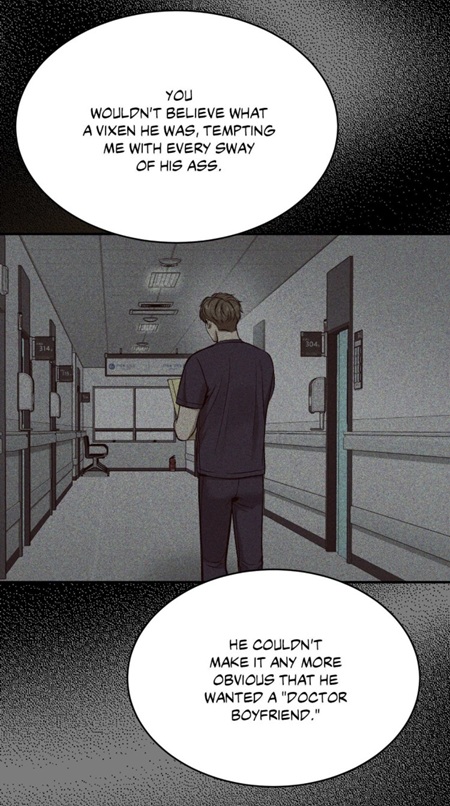 (Chapter 90) A sexual predator targets someone whose circumstances make refusal impossible or costly — socially, economically, professionally, physically, psychologically. The predator does not need to use overt violence to be dangerous; often the strategy is precisely to stay close to the border where the victim can later be blamed: You wanted it. You tempted me. You misled me. You didn’t say no clearly enough. This is why victim-blaming belongs structurally to sexual predation: it is a technique of retroactive absolution. This logic does not remain abstract in Jinx. It finds a concrete site where authority, legitimacy, and bodily access converge.
 (chapter 29) Rival fighters do not need to engineer the champion’s collapse; they only need to anticipate it. What defines them is not ambition alone, but timing.
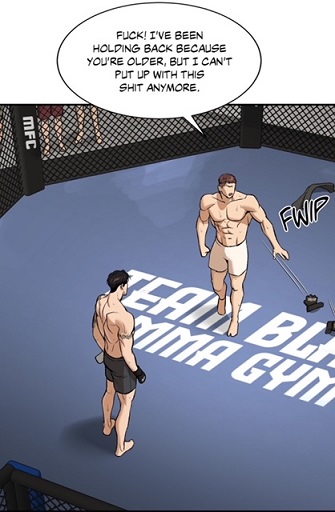 (chapter 46) His words are exposing not restraint, but accusation. The implication is clear: the champion’s body is already failing; respect has become optional. Seonho is not trying to overthrow Jaekyung through skill alone. He is announcing that the moment of vulnerability has arrived, and that patience is no longer required.
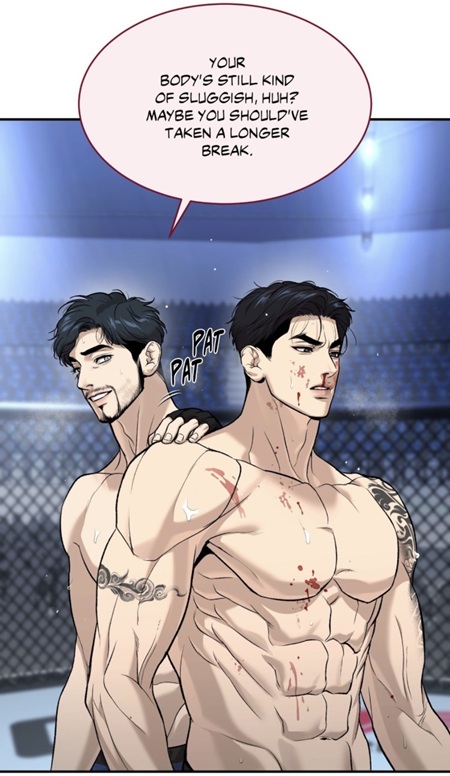 (chapter 87) He thought, he had found his perfect “meal”. To conclude, Arnaud Gabriel articulates the same logic even more coldly.
  (chapter 87) There is no personal animosity here, only inevitability. The statement is not a threat; it is a forecast. Power, in this worldview, is temporary by nature, and the role of rivals is not to prevent collapse, but to be present when it happens. Like hyenas, they do not waste energy on the kill. They wait for age, injury, scandal, or exhaustion to do the work.
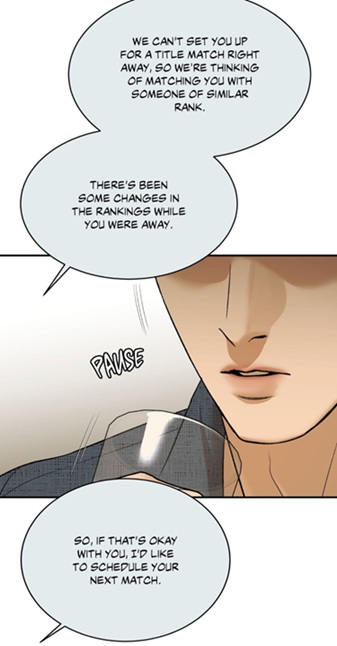 (chapter 69) A new match is organized. An invitation is extended. Noise is generated. Attention is redirected. The spectacle resumes.
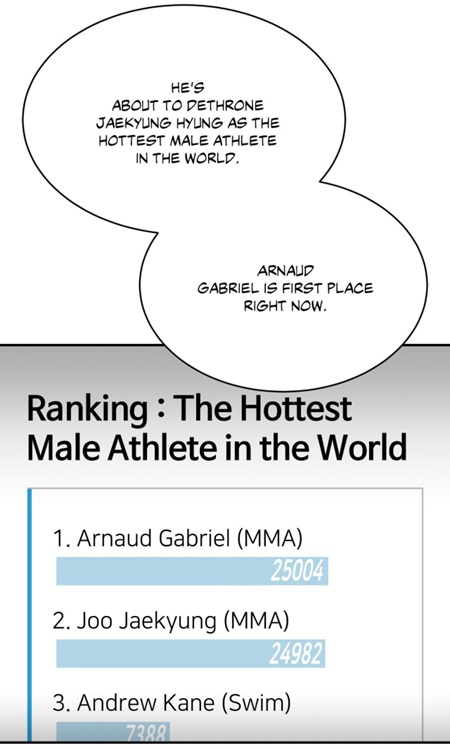 (chapter 81) The distinction matters. An athlete is managed for performance and longevity; a celebrity is managed for visibility. Injury is a problem in the first case. Scandal is profitable in the second.
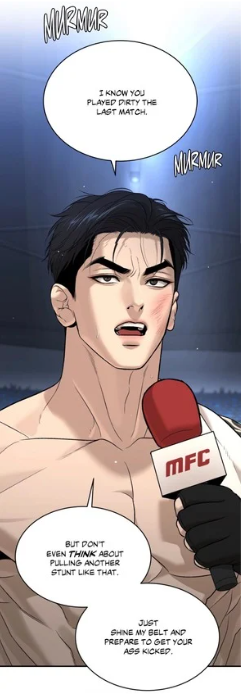 (chapter 87) By naming the manipulation in front of an audience, he breaks the tacit agreement of silence that protects institutions. What should have remained backstage is brought into public discourse. From that moment on, the system has an incentive not to clarify the truth, but to reframe the speaker.
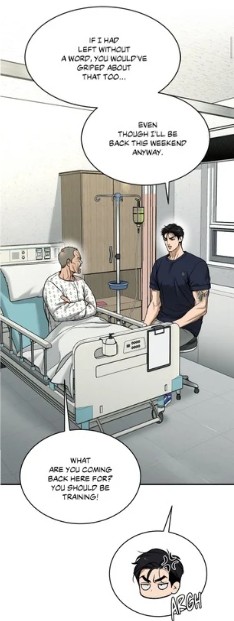 (chapter 78) The latter has always blamed the “boxer Joo Jaewoong”, but not the boxing world, the institution.
  (chapter 61) Joo Jaekyung accepts matches while injured
  (chapter 41), his shoulder still compromised, because he is “cleared” to fight. The phrase is decisive. Clearance does not mean safety; it means permission. The medics approve, the fight proceeds, and responsibility dissolves upward. When the body holds, profit is generated. When it fails, discipline follows.
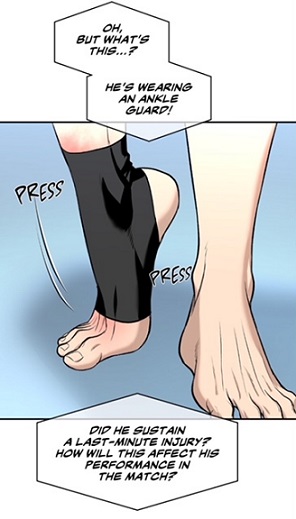 (chapter 50) later participate in his suspension. In both cases, the logic is identical: the body is usable until it is not. MFC remains intact; the cost is borne by the fighter.
 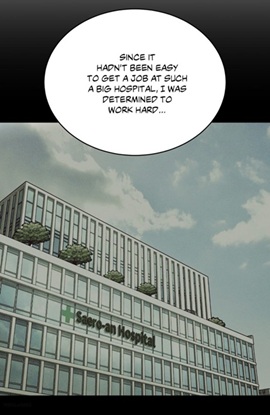 (chapter 90) is the first figure in Jinx who embodies all three dimensions of predation at once. He is a biological predator in logic, an economic predator in practice, and a sexual predator in effect — yet none of these appear as transgression. They are exercised under license.
  (chapter 80) In this environment, appearance is not superficial. It is a language of rank. To arrive without fluency in that language is already to be classified as provisional.
  (chapter 54)
  (chapter 1) The expression matters. It implies opportunity rather than integration: freelance labor, paid by hours or shifts, without institutional protection. In such conditions, negotiation is not expected. The contract is accepted, not discussed.
 (chapter 90) — the same signs previously associated with the hospice.
  (chapter 57)
 (chapter 90) Constant availability is misrecognized as appetite. Endurance becomes ambition. Constraint is translated into desire. Vulnerability is reclassified as greed. This misreading is not accidental; it is functional. If Kim Dan is greedy, then the director is not coercive. If Kim Dan “wants more,” then nothing is being taken from him.
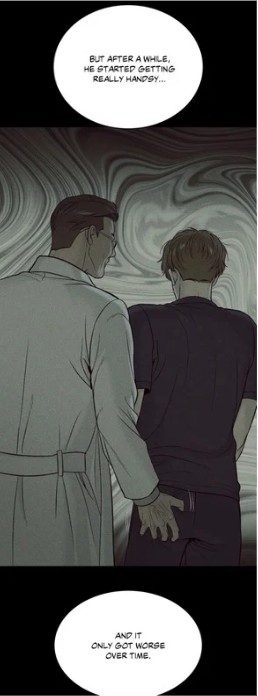 (chapter 90) The contact is quiet, progressive, and deniable. It blends into routine movement, into institutional normalcy. “After a while, he started getting really handsy… and it only got worse over time.” Each tolerated touch becomes precedent. Boundary erosion is not sudden; it is cumulative.
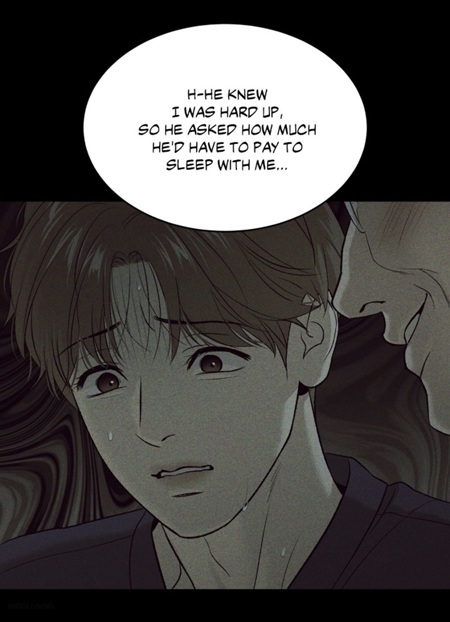 (chapter 90) In the doctor’s eyes, the predator knew about Kim Dan’s difficult financial situation, then he asked how much he would have to pay to sleep with him. The timing is crucial. The offer does not initiate desire; it tests whether vulnerability can be converted into consent. Payment reframes coercion as transaction, need as availability, and silence as something that can be bought in advance.
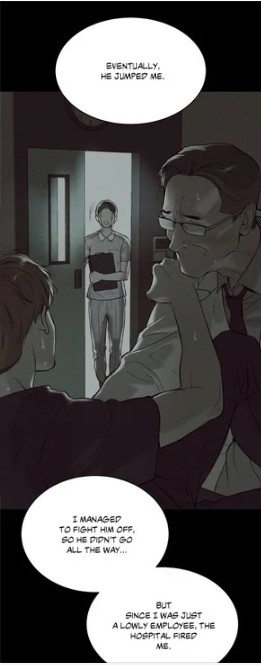 (chapter 90) Even then, the violence is controlled and incomplete — withdrawn before it can be named unequivocally. The goal is not consummation at all costs, but domination without consequence. What remains is fear, confusion, and isolation rather than proof.
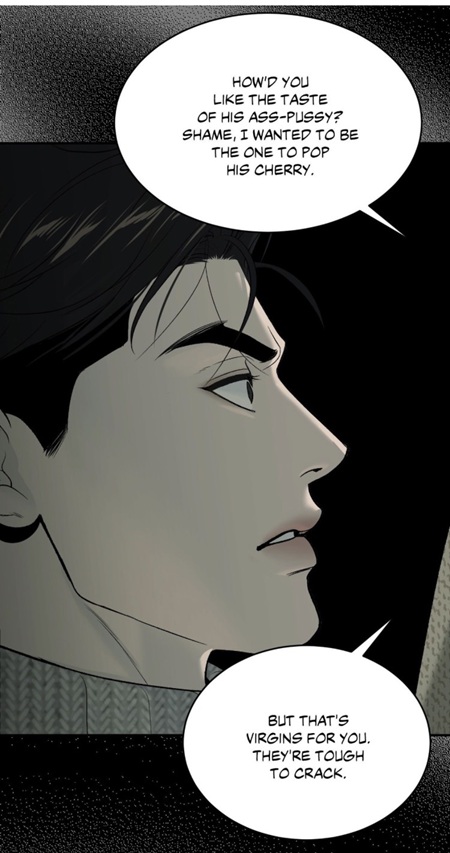 (chapter 90) as bodies that are “tough to crack,” with the confidence of repetition. The metaphor is consumptive: a shell broken to reach what is inside, then discarded. Once resistance is broken, interest disappears. This is practiced predation. The hospital is not merely the setting of abuse; it is his hunting territory — a space where authority guarantees access, exhaustion weakens refusal, and legitimacy ensures silence.
 (chapter 21) The juxtaposition of two buildings, the rooftop park, the sterile façade, and above all the near-identical hallways collapse
 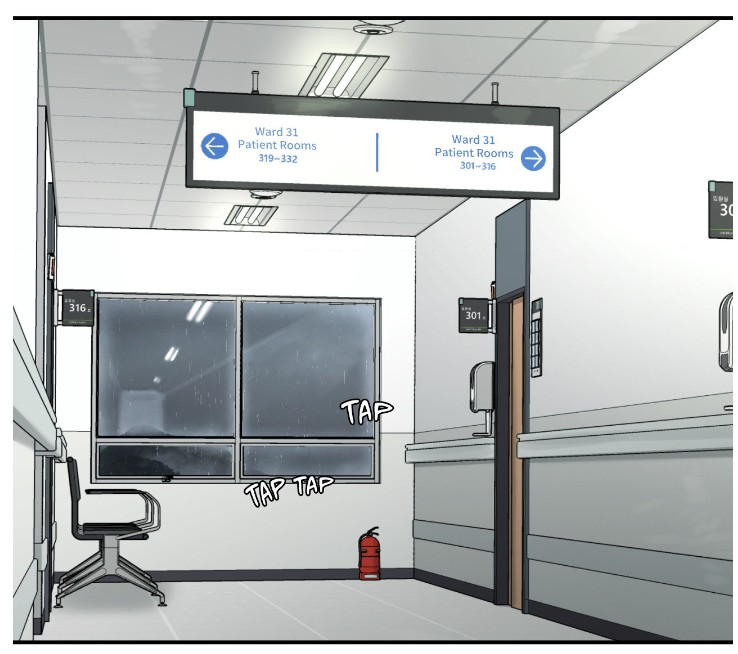 (chapter 5) Professional and personal life are folded into the same architectural body. This is not decorative repetition; it signals circulation — of staff, of protocols, of information.
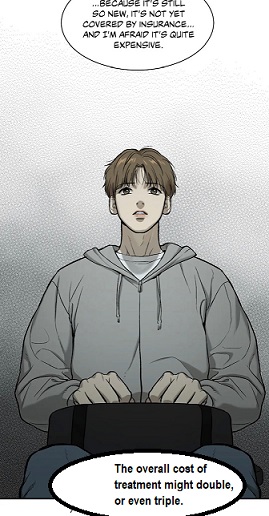 (chapter 5) — professional legitimacy, research success, advancement within a system that rewards results over outcomes. Progress functions as an absolute good, one that authorizes human cost without requiring personal cruelty. Harm is acceptable so long as it produces data.
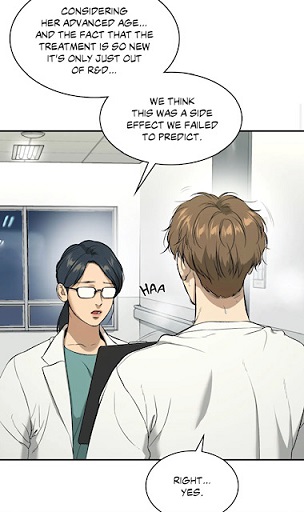 (chapter 21), age and vulnerability become a risk factor, endurance becomes a resource. When the new drug fails and the grandmother deteriorates, the explanation is procedural: side effects, unpredictability, regulatory timelines. Failure is framed as scientific, not ethical.
  (chapter 47)
 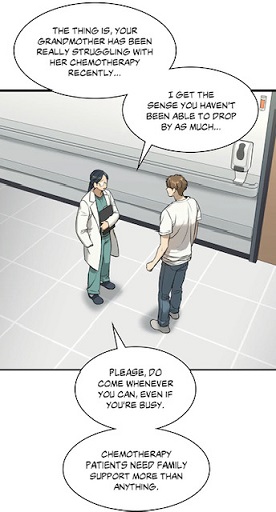 (chapter 21) Treatment patients “need family support,” she says — a statement that sounds compassionate, but functions as deflection. Psychological care is outsourced; responsibility for deterioration quietly migrates away from the institution (“we”). The setting of her disclosures reinforces this posture. She does not speak in a protected office, but in the hallway — a transitional, impersonal space governed by efficiency rather than care, as if she had nothing to hide. However, by behaving like that, she violated the confidentiality rights. Unlike the Saero-An director, who relies on enclosure and isolation, Kim Miseon operates through openness and institutional flow.
  (chapter 48) It is no coincidence.
  (chapter 56)
 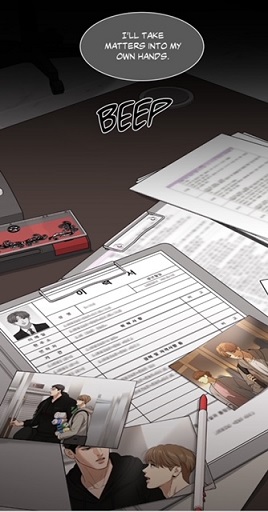 (chapter 46) This is not a coincidence. It is evidence. Personal and professional data move through institutional networks without consent. The same is true of medical information. Choi Gilseok knows about the grandmother’s illness despite having no clinical mandate.
 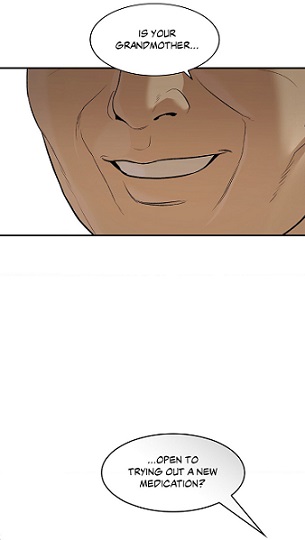 (chapter 48) That knowledge could only have reached him through leakage — informal, normalized, unremarked. Bodies are not the only things consumed here; information is too.
 (chapter 41)
  (chapter 49) In both cases, harm is delivered chemically, not physically — quietly, indirectly, and in ways that can later be reframed as accident, misuse, or personal failure. This symmetry matters. The same mechanism governs the grandmother’s fate.
  (chapter 56) Unlike Saero-An or Sallim, this space does not extract profit or prestige; it operates under scarcity. Kim Dan works there as a freelancer, not as protected staff. When he collapses, he is advised to take a day off, not sick leave — a telling detail.
  (chapter 70) It confirms that, even here, labor is contingent, negotiability absent, protection minimal. The vocabulary of care masks the reality of precarity.
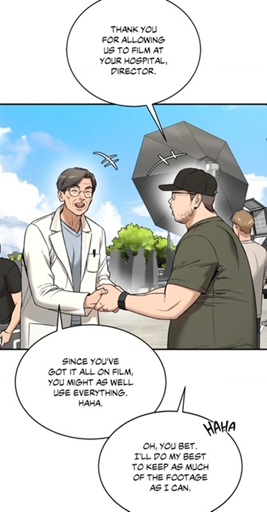 (chapter 59) Thus he is happy to let a film crew use his building for a movie. This is why he sometimes works night shifts himself.
  (chapter 60) His authority does not shield him from exhaustion; it exposes him to it. He enforces discipline because collapse anywhere threatens survival everywhere.
 (chapter 59) And yet, harm still occurs. Responsibility is displaced not upward, but sideways — onto the most vulnerable worker present. Kim Dan becomes the buffer once again, not because the director is powerful, but because he is trapped. Predation here is no longer driven by appetite, but by attrition.
 (chapter 61), preserving the impression of treatment rather than end-of-life care. This semantic slippage matters. For Joo Jaekyung, who has been treated there himself, the space remains associated with improvement.
  (chapter 70) He thinks, Hwang Byungchul is treated properly, as he still looks lively and strong.
  (chapter 71) The champion does not fully register that it is a place at the threshold of death. Care and closure blur. This confusion is not accidental; it mirrors the broader system’s refusal to name limits. By calling a hospice a hospital, death is softened into treatment. By calling resignation progress, responsibility is deferred.
 (chapter 65) For her, medicine is sacred and progress meaningful.
  (chapter 65) This belief is not naïve in the childish sense; it is aspirational. It is tied to the idea of success, of legitimacy, of having “made it.” And in her mind, that idea has a name: Seoul.
 (chapter 65) It is where competent doctors work, where advanced hospitals stand, where progress happens, where you can earn a lot of money. This belief structures her entire horizon. Corruption, abuse, and institutional predation do not register there, because acknowledging them would mean admitting that the space she has invested with hope is also capable of harm. Within Seoul, institutions are not suspect; they are self-justifying.
 (chapter 65) as if it was recent, temporary, and situational. The wording matters. What has been chronic is compressed into the present. Duration disappears. Suffering becomes recent, temporary, and therefore manageable. This is temporal minimization — not denial of harm, but deferral of its cause.
  (chapter 57) Only then does his condition become visible. Not because it is new, but because it now implicates her. Before that moment, his endurance could remain unnamed. After it, it must be explained. This is not cruelty; it is belief colliding with responsibility.
 (chapter 41) He spends so much for her that he doesn’t have anything left for himself.
  (chapter 42)
  (chapter 51). Different figures arrive at the same conclusion because they are operating within the same interpretive framework — one shaped first and foremost by Shin Okja’s mindset.
 (chapter 22)
  (chapter 1) Kim Dan is beaten not because he refuses to pay, but because payment structures domination. He accepts the abuse precisely because he believes it is temporary — a punishment that will end once the balance is cleared. Violence is normalized as consequence, not crime. This logic mirrors hers exactly. The more the main lead paid back, the more he was exposed to violence.
  (chapter 11) Here, he talked back to Heo Manwook, a sign that he was no longer tolerating the loan shark’s intrusion. The result was that he ended up being beaten more violently than before.
  (chapter 13) This reached its peak, when after sending his whole salary
 (chapter 16), Heo Manwook intended to rape him. As you can see, the more they got money, the more abusive they became… and all this time, the grandmother has no idea. But the best evidence is when Joo Jaekyung pays the loan in full, the pattern repeats at a higher level.
  (chapter 17) The debt is erased — and the danger escalates. Kim Dan might become free, but now the target is the champion. He becomes visible. Settling the debt marks him as someone worth targeting, someone who can be extracted from again.
  (chapter 46) What Shin Okja imagines as closure functions, in reality, as a signal.
 (chapter 46) Each appearance sustains sponsors, broadcast value, betting volume, and gym economies. This is why he becomes the “biggest target”: not because he is weak, but because he represents the highest return.
 (chapter 41) A champion who keeps winning cleanly, visibly, and on his own terms becomes difficult to manage. His victories increase his market value, distribute prestige and income to others, and create expectations of legitimacy. At that point, success stops being profitable in a controllable way. It begins to threaten both institutional authority and informal economies that rely on predictability, influence, and narrative control.
 (chapter 46) A dominant, credible champion reduces volatility, resists manipulation, and makes engineered outcomes harder to disguise. In such a configuration, continued victory is destabilizing. The problem is no longer his body failing — it is his body refusing to fail on schedule.
 (chapter 46) is violent. The question is: what kind of predator is he?

 (chapter 86), it does not close the night through narrative resolution. There is no statement, no promise, no verbal seal. And yet, for many Jinx-philes, the final panel refuses to let the scene dissolve. What remains is not heat, not tension, not even tenderness — but circulation.
 (chapter 21), overload
  (chapter 33), short circuit
 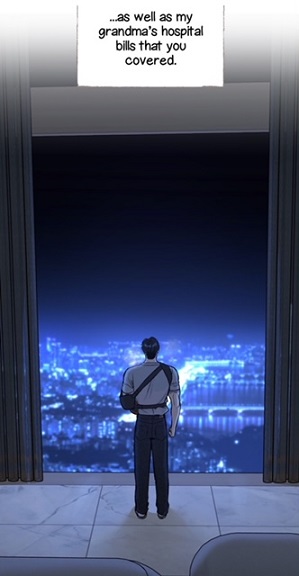 (chapter 53) reset. And once that lens is adopted, it becomes impossible to limit the consequences of episode 86 to the couple alone. Because a closed circuit does not only affect those directly connected to it. It alters the surrounding system.
 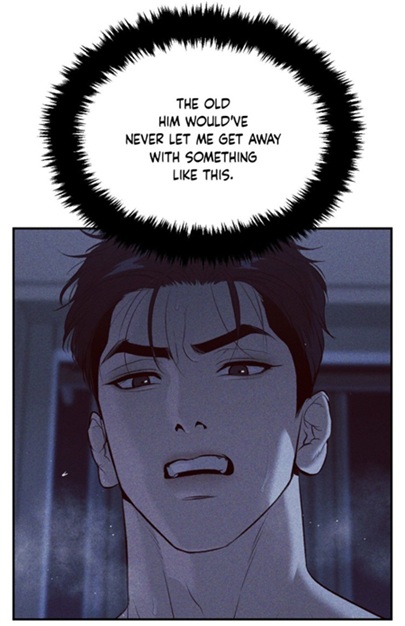 (chapter 86). This section will explore how acknowledging change without denying past harm opens a new ethical position — one that prevents memory from being weaponized, while still preserving responsibility. Third, the analysis will turn to conversion, revisiting earlier nights marked by failure, asymmetry, and isolation. Rather than cancelling them, episode 86 absorbs and transforms them. This is where forgiveness, reflection, and the first true encounter with consequence quietly enter the narrative. Finally, a new section will widen the lens further by examining shared experience and memory
  (chapter 53), particularly through Kim Dan’s relationship with his grandmother. Here, the focus will not be accusation, but contrast: between memories carried alone and memories held together; between cycles of repetition and moments of presence; between a worldview structured around endurance and one shaped by circulation. The Paris night does not only affect how Kim Dan sees Joo Jaekyung
 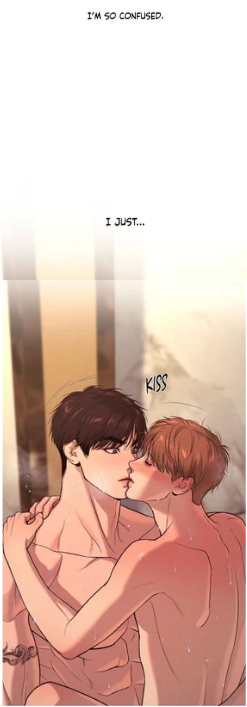 (chapter 86) carries such weight, we must return to the origin of kissing itself in Jinx. Because surprise, in this story, is not an abstract theme. It has a history. And that history begins with a body being caught off guard.
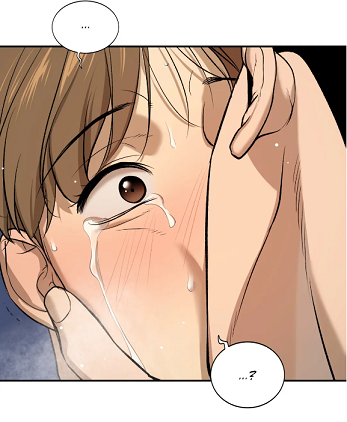 (chapter 14) There is no warning, no verbal cue, no time to prepare. The kiss arrives as interruption. It is not negotiated; it is imposed. Hence the author focused on the champion’s hand just before the smooch.
 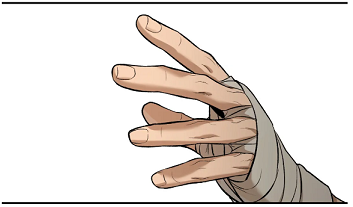 This moment matters far more than it initially appears, because it establishes the template through which Kim Dan first encounters intimacy.
 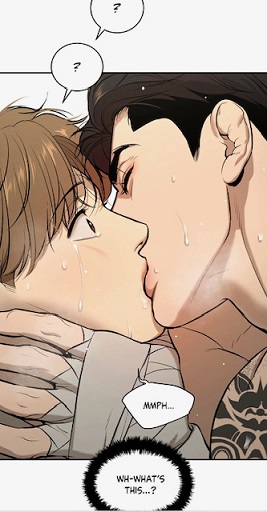 (chapter 15) Affection does not emerge gradually. It breaks in.
 (chapter 15) He needs preparation. He needs time to brace himself emotionally. This request reveals two aspects. First, he connects a kiss with love. On the other hand, the request is not really about romance; it is rather about survival. Surprise, for Kim Dan, has already been coded as something that overwhelms the body before the mind can intervene.
 (chapter 39), he violates his own request.
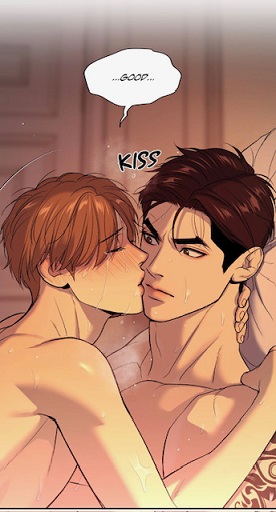 (chapter 39) They are unannounced, often landing on unusual places (cheek or ear)
  (chapter 44). They often take place under asymmetrical conditions — when one of them is intoxicated, confused, or emotionally exposed. Sometimes they occur without full consent, sometimes without clarity. In chapters 39 and 44, kisses surface precisely when language fails or consciousness fractures. It is as if Kim Dan has internalized a rule he never chose: a kiss must be sudden. Observe how the champion replies to the doctor’s smile and laugh: he kissed him, as if he was jealous of his happiness.
 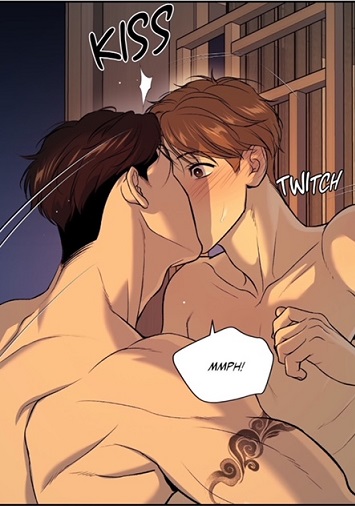 (chapter 44) That’s how I came to realize that the kiss in the Manhwa is strongly intertwined with “surprise”. This is the missing link.
 (chapter 2), he comes to reproduce interruption as intimacy. He knows that surprise destabilizes him — that is why he asked for warning — but he has no other model. What overwhelms him also becomes what he reaches for. Surprise is both threat and language.
 (chapter 3): the sudden call from the athlete,
  (chapter 1), the offer of sex in exchange for money
 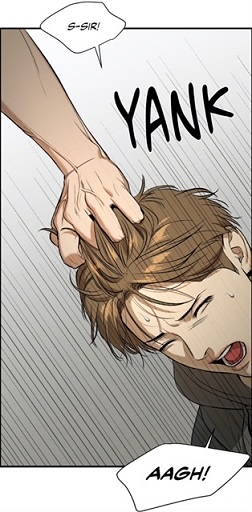 (chapter 6), the switched spray
  (chapter 49), the sudden changes in rules. These moments strip Kim Dan of anticipation and agency. His body reacts before his will can engage. Surprise equals exposure.
 (chapter 1) His life is governed by “always”: always working, always returning, always responsible. He lives for his grandmother. Nothing unexpected is allowed to happen, because nothing unexpected can be afforded. This is safety through stasis. Presence without experience.
 (chapter 5)
  (chapter 1) They shattered routine rather than enriching it. Surprise, in that context, did not open possibility; it threatened survival. It meant debt, coercion, fear. And precisely because of that, it could not be integrated into memory as experience — only repressed as trauma.
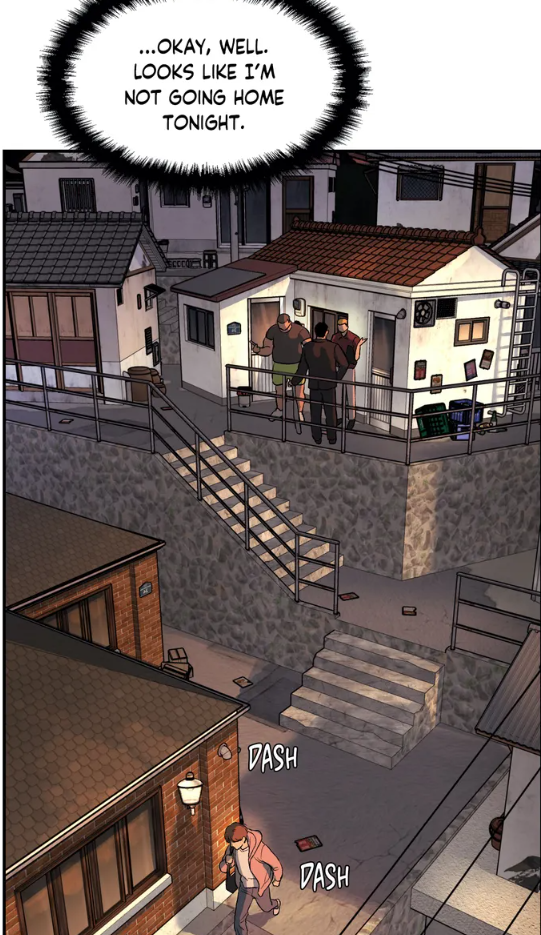 (chapter 1), if he doesn’t return home. Surprise, in its earlier form, is excised from the household. What remains is a world of repetition and endurance — safer, but lifeless.
 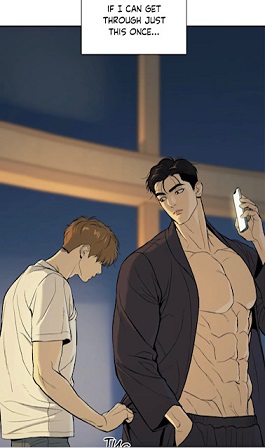 (chapter 2) but in a fundamentally different form.
 (chapter 11) His appearances are sudden, his demands non-discussable, his violence immediate. He does not ask; he enforces. Surprise, under his rule, eliminates speech. It leaves no space for argument, no room for clarification, no possibility of consent. One endures, or one is punished.
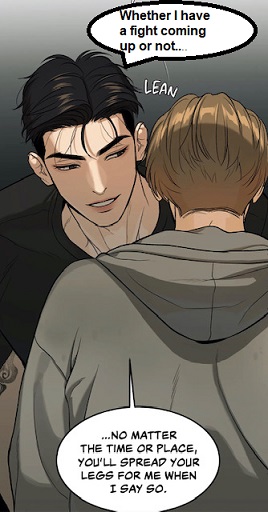 (chapter 6) Even when power is asymmetrical, even when the terms are coercive, speech is required. Conditions are stated. Rules are articulated. Kim Dan is forced to listen, to answer, to argue, to object. He must speak.
 (chapter 17) The two figures cannot coexist because they represent mutually exclusive regimes of surprise: one that annihilates speech, and one that forces it into being. In other words, only one allows experience to be lived rather than survived.
 (chapter 51) — yet they are unmistakably his. They mark the moment when something begins to circulate.
  (chapter 27) Experiences accumulate instead of disappearing. They demand response, speech, negotiation. Life no longer consists in enduring impact, but in processing it.
 (chapter 65) and as such neutralization: suffering must be absorbed, pain must be justified, disruption must be folded back into endurance. There is no place for charge there — only for dissipation. What Kim Dan lives through with Joo Jaekyung follows a different logic altogether: not sacrifice, but circulation; not repetition, but conversion.
 (chapter 41) not despite surprise, but through it. Not because dominance is romanticized, but because surprise is the first force that treats him as someone to whom things can happen. And don’t forget that for him, a kiss symbolizes affection. Even negative experiences generate subjectivity. They prove that he exists beyond function.
 (chapter 85) Kim Dan either endures it or reproduces it under unstable conditions. Agency is partial. Meaning collapses afterward.
 (chapter 39), irony
 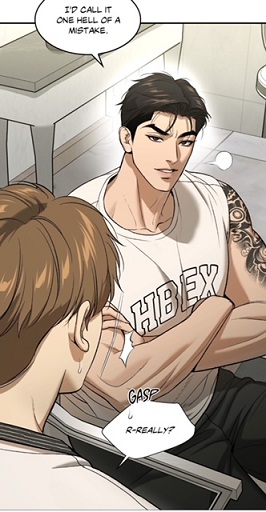 (chapter 41) or rejection
  (chapter 55). He does not retreat into his habitual “it’s nothing” or “never mind.” He does not reinterpret the gesture as convenience or reflex.
  (chapter 86) He kisses back while looking tenderly at his partner. He holds Kim Dan’s head gently. He can only see such a gesture as a positive answer to his request: acceptance and even desire. Surprise is not punished. It is received.
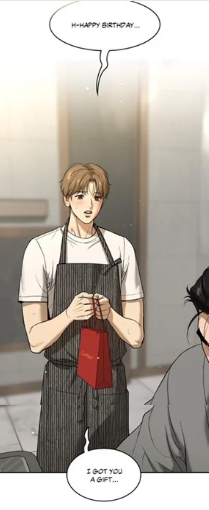 (Chapter 45) This time, the athlete not only accepts the present (the kiss), but but also expresses “gratitude” by kissing back actively.
  (chapter 65) In her eyes, she has never changed, just like her grandson.
  (chapter 52), justify behavior
  (chapter 57), and foreclose change. The champion’s violence is explained through reputation.
  (chapter 1) Kim Dan’s endurance is explained through obedience and debt. The grandmother’s authority is explained through sacrifice. In every case, the same logic applies: this is how it has always been; therefore this is how it must remain.
 (chapter 65) If the past is absolute, it can be endlessly invoked to invalidate the present. We have a perfect example on the beach.
  (chapter 65)
 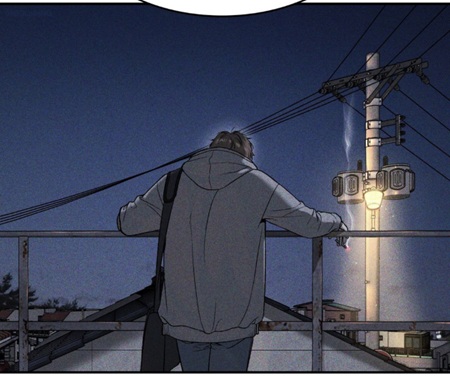 (chapter 65) They are evaluated exclusively through a moral lens. Smoking and drinking are not responses; they are flaws. And because they are framed as flaws, they retroactively define his character rather than his situation. This is where agency collapses.
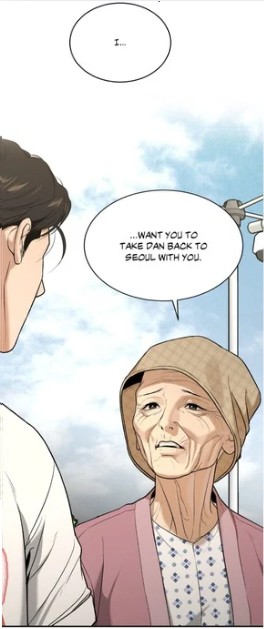 (chapter 65) Her behavior does not contradict her claim that she wants Kim Dan to “live his own life.”
 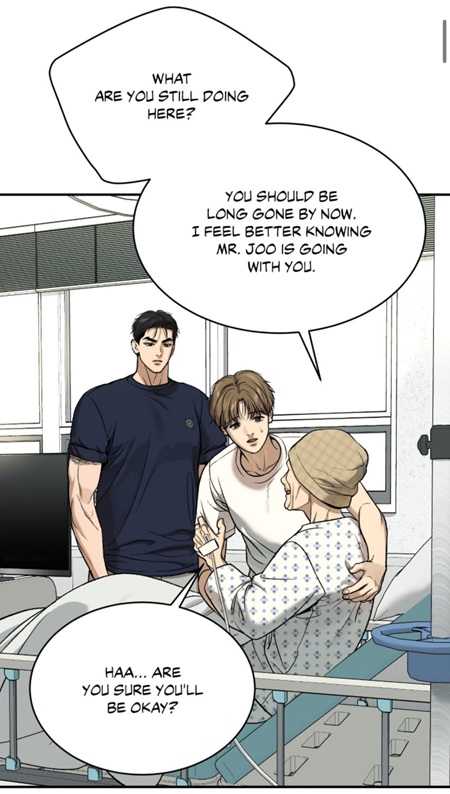 (chapter 78)
 (chapter 86) Once again, the “hamster” is given the opportunity not only to decide, but also to follow his heart. Where the Paris night allows difference to coexist with memory, Shin Okja’s framework collapses difference back into judgment. Where electricity requires polarity, her logic insists on sameness. Under this new light, it becomes comprehensible how doc Dan came to neglect himself. Self-care is inseparable from choice — from the belief that one’s decisions can meaningfully alter the present. If change is denied, care loses its purpose. Attending to oneself becomes optional, even suspect, because it implies a future different from the one already prescribed.
 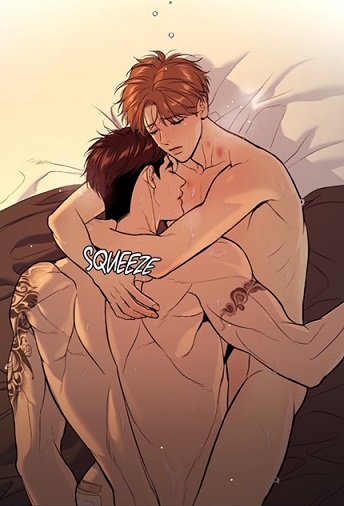 (chapter 44) The one who remembers bears the – alone, while the other continues forward unmarked. That imbalance is corrosive. It distorts perception. It turns even good memories sour.
 (chapter 65) Even though the word jinx is never spoken during the Paris night, its logic quietly collapses there.
 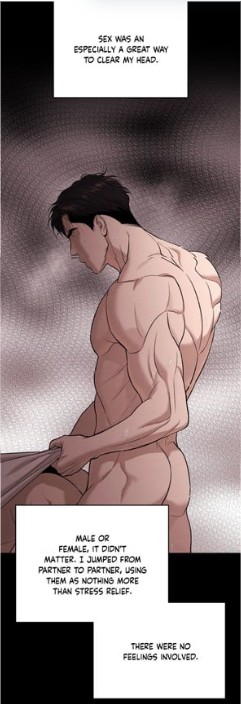 (chapter 75) In chapter 75, it is explicitly framed as a way to “clear the head”: an act designed to release pressure and return the system to zero. Partners were interchangeable. Feelings were excluded. Electricity existed only as a spark — brief, violent, and self-extinguishing. Energy was expelled, not circulated. That is the true mechanics of the jinx: power without continuity, intensity without consequence.
 (chapter 85) Desires matter, not the match the next morning. Besides, the identity of the partner matters — not just romantically, but also structurally. Current requires two poles. It requires response. It cannot flow through an object, only between 2 subjects.
 (chapter 39) and chapter 44
  (chapter 11), the care – even if he had hurt himself –
  (chapter 47), the shared smiles
  (chapter 47). Thus this photograph
  (chapter 65) becomes a talisman — not a record of reality, but a distilled image of safety. Painful dimensions are filtered out. Conflict, coercion, and silent pressure recede into the background. Memory protects him by idealizing. Because of this picture, he projected himself in the future, making unrealistic plans.
  (chapter 47) It was, as if he only had good times with his grandmother.
  (chapter 21)
  (chapter 47) and memories.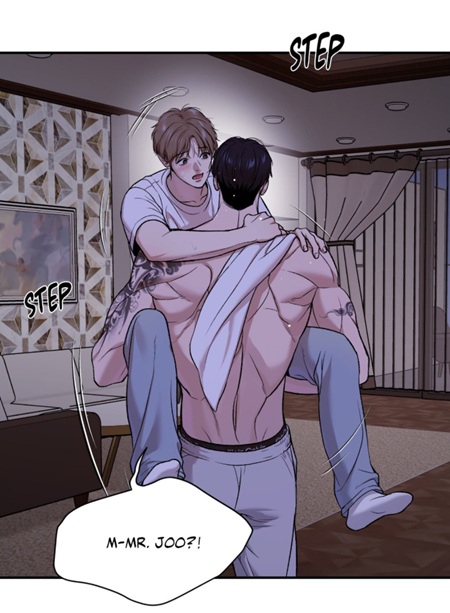
 (chapter 85) I believe that its appearance does not function as decoration. Its imagery — figures suspended among clouds, bodies neither falling nor grounded — introduces a different register of time. Not urgency. Not performance. Not spectacle. Stillness. Interval. A space where movement pauses without collapsing. Under this new light, the reference is Morpheus.
 (chapter 75) Until now, rest had been replaced by discharge: sex as erasure, violence as exhaustion, ritual as compulsion. The Paris night does not abolish wakefulness through collapse; it introduces the conditions under which sleep might finally be possible.
  (Chapter 78) Here, he reduced it to the absence of sex, but I am sure that deep down, he would have been satisfied, if the “hamster” had given him a good night kiss.
  (chapter 86) The charge redistributes. Memory ceases to isolate and begins to circulate. Hence it creates a new memory.
  (chapter 86) was a reflection of the picture.
  (chapter 86) No one is erased or reduced to an object. Nothing is overlooked or forgotten. But repetition loses its hold. And from here, the story can no longer proceed as before.
 (chapter 86), gentle, attentive
  (chapter 86) — asking questions instead of imposing answers
  (chapter 64). For Joo Jaekyung’s unconditional stans (and I count myself among them), such an attitude
  (chapter 86) can easily be read as proof that the protagonist’s good heart has always been existent, but it was barely visible. Compared to earlier chapters, the contrast is now undeniable. And yet, I would like to pause you right there.
 (chapter 61), sometimes awkwardly
  (chapter 80), sometimes inconsistently
  (chapter 79), but unmistakably
  . (chapter 83) Tenderness, concern, even a certain form of devotion had appeared earlier
  (chapter 40), albeit in ways that were often overlooked,
  (chapter 18) misunderstood or poorly timed. This night
  (chapter 86) does not initiate his metamorphosis.
 (chapter 86), sparks
  (chapter 86), and softness, many Jinx-philes might instinctively describe it as magical. The imagery invites such a reading. After all, we have seen similar nights before. The night in the States shimmered with illusion
  (chapter 41) The penthouse night echoed A Midsummer Night’s Dream
  (chapter 45). This raises an essential question. Is episode 86
  (chapter 4), in the return of light
  (chapter 66), in what remains once the sparks fade. A dream dissolves with daylight. Reality does not.
 (chapter 86), sparks, that strange shimmer that seems to hang in the air
  (chapter 86). Why? It was, as if their dream had come true. However, is it correct? Is it not wishful thinking? What if this night is not magical at all? What if its true signature is not enchantment, but electricity—a current that interrupts, tests, and resets? 😮
 (chapter 40) in Kim Dan’s perception: overwhelming, radiant, dominant, a heat-source that does not negotiate.
  (chapter 41) The sun can be admired, feared, and endured—but it cannot be questioned.
  (chapter 58) It simply shines, and the one who stands in its light adapts. This explicates why the physical therapist would choose silence and submission over communication.
  (chapter 48)
 (chapter 83)
  (chapter 83) Every ride, every light, every scream suspended in midair depends on current: motors accelerating and braking, circuits opening and closing, energy stored, released, and cut off.
  (chapter 83) Roller coasters do not move by heat, charisma, or sheer physical force; they move because electricity flows through them. The Viking ship swings
  (chapter 83) because current allows it to swing. The Ferris wheel ascends
  (chapter 83) because circuits hold — and descends because they release.
 (chapter 84)
  (chapter 84) explicitly names what had previously gone unspoken: the rides function only because current flows. When it disappears, the illusion of effortless motion collapses.
 (chapter 84) The Ferris wheel has stopped. The current is gone. The carefully regulated system that lifted, rotated, and sustained them is no longer in control. Yet movement does not disappear entirely. It mutates. When the champion shifts his weight, grips the structure, reacts instinctively, the cabin begins to shake. Panels emphasize instability: creak, swish, ack. The motion is no longer generated by electricity but by the body itself.
 (chapter 84) Stranded above ground, stripped of the park’s mechanical rhythm, he apologizes.
  (chapter 84) Not theatrically, not performatively, but awkwardly, haltingly. His body exposes his discomfort
  (chapter 84) and fears. He avoids the doctor’s gaze, crosses his arms
  (chapter 84) or squeezes his arm
  (chapter 84). The cessation of electrical motion coincides with a shift in his own mode of action. Where the park depended on current to keep things moving, he now moves without it. The absence of electricity forces something else to surface: responsibility, attention, presence. Additionally, this sequence anticipates what will later unfold more fully. Proactivity is no longer expressed through force or motion, but through articulation. Words stand for action and have weight. The champion’s future action is announced here, quietly: he will no longer push forward by shaking the structure. He will move by sharing thought, by naming feeling, by allowing himself to be affected.
  (chapter 86),
  (chapter 86) jolts, sudden contractions of the body
  (chapter 86). Kim Dan is repeatedly shown convulsing, gasping, losing linear thought, and it is the same for the MMA fighter. Panels insist on interruption: jolt, tingle, broken breath, aborted sentences. The doctor’s body behaves as if struck, especially in this image.
  (chapter 86) It is at this point that a phrase surfaced in my mind — instinctively, almost involuntarily. A phrase we use in French when something intangible yet decisive occurs between two people: Le courant passe. Literally, the current passes. Idiomatic meaning: they are on the same wavelength, something connects, communication flows. However, here, the current is not the product of civilization, but of nature. Two people interacting with each other. And it is precisely because of the unusually high frequency of sparks and jolts in the illustrations that a belated realization imposes itself: nature, too, produces electricity — through storms, through thunder.
 (chapter 69) A storm was announced back then. And yet, upon closer inspection, no thunder was ever shown there. There was tension, there was excess, there were dark clouds
  (chapter 69) — but there was no strike, no discharge, no interruption. The imagery remained continuous, fluid, enclosed within the logic of escalation rather than rupture.
 (chapter 83). In Roman terms, Thursday corresponds to dies Iovis — Jupiter’s day — the god of thunder. Both gods are strongly connected to thunder and as such current.
  -chapter 67-; for more read my analysis
  (chapter 83). Before striking anything, he is already unwell: angry overstimulated and complaining, visually reduced to a childlike register. This matters. The hammer does not create excess — it receives it.
  (chapter 34), the hammer gesture is not confrontational, for the machine is immobile. There is no opponent.
  (chapter 83) Too much energy released at once. The system registers it, but cannot contain it. This means, the record won’t be registered and as such “remembered”. In fact what mattered here was the prize, the teddy bear, and restored self-esteem of the athlete. He could offer a present to doc Dan which the latter accepted without any resistance.
  (chapter 86) Therefore it is not surprising that doc Dan starts looking at his fated lover. Imagine what it means for the athlete, when the “hamster” is staring at him, though he is a little embarrassed. Finally, he is truly looking at him. The champion loves his gaze. And now, you comprehend why the “wolf” listened to the “cute hamster” and stopped leaving marks.
 (chapter 85), but this time, its nature has changed. It is no longer jealousy or anger, but love and desire. Hence the current is not colored in red, but white and pink.
  , but a thunder and as such it is still restrained and regulated.
 (chapter 44) as emotionally charged, intense, even pivotal. Confessions were made. Bodies responded. Vulnerability appeared to surface. And yet, both nights collapsed almost immediately afterward. What was felt
  (chapter 40)
 (chapter 86) In this panel, we should glimpse a reference to the night in the States as well, and not just to the night in the penthouse.
  (chapter 44) The setting is elevated, luxurious, almost theatrical. The doctor is brought into a space of power that is not his own.
  (chapter 44) By acting that way, the athlete created a false impression of himself, as if he was still rational and clear-minded. Again, desire unfolds.
  (chapter 44)
  (chapter 44) Again, closeness occurs. And again, the aftermath reveals the same fracture.
  (chapter 45) and later wants to even forget it.
  (chapter 45) and he can not deny his own involvement and actions. Hence the doctor is left alone. Only he can recall this “dream”.
  (chapter 44) But memory alone is not power. Remembering without the other’s participation transforms recollection into isolation. Kim Dan cannot confront, confirm, or renegotiate what happened, exactly like the champion did in the past. Meaning freezes instead of evolving. Striking is that he came to associate feelings with addiction.
  (chapter 46) No wonder why later doc Dan had no problem to reject the athlete. And for him, the next morning became a cruel reality, even a nightmare. It wounded doc Dan’s heart and soul so much that he learned the following lesson: to not get deceived by impressions. Hence in Paris, Doc Dan tries to explain the change of the champion’s attitude with drunkenness.
  (chapter 44) One participant is altered. The other must carry the weight of meaning alone. The night does not end in shared reflection, but in silence and absence.
 (chapter 44) Words blur, vanish, or are forgotten. Even gestures go unnoticed: a kiss, an embrace or a patting. Memory fractures. The morning after is defined not by continuity but by confusion. The body has moved forward, but the narrative has not.
  (chapter 84)
 (chapter 84) Speech bubbles lose clarity. Confessions are obscured. The reader is denied access to meaning. Fireworks, like drugs, produce intensity without duration.
 (chapter 39)
  (chapter 44) It was as if these nights could only exist under altered states — as if clarity on either side would have made them impossible.
  (chapter 86) This is why, when electricity returns in episode 86, it does not revive heat. It interrupts it.
  (chapter 86) That’s the reason why the athlete stops for a moment and asks doc Dan, if he needs a break.
  (chapter 86) This question is important because doc Dan admits his confusion and ignorance. He confesses to himself that he “knows nothing” not only about himself, but also about his fated lover.
  (chapter 86) They function as temporal markers. A spark exists only now. It has no duration. It cannot be stored, recalled, or anticipated. It appears — and vanishes. In this sense, electricity becomes the perfect visual language for the present moment itself.
 (chapter 10), statements blurred by drugs
  (chapter 43), sentences remembered by only one side.
  (chapter 44) and even laugh…. if only he could remember that night…
 (chapter 79), the “never mind”,
  (chapter 84) or it is a mistake, the easy erasure that once dissolved meaning after the fact. The kiss interrupts that mechanism. It produces a pause that cannot be talked over. It forces reflection.
 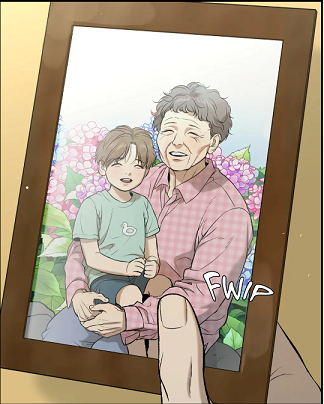 (chapter 19) The grandmother’s lap structured Kim Dan’s understanding of safety, endurance, and knowledge. Sitting there meant being held — but also being taught how to survive through sacrifice, silence, and self-effacement. That worldview sustained him, but it also confined him.
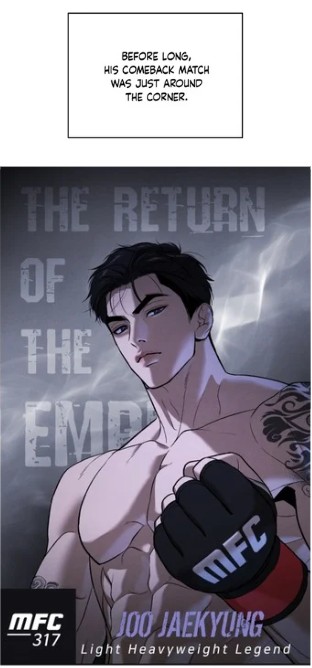 “The Return of the Emp”, I had to pause. Something in it refused to make sense — or perhaps, it made too much sense. Here stands the celebrity fighter alone, shirtless, his upper body carved out of darkness, while a faint cloud floats behind him accompanied by a hidden spotlight. Beneath him glows the number 317, a detail too deliberate to be accidental. And yet, where is the opponent? Every previous MFC poster — from Randy Booker’s green inferno
  (chapter 13)
 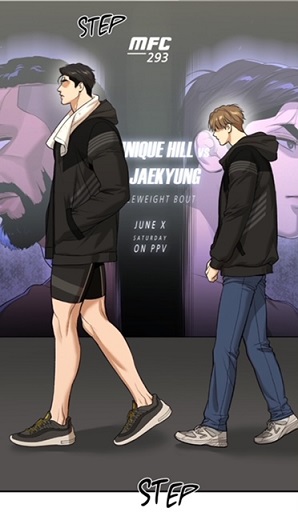 (chapter 40) to Baek Junmin’s red blaze
  (chapter 48) — had mirrored faces, two bodies, two lights. This time, there is only one. The duel has vanished. What remains looks less like a fight and more like a myth in the making.
  (chapter 81) chosen to face the Emperor. According to Oh Daehyun, this man is fighting for the title of the hottest male athlete in the world.
 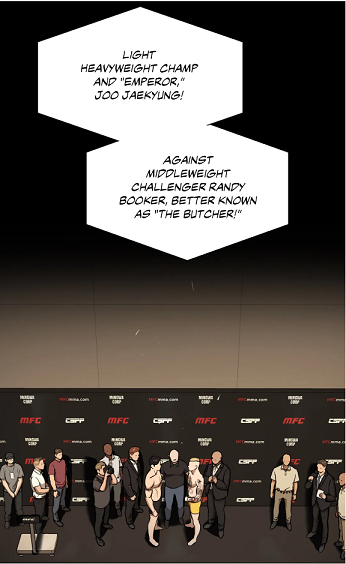 (chapter 14) Why is there this abbreviation? Why does the image proclaim a return while simultaneously concealing the full title? What does it signify?
  seems to be corroborated: this event doesn’t announce the glorious comeback it pretends to be, but a carefully staged trap. However, there is more to it. The longer I examine the composition
 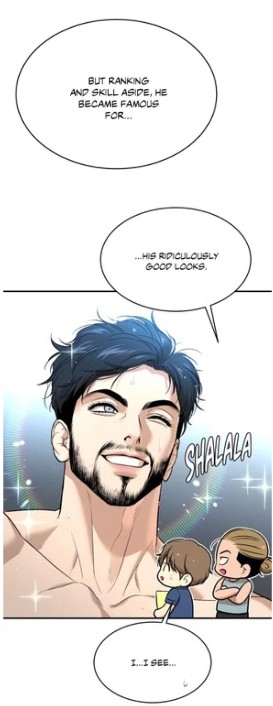 (chapter 81) According to Oh Daehyun, his goal is not victory but visibility — to be crowned the hottest male athlete.
  (chapter 30) The latter had to learn fighting in order to play his role in the drama Extreme Worlds
  (chapter 29).
  (chapter 81), while in reality a “storm” is actually coming.
 (chapter 8) His eagle is spreading his wings in front of his god, the sun, attempting to fly closer to the sun. According to me, Joo Jaekyung is the sun. This explains the loyalty of this purple belt fighter toward the protagonist!
  (chapter 47) But that’s one possibility among others, one thing is sure. Oh Daehyun will play an important part during their stay in France.
 (chapter 62), humility
  and strength
  (chapter 62) In other words, what the champion did in the seaside town had a huge impact in his life and world. He lingered in the hearts of those he touched. He was not a fallen idol, nor a forgotten champion, but a living memory — proof that integrity leaves deeper marks than victory ever could. To conclude, his fame no longer comes from spectacle only but also from empathy and presence — from the very qualities the schemers and media system fail to grasp.
 (chapter 81) The new battlefield is the face. Under this light, Jinx-philes will grasp why the agents from the Entertainment agency were so zealous in defending the star’s reputation. If he were to lose his good looks, they would lose one of their most profitable clients.
 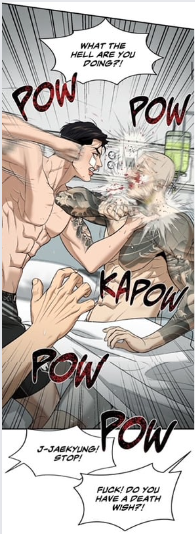 (chapter 52), whose envy of beauty turned into a creed. Imagine this. Now he holds the championship belt, yet no one admires him. His ruined face became the excuse for his bitterness,
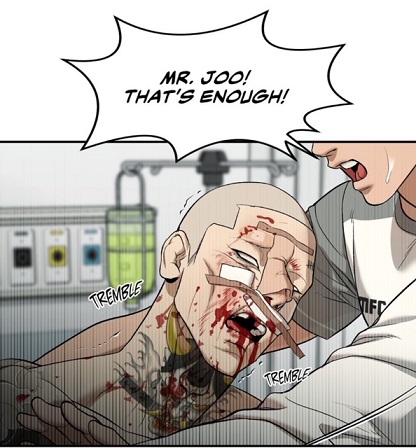 (chapter 52) and his rival the embodiment of everything he lost. He had to flee to Thailand to claim glory and admiration
 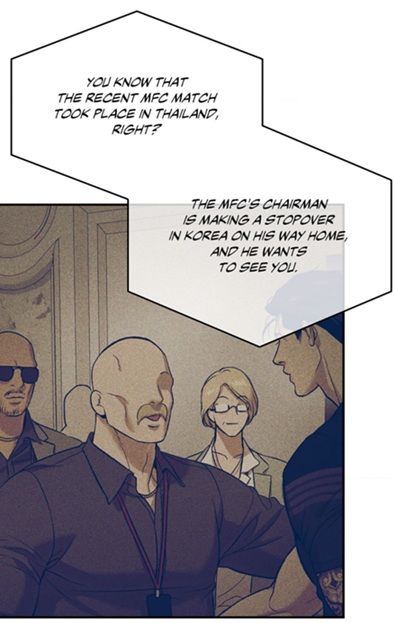 (chapter 69), only to discover that ownership without recognition is hollow. Even with the title, his name barely circulates in the media.
  (chapter 77) MFC can not promote him so easily, as his title could get questioned. He remains unseen — a champion without a face.
 (chapter 52) In the past, his insult
 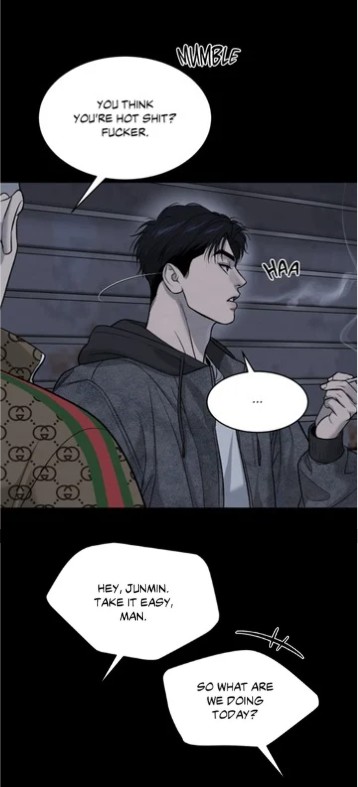 (chapter 74) merged anger with heat; now that very “hotness” materializes in the media and poster as smoke, an image of resentment turned into atmosphere.
 (chapter 74): the visible trace of a man who dares to rebel. He once watched the fighter smoke a plain cigarette and sneered at him for it, precisely because he knew it was not a joint. In Junmin’s world, violation meant courage and power intoxication. He assumed that fearlessness linked to drugs would bring admiration and success. Jaekyung’s refusal to accept their drug wasn’t prudence; it was, to him, an insult — a quiet act of superiority. The wolf’s restraint exposed his indifference and own dependency, and that humiliation still burns.
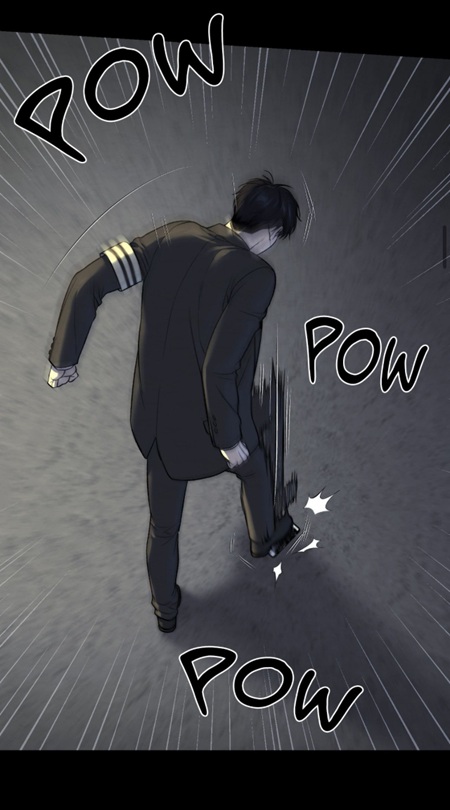 (chapter 74) Once you recognize this
  (chapter 54) The wolf is wrapped not in triumph, but in the faint perfume of something dying beautifully. He is shown before his decomposition, which reminds us of his father’s fate:
  (chapter 73), hiding behind his hyungs, the mobsters who granted him borrowed strength and false belonging. Joo Jaekyung, by contrast, was raised in the ring — the gym shaped him as both a professional and a person.
 (chapter 49) “kid”, “coward,” “chicken”
 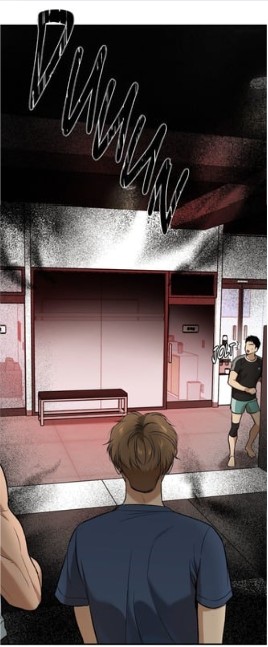 (chapter 81) It is a subtle but telling detail: the physical separation mirrors the emotional boundary now forming within the team. The healer’s hands have been withdrawn. So the emperor’s empathy is incomplete, hence he is only EMP. It extends only toward his chosen one — the doctor — and not yet to the others around him. True empathy, however, cannot be selective; it must reach beyond intimacy to encompass even those who do not stand at the center of affection.
 (chapter 1) He was a beast of destruction, someone who made sure to crush his opponents without mercy
 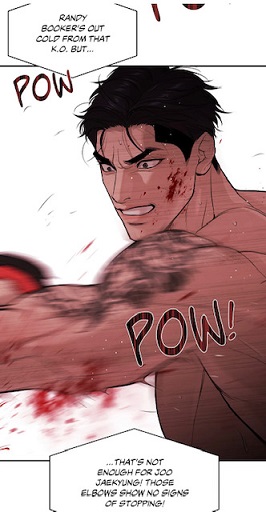 (chapter 15) Unstoppable in his rage, he moved like a man possessed — bloodthirsty, unrelenting, fighting not for glory but for survival. Each strike was a declaration: I will not die.
 (chapter 38) The doctor, too, has always been associated with clouds: soft, elusive, shifting with emotion. Thus I deduce that their paths will inevitably cross, dream and danger meeting in vapor and light. But more importantly, I perceive the smoke as a reference to the rising of doc Dan as physical therapist.
  (chapter 81) The team’s black-and-white uniform
  (chapter 81)
 (chapter 49) What looked like teamwork was mere coordination. Now, the visual disarray hides emotional harmony — the perfect yin-yang inversion of their past selves.
 (chapter 36) One could think, the other members are not wearing it, for they don’t want to be associated with the champion. He has been stigmatized as a thug or a child losing his temper, the consequences of Park Namwook’s badmouthing. However, observe that even the star is not wearing it.
  (chapter 36) What once symbolized sponsorship and solidarity has quietly disappeared. The explanation seems obvious at first: the loss of commercial partners following scandal and suspension.
  (chapter 36) no cheering spectators — nothing recalls the hero’s welcomes of earlier arcs.
 (chapter 16), the moment Heo Manwook thought that the “hamster” was working as an escort due to the name “Team Black”.
  (chapter 16) So because of the jacket Team Black, doc Dan could be mistaken for a prostitute. Naturally, Jinx-lovers will remember the great fight between Heo Manwook and his minions, when the athlete saved his fated partner. Back then, no one discovered his great action.
 (chapter 46) But now, the same hunger for spectacle has simply migrated upward. What once belonged to the alleys has climbed into the penthouses. The illegal thrill of the poor has become the curated decadence of the rich. And they were invited to witness the death of the “emperor”, someone who tried to escape from his origins. Thus I deduced that this is only a match that the high rollers (I suppose, mostly people from the Occident, though expect some from South Korea) know about.
 (chapter 81), breathing without bracing, learning that flow is strength. The author placed the swimming lessons here so we’d see him practice calm under pressure before he performs it in the ring. But observe that when he is in the swimming pool, he is expressing more and more his emotions.
  (chapter 81) At the same time, he is also incited to control his pulsions and body.
  (chapter 81) In other words, during the swimming lessons, he was encouraged to find the right balance between instincts and control, which Bruce Lee recommended. It is no coincidence that he referred to the philosophy of yin and yang!
 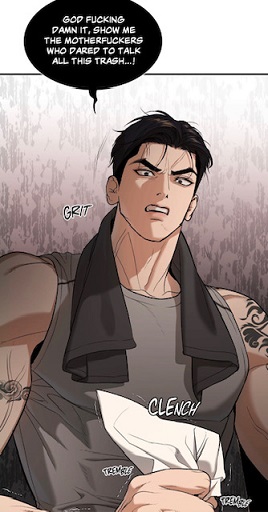 (chapter 36) The pool inverts it. Laps replace lunges; rhythm and love replace revenge and hatred. Anger loses its grip because water refuses to hold it. And now, you can grasp why the athlete was calm during the meeting:
 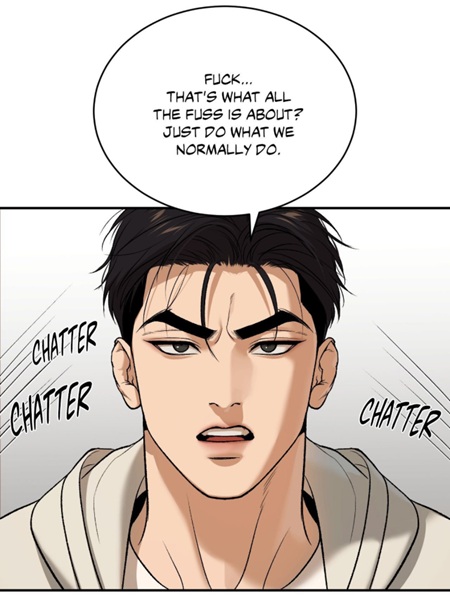 (chapter 81) His fear and anger were no longer controlling his heart and mind. “One of the best lessons you can learn in life is to remain calm.” The swimmer learns it; the fighter must now prove it. Thanks to doc Dan, the athlete was incited not only to accept himself, but also to get self-knowledge.
 (chapter 81) Arnaud Gabriel is totally unpredictable which makes him dangerous but also weak. So what happens when the athlete uses a totally different strategy? The eagle will get caught by surprise. Thus in the past, we have to envision that the wolf was the mechanical man, iron and fire, surviving by destruction. Bruce Lee’s middle path—instinct guided by awareness—is the only way out of this binary. That’s why the story moves him from steel to steam, from panic to presence.
 (chapter 62), and you are in a state of constant learning.
  (chapter 80) The seaside town and doc Dan taught him kindness, the pool teaches him composure and precision, the poster’s smoke teaches him restraint: you don’t swat at vapor; you breathe and move through it. “It is far better to be alone than to be in bad company”—so he steps out of the schemers’ frame. “When you accept yourself, the whole world accepts you”—so he stops fighting the audience and starts speaking to one person who matters, then to many. In my opinion, Joo Jaekyung will use this bout to express his feelings for Doc Dan (“to me, martial arts means expressing yourself“) and the birthday card
  (chapter 81) with the key chain represents now his motivation. Thus he resembles more and more to the physical therapist.
  8chapter 81) Under this new light, it becomes comprehensible why the athlete has not confessed his feelings yet. In my eyes, the confession will be strongly connected to the imminent match. In other words, by spending time with the physical therapist, the Emperor regained his voice and body. He can now express himself in the ring, making sure to catch doc Dan’s gaze and admiration. And now, you comprehend why I mentioned that Joo Jaekyung will come to see this fight as a source of strength and inspiration: it will be more about love and recognition from his loved one than the money or hatred from the audience.
 , I came to imagine that the athlete might strike him like “water”, hard enough to make him lose the balance and defeat him, but not too strong to damage his knee for good.
  (chapter 17) And once the cloud (doc Dan) meets the steam
 (chapter 75) – similar to doc Dan’s reaction in the States:
  (chapter 53)
  (chapter 75) His eyes open after the dream, and they open to the same light. It’s the opposite of every earlier awakening
  (chapter 54) —no gasp for air, no clutching his throat
  (chapter 75), no father’s voice strangling him. This sudden awakening embodies enlightenment.
  (chapter 75)
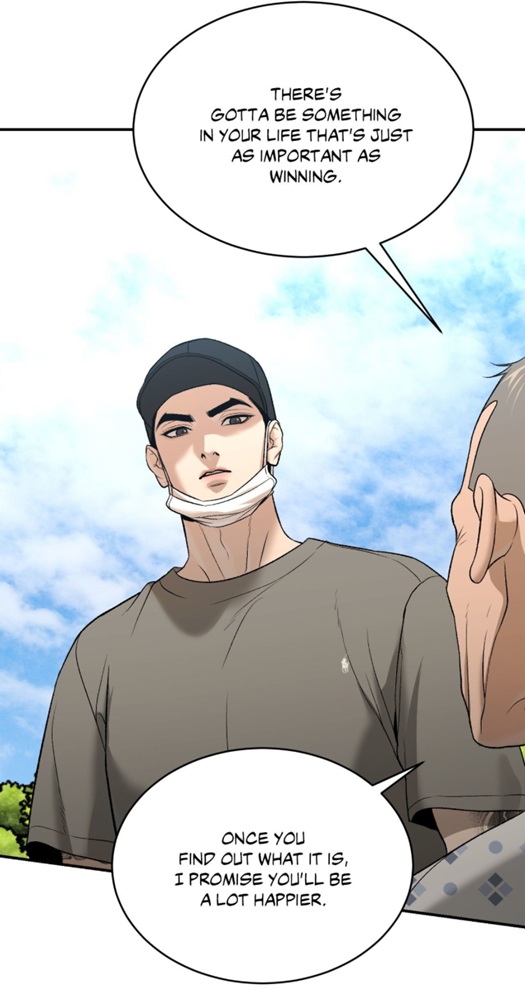 (chapter 75) On the surface, it sounds like a call for balance. In truth, it is a suggestion to find another meaning for his life. And look at the director’s facial expression, when he is talking to his former student: “
 (chapter 75) He is smiling, a sign that the director is enjoying this moment with the “wolf”. He becomes the first person to speak to Jaekyung not about titles, not about survival, but about happiness.
 (chapter 70) He knows the athlete from the past. The latter was attached to people and not to places. Why does he speak of “something” rather than “someone”, if he knows? The lesson is not about fixing a new goal or object to chase, but about discovering how to live differently — how to live happily.
  (chapter 65)
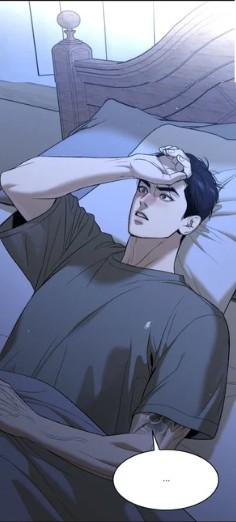 (chapter 75). Even before, he could only mutter to himself this:
 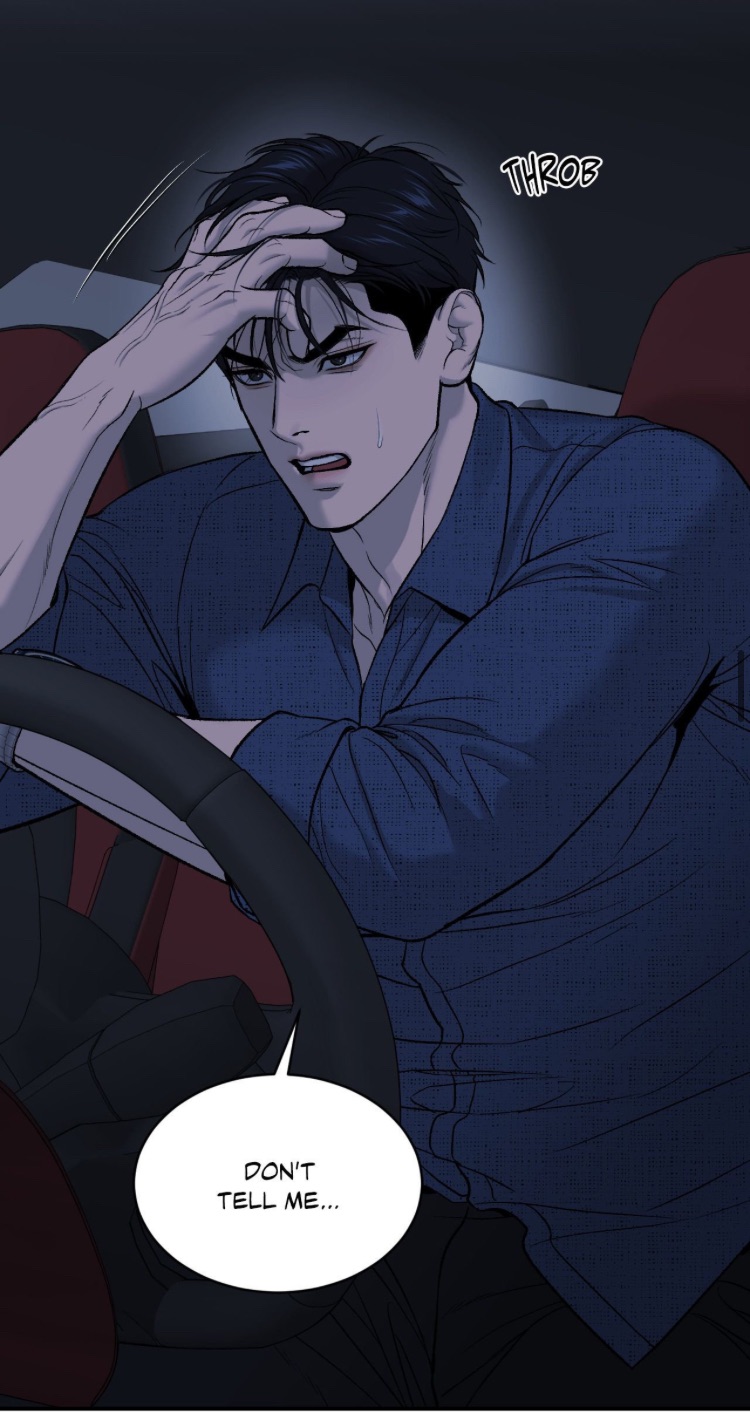 (chapter 70) The negation indicates denial, but observe that he couldn’t even use a noun. He cannot yet translate this vision into words, because he has never heard “I love you” himself
  (chapter 74) No one ever taught him how to say I love you. And so, when Dan appears in his dream, it is not the words that free him but the gaze.
  (chapter 75) or the mother’s withdrawal.
 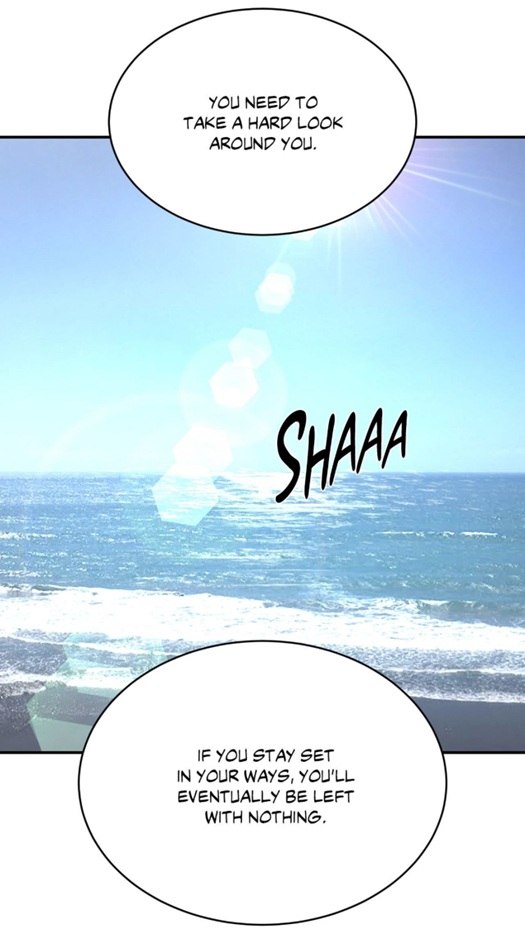 (chapter 75) The openness is what makes it love — it is respect.
 (chapter 75) His love is expressed through humility — through not knowing. At the same time, his words and facial expression ooze trust and confidence.
 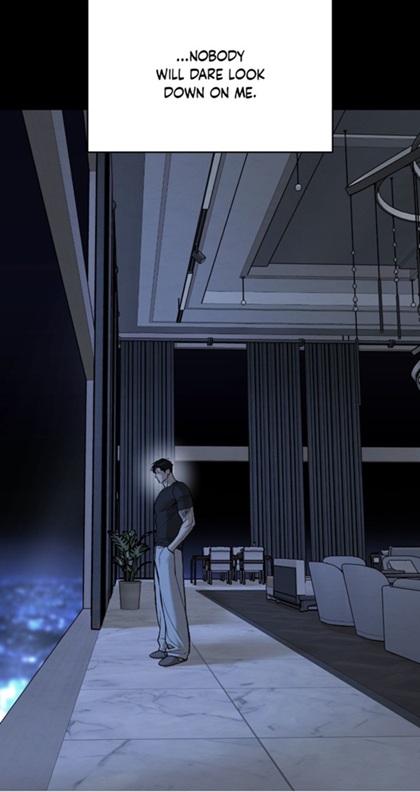 (chapter 75) Each title, each belt, each triumph was a rebuttal to his father’s words. He was not worthless, not doomed. Yet the irony is cruel: in fighting to silence those curses
  (chapter 75), he bound himself ever more tightly to them. Winning never brought peace; it only bought him momentary quiet from the voices in his head. This confession from the main lead confirmed my previous interpretations. First, the main lead had been constantly hearing voices in his head. Secondly, the hamster embodies “sound”, but a different kind: true communication linked to honesty and affection. This explicates why after the couch confession
 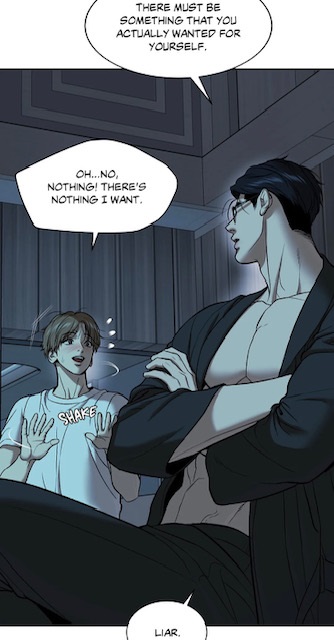 (chapter 29), Joo Jaekyung opened up a little to doc Dan! Thus the next morning, he visited the bathroom where doc Dan was!
 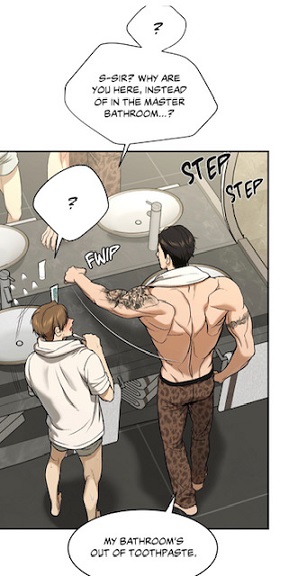 (chapter 30) It was just an excuse to spend more time with his fated partner.
  (chapter 74), no “dear,” no “I love you.” In the father’s memory, she used the child as an excuse to distance herself from her spouse. In that moment, Jaekyung is not a son to be cherished but a barrier in an adult quarrel.
 (chapter 75) carry the same cold logic. On the surface, they sound like recognition, even encouragement. But their true meaning is dismissal: you no longer need me. For her, love equaled dependency. Once her role as provider was no longer necessary, she withdrew.
 (chapter 67) His question is really an appeal for recognition. If Jaekyung answered yes, Dan could interpret it as proof of love, because in his own distorted framework being worried about equals being cared for. But Jaekyung answered with silence.
  (chapter 67) Not because he felt nothing, but because he lacked the language to connect worry with love. In his conscious mind, conception of care was still bound to usefulness — Dan mattered because he was needed for training, not because he was loved as himself, while deep down, he had already moved beyond this aspect. He was just in denial in this scene,
 (chapter 74) On one level, she does not recognize his voice. But on a deeper level, her words ring as truth: she does not know her son. She has no idea who he has become, what defines him, what characterizes him beyond money and survival.
 (chapter 74), promising to provide for her if she returns home. He unconsciously appeals to the only logic he has ever known: that love equals provision, that affection is secured by usefulness.
  (chapter 73) From him, Jaekyung absorbed the conviction that a man must be the provider, the protector, the one who works and sacrifices while the partner silently follows. This explains why, in his relationship with his mother
 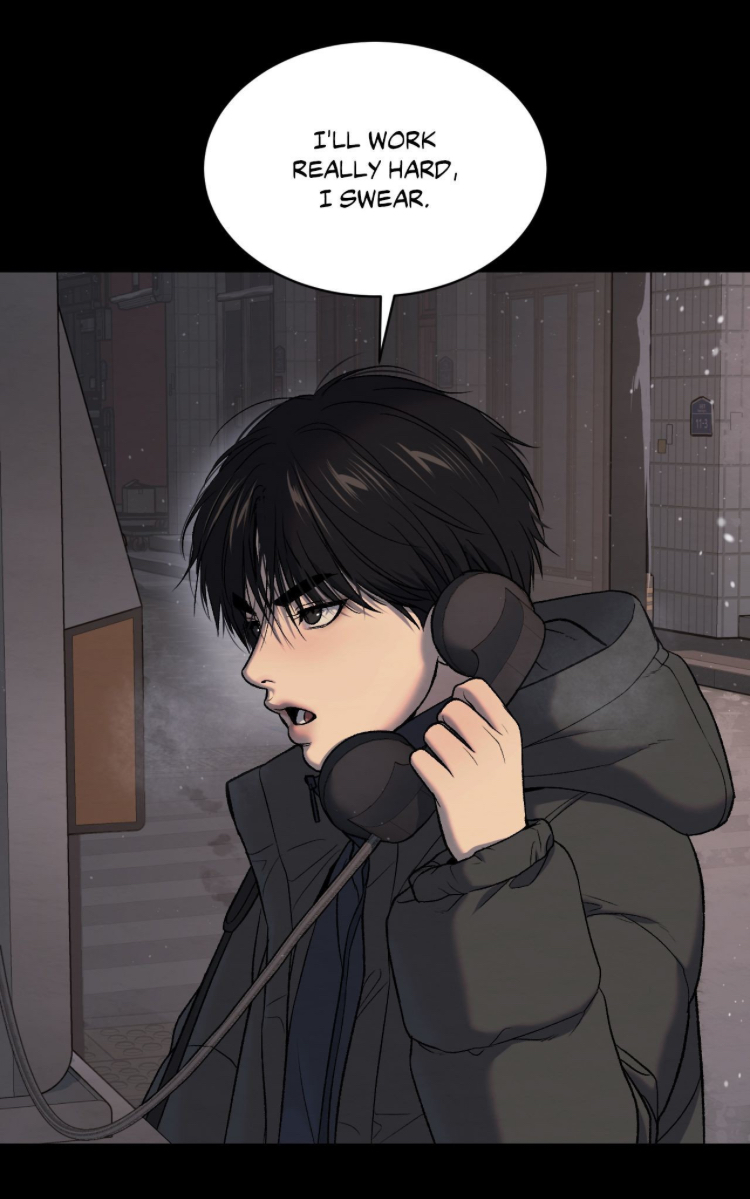 (chapter 72) and Kim Dan, he instinctively assumed he had to “do it all”: earn, fight, shield, control.
  (chapter 42) His father’s voice was violent and scornful, but its framework remained lodged in him.
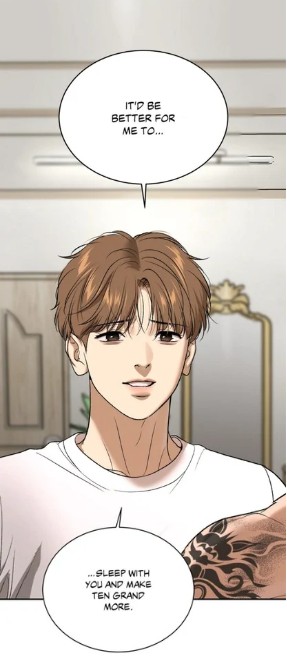 (chapter 62) That way, he can still be “free”.
 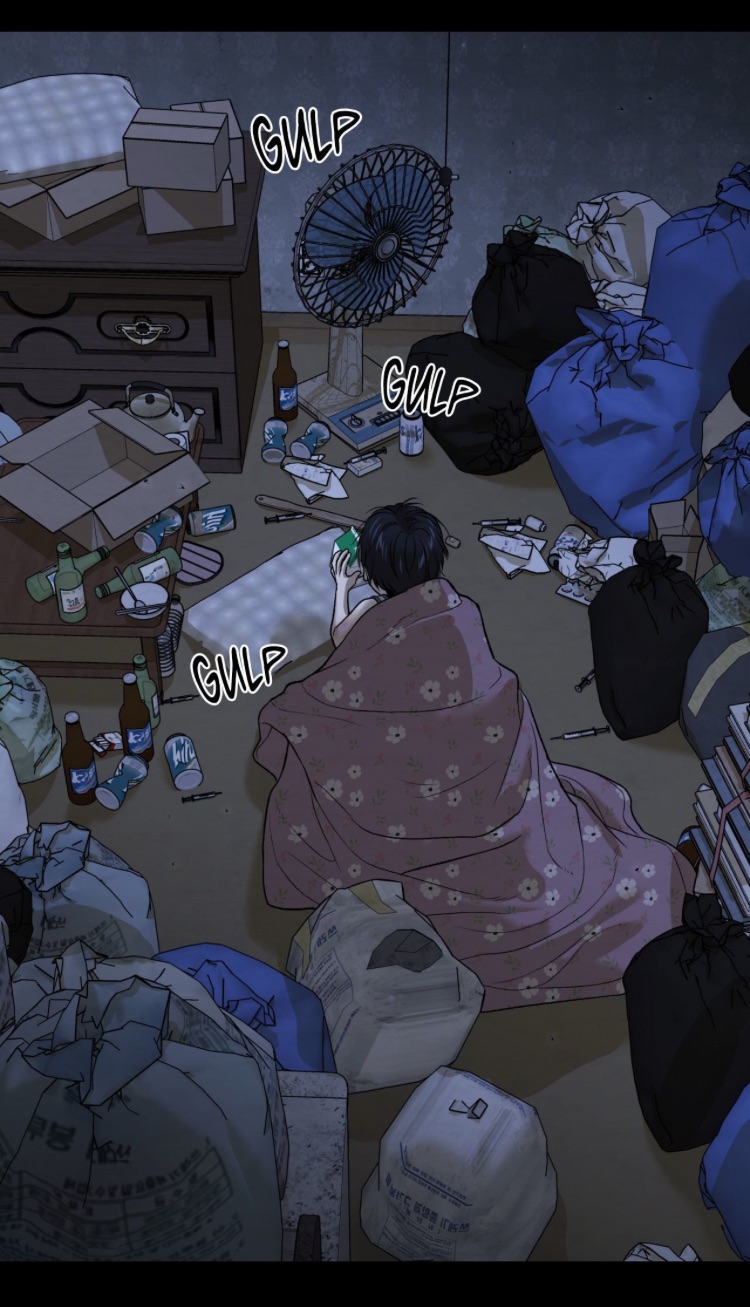 (chapter 72) becomes the perfect metaphor for her treatment of him. Once she no longer needed him, he was discarded like refuse. Just as trash cannot be reclaimed by sentimental value, she will not be able to reclaim him later through appeals to blood ties or belated need. It is impossible because he has learned — painfully — that true love is not about what you have, but about who you are.
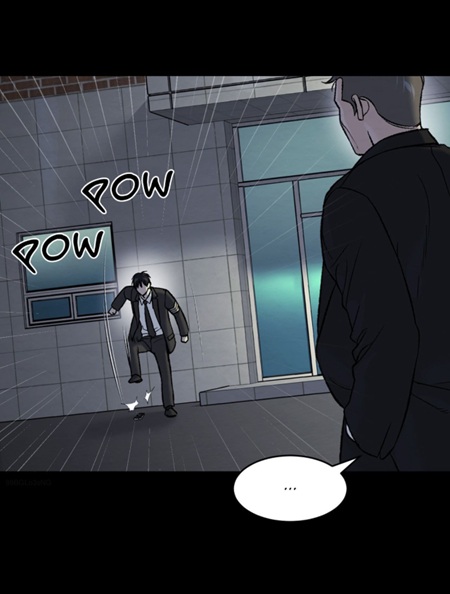 (chapter 74) He understood that the words he longed for as a child were never simply withheld — they never existed. Since we saw her back and heard her voice, I don’t think, she truly cut off ties with Joo Jaekyung. Why? It is because she had no intention to change her phone number again.
 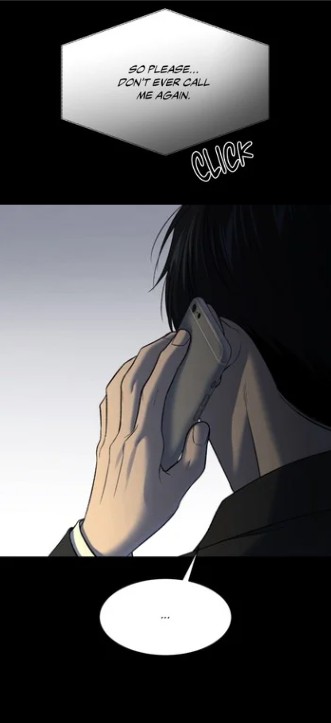 (chapter 74) She expected him to follow her request. I can definitely imagine her trying to reconnect with Joo Jaekyung, the moment he became a celebrity.
 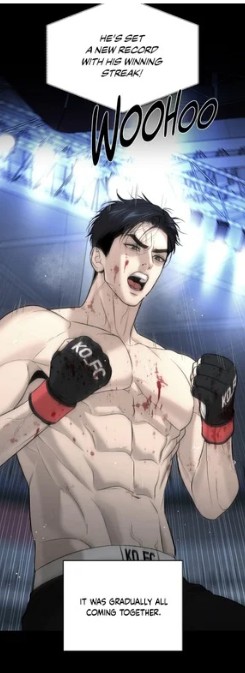 (chapter 75) Keep in mind that we have these mysterious phone calls:
  (chapter 37)
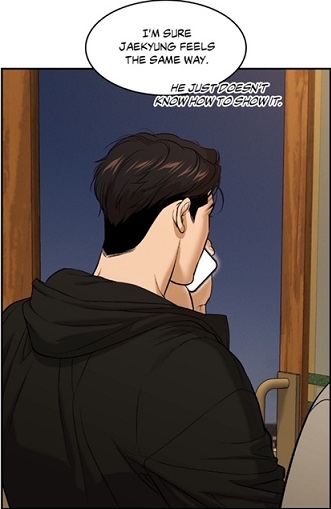 (chapter 43)
  (chapter 49)
 (chapter 75)
 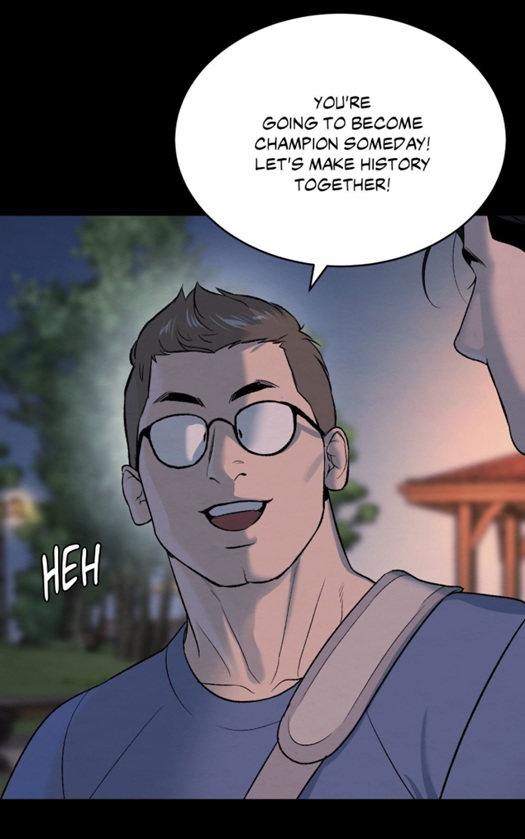 (chapter 75) On the surface, these sound like support. He smiles, his tone is warm, his words echo the vocabulary of friendship. Yet this false promise had lasting consequences: it reinforced a pattern already planted by the champion’s mother. Since childhood, Jaekyung had equated helping with caring
  (chapter 72), because silence at home had taught him that the only way to hold on to love was to provide, protect, and prove his usefulness. Under Namwook, this belief hardened into a rule: in his world, attachment became synonymous with utility.
 (chapter 34), Jaekyung assumed later that the actor would have helped doc Dan to hide.
  (chapter 58) His violent intrusion into the actor’s home was the natural outgrowth of Namwook’s teaching: if love is real, it must show itself as service.
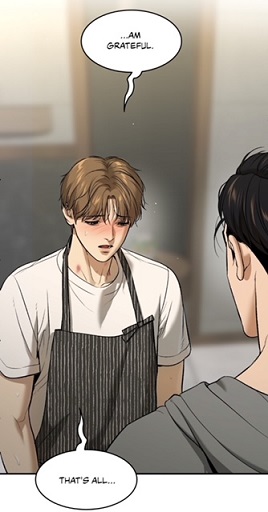 (chapter 45), Jaekyung struggled to even recognize it. Giving him a gift and expressing gratitude was not “helping the fighter”.
  “ (chapter 75) There’s a life outside the ring and the spotlight.
 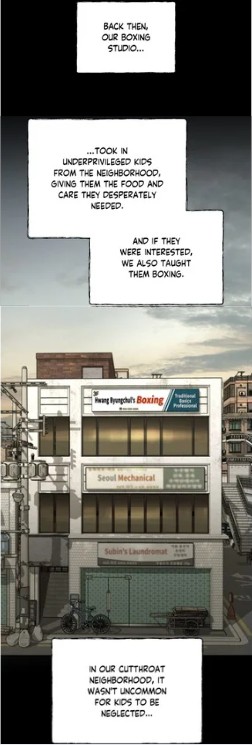 (chapter 72) was quite futile, for at the end, he ended up alone and felt lonely.
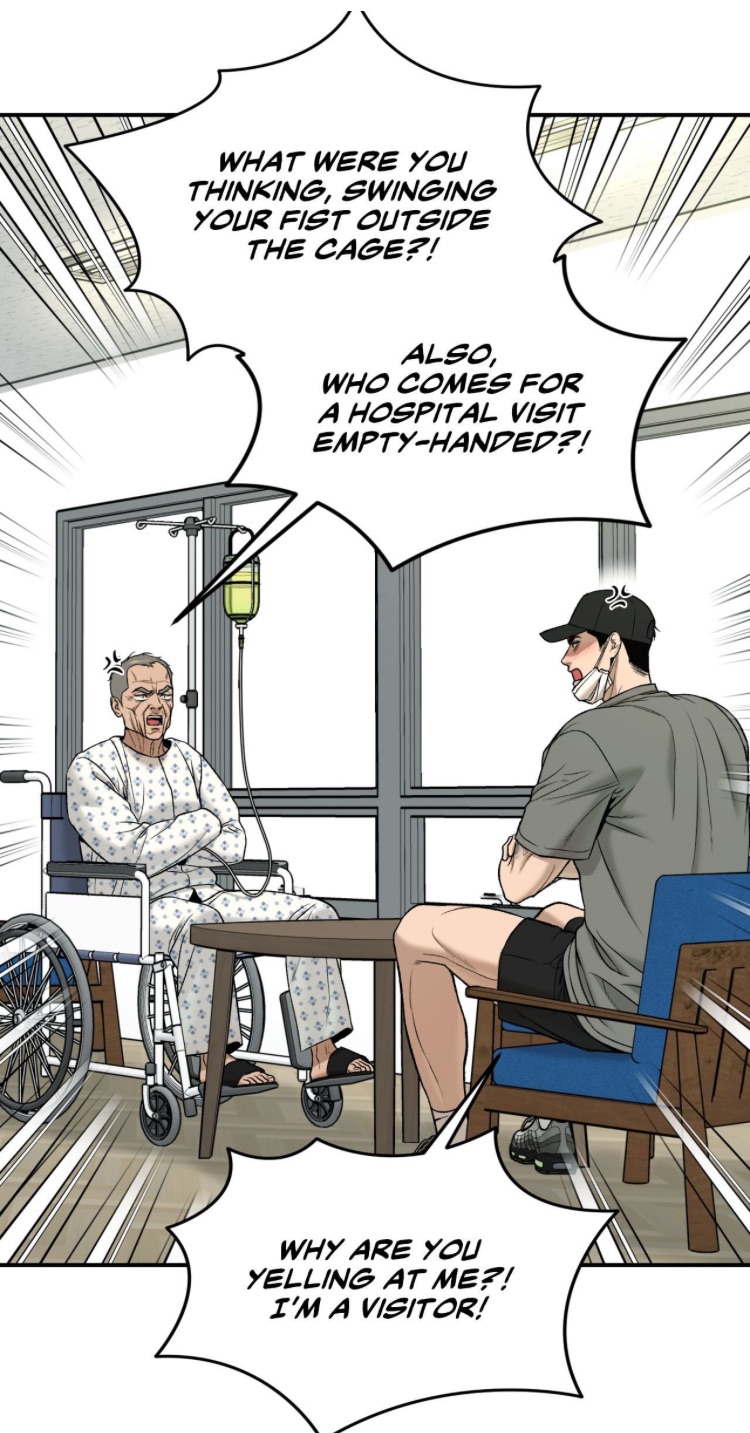 (chapter 71) Yet, deep down, he was happy that Joo Jaekyung had visited him and even spent the whole day with him. Secondly, for him, too, love has always been expressed through responsibility, advice, and correction rather than direct declaration. When he tells Jaekyung to “look around” and “think hard,” or warns Dan to “
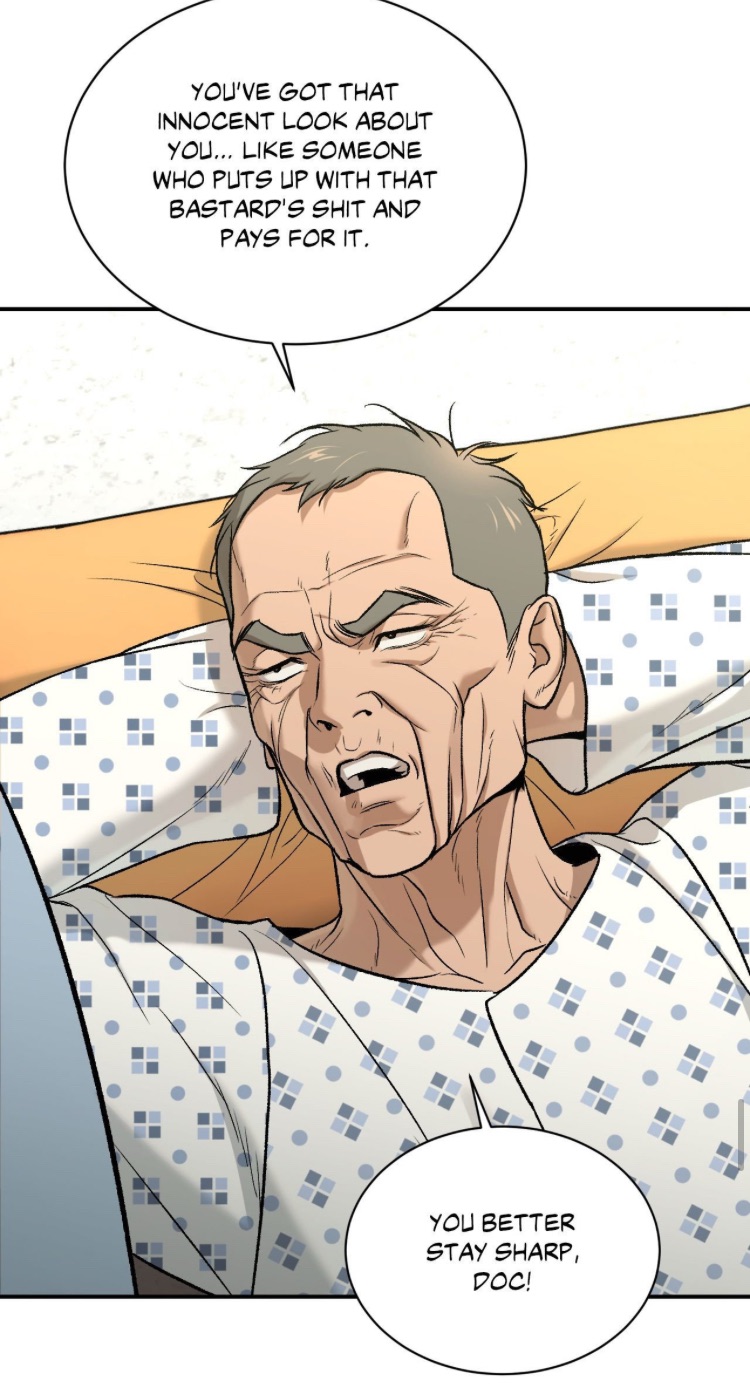 (chapter 70) “stay sharp,” he is not being cold — he is speaking from the only framework of love he knows: respect, knowledge, care, and responsibility, the very dimensions Erich Fromm outlines. He realized too late that he missed Joo Jaekyung very much. His love is embedded in actions and words of guidance, not in sentimental speech. To suddenly say “I love you” would, in his own register, feel shallow and false. He actually embodies the “real parent” IMO, because contrary to all the others adults, he learned from his mistakes. No parent is perfect, but they need to reflect on their words and actions. Learning through experiences is lifelong learning. It stops with death. The director did his best according to the circumstances and tried to correct his wrongdoings. And we can see his influence in the champion’s life. When it comes to doc Dan, he also makes mistakes:
 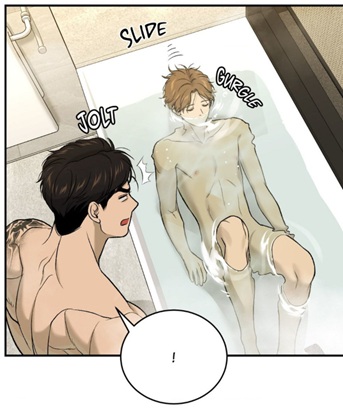 (chapter 68)
 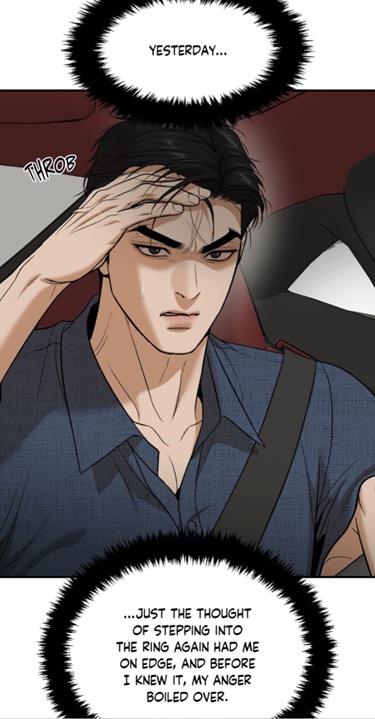 (chapter 69)
  (chapter 69) And that’s what makes him so human.
 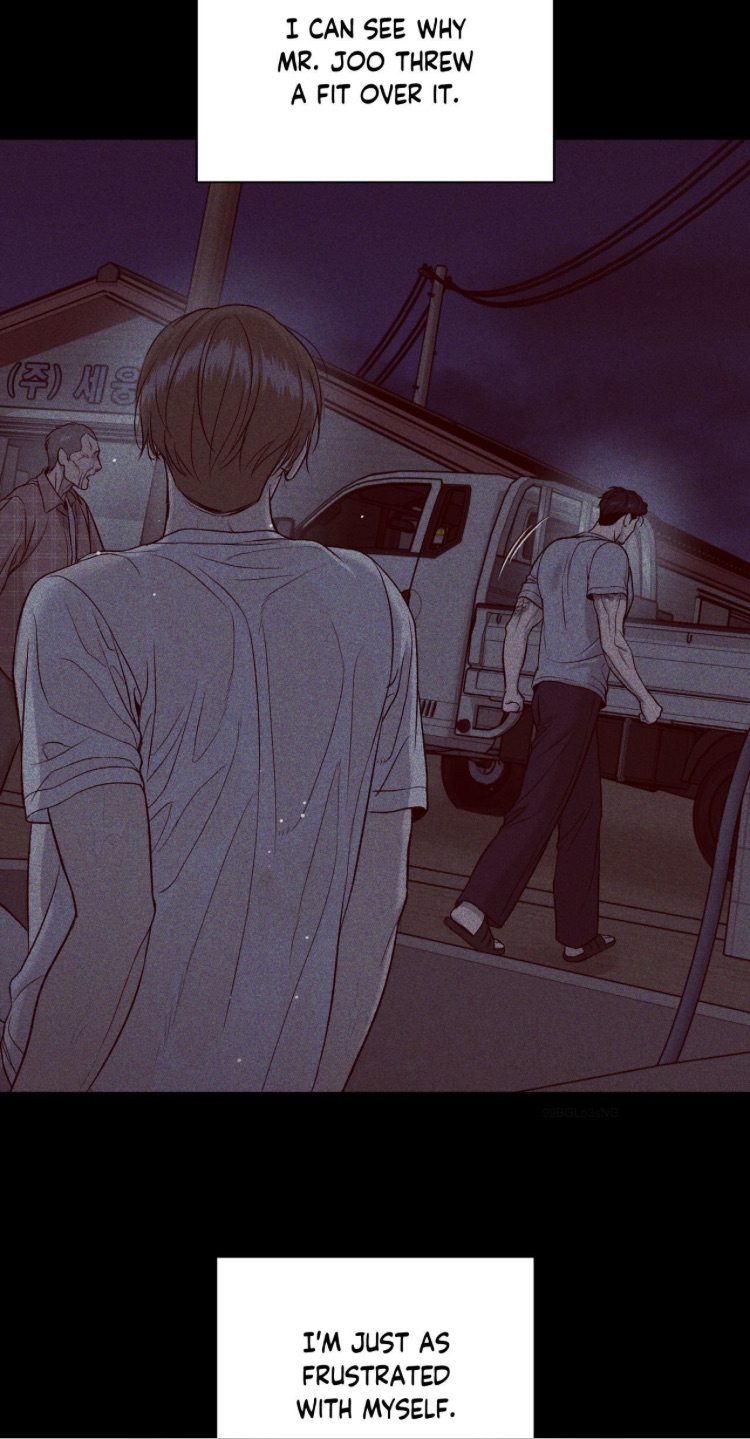 (chapter 71) Hence doc Dan didn’t resent the champion for his harsh treatment. But unlike the mother, who equated love with possession, Hwang Byungchul has begun to correct himself. He respects Jaekyung’s privacy, he encourages instead of dictating, he models a love that is belated but still real. This opens the possibility that Jaekyung, too, may learn to fill his silences differently — not with dominance or provision, but with genuine presence. He truly embodies the philosophy from Erich Fromm: it is never too late to become happy! Hence he smiled on the rooftop!
 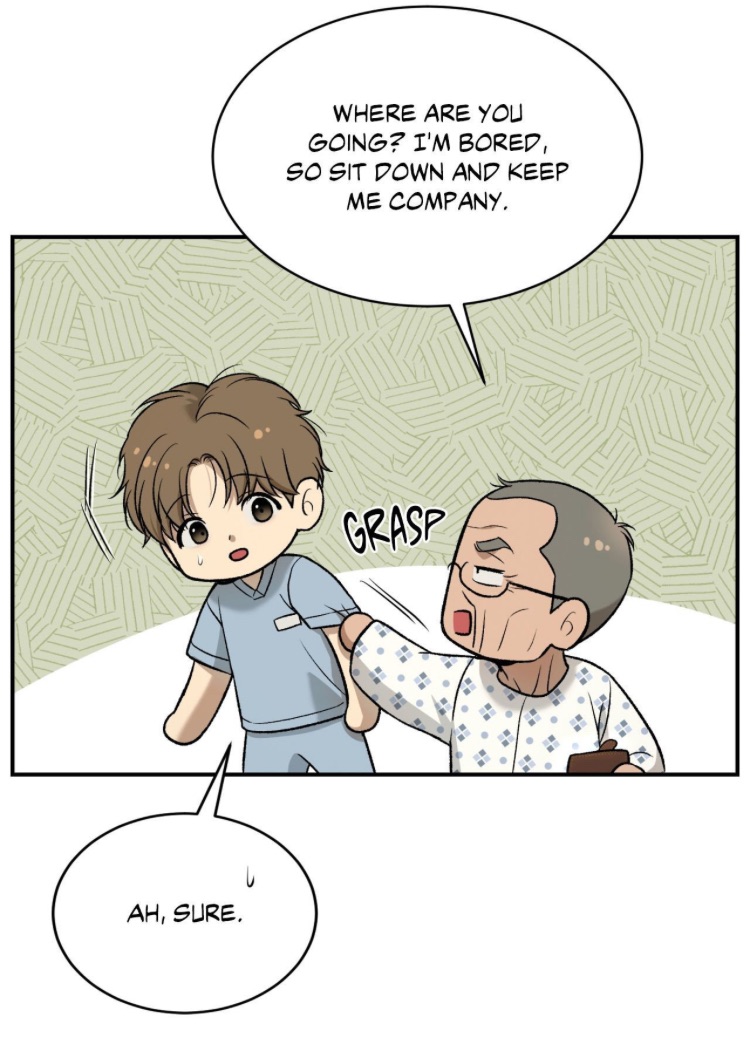 (chapter 71) This means that he lives now in the present. It looks like the “old coot” has been tamed by the “gentle hamster or duck”.
  (chapter 21) , little signs of comfort that suggest he grew up in relative security, even if his parents were often absent for work. For me, his childhood was not defined only by poverty but by rupture: love was present, then violently cut short. To a child, such a disappearance feels like betrayal, even if it was no one’s fault. Dan would have been left with a terrible contradiction — that “I love you” was true, and yet those who said it abandoned him forever.
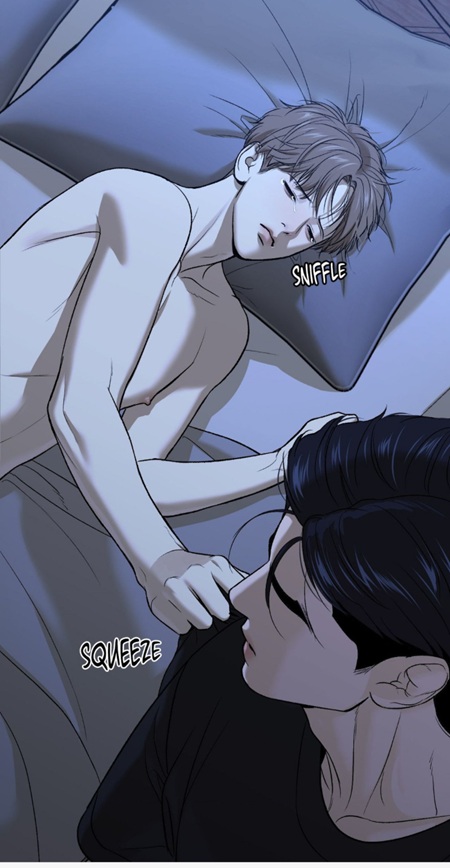 (chapter 66), whispers through tears
 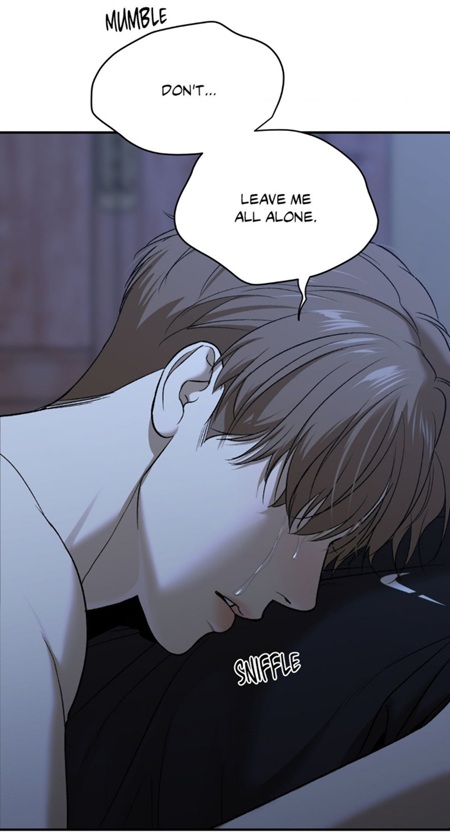 (chapter 66) and then breaks down with “
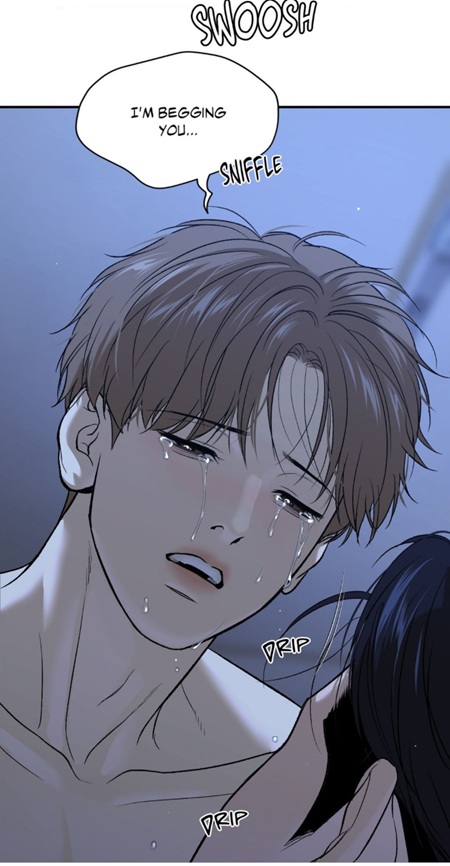 (chapter 66) These are not declarations of love, but desperate substitutes — fragments of the words he could never utter in childhood. They expose the precise gap: he never managed to say back what had once been said to him. He had lost his parents too soon. Instead of “I love you too,” what emerges is fear of abandonment. Instead of reciprocity, there is only pleading. His grip on Jaekyung’s shirt is the physical translation of what he could not verbalize: the child’s attempt to hold onto someone who is already vanishing.
  (chapter 44) Dan once received love of a different kind — playful and tender. A kiss cannot have come from the grandmother, who expressed affection only in gestures of care, never of intimacy. That kiss belongs to his mother.
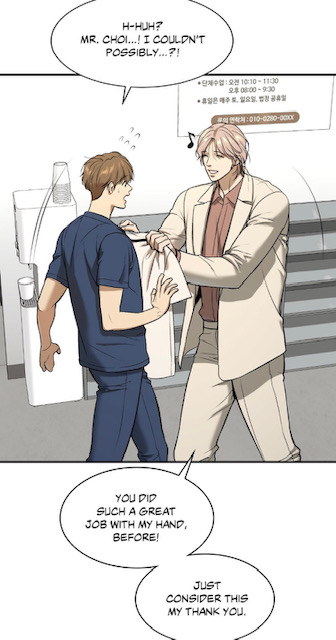 (chapter 31)— which he associates with unbearable debt. His mother’s final “gift” of love was one he could never repay. Any present risks reopening that wound: “What if I can’t repay this? What if I lose them too?”
 (chapter 74) — the quiet sign that the sun is about to rise. Dawn is not just a natural detail in Jinx; it is a symbolic hinge. It is the moment when night meets day, when moon and sun overlap, when endings bleed into beginnings. In myth and fairy tale, dawn often marks metamorphosis: the Little Mermaid turns to foam, the enchanted sleepers awaken, the beast becomes a prince. For Jaekyung, too, dawn is the threshold. His father cursed him at dawn
  (chapter 73), stripping him of worth, tying the rising sun to shame. But in this new dawn, another voice will have to intervene. Only Dan can replace the curse with a blessing. Only “I love you” can undo “you are not special.” And if it is not “I love You”, then it could be a kiss, the symbol of “affection”.
  (chapter 75) He was always there — arranging his matches, covering his problems, whispering about his “future.” Yet the quality of his presence was hollow. He never once guided Jaekyung beyond his father’s curse, never helped him imagine a life beyond titles. Thus he never discovered that the “monster” was suffering from insomnia.
 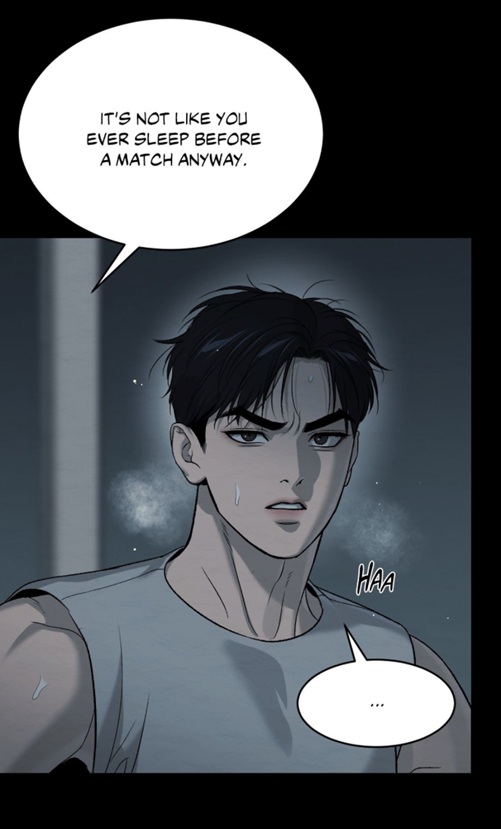 (chapter 75) His companionship was measured in duration, not depth.
 (chapter 41), an invitation to walk together. Namwook’s long presence embodies the trap of quantity without substance. Dan’s brief but luminous presence reveals the power of quality: the kind of attention that transforms.
 (chapter 75) Namwook’s whispers, too, keep him chained to that rhythm of urgency — rankings, titles, deadlines. But once Dan’s whisper replaces Namwook’s, time itself shifts. The future is no longer a debt to repay but a horizon to approach slowly, hand in hand.
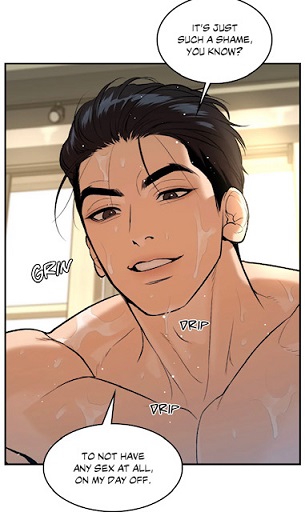 (chapter 27), joked
 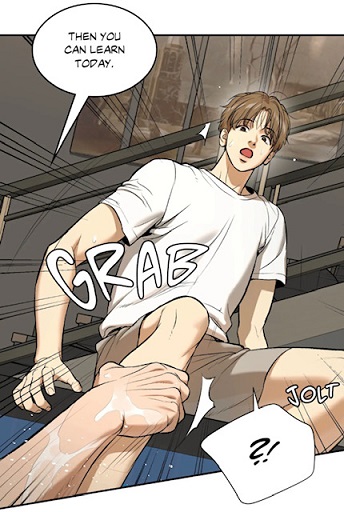 (chapter 27), even rediscovered his love for swimming. Water, his true element, was reclaimed as play rather than punishment.
  (chapter 27) That single day was a seed — a foreshadowing of what life might look like once the curse is broken for good.

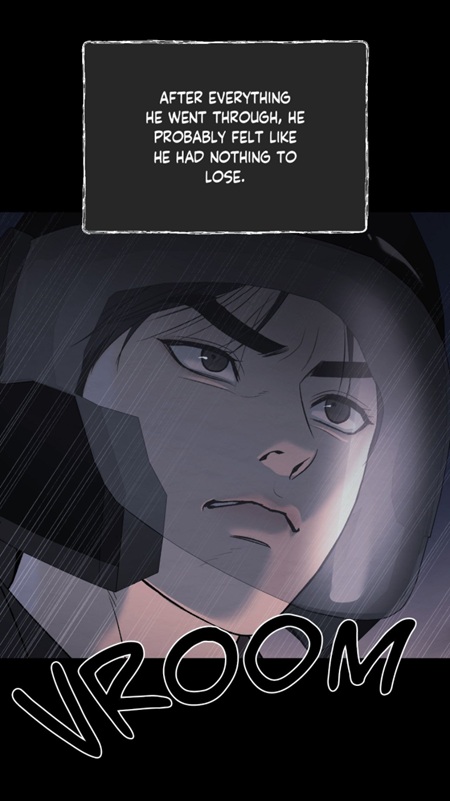 (chapter 74) What do they share? You might already have noticed it. At first glance, the answer seems obvious: each sentence turns around the word after. But if we pay closer attention, it is not just after that repeats, but after all. And here, the “all” quietly carries the weight of everything. A slight shift, but one that feels significant. But why this expression, and why here? Why does it resurface precisely in the context of Jaekyung’s family and past?
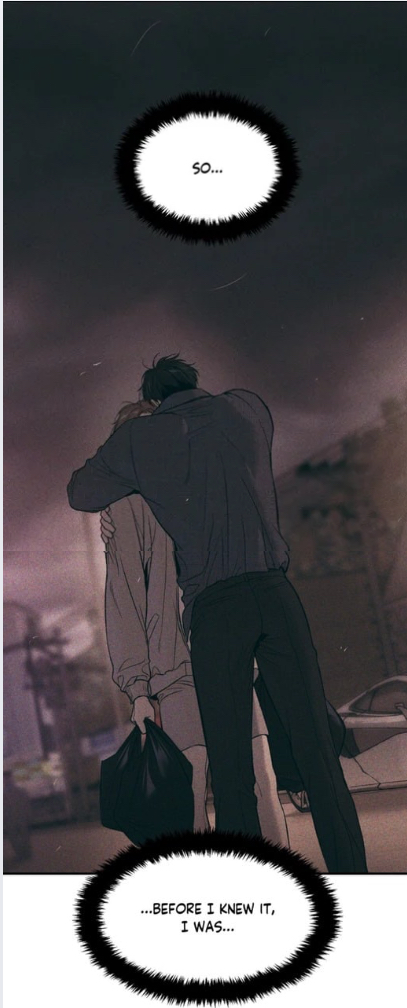 (chapter 70) For the first time, the flow of time shifted. Besides, no explanation, no certainty—just an admission that something happened beyond his planning or reasoning. Where the earlier lines spoke with closure, this one arrived without a verdict. But what does this “confession” signify for the athlete now?
  (chapter 73) He was announcing his desire to leave this place, as if he wanted to abandon his father. Nevertheless, he just said it out of anger and frustration. Yet, those words pierced Joo Jaewoong, for they reminded him of his wife’s betrayal. Unable to face his own failures, he retaliated by thrusting her image back onto the boy.
 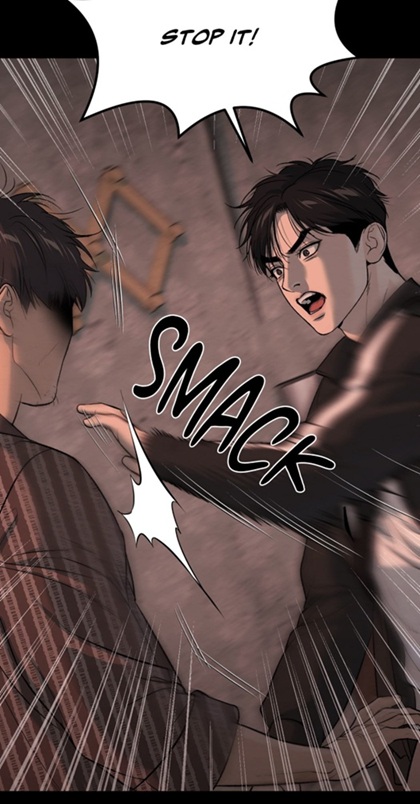 (chapter 73) locked in confrontation, while in the past, the woman had already shown her back — a gesture of refusal that foreshadowed her desertion. She had withdrawn in silence; the man, however, lashed out in noise. Both abandon, but in different registers: hers in silence and absence, his in noise and abuse. But the father’s gaze was selective.
 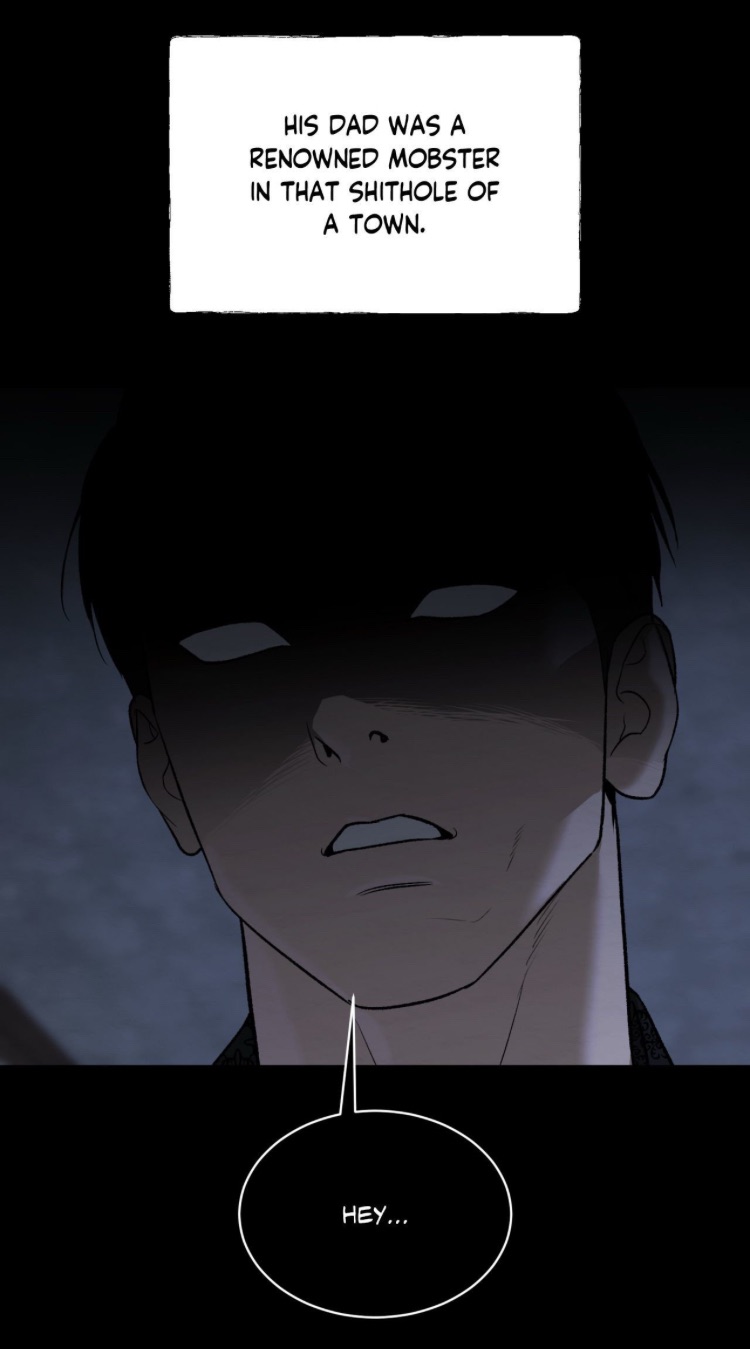 (chapter 73) — all were rewritten into a story where the woman was the sole traitor, and the child nothing more than her extension. In this way, the boy was denied recognition as a victim in his own right. He had been abandoned too. He had been abused either. He became instead a mirror in which his father projects the wound of being left behind.
  (chapter 73) The cycle of reproach was sealed. From that moment on, he understood the danger and the destructive weight of words.
 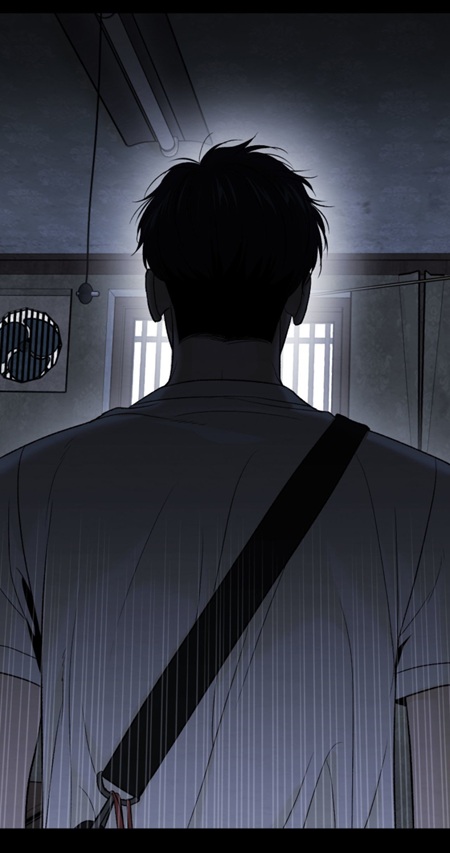 (chapter 73) To speak was to wound, to be wounded in return. Besides, the boy could never speak of this truth. He carried the memory of that last conversation in silence, crushed by the belief that he bore guilt for his father’s death. Shame and responsibility bound his tongue. That is how words, once used against him as weapons, became impossible for him to wield in his own defense. However, this was only the beginning of his withdrawal into silence. His fists would become his language, his body the only safe instrument of reply.
 (chapter 73) The betrayal he lamented was nothing more than the logical outcome of his own principle. There had never been a we — only a man clinging to his pride, a woman turning her back, and a child caught in between. His after all
  (chapter 74) In the past, the boy had dialed her number from the same public booth
  (chapter 72), clinging to the hope that she might answer one day. Eventually, those attempts ceased — but not the attachment. What remained was the number itself, saved under “Mom” on his phone
  (chapter 74) Here, he was old and rich enough to buy his own cellphone. The phone number was no longer a channel of communication, only a relic: a fragile thread he could not sever, because the fact that she never changed her number sustained the illusion that reunion was still possible. That dormant hope was shattered only when she finally picked up — not out of recognition, but by mistake, assuming the unfamiliar call must be important.
  (chapter 74) repeating “please” twice — not out of kindness, but because he had become a source of threat to her new life.
  (chapter 66)
 (chapter 74) unless she had once suggested that possibility? His words reveal that he had been clinging to a seed she planted long ago, a future she quietly abandoned while building a new life elsewhere. And what was that seed? Not just her vague suggestion that “once they have money”, or
  (chapter 74) Furthermore, it gaslights him into believing that the abandonment never occurred — that the break is only beginning now.
  (chapter 72) neglect, starvation, abuse, loneliness, betrayal — and yet the parents invoke it not to acknowledge his pain, but to hide their wrongdoings (justify their betrayal) and as such their failure! By placing after all at the front of her sentence,
  (chapter 74) When the boy once caused trouble, the police looked for Joo Jaekyung’s guardian. In the cutthroat town, they reached out to Hwang Byungchul — not because he was legally responsible, but because everyone knew the boy was close to him (“we”). Guardianship, then, is never erased by silence. Even if you abandon the child, others will still hold you accountable.
 (chapter 74) In a city of anonymity, hearsay cannot replace documents. She left a paper trail — a legal identity that binds them together. Should the champion cause trouble in Seoul, or even become the victim of a crime, the police would have to turn to his legal guardian. And that can only be her.
  (chapter 26). Oh Daehyun mentions that the young fighter broke the punching machine so many times he was blacklisted. Such destruction could easily have brought police intervention — and if it had, they would have been forced to search for his legal guardian. That guardian is none other than the mother who abandoned him and her new family. In other words, her erasure was never complete: every act of the boy risked pulling her shadow back into the open. Furthermore, this is what Kim Changmin revealed to his friend and colleague:
  (chapter 26) But Joo Jaekyung had long discovered sports and MMA, when he arrived in Seoul and met Park Namwook for the first time.
 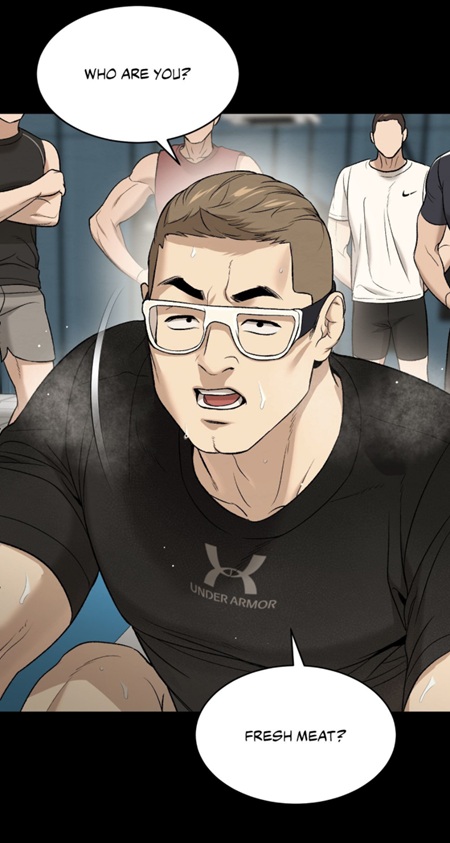 (chapter 74) He had left his hometown because of the director’s suggestion.
  (chapter 74) who redirected him before he was swallowed by the wrong path. The discrepancy between these accounts exposes more than just the manager’s manipulation: it points to the shadow of another intervention. How could he afford to destroy machine after machine without consequence? The only plausible answer is the “mother” and her new family, whose money and silence allowed him to pass as the “self-made” Emperor while erasing their own responsibility from the tale. And now, you comprehend why The Emperor was made voiceless. [For more read
 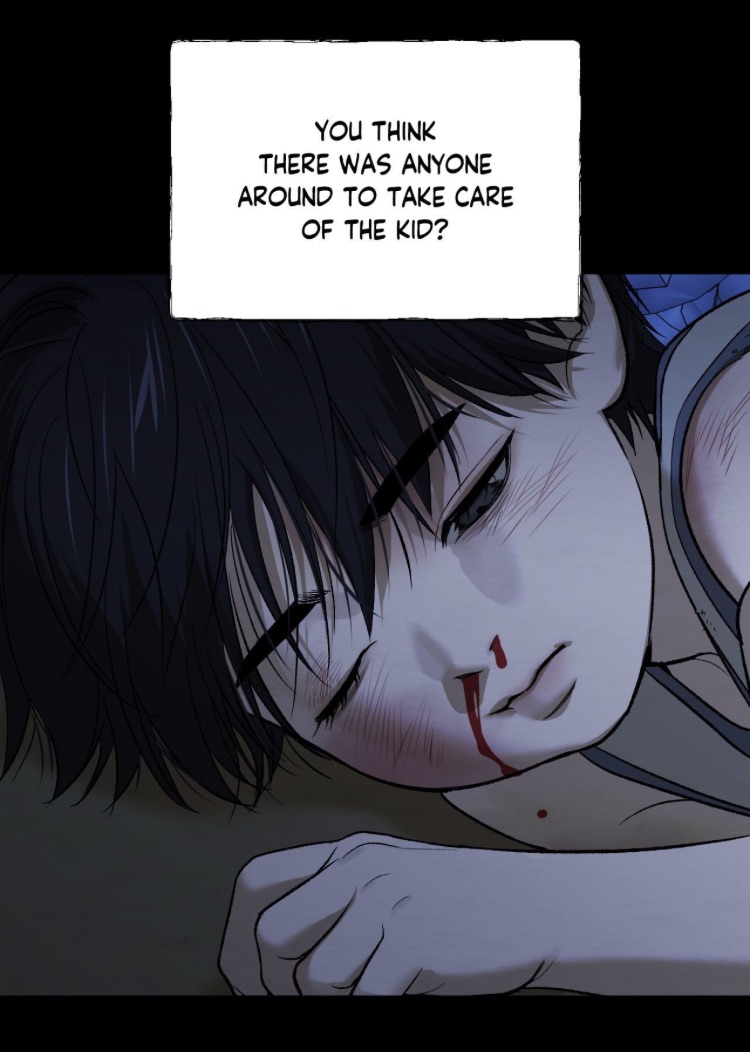 (chapter 74) For doc Dan who embodies the present, such a statement can only become the ultimate truth: the star had been an orphan like him.
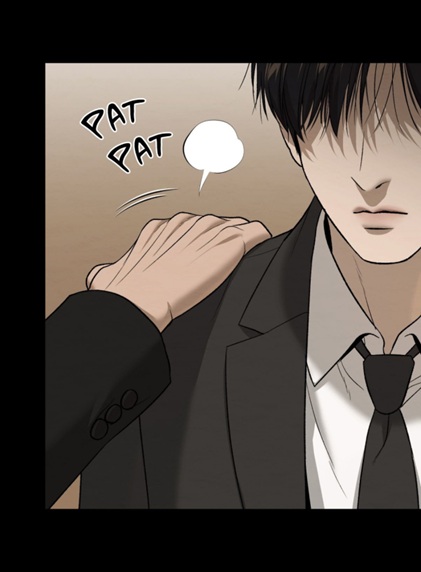 (chapter 74) Once again, the director was there — but his presence was mute. He placed a hand on the boy’s shoulder, yet he never lent him an ear. He never invited the boy to speak, never created a space where grief, anger, or longing could be put into words. In other words, he was present in body but absent in voice and heart. Thus the director’s pat was a gesture of pity. It was a substitute for words, a way of saying “poor boy” while protecting himself from deeper involvement. But precisely because he withheld speech and listening, it denied Jaekyung the chance to articulate his own grief. It comforted without connecting.
 (chapter 74)
  (chapter 74) He was given a chance to step in, to finally become the guardian he had failed to be on the night of the boy’s deepest collapse. Therefore it is no coincidence that he claims to have raised him, while the readers are well aware of the truth.
 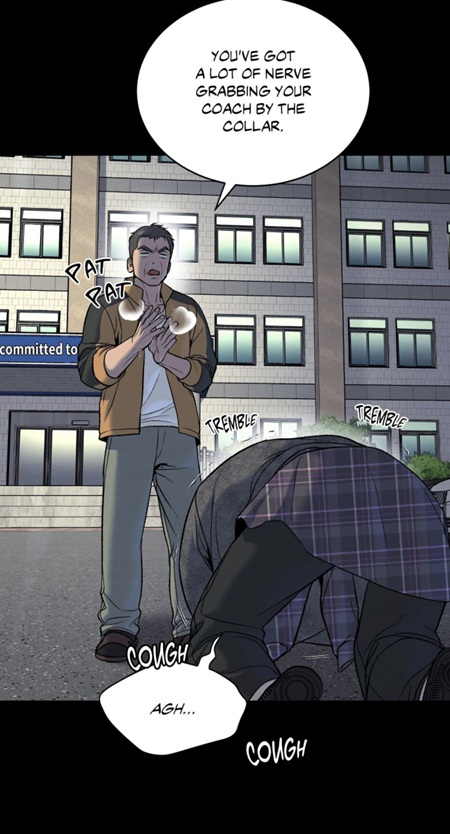 (chapter 74) or sometimes stood beside him, kept him in sight. On the surface, this could seem like loyalty, but in truth it was another form of failure. Facing him head-on meant constant confrontation, constant judgment. His presence was physical, but never protective; it was discipline, surveillance, not refuge. He never had his back!!
  (chapter 74) The father was dragged into memory as a warning: “Do you want to end up like him?” The mother, already gone, was turned into a conditional model: “Would she even want to live with you if she could see you now?” In both cases, the boy was denied his right to grieve. His parents were not mourned, but transformed into instruments of discipline. He was forced to run from one shadow and to chase another, leaving him no space to simply exist. The director maintained the future champion trapped in the chains of the past.
  (chapter 74) For him, she was a symbol — fuel for perseverance, as he was projecting his own mother onto the boy’s! For the teenager, the mother was the deepest wound. By naming her, the director imagined he was motivating; in reality, he was tearing it open once more. But how could Jaekyung reveal the truth — that his own mother had rejected him, not just once, but twice? To admit this would have been to confess that the hope she dangled before him, the dream of reunion, had been nothing but a cruel game. His silence was not pride but a shield, for voicing it would mean exposing that even his mother’s love had been counterfeit.
 (chapter 74) Thus his silence was not indifference but defense: he was protecting her name, even when it burned him to do so. In shielding her, he also buried himself.
 (chapter 74) That is how another pattern emerges: every exchange the boy endured was never true conversation, but always structured as an argument or a challenge. Even here:
 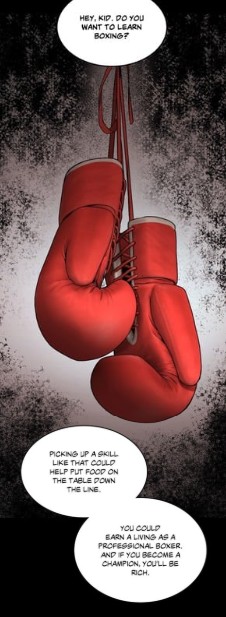 (chapter 72) At home, his father turned dialogue into a bet — a contest of strength where affection was absent and only victory mattered. Later, in front of the police station, the director reproduced the same pattern: invoking the mother not to console, but to provoke, to test, to challenge. In both cases, words became weapons. They did not open space for Jaekyung to speak; they cornered him, forcing him either to resist or to submit. This explains why in season 1, the two protagonists had similar interactions.
 (chapter 74) For him, discipline was always bound to her presence, her food, her care, her silent labor that sustained the gym. By invoking “the mother” as a motivator, he was, in truth, repeating the only model of loyalty and endurance he had ever known. But this was borrowed authority, not Jaekyung’s. What may have given the boy a flicker of purpose in the moment — to endure, to fight “for her sake” —
  (chapter 74) could not last. It was never his voice, never his wound being acknowledged. It was an external script imposed upon him. And so, over time, that imposed motivation faded, eclipsed by the title and the money.
  (chapter 54) The director’s form of guidance could not sustain him; it was external, borrowed, conditional. Therefore, it is not surprising that he was never contacted after the main lead’s departure for Seoul. By then, the director had already become like his own mother — reduced to a memory
  (chapter 70) and nothing more. He neither possessed the boy’s number nor showed the desire to stay connected; worse, he had told him explicitly never to return.
  (chapter 74) Through both words and attitude, he conveyed that their paths were to diverge for good. Yet, this was never truly his intentions. In cutting him off so decisively, he enacted the very separation he condemned later. The boy had taken his words too seriously.
  (chapter 56)
  (chapter 66) His care always comes after, never before. The word itself reveals his stance: he notices change, but belatedly, when damage is already done. The main lead is now escaping his control. And now, you comprehend why PArk Namwook blamed Joo Jaekyung and slapped him at the hospital.
 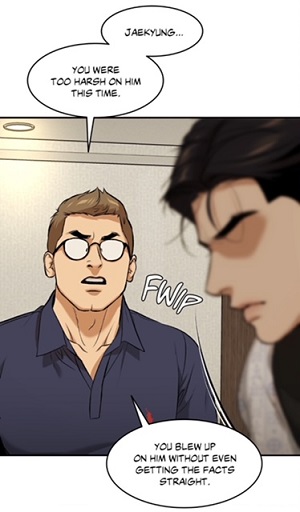 (chapter 52) That way, he could divert attention from the “before and circumstances”. And in season 2, the man hasn’t changed at all. Instead of asking what caused Jaekyung’s crisis, he chides him for straying from the routine — for not showing up at the gym, for being absent.
 (chapter 52) The slap at the hospital was more than a physical outburst; it was the eruption of long-repressed truth. Where he once swallowed pain in silence for his mother, and later endured fists in silence for his coach, here he answers back. Lately thus marks not only Namwook’s delay but also Jaekyung’s refusal to bear the weight alone anymore.
 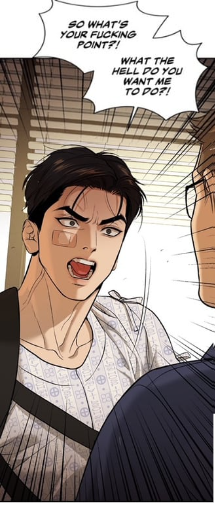 (chapter 52)
  (chapter 45) his true life hidden elsewhere. Like her, he conceals his absence behind a phone call, creating the illusion of presence without truly standing by the boy.
  (chapter 45)
  , (chapter 70), while remaining oblivious to the rot within their own world and the medical world. The director accused Joo Jaewoong of “choosing the wrong path,”
  (chapter 69): for the first time, a figure of authority assumed responsibility, however insincerely. What to others looked like shallow PR, to Namwook appeared as a dangerous break with the rule of denial. It highlighted the emptiness of his own guardianship, where reproach replaces protection and victims are erased from the narrative.
 (chapter 74) Honestly, it would be funny, if the champion used the same words than his own mother against the manager
  (chapter 70) Thus the manager is confident that the star can return to the ring. By cutting the manager off in such a moment, Jaekyung would be affirming that he no longer accepts neglect disguised as toughness. Both “directors” are trapping the champion in the chains of the past and the future. For them, there’s no present and as such no happiness or fulfillment. Hence Hwang Byungchul is even bored, when he watched the MFC match.
  (chapter 70) As you can see, it is never too late… Thus we saw this on the roof of the hospital: a real and intimate conversation between the “guardian” and his pupil:
  (chapter 71) The director has changed!
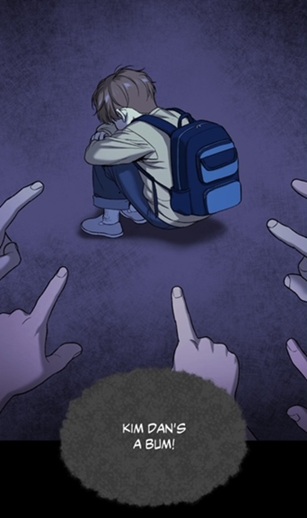 (chapter 57), and his forced maturity to a single, fleeting day. No trauma, no endurance — just inevitability. By collapsing years of hardship into a harmless “day,” she erases both the past and the victim. And now, you can understand why doc Dan is trapped in the present! By erasing the “before” (abandonment, trauma) and trivializing the process of “becoming an adult,” she collapses time into a single, static present. Kim Dan is not allowed a past that hurts (because she erased it), nor a future that could unfold differently (because “he just grew up” is presented as inevitable).
 (chapter 62) cannot, by themselves, sustain love. Emotions flare and fade, tied to the immediacy of the present. Thus the mother could break her promise and even lie to him later. What endures is not emotion alone, but the principles that Fromm identified as the essence of love: care, responsibility, knowledge, and respect. These qualities stabilize the fleeting nature of feeling and transform the present into something continuous, something that can grow. In this sense, the teddy bear bridges the gap between “present” and “future”:
 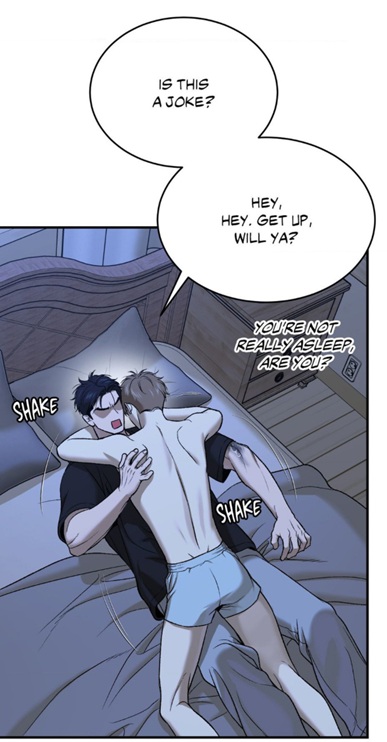 (chapter 65) it transforms the fleeting moment of emotion into a promise of constancy. After all, before it’s too late, what both men longed for was never glory or escape, but a home where they could rest — not alone, but in each other’s arms. By discovering emotions and learning to live in the present, the champion also rediscovers his inner child. His line — “Is this a joke?” — marks that shift, since jokes, like emotions, only exist in the immediacy of the moment. It is only a matter of time, until he laughs because of a joke. By embracing doc Dan like a teddy bear, he allows himself to cling and regress, no longer the wolf or the Emperor but simply a boy seeking warmth. Even his cold becomes symbolic:
  (chapter 70) illness forces him to slow down, to be vulnerable, and to receive care — something denied to him in childhood. In this way, love turns the regression into healing, transforming weakness into the possibility of renewal.
 (chapter 5) and if it’s true, then this person would be the second husband.

 (chapter 66) quietly shapes the emotional core of the episode. At first, this detail may appear insignificant, but its narrative timing and visual prominence suggest a deeper meaning. The sudden flight of the sparrows
  (chapter 66) mirrors the situation of the main characters, as the latter are about to depart for Seoul. Striking is that Mingwa draws our attention away from the champion grabbing doc Dan, but focused on the birds. Why? It is because the author desires her readers to notice the world of subtle symbolism. Far from being a random detail, the presence—and sudden flight—of the sparrows echoes the characters’ inner transitions, raising questions about home, communication, critique, and the complicated process of change. To understand the richness of this scene, it’s crucial to consider not only the sparrow’s traditional meanings but also the narrative choices the Webtoonist makes in what is shown and what is left unseen, especially regarding the role of witnesses and the power of perception. To fully appreciate the layers of meaning in this moment, it is essential to consider not only the universal symbolism of sparrows but also their role in classic fables, Korean culture, and even modern pop culture—where the sparrow’s voice becomes a catalyst for both belonging and change.
 (chapter 69), making the sparrows’ appearance an omen of the official union to come.
 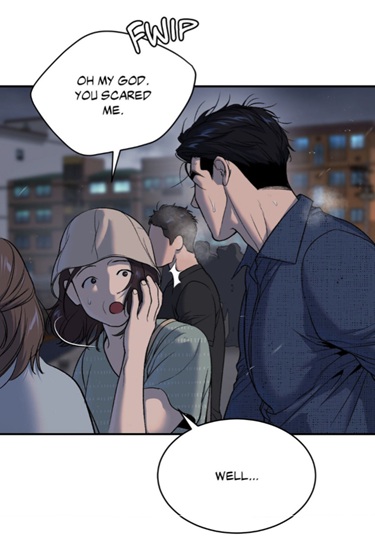 (chapter 69) —who serve as stand-ins for the broader community. In this way, their union is not just a private matter but becomes public and recognized, affirming their bond within the social fabric of the town.
 (chapter 69) fight again in the fall which leads him later to admit his own vulnerability
  (chapter 69). The omen of unity is fleeting, replaced by the return of hardship and uncertainty. Through this careful allusion to the visual language of traditional art, Mingwa invites us to savor the beauty and community of these moments
 (chapter 64) or inspire the group to change its direction. In the context of Jinx, the sparrows’ existence
  (chapter 62). It took place in the morning. The harmony doc Dan hoped to find is momentarily lost, replaced by anxiety and a sense of being unmoored.
  (chapter 62), therefore the young man didn’t pay attention to his arrival contrary to the quoted panel above. Moreover, it is clear that the “hamster” felt safe in the presence of the landlord. Back then, he had only accepted the champion’s request after hearing the landlord’s remark:
  (chapter 62) The champion’s abruptness is the result of Kim Dan’s past rejection and stubbornness, the athlete is expecting resistance. However, he can not ignore doc Dan’s exhaustion and fragility. Besides, he feels motivated and justified, as he is following Shin Okja’s request.
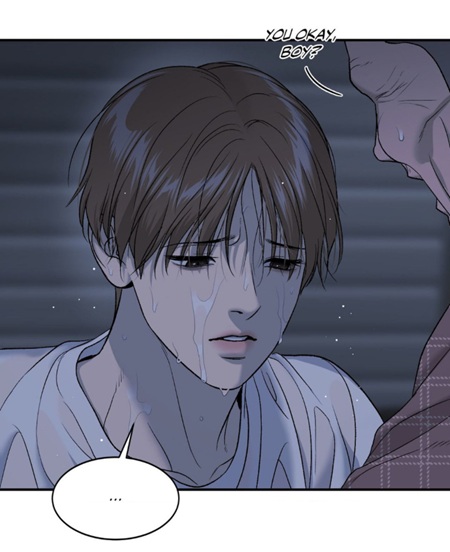 (chapter 69), while Joo Jaekyung must confront the impact of his actions and learn new ways to show support. The challenges that follow—the physical setback for Kim Dan and the champion’s new professional demands—reinforce that their journey is full of hurdles. Still, these hindrances serve a higher purpose: to remind them that they are not alone, that they need each other’s protection and backing, and that the bonds forming in this little town can become sources of true resilience.
 (chapter 66) The landlord’s proximity and his bemused, neutral questioning guides the reader’s interpretation, framing the scene as ordinary and non-threatening rather than alarming or inappropriate. He is able to grasp the existence of Joo Jaekyung’s motivations behind his behavior. He doesn’t judge the protagonist as face-value, he desires to know why he is acting this way.
 (chapter 69) and throws him outside
 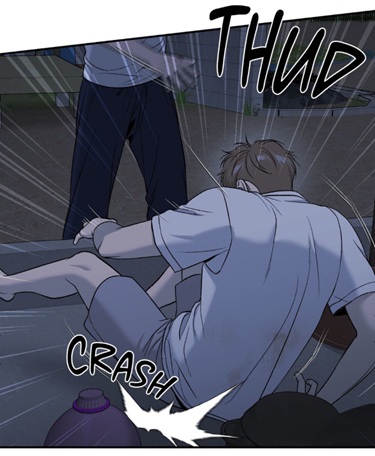 (chapter 69), the action punctuated by dramatic motion lines and the sounds of impact. Yet, despite the force of the act, the landlord—who witnesses the scene in real time—remains silent, choosing not to intervene, criticize, or even question Jaekyung’s motives.
  (chapter 69) His composed presence in the background
  (chapter 69)
  (chapter 69) Moreover, I am sensing that the elderly man might feel terrible, for he asked for the athlete’s assistance in the middle of the night. But let’s not forget that the main lead had driven 4 times within 2 days the distance from the little town to Seoul.
 (chapter 62) he brings his belongings
  (chapter 66) gradually into his new environment, creating a personal nest.
  (chapter 69) This process is not merely about physical comfort, but about constructing a sense of safety, identity, and belonging. One of these items could be the doctor’s present. Notice that before he left his penthouse with the gray car, he was holding the “golden key chain”,
  (chapter 66) a sign that this gift has now a sentimental value for the athlete. Just as sparrows persistently build and rebuild, so do the characters in Jinx adapt, settle, and grow—sometimes through trial and error, sometimes in fits and starts, but always moving toward a deeper sense of home. By moving to a smaller house, he is encouraged to select what truly matters to him. This evolution has not reached its end: the champion will keep moving his possessions to the little town. Moreover, I am more than ever convinced that we should expect the arrival of the Wedding Cabinet in that small town.
  (chapter 19) To conclude, we should see the chapters from 62 to 69 as the creation of the couple’s nest and as such “home”.

 (chapter 69)
 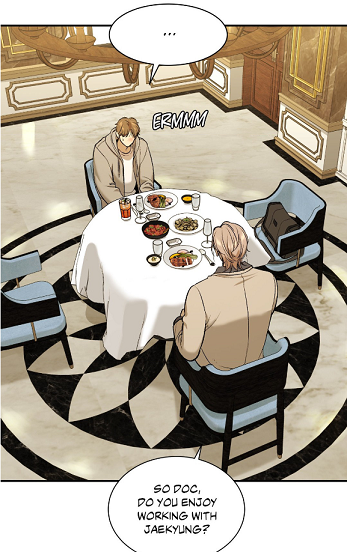 (chapter 32) Yet upon closer inspection, certain oddities stood out to me.
  (chapter 43) In that scene, Kim Dan poured soju into his water cup to pace himself during a drinking session.
  (chapter 43) Joo Jaekyung, unaware, mistakes it for his own and angrily reacts upon drinking it. This moment shows how closely water glasses are associated with Korean dining culture—even in casual or alcohol-heavy settings. Hence during a meal, the characters always have
  (chapter 32) two glasses on the table. In South Korea, it is customary for restaurants to provide a glass of water to every diner, regardless of the meal’s formality or complexity. This small gesture reflects hospitality, attentiveness, and the expectation of proper nourishment. The absence of water glasses, therefore, subtly communicates indifference or even disrespect—signaling that the recipient is not truly welcome to enjoy a full meal or rest. When applied to the “dessert meeting,” this detail becomes all the more striking: a cultural standard is ignored, revealing the performative nature of the gesture. Their absence at the “dessert meeting” feels deliberate, a symbol of superficiality and arrogance.
  (chapter 43) The reason for his mistake was that they had only placed a spoon and sticks.😮 He had no glass for himself. It was, as if they had forgotten him. In other words, he was not supposed to eat and drink at his own birthday party!! 😂
 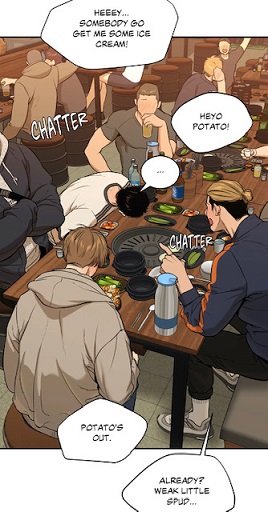 (chapter 9) It reflects a pattern: the champion is present but not included in the communal or emotional aspects of the gathering. His spoon and chopsticks function like a prop, much like the untouched knives and forks at the dessert meeting.
  (chapter 69)
 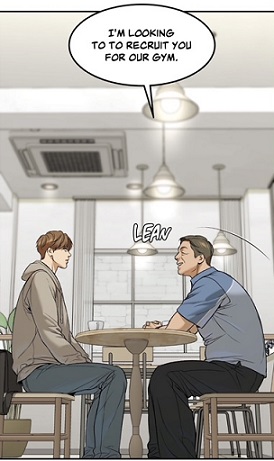 (chapter 48), the meeting between Choi Gilseok and Kim Dan. The former invited him for coffee.
 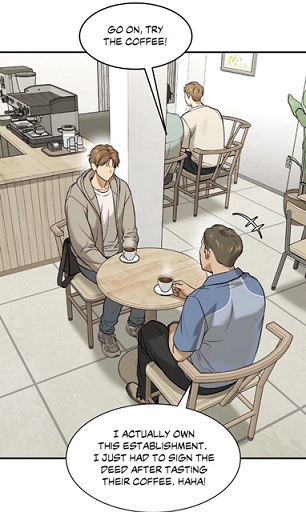 (chapted 48) At first, the gesture seemed generous—he offers a home, a car,
  (chapter 48) and the promise to help doc Dan to get a new treatment for the grandmother.
  (chapter 48) But this so-called kindness is conditional: in exchange, Kim Dan must betray Joo Jaekyung. Striking is that director Choi only ordered coffee. But a coffee without a dessert is no real break, but a stimulant—fuel for continued work. In both this meeting and the previous one with Choi Gilseok, the core remains the same: “work”, stinginess and greed wrapped in the guise of generosity. Every sweet drink or dessert lies a hidden price. This comparison highlights that the current meeting is not for the athlete’s sake—it is meant to serve Park Namwook and the CEO, who share different but aligned goals.
 (chapter 66) linked to fire, summer (hence the reference to the trip in the States), passion, performance, and vitality—ironically twisted here into cold professionalism and superficial seduction. Her position contrasts with her symbolic warmth, highlighting the emptiness of her care. This explains why she is portrayed eyeless. She sold her “soul” to money and as such to the “devil”.
 (chapter 69) wearing black, aligns with the North (흑, Heuk), associated with the color black, winter, water, authority, secrecy, and hidden control. It was, as if he was representing the missing glass of water. His position as the initiator of the meeting and his location near the window reinforce his dominance and detachment.
 (chapter 69), which evokes confusion and corruption. This artistic backdrop continues the theme from Voyage, Voyage (life is a journey), positioning Jaekyung as mentally “adrift” within this orchestrated trap. At the same time, the green might reference the “Black Forest”—a literal and metaphorical journey ahead. Like Hansel and Gretel, he is being lured with sweets into the forest. But unlike the fairy tale, the athlete’s breadcrumb trail will not lead him home—it will lead him to Kim Dan. On the other hand, by making this connection, I couldn’t help myself thinking that exactly like Hansel and Gretel, doc Dan and his fated partner will cross the witch’s path on their journey to independence and happiness.
 (chapter 37) Now, Joo Jaekyung mirrors this casual dark attire
  (chapter 69) —a signal of inner turmoil and his transition from his former life. Blue stands for loyalty, thought, and calm, while black alludes to his troubled past. He is evolving but not yet free.
 (chapter 69) the strawberry fraisier (chosen by the woman) stands for surface sweetness and seduction; the layered chocolate cake (perhaps a feuilleté) represents indulgence and opulence. Joo Jaekyung alone chose a square Black Forest cake—a form traditionally associated with structure, truth, and boundaries. Because the cake contains kirschwasser, subtly referencing the athlete’s brief brush with alcohol, it becomes clear that Park Namwook was not the one behind this order. Imagine this: under his very own eyes, the champion is encouraged to taste a strong alcohol. In my opinion, they must know that the star has been drinking. Yet, it was through Kim Dan’s presence that he stopped drinking, making this dessert an unconscious mirror of both his struggle and strength. Meanwhile, Park Namwook, ever the follower, selects the same dessert as the CEO and the same drink as the woman, revealing his pretense and pastiche once more. Since the manager has always bought junk food (chicken
 – chapter 26, hamburgers, ramen
  – episode 37), it becomes clear that the hyung simply has no idea about Western food in general and in particular expensive French or German dishes. That’s why he didn’t ask about the dish or questioned the champion if he should eat the deadly sweet cake.
  (chapter 22)
 (chapter 48), their meeting was not supposed to be secretive. On the other hand, because the scene was photographed
  (chapter 48), it created the illusion of “betrayal” as it looked like a secret meeting”. In episode 69, the meeting is hidden from the public. In contrast to the earlier public appearance alongside Baek Junmin for the cameras
 (chapter 69) This framing is deceptive: far from being a gesture of goodwill, it reveals the urgency and opportunism driving the meeting. However, this gesture is carefully staged: the CEO and the woman in red are the ones who selected the time and location of the encounter, placing the athlete in a reactive position where he must adjust his schedule to their convenience. It reinforces the illusion of privilege while concealing a dynamic of control. The meeting is designed to appear personalized, but it reflects MFC’s ethos that ‘time is money’—a business-centered logic that prioritizes efficiency over empathy. The CEO’s urgency to schedule a match, despite Jaekyung’s unclear health status, further exposes the commodification of the athlete. Notably, the proposed match is not even a title bout.
  (chapter 67) He was not dropping the case. That’s the reason why the fighter is offered a match in the fall. If he is busy, then he might forget the “case”, especially since fall is right around the corner. He would be occupied training. Like mentioned in previous essays, my theory is that the CEO is involved in the scheme. This assumption got reinforced with this meeting. Striking is that the focus of the “chief of security” was the incident in the States.
  (chapter 69) By stating that the criminal belonged to a Korean gang in the States, she implied that this man had no direct connection in South Korea. In addition, with this statement, she claims that he is still in the States and the champion is safe. However, if the “fake manager” had been living in the States for a long time, he wouldn’t have spoken in Korean automatically.
 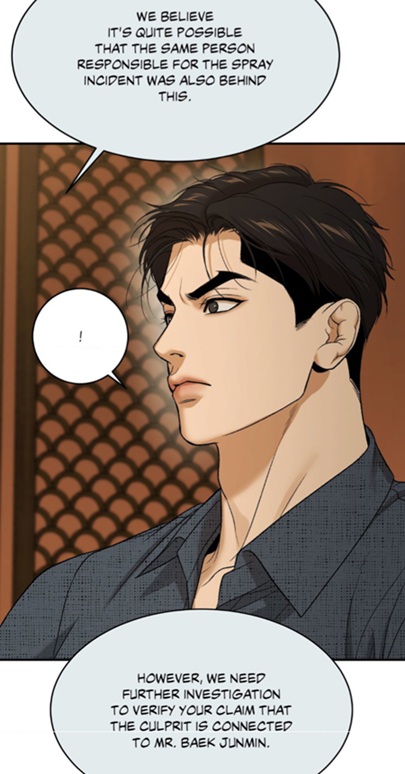 (chapter 69) This means that she is attempting to erase the involvement of MFC in the scheme. That’s why they are now offering an apology, which is naturally fake:
 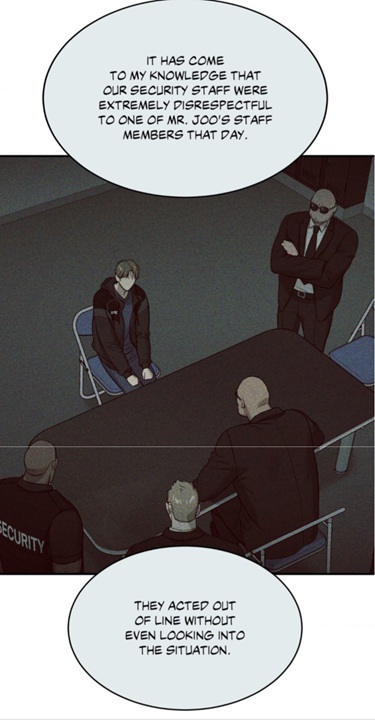 (chapter 69) So Joo JAekyung is more than a fighter and the apology (interrupted by the manager) is the evidence for this. Under this new light, Jinx-philes can understand Park Namwook’s interruption and embarassement. Not only he doesn‘t want to be reminded of his past mistakes (passivity, failure of his job, the slap), but also this apology serves as a mirror and reminder that he is not the true owner of the gym.
  (chapter 69) He is his unseen savior. Thanks to Kim Dan, the star remained silent and calm giving the impression that he had fallen for MFC’s trick.
  (chapter 40) This echoes Kim Dan’s confusion in Chapter 40 when interrogated in English. It also conveniently hides their ties to local authorities—acting as foreigners with no responsibility or rootedness in Korea. But this is what director Choi Gilseok confessed to the angel:
 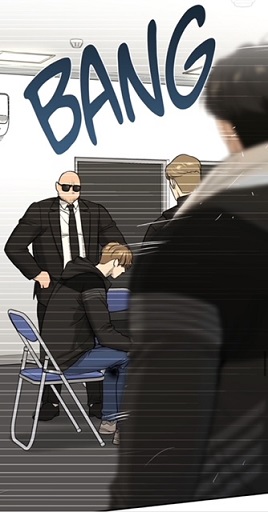 (chapter 40), effectively opening the metaphorical door to truth and protection. In this meeting, however, Park Namwook serves to contain and silence, not to defend. His placement underscores his complicity and fear—not just of the CEO or MFC, but of confronting the consequences of his own failures. But the manager is on his way for a rude awakening, he will be taught a lesson: don’t judge a book by its cover. The athlete won’t be the depressed, anxious, submissive and passive “boy” any longer. Moreover, he listened carefully to the chief of security:
  (chapter 69) It is Kim Dan.
 (chapter 69) he leaves during the day and arrives by night.
  (chapter 69) This spatial detachment echoes his emotional separation from MFC and its toxic grip. Distance, both literal and figurative, is now his strength. The fact that he chose to return to the little town outlines that he is now considering that place as his “home” and not the penthouse. He is not realizing that his true home is doc Dan.
  (chapter 32) During Kim Dan’s lunch with Choi Heesung, the floor beneath their round table shows a twelve-petal flower motif—evocative of the legendary Knights of the Round Table, who were said to sit twelve strong. That earlier scene featured Heesung testing Dan, much like the fake round table later hosts a veiled test for Joo Jaekyung. The repetition of round tables masks exclusion and betrayal. These early “false” tables pave the way for a true table—one that Jaekyung might one day forge with fighters like Heesung, Potato, Oh Daehyun, and others, where loyalty and respect, not manipulation, define the bond.



 (chapter 23) Potato initially admires the champion, aspiring to be like him
  (chapter 23) and dreaming of recognition as his sparring partner.
  (chapter 23) Joo Jaekyung, much like the prince in Andersen’s story, projects an image that masks the reality of his life. His success, while celebrated, represents years of hard work and immense personal sacrifices. At the gym, Park Namwook undermines these efforts by slapping the athlete
  (chapter 7) and calling him “my boy,”
 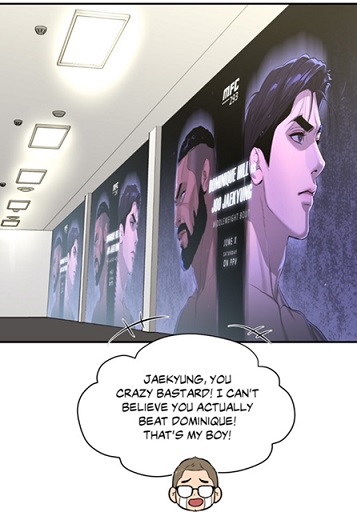 (chapter 40) effectively denying Joo Jaekyung the acknowledgment he deserves for his achievements. Potato is misled by this fabricated image
 (chapter 23) without understanding the profound struggles beneath his image, failing to perceive Joo Jaekyung’s unhappiness, struggles, and loneliness. Like the image is exposing it, Potato views the athlete as a companion as well whose efforts should serve to keep him company. This dynamic mirrors the little mermaid’s conditional love for the prince, as Potato’s idealization is rooted in his own aspirations rather than genuine understanding. Just as the prince remains oblivious to the mermaid’s sacrifices, Potato overlooks the reality of Joo Jaekyung’s burdens, emphasizing a dependency that hinders true recognition and connection. Once his reputation as a champion is tarnished
  (chapter 52), the amateur starts distancing himself from his former idol. This exposes the fragility of Potato’s dream. Therefore it is not surprising that he starts taking a different path: acting, though I still think, it is temporary. However, behind the glamorous facade of the show business, there exists a dark side as well.
  (chapter 59) Heesung’s fate is similar to the champion’s. Despite his popularity, the actor is deeply unhappy. He feels lonely, for people only know the actor and not the man behind the mask. That’s the reason why he is looking for his soulmate.
  (chapter 33) That’s how I realized why Potato and Heesung are destined to be together. They are both self-centered, dishonest and blind, but more importantly they are chasing after an illusion which is strongly intertwined with immortality. In addition, my avid readers should keep in mind what Potato truly expressed, when Mingwa introduced this “chow chow”.
  (chapter 23). In reality, he wanted to use the athlete as his servant. The closeness
  (chapter 23) he was seeking was self-serving. While the amateur and the actor are searching for the “perfect companion”, the other couple has no expectation from others. They both have no longer any dream or hope. That’s the reason why Kim Dan was putting this vision of Joo Jaekyung behind a veil:
 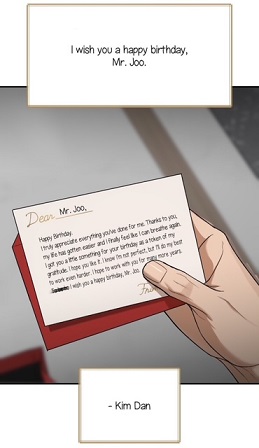 (chapter 55) though I believed that he had another bigger wish, but due to his low self-esteem, he didn’t dare to express it:
 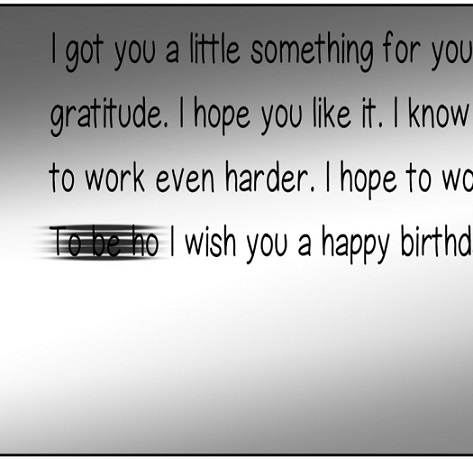 (chapter 55) My newest theory is that he wanted Joo Jaekyung to teach him fighting, but not for himself, but in order to help the fighters and in particular to protect the champion’s body:
 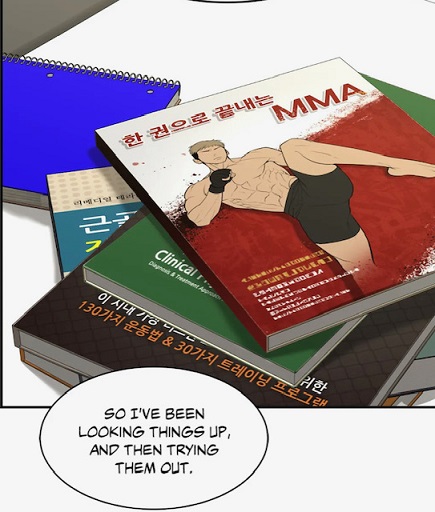 (chapter 25)
 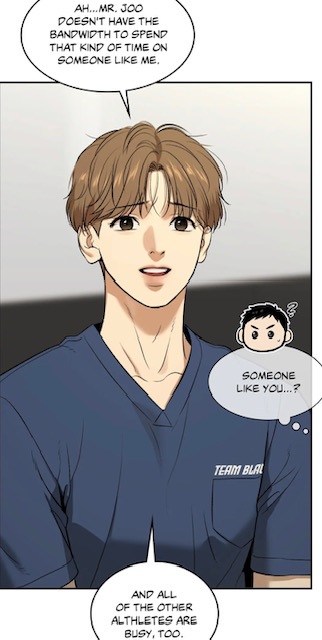 (chapter 25) To develop a training where injuries are minimized. In season 2, it is clear that Joo Jaekyung and Kim Dan have reached the bottom. Both feel empty and exhausted. They were crushed by harsh reality, and they had no one by their side to listen to their pain. Therefore it is not astonishing why the doctor could not confide to the actor and the amateur fighter. They arrived too late.
 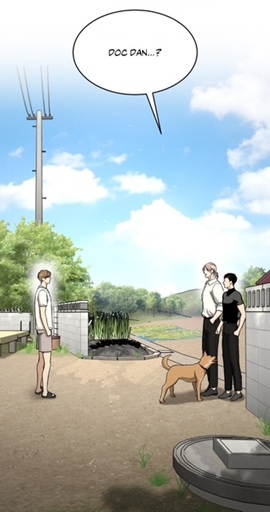 (chapter 58) Their presence definitely diverted the doctor’s attention, lessening his pain.
  (chapter 25) he learns the true nature of the relationship between Kim Dan and Joo Jaekyung. This revelation forces him to confront his own repressed feelings, as he unconsciously realizes his attraction to the fighter.
 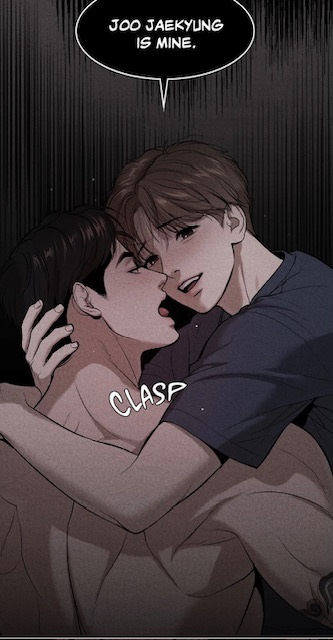 (Chapter 25) Heesung’s involvement further complicates matters, as Potato confesses his love for Joo Jaekyung
  (chapter 35) while simultaneously vowing to sacrifice his feelings for the sake of the couple’s happiness. This act demonstrates Potato’s pure and selfless definition of love,
  (chapter 35) contrasting with the conditional love depicted in Andersen’s tale.
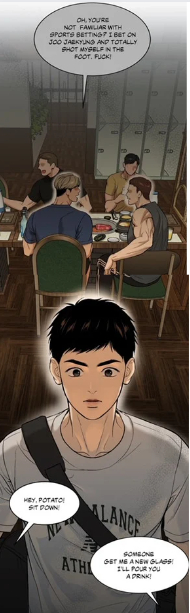 (chapter 52) and the switched spray the
 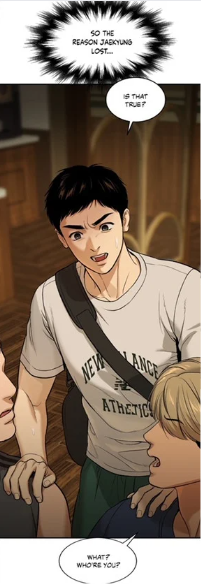 (chapter 52) which is strongly intertwined with the departure of disloyal members from Team Black marks another step in his journey toward disillusionment. While Potato initially views this as an isolated incident, it exposes the broader corruption within the MMA world, including the betrayal, greed, and lack of loyalty that undermine its integrity. While he views himself as loyal to doc Dan and Team Black, for he remained at the gym, his heart was not. He is becoming like his hyungs, Park Namwook and Heesung. In Andersen’s tale, the mermaid’s journey to the sea witch represents a pivotal moment of transformation. By sacrificing her voice and enduring physical pain, she gains entry into the human world, but at the cost of her identity. Similarly, Potato’s journey is marked by painful discoveries that force him to confront uncomfortable truths. Through Kim Dan, he will begin to see his own flaws before he is able to recognize them in those he once trusted.
  (chapter 23)
  (chapter 25)
  (chapter 35) The latter doesn’t mind breaking social norms by yelling or causing a fight at a restaurant. But let’s return to the actor’s confession at a bar. It’s not surprising that Heesung appears indifferent to the affection of those who cared for him. The last partner was described as too clingy. This means that Heesung places himself as the judge. In addition, it was, as if he was a god destined to live forever. He is forgetting his human condition, just like his partner’s. And that’s exactly how the prince in The Little Mermaid views life.
 (special episode 1) With this request, he implies that he will never become responsible for the amateur fighter. Therefore he can hide his homosexuality behind the young fighter. He used Potato’s mistake to his advantage.
  (special episode 1) By asking Potato to take care of all his needs and desires, Heesung placed himself in a position where he had power and could control Potato. That’s how the young fighter made a dangerous deal with the gumiho. No wonder why his sex role play was a prince interacting with a guard.
  (special episode 2) Hwang Yoon-Gu didn’t realize that by taking responsibility for the actor, he lost his freedom and as such his voice. Is it a coincidence that Mingwa portrayed the young maknae as someone who would raise his voice due to his emotions in the past?
  (chapter 58) his behavior is totally different than with the actor:
  (chapter 58) Tears, touch, raising his voice with Kim Dan, but not with the comedian. With the actor, he looks more calm, distant and mature. Heesung’s selfishness is evident in his treatment of Potato, whom he manipulates into becoming an extension of his own image. Hence he is no longer wearing shorts and tee-shirts.
  (chapter 59) One might say that he is gradually elevating Potato’s status through his suggestions.
 (special episode 2) By encouraging Potato to work as an actor and shaping him into a version of himself, Heesung prioritizes his own desires over Potato’s individuality. He is not asking what Potato’s true dream is. But this was his dream originally:
  (chapter 23) Why? It was due to his low self-esteem.
  (chapter 23) He was not confident enough, for he was the only one with such a weight-category.
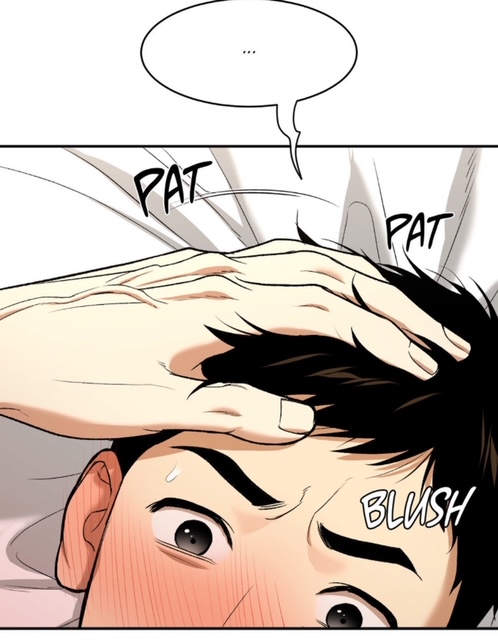 (special episode 2) played a huge influence in Potato’s decision to take the offer as an extra. It was, as if one of his dreams had come true. But is this what he truly wanted?
  (chapter 58) underscores his indifference, symbolizing the unbalanced dynamic in their relationship. Like the prince, Heesung offers no genuine commitment, leaving Potato to grapple with the consequences of his dependency. Thus I perceive Potato’s tears
  (chapter 59) as a signal that he is not truly happy.
  (chapter 58) However, this is about to change. Heesung who likes novelty and change is not realizing that his wish is becoming true. The picture with his last work announces the end of his “friendship” with Potato. How so?
 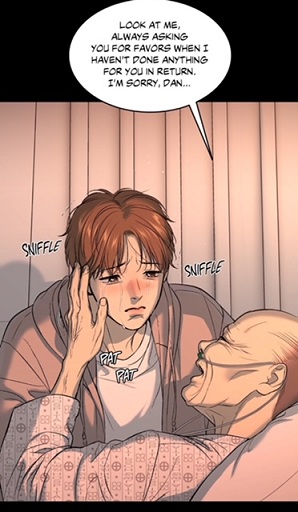 (chapter 53) Kim Dan learned to prioritize the needs of others over his own. His grandmother’s reliance on him mirrored the traditions and expectations imposed on the mermaid by her underwater world. Just as the little mermaid longed for the human world’s light and freedom, Kim Dan yearned for an escape from his oppressive circumstances.
 (chapter 59) Kim Dan once referred to Potato as a puppy
  (chapter 29), drawing a connection between the character’s innocence and loyalty.
 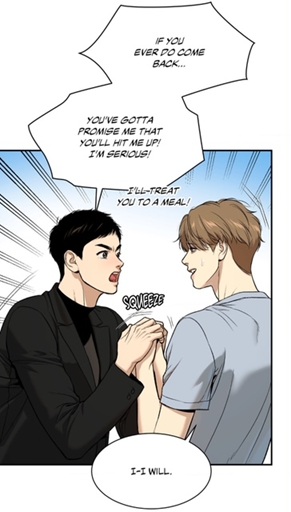 (chapter 59) However, Potato’s departure reveals an underlying superficiality and disloyalty—he merely asks Kim Dan to call him when he visits Seoul, failing to acknowledge the depth of their bond. This reminded me of the prince’s fake promise:
 (chapter 35) This shows that Heesung has long internalized this pattern: assistance will be only given, if he is called. That’s why he has no true friend in the end. He shows no interest in others. But by doing so, he is putting the whole responsibility on his counterpart. Through the actor and the manager’s behavior, the former errand boy has long adopted this pattern. Hence he didn’t call Kim Dan in the end. He waited for a signal from his part. This behavior mirrors the little mermaid’s sisters, who only realize her absence when it is almost too late to act. Similarly, Potato’s casual farewell highlights a betrayal of Kim Dan’s friendship, further emphasizing Potato’s struggle with emotional awareness. That’s why I mentioned above that Potato is about to discover his true nature: he is also a sinner. This growth parallels the biblical narrative of Adam and Eve, where the acquisition of knowledge leads to the loss of innocence. Heesung, like Eve, introduces Potato to a new world of experiences, including his sexual orientation. However, this newfound knowledge comes with its own burdens, as Potato must reconcile his identity with the harsh realities of the world around him.
 (chapter 5) Heesung could no longer express his needs and desires.
 (chapter 58) Just because one is happy, this doesn’t mean that the other is. For that to happen, communication and honesty are necessary.
 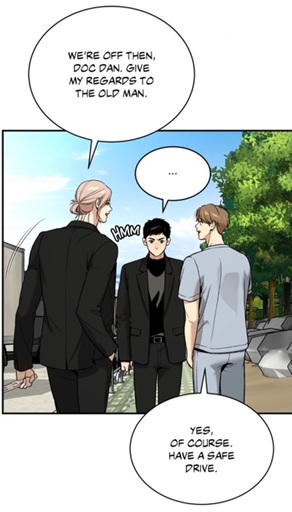 (chapter 59) This event underscores the contrasting paths of Joo Jaekyung and Potato. While Joo Jaekyung is forced to give up his principle of “self-reliance,”
 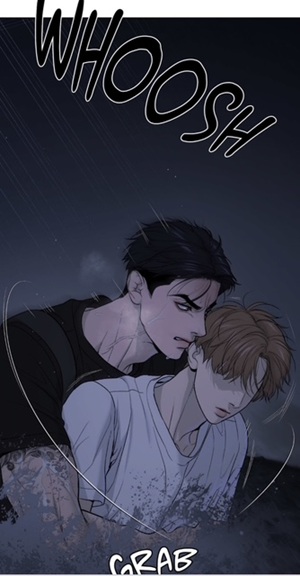 (chapter 59) Potato’s journey is to discover and embrace the principle of “self-reliance” and autonomy. Only when Potato becomes independent in his thoughts and decisions, can he truly help the main couple.
 (chapter 47) and 52. Initially, he believed in his hyungs’ description of Joo Jaekyung as a thug, but later he criticized the same fighters for abandoning the athlete
  (chapter 52), accusing them of lacking loyalty and dismissing their claim that they had nothing to learn from him. Yet, in episode 52, Potato does not reproach Park Namwook or Yosep for their passivity and naivety,
 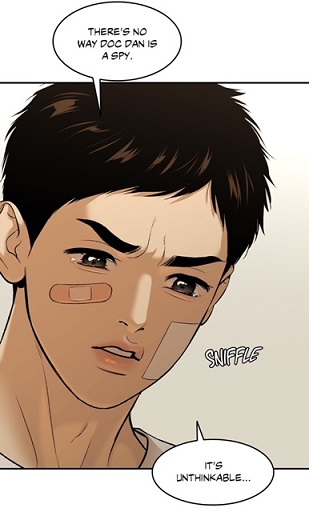 (chapter 52) instead solely blaming Joo Jaekyung for not trusting Kim Dan and causing his departure. This selective criticism reveals that Potato still views the older men as inherently good and fails to recognize his own shortcomings. In this way, he mirrors Park Namwook’s superficial loyalty, further emphasizing his dependence on external validation.
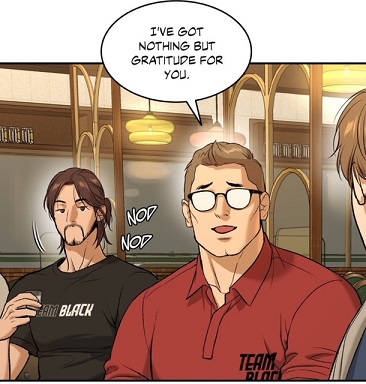 (chapter 43) This absence highlights how Potato has missed key moments of reflection and acknowledgment, which are essential for his growth. It suggests that Potato is destined to detect the flaws in his hyungs—Park Namwook, Yosep and Heesung’s superficiality, passivity, hypocrisy and selfishness—before he can achieve true independence and contribute meaningfully to the lives of Joo Jaekyung and Kim Dan.
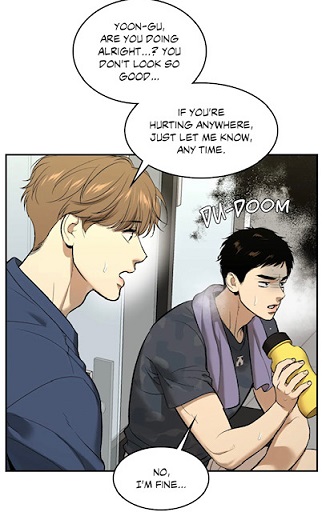 (chapter 23) —taking over his tasks and noticing his unhappiness
 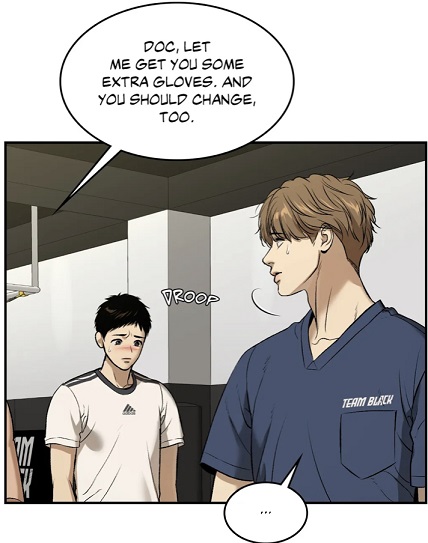 (chapter 25) —demonstrates his capacity for genuine care. This contrasts sharply with Heesung’s selfishness and serves as a reminder of the value of mutual support in relationships. Potato’s potential return to the place where he met Kim Dan could symbolize a rediscovery of authentic connections, marking the beginning of his path toward independence and self-realization.
  (chapter 58) And like mentioned above, this could become a serious problem for Yoon-Gu. He could be perceived as someone selling himself for a gig. And Heesung is not even realizing the consequences of his intervention and meddling. That’s why it is important for Yoon-Gu to become independent. This lesson resonates with Potato’s journey in Jinx. By recognizing Heesung’s selfishness and breaking free from his influence, Potato has the potential to rediscover his own dreams and individuality. Like Erich Fromm mentioned it, true love is respect, care, knowledge and responsibility. However, Heesung has no idea about the importance of these notions, as everything is evolving around his own needs and dreams.
  (chapter 58) That’s how it dawned on me that little by little Yoon-Gu had been losing his senses:
  (chapter 31), his smell, then his ears
 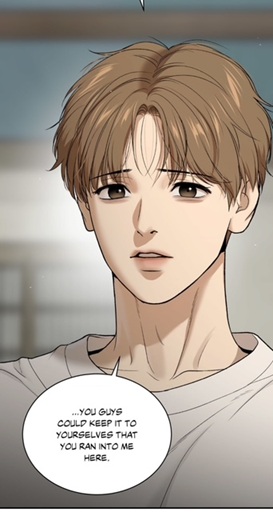 (chapter 58) He forgot the danger coming from Heesung’s words, he could not hear the suffering from the champion due to his bias, and finally he couldn’t see Kim Dan’s distress due to his own feelings and prejudices. We could say that because of the influence from others, he was no longer able to see reality. However, like mentioned before, I sense the return of Potato’s senses in the following panel:
 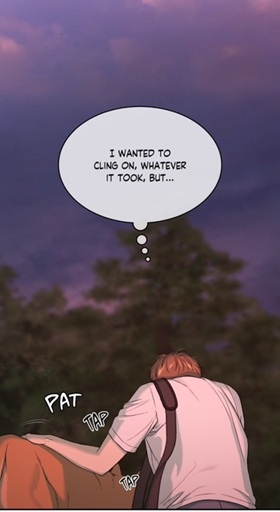 (chapter 59), coinciding with Potato’s departure, underscores this theme of overlooked emotions and unreciprocated care. As Joo Jaekyung reflects on Kim Dan’s comparison of Potato to a puppy, it may catalyze a pivotal shift, prompting him

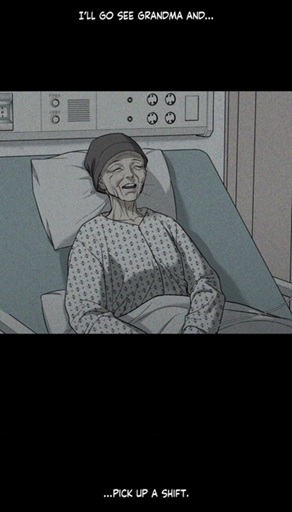 (chapter 59) —a representation of the mermaids’ song—drifts into a state of surrender, much like the prince. This act of salvation becomes a pivotal moment, connecting both characters to the themes of water, transformation, and rediscovery of purpose.
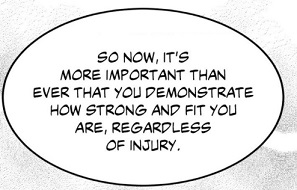 (chapter 36) Choi Heesung, representing another prince with Potato as his bride, benefits from others’ sacrifices
 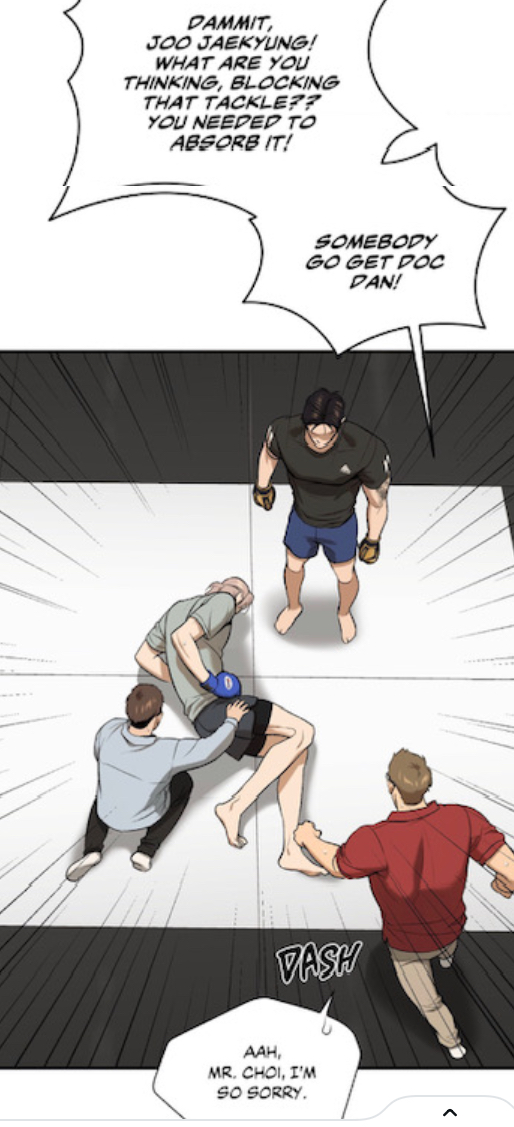 (chapter 31)
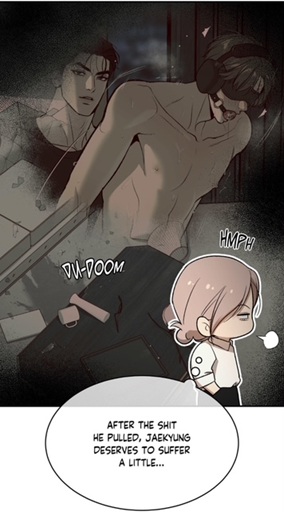 (chapter 58) while remaining oblivious to their struggles. These parallels reveal layers of self-discovery, mutual transformation, and the pursuit of meaning. By analyzing these similarities, we uncover deeper layers of self-discovery and transformation within the narrative.
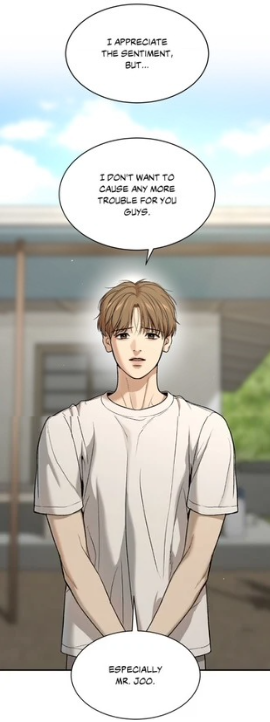 (chapter 58), yet it serves as the catalyst for his growth. Just as the little mermaid’s journey leads her to a higher spiritual purpose as a daughter of the air, Kim Dan’s experiences with Joo Jaekyung force him to confront his own worth, identity, and emotional needs. Just before he went to the ocean, he wondered about his own future and desires, a sign that he was standing at a crossroad:
  (chapter 59) However, let’s not forget that Kim Dan’s profession had been determined by Shin Okja, as the latter desired to have her grandchild taken care of her. Therefore his own desires and needs were overlooked. Traditions and social norms were used to decide about the protagonist’s life and future. His journey from voiceless suffering to self-realization echoes the mermaid’s transformation.
 (chapter 45)
  (chapter 59), he is not capable of crying. It is because he has been living like a ghost for the last two months. Depression, for both the mermaid and Kim Dan, manifests as a silent struggle, making their eventual transformations even more poignant.
 (chapter 1) hiding his true self behind a facade of strength and success. On the other hand, Joo Jaekyung also embodies the mermaid’s longing and sacrifice. Living in the world of MMA, a high-pressure environment where he is constantly pushed to perform, he resembles the mermaid in the underwater kingdom—a place of death and materialism where the mermaids feed on drowned humans. It is no coincidence that the fighters are displayed like mermaids in the water full of blood.
 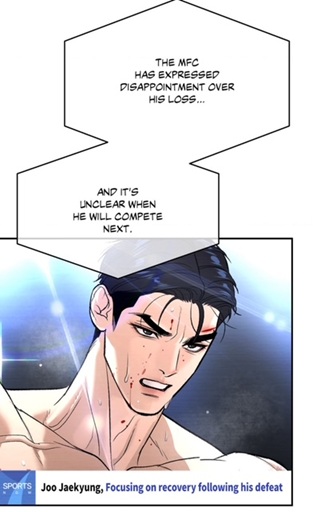 (chapter 57), only allowing him to speak when it benefits them financially.
 (chapter 19) Hence he never went to the swimming pool in his own penthouse, until Kim Dan triggered his memory and longing. This interplay of water and fire
  (chapter 52)
  (chapter 41) Joo Jaekyung’s image was exploited to lure these individuals down a darker path, highlighting how his light has been misused by those around him.
 (chapter 19)
  (chapter 56) as long as they were not associated with burden or suffering, while the mermaid’s grandmother celebrates the beauty and decorum of their underwater realm.
 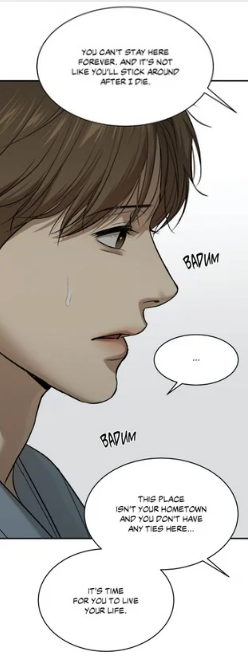 (chapter 57) Shin Okja, noticing Kim Dan’s figurative slow death under the weight of her request, subtly pushes him to seek his own path. However, this act is not entirely selfless. For Shin Okja, it represents an escape from the guilt of causing her grandson’s unhappiness, a way to absolve herself of responsibility.
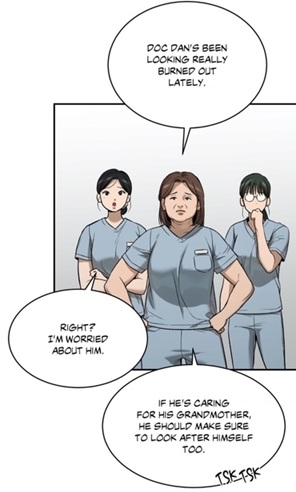 (chapter 57) He even gets blamed for his illness. These elements further emphasize how the suppression of individuality leads to yearning and eventual transformation.
 (chapter 52) This dynamic parallels the members of Team Black in Jinx. Although they are treated like Joo Jaekyung’s co-workers
  (chapter 7), in reality, he is their boss and the foundation of their success. Their indifference mirrors the mermaid sisters’ behavior; they only notice his struggles and absence when his winning streak falters, prompting many to leave the gym for the rival King of MMA. However, if we take Andersen’s fairy tale as a source of inspiration, it signifies that at some point, the remaining members of Team Black might come to “sacrifice” themselves for their “little sister,” symbolically representing Kim Dan and Joo Jaekyung. This potential act of loyalty could mirror the mermaid sisters’ gesture, showing that even belated recognition and care can lead to transformative redemption for those involved.
 (chapter 46) However, the gym’s inability to produce another champion reveals its “fake gardening” nature—focused on maintaining an image rather than fostering true growth.
 (chapter 22) and a “neglected child”
  (chapter 58) Feeling lost without Kim Dan, he initially requests his return so that they can be together again. This longing for a companion reflects Potato’s deeper need for guidance and connection, much like the mermaid sisters who briefly visit the surface but ultimately return to their underwater world when the novelty fades. Yet, when they reach maturity and are allowed to visit the surface, the novelty of the human world quickly fades, and they return to their underwater realm indifferent to human suffering. However, notice that on his day of the departure, Potato tells Kim Dan that he won’t call him, the mermaid has to initiate the first step.
 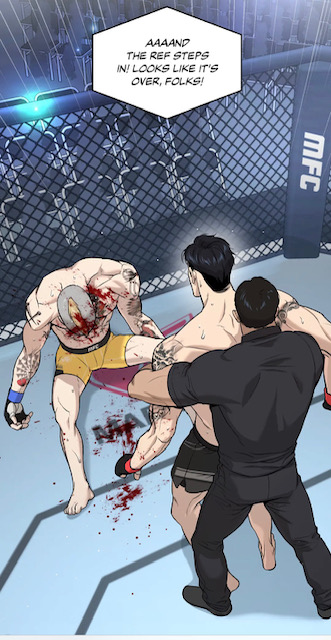 (chapter 15) strongly parallel the detached, high-pressure environment of MMA fighting. Joo Jaekyung, trained relentlessly since youth, embodies this world’s harshness, where vulnerability is a luxury rarely afforded.
 (chapter 59) suggests that Joo Jaekyung might reclaim his authentic self through activities like swimming, reconnecting with nature, and symbolically planting the seeds for a new life. Kim Dan, who cannot swim, learns from Joo Jaekyung, and together, they forge a path toward mutual healing and immortality—not in the literal sense but through finding their “soul” and purpose.
 (chapter 56) The city represents the oppressive expectations and artificial constructs that have shaped Joo Jaekyung and Kim Dan’s lives. By meeting again in the ocean, they reconnect with a more authentic and unburdened version of themselves. This transition echoes the little mermaid’s connection to the natural world as a place of solace and transformation.
 (chapter 59) They imagined that Kim Dan would be better off without Joo Jaekyung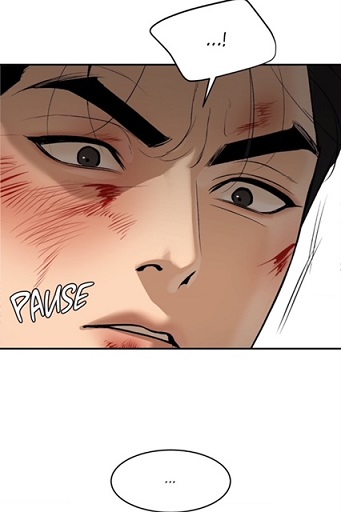
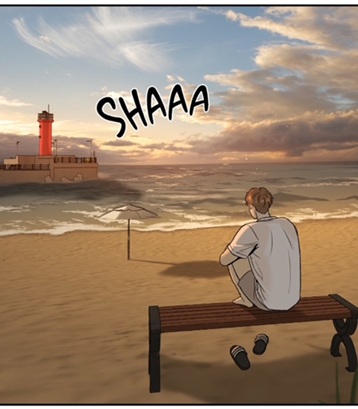 (chapter 59) finding light not in others but within himself. Through his hardships, he gains the strength to pursue his own identity and agency.
 (chapter 49) The maknae’s tears are an indication that he is no mermaid, but a human, I would even say, he still has the soul of an innocent boy.


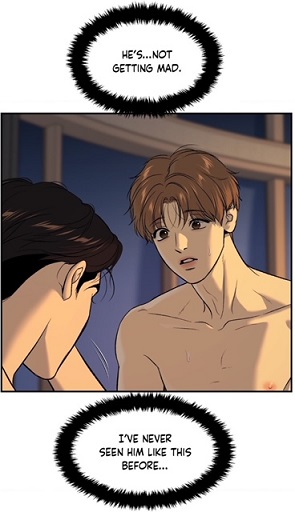 (chapter 44) This made the physical therapist’s laugh.
  (chapter 44) His genuine laugh combined with the following realization
  (chapter 44) shows that in that moment, the physical therapist rediscovered his youth again. I would even add that Jinx-philes were witnessing in this panel how Kim Dan reconnected with his inner child.
 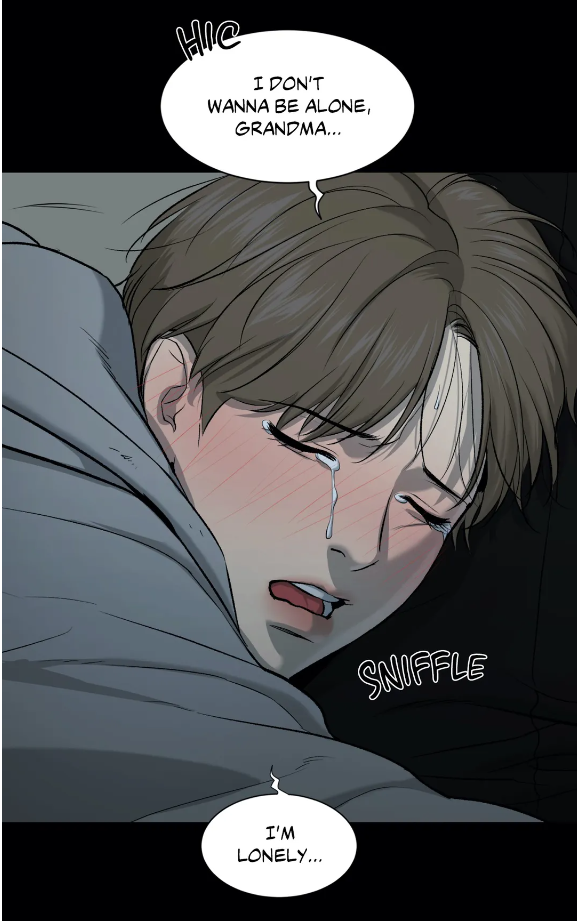 (chapter 10)

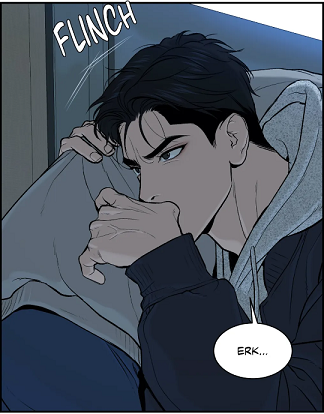

 (chapter 10) Under this light, it becomes comprehensible why Kim Dan’s beautiful night became a dream, an illusion. The young doctor had done something wrong from a moral point of view. However, because the young man had treated the champion so well before, his reward was to experience what love is.
  (chapter 44) Thanks to Tinker Bell, he could fly: he was brought to Nirvana.
  (chapter 44) The problem is that the physical therapist was reducing love to sex (“making love”). True love has to be expressed in a lot of different ways (spiritual intimacy, experiential closeness, responsibility etc) and not just through sex.
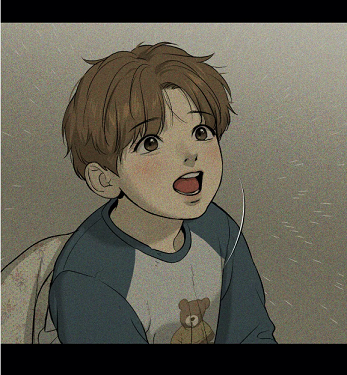 (chapter 11)
 (chapter 53) They were literally abandoned, as they lost their sentimental value overtime. I am suspecting that they had become “useless”. Hence I am suspecting that by calling him a puppy dog, she didn’t truly mean it.
  (chapter 47) By saying that he was a puppy dog, she was implying that she would be responsible for him. Keep in mind that pet are linked to care and accountability. However, her wish is strongly connected to one single moment:
  (chapter 53) She is not thinking about the future at all. For her, it doesn’t matter, for her time is limited. Dog can be abandoned in the end, especially when the responsibility becomes a burden. That’s the reason why I believe that in verity, she was treating the protagonist more like an object than like an animal. Moreover, Jinx-philes should keep in their mind she used to describe him as a little boy, which also represents responsibility and care. Therefore I conclude that this scene didn’t stand for Kim Dan’s true home, it was just an illusion.
  (chapter 53) And compare his attitude to the one in chapter 19:
  (chapter 19) They were no deep lingering feelings towards the grandmother’s house. In fact, before leaving, he remembered an incident, a mysterious phone call which I consider as the moment, which broke the boy’s soul and heart. For me, he was almost glad to leave this place behind.
 (chapter 19), very territorial and disliking surprises. In literature, leopards often symbolize strength, courage, agility, and stealth. They are seen as solitary and powerful hunters, often representing independence or mystery. In totemic traditions, the leopard can symbolize resilience, adaptability, and personal power, often embodying a person’s inner strength and ability to face challenges.
  (chapter 26) One might argue that he laughed with Potato and Oh Daehyun in the States. But are you sure? We never saw him laughing. Only Joo JAekyung heard their laughs, but did it also belong to the hamster?
  (chapter 37) Moreover, observe that during that terrible night, the athlete was wearing an t-shirt with a feline on it:
  (chapter 37) Puma was designed on it. As you can see, everything is pointing out that this man is a leopard which was mistaken to a sulky cat or a puma.
  (chapter 44) So since the champion was naked during this night, we could say that his true nature was slowly coming to the surface. As a predator, his annoyance to the strokes and kisses appears more normal and understandable:
 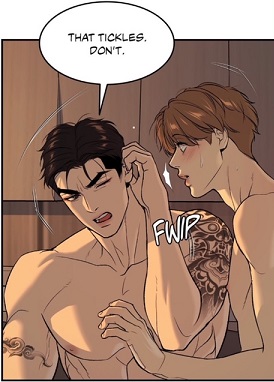 (chapter 44) Kim Dan is teaching him how to control his strength and discover playfulness. And now, imagine Kim Dan patting a leopard 😉
 (chapter 44) and the leopard fighting a wounded and isolated hyena:
  (chapter 52) Eye-contact! Making direct eye contact with a leopard can be dangerous. Leopards may interpret prolonged eye contact as a threat or challenge, triggering an aggressive response. In the wild, they rely on stealth and avoid open confrontation, so they may react defensively if they feel they are being stared at. This behavior is common among many predators, as eye contact often signals dominance or confrontation. It’s generally advised to avoid direct eye contact and back away slowly if you encounter a leopard in close proximity. Baek Junmin had totally underestimated the true nature of his opponent. This could explain as well why Park Namwook is wearing his glasses all the time and even avoiding eye-contact with the emperor.
 (chapter 24), Oh Daehyun the eagle…

 (chapter 53) for not realizing her biggest wish: to return to the West Coast. With her words, she implies that she never had any choice. Hence she is not responsible for her “misery”. However, after reading Erich Fromm’s philosophy, it becomes clear that she must have always followed social norms and listened to authority figures (parents, husband, doctors, …). That’s how she gave up on her own freedom. One might argue that her scoop of maneuver was limited due to her poverty. However, the Mother Of Pearl Wedding Cabinet is definitely expensive and no junk
  (chapter 16), especially since the latter is rather old. The grandmother could have sold it, but she never did, for the latter has a sentimental value. Consequently, I would say that she had missed her chance, and naturally her misery is the result of her own wrong choices. Under this new light, it becomes comprehensible why the grandmother portrays herself as poor who has nothing to give to her grandchild.
 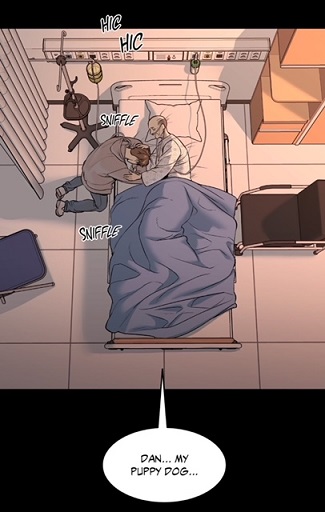 (chapter 53) Her vocabulary exposes that she became a master and in her mind, the puppy dog has to follow her owner. Therefore it is no coincidence that Mingwa created such an image:
  (chapter 53) Deep down, he would like to be recognized as a competent physical therapist. Moreover, my avid readers should recall that the champion had already noticed the change of heart in the doctor before the scheme took place.
 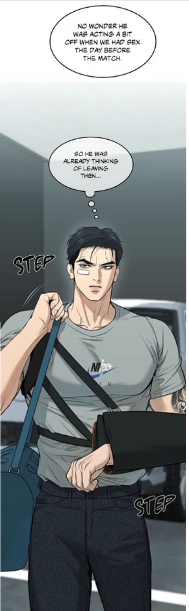 (chapter 53) So the athlete could come to the realization that his departure was related to the grandmother’s sickness and dying wish, a new version of episode 20 and 21. However, even if the fighter helps the grandmother, he can not entirely free the physical therapist. How so? It is because the doctor has to free himself, breaking free from conformity and his own psychological constraints (lack of confidence and as such courage). And the best evidence for his servitude mentality is the absence of his love confession to the athlete. He disguised it behind gratitude.
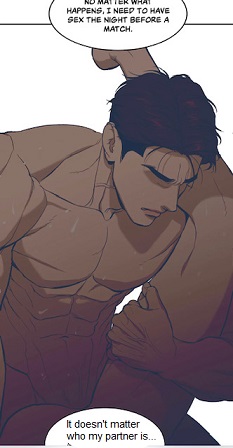 (chapter 2) Therefore sex is linked to prostitution and work. Back then, this had nothing to do with pleasure, sensuality and entertaining. It was revolving around power and domination. That way, he wouldn’t appear as weak, he is not controlled by his sexual desires and emotions. That’s how it dawned on me why the champion has been denying the existence of feelings in his past relationships. Naturally, it is possible that he got his heart broken before, but it is also possible that he could never live out his own true homosexuality. Note that his father figure, Park Namwook, has no idea about his sexual life. The athlete could fear to disappoint him. This raises the question how the manager will react, when the athlete’s secret is exposed. Should he request from his boy to organize a conference and deny the allegation there, he would divulge not only his lack of loyalty, but also his hypocrisy. Why? It is because this is something he should have organized after the last match. A conference to expose the existence of schemes. But everything got swayed under the rug. On the other hand, I deduce that if the topic of sodomy is brought up in season 2, there is no ambiguity that both main leads won’t give in to conformity and external pressure (even in the form of threats). Why? It is because during season 2, both characters will come to be true to themselves. That‘s how they can become master of their own life.
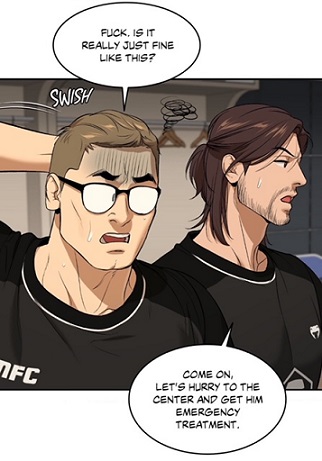 (chapter 50) Hence the last match was not cancelled in the last minute. The athlete is not fighting out of fun and passion, but out of obligation and survival. He is trapped in a world where money is everything. Thus he was always pushed to accept any challenger despite his injuries. That’s how I realized why the athlete always suspected Kim Dan of being greedy. It is because he projected his own thoughts onto his partner. However, this negative perception was definitely influenced by his “hyung”, we have the best example in episode 46. Due to Park Namwook, Joo Jaekyung was the one who was constantly thinking and talking about money in front of Kim Dan.
  (chapter 26) No wonder why he got so surprised by Kim Dan’s reaction in the locker room:
  (chapter 43), yet he added shortly this comment: :
 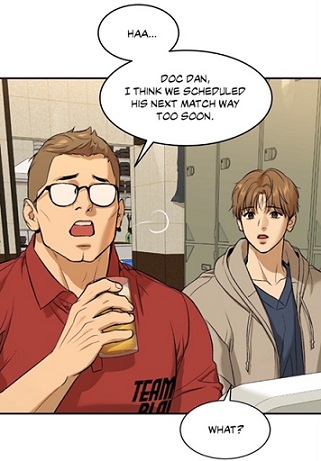 (chapter 43) The hypocrite coach utilized the personal pronoun “WE” indicating that he and his peers had played a role in the athlete’s decision. Funny is that though he complained about the schedule, he still accepted the switch of the fighter later. But he could have voiced his fears and objections. Nevertheless, he did nothing. Since I connected the halmeoni to past, I suddenly realized that the “lanista” embodies the opposite notion. He is trapped in the future, thus he is always anxious. Imagine that in that scene, they were celebrating Joo Jaekyung’s birthday, it should have been a good time. Yet, the manager kept talking about work and the future.
 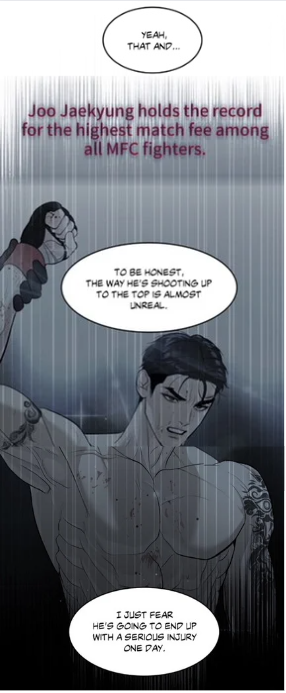 (chapter 43)
  (chapter 43) This is a sign that he was not “enjoying the present”. In my eyes, with his comments, he was actually ruining the party. Fortunately, no one paid attention to his words except the physical therapist and Yosep. By talking like that, he gives the impression that he is caring and paying attention to the fighter. Yet this is just an illusion, for he is not focused on the present. He neglected his duties, therefore the schemers were able to bring drugs to the champion’s rooms.
 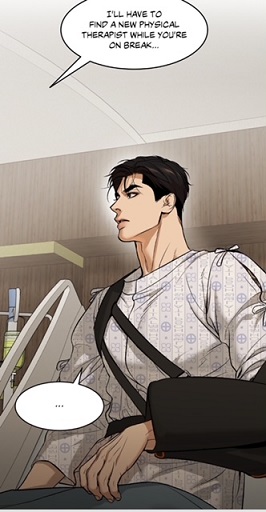 (chapter 53). The latter announces that his “boy” can take a break. What caught my attention is his idiom. The suspension got turned into a break which sounds much more positive. Interesting is that break is not only a synonym for “rest”, but also for “opportunity, chance”. This new discovery reinforces my previous interpretation: the loss of his “title” and his suspension are in verity an escape to freedom. Why? It is because he is no longer exposed to manipulations and external pressure like in episode 36:
  (chapter 36) money, social media, the agency, the lawyer, Park Namwook and Jeong Yosep. For the first time, Joo Jaekyung can think of something else other than work. Nevertheless, the athlete had not realized it yet. Striking is that the longer the fighter thought about the PT’s resignation, the longer he came to object to it.
 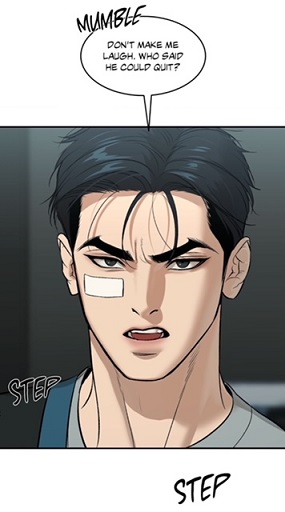 (chapter 53) This means that the fighter was acknowledging the “uke” as an important member of Team Black. In addition, he was recognizing Kim Dan’s effort and talent as PT. Moreover, it exposes the absence of change in Joo Jaekyung’s mentality. He was still “thinking” of work and fighting. It displays that the protagonist had not realized the true signification of his suspension yet. Hence the doctor’s departure was necessary. Joo Jaekyung is forced to think about his fated partner, making him forget his work and his career. His “obsession” with Kim Dan will push him to stop being a workaholic. But there is more to it.
 (chapter 21) to this
 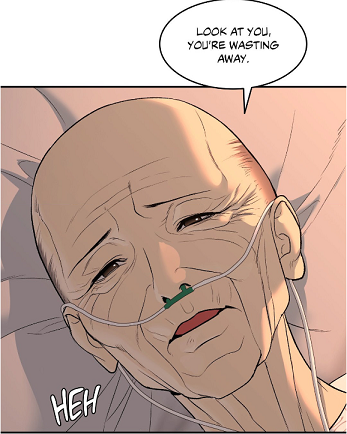 (chapter 47) Money is powerless in front of death and terrible injuries. Therefore he is lucky that his shoulder is not ruined forever. Moreover a trip represents a good metaphor for an escape, a travel is a synonym for freedom and the end of “routine”.
 (chapter 35). However, since he didn’t spend much time in his own home, he never took the time to take care of his soulmate. By leaving the city and Team Black behind, he would become truly alone (as opposition to his trips to Busan, the States) which would give him an opportunity to become more honest to himself and to Kim Dan.
 (chapter 1). Nonetheless, his words sounded more negative due to the usage of negation. Moreover, Kim Dan was too scared to take his words seriously. Consequently, it becomes obvious that Kim Dan needs to hear praises from the athlete himself. It is not just about an apology about his misjudgment, the “hamster” needs to hear from his own patient that he trusts him and his hands. Thus he wants to be needed:
  (chapter 53) This explicates why the young man kept questioning the actor’s intentions behind his gifts. He could see that the man didn’t need him. This thought displays his desire to give a meaning to his own existence as well. If he is needed, he has a reason to exist. This desire of being needed can be expressed by words, but also with the hands:
  or like this:
  And what does the hand symbolize? The latter symbolizes gratitude and love! Hence the grandmother took the MMA fighter’s hand in order to thank him.
  (chapter 22)
  (chapter 41) Being on the receiving side makes him feel weak and powerless. He is reduced to become a passive man. Furthermore, we shouldn’t overlook that such presents are not entirely selfless. Companies or admirers have expectations from Joo Jaekyung, earning some money or getting his attention. At the same time, these presents are strongly connected to his title and fame as champion. Thus they are not taking into consideration about the athlete’s dislikes and likes. Thus he was offered a bottle of wine
 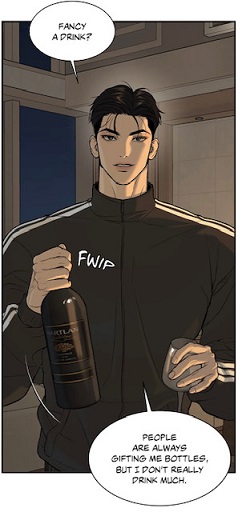 (chapter 12), though he is no drinker or he doesn’t eat cakes.
  (chapter 41) The fact that the athlete organized a charity event for his birthday exposes not only his huge heart, but also that he had long recognized the power of generosity. Under this new light, it becomes comprehensible why the champion was willing to pay off the doctor’s debts.
  (chapter 18) Here, he hoped to see gratitude on his fated partner’s face, but it didn’t happen like he imagined. Yet, notice that despite their argument, Joo Jaekyung proposed to the main lead to live with him in the penthouse:
 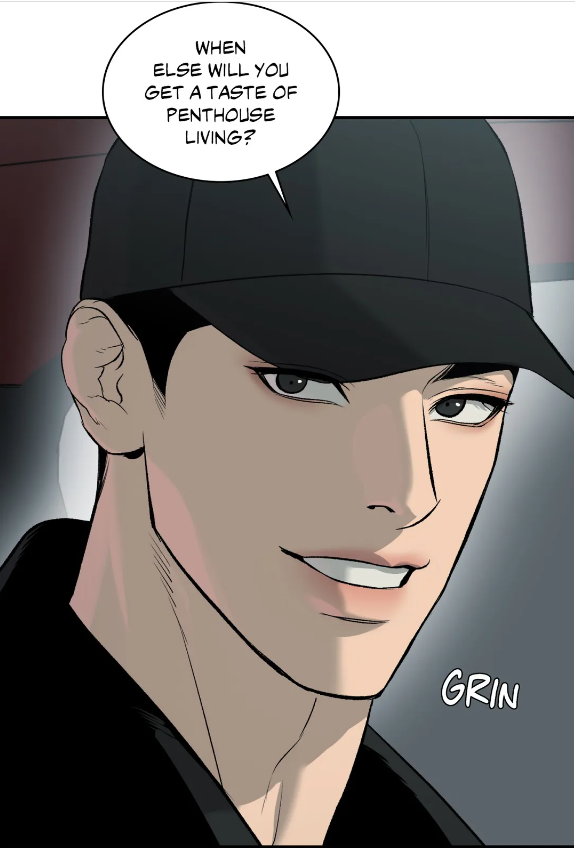 (chapter 18) His facial expression is exposing his true thoughts. He was definitely happy to help the doctor. The reason is simple. He is in control of his heart and life. This shows that deep down, the man has always had a soft heart and could find fulfillment in giving. However, the problem is that the champion had also internalized that there is nothing free in this world. Due to his past experiences, he realized that receivers would exploite his goodness. The green-haired guy was the perfect example.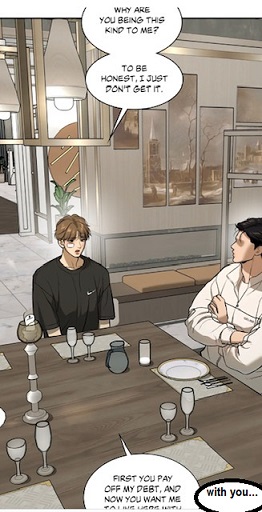
 (chapter 18) He had to, because the man was now living with him. Joo Jaekyung feared that his roommate could come to take advantage of his new position and even consider this place as his own. As you can see, the champion had long discovered the power of giving to others. Yet his problem was that he couldn’t live out this principle: he was either exploited or he has no family or close friend so far.
 (chapter 30) They both desire to be acknowledged and appreciated.
  (chapter 45) With this image, it was, as if Kim Dan wanted to be distinguished from all the stans. Yes, I do think that this has something to do their own negative feelings. However, there is a difference between Choi Heesung and Kim Dan. Note that the gifts are related to his sponsors and the agency. They were related to his work. Moreover, the gumiho rarely gave the meals or the presents personally.
  (chapter 31)
 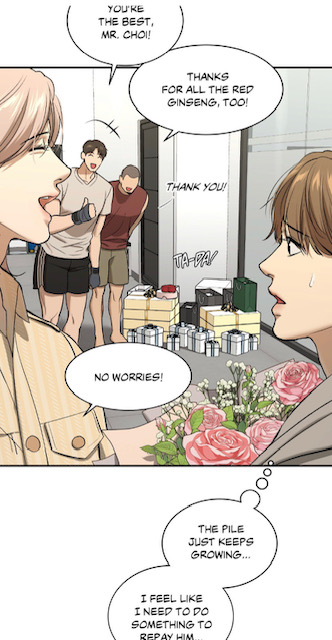 (chapter 31) Furthermore, the actor gave these things for one reason: it was to obtain the doctor’s heart or to maintain his good image as a celebrity. In other words, these gestures were not selfless at all. This explains why the athlete was so weary of such “gifts”: a return of favor or a service. But the comedian is not the only one donating things. Naturally, it is the manager Park Namwook.
  (chapter 36) However, my avid readers should ponder on the following aspect: how did he buy the jackets and the junk food?
  (Chapter 45) It is because his relationship with his coach has always been based on „conditional love and expectations“. Don’t forget that the coach was particularly nice to the athlete after winning his match in Busan. He was willing to be his „servant“ in that moment. Furthermore, there exists another evidence that in episode 45 the fighter latched out on the doctor because of his unresolved feelings towards his hyung.
  (chapter 41) This frenzy was portrayed as something positive. Jinxworms can observe that the manager is mentioning the existence of „favors“. For me, it is no coincidence that in episode 45, the arrival from presents coming from his hyung coincides with the present with Kim Dan. It shows the underlying conflict between the celebrity and the former wrestler. Nevertheless, the fighter has not grasped it yet. So far, Joo Jaekyung has not tried to defy Park Namwook openly, to claim his place as the true owner of Team Black. We should see his words here as a first attempt to act as the boss
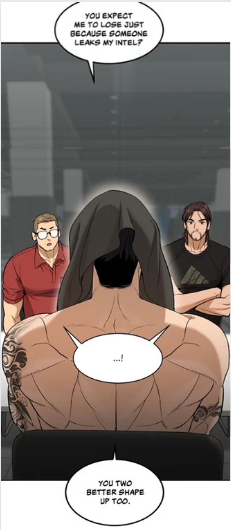 (Chapter 46) The tension reached its peak in that scene:
  That’s where the generosity from Park Namwook comes from: he gives his punches to Joo Jaekyung and takes Joo Jaekyung‘s company for granted. And now, you comprehend why I selected such a title for this essay.
 (Chapter 26) The sparring in episode 26 represents the positive version of giving a punch and taking it. The fighter was not upset about his defeat, moreover he was acting like a real teacher asking the physical therapist to overcome his own fears. On the hand, the slap at the hospital embodies the opposite notions: resent, no real teaching, no reflection, no listening, the one slapping is not overcoming his own fears and vents his anger. The give and take in episode 26 was happiness, true generosity, self-awareness, while this slap displays misery, anger, ignorance:
  (Chapter 26) The contrast not only exposes Park Namwook’s fake generosity, but also his greed and selfishness. For me, he missed the opportunity, as at the gym, Kim Dan took the chance, when the athlete was distracted. Hence in my opinion, chapter 52 was the turning point in their toxic relationship. Moreover, it signifies that the manager lost his special position as hyung. Far away from the gym, Joo Jaekyung will see Kim Dan under a different light, maybe even as a true role model, for he is wearing his heart in his hand.
 (chapter 7)
  (chapter 9), the manager kept creating a bad image of the athlete: brutal, moody, maniac… but the reality is that the man is actually generous and caring, like mentioned above and the coach knew this. Hence he could lie without any remorse: he is a savior and the gym owner. Moreover, the athlete can speak well and be polite.
  (chapter 43)
 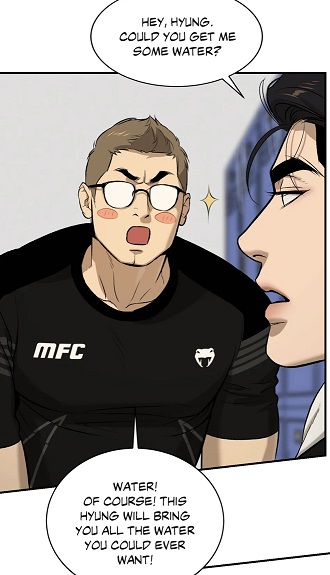 (chapter 15), but as soon as his idol lost his title and got even suspended, he yelled and slapped his fighter:
  (chapter 22) Since his relationship with the main lead is so secure, he could claim the gym as his own. Notice how he treats the members here: he’s putting them under pressure, threatening them. Everything is revolving around competition, seriousness and greed. Why doesn’t Joo Jaekyung mess with his weight and nutrition? It is because his hyung made sure that the latter would fulfil all his expectations. He needs to be ready for the next fight. Why was the manager not present here?
  (chapter 43) This exposes his lack of engagement and indifference in the end, but this becomes even more obvious during the night:
  (chapter 43) Where was he, when his star was drunk? It was, as though he had vanished.
  (chapter 43) But the best evidence for this interpretation is this image:
  (chapter 52) The manager is upset, because his boy lost his title and his reputation is ruined. Moreover, many members left the gym which means that the company lost a lot of money.
  (chapter 9) However, he never presented himself as a father or a husband. It was, as if his children or wife were not a source of his happiness. Why? It is because they don’t bring money, but rather cost money. Thanks to Joo Jaekyung’s popularity, the manager could stand in the spotlight
  (chapter 40), yet notice that no fans or fighter know his name as a successful coach or manager. He is not a famous manager in the end. His income depends on the athlete’s career and victories. No wonder why he put so much pressure on his celebrity. Thus I had the following revelation: he was actually exposing his true self in front of the doctor at the restaurant.
  (chapter 40) in the States and even at the gym?
  (Chapter 43) It is because he doesn’t view the uke as a possession contrary to his „boy“. Why? It is because the young man doesn’t bring money or contribute to boast the manager’s self-esteem. In fact, Kim Dan is an expensive PT and the manager is aware of his high salary. Moreover, contrary to the hamster, Park Namwook was never seen in the penthouse, and the celebrity refused to invite the members. This is a clue that the champion could have refused to invite his coach there. The doctor’s stay at the penthouse is something Park Namwook discovered by accident.
  (Chapter 22) And now, it is important to recall that in the mode of Having, rivalry and competition are predominant. Therefore I deduce that deep down, the coach and manager sensed the physical therapist as a source of threat and rival. Therefore Jinx-philes shouldn’t be surprised that the coach did nothing to keep Kim Dan.
  (Chapter 53) Here his gestures and words should be judged as lip-services. He can even rationalize his departure: bad luck, they save a lot of money, for the next PT will have a lower salary. In addition, Kim Dan was treated as the celebrity’s possession, therefore he used him as a tool in order to compensate the actor. The manager is definitely imagining that once the break ends, things will work like before.
  (Chapter 19). Another possibility is that she made sure that her grandchild would spend money on her:
 (chapter 22) after the departure of Joo Jaekyung, but notice how the halmeoni thanked the benefactor:
 (chapter 21) One might argue that the poor woman couldn’t do much to express her gratitude. However, this is just a deception. Shin Okja could have written a letter to express her gratitude to Joo Jaekyung. Why do you think Mingwa created two scenes with a letter or card?
  (chapter 45)
  (chapter 53) The comparison lets transpire the importance of words. The champion might have judged the keychain differently, if he had read the card. But he didn’t. Another parallel between these two scenes is the rejection of a gift! However, in the final episode, Kim Dan voiced genuine gratitude towards his benefactor. The latter had allowed him to work as his PT. With the letter, he could voice his thoughts and emotions much better. And now, you realize that Shin Okja could have acted the same way. This made me realize that deep down, she resents being poor. She likes Dan spending money on her.
 (chapter 41). He should treat the sportsman nicely (“do good”). Kim Dan is the one who should be indebted to Joo Jaekyung. However, observe what she said in front of her grandchild before: she was the one who was grateful to the main lead, and not Kim Dan!!
  (chapter 41) She should have been the one who expressed her gratitude to Joo Jaekyung, but not Kim Dan for the trip (it was work related anyway). One might argue that the poor woman is trapped in the hospital, she can not do much. But you are wrong. She could have written a letter to her benefactor which means that she would have sacrificed some of her time for the athlete. Imagine that she had sent a message to the athlete, the latter might have decided to pay a visit to her. He is not truly heartless. With this silence, she created the impression that his assistance had changed her situation.
 (chapter 22)
  (chapter 53) He likes not only his job now, but also learning as such. This is no coincidence that education in the mode of “being” means that the focus is on learning and developing skills. Hence I still see a change in the hamster at the end of season 1:
  (chapter 52) In this panel, the author let us see glimpses of their motivation and thoughts. For them, the champion has nothing to teach them, since he lost his title and is injured. This shows that they are only interested in the outcome, success and as such fame, but not in the process, how to become skilled! In other words, they see “success” as a possession. He has no title, then he has nothing to offer. They are all living in the mode of having, which can only lead to misery and even self-destruction. No wonder why they were not too upset or shocked, when they heard that the game had been rigged. But what led them to make such a decision?
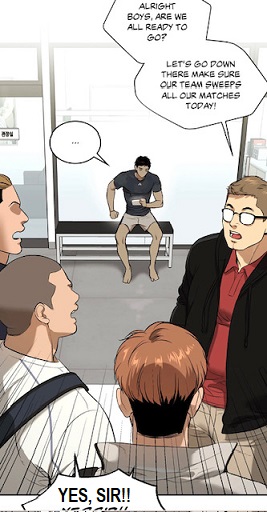 (chapter 23) Then he only focused on the “outcome” and not on the process. Hence he neglected them, delegated his task on the pressured athlete. The latter had to train them:
  (chapter 25) and
 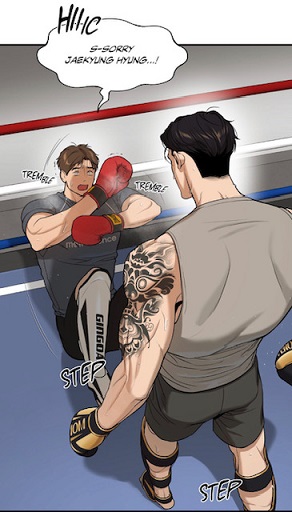 (chapter 36) In my eyes, he didn’t want to play the bad guy. The meeting or his worries were more important
 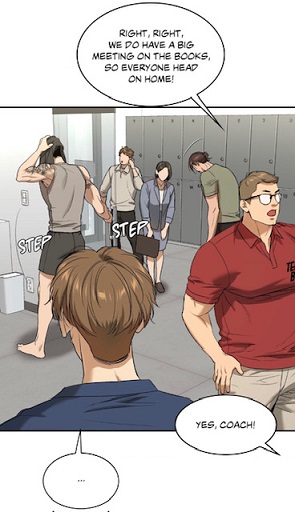 (chapter 36) than their training and career. Moreover, he kept bribing them with junk food
 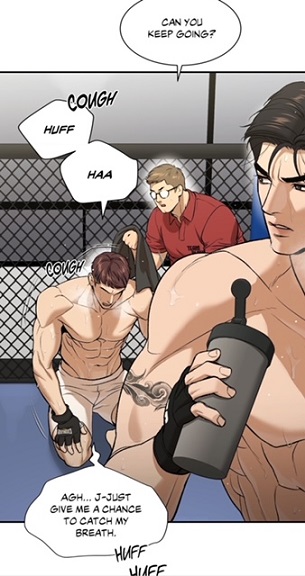 (chapter 46) The latter was a new source of income and fame. Everything was revolving around money. That’s how it dawned on me why the manager got angry for the bet in episode 26:
  (chapter 26) We shouldn’t judge his words as a verity, he was just using the doctor as a false excuse. The reality is that the sparring had brought no money at all! This fight was strongly intertwined with fun. The notion of „entertaining“ stands in opposition to money. Fun means feeling emotions and being to true one’s self. In other words, Kim Dan stands for a different notion of MMA fighting: the sportsmen shouldn’t work for money, but for fun. They are artists too. This signifies that as time passed on, the members of Team Black lost their passion for fighting
  (chapter 26) and became more obsessed with possessions and fame. Potato and the remaining members represent the exceptions. They enjoyed the lessons despite the pain and struggles. The other members became dependent on external tools which led them to lose their integrity. To conclude, the reason for their disloyalty is that at the end, they had long internalized the mode of having and were just interested in getting successful.
 (special episode2 ), but also Cheolmin
  (chapter 13) who likes making jokes. That‘s how I came to understand why Cheolmin appeared only one time in season 1. He will come to replace the manager:
  (chapter 13)
 (Chapter 13) when the latter denied his responsibility. This shows that the man doesn’t mistrust people. He has faith in humans. And in this short scene, the doctor shows alle positive notions mentioned above: love, empathy, joy and creativity. Therefore I come to the following interpretation: he embodies the being mode. No wonder why he was not present in season 1. The main lead was definitely obsessed with work. Hence the moment Cheolmin’s path crosses Kim Dan’s, the funny doctor should become the hamster’s new role model.
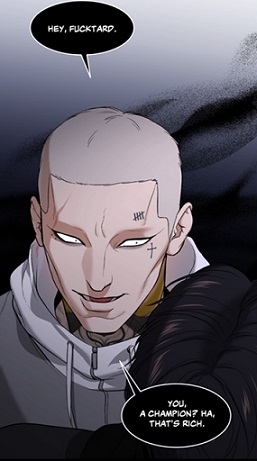 (Chapter 49) Thus he thought, the athlete had earned his title the same way. His fights were rigged, yet the verity is that the idol worked hard to achieve this level. The irony is that The Gunshot experienced much too late that his assumption was wrong.
 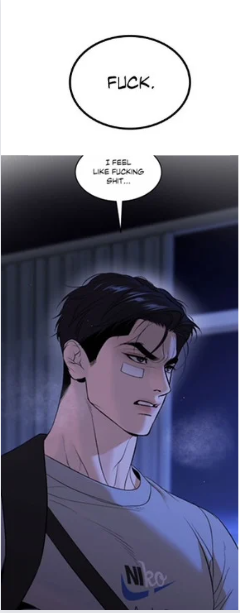 (chapter 53) He is standing at a crossroad. What does he truly want in life? Fame? More money? Or happiness and as such love and fun?

 And now, you know the origin for this essay. As you can see, the collection of Haikus is focusing on the topic “Water”. Since I only possess the French version of Haikus, I could only give you my own English translation. Fortunately, my friend @Rin_de_eegana was able to find the original version, Japanese. Therefore in the second version, I am giving a second English translation whích gave me new insight once again. Anyway, the thing is that as soon as I read certain poems, it made me think of Jinx and the characters. This shows my obsession for this terrific Manhwa.
 (chapter 14) Yet, the main lead never got the chance to see it. Then the ocean is only mentioned directly at the end of the first season. The halmeoni was expressing her wish to return to the West Coast
  (chapter 53) where she hoped to see a beautiful ocean one more time.
  (chapter 53) When she was 10 years old, she was moved by how the ocean changed colors with the beautiful sunset. It was no longer blue or grey, but yellow, red, pink, orange and purple. This wonderful but brief moment left such a deep impression on her that she could never forget it.
  (chapter 53) She never came to regret her walk to the beach, because this souvenir also became her source of strength. This memory created in her the desire to see it again, thus she kept postcards with views of the ocean.
 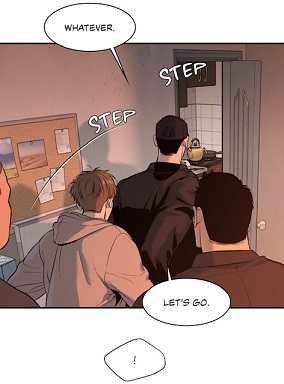 (chapter 17)
 (chapter 53) is glowing blue? I don’t think so. Let’s not forget that blue symbolizes wood for Koreans. The sea (water) and a tree
 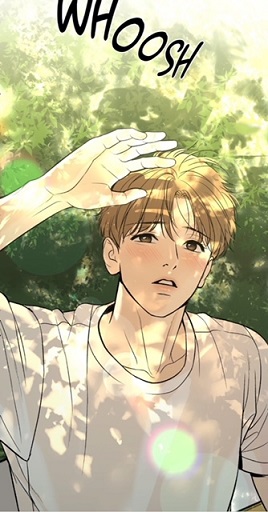 (chapter 41) are the doctor’s true elements. Under this new light, it becomes comprehensible why under the tree, he came to acknowledge his feelings for the athlete. In addition, if Kim Dan gets close to water, this signifies that he will get replenished and truly nourished. And notice that during season 1, he never ate properly.
 (chapter 27) Like mentioned above, the beholder in front of the ocean can have a different experience than the young girl.
  (Chapter 7) And we could see that Joo Jaekyung had a similar attitude in season 1, he would listen to his hyungs and the people working for MFC. Consequently, I come to the following deduction: this time, the fighter will make the decision on his own. He won’t follow Park Namwook’s advice:
 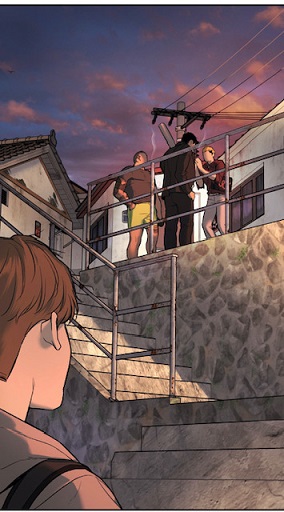 (chapter 1)
  (chapter 47)
 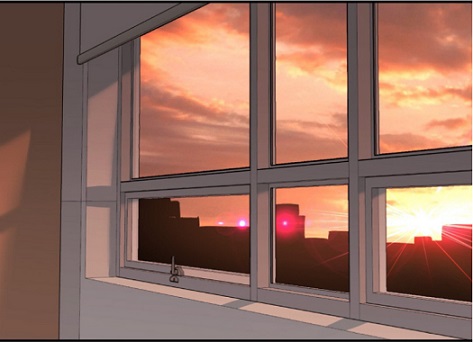 (chapter 47) even when the doctor was confronted with the truth about his terminally ill grandmother. The sun was always shining brightly. Since in the haiku from Ryokan Taigu, the rain is associated with old-age and fall (misty), it dawned on me that the rain should be associated with the grandmother’s death. If this comes true, it was, as though the sky and gods were weeping for her vanishing. Additionally, the first season took place in Spring and Summer, thus I deduce that season 2 will take place around late summer, fall and winter. This means that the weather should change. And this remark led to my second revelation. I started looking for South Korea’s climates, particularly I was curious about the climate on the West Coast.

 We have an elderly man walking through the rain in front of the blue sea. The latter is accompanied with a Waka-poem from Yoshihiro (which was not translated). According to my Japanese friend @Rin_de_eegana (飯乞ふと 里にも出でず この頃は 時雨の雨の 間なくし降れば), this phrase describes a situation where one cannot even go out to the village to beg for alms due to the long rain. Here, we have the topic of poverty linked to old-age and rain. Yes, the pages of this book reminded me of Shin Okja, a poor elderly woman who is so sick. And like mentioned above, the rain could be the reason why the woman doesn’t go to the beach. The two poems are underlining one important aspect: the powerlessness of humans in front of nature. No one can stop aging, just like no one can control the weather. At the same time, it outlines the importance for a senior to be surrounded by people, so that they don’t end up dying from dehydration, from a cold or hypothermia.
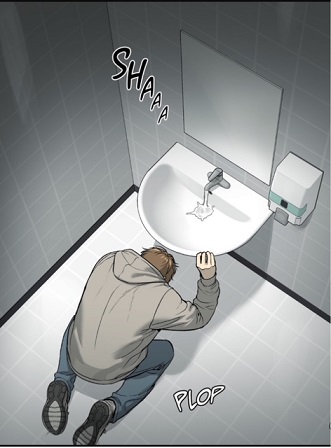 (chapter 47)
  (chapter 49) Both main leads went to the restroom in order to hide their emotional turmoil and suffering. They used flowing water (in Joo Jaekyung’s case the shower) in order to cover the sound of their weeping: SHAAA. Yes, the tears are making sound… so the rain should make sound as well. And this brings me to my next remark.
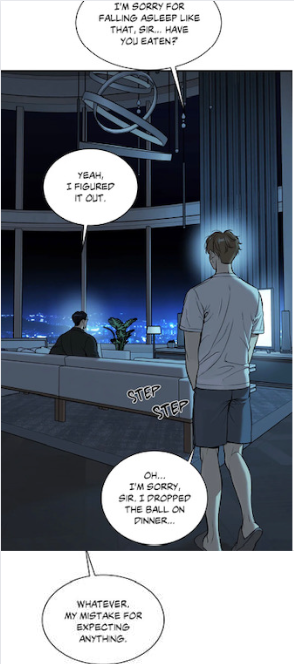 (chapter 29)
  (chapter 18) and as a source of stress and worries.
  (chapter 45) This means that the night view of the ocean should make him discover the beauty of the sound of water. He will come to associate the sound of the sea waves with Kim Dan. That’s how he will be able to fall asleep. In other words, I am expecting a new version of this scene:
 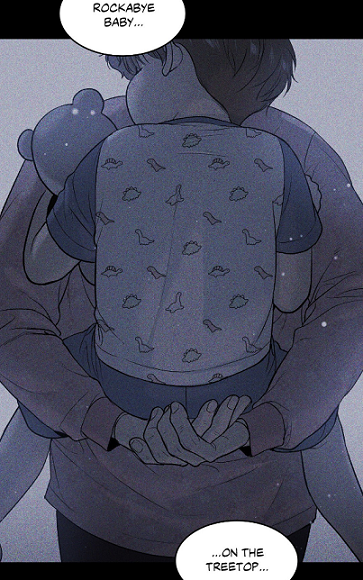 (chapter 47) To conclude, Joo Jaekyung will also have an Enlightenment in front of the ocean, but contrary to the grandmother, this experience will be associated with the night, the sound and a person: his soulmate Kim Dan.

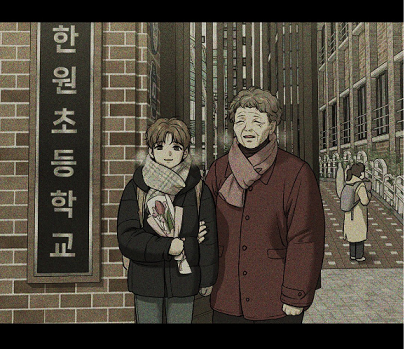 (chapter 47) .
  (chapter 47)
  (chapter 47)
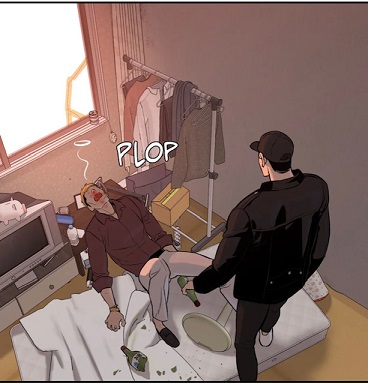 (chapter 17) They are nowhere to be seen!! I would even add that this place contains no traces of Kim Dan’s presence!
  (chapter 19) The framed photograph isn’t visible on the chests or the shelves, when Joo Jaekyung confronts the loan shark and his minions
 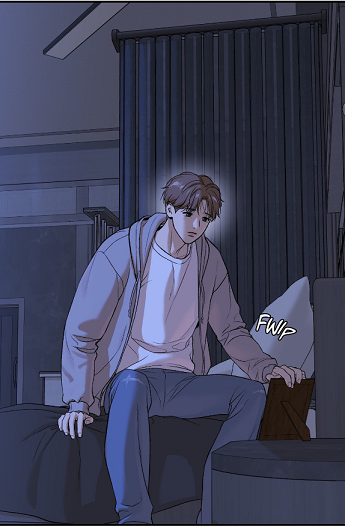 (chapter 47) Thus I conclude through the absence of his pictures and belongings that nothing was exposing the presence of Kim Dan in this small flat. We could say that he had been living as a ghost child (the piggy bank) in his halmoni’s place. It implies the existence of an invisible wall between himself and his grandmother. This perception reinforces my previous interpretation. This place was like a “cursed place, where the “Sleeping beauty” was waiting for his “prince charming”. 😉 Therefore, when the doctor removed the framed picture from the drawer, it symbolizes his own “release”. It is no coincidence that one week later, he became “a man and as such an adult”.
  (chapter 19) He was slowly detaching himself from his halmoni’s shadow. The mirror is a reflection of a photograph. Here, he is facing reality: he has a long phallus and he can have a climax.
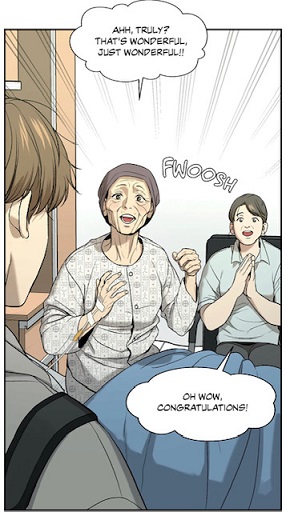 (chapter 7) and actions.
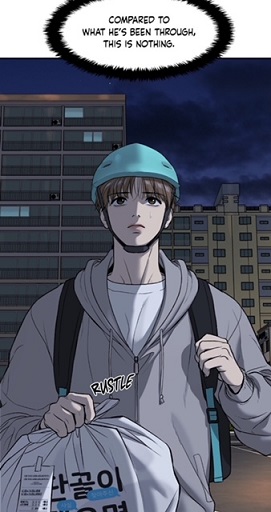 (chapter 42) or “waiter”. As my avid readers can detect, there is a strong link between “pictures” and “pride and love”. Their absence is the expression of neglect from the grandmother, who was definitely too focused on herself and her own suffering. At the same time, it lets also transpire the low self-esteem from the grandmother. In her humble dwell, there is no picture of her as well.
 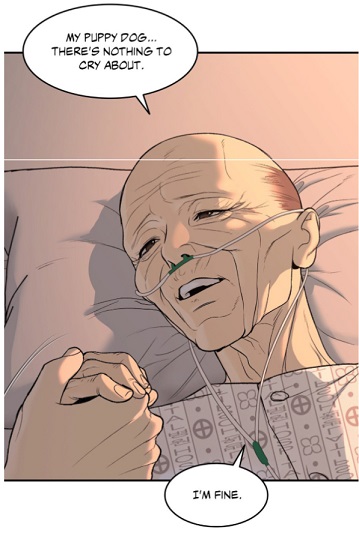 (chapter 47) Why? By acknowledging him as an adult man, she would give him a choice. He could refuse to do her a favor. As a puppy, he can not live on his own. Besides, by turning him into a dog and as such animal, she is denying him his right as a human being. She is appealing to his instinctive nature, his loyalty. And the moment I thought of a dog and death, I couldn’t help myself thinking of the famous dog Hachiko who kept waiting for his owner’s return at the train station, unaware that the latter had died a long time ago. As you can see, doc Dan’s pictures are strongly intertwined with reality and confrontation. Therefore the pictures with her grandson were not shown or treasured. The grandmother has been avoiding mirror and even pictures. As a person suffering from “Peter Pan Syndrome”, she is trying to do anything to escape “death and responsibility”. How ironic is that she just needed a picture to express her wish to move to the West Coast!
  (chapter 38) Clouds are a reference to heaven and dream, while the green display displays loneliness and emptiness. They have no one by their side. Furthermore, just like Kim Dan, Joo Jaekyung has no family pictures in his house
 , (chapter 19) which could be seen as a clue that he is an orphan. Or in the best case, they live, but there is a huge wall and gap between them and the fighter. I would even add that no one could even identify the owner of the penthouse. He is a famous MMA fighter, yet there exist no picture of himself in this flat! Not even this one:
 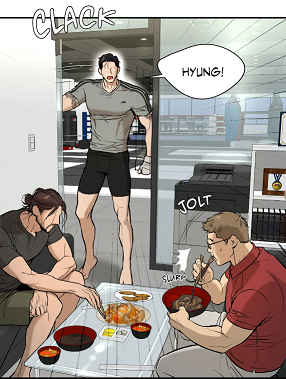 (chapter 5) The first personal video and message from his manager only appeared in chapter 43. This shows that the owner of Team Black had no family at all and not even friends. This observation brings me to my next remark. What about the gym Team Black?
 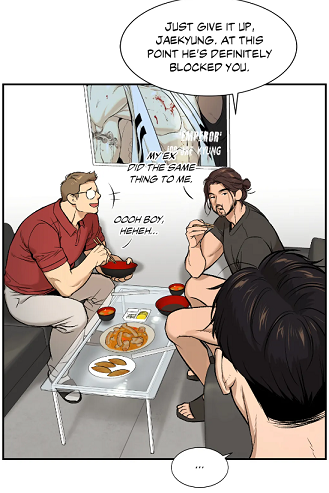 (chapter 5) There are only pictures of the champion and of no one else. Not even from Park Namwook or the ex-professional fighter Jeong Yosep. Everything is revolving around the celebrity. The absence of pictures from others is indicating neglect. The gym was not advertised as a great place to have fun! It is all about fame, wealth and glory! Therefore it is not astonishing why the rats left the sinking ship.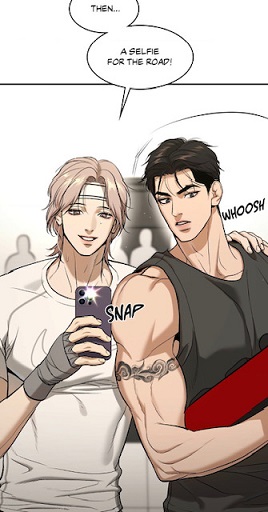
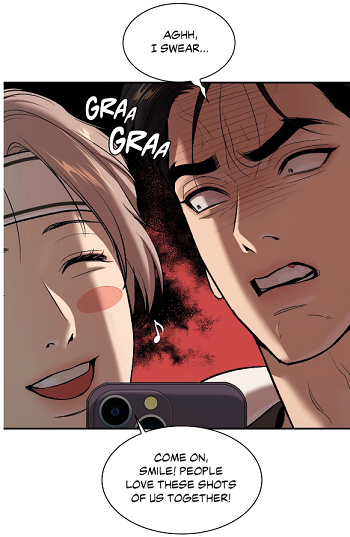 (chapter 30) It is because the photographs are a synonym for “money, glory and fame”. Choi Heesung was using him to get attention. His name
 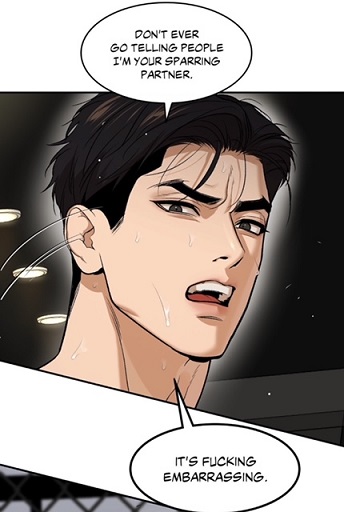 (chapter 46), his face and body are like “merchandises”.
  (chapter 43) That’s why he disliked the idea that Seonho would advertise that he was his sparring partner. The pictures in the god’s world have nothing to do with memories or love, but with work! It is about making business and getting sponsors and making his fans happy. That’s why the author included the magazines in the same chapter with the actor.
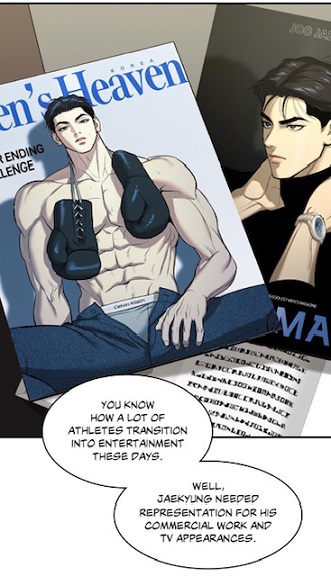 (chapter 30) Naturally, Heesung’s picture is not only related to business, they have a frenemy relationship. The photos with Joo Jaekyung stand in opposition to Kim Dan’s values: glorification, illusion, superficiality and futility. Under this new light, it becomes comprehensible why Joo Jaekyung would never put any framed picture of himself or others in his flat. His gym and the photographs are related to work. Who would like to be “reminded” of work and money in his own home? No one…
 (chapter 45) Imagine that the doctor had to work to exhaustion to give him an expensive gift! Yes, his gift was strongly intertwined with money, business and work! However, birthday is a symbol for home, pleasure, joy, simplicity and genuine gratitude. This has nothing to do with work and “replacement”. Yet, contrary to the other presents, the champion did open the hamster’s gift, for the latter had brought it personally.
  (chapter 45) Yes, his birthday was turned into a business event, a merchandise where he even had to pay for his own birthday party.
  (chapter 43) His popularity among the staff was based on his spending: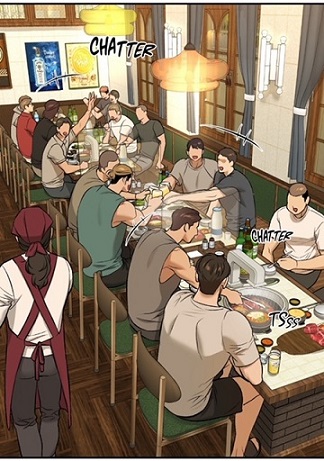
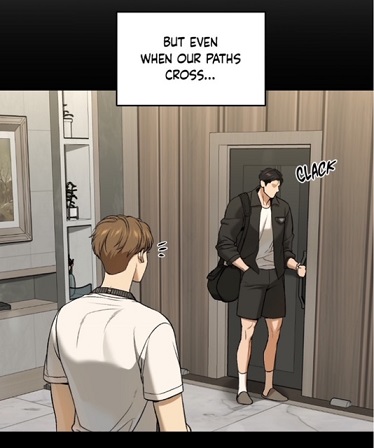 (chapter 47) It was not just because the athlete had been encouraged by his mentor to trust no one, to see relationship as a business.
  (chapter 46) This remark leads me to the following conclusion. Since the manager started sowing distrust in the champion’s heart, we can see it as another proof that this man has never truly loved “his boy”:
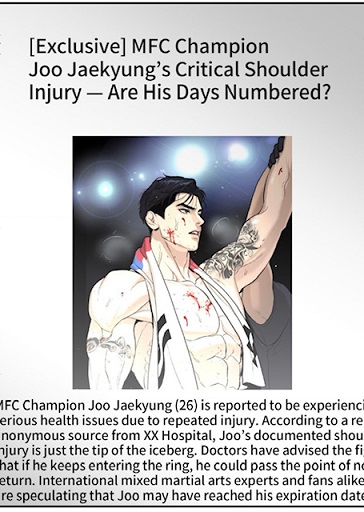 8chapter 35) When this article was released, the author selected a photograph exposing the champion in good health! He was raising his arm and as such using his “injured shoulder”. The content of the article contradicts so much the image which can only raise doubts among the readers. By using such a picture, they created the illusion that the athlete was hiding something. And this remark brings me to the last articles about the fallen legend:
 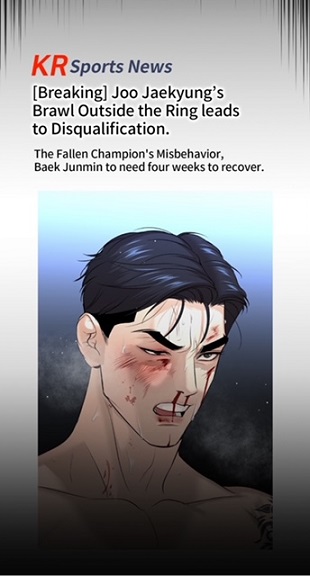 (chapter 52) His beaten face is exposed to destroy his “good image”: he appears not only as weak, but also as a bully. This shows how the medias are trying to manipulate the public with pictures. His face and body are damaged, therefore he has less value. This deceptive trick becomes more visible, when you include Baek Junmin.
  (chapter 33) A black car was following him. But they couldn’t take any picture, for the windows of his car were tainted.
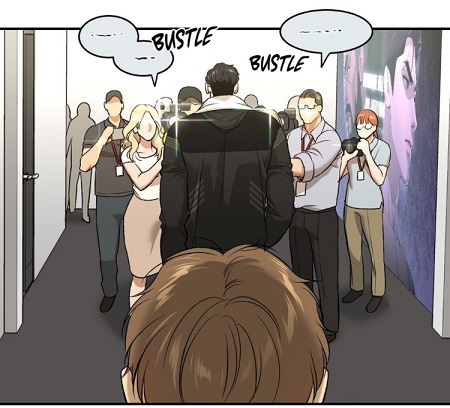 (chapter 40) It is no coincidence. Though he had no memory of the previous night, he felt this moment as magical. He had saved him and claimed him as a part of Team Black. Then he had look at him back, though he was facing journalists. However, the journalists didn’t take a picture of such a moment, for this was not relevant to them. It shows not only the true value of “memories”, but also that both were now truly living! During that night and day, both created wonderful memories.
 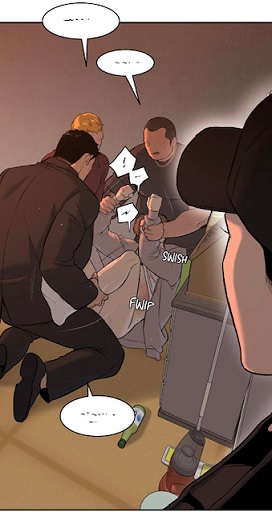 (chapter 17) He is relying too much on his eyes. He paid no attention to details and their words. Hence their words are not visible. In addition, the author created such a panel.
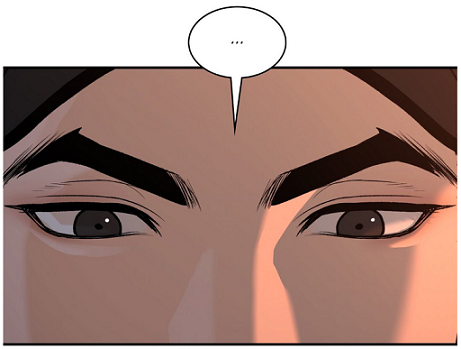 (chapter 17) in that scene.. But why is he trusting too much his eyes? It is because he adopted this poor habit from his mentor and hyung, Park Namwook. who judges people based on prejudices and impressions. When the manager faces a problem or some criticism
  or delegating responsibilities to others:
 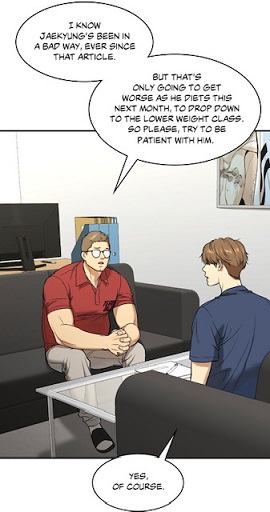 (chapter 36) Furthermore the man with the red tee-shirt has always been by his side for a long time. The time spent together is a proof of his “loyalty”, yet if the athlete had paid more attention to his words, he should have noticed his hypocrisy, lack of empathy and disrespect:
  (chapter 49)
  (chapter 27) In addition, he had to rely on the expertise of doctors, but he only trusts himself, his hyung and no others. But let’s return our attention to Kim Dan and his letter.
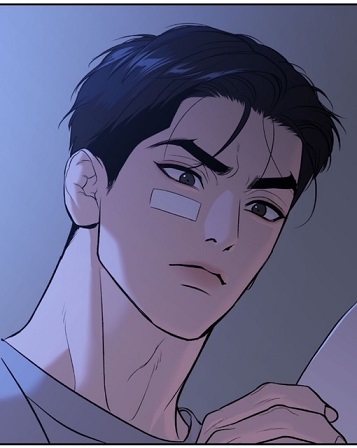 (chapter 53) The letter stands in opposition to the articles and photographs. Through the letter, the main lead is teaching to the wolf this important life lesson. He needs to use his mind and as such his heart to see the truth and reality.
  (chapter 53) The latter might have no photograph of Kim Dan, but his face is now engraved in his memory. To conclude, the letter should be perceived as a mirror of truth to the athlete. He needed to hear the hamster’s words without seeing his face in order to see him properly.
 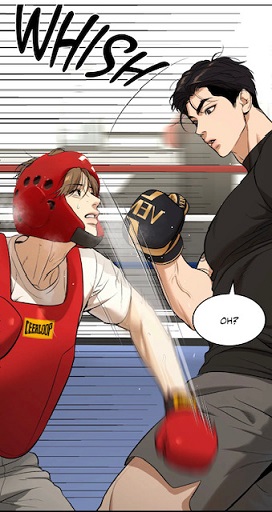 (chapter 26)
 (chapter 26) The gym will face some changes.

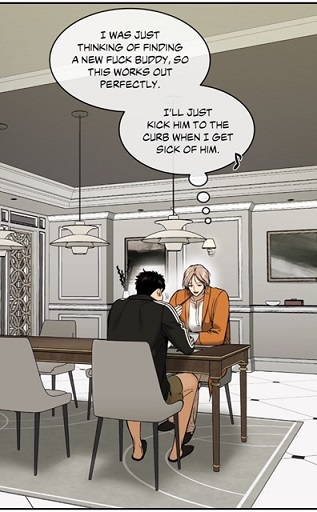 (special episode 1) The actor chose to use the black-haired sportsman as “Friends with Benefits”. But what would be Potato’s benefits then? Support and connections, like we could see it in special episode 2:
 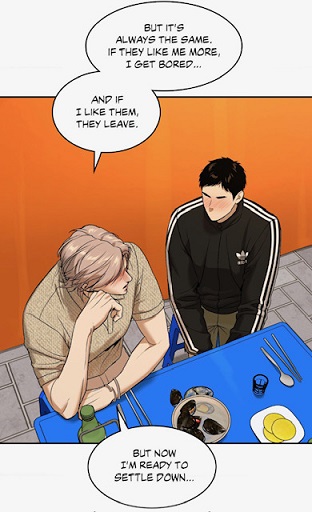 (chapter 35) Because he is famous and wealthy, he is expecting a similar reaction from the chow-chow. At some point, he will appear too clingy, hence he will perceive his relationship as burdensome. This is no longer fun.
 (special episode 1) With his words, the sportsman implied that he had taken advantage of the actor, while in reality the opposite had happened. Heesung had taken advantage of Potato’s drunkenness
  (special episode 1), ignorance and purity
 (special episode 1).The confession of Yoon-Gu’s wrongdoing could only shock the actor.
  (special episode 1) How did Yoon-Gu come to this reasoning, when he admitted in the same breath that he was drunk? It is because the night before, Heesung had confided that he was heartbroken due to Kim Dan’s rejection.
  (chapter 35) With his behavior, the fox gave the impression that his affection for Kim Dan was running deep. Under the tent, he was drowning his sorrow with soju. Hence in the maknae’s mind, Heesung was still in love with the physical therapist. Yes, the irony is that the chow-chow was also projecting his own thoughts onto the comedian. Let’s not forget that when the young fighter discovered the true nature of the relationship between the doctor and the emperor, he didn’t give up on his admiration and affection for Joo Jaekyung.
  (chapter 35) His description for a partner and as such love doesn’t correspond to the definition of true love: care, respect, knowledge and responsibility (Definition from Erich Fromm, for more read “
 (chapter 32) He didn’t try to protect him from the athlete’s fury. He never clearly stated his true desire, he wished to date the doctor, until he was cornered (threatened).
 (special episode 2) However, he is not entirely powerless, like I mentioned in the first part. He is not forced to admit that he had fun after the intercourse.
  (special episode 2) In other words, he is not obliged to say YES either! It is funny because thanks to this examination, I realized that Yes and No have “become” like taboo words. Yoon-Gu is avoiding these idioms by using the expression “I don’t know”. Hence I am suspecting that Heesung will become obsessed with the word “yes”! 😂 Only Heesung can procure him fun and pleasure, and no one else. He is getting disarmed by the sentence “I don’t know”.
 (chapter 23) The reason is simple. This was not patting, but rubbing. Neither Oh Daehyun nor Kim Changmin did it to express gratitude, rather for selfish reasons. They wanted luck on their side. Potato didn’t feel recognized and accepted, rather used as a tool. Hence he was bothered. Under this new light, it becomes comprehensible how Heesung can win Yoon-Gu’s heart in the long run. It is not because of his sexual performances, but thanks to his selfless gratitude and generosity!! We have the perfect example in these two scenes:
 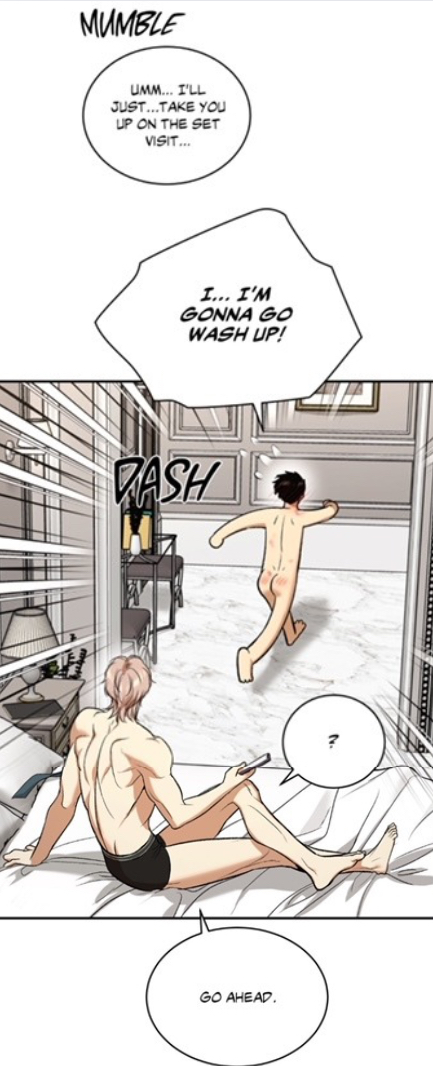 (special episode 2) He was attempting to hide his growing affection for the comedian. He feared that his feelings for him could become a burden for the comedian. In his eyes, Heesung should remain faithful to the physical therapist. He shouldn’t expect any affection from the actor either.
  (chapter 13) And the moment I read this expression, I couldn’t help myself thinking of a leash as a new sex toy.
 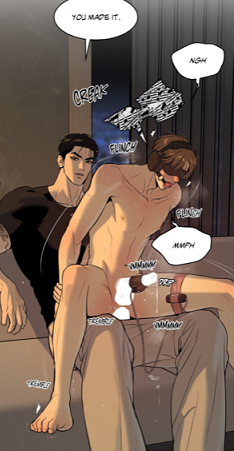 (chapter 34) In this scene, the physical therapist looked like attached to his owner. In the first part of “Passions in Purple: Jealousy and Joy”, I made the following prediction. Heesung would order a sex toy
  (special episode 2) out of annoyance and jealousy
 (special episode 2), for Potato had run away from him. He needs to put him on a leash to feel in control, to obtain his chow chow’s attention. Naturally, there is no guarantee that this prediction is correct. Yet since according to my examination, Potato is thinking that Heesung is in love, it signifies that Heesung is already attached to Kim Dan. Hence he won’t do anything to ruin this attachment… therefore Heesung can only be put in front of a dilemma. How can he make Potato look at him? He could reveal the truth to Yoon-Gu, but by doing so, he would ruin his image as a good and caring guy. Moreover, since he has lived for a long time deceiving himself and others, it is very unlikely that the actor might change his behavior so suddenly. Old habits are hard to die. Therefore for me, honesty won’t be his initial choice, rather acting. He will express his thoughts and emotions behind a new role-play and sex.
 There, I included two gemstones, the Bloodstone and the Aquamarine! Choi Heesung, born on 21st March, is represented by these birthstones! In this composition
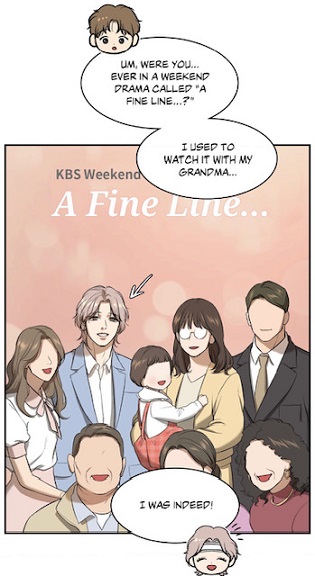 (chapter 30) And what was he wearing in the poster? A blue pale suit which is close to Aquamarine and even to light purple ! The color is no coincidence. I have the impression that thanks to the weak woman, Heesung will become a part of the “new family”. If you look at the sunset again, you will detect glimpses of purple in the sky. As for the second image which came to my mind is this: the actor swimming in the ocean. When the bloodstone is put in water, it changes the color of the sun: red for love. Yes, we should expect a new version of this scene:
 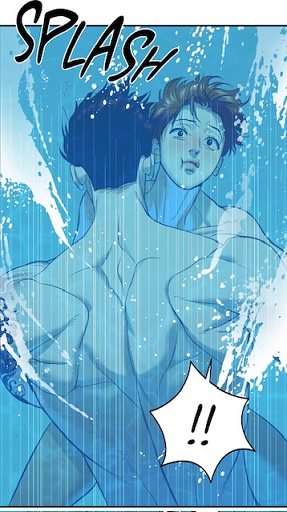 (chapter 28) which I had interpreted as a baptism, a purification. If the actor bathes in the Yellow Sea, he will be purified and as such his true self will come to the surface. That’s how he will recognize his love for Potato, but also his friendship for the doctor. So far, the man has no real friend, but he has been longing for one. At the same time, the metaphor (the sun turning red) could be a reference to the interaction between the actor and the emperor, the former helps the latter to recognize his true feelings for the physical therapist. As a conclusion, we should expect to see Heesung under the sunset and next to the ocean or water. There, he should ponder and have a realization.
 (chapter 37) Here each fighter was on his own, they were not really training together. The champion was the leader due to his imminent match, he put the others under pressure, as he was himself stressed. But with his suspension, he is no longer racing against time. In other words, the training routine should be different. They will help each other, encouraging each other to become better. The presence of Heesung should help them to see the training under a different light. But for that, he has to reconnect to his true nature: bloodstone and aquamarine.
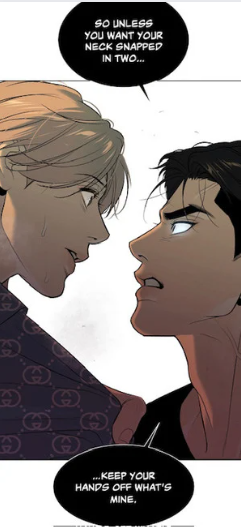 (chapter 34) Here, he forced the champion to claim the doctor as his possession. However, in season 1, the main lead came to regret his actions (34, 43), for he has never been honest to himself. And now, it is time to focus on the second gemstone.
 (chapter 31) They were green. He is attracted to “green”, his origin self. Nevertheless, in episode 31, this was rather a khaki version due to his corruption. No wonder why he played a trick on the champion. And this observation brings me back to the doctor’s clothes. What was he wearing, when he was young?
  (chapter 35) At the same time, it explains why Heesung changed for the better thanks to the physical therapist. Thus I assume that Heesung is destined to become an aquamarine, bringing all these characters closer to each other: Potato, Cheolmin, Kim Dan, Joo Jaekyung. However, contrary to the past, he won’t use his money to help people to become happier. His smile and happiness should affect the others:
  (special episode 1) Since the elderly woman confided to Joo Jaekyung, we can assume that she could do the same with the gumiho, as soon as she sees her idol. It is important, because he could grasp the physical therapist’s suffering and low self-esteem.
 (chapter 48), but the actor would be replacing the fake director. We had a sunset here, dark water (the coffee), the symbol for corruption. Then notice that he is wearing a blue t-shirt (but two colors, a symbol of his hypocrisy)!! This reinforces my expectation that we should witness the actor’s awakening, the exact opposite of the other Choi, who chose revenge and manipulations. But there is more to it. Thanks to the comment of @Milliformemes24, I had another revelation. The latter wrote that places of knowledge and self-awareness are related not only to the ocean, but also to the mountains. It is normal, as the hill is closer to the sky and as such closer to the gods. Notice that Heesung’s new home is situated on the top of a hill, surrounded by a forest.
  In other words, Heesung could get enlightened on a mountain too, during a stroll for example. And the moment I read this from my friend, this image came to my mind:
 (chapter 41) The huge tree at the hospital!! The latter is even strongly connected to a stroll. In that scene, the doctor thought of his lover, as he associated him with the sun.
  (chapter 31) could be seen a mirror of the tree. The roses encourage the doctor to ponder and show an interest in his employer.
  (chapter 37) However, the first time, the tree appeared as such was in the States, and this on two occasions:
  (special episode 2) Yes, the barn!! The tree had been transformed into a home. However, don’t forget that this was just a fantasy from Heesung. However, during this intercourse, he came to expose his jealousy and growing attachment towards his soulmate. Yes, the last two mentioned scenes have two common denominators: a mixture of fantasy and Enlightenment. Nature is strongly intertwined with meditation and communication. To conclude, we should expect the presence of woods and trees in season 2 as well. And this hypothesis got reinforced, when Mingwa released this image on X:
  We have a sunset, a palm tree and purple in the sky… Joo Jaekyung is wearing a similar shirt than Heesung:
  (chapter 34) I consider this as an allusion that the actor will be by the fighter’s side. On the other hand, since the shirt is open, I interpret as the star’s emancipation. The latter has been able to escape from his mental prison and suffering. In his cage, he was racing against time. Now, he is able to relax and enjoy time. At the same time, since the champion in the image from X is seen wearing rings with stones, it somehow confirmed my interpretation about the role of birthstones in Jinx.


 you will notice a third shade: orange which is represented by the Chow-chow and the comedian’s robe. Since the latter plays a minor role in the last chapter, it is normal to examine this pigment first. Moreover, its explanation is even necessary to grasp the significance of the other colors: pink and black.
 (Special episode) Then he cooked a spicy ramen for the young fighter.
  (Special episode) This color contrasts so much to the pigments from the artist’s flat: black and white.

 (Special episode) Grey is a combination of black and white. One might think that tangerine appeared for the first time in episode 35
 (chapter 35), but it is just a deception. In fact, there were traces of this pigment, when Choi Heesung was introduced for the first time.
  (chapter 29) Yes, we should perceive beige as a washed-out orange. So what does it mean? First, the cursed Romeo was not true to himself. Let’s not forget that in my eyes, Choi Heesung is a fox, and the fur of this animal is orange which is similar to the chow chow’s pigment. This means that both second leads would have a color in common: orange. Moreover, from my perspective, the comedian is a nine-tailed fox, a gumiho. In case, you didn’t read the analysis “
 (chapter 30), before becoming beige.
  (chapter 31) This observation helped me to recognize that the more Heesung appeared, the more colorful his clothes became. So this discovery exposes that
  (chapter 35), white is not his true color! Whereas Potato represents black outside and white inside, his partner embodies the opposite values: white outside and black inside. In addition, the switch of colors indicates not only his transformation, but also that his world is becoming more colorful and as such less boring. Yes, Mingwa was applying the principle: clothes make the man. To conclude, the colors beige and orange are mirroring his gradual maturity.
 (chapter 31) and finally camel
 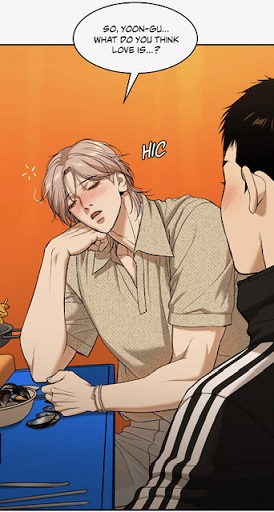 (chapter 35) Here, I added a screenshot of 57 different types of beige.
 (special chapter) Therefore he is sleeping while hugging a beige and pastel pink pillow. This exposes his need for warmth and support. On the other hand, he is not realizing that he is his own enemy, for the pillow represents a hindrance. He is not allowing people to get closer to him. It looks like he fears embraces in the end.
 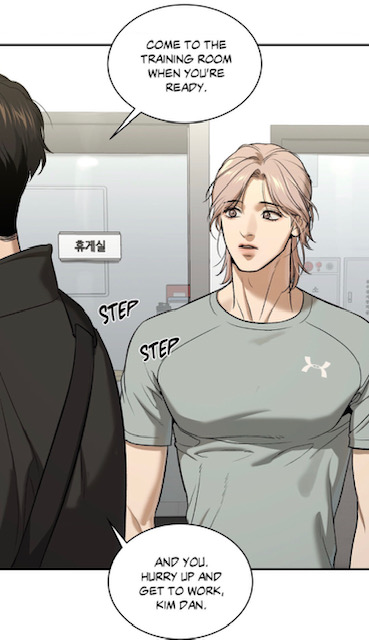 (chapter 31)
  (chapter 32, the lavender suits) This observation reinforces my previous statement. Heesung is looking for neutrality.
  (chapter 33) He is amoral and to a certain extent immoral. We could say that he is a free spirit, but fears rejection. Hence he faked an injury and lied to people. The pastel colors are not reflecting his true mind and choices. We have the perfect example in this scene:
 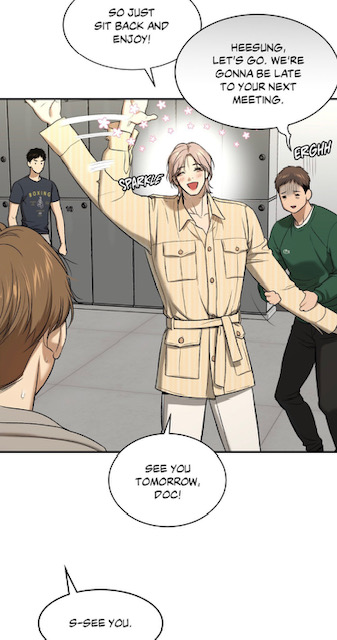 (chapter 31) While he was wearing a peach jacket, his manager had put a vivid green with dark black pants. Shortly after, the comedian was seen with this beige/khaki shirt and grey shorts.
  (chapter 31) Interesting is that his hair shade reflects my previous remarks perfectly. He chose pink which indicates his desire to break social norms, on the other hand, his pink is so faded that it almost looks like beige. He wishes to be “neutral” and somehow “conformist”. Yes, his pink hair mirrors his inner conflict: trying to break free from social norms, yet not standing out too much. The antonym for neutrality is “commitment”, an indication why he was not capable of being committed in a relationship in the end.
 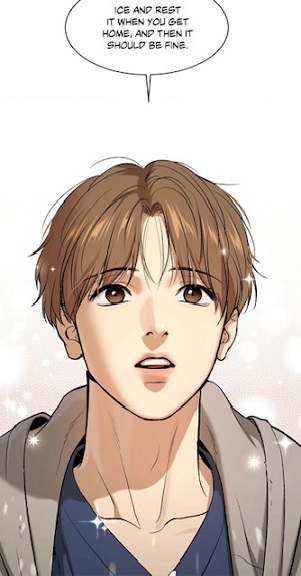 (chapter 30). However, if you compare the pink from
  (chapter 30) episode 30 and 31
 (chapter 31) to the ones from the special episode
 (special chapter), you will notice a huge change in the shade. While in the past, the Webtoonist selected pastel pink or coral, in the special episode, we have now fuchsia as pigment. This is no coincidence that the color is now more pronounced, exactly like with beige/orange.
  (chapter 35) This shows how important it was for him to have a lover. He fears of being abandoned and being alone. Therefore he asked this from his new lover:
  (chapter 32) It is not his “problem”. Hence he was totally absent, when the scandal with Joo Jaekyung broke out. His AWOL corresponds to his passivity and even indifference. However, there is no doubt that this incident will affect his relationship with Potato greatly.
  (special episode) Thus I sense that Potato will force the actor to drop all his past believes: passivity, indifference, irresponsibility and as such betrayal. We could witness this in the special episode partially.
  (chapter 5) This is just another trick from goddess Mingwa to push him to become more responsible for his new relationship. My idea is that in order to discover that Potato is his soulmate, Heesung needs to help Potato and as such the main couple to be together. Only when the doctor and the champion are an item, he will have his partner.
 (special episode) with the one from episode 39
 (chapter 39), as the shades are very similar. Heesung was as rough and selfish as the fighter. Notice that this whole sex session was focused on the actor’s needs and desires,
  (special episode) exactly like with the champion. He needed “comfort”, as he was in a depressed mood.
  (special episode) The champion has a similar habit:
  (chapter 36) Besides, note that Yoon-Gu’s buttocks are red, a sign that the comedian focused on them!! The irony is that Potato felt pleasure right away, hence he had more climaxes than Heesung.
  (special episode) This panel is interesting, because it shows that Potato was not focusing on Heesung at all. It was all about himself and his own pleasure. He was not recognizing that he was actually mirroring the actor’s thoughts and desires. Yes, from my perspective, the young man was in truth treating the actor as his sex toy or fuck buddy. There was no string attached, this explains why Heesung had to ask this to Yoon-Gu:
 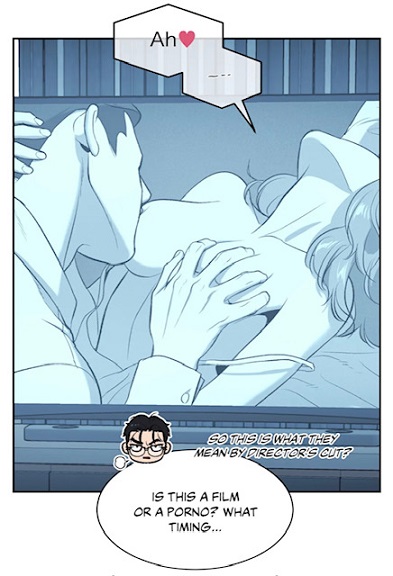 (chapter 29: black and white movie!!) and fairy tale: the end shows their blissed union and they lived happily ever after. This explicates why the comedian compared Kim Dan to an angel…
 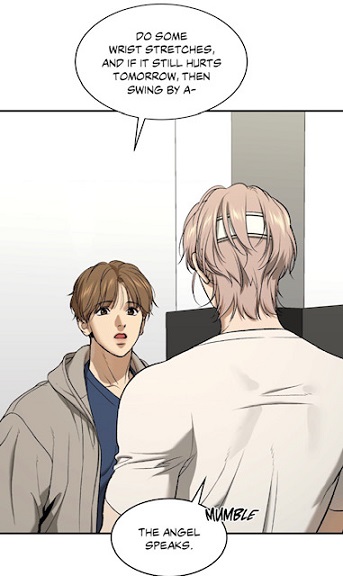 (chapter 30) The latter stands for eternity and immortal love. But this is just an illusion, for humans are mortals. They are destined to die. And this leads me to my following remark. Why was black so present in the special episode? It is because this pigment often represents DEATH!
 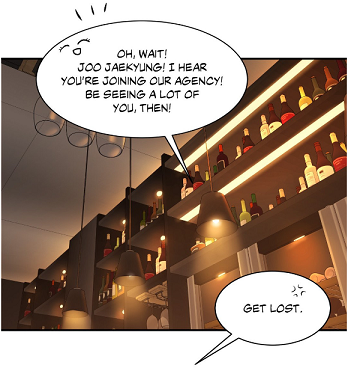 (chapter 33). He can also hear rumors there. Moreover, for me, the actor stands for power, control and as such knowledge… hence he was able to pull tricks on the star on multiple occasions. He is able to make the athlete angry, he can arrange a meeting without Joo Jaekyung’s consent
 .(chapter 34) or make a deal at his expense
  (chapter 31) Officially, he had wounded the actor, therefore his physical therapist had to take care of his treatment. Besides, I believe that MFC desired to corner the champion in order to force him to give up on his new lover. He was no longer hiring a prostitute. As you can see, black is an ambiguous color: it can symbolize knowledge as well ignorance. Thus this shade represents mystery. Thus it is no coincidence that the past and family of Joo Jaekyung, who is also associated with black, remain a riddle
 (chapter 31) While Joo Jaekyung condemned him for his deception and constant switching of partners
 (chapter 33), his manager accepts him despite his messy love life and flaws.
  (special chapter) Potato is a sex toy, just like the doctor was a tool against the champion’s jinx. Secondly, the artist discovered a whole new world thanks to Potato’s purity and ignorance
  , we have to envision that his role during the night was to absorb the actor’s negative energy.
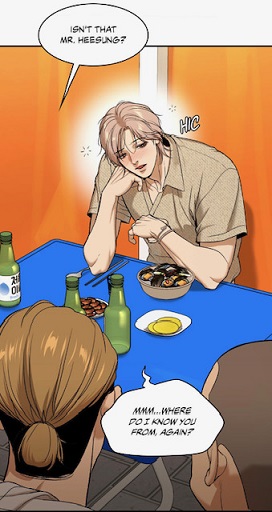 (chapter 35) reminded me of Kim Dan who used to drink in order to numb his pain. By meeting the black and yellow Chow-Chow, the fox was able to see light in his sorrow. Potato could absorb his negative thoughts and even enlighten his night. Therefore it is not surprising that Heesung made such a statement:
  (chapter 33) First, the VIP club is painted with dark colors. Secondly, the athlete was wearing a dark brown jacket with a black pullover. For me, Choi Heesung’s true personality comes to light in the dark!! We could say that he shines in a black room. Surrounded by darkness, he feels more protected. Thus at the club, he revealed his immorality and hypocrisy… He didn’t stand out. The more white the room is, the less the actor is honest! His preference for neutral colors expresses his need for “conformity and passivity”. They are an evidence for his hypocrisy and acting. Under this perspective, Manhwaworms can grasp why the mysterious man has a hidden dark room!
  [I am assuming that Mingwa didn’t change the flat] Only there, he exposes his true nature: BDSM. In my eyes, there he can voice all his desires and thoughts. His true self can come to the surface. I saw another evidence for this hypothesis (BDSM) in this expression: “kick him to the curb”
 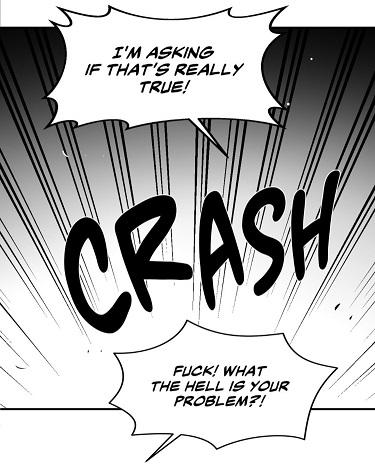 (chapter 52) This means, he is already one step closer to the MMA arena. With the last incident, the young fighter must have caught the attention of opponents. He created himself “enemies”. Therefore he could become the next target for a plot as a revenge. In other words, with such a companion, Heesung is confronted with reality. His destined partner can be wounded and even die. Thus he has to ensure his safety. He can no longer be indifferent and passive. As you can see, Heesung will be put in a similar position than the physical therapist:
 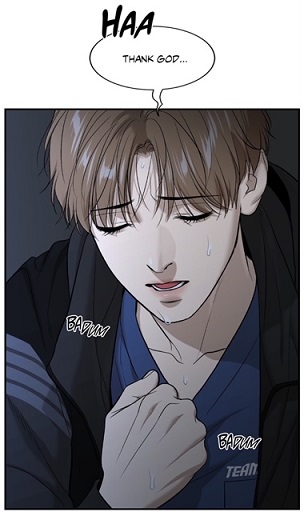 (chapter 40) And this observation leads me to my second part, the explanation for the title: La Vie En Rose.
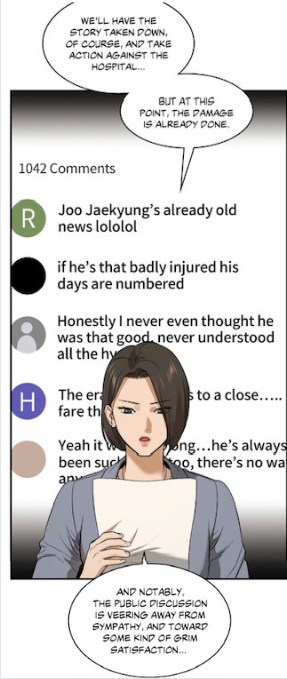 (chapter 36) That’s what the athlete experienced at the end of season 1. I could describe the fans’ devotion and appreciation as idolization and veneration which can have terrible consequences.
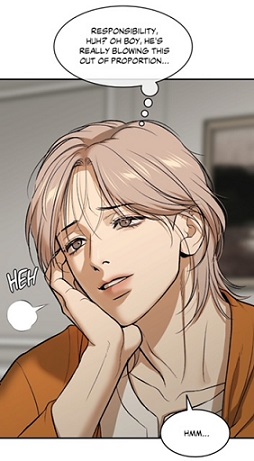 (special episode)
  (chapter 33) or sighing, the symbols for boredom. Thus I have the feeling that his job as actor is not procuring him any joy. That’s how I realized why Heesung is the champion’s frenemy. While the latter stands for training and routine (he hates surprises and novelties), the other embodies the exact opposite notions: he loves adventure, spontaneity and variations.
  (chapter 48) As you can see, the main lead announced a turning point in the gumiho’s life. Exactly like his frenemy, he was taught that money and fame can not buy affection. Moreover, for the first time, the young man learned the existence of boundary and respect.
 (special episode)
  (chapter 35)
  (special chapter) He is constantly caught by surprise!
  (special chapter) He sees Yoon-Gu as fun! Simply because he is allowing himself to express his emotions. He is never hiding his thoughts and emotions, the exact opposite of Heesung. He is so transparent, on the other hand, totally unpredictable. Yes, in the end, Yoon-Gu represents a huge riddle for Heesung. What caught my attention is how Yoon-Gu didn’t mind to yell his affection and admiration in front of people. He doesn’t mind people’s judgement and gaze. He is strong enough to bear this kind of attention… the exact opposite of the actor. He is not afraid of committing, making a different statement, he can diverge from majority. Hence he left the restaurant in front of others.
  (chapter 52) He can make his own judgement and choice. To conclude, though Yoon-Gu is the younger one, he has so much to teach his fated partner who chose conformity and ended up bored and half-dead!
 (chapter 31) We could say, their meeting was like a big bang, an explosion! Caught by surprise and annoyed by such an incident, the actor couldn’t help himself voicing his thoughts about Potato:
 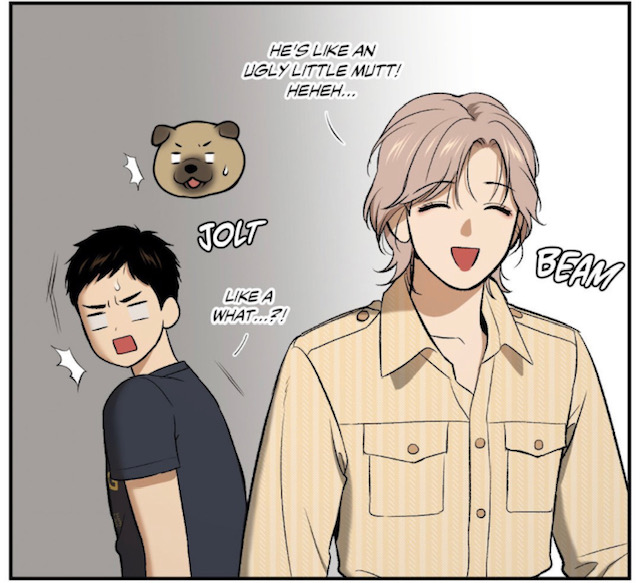 (chapter 31) For a short moment, he dropped his mask and expose his true personality. And for the first time, he received such a gaze:
 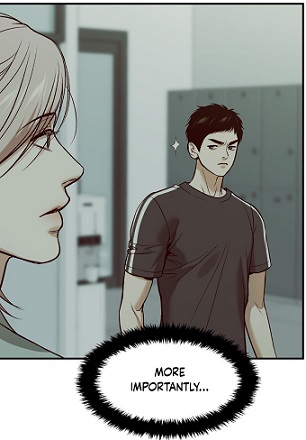 (special episode) That’s how both ended up creating unforgettable moments. Under this perspective, my attentive and patient readers can grasp why I created such an illustration for this essay:
