
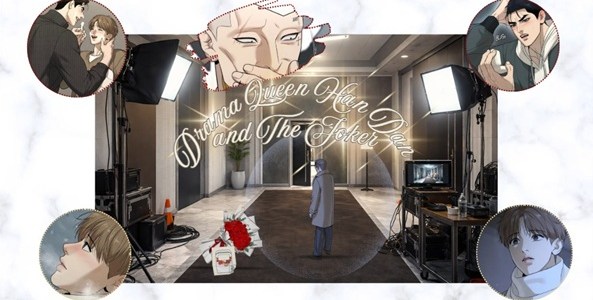
Please support the authors by reading Manhwas on the official websites. This is where you can read the Manhwa: Jinx But be aware that the Manhwa is a mature Yaoi, which means, it is about homosexuality with explicit scenes. Here is the link of the table of contents about Jinx. Here is the link where you can find the table of contents of analyzed Manhwas. Here are the links, if you are interested in the first work from Mingwa, BJ Alex, and the 2 previous essays about Jinx The Giant of Paper and Laughter -part 1 and part 2 and Drama Queen 👸 Han Dan and The Joker -part 1
It would be great if you could make some donations/sponsoring: Ko-fi.com/bebebisous33 That way, you can support me with “coffee” so that I have the energy to keep examining Manhwas. Besides, I need to cover up the expenses for this blog.
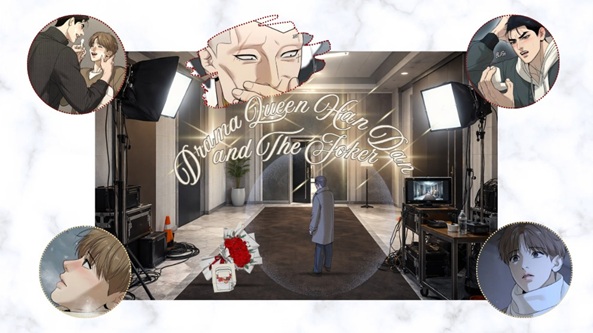
When Protection changes Hands
In the first part, I focused on the Joker’s method: not brute force, but construction. One visible diversion captures attention 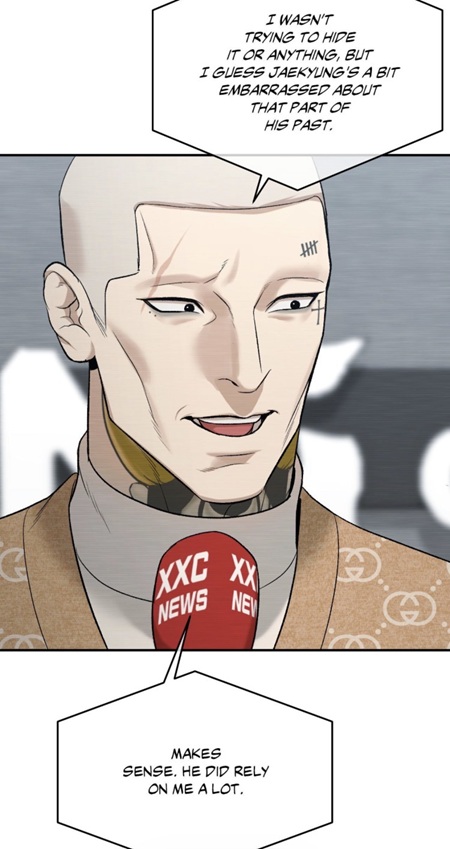 (chapter 96), while another movement unfolds elsewhere.
 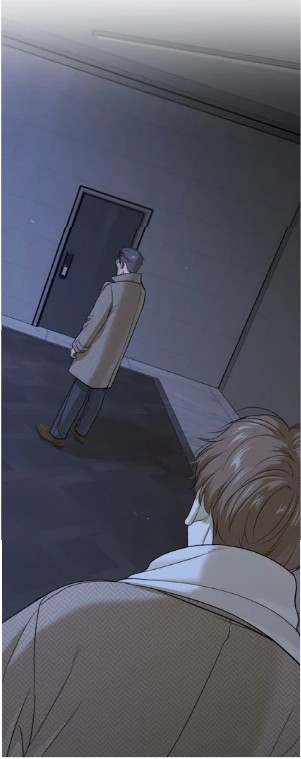 (chapter 97) The interview, the damaged poster
 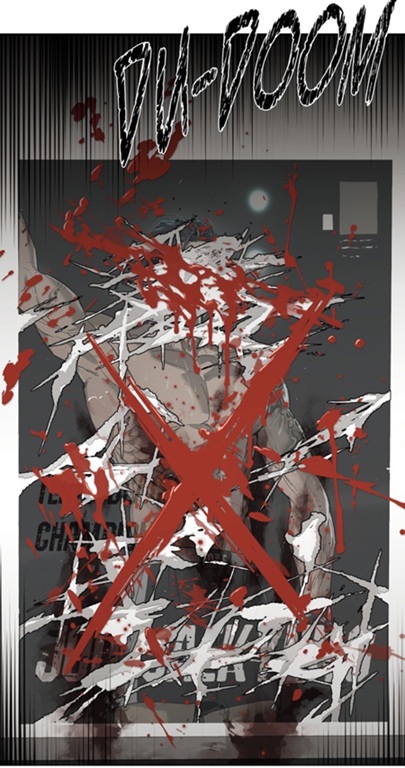 (chapter 96), the hallway encounter, the former director’s sudden presence — none of these incidents need to be isolated events. They can be read as layers of the same design, arranged to poison the climate around Joo Jaekyung and Kim Dan through mistrust, guilt, and confusion.
Yet while returning to the final scene once again, I realized that another question may now matter even more than the scheme itself: the question of protection.
Until now, protection in Jinx often appeared in the form of rescue.  (chapter 79) Danger emerged first, and only then did someone intervene. Joo Jaekyung repeatedly occupied that role.
  (chapter 17) He was the one who could step in, overpower threats, and remove Kim Dan from immediate harm. Kim Dan, by contrast, was usually placed on the other side of that equation: the one exposed, cornered, or in need of help. But rescue and protection are not the same thing.
The Gym’s Intervention: A Case Study in Failed Protection
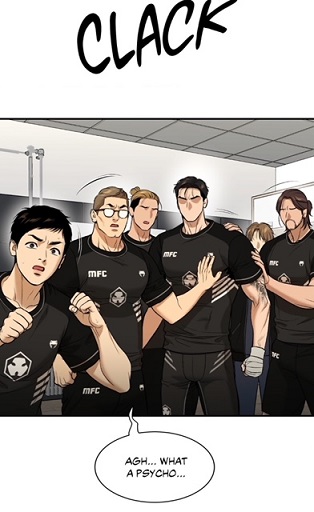
A precise materialization of this concept can be seen in the scene where Joo Jaekyung, blinded by rage, is physically restrained by Park Namwook and other gym fighters 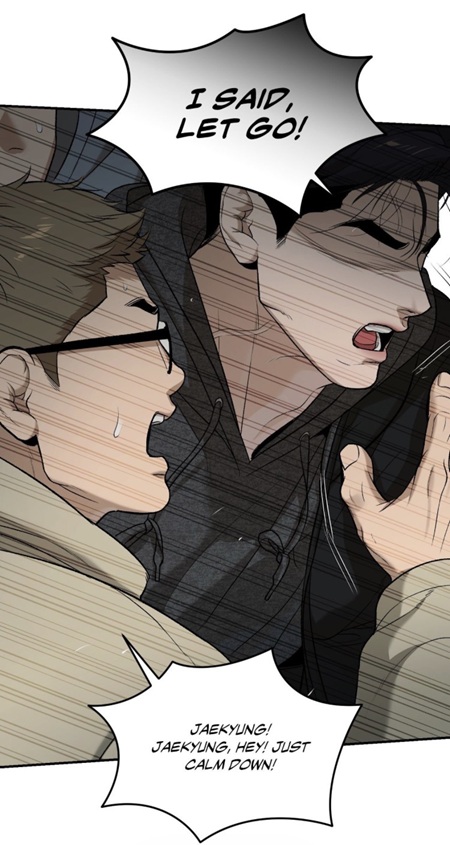 (chapter 96). On the surface, this action resembles a form of protection: they are stopping him from committing a violent act that would derail his career, effectively “saving” him from himself
 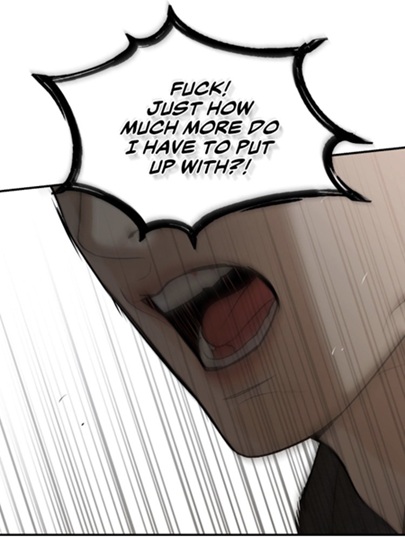 (chapter 96). Yet, this is rescue, not protection. Their intervention is purely physical, reactive, and localized. Crucially, as they physically struggle, Park Namwook and the others remain mentally and verbally passive.
 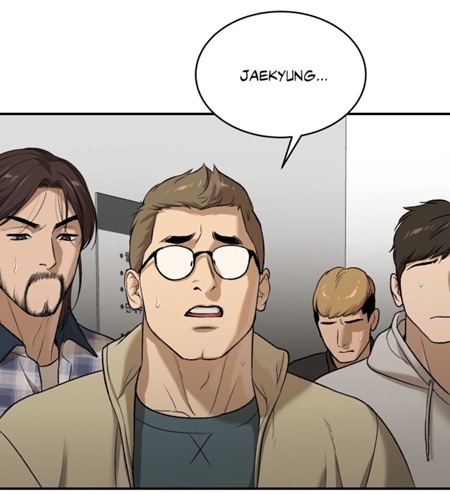 (chapter 96) They do not challenge the source of the rage or offer a solution. They only seek to manage the immediate visible symptom. While the fist is stopped, the underlying “toxic climate” that allows these provocations to take root is left completely intact. This scene proves that without speech, strategy, and mutual agency, physical restraint—even when well-intentioned—is just temporary damage control. This is exactly the kind of passive, limited intervention that the new paradigm must overcome.
Rescue is immediate and visible.  (chapter 72) It answers a crisis once it has already begun. Protection reaches further.
 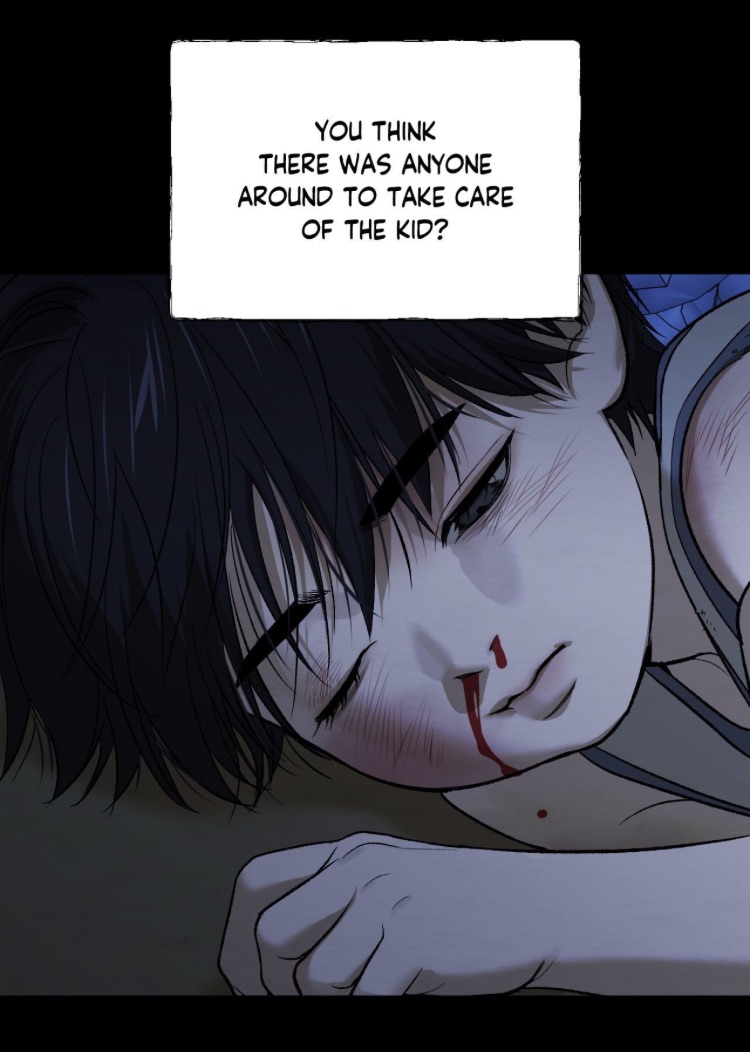 (chapter 72) It concerns safety before the blow lands, the ability to recognize manipulation
  (chapter 49), to prevent harm from taking root, and to create a space where trust can survive pressure.
That distinction becomes difficult to ignore in the current arc. The hallway scene, the compromised penthouse (chapter 97), the article on the cellphone  (chapter 91), and Kim Dan’s recent actions
 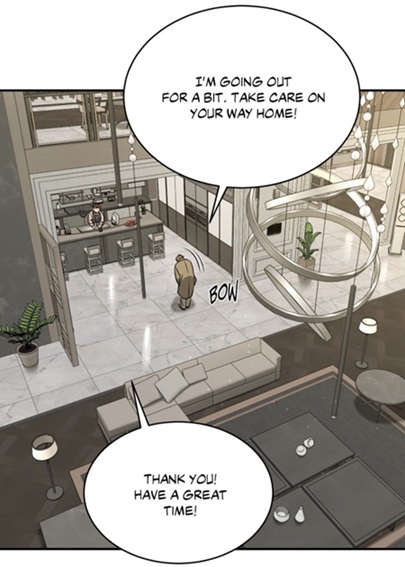 (chapter 97) all suggest that the old division may no longer be stable. The familiar roles of protector and protected are beginning to shift.
If that is true, then the real tension of the chapter may not be limited to whether Kim Dan will stay or leave. It may concern something deeper: who can protect whom now, and what protection truly means when fists, money, and walls are no longer enough.
The First Protection: Kim Dan Must Protect Himself
There is another layer that cannot be omitted. Before Kim Dan can protect Joo Jaekyung, he may first need to protect himself. That matters because the hallway is not a neutral space for him. 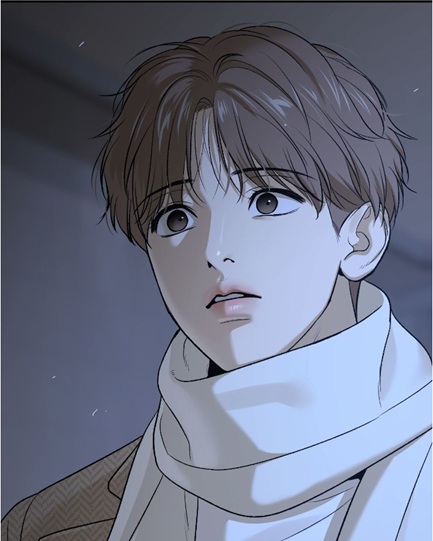 (chapter 97) This atmosphere of entrapment is a haunting echo of the story’s beginning. One of the most defining early images of Kim Dan shows him descending a narrow, outdoor staircase, accompanied by the thought:
  (chapter 1). In that moment, the world was a predatory space where every threshold was a threat.
By returning to a similar threshold now—the dark hallway—the narrative forces Kim Dan to confront that original wound. The question is no longer just ‘is he safe?’ but rather, has he found a way to carry safety within himself so that the world no longer feels like that desolate staircase? If the man waiting there is the former director, Kim Dan would not simply see an unwelcome visitor. He would see the return of an earlier danger. 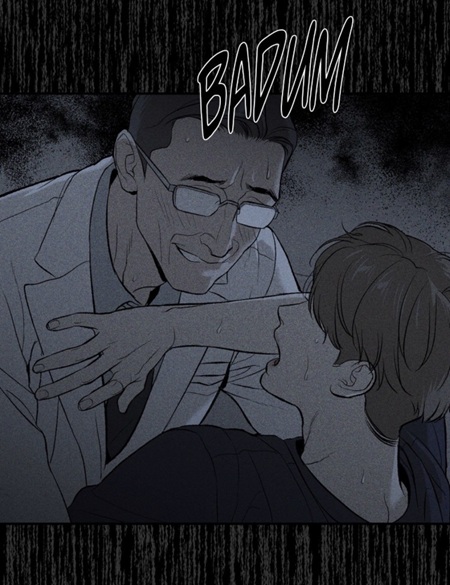 (chapter 90) The memory is important. The director did not lure him with kindness alone. He used his position
  (chapter 1), status, and Kim Dan’s financial desperation to force compliance. Kim Dan needed the job, needed the salary, needed stability.
 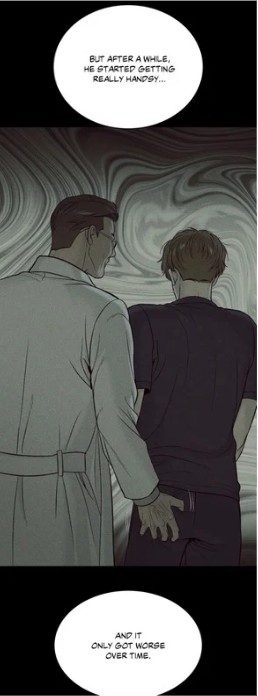 (chapter 90) The imbalance of power was already doing the violence before any physical act began. What appeared outwardly as professional authority became a means of control. The setting itself carries symbolic weight: enclosed space, unequal power, obscurity, silence.
 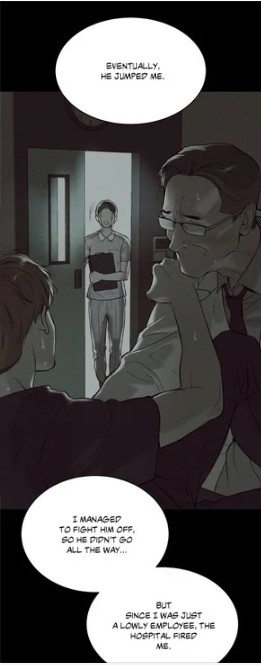 (chapter 90) A place where Kim Dan’s options were reduced and his voice cornered. The hallway now echoes that structure. It is dark. It is private. It is detached from witnesses. (chapter 97) Once again, the same man appears in a threshold space, waiting. Seen this way, Kim Dan’s shock is not weakness. It is recognition. (chapter 90) This contrasts to his reaction at the restaurant. His fear was not only about the present moment.
 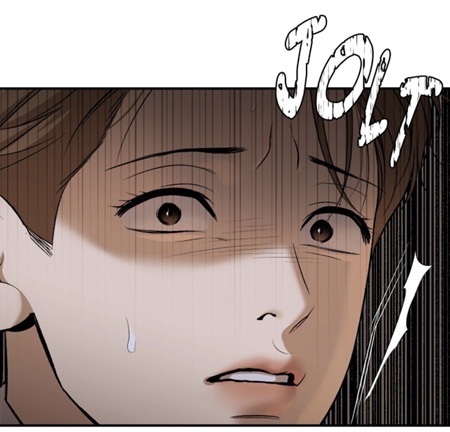 (chapter 90) It was the body remembering before language could fully explain why.
 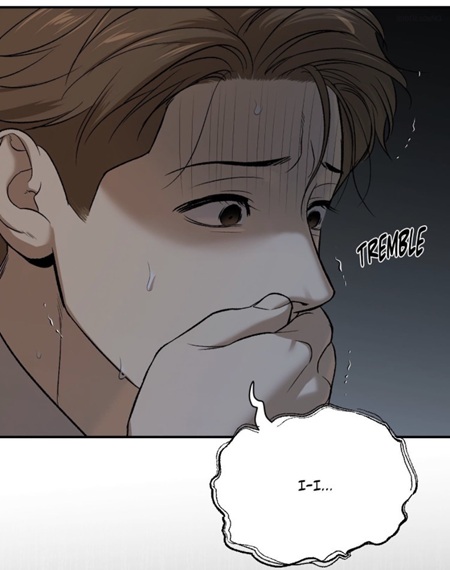 (chapter 90) Trauma often recognizes danger faster than conscious thought. If so, the first battle of the chapter is not just one of emotional endurance, but of practical application. Like mentioned above, the look on Kim Dan’s face in the hallway is not one of paralyzing fear, but of profound shock (Chapter 97). It is the shock of recognition, yes, but it is also the moment where his training meets reality.
Jinx-lovers will recall the pivotal training session in Chapter 88, where Joo Jaekyung pinned him to the mat and challenged him: ‘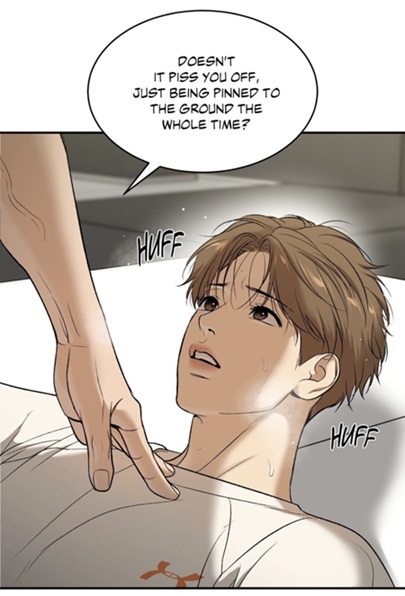 (chapter 88). In that moment, the champion wasn’t just showing dominance; he was imparting a philosophy of resistance. He taught Dan that ‘technique beats size’
 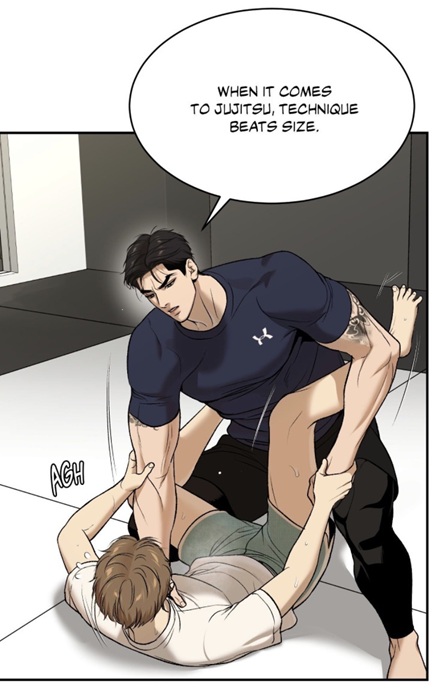 (chapter 88) and that even a smaller person can take down a ‘bigger guy’
 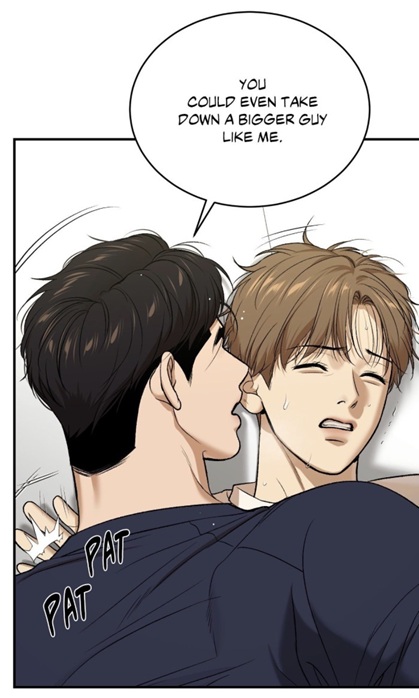 (Chapter 88).
The hallway encounter with the former director is Kim Dan’s first ‘unscripted match.’ The question is no longer whether he is a ‘frightened victim,’ but whether he can now apply the champion’s lessons, when the stakes are no longer a training mat, but his own physical and emotional safety. Can he use the ‘technique’ of self-assertion and restraint he learned in the gym to dismantle the ‘size’ of the director’s predatory influence? Only by proving he can protect himself using the tools Jaekyung gave him can the stage be set for mutual protection.”
The Joker Card and the Cellphone
One image deserves to be reconsidered before anything else. Earlier in the story, Joo Jaekyung was shown holding a Joker card. 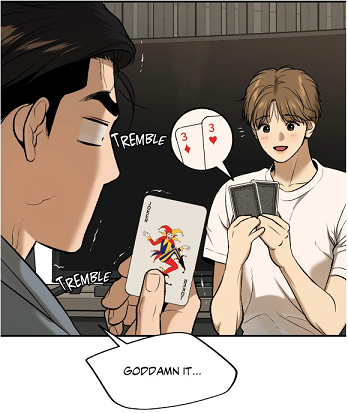 (chapter 27) The object symbolized instability, provocation, loss and a game whose rules could suddenly change. It represented a force that unsettled even the champion. Now another object occupies his hand:
 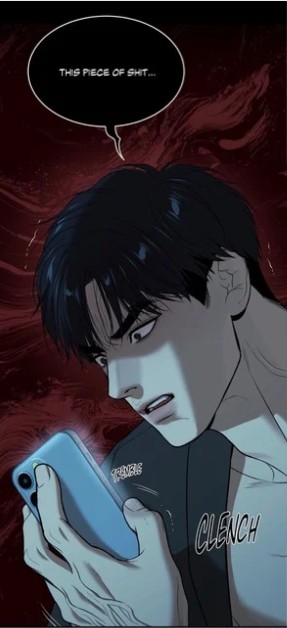 (chapter 91) the cellphone containing the article about the disgraced former director. (chapter 91) The visual echo matters. The card belonged to a world of tricks, chance, and psychological disturbance. The cellphone belongs to a world of information, memory, and proof. If the earlier Joker card stood for loss and frustration, this new “card” may stand for its opposite: exposure and “victory”. That possibility becomes especially important in the hallway. (chapter 97) So the moment Joo Jaekyung recognizes the intruder as the former director, then Joo Jaekyung is no longer facing an unknown threat. He is confronting a man whose public downfall has already been documented. In other words, the hallway does not only contain danger. It also contains evidence. It stands for trespassing and lack of credibility. This would mark a major turning point for the champion. In the past, he often relied on force, money, private networks, or silence after the fact. Hence he never reported himself the crimes to the authorities
 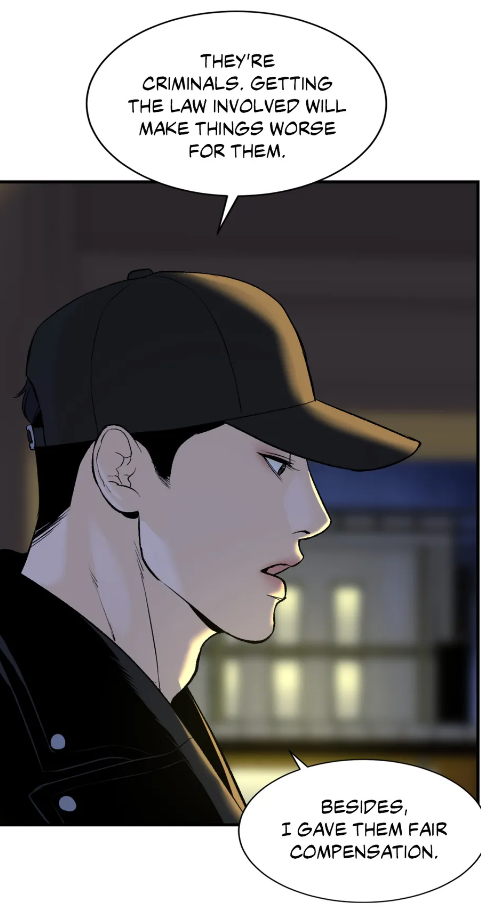 (chapter 18) because, for Jaekyung, the ‘system’ was never a source of safety. This mistrust is rooted in a childhood where his abuse was an open secret that remained unaddressed (chapter 72). While the director of the boxing studio knew of his suffering, the police were never involved. There is a bitter irony in the fact that while his father was a violent thug
 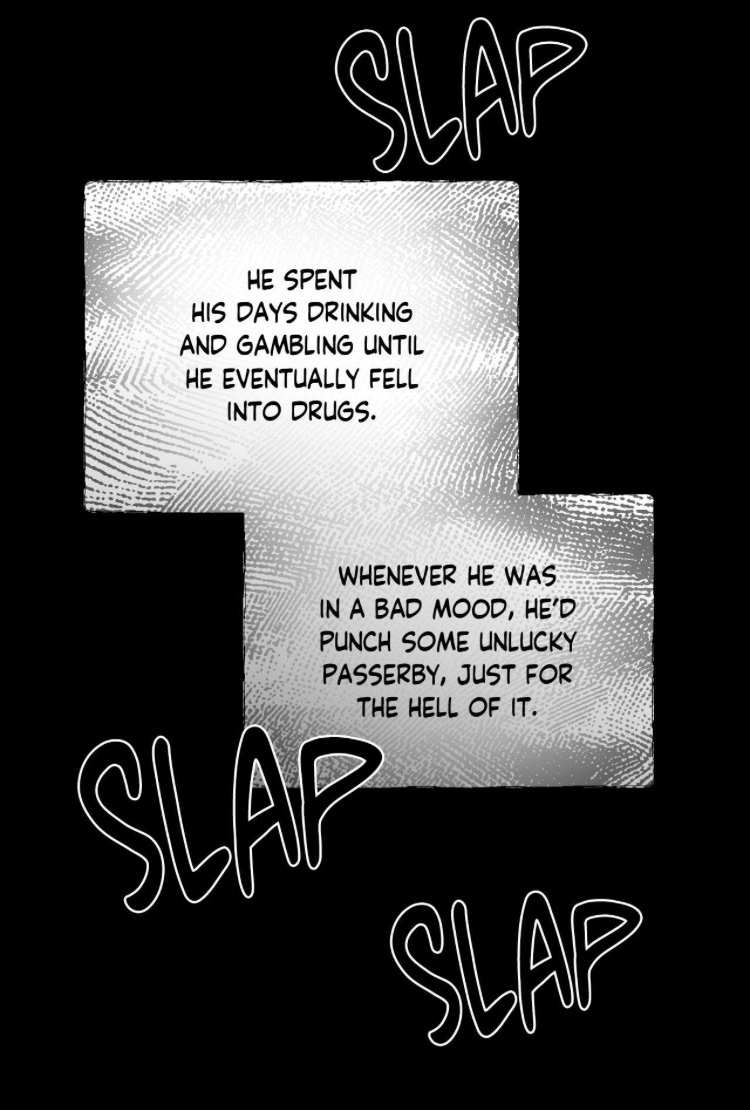 (chapter 72), on paper he remained a ‘good citizen’ who never faced legal repercussions. Jaekyung learned that authorities protect the appearance of order rather than the victims of violence. This skepticism manifested again at the docks
 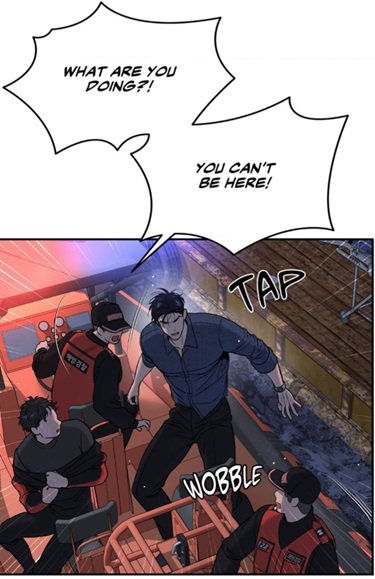 (chapter 69), where he chose to ‘save’ Kim Dan through private force rather than wait for legal intervention. Yet those methods repeatedly failed to create real safety. Problems were hidden, postponed, or redirected, or relegated
 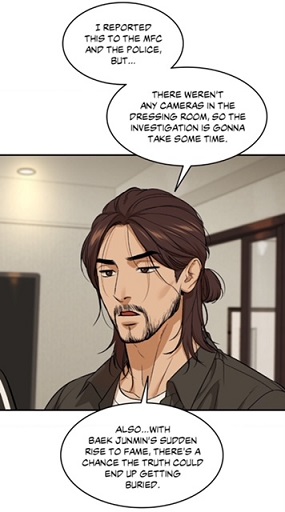 (chapter 52) but not resolved. The cellphone introduces another path (chapter 91): report the crime immediately, involve the authorities, and refuse to let the event be swallowed by the same closed systems as before. If so, the real weapon in his hand is not violence, but the possibility of lawful action.
When the Queen Protects the Champion
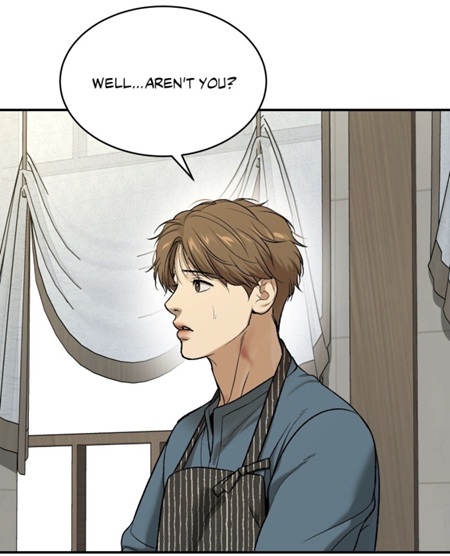
If Joo Jaekyung’s protection may now take the form of evidence and public accountability, Kim Dan’s protection works differently. His strength lies in perception. One detail remains highly significant: according to me, Kim Dan never watched Baek Junmin’s interview in full. 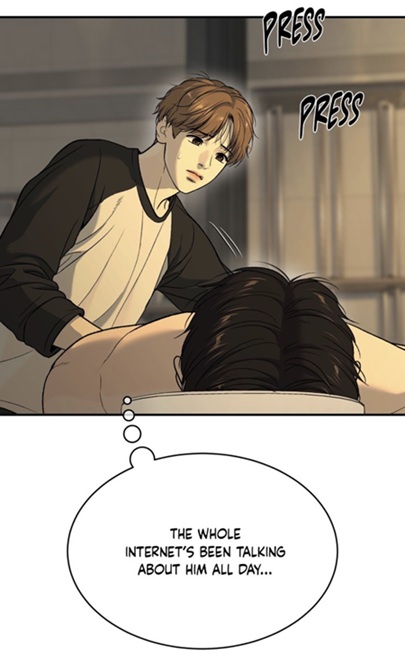 (chapter 96) He only read the headlines. On the surface, this might appear dismissive or indifferent.
 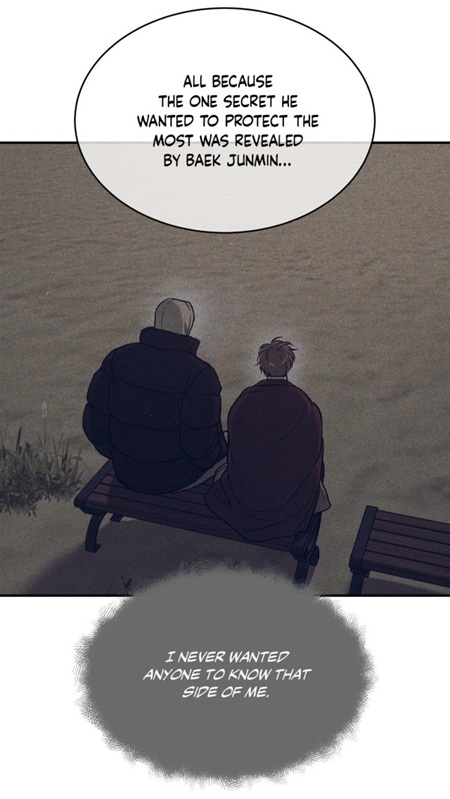 (chapter 96) Yet it can also be understood as an expression of Jeong. Kim Dan’s attention was not captured by the Joker’s performance. His concern went directly to Joo Jaekyung and how such exposure might wound him. He absorbed the central facts — poverty, orphanhood, hardship — but did not grant full authority to the humiliating spectacle built around them.
 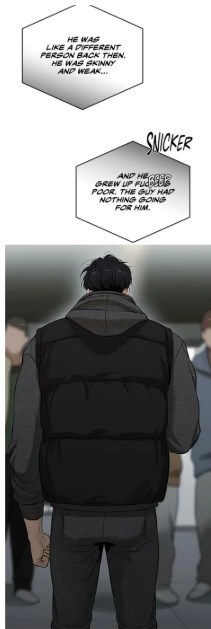 (chapter 96)That distinction matters because Baek Junmin likely assumes that public narrative equals truth. If the audience hears something loudly enough, then it becomes reality. But Kim Dan now stands in a different position. He has already met Hwang Byungchul. He has already heard another version of the champion’s past, something the Joker is not expecting. He knows about the father’s abuse, the violence of the home, and the suffering hidden behind Joo Jaekyung’s coldness.
 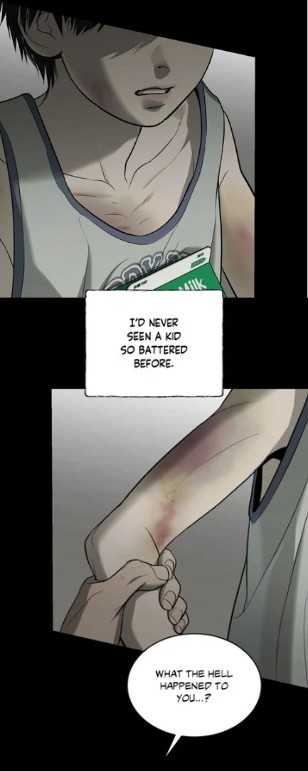 (chapter 72) This means that if the hallway encounter is designed to reveal a “hidden truth” — like for example that Joo Jaekyung is only a thug, a violent man who attacks doctors
  (chapter 1) and patients
 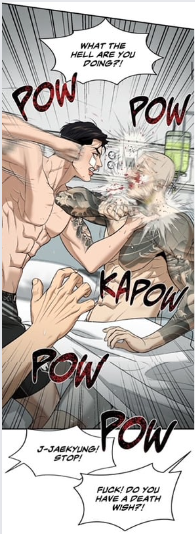 (chapter 52) ) someone unworthy of trust— the strategy may fail at its most important point. The intended listener is no longer ignorant. Kim Dan can now protect the champion by refusing reduction. He can challenge selective storytelling. Jaekyung is frequently depicted as an avid reader
 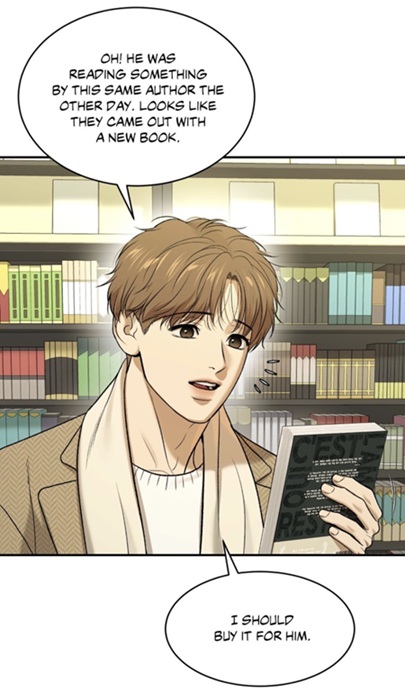 (chapter 97), a sign of a deeply disciplined and self-educated mind. This intellectual depth is his most overlooked form of protection. It means he isn’t just a ‘frightened kid’ or a ‘reactive thug’; he is someone who understands the power of information.Besides, he is a huge reader. He can insist that pain has context, that trauma cannot be erased, and that one act of rage does not explain an entire person. In earlier chapters, Joo Jaekyung protected through action (buying clothes, teaching him how to swim). Here, Kim Dan may protect through interpretation and words.
And this gives the title Drama Queen Dan a deeper irony. What once sounded playful or dismissive can now be read as the name of someone who understands that drama is not merely chaos, but the struggle over meaning itself. A “queen” in this sense does not protect through brute force, but through perception, timing, and the ability to read the hidden script beneath appearances. Kim Dan’s strength lies precisely there. He can recognize when pain is being turned into narrative, when provocation is being staged as truth, and when the man beside him is being reduced to a role he does not deserve. If Joo Jaekyung guards through physical power, then Kim Dan may guard through interpretation—protecting the champion not by striking an enemy, but by refusing to let false stories rule the stage.
Speech Over Force
This possibility reveals a deeper reversal in the story. For a long time, force appeared decisive while speech remained secondary. Those with power acted. (chapter 90) Those without power endured. Silence was survival, and violence seemed to be the language that changed outcomes.
But the hallway may invert that pattern for another reason as well: both Jokers 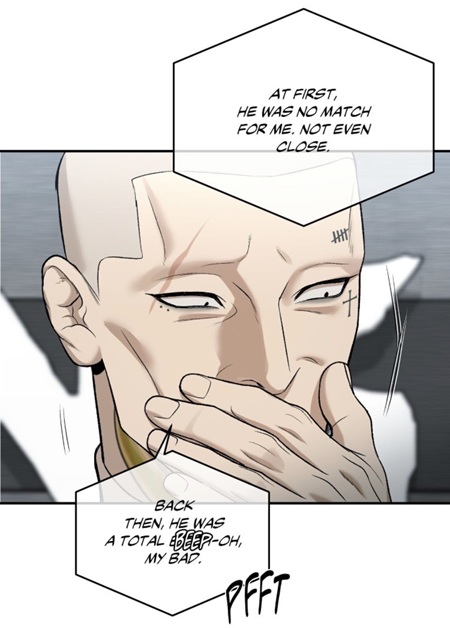 (chapter 96) behind the present tension rely on the same weapon — the past.
 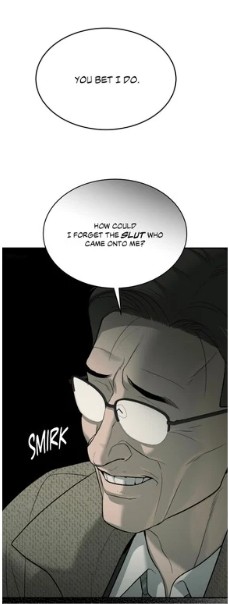 (chapter 90)
That may be the clearest link between Baek Junmin and the former director. Neither truly confronts the present. Instead, each tries to reactivate an earlier version of the people before them. Baek Junmin depends on old wounds, old shame 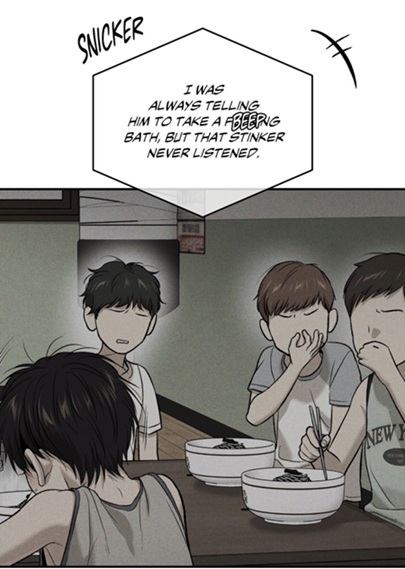 (chapter 96), and old reactions, as though Joo Jaekyung were still trapped inside the same vulnerabilities and Kim Dan still occupied the same desperate, submissive position.
 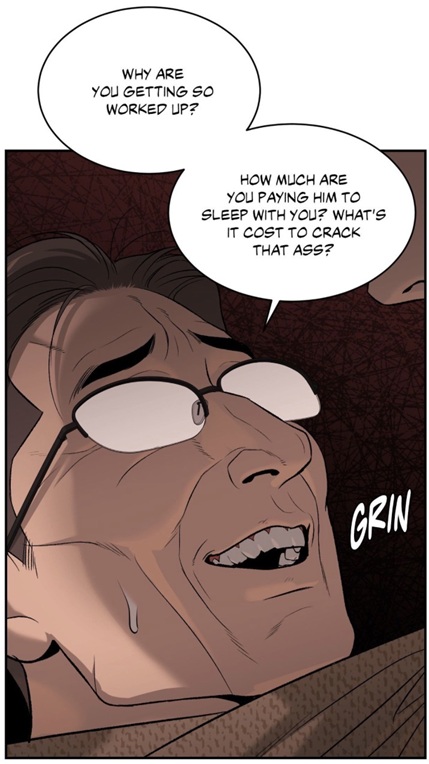 (chapter 90)The former director operates similarly, but with a more intimate cruelty. He does not speak to Kim Dan as a person in front of him. He speaks about Kim Dan to Joo Jaekyung, reducing him once again to an object of transaction, greed, and sexual humiliation.
That distinction matters. The insult is aimed at Kim Dan, yet delivered through the champion. 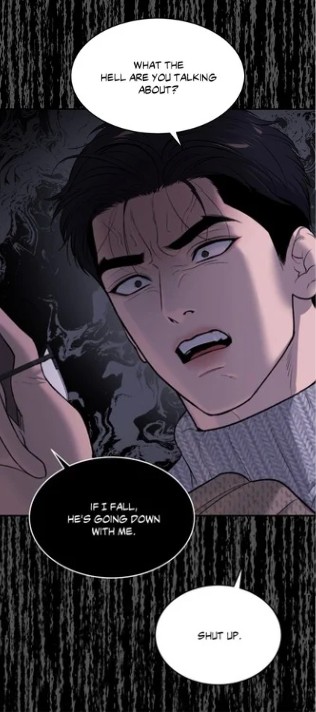 (chapter 90) Kim Dan is called money-hungry, fake, a slut, someone whose affection can be bought. Their apparent happiness is framed as performance, their bond as a financial arrangement, intimacy as deception. In one move, the former director attempts to degrade Kim Dan and poison Joo Jaekyung’s trust at the same time.
This is why his rhetoric belongs to the logic of the past. He still imagines Kim Dan through the old hierarchy: poor, vulnerable, purchasable, voiceless. He assumes economic need must still define him. He assumes shame will still silence him. He assumes that if enough dirt is thrown, the old imbalance will return by itself.
Baek Junmin’s logic is similar. He acts as though Joo Jaekyung can still be provoked into self-destruction (chapter 96) and as though Kim Dan can still be reached through doubt, guilt, or public image. Both antagonists depend on immobility. Once weak, always weak. Once poor, always dependent. Once violent, always reducible to violence.
Yet the present is no longer identical to the past. Kim Dan is no longer the employee trapped inside institutional dependence. He is no longer alone, voiceless, or forced to endure humiliation in exchange for survival. (chapter 97) Hence he plans to cook the athlete’s favorite dishes. 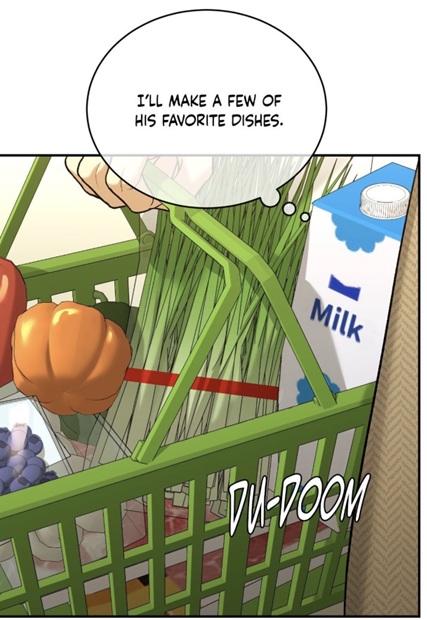 (chapter 97) Joo Jaekyung is no longer merely a reactive fighter ruled by rage. He is now capable to reflect on his own behavior.
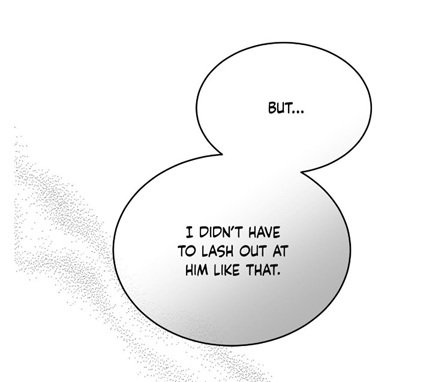 (chapter 97) Their relationship itself has altered the conditions on which those older scripts depended.
That is why force becomes less reliable here. In darkness, appearances are unstable. Shadows distort faces, gestures, and intention. A punch may become proof. A reaction may complete someone else’s script. If Joo Jaekyung strikes first, the aggressor can pose as victim. If Kim Dan retreats in silence, the old narrative appears confirmed.
Words, however, can interrupt that mechanism. A refusal can expose coercion. A clear statement can stop confusion. Naming a lie can weaken it. Calling the police can shift the frame from private manipulation to public accountability. Speech does not erase the past, but it prevents the past from dictating the meaning of the present.
The staircase deepens this reading. Earlier, I described the hallway as a stage, and a stage always implies an audience. If so, who is meant to witness the scene? Perhaps Joo Jaekyung  (chapter 97), expected to arrive at the right moment and see only the surface of what is happening. Perhaps hidden accomplices waiting nearby. Perhaps no single person, but the imagined spectator inside each victim — the internalized fear that says humiliation is inevitable and resistance useless.
The architecture matters. The elevator is the visible and ordinary route, 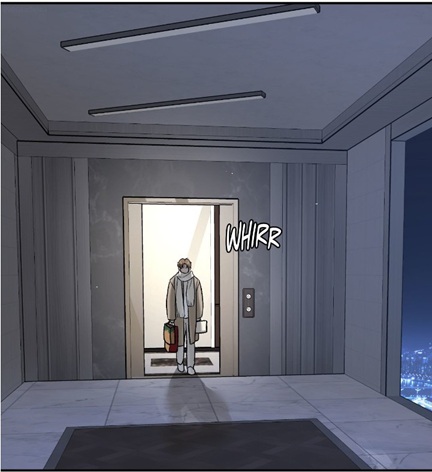 (chapter 97) the official path of movement. But once it closes, that route disappears. What remains is the staircase: the emergency passage, yet also the more secret and ambiguous one. In Jinx, stairways
 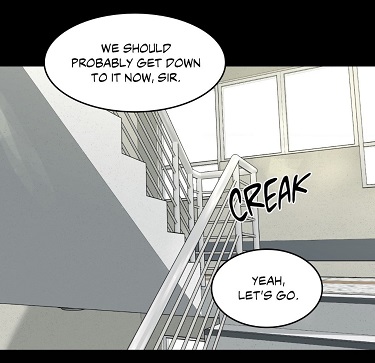 (chapter 50) seem to be linked to conspiracy, crime
 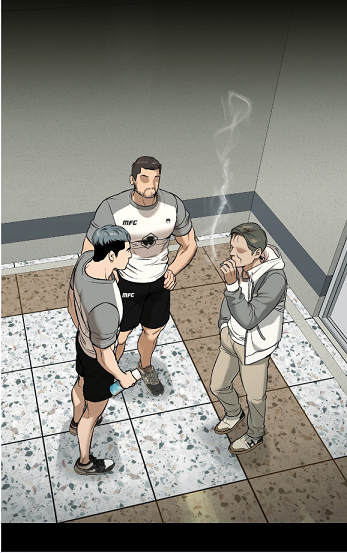 (chapter 50), or offstage maneuvering
 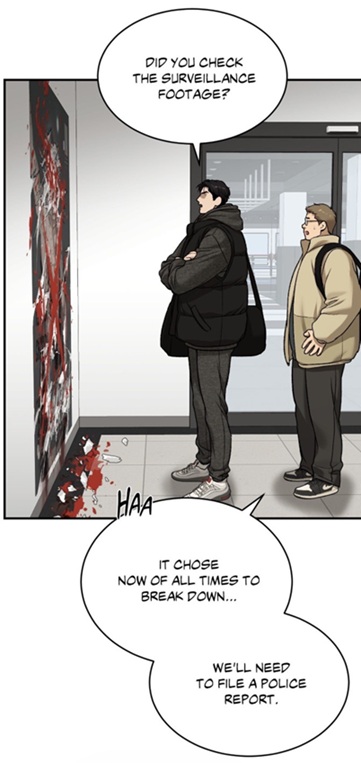 (chapter 96). The hallway therefore feels less like a neutral corridor than a set arranged for entrapment, where ordinary exits vanish and only compromised paths remain.
That is why the real struggle of the scene may not be between strength and weakness, but between two temporal logics. (chapter 97) One insists that people never change and can always be returned to their former place. The other proves that they have changed already.
Joo Jaekyung may need to discover that strength includes relying on the police. Kim Dan may need to discover that care includes speaking aloud. And both may need to recognize that protection no longer lies in repeating old reactions, but in refusing the script entirely.
The real victory of the hallway may therefore not belong to the stronger fist, but to the clearer voice.
The Book and the Question of Time
The Gift as Emotional Infrastructure
At first glance, the book may look like a simple gift. (chapter 97) But it carries a far deeper meaning. It is not merely a birthday present. It is an expression of love, gratitude, and attentive recognition. That distinction matters because the story has already shown another gift: the keychain. 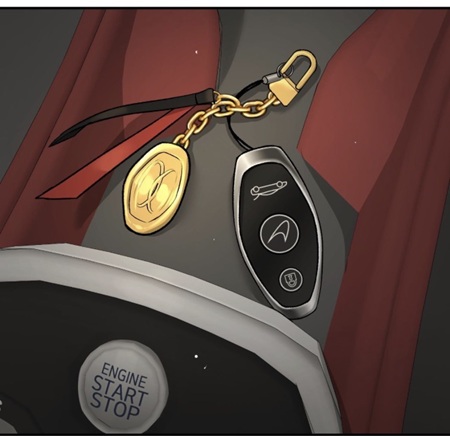 (chapter 97) The keychain came together with a birthday card, yet the champion only truly saw the object. He never had the chance to read the written message attached to it. He only discovered its existence much later.
 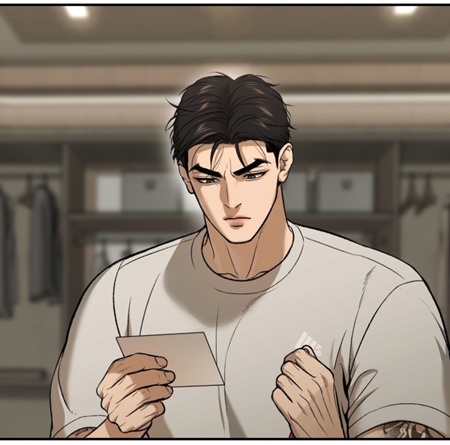 (chapter 81) As a result, the gesture remained incomplete and vulnerable to misunderstanding.
  (chapter 45) The material gift was visible, but the feeling behind it stayed hidden. The book changes that structure. (chapter 97) Unlike the earlier present, it unites both functions at once. It is a physical object, but it also communicates what words alone might struggle to express. Even before it is opened, its cover already speaks.
Linguistic Shadows: Love, Stay, and Rest
Its title can be read in several layers. 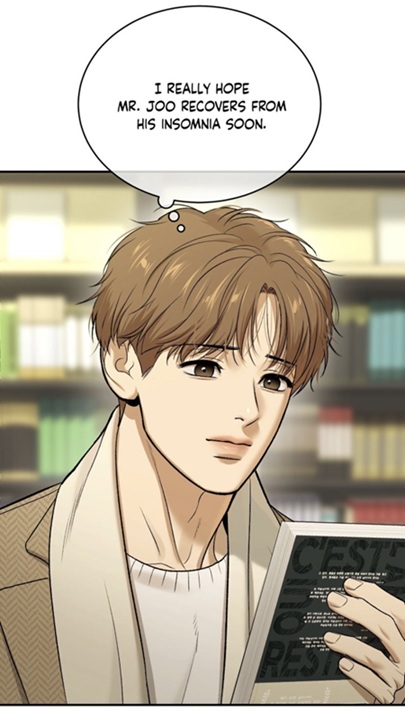 (chapter 87) Oui, c’est l’amour means in French Yes, this is love. The phrase functions almost like an answer to all the confusion that came before: the uncertainty in the dining room
 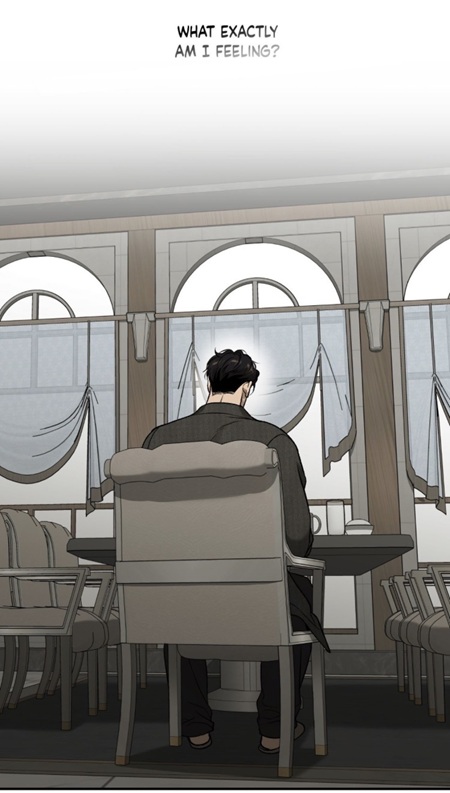 (chapter 93), the champion asking what he was feeling, the hesitation around whether kindness was guilt
 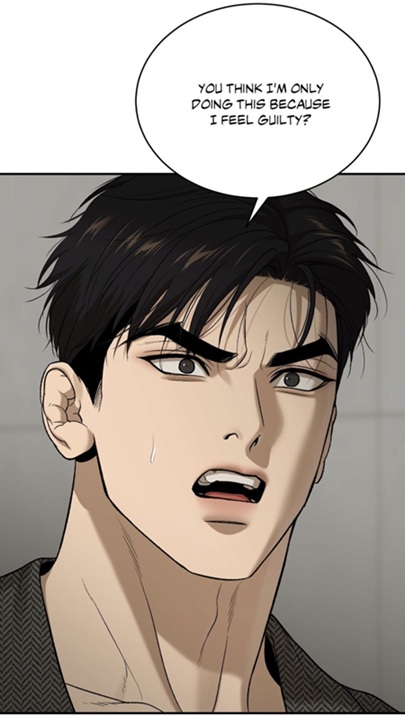 (chapter 93), pity, or something else.
  (chapter 93) The title responds clearly where the characters still struggle to do so themselves. Yes—what exists here is love. Another visible word, reste, signifies stay or remain in French. Yet because the final letter appears hidden or incomplete, the word can also be seen through English eyes as rest. (chapter 97) That double reading is powerful. It joins emotional fidelity with emotional relief. Stay with me. Remain beside me. Rest now. Sleep in peace. All of these meanings answer Joo Jaekyung’s deepest needs more precisely than an expensive object ever could.
The Portable Home: Love as a Protective Sanctuary
All of these meanings answer Joo Jaekyung’s deepest needs more precisely than an expensive object ever could. He needs someone who remains. 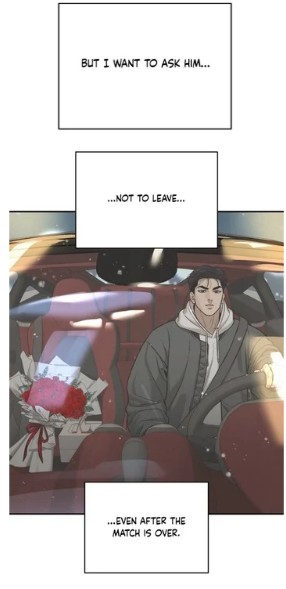 (chapter 97) This linguistic double-meaning transforms the book from a mere object into the blueprint for a Home. For Joo Jaekyung, home has historically been a site of trauma and violence—a place where he was exposed rather than shielded. This longing for a safe domestic space is rooted in a childhood vow. In a poignant flashback
  (chapter 72), a young Jaekyung stands in a snow-covered phone booth, promising: ‘One day I’ll make a lot of money… and stop him. So can you come back home?’ For the young champion, ‘Home’ was a conditional destination—a reward that could only be reclaimed once he had enough wealth to physically ‘stop’ the source of violence. He equated protection with financial power and the physical ability to gatekeep. Yet, as an adult, even with the wealth and the power to stop anyone, he remained ‘homeless’ in spirit. By offering him the book and a space to ‘stay,’ Kim Dan is updating this childhood vow. He is proving that a ‘Home’ is not something Jaekyung has to buy or defend alone through force; it is a sanctuary that is built through mutual presence and emotional safety. Kim Dan is offering a new kind of protection: the creation of a domestic sanctuary. If the ring is a place of performance and the hallway a place of entrapment, the book represents a ‘portable home.’ (chapter 97) It signals that protection is no longer about walls or wealth, but about being truly ‘seen’ and ‘housed’ in another person’s care. In this sense, love becomes the ultimate protective layer, providing the internal peace necessary for the champion to face the external storm. He needs rest from insomnia and endless pressure. He needs affection detached from performance. He needs permission to exist outside the ring.
What does he need most on the eve of a fight? Not more hype, not more strategy, not more pressure—but a peaceful night and the possibility of sleep.
This is why the hidden or incomplete letter matters as much as the printed word. Something unfinished becomes full only through interpretation, just as the relationship itself has been moving from partial gestures toward clearer recognition. The cover says more than it first appears to say, just as Kim Dan’s care has always meant more than it openly declared. In other words, by receiving such a book, Joo Jaekyung’s insomnia can finally vanish.
Temporal Sabotage: Choosing Care Over Spectacle
Timing therefore becomes decisive. The Joker’s method depends on buying time 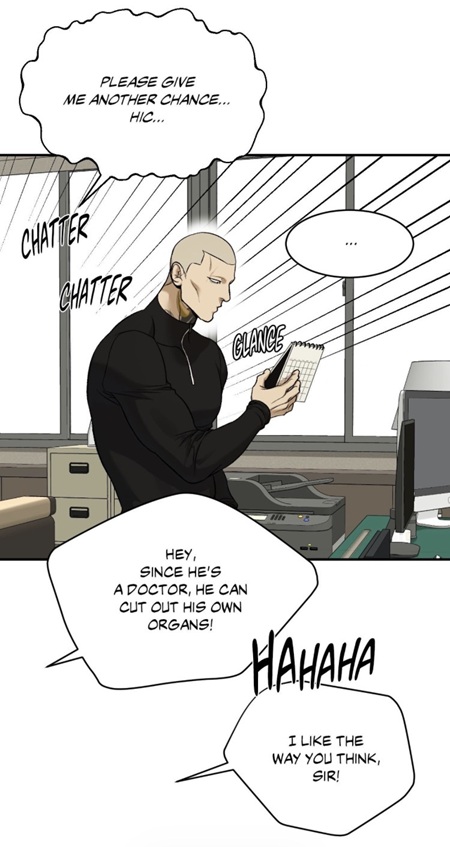 (chapter 93), delaying genuine encounters, and keeping everything trapped inside the schedule of the match. Everything must wait until after the fight: truth, tenderness, resolution, emotional clarity. Human feeling is subordinated to spectacle.
The book does the opposite. It accelerates emotional truth. If given before the match (chapter 97), it says now what the system insists should only come later. It offers comfort before performance, care before victory, and peace before violence.
In that sense, the gift is not a distraction from the fight. It may be the very thing the champion needs most in order to face it.
The title therefore transforms the book into more than a purchase. It becomes a message Kim Dan may not yet be ready to say aloud. Through this single object, he expresses affection, constancy, and concern for the champion’s suffering. (chapter 97) In that sense, the gift also embodies Jeong: a form of attachment built not through grand declarations, but through accumulated care, remembered details, silent loyalty, and the desire to ease another person’s burdens. Kim Dan does not simply give an object. He gives the emotional attention he has been carrying for Joo Jaekyung all along.
Kim Dan did not buy the book out of obligation or because a date on the calendar demanded it. He bought it because, while moving through his own day, his attention still turned toward Joo Jaekyung. 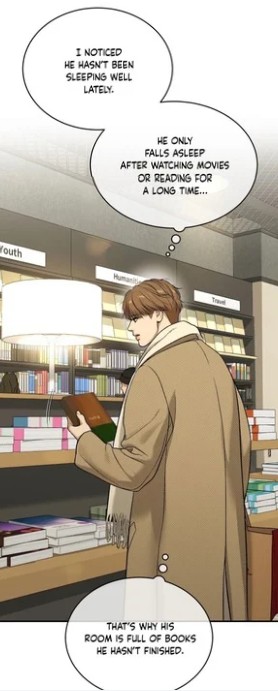 (chapter 97) Care continued in absence. The relationship was active even when they were apart. This places the gift in sharp contrast with the keychain episode. Back then, Kim Dan selected something through external logic. He entered the dressing room
 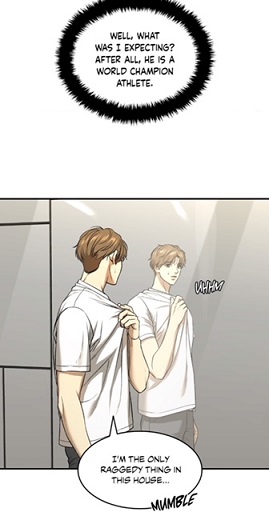 (chapter 42), crossing into the champion’s private space
 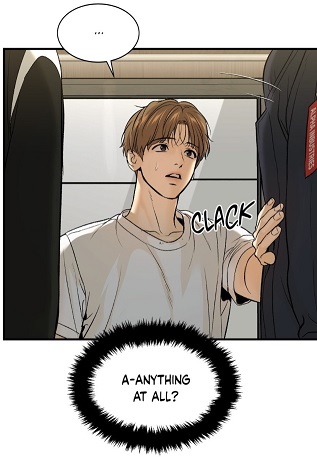 (chapter 42), and chose according to appearance and assumed usefulness. The gesture was sincere, but still uncertain. It responded to what Joo Jaekyung seemed to need.
 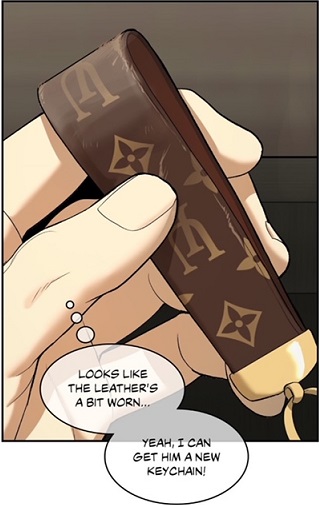 (chapter 42) The book is different because it responds to who he is. (chapter 97) Kim Dan remembers that the champion had been reading this author before. He notices the new release. He immediately connects it to Joo Jaekyung’s insomnia and inner unrest. The choice therefore emerges from observation, memory, and understanding rather than surface impression. This means the gift is modest in price but immense in emotional value. It is inexpensive materially, yet rich in evidence. Evidence that Kim Dan listens. Evidence that he watches carefully. Evidence that the champion exists in his mind beyond moments of direct contact. And that is precisely why it may become the best gift Joo Jaekyung has ever received. And he could even cry out of “happiness”. Not because of luxury. Not because of status. Not because it flatters his public identity. But because it answers a wound deeper than material lack: the fear of being unseen except for utility, strength, or performance. The fear of never being loved. Furthermore, the champion’s interest in this author also indicates his transformation (chapter 97), as the book seems to focus on emotions and relationships. It shows that despite the appearances, the athlete’s also learning and expanding his horizon.
So if crisis changes the order (the encounter with the director in the hallways), then the champion could discover or receive the gift beforehand, then the logic transforms entirely. The book would no longer reward success. It would precede it. Joo Jaekyung would receive something valuable not because he won, but because he already matters before the outcome is decided. That reversal is crucial. The wider system values him through belts, money, spectacle, and usefulness. The book values him as a person in advance of all results. This is why the gift stands against the Joker’s method. Manipulation delays truth, creates misunderstanding, and keeps feeling trapped behind timing, fear, and competition. The book does the opposite. It brings hidden care into the open. It accelerates emotional truth. It interrupts the schedule imposed by the match. And perhaps most beautifully, it gives Joo Jaekyung something rarest of all: not admiration, not demand, not pressure—but a sign that someone has truly learned how to love him.
The Damaged Poster, the Interview and the Wrong Audience
The ruined poster outside the gym should not be read in isolation. (chapter 96) It gains fuller meaning when placed beside the interview that preceded it. Together, they resemble two versions of the same attack: one verbal (chapter 96), one visual. One addressed through media spectacle, the other through physical vandalism. Both attempt to shape how Joo Jaekyung is seen.
At first glance, the interview appears directed toward the obvious audiences: the public, fans, gym members 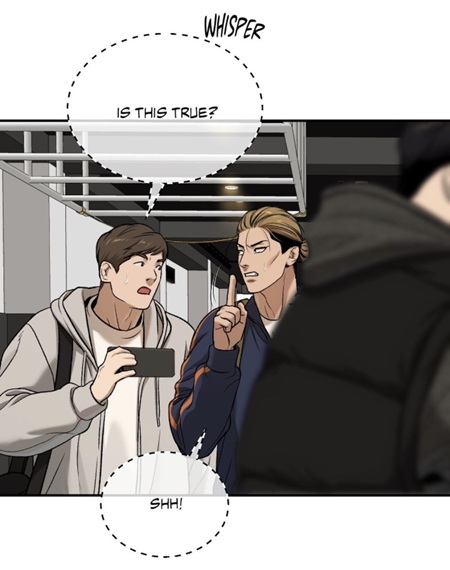 (chapter 96), sponsors, and the broader world watching the scandal unfold. The damaged poster seems to continue that same logic by materializing contempt in public space. The champion’s image is defaced where others can see it. Reputation is targeted through humiliation.
But there may be a more intimate audience hidden inside both gestures. One might think, it is to provoke the champion in order to have him disqualified. 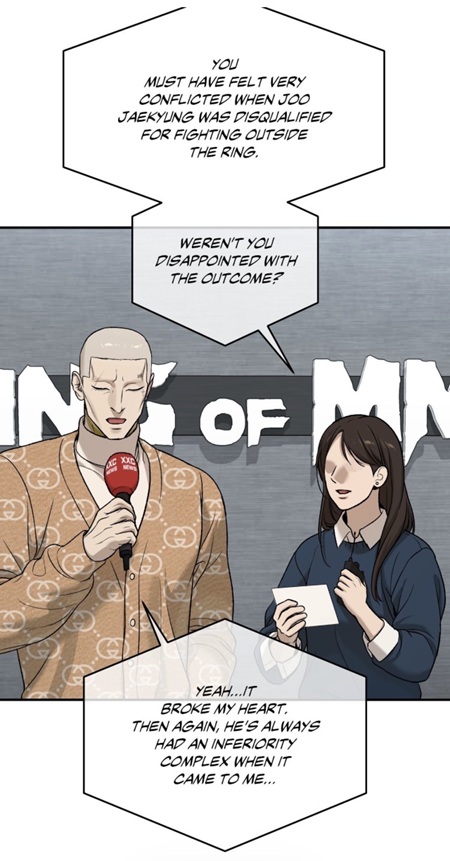 (chapter 96) However, there exists another possible interpretation. Readers may remember the earlier café scene, where Kim Dan met Choi Gilseok and photographs of that encounter were later sent to Joo Jaekyung.
 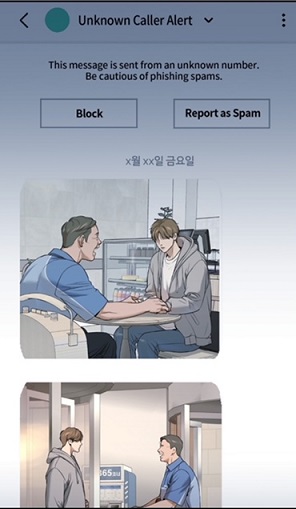 (chapter 48) That episode already suggested the presence of an unseen observer—someone in the shadows who understood that images can wound relationships more efficiently than fists can. If those photographs were indeed part of Baek Junmin’s broader method, then the interview and the poster follow the same principle: public content designed for private damage.
Seen this way, the real target is not only mass opinion. It is the person whose opinion matters most. Kim Dan. Don’t forget that back then, the physical therapist refused to accept the offer from the director of the rival gym: money, a place to stay, a treatment for his grandmother. But such a decision meant that the main lead was rejecting to work for Baek Junmin.
By this point, The Shotgun likely knows that Kim Dan has returned to Joo Jaekyung’s side. 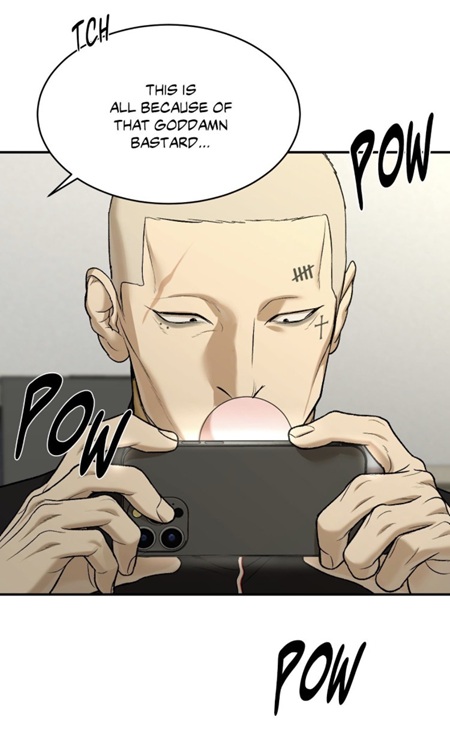 (chapter 93) He knows the physical therapist is no passing employee, but someone emotionally significant. That changes everything. If Kim Dan cannot be removed physically, he may be pressured psychologically.
The message then becomes sharper.
You chose a loser. (chapter 96)
You chose a weak man.
You chose a lost puppy 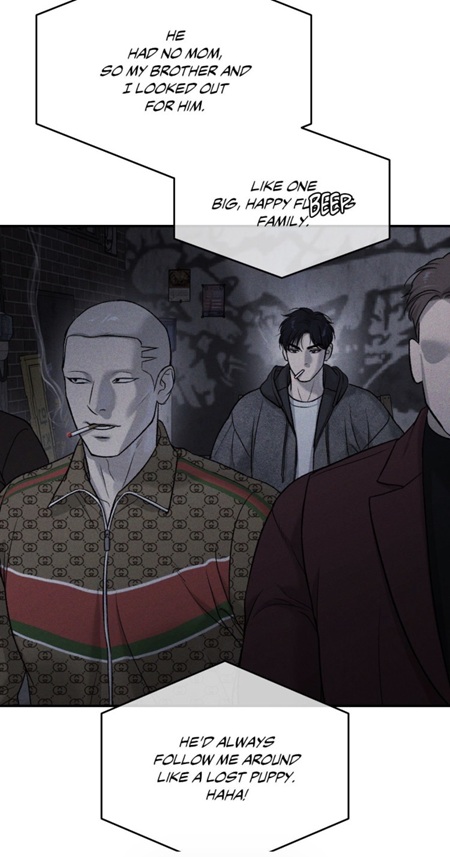 (chapter 96), someone shameful, poor, abandoned, ridiculous.
You attached yourself to the wrong person.
The cruelty of the interview lies precisely here. It does not merely insult the champion’s past. It tries to make attachment to him feel embarrassing. 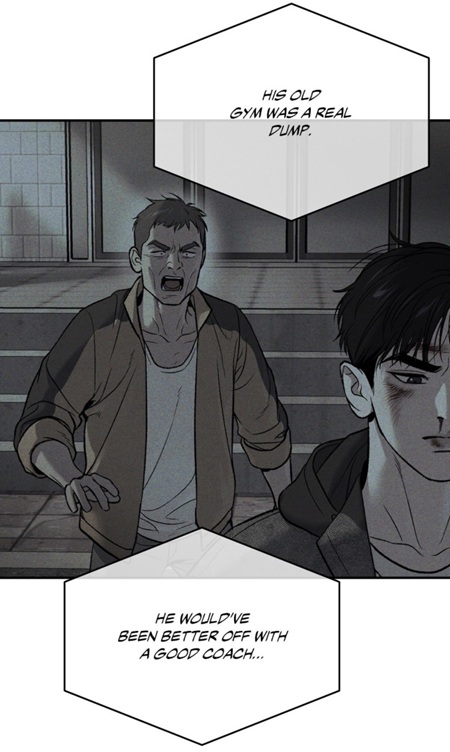 (chapter 96) It reframes loyalty as foolishness. It attempts to poison admiration itself.
And this is where an important reversal emerges.
What is Kim Dan to Joo Jaekyung in reality? Not simply an employee, debtor, or dependent figure. He has become something closer to a true fan in the deepest sense of the word: someone who sees beyond branding, beyond headlines, beyond victories and losses. He is a true champion. 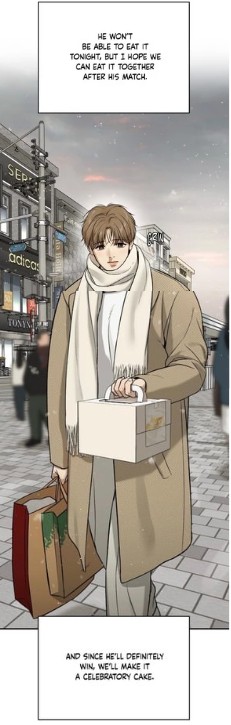 (chapter 97) Someone who remains emotionally invested in the person rather than the image.
That kind of recognition is dangerous to Baek Junmin’s strategy because it cannot be controlled through spectacle alone. A casual fan  (chapter 52) may turn away when public opinion shifts. A sponsor may withdraw when scandal appears. A crowd may cheer one day and mock the next.
 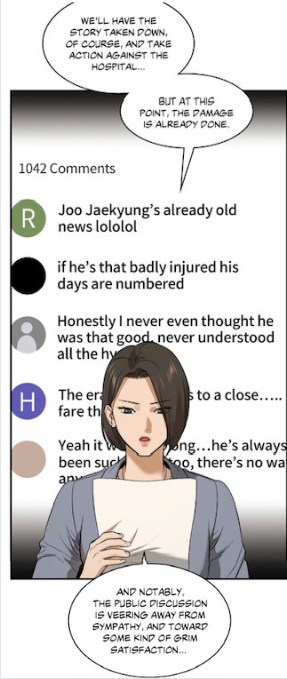 (chapter 36) But Kim Dan’s bond is no longer built on those unstable foundations. He believes in him.
He knows the child behind the champion. 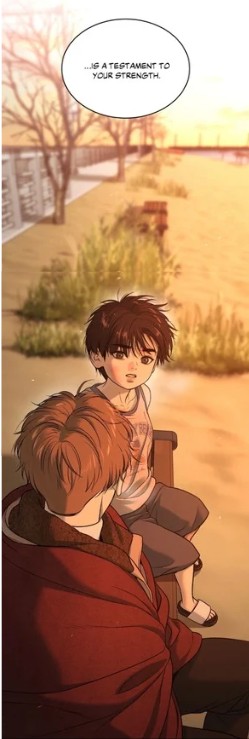 (chapter 94) For Baek Junmin, lost puppy oozes resent and mockery, but for the physical therapist, the same expression evokes care and protective instincts.
  (Chapter 29) He knows the wounds behind the arrogance. He knows the habits, the loneliness
 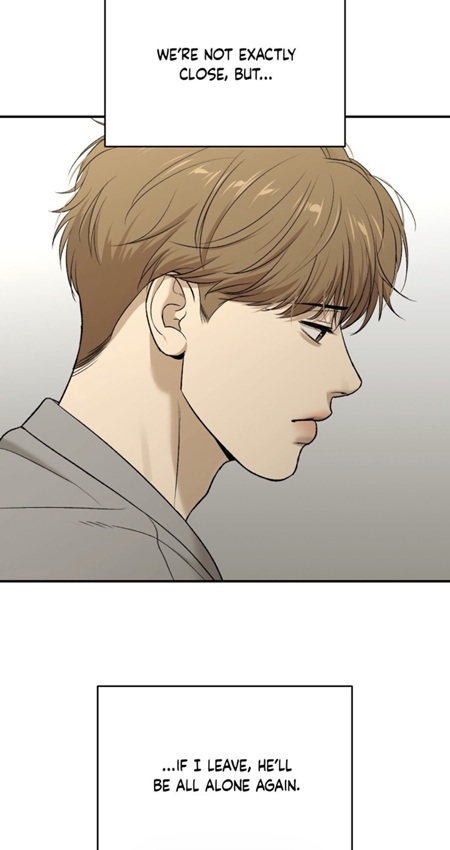 (chapter 97), the insomnia, the roughness that conceals care. He has seen the human being hidden beneath the public mask.
Once that level of knowledge exists, posters lose some of their power. (chapter 96) Headlines lose authority. Insults become transparent in their intention. This does not mean the attacks are harmless. Public humiliation can still wound, and symbolic destruction still creates pressure. But the scheme may fail where it matters most: in the private bond it seeks to fracture.
The wrong audience may have been chosen—or rather, the chosen audience may no longer respond in the old way.
There is another irony worth noting. Kim Dan never directly witnessed either of the two symbolic attacks. He did not see the damaged poster, and he did not fully watch the interview. The messages designed to shape his perception never reached him in the intended form.
This raises an important question about Baek Junmin’s own perspective. What exactly was he reacting to when he decided to escalate? (chapter 93) He may have seen the champion’s emotional reaction after the victory in Paris 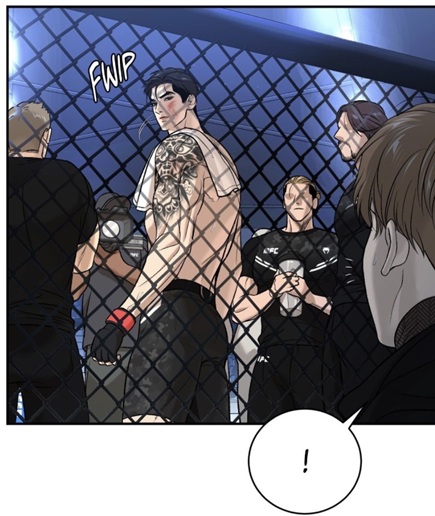 (chapter 87), where Joo Jaekyung visibly searched for Kim Dan in the crowd. Or he may have encountered videos
 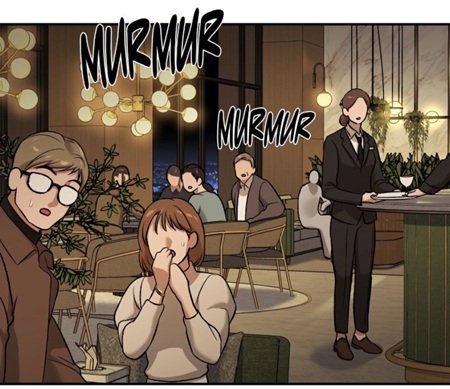 (chapter 90) circulating online of the disturbance at the restaurant.
 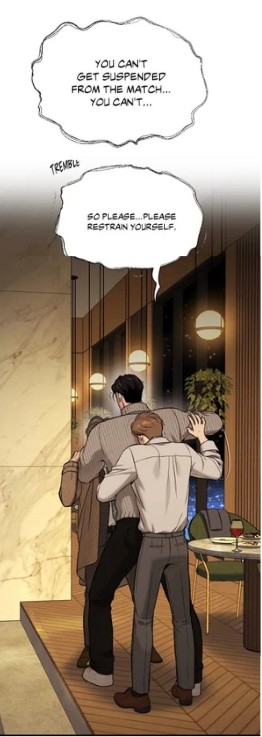 (chapter 90) In either case, the external image would have looked simple: Joo Jaekyung had been provoked once again. The champion still appeared volatile, reactive, and unchanged.
And that perception matters because it fits the larger objective already discussed: to make Kim Dan leave the champion’s side and to have finally Joo Jaekyung disqualified for good. If Joo Jaekyung can be framed as unstable, violent, humiliating, or impossible to trust, then separation may occur without force. Kim Dan would withdraw on his own. The bond would break itself under pressure.
The restaurant scene especially could be misread in exactly that way. From an outsider’s perspective, Joo Jaekyung moved toward violence, while Kim Dan arrived only afterward to stop him. 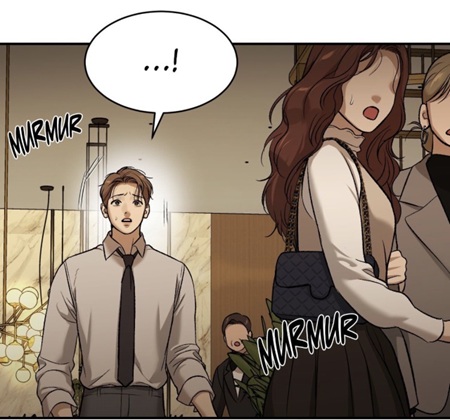 (chapter 90) It could seem as though the physical therapist was merely restraining, interrupting, or obstructing the champion. A hindrance rather than an ally.
 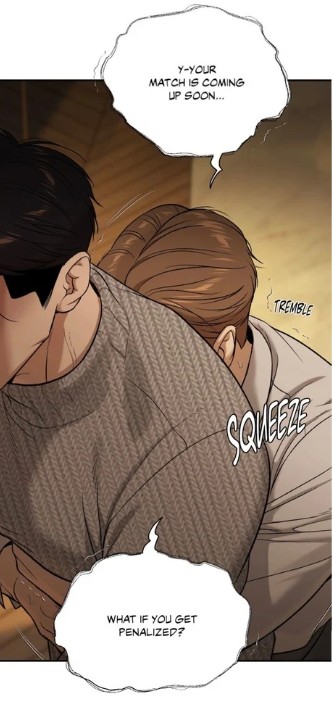 (chapter 90)
But that reading misses the hidden truth of the scene. 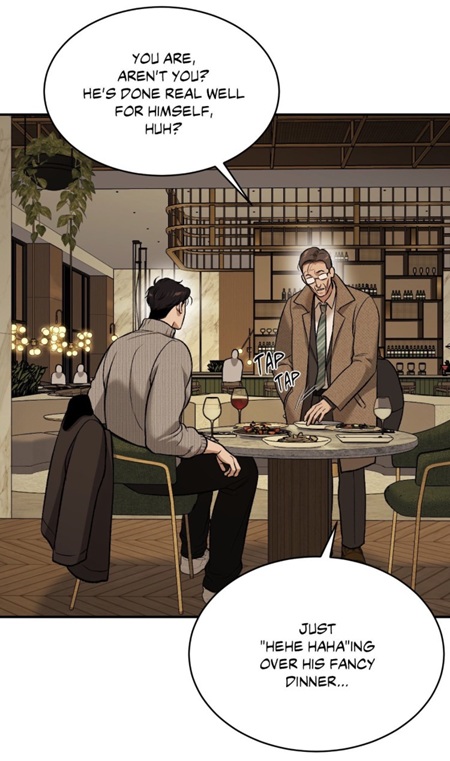 (chapter 90) No outsider could know that the tension began because Kim Dan had left the room in emotional distress. No camera would capture the private wound beneath the public reaction. What looked like friction between the former director and the celebrity was in reality the consequence of care, misunderstanding, and emotional stakes invisible to spectators.
This highlights the fundamental flaw in Baek Junmin’s strategy. Junmin operates entirely within the realm of the Spectacle. Hence he is in reality the Drama Queen Han. His weapons are visual and immediate: TV interviews 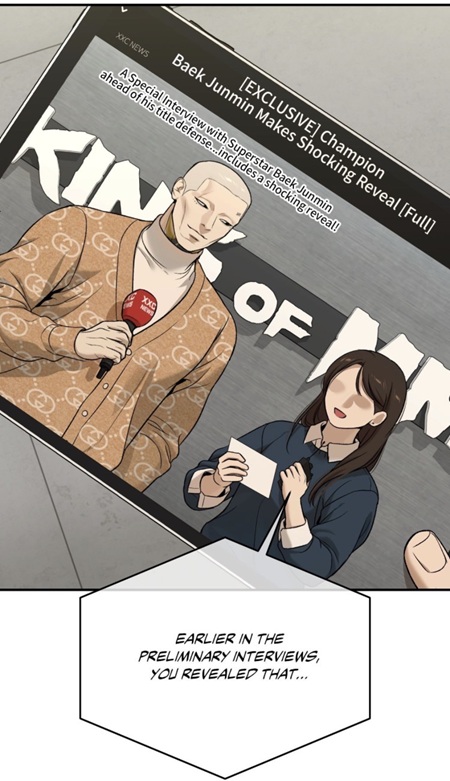 (Chapter 96), headlines
 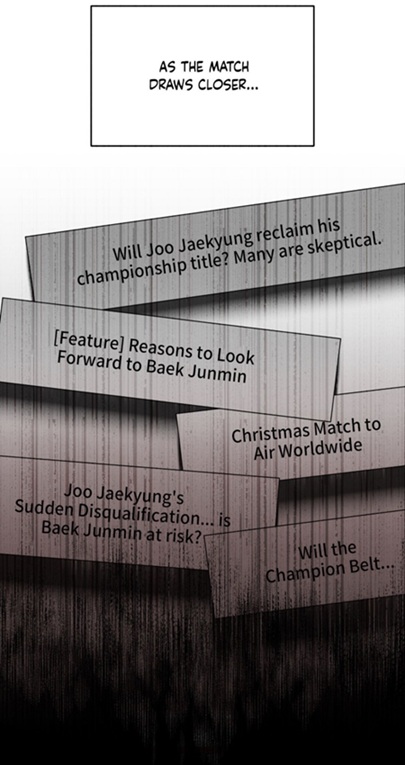 (chapter 95), and shows designed for public consumption. To Junmin, truth is something manufactured for the camera; it is a ‘show’ of superiority and victimhood. This is why his method relies on surfaces—he assumes that if he can change the ‘image’ of Joo Jaekyung in Kim Dan’s eyes, the bond will break. (chapter 96)
However, Joo Jaekyung has quietly transitioned from being a ‘subject of the spectacle’ to a ‘man of the word.’ While Junmin is busy giving interviews, Jaekyung is increasingly depicted in private, intellectual moments. 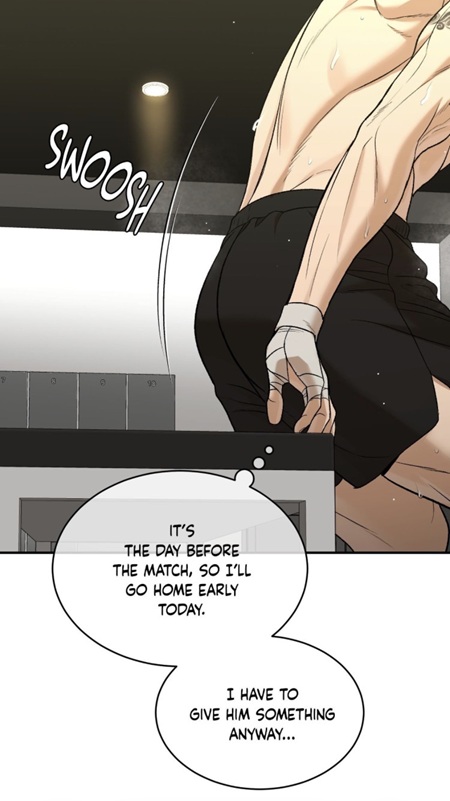 (chapter 97) We learn through Kim Dan’s observations that Jaekyung’s room is full of books and that he relies on reading to quiet his mind (chapter 97).
This shift is symbolic: Images are imposed, but words are interpreted. By becoming a reader, Jaekyung is no longer just a body to be filmed or a monster to be headlined; he is a person seeking depth. (chapter 97) When he reads the article about the Director’s sexual harassment (chapter 91), he is using the ‘word’ as a tool for justice, contrasting Junmin’s use of the ‘word’ for slander. Kim Dan, as a reader himself, recognizes this. He chooses the depth of the ‘book’—and the man who reads it—over the superficiality of the ‘video’ Junmin tries to sell him. In this arc, the bond remains unbroken because it is written in a language of depth that Baek Junmin’s cameras simply cannot capture.
Exit Scene: Stay and Leave
This returns us to the chapter’s apparent dilemma: stay or leave. (chapter 97) On the surface, the choice seems simple. Stay and remain inside danger. Leave and survive. But such a choice belongs to the Joker’s logic because it assumes safety is still tied to place: the penthouse, the gym, the old structures around them.
What if that assumption is already false? The penthouse has been compromised. Wealth did not secure it. The gym no longer guarantees protection or care. (chapter 96) Titles cannot create peace. 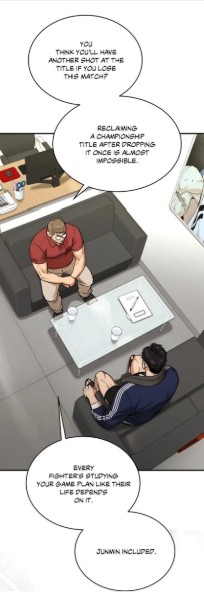 (chapter 95) Walls cannot protect trust.
If so, then leaving a place may no longer mean losing safety. And staying may no longer mean remaining physically where one stands.
There is another detail that deepens this possibility. In an earlier reading of chapter 96, I described the relationship between the two protagonists through the idea of tactile dissonance. Their bodies no longer moved in harmony. 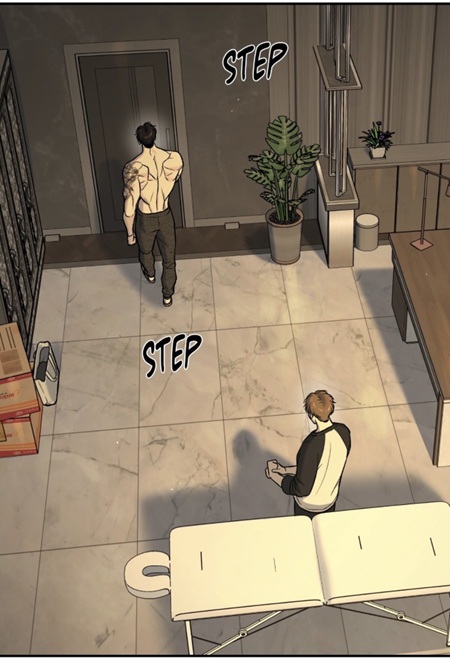 (chapter 96) Distance, interruption, and broken rhythm shaped their contact. On the physical level, they seemed out of sync.
Yet chapter 97 reveals another reality beneath that surface: they are now mentally and emotionally aligned. 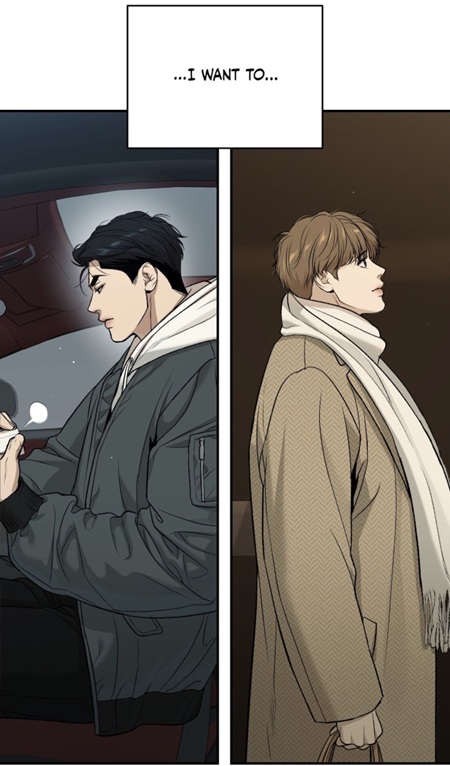 (chapter 97) This alignment appears through a series of quiet but striking parallels.
  (chapter 97) Both independently buy the same cake.
 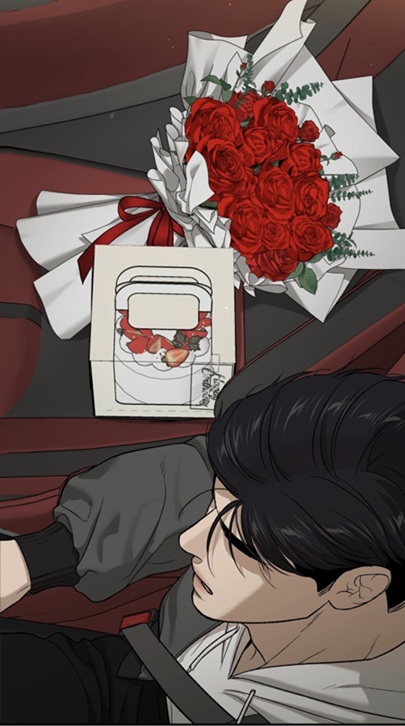 (chapter 97) Both choose gifts centered not on themselves, but on what the other would enjoy. (chapter 97) Each thinks in terms of the other’s happiness before speaking to the other directly. Care has become mutual instinct rather than negotiated obligation.
Even the visual composition reinforces this movement. 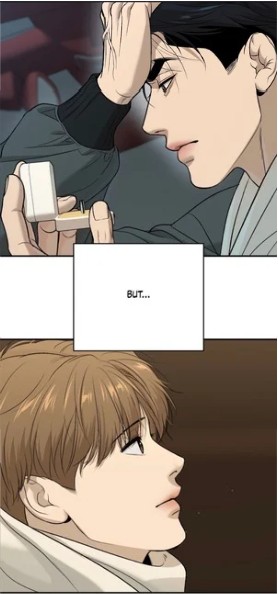 (chapter 97) The author places them in mirrored and balanced panels, separated in space yet linked in intention. They stand apart physically, but the framing suggests an inner synchrony stronger than distance. What chapter 96 presented as bodily discord, chapter 97 answers with emotional consonance.
That contrast matters. Physical harmony can be disrupted by circumstance, misunderstanding, or outside interference. Mental and emotional harmony is harder to break, once it has truly formed. It means that even while separated by walls, schedules, or danger, they are already moving toward the same conclusion. 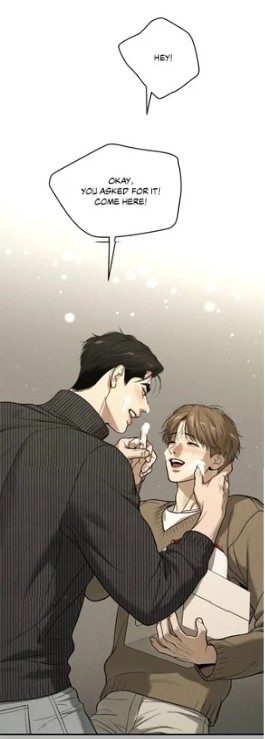 (chapter 97) Stay together. And that conclusion may not be reached individually. They are no longer two isolated people reacting alone. They are becoming two people capable of choosing together. That’s what the couple rings symbolize here.
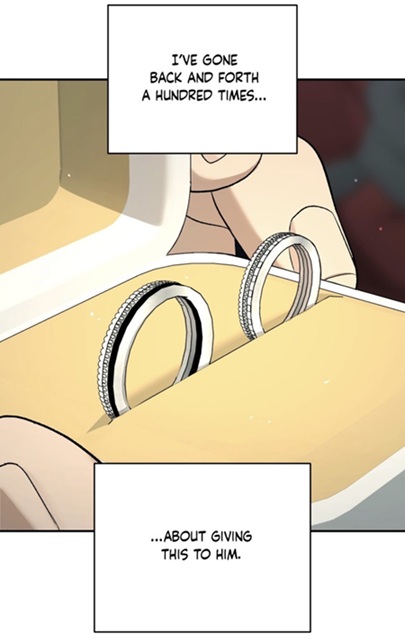 (chapter 97) This is why the final question of the chapter may be less “Will Kim Dan stay?” or “Will he leave?” than whether they will make a shared decision at last. The mirrored gifts, the synchronized thoughts, the parallel panels — all suggest they are approaching a moment of joint agency. They are moving toward a ‘third path’ where they stay together by leaving the trap.
This transition is foreshadowed by the symbolic cards in their early history. If the former director represents the Joker card—the unpredictable threat to their peace (Chapter 27)—then the two ‘3’ cards Kim Dan held symbolize a deeper, private destination.
In Chapter 33, Jaekyung takes Dan to a secluded, ‘unknown’ location 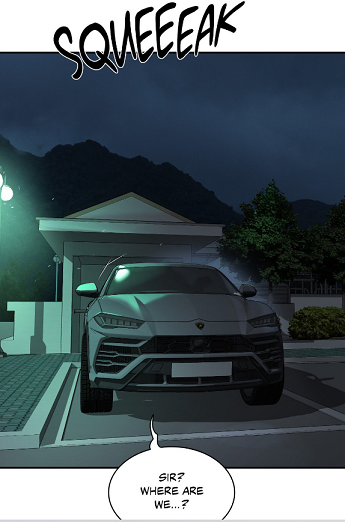 (chapter 33) where ‘no one would come’
 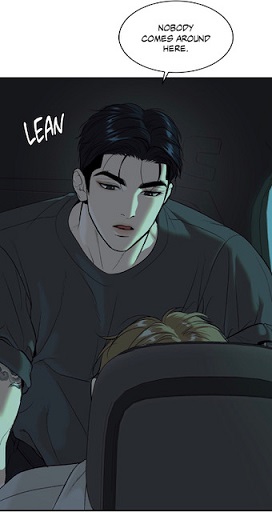 (Chapter 33). The presence of the actor entering the club in slippers and no jacket despite the winter cold suggests a desperate, hurried escape from a world that had become a ‘trap.’
  (chapter 33) Even then, Jaekyung’s motivation was clear: he followed Kim Dan because he could not bear for him to leave. That secluded house could be the physical ‘home’ Jaekyung had built while waiting for a partner worthy of sharing it.
Therefore, ‘leaving’ the current hallway or the compromised penthouse does not mean losing safety (chapter 97); it means relocating their sanctuary to a place where they are finally ‘alone’ in the way they both desired. They aren’t just fleeing a villain; they are choosing to occupy the ‘3’ cards—the private space they first glimpsed in Chapter 33. The mirrored gifts and synchronized thoughts suggest that for the first time, they aren’t being forced into a location; they are making a shared decision to ‘stay’ in each other’s presence while ‘leaving’ the narratives imposed upon them by others.”
If that happens, then the true harmony of the chapter will not be tactile at all. It will be volitional: two people finally choosing the same path at the same time.
Conclusion: Mutual Protection
The deeper movement of the story may therefore be this: rescue is no longer enough. Rescue removes someone from danger after the damage has begun. Protection asks how danger is recognized earlier 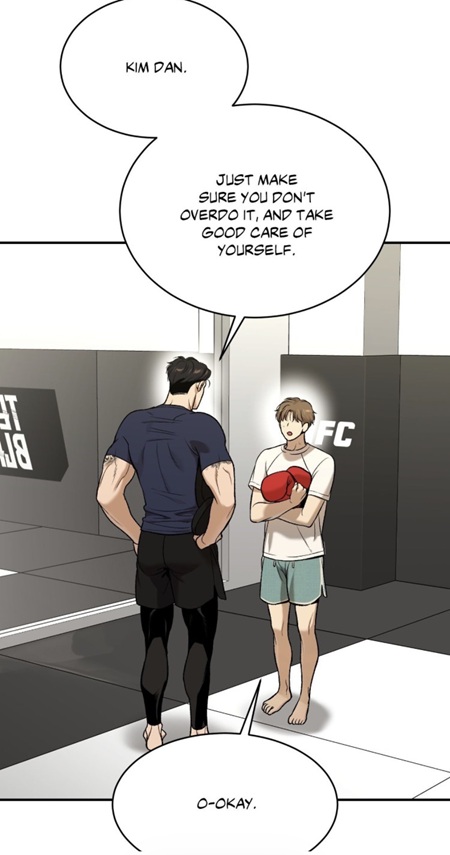 (chapter 88), resisted differently, and prevented from defining the future. Joo Jaekyung may protect Kim Dan not through another violent intervention, but through truth made public, lawful action, and the refusal to let harm disappear in silence contrary to the past. Kim Dan may protect Joo Jaekyung not through physical force, but through knowledge
  (chapter 47), revelation
  (chapter 48), and the rejection of false narratives designed to reduce him (chapter 96). Each now carries what the other lacks. That is why the hallway matters. (chapter 97) It was staged as a place of fear, separation, and confusion. Yet it may become the very place where the old hierarchy collapses. Protector and protected are no longer fixed identities. If they overcome what is coming, it may be because they finally learn to protect each other. Ultimately, this shift reveals the story’s most vital truth: that safety is not a geographic location, and ‘home’ is not a piece of real estate. At the beginning of his journey, Kim Dan wandered through the city convinced there was ‘nowhere left in this world where I can feel safe’ (chapter 1). He looked for safety in walls, in locked doors, and in financial stability, only to find them all fragile. But as the protection changes hands in the hallway, we see the emergence of a different kind of fortress. If they can withstand the Joker’s design, it will be because they have realized that they are no longer each other’s burden or rescue project (chapter 97) — they are each other’s sanctuary. In a world of damaged posters and compromised penthouses, the only place left to feel safe is not a place at all, but a person.
Feel free to comment. If you have any suggestion for topics or Manhwa, feel free to ask. If you enjoyed reading it, retweet it or push the button like. My Reddit-Instagram-Twitter-Tumblr account is: @bebebisous33. Thanks for reading and for the support, particularly, I would like to thank all the new followers and people recommending my blog.


