

Please support the authors by reading Manhwas on the official websites. This is where you can read the Manhwa: Jinx But be aware that the Manhwa is a mature Yaoi, which means, it is about homosexuality with explicit scenes. Here is the link of the table of contents about Jinx. Here is the link where you can find the table of contents of analyzed Manhwas. Here are the links, if you are interested in the first work from Mingwa, BJ Alex, and the 2 previous essays about Jinx Drama Queen 👸 Han Dan and The Joker -part 1 and Drama Queen and The Joker – part 2
It would be great if you could make some donations/sponsoring: Ko-fi.com/bebebisous33 That way, you can support me with “coffee” so that I have the energy to keep examining Manhwas. Besides, I need to cover up the expenses for this blog.

Kim Dan’s birthday and his presents
As the narrative of Jinx moves toward the decisive window of December 24th to 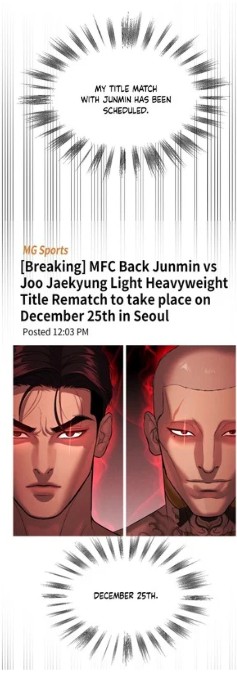 (chapter 89) December 26th
 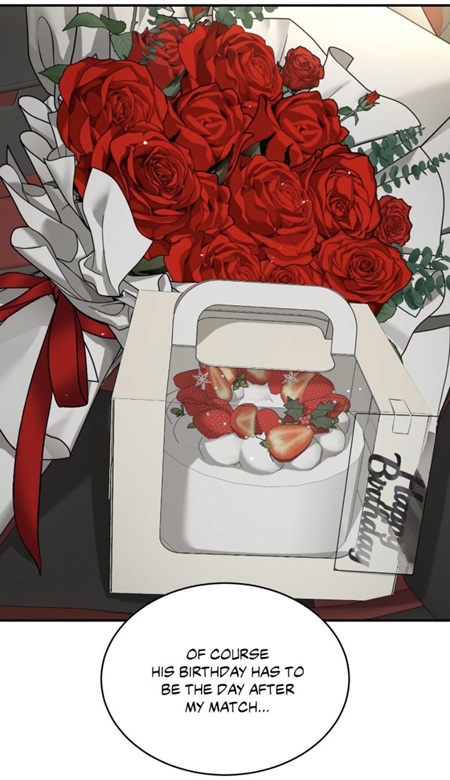 (chapter 97), readers are confronted with a question that seems simple yet resists any easy answer: what exactly has Joo Jaekyung prepared for Kim Dan’s birthday?
For many, the answer appears obvious. (chapter 97) The bouquet of red roses—long associated with romantic passion, desire, and confession—seems to speak for itself. Paired with the appearance of a strawberry cake and the long-anticipated possibility of couple rings 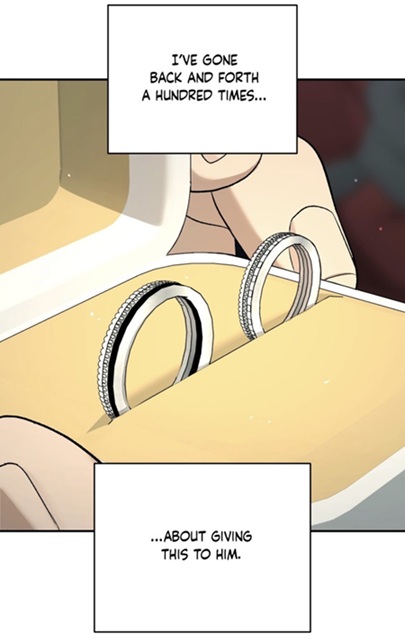 (chapter 97), the scene appears easy to decode. It suggests a champion finally ready to step out from behind his walls and express what words have long concealed. But are these gifts the true center of the moment, or only its most visible layer? Is Jaekyung merely celebrating a birthday, or trying to alter the future he and Kim Dan might share?
Yet Jinx rarely reveals itself through what is most obvious at first glance. Again and again, significance emerges through timing  (chapter 81), hesitation, gesture, and subtle changes in the spaces characters inhabit. A gift may matter less than the moment it is offered. A movement may reveal more than a confession. Even the introduction of something new into a familiar environment can carry emotional weight beyond words.
Perhaps the most important mystery lies not in what Kim Dan will receive, but in what Jaekyung himself is becoming. Is he still the man who equates care with possession and value with financial power? Or is he beginning, however awkwardly, to imagine another form of devotion—one expressed less through spectacle than through protection, constancy, and shared future?
To answer that question, we must look beyond the surface of roses and celebration. For the most meaningful present may not be the one that first captures the eye, but the one that reveals a transformation of the heart.
When Gifts Speak Volumes
At first glance, Chapter 97 appears easy to interpret. A bouquet of red roses, a strawberry cake marked Happy Birthday, and a pair of rings seem to point toward an obvious conclusion: (chapter 97) Joo Jaekyung has prepared birthday presents for Kim Dan. Yet the chapter becomes far more complex, once we recognize that these presents do not carry fixed meanings in themselves. In this story, gifts are shaped less by appearance than by intention, timing, and emotional context.
Red Roses: Desire and Reconciliation
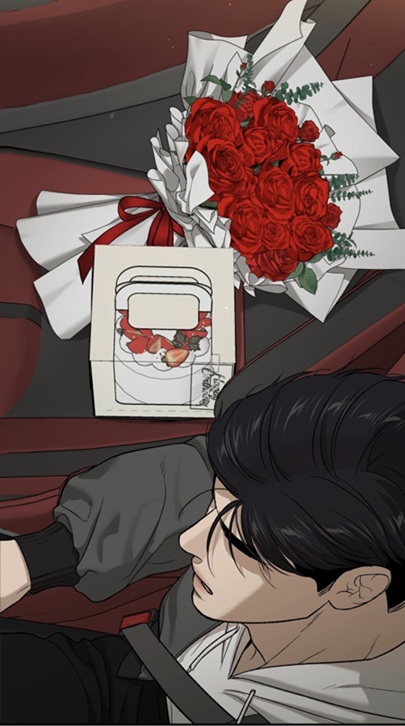
The bouquet of red roses offers the clearest example. Traditionally, red roses signify romantic love, passion, desire, and confession. On the surface, they appear to announce a straightforward romantic gesture. Yet the surrounding context changes their meaning. Jaekyung brings them after acknowledging that he had treated Kim Dan badly. 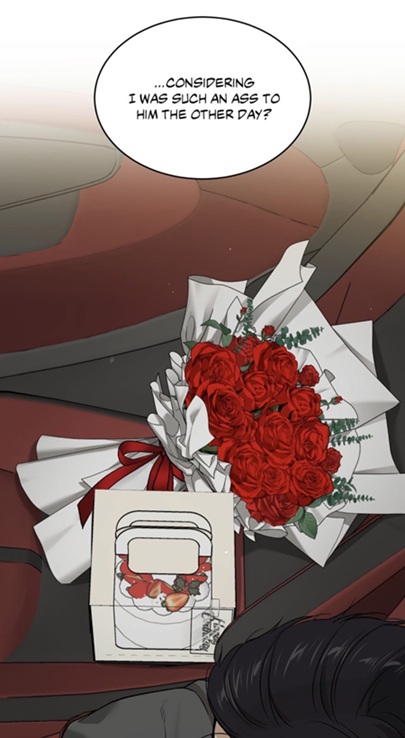 (chapter 97) Because of this, the flowers express more than attraction alone. They also function as apology and reconciliation. Their romantic symbolism remains, but it is deepened by remorse and by the desire to restore closeness after harm.
This double meaning is important. The roses do not erase desire; they refine it. Passion is no longer detached from responsibility. Attraction is joined to remorse. In that sense, the gesture marks growth: Jaekyung does not simply want Kim Dan—he wants to restore closeness with him. If intimacy follows that night 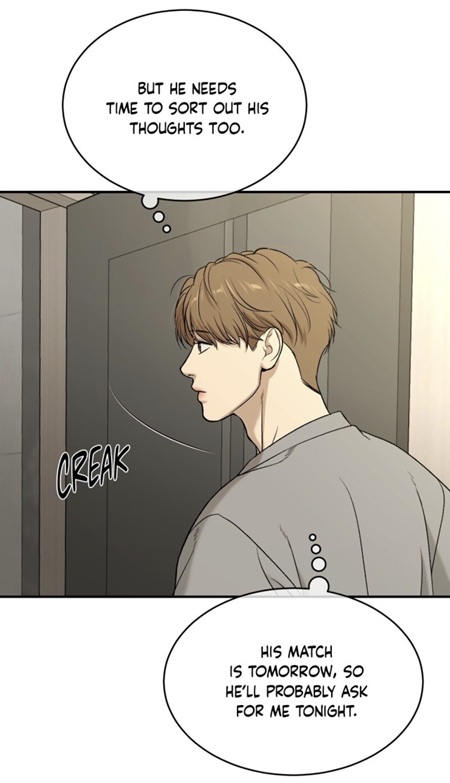 (chapter 97), it would carry a different significance than in the past. It would no longer be defined by the old “jinx” logic of transactional or ritualized sex, but by reconciliation and mutual affection. The act would cease to be mere release and become an expression of true love.
The bouquet of red roses carries yet another layer of meaning when placed beside the couple’s earlier conversation about flowers. When Kim Dan once received pink roses from Choi Heesung  (chapter 31), he explained that he liked flowers because of their scent.
  (chapter 31) The statement seemed simple at the time, almost shyly innocent, yet it reveals something essential about his character. Kim Dan values not spectacle, status, or monetary worth, but the quiet emotional effect an object can have. He does not love flowers because they are expensive. He loves the atmosphere they create, the comfort they bring, and the mood they awaken.
This detail becomes even more significant when contrasted with Joo Jaekyung’s immediate response: (chapter 31) At first, the line sounds like blunt indifference. Yet its emotional effect falls most sharply on Kim Dan. Having just admitted that he likes flowers because of their scent, Kim Dan is suddenly placed in an awkward position. Thus he apologizes. The rejection no longer concerns flowers alone. It risks sounding like a rejection of what Kim Dan himself has brought into the shared space.
This matters because scent crosses boundaries in ways other objects do not. A fragrance cannot be neatly contained. It lingers, spreads through rooms (chapter 31), and remains in the air. In that sense, Kim Dan may feel he has trespassed—that he has filled Jaekyung’s penthouse with something unwanted, leaving behind traces of himself where he had no right to do so. That’s how it dawned on me why the athlete refused to have the room cleaned for quite some time 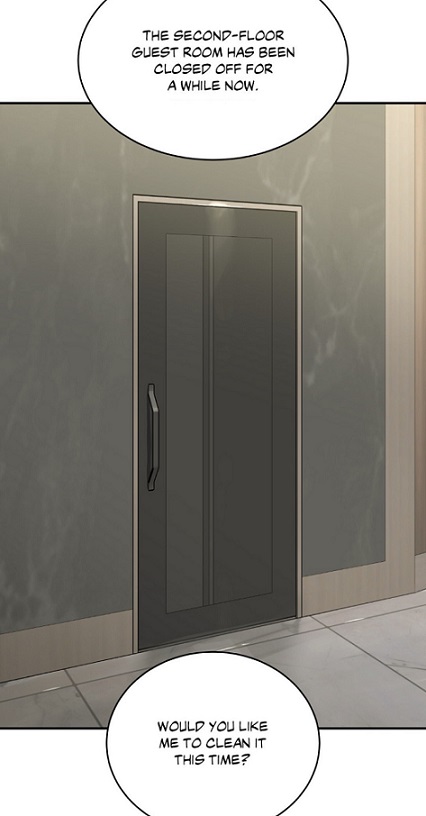 (chapter 55), he wanted to keep the physical therapist’s scent there.
But let’s return our attention to the scene with the pink roses. For a man as careful and self-effacing as Kim Dan, such a moment would naturally produce embarrassment. The shame lies not only in differing tastes, but in the fear of being too present. His preference seems to have occupied space that was never truly his. And now, you understand why he didn’t leave the elevator at the same time. 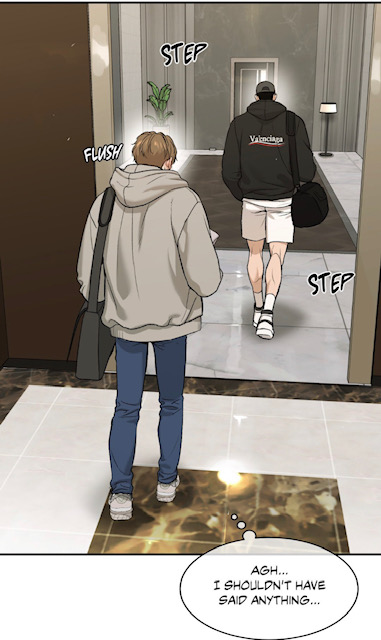 (chapter 31) He wanted to be considerate of Joo Jaekyung, making sure that the flowers’ fragrance would not bother his “landlord”.
Striking is that the line “I hate flowers” is more than just blunt indifference. Yet later revelations about Jaekyung’s childhood allow it to be read differently. His past is marked by humiliation, deprivation, and social contempt.  (chapter 72) He was mocked as dirty, poor, and
 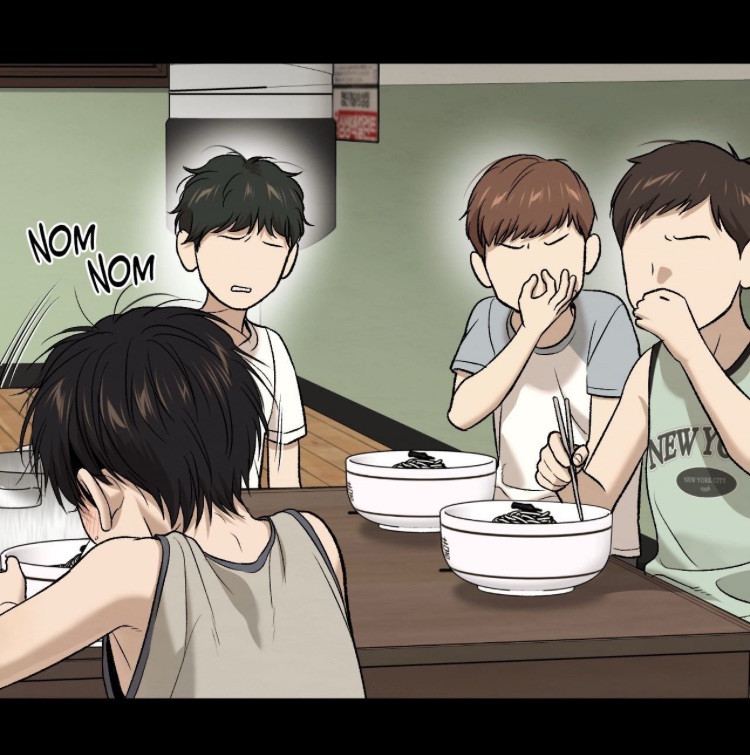 (chapter 72) “smelly.” Odor, in his early life, was not associated with beauty or tenderness, but with shame. Smell became tied to exclusion.
That distinction matters because scent is one of the most powerful carriers of memory. Unlike rational thought, fragrance can bypass language and return a person directly to emotion. For Kim Dan, the smell of flowers “puts [him] in a good mood.” (chapter 31) For Jaekyung, sensory memory may have operated in the opposite direction, linking smell to poverty, rejection, and pain.
Seen in this light, the red roses of Chapter 97 are profoundly symbolic. The celebrity does not merely buy a conventional romantic gift. He chooses an object tied to a sensory world he once rejected. Whether consciously or not, he reaches toward what he had previously denied. (chapter 97) This contrast gives the bouquet an additional significance. The red roses do not merely symbolize romance or apology; they also possess an immediate emotional function. Because the wolf remembers that flowers can cheer up his fated partner, his choice of gift becomes quietly strategic as well as affectionate. He is not only offering an object, but shaping the atmosphere in which the encounter will unfold.
The fragrance of the roses can soften tension, brighten the space, and reduce the emotional distance created by their recent conflict. In that sense, Jaekyung is doing more than saying I’m sorry. He is creating the conditions in which that apology may be more easily accepted. Rather than forcing reconciliation through words or authority, he approaches Kim Dan through something known to bring him comfort.
The gesture therefore reveals a subtle but important evolution. The MMA fighter is no longer acting only from impulse or pride. He is observing, remembering, and responding to Kim Dan’s inner world. What he offers is not simply flowers, but consideration.
At the same time, the bouquet suggests the rewriting of scent itself. What was once connected to humiliation is now reintroduced through affection. What once belonged to trauma is placed inside a gesture of care. This is why the flowers can be understood as therapeutic for Jaekyung as well. In offering them to his fated partner, he may also be exposing himself to a new emotional association. The fragrance of flowers no longer belongs only to distance or discomfort. Through Kim Dan, it can become linked to warmth, intimacy, and home.
The color deepens this transformation. Earlier pink roses symbolized admiration, gratitude, joy, grace, and gentle affection.  (chapter 31) Red roses carry stronger meanings: passion, desire, courage, and declared love. The movement from pink to red mirrors the movement of the relationship itself—from undecisive tenderness to chosen intensity.
  (chapter 97)
Most importantly, the bouquet reveals how Kim Dan changes Jaekyung’s relationship to the world. Kim Dan does not simply receive gifts; he rehumanizes meanings that trauma had distorted. Through him, even something as ordinary as scent can be recovered. In that sense, the roses speak not only to Kim Dan, but to the wounded child Jaekyung once was.
The Strawberry Cake: One Object, Many Readings
The cake works in a similarly revealing way. (chapter 97) Its packaging openly displays the words Happy Birthday, inviting the reader to assume that its purpose is self-evident. Yet the narrative itself unsettles that assumption. 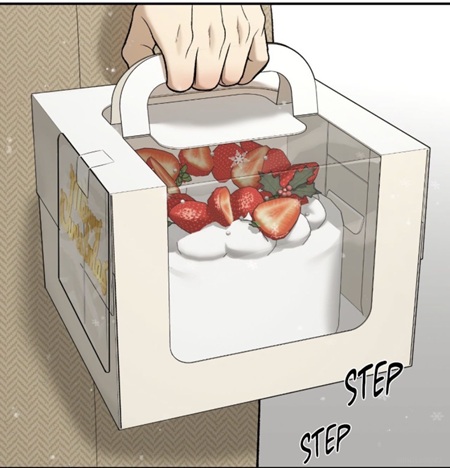 (chapter 97) Kim Dan also purchases the same kind of cake, but not to celebrate his own birthday. He chooses it to honor Jaekyung, expressing pride, care, and happiness for the champion’s success.
 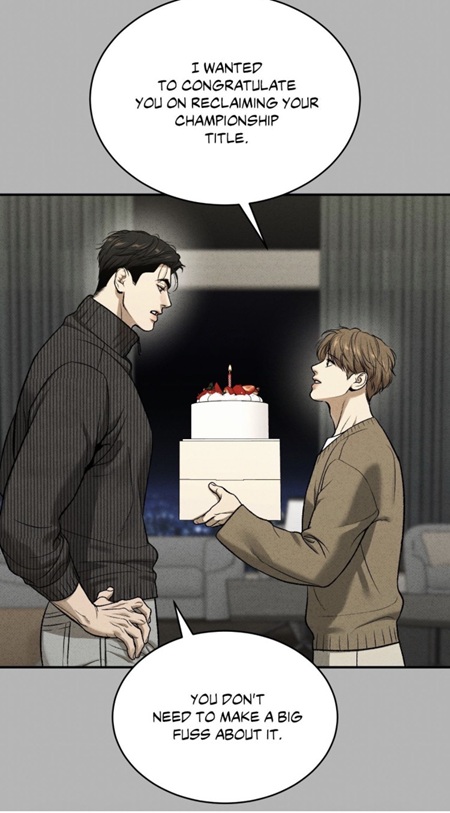 (chapter 97) Gratitude and admiration replace regret as the emotional core of the gesture. The same object therefore carries different meanings in different hands.
This parallel reveals that the cake does not inherently mean “birthday.” Its significance depends on the giver and the feeling expressed through it. In Jaekyung’s hands, it becomes part of an effort to repair tension and reopen warmth. In Kim Dan’s hands, it becomes admiration and support. The printed message remains the same, but the emotional message changes. The same object becomes two messages: one says, I’m sorry. The other says, I’m proud of you. Without coordination, both men choose the same symbolic language: Love. They are beginning to meet each other in thought. To conclude, the cake reveals emotional convergence.
The cake gains additional meaning when placed within its seasonal context. In South Korea, the strawberry shortcake-style dessert displayed in bakeries each December is strongly associated with Christmas celebrations.
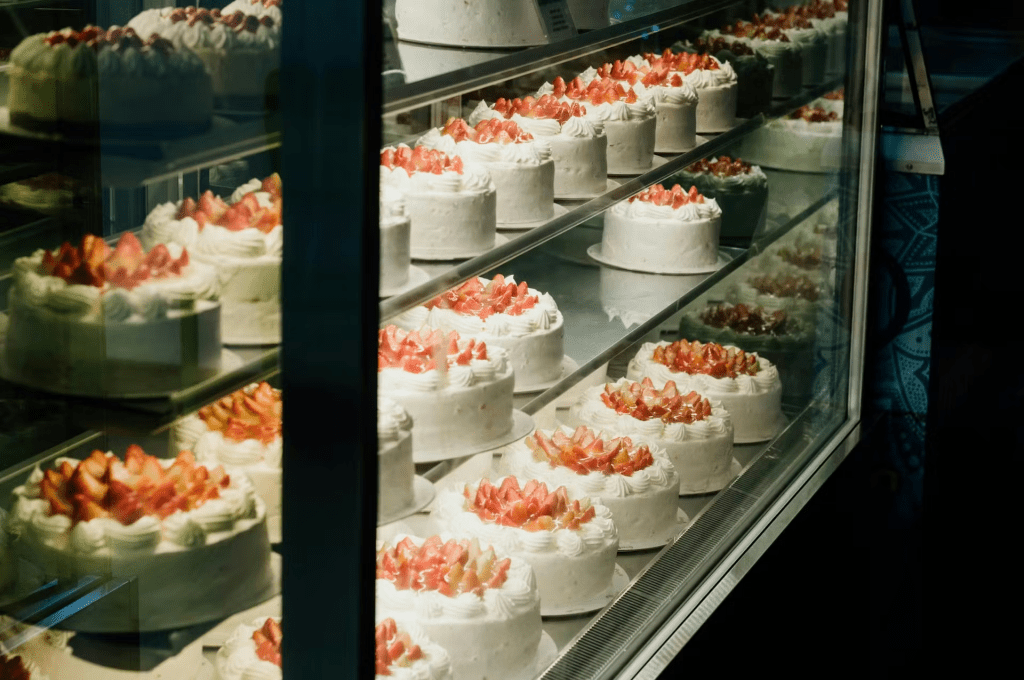
Covered in white cream and topped with bright strawberries, it visually echoes the festive colors of winter and has become a familiar part of romantic holiday culture. It is not merely something people eat; it is an object tied to atmosphere, celebration, and shared occasions.
The cultural backdrop changes how the scene can be read, but not necessarily how the characters themselves understand it. On December 24th, roses and a strawberry cream cake naturally evoke the visual language of romance and couple celebration. To an outside observer, such gifts can resemble the signs of a private date or an intimate evening together. Yet the scene suggests that neither Kim Dan nor Jaekyung fully approaches it through that lens.
Kim Dan’s attention is drawn to a family leaving the bakery 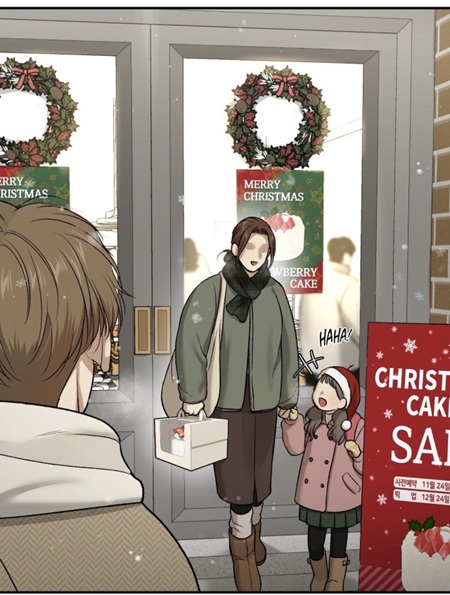 (chapter 97), which subtly shifts the emotional frame. Rather than reading the setting as romantic spectacle, he may register warmth, celebration, and shared belonging. True to his character, domestic happiness may speak to him more immediately than public codes of romance.
Jaekyung’s position is different, but no less revealing. He appears motivated first by personal memory and immediate need. He remembers flowers in connection with Kim Dan and seeks a way to repair the distance created by recent conflict. (chapter 31) His impulse is intimate rather than seasonal. He is not setting out to perform Christmas romance; he is trying, in the only way he can, to reconcile.
At the same time, that private intention takes shape within a very specific environment. Because he is shopping on Christmas Eve, he moves through spaces already saturated with festive displays, bakery counters, bouquets, and seasonal rituals of affection. The desire originates within him, but the language available to express it is supplied by the world around him. This helps explain his visible hesitation. 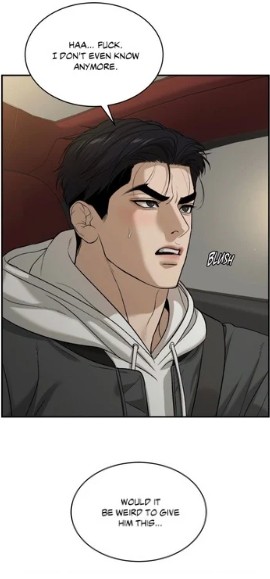 (chapter 97) He questions whether it would be strange to give such presents and admits that he no longer even knows what to do. The uncertainty suggests that he has not fully mastered the symbolic code he is using. He senses that flowers, cake, and rings matter, yet he cannot entirely explain why they feel right or whether they will make him look foolish.
That tension makes the scene especially moving. Kim Dan sees warmth 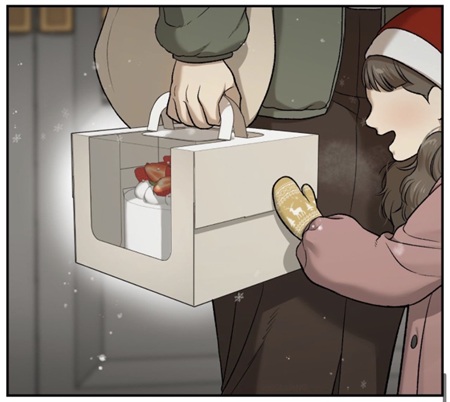 (chapter 97) where others might see romance. Jaekyung reaches for gestures of affection whose wider meanings he only partially understands. Neither man consciously names the moment as a couple’s ritual, yet their actions begin to inhabit that language all the same. Personal feeling leads, while culture quietly gives it form.
This gives the moment a special subtlety. The gifts carry meanings larger than either man explicitly names. Their relationship begins to appear as a couple’s bond, even before they fully recognize it themselves. Culture speaks around them before they can speak for themselves.
Yes, Christmas in Korea is celebrated similarly to Valentine’s Day. It is also often referred to as “Valentines with Santa” because it’s more of a couples’ day. Instead of a family festival, it’s seen as a private date for couples to cherish winter and the Yule tradition.
This makes the writing on the box especially significant. Happy Birthday offers an innocent and socially acceptable explanation for gifts that might otherwise appear overtly romantic. (chapter 97) The label clarifies the scene on the surface, yet it may also conceal its deeper meaning. What looks like a birthday errand can simultaneously function as an intimate gesture between two people, whose bond is becoming harder to hide.
The timing of Jaekyung’s gesture strengthens this reading even further. Kim Dan’s birthday falls on December 26th, yet the flowers and cake are brought on the night of December 24th. This is not merely an early delivery. It creates a practical contradiction. (chapter 97) Both gifts are highly perishable. (chapter 97) Fresh roses begin to droop with time, and a cream cake topped with strawberries is meant to be enjoyed while fresh. If these objects were truly intended as the final birthday presents for the actual day, they would be oddly chosen. By the time December 26th arrived, the flowers would already be fading and the cake would have lost the freshness that gives it value.
This everyday logic matters because it shifts the interpretation at the most basic level. Even before symbolism enters the discussion, the objects do not behave like conventional birthday presents. They belong to the present moment, not to a celebration two days away. (chapter 97) That present moment is emotional rather than calendrical. Jaekyung does not bring them because the date demands it, but because the relationship does. The gifts answer urgency: recent conflict, approaching uncertainty, and the desire to restore warmth before the match intervenes and the doctor leaves him.
In that sense, their perishability becomes meaningful in itself. These are objects made to be experienced now, just as reconciliation must happen now. They are temporary gifts chosen for an immediate wound, while the more lasting question of the future is carried elsewhere.
The Couple Rings: Equality and Commitment
Once the flowers and cake are recognized as gestures for the present rather than true birthday presents, one visible possibility remains: the couple rings. 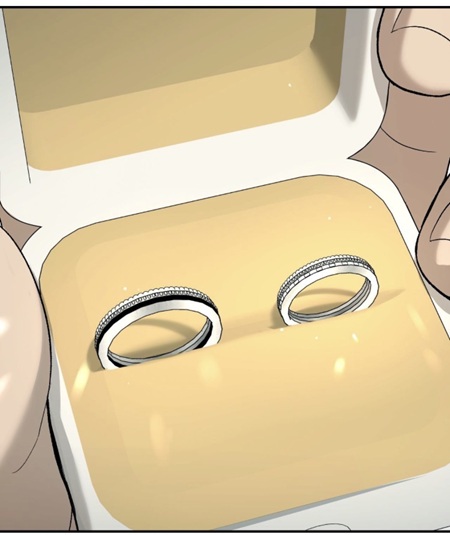 (chapter 97) They seem, at last, to be the real gift. Their permanence contrasts with the fragility of roses and cream cake, and their symbolism suits an important personal occasion far more naturally.
And yet even here, the scene proves more complex than it first appears.The rings belong to another emotional layer altogether. Unlike the flowers and cake, they are already in Jaekyung’s possession. He carries them with him 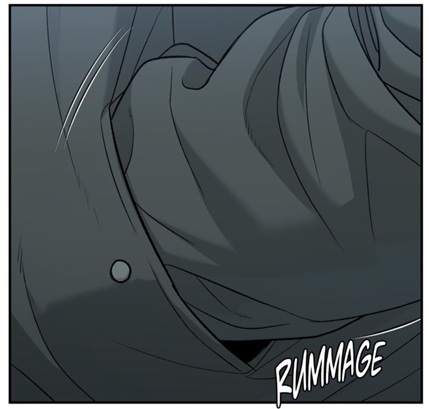 (chapter 97) and admits that he has gone back and forth countless times about giving them. (chapter 97) This hesitation suggests that they were acquired well before the events of the chapter and tied to a longer internal struggle. An earlier panel strengthens this interpretation.
 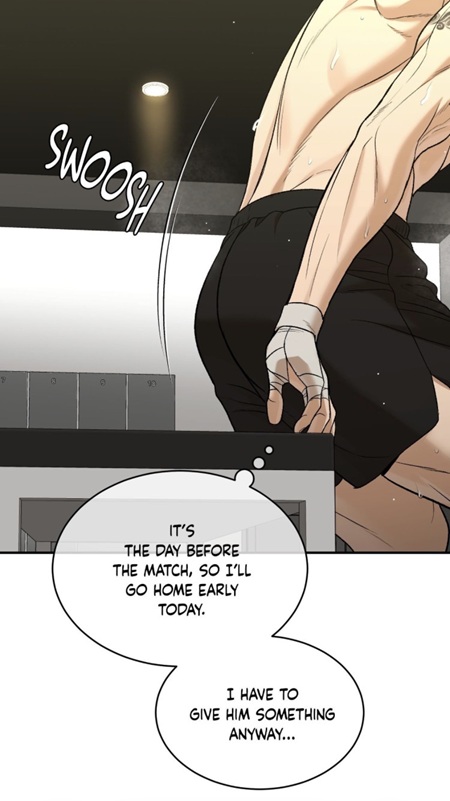 (chapter 97) While still at the gym, before any flowers or cake appear, Jaekyung tells himself that he has to give Kim Dan something. The wording is important. He does not think about buying something, searching for something, or choosing something later. He speaks as someone who already has a gift in mind and already has it with him.
That object can hardly be the flowers or the cake. Both appear freshly purchased and belong to the practical errands of the journey home. The roses are newly arranged, and the cream cake with strawberries is clearly meant for immediate consumption. They are gifts obtained on the way, not items long carried in secret.
The rings fit the evidence far more convincingly. Small enough to remain hidden in his pocket, already burdened with emotional hesitation, and linked to a decision he has postponed many times (chapter 97), they are the only visible present that explains the panel at the gym. Jaekyung leaves early because he intends to act, but before returning home he stops at the bakery and flower shop, adding new gestures of apology and warmth to the older gift he had already prepared.
This also explains the subtle irony of the sequence. Though he departs the gym early, he does not arrive home immediately. The delay itself becomes meaningful: between decision and confession 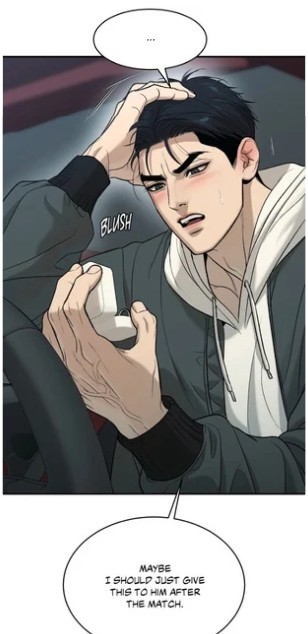 (chapter 97), he gathers the courage—and the accompanying symbols—needed to finally face Kim Dan.
Yet among everything he carries or acquires that evening, one object stands apart from the rest. The flowers and cake belong to the immediate moment: they soothe tension, create warmth, and answer a present emotional need. The rings, by contrast, reach beyond the night itself. They are not meant to be enjoyed briefly or consumed in passing, but to endure. For that reason, they carry the greatest symbolic weight of all.
Flowers can wilt, cake is consumed, but a ring endures. (chapter 97) Its circular form traditionally signifies continuity, fidelity, and mutual belonging. Most importantly, a ring cannot fully function within hierarchy. It gains meaning through reciprocity. One person may offer it, but its true significance depends on acceptance. In that sense, the rings challenge the old imbalance that has defined their bond: wealth versus debt, fame versus obscurity, strength versus vulnerability. If the wolf offers couple rings, he is not simply giving an object. He is inviting Kim Dan into a shared definition of the relationship. That is a radically different gesture from transactional generosity. It says not I provide for you, but let us belong to one another.
This is also why the rings cannot be understood as an ordinary birthday present. A birthday gift is usually directed toward one person alone. Couple rings follow another logic entirely: the giver receives one as well. The gesture is not centered on an individual celebration, but on the creation of a mutual bond. They do not say this day belongs to you so much as our future belongs to us.
And yet even this is not the final step. Commitment of the heart must still be matched by conditions in which that commitment can live.
For that reason, the rings signify something deeper than celebration. They do not simply mark a date. They express commitment, vulnerability, and the fear of loss. More than any other object in the chapter, they reach toward the future. Seen in this light, none of the visible presents can be reduced to simple birthday gifts. The flowers speak of love and apology. (chapter 97) The cake proves that even obvious symbols can be redefined by intention. The rings embody permanence and the hope that what exists now might continue beyond the match. (chapter 97)
Thus I conclude that even the rings do not complete the transformation. The roses may apologize, the cake may reconcile, and the rings may promise continuity, but all three remain symbolic gestures. They express feeling without necessarily changing the conditions in which that feeling must survive. In this story, love is tested not by sentiment alone, but by circumstances and actions. What use is confession without safety? What use is commitment without freedom? What use is tenderness if the surrounding world remains invasive, unstable, or controlling?
For Kim Dan, the deepest issue has never been exhaustion alone. His life has long been structured by dependence: on institutions, on precarious work, on family obligation, and finally on Jaekyung’s benevolence and protection. Flowers, cake, and even rings may express attachment, but they do not resolve the question of autonomy. Until now, the physical therapist has rarely been treated as a fully self-determining adult. 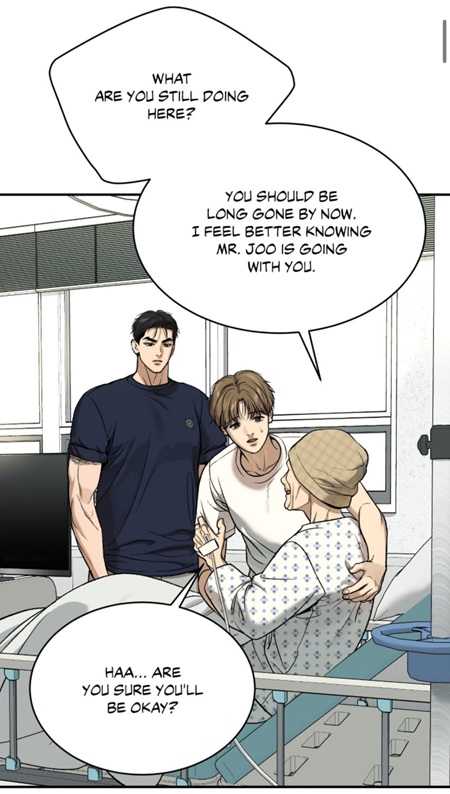 (chapter 78) More often, he has been positioned as a servant to be used or a child to be guided.
 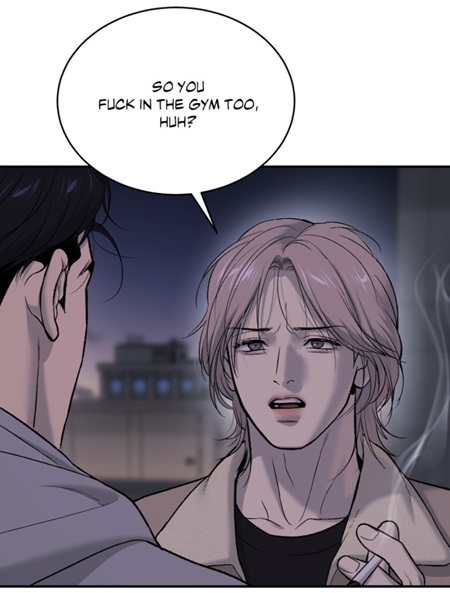 (chapter 89) His choices have repeatedly been shaped, directed, or provoked by the will of others rather than emerging freely as his own.
If the story ended with the rings, Kim Dan would be a loved dependent, but still a dependent. He would remain the one waiting in the penthouse 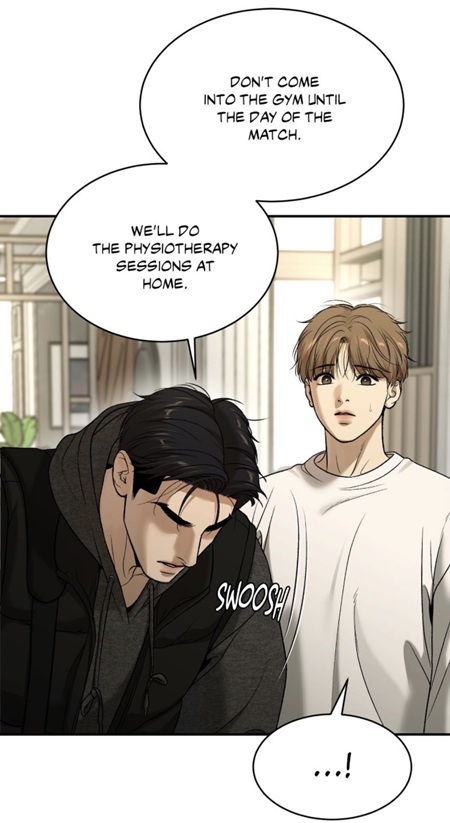 (chapter 96), the one being driven, the one whose safety exists only when Jaekyung is physically present.
To love him fully, then, requires more than symbolic devotion. It requires the creation of conditions in which he can move freely, choose freely, and exist securely without total reliance on another person. And that is precisely where the question of the true birthday gift returns.
The Architecture of the Sanctuary
And once these meanings are recognized, a final question naturally emerges: does the champion truly have a birthday gift for Kim Dan after all—and if so, where is it?
The answer may begin not among the visible presents, but in a detail far easier to overlook: the parking garage. 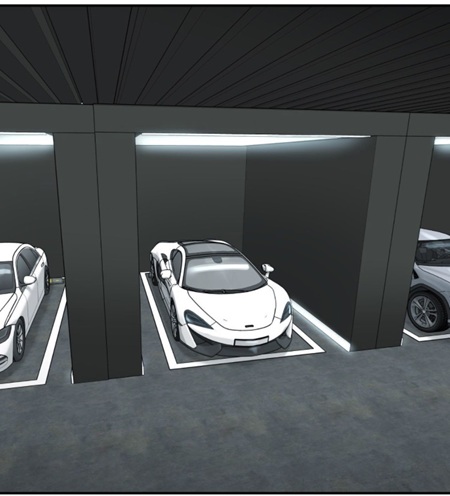 (chapter 97) The moment the flowers, cake, and rings are understood as gestures serving other emotional purposes, the possibility of another gift comes sharply into view. If those objects are not the true birthday present, then the narrative invites us to search elsewhere. One panel quietly draws attention to exactly such a possibility: for the first time, a third car appears.
This detail gains force when placed beside earlier chapters. The garage shown in Chapter 97 does not simply contain another vehicle; it reflects an evolution already underway. In Chapter 18, the space appears more functional and exposed. 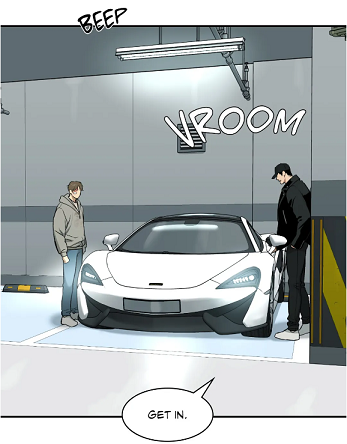 (chapter 18) By Chapter 32, the parking area has changed noticeably.
 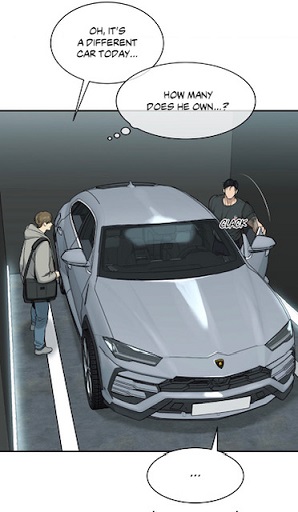 (chapter 32) It is larger, more exclusive, and more carefully structured, resembling a private VIP bay rather than an ordinary shared garage. The environment itself has become more protected.
That architectural change matters. A private bay separates the vehicles from the risks of crowded public parking: scratches, collisions, intrusion, unwanted proximity. (chapter 97) The cars are no longer stored merely for convenience. They are sheltered. Even before any emotional interpretation, the space communicates a desire for control, security, and preservation.
In episode 32, Kim Dan wondered about the number of Jaekyung’s cars, because he noticed the new car. (chapter 32), and many readers likely did the same. Attention naturally falls on wealth and quantity. Yet the more meaningful change may lie elsewhere: not in how many cars exist, but in the kind of space being created around them.
Personal transformation in this story is often reflected through architecture. Rooms, hallways, rooftops, doors, and thresholds do not simply contain events; they externalize inner states. Jaekyung’s world has long been luxurious, elevated, and impressive, yet also emotionally isolated. The penthouse functions as both reward and prison: a symbol of success that often feels sterile and inaccessible. It is therefore significant that one of the clearest signs of change appears below the tower rather than inside it.
The deepest change may not be that Jaekyung owns more. It may be that he has begun arranging what he owns for someone else.
The White Sedan: Why This Car Matters
Among the parked vehicles, one stands apart: the white sedan. (chapter 97) . Unlike Jaekyung’s earlier sports cars—machines associated with speed, aggression, (chapter 32) display, and public image—this vehicle speaks a different language. It is understated rather than theatrical, spacious rather than cramped, functional rather than performative.
The color matters as well. White can suggest clarity, neutrality, and renewal. Whether read symbolically or simply aesthetically, it sharply contrasts with the darker, more aggressive aura of luxury performance cars. It looks less like an extension of ego and more like the beginning of another chapter. On the other hand, white is the safest color on the road because it’s the most visible to other drivers at night. If this theory is true, then it indicates that Jaekyung is truly prioritizing Dan’s safety over his own “cool” aesthetic.
More importantly, the sedan fits Kim Dan far more naturally than it fits Jaekyung’s former image. Kim Dan has never been defined by extravagance or spectacle. He values usefulness, modesty, comfort, and quiet sincerity. A practical and comfortable vehicle suited for daily life reflects his character far more than a machine built to impress strangers.
For that reason, the sedan becomes another clue that the new car may not be intended for Jaekyung at all. It resembles Kim Dan’s needs more than Jaekyung’s branding. The car also offers something rare in the world of Jinx: invisibility. Fame has repeatedly exposed Jaekyung to surveillance, intrusion, and manipulation. Many readers will certainly recall this episode where a black car was detected following the champion’s gray SUV.  (chapter 33) A discreet sedan blends into ordinary traffic in ways a recognizable celebrity vehicle cannot. If registered under Kim Dan’s name, it would create even greater privacy and unpredictability. Protection would no longer depend only on physical strength, but on foresight and anonymity. And if this car was purchased recently, no one would know about its existence. Not even Park Namwook! If Chapter 33 presented movement as secrecy, confusion, and anxious uncertainty
 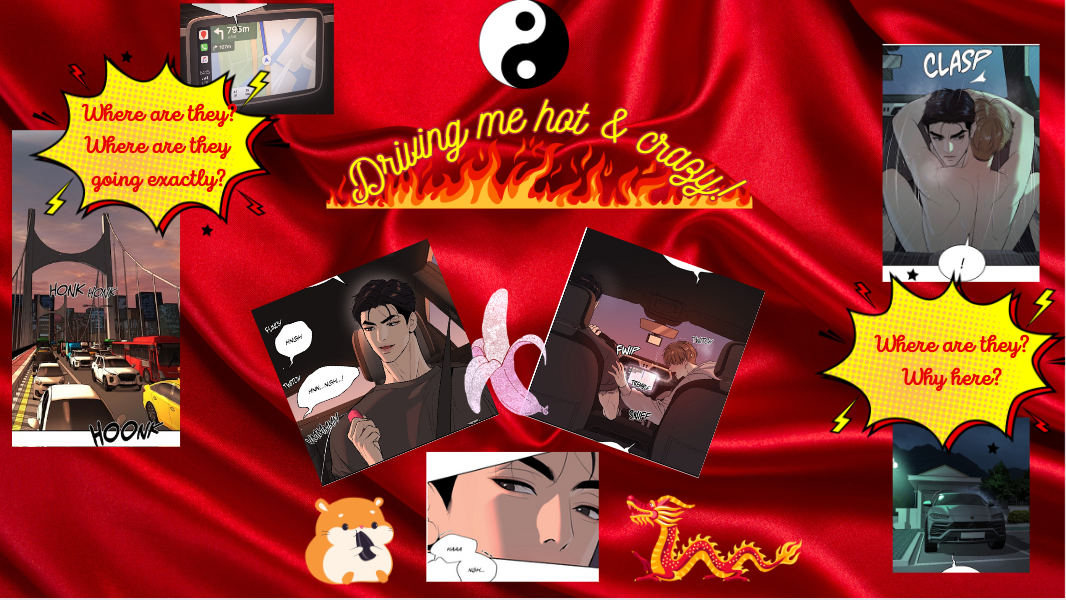 —where the question was Where are they going, and why?
 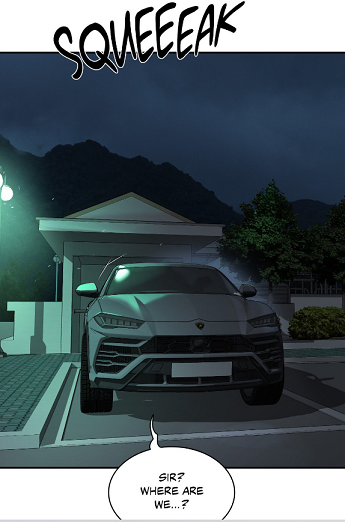 (chapter 33) —then Chapter 97 becomes its positive reflection. The same motif of driving now signifies trust, mutual desire, and emotional security. What was once shadowed by suspicion is transformed into intimacy. The destination matters less than the person beside you. The journey is no longer something done to Kim Dan, but something they experience together.
 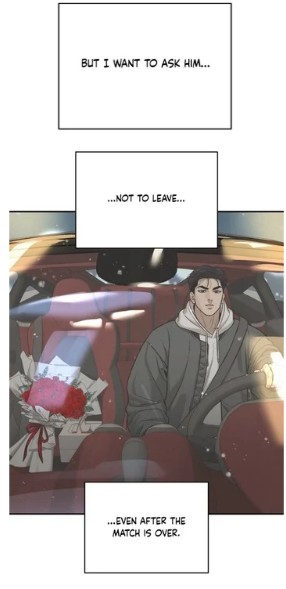 (chapter 97)
Yet perhaps the most important meaning is autonomy. If Dan owns or drives the car, Jaekyung is not merely giving him transportation. He is giving him the power to choose when to stay, when to leave, and where to go. He is literally placing the keys of departure in Kim Dan’s hands.
But due to his social class, it is clear that Kim Dan does not yet have a driving licence. Therefore the gift cannot be reduced to ownership alone. It would imply learning, practice, patience, and future development. In other words, the present becomes a shared project. That changes Jaekyung’s role as well. He is no longer simply the powerful man who provides solutions from above. He becomes someone who teaches, encourages, and accompanies Kim Dan as he acquires a new skill. Instead of keeping Dan dependent, he would actively help him become more independent.
This matters because it reverses earlier patterns in their relationship. 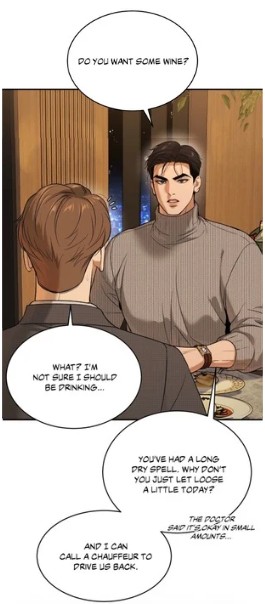 (chapter 89) So often, Kim Dan has been pushed by crisis, debt, or necessity. Here, he would be pushed toward growth. The pressure would no longer come from fear, but from care. The physical therapist could drive his drunk lover back home.
The symbolism is rich: learning to drive means learning confidence, judgment, orientation, and trust in one’s own decisions. It is not only about operating a vehicle; it is about entering a wider world. Seen in that light, the gift would expand Kim Dan’s life on multiple levels. It offers mobility in the present, autonomy in the future, and a new horizon of possibility. He could suggest to his lover to go on a trip: 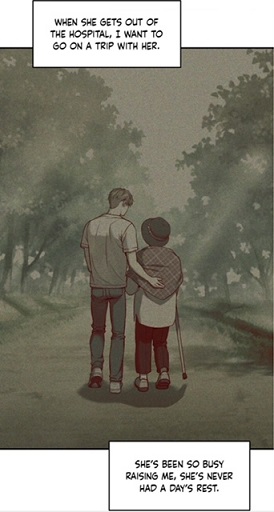 (chapter 47) Jaekyung would not merely be giving him a car. He would be helping him become someone who can go further than before.
And that changes everything. If Kim Dan remains after receiving the freedom to leave, then his staying becomes meaningful in an entirely new way. In other words, the white car stands for blind faith.
Rings Before Keys: Commitment and Shared Future
Even so, the car cannot come first. Among all visible presents, the couple rings carry the greatest symbolic weight. Unlike flowers or cake, a ring endures. It signifies continuity, reciprocity, and chosen connection. Its circular form evokes a bond without hierarchy, beginning, or end.
That symbolism matters because Jaekyung and Kim Dan’s history has long been shaped by imbalance: wealth against debt, fame against obscurity, strength against vulnerability. In such a relationship, an expensive gift can easily reproduce the old pattern of giver and receiver, power and dependence.
A ring resists that logic. (chapter 97) Its meaning does not come from price, but from mutual consent. It only becomes meaningful when accepted. For perhaps the first time, Jaekyung would be offering something that requires equality.
This is why the order matters. If the car came first, it could still appear as another transaction. But if the rings come first, the emotional foundation changes. Commitment precedes comfort. The relationship is defined before support is expanded.
Kim Dan once gave from scarcity.  (chapter 42) He worked exhausting night shifts and spent money he could barely spare in order to offer something meaningful. The value of the keychain was not only monetary; it represented sacrifice, attention, and a sincere desire to make Joo Jaekyung happy.
If Jaekyung now offered only a confession with rings (chapter 97) and nothing else, the scene could risk feeling emotionally incomplete—not because the rings are insignificant, but because the story has already established a language of giving in which effort matters. Kim Dan gave beyond his means. Readers therefore expect Jaekyung, who possesses far greater resources, to respond not merely with sentiment, but with a gesture that shows equal thoughtfulness and concrete care.
That is why the possibility of another gift carries such force. It is not about luxury for its own sake. It is about demonstrating that Jaekyung has understood who Kim Dan is and what he actually needs. The true opposite of Kim Dan’s earlier sacrifice would not be expensive jewelry alone, but something shaped around Dan’s daily life, freedom, and well-being.
In that sense, the issue is not whether Jaekyung appears stingy. It is whether his love remains symbolic only, or becomes materially attentive. The narrative stakes are higher than generosity: they concern transformation.
Under those conditions, the white sedan acquires a different meaning. (chapter 97) It is no longer a trophy or display object. It becomes shared infrastructure. If the rings secure the emotional bond (chapter 97), the car secures the practical conditions in which that bond can live. For Kim Dan, that practical dimension matters profoundly. Until now, movement has rarely belonged fully to him. He walks 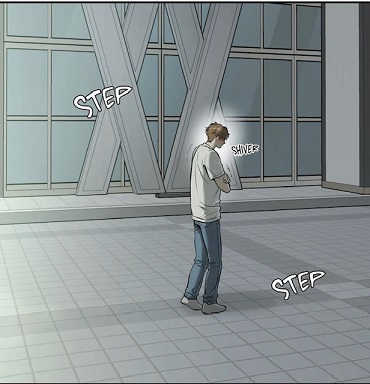 (chapter 21), uses public transportation
  (chapter 11), takes taxis
 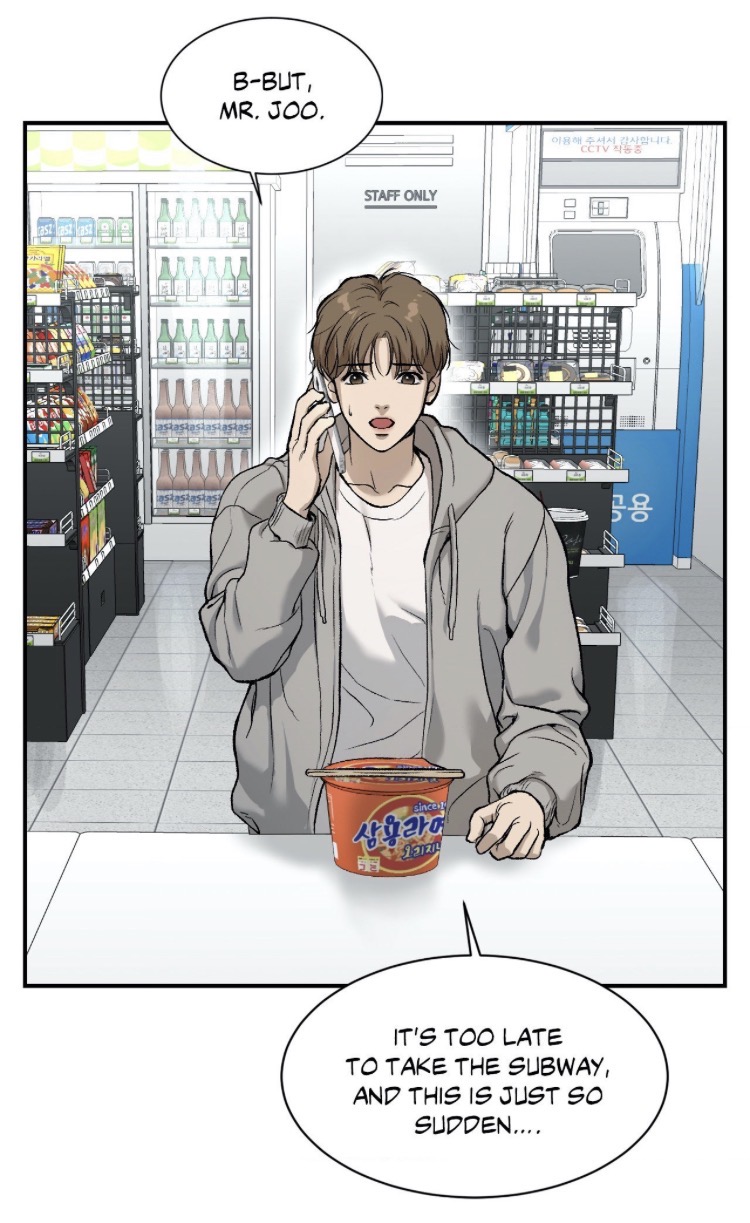 (chapter 1), or is driven by others.
 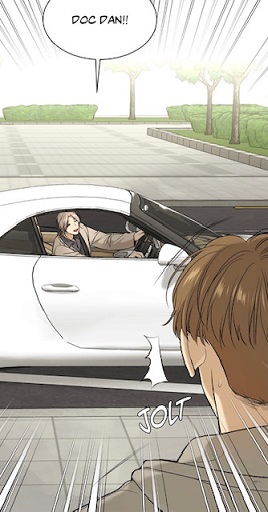 (chapter 32) Even mobility itself has often depended on circumstance and on the decisions of other people.
 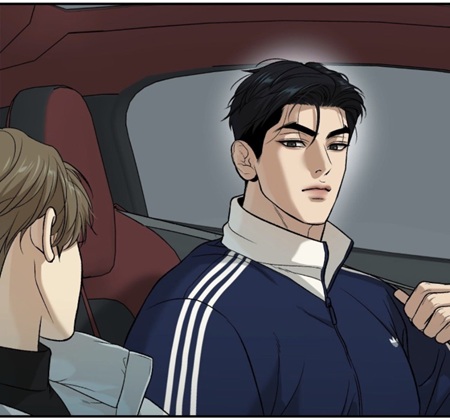 (chapter 95) A car therefore symbolizes more than comfort: it represents agency, adulthood, and the power to move by his own will. Yet the emotional meaning goes even further. In Chapter 97, the question is no longer only where one goes, but with whom one travels. What was once denied to Kim Dan as independence now returns to him as both freedom and companionship. He is no longer merely carried by another person’s choices; he gains the ability to choose for himself while sharing the road with someone who chooses him in return.
The gift would also transform responsibility. Until now, Jaekyung has often been driven, managed, and accompanied by others on decisive days. His manager and coach occupied the space of trust around him—at least when he remained profitable and useful.  (chapter 5) Yet when he was injured and vulnerable, that support proved conditional and incomplete.
 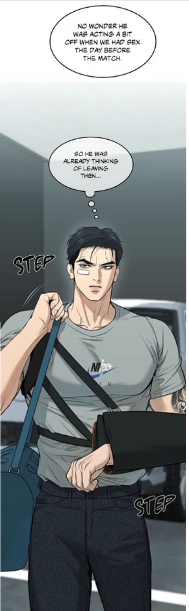 (chapter 53)
If Kim Dan becomes the one who drives, steadies, and accompanies him, the structure quietly changes. The old “hyungs” are not displaced through conflict, but through irrelevance. Care succeeds where management failed. At the same time, the gesture expresses trust. To let Kim Dan drive is to entrust him with direction, safety, and shared movement. The man who has long carried the weight of control would finally allow someone else to take the wheel. That change matters deeply for Jaekyung as well. It means he no longer has to bear every burden alone. He can rest in the passenger seat, just like Kim Dan does. 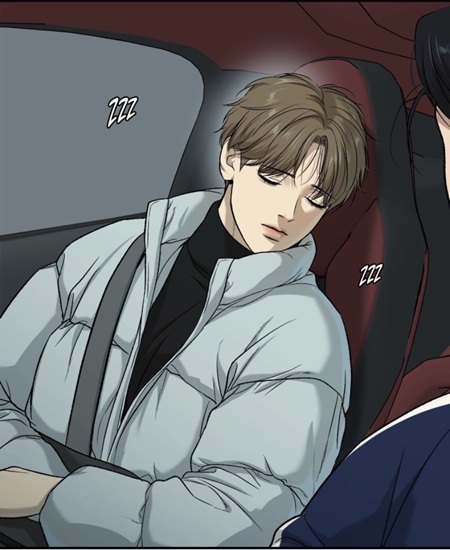 (chapter 95) He can be guided instead of always guiding, supported instead of always performing. The positions become reversible: each can carry the other when needed.
In that sense, the car symbolizes more than freedom. It symbolizes partnership. (chapter 97) They are no longer fixed in rigid roles of protector and protected. They gain the ability to switch places, share responsibility, and move forward together.
This completes one of the story’s deepest reversals. The man once treated as burden or servant becomes the person closest to the champion’s future.
Kim Dan once gave Jaekyung a small keychain (chapter 81): modest (not too visible), personal, and sincere. The price for his hard work. 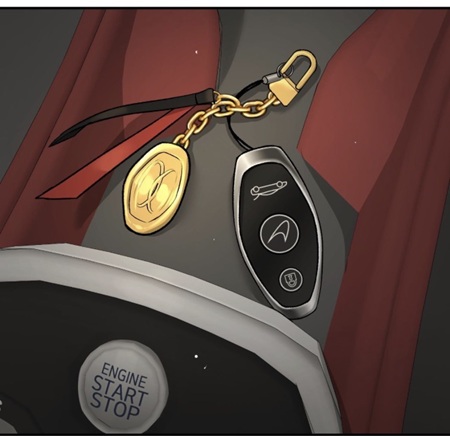 (chapter 97) If Jaekyung now gives him a car, their gestures beautifully answer one another. Kim Dan once offered the symbolic key to his world; Jaekyung responds by offering the means to navigate a shared one.
One gift says: stay with me.
The other says: let’s move forward together.
And now, you comprehend why I made the following prediction: They would stay together, but leave the place too!
Conclusion: The Dragon’s Pearl
What emerges from these details is a quiet but radical truth: home in Jinx is no longer a penthouse, a contract, or a symbol of status. It is a person. (chapter 97)
Jaekyung’s deepest transformation is not that he has become softer in some simplistic sense, but that his strength is being redirected. The force once used to dominate, intimidate, and defend his own pride is gradually turned outward in service of another’s well-being. (chapter 97) That is why the image of the dragon and the pearl feels so fitting. In many traditions, the dragon guards treasure—but the highest treasure is not gold. It is wisdom, devotion, and the recognition of what truly matters.
Kim Dan, likewise, is no longer merely the exhausted and scared man in need of rescue. He becomes the emotional center around which Jaekyung reorganizes his life. He is his moon shining in the darkness. 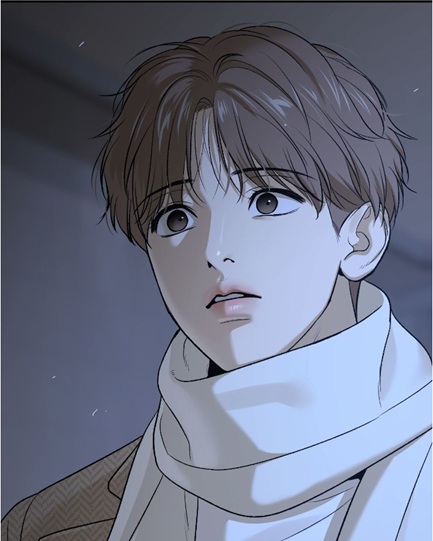 (chapter 97) Their bond moves beyond the false alternatives of burden and savior, victim and protector, debtor and benefactor. They begin to inhabit a rarer form of intimacy: mutual sanctuary.
In a world shaped by spectators, institutions, scandals, and past wounds, safety cannot be guaranteed by wealth alone. It must be created through trust, constancy, and the willingness to change for another person. If Jaekyung’s gifts truly point in that direction, then the greatest present is neither roses, nor rings, nor a car.
It is the life he is learning to build beside him. (chapter 97)
Feel free to comment. If you have any suggestion for topics or Manhwa, feel free to ask. If you enjoyed reading it, retweet it or push the button like. My Reddit-Instagram-Twitter-Tumblr account is: @bebebisous33. Thanks for reading and for the support, particularly, I would like to thank all the new followers and people recommending my blog.


