

Please support the authors by reading Manhwas on the official websites. This is where you can read the Manhwa: Jinx But be aware that the Manhwa is a mature Yaoi, which means, it is about homosexuality with explicit scenes. Here is the link of the table of contents about Jinx. Here is the link where you can find the table of contents of analyzed Manhwas. Here are the links, if you are interested in the first work from Mingwa, BJ Alex, and the 2 previous essays about Jinx Craving Mama’Shine – part 2 and Turning Toward the Light
It would be great if you could make some donations/sponsoring: Ko-fi.com/bebebisous33 That way, you can support me with “coffee” so that I have the energy to keep examining Manhwas. Besides, I need to cover up the expenses for this blog.

🥳🎉I WISH YOU ALL A HAPPY NEW YEAR 2025 🎆🎇
Introduction
The second season of Jinx promises to delve deeper into the lives of its main characters, transitioning from the confines of the gym  (chapter 54) and penthouse
  (chapter 54) in Seoul—a city symbolizing anonymity, invisibility, and corruption—to the hospice “Light of Hope”
  (chapter 56) in a small town on the West Coast
  (chapter 56), where people know each other. This essay builds upon my previous interpretations of the series, which led me to develop these predictions for the upcoming season. By comparing the visual depictions of the gym and penthouse in Seoul with the hospice and small town on the West Coast, the divergence in weather becomes a powerful symbol of the changes Joo Jaekyung will undergo. The rainy, overcast settings of the gym and penthouse reflect the fighter’s inner turmoil and sadness, highlighting the oppressive atmosphere of a city rife with anonymity and corruption. In contrast, the sunny and open environment of the hospice and town by the ocean represents a space of hope and renewal, where human connections thrive. This comparison underscores the significant role the hospice and small town will play in fostering Joo Jaekyung’s self-discovery and healing. The gym and penthouse in Seoul symbolize anonymity, invisibility, and corruption. This anonymity stems from the city’s indifference to individual suffering, as seen when Kim Dan was dragged
  (chapter 16)
  (chapter 16) through the streets by loan sharks in broad daylight without anyone intervening. Invisibility is further exemplified by the perverted hospital director,
  (chapter 1) who harassed Kim Dan without facing any consequences, though he was caught, and by Kim Miseon’s unethical actions, such as leaking patient information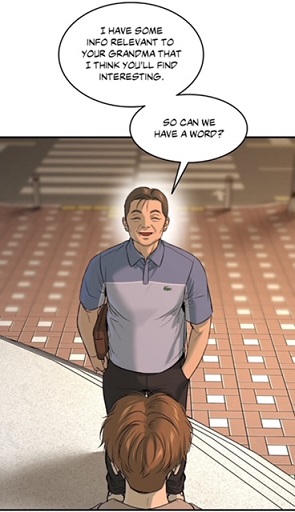
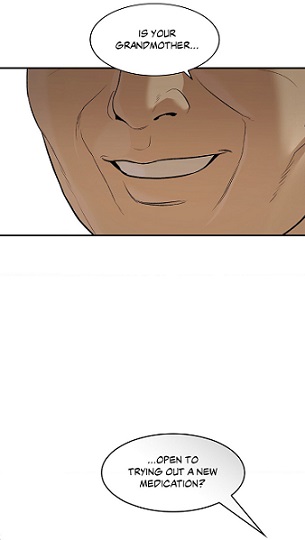 (chapter 48) and using Shin Okja as a guinea pig for trial treatments
 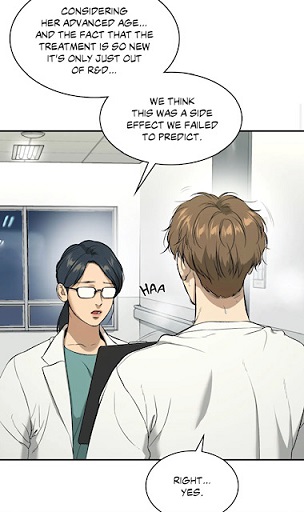 (chapter 21) —none of which led to accountability. In contrast, the hospice represents a counterpoint:
  (chapter 56) a space where respect and dignity take precedence over ambition, fostering genuine human connection and care. This contrast between the city and the hospice highlights the champion’s need to redefine his understanding of life, identity, and success. The contrast between the hospice and MFC becomes pivotal, as these environments symbolize opposing values: while the hospice fosters compassion
 (chapter 57), reflection, and healing, the MFC epitomizes exploitation, indifference and neglect.
  (chapter 52) The best example is the vanishing of the protagonist’s former rival, Baek Junmin,
 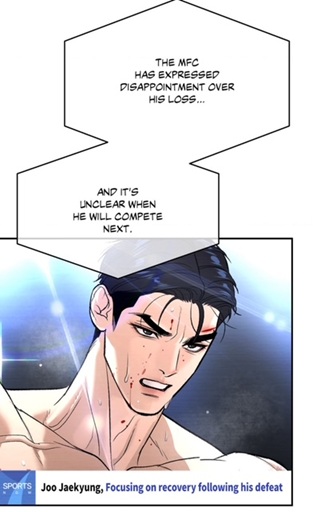 (chapter 57) who no longer appears in the news.
Contrasting the Hospice and MFC
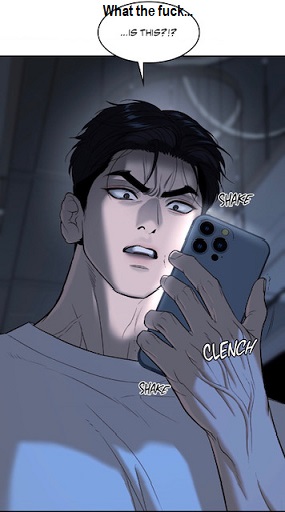
The hospice, Light of Hope, does not offer healing in the traditional sense, as its patients are no longer hoping to be cured. Instead, it provides a space for those burdened by emotional scars to wait for death in a positive way, 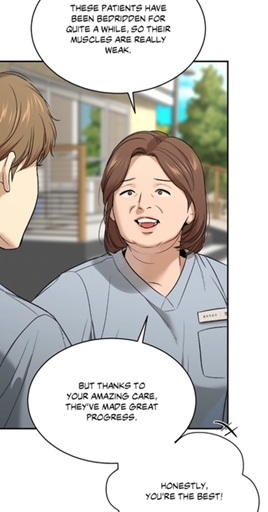 (chapter 56) emphasizing respect and dignity. This stark reality will serve as an eye-opener for Joo Jaekyung, who is burdened by news and media narratives equating
  (chapter 36)
  (chapter 35)
 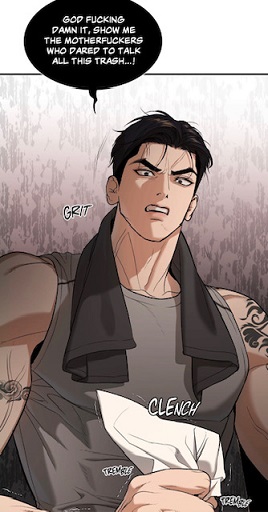 (chapter 36) his shoulder injury or potential career loss with “death.” At the hospice, he will encounter people who are truly facing the end of their lives
  (chapter 57), prompting him to recognize that his so-called career end does not symbolize his real death.
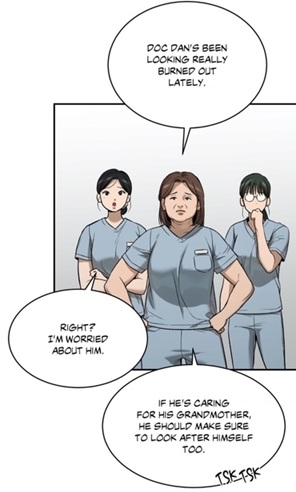
  (chapter 29) This realization will help him distinguish between his life as a fighter and his life as a person, setting the stage for his transformation. It provides a stark contrast to the MFC, which is riddled with manipulation and greed. At the hospice, Joo Jaekyung is likely to encounter individuals whose lives are defined not by competition but by care and connection, like Mingwa implied it with the comment of the nurse:
  (chapter 57). This environment challenges him to confront the indifference of figures like Yosep and Park Namwook, whose neglect, blind trust, passivity, naivety, neglect and selfishness have shaped his struggles. Notice that the nurses are often seen together and exchanging thoughts about doc Dan symbolizing unity and harmony (chapter 57) which contrasts so much to the mentality at the gym. There, no one paid attention to the well-being of Kim Dan or the athlete. The latter had to burden everything on his own. The hospice’s focus on teamwork and selflessness mirrors the qualities of the sheep—often symbols of conformity but also of communal support and altruism.
On the other hand, the grandmother believes she has found her “family” and “roots” at the hospice 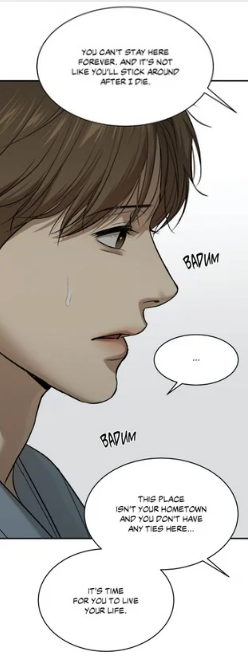 (chapter 57), yet her exclusion of Kim Dan reveals her flawed understanding of family, which she associates solely with a location. This behavior aligns her with the symbolism of the black sheep: a disruptive force within the community whose selfishness and inability to nurture genuine familial bonds isolate her. Her neglect of Kim Dan, despite his evident suffering, exposes her as prioritizing her personal comfort over the well-being of her own grandson. The arrival of the wolf—Joo Jaekyung—will challenge her perception, forcing her to confront the flaws in her thinking and her selfishness. His presence, along with interactions with other characters such as Potato and Heesung, who possesses the perceptiveness of a gumiho, will expose her true nature to the community. This confrontation will push her toward an overdue reckoning with her actions and their impact on Kim Dan. I also realized that since this woman is suffering from Peter Pan Syndrome, her true enemy is youth which is embodied by Yoon-Gu. The latter stands for the opposite values: innocence and responsibility. So his ignorance and purity could lead her to experience unpleasant truths, like for example: Potato asks her about the whereabouts of Kim Dan’s parents, a new version of this scene:
  (special episode 1) In other words, the presence of Kim Dan’s friends (Joo JAekyung, Potato and Heesung) could make her realize her true nature, which would impact her mental health. She led a life full of missed chances and regrets.
The MFC, in contrast, represents the worst of hierarchical power dynamics. It stands as a symbol of industrialization, producing ‘champions’ not for their personal growth or well-being but for monetary gain. Fighters are treated as commodities, molded and exploited for profit in a system that prioritizes output over humanity. As an organization, it prioritizes profit over the well-being of its fighters, fostering a culture of exploitation and blind obedience. Joo Jaekyung’s realization of these flaws will likely spur his transformation into the true owner of the gym, imposing his values of loyalty, care, and protection.
Defining the Cure: Reconnecting with the True Self
For Joo Jaekyung, the “cure” lies in reconnecting with his true self and rediscovering his childish side, something he could only experience twice in season 1. He had fun with Kim Dan by his side  (chapter 26)
 (chapter 27) In Korean culture, the saying “when the heart isn’t in it” reflects a profound truth: actions devoid of sincerity lack real value. Season 2’s new settings allow the champion to reflect on his mechanical, dispassionate life and begin to act with intention and feeling.
Central to this transformation is his relationship with Kim Dan. Taking care of Kim Dan—physically, emotionally, and mentally—becomes a pathway for Joo Jaekyung to rediscover his own humanity and generosity. However, it becomes evident that the one truly dying a slow death is Kim Dan. His negative change, marked by physical and emotional decline, should make the champion realize that Kim Dan has been identifying himself with the athlete. The last incident appears to have “killed” the physical therapist’s spirit, leaving him a shadow of his former self.  (chapter 54) Though in denial, Joo Jaekyung feels undoubtedly responsible for the doctor’s suffering, as one of his nightmares reveals his guilt for doubting Kim Dan’s honesty and dedication. Once seeing his terrible transformation, the man can only blame himself, especially if he recalls Cheolmin’s advice:
 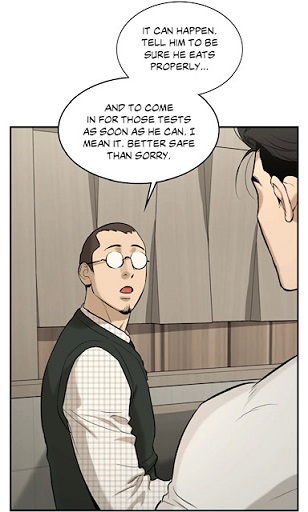 (chapter 13)- The act of nurturing Kim Dan is symbolic: it aligns Joo Jaekyung with the wolf, an animal deeply associated with love, family, and protection. Through this connection, he learns to balance his ferocity with tenderness, becoming not just a fighter but a protector.
Education also stands at the center of Season 2, exemplified by Boksoon 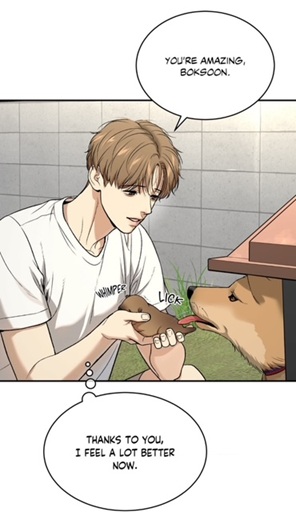 (chapter 57) and her puppies. Kim Dan is tasked with taking care of the dog and her newborns, and Joo Jaekyung should be asked to do the same. This responsibility not only serves as an allegory for taming the wolf within him but also paves the way for the champion’s deeper connection with Kim Dan. By being close to the ocean
  (chapter 56), a place where Joo Jaekyung finds relaxation through swimming, the setting introduces an opportunity for him to teach Kim Dan how to swim, addressing the latter’s fear of water
  (chapter 27). Swimming could become a shared activity that rebuilds their relationship on a foundation of trust, mutual learning, and growth. Engaging in this physical activity would not only strengthen their bond but also boost Kim Dan’s confidence and help him rediscover his own resilience.
Moreover, the professional dynamic between them shifts significantly in Season 2. With Joo Jaekyung hiring a new physical therapist 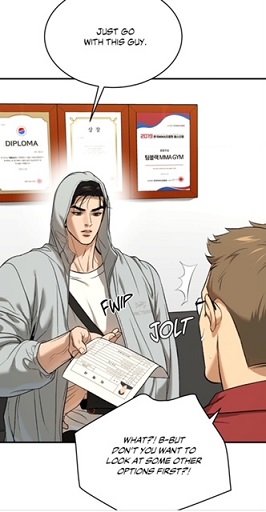 (chapter 54), his connection with Kim Dan is no longer defined by a boss-employee relationship. Their interactions, now free of financial obligations, offer the fighter a clearer view of Kim Dan’s selfless and angelic nature. The physical therapist’s unwavering care, even at the expense of his own well-being, highlights his ungreedy and altruistic character. This realization will deepen Joo Jaekyung’s respect and affection for Kim Dan, further cementing the transformative journey they both embark on.
The Role of Mirrors and Mentors
Key secondary characters at the hospice serve as mirrors and mentors to the main leads. The landlord 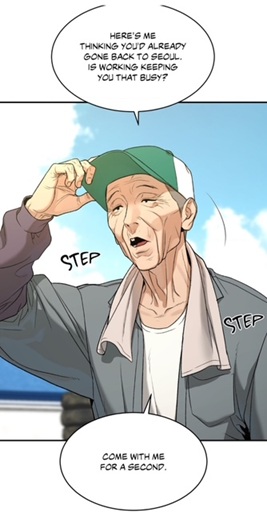 (chapter 57) and the yelling patient (chapter 57), represented as an ibex, embody qualities that challenge Joo Jaekyung and Kim Dan to confront their past traumas and current flaws. The ibex’s defiance contrasts with the sheep-like conformity of the hospice patients, encouraging Potato, Kim Dan and Joo Jaekyung to question the blind obedience that has shaped their relationship with figures like Park Namwook. These characters reflect the flaws of Yosep and Namwook, enabling Joo Jaekyung to see the neglect and indifference he has endured and inspiring him to redefine his role in the gym and in Kim Dan’s life.
Nurses 1 and 2, previously conceptualized as  (chapter 56) “Nurse Mind” and “Nurse Heart,” provide another layer of mentorship. They could act as the champion’s eyes and ears, teaching him to observe and understand Kim Dan’s mental state. Though the nurse 1 started reproaching Kim Dan to neglect himself (chapter 57), she was able to note that he was suffering mentally and emotionally. She diagnosed it as burn-out. Then in the latest chapter, a new nurse appeared. With her green hair and glasses
  (chapter 57), she reminded me of the champion’s friend:
  (chapter 13) She already noticed his unusual fatigue, so in my opinion, this third woman could be the one detecting that the main lead is not eating properly. If this assumption is correct, then she stands for food and body, like in the Korean saying: “If your heart is not in it, you can’t see if you look. You can’t even hear if you listen, and you can’t taste even if you eat.” Their guidance should help Joo Jaekyung cultivate a nurturing side, showing him that strength is not solely physical but also emotional and relational. In this way, the nurses become pivotal in his journey from a lone wolf to a leader who values and protects his pack.
The Symbolism of Wolves, Sheep, and the Illustration
The wolf symbolizes love, family, and protection, qualities that Joo Jaekyung begins to embody as he nurtures Kim Dan and confronts his own vulnerabilities. The illustration visually represents this duality: the wolf in sheep clothes, walking towards the hospice, embodies Joo Jaekyung’s fierce yet diminished and protective nature, while the broken tree—representing Kim Dan—signals his fragile state and the need for healing. Together, the wolf and the sun symbolize Joo Jaekyung’s journey toward self-discovery and redemption, as he draws strength from the tree’s shade, embodying Kim Dan’s care and quiet support.
Meanwhile, the sheep represent conformity and selflessness, but the presence of the ibex disrupts this harmony, standing as a challenge to blind obedience. I have to admit that the patient’s reaction (chapter 57) reminded me a lot of Yoon-Gu’s 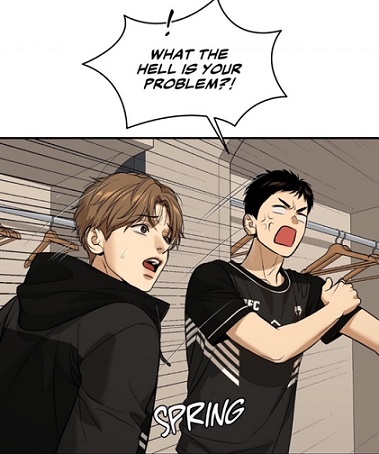 (chapter 49), though their positions are absolutely opposite. The patient’s reaction in Chapter 57 echoes this dynamic, as he accuses Joo Jaekyung of being ill-tempered (this means that he remembers the suspension), a perspective shaped by the media’s manipulations. His criticism reflects the behavior of a sheep, falling prey to misinformation and failing to see the larger truths. On the other hand, it indicates that this man also knows a part of the truth: the suspension which is no longer mentioned, but also escaped Kim Dan’s notice, as he was dealing with his departure. In contrast, Potato’s response in Chapter 49, where he courageously questioned Director Choi despite the latter being an elder, showcases independence and critical thinking. This juxtaposition highlights the patient’s potential to awaken Joo Jaekyung, Kim Dan, and Potato to the damaging impact of media narratives. Over time, the patient himself must confront the wrongfulness and cold-heartedness of his accusations, fostering growth and understanding on all sides. These characters reflect the flaws of Yosep and Namwook, enabling Joo Jaekyung to see the neglect and indifference he has endured and inspiring him to redefine his role in the gym and in Kim Dan’s life.
 The illustration’s inclusion of the hamster—symbolizing Kim Dan’s fun, fragile, and nurturing nature—along with the chow chow and the gumiho, emphasizes the roles of protectors and mediators. The chow chow’s loyalty and the gumiho’s cunning serve as essential forces guarding the hamster and navigating the complexities of this “pure community,” where lies and selfishness can still exist. These characters highlight the intricate dynamics within the hospice, where Joo Jaekyung must balance strength with empathy.
Wolves also represent loyalty and teamwork, values that stand in stark contrast to the selfishness and manipulation he experienced at the MFC. Meanwhile, the sheep, often dismissed as symbols of conformity, carry a deeper meaning at the hospice. They embody gentleness, warmth (due to their wool), selflessness and community, traits that Joo Jaekyung learns to appreciate and emulate. That’s how the wolf will learn how to give warmth and comfort to his fated partner. The hamster can only feel grateful towards his benefactor pushing him to reciprocate the attitude. Then the moon, embodied by the doctor, will become the guardian of the champion so that the latter can little by little recover from his insomnia and recurrent nightmares.
A Journey of Transformation
In a world where individuals are on the verge of death, Joo Jaekyung discovers his own senses: his humanity and generosity. The hospice provides a space for him to reconnect with his true self, guided by the lessons he learns from Kim Dan, the nurses, and the “mirrors” of the landlord and the ibex. This transformation not only redefines his relationship with Kim Dan but also prepares him to reclaim his rightful place as the leader of the gym, imbuing it with values of care and protection. Furthermore, the hospice teaches Joo Jaekyung the value of rest and relaxation (chapter 57), concepts he had previously dismissed as “laziness.”  (chapter 13) This newfound appreciation allows him to form fond memories of the place, associating it with peace and renewal despite the grandmother’s inevitable passing. By metaphorically taking over her place at the hospice, Joo Jaekyung symbolically builds his family there, grounding himself in the values of compassion and community. These lessons ultimately empower him to take over the gym with a renewed perspective, ready to lead with strength and empathy. Finally, I deduce that the main couple will initially navigate between the Light of Hope Hospice and the doctor’s rented room before visiting other places (like the beach and the mountain) The more places they will visit together, the more they will become true to themselves, inciting them to open their mind and heart to each other. Surrounded by nature, all the characters will get purified and discover the true source of happiness.
Ultimately, The Wolf’s Cure Among the Sheep is a story of healing through connection, a reminder that even in a world marked by competition and death, humanity and generosity can flourish when the heart is truly in it.
Feel free to comment. If you have any suggestion for topics or Manhwas, feel free to ask. If you enjoyed reading it, retweet it or push the button like. My Reddit-Instagram-Twitter-Tumblr account is: @bebebisous33. Thanks for reading and for the support, particularly, I would like to thank all the new followers and people recommending my blog.

 Bebebisous33s' analyses in K-Dramaland and Manhwas