

Please support the authors by reading Manhwas on the official websites. This is where you can read the Manhwa: Jinx But be aware that the Manhwa is a mature Yaoi, which means, it is about homosexuality with explicit scenes. Here is the link of the table of contents about Jinx. Here is the link where you can find the table of contents of analyzed Manhwas. Here are the links, if you are interested in the first work from Mingwa, BJ Alex, and the 2 previous essays about Jinx The Deceptive Light Of Hope and The Fault in His Powerful Hands
It would be great if you could make some donations/sponsoring: Ko-fi.com/bebebisous33 That way, you can support me with “coffee” so that I have the energy to keep examining Manhwas. Besides, I need to cover up the expenses for this blog.

In Jinx, the relationship between Joo Jaekyung and Kim Dan takes center stage as a transformative journey, marked by unexpected decisions and evolving dynamics. This journey is not only metaphorical but also visual, as emphasized in episode 61 through the recurring imagery of Joo Jaekyung’s car. Mingwa dedicates numerous panels 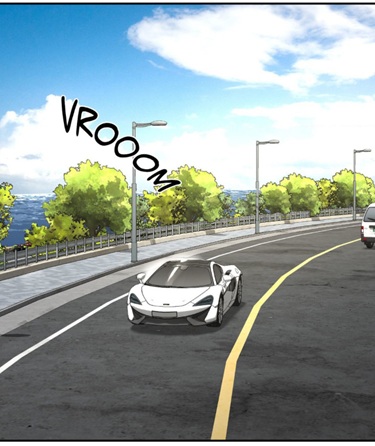 (chapter 61) to the champion’s expensive car
  (chapter 61), which symbolizes his personal and emotional odyssey. The car embodies a dual symbolism: on one hand, it represents his quest for happiness, freedom, and purpose; on the other, it signifies civilization and his disconnection from nature. Each frame highlights not just his physical travel but the deeper changes he undergoes along the way.
The car’s prominence underscores the champion’s life of privilege and control, yet it also signifies his yearning for something more meaningful. The zoom on the screeching wheel in Episode 61  (chapter 61) marks a pivotal moment: his journey reaches its destination at the hospice. This “final stop” symbolizes his decision to live closer to Kim Dan and find a sense of rest and belonging. However, the screeching wheel also represents an unconscious choice by the fighter. At this stage, he perceives his visit as temporary, limited to his rehabilitation.
  (chapter 61) This explains why, later, the athlete is shown honking at Kim Dan while driving in the opposite direction, illustrating that his mindset had not yet shifted fully.
 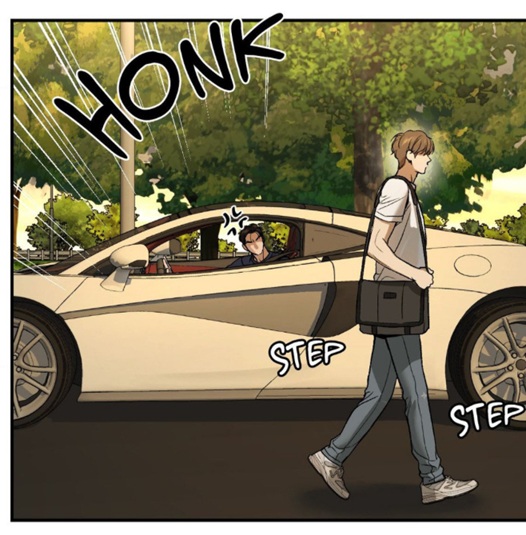 (chapter 61) In the final scene, the car is no longer present, symbolizing the completion of his journey, as he settles near Kim Dan and redefines his purpose. By settling near Kim Dan
 (chapter 61), Joo Jaekyung shifts his focus from external accomplishments to internal growth and emotional connection.
At its core, the essay “A Clueless One-Way Street to Kim Dan” explores how Joo Jaekyung’s choices, initially rooted in habit 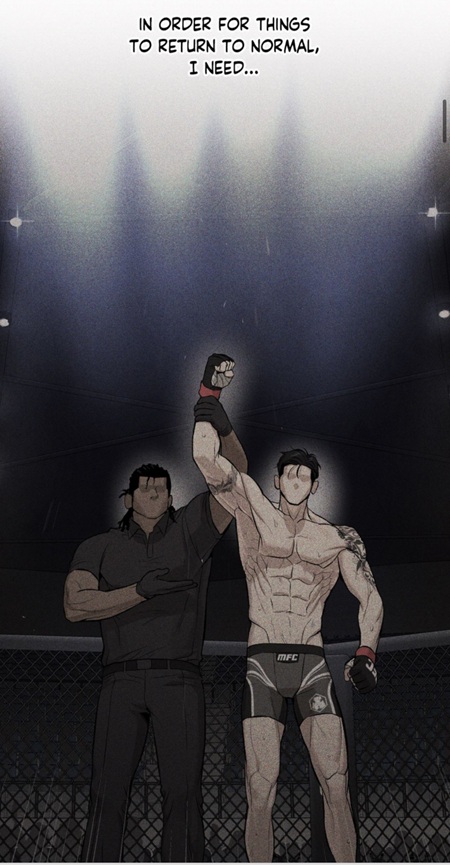 (chapter 61) and superficial assumptions (chapter 61), lead him into uncharted emotional territory. This essay examines the pivotal moments that highlight his progression—from the conversation with the manipulative orthopedic surgeon to his introspective thoughts in his penthouse, his trip to the small town, and, ultimately, his realization of the permanence of his new path. By analyzing these stages, it becomes evident that Joo Jaekyung’s seemingly routine actions mark a profound and irreversible change in his life, especially as his relationship with Kim Dan shifts from a boss-employee dynamic to a pure doctor-patient bond before becoming neighbors.
The Surgeon’s Manipulation: A Subtle Push
The orthopedic surgeon,  (chapter 61) Park Junmin, displays a striking lack of empathy and a clear focus on self-interest in his interactions with Joo Jaekyung across two pivotal chapters. In Episode 54, he highlights Joo Jaekyung’s prolonged recovery, urging him to rest but failing to show genuine concern for his well-being.
 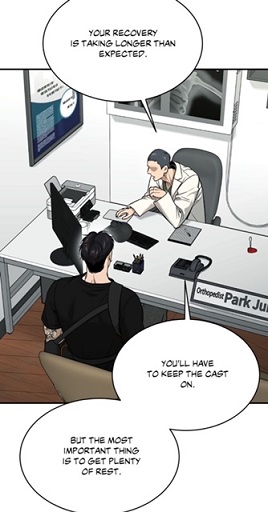 (chapter 54) (chapter 61) By Episode 61, his attitude becomes overtly transactional, reflecting a focus on securing Joo Jaekyung’s rehabilitation at his hospital to boost its reputation. During their first consultation, Park Junmin avoided eye contact, using the computer as a shield to mask his detachment and avoid accountability. In their second conversation, however, he looks directly at Joo Jaekyung and even smiles, attempting to project warmth. This shift underscores his passive and opportunistic nature: he subtly blames Joo Jaekyung’s body for the slow recovery but later seeks credit for the champion’s improvement. His behavior dehumanizes Joo Jaekyung, treating his body as merchandise to enhance the hospital’s prestige, as evidenced by his manipulative remark,
  (chapter 61) This statement reflects his agenda rather than any genuine concern for the champion’s future.
The lack of empathy in Park Junmin’s approach is further emphasized by his name, a combination of “Park,” the manager, and “Baek Junmin,” the last fighter. This naming convention may signify a deliberate connection to figures who have exploited or controlled the main lead for their own gain. Park Junmin’s behavior mirrors these themes, reducing Joo Jaekyung to a tool for professional prestige rather than treating him as a person with multifaceted needs. While the manager saw in the fighter a “boy” 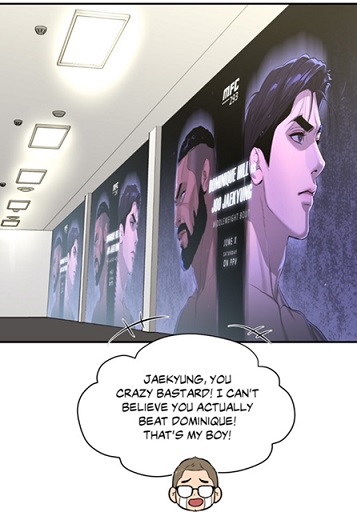 (chapter 40), the other considered him as a baby.
  (chapter 49) And what is the other common denominator between these three characters?
  (chapter 54) (chapter 49) (chapter 61) They expressed not only urgency, but also their desire to see the champion prove his “value” in the ring. This shows that none of them are seeing the main lead as a man, even as an adult. For them, he is just a fighter and he has no private life. Park Junmin’s pseudo-suggestion (chapter 61) , which masquerades as encouragement but subtly imposes his own agenda, reminds me of the behavior of Park Namwook
  (chapter 56), the lawyer, and the manager from the entertainment agency, who all used similar tactics.
 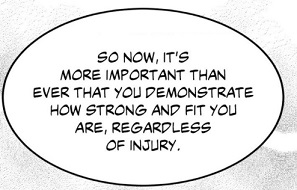 (chapter 36) They all had expectations on him.
What is striking here is Joo Jaekyung’s response. (chapter 61) While we do not see his gaze, his expression oozes dissatisfaction, revealing that he is fully aware of the manipulation at play. This moment mirrors his reaction in Chapter 6
 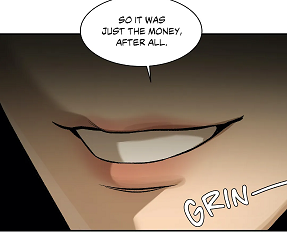 (chapter 6), where he recognized how Kim Dan like the others were exploiting him for his money and reputation. However, this time, his awareness reflects growth: thanks to the doctor’s polite refusal
  (chapter 60), Joo Jaekyung now knows about the sincerity and humility of Kim Dan in contrast to those who treat him like a commodity. Thanks to Kim Dan, he is able to reject the pseudo-suggestion and instead prioritize a more genuine and respectful dynamic. He instinctively rejects the offer by stating that he will receive treatment elsewhere, a decision that catches the surgeon off guard and further showcases Joo Jaekyung’s resistance to being controlled. Turning away from the hospital, Joo Jaekyung unknowingly embarks on a journey shaped by his emotional needs, though he remains unaware of the full implications of this decision.
The Penthouse Reflections: Clinging to the Past
Joo Jaekyung’s return to his penthouse 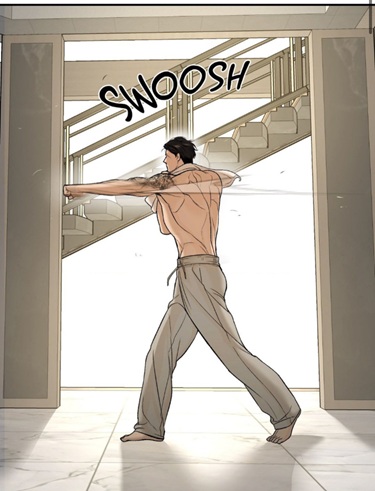 (chapter 61) marks a period of superficial introspection
 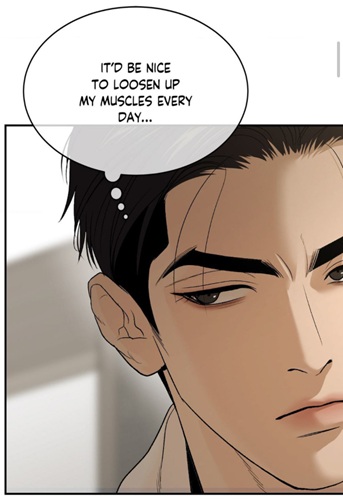 (chapter 61) where he begins to rationalize his actions. (chapter 61) He imagines the situation as analogous to his past—using fame, money, and connections to achieve his goals.
  (chapter 61) In his mind, this scenario is nothing new; he is simply leveraging his resources to secure treatment from Kim Dan
 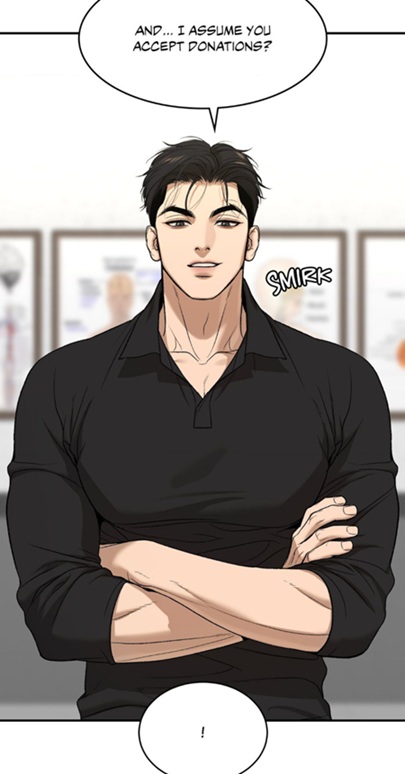 (chapter 61), much like he has done countless times before in other contexts. However, this rationalization obscures a critical difference: he is no longer in control of the dynamic.
The transformation of their relationship into a pure doctor-patient dynamic represents a significant departure from their previous interactions. This new dynamic is marked by mutual respect and the absence of the power imbalances that once defined their connection. (chapter 61) Joo Jaekyung’s decision to seek treatment from Kim Dan, rather than the hospital recommended by Park Junmin, signals his growing trust in Kim Dan’s abilities and judgment. It also reflects an implicit acknowledgment of the positive impact Kim Dan has had on his life, even though Kim Dan has not yet treated him.
What makes this transition particularly compelling is Joo Jaekyung’s gradual awareness of the emotional implications of this shift.  (chapter 61) As he adjusts to a life dictated by Kim Dan’s schedule, he begins to recognize the limitations of his previous reliance on fame, money, and connections. This realization is not immediate but unfolds as he navigates the challenges of adapting to a new way of life. The loss of his VIP status becomes a catalyst for personal growth, forcing him to confront his vulnerabilities and redefine his sense of self beyond his achievements. This implies that the balance of power is moving closer to equity, though it is not achieved yet. Kim Dan’s refusal to return to the gym compels Joo Jaekyung to adapt to his terms, diminishing the power dynamic that previously defined their relationship. Kim Dan is now the one controlling the champion’s time. This shift signifies the erosion of the transactional nature of their relationship. No longer a boss commanding an employee, Joo Jaekyung becomes a patient seeking help from a professional.
  (chapter 61) That’s why Kim Dan can leave his side right away after the treatment. Moreover, the main lead feels no longer obliged to talk to his fated partner. He interacts as little as possible with the MMA fighter.
  (chapter 61) The champion is confronted with silence and emotional distance revealing that Joo Jaekyung is looking for something else. I would even add that he needed to experience this new approach as failure in order to force himself to change his MO and mind-set. This loss of status as a VIP underscores a larger theme in the narrative: the futility of relying on external markers of success to navigate personal relationships.
The Illusion of Separation Versus Reality
During his penthouse reflections, Joo Jaekyung envisions a future (chapter 61) where he receives treatment from Kim Dan and then parts ways, as if their connection could be neatly severed. This imagined scenario reveals his reluctance to acknowledge the depth of their bond. Influenced by Park Junmin and Park Namwook’s words (chapter 61), Joo Jaekyung begins to internalize the idea that his relationship with Kim Dan is purely functional and temporary. However, this perception is far from reality.
The juxtaposition of this imagined separation with the scene of Joo Jaekyung honking his car horn behind Kim Dan highlights the disconnect between fiction and reality. (chapter 61) In the image with the car, Joo Jaekyung is following Kim Dan, unaware of the symbolic significance of his actions. He thought that by driving towards the doctor, the latter would notice him and ask for a ride. However, in this small town, the physical therapist doesn’t need any transportation. I would even add, because of this experience (chapter 32)
  (chapter 32), the “hamster” learned to be cautious about such “generous offers”. 😂 That’s why the physical therapist is rejecting any assistance from the athlete. Because of this reminder
  (chapter 60), Joo Jaekyung lost all his credibility in the doctor’s eyes. From that moment on, Kim Dan is perceiving any offer or genuine concern as a trick and fake assistance with selfish intentions. Hence the hamster can no longer see the celebrity’s genuine and selfless action, like this one:
  (chapter 61) Each time Kim Dan turns his back on him
  (chapter 61), it reinforces Joo Jaekyung’s subconscious pursuit. The honking scene represents reality—Joo Jaekyung knows what he wants (here his attention) and continues to follow Kim Dan, yet he does not recognize the emotional dependency forming through these actions.
Contrastingly, in his imagined separation, Joo Jaekyung places himself and Kim Dan as individuals moving in opposite directions, as though their paths can diverge without consequence. (chapter 61) This contrast emphasizes the deeper truth: their positions in the honking scene reflect their emotional states and goals in life. Joo Jaekyung is grounded, determined, and focused (initially thinking of his title), whereas Kim Dan is aimless, lost, and struggling with suicidal thoughts. The honking car scene becomes a metaphor for their intertwined fates—Joo Jaekyung’s persistence and clarity must ultimately provide direction and purpose to Kim Dan’s life. At the same time, it implies that the athlete also needs to change his goal now. He can no longer keep thinking of his title, if he desires to get the doctor’s attention and closeness. He needs to become less self-centered and selfish. In other words, the honking scene marks a pivotal turning point in the champion’s life, signifying a path of no return. And the evidence is that right after this image, the car not only vanishes, but also is replaced with this little house which was remodeled into a hostel before. (chapter 61)
Moving to the Little Town: A New Reality
Joo Jaekyung’s decision to move to the small town marks a significant turning point in his journey.  (chapter 61) This transition is not just physical but deeply symbolic, contrasting his former life of isolation and detachment in the penthouse with a new environment characterized by community and connection.
The white penthouse, towering above the city, reflects Joo Jaekyung’s loneliness and separation from others. 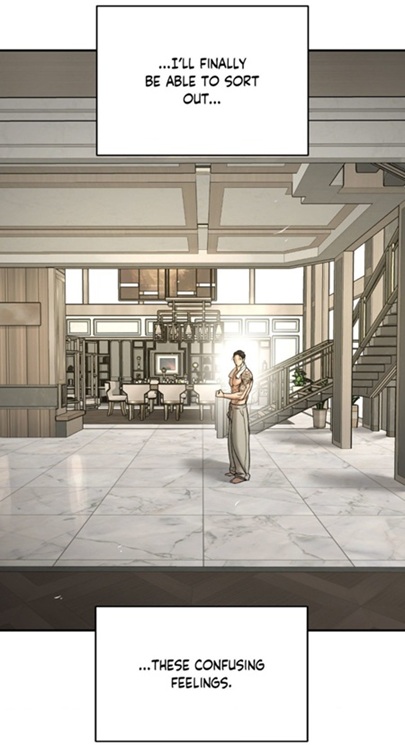 (chapter 61) Its luxurious yet cold atmosphere symbolizes his exclusion and lack of roots. It is a sterile world.
  (chapter 35) Living above everyone else, like a god, further emphasizes his disconnection from the world around him. Seoul itself, as a city of anonymity, amplifies this isolation. The penthouse’s grandeur and emptiness serve as a stark reminder of his solitary existence, where material success failed to provide fulfillment. (chapter 61) The panel where he reflects on his “confusing feelings” encapsulates this sense of emotional emptiness. Standing alone in the grand yet sterile space, he recognizes the hollowness of his success and his growing need to confront and process his emotions. This moment becomes the catalyst for his move, symbolizing his readiness to leave behind the detachment of his past.
In contrast, his new house in the small town represents a shift toward belonging and grounding. (chapter 61) The presence of neighbors, a garden with plants, the refraction and fresh air signify his move toward a more connected, colorful and harmonious life. He is now closer to nature. 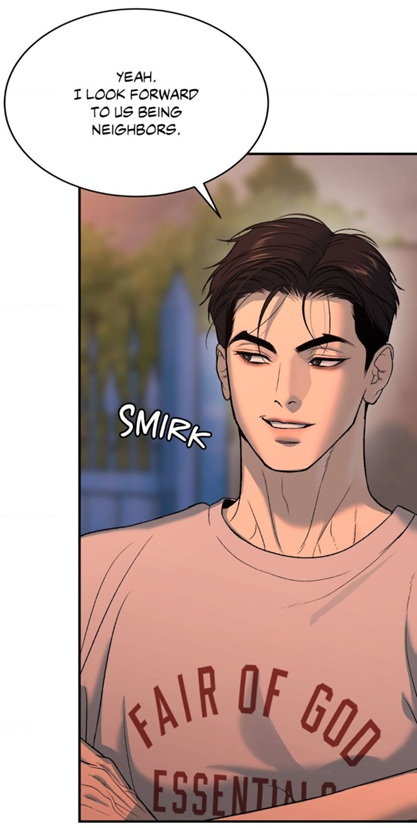 (chapter 61) The T-shirt he wears, emblazoned with “Fair of God Essentials,” subtly reflects his evolving mindset. The phrase evokes themes of humility and essentialism, aligning with his journey from a life defined by material excess to one centered on genuine connection and simplicity. The notion of “being neighbors” further emphasizes his integration into the community—a stark contrast to his isolated existence in the penthouse. The house is no longer just a space but a reflection of his evolving priorities.
Another layer of this transformation is revealed through Joo Jaekyung’s interactions with Shin Okja, Kim Dan’s grandmother. 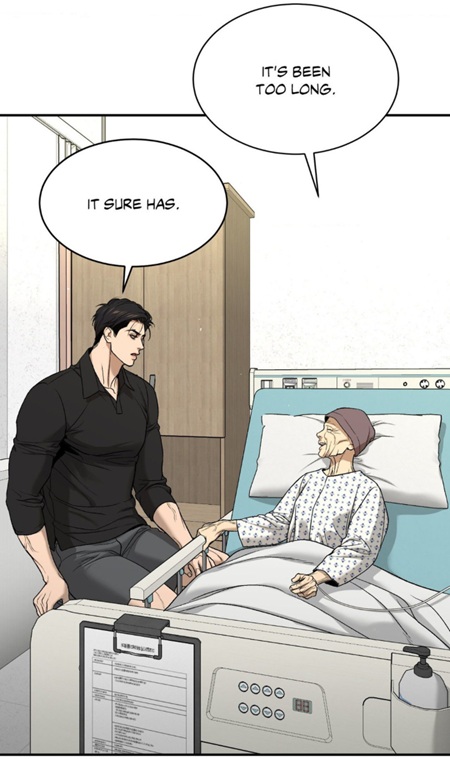 (chapter 61) Drawing from past experiences, the champion believed that treating Shin Okja well would win Kim Dan’s favor. In earlier episodes, Kim Dan expressed gratitude with a gentle smile
  (chapter 22) when Joo Jaekyung made efforts to bring a smile to his grandmother’s face, even going so far as to cook him breakfast afterward.
  (chapter 22) Having missed Kim Dan’s meals and the intimacy they symbolized, Joo Jaekyung unconsciously imagines that this approach will recreate that connection.
However, this strategy backfires. 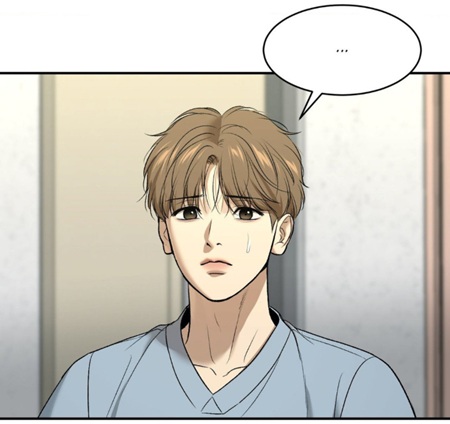 (chapter 61) The doctor is showing his disappointment with his mouth. Kim Dan, burdened by his own painful experiences with his grandmother, has come to see their relationship as fractured.
 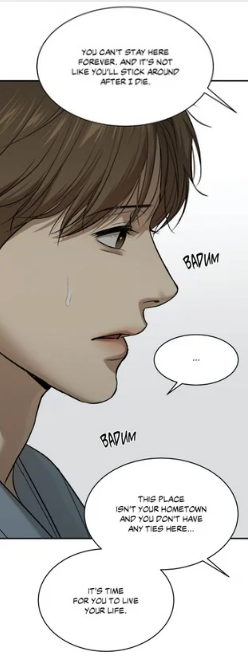 (chapter 57) Shin Okja’s rejection of Kim Dan, telling him he was a stranger and should return to Seoul, further deepened the divide. In a significant moment, Shin Okja uses for the champion the phrase “our little town,”
  (chapter 61) which gives the impression that she is including Kim Dan in her sense of community. However, in Episode 57 she had expressed the exact opposite. For her, home is deeply tied to family and childhood, while Kim Dan, who spent most of his time in Seoul, represents a disconnection from that shared history. So when she utilized this idiom, she was referring to the community in general.
This expression, “our little town,” is relevant because it shapes Joo Jaekyung’s perception of Kim Dan. He begins to think that Kim Dan belongs to the town and came there in order to get support  (chapter 60), unaware of the rejection Kim Dan experiences from his grandmother. Joo Jaekyung may even believe that the old man in the town is a relative of Kim Dan, further solidifying his misunderstanding. Note that he doesn’t investigate Kim Dan’s life, he judges him based on impressions and appearances, especially since he can no longer talk to him. These interactions underline a crucial misalignment: while Joo Jaekyung interprets Shin Okja’s words as inclusive and warm, Kim Dan can only be reminded of his exclusion and estrangement. Shin Okja’s conversation with Joo Jaekyung will undoubtedly play a significant role in the future: a point of no return.
When Shin Okja offers her affection to Joo Jaekyung (chapter 61) —taking his hand and even offering him yogurts  (chapter 61), gestures she denied her own grandson in season 2 —it can only exacerbate Kim Dan’s feelings of alienation. The zoomed panel of their hands (chapter 61) is laden with significance, suggesting that Kim Dan is observing this moment with jealousy and pain. Instead of fostering closeness, Joo Jaekyung’s well-intentioned efforts inadvertently drive a wedge between himself and Kim Dan, making the latter feel as though his grandmother’s affection is being taken away. In fact, this scene outlines the grandmother’s selfishness and neglect towards Kim Dan. She expresses her worries for the champion’s loss of weight
 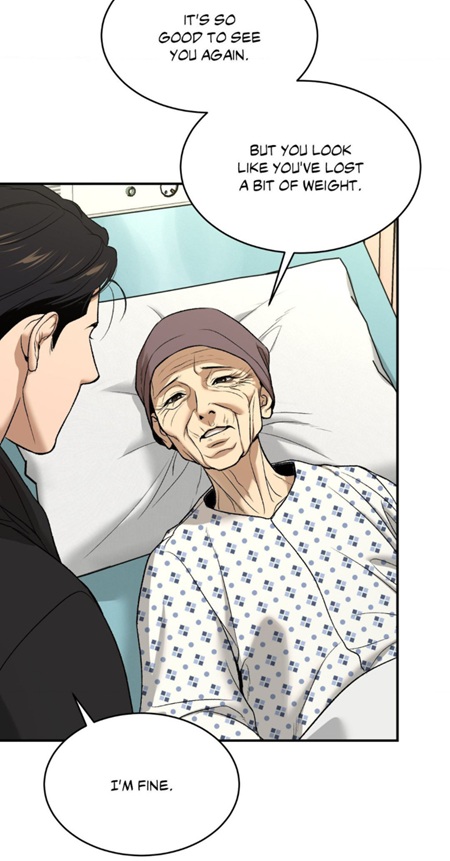 (chapter 61), but seems to have forgotten that Kim Dan is in a similar situation.
  (chapter 57) By moving to that place, the athlete can say that he belongs to that place and can claim his closeness to the grandmother.
It raises an intriguing question: did he rent or buy this place? Based on his actions and growing attachment to Kim Dan, it seems more likely that he purchased the house, though his intentions may not be to stay forever in the beginning. (chapter 61) Instead, the house symbolizes a period of rest and healing, as he himself acknowledges that this space is intertwined with the idea of taking a break. Naturally, his statement is a mixture of truth and lie. He has to hide his true intentions from the “old man”.
This comparison between the penthouse and the new house highlights Joo Jaekyung’s transformation. The penthouse’s sterile opulence contrasts sharply with the warmth and potential for growth in his new surroundings. By choosing to leave behind the isolation of his previous life, Joo Jaekyung takes a step toward a future where he is no longer defined by material success but by his ability to connect with others and nurture meaningful relationships.
At the same time, the move underscores the irony of his situation. While Joo Jaekyung initially imagined that his actions would lead to gratitude and closeness  (chapter 61), the reality is far more complex. Kim Dan’s insistence on maintaining professional boundaries forces Joo Jaekyung to confront the limitations of his influence and the necessity of respecting Kim Dan’s autonomy. The daily routine of seeking treatment (chapter 61) becomes a metaphor for the gradual dismantling of his old ways of thinking, paving the way for personal growth and a deeper understanding of their evolving bond.
But why did he move? We have to envision that till his move to that place, he must have traveled each day from Seoul. Imagine the time he spent on the road!! (chapter 61) And each time, his treatment sessions were so short and didn’t fulfill the champion’s expectations. 😂 His motivations for this move stem from his realization that Kim Dan was drawing a clear line between them, one defined strictly by their doctor-patient relationship. Despite Joo Jaekyung’s attempts to recreate the dynamics of their past interactions, he begins to understand that Kim Dan’s boundaries are unyielding. 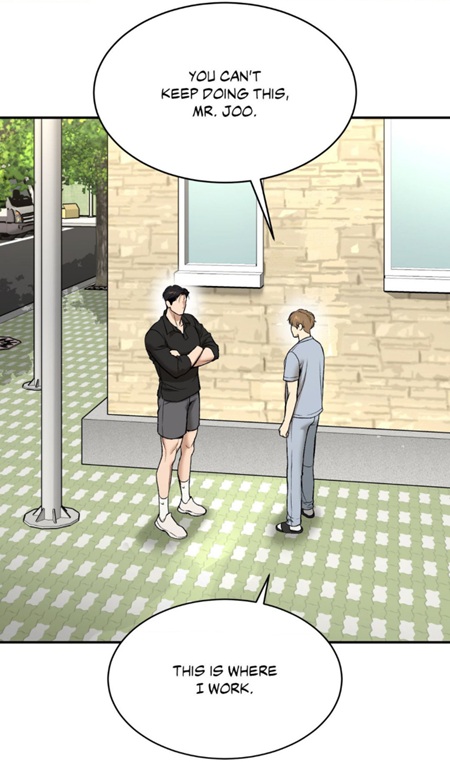 (chapter 61) He can no longer hide his special relationship behind work.
 (chapter 61) This means that his move announces a change in their relationship: privacy. They are neighbors and as such acquaintances.
The move signifies Joo Jaekyung’s willingness to adapt to this new reality, even if it challenges his sense of control and comfort. By relocating, he not only physically places himself closer to Kim Dan but also symbolically acknowledges the shift in their relationship. (chapter 61) This decision highlights his growing dependency on Kim Dan’s presence and care, even as he struggles to navigate the limitations imposed by the doctor-patient dynamic.
Awakening Maternal Instincts in the champion
Interestingly, the number 6 itself is often associated with themes of motherhood, care, harmony, and the ability to foster deep emotional connections. It embodies community, home, and a sense of togetherness, qualities that Joo Jaekyung begins to embody as his transformation unfolds, reinforcing the symbolic depth of this arc.
The number 6 is associated with beauty, harmony, charisma, and the ability to experience deep love. Under the influence of Venus, individuals resonating with number 6 possess a magnetic charm and an effortless ability to attract others. They are often sensual and excel at flirting, exuding a natural allure. The 6 values home life, comfort, and a harmonious atmosphere. It embodies caring qualities, enjoys tranquility, and upholds traditions. With its presence, the 6 can create a positive mood and vibe within a community, fostering a sense of togetherness. Quote from https://www.numerologistpro.com/numerology-numbers/numerology-number-6-meaning/
That’s why I come to the following deduction. Episodes 60 to 69 represent a significant arc in Joo Jaekyung’s character development, particularly as he awakens to his nurturing, almost maternal instincts. This shift is first revealed in his immediate concern upon noticing the large bruise on Kim Dan’s arm. 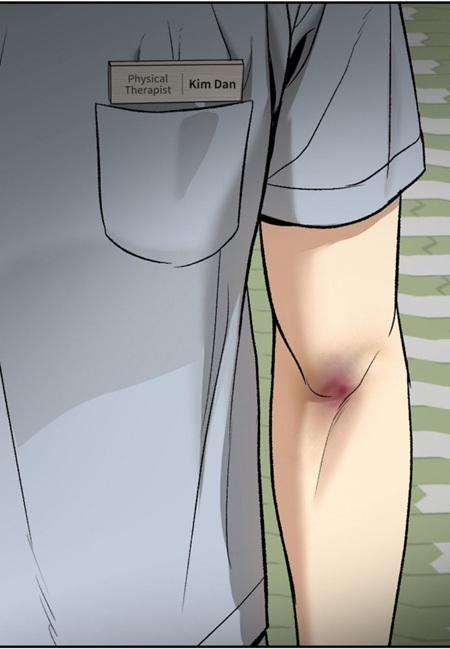 (chapter 61) Despite working in a hospice surrounded by trained nurses
  (chapter 61), no one else notices or comments on this obvious injury. It was, as if the staff including the director were all blinded by the celebrity’s status and wealth. (chapter 61) This detail underscores Joo Jaekyung’s unique focus on Kim Dan, contrasting the indifference or detachment of those around him. (chapter 61) However, there exist other reasons for their neglect. Like the director of this hospice pointed out, this institution is focused on elderly people and cancer.
  (chapter 61) So unconsciously, they came to develop the following belief: only elderly people can get sick. This explicates why the doctor and the nurse recommended rest to Joo Jaekyung
  (chapter 60). They imagined that Kim Dan was simply suffering from a burnout.
 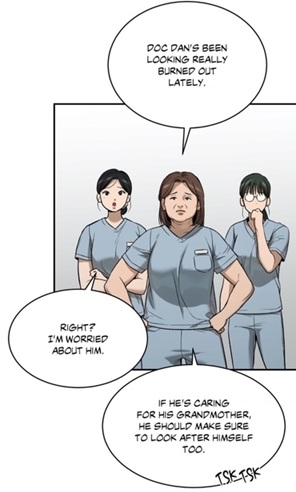 (chapter 57) However, in real life, young people can become ill too. Secondly, cancer is not the only disease in the world, just like burnout is not the only mental issue. There exists so many disorders and diseases that it is important that a hospital doesn’t focus too much on one illness. Why? It is because the hospice or hospital will lose its patients in the long run. No wonder why the institution in this little town is not modernized. (chapter 61) Therefore with the arrival of Joo Jaekyung at the hospice, it becomes clear that this institution will be forced to change its strategy and even its name. From a hospice to a hospital… It is no coincidence that the director of the movie called it a hospital
 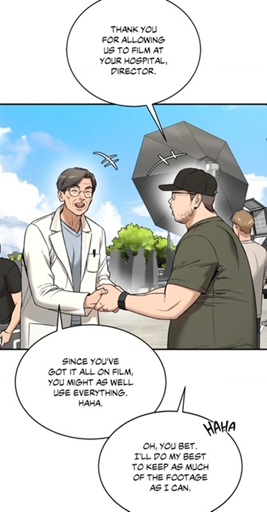 (chapter 59). He didn’t make the distinction in the end.
But let’s return our attention to the celebrity and his shocking discovery. (chapter 61) Joo Jaekyung’s sincere concern, however, is short-lived for two reasons. (chapter 61) First, Kim Dan rejects his assistance
  (chapter 61), creating an emotional barrier that Joo Jaekyung respects
 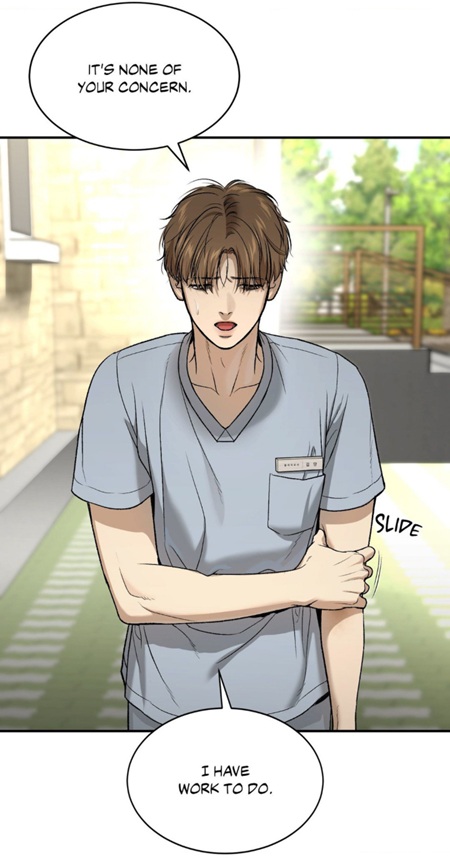 (chapter 61), even if begrudgingly. Secondly, Joo Jaekyung quickly connects the bruise to the removal of a needle
 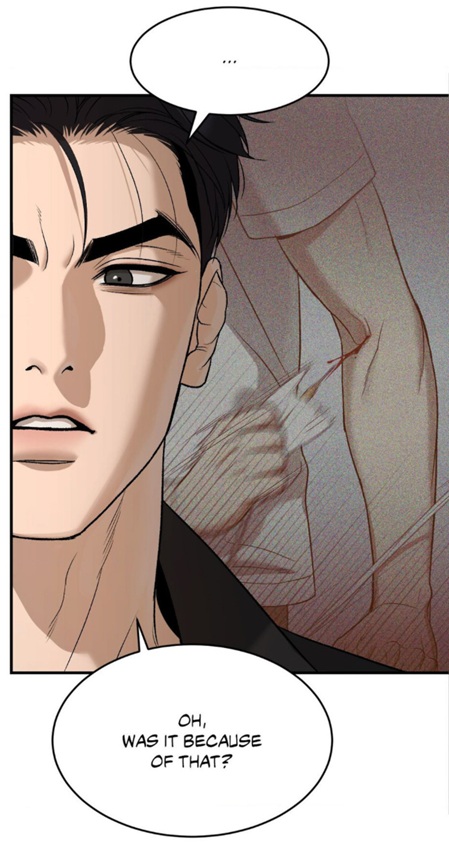 (chapter 61), which absolves him of any perceived responsibility for Kim Dan’s injury. This logical deduction, while correct, also highlights the limits of his emotional insight at this stage. Although he recognizes the physical signs of distress, he does not yet fully grasp the emotional struggles underlying them and the danger behind this huge bruise.
This moment is pivotal because it reveals Joo Jaekyung’s potential to care deeply for others, even as he struggles to navigate the boundaries imposed by Kim Dan. It marks the beginning of a shift from seeing Kim Dan as merely his doctor to recognizing the vulnerabilities and needs of the person behind the professional role.
Another key figure in this transformation is Boksoon, the dog,  (chapter 61) who serves as a symbol of motherhood and nature. Boksoon’s own experiences, including the loss of a puppy
  (chapter 59), highlight the impact of nurturing and loss, shaping her behavior toward both her puppies and humans. She should become more attentive and reliant on humans, notifying them if something is wrong. Her heightened sensitivity positions her as a potential bridge between Kim Dan and Joo Jaekyung, subtly training the champion’s nurturing instincts. Hence in front of the house, she stands between the main couple. (chapter 61)
The landlord, who owns Boksoon, also plays a crucial role in this dynamic. Initially, the grandfather denies responsibility for the puppy’s death  (chapter 59), attributing it to the natural order and failing to take proactive steps like seeking veterinary care.
 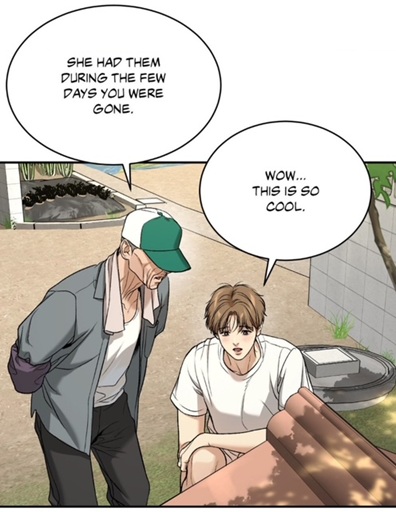 (chapter 57) This missed opportunity underscores the consequences of neglect, in contrast to Boksoon’s increased attentiveness. On the other side, the old man paid attention to Kim Dan’s odd behavior (his alcoholism
 – chapter 57 -, his workaholism
 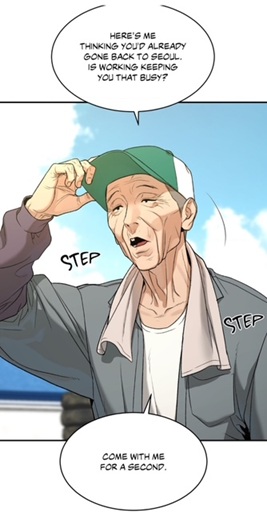 – chapter 57 ) Hence I am assuming that he will be a source of information for the champion. And now pay attention to their position in front of the house: (chapter 61) The landlord and Boksoon together create a link between the two protagonists, building a bridge of shared responsibility and care. Joo Jaekyung’s proximity to Kim Dan, the landlord, and Boksoon demands that he earn their trust and favor. This interconnected relationship encourages him to focus not just on Kim Dan but also on the community around him, further cultivating his maternal instincts and sense of responsibility. With the vanishing of his car, he is not using his status to demonstrate his superiority. With his attitude, he is trying to create a genuine relationship with his “neighbors”. Naturally, he has not dropped his “selfishness” entirely yet. Hence his smile is a mixture of sincerity and calculation: (chapter 61)
A Shared Goal: Standing Side by Side
The contrasting images—the honking car (chapter 61) and the imagined separation (chapter 61) —underscore the emotional stakes of Joo Jaekyung’s journey. The honking car scene captures the reality of their relationship: Joo Jaekyung’s determined pursuit of Kim Dan, despite the latter’s emotional distance and struggles. The imagined separation, on the other hand, reflects Joo Jaekyung’s initial misunderstanding of their bond as something temporary and transactional.
For Joo Jaekyung to truly help Kim Dan, he must realize that their goals must align. Kim Dan’s suicidal tendencies and lack of direction require more than professional care; they need emotional support and a new sense of purpose.
(chapter 61) By changing his approach, Joo Jaekyung can become a source of stability and meaning in Kim Dan’s life. The narrative suggests that the ultimate resolution lies in their ability to stand side by side, as equals, sharing a common goal and mutual understanding. This alignment is foreshadowed in the final scene, where their positions symbolize unity and a shared future. However, their hands are not joined. In my opinion, the last image announces the birth of a real team. And this brings me back to his imagined separation. Even in his superficial pondering and rationalized thoughts, the champion is always seen alone. (chapter 61) There is no real Team Black and team spirit. In that small town, he will discover the power of a team.
The Road of No Return
Joo Jaekyung’s decision to seek treatment from Kim Dan ultimately represents a turning point that reshapes his life in ways he could not have anticipated. This choice, though seemingly minor at the time, sets him on a path of no return, where his time, priorities, and emotional well-being become increasingly intertwined with Kim Dan’s presence. (chapter 61) The daily travel for treatment serves as a metaphor for this new reality, where Joo Jaekyung’s life is no longer dictated by his own terms but by the needs and schedules of another.
This shift highlights the inevitability of change and the limitations of attempting to control every aspect of one’s life. Joo Jaekyung’s journey underscores the importance of embracing vulnerability and relinquishing control, even in the face of uncertainty. By choosing to prioritize his well-being over external markers of success, he begins to forge a new path that is defined not by what he has achieved but by who he is becoming. (chapter 61) He is now a citizen of that small community, hence he is bound by social norms and traditions. So the move symbolizes that Joo Jaekyung has begun to internalize the notion of respect. Moreover, this internalization of laws and boundaries is essential for developing true bravery, as it requires understanding and respecting limits to navigate relationships and challenges meaningfully. [For more read my essay Cowardice versus courage: innate or learnable?] In order to expose his true self and as such his vulnerabilities, he needs to become courageous and as such to cross the line. By choosing to settle in a small town, he acknowledges the need to adhere to norms and laws. This environment, which values community and accountability, highlights the shift in his mindset. Unlike before, where his wealth and status allowed him to bypass consequences 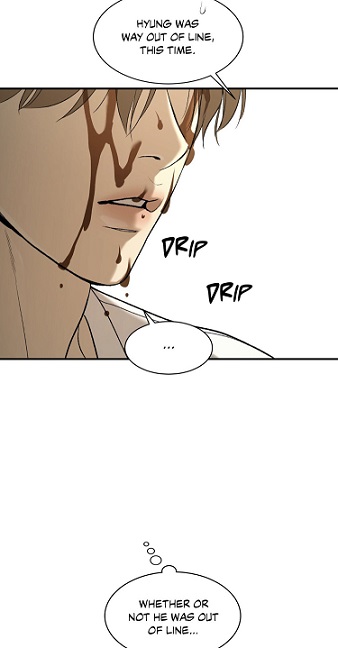 (chapter 37), Joo Jaekyung now operates within a framework where he must respect boundaries and take responsibility for his actions. This transition signifies his understanding that money cannot shield him from the realities of interpersonal relationships and the consequences of his past behavior. To conclude, he can no longer cross the line and return to his old self.
Conclusion
Joo Jaekyung’s journey in episode 61 reveals the transformative power of vulnerability, frustration, connection, and the willingness to confront one’s own limitations. His evolution from a detached and transactional figure to a character who values genuine relationships underscores a broader theme of self-discovery and personal growth. Each pivotal moment—be it the manipulative pseudo-suggestions of Park Junmin, his reflections in the penthouse, or his interactions with Shin Okja—serves as a step along the road to change.
The move to the small town symbolizes more than a change in location; it reflects his internalization of respect, the importance of boundaries, and the understanding that true bravery arises from accepting and operating within those limits. The shift from isolation in his penthouse to embracing a community-oriented life highlights his desire to integrate into a world defined by accountability and care, rather than wealth and privilege.
His bond with Kim Dan serves as the emotional core of this transformation. Initially rooted in a hierarchical dynamic, their relationship evolves into one of mutual dependency and growth. Joo Jaekyung’s recognition of Kim Dan’s sincerity and resilience pushes him to challenge his own assumptions and adapt to a new reality. However, this journey is not without its missteps, as seen in his interactions with the director and Shin Okja, which inadvertently deepen Kim Dan’s feelings of alienation.
Ultimately, Joo Jaekyung’s story is a testament to the complexities of human connection. It demonstrates how seemingly small decisions—whether it’s choosing to move, rejecting manipulative advice, or taking notice of another’s pain—can ripple into profound changes. By embracing vulnerability and relinquishing control, Joo Jaekyung steps onto a path that is defined not by external achievements but by the authenticity of his relationships and his willingness to grow. His journey highlights that true transformation often requires navigating a one-way street, leaving behind the familiar and embracing the uncertainty of what lies ahead.
Feel free to comment. If you have any suggestion for topics or manhwas, feel free to ask. If you enjoyed reading it, retweet it or push the button like. My Reddit-Instagram-Tumblr-Twitter account is: @bebebisous33. Thanks for reading and for the support, particularly, I would like to thank all the new followers and people recommending my blog.

 Bebebisous33s' analyses in K-Dramaland and Manhwas
I would even say Jaekyung is not entirely clueless about the way he is pursuing Dan although he remains in denial about what he truly wants from him. Its not like the dynamic between them has become equitable- It hasn’t really. Kim Dan is still in debt to Jaekyung, if Jaekyung wants he can demand that Kim Dan repay him all his money at once or within a time frame that he likes that would force him to fork out money that he cannot afford. Jaekyung STILL has a lot of power over him. Its the fact that he is not exploiting that shows that Jaekyung has always been and still is a generous and kind person deep down that a lot of people including Kim Dan in an ironic way of being self centered attitude refuses to acknowledge. He has forgotten what a real debtor is like after being free from Heo Manwook for some months. So he is failing to appreciate how much more lenient and kinder Jaekyung is being by not taking his rejection to heart and is instead trying to talk to him despite the fact he is being childish and refusing to listen after rejecting him out of emotional spite, without explaining himself like an actual adult.
In a meta way its good that Dan is not talking to him not because it will magically turn Jaekyung into a selfless person because he is one already. But because it will force Jaekyung TO ACCEPT he is generous and selfless person who is capable of being giving and it won’t hurt him. His actions in season 1 tells me he forced himself to become self centered because he thinks being kind and showing it will get him injured and taken advantage of. He is instinctively turning away from transactional relationships like the one showed in the hospital( although it clearly worked so far) because he tried it with Kim Dan and it ended up blowing up on their faces.
The fact is Kim Dan very well can see Jaekyung’s intention as genuine but since he is emotionally at a bad place he is using biased past actions and excuses to justify his tantrums and stay away from Jaekyung. He knows deep down he is the only one putting a stop to his self harm and self destructive actions so he is trying his best to keep him away from him, just like he did with Potato and the landlord from prying into his private life. However, like the Nurses reminded him, Jaekyung is a LOT closer to him than any of these people. He can pretend otherwise but the fact he knows Halmoni, the most private secret of his life, means he cannot keep on denying the power he has over his heart. The point how Dan could feel jealous and alienated because how Halmoni “replaced” him with Jaekyung could also come into play here and perhaps it would escalate enough for Kim Dan to erupt in anger and misdirect it towards Jaekyung in future, opening his guarded heart and communicate? Even if its a misdirected communication for his real anger is clearly towards his Halmoni.
I think deep down Kim Dan is taking out his anger at Jaekyung because he has trained himself to not do that against Halmoni- the person he thinks saved his life at great expense of her own and is now dying. The things he complains about Jaekyung- his indifference, his lack of physical support of him, his lack of trust etc these are all the things HALMONI has done to him first and more. Jaekyung doesn’t do half of it and when he does he has good reasons for it. In fact if Dan was in a rational mindset he would see he has no reason to be angry about last fiasco for Jaekyung came back and acknowledged the mistakes even without apology and he can see the evidence was too compelling to really trust him. Even Potato did not trust him and Dan was generous with his “forgiveness”, he played with him when he was in town.
Yet he refuses to be generous to Jaekyung and is acting out because I think 1) He unconsciously wants Jaekyung’s help aka he is his cry for help due to suicidal tendencies 2) He wants to vent his frustrations for lack of emotional , physical and spiritual support from Halmoni. Halmoni never encouraged him to talk about his emotional pain, Halmoni’s weakness and refusal to share emotional burdens forced him to take responsibility of her illness, her weakness and his own burdens since he was young without any break, Halmoni also refuses to talk to him much and share his emotional burdens even now. She even wants him to go back to the city instead where he would be out of her sight ( even though he is also visibly losing weight and losing sleep) without even inquiring where would he even stay in the city with this meager salary and lack of job prospects as a blacklisted Seoul therapist( does she even know he is blacklisted? another burden Dan had to take up on his own because he knows she wouldn’t)
Jaekyung living in penthouse in the past did detach him from other people, especially since even Heesung his frenemy has moved away. He used to be in the building and then he moved further away in the suburbun side of the city which shows both men have found ways to further isolate themselves from people . Perhaps them thinking it will keep them safe and give them privacy. But privacy also means loneliness especially since they both do not foster closer relationships esp Jaekyung who clearly distrusts romantic connections and friendships( hinting that he probably is betrayed by people who were his friends and romantic partner)
I think its not that Jaekyung wanted to recreate the past relationship to the T- in fact Jaekyung wanted what he already has in this chapter aka a strict doctor patient relationship. Its the fact he is still not satisfied is when he finds a place that luckily is closer to where Dan lives hence he can now talk to Kim Dan more freely. I mean for all Dan acts like Jaekyung did him wrong he also isn’t talking to him about what he did wrong just like he never talks to grandmother about it , projecting his assumption that like her, Jaekyung is not interested in what he has to say despite countless evidence otherwise( even when he was “caught” with switched spray Jaekyung waited for him to explain himself and got angry when Dan refused and instead tried to appeal to blind trust,. A trust which he never earned for he has established the relationship on basis of countless small lies, and resentment for its existence)
I think this is what it boils down to, Jaekyung showing he cares either by action or apology will force Kim Dan to stop projecting his grandmother on him and force him to talk to him as a PERSON HE IS rather than what he assumes. We talk a lot about Jaekyung assuming things about Kim Dan but I think Kim Dan also assumes a lot about Jaekyung. He started by assuming positive things when he fell in love and started to treat him like his Halmoni – cooking for him, buying expensive material, hiding his hardwork and burdens to get those expensive things assuming Jaekyung is not interested, hiding his bad health, etc . Now the pendulum has swung when Jaekyung UNLIKE Halmoni is not trusting him to do whatever he does and got angry when he was framed. So he is now assuming negative things about him based on all the REPRESSED resentment he has against her- that like Halmoni he has no interest in his well being, that its better to stay away from him for his “own good” . In fact his excuses to not see Jaekyung went from “I am at fault” to “he doesn’t care about me anyway” , a decidedly self centered approach that escalated after Halmoni practically replaced him with Jaekyung as more peppier, happier version of a grandson.
This arc is not just about Jaekyung transformation, I think its about Jaekyung opening his self, Its about Kim Dan’s transformation and his mindset change. He lived his life so far by treating people as extension of either his self or Halmoni and it brought him no comfort or closeness from people. Its only via Jaekyung’s initiative that he managed to form a romantic attachment which now literally has saved his life. The small town shift and Jaekyung ‘s willingness to take out the sexual element from their relationship and crossing boundaries( this time to understand Kim Dan rather than just scold him) is now will force Kim Dan to evaluate what does he even want from others and look at Jaekyung like his own person rather than extension replacement of Halmoni that should react like Halmoni aka he doesn’t need someone to talk to him or pry into his life etc( for I also just realized he never talks about Halmoni’s interest , he assumes it for he lacks ability to communicate like Jaekyung and has to assume what people want, modelling them after his image of of people he “knows”)
LikeLiked by 2 people
Clueless because he describes his feelings as confusing. He can not put a name on it: love. He couldn‘t call Kim Dan a fuck buddy in the past due to the deal and their boss-employee relationship. So by becoming his neighbor, he creates a new foundation for their relationship. And once they move back together, they will be a real family.
LikeLiked by 2 people