

Please support the authors by reading Manhwas on the official websites. This is where you can read the Manhwa: Jinx But be aware that the Manhwa is a mature Yaoi, which means, it is about homosexuality with explicit scenes. Here is the link of the table of contents about Jinx. Here is the link where you can find the table of contents of analyzed Manhwas. Here are the links, if you are interested in the first work from Mingwa, BJ Alex, and the 2 previous essays about Jinx A Body’s Worth and Lavender -Tinted Pillow Talk (locked)
It would be great if you could make some donations/sponsoring: Ko-fi.com/bebebisous33 That way, you can support me with “coffee” so that I have the energy to keep examining Manhwas. Besides, I need to cover up the expenses for this blog.

Introduction: The Evolution of the Jinx
Joo Jaekyung’s perception of his ‘jinx’ has undergone a significant transformation since the beginning of Jinx. Initially, he believed that his routine 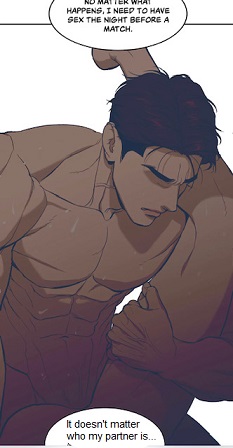 (chapter 2) —having sex the night before a match—was a necessary ritual to maintain his champion title. However, by Episode 62, his view of the jinx had subtly shifted.
  (chapter 62) He now includes his entire routine with Kim Dan—not just sex, but also his physical therapy and treatment—as part of this so-called jinx. This shift is crucial because it implies an unconscious recognition of Kim Dan’s significance in his life. What once was purely about his career and success has now expanded to include a specific person and their role in his well-being.
Kim Dan, however, misinterprets Jaekyung’s words. First, the athlete employed the expression “usual pre-match routine” which is quite ambiguous. What was he referring to “usual pre-match routine”? The sex or the treatment he was receiving from Kim Dan: the tasty breakfasts, his company on his way to the gym 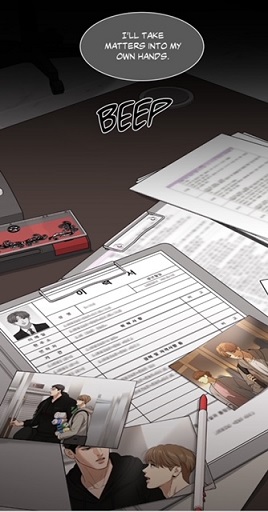 (chapter 46), the stretching and massage at the gym? The problem is that the champion never complimented the “hamster” for his good work directly. So it was, as if his dedication was nonexistent. Without the champion’s genuine gratitude and appreciation expressed so openly, the physical therapist couldn’t perceive the true message behind the champion’s. Joo Jaekyung’s statement was actually an acknowledgment—a sign that the fighter values their routine, not just for performance but as an integral part of his life. So when the star mentioned his jinx
  (chapter 62), the doctor’s memory got triggered. Because of his past experiences, he has long associated the jinx exclusively with sex. This contrast in understanding highlights both Jaekyung’s lack of self-awareness and Kim Dan’s tendency to filter reality through his own expectations and trauma. However, the deeper significance lies in Jaekyung’s evolving perception of dependency. His jinx is no longer just a superstition tied to his performance in bed. It now subtly acknowledges that his success has been intertwined with Kim Dan’s intervention. (chapter 62). At the same time, his skills in the ring become more relevant. This explicates why the champion talked about it on the treatment table. The location is not anodyne. This implies that the champion’s torment is moving away from the bed and bedroom. This is not the first time the celebrity has recognized Kim Dan’s good work
 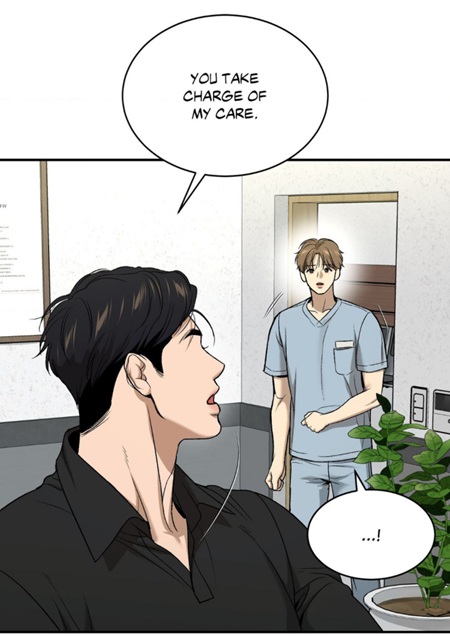 (chapter 61) By entrusting his care to Kim Dan, he was insinuating that the main lead was trustworthy and competent, yet his inability to verbally express appreciation keeps the doctor unaware of his true feelings. This struggle resurfaced in front of the hospice, where Jaekyung could only bring himself to admit that Kim Dan was not responsible for the incident with the switched spray.
 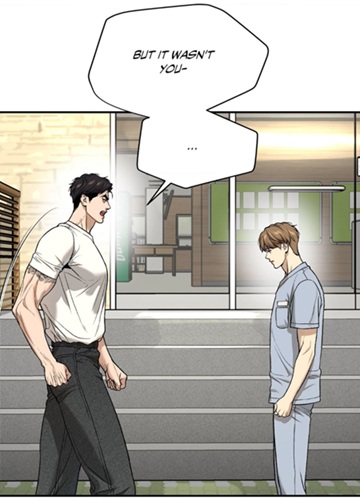 (chapter 62) His reluctance to openly acknowledge his gratitude suggests a deeper internal conflict—one that hints at a growing but unspoken emotional reliance on Kim Dan.
Another cause for this inner struggle stems from his difficulty to separate his professional and personal life. While he continues to frame his reliance on Kim Dan as part of his career routine (chapter 62), his subconscious attachment tells a different story. The jinx, once strictly confined to his fights, has now extended beyond the ring, blurring the lines between necessity and emotional dependency. His hesitation to verbalize his appreciation reveals a man grappling with an unfamiliar vulnerability—one that he may not yet be ready to confront.
The champion’s past: fixed foundation or distorted memory?
As you know, articles from Dr. Jennifer Delgado often assist me to grasp better the couple’s personality and issues. Funny is that her articles often coincide with the progression of Jinx. In her recent article, You Are Not Your Experiences, the author explains how people often mistakenly identify themselves with their past experiences, believing that their traumas, failures, or successes define who they are. She argues that while past experiences shape our perspectives, they do not have to dictate our future choices.
The past exists and, in a certain way, it has contributed to making you the person you are today. However, that does not mean that it should continue to condition your decisions and your life. The past has allowed you to accumulate experiences, but you are not only your experiences. In fact, we are much more than a story, because what is truly important is the potential that we have on our horizon.
In fact, the true greatness of the children of Kauai lies in their understanding that their childhood experiences did not have to determine their future. These children did not use their past as a mold to continue making decisions, but instead turned it into a lever to propel themselves forward and build a better future. https://psychology-spot.com/you-are-not-your-experiences/
This means that people need to break free from their past. However, in order to achieve this goal, they have to recognize past experiences as a reference rather than a destiny—something to learn from, but not something that confines personal growth.
Emotional Traps: Fear and Avoidance
One of the most common ways people become trapped by their past is through fear-driven decision-making. Those who have faced failures, disappointments, or trauma may avoid opportunities for change out of fear of repeating past mistakes. This avoidance does not create true freedom but rather reinforces a cycle of limitation.
Conversely, others may become so deeply attached to their past choices that they justify and cling to them, believing that changing direction would undermine their previous efforts. This mindset prevents self-reflection and the possibility of meaningful transformation.
The Power of Choice
True autonomy comes from self-awareness and intentional decision-making. Instead of reacting based on past fears or past justifications, individuals can reclaim control over their future by making choices that align with their present values and aspirations. The ability to consciously choose a path forward, rather than following patterns dictated by past experiences, is what ultimately leads to growth, fulfillment, and personal freedom. I am quite certain that my avid readers could recognize the main characters in these descriptions. It becomes obvious that Joo Jaekyung belongs to the second category. His perspective on time is one of continuity and justification. He sees the past as an unchangeable foundation (chapter 62) that naturally determines the future, a mindset that enables him to move forward without regret. Hence he is sure that he will regain his title and can separate ways with Kim Dan.  (chapter 62) It was, as if he was warding off bad luck by repeating the last match. For him, past choices are justified by their results—he has built a successful career through sheer discipline and sees no reason to question his trajectory. His mentality reflects the belief that one’s past is a stable structure upon which the present and future rest. This perception explains his resistance to self-reflection and emotional vulnerability; admitting a mistake would mean disrupting the stability he relies upon.
His refusal to listen to emotional advice, especially concerning Kim Dan’s well-being, can be traced back to his survival-driven upbringing 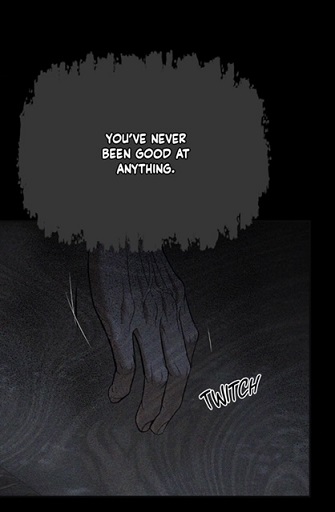 (chapter 54), where emotions were likely dismissed as obstacles. Instead, he follows only what aligns with his success: the advice of figures like Park Namwook and Yosep, who reinforce his pre-existing beliefs about strength, control, and endurance. Hence he was pushed to fight despite his ankle injury.
 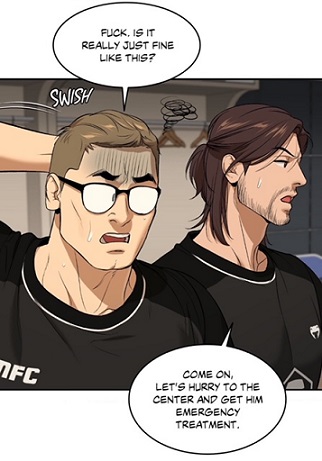 (chapter 50)
However, as recent events unfold, his foundation is beginning to show cracks—particularly with Kim Dan’s absence, forcing him into a state of emotional confrontation that he has never encountered before. His departure made him feel not only lonely, but also cold and stressed. And because his past determines his future, it signifies that Joo Jaekyung is caught in a cycle where his past successes and struggles dictate his present mindset. 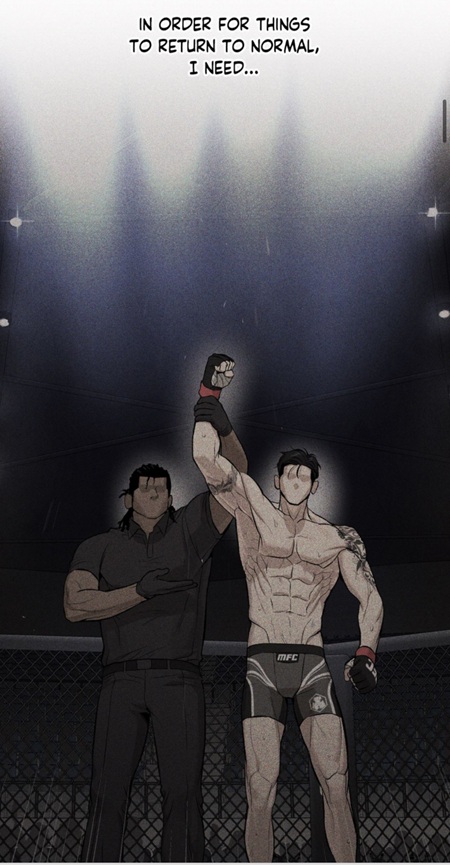 (chapter 61) This rigid perception prevents him from questioning his past choices or embracing change, reinforcing the illusion that repeating past patterns will restore stability. However, as his reliance on Kim Dan grows, the boundaries between his personal and professional life blur, challenging his belief that he can control his future by clinging to his past. (chapter 61)
But what happens when the past is not remembered correctly? When Jaekyung convinces himself that everything was fine before his tie with Baek Junmin (chapter 62), he is unknowingly rewriting his own history. This distortion is further reinforced by external voices —MFC 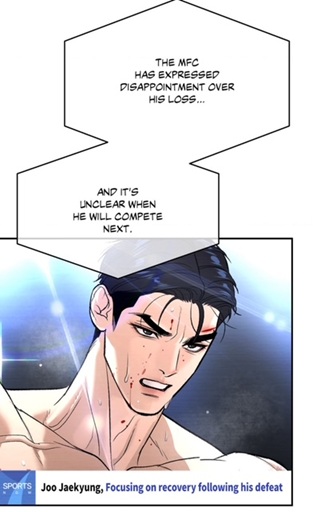 (chapter 57) and Park Namwook
  (chapter 54), who claim that Jaekyung ‘lost’ the fight, when in reality, it was a tie. The very way people around him are framing the event warps his perception, creating a false narrative where his struggles seem to stem solely from this supposed ‘loss.’ His belief in a stable past provides him with a sense of security, but that illusion is fragile. In addition, if his struggles predated his championship loss
  (chapter 29), then reclaiming his title cannot be the solution he believes it to be. Finally, what happens when he is forced to confront the reality that some of his past choices were mistakes – ones that he can no longer attribute to the jinx or external circumstances,
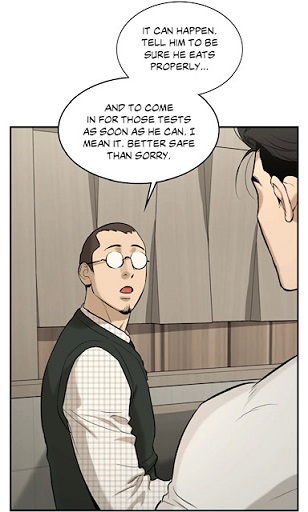 (chapter 13) because they affected the doctor’s life?
  (chapter 41) In one case, he refused to listen to his friend’s advice, whereas he trusted the words from MFC, MFC doctors and his hyung. When the foundation he has relied upon begins to crack, Jaekyung’s entire mindset is shaken, forcing him to question whether his past truly holds the answers he seeks. We could say, the athlete needs to be betrayed by his own past in order to throw his old belief. The latter is strongly intertwined with the organization MFC and authorities in general. Questioning his past equals challenging the company MFC and his past “guardians”: the terrifying ghost and even his two hyungs.
As my avid Jinx-philes can sense, the champion is actually going through a similar path than his lover. Joo Jaekyung has a distorted perception of his past. In Episode 61  (chapter 61), he expresses the belief that reclaiming his championship title will rid him of his headaches, nightmares, and sleepless nights. However, the reality is different—he was already suffering from insomnia long before he lost his title.
 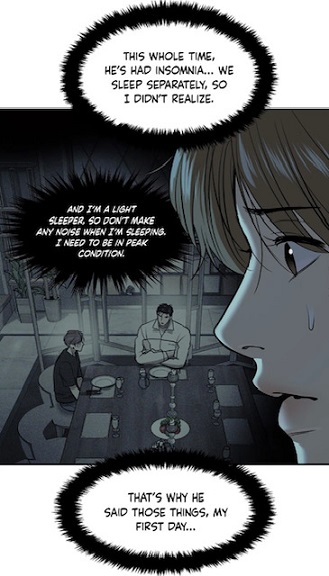 (chapter 29) The origins of his struggles existed before his recent failures, suggesting that his belief in a simple solution—reclaiming his title—is an illusion. This disconnect reveals how deeply his professional and personal life are entangled; his need for control in the ring has masked his deeper emotional vulnerabilities. He isn’t merely striving for victory—he is chasing the illusion of stability, believing that his success is the sole factor that determines his well-being.
  (chapter 54) But as his nightmares and frustration intensified, it becomes clear that his problem is not the loss of his title, but the erosion of the identity he has built upon it. This means that the longer he stays away from the gym, the more the fighter is learning about himself. He is more than just a MMA champion. To conclude, he is on his way to redefine himself, to discover his humanity.
- The very fact that he associates (chapter 61) the headache and nightmares only with his loss suggests that he has rewritten his own history, convincing himself that he was completely fine before his tie with The Shotgun.
- This distortion reflects his habit of suppressing personal struggles—a conditioned mindset that prioritizes his image and career over his mental and emotional well-being.
- His unconscious rewriting of events serves a psychological function: blaming the championship loss allows him to avoid deeper introspection. Under this new light, you comprehend why he is not investigating the matter with the switched spray and the rigged game.
This pattern extends to his changing interpretation of the jinx. Originally, his pre-match ritual was about control. It was a way to ensure consistency and maintain a sense of power over his performance. However, by integrating Kim Dan into this ritual, he unknowingly shifts its meaning—it is no longer solely about control, but also about dependence. But there is more to it. The moment you contrast this recollection and belief (chapter 61) with the champion’s rejection in the bedroom with this excuse 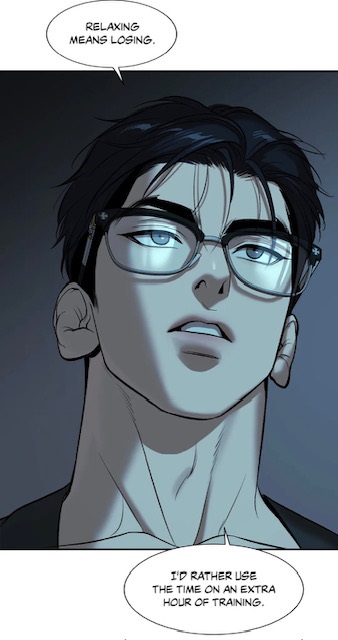 (chapter 29), you will realize that alone in his penthouse, Joo Jaekyung was actually admitting the importance of sleep and rest. His earlier belief in relentless training as the key to success now clashes with his realization that exhaustion is affecting him. This shift signifies an unconscious admission that his well-being is not just tied to physical endurance but also to recovery and relaxation—something he previously dismissed. This realization subtly parallels his growing dependence on Kim Dan, reinforcing the theme of blurring lines between his professional and personal life. And what had occurred after this magical blue night in the penthouse?
  (chapter 30) The athlete woke up later than usual. In fact, he was rather late, for he was still wearing his pajamas, while the doctor had already taken his shower. But back then, observe how he opened the door! Like a clumsy beast, grump leopard! Why? In the past, I explained that he was seeking the champion’s closeness, but didn’t know how to approach his partner. I am now adding another aspect. He was actually annoyed, because he had not been following his daily routine!! Under this new light, it becomes comprehensible why the champion had such a “angry” facial expression, while deep down he was happy. The older version of this scene:
 (chapter 44) However, this means that in episode 30, he never acknowledged his dependency on the physical therapist for his rest loudly. On the other hand, it explains why the champion felt threatened, when the actor approached his “lavender-tinted pillow” or “sleeping pill”.
  (chapter 31) In fact, he used guilt to create a link between him and his roommate. That’s the reason why I am more than ever convinced that the champion will sleep better after this lavender-tinted night.
  (chapter 63) But contrary to the past, the athlete should come to recognize his lover’s great sleeping power officially. This made me laugh, imagining Kim Dan’s reaction, when the latter sees that his wish
  (chapter 62) won’t come true at all. 😉 He will stay longer and ask for Kim Dan’s presence during the night.
Kim Dan: The Past as a Lesson to Escape
Dr. Jennifer Delgado’s assertion that the past should be a reference, not a destiny directly applies to Kim Dan. Although the physical therapist believes he is actively shaping his future by rejecting his past, in reality, his decisions are still dictated by fear—fear of repeating past mistakes, fear of attachment, and ultimately, fear of abandonment. He belongs to the first case described above. He regrets to have developed feelings for the champion, therefore he wants to relive their first night together.  (chapter 62)
Fear and Avoidance Dictate His Choices
Rather than truly choosing his future, Kim Dan structures his life around avoiding his past.  (chapter 56) His childhood and early adult experiences, marked by financial hardship, emotional neglect, abandonment, betrayal and powerlessness, have conditioned him to associate attachment with suffering. Because of this, he withdraws from relationships
 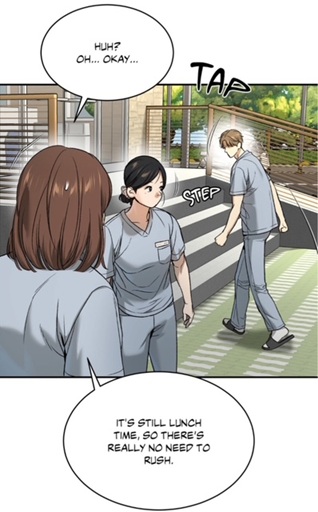 (chapter 56) and opportunities that could offer him security, convincing himself that he is protecting his independence when, in truth, he is reacting to past trauma rather than making an intentional choice.
This aligns with Delgado’s concept of emotional traps, where individuals believe they are exercising free will when they are actually making fear-based decisions that keep them stuck. Kim Dan’s reluctance to let Jaekyung back into his life is not just about his personal preferences—it is an extension of his attempt to escape a future that resembles his painful past. 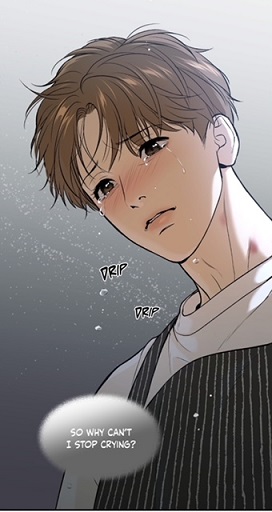 (chapter 46)
 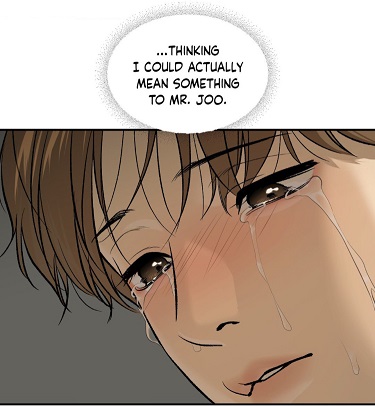 (chapter 46)
The Illusion of Control: Running Instead of Choosing
Delgado emphasizes that true freedom comes from conscious decision-making, not reactionary avoidance. Kim Dan, however, has yet to reach this level of autonomy. By pushing people away, he believes he is exercising control over his life—but in reality, his choices are being made for him by his unresolved fears. He resembles a lot to the athlete in season 1. He is not moving toward something new; he is merely fleeing from what once hurt him. This means that he is imitating his grandmother as well. And now you comprehend why both liked each other immediately. Both could recognize in each other. But living like his halmoni has terrible consequences, for unhealed wounds of the mind fester beneath the surface, seeping into the body like cracks spreading through glass—until even the strongest foundation begins to break. 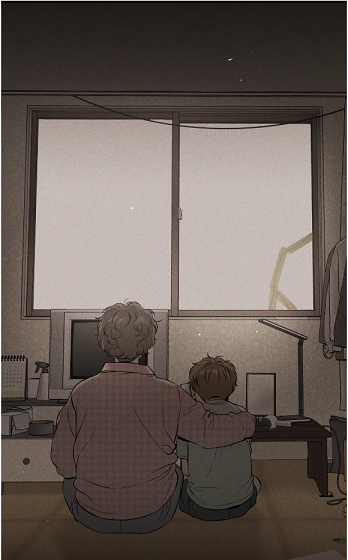 (chapter 19) She became terribly sick, while the other had to get surged and risked his career. There is no doubt that the halmoni is hiding her pain as well. Kim Dan’s declining physical and emotional state further reflects the consequences of living in avoidance.
 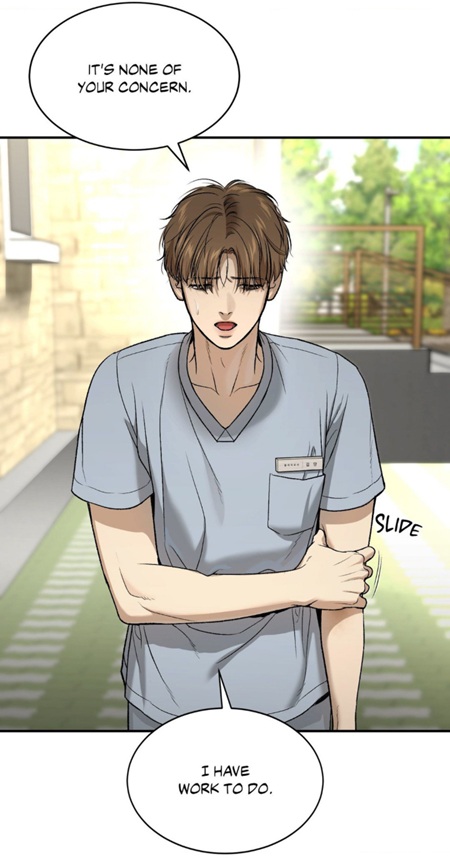 (chapter 61) He is endangering his life. Instead of taking action to improve his well-being, he isolates himself, refusing help even when it is necessary. His reluctance to accept care—be it medical, emotional, or relational—mirrors the very trap Delgado describes: mistaking survival for true agency.
The Turning Point: Breaking Free from the Past
For Kim Dan to truly reclaim his future, he must stop defining himself by what he is running from and start choosing based on what he genuinely wants. Someone needs to remind him of these feelings: 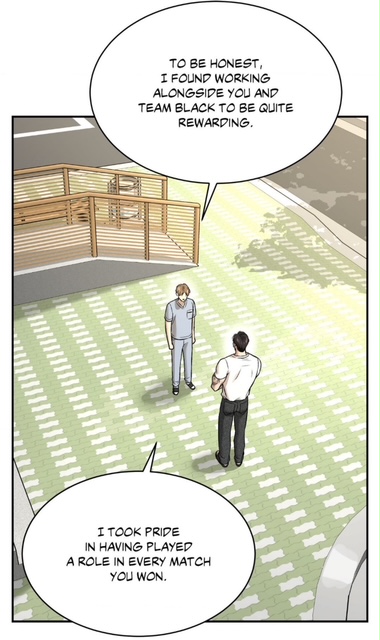 (chapter 62) If he continues making decisions based on past fears, he will remain trapped in the same cycle, unable to experience true growth or emotional fulfillment.
Delgado’s article suggests that the key to breaking free lies in self-awareness—Kim Dan must first recognize that his past does not define him before he can truly take control of his life. That’s the reason why I perceive the doctor’s suggestion in a positive light: 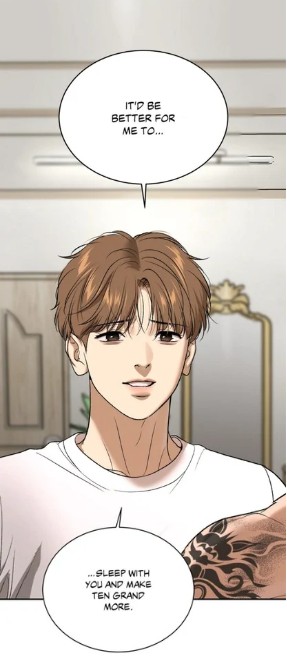 (chapter 62) Here, he is actually facing his past which he has strongly connected to regret and remorse. Don’t forget that after this night, he is expecting Joo Jaekyung’s departure. (chapter 62) That way, he can move on. But what the “hamster” fails to recognize is that the Jinx was brought up in a different location. (chapter 62) Unlike in the past, this conversation takes place in the living room indicating transition from transactional interactions to genuine connection. Unlike the bedroom
  (chapter 3), which has been the setting of power imbalances, physical dominance, and silence, the living room represents a shared space—a place where dialogue and openness can exist. But why is the bedroom linked to silence? It is because of the TV, the third invisible companion!
  (chapter 48) Hence during that night, none of the protagonists talked sincerely to each other. And now pay attention to the living room at the hostel: (chapter 62) The TV is not switched on!! That’s how it dawned on me why Mingwa made Joo Jaekyung live alone for a while.
  (chapter 54) He needed to get rid of this poor habit: watching TV or cellphone. He had to realize that the TV or cellphones were never real companions and never brought him peace of mind! This was the invisible “love” triangle. Back then, the athlete deceived himself by thinking that he was truly self-reliant, while in verity he was dependent on his cellphone and the TV.
In Episode 62, (chapter 62) the shift to the living room for their conversation about the jinx is significant because it suggests that Jaekyung and Kim Dan’s relationship is evolving beyond purely physical interactions. The living room is typically associated with comfort, social interaction, and daily life, meaning that their dynamic is subtly moving towards something less confined, more integrated into reality. Jaekyung and Kim Dan are neither strangers nor true partners, and the living room reflects this in-between state of their relationship.
For Jaekyung, this space signifies a growing familiarity and trust, as he now acknowledges Kim Dan’s presence in his routine beyond sex. For Kim Dan, however, it is still a space of unease—his perception of their relationship remains tied to his initial trauma, making it difficult for him to see the fighter’s shift in behavior.
Secondly, I would like Jinx-philes to compare Joo Jaekyung’s behavior on the treatment table between episode 62 and the previous scenes where patients received Kim Dan’s treatment:
| ChapTER 1 | Chapter 27 | Chapter 34 | Chapter 37 | Chapter 43 | Chapter 61 |
|---|---|---|---|---|---|
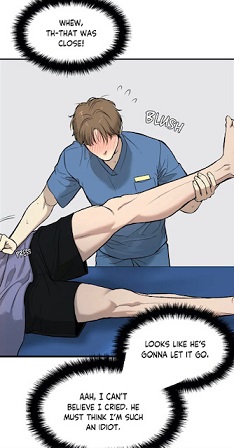 |  |  |  | 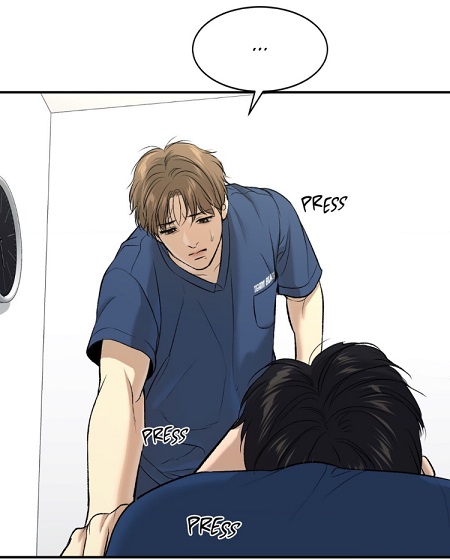 |  |
Kim Dan doesn’t talk to his patients in general, unless he feels that it is necessary. In addition, all his comments were work-related. His silence is oozing indifference and neglect. This observation exposes his lack of professionalism. Thus no patient is chatting with him and thanking him for his good treatment. On the other hand, thanks to Joo Jaekyung, the “hamster” is also learning not to get too attached to his “patients” as well. A natural distance is still required. Under this new light, it becomes comprehensible why Kim Dan doesn’t feel his job as physical therapist not rewarding and why he felt differently in the past. (chapter 62) Right now, he is not receiving any compliment from his patients, for he is acting like a robot. However with the gym, it was different, for he felt recognized by members from Team Black. They would give him some positive feedback.  (chapter 37) And all this started because Kim Dan had taken the initiative.
  (chapter 7) But now, it is no longer fulfilling for him, because his relationship with them didn’t go beyond their work.
So by relocating the champion’s new confession to the living room (chapter 62), Mingwa is announcing a change in their relationship. The living room acts as a threshold—a place between past and future, where the lines between professional and personal, dominance and dependence, jinx and reality begin to blur. (chapter 03) At the same time, I am also sensing that the treatment table could become the place where Kim Dan starts initiating conversations with his patients so that he can become an active listener and advisor.
To conclude, this confession marks a turning point not only for the champion, but also for the doctor. Both affect each other. Though Kim Dan didn’t grasp that Joo Jaekyung was emphasizing his role in his overall routine, I am quite certain that unconsciously, the “hamster” learned a lesson: the importance of listening and conversing with his patient. Let’s not forget that too focused on his own guilt due to his past trauma, he came to hurt one of his patients.  (chapter 59) Striking is that here the doctor didn’t apologize to the elderly man, but only to the family.
  (chapter 59)
While Joo Jaekyung now sees Kim Dan’s care as part of what sustains him, even if he does not consciously acknowledge it as emotional attachment, the champion is not realizing that life is about to teach him a lesson. Past can not be a source of strength, but of torment, pushing him to throw over the board his belief about the past and jinx. (chapter 62) While he focused too much on his “loss”, he overlooked the importance of the incident with the switched spray on the doctor’s soul. Only through his conversation, he recalled his initial reaction 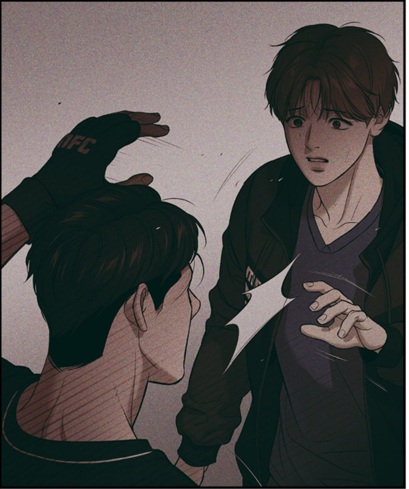 (chapter 62) – which is quite understandable in my eyes. The ones who failed the couple were the two other hyungs from my perspective. The past affected the doctor so much that he views himself and his feelings as “trash” now, yet it is clear that neither Park Namwook nor the coach are suffering from guilt or remorse. The star’s follow-up statement,
 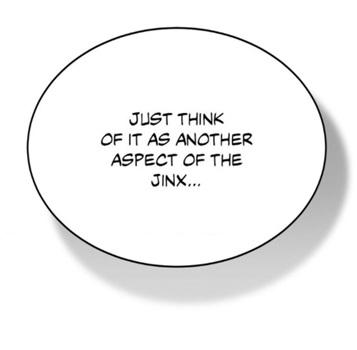 (chapter 62) further reinforces that Kim Dan has become an integral part of his preparation. Although Jaekyung does not yet frame this as emotional reliance, his words betray an unconscious attachment—one that Kim Dan himself does not recognize. Moreover, by including him in his jinx, the champion is only one step closer to include him in his “success”. Should the doctor be the target of malicious comments, the star will consider it as a personal assault or as his responsibility.
The Ghosts That Surface in Absence
A striking aspect of Jaekyung’s evolution is the way his subconscious reacted to Kim Dan’s absence. (chapter 54) The moment Kim Dan left, nightmares came to the surface The ghosts of his past—his insomnia, his unresolved emotions, his hidden fears—made its entrance revealing that the champion had a false perception of his own past. It was, as if he had erased his time before becoming the champion. This suggests that Kim Dan’s presence was acting as a stabilizing force, even if Jaekyung was unaware of it. He had become his “home”, which Joo Jaekyung forgot due to his intoxication.  (chapter 43) Someone needs to remind the athlete of his own “statement”. Simultaneously, since the doctor never got curious about the fighter’s past and family, his presence could only be seen as a bandage covering a rotten body. In order to heal completely, he needs to expose his traumatic past and vulnerabilities.
This aligns with his distorted memory (chapter 61)—he tried to convince himself that everything would return to normal once he regained his title. However, reality proves otherwise:
- The insomnia that he attributed to his championship loss existed in the past. Thus if the sportsman doesn’t change his life style, his sleeping problems should still be present after the recovery of his title.
- The emptiness in his life remains, unaffected by his standing in the MMA world.
- His frustration and irritability increased, indicating that his struggles were never truly about the title
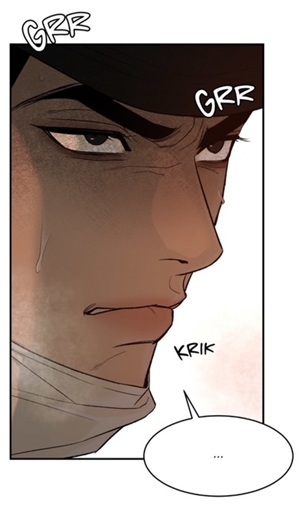 (chapter 56), but about something deeper. Here he felt the need to see his beloved “companion” again.
 - His instinctive blaming of Kim Dan at first is a defense mechanism—an attempt to deny that his life had already changed far more than he was willing to admit.
To conclude, as long as the champion doesn’t expose his past relationship with Baek Junmin and his childhood to Kim Dan, the athlete can not find inner peace and become his true self.
A New Kind of Jinx: The Unconscious Shift in Priorities
At the beginning of Jinx, Jaekyung’s only goal was to maintain his championship title. His ‘jinx’ was a superstition, a tool to reinforce his absolute focus on his career. However, by Episode 62, the nature of this jinx has evolved. (chapter 62)
- It is no longer just about winning—it now includes a person.
- By extending the jinx to include Kim Dan’s role in his routine, Jaekyung unconsciously acknowledges that his well-being is tied to someone outside himself. He was dropping his past conviction: self-reliance. This explicates why during the same episode, he was seen helping others in the village.
- This suggests a new, hidden priority—a source of stability that extends beyond his career.
Whether Joo Jaekung realizes it or not, Kim Dan is now part of his happiness, even if the fighter has yet to define it that way. And if you contrast this to his previous definition of well-being, you will notice that it was defined by the absence of physical and mental pain. (chapter 61) We could summarize his statement with “peace of mind” which is a synonym for “happiness”. This confirms my previous interpretation that in the past, his abuse towards his own body was his way to express his emotional and mental suffering.  (chapter 27) At the same time, this confession displays that his past was far from being perfect, the evidence of a distorted memory. After working so hard for the community, he came to receive a treatment from Kim Dan:
  (chapter 62) This means that he is now treasuring his own body. No wonder why he smiled.
 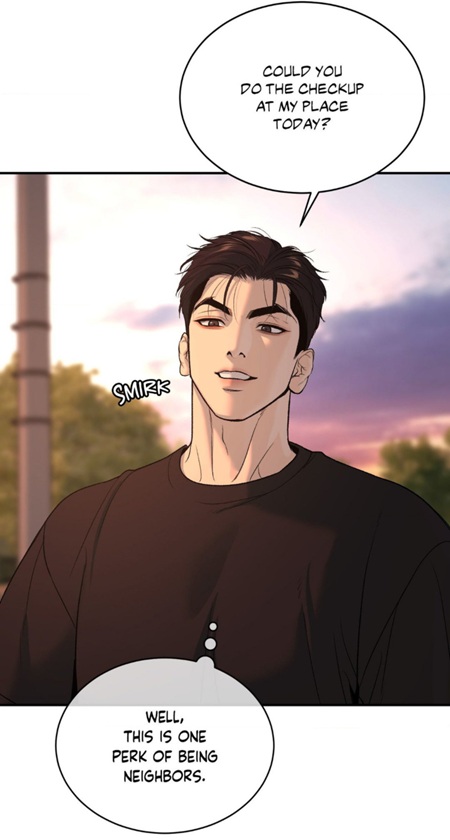 (chapter 62) That’s why I come to the following conclusion: The athlete must have felt happy in the living room, for he felt comfortable and safe.
 (chapter 62) But why did he show his back? One might say that he desired to hide his “satisfaction” and his “reliance” on his fated partner. Or he didn’t feel the need to watch the doctor’s facial reaction, when he would confide his new intentions and the transformation of his jinx. He didn’t expect the physical therapist to mock him for his absurd belief contrary to episode 2:
  (chapter 2) He trusted the doctor. Yet, in my opinion, there exists a bigger reason behind this change. It is related to his manager:
 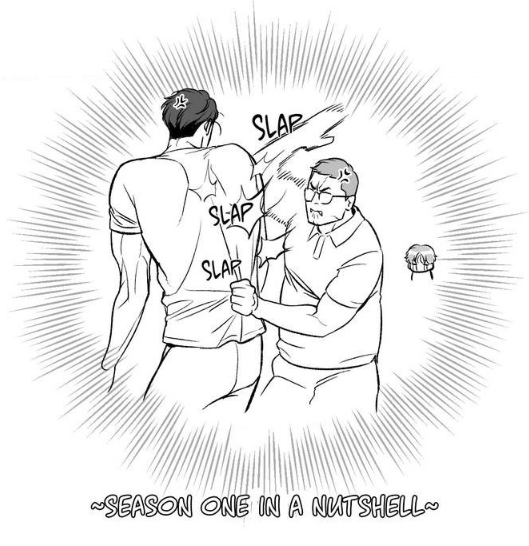 The doctor is treating the star (chapter 62) where Park Namwook used to punish him physically. He is receiving his “sweet” and “reward”. Thus I interpret the sportsman’s admission in the living room as the moment where the manager is losing his influence over the champion. On the other hand, it is clear that the athlete has not realized it yet. Through the massage, the doctor is recognizing that the champion worked hard in his life.
The Convergence: A Future Defined by Choice, Not Circumstance
The irony in their opposing perceptions of time is that they both remain equally bound by their pasts—Jaekyung by his refusal to question it, and Kim Dan by his refusal to acknowledge its lingering control. However, the unfolding of their relationship is gradually pushing both toward transformation. Jaekyung, for the first time, is being forced to fight for something that is not guaranteed by his status, money or power, and Kim Dan is being forced to recognize that fear-based decisions are not true freedom.
Park Namwook exhibits a mindset similar to Jaekyung, where the past dictates his present and future actions. Unlike Jaekyung, however, he is entirely reliant on the champion’s success, living vicariously through him. He positions himself as a figure of authority, even claiming to be the gym owner  (chapter 22) when he is not, using his seniority and past influence to assert dominance. His attitude is related to his past decision: from his perspective, he saved the athlete from turning into a criminal.
  (chapter 26) His dependence on Jaekyung’s achievements makes him resistant to any shift in the fighter’s trajectory
 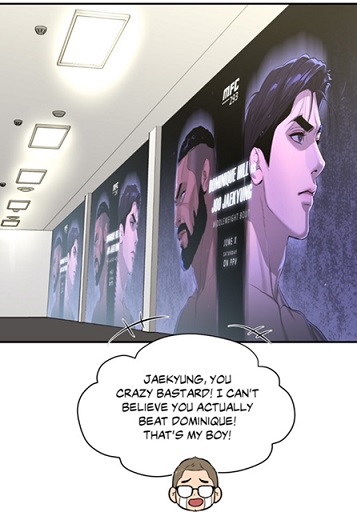 (chapter 40), as it threatens his own stability. Rather than acknowledging change, he reacts negatively to it and shifts blame onto Jaekyung, avoiding responsibility for his own shortcomings.
Park Namwook’s reaction to Kim Dan’s presence highlights his discomfort with anything that disrupts his established control. He loves delegating tasks to others. He initially praised Kim Dan’s skills 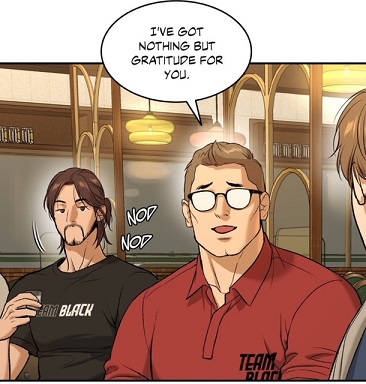 (chapter 43), but when confronted with a serious incident, he failed to take responsibility or make a decisive choice
 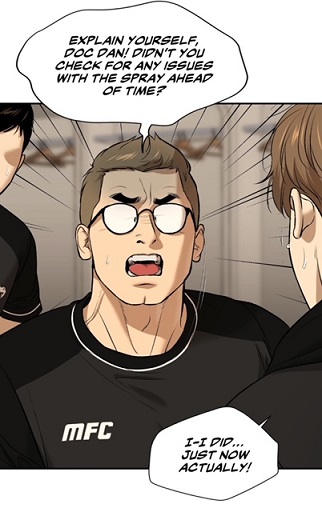 (chapter 50), allowing others to step in instead. Later, rather than addressing his inaction,
  (chapter 52) he deflected blame onto Jaekyung, holding him accountable for his own passivity and incompetence. Instead of facing the consequences of past mistakes, the coach and manager prefers to erase them entirely, bringing in a new physical therapist
 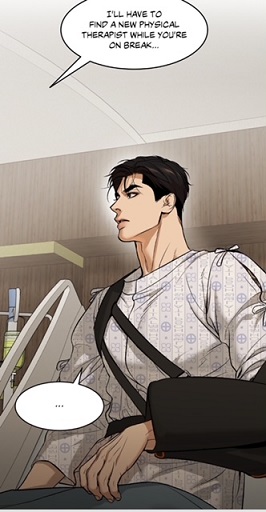 (chapter 53), as if the past never happened. By doing so, he reinforces Jaekyung’s belief in his so-called ‘jinx,’ manipulating the fighter’s perception of events and contributing to a distorted memory of reality. Meanwhile, the manager must face the reality that change is inevitable and that Jaekyung’s evolution does not mean his own irrelevance. However, his position must change.
Thus I am still expecting that the doctor will fall very sick. All of these men can not act, as if the past was like the future. They are not immortal. Kim Dan’s worsening condition would force the couple to reconsider their perceptions of time—Jaekyung in terms of regret, and Kim Dan in terms of embracing a future not defined by resignation and fear. I would even add that so far, the doctor has never confessed to the champion that he feels his life jinxed as well.  (chapter 59)
The Fickle Nature of Jinx and the Power to Reclaim the Future
And now, you are wondering why I chose to focus on chapter 62 again, where I examined chapter 63 only one time. My reasoning is the following. In season 1, after his first night with Kim Dan, Joo Jaekyung made a terrific experience.  (chapter 5) He felt so empowered that he won very quickly.
 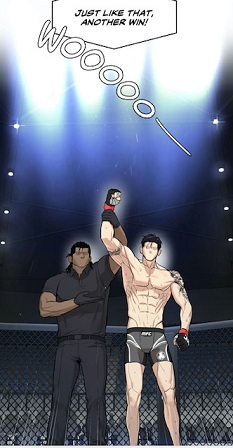 (chapter 5) But this good vibe was attributed to the sex with Kim Dan and unfortunately linked to his match. The reality was that he had slept better and longer. So by recreating the past, Kim Dan places the athlete in front of a choice. What matters in his life? His title or his peace of mind? He is correcting the champion’s distorted memory. Kim Dan is the reason why he can rest properly and not the title. Don’t forget that he was suggesting to go separate ways during the massage. But if he sleeps better before gaining his title, he won’t feel the urge to return quickly to the ring. In the living room, he was still acting as the celebrity, but in the bed chamber he is now gradually pushed to leave his title out of the bedroom. Now, in the bedroom he becomes a man and can almost make a mistake as a lover. (chapter 63)
This analysis Fickle Jinx, Faded Past, encapsulates not only the essence of this transformation, but also outlines the existence of a crossroad. A jinx is something unpredictable, unstable—like Jaekyung’s belief in controlling his own path without interference. But just as a jinx can turn against its owner, his sense of certainty is now in flux. At the same time, relying on a certain person signifies taking a leap of faith. He is taking a new road. Meanwhile, Kim Dan’s faded past represents his attempt to erase what has shaped him, but fading does not mean disappearing—it lingers, influencing every step he takes. He can not erase the death of the poor puppy:  (chapter 59) However, he needs to realize that his physical and mental recovery can only happen, if he truly wishes it. From my perspective, the doctor has to sense that he is not on his own, he has someone by his side who supports him emotionally and mentally.
Ultimately, both must reach a point where their decisions are no longer dictated by their pasts but by conscious choice. They need to recognize that freedom does not come from escaping the past or justifying it, but from choosing to move beyond it. However, this can only happen, when both meditate and become true to themselves. At the same time, both must become more curious about their partner and past life. Only then, they will be able to listen to each other and understand each other.
PS: I am still waiting for a confession outside, close to nature: in the woods and in front of the ocean.
Feel free to comment. If you have any suggestion for topics or Manhwas, feel free to ask. If you enjoyed reading it, retweet it or push the button like. My Reddit-Instagram-Tumblr-Twitter account is: @bebebisous33. Thanks for reading and for the support, particularly, I would like to thank all the new followers and people recommending my blog.

 Bebebisous33s' analyses in K-Dramaland and Manhwas
This essay made me realize, perhaps in the past this is how Jaekyung managed to convince himself he is jinxed and he can solve it by doing his older pre-match routine- he must have faced a conspiracy of sabotage and he felt he is unable to directly confront and solve it for it had overpowered his strength and destroyed his body. So he invented this Jinx to accommodate his feeling of powerless to stop this from happening to him assert a sense of control. However it only temporarily made him feel better and didn’t address the root cause of his suffering aka not being able to confront people who destroyed him aka his shoulder and the trauma around it. So it continued to fester for years, since he had no one to talk to or understand what he is going through. Namwook perhaps saved him from “life of criminal activity” by helping him transition from underground fighting to legitimate sports but he was a bad listener and only assumed things about Jaekyung, showing his ability to physically shut him down if he talked back in a way he disliked. So for a person who was raised with the idea that he is worthless if he is not physically capable of earning his worth or fighting his problems, he is trash, he decides to avoid thinking or talking about it since it shows that there are forces in the world who hurt him without being stronger than him and he cannot deal with that.
This is why it is getting easier for him to accommodate Dan into his “Jinx routine” for he developed this routine as a coping mechanism not due to genuine accidental coincidences like most believers do who believe in Miracle of Gods or something. When I first read the blurb of the story I was wondering if the conflict won’t be when Jaekyung fails a match despite sex with Dan and thus, will be forced to chose between him and his belief. Although in a way that crossroad did came, he didn’t put up much of a fight or blamed Dan for his failure due to his inability to be Jinx talisman but for prosaic, secular reasons like his failure as PT to protect his own kit and hence protect his body. His better mental condition and his willingness to chase a person who would understand already made him more forgiving and less strict with his perception about Jinx which shows his upward trajectory towards personal growth. He is controlled by his past fears but he is showing signs of trying to accommodate his disbelief v/s belief in the abuser’s words.
Dan’s case of being controlled by fears of past abandonment is definitely true and indeed mirrors how Jaekyung acted. The difference is the way he lets his fear of abandonment freeze him into inaction and self victimization. He believes he hurt his patient and Jaekyung but it isn’t enough to spur him into action to rectify it since he is feeling worse about it and hence he cannot do anything as far he is concerned.
I remember thinking how season 2 is basically a speed-run of Dan would have been like had Jaekyung not saved him by dangling the 5k dollar offer in front of his face- a man unable to deal with the death of his Grandmother, debt ridden and surrounded by predatory loan sharks who would take his dignity and money and life if he didn’t wake up to reality. This is why I think the difference between season 1 and 2 isn’t so much as reality as is perception of reality- Dan has power over whether he can take the offer of money and walk away from this even after or during this event but he felt like he is powerless due to his inability to accept that his Halmoni cannot be saved and hence the atmosphere of power imbalance and fear and hence miscommunication.
His sense of powerlessness comes from his own inability to face the fear of being abandoned by people he loves whether by death or choice. The season 2 change of location shows here Dan feels like he can control the narrative and hence he has power to dictate where Jaekyung can go and what he is thinking. However even THAT is an illusion just like the illusion of helplessness in season1 – Jaekyung in reality never agreed with his assessment neither his deal to leave and his trauma and depression filled decision is just another reactive, self harm decision not something he is genuinely controlling of another person or himself ( hence his shivering hand, which shows deep down he is anxious and scared about what he is doing and thinks he would know after this). Once he realizes he has let fear of abandonment cloud his judgement for he can also judge people wrong, is when this hold of depression will lessen. Dan needs to realize that he is not a perpetual victim and hence always right- he can be wrong, he can be biased and hence can make mistakes in judgement.
I realized as I was typing this that in season 1 although Dan’s judgemental attitude towards Jaekyung changed and he fell in love, never at any point he ever admitted he judged him wrong to begin with or apologize for thinking this way. He simply changed his mind and never deeply thought on why he thought he was a stupid, sex crazed, lover beating , brute all this time. This is why he feels at ease judging him badly again and rewriting his history and feelings motivated by depression. He needs to get out of his own head and see things from outsider perspective- to truly become selfless. Dan’s desire to matter to Jaekyung is solely resting on the idea that he can earn his love without putting out his own vulnerability and treating him like his feckless Halmoni. His fear of abandonment will be gone when he would realize he is just a flawed human and deserved to be loved and love in return without expecting anything in return.
Only then he would be able to be the kind of companion who Jaekyung can open up to and reveal his deepest trauma and heal.A Dan who is at a mental state where he cannot hear anyone else’s suffering but his own ( the way he never apologized to the aged patient and only did to the family when they threatened his career) is not in a fit state to be someone who can help break the hold of Jinx over Jaekyung completely anyway. I think at this point opening about Jinx and showing his willingness to stick it out despite Dan being a brat will show Dan he was never abandoned truly and he has been unfair to Jaekyung to think he abandoned him( when he didn’t think the same for Potato, probably because he never cared enough to think he is responsible for his emotional well being) . He would see how real abandonment works beside being physically left behind when he collapses and the one who cares is Jaekyung and not Halmoni. Halmoni is opposite of Potato for Dan thinks she has already done too much for him so his expectations are always on low side for her but how low can they remain when he also cannot deny his mortality ( a life he thinks he has stolen , this longevity from his Halmoni by making her work too hard in her twilight years) and she remains fairly indifferent?
LikeLiked by 2 people
The grandmother put a lot of responsibility on her grandchild, when the latter was a child. She wanted him to become adult as soon as possible. However, if the man gets sick or his „suicidal thoughts“ reach the grandmother‘s ears, it is clear that she can not avoid accountability. She might be emotionally detached, yet she can not escape from her responsibility, for she is now living among people.
LikeLiked by 1 person
Yup, I think despite pressure of accountability I can see her trying to avoid it anyway for she can always claim ignorance due to her immobility due to sickness and being tired due to treatments and hence no time to pay attention to her grandson. It might motivate her to talk about the absent parents thinking perhaps talking about them finally would ease his mind and he won’t do something this reckless and leave her in a lurch like this.
LikeLiked by 2 people
However, her ignorance is the evidence of her neglect because she could have talked to Kim Dan. She tried to persuade him to go back to Seoul, but if she had questioned him, she would have known. And if Kim Dan remained so silent, people should come to the conclusion that he was silenced by the grandmother. He had been conditioned to behave that way. I believe, she can not claim powerlessness, as she can talk.
LikeLiked by 1 person