
Please support the authors by reading Manhwas on the official websites. This is where you can read the Manhwa: Jinx But be aware that the Manhwa is a mature Yaoi, which means, it is about homosexuality with explicit scenes. Here is the link of the table of contents about Jinx. Here is the link where you can find the table of contents of analyzed Manhwas. Here are the links, if you are interested in the first work from Mingwa, BJ Alex, and the 2 previous essays about Jinx Why Sleeping Beauty Had to Bleed part 2 and A Ruthless Fight, A Loverboy Break
It would be great if you could make some donations/sponsoring: Ko-fi.com/bebebisous33 That way, you can support me with “coffee” so that I have the energy to keep examining Manhwas. Besides, I need to cover up the expenses for this blog.

The Warm Hand and the THUD
The final penthouse sequence becomes even crueler once one realizes that Kim Dan may be misreading the sensory evidence itself.
The squeezing and warmth of Jaekyung’s hand can function as comfort and reassurance 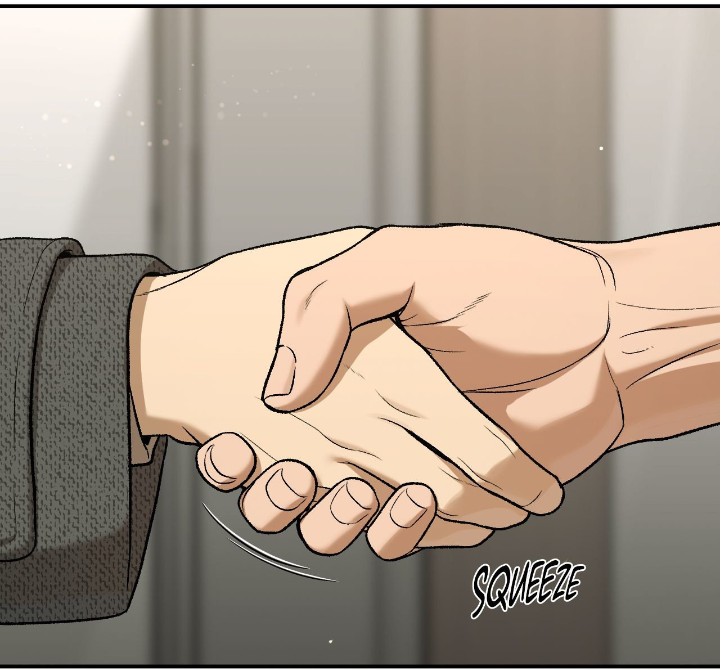 (chapter 100), convincing Kim Dan that the champion is alive, stable, and therefore ultimately “fine.” But warmth does not necessarily signify health. It can also indicate fever, exhaustion, overexertion, and a body approaching collapse. Thus the tactile comfort Kim Dan clings to may actually conceal the severity of Jaekyung’s condition rather than disprove it.
This reinterpretation fundamentally alters the meaning of the final “THUD.” 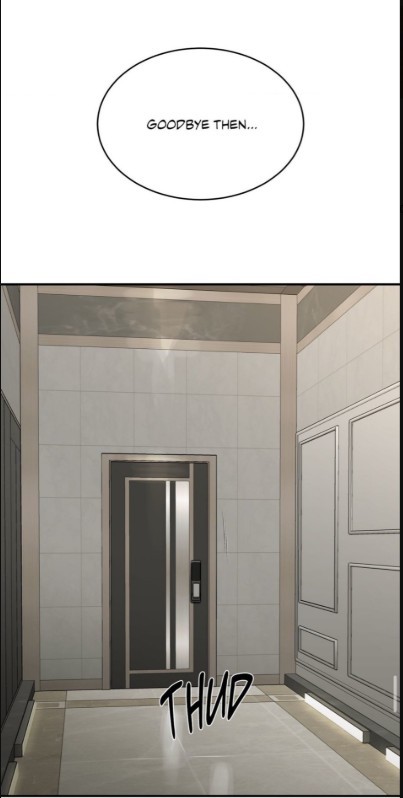 (chapter 100)
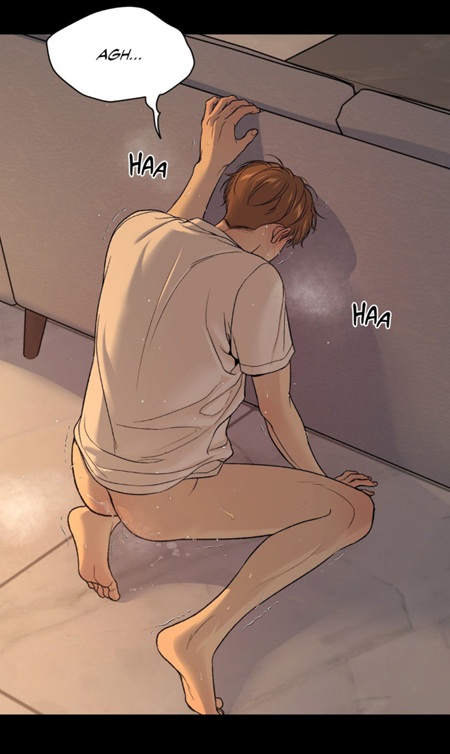
Importantly, Mingwa does not visually show the collapse or wobbling itself. Instead, she makes both Kim Dan and the readers hear it. That distinction matters enormously because if she had visually depicted Jaekyung collapsing onto the floor, the interpretation would immediately become fixed and undeniable. Instead, she traps both Kim Dan and the readers inside uncertainty or into a false illusion.
Kim Dan sees the hollow eyes, the trembling exhaustion, the devastated face 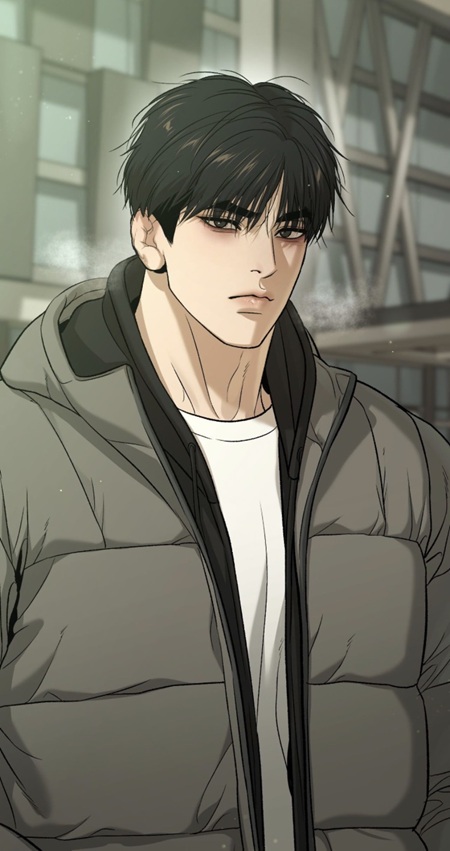 (chapter 100), the passivity, and the emotional distance. Yet he doesn’t initiate any conversation. On the other hand, the warm hand even allows him to construct a safer narrative.
 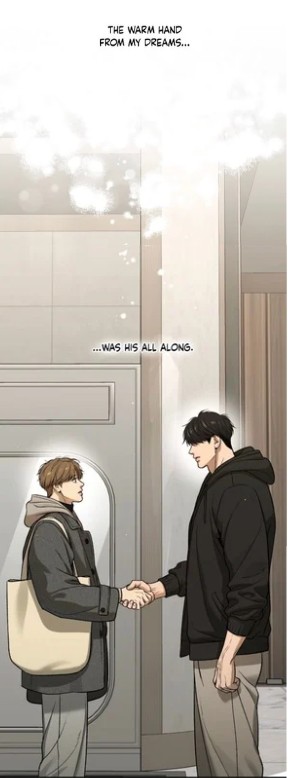 (chapter 100) The champion was not hurt, he won the match. He is warm. He will recover. There is nothing to fear.
The “THUD” violently interrupts this emotional minimization.
And the timing matters profoundly because according to me, Kim Dan has not actually left yet. The chapter only creates the illusion of departure. The words “Goodbye then…” remain suspended through the ellipsis itself. Kim Dan still stands at the entrance. He has not crossed the threshold yet. The goodbye remains emotionally unfinished. He is waiting for a response or word from his lover. 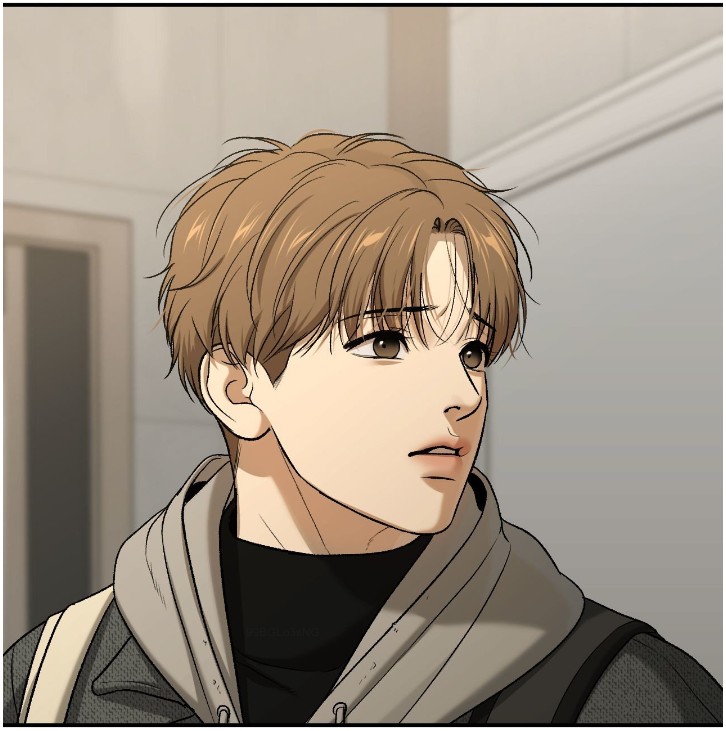 By uttering the phrase, “Goodbye then…”, Kim Dan suddenly shifts from a passive observer of his own fate to the active arbiter of the narrative. He is the one stepping forward to single-handedly determine the meaning of the separation, dictating the final emotional framing, and drawing the absolute conclusion of the relationship itself.
(chapter 100) The sound forces reality back into the sensory field before Kim Dan can finalize the goodbye psychologically.
This pivot exposes a profound structural shift: it reveals the sudden emergence of power.
This is not a display of external authority, physical dominance, or toxic control. Instead, it represents something far more critical to his psychological survival: the reclamation of narrative and emotional agency. For the first time in the text, he is no longer waiting to be discarded or directed; he is attempting to author his own ending.
Thus the “THUD” becomes the sound of reality interrupting self-erasure before separation can become real. (chapter 100) By shattering his sensory anesthesia, the physical weight of that sound completely dismantles Kim Dan’s constructed fantasy of “noble self-sacrifice.” Up until this exact threshold, his mind had processed his departure as a perfectly balanced, clean transaction. 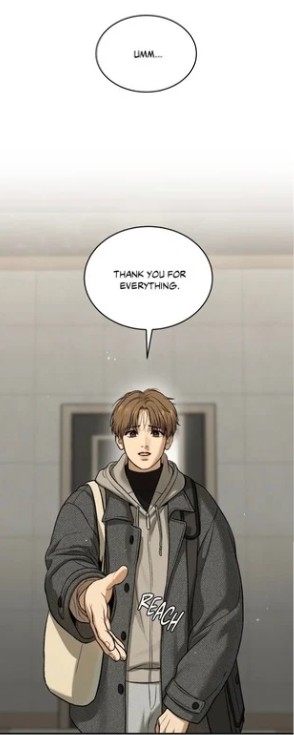 (chapter 100) In his internal trauma script, he was performing a deeply logical, protective act: paying his final respects, leaving behind the material markers of a dissolved contract, and erasing his “toxic, burdening presence” so that the champion could return to unencumbered glory.
But the unyielding gravity of the “THUD” forces a terrifying realization into his consciousness: he has completely excluded his own personhood from his moral universe. 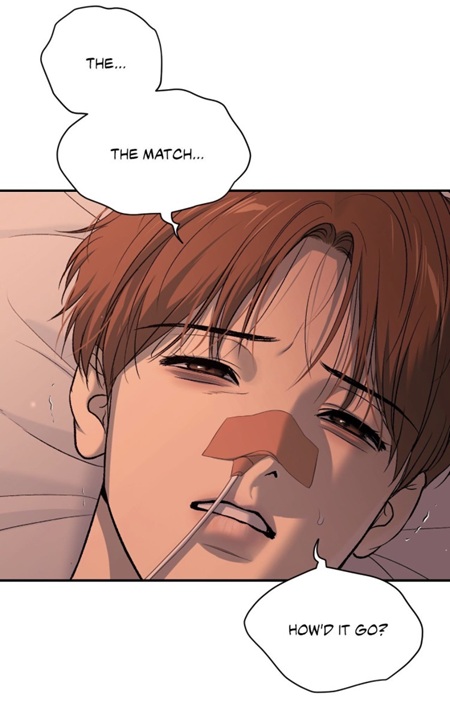 (chapter 98) While Kim Dan possessed a fierce, uncompromising moral compass when defending the life of his grandmother—violently pushing the wolf’s hand away to establish that a dying human body is infinitely more important than sex, duty, or financial leverage
 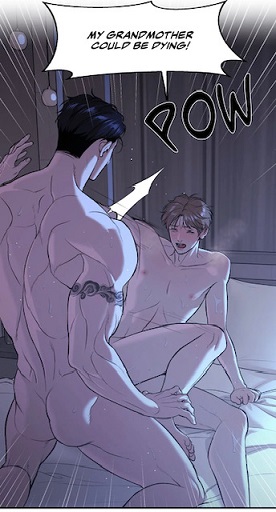 (Chapter 21)—he systematically denies himself that same basic right to exist.
When lying in a pool of his own blood in Chapter 98, reaching up to touch Jaekyung’s face, he forced a desperate mandate upon the champion: 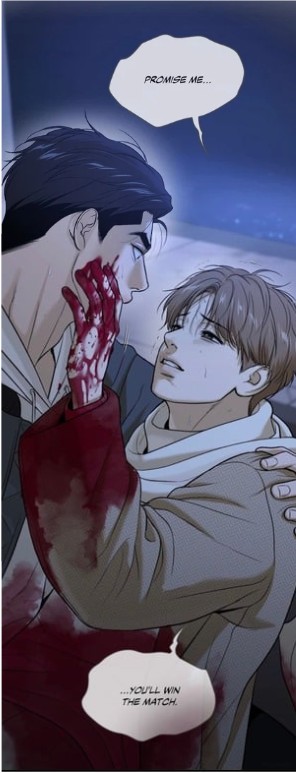 (chapter 98) In that agonizing moment, Dan entirely broke his own foundational principle. He demanded that Jaekyung prioritize performance, utility, and a championship title over a dying human life. The irony is that here, he thinks he is being selfless. Nonetheless, Doc Dan, in his pursuit of self-erasure, accidentally acts with immense psychological cruelty. He forces Jaekyung into a horrific repetition compulsion: abandoning a dying loved one for the sake of the ring.
He remains tragically blind to the profound psychological heartlessness of this request which he repeats much later. 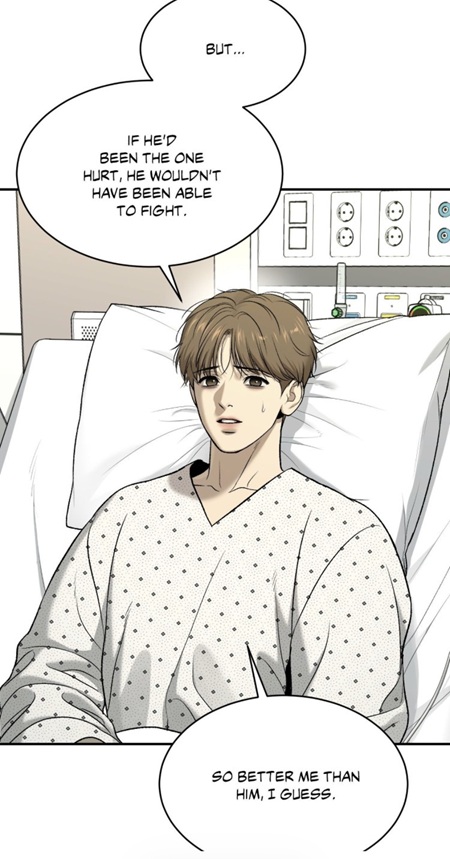 (chapter 100) For Joo Jaekyung, the match had instantly lost all meaning; his entire world was paralyzed by the terror of losing Dan. By pushing the champion to abandon his bleeding body to go perform inside an octagon, Kim Dan did not save him—he unconsciously destroyed him. He pushed a man whose childhood trauma permanently fused athletic victory with the catastrophic death of his parents
  (Chapter 73) to go repeat his ultimate nightmare.
The “THUD” at the threshold is the precise moment Kim Dan is forced to face the real-world consequences of his own words. Throughout their entire history, Dan has remained completely unable to initiate emotional intimacy, perpetually waiting for a sign from Joo Jaekyung (chapter 100), as if he wanted to be “chosen” rather than face the terrifying vulnerability of making a conscious choice himself. He wanted to be selected by the champion, to be granted permission to exist in that space, rather than taking the emotional risk to claim it. If he continues to treat his own life as expendable and vanishes into the dark, his submissive endurance ceases to be a shield—it becomes an active weapon. 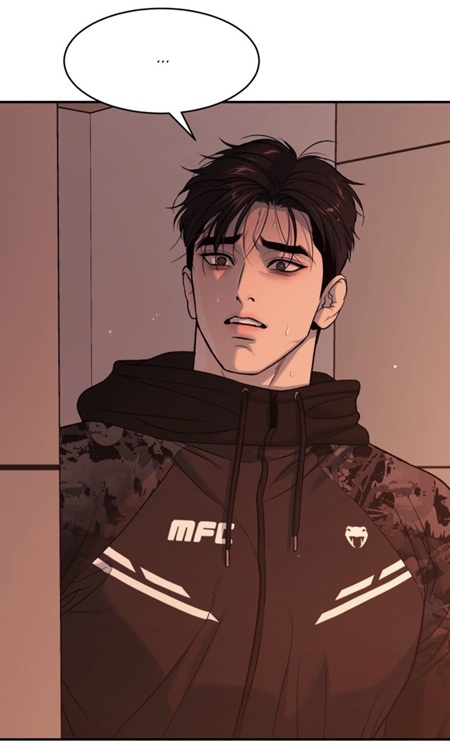 (chapter 100) His passivity would effectively sentence Jaekyung to a lifetime of crushing, unearned guilt, forcing the champion to live as a monster in his own mind, convinced his presence only contaminates and destroys.
By attempting to slip away like a grateful ghost under the guise of an polite eviction, Kim Dan stands on the precipice of becoming the active architect of another person’s ruin. The hollow echo of the penthouse layout confronts him with the ultimate baseline of psychological responsibility: gratitude cannot engineer happiness (chapter 100), and if he walks away now, he will lose everything permanently—not because he was abandoned, but because he refused to choose to stay.
Toxic Positivity and Emotional Avoidance
Episode 100 repeatedly exposes characters trying to impose the illusion that everything will be alright now onto a reality that is psychologically catastrophic underneath.
Superficially, the chapter appears filled with healing imagery. Flowers, gifts 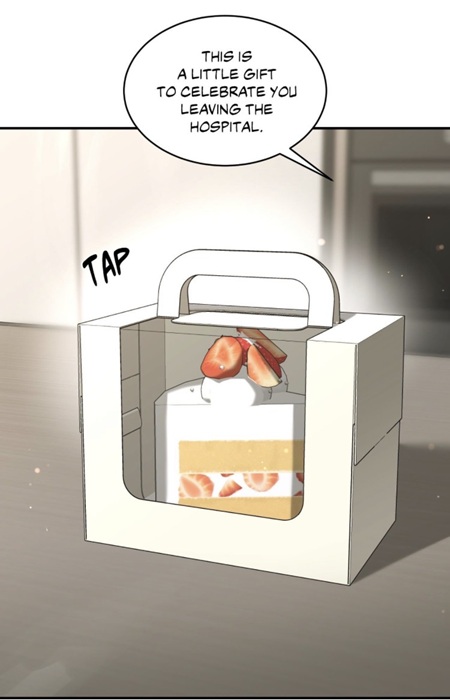 (chapter 100), warm lighting, soft dialogue
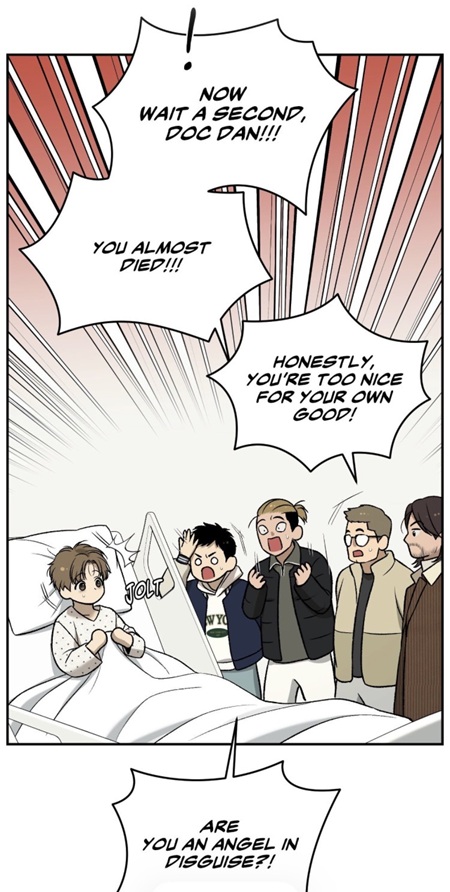 (chapter 100), survival, tenderness, and celebration aesthetically imitate recovery. And yet emotionally, the chapter feels suffocating.
Kim Dan constantly reframes catastrophe into survivable meaning. (chapter 100) At least the champion could fight. At least the title was reclaimed. At least he survived. He will recover. Everything will return to normal.
This is not healthy optimism. It is emotional minimization.
Team Black behaves similarly. Their affection is genuine, yet emotionally superficial. They celebrate survival, normalize the situation quickly, and soothe symptoms without confronting the psychological devastation underneath. Nobody openly says that something is deeply wrong. (chapter 100) In fact, they even praises him.
The final penthouse sequence therefore becomes a brutal dismantling of toxic positivity. Kim Dan tries to impose a healthy narrative onto reality. The debt is gone. The danger passed. Now he should leave. But Mingwa repeatedly inserts contradictions: the terrible face, the red eyes, the hesitation, the trembling silence, the disappointed mouth 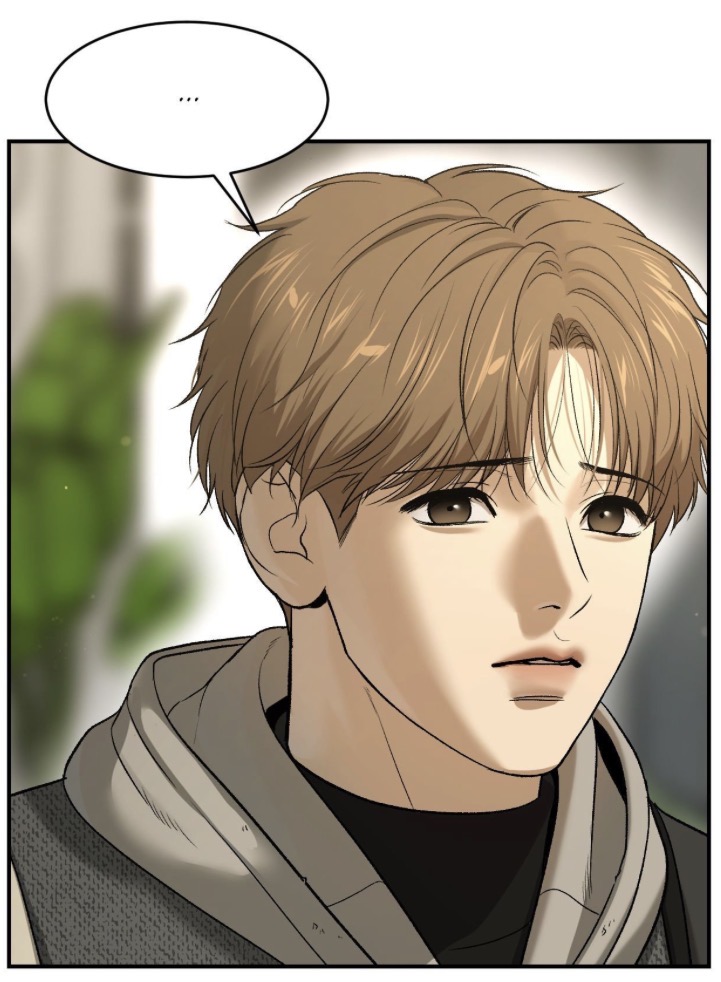 (chapter 100), the unfinished goodbye, the warm hand, and finally the THUD.
The chapter refuses emotional simplification. The body keeps revealing the truth the characters attempt to suppress verbally.
The Day Kim Dan Says “Stay With Me”
For this reason, Kim Dan’s emotional evolution cannot find its resolution in the moment Joo Jaekyung drops his armor and whispers, “Stay with me.” The phrase, though revolutionary within the champion’s own psychological history 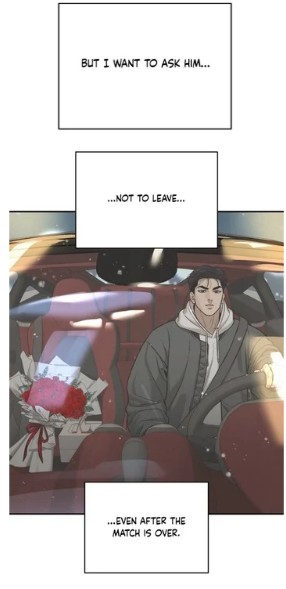 (chapter 97), remains entirely inaccessible to Kim Dan’s internal landscape. Within Dan’s trauma script, he remains the permanently expendable entity—the one who leaves quietly, adapts silently, apologizes constantly, and survives solely through systematic self-erasure.
Even after the profound physical and emotional crises of the hospitalization, his cognitive architecture is frozen in a state of hyper-vigilant transition; he prepares for a clean disappearance rather than a permanent settlement. He proceeds under the lifelong assumption that companionship is inherently temporary, strictly conditional, and destined to dissolve into an empty room the moment his immediate economic or physical utility reaches its natural expiration.
The roots of this profound emotional paralysis extend far deeper than his history with Joo Jaekyung, anchoring themselves in a foundational, intergenerational rupture. Episode 57 quietly exposes that Kim Dan’s defining psychological wound is not the surface-level humiliation of poverty, debt, or social isolation, but a deep-seated terror of broken permanence. 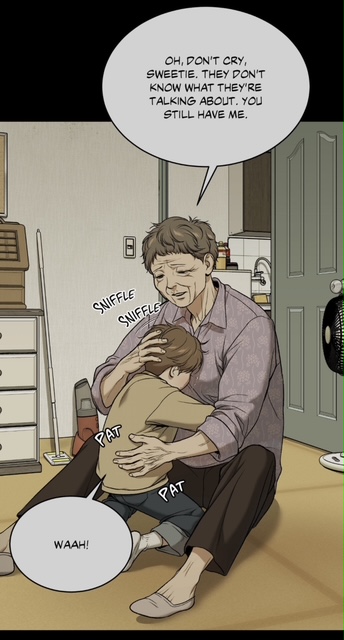 (chapter 57) In the opening movements of his recurrent nightmare, the memory presents itself under an illusion of maternal comfort. Following an episode of childhood bullying
  (chapter 57), a young Kim Dan is met with the rhythmic, tactile reassurance of his grandmother: “Grandma will always be there for you. You still have me” (Chapter 57). However, the nightmare exposes the truth: the starting point of the little boy’s suffering is the opened door:
  (chapter 57), a symbol for departure which is strongly connected to loss and grief.
This tactile grounding is structurally paramount. (chapter 57) Within the visual language of the series, the physical act of patting and touch is established as the literal definition of safety, presence, and protection. The young Dan cries, yet he surrenders completely to the belief that emotional warmth possesses the power to permanently stabilize external violence. It is this total emotional vulnerability that renders his tearful, smiling response—“Okay!”—so retroactively devastating. 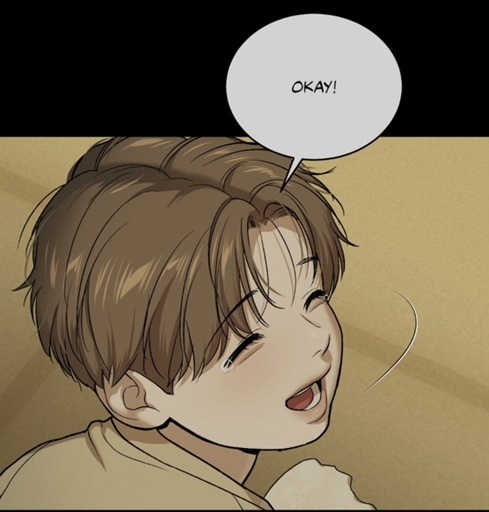 (chapter 57) It represents an absolute, unhedged contract with permanence; a child’s clean surrender to the promise that an attachment figure will remain physically and emotionally reachable no matter what hostile forces gather outside.
The Trauma of the Unfinished Departure
The structural cruelty of the nightmare, however, lies in its precise chronological sequence: first comes absolute reassurance, and then comes immediate, total erasure. The bullying itself is merely an ambient hostility; the true catastrophe is the sudden mutation of safety into a void. 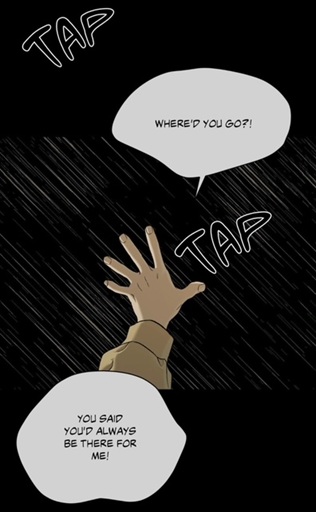 (chapter 57) The visual transition occurs through one of the most chilling images in the work: a domestic door standing wide open, leading directly into an unyielding, featureless darkness. Kim Dan stands paralyzed before this threshold, staring into the empty entrance as he quietly whispers, (Chapter 57).
The emotional structure of the nightmare unfolds through a devastating chain of associations. It begins with maternal reassurance and the promise of permanence: “Grandma will always be there for you.” For a brief moment, Kim Dan experiences emotional safety, physical comfort, and the belief that attachment can protect him from the hostility of the outside world. Yet this reassurance is immediately shattered by sudden disappearance. The opened door leading into darkness transforms the promise of permanence into a terrifying image of absence and emotional unreachability.
The Ultimate Catastrophe: The Dissolution of Roots
The small, raw mound of dirt that marks the final resting place of the unnamed puppy in Episode 59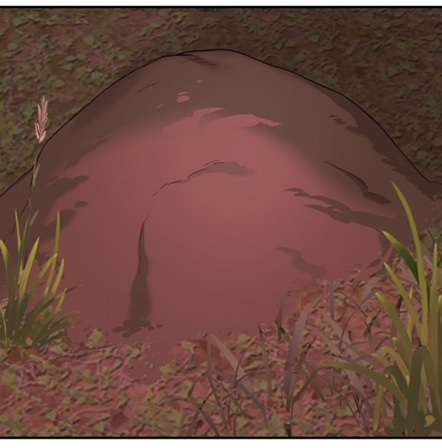 (Chapter 59) functions as a tragic monument to emotional minimization. The animal is given no name, no formal ceremony, and no structural acknowledgment within the household’s narrative. For the elderly landlord, this loss is processed through a lens of pragmatic detachment, viewed merely as a rustic, natural occurrence
  (chapter 59) or a minor rut
 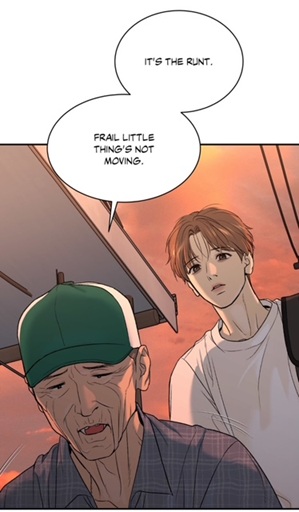 (chapter 59) in life’s ordinary routine. Because the grandfather dismisses the animal’s death as a trivial event, he lacks the psychological framework to connect it to Kim Dan’s rapid mental deterioration. He never mentions the loss to Joo Jaekyung, effectively sealing the entire event in absolute silence.
 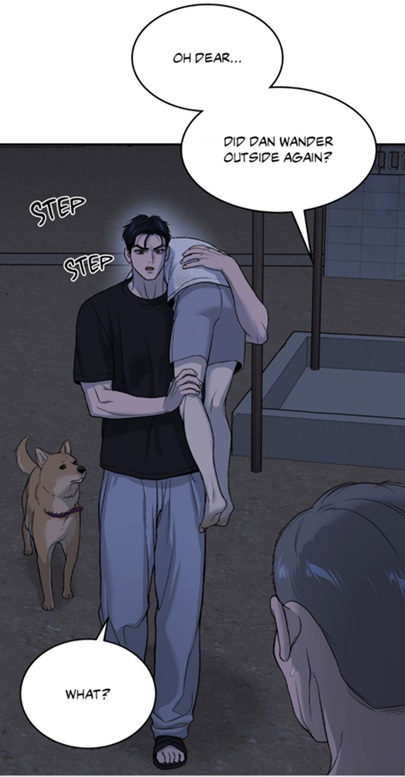 (chapter 65) By treating the puppy’s death as an unnoteworthy blip, the narrative environment strips Kim Dan of the baseline right to grieve, signaling to him that his sorrow is disproportionate, inconvenient, and ultimately invisible to the outside world.
This absolute isolation of grief yields the catastrophic psychological state exposed in Chapter 65. When the grandfather notes that Dan slips out like he is in a trance and expresses a terrifying fear that the young man might end up drowning himself in the ocean, he is witnessing a literalized enactment of Kim Dan’s trauma script. This behavior is not simple drunkenness or passive depression, but an active, sleepwalking surrender to the void. The ocean represents the ultimate space of non-existence, a vast, featureless horizon where a burdened identity can be quietly dissolved without disrupting the lives of others. When Joo Jaekyung physically intercepts Dan, lifting him out of the darkness and carrying him away from the shoreline, the physical contrast is stark. Jaekyung acts as an anchor of brute force, yet he remains completely blind to the ghost haunting Dan’s mind, pulling his body from the surf without ever reaching the unmourned graveyard hidden beneath the silence.
The true terror of this sequence lies in how the puppy’s death 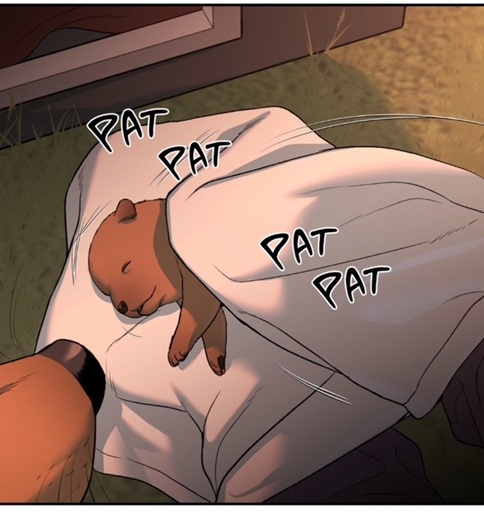 (chapter 59) interacts with Shin Okja’s terminal timeline.
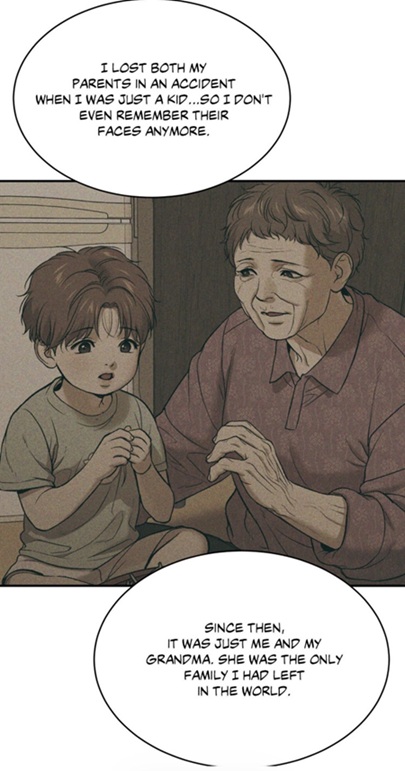
 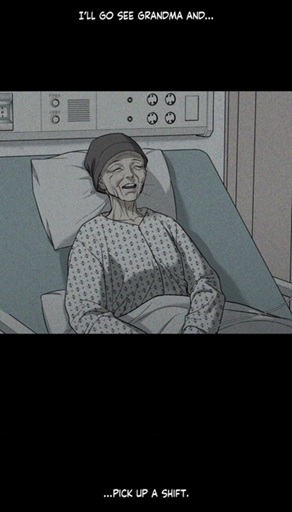 (chapter 59) With his grandmother’s days explicitly numbered, the sudden erasure of the unnamed puppy strips Kim Dan of his final buffer against the original, unresolved trauma of his life, which is the unmourned loss of his parents. While Dan consciously frames his terror as the fear of being left entirely alone in a hostile world, the deeper, more paralyzing horror is the total collapse of his past. Shin Okja is not merely his protector; she is the sole living witness to his childhood, his family, and his original identity. Because Kim Dan was never permitted to properly process, understand, or mourn the sudden disappearance of his parents, his psychological roots were already incredibly fragile. The photographs in Chapter 94 prove that his childhood was materially documented through images of flower fields and playgrounds
 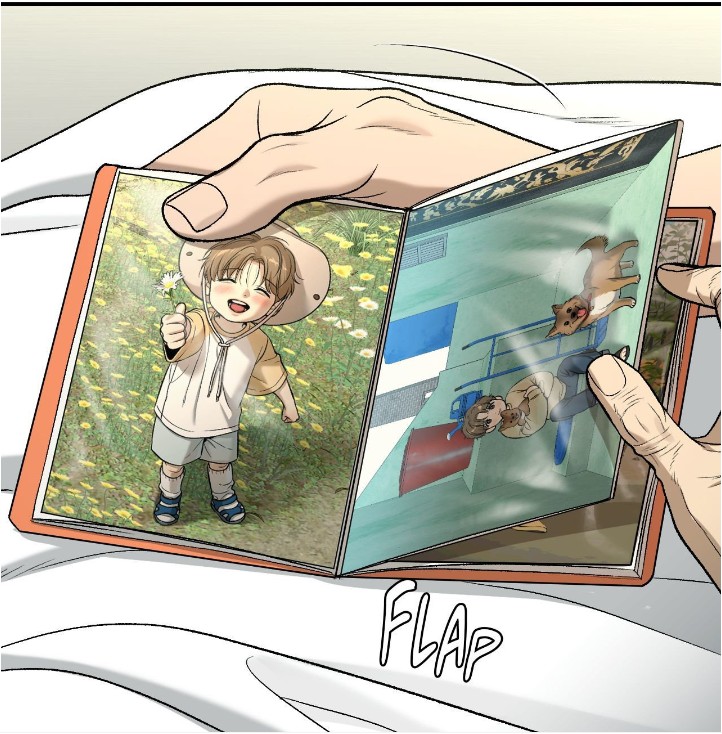 (chapter 94), yet his parents were completely erased from that visual record. When the puppy dies unnoticed and the grandmother approaches the threshold of death, Kim Dan faces an existential erasure. If the last person who remembers where he came from vanishes, then Kim Dan ceases to exist in any meaningful, continuous reality, meaning his submissive endurance and his active steps toward the ocean are the desperate measures of a man who believes he has already become a ghost. However, what the physical therapist doesn’t know is that Shin Okja that Shin Okja already shared fragments of her memories and emotional legacy with Joo Jaekyung.
 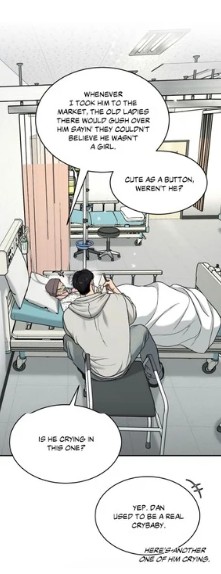 (chapter 94) By showing the champion photographs from Kim Dan’s childhood, she quietly creates continuity where Kim Dan unconsciously expects only disappearance and erasure. In this sense, her final wish almost functions like a symbolic letter left behind through the athlete himself.
 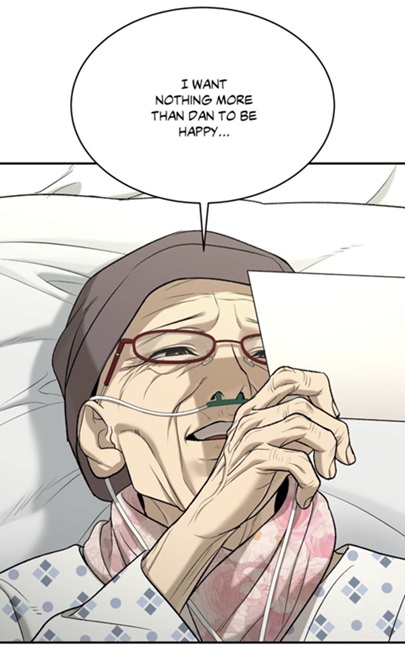 (chapter 94) When she tells Joo Jaekyung that she wants nothing more than for Kim Dan to be happy and hopes he can be happy beside him too
 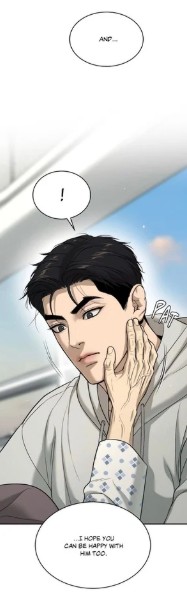 (chapter 100), she unknowingly entrusts Kim Dan’s future, memories, and emotional continuity to another person before disappearing herself.
The Ghostification of Memory
This disappearance does not function as an isolated fear connected only to Shin Okja herself. 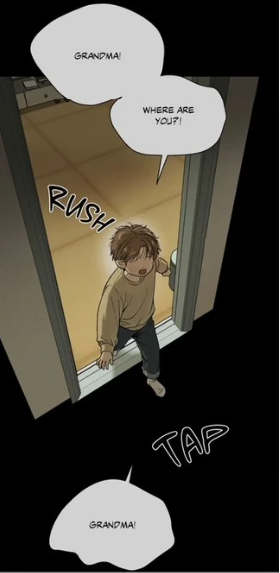 (chapter 57) Instead, it unconsciously reactivates Kim Dan’s primary unresolved trauma: the sudden loss of his parents in the accident.
  (chapter 94) Once again, someone leaves the domestic space and fails to return, forcing Kim Dan into the same helpless position of searching after an absence he cannot stop, explain, or emotionally resolve.
From this repeated experience of broken permanence emerges the survival script governing Kim Dan’s adult personality. He learns to survive not through emotional dependence or openly expressed need, but through usefulness, gratitude, debt repayment, minimization, and self-erasure. Because attachment repeatedly became associated with disappearance and loss, Kim Dan unconsciously prepares himself for abandonment before it fully arrives.
The psychological consequences of this unresolved loss extend even further than abandonment itself. Kim Dan does not simply lose people; he gradually loses the ability to stabilize their emotional reality internally. (chapter 94) When he quietly admits that he no longer remembers the faces of his parents, the statement appears deceptively simple. Yet psychologically, it reveals a catastrophic form of erasure. A face is not merely visual recognition. It anchors identity, continuity, emotional permanence, and existence itself. Without faces, loved ones gradually begin resembling ghosts.
This realization retrospectively illuminates Kim Dan’s strange confusion between dream and reality throughout episode 100. 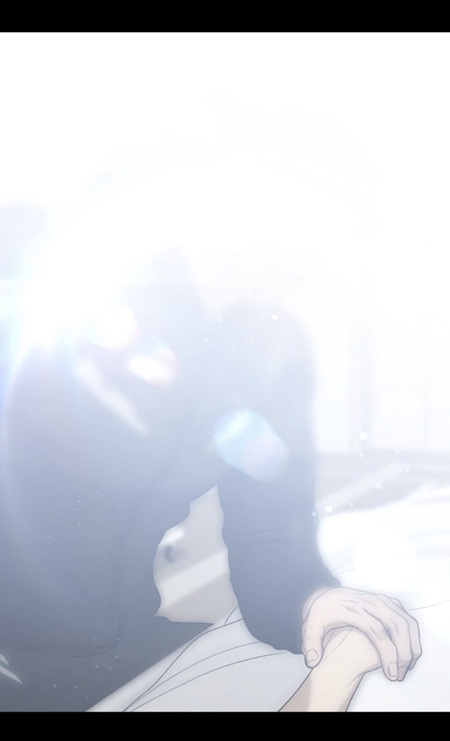 (chapter 100) Even when Joo Jaekyung physically touches him, lies beside him, squeezes his hand, and leaves behind tangible traces of his presence, Kim Dan struggles to stabilize the champion visually and emotionally. The face repeatedly appears blurred, hidden by light, partially obscured, or emotionally difficult to grasp. The body says: someone is here. But the unstable face says: they may disappear again.
In this sense, Kim Dan’s fear is not merely abandonment. It is the dissolution of emotional reality itself around attachment.
Visual Continuity and the Ghostification of Memory
And yet Mingwa quietly introduces one object that resists this entire process of emotional erasure: the amusement park photograph. 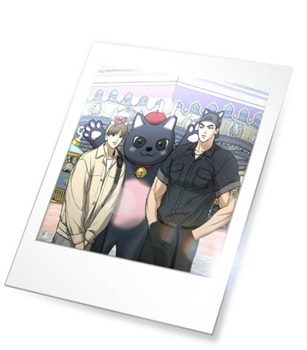 (chapter 87) Unlike the fragmented visions haunting episode 100, the picture materially preserves Joo Jaekyung outside the role of the “Emperor.” The champion appears awkward, calm, almost ordinary, participating in a shared moment rather than performing dominance publicly. For perhaps one of the first times in Kim Dan’s life, emotional continuity becomes fixed visibly instead of dissolving into absence.
This matters profoundly because the photograph directly opposes ghostification itself. Kim Dan cannot reduce the moment into pure dream, hallucination, or unstable memory. The image preserves:
- a face,
- a shared place,
- a lived moment,
- and emotional reality existing outside survival and obligation.
For perhaps the first time since the death of his parents, attachment becomes materially anchored to reality rather than threatened by disappearance. Unlike the faceless disappearance haunting his childhood memories, Joo Jaekyung remains materially visible inside the frame.
And this may explain why the present-day “champion” after the stabbing feels so emotionally disorienting. 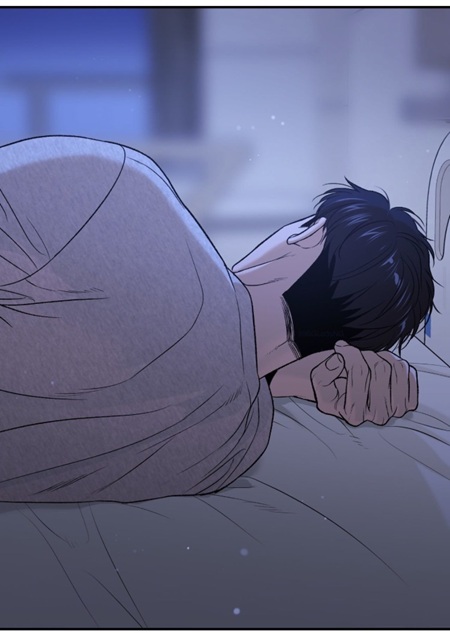 (chapter 100) The exhausted, sleepless figure wandering through the hospital at night no longer fully resembles the mythological Emperor constructed by MFC and Team Black. (chapter 100) Yet neither does he fully resemble the ordinary man preserved inside the amusement park photograph. (chapter 87) Kim Dan therefore stands psychologically between two competing realities: the collapsing public myth and the fragile private human being slowly emerging underneath it.
The photographs shown in episode 94 make this even more devastating. (chapter 94) Shin Okja preserves Kim Dan’s childhood materially: the flower fields, the playground, the puppy, the smiling child. Yet the parents remain entirely absent from the preserved emotional narrative. Even more importantly, the photographs themselves are shown not to Kim Dan, but to Joo Jaekyung. Symbolically, the champion becomes a witness to a forgotten continuity that Kim Dan himself can no longer fully access.
As a result, Kim Dan’s personal history becomes emotionally frozen around a single surviving relationship: himself and his grandmother. Everything surrounding that bond gradually dissolves into invisibility. The accident does not merely take his parents away physically; it erases emotional continuity itself. The lost family begins resembling something unreal, distant, and ghost-like inside memory.
This also explains the overwhelming terror surrounding Shin Okja’s eventual death.  (chapter 57) If she disappears too, Kim Dan unconsciously fears losing not only companionship, but the final remaining anchor connecting him to his own past and identity.
The horror of this panel is entirely acoustic and structural rather than explicitly violent. (chapter 57) The grandmother has vanished. The room remains physically ordinary, recognizable, and static, yet the emotional center that validated the space has been instantaneously wiped clean. The open doorway stands as a permanent monument to an irreversible departure. Someone has left, and Kim Dan has once again arrived too late to stop the hemorrhage.
This specific visual configuration exposes a profound sense of absolute powerlessness before disappearance. Throughout his life, Dan experiences the people and animals 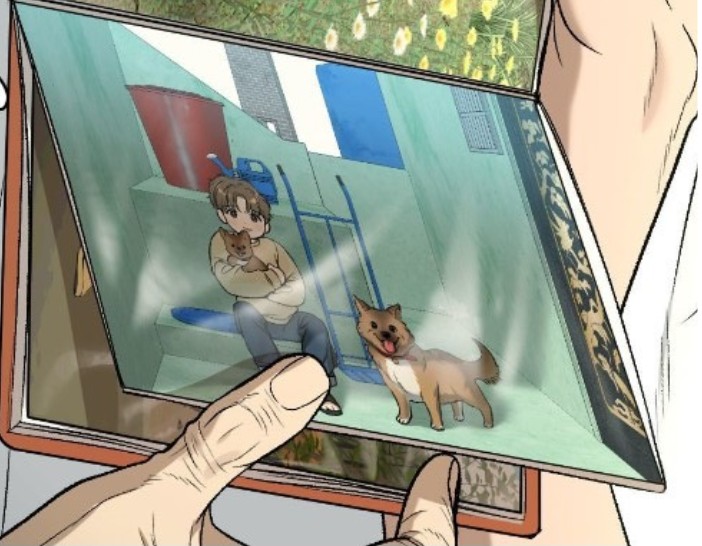 (chapter 94) upon whom his emotional survival depends as slipping away into unreachability without warning, explanation, or the possibility of interception.
This nightmare sequence does not merely depict the fear of losing Shin Okja; it functions as a psychological screen memory that reactivates the original, unresolved catastrophe of his childhood: the sudden death of his parents in an accident. The parental loss functions psychologically not as an understood transition, but as a sudden, violent departure completely stripped of emotional closure. Someone leaves the domestic sphere and simply never returns. The child is left behind to wander the empty rooms (chapter 57), searching for an explanation, a destination, or a lingering trace of continuity.
When Shin Okja later assumes the role of his sole protector, she temporarily stabilizes this primary wound  , but her eventual illness and death cause the old terror to resurface with unchecked force. The reassurance that “Grandma will always be there” collapses into the exact same darkness, rain, breathlessness, and panic that defined the loss of his parents.
This cycle of sudden, unexplained abandonment implants a devastating psychological mechanism within Kim Dan: survivor’s guilt. He internalizes the catastrophic belief that his continued existence is a fundamental material and emotional burden to those around him. He adopts an identity of extreme minimization—reducing his physical footprint, eating nothing under stress, apologizing for occupying space, and preemptively preparing for his own eviction before the other person can abandon him first. Because he unconsciously links deep emotional attachment to sudden death, ruin, or disappearance, he learns to survive by never allowing himself to believe in permanence again.
To openly ask another human being to stay beside him is an act of agency completely prohibited by his trauma script. Such a request requires a fundamental faith in the stability of the future. It requires trusting that a shared warmth will not instantly mutate into an empty hallway or a clinical operating room. Trapped within the logic of the opened door in Chapter 57, Kim Dan cannot ask anyone to remain; he can only wait in silence for the inevitable moment they vanish.
Yet one of the cruelest aspects of the relationship is that Joo Jaekyung’s care alone cannot fully dismantle the psychological structure governing Kim Dan’s self-perception. The champion provides financial stability, physical protection, rest, fun 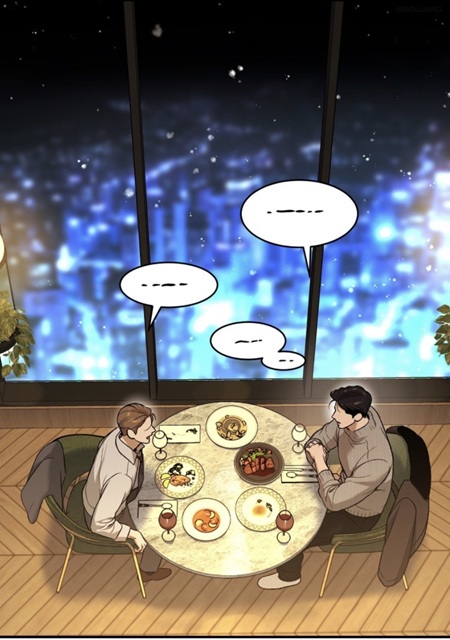 (chapter 89), emotional attachment, and eventually even places Kim Dan above the championship itself. But none of these gestures automatically erase decades of trauma, survivor guilt, and self-erasure. Kim Dan continues interpreting himself through the logic of burden, usefulness, and temporary emotional permission. As a result, even genuine love becomes destabilized inside his perception. Care transforms into guilt. Freedom feels like eviction. Presence becomes dream-like. (chapter 100) And companionship itself remains emotionally difficult to trust.
From Ghost to Sinner: The Inversion of the Trauma Script
That is why the emotional reversal of the story likely requires something much more devastating: Kim Dan witnessing Joo Jaekyung collapse.
Until now, the champion has functioned almost like a force of nature inside Kim Dan’s mind. No matter how wounded, exhausted, or emotionally unstable he became, Jaekyung always remained standing.  (chapter 69)
 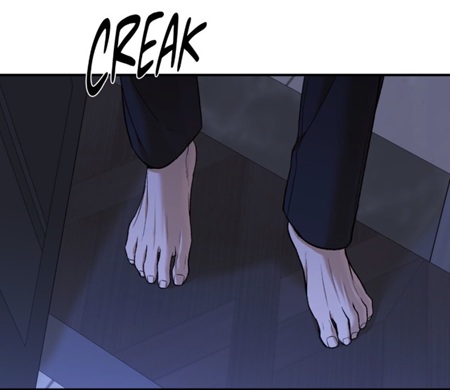 (chapter 91)
But episode 100 quietly dismantles this image. The disheveled hair, dark red eyes from crying and insomnia, starvation, (chapter 100) emotional distance, and nightly wandering all reveal someone slowly destroying himself from within.
If Joo Jaekyung’s body finally gives in — if exhaustion overwhelms him, if his legs give in or if he faints or loses consciousness directly in front of Kim Dan — then the emotional structure of the story would reverse completely. Kim Dan would suddenly experience what Jaekyung experienced in the hospital and at the seaside: the terror of watching someone he loves become physically unresponsive and getting really sick.
This matters profoundly because Kim Dan’s understanding of death has never been linked primarily to gore or violence. (chapter 59) His trauma seems connected instead to stillness, sleep 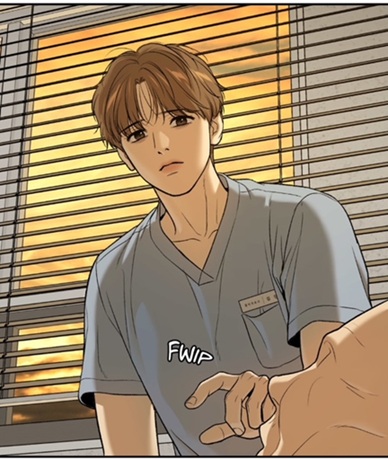 (chapter 59), silence, unconsciousness, and disappearance.
Thus witnessing Jaekyung collapse would strike directly at the center of his childhood trauma.
More importantly, such a moment would destroy Kim Dan’s ability to hide love behind gratitude. He could no longer tell himself that he stayed because he owed something. Instead, he would finally confront the truth: he cannot lose him.
And only then could Kim Dan truly say:
“Stay with me.”
Not as repayment. Not as obligation. Not as gratitude. But as pure emotional need. At the same time, speaking openly about his childhood, the accident, and the disappearance of his parents would force Joo Jaekyung to confront an important truth:Kim Dan’s suffering did not begin with him. He doesn’t know everything about him either. The champion incited the physical therapist not only to confront his traumas, but also to gather courage and affirm himself. He might have caused him some pain, but he did not create the original wounds. Long before entering the octagon’s violent world, Kim Dan had already learned to associate attachment with disappearance, guilt, and emotional instability. Besides, in reality, he is no angel either, just like him a sinner. (chapter 100)
This pivot exposes the agonizing threshold where Kim Dan undergoes a profound psychological transformation: the loss of absolute innocence and the violent birth of true adult maturity. Throughout his life, Dan has operated under the survival script of a grateful ghost, a creature who believes he must minimize his physical and emotional footprint to ensure the survival of those around him.  (chapter 53) A ghost leaves no tracks, carries no weight, and can be evicted or replaced without altering the fabric of the room it inhabited. However, the unyielding weight of the physical collapse at the threshold forces a terrifying realization into his consciousness. By witnessing the catastrophic toll his words and his impending departure have taken on Joo Jaekyung, Kim Dan is stripped of his narrative anesthesia. (chapter 98) He is forced to realize that he is not a ghost at all. Instead, he has become a sinner which is symbolized by the blood left on the athlete’s cheek that night.
This shift from ghost to sinner is monumental because a sinner possesses density, gravity, and the undeniable capacity to inflict a wound. For the first time, Dan cannot hide behind the convenient illusion of his own insignificance; he is confronted with the undeniable evidence that he has left permanent, indelible traces in the champion’s life. He is not replaceable, and he cannot vanish cleanly because his presence has already fundamentally altered the internal architecture of the celebrity. To acknowledge that he has the power to wound Jaekyung is to acknowledge his own personhood and agency.
Paradoxically, this recognition of his own capacity to cause pain becomes the first true validation of his existence as a real, impactful human being. For someone anchored in a trauma script of self-erasure, happiness always appears fragile and temporary, destined to dissolve back into an empty room. Pain, however, possesses undeniable reality. Discovering that he can wound Joo Jaekyung therefore destroys the illusion of his own insignificance.
By forcing the loss of his protective, childlike innocence, this realization marks the birth of his adult maturity. (chapter 100) He can no longer view himself as a passive victim of fate or an expendable burden. If his existence carries enough weight to cause ruin, then it also carries enough weight to cultivate healing. Consequently, his psychological survival ceases to be about achieving safety through total self-erasure. Instead, it matures into a conscious, courageous choice to engage in a mutual exchange of lasting impressions—willingly claiming the power to leave indelible traces in Jaekyung’s heart, while finally allowing Jaekyung to carve permanent, undeniable traces into his own world.
This transformation also fundamentally alters Kim Dan’s relationship to silence and moral judgment. 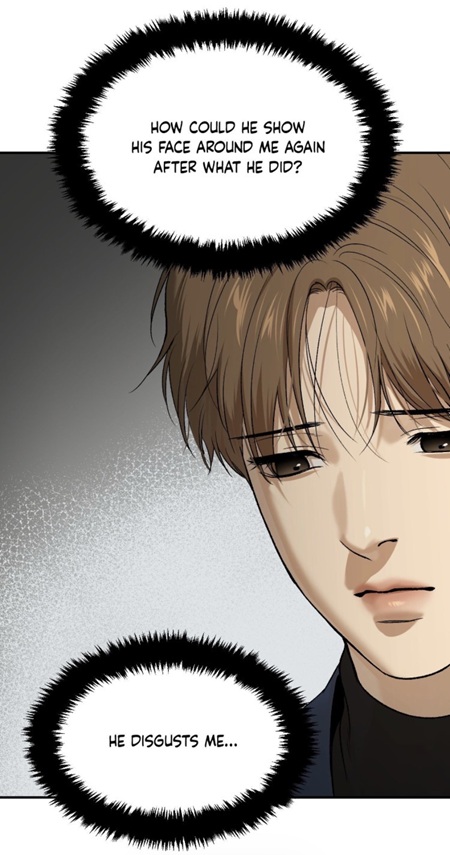 (chapter 91) Throughout the series, he remains almost completely passive toward institutional abuse and exploitation. He never openly confronts the perverted hospital director, never pursues legal retaliation against those who destroyed his livelihood
  (chapter 11), and never truly challenges the structures that repeatedly reduce him to a disposable object. His anger emerges almost exclusively toward Joo Jaekyung because the champion emotionally reaches him deeply enough to wound him personally. (chapter 100) Yet the “THUD” destroys the illusion that passivity itself is harmless. Once Kim Dan realizes that his choices possess the power to devastate another human being emotionally, he can no longer maintain the fantasy of existential insignificance. A ghost silently endures injustice because it believes it lacks the right to leave traces behind.
 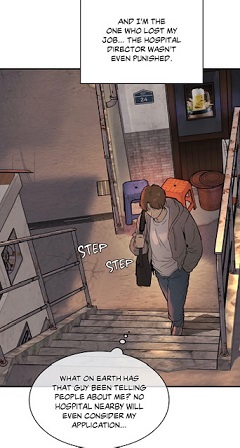 (chapter 1) A sinner, however, possesses moral weight. By recognizing his own capacity to wound, Kim Dan simultaneously acquires the adult authority to judge silence, cowardice, and passivity in others as well.
The Closed Door: The Acoustic Anchor of Reality
Throughout the series, and especially within Kim Dan’s recurring childhood nightmare in Chapter 57, the open door functions as the primal image of abandonment. (chapter 57) It marks the threshold where loved ones disappear into darkness while he remains behind, powerless to stop them from leaving. In Kim Dan’s trauma logic, an open doorway is never neutral. It is a wound left permanently unresolved.
This symbolism returns with devastating force in Chapter 100. (chapter 100) Standing at the entrance of the penthouse, Kim Dan attempts to perform what he believes is a final act of noble self-sacrifice. His suspended “Goodbye then…” reflects the familiar survival strategy that has governed his entire life: leave quietly, minimize the burden, disappear before causing further damage. He still imagines departure as a clean emotional transaction, one in which he can slip away harmlessly like a grateful ghost.
The violent “THUD” of Joo Jaekyung’s collapse destroys this illusion instantly. It brings an end to the generational trauma repetition and as such Kim Dan’s jinx! 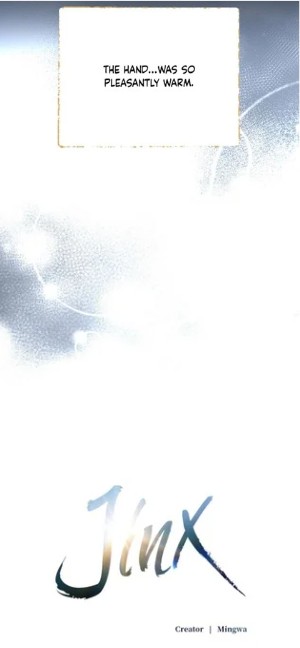 (chapter 100)
The sound functions like an acoustic shockwave tearing through Kim Dan’s entire childhood survival script. For perhaps the first time in his life, he is forced to confront the catastrophic possibility that his passivity is not emotionally neutral. By attempting to erase himself quietly, he is no longer protecting the person he loves. He is actively destroying him. In this sense, Kim Dan unconsciously begins reenacting the very trauma that shaped his own childhood. Just like the parents who vanished beyond the open doorway of his memory  (chapter 19), and just like Shin Okja repeatedly attempting to remove herself from his life for his “own good,”
 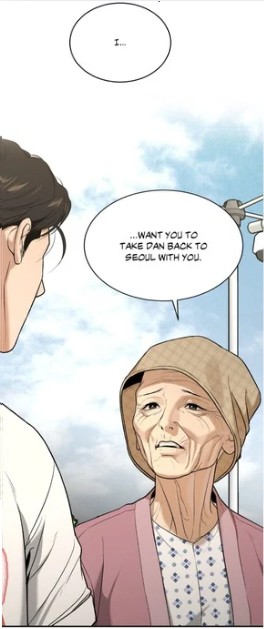 (chapter 65) Kim Dan convinces himself that disappearance is an act of love. The tragedy of the threshold scene lies precisely in this inherited logic of self-removal. He believes he is preventing suffering, while unknowingly reproducing the emotional catastrophe that destroyed him in the first place.
And this is where the scene undergoes its most profound symbolic reversal. (chapter 57) In the childhood nightmare, the open door represented irreversible disappearance and emotional hemorrhage. Here, however, the collapse effectively slams the threshold shut. The exit no longer exists psychologically. Kim Dan cannot continue drifting into the darkness as though his existence leaves no trace behind.
The apartment itself suddenly transforms. The hallway no longer offers escape into abstraction or self-erasure. The sealed space forces Kim Dan to confront the weakened body inside the room and the devastating evidence that his existence leaves real wounds behind.
This realization marks the destruction of the “ghost” identity he has inhabited for years. 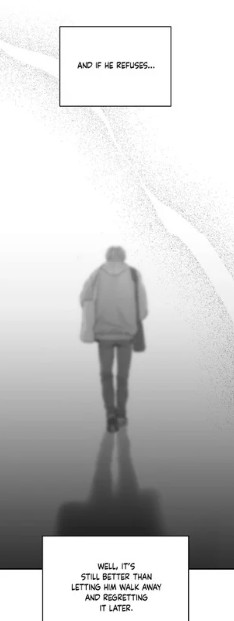 (chapter 97) A ghost passes through spaces invisibly, leaves no wounds behind, and can vanish without fundamentally altering the lives of others. Kim Dan has survived precisely by believing himself replaceable, temporary, and emotionally weightless.
But the body collapsing behind him proves the opposite.
For the first time, Kim Dan is forced to recognize that he possesses the power to wound another human being permanently. And paradoxically, this terrifying recognition becomes the first true confirmation of his own existence. (chapter 100) Pain carries undeniable gravity. Because suffering has always been the most concrete reality in Kim Dan’s life, discovering that he can inflict emotional devastation on Joo Jaekyung shatters the illusion of his own insignificance.
The threshold scene 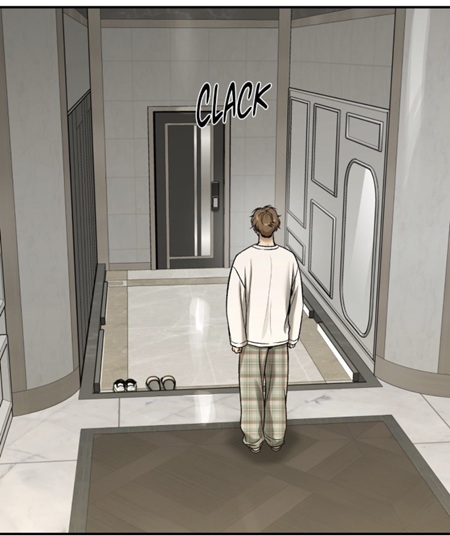 (chapter 96) (chapter 100) therefore becomes the site of an agonizing psychological transformation: the death of passive innocence and the birth of adult responsibility. Kim Dan can no longer remain a silent victim waiting to be chosen, summoned, or emotionally permitted to exist by someone else. The collapse forces him to understand that refusing to choose is itself a choice, and that disappearance can become cruelty when another person’s emotional survival depends upon your continued presence.
In this sense, the “THUD” becomes more than the sound of physical collapse. It is the acoustic force that seals the door against self-erasure. The fantasy of a painless goodbye is destroyed forever. Kim Dan is no longer allowed to vanish into darkness untouched by consequence. He must finally turn around, step away from the threshold, and confront the traces he has already carved into another person’s heart.
Two Ghosts at the Threshold
By the end of episode 100, both protagonists resemble ghosts trapped at an emotional threshold. Kim Dan believes that if he truly loves Jaekyung, he should leave and stop burdening him. 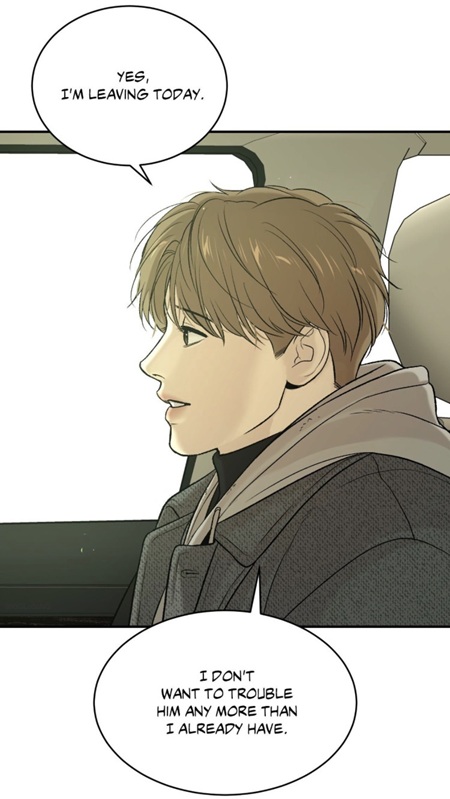 (chapter 100) Joo Jaekyung believes that if he truly loves Kim Dan, he should let him go and stop endangering him.
 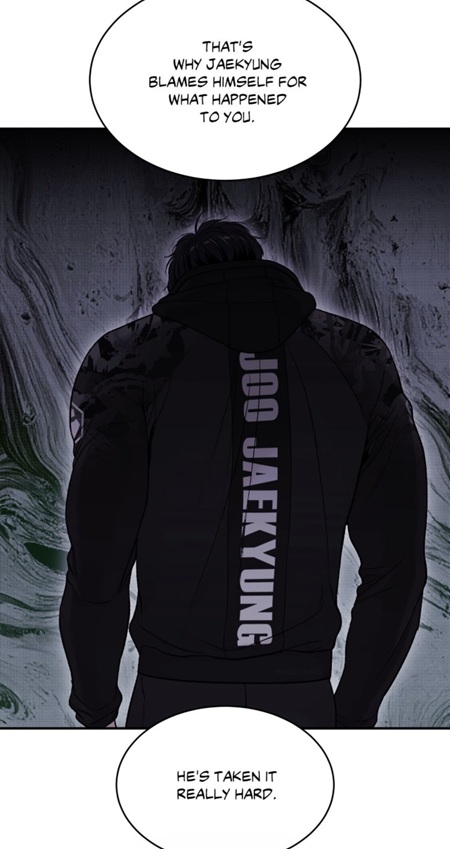 (chapter 100)
Both unconsciously reproduce the same inherited trauma logic: love through disappearance. Yet the webtoon author carefully situates this confrontation not during the stability of daytime, but at sunrise. 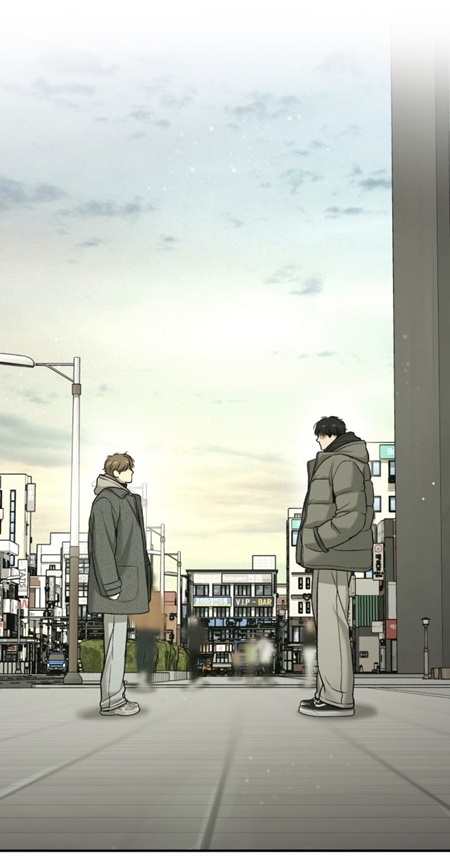 (chapter 100) The timing matters profoundly. Throughout the series, dawn repeatedly appears after moments of emotional rupture, exhaustion, or psychological transition.
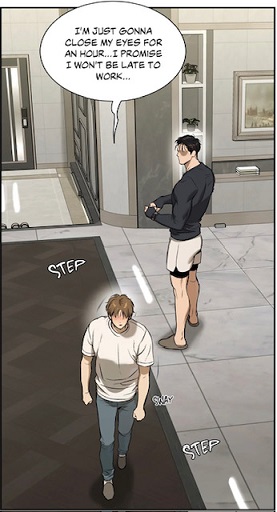
 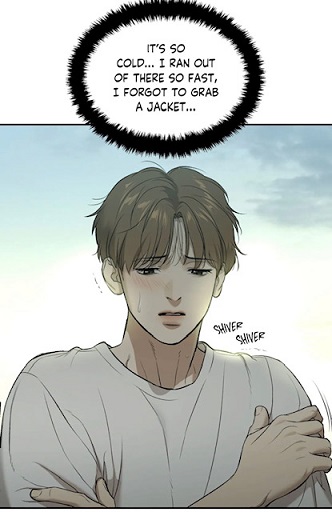 (chapter 21) Kim Dan once returned from the hospital at the break of day after another traumatic encounter, intending only to “rest for an hour” before returning to work, as though emotional catastrophe itself had to be minimized and folded back into routine immediately.
  (chapter 100)
In episode 100, however, sunrise acquires a radically different meaning. 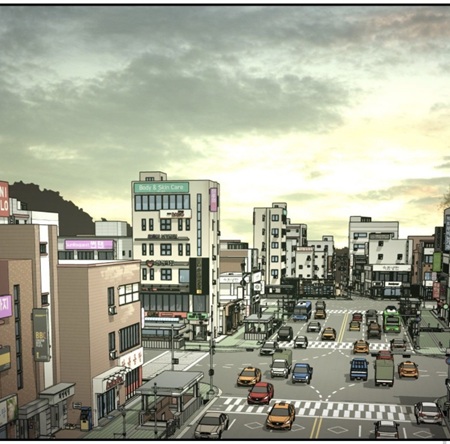 (chapter 100) Mingwa carefully emphasizes the gradual awakening of the city itself through the changing atmosphere of the streets. When Kim Dan first exits the hospital, the urban environment still feels strangely suspended and emotionally empty. The streets remain quiet, the traffic sparse, and the pale sky carries the lingering stillness of night. Both men stand isolated within this transitional hour, suspended psychologically between separation and recognition.
This is perceptible, once you contrast the traffic in the same street during the day. 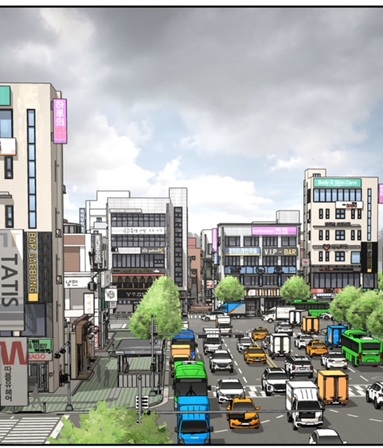 (Chapter 56) So we have to envision the following scenery in episode 100. Cars begin accumulating in the streets, intersections grow crowded, daylight strengthens, and ordinary life resumes around them. The world itself begins moving forward again.
And significantly, this transition unfolds precisely while the “Emperor” identity starts destabilizing visibly. The sleepless figure 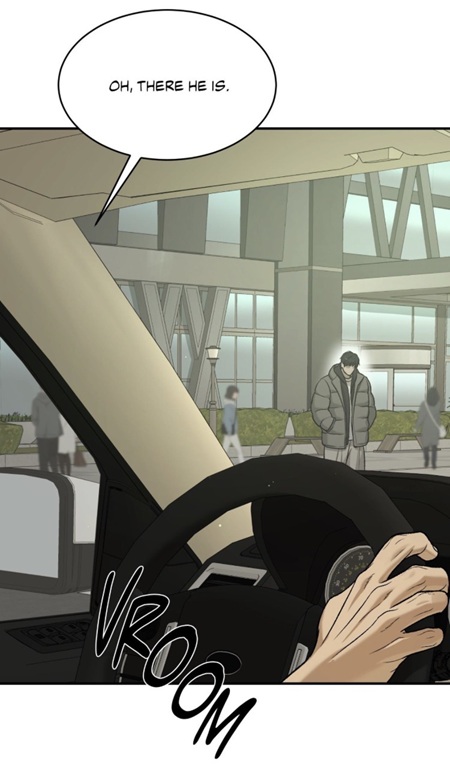 (chapter 100) standing outside the building no longer resembles the untouchable public champion sustained by MFC, Team Black, spectacle, and violence. Instead, the growing daylight increasingly exposes exhaustion, emotional fragility, insomnia, grief, and human vulnerability. (chapter 100) In this sense, the awakening city does not accompany the rebirth of the mythological fighter, but the gradual emergence of the man hidden underneath the role itself.
This may explain why Joo Jaekyung increasingly appears ghost-like throughout the hospitalization arc. 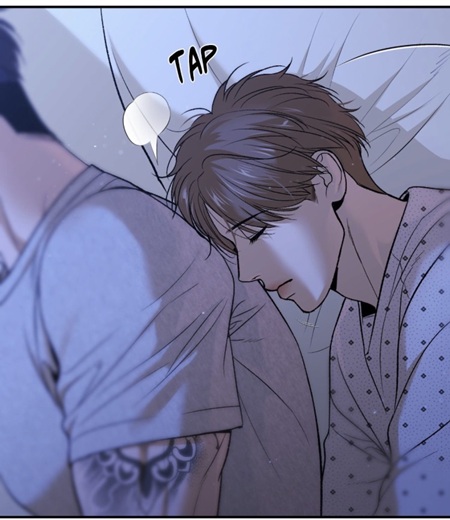 (chapter 100) He does not merely hide from Kim Dan physically. He is unconsciously shedding an identity built entirely around performance, dominance, and emotional suppression. The champion must temporarily become a ghost so that the man himself can finally emerge.
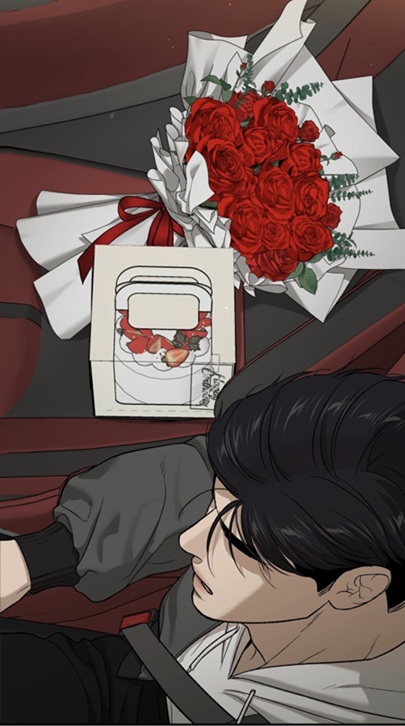
This is why the chapter feels so suffocating despite all its tenderness. The flowers are beautiful, but the giver disappears. The cake is sweet, but the celebration remains broken. The confession exists, but recognition becomes delayed. The warmth is real, but it arrives through traces left behind during darkness rather than open emotional presence.
The Managerial Ghost: Mobility versus Attachment
This transitional atmosphere becomes even more revealing once Park Namwook quietly exits the scene. 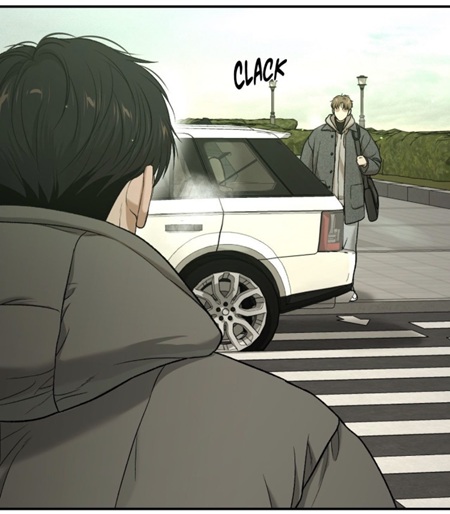 (chapter 100) After dropping Kim Dan off in front of the building, the manager simply drives away without greeting Joo Jaekyung directly or remaining beside him. The movement appears emotionally hollow, especially when contrasted with the unresolved intensity surrounding (chapter 100) “Goodbye then…”. Namwook’s departure resembles transit rather than attachment. He arrives, transports, then disappears again.
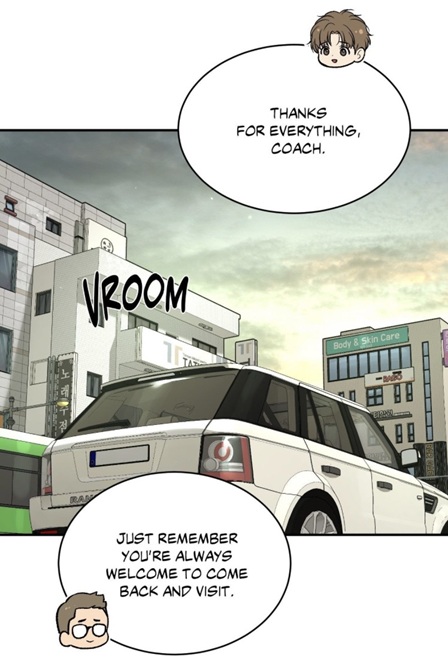
The location itself quietly reinforces this instability. (chapter 100) Park Namwook leaves Kim Dan directly beside a pedestrian crossing: a place not meant for permanence, but for transition. Symbolically, Kim Dan stands neither fully inside the old structure nor fully outside it yet. He remains suspended between identities, relationships, and possible futures. Even Namwook’s language unconsciously reflects his belief that the previous system will continue functioning normally. 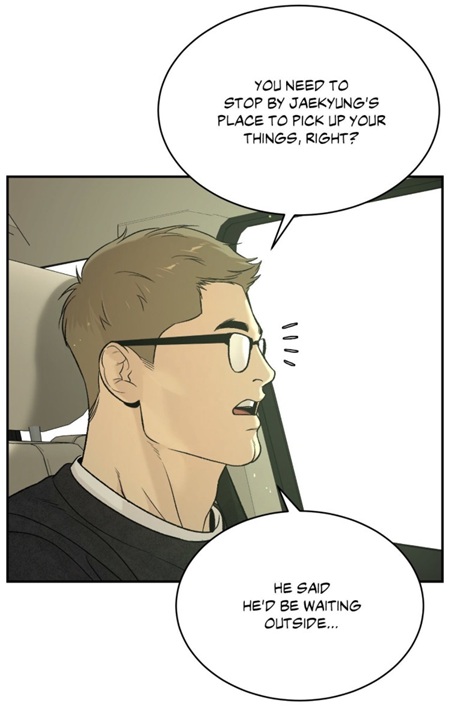 (chapter 100) He assumes Kim Dan will simply “stop by” the penthouse to collect his belongings and perhaps “visit” Team Black again later. The manager still imagines continuity, routine, and return.
  (chapter 100)
And significantly, he expects Joo Jaekyung to behave according to that same logic. In episode 95, the time visible inside the car showing 9 a.m., 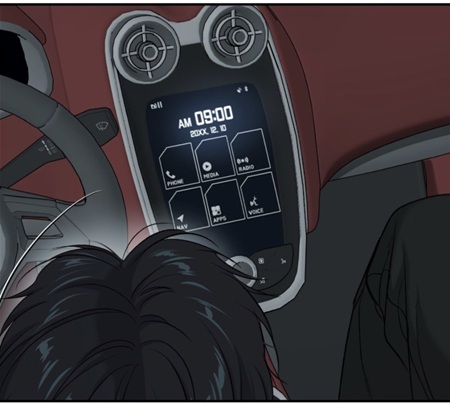 (chapter 95) reveals their routine, though here, a small transgression took place. Joo Jaekyung let Kim Dan rest a little:
 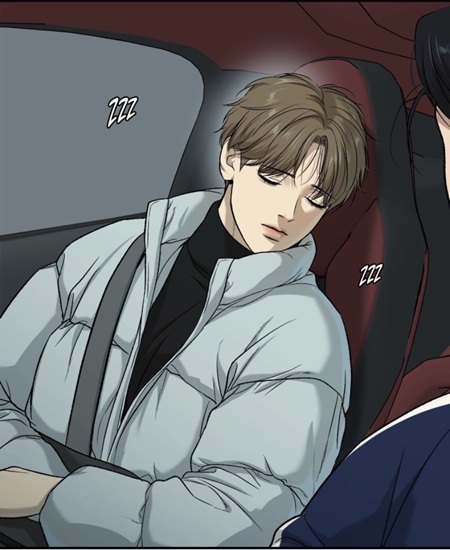 (chapter 95). This scene indicated that Joo Jaekyung had already started psychologically drifting far outside this structure. He was already prioritizing his lover. Joo Jaekyung does not wake him despite obligations, schedules, or practical inconvenience. Instead, he silently watches over him for a while and allows the moment of rest to continue. The car therefore temporarily stops functioning as transportation toward labor, treatment, or fighting. It becomes a protected space where exhaustion is permitted rather than suppressed.
So the sunrise indicates that it is much earlier than 9.00 am, an indication that Park Namwook is already going to the gym in order to “welcome” the next physical therapist. By helping him with the discharge so early, the manager avoids a goodbye between the members of Team Black and Kim Dan. (chapter 100) The sleepless wandering through hospital corridors, the nightly visits, the emotional collapse after the stabbing, and the abandonment of ordinary rhythm (no shower and jogging) all reveal someone no longer functioning according to the predictable temporality of the fighting system.
Park Namwook, however, continues organizing life through functionality, punctuality, and performance structure. (chapter 100) This explains why his farewell with Kim Dan feels emotionally procedural (chapter 100) rather than existential. He drops him off, tells him he is always welcome to visit again, then drives away. (chapter 100) The car itself begins symbolizing Namwook’s role inside Joo Jaekyung’s life: constant movement toward fights, schedules, media obligations, and professional continuity, yet strangely little emotional presence outside those structures.
This irony becomes even sharper when connected to episode 5, where Park Namwook laughed about the circumstances concerning Yosep’s divorce. 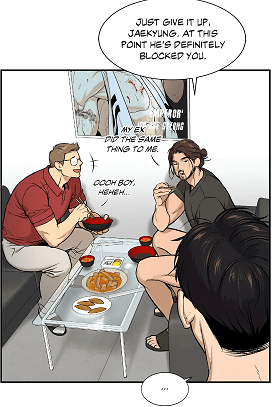 (chapter 5) Yosep had been “ghosted” emotionally by his wife, abandoned after years of prioritizing MMA over personal life. Yet episode 100 quietly suggests that Namwook himself increasingly resembles a ghost within Joo Jaekyung’s life. This explicates why he didn’t help him getting discharged from the hospital
 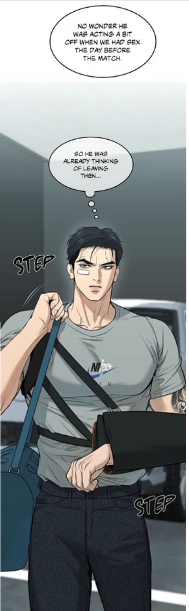 (chapter 53) contrary to the athlete. So this kindness toward the “hamster” is not truly selfless. He constantly orbits the champion professionally while remaining emotionally detached from the human being underneath the “Emperor” persona. And the best evidence is this video sent on his birthday:
 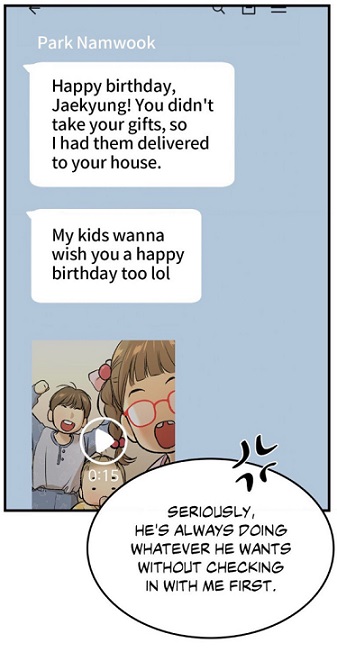 (chapter 45)
The contrast with Kim Dan therefore becomes profound. (chapter 100) “Goodbye then…” emerges from overwhelming attachment, fear of abandonment, survivor guilt, and anticipatory self-erasure. Park Namwook’s farewell, by contrast, remains rooted in managerial continuity. (chapter 100) One goodbye fears love too much. The other barely recognizes it at all.
And significantly, Joo Jaekyung waits outside. (chapter 100) Not inside the gym. Not inside the penthouse. Not inside the institutional spaces that previously defined the “Emperor.” 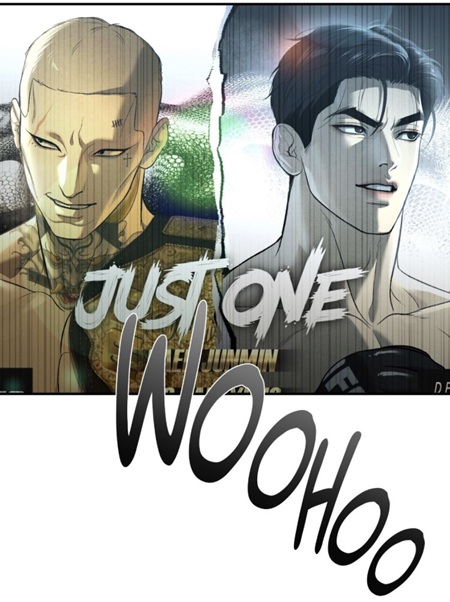 (chapter 100) He stands beyond them at dawn, beside the crossing itself, as though the story were positioning him between an ending identity and an unknown new life.
And perhaps this becomes the true tragedy of Jinx. The problem is not absence of love. The problem is that Shin Okja, Kim Dan, and Joo Jaekyung all mistake self-erasure for love itself.
Yet beneath all the silence, flowers, interrupted confessions, ghostly gestures, and unfinished goodbyes, one desperate emotional truth slowly begins emerging: Kim Dan’s journey may ultimately require something even more transformative than saying:
“Stay with me.”
Because throughout his entire life, he has always been the one left behind. (chapter 57) The child standing before the opened door. The survivor searching after disappearance. The person quietly remaining while others vanish into emotional unreachability.
Beyond the Penthouse: Moving Toward a Shared Horizon
This is why the true emotional resolution of the story may instead take the form of a radically different sentence:
“Come with me, a new version of this scene
(chapter 43)
Unlike “Stay with me,” which still implies remaining inside someone else’s space, (chapter 100) “Come with me” fundamentally reverses the structure of abandonment itself. It completely changes the geography of their relationship. It grants Kim Dan absolute agency. He is no longer walking out of an open door into darkness; he is the one opening a path forward. 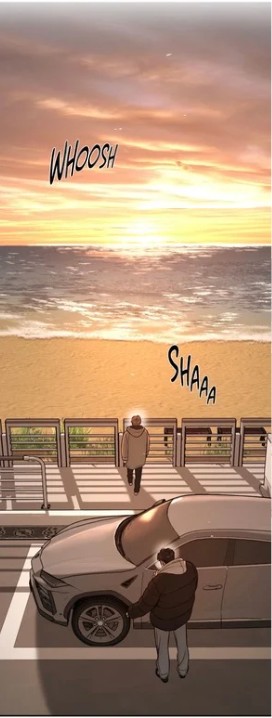 (chapter 94) He is inviting the champion into a mutual, shared trajectory.
In many ways, the story quietly foreshadows this desire much earlier through Kim Dan’s simple wish to travel together after Shin Okja leaves the hospital. 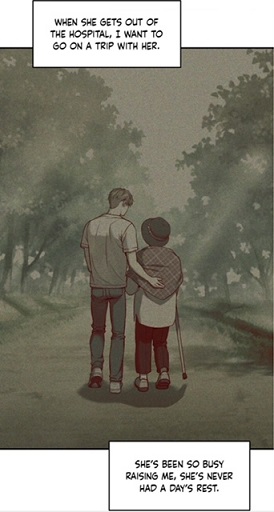 (chapter 47) At first glance, the statement appears almost painfully modest: a peaceful trip, rest, shared time, ordinary companionship. Yet symbolically, the fantasy already contains the emotional architecture of “Come with me.” The dream is not organized around labor, debt, treatment, fighting, or survival. It imagines movement detached from institutional obligation entirely.
This matters profoundly because throughout most of the series, movement itself remains tied to exhaustion and performance. Cars transport fighters toward matches. Hospital corridors lead toward illness and disappearance. The gym reduces bodies into instruments of labor and spectacle. The imagined trip in the woods quietly opposes all of these structures. It represents shared movement without destination anxiety, emotional utility, or professional function.
In this sense, “Come with me” does not simply mean romantic attachment. It signifies the possibility of constructing a life no longer governed entirely by trauma, survival, or institutional rhythm. For perhaps the first time, Kim Dan is no longer merely trying to endure another day. He is imagining a future someone else could walk beside him willingly.
It completely upends his lifelong belief that he is an expendable creature who must minimize his physical footprint to avoid being discarded.
And psychologically, this changes everything. For perhaps the first time in his life, Kim Dan would no longer be searching after someone vanishing into darkness. Instead, both men would be walking toward the same horizon together, carrying their ghosts openly rather than disappearing behind them. In this sense, the story quietly redefines the meaning of home itself. Home is no longer a fixed place haunted by abandonment, empty rooms, or opened doors. It becomes the place where the loved person remains beside you willingly.  (chapter 69) “Come with me” would illustrate this principle: life is a journey and not a destination.
Feel free to comment. If you have any suggestion for topics or Manhwa, feel free to ask. If you enjoyed reading it, retweet it or push the button like. My Reddit-Instagram-Twitter-Tumblr account is: @bebebisous33. Thanks for reading and for the support, particularly, I would like to thank all the new followers and people recommending my blog.
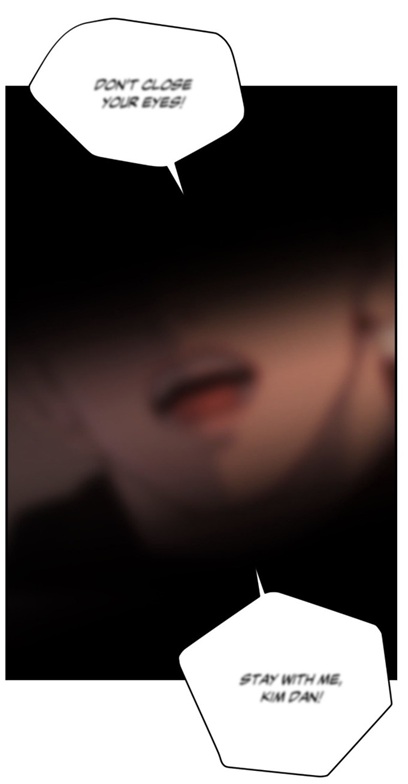
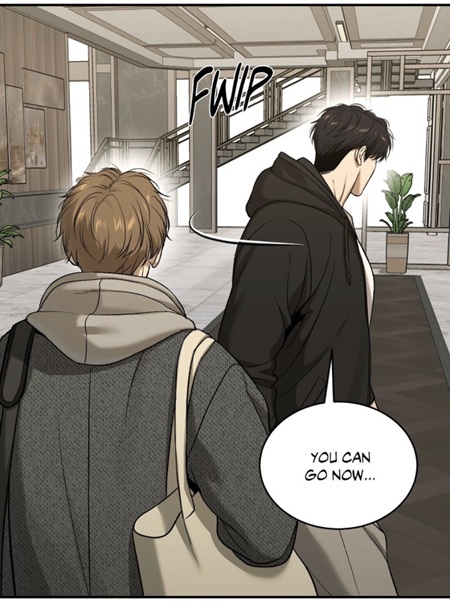 (chapter 100), and why Kim Dan continuously retreated into the sterile scripts of formal gratitude and apology instead of absolute emotional honesty. Yet, the cruel irony of the chapter is that the confession itself does not belong to a future resolution; it already exists, fully articulated, inside the physical boundaries of the narrative. While Kim Dan drifts precariously in the liminal space between life and death following the stabbing, Joo Jaekyung drops his hyper-masculine armor and desperately begs him:
  (chapter 100)
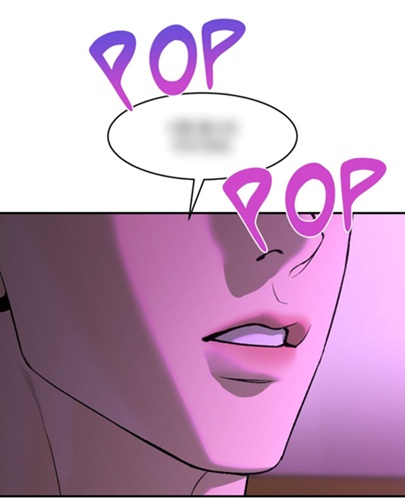 (chapter 84) And in episode 100, the wish is yelled at a moment that was both physically and psychologically too late. Physically, the plea materializes while Kim Dan is actively losing consciousness
 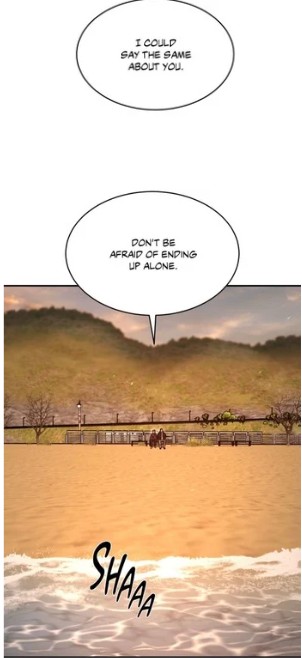 (chapter 95) His entire existence has evolved instead around the crushing mechanics of repayment, survival, and economic and emotional burden.
 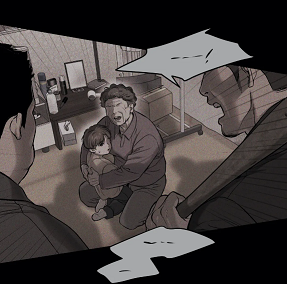 (chapter 5) Having lost his parents at a young age, Dan did not grow up believing that attachment could exist freely, unconditionally, or safely.
 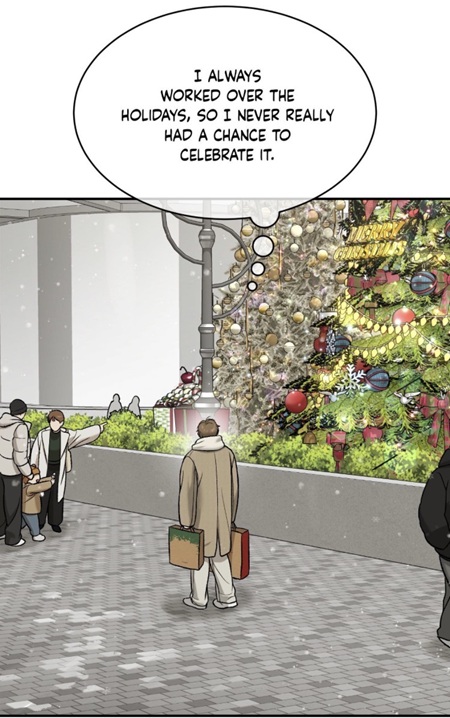 (chapter 97) Therefore he never rested.
  (chapter 47); he only understands relationships through the desperate lens of survivalist necessity. Hence the grandmother and Kim Dan are seen clinching onto each other.
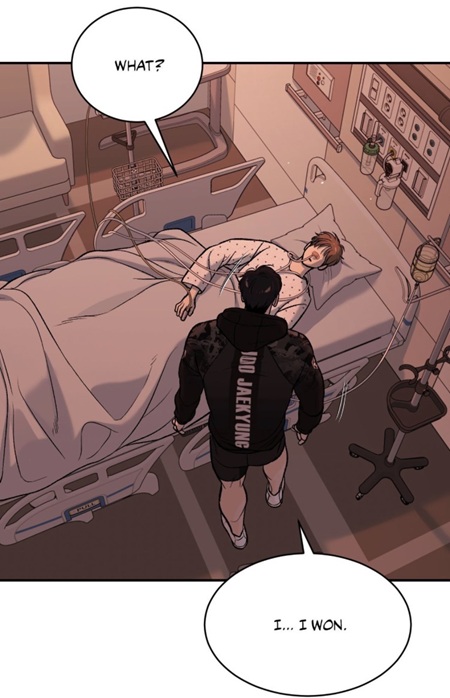 (chapter 100) readers instinctively interpret his reaction through a lens of uncritical relief.
 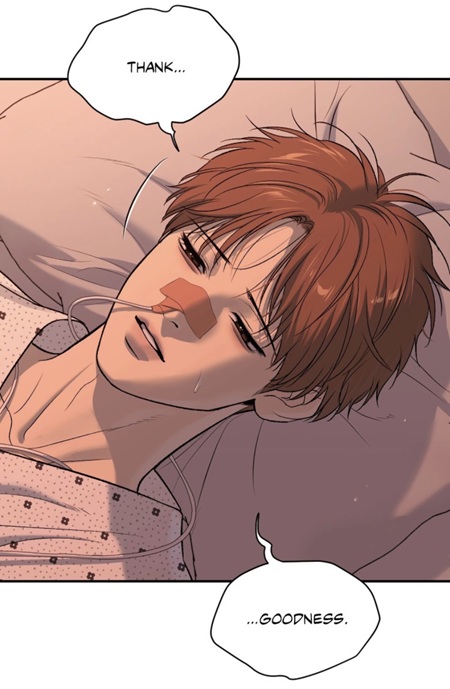 (chapter 100) Yet, the formal pacing of the scene quietly suggests a far darker internal reality. For Kim Dan, the champion’s victory signifies nothing less than the absolute completion of their contract. The title has been recovered, the emotional and physical debt has been cleared, and the utilitarian role he assigned himself beside Joo Jaekyung has reached its natural endpoint.
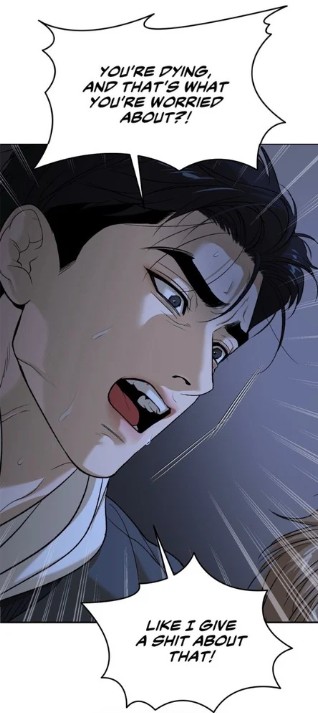 (chapter 98)
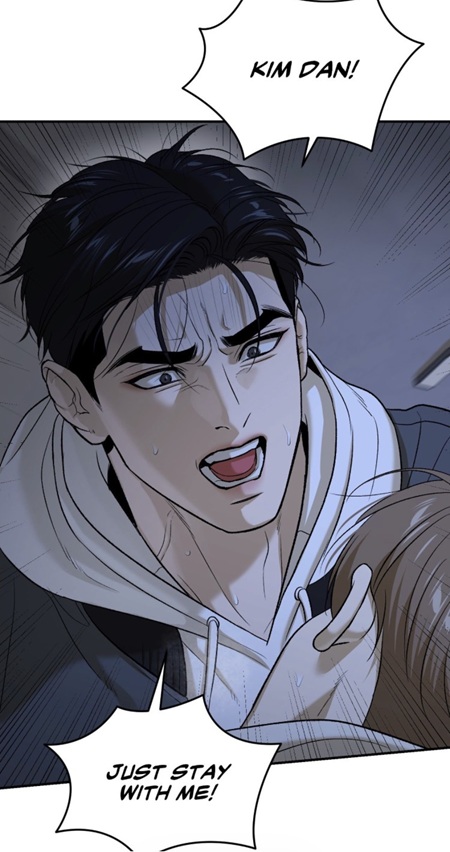 (chapter 98)
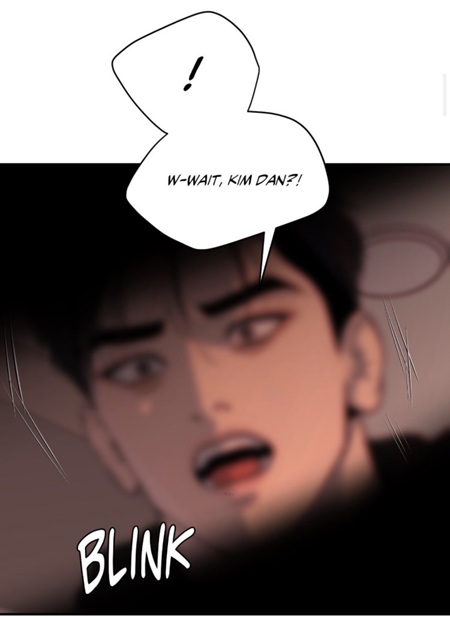 (chapter 100) While a surface-level reading diagnoses this as mere physical exhaustion, psychologically the moment functions as an immediate emotional retreat. It is as though Kim Dan’s psyche reaches a instantaneous, catastrophic conclusion the second the victory is confirmed: everything is over; I am no longer needed. This interpretation achieves an exquisite, painful symmetry when placed against Joo Jaekyung’s own origin story, which similarly fused hyper-success with absolute loss, having lost both of his parents
  (chapter 74) on the exact night he triumphed as a boxer. Episode 100 constructs the perfect inverse of that trauma script for Kim Dan: the champion’s victory becomes structurally associated with emotional abandonment, proving that for both protagonists, success itself is a dangerous catalyst for isolation.
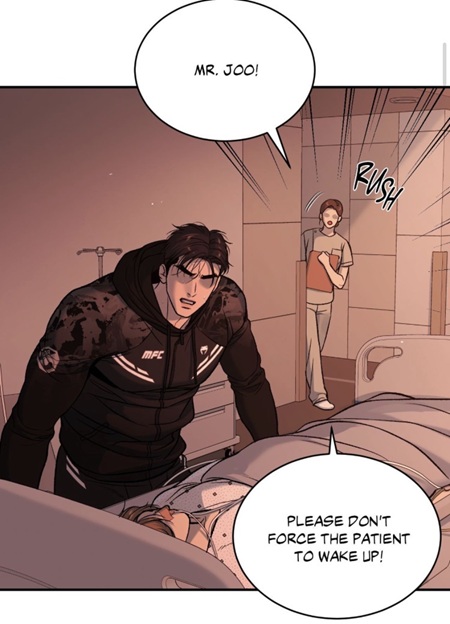 (chapter 100) The nurses rush into the room, treating Jaekyung’s desperation as a physical disturbance to the patient’s recovery. While their actions are entirely reasonable on a clinical level, psychologically the scene becomes devastating. Unintentionally, the medical intervention reinforces the exact, toxic logic that governs both characters: your emotions are a disruption, your presence causes harm, and distance is the only metric of safety.
 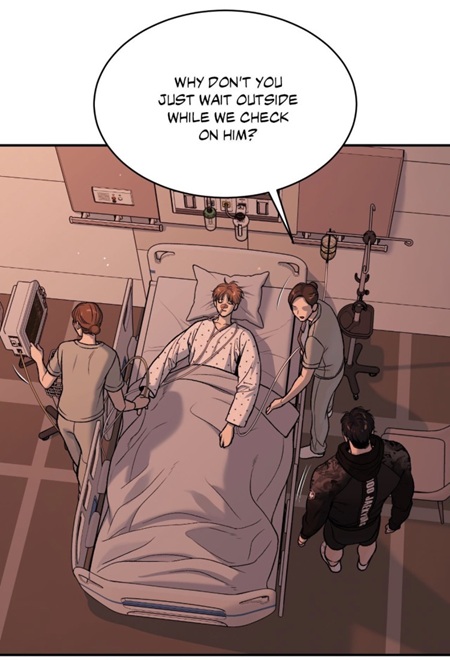 (chapter 100) They show no understanding for his emotional outburst. Because Joo Jaekyung already suffers under the subconscious belief that his violent world has contaminated and ruined Kim Dan, this interruption silently validates his deepest fear. The confession is not merely delayed; it is actively policed and silenced before Dan can consciously receive it. So no wonder why he couldn’t ask later.
 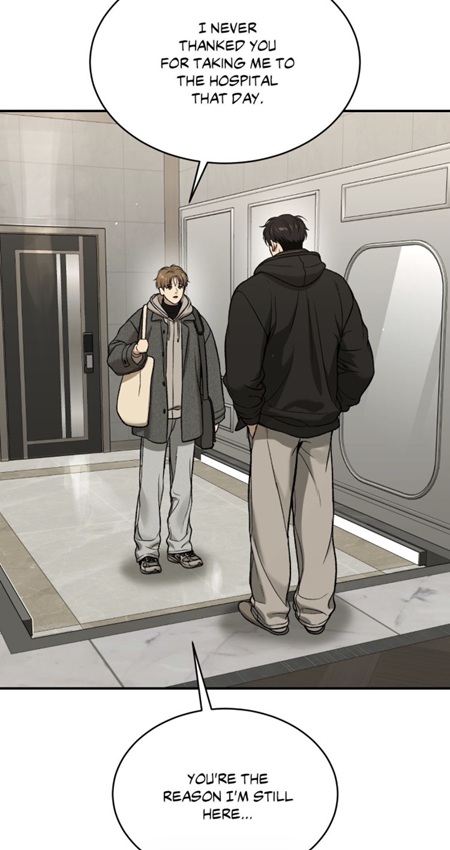 (chapter 100) because gratitude remains the safest emotional language he knows. When he thanks Joo Jaekyung for saving his life and bringing him to the hospital, he unconsciously falls back into the same survival mechanism that shaped his entire existence:
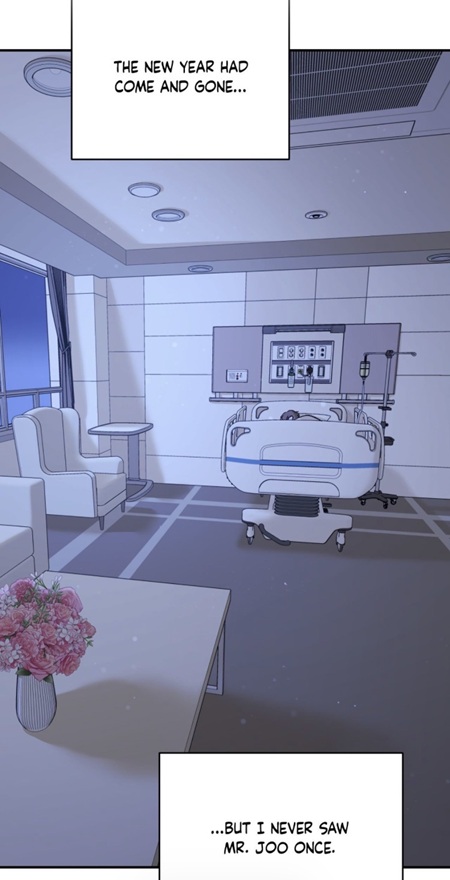
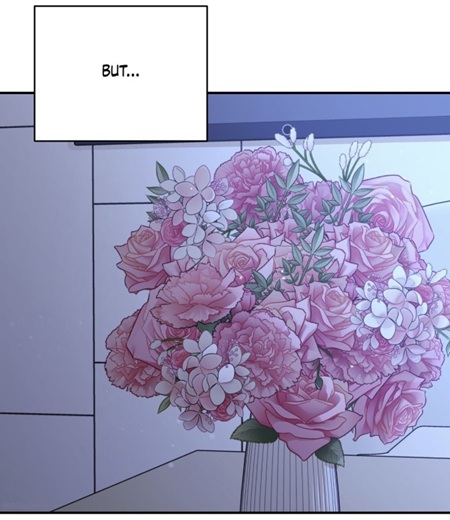 (chapter 100) The pink roses evoke tenderness, admiration, vulnerable affection, and emotional attachment. The peonies suggest healing, compassion, sincerity, and quiet devotion. The smaller pale flowers evoke remembrance, enduring emotional bonds, and spiritual connection despite distance. On the surface, the bouquets seem to communicate something reassuring: someone deeply cares whether Kim Dan survives.
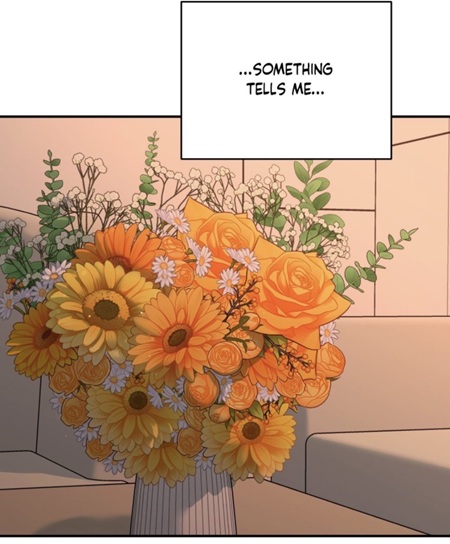 (chapter 100) The reason lies in the absence of the giver himself. Joo Jaekyung never openly remains beside Kim Dan during the day. Instead, the flowers appear during the night like traces left behind by someone haunting the room in silence.
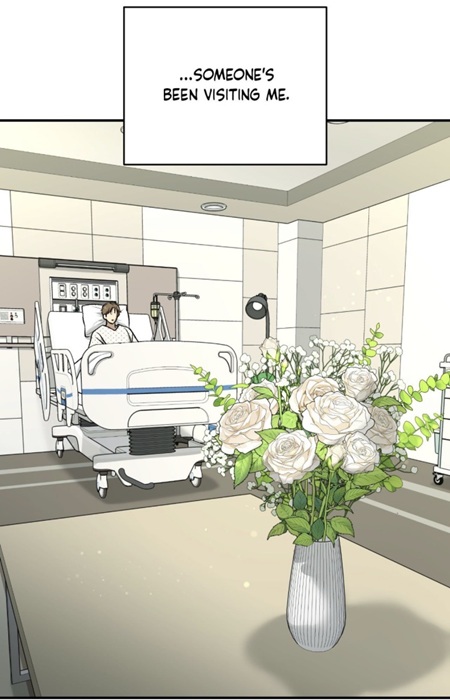 (chapter 100) Kim Dan wakes up surrounded not by Jaekyung’s physical presence, but by evidence that he had been there before disappearing once again. The flowers therefore become emotionally contradictory objects. They communicate affection, but simultaneously reinforce absence. They say: someone came, while also saying: someone vanished again.
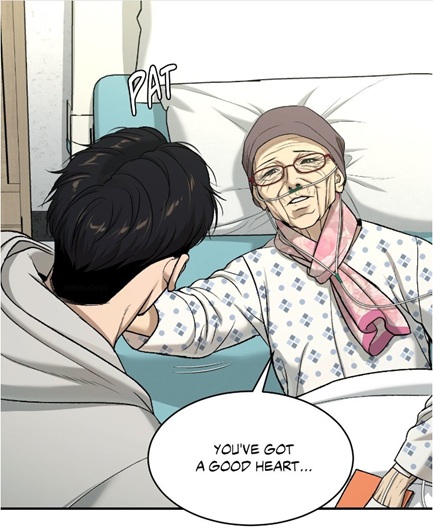 (chapter 94) This visual parallel quietly transforms the flowers from romantic gifts into symbols of caregiving shaped by distance and self-removal. Shin Okja genuinely loved Kim Dan, but her solution to his suffering repeatedly became emotional disappearance. She believed that if she removed herself from the center of his life, he would finally become free and happy. Episode 100 reveals that Joo Jaekyung begins reproducing this exact same pattern. He leaves flowers, cake, comfort, and reassurance behind, but increasingly excludes himself from Kim Dan’s life physically and emotionally. Like Halmoni, he convinces himself that the person he loves suffers because of him.
 (chapter 97) toward increasing emotional fading. Earlier arrangements contain reddish tones to vivid pink traditionally associated with attachment, tenderness, living warmth, and vulnerable affection.
  (chapter 31)
 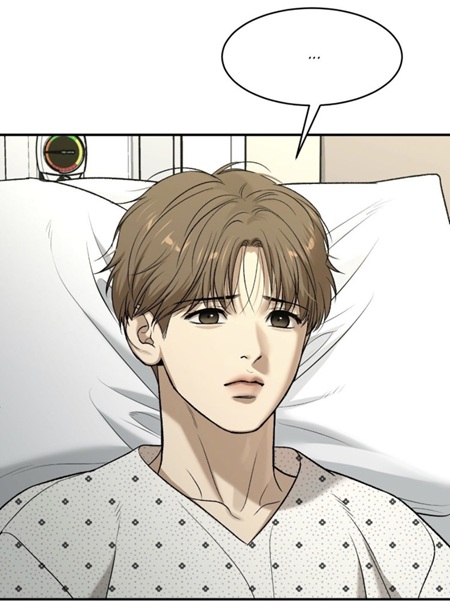 (chapter 100) Thus Kim Dan is not happy at all. The bouquets therefore become profoundly double-edged objects. They evoke tenderness while simultaneously reviving the emotional atmosphere of a childhood that vanished forever and departure.
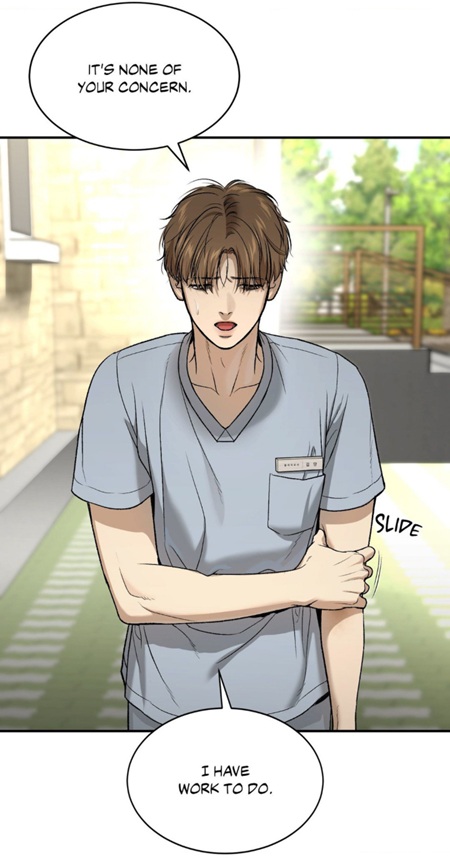 (chapter 61) But now the Emperor begins displaying the exact same symptoms. His hair is disheveled. His eyes are red from crying and sleeplessness.
 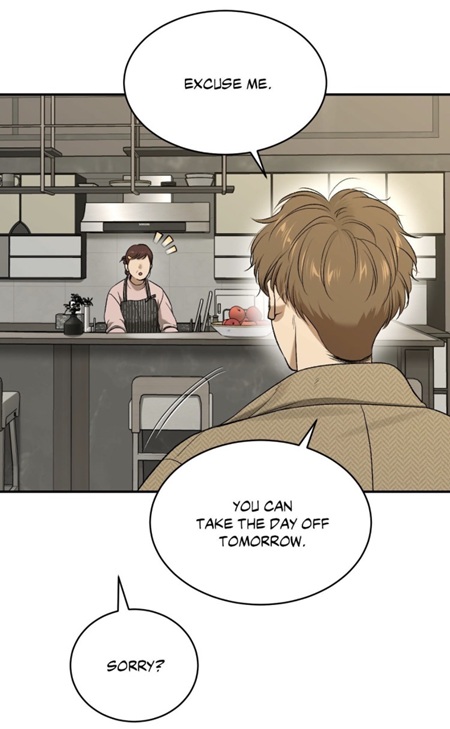 (chapter 97)
  (chapter 57) The harassment, the assault, the stabbing, and the violence surrounding the title fight all reinforce the terrifying idea that Kim Dan’s life deteriorates because he entered the champion’s world. As a result, Jaekyung arrives at the same conclusion as Shin Okja: perhaps the person he loves would be safer without him nearby.
 (chapter 100) Readers initially interpret them romantically, but the deeper emotional logic behind them is much darker. Joo Jaekyung is the only person who truly understands how little Kim Dan values his own life.
 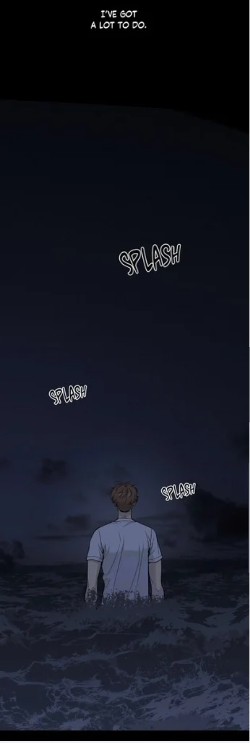 (chapter 59) Instead, the pattern emerges behaviorally through starvation, bodily neglect, overwork, emotional resignation, rejection of care, passivity toward danger, and repeated willingness to sacrifice himself without hesitation. His self-erasure slowly extends toward the body itself.
 (chapter 79)
 (chapter 45) to buy a key chain as a birthday present.
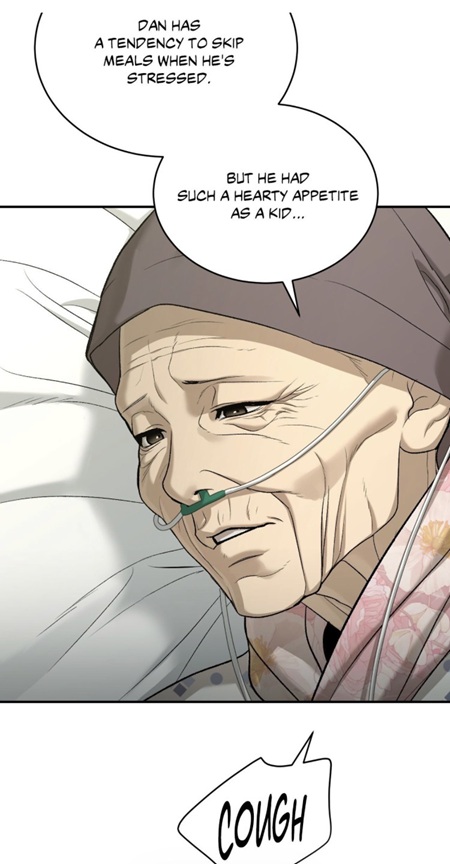 (chapter 94) Joo Jaekyung initially fulfilled this exact role. He gave Kim Dan work, stability, material protection, and relief from crushing economic pressure. But the chapter quietly reveals that Jaekyung also begins inheriting Halmoni’s deeper pathology: self-removal mistaken for love. Like Shin Okja and his hyung, he increasingly convinces himself that Kim Dan would ultimately suffer less without him at the emotional center of his life. Thus he leaves behind flowers, comfort, financial freedom, and reassurance while gradually destroying himself psychologically through absence, guilt, and emotional isolation.
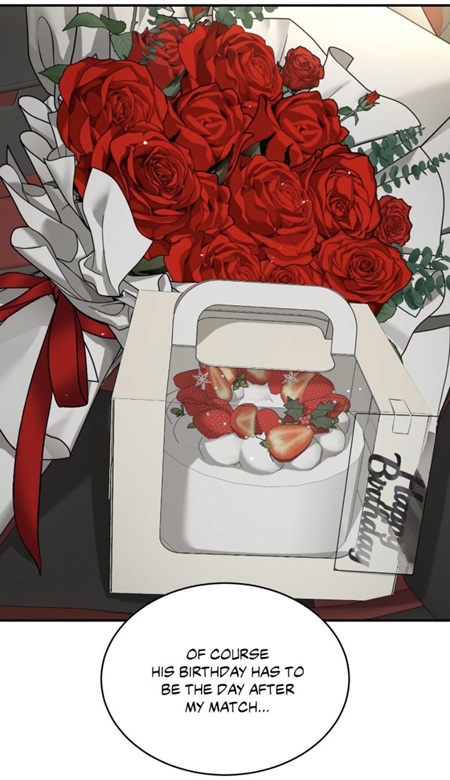
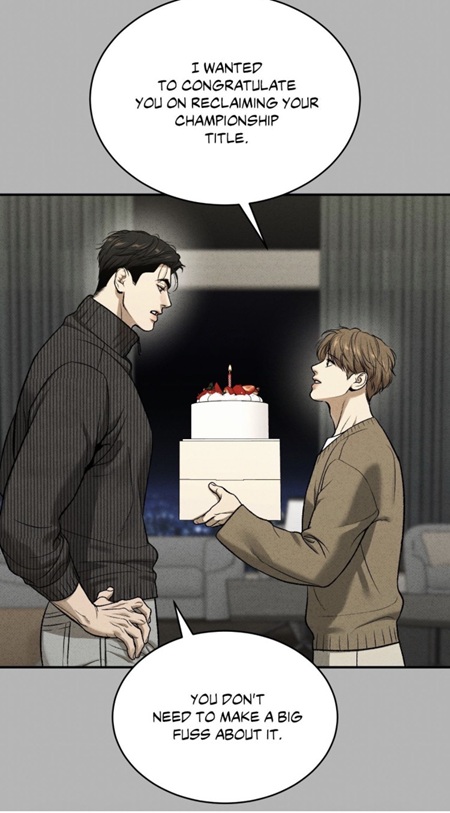 (chapter 100) And on his way home, he started imagining what would happen with this cake. The atmosphere of the scene felt so real, though it was just a dream. Soft lighting, playful intimacy, teasing, physical closeness, and domestic warmth briefly isolate the two men from the violence surrounding the outside world.
 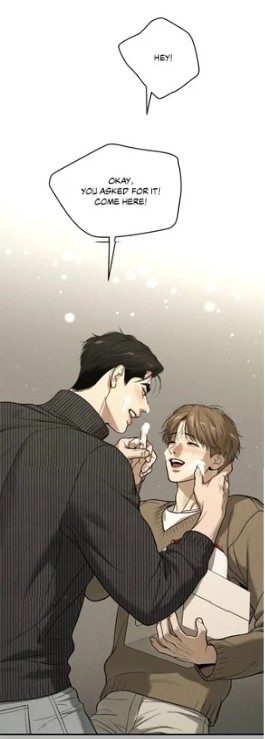 (chapter 97) For perhaps one of the first times in the narrative, Kim Dan acts not out of obligation, survival, or repayment, but out of genuine emotional desire. He wants to make Joo Jaekyung happy and have fun with him.
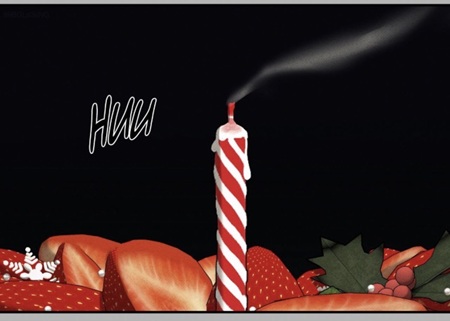 (chapter 97) The smoke rising into the darkness transforms the celebration into visual foreshadowing. The dream of happiness exists briefly, warmly, beautifully… then immediately begins dissolving into air, as if this was already announcing the future stabbing. So the assault violently interrupts the vision before Kim Dan can fully inhabit it emotionally.
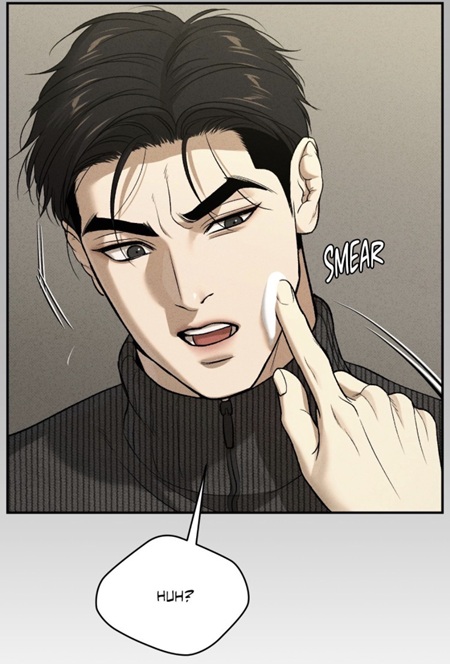 (chapter 97) The celebration was not simply about the championship victory itself. It represented the possibility that warmth, intimacy, and laughter might continue after the fight, beyond the violence of the octagon. For a brief moment, Kim Dan allowed himself to believe that happiness could survive the match and extend naturally into everyday life.
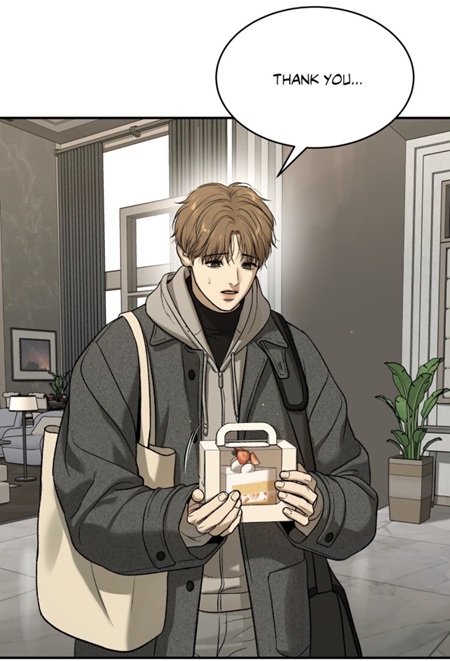 (chapter 100) The cake silently reminds him that the happiness he imagined had not been absurd or impossible. For a brief moment, reality itself had begun moving toward that future. The championship victory happened exactly as expected. Yet the companionship attached to that imagined future never arrived.
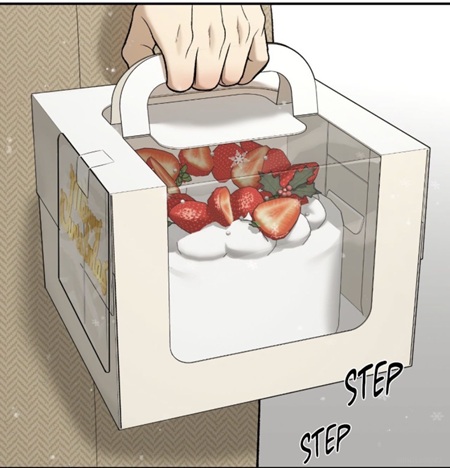 (chapter 97) What remains afterward is no longer the original cake itself, but only a single detached fragment. The large celebratory cake bearing the visible message: “Happy Birthday” disappears entirely.
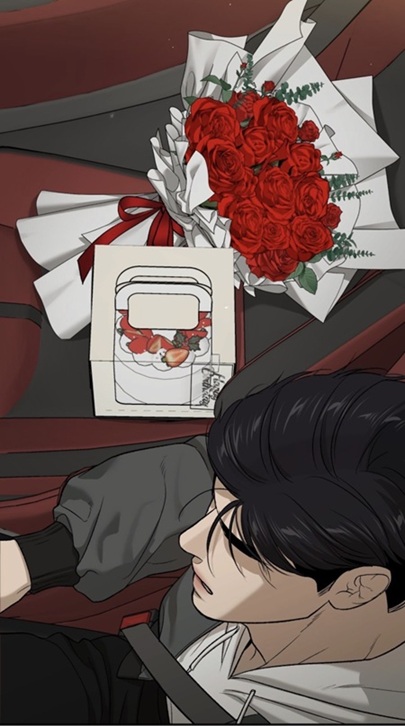 (chapter 97) The original celebratory atmosphere therefore belonged not only to Dan’s imagined future, but also to Jaekyung’s own silent desire to share happiness with him openly. Yet after the stabbing, the birthday itself becomes psychologically unbearable. Kim Dan spent that day unconscious, hospitalized, and hovering near death. Thus by offering only a small piece of cake instead of a full celebratory cake, Jaekyung unconsciously buries the birthday itself.
 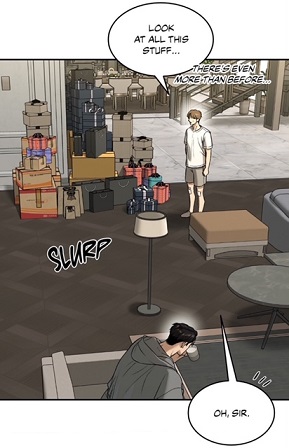 (chapter 45) Birthdays and presents didn’t exist innocently for him before, but now with this new incident, they become psychologically more than ever associated with catastrophe, interruption, and the terror of almost losing Kim Dan forever. The fragment therefore no longer functions as a birthday cake at all. It becomes reduced to something emotionally survivable: a quiet gesture of care stripped of festivity, joy, and openly shared happiness.
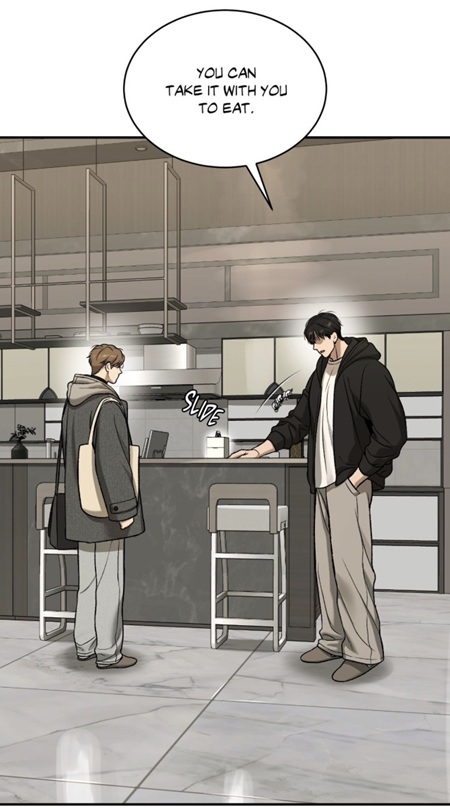 (chapter 100)
  (chapter 97)
 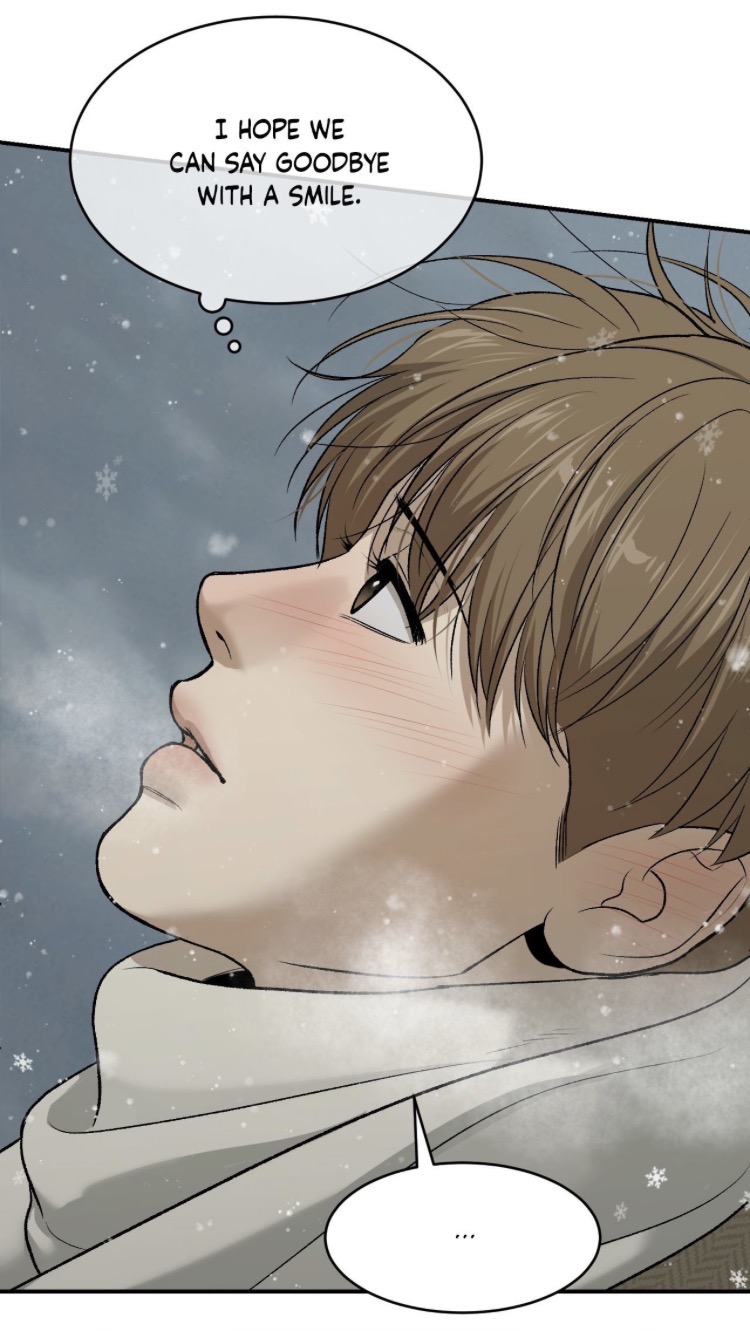 (chapter 97) For a profoundly traumatized psyche, the answer is no. Gratitude is a defensive mechanism designed to restore a transactional balance; it is an acknowledgment of a debt that must be managed. It requires a strict, professional distance to remain safe.
 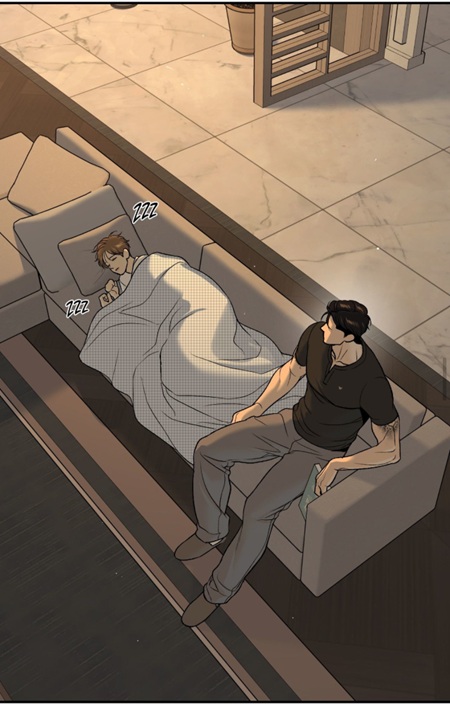 (chapter 81)
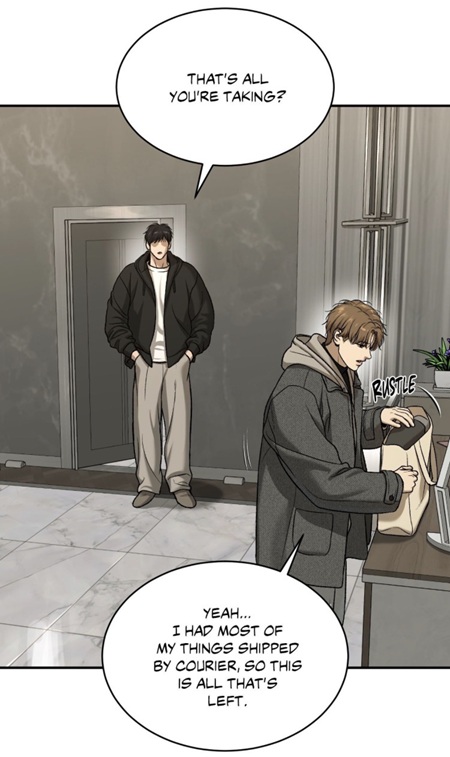 (chapter 100) Dan casually confesses that he had the vast majority of his belongings shipped ahead by a courier service.
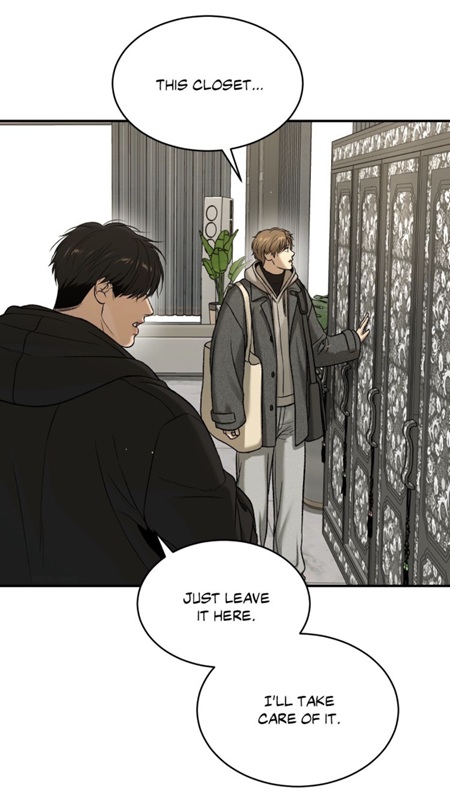 (chapter 100) That’s why each time Mingwa focuses on his facial expressions after each interaction with his lover.
 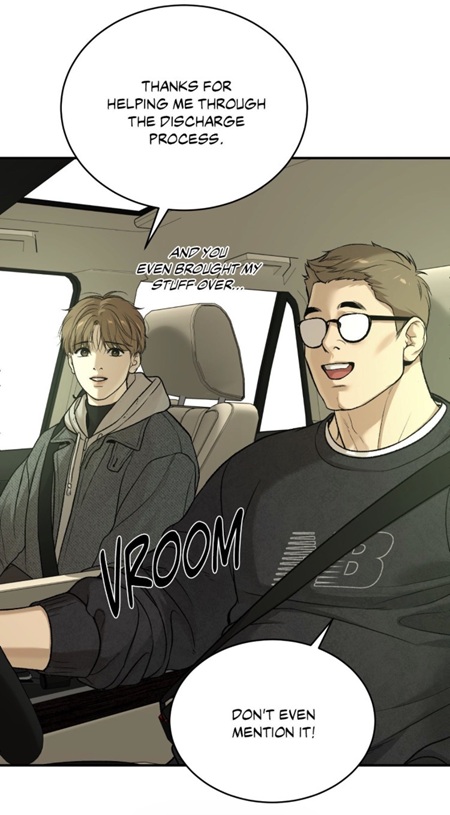 (chapter 100) The manager is the only entity who possesses the logistical knowledge of Dan’s whereabouts and timeline, making the deliberate choice to allow this meeting to occur.
 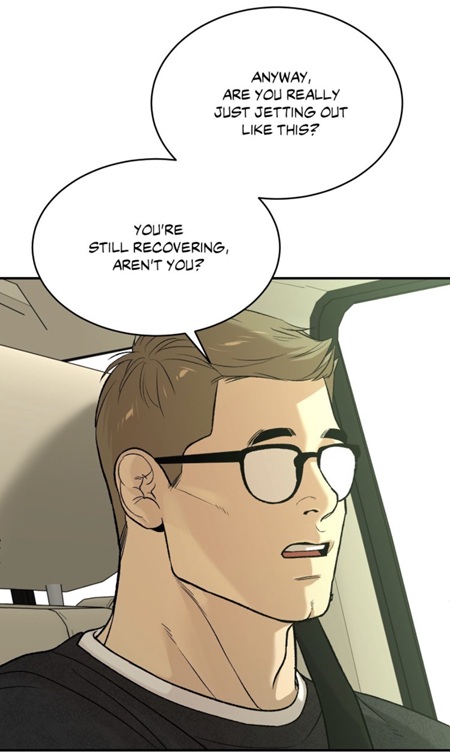 (chapter 100) For Park Namwook, bringing Dan to the penthouse is an attempt to foster a healthy, mature sense of closure between two heavily damaged men. That way, he won’t have to go through the trouble looking for the physical therapist like in episode 56 and Joo Jaekyung can move on.
 (chapter 53) Back then, when Dan believed he was fleeing the penthouse because of his failure and promise to his grandmother, acting under the absolute threat of emotional and professional ruin, his treatment of the cabinet was violent and definitive.
  (chapter 53) He had actively dragged it out of the domestic sphere, casting it out into the sterile, exposed isolation of the public hallway. In Episode 53, throwing the cabinet away was a desperate attempt to sever his connection to the space.
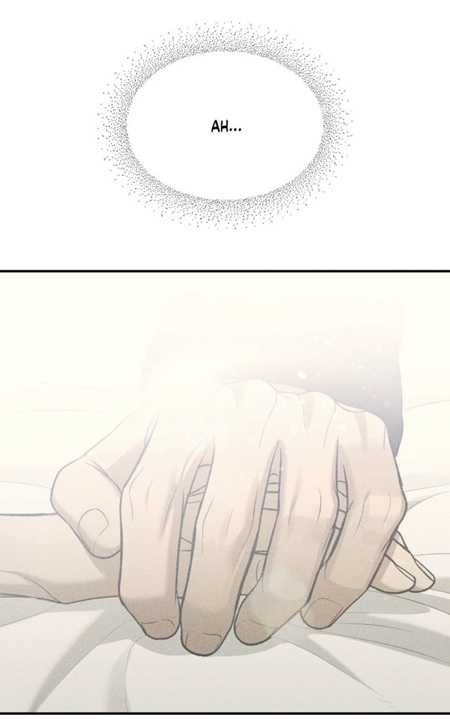 (chapter 100), but that he repeatedly experiences Joo Jaekyung’s genuine presence as something psychologically unreal. Throughout the hospital arc, the champion increasingly resembles a figure existing at the edge of consciousness itself: someone who appears during the night, leaves warmth and traces behind, then disappears again before stable daylight certainty can fully emerge.
 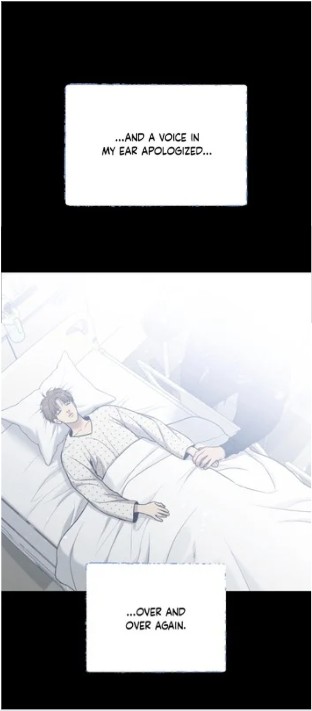 (chapter 100) while Kim Dan drifts between unconsciousness and waking reality. The sequence feels extraordinarily intimate, yet emotionally difficult to grasp. First, Kim Dan quietly concludes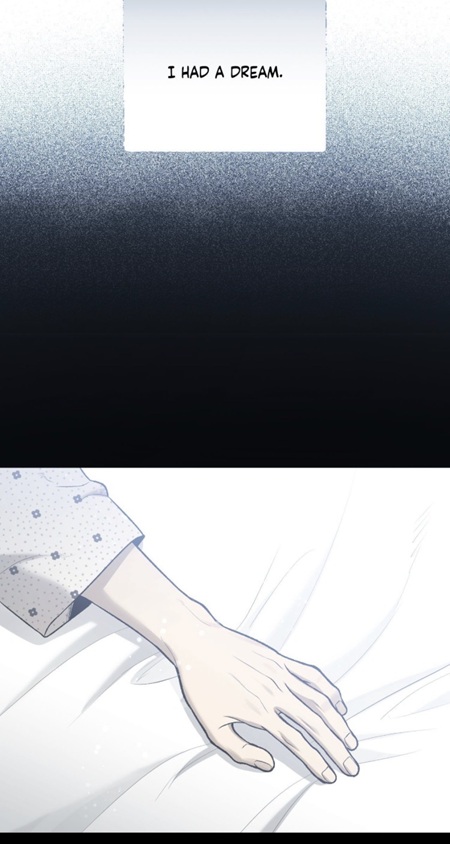
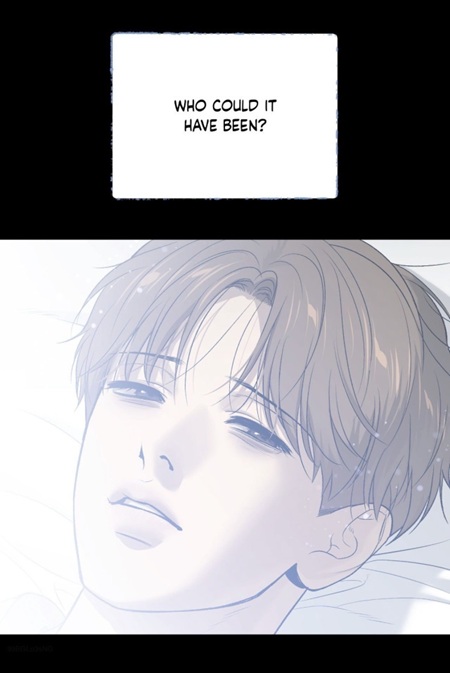 (chapter 100) Part of him wants to move toward reality.
 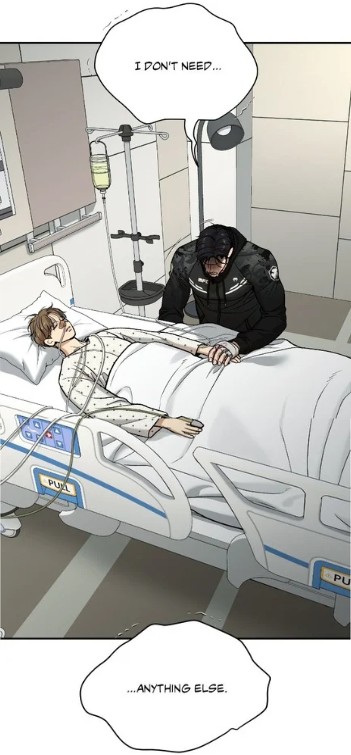 (chapter 99) Joo Jaekyung desperately holding Kim Dan’s hand, begging him to stay awake, refusing to leave his side, and remaining emotionally fixated on him after the stabbing. Because of this continuity, readers instinctively accept the warmth of the hand as emotionally real even while the scene itself remains visually suspended between dream and reality.
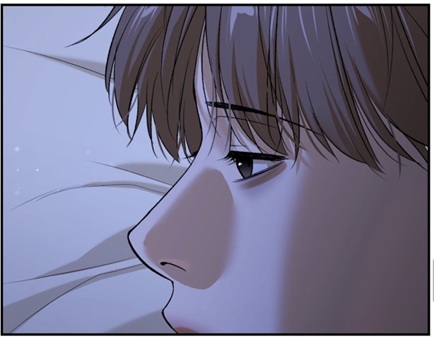 (chapter 100) Here Kim Dan half awakens and perceives Joo Jaekyung lying beside his hospital bed.
 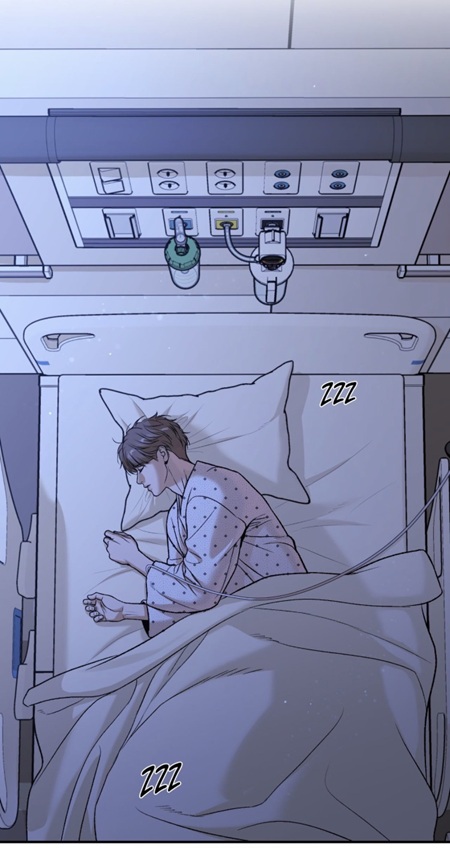 (chapter 100) It creates the illusion that the doctor had been hallucinating. But the sound “TAP” seems to indicate the opposite. Moreover, the narrative cuts toward the lonely hospital room accompanied by the statement:
 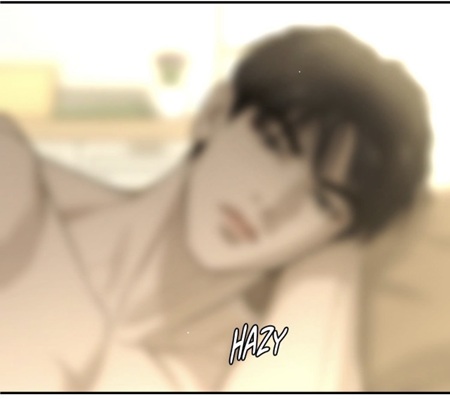 (chapter 87) The champion’s desperate plea to “stay with me”
 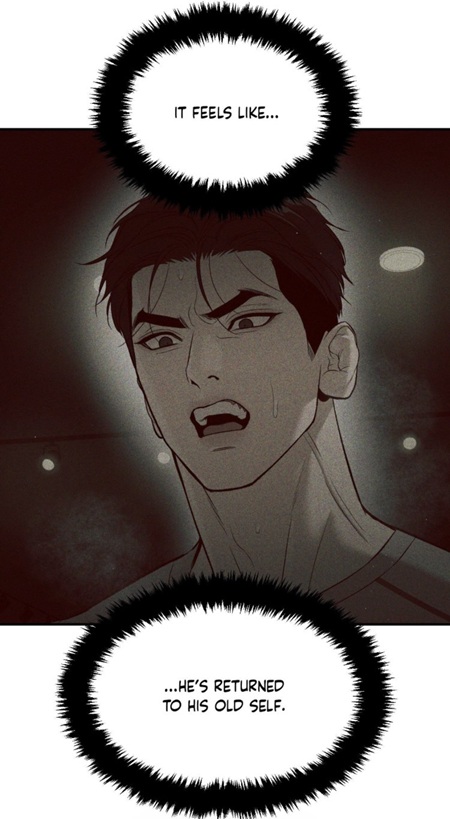 (chapter 96) dramatic, excessive, intimidating, almost unreal. But the tragedy presented in this chapter feels painfully ordinary in comparison.
 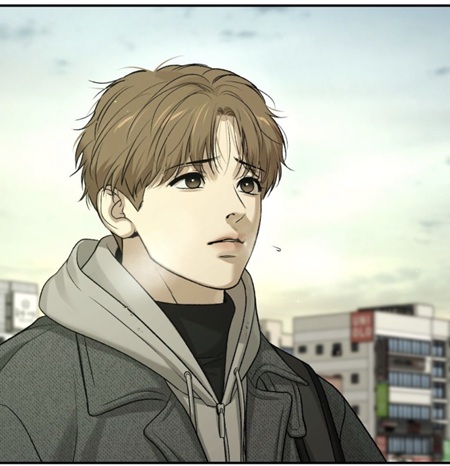 (chapter 100) Neither says what they genuinely feel.
 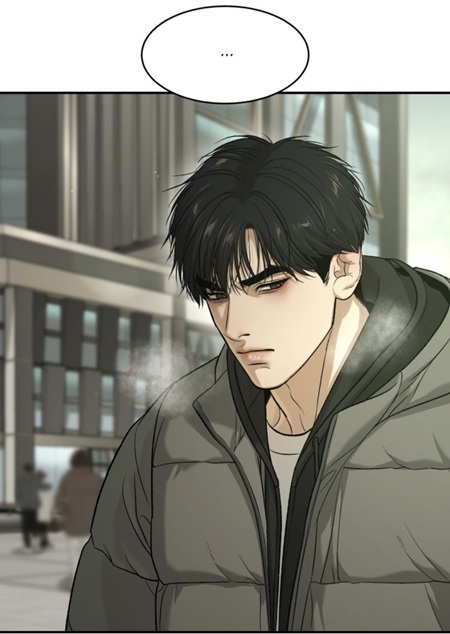 (chapter 100) Almost everyone has experienced a relationship, friendship, or family dynamic damaged not by hatred, but by silence and emotional avoidance. That realism transforms the chapter into something deeply uncomfortable because the fantasy slowly disappears, leaving behind a frighteningly human mirror.
 Throughout the story, they repeatedly symbolize secrecy
  (chapter 7), emotional distance, hidden truths, privacy, abandonment, and separation
 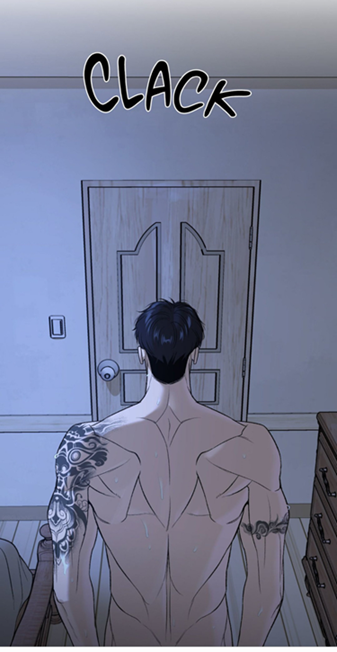 (chapter 64). A closed door immediately creates the impression that something has ended.
 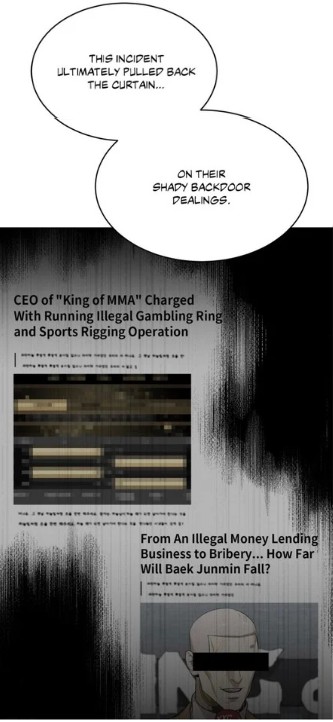 (chapter 100) The protagonists separate. The door closes. The story ends. It almost resembles the conclusion of a dark fairy tale where the suffering has finally reached its endpoint.
 (chapter 4) Instead, she traps both the reader and the characters inside the penthouse itself, forcing us to stare at an almost silent threshold.
 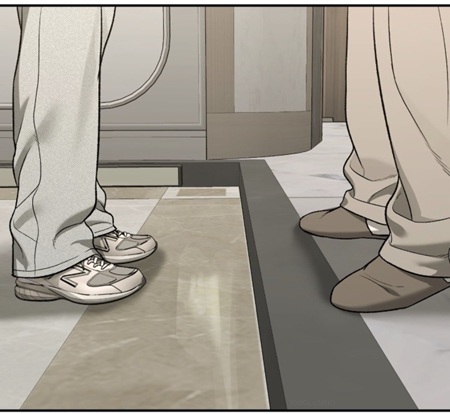 (chapter 100) Their feet remain oriented toward each other at the entrance. In Jinx, body positioning often reveals emotions that words suppress, and here the contradiction is devastating. Verbally, both protagonists are enacting separation. Physically, however, their bodies still seek connection. Neither truly turns away. The image therefore creates emotional suspension rather than emotional closure.
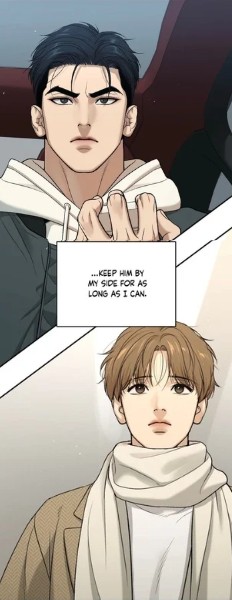 (chapter 97) These confessions reveal that beneath the aggression, possessiveness
 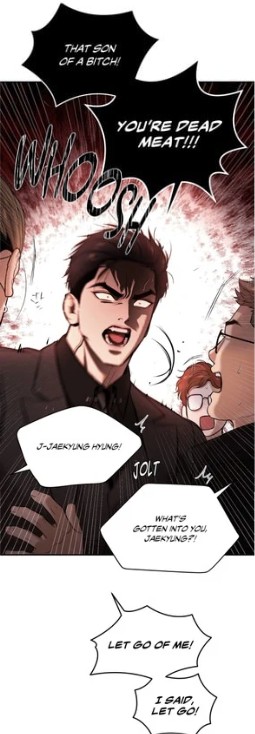 (chapter 82), and obsession with fighting and Kim Dan stood a much simpler fear: abandonment.
 Ironically, the eight-day separation did not emotionally distance the protagonists from one another. Quite the opposite. During this period, they became increasingly synchronized mentally and emotionally.
 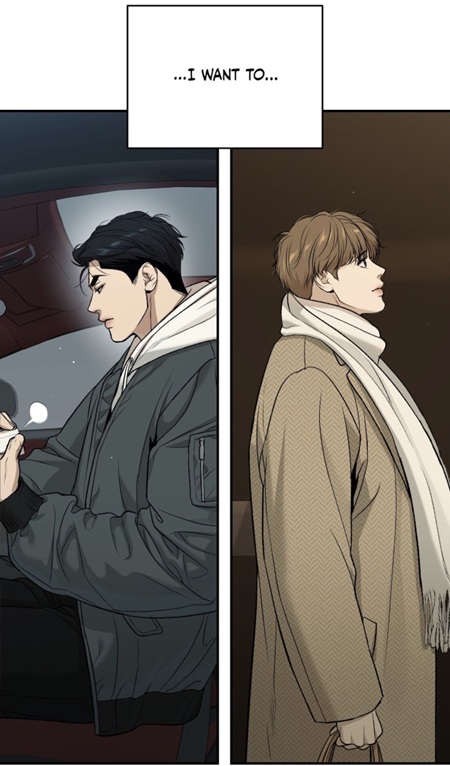 (chapter 97) Their thoughts, fears, and desires slowly began aligning almost unconsciously. Yet this growing emotional attunement produces a tragic paradox: they become so psychologically similar that they can no longer recognize their own reflection inside the other person.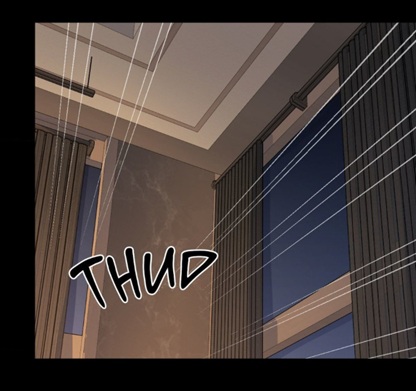
 (chapter 61)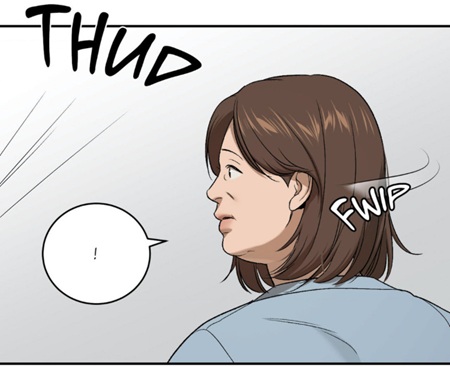
 (chapter 57), where emotional shock and physical weakness are visually connected to walls, imbalance, and bodies searching for support. The ambiguity becomes important because chapter 100 never clearly identifies
  (chapter 41)
 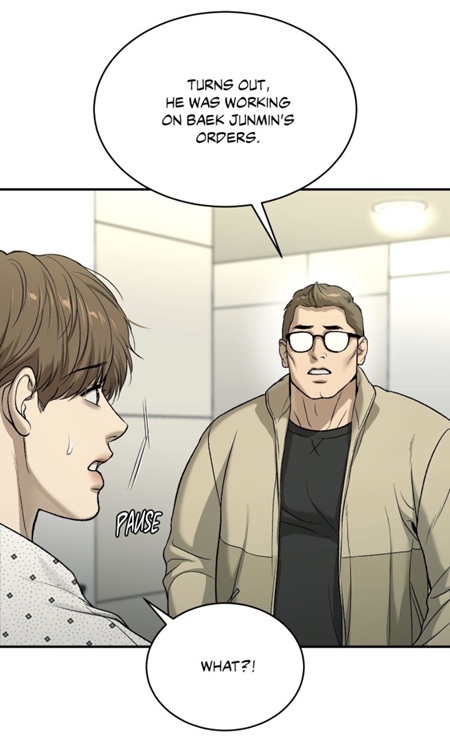 (chapter 100) The debt disappeared.
 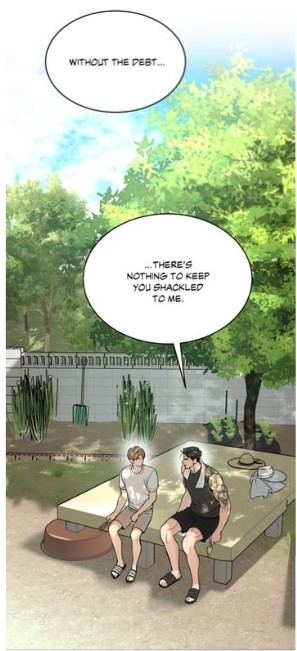 (chapter 77) Therefore separation must be the correct final step.
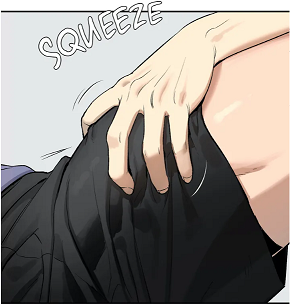 (chapter 1) and leaving himself totally embarrassed
 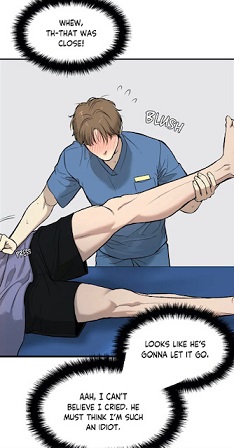 (chapter 1), the physical therapist has only one thought in mind: to run away. Before opening the door, he nervously stammers
 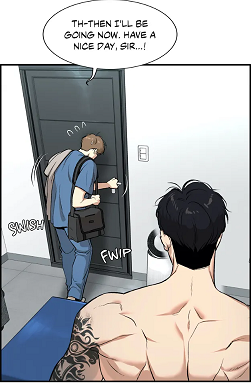 (chapter 1) and hurries away. Joo Jaekyung’s reaction after his departure is dismissive and mocking:
  (chapter 1)
  (chapter 1), admiration
  (chapter 1), destabilization, and departure are already intertwined from the very beginning. Kim Dan does not simply treat Joo Jaekyung’s body; he admires it through his hands and eyes, marveling at how different it is from every other client he has known. The accidental touch breaks the professional frame, and the result is immediate flight.
 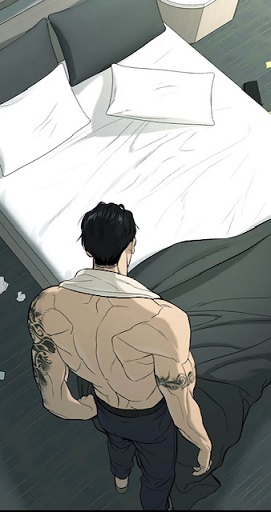 (chapter 4) The absence itself triggers projection. He imagines Kim Dan walking away, already converting disappearance into an internal image. Later, in episode 53, this fear becomes reality: Kim Dan truly leaves the penthouse
 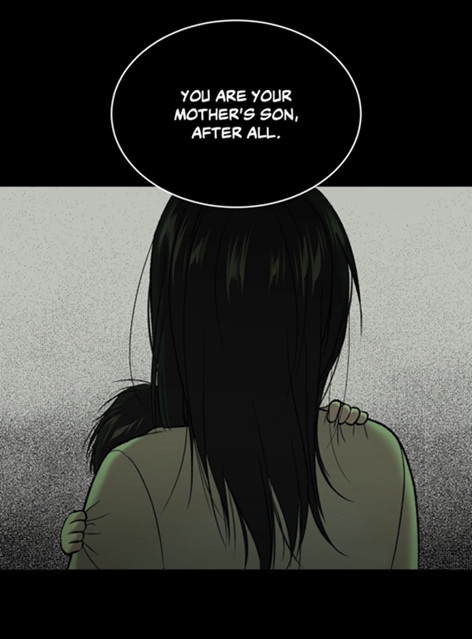 (chapter 73), suggests not only physical departure but permanent emotional inaccessibility. His father’s bitter line—“You are your mother’s son, after all”—reveals that this silence wounded him too. The father was not merely angry because the mother left; he was wounded by the way she left: without true confrontation, without emotional clarity, and perhaps with some distant promise that never became presence. The turned back, the heavy silence, and the unresolved farewell became the core of Jaekyung’s inherited trauma. He stops fighting for the relationship itself
  (chapter 72) and begins fighting merely against the clock, trying to finish a transaction before the countdown hits zero. This memory exposes a foundational trauma. To a young Jaekyung, his mother’s disappearance was directly tied to a transactional failure—his father’s inability to stop her or provide financial security. Consequently, Jaekyung internalized a distorted lesson: love is not protected through vulnerability, communication, or emotional pleading. Love is protected through material capacity and performance. In his child mind, a countdown began: he had to grow up, amass immense wealth, and become powerful enough to buy back his mother’s presence.
  (chapter 77) He turns his back entirely, casting his face in shadow and physically reproducing the visual motif of his childhood trauma. He is verbally establishing a countdown while visually acting out an ending. By telling Dan that their proximity is strictly bounded by the final bell of the title match, Jaekyung constructs the very cage that will later paralyze him.
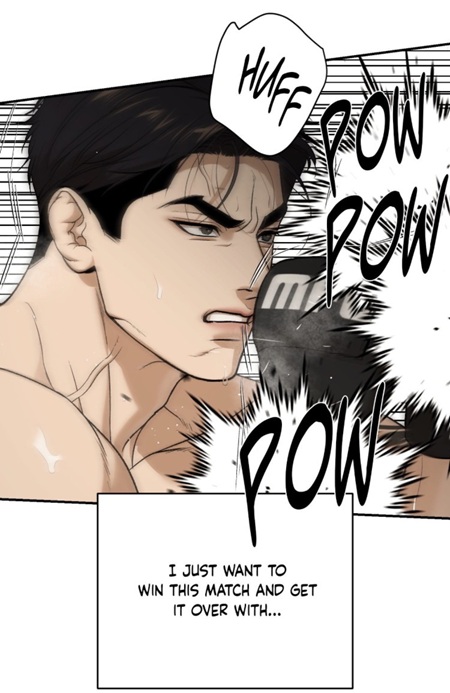 (chapter 95), Jaekyung’s mental space becomes a dark, claustrophobic cage. While sparring, his only internal thought is sheer exhaustion: “I just want to win this match and get it over with…”
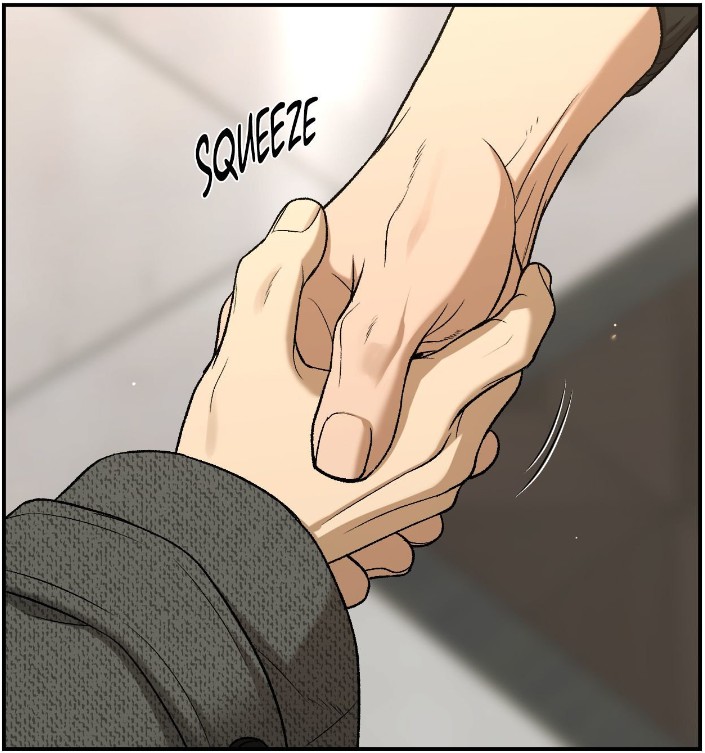 (chapter 100) It takes place right before Jaekyung tells Kim Dan to go. For one fragile moment, the projected departure is completely interrupted. Kim Dan is still there. His hand is still warm. The contact is no longer like that first treatment at the gym, where touch was mixed with embarrassment and professional confusion.
  (chapter 1) Kim Dan bowed nervously while Joo Jaekyung remained emotionally detached, dominant, and superior. Their relationship began asymmetrically: champion and therapist, admired body and embarrassed observer. After accidentally crossing a physical boundary during treatment, Kim Dan fled the room in humiliation, unable to withstand the emotional destabilization caused by touch itself. No reciprocal gesture softened the imbalance. There was no handshake, no equal acknowledgment, and no mutual recognition.
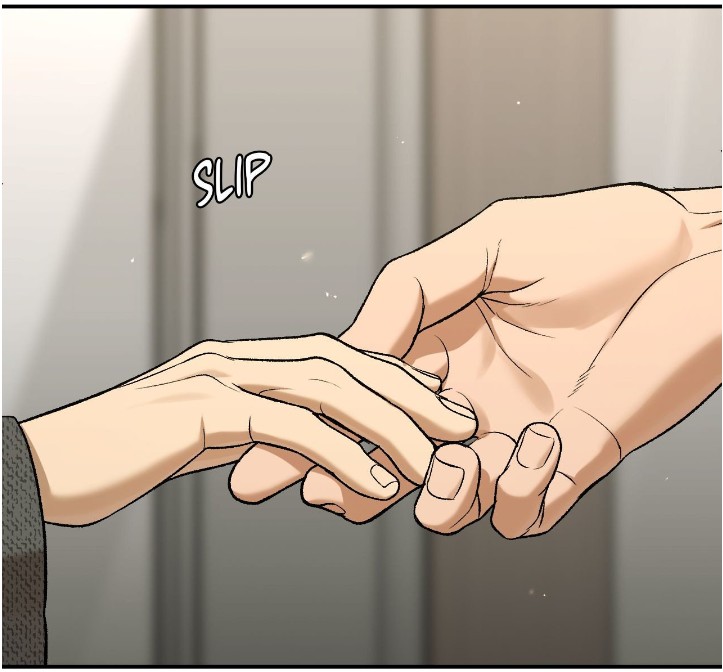 (chapter 100)
  (chapter 87) It becomes even more obvious, once compared with their hand gesture in Paris.
 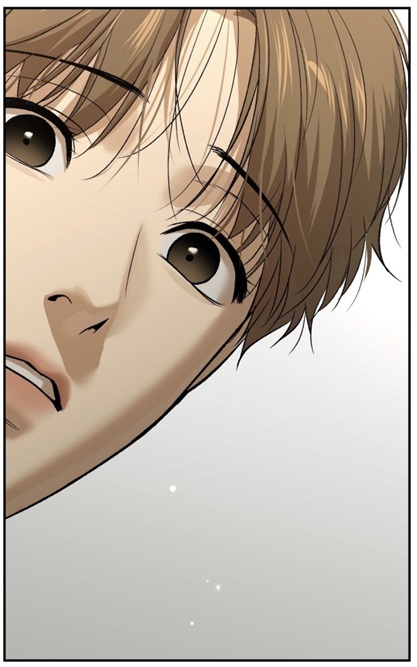 (chapter 100) Until now, the physical therapist remained trapped inside a distorted emotional narrative shaped by silence, institutional misunderstanding, his grandmother’s sacrificial principles, and Park Namwook’s logic of performance
 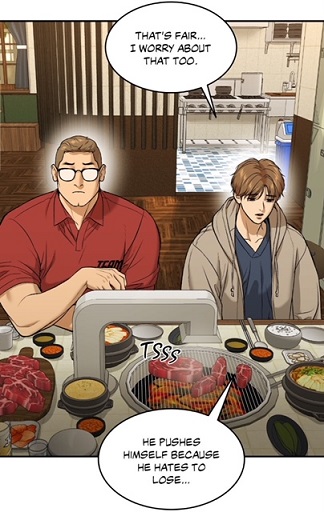 (chapter 43) and Hwang Byungchul’s wrong interpretation
  (chapter 70). Kim Dan had unconsciously learned to interpret Joo Jaekyung primarily as “the champion”: an untouchable entity sustained solely by victory, driven by a hatred of losing, and emotionally fulfilled through performance alone. This explicates why the “hamster” had made the following request:
 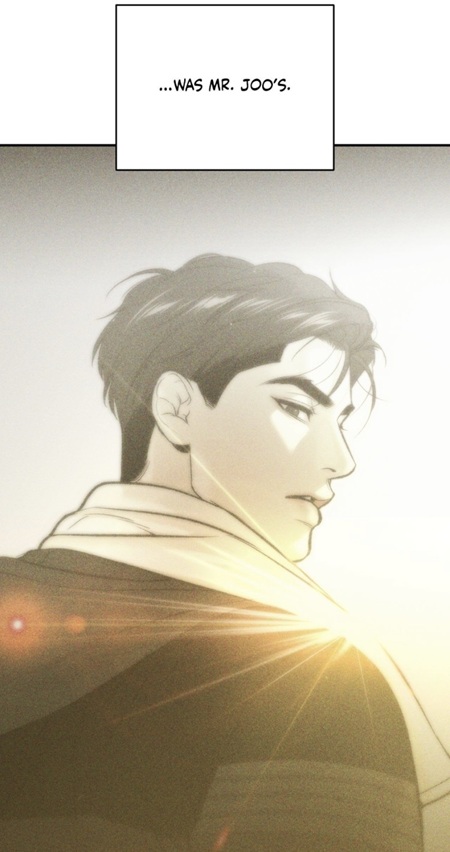 (chapter 100)
 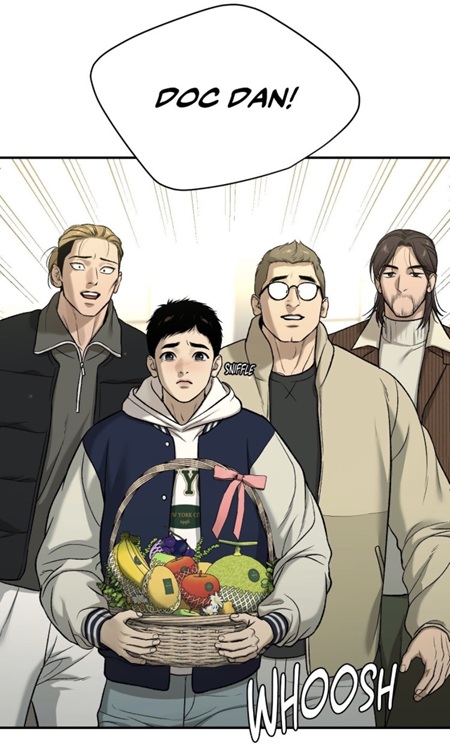 (chapter 100), Kim Dan is constantly insulated by a loud wall of warmth, visitors, food, and collective reassurance. Team Black worries boisterously about him
 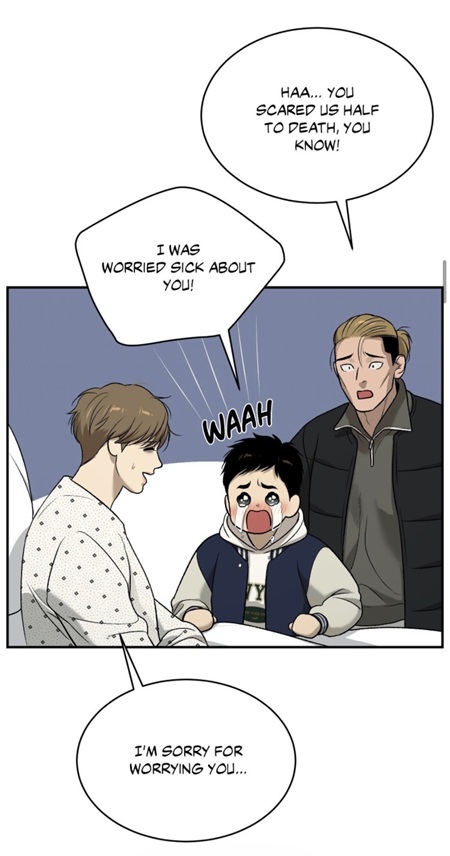 (chapter 100), jokes around his bed admiring the comfort of the room
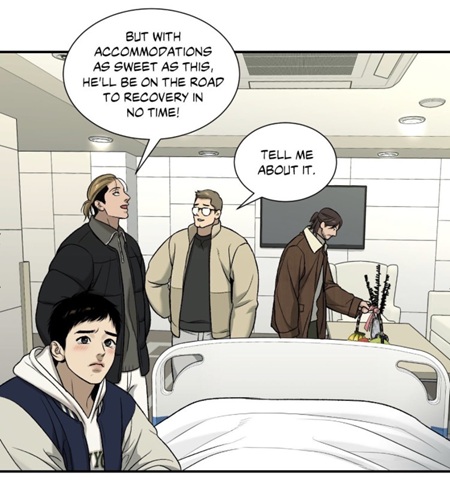 (chapter 100), scolds him affectionately,
 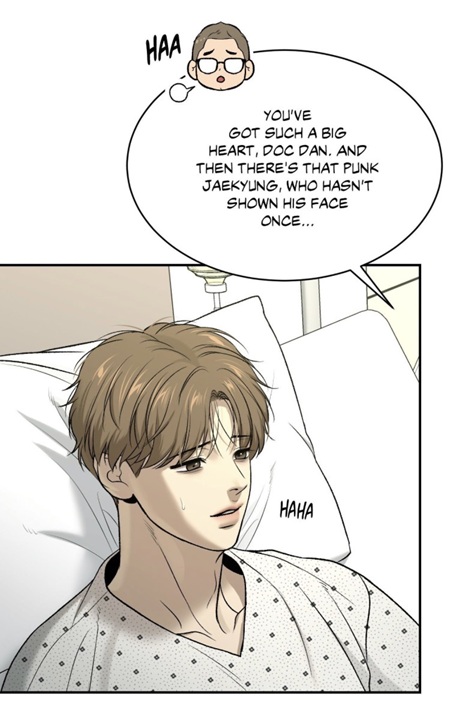 (chapter 100) while the members of Team Black get to play the roles of “affectionate and concerned” companions.
 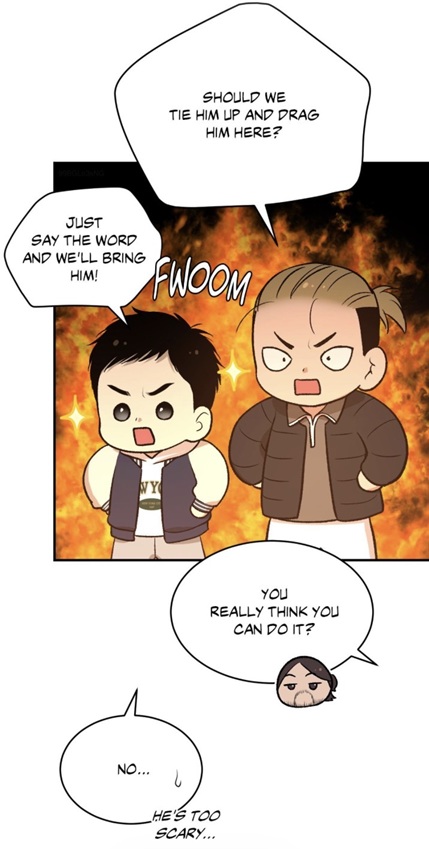 (chapter 100) Even when people discuss Jaekyung, they rarely speak about his exhaustion, fear, loneliness, or his disintegration as a human being. Why? Because they simply do not see it and believes in their hyung’s statement, the manager. They remain entirely blind to the human being beneath the title. They speak only of the match, the culprit, the belt, and his capacity to perform. Because he won the last fight, they treat him as an object that functions correctly, while keeping their distance from his harsh demeanor. They essentially avoid him as a temperamental monster, completely oblivious to the fact that they are leaving a deeply traumatized, lost puppy entirely on his own.
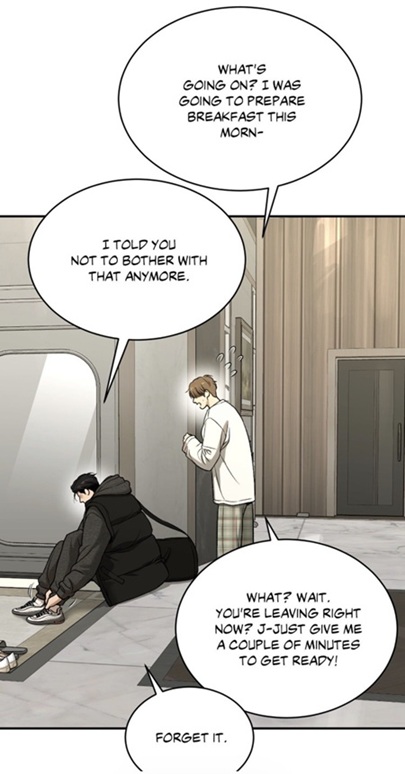 (chapter 100) Once the debt disappeared and the championship was reclaimed, Kim Dan instinctively assumed that his role in the champion’s life had ended too.
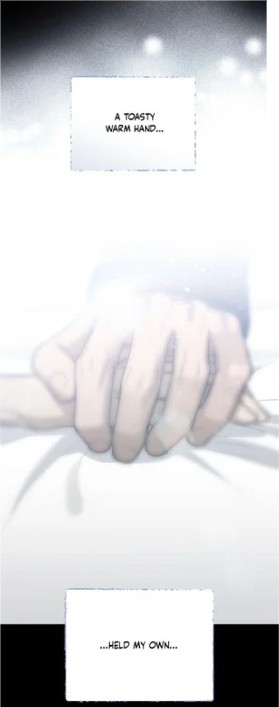 (chapter 100) the warmth in Jaekyung’s hand reveals that Kim Dan had never merely been “useful.” He had become emotionally necessary. For one fragile moment, Kim Dan experiences himself not as a burden, an obligation, or a temporary possession, but as someone genuinely cherished.
 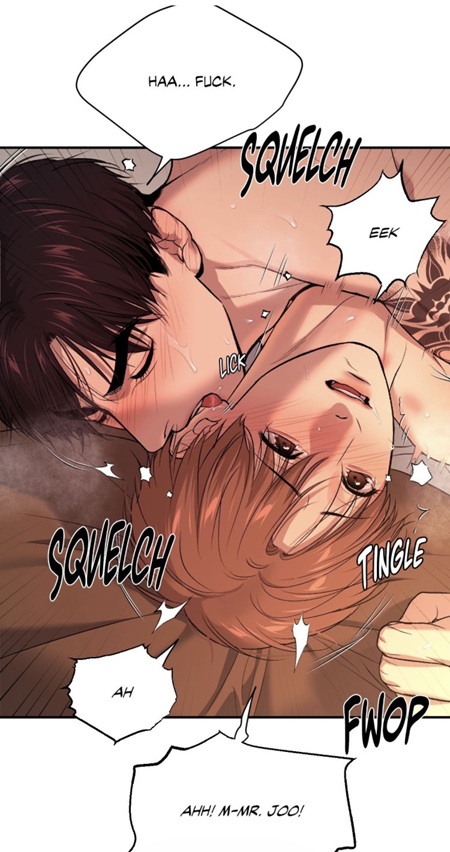 (chapter 86) Episode 100 revives this visual motif, yet transforms its meaning entirely.
 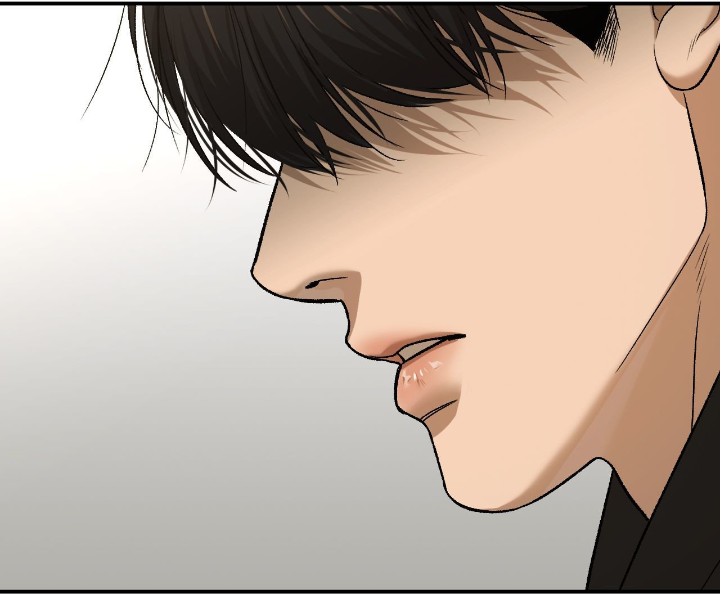 (chapter 100) Here, he is even portrayed as eyeless, as if he had lost his soul.
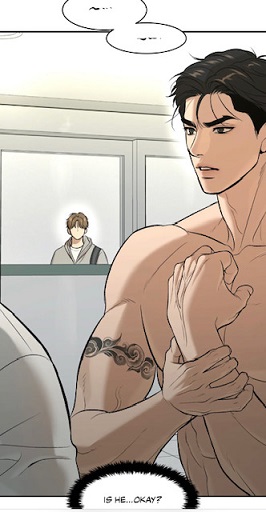
  (chapter 99) The asymmetry is devastating. It almost feels as though the champion transfers his final remaining warmth and energy into Kim Dan through the handshake itself.
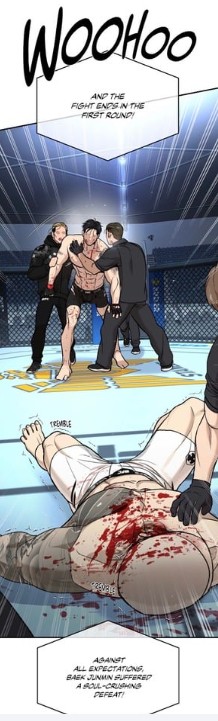
  (chapter 27) He simply accepted it as an immutable part of reality. The “jinx” appeared almost supernatural: an ominous, mechanical force attached to Joo Jaekyung’s body, his victories, his violence, his rituals, and his frightening aura. Even the title of the series carried something cold, clinical, and oppressive. The word itself evoked danger, misfortune, contamination, and inevitability.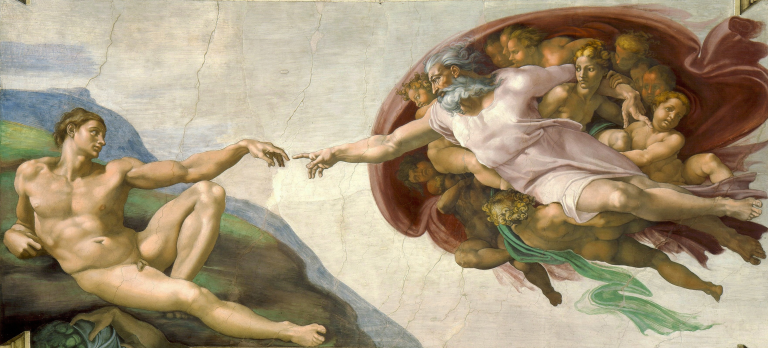
 (chapter 57) Feeling powerless, burdensome, and guilty for his slow emotional deterioration, she repeatedly urged him to return to Seoul, live his own life, and stop “wasting away” beside her. Her love expressed itself through self-removal. Rather than openly asking Kim Dan about the reasons behind his pain, she tried to free him from herself before death could do it instead. She thought, she had the solution to the problem, because she believed she knew why!
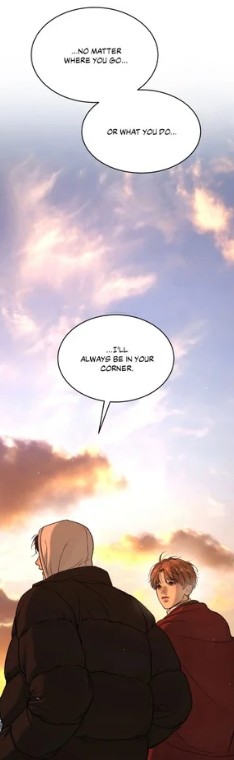 (chapter 95) At first glance, the sentence appears comforting and romantic. Yet retrospectively, the structure of the promise reveals a deeply corrupted blueprint for attachment. First, Jaekyung imagines Kim Dan leaving long before he ever asks him to stay. Even his love remains psychologically organized around future abandonment. Jaekyung’s words directly mirror the childhood promise made by his own mother—who told him she would watch over and support him from far away, leaving him with nothing but an inaccessible back and a heavy, permanent silence.
 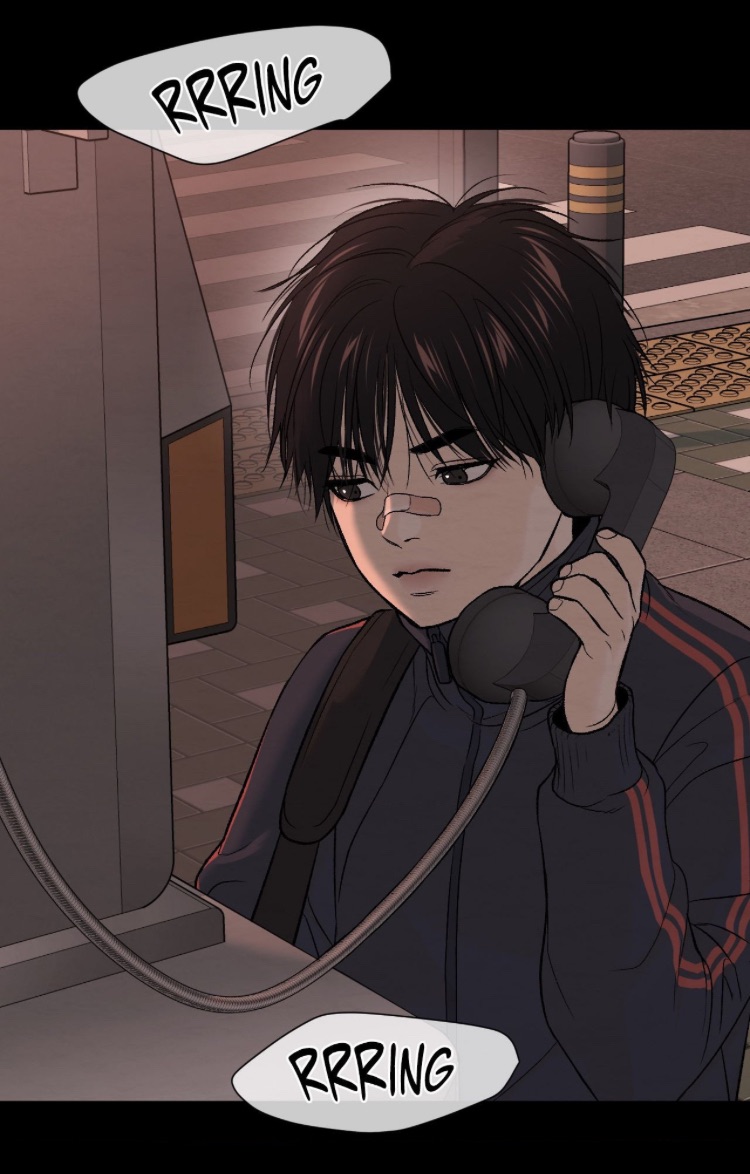 (chapter 72) But the ultimate cruelty of the narrative is that his mother’s promise was an absolute lie.
  (chapter 74) She did not watch from afar out of tragic necessity; she remarried, built an entirely new family, and willfully discarded Jaekyung to start a life where he had no place.
 (chapter 79)
 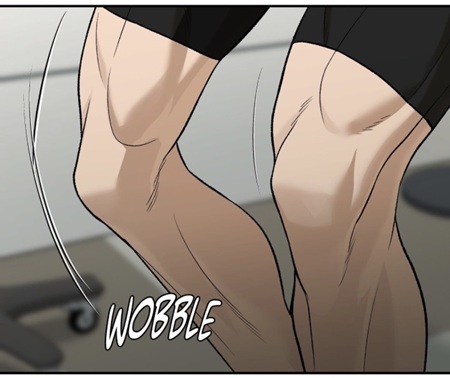 (chapter 99) Joo Jaekyung can only collapse under the weight of his immense knowledge and guilt: the hospital director, Baek Junmin, the switched spray
 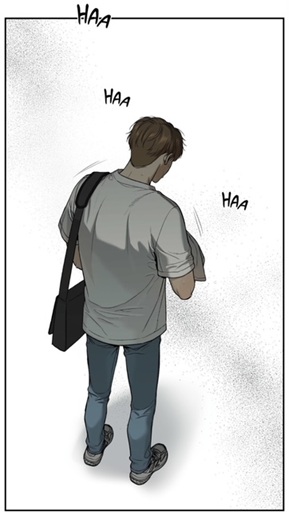 (chapter 59) And because Kim Dan still has not crossed the literal threshold , the collapse does not function as an ending, but as a confrontation with reality “sound THUD.
 (chapter 3) The latter became responsible for the hamster’s sexual education.
 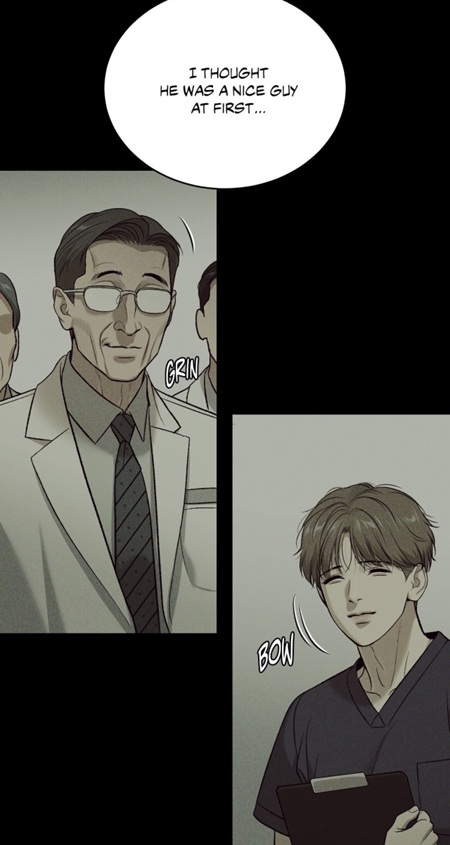 (chapter 90) He is not impulsive. He is not openly violent. He operates within institutions, within offices, within controlled environments. He isolates rather than attacks. He frames rather than forces. Like Compère le loup, he is not a stranger; he is part of the social order. He belongs to the system. That belonging is precisely what grants him access.
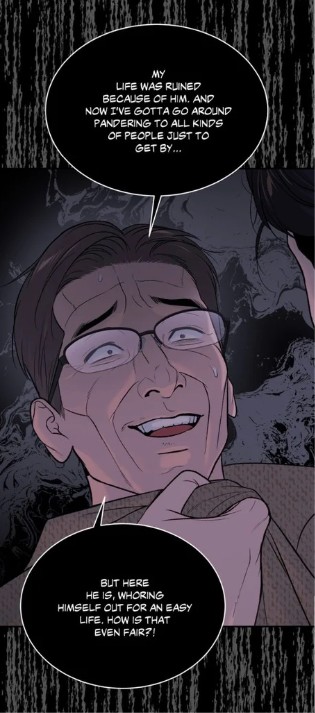 (chapter 90) reveals that his true wound is territorial. He can no longer find his targets within the hospital. He lost control. He lost narrative dominance. This explicates why the predator retaliated against Kim Dan by badmouthing him.
 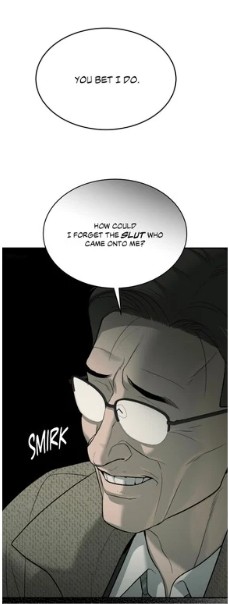 (chapter 90) The problem is that the champion did not react like expected. He got angry at the “client” and not at the “prostitute”. He never thought that the main lead would side with such a person. Thus the hospital director voiced a menace:
 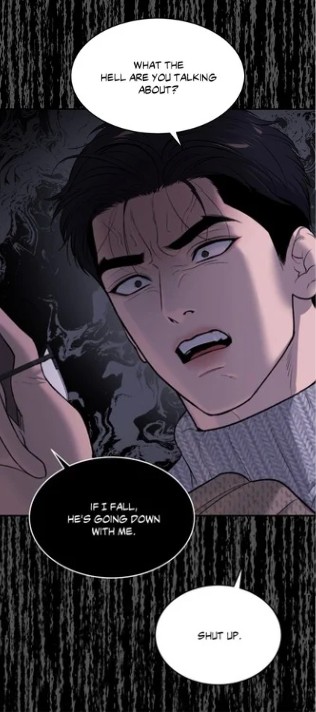 (chapter 90) His threat is not confession; it is defensive strategy. It reveals what he fears most: exposure. Not moral reckoning, but visibility. The predator who once operated in sealed rooms now imagines himself dragged into the open. And that possibility terrifies him.
 (chapter 91)
 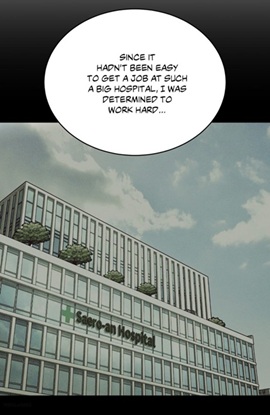 (chapter 90) prioritizes its “output” (reputation, profit, or clinical operations) over the safety of its staff, it adopts the woodcutter’s axe. By focusing only on the work at hand, the institution effectively grants the predator a “sealed room.” The wolf doesn’t need to hide from the woodcutters; he only needs them to keep their heads down. What makes him powerful is not brute force but the absence of eyes. The director functioned the same way. His authority depended on institutional insulation — doors closed, hierarchy unquestioned, narratives controlled. As long as no one looked too closely, he remained Compère — familiar, respectable, legitimate.
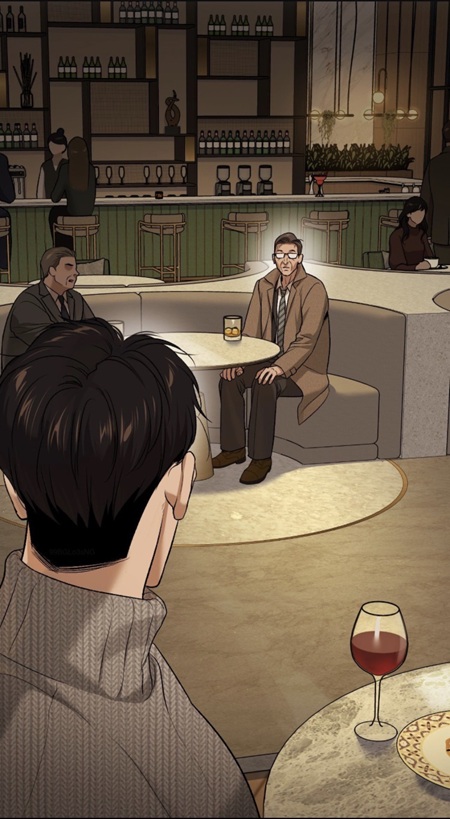 (chapter 90) It resembles the wolf’s preferred setting: intimacy that appears voluntary. What caught my attention is that he complained about his partners.
 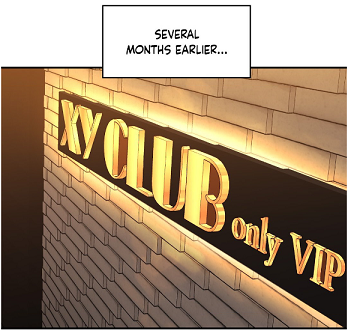 (chapter 33), but at the restaurant. If he had known such a club, he could have met the green haired-guy or the “uke” from episode 55. Thus I deduce that the sexual predator is actually hiding his “homosexuality”, he had been living a double life in the end, like the wolf in Perrault. That’s why he targets “virgins”. Since he used the expression “pandering… get by”, Mingwa implies that this man must have told the men (“all kinds of people”) he met, he was looking for a boyfriend to justify his action.
 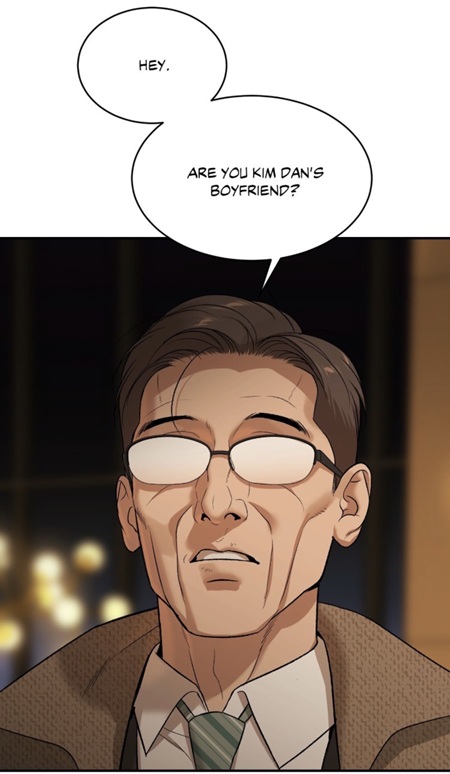 (chapter 90) However, this lie was quickly caught by the unknown companion, as the perverted director paid no attention to him.
 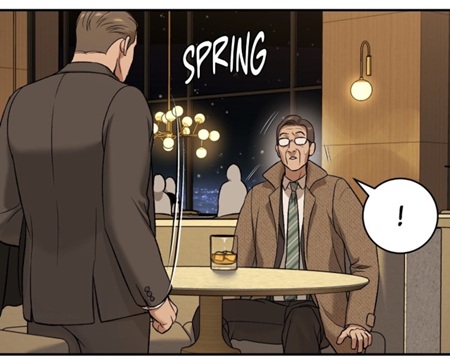 (chapter 90) That surprise matters. It suggests expectation of compliance, of silent agreement, of recognition of coded signals. The man likely does not belong to the director’s ecosystem; he does not recognize the invitation as opportunity but as lack of respect. Thus he exits.
 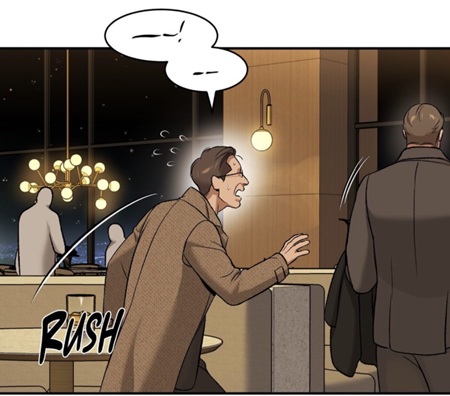 (chapter 90) The fact that the wolf tried to talk him out of it indicates that their relationship was not only superficial, but also more equal. Humiliation is crucial. Predators who rely on social camouflage depend on territory. When territory collapses, strategy must change.
 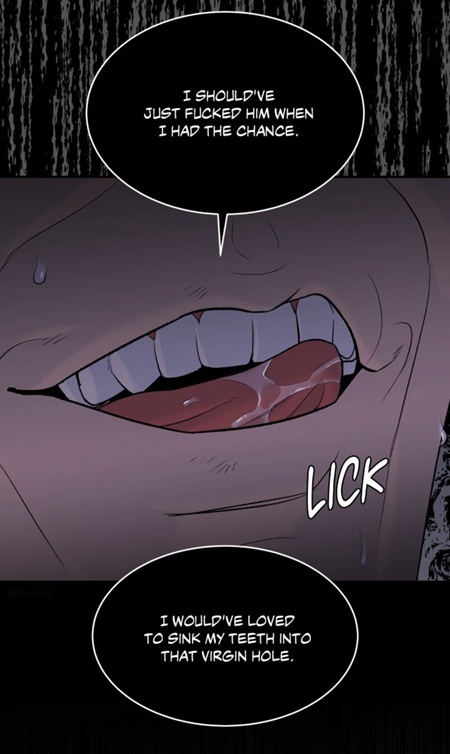 (chapter 90) This is where Grimm enters. His true nature got exposed, he is socially identified as predator.
 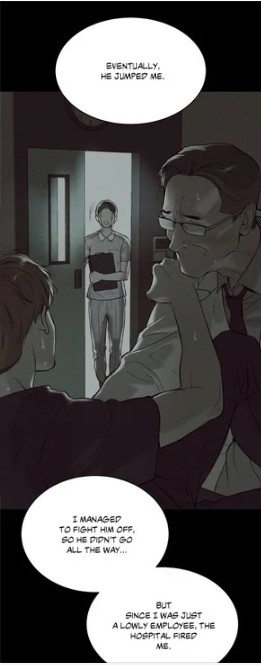 (chapter 90) He devours.
 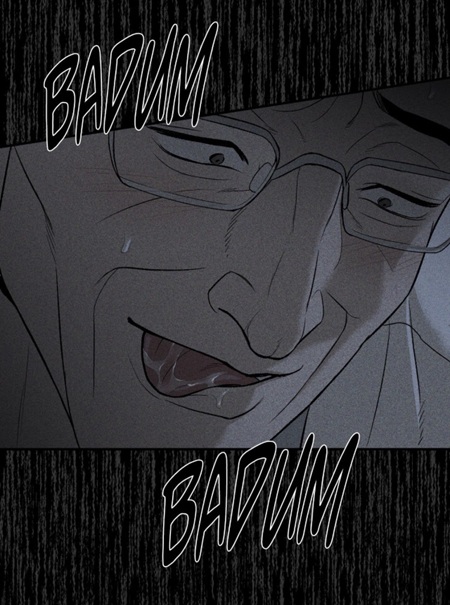 (chapter 90) There is no sustained camouflage. Violence becomes explicit.
 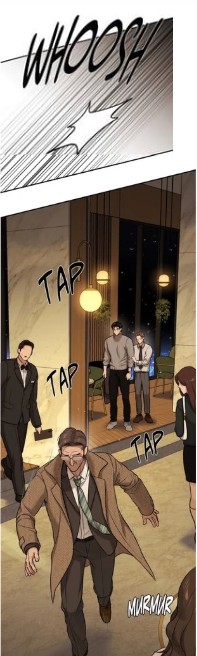 (chapter 90) Hence he ran away. The exposure destroyed his credibility. The public article marked him. His ecosystem collapses. He is no longer hidden wolf. He is identified predator.
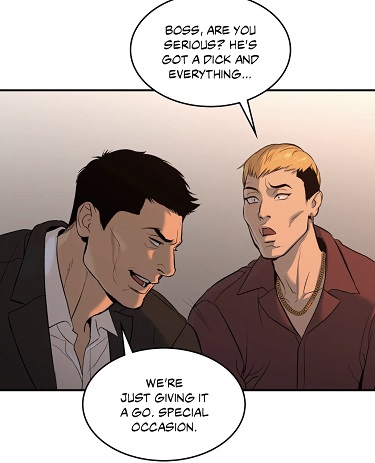 (chapter 16)
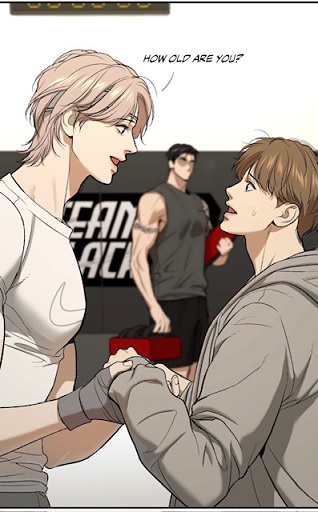 (chapter 30), but also as selfless.
 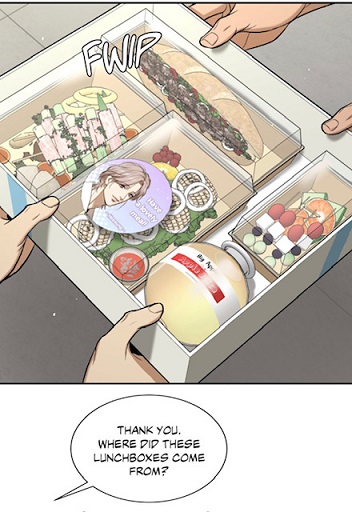 (chapter 30) Yet, he is a libertine, though he claims to be pure by stating that he is looking for his soulmate.
  (chapter 33) Hence no one is suspecting the darkness in his heart. Even the champion believed in his words, when he claimed that he had some feelings for doc Dan.
  (chapter 58) The resemblance is deliberate. He is discreet. He avoids public scrutiny. He hides his intimacy with Potato.
  (chapter 43) Therefore the latter was not present at the champion’s birthday party. The actor operates in private spaces
 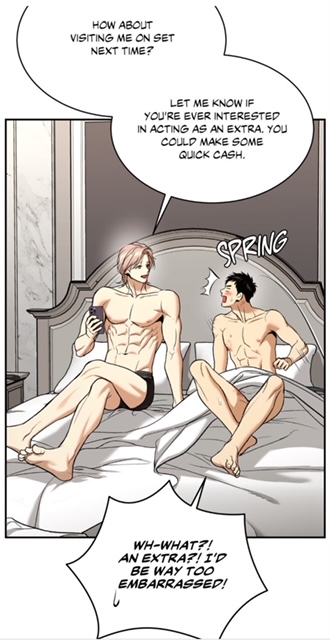 (special episode 2) and prefers silence over visibility. Like Perrault’s Compère le loup, he does not appear monstrous. He appears socially legible — even charming. He navigates controlled environments. He is careful about who sees what.
 (chapter 35) He proposes a “race”to the little girl, in Jinx it’s a meal (ramen in Korean, an allusion to sex)
 (chapter 35) He softens his voice. He invites the girl into bed.
  (special episode 1) He constructs intimacy before violence. He depends on civility as camouflage.
 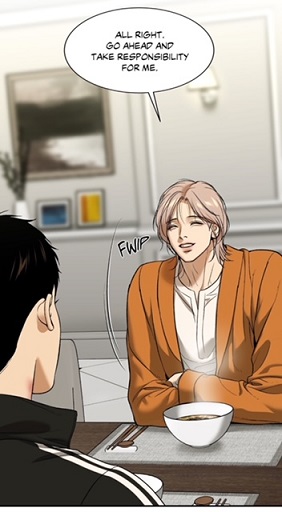 (special episode 1)
 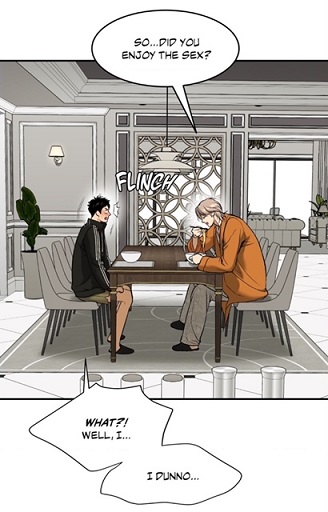 (special episode 1) It is not about power display, but fun. He hides not to isolate his partner, but to shield himself from exposure. His discretion protects his own public image, not his access to another’s body. The imbalance exists — it cannot be denied — but it is not systematically mobilized to erode consent. The latter comes from their initial contract: Potato is at his beck and call.
  (special episode 1) He has been avoiding “virgins” for one reason. He knows how a “virgin” would react to his dream ” to find his soulmate”. They would take his “words” seriously and imagine him as someone serious and reliable. But by selecting partners with sexual experience, he can claim that he made a mistake, they were no soulmate.
  (special episode 1) But this panel exposes even better why the actor is so different from Perrault’s wolf. Youth symbolizes “vulnerability and innocence” and that’s something he has been avoiding. The reason is simple. That way, he can avoid accountability. That’s why he panics, when he hears the age. He realizes his mistake! This reveals that though Heesung is a libertine, he is different from the hospital warden. He is not seeking pleasure in asymmetry, fear, shame and power. He is not targeting “virgins” to exploit their vulnerability. He has been avoiding “virgins”, as he knew that he would have to take responsibility. In reality, he has always feared attachment. Where the wolf eroticizes vulnerability, Heesung is destabilized by it.
 (chapter 34) the predator by accident
  (chapter 89) — clever, adaptable, socially fluid. The fox does not devour. It maneuvers and as such plays tricks.
  (chapter 32) He first approaches Kim Dan through professional contact. Later, he suggests a gig to Potato
  (chapter 88) Even in the gym, he casually asks Yoo-Gu to hold mitts — reorganizing the work structure in ways that subtly serve his private interest. Work becomes the bridge. The boundary blurs.
 (chapter 89) The accusation implies that Jaekyung contaminates professional space with sex. Yet Heesung himself collapses that boundary. He initiates intimacy with Potato after drinking.
 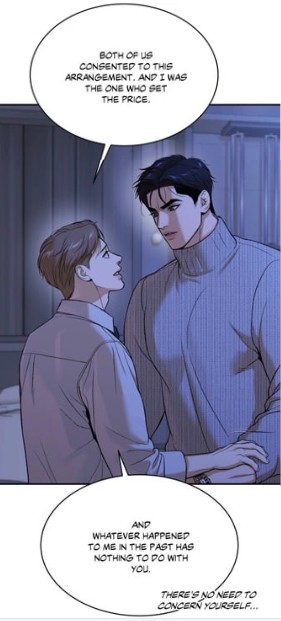 (chapter 90) It is when one makes a clear decision and accepts the consequences. Yet, Heesung violated this rule, for he knew Potato was drunk. He did not stop. He did not insist on postponement. He allowed desire to override clarity. That choice introduces asymmetry. Alcohol clouds agency. Youth complicates balance. Professional proximity blurs roles. Secondly, he is rejecting accountability. Finally, he never tried to correct Potato’s error and false belief. He took advantage of his ignorance. So his behavior could be perceived as manipulative and coercive.
 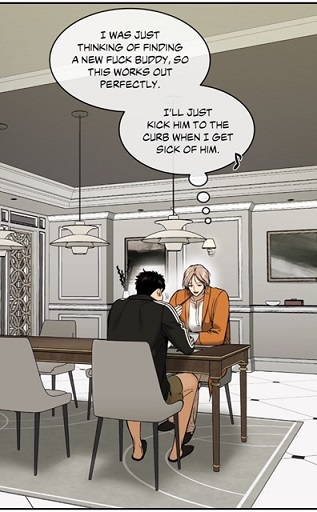 (special episode 1) He hides it, though he tried to reveal it to doc Dan
  (chapter 58). If the truth were exposed — an actor secretly sleeping with a younger, inexperienced partner whom he approached through work — the narrative could easily frame him as exploitative. He could be accused of sexual harassment.
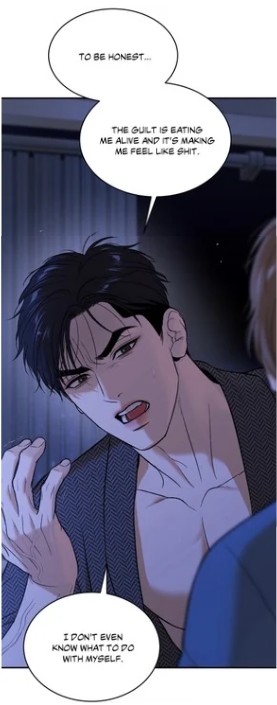 (chapter 91) the emotion is internalized. He experiences remorse not because he was exposed, but because he crossed a boundary. He separates work from intimacy afterward. He becomes rigid about consent, alcohol, and clarity. Therefore imagine his reaction, when he discovers the true nature of the relationship between Choi Heesung and Potato. He can only be shocked and angry.
 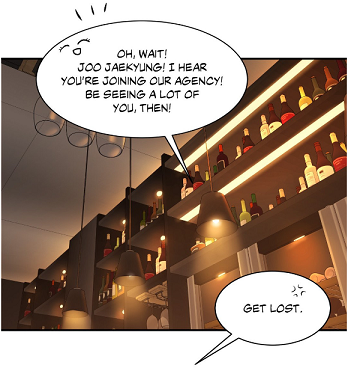 (chapter 33) Or would attention shift to the structure that allowed blurred boundaries to exist in the first place?
 (chapter 36) When the hospital scandal broke, the institution remained unnamed.
  (chapter 41) The security guards who enforced silence?
  (chapter 40) The sports reporters who repeated the official version? The referees? The moderators? The corrupted director of the gym Choi Gilseok? Or the institution itself?
 (chapter 52), does the structure remain untouched?
 (chapter 47)
  (chapter 48) As you can see, I have the feeling that the pharmaceutical company might become the topic of the next scandal.
 (chapter 84) Readers have replayed the blurred panel again and again, straining to decipher the muffled shapes of his mouth. Some are convinced that this is the confession, the moment the wolf finally says aloud what his body has been whispering for months. One Jinx-phile,
  just enough to match the Korean 좋아해 김단 (jo-a-hae Kim Dan)—“I like you, Kim Dan.”
 (chapter 84) —especially Japanese summer festivals where boys and girls, dressed in yukata, confess beneath crackling skies. Fireworks symbolize joy, romance, fleeting courage. It is no wonder many readers assumed that Mingwa was drawing on this cultural grammar: purple night sky, glowing lights, two lonely figures suspended above the world. A confession seems almost inevitable. And if it truly was a love declaration, then the champion’s refusal to repeat himself
  (chapter 84) would make perfect narrative sense—confession lost, moment gone, courage spent.
 (chapter 62)
  (chapter 77) Why does Joo Jaekyung speak exactly when the fireworks begin, as if choosing the one moment when he is guaranteed to be drowned out?
  (chapter 84) Was he truly confessing love—or was he trying to verbalize something far more raw, far more primitive, far more difficult?
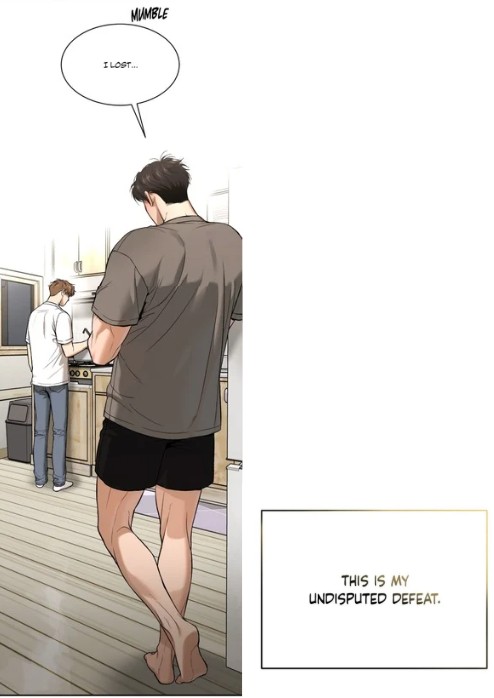 (chapter 76) and 79
  (chapter 79), where he “speaks” only when the other man cannot truly hear him. At the hostel, the mumbling was barely audible: yet according to my observation and deduction, doc Dan seems to have caught something. as later we discover this scene from the champion’s memory:
  (chapter 77) He already knew that the athlete was standing next to him. However, observe that this vision focused on the doctor’s gaze was accompanied with silence. This means, doc Dan acted, as if he had heard nothing. So if he heard, what did the physical therapist catch exactly in the kitchen? “I lost…”, but it was devoid of any context. Doc Dan had no idea what the director Hwang Byungchul had advised to his former student.
  (chapter 75) He could not know that “I lost” referred to something far more intimate: Jaekyung losing control over his own emotional detachment, he was totally vulnerable in front of doc Dan. His heart was stronger than his “mind and fists”. Naturally, if Kim Dan interpreted the phrase at all, he would connect it to the only “loss” he understood: the tie with Baek Junmin. A humiliating defeat. A source of shame. This misinterpretation perfectly explains why in the cabin, the hamster immediately assumes that the champion is once again determined to regain his title:
  (chapter 84) He is taking the champion’s words at face-value.
  (chapter 84) A deadline designed to keep Kim Dan close without revealing the depth of the emotional dependency underneath. Finally, before we even analyze posture or timing, we must acknowledge the ghost that is sitting inside the cabin with them — Jaekyung’s own admission of dishonesty. Just minutes earlier, the narrative revealed again a thought he had never dared to voice aloud:
 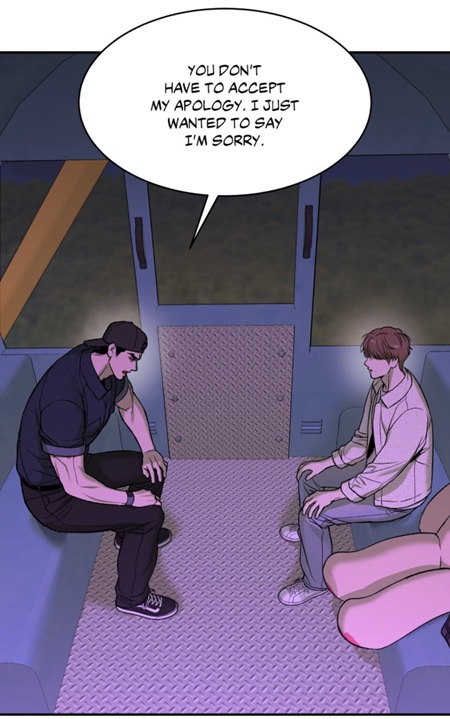 (chapter 84) For the first time, he admits wrongdoing without deflecting, without rage, without pride. This apology is not strategic; it is confessional. A tone we have never heard from him before. It is no coincidence that just before, he employed this expression:
  (chapter 84) This is the language of surrender — not to defeat, but to vulnerability and selflessness. The champion who once insisted on keeping Kim Dan “one way or another” (chapter 84) now articulates the opposite impulse: the willingness to release him, to give him a choice.
  (chapter 84) Thus for me, in the cabin the champion became, for a moment, the boy with no mother’s gaze, no father’s protection, no safe place to rest. He must have said something cheesy, something a young person would say. Purity returns before experience does. Honesty returns before articulation. And in that moment inside the cabin, Mingwa makes a decisive artistic choice: we do not see Jaekyung’s eyes.
  (chapter 84) This pigment stands for innocence, purity, new beginnings and even equity.
  (chapter 84) Because they were not yet meant to be received, only meant to be released. The fireworks allow him to finally attempt a more honest sentence, but in conditions where it cannot reach its target.
 (chapter 81) Yet this is also the limit of what he can say.
 (chapter 79) Thus he could see the athlete’s mouth moving and hear sound. Nevertheless, observe that the moment the wolf reached to the doctor’s words, he bowed his head and looked down. From this
 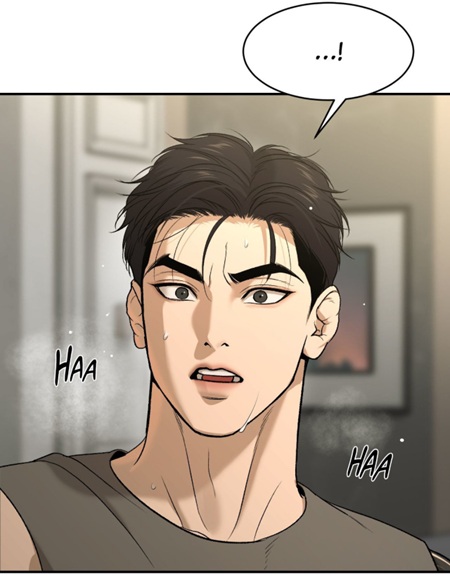 (chapter 79) to this
  (chapter 79) However, he doesn’t fear coldness, but ridicule and mockery, the father’s gaze:
 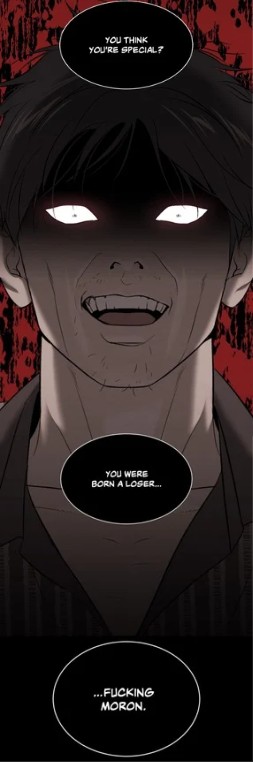 (chapter 73) Under this light, people can grasp why Joo Jaekyung was not facing doc Dan directly in the cabin. To conclude, the mechanism is identical, but amplified.
 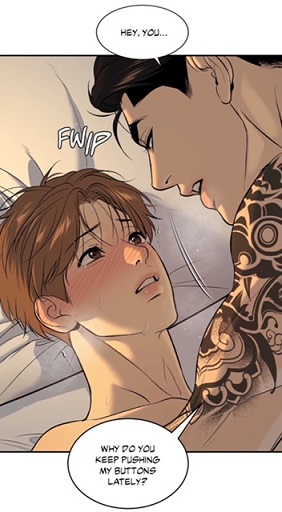 (Chapter 44)
  (chapter 74) or his mother (a poor but good mother), he was not seen for whom he was: a child, a boy. Jinx consistently links sight with recognition, and recognition with love.
  (chapter 53) Jaekyung has never been granted either.
  (Chapter 45) Thus when he got upset with the present, he indirectly expressed the wish to be « looked at ». Moreover, in his visions or memories, this is what he keeps seeing:
  (chapter 54)
  (chapter 75) Doc Dan’s gaze!
 (chapter 51) And for the first time, Jaekyung freezes.
 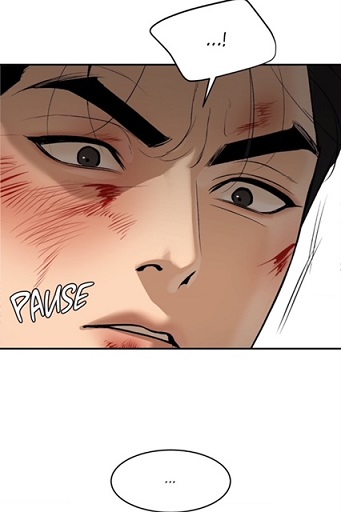 (chapter 51) His breath catches; his eyes widen. It is the moment he realizes his mistake. He never thought that doc Dan had been trusting him. That moment marks the first rupture in his emotional armor, not only because it hurt, but because it revealed. He realizes with terror that he wants to be seen by Kim Dan, but when he faced such a gaze, he could only feel guilty and bad. Thus it is not surprising that later, his nightmare let transpire his guilty conscience.
  (chapter 82), as the champion has always used his surroundings as a source of inspiration.
  (Chapter 29) It would also fit with 5 syllabes in Korean. And it would be cheesy too. Yet, I have my doubts about this theory which I will explain further below. Nevertheless, one thing is sure. The champion loves the doctor’s eyes and they have the power to move not only his heart but also his mouth. He is encouraged to verbalize his emotions.
  (chapter 84) The gaze under the fireworks triggers emotions in him. Thus he blurted out something. But for me, he does not know how to say “I love you.” He cannot even say “I like you.” Those sentences belong to someone who has matured emotionally — someone who can identify feelings properly, but so far he keeps saying: “to stay by his side” and his « affection declarations » were all linked to negativity.. Thus my idea was that Joo Jaekyung could have said this: “I want to hold you!” (안고 싶어 너). Let’s not forget that so far, the champion had never expressed such a longing before; a warm embrace. He would always follow his instincts:
  (chapter 4)
  (chapter 69) The hug represents a metaphor for “staying by his side, for home and to be seen”. Moreover, in French embrasser can mean kiss and hug. And strangely, I noticed that the protagonists were never looking at each other during an embrace.
  (chapter 44) And let’s not forget that such a gesture is strongly intertwined with “childhood”.
  (chapter 65) It is for “babies”. No wonder why he retracted immediately.
 (chapter 84) Here, the doctor looks sad and wounded. His eyes are unfocused — he is not seeing the present. The water running down his eyelashes gives the impression of tears, even though he is not crying. His gaze is distant, fixed on something internal. His mouth looks tense, almost trembling. The mouth especially is a clue: Kim Dan’s emotions always gather there when something from the past resurfaces.This is the expression of someone thrown into an involuntary flashback. He is inside a memory. This explicates why this scene is similar to the champion’s shower after the latter had met Baek Junmin:
  (chapter 49)
  (chapter 49) Both scenes show a man pulled violently into a buried memory. Thus, my assumption is simple: the champion said something that pierced straight into Kim Dan’s oldest wound and brought his trauma to the surface. And this brings me to my next observation. Inside the cabin, there are not two people — there are three: the champion, the therapist, and the Teddy Bear.
  (chapter 84) Furthermore, we have a window. We have a phone (dead, but present). We have a childlike toy — symbol of stolen innocence.
 (chapter 84) And now, look again at episode 19:
  (chapter 84) It is not a fashion choice. It marks the moment when innocence collapses and the past reopens.
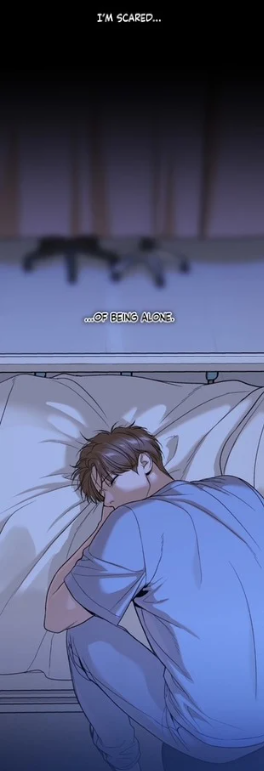 (chapter 56) In other words, wearing black is more than just a change of personality or mourning. It becomes the color of mystery, the beginning of descent into truth.
  (chapter 84) However, observe that doc Dan is holding, even squeezing the teddy bear’s hand, a sign that he is rekindling with his lost childhood. We are getting closer to the revelation behind the photograph — the day doc Dan has never willingly shown to Joo Jaekyung.
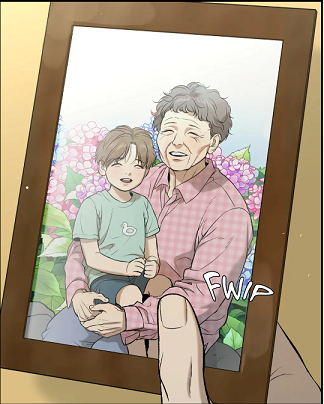 (chapter 19). Observe that in the penthouse, doc Dan has never placed the frame
 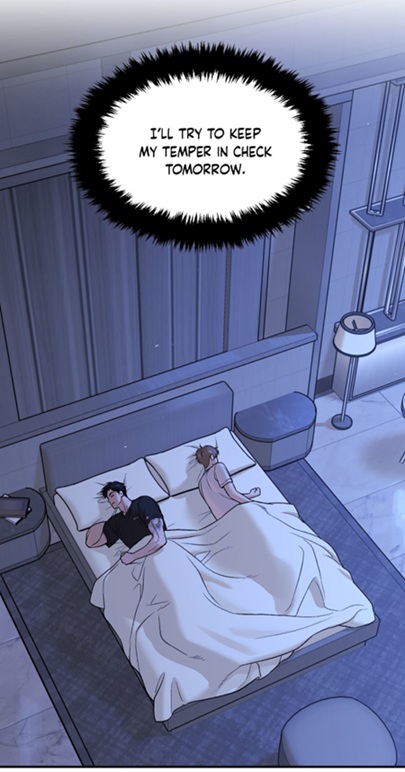 (chapter 79) on the night table.
  (chapter 21) and
  (chapter 84) Every time innocence is ripped away, a teddy bear disappears from the story.
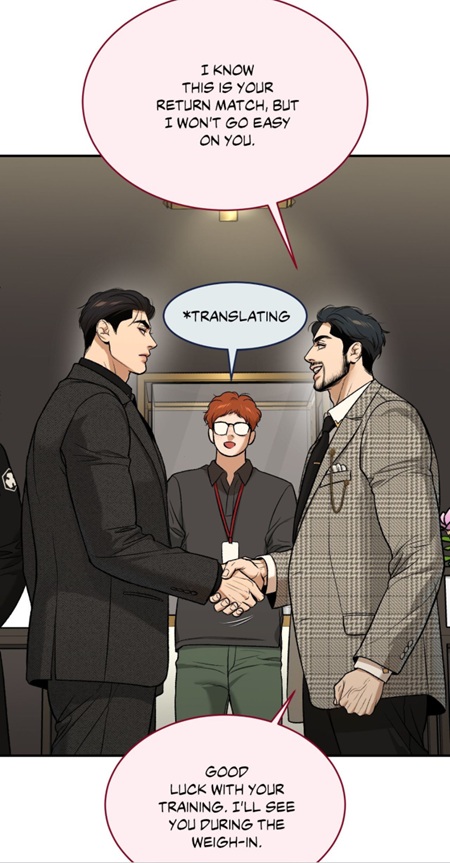 (chapter 82) will happen linked to the protagonists’ past (recent and childhood). Let’s not forget that doc Dan still has no idea what Joo Jaekyung went through after his departure: the slap, the drinking, the headache and the indifference of Team Black, just like the athlete has no idea about the blacklisting and bullying in the physical therapist’s past.
 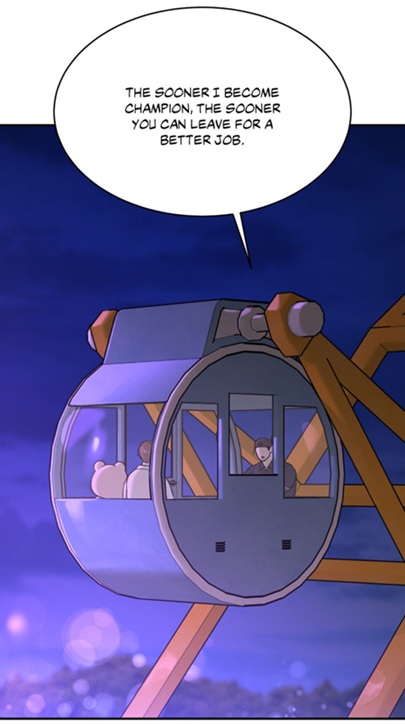 (chapter 84) So by wearing black, doc Dan indicates that he is gradually becoming responsible for Team Blackand Joo Jaekyung the athlete.
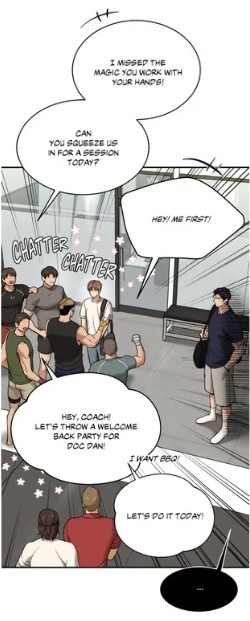 (chapter 78) Their noisy excitement — hugs, wishes, smiles, jokes, even talk of meat — gave the impression of a long-awaited reunion. Yet the suggestion was cut short by Jaekyung, who rejected it like this:
  (chapter 78) In other words, a party was “missed.” At first glance, this might appear to be an exception, a rare moment of denial in a story otherwise filled with shared rituals. Readers might recall the welcome party
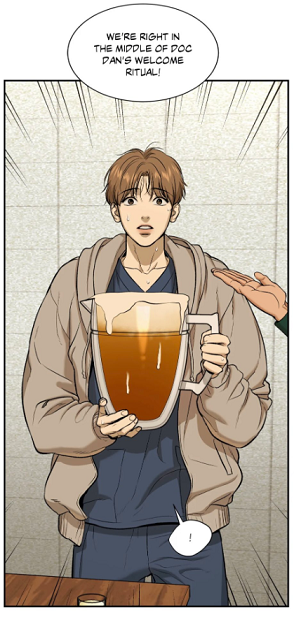 (chapter 9) in episode 9, the champion’s birthday dinner
  (chapter 43) in episode 43, the talk of hospital get-togethers
  (chapter 61), or the festive tone of fighters after director Choi Gilseok’s victory
  (chapter 52).
 (chapter 41) Why did they not organize a party in Seoul to celebrate his victory in the States? Dan devotes himself to work, but his departures are marked by silence
  (chapter 53) rather than farewell.
  (chapter 78) always miss their mark, either hollow in substance or unseen by the very people who should be honored.
 . (Chapter 43) Even the “dragon’s” birthday, supposedly a day of personal celebration, is reduced to an awkward dinner at his expense, with a cake arriving a day too early
  (chapter 43) or gifts from sponsors and fans he never wanted.
  (Chapter 41) In Germany, it is considered as a bad omen to celebrate a birthday too soon. Rituals that should affirm intimacy instead expose distance and lack of respect.
 (Chapter 52)
 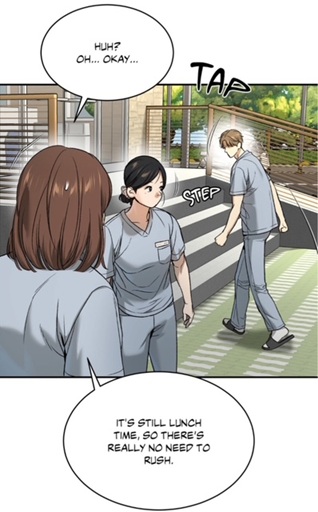 (chapter 56) However, this is just an illusion. What caught my attention is that the nurses wondered themselves why such a skilled therapist would come to a small-town hospital.
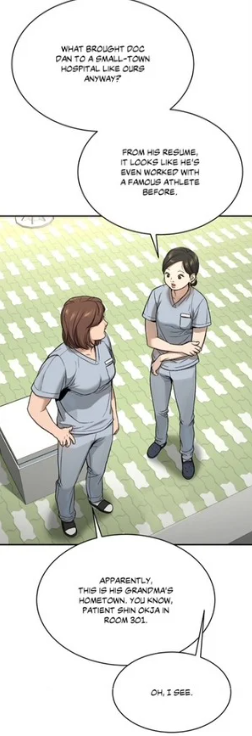 (chapter 56) They speak about him, as though he had no reason to stay there, as if he were a stranger passing through. Right from the beginning, he was treated unconsciously as temporary, someone whose presence required explanation rather than welcome. Finally, no party was held for him, no ritual of inclusion was offered. His distance and their detachment mirrored each other, producing the silence that would later define his departure.
  (chapter 78)
 (chapter 5) It ends either in the car or in the locker room.
  (chapter 15) The high peak of his celebrated victories takes place at the gym where Park Namwook gather the fighters in front of the Emperor congratulating himself for his “good work” and the spectators for belonging to a winning team.
 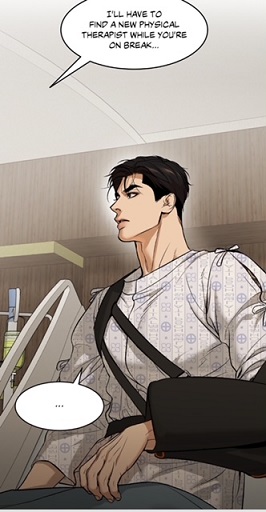 (chapter 53) For him, the physical therapists were just tools and as such replaceable.
 (chapter 45) By keeping Dan in the dark about the “surprise,” the fighters created another problem. Their silence pushed him to offer his own present on the same day as the gifts from sponsors and fans — exactly the kind of attention Jaekyung resented. He had already said he did not want those presents, and now Dan’s sincere gesture was placed in the same category, indistinguishable from the flood of unwanted offerings. What could have been a private, meaningful moment was absorbed into the hollow ritual of the group. Hence the champion never got to read his card!
 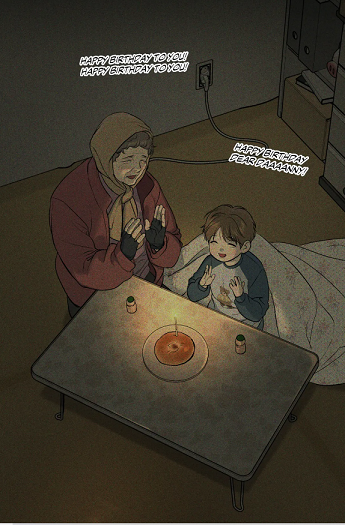 (Chapter 11) One might think, this celebration embodies a perfect birthday party. However, observe the absence of friends. It took place during the night too, a sign that his birthday was not celebrated properly. Everything implies his social exclusion. This made me wonder if this memory represents the only birthday party he ever had with Shin Okja. His life is a sequence of departures without ritual, absences without acknowledgment. Each time he leaves a place of work or community, he slips out like a ghost, denied the closure that parties are meant to provide.
 (Chapter 1) His stay had been so brief as well. Besides, his absence was engineered to be total, as though he had never existed. The very ritual that should have affirmed his contributions instead became a ritual of erasure.
 (Chapter 50) Then later the athlete questioned the physical therapist’s actions and told him this
 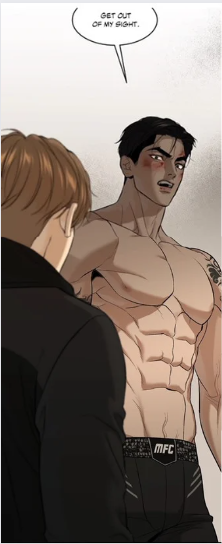 (chapter 51) out of fear and pain, the physical therapist thought, he was fired. Once again, he left in silence, unacknowledged. No one stood up for him, no one tried to reintegrate him, no farewell was offered.
 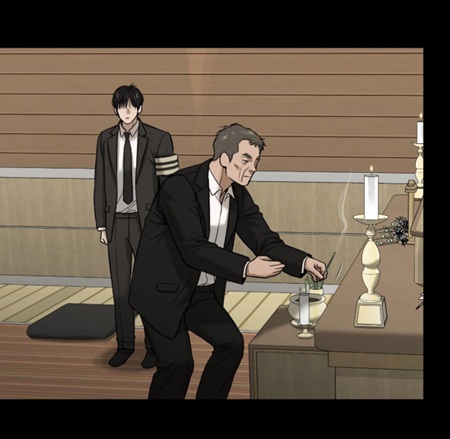 (chapter 74) The silence of his grandmother on this point suggests that even the most basic ritual of mourning was denied him.
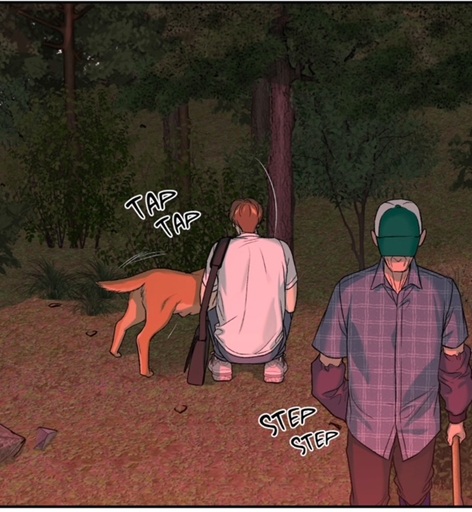 (Chapter 59) Only Dan and the landlord marked the event with a quiet burial. Since no one knew about it, it left the ritual incomplete. For Dan, the small act was meaningful, but its invisibility to the larger community echoed his own life: recognition always hidden, always partial, never public.
 (Chapter 78) To them, departure is not tragedy but play, a noisy farewell parade. Their barking and chasing become a spontaneous party, a joyous ritual of attachment.
 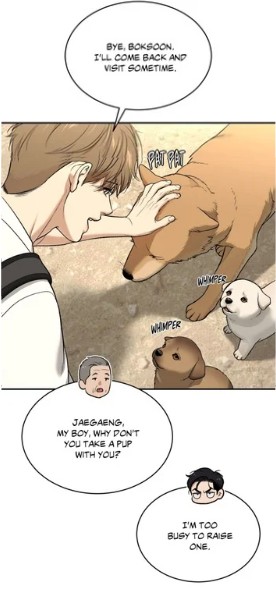 (Chapter 78) Striking is that here, doc Dan is making a promise to Boksoon and her puppies, but the latter have no idea. Therefore imagine this. On the weekend, the moment the car approaches the landlord’s house, the puppies will recognize them and celebrate their return! And this time, both characters will witness this welcome party:
 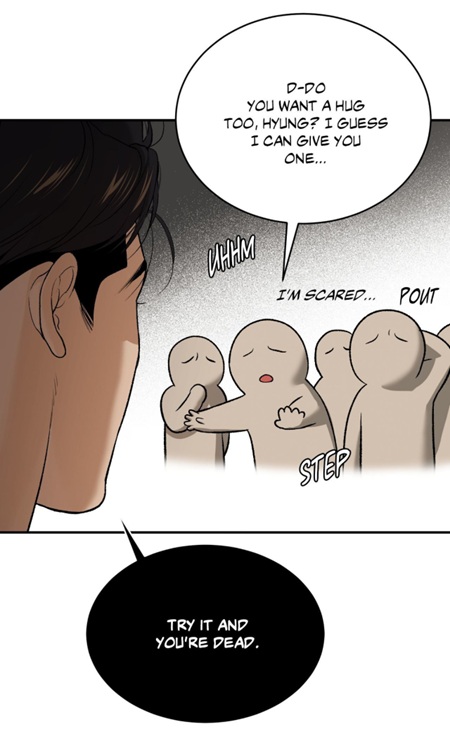 (chapter 78)
 (Chapter 78) But this “reset” is an illusion. Dan is only contracted for two matches. Interesting is that no one is capable of perceiving the truth, as the main lead’s explanation is ambiguous.
 (Chapter 78) He doesn’t limit the number of matches, only that he will focus on the “wolf”. So for them, his return is not limited in time. Nevertheless, his paleness and dark circles speak louder than their words: he is exhausted, fragile, still haunted.
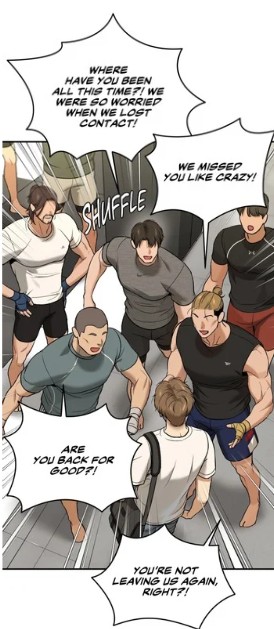 (Chapter 78) They are more worried about another possible departure than about his condition, as though his leaving again would be a greater tragedy than his ongoing suffering. This exposes that the members are not totally oblivious and their reunion is not a repetition of the past. On the other hand, warm words and a noisy welcome are enough for them. They take his generosity for granted, just as they always have. Therefore they ask for his magic hands.
 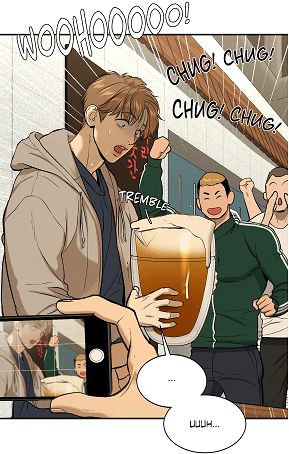 (chapter 9), and abstaining from drink often means being excluded from group belonging. Yet Dan, on medication, cannot drink. His doctor’s recommendation makes it impossible for him to participate in such “public” rituals. Even the customary sharing of a huge bowl — a symbol of intimacy and unity — must be avoided. For Jaekyung, who once used alcohol to dull his own struggles,
  (chapter 54) this becomes another reason to refuse such parties: they risk exposing Dan to temptation and harm. Park Namwook, knowing Jaekyung’s history of drinking, has no interest in promoting such events either.
 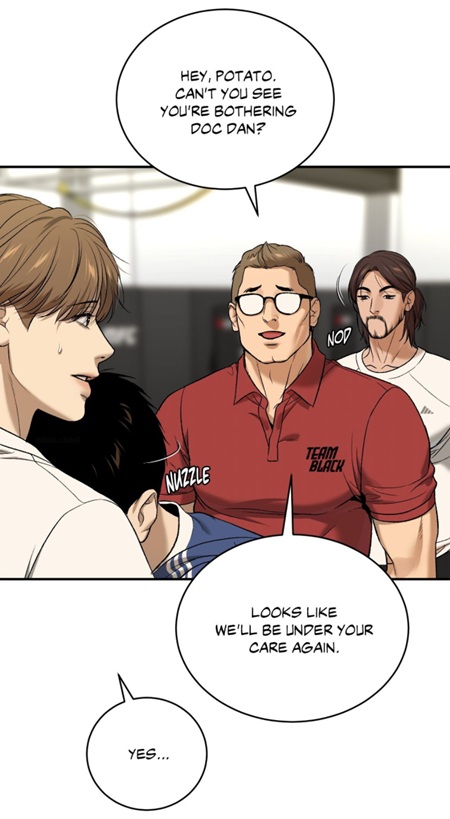 (Chapter 78) Hence the latter has no interest to organize a welcome party and even maintain the ritual with the bowl!! What might appear to others as grumpiness or stinginess is in fact a form of protection.
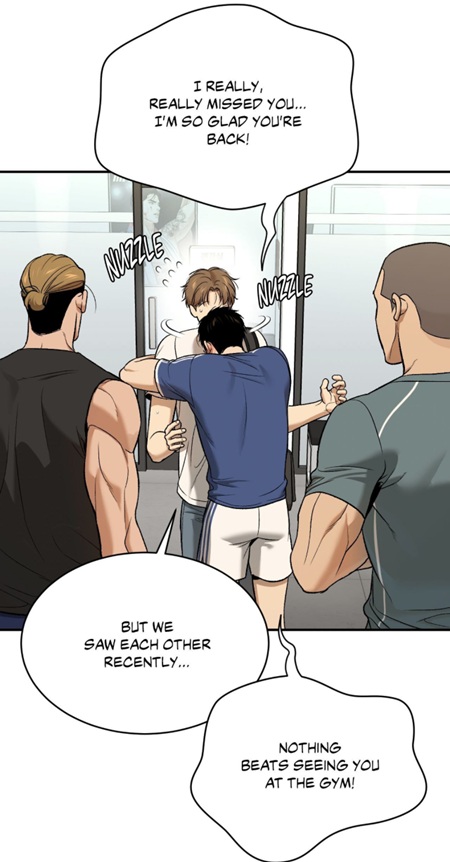 (Chapter 78) Having missed Dan most deeply during his absence, he now wishes to spend as much time as possible with his hyung. His longing shows that no party with Heesung and the landlord — no noisy drinking night —
  (chapter 58) could fill the hole left by Dan’s departure. But his form of attachment is still caught in the ritual of surface-level affection. What Potato craves is real closeness, hence he keeps hugging the physical therapist,
  (chapter 9)
  (chapter 26), or allowed whether welcome parties or surprise celebrations or pre-match meals
  (chapter 22). These events were never about genuine recognition but about maintaining power and appearances, boosting morale, or reminding the fighters of their dependence on the team structure he managed. The “surprise” birthday party in chapter 43 bore his fingerprints,
  (chapter 43) This absence is revealing: Namwook preferred to avoid direct conflict with Jaekyung’s visible displeasure, leaving the awkward burden of paying and performing to the champion himself to Yosep. In other words, his parties were tools of control, not gifts of belonging. By chapter 78, however, the balance has shifted.
  (chapter 78) Standing in the back, Namwook watches as Dan returns and is embraced by the fighters. He notices a “different vibe” between the two leads, but fails to grasp what it means. Doc Dan is actually free and has the upper hand in their relationship. Hence he can no longer ask this from doc Dan:
 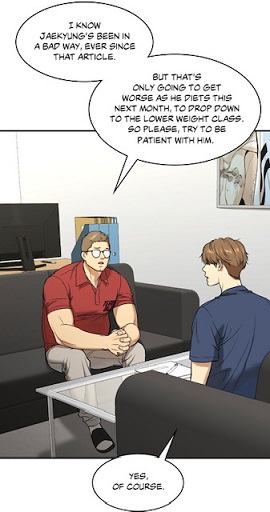 (chapter 36) Doc Dan should put up with everything. What he cannot admit is that Dan is no longer replaceable.
  (chapter 69) Yet unlike all the hollow celebrations that came before, this missed event would finally have meaning. It would not be absence through neglect, but absence as recognition: proof that Dan’s life matters more than ritual, profit, or performance.
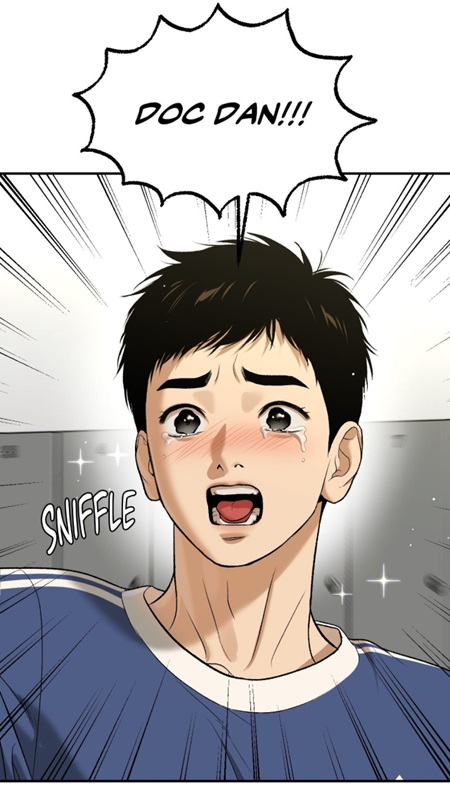 (chapter 78) This delay suggests a split loyalty: while the team is already celebrating, Potato is likely still tied to Heesung, perhaps even speaking to him on the phone. His tardiness betrays how his heart is pulled in two directions — caught between the actor’s orbit and the gym’s renewed center around Dan. Yet the embrace of the fighter, and his tearful reaction at seeing Dan again, show that his real place lies with Team Black.
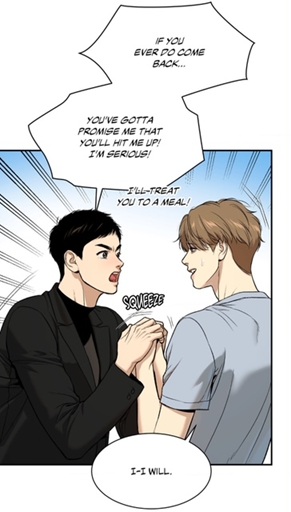 (chapter 59) Potato had made a promise to treat Dan to a meal if he ever returned, squeezing his hand with the sincerity of a puppy. That promise, innocent as it seemed, carried a hidden trap: in Korea, such “treats” almost always involve alcohol. And he could try to recreate the party on the coast. Potato, unaware of Dan’s medical restrictions, may offer him exactly what he must refuse. Only Jaekyung knows the truth of Dan’s fragile health; only he can act as his shield against such misplaced affection. Secondly, Potato possesses pictures of the puppies
  (chapter 60), which he took on the day one of them died!
 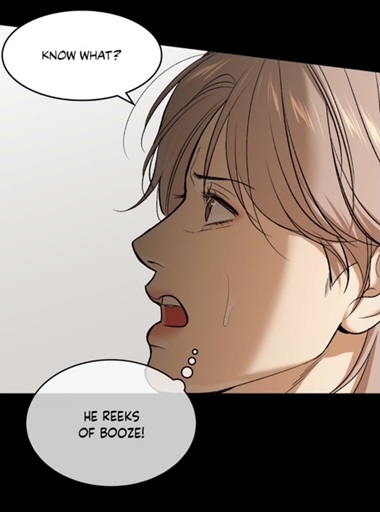 (chapter 58), and his presence ties alcohol directly to the champion’s vulnerability. At the same time, Potato’s loyalty is beginning to shift. He once orbited Heesung like a hidden lover, but Dan’s return rekindles his attachment to the gym and as such will affect his relationship with the gumiho.
 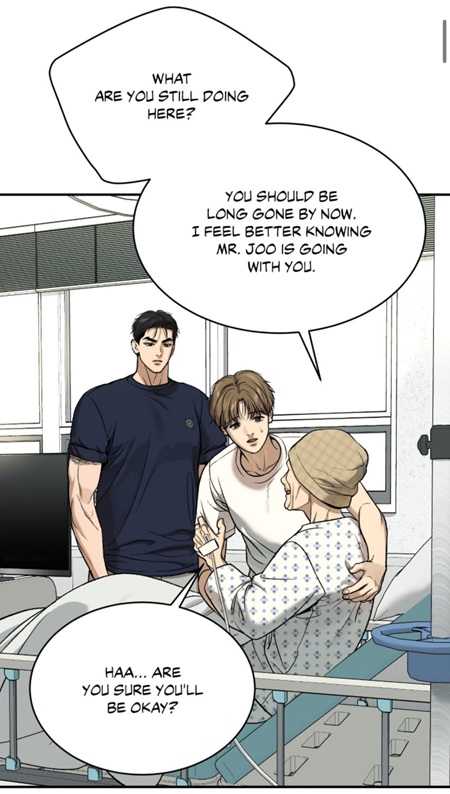 (chapter 78) But she does not return the gesture, as she might believe that he is just holding her straight. Her arms remain still, her body heavy with silence. Instead she talks, urging her grandson to leave the place as quickly as possible. So she doesn’t enjoy this moment. What should have been a small celebration of love — a hug of recognition, a party for two — dissolves into emptiness. Halmoni, who had always claimed to be his anchor, fails to give him the ritual of belonging he craves. The one gesture that could have affirmed their bond is withheld, turning tenderness into yet another missed ceremony.
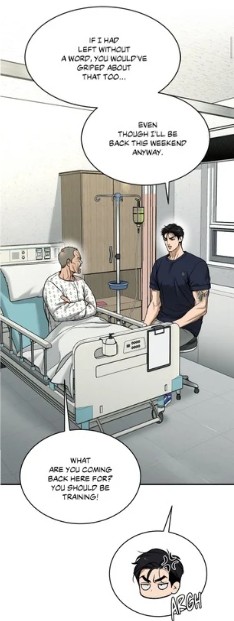 (chapter 78) Sitting stiffly in his hospital bed, he waves away any possibility of affection. His body language, arms crossed, his words reduced to commands about training, erase the emotional bond that might have connected him to Jaekyung. Where halmoni’s silence is passive, Byungchul’s is active — he refuses intimacy, replacing it with obligation. For both figures, farewell becomes an empty form, stripped of the recognition that makes partings bearable. In these moments, the absence of a hug, the denial of tenderness, is more devastating than the loudest rejection. It is a party that never begins, a rite of passage left unspoken.
 (chapter 22)
  (chapter 13) a breakfast in silence
 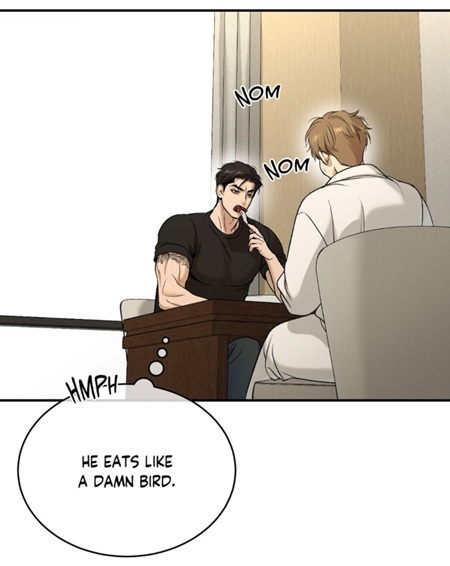 (chapter 68), the embraces in the dark
 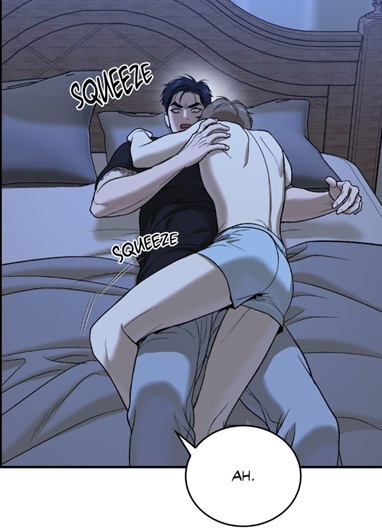 (chapter 66) (the wordless recognition of suffering) — these become the true celebrations of Jinx. They lack alcohol, noise, or spectacle, but they carry sincerity. They reveal that belonging can be built not through grand gestures but through repetition, through the transformation of fleeting kindness into ritual. This implies the existence of conscious and choice. And yet, these moments remain fragile. After their return to the penthouse, there is no shared meal, no laughter, only nostalgia and sadness.
 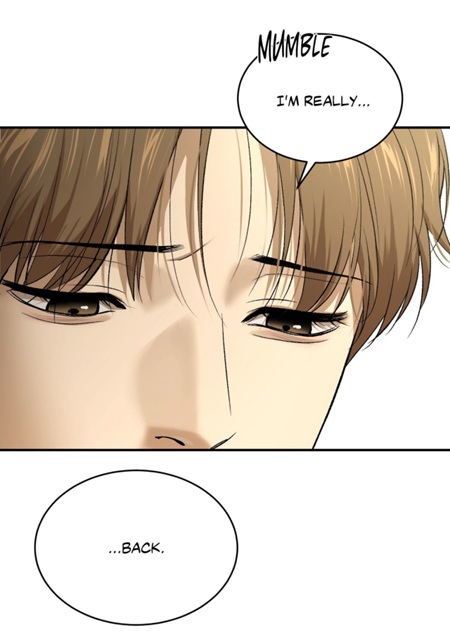 (chapter 78) Even Jaekyung is troubled by the reminder that Dan’s stay is temporary, as if the very walls of the penthouse resist turning into a home.
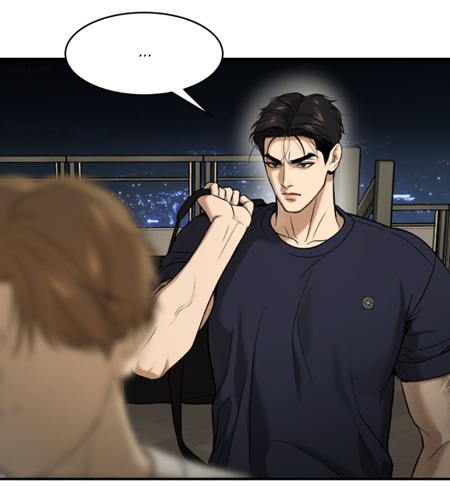 (chapter 78) In other words, the wolf’s task is no longer to win battles in the ring but to protect these fragile celebrations — to make Dan feel at home, to turn missed hugs into embraces, missed parties into warm meals, missed gestures into habits of care. Only then can the cycle of exclusion be broken. Only then can “The Missed Party” become, at last, a real one.
 (chapter 68), the shared meal
 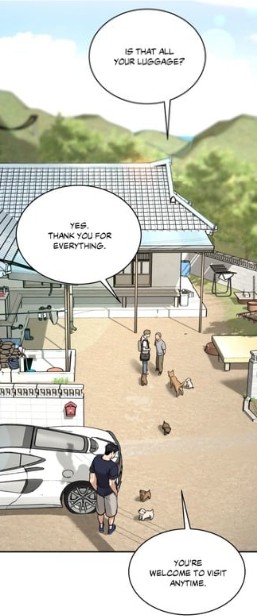 (chapter 78). For me, it is no coincidence that the senior followed them to the street and waved at them!
  (chapter 78) He expressed not only his genuine feelings, but also his longing: he hoped to see them soon. He had come to appreciate their presence which is not related to their work. The Missed Party becomes not a single absence, but the haunting rhythm of the entire narrative: recognition always arriving too late, always seen by the wrong eyes. And perhaps the story’s promise lies here — that one day, the real party will finally be held, not in karaoke bars or gym halls, but in the unbreakable bond of two men who learn what true friendship and belonging mean. This means, the more the champion and his fated partner develop new routines, the more it will affect the gym and as such Park Namwook, which can only feel more and more excluded.
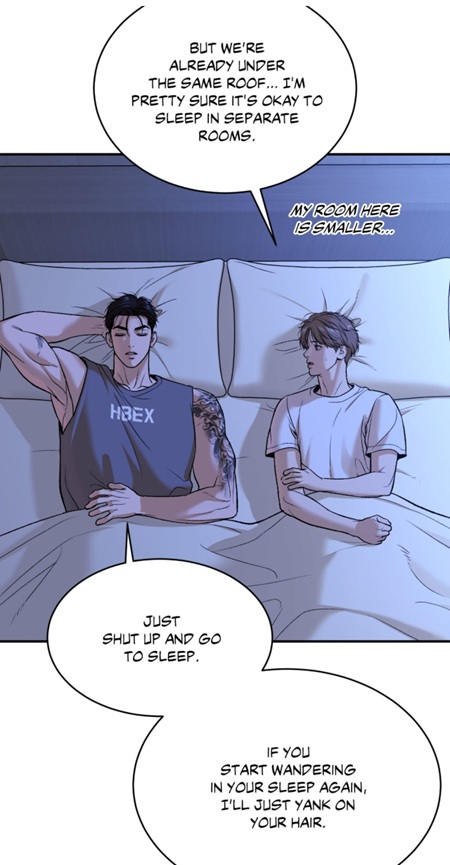 (chapter 78)
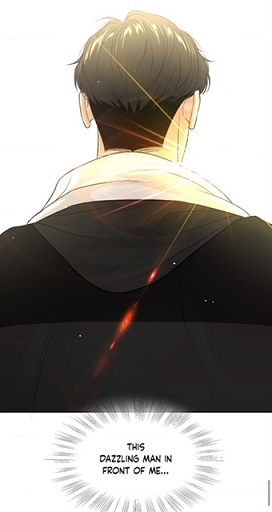 (chapter 40)
 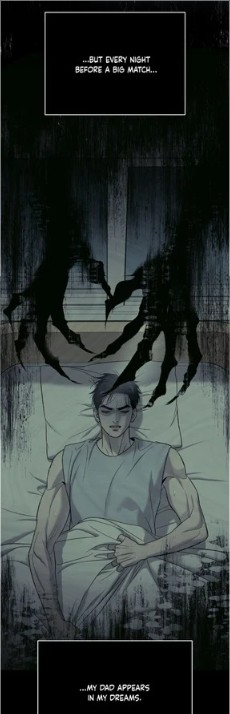 (chapter 75) Where his father’s curses bound him to guilt and the past, Dan’s glow opens the possibility of release
  (chapter 75) His eyes open after the dream, and they open to the same light. It’s the opposite of every earlier awakening
  (chapter 54) —no gasp for air, no clutching his throat
  (chapter 75), no father’s voice strangling him. This sudden awakening embodies enlightenment.
  (chapter 75)
 (chapter 75) He is smiling, a sign that the director is enjoying this moment with the “wolf”. He becomes the first person to speak to Jaekyung not about titles, not about survival, but about happiness.
 (chapter 70) He knows the athlete from the past. The latter was attached to people and not to places. Why does he speak of “something” rather than “someone”, if he knows? The lesson is not about fixing a new goal or object to chase, but about discovering how to live differently — how to live happily.
  (chapter 65)
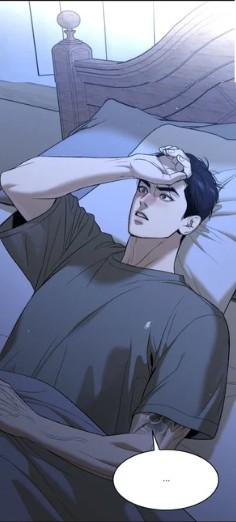 (chapter 75). Even before, he could only mutter to himself this:
 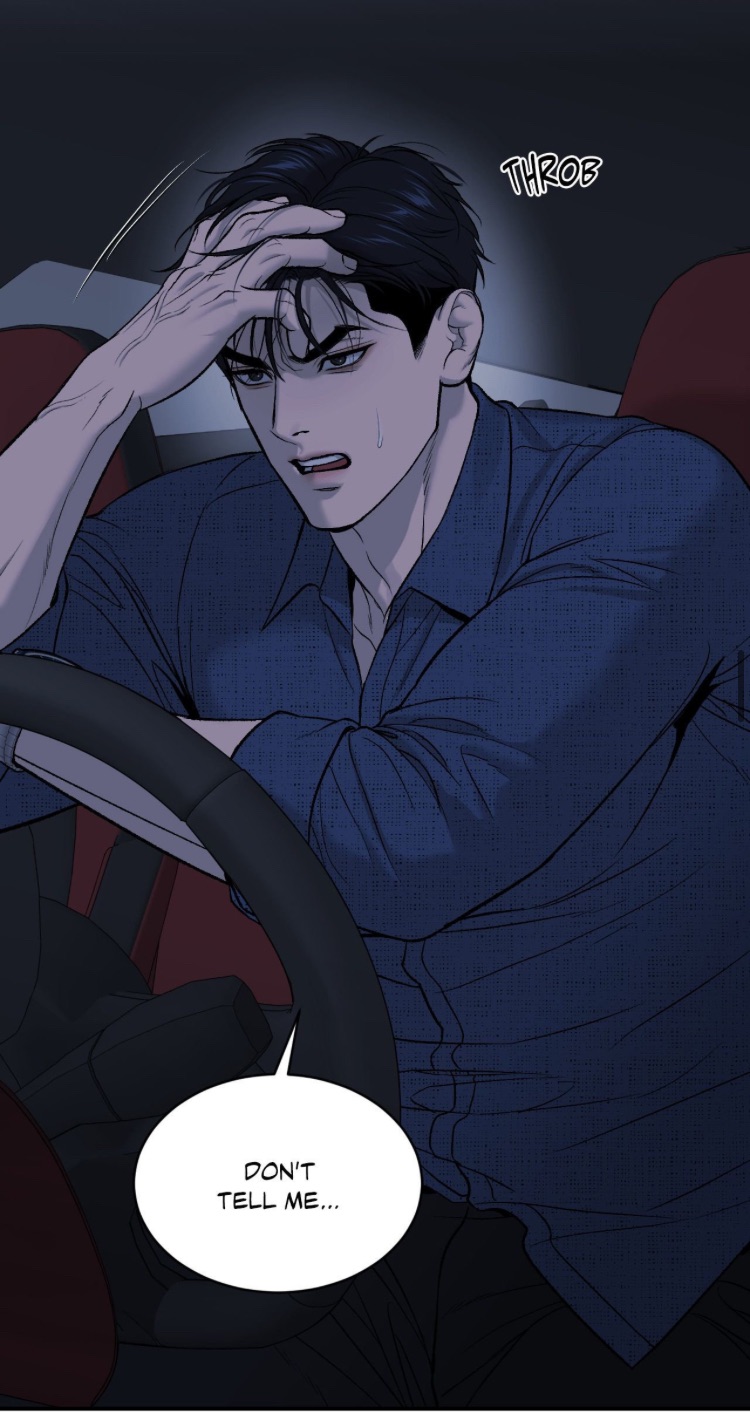 (chapter 70) The negation indicates denial, but observe that he couldn’t even use a noun. He cannot yet translate this vision into words, because he has never heard “I love you” himself
  (chapter 39). The only one he heard was diminished to a mistake
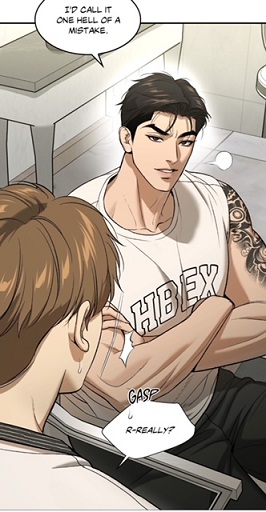 (chapter 41), and doc Dan claims to have no recollection of it. His father left him with mockery, his mother with resignation, his coach in the past with discipline, the grandmother-figures with burdens (honor, debt, favor).
  (chapter 74) No one ever taught him how to say I love you. And so, when Dan appears in his dream, it is not the words that free him but the gaze.
  (chapter 75) or the mother’s withdrawal.
  (chapter 75) The openness is what makes it love — it is respect.
 (chapter 65)
  (chapter 75) His love is expressed through humility — through not knowing. At the same time, his words and facial expression ooze trust and confidence.
 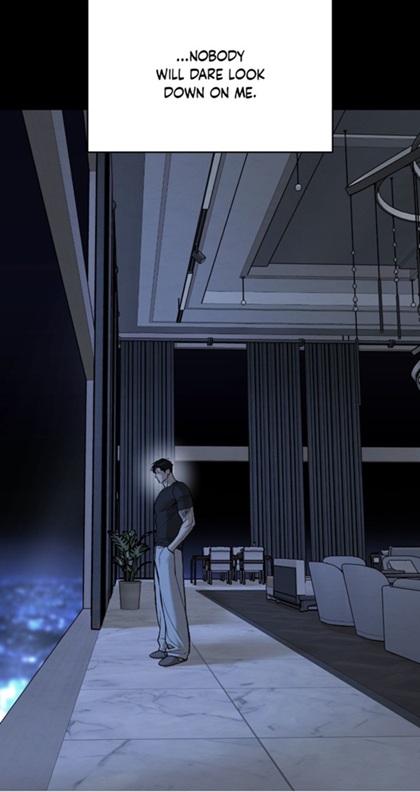 (chapter 75) Each title, each belt, each triumph was a rebuttal to his father’s words. He was not worthless, not doomed. Yet the irony is cruel: in fighting to silence those curses
  (chapter 75), he bound himself ever more tightly to them. Winning never brought peace; it only bought him momentary quiet from the voices in his head. This confession from the main lead confirmed my previous interpretations. First, the main lead had been constantly hearing voices in his head. Secondly, the hamster embodies “sound”, but a different kind: true communication linked to honesty and affection. This explicates why after the couch confession
 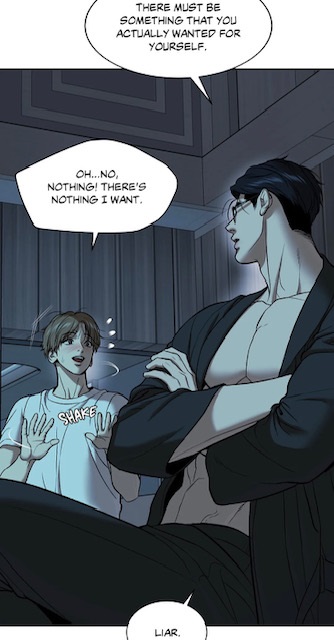 (chapter 29), Joo Jaekyung opened up a little to doc Dan! Thus the next morning, he visited the bathroom where doc Dan was!
 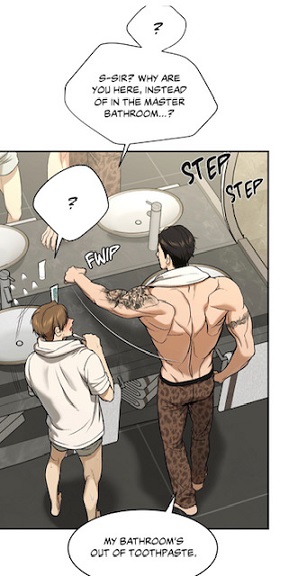 (chapter 30) It was just an excuse to spend more time with his fated partner.
  (chapter 74), no “dear,” no “I love you.” In the father’s memory, she used the child as an excuse to distance herself from her spouse. In that moment, Jaekyung is not a son to be cherished but a barrier in an adult quarrel.
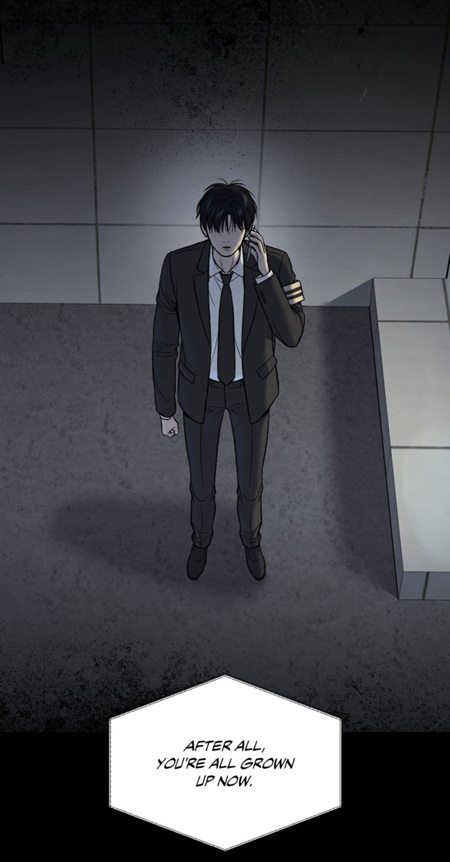 (chapter 75) carry the same cold logic. On the surface, they sound like recognition, even encouragement. But their true meaning is dismissal: you no longer need me. For her, love equaled dependency. Once her role as provider was no longer necessary, she withdrew.
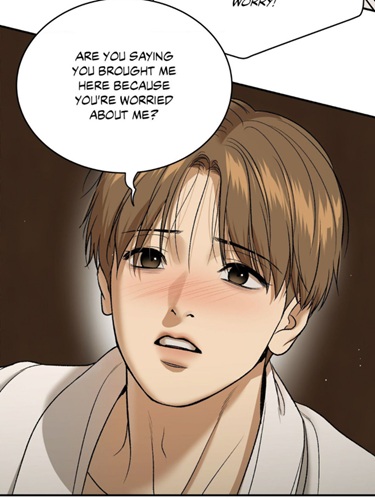 (chapter 67) His question is really an appeal for recognition. If Jaekyung answered yes, Dan could interpret it as proof of love, because in his own distorted framework being worried about equals being cared for. But Jaekyung answered with silence.
 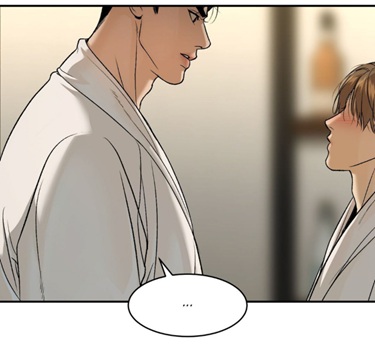 (chapter 67) Not because he felt nothing, but because he lacked the language to connect worry with love. In his conscious mind, conception of care was still bound to usefulness — Dan mattered because he was needed for training, not because he was loved as himself, while deep down, he had already moved beyond this aspect. He was just in denial in this scene,
 (chapter 74) On one level, she does not recognize his voice. But on a deeper level, her words ring as truth: she does not know her son. She has no idea who he has become, what defines him, what characterizes him beyond money and survival.
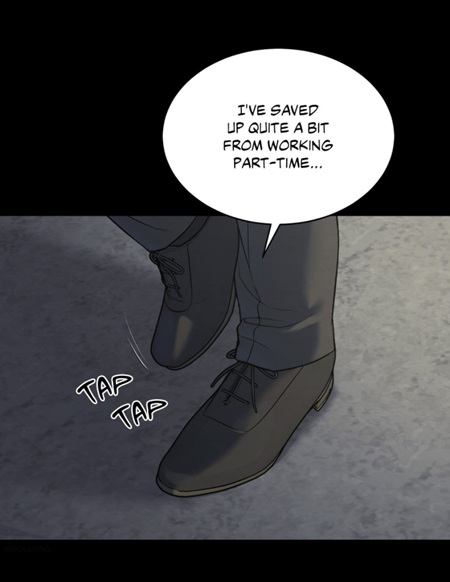 (chapter 74), promising to provide for her if she returns home. He unconsciously appeals to the only logic he has ever known: that love equals provision, that affection is secured by usefulness.
  (chapter 73) From him, Jaekyung absorbed the conviction that a man must be the provider, the protector, the one who works and sacrifices while the partner silently follows. This explains why, in his relationship with his mother
 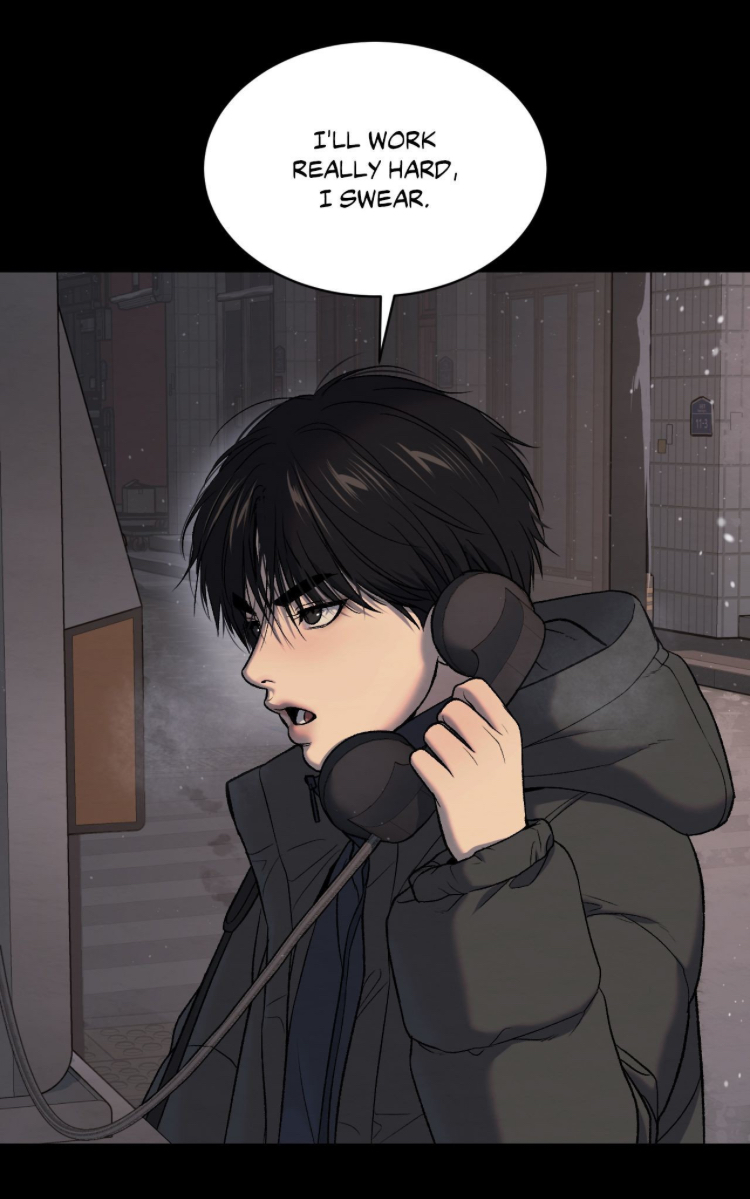 (chapter 72) and Kim Dan, he instinctively assumed he had to “do it all”: earn, fight, shield, control.
 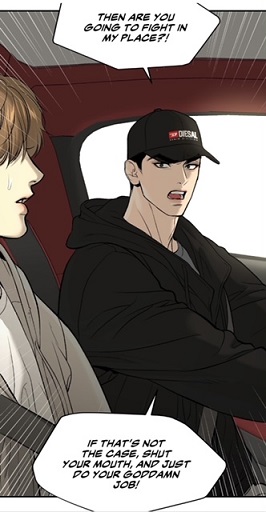 (chapter 42) His father’s voice was violent and scornful, but its framework remained lodged in him.
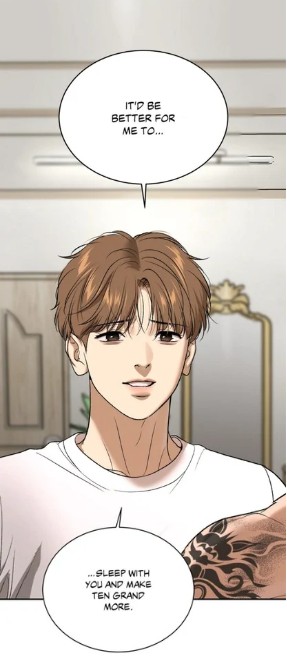 (chapter 62) That way, he can still be “free”.
 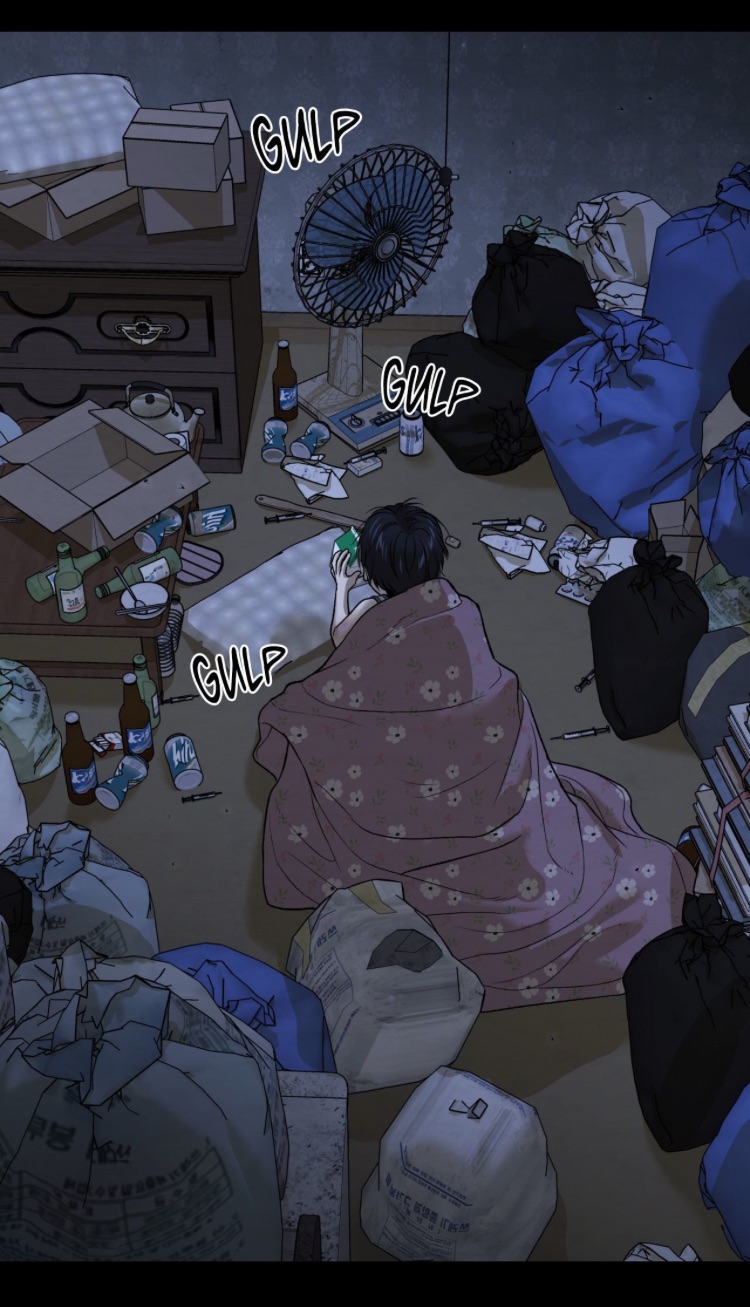 (chapter 72) becomes the perfect metaphor for her treatment of him. Once she no longer needed him, he was discarded like refuse. Just as trash cannot be reclaimed by sentimental value, she will not be able to reclaim him later through appeals to blood ties or belated need. It is impossible because he has learned — painfully — that true love is not about what you have, but about who you are.
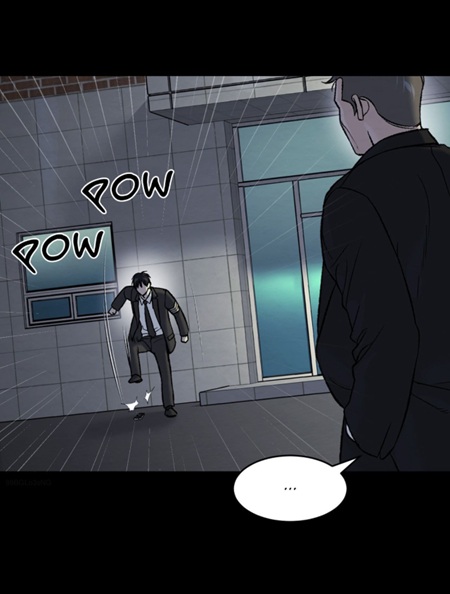 (chapter 74) He understood that the words he longed for as a child were never simply withheld — they never existed. Since we saw her back and heard her voice, I don’t think, she truly cut off ties with Joo Jaekyung. Why? It is because she had no intention to change her phone number again.
 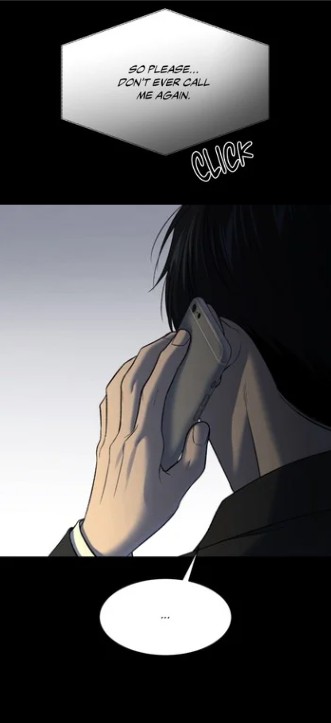 (chapter 74) She expected him to follow her request. I can definitely imagine her trying to reconnect with Joo Jaekyung, the moment he became a celebrity.
 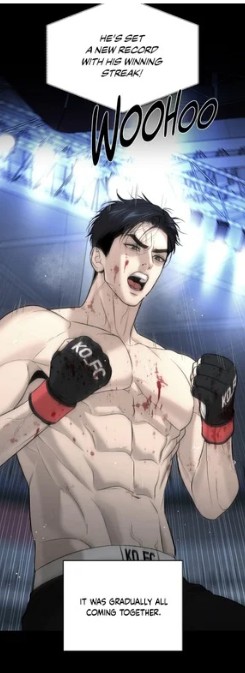 (chapter 75) Keep in mind that we have these mysterious phone calls:
  (chapter 37)
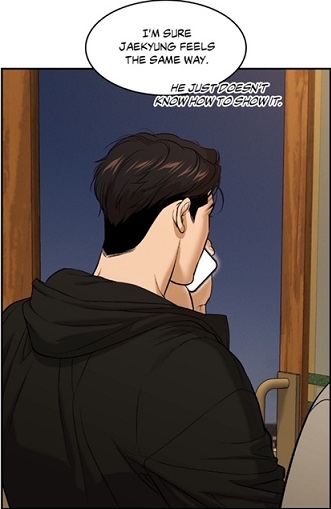 (chapter 43)
  (chapter 49)
 (chapter 75)
 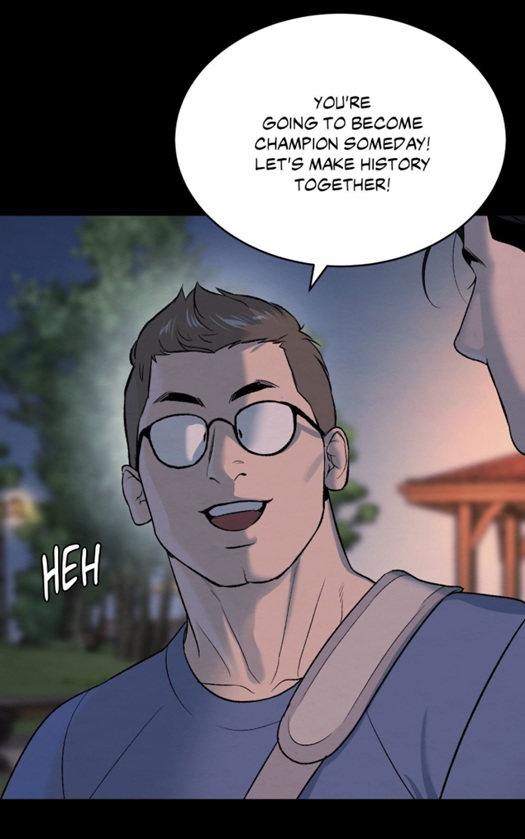 (chapter 75) On the surface, these sound like support. He smiles, his tone is warm, his words echo the vocabulary of friendship. Yet this false promise had lasting consequences: it reinforced a pattern already planted by the champion’s mother. Since childhood, Jaekyung had equated helping with caring
  (chapter 34), Jaekyung assumed later that the actor would have helped doc Dan to hide.
 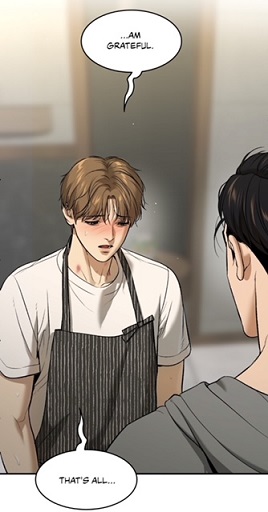 (chapter 45), Jaekyung struggled to even recognize it. Giving him a gift and expressing gratitude was not “helping the fighter”.
  “ (chapter 75) There’s a life outside the ring and the spotlight.
  (chapter 72) was quite futile, for at the end, he ended up alone and felt lonely.
 (chapter 71) Yet, deep down, he was happy that Joo Jaekyung had visited him and even spent the whole day with him. Secondly, for him, too, love has always been expressed through responsibility, advice, and correction rather than direct declaration. When he tells Jaekyung to “look around” and “think hard,” or warns Dan to “
 (chapter 70) “stay sharp,” he is not being cold — he is speaking from the only framework of love he knows: respect, knowledge, care, and responsibility, the very dimensions Erich Fromm outlines. He realized too late that he missed Joo Jaekyung very much. His love is embedded in actions and words of guidance, not in sentimental speech. To suddenly say “I love you” would, in his own register, feel shallow and false. He actually embodies the “real parent” IMO, because contrary to all the others adults, he learned from his mistakes. No parent is perfect, but they need to reflect on their words and actions. Learning through experiences is lifelong learning. It stops with death. The director did his best according to the circumstances and tried to correct his wrongdoings. And we can see his influence in the champion’s life. When it comes to doc Dan, he also makes mistakes:
  (chapter 68)
 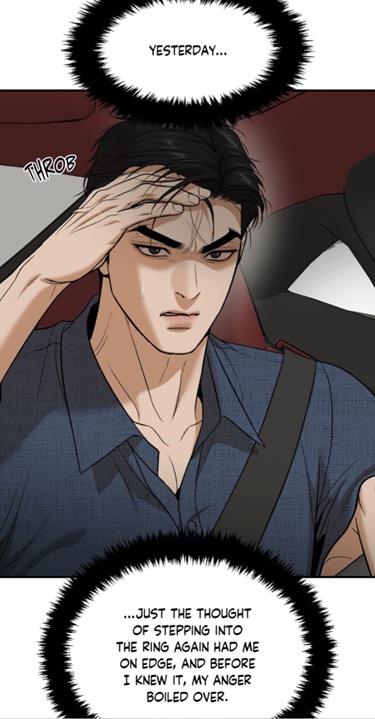 (chapter 69)
  (chapter 69) And that’s what makes him so human.
 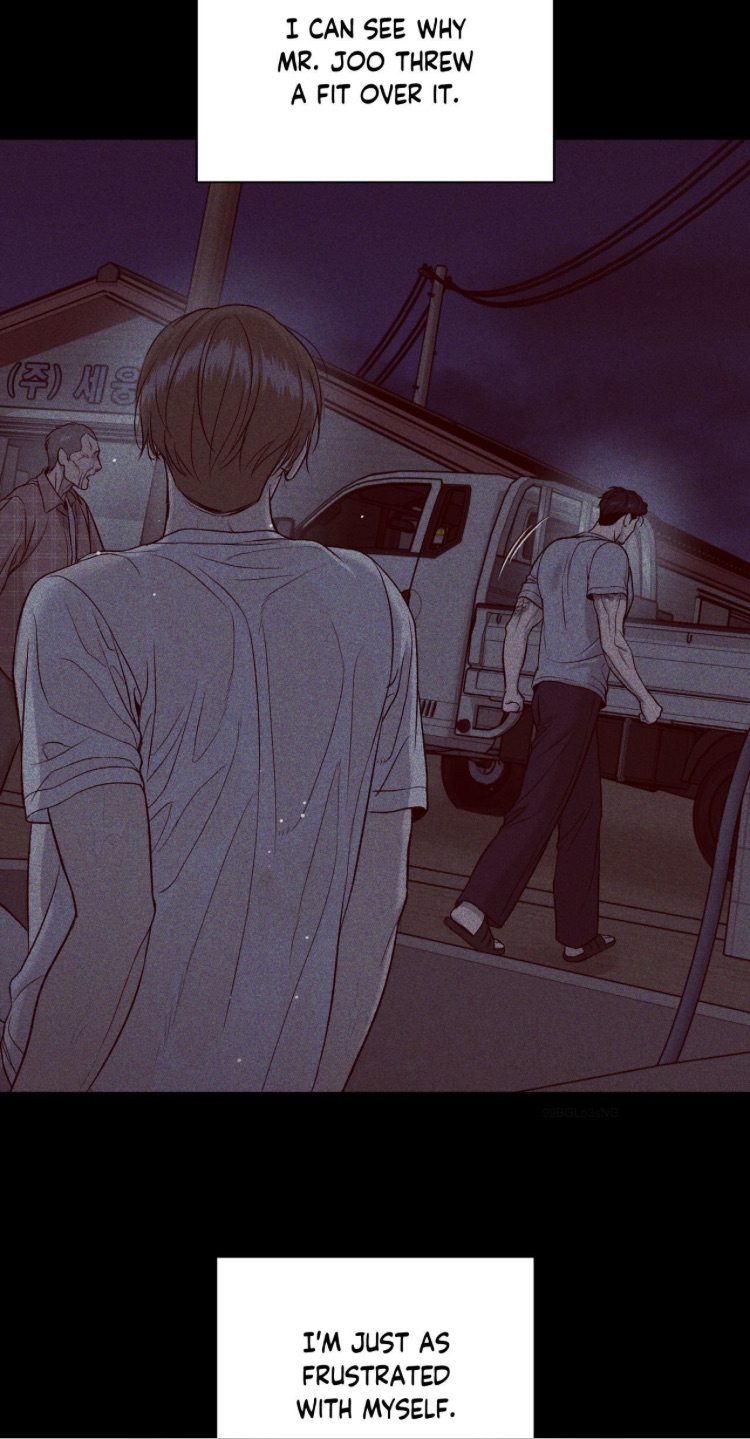 (chapter 71) Hence doc Dan didn’t resent the champion for his harsh treatment. But unlike the mother, who equated love with possession, Hwang Byungchul has begun to correct himself. He respects Jaekyung’s privacy, he encourages instead of dictating, he models a love that is belated but still real. This opens the possibility that Jaekyung, too, may learn to fill his silences differently — not with dominance or provision, but with genuine presence. He truly embodies the philosophy from Erich Fromm: it is never too late to become happy! Hence he smiled on the rooftop!
  (chapter 71) This means that he lives now in the present. It looks like the “old coot” has been tamed by the “gentle hamster or duck”.
  (chapter 41) He didn’t know how to judge such a confession. Hence these words were reduced to a mistake!
  (chapter 65) We know he once had toys (teddy bear,car)
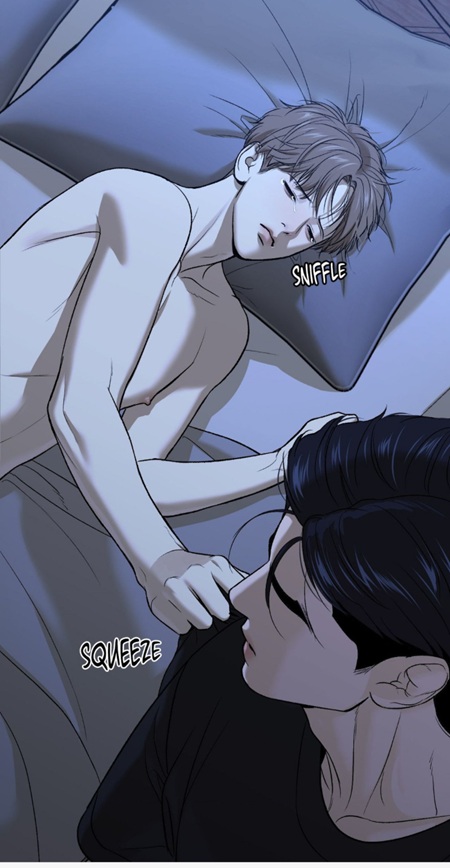 (chapter 66), whispers through tears
 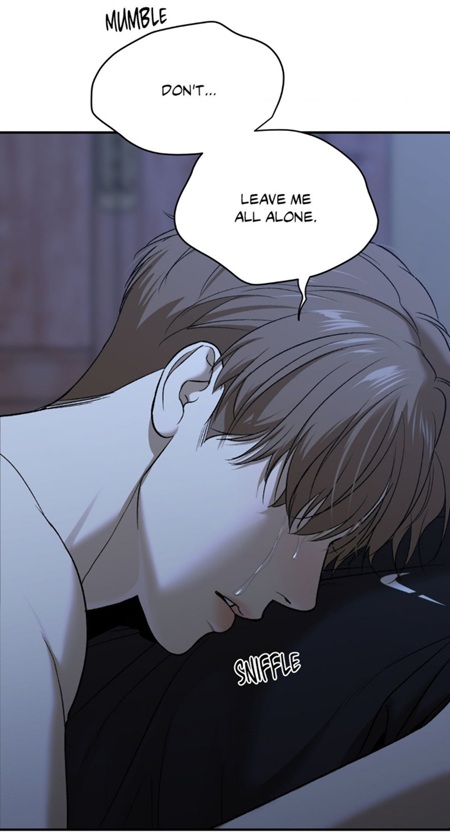 (chapter 66) and then breaks down with “
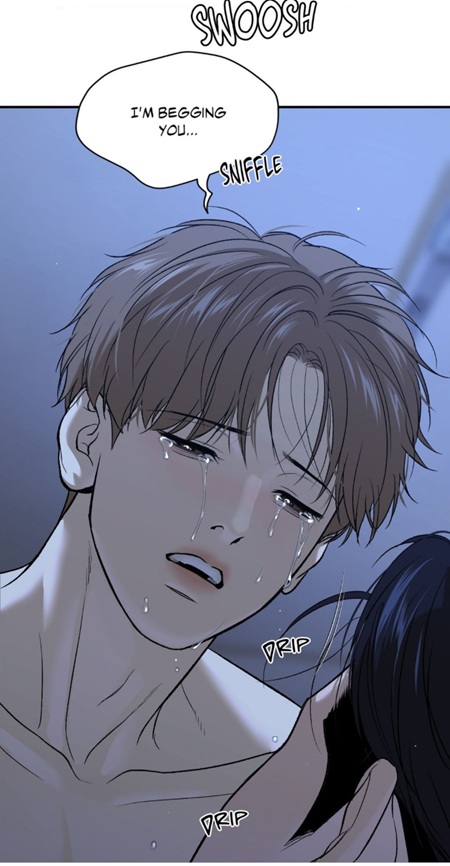 (chapter 66) These are not declarations of love, but desperate substitutes — fragments of the words he could never utter in childhood. They expose the precise gap: he never managed to say back what had once been said to him. He had lost his parents too soon. Instead of “I love you too,” what emerges is fear of abandonment. Instead of reciprocity, there is only pleading. His grip on Jaekyung’s shirt is the physical translation of what he could not verbalize: the child’s attempt to hold onto someone who is already vanishing.
  (chapter 65), the boy had not developed such a deep attachment to his parents. Thus she imagined, she could erase their absence. She conflated sacrifice with love, debt with affection. Yet what he received from her was not the warmth of a parent, but the burden of endurance. She patted
  (chapter 44) Dan once received love of a different kind — playful and tender. A kiss cannot have come from the grandmother, who expressed affection only in gestures of care, never of intimacy. That kiss belongs to his mother.
 (chapter 65)
 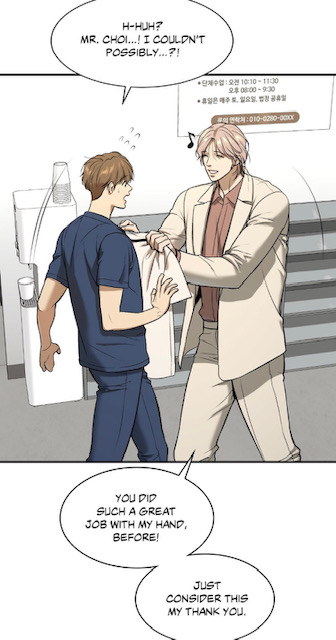 (chapter 31)— which he associates with unbearable debt. His mother’s final “gift” of love was one he could never repay. Any present risks reopening that wound: “What if I can’t repay this? What if I lose them too?”
 (chapter 74) — the quiet sign that the sun is about to rise. Dawn is not just a natural detail in Jinx; it is a symbolic hinge. It is the moment when night meets day, when moon and sun overlap, when endings bleed into beginnings. In myth and fairy tale, dawn often marks metamorphosis: the Little Mermaid turns to foam, the enchanted sleepers awaken, the beast becomes a prince. For Jaekyung, too, dawn is the threshold. His father cursed him at dawn
  (chapter 73), stripping him of worth, tying the rising sun to shame. But in this new dawn, another voice will have to intervene. Only Dan can replace the curse with a blessing. Only “I love you” can undo “you are not special.” And if it is not “I love You”, then it could be a kiss, the symbol of “affection”.
  (chapter 69) when Park Namwook leaned across the table and whispered to the champion about his slipping rank, his lost title, his third place. The setting is dim, the words hushed, the tone heavy with shadow. That whisper was not meant to soothe — it was meant to undermine. Namwook’s closeness is false intimacy: a confidentiality designed to manipulate, to remind Jaekyung of his dependence, to keep him chained to the cycle of fighting. The whisper here is the voice of fear, lack, and scarcity.
 (chapter 75) He was always there — arranging his matches, covering his problems, whispering about his “future.” Yet the quality of his presence was hollow. He never once guided Jaekyung beyond his father’s curse, never helped him imagine a life beyond titles. Thus he never discovered that the “monster” was suffering from insomnia.
 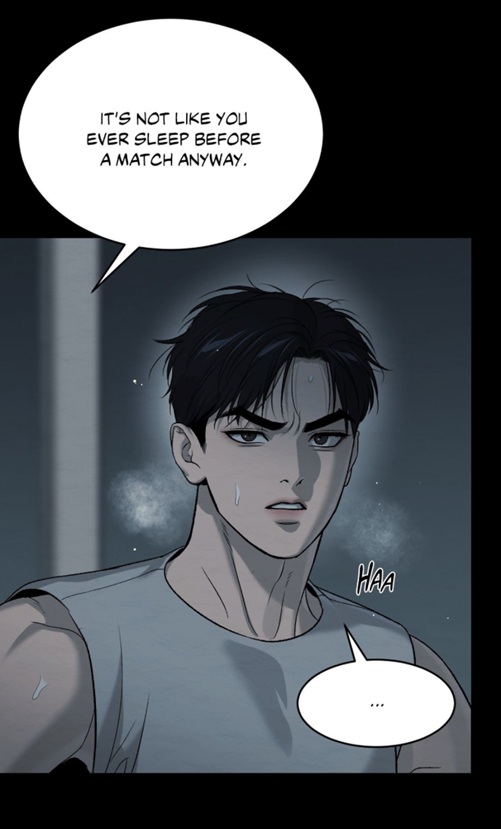 (chapter 75) His companionship was measured in duration, not depth.
 (chapter 41), an invitation to walk together. Namwook’s long presence embodies the trap of quantity without substance. Dan’s brief but luminous presence reveals the power of quality: the kind of attention that transforms.
 (chapter 29) Under the curse, his whole life has been a frantic race: prove himself, fight again, silence the noise in his head.
  (chapter 75) Namwook’s whispers, too, keep him chained to that rhythm of urgency — rankings, titles, deadlines. But once Dan’s whisper replaces Namwook’s, time itself shifts. The future is no longer a debt to repay but a horizon to approach slowly, hand in hand.
 (chapter 27), joked
  (chapter 27), even rediscovered his love for swimming. Water, his true element, was reclaimed as play rather than punishment.
  (chapter 27) That single day was a seed — a foreshadowing of what life might look like once the curse is broken for good.

 (chapter 72) —and not with fists, but with fabric.
 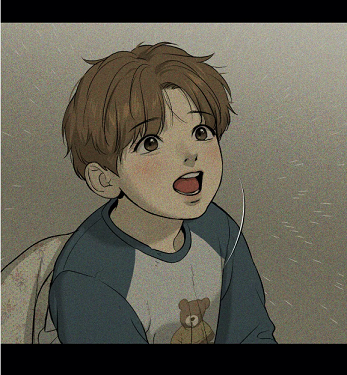 (chapter 11) Each boy is introduced wearing a shirt adorned with a teddy bear, a symbol that quietly carries the emotional weight of the entire narrative.
  (chapter 72)
  (chapter 66): a source of comfort, loyalty, and belonging. To follow the teddy bear is to trace this emotional path—from abandonment to connection, from injury to intimacy, from being held once to being held again.
 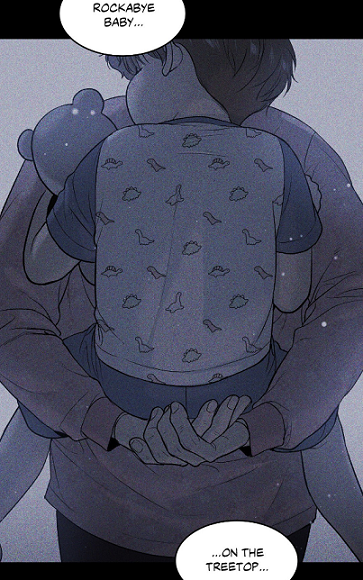 (chapter 47), and then claimed, just like his teddy bear. The fate of doc Dan’s toy bear reflects the boy’s. The former was pushed outside the embrace and bed before disappearing.
 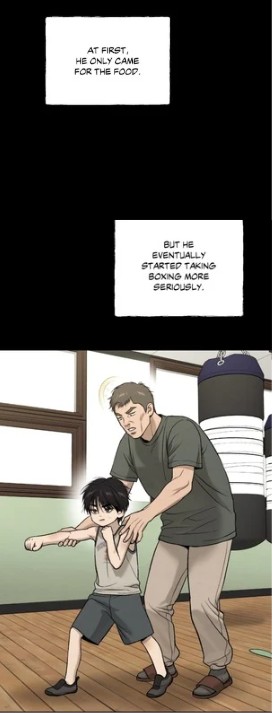 (chapter 72) The shirts are not only outgrown
  (chapter 72) but also replaced with t-shirts without any design alluding to the vanishing of their identity and forced maturity.
 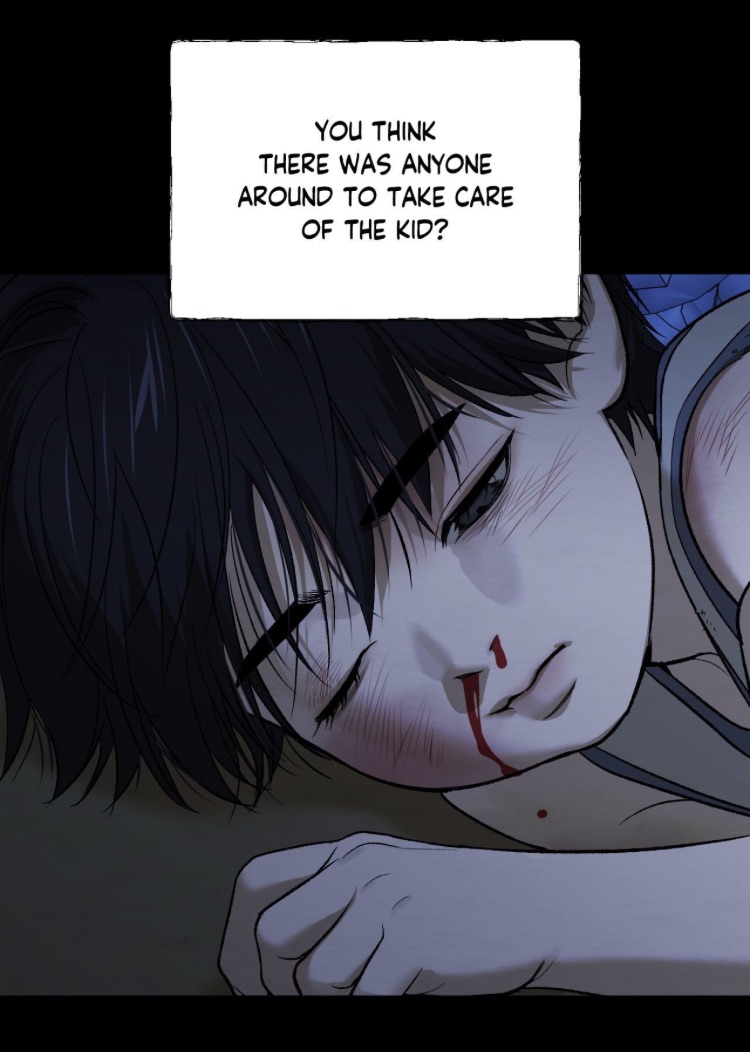 (Chapter 72) This episode doesn’t just show how Jaekyung became a self-made man
 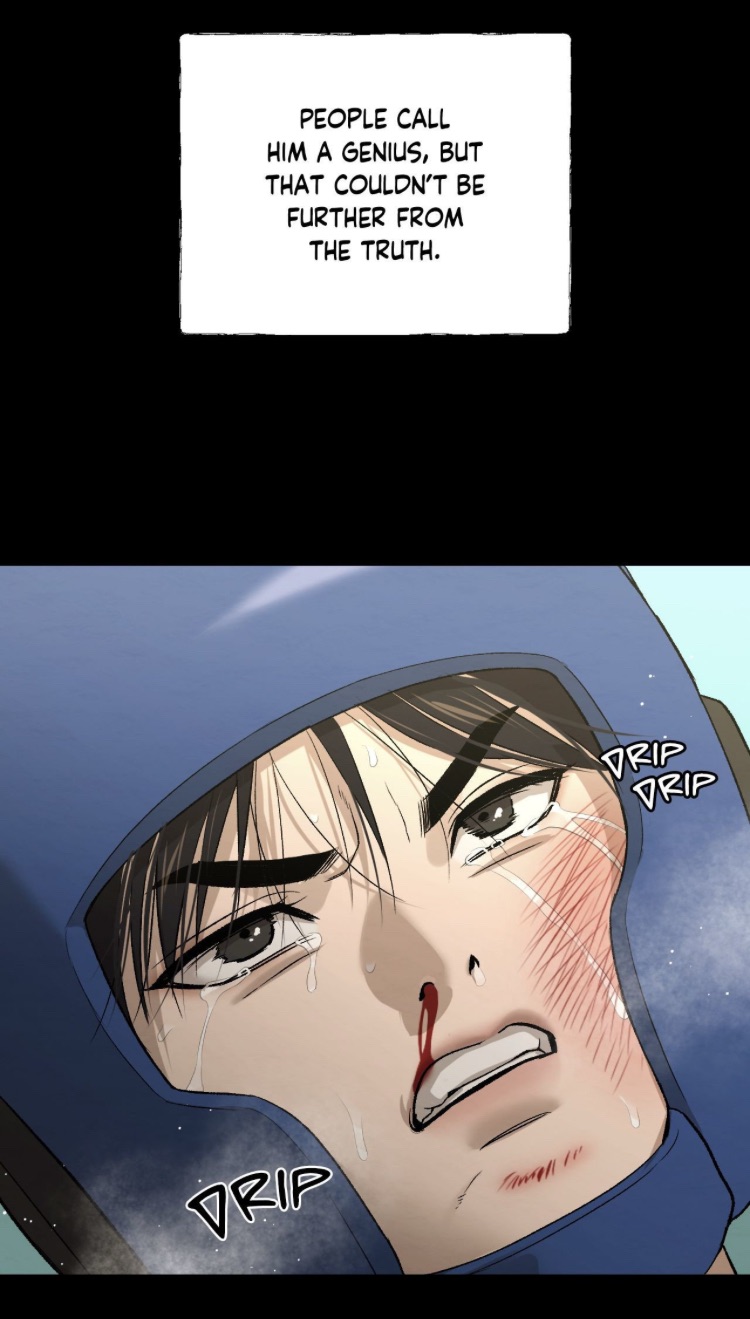 (chapter 72)
  (chapter 72) —it makes one thing heartbreakingly clear: he wasn’t raised by a pack of wolves; he raised himself.
  (chapter 7) The cliché used by Park Namwook in chapter 7 is revealed to be not only ignorant, but cruel. Jaekyung had no home, no real guardian, no one to defend or guide him. He didn’t grow up in the wild—he grew up alone, navigating between violence (abuse and bullying), hunger, and neglect without true protection. This reframes the champion’s identity: not as someone untamable, but as someone who was never tamed because no one cared enough to try. What we witness is not savagery, but simple survival. Thus he had no friend.
  (chapter 71), performative masculinity and high expectations of Park Namwook, and the explosive violence of his father.
  (chapter 72)
  (chapter 5) His behaviors—his hot temper, cold demeanor, blunt speech, and instrumental approach to others—were not innate traits. They were learned strategies, adapted from men who had likewise buried their vulnerability beneath strength or stoicism or brutality. Hence he brought no present to the patient at the hospice.
  (Chapter 72) Much earlier, in the summer night’s dream (Chapter 44), Kim Dan sensed that hidden nature: not the predator, but the man longing to be held.
 (Chapter 44) Doc Dan had sensed the real person behind the legend.
 (chapter 1), as he treats them as valid, not shameful. He cries, trembles, runs away, he apologizes… He asks questions rather than issuing orders. He names feelings
  (chapter 29) And so, like a child learning a new language, Jaekyung begins to mimic him too.
  (chapter 62) The change is gradual but visible: helping the townspeople, accepting rest, asking to stay close, even touching and speaking more gently.
  (chapter 71) With Kim Dan, the fighter who once only mirrored power begins to echo tenderness.
 (chapter 62)
  (chapter 68). These are not just words—they’re the building blocks of intimacy, borrowed from the only person who ever saw through his armor. From mimicking strength, Jaekyung has begun to mimic care.
  (Chapter 72) The tragedy is that Hwang Byungchul misread that hunger. When he first met the boy, he saw dirty feet, an empty stomach—literal poverty.
  (chapter 72) So he fed him. But he never saw the deeper hunger: the absence of love, of being wanted. The coach assumed the problem was solved with food—because he had never gone without care.
  (chapter 72) He lived with his mother. He was never truly alone. And so he projected stability onto the boy’s silence.
 (Chapter 27) because the body, from the very start, was only a tool for survival.
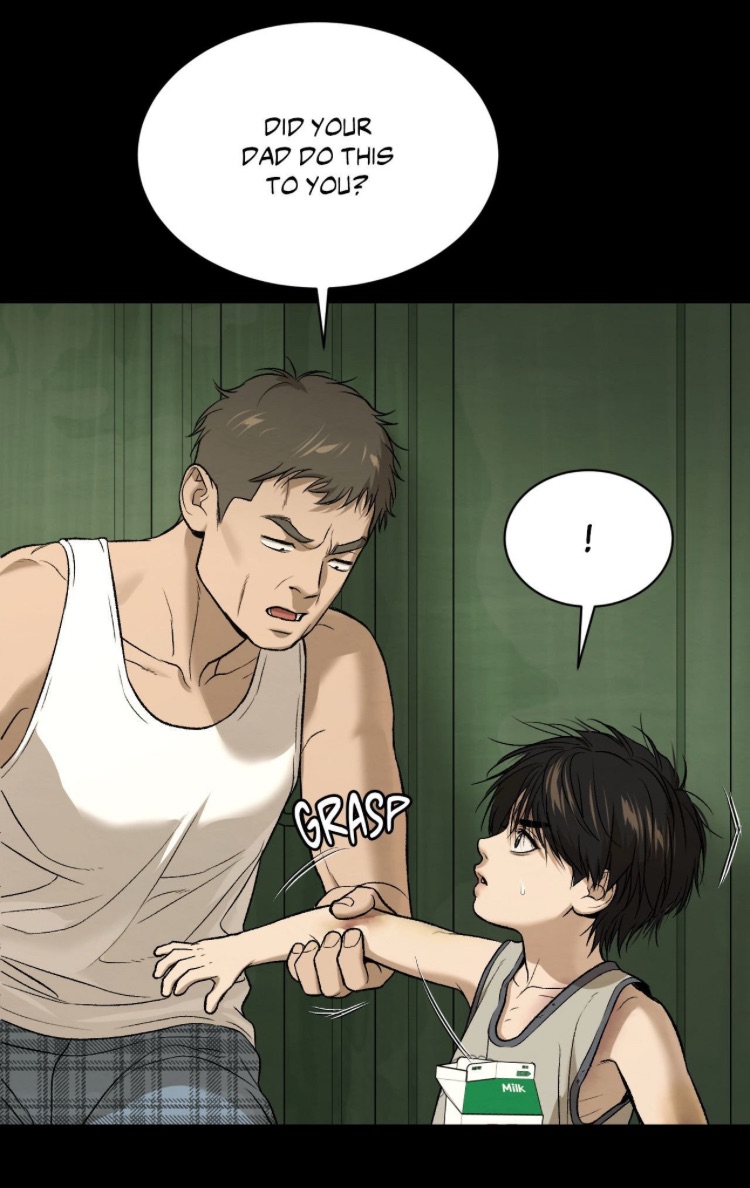 (Chapter 72) Instead, he redirects the situation:
 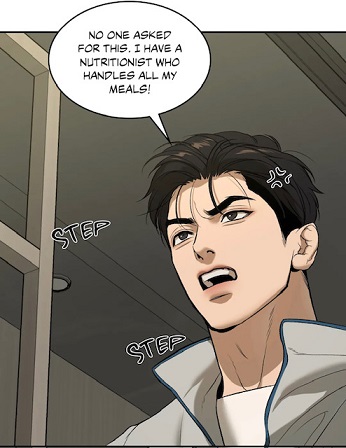 (chapter 22) There is no joy in eating, no comfort at the table. His body becomes a tool, and pain becomes the currency he pays to keep it running.
 (Chapter 26) This is how he enters adulthood, though he was still a child: not through love, but through function. The moment he steps into the ring, he’s no longer a child. He becomes, in the eyes of the adults around him, a product.
 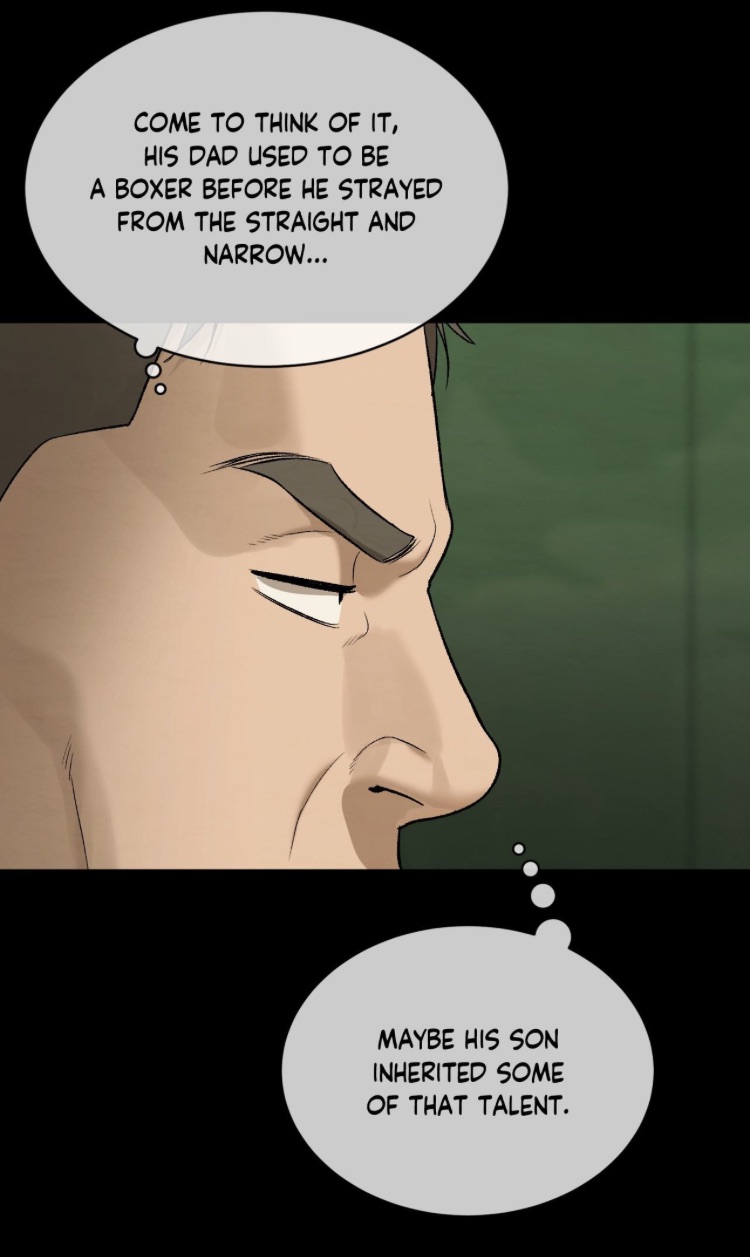 (Chapter 72) This explicates why Hwang Byungchul never confronted the father or called the cops or the social services. The fact that he asked the little boy
  (chapter 72) The expression (“But reality was like a punch to the gut”) suggests that even the coach himself was struck by how wrong or harsh the outcome turned out to be, but that realization came too late. Yet he blamed the young boy instead of convincing the young boy to postpone the fight. This scene shows that the man’s form of “help” was not rooted in empathy or protection—it was rooted in opportunity and perhaps even short-sighted hope for glory through the boy’s talent. He turned pain into performance.
 (chapter 71) why Joo Jaekyung never visited him or expressed his gratitude towards the boxing coach more openly.
 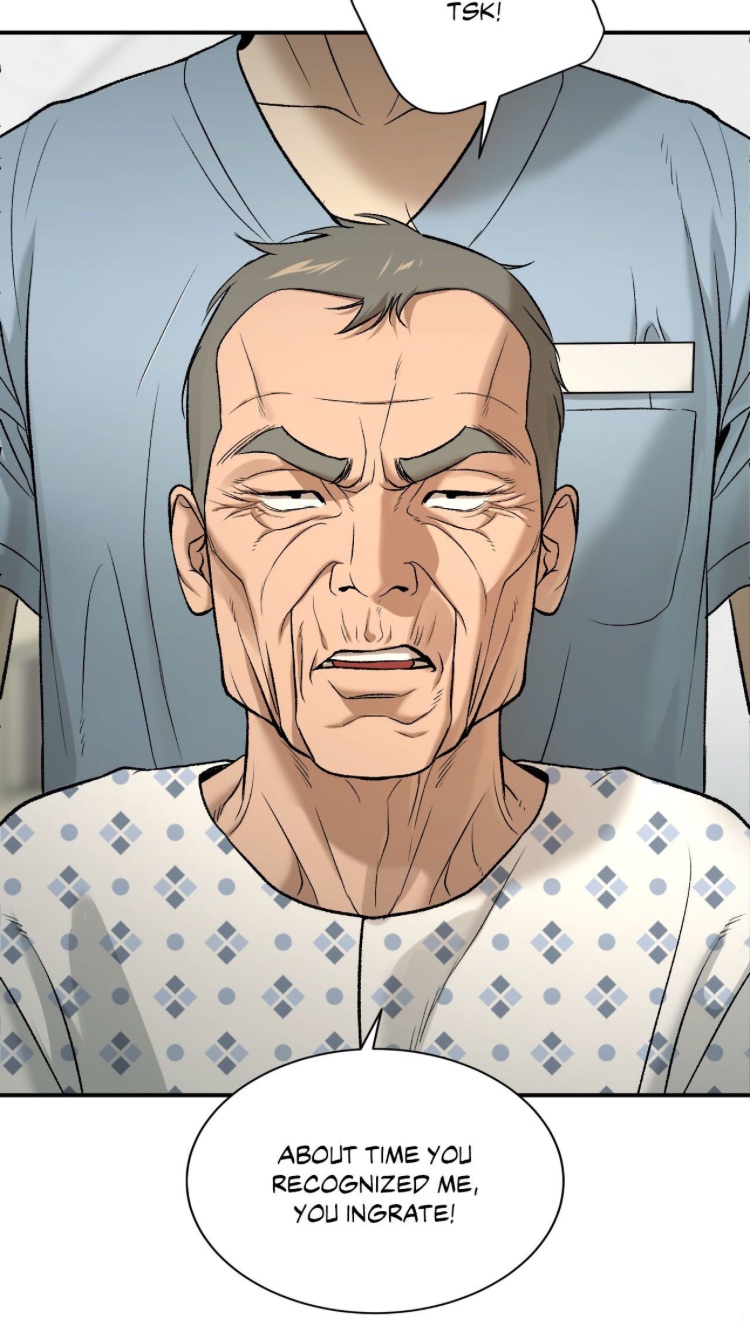 (Chapter 71) He became successful thanks to his own hard work. It was, as if he had followed the advice to the letter—make it on your own. I am suspecting that the charity event is linked to poor neighborhoods and children, so he didn’t totally erase the man from his memory, he just repressed him. However, it is not astonishing why the director is resentful and even bitter towards Joo Jaekyung. It was, as if he had never helped him. While he blames the man, the coach never recognized his own shortcomings. He didn’t see that his assistance was actually conditional.
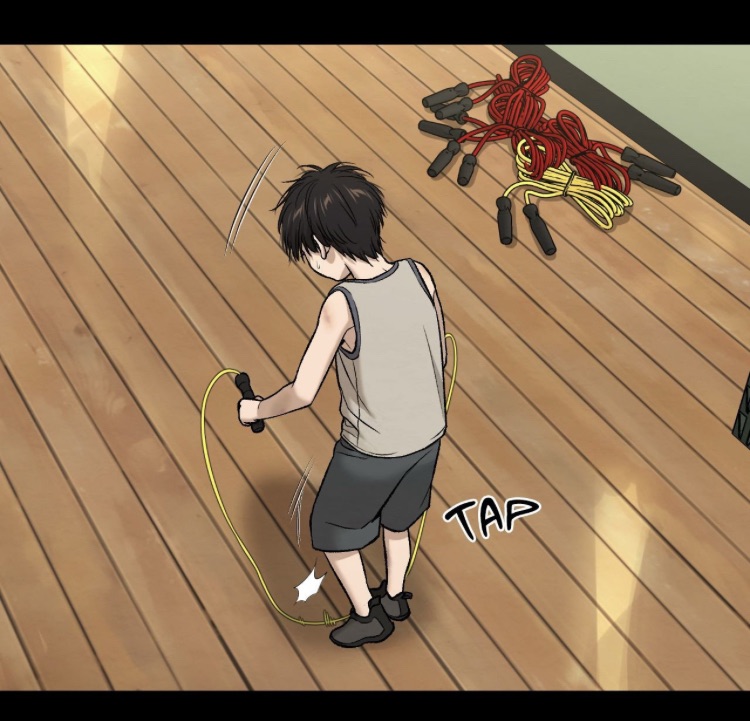 (chapter 72) They are all rivals. But from my perspective, there exists another reason why the main lead didn’t keep in touch with Hwang Byungchul exposing the director’s blindness. The adult Joo Jaekyung admits that seeing the director’s face brings back “old memories”—not of comfort, but of trauma.
  (Chapter 71) The implication is unmistakable: Hwang Byungchul reminds him of his father and the abuse. And the latter is strongly intertwined with the mother’s abandonment.
 (chapter 72) The other is Jaekyung himself. How can we tell? Because the scene of the phone call contains no narration, no framing voice.
  (chapter 72) Thus I deduce that the other scenes are a combination of the champion and director’s memories. This would explain such scenes, where Hwang Bung-Chul is not present.
 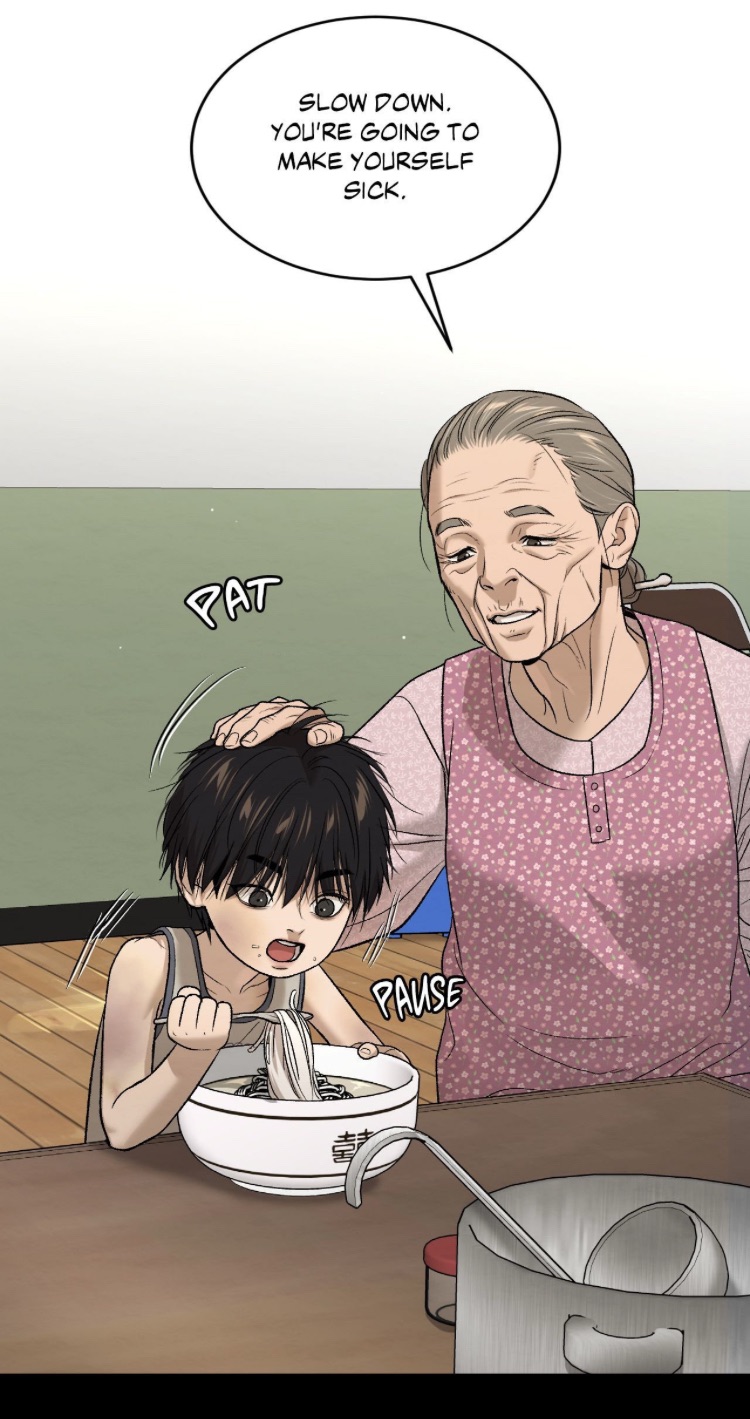 (chapter 72)
 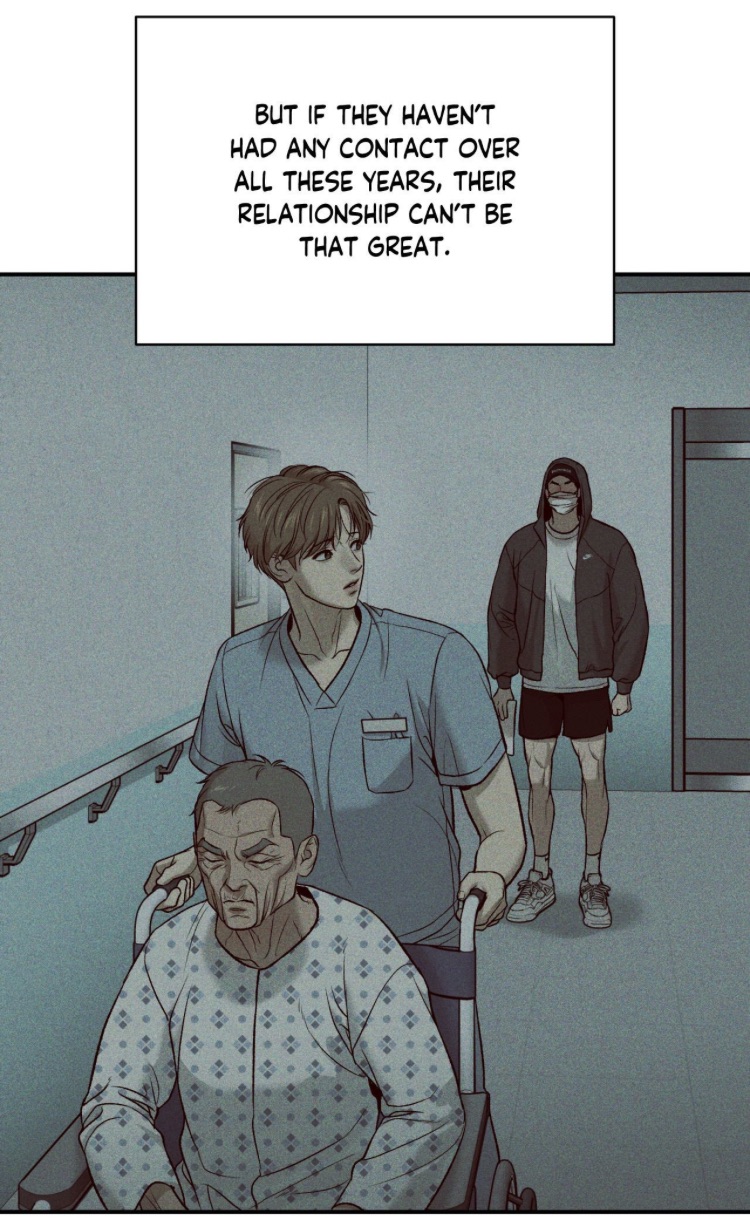 (Chapter 71) But here, doc Dan was making a huge mistake: he was just projecting his own feelings and relationship with him onto theirs. But he was behaving exactly like the former director: simplification.
  (chapter 9) Instead of listening, we assume. We choose clear lines—strong or weak, good or bad, useful or useless—over the tangled, uncomfortable truth that everyone is both hurting and trying. This refusal to reflect doesn’t just distort reality—it perpetuates it. When we simplify, we don’t heal; we reenact.
 (chapter 52),
 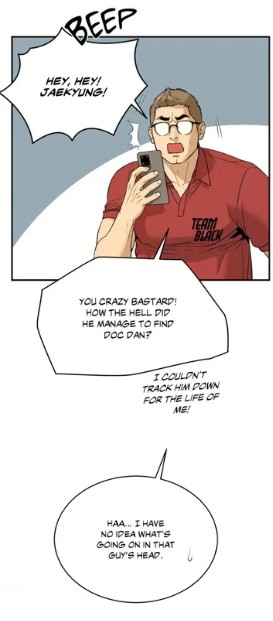 (chapter 61) In the panel where he sighs, “Haa… I have no idea what’s going on in that guy’s head,” he unintentionally exposes the shallowness of his approach. He imagines that by looking at Jaekyung’s brain—by cracking his psychology—he’ll “understand” him. That way, he can regain control. But this isn’t curiosity. It’s a veiled form of control-seeking. Namwook doesn’t want to know Jaekyung as a person—he wants him to be predictable, manageable, marketable. That line doesn’t reflect concern. It reflects frustration that the human being in front of him refuses to fit the role he’s been assigned. Hence it is logical that his solution to force Joo Jaekyung to return to the gym is to accept a new match.
  (chapter 65) Her mindset follows a consistent logic: one problem, one person, one solution. Kim Dan is overworked and sick?
 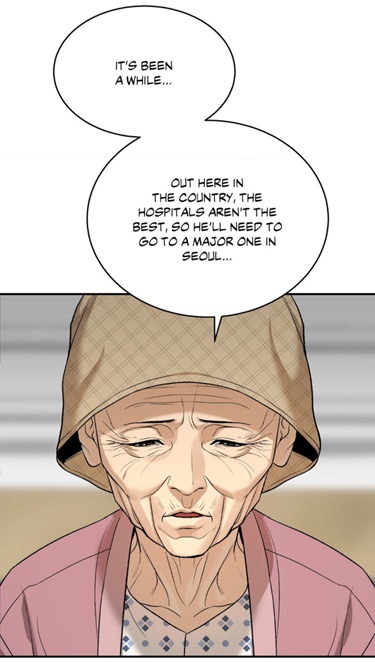 (chapter 65) Then someone stronger should carry him. That “someone” becomes Jaekyung. The doctor should take pills and that’s it.
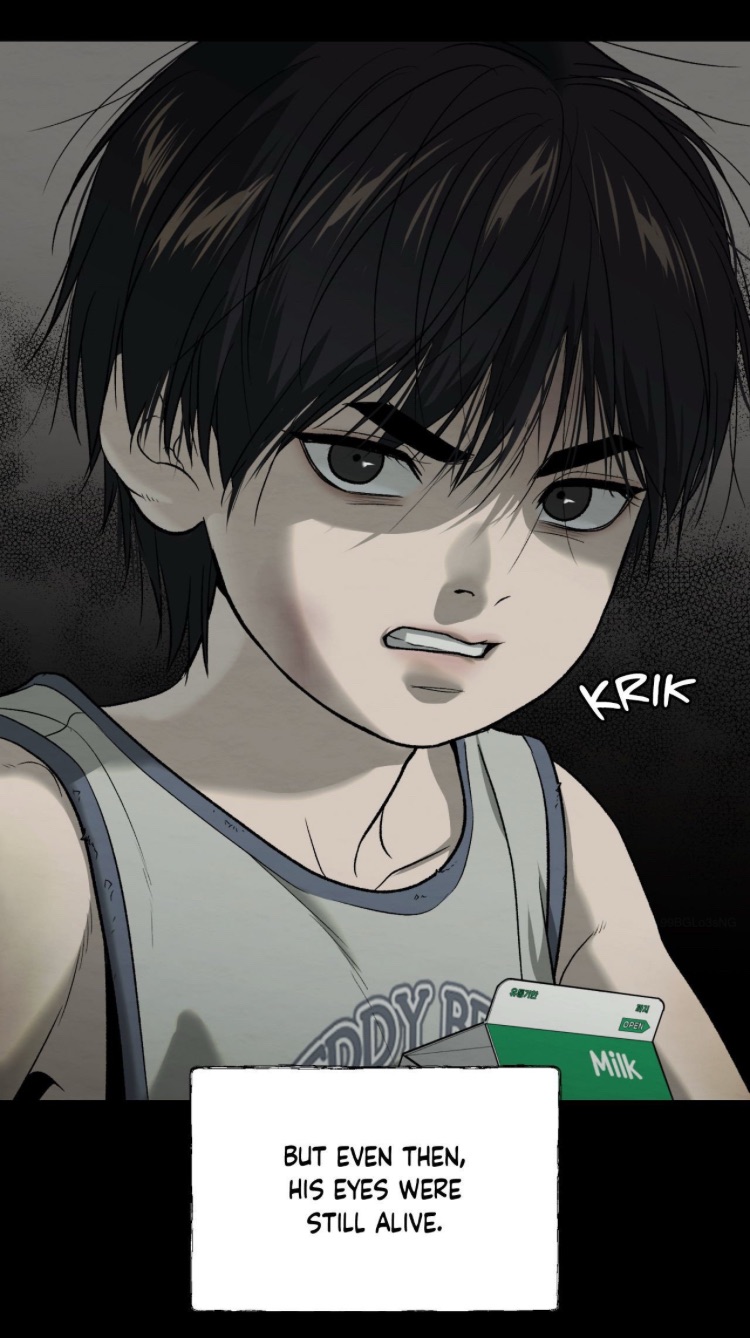 (chapter 72) is invisible to her. She sees a man who has succeeded—and assumes that means he is thriving.
 (chapter 65) she doesn’t know anything about his life. That’s the price of simplification: you get a clean answer, but not the truth.
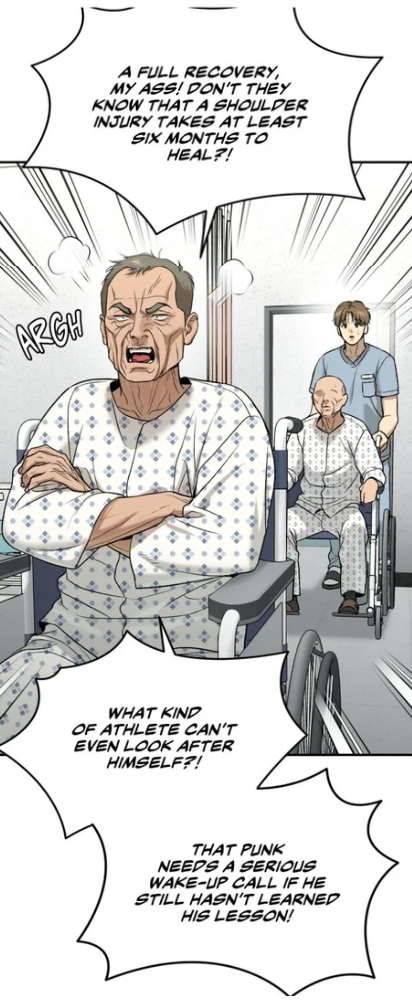 (chapter 70), as though he chose freely, overlooking how coercion and image control operate in their world. He accuses him of ruining his career with the suspension, even though it was orchestrated by others.
 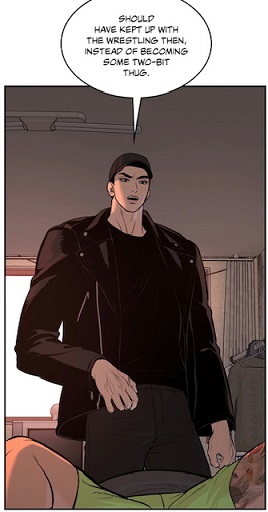 (chapter 17), it becomes clear that there exists a recurring link between athletic decline and criminal paths. The man fails to notice this connection. He sees these outcomes as individual moral failings, not systemic failures.
  (chapter 64) He reproached him about being used and abandoned. But he was forgetting his own actions. He had also used the athlete, he had also left the bed in a hurry the next morning. Yes, he, too, simplified Jaekyung. That night, he said nothing. And in doing so, he confirmed the belief Jaekyung had internalized: I’m not someone who gets cared for. I’m someone who is tolerated, used, replaced. Like mentioned above, his mind-set was strongly influenced by Shin Okja. On the other hand, I noticed that the protagonist embodies complexity. How so? On the surface, he appears simple: obedient, quiet, weak, submissive, passive.
  (chapter 70) But beneath that surface lies a dense emotional world— love, grief, guilt, exhaustion, intelligence, empathy and moral clarity — that few characters in Jinx truly perceive. He stands for the heart! And everyone knows that “the heart has its reasons, of which reason knows nothing.” (Blaise Pascal) Because he acts from a place that defies the cold logic of power, hierarchy, and survival, he operates on emotional intelligence
 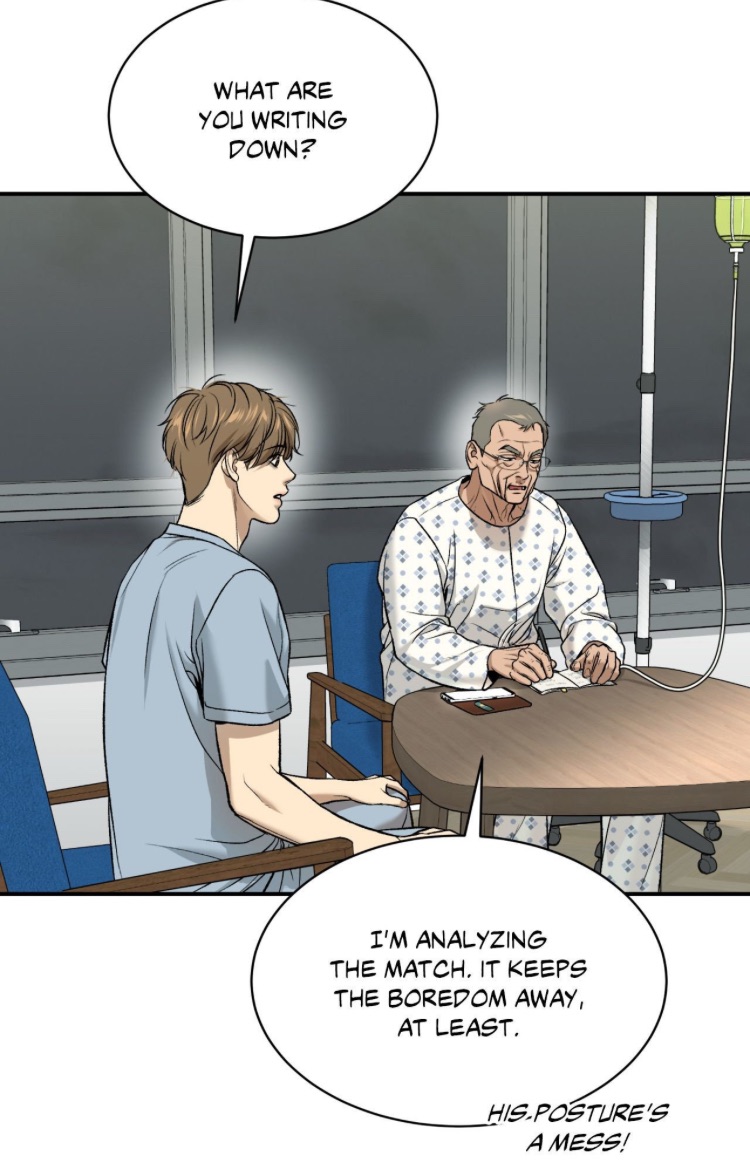 (chapter 71) —unspoken understanding, silent resistance, instinctive empathy. It’s no coincidence that his presence disrupts every system he enters: the gym, the hospital, the champion’s life.
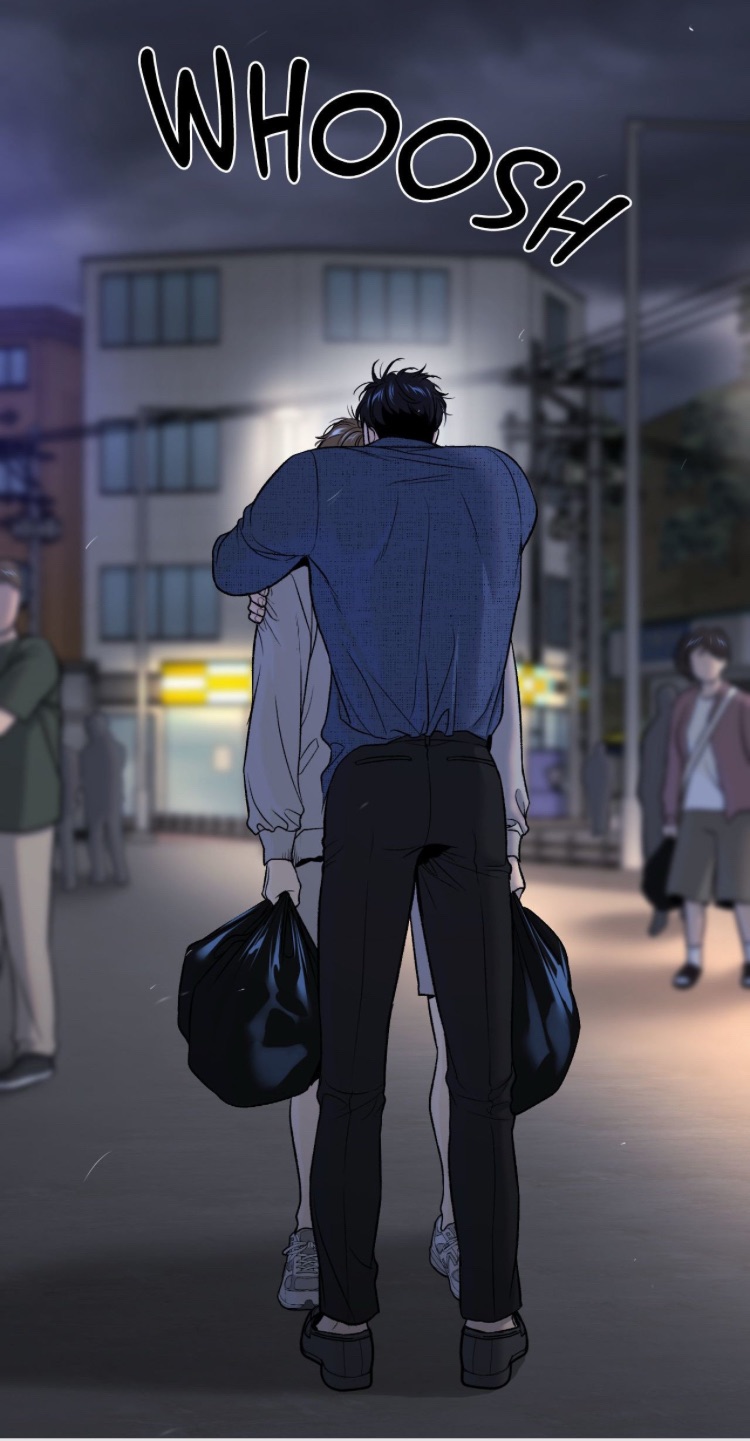 (chapter 70), and starts being a person. The racing heart… which has already happened. And this observation leads me to this scene:
 (chapter 58) Kim Dan was erasing this memory, he wanted to forget the star The Emperor. This act of forgetting wasn’t an escape from pain; it’s an active rejection of a myth that was keeping him emotionally paralyzed. As long as Jaekyung remained “The Emperor,” he could not be touched, questioned, or truly known. By forcing himself to forget that image, Kim Dan was making space for something more vulnerable and human to emerge. To conclude, thanks to this painful decision, he was able to perceive Joo Jaekyung the man. That’s why he acted so fiercely in front of him later. So by meeting the director, doc Dan is now able to see the child or the “cat” in his fated partner. That’s how it dawned on me why Mingwa let doc Dan suffer from addiction, depression and insomnia. Because these afflictions defy simplification. They resist instant solutions (pills). They demand patience, presence, and a refusal to look away.
 (chapter 72), his bruises
  (chapter 72) and asked for his name. This exposes his priorities and his blindness. He didn’t truly perceive the child in him, he was seeing him through the lenses of a boxer and director. Hence he underestimated the absence and abandonment of the mother.
  (chapter 72) The boy didn’t have a blanket. He slept beside garbage. His father lay drunk and sprawled out, blind to his child’s needs. There was no teddy bear, no shared bed, no real cover.
 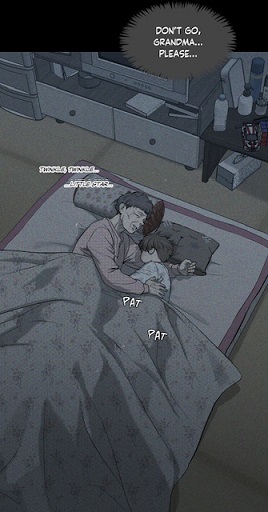 (chapter 21) Unlike Kim Dan, who grew up falling asleep next to his grandmother, accustomed to someone sharing his blanket, Jaekyung was emotionally and physically on his own from the start. Moreover, observe that the little boy had toys
  (chapter 53) He is a physical therapist. He had also arranged his books together:
  (chapter 53) And what did the hamster think while gathering his belongings?
  (chapter 53) So I deduce that the woman left them behind because she didn’t need them, she had enough or she no longer cared. But there is more to it!
 (chapter 27) There are no toys, no supplies for a child—just quiet evidence of a woman focused on herself, her escape perhaps already underway.
 (chapter 53) The jacket… Because of these parallels, I come to develop the following theory. Joo Jaekyung knew his age, because he had just celebrated his birthday. This scene definitely took place in the summer.
  (chapter 53) must have triggered the champion’s abandonment issues. He had the impression to relive the past. The mother had left him behind in the dark unexpectedly.
 (chapter 53) Thus Joo Jaekyung started drinking and recalling his repressed traumas. This explains why he didn’t look for doc Dan at first and why he hates his birthday and presents.
  (chapter 45) And now, you comprehend why I wrote above that I was not giving up on the idea that the champion could belong to a different world too. She was not accustomed to take care of a household. She wasn’t used to cook either. She would order food, hence we have the empty bowls.
  (chapter 72) Remember how the champion reacted, when he tasted his cooking for the first time?
  (chapter 72). In other words, the mother was already emotionally absent long before she physically vanished. The bandaged bear thus becomes a silent accusation: you saw, and you left. Therefore it is not astonishing that Joo Jaekyung made such a mistake:
  (chapter 68) His mistakes concerning doc Dan are the evidences that he was not taught how to take care of someone. His errors indicates his innocence and purity.
 (chapter 72) Joo Jaewoong—whose name literally evokes the bear (웅, 雄 or 熊)—was not a gentle protector, but a violent alcoholic and drug addicted, a man who “strayed from the straight and narrow”
  (chapter 72) The bear here is not a comforting toy but a dangerous beast. He loomed large over the child’s life not as a shield, but as a shadow. It is important because doc Dan is hearing for the second time that fighting has connections to the underworld.
  (chapter 47)
 (chapter 54) —Team Black—bears symbolic weight. Unlike other athletes who proudly attach their names to their legacy, Joo Jaekyung avoids personal branding. He doesn’t call it “Jaekyung’s Gym” or “Joo Athletics.” Instead, he opts for anonymity, for darkness. It’s as if he’s building a fortress rather than a legacy, a space that offers power and protection, but no trace of where he came from.
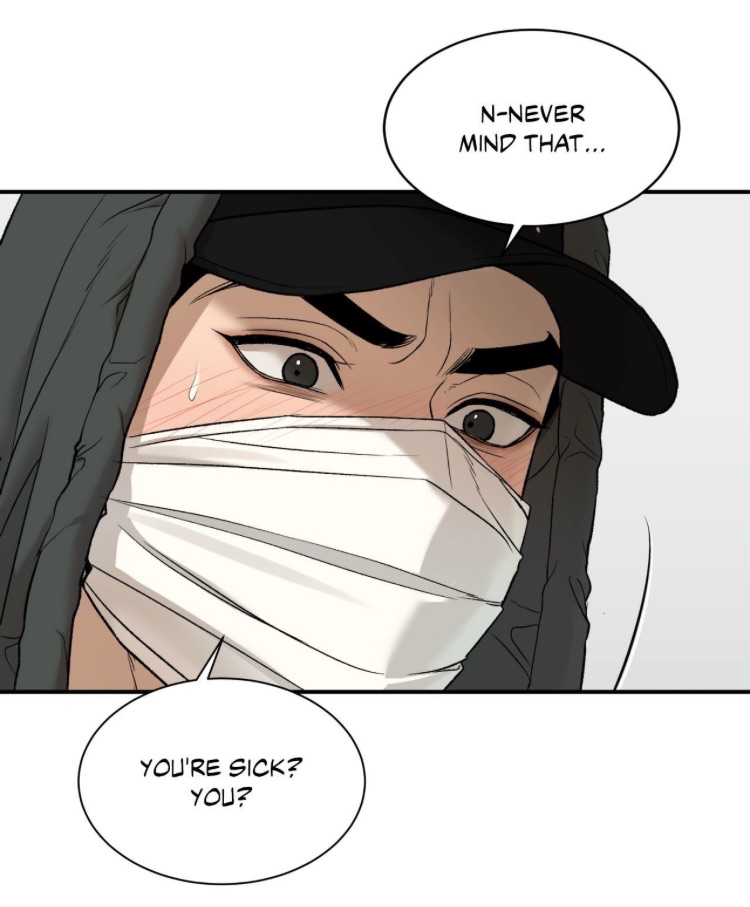 (chapter 71) I am quite certain that her vanishing must have pained him. She embodies the only good motherly role model in his life which explains why Joo JAekyung has a soft heart for Shin Okja. He knew to speak prettily and gently because of her. It is clear that the director influenced his dream, creating a gym where his mother would be part of it.

 (chapter 69). For the first time in this story, we as readers were allowed to hear Joo Jaekyung’s heart
  — not in battle, not in passion, not in rage — but in that suspended instant when he imagined Kim Dan missing, possibly forever. Since the author linked the BADUM with doc Dan
 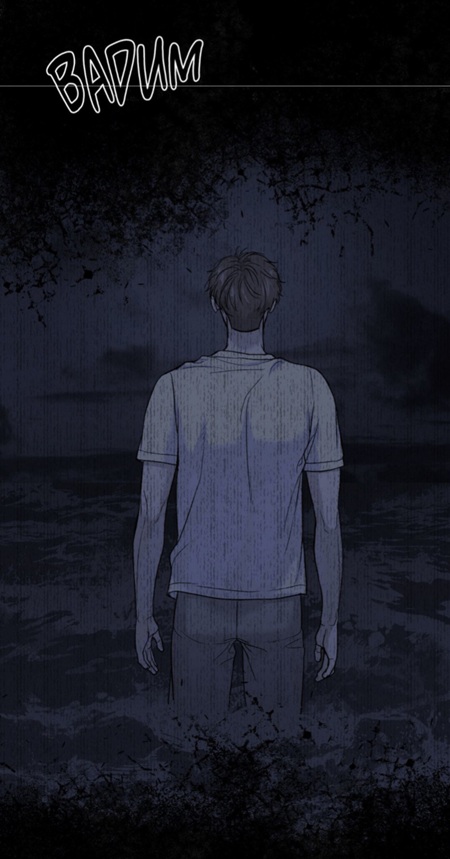 (chapter 69)
  (chapter 69), she created the illusion that the physical therapist was embodying the MMA fighter’s heart. This scene resonated with me long after I closed the chapter.
 (chapter 69) Suddenly, the pieces clicked: the heartbeat in Jinx is not just a narrative sound effect.
  (chapter 14) Jaekyung, insulted and trapped in shameful memories, is wrapped in rage
  (chapter 14)— yet no heartbeat is heard. One might think, the absence of the heart racing implies the lack of fear. His emotions are real, but they do not connect him to life or to others. Why?
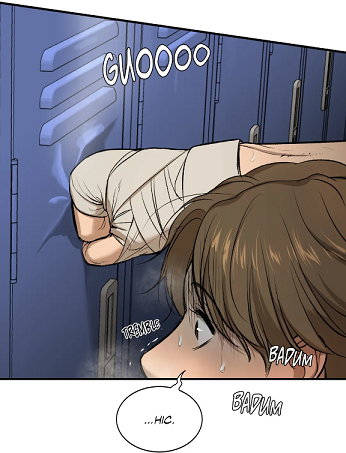 (chapter 14) — GUOOO, metal dented, yet no pain. Yet, Jinx-philes can see Badum Badum in that picture. Nevertheless it is connected to the physical therapist’s heart: he is scared of the athlete’s strength. On the surface, the champion’s gesture appears reckless — an act of a man who does not care for his body. But this is not pure “fearlessness.” In truth, the celebrity’s anger is masking deeper fear and suffering.
 (chapter 54), who had called him trash, weak, pathetic, incapable.
 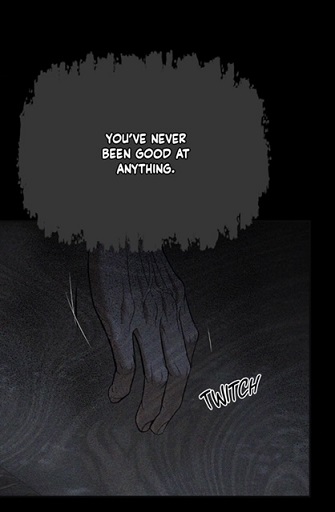 (chapter 54) The challenger, Randy Booker’s insult — calling him a “baby”
 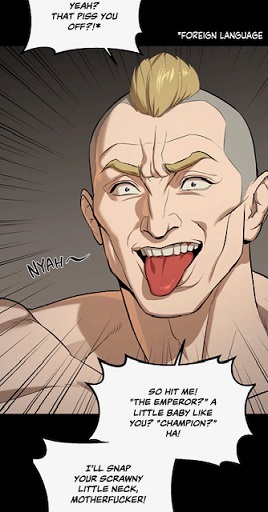 (chapter 14) — triggered this buried wound, igniting a desperate drive to disprove that old accusation.
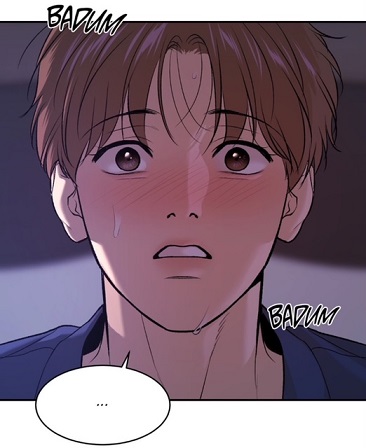 (chapter 44) BADUM BADUM from Kim Dan’s heart as Jaekyung makes a move on him. His blushing face, wide eyes, and parted lips all signal that this is not fear — it is love, excitement, and emerging attachment.
  (chapter 44) and tried new things. He gave his lover pecks on his cheeks and ear
 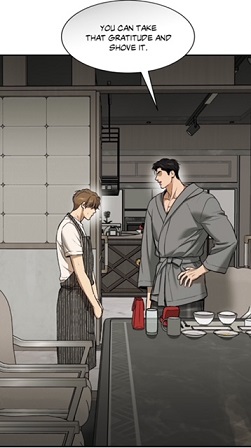 (chapter 45) He chose silence, unable yet to confess what that heartbeat had awakened.
 (chapter 34), we see the actor’s confidence gradually vanishing. His mask begins to crack. In that moment, he realizes that in the VIP spa his celebrity status offers no protection. No manager, no Park Namwook, no audience is present. He is utterly exposed to the raw force of the champion’s anger and fist — and the physical threat is real.
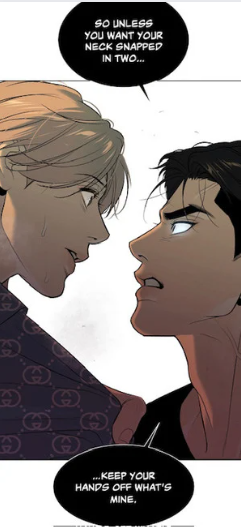 (chapter 34) The confrontation repeats — Jaekyung threatens once more. Yet, there is no visible BADUM, BADUM here. Why? Don’t forget that just before, the actor gulped and blushed
 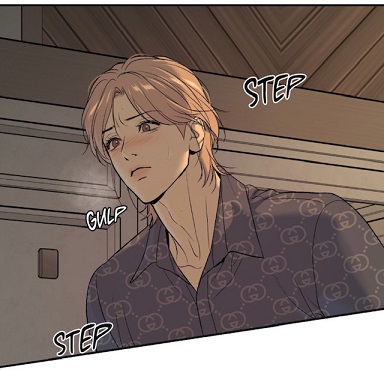 (chapter 34) — a clear sign of excitement, not fear. And still, his heart remains silent. This raises the question. Why was the actor not afraid of the MMA fighter? Because even if the words echo the previous threat, the perceived danger has changed. With doc Dan standing between them
  (chapter 34), the actor subconsciously knows: “He will not attack me here.” The champion made it clear that the physical therapist shouldn’t detect the actor’s presence. Doc Dan acts as an emotional shield, preventing true panic. The body no longer signals mortal danger — and so, no BADUM sounds.
 (chapter 43) Here, the doctor feared the celebrity’s rejection. This scene was actually announcing that doc Dan was already in love with the “wolf”.
 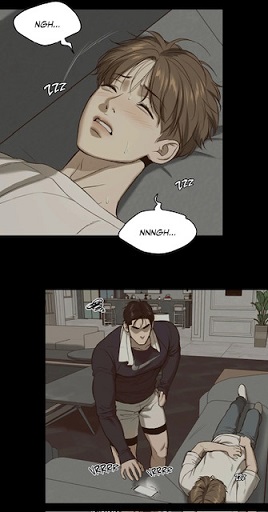 (chapter 21) — having a nightmare. It is only when the grandmother returned to the bed and began to sing that his body calmed.
 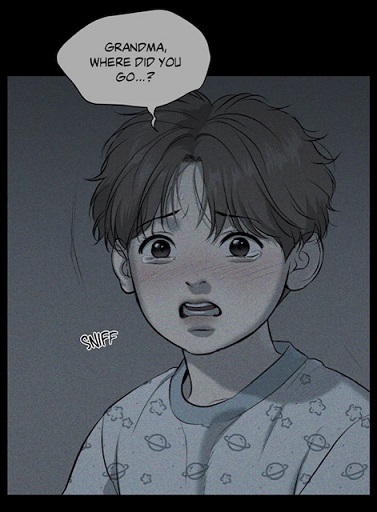 (chapter 21)
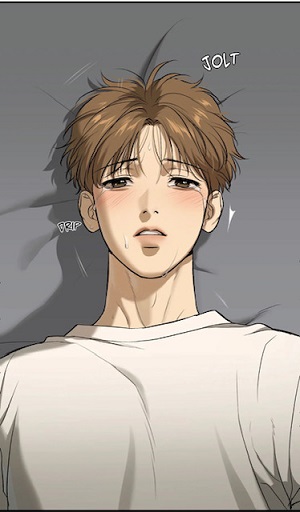 (chapter 21) — one that later echoes in his adult struggles with attachment and loss.
 (chapter 58) “I am happy and at ease, but… why does my heart feel so heavy?” — it is as if the external music has replaced his internal rhythm. The joyous sound outside contrasts painfully with his own muted emotions. The music underscores his emotional disconnection and the inner weight he carries.
 (chapter 65) finds his way back to the man he cares for.
 (chapter 65) is more than noise. It’s a resonant signal — not unlike the heartbeat. When she barks, it alerts Jaekyung to Dan’s trance.
  (Chapter 65) Moreover, the dog is capable of expressing her „worries and pain“. And for the first time, the champion follows a sound not of the crowd, not of a bell, but of life calling to life.
 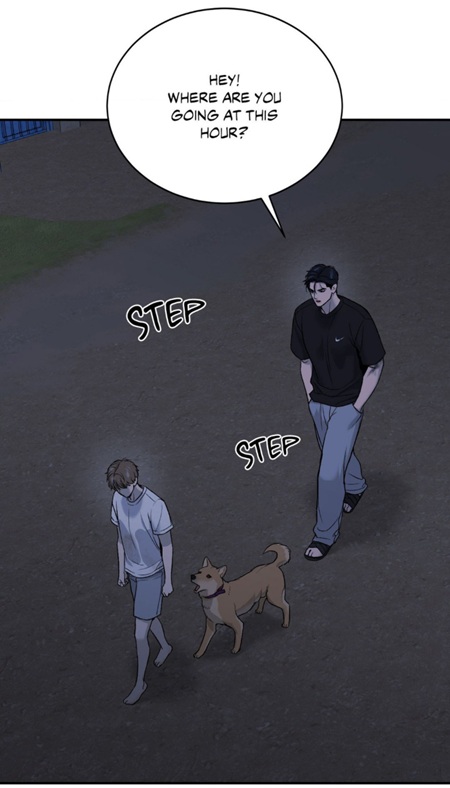 (Chapter 65) Her bark anchors him, just as Dan once did. And it marks the moment Jaekyung becomes emotionally receptive not only to Dan, but to care itself — puppies, vulnerability, connection. In other words, her presence foreshadows Jaekyung’s emotional readiness to care for others beyond the ring. Having rediscovered and embraced his own vulnerability, his heart is gradually open to softness — to animals, to dependency, to affection.
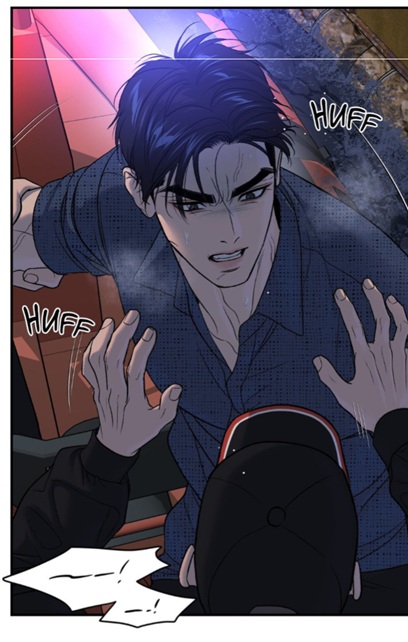 (chapter 69) There, as he sees a figure on the boat, his breath catches — for a moment, he believes it might be Dan. But as he draws closer, he recognizes his mistake. The man is not Dan.
 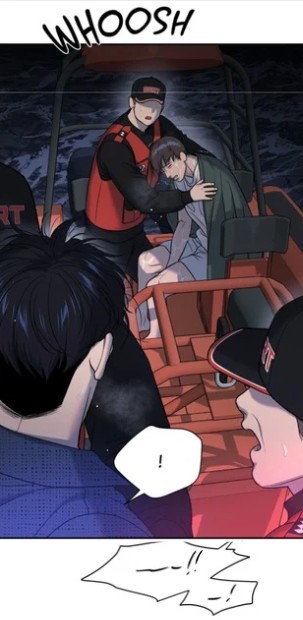 (chapter 69)
  (chapter 69), the audible HAA…, and in the dilated pupil.
  (chapter 69) His body speaks what the panel leaves unsaid — a visceral resonance of surprise, longing, and fragile hope.
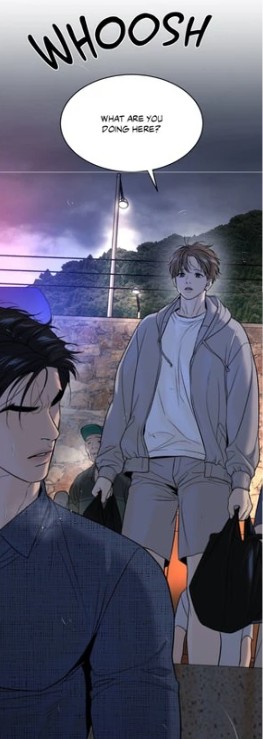 (chapter 69) There is no accusation, no resentment, no judgment.
 (chapter 49) the fighter’s vulnerability and punished his needs,
 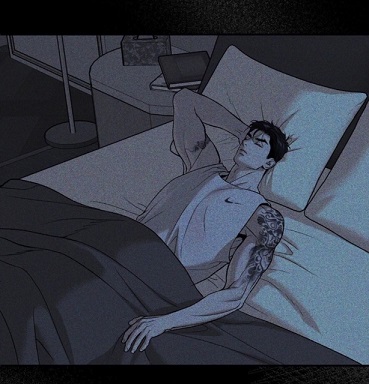 (chapter 45) — not attachment. That is why he threatened to hire another doctor the next morning: he feared dependency and as such vulnerability.
 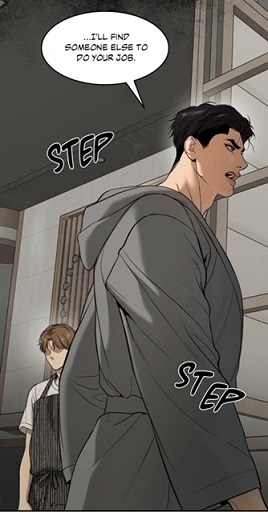 (chapter 45)
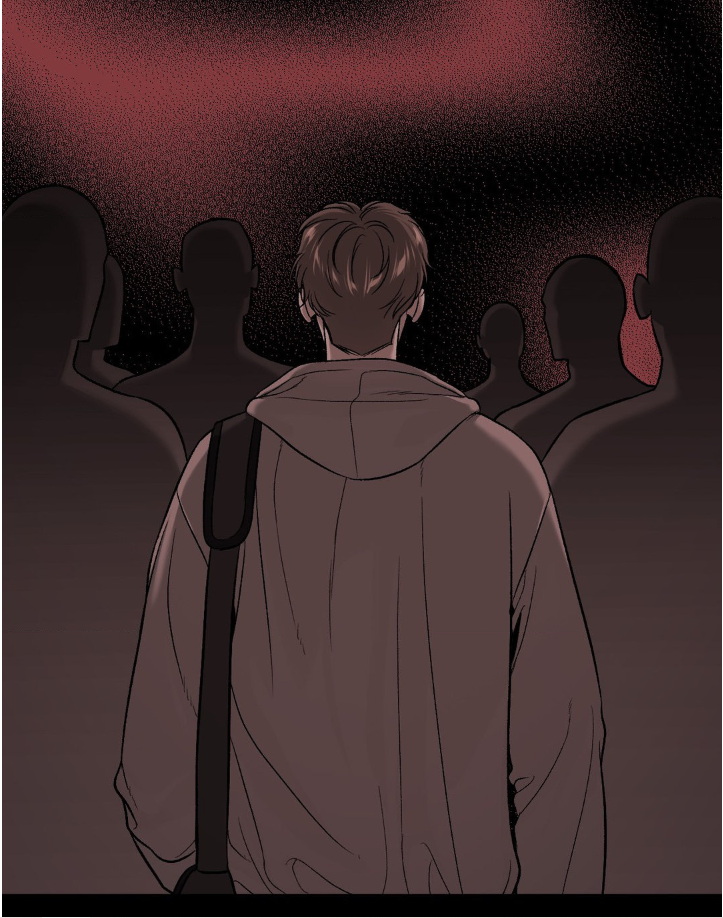 (chapter 55) In his mind, people leave — they live elsewhere — life goes on. He never imagined irretrievable loss.
 (chapter 26)
  (chapter 65)

 (chapter 69)
 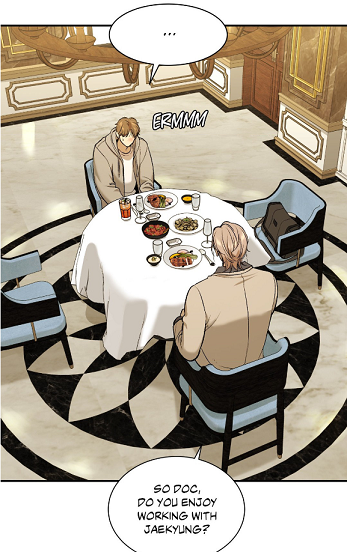 (chapter 32) Yet upon closer inspection, certain oddities stood out to me.
  (chapter 43) In that scene, Kim Dan poured soju into his water cup to pace himself during a drinking session.
  (chapter 43) Joo Jaekyung, unaware, mistakes it for his own and angrily reacts upon drinking it. This moment shows how closely water glasses are associated with Korean dining culture—even in casual or alcohol-heavy settings. Hence during a meal, the characters always have
  (chapter 32) two glasses on the table. In South Korea, it is customary for restaurants to provide a glass of water to every diner, regardless of the meal’s formality or complexity. This small gesture reflects hospitality, attentiveness, and the expectation of proper nourishment. The absence of water glasses, therefore, subtly communicates indifference or even disrespect—signaling that the recipient is not truly welcome to enjoy a full meal or rest. When applied to the “dessert meeting,” this detail becomes all the more striking: a cultural standard is ignored, revealing the performative nature of the gesture. Their absence at the “dessert meeting” feels deliberate, a symbol of superficiality and arrogance.
  (chapter 43) The reason for his mistake was that they had only placed a spoon and sticks.😮 He had no glass for himself. It was, as if they had forgotten him. In other words, he was not supposed to eat and drink at his own birthday party!! 😂
 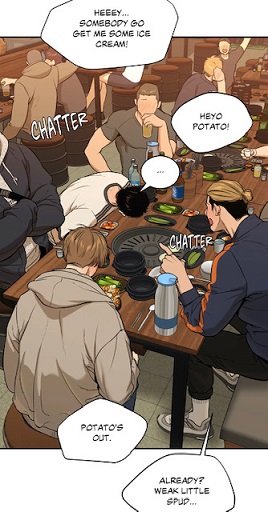 (chapter 9) It reflects a pattern: the champion is present but not included in the communal or emotional aspects of the gathering. His spoon and chopsticks function like a prop, much like the untouched knives and forks at the dessert meeting.
  (chapter 69)
  (chapter 48), the meeting between Choi Gilseok and Kim Dan. The former invited him for coffee.
  (chapted 48) At first, the gesture seemed generous—he offers a home, a car,
  (chapter 48) and the promise to help doc Dan to get a new treatment for the grandmother.
  (chapter 48) But this so-called kindness is conditional: in exchange, Kim Dan must betray Joo Jaekyung. Striking is that director Choi only ordered coffee. But a coffee without a dessert is no real break, but a stimulant—fuel for continued work. In both this meeting and the previous one with Choi Gilseok, the core remains the same: “work”, stinginess and greed wrapped in the guise of generosity. Every sweet drink or dessert lies a hidden price. This comparison highlights that the current meeting is not for the athlete’s sake—it is meant to serve Park Namwook and the CEO, who share different but aligned goals.
 (chapter 66) linked to fire, summer (hence the reference to the trip in the States), passion, performance, and vitality—ironically twisted here into cold professionalism and superficial seduction. Her position contrasts with her symbolic warmth, highlighting the emptiness of her care. This explains why she is portrayed eyeless. She sold her “soul” to money and as such to the “devil”.
 (chapter 69) wearing black, aligns with the North (흑, Heuk), associated with the color black, winter, water, authority, secrecy, and hidden control. It was, as if he was representing the missing glass of water. His position as the initiator of the meeting and his location near the window reinforce his dominance and detachment.
 (chapter 69), which evokes confusion and corruption. This artistic backdrop continues the theme from Voyage, Voyage (life is a journey), positioning Jaekyung as mentally “adrift” within this orchestrated trap. At the same time, the green might reference the “Black Forest”—a literal and metaphorical journey ahead. Like Hansel and Gretel, he is being lured with sweets into the forest. But unlike the fairy tale, the athlete’s breadcrumb trail will not lead him home—it will lead him to Kim Dan. On the other hand, by making this connection, I couldn’t help myself thinking that exactly like Hansel and Gretel, doc Dan and his fated partner will cross the witch’s path on their journey to independence and happiness.
 (chapter 69) Notably, this outfit marks a shift from his previous appearances: during his public pose with Baek Junmin
  (chapter 37) Now, Joo Jaekyung mirrors this casual dark attire
  (chapter 69) —a signal of inner turmoil and his transition from his former life. Blue stands for loyalty, thought, and calm, while black alludes to his troubled past. He is evolving but not yet free.
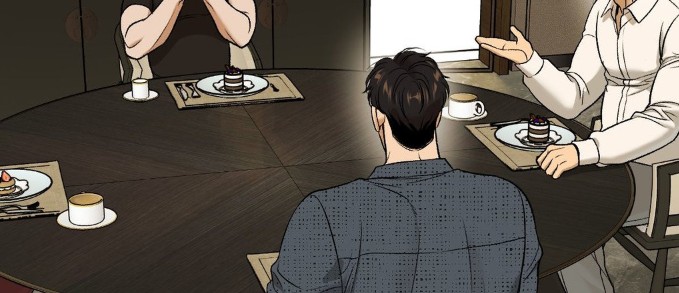 (chapter 69) the strawberry fraisier (chosen by the woman) stands for surface sweetness and seduction; the layered chocolate cake (perhaps a feuilleté) represents indulgence and opulence. Joo Jaekyung alone chose a square Black Forest cake—a form traditionally associated with structure, truth, and boundaries. Because the cake contains kirschwasser, subtly referencing the athlete’s brief brush with alcohol, it becomes clear that Park Namwook was not the one behind this order. Imagine this: under his very own eyes, the champion is encouraged to taste a strong alcohol. In my opinion, they must know that the star has been drinking. Yet, it was through Kim Dan’s presence that he stopped drinking, making this dessert an unconscious mirror of both his struggle and strength. Meanwhile, Park Namwook, ever the follower, selects the same dessert as the CEO and the same drink as the woman, revealing his pretense and pastiche once more. Since the manager has always bought junk food (chicken
 – episode 37), it becomes clear that the hyung simply has no idea about Western food in general and in particular expensive French or German dishes. That’s why he didn’t ask about the dish or questioned the champion if he should eat the deadly sweet cake.
  (chapter 22)
 (chapter 48), their meeting was not supposed to be secretive. On the other hand, because the scene was photographed
  (chapter 48), it created the illusion of “betrayal” as it looked like a secret meeting”. In episode 69, the meeting is hidden from the public. In contrast to the earlier public appearance alongside Baek Junmin for the cameras
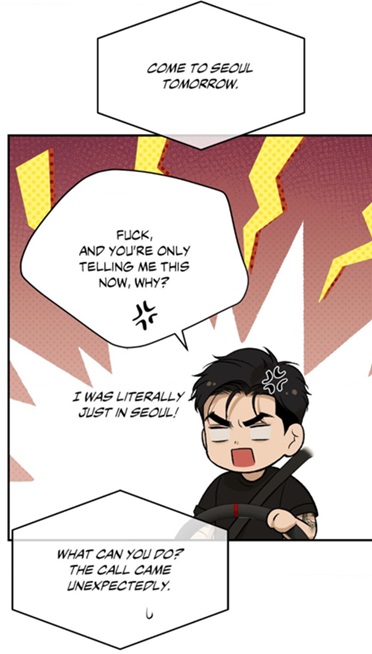 (chapter 69) This framing is deceptive: far from being a gesture of goodwill, it reveals the urgency and opportunism driving the meeting. However, this gesture is carefully staged: the CEO and the woman in red are the ones who selected the time and location of the encounter, placing the athlete in a reactive position where he must adjust his schedule to their convenience. It reinforces the illusion of privilege while concealing a dynamic of control. The meeting is designed to appear personalized, but it reflects MFC’s ethos that ‘time is money’—a business-centered logic that prioritizes efficiency over empathy. The CEO’s urgency to schedule a match, despite Jaekyung’s unclear health status, further exposes the commodification of the athlete. Notably, the proposed match is not even a title bout.
  (chapter 69) This strategic omission likely serves to shield the organization from scrutiny, as a title match would demand full transparency around the champion’s ranking and physical condition—areas that may not withstand public examination. In truth, the meeting is not about offering the protagonist an opportunity, but about maintaining MFC’s narrative control while exploiting his fame. This framing is deceptive: far from being a gesture of goodwill, it reveals the urgency and opportunism driving the meeting. To conclude, the discreet setting implies that MFC is not interested in publicizing their dealings with the star, possibly to avoid scrutiny or backlash. The lack of transparency underscores the manipulative nature of this so-called “favor,” which ultimately serves the organization’s agenda, not the athlete’s interests. The problem is that this meeting is heard by doc Dan
  (chapter 69), hence the “future match” is no longer a secret.
  (chapter 67) He was not dropping the case. That’s the reason why the fighter is offered a match in the fall. If he is busy, then he might forget the “case”, especially since fall is right around the corner. He would be occupied training. Like mentioned in previous essays, my theory is that the CEO is involved in the scheme. This assumption got reinforced with this meeting. Striking is that the focus of the “chief of security” was the incident in the States.
  (chapter 69) By stating that the criminal belonged to a Korean gang in the States, she implied that this man had no direct connection in South Korea. In addition, with this statement, she claims that he is still in the States and the champion is safe. However, if the “fake manager” had been living in the States for a long time, he wouldn’t have spoken in Korean automatically.
  (chapter 37) In other words, she is trying to place the mastermind in South Korea.
  (chapter 69) This means that she is attempting to erase the involvement of MFC in the scheme. That’s why they are now offering an apology, which is naturally fake:
  (chapter 42), it dawned on me that MFC is actually treating the Emperor like a “cash cow”, they imagine that they can keep milking him. I could say, this encounter is exposing the reality to the athlete: Joo Jaekyung is treated like any other fighter. Hence there is no longer mention of Baek Junmin in the news. On the other hand, they have to vouch for Baek Junmin’s integrity
  (chapter 69) His priorities have changed: Kim Dan. This chapter announces a turning point of the Emperor, he is getting liberated from his “role” as Champion. Besides, if he were to lose the game, they can blame the athlete for his bad decision: he returned to the ring too soon. That’s the reason why the meeting and offer from the CEO was not revealed to the public.
  (chapter 69) So Joo JAekyung is more than a fighter and the apology (interrupted by the manager) is the evidence for this. Under this new light, Jinx-philes can understand Park Namwook’s interruption and embarassement. Not only he doesn‘t want to be reminded of his past mistakes (passivity, failure of his job, the slap), but also this apology serves as a mirror and reminder that he is not the true owner of the gym.
  (chapter 69) He is his unseen savior. Thanks to Kim Dan, the star remained silent and calm giving the impression that he had fallen for MFC’s trick.
  (chapter 40) This echoes Kim Dan’s confusion in Chapter 40 when interrogated in English. It also conveniently hides their ties to local authorities—acting as foreigners with no responsibility or rootedness in Korea. But this is what director Choi Gilseok confessed to the angel:
  (chapter 40), effectively opening the metaphorical door to truth and protection. In this meeting, however, Park Namwook serves to contain and silence, not to defend. His placement underscores his complicity and fear—not just of the CEO or MFC, but of confronting the consequences of his own failures. But the manager is on his way for a rude awakening, he will be taught a lesson: don’t judge a book by its cover. The athlete won’t be the depressed, anxious, submissive and passive “boy” any longer. Moreover, he listened carefully to the chief of security:
  (chapter 69) This spatial detachment echoes his emotional separation from MFC and its toxic grip. Distance, both literal and figurative, is now his strength. The fact that he chose to return to the little town outlines that he is now considering that place as his “home” and not the penthouse. He is not realizing that his true home is doc Dan.
  (chapter 32) During Kim Dan’s lunch with Choi Heesung, the floor beneath their round table shows a twelve-petal flower motif—evocative of the legendary Knights of the Round Table, who were said to sit twelve strong. That earlier scene featured Heesung testing Dan, much like the fake round table later hosts a veiled test for Joo Jaekyung. The repetition of round tables masks exclusion and betrayal. These early “false” tables pave the way for a true table—one that Jaekyung might one day forge with fighters like Heesung, Potato, Oh Daehyun, and others, where loyalty and respect, not manipulation, define the bond.



 (chapter 36), his tendency to retreat rather than challenge his own doubts
 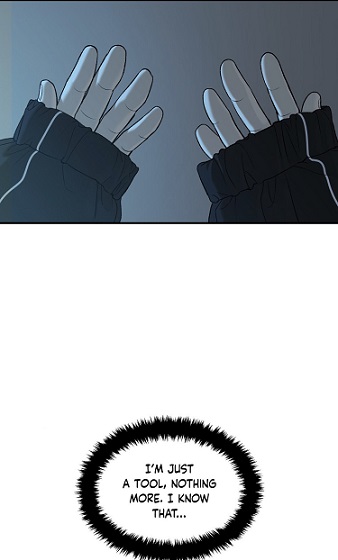 (chapter 36), and his overwhelming fear of disappointing others
  (chapter 18) the doctor
 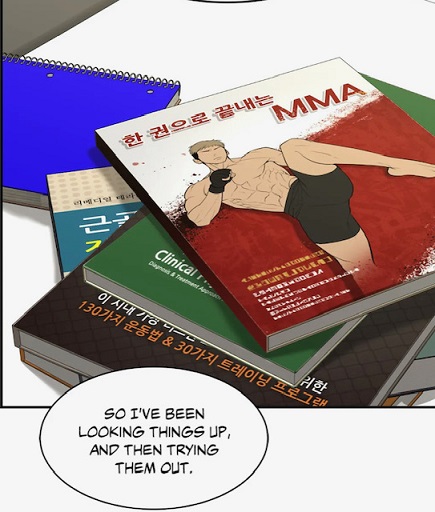 (chapter 25) Therefore the physical therapist bought books. Moreover, we should consider this argument
  (chapter 6), he came to accept that he was not truly talented. The champion had no trust in him and later, the word jinx triggered a repressed bad memory.
  (chapter 62) Due to his bad past experiences, he concluded deep down that his CV was not reflecting the truth.
  (chapter 48) exemplifies this pattern:
  (chapter 48) It was not the right time. He assumed his voice held no weight, reflecting years of learned helplessness. It shows how Kim Dan internalizes responsibility for things beyond his control. He thinks that withholding information is an act of protection rather than avoidance. Yet in doing so, he denies himself agency in his own life.
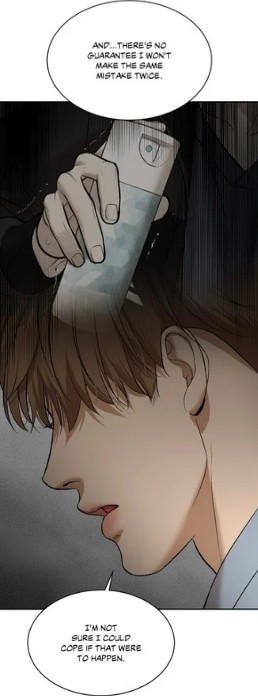 (chapter 62) completely devastated Kim Dan’s already fragile self-esteem.
 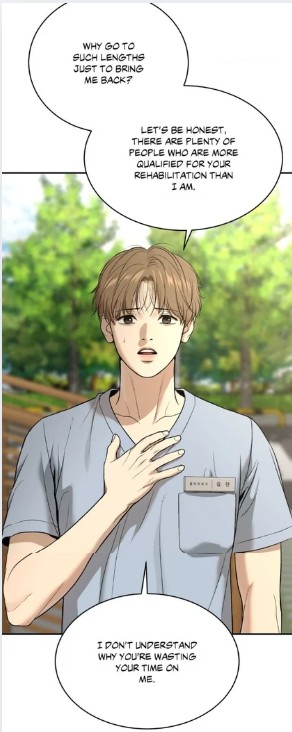 (chapter 62) First, he considers himself as waste. While in the past, he was at least a tool, he is now garbage. Hence his feelings are “trash”.
  (chapter 62) This means that in episode 62, he felt worse than in episode 18! The idioms “trash” and “waste” revealed the doctor’s own self-perception in episode 62: he saw himself as totally useless. He belonged to the “wastebasket”, just like the golden key chain.
  (chapter 46) Thus I deduce that the fate of this item echoes the doctor’s.
 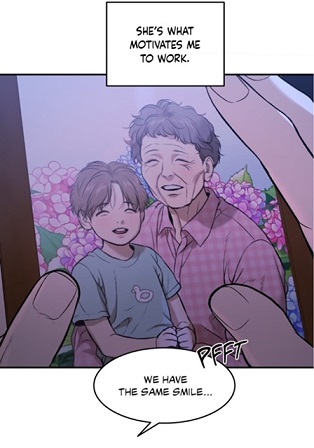 (chapter 47) He had selected this profession because of her. This shows that until now, he has never developed any ambition on his own. The loss of faith from someone he relied on for motivation made him feel completely worthless. This reinforces that his confidence and sense of direction were never self-sustained: they depended on others’ recognition. This pattern suggests that Kim Dan has never truly asked himself what he wants. His entire existence has revolved around meeting expectations, whether from his grandmother, Joo Jaekyung, or even his profession. His current crisis—feeling like waste—stems from the realization that without someone to validate his worth, he sees himself as nothing.
 (chapter 59) However, observe that he is using the expressions “do” and “now”. This has nothing to do with the future and dreams. It is not a reflection on his own desires but rather an immediate reaction to his circumstances. His mindset is still trapped in survival mode, seeking a course of action rather than contemplating what he truly wants. His words reflect an urgency to act rather than an opportunity to dream. This highlights that he has spent his entire life making decisions based on necessity rather than personal fulfillment. Even when faced with uncertainty, he does not ask himself what he wants—only what he must do next. His transformation will only be complete when he begins to question not just how to survive, but how to live on his own terms. That’s how I realized why Mingwa put this question in front of the window covered with Venetian blinds [which made me think of this scene
  (chapter 39 – Venice, a travel to Italy]. The window with the Venetian blinds represents a metaphor for the doctor’s trapped dreams. This interpretation made me recognize another aspect. Kim Dan is pushed to meditate, when he is front of a window or better said close to the sky! Hence the hamster started thinking about his own future in the penthouse
 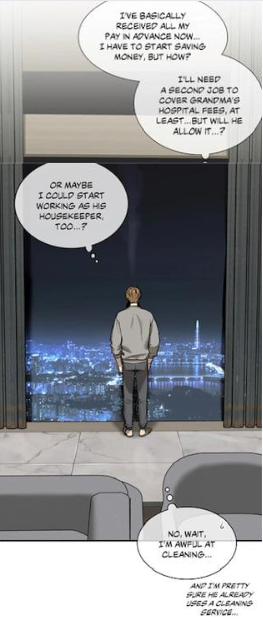 (chapter 19) or when he looked at the sun and sky:
 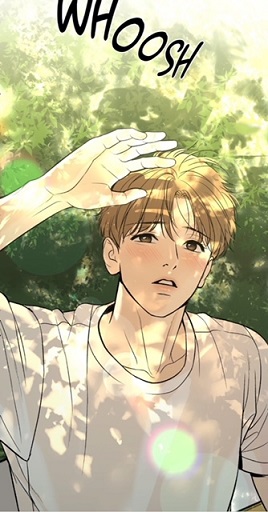 (chapter 41)
  (chapter 41) And the best evidence for this interpretation and expectation is doc Dan’s cellphone screen display.
  (chapter 38) My avid readers will certainly recall that clouds embody dreams! Why? It is because in verity, doc Dan is a dreamer, an ambitious man. What caught my attention is that his contact Joo Jaekyung was not saved with a picture!! And what had motivated Kim Dan in the past?
 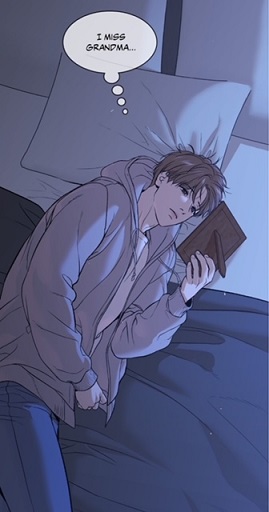 (chapter 47) The picture from his childhood: himself with his grandmother.
  (chapter 66) But the latter was not related to work, but to fun and nature. Striking is that Joo Jaekyung has an empty phone screen display indicating that he has no real dream on his own either:
 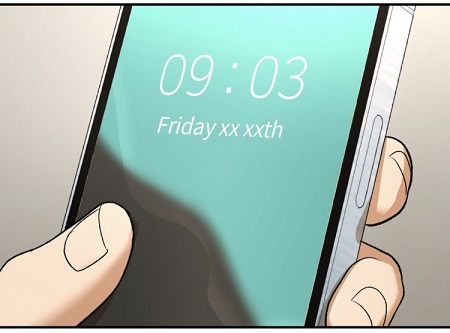 (chapter 38) No wonder why he questioned the meaning of his champion title:
  (chapter 54). He saw the belt as something rather “meaningless”.
  (chapter 43) This would boost the doctor’s self-esteem. He is not trash, but an acknowledged fan and friend. The picture would encourage the physical therapist to develop his own ambitions. As soon as I made this discovery, another detail caught my notice:
  (chapter 66) The celebrity has no picture of Park Namwook in his contacts divulging the superficiality of their relationship.
  (chapter 42) The problem is that the athlete took this recommendation personally. He felt as if his job as fighter was questioned.
 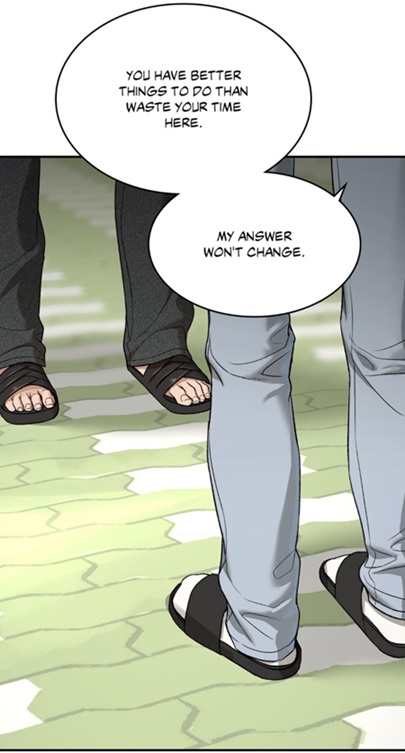 (chapter 62) According to the main lead, the champion is “wasting his time here”.
 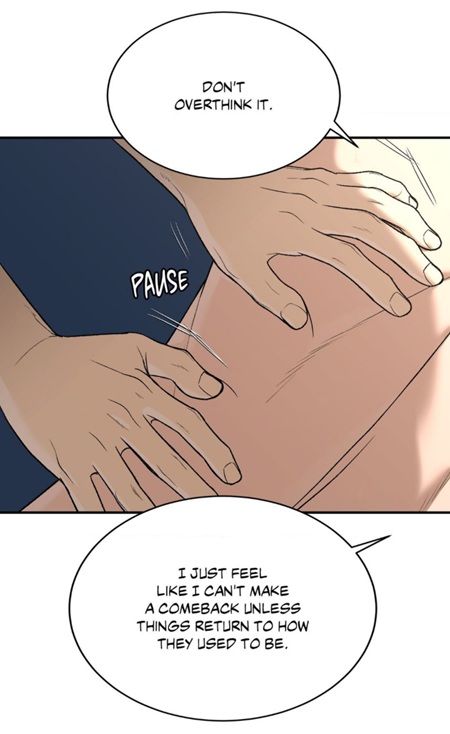 (chapter 62)
 (chapter 57) Hence it is clear that in the future, the physical therapist would refuse to use any kind of spray. On the other hand, it is important to recall that back then, Joo Jaekyung had made the request himself:
  (chapter 49) So in the doctor’s mind, if he agreed to the champion’s request, he would be treated like in the past. He would have to simply to follow the athlete’s lead. That’s why he is imagining that he might be put in a similar situation than in the past. But there exists another reason why he refused the champion’s offer right from the start. It is because he has always perceived himself as “hands” which stand for selflessness and generosity. The latter defined doc Dan. Hence he looked at them, when he declared himself as a tool:
 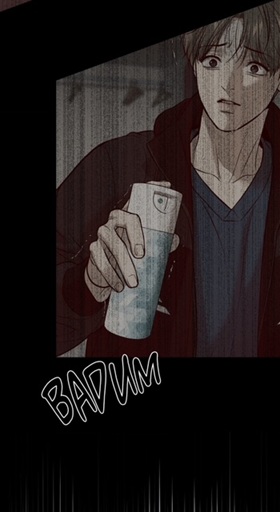 (chapter 57)
  (chapter 1) with a previous PT like the spray? No wonder why he called himself “trash” in the end.
  , people might wonder why I selected dandelions as a frame for the selected.. It’s clear that the dandelions aren’t just there for aesthetic balance. Their symbolism is profound. Dandelions are often associated with childhood innocence, wishes, and fleeting moments of beauty, yet they also wither quickly, easily scattered by the wind. In the context of Jinx, they represent a transitory force—something that struggles to take root, much like the intangible and fleeting elements in Kim Dan’s life. But there’s more to it. Before delving into deeper analysis, consider this: what is the common denominator in all these scenes?


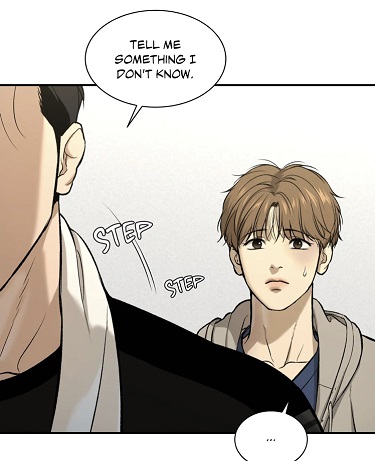

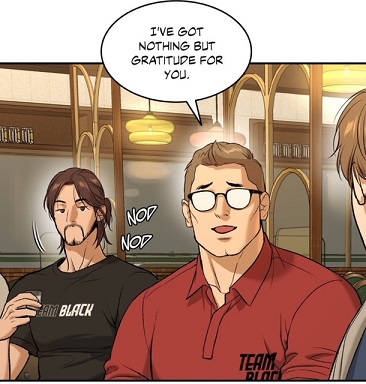
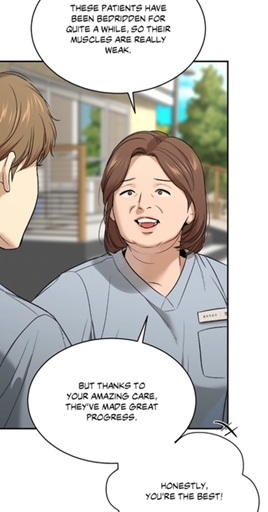


 (chapter 37) Therefore it is not surprising that the main lead couldn’t view the members as friends in the end.
  (chapter 41) And now, you comprehend why Joo Jaekyung has always disliked his birthday and the “congratulations” from people in general. The gifts and words were like poisoned praises to his soul. They were pushing him to live like a “god”.
  (chapter 59) While this photography was not a personal and intimate picture, it also symbolizes his first root in the little community: Light of Hope Hospice. He is part of the staff and as such of the little town. On the other side, we could say, he is gradually entering the scene as a PT. Note the contrast to the food truck:
  (chapter 30) In other words, it exposes the actor’s hypocrisy and wrongdoings. And now, you understand why I wrote genuine in parentheses above [proof of (genuine) human connection]. Photography in Jinx also represents the evidence of wrongdoing
 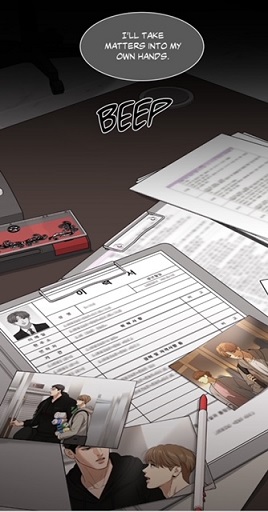 (chapter 46) The exact opposite of the dandelions.
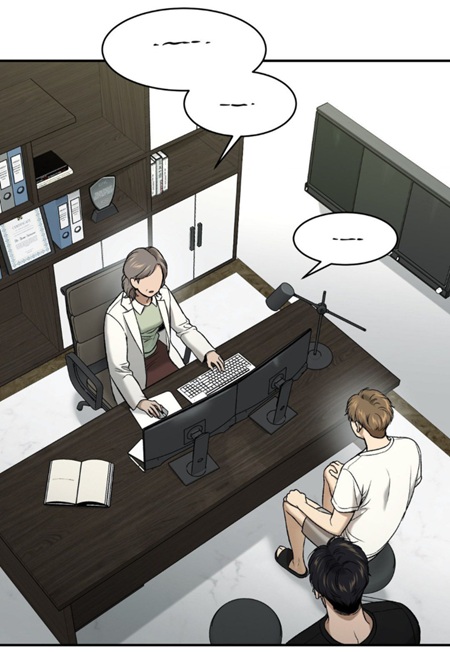 (chapter 66) It is a direct contradiction to the hollow praise doc Dan has received all his life.
 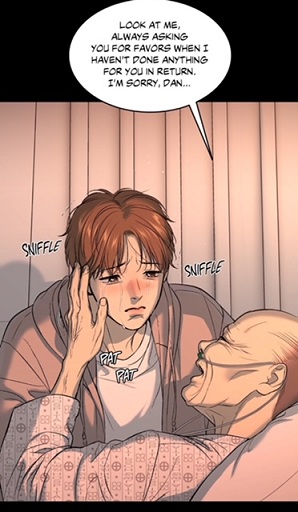 (chapter 53) He was treasurable, for he did favors to his grandmother all the time. Instead of simply saying that Kim Dan matters, the champion proves it. He challenges the physical therapist’s own perception of himself, demonstrating that he is not just useful—he is precious. Secondly by justifying his action for the doctor’s sake,
 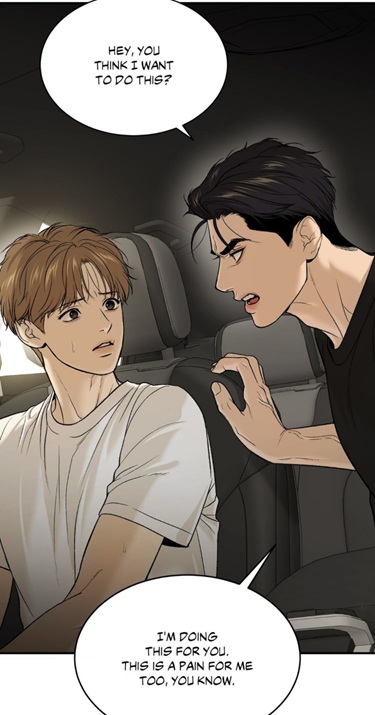 (chapter 66) he contradicts not only Kim Dan’s self-perception, but also his past accusations:
 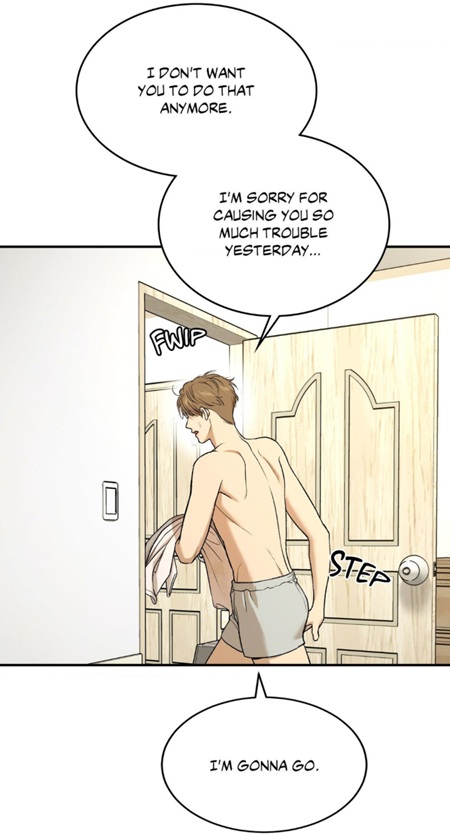 (chapter 66)
 (chapter 66) reveals Kim Dan’s elevation in the champion’s life. The dressing room symbolizes privacy and closeness. No longer seen as a mere tool, Kim Dan has become an integral part of Joo Jaekyung’s world, not because of what he can do but because of who he is.
 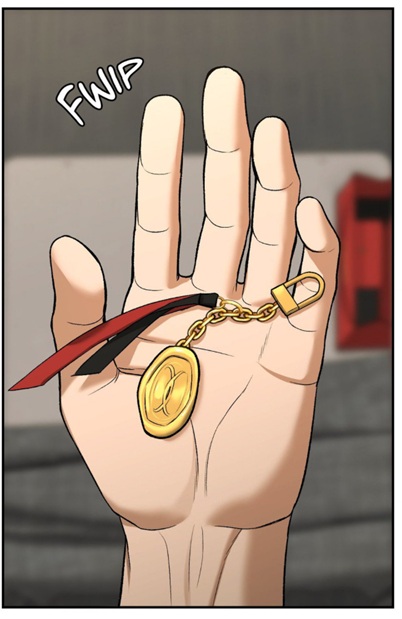 (chapter 66) Therefore the champion is holding the expensive gift with his whole hand contrary to the past:
  (chapter 55) As a conclusion, by bringing him to the sleep specialist, the star proved doc Dan’s words wrong! He told him something that doc Dan didn’t know: he is precious. He needs to pay attention to his health and body.
 (chapter 32) And now, you comprehend why the athlete didn’t fall for Park Namwook’s manipulations afterwards.
 (chapter 66) “I don’t know what you’ve been up to lately…”, it carries an accusatory undertone, subtly suggesting that the champion has been avoiding him. By framing it this way, Park Namwook is not just asking about Joo Jaekyung’s well-being—he is asserting his discontent over losing control. His follow-up suggestion, “Instead of being alone all the time, why not come to the gym?”, reinforces the idea that he sees the gym as a tether, a way to keep Joo Jaekyung within his domain of influence. In addition, he is suggesting that the athlete has been using his injury as an excuse to avoid training. There’s an undertone of doubt and accusation, as if he does not fully believe the champion’s recovery process is valid or necessary. Instead of expressing genuine concern, Park Namwook is subtly framing Joo Jaekyung’s absence as a sign of laziness or avoidance. The small compliment from the manager (“good work”) represents a turning point in the athlete’s life. Park Namwook can no longer treat the athlete like in the past.
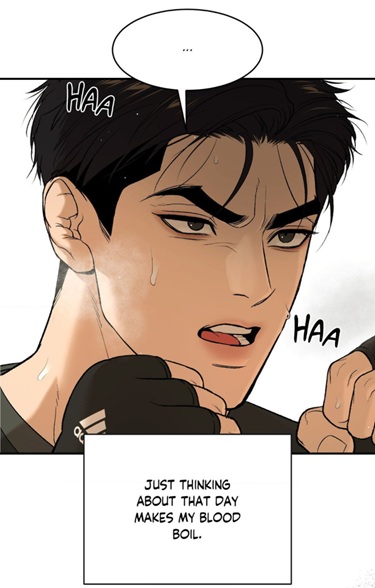 (chapter 65) At the same time, such a disapproval
 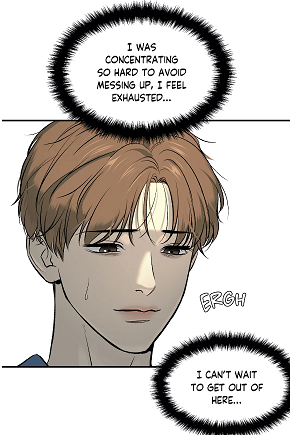 (chapter 1), hence his true desire was to run away from that place. For praise to be effective, the recipient must be open to receiving it, either by looking forward to feedback or having expectations of validation. Since Kim Dan was in a state of distress, he was unable to internalize the champion’s words, reinforcing his long-standing belief that he was invisible or unworthy of acknowledgment. That’s how the champion’s praise became a dandelion seed in the end.
 (chapter 65) or a smoker, hiding his sacrifices and the true causes for his struggles. Her words reinforce the idea that Kim Dan is only as good as his usefulness, that love and recognition are earned through labor, not freely given.
 (chapter 18)
 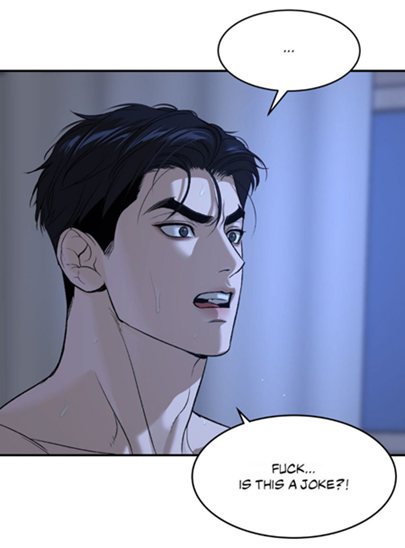 (chapter 64)
 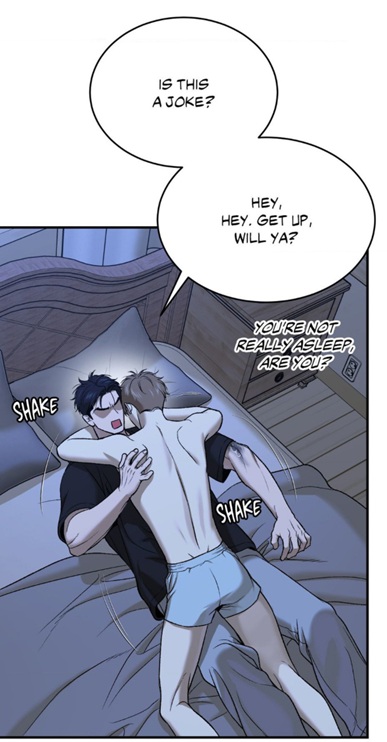 (chapter 66) Is this a joke?
 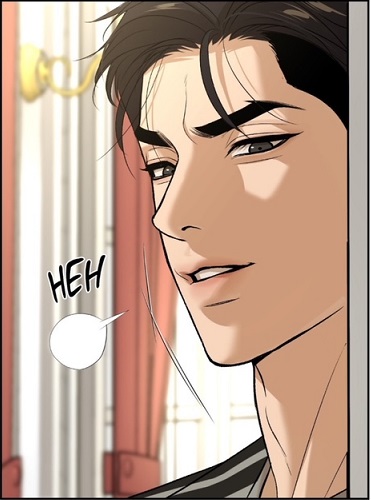 (chapter 40) However, Kim Dan has never realized it. Either he was sleeping or totally out of it (fear of sex)
  (chapter 27) It is important to recall the importance of the receiver’s mind-set. The latter has to perceive the sincerity from the speaker. Hence I come to the following deduction: The moment Kim Dan notices Joo Jaekyung’s smile and laugh, then he should come to the conclusion that he matters to the protagonist. I would even say, the two protagonists are destined to make each other laugh and smile:
  (chapter 44) This would be the best “compliment” for both of them. With Kim Dan by his side, Joo Jaekyung desires to make “jokes”.

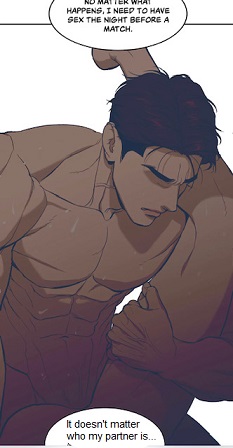 (chapter 2) —having sex the night before a match—was a necessary ritual to maintain his champion title. However, by Episode 62, his view of the jinx had subtly shifted.
  (chapter 62) He now includes his entire routine with Kim Dan—not just sex, but also his physical therapy and treatment—as part of this so-called jinx. This shift is crucial because it implies an unconscious recognition of Kim Dan’s significance in his life. What once was purely about his career and success has now expanded to include a specific person and their role in his well-being.
 (chapter 62), the doctor’s memory got triggered. Because of his past experiences, he has long associated the jinx exclusively with sex. This contrast in understanding highlights both Jaekyung’s lack of self-awareness and Kim Dan’s tendency to filter reality through his own expectations and trauma. However, the deeper significance lies in Jaekyung’s evolving perception of dependency. His jinx is no longer just a superstition tied to his performance in bed. It now subtly acknowledges that his success has been intertwined with Kim Dan’s intervention.
 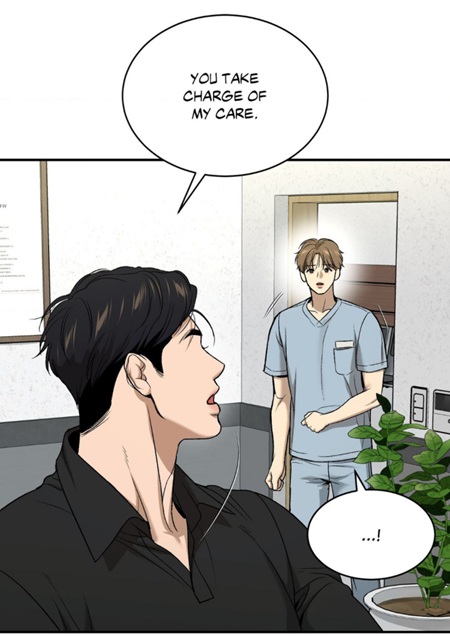 (chapter 61) By entrusting his care to Kim Dan, he was insinuating that the main lead was trustworthy and competent, yet his inability to verbally express appreciation keeps the doctor unaware of his true feelings. This struggle resurfaced in front of the hospice, where Jaekyung could only bring himself to admit that Kim Dan was not responsible for the incident with the switched spray.
 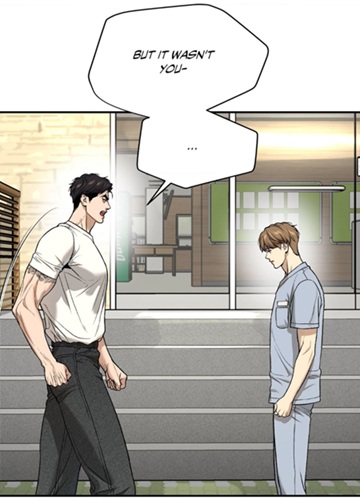 (chapter 62) His reluctance to openly acknowledge his gratitude suggests a deeper internal conflict—one that hints at a growing but unspoken emotional reliance on Kim Dan.
  (chapter 62) It was, as if he was warding off bad luck by repeating the last match. For him, past choices are justified by their results—he has built a successful career through sheer discipline and sees no reason to question his trajectory. His mentality reflects the belief that one’s past is a stable structure upon which the present and future rest. This perception explains his resistance to self-reflection and emotional vulnerability; admitting a mistake would mean disrupting the stability he relies upon.
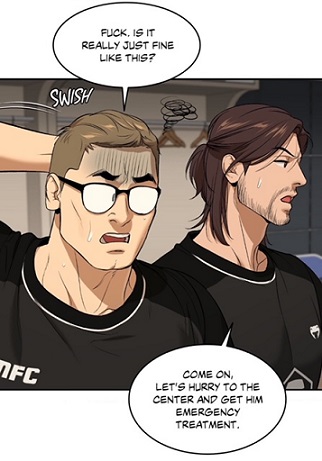 (chapter 50)
 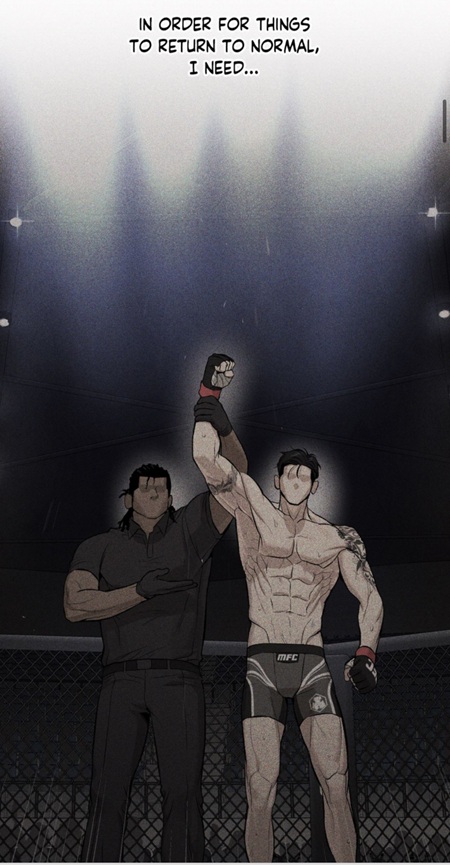 (chapter 61) This rigid perception prevents him from questioning his past choices or embracing change, reinforcing the illusion that repeating past patterns will restore stability. However, as his reliance on Kim Dan grows, the boundaries between his personal and professional life blur, challenging his belief that he can control his future by clinging to his past.
 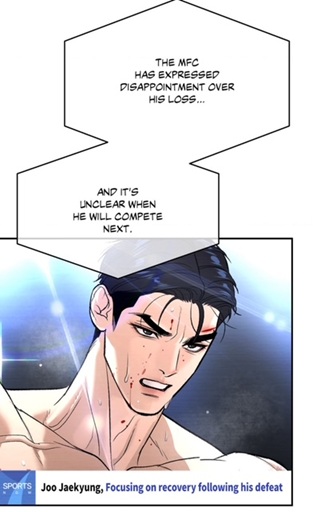 (chapter 57) and Park Namwook
  (chapter 54), who claim that Jaekyung ‘lost’ the fight, when in reality, it was a tie. The very way people around him are framing the event warps his perception, creating a false narrative where his struggles seem to stem solely from this supposed ‘loss.’ His belief in a stable past provides him with a sense of security, but that illusion is fragile. In addition, if his struggles predated his championship loss
 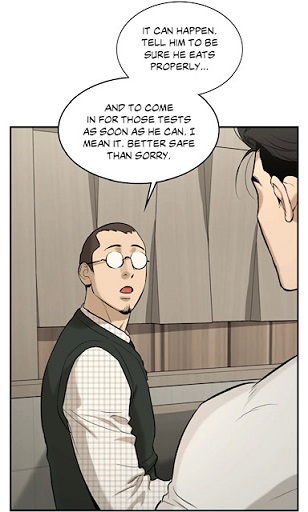 (chapter 13) because they affected the doctor’s life?
  (chapter 41) In one case, he refused to listen to his friend’s advice, whereas he trusted the words from MFC, MFC doctors and his hyung. When the foundation he has relied upon begins to crack, Jaekyung’s entire mindset is shaken, forcing him to question whether his past truly holds the answers he seeks. We could say, the athlete needs to be betrayed by his own past in order to throw his old belief. The latter is strongly intertwined with the organization MFC and authorities in general. Questioning his past equals challenging the company MFC and his past “guardians”: the terrifying ghost and even his two hyungs.
  (chapter 61), he expresses the belief that reclaiming his championship title will rid him of his headaches, nightmares, and sleepless nights. However, the reality is different—he was already suffering from insomnia long before he lost his title.
 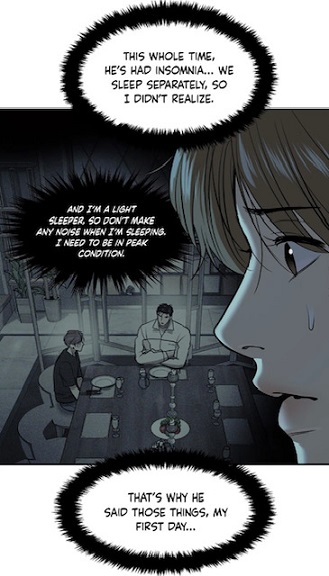 (chapter 29) The origins of his struggles existed before his recent failures, suggesting that his belief in a simple solution—reclaiming his title—is an illusion. This disconnect reveals how deeply his professional and personal life are entangled; his need for control in the ring has masked his deeper emotional vulnerabilities. He isn’t merely striving for victory—he is chasing the illusion of stability, believing that his success is the sole factor that determines his well-being.
 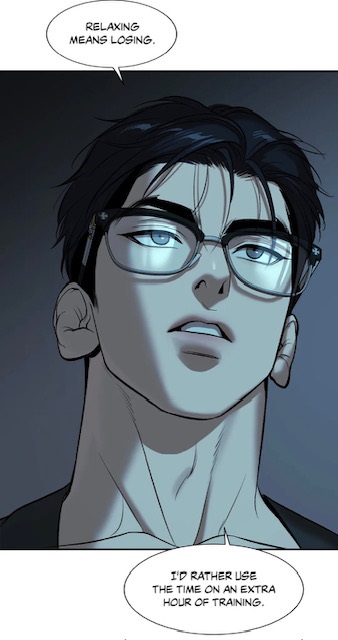 (chapter 29), you will realize that alone in his penthouse, Joo Jaekyung was actually admitting the importance of sleep and rest. His earlier belief in relentless training as the key to success now clashes with his realization that exhaustion is affecting him. This shift signifies an unconscious admission that his well-being is not just tied to physical endurance but also to recovery and relaxation—something he previously dismissed. This realization subtly parallels his growing dependence on Kim Dan, reinforcing the theme of blurring lines between his professional and personal life. And what had occurred after this magical blue night in the penthouse?
  (chapter 30) The athlete woke up later than usual. In fact, he was rather late, for he was still wearing his pajamas, while the doctor had already taken his shower. But back then, observe how he opened the door! Like a clumsy beast, grump leopard! Why? In the past, I explained that he was seeking the champion’s closeness, but didn’t know how to approach his partner. I am now adding another aspect. He was actually annoyed, because he had not been following his daily routine!! Under this new light, it becomes comprehensible why the champion had such a “angry” facial expression, while deep down he was happy. The older version of this scene:
 (chapter 31) In fact, he used guilt to create a link between him and his roommate. That’s the reason why I am more than ever convinced that the champion will sleep better after this lavender-tinted night.
  (chapter 63) But contrary to the past, the athlete should come to recognize his lover’s great sleeping power officially. This made me laugh, imagining Kim Dan’s reaction, when the latter sees that his wish
  (chapter 62) won’t come true at all. 😉 He will stay longer and ask for Kim Dan’s presence during the night.
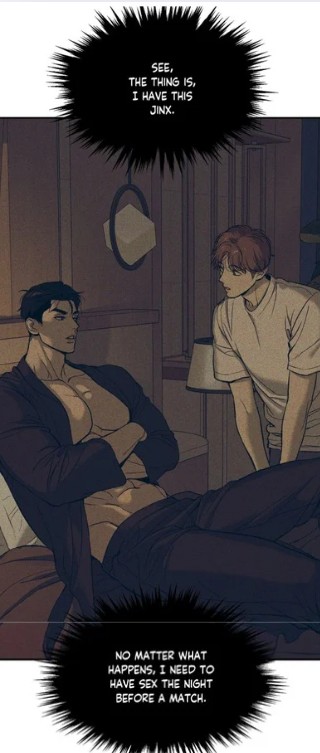 (chapter 62)
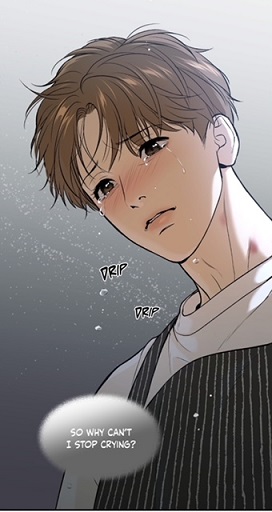 (chapter 46)
 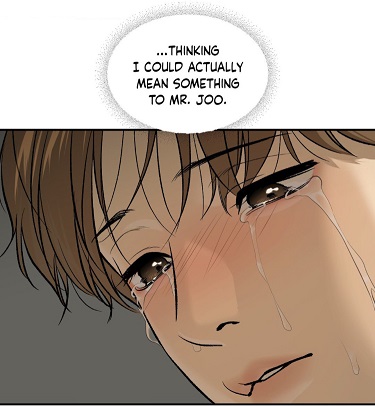 (chapter 46)
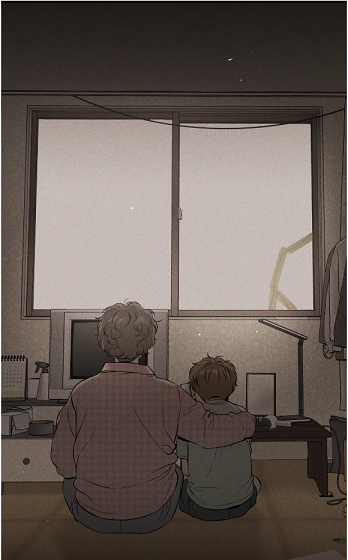 (chapter 19) She became terribly sick, while the other had to get surged and risked his career. There is no doubt that the halmoni is hiding her pain as well. Kim Dan’s declining physical and emotional state further reflects the consequences of living in avoidance.
 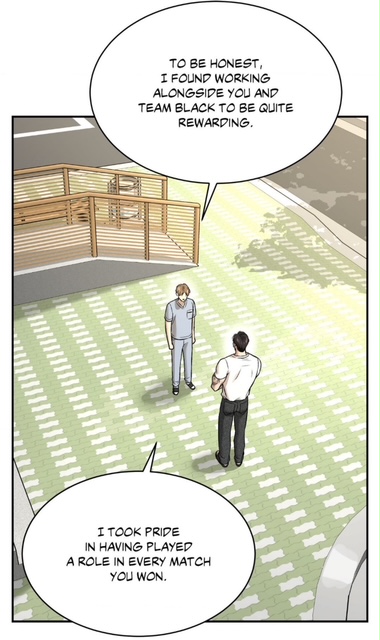 (chapter 62) If he continues making decisions based on past fears, he will remain trapped in the same cycle, unable to experience true growth or emotional fulfillment.
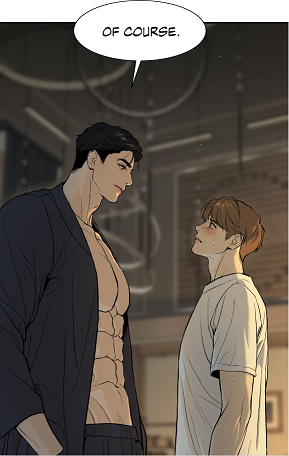 (chapter 3), which has been the setting of power imbalances, physical dominance, and silence, the living room represents a shared space—a place where dialogue and openness can exist. But why is the bedroom linked to silence? It is because of the TV, the third invisible companion!
  (chapter 48) Hence during that night, none of the protagonists talked sincerely to each other. And now pay attention to the living room at the hostel:
  (chapter 54) He needed to get rid of this poor habit: watching TV or cellphone. He had to realize that the TV or cellphones were never real companions and never brought him peace of mind! This was the invisible “love” triangle. Back then, the athlete deceived himself by thinking that he was truly self-reliant, while in verity he was dependent on his cellphone and the TV.


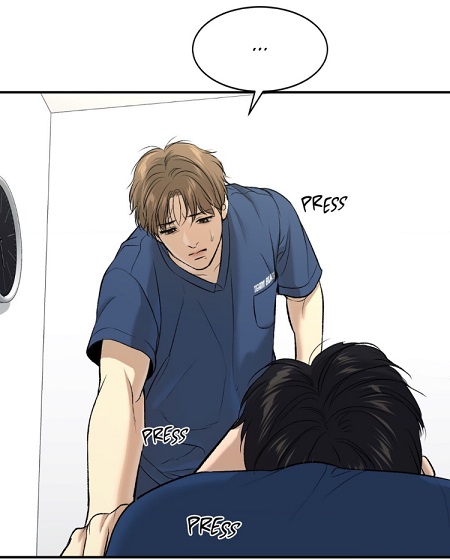

 (chapter 7) But now, it is no longer fulfilling for him, because his relationship with them didn’t go beyond their work.
  (chapter 59) Striking is that here the doctor didn’t apologize to the elderly man, but only to the family.
  (chapter 59)
 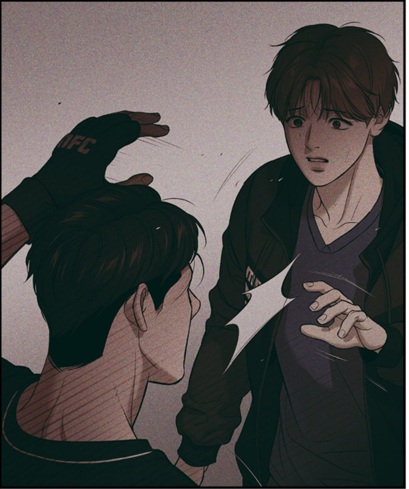 (chapter 62) – which is quite understandable in my eyes. The ones who failed the couple were the two other hyungs from my perspective. The past affected the doctor so much that he views himself and his feelings as “trash” now, yet it is clear that neither Park Namwook nor the coach are suffering from guilt or remorse. The star’s follow-up statement,
  (chapter 62) further reinforces that Kim Dan has become an integral part of his preparation. Although Jaekyung does not yet frame this as emotional reliance, his words betray an unconscious attachment—one that Kim Dan himself does not recognize. Moreover, by including him in his jinx, the champion is only one step closer to include him in his “success”. Should the doctor be the target of malicious comments, the star will consider it as a personal assault or as his responsibility.
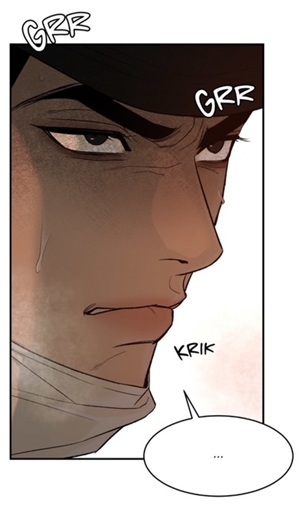 (chapter 56), but about something deeper. Here he felt the need to see his beloved “companion” again.
  (chapter 62) This means that he is now treasuring his own body. No wonder why he smiled.
 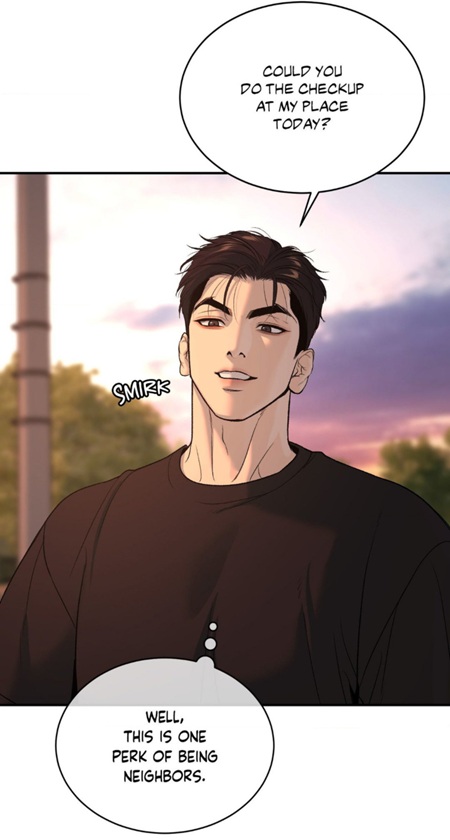 (chapter 62) That’s why I come to the following conclusion: The athlete must have felt happy in the living room, for he felt comfortable and safe.
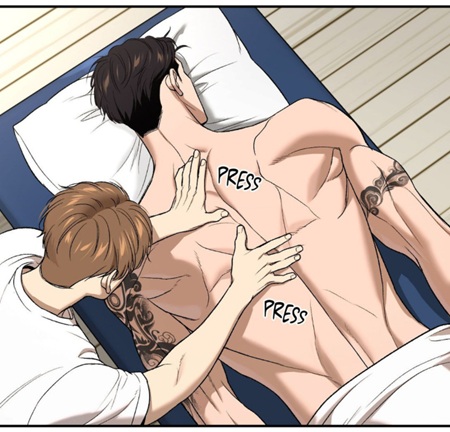 (chapter 62) But why did he show his back? One might say that he desired to hide his “satisfaction” and his “reliance” on his fated partner. Or he didn’t feel the need to watch the doctor’s facial reaction, when he would confide his new intentions and the transformation of his jinx. He didn’t expect the physical therapist to mock him for his absurd belief contrary to episode 2:
  (chapter 2) He trusted the doctor. Yet, in my opinion, there exists a bigger reason behind this change. It is related to his manager:
  The doctor is treating the star
  (chapter 26) His dependence on Jaekyung’s achievements makes him resistant to any shift in the fighter’s trajectory
 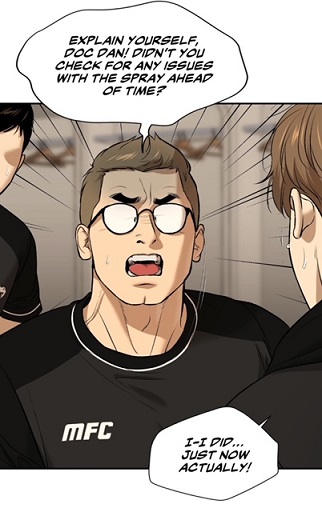 (chapter 50), allowing others to step in instead. Later, rather than addressing his inaction,
  (chapter 59)
 (chapter 5) He felt so empowered that he won very quickly.
 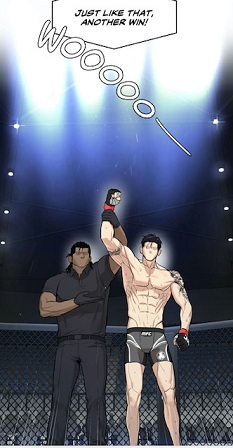 (chapter 5) But this good vibe was attributed to the sex with Kim Dan and unfortunately linked to his match. The reality was that he had slept better and longer. So by recreating the past, Kim Dan places the athlete in front of a choice. What matters in his life? His title or his peace of mind? He is correcting the champion’s distorted memory. Kim Dan is the reason why he can rest properly and not the title. Don’t forget that he was suggesting to go separate ways during the massage. But if he sleeps better before gaining his title, he won’t feel the urge to return quickly to the ring. In the living room, he was still acting as the celebrity, but in the bed chamber he is now gradually pushed to leave his title out of the bedroom. Now, in the bedroom he becomes a man and can almost make a mistake as a lover.
 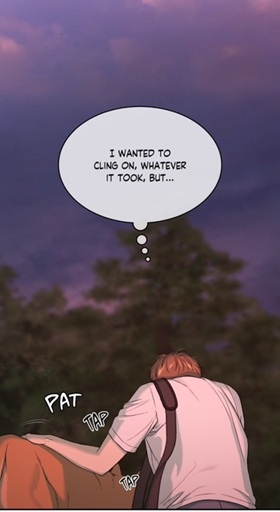 (chapter 59) However, he needs to realize that his physical and mental recovery can only happen, if he truly wishes it. From my perspective, the doctor has to sense that he is not on his own, he has someone by his side who supports him emotionally and mentally.
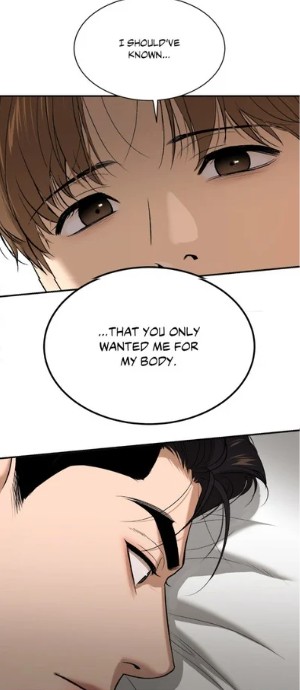 (chapter 62) In episode 62, Kim Dan reproached the champion for only being interested in his body, reflecting his own inability to see his body as something valuable. Hence he never wondered about the true cause for such a huge bruise.
 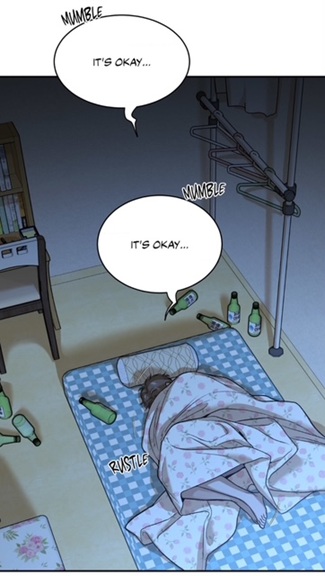 (chapter 59), hence he felt terrible sleeping alone. Secondly, he does not attribute worth to his own physical being beyond its utility for others. This explains why he has consistently neglected himself—avoiding food, disregarding his own injuries, and refusing to seek medical help when necessary.
 (chapter 60) It underscores the reality that without his body, he cannot work. In this way, his physical deterioration forces him to confront an undeniable truth:
  (chapter 43), they will replace him with a new ‘doll.’ This exploitation shaped his relationship with his own body—one that prioritized its use over its care.
 (chapter 26) and 62
 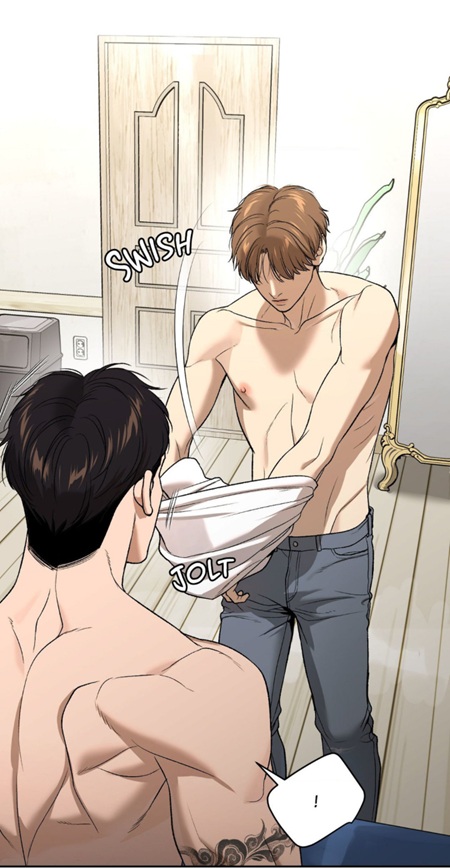 (chapter 62) that highlighted a crucial shift in how each of them perceives their own worth—and, more importantly, each other’s. The mirroring of these two episodes suggests a deliberate narrative structure that showcases their evolving dynamic, with each character taking on a role the other once held. This realization led me to explore how their perspectives on strength, vulnerability, and agency transform over time.
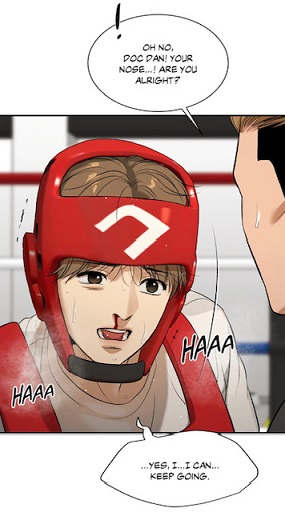 (chapter 26)
  (chapter 62), Kim Dan’s smile (genuine versus fake) and the characters’ shifting roles in confrontation and protection. The numerical structure of this episode—where Joo Jaekyung (2) represents dominance
  (chapter 26)
  (chapter 26) This small yet significant act reveals that the champion does not see Kim Dan merely as a ‘sex doll’ but as someone worth protecting, even when challenging him. The protective gear is a contrast to Joo Jaekyung’s usual treatment of his one-night stands, reflecting an unconscious distinction between how he views Kim Dan versus his other partners. Finally, this sparring day exposes the doctor’s biased perception about the athlete in episode 62 once again.
  (chapter 26) – he was smiling genuinely here- , and has reduced his time spent with Joo Jaekyung to sex:
  (chapter 16) and his minions. At the beginning of the fight, the doctor was not fighting for himself but for someone else, reinforcing his deep-seated belief that his worth was tied to service and sacrifice. However, during the match of the century, there was a short change. Kim Dan was reminded of his own past and fears. Thus, I deduce that in episode 62, it is Joo Jaekyung who must face his own greatest challenge—not a physical opponent, but the emotional vulnerability that comes with loss and uncertainty. Though he helped others, his generosity remained unnoticed by Kim Dan. Hence the latter was still unwilling to return to Seoul.
 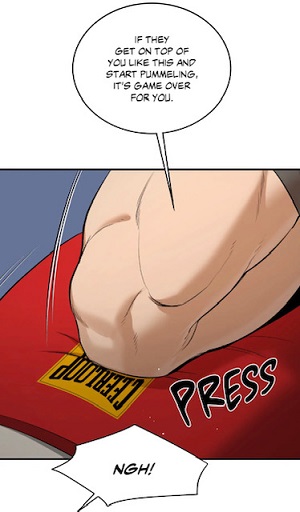 (chapter 26), was happy to demonstrate his talents and kept smiling all the time:
  (chapter 26) For the first time, fighting had become a source of joy for the athlete. He felt not only good, but confident about his skills, as a teacher and fighter. In both instances, this moment serves as a turning point, pushing each character to redefine their role and perception of self.
 (chapter 25) Kim Dan was interested to know more about this sport for the protagonist’s sake, whereas Potato was jealous of Kim Dan’s closeness to the star. How did the celebrity react, when he heard the doctor’s desire to learn fighting moves? He was totally pleased, hence he lowered himself smiling
 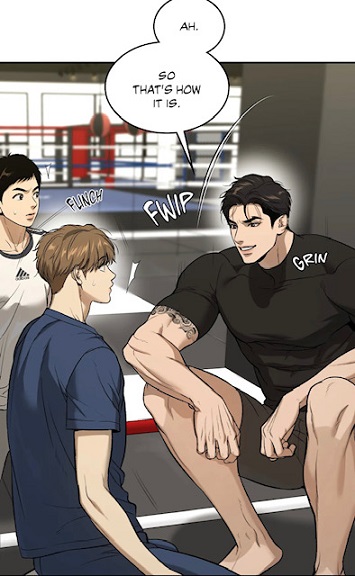 (chapter 25) before returning to the ring:
 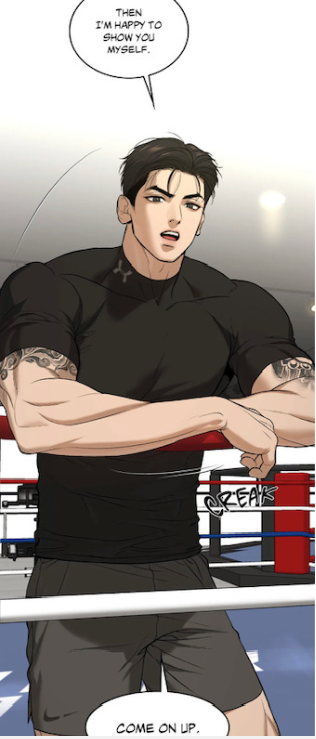 (chapter 25). Notice that he employed the word “happy” here. This shows that the athlete liked to be a teacher and mentor to a novice.
  (chapter 26), reinforcing his belief that his worth lies in service, and he requests an opportunity for someone else. The physical challenge that followed, in which the champion invited him into the ring, was meant to teach Kim Dan to overcome fear, though the original idea was to learn jujitsu moves for the champion’s sake. As you can see, there was a switch in the intentions for the “lesson”. This moment also highlights Joo Jaekyung’s approach to the body—power, physicality, and dominance, which will later be subverted in episode 62 when emotional resilience becomes the true test of strength.
  (chapter 26) Though the doctor was initially immobile and passive, the experience became a significant lesson: fear was something that could be faced and overcome. From that moment on, he became more proactive
 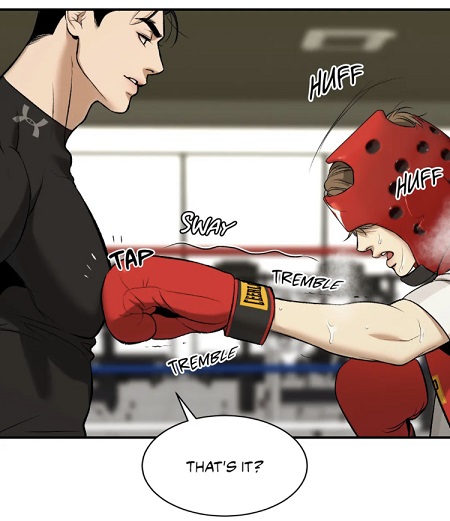 (chapter 26) This is a moment of physical initiation for Kim Dan, teaching him resilience. Nonetheless, he was still fighting for someone else, still locked in his pattern of self-neglect.
 (chapter 62), although he has yet to fully recognize the reason behind his behavior. He is now imitating the doctor, as if his body is there to provide assistance and care for others. The people of the small town rely on Joo Jaekyung, placing him in an unfamiliar caretaker position.
  (chapter 62) This shift highlights a deeper irony: while Joo Jaekyung has always prided himself on his physical strength, he is now being tested in a way that cannot be resolved with fists.
 (chapter 34), wealth
  (chapter 55), not for its attractiveness or desirability. His reputation in bed has been poor;
 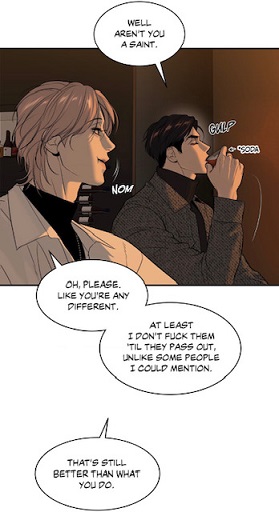 (chapter 33), he was never seen as a man with sex appeal or sensuality, but merely as a fighter who could endure. Sex was another form of exertion, a display of control and dominance rather than a pursuit of pleasure.
  (chapter 13), but for his own pleasure. The defy incites the fighter to make a conscious choice contrary to the day, when both main leads took the day off:
  (chapter 27)
  (chapter 29) On the other hand, this suggestion challenges Joo Jaekyung’s previous experiences, forcing him to realize that he has never had to woo or seduce anyone before. This was the only time, where Jinx-philes could see him using his sex-appeal-
  (chapter 34) He got confident, because he had played a trick on his room mate. His physicality has always been his defining trait, but for the first time, he is being confronted with the question: does he have more to offer beyond brute strength and money? If he wants to prove his worth, he must do more than rely on his body—he must reveal his true self.
 (chapter 62)
 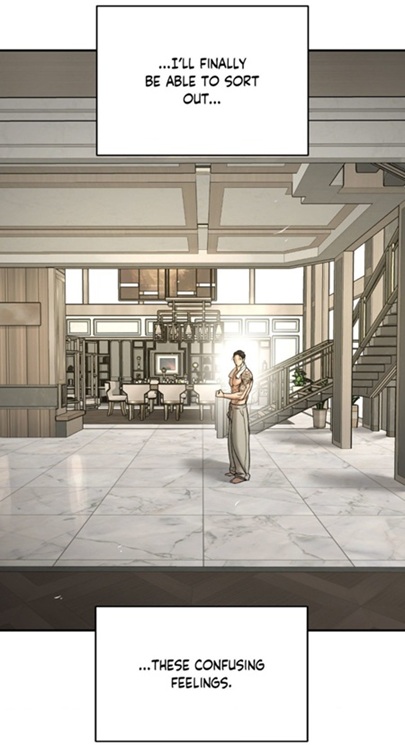 (chapter 61) Why does he want him to return to Seoul? Is he really looking for a physical therapist or something else? It is clear that he is longing for companionship.
 (chapter 26), which represents the MMA fighter’s world, the wolf is now the one penetrating Kim Dan’s world: the treatment table!
  (chapter 62)
  (chapter 62) The latter was brought to the hostel. I know, here I am more speculating about the next episode. However, keep in mind that the hamster brought up the past to his destined partner.
 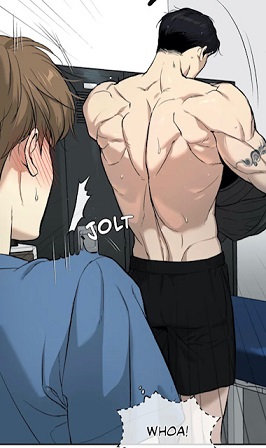 (chapter 1) The blue treatment table is the witness and proof that the champion never saw Kim Dan as a sex doll. So far, they never had sex on it, a sign that he respected not only Kim Dan as PT, but also the profession as such
  (chapter 27) Here, the champion suggested to have sex at home, and not on the table. On the other hand, Jinx-philes will certainly recall this scene where the doctor begged on his knees for money:
 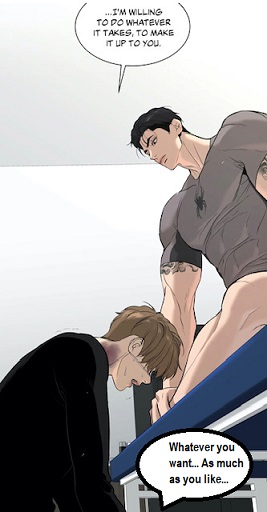 (chapter 11) That’s how I discovered a strong connection between this item and sexuality. First, the one fantasying about the champion’s body on the treatment table had been Kim Dan
  (chapter 1) The massage must have felt like caresses to Joo Jaekyung. So when the main lead made this mistake
  (chapter 1) It is no coincidence that Park Namwook’s words have a sexual connotation reviving my theory that a doctor might have made sexual advances there. Here, I feel the need to add another observation which came to my mind, the moment I focused on the blue treatment table.
  (chapter 62) According to my interpretation, Joo Jaekyung had interpreted the mistake for some advances and keep in mind that the fighter felt also attracted to the physical therapist.
  (chapter 56) In other words, he projected his own desires onto the “hamster”. But since he was still with the green-haired guy, he needed to mask his true intention:
  (chapter 1) -thus he asked for a treatment. He was about to drop the man.
 (chapter 1) However, contrary to their first encounter, the champion would be talking to his neighbor. While the doctor is thinking, he will relive his first night in the penthouse, the other might reproduce his first treatment, though it should be certainly combined with the intercourse on the couch: .
  (chapter 29)
  (chapter 57) He should have sent her to the hospital and ensure that she received treatment. Notably, after the sea incident, Joo Jaekyung took Kim Dan to the hospital, but the latter rejected the champion’s advice and help.
  (chapter 62), without fun, rest, or emotional fulfillment. He has no hobby, no personal joy, and no real human connections. He is suffering from depression. Interestingly, the sense of balance is directly tied to the ear, which aligns with his emotional “deafness”—his lack of true contact with others.
  (chapter 61) His mind and heart are no longer listening; he is trapped in his own darkness. His dizziness and fainting spells mirror this imbalance, making his physical weakness a reflection of his emotional detachment.
 (chapter 54) and drinking habits.
 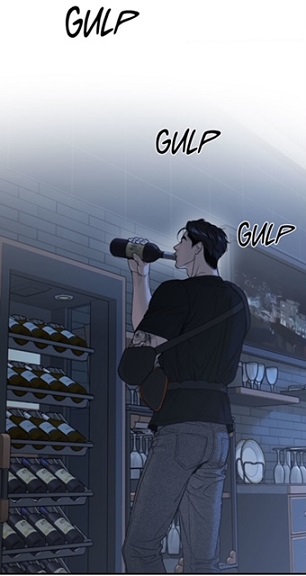 (chapter 54) His entire life has been dedicated to work and physical prowess, leaving no space for genuine happiness or emotional well-being. His drinking is not just an escape—it is a manifestation of his need to silence his thoughts and emotions. In episode 44, when Kim Dan expressed admiration for his body, he patted his head
 (chapter 44), he caressed his cheeks
  (chapter 44) and kissed his ear
  (chapter 44) —a moment that could be seen as an attempt to restore balance, to bring warmth to the parts of Joo Jaekyung that had been ignored emotionally. However, during that night, Joo Jaekyung was drunk, further disconnecting himself from reality.
 (chapter 54) His headaches intensified, and he isolated himself, mirroring Kim Dan’s earlier state of detachment. His drinking hadn’t just become a habit—it was mourning, a sign of his internal loss. It was, as if deep down he wanted to forget this intoxicating feeling of happiness from that night in the penthouse. The departure of Kim Dan caused both of them to lose their already fragile balance, reinforcing the idea that their dynamic, as unhealthy as it had been, was stabilizing them in ways they never acknowledged.
 (chapter 56) It was, as if the champion no longer needed to see his former room mate. Note that he even waited for the evening before approaching doc Dan again.
  (chapter 60), he immediately went to the town. This contradiction reveals that mere visual presence was never sufficient—what he truly longed for was something deeper. And as soon as he saw him, he felt much better,
  (chapter 61) hence he could remove his splint. That’s how powerful drug Kim Dan is. 😉
 (chapter 61) While undergoing treatment, he saw Kim Dan every day, yet he remained unsatisfied due to the silent treatment. It was not enough to simply observe him; what Joo Jaekyung truly craved was conversation, interaction, and recognition. This explains his decision to move into the town, settling near Kim Dan as his neighbor.
  (chapter 61) It also sheds light on why, during their latest encounter, he chose to turn his back on Kim Dan—he no longer needed to ‘see his face,’ he wanted acknowledgment and his return to the penthouse. He has not grasped it yet, but he already views the protagonist as his family and home.
  (chapter 46) He is full of prejudices and not willing to listen to his boss. Therefore Joo Jaekyung doesn’t know that in order to become close, conversations must never be one-sided and have to be free from prejudices and assumptions. Joo Jaekyung needs to listen and show an interest in his partner. And now, observe the communication between the two main leads in the room.
  (chapter 62) he had previously ignored—he is undeniably attracted to Kim Dan’s body, particularly his nipples, which have repeatedly
  (chapter 27) triggered strong reactions in him.
  (chapter 29) That’s the moment he expressed his interest in the doctor’s nipples for the first time. This even became a habit:
  (chapter 44). And what did the doctor whisper during that magical night?
  (chapter 44), though in his mind, he desires to have a bad experience so that he can erase him from his mind. Finally, what do the nipples symbolize? Motherhood and nurturing.
  (chapter 57)
  (chapter 26) Moreover, it was thanks to a trick that Kim Dan won:
 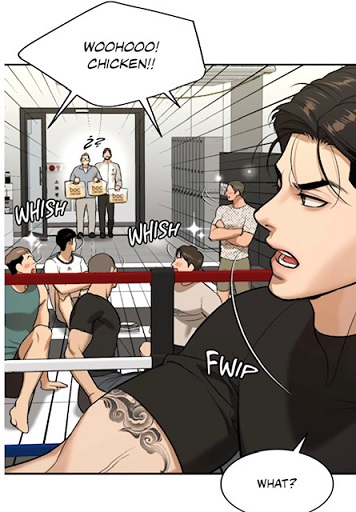 (chapter 26)
  (chapter 26) He felt superior and strong, whereas his rival was weak. Moreover, he imagined that Kim Dan would ask for money for the bet.
  (chapter 26) That’s why I believe that in the next episode, the roles should be switched. Kim Dan always saw himself morally superior and caring to the star, but in truth, his care was rather superficial, for he also showed no interest in the champion’s past and family. Thus I come to the following deduction that episode 62 suggests that arguing is not about losing or winning, but about listening. The champion has unknowingly become a caretaker, not only to the people of the town but, potentially, to Kim Dan himself. The question remains whether he will recognize that Kim Dan’s provocation is not just another fight lost (cutting off ties) —it is a seductive challenge to redefine his understanding of worth and their relationship. What are they to each other? A client and a prostitute? A fighter and a doctor? Or simply two men who are longing for the same: belonging and love. Nevertheless, due to their past, they are unable to detect the true source of their misery: their lack of reflection, own bias and anxieties.

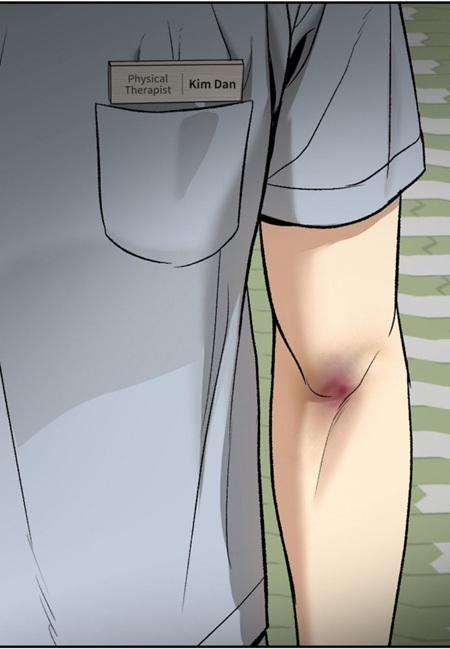 (Chapter 61) However, this moment is not isolated—it reflects patterns in his personality that have appeared throughout the series.
  (Chapter 11)
  (chapter 18) This essay delves into the significance of Kim Dan’s physical and emotional bruises, examining how they symbolize his suffering, internal conflict and transformation. I will examine Kim Dan’s conflicted emotions surrounding gratitude and debt, contrasting his interactions with Joo Jaekyung and his grandmother, Shin Okja. Additionally, I will explore how Kim Dan’s conditioned identity as a caregiver drives his choices, even in his current living situation with the landlord, where he unconsciously replicates past dynamics. Ultimately, I will elaborate how Kim Dan’s newfound awareness could reshape his identity and relationships moving forward.
 (Chapter 61) His unexpected reaction catches Kim Dan off guard, further emphasizing how disconnected the doctor has become from his own well-being. However, contrary to the past
  (chapter 11), Kim Dan is truly responsible for the contusion. He caused the injury by removing the needle from the drip.
  (chapter 60) By taking this action, he absolved Joo Jaekyung of any responsibility for the injury, but this is merely a superficial conclusion.
 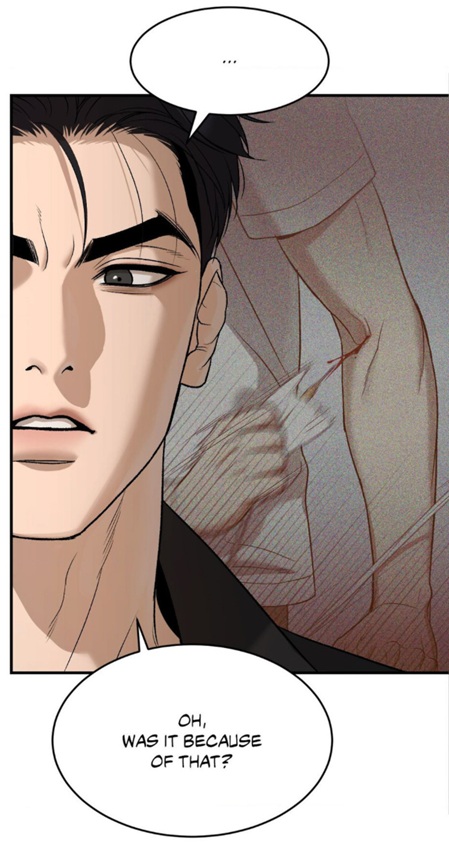 (Chapter 61) On the hand the circumstances surrounding the bruise, where Kim Dan removed the needle on his own, provide insight into his psyche. The deeper cause of the bruise lies in Kim Dan’s declining health, which is intrinsically connected to his malnutrition and the neglect he faces from those around him. It is important to recall that Joo Jaekyung was explicitly informed that Kim Dan needed rest
 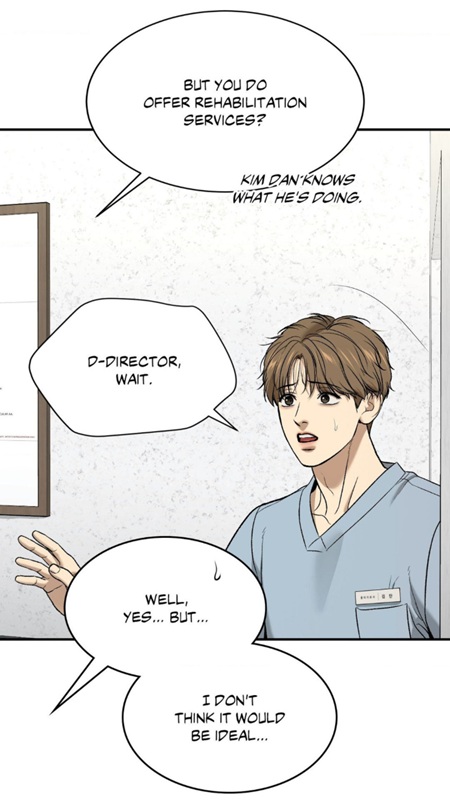 (chapter 61), he ultimately had no choice but to comply, as his order came from the hospice director.
  (Chapter 61) And why did the director override Kim Dan’s need for rest? Money and free PR. Joo Jaekyung’s influence secured the director’s approval, disregarding the doctor’s well-being in favor of business interests. This conversation at the director’s office makes one thing clear: words hold no power against profit. An d that realization led me to another connection—every one of Kim Dan’s bruises is linked to exploitation, whether by authority, obligation, or financial influence.


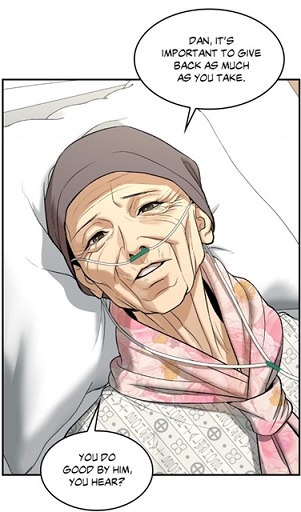 (Chapter 41) It is clear that she was inciting him to work harder than before. This displays that Kim Dan was not allowed to rest. During this encounter, she didn’t ask him about his well-being either. And what is the link between these 3 episodes? The grandmother and her poverty. The latter was responsible for the loan.
  (chapter 56) Kim Dan has only visited the hospital once, and this was solely due to Joo Jaekyung’s intervention. The latter needed medical attention himself
  (chapter 18) and took Kim Dan along, ensuring he was seen as an emergency patient. However, this visit was brief and lacked any comprehensive medical examination—no blood samples were taken, and his underlying health concerns remained undiagnosed. This omission further underscores the neglect Kim Dan has suffered, as even in a medical setting, his long-term health issues were overlooked.
 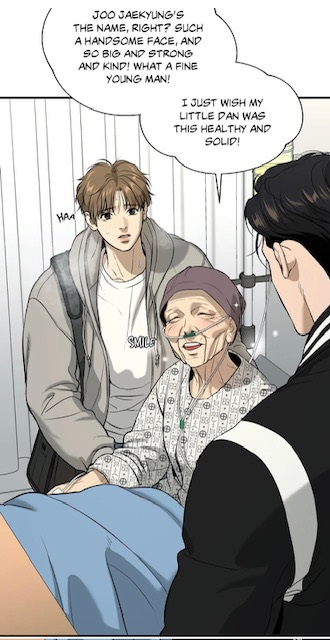 (chapter 21) He had never been healthy and strong. Moreover, when he joined them, at no moment the senior asked if he had gone to the doctor, though he had been sick before.
  (chapter 57). In the last case, she will downplay the severity of his condition, insisting that he has always been stubborn and independent. She could even mention her conversation, when she tried to convince Kim Dan to return to Seoul, but the latter refused to listen to her.
 (chapter 5), or his general reluctance to ask for help. He rejected the athlete’s help and concern.
 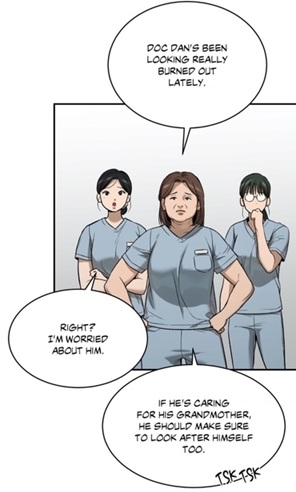 (chapter 57). She blamed the main lead, because she imagined that Shin Okja would worry about him. However, it becomes clear that the halmoni is not worried about her grandson at all. She is acting like a fan in front of the athlete.
  (chapter 61) He only remained at the door. However, observe that there was a cut between this image
 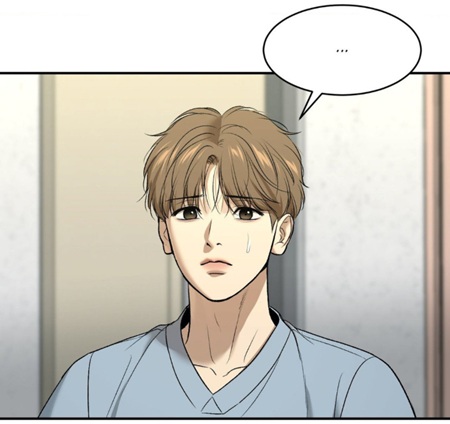 (chapter 61) and the conversation between the main couple in front of the hospice.
  (chapter 61) So he could have made his presence known to his relative before asking Joo Jaekyung to follow him because of his treatment. To conclude, I believe that she had the time and occasion to see her grandchild and his bruise.
 (chapter 13) He is the only doctor who has ever examined the protagonist so closely and even paid attention to his fingernails!
  (chapter 13) At the same time, the chingu from the club was the first one pointing out that his wounds were never treated!! Furthermore, I realized that the doctor’s lies from episode 11
 (chapter 13) The latter was the cause for the severe exhaustion. However, like mentioned above, the doctor is not blameless either, because he never questioned why his wounds on the hand were bleeding again.
  (chapter 43) He thought, it was related to the massage, yet the reality was that this incident showed that he had coagulation issues. To conclude, all the bruises could have always been noticed by people due to their locations (eyes, hands, arm)!
  (chapter 61) and his relationship with Joo Jaekyung.
  (chapter 56) His arrival stands for novelty and a breath of fresh air at the institution. However, with this change, the female staff is forgetting their original duty: they need to pay attention to their colleagues. They are behaving like the grandmother
 (chapter 61): fangirling over the handsome guys visiting their little town. That’s why Mingwa drew flowers in the last two images. No wonder why no one around Kim Dan is observing the bruise and his deteriorating condition. Moreover, since the physical therapist has a relative at the hospice, the staff is envisioning that Shin Okja is doing “her work”, she is paying attention to Kim Dan’s mental and physical conditions. On the other hand, there is no doubt that the grandmother has already delegated her own responsibility onto others, Kim Dan and the hospice. It is a medical institution, therefore they should pay attention to his working conditions. In other words, since no one feels responsible for the protagonist’s health, no one is worried about Kim Dan at all. At the end of episode 61, he is even so pale and breathless
 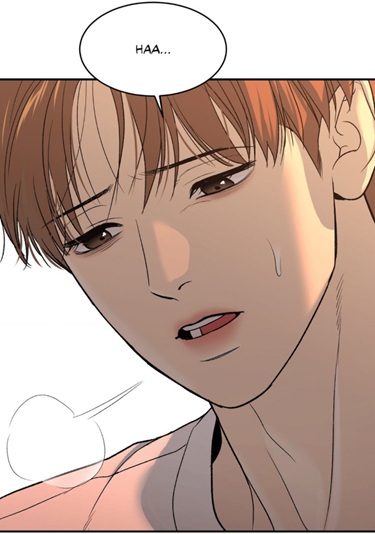 (chapter 61) that I am anticipating a terrible incident leading to a rude awakening for everyone.
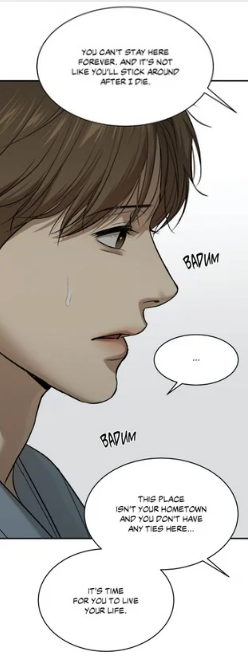 (chapter 57) By declaring that Kim Dan is now responsible for his own life, she emotionally detaches herself, absolving herself of any accountability for his deteriorating condition. However, she is forgetting
  (chapter 56) that she is still relying on him, as he is the one paying her hospice bills. Besides, she still doesn’t know that the loan is no longer existent. It was, as if he had to clean up her mess before her death. At no moment, she asks about the loan or the doctor’s future. She is not thinking about his future at all.
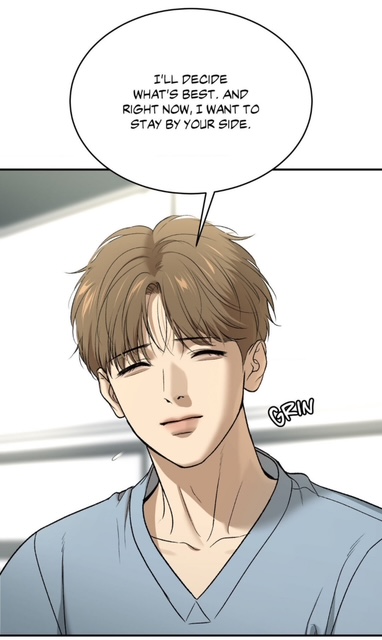 (chapter 57) — reinforces her conviction that she has fulfilled her role. In her mind, his rejection of her advice places the burden of care entirely on him, allowing her to dismiss any further involvement. This emotional withdrawal directly connects to the symbolism of the bruise:
  (chapter 18) In episode 18, when Joo Jaekyung confronts Kim Dan about the loan, the doctor has a bruise on his left eye, symbolizing his entrapment and helplessness. This earlier injury highlights how Kim Dan has been conditioned to view himself as responsible for burdens that are not his own, perpetuating a cycle of sacrifice and self-neglect. And a new bruise appeared just after the athlete reminded the physical therapist of his past promise:
  (chapter 61) His grandmother’s disregard for his well-being amplifies the injustice of this situation; she allowed him to shoulder the debt despite knowing it was never truly his to bear. The bruise becomes a recurring motif, a visual representation of how others have imposed their responsibilities on Kim Dan, leaving him physically and emotionally scarred.
  (chapter 60). The juxtaposition of the vibrant environment with Kim Dan’s deteriorating health underscores the neglect he faces. The hospice is meant to be a sanctuary, yet it becomes a space where Kim Dan is further burdened by the champion and his grandmother’s expectations
 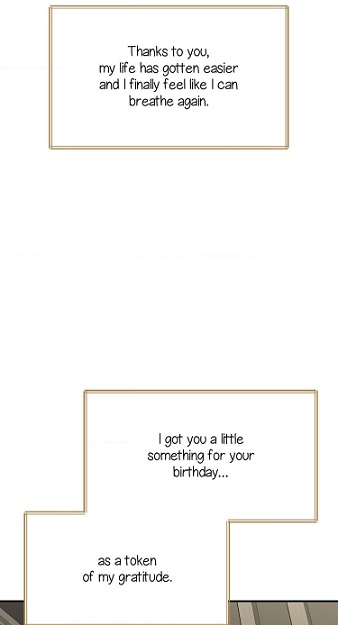 (chapter 55) This line “I finally feel like I can breathe again”, written by Kim Dan, reveals a subconscious acknowledgment that his relationship with the champion represents a breath of fresh air, a chance to escape the suffocating expectations and burdens he has carried for so long. The bruise, a physical manifestation of his struggle, signals the breaking point of his role as a selfless caregiver. It challenges the illusion of invulnerability that Kim Dan has maintained and forces those around him to confront his vulnerability.
 (chapter 60) The beach, with its open and untamed expanse, symbolizes freedom and a return to the self. It foreshadows that Kim Dan’s true journey toward healing will require him to step outside the roles and confines imposed upon him, finding solace not in what is expected but in what feels authentic and liberating.
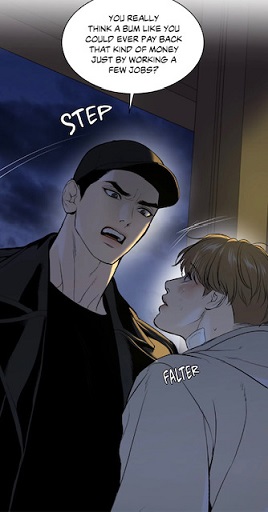 (chapter 18) His grandmother, Shin Okja, played a significant role in this mindset by fostering the illusion that hard work and sacrifice would erase the debts. However, as revealed in episode 18, this was a lie. Shin Okja made the choice to take on the loan and not to seek help
  (chapter 18) —or, more accurately, the lack thereof. The champion’s actions were motivated by a desire to help
  (chapter 18), hence the star was waiting for a smile from Kim Dan. Yet the latter perceived it as meddling. His immediate response
  (chapter 53), leaving a note when he moved out that promises to settle the debt. However, by Episode 61, Kim Dan is no longer mentioning the debt, signaling a shift in his priorities and a possible breaking point in his adherence to his grandmother’s expectations.
  (chapter 60) Hence his arm got bruised. The contusion was a reminder that something had happened during that night, but Kim Dan chose to ignore the incident. He never questioned why he was on the beach, he acted, as if Joo JAekyung had lied.
  (chapter 60)
 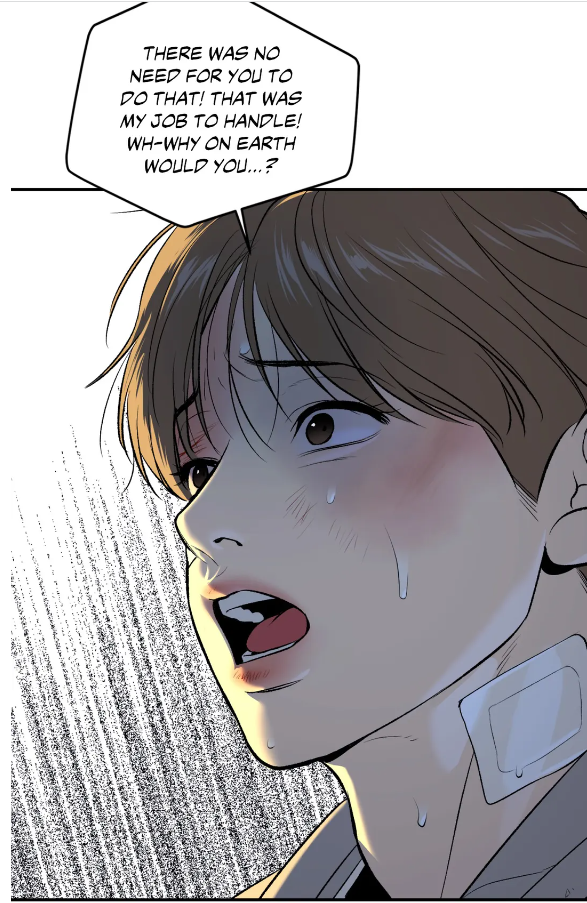 (chapter 18) Deep down, Kim Dan knows that the debt was never truly his responsibility, making it difficult for him to view the champion’s actions as a genuine act of kindness. This inner conflict is compounded by his suicidal disposition, which renders the concept of repaying the debt meaningless.
  (chapter 59) He worked so hard, was even beaten, but he could never voice his torment.
 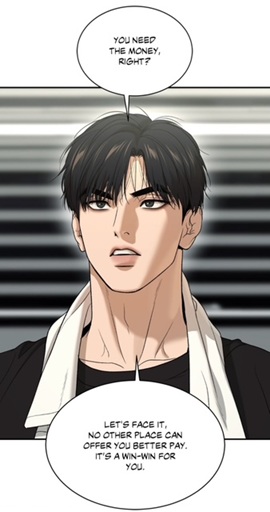 (chapter 60)
  (chapter 11) and even uses his own words against him:
  (chapter 22) The loan was the result of his grandmother’s decision. He never helped him, rather his grandmother.
  (chapter 11) However, he never explained his circumstances to the generous athlete. By keeping him in the dark, he reinforced his negative disposition about the doctor. And chapter 61 exposes this reality. His suffering was the result of his own decision.
 (chapter 61) Do you recognize the room? That was the doctor’s
  (chapter 19)
  (chapter 53) His decision to allow Joo Jaekyung into his bedroom in episode 61 demonstrates that he consented to the relationship, even if begrudgingly.
 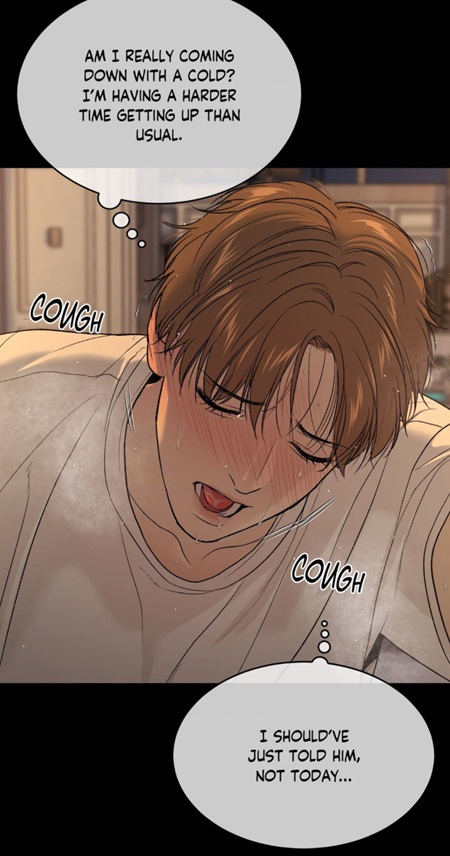 (chapter 61) However, his reaction afterward (regret) suggests that he struggles to take ownership of his choices. The fact that he recalled this sex scene in the restroom divulges a certain resent towards the athlete. The latter abandoned him right after their interaction. Hence I come to the following deduction. In reality, he is projecting his frustrations onto Joo Jaekyung, masking his true feelings about his grandmother, who is the root cause of his conditioned self-sacrifice. And this observation brings to my next remark. People wondered when this intercourse took place. One might think that this took place rather early in the story because of the way Joo Jaekyung acted. He didn’t remove his pants
 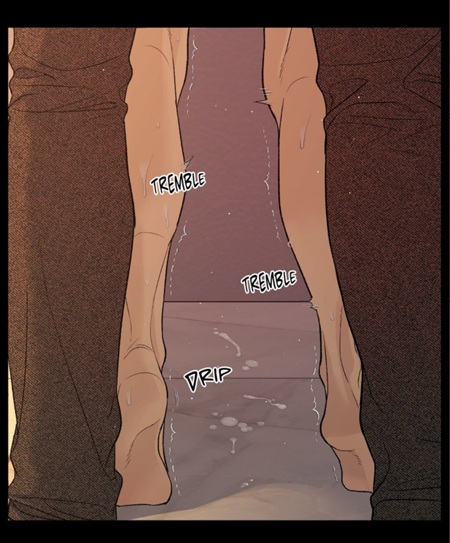 (chapter 61) and acted like in episode 6.
  (chapter 6) or 8
  (chapter 8) where he would abandon the protagonist right after the climax and not care about his partner’s conditions and feelings:
 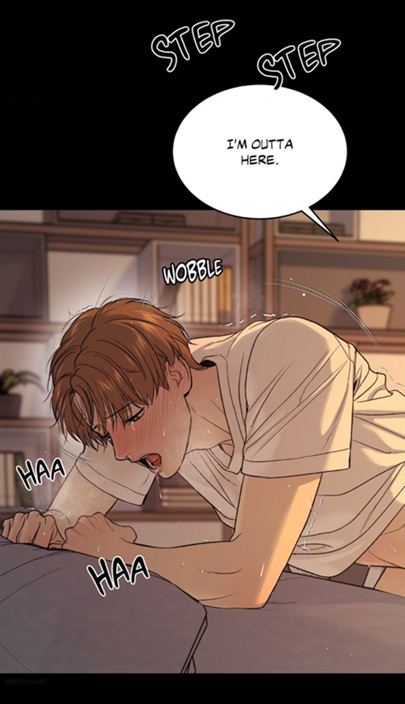 (chapter 61) I might be wrong, but for me, it took place much later in the story, around the time the athlete was about to face Alfredo. Why? First notice that they had sex in the doctor’s bedroom. This means that Kim Dan was already living in the penthouse. The words from the champion implied that he would return to his own bedroom, where the doctor’s thoughts implied that he was standing close to his bed. However, so far, they only had sex in the champion’s bedroom, when it was the evening before the match:
 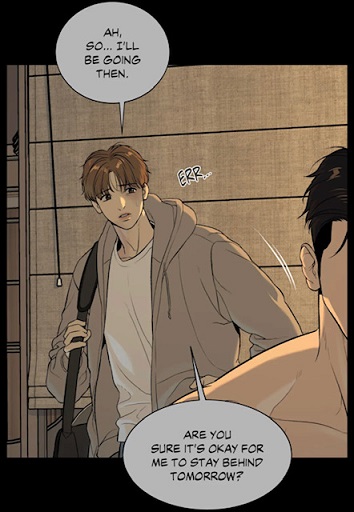 (chapter 13) Since the doctor mentioned that a match was right around the corner
  (chapter 61) It leaves us four possibilities. Randy Booker, Dominic Hill, Alfredo
  (chapter 47) and Baek Junmin. However, for the intercourse took place in the doctor’s bedroom (he wished to be carried to his own bed)
  (chapter 36), for they had sex every day. However, in episode 53, we discover their night before the match against the Shotgun
 (chapter 53) So this scene can only have taken place in chapter 47, when the match with Angelo got canceled and Kim Dan had been confronted with the terrible news about his terminally ill grandmother.
  (chapter 47) In the previous part of this essay, my avid readers could see the strong parallels between 61 and 47. But there exists another reason why I am inclining to think that the sex scene took place later in the story. It is because during that “magical night” (44), Kim Dan learned the notion of “consent”.
 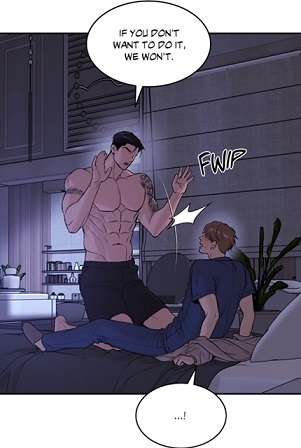 (chapter 44) During that blue hour, Kim Dan discovered that he could say no! And notice that in his memory, he clearly thought that he could have rejected the athlete’s advances.
  (chapter 46) He should mistrust the members from the gym and keep his distance from people. So during that time, Joo Jaekyung did follow his hyung’s advice
  (chapter 47), yet I can’t imagine that this man could become abstinent like in episode 19. Hence at some point, he must have felt the urge to possess Kim Dan, a mixture of fear and dominance. He imagined that way that he could impose his will onto the doctor and control his “loyalty”. With this submission, he would force the doctor to remain by his side. But naturally, this sex as “power play” could increase the gap between the main leads.
 (chapter 53) doc Dan was copying the champion’s behavior from episode 61. Right after the sex, he would leave the bed and return to his bedroom. How did Joo Jaekyung recall this night?
  (chapter 61) The darkness around the eyes is a metaphor for his resent and anger. And the moment you contrast the two memories (53 and 61), you can detect the hypocrisy of the two main leads. They only recall scenes where they were hurt and felt betrayed. However, in reality, they were both victims and perpetrators, because none of them chose to open up and talk to each other. Why? It is because both chose to listen to their “guardian” and their “favor”. Like mentioned before, in a quarrel, no one is right and wrong. The purpose of an argument is to listen to the counterpart and view incidents from their perspective. Finally, the physical therapist’s recollection serves as an important evidence that he had never been powerless and helpless. He could have refused all the time because their deal was never official.He could have used the contract as a shield. But the best evidence of Kim Dan’s power is this rejection:
  (chapter 61) I had already pointed out the increasing resistance and resilience from Kim Dan in episode 60:
 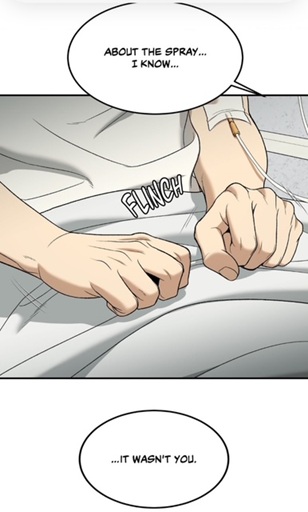 (chapter 61) My prediction came true. In the past, he could have denied the existence of the deal, Joo Jaekyung was free to seek another physical therapist. He never realized that he had some leverage. Yet he still followed the athlete’s requests. He saw himself bound by obligations. However, this was just an illusion. Hence in episode 61, we see him legitimating his consent that there was an imminent fight.
  (chapter 40) He is paid to receive bruises, to push his body past its limits
 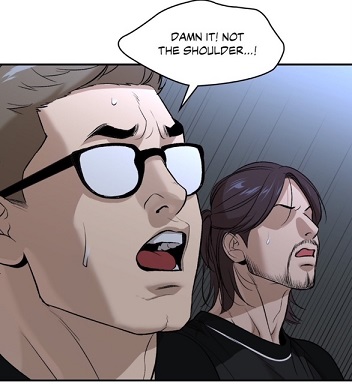 (chapter 50), to endure pain while the public watches and profits are made. His suffering is entertainment, a spectacle that fuels the business of MMA. Though he is a champion, he is still a commodity, expected to perform regardless of his condition.
  (chapter 61) He understands, better than anyone, what it means to be physically used for the sake of others, yet he remains blind to the fact that he has placed Kim Dan in the same position. While one has no file about his health condition, the other has many files, but they are not studied, because this would push the manager to question his decision and even ruin the business:
 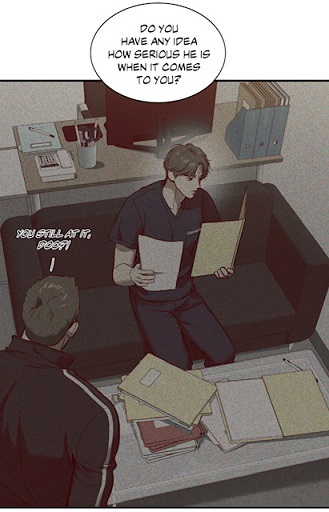 (chapter 17) I doubt that Park Namwook studied them, and notice that the recently hired PT didn’t ask for the champion’s files first:
  (chapter 54) Thus I deduce that the champion’s files are in reality a subterfuge. They give the impression that the doctors and Park Namwook truly care for his well-being, but it is not correct. They are only interested in his body because of wealth and reputation. But let’s return our attention to episode 61 and the champion’s attitude towards Kim Dan.
 (chapter 57) is another manifestation of his conditioned role as a caregiver. By living with an older man, he creates the illusion of a familial bond, mirroring the dynamic he shared with his grandmother. This decision highlights his struggle to break free from the identity imposed on him—one defined by servitude and selflessness. He assumes that he should take care of the landlord, offering to cook and expressing guilt for not fulfilling this perceived duty. Yet, the landlord subtly challenges this narrative. By inviting Kim Dan to eat breakfast
 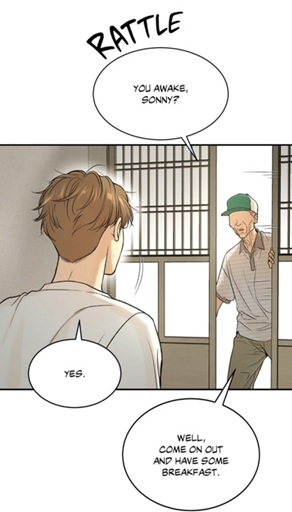 (chapter 57) and dismissing his apologies, the landlord treats him as an equal rather than a caretaker. This dynamic forces Kim Dan to confront his false perception of himself.
 (chapter 57) Despite this, Kim Dan rejects the advice, demonstrating his resistance to being cared for. This moment underscores his internal conflict—he craves independence yet clings to the role of the selfless provider. The landlord’s actions expose the fallacy of Kim Dan’s identity, revealing that his caregiving is not always necessary or effective.
 (chapter 61) is indicating the increasing resent and anger towards the star. Joo Jaekyung is no longer seen as a celebrity and idol, but as a inconsiderate man. This transformation is subtle but meaningful, as it reflects his burgeoning awareness of his own worth and the unjust treatment he has endured. For the first time, Kim Dan acknowledges himself as pitiful
 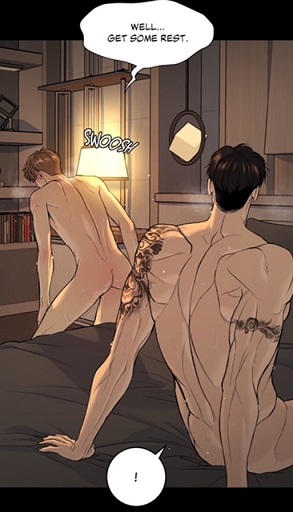 (chapter 53)
 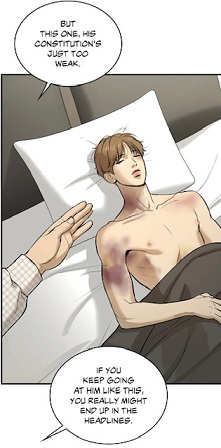 (chapter 13) and the fragility of Kim Dan’s existence. For Kim Dan, it challenges his self-perception as an indestructible caregiver. This realization could lead him to an inevitable conclusion: his own needs and well-being are just as important as those of others.
 (Chapter 15) and the life-saving kiss on the beach
  (Episode 60). Both moments carry significant emotional weight but reflect different facets of their dynamic, from selfishness to selflessness, secrecy to openness, and miscommunication to recognition. The setting and circumstances surrounding these kisses not only highlight the characters’ growth but also underscore the unresolved struggles they face.
 (chapter 14), only snapping back to reality when he felt Kim Dan’s body trembling.
  (chapter 14) This moment of realization, coupled with the doctor’s tears and plea
  (chapter 14), served as the trigger for Joo Jaekyung to recall Cheolmin’s recommendation
  (chapter 14) of using foreplay and gentler methods, such as a kiss. While the kiss reflected care in the moment
  (chapter 14), selfish motives lingered in the shadows, as Joo Jaekyung sought to prevent causing visible harm that could lead to questions or even a scandal. It was, as if he wanted to silence his partner. Moreover, this decision was influenced by external suggestions, particularly from his friend, and not entirely by his own intentions. It was a calculated action to prevent immediate harm but lacked genuine emotional depth.
 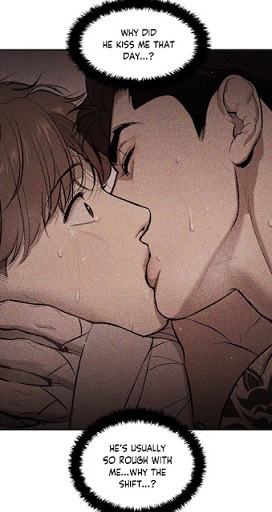 (chapter 16) Moreover, he never wondered why Joo Jaekyung had asked for sex in the locker room, which represented a change in his behavior. If he had done it before, then he would have forced the physical therapist to travel with him to Busan.
  (chapter 13) As you can see, through the comparison with the kiss on the beach, I realized the doctor’s passivity and lack of critical thinking in season 1. He never asked why the athlete was so rough during sex. He took this for a normality. His attitude exposed the doctor’s biased perception of his boss: a spoiled and rough man obsessed with sex. I would even add that the kiss had a positive effect on the protagonist
  (chapter 15), because for the first time, Kim Dan made a request. With his remark, he implied that the kiss was strongly associated with emotions. However, exactly like Joo Jaekyung pointed out
  (chapter 15), a confined space symbolizing Joo Jaekyung’s need to keep his relationships private. Picking up partners at a VIP club
 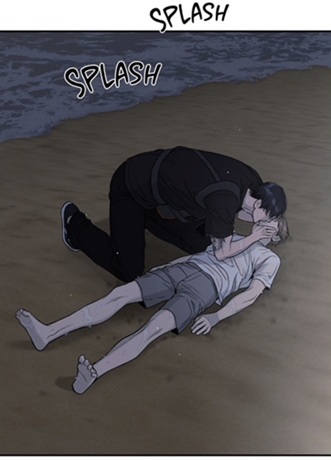 (chapter 60) Moreover, in the past, the locker room
  (chapter 14) was always filled with people surrounding the champion. However, once Kim Dan entered his life, this dynamic began to change. In Episode 14, Joo Jaekyung asked everyone to leave the locker room,
  (chapter 14) even excluding Park Namwook, who was even seen before stationed outside the bathroom door,
  (chapter 14) signaling a gradual exclusion of others from his private life and emotions. By Episode 15, Joo Jaekyung explicitly sent away his manager to have a private conversation with Kim Dan.
  (chapter 14) This shift highlights the increasing importance of Kim Dan in Joo Jaekyung’s personal sphere. Interestingly, this progression is contrasted by Episode 49, where Joo Jaekyung deliberately ensured
  (chapter 49) he was not left alone with Kim Dan. This means that this place was no longer the synonym for privacy and secret. This reflects why director Choi could intrude with his minions. Following the incident with the switched spray, Kim Dan was left behind
 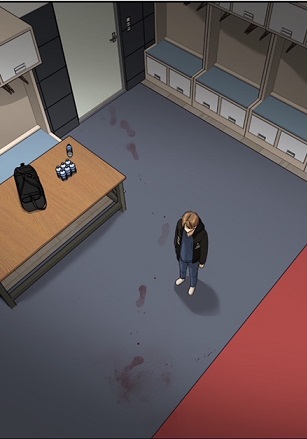 (chapter 51), which could only increase the physical therapist’s feelings that he didn’t belong to Team Black. He was not part of that “family”. And this coincides with the moment where Kim Dan cries for the last time:
 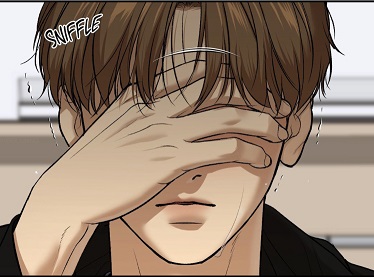 (chapter 51) From that moment on, the main lead won’t show his vulnerability and pain to others. This gesture announces the return of his “blue friend”, the depression.
  (chapter 47) And now, you are wondering how this is relevant to the scene on the beach. Joo Jaekyung got shocked and scared, but he didn’t cry later and it is the same for Kim Dan. Hence the latter could deny his presence on the beach and even ignore the athlete’s words:
  (chapter 60)
 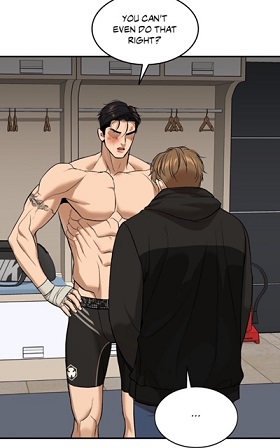 (chapter 51), his lack of loyalty, his greed and obsession for money.
  (chapter 51) Here, they were totally honest to each other:
  (chapter 51) Though the champion was restraining himself, he didn’t realize that his words were like punches to Kim Dan. The latter got to hear what he didn’t know.
 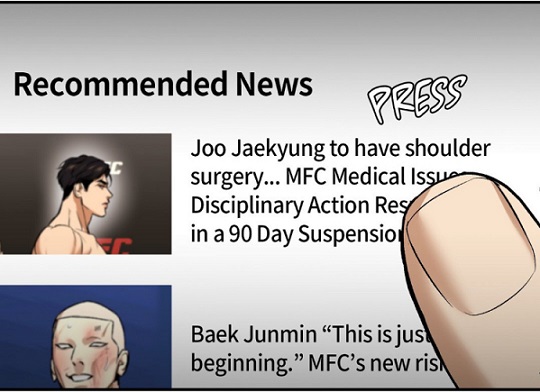 (chapter 52) The conversation in the locker room symbolically announced the champion’s private struggles to the media, as his bad temper was made public shortly after.
  (chapter 15) , representing his need for mental and emotional support, which his team and entourage failed to provide. While the CPR kiss could be dismissed as a rescue, it symbolically represents a step toward Joo Jaekyung revealing his true self. The kiss marks a moment where he unconsciously begins to acknowledge his feelings and his homosexuality, even in a setting where others could witness it.
 (chapter 60) This means that on the beach, Kim Dan could only detect one thing: Joo Jaekyung’s presence. But he didn’t sense his kisses and hear his words. That’s the reason why I come to the conclusion that this scene stands under the sign of “dream and illusion”.
  (chapter 60) Hence he came to reject his “intervention” as a lie and deception. The reality is that Joo Jaekyung does care for him, but he doesn’t know how to show it. He fears attachment. Because of his misjudgement, Kim Dan is not capable to notice the transformation in his former boss.
 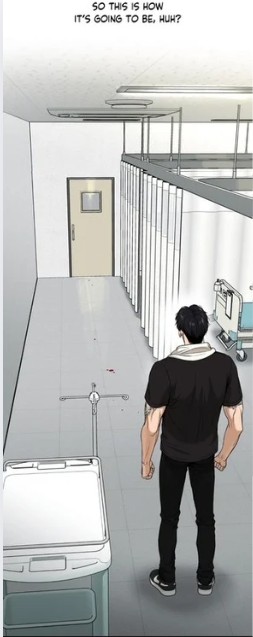 . (chapter 60) The latter has now darker circles, and he lost a lot of weight.
  (chapter 49) His muscles are less pronounced. He is also wasting away.
 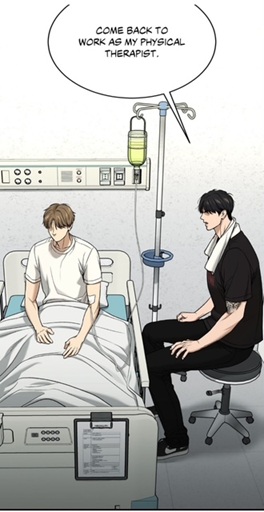 (chapter 60) reinforce control and suppression. In the locker room, the absence of time and space to relax or meditate highlighted the pressures placed on Joo Jaekyung by his manager and coach
  (chapter 49), who believed that physical strength alone would solve his problems. This environment denied him the mental and emotional support he truly needed.
  (chapter 60) , though there is no doubt that the doctor is still in love with him. At the hospice, this mistrust resurfaces. The parallel conversations—in the locker room and the emergency room—highlight the ongoing cycle of miscommunication and emotional disconnect. Both characters, in their own way, lie to themselves and each other. Joo Jaekyung sees Kim Dan through the lens of poverty and greed
  (chapter 60, reducing his identity to his need for money, while Kim Dan rejects his offer, his help and conceals his pain. It is not surprising that Kim Dan left the treatment room.
  (chapter 60) The lies and miscommunication fade in the face of the life-and-death situation. However, this recognition is short-lived, as the events at the hospice reveal Joo Jaekyung’s lingering selfishness
  (chapter 27) and mental well-being.
  further highlight his mental fragility. This fragility contrasts sharply with Joo Jaekyung’s reaction during their interaction at the hospice. When the champion angrily asks,
  , his words reveal frustration and a superficial understanding of the situation. Rather than addressing the underlying psychological distress driving Kim Dan’s actions, Joo Jaekyung perceives them as reckless behavior. His focus remains on immediate danger rather than the deeper cause, showcasing his emotional detachment and inability to grasp the full seriousness of Kim Dan’s mental state. This misinterpretation underscores how Joo Jaekyung is still projecting his own coping mechanisms onto Kim Dan, assuming that sheer willpower and physical strength can resolve emotional struggles. This moment serves as a stark reminder of Joo Jaekyung’s ongoing growth and the gaps in his understanding of Kim Dan’s suffering. His denial of having gone to the beach, despite clear evidence, points to the depth of his trauma.
  (chapter 60) at the end of episode 60 as something negative. How so? It is because Kim Dan never said this:
  (chapter 44)
  (chapter 58) Where are the parents? Who is the man where he is staying? Where did he plan to go after his stay there? The idiom “temporarily” could be perceived as an evidence that the doctor plans to end his life. According to my interpretation, Heesung believed that the landlord was Kim Dan’s grandfather. He was just denying his origins out of shame.
  (chapter 9) The athlete has now every reason to stay there and that’s how he will discover all the doctor’s secrets and misery.
 (chapter 15) kiss represents selfishness, secrecy, and miscommunication, while the beach kiss
