

Please support the authors by reading Manhwas on the official websites. This is where you can read the Manhwa: Jinx But be aware that the Manhwa is a mature Yaoi, which means, it is about homosexuality with explicit scenes. Here is the link of the table of contents about Jinx. Here is the link where you can find the table of contents of analyzed Manhwas. Here are the links, if you are interested in the first work from Mingwa, BJ Alex, and the 2 previous essays about Jinx ️The Clash 💥Of Flesh👄 and Will 🤯 and Prison of Glass 🪟, Key 🔑 Of Time ⏲
It would be great if you could make some donations/sponsoring: Ko-fi.com/bebebisous33 That way, you can support me with “coffee” so that I have the energy to keep examining Manhwas. Besides, I need to cover up the expenses for this blog.

The title Wheels and Waves – part 1 captures the tension between confinement and freedom, vulnerability and strength, appearances and hidden truths. Finally, readers could see the grandmother leaving the hospice for a stroll. The irony is that she was not accompanied by her grandson or a caretaker, but by the champion himself.  (chapter 65) At first glance, the grandmother’s wheelchair and the ocean seem to represent opposing forces, yet they also reveal a complex relationship between power and vulnerability. Thus in this analysis, I will explore how these elements, rather than simply contradicting each other, might actually reflect a struggle to find balance between dependency and independence.
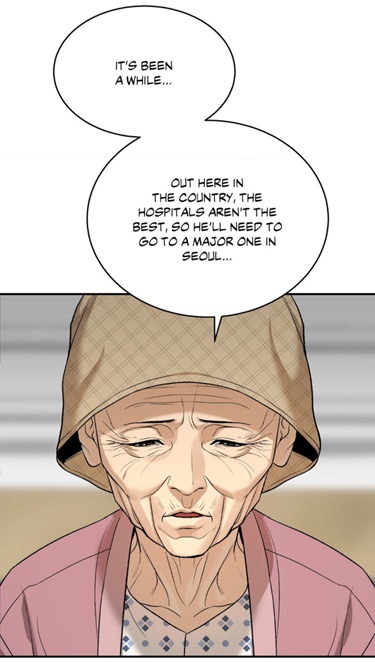
The grandmother’s conversation with Joo Jaekyung by the ocean raises unsettling questions. Her gentle words suggest concern for Kim Dan’s future  (chapter 65), yet her portrayal of him seems unexpectedly harsh—emphasizing his flaws (smoking, drinking).
  (chapter 65) This description stands in opposition to the gumiho’s statement: he was an angel.
 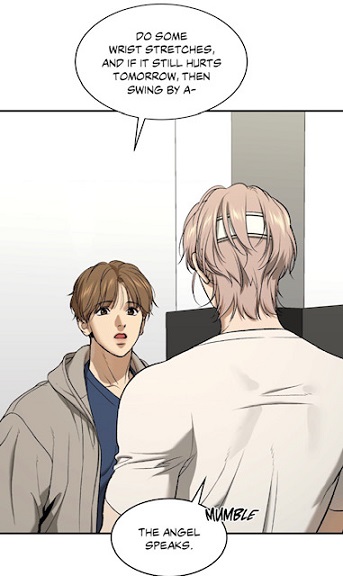 (chapter 30) It is because Kim Dan didn’t ask for money or recognition, this gesture was entirely selfless. Why would the lady badmouth the protagonist, when she requested from the champion that he brings the doctor back to Seoul?
 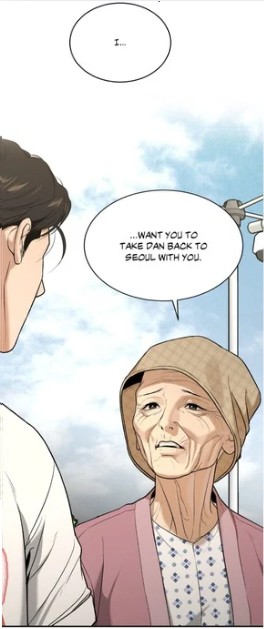 (chapter 65) Is she genuinely worried for him, or is there a hidden motive behind her request to send him back to Seoul? And why does Joo Jaekyung, usually so straightforward, respond with silence and hesitation
 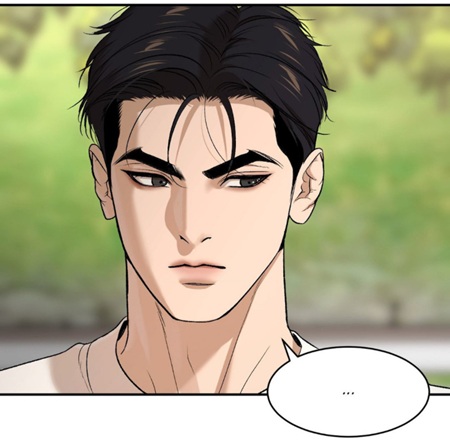 (chapter 65) or with shock?
 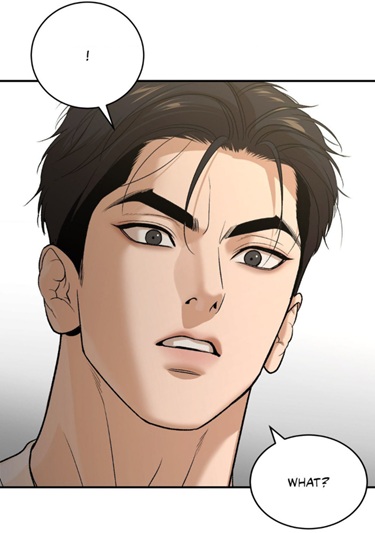 (chapter 65)
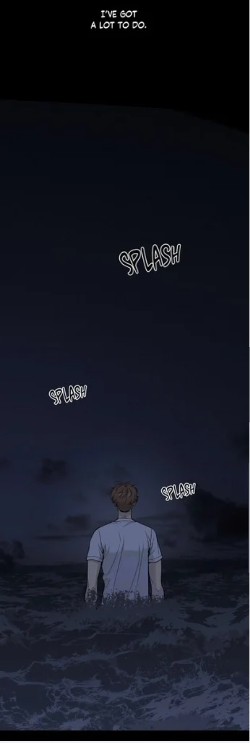
Meanwhile, Kim Dan’s nocturnal walks seem to oppose the grandmother’s immobility. 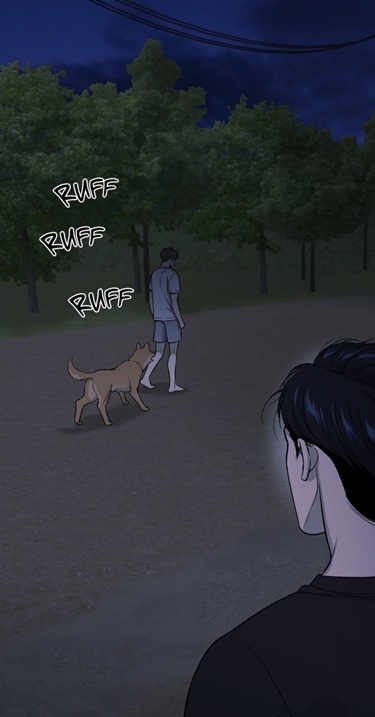 (chapter 65) His bare feet on the cold ground
  (chapter 65) suggest a longing for freedom, yet the direction of his steps remains uncertain. Whereas these walks reveal about his inner struggle, they don’t reveal the destination of his nightly strolls. Where was he going during that night? Was he going to the ocean—vast and untamed— like in episode 59,
 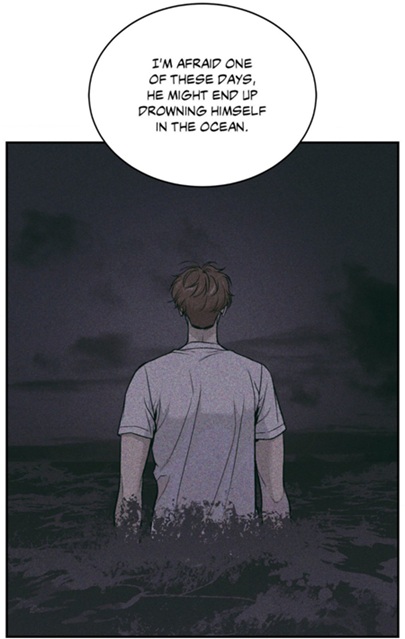 (chapter 65) or had his destination changed? These questions will be answered in the second part.
By examining the tension between appearances and reality, the contrast between confinement and escape, I hope to uncover the true nature of sacrifice and survival in the characters’ life. Wheels and Waves invites you to question what it really means to move forward—and at what cost. But let’s start with the interaction between Shin Okja and Joo Jaekyung.
The grandmother and the ocean
Between CREAK, STEP and TAP
First, it is important to realize that the champion was the one who chose the ocean as a destination. The nurse had only planned to walk around the hospice: 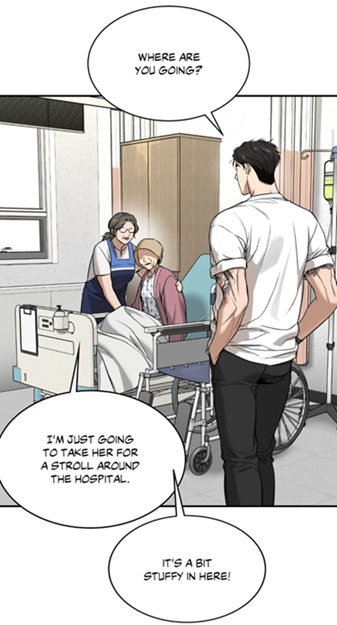 (chapter 65) This destination reflects the athlete’s desire and mind-set. He likes this place because it is quiet.
 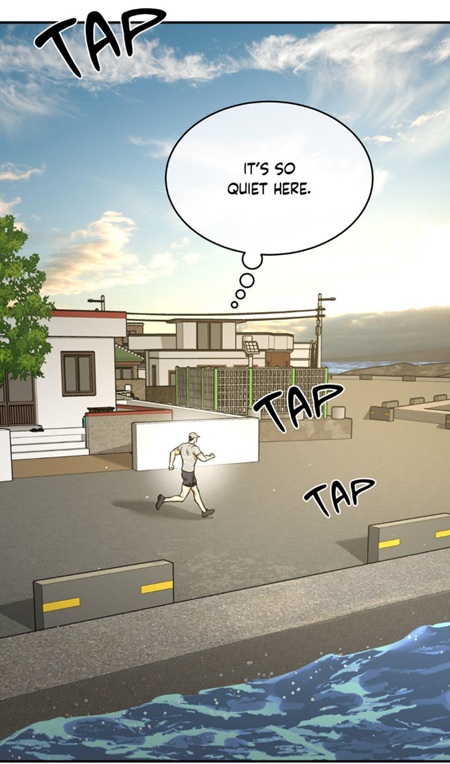 (chapter 62) From my perspective, the man has now internalized the beach to nature and privacy. Striking is the way Mingwa introduced the scenery. First, she focused on the wheel and Joo Jaekyung’s feet.
  (chapter 65) The contrast between the creaking wheels of the grandmother’s wheelchair and the steady steps of the champion immediately establishes the theme of control versus freedom. The wheelchair’s wheels represent civilization, immobility, passivity, and the grandmother’s obsession with control—over her own fate (chapter 65) and Kim Dan’s future. In contrast, Joo Jaekyung’s feet symbolize the potential for naturalness, movement and agency (chapter 65), emphasizing his ability to choose and act, even if he is currently unaware of the extent of the grandmother’s manipulation. I will explain further why I see the grandmother’s conversation as a deception. On the other hand, the rhythm of two steps per two creaks reflects how, despite his apparent strength and independence, the champion is unwittingly aligning himself with the grandmother’s pace and will. He is not realizing that he is actually slowing down, an indication that he will getting closer to rest for real this time. Note that he is no longer running and his steps are more “gentle”. We don’t have any TAP TAP TAP anymore, but STEP STEP.
The focus on the wheels and feet also serves as a prelude to the conflicting worldviews of the two characters. While the grandmother’s immobility reflects her fear of facing reality and her reliance on others to push her forward—both literally and metaphorically—Joo Jaekyung’s steps suggest a willingness not only to move forward, but also to impede. Little by little, he is getting closer to the ocean which means that he is about to confront the unknown represented by the ocean. Yet, the irony lies in the fact that despite his steady steps, the champion is the one being emotionally led by the grandmother’s words and direction.
Furthermore, the choice to highlight the wheels and steps before revealing the larger scenery suggests a gradual unveiling of the truth—both about the grandmother’s intentions and the emotional journey that awaits Joo Jaekyung.
“It’s a nice little town, isn’t it”
By choosing the ocean, Joo Jaekyung subconsciously aligns himself with nature, emotions, and freedom—the very things the grandmother seeks to avoid by emphasizing the beauty of the town. (chapter 65) His choice of destination foreshadows a deeper conflict between confinement and escape, between facing the truth and continuing to live under the illusion of control that the grandmother represents. Another relevant detail is the moment Shin Okja praises the town. Observe the position of her head. We don’t see her gaze because of her hat. But since the town is on the right, this signifies that she isn’t truly looking at the town.  (chapter 65) In fact, she is just looking ahead of her. The “nice little town” is reduced to the pathway next to the beach. This observation exposes her narrow-mindedness. Because she is not truly admiring the place, I feel like she is praising the town more based on her childhood memories. This explains why she mentions her youth afterwards. Moreover, the fact that she employed the expression “isn’t it” with her description, reveals her tendency to lead the conversation. It was, as if she pushed the young man to agree to her claim. The irony is that she didn’t even wait for his reply. She explained why she was so fond of the place: her childhood memories. In her eyes, because her companion didn‘t spend his youth here, he can not connect to this town, overlooking that people can create new memories anywhere. Moreover, they are not obliged to live in the same town their whole life or to live where they spent their childhood. In other words, this frail lady has no real notion of time as such. I would even say, her gaze is not truly directed in the present or the future, she is rather obsessed with the past.
The grandmother and the beach
But let’s return our attention to this panel. (chapter 65) Here, the ocean dominates the frame, uncontained and powerful, suggesting that the control and order symbolized by civilization are ultimately limited. The receding wharf becomes a metaphor for the boundaries of this control, emphasizing that beyond a certain point, civilization’s reach falters in the face of nature’s raw power. This shift in focus—from the orderly path along the shore to the turbulent waves beyond— accentuates the futility of the grandmother’s obsession with control, medicine, and structured living. But there’s more to it. Mingwa added the onomatopoeia “Whoosh” in order to indicate the presence of wind. The latter is responsible for the “waves”. Funny is that the halmoni is not paying attention to it at all. We could say that the absence of comments about the ocean and wind divulges her blindness and deafness, and the falsehood of her “wish” expressed in the hospital. In addition, this image is announcing the way the conversation will take place. There won’t be any real exchange of thoughts and as such active listening from her part. She will lead the conversation.
This image contrasts so much to the scene with Kim Dan on the beach:  (chapter 59) The contrast between these two images—one of the halmoni accompanied by Joo Jaekyung and the other of Kim Dan sitting alone by the ocean—exposes the stark difference in their emotional worlds and the dynamics of control and isolation that define their lives.
In the first image, (chapter 65) the halmoni’s presence with Joo Jaekyung creates an illusion of support and control. (chapter 65) The sunlight high in the sky bathes the scene in brightness, suggesting a façade of warmth and clarity. This lighting aligns with the halmoni’s belief that she can influence Kim Dan through the champion, using Joo Jaekyung as an intermediary to extend her authority. The fact that she is in a wheelchair, however, subtly contradicts this impression of power, revealing her true state of passivity and reliance on others to act on her behalf. The ocean, tamed by the pathway, symbolizes her attempt to domesticate nature—
  (chapter 65) just as she tries to domesticate Kim Dan’s emotions and decisions. At the same time, it exposes that the champion is still far away from his true self, but he is getting closer to become “reborn”.
In contrast, the second image of Kim Dan alone at sunset paints a completely different picture. (chapter 59) Here, the setting sun hints at the end of the halmoni’s control over his life, casting a melancholic glow that embodies both the beauty and isolation of freedom. Unlike Shin Okja, doc Dan faces the ocean directly, unprotected by railings or pathways, exposing his vulnerability and willingness to confront the unknown—his emotions, his trauma, and his desire for escape. The absence of others highlights his profound loneliness, a loneliness that even the vastness of the ocean cannot fill but seems to reflect. The parasol, standing solitary like Kim Dan, reinforces the sense of isolation amidst an open space. On the other hand, the walk with the grandmother exposes the superficiality of the champion’s connections. He might know many people, but they aren’t his friends or family.
The sound effects further emphasize this dichotomy. The “whoosh” accompanying the halmoni and Joo Jaekyung suggests the wind—a natural element that moves freely despite the artificial path, subtly mocking the halmoni’s illusion of control. Meanwhile, the “shaa” with Kim Dan reflects the waves, raw and untamed, symbolizing the overpowering emotions he battles alone.
Joo Jaekyung’s perception of the halmoni’s influence over Kim Dan is thus an illusion: 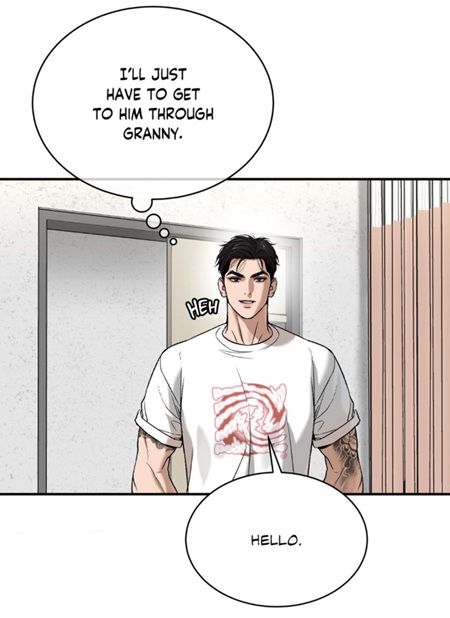 (chapter 65) the same illusion that the high sun implies. The latter can not shine if there are clouds. (chapter 65) My avid readers know that the latter usually stand for danger. Thus I come to the following deduction: the clouds represent the doctor’s untreated wounds. The champion’s assumption that the halmoni can sway Kim Dan is a misunderstanding of the true nature of Kim Dan’s struggles. While Joo Jaekyung might see the halmoni’s appeals as genuine, I don’t think, he grasped entirely that her words are merely another form of control, one that Kim Dan subconsciously rejects as he continues to seek solace by the ocean, far from the halmoni’s reach.
  (chapter 59)
In essence, the halmoni’s daytime stroll represents a false clarity and a temporary illusion of control, while Kim Dan’s solitary sunset confrontation with the ocean was foreshadowing a breaking point—an inevitable dusk for the halmoni’s authority and a prelude to a night where Kim Dan chose escape and freedom but at his own life expense.
Another important detail is the way she initiated the conversation. It was about this pretty community and not her grandson. Why? (chapter 65) It is because she is trying to incite the athlete to return to Seoul. He doesn’t belong here. Her statement, “This is where I grew up. But you’re from Seoul, so you probably don’t see what the fuss is about,” dismisses Joo Jaekyung as an outsider while subtly reasserting her authority. Yes, she is using the same MO than with Kim Dan. 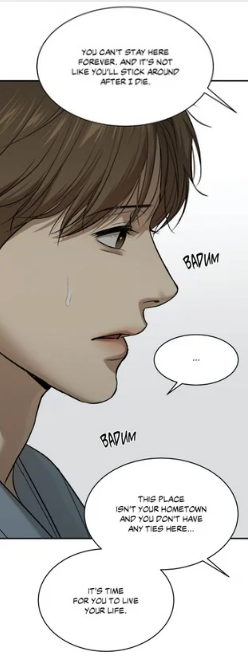 (chapter 57) By telling him that he had no ties here, she effectively erased their shared past and portraying him as a stranger in the very place she calls home. Thus I deduce that she is aware that she is racing against time. The longer the athlete stays in that place, the lower are the chances that her grandson will leave this town. She has to ensure that Joo Jaekyung doesn’t feel like settling here. I don’t think, she heard about the athlete’s involvement in the little town, for her only source of information comes from the staff
 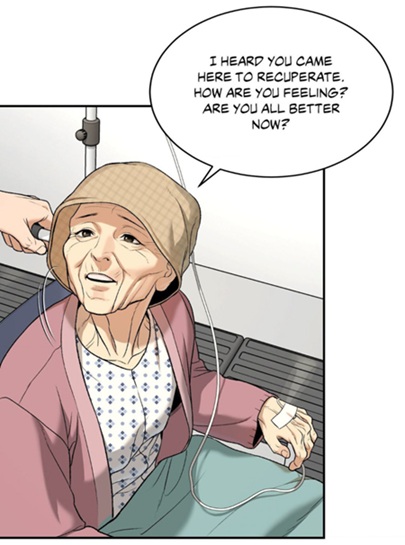 (chapter 65) and the residents from the hospice. She has no connection to the town chief and other inhabitants. This exposes how small her world is and little her knowledge is. However, her ignorance doesn’t make her an innocent “lady”, quite the opposite. – Don’t get me wrong, I don’t see her as a malicious person, just as a selfish person suffering from Peter Pan Syndrome.
Let me give you an example.  (chapter 65) Here, she claims that she only knows about the sportsman’s job thanks to the patient next door. However, she is lying, because she watched his match in the States.
  (chapter 41) The irony is that she is not realizing that she is showing her true colors.
  (chapter 21) In episode 21, the halmoni’s description of the champion as a “good friend” was, in hindsight, a superficial and self-serving characterization. At that time, she likely saw Joo Jaekyung as someone who could be beneficial for Kim Dan’s financial situation without truly caring about who he was as a person. Her interest in him was more about what he represented—a source of money and stability—rather than any genuine appreciation of his character or the impact of his presence in Kim Dan’s life. Thus she said this in front of the ocean:
  (chapter 65) If he was a good friend, then why didn’t she show more interest in him before? It is because she needs him now. Yes, this woman is a good-weather friend in the end. The term “good-weather friend” refers to someone who shows interest, support, or kindness only when it is convenient for them or when they stand to gain something. Hence she goes outside, when the sun shines. This perfectly encapsulates the grandmother’s attitude towards Joo Jaekyung. But it is the same with the champion. He only visited her,
  (chapter 61) when he thought, he needed her assistance. He used her to appear as a friend.
  (chapter 61) Yes, the conversation at the beach played an important role, for Shin Okja’s behavior serves as a distorted mirror to Joo Jaekyung’s actions and mindset, exposing the flaws and contradictions in both. When she voiced this wish (chapter 65), she exposed her belief: money and big hospital are the symbol for care. That’s exactly what the champion had done in the past.
In episode 22, when Joo Jaekyung paid the bills for the halmoni,  (chapter 22) he acted out of a simplistic view of good deeds—believing that financial support alone could resolve problems and fulfill his moral obligations. His subsequent failure to visit her again reflects his tendency to distance himself emotionally once he has performed what he sees as his duty. This is reminiscent of his behavior towards Kim Dan: helping him materially but avoiding deeper emotional involvement or responsibility.
Shin Okja’s current behavior mirrors this mindset but in a more manipulative and self-serving manner. Her sudden interest in Joo Jaekyung now that she needs him exposes how she, too, equates support with utility rather than genuine care. She projects a generous and sacrificial image  (chapter 65), much like how Joo Jaekyung likely saw himself when paying her bills—believing that fulfilling a material need is equivalent to showing genuine concern. Park Namwook is a representative of this mind-set too.
- Transactional Attitude vs. Emotional Avoidance:
- Shin Okja’s willingness to praise Joo Jaekyung now that she needs him mirrors how the sportsman’s sense of duty stops at financial aid without further emotional involvement.
 (chapter 45) Both characters avoid deeper emotional connections, opting instead for transactional solutions—she with her manipulations and he with his money.
- Shin Okja’s willingness to praise Joo Jaekyung now that she needs him mirrors how the sportsman’s sense of duty stops at financial aid without further emotional involvement.
- Superficial Care:
- Just as the star’s one-time payment was a way to offload guilt without genuine interaction, Shin Okja’s praise
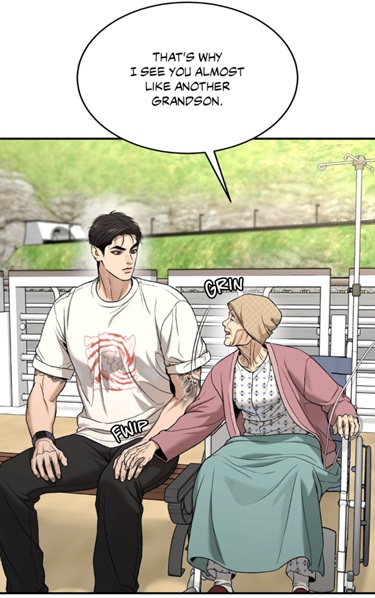 (chapter 65) is a way to offload responsibility for doc Dan while maintaining an image of concern. Both display a form of care that lacks true depth.
- Just as the star’s one-time payment was a way to offload guilt without genuine interaction, Shin Okja’s praise
- Avoidance of Accountability:
- Shin Okja’s deflection of her failures as a guardian (chapter 65) reflects Joo Jaekyung’s reluctance to confront the emotional and mental consequences of the star towards Kim Dan. Besides, Jinx-lovers should keep in their mind that the champion is the owner of the gym. The incident with the switched spray was swept under the rug, just like the drugged beverage. Everyone involved acts, as if nothing had happened or by saying that the doctor was innocent, the witnesses believe that the damages has been repaired.
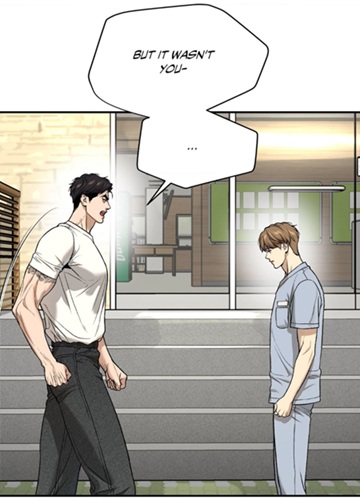 (chapter 62) Both avoid the emotional accountability that comes with their actions, preferring to distance themselves once a material obligation (debts)
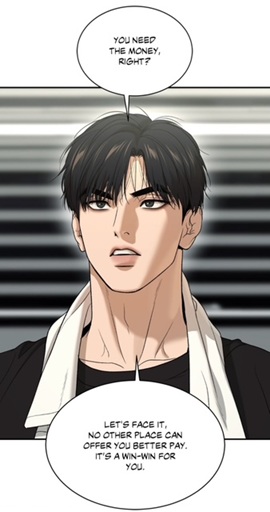 (chapter 60) is fulfilled.
- Shin Okja’s deflection of her failures as a guardian
- Perception vs. Reality:
- The fact that Joo Jaekyung thought he had done a good deed by paying the bills contrasts sharply with Shin Okja’s sudden friendliness, (chapter 65) which is merely a cover for her self-serving motives. This contrast highlights the theme of perception versus reality: both characters’ actions appear kind on the surface but conceal underlying self-interest or emotional avoidance. Yet, there is a difference between them. The champion had sacrificed his time for the doctor, he made sure to keep the elderly woman company so that Kim Dan could rest. Moreover, he had made her happy, that’s the reason why doc Dan was so grateful.
 (chapter 22)
- The fact that Joo Jaekyung thought he had done a good deed by paying the bills contrasts sharply with Shin Okja’s sudden friendliness,
In this sense, the halmoni serves as a mirror reflecting the champion’s own flaws back at him—his tendency to equate care with material support and his discomfort with emotional intimacy. The paradox here is that while Joo Jaekyung might see the halmoni’s behavior as genuine concern, it is actually a reflection of his own transactional approach to relationships. Recognizing this mirror might be a crucial part of his redemption arc, forcing him to confront the superficiality of his past actions and understand the difference between real care and transactional gestures. However, it is relevant to recall that the star’s past behavior was nurtured by his own surroundings. MFC and the members from Team Black also treated him as a tool for success and money.
So, the mirroring aspect adds a deeper layer to the conflict between civilization (control and superficial care) and nature (authentic emotions and freedom), reinforcing the idea that Joo Jaekyung must break away from this mindset, if he is to truly connect with Kim Dan.
One might think that they are both shallow and selfish. Yet, there exists a huge difference between them. Joo Jaekyung embodies action and he is now embracing changes. Thus he is willing to do anything to improve their relationship, whereas the grandmother is just waiting at the hospice for the “right time” and the “right person”. She is just reacting to an uncomfortable situation than becoming proactive like the champion. She sees the decline of her grandson’s health, but she is reducing it to insomnia which can be treated with pills and a stay at an expensive hospital. (chapter 65) She is not mentioning his loss of weight on the beach contrary to her comment at the hospice.  (chapter 57) This displays that she is not entirely honest. She is not reaching out to Kim Dan in the end. Her excuse is that he refused to see a doctor
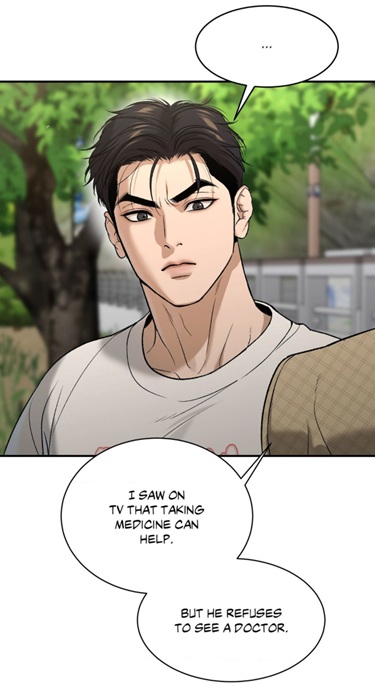 (chapter 65), but so far we never saw her making such a suggestion. It is possible that she jumped to this conclusion because she heard about this incident:
  (chapter 60) If my assumption is correct, the woman didn’t realize that this rejection was linked to Joo Jaekyung’s intervention. So if she had talked to her grandchild himself, she could have had an impact… But they are actually avoiding each other. One thing is sure: the absence of communication and avoidance between these two family members reinforced the doctor’s suffering. Imagine the consequences of her request: she is preferring locking him up in a hospital receiving drugs than giving what doc Dan has been longing: warmth, love and a home.
Another contradiction is that while she praised the “little town” in the beginning, she was looking down at this place, when she said: (chapter 65) It was, as if she was insulting the hospice where she is staying and as such the staff (which included Kim Dan).
The problem is that the grandmother has long forgotten this day,  (chapter 65) where both were happily smiling. The picture is the evidence that she could make Kim Dan smile despite their poverty. Moreover, it is important to recall that she introduced Kim Dan as an orphan from birth:
  (chapter 65) According to my hypothesis, this image
  (chapter 19) is linked to the doctor’s abandonment and betrayal. I have to admit that her attitude and words reminded me a lot of the director Choi Gilseok’s offer.
 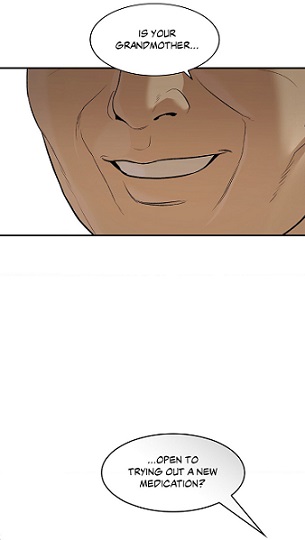 (chapter 48). Both the halmoni and Choi Gilseok embody betrayal and the theme of acting behind the back
 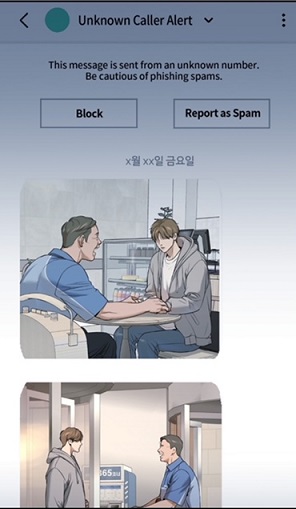 (chapter 48), weaving a web of deception under the guise of care and concern. The halmoni’s betrayal is subtle but profound—she presents herself as a self-sacrificing guardian, but her true motives are revealed through her willingness to entrust Kim Dan to Joo Jaekyung without genuinely considering his well-being. Her criticisms of Kim Dan’s habits, her attempts to send him back to Seoul, and her selective truths paint a picture of a woman more interested in relieving herself of a burden than providing real support. Her actions behind Kim Dan’s back—discussing him negatively with Joo Jaekyung—further emphasize her betrayal, showing a willingness to manipulate perceptions for her own convenience.
Similarly, Choi Gilseok’s offers of lodging, financial help 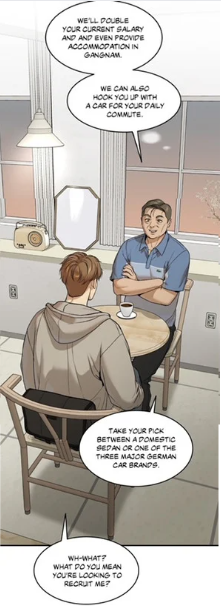 (chapter 48) and superior medical care
  (chapter 48) mask a deeper betrayal. His real aim was never to assist but to control, using offers of support as bait to tie Kim Dan into a powerless position. The parallel between his proposition to Kim Dan—promising a better life in exchange for leaking information and compliance—and the halmoni’s push for Seoul’s hospitals underlines their shared strategy: make the target believe they have a choice, while the outcome is already decided. The fact that Heo Manwook, who collects Kim Dan’s debts, called Choi Gilseok “hyung” further hints at a deeper conspiracy, suggesting that the offer might have been a tool to ensnare Kim Dan from the start. He would have committed a crime (illegal drugs).
Both characters act behind the scenes, manipulating others to achieve their goals while maintaining an outward appearance of concern. This duplicity can only deepen the sense of betrayal felt by Kim Dan, whose struggle for freedom becomes not just a battle against overt control but also against the subtle, insidious influence of those who pretend to care. Moreover, she broke her promise, but chose to walk to the ocean with the star. It was, as if the grandmother had been ashamed of her own grandson. The halmoni’s and Choi Gilseok’s actions reveal the painful truth that sometimes, the worst betrayals come from those who claim to love and protect. I made this connection for another reason. The director of the gym is actually the one behind the debts and loan. I doubt that Shin Okja would have trusted Heo Manwook for example. It is important, because the loan is the reason why the champion became a target of schemes. But since the doctor refused to abandon his lover, I am convinced that the champion won’t follow Shin Okja’s suggestion.
Moreover, contrary to the grandmother, the star wants the doctor to agree on his own accord.  (chapter 62) That’s the reason why he was seeking the grandmother’s support. He was hoping that she could influence him. But what he hears, shocks him: (chapter 65) She desires the same as him, but she is in the same position than him. She is powerless in front of the doctor’s will. It looks like this walk to the ocean was pointless for the champion. However, it is not true, as the athlete got to see a glimpse of the verity in front of the ocean. He is surprised by this request, because unconsciously he senses it as a “betrayal” and “abandonment”. And keep in mind that the ocean represents freedom, the unconscious mind, emotions, death, and the unknown. The wolf was encouraged to perceive the falsehood of his past believes. Moreover, he was incited to question his own past behavior.
Striking is the way both were placed on the beach.  (chapter 65) Though they are next to each other, they are not sitting together. The wheelchair represents the invisible barrier between them. This scene contrasts with the conversation in the penthouse. And what had the athlete done during that night? He had not only shared his thoughts and issues to doc Dan, but he had asked for his wish and opinion.
 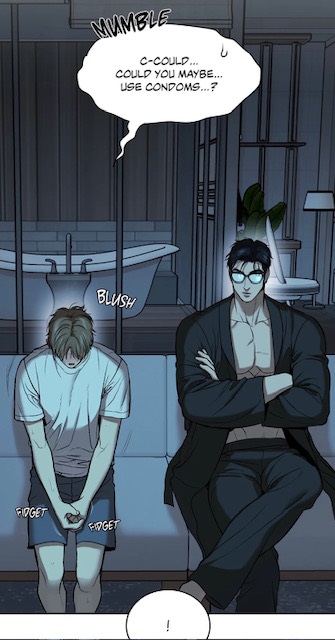 (chapter 29) He had even advised to think of himself first. As you can see, the fact that the two characters were just sitting next to each other reinforces my previous interpretation about the conversation. The grandmother was the one who had been leading the conversation, there is no real exchange of thoughts. In episode 29, the champion refused to accept the doctor’s help and suggestion. That’s the reason why I am more than ever convinced that the star won’t listen to the grandmother.
In other words, she was acting like in the past. How so? 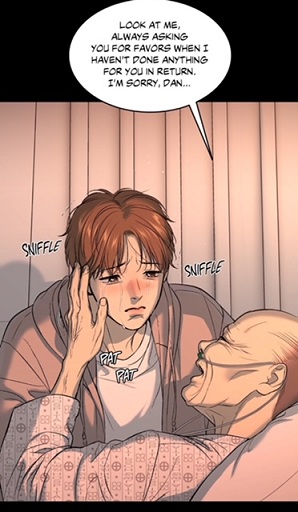 (chapter 53) She was asking for a favor again, but this time, she was begging for someone else’s generosity. No wonder why she said that she was still the same! (chapter 65) 😉 And what is her MO? She uses pity and vulnerability to her advantage. Since she is so old and weak, she can not do much for her grandson. In other words, she is showing to the celebrity that vulnerability can be a source of strength, that’s how she could turn her grandson into an obedient puppy. However, this can only work, as long as the “target” is listening to his heart and has not developed his own identity and strength. The wheelchair is the symbol for her powerlessness and passivity. Hence she needs the involvement of a third person. The twist is that her wheelchair is the evidence of her dishonesty. How so? She could go to the beach
  (chapter 53) and watch the ocean with her grandson
  (chapter 53), but they never did it. Why? One might respond that she refused to do it.
 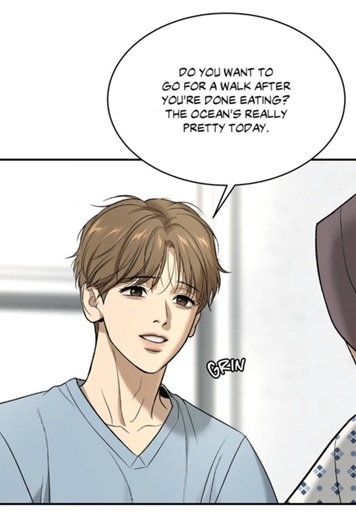 (chapter 57) But it is only partially correct. The doctor only suggested this walk to the ocean much later, when he was already suffering emotionally. This means that the grandmother would have not been able to enjoy this walk. Yes, the timing played a huge role. In fact, she confessed her crime to the star:
  (chapter 53) She never had any intention to spend some time with him. Notice the personal pronoun “we” vanished. It is only about her request: “I wanted to see the ocean”. This means that at the hospital, she never had any intention to keep Kim Dan by her side. She employed the “with you, we” in order to achieve her goal. She acted, as if they were a family. She used her illness for her own advantage. In my opinion, her request was an excuse to avoid to return to the old broken home. For her, home is a place and not a person. Therefore she couldn’t love Kim Dan properly. Her “I’m so sorry” was actually fake. She had only thought of herself… She never thought of her grandson’s future at all. This observation corroborates my previous statement: she is unable to plan for the future. What only matters to her is the past or the present. Why? It is because she doesn’t want to be plagued by remorse or regrets. And now, she is doing it again with the champion. Using emotions and fragility for her own benefits. The paradox is that this is something Joo Jaekyung has always feared his whole life. Nonetheless, he doesn’t react so violently like in the past: rejection or outburst. One might say the reason is that she is weak and terminally ill.
 (chapter 65) However, I believe that her words reached the champion’s third eye. The latter was not focusing on the grandmother, but on his fated companion. He was trying to understand why he had changed. This question was already on his mind before:
 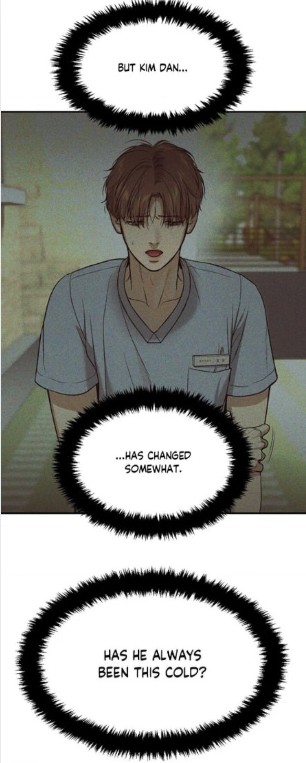 (chapter 62) And notice that the words from the grandmother (chapter 65) in front of the water reflects the champion’s intentions:
  (chapter 62) Once he has achieved his goal (reclaim his champion title), they will depart from each other. He would treat the doctor the same way than the grandmother! No wonder why doc Dan is getting angry and rejecting the offers from his destined partner. IT is only about his own selfish desires and not about doc Dan’s future and desires. Both have a similar mind-set: they don’t know what doc Dan plans to do with his life and the future…. And it shows that Joo Jaekyung was imitating the grandmother, though this suggestion was born from the following thought. Since Doc Dan was no reluctant to work for him, he imagined that maybe he would still accept to work for him for a limited time. But that’s not what Kim Dan is looking. He is longing for a home and at the same time for freedom.
On the other hand, though Shin Okja tried to use the same MO with the celebrity, it is clear that she is destined to fail. Let’s not forget that his private conversation took place outside, in front of the ocean, and the latter represents reflection and unconscious. Hence Joo Jaekyung voiced his hesitation constantly: (chapter 65)  (chapter 65) The points of suspension are indicating that he is meditating on her words and suggestions. This stands in opposition to his past behavior where he got manipulated so easily.
 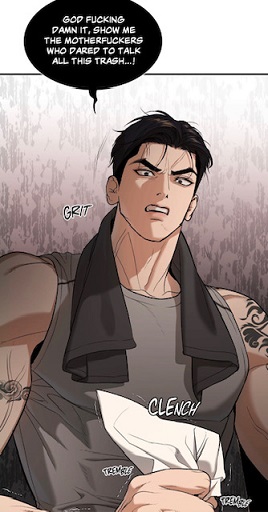 (chapter 36) The reason for this huge metamorphosis is that because of the lavender-tinted night, he learned to control his emotions.
 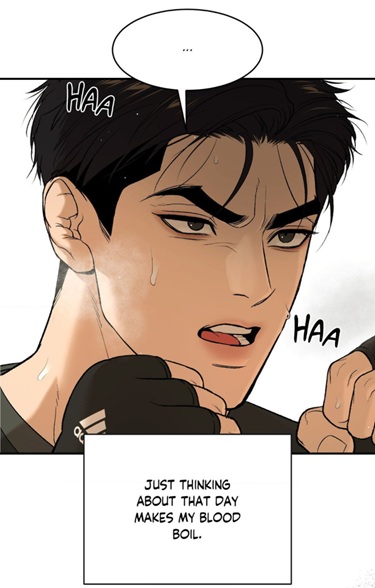 (chapter 65) He was forced to admit that he needed the “hamster”. He knew that if he reacted on these negative emotions, doc Dan would have another reason to put the blame on him. Consequently, his goal would be much further away. Secondly, though the conversation was private, their encounter was far from secretive. Both were visible, as it took place during the day. This means that the grandmother’s words in front of the ocean symbolize that they are in the open. (chapter 65) So they should reach the doctor’s ears. And this observation leads me to my next connection, the grandmother’s deceptions.
Shin Okja’s lies
What caught my attention is this image combined with the grandmother’s claim 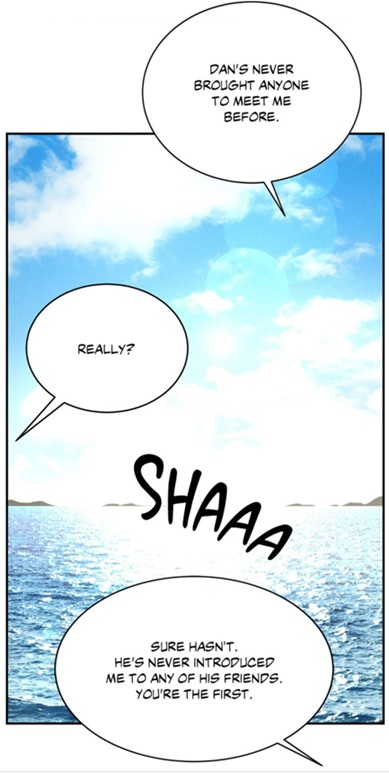 (chapter 65) According to her, Kim Dan has never introduced her to any of his friends. The celebrity would be the exception! But she is lying here. How so? Joo Jaekyung introduced himself to her on his own. It is because he answered a call from the nurse.
 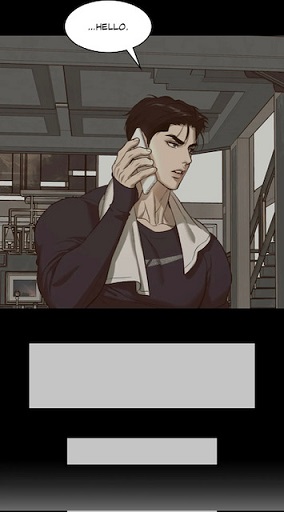 (chapter 21) It happened behind doc Dan’s back in the end. The latter was sick, but the old lady didn’t seem concerned. The second lie is this statement which is exposed with the memory: (chapter 65) The panel depicting the halmoni holding an infant Kim Dan offers a complex portrayal of her character—one that blends guilt, self-victimization, and manipulation. Her downcast eyes and the way she cradles the child suggest a mix of regret and weariness, but this expression lacks the warmth expected of a caring guardian. She is not smiling, only feeling pity for the “poor child”. Instead, the scene gives off a performative air, as if she is convincing herself (and, by extension, Joo Jaekyung) that she was indeed a dedicated guardian who did her best. The dark, muted background only deepens this impression, isolating her and the child in a way that hints at unresolved guilt and a lack of genuine affection.
Her words, “I tried my best to raise him, but it was never enough,” carry a double meaning. On one hand, they paint her as a martyr who struggled valiantly despite overwhelming odds. On the other, they imply a subtle judgment of Kim Dan, as if his troubles were a reflection of his own failings (greed) rather than a result of her negligence. The emphasis on “never enough” shifts the focus from Kim Dan’s suffering to her own perceived sacrifices, turning the conversation away from her shortcomings and towards her self-proclaimed burden. This choice of words aligns with her tendency to externalize blame, presenting herself as a victim of circumstances rather than acknowledging her role in Kim Dan’s suffering.
The portrayal of Kim Dan as an infant rather than as the grown man he is now exposes a deeper layer of control. By framing the memory this way, the halmoni preserves her position as the ultimate decision-maker in his life, reinforcing the notion that he is incapable of making his own choices. This imagery ties directly into the theme of Peter Pan Syndrome—the idea that Kim Dan, in her eyes, is perpetually a child who must be protected and guided, even if this means denying him the agency to confront his past and shape his own future. However, this is just a projection of herself. This infantilization serves her interests by keeping him emotionally dependent and by masking her own failings as a guardian.
Moreover, the halmoni’s repeated use of the word “never” (chapter 65) (chapter 65) (chapter 65) is not a mere slip of the tongue but a deliberate linguistic tool to control the narrative. In this context, “never enough” serves a dual purpose: it downplays her own responsibility while subtly casting Kim Dan as a source of endless trouble and dissatisfaction. This manipulation of language highlights a broader pattern in her behavior—her use of selective truths to paint herself as a victim of fate, rather than a participant in the decisions that led to Kim Dan’s suffering. Her words echo the myth she has carefully constructed of herself as the sacrificing grandmother who did everything she could, even as the dark atmosphere of the panel suggests otherwise.
The dark background, devoid of warmth or light, not only isolates the halmoni and Kim Dan but also symbolizes her repressed guilt and closed-off perspective. By presenting herself as the victim of an ungrateful or inherently troubled child (chapter 65), she avoids confronting the real roots of Kim Dan’s suffering—such as the bullying, the debts, and the truth about his parents. For her, it would have been better if he had been raised by his parents. This is what she implied: she could never replace them. (chapter 65) It is important because it exposes her traditional mind-set overlooking that certain parents are unfit guardians. Secondly, with her own words, she legitimated the kids’ bullying. This explicates why she didn’t intervene in the end. What I had interpreted in the past was confirmed in this episode. She represents civilization and as such social norms. Therefore she is a representative of herd mentality. She accepted the kids’ bullying as truth which led to Kim Dan’s isolation. And now, you comprehend why she is not mentioning the harassment from the past. 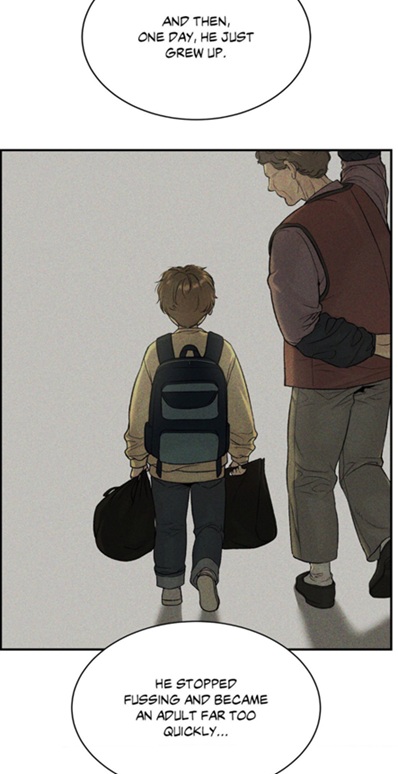 (chapter 65) Here, note that the little boy is wearing the same clothes than in the doctor’s nightmare.
 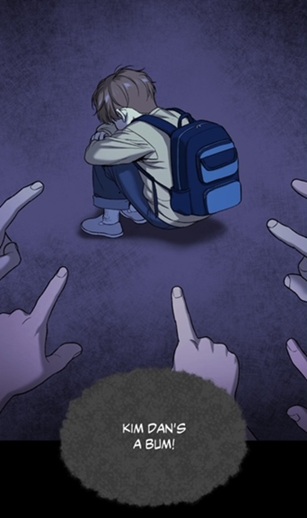 (chapter 57) She claims her ignorance why the little boy acted like an adult at such a young age. The reality is that she hasn’t forgotten the incident at all. This explicates why she confessed this to the “wolf”: (chapter 65) And who is to blame for her seclusion? Kim Dan who refused to introduce her to his friends. The irony is that Kim Dan mentioned her to the actor Choi Heesung,
  (chapter 30) a sign that she was never a source of embarrassment for him. (chapter 65) The truth is that she wanted him to mature quickly so that he could take her burden.
  (chapter 47) Her refusal to address these deeper issues reveals that her sacrifices were less about genuine care and more about maintaining her self-image as a righteous guardian. (chapter 65) The absence of any visible light or open space in the panel reinforces the idea that her perspective is narrow, unwilling to confront the broader context of Kim Dan’s pain and isolation.
In essence, this panel illustrates how the halmoni’s portrayal of herself as a sacrificing guardian is a carefully crafted narrative. Her use of language, the infantilization of Kim Dan, and the dark visual elements all work together to expose the underlying hypocrisy of her actions. She is not seeing Kim Dan as a man in the end (“sweet boy”). By framing herself as a victim of circumstances, she manages to absolve herself of guilt while keeping Kim Dan emotionally trapped in a narrative of helplessness and dependency. Far from being a scene of genuine regret or love, this moment reveals the true nature of her sacrifices—self-serving acts designed to control the narrative and shift the blame away from her own failures. That’s the reason why she is not bringing up the debts either. Under this light, you comprehend why she portrays Kim Dan in such a negative light: he is a drinker and smoker. (chapter 65) It is because of his personality: he was an orphan and had no real parents to guide him properly. Hence he didn’t listen to her nagging. The irony is that readers never saw her showing concerns about his drinking or smoking habits before. For me, it exposes her passivity and accountability. And what is her MO? She uses the past to justify her request. But the past is no longer valid, for the doctor has grown up. He is no longer smoking for example. She can only use the past, because she stopped living with him. Hence she has no idea how and where he is living right now. She is overlooking that she could have done something: refuse to let him carry the bags or take his hand (chapter 65), talk to him properly and listen to him. But she did not, she used food as a diversion. Walk silently by his side… Like expressed before, this senior stands for secrecy, shame and taboo.
As long as Kim Dan was working and paying off the debts, everything was fine. But now, she is noticing that he is showing signs of illness, but she doesn’t want to feel accountable for that. But there is more to it. In my eyes, Shin Okja never trusted the main lead. It is because of her own lies. She had told him, if he kept working, he would be able to pay off the debts. 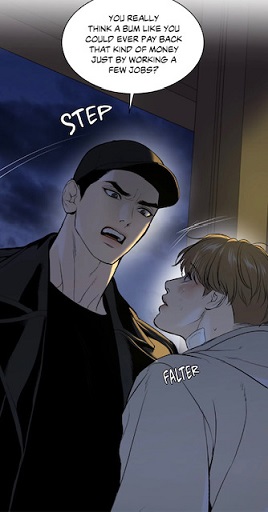 (chapter 18) What caught my attention in her revelation is her lack of enthusiasm for her own grandson.
  (chapter 65) “Is he that good?” exposes a lack of faith in her grandchild, a remark which caught the athlete by surprise. For me, he unconsciously sensed this negative aspect.
  (chapter 65) While this image is actually humorous, the grandmother’s words don’t match her body language. She is not showing any joy or smile. Therefore I comprehend why Kim Dan was so hurt by the champion’s behavior:
  (chapter 51), the absence of trust because of MONEY! She knew, he was drinking and smoking. Yet according to her, she couldn’t stop him, as she was powerless. He wouldn’t listen to her nagging. But here is the thing. She never asked him why he would act this way. Drinking and smoking were the only things he could allow himself as “fun and diversion”. In her long confession, she is diverting the attention from the causes for this rebellious behavior. Indirectly, she is portraying him as a stubborn boy who can not live on his own. In reality, she is just projecting her own desires and thoughts onto her grandson. For her, the city stands for wealth, fame, success and power.
  (chapter 65) I am suspecting that deep down, she wants him to shine for her own peace of mind. (chapter 41) Don’t forget that she has been living through him. But Seoul is related to Kim Dan’s suffering: the debts, sexual assault, violence from the loan sharks, the bullying, ,, his “failures” (prostitution, the switched spray), mockery and rejection. So he has nothing there that would draw him back to the city so far. On the other hand, her words imply that the doctor can not lead a good life here (chapter 65), as if there was nothing good in this place. So is this little town nice or not? She is looking down on that place, though she doesn’t realize it.
Captain Hook and his t-shirt
Since the grandmother is suffering from Peter Pan Syndrome, it becomes clear that she views Kim Dan as a lost boy. But she considers the athlete the same way: (chapter 65) Observe that she employed the expression “almost” here. This idiom is even recurrent in her vocabulary (chapter 65) and it is not anodyne. It symbolizes her conditional love and support. That’s why the athlete is almost a grandson. The paradox is that the champion embodies adulthood and as such Captain Hook. That’s why he was racing against time in season 1. Hence he is responsible for the grandmother’s deteriorating health, as the expensive treatment was more an experiment. But here is the thing. Notice what the young man is wearing. (chapter 65) The T-shirt that Joo Jaekyung wears, emblazoned with the words “Peek a Boo” in a spiral pattern, is far from a random detail. Its presence in the scene with the halmoni adds a layer of irony and serves as a visual metaphor for the nature of deception and hidden truths. The game Peek a Boo is typically associated with infants— a playful way for parents to teach children about object permanence, the idea that things continue to exist even when they are out of sight. However, in the context of this scene, it takes on a darker significance, highlighting how the halmoni manipulates what is seen and unseen to maintain control over Kim Dan’s life and, now, over Joo Jaekyung’s perception of the situation.
The spiral arrangement of “Peek a Boo” mirrors the cyclical nature of the grandmother’s manipulation tactics. Much like the game itself, where the face reappears only to disappear again, the halmoni presents selective truths, allowing glimpses of her vulnerability and supposed selflessness while concealing the deeper reality of her motives. This back-and-forth between what is shown (chapter 65) and what is hidden keeps Joo Jaekyung—and even Kim Dan—in a state of uncertainty and guilt, making it difficult for them to see through her facade. The spiral could also represent a descent into deeper layers of deceit and emotional entanglement, suggesting that the more Joo Jaekyung becomes involved, the harder it will be to hide the truth.
On a symbolic level, Peek a Boo ties directly to the halmoni’s treatment of Kim Dan. As a child, Kim Dan was deprived of a real parental figure who could engage with him honestly and lovingly. When he talked the first time, she didn’t reply or smile. His words were met with silence. That’s how he created a negative perception of himself. The halmoni’s refusal to play simple games like Peek a Boo—games that help children develop a sense of identity and emotional security—suggests that Kim Dan’s early emotional needs were systematically neglected. The memories are revealing her passivity and negative thoughts. This absence of genuine interaction is paralleled by her current behavior: her reluctance to openly discuss his past, the bullying, and the truth about his parents. By avoiding such confrontations, she has effectively kept Kim Dan in a state of perpetual insecurity and self-doubt, much like a child who has not yet grasped the concept of object permanence.
Moreover, the game Peek a Boo also involves a degree of deception—the face that disappears and reappears, creating a mix of surprise and relief. This aligns with how the halmoni reveals just enough of the truth to seem trustworthy, while keeping the more damaging parts hidden. Her feigned helplessness and the way she strategically reveals information to Joo Jaekyung—such as her portrayal of Kim Dan’s drinking and smoking habits—are part of a calculated act to elicit sympathy and compliance. By making Kim Dan appear troubled and unreliable, she diverts attention from her own failures as a guardian. Her trust is conditional: (chapter 65) She wants him to follow her request. So what will she do, if he refuses? Moreover, she doesn’t know that the athlete has already created connections with the local inhabitants. The landlord and neighbor has an interest to keep these two young men in that place: he feels less lonely.  (chapter 61) Finally, it is important that the athlete never agreed to her “demand” or suggestion. (chapter 65)
Ironically, Joo Jaekyung’s naive acceptance of her words shows that he, too, is caught in this game of Peek a Boo. He believes that by getting through to the halmoni, he can reach Kim Dan’s true feelings, not realizing that the halmoni is using this access to manipulate both of them. The T-shirt becomes a bitter reminder of the gap between appearances and reality—how the champion’s straightforwardness is no match for the halmoni’s subtle control of the narrative.
In essence, the Peek a Boo T-shirt encapsulates the main themes of deception, control, and the struggle to see past appearances. It reflects how the halmoni’s manipulations are not merely a means of survival but a way to maintain her dominance over both Kim Dan and Joo Jaekyung. Just as in the game, the truth is never fully revealed—only glimpsed in fleeting moments, distorted and reshaped to serve her ends.
Conclusion
This selective blindness extends to her treatment of Kim Dan. She speaks of his smoking and drinking habits with a judgmental tone, implying that his actions are signs of moral failure rather than coping mechanisms for his trauma. Her refusal to address the bullying incident—a pivotal moment in Kim Dan’s life—is part of this broader pattern of denial. If she cannot acknowledge the cause of his suffering, she can continue to frame herself as the sacrificing guardian who did her best. This evasion is also evident in her avoidance of the ocean, a symbol of emotions, danger, and the freedom that she refuses to confront. That’s why her request is doomed to fail. But there is another reason why Shin Okja’s favor won’t be fulfilled. (chapter 65) It is because she doesn’t care about the champion’s mental and emotional well-being. By making such a request, she is pushing him to return to work and as such disregard his mental and emotional issues. Just like Kim Dan, the wolf needs vacancy and rest. He needs to enjoy the present and make good memories so that he can finally sleep properly. Nevertheless, I do see a small change in her, because for the first time, she asked for someone else’s help. Moreover, she is mentioning her death (chapter 65), a sign that she is gradually accepting her mortality. On the other hand, her statement “I’ll go, when my time comes” is linking walk with death, But here, she is not walking, she is using the wheelchair! This means that as long as she is not walking, she won’t die. It is her effort to push away the inevitable. She is giving the impression that she has control over her life, but deep down, she knows that she is powerless. Therefore I perceive her final words as a deception as well. But there’s more to it. The fact that she is expressing her fear that her grandson might die before her is exposing her fear of responsibility. I would even say, her words imply that she has already witnessed the suicidal tendencies of a person in the past (that would be the parent). That’s why she suggested to the owner of Team Black to send him to a huge hospital and drugs (confinement).
Feel free to comment. If you have any suggestion for topics or Manhwas, feel free to ask. If you enjoyed reading it, retweet it or push the button like. My Reddit-Instagram-Tumblr-Twitter account is: @bebebisous33. Thanks for reading and for the support, particularly, I would like to thank all the new followers and people recommending my blog.

 Bebebisous33s' analyses in K-Dramaland and Manhwas