

Please support the authors by reading Manhwas on the official websites. This is where you can read the Manhwa: Jinx But be aware that the Manhwa is a mature Yaoi, which means, it is about homosexuality with explicit scenes. Here is the link of the table of contents about Jinx. Here is the link where you can find the table of contents of analyzed Manhwas. Here are the links, if you are interested in the first work from Mingwa, BJ Alex, and the 2 previous essays about Jinx The Loser’s Mother: Fragments of a Mother and The Birth of The Shotgun – part 1
It would be great if you could make some donations/sponsoring: Ko-fi.com/bebebisous33 That way, you can support me with “coffee” so that I have the energy to keep examining Manhwas. Besides, I need to cover up the expenses for this blog.

For my avid readers, the title and illustration give the impression that I will focus on Joo Jaewoong’s death and its signification in the protagonist’s life. They are not wrong, yet it covers only one aspect of this analysis. Jinx-philes have already sensed that this moment was not only the night that ended a life, but the one that birthed a weight Joo Jaekyung would carry forward: guilt that refused to fade, and a self-loathing that no victory could silence. If these are the roots of the curse, then “Emperor” names the crown — a crown whose origin is far murkier than the public believes. However, people shouldn’t forget that in that moment, the main lead was just a teenager, who belonged to a boxing studio. He was not a MMA fighter, he was not the Emperor either.
Like readers who thought they knew the main lead (a psychopath, a jerk…), fans in Jinx believe they know their idol.  (chapter 26) They have watched his fights
  (chapter 23), memorized his moves and titles, and repeated the anecdotes told in gyms and on TV. They’ve heard how he was “saved” by sports from a darker path, and cheered for him as the “Emperor” — the handsomest fighter, the man who broke the arcade’s punching machine
  (chapter 26), the champion who stands above the rest. But if the champion’s life is already an open book, why did Mingwa wait so long to reveal his childhood and family? The answer is simple. It is because Joo Jaekyung has been called the Emperor till his fight against Baek Junmin! These public portraits — the friendly banter in the gym, the theatrical ring intros — show us the merchandise, not the man. They are the carefully polished surface presented to fans and fellow fighters alike, repeated so often that even those closest to him believe them. Yet behind this image
 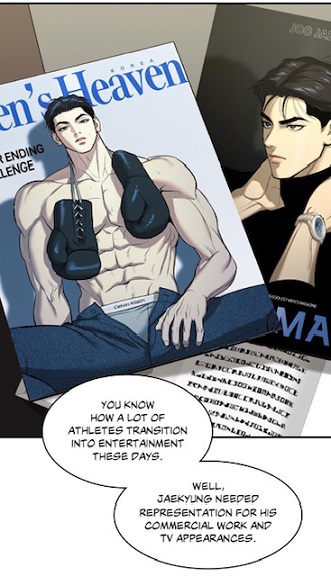 (chapter 30) lies a past left unspoken, a silence so complete that his own history became an empty space others could fill as they wished. This essay brings these two “stories” together — the Emperor and the boy. And now, you may be wondering how I came to connect the champion’s trauma to his future career as an MMA fighter. The answer lies in Joo Jaekyung’s own voice. 😮
The Emperor in The News
When the news broke in chapter 70,  (chapter 70), Hwang Byungchul’s anger fell squarely on the champion.
 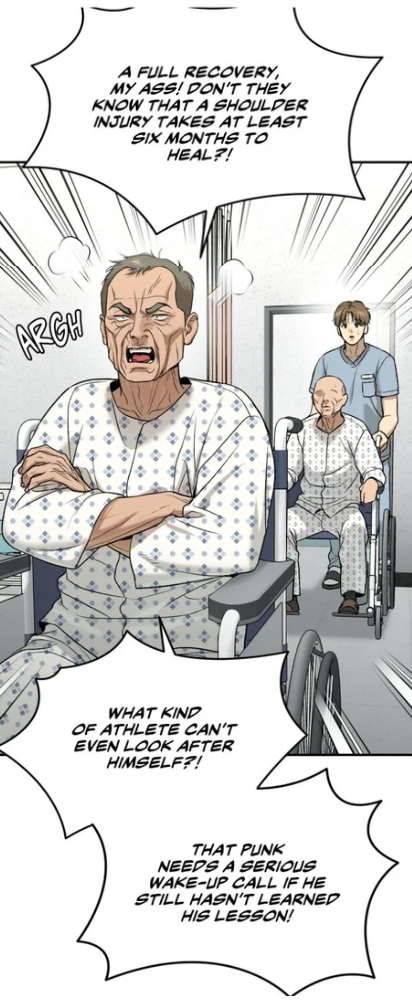 (chapter 70) To him, it looked as though Jaekyung had made the reckless choice to return to the ring so soon. That was the trap: the headline and phrasing were designed to make it appear that the decision was the fighter’s own. The opening line alone
  (Chapter 70) created the illusion that this break had been perceived as a punishment, and that Jaekyung was eager to prove himself once again. No wonder the director assumed he had given his consent.
The visuals reinforced the illusion. The entertainment agency recycled old images not just because they lacked recent photos, but because they wanted to tap into the nostalgia of his earlier popularity, before the match against the Shotgun. It was as if someone wanted to overwrite the present and rewrite his history, packaging him in the glow of past victories. Even within the same news segment, there were two distinct “voices”: the official announcer highlighting his return, and an unseen voice quietly bringing up the suspension again — a reminder meant to frame his comeback as a personal mission rather than a corporate decision. In truth, the match was arranged by “Joo Jaekyung’s team” and MFC — a convenient shield for those actually pulling the strings. (chapter 70) Thus I conclude that the first comment (chapter 70) was to divert attention from the other persons involved in the decision for the next fight.
Notice what the journalist does not say. The CEO’s name is absent. There is no mention of the closed-door meeting between Park Namwook, Jaekyung, and the CEO where the fight was proposed. 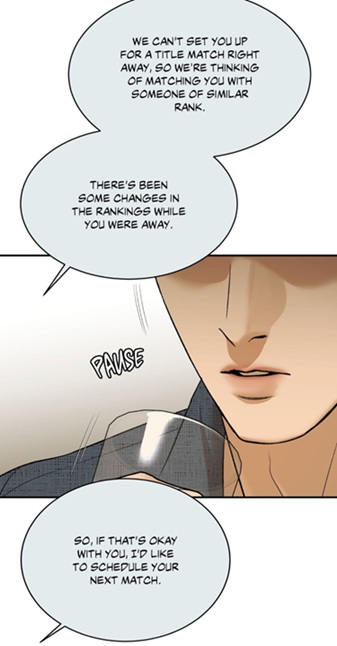 (chapter 69) By erasing these details, the public sees only two players: the Emperor and his anonymous “team.”
 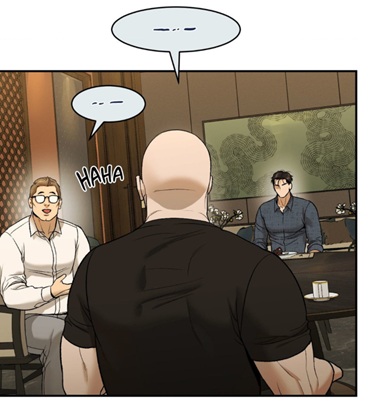 (chapter 69) It was as if the main lead, backed by his team, had personally approached MFC to request the match — an illusion strengthened by the opening line, “MFC’s former champion Joo Jaekyung will be returning to the ring this fall after serving his suspension.” This way, if the decision draws criticism, the CEO can retreat behind the fighter and his team, like they did in the past.
  (Chapter 54) Back then, the champion had not reacted to this comment. Even in the worst case, the CEO can hide behind one of the MFC match managers or doctors.
  (chapter 41) But that excuse would be a fiction: Jaekyung hasn’t even met those doctors or talked to the MFC match manager
  (chapter 05). He has been chasing after his fated partner. Finally, he hasn’t even signed any paper or agreed at the meeting. In fact, he remained silent for the most part of the time and the reason for this urgent meeting was his request for proper investigation concerning the switched spray:
  (chapter 67) That’s the reason why this suggestion from the CEO appeared the very next day.
  (chapter 69)
When the orthopedic surgeon Park Junmin cleared him to remove the cast in chapter 61  (chapter 61), it was paired with a recommendation for rehabilitation — not an immediate return to competition. This was actually a condition for his total recovery. On the other hand, the doctor imagined or suggested that his patient wished to return to the ring so soon. No medical professional ever signed off on an autumn fight. Yet the date is already set, and the headlines frames it as a confident comeback without any medical backup. The Emperor’s name is splashed everywhere, but none of the words belong to him.
And this is not the first time we’ve seen this sleight of hand. Back in chapter 57, a television broadcast featured an “exclusive interview”  (chapter 57) with one of his close associates — a man whose face was hidden, speaking as though he were the athlete’s voice. That interview was accompanied by a familiar victory image
 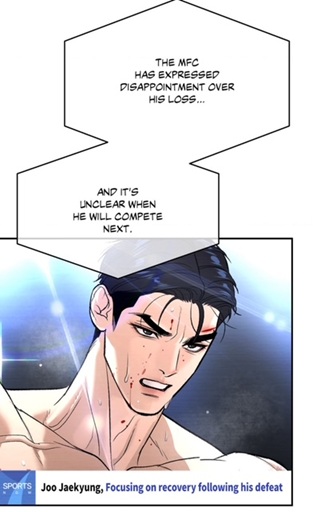 (chapter 57), a stock photo already used in other press pieces. This picture comes from after the fight in the States:
  (chapter 41), while the image released with the fall match announcement was the one from when he first won his champion title. (chapter 70) Since MFC and the journalist are recycling old images, they unwittingly revealed their own deception — dressing up the present in the clothes of the past. LOL!
The message is the same in every case: Jaekyung “speaks,” but only through others. His former stage name mirrored his situation, as he owned the champion belt for quite some time. The title “Emperor” 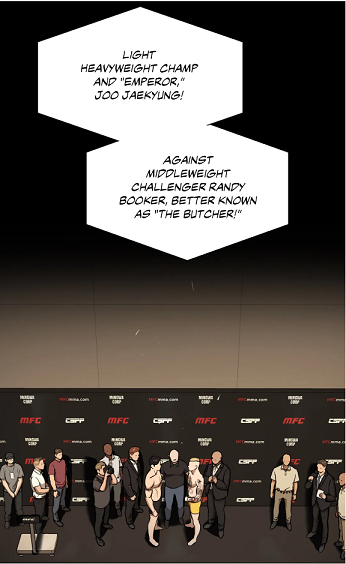 (chapter 14) seems to radiate absolute power — the kind of authority that commands armies, bends laws, and answers to no one. It is meant to ooze charisma and control, a name that suggests the bearer acts on his own will. Yet, in truth, emperors have rarely ruled alone. Behind every throne stand ministers, advisors, generals, and family factions, each shaping decisions from the shadows. An emperor who ignores these forces risks losing his crown.
In Joo Jaekyung’s case, the irony is sharper still. Far from being the all-powerful figure his stage name implies, the “Emperor” is a role built and sustained by others — MFC executives, Park Namwook, the entertainment agency — each serving as both his court and his cage. They decide when he fights, how he is presented, and even the tone of the stories told in his name. Once he tried to complain about his tight schedule, this is what he got to hear:  (chapter 17) He was blamed for his popularity. The man inside the crown does not act or speak freely; his words are filtered, scripted, or replaced entirely.
This makes the title “Emperor” less a badge of sovereignty and more a mask for dependence. Like a ruler hemmed in by court protocol and political intrigue, Jaekyung’s every public move is mediated by the hands of others. The grandeur of the title hides the quiet truth: the Emperor is voiceless, and the crown he wears is one that demands obedience rather than granting freedom. That’s his curse. His identity is filtered, packaged, and sold by those who stand in his shadow – so much so that people send him bottles of alcohol because that’s what one offers a champion, 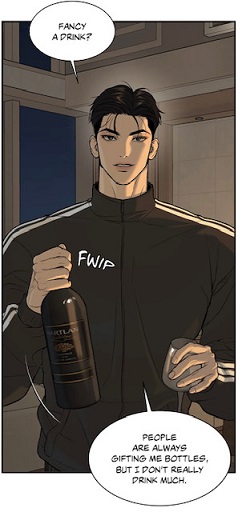 (chapter 12), never mind that he hardly drinks. The gesture fits the fantasy they’ve built around him, not the reality of a man who rejects alcohol due to his addicted father, a reminder that even the tokens of admiration are shaped by the image, not the truth. So who is this so-called close associate or “Joo Jaekyung’s team” exactly that decides for him, speaks for him, and hides behind his title? Besides, why did the journalist change from “one of his close associates” to “Joo Jaekyung’s team”?
The Voice Behind the Crown
In chapter 57, the television broadcast introduced “one of his close associates” — (chapter 57) a figure whose face and name were hidden, speaking on behalf of the Emperor. In the essay Craving Mama’s Shine – part 1 (locked) I had presented different possibilities about the identity of this “close associate”. But with the new announcement, it becomes clear that figure can only be Park Namwook. He is the only one who arranged the meeting between the CEO and Joo Jaekyung. The anonymity was not a courtesy; it was a shield. By keeping his face and identity off the record, he could shape the narrative without owning it, avoiding any direct responsibility for the words attributed to him. Yet the choice of “close associate” was deliberate — it positioned him as the man closest to Jaekyung, someone with privileged access and authority to speak for him. It was a claim of proximity and influence, the sort of title that sells the image of a trusted confidant, even as it erases the fighter’s own voice.
The broadcast itself set the tone even before his segment began. Just prior to the “interview,” the anchor announced:  (chapter 57) The nickname, played for entertainment value, was another way of turning the champion into a caricature — a marketable, amusing persona instead of a man with a past and agency. It is quite telling that Park Namwook’s interview aired immediately after the anchor referred to Jaekyung as “Mama Joo Jaekyung Fighter.” This was not the lofty “Emperor” title repeated in gyms and ring intros — it was more a mocking nickname, a deliberate jab meant to provoke. In that moment, the Emperor was verbally pulled down from his pedestal, yet the images shown alongside the segment told a different story: carefully chosen shots of him as a champion, a visual echo of his marketable persona. The dissonance was striking.
Equally telling is that the “Emperor” title had already vanished from the conversation. Its disappearance suggests that Jaekyung was never the one who chose it — it was a label assigned to him by others, to be used or dropped at their convenience. Park Namwook made no attempt to restore it or defend his fighter’s dignity, like mentioning the drug incident in the States or the spray incident in Seoul. The cause for his “silence” is simple: he doesn’t want to admit his failures and responsibility. He prefers the champion taking the blame. Hence this interview was not brought up by the manager:  . (chapter 54) In my opinion, the man is trying to return to the past, thinking that his “popularity” can come back, not realizing that he is being manipulated himself. On the contrary, he stepped into the role of spokesperson without hesitation, speaking as if he were Jaekyung’s voice while keeping his own face and name hidden. He only speaks, when he feels safe. He can not be responsible for the champion’s recovery. (chapter 57) The message was clear: he had no issue with his fighter being framed this way (“Mama Fighter Joo Jaekyung”), so long as the interview served its purpose. Park Namwook may not be a cynical manipulator, but his silence in the face of mockery speaks volumes. In his mind, any coverage is better than none; to vanish from the public eye is worse than being nicknamed “Mama Fighter.” By stepping into the media slot, he believes he’s keeping Jaekyung alive in the public consciousness. Yet in doing so, he stands shoulder to shoulder with another, unseen voice — the one that coined the nickname in the first place. In both chapter 57 and chapter 70, this pairing repeats itself: Namwook’s loyalty becomes indistinguishable from complicity. Whether he realizes it or not, he’s lending his presence to a narrative that diminishes the man he claims to represent.
By chapter 70, the personal title “close associate” had shifted to the more generic “Joo Jaekyung’s team.” On the surface, the word “team” suggests equity, collaboration, and shared responsibility. But in Park Namwook’s vocabulary, “team” has never meant equality. His idea of a team mirrors the hierarchy he operates in — a boss who directs, and subordinates who follow without question, like we could observe at the hospital.  (Chapter 52) This framing lets him claim the prestige of leadership while leaving himself room to withdraw if things go wrong. Yosep was the one notifying MFC and reporting the incident to the police, Potato explaining his discovery to Joo Jaekyung and blaming the star.
And yet, the choice of this term also reveals a subtle shift. By saying “Joo Jaekyung’s team,” he is placing the athlete’s name in front — not his own, not MFC’s. That way, he believes that he can avoid accountability behind the team. However, he is not grasping that gradually, he is stepping down from his self-proclaimed ownership of the gym. Whether intentionally or not, the manager is acknowledging that the gym’s growing identity will eventually crystallize around the fighter himself. The name “Team Black” hasn’t appeared yet, but its logic is already here: a team that exists for the athlete and with the athlete’s consent, not a faceless collective that speaks over him. When that name finally surfaces, it will function as a boundary—an institutional “enough”—marking the end of treating the man like merchandise.
Here, the article “You Don’t Have to Put Up With Everything” offers a revealing lens. The article warns against confusing empathy with passive tolerance. While it’s important to understand that people may have difficult histories or traumas, compassion should not be used as a justification for allowing someone to mistreat or disrespect you. Understanding someone’s struggles does not mean accepting harmful gestures, words, or behaviors. Setting limits is not selfish or arrogant, but an act of self-respect and emotional protection. Boundaries are not rejection — they are self-care, a way to protect one’s well-being without guilt. This is exactly what the manager expected from Kim Dan. 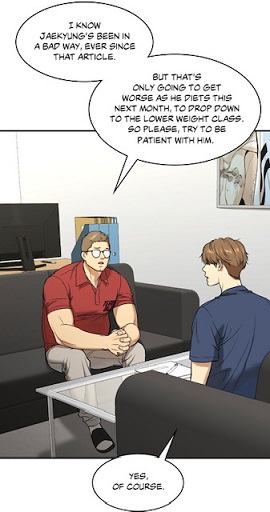 (Chapter 36) He should tolerate the celebrity’s moods and put up with everything. The manager didn’t mind, as long as he didn’t get affected. But what is the consequence of such a passive tolerance? An individual’s self-esteem can slowly erode, leading to a gradual loss of their sense of self. They may stop recognizing their own desires, needs, and rights, often without even realizing this is happening. This is because emotional exhaustion often develops subtly over time, rather than appearing as a sudden, dramatic event.
Thus, what begins with a hurtful remark can end in emotional blackmail. What was once a pointed criticism turns into contempt. And you, who at first knew what you wouldn’t tolerate, end up justifying the unjustifiable, in the name of empathy or the fear of loneliness. The result is a slow erosion of your self-esteem. You gradually disappear, ceasing to recognize your desires, needs, and rights. And the worst part is that you don’t even realize it. Because often, emotional exhaustion doesn’t come as an explosion, but rather as a steady trickle. Quoted from https://psychology-spot.com/you-do-not-have-to-put-up-wiht-everything/
As you can see, it can lead to depression. That has been Jaekyung’s position for years as well— enduring decisions made without his real consent, swallowing public criticism and badmouthing, and staying silent 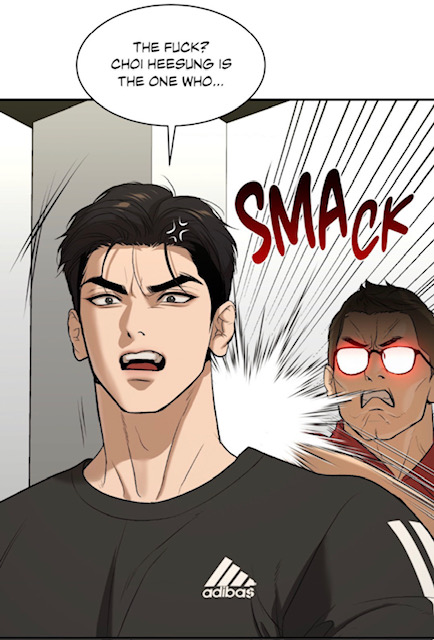 (chapter 31) when punished. In this light, Park Namwook embodies the very dynamic the article warns against: a figure who benefits from another’s compliance, maintaining control not through open dialogue, but through unspoken rules and the threat of exclusion.
The First Curse of the Manufactured Emperor
And now, you may be wondering why I am focusing so much on the absence of voice from Joo Jaekyung — the Emperor and the man. It is because he has been used as a tool, more precisely as an ATM machine for MFC. According to the teacher in Jinx 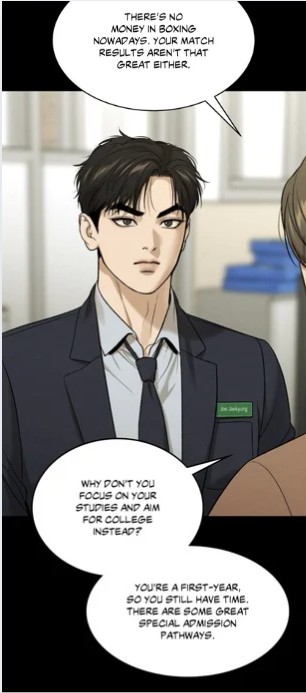 (chapter 73), by becoming a boxer, the champion wouldn’t make a lot of money. With this comment, he implied that boxing in South Korea had been losing popularity 10 years ago. This explicates why gradually, the members from Hwang Byungchul left the studio. And it was likely the same in the illegal fighting circuit.
  (chapter 73) The popularity of MMA in the States gave them the opportunity to revive fighting sports, a figure who could draw crowds and sponsors, making such events fashionable again.
For me, the Emperor was created for that reason. His public image was rewritten — he was called a “genius” 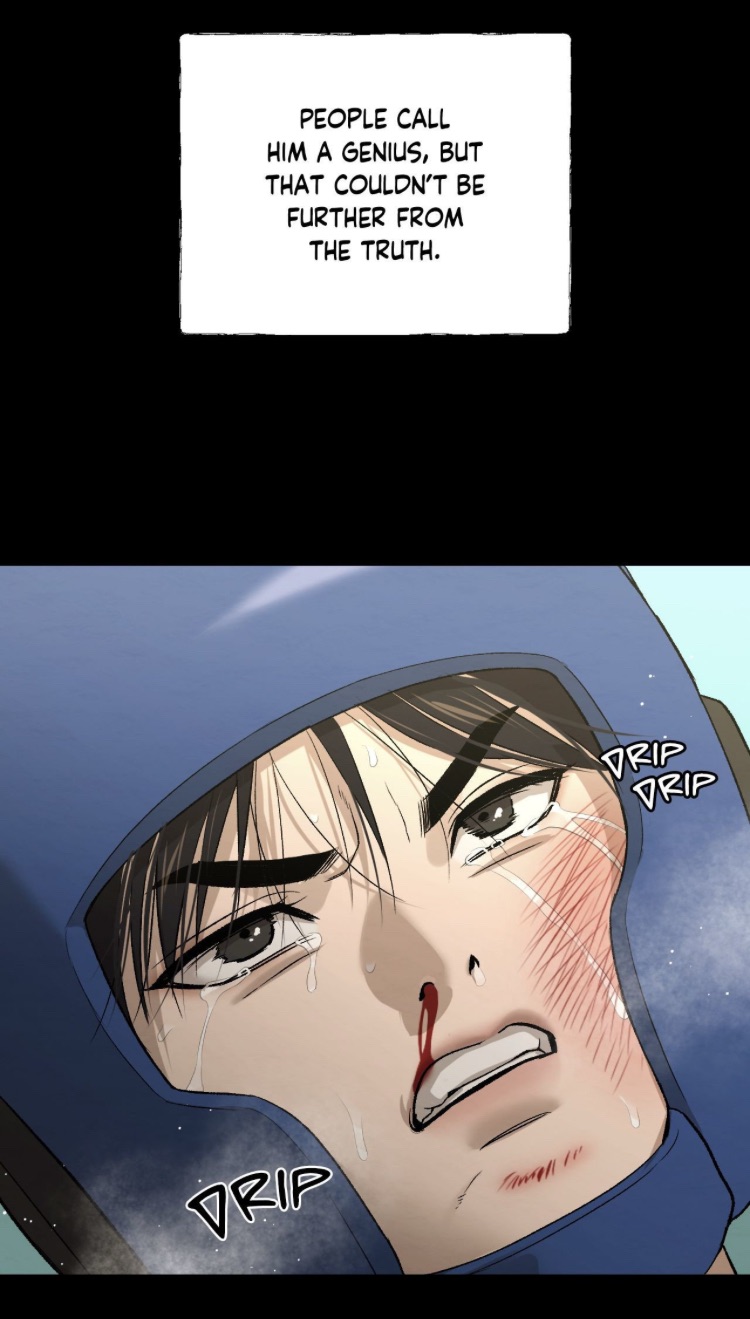 (chapter 72) instead of “hard-working,” a man who “chose sports over a dark path.” Yet if you look closely, this celebrated “ascension”
 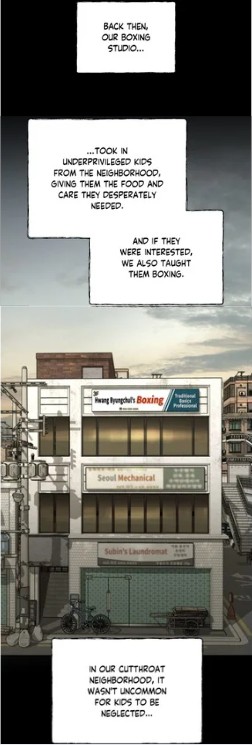 (chapter 72) isn’t tied to the director’s boxing studio at all — it’s linked to the arcade’s punching machine incident. (chapter 26) This moment, trivial in reality, became the origin story of the Emperor, as though the broken machines had revealed a prodigy destined for greatness. That’s the reason the star rejects this intro. In fact, this incident contributed to create the champion as a spoiled brat. In truth, the director had suggested that Jaekyung enter the sport professionally so that he could feed himself, but his reasoning had nothing to do with arcade games or instant legend. That pragmatic nudge was later overwritten with a glamorous tale that erased the long hours in a run-down boxing studio
  (chapter 72), the scars of his family history, and the years of survival before the cage. This is history rewritten, his boxing past and family erased. Why? His origins could expose the ugly verity: the link between criminality and boxing (as such fighting sports). Secondly, because his real story, though moving, lacked the glamorous allure needed to market him. His real story would have revealed that to rise to the top, you need relentless work, not a miraculous moment. That version was never going to sell as well as the “genius” myth.
With his success, his “gym” soon attracted members from different martial arts — judo, jiu-jitsu — all chasing the dream of becoming rich and famous like him. 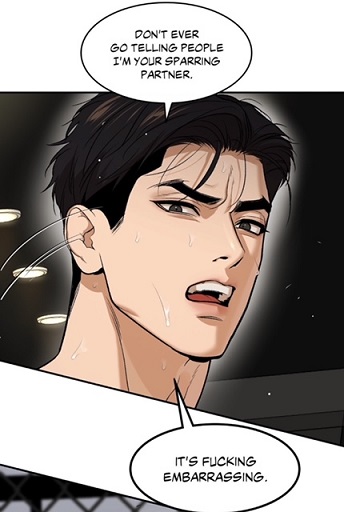 (chapter 46) Most of them thought that by staying close to him, they could benefit from his popularity. To conclude, for many of them proximity to the Emperor wasn’t about learning discipline or technique; it was about absorbing his fame by osmosis. Hence they complained and accepted the gifts and money so easily.
 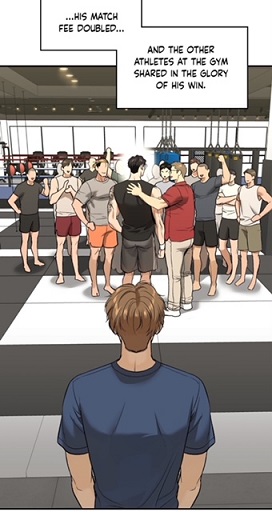 (chapter 41) Observe how the manager is acting here. He is speaking, touching the star like his prize and possession. The Emperor became the merchandise, the illusion, the bait to draw both viewers and fighters. However, being “labeled as genius” can only push desperate fighters to take a short-cut: bribes and drugs. Hence Seonho couldn’t last a whole round.
  (chapter 46) And, like any product, once it was seen as damaged, its value plummeted. The moment he “lost” his title and suffered injury (chapter 52), the dream began to unravel.
  (chapter 52) This panel captures this shift perfectly: two fighters casually dismiss him over dinner. In those words, the Emperor isn’t a mentor, a champion, or even a man — he’s a broken commodity, no longer worth the investment. The same people who once fed off his popularity are the first to abandon him when the promise of easy gain disappears.
This served more than publicity. Through him, they could obscure their crimes and build a parallel market in the underground fighting world. And here, the lesson from “You Don’t Have to Put Up With Everything” becomes vital: understanding Jaekyung’s difficult past or the pressures on the industry should not excuse the way his dignity and history have been trampled. His compassion for the system that raised him has been turned into passive tolerance — exactly the dynamic the article warns against.
And now, you see why I chose to postpone the second part of The Birth of the Shotgun. Without Baek Junmin — his shadow in the ring — Joo Jaekyung would never have been made to shine so brightly. No wonder why he was so jealous. He believed that his victories were rigged too.
Yet the irony is that Park Namwook is no mastermind. As we’ve seen time and again, he follows the lead of others — the CEO, the entertainment agency, perhaps even unseen backers — rather than setting the agenda himself. He is the mouthpiece, not the brain. The “close associate” title flattered him with the appearance of authority; the “team” label protects him when that authority becomes risky. Both are masks, worn depending on the circumstances, to keep himself valuable to the system. On the other hand, he is gradually revealing his real position: he is not the owner of the gym!  (chapter 22) He is even disposable. He is gradually giving more rights to his “boy”, the real director of Team Black. And the moment you perceive the manager as the main lead’s voice, you can grasp the true significance of the slap at the hospital:
 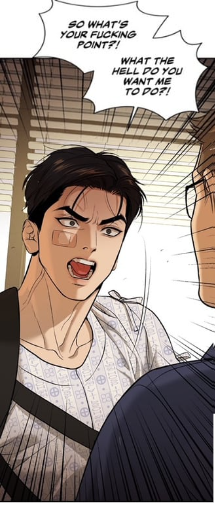 (chapter 52) For the first time, the main lead had voiced his own thoughts and emotions. He had used his real “voice”, revealed his unwell-being:
  (chapter 52) To this outburst, Park Namwook slapped Jaekyung in front of others (chapter 52).
  (chapter 52) That was not the act of a coach correcting an athlete — it was the gesture of an owner disciplining a pet or a possession, a reminder of who controlled the narrative. In that moment, the Emperor did not protest.
 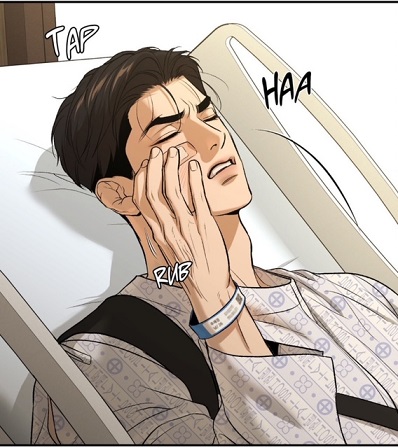 (chapter 52) He chose silence, and later avoidance, staying away from the gym. That silence was not weakness, but choice: he would listen less and less to his hyung.
From then on, the champion’s public image — whether filtered through the “close associate” or the “team” — was not his own. Park Namwook treated him less like an athlete 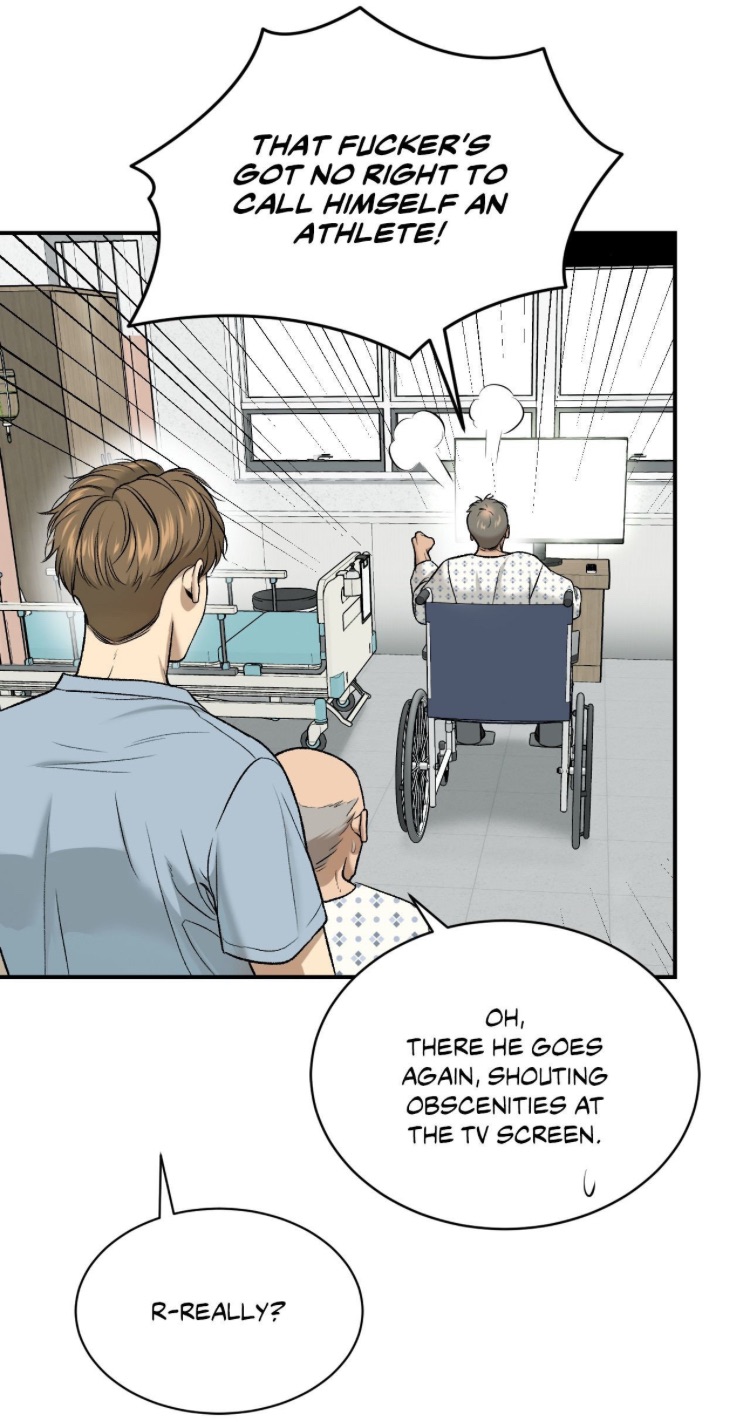 (chapter 70) and more like a product: something to be displayed, sold, and, when necessary, handled roughly to keep in line. The shift in labels is just another layer of that merchandising process — a packaging change to suit the current market, not a recognition of the man inside. To conclude, the champion has always been voiceless all this time, even here:
 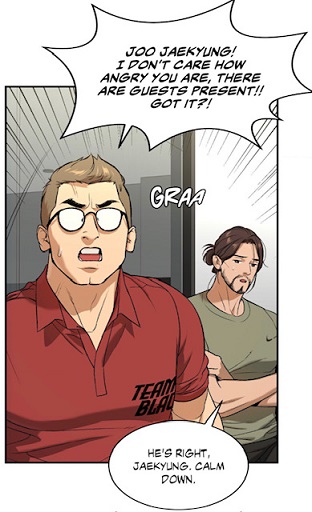 (chapter 36) All he needed to do was to fight:
 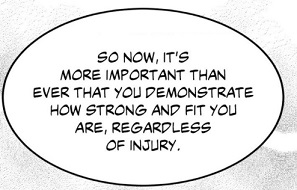 (chapter 36)
And yet, if you compare the Emperor in the present with the teenager in the past, you’ll see a stark reversal. The Joo Jaekyung of today has his voice mediated, silenced, or replaced by others; the boy of yesterday dared to speak for himself. In the confrontation with his father, he voiced his own desires and defiance directly  (chapter 73) — unfiltered, unmarketed, unprotected. It was raw, dangerous honesty, and it came at a cost: the loss of his voice!
The Night That Stole His Voice
If you compare the Emperor to the boy he once was, the contrast is striking. As a teenager confronting his father, Joo Jaekyung still voiced his own desires.  (chapter 73) Six years earlier, however, his voice had already been battered by silence. After his mother’s abandonment at age six, the only connection he retained with her was a phone number —
 (chapter 72) We don’t know how many times he called, but each time we see him do it, his face is injured.
  (chapter 72) The phone calls are therefore intertwined with the boxing studio, as though pain itself pushed him toward her. At ten, he picked up the receiver and let it ring only a few times before hanging up. The next time, in the dead of winter, he finally spoke, promising that if she returned, he would protect her from his father and make enough money to keep her safe.
  (chapter 72) Each time what answered him was not her voice, but a machine: “ (chapter 72) His words met a recording, his promise suspended in a vacuum. Whether she listened to his words or not, the outcome was the same — she never came back. No reply, no echo. Her silence told him the truth: his wish would never be heard. From that point on, she vanished not only from his life but from his speech; he no longer mentioned her. That silence became his default — speaking desires aloud was pointless if no one would answer.
By the time of the morning argument with his father at sixteen, we can conclude that the nightly calls had long stopped. The boy had given up on being heard. (chapter 73) Six years later, at sixteen, he finally raised his voice again — this time to his father. He wouldn’t give up on boxing. Unlike the mother, the father answered. But his “reply” came in the form of insults, blows, and a dark prophecy: that Jaekyung would never amount to anything, 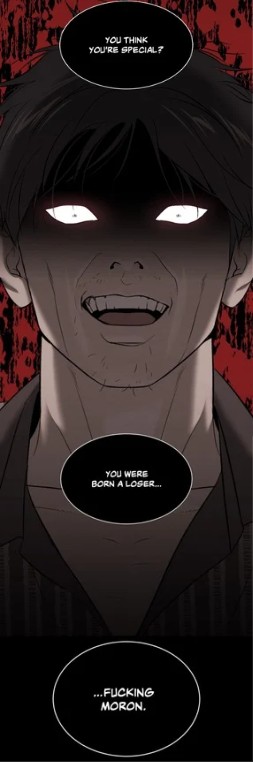 (chapter 73) that he was born a loser, that his dream was a joke. Here, the voice met not silence but resistance, mockery, and humiliation. And unlike with his mother, Jaekyung did not retreat — he cursed back. (chapter 73) He swore he would prove the man wrong, that he would win, and spat the most dangerous line of all: “If I win, you can keel over and die for all I care.” That evening, he saw his father’s corpse —
 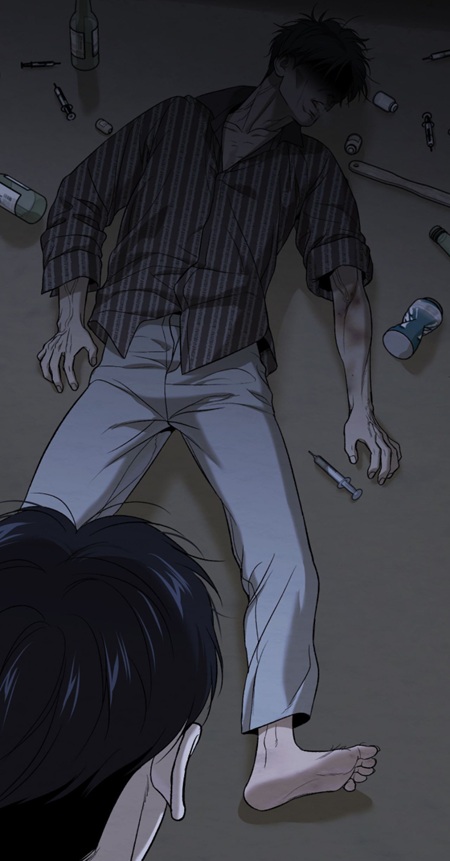 (chapter 73) and with it, another layer of his voice disappeared. He had the impression, he had killed his father. His words had been more dangerous than his punches. Hence he could only come to resent his own voice and words. And now, you comprehend why the Emperor allowed the hyung to become his voice. To conclude, the silence of those nights became the silence of the man. As you can see, the curse did not fall on Joo Jaekyung’s voice in one night — it was built, in stages, over years. But the death of his father linked to the argument represented the final straw that broke the camel’s back.
This is the pivotal difference: with the mother, voicing a wish had no consequence because it dissolved into nothingness. With the father, voicing a wish carried weight — it provoked, it struck back, and, in Jaekyung’s eyes, it cursed. When his father died that same evening, the boy was left to carry the unbearable suspicion that his words had somehow brought it about. That night became the night his voice was poisoned: one parent had taught him that speaking was useless; the other had taught him that speaking could kill. From then on, his voice retreated into the ring, where the only “speaking” he did was with his fists. And now, you comprehend why he is using his sex partners as surrogate fighters, why he treats them as toys.  (chapter 55)
The Birth of the Jinx
The two formative wounds — his mother’s unanswered call and his father’s cursed reply — shaped the way Joo Jaekyung would handle intimacy for years to come. With his mother, speaking led to nothing; his voice dissolved into silence. With his father, speaking led to too much; his words became a curse, followed by guilt and grief. From these experiences, he learned that words in close relationships were unpredictable weapons. They could vanish, leaving him abandoned, or strike deep, leaving him ashamed.
Sex became his remedy to fight against loneliness and his refuge from this danger 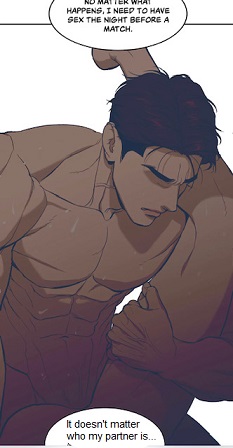 (chapter 2) — a space where he could act without having to speak. In the bedroom, as in the ring, the body could carry the conversation. Here, he could dominate, control, and release tension without the risk of verbal damage. His partners became surrogate opponents: sparring substitutes in a non-lethal match. Treating them as “toys” wasn’t only objectification; it was a form of control that, in his mind, protected both sides. Toys don’t demand answers, don’t talk back, and don’t leave you cursed with regret. They remain safely outside the territory where his voice had once done harm.
But this logic, built to keep others safe from his voice and himself safe from their silence, begins to falter with Kim Dan. The latter embodies not only the mother (abandonment, silence- I believe that he resembles her too) and father (argument, drinking), but also the child. Dan cries, shows his vulnerability and admits his mistakes.  (chapter 1) He embodies innocence and as such lack of experiences. Moreover, he talks, makes suggestions for the champion’s sake
  (chapter 27), spent time with him, asks questions, confronts, and refuses to be reduced to a body in the room. He breaks the rule of silence. With him, Jaekyung can no longer hide behind the physical alone; he is forced to speak, to explain, to voice desires and fears. He pushes Jaekyung to engage in ways he’s spent years avoiding. In this way, Kim Dan becomes the first real threat to the system the champion built after those two curses — and possibly the first person who could prove that words can be safe again. And now, you comprehend why Joo Jaekyung was moved by the birthday card
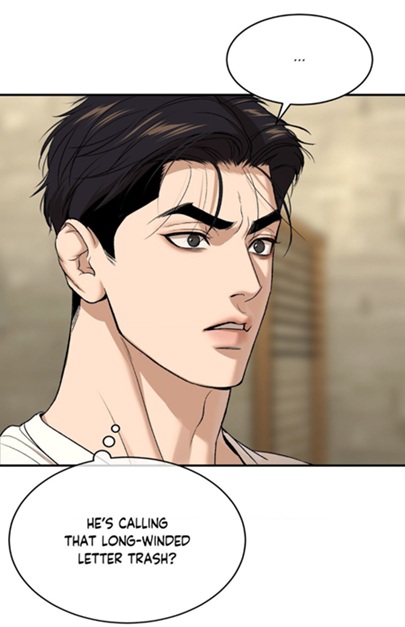 (chapter 62) To most, it might look like a simple gesture, but for him, it was a rare and precious thing — a voice that had taken the time to shape itself into words just for him.
 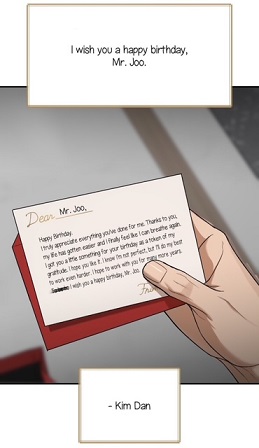 (chapter 55) After years of associating speech with either silence or harm, receiving a long-winded, carefully written message felt almost unreal. He saw the effort behind it, the deliberate choice to put thoughts and emotions into language instead of letting them fade away or turn into weapons. In that card, Kim Dan offered something neither of his parents had managed: a voice that reached him without wounding. No silence, no insult. For the champion, it wasn’t just a card — it was proof that words could be built into a gift, not a curse. The latter expressed his dreams and gratitude. Thus I deduce that the Emperor’s curse will be broken by a spell: words!
 (chapter 55) The “spell” to break it is not some grand external event, but the simple, sustained act of honest communication — something that has been denied to him since childhood.
By linking this to Kim Dan, it becomes obvious that the Emperor’s liberation won’t come from winning another fight or reclaiming a title, but from restoring his own voice in a relationship where speaking is safe, heard, and reciprocated. Boxing was the only language he ever learned from his parents (chapter 72) — a vocabulary of fists, jabs, and physical dominance as a way to earn money and recognition— but with Dan, the champion is slowly acquiring a new language. His hands, once trained only for striking and defending, begin to communicate through gentle gestures: an embrace  (chapter 68), a kiss, a pat, a caress or by simply holding hands
 . In this way, the curse that began when his voice was silenced and his hands were weaponized will only be broken when those same hands learn to speak tenderness. Look how doc Dan reacted to his public embrace:
  (chapter 71) He saw affection in the hug, but he still doubted the champion’s action.
The Prison of the Boy
And now, you are probably wondering why I selected a tree for the background illustration of The Night-Cursed Emperor.  Until now, the design’s images have played a secondary role, yet the answer lies in a single scene from chapter 41.
  (chapter 41) Under the bright sunlight, Kim Dan reached out toward the leaves, his hand open and unguarded, as he silently thought of the man he loved. This gesture, so simple yet so revealing, became the unspoken confession that marked the start of a different kind of freedom—the freedom to feel.
In my earlier analysis Prison of Glass , Key Of Time , I had argued that Joo Jaekyung’s habit of meditating before the expansive glass window in his penthouse was more than a moment of calm — it was a ritual of self-confinement. 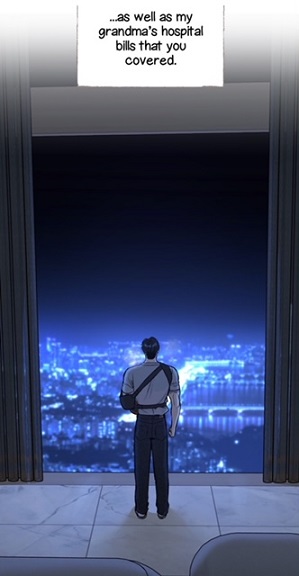 (chapter 53) The glass was an invisible barrier, offering the illusion of freedom while keeping him trapped in the moment of his unresolved trauma. The closer he stood to it, the further he was from true release, his gaze fixed outward to avoid looking inward. That’s why he had no eye in that scene:
  (chapter 55)
This new scene 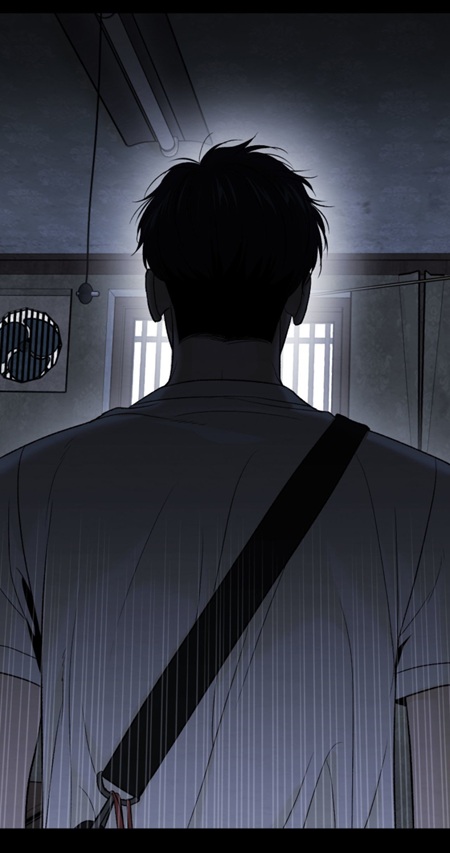 (chapter 73) reveals why that reading was correct: the penthouse window is not just a symbolic device of the present — it is the direct heir of a far older image burned into his memory. Here, as a teenager, he stands before a small barred window in the room where his father’s corpse lies. The resemblance is not visual coincidence but emotional continuity. Both windows let in light without granting escape; both present the outside world as something visible yet forever out of reach.
In this panel, the confinement is literal. The bars fragment the daylight, reducing it to slivers, making the outside world seem even more inaccessible. He is facing the window and he corpse, his eyes fixed on the narrow frame of light, as if distance could make the reality behind him vanish. But the truth is locked in place — the body on the floor, the night’s events, the words exchanged. This is the night that froze him.
From that point on, every window in his life — no matter how large, modern, or luxurious — became a reenactment of that first prison. (chapter 55) The penthouse’s vast glass wall is just a polished version of this barred opening, a reminder that while his circumstances changed, the barrier never truly fell. The trauma stayed intact, shaping the way he saw the world and himself. The boy who stared through those bars never left that room; the man still carries that gaze. But there’s more to it.
Observe how he is standing in front of the window: (chapter 73) he is not only frozen, but also silent! Not only he lost his voice that night, but also he could never talk about it to anyone! He was forced to carry this huge burden alone. Who would feel empathy or attachment to such a man, when he was famous for his bad behavior? But deep down, the boy had come to love his father despite his flaws. This is his deepest secret which is coming to the surface: his love and guilt!
Even the window denies him solace. He could never see the moon behind that small window, just as he failed to notice the snow falling, when he attempted to contact his mother: (chapter 72) Nature was invisible to him; his world was defined by conflict, neglect, and survival, not by moments of beauty. He was never taught to enjoy the present moment.
Chapter 73 signals a shift. Like in chapter 71, where he shields his gaze, his “third eye” — the inner sight that perceives emotional truth — is beginning to open and recall his “sins”. His fever is not just physical; it’s the body’s acknowledgment of pain long repressed. He is starting to allow himself to feel, to admit vulnerability.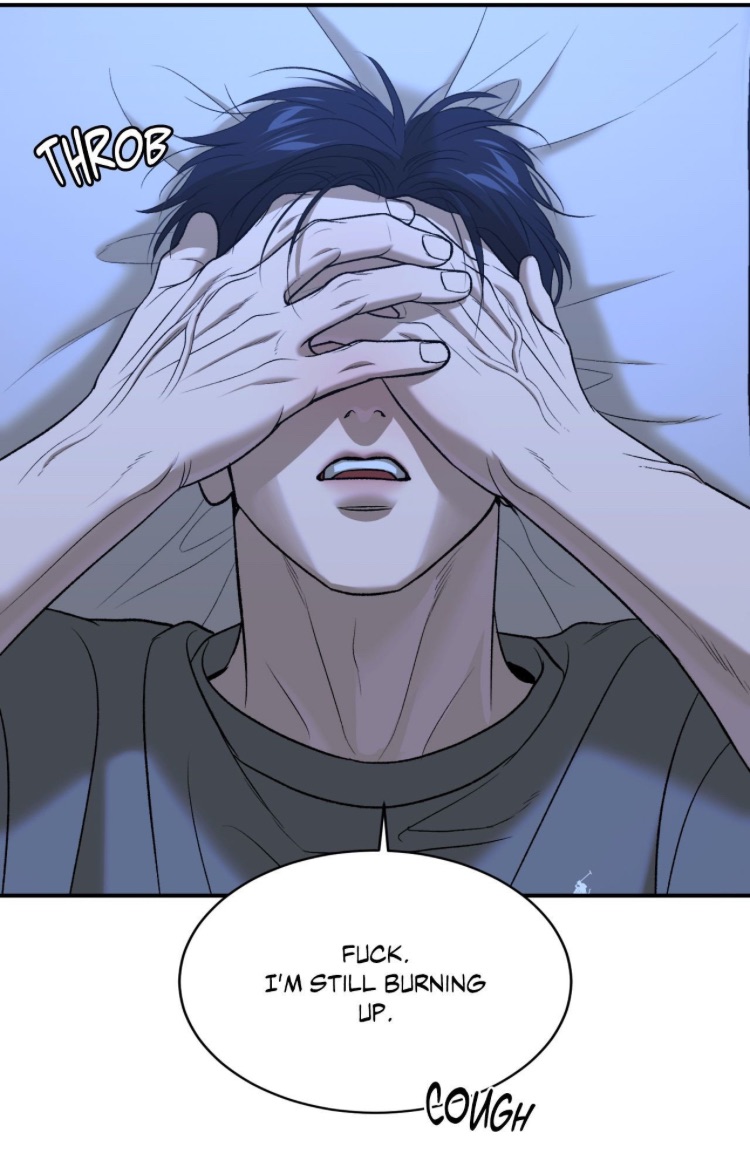 (chapter 71)
And this is where the night changes meaning. Until now, darkness for him was bound to abandonment and death. But in chapter 70, the owl’s call pierces the silence —  (chapter 70) the night can also be alive, communicative, protective. In that moment, the moon becomes more than a distant light in the sky: it is a patient witness, a calm listener in the stillness, reflecting the truth he has yet to voice.
 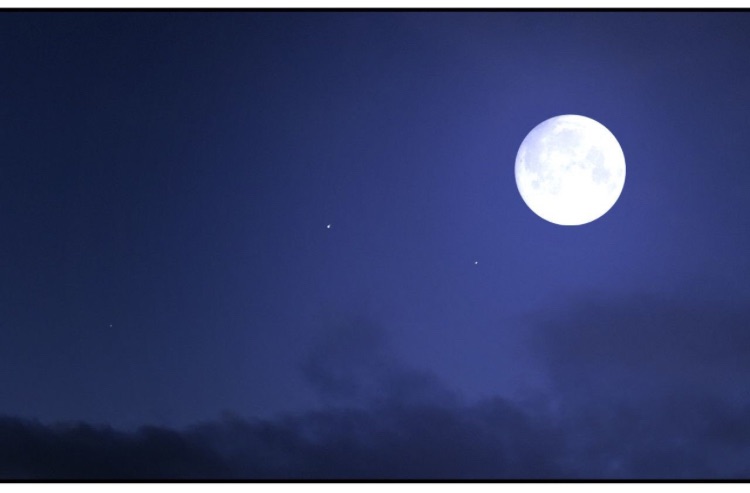 (chapter 70) Its soft glow contrasts with the blinding glare of the cage lights, suggesting that under the moon, there is space for gentleness, for hearing one’s own heartbeat and another’s words. Just as the moon guides travelers through darkness, it can guide him toward a night that does not suffocate him with loss, but offers orientation and connection.
This reframes his past behavior: his repeated night rescues of Kim Dan were not merely impulsive heroics;  (chapter 60) they were his own form of therapy. In saving someone else in the night,
 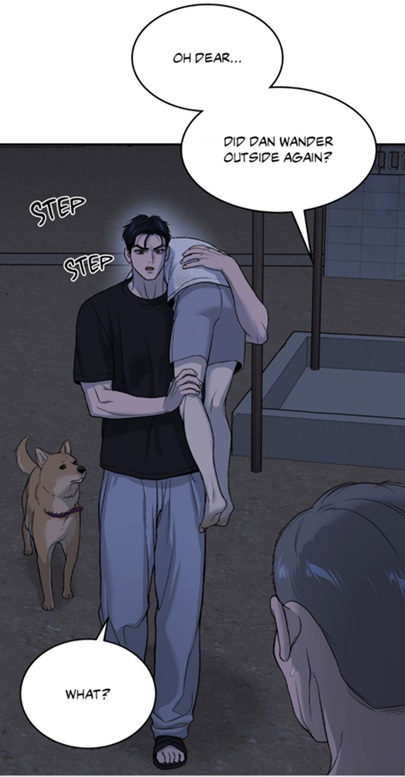 (chapter 65) he could prove to himself he was not powerless, he was valuable, capable of protecting what mattered.
 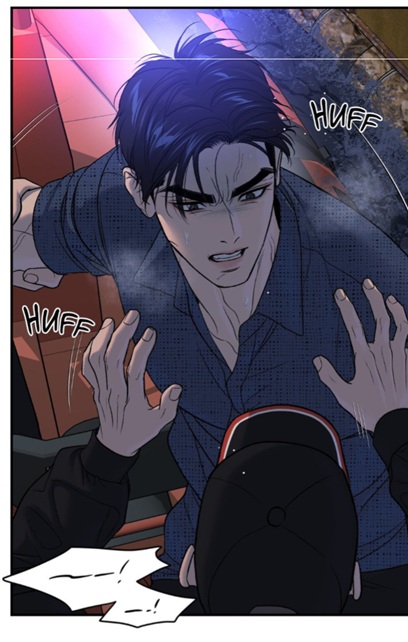 (chapter 69) He was not too late either. And the moment doc Dan discovers what the silent hero has done for him so many times, the former will realize that he has always been special to the Emperor. Moreover, the latter had never abandoned him in the end.
The curse of the Night-Cursed Emperor — the depression, the insomnia, the silence — will only break when he can walk through the night not as a rescuer masking his own wounds, but as a man who voices his emotions to the one person who has truly shared those nights with him. And now, Jinx-philes can grasp my illustration. The moment Joo Jaekyung starts confiding to doc Dan about his inner world, he will not only regain his voice, but also his life! He will be free and no longer the merchandise “Joo Jaekyung the fighter”. He will become a man with a history that is finally his to tell. And if his mother is still alive… she can be criticized for her actions. How so? It is because she was not by his side. She believed the “myth”. She probably imagined that he was “happy”. With his regained voice, the schemers will lose their hold over him; they will no longer be able to manipulate the silence that once kept him bound. Park Namwook has thrived in the shadow of his trauma — reframing the scars of that night as “mania” , (chapter 9) as if the champion’s volatility were a quirk (the actions of a spoiled child) to be managed rather than a wound to be healed. It is because he never talked to the champion or investigated his past. It was only about money and glory. The manufactured image of the erratic, temperamental fighter served Namwook well; it excused rough handling, justified bad press, and kept Joo Jaekyung dependent. Once the Emperor can name the truth of that night, the fiction collapses — and with it, Namwook’s control. He can only be judged as a liar and even a traitor, but we know that Joo Jaekyung has a big heart. He could love his father despite the abuse. Now, the missing link is Cheolmin!
  (chapter 13) Observe that this name is a combination between Hwang Byungchul and Baek Junmin! Under this light, my avid readers can grasp why the athlete kept his existence in the dark for so long! It is because the latter belongs to his past and knows the truth behind the Emperor! He was aware of his suffering. For him, he is not just a fighter, but someone who needed FUN in his life!
Feel free to comment. If you have any suggestion for topics or Manhwa, feel free to ask. If you enjoyed reading it, retweet it or push the button like. My Reddit-Instagram-Twitter-Tumblr account is: @bebebisous33. Thanks for reading and for the support, particularly, I would like to thank all the new followers and people recommending my blog.

 Bebebisous33s' analyses in K-Dramaland and Manhwas