Please support the authors by reading Manhwas on the official websites. This is where you can read the Manhwa: Jinx But be aware that the Manhwa is a mature Yaoi, which means, it is about homosexuality with explicit scenes. Here is the link of the table of contents about Jinx. Here is the link where you can find the table of contents of analyzed Manhwas. Here are the links, if you are interested in the first work from Mingwa, BJ Alex, and the 2 previous essays about Jinx Why Sleeping Beauty Had to Bleed part 2 and A Ruthless Fight, A Loverboy Break
It would be great if you could make some donations/sponsoring: Ko-fi.com/bebebisous33 That way, you can support me with “coffee” so that I have the energy to keep examining Manhwas. Besides, I need to cover up the expenses for this blog.
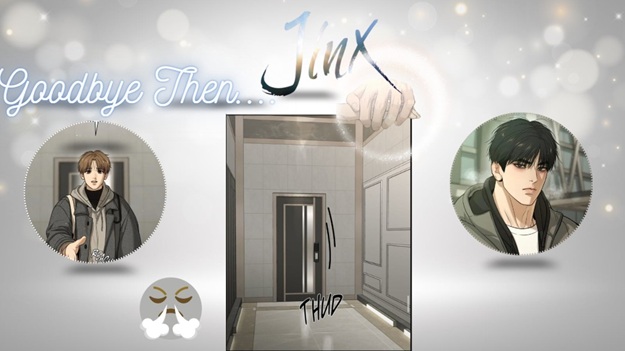
The Ghosts in the Warmth: Why Episode 100 Left Us Cold
Episode 100 of Jinx left many readers strangely unsatisfied. Some felt frustrated 😤, others emotionally empty. A few among us — readers, fans, longtime Jinx-lovers — even believed that this chapter resembled an ending so much that Mingwa herself had to clarify publicly (on X) that the story was not over. Some readers even considered dropping the story entirely. That alone says a great deal about the emotional violence of this chapter.
When a story’s atmosphere becomes so suffocating that readers instinctively want to step away from it, something unusual has happened. Dropping the story almost becomes a survival instinct. Remaining inside the narrative means remaining trapped in that freezing penthouse together with Kim Dan and Joo Jaekyung, surrounded by silence, distance, and unresolved pain.
But why did this episode create such discomfort? 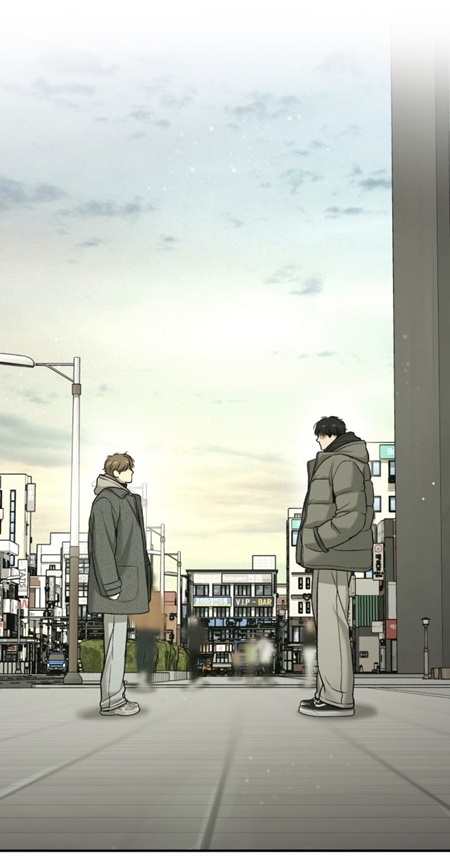 (chapter 100) Why does a chapter filled with flowers
 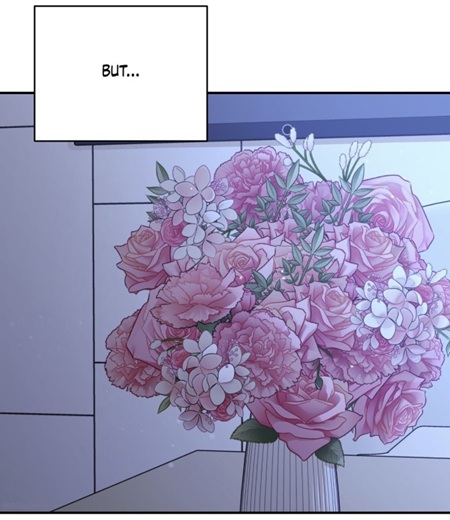 (chapter 100), warmth
 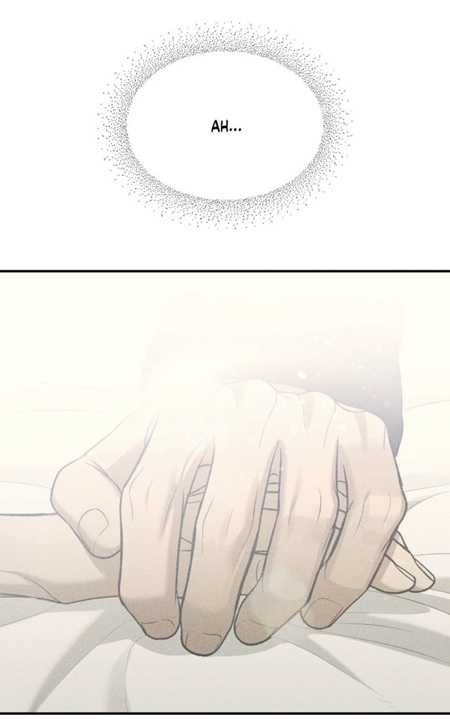 (chapter 100), survival, and reunion
 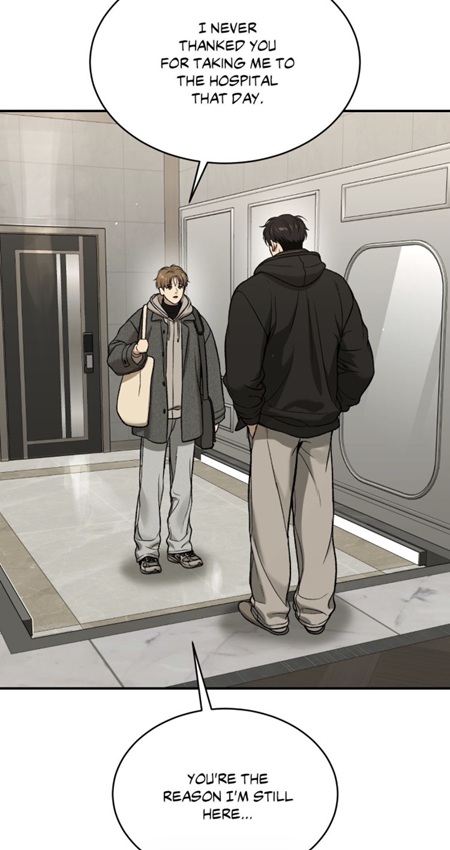 (chapter 100) feel so painfully cold? Why does “Goodbye then…”
 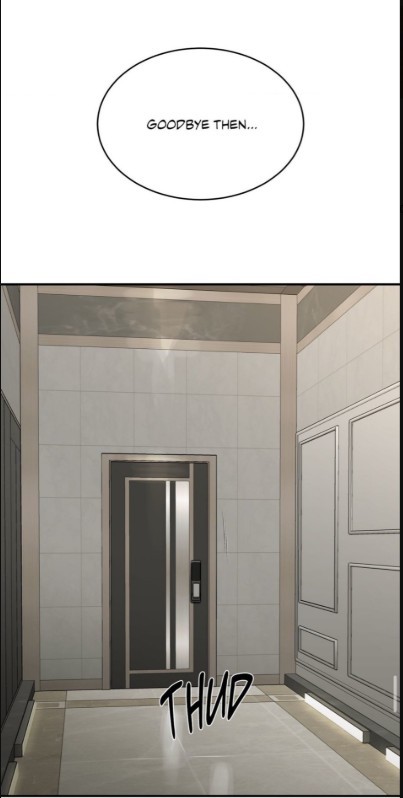 (chapter 100) sound more violent than the stabbing itself?
And perhaps the most disturbing question of all: how did Kim Dan and Joo Jaekyung end up acting like ghosts around each other?
For dozens of chapters, readers endured intense angst, toxic power dynamics, emotional repression, and physical trauma while holding onto a collective expectation: eventually, communication and emotional honesty would heal the damage. 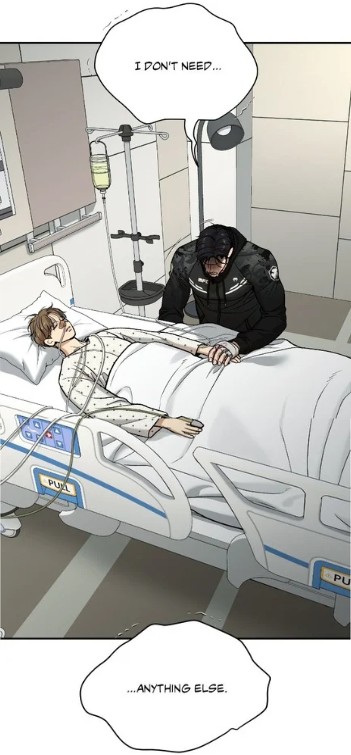 (chapter 99) Episode 100 appeared to be that turning point. The stabbing should have shattered the emotional walls between the protagonists. Many expected tears, confrontation, confession, catharsis. Instead, Mingwa deliberately subverted the classic romance payoff. Rather than an emotional embrace, readers received silence, hesitation, distance, and a strangely clinical handshake.
 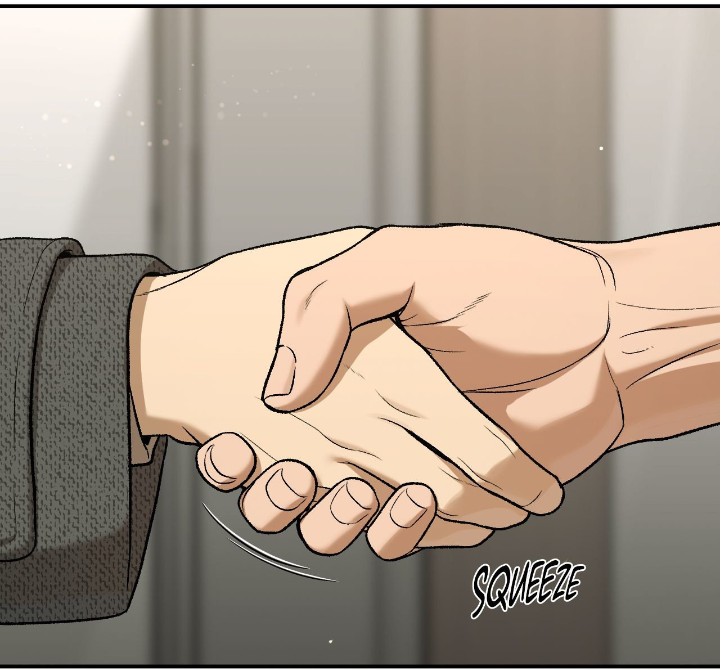 (chapter 100)
For many readers, that absence of catharsis felt almost unbearable. The realization suddenly emerged that the road toward healing might be just as long, painful, and exhausting as the road toward destruction itself.
At the same time, episode 100 strips away much of the fictional distance that once existed between the protagonists and the audience. Earlier in the story, Joo Jaekyung often functioned as a larger-than-life “red flag” character: 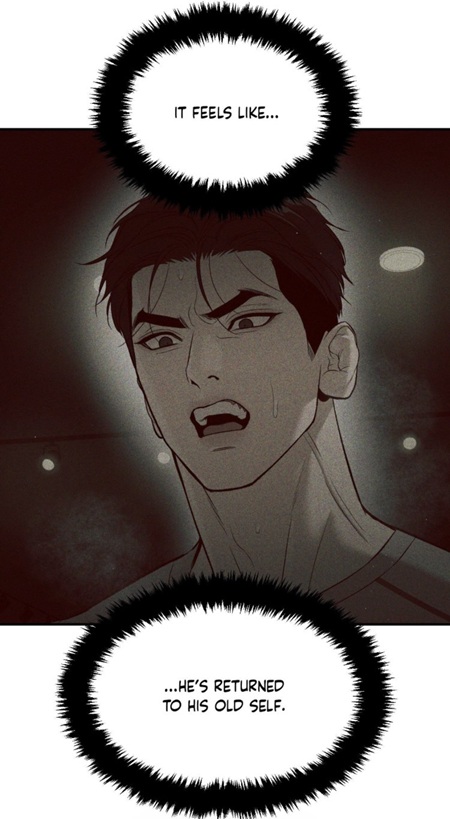 (chapter 96) dramatic, excessive, intimidating, almost unreal. But the tragedy presented in this chapter feels painfully ordinary in comparison.
 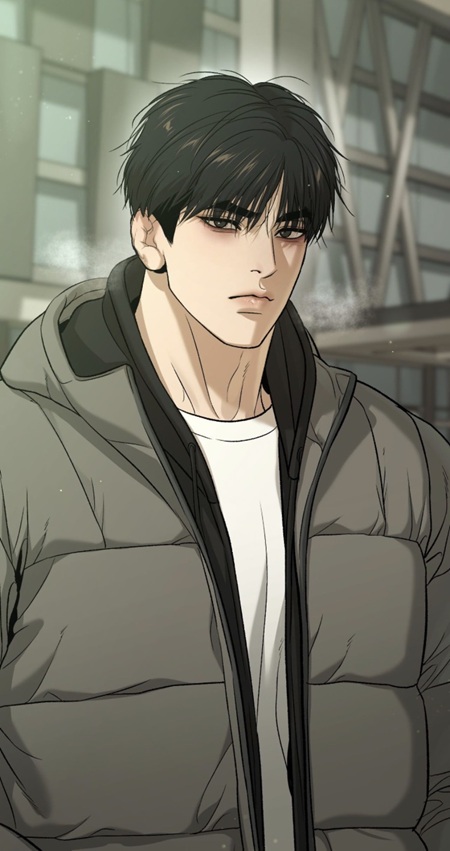 (chapter 100) Two people paralyze each other through assumptions, guilt
 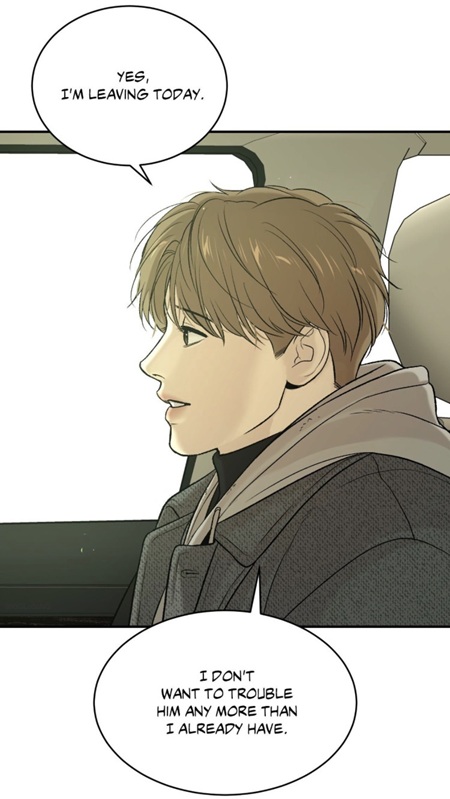 (chapter 100), low self-esteem
 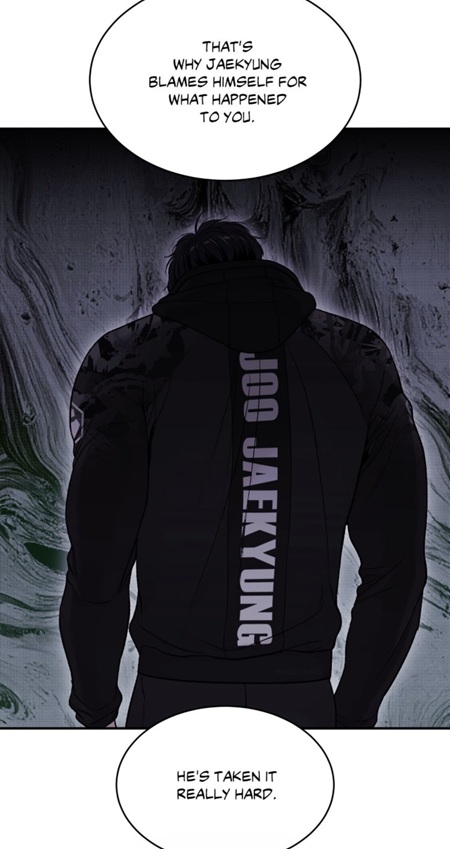 (chapter 100), fear of vulnerability, and lack of communication. Neither asks the questions that truly matter.
 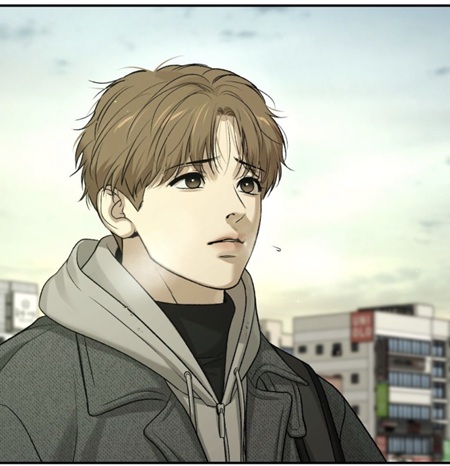 (chapter 100) Neither says what they genuinely feel.
 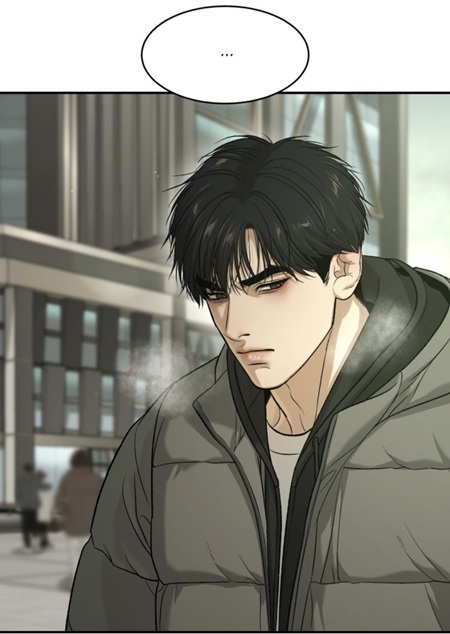 (chapter 100) Almost everyone has experienced a relationship, friendship, or family dynamic damaged not by hatred, but by silence and emotional avoidance. That realism transforms the chapter into something deeply uncomfortable because the fantasy slowly disappears, leaving behind a frighteningly human mirror.
Readers blamed Kim Dan for his passivity and self-sacrificial tendencies. 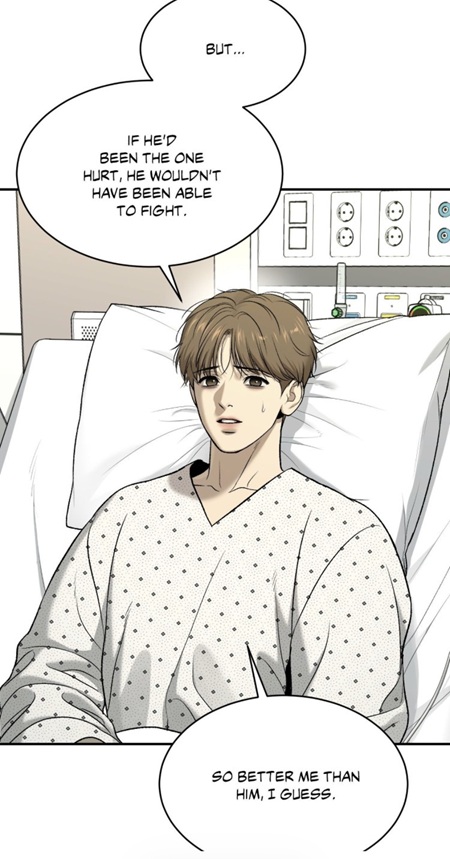 (chapter 100) Others condemned Joo Jaekyung for his emotional withdrawal and ghost-like behavior.
 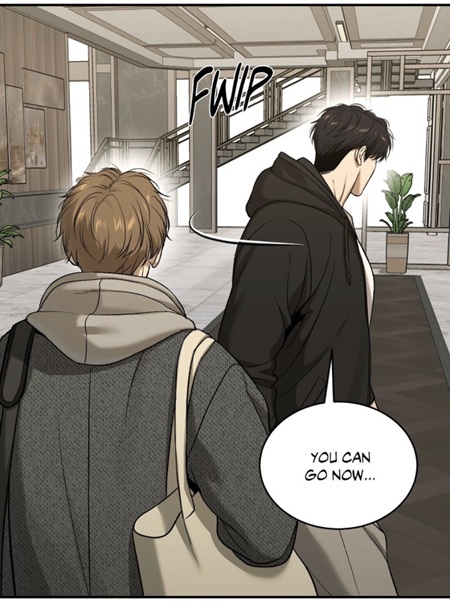 (chapter 100) Yet perhaps the real mystery of episode 100 is not who was right or wrong. Perhaps the more important question is this: how did two people who clearly long for each other become so incapable of speaking honestly at the very moment they needed it most?
The deeper one looks into this chapter, the stranger and more painful it becomes. Like wine slowly revealing hidden notes over time, episode 100 transforms upon rereading. Details that initially appeared insignificant — a warm hand, a bouquet of flowers, a hidden night visit, a missing conversation, a closed penthouse door, a simple “THUD” (chapter 100) — gradually begin forming another story beneath the surface.
A story not about the absence of love, but about the terrifying consequences of silence and secrecy.
The Counterfeit Departure
The final emotional image of episode 100 is not the handshake between Kim Dan and Joo Jaekyung, but the empty entrance of the penthouse accompanied by the words: (chapter 100) and the unsettling sound effect:
“THUD.”
This distinction is extremely important because the handshake itself does not yet create the impression of definitive separation. 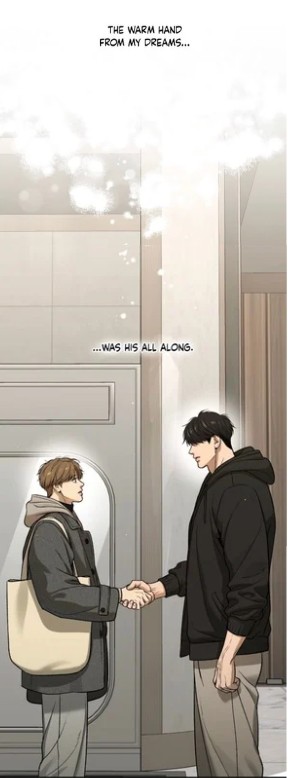 (chapter 100) On the contrary, the scene still contains physical proximity, warmth, gratitude, and mutual recognition. The handshake almost functions as an acknowledgment of everything the two protagonists survived together, but also as a quiet expression of thanks. Kim Dan recognizes the champion’s help, while Joo Jaekyung finally allows physical contact to occur without violence, coercion, or sexual tension. The emotional atmosphere only becomes truly haunting once Mingwa deliberately removes both protagonists from the frame itself, leaving behind nothing but the silent entrance and the implication of departure. (chapter 100)
Even the wording of the farewell creates ambiguity. Without the points of suspension, “Goodbye then” would sound definitive, emotionally sealed, almost like the final sentence of a completed story. Yet the ellipsis fundamentally changes the atmosphere of the phrase. The farewell suddenly becomes suspended, unfinished, hesitant. Kim Dan does not simply say goodbye; he trails off emotionally.
The word “then” itself is equally fascinating because it weakens the apparent finality of the separation. It functions as a temporal marker suggesting postponement:
not now,
after this,
later.
The phrase therefore already contains the contradiction defining the entire chapter. Verbally, Kim Dan enacts separation. Emotionally, however, he still remains attached to Joo Jaekyung. The title quietly preserves the possibility of continuation, just as the chapter itself refuses to provide true emotional closure.
Why end the chapter there?
Doors in Jinx are never neutral architectural elements.  Throughout the story, they repeatedly symbolize secrecy
  (chapter 7), emotional distance, hidden truths, privacy, abandonment, and separation
 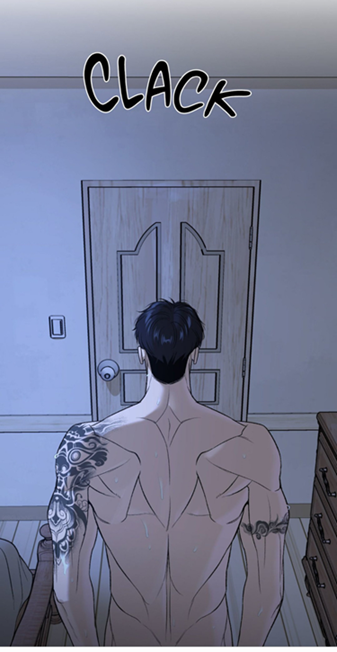 (chapter 64). A closed door immediately creates the impression that something has ended. (chapter 100) Someone has left. Access has been denied. Naturally, many readers instinctively interpreted this panel in the simplest possible way:
Kim Dan has already left the penthouse.
And once this assumption is accepted, the chapter suddenly feels final. The emotional logic becomes brutally simple. The debt is gone. The fight is over. The criminals were arrested. 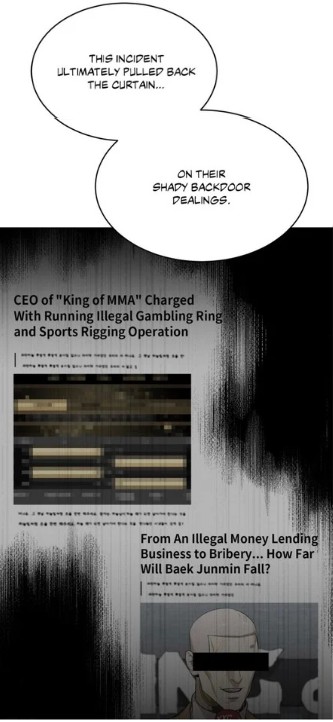 (chapter 100) The protagonists separate. The door closes. The story ends. It almost resembles the conclusion of a dark fairy tale where the suffering has finally reached its endpoint.
The problem is that the panel itself is far more ambiguous than it initially appears. (chapter 100)
The entrance is empty, yes, but the image does not actually show Kim Dan leaving the apartment. On the contrary, the scene remains strangely suspended. Mingwa does not show the elevator descending, the street outside, or Kim Dan physically walking away.  (chapter 4) Instead, she traps both the reader and the characters inside the penthouse itself, forcing us to stare at an almost silent threshold. (chapter 100)
This detail becomes even more significant when we observe the scene immediately preceding the “goodbye.” Kim Dan and Joo Jaekyung still stand physically facing one another. 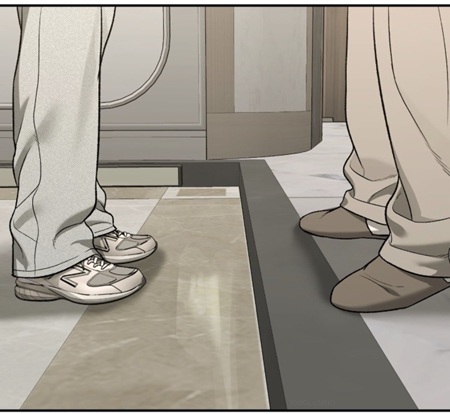 (chapter 100) Their feet remain oriented toward each other at the entrance. In Jinx, body positioning often reveals emotions that words suppress, and here the contradiction is devastating. Verbally, both protagonists are enacting separation. Physically, however, their bodies still seek connection. Neither truly turns away. The image therefore creates emotional suspension rather than emotional closure.
This is precisely why Mingwa does not show the actual departure itself at the end of the chapter. Emotionally, the separation remains incomplete because the protagonists themselves are incapable of fully separating from one another. The final panel traps both the characters and the audience inside the threshold between staying and leaving. (chapter 100)
The farewell scene itself becomes even more painful when placed beside earlier internal monologues from Joo Jaekyung that gain new meaning in retrospect. Earlier in the story, the champion silently admitted: 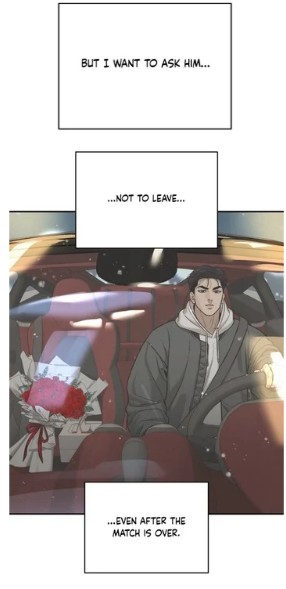 (chapter 97) Another scene reinforces this same emotional desire:
 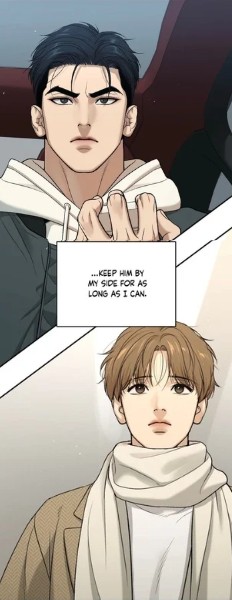 (chapter 97) These confessions reveal that beneath the aggression, possessiveness
 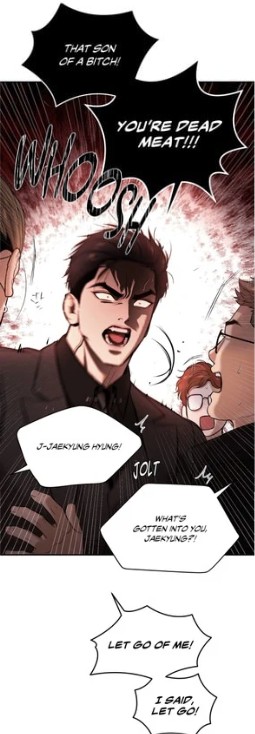 (chapter 82), and obsession with fighting and Kim Dan stood a much simpler fear: abandonment.
Yet when episode 100 finally confronts him with the possibility of Kim Dan truly leaving, Joo Jaekyung says the exact opposite of what he once desired. Instead of asking him to stay, he turns his head away and quietly says: (chapter 100) The Korean version with “가” (“Ka”) makes the moment even harsher because of its simplicity. It is short, direct, emotionally stripped bare:
Go.
And suddenly, the scene exposes the champion’s loneliness with devastating clarity.
Kim Dan stands before him carrying his bag, partially turned away, visually resembling the blurred image of departure from Jaekyung’s earlier imagination. 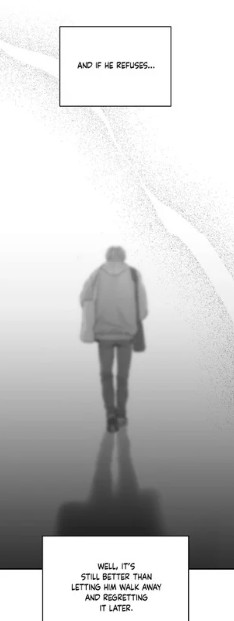 (chapter 97) At the same time, Joo Jaekyung himself avoids looking directly at him. Both characters physically reproduce emotional withdrawal. Neither can fully face the other because both are trapped inside fear, guilt, longing, and self-suppression.
Most tragically, Joo Jaekyung participates in the very abandonment he fears. Rather than risking rejection by asking Kim Dan to stay, he verbally permits the separation himself. The scene therefore does not portray emotional indifference, but defensive surrender. (chapter 100) The champion who once appeared emotionally untouchable reveals himself incapable of expressing the one thing he truly wants:
“Please stay with me.”
At the same time, both protagonists are now attempting to love through self-removal.
This emotional mirroring becomes even more fascinating when connected to the idea of tactile dissonance developed earlier in the story. (chapter 95)  Ironically, the eight-day separation did not emotionally distance the protagonists from one another. Quite the opposite. During this period, they became increasingly synchronized mentally and emotionally.
 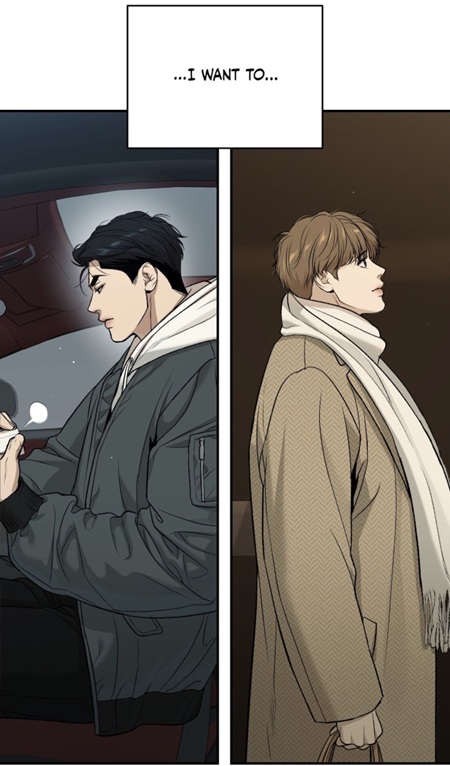 (chapter 97) Their thoughts, fears, and desires slowly began aligning almost unconsciously. Yet this growing emotional attunement produces a tragic paradox: they become so psychologically similar that they can no longer recognize their own reflection inside the other person. (chapter 100) (chapter 100) The real tragedy of episode 100 is therefore not emotional distance, but excessive emotional synchronization without communication.
Kim Dan increasingly convinces himself that he represents a burden (chapter 100) and even a threat to Joo Jaekyung’s career. The harassment, the public humiliation, the scandal surrounding the championship, and the stabbing itself all reinforce the idea that remaining beside the champion will only continue damaging his reputation and future.
Joo Jaekyung, meanwhile, arrives at the opposite side of the same tragedy. He increasingly perceives himself as a source of contamination and danger. (chapter 100) The harassment, Kim Dan’s suicidal despair, the sleepwalking, the stabbing, and the violence surrounding the championship all reinforce the terrifying idea that Kim Dan suffers because he entered his world. In his eyes, Kim Dan’s life is now endangered because of him.
Ironically, this emotional synchronization does not bring them closer together communicatively. Instead, it pushes both men toward the same logic of self-removal. (chapter 100) Kim Dan leaves because he believes the champion will recover better without him. Like out of sight, out of mind! Joo Jaekyung lets him go because he believes keeping him close will only expose him to more suffering.
Thus, both silently cooperate in mutual abandonment while simultaneously longing for the exact opposite.
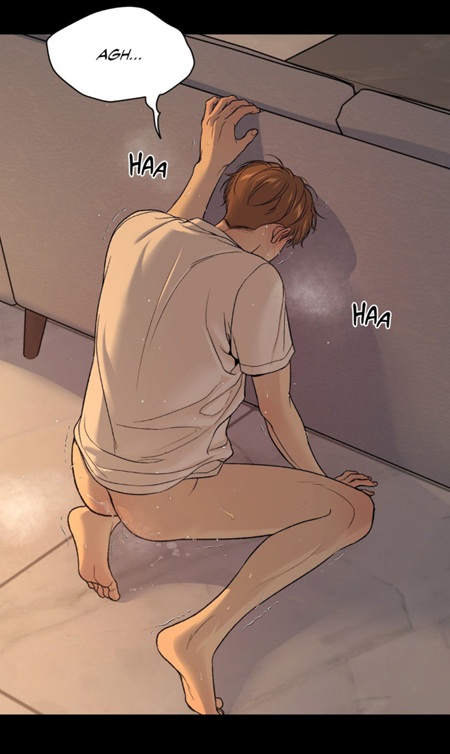
Even the sound effect deserves closer attention. (chapter 100) Many readers automatically interpreted “THUD” as the sound of a closing door. Well, the Spanish translation is indeed “Clack” and not thud. So one might jump to the conclusion that there’s an error in the English version. Yet visually, the effect does not fully behave like one. The vertical motion lines suggest movement from top to bottom rather than the lateral motion usually associated with a door shutting. The sound resembles impact, instability, or collapse more than simple departure. This becomes particularly interesting when compared to earlier scenes such as episodes 57 and 61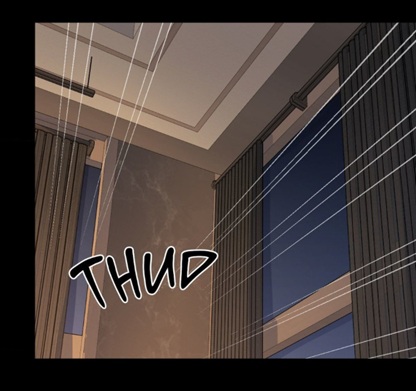
 (chapter 61)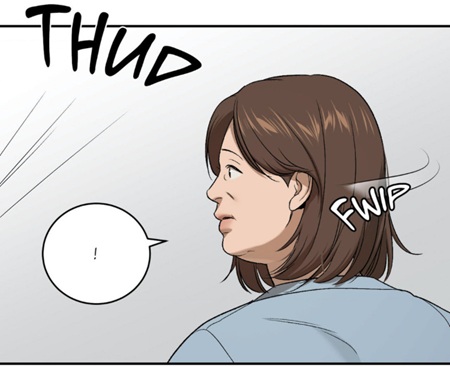
 (chapter 57), where emotional shock and physical weakness are visually connected to walls, imbalance, and bodies searching for support. The ambiguity becomes important because chapter 100 never clearly identifies (chapter 100) who destabilizes physically in that moment. Readers instinctively assume Kim Dan has already left, but the visual language simultaneously leaves open another disturbing possibility: that someone inside the penthouse is collapsing.
In other words, the panel may not depict emotional closure at all. It may instead depict destabilization. This possibility completely transforms the emotional meaning of the chapter. The “goodbye” no longer functions as a clean farewell, but almost like a psychological blow. Words can kill. And here, Kim Dan’s calm “Goodbye then…” lands with the violence of an invisible wound.
The choice of the empty entrance as the final image therefore reveals something important about reader psychology as well. The chapter creates the illusion of a completed fairy tale ending while simultaneously making that ending feel emotionally wrong. Earlier in the story, Kim Dan unconsciously adopted this exact logic himself through the expression:
 (chapter 41)
Like a little boy trying to force reality into the structure of a fairy tale, he attempts to convince himself that the story has now reached its proper conclusion. 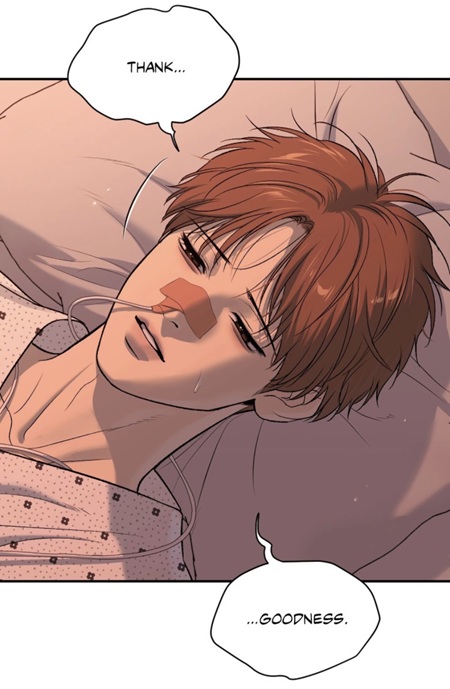 (chapter 100) The champion won. The villains were punished.
 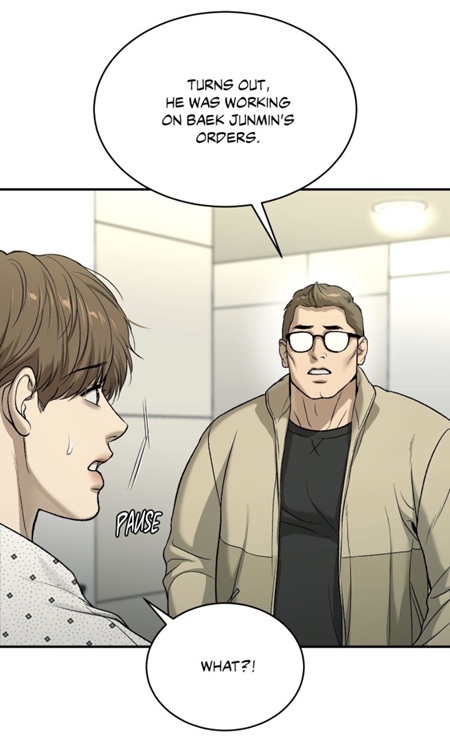 (chapter 100) The debt disappeared.
 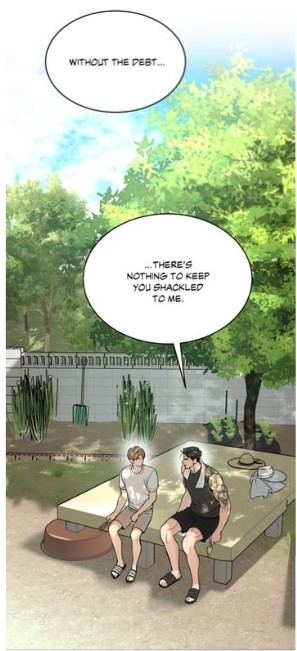 (chapter 77) Therefore separation must be the correct final step.
Yet Mingwa visually undermines this interpretation at every turn. (chapter 100)
The penthouse feels too empty, too silent, too cold, and too unresolved. The atmosphere resembles not peace, but haunting. Instead of emotional catharsis, the reader experiences emotional suspension.
Perhaps this explains why so many readers reacted so strongly to episode 100. The chapter weaponizes absence itself. Mingwa does not simply separate the protagonists; she traps both the characters and the audience inside uncertainty. The zoom on the closed entrance intensifies this sensation even further. Readers feel suffocated because the panel transforms the penthouse into a frozen emotional space where communication has failed completely.
The door therefore symbolizes much more than physical departure. It becomes the visual embodiment of the chapter’s central tragedy: two people standing on opposite sides of an emotional threshold (chapter 100), unable to reach one another despite desperately longing to do so.
What A Little Wimp
Before examining the significance of the handshake itself, we must return to one of the earliest emotional patterns established in the story: Kim Dan’s awkward departure after treating Joo Jaekyung at the gym. After accidentally crossing a physical boundary 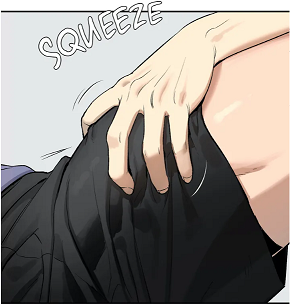 (chapter 1) and leaving himself totally embarrassed
 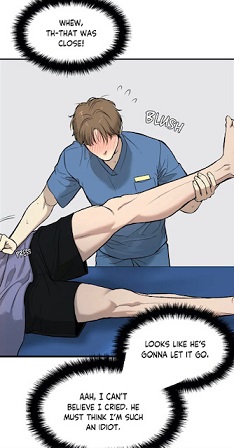 (chapter 1), the physical therapist has only one thought in mind: to run away. Before opening the door, he nervously stammers
 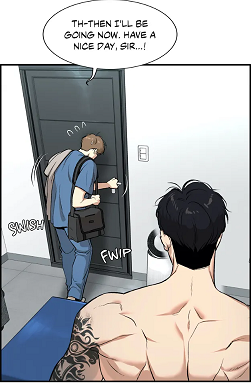 (chapter 1) and hurries away. Joo Jaekyung’s reaction after his departure is dismissive and mocking:
 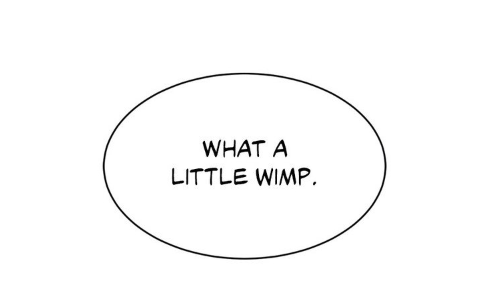 (chapter 1)
At first glance, the scene appears almost comedic. Kim Dan blushes, panics, avoids eye contact, and escapes after touching the champion too intimately. Yet retrospectively, this moment establishes an important pattern: touch  (chapter 1), admiration
  (chapter 1), destabilization, and departure are already intertwined from the very beginning. Kim Dan does not simply treat Joo Jaekyung’s body; he admires it through his hands and eyes, marveling at how different it is from every other client he has known. The accidental touch breaks the professional frame, and the result is immediate flight. (chapter 1)
This early departure quickly becomes part of Jaekyung’s mental archive. In episode 4, he does not actually witness Kim Dan leaving the penthouse (chapter 4); he only discovers the empty bed afterward. 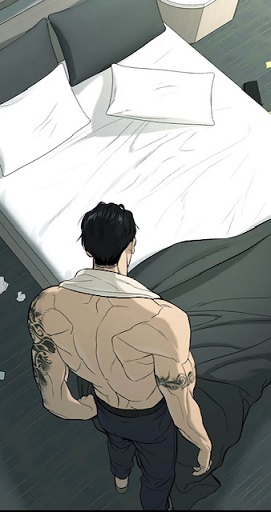 (chapter 4) The absence itself triggers projection. He imagines Kim Dan walking away, already converting disappearance into an internal image. Later, in episode 53, this fear becomes reality: Kim Dan truly leaves the penthouse
  (chapter 53), and this time the departure is explicitly shown. In his own mind, the doctor does not intend to return. By episode 97, the image repeats once more (chapter 97) when Jaekyung admits that he wants to ask Kim Dan not to leave, yet immediately imagines him walking away if he refuses. Significantly, as the figure of Kim Dan recedes into the distance, a heavy, creeping darkness swallows the panel. The shadow beneath Dan’s feet bleeds forward, stretching into a profound black void that anchors itself directly to Jaekyung’s perspective. This visual graduation of shadow reveals that Kim Dan’s departure is no longer just a hypothetical exit; it is an oncoming emotional eclipse. Jaekyung’s subconscious recognizes that if Dan walks out that door, the ensuing darkness will be absolute—a trauma from which the champion will not be able to recover.
This is why the line “What a little wimp” becomes deeply tragic in retrospect. The supposedly untouchable champion has become the one haunted by departure. The man who once mocked Kim Dan’s awkward escape now fears being left behind so intensely that he projects abandonment before it even happens. Hence he turns away like Kim Dan in episode 1. (chapter 100)
This fear cannot be separated from Jaekyung’s family wound. The image of his mother, presented entirely through her back and her silence 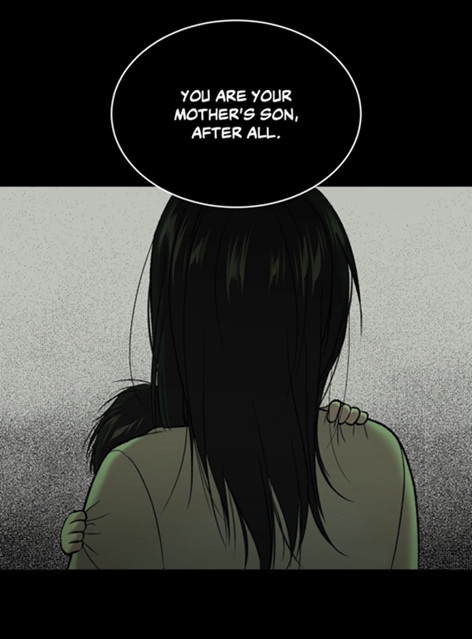 (chapter 73), suggests not only physical departure but permanent emotional inaccessibility. His father’s bitter line—“You are your mother’s son, after all”—reveals that this silence wounded him too. The father was not merely angry because the mother left; he was wounded by the way she left: without true confrontation, without emotional clarity, and perhaps with some distant promise that never became presence. The turned back, the heavy silence, and the unresolved farewell became the core of Jaekyung’s inherited trauma. He stops fighting for the relationship itself
  (chapter 72) and begins fighting merely against the clock, trying to finish a transaction before the countdown hits zero. This memory exposes a foundational trauma. To a young Jaekyung, his mother’s disappearance was directly tied to a transactional failure—his father’s inability to stop her or provide financial security. Consequently, Jaekyung internalized a distorted lesson: love is not protected through vulnerability, communication, or emotional pleading. Love is protected through material capacity and performance. In his child mind, a countdown began: he had to grow up, amass immense wealth, and become powerful enough to buy back his mother’s presence.
Tragically, this transactional clock is the exact blueprint he uses when Kim Dan enters his life. We see the definitive script for this transactional countdown written explicitly by Jaekyung himself in episode 77. Sitting on a wooden platform under a rare, open sky, the champion retreats into the safety of a contract to mask his growing vulnerability, declaring: (chapter 77) This is no coincidence that as he sets this absolute deadline, Mingwa frames Jaekyung from behind  (chapter 77) He turns his back entirely, casting his face in shadow and physically reproducing the visual motif of his childhood trauma. He is verbally establishing a countdown while visually acting out an ending. By telling Dan that their proximity is strictly bounded by the final bell of the title match, Jaekyung constructs the very cage that will later paralyze him.
Consequently, as the title match draws closer in episode 95, this psychological clock accelerates to a suffocating degree Surrounded by chaotic media headlines speculating about his imminent match and the possible collapse of his career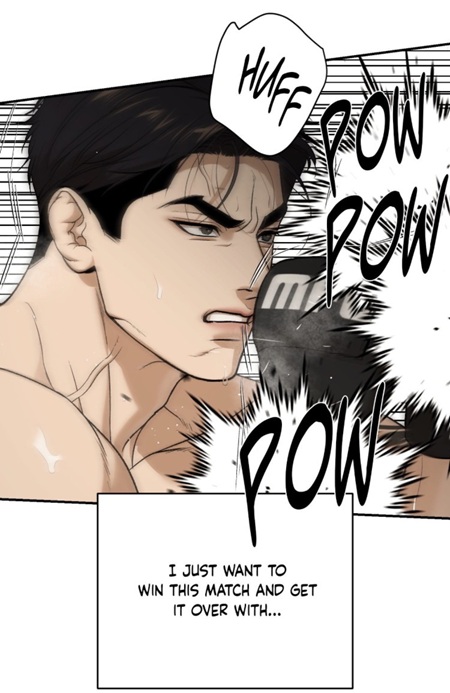 (chapter 95), Jaekyung’s mental space becomes a dark, claustrophobic cage. While sparring, his only internal thought is sheer exhaustion: “I just want to win this match and get it over with…”
Therefore it is not surprising why he chose to listen to his manager and distanced himself from his fated partner. In a sense, he first stops fighting for Kim Dan and begins fighting merely to reach the end of the timeline. The championship ceases to represent ambition, glory, or even personal desire; it becomes an expiration date. Increasingly, the champion loses the ability to project himself into the future at all.
This is precisely why his later thoughts become so devastating. When Jaekyung admits: (chapter 97),
the importance lies not only in the fear of abandonment, but in the word ask itself. For perhaps the first time in the story, Jaekyung unconsciously accepts Kim Dan’s freedom to choose. He no longer thinks in terms of ownership, obligation, or debt. Deep down, he already understands that once the match ends, Kim Dan will be free to leave him behind.
Yet even here, Jaekyung’s emotional framework remains tragically incomplete. Although he has begun abandoning the logic of ownership, he still cannot truly imagine a future built upon mutual existence rather than temporary possession. His thoughts remain structured around the championship timeline itself. The title match continues functioning as the organizing principle of reality. Even the phrase:
“…even after the match is over”
reveals the limitation of his emotional imagination. Jaekyung can imagine asking Kim Dan to remain. He can imagine losing him. He can imagine surrendering him. But he still cannot truly imagine simply living with him.
In other words, the champion still thinks in terms of “having” rather than “being.” [For more read the essay The Art of Loving] ]The relationship continues existing psychologically as something bounded by deadlines, countdowns, and expiration points. Once the contractual structure dissolves, Jaekyung unconsciously reaches the edge of his own emotional framework. The countdown ends, yet nothing replaces it.
And tragically, this realization does not awaken hope inside the champion, but resignation. Even before Kim Dan makes any choice himself, Jaekyung emotionally begins surrendering him. (chapter 97) The man once defined entirely by his monstrous willpower gradually loses his fighting spirit altogether. He no longer fights for a future with Kim Dan; he merely tries to endure the final countdown before the separation he already believes inevitable.
Therefore, when Kim Dan stands before him in episode 100 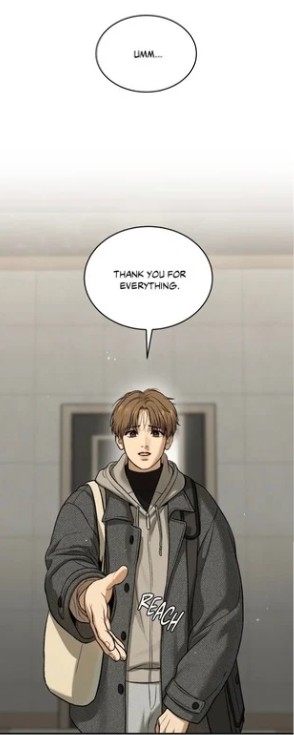 (chapter 100), Jaekyung is not reacting only to the present moment. He is reacting to a projected abandonment shaped by earlier departures, his parents’ history, the transactional contract he wound up himself, and the immense guilt he carries over the violence surrounding Kim Dan. The champion now knows about the harassment, the attempted sexual assault orchestrated through the former director of the hospital, the suicidal despair, the sleepwalking, the stabbing, and the terrifying chain of events connected to the championship itself. Increasingly, Jaekyung no longer sees himself merely as someone who might lose Kim Dan emotionally; he sees himself as the center of a destructive orbit that continually places Dan in danger. He seems to think, he is Kim Dan’s jinx. (chapter 100) That’s why Joo Jaekyung is no longer fighting, he has already anticipated the loss.
Ironically, by episode 97, Kim Dan himself has already begun unconsciously stepping into a completely different emotional mode. While Jaekyung remains trapped inside countdowns, departures, and anticipatory endings, the physical therapist instinctively begins imagining ordinary relational existence. This contrast becomes particularly visible with the hamster’s dream 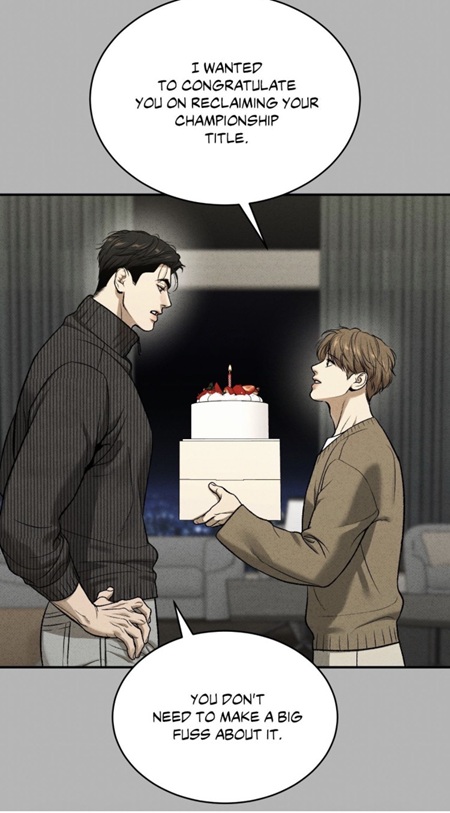 (chapter 97) , where Kim Dan arrives with a cake to celebrate Jaekyung reclaiming his championship title. The atmosphere of the interaction is striking precisely because of its normality. There is no treatment session, no debt, no violence, no professional obligation dominating the exchange. For this brief dream , Kim Dan behaves less like an employee or caretaker and more like someone already sharing daily life with the champion.
 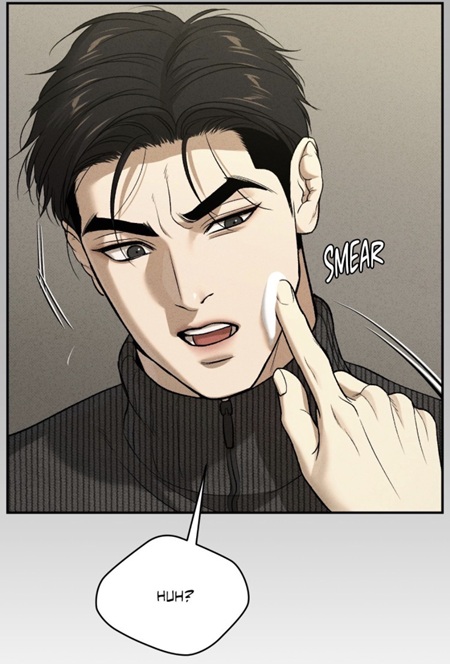 (chapter 97)
The small gesture of smearing cream across Jaekyung’s face becomes symbolically important for this reason. Kim Dan momentarily strips the champion of his overwhelming public aura and interacts with him through casual intimacy rather than admiration or fear. Unlike Jaekyung, Kim Dan unconsciously possesses fragments of an ordinary emotional model inherited from his life with his grandmother and parents: shared meals, small celebrations, routine care 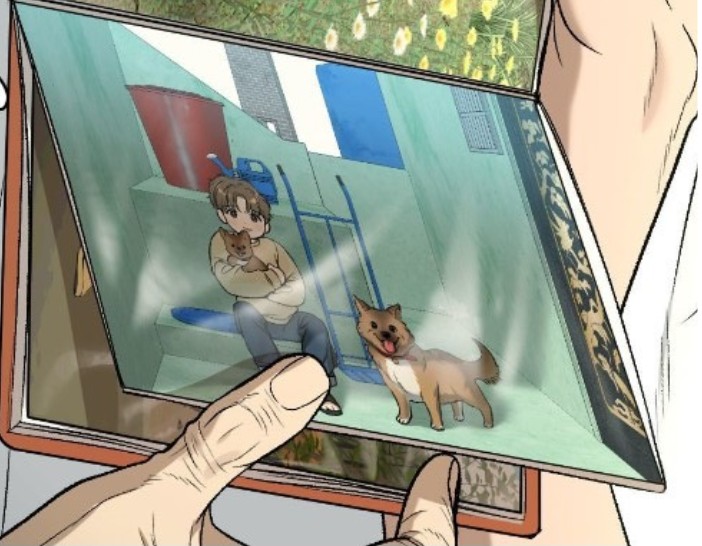 (chapter 94), and domestic familiarity. While the champion imagines endings, Kim Dan quietly begins imagining continuity.
The Warm Hand against the Jinx
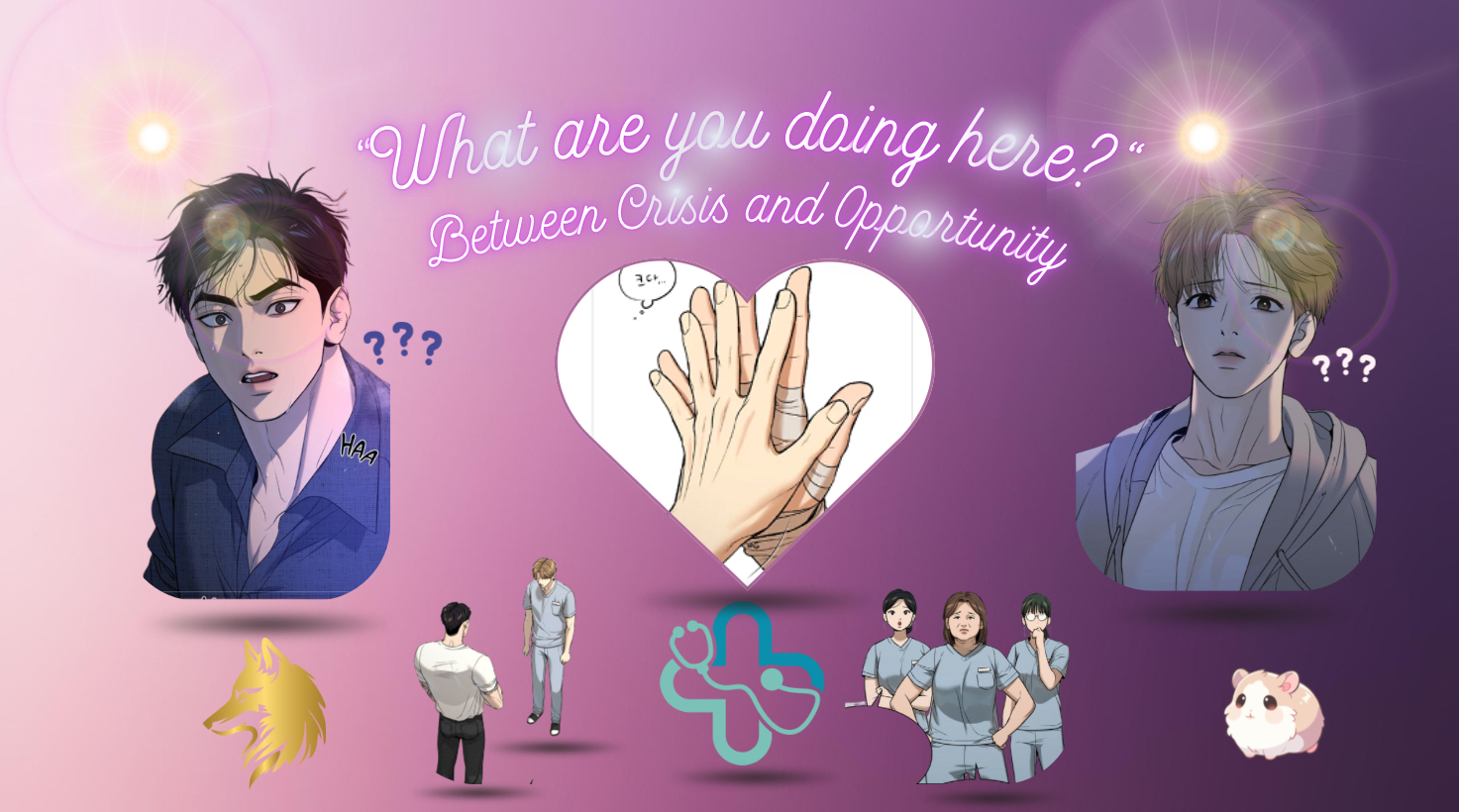
This is precisely why the handshake matters so much. 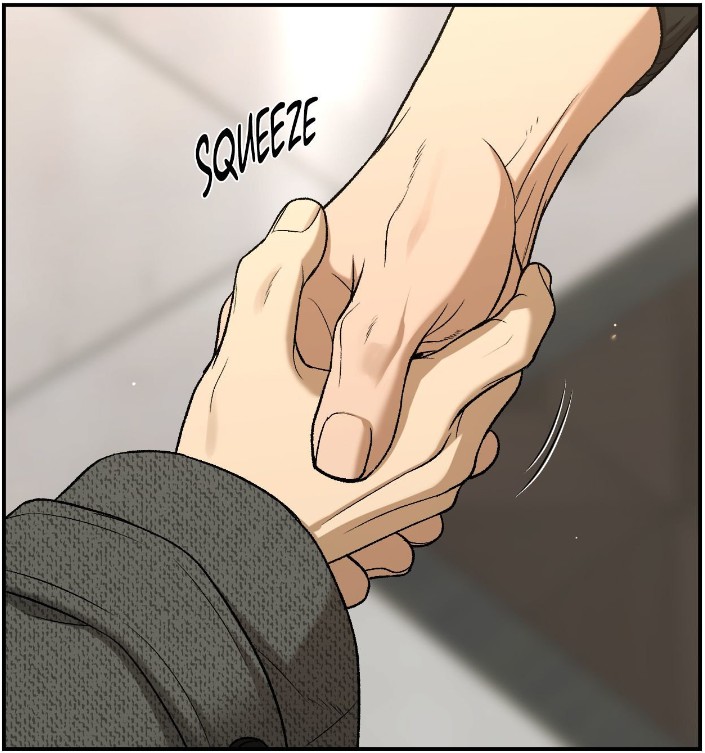 (chapter 100) It takes place right before Jaekyung tells Kim Dan to go. For one fragile moment, the projected departure is completely interrupted. Kim Dan is still there. His hand is still warm. The contact is no longer like that first treatment at the gym, where touch was mixed with embarrassment and professional confusion. (chapter 100) This time, touch becomes mutual recognition and reciprocity.
The tragedy is that this recognition does not yet become speech. The handshake briefly suspends the counterfeit departure, but it does not break the silence. After this fleeting moment of contact, Jaekyung retreats straight back into fear and self-removal. Unable to ask Kim Dan to stay, he turns away and says the exact opposite of what he wants: (chapter 100)
The handshake is not the end of the separation. It is the last, desperate interruption before the logic of abandonment reclaims them both.
This is where the spatial layout of the penthouse entrance exposes the final structural contradiction. (chapter 100) When Kim Dan stands before the champion, he is positioned directly in front of the door as though physically replacing it, turning his own body into the threshold. Yet meticulously, Mingwa leaves a massive, artificial gap between the physical therapist and the actual exit behind him. This distance is no coincidence. The vast, empty space behind Dan acts as a visual vacuum—a psychological buffer zone proving that while he is verbally enacting separation, he has not yet crossed the literal threshold.
He is suspended inside a vacuum of his own making, his hand still reaching forward toward connection while the enormous void at his back quietly threatens to swallow the moment whole.
Crucially, this gap represents a profound, hidden chance. It is the positive reflection of “distance.” By leaving such a significant space between his body and the door, Kim Dan has physically delayed his own exit, leaving a literal runway of time and possibility open. The finality of the goodbye has not yet been sealed; the door remains far behind him.
The ultimate tragedy of episode 100 is that Joo Jaekyung completely fails to recognize this positive reflection. (chapter 100) Poisoned by the creeping darkness of his own nightmares, the inherited trauma of his mother’s silence, and the immense guilt surrounding Kim Dan’s suffering, the champion no longer recognizes the distance as a space to step forward and intervene. Instead, his fear of vulnerability completely distorts his perception. He reads the gap not as an opportunity to change the script, but as an approaching, inevitable eclipse.
To protect himself from the pain of watching Dan step backward into the void, Jaekyung surrenders defensively—he turns his head away, preparing himself not to look back, and actively seals the very abandonment he was given a chance to prevent.
No, Joo Jaekyung is no little wimp, but rather a lost puppy frozen upon a threshold of his own making, completely blind to the choice standing before him. Yet because the contract has dissolved and the debt has disappeared, this wide, uncrossed emptiness also remains a radical space of possibility. For the first time, the relationship is no longer mediated by obligation, transaction, or countdown.
And perhaps this finally becomes Kim Dan’s chance to recognize Jaekyung’s paralysis, step into the gap himself, and prove his love and care without expecting anything in return.
Before the counterfeit departure can fully reclaim the scene, Mingwa inserts one final, crucial interruption: the handshake (chapter 100). Significantly, this gesture does not function as a standard goodbye. In ordinary social language, a handshake belongs either to a formal greeting or to a completed farewell. Here, however, the contact appears before Kim Dan says goodbye and before any true separation has taken place. Structurally, the handshake suspends the departure rather than confirming it.
This detail becomes even more meaningful when contrasted with the protagonists’ first encounter at the gym. Back then, there was no mutual greeting ritual between them.  (chapter 1) Kim Dan bowed nervously while Joo Jaekyung remained emotionally detached, dominant, and superior. Their relationship began asymmetrically: champion and therapist, admired body and embarrassed observer. After accidentally crossing a physical boundary during treatment, Kim Dan fled the room in humiliation, unable to withstand the emotional destabilization caused by touch itself. No reciprocal gesture softened the imbalance. There was no handshake, no equal acknowledgment, and no mutual recognition.
Episode 100 quietly upends that entire foundation. (chapter 100)
For the first time, both protagonists voluntarily reach toward one another at the exact same emotional level. Neither obligation, debt, nor treatment mediates the contact. (chapter 100) The gesture is entirely mutual and even reciprocated, both squeeze each other’s hand. (chapter 100) And unlike the first touch at the gym, which produced panic and flight, this touch produces a profound illumination. Kim Dan’s little gesture exposes a gradual metamorphosis, he becomes more proactive. Hence his fingers linger on the MMA fighter’s skin. 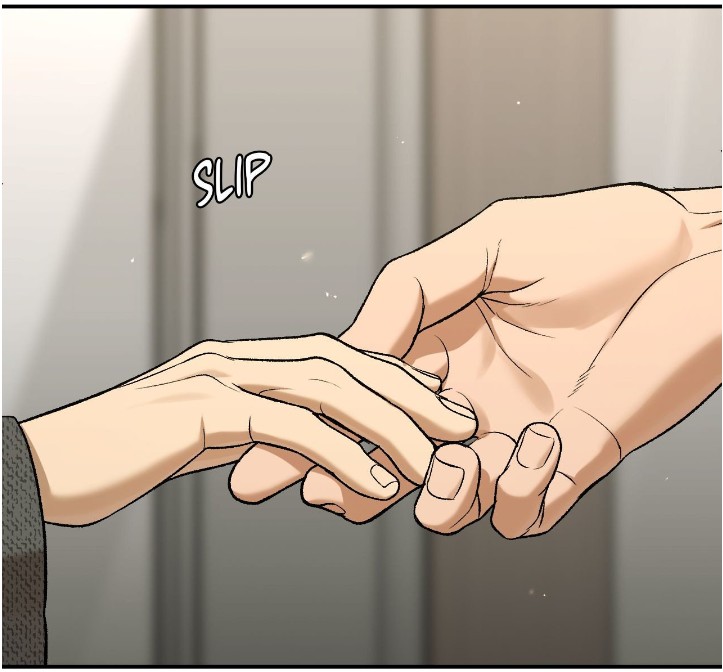 (chapter 100)
  (chapter 87) It becomes even more obvious, once compared with their hand gesture in Paris.
Unlike chapter 1, however, Kim Dan does not flee from the emotional intensity created through touch. This time, he consciously remains present. While extending his hand, he hesitates softly: (chapter 100)
The hesitation still reveals vulnerability, yet vulnerability no longer produces escape. Instead, Kim Dan deliberately chooses acknowledgment. This detail is crucial because the gratitude expressed here cannot be reduced to money, debt, treatment, or material compensation. In fact, the scene occurs precisely after the contractual framework governing their relationship has dissolved. The debt is gone. The transactional structure has collapsed. Therefore, Kim Dan’s gratitude suddenly becomes profoundly human rather than functional. He is no longer thanking:
- an employer,
- a client,
- or a benefactor.
He is thanking Joo Jaekyung himself.
For perhaps the first time in the story, Kim Dan consciously chooses to close the emotional distance between them instead of running away from it. The hand extended toward Jaekyung therefore becomes far more than a polite social gesture. It becomes Kim Dan’s first genuine attempt to acknowledge their relationship openly and properly.
The importance of this moment lies in what Kim Dan suddenly realizes through physical contact itself. 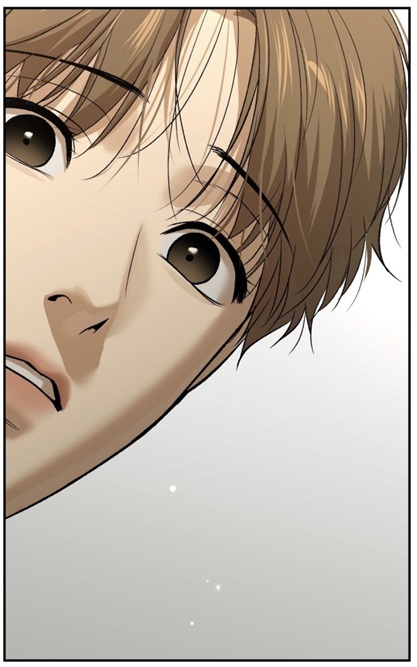 (chapter 100) Until now, the physical therapist remained trapped inside a distorted emotional narrative shaped by silence, institutional misunderstanding, his grandmother’s sacrificial principles, and Park Namwook’s logic of performance
 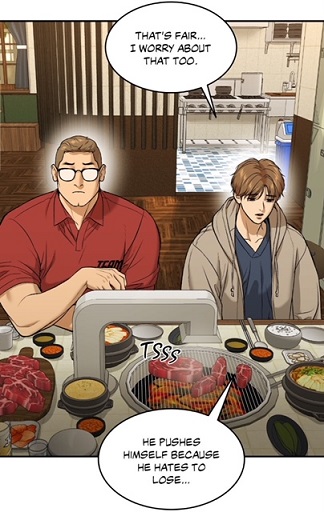 (chapter 43) and Hwang Byungchul’s wrong interpretation
  (chapter 70). Kim Dan had unconsciously learned to interpret Joo Jaekyung primarily as “the champion”: an untouchable entity sustained solely by victory, driven by a hatred of losing, and emotionally fulfilled through performance alone. This explicates why the “hamster” had made the following request:
 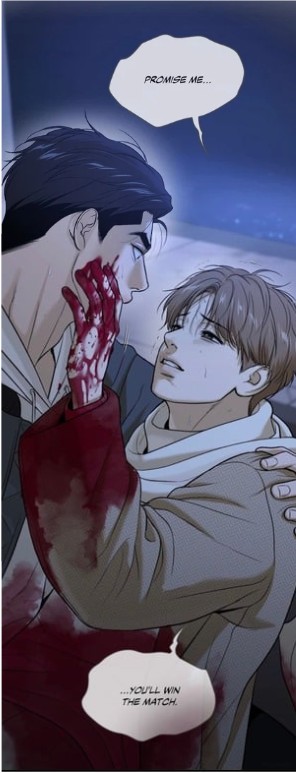 (chapter 98)
This misunderstanding becomes painfully visible during the hospital scenes. When Park Namwook explains that the culprit acted under Baek Junmin’s orders (chapter 100) and that Jaekyung blames himself for the attack (chapter 100), the manager unintentionally frames the entire assault through championship logic. The implication quietly becomes that Kim Dan was hurt because he stood too close to the champion, because enemies targeted Jaekyung, and because the title match had to continue.
As a result, doc Dan immediately internalizes guilt through a logic of substitution. He responds: (chapter 100) The statement is devastating because it fuses the two oppressive ideologies that have shaped Kim Dan’s entire life. From Park Namwook and Team Black, he inherited the belief that the championship comes first and that Jaekyung’s happiness depends entirely upon winning. From his grandmother, he inherited the logic of total self-erasure: if suffering must exist in the world, it should fall squarely upon him. Yet the sentence also reveals something even more tragic: Kim Dan still cannot fully imagine the depth of Joo Jaekyung’s emotional attachment to him. By concluding that it was “better” for him to become the victim, he unconsciously reduces the wolf’s suffering to the temporary inconvenience of a threatened match. In doing so, he actually denies the existence of the champion’s true feelings altogether. Kim Dan still sees “the Emperor,” the fighter obsessed with victory, rather than the terrified man who would have suffered infinitely more from losing him than from losing any championship belt. Thus before losing consciousness, he still had this image of the main lead: The Emperor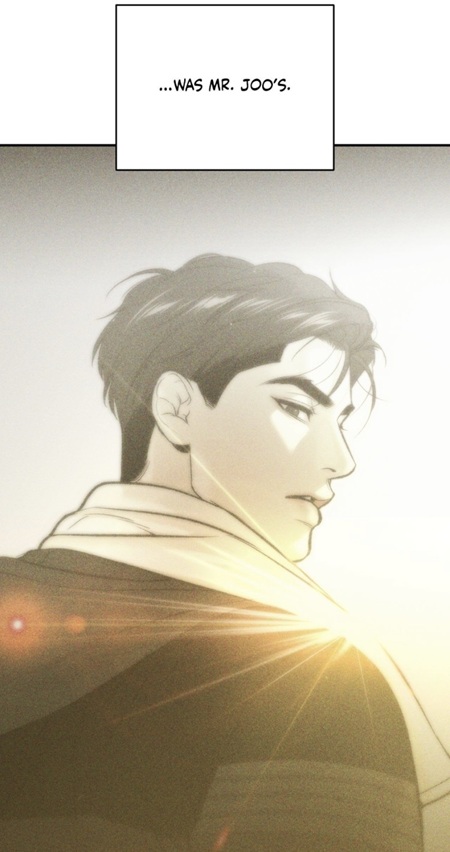 (chapter 100)
And perhaps this is the most disturbing implication of all. Even after the stabbing, Kim Dan still unconsciously evaluates the situation through the same brutal performance logic governing the fighting world itself: as long as the champion successfully won the match, the suffering required to secure that victory becomes psychologically acceptable. In this sense, Kim Dan does not yet fully confront what the championship truly cost Joo Jaekyung internally. (chapter 100)
After all, Kim Dan never witnessed the psychological destruction surrounding the fight itself. He did not see the emotional collapse hidden behind the title defense, the confrontation with Baek Junmin afterward, or the horrifying guilt poisoning the victory from within. Thus, while Kim Dan begins sensing the champion’s warmth emotionally, he still hesitates to recognize the full extent of the suffering hidden beneath the belt.
The tragedy, therefore, is not simple blindness. Kim Dan is beginning to perceive the truth, yet accepting it fully would force him to confront something unbearable: the possibility that the very victory he believed he protected may have shattered Joo Jaekyung psychologically instead and he might be responsible for his “ruthlessness and destruction”.
So the tragic irony is that the very thing Kim Dan believes he protected—the fight itself—is precisely what begins destroying Joo Jaekyung emotionally. Had the match been postponed, Jaekyung would never have encountered Baek Junmin afterward, never acquired the horrifying knowledge surrounding the assault, and never fused the championship psychologically with harassment, violence, guilt, and emotional collapse. Thus, while Kim Dan believes his sacrifice saved Jaekyung’s future, the victory title increasingly becomes a toxic poison inside the champion’s mind. Hence the young man looks so terrible despite his “victory”. (chapter 100)
And remarkably, almost nobody around them notices this internal collapse. Inside the hospital room, 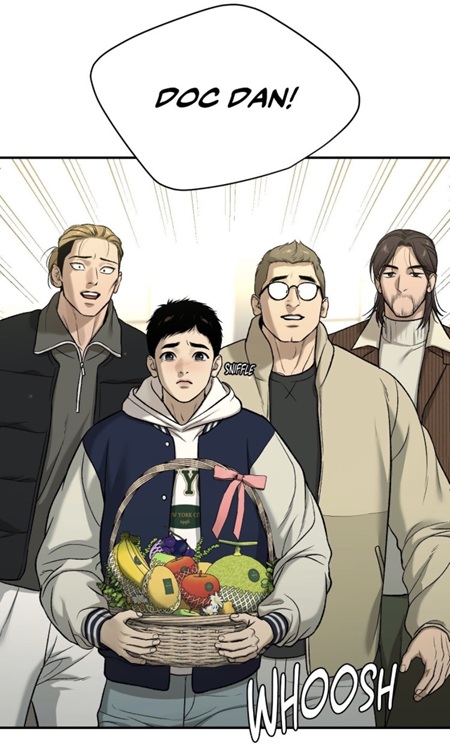 (chapter 100), Kim Dan is constantly insulated by a loud wall of warmth, visitors, food, and collective reassurance. Team Black worries boisterously about him
 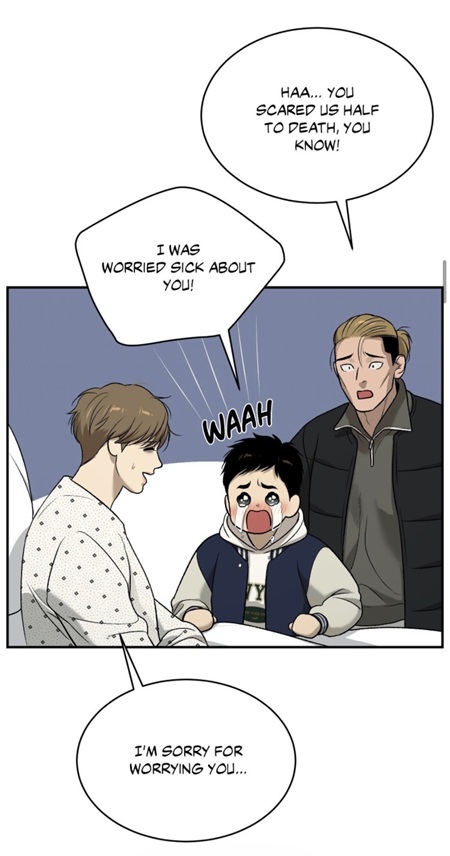 (chapter 100), jokes around his bed admiring the comfort of the room
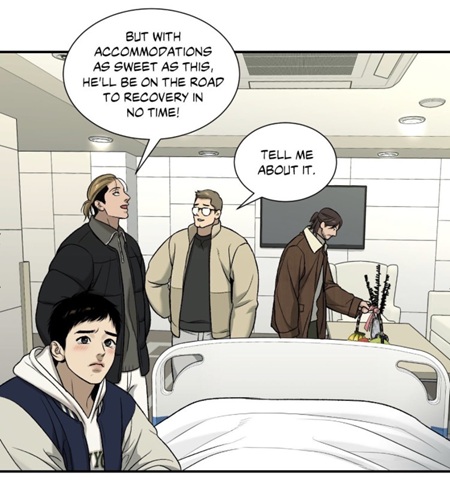 (chapter 100), scolds him affectionately,
 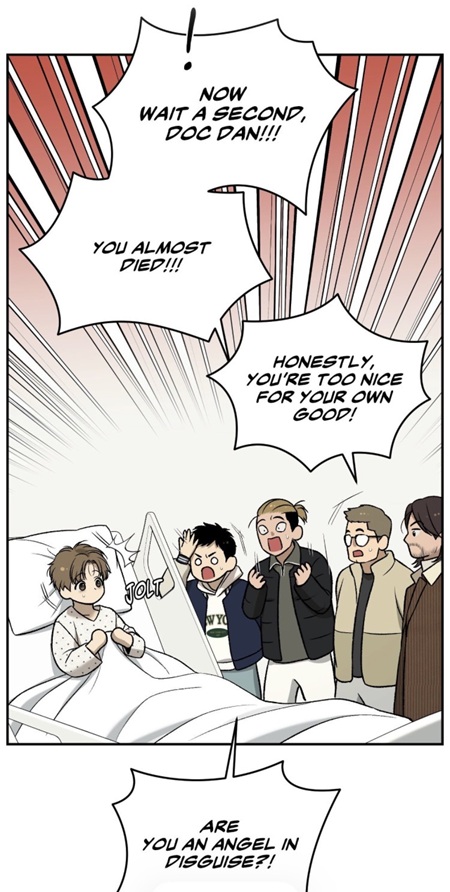 (chapter 100) and celebrates his survival. This lively atmosphere gradually reconstructs a superficial sense of normality. Meanwhile, Joo Jaekyung exists almost entirely outside this emotional circle. To the world, the champion is still perceived as rude, unmovable, and heartless,
 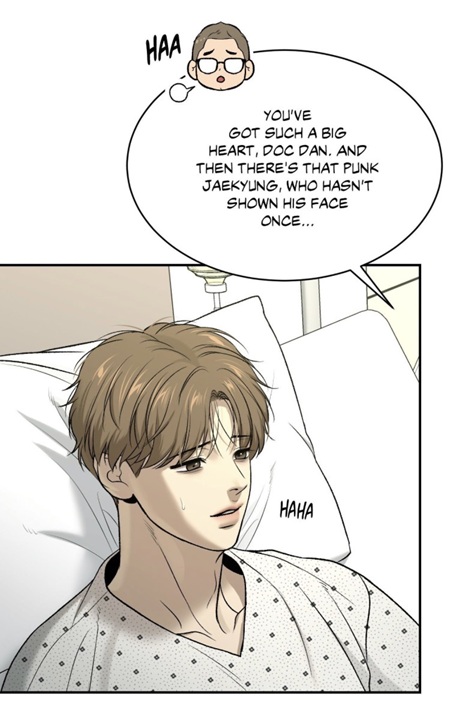 (chapter 100) while the members of Team Black get to play the roles of “affectionate and concerned” companions.
 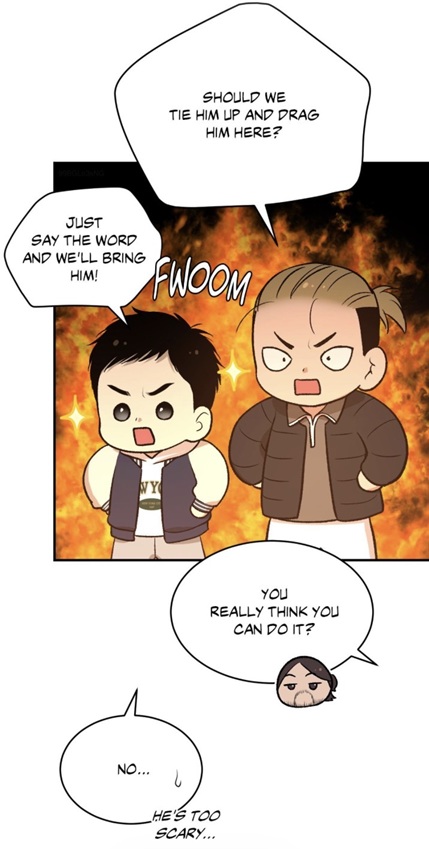 (chapter 100) Even when people discuss Jaekyung, they rarely speak about his exhaustion, fear, loneliness, or his disintegration as a human being. Why? Because they simply do not see it and believes in their hyung’s statement, the manager. They remain entirely blind to the human being beneath the title. They speak only of the match, the culprit, the belt, and his capacity to perform. Because he won the last fight, they treat him as an object that functions correctly, while keeping their distance from his harsh demeanor. They essentially avoid him as a temperamental monster, completely oblivious to the fact that they are leaving a deeply traumatized, lost puppy entirely on his own.
But there is a sharper edge to this scene: Team Black’s affection reveals itself as naive and profoundly superficial. They easily follow conventional social norms—bringing gifts (chapter 100), crying at a bedside—but their care lacks real, grounding intimacy. Neither Potato and Oh Daeyhun were present at the hospital in the hallway in front of the surgery room. None of them have stayed by Jaekyung’s side to offer real comfort 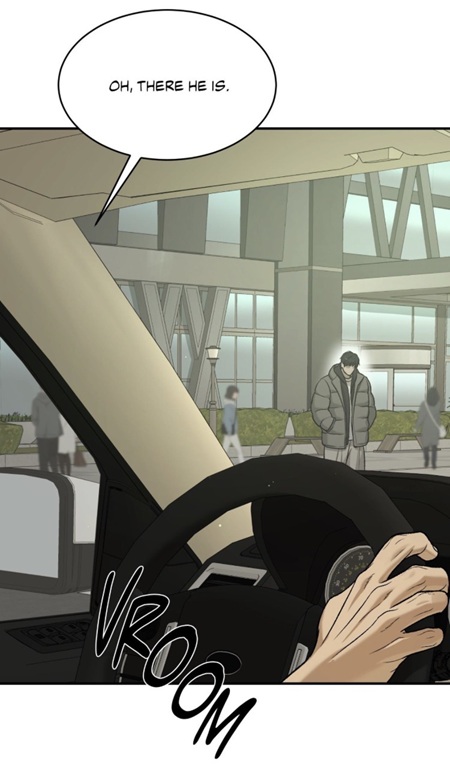 (chapter 100), thus the manager doesn’t leave his car to greet his boss and champion. He simply drops the physical therapist and drives away. But let’s return our attention to the scene at the hospital. Crucially, none of them correct the physical therapist when he pathologically apologizes for getting hurt. When Kim Dan stammers, (chapter 100), his words expose a deep reservoir of guilt and fractured self-esteem. Instead of challenging this unhealthy mindset, the crowd validates it by accepting the apology and coddling him as an “angel”. (chapter 100) And perhaps this image of the “angel” explains the deeper tragedy perfectly.
An angel is expected to comfort, heal, protect, and endlessly give. People receive warmth from angels, but rarely ask whether angels themselves are bleeding internally. Thus, Team Black fails to recognize that Kim Dan’s goodness itself has become pathological. They cannot see that his self-sacrifice contains a hidden violence directed against himself.
Therefore, it is entirely unsurprising that when Kim Dan finally walks out of that hospital, his internal narrative remains completely unchanged. (chapter 100) Because none of the members around him possessed the depth to correct his self-sacrificial logic, he still views himself exactly as he did before: as an inconvenient burden, a magnet for trouble, and someone who brings nothing but danger into the champion’s orbit. And note that the manager not only is not thanking him for his services but also is not determined to stop him from leaving. 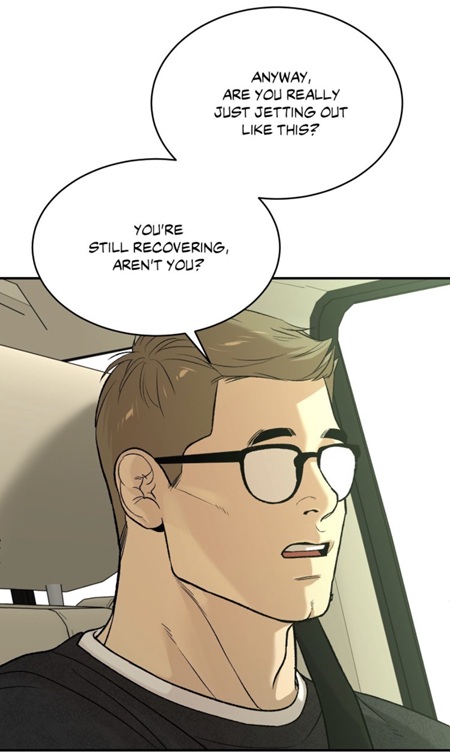 (chapter 100) For him, physical therapists can be easily replaced. Hence no tears and no handshake before the separation.
This is precisely why the handshake becomes so overwhelming for Kim Dan. Through touch, he suddenly realizes the truth. Joo Jaekyung had visited him for real. (chapter 100) At the same time, he gradually grasps that beneath the terrifying public image (chapter 100), Joo Jaekyung had quietly remained anchored beside him all along. The warmth in the champion’s hand reveals a hidden emotional reality that words denied. Thus, when Kim Dan thinks (chapter 100), the scene becomes far more than a romantic revelation. It is an emotional awakening. For the first time, Kim Dan realizes that the ‘Emperor’ was never emotionally distant by nature, only buried beneath fear, silence, and performance. The warmth in his hand reveals something profoundly human beneath the armor.
Importantly, this tactile recognition also begins transforming Kim Dan’s own inner world. For most of the story, he defined himself through usefulness, shame, and emotional disposability. He believed people kept him nearby only because he served a practical function: grandson, therapist, debtor, caretaker. Even his relationship with Jaekyung remained psychologically filtered through utility. 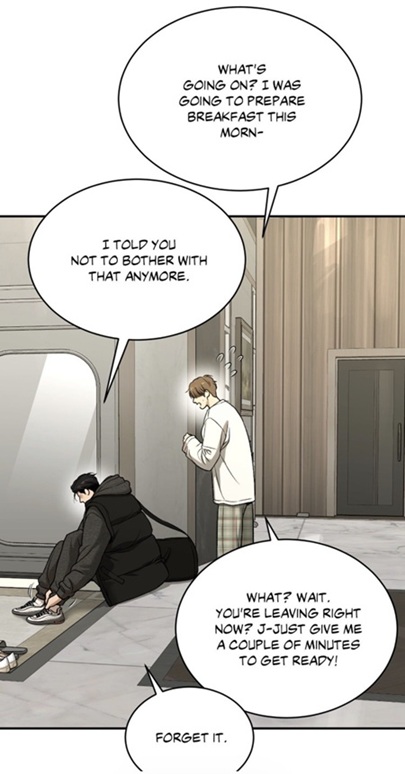 (chapter 100) Once the debt disappeared and the championship was reclaimed, Kim Dan instinctively assumed that his role in the champion’s life had ended too.
But the handshake completely destabilizes this entire belief system. Not only the dream became a reality, but also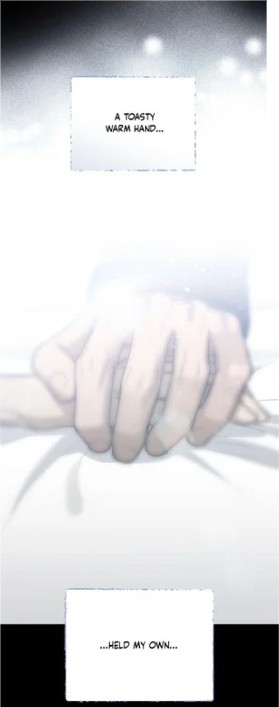 (chapter 100) the warmth in Jaekyung’s hand reveals that Kim Dan had never merely been “useful.” He had become emotionally necessary. For one fragile moment, Kim Dan experiences himself not as a burden, an obligation, or a temporary possession, but as someone genuinely cherished.
This is why the tiny sparks surrounding the scene matter so much (chapter 100). Earlier in the story, the relationship between the protagonists was repeatedly associated with an invisible, chaotic electricity pulling them together. 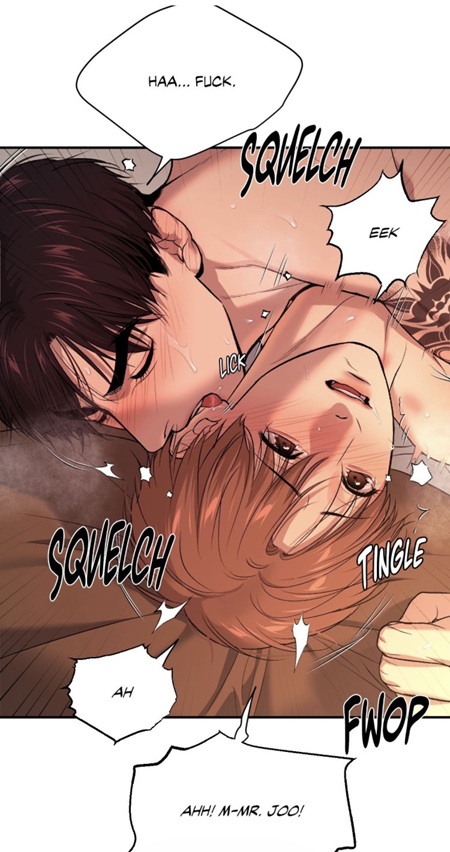 (chapter 86) Episode 100 revives this visual motif, yet transforms its meaning entirely. (chapter 100) The sparks no longer represent physical attraction or dangerous obsession; they resemble embers of emotional recognition finally igniting inside Kim Dan’s consciousness.
Significantly, however, only Kim Dan’s eyes contain visible light in these panels. (chapter 100) He is finally seeing the athlete’s warmth and care. Joo Jaekyung himself appears emotionally dimmed, exhausted, and internally extinguished. 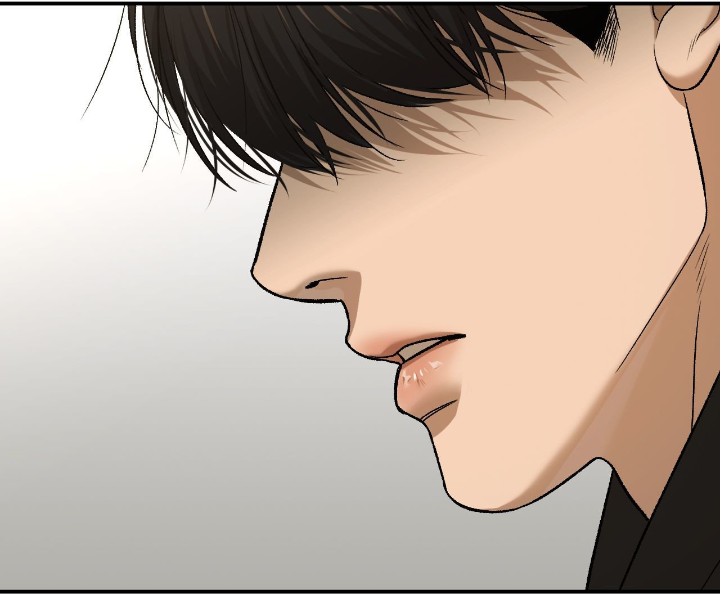 (chapter 100) Here, he is even portrayed as eyeless, as if he had lost his soul.
 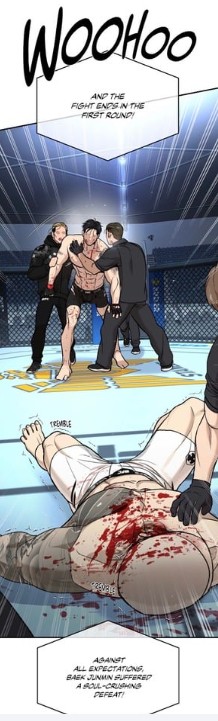 (chapter 99) The asymmetry is devastating. It almost feels as though the champion transfers his final remaining warmth and energy into Kim Dan through the handshake itself. (chapter 100) While Kim Dan awakens emotionally, Jaekyung continues withering inwardly beneath the weight of his guilt, his resignation, and his anticipatory loss.
And perhaps this is the cruelest irony of the scene. Through touch, Kim Dan is not yet fully understanding the love intellectually, rather he is beginning to sense it emotionally.
The realization remains tactile, intuitive, incomplete, and almost dreamlike. Yet at the exact same moment, the man extending that warmth no longer believes anyone will truly remain beside him once the final bell has rung. That’s the reason why the physical therapist looks back at his lover 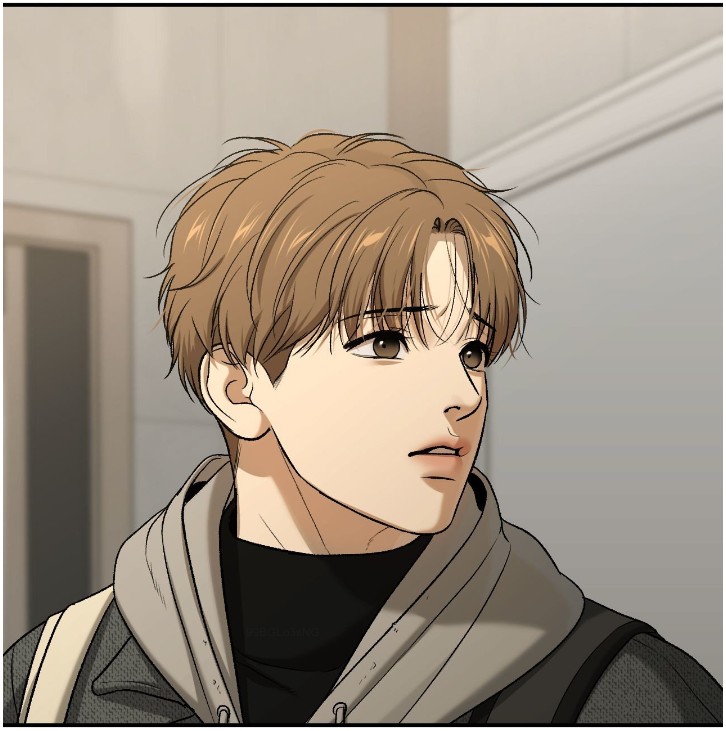 (chapter 100), he is detecting lingering feelings.
The handshake scene ultimately transforms not only Kim Dan’s perception of Joo Jaekyung, but the meaning of the jinx itself. (chapter 100) Until now, Kim Dan never truly questioned the existence of the curse surrounding the champion. 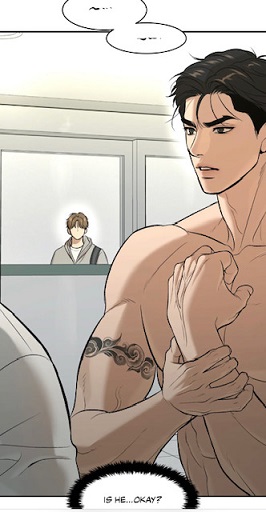 (chapter 27) He simply accepted it as an immutable part of reality. The “jinx” appeared almost supernatural: an ominous, mechanical force attached to Joo Jaekyung’s body, his victories, his violence, his rituals, and his frightening aura. Even the title of the series carried something cold, clinical, and oppressive. The word itself evoked danger, misfortune, contamination, and inevitability.
But episode 100 quietly begins dismantling this darkness.
When Kim Dan grasps Jaekyung’s hand, something extraordinary happens psychologically. Human warmth suddenly illuminates what fear, silence, and mythology had concealed for nearly one hundred chapters. 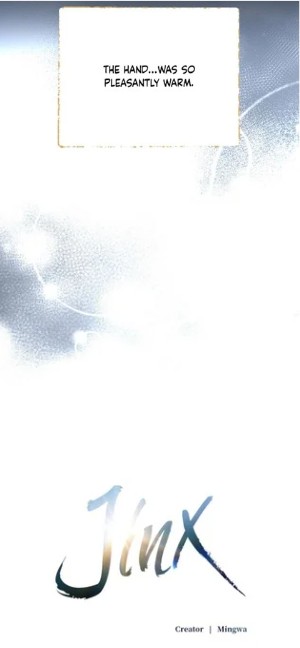 (chapter 100) Mingwa reinforces this revelation visually in a remarkable way. Immediately after Kim Dan describes the hand as “pleasantly warm,” the title Jinx itself reappears, glowing softly inside a luminous white space (chapter 100). The contrast with the earlier, heavy atmosphere of the story is striking. The title card no longer feels entirely dark. For the first time in the series, light enters the concept itself.
It is almost as though a hidden truth finally begins surfacing: the real curse was never supernatural fate, sexual ritual, or victory alone.
The true “jinx” was emotional isolation. It was the inability to communicate honestly. The inability to believe oneself worthy of love without usefulness, sacrifice, or performance. The inability to ask someone to stay. The inability to recognize the humanity hidden beneath fear, armor, and symbolic roles.
And perhaps this is why the scene begins subtly echoing Michelangelo’s The Creation of Adam. 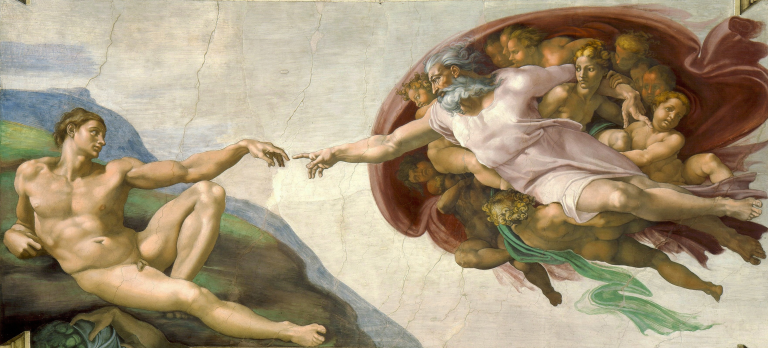
For nearly one hundred chapters, Jinx maintained a distorted version of that hierarchy. Joo Jaekyung existed as the towering “God” of the ring, wielding sovereign physical control, while Kim Dan remained the fragile mortal perpetually subjected to debt, rules, contracts, and bodily domination.
Yet as their fingers meet, Mingwa quietly reverses the entire structure. (chapter 100)
Kim Dan now stands upright, initiating the contact himself and reaching voluntarily across the emotional void. Meanwhile, Joo Jaekyung has become the limp, exhausted, emotionally paralyzed figure. His hand no longer stops gripping or possesses. Instead, it grows passive, heavy, and fragile as the fingers slowly begin slipping away.
This is precisely why the handshake becomes symbolically revolutionary. For one brief moment, the protagonists connect outside the toxic logic that governed their relationship for so long: no debt, no contract, no treatment, no championship, no transaction, and no performance. Only warmth.
But this is precisely where the tragedy deepens. Kim Dan is not a triumphant savior breathing life into a grateful recipient. He is still an insecure young man desperately searching for confirmation (chapter 100) that the warmth he sensed was real. He needs Jaekyung to tighten the grip, speak honestly, or offer any sign that he is wanted for more than his usefulness.
Instead, Joo Jaekyung retreats behind silence once again and delivers the devastating command: (chapter 100) This instruction seals Kim Dan’s internal misinterpretation completely. Paired with the slipping handshake, the sentence convinces him that the timeline established back in episode 77 has finally reached its inevitable conclusion. The transaction is over. The debt is dead. He is free to leave.
Yet the tragedy runs even deeper because Kim Dan does not perceive his own departure as abandonment at all. On the contrary, he genuinely believes he is acting lovingly and correctly by removing himself from Jaekyung’s orbit.
And in doing so, he unconsciously reproduces the exact emotional logic that shaped his own life and suffering.  (chapter 57) Long before episode 100, his grandmother attempted to push him away through almost identical reasoning.
  (chapter 57) Feeling powerless, burdensome, and guilty for his slow emotional deterioration, she repeatedly urged him to return to Seoul, live his own life, and stop “wasting away” beside her. Her love expressed itself through self-removal. Rather than openly asking Kim Dan about the reasons behind his pain, she tried to free him from herself before death could do it instead. She thought, she had the solution to the problem, because she believed she knew why!
Kim Dan internalized this worldview completely. Thus, when he prepares to leave the penthouse, he unknowingly imitates Halmoni’s sacrificial logic almost perfectly. He believes to know the athlete. Like out of sight, out of mind. Joo Jaekyung will stop suffering. (chapter 100) Love becomes synonymous with disappearing for the other person’s sake.
And devastatingly, Joo Jaekyung reproduces the exact same pattern simultaneously. Back on the beach, the champion promised: 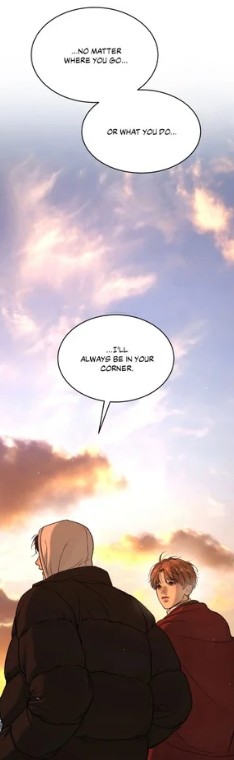 (chapter 95) At first glance, the sentence appears comforting and romantic. Yet retrospectively, the structure of the promise reveals a deeply corrupted blueprint for attachment. First, Jaekyung imagines Kim Dan leaving long before he ever asks him to stay. Even his love remains psychologically organized around future abandonment. Jaekyung’s words directly mirror the childhood promise made by his own mother—who told him she would watch over and support him from far away, leaving him with nothing but an inaccessible back and a heavy, permanent silence.
 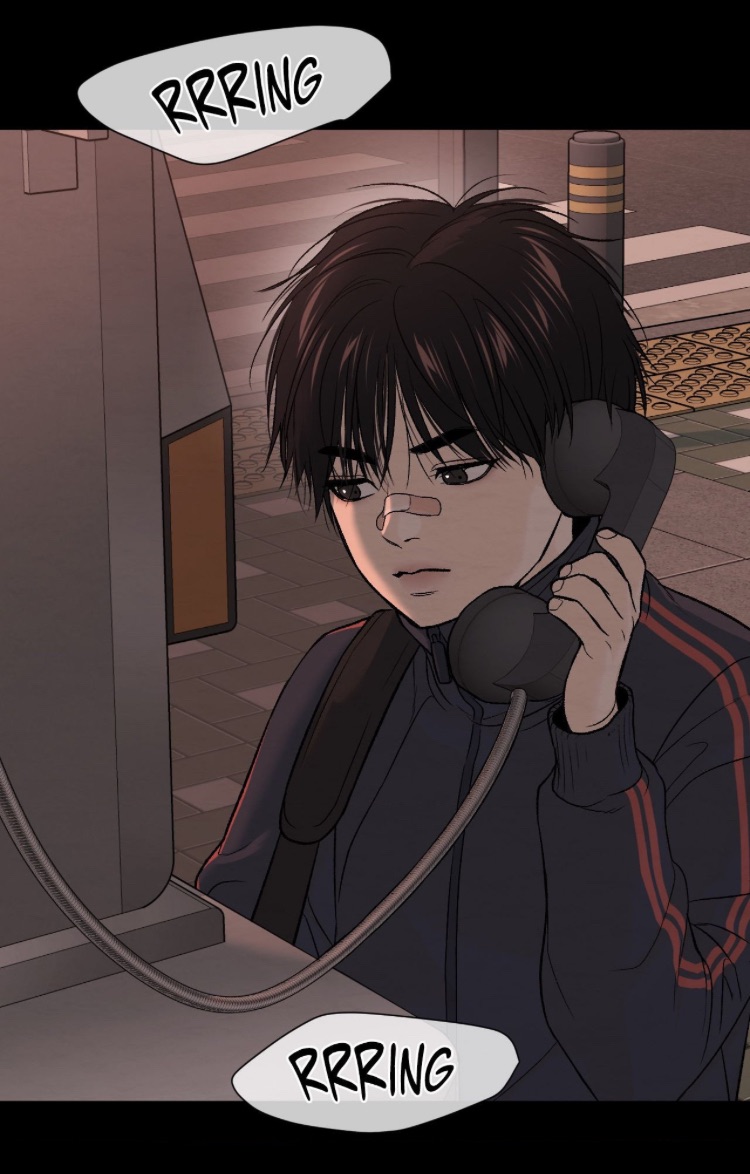 (chapter 72) But the ultimate cruelty of the narrative is that his mother’s promise was an absolute lie.
  (chapter 74) She did not watch from afar out of tragic necessity; she remarried, built an entirely new family, and willfully discarded Jaekyung to start a life where he had no place.
Thus, by episode 100, both protagonists express love through identical acts of self-erasure.
Kim Dan believes:
“If I want to help him feeling less guilty, then I should leave.”
Joo Jaekyung believes:
“If I want to protect him, I should let him go. He is getting hurt because of me. I am his jinx.
Neither realizes that they are silently reproducing the same inherited trauma script. And so, while still standing inside the vast uncrossed emptiness of the penthouse entrance, Kim Dan quietly utters: (chapter 100) The sentence acts like a psychological blade directly through Jaekyung’s deepest childhood wound. It confirms the terror haunting him since his mother’s disappearance and rejection: once the transaction ends and usefulness expires, people inevitably walk away. They don’t stay willingly, only because of money.
Then comes the devastating thud. Not the sound of emotional closure, but the sound of total collapse.
The monstrous willpower that carried Joo Jaekyung through brutal title fights, public scrutiny, and lifelong isolation suddenly evaporates beneath the unbearable weight of abandonment. The Emperor collapses on the threshold of his own making, similar to this nightmare:  (chapter 79)
 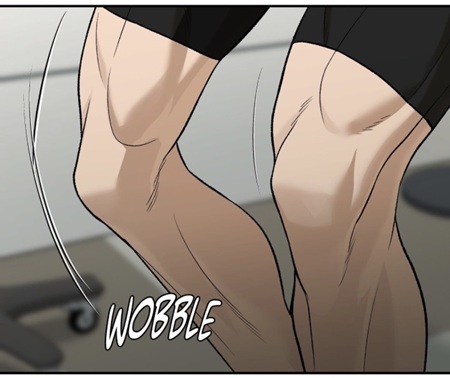 (chapter 99) Joo Jaekyung can only collapse under the weight of his immense knowledge and guilt: the hospital director, Baek Junmin, the switched spray (chapter 100). He almost killed a man, just like he did with his “father”.
And if my theory is true, then this is the moment where Kim Dan may finally begin understanding the champion properly for the first time. The terrifying realization finally emerges: beneath the armor, Joo Jaekyung suffers from the very same abandonment terror and low self-esteem that shaped Kim Dan’s own life. Because suddenly, the “Emperor” no longer resembles a distant monster at all.
He resembles a child, and not just a patient. Just like Halmoni. Just like Kim Dan himself.
The lost puppy hidden beneath the armor finally becomes visible. 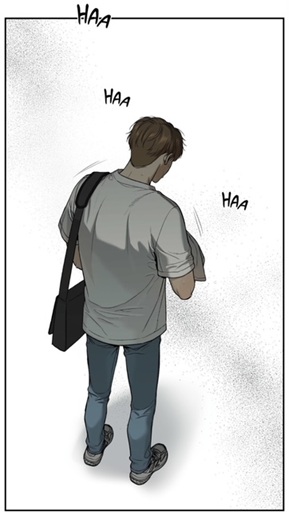 (chapter 59) And because Kim Dan still has not crossed the literal threshold , the collapse does not function as an ending, but as a confrontation with reality “sound THUD. (chapter 100) The counterfeit departure shatters completely. For the first time, Kim Dan stands before someone who is entirely incapable of saving himself.
And perhaps that is the true, revolitonary meaning of the scene. (chapter 100) The illusion of the untouchable Emperor cannot survive a collapse, and the myth of the unbleeding Angel cannot withstand a genuine psychological crisis. Episode 100 destroys both false frameworks simultaneously, leaving only two human beings at the entrance, waiting to see if anyone has the courage to reach back across the gap.
A HIDDEN REQUEST
Many readers walk away from this devastating cliffhanger feeling deeply frustrated with Joo Jaekyung. Across the fandom, the same complaint echoes repeatedly: “Why didn’t he just open his mouth?” “Why didn’t he ask Kim Dan to stay like he originally wanted to?”
The bitter irony, however, is that episode 100 already contains the request. I now invite my attentive readers to return carefully to the chapter itself and search for the exact panel where Joo Jaekyung’s true desire surfaces.
Once you find it, the emotional meaning of the entire chapter begins shifting.
Suddenly, episode 100 no longer feels like the story of a man incapable of asking someone to stay, but the story of two people trapped inside a far more complex emotional silence. And perhaps this is why episode 100 feels so haunting and terrible.
In the second part of this essay, we will examine why Joo Jaekyung gradually starts resembling a ghost himself — and how the chapter repeatedly buries his voice beneath misunderstanding, distance, and interruption.
Feel free to comment. If you have any suggestion for topics or Manhwa, feel free to ask. If you enjoyed reading it, retweet it or push the button like. My Reddit-Instagram-Twitter-Tumblr account is: @bebebisous33. Thanks for reading and for the support, particularly, I would like to thank all the new followers and people recommending my blog.
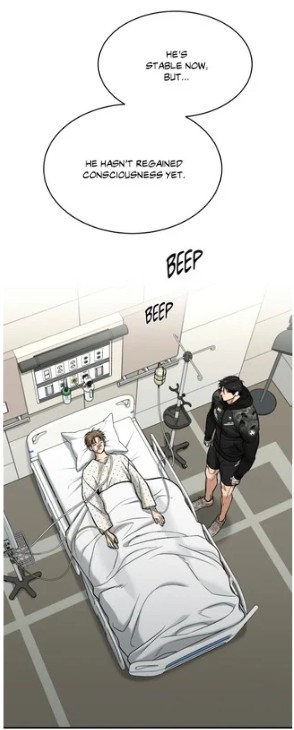 (chapter 99) He is absent from the ring. There was no sex before the match, no ritual, no “luck,” no physical reassurance. And yet Joo Jaekyung wins faster
 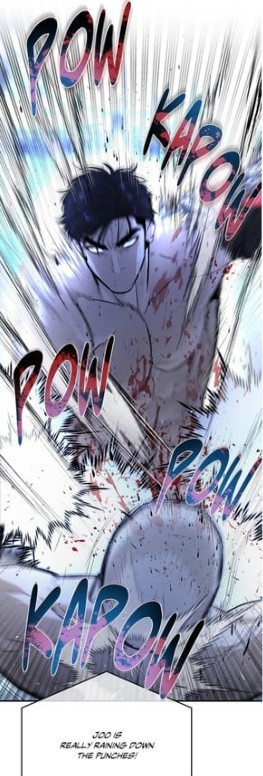 (chapter 99) At first glance, the conclusion seems obvious: the jinx is broken.
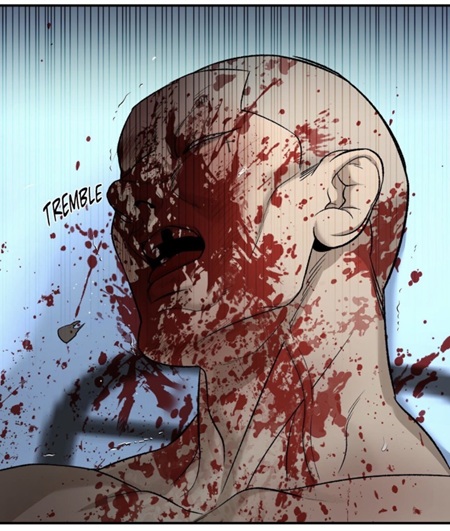 (chapter 99)
 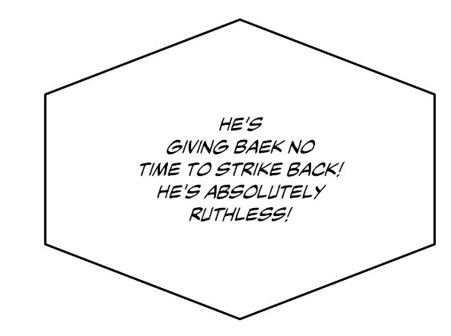 (chapter 99) The moderator repeatedly describes him as ruthless.
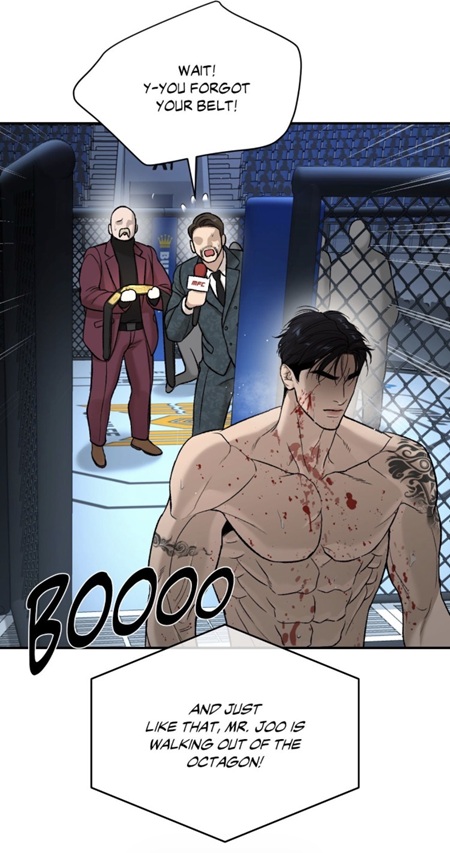
  (chapter 99) The crowd boos when he leaves the cage.
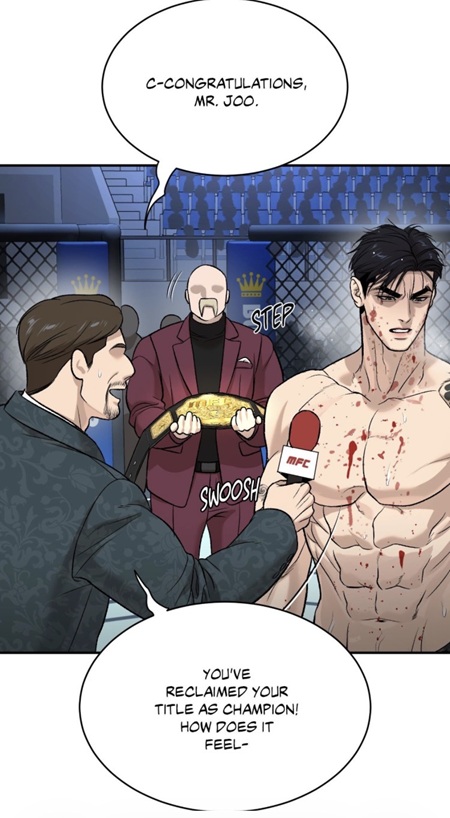
  (chapter 99) He refuses the interview,
  (chapter 99), ignores the CEO
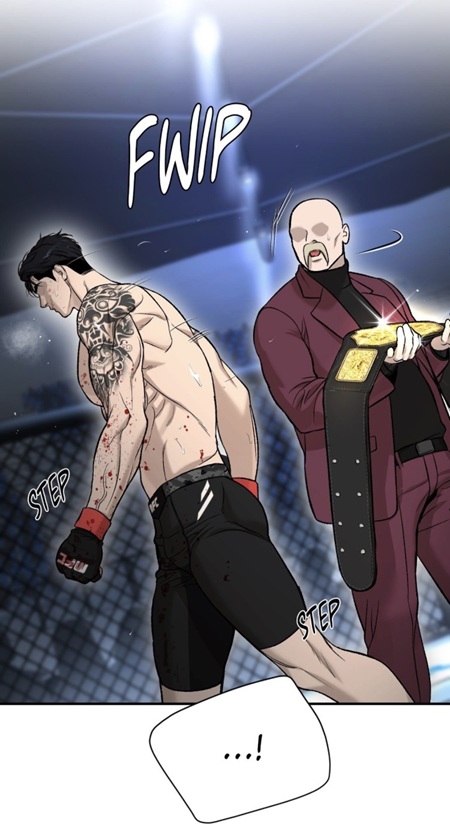 , (chapter 99), abandons the championship belt behind him, and walks away as though the victory itself had become meaningless.
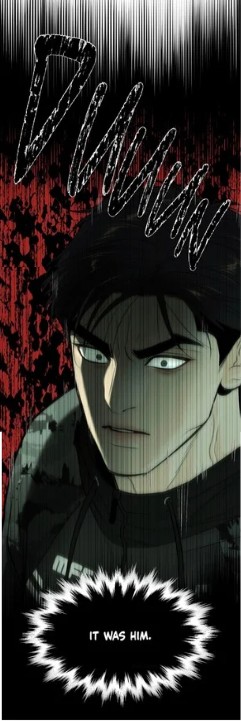 (chapter 99) We know that the fight was never truly about the belt. We know that the man appearing emotionally empty
 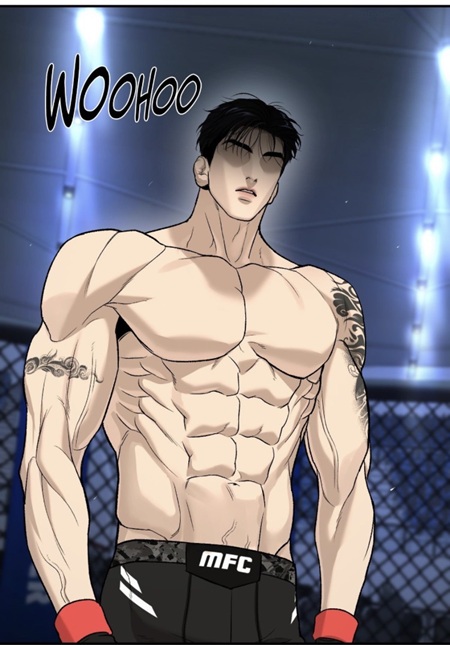 (chapter 99) inside the ring is, in reality, entirely consumed by one person lying unconscious in a hospital room.
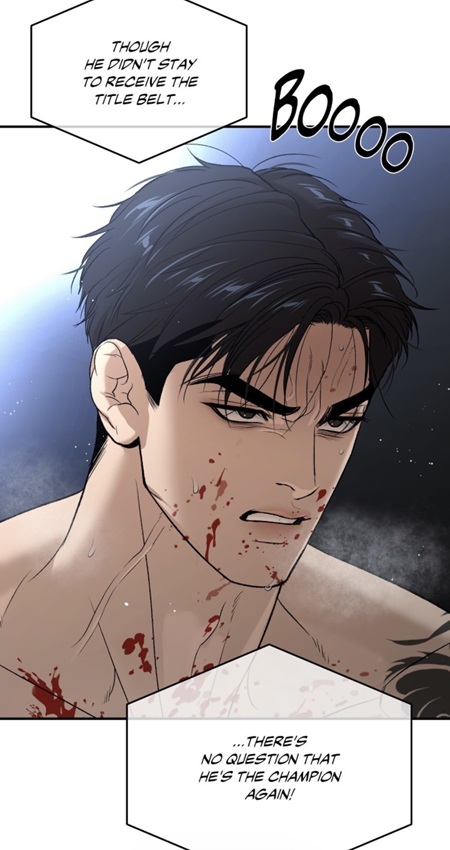 (chapter 99), the readers witness emotional clarity.
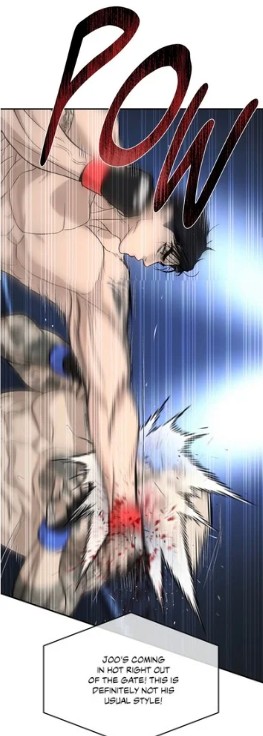 (chapter 99) That is why episode 99 feels simultaneously triumphant and tragic.
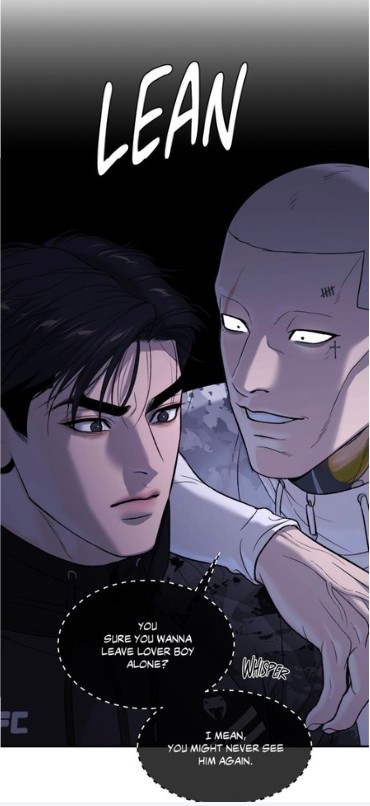 (chapter 99) intended to weaken Joo Jaekyung ultimately destroys the very hesitation that had governed him for years. But the result is terrifying to watch. The emperor wins, yet leaves the octagon looking less like a champion than like a ghost whose heart has already abandoned the arena long before his body does.
 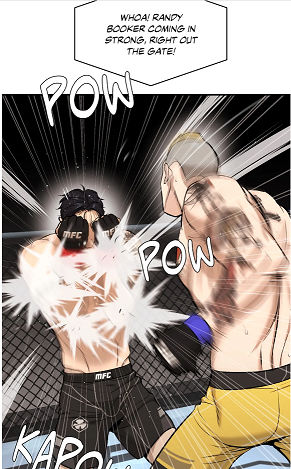 (chapter 15) Dominique lands the opening assault
 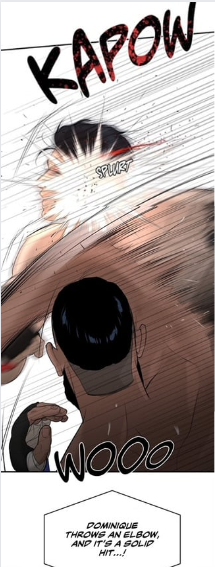 (chapter 40) while the athlete tried to avoid his attacks before
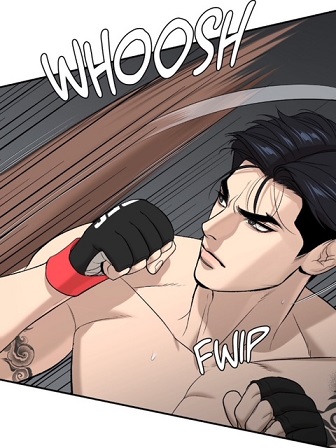 (chapter 40), Gabriel initiates the violence
  (chapter 87), and even Baek Junmin, in their first earlier encounter, attempts to establish control first.
 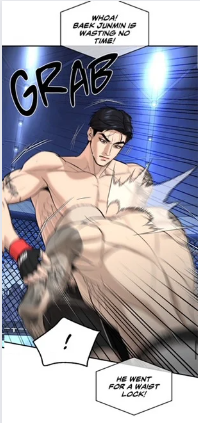 (chapter 50) Joo Jaekyung’s usual fighting style therefore follows a recognizable structure. He absorbs the opponent’s aggression
 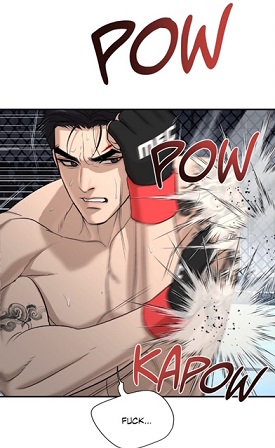 (chapter 40), studies it carefully, adapts to it, and only afterward retaliates with devastating precision.
  (chapter 5) The moment is brief, yet Park Namwook immediately notices that something feels fundamentally different.
 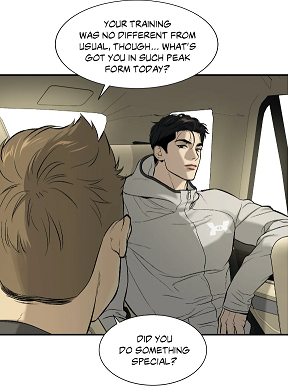 Despite training normally, Jaekyung suddenly appears unusually sharp, aggressive, and emotionally accelerated. Namwook asks whether he “did something special,” instinctively recognizing the deviation without understanding its source.
 (chapter 75) remarked that Jaekyung performed perfectly during practice but somehow “fell short in important matches.” Park Namwook immediately interpreted this through the logic of sports psychology and asked whether the champion simply got “cold feet.” Episode 99, however, reveals how profoundly the manager and coach misunderstood him. Namwook consistently interprets Joo Jaekyung externally.
 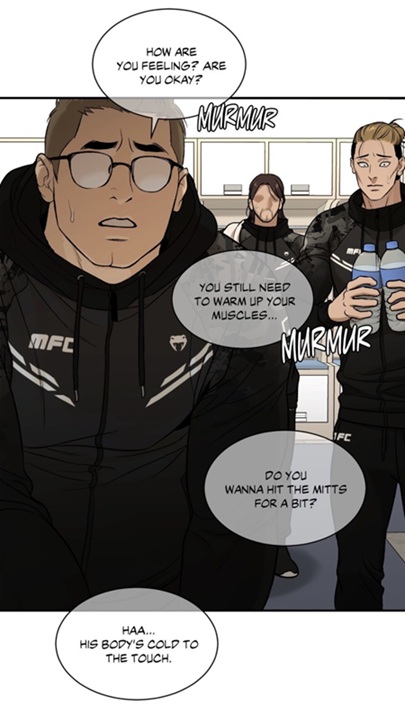 (chapter 99) Before the fight against Baek Junmin, he asks whether Jaekyung wants to warm up, whether he wants to hit the mitts, and whether he has slept enough. He notices that Jaekyung’s body feels “cold to the touch,” yet even then he still assumes that the problem must be physical, routine-based, or performance-related. This misunderstanding reveals something important about Namwook himself. First, it is clear that he is projecting his own indeciveness onto his “pupil”. Besides, he represents the institutional mentality of the gym, a worldview in which performance functions almost like a mechanical equation. Training, preparation, discipline, and focus are supposed to produce victory. To Namwook, hesitation can therefore only mean athletic anxiety or fear of failure. In his mind, the match itself is the most important reality in the room. That is why he keeps trying to solve Jaekyung’s silence through professionalism, routine, and ritual. But what the hyung never truly graps is that Joo Jaekyung is not merely an athlete struggling with nerves. He is a man haunted by memory. The “coldness” in his body was never simple fear of losing. It was emotional numbness.
 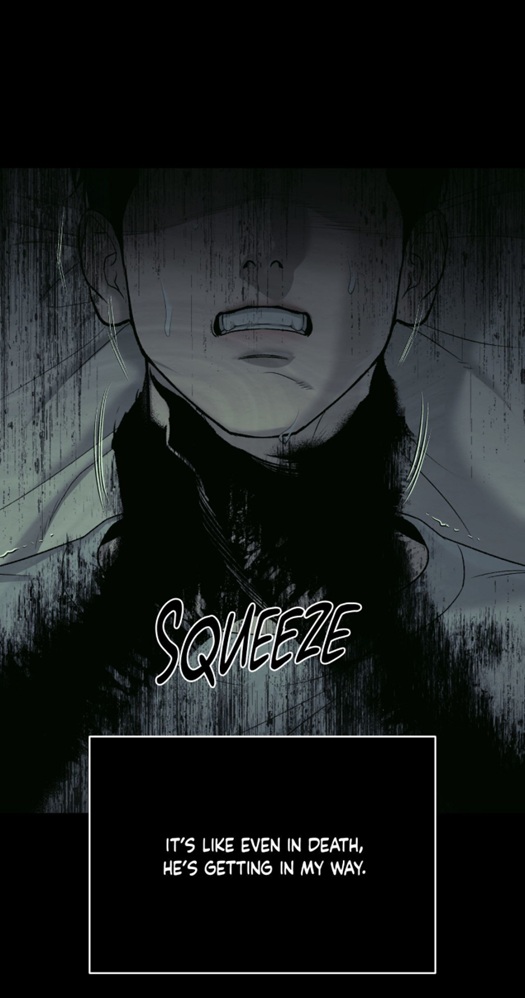 (chapter 75) Joo Jaekyung entered fights carrying invisible ghosts with him: the father, violence, hierarchy, humiliation, fear of disrespect, and the expectation of punishment and rejection. The story repeatedly shows how his father enforced authority physically.
  (chapter 72) The elder struck first.
  (chapter 72) Resistance or even “presence” was punished. Submission and later avoidance became a survival mechanism. Even later, fragments of this mentality continued reproducing themselves through figures like Hwang Byungchul.
  (chapter 74)
 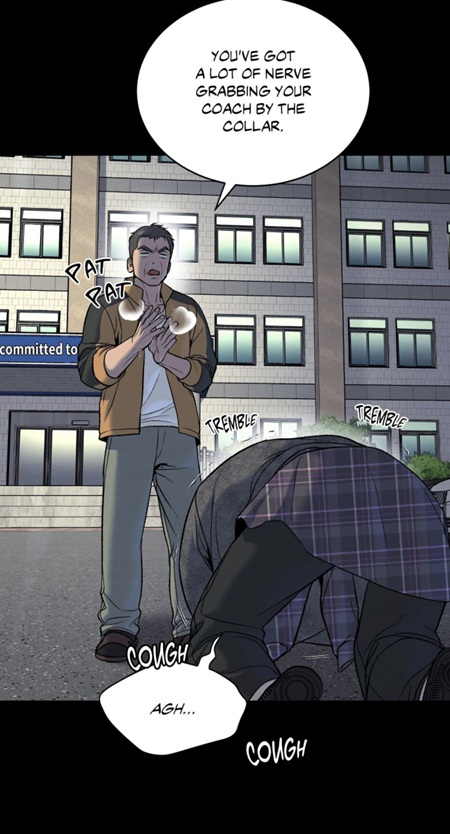 (chapter 74) As readers, we gradually realize something deeply unsettling. Joo Jaekyung unconsciously grants older men (Randy Booker, Dominic Hill, Park Namwook and Baek Junmin) the symbolic privilege of initiating violence. This explains why insults such as “baby,”
 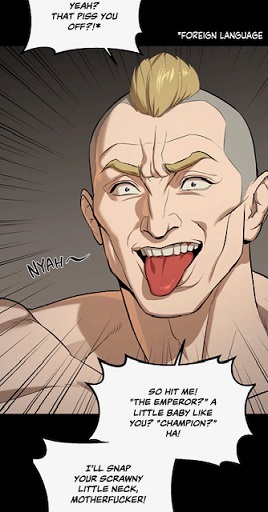 (chapter 14) “child,” and “lost puppy”
 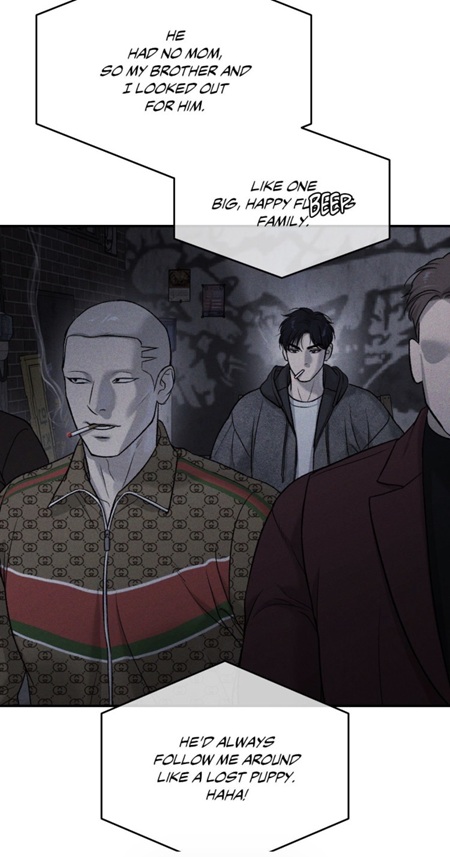 (chapter 96) carry so much narrative importance throughout the series. These words do not merely mock him. On the one hand they psychologically reflect his past fighting style
 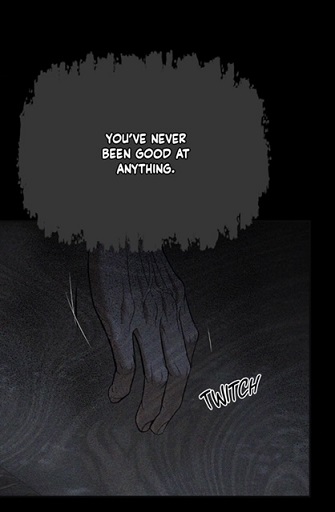 (chapter 54) Weakness became tied to identity itself. Hesitation became associated with inferiority. Emotional attachment became linked to failure and humiliation. This is why the champion’s mistrust persisted even after becoming the strongest fighter in the ring. Outwardly, Joo Jaekyung became “the Emperor.”
  (chapter 75) Inwardly, however, part of him remained trapped before the father’s judgment, still unconsciously waiting for the older man to strike first. The hesitation therefore was not simple caution. It was fear itself. It was the fear that he might truly be weak. It was the fear that he might truly be inferior. And, above all, it was the fear that he might ultimately become exactly what his father believed him to be: A loser!
 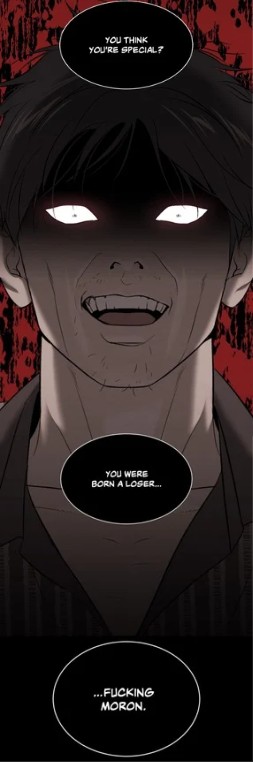 (chapter 73) And this is precisely why episode 99 changes everything. For the first time in the series, Joo Jaekyung stops fighting while carrying the father’s voice inside his mind. He is no longer hearing his voice, but only seeing his lover’s cold body.
 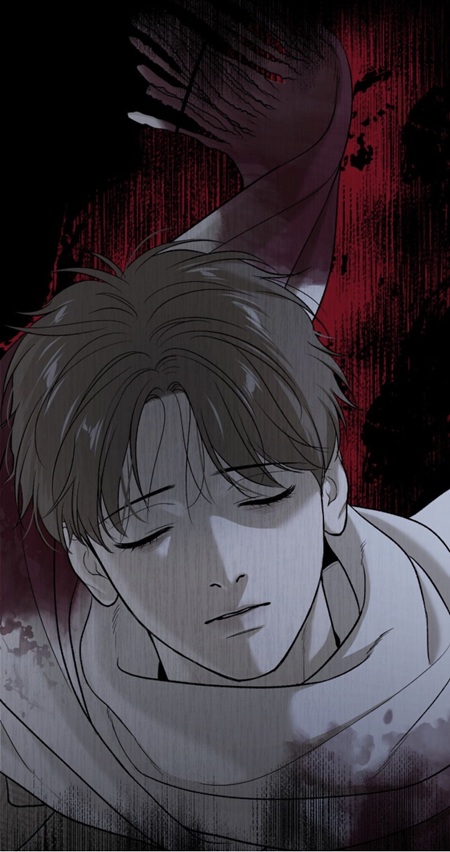 (chapter 99) The assault against Kim Dan forces him into a situation where doubt itself becomes impossible. Suddenly, something matters more than hierarchy, humiliation, fear, or inherited shame. Love overrides the old curse. And once that happens, the subordinate child disappears instantly.
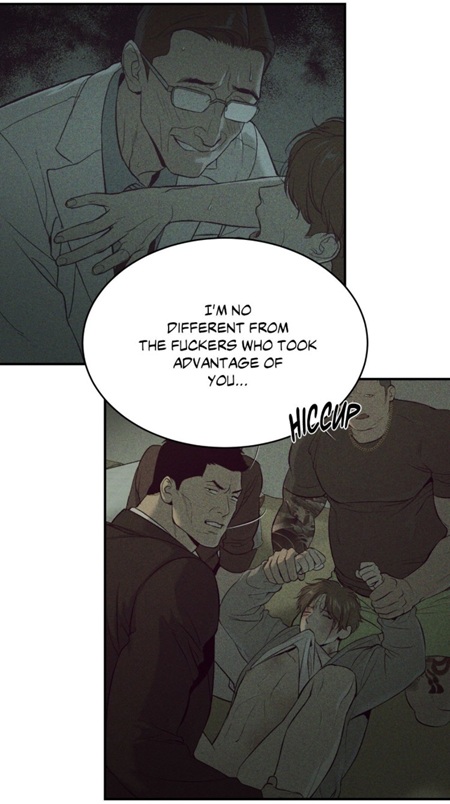 (chapter 91) The “hamster” clearly showed clear signs of PTSD during the restaurant encounter in Chapter 90.
 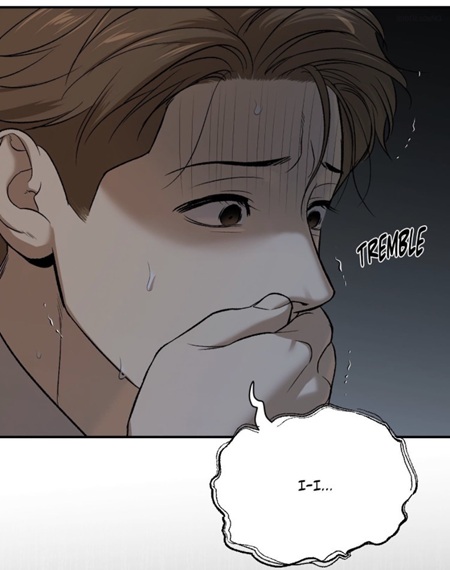 (chapter 90) The trembling, the nausea, and the paralyzing fear were not just reactions to a “fight,” but to a perpetrator who had physically violated his agency. When the former hospital director attempted to “erase” the assault through further violence (the stabbing)
 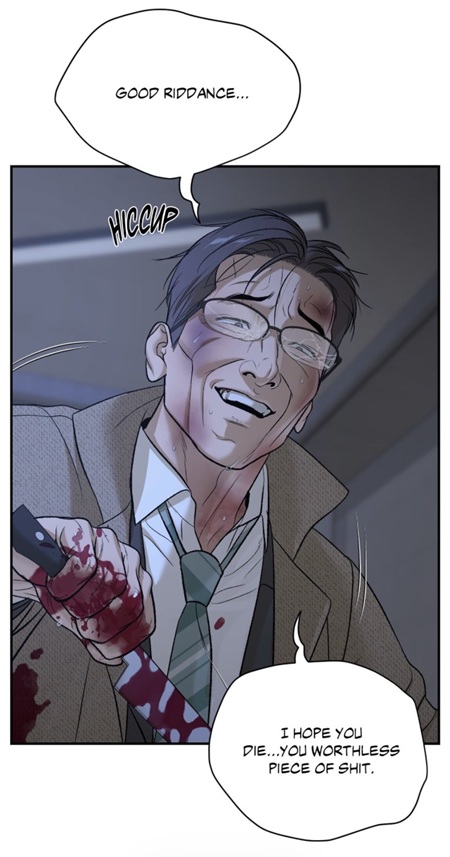 (chapter 98), it proved that to the antagonists, Dan’s body was merely a canvas for their malice.
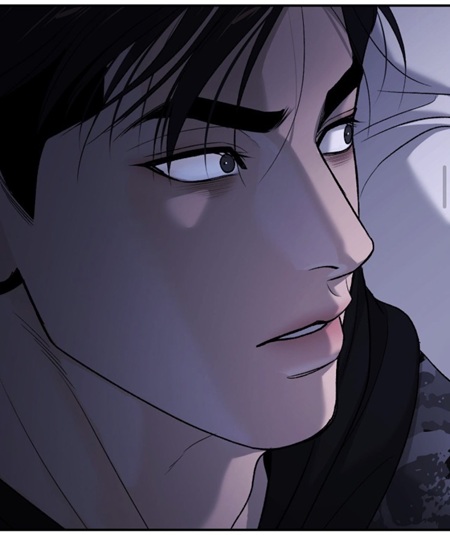 (chapter 99) For Joo Jaekyung, hearing Junmin use a “diminishing” term to describe a man who is currently lying in a hospital bed because of Junmin’s own schemes is the ultimate provocation. It transforms a standard pre-fight taunt into a disgusting trivialization of Dan’s suffering.
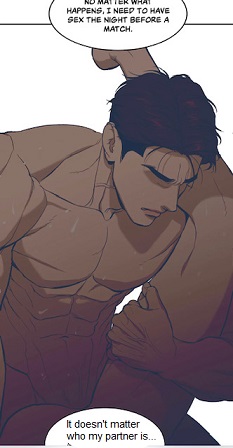 (chapter 02) This is why the superstition held so much power over him. Kim Dan unconsciously became transformed into something functional, almost mechanical: a stabilizer, a ritual, a lucky charm.
  (chapter 87) But episode 99 destroys this illusion completely. The moment Baek Junmin says “loverboy,” Joo Jaekyung is forced to confront something openly for the first time. Kim Dan is not luck. Kim Dan is not a ritual. Kim Dan is not a tool. Kim Dan is the person he loves.
  (chapter 49) suddenly becomes extraordinary. A shotgun is a weapon of spread, chaos, and indiscriminate destruction. The antagonist’s psychological attack functions exactly the same way.
 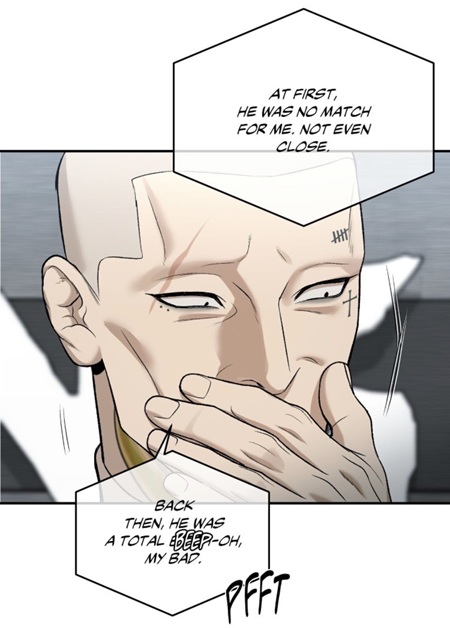 (chapter 96) He fires insults everywhere at once: infantilization, guilt, mockery, emotional humiliation, and social shame. But Joo Jaekyung’s response becomes the complete opposite: a trigger for retaliation.
 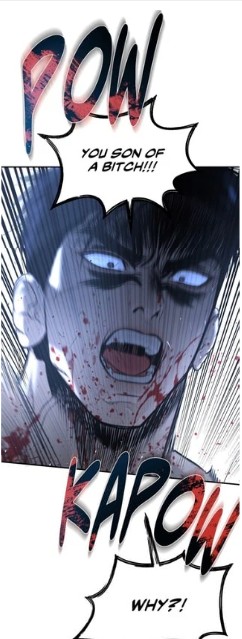 (chapter 99)
 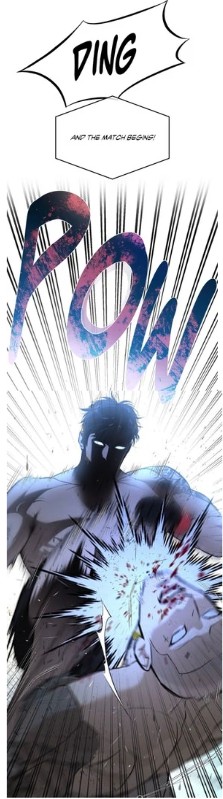 (chapter 99), recover
 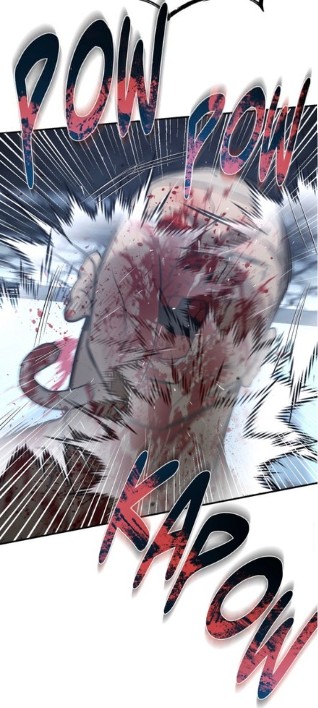 (chapter 99), or retaliate.
 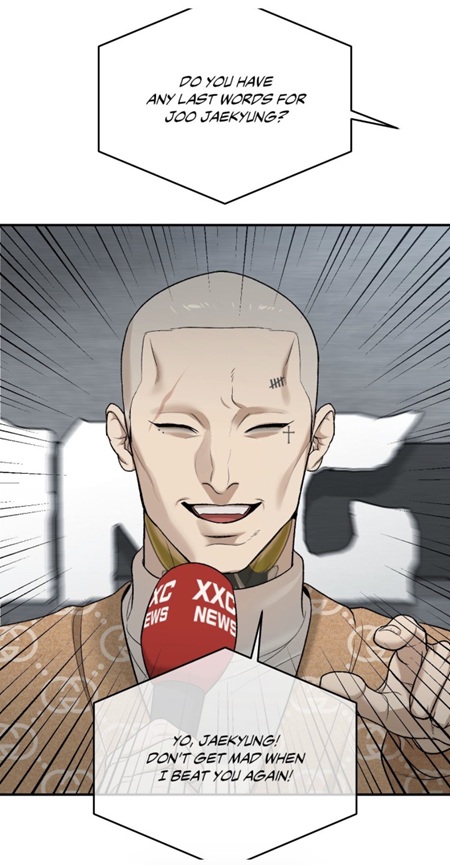 (chapter 96), a performative tool used to signal emotional superiority and untouchability. Throughout the series, he weaponized his smile to infantilize Jaekyung and degrade Kim Dan
 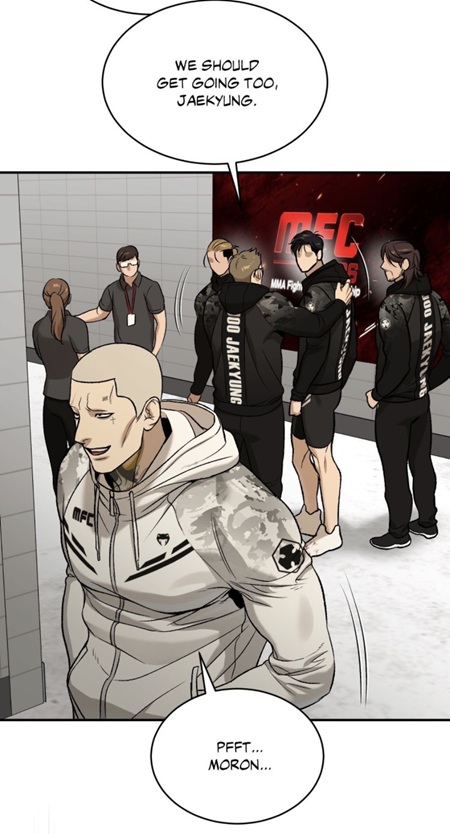 (chapter 99), positioning himself as the puppet master of the “last laugh.”
 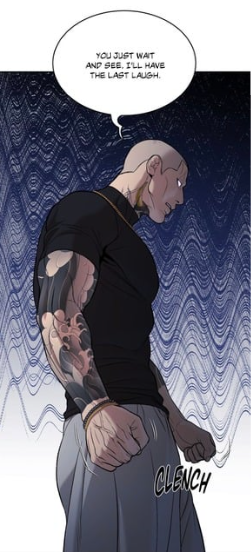 (chapter 87) In Episode 99, Joo Jaekyung deconstructs this theatricality with surgical intent. He doesn’t target the body for a standard knockout; he targets the features of expression:
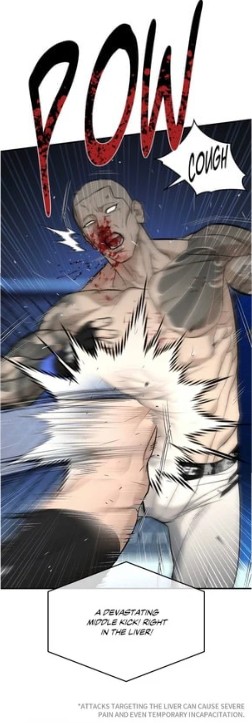
 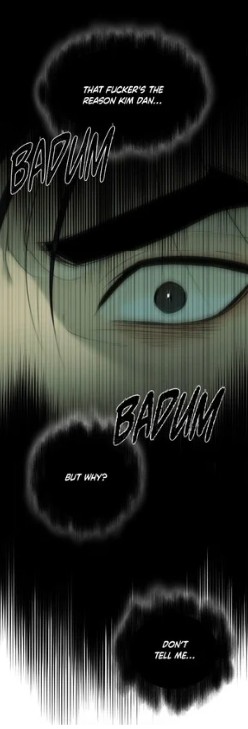 (chapter 99) He fights personally. And that is precisely why he becomes so terrifying. The crowd boos because they expected a spectacle governed by sportsmanship, hierarchy, and ritualized violence. Instead, they witness sincerity stripped completely naked. The arena ceases to resemble entertainment and begins resembling execution.
 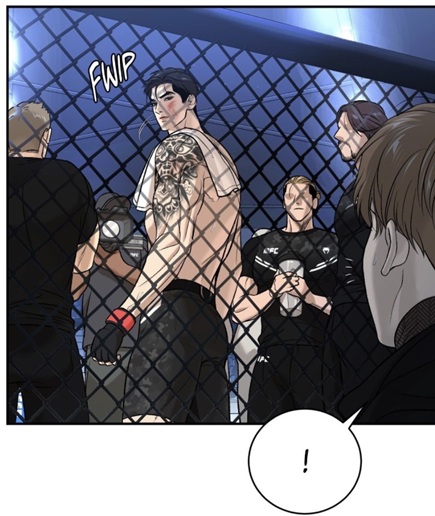 (chapter 87) Chapter 15 quietly introduces one of the most important structural changes in Jinx:
  (chapter 15) Kim Dan’s transition from a private “function” of the jinx into a visible presence within the audience itself. At first glance, the scene appears insignificant. The arena is immense, saturated with blinding lights, cameras, and noise. Joo Jaekyung stands at the center of a gigantic machinery of spectacle that elevates him into the untouchable figure of “the Emperor.” At this stage, readers are still encouraged to view him primarily as a public myth sustained by victory, fame, and domination.
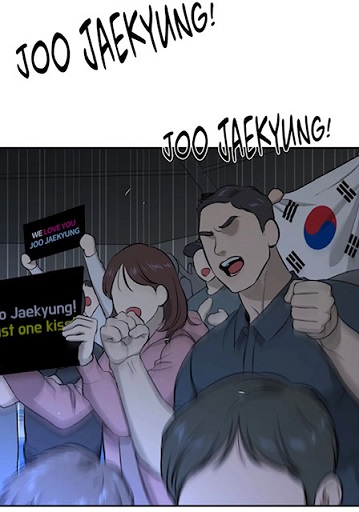 (chapter 15), the fear of opponents, the attention of cameras, the authority of the CEO, and the symbolism of the championship belt all participated in validating Jaekyung’s existence. The Octagon was not simply a workplace. It was the symbolic center of his identity.
 (chapter 40)
 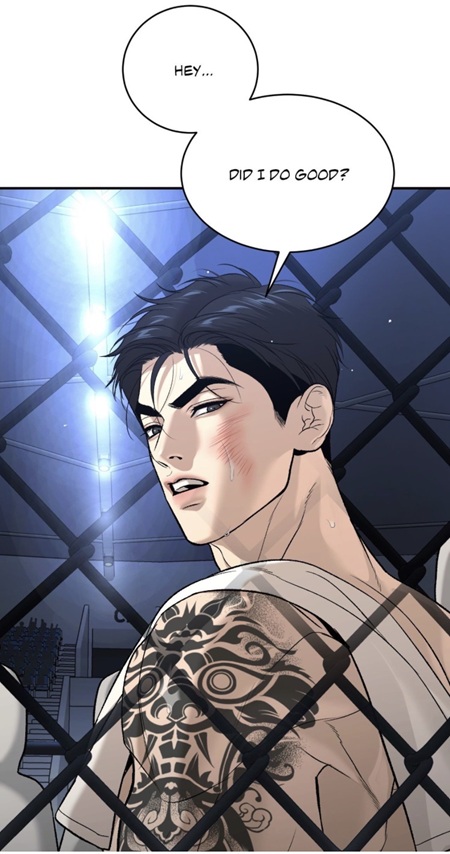 (chapter 87)
  (chapter 87)
  (chapter 40), and transform violence back into entertainment. The spectacle depends on emotional resolution in order to preserve itself. But Joo Jaekyung refuses this transition entirely. He leaves the violence unresolved and emotionally raw.
 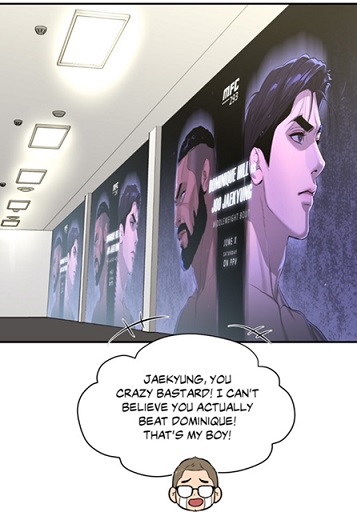 (chapter 40), treating him almost as “his” champion to manage, interpret, and direct.
 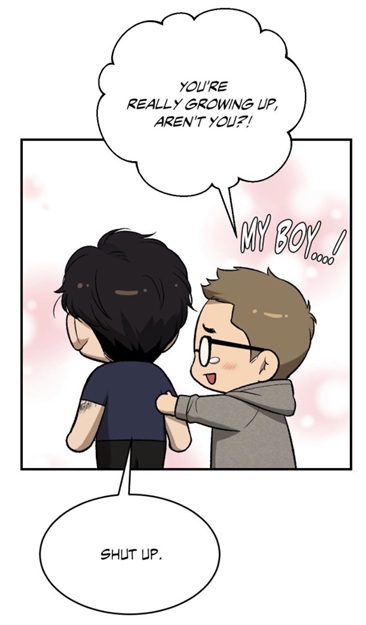 (chapter 88) But in Episode 99, his praise suddenly feels hesitant and emotionally uncertain.
 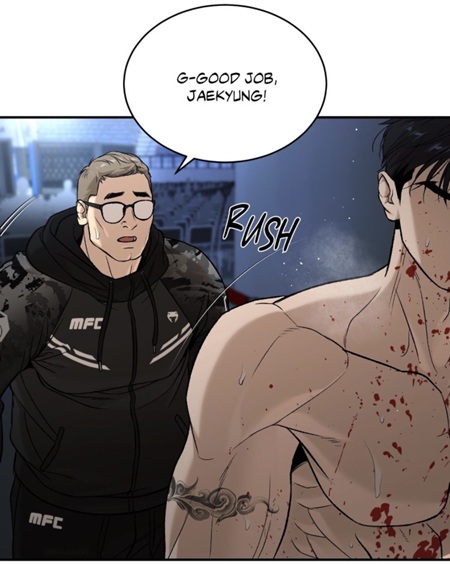 (chapter 99) The stutter in “G-good job, Jaekyung!” alongside the visible sweat drop transforms what should have been a triumphant moment into an awkward and deeply uncomfortable interaction.
 (chapter 75) The expectations of others, the father’s ghost, the burden of hierarchy, fear of emotional weakness, public image, and the pressure to sustain the Emperor identity all occupied space inside his mind simultaneously. Part of him always remained divided between the immediacy of the present and the weight of the past.
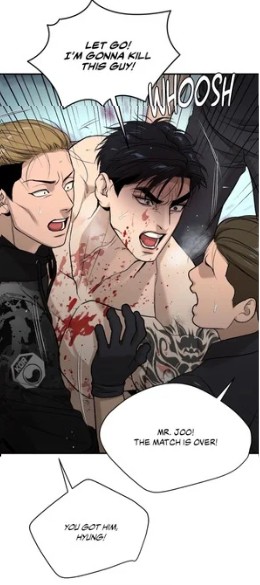 (chapter 99) There is no vanity left inside him, no desire for applause, and no hunger for symbolic recognition. The crowd cannot understand what it is witnessing because Joo Jaekyung is no longer fighting for public validation at all.
 (chapter 15) because the audience helped sustain the identity of “the Emperor.” But by Episode 99, the crowd has already lost its emotional authority over him. The boos therefore sound strangely hollow. They belong to a world Joo Jaekyung has already abandoned internally.
 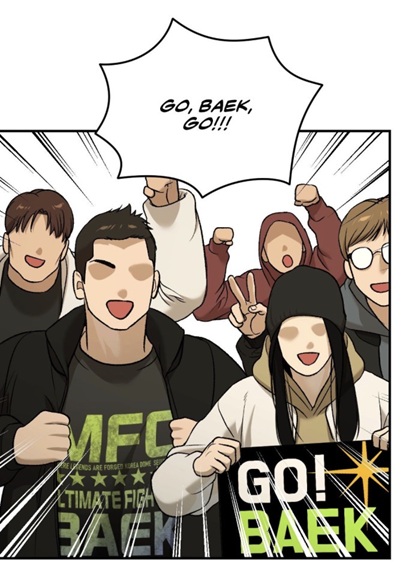 (chapter 99) Before the match begins, both groups of supporters remain visibly divided. Some cheer passionately for Joo Jaekyung
 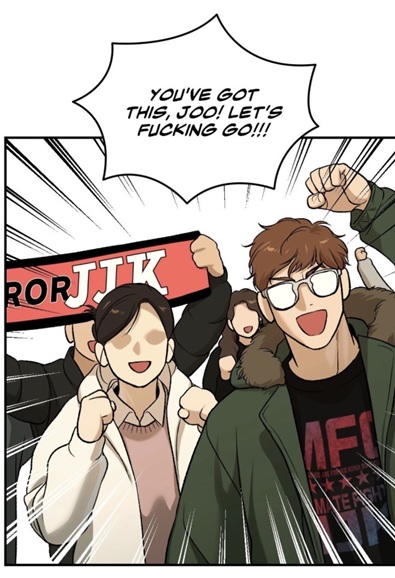 (chapter 99), while others support Baek Junmin with equal enthusiasm. Yet despite this rivalry, the audience still shares the same emotional framework. They participate in the same ritual structure of sports entertainment: choosing sides, anticipating victory, and emotionally investing themselves in the spectacle. But once Joo Jaekyung abandons the belt and walks away from the Octagon, this division suddenly disappears.
  (chapter 75) But by Episode 99, Joo Jaekyung has already emotionally abandoned that entire system. The boos therefore no longer possess true emotional authority over him. They belong to a world he has already left behind psychologically.
 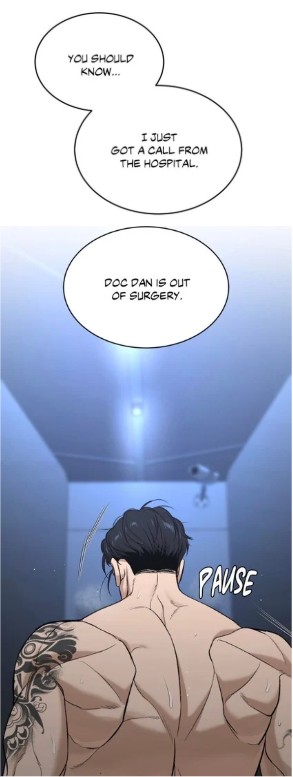 (chapter 99)
 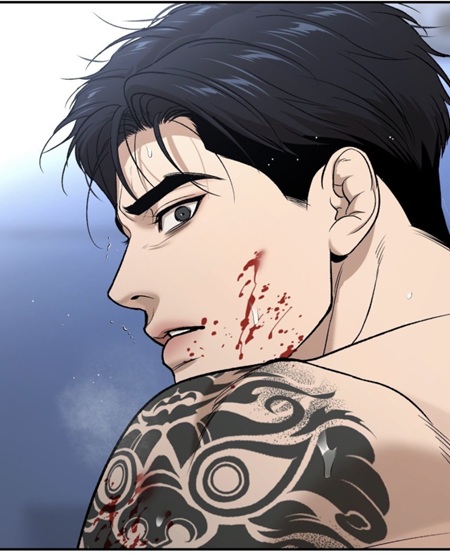 (chapter 99)
 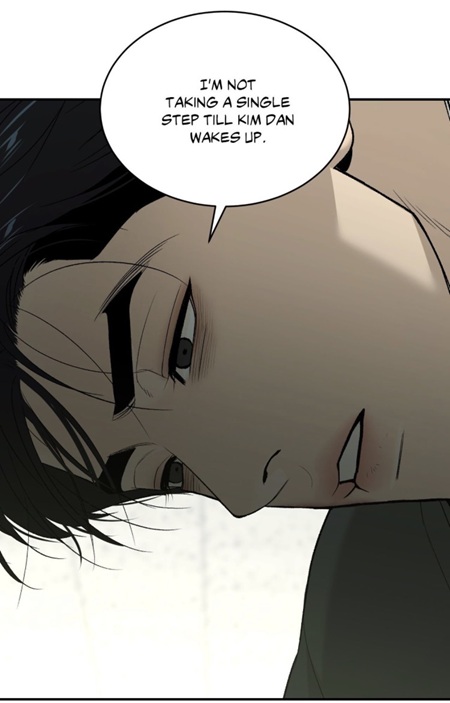 (chapter 98) That sentence completely recontextualizes everything that follows afterward. Emotionally, Joo Jaekyung had already chosen the hospital over the Octagon.
 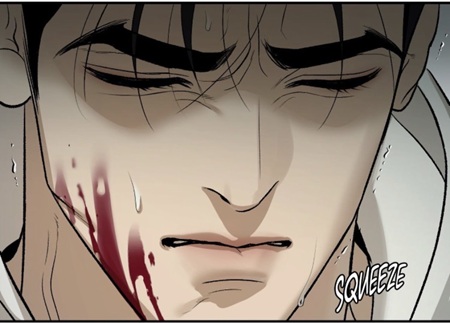 (chapter 98) The cage, once his kingdom, suddenly becomes a place of forced exile. He does not want the lights, the crowd, or the spectacle. He wants to remain beside Kim Dan. He wants proximity, silence, and reassurance. But the system surrounding him — the match, the organization, the expectations, and the machinery of professional fighting itself — forces him back into the arena before Kim Dan regains consciousness.
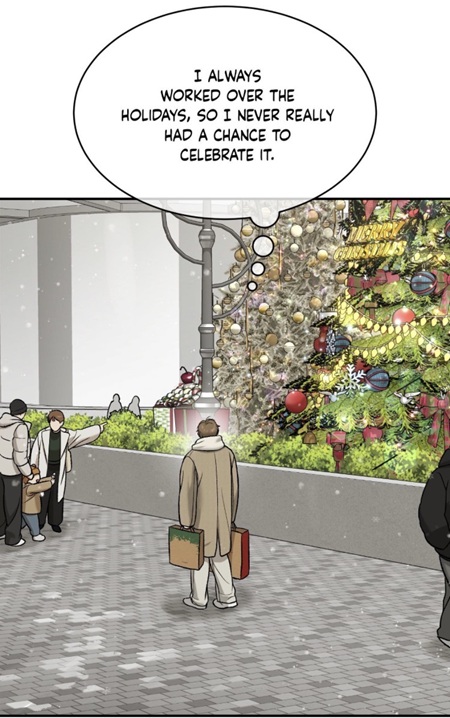 (chapter 97) Throughout the series, Kim Dan lived like a ghost. He erased himself emotionally and physically in order to survive.
 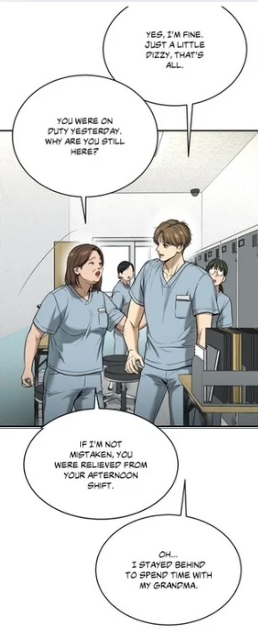 (chapter 57) He exhausted his body for others, suppressed his own emotions, accepted humiliation silently
 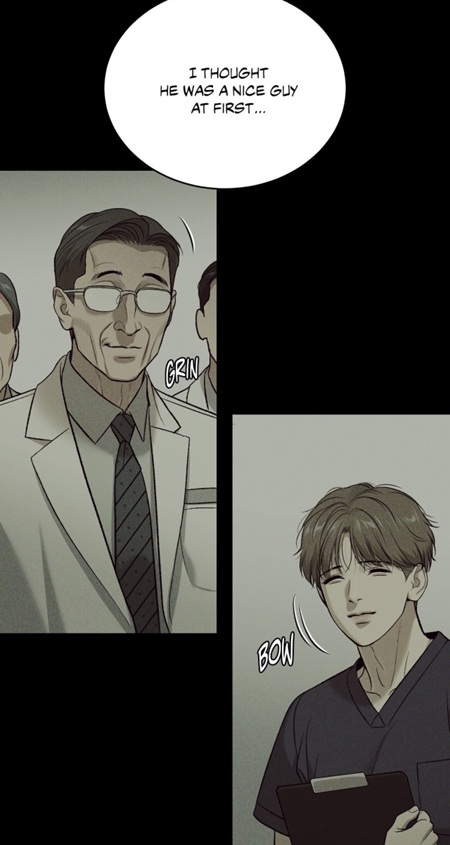 (chapter 90), and reduced himself to a functional object rather than a full human being. He moved through life almost invisibly, enduring suffering while abandoning parts of himself in the process.
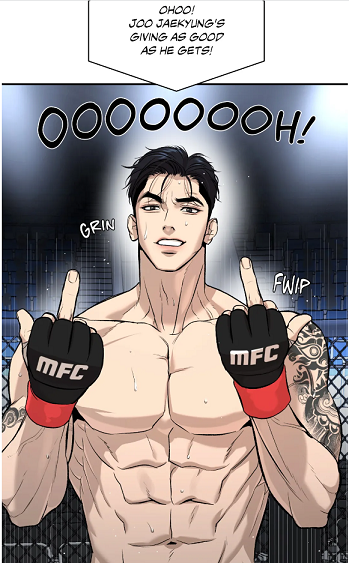 (chapter 15), intimidation, or performative dominance. Here, however, the emotional repression ruptures openly. Yet paradoxically, the loss of the mask does not weaken his precision. Instead, his years of training allow his body to continue functioning with horrifying efficiency even while his emotional state reaches a breaking point.
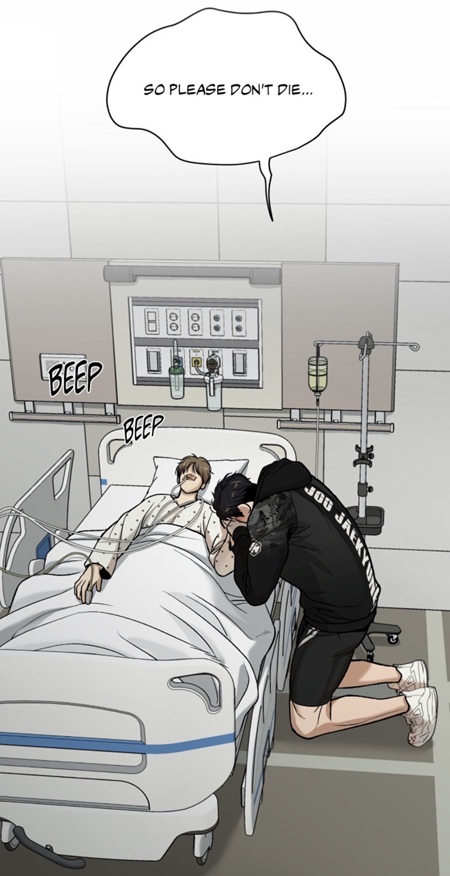 (chapter 99)
  (chapter 99), money, and spectacle, yet everything inside it suddenly feels false. The championship belt becomes meaningless. The real “octagon” is the hospital room. This is where Joo Jaekyung finally stops performing.
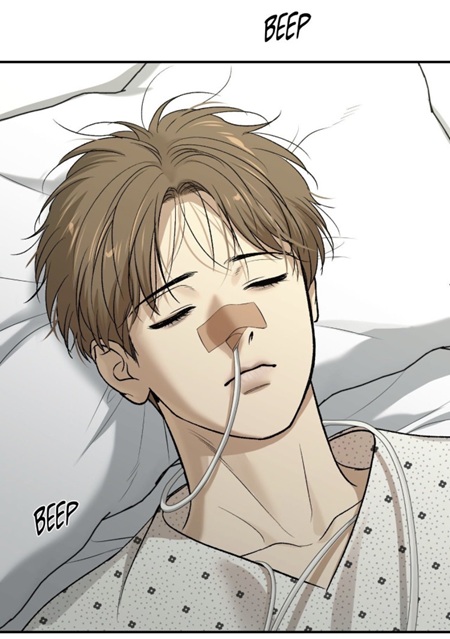 (chapter 99) The feared separation is no longer tied to humiliation, disgust, disappointment, or emotional abandonment. It is tied to death itself.
 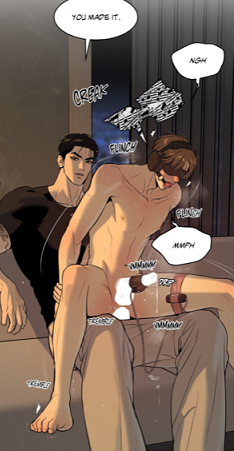 (chapter 34) Pride could function as protection because rejection still belonged to the realm of human choice. But death cannot be negotiated with. Death cannot be emotionally controlled. Death strips away performance, ego, hierarchy, and pride.
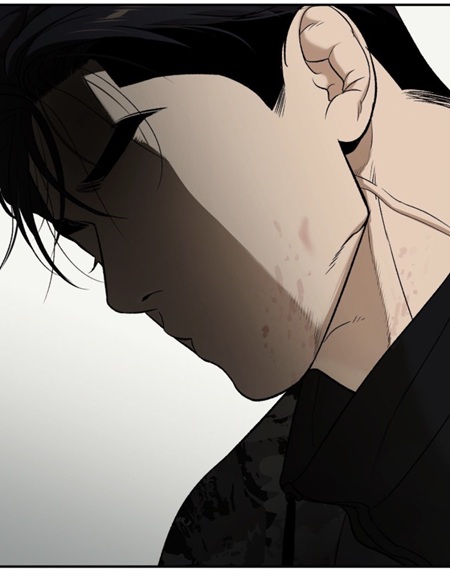 (chapter 99)
 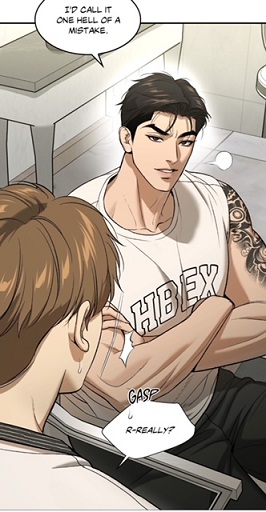 (chapter 41) His eyes projected dominance, intimidation, hierarchy, and emotional control, while his words often functioned as weapons protecting him from vulnerability. But in this moment, both are symbolically erased.
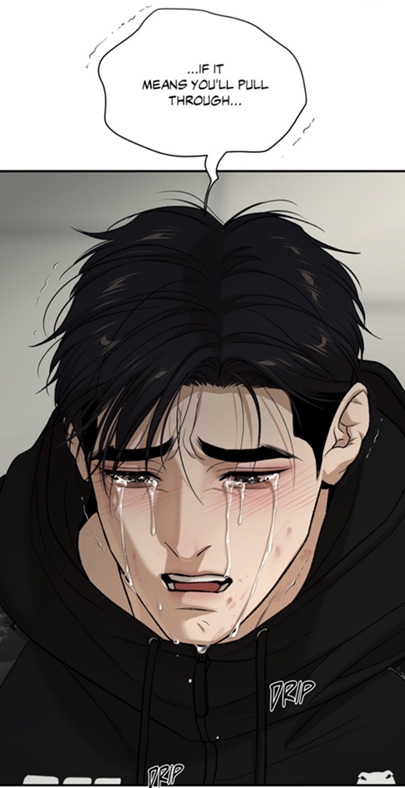 (chapter 99) only because Kim Dan cannot answer him. Kim Dan’s unconsciousness temporarily removes the immediate fear of judgment and rejection that had governed Jaekyung’s emotional life for years. His tears no longer emerge from wounded pride or fear of rejection. They emerge from something much more terrifying and much more human: the fear of irreversible loss.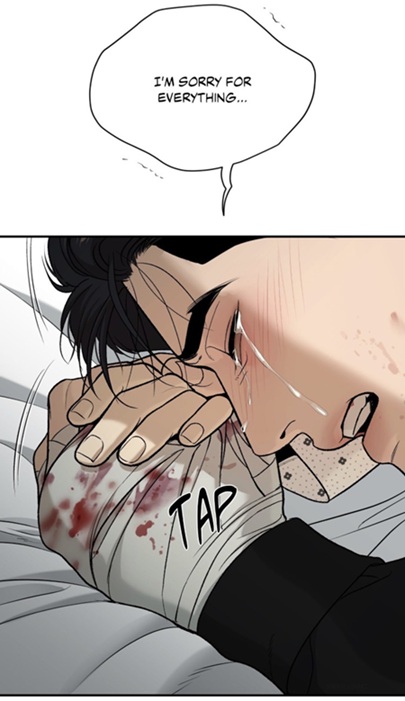
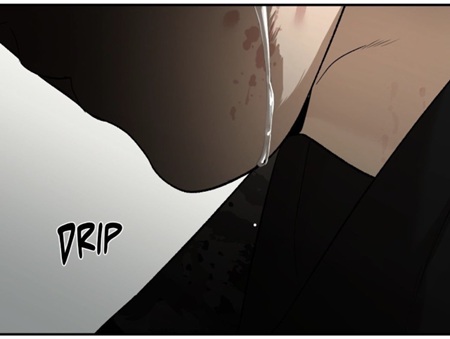 (chapter 99) When the tears finally fall, they carry a symbolic weight that transcends simple grief. Throughout the series, Jaekyung’s body has functioned as a suit of armor—a fortress of hardness, discipline, and emotional immovability. In his world, pain was always displaced; it was never felt, only inflicted upon others through violence or control. He was the man who struck, never the man who collapsed.
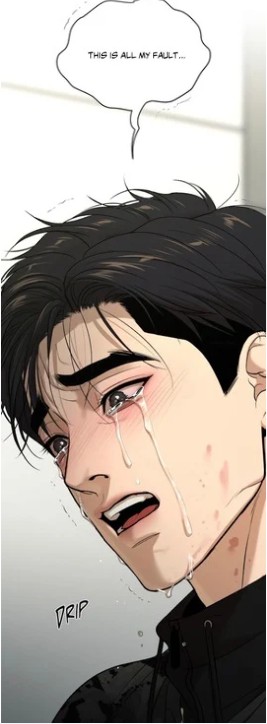 (chapter 99) The tears act as a solvent, dissolving the emotional paralysis that has governed him since his childhood. At the same time, they also allow Joo Jaekyung to confront something he had carried unconsciously for years: the guilt, fear, and emotional burden surrounding his father’s death.
  (chapter 74)
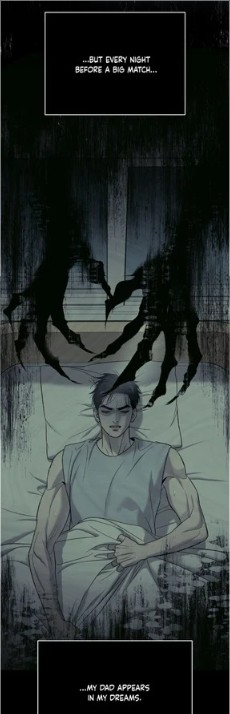 (chapter 75) Victory became proof that he was not weak, not broken, not destined to fail the same way. But this also trapped him psychologically inside the father’s shadow. Every fight became tied to survival, worth, and the terror of becoming a “loser.”

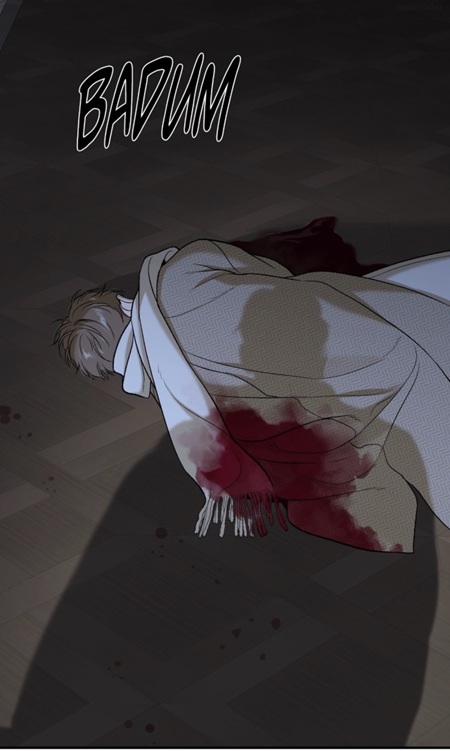 (chapter 98), then awakening cannot mean simply opening one’s eyes. It requires something more difficult: the ability to perceive the web itself.
 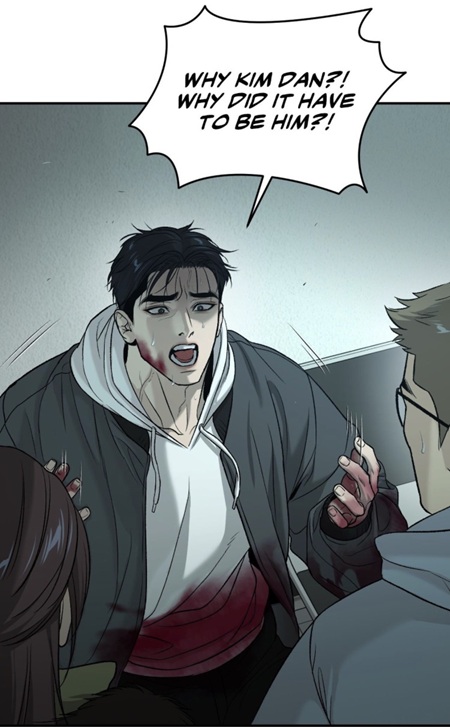 (chapter 98)
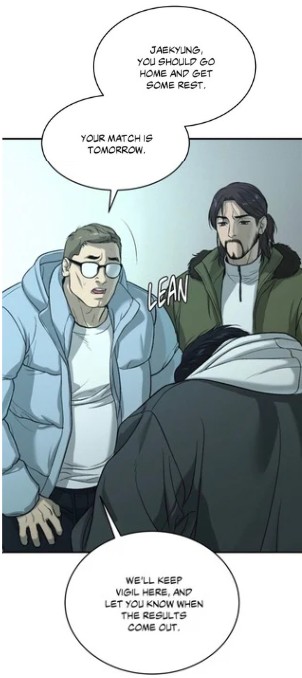 (chapter 98)
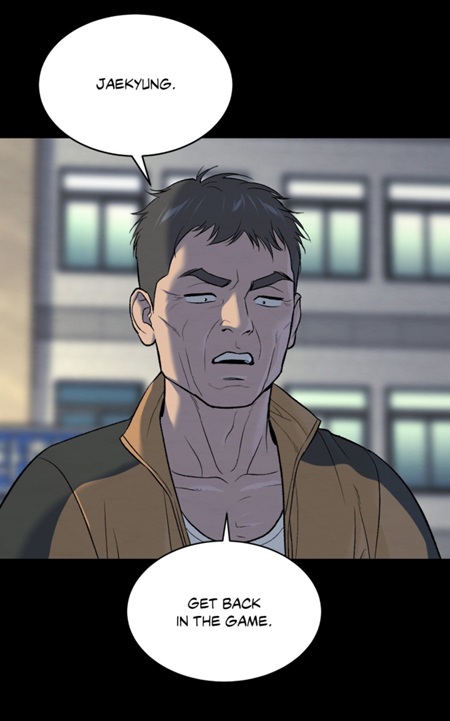 (chapter 74)
 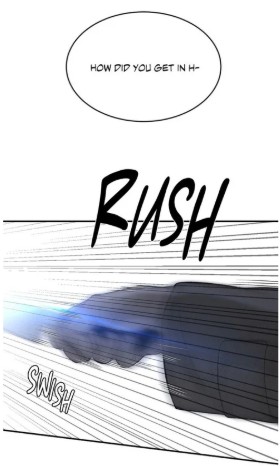 (chapter 98) It marks the moment when threads—long invisible—can no longer absorb the force placed upon them. What could once be deferred, explained, or reinterpreted now demands recognition.
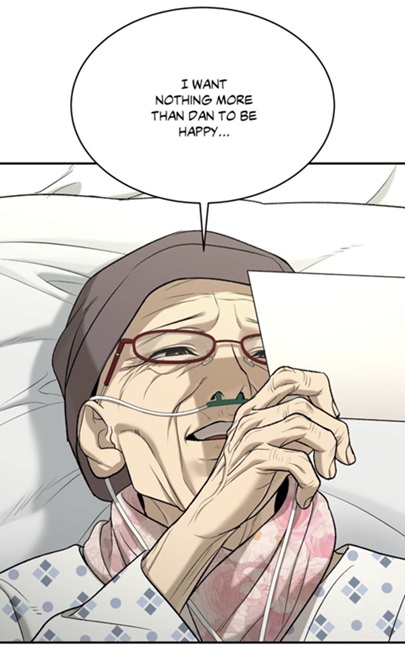 (chapter 94) She operates through a series of metonymic substitutions, formulas designed to translate the chaos of precarity into the language of stability. In her system, “Doctor” is synonymous with “Safety”,
 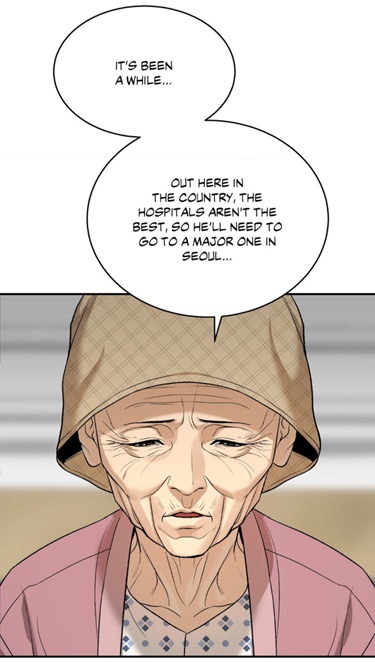 (chapter 65) and “Seoul” is equated with “Opportunity.”
  (chapter 65) This is the pragmatic logic of a survivor who has learned that in a world of scarcity, respectability is the only available armor. She seeks to build a fortress for Kim Dan out of credentials and institutional legitimacy,
 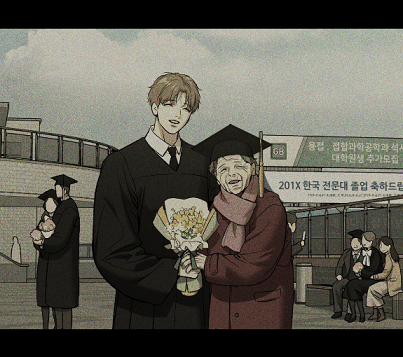 (chapter 47) believing that if the external conditions are sufficiently aligned, the internal suffering can be permanently contained.
 (chapter 65), she extends her system of protection beyond herself. Unable to guarantee Kim Dan’s safety directly, she delegates it to another figure she perceives as stable, capable, and situated within a controlled environment. Protection, here, becomes transferable—something that can be secured through the right association.
 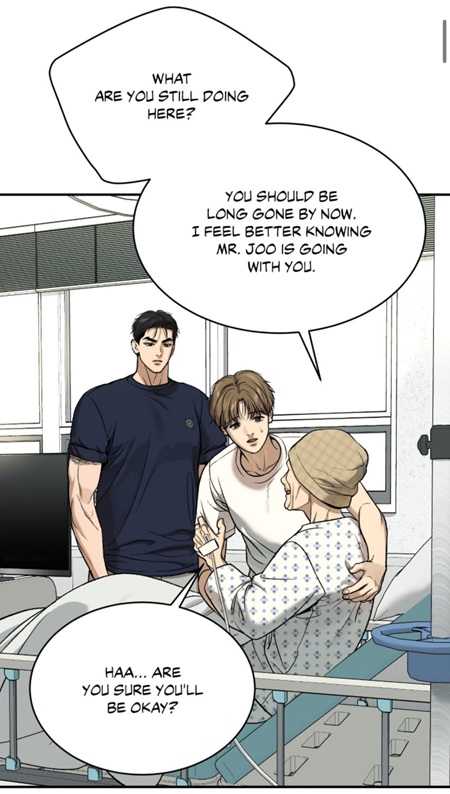 (chapter 78)
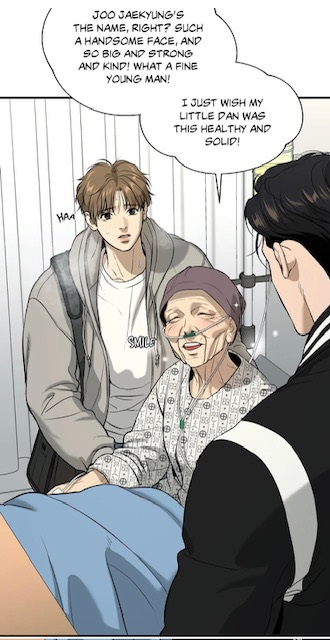 (chapter 21), his status, and his apparent control over his environment.
 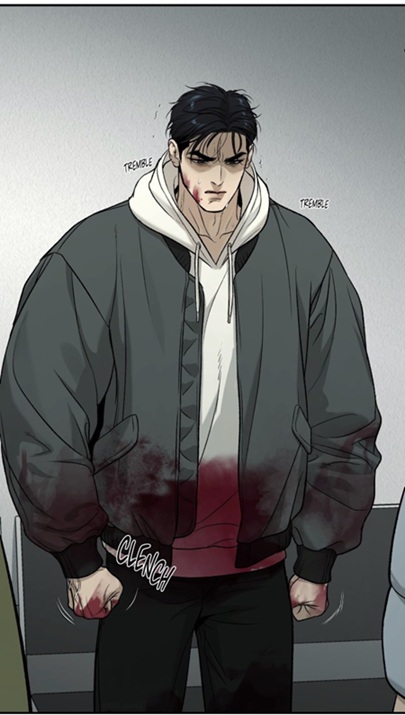 (chapter 98) Having spent the night at the hospital, deprived of rest and confronted with a situation he cannot resolve, he no longer appears as an agent of control, but as someone equally constrained by circumstance.
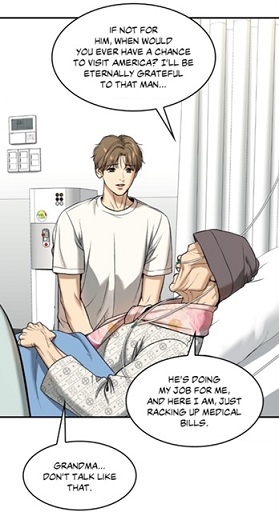 (chapter 41) The loan—the invisible force structuring their lives—is not addressed directly; it is translated into filial piety.
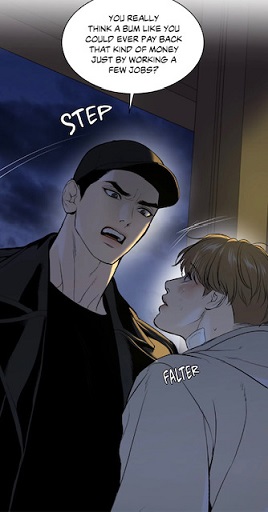 (chapter 18)
 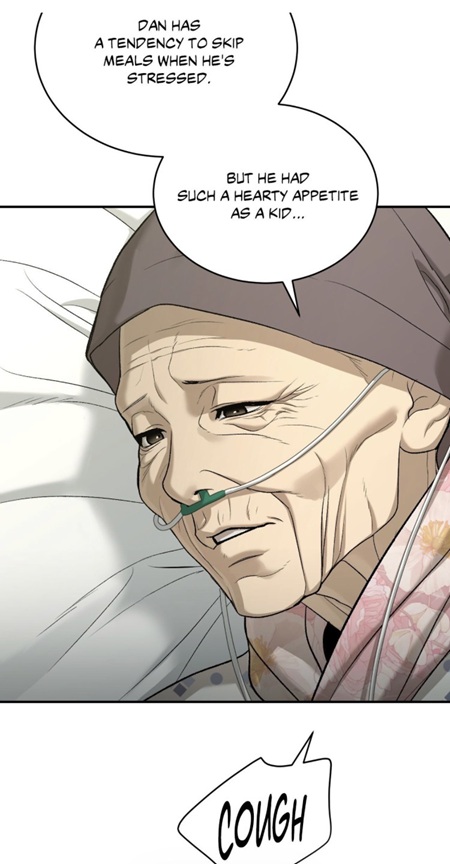 (chapter 94) This silence is not only strategic; it is protective. To name the debt would be to acknowledge its persistence and the origins of Kim Dan’s stress, and therefore the possibility that it cannot be escaped.
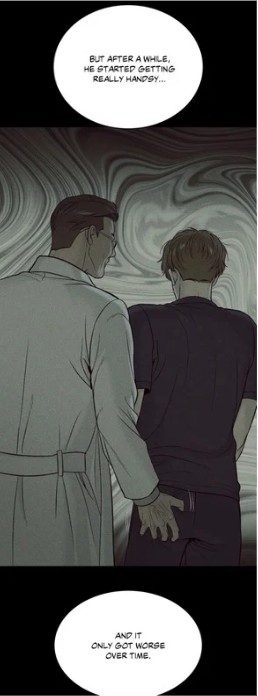 (chapter 90) Here, the logic of debt is not interrupted; it is reframed as asymmetrical power, dependency, and coercion.
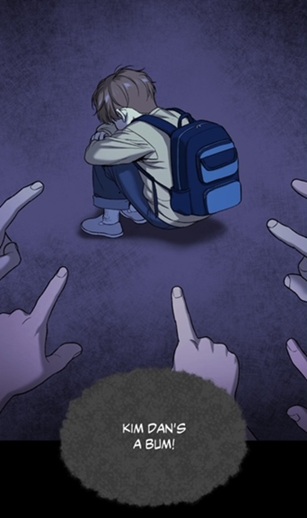 (chapter 57) —his identity reduced to a single word: “bum.” The violence here is not physical, but symbolic. It is immediate, collective, and humiliating. Faced with this, Shin Okja intervenes, not by confronting the accusation, but by reframing it.
 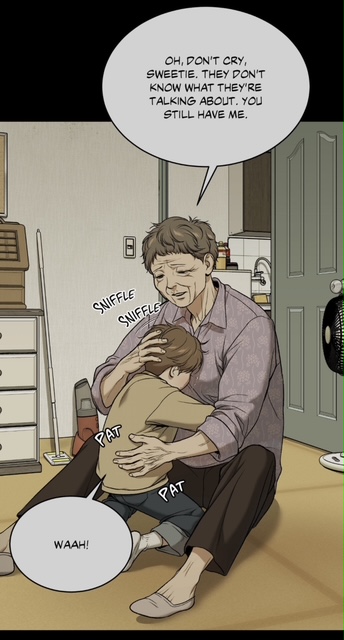 (chapter 57) This response establishes a decisive pattern. The external threat is not analyzed or challenged; it is neutralized through emotional substitution. The problem is not located in a social structure—poverty, stigma, exclusion—but dissolved within the private space of care. What cannot be changed is not named. Instead, it is softened.
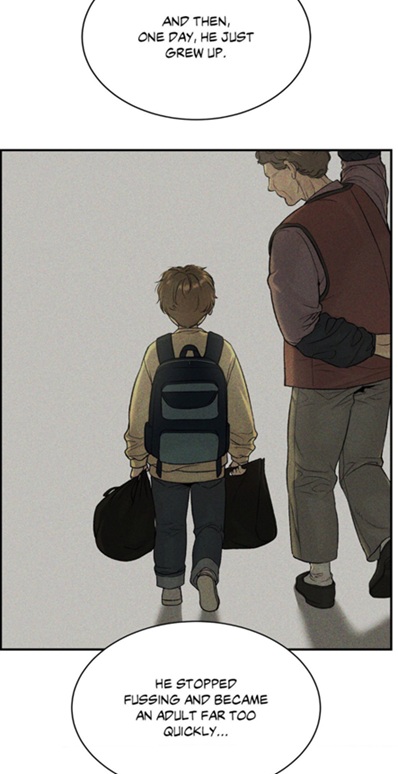 (chapter 65) Harm is not eliminated; it is reinterpreted. The world remains hostile, but its hostility is rendered bearable through the assurance of relational security. Under this light, it becomes comprehensible why Kim Dan started having eating disorder.
  (chapter 30), through representation
 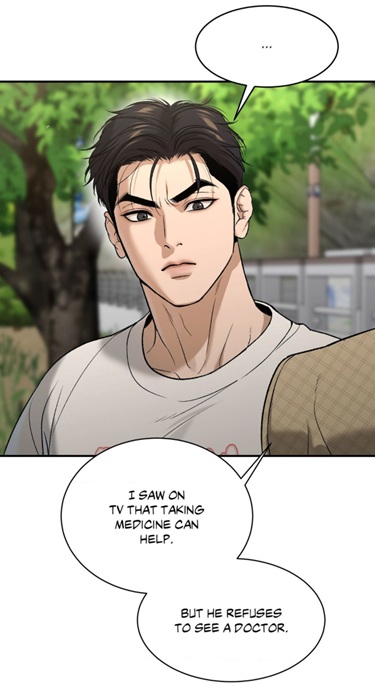 (chapter 65), through narratives that render events coherent and contained. Within these frames, suffering appears structured, bounded, and ultimately resolvable.
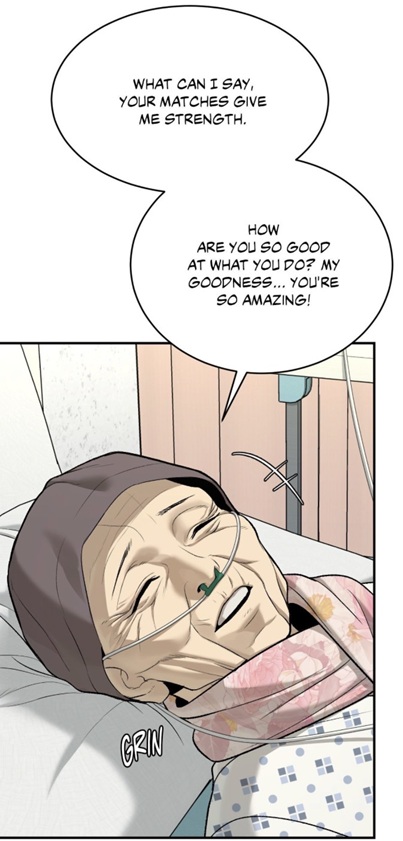 (chapter 94), the statement appears benign, even affectionate. Yet it introduces a subtle displacement. What is presented as admiration becomes a form of reliance.
 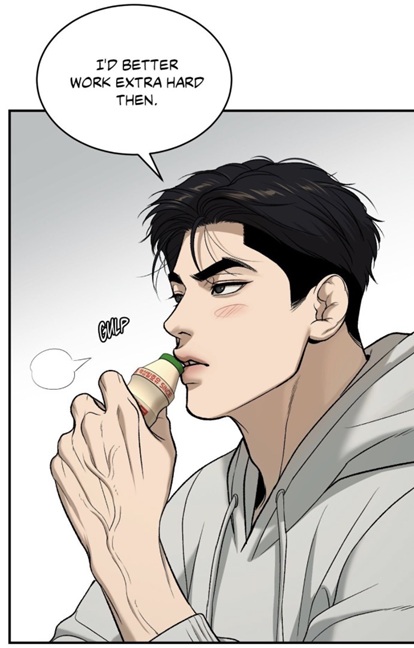 (chapter 94) His performance is no longer his alone; it acquires a function beyond itself.
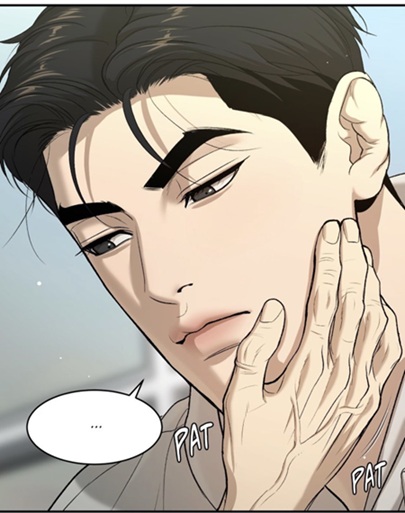 (chapter 94)
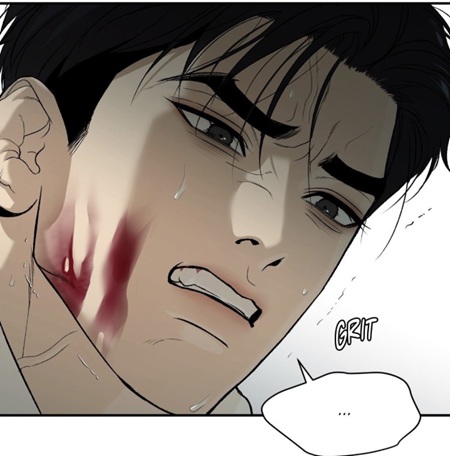 (chapter 98) Suffering becomes something structured and resolved within a frame. This mediated perception sustains her belief that reality is ultimately manageable, that danger can be contained within visible boundaries.
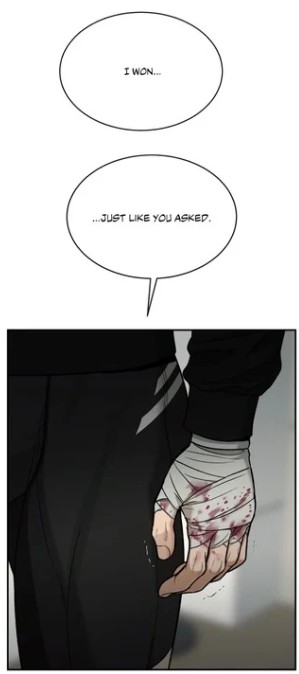 (chapter 99) —but the statement appears mechanical, detached from meaning. What follows marks a rupture:
 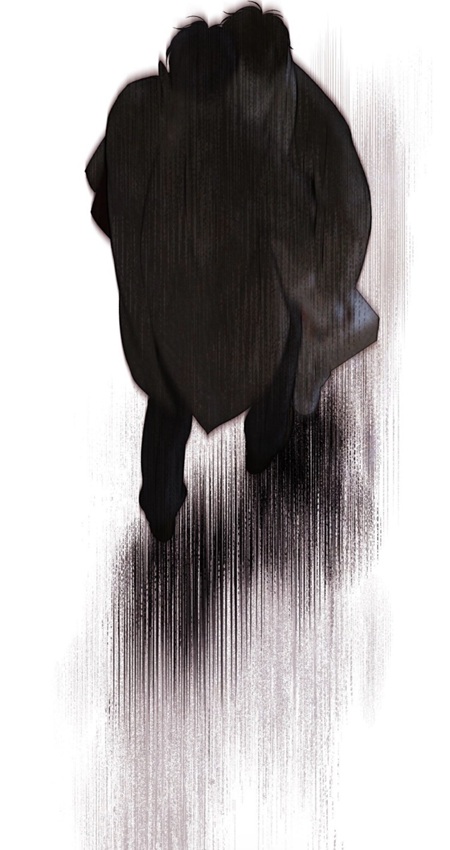 (chapter 98) The violence does not introduce a new reality; it forces the recognition of a structural condition that had been deferred for years.
  (chapter 91), appears as an isolated figure. In this configuration, the crime can still be contained. It risks being interpreted as the action of a single individual rather than the manifestation of a broader system.
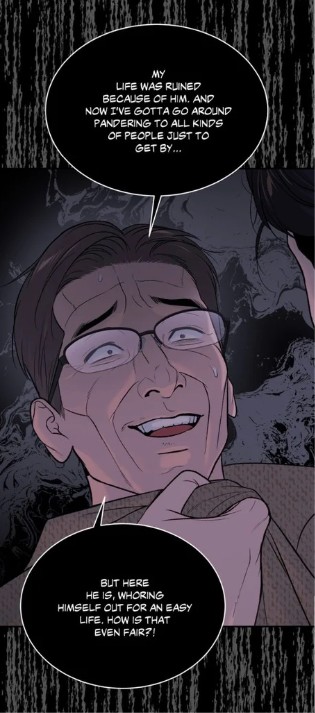 (chapter 90) The structure remains identical; only its direction is reversed. What appears as care in one case becomes blame in the other. Both displace the origin of harm, ensuring that it is never confronted at its source.
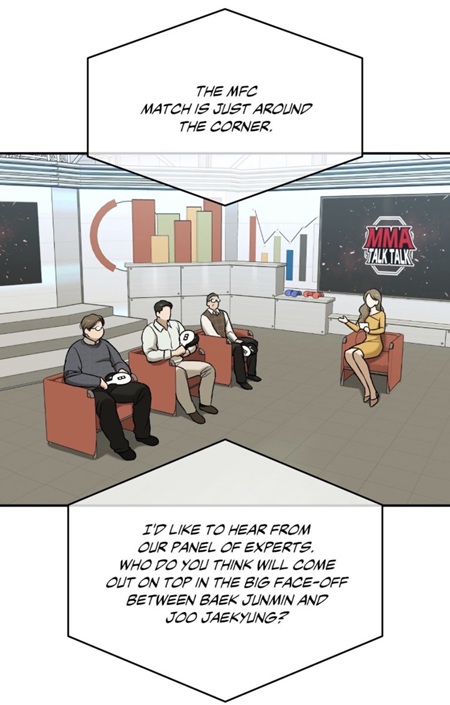 (chapter 95) The match is discussed on television, framed by expert panels, transformed into spectacle. Within this mediated space, events are reorganized into narratives that preserve coherence. The system remains visible—but only in a form that neutralizes its contradictions.
 (chapter 65) Her philosophy is therefore not only a strategy for survival, but a defense against loss. By constructing a system that promises stability, she attempts to secure his future in her absence.
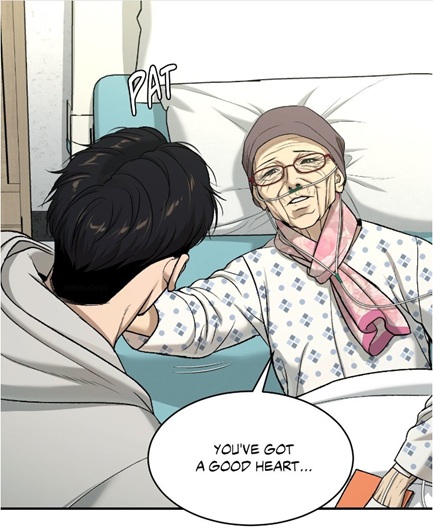 (chapter 94), she is not offering a casual compliment, but reaffirming a belief that character itself can function as protection. Just as institutions are expected to secure safety externally, moral integrity is imagined to guarantee it internally.
 (chapter 11) It does not interrupt the structure that produces it. What the stabbing reveals is not the absence of goodness, but its insufficiency. Moral character does not shield against a system that exceeds it.
 (chapter 11) When he sees Kim Dan’s injuries, he does not accept the explanation of an accidental fall.
  (chapter 11) The signs are too clear: the blood, the instability, the surrounding context. The truth is not hidden from him—it is fully accessible. And yet, this recognition produces no transformation.
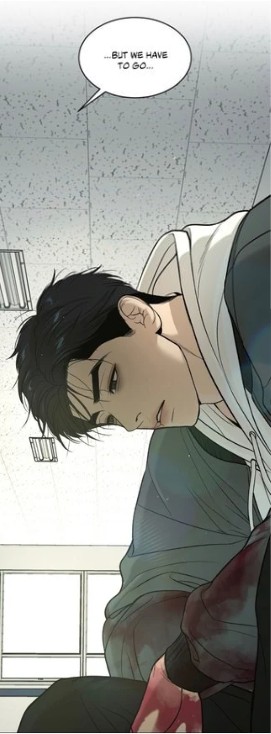 (chapter 98) The match must continue. The title must be defended. The schedule must be maintained. What should function as a rupture—an event that interrupts the spectacle—is translated into a professional condition. Injury becomes endurance, trauma or pain
  (chapter 52) becomes discipline
  (chapter 52), and even external aggression is reintegrated as part of the fighter’s burden.
 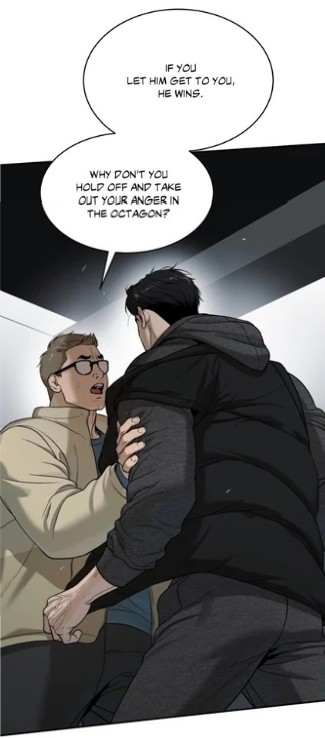 (chapter 96) Violence loses its capacity to expose the system; it becomes one of its operating principles.
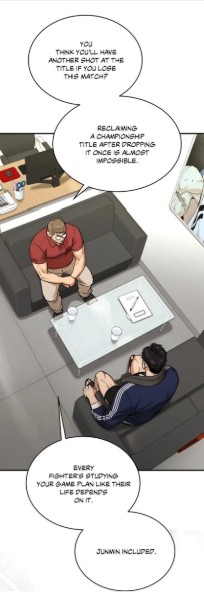 (chapter 95) His insistence that the match must proceed is therefore not simply a matter of scheduling or revenue. It is a defense of the very framework through which he understands worth. If the event were to stop because of blood, then the distinction between strength and failure would collapse.
 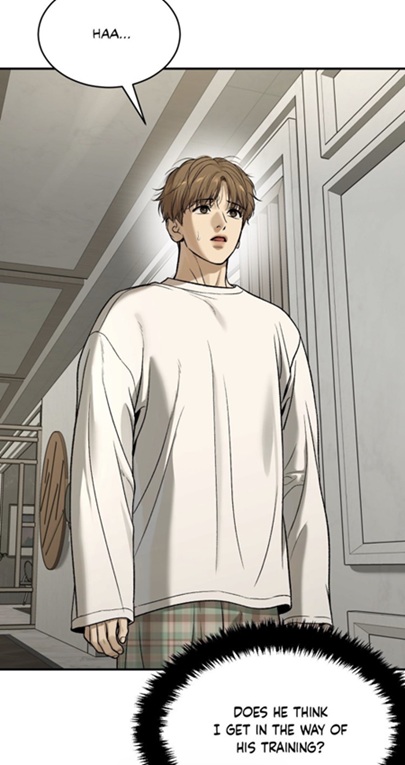 (chapter 96) Simultaneously, Dan operates under a prior logic of care inherited from Shin Okja, which characterizes love as a practice of self-effacement and the vigilant avoidance of becoming a “burden.”
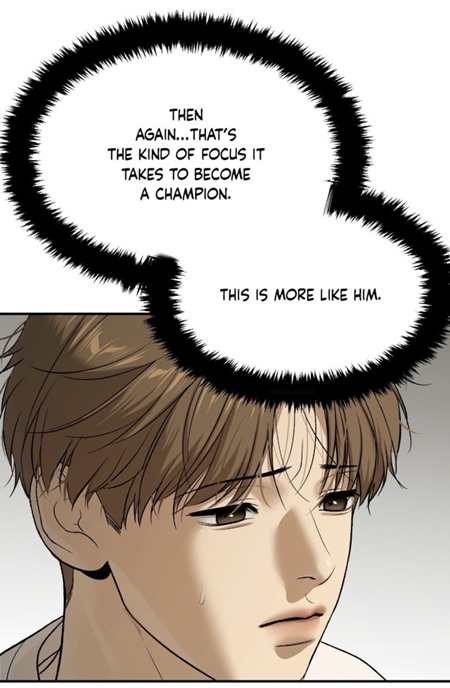 (chapter 96) This selection is far from neutral; it activates a reflexive inversion in which Dan begins to view his own emotional presence as interference—an element that disrupts the conditions of performance. He ceases to position himself as a partner and instead redefines himself as an obstacle that must be removed.
 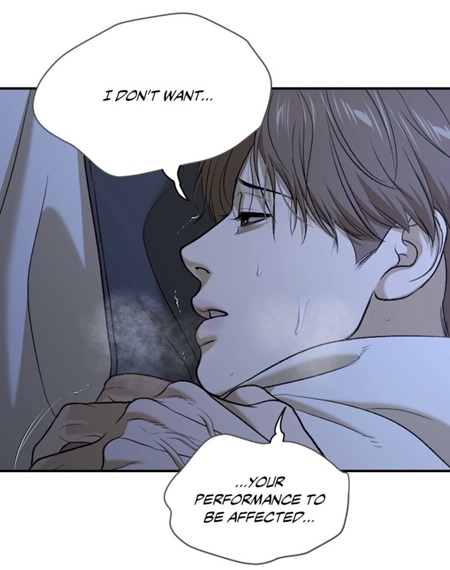 (chapter 98) Dan aligns himself with the very system that isolates him. By explicitly stating that he does not want Jaekyung’s performance to be affected, he performs an act of self-erasure, translating his devotion into a demand that reinforces the system’s logic. In doing so, he does not transfer the inherited burden, but reproduces its structure: love becomes obligation, attachment becomes pressure, and care becomes indistinguishable from the demand to endure. Suffering is thus rendered manageable only by being structured into obligation—even at the moment where it should interrupt the system entirely.
 (chapter 99) His compliment carries no weight.
 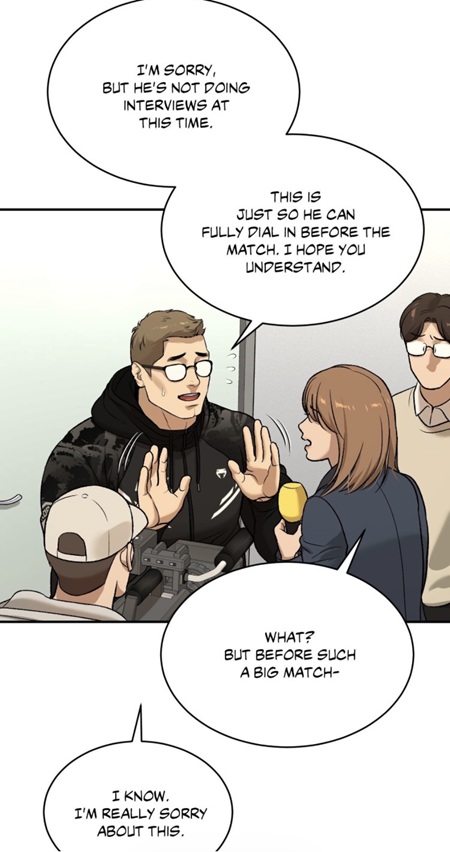 (chapter 99), and reproduce the framework—but he can no longer guarantee its internal acceptance. Joo Jaekyung continues to act within the system, but no longer according to its logic. He becomes capable of fulfilling its demands without believing in them. The result is a hollow compliance: performance without adherence, victory without value.
 (chapter 69) Where there is rupture, he restores continuity. In doing so, he prevents the emergence of the question that could destabilize the entire structure: why?
 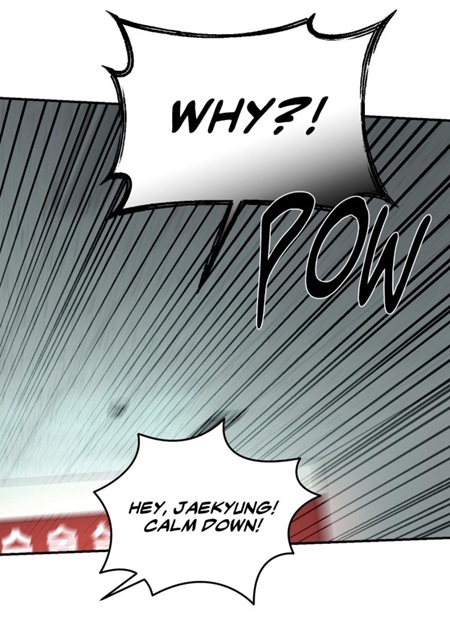 (chapter 98)
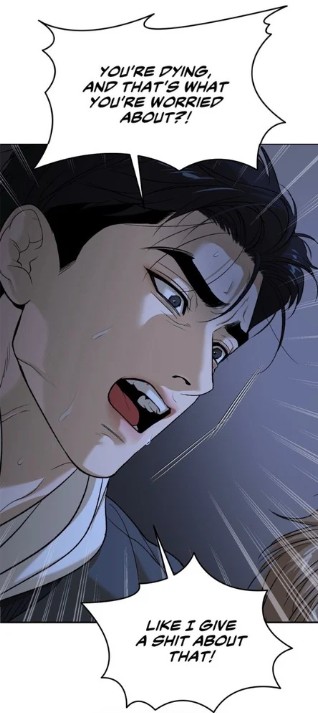 (chapter 98)
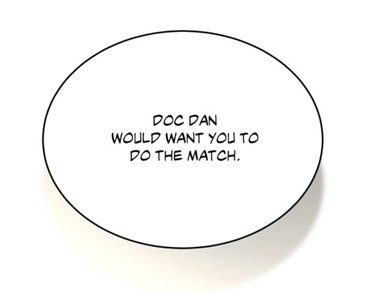 (chapter 98) Yosep’s statement intensifies this discomfort. When he tells Jaekyung that Doc Dan would want him to go to the match, he speaks with a certainty that feels almost intrusive. It is as though Kim Dan’s private words have already been absorbed into the group’s logic, detached from their intimate context and repurposed as pressure. Whether Yosep is merely guessing, repeating what he believes Kim Dan would say, or somehow knows more than he should, the effect is the same: Kim Dan’s voice is no longer used to protect his life, but to discipline Jaekyung back into the arena.
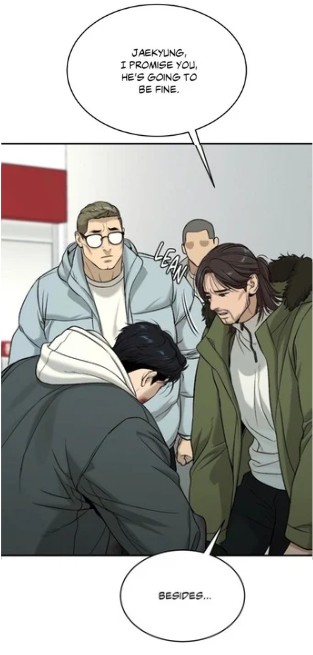 (chapter 98) Yosep does not merely reproduce Park Namwook’s logic; he embodies its long-term internalization. Having lived under the same principle—that emotion and relationships must be subordinated to performance—he has come to perceive this translation as self-evident. His statement does not register as an imposition to him, but as a natural extension of care. Yet the consequences of this logic are already visible in his own trajectory. The prioritization of endurance over relational presence has not only shaped his professional conduct, but also his personal life, culminating in the dissolution of his marriage. What appears, in the moment, as pragmatic guidance thus reveals itself as a learned incapacity to recognize when performance has displaced care.
 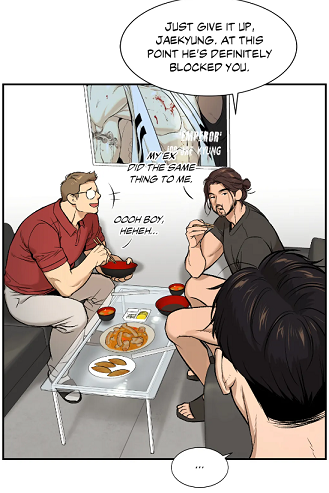 (chapter 5) It shows that the “endurance over care” logic doesn’t just affect the fighters; it is a virus that destroys every personal relationship it touches.
 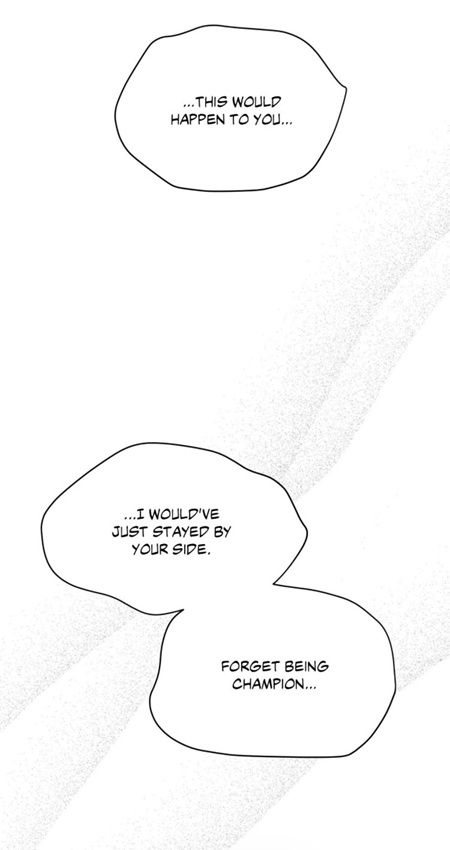 (chapter 99)
 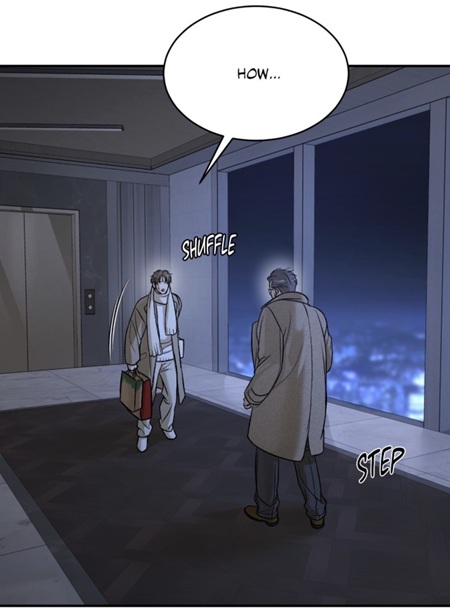 (chapter 98) who suffers rather than acts
 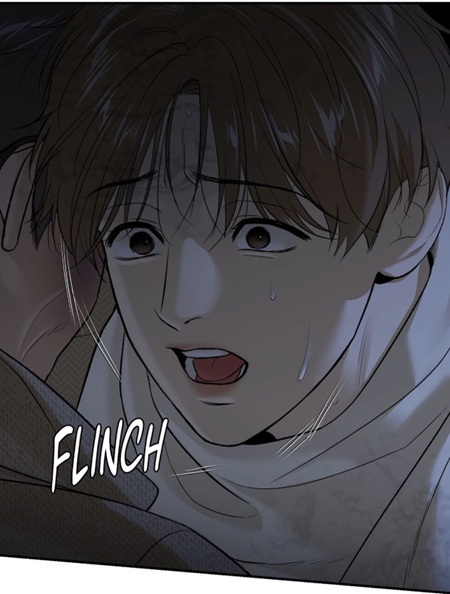 (chapter 98), the one who is endangered rather than decisive. He does not yell or attempt to run away while facing his ex-boss. Does this not reduce him to a passive figure, repeatedly placed in situations where others must intervene?
  (chapter 95), and a financial machine. Its fall revealed that the ring was only the visible surface of a much darker structure.
  (chapter 47), and control intersect. This is precisely why figures like Baek Junmin cannot be reduced to mere competitors. His involvement in rigged systems
  (chapter 47) places him within a framework where outcomes are manipulated and where harm—even death—becomes a possible consequence rather than an exception.
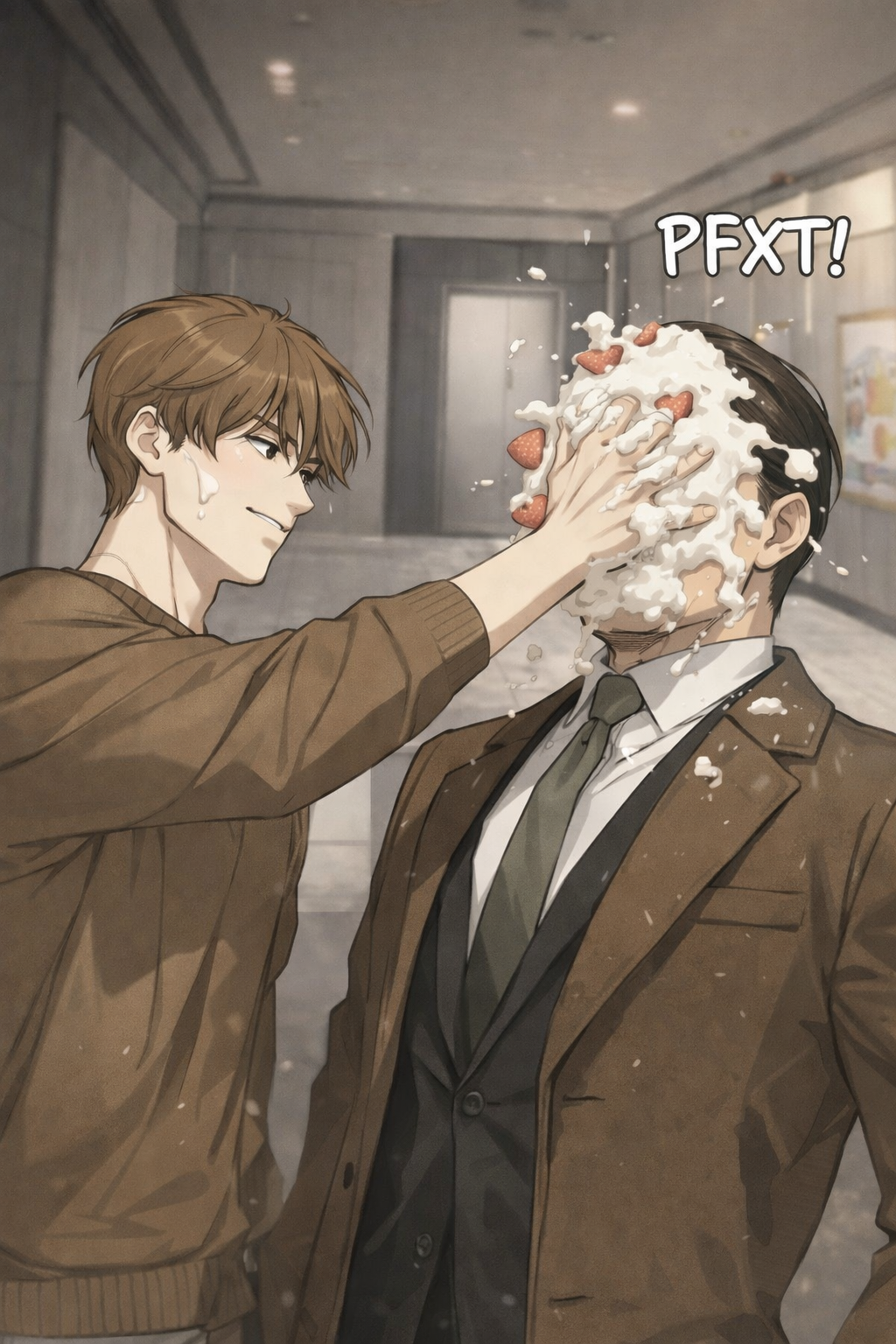 and confront the system directly. However, the stabbing reorients that expectation. It places him, instead, in a position structurally analogous to that earlier fracture point
 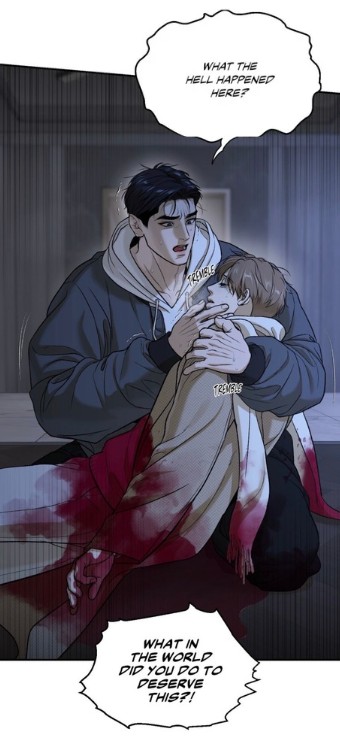 (chapter 98): not as the agent who exposes the system through action, but as the figure through whom its hidden logic becomes legible. Like the DSE case, where a single event forced observers to reconsider the boundaries between sport, money, and organized crime, Kim Dan’s injury functions as a node of convergence. It connects debts, institutional failure, and coercion into a single, visible rupture.
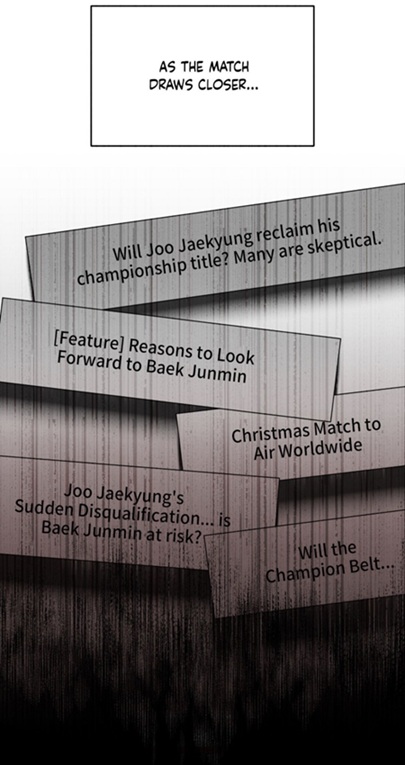 (chapter 95) It is broadcast worldwide, surrounded by articles, posters, speculation, and commercial pressure, though I doubt that the interview from Baek Junmin was broadcasted worldwide, as he spoke in Korean. The poster itself
 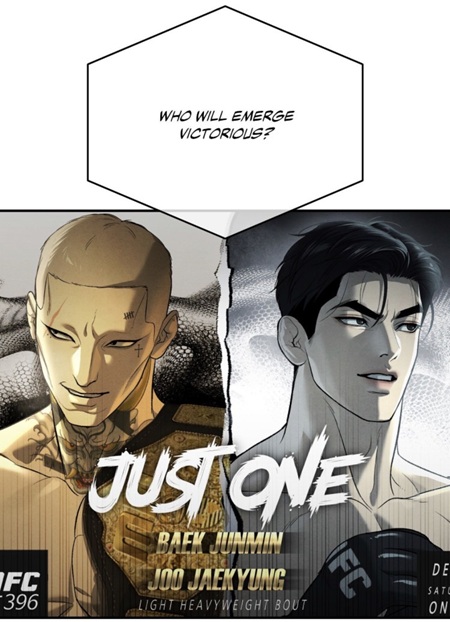 (chapter 97) already exposes the bias of the system: Baek Junmin is elevated like a golden idol, while Joo Jaekyung is portrayed more as a ghost from the past. The media does not simply report the match; it prepares the audience to accept a specific narrative.
 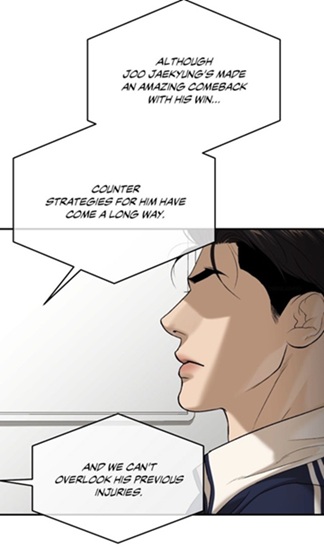 (chapter 95) The question is no longer “Who will win?” but ‘How will Joo Jaekyung’s defeat be made to appear inevitable?’”
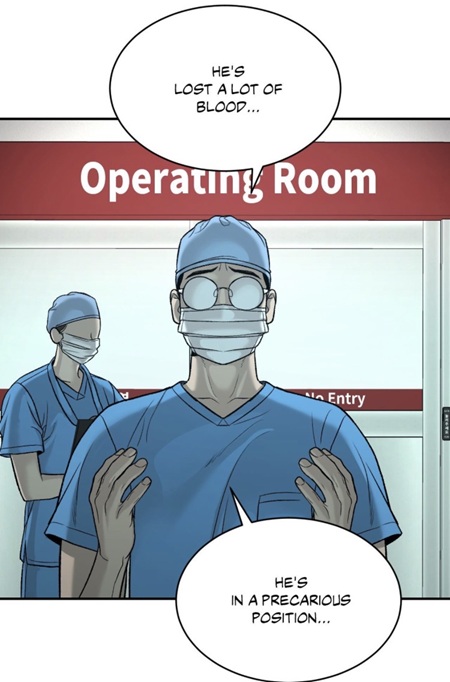 (chapter 98)
 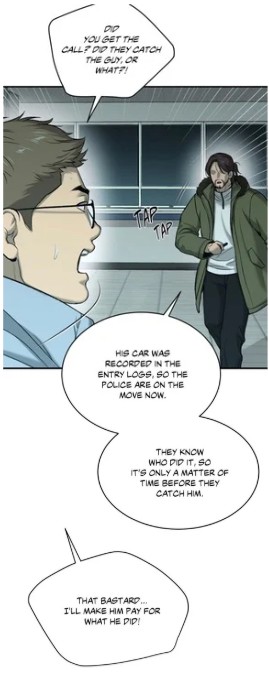 (chapter 98) Their words reveal the logic of the organization: the attacker may be pursued, but the event must continue. The absence of MFC representatives at the hospital is therefore not incidental, but symptomatic: it visualizes the system’s refusal of implication. Violence is acknowledged—but only insofar as it does not disrupt the spectacle. In a way, everyone seems to be focused on the fight and nothing else. No one publicly asks the most dangerous question
 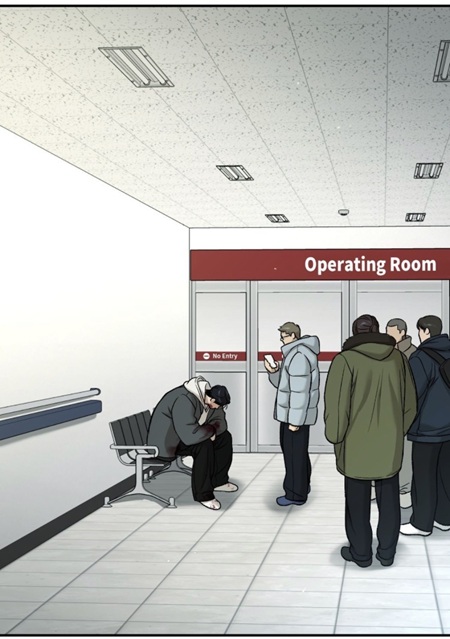 (chapter 98): why was Kim Dan targeted on the eve of the match?
 (chapter 90) In that earlier confrontation, the director reduced the physical therapist to an object of contempt
  (chapter 90), employing degrading language that revealed not obsession, but dismissal.
  (chapter 98) The act thus exceeds the logic of personal grievance without entirely discarding it.
 (chapter 98) Meanwhile, the real cost is paid elsewhere, by bodies that are not supposed to be seen. Kim Dan’s bleeding body becomes the hidden underside of the spectacle.
  (chapter 17), and protected him without receiving public recognition.
  (chapter 60) The assault on Kim Dan in the “private” space of the penthouse hallway
 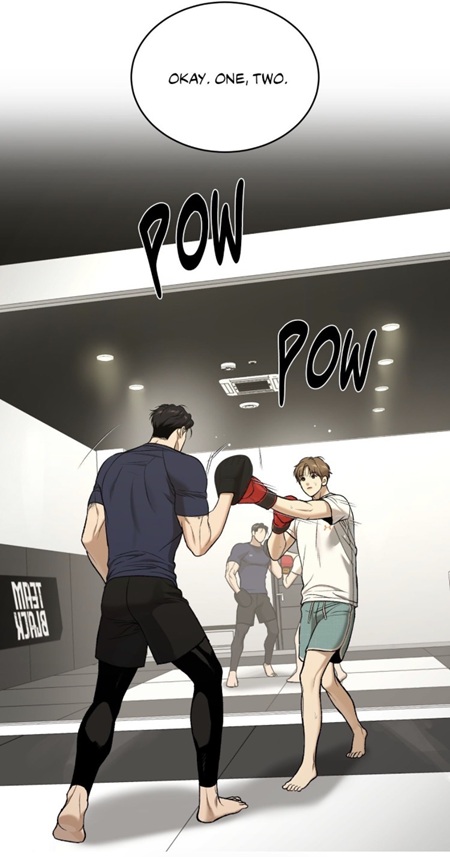 (chapter 88) The same hidden space became a refuge not only for himself, but for Kim Dan, allowing him to protect the physical therapist’s dignity and safety away from the media’s gaze.
 (chapter 37) and the switched spray
  (chapter 49), which unfolded within MFC’s operational sphere. Those events were embedded in the organization’s jurisdiction and thus carried the potential to implicate it directly.
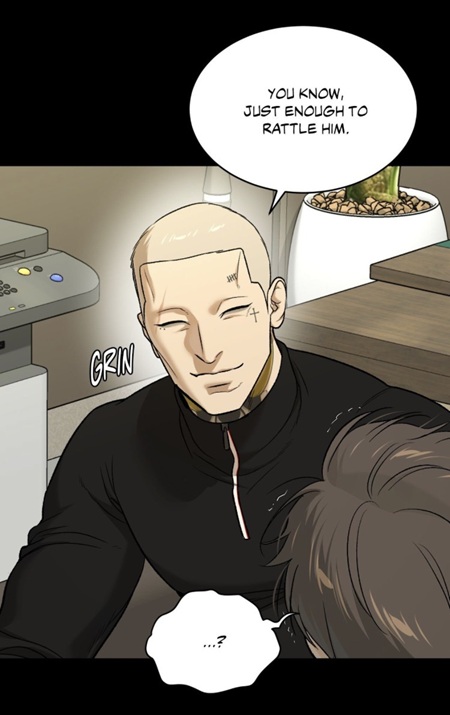 (chapter 98) It converts Jaekyung’s attachment into a site of vulnerability, forcing him into a position where his private life can be used against him.
 (chapter 17); this injury imposes limitation.
  (chapter 98) It may become the first visible crack in the façade. The attack is supposed to remain a private tragedy, but if its connection to the match surfaces, then MFC’s credibility collapses. The question will no longer be whether Baek Junmin can defeat Joo Jaekyung, but whether the fight itself was ever clean or it can even take place at all.
  (chapter 87) and a title reclaimed, guilt alters not just performance, but identity. By transforming Kim Dan into a victim, Baek Junmin attempts to implant a belief far more enduring than physical trauma: that proximity to Joo Jaekyung is dangerous. The objective is not simply to destabilize him temporarily, but to reintroduce a form of inner collapse that had once defined the champion, shifting him from a state of self-destructive detachment back into a cycle of shame.
 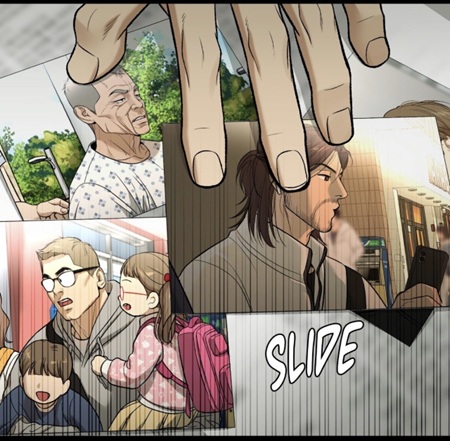 (chapter 98)
 (chapter 74) In earlier encounters, Baek Junmin was unable to obtain the champion’s submission
  (chapter 74) and even to provoke any visible fear from Joo Jaekyung.
  (chapter 74) His self-destructive indifference functioned as a form of armor. A man who places no value on his own survival cannot easily be coerced through threats of violence. He could not be rattled, because there was nothing to lose. Kim Dan changes that equation entirely.
 (chapter 74) What he could not escape, however, was responsibility. His past is marked by a formative rupture
  (chapter 74) in which personal achievement coincided with irreversible loss, producing a lasting association between his own success and the suffering of others.
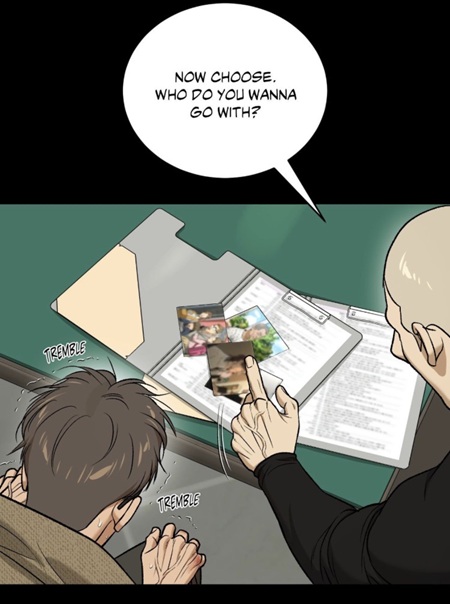 (chapter 98) The goal is to force the champion back into the familiar and agonizing position of the survivor—one who advances while others pay the price in blood. In this configuration, the match itself becomes secondary to the internal consequence: the resurgence of self-blame, the reemergence of guilt, and the deepening of self-loathing.
 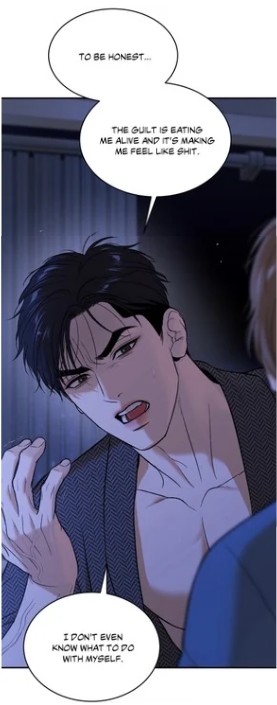 (chapter 91) The violence inflicted upon him is designed to echo within the champion, transforming an external assault into an internal fracture. In this sense, the attack operates less as a physical strike than as a mechanism of psychological inscription.
 (chapter 73) The result was not empowerment, but internalized blame—a distortion in which ambition became inseparable from shame.
 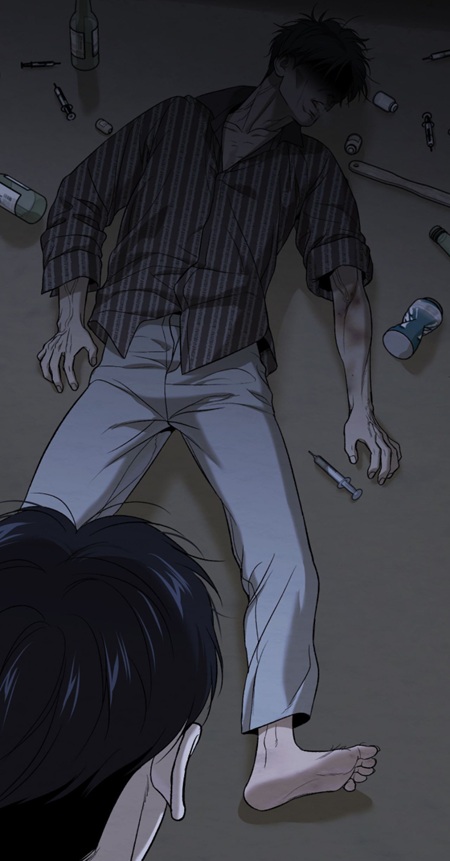 (chapter 73) He occupies the same structural position—not as a replacement, but as a continuation—forcing Joo Jaekyung to relive a pattern in which success, loss, and guilt converge.
  (chapter 73) This convergence is not incidental. On the very day his public success becomes visible, his private reality collapses into a scene of absolute abjection. Achievement and catastrophe are not merely juxtaposed—they are structurally bound.
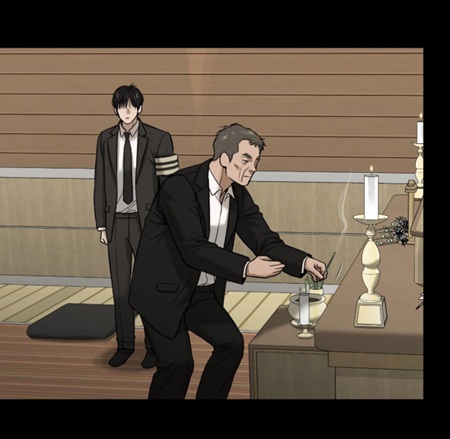 (chapter 74) As the sole representative of the athletic world, he becomes the figure through whom the scene attains institutional closure. By accepting the event as it appeared, without interrogating its conditions, he contributes—structurally rather than intentionally—to the stabilization of its official meaning. Boxing and the mob are two separate worlds. The tableau remains intact, not because it is verified, but because it is not questioned.
  (chapter 74), one would expect traces of that affiliation to persist—not necessarily as mourning, but at least as presence. Yet none appear. No representatives, no residual ties, no indication that he belonged to a structure beyond the domestic sphere. This absence does not confirm a break, but it renders continuity uncertain.
 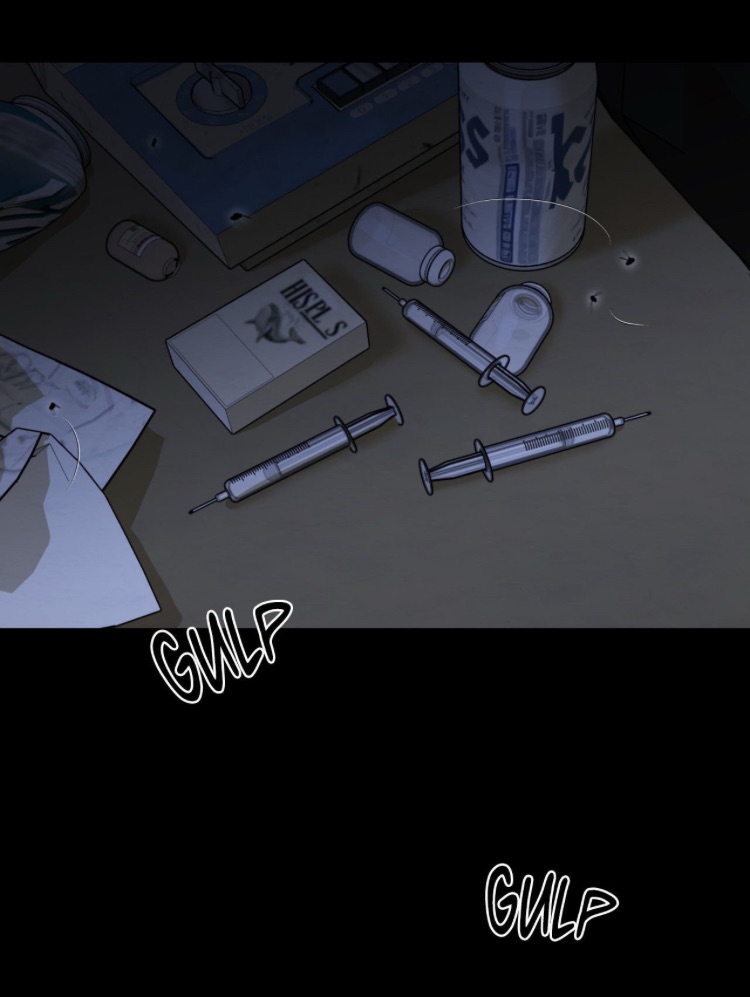 (chapter 72), the later environment appears comparatively stabilized.
 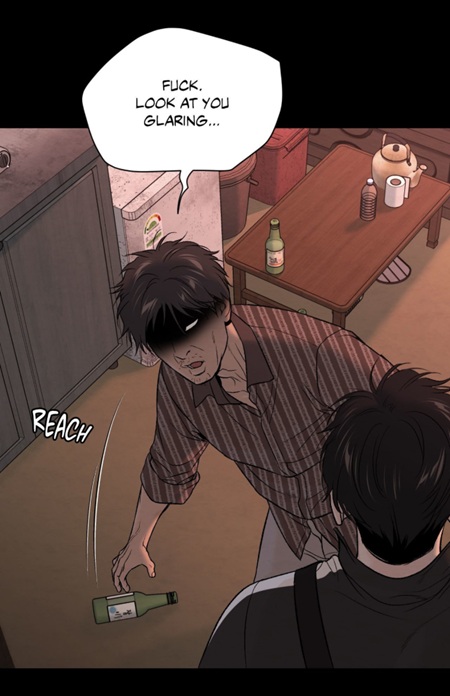 (chapter 73) This shift does not indicate resolution, but it does mark an interruption.
 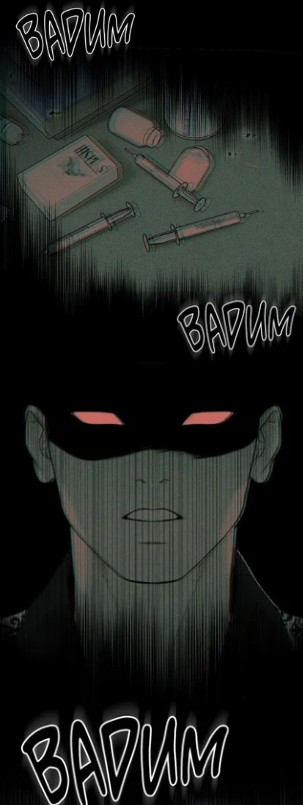 (chapter 73) The visual emphasis on syringes and narcotics does not introduce new information—it reactivates an earlier image, one already internalized during his childhood.
 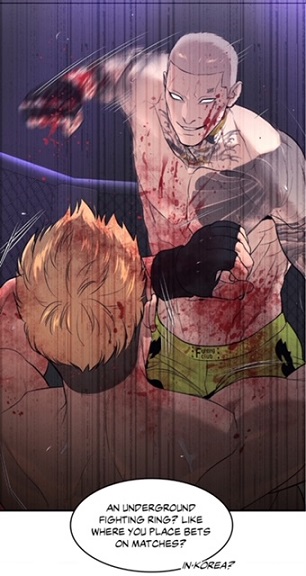 (chapter 47) What the narrative reveals instead is a single structure operating on two levels: a visible arena governed by rules, discipline, and public legitimacy, and an invisible layer sustained by coercion, debt, and manipulation. Joo Jaekyung’s father stands at the point where these two layers converge.
 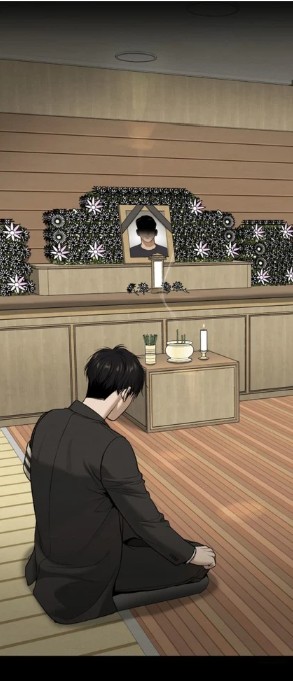 (chapter 74) —coherent, legible, and therefore unquestioned—the present moment resists such closure. The structure that once foreclosed inquiry is no longer fully operative. The “jinx” reveals itself not as fate, but as the effect of an interpretation that had never been interrogated.
  (chapter 95) Why is the mechanism that produces harm repeatedly misidentified as fate, necessity, or personal failure?
  (chapter 74)
 (chapter 17), whose violence was never concealed behind the illusion of sport. His weapon was direct, explicit, and inseparable from his words. During that earlier encounter, he articulated a principle that now returns with unexpected clarity:
  (chapter 17)
  (chapter 11). This condition does not remain static; it intensifies. The violence directed at Kim Dan follows a clear trajectory—one that escalates in both form and intimacy. What begins as physical assault quickly extends into spatial violation: trespassing, intrusion into his living space, and the systematic erosion of any boundary that might protect him. From there, it evolves into abduction
  (chapter 16) and coercion
  (chapter 16), culminating in sexual violence.
  (chapter 16)
 (chapter 17) Through this echo, the boundary between past and present collapses, as does the distinction between underground coercion and institutionalized spectacle. What once appeared as separate domains—the illegal underworld and the legitimate sport—are revealed as two expressions of a single, continuous structure.
 (chapter 98) It emerges from a structure already in motion—one that had previously manifested in a different form. The attempted sexual assault by the hospital director
  (chapter 91) What returns in the stabbing is therefore not a new intrusion, but the intensification of an unresolved structure.
  (chapter 98) —his attempt to sever himself from the act by delegating it and erasing traces—presumes that violence can be isolated and controlled. On the one hand his demand effectively reassigns the burden of protection. The former director, once shielded by institutional authority, is now positioned as the one who must protect another individual from exposure. Yet the very structure he activates exceeds his knowledge.
  (chapter 93); the money laundering operation represents the material reality that must remain hidden behind the ‘fake’ spectacle of the sport.
 (chapter 1) He was not merely fired after the incident; he was made professionally untouchable. By damaging his reputation and preventing him from being hired elsewhere, the hospital did not simply remove a troublesome employee—it attempted to silence the one person whose testimony could expose the system that had protected the director.
 (chapter 98) It reveals that the “Official Narrative” of the director’s expulsion was a lie of containment. The institution did not heal itself; it simply exported its violence to a darker room, and in Chapter 98, that violence finally found its way back into the light of the hallway.
 (chapter 94), is not a neutral description—it is a mode of interpretation. It designates his parents’ death as an event without structure, a rupture that cannot be traced back to conditions or causes. In doing so, it preserves the image of a past that appeared stable: a childhood not yet governed by coercion, obligation, or threat.
 (chapter 5) —financial, social, and existential. This transition is not simply temporal, but conceptual. Where accident suggests contingency, debt imposes necessity. One denies causality; the other enforces it.
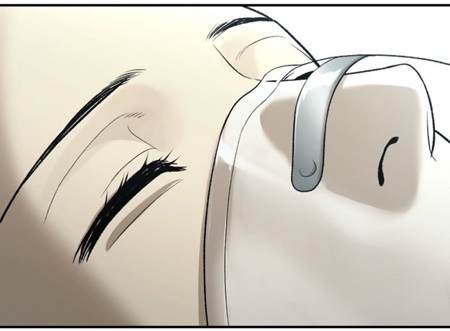 (chapter 98) cannot be reduced to a purely medical condition. It introduces a different mode of perception—one no longer governed by the interpretive framework that structures his waking life. Sleep does not simply heal; it suspends the language of accident.
 (chapter 19)

 (chapter 26) They have watched his fights
  (chapter 23), memorized his moves and titles, and repeated the anecdotes told in gyms and on TV. They’ve heard how he was “saved” by sports from a darker path, and cheered for him as the “Emperor” — the handsomest fighter, the man who broke the arcade’s punching machine
  (chapter 26), the champion who stands above the rest. But if the champion’s life is already an open book, why did Mingwa wait so long to reveal his childhood and family? The answer is simple. It is because Joo Jaekyung has been called the Emperor till his fight against Baek Junmin! These public portraits — the friendly banter in the gym, the theatrical ring intros — show us the merchandise, not the man. They are the carefully polished surface presented to fans and fellow fighters alike, repeated so often that even those closest to him believe them. Yet behind this image
 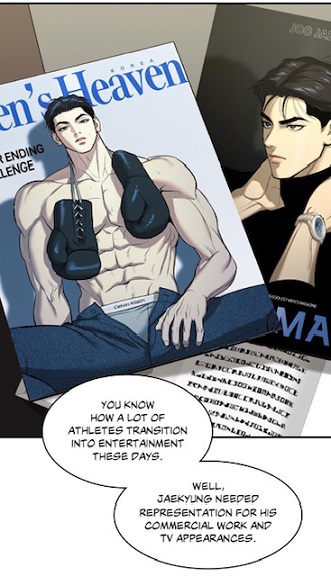 (chapter 30) lies a past left unspoken, a silence so complete that his own history became an empty space others could fill as they wished. This essay brings these two “stories” together — the Emperor and the boy. And now, you may be wondering how I came to connect the champion’s trauma to his future career as an MMA fighter. The answer lies in Joo Jaekyung’s own voice. 😮
 (chapter 70), Hwang Byungchul’s anger fell squarely on the champion.
 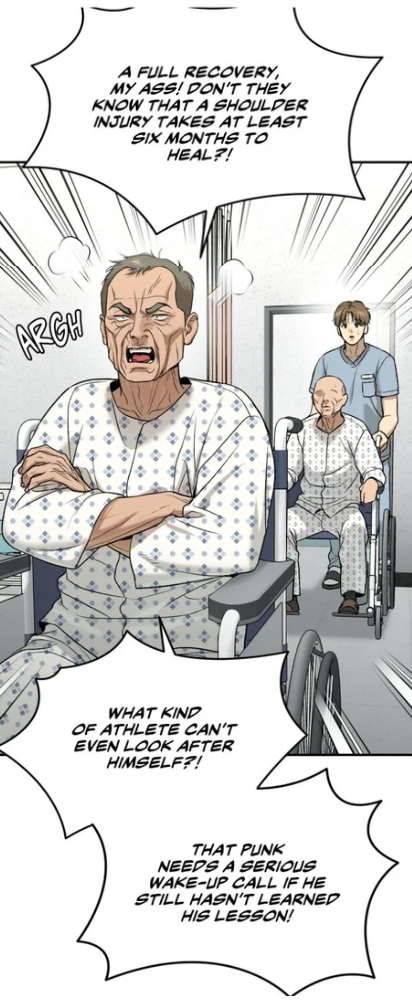 (chapter 70) To him, it looked as though Jaekyung had made the reckless choice to return to the ring so soon. That was the trap: the headline and phrasing were designed to make it appear that the decision was the fighter’s own. The opening line alone
  (Chapter 70) created the illusion that this break had been perceived as a punishment, and that Jaekyung was eager to prove himself once again. No wonder the director assumed he had given his consent.
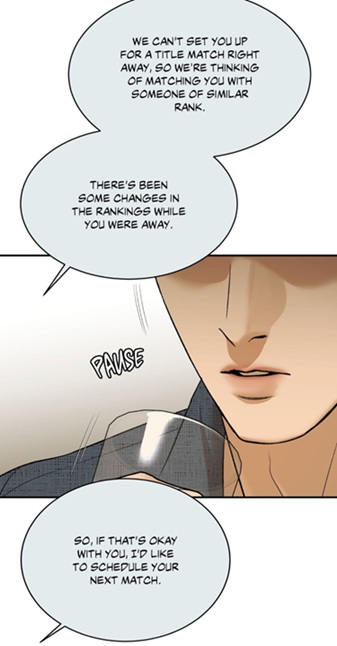 (chapter 69) By erasing these details, the public sees only two players: the Emperor and his anonymous “team.”
 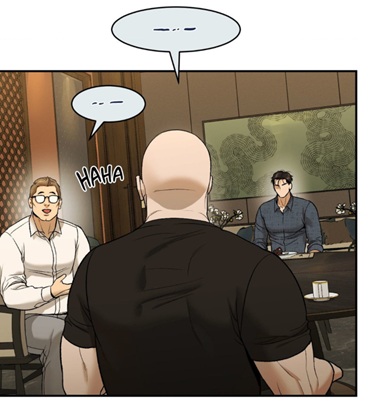 (chapter 69) It was as if the main lead, backed by his team, had personally approached MFC to request the match — an illusion strengthened by the opening line, “MFC’s former champion Joo Jaekyung will be returning to the ring this fall after serving his suspension.” This way, if the decision draws criticism, the CEO can retreat behind the fighter and his team, like they did in the past.
  (Chapter 54) Back then, the champion had not reacted to this comment. Even in the worst case, the CEO can hide behind one of the MFC match managers or doctors.
  (chapter 41) But that excuse would be a fiction: Jaekyung hasn’t even met those doctors or talked to the MFC match manager
  (chapter 05). He has been chasing after his fated partner. Finally, he hasn’t even signed any paper or agreed at the meeting. In fact, he remained silent for the most part of the time and the reason for this urgent meeting was his request for proper investigation concerning the switched spray:
  (chapter 67) That’s the reason why this suggestion from the CEO appeared the very next day.
  (chapter 69)
  (chapter 61), it was paired with a recommendation for rehabilitation — not an immediate return to competition. This was actually a condition for his total recovery. On the other hand, the doctor imagined or suggested that his patient wished to return to the ring so soon. No medical professional ever signed off on an autumn fight. Yet the date is already set, and the headlines frames it as a confident comeback without any medical backup. The Emperor’s name is splashed everywhere, but none of the words belong to him.
 (chapter 57) with one of his close associates — a man whose face was hidden, speaking as though he were the athlete’s voice. That interview was accompanied by a familiar victory image
 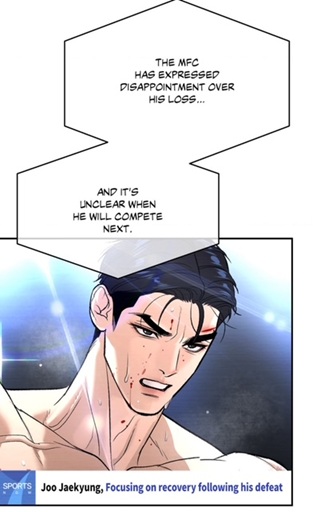 (chapter 57), a stock photo already used in other press pieces. This picture comes from after the fight in the States:
  (chapter 41), while the image released with the fall match announcement was the one from when he first won his champion title.
 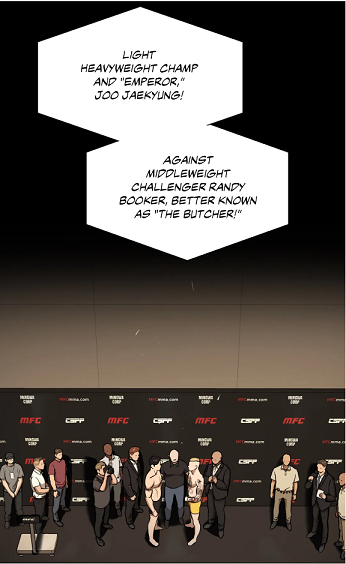 (chapter 14) seems to radiate absolute power — the kind of authority that commands armies, bends laws, and answers to no one. It is meant to ooze charisma and control, a name that suggests the bearer acts on his own will. Yet, in truth, emperors have rarely ruled alone. Behind every throne stand ministers, advisors, generals, and family factions, each shaping decisions from the shadows. An emperor who ignores these forces risks losing his crown.
 (chapter 17) He was blamed for his popularity. The man inside the crown does not act or speak freely; his words are filtered, scripted, or replaced entirely.
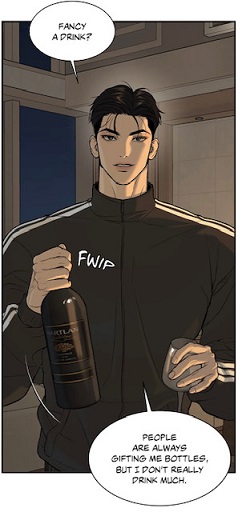 (chapter 12), never mind that he hardly drinks. The gesture fits the fantasy they’ve built around him, not the reality of a man who rejects alcohol due to his addicted father, a reminder that even the tokens of admiration are shaped by the image, not the truth. So who is this so-called close associate or “Joo Jaekyung’s team” exactly that decides for him, speaks for him, and hides behind his title? Besides, why did the journalist change from “one of his close associates” to “Joo Jaekyung’s team”?
 (chapter 57) The nickname, played for entertainment value, was another way of turning the champion into a caricature — a marketable, amusing persona instead of a man with a past and agency. It is quite telling that Park Namwook’s interview aired immediately after the anchor referred to Jaekyung as “Mama Joo Jaekyung Fighter.” This was not the lofty “Emperor” title repeated in gyms and ring intros — it was more a mocking nickname, a deliberate jab meant to provoke. In that moment, the Emperor was verbally pulled down from his pedestal, yet the images shown alongside the segment told a different story: carefully chosen shots of him as a champion, a visual echo of his marketable persona. The dissonance was striking.
 . (chapter 54) In my opinion, the man is trying to return to the past, thinking that his “popularity” can come back, not realizing that he is being manipulated himself. On the contrary, he stepped into the role of spokesperson without hesitation, speaking as if he were Jaekyung’s voice while keeping his own face and name hidden. He only speaks, when he feels safe. He can not be responsible for the champion’s recovery.
  (Chapter 52) This framing lets him claim the prestige of leadership while leaving himself room to withdraw if things go wrong. Yosep was the one notifying MFC and reporting the incident to the police, Potato explaining his discovery to Joo Jaekyung and blaming the star.
 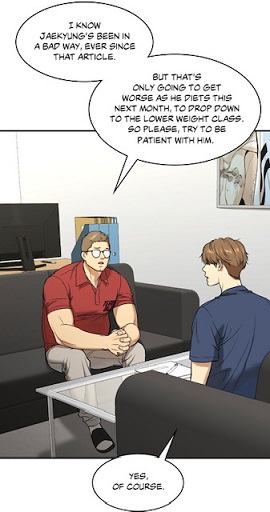 (Chapter 36) He should tolerate the celebrity’s moods and put up with everything. The manager didn’t mind, as long as he didn’t get affected. But what is the consequence of such a passive tolerance? An individual’s self-esteem can slowly erode, leading to a gradual loss of their sense of self. They may stop recognizing their own desires, needs, and rights, often without even realizing this is happening. This is because emotional exhaustion often develops subtly over time, rather than appearing as a sudden, dramatic event.
 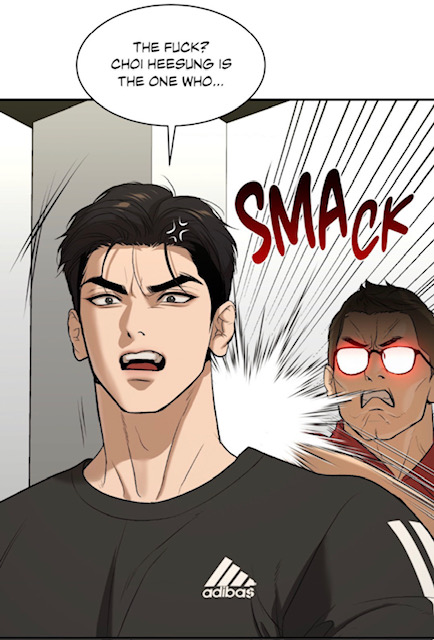 (chapter 31) when punished. In this light, Park Namwook embodies the very dynamic the article warns against: a figure who benefits from another’s compliance, maintaining control not through open dialogue, but through unspoken rules and the threat of exclusion.
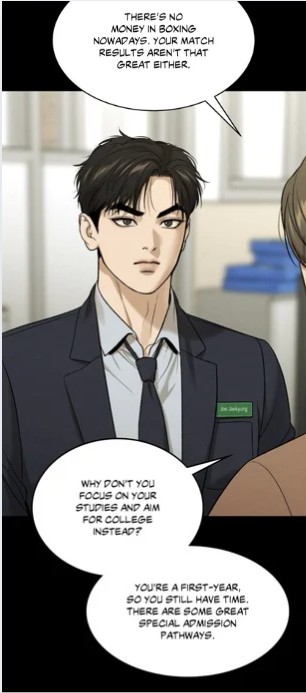 (chapter 73), by becoming a boxer, the champion wouldn’t make a lot of money. With this comment, he implied that boxing in South Korea had been losing popularity 10 years ago. This explicates why gradually, the members from Hwang Byungchul left the studio. And it was likely the same in the illegal fighting circuit.
  (chapter 73) The popularity of MMA in the States gave them the opportunity to revive fighting sports, a figure who could draw crowds and sponsors, making such events fashionable again.
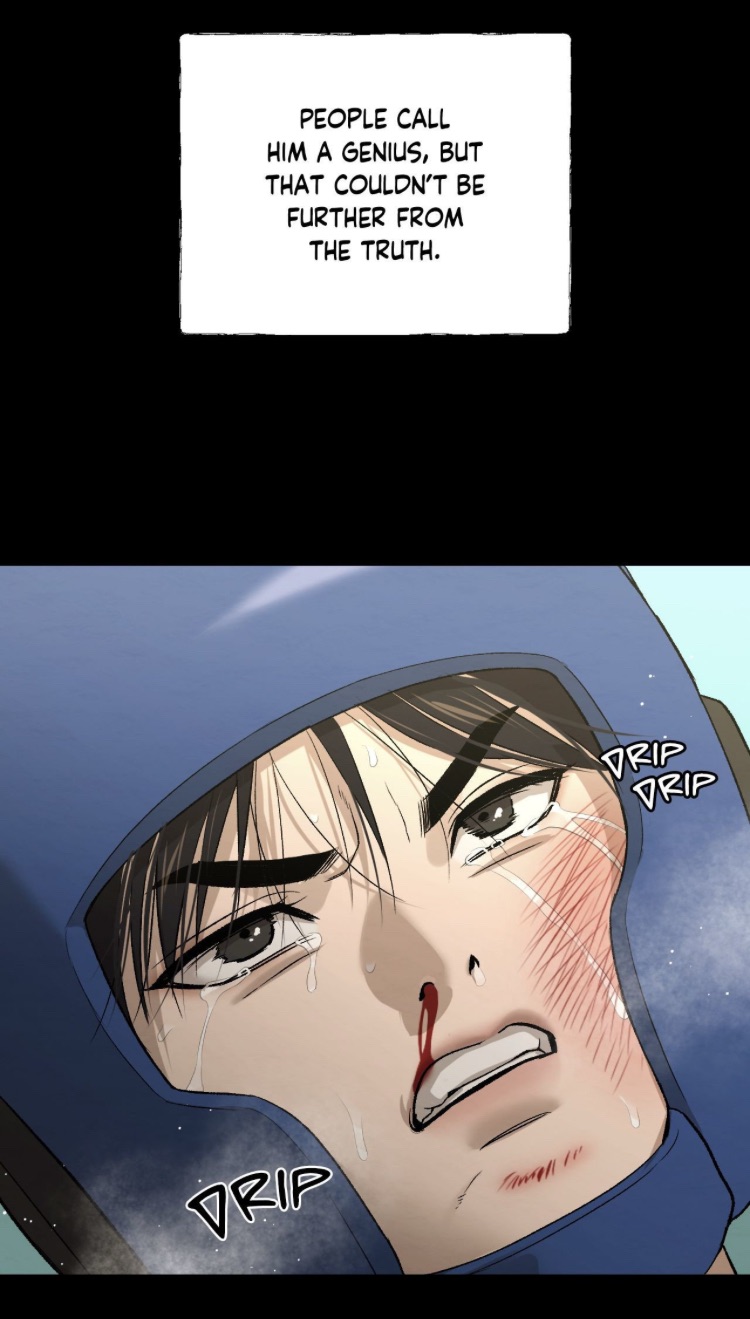 (chapter 72) instead of “hard-working,” a man who “chose sports over a dark path.” Yet if you look closely, this celebrated “ascension”
 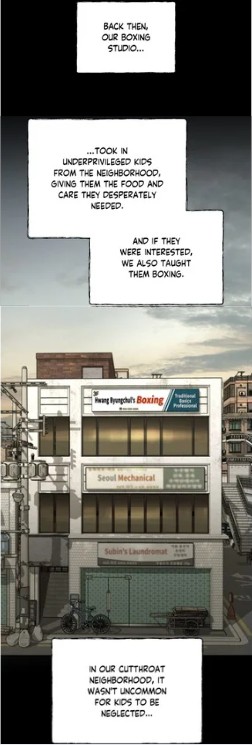 (chapter 72) isn’t tied to the director’s boxing studio at all — it’s linked to the arcade’s punching machine incident.
  (chapter 72), the scars of his family history, and the years of survival before the cage. This is history rewritten, his boxing past and family erased. Why? His origins could expose the ugly verity: the link between criminality and boxing (as such fighting sports). Secondly, because his real story, though moving, lacked the glamorous allure needed to market him. His real story would have revealed that to rise to the top, you need relentless work, not a miraculous moment. That version was never going to sell as well as the “genius” myth.
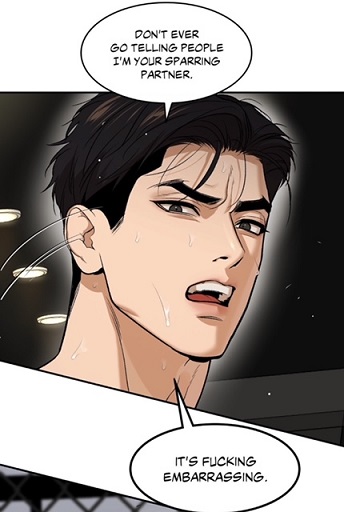 (chapter 46) Most of them thought that by staying close to him, they could benefit from his popularity. To conclude, for many of them proximity to the Emperor wasn’t about learning discipline or technique; it was about absorbing his fame by osmosis. Hence they complained and accepted the gifts and money so easily.
  (chapter 41) Observe how the manager is acting here. He is speaking, touching the star like his prize and possession. The Emperor became the merchandise, the illusion, the bait to draw both viewers and fighters. However, being “labeled as genius” can only push desperate fighters to take a short-cut: bribes and drugs. Hence Seonho couldn’t last a whole round.
  (chapter 46) And, like any product, once it was seen as damaged, its value plummeted. The moment he “lost” his title and suffered injury (chapter 52), the dream began to unravel.
  (chapter 52) This panel captures this shift perfectly: two fighters casually dismiss him over dinner. In those words, the Emperor isn’t a mentor, a champion, or even a man — he’s a broken commodity, no longer worth the investment. The same people who once fed off his popularity are the first to abandon him when the promise of easy gain disappears.
 (chapter 22) He is even disposable. He is gradually giving more rights to his “boy”, the real director of Team Black. And the moment you perceive the manager as the main lead’s voice, you can grasp the true significance of the slap at the hospital:
 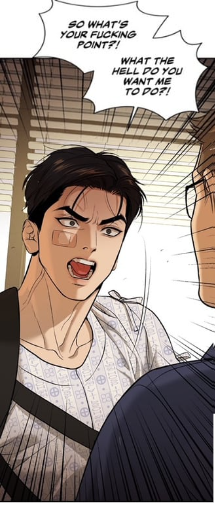 (chapter 52) For the first time, the main lead had voiced his own thoughts and emotions. He had used his real “voice”, revealed his unwell-being:
 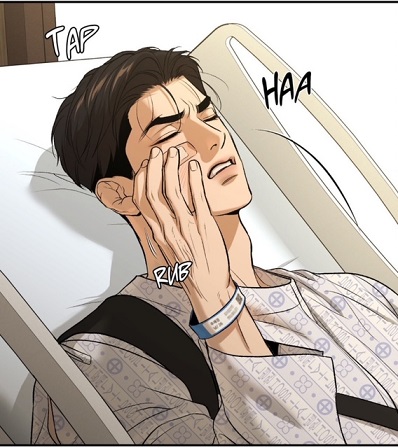 (chapter 52) He chose silence, and later avoidance, staying away from the gym. That silence was not weakness, but choice: he would listen less and less to his hyung.
 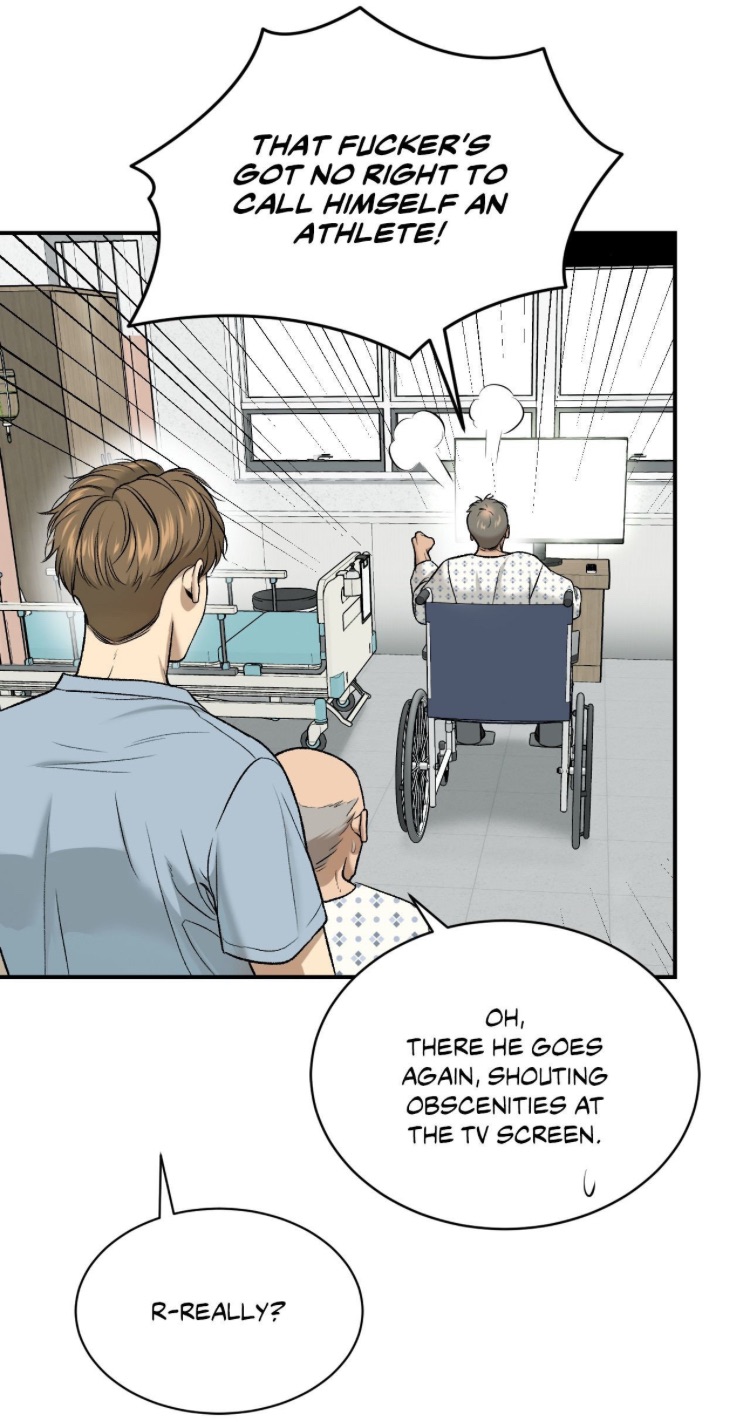 (chapter 70) and more like a product: something to be displayed, sold, and, when necessary, handled roughly to keep in line. The shift in labels is just another layer of that merchandising process — a packaging change to suit the current market, not a recognition of the man inside. To conclude, the champion has always been voiceless all this time, even here:
 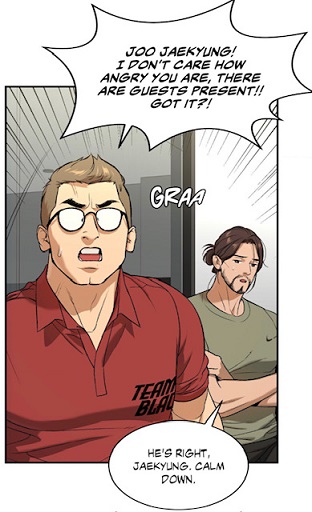 (chapter 36) All he needed to do was to fight:
  (chapter 36)
 (chapter 73) — unfiltered, unmarketed, unprotected. It was raw, dangerous honesty, and it came at a cost: the loss of his voice!
 (chapter 73) Six years earlier, however, his voice had already been battered by silence. After his mother’s abandonment at age six, the only connection he retained with her was a phone number —
 (chapter 72) We don’t know how many times he called, but each time we see him do it, his face is injured.
  (chapter 72) The phone calls are therefore intertwined with the boxing studio, as though pain itself pushed him toward her. At ten, he picked up the receiver and let it ring only a few times before hanging up. The next time, in the dead of winter, he finally spoke, promising that if she returned, he would protect her from his father and make enough money to keep her safe.
  (chapter 55)
  (chapter 1) He embodies innocence and as such lack of experiences. Moreover, he talks, makes suggestions for the champion’s sake
  (chapter 27), spent time with him, asks questions, confronts, and refuses to be reduced to a body in the room. He breaks the rule of silence. With him, Jaekyung can no longer hide behind the physical alone; he is forced to speak, to explain, to voice desires and fears. He pushes Jaekyung to engage in ways he’s spent years avoiding. In this way, Kim Dan becomes the first real threat to the system the champion built after those two curses — and possibly the first person who could prove that words can be safe again. And now, you comprehend why Joo Jaekyung was moved by the birthday card
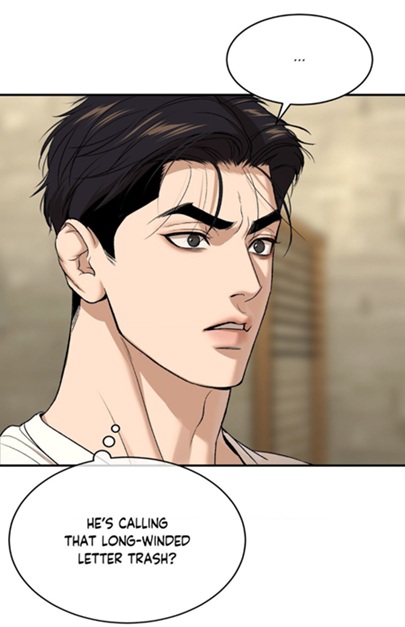 (chapter 62) To most, it might look like a simple gesture, but for him, it was a rare and precious thing — a voice that had taken the time to shape itself into words just for him.
 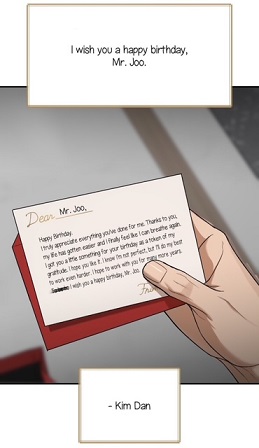 (chapter 55) After years of associating speech with either silence or harm, receiving a long-winded, carefully written message felt almost unreal. He saw the effort behind it, the deliberate choice to put thoughts and emotions into language instead of letting them fade away or turn into weapons. In that card, Kim Dan offered something neither of his parents had managed: a voice that reached him without wounding. No silence, no insult. For the champion, it wasn’t just a card — it was proof that words could be built into a gift, not a curse. The latter expressed his dreams and gratitude. Thus I deduce that the Emperor’s curse will be broken by a spell: words!
 (chapter 55) The “spell” to break it is not some grand external event, but the simple, sustained act of honest communication — something that has been denied to him since childhood.
 (chapter 68), a kiss, a pat, a caress or by simply holding hands
 . In this way, the curse that began when his voice was silenced and his hands were weaponized will only be broken when those same hands learn to speak tenderness. Look how doc Dan reacted to his public embrace:
  (chapter 71) He saw affection in the hug, but he still doubted the champion’s action.
  Until now, the design’s images have played a secondary role, yet the answer lies in a single scene from chapter 41.
  (chapter 41) Under the bright sunlight, Kim Dan reached out toward the leaves, his hand open and unguarded, as he silently thought of the man he loved. This gesture, so simple yet so revealing, became the unspoken confession that marked the start of a different kind of freedom—the freedom to feel.
 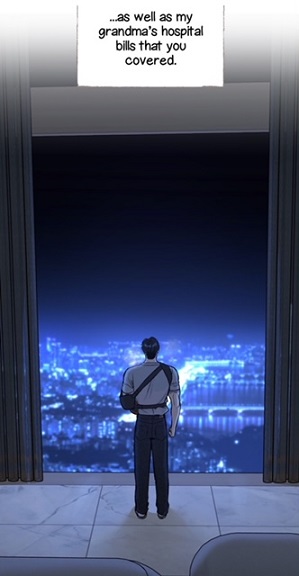 (chapter 53) The glass was an invisible barrier, offering the illusion of freedom while keeping him trapped in the moment of his unresolved trauma. The closer he stood to it, the further he was from true release, his gaze fixed outward to avoid looking inward. That’s why he had no eye in that scene:
  (chapter 55)
  (chapter 73) reveals why that reading was correct: the penthouse window is not just a symbolic device of the present — it is the direct heir of a far older image burned into his memory. Here, as a teenager, he stands before a small barred window in the room where his father’s corpse lies. The resemblance is not visual coincidence but emotional continuity. Both windows let in light without granting escape; both present the outside world as something visible yet forever out of reach.
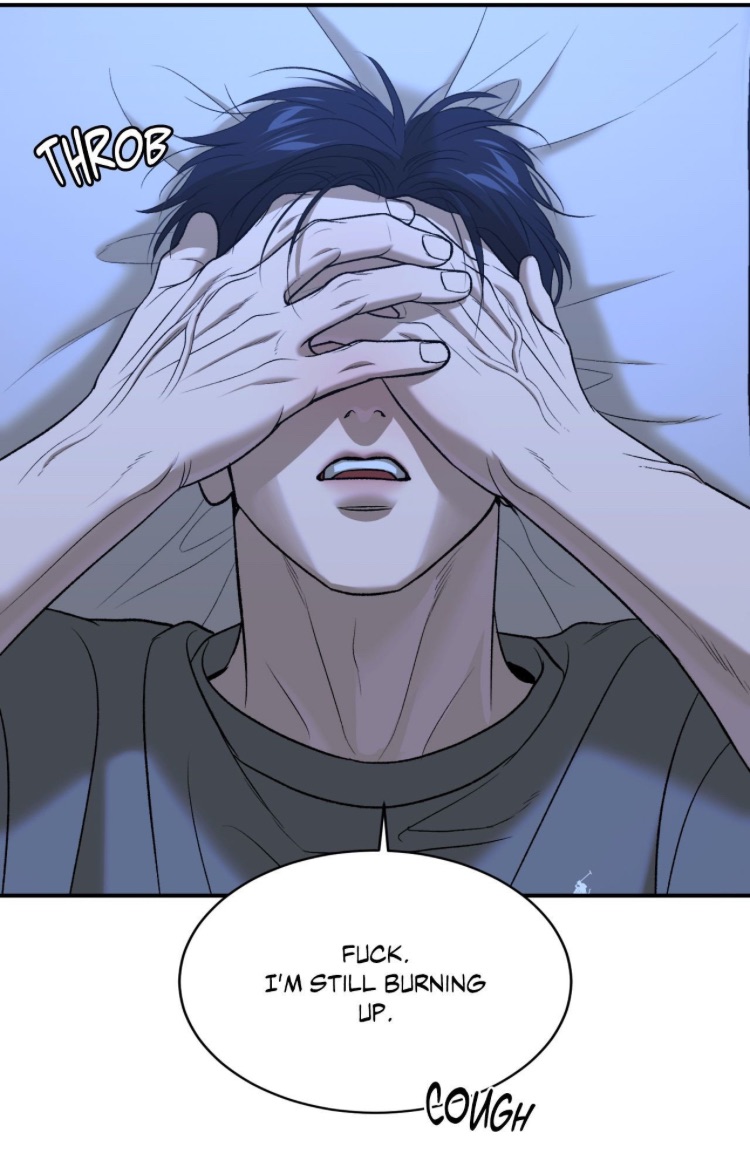 (chapter 71)
 (chapter 70) the night can also be alive, communicative, protective. In that moment, the moon becomes more than a distant light in the sky: it is a patient witness, a calm listener in the stillness, reflecting the truth he has yet to voice.
  (chapter 70) Its soft glow contrasts with the blinding glare of the cage lights, suggesting that under the moon, there is space for gentleness, for hearing one’s own heartbeat and another’s words. Just as the moon guides travelers through darkness, it can guide him toward a night that does not suffocate him with loss, but offers orientation and connection.
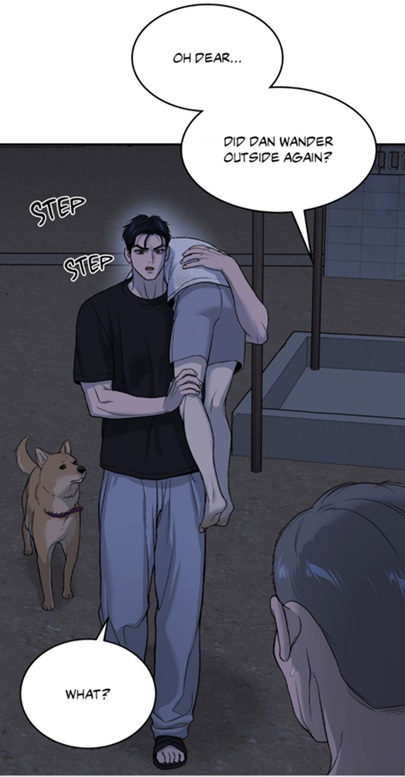 (chapter 65) he could prove to himself he was not powerless, he was valuable, capable of protecting what mattered.
 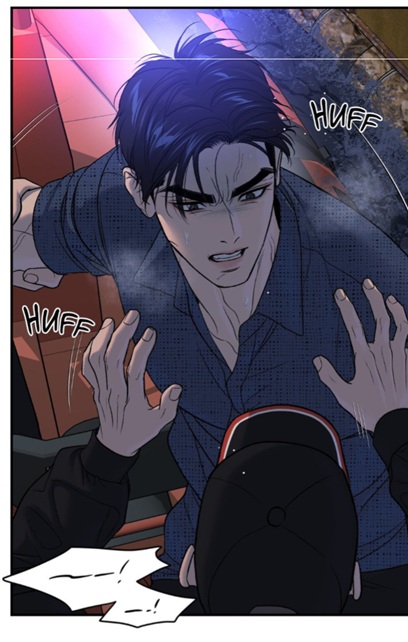 (chapter 69) He was not too late either. And the moment doc Dan discovers what the silent hero has done for him so many times, the former will realize that he has always been special to the Emperor. Moreover, the latter had never abandoned him in the end.
 , (chapter 9) as if the champion’s volatility were a quirk (the actions of a spoiled child) to be managed rather than a wound to be healed. It is because he never talked to the champion or investigated his past. It was only about money and glory. The manufactured image of the erratic, temperamental fighter served Namwook well; it excused rough handling, justified bad press, and kept Joo Jaekyung dependent. Once the Emperor can name the truth of that night, the fiction collapses — and with it, Namwook’s control. He can only be judged as a liar and even a traitor, but we know that Joo Jaekyung has a big heart. He could love his father despite the abuse. Now, the missing link is Cheolmin!
  (chapter 13) Observe that this name is a combination between Hwang Byungchul and Baek Junmin! Under this light, my avid readers can grasp why the athlete kept his existence in the dark for so long! It is because the latter belongs to his past and knows the truth behind the Emperor! He was aware of his suffering. For him, he is not just a fighter, but someone who needed FUN in his life!


 (chapter 27)
 (chapter 27) His fine motricity and his sense of observation were not well developed, hence he selected the wrong pieces in both games.
  (chapter 27) In order to win in such games,the players need to take their time and observe. Yes, playing such games are encouraging calmness and patience. Indirectly, it is promoting peace of mind, people can forget their worries and anxieties. And because the athlete had lost all the games before, there is no doubt that he was rushing for a victory. Let’s not forget that he had bet with the doctor, he could win so easily.
  (chapter 27) In addition, because of the previous negative experiences, I believe that the champion’s belief (being jinxed) got revived. How could he explain that he would lose to such a poor and small opponent? That’s why it is necessary to question ourselves what kind of card games they were playing.
  (chapter 27) Because the latter couldn’t swim, he jumped to the conclusion that he was drowning.
  (chapter 27) He had no idea that the pool was not deep. Look at the similarities of the images, for the perspective is similar:
  (chapter 27)
  (chapter 37) Is it a coincidence that the doctor drank his drugged nutrition drink? No… The reason why both became a victim of the second scheme is that they were no longer communicating to each other.
  (chapter 47) They are no longer facing each other, the athlete was even turning his back on his precious roommate and PT. Joo Jaekyung had started keeping his distance from his soulmate because he had listened to his toxic mentor
  (chapter 46) who takes everything so seriously. In other words, he had suspected the joker to be the “wild card” to make him lose
  (chapter 51), while in reality the latter had protected his back. Interesting is that exactly like in the penthouse
  (chapter 27), the athlete deserted the room out of anger
 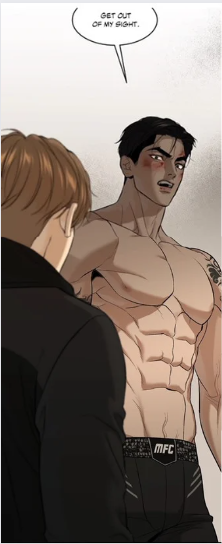 (chapter 51) leaving the doctor behind. It was, as if he had thrown away his Joker without realizing his true value. However, we shouldn’t overlook this aspect. The fighter’s words were not reflecting his true thoughts and emotions. He was acting impulsively and thoughtlessly overlooking that words can be as harmful as punches. And what is the common denominator between these two matches? Team Black had reacted impulsively. They made accusations and rushed decisions, while just like in board games, patience and observations are necessary to win a round. Yes, this connection between these two scenes displays that life is like a game… you should take your time, enjoy the moment, you can start afresh and play a new game. While the manager is envisioning to replace the doctor
 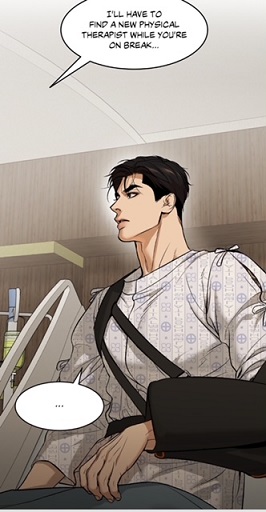 (chapter 53) and as such to change the cards, the wolf
 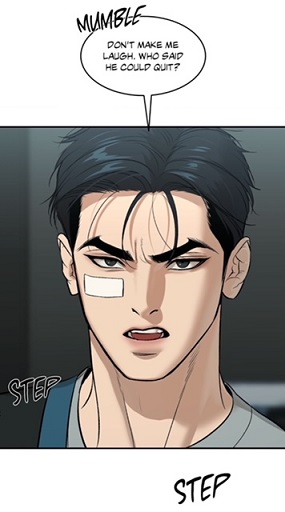 (chapter 53) decided to pick up the Joker on the floor and continue the game, as the round is not finished yet. His intention is to bring his Joker Kim Dan back in order to use him properly in the future. He will treat him with patience, trust, respect and care! Moreover, observe that the goal of “Chase the Joker” is to get rid of the cards. Consequently, I perceive this game as a metaphor for the champion’s future actions and decisions: he will have to get rid of certain cards like MFC manager, the Entertainment agency and the lawyer in order to become the true winner. He regains control of his own life. I am leaving out the manager and coach, for I believe that Park Namwook will stay there, but he will have a different position.
 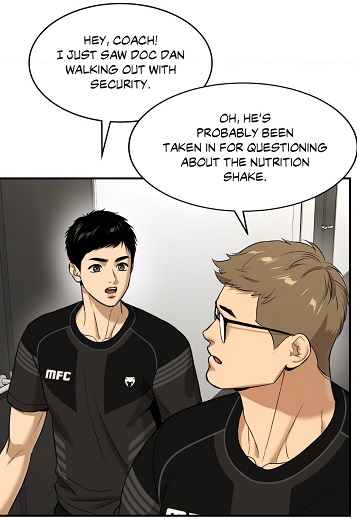 (chapter 40) Park Namwook answers to the maknae’s question about the doctor’s whereabouts. Kim Dan is with the security from MFC because of the drug incident. So far, this is nothing new and very interesting. But the devil is in the details. How did the MFC guys get informed about the drug incident? It seems easy to answer: Park Namwook must have informed them, as he is the one giving the answer to Potato’s question. Furthermore Nevertheless, we shouldn’t forget that the questioning was taking place in the USA. The official language is English!! And now look at Kim Dan’s reaction, when he was being interrogated. :
  (chapter 40) He could barely talk in English, he had troubles to understand the comments from the men in black.
 (chapter 37) Only Joo Jaekyung speaks English fluently, a sign that he is intelligent and educated. On the stage after his victory, you can see him talking to Dominic Hill, whereas Park Namwook is standing next to him alone!
 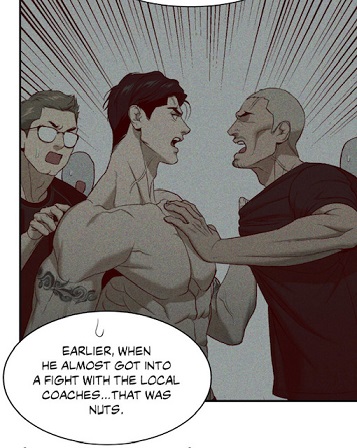 (chapter 37) Interesting is that Park Namwook was standing behind „his boy“ while trying to restrain him. But he was not looking at the American coach, a sign that he was not trying to talk to that man. On the other hand, he didn’t separate them either or slapped Joo Jaekyung on the neck in order to silence him.
 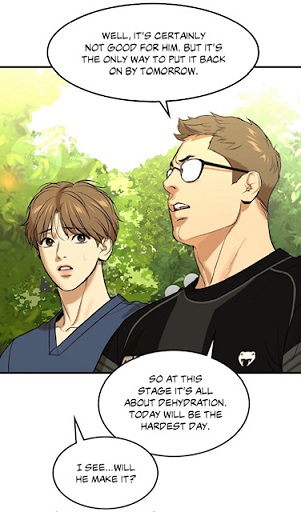 (chapter 37) except in front of Kim Dan! The latter’s passivity and silence in all the images from episode 37 shows that the Korean coach in the States was putting a lot of responsibilities on his “boy”. Hence I can only conclude that he is not fluent in English exactly like Kim Dan . Moreover, since the physical therapist has a diploma, but he can not speak very well, I can only jump to the following conclusion. Park Namwook’s knowledge in English must be quasi-inexistent. This observation leads me back to my initial question. How could he have mentioned the incident with the drugged nutrition shake to MFC authorities, when he can not speak English? I doubt that the MFC security guys could talk in Korean.
  (Chapter 37) As for Park Namwook, there is no ambiguity that he would never open the door. He is the champion‘s coach and manager. Finally, we shouldn‘t overlook the fact that the MFC manager never appeared at the gym. He contacted Team Black
 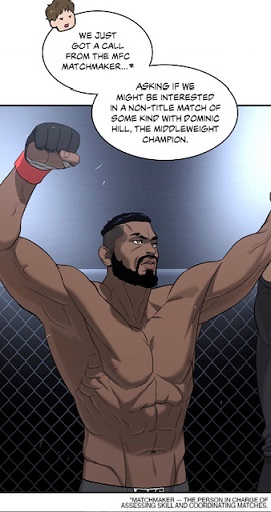 (Chapter 36) So none of the members from Team Black could recognize him. Since Park Namwook is a former wrestler, it is very likely that he knew this man from the past. Naturally, because the man is a fellow citizen, there is no ambiguity that the manager would entrust him with this terrible incident.
  (chapter 37) was the one who had encouraged Kim Dan to drink the poisoned nutrition shake. So Kim Dan could blame for his suggestion, especially when the physical therapist had suggested to return the beverage. That‘s how I realized why Park Namwook had also an interest to abandon Kim Dan, as he didn‘t want to become responsible. Moreover, he couldn‘t intervene either, he couldn‘t speak in English either. That way, he could mask his incompetence.
  (Chapter 40) The man prefers relying on others, even delegate tasks to others, but at the same time, he takes credit for Joo Jaekyung‘s success.
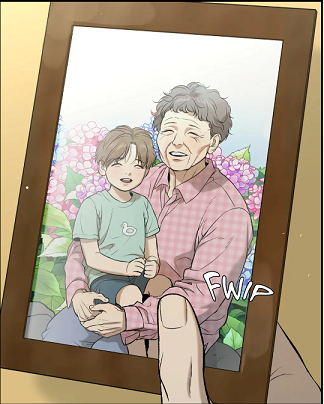 (chapter 19) However, in chapter 47, Mingwa revealed that in the past, Kim Dan had many pictures taken with his grandmother
 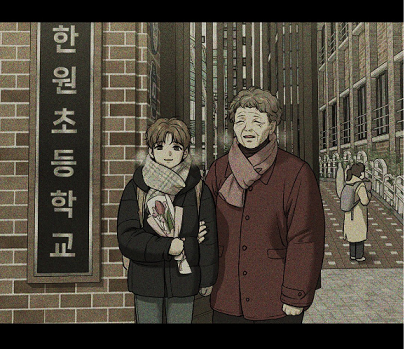 (chapter 47) .
  (chapter 47)
  (chapter 47)
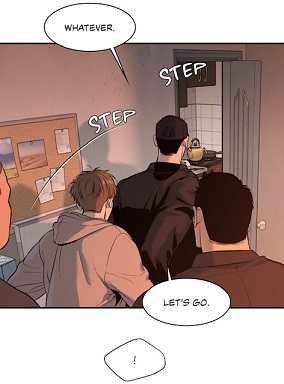 (chapter 17)
  (chapter 17) They are nowhere to be seen!! I would even add that this place contains no traces of Kim Dan’s presence!
  (chapter 53). And here, I feel the need to correct my past interpretation. Back then, I had assumed that this was the doctor’s repressed wish to go to the beach. It turns out that this was Shin Okja’s. Thus I deduce that the papers on the board are related to her health issues. Then in this image
  (chapter 19) The framed photograph isn’t visible on the chests or the shelves, when Joo Jaekyung confronts the loan shark and his minions
  (chapter 19) This exposes that this “souvenir” was not put on display in this house contrary to his stay in the expensive penthouse:
  (chapter 47) Thus I conclude through the absence of his pictures and belongings that nothing was exposing the presence of Kim Dan in this small flat. We could say that he had been living as a ghost child (the piggy bank) in his halmoni’s place. It implies the existence of an invisible wall between himself and his grandmother. This perception reinforces my previous interpretation. This place was like a “cursed place, where the “Sleeping beauty” was waiting for his “prince charming”. 😉 Therefore, when the doctor removed the framed picture from the drawer, it symbolizes his own “release”. It is no coincidence that one week later, he became “a man and as such an adult”.
  (chapter 19) He was slowly detaching himself from his halmoni’s shadow. The mirror is a reflection of a photograph. Here, he is facing reality: he has a long phallus and he can have a climax.
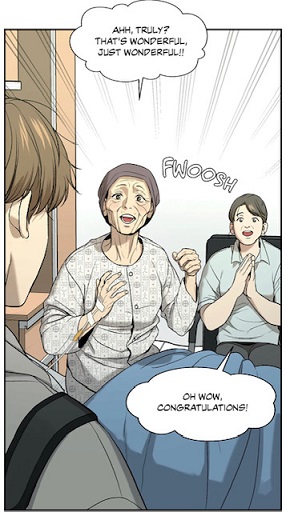 (chapter 7) and actions.
 (chapter 46) I might shock my avid readers with this hypothesis, but the fact that Kim Dan could only remember his childhood’s pictures in chapter 47 shows that he had long forgotten these moments. If he had seen the pictures constantly, he would have been confronted with reality and as such grasped that he was not alone in this world. He had his halmeoni by his side this entire time. He was cherished. Finally, keep in mind that this story is written like a kaleidoscope, so such a scene must have occurred in the past. Thanks to my chingu @@Milliformemes24, I can even be more precise. Note that in the last panel, the photos were taken with a cellphone.
  (chapter 38)
 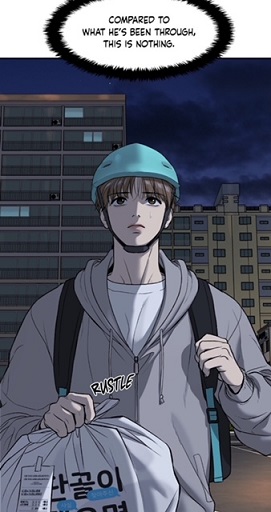 (chapter 42) or “waiter”. As my avid readers can detect, there is a strong link between “pictures” and “pride and love”. Their absence is the expression of neglect from the grandmother, who was definitely too focused on herself and her own suffering. At the same time, it lets also transpire the low self-esteem from the grandmother. In her humble dwell, there is no picture of her as well.
 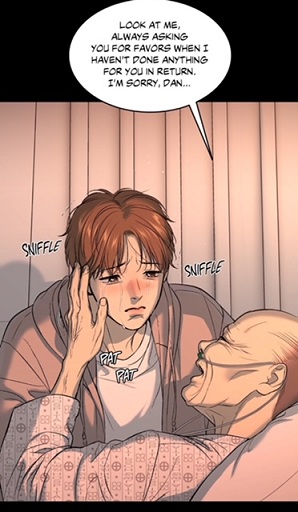 (chapter 53) It requires money, sacrifice and energy, but she is no longer paying attention to these aspects. Her time is now limited, thus she doesn’t feel responsible for any future debt. Striking is that she is not recognizing him as a man, but as a puppy dog.
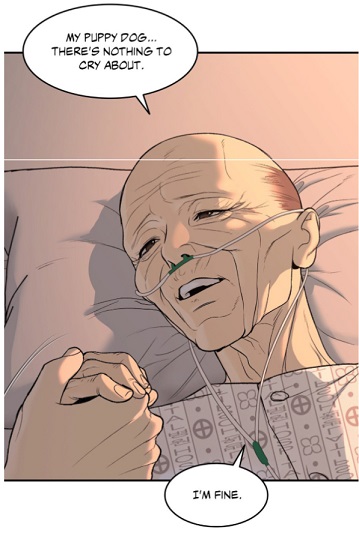 (chapter 47) Why? By acknowledging him as an adult man, she would give him a choice. He could refuse to do her a favor. As a puppy, he can not live on his own. Besides, by turning him into a dog and as such animal, she is denying him his right as a human being. She is appealing to his instinctive nature, his loyalty. And the moment I thought of a dog and death, I couldn’t help myself thinking of the famous dog Hachiko who kept waiting for his owner’s return at the train station, unaware that the latter had died a long time ago. As you can see, doc Dan’s pictures are strongly intertwined with reality and confrontation. Therefore the pictures with her grandson were not shown or treasured. The grandmother has been avoiding mirror and even pictures. As a person suffering from “Peter Pan Syndrome”, she is trying to do anything to escape “death and responsibility”. How ironic is that she just needed a picture to express her wish to move to the West Coast!
  (chapter 53) Yes, the image from the brochure is creating the illusion that the woman on the wheelchair is her. She is smiling and “looking healthy”. It looks like she will have a better life there, less painful than at the hospital. In other words, this photo represents the exact opposite: illusion and fakeness. This
  (chapter 53) is the reality. The grandmother is not looking at Kim Dan contrary to the woman on the prospect. He is reduced to his role as caretaker. He has become her “servant”. In addition, the PT is not smiling like the nurse in the photo. In verity, he doesn’t want to do it. Deep down, he wished to stay at the penthouse.
  (chapter 53) The words “I should go” displays that he is doing it out of obligation. To conclude, photographs in Jinx are also embodying dream and illusion.
  (chapter 38) Clouds are a reference to heaven and dream, while the green display displays loneliness and emptiness. They have no one by their side. Furthermore, just like Kim Dan, Joo Jaekyung has no family pictures in his house
 , (chapter 19) which could be seen as a clue that he is an orphan. Or in the best case, they live, but there is a huge wall and gap between them and the fighter. I would even add that no one could even identify the owner of the penthouse. He is a famous MMA fighter, yet there exist no picture of himself in this flat! Not even this one:
  (chapter 1) That’s why I had compared the penthouse to a hotel room in a previous essay. So we could say that he also lived like a ghost. However, since he is a celebrity, he should be rather compared to a god. He has no home and privacy. Thus the penthouse contained no memories, until the doctor started living with the champion.
 (chapter 43), a sign that their relationship has always been more businesslike, thought the boss somehow considered him as his “older brother”, as he keeps calling “hyung”.
  (chapter 5) The first personal video and message from his manager only appeared in chapter 43. This shows that the owner of Team Black had no family at all and not even friends. This observation brings me to my next remark. What about the gym Team Black?
  (chapter 52) The champion’s image is tarnished, he will get less admiration and sponsoring. The decoration of the gym exposed the mentality of the owner, Park Namwook. The gym is about the celebrity, money, fame and sponsoring! Under this new light, it becomes comprehensible why the other members were neglected and why the athlete disliked it so much to be taken in pictures.
 (chapter 30) It is because the photographs are a synonym for “money, glory and fame”. Choi Heesung was using him to get attention. His name
  (chapter 43) That’s why he disliked the idea that Seonho would advertise that he was his sparring partner. The pictures in the god’s world have nothing to do with memories or love, but with work! It is about making business and getting sponsors and making his fans happy. That’s why the author included the magazines in the same chapter with the actor.
 (chapter 45)
  (chapter 45) Imagine that the doctor had to work to exhaustion to give him an expensive gift! Yes, his gift was strongly intertwined with money, business and work! However, birthday is a symbol for home, pleasure, joy, simplicity and genuine gratitude. This has nothing to do with work and “replacement”. Yet, contrary to the other presents, the champion did open the hamster’s gift, for the latter had brought it personally.
  (chapter 45) Yes, his birthday was turned into a business event, a merchandise where he even had to pay for his own birthday party.
  (chapter 43) His popularity among the staff was based on his spending:
 (chapter 35) Such a success and glorification could only drive an edge between himself and others. In addition, the images could never boost the fighter’s low self-esteem. Yes, the absence of his own picture in his home is another important clue for his unhappiness and self-loathing. Because the doctor brought “work” home, Joo Jaekyung started avoiding the physical therapist:
 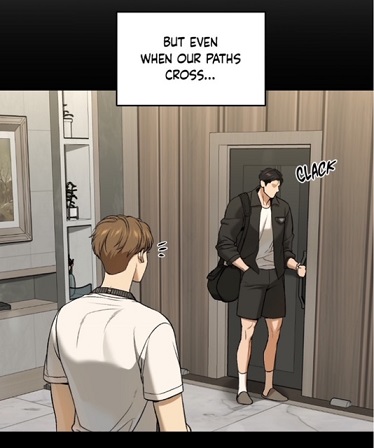 (chapter 47) It was not just because the athlete had been encouraged by his mentor to trust no one, to see relationship as a business.
  (chapter 46) This remark leads me to the following conclusion. Since the manager started sowing distrust in the champion’s heart, we can see it as another proof that this man has never truly loved “his boy”:
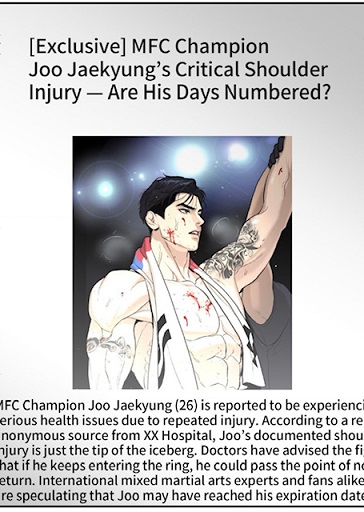 8chapter 35) When this article was released, the author selected a photograph exposing the champion in good health! He was raising his arm and as such using his “injured shoulder”. The content of the article contradicts so much the image which can only raise doubts among the readers. By using such a picture, they created the illusion that the athlete was hiding something. And this remark brings me to the last articles about the fallen legend:
 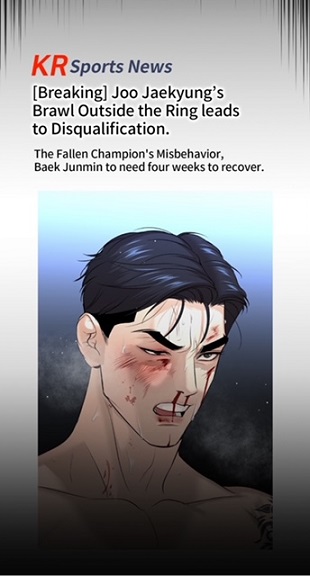 (chapter 52) His beaten face is exposed to destroy his “good image”: he appears not only as weak, but also as a bully. This shows how the medias are trying to manipulate the public with pictures. His face and body are damaged, therefore he has less value. This deceptive trick becomes more visible, when you include Baek Junmin.
  (chapter 52) The article utilized a picture of the fake fighter taken right after the match. He is smiling and barely injured… yet, the reality is that he got so wounded by the champion that he needs a long time to recover. As you could observe, all these photographs symbolizes money, business, work, superficiality and publicity. Thus they are strongly intertwined with temporality, fake love and emptiness. No meaningful moment…
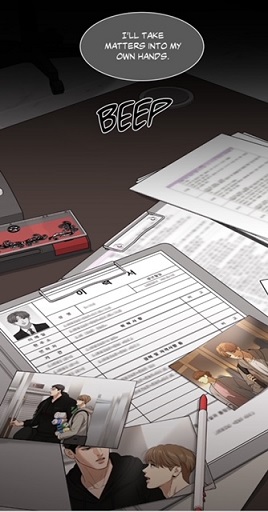 (chapter 46) The ones in this panel ooze privacy, selflessness and intimacy. The champion is seen carrying bottles and opening the door for the doctor, a sign of Joo Jaekyung’s respect for the doctor. Yes, these images expose the truth about the athlete: he really treasures his physical therapist. He is also seen listening to the doctor. This observation corroborates my previous interpretation. The pictures with the physical therapist symbolizes verity and reality. The problem is that Joo Jaekyung never got to see them, hence he didn’t realize his affection for the doctor. However, Choi Gilseok could notice it. In fact, the celebrity was delivered a different kind of truth:
  (chapter 48) Kim Dan’s meeting with director Choi Gilseok! However, note that these photographs were also a deception, for they never expose the outcome of the meeting. These pictures display the negative notions of privacy and intimacy, it is about plotting, betrayal and as such about “business”. How so? It is because they met at a café. As a conclusion, the photographs have a total different meaning in the athlete’s world. They represent coldness, superficiality, temporality, deception and work. This new interpretation reinforces my hypothesis that the main lead’s car must have been followed by a paparazzi during that night:
  (chapter 33) A black car was following him. But they couldn’t take any picture, for the windows of his car were tainted.
 (chapter 53) which left him deeply impressed. Joo Jaekyung was turning around his head and looking at him! This shows that the star was paying attention to him. And what had happened in that moment? What is the light next to the protagonist? Yes, these were the flashes from the cameras!
 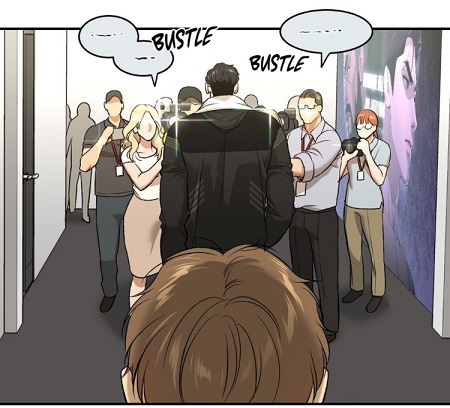 (chapter 40) It is no coincidence. Though he had no memory of the previous night, he felt this moment as magical. He had saved him and claimed him as a part of Team Black. Then he had look at him back, though he was facing journalists. However, the journalists didn’t take a picture of such a moment, for this was not relevant to them. It shows not only the true value of “memories”, but also that both were now truly living! During that night and day, both created wonderful memories.
  (chapter 41) Kim Dan experienced that he was not alone, he was part of “Team Black”, while the other heard a love confession for the first time. This memory displays
 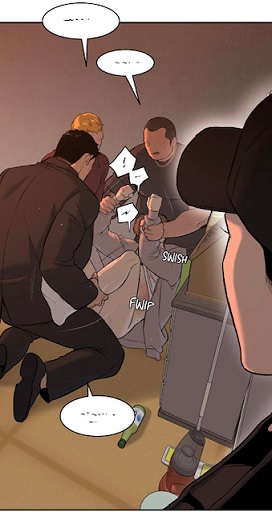 (chapter 17) He is relying too much on his eyes. He paid no attention to details and their words. Hence their words are not visible. In addition, the author created such a panel.
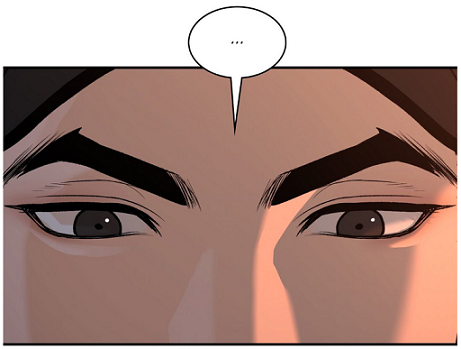 (chapter 17) in that scene.. But why is he trusting too much his eyes? It is because he adopted this poor habit from his mentor and hyung, Park Namwook. who judges people based on prejudices and impressions. When the manager faces a problem or some criticism
  or delegating responsibilities to others:
  (chapter 49)
  (chapter 27) In addition, he had to rely on the expertise of doctors, but he only trusts himself, his hyung and no others. But let’s return our attention to Kim Dan and his letter.
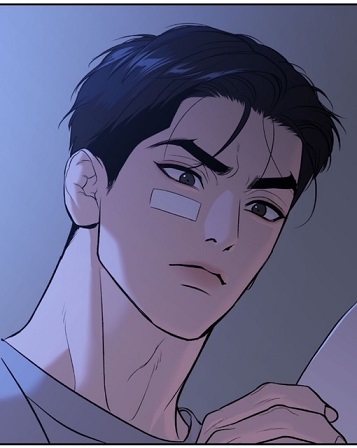 (chapter 53) The letter stands in opposition to the articles and photographs. Through the letter, the main lead is teaching to the wolf this important life lesson. He needs to use his mind and as such his heart to see the truth and reality.
 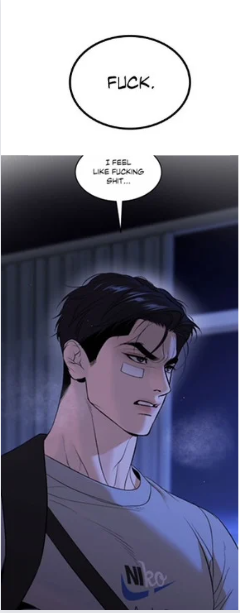 (chapter 53) Thus he voiced his discomfort and annoyance. However, this time, he is not questioning the origins of his actions. He knows now that the doctor means a lot to him. He is not a waste of time. It is no coincidence that the moment he paid attention to Kim Dan’s thoughts and emotions, he opened up his own heart and mind, because according to Erich Fromm
 (chapter 53) The latter might have no photograph of Kim Dan, but his face is now engraved in his memory. To conclude, the letter should be perceived as a mirror of truth to the athlete. He needed to hear the hamster’s words without seeing his face in order to see him properly.
 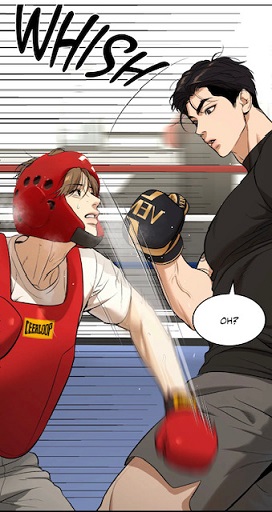 (chapter 26)
 (chapter 26) The gym will face some changes.


 (chapter 140)
  (chapter 149) Both were suffering from survivor guilt. To conclude, Joo Jaekyung and Kim Dan represent the bitter medicine for their scars. I mentioned “bitter”, because through their loved one, they are forced to face painful moments. That’s how they can overcome their past and discover happiness. However, while looking for a new title, I rediscovered the first illustration
  , and it suddenly made click in my head. To conclude, I had another revelation concerning episode 50.
 . (chapter 50) At first glance, the champion is blaming Kim Dan for the wound. He betrayed him. However, his words could have a different signification. Don’t forget that a message always has 4 sides according to Schulz von Thun.
  Consequently, while many saw this question as a “factual information” and as such as an accusation, the reality is that it gave us an insight about the sender too. The sportsman was not using the personal pronoun “I” or “me” in his inquiry. As you can see, the absence of the personal pronoun is indicating that Joo Jaekyung was in reality not referring to him and his wounds. He is not prioritizing himself, rather the doctor and his action. So this question could be prompted by curiosity or a desire to understand the person’s recent activities. Thus I deduce that the champion was asking his lover to tell him the truth. He should come clean. He desired a honest explanation. His attitude reminded me of an adult confronting his child.
 (chapter 51) But note that he never accused Kim Dan of assault, but of leaking information. That’s the reason why I don’t think that this inquiry “What have you done” was about seeking accountability. In that case, he wouldn’t have rejected the doctor’s offer. By letting him treat his wound, Kim Dan would have become responsible for the injury.
  (Chapter 50) It becomes comprehensible why the Emperor refused the offer. The rejection was the symbol of his “trust” in Kim Dan unconsciously. Astonishing, right, though people and Kim Dan had the opposite impression. Yet, because of the “tie”, Kim Dan felt responsible for the incident, therefore he apologized.
  (chapter 51) This means, the main lead recognized his responsibility. He should have checked the spray more carefully. The champion could perceive this excuse as a confession of his complicity. Hence he asked his lover if he was the spy.
 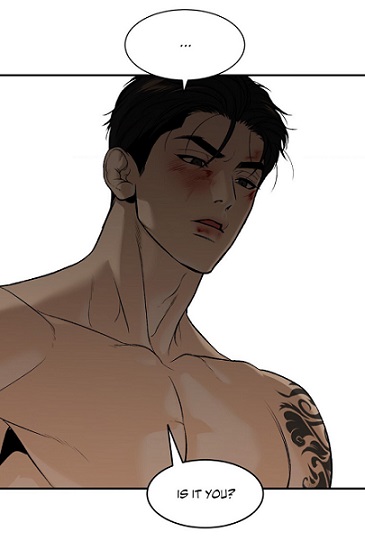 (chapter 51) This signifies that in episode 51, he dared to question his physical therapist’s loyalty. Yes, we have another “Truth or Dare” in episode 51.
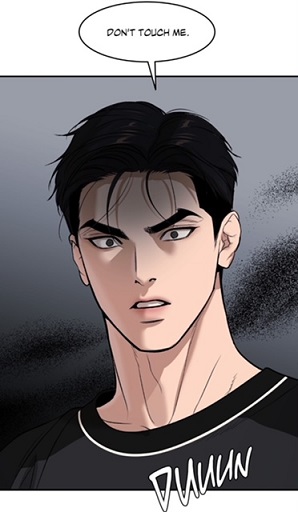 (chapter 50) This is the face of a scarred man. Yet, contrary to the past, he is not expressing his fear through rage. That’s the reason why his emotions were controlled. Under this new light, Manhwaworms grasp why the athlete asked such a question from his soulmate:
  (chapter 51) Interesting is that he was more pained by the idea of a betrayal from Kim Dan than the tie, if you compare these two panels: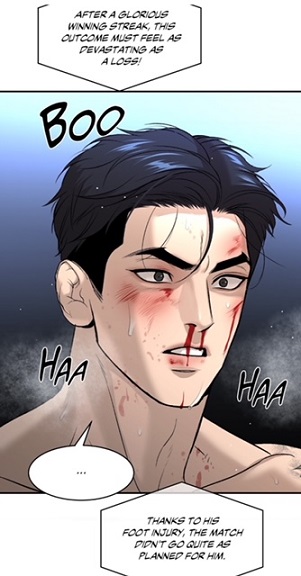
 (chapter 51) which the emperor needed to hear. He has trust issues. And the moment he saw the doctor’s facial expression, he could only get shocked and hurt.
 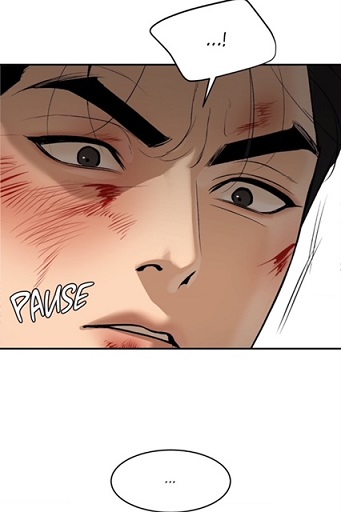 (chapter 51) He could sense the wound in doc Dan’s voice and gaze. It is important, because the sentence “You don’t trust me?” is actually constructed like a statement and not like a question. It only becomes a question through the tone. Through the latter, the champion could detect his partner’s genuine pain. The wounded tone could only move the champion’s heart. Kim Dan dared with a single question to shake the fighter’s confidence. No wonder why he reacted badly.
 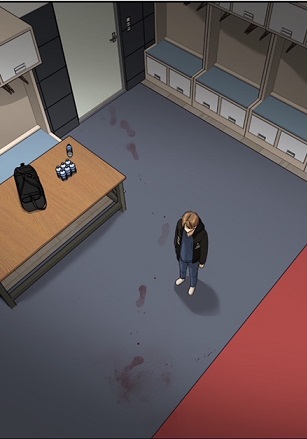 (chapter 51) Thus Kim Dan could overcome this shocking but terrible discovery: he hadn’t earned the full trust from Joo Jaekyung yet.
  (chapter 51) As my avid readers can see, my perception about chapter 50 was confirmed with episode 51. The arguments in the locker room were reflecting the quarrel in the penthouse with Choi Heesung. What is the common denominator between these two scenes? The lack of trust from Joo Jaekyung, but his private PT failed to realize it in the penthouse. Why? It’s because he chose to trust his destined partner.
 I believe you = I trust you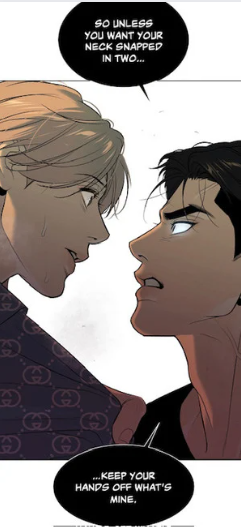


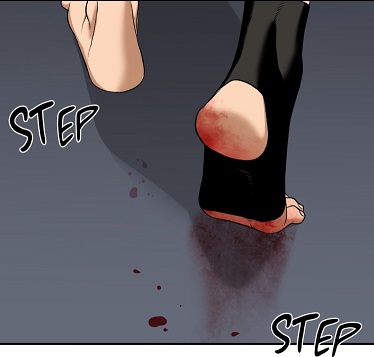
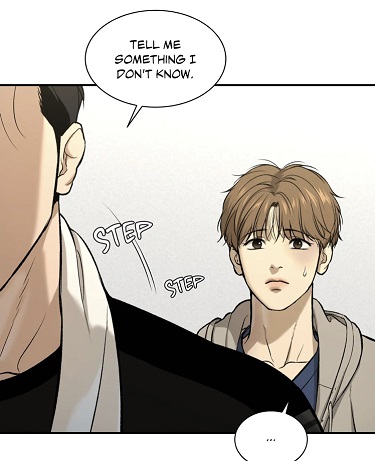 (chapter 15) He told him something that he didn’t know. Note that after the terrible meeting with the actor, Joo Jaekyung couldn’t even find the answer himself:
 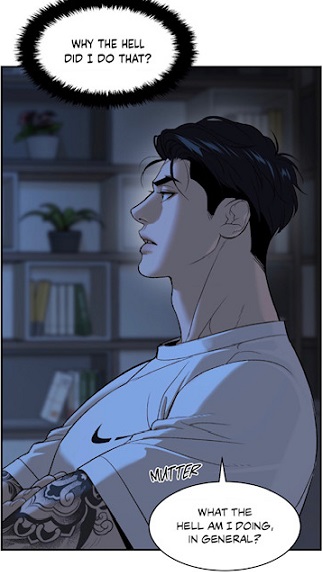 (chapter 35) He was still clueless about the trigger for his behavior. With this inquiry “You don’t trust me”, the hamster pushed his destined partner to face his biggest fear: trust someone and in particular him. This conversation can only incite him to meditate about their relationship. So while in episode 15, he behaved like a pouting child
  (chapter 15), in the latest episode, Jinx-philes can perceive his growth and maturity.
 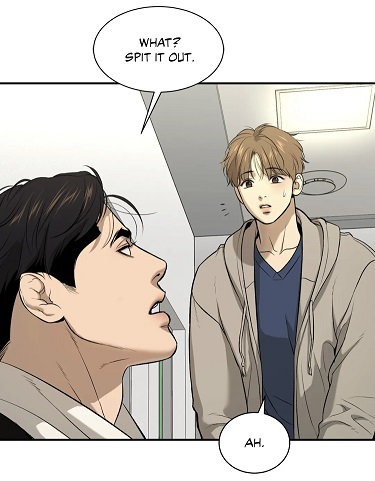 (chapter 15) This painful incident was a wake-up call Thus I come to the following deduction. Kim Dan will try to earn the champion’s trust, whereas the champion will be forced to take a leap of faith towards Kim Dan. Contrary to episode 34, the champion could see the truth directly through the doctor’s gaze and voice:
  (chapter 34) These questions were all rhetorical:
  (chapter 34) This signifies that in the sauna, truth was not standing in opposition to daring. The sauna reminded me of the cavern where an imugi hides, until the latter leaves its hidden place and find his star, his yeouiju. Only then, he can turn into a dragon. To conclude, because of Heesung’s pressure, the imugi had to select between daring or lie. In other words, telling the truth became the challenge itself. Heesung knew that Joo Jaekyung would never confess.
  (Chapter 34) What Heesung wanted was actually a lie by omission or commission which would have been presented as the truth. Through this game, the actor thought that he could impose his will onto the celebrity. He anticipated the athlete’s silence. This signifies that he knew about the star’s denial and turned it against him. Besides, that way Heesung could maintain his good image: he had not stolen his partner and as such there was no cheating. No one was betraying him.
 (chapter 34), but also his hand.
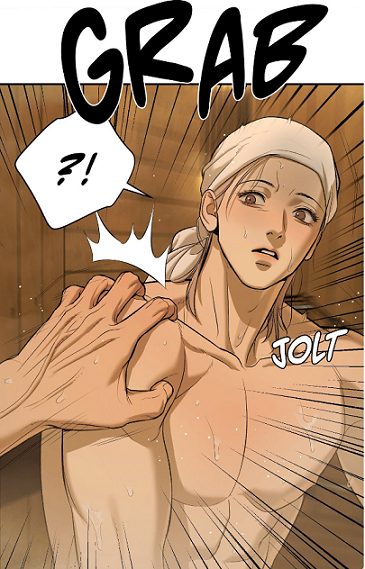 (chapter 34) He caught the actor by surprise, the latter never thought that the celebrity would become violent. The redness on his face was displaying that he was barely controlling his annoyance and impatience.
 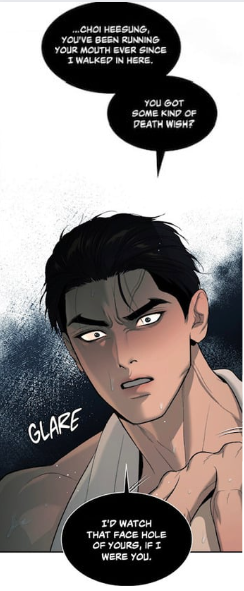 (chapter 34) However, they were in a public place, the hotel’s sauna, and the actor is a celebrity. Hence he is protected by his fame and social status. That’s the reason why the champion didn’t hit his frenemy, he had learned his lesson at the gym.
  (chapter 34) Despite his words, the gumiho still got scared. The racing of his heart is an indication of his fright. Therefore he ran away more or less after ordering his trainer not to meddle in his love life.
 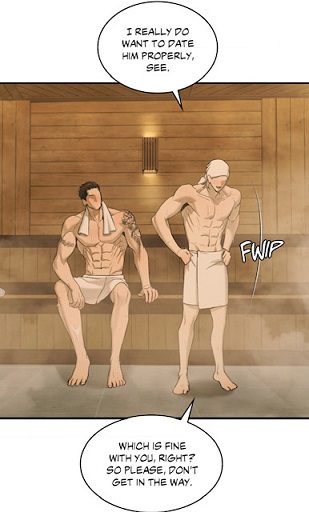 (chapter 34) Note that when he did this, he avoided his counterpart’s gaze. Deep down, he knew that he shouldn’t provoke his frenemy too much. Only when he was at the door, he turned around and LIED!
 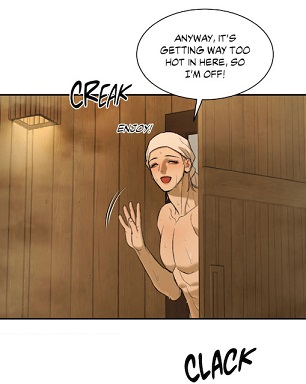 (chapter 34) Yes, after that incident, he chose to give him a fake excuse for his departure. As you can see, this conversation was strongly intertwined with the notion “truth or dare”, but both ended up lying. Whereas the champion didn’t admit any feelings, the other acted, as if there was nothing wrong and he was not scared. The gumiho thought that if he were to remove the champion from the doctor’s side, the latter would be able to open up to the actor.
  (chapter 34) What does it reveal? The actor had been projecting his own thoughts onto the future dragon too. He was the one who didn’t dare to become more honest with the physical therapist. He used work to spend time with Kim Dan. One might say that Heesung failed terribly. Yet, this is just an illusion, because his “failure” pushed him to become more honest with Kim Dan. Thereby he asked to meet the doctor again.
  (chapter 34) Yet, the message is exposing that Heesung was still lying, as he kept using work as an excuse. Hence Joo Jaekyung had to intervene again:
  (chapter 34) The champion dared to challenge his rival.
  (chapter 35) Yes, by challenging the athlete because of Kim Dan, the comedian ended up telling the truth.
  (chapter 34), but his anxiety reached a new peak, the fear that he might be abandoned. Hence he used the sandbag to vent his temper. And what did the cute puppy do during that incident? He dared to offer his help to his idol:
  (chapter 34), yet he was in total denial about the reality: it was dangerous. Deep down, the champion knew that it was impossible for him to control his lover’s time, but also his body. Besides, the other problem is that the athlete is rejecting the notion of love. By denying the existence of his own feelings, he can not claim the doctor’s heart. That’s the reason why the champion got so mad and frustrated.
  (chapter 34) He was not telling the truth, when he stated that Kim Dan was his “possession”. This explicates why he couldn’t stay by the doctor’s side
  (chapter 34) in the end. He manipulated the main lead by letting him think that he had no other choice. Yet the last panel displays his trick. It was up to the doctor to decide how he should spend his free time. Nevertheless, while people were mad at the champion for his deception, many failed to realize that the champion was actually deceiving himself. So all the tricks (episode 33 and 34) were manifestations of avoidance, the fear to face the truth: his affection for Kim Dan and this due to a past betrayal. Hence these chapters stand under the sign of silence hidden by “pranks”.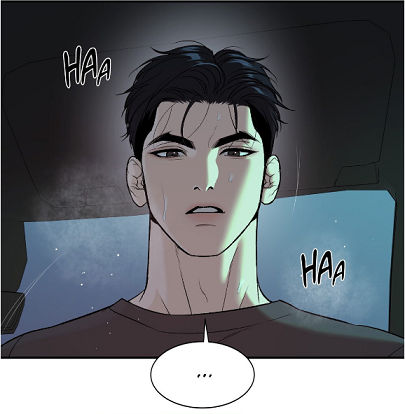
 (chapter 35) On the other hand, the artist could only tell one part of the truth: the presence of feelings. However, the deceptions in the penthouse exposed something else:
 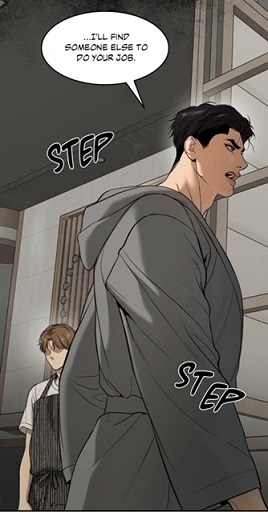 (chapter 45) or left the doctor in the locker room in episode 51.
  (chapter 45) It is because by denying his affection, he needs to justify his presence next to him. He is his PT… forcing his enemies to portray the doctor as a traitor or a bad PT. However, they failed, as the champion is not doubting the doctor’s innocence concerning his wound on the foot. Nevertheless, the incident is not closed, as the culprit has not been brought to justice.
 (chapter 50) First, the schemers’ MO corresponds to the game Truth or Dare. Choi Gilseok asked his minion to cross the line. This explicates why they are trying to use tricks and manipulations. Daring means no truth, thus someone will be framed: Kim Dan. Yet, the plotters are not aware that thanks to the cute hamster, the alpha is turned into a mirror of truth. Hence he couldn’t get deceived by the MFC security guys:
  (chapter 40)
  (chapter 36) The lawyer, the journalist and the manager pushed him to choose “dare” and not truth! That’s why there was no interview and the leak was not investigated. He had to prove his strength.
  (chapter 29), the journalist without a face
  (chapter 35), the “fake” MFC agent
 (chapter 42), Baek Junmin whom the champion couldn’t truly identify
  (chapter 47), then he recognized the director without naming him,
 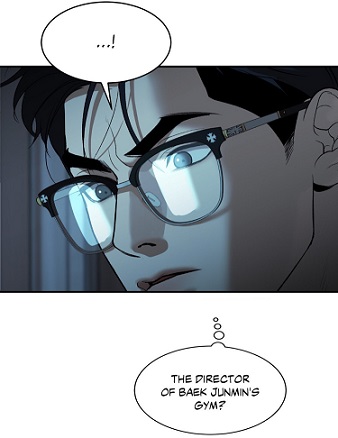 (chapter 48) and finally the ghost from the past
  (chapter 54). These characters are all connected to “Truth or Dare”.
  (chapter 50) This scene exposed that the champion repressed a certain incident which is rather common among victims of a trauma, especially people suffering from PTSD. This shows that some traumatic event took place for quite some time, but the champion acted, as if nothing had happened.
  (Doctor Frost, chapter 140 ) That’s how the champion became a zombie, he couldn’t live properly due to his untreated scars.
 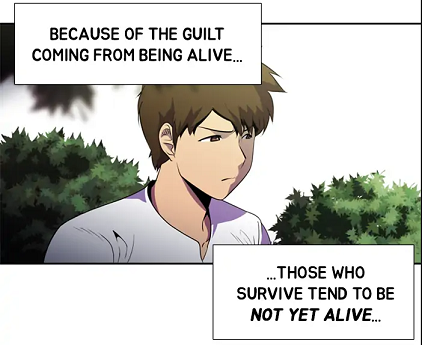 (doctor Frost, chapter 139) But thanks to his fated partner, the traumatic past is slowly coming to the surface.
 (chapter 48) Yes, he didn’t dare to tell him what had happened. No truth… no daring which reflects the games in the sauna and the living room of the penthouse. Kim Dan could have come clean the next morning, but no. This panel explains his silence. He also mistrusted his VIP patient. He had a negative perception of his lover’s mental state. On the other hand, the champion’s attitude reminded me of a parent who has not the time to listen to his child’s problem due to work.
 (chapter 48) Should the athlete remember this night, he will realize that he was the one dismissing his physical therapist, although the doctor could have come clean later. At the same time, Joo Jaekyung’s attitude could be mirroring the parent or guardian’s in the past. They didn’t have the time or the inclination to listen to their son, hence the traumatic incident got buried.
  (chapter 27), hence truth comes to the surface! Kim Dan and Joo Jaekyung feel attracted to each other and have come to love each other. When they speak their mind, they feel comfortable around each other. Truth is strongly connected to communication. Hence the painful conversation in the locker room was necessary. “You don’t trust me?” also reflected the doctor’s attitude. He never tried to approach his room mate
 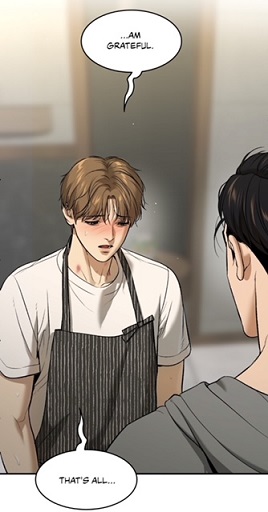 (chapter 45) He lied, when he portrayed himself as grateful. He was avoiding his gaze either. No wonder why the fighter got even more mad and threatened to fire him. Such an attitude could only increase the celebrity’s mistrust, as the latter could discern a certain dishonesty.
  (chapter 49) The latter didn’t even greet the director or acted, as if they didn’t know each other. He exposed the existence of a secret, an uncomfortable secret. Consequently, I believe that the champion could only jump to the conclusion that Kim Dan had been indeed acting behind his back, even coerced to do something.
  (chapter 51) Note that the star never came clean with the truth either.
 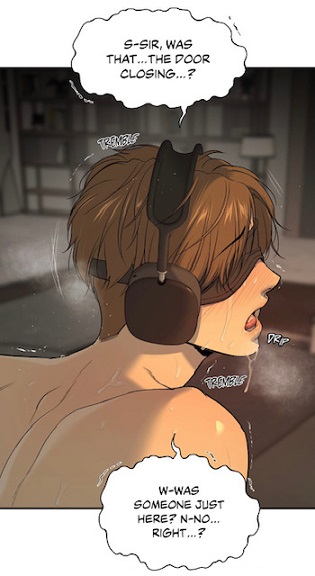 (Chapter 35) Through the doctor, the champion is encouraged to become honest to himself.
 (chapter 33) Simultaneously, it exposes that the champion has a secret, which is strongly intertwined with betrayal, love, money and deceptions. I couldn’t help myself thinking of “blackmail”. Kim Dan had been coerced to do something, as the director was holding something against him. Hence we have the question: “what have you done?”. Remember how the actor chose to approach the angel.
 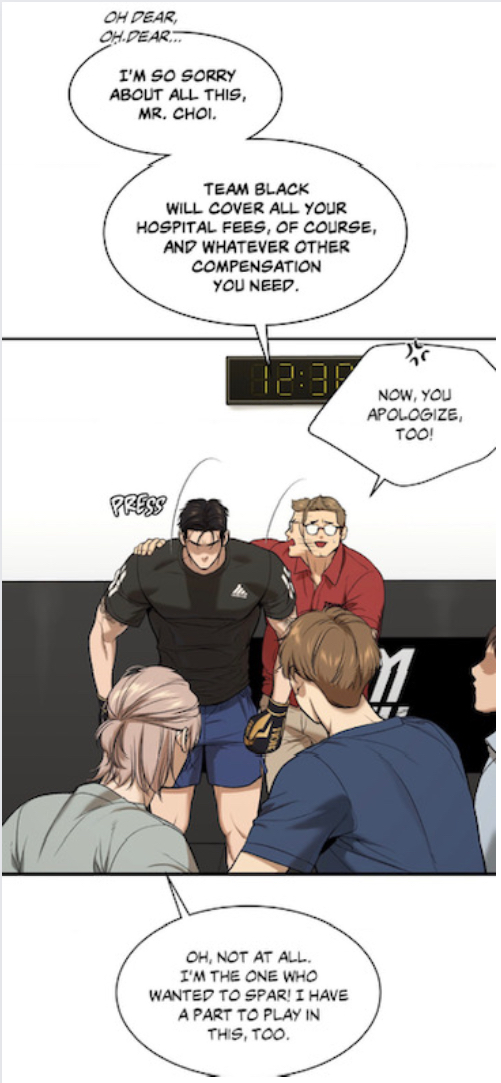 (chapter 31) He tricked his boss by faking an injury. He put the gym under pressure, as this incident could be leaked to the outside. The whole situation reminded me of blackmail. If he did not follow his request, there could be a scandal. That’s the reason why I believe that the champion’s past is linked to blackmail as well. How is it possible? It is because of the game “truth or dare”! The latter is strongly intertwined with divulging information and crossing the line!! To sum up, this game embodies trauma, secret, leaking information, trust and overstepping a boundary or rule. This observation brings me to my next point.
 (chapter 9) And what did happen after they left the restaurant? The champion discovered the truth:
  (chapter 10)
 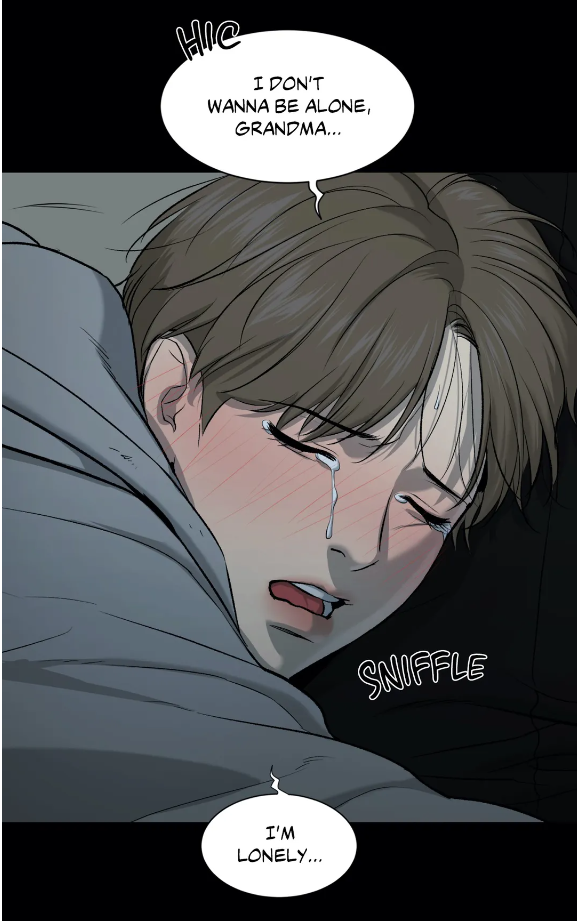 (chapter 10) Kim Dan was terribly poor, but he was also on his own, missing his grandmother.
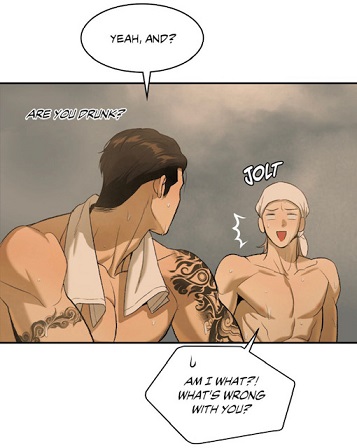 (chapter 34) “Are you drunk?” With this question, the protagonist revealed something about himself. He associates dating and love confession with drunkenness. He implies the existence of a lie. But a confession is strongly associated with verity and sincerity. On the other hand, for the sportsman, no one in his right mind would admit to be in love and in our case to love another man. For me, one part of the problem is that the champion is afraid of admitting his homosexuality. The latter is still a stigma in South Korean society. But there’s more to the game Truth or Dare. If you paid attention to the origin of the last quote, you will realize that this fun is linked to bullying and even hazing.
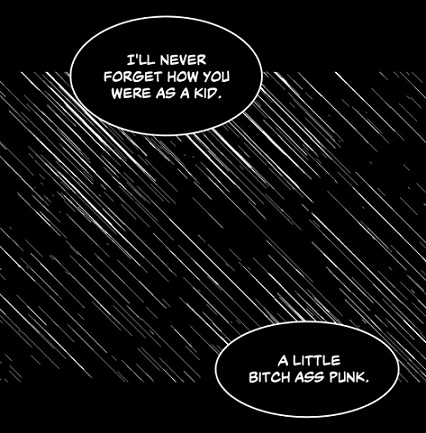 (chapter 49) Furthermore, bullying is never done alone, but in groups.
  (chapter 41) It is the champion’s choice to refuse or not the matches. The moment I associated the game with parties, peer groups and bullying, I had many revelations.
 (chapter 37) Interesting is the athlete described this night as a party which made me think of a students’ party. Therefore I couldn’t help myself wondering if the champion didn’t go to college, but due to an incident, he was forced to drop out. And the latter could be related to a party organized by students. The latter chose to cover up the incident by remaining silent. I would like to outline that the doctor got fired, though he was actually sexually harassed by his superior. The nurse never testified in his favor, she chose to close an eye to the crime.
  (chapter 1) The main lead never considered her behavior as betrayal and abandonment. In fact, he never considered the crime as a betrayal from an institution.
  (chapter 1) It is important, because it implies that Kim Dan avoided to socialize and participate in gatherings. Interesting is that in season 2, Jinx-philes discover that Kim Dan had been bullied in the past.


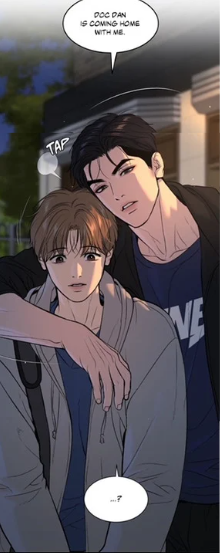

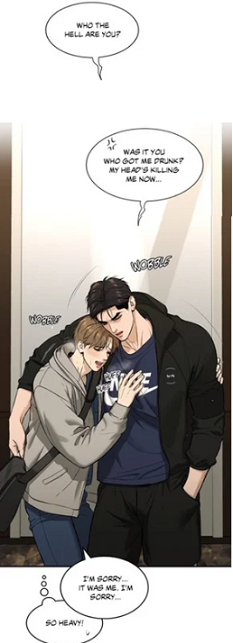
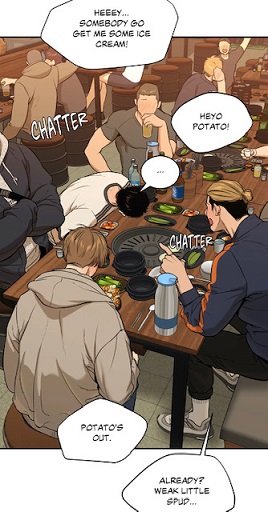 (chapter 9), yet Park Namwook made sure that the physical therapist wouldn’t be abandoned drunk. Thus he tasked his boss to bring him home. And as for Potato, it is clear that Oh Daehyun would take care of him, as he was sleeping in the dormitory next to him. In other words, no one was left behind drunk. But this scene contrasts so much to episode 43. First, no one was missing Potato. No one asked about his absence. Secondly, pay attention that the fighters invited Kim Dan to join them for another round, while they were neglecting their boss, though it was his birthday party.
 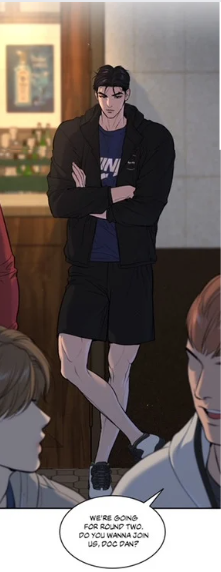 (chapter 43) Moreover, they never wondered about his physical condition. Was he drunk or not? Funny is that the intoxicated character was the one who forced Kim Dan to go home.
  (chapter 43) That’s what a friend is supposed to do.
 (chapter 35) So the auntie could keep an eye on the judo fighter, and it was only a matter of time, until his friend would return. Nevertheless, this scene is implying a certain problem: a drunken person shouldn’t be left unguarded. Thus imagine that during a party, an unconscious person is brought to a room and left there unguarded, as the friend desires to keep partying, similar to this scene:
  (chapter 37) The person could get sexually assaulted, and no one would notice it. Secondly, I would like to outline that the hazing party from the article reminded me a lot to bullying. These freshmen were humiliated, and the perpetrator excused her behavior behind traditions and social norms. So the champion could have been betrayed by a friend, as the latter would have justified his action similarly. So instead of admitting his mistake, he could have justified the incident like this: the victim was responsible for his misery, because he was at the wrong place at the wrong time. It was just his misfortune or better said his jinx. Yes, for me, the jinx is indicating that people responsible for the champion’s traumas were denying their wrongdoings.
 (chapter 8) From my point of view, this place is not just symbolizing purification and reflection, but also indicating the presence of a wound. As soon as I connected the bathroom and as such water to pain, all the champion’s past behavior appeared in a different light. In episode 3, when he went there, he was wearing his pajamas.
  (chapter 3) Neither Kim Dan nor the protagonist were seen both naked in the shower room.
  (chapter 8)
  (chapter 20)
  (chapter 30) Therefore I perceive the champion’s last comment as relevant. In my opinion, Kim Dan’s gesture reflected the champion’s mind-set. So by saying this, Joo Jaekyung was forced to admit the absurdity of such an attitude. Therefore Manhwalovers can understand Joo Jaekyung’s annoyance at the sauna. He imagined that he would be alone there.
  (chapter 34) He feels uncomfortable naked around people… As soon as you connect this place to a wound, my avid readers can finally better interpret the champion’s irritation in episode 36:
  (chapter 36) Kim Dan’s entrance could be perceived as a violation, for the champion was naked. This intrusion caught him off-guard. But since his gaze was covered, his anxiety masked behind his anger was diminished. On the other hand, this led him to leave the bathtub undressed and have sex in the kitchen.
  (chapter 36) For me, everything is pointing out that one of the champion’s fears is intimacy with water. He has long internalized this association. Don’t forget that the sexual encounter in the swimming pool started with clothes, before they got completely removed.
 (chapter 27) Under this new perspective, I don’t think that it is a coincidence that the champion felt the need to take a shower after meeting Baek Junmin and recalling the past.
  (chapter 49) This helped him to overcome his trauma and past wound.
  (chapter 49) Yet, keep in mind that the athlete’s wounded soul is not the result of one traumatic incident, but of many anguishes.
  (chapter 8) they dared to have sex next to Oh Daehyun and the other fighter. However, note that in all these scenes, neither the doctor nor the champion were honest. They were both lying… not only to their counter-part, but also to themselves.
  (chapter 19) That’s the reason why the argument in the locker room
  (chapter 51) doesn’t represent the final moment where both main leads opened up their heart and mind to each other. They were not truly honest to themselves and to each other. There was no water… and according to me, the spray was a pepper spray, so the champion’s ankle should have been cleaned and not simply covered. For me, both characters need to prove their trust and loyalty to each other. But they are moving in the right direction, for Joo Jaekyung divulged a huge information to Kim Dan.
  (chapter 7)
  (chapter 70) His sexual orientation was exposed in high school, his friends were behind the rumor
  (chapter 70), although we have to envision that his crush played a huge part in it. Why? It is because he didn’t want to be associated with homosexuality.
  (chapter 70) Not only he cut off ties with him, but also he made sure to isolate the main lead from other students. The worst is that this person acted, as if this ostracizing had never occurred.
  (chapter 69), as if he had done nothing wrong. For me, it shows that the traitor never grasped the significance of his actions. Hence Park Sung-Woong could forget Dong-Gyun, while the latter could never forget him at all. The result from this huge betrayal was that the cute uke decided to keep his distance from people.
  (chapter 70) He could no longer trust people, he avoided meetings. In order to outline how severe betrayal trauma can be, the Webtoonist showed us the immediate effects of betrayal trauma: physical and emotional reactions
  (chapter 70)
 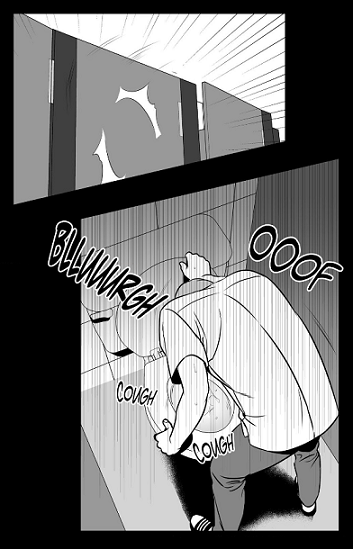 (chapter 70) and the long term effects:
 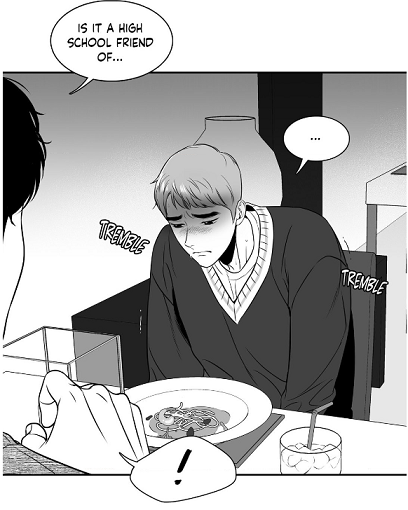 (chapter 69) he is trembling so much, he can not look at his former friend. Readers shouldn’t underestimate the issue. Betrayal trauma is so severe that it is comparable to being hit by a white truck. The pain is so great that it affects the brain functioning and as such personality.
 (chapter 9), trust issues
  (chapter 29), withdrawal (we know nothing about his family and he dislikes going to gatherings, he is not meeting his hyung Cheolmin) and rumination: he got upset, when the hamster ignored his calls.
  (chapter 05) Then when he stayed at home,
 (chapter 32), it was clear that the doctor’s actions were constantly on his mind. He was so bothered that he had to bring him to Heesung. He made sure that Kim Dan would forget Choi Heesung in the car.
  (chapter 33) Interesting is that this trauma resembles a lot to PTSD.
 (chapter 49), the latter was not loved, as he didn’t reach the first place like his older brother. Then we have Interpersonal with Nam Dong-Gyun and his high school friend. However, since the rumor circulated at school, and no adults intervened, we could see it as a reference to Institutional betrayal. Finally, Mingwa presented the last type (partner) with Hweemin.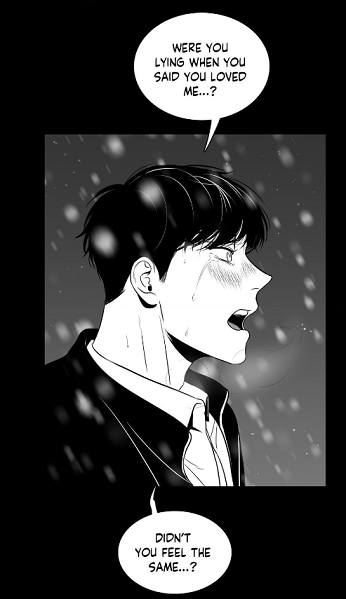
 (chapter 51) But why is betrayal trauma so severe? It is because everything appears as a lie, as an illusion. All the memories become tainted. The victim can only question his own senses and judgment. How could he not detect the lies? Since PTSD and betrayal trauma share some common points, it is not surprising that such persons come to blame themselves and develop huge self-loathing.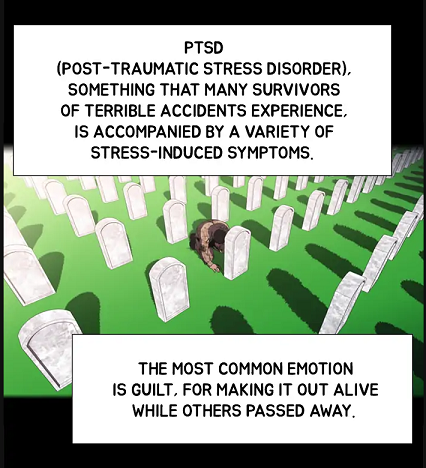
 (doctor Frost, chapter 139). And now, it is time to expose my latest observation:
 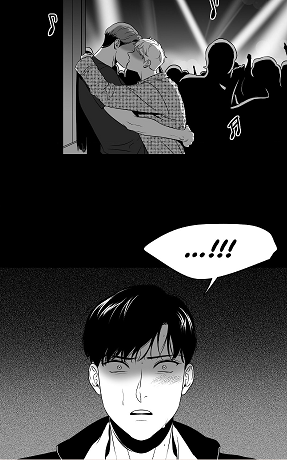 (BJ Alex, chapter 51) Ahn Jiwon caught his first lover cheating on him at a club. Interesting is that the new lover resembles a lot to Joo Jaekyung! Mingwa said that characters from BJ Alex will only appear, but Jinx is not connected to her previous work. Note that they were kissing in a public place. Moreover, the club is a location where students not only meet, but also drink alcohol together. However, once Jiwon saw Hweemin, he dragged him outside so that they could talk. In other words, the “new lover” was left behind. Thus I come to the following conclusion. Joo Jaekyung has been suffering from betrayal trauma exactly like Ahn Jiwon. He was betrayed by his guardian
 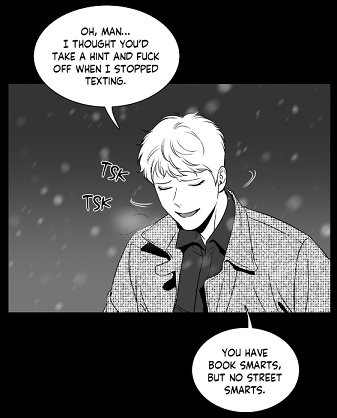 (BJ Alex, chapter 51). If this theory is true, then Mingwa would finally outline the devastating effects of Betrayal trauma on people, something she barely touched in her previous work.
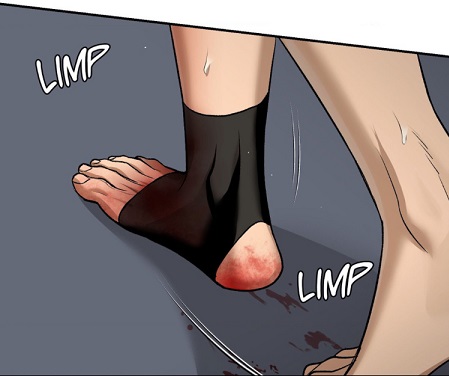 (chapter 51)
 (chapter 50) and Kim Dan. While the former was tormented by his challenger directly
  (chapter 50) and indirectly, the other had to witness how the members from Team Black turned their back on him in the locker room.
  (chapter 50) Interesting is that on X, hamster Dan received more affection and attention than the champion. Though I have always pointed out the doctor’s flaws, in episode 50, I couldn’t help myself being upset and heartbroken for Doc Dan too, until I had a revelation. Many readers were disappointed or mad, when they saw him in this panel.
  (chapter 50) They could put themselves in his shoes: he was left behind. On the other hand, the reaction from Joo Jaekyung was totally understandable.
 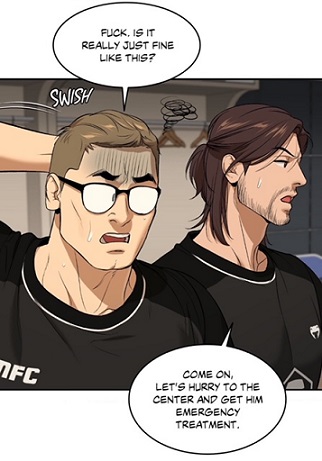 (chapter 50) And everyone knows this saying: Time is money. Yes, the hyungs didn’t decide to postpone the fight, because they would have to pay huge fees, and this could have affected the Emperor’s reputation. It exposes that the fight as such the show was more important than the well-being of their star. As a conclusion, money played a huge role in their decision. On the other side, the annulation would have brought more trouble to Kim Dan, as it would have caught the attention from journalists and fans, though it can still happen later. Under this new perspective, it becomes comprehensible why they left the locker room and didn’t argue with Kim Dan. They were under pressure. Nevertheless, the readers had a different reaction, for they knew the truth: Doc Dan was the victim of a new scheme. Therefore they judged the whole situation as unfair. Some were mad at the manager for yelling at the physical therapist.
 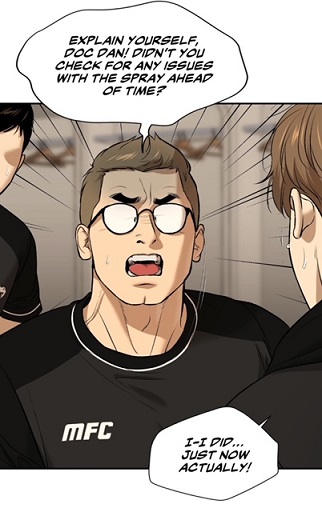 (chapter 50) Yet, we shouldn’t allow our emotions cloud our judgement, for this image displays the doctor’s metamorphosis. Notice that he talked back. Though his sentence is still not complete, the thickness of the writing and the point of exclamation are indicating that he was not whispering. He was speaking loudly and clearly. He was talking back firmly. Moreover, he was not avoiding his counterpart’s gaze contrary to the argument in the penthouse.
 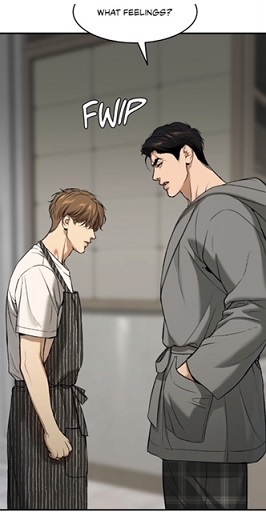 (chapter 45) In other words, the scene in chapter 50 exposes the doctor’s growing strength and resilience. That’s the second reason why anguish is necessary in Jinx. Through their suffering, the characters can change, and Jinx-philes have the opportunity to witness their growing maturity. At the same time, the author is able to underline the other figures’ flaws thanks to torment. Between the essay
  (chapter 44) Now, the doctor is no longer associating sex with prostitution and corruption, but with love.
 (chapter 27) But only Dr. Lee and Kim Dan got to see the results
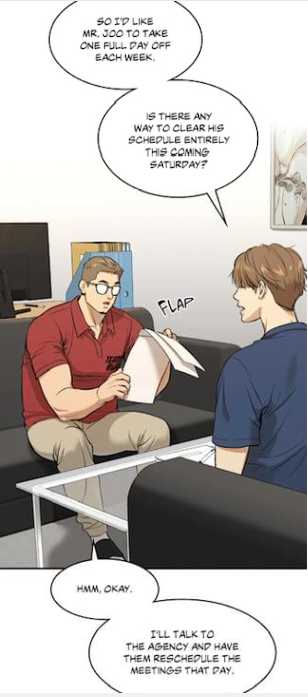 (chapter 27) Then, after the match in the States, the manager asked his “boy” how his shoulder was.
 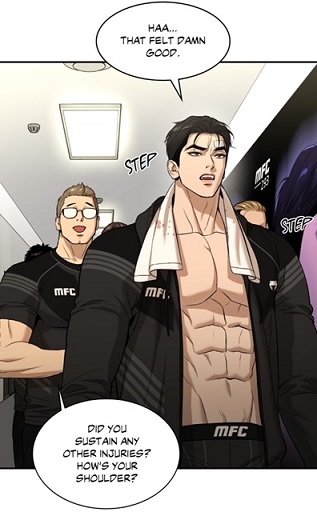 (chapter 40) Here, he chose to rely on the celebrity’s words,
 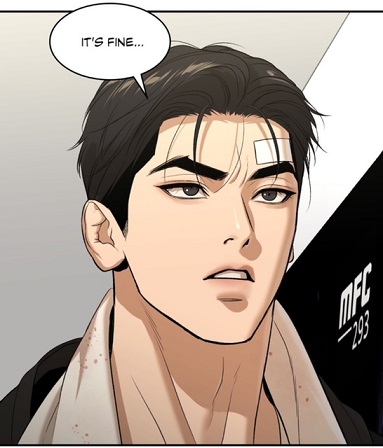 (chapter 40) while the manager had witnessed how Dominic Hill had targeted his shoulder. He should have realized that his star’s shoulder had been damaged. Nevertheless, we shouldn’t overlook that the athlete’s statement was corroborated by the medical checkup from MFC. That’s how he got fooled. Hence there was no treatment. However, doc Dan could detect the champion’s lie not only through observations
 (chapter 41) but also through touching.
 (chapter 41) As you can see, the wound was slowly coming to the surface. Thus I consider the incident in episode 43 as a metaphor for the shoulder injury.
 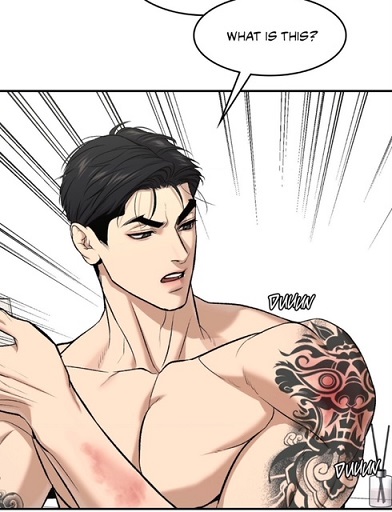 (chapter 43) It was exposing the damage in his body. Consequently, when the champion’s foot got wounded by the pepper spray,
 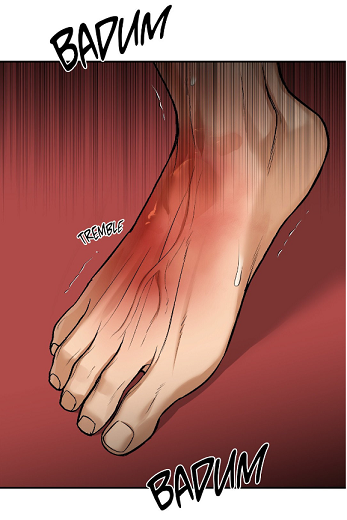 (chapter 49), I realized what was happening. Mingwa is forcing the Emperor to admit his suffering. Hence his wounds are becoming more and more visible.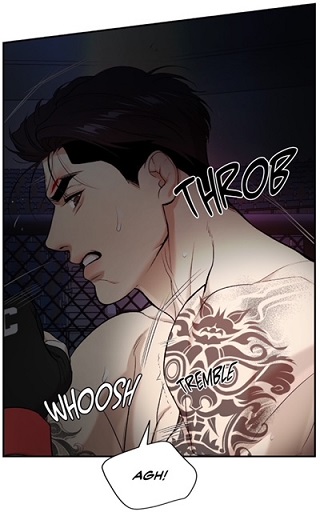

 (chapter 5) for he was simply relying on the prostitutes due to his jinx. Thus I consider this argument in the penthouse as a huge step for the athlete:
 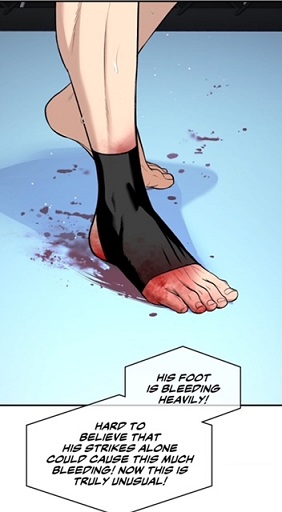 (chapter 50) So far, he just had a cut above his eye, nothing serious.
  (Chapter 40) However, the wound on the foot is different, for his skin is damaged. The recovery will take longer. It is relevant, because Park Namwook can no longer feign ignorance about his star’s wounds. He is less susceptible to manipulations.
  (chapter 50) That’s the reason why he turned into a dragon at the end of the chapter. [For more read the essay “
 (chapter 5) This shows that his belief in his jinx had been reinforced after his first night with Kim Dan.
 (chapter 50) From my perspective, this is the result of the overexerting.
  (Chapter 50) Even the coach is noticing that the athlete is overtraining himself. Remember that the athlete refused to listen to his PT.
  (chapter 42) In addition, he would return home late, a sign that he would train even more than before.
 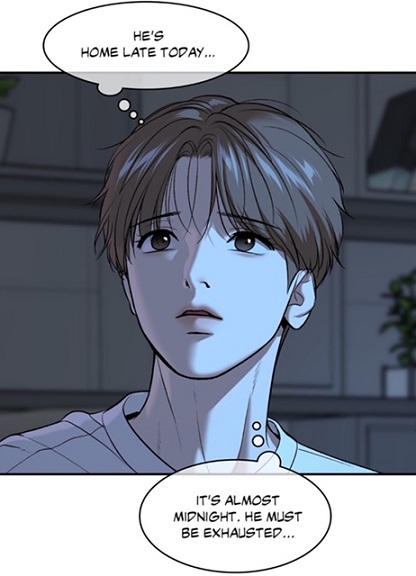 (chapter 48) Finally, we shouldn’t overlook the fact that after his match in the States, he never visited the hospital due to the law suit.
 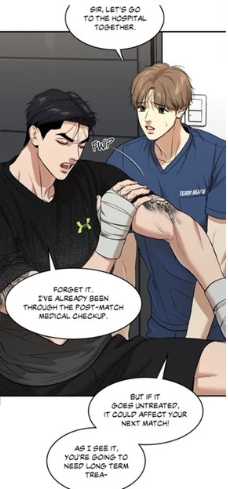 (chapter 41) According to me, the MFC medical checkup was not reflecting the verity. Hence he never got a real check-up and MFC could definitely say that the athlete was definitely fine.
  (chapter 27) refused to force the champion to take a day-off by saying that the protagonist would never listen anyway. With such a statement, he pushed Kim Dan to make the decision and announce it to his VIP client. Moreover, the manager didn’t stop his “boy” from exposing his injured shoulder to the public.
 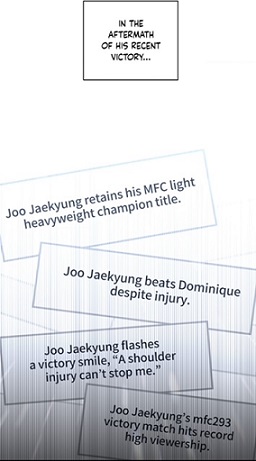 (chapter 41) However, by doing so, he was exposing his vulnerability to his opponents, though I am still suspecting that MFC leaked information too. So far, the headlines are not indicating which shoulder is wounded. Yet, the moderator knew which one:
 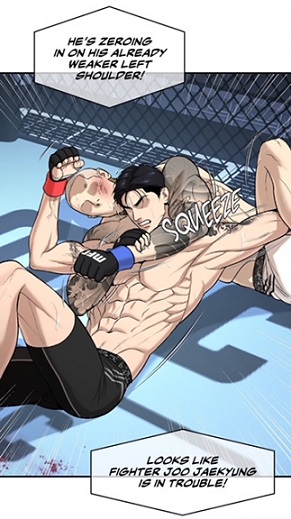 (chapter 50) So why was the manager so shocked with such an attack?
 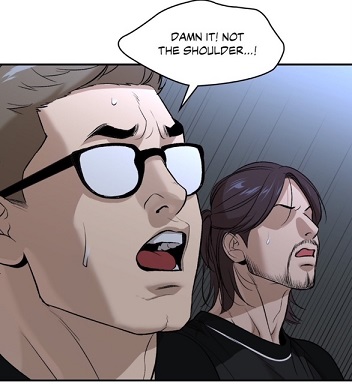 (chapter 50) It was clear that during such a match, the challenger would use the opponent’s weakness. What did he expect in the end? The panel exposes his stupidity and his immaturity. He should have anticipated such a move. These observations lead me to the following conclusion: the champion needs to realize that his hyung will never recognize his suffering, as long as Joo Jaekyung is in denial. Until now, he hasn’t been protecting Joo Jaekyung’s interests, rather his own comfort. His MO was to put the whole responsibility on the athlete. But it was his duty as his manager not to accept the new challenge.
  (chapter 46)
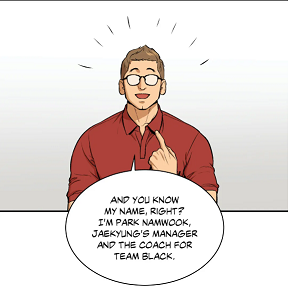 (Chapter 9) and coach for Team Black, but he acts like the director of Team Black.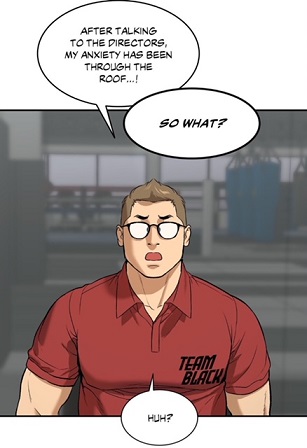
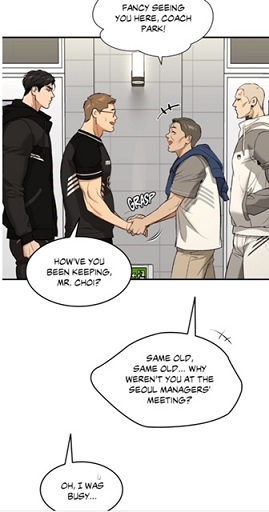 (Chapter 49) This explains why he claimed that Team Black was his gym,
 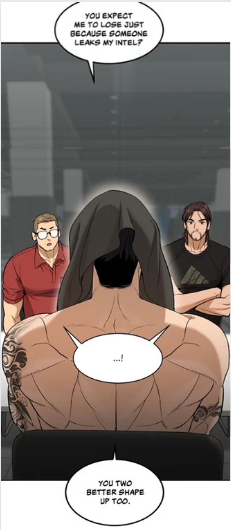 (Chapter 46) Thus I deduce that the role between the star and his hyung must be redefined because of Kim Dan’s presence. But wait… the heading is referring to the Russian author Leo Tolstoy. So what is his connection to the manager from Team Black?
 (chapter 41) to the golden keychain.
 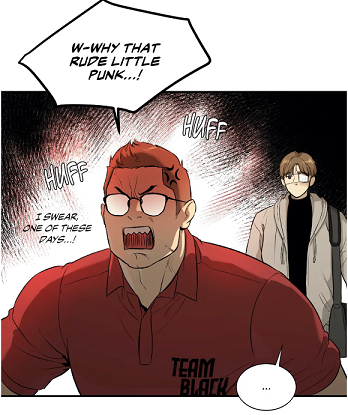 (Chapter 11) He just got angry giving the impression that he was siding with Kim Dan. But the reality is that he did nothing for the poor doctor at all. He remained passive and silent. His “ignorance” explains as well why he is not questioning events and his athlete’s success.
 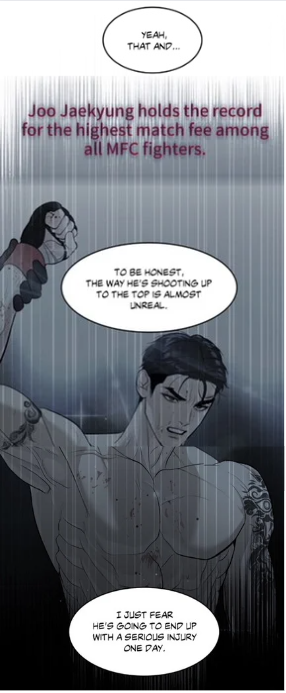 (chapter 43) Through the two examples, Manhwaphiles can sense that his “ignorance” is a mixture of willingness to close an eye and real naivety. Under this new approach, it dawned on me why the manager used to beat his star so brutally.
  (Chapter 7)
  (chapter 32) Furthermore, he forced Joo Jaekyung to take the blame without investigating the matter.
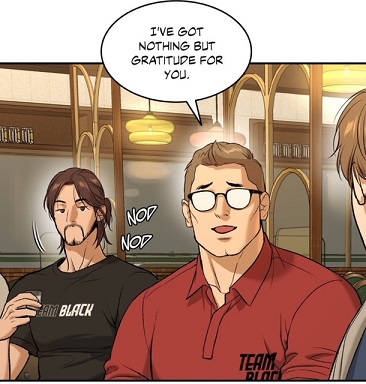 (chapter 43) The latter triggers his anxiety and nervousness. Thus when there is a problem, his MO is either to threaten,
  (chapter 36) or to let others make decisions. I would even add, he often delegates things to others: the manager from the Entertainment company
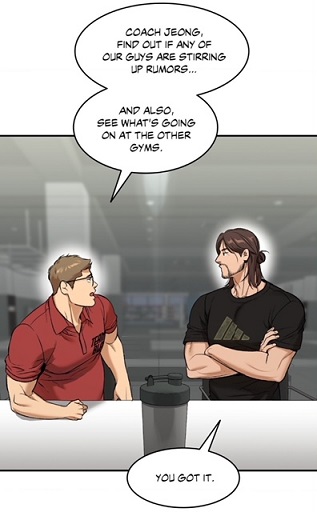 (chapter 46), Kim Dan [f. ex. He should accept the bad mood from his VIP client]
  (chapter 43) Furthermore, compare his behavior towards the celebrity and the doctor:
 (chapter 46) and
  (chapter 16)
 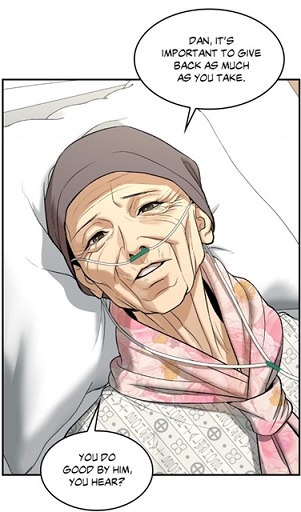 (chapter 41) and he should assist him during his matches!
  (chapter 41) Therefore I believe that in the locker room, Kim Dan must have recalled her words. She became his source of strength once again. That’s why we have parallels between these three scenes:
 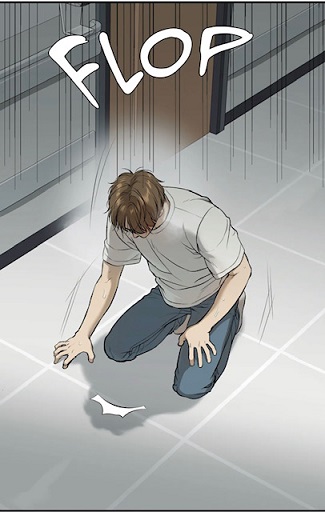 (chapter 21: he was criticized by Kim Miseon, he feared to lose his halmoni)
 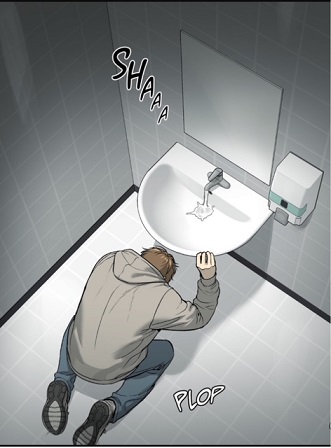 (chapter 47) and finally
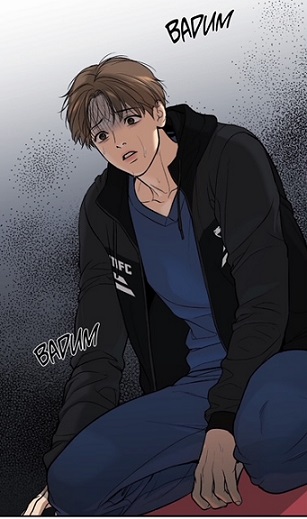 (chapter 50) That’s the reason why Kim Dan could become a star. Contrary to Joo Jaekyung, we didn’t assist to the birth of the yeouiju. It is no coincidence that birth is connected to pain and happiness. Mothers forget the suffering of the delivery, as their child can procure them a lot of joy and happiness.
 (Chapter 26) By embracing misfortune, transcending conventional morality, striving for self-overcoming, embracing individuality, and creating meaning and values, individuals can embark on a journey of self-discovery and self-actualization, ultimately becoming the architects of their own lives. At the heart of Nietzsche’s vision lies the concept of the Übermensch, or Overman, who embodies the pinnacle of human potential and serves as a beacon of courage, creativity, and self-mastery. Through the pursuit of the Übermensch ideal, individuals can transcend their limitations, confront their fears, and forge their own destinies, thereby finding their true selves in the process.
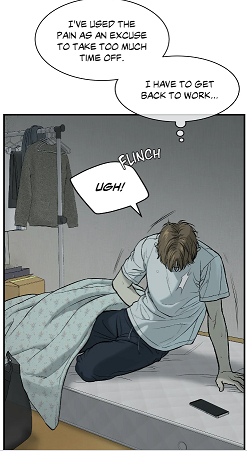 (chapter 5) or Heesung drank alcohol
 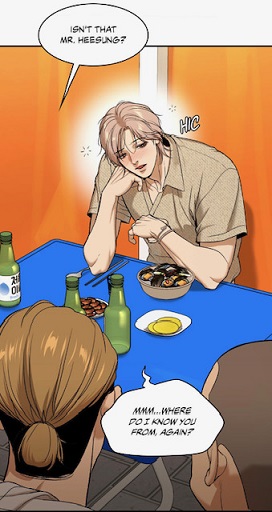 (chapter 35). Both were trying to numb their pain, though they shouldn’t have according to the German philosopher. The soju stopped them from becoming the better version of themselves. I am suspecting that doc Dan copied this poor habit from his grandmother, who drank in secret. Don’t forget that in all the memories, the halmoni is smiling
 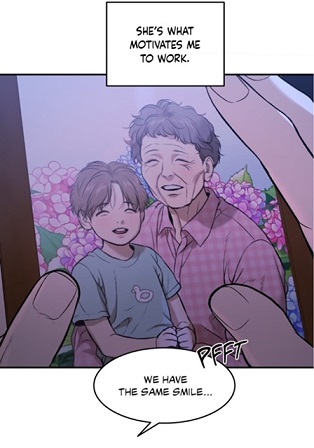 (chapter 47) In other words, he had selected this job, as he was following traditions and expectations. Only in episode 47, he realized that she was his real motivation. Yet, he discovered shortly after that she is about to die. Thus he needs to find a new motivation for his job, or better said, he needs to question himself about his profession. Does he truly want to be a physical therapist? Since the beginning of the story, doc Dan has never identified himself as a physical therapist. Thus he accepted to be judged as a whore
  (chapter 16) or as a tool for the jinx, therefore he mopped the floor
 (chapter 36), acting like an errand boy. Then he doubted Heesung’s words and admiration
 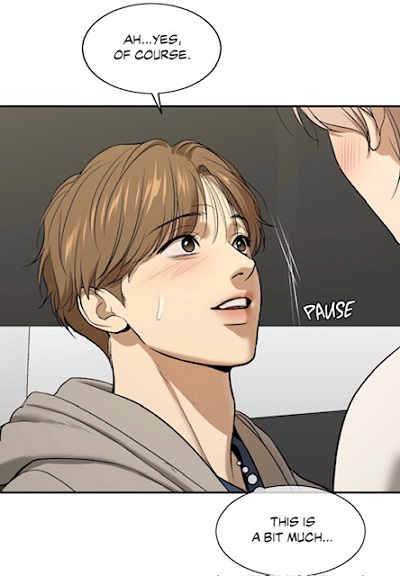 (chapter 31)
  (chapter 31). Furthermore, he took a side gig in order to buy the champion’s present and finally, he rejected Choi Gilseok’s praise and offer.
 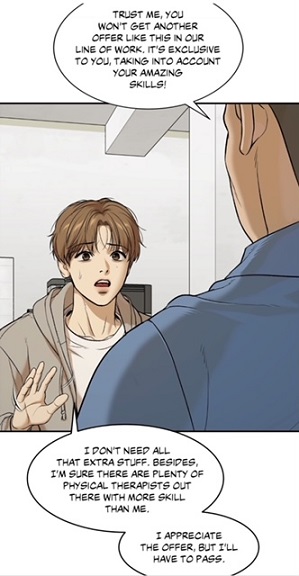 (chapter 48) He was always diminishing himself as a doctor. Therefore in the locker room, he was confronted with his biggest fear: is he really a physical therapist?
  (chapter 50) He injured his patient. The spray is there to let him see that he has power in his hands. He should trust himself and his magical hands. Don’t forget that this request was made by Joo Jaekyung.
 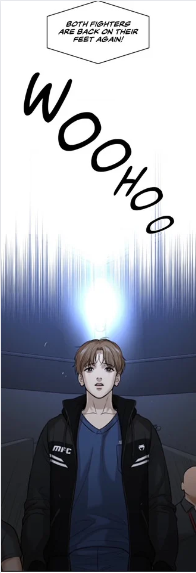 (chapter 50) And from my point of view, the locker room became the doctor’s new temple. There, he must have recalled his grandmother’s wishes. She would like to see him on TV. For me, the light over his head symbolizes Enlightenment. He has become the champion’s yeouiju. Thus I deduce that Kim Dan is on the verge of proving his worth to Team Black. I am anticipating, he will approach the ring, and even treat him during a break, something he denied to his halmoni.
 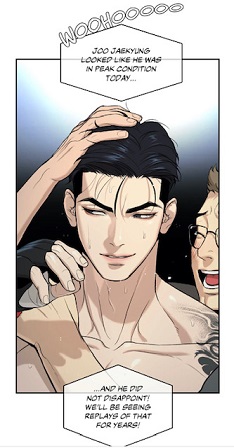 (chapter 5)
 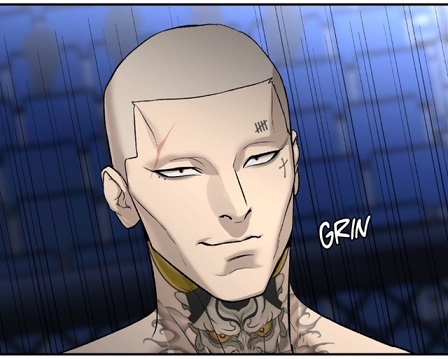 (chapter 50) It is relevant, because through such an intervention, hamster Dan would teach the champion an important lesson. He is not alone in the ring, the doctor is watching his physical condition and helping him.
  For me, chapter 50 announces a new start! Interesting is that the number 50 is associated with the planet Mercury which stands for poison but also medicine! And now, you comprehend why I consider the painful chapter as treatment sessions. The two protagonists are forced to redefine themselves. Joo Jaekyung might be injured, but he no longer sees himself jinxed!
  (chapter 48) So the moment you perceive this moment
  (chapter 19), this signifies that Potato was acting like a true friend in the locker room.
  (chapter 40)
  (chapter 42) In the first part of Jinx, the doctor was the star’s companion of the night, but since the incident with the birthday present, he stopped being the night partner. Now, he is about to become the famous private physical therapist acknowledged by the public and media. In other words, his destiny contrasts to Baek Junmin’s, a shooting star, it will last longer. Why? It is because the main lead is Saturn! He brings fortune and karma to the evildoers. This interpretation corresponds to Übermensch from Nietzsche, which is sometimes translated as “Superman”. Under this new light, you comprehend why I added the protagonist’s pink angel wings. It was an allusion to his transformation, he is destined to become an “Overman” or Superman.
  And this brings me to my next observation. The doctor’s pain is exposing his recovery! Weird, right?
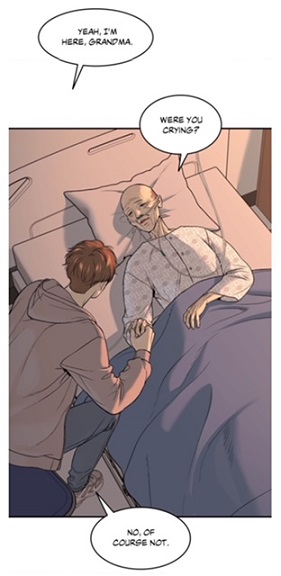 (chapter 47) and his agony. He was no longer under the influence of toxic positivity. While he cried, he admitted his flaws making him realize that he had never been abandoned by his grandmother.
  (chapter 47) That’s how he overcame his abandonment issues.
 (chapter 37) He wanted the party to continue. It shows that he was having a good time with Oh Daehyun and Potato. He has no problem to stop kissing his soulmate, when the latter shows his discomfort.
  (chapter 44)
 . (chapter 36)
  (chapter 49) He didn’t wait for an order from PArk Namwook or the champion.
 (chapter 45) And now, you comprehend why I stated earlier that he acted rather instinctively. For me, he still trusts the physical therapist.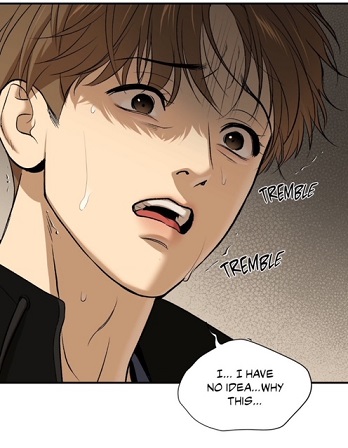
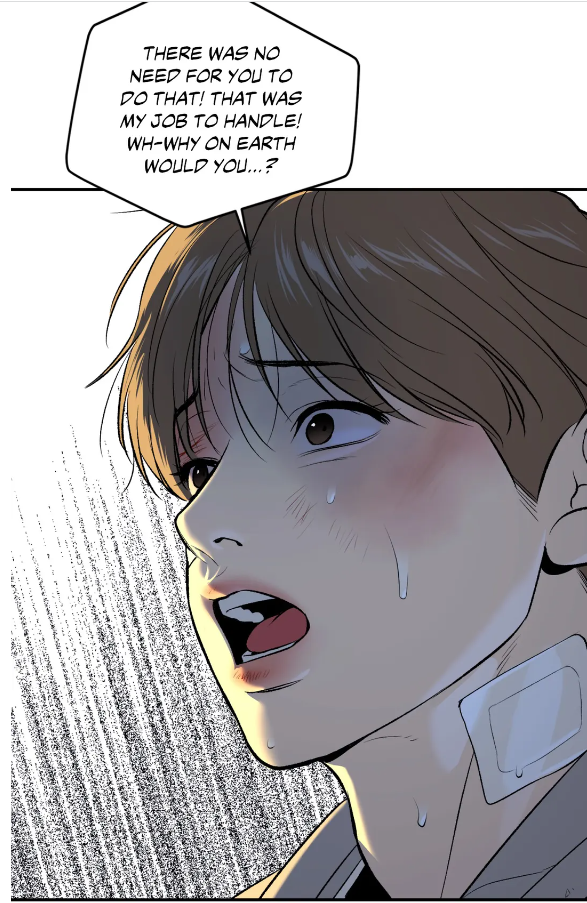 (chapter 18) When the champion paid off his debts, he saw it as meddling. Interesting is that he came to accept the champion’s support, but he never asked for Joo Jaekyung’s help directly. In addition, Jinx-philes should notice that in the interrogation room, he thought just about the champion and not himself.
  (chapter 40) It never came to his mind that he should ask for assistance. Finally, observe that after he got drugged in the States, he let the champion deal with the problem.
  (chapter 41) He accepted the statement from his boss. Nevertheless, doc Dan was the real victim. He should have become more involved in the matter. Besides, he was a witness. And this brings me to my next thought: if Kim Dan gets into trouble, he should remember Heesung’s words: he should give him a call!
  (chapter 35) For me, the incident is there to teach Kim Dan that he can ask for help! This would show him that he is no longer alone. He wouldn’t appear weak at all. That’s how he would end up to gain his first friends. Let’s not forget that Heesung’s relationship with the doctor is no longer tainted by money or by lust or greed. In fact, thanks to him, he found his soulmate. What unites Kim Dan and Heesung is the heart and the desire to help. Heesung stands for brotherhood, so he could be the one outlining the problems to Team Black. Finally since Potato likes Doc Dan very much, there is no doubt that Heesung and Potato will work together to assist the main lead. This image
 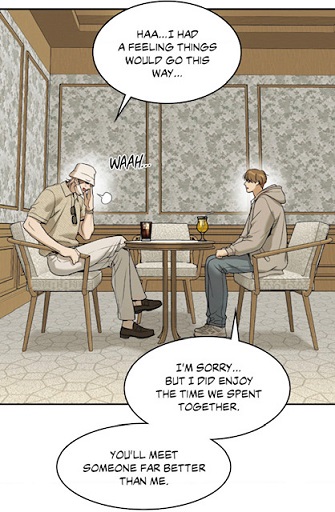 (Chapter 35) Interesting is that after his confession, he still chose to come clean with the doctor. He revealed the truth to Kim Dan, though he could have lost the protagonist’s respect. He admitted his lie and manipulation,
  (Chapter 35), but Kim Dan’s reaction was not to scold his future friend. In fact, he appreciated his honesty. In front of Kim Dan, he could show his true self. He was not entirely a good guy, but he didn’t get rejected. But so far, the actor is not present in the arena. Therefore Potato could be the first person Kim Dan asks for help. He shares some similarities with his soulmate. He doesn’t fear people’s gaze, hence he raised his voice under the tent.
 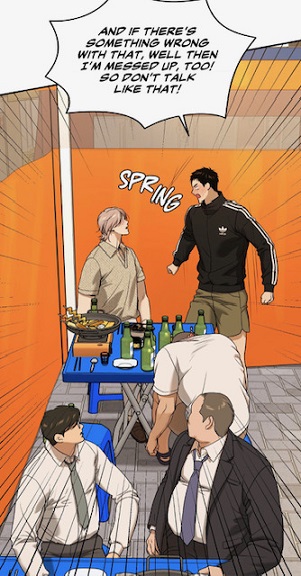 (chapter 35) he doesn’t represent the herd mentality, for he never thinks and acts like others.
  (chapter 31) While the fighters all liked the actor, he judged him in a different light. Then he was not present during the champion’s birthday. Therefore he possesses all the qualities to become a hero. He could cause a scandal,
  (chapter 49) similarly to his idol and hero in the States. He noticed the issue right away: the security didn’t do his job properly. To sum up, Potato would follow his foot steps and that’s how he would get noticed by MFC!
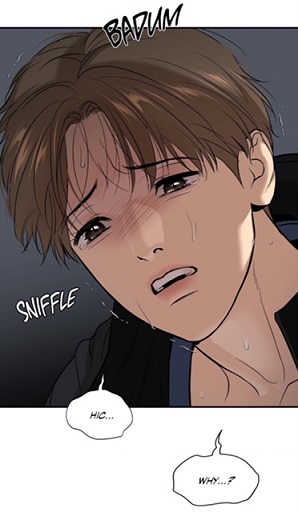 (chapter 50) The word is displaying that the doctor is not accepting the incident simply like that. It is showing that the doctor is slowly losing his naivety. Before the incident with the spray took place, he still trusted the words from people.
 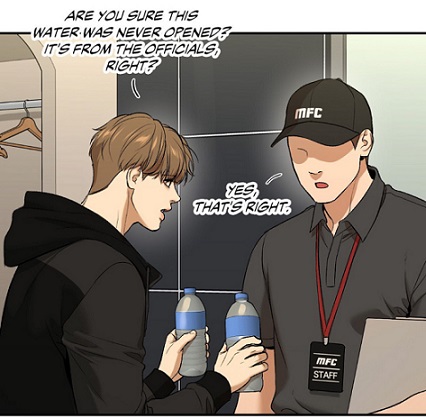 (chapter 49) Naturally, he can not get rid of his naivety totally, for keeping a certain purity is necessary in life too. On the other hand, it becomes clear that his naivety is the result from his education. The halmoni is herself quite too trusting. Hence she ended up being harassed by loan sharks. On the other hand, the incident was like an eye-opener for the physical therapist. He should stop judging people based on their words
 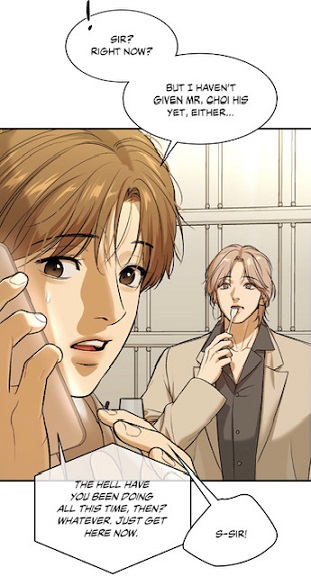 (Chapter 32)
 (chapter 1)
  (chapter 1) by bosses, it becomes comprehensible why he didn’t fall into the trap a third time.
 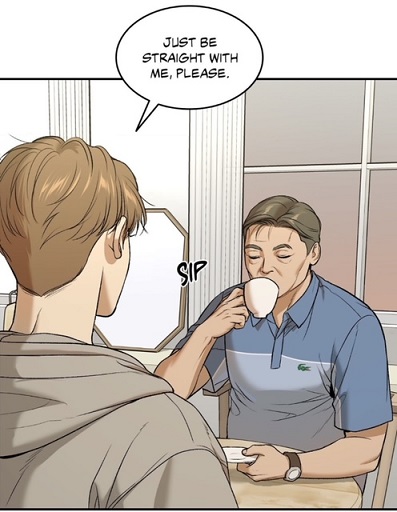 (Chapter 48) He is pushed to question impressions and people’s motivations. As a conclusion, anguish is a tool to push people to become wiser and happier. And this leads me to my final part.
 (chapter 14) But back then, Kim Dan didn’t mind staying in Seoul.
 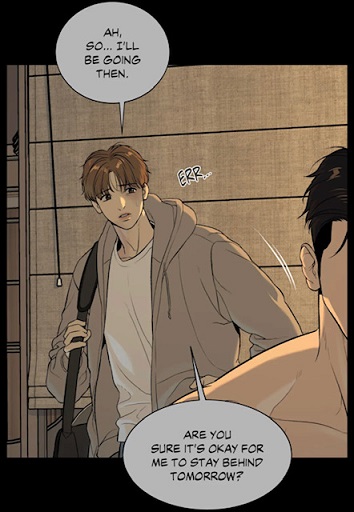 (chapter 13) Furthermore, after having sex in the locker room, Kim Dan was left behind.
  (chapter 15) And notice that this pattern was the same in the States. For the second match, Team Black left without him, hence Kim Dan arrived late.
 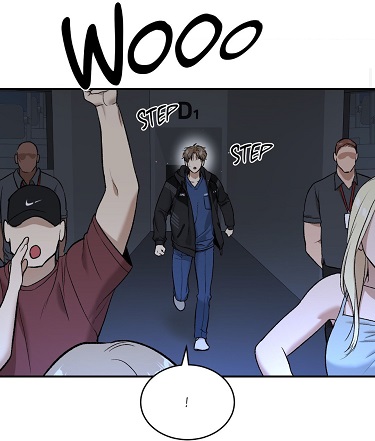 (chapter 40) Therefore he was running once again. However, back then, no readers felt angry at the team, though it could also be perceived as a betrayal and abandonment! Kim Dan was not perceived as necessary, neither for Joo Jaekyung nor for Park Namwook. Hence the bedroom could be judged as the place of the betrayal: “
 (chapter 40) That’s how I realized why the Webtoonist never showed the athlete’s caring gesture. He moved him in the middle of the bed! It is because the celebrity was still not treating his soulmate as a physical therapist. The second reason for the absence of anger is that Kim Dan had been drugged and as such was not fit. In addition, he needed to rest after having sex for the whole night. And now, you comprehend why the doctor could get dragged away by the MFC security guards, and no one from Team Black intervened.
  (chapter 40) It was to outline their previous disregard and betrayal! Thanks to Potato, Joo Jaekyung got informed, hence he could rescue the physical therapist.
 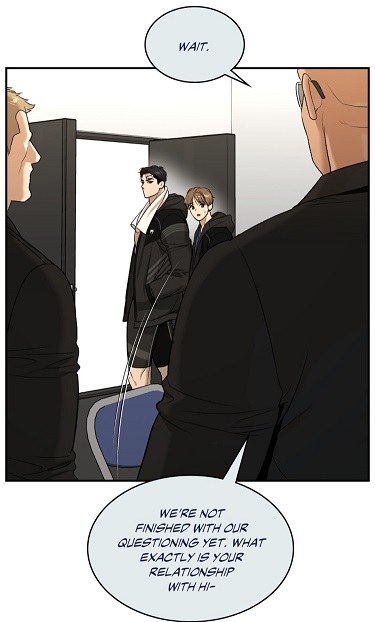 (chapter 40) But he never revealed the hamster’s role in the team! This explains why Kim Dan was used by Choi Gilseok. He needs to expose his role in Team Black to the world. He is the champion’s private PT!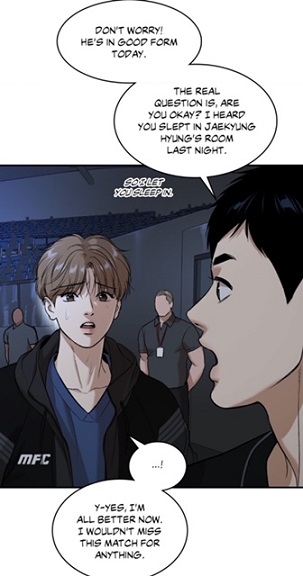
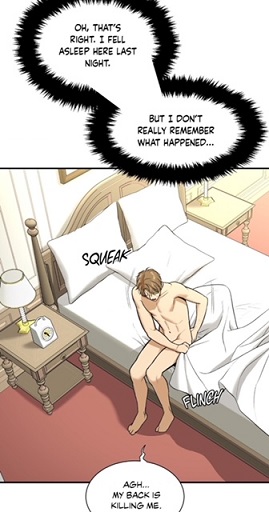
 He has just his blue uniform.


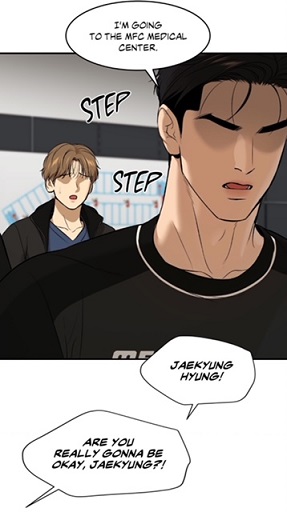 Hence he could get into trouble! The MFC could report the incident to the authorities!
  (chapter 49) in both cases! He was present, when Kim Dan drank the drugged beverage.
  (chapter 38) To conclude, it was not in Kim Dan’s interest to run away or hide! This would have been judged as a sign of his culpability and complicity. He needs to face the problems so that he can shape his destiny with his own hands and not remain the playball of dark forces! Yes, this chapter announces a huge change at Team Black, the start of a real friendship between two puppies. 😉

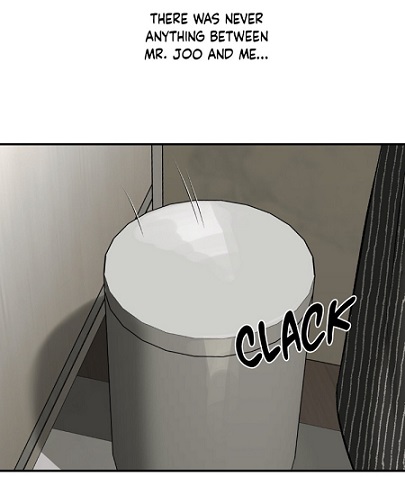 (chapter 46) On the other hand, chapter 47 exposes that the doctor didn’t lose his interest and attention towards his boss.
  (chapter 47) This exposes that Kim Dan didn’t choose resent or indifference towards Joo Jaekyung despite the inflicted pain. On the other hand, why did I write that the celebrity is Kim Dan’s reflection? Why is the athlete the doctor’s mirror of truth? It is because Joo Jaekyung embodies his negative reflection: independency and toxic negativity. But what is the latter exactly?
 (chapter 31) It is because when the psychologist met the patient with her boyfriend for the first time, he paid attention to his micro-expressions, and more particularly to his mouth. He saw his smirk. Here, I feel the need to give an explanation how these micro-expressions were discovered.
 (chapter 30) As my avid readers can detect, the expression from the boyfriend’s mouth displeased the white-haired psychologist. He could recognize his emotion, though such facial expressions are very short-lived
 .(chapter 30) So what was the “jerk” feeling, when he was conversing with Sihyun? Cynicism.
  (chapter 31) And the reason why he stated that as soon as cynicism or scorn was present in a relationship, the couple would end up breaking up is because of John Gottham’s observations and conclusions.
 (chapter 45) We could sense it in different scenes, though I would say that his cynicism was slowly vanishing:
  (chapter 3)
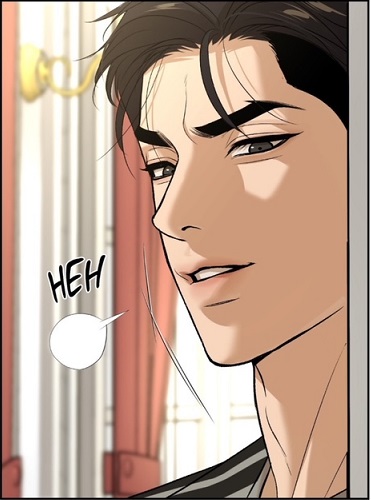 (chapter 40) This is the so-called toxic negativity. Therefore it was to expect that the champion would reject the doctor’s present. He could only doubt the sincerity behind his gesture. How so? Remember how the team desired to celebrate his birthday: a surprise party. They bought a cake…
  (chapter 43) but what happened afterwards? Yosep spoke in the name of the gym’s owner: the latter would pay for the dinner (beef restaurant)
  (chapter 45) He is not ready yet. But was it Cynicism exactly and how does it represent a hindrance for a healthy relationship?
 (chapter 8), in the office, in the car, in front of a mirror, in front of Heesung in the living room… Don’t forget that Diogenes would even masturbate in public.
  (chapter 23) The latter had to act like a true disciple and follow the champion’s recommendation.
 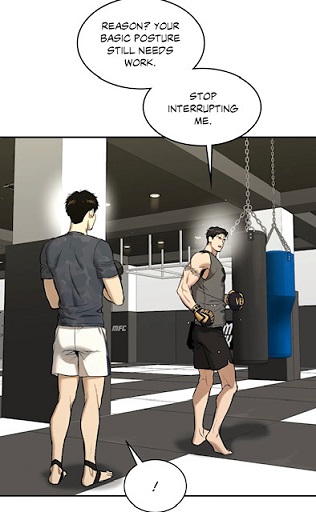 (chapter 23) The gym is like his sacred temple. Yet, the gym is just a simulacre of “nature”, as it is in the middle of Seoul. Therefore I realized why after their argument, Joo Jaekyung avoided the penthouse and Kim Dan in the end.
  (chapter 41) He is looking for freedom and self-sufficiency, detached from any material need. This explains why the golden keychain from Kim Dan could only offend him.
  (chapter 39) The reason is simple. The champion had finally found someone who accepted his roughness in bed and could match his stamina.
  (chapter 10) He is not resigning on designer clothes.
  (chapter 42) His dress room is the evidence of his hypocrisy. He might have encouraged Kim Dan to have sex in “public places”, yet he is still hiding his sexual orientation. Furthermore, his jinx is the evidence of his dishonesty.
  (chapter 45) He might advocate autonomy and self-sufficiency, the reality is that he likes luxury. Hence he is unable to live in harmony with nature. This shows that the fighter is in denial and is living in an illusion. Thus he can not find true happiness, for his freedom is not real. He is attached to the gym which is also strongly connected to his career as the Emperor.
  (chapter 46) With his brutal attitude, he is doing himself a disservice. Exactly like Kim Dan, he is even ruining his career and own reputation. Not only he lost 4 athletes (I am including Seonho), but also his loyal admirers are calling him a thug now:
  (chapter 47) Even Potato announcing the gradual Coming-Of-Age from his admirer. However, like Dr. Frost mentioned it, humans are social beings.
  No one can survive on his own. This explicates why Cynics had disciples in the end. And now, you comprehend the role of Kim Dan in Joo Jaekyung’s life. It is to remind him of his true nature. He is a human and not a dog-wolf. Thus the champion recommended his PT to live elsewhere, a sign that he was indeed a human.
  (chapter 10)
 (chapter 2) This explicates why the champion was crossing his arms while confronting the goblin. He was on the defensive. That’s how it dawned on me why the celebrity fell in love with Kim Dan at first sight, and why he enjoyed their first night together. The “hamster’s fear” was genuine. His desertion displayed respect towards the celebrity. He was recognizing his strength and power.
 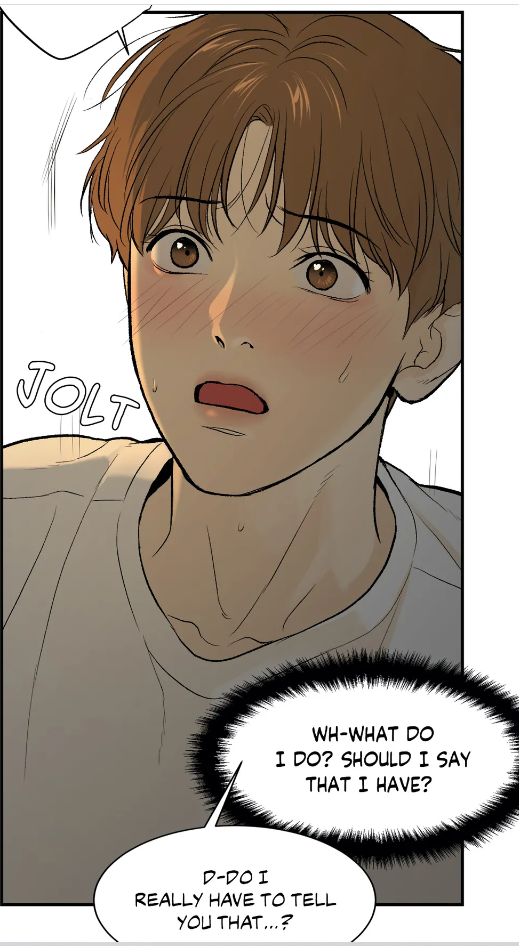 (chapter 3) On the one hand, the champion’s worldview about humans got reinforced, on the other hand the doctor’s deception symbolized his purity. He was a virgin, which was contradicting his “theory” too.
 (chapter 11) He even looked like a ruler abusing his authority.
 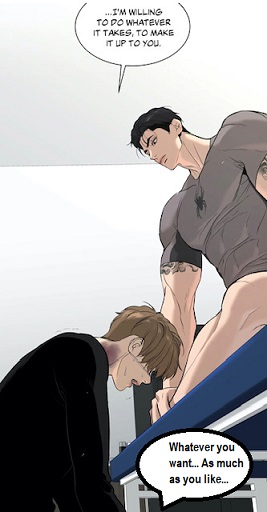 (chapter 11)
  (chapter 11) Here, the champion thought that Kim Dan had been gambling. An emperor or ruler, especially one characterized by a lack of idealism, may embody the cynical belief that individuals are primarily driven by self-interest and that altruistic motives are rare. Therefore the celebrity rejects the notion of soulmate
  (chapter 33) or even the idea of friendship
 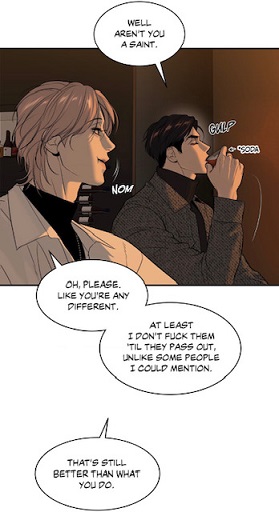 (chapter 33) Hence he looks down on poor people.
  (chapter 10): Gamblers, laziness, no sense of hygiene etc. Consequently, he is not capable to understand the worries from Kim Dan
 (chapter 36)
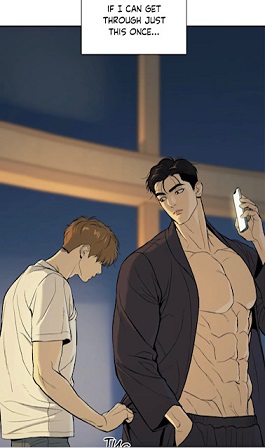 (chapter 2)
 (chapter 26) He is standing in front of a dilemma. Fighting is the expression of nature and self-reliance, yet his fights serve as entertainment for MMA lovers. MMA is strongly intertwined with business and money.
 (chapter 45) was showing the doctor’s golden heart. He was just judging his lover based on his past experiences and his negative worldview. And this brings me to list the cause for Cynicism:
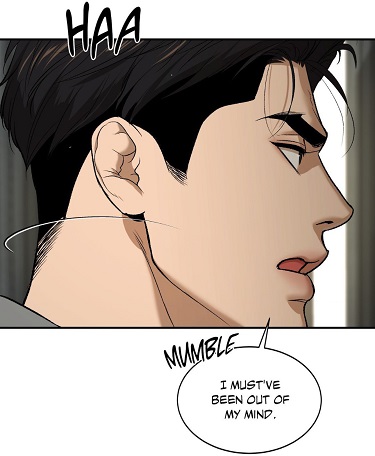 (chapter 45) He fears to be taken advantage. There is no ambiguity that his negative mind-set is definitely influenced by his childhood and family. I would even say that he must have been exposed to emotional blackmail. I came to this hypothesis, because I detected that the champion had been using “blackmail” as MO in order to control Kim Dan.
 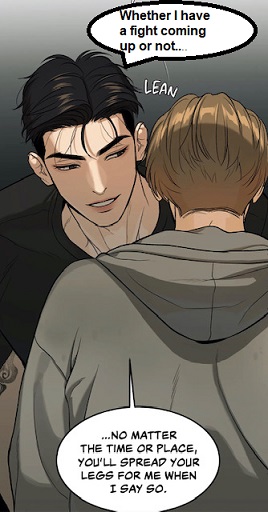 (chapter 6)
  (chapter 2) He learned through Cheolmin that he could kill him. This shows his good nature in verity. Hence he resorted to such gestures, when his cynical depression resurfaced:
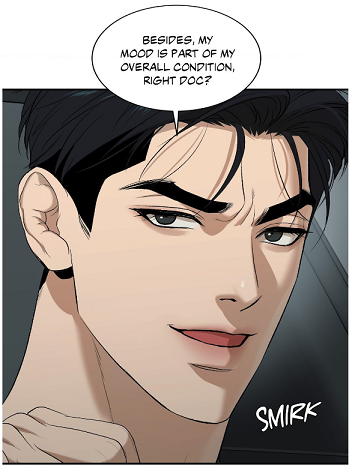 (chapter 32)
 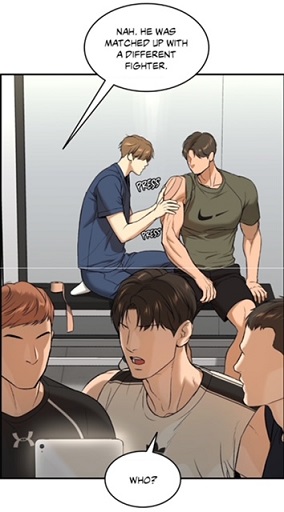 (chapter 47) It shows a certain trust. One might argue about this interpretation. This could be seen as indifference. However, I believe that his altercation with Seonho must have been quite an eye-opening for the champion.
  (chapter 46) It is because Kim Dan had not talked back to Joo Jaekyung during their argument. He had accepted his criticism silently contrary to Seonho. Right now, he has the impression that he still has the upper hand, but he couldn’t be more wrong.
  (chapter 26) He has the impression that he can control people, since he is wealthy. Yet, he is not realizing that he can get stabbed because of money as well. We have two perfect examples. Because of the drug incident, the MFC security guys betrayed him, as they protected the organization
  (chapter 40) Then in episode 47, the emperor got manipulated by his so-called loyal advisors.
  (chapter 47) First, I would like to outline that neither the manager from the Entertainment agency nor his acolyte brought up the underground fighting ring and Baek Junmin’s dubious success.
  (chapter 47) With their video, they presented him as an average and reliable fighter.
  (chapter 47) Observe the divergence between the advisors’ words and the members’ from Team Black.
 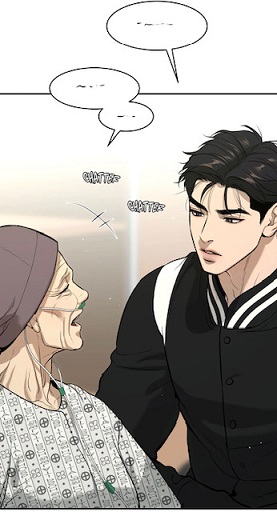 (chapter 21) Moreover, the grandmother’s mortality could serve as a reminder for the champion that he is also a human… just like the others he condemns. Besides, she embodies true selflessness and gratitude. Hence she took the champion’s hand to thank him
 (chapter 22) This is what psychologists recommend to overcome Cynicism:
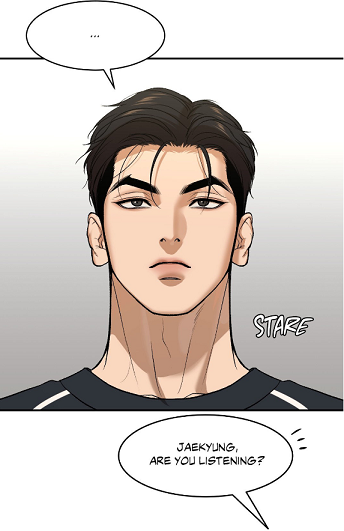 (chapter 47) Should Kim Dan divulge Baek Junmin’s connections to the underground fighting ring or simply show him the message,
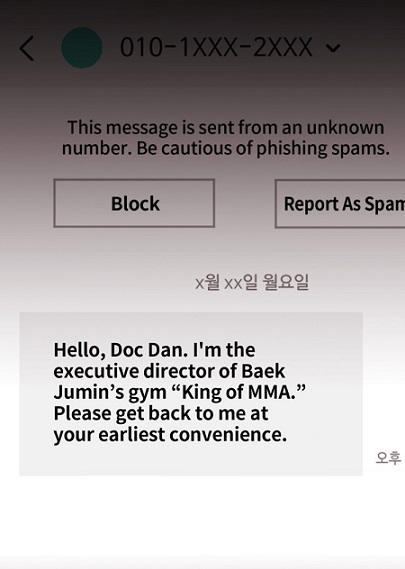 (chapter 47), he would prove his faithfulness and sincerity to the fighter. And the vicious circle would be broken. Though he is broke, he would give up on an opportunity to earn some money easily. To conclude, as long as the champion is still a cynical character, he can not enter a relationship with Kim Dan. For that, he needs to open up his heart and third eye so that he can recognize his partner’s selflessness and honesty. Finally, he will realize that he needs the assistance of others in order to be able to keep his reputation intact (witnesses, supporters). There is no doubt that the Emperor will be badmouthed again.
 (chapter 46) I had even truly perceived his motivations:
  (chapter 46) He desired to get revenge on the celebrity. But from my point of view, there exist other reasons for his trick. He was seeking validation for his statement:
  (Chapter 46) His computer screen is indicating that Heo Manwook is gambling himself.
 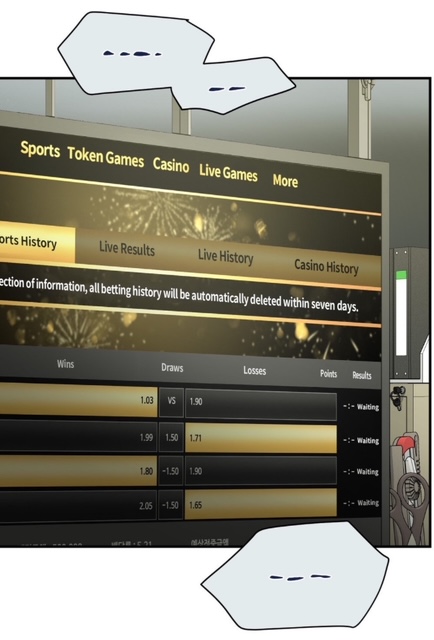 (Chapter 46)
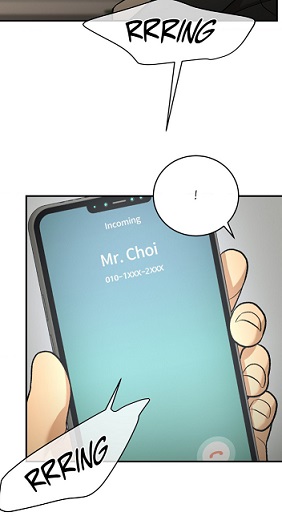 (chapter 46)
 (chapter 46), their work relations are not official. Yes, they are bound to each other by an oral contract and as such by loyalty. And how do I know this? Mingwa left two important clues: Mr Choi is using his wireless telephone, though there is a normal telephone on his desk.
  (chapter 46) This shows that this call is private and even secret. No one should know about his connection to the thug. From my point of view, Mr. Choi doesn’t want to interact with Heo Manwook too often, as this could expose the true origins of his wealth and fame. He is not a real self-made man, rather a criminal who could climb the social ladders thanks to his cunningness and connections.
 (chapter 16) And this raises the following question again.
 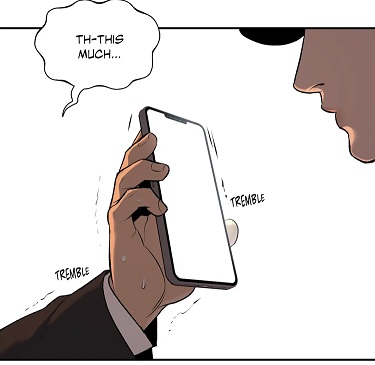 (chapter 17) To which account did the champion send the money? Heo Manwook’s or a different one? If this is the second case, this signifies that Heo Manwook has been embezzling money from Mr. Choi through the poor physical therapist. The latter was sending the money to his personal account.
  (chapter 16) This would explain why Heo Manwook would harass the main lead, though he had paid the interests on time.
  (chapter 1) Under this new light, it dawned on me why the moneylender interrogated Kim Dan later.
  (chapter 11) It is because the doctor had paid a huge amount making it impossible for the loan shark to filch it. And now take a closer look at the infuriated thug: he employed the expression “laundering money”! He was projecting his own fears onto Kim Dan. For me, this scene exposes the true nature between Mr. Choi and Heo Manwook. He is laundering money for Mr. Choi. This explicates why their work relations is not official, as they are engaged in illegal activities. Thus their labor relations can not be known to others. On the other hand, if the champion paid the loan to the same account
  (chapter 46) He had to convince him to bet on Joo Jaekyung’s defeat. The thug could use the interference of the champion on his side business, as this secret “laundering money” could come to the surface. His actions prove us that his “respect” towards his boss is just superficial. He is prioritizing his own interests. Hence he could have definitely taken advantage of his own position to earn more money through side “hustles”.
  (Chapter 5)
  (chapter 1) Thus I come to the following conclusion: We are assisting to the gradual disintegration of their secret relationship. I am already envisaging that Heo Manwook could end up not only losing Mr. Choi’s favor, but also getting switched by this man.
  (Chapter 46) The sum reflects the faith he had in Heo Manwook. Yet, the conversation displays the increasing mistrust between them. Note that the usurer is not taking responsibility for the failure of his scheme: „on their end“.
  (chapter 46). Secondly, since Mr. Choi is now taking the matter into his own hands, this signifies that the criminal won’t be involved in the next scheme, so he won‘t gain anything.
  (chapter 46) That’s the reason why the thug had hired the man himself. This confirms that this man
  (chapter 40). How so? It is because Heo Manwook doesn’t explain how the plot failed!!
  (chapter 23) Back then, he initially denied the existence of intimacy between them, until he was confronted with reality.
  (chapter 25) Hence he envied the doctor for his closeness with the celebrity.
  (chapter 25) Thus from my point of view, Mr. Choi must have come to a different perception than the maknae:
  (chapter 40) He only declared that he was part of his team. They had no idea who the person actually was. However, Joo Jaekyung didn’t realize that through his action, he was bringing attention to the company “TEAM BLACK”. That’s what the criminal saw on the uniform and the jacket! Thus I come to the following deduction: the hired man will report to Heo Manwook the existence of Team Black and its connection with Joo Jaekyung.
  (chapter 16)
  (chapter 16) Thus there’s a high chance that they will try to ruin the champion by tarnishing his company. It is a hidden brothel. Imagine Park Manwook’s reaction, when he gets to hear that his gym is a whorehouse.
  (chapter 31) That’s how the actor’s reputation would get affected. As you can see, the actor and Mr. Choi share the same family name. So are they related or not?
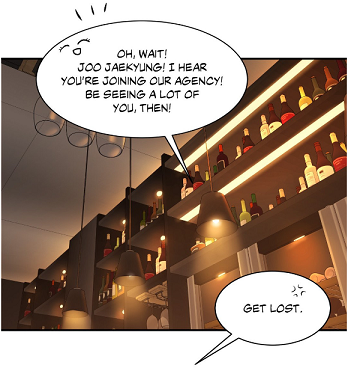 (chapter 33) He employed the personal pronoun “our” (even in the Korean version), a sign that he was identifying himself with the owner. From my point of view, Mr Choi and Choi Heesung are related, I would even say father and son. I know, when I presented my theory on X, people argued about this, for in South Korea, Choi is a common surname, just like Kim Miseon is not related to Kim Dan.
  (Chapter 5) Yet, I can refute their objections with the following points. Jinx is about emancipation and maturity, the leads are encouraged to become responsible and mature men. This signifies that they need to cut off ties with their parents and become strong mentally and emotionally.
 (chapter 29) Note that the comedian is promoting himself with Heesung and not his surname.
  (chapter 30) It was, as if he didn’t want to be connected to this Mr. Choi. Moreover, contrary to the mysterious director, readers could see his face and identify his “job”: an actor!
  (chapter 31) The latter hates conventions, discipline and even control.
  (chapter 29)
  (chapter 33) Green, whose negative features are greed, jealousy and envy. And what had Heesung done during that day? A prank at the champion’s expense. He wanted to have the doctor for himself. Furthermore, we can grasp why Heesung’s manager complained about this:
  (chapter 31) His words expose the greed and selfishness of the CEO from the agency. They are accountable for Heesung’s actions. In my eyes, this condition was made in order to control Heesung, so that the latter would feel responsible for his manager and other employees. It was to push him to „work“. Under this new approach, it dawned on me why Heesung would sponsor lunches to the members from Team Black,
  (chapter 30). It was his way to get acceptance and recognition. From my point of view, he occupies a special position at the agency, as if his moves are supervised there. Hence he asked from his manager that the latter would keep the fake injury a secret.
 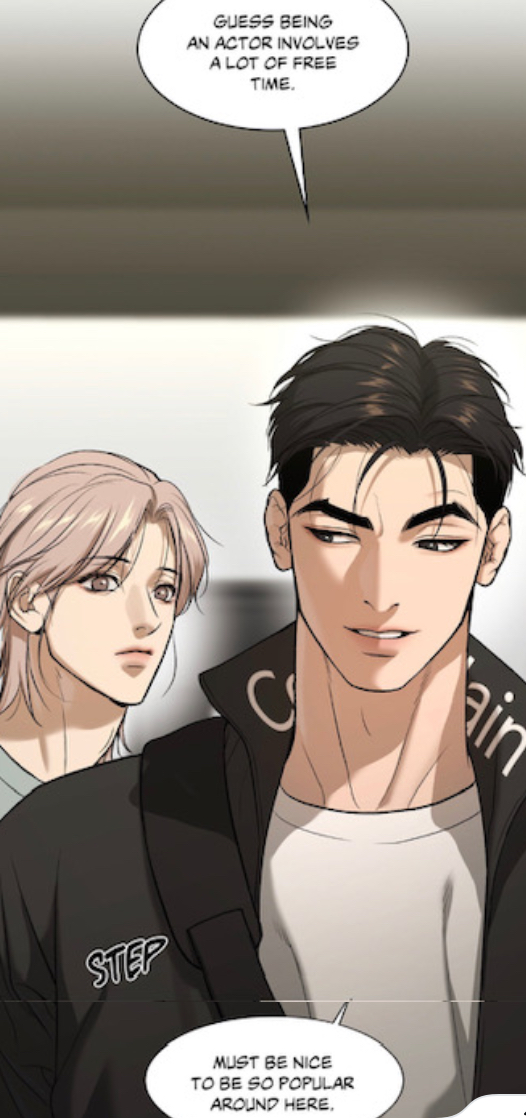 (Chapter 31) As you can see, I sense that Heesung had an ambivalent relationship with his „father“. On the one hand, he rejects him due to his cold-heartedness and high expectations, on the other hand, he was still relying on him and his connections through the agency. In my eyes, he will be forced to choose between love or money in the end.
  (chapter 33) My initial theory was that he had been stalked. But he could have left the family house after a huge quarrel. And Mr. Choi is indeed acting like a stalker, though he did not do it himself: the pictures!
  (chapter 32), until he chose to move out and live on his own. And now, we have the perfect explanation why his house is so clean and impersonal:
  (chapter 33) It is because his father probably meddled in his life constantly. I have the impression that he must know about his father’s past and the true origin of their wealth. The fact that he introduces himself as “Heesung” is a sign that he wants to deny his origins, Choi.
 (Chapter 33) He had been missing love and warmth too because of his family, exactly like the champion. Both came to a similar conclusion: fame served as a replacement. It was to get recognition and „affection“. The problem is that this type of attachment is rather superficial and temporary, as none of their „admirers“ or „fans“ has to become responsible for them. Moreover, their fortune played a huge role to undermine their relationship.
 The house stands for power and propriety. But Choi has another signification.
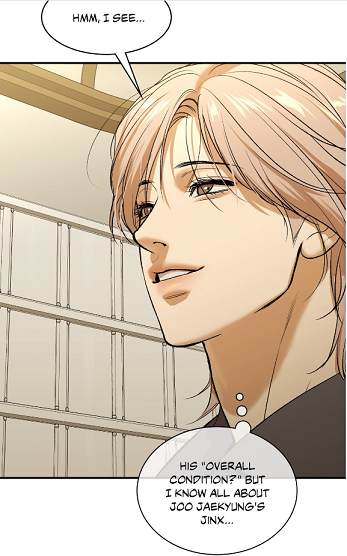 (Chapter 32) Note that when he was conversing with the celebrity at the bar, he never brought up his jinx.
  (Chapter 43) However, if he pondered a little more, he would realize that it is a lie. How so? Coach Jeon Yosep is the evidence that not all athletes are destined to end their career because of an injury. Yosep is still a fighter.
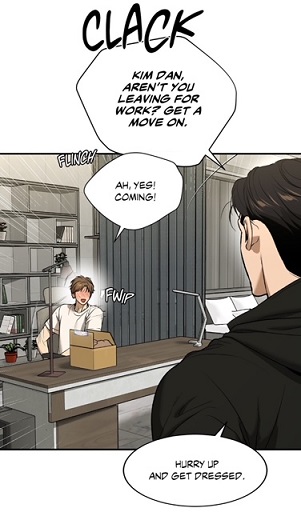 (chapter 43) The package arrived right on time.
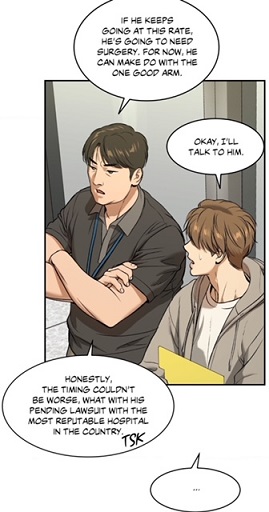 (chapter 42) That way, the agency would divert attention from its own responsibility and even receive support from the clinic. Then we have this rumor circulating that people are sending spies to gyms.
 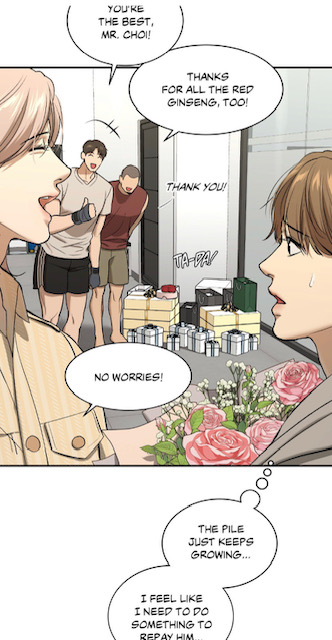 (Chapter 31) Yes, appearances would now play in Heesung‘s disfavor. Finally, an incident with the agency would push Heesung to fight against his relative… and to regain control over his life.


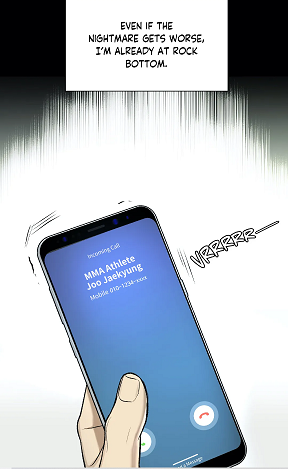
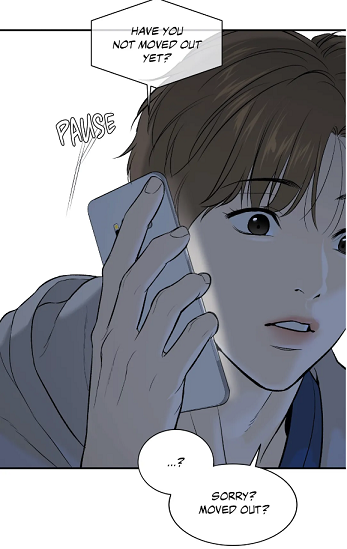


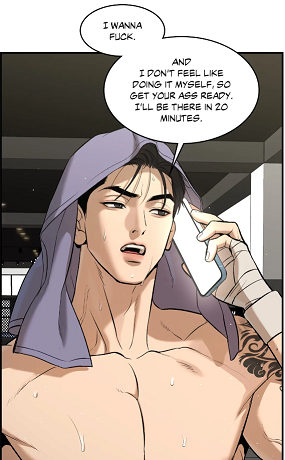
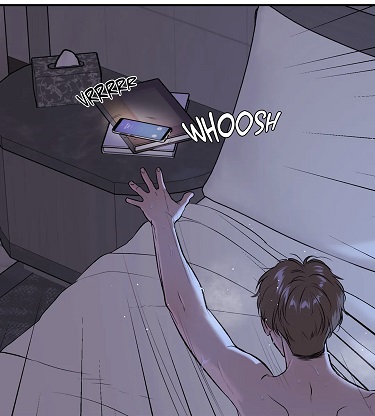
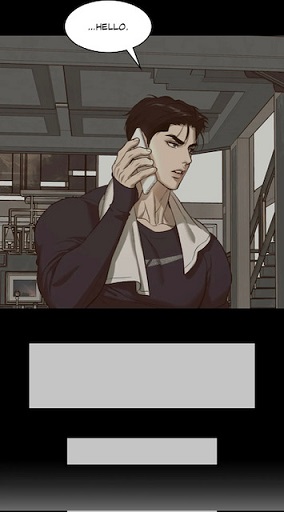


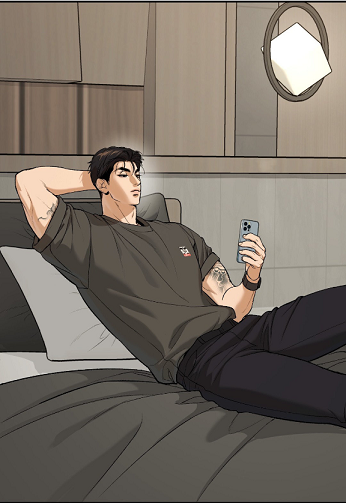
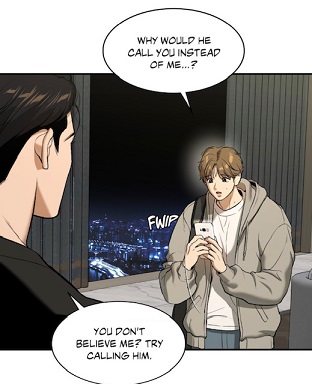
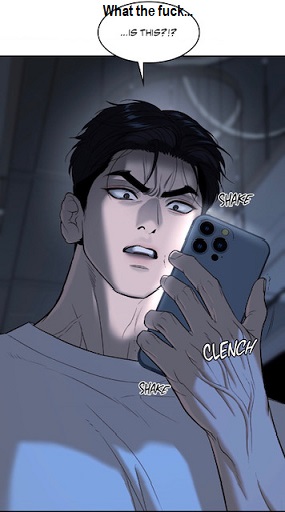
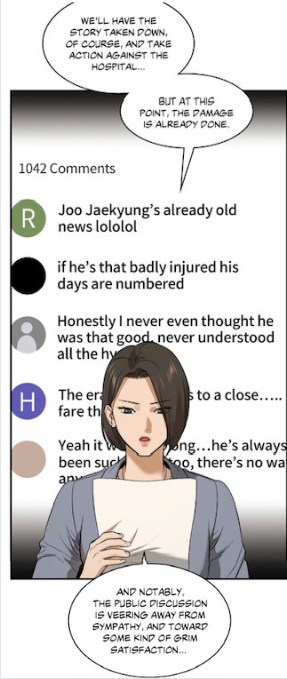
 (chapter 43) The doctor was invited for the second round and he could have agreed, but the athlete intervened fearing that the doctor would prefer the company of the fighters. This exposes his low self-esteem. However, Kim Dan was already rejecting their invitation.
 (chapter 13) He was acting, as if he hated kisses, foreplay and embraces. At the same time, he is showing his face, yet this is just acting. Thus the hyung replied the same way. He faked his anxieties and submission.

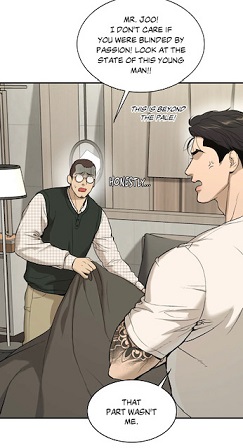 (chapter 13) who also jumped to the wrong conclusion, when he saw the doctor’s bruises. He imagined that the champion had been too rough in bed with Kim Dan. However, once he heard his testimony, he believed him. This shows that he trusted him. On the other hand, this scene reinforces my interpretation that the glasses are connected to prejudices and false perception. Moreover, observe that he was curious about the physical therapist, hence he interrogated the champion.
  (chapter 13) Then, observe that in the penthouse, the doctor acted too.
 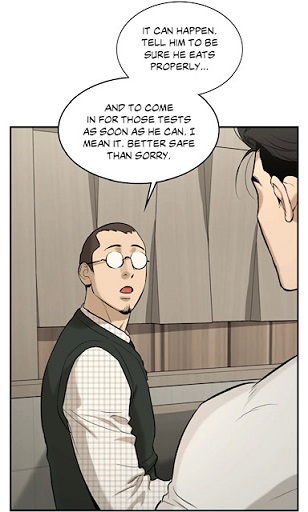 (chapter 13) and a new face!!
 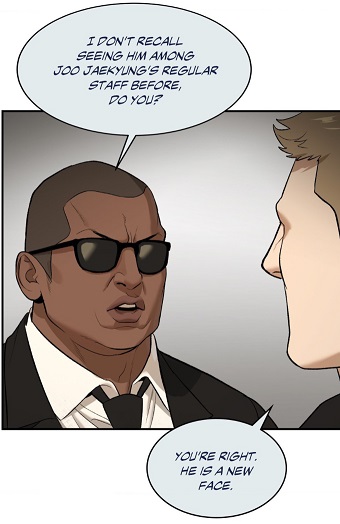 (chapter 40)
  (chapter 13) And by contrasting these two scenes, I realized that it reinforced my theories. 1. There must have been a phone call!! In episode 13, the champion must have called his chingu.
 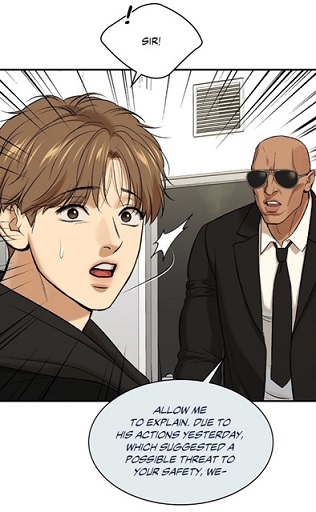 (chapter 40) However, the moment the guard with the sun glasses got caught, he tried to act as a savior. As you can see, this comparison reinforces my theory. The MFC manager must have asked the MFC security guys to cover up the incident. If not, they would be blamed for the matter!! And now, you comprehend why they had to know everything about Kim Dan.
  (chapter 40) They needed to find any excuse to put the blame on the protagonist. Either he had a strong reaction because of his medication or because of a different meal… but since Kim Dan never replied to them, they had to frighten him, to coerce him to confess a crime.
  (chapter 6) and the moneylender?
  (chapter 16) Sexual harassment and the usage of the number to achieve their goal!! These two characters could hide their crimes with the assistance of other people (thugs, staff). We could say that both used an organization. Consequently, I am assuming that the MFC manager is doing the same!! Therefore it is no coincidence that Mingwa employed the same colors: blue, white and black
  . (chapter 1) That’s the reason why I am suspecting that the MFC guys must have already been informed that Kim Dan might be the champion’s sex partner.
  (chapter 40) Is he his partner or a member of his gym? Not only he is the face of Team Black
 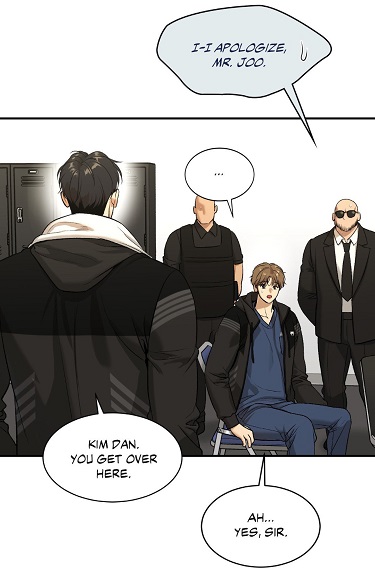 (chapter 40) Joo Jaekyung is behaving the opposite from the perverted hospital director, Heo Manwook and finally the MFC manager. Thus it dawned on me that the reporter from this article did the same.
 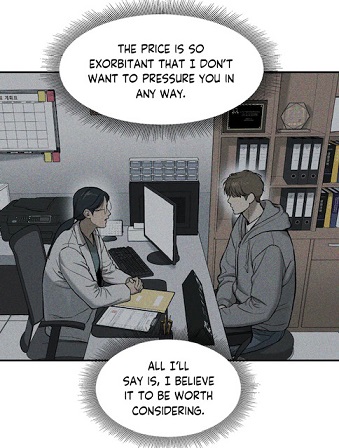 (chapter 5) As you can see, thanks to the glasses, I discovered a new pattern. These schemers and helping hands are avoiding any responsibility by hiding their wrongdoings behind an institution or we could say behind a name.
  (chapter 7) In the last case, it would be MFC!! But the reproach from the champion
  (chapter 36) It is because they are projecting their own thoughts onto the champion. He is just a person. However, what they don’t realize is that behind the athlete, there is also an organization: TEAM BLACK!!
 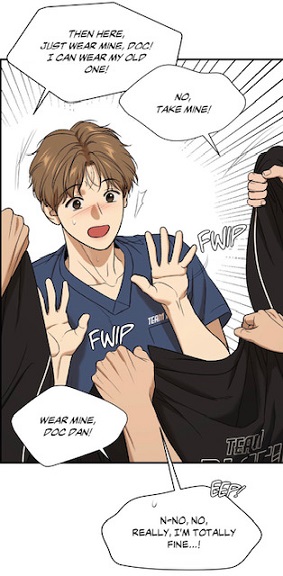 (chapter 36) Note that Oh Daehyun and Potato tried to investigate the matter with the doctor’s illness.
  (chapter 38)
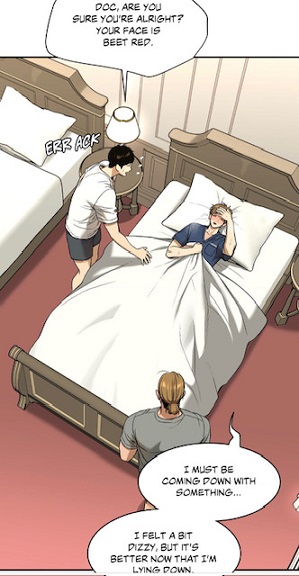 (chapter 38) Thus I deduce that because of Kim Dan, the members from Team Black will become more proactive. They need to show to these people that Joo Jaekyung is not alone, he is the alpha of a great gym… producing many champions!! In other words, the dragon with his yeouiju will be able to remove these Deceit’s webs and purify these institutions. As you can imagine, I am suspecting that Dr. Lee must have been blamed for the article
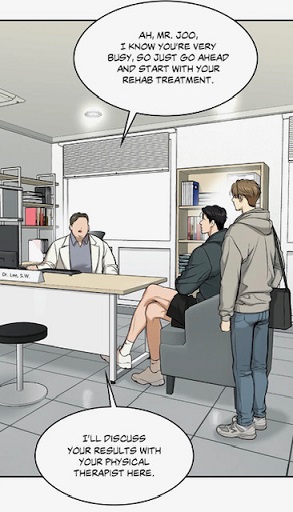 (chapter 27), for someone had to take the fall. I hope, we will see him again.
 (chapter 29) However, here the item has a different signification. How so? It is because Joo Jaekyung was totally honest and was opening up to the physical therapist.
  (chapter 29) It seems to contradict my previous interpretation about the glasses. But no… Observe that during that whole scene, the readers could see the champion’s eyes contrary to the MFC guys
 (chapter 37), Kim Miseon
 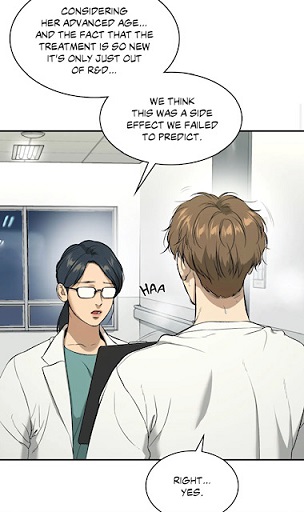 (chapter 21), Cheolmin
  (chapter 13) and the perverted hospital director
 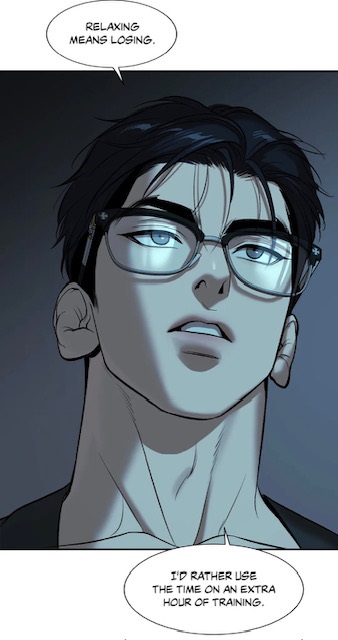 (chapter 29) Because he was wearing blue light blocking glasses, he was protected from “Agent Blue”, the positive version of episode 36 and 40!! This explicates why I consider them as a shield. He was trying to hide his vulnerability while confiding to Kim Dan.
  (chapter 35) Striking is that as soon as the actor removed them, he got honest with the doctor. He revealed his intentions, but he got rejected. As you can see, the glasses can have a positive function. Consequently, I came to develop a theory which was triggered by the glasses. Kim Dan envisioned the athlete in a suit
  (chapter 32), then he imagined him with the sun glasses
  (chapter 35) Thus I come to the conclusion, Kim Dan will be the one turning the athlete into a star, a real celebrity! But he won’t be reduced to his body and face
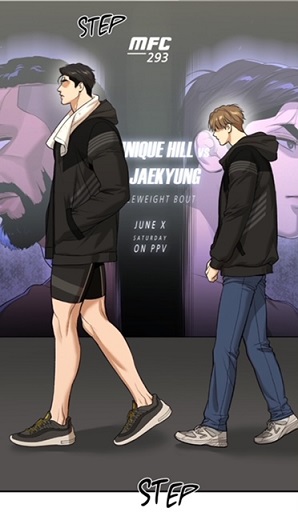 (chapter 40) So he could offer the sun glasses to his savior. If this prediction comes true, then it means that Kim Dan will become the rival of the manager from the agency. Besides, it was the manager’s job to develop a strategy how to change the netizens’ opinion. But he chose to put the whole responsibility on his athlete.
  (chapter 32) Finally, I have the feeling that Team Black will come to act like the security guys in episode 40, investigate the matter why the champion and the doctor became the targets of malicious rumors and bad articles.
  (chapter 40) This signifies that in this moment, Kim Dan decides to cross the line, especially since he likes the emperor. He is accepting that he means much more to Joo Jaekyung than being his toy. Because the champion called him “his person”, he felt moved and indebted. Consequently he started considering himself not only as being a part of the champion’s life, but also as a part of Team Black.
 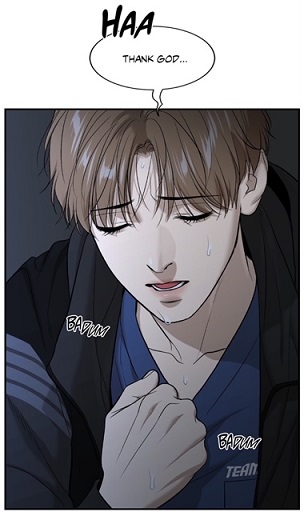 (chapter 40) led me to associate Kim Dan with a butterfly, for the latter symbolizes faith, hope, change and rebirth. And now, you comprehend why this illustration
  contains blue-black butterflies. They are alluding to the physical therapist. The latter is wearing his blue uniform with the black jacket from Team Black.
  (chapter 409. Yes, the hand from the MFC security guard reminded me of a spider. But there exists another reason why I came to connect the MFC security guys with the spider. It is because both are related to the web. There is no doubt that the MFC security guards wove a web of lies to Kim Dan. And how can we detect this? There exist different methods to expose the men in Black as manipulators and hunters. First, the MFC security guys are wearing glasses. Another method is to compare the interrogation scene with episodes from Jinx. Finally, it is important to examine their words and as such their speech bubbles. But let’s start with the glasses.
 , she embodies impartiality, because she is able to detect the truth through the testimonies. She is not blinded by prejudices (origins, social background, gender…) contrary to the characters in Jinx.
 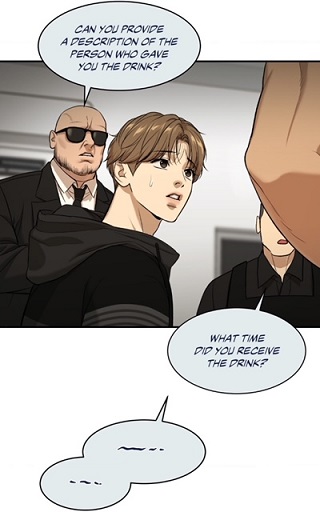 (chapter 40), but two were acting as the main accusers.
 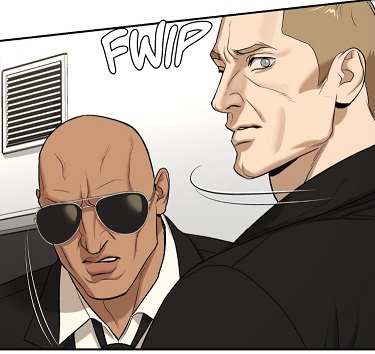 (chapter 40), a sign of his anxiety, nervousness and anger. It was, as if he had been caught. This little detail displays his knowledge. He knew that Kim Dan was innocent in the end. These two men wearing sun glasses were extremely ruthless and calculating, as if they had sold their soul to the devil. They were determined to frame Kim Dan, for he was new. Moreover, I believe that the sun glasses have another symbolism. According to my interpretation, Joo Jaekyung is represented by the sun, so wearing sun glasses indicates that they are trying to protect themselves from the champion. I will elaborate about this further more. Finally, wearing sun glasses is a sign for coolness and confidence. It looked like this item gave them the assurance to act like the tough and hardworking security agents. In other words, the sun glasses are strongly connected to acting! Yes, we were witnessing a fake investigation and trial! This leads me to the second method, the comparison of panels and scenes.
  (chapter 40). As you can see, Joo Jaekyung is utilized the same way than the grandmother. Moreover, I would like to outline that in episode 16, the main lead got kidnapped in broad daylight, and no one stopped them.
  (chapter 11) or even trespass his house and rape him.
  . (chapter 37), they supervise their food
  (chapter 37), and finally they take blood samples or urine tests in order to ensure that the fighters didn’t use any drug.
 (chapter 11) Funny is that Heo Manwook suspected the main lead to earn his money through illegal means, while in reality, the former is actually the one using illegal means. As you already know, for me, he is involved in the set up against the two protagonists. But it doesn’t end here. MFC guys are acting like legal authorities, thus they are wearing black suits and glasses
  (chapter 40) reminding us of FBI agents.
  (chapter 40) resembles a lot to the one from the hospital,
 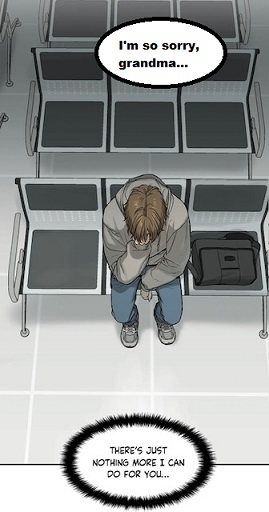 (chapter 5) I couldn’t help myself thinking of a death sentence.
  (chapter 11) Secondly, Mingwa created scenes, where someone would take action against a person or organization:
  (chapter 30) Under this approach, it becomes comprehensible why they were wearing sun glasses, they served as a shield for a trial. No ID and no eyes means no identity.
 (chapter 11)
  (chapter 14) And that’s how the schemers discovered that their trick had failed. But this could have consequences for MFC, for the reputation of the MFC security guys would have been tainted. That’s why I believe that the manager had to find a way out. He must have advised the MFC staff to find a scapegoat in order to avoid a scandal… Kim Dan had to be framed… because he is the one who said that the nutrition shake came from the MFC!!
 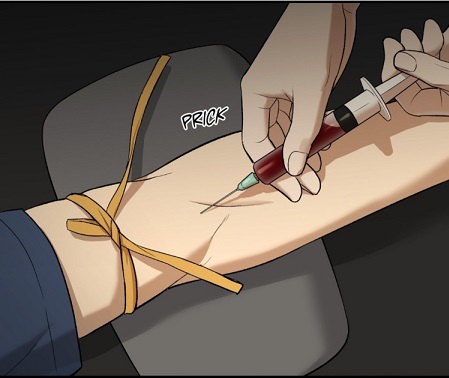 (chapter 40) MFC is a private organization, so they are not supervised. So they could do anything with this blood sample, like for example fake results.
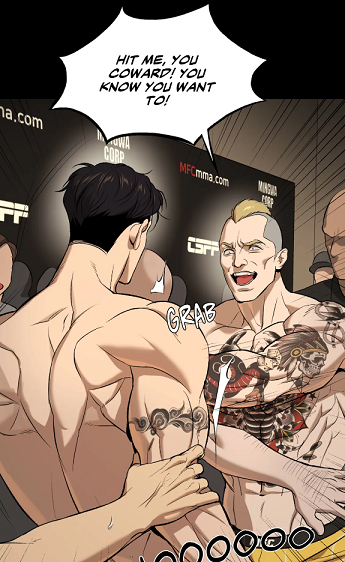 (Chapter 14) Yes, Randy Booker! Let’s not forget that this fighter had tried to enter the higher weight category
  (Chapter 13) But he failed terribly. Note that the athlete is put in the same situation than the butcher (same weight, travelling). He has to fight in a foreign country. Secondly, he mocked the athlete for his age.
  (Chapter 15) He had an injury above the eye. And this observation brings me to the following remark. Why did the blond-grey haired sportsman call the athlete a baby?
  (chapter 34) and the doctor’s cut
 (chapter 36). Under this perspective, the punches from Kim Dan
  (Chapter 7: elbow)
 (chapter 11) Yes, it is Heo Namwoook. And note that he is also connected to blue!
  (chapter 13) The name of the gym is not visible in the poster. This promotion explains why the fans are screaming only Joo Jaekyung
  (Chapter 16) Team Black only appears on the jacket
  (chapter 36) So the moment you imagine that Heo Namwook is behind the event, it makes sense why Dominic Hill was selected. First, he saw how the athlete could
  (Chapter 17) overthrow someone weighting heavier than himself. He was clear-minded and far from being emotional, when he fought Heo Namwook and his minions.
  (Chapter 17) But with the scandal and the weight cutting, it is different. The “enemy” is messing not only with his body, but also with his mind. If my theory is true, then the loan shark would be actually acting as a fight promoter:
  (Chapter 17) Secondly, Heo Namwook called MMA as fake, for he thought that it was like wrestling.
  (chapter 17)
  (chapter 36) or bringing food.
 (Chapter 26) Yes, he occupies a similar function than Heo Namwook in the end. The coach is like a book keeper. Yet, there exists a huge difference between them. First, the athlete is separating his private account from Team Black’s contrary to the moneylender.
 (Chapter 14) Furthermore, in episode 23, the fighters left the gym without wearing any uniform!!
 (Chapter 23) They all had different clothes, a sign that Namwook had been neglecting them. As you can see, the new clothes made me realize that the coach hadn’t been promoting Team Black properly, until Kim Dan joined the team. And it started with this:
  (chapter 9) The name was written on the left side. However, it is not visible, as soon as Kim Dan wears a jacket.
  (Chapter 14) The man on the left side is not part of Team Black, for he is wearing an ID, whereas the fighter next to the coach is a member of the gym, though he is not wearing any black clothes. The choice for the clothes were truly bad.
  (Chapter 36) First, the name Team Black is visible on the side, while MFC vanished.
  (Chapter 36) At the same time, this signifies that slowly, he is giving the other fighters more attention. The face of Team Black is changing. It is no longer reduced to Joo Jaekyung. This signifies that the dragon is gradually sharing his burden to others. On the other hand, such a jacket exposes the coach’s arrogance.
  (Chapter 7) He is the physical therapist of Team Black de facto, especially if he is seen in company of other members.
  (Chapter 23) Potato has already planned as the champion’s successor. To conclude, this match in the USA should expose the manager’s selfishness and the corruption. But since Kim Dan has now such a jacket, I am expecting that with his magic touch
 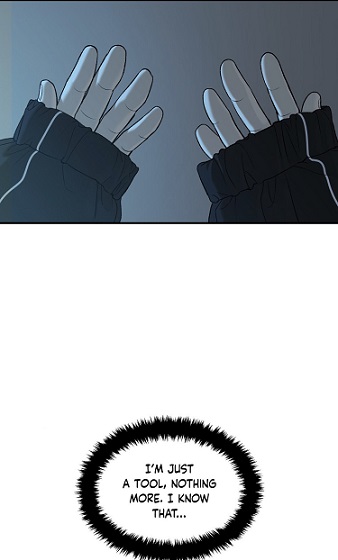 (chapter 36) he will get the attention from the MMA world: reporters, fighters and MFC manager. Something that the schemers didn’t expect… As a conclusion, in the next chapter, pay attention to the jackets and the numbers. There were all XXL, except the one for Potato.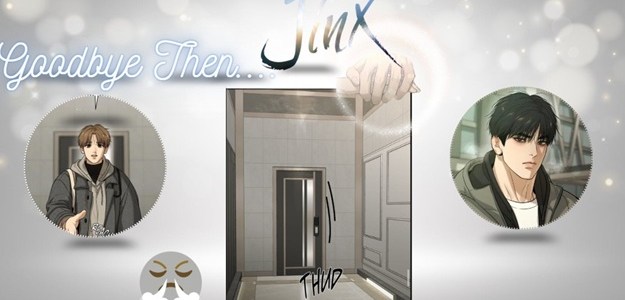



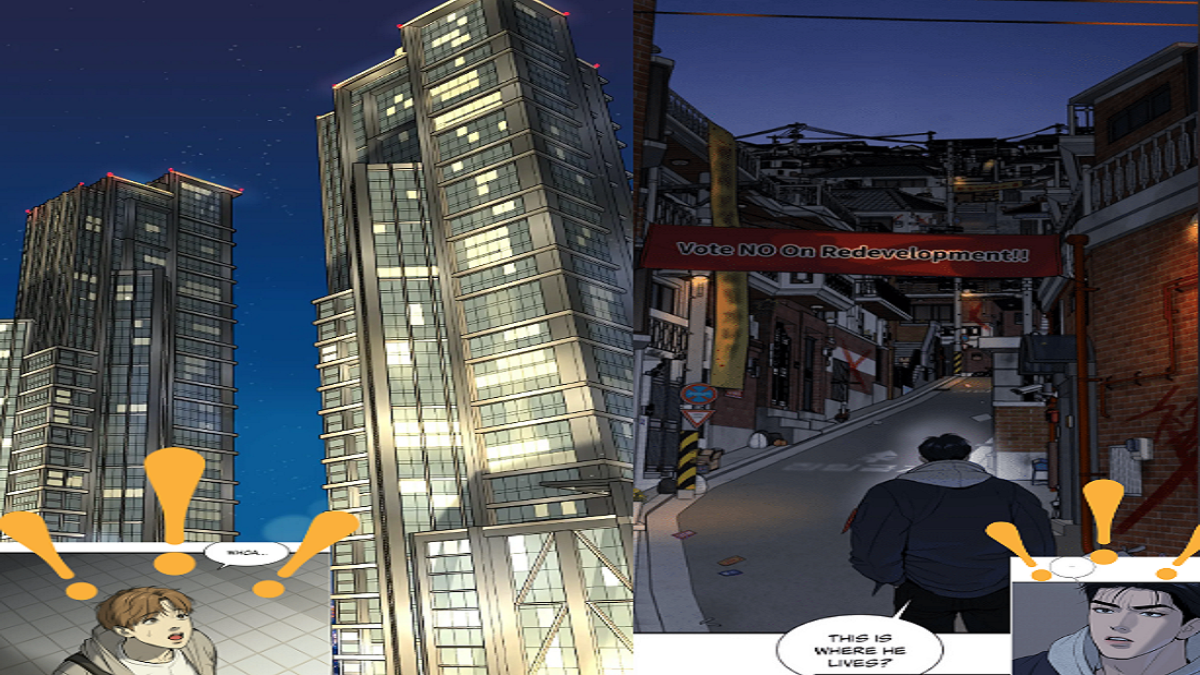
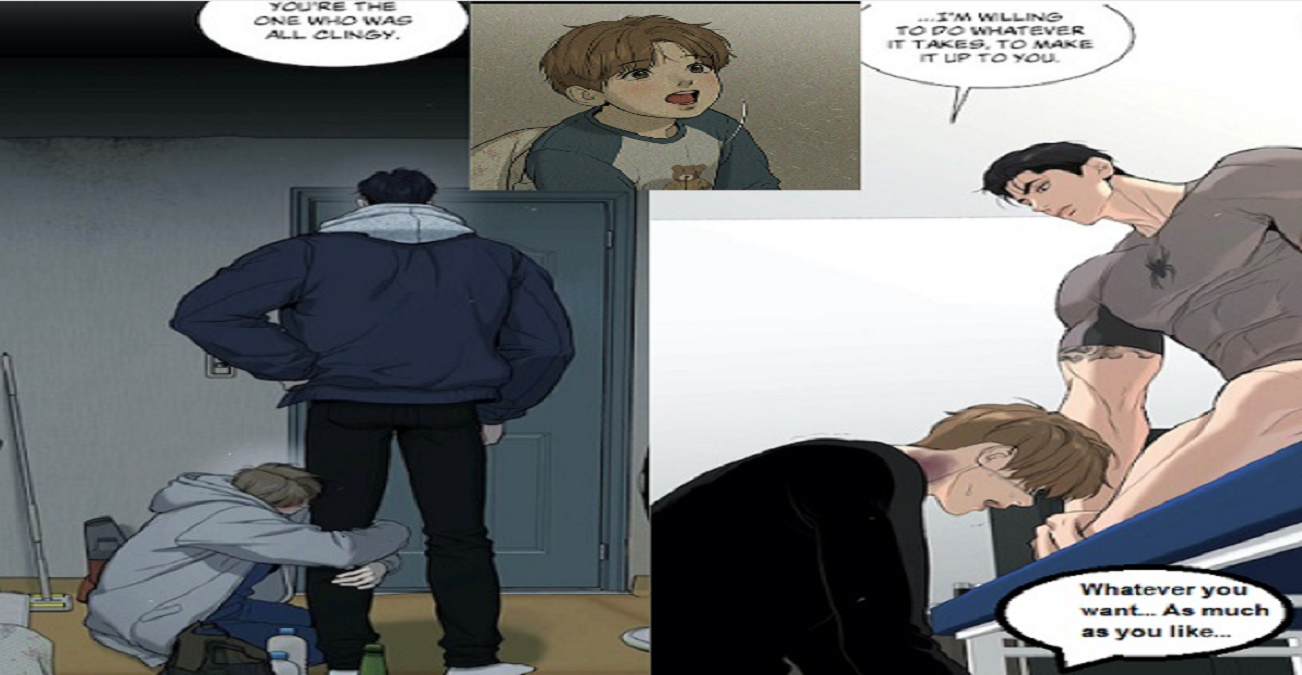

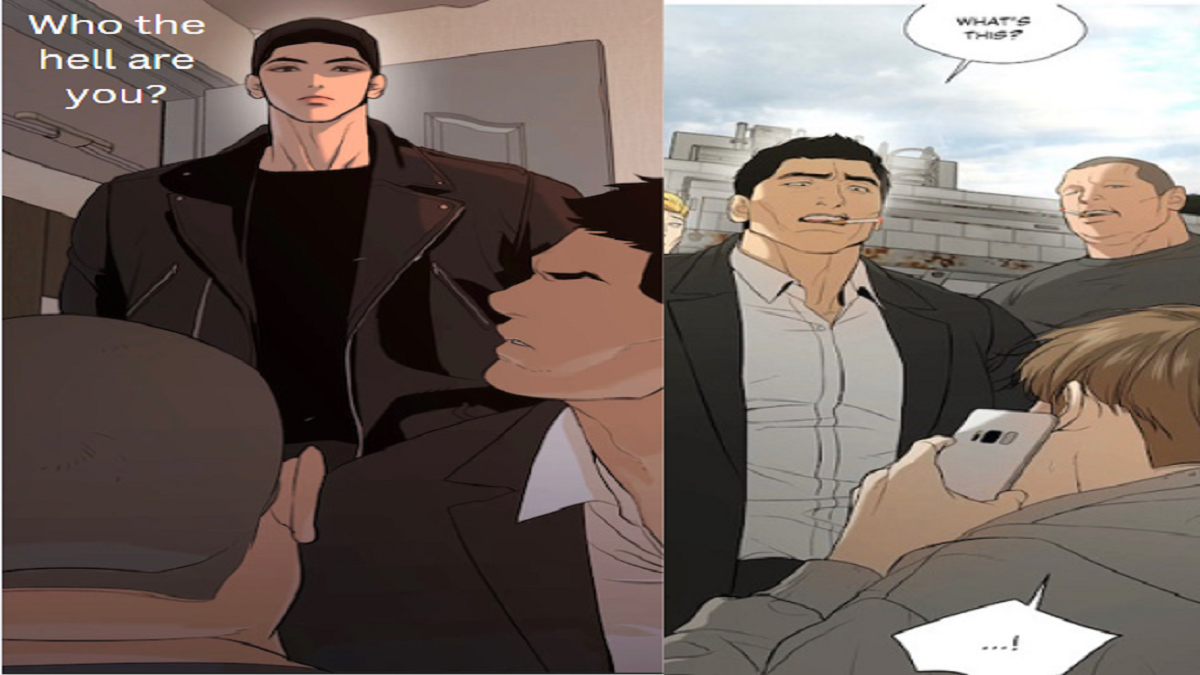


 (locked essay, with new password, switch simply the order of the words, don’t forget the space)







































 Col
Col