

Please support the authors by reading Manhwas on the official websites. This is where you can read the Manhwa: Jinx But be aware that the Manhwa is a mature Yaoi, which means, it is about homosexuality with explicit scenes. Here is the link of the table of contents about Jinx. Here is the link where you can find the table of contents of analyzed Manhwas. Here are the links, if you are interested in the first work from Mingwa, BJ Alex, and the 2 previous essays about Jinx The Giant of Paper and Laughter -part 1 and part 2
It would be great if you could make some donations/sponsoring: Ko-fi.com/bebebisous33 That way, you can support me with “coffee” so that I have the energy to keep examining Manhwas. Besides, I need to cover up the expenses for this blog.
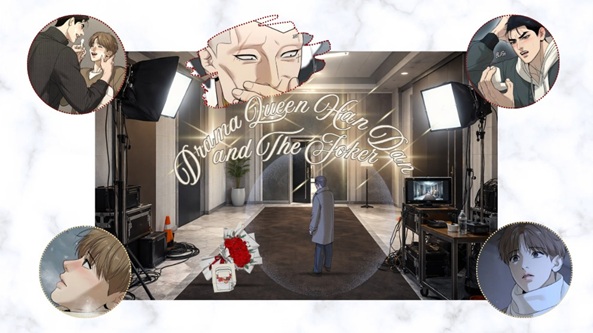
The latest chapter ends with an image that feels too deliberate to dismiss. A dark hallway. 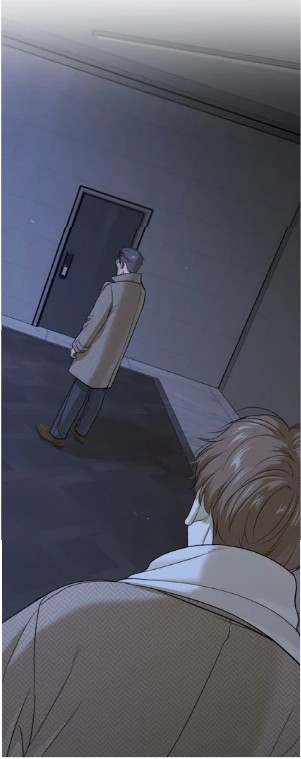 (chapter 97) An unexpected visitor. For readers, this is no coincidence. We already know enough to recognize a move set in motion from elsewhere.
 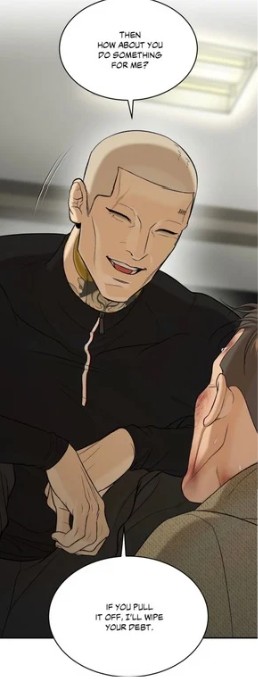 (chapter 93) The former director did not appear there by chance. What remains uncertain is not whether this is a scheme, but how the latter was arranged and what it is meant to achieve.
The real uncertainty belongs to Kim Dan. He steps into the corridor visibly shocked 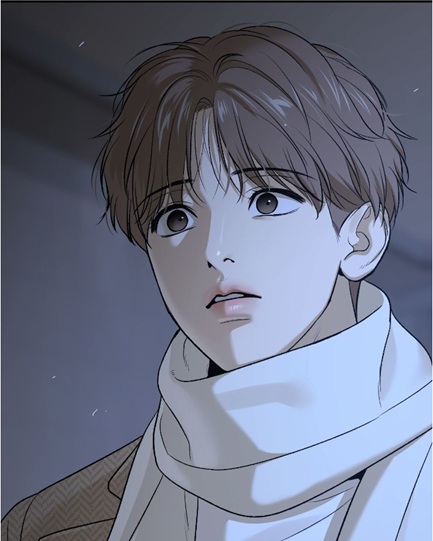 (chapter 97), confronted by a man who should not be there. His first thought is easy to imagine: Why is he here? Yet from that single question many others unfold. Who gave him the address? (chapter 97) How did he get inside? Why tonight? What role is he meant to play? And who is this encounter truly meant for? Since then, speculation has been running wild. Some predict a kidnapping. Others expect assault, self-defense, blackmail, public scandal, or another painful but brief departure. Every reader seems to be writing a different next episode and everything seems possible.
And yet the most interesting question may not be which shock event comes next, but what this final scene is already telling us about the direction of the story. In Jinx, closing moments rarely function as decoration. 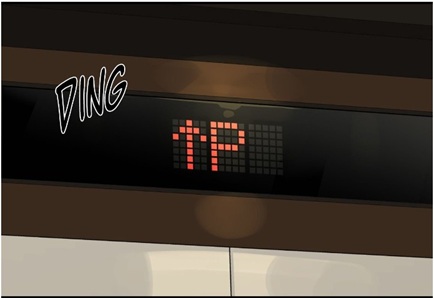 (chapter 97) They often contain clues — small visual decisions, strange timing, unusual framing, details that seem minor until later chapters reveal their weight. A final panel does not always announce the future directly, but it can offer glimpses of the forces already in motion.
That is why this essay is less about prediction than interpretation. The final beat of chapter 97 functions less as a simple cliffhanger than as a map of the unrest to come. 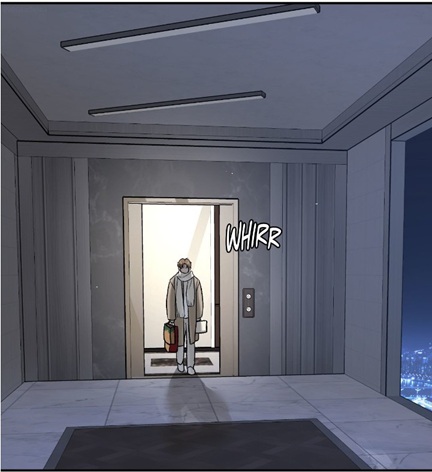 (chapter 97) When this dark hallway encounter is set beside earlier thresholds, repeated patterns, and the chapter’s charged atmosphere, the outline of the coming conflict begins to emerge. The question is not only what may happen next, but why it happens now. This meeting takes place at the precise moment, when emotional pressure and narrative conditions have finally converged, making an earlier reckoning impossible.
One lesson from previous schemes in the story should also be remembered. Manipulation rarely arrives through a single act. When something suspicious occurred before 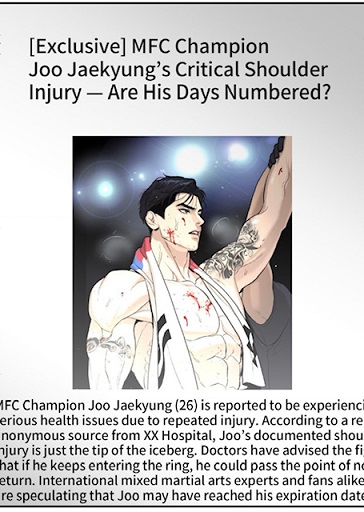 (chapter 35), it was not one wrongdoing but two
 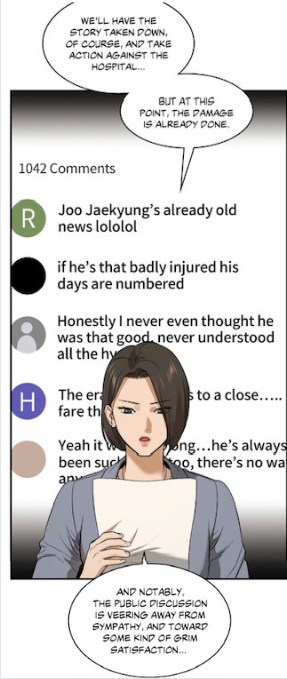 (chapter 36) or three
 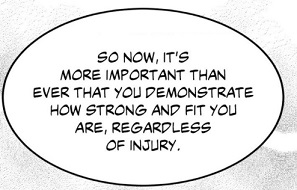 (chapter 36) layered together: one visible distraction, another hidden move
  (chapter 37), and often a consequence
  (chapter 40) that only became clear afterward. In other words, the first event is rarely the whole trick. It is only the surface. If that pattern still applies now, then the interview may be only the loudest surface event,
 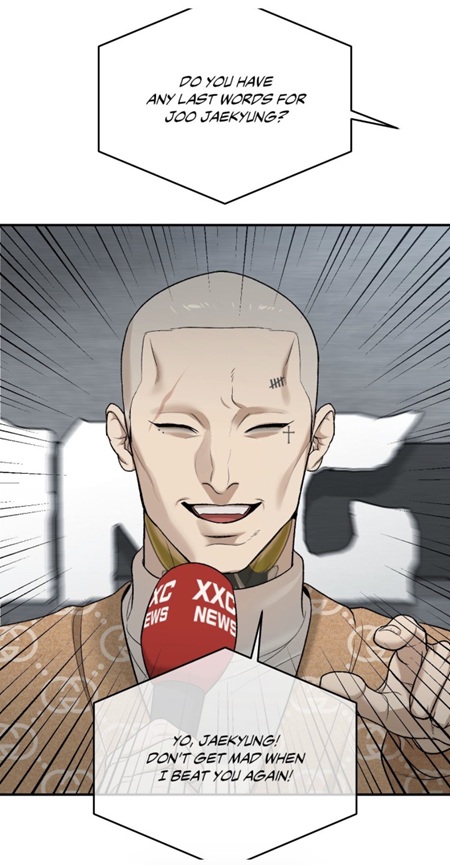 (chapter 96) while the real movement of the scheme occurs elsewhere — perhaps in the damage already done, or in the encounter still waiting in the dark.
This is where the title Queen Han Dan and the Joker enters the stage. It may sound playful at first, yet it points toward two very different forms of power now colliding. The Joker from Badman evokes chaos, disruption, and the pleasure of tearing order apart — qualities that fit Baek Junmin’s methods throughout the story 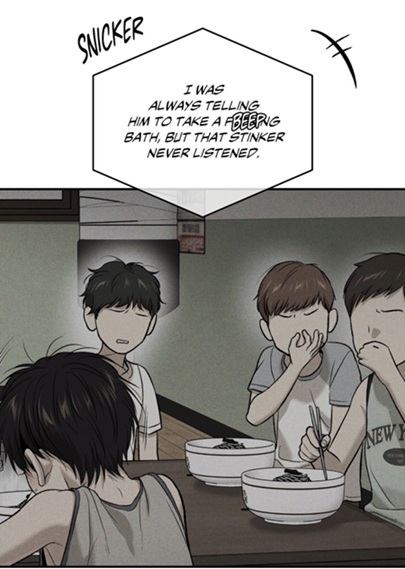 (chapter 96). He does not merely attack people; he unsettles structures, humiliates rivals, and turns instability into advantage.
Yet the word joker carries another meaning as well: the unexpected card 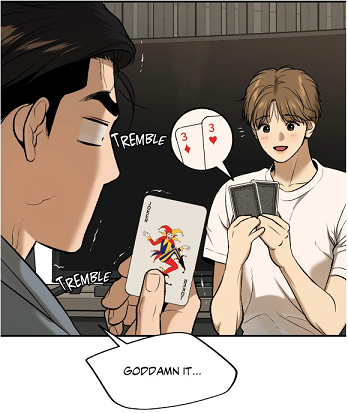 (chapter 27) that can suddenly change the game. By sending the former director into the hallway (chapter 97), Baek Junmin may believe he is playing such a card — one final move capable of breaking the fragile balance between the protagonists. But cards are dangerous things. Once played, they no longer belong to the hand that used them. They enter the table, where anyone can read them differently.
What is meant as a weapon may become a clue. What is sent to divide may instead reveal how much was hidden beneath the surface all along. And that is where the second half of the title quietly waits. If the Joker represents the move, Kim Dan becomes the board itself—the space where hidden strategies collide, and where even the most vulnerable piece can become a Queen when the game reaches its endgame.
The Joker’s Stage
Let us begin with the hallway itself. Many readers focus on what the former director might say or do, but before any words are spoken, the environment is already telling a story. The scene does not unfold like an accidental encounter. It unfolds like an arranged entrance.
The man is not standing directly in front of the elevator doors (chapter 97), where one would naturally wait if the goal were immediate contact. Instead, he has placed himself farther down the corridor. This matters because distance creates delay. Kim Dan must first step out, walk forward, and commit himself to the space before fully realizing that someone is there. By the time recognition becomes possible, the elevator doors have already closed behind him.  (chapter 97) The easiest path backward has vanished. The resident is inside his own home, yet the geometry of the scene briefly turns him into the trapped figure.
Even more striking is the man’s posture. He is turned away from the elevator. (chapter 97) One might argue that he simply heard the lift arrive and then turned around — yet that is precisely what does not happen. He does not react immediately to the sound of the doors opening and the light. (chapter 97) He does not turn at once when footsteps begin. (chapter 97) The movement comes later 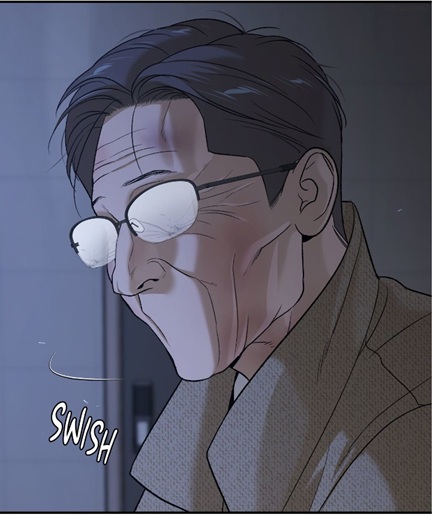 (chapter 97), only after Kim Dan has already advanced and the elevator has closed. This delayed turn transforms a normal greeting into something theatrical. It resembles the timed reveal of an actor who waits for the right cue before facing the audience. Recognition itself is staged.
Darkness intensifies that impression. (chapter 97) There is no sign of a building-wide blackout.  (chapter 97) The elevator functions normally. Yet the hallway itself remains unusually dim. This suggests not an ordinary malfunction, but lighting that has been selectively tampered with (chapter 97): the machinery still works, while the very space of encounter has been left in shadow. The contrast becomes sharper when we recall the earlier elevator and hallway scene from chapter 31
  (chapter 31), which many readers have already associated because of the roses. Jinx-Lovers were moved that Joo Jaekyung had not forgotten that Kim Dan was fond of flowers.
 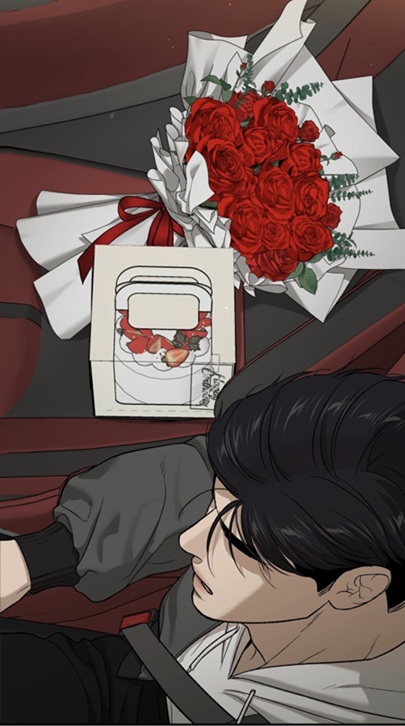 (chapter 97) Yet they overlooked another detail: that same threshold was fully lit,
 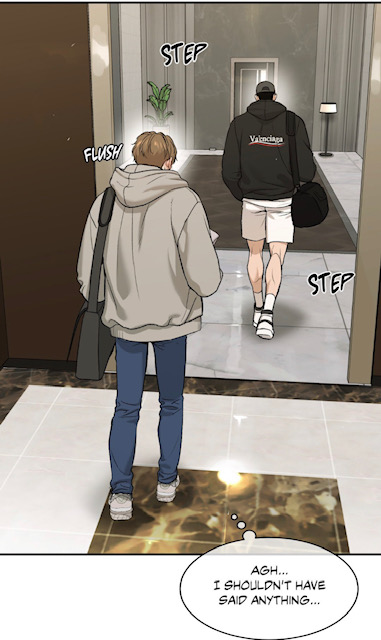 (chapter 31) and a lamp stood on the right side of the frame. In the present scene, that source of light has vanished. (chapter 97) Warmth and visibility once accompanied that passage. Now they have been replaced by coldness and obscurity. The shadows conceal identity, soften the traces of old bruises, and make the figure harder to recognize at first glance. (chapter 97) But they also perform symbolic work. Darkness signals secrecy, hidden intention, and the possibility that something is being arranged outside the viewer’s full awareness.
That does not necessarily mean everyone in the building is maliciously betraying Joo Jaekyung. The point is subtler than conspiracy. A guard may have let someone in as a favor. Staff may have assumed the visitor belonged there. Someone may simply have failed to verify who entered. In many systems, damage does not begin with grand treason. It begins with carelessness, routine shortcuts, or the small convenience of not checking facts. The same logic may be at work here. Once people stop checking what is true, appearances begin to govern reality. Kim Dan no longer appears at the gym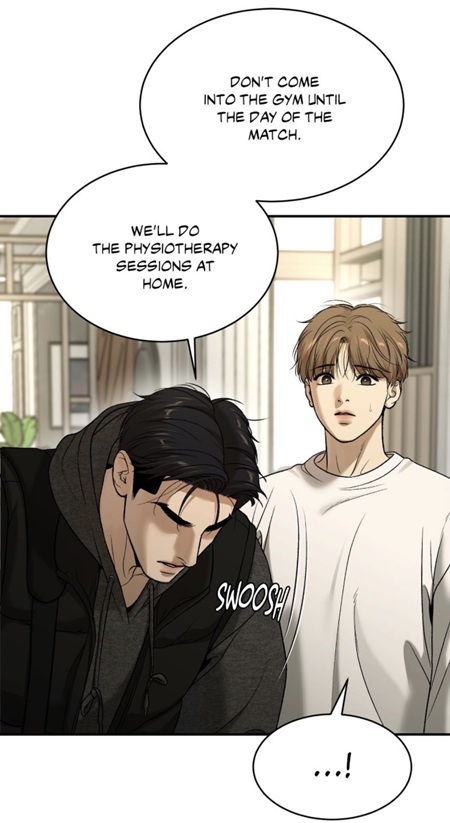 (chapter 96), meals are handled by someone else
 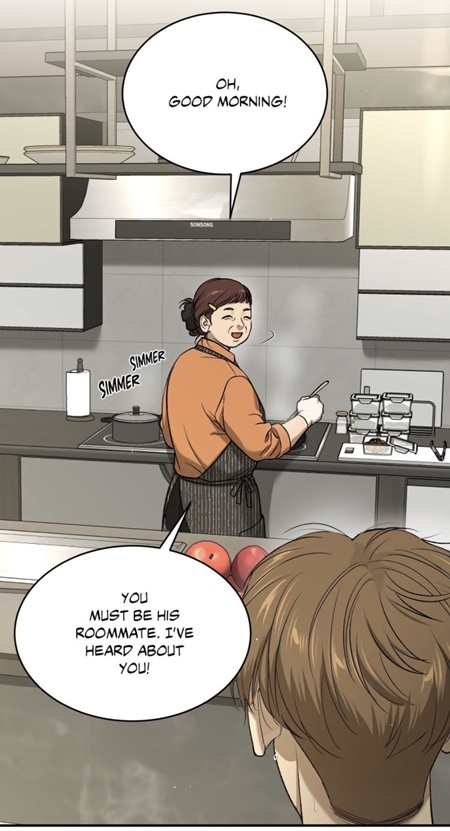 (chapter 96), old routines seem restored
 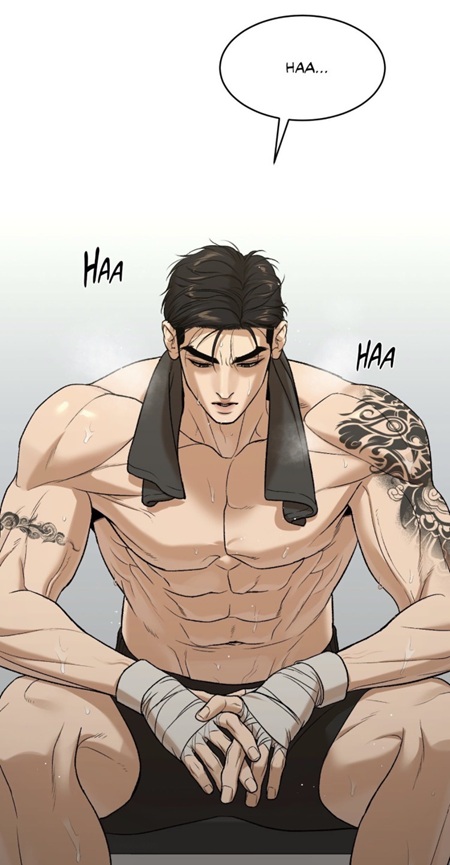 (chapter 97) From the outside, the easiest conclusion is that the “hamster” has left. Yet that conclusion may be entirely false. He did not disappear. He only disappeared from view. And this observation leads to a deeper question. Who was the former director truly there to meet? Formally speaking, he has come to the penthouse of Joo Jaekyung, its official resident and owner. On paper, the visit concerns the champion. Yet formal appearances can be as misleading as visual ones. A registered address does not necessarily reveal the real destination of a scheme. Just as people may mistake absence for departure, they may also mistake the legal resident for the intended target. What appears to be a visit to one man may, in reality, have been arranged for another.
Yet the strongest clue may arrive after the reveal. (chapter 97) The former director is not startled, nor does he show visible signs of panic. He does not step back, apologize, retreat, or behave like a man caught trespassing. He remains composed. That calmness matters. If Joo Jaekyung were the true target, Kim Dan’s arrival should complicate the plan. Instead, the intruder stays exactly where he is, as though the person now standing before him is the one he came to meet.
(chapter 97) Kim Dan’s reaction is equally revealing. He freezes, but he does not panic, which becomes perceptible, once you compare his reaction at the restaurant. 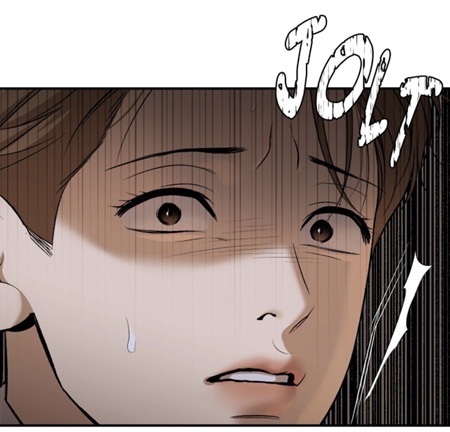 (chapter 90) The expression in the hallway is shock rather than terror. (chapter 97) This is not yet the fear of immediate violence. It is the cognitive shock of seeing someone impossible in a place where he should not exist. The emotional blow comes from meaning, not force. In that sense, the first weapon of the scene is psychological.
This changes how we read the likely target. The encounter may ultimately affect Joo Jaekyung, but its first aim appears to be Kim Dan. He is the one isolated, confronted, and forced into a moment of uncertainty. That matters because chapter 97 repeatedly frames his position through the question of movement: 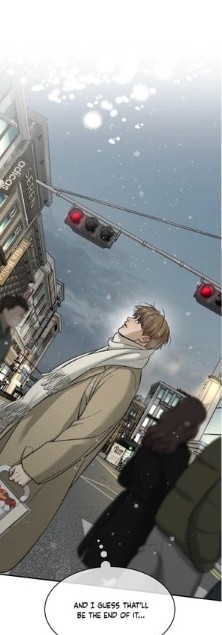 (chapter 97) whether he will go or remain. While Kim Dan crosses the street lost in thought, the pedestrian signal turns red
 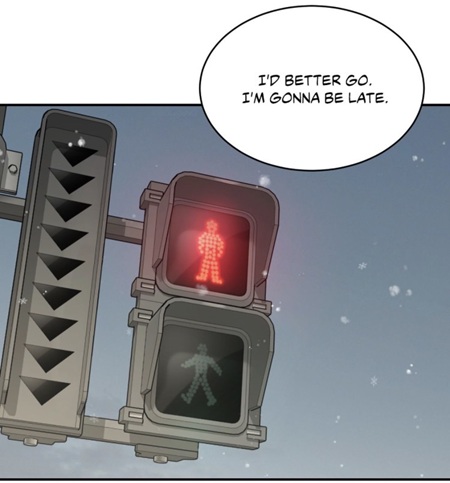 (chapter 97), visually interrupting departure itself. By contrast, Joo Jaekyung’s desire to ask him not to leave
 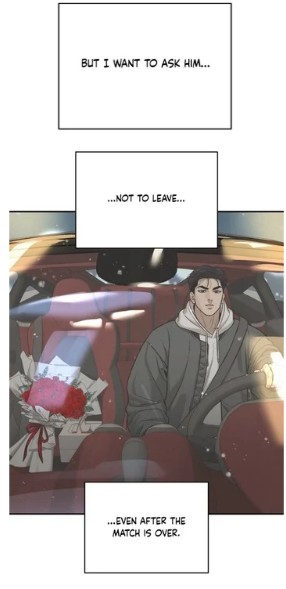 (chapter 97) is paired with forward motion and a green light.
  (chapter 97) The chapter therefore stages two opposite directions at once: one character preparing to walk away, the other trying to keep him near. In that sense, the hallway confrontation strikes at the story’s central tension: stay or leave. (chapter 97) It appears designed to turn Kim Dan away at the very threshold where his deeper desire is already moving in the opposite direction
 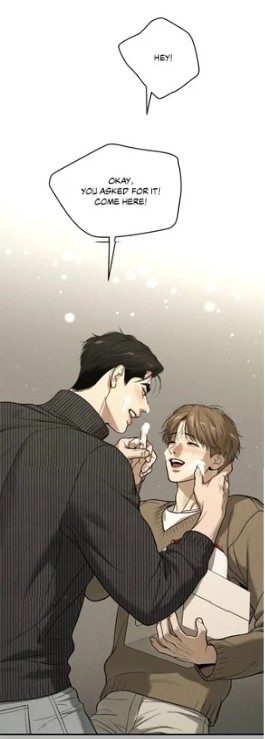 (chapter 97) — not toward departure, but toward remaining at Joo Jaekyung’s side.
There is another reason this matters. To grasp the full significance of the scene, we must remember the beginning of the story. In episode 1, Joo Jaekyung summoned Kim Dan  (chapter 1) to the penthouse and sent him the address while having sex with someone else. Kim Dan arrived under false assumptions, believing he had been called for treatment. In episode 2, not only the hallway was lit
 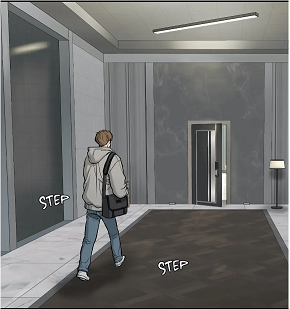 (chapter 02), but also the door stood open, and deception functioned through entry: he was drawn into a private space without understanding what awaited him inside.
 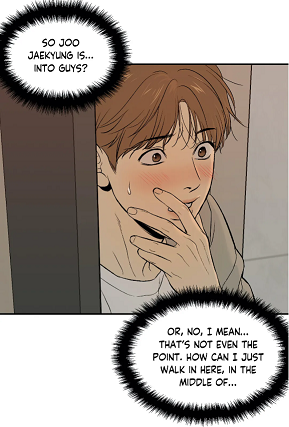 (chapter 2) The present encounter reverses that structure almost exactly. Now the door remains closed and the director is also standing at a certain distance from it. (chapter 97) The intruder does not seek to enter the penthouse, but to stop Kim Dan outside it. Additionally, this contrast strongly suggests that the former director is trespassing rather than arriving by invitation. Deception no longer serves to bring him inward, but to keep him from returning. (chapter 97) What once began with forced access may now continue through engineered exclusion.
The hallway carries another layer as well.  (chapter 40) Earlier in the story, a different corridor became the place where Kim Dan’s heart first moved toward Joo Jaekyung.
 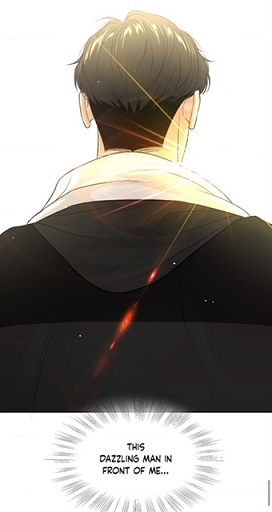 (chapter 40) There, the champion stood in light, framed by cameras and public attention, dazzling through image and presence.
 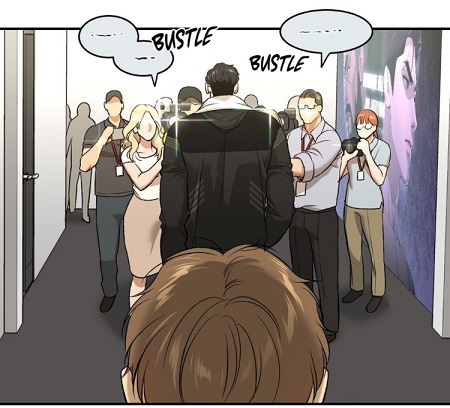 (chapter 40) That threshold marked attraction, recognition, and emotional movement toward him. The present hallway appears as its inversion. Darkness replaces light. (chapter 97) Intrusion replaces admiration. Instead of drawing Kim Dan closer, the scene may be designed to turn him away.
The corridor may carry yet another memory in the champion’s story. On the day before the match  (chapter 49), Joo Jaekyung also encountered Baek Junmin in a hallway while Kim Dan watched from behind. To everyone else, the scene appeared harmless, even cordial: two fighters exchanging a handshake in public view.
  (chapter 49) Yet beneath that surface, something very different was taking place. The Joker used proximity and secrecy to whisper words that dragged the champion back toward a buried past
 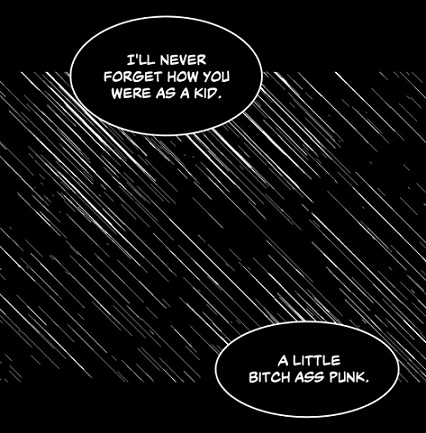 (chapter 49) — weakness, humiliation, the memory of being a vulnerable child. The visible gesture was friendly; the hidden action was psychological assault.
  (chapter 49) That earlier corridor teaches us how these spaces function in Jinx: not merely as passages, but as places where unseen truths move beneath staged appearances. If so, the present hallway may repeat the structure in altered form. Joo Jaekyung now stands nearby but outside the frame, while Kim Dan occupies the position once held by the champion. What was previously aimed at one man’s repressed wounds may now be redirected toward another’s.
And yet darkness does not eliminate the possibility of light. It merely changes its source. In the earlier corridor, radiance came through spectacle. Here, if anything is to shine, it may have to shine through words: truth spoken aloud, motives exposed, guilt refused, emotional clarity finally named. That possibility matters because it points beyond Joo Jaekyung’s earlier response at the restaurant, where force answered insult. 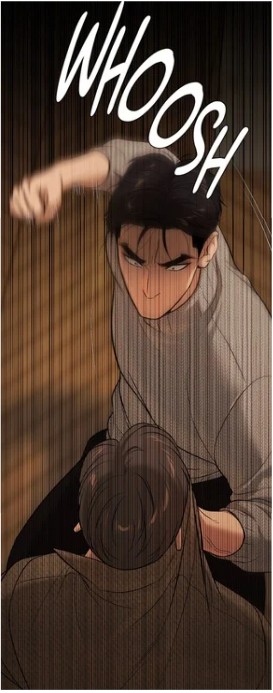 (chapter 90) This new threshold may demand another kind of strength altogether.
For that reason, the hallway should be understood as more than a corridor. It becomes a stage, a threshold, a place of transition, and certainly a test. The lighting, the distance, the delayed reveal, the closed elevator, the calm intruder, and the frozen witness all make the encounter feel less like reality unfolding naturally and more like a scene being performed. Before anyone speaks, the setting itself tells us that this night has been scripted to look like chance. Beneath the silence, another question is already waiting: stay, or leave?
The Joker’s Mask
The former director’s face matters as much as his position. (chapter 97) Mingwa draws him in a strangely diminished way. His bruises have almost vanished, yet not entirely. His glasses are opaque, hiding the eyes. Most striking of all, his mouth seems absent.
This is not how a fully present person is framed. It is how a function is framed. Without visible eyes, we cannot read sincerity, shame, fear, remorse, or hesitation. Without a readable mouth, speech itself becomes suspect. He does not appear as a man arriving to express something authentic. He appears as a messenger carrying lines that may not truly belong to him. Someone else may be speaking through him before he even opens his mouth.
The fading bruises deepen this effect. The traces of earlier violence remain, but only faintly. Darkness covers what is left of them. Old damage is neither fully shown nor fully erased. It is managed. The image suggests someone who carries the past into the present, yet only in the form most useful for the current performance.
The shadows may conceal even more than injury. (chapter 97) The man appears to be wearing the same clothes as before, linking this encounter to his earlier humiliation and social decline. 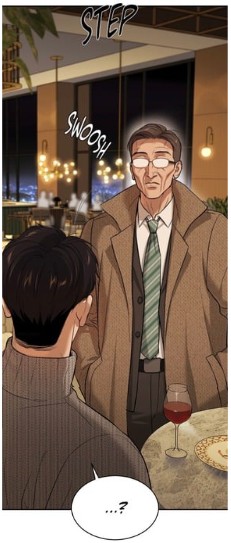 (chapter 90) If so, the lack of light performs another function: it softens the visible signs of downfall. (chapter 97) The corridor does not simply hide wounds. It hides status. Poverty, disgrace, and failure are pushed into the background so that another narrative can stand in the foreground. By concealing how diminished he truly is, the scene allows Kim Dan to momentarily forget that this is a defeated enemy. In shadow, he can return as something more imposing: not a fallen man, but a ghost from the past.
 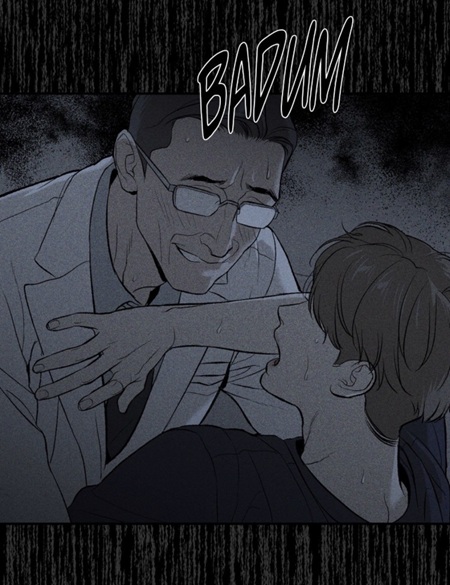 (chapter 90)
That contrast becomes sharper when we remember how he was drawn earlier in the story. Then, the director was all excess: licking lips 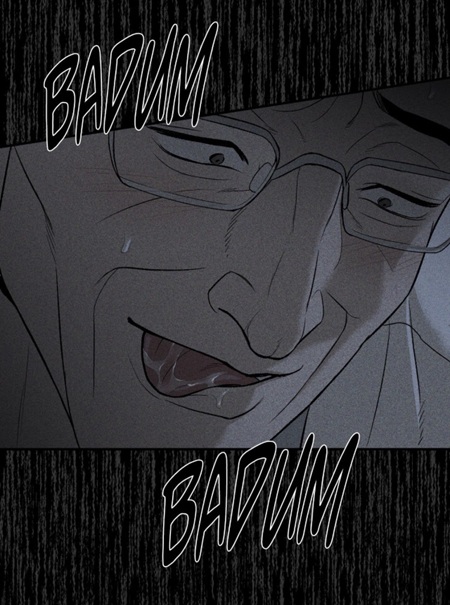 (chapter 90), sweating greed, vulgar speech
 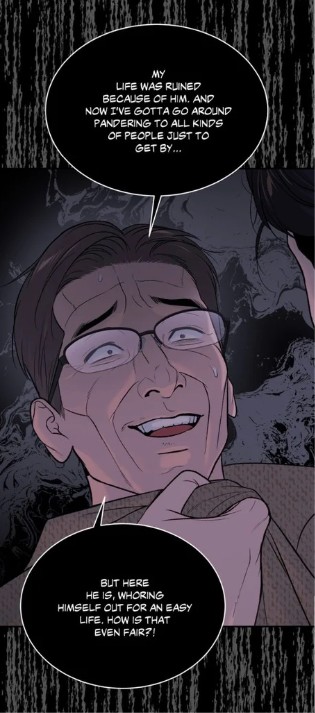 (chapter 90), predatory fantasy, shameless mockery
 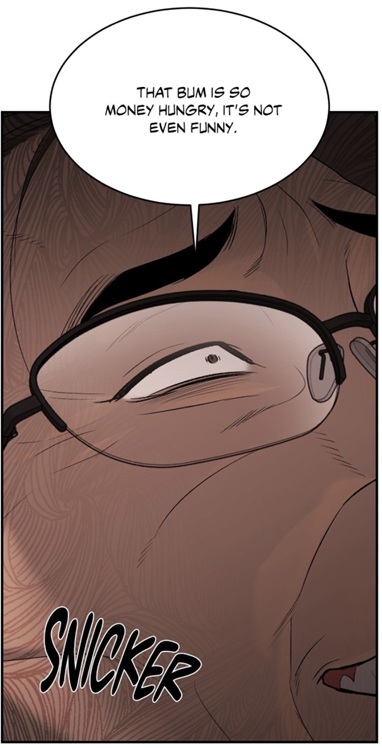 (chapter 90), and a grin
 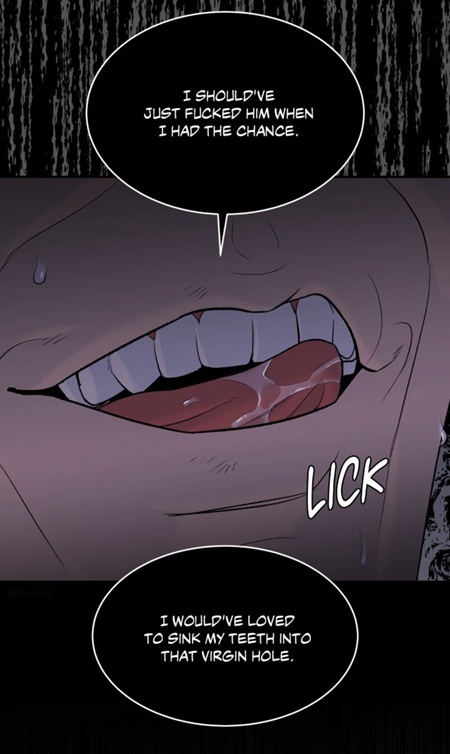 (chapter 90) that exposed appetite without restraint. He was visually loud, almost grotesquely transparent. Readers did not need to guess what kind of man stood before them. His face announced it.
Now the opposite occurs. (chapter 90) The eyes are hidden. The mouth recedes. The body grows still. The vulgar man seems to vanish into silence. But this should not be mistaken for redemption. Nothing in the visual language suggests genuine growth or moral awakening. What we are shown is not transformation, but suppression. He is not rewritten; he is dimmed.
And because he is low-key, language moves to the center. If the face cannot be trusted, if motives cannot be read, if the body itself has been visually reduced, then words can only become the true instrument of the next encounter. The danger is no longer what he can do, but what he has come to say. That is why he feels less like a person arriving with his own truth than a carrier of prepared lines — accusations, selective facts, emotional triggers, or a version of the past designed to wound on command. The real blow may not be physical at all. It may arrive through sentences.
The image also evokes an unexpected cultural echo. The facelessness recalls the famous scene in The Matrix where Neo suddenly discovers he has no mouth.

There too, the horror lies not in physical violence alone, but in the revelation that reality itself has been controlled by a larger system. Speech is removed because truth has been confiscated. The association is striking here. The former director appears less like a free subject than a man absorbed into someone else’s script. Yet the parallel may go further. In The Matrix, Neo eventually becomes the one who breaks the illusion. If this hallway is built on false appearances, then the real question is not whether a mask has arrived, but who will refuse the reality it tries to impose.
If the director is a mask — no eyes, no mouth, no visible agency — Kim Dan is becoming the opposite. (chapter 97) Even in shock, his expressions remain vivid and legible. His silence is full of inner questions. He thinks, reacts, judges, and feels in ways the other figure no longer seems able to display. The scene therefore stages more than an encounter between two characters. It stages a collision between a hollow vessel and a developing soul.
This is why a sincere apology feels unlikely as the true purpose of the scene. (chapter 97) If repentance were central, the image would need visibility: a readable face, clear bruises, accessible emotion, remorse we could recognize. As you can see, the scene in the hallway contrasts so much with the one in the Fairy wheel with the firework  (chapter 84), where both main leads were trapped “together” and sound played a huge importance. Instead, the final scene in episode 97 withholds precisely those things. The darkness does not stage confession. It stages concealment. (chapter 97) The man himself becomes harder to read so that attention shifts toward whatever story he has been sent to deliver.
That is why the director feels less like the author of the scene than one of its props. He may move and speak, yet the visual language reduces him to an instrument: a body placed in the hallway so that someone else’s strategy can speak through him. He is not the Joker. He is the mask the Joker chooses to wear. If the Director is a prop (the Mask) and the hallway is a stage, then the only way for Kim Dan to “win” is to refuse the script.
The Conditions of Entry
We have already established the most important surface illusion: from the outside, it could appear that Kim Dan had left the penthouse. He no longer appeared at the gym. No one seemed to mention him to Joo Jaekyung. The champion himself was increasingly framed in isolation 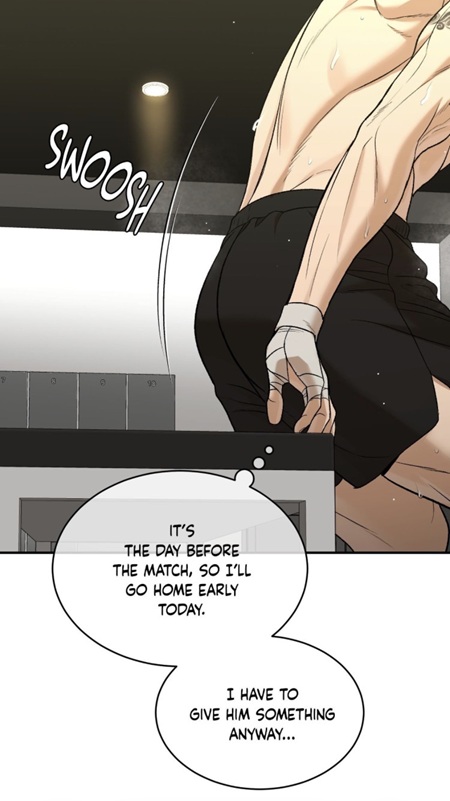 (chapter 97), absorbed by training and the imminent match. Publicly, Kim Dan had vanished. Privately, he had not moved at all.
What makes this significant is that Kim Dan himself may not have realized how easily absence can be misread. To him, remaining inside the apartment for several days may have meant reflection, hesitation, emotional conflict, or simply staying out of sight. 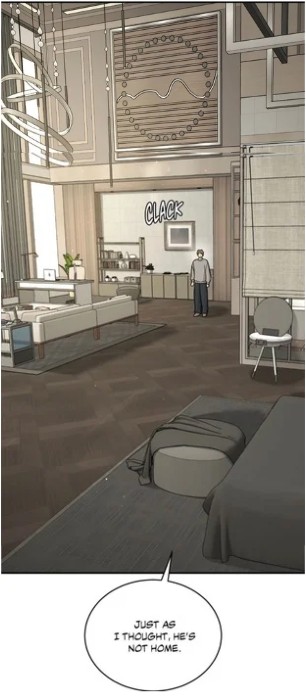 (chapter 97) To outsiders, however, invisibility can quickly harden into narrative. If a person is no longer seen, people begin to explain that disappearance for themselves. And the easiest explanation is often the wrong one.
We have already seen this with Joo Jaekyung. After the match, Kim Dan was no longer beside him 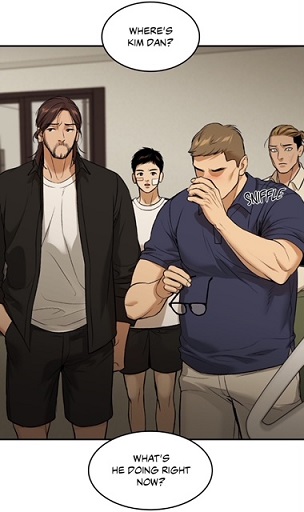 (chapter 52), and the champion interpreted that separation through what little he could observe. Later, at the hospital, he heard that Kim Dan had quit.
 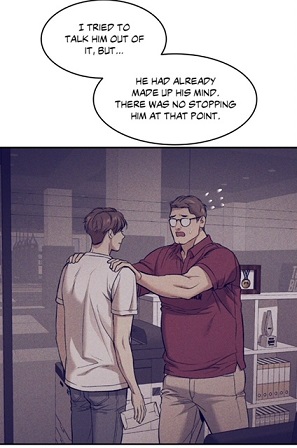 (chapter 53) But quitting the job did not automatically mean leaving altogether. In his mind, Kim Dan had stepped out of the professional role, not necessarily out of his personal orbit. The evidence before him therefore remained partial: distance, silence, and formal resignation, but no clear answer about the bond between them. Hence he imagined that the main lead was still living in the penthouse.
  (chapter 53) Yet what he “knew” was never the full truth. It was a narrative assembled from scattered pieces while the emotional reality remained elsewhere.
There is another reason to take this seriously. Earlier in the story, Kim Dan was already being watched. 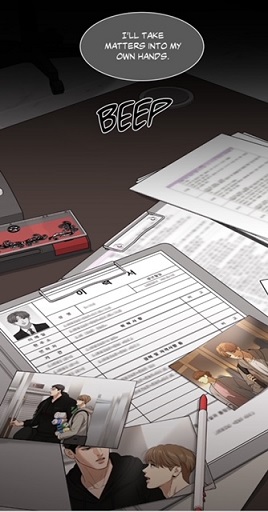 (chapter 46) Secret photographs were taken of him without his knowledge. According to me, Baek Junmin was the one behind the camera. The hamster’s movements were monitored. His connection to Joo Jaekyung was observed from afar. That matters because it suggests the schemers did not suddenly become interested in him now. They had already understood that the physical therapist was not a minor side figure, but someone emotionally tied to the champion. If one wanted to wound Joo Jaekyung indirectly, Kim Dan had long been the obvious path.
At the same time, those operating from the shadows would have every reason to conceal their own involvement. 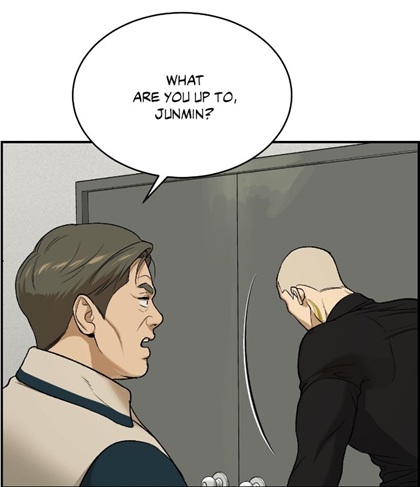 (chapter 93) If Baek Junmin and Choi Gilseok are orchestrating events, they cannot appear to be doing so. A clean scheme often works best when responsibility seems to originate elsewhere. The most effective leak is not the one traced to its author, but the one attributed to an innocent intermediary.
This is where Park Namwook becomes central. Whether knowingly or not, he may be the most useful source of mistaken information in the entire system. He lives close enough to the champion’s routines to notice changes, yet not close enough to grasp their private meaning. He sees absence  (chapter 66), altered schedules, replaced meals, and silence. From those fragments, a conclusion becomes tempting: Kim Dan is gone. Joo Jaekyung is alone again. And finally, don’t forget how Doc Dan was introduced to the champion for the first time
  (chapter 1): he had been hired by Park Namwook, for the previous physical therapist had suddenly quit.
  (chapter 1)
If that assumption took hold, it could open the perfect pretext. The former director would not need to arrive as an intruder, but as a practical solution.  (chapter 1) A replacement. A therapist. Someone sent because the champion supposedly lacks proper care before an important fight, and, unlike others, is not asking too much money.
 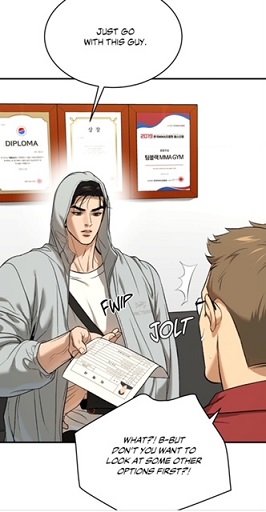 (chapter 54) Observe how the manager reacted, when Joo Jaekyung selected the one with a lot of credentials. Park Namwook jolted. The language of professionalism becomes cover for personal sabotage. Entry is granted not through force, but through usefulness.
And this possibility gains weight when we remember the beginning of the story. Kim Dan first entered Joo Jaekyung’s orbit through need, employment, and convenience. 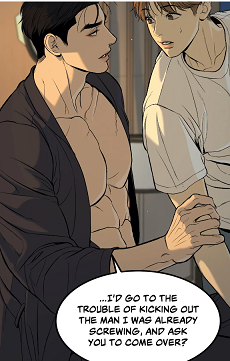 (chapter 2) Professional necessity became the doorway through which a far more intimate bond later emerged. If so, the present scheme may mirror that origin in corrupted form. What once began through work and gradually became attachment is now imitated as strategy. A “helper” is sent not to heal, but to divide.
Even Park Namwook’s earlier words cast a shadow here. He claimed they had brought Joo Jaekyung the best in the industry  (chapter 5), yet Kim Dan’s own life tells another story: job loss
 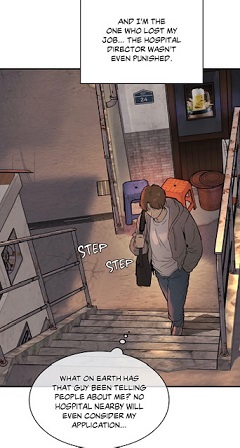 (chapter 1), exclusion, desperation, and a system willing to discard him while rewarding others. The language of merit has never been neutral in Jinx. It often hides power, convenience, and who gets chosen or erased.
There is also a darker irony beneath the practical excuse. Sending the former director under the pretense of treatment would place bodily care (chapter 97) beside an old superstition already tied to the story: sex before a match, the so-called jinx. In that framework, the intruder becomes more than a substitute therapist. He becomes the bridge through which blame can later travel. Professional contact, private scandal, and preexisting fear could all be rearranged into one accusation.
Such a scene would not only endanger Kim Dan. It would immediately raise another chain of suspicions: who knew where they lived, who allowed access, who understood the timing, and who knew enough about the champion’s private beliefs to exploit them. Anyone linked to that chain could appear implicated, whether guilty or not. Once again, appearances risk becoming accepted as truth before the latter has even had the chance to appear.
At the same time, Kim Dan’s role itself could be distorted. The physical therapist who offers care may be recast as something else entirely — a source of temptation, scandal, or transactional intimacy. In that sense, the scheme would not merely attack people. It would attack identities.
That is why the true question is not simply how the man entered the building. He may have entered much earlier — the moment appearances replaced truth, assumptions replaced knowledge, and a system once again mistook Kim Dan’s invisibility for his absence.
Queen Han Dan Learns to Speak
Before going further, I should pause for a moment and explain the title. Why Han Dan? Why a queen? Why borrow concepts that, until recently, were unfamiliar to me as well? I only began thinking in these terms after watching this video that introduced two emotional ideas often associated with Korean drama narratives: Jeong and Han.
Once I encountered those notions, the recent evolution of Kim Dan and Joo Jaekyung began to appear in a new light.
Jeong can be described as a deep bond formed slowly through shared everyday life. It grows through meals, routines, repeated gestures, quiet care, silent loyalty, and the feeling that these are my people. It is not limited to romance. Jeong often appears in the background, through presence more than declaration, through consistency more than spectacle. It is affection sedimented over time.
Han, by contrast, is compressed sorrow mixed with resentment that never fully disappears. It is the emotional weight left by abandonment, humiliation, injustice, debt, grief, or wounds that remain unresolved. Han is pain carried forward in time. It may remain silent for years, then suddenly speak through anger, distance, bitterness, or refusal.
In the earlier chapters, Kim Dan seemed to embody Jeong more clearly.  (chapter 56) He stayed beside his grandmother. He worked despite exhaustion. He treated Joo Jaekyung despite fear and humiliation. He cooked
  (chapter 22), cleaned, worried, forgave, and endured. Much of what he gave happened almost invisibly. And that is precisely why Jeong is so often underestimated. It does not announce itself dramatically. It appears in support that is constant yet barely noticed until it is missing. Kim Dan’s passivity and silence were therefore not emptiness, but one form of devotion. I admit this was not immediately obvious to me. At times, Kim Dan’s attitude even frustrated me, because I was shaped by a different cultural environment — one in which care is often expressed more directly, emotions are verbalized more openly, and disagreement is more readily shown. Imagine that he did not talk to his roommate for 8 days!
 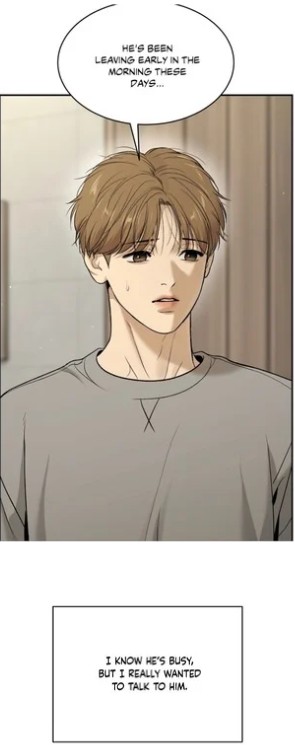 (chapter 97) In his mind, he was being considerate. He was giving him space,
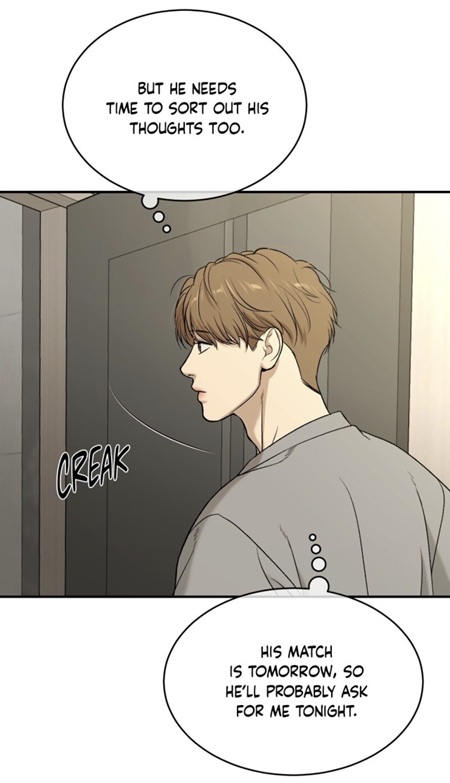 (chapter 97) supporting him quietly. In such a framework, silence can easily be interpreted as weakness, passivity, or a lack of personality. Precisely for that reason, the concept of Jeong became so illuminating. It allowed me to recognize that affection does not always announce itself through dramatic words or visible intensity. Sometimes it is carried through constancy, restraint, everyday gestures, and the quiet decision to remain.
Joo Jaekyung, on the other hand, was marked by Han. 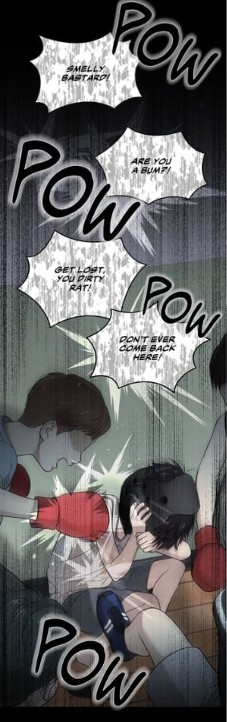 (chapter 72) He carried paternal violence
 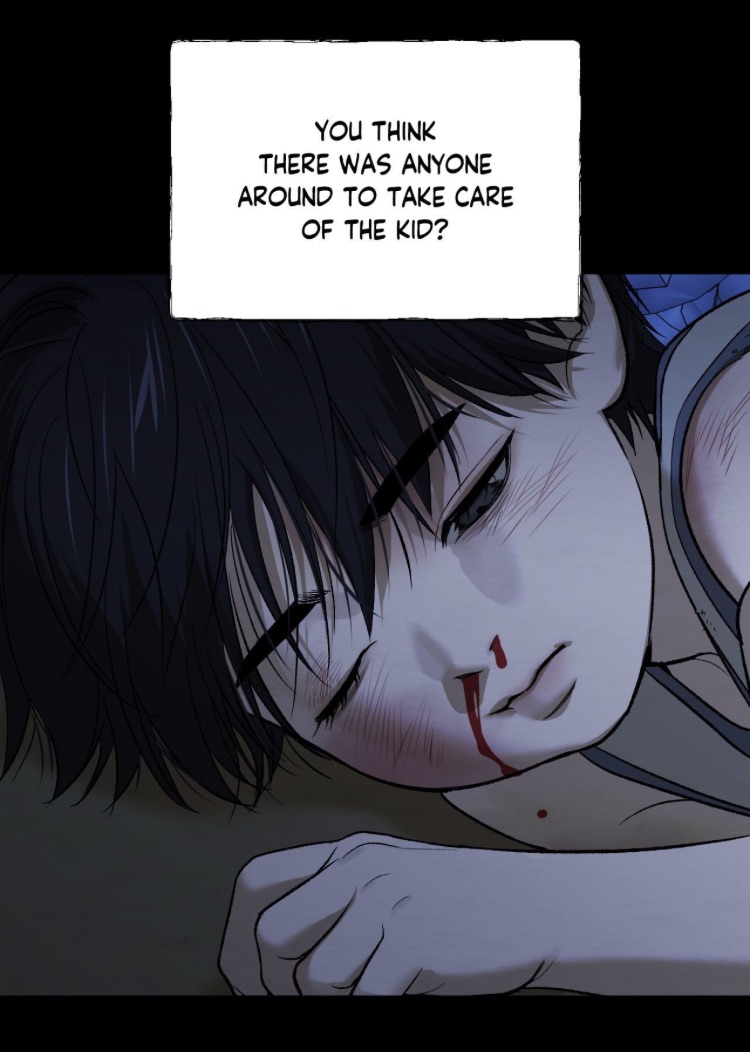 (chapter 72), maternal abandonment, poverty, humiliation, insomnia, and the pressure of surviving through strength alone. His anger, possessiveness, and emotional volatility
 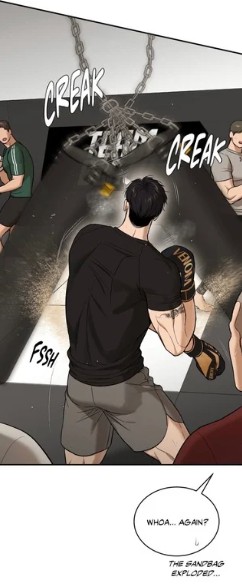 (chapter 91) were the visible forms of pain that had never healed. Even his need to control others often looked less
  (chapter 45) like confidence than fear translated into aggression.
Yet the story has changed. Kim Dan was the first to express animosity openly in season 2. He criticized Joo Jaekyung. He pushed him away. He refused his offers. He told him plainly that this was how he had always been treated. (chapter 64) Silent suffering became spoken judgment. Han entered his voice.
His collapse and departure only deepened that shift. He no longer swallows everything in silence. He no longer acts as a servant of Park Namwook, he keeps distance from him. 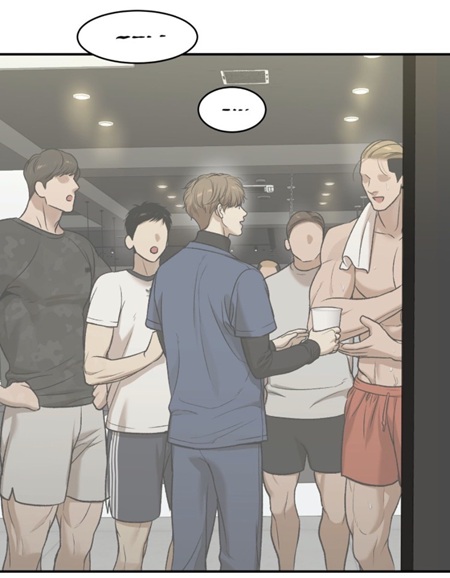 (chapter 95) He no longer feels endlessly obliged. And when he sees the former director, his second reaction is not meekness but disgust.
 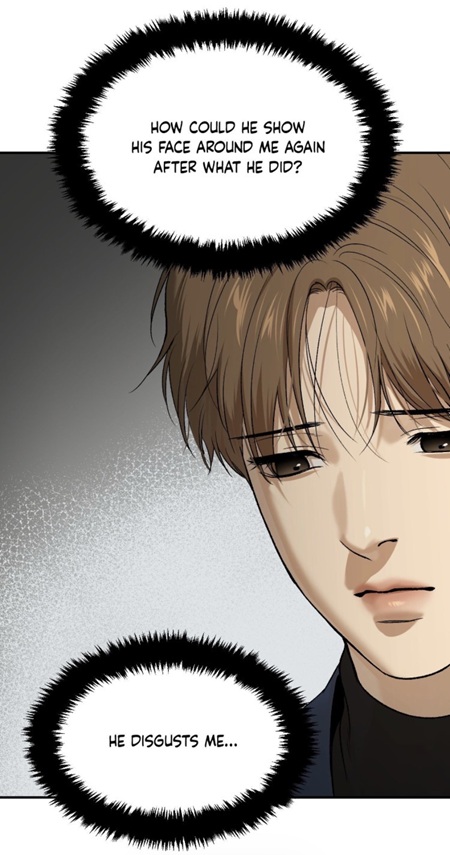 (chapter 91) That matters. Resentment is no longer buried beneath obedience. It has become part of his emotional language. But this change is not limited to anger alone. It also deepens Kim Dan’s ability to reflect. Earlier, he often positioned himself only as the one who had to endure, obey, or silently adapt.
 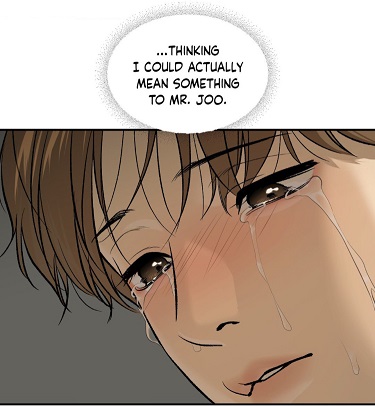 (chapter 46) Now he begins to examine situations from more than one side. He can recognize not only how he was hurt
 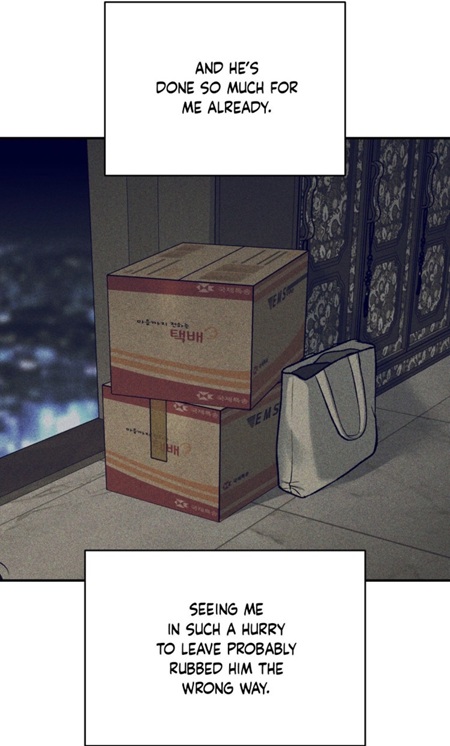 (chapter 97), but how his own actions may have wounded others as well. When he remembers packing in haste and preparing to leave, he no longer sees himself simply as justified and Joo Jaekyung as wrong. He understands that sudden departure, silence, and emotional withdrawal could wound the other person too.
That shift matters because it opens the door to reinterpretation. Once experience is no longer divided into victim and offender, Kim Dan can finally perceive gestures he once dismissed. 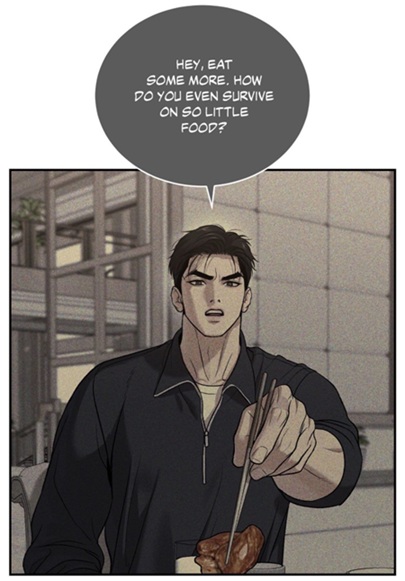 (chapter 97) A command to eat more, once read as control
 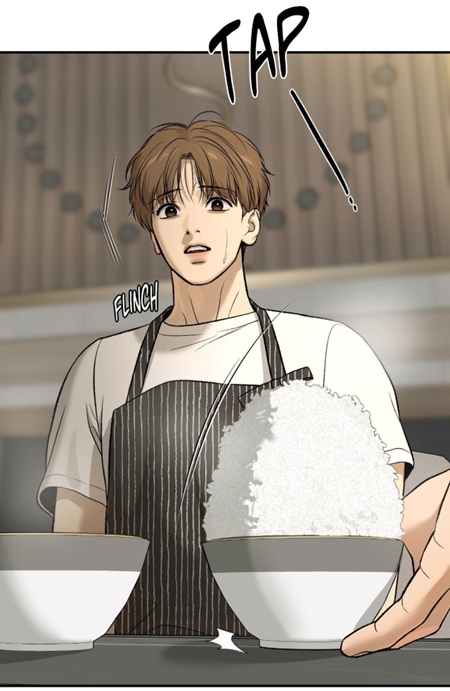 (chapter 79), can be understood as concern.
  (chapter 97) Practical attention can reveal tenderness. What had seemed oppressive begins to show another meaning. This delayed recognition matters because Jeong is not always perceived in the moment it is given. For Joo Jaekyung, its value becomes visible through distance, uncertainty, and the fear of loss. For Kim Dan, recognition emerges differently: through gratitude, self-reflection, and the gradual realization that gestures once dismissed or misunderstood had been forms of care all along.
It also explains why Kim Dan rarely expects care for himself. For so long, he embodied the side of Jeong that gives, supports, and remains present for others. 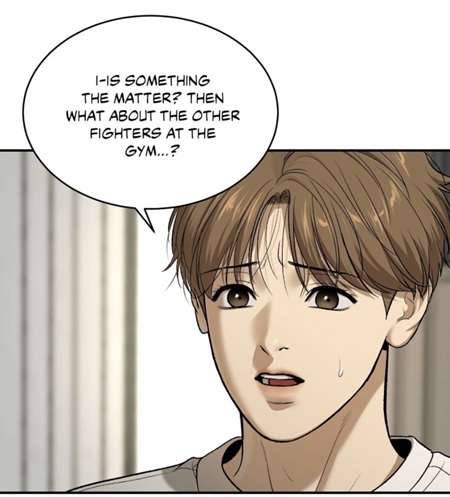 (chapter 96) He knew how to look after people, but not how to imagine being looked after in return. Receiving affection is often harder than offering it.
The same transformation can be seen in Joo Jaekyung. As Han encounters Jeong, strength begins to change its meaning. He starts to notice another world beyond force, pride, and survival: a world of mutual attention , small gestures 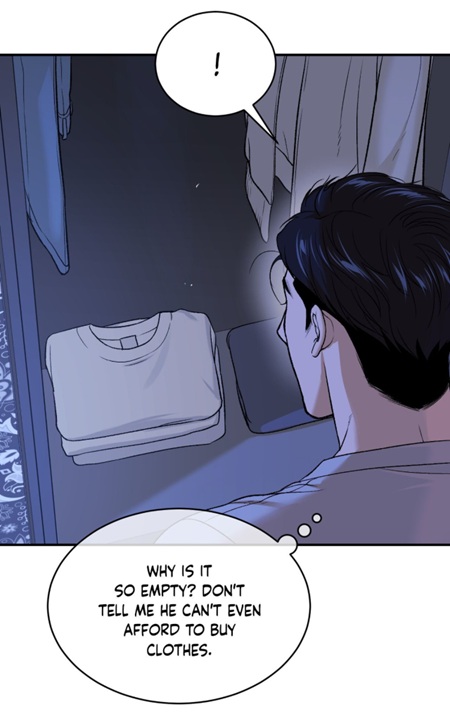 (chapter 80), and emotional responsibility.
 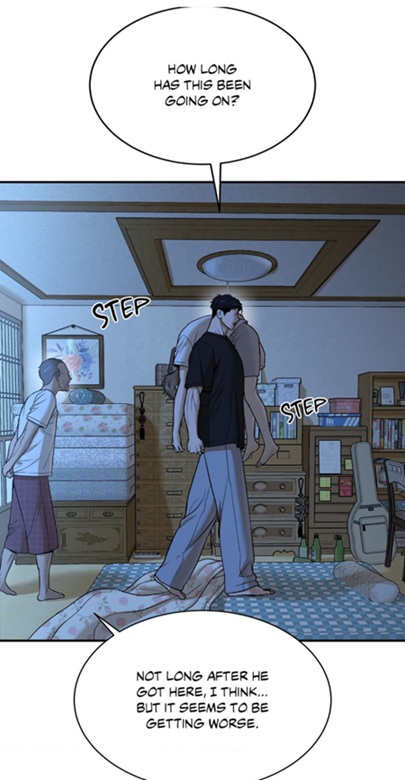 (chapter 65) In different ways, both men are learning that relationships are not built through victory over the other, but through a new way of seeing one another.
Meanwhile, Joo Jaekyung has begun to move toward Jeong. One key moment came when he blamed Baek Junmin 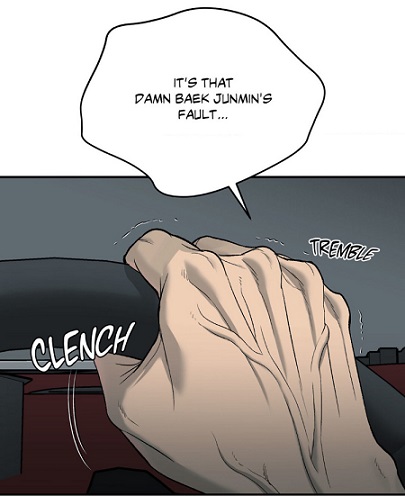 (chapter 54) rather than Kim Dan. He distinguished the real source of harm instead of attacking the nearest vulnerable person. Since then, he has worried about Kim Dan’s meals, noticed his body, bought flowers and cake, remembered small preferences, and even more than ever wants him to stay after the match. Care has begun to replace reflexive aggression.
This is where the title becomes meaningful. Han Dan is not mockery. It names Kim Dan’s transformation into someone who can finally carry and express Han instead of burying it beneath everyone else’s needs. It may also mean, for the first time, that his resentment will be directed outward — not against himself, nor only against Joo Jaekyung, but toward those who truly abused their power, such as the hospital director. The playful word queen acknowledges another change: he is no longer standing at the edge of the drama like a pawn moved by stronger hands. He has become central to the game itself.
In chess, the queen is the most versatile and often the most decisive piece. She is also the piece players fight hardest to protect. That symbolism matters here. Kim Dan may still appear vulnerable to those who underestimate him, but he now occupies the emotional center of the story. To remove him is no longer to remove a side character. It is to destabilize the entire board.
And there is one more reason the title matters now. If the current chapter turns on the question of whether he will stay or leave, then Kim Dan is no longer merely choosing for himself. His movement now affects the structure around him. That is what queens do in stories and in games alike: they transform space through the position they occupy.
There is also a more playful yet surprisingly revealing possibility hidden in the scene. Kim Dan does not return empty-handed 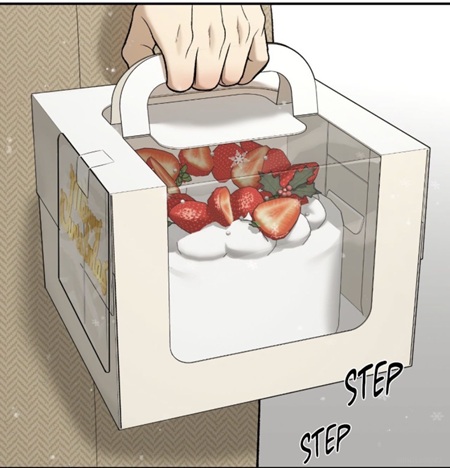 (chapter 97), but carries a birthday cake covered in cream — an object already charged with recognition, celebration, affection, and the wish to create a shared moment. Just as importantly, playfulness is no longer absent from Kim Dan’s inner world. The man who once moved through life almost exclusively through duty, anxiety, and endurance is now capable of imagining teasing intimacy, shared fun, and lightness with Joo Jaekyung. (chapter 97) That shift matters enormously. It means joy has entered a consciousness long governed by burden.
In the exaggerated emotional grammar of many Korean dramas, conflict is often expressed through symbolic gestures such as the famous kimchi slap, a drink thrown in someone’s face or poured on someone’s head  (chapter 37), or another act of public humiliation in which ordinary objects suddenly become dramatic instruments. Read through that lens, the cake in Kim Dan’s hands contains its own ironic potential: it could become not merely dessert, but a comic weapon of refusal, an insult that answers intrusion with ridicule.
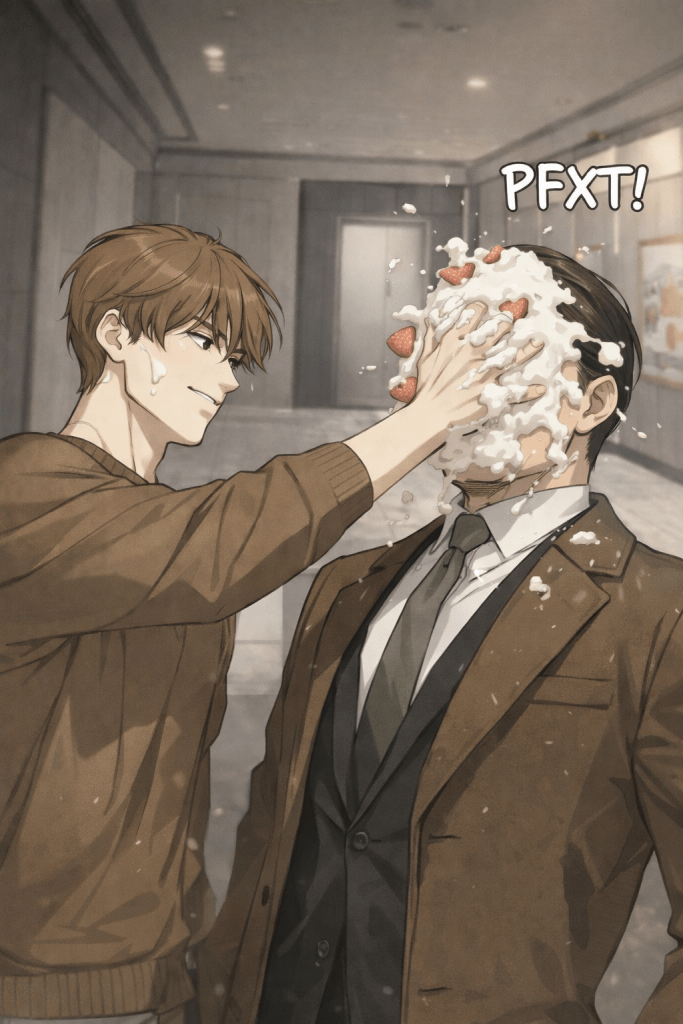
Such a gesture would be funny on the surface, yet deeply meaningful underneath. The current arc is framed by seriousness, gravity, contracts, injuries, and psychological pressure before an important match; a messy burst of cream would instantly shatter that oppressive atmosphere and expose how fragile the staged tension really is. It would also reverse Kim Dan’s usual position in the story. For so long, he has been the one acted upon, blamed, cornered, or used by stronger figures. If he were the one creating the scene, even for a moment, he would step out of passivity and become the active force. More than that, the cake suggests a new relational role. (chapter 97) To bring someone a birthday cake is to acknowledge their existence, mark their growth, and care for them. In that sense, Kim Dan is quietly establishing himself as a hyung (chapter 97) — not the domineering version represented by Baek Junmin 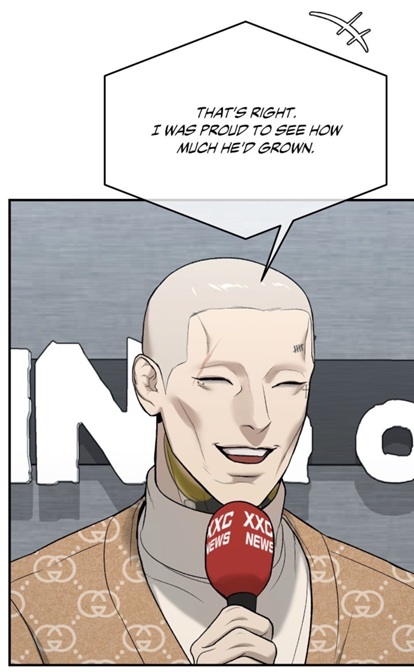 (chapter 96), who claimed authority through superiority, manipulation, and the posture of the one who “knows better,” but a different kind of hyung whose authority comes through tenderness, emotional understanding
 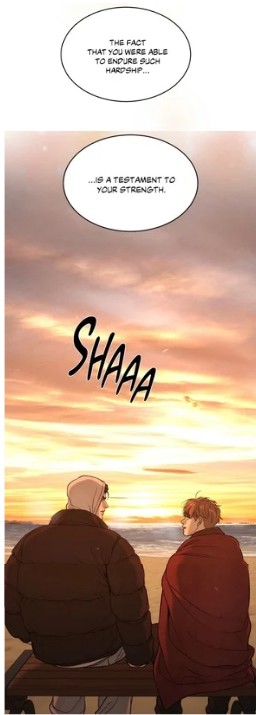 (chapter 95), and the ability to create warmth. If the self-proclaimed men of power arrive with schemes
 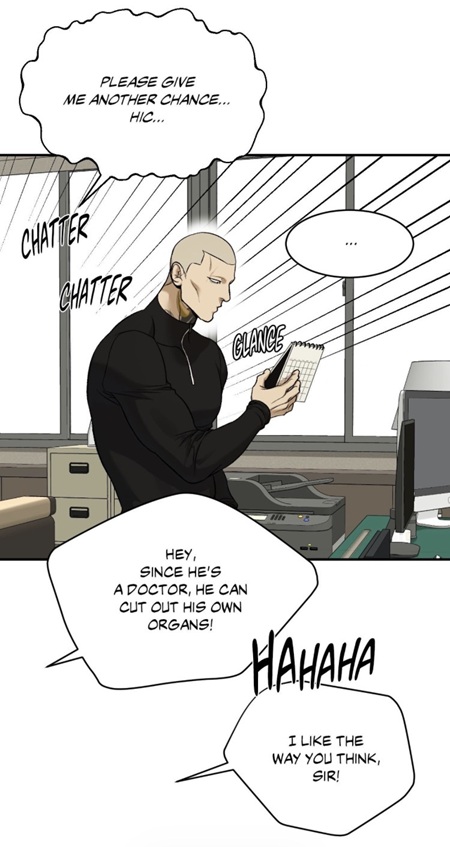 (chapter 93), threats, and humiliation, Kim Dan arrives with celebration, and perhaps with fun as well, a different kind of enjoyment and laughter than the Joker’s.
 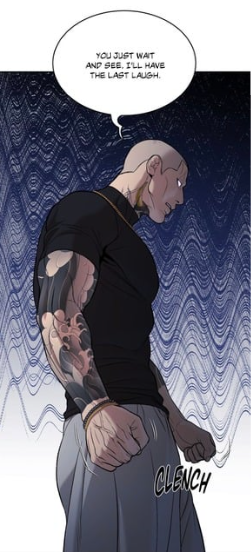 (chapter 87) With this panel it is clear that Baek Junmin will never have the last laugh. Anyway, the impact of such a reversal would not be limited to the intruder alone. Instead of answering tension with more anger, Joo Jaekyung himself could be drawn into laughter. That possibility is relevant, because laughter would do what violence cannot: it would break the script from within. Remember how powerless he felt after the exposure and humiliation.
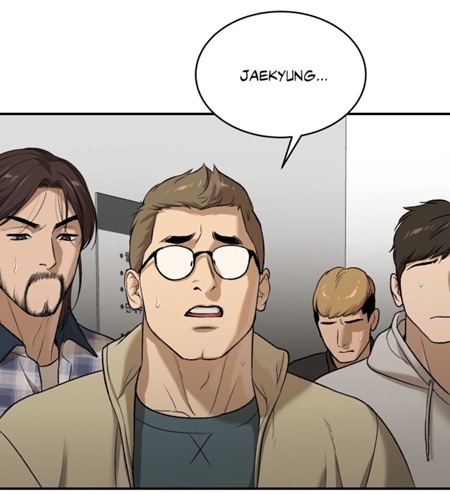
 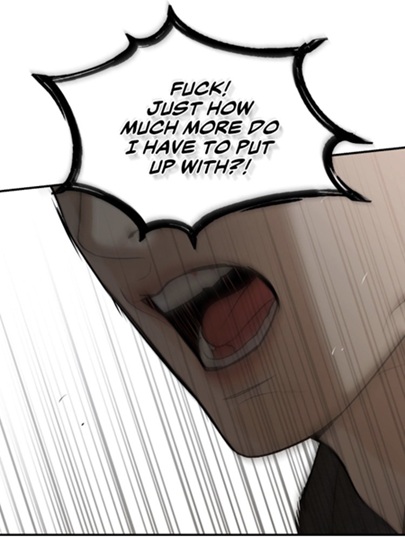 (chapter 96) No one was there to cheer him up, they all stood silently and passively.
  (chapter 9) And if that very object of care were turned against the intruder, the symbolism would become sharper still: false authority would be confronted by a truer one, and the entire machinery of intimidation would collapse into absurdity. What appears playful therefore leads back to the deeper logic of the title itself, because every new gesture Kim Dan makes now carries structural weight within the story. And there is one more reason the title matters now. If the current chapter turns on the question of whether he will stay or leave, then Kim Dan is no longer merely choosing for himself. His movement now affects the structure around him. That is what queens do in stories and in games alike: they transform space through the position they occupy.
The Joker’s M.O.
If the hallway is the stage and the former director the mask, then Baek Junmin’s true weapon is not brute force, but construction. He does not merely strike; he arranges circumstances in which others mistrust one another and accept a false story as truth. The earlier image of him studying the calendar already suggested a man interested less in impulse than in timing, pressure, and sequence. (chapter 93) A manufactured narrative is far more dangerous than a visible enemy because it recruits its targets into its own logic, compelling them to generate the suspicion, conflict, and emotional damage themselves. The Joker does not need to control every move if he can persuade others to perform the script for him. 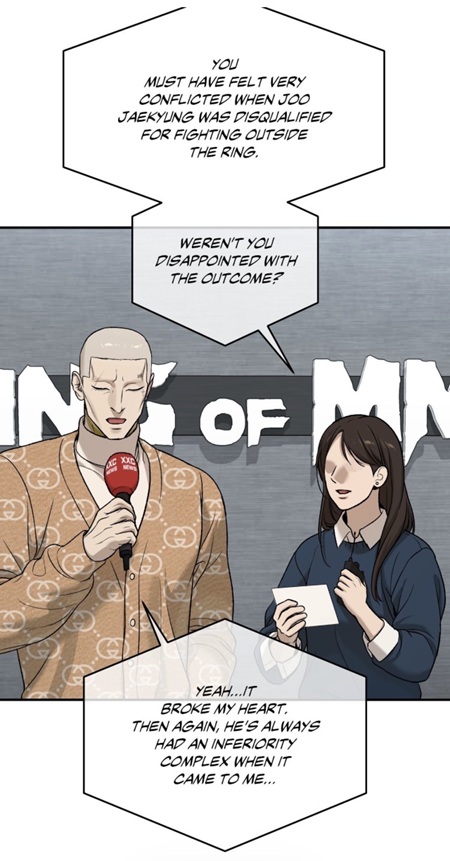 (chapter 96)
We have seen this layered pattern before. Prior to their first match, the public meeting between Kim Dan and Choi Gilseok functioned as a visible distraction  (chapter 48), as they met in front of the building where the gym Team Black is. Besides, the encounter was easily photographed and readily interpreted as betrayal.
 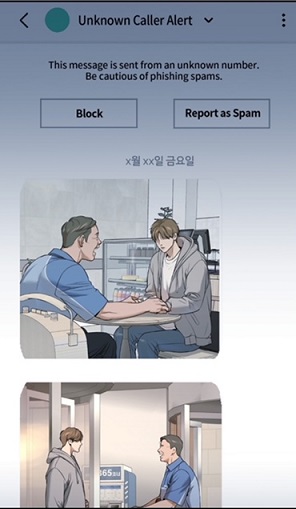 (chapter 48) Yet behind that surface stood the hidden move: the altered spray
  (chapter 49), seemingly tied to revenge,
 (chapter 48), but more likely prepared in advance to cause damage under pressure. In that reading, the point was never only retaliation. The point was that Kim Dan could later be made to carry the blame for everything surrounding the chaos. One event captured attention, another produced harm, and the true consequence emerged only afterward. What appeared spontaneous was structurally engineered.
 (chapter 51) But the irony is that neither the champion nor his manager called the police for an investigation right away.
The same architecture now returns. 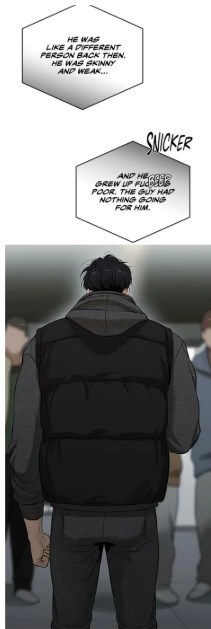 (chapter 96) The interview serves as the public strike — humiliation and provocation aimed at a wider audience. It drags old wounds into the open and fixes attention on spectacle. The ruined poster becomes the next layer: visible violation, immediate outrage, the sense that hostility has entered Joo Jaekyung’s own space. The atmosphere changes before any direct confrontation even begins.
Only after those outer layers comes the darker move: (chapter 97) the hallway encounter. Hidden from public view, detached from cameras, and staged in shadow, it targets something more valuable than image — trust, emotional balance, and the fragile question of whether Kim Dan will stay or leave. Public scandal can be repaired. A shaken bond is harder to restore.
Seen this way, the incidents are not random noise but coordinated pressure applied on different levels. First reputation. Then emotion. Then relationship. First the crowd. Then the self. Then the private space between two people. That is why the Joker is dangerous. He does not merely create problems. He sequences them. He understands that after enough pressure, people begin linking separate blows into one story, even when the links are false. And once that happens, blame can be redirected toward the nearest vulnerable person.
And that is where Kim Dan becomes central. The most efficient scapegoat is rarely the strongest rival. 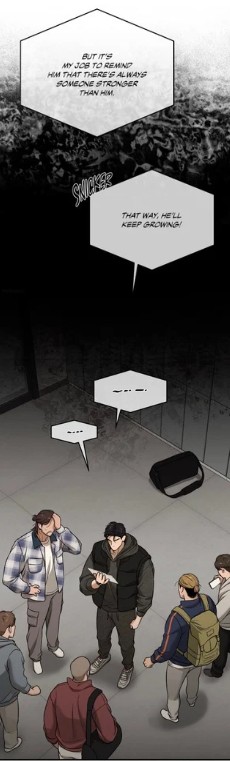 (chapter 96) It is the figure others still believe to be vulnerable: someone economically fragile
 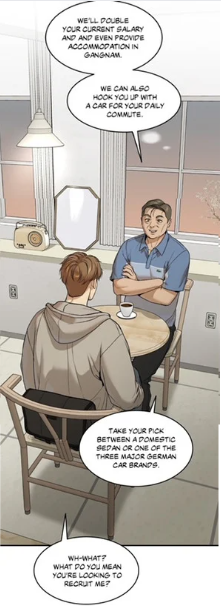 (chapter 48), emotionally tied to the target, marked by past shame and abandonment wounds (he is also an “orphan”), and assumed to carry burdens in silence. From the outside, Kim Dan may still appear to fit that role. The schemers likely imagine a man who is isolated, unsupported, and easy to overwhelm — someone with no real backing, no language of resistance, and no choice but to absorb whatever is placed on him.
That assumption, however, may already be outdated. Earlier in the story, guilt and pressure might have worked more easily. Kim Dan often endured, withdrew, or blamed himself before questioning the motives of others. But he is no longer standing in the same place. He has begun to judge situations differently. He is now ready to talk (chapter 97) and become more proactive, hence he bought a cake, a book and has planned to cook for the champion. This means that he is now capable to recognize manipulation, and to speak where he once remained silent. The very person chosen as the easiest target may no longer be available in the form they remember.
Against the old Kim Dan, an accusation only needed to feel believable long enough to wound. Against the present Kim Dan, it may need to survive scrutiny, contradiction, and reply. And that response may be more dangerous than the accusation itself. For many of the burdens that could be placed on Kim Dan lead back to the former director’s own actions. If Kim Dan lost work (chapter 1), struggled to be hired elsewhere, fell into desperation, or became vulnerable to exploitation,  (chapter 3) those conditions did not emerge from nowhere. They followed the abuse and professional ruin inflicted earlier. The blacklisting was and is the reason why he is not looking for a job in Seoul
  (chapter 56) In that sense, an attempt to blame Kim Dan for everything risks exposing the original cause instead. The man chosen as scapegoat may now be able to point back at the hand that first pushed him toward the edge. The setting makes that possibility even sharper. The hallway is dark, where faces are obscured and appearances become uncertain. But in darkness, a voice can be heard clearly. (chapter 97)
That is why the exact charge (the topic for the guilt trip) can remain flexible. Financial losses, damaged sponsors  (chapter 54), injuries
 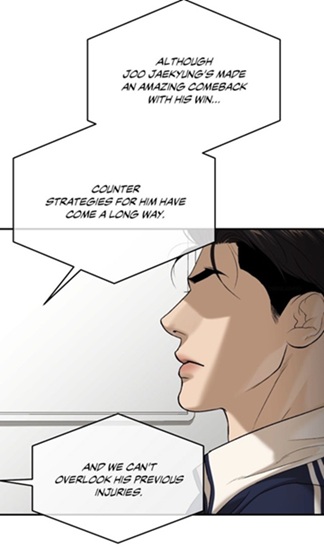 (chapter 95), overtraining, disqualification (chapter 96) leading to the loss of the championship belt — any of these can be reframed as the price of keeping Kim Dan close. Incidents tied to the hospital or health center can be folded into the same narrative. The content changes according to circumstance, but the structure remains the same: different burdens, gathered under one convenient name. He is guilty to have ruined the champion’s life.
Yet the hallway introduces another layer as well: the method of the former director himself. Long before this chapter, his preferred weapon was already visible. He repeatedly transformed abuse  into accusation and his own misconduct into Kim Dan’s supposed guilt.
 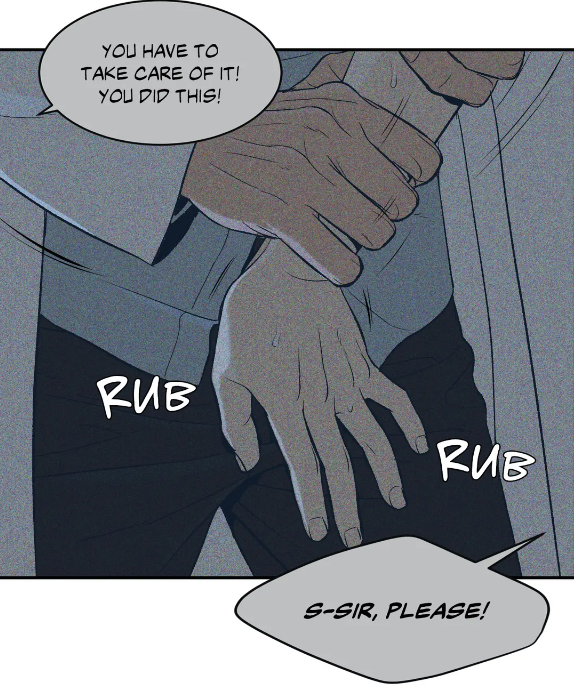 (chapter 6)
 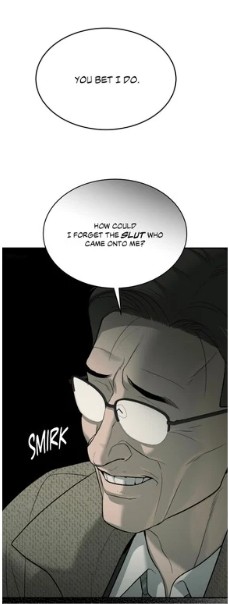 (chapter 90) (chapter 90) The wording changes, but the structure remains constant: responsibility is reversed until the victim feels like the cause.
If such rhetoric returns now, it would not merely repeat the past. (chapter 91) It would reactivate Kim Dan’s deepest vulnerability — the hidden belief that he damages the people around him. That is why separation matters so much. If Kim Dan can be pushed away from Joo Jaekyung first, he becomes easier to confront, easier to shame, easier to burden with every old and new misfortune. At the same time, the former director of the hospital can be blamed, if his presence was detected there. Alone, he can be told that he caused the champion’s losses, scandals, exhaustion, or decline. Beside Joo Jaekyung, those accusations meet resistance. Away from him, they may sink inward.
The true violence of the Joker is therefore narrative violence. He does not invent reality; he edits it. Misunderstandings become destiny. Coincidences become proof. Pain becomes accusation.
This is how a person is turned into a jinx. Not through magic, fate, or any real curse, but through repetition. Enough setbacks are placed beside his name, enough unrelated wounds are retold as his doing, enough guilt is made to feel natural. Eventually, others stop seeing separate causes and begin seeing only him. If pushed far enough, Kim Dan is no longer seen as healer, partner, or future companion. He becomes the explanation for misfortune itself. He becomes the jinx. To transform the emotional center of the story into a curse is to attack the structure forming around him — to recast the Queen as poison. The royal image carries another implication as well. 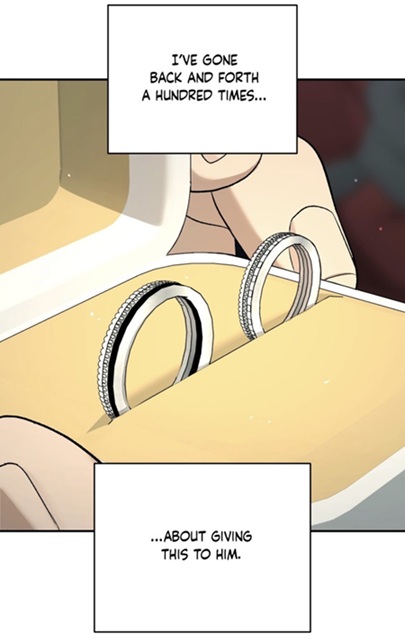 (chapter 97) A queen is not only a powerful piece on the board; she also evokes a form of recognized union. In that sense, turning Kim Dan into a jinx would do more than isolate him personally. It would poison the very idea of partnership beside Joo Jaekyung. The chosen companion, the one meant to remain, is recast as a threat. What should signify attachment, continuity, and perhaps even a future resembling marriage is rewritten as danger. The attack therefore falls not only on a person, but on the bond’s legitimacy itself. (chapter 97)
Yet this retelling carries a second insult that is easier to miss. (chapter 95) It reduces Kim Dan to a curse while also erasing Joo Jaekyung’s agency. The champion is treated not as a man shaped by discipline, endurance, and strength, but as someone passively ruled by outside influence. His achievements, sacrifices, and proven resilience disappear behind the convenience of blame. The scapegoat story diminishes them both.
Ultimately, this method targets their oldest wounds. For Joo Jaekyung, the pressure point is abandonment: the fear that whatever he values will be taken or corrupted. For Kim Dan, it is the belief that he burdens the people he love. Hence he got abandoned. One voice in a dark hallway could therefore reopen two childhood wounds at the same time. If both can be pushed back into those inner prisons, they may damage the bond themselves without the schemer needing to break it directly.
That is why the hallway matters. (chapter 97) It is the newest trigger in a longer chain, designed to make pain interpret everything that follows. Yet the Joker’s power depends entirely on whether the targets accept their assigned roles. The moment Kim Dan rejects inherited guilt, or Joo Jaekyung questions the frame imposed on him, the script begins to fail.
And here the argument returns to the beginning. The dark hallway was never only a threat. It was also a question. Not simply who entered, but who will define what that entrance means.
The first incident is only the surface. What waits beyond it is still open. The two men may stay together (chapter 97), but even that would not be the end of the story. To stay can mean many things: to choose each other openly, to confront the systems around them, to speak truths long avoided, or to leave old roles behind while standing side by side. The real next move may not belong to the Joker at all. But if the script depends on their silence, what happens when the scapegoat finally finds his voice? And if the “Jinx” is proven to be a lie, what remains of the man who built his life around that fear?
Feel free to comment. If you have any suggestion for topics or Manhwa, feel free to ask. If you enjoyed reading it, retweet it or push the button like. My Reddit-Instagram-Twitter-Tumblr account is: @bebebisous33. Thanks for reading and for the support, particularly, I would like to thank all the new followers and people recommending my blog.


