
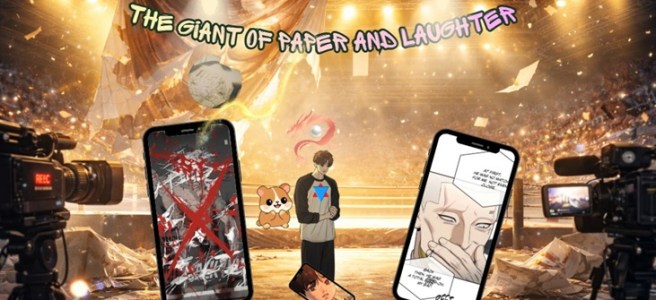
Please support the authors by reading Manhwas on the official websites. This is where you can read the Manhwa: Jinx But be aware that the Manhwa is a mature Yaoi, which means, it is about homosexuality with explicit scenes. Here is the link of the table of contents about Jinx. Here is the link where you can find the table of contents of analyzed Manhwas. Here are the links, if you are interested in the first work from Mingwa, BJ Alex, and the 2 previous essays about Jinx Tactile Dissonance: When Touch Falls Out of Sync and The Giant of Paper and Laughter -part 1
It would be great if you could make some donations/sponsoring: Ko-fi.com/bebebisous33 That way, you can support me with “coffee” so that I have the energy to keep examining Manhwas. Besides, I need to cover up the expenses for this blog.
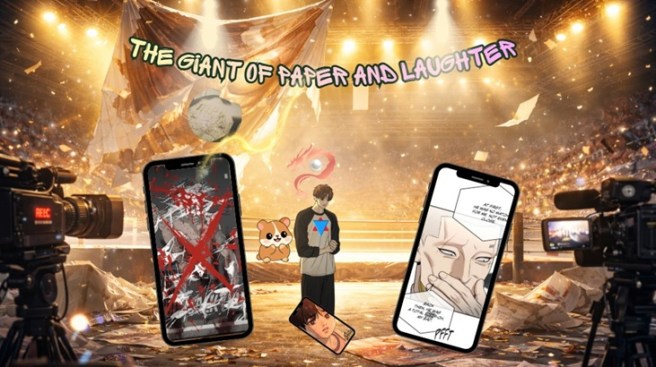
After publishing the last essay, I had another realization. The problem is that with episode 97 being released today, I do not have the time—or the energy—to create a new illustration. And yet, the idea that emerged feels inseparable from my analysis of chapter 96 and its conclusion. It is not a new direction, but a continuation. A prolongation of The Giant of Paper and Laughter.
In the final part, I wrote:
What follows does not extend what came before. It interrupts it. And this new cycle does not begin with a fight. It begins with a decision. The question is no longer external. It cannot be delegated, postponed, or reframed. Should he follow the champion’s words—or respond to what those words conceal? (chapter 96) ‘I want you to stay!’
To obey the word is to remain a servant; to hear the silence behind the word is to become a partner.
At first glance, this moment appears to concern Kim Dan alone. 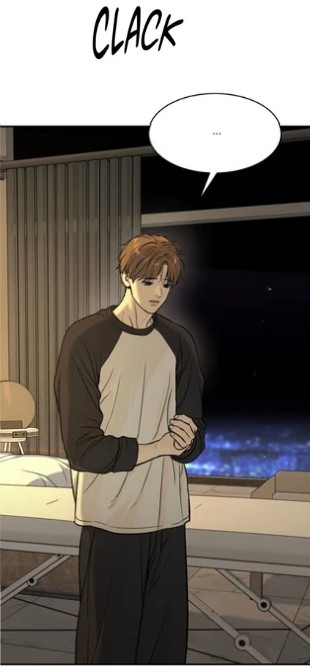 (chapter 96) His hesitation, his position, his choice. But this would be too limited. Because episode 96 does not present a single decision. It constructs a field of decisions.
And within this field, Kim Dan is not the only one who must choose. His position becomes visible precisely because another figure, at the same moment, reveals the consequences of having chosen differently.
This is where Baek Junmin re-enters the analysis. His interview is not simply an attack, nor merely a rewriting of the past. It is the manifestation of a trajectory—a chain of alignments that began long before the present and that now reaches its visible form. What he says about Joo Jaekyung—about wrong choices 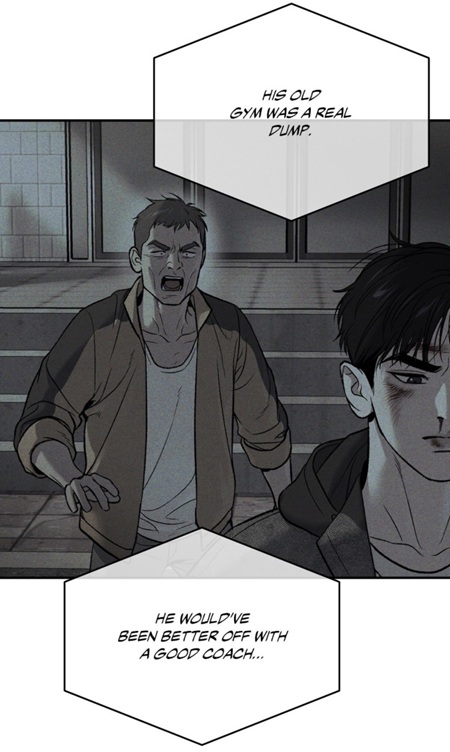 (chapter 96), wrong people, wrong environments—does not only describe the other. It reflects himself. And with this reflection comes something else. Because choices do not only structure positions—they produce affects. What cannot be corrected becomes regret. What cannot be acknowledged becomes resentment. In this sense, the question that concludes the previous essay—what does it mean to choose?—cannot be answered by looking at Kim Dan alone.
It must be read against its opposite. Not the right decision in formation, but the wrong decision repeated.
Repetition without revision
The interview does not merely recount the past; it anchors itself in the present through the choices that continue to define Baek Junmin’s reality. 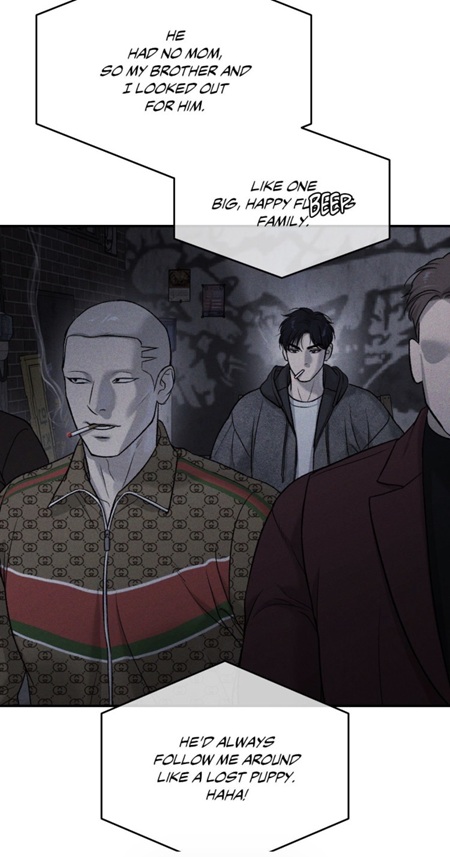 (chapter 96) What begins as a critique of Joo Jaekyung
 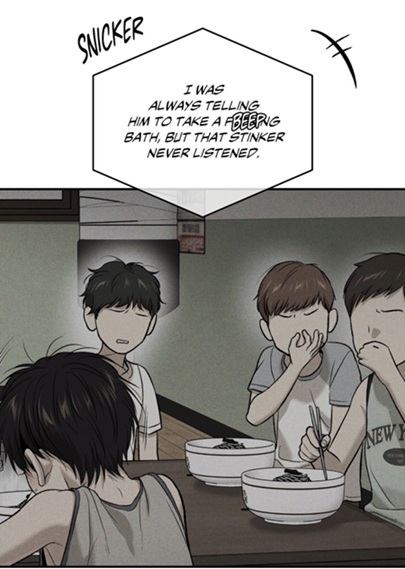 (chapter 96) gradually reveals itself as a confession: a pattern of alignment from which the speaker cannot escape.
He insists—almost obsessively—that Jaekyung chose the wrong path: the wrong gym, the wrong environment, the wrong guidance (Chapter 96). Yet, the moment we shift our gaze from his words to his actions, a different coherence emerges. Baek Junmin is not correcting the champion’s mistakes; he is reproducing them. But this reproduction is not limited to structure. It extends into the relation he claims to describe. What he presents as guidance reveals itself as something else entirely. 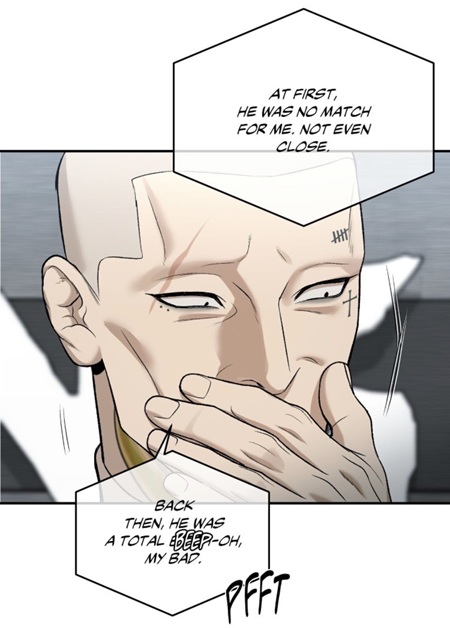 (chapter 96) He does not protect the past; he exposes it. He does not preserve proximity; he weaponizes it. The one who speaks as a former “hyung,” as someone who once stood close, reveals himself through the very act of speaking
 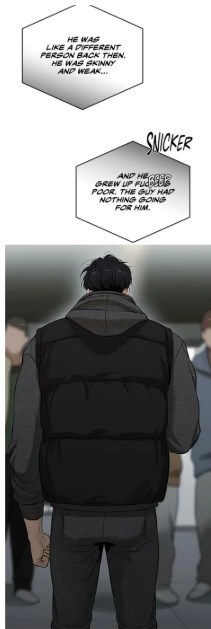 (chapter 96): not as a guide, but as the wrong companion.
Because to recount the past in this way is not neutral. It is to betray it. The intimacy he invokes becomes the condition of its distortion. What should remain within the bounds of shared experience is extracted, simplified, and made public. In doing so, he does not simply diminish Joo Jaekyung—he violates the relation that once connected them.
And yet, within this violation, another layer becomes visible. The betrayal he enacts is not only directed outward; it is already inscribed in the narrative he constructs. (chapter 96) In recounting their shared past, he attributes to Joo Jaekyung a form of abandonment without ever naming it as such. The figure that emerges is that of someone who turned away, who stopped looking back, who severed a bond that had once been taken for granted. This is never stated directly. It is implied, dispersed across fragments, but it remains perceptible. What appears as accusation begins to resemble projection—not as a declared grievance, but as something his discourse cannot fully conceal.
At the same time, he introduces a second distortion, more subtle but equally decisive. Success is no longer presented as the result of choice, effort, or trajectory, but reduced to chance. What had been built becomes “luck.” 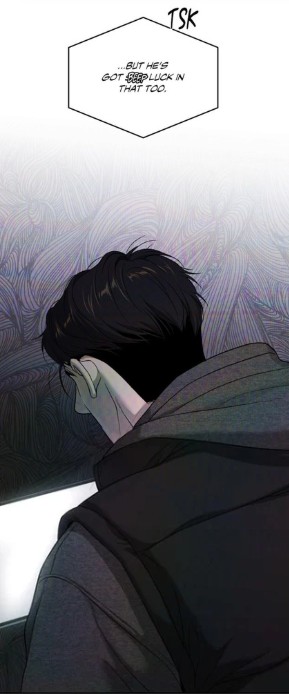 (chapter 96) In this shift, agency is erased. The champion’s path is no longer something he forged, but something that merely happened to him. This reduction is not incidental. It allows Baek Junmin to neutralize what he cannot replicate. If success is luck, then failure requires no explanation. If choice is denied, then responsibility can be displaced.
The authority he summons 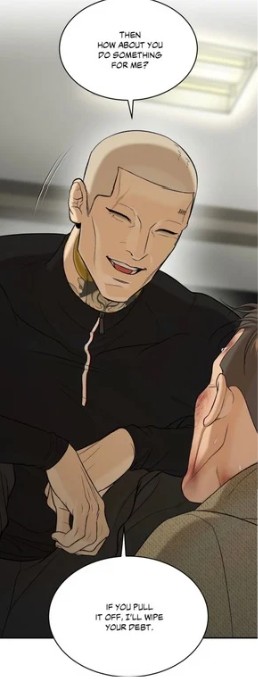 (chapter 93) to legitimize this narrative—a doctor presented as a voice of institutional truth—is fundamentally fractured. This is no neutral expert, but a fallen figure stripped of professional standing. The choice is not incidental; it reveals a structural flaw. Junmin does not distinguish between genuine authority and the mere veneer of it. And observe how he came to this choice:
 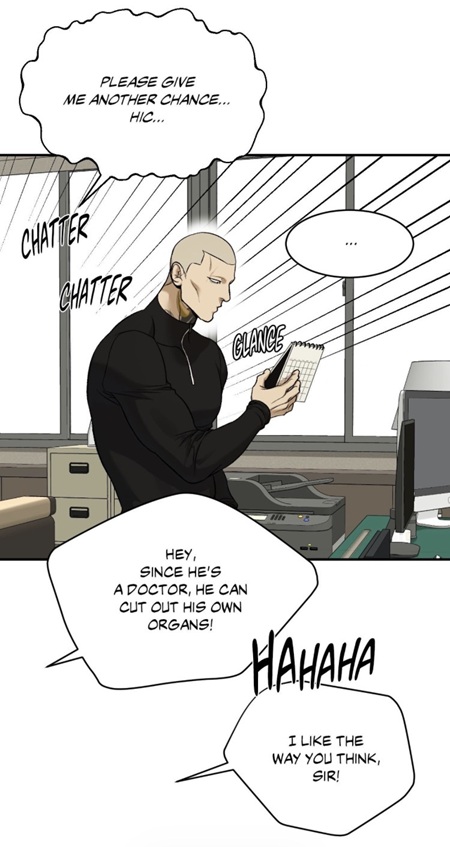 (chapter 93) He heard Heo Manwook call him by his former title and took it at face-value. For him, legitimacy is secondary to utility; if a figure serves his narrative, their instability is disregarded. In attempting to conceal his manipulation, he exposes it: his world is built upon figures who reside in the same gray zone he claims to have transcended.
As long as these figures remain unstable, 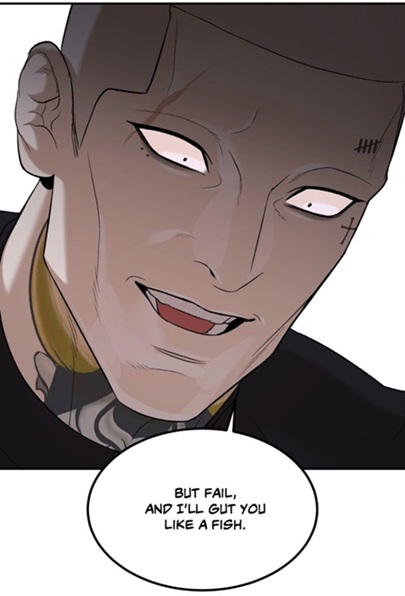 (chapter 93) responsibility can be displaced. But the moment they act, that displacement collapses, and the weight of the compromised authority returns to the one who selected it. He speaks of “wrong choices” while trapped in a cycle of making them.
This repetition is not a new phenomenon; its roots reach back to the “hyung” he invokes. (chapter 96) This figure is not a neutral reference of proximity, but the terminal point at which Junmin’s trajectory was fixed. And Choi Gilseok resembles the hyung from his “youth”. He made a fortune on the tie, something that left the champion in paper “traumatized”. Unlike Joo Jaekyung—whose development remained anchored within the disciplined, visible structures of professional sport despite his volatility—Baek Junmin was initiated into a different system entirely. The mentor he followed did not lead him toward discipline, but into the underground 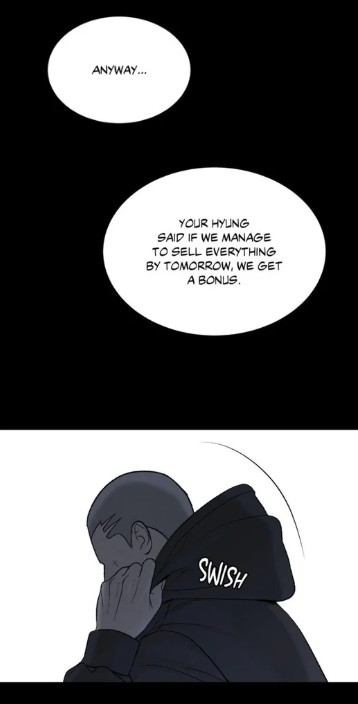 (chapter 73); not toward a gym aimed at progression, but into a space governed by risk and illegality.
This distinction is decisive. Baek Junmin was not forged as an athlete, but as a combatant within a system designed for exploitation rather than recognition. Hence he became a thug. His skills were never oriented toward a title or a visible legacy; they were mobilized within a circuit that remains deliberately obscured. 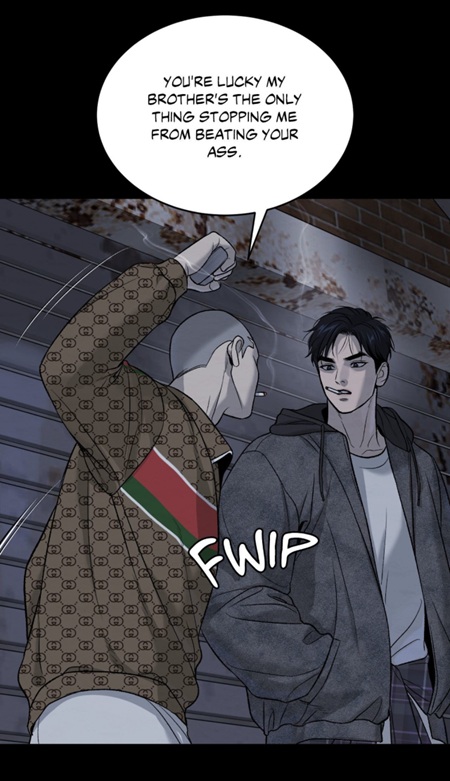 (chapter 74) To conclude, he did not fall outside the system; he was never inside it to begin with.
This explains why his status as “champion” remains fundamentally unstable. 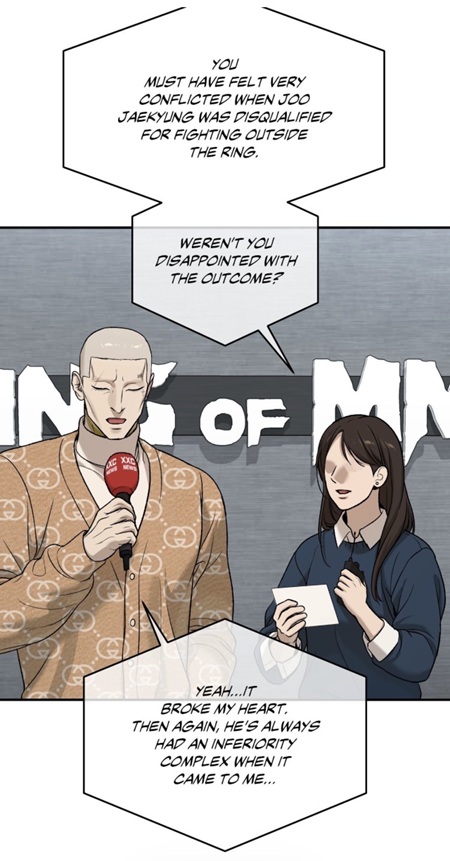 (chapter 96) He can occupy the position, but he cannot embody it. The void—the lack of a public image, the absence of the KOFC belt, the failure of his stage name to resonate—finds its explanation here. What he has acquired institutionally, he does not possess symbolically.
This void fuels the intensity of his rhetoric. Joo Jaekyung represents the one element Junmin cannot integrate: a trajectory that, despite its fractures, leads toward visibility and continuity. Jaekyung’s past cannot be reduced to weakness because it contains a structure that allowed for transformation. Faced with this, Junmin’s only strategy is inversion. Strength is recoded as arrogance 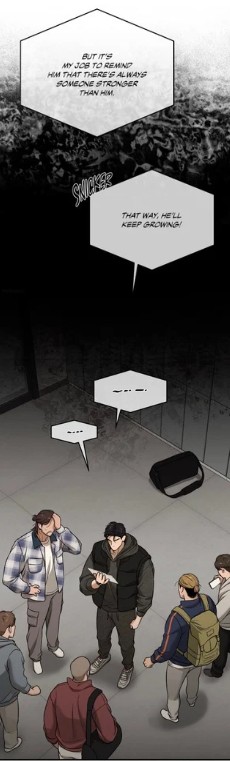 (chapter 96); discipline as obsession; continuity as a series of humiliations.
He must rewrite the past because he cannot match it. Yet, this strategy produces the opposite of its intended effect. The more Junmin insists on a hierarchy in which he “knew better and was better” (chapter 96) the more he reveals his complete dependence on that very structure. Despite his title, Junmin remains the ‘lost puppy’ (chapter 96) of the narrative—a man who never outgrew the need for a ‘hyung’ to validate his existence. He seeks a vertical order not to lead, but to belong; he is a stray barking at the gates of a professional world that will never truly claim him. His identity requires a vertical order; without an opponent to place beneath him, nothing of Junmin remains.
Ultimately, the interview becomes unintentionally revelatory. It does not expose the champion; it exposes the speaker. The man who claims to be the superior guide reveals the limits of that claim through his own path. He embodies the “wrong choice”—not as a moral failing, but as a structural condition.
He did not choose his path; it was determined the moment he followed a mentor into exploitation. In the present, he does not deviate from that origin; he reproduces it, surrounding himself with figures that mirror his own instability. This is why his victory remains hollow. He has won the position, but not the meaning. He speaks, but cannot stabilize his narrative. He appears, but is never truly seen. In seeking to prove that Joo Jaekyung chose wrongly, he proves only that he is still choosing wrong himself.
The False Brotherhood and Its Collapse
The architecture of the past does not remain confined to memory; it persists in the present, manifesting in forms that are less visible and more socially acceptable, yet no less decisive.
On one side stands the specter of the underground “hyung,” 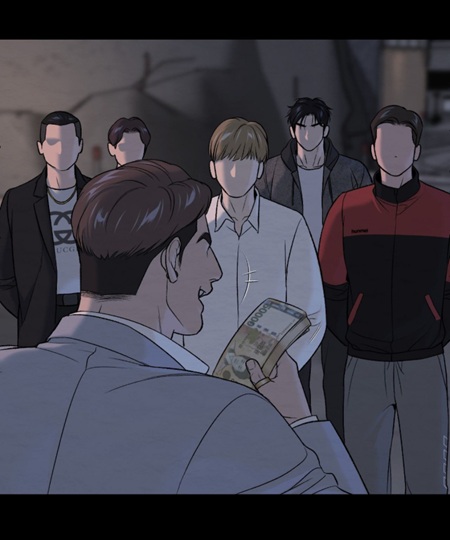 (chapter 74) the figure who initiated Baek Junmin into a system of exploitation masked as guidance. On the other, Baek Junmin himself attempts to reproduce this exact position. (chapter 96) He presents himself as the one who “had it better ” and was better —the guide who observed, managed, and ultimately surpassed. What emerges is not an isolated trajectory, but a cycle: a form of brotherhood that offers protection while fundamentally structuring dependence, hierarchy, and control.
Joo Jaekyung has already detached himself from this cycle. What remains unresolved, however, is not his position, but Kim Dan’s perception.
The Institutional Guise of Care
In the present, the structure of the “hyung” reappears in a different guise: Park Namwook. 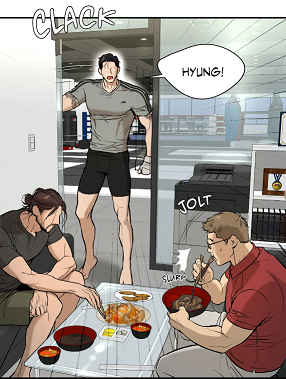 (chapter 5) Unlike the underground mentor, his authority is institutional and his position legitimate. For Kim Dan, this distinction is decisive.
 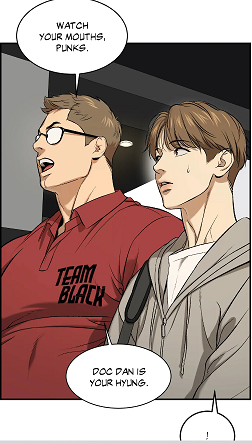 (chapter 7) He perceives in the manager a form of empathy
 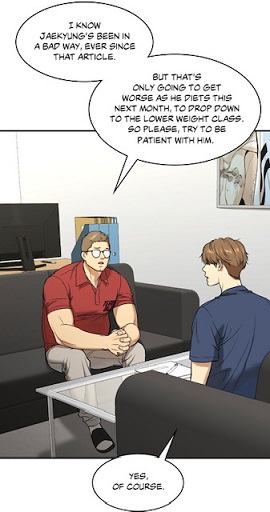 (chapter 36), a concern for the athlete’s well-being—a figure capable of managing what he himself cannot. Kim Dan’s trust does not emerge in a vacuum; it is built through a series of interactions that appear, at first glance, to confirm this perception
  (chapter 7). Park Namwook speaks the language of care, addresses him with familiarity, and repeatedly positions himself as someone who values both the fighter and the medical staff. If there was tension between them, he would side with him and not Joo Jaekyung.
 (chapter 37) Even when he intervenes critically
 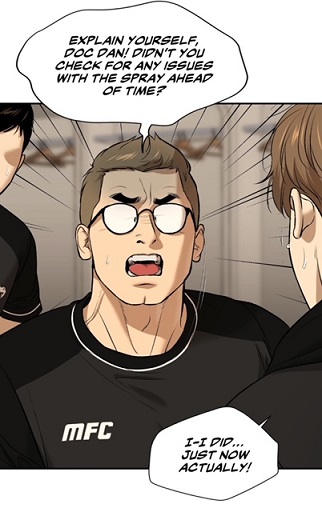 (chapter 50) —questioning his decisions or demanding explanations—these moments are framed, in Kim Dan’s perception, as being in the champion’s best interest rather than as acts of control.
This interpretation is reinforced by Kim Dan’s own professional framework. As a physical therapist, he is accustomed to working within systems of authority where trust in doctors, managers, and institutional structures is not only expected but necessary.  (chapter 27) He assumes coherence where there is only alignment of interests. What appears as consistency in Park Namwook’s behavior is therefore not examined as strategy, but accepted as sincerity.
As a result, isolated gestures—compliments 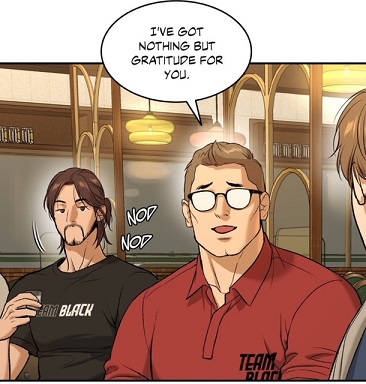 (chapter 43), reassurances, even moments of apparent protection and respect
 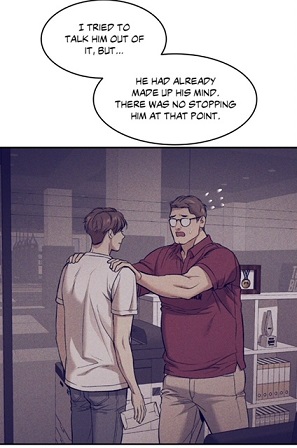 (chapter 53) —acquire disproportionate weight. They become evidence of character rather than elements of a broader pattern. The contradiction between care and control does not disappear; it is simply reinterpreted. And it is precisely this reinterpretation that allows Kim Dan to maintain his belief in the manager’s integrity.
This belief produces a critical displacement. Trust becomes delegation; responsibility is transferred. When Joo Jaekyung is injured, Kim Dan does not follow. 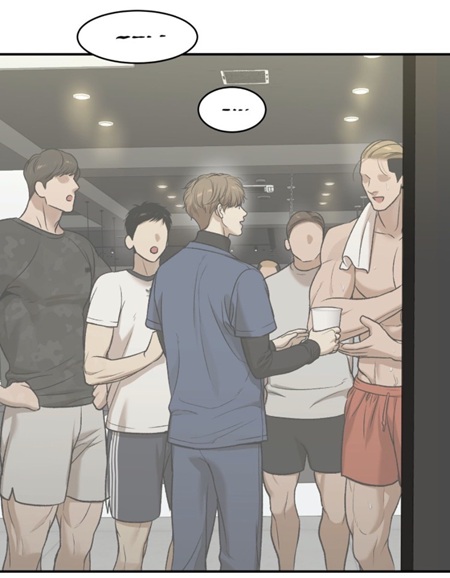 (chapter 95) He remains outside, convinced that the manager will provide what is needed—not only physically, but emotionally. The transparent door does not function as a barrier, but as an illusion of access. He sees, but he does not intervene. But more importantly, he is turning his back to the door, a sign of trust in the coach and manager.
What he fails to perceive is that this care is conditional. (chapter 36) It is directed toward the fighter, not the man. The gestures that appear protective reveal themselves, upon closer inspection, as instrumental. They aim at performance, recovery, and return—not at recognition. The same figure who speaks of concern is also the one who disciplines, who corrects, and who reduces the athlete to a function when he deviates. The language of care coexists with the mechanics of control.
Within this logic, another mechanism becomes perceptible: the gradual transformation of causality into coincidence. When tensions accumulate—injury, disqualification 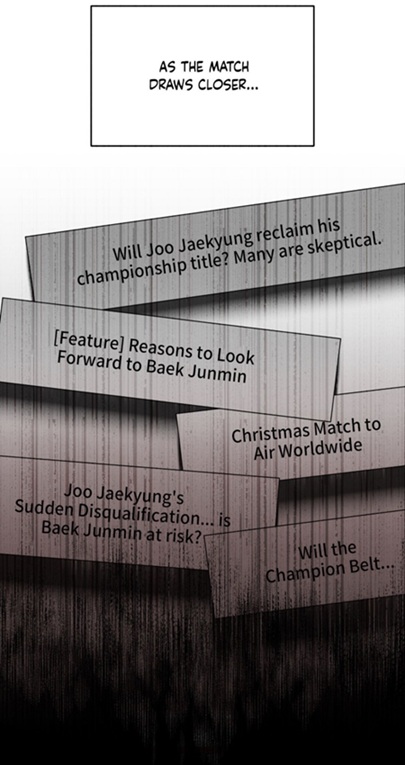 (chapter 95), conflict—these events are not articulated as consequences of decisions or structures, but as misfortune. What appears is a discourse of “bad luck,”
 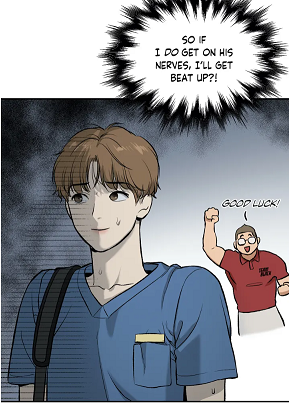 (chapter 1) in which responsibility dissolves into circumstance.
Such a framing is not neutral. By presenting the sequence of incidents as accidental, it allows the figure who manages them to remain untouched. At the same time, it opens the possibility of displacement. If events are no longer the result of identifiable actions, they can be attached to a presence—to the one who arrived before their occurrence.
In this configuration, Kim Dan becomes vulnerable to a reinterpretation of his own role. His arrival can be recoded not as support, but as disruption; not as care, but as a source of imbalance. What he perceived as trust risks being inverted into suspicion.
This contradiction becomes fully visible in the moment where Park Namwook himself attempts to explain the incident. Faced with material damage, his first reflex is to neutralize causality: the event is described as if it had occurred on its own, as if timing, rather than action, were responsible. 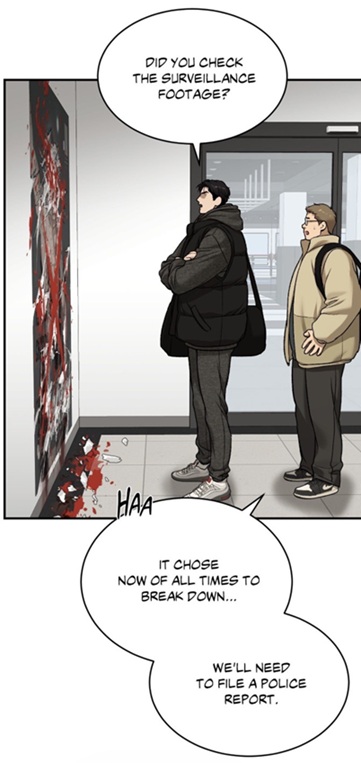 (chapter 96) The breakdown “chooses” its moment; no agent is named.
And yet, this neutralization cannot be sustained. The very next step—filing a police report—reintroduces what the discourse had attempted to erase: the necessity of responsibility. A report presupposes an act, an author, and a sequence that can be traced. In this brief oscillation, the limits of the managerial narrative become visible. What could previously be contained within the language of coincidence now demands articulation in terms of cause. The system that functioned through displacement is forced, however briefly, to acknowledge the existence of an origin.
It is precisely at this point that avoidance becomes impossible, though he is trying to hide behind the “we”, probably the institution MFC.
The Dissonance of Misrecognition
The dissonance between Kim Dan and Joo Jaekyung does not emerge from absence, but from misrecognition. Kim Dan does not abandon the champion; he entrusts him to the wrong figure. In doing so, he reproduces the very structure that had once shaped Baek Junmin. Thus it is no coincidence that in the interview, Hwang Byungchul is described as a bad coach. (chapter 96) The reality is that Park Namwook is indeed a bad coach and even manager. 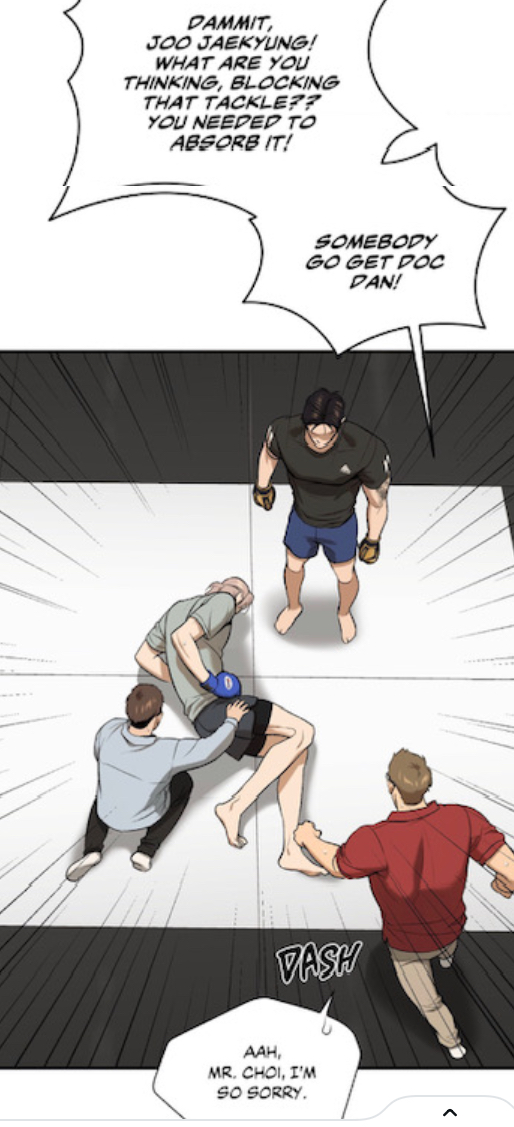 (chapter 31) Here, if the athlete had followed this recommendation, he would have injured himself badly. What appears as protection recreates distance; what is named as guidance results in isolation.
This repetition reveals a deeper continuity. The same logic that governed the underground now reappears within the institution. What changes is not the structure, but its appearance.
This distance is further reinforced by the way Kim Dan encounters the external threat. 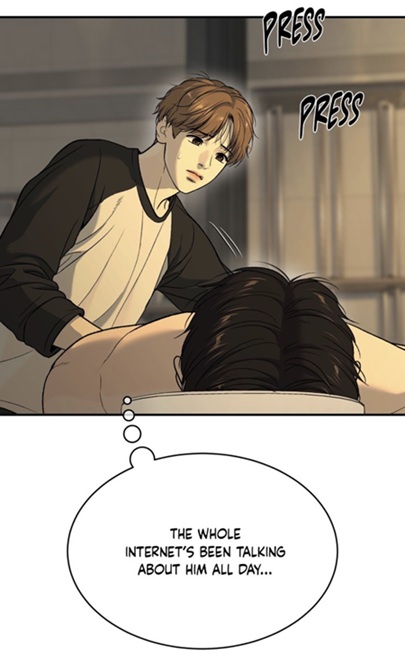 (chapter 96) By remaining at the level of headlines, he experiences the situation as a public disturbance to be managed rather than as a personal violation to be understood. If he had watched the interview, he would have noticed the lies in the narration. So the narrative reaches him already filtered and stabilized, removed from its affective core. In this sense, his reliance on headlines mirrors his reliance on Park Namwook: both provide a form of safety that depends on distance, and both prevent direct engagement.
The Collapse of Mediation
The collapse begins when this distance can no longer be maintained. Baek Junmin’s intervention forces a shift by dissolving the boundary that had sustained Kim Dan’s position. By targeting not only Joo Jaekyung, but also the physical therapist (through the former hospital director) (chapter 93), the discourse eliminates the possibility of neutrality. What had remained external becomes immediate. Kim Dan is no longer in a position to interpret from afar; he is implicated. The Shotgun needs a doctor to discredit a physical therapist in the end. And it is clear that Park Namwook has the tendency to avoid trouble and implication. Hence he protects institutions, in particular MFC.
At this point, delegation becomes untenable. The belief that another could assume responsibility reveals its limits. What is exposed is not only the failure of the manager’s care, but the consequence of having trusted it. Under this new light, I realized why Mingwa included this incident at the hospice. 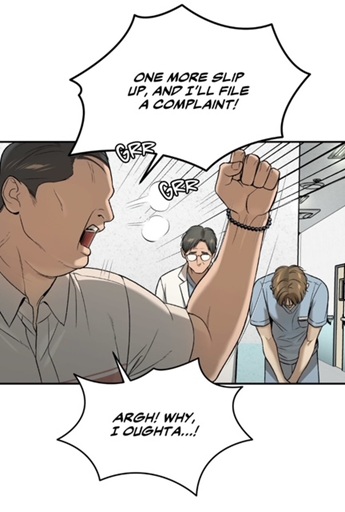 (chapter 59) He had indeed made a mistake here, but the director of the hospice had defended him. He was not fired after this incident. Hence I come to the following deduction: Kim Dan is about to be confronted not simply with an external threat, but with the realization of his own misrecognition.He trusted the wrong hyung, just like Joo Jaekyung did.
 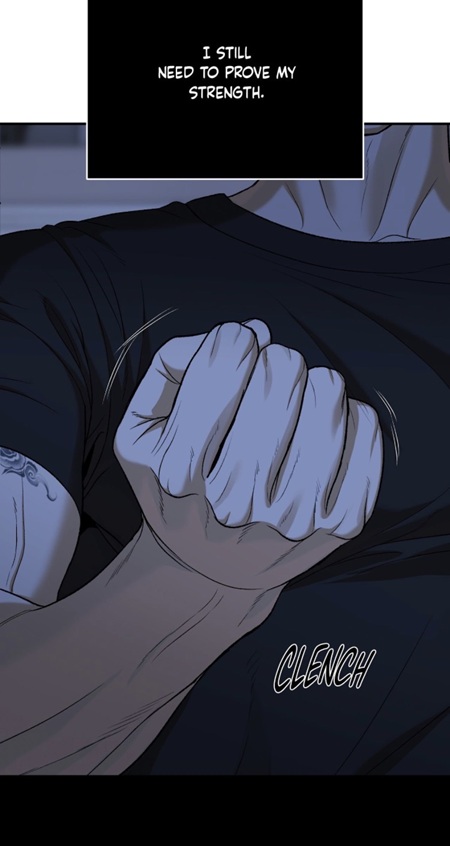 (chapter 95) Until now, he has no idea about the champion’s losses
  (chapter 54) and the consequences of his “departure” to the seaside. The incident at the health center, the slap at the hospital
  (chapter 52) and the champion’s drinking
 (chapter 54)
Conclusion: Presence as Choice
The conflict that follows is not incidental; it is necessary. It marks the moment where presence can no longer be replaced by function. In this rupture, the structure of the false brotherhood becomes fully visible. Whether in its underground form or its institutional version, it operates according to the same logic: authority without recognition, proximity without understanding, guidance without responsibility.
The “hyung” is no longer the one who commands or stands above through proximity to power. 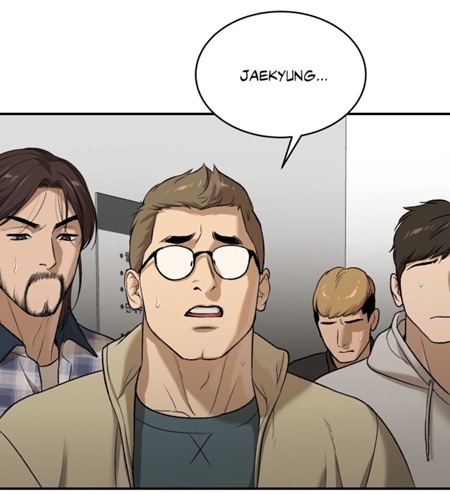 (chapter 96) It becomes something else entirely: the one who remains, who sees, and who does not turn away.
This position is not given; it is produced through conflict. The argument that emerges is therefore not a deviation from the relation—it is its condition. It forces Kim Dan to confront not only the system, but his own place within it. Only then can he occupy a position previously unavailable to him: not as a subordinate or a function, but as the one who chooses to stand beside—even when no role requires it.
Within this shift, the structure of hierarchy itself begins to invert. The one who once stood below becomes the one who sees, who understands, and who remains. If the term “hyung” is to acquire meaning beyond formality, it can no longer designate authority, but recognition. And such recognition cannot be assumed. 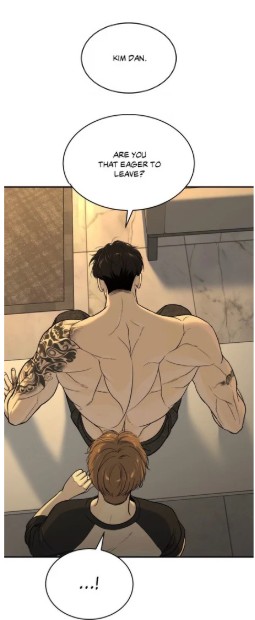 (chapter 96) It requires something both have avoided until now: to meet each other’s gaze.
Feel free to comment. If you have any suggestion for topics or Manhwa, feel free to ask. If you enjoyed reading it, retweet it or push the button like. My Reddit-Instagram-Twitter-Tumblr account is: @bebebisous33. Thanks for reading and for the support, particularly, I would like to thank all the new followers and people recommending my blog.

 Bebebisous33s' analyses in K-Dramaland and Manhwas