

This is where you can read these manhwas. Payback: https://www.lezhinus.com/en/comic/payback_en Painter Of The Night: https://www.lezhinus.com/en/comic/painter But be aware that these manhwas are mature Yaoi, which means, it is about homosexuality with explicit scenes. If you want to read more essays, here is the link to the table of contents concerning Painter Of The Night: https://bebebisous33analyses.wordpress.com/2020/07/04/table-of-contents-painter-of-the-night/ Here, you can find more analyses about other manhwas: https://bebebisous33analyses.com/2021/06/06/table-of-contents-of-analyzed-mentioned-manhwas/
Feel free to make some donations/sponsoring: Ko-fi.com/bebebisous33 That way, you can support me with “coffee” so that I have the energy to keep examining manhwas. It would also cover my expenses for the blog.
In daily life, people view the idioms “innocent” and “not guilty” as synonyms. However, from a legal standpoint, there exists a difference. Innocent signifies that a person did not commit the crime, whereas not guilty means that the prosecution could not prove “beyond a reasonable doubt” that a person committed the crime. Therefore, the court does not pronounce a defendant as “innocent” but rather “not guilty”. Thus the prosecution’s task is to bring up as many evidences as possible to prove the guilt of the accused. At the same time, I would like the manhwalovers to keep in their mind that that innocence stands in opposition to sin and not just to crime! So technically, someone might have not committed a wrongdoing, but he can have acted reprehensively. This signifies that we are dealing here with moral and social norms. Thus a sin is not judged by the court, but by gods and people. This explicates why the legal system never says “innocent”, but “not guilty”. This nuance could be perceived in two different manhwas, Payback and Painter Of The Night. Some readers might question the purpose for such a study. In my eyes, it helps us to perceive the characters under a different light.
1. Lee Yoohan, innocent or not guilty?
In the story Payback, the main lead Lee Yoohan had a dark past. He had dropped out of school (chapter 1), and he was no longer living with his single mother and brother Lee Hansoo. He described himself as a small but confident delinquent, as he used to work for a loan shark in order to earn money very easily.
  (chapter 1) And one day, his brother Lee Hansoo met him in order to ask him for money. Their mother was sick and they needed to pay the hospital bills. Lee Yohan agreed to help, thus under pressure, he chose to threaten a debtor’s son. Observe that the main lead chose to use a knife and take the child as hostage. He was walking on a thin line between legality and crime. As you can see, Lee Yohan was no saint. But it didn’t matter to him so far, for he had no faith at all. He refused to believe in karma.
 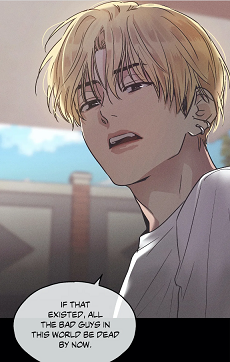 (chapter 1) He was definitely a disillusioned teenager, therefore he was not thinking about the future. However, the fact that he became totally reckless during that day indicates that he still valued his family. He might not have been close to them, but he still cared for them. That’s the reason why he agreed to accept the brother’s request. We can sense his worry here. (chapter 1) When the borrower was confronted with such a ruthless behavior, he warned the main lead:
  (chapter 1) However, since he had given up on his dreams and had no hope, Yohan didn’t take the threat seriously, until he was confronted with reality.
 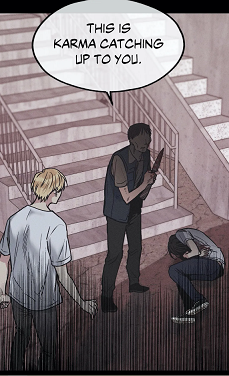 (chapter 1) The same man killed his brother Lee Hansoo in front of the main character. The man had acted like that, for he had lost everything: his home and as such his family. I would add that he had failed to protect his son. Out of despair and anger, he decided to retaliate, to make the young man suffer, like he had been hurt before. An eye for an eye, a tooth for a tooth. The assassination was like a wake-up call for Lee Yohan. From that moment on, he turned a new leaf.
  (chapter 1)Why? He considered himself as the murderer of his own brother.
  (chapter 2) In his eyes, it was, as if he had killed himself the brother and his own mother!
  (chapter 27) He recognized that his actions had been the trigger for the debtor’s crime! At no moment in the manhwa, the main lead blamed the real culprit, not even his own mother who had given up on him. He admitted that in the end, it had always been his own choice to live like a thug! Striking is that he considers himself as responsible for his mother’s death, as because of his terrible way of life, he had caused her worries. As you can see, Lee Yoohan could not be considered as guilty for his relatives’ death, but he had definitely his share of responsibility in his family’s suffering.
Striking is that the young man paid off all his debts, as he saw them as his way to atone for his sins. Thus he never allowed himself to rest. How could he enjoy life, when he was a sinner? In his mind, he needed to suffer, but at the same time, he could never grief for the loss of his mother and brother. He had not the time for that. That’ the reason why Yoon Jae’s best friend asked him this:  (chapter 27) No, he didn’t cry, hence the owner of the club wept for him.
 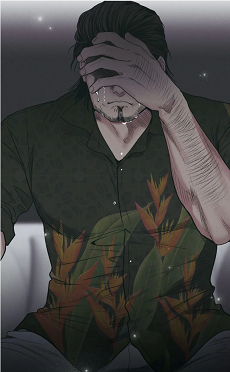 (chapter 27) He could sense Lee Yohan’s agony. He had lost his family at such a young age, he might have been a sinner, but anyone could sense his affection and conscience! He might have lived like a thug, but he was not a bad person per se. It is just that he had made wrong choices, just like the man who had stabbed his brother. In the main lead’s eyes, it was not karma, like the culprit said: (chapter 1) This means that Lee Yohan still refused to believe in divine punishment. Therefore it is not surprising that the protagonist punished himself so hard, and accepted his suffering without objection. He was not allowed to feel warmth and affection.
 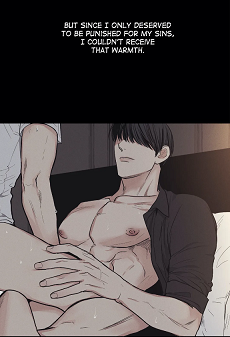 (chapter 15) Thus he rejected the advances from Yoon Jae. In chapter 15, we could sense that the main character was preoccupied about the existence of god. Was there a divine punishment or not?
 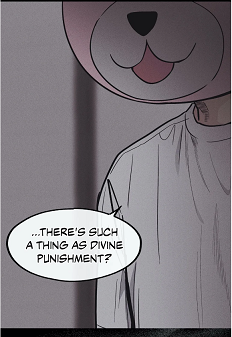 (chapter 15) And Yoon Jae denied such a thing, but added then:
  (chapter 15) But is it not the same? Yes and no… For Yoon Jay, if someone acts badly towards another person, the former will be treated the same way. On the other hand, each kindness will be returned. But one might argue that the gods can interact through humans and use them as pawns to give people their karma. And this is what we are discovering in Payback. Lee Yohan helped Yoon Jae and even showed him a crying man. The famous director Yoon got moved by the main lead’s tears
 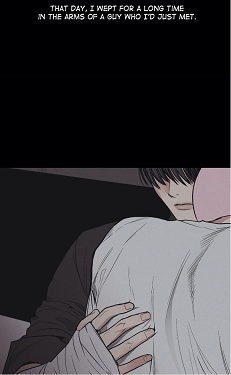 (chapter 15) proving that not all humans were cold and distant. They could express regret and admit their mistake. For the first time, Yoon Jae discovered warmth and sensitivity.
Lee Yohan would have kept punishing himself and putting a distance between himself and others, if his path had not crossed the famous actor Song Myungshin again! One day, he overheard a conversation between the artist Song Myungshin and his manager, and discovered the truth about the whole incident. The actor had been himself threatened by the debtor, so in order to save his own skin, he designated the younger brother to the future murderer.  (chapter 1) The most terrible thing is that the actor had been helped constantly by the protagonist. Since the former had a dream of becoming an actor, the “thug” was generous to help him financially and emotionally. The assassination worked for Song Myungshin, for he had planned to steal the money from Lee Yohan.
  (chapter 1) That’s the reason why he didn’t even call the police. The murder would divert the main lead’s attention from the theft. When Lee Yohan heard this confession, he got upset for two reasons. Song Myungshin showed no remorse and a total indifference towards Lee Hansoo and the main lead.
 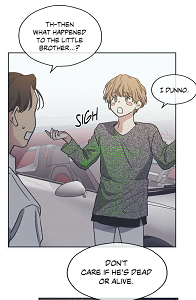 (chapter 1) But most importantly, he never suffered any karma. In fact, he could benefit from his sins and crimes. This could only reinforce his impression that there was no god out there giving punishment to the sinners. The actor took pride of his bad action, as he decided to take Song Yohan as his stage name! Yohan was a reminder that thanks to him, he could enter the entertainment scene. As a conclusion, karma hasn’t punished the actor Song Myungshin yet. Therefore Lee Yohan was determined to take his revenge. What he didn’t realize is that his first encounter with the other main lead would help him to achieve his goal: to give “punishment” to Song Myunshin. So he didn’t know yet that the gods were aware of this injustice, thus they let him meet the famous director Yoon Jay.
  (chapter 15) On the other hand, the existence of Lee Yohan gave the director hope, he could smile again and as such find happiness. The rabbit announced the return of innocence in Yoon Jae’s life. In other words, the two main leads were quite similar in their disposition: both had been wounded by their past, and had no hope. And thanks to the famous and powerful director Yoon Jay, the main lead is slowly starting living again. Little by little, he is interacting with people again, helping others, though he never does it openly. The best example is the actor Lee Hansoo who has the same name than his own brother.
  (chapter 6) In this scene, he refused to be addressed as hyung, as in his eyes, he didn’t deserve such a title. He had not acted like a hyung to his true little brother.
To sum up, Lee Yohan is a sinner, and he is not denying his responsibility for the loss of his family. For me, he punished himself too harshly. He never believed in karma, he saw that everything was related to his own choices. He had trusted the wrong persons in the end. And now, the gods are rewarding Lee Yohan’ for his remorse and new leaf. What made me smile while reading this manhwa is that when the former thug met Yoon Jay, he was wearing a rabbit costume with Jihwaha! 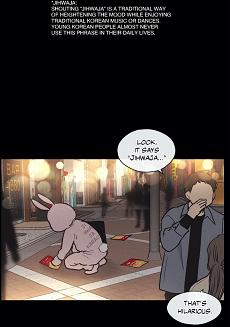 (chapter 14) I couldn’t myself thinking of the antagonist Lee Jihwa, for he was put in a similar situation.
2. Lee Jihwa, a criminal or a sinner?
When in chapter 101 Lee Jihwa heard the report from Seokdae, he said that he had done nothing wrong, as he had never committed such crimes:  (chapter 101) Indirectly, he was claiming his innocence. Thus the servant suggested to the young master to go to the police bureau in order to clear his name, but the young master refused to do so. Why? The problem is that Lee Jihwa couldn’t prove his innocence. And deep down, the childhood friend knew this. How could he prove that he was not involved in the scheme, when Min visited him
  (chapter 100) on different occasions, and both went to the scholar’s home together? Yes, this time Min’s threat had become a reality.
 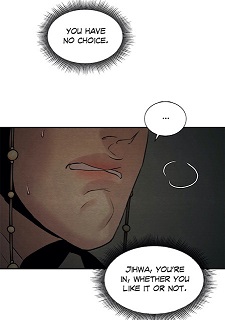 (chapter 76) He could no longer back out. He couldn’t put the whole blame on the Joker, because this means that he would have to admit his own complicity. Yes, Lee Jihwa was trapped. He could sense that he had been framed by Black Heart, but the former couldn’t claim his innocence because of his knowledge! That’s how I realize why the young man was punished this way. Remember how he had blamed his childhood friend for his misery, and had used his knowledge as a proof for his reproach!
 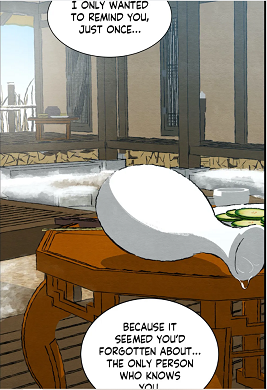 (chapter 57)
  (chapter 57) Thanks to his knowledge, he was above any reproach, while it was not the same for Yoon Seungho. The latter was indeed ignorant, for he had forgotten many things. Consequently, the gods chose to punish Lee Jihwa for his arrogance and passivity. Now, he knows, but this doesn’t help him at all. Hence he decided to forget! This means that he behaved like Yoon Seungho, who repressed everything. The only difference is that contrary to the childhood friend, the main lead had been a real victim the entire time. Thus the second lead imagines that once he forgets and runs away, he will be able to escape punishment. However, he is wrong, for by choosing oblivion and desertion, he has to give up on his name Lee and identity. He can still be addressed as Jihwa, like you could see above. Yet, we have to question this. Is Lee Jihwa truly innocent like he claims it?
According to our modern legal system, he would be accused of complicity and of non-assistance to a person in danger, and this in four cases! First, when he arrived in front of Jung In-Hun’s house, he saw the painter wounded. 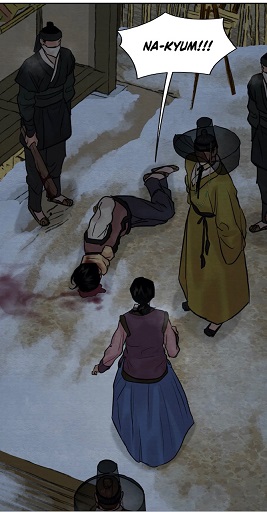
 (chapter 99) But what did he do? Nothing. Secondly, he witnessed how the kisaeng was dragged away to get killed, though it was staged. Here again, he did nothing.
  (chapter 99) I would even say that he even faked ignorance, because he was lying. The drop of sweat is the clue for this interpretation, besides Min contradicted his testimony in the shaman’s house later. (chapter 100) He had contacted the antagonist on many occasions, so he had heard from Black Heart before. It was never out of the blue. He knew about the existence of the plot and its goal: Taste the painter and kill him. He had been informed a long time ago. Then in the shaman’s house, he saw the painter dead in his vision, hence he pushed The Joker away and fled.
 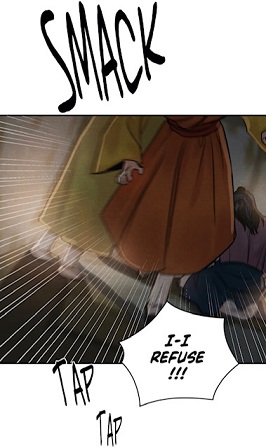 (chapter 100) He turned his back on Baek Na-Kyum. But that means that he abandoned the artist once more time. In three occasions, he was well aware what was happening and he could have intervened. Yet, he let it happen. Besides, he handed over the drugs and dildo to Min. As you can see, he was never an innocent person, but not just a sinner. He was an accomplice. And he knew this, thus he couldn’t go to the bureau of investigation. Min was well aware of this.
  (chapter 101) Naturally, his crime was nothing compared to Min’s.
On the other hand, since he didn’t participate actively in the plot, he never hurt the painter or Heena himself, Lee Jihwa views himself as innocent. But inaction is still action. Thus I still don’t think that the antagonist recognized his own sins. Why? It’s because he called himself a victim later.  (chapter 101) He didn’t see why he should die, when in his eyes, he had done nothing! And the antagonist’s prophecy became a reality.
  (chapter 50) By fleeing, he didn’t stop his friend from committing a murder. Thus he is responsible for their deaths. And he knew that Min and the other nobles would die.
 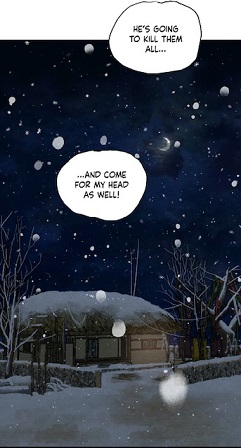 (chapter 101) He chose to save his own skin instead of saving their life, though here he was more fearing the king‘s reaction. During the same night, Lee Jihwa got tested 4 times, and each time, he refused to help. That’s the reason why the gods chose to punish him by making lose his title and name. He will become the culprit of a mass murder, he killed Black Heart and the other two nobles. And this would reflect the truth, for the red-haired master didn’t intervene. He could have acted like Baek Na-Kyum
 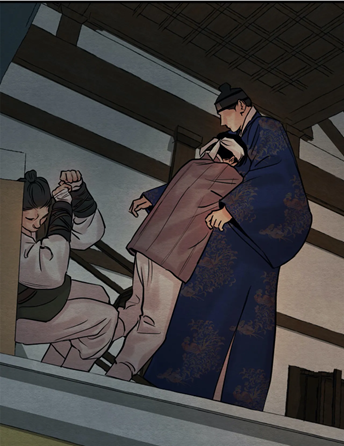 (chapter 53) and even follow his friend. And this distinguishes him from Lee Yohan so much. The latter recognized that each decision he made had consequences. And note that the idiom “choice” was connected to silence and assistance. (chapter 76)
As you already know, for me, Lee Jihwa had already imagined that the artist was dead. Because Yoon Seungho trusted the childhood friend, he came to believe the same. The gods were showing the red-haired master the future: he would become a huge sinner, he would have blood on his own hands, though he never did the deed himself.  (chapter 50) It was, as if he had murdered the nobles himself. The gods were teaching him a lesson: Knowledge and passivity are crimes. In other words, Lee Jihwa became a sinner and a criminal because of this night. And this because he refused to face reality.
One might refute this perception, for the young master had been left in the dark concerning Min’s plan. 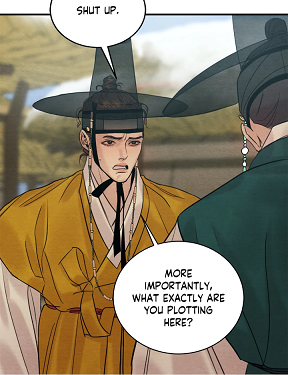 (chapter 83) But was he really ignorant here? I came to a different interpretation recently. How? First, why does the second lead have a drop of sweat in the last picture? This is an indication for a lie. But there exist stronger proofs. Don’t forget the following rules: there’s always a reflection within the same chapter, and each chapter is reflected in the next. In the antagonist’s memory, Lee Jihwa was portrayed as someone who would disobey his father!
  (chapter 83) He would trespass the house of the Yoons and enter the shed, even the lord’s bedchamber!
  (chapter 83) As you can see, Lee Jihwa was acting as a rebellious son in the past. He was not respecting social norms and the elders. This signifies that we have the exact opposite in the present. Observe the seasons: summer versus winter. Thus I come to the following deduction. He is following the order from his father, he is not dragged
 (chapter 83), but he brought Min there. Why would Min say this?
 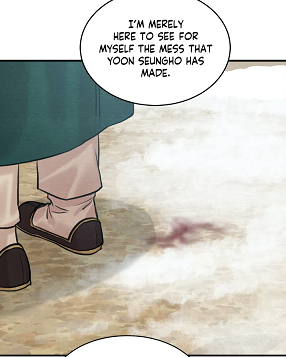 (chapter 83) Why would he come to see the mess? His words are indicating that someone must have told him about the scholar’s death. Since we saw this,
 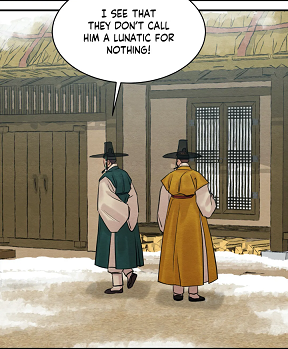 (chapter 83) we thought that when the plotters came, Min was leading the way. But if we take into consideration chapter 76, we realize that back then the childhood friend brought Min to Nameless’ barn.
  (chapter 76) Thus it could have been the same! Lee Jihwa had brought Min to the scholar’s house, then Min was the one giving the signal to leave the humble dwell, just like in chapter 76. The red-haired master let Min meet The Joker, before Min was the one asking Lee Jihwa to follow him, when he realized that Nameless refused to help him.
  (chapter 76) So when we view this, (chapter 83), we should envision that the roles were switched, when they went to Jung In-Hun’s house. Besides, keep in mind that in season 1, Black Heart had been the one giving the information to Lee Jihwa.
 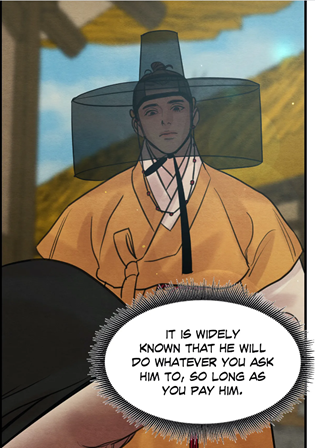 (chapter 43), so from my point of view, we could have a similar situation, someone had asked him to bring lord Min to that mansion! It can not be Min… From my point of view, Lee Jihwa was acting on his father’s orders. That’s the reason why Lee Jihwa never entered the mansion, and he told Min the story about the incident in the bedchamber. Father Lee had been the one who brought it up first.
  (chapter 82) Why would Lee Jihwa suddenly mention this story to Black Heart, when he had remained silent the entire time? Even Min wondered about this!
  (chapter 83) Another clue for this signification is the vocabulary of Black Heart. The latter is speaking like father Lee: lunacy
 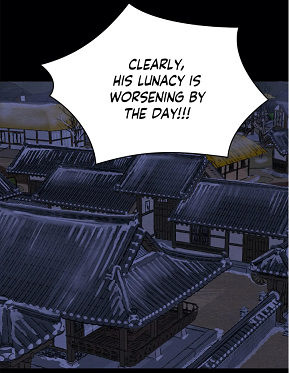 (chapter 82) (chapter 83), Baek Na-Kyum is called as a peasant
 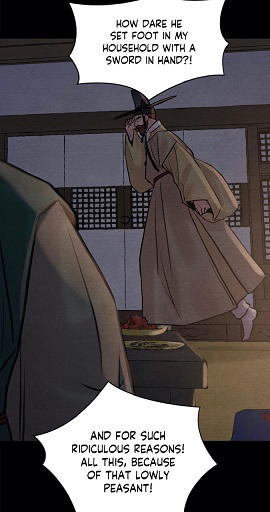 (chapter 82)
  (chapter 92). Finally, don’t forget what Min said about Yoon Seungho.
  (chapter 83) This shows that Black Heart stands for social norms: respecting the elders. But he never realized that in verity he was getting fooled by the Lees. We saw where the main lead was living in the shed, but did Lee Jihwa say this to Min? No, I don’t think, he mentioned it… he was left in the dark about this, just like the readers were not informed, when lord Song was mentioned by Lee Jihwa.
 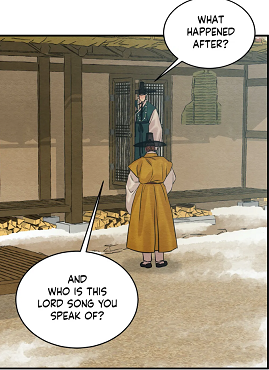 (chapter 83) But Min was not naive like Jihwa, he knew that once involved, someone had to pay for the subterfuge and crime.
As you can see, Lee Jihwa was repeating his wrongdoings from the past, he was betraying not only his childhood friend, but also Min and as such lord Song, for he revealed his identity. The only difference is that Min had indeed manipulated and betrayed first. But this doesn’t change the fact that Lee Jihwa stands fake loyalty. It is just the result of his education. He was influenced to follow his father’s instruction. Yes, the story is repeating itself, and father Lee was trying to use someone in order to cover up his son’s crime. One thing is sure: Min was well aware that Jung In-Hun had been killed, but he was informed that the crime scene in the scholar’s room had been staged. In my eyes, Black Heart never realized that he had become the pawn of Kim and the Lees. Father Lee’s goal was to turn Yoon Seungho into a murderer, but he had no idea that Kim had himself planned to have Lee Jihwa killed. Father Lee thought that he could recreate the situation from the past, when the Yoons were framed of treason. Back then, the main lead got blamed, but now everything is different. How so? The noble didn’t act like planned. He never used violence against the kisaengs (chapter 93)
 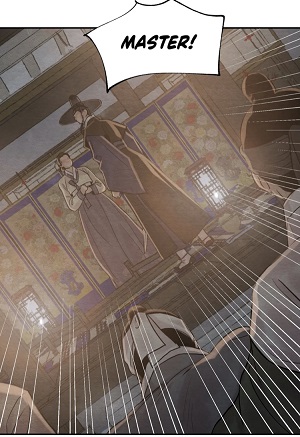 (chapter 99), the servant Seokdae or even his son Lee Jihwa. The loss of hair was the proof of his leniency.
 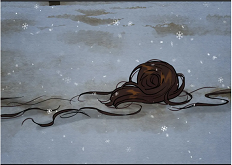 (chapter 101) Each time he spared them. How can father Lee claim that the main lead is behind the murder in the shaman’s house? Secondly, his own son vanished which will be considered as a sign of culpability. Finally, lord Shin is a survivor and his last image is that he got unconscious, when he spoke to Lee Jihwa. This means, Lee Jihwa will become a criminal! Because of this situation, I am hoping that the red-haired master will reflect on his own actions and decisions. He followed the elders’ advice blindly and paid a huge price for this. He would never get loved by the main lead. He came to lose everything: his home, family and title. He is now a commoner. From my point of view, father Lee will be forced to cut ties with his son in order to save his own skin, but it is also possible that he even loses the mansion.
 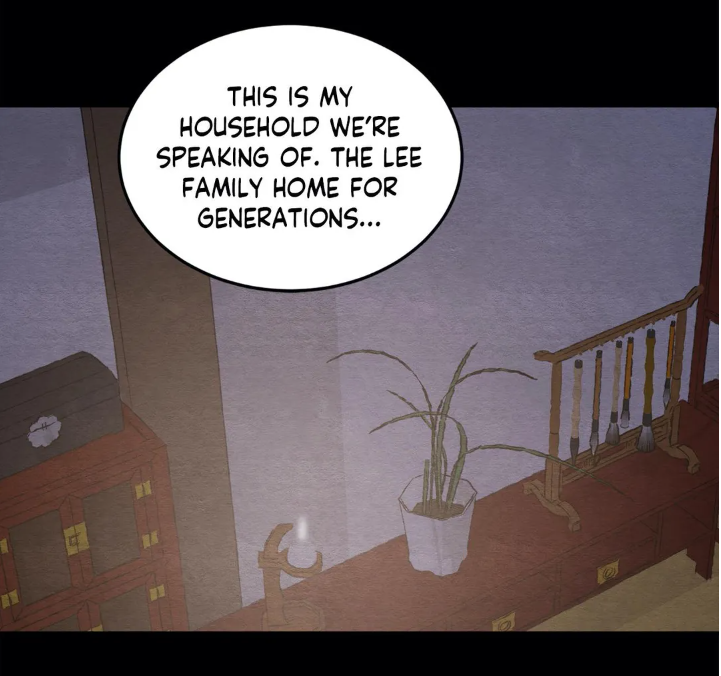 (chapter 82)
To conclude, Lee Yohan and Lee Jihwa are both sinners, yet the red-haired master is an accomplice of a murder, for he never intervened himself. While the thug still has a “clean record”, it is not the same for the second lead. Moreover, the main lead from Payback has a better understanding of sin and crime, but this is also normal, for he is growing up in a different environment. In Joseon, the sons had definitely less choices. Due to the big influence of Taoism and Confucianism, the juniors were asked to follow the orders from the elders blindly. Black Heart thought that he was really smart and cunning, while he was not. In truth, he was the perfect reflection of Joseon nobility and society: following social norms blindly and never questioning the elders. Thus he copied their behavior. He obviously listened too much to Kim and other adults, therefore it is not surprising that at the end, he paid for his wrongdoings with his life. All the schemers in this party were too arrogant and miscalculated.
As you can imagine, I prefer Lee Yohan known under the name of Lee Baekwon, for he never denied his responsibility.  (chapter 27) On the other hand, contrary to Lee Jihwa, he grew up in a poor environment, thus he had to work in order to live. He could never live carefree like the spoiled only son of the Lees. Finally, I would like my readers to question themselves this: Will Lee Jihwa come to admit his responsibility in the death of the nobles and in Yoon Seungho’s suffering? I have to admit that I am hoping for his return, for the two friends need to have a proper talk, and according to me, Lee Jihwa apologized or at least expressed regret in front of his friend, thus he got spared. Yet, I would like very much to see such an apology to the main lead. But before his departure, he still viewed himself as a poor victim who had been wrongly framed exposing that he had not grasped the true nature of his wrongdoings. (chapter 101) So working for a living will teach him how to become responsible and strong!
Feel free to comment. If you have any suggestion for topics or manhwas, feel free to ask. If you enjoyed reading it, retweet it or push the button like. My reddit-Instagram-tumblr-twitter account is: @bebebisous33. Thanks for reading and for the support, particularly, I would like to thank all the new followers and people recommending my blog.





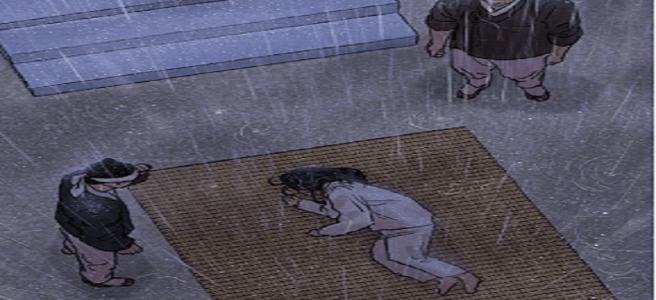
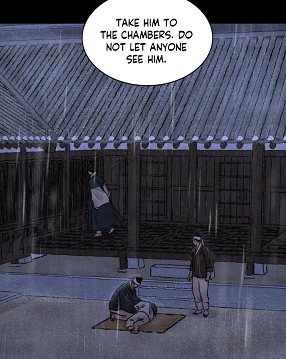
 I have already found a solution, but it takes some time to elaborate all the thoughts. Hence expect that the last two essays will be updated one more time, just like a third one will be released soon. The title has already been chosen: Time and crime.
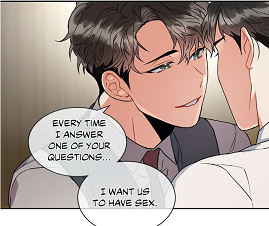 (Chapter 7) After viewing such a panel, the readers can only judge him as weird, but funny. Though the main lead is now a murder suspect, he keeps smiling while making requests, and as you can see, his main condition is sex. Because of such a behavior, he can not look trustworthy in the attorney district’s eyes, rather obsessed with sex. It was, as if he was amused by this situation. That‘s even how Gu Sehyuk views him in the beginning of this story. Nonetheless, this is just a deception. The man is actually using the situation for his own benefit. Why? First, his first request is quite serious. He is asking for an investigation.
  (Chapter 2) This signifies that he needs Gu Sehuyk’s help and power as district prosecutor. And this observation leads me to the following conclusion. He created such an opportunity to approach his target, Gu Sehyuk. How did I come to such a conclusion?
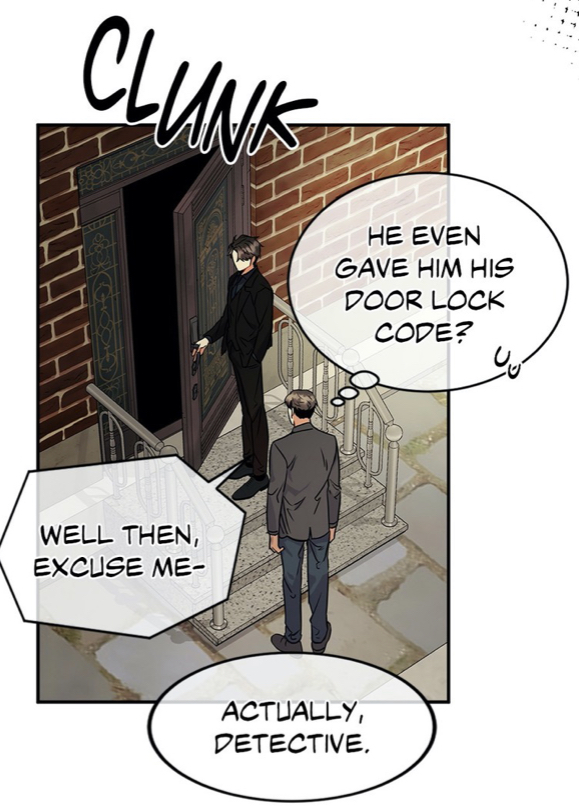 (Chapter 12) I doubt that the main lead gave it to the „suspect“, since the latter is under investigation. Secondly, he knows the prosecution officer’s life so well. Observe that he is the one telling the young detective how long Gu Sehuyk will stay at work.
  (Chapter 12) Moreover, he knows about the death of Gu Sehyuk’s brother and the circumstances of his assassination. That’s why he sent him a picture of the killer, Yoon Gyuho, who had committed suicide right after. Then, the manhwaworms can witness
  him kissing the prosecutor’s wrist tenderly, a sign of affection. He might have introduced himself as his biggest fan
 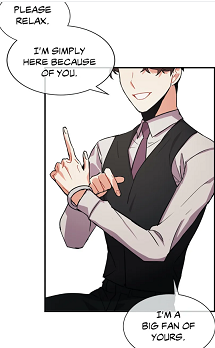 (chapter 2), yet such a gentle kiss expresses more than just admiration. Moreover, I would like to point out the absence of the eyes in the last picture, a sign that the protagonist is here wearing a mask and not entirely honest.
 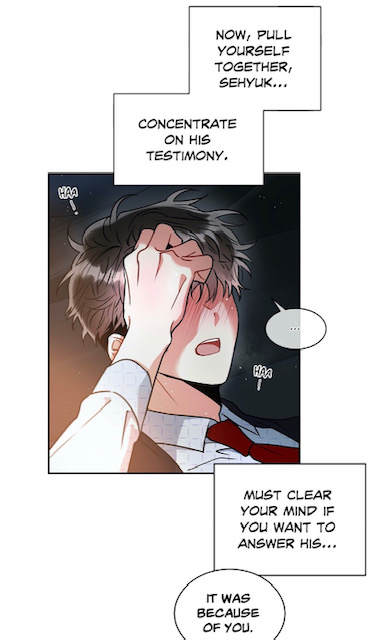 (Episode 18) Notice that in this scene, the „suspect“ is blushing and hiding his gaze with his hand, while he admits that he did it because of him. In addition, he reminds the attorney district of their actual situation. One sex session means the divulgation of intel. Here, Gu Sehyuk had the impression that he was the only one who got carried away, whereas Ha Ideun was still able to remain rational and calm. Yet, due the blushing and the covering of his eyes, it becomes obvious that the „suspect“ was definitely moved. Besides, Ha Ideun justifies his action with the prosecutor. It is for him or his brother. Then he begs him for his trust. Yet, this is just a theory of mine and you have every right to think otherwise. But one thing is sure: the young man is definitely more close to Gu Sehyuk than the latter is aware.
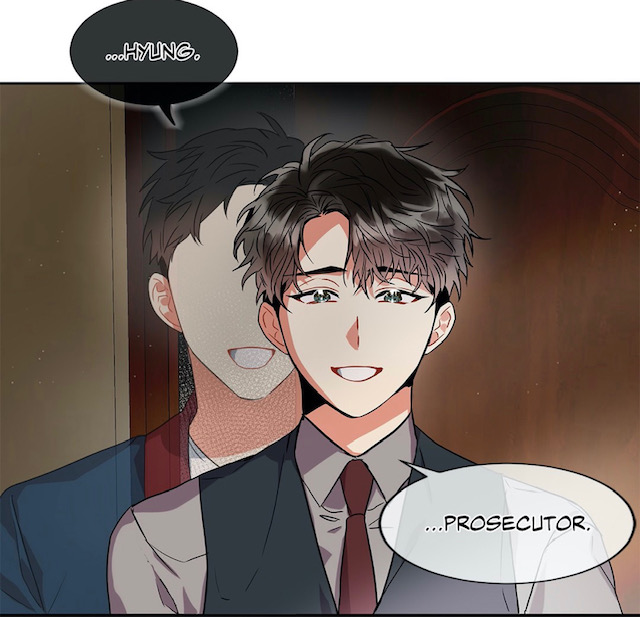 (chapter 6), exposing that both characters are similar and in fact related. Furthermore, what caught my attention is that the face of the chairman’s third son is never revealed to citizens, when his arrest is mentioned in the news. In fact, we only get to see a white television screen.
  (Chapter 1) But this doesn‘t stop here. Later, when the attorney district meets the deputy prosecutor general Na Joohwan, the latter reveals that during a search concerning the existence of a slush fund, he noticed that Ha Ideun’s room was devoid of life.
 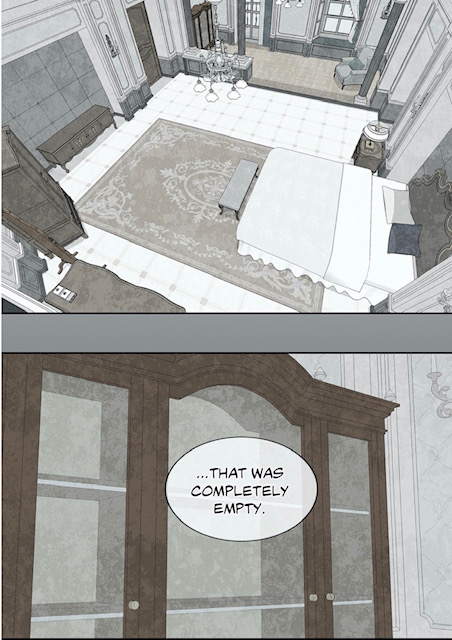 (chapter 8). There was no picture and no cloth. It was, as if the owner of the room was a phantom. Besides, note that we have the presence of white again. The manhwaphiles certainly know the expressions „white as a sheet“, „pale/white like a ghost“. As you can see, these panels reflect these idioms. That’s how I connected the chaebol’s son to a ghost.
  (chapter 7), he is not working and he doesn’t own any apartment. In other words, he is living in the shadow, for he has no possession and is not interacting with people. His sexual habits are presented as hearsay. And now, you comprehend why I made this association. That‘s why it is not surprising that at the end of episode 18, Gu Sehyuk wondered about Ha Ideun‘s true personality.
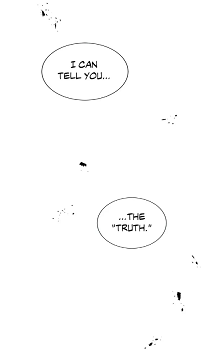 (Chapter 5), while the district attorney is only aware of facts.
  (Chapter 4) There’s no doubt that the suspect is telling the truth. He is not blinded by agony, like Gu Sehyuk who suffered a lot from his brother’s loss. I will explain the difference between truth and facts more in details later. Besides, let‘s not forget that a spirit is able to see more than humans, because they are detached from the physical world. They can move from one place to another very easily. Therefore they can gain more insight than mortals. As a ghost, he is able to spy and discover new clues.
 (chapter 2) The light oozing from the television stands in the protagonist’s back and illuminates the prosecutor. It was, as if Ha Ideun was bringing light into the main lead’s darkness. With his knowledge, he will be able to help to unveil the mystery of his brother’s death. For me, there’s no ambiguity that he has long planned to approach the prosecutor and he knows very well, why Gu Sihwan was murdered. But he can‘t reveal everything at once, because the latter would never believe him. Besides, he needs to prepare the protagonist to face the truth and exactly for this reason, the young man has to investigate himself. Only by becoming the investigator, Gu Sehyuk can discover and accept the verity. Moreover, Ha Ideun has to gain the prosecutor‘s trust. And now the manhwaphiles can comprehend why he is asking for the prosecution officer‘s confidence.
  (Chapter 15) Therefore he is willing to be investigated and questioned by Gu Sehyuk. He has no problem to get tested. Since he is clean, he has nothing to fear. On the other hand, he is not releasing much information, because he is well aware that his knowledge could generate suspicions among the prosecution office. Observe that once caught in the CCTV, he was immediately turned into a murder suspect. Words can be misinterpreted, hence he is very reluctant to speak so freely. The readers should keep in their mind that each information he gave was related to a concrete evidence (the picture, the bag full of drugs and the knife),
  (Chapter 15) something that can not be tampered, as long as the district attorney is supervising the investigation. In other words, he is guiding the district attorney to unveil the mystery.
  (Chapter 2) After analyzing so many manhwas, I discovered that many characters wearing glasses were hypocrites, often manipulative and ruthless. Hence I am suspecting that everything is related to Hasung Group. I believe that Ha Ideun’s powerlessness is related to Ha Sungjoon. Note that in that scene, the main lead showed a disdain towards his brother, when the latter appeared on television. There exists a rivalry and Ha Ideun‘s bad reputation (lazy, consumed by sex) is definitely playing into Ha Sungjoon‘s hands. Simultaneously, it could be a diversion from the main lead‘s part, that way he could deceive his brother and investigate his crimes. The manhwaworms shouldn‘t forget the existence of a slush fund and the sudden increase of benefits from Hasung Group.
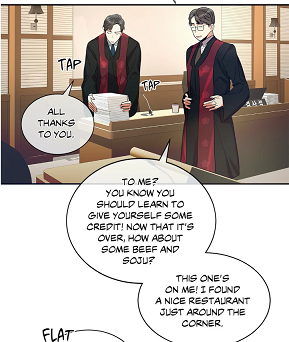 (Chapter 1) His whole life is revolving around his work as prosecutor, a life full of dedication, humbleness and chastity. He is actually not truly living, just determined to keep his vows. He is making sure that the defendants are all receiving harsh sentence.
  (Chapter 1) What the other district attorney calls as obsession, is in my eyes the protagonist’s religion.
  (Chapter 3) The pictures on the cupboard are representing his „idol“ or „saint“. Since Gu Sihwan got assassinated, he became a martyr and his brother turned him into a „saint“. And now, you comprehend why Ha Ideun is not allowed to touch his deceased brother’s belonging. They are sacred relics.
  Therefore it is not surprising that the brother’s bedroom is associated to white as well:
  It was, as if his bedroom was a crypt. That’s why I came to the following interpretation. The mansion, which Gu Sehyuk described as „frozen in time“, is his tempel. Consequently, his residence is intemporal. Because this is a sacred place, he can’t live properly there. At the same time, he feels the intrusion of a stranger as a sacrilege. Therefore the manhwaphiles can grasp why Gu Sehyuk cleaned the house after the ghost‘s visit.
 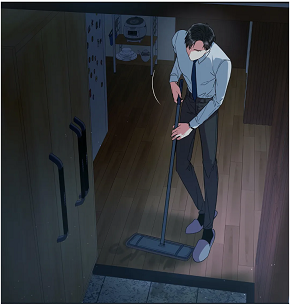 (Chapter 3) The tempel had lost his purity. The reason for his transformation is naturally his brother’s murder. The latter suffered so much from it, that he couldn’t move on. This is no coincidence that once he is confronted with the culprit’s face, he gets a flashback, a panic attack.
 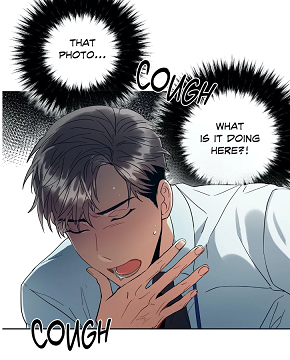 (Chapter 3) But since he is so trapped in his past, he starts suffering, once he encounters Ha Ideun, for the latter forces him to remember his repressed memories.
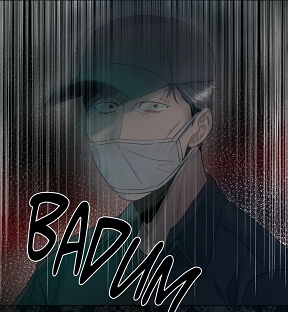 But the problem is that memories are never objective. They are definitely influenced by the subject‘s past experiences, emotions and mentality. What Gu Sehuyk saw here could be viewed differently. He views a murderer in this image, while I detect the killer‘s despair and angst through the eyes. From my point of view, the man was not lusting for blood, though he stabbed him 7 times, a sign for rage and madness. And notice that after the crime, Gu Sehuyk investigated the matter from the culprit‘s perspective. Why would he stab his brother 7 times? Why would he do this? In other words, he tried to find out his motivations. But like Ha Ideun pointed out, he was missing something important there: the victim.
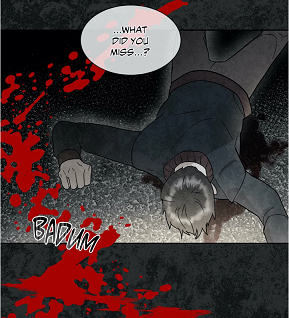 (Chapter 4) Because he was close to his brother, he had the impression that he knew his brother: he was a smiling and cheerful person with no secret.
 The picture of his idol exposes Gu Sehyuk‘s blindness. And now, you comprehend why the „ghost“ put it down in the end. This was not the truth, Gu Sihwan hid things from his brother. And this leads me to the following conclusion. Because the prosecutor idolized his brother so much, he couldn‘t discover the truth. Moreover, he acted like every district attorney. They just need to catch the culprit and the case is closed. However, there‘s a huge difference between truth and identifying the perpetrator‘s identity. There was definitely a conspiracy, but the protagonist failed to see this, as he was too obsessed with the assassin. Here I would like to mention my other essay called „Truth and memories: Memorist, Nobody knows, Find me in your memories and The King“, where I elaborated the problematic of unveiling the truth through memories.
 (Chapter 4) Why did he have to die? Ha Ideun needs to transform the deceased brother into a human so that Gu Sehyuk decides to look into his brother’s past life.
  and is taken by surprise. He wonders why he acted like this.
  (Chapter 18) In my eyes, this scene indicates that Gu Sehyuk is slowly coming back to life. But the problem is that the main lead has lived like that for two years, therefore he won’t change right away. From my point of view, his „temple“ will become a mad place, because he commits a sin in a sacred place.
 (Chapter 1) Ha Ideun won’t be able to remove the prosecutor’s religion despite their sex sessions, as long as the truth is not totally unveiled. This is my explanation why Junah chose such a title.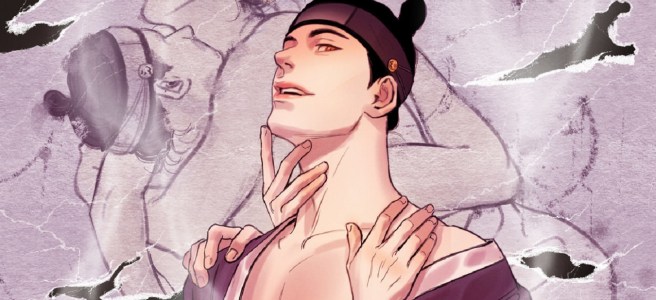

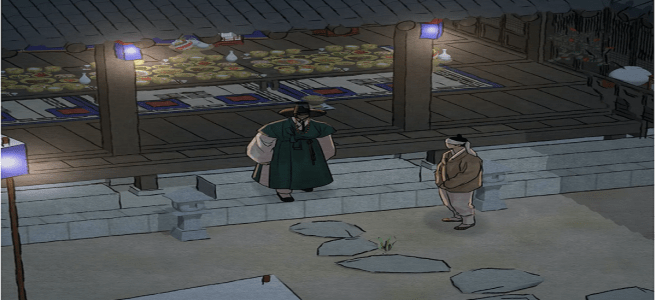
 (Chapter 71) As you can envision, I am now examining each picture very carefully, hence when I saw this image, I couldn’t help myself associating it to the painter’s abduction. First, the painterofthenight-lovers will certainly remember the scene of the lord’s panic, when he left the room and saw the footprints on the ground misleading him to think that the painter had run away.
  (Chapter 60) In this picture, the manhwaphiles can even hear Nameless’ explication why the lord would jump to the wrong conclusion. The expression “on his own two feet” was actually visualized by the imprints left on the snow. We know for sure that Nameless knocked out the painter before carrying him away. He carried him the same way than he did with Lee Jihwa:
  (Chapter 59) What caught my attention is that the space between the footsteps on the wood
 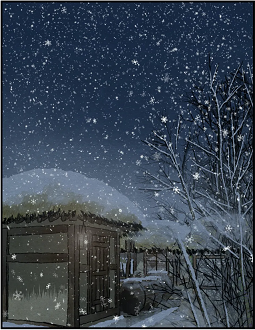 (Chapter 59) This image caught my attention for two reasons. Thanks to the analysis “The five candles”, I realized the true meaning of the pictures with landscapes. They expose the actual situation, therefore the beholder should study them under the following elements: moon or sun, air, water, earth and fire. So in this picture, you can detect the absence of the moon symbolizing the lord’s illness. He is too weak to look after his lover. Striking is that the earth element is predominant here, as the tree branches standing next to the buildings are almost touching the sky. So since the snow is falling, it indicates the presence of water and note that water is almost everywhere: in the sky, on the trees, on the ground and on the rooftops. The only element missing is fire. Yet if the manhwalovers examine the image more closely, they will detect the presence of a light hanging on the side of the restroom. However, the candle surrounded by glass is not lit. To sum up my observations, this panel exposes the predominance of water and earth and the presence of a lamp with glass. In other words, this image symbolizes butler Kim, the new version of chapter 58
  . First, let’s not forget that Kim is often seen carrying a bucket of water
 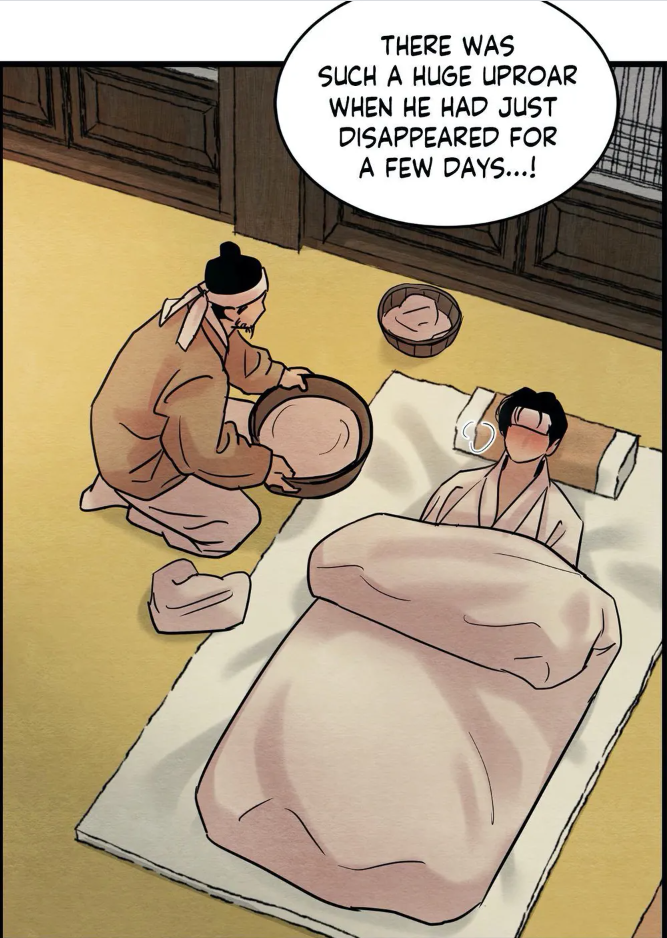 (chapter 33)
 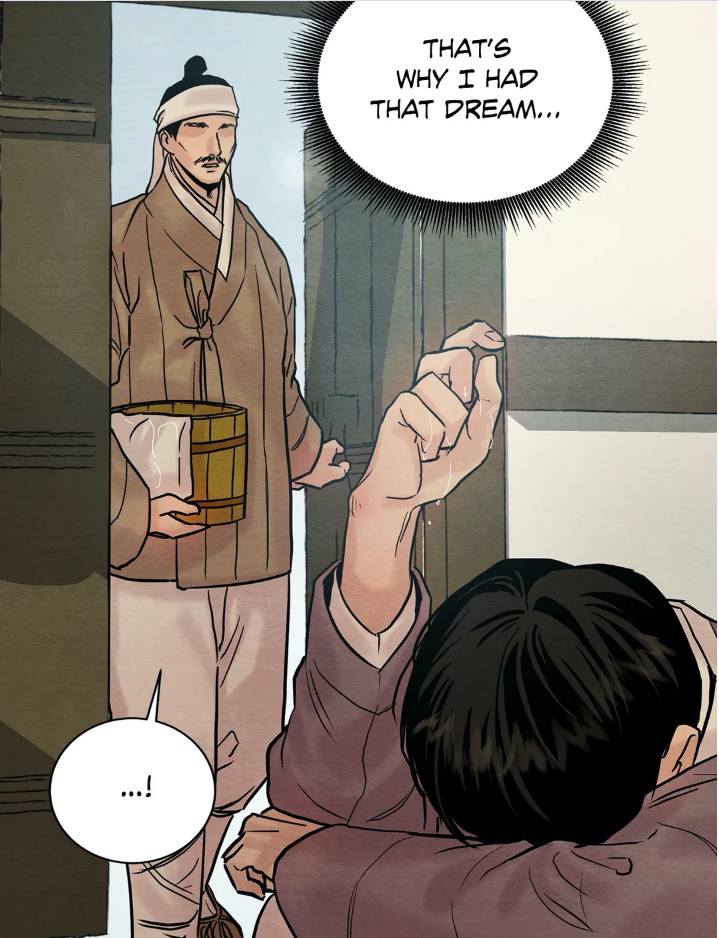 (chapter 56). Secondly, he is also linked to the lantern with a glass
  (chapter 20)
 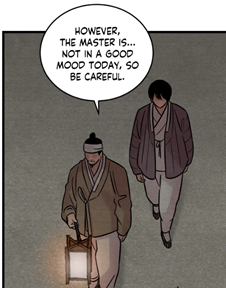 (chapter 36) But more importantly is that in the image from chapter 59, there is no light,
  (Chapter 59) Note that the painter is standing in front of the bathroom. He has just cleaned himself and note that the lamp is in the background. How is this a proof? If the painter had run away, he wouldn’t have gone to the restroom… he would have left the room right away, just like the footprints are indicating.
  (chapter 59) But since the artist was silent right away, as the Joker knocked him out immediately, the physician could have jumped to the conclusion that Baek Na-Kyum met an acquaintance. So when the vanishing of the painter was discovered, the doctor assumed that the artist had followed the person he met during that night. Honestly, I can’t blame the doctor for his “passivity”, if my assumption is correct. Due to the lord’s agitated state of mind, the doctor could only realize it afterwards. With this new discovery, it becomes more comprehensible why the physician hesitated the next morning. He didn’t know what he should do.
  (Chapter 63) If he revealed what he had heard, then he imagined that he could bring the person who had „helped“ Baek Na-Kyum to escape into trouble. Observe the presence of the drop of sweat on his face. He was definitely uncomfortable. If he testified, then he could reveal the presence of a conspiracy. Nonetheless, I believe that he had jumped to the wrong conclusion: desertion. And with this new discovery, you can understand why the butler was so worried. He had no idea what the doctor had noticed. Imagine, the valet got caught by his own method (spying behind doors), however in the physician’s case, the latter was not doing out of malevolence. He just happened to become a witness, but he had assumed something else. That’s the reason why Kim was so worried, he had seen no one, yet the doctor had observed something. Kim never imagined that such a small detail (noise) could become a threat for him. This explicates why he chose to visit the doctor during the night.
  (Chapter 64) He needed to ensure that the doctor remains silent. Many manhwaphiles will certainly recall how Kim threatened the doctor…
 (chapter 65) Back then, I had assumed that out of cowardice, he had not intervened due to Kim’s harsh words. Nonetheless, I came to a different interpretation. After recognizing how Byeonduck is tricking the readers, she gives the impression of a continuity, I believe that during that night, the butler visited two different physicians. According to my theory, there exist 3 different doctors. For more, please read the analysis “The mysterious doctor“. How did this idea come up? Simply by paying attention to the BEARD!!
  (Chapter 57) Note that the beard of this physician is covering the cheek and is straight.
 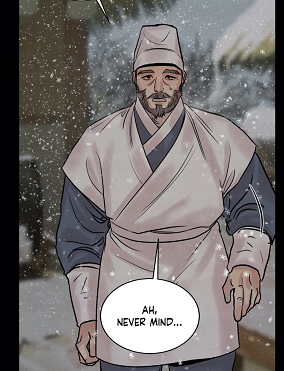 (Chapter 63) But now compare it to the physician’s beard in episode 65:
 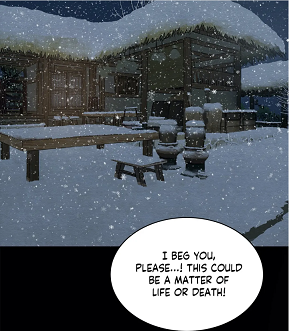 (Chapter 65) and from my point of view, he used pity to discover what the physician knew. Remember how he had used compassion the night before (chapter 57). Besides, if you contrast both statements, you will detect a contradiction. “This could be a matter of life or death“ implies that it was about saving someone, while in the second image, it is about killing someone: the other doctor! In my eyes, the valet must have begged the physician
 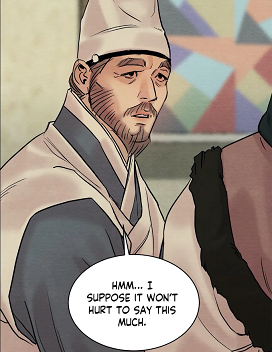 (chapter 57) to remain silent. If he revealed that he had discovered the presence of someone, then the other could get into trouble. In my opinion, the butler must have suggested that Baek Na-Kyum had tried to escape, because the lord had been abusing him. Don‘t forget that he had been treating the artist for his wrist. Then he must have seen the lord panicking too.
  (Chapter 60) But now, the manhwaphiles are probably wondering why he went to the other physician then. It was related to the lord’s behavior in the shed. He was acting like a sex-maniac.
 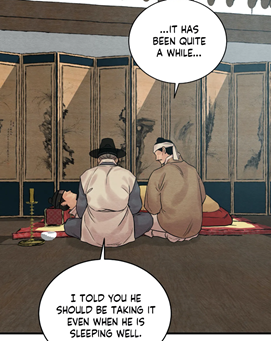 (Chapter 55) This doctor had reprimanded the butler and had been prescribing a tonic. So he visited the physician and used this opportunity to put the whole blame on the poor doctor.
  (Chapter 65) The man never saw anything, Kim just described to him how the main lead had been behaving! Yes, he was acting like Yoon Chang-Hyeon who had gone to the doctor and described the son’s illness.
  (Chapter 57)
  (chapter 61)
  (chapter 62)
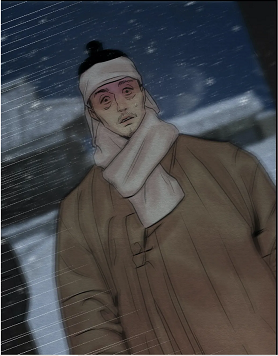 (chapter 64) He needed to confirm his death. But since the lord was having sex the whole night, the butler had to make sure to bury the truth. If the artist had fainted, then the valet would have fetched the other doctor, the one who imagined that Baek Na-Kyum had escaped. And now, you comprehend why the man hesitated to question the painter after his return:
 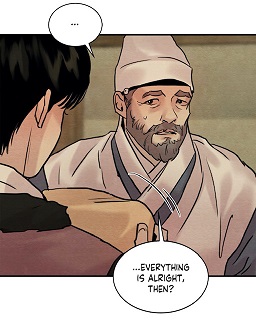 (chapter 74) He was wondering why the artist would look so fine, as he had attempted to escape before. Another evidence for this theory is the following rule: a reflection within the same season. Since the doctor had been puzzled by Yoon Seungho‘s illness, I am deducing that he had the exact opposite disposition concerning the artist. He imagined what the artist had done. He had jumped to the wrong conclusion due to the injured wrist. Besides, he was “aware“ of the lord‘s mood swings.
 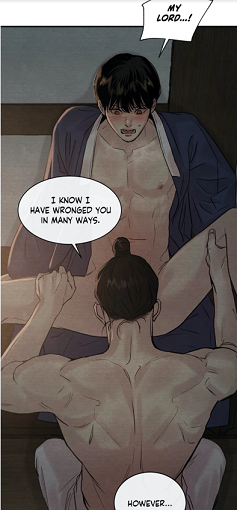 (Chapter 71) Consequently, he was not investigating the real circumstances of the abduction. But he has another reason for neglecting this aspect: he knows the culprit’s identity, unaware that unveiling the mastermind’s identity is far from enough. Real justice is to uncover truth. However, at the end of season 2, the wealthy noble was more like a teenager in love. That’s the reason why he was making a huge mistake.
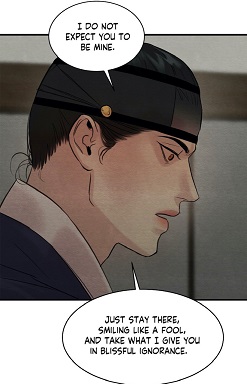 (chapter 85) He was already content if the artist would look at him, the moment you recall his first confession:
  (chapter 55). Hence in chapter 71, he’s blushing and happy, for Baek Na-Kyum is definitely starring at him with such a curiosity and desire.
 Moreover, the painter talks to him, has even accepted his advances. That’s why he is no longer paying attention to the circumstances that led him to think that the painter had run away on his own feet. As for Kim, he was running out of time, because at any moment, Baek Na-Kyum could mention his visit to the restroom or meeting the Jester. Consequently, the former had to use any trick to remove the artist. Hence he encouraged the kisaeng Heena to take away her brother.
  (Chapter 67)
 (chapter 100) Here, they revealed that the main lead had gone down on his knees, the moment he had seen the traces of fresh blood. Then note that in the shaman’s house, the lord had left a bloody foot print
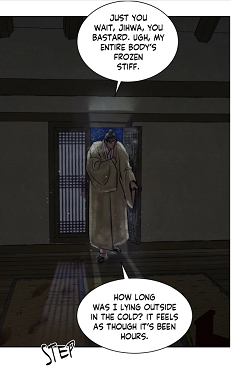 (chapter 102), yet in the snow it was no longer visible.
  (Chapter 102) Someone had erased the traces by putting mattresses on the soil. However, while the lord was walking through the mountain, he was definitely leaving a bloody trail behind
  (chapter 102), a sign that someone had been helping him. And this can only be KIM!! And the last chapter from season 3 seems to confirm my initial investigation: The butler had erased the traces from the abduction. He knew about the kidnapping and helped Lee Jihwa and the Joker.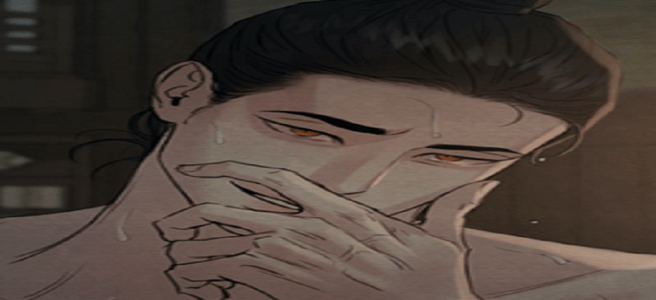
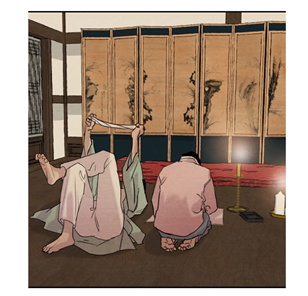 He is not only playful, but also flirtatious. Note how he puts the headband on the main lead giving him a seductive allure.
  At the same time, he acts like an innocent teenager who keeps asking questions: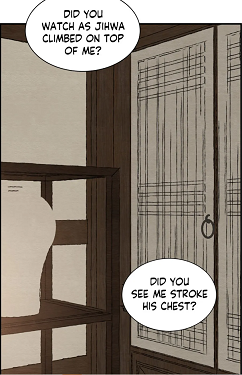
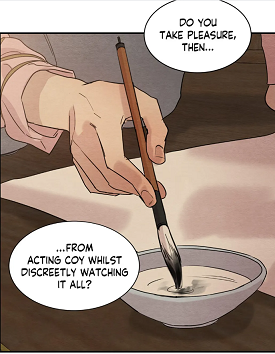 Yet, the topic is actually about sex, which contrasts so much to purity and innocence. It was, as if Yoon Seungho was behaving like a teenager discovering sexuality for the first time.
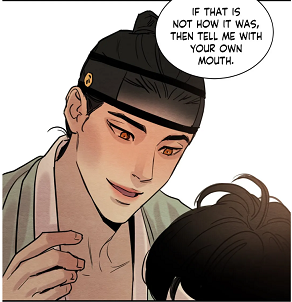 While talking, he can’t even help himself smiling. Striking is that his joke and words are used to woo the painter. He keeps getting closer and closer to Baek Na-Kyum, so that his head approaches the painter’s, before his hand starts touching his leg.
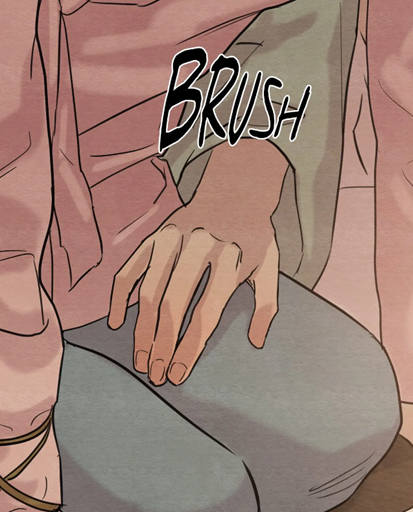 As you can detect, the scene in episode 16 is a combination of seduction and frivolity. He is so happy to be by the painter’s side, hence he is talkative. He desires to have a real conversation with the painter. On the other hand, since the topic of the conversation is revolving around sexuality, it explains why Yoon Seungho is tempting the painter. And we have a similar situation in chapter 70. Therefore there exist so many similarities between these two episodes, which I will now list:
 (chapter 16) versus
  (chapter 70)
 (chapter 70)
  (chapter 70)
 and
and 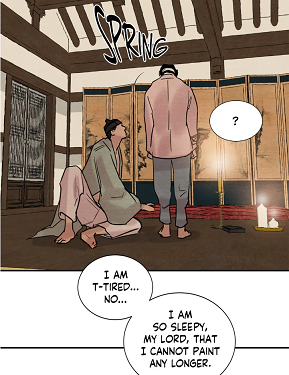 (chapter 16) versus
  the removal from his hand and
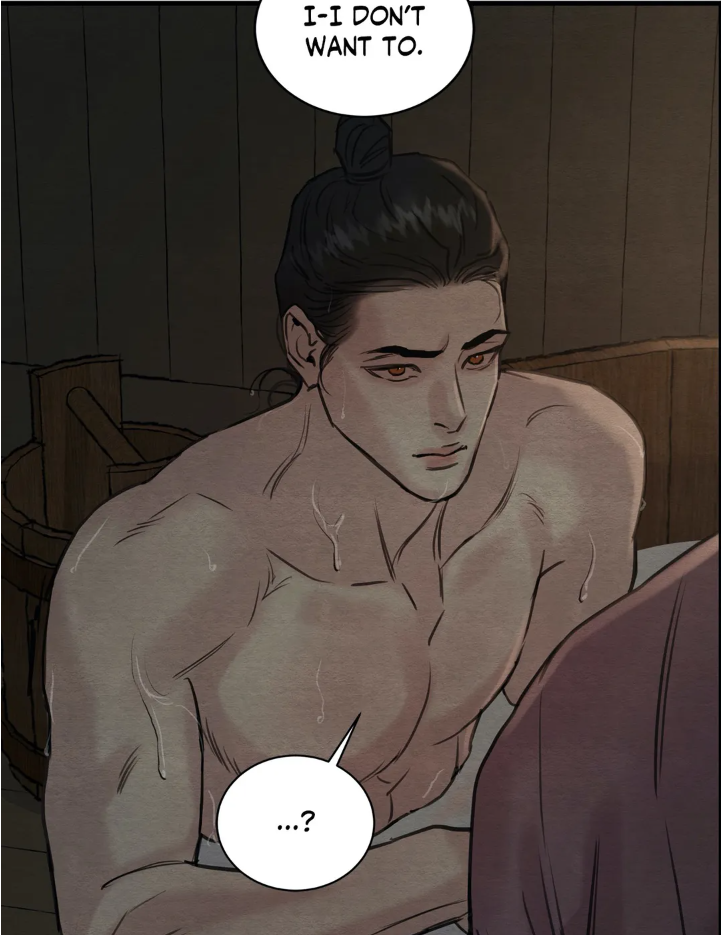 (chapter 70)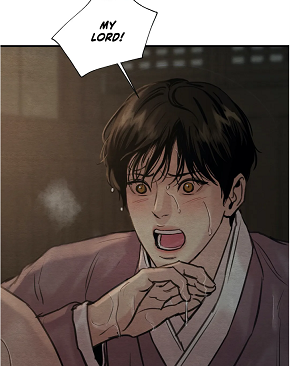
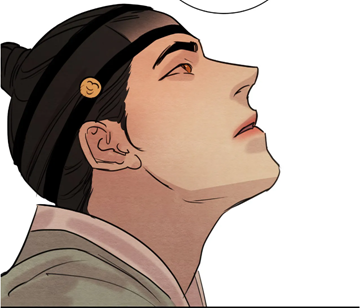 (chapter 16) versus
  (chapter 16)
 (chapter 70)
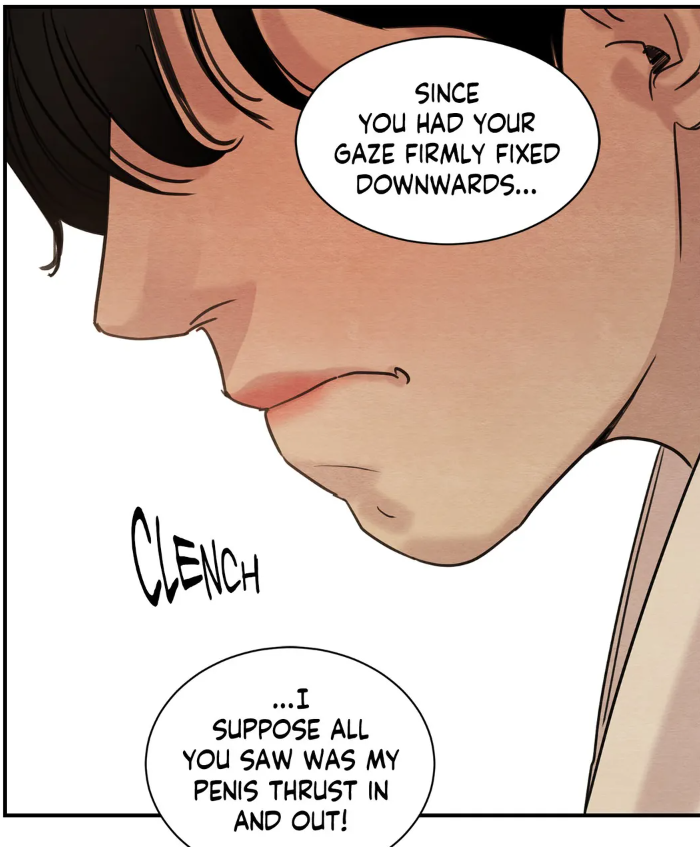 And here, we can detect the first huge difference between these two episodes. Because the artist is no longer denying his homosexuality, and as such he has finally dropped the scholar’s doctrines, he is able to perceive the aristocrat’s true personality. He is indeed moved,
 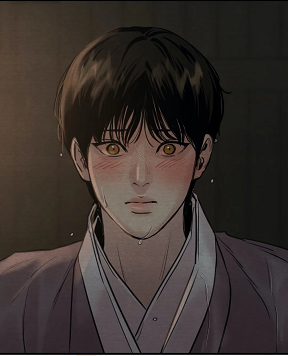 when he sees Yoon Seungho smiling after playing his prank. He blushes so much that he feels the need to hide his face,
 , when he hears the main lead calling his sister a wench. He requests respect from the lord. He is confident in his words and behavior. He even gives further explications.
 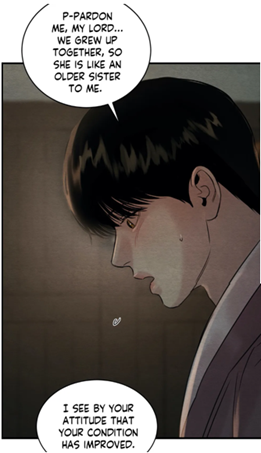 Moreover, he is no longer using fake excuses, unlike in the past. He rejects the lord’s suggestion (taking a bath together) clearly and directly without displaying any disrespect. When the lord keeps pressuring him, his justification sounds reasonable.

 (chapter 26). Yet back then both were driven by negative emotions (anger and sadness) due to their wounds. However, this time it is different. They are both calm and very careful. The two are determined to treat each other with respect.
 (Chapter 70) In other words, the bathroom is the place where the main leads can be honest to themselves, hence they are genuine to their counterpart. This is no coincidence that the painter was indeed touched, when he reminisced the lord cleaning him.
 (chapter 59) In this place, there is no rule or social class separating them, they are equal. In the washroom, there’s only purity symbolized by water. I would conclude that they are truly naked physically and mentally. That’s why they can only be honest to themselves and in front of each other.
 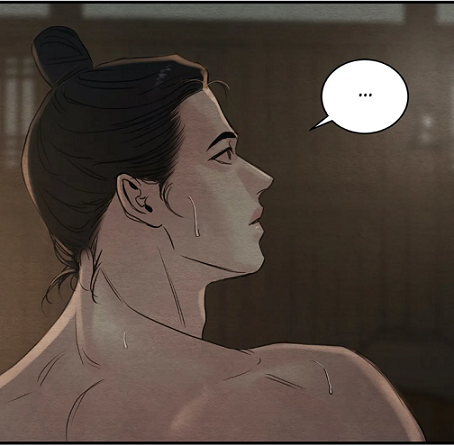 , when the painter retorts that he should mention her differently. His facial expression oozes naivety and shock. He didn’t pay attention to the idiom (“wench”), as all his thoughts were revolving about the painter’s happiness. He just desired to know if he had succeeded:
  (chapter 63: this is the master’s biggest wish) Astonishing is that the painter is not outraged by the lord’s words, as he has already sensed the lord’s true attention: the artist’s happiness. Carefully, Baek Na-Kyum corrects his master and starts describing his relationship with Heena. Consequently, the lord considers it as a good sign. Their bond has not been too damaged. Despite his mistake, the low-born is interacting with him. That’s why he takes the painter’s hand. He has the impression that the artist is opening up, hence he starts conveying his own thoughts too. The problem is that when he says this
  , he makes a huge mistake again. However, his words cause the painter to remember how the lord treated him in that room
  (chapter 66). The artist has no idea that Yoon Seungho is referring to the flashback.
  (chapter 66) Nonetheless, due to his mistake, Baek Na-Kyum retrieves his hand. The reality is that Yoon Seungho was attempting to show his concern and his remorse. Unfortunately, he chose the wrong diction, thereby his thoughts were not expressed properly. Moreover, I would like the readers to keep in mind that the lord has never apologized before. First, as a noble, he was never asked to apologize to a commoner. Secondly, it is related to his own trauma. The main lead associates the apology
 to fakeness and hypocrisy due to the butler, who keeps repeating these words
 (chapter 25)
  (chapter 65). Besides, the painter also apologized once, and back then, he was not really sincere too.
 (Chapter 11) This explicates that he misjudged the painter’s apology in chapter 62. Moreover, exactly like in episode 11, the painter had selected silence over giving a proper explanation. As you can see, silence was another reason why the couple had such huge issues in the past. It generated doubts and increased insecurities. However, in chapter 70, silence is barely present.
  (Chapter 70) Both are communicating verbally in all sincerity. In other words, this panel
  In my opinion, the skinship serves as support. The master is not just wooing the low-born, but also he desires to voice his emotions. He would like to expose his concern and affection, yet like I exposed above, he fails due to the wrong selection.
  (Chapter 70) Imagine, before he never showed any interest why the commoner refused to paint for him.
  (chapter 1) This exposes the huge transformation of Yoon Seungho. Now, he would like to be judged differently. He has already realized that he will never achieve his goal (being loved), if he is still full of insecurities and self-hatred. Nonetheless, his selfishness is still present in the bathroom, because he can’t bear being pushed away again. This interpretation is exposed with the number of white candles.
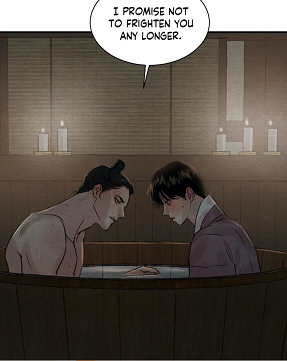 Note that on the lord’s side, there are just 2, while on the painter’s side the beholder can count three. The number 3 symbolizes harmony, completion and wisdom. This observation leads me to the deduction, the aristocrat’s transformation is not completed yet. This explains why he plays a trick by dragging him into the tub. The prank is the perfect solution in order to pursue his dream without becoming forceful or frightening. Moreover, note that he refuses to act like a master by giving him an order. From my point of view, the noble’s tone has changed. Not only his gaze

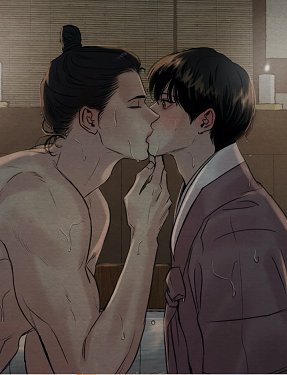
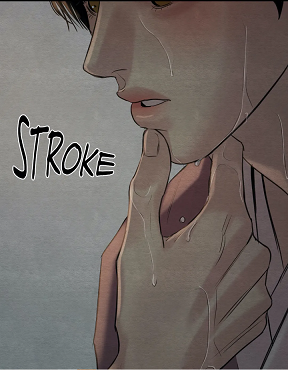
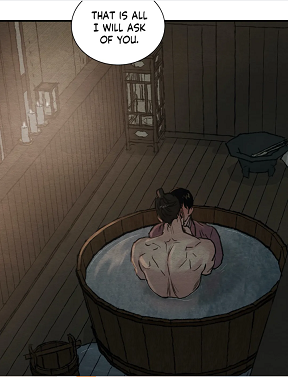 quoted from
 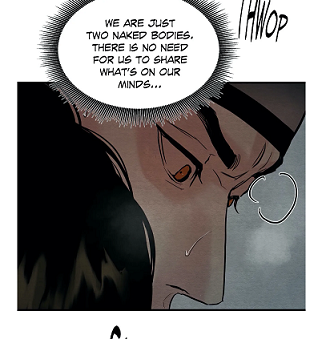 (“to share what’s on their mind”) got revived. He was once again full of hope, that’s why he felt the need to touch the painter. He wanted to share his feelings and thoughts. Unfortunately, the low-born rejected the offer
 I believe that for the first time, the low-born is able to detect a new side from the aristocrat. Imagine that the artist could not only make the noble laugh, but also smile. That’s why the painter can no longer reject the lord, as his fear is slowly disintegrating. Note that he doesn’t reject the kiss from the aristocrat.
 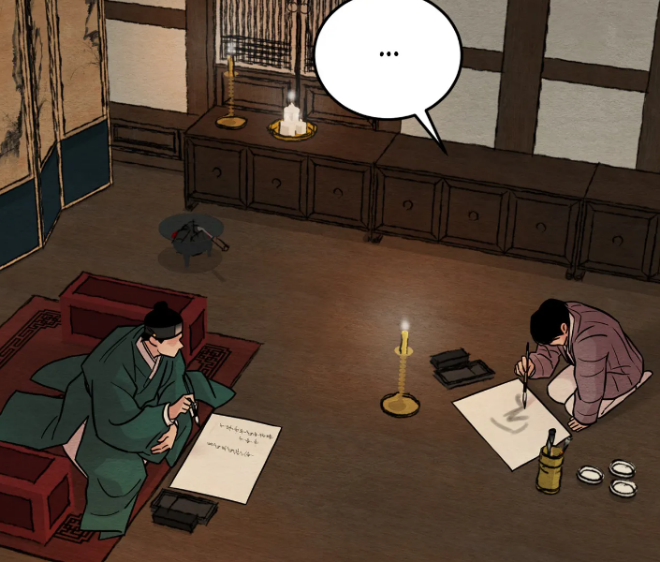 , because the butler had warned the artist not to irritate the main lead. According to him, he was in a bad mood, which was untrue.
 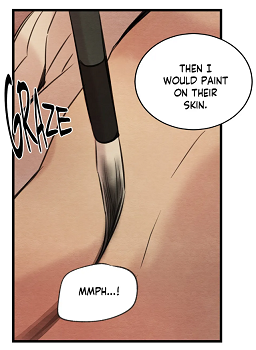 (Chapter 36) With this joke, he wanted to initiate a conversation, but unfortunately he saw the erection. Yet, the valet’s trick didn’t work completely either. Note that during that night, there was no sexual intercourse, just a fellatio. We shouldn’t forget that during that day, the painter was still feverish which the noble had noticed. So envision what would have happened, if the lord had engaged a second sex marathon. Therefore, I believe that in chapter 70, the valet is hoping that the noble will behave like the previous night
 , so that the painter’s health condition deteriorates more, or the artist gets scared and changes his mind to leave the mansion.
 (chapter 38)
  (chapter 50): caresses, embrace and kisses, the symbol of harmony, love and sincerity.
  (chapter 47) by saying that he had just made a prank. But now, you will wonder where there was a prank in chapter 46, 56 and 66.
  (Chapter 46) Deok-Jae destroyed the painter’s snowmen. There is no doubt that he would have replied the same, if he had to answer for his behavior.
 (Chapter 56) He knew that this would hurt the noble, yet note that he felt no remorse and blamed his childhood friend. However, like I pointed out, he was impersonating a person. If asked, the childhood friend would have used a similar excuse. That’s why Yoon Seungho answers in a quite similar way: he calls him “lord song”. However, he pushes him.
 (chapter 66) , he implied with his words that Jihwa played just a prank, since the painter returned alive. Yoon Seungho shouldn’t just get angry, because it was just a joke. As you can observe, all the misdeeds are reduced to a joke. It was, as though they had done nothing wrong. However, the intention is definitely different: the perpetrators intended to hurt the protagonists. And this is not surprising that the chapter 36 contains both pranks: Kim drugged the painter against his will, while the joke from the noble was harmless. And in my opinion, the episode 70 contains both pranks as well. Kim was the one who sent the painter to the aristocrat. Why do I believe this? The reason is quite simple: the servant leading the painter to the bathroom is portrayed with no eye
  (chapter 70) and is carrying a lamp similar to Kim’s
  (chapter 36). And remember that this chapter is a new version of chapter 36. In that episode, the valet was the one who brought the artist to the lord’s chamber. Moreover, the way the door is shut clearly exposes a certain violence.
  (Chapter 70) Besides, the domestic is also urging the painter to join the bathroom. From my point of view, the domestic wants to make sure that the artist arrives, before the lord leaves the bathroom. Moreover, the lord’s expression in beginning is not quite welcoming
 . So I am more inclined to think that Yoon Seungho didn’t plan it that way. And remember my explanation after the first sex marathon. The butler had placed the painter in the lord’s bed
  (chapter 34) in order to incite the latter to have sex with the commoner. Imagine, he had just regained consciousness, therefore this trick could have cost the artist’s life. And we shouldn’t forget, the butler witnessed the second sex marathon. He even viewed the flashback from the painter. Therefore in my opinion, the butler is hoping with his “prank” that the lord will act like the previous night. Furthermore, I would like to point out the presence of domestics in chapter 16 and 36. We have Deok-Jae who spied on the couple and manipulated the butler to open the door
 [theory confirmed by the author herself]. Then during that evening (chapter 36-37), Kim tried to stop Yoon Seungwon from entering the room.
 (Chapter 37) Hence this means, he was paying attention to what was happening in the bedchamber. What caught my attention are the following panels:
 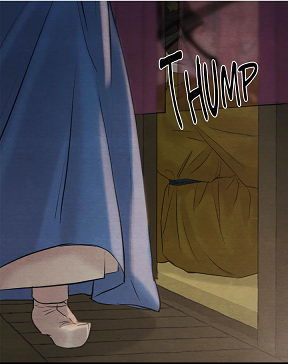 (chapter 69) Since Kim got caught disobeying his master, he needs to lie low. On the other hand, he needs to be updated. That’s why he is now using other servants as his spies. There’s no ambiguity that the servants, manipulated by the butler, must resent the low-born. He caused them another trouble. But the reality is that these tricks are no jokes but crimes. That’s why I feel that after the second abduction, there will be a purge among the staff. The ones who followed the butler’s instructions will definitely suffer.
 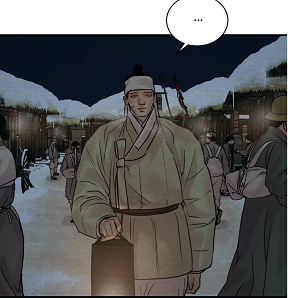 (Chapter 69)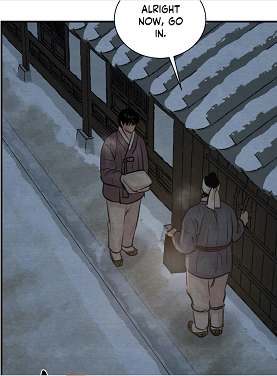
 Bebebisous33s' analyses in K-Dramaland and Manhwas