
Please support the authors by reading Manhwas on the official websites. This is where you can read the Manhwa: Jinx But be aware that the Manhwa is a mature Yaoi, which means, it is about homosexuality with explicit scenes. Here is the link of the table of contents about Jinx. Here is the link where you can find the table of contents of analyzed Manhwas. Here are the links, if you are interested in the first work from Mingwa, BJ Alex, and the 2 previous essays about Jinx The Hot Sparks and Feverish Reality part 1 – part 2 and The Secrets Behind The Floors
It would be great if you could make some donations/sponsoring: Ko-fi.com/bebebisous33 That way, you can support me with “coffee” so that I have the energy to keep examining Manhwas. Besides, I need to cover up the expenses for this blog.

They Held Hands, But…
They held hands.
They held hands.  (chapter 87)
They are so cute. 😍
This refrain summarizes much of the immediate reaction to the chapter. Attention clustered around the opening scene: the quiet morning moment in which the champion squeezes the doctor’s hand after asking for luck.  (chapter 87) The intimacy of the gesture (chapter 87), its tenderness, and its symbolic weight were widely commented on—sometimes to the exclusion of almost everything else.
In the aftermath of the chapter, the author Mingwa herself remarked on this reception. On X, she noted—half amused, half ironic—that although Baek Junmin appeared  (chapter 87) and an entire match took place, readers were largely talking about the introduction alone. 그나저나 이번화 나름 ㅂㅈㅁ도 나오고 경기도 했는데 다들 맨앞 도입부만 얘기하셔서 너무나 커엽군요,, (손잡았어 웅성웅성) Mimicking the collective reaction with a playful “They held hands!”, she described this selective focus as 커엽군요—not reproachful, but gently teasing.
This imbalance is understandable. The preceding chapters centered predominantly on the main leads  (chapter 84) and the progression of their relationship, attuning readers to intimacy
 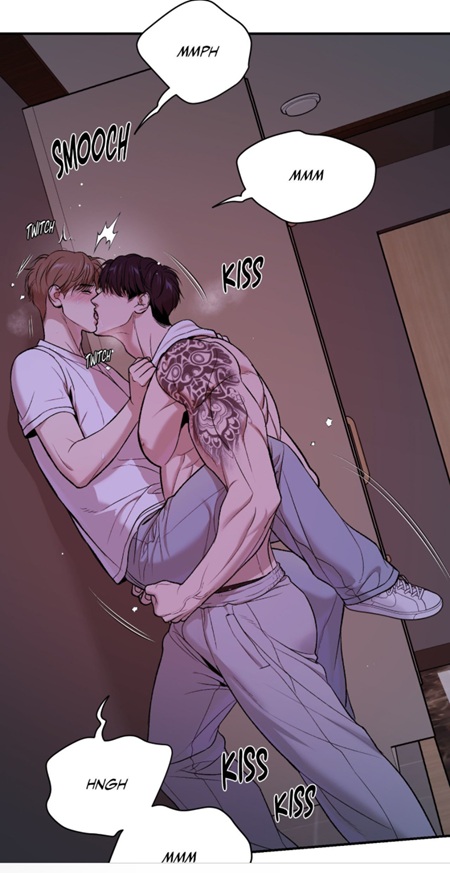 (chapter 85), care, and emotional release. When the chapter opens with a tactile, reassuring gesture, it naturally confirms that reading mode. The squeeze feels like a culmination.
Yet the chapter does not end there. By focusing almost exclusively on that moment, readers risk overlooking the significance of the final scene 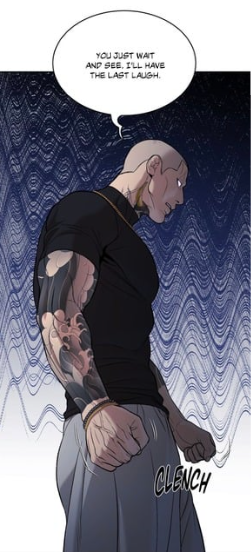 (chapter 87), where a very different gesture unfolds.
  (chapter 87) There, Baek Junmin rejects restraint, pushes away guidance, and verbalizes a resolve shaped not by trust or release, but by anger and revenge. (chapter 87) This closing moment is not incidental; it is placed in deliberate contrast to the opening.
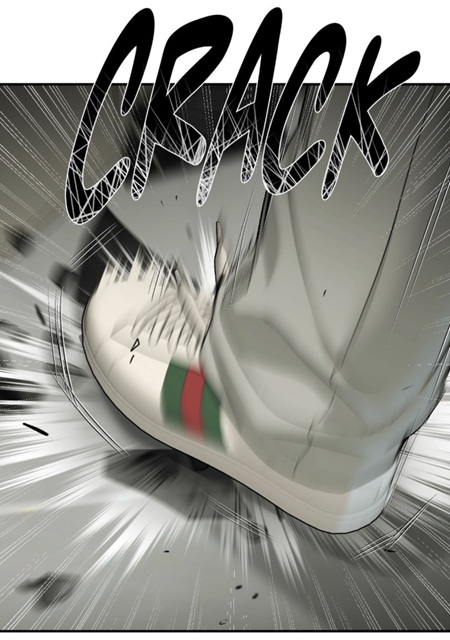
The chapter is structured around these two gestures. One dissolves a belief rooted in ritual and control, the champion’s jinx. The other inaugurates a trajectory driven by wounded pride and escalation. Read together, they form a single movement—one that unfolds between a squeeze (chapter 87) and a crack (chapter 87).
Between a Squeeze and a Crack: Two Gestures, Two Logics
The chapter is structured around two gestures that appear simple, almost inconspicuous, yet articulate two radically different ways of relating to control, desire, and action.
One is a squeeze of the hand. (chapter 87) The other is the crushing of glass underfoot. (chapter 87) Between them unfolds a decisive split. The squeeze is not an act of domination. It is measured, contained, and reciprocal —an act of protection. The champion’s hand does not merely touch the physical therapist’s; it covers it. (chapter 87) The gesture encloses rather than exposes, shielding the other instead of pressing down on him. Force is present, but it is regulated and oriented toward care. The champion does not grasp to hold on longer than necessary; he squeezes, then stops. The gesture culminates in a line that matters far more than it seems at first glance: “That’ll do.”  (chapter 87) This sentence marks a limit. It is not indifference, but acceptance. The champion has just registered the doctor’s surprise
  (chapter 87) — the slight jolt, the hesitation—and he responds by stopping. The restraint is not automatic; it is chosen. He does not ask for more reassurance, more certainty, or more support, even though he clearly desires it. Instead, he recognizes sufficiency.
What unfolds here is a careful negotiation between selfishness and selflessness. (chapter 87) The gesture still serves his need—he seeks strength, grounding, and reassurance—but it refuses to extract more than the other can freely give. (chapter 87) He allows himself to receive without insisting, to take comfort without turning it into a demand. Let’s not forget that after the tap, doc Dan had already started moving his hand away, though his fingers were brushing slightly his.  (chapter 87) So the doctor’s support was indeed limited in time. So the stop of the champion ‘s squeeze (chapter 87) is therefore not a withdrawal, but an ethical adjustment: the moment at which desire acknowledges the other’s boundary and accepts it as final.
In that sense, the squeeze does not prove generosity; it proves restraint. It shows a willingness to carry what remains unmet rather than convert it into pressure. This is why the gesture concludes where it does. Not because the need disappears, but because it is no longer permitted to override respect.
In doing so, he abandons the logic that previously governed him—the belief that repetition, ritual, or escalation could secure an outcome. He would have sex, until his partners passed out. 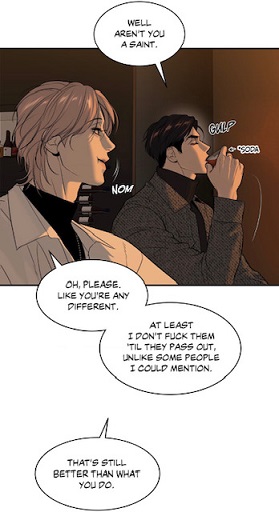 (chapter 33) Humbleness here (chapter 87) is not merely the expression of modesty, but the conscious recognition of limits: the willingness to accept uncertainty without compensating for it through excess, and the refusal to impose oneself on another. The gesture exposes a desire for respect toward Kim Dan; the champion knows his shyness and calibrates his touch accordingly, stopping before closeness turns into coercion. (chapter 87) The hand, as an instrument, reinforces this meaning. It reaches horizontally toward another human being. It creates proximity, connection, and grounding.
 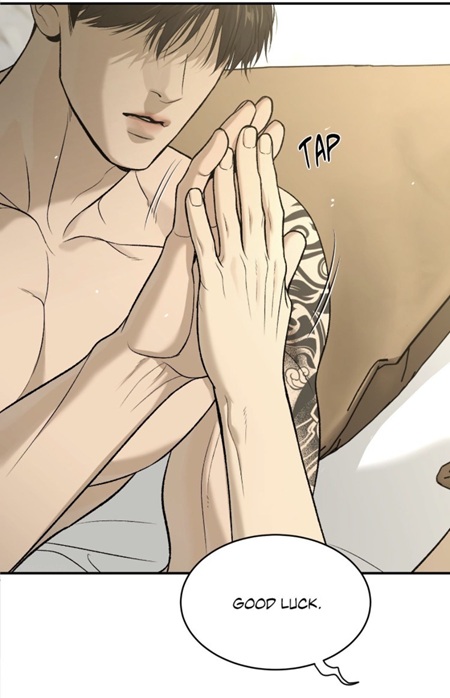 (chapter 87) Nothing mediates the gesture. There is no object, no talisman, no substitute. Meaning is produced entirely through contact.
The final gesture operates according to the opposite logic. (chapter 87) The foot does not protect; it exposes. It descends vertically, asserting weight rather than relation. Where the hand encloses, the foot bares. The glass shatters under pressure, turning reflection into sharpness. What was once a surface becomes a source of wounds. It does not regulate force but releases it. Where the hand stops (chapter 87), the foot escalates. (chapter 87) The glass shatters, not to restore anything, but to discharge tension. This is not violence directed at a person, yet it is unmistakably expressive. It replaces connection with spectacle and containment with excess. Unlike the squeeze, the crack does not conclude itself. It invites continuation. The gesture is driven not by sufficiency, but by the refusal of “enough.” Here, greed is not merely material; it is existential. It manifests as the desire for the last word, total vindication, and unrestrained agency.
The contrast extends beyond movement into atmosphere. 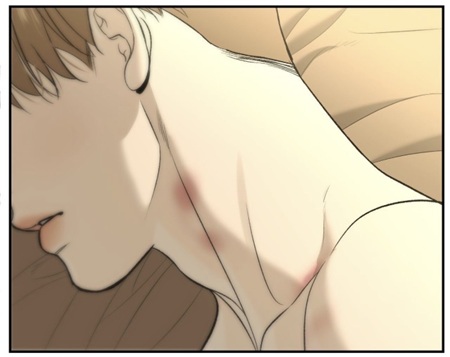 (chapter 87) The opening scene unfolds in a space that feels inhabited and shared, composed in softer shades that emphasize stillness and presence. The final scene is colder, darker, sharper.
 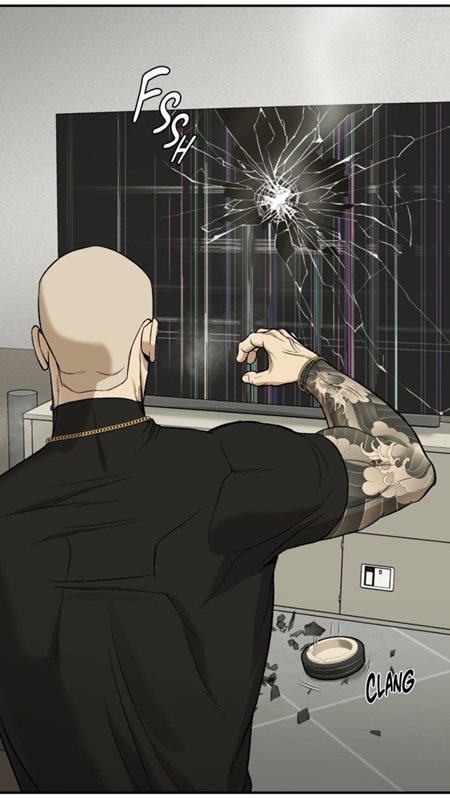 (chapter 87) Motion replaces quiet. An object enters the frame, absorbing force and redirecting it away from human contact. Where the first scene restores continuity—between bodies, between effort and outcome, between present and future
  (chapter 87) —the second collapses time inward. Baek Junmin does not act toward what is coming; he reacts toward what has already been. His violence is not exploratory but recursive.
 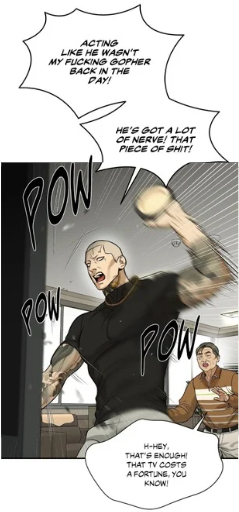 (chapter 87) It invokes the past as a template, attempting to reinstate an earlier hierarchy in which domination was secure and uncontested.
The gesture is therefore not simply destructive, but regressive. By striking, he tries to repeat a former position—acting like he wasn’t my gopher back in the day—as if the present could be coerced into mirroring that memory. This is why moderation is impossible. Repetition does not recognize limits; it demands reenactment. What breaks under this logic cannot be repaired because it was never oriented toward the future in the first place. It leaves only fragments—evidence of an attempt to overwrite change rather than accommodate it.
What ultimately sharpens the contrast between the two gestures is not only the difference between hand (chapter 87) and foot (chapter 87), but the difference between human presence and object substitution. In the opening scene, meaning emerges exclusively between two people. Nothing stands in for the other; nothing absorbs the gesture on their behalf. The squeeze requires mutual presence and ends precisely because it is shared. Its limit is ethical as much as physical. The final gesture unfolds in the absence of such reciprocity. Baek Junmin does not direct his force toward another human being, but toward an object. This displacement is not incidental. The object absorbs what no one else does. It becomes the recipient of rage, humiliation, and wounded pride. In doing so, it exposes a fundamental loneliness. Violence no longer seeks recognition from another person; it settles for impact.
The object in question matters. The Shotgun does not destroy a random item, but a television screen 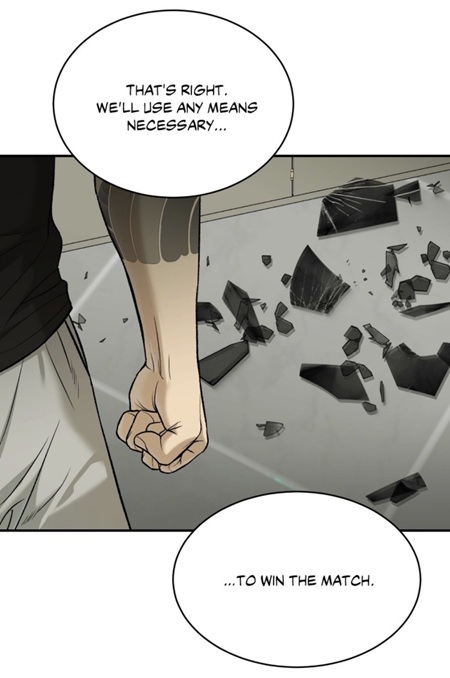 (chapter 87)—the very surface on which images circulate, words are fixed, and visibility is regulated. The screen does not reveal truth; it organizes perception. It is where victories are staged, reputations stabilized
 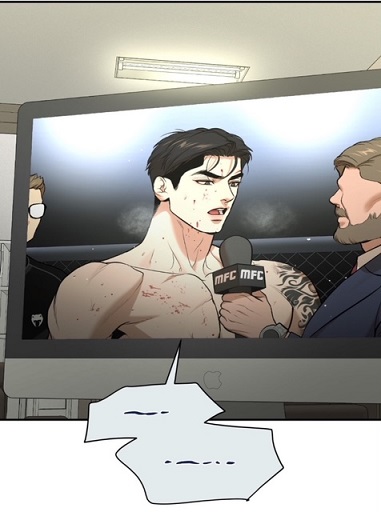 (chapter 46), and statements acquire permanence through broadcast.
 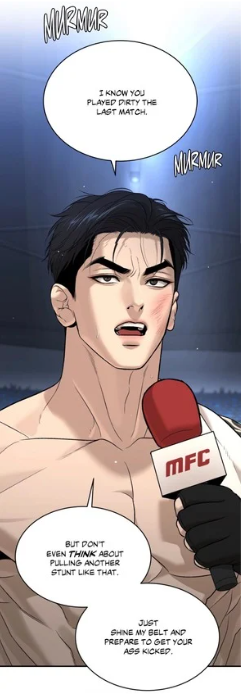 (chapter 87)
By turning on the screen, The Shotgun does not challenge the system itself (chapter 87); he reacts to what it has already done to him. What breaks is not the logic of spectacle, but his ability to endure exposure. The screen cracks, yet remains standing. This first rupture interrupts the image, but not its effect. The words spoken through it persist. They cannot be retracted, reframed, or silenced after the fact.
Thus he strikes again. (chapter 87) Using the ashtray, the “demon” shatters the screen into debris. At this point, the object has already lost its function. The broadcast is long over; the image is long gone. Yet the violence continues. He steps forward and crushes the remaining black shards underfoot (chapter 87), as if determined to annihilate even the remainder. The escalation exceeds necessity. It is no longer about disabling a device, but about confronting something that refuses to disappear.
This escalation becomes even more revealing when read against the opening sequence of the chapter. The three acts of destruction mirror, in distorted form, the three steps through which closeness was established earlier. In the morning scene, proximity unfolds gradually and remains contingent on consent: first the whisper 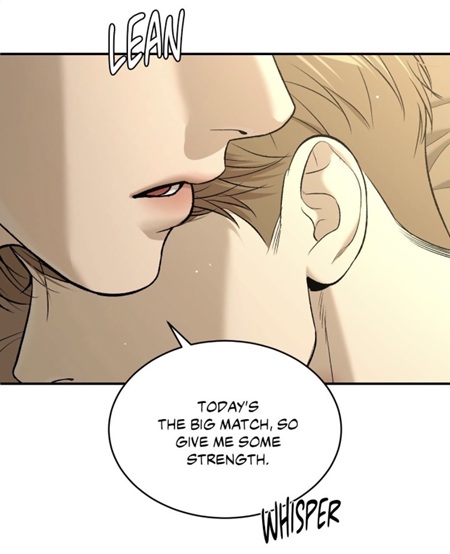 (chapter 87), then the pause; then Kim Dan’s tentative tap (chapter 87); finally the squeeze (chapter 87), held only until it must stop. Each step waits for response. (chapter 87) Each movement depends on acknowledgment. The sequence concludes because it recognizes a limit.
At the office of director Choi Gilseok (chapter 87), the same tripartite structure is emptied of reciprocity. The first strike cracks the surface. The second shatters it into debris. The third crushes what remains. Where the opening scene pauses, this one accelerates. Where the whisper waits, the blow overrides. Where the squeeze ends itself, the violence repeats because it cannot conclude. The symmetry is formal, but the logic is inverted: one sequence builds relation through restraint; the other pursues erasure through excess. (chapter 87) In the latter, escalation is uninterrupted. At no point does Director Choi Gilseok intervene. He does not place a hand on Baek Junmin’s shoulder again, does not issue a command, does not impose a limit. (chapter 87) Whether he has already left the room or chooses deliberate avoidance is ultimately secondary. What matters is the absence itself.
That absence exposes a failure of containment. Authority is present in name, but not in function. Choi Gilseok cannot—or will not—stop his fighter. His invisibility transforms into passivity and complicity, not because he endorses the violence, but because he allows it to proceed unchecked. Power here no longer circulates through guidance or control; it dissolves into abdication. Yet this abdication is not uniform. It is selective.
Earlier in the narrative, Director Choi reacts strongly when his authority is verbally challenged. 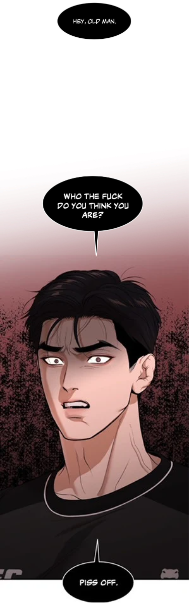 (chapter 49) When Joo Jaekyung addresses him with open disrespect, the breach of seniority provokes immediate outrage.
  (chapter 49) Intervention follows quickly. The insult is not tolerated
 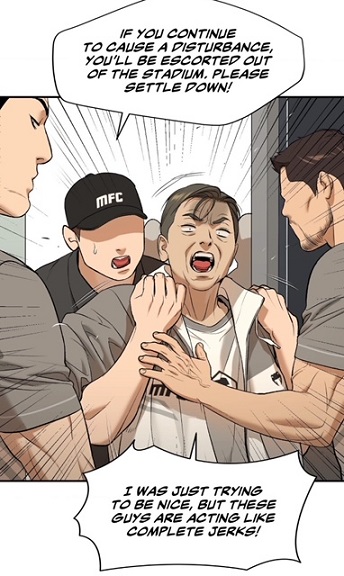 (chapter 49) because it threatens hierarchy itself. Choi’s anger is genuine in that moment and it reveals what he truly guards: status, order, and the visibility of respect.
In contrast, Baek Junmin’s behavior provokes no such response. He brushes past instructions (chapter 87), slaps away physical restraint  (chapter 87), and continues escalating without repercussion (chapter 87). The difference is telling. Where Choi once asserted authority to defend rank, he now withdraws it in the face of volatility. Baek’s aggression does not offend hierarchy in the same way; instead, it destabilizes it. And Choi does not confront destabilization. He avoids it.
A final irony sharpens this configuration of power. Neither Choi Gilseok nor Baek Junmin is aware of the protagonist’s true rank.  (chapter 78) Both continue to perceive Joo Jaekyung as nothing more than a fighter (chapter 87) —talented, profitable, but ultimately subordinate.
  (chapter 87) This assumption governs how they speak to him, how they threaten him (chapter 49), and how they imagine their leverage over him.
Yet this perception is false. Joo Jaekyung is not merely an athlete within the system; he occupies the same structural level as those who presume to manage him. He is the owner of Team Black. His position aligns not with fighters, but with directors. The irony lies in the fact that the system itself enables this misrecognition. Authority is not distributed according to legal ownership, but according to visibility and habit.
This is already visible earlier, when the “hyung” attends directors’ meetings on the champion’s behalf. 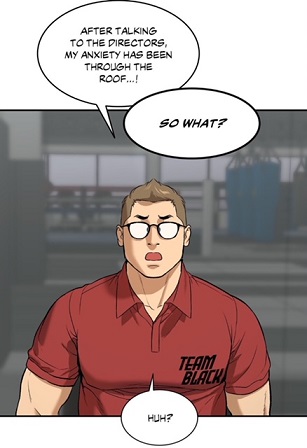 (chapter 46) His presence creates a convenient fiction: those around the table come to believe that he is the owner, or at least the one who truly governs the gym. Joo Jaekyung’s absence is interpreted not as autonomy, but as immaturity or dependence. Authority, once again, attaches itself to performance rather than reality.
The warning issued by the gym’s leadership makes this distortion explicit. 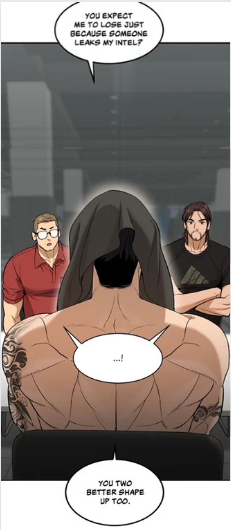 (chapter 46) Even after boundaries are formally stated, Park Namwook continues to rely on seniority to address the champion
  (chapter 46) as if he were a child or an employee—someone to be corrected, instructed, and disciplined. The warning does not alter behavior because it does not challenge the underlying assumption: that Joo Jaekyung’s place is below them.
This misreading has consequences. Because Choi Gilseok and Baek Junmin both believe they are dealing with a fighter who must answer to managers, coaches, and institutions, they overestimate their capacity to contain him. They imagine leverage where there is none. They threaten exposure, punishment, and exclusion—tools that function only if the target depends on the system for legitimacy.
What they fail to see is that Joo Jaekyung no longer does. He doesn’t care about his image after challenging Baek Junmin. 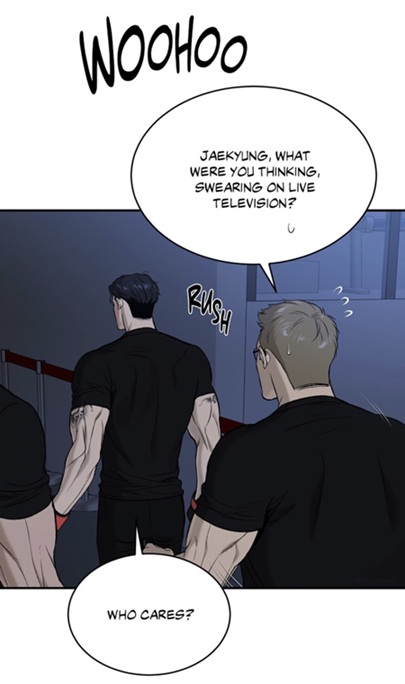 (chapter 87)
But let’s return our attention to the scene at the gym office. (chapter 87) This asymmetry exposes the limits of Choi Gilseok’s power. His authority functions only when obedience is already plausible. It depends on recognition rather than enforcement. When faced with a figure who neither seeks approval nor acknowledges restraint, Choi’s authority collapses into silence. The absence of intervention is not neutrality; it is an admission of impotence.
In that sense, Baek Junmin is not merely uncontrolled — he is uncontrollable within the existing structure. Choi’s refusal or inability to intervene reveals that the hierarchy he enforces is performative, not structural. It governs appearances and etiquette, not escalation or consequence. What remains once those appearances are ignored is not authority, but avoidance.
This is why Choi’s passivity matters narratively. By failing to stop Baek, he becomes an accomplice to excess without ever authorizing it. He does not direct violence, but he creates the conditions under which it can proceed. Power, here, does not flow downward or circulate relationally; it evaporates at the moment it is most needed.
In this sense, Baek Junmin is not merely acting out of rage. (chapter 87) He is acting in a vacuum created by institutional withdrawal. Thus the thug starts talking to himself loudly. This is not a dialogue, but a monologue. It was, as if he was trying to reassure himself about his power and connection. The director’s inability to regulate his “star” mirrors the waves in the last panel. An ocean can not be contained or restrained. In addition, his lack of restrain reflects the broader collapse of moderation within this economy. Where restraint once required oversight, its absence permits excess to define the relationship. What unfolds is not rebellion against authority, but the revelation that authority was already hollow.
This repetition is revealing. Each act answers the same stimulus, yet fails to neutralize it. The destruction does not bring release because the provocation was never material. The television has already fulfilled its role; the words spoken live cannot be undone. 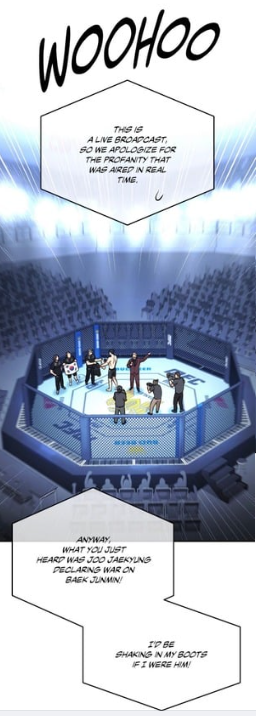 (chapter 87) What Baek attempts to destroy is not the object, but what it represents: the irreversibility of public speech, the collapse of secrecy, the loss of narrative control.
The black glass fragments make this failure visible. (chapter 87) They do not restore darkness; they scatter it across the floor. The act does not erase visibility but multiplies its traces into debris. This is not a cleansing destruction. It is an attempt at erasure that arrives too late, producing residue instead of resolution.
Seen in light of Baek Junmin’s habitual reliance on whispers  (chapter 49), handshakes, and private humiliation
 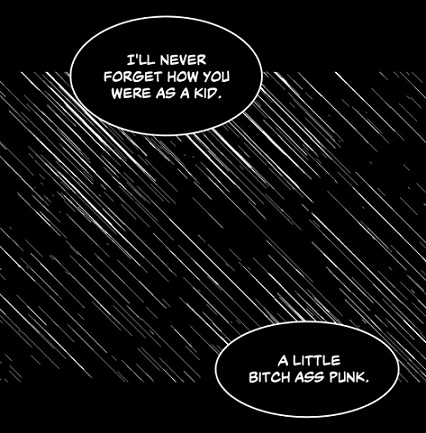 (chapter 49), the gesture becomes clearer still. He is accustomed to violence without witnesses, to domination shielded by proximity and secrecy. He was always the man in the shadow. The live broadcast deprives him of that refuge. (chapter 87) For the first time, he is confronted with words that circulate beyond his control.
Both sequences 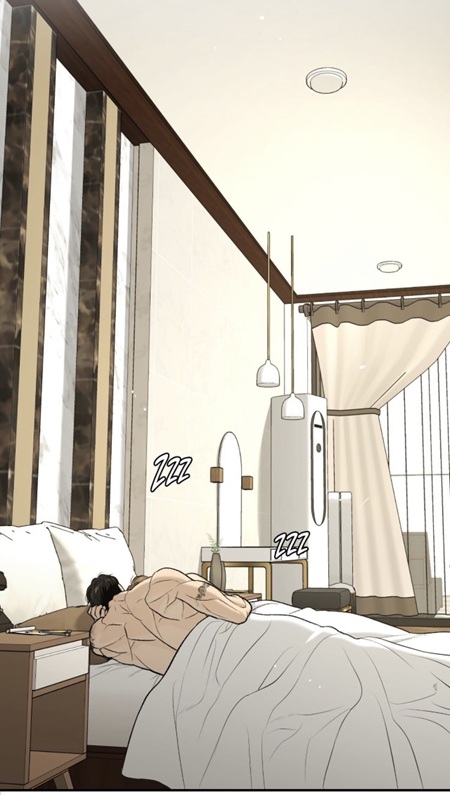 (chapter 87) also unfold under the sign of privacy. (chapter 87) Nothing from either scene is leaked to the audience within the story. No cameras intrude on the morning room; no spectators witness the destruction that follows. In both cases, what happens remains offstage, contained within enclosed spaces.
Yet the function of privacy differs radically. In the opening scene, privacy protects vulnerability. It creates a space in which hesitation, consent, and restraint can exist without performance. The absence of witnesses allows closeness to remain unexploited and unrecorded. Privacy here is not concealment, but care. (chapter 87)
The destruction scene also takes place out of view, but for the opposite reason. Privacy no longer shelters vulnerability; it shields waste. Hence the thug used an ashtray to damage the TV screen. The object exposes the truth about this gym: it is just a cover for thugs. Additionally, the ashtray allows violence to escalate without immediate consequence, to repeat without interruption. What is hidden is not intimacy, but loss of control. The same absence of witnesses that preserves dignity in one scene enables denial in the other. This parallel sharpens the contrast further. Privacy is not neutral. It amplifies what already governs the gesture. Where restraint is present, privacy sustains it. Where limits have collapsed, privacy becomes an accomplice.
What surfaces here (chapter 87) is not pure aggression, but fear. Rage functions as its mask. The insistence, the repetition, the overkill all point to an inability to tolerate being seen, named, and fixed in public space. Crushing the screen is not an assertion of power, but a response to exposure—a desperate attempt to silence what can no longer be taken back.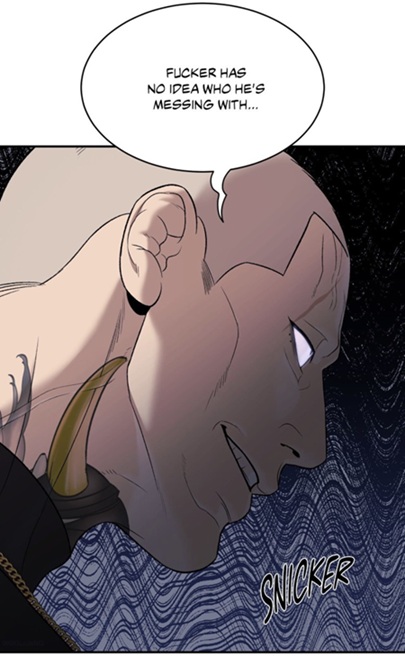 (chapter 87) He is announcing a shift of identity.
Up to this point, Baek Junmin still oscillated between two positions: the shadow fighter 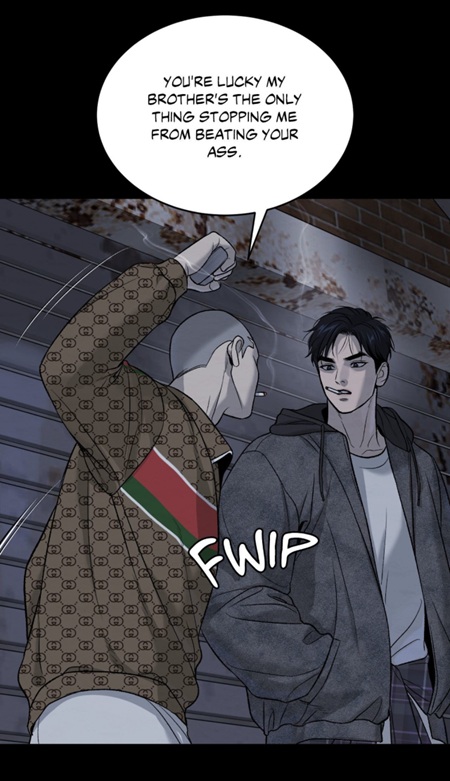 (chapter 74) seeking legitimacy, and the underground enforcer shaped by violence, order and debts
 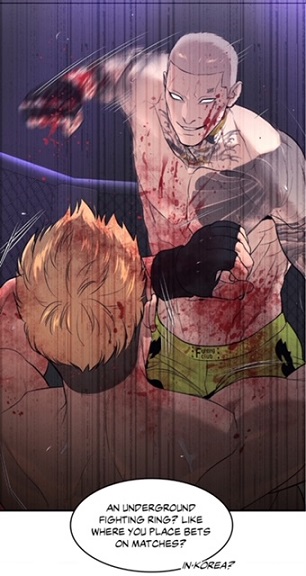 (chapter 47). The broken screen already signaled that he no longer cares about how he is seen. (chapter 87) This line confirms what replaces that concern. He is ready to be seen as he is, without mediation, without justification. Leaving the shadow does not mean entering the light. It means abandoning concealment.
What he exposes are not hidden virtues, but true colors. The phrase is not a threat designed to intimidate an opponent into caution; it is a declaration of readiness to abandon restraint. He no longer intends to pass as a disciplined athlete governed by rules, training, or institutional limits. He is prepared to act as a bully and criminal —someone for whom violence is not a means within a system, but an identity in itself.
This is why the line follows the destruction of the screen so closely. (chapter 87) Once image no longer matters, there is nothing left to protect. Reputation, legitimacy, and future standing cease to function as brakes. What remains is the body and its capacity to harm. The statement therefore does not project confidence about the outcome of a match; it projects indifference toward consequences. In that sense, Baek Junmin is not stepping out of the shadows to claim recognition. He is stepping out to remove the mask. The system demanded that he appear controlled, profitable, and presentable. 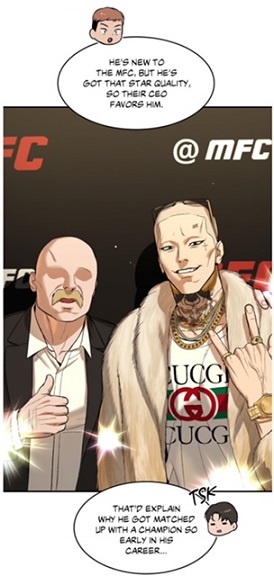 (chapter 47) By rejecting visibility and embracing excess, he also rejects the last requirement that tied him to that system.
What he is ready to expose is not truth, but himself.
Just as importantly, the damaged object does not belong to him. (chapter 87) Baek Junmin does not need to clean the mess, replace the screen, or account for the damage. He can afford indifference because responsibility is externalized. This is where materialism enters the gesture. (chapter 87) In his logic, what is destroyed can be replaced—by money, by compensation, by someone else’s labor. The gesture therefore carries no sense of loss. It is pure discharge. Where the hand-holding scene ends in sufficiency (chapter 87), this act ends in non-attachment. That non-attachment is not freedom; it is dispossession. Because nothing belongs to him, nothing binds him. The violence does not commit him to consequence. He does not have to stay, repair, or answer. (chapter 87) The object takes the blow and disappears from relevance, just as people do in his worldview once they cease to be useful or respectful. This is why the destruction feels so pronounced. It is not driven by concern for outcome. Baek Junmin does not care whether the screen works afterward, just as he does not yet care how events unfold. What matters is the act itself—the assertion that he can still act, still impact, still dominate a space that otherwise refuses him recognition. Under this new light, it becomes palpable that Baek Junmin’s resent and rage represent a liability to Choi Gilseok and his backers, the pharmaceutical company.  (chapter 48) And their collaboration is founded on money laundering!! The shooting star is in reality (chapter 47) a meteor bringing calamity, once it lands on the Earth. Baek Junmin is about to face “reality” very soon.
Placed next to the opening scene, this contrast becomes stark. (chapter 87) There is no money, no power… between them. One gesture creates meaning because it acknowledges another human and accepts limitation. The other destroys an object precisely because no human is there to receive the force. One restores continuity; the other exposes isolation. Between them, the chapter reveals not only two trajectories, but two economies of value: one grounded in presence, the other in replacement.
Two pairs, two economies of power
What ultimately distinguishes the two dynamics is not intimacy versus violence, but how power is situated and what it depends on. In one case, power emerges through limitation; in the other, it is sought through displacement. The difference is not emotional, but structural. In the morning scene, power does not circulate vertically, but it also does not dissolve into symmetry. What changes is not the existence of power, but its source.
When the champion leans in and whispers, (chapter 87), he is not performing vulnerability for reassurance, nor delegating responsibility. He is explicitly naming Kim Dan as his source of energy. This matters. In earlier chapters, strength was something to be extracted through action—through sex, repetition, or coercive certainty 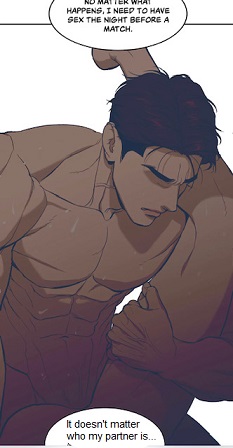 (Chapter 2). Here, strength is no longer something he takes. It is something he receives. (chapter 87)
This is not a weakening admission. It is a reorientation. The champion does not ask Kim Dan to guarantee victory, to protect him from loss, or to secure the outcome. He asks for presence. What sustains him is no longer a ritualized act performed on another body, but the continued existence of a relationship in which he is accepted despite his flaws.  (chapter 87) Kim Dan sleeping openly, showing his face, remaining there without fear—this is read by the champion as tacit trust. That trust becomes energy. In other words, this scene serves as the positive reflection of the argument in the locker room:
  (chapter 51)
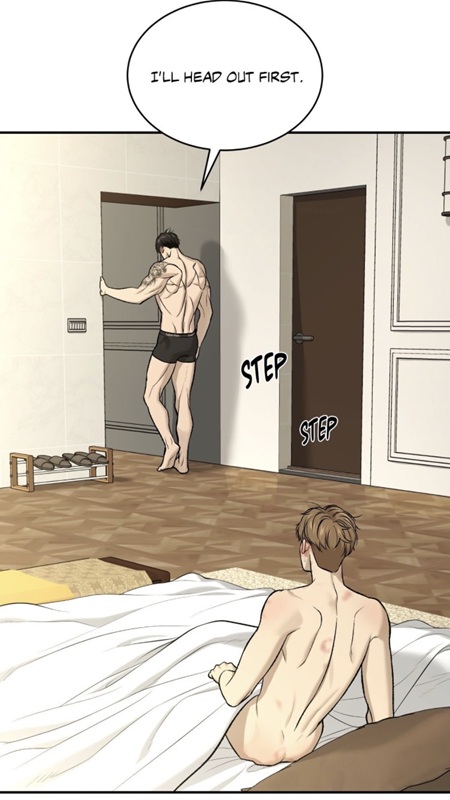
The jinx (chapter 87) collapses precisely here. The old belief system operated on compensation: anxiety required action; uncertainty demanded escalation. Sex functioned as a mechanism to overwrite doubt. In this scene, no such mechanism is activated. The chapter makes this shift legible through space. When the champion rises from the bed, his movement is shown in full: he steps away from Kim Dan and crosses the room. (chapter 87) Yet he does not open the brown door. There is no pause at the threshold, no transition panel suggesting entry into another enclosed space. Instead, the next frame places him directly in the living area of the suite. The cut is continuous, not elliptical.
This matters because the brown door cannot be the suite’s entrance. (chapter 87) We have already seen the entrance elsewhere, and its placement does not align with this angle or proximity to the bed. Within the logic of a hotel suite, the remaining option is functional rather than transitional: the bathroom. In earlier chapters, that space was explicitly associated with ritual 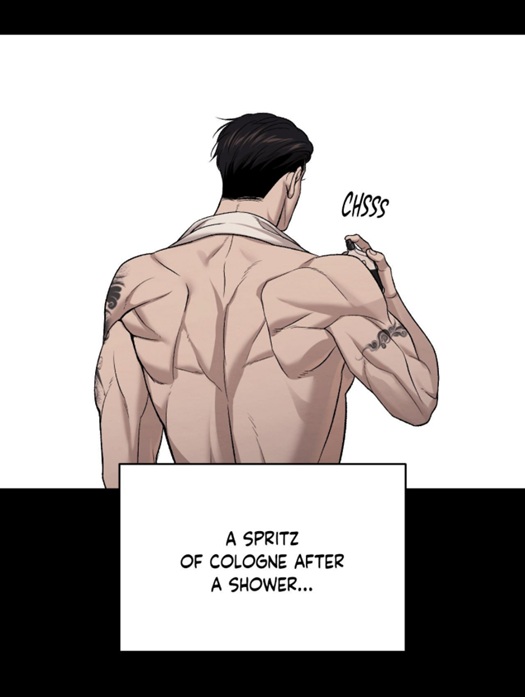 (chapter 75) —showering, cologne, self-regulation before a match. Here, that sequence is conspicuously absent.
The absence is not neutral. Mingwa does not show him choosing another ritual; she shows him skipping one. (chapter 87) No water, no mirror, no scent. The champion moves forward without cleansing, without recalibration, without the preparatory gestures that once framed his readiness. The bathroom—previously a site of purification and self-conditioning—remains closed, unused, and irrelevant.
What replaces it is not another ritual, but continuity. He enters the shared living space already grounded. The confidence he carries does not come from resetting himself, but from what has already occurred. Kim Dan’s presence, his sleep, the unguarded exposure of his face—all of this has already done the work that ritual once performed. There is nothing left to correct, neutralize, or overwrite. To conclude, this omission is not accidental. By abandoning the shower-and-cologne ritual, the champion abandons the idea that he must transform himself to be worthy of victory or public acceptance. He no longer needs to sanitize desire, image, or fear. What sustains him has already been secured before the match begins: recognition without conditions.
Power, then, is not extracted from superstition, domination, or bodily expenditure. It is grounded in continuity. Kim Dan’s presence does not ensure success, but it makes uncertainty bearable. That is the decisive shift. The champion no longer acts to silence fear; he acts while carrying it. And because he no longer believes that ritual determines outcome, he can later speak freely on live television. He is now confident, as he feels supported by doc Dan. 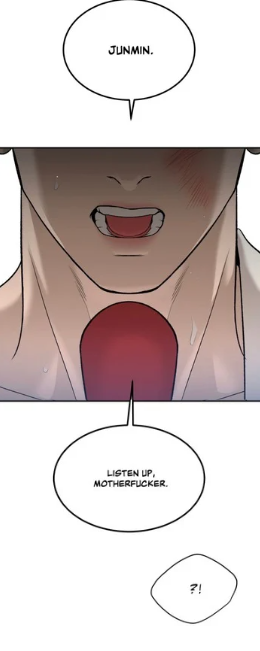 (chapter 87) The profanity is not recklessness—it is evidence that image management has lost its hold. The champion does not stop caring about how he is seen; he narrows the field of recognition. Public perception no longer governs him (chapter 87) because it no longer defines his worth. What matters now is not the crowd, the broadcast, or the institution—but the single person whose presence already secured his sense of legitimacy before the match began. Thus after the match, he asked for the physical therapist’s approval and recognition:
 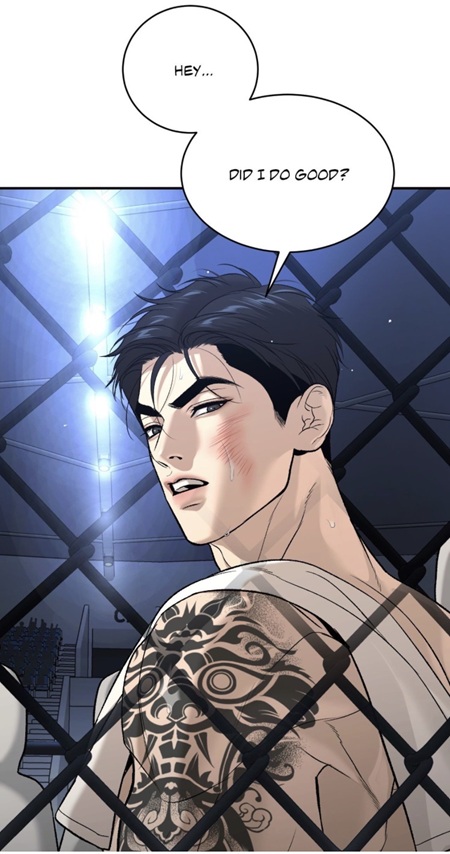 (chapter 87)
In short, the whisper does not mark dependence, but emancipation. (chapter 87) By replacing “I must do something” with “you are here,” the champion exits the economy of compulsion and enters an economy of trust. Victory will still matter—but it no longer needs to be purchased in advance.
The dynamic surrounding Baek Junmin operates differently. His position has always depended on external validation—rankings, victories  (chapter 69), recognition, and above all visibility. Yet this visibility is curiously incomplete. Despite his victory, Baek Junmin is not immediately present as a public figure. He appears as a result
 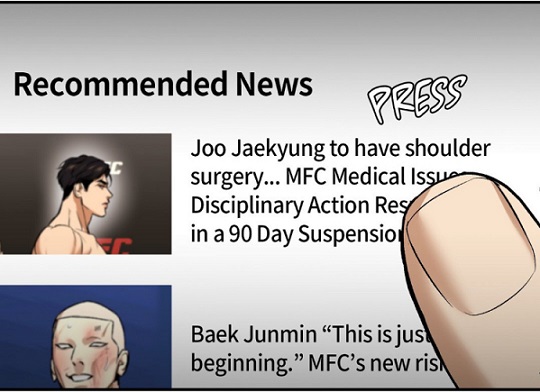 (chapter 52) —his name, his win—but not yet as a narrative subject.
Only later, in episode 77 (chapter 77) does the story formally reveal his identity as champion. Until that moment, he remains strangely undefined, as if held back from full exposure. This delay is not incidental. It reflects a controlled form of recognition: Baek Junmin is allowed to win, but not yet to be seen. It already exposes that his success or victory is not clean.
 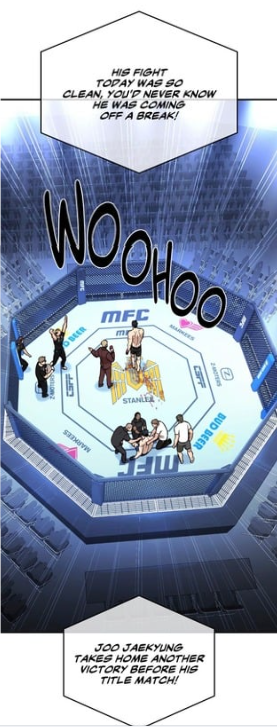 (chapter 87)
In this sense, the former underground fighter has not disappeared, but been contained. His past is not erased; it is suspended. (chapter 47) Visibility is granted selectively, not as self-expression, but as an institutional function. He exists within the system, but not yet fully in the public gaze. Even when violence or illegality intervenes, it does so in service of legitimacy. Until now, Baek Junmin has relied on the legal system 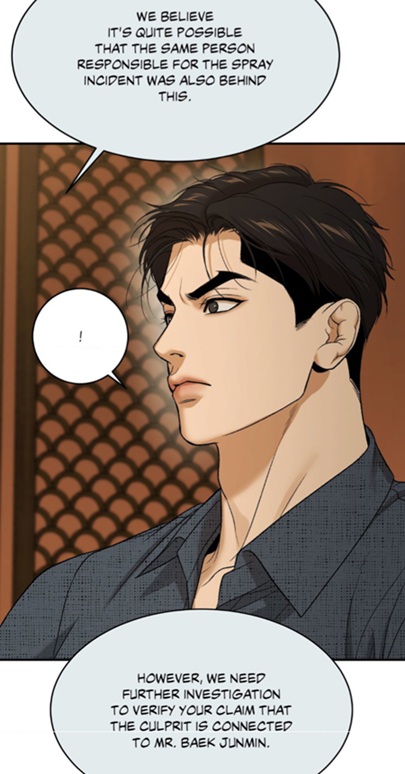 (chapter 69) to carry him forward: sanctioned fights, official narratives, public status. Crimes may occur along the way, but they remain hidden, delegated, or absorbed by others. Power, for him, is something that must appear legitimate, even when it is not.
The destruction of the screen marks the point where this arrangement begins to fracture. (chapter 87) The legal economy no longer guarantees dominance. Public speech escapes control. (chapter 87) Visibility becomes a threat rather than a resource. In response, Baek does not retreat; he escalates. What we witness is not yet a full turn toward the underground, but the precondition for it: the realization that legality no longer secures power. (chapter 87) In this moment, Baek Junmin is no longer speaking as an athlete anticipating a rematch, nor as a rival operating within institutional rules. The phrasing “He has no idea who he’s messing with” does not refer to skill, ranking, or preparation. It signals a different register of power altogether—one that lies outside competition and beyond merit.
The threat is deliberately vague. He does not name a tactic, a plan, or a legitimate advantage. Instead, he invokes reach. The implication is relational rather than athletic: access, leverage, intermediaries. Power here is imagined as something that can be mobilized indirectly, through others, rather than exercised personally. This is where the “angel of death” reading becomes relevant—not as a literal figure, but as a symbolic posture. Baek frames himself as someone whose influence does not require visibility or accountability. Risk is no longer borne by the speaker. It is transferred, outsourced, or enforced through an unnamed elsewhere. Violence becomes atmospheric rather than explicit.
This is where the contrast between the two pairs sharpens. One trajectory exits the economy of compensation—the belief that force, ritual, or excess can neutralize uncertainty. The other moves toward a system where uncertainty is resolved through coercion rather than consent. One abandons the jinx by accepting risk. The other approaches a space where risk is relegated, outsourced, or enforced.
What separates them, then, is not morality, but dependency. The champion no longer depends on systems that promise control. Baek Junmin still does—and when that promise fails, the search for power does not stop. It changes terrain. Up to this point, Baek Junmin’s power has been structurally protected rather than personally secured. His victories, rankings, and public status were carried forward by the legal economy of the sport, even as acts of sabotage or coercion occurred in its margins. Crucially, this system did not require his full awareness to function. Violence was absorbed, displaced, or misattributed by intermediaries, allowing legitimacy to remain intact on the surface. Baek benefited from this arrangement without having to own it. Authority appeared lawful, outcomes appeared earned, and responsibility flowed elsewhere.
That arrangement begins to collapse here. Once public speech escapes control and visibility can no longer be managed retroactively, legality stops functioning as insulation. What follows is not yet a plunge into the underground, but the moment where reliance on institutional protection becomes untenable—and the search for power must change terrain. (chapter 87) Strangely, the director of King of MMA has just assured him his full support (chapter 87), but this was not enough for the “demon”. What the “new champion” failed to realize is that gaining the champion belt didn’t mean the end of his achievement. The reality was and is that he would be challenged constantly. Even when crimes are committed around him 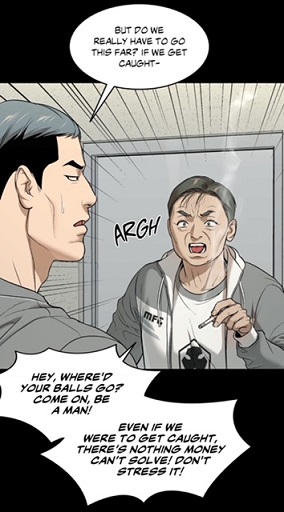 (chapter 50), they remain structurally hidden, absorbed by intermediaries, or misattributed.
  (chapter 69) Violence is laundered through legitimacy. The system continues to present him as a contender, even as it quietly tolerates sabotage and manipulation. Importantly, Baek Junmin does not need to know every detail for this economy to function; it protects him by design.
The scene in chapter 87 marks the moment where this economy begins to fail him. Public speech, live broadcast, and irreversible visibility introduce a variable that cannot be managed retroactively. Unlike clandestine acts or whispered humiliations, what is said on air cannot be displaced, denied, or quietly corrected. The legal system does not offer erasure; it offers record.
This is where the alternative economy becomes legible. Underground fighting (chapter 47), illegal gambling, and criminal enforcement operate on a different logic: outcomes are secured not through recognition, but through coercion and tricks; not through visibility, but through fear and secrecy; not through procedure, but through immediacy. There, a defeat is more like a death sentence. 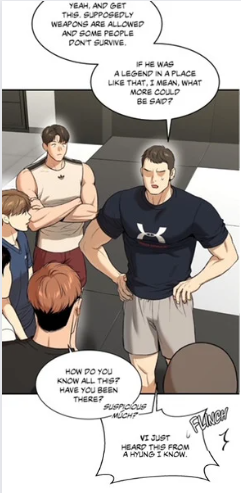 (chapter 47) Where the legal economy requires patience and exposure, the illicit one promises certainty and silence.
By contrast, the champion’s gesture in the opening scene binds him more firmly to the legal economy precisely because it accepts uncertainty. Redistributed power cannot be weaponized quickly. It resists conversion into domination. That resistance is what dissolves the jinx—and what makes the two trajectories incompatible.
This is how mediation works in that relationship. Kim Dan’s presence does not absorb excess; it sets a limit that is respected. Joo Jaekyung does not outsource control. He exercises it on himself.
The dynamic between Choi Gilseok and Baek Junmin operates according to a different economy. Formally, theirs is a boss–employee relationship. 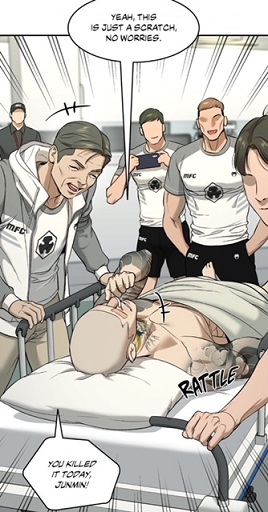 (chapter 52) In practice, hierarchy barely functions. Authority exists without discipline, protection without accountability. Baek Junmin is not positioned among other fighters, nor anchored in a collective. Thus he is not truly celebrated at the restaurant after the tie. Thus the fighters mentioned the director Choi Gilseok’s financial success or the odd behavior of Joo JAekyung.
  (chapter 52) Besides, he watches the match alone (chapter 87), from the director’s office—at the center of power, yet fundamentally isolated. This spatial detail matters. It signals both exclusion and entitlement. He does not belong, but he feels authorized to occupy the space.
When Choi Gilseok touches Baek Junmin’s shoulder, the gesture is corrective. (chapter 87) It is meant to halt escalation, to reassert moderation, to momentarily reintroduce limits. Baek’s response is immediate: he slaps the hand away. (chapter 87) This rejection is not rebellion in the classical sense. He is not trying to overthrow authority; he is refusing mediation. In his mind, limits no longer apply to him. He has been granted license without ownership. It was, as if the championship belt had freed the fighter from social norms and laws. Shortly after, “By all means” (chapter 87) removes the brakes while leaving responsibility elsewhere. It sounds like a free pass for the “criminal” in the end.
The final scene also marks the quiet dissolution of the association between Choi Gilseok and Baek Junmin. Although the director speaks in the plural—“we will use all means necessary”—the scene itself contradicts that claim. Spatially, Choi remains behind Baek, positioned as if backing him, yet excluded from his line of sight. The demon does not turn toward him, does not respond to him, and does not share affect or intent. The “we” exists only rhetorically. In practice, the scene contains only two figures: Baek Junmin and his imagined adversary. The director is already irrelevant.
This staging contrasts sharply with the earlier locker-room confrontation between Joo Jaekyung and Kim Dan,  (chapter 51) where proximity forced acknowledgment and power was renegotiated face-to-face. (chapter 51) In the office, no such negotiation occurs. (chapter 87) Baek Junmin’s refusal is not confrontational; it is dismissive. (chapter 87) He does not reject authority—he bypasses it. The champion belt appears to function, in his mind, as a form of exemption: a signal that dependence, seniority, and mediation no longer apply. Whether this belief is justified remains open. What matters is that Baek Junmin acts as if it were. In doing so, he exits not only a partnership, but the structure that once contained him.
Placed side by side, the two pairs reveal two economies of power. In one, influence circulates through presence, restraint, and mutual risk. In the other, power is maintained through delegation, insulation, and the removal of limits. One dynamic produces responsibility by accepting vulnerability. The other produces entitlement by severing accountability.
This is why the outcomes diverge so sharply. Where one relationship closes a cycle of superstition and control, the other opens a trajectory of escalation and downfall. Not because one side loves and the other hates, but because one accepts limits—and the other has been told there are none.
Feel free to comment. If you have any suggestion for topics or Manhwa, feel free to ask. If you enjoyed reading it, retweet it or push the button like. My Reddit-Instagram-Twitter-Tumblr account is: @bebebisous33. Thanks for reading and for the support, particularly, I would like to thank all the new followers and people recommending my blog.

 Bebebisous33s' analyses in K-Dramaland and Manhwas