
Please support the authors by reading Manhwas on the official websites. This is where you can read the Manhwa: Jinx But be aware that the Manhwa is a mature Yaoi, which means, it is about homosexuality with explicit scenes. Here is the link of the table of contents about Jinx. Here is the link where you can find the table of contents of analyzed Manhwas. Here are the links, if you are interested in the first work from Mingwa, BJ Alex, and the 2 previous essays about Jinx Why Sleeping Beauty Had to Bleed part 2 and A Ruthless Fight, A Loverboy Break
It would be great if you could make some donations/sponsoring: Ko-fi.com/bebebisous33 That way, you can support me with “coffee” so that I have the energy to keep examining Manhwas. Besides, I need to cover up the expenses for this blog.
Introduction — The Sentence That Arrived Too Late
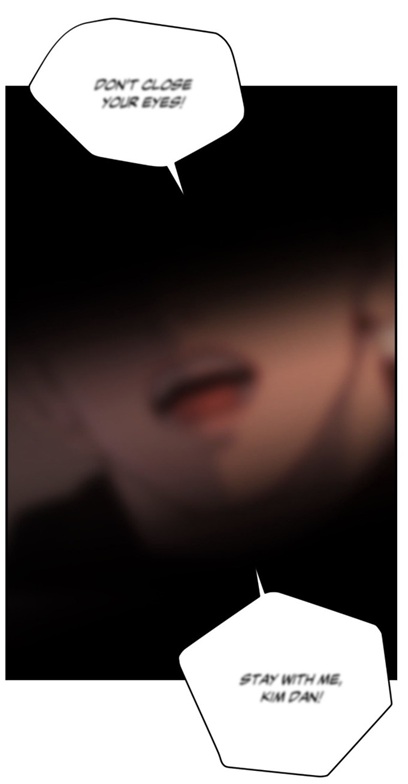
Episode 100 of Mingwa’s Jinx revolves around a devastating psychological and rhetorical paradox: the most critical confession of the narrative is openly spoken and yet remains entirely unheard at the exact same time. In the immediate aftermath of the chapter’s release, a singular, collective frustration rippled through the global readership, prompting many to focus heavily on the apparent emotional silence paralyzing the protagonists. Audiences repeatedly questioned why Jaekyung allowed Kim Dan to walk away after everything they had survived together, why he refused to openly intercept his departure at the entrance of the penthouse 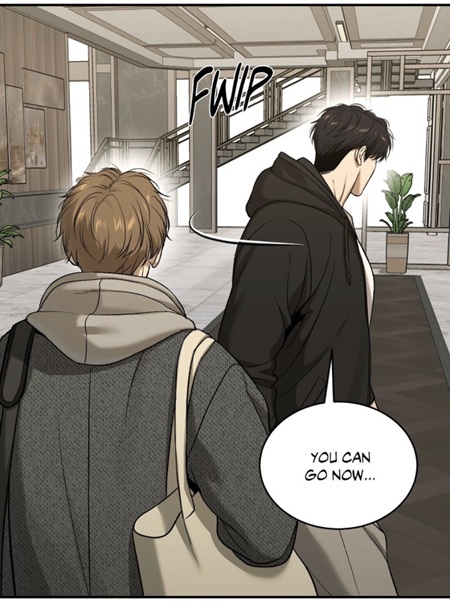 (chapter 100), and why Kim Dan continuously retreated into the sterile scripts of formal gratitude and apology instead of absolute emotional honesty. Yet, the cruel irony of the chapter is that the confession itself does not belong to a future resolution; it already exists, fully articulated, inside the physical boundaries of the narrative. While Kim Dan drifts precariously in the liminal space between life and death following the stabbing, Joo Jaekyung drops his hyper-masculine armor and desperately begs him:
  (chapter 100)
The structural tragedy of this relationship is not that the words of reciprocal need were never spoken. The problem is that they arrived too late. Earlier in the story, Kim Dan had already witnessed Joo Jaekyung’s mouth moving during emotionally charged moments, yet the meaning behind the words failed to fully reach him. 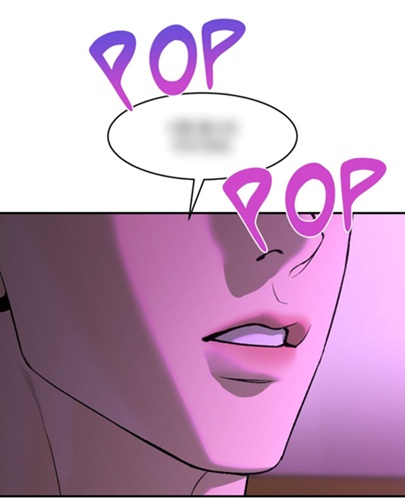 (chapter 84) And in episode 100, the wish is yelled at a moment that was both physically and psychologically too late. Physically, the plea materializes while Kim Dan is actively losing consciousness (chapter 100), rendering the data inaccessible to his waking mind. Emotionally, it lands at the exact moment where Dan has unconsciously associated the champion’s victory with an impending separation.
 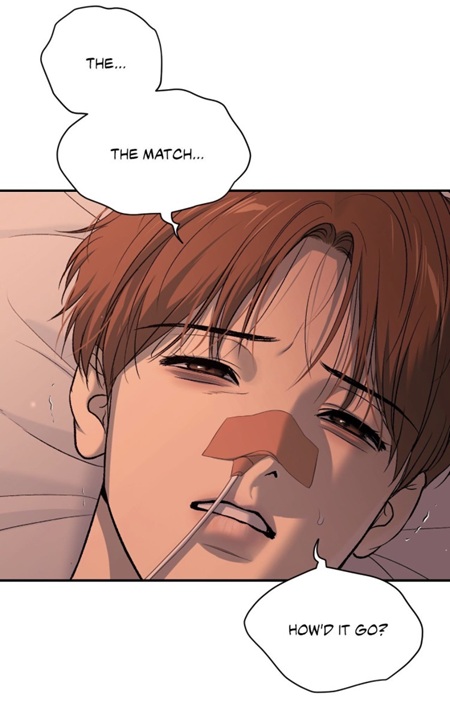 (chapter 100) Psychologically, the words arrive before Kim Dan has developed the cognitive architecture required to understand love outside the crushing frameworks of usefulness, debt, and transactional obligation.
This distinction is vital because Kim Dan’s formative trauma has never been structured merely around the abstract concept of abandonment. 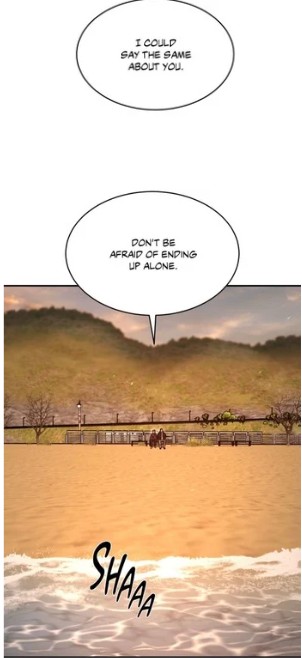 (chapter 95) His entire existence has evolved instead around the crushing mechanics of repayment, survival, and economic and emotional burden.
 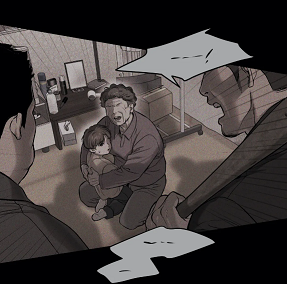 (chapter 5) Having lost his parents at a young age, Dan did not grow up believing that attachment could exist freely, unconditionally, or safely.
 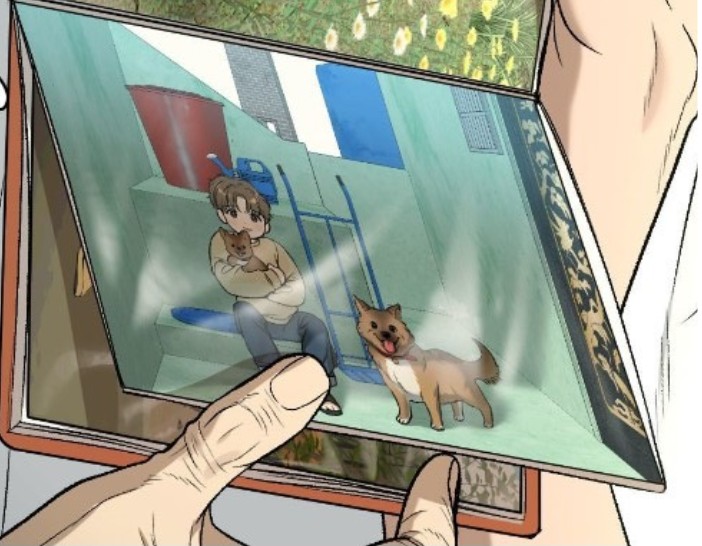 (chapter 94) Instead, he learned that his literal presence beside others required a continuous, exhausting material justification. He had to perform labor, adapt to volatile environments, sacrifice his own well-being, and make himself transactionally useful simply to deserve remaining in the same room as another human being.
 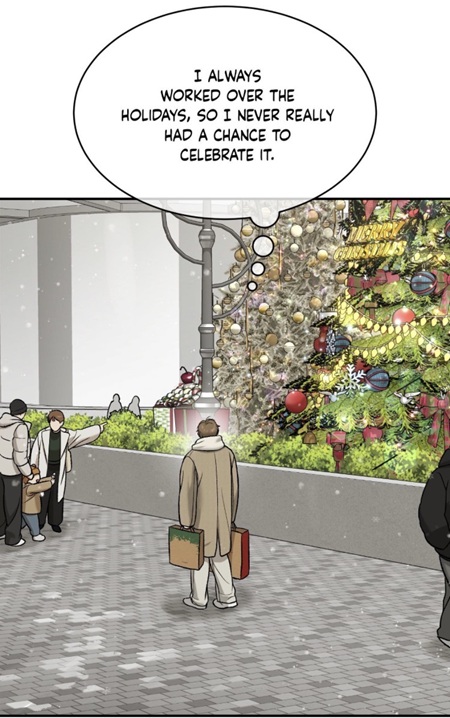 (chapter 97) Therefore he never rested.
Consequently, emotional attachment became permanently fused with transaction. Kim Dan does not possess the psychological tools to exist as someone who is freely and voluntarily chosen  (chapter 47); he only understands relationships through the desperate lens of survivalist necessity. Hence the grandmother and Kim Dan are seen clinching onto each other.
This is precisely why the subsequent hospital sequence becomes so profoundly devastating. When Kim Dan regains consciousness and hears that Joo Jaekyung has successfully reclaimed the championship title,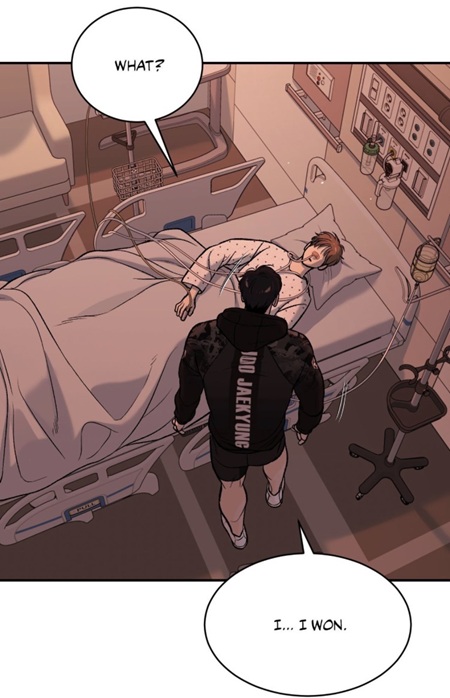 (chapter 100) readers instinctively interpret his reaction through a lens of uncritical relief.
 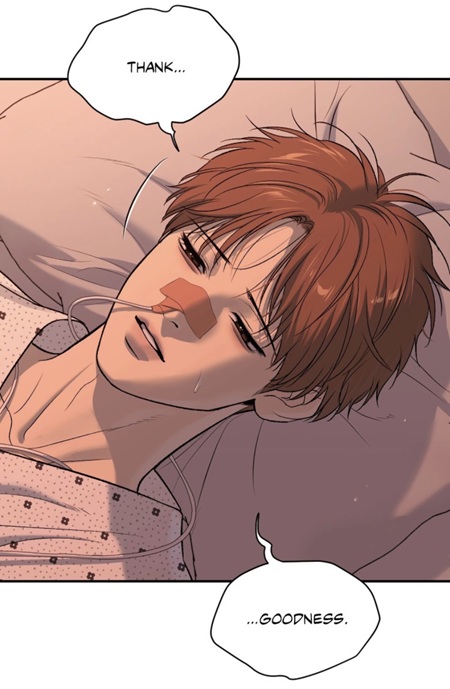 (chapter 100) Yet, the formal pacing of the scene quietly suggests a far darker internal reality. For Kim Dan, the champion’s victory signifies nothing less than the absolute completion of their contract. The title has been recovered, the emotional and physical debt has been cleared, and the utilitarian role he assigned himself beside Joo Jaekyung has reached its natural endpoint.
This interpretation fundamentally changes the meaning of Kim Dan’s response: (chapter 100) On the surface, the sentence appears comforting and grateful. Yet the wording itself is strangely impersonal. At no point, Kim Dan does not ask how Joo Jaekyung won, whether he suffered, whether he was injured, or what emotional state he endured during the fight. He never expresses curiosity about the match itself and later shows no desire to watch it. Only the outcome matters.
This detail becomes psychologically revealing because Kim Dan instinctively processes the event not through emotional recognition, but through completed function. The objective has been achieved. The contract has fulfilled its purpose. Thus the sentence “Thank goodness” unconsciously redirects attention away from Joo Jaekyung’s suffering toward abstract successful resolution. Gratitude becomes displaced onto fate, luck, or providence rather than onto the terrified human being desperately begging him moments earlier: 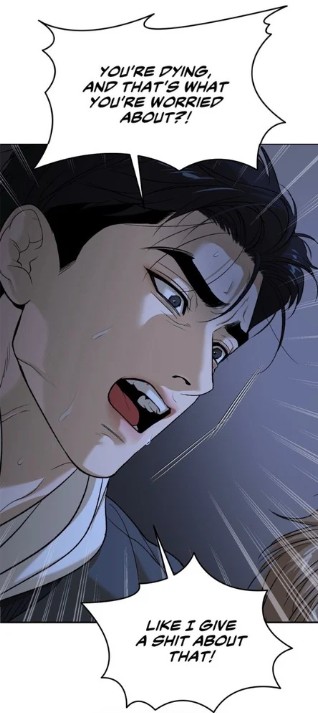 (chapter 98)
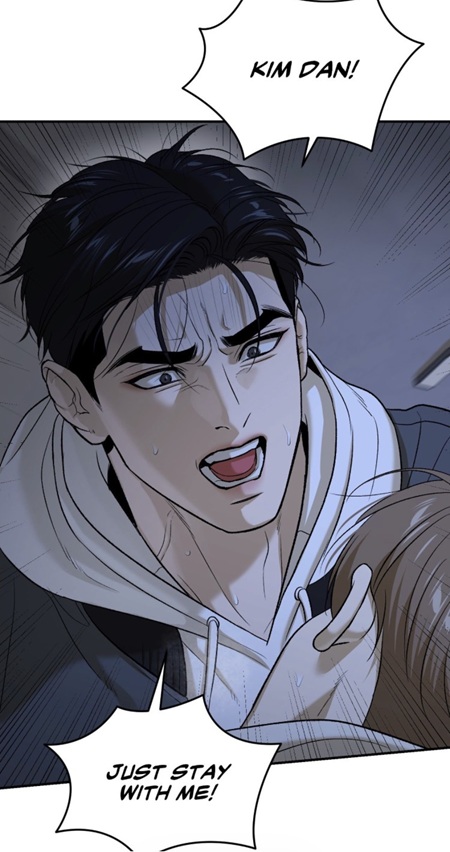 (chapter 98)
Meanwhile, Joo Jaekyung experiences the exact opposite emotional reality. For him, the fight was never merely about reclaiming a belt. It was about returning alive to Kim Dan after almost losing him forever. Thus while Kim Dan unconsciously interprets the victory as the natural endpoint of their relationship, Joo Jaekyung experiences it as proof that he cannot emotionally survive losing Dan. 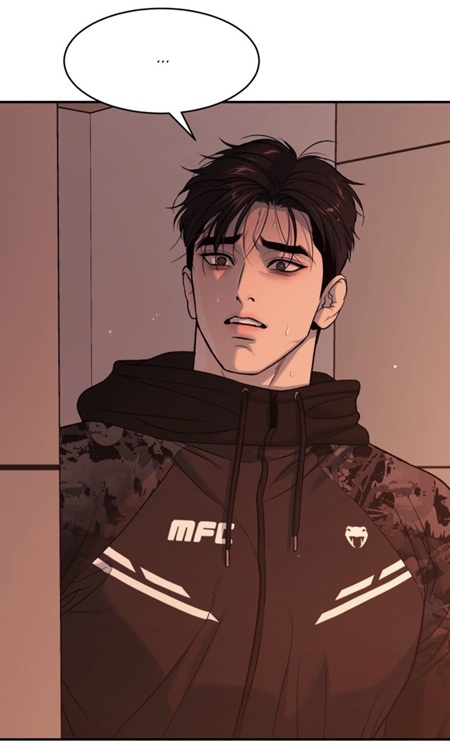 (chapter 100)
The micro-timing of this panel is extraordinarily deliberate. Upon hearing the news, Dan whispers, (chapter 100) but the linguistic script itself fractures through a heavy visual hesitation and pause. Almost immediately afterward, his body relapses into unconsciousness. 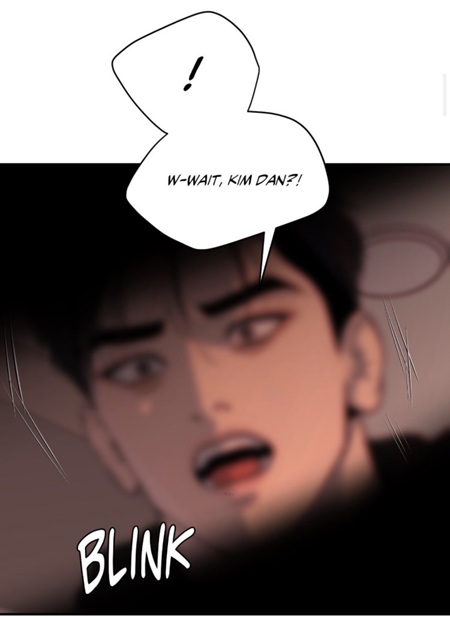 (chapter 100) While a surface-level reading diagnoses this as mere physical exhaustion, psychologically the moment functions as an immediate emotional retreat. It is as though Kim Dan’s psyche reaches a instantaneous, catastrophic conclusion the second the victory is confirmed: everything is over; I am no longer needed. This interpretation achieves an exquisite, painful symmetry when placed against Joo Jaekyung’s own origin story, which similarly fused hyper-success with absolute loss, having lost both of his parents
  (chapter 74) on the exact night he triumphed as a boxer. Episode 100 constructs the perfect inverse of that trauma script for Kim Dan: the champion’s victory becomes structurally associated with emotional abandonment, proving that for both protagonists, success itself is a dangerous catalyst for isolation.
This deadlock explains why Jaekyung’s desperate plea carries such revolutionary weight (chapter 100), and simultaneously why a significant portion of the readership—particularly the English-speaking audience —initially overlooked its profound significance. The narrative deliberately buries the confession beneath the sensory noise of panic, medical urgency, and external interruption, causing many to interpret “Stay with me” as a generic, desperate plea for a dying patient to remain anchored to life.
Structurally, however, the sentence carries a much deeper emotional currency. It represents the very first non-transactional expression of pure need in their entire relationship. Joo Jaekyung is no longer commanding Dan to remain because of a contract, a financial advance, or a professional obligation; he is saying, with total vulnerability, I cannot bear your absence.
Yet, the confession is instantly and violently aborted by the intervention of the medical staff. 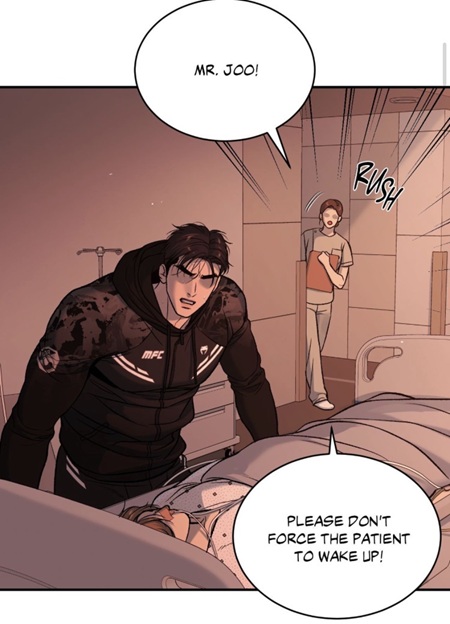 (chapter 100) The nurses rush into the room, treating Jaekyung’s desperation as a physical disturbance to the patient’s recovery. While their actions are entirely reasonable on a clinical level, psychologically the scene becomes devastating. Unintentionally, the medical intervention reinforces the exact, toxic logic that governs both characters: your emotions are a disruption, your presence causes harm, and distance is the only metric of safety.
 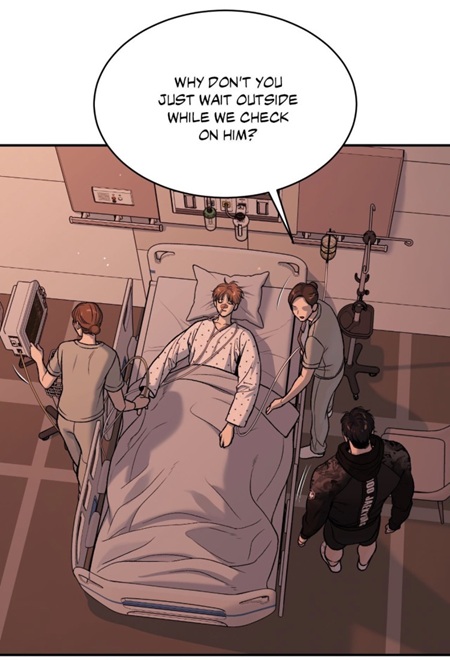 (chapter 100) They show no understanding for his emotional outburst. Because Joo Jaekyung already suffers under the subconscious belief that his violent world has contaminated and ruined Kim Dan, this interruption silently validates his deepest fear. The confession is not merely delayed; it is actively policed and silenced before Dan can consciously receive it. So no wonder why he couldn’t ask later.
This emotional misunderstanding later reappears at the penthouse after Kim Dan’s release from the hospital. Throughout the recovery process, Dan instinctively continues operating through gratitude 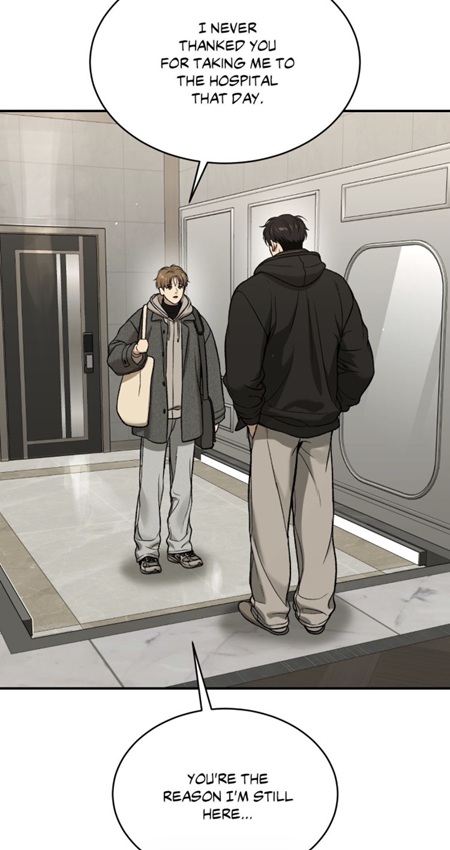 (chapter 100) because gratitude remains the safest emotional language he knows. When he thanks Joo Jaekyung for saving his life and bringing him to the hospital, he unconsciously falls back into the same survival mechanism that shaped his entire existence:
someone helped me,
therefore I must immediately repay them emotionally so I do not become an unbearable burden.
But for Joo Jaekyung, this gratitude becomes almost intolerable. The champion does not experience himself as Dan’s savior. On the contrary, he interprets himself as the very cause of the catastrophe. In his mind, Kim Dan was only hunted, targeted, and violently pierced by a blade because he became entangled in Jaekyung’s dangerous world. Thus every expression of gratitude silently transforms into accusation inside the champion’s psyche.
This is precisely why Jaekyung later grants Kim Dan total freedom without openly asking him to remain. (chapter 100) Objectively, he believes he is performing an act of love. He removes the contract, clears the financial burden, and breaks the cage open. But psychologically, his actions are also driven by guilt. If Kim Dan nearly died because of him, then holding him back would become another form of selfish violence.
Yet to a profoundly traumatized person like Kim Dan, sudden freedom does not feel like protection. It feels like abandonment. Because Kim Dan does not know how to exist beside someone without usefulness, obligation, gratitude, or necessity. Once the transactional structure disappears, he loses the emotional framework through which he justified his own presence in Jaekyung’s life. Now, he even represents trouble and burden. 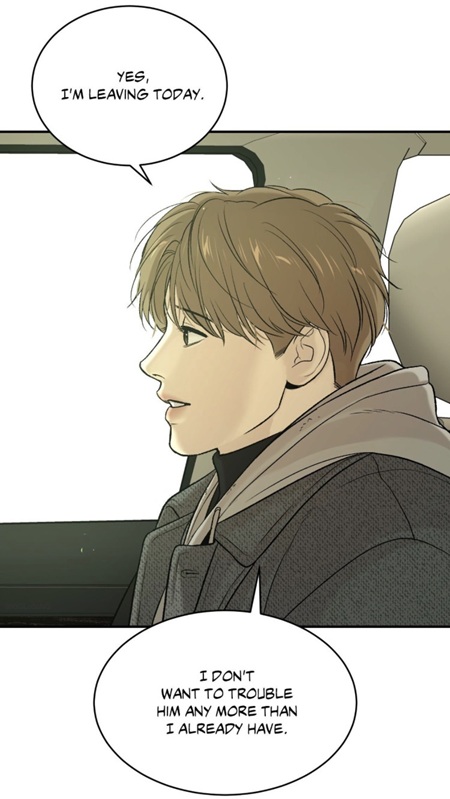 (chapter 100) Thus both protagonists arrive at the exact same tragic conclusion from opposite directions:
“The other person would suffer less without me.”
From that moment onward, both protagonists slowly mutate into ghosts trapped within their own defense mechanisms. Jaekyung begins expressing his intense attachment indirectly through flowers, food, nighttime vigils, and silent traces, while Kim Dan continues translating his love into the safe, contained boundaries of formal gratitude 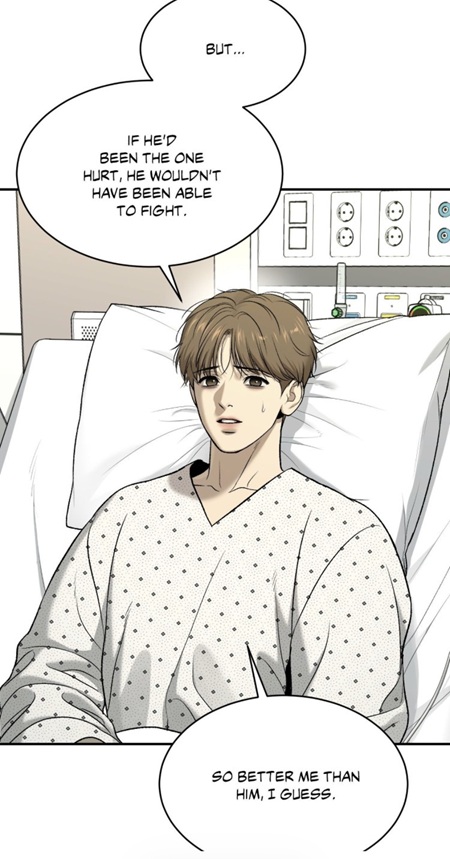 (chapter 100), apology, and eventual self-erasure. Neither man can openly ask the other to stay because both are trapped in the catastrophic belief that their own presence is a toxic burden to the person they care about most.
The Bouquets of a Ghost
At first glance, the bouquets filling Kim Dan’s hospital room appear comforting and almost romantic. Naturally, many readers interpreted the flowers through traditional symbolism. 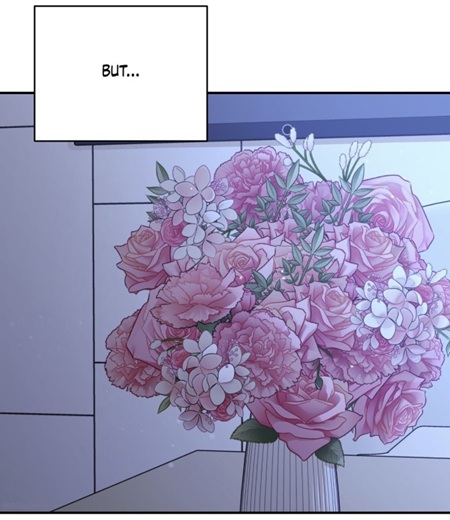 (chapter 100) The pink roses evoke tenderness, admiration, vulnerable affection, and emotional attachment. The peonies suggest healing, compassion, sincerity, and quiet devotion. The smaller pale flowers evoke remembrance, enduring emotional bonds, and spiritual connection despite distance. On the surface, the bouquets seem to communicate something reassuring: someone deeply cares whether Kim Dan survives.
And yet, despite their beauty, the bouquets remain strangely disturbing. 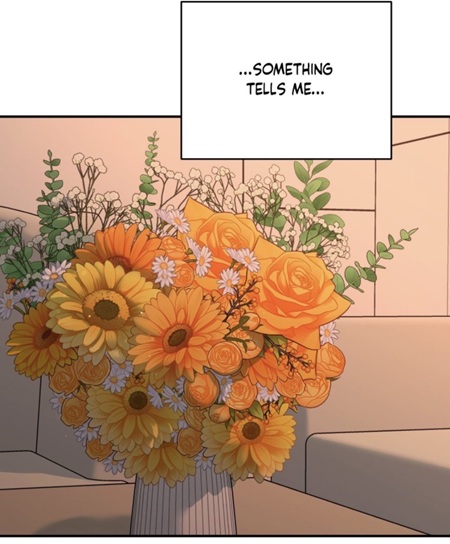 (chapter 100) The reason lies in the absence of the giver himself. Joo Jaekyung never openly remains beside Kim Dan during the day. Instead, the flowers appear during the night like traces left behind by someone haunting the room in silence.
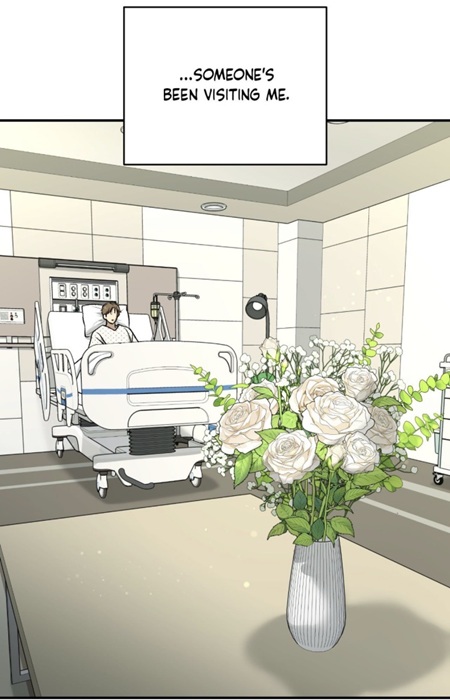 (chapter 100) Kim Dan wakes up surrounded not by Jaekyung’s physical presence, but by evidence that he had been there before disappearing once again. The flowers therefore become emotionally contradictory objects. They communicate affection, but simultaneously reinforce absence. They say: someone came, while also saying: someone vanished again.
This is precisely why the bouquets become psychologically unsettling. They reproduce the exact emotional structure underlying Kim Dan’s childhood trauma: warmth followed by disappearance. The gifts themselves are beautiful, but their emotional atmosphere resembles haunting more than stable companionship. Instead of openly remaining beside Kim Dan, Jaekyung expresses attachment indirectly through objects, much like a ghost incapable of fully entering the living world.
The first bouquet (chapter 100) becomes even more meaningful once one notices how strongly its colors resemble Halmoni’s scarf. 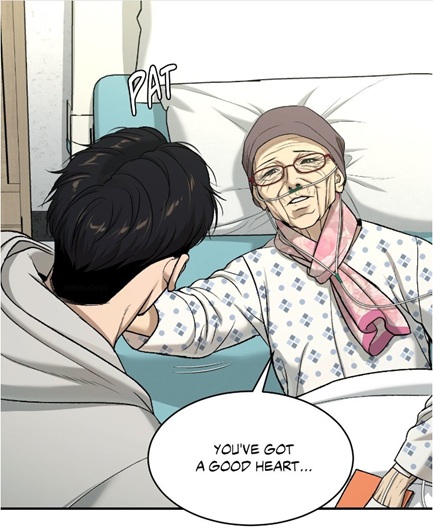 (chapter 94) This visual parallel quietly transforms the flowers from romantic gifts into symbols of caregiving shaped by distance and self-removal. Shin Okja genuinely loved Kim Dan, but her solution to his suffering repeatedly became emotional disappearance. She believed that if she removed herself from the center of his life, he would finally become free and happy. Episode 100 reveals that Joo Jaekyung begins reproducing this exact same pattern. He leaves flowers, cake, comfort, and reassurance behind, but increasingly excludes himself from Kim Dan’s life physically and emotionally. Like Halmoni, he convinces himself that the person he loves suffers because of him.
The progression of the bouquets themselves deepens this interpretation even further. Their colors gradually evolve from stronger emotional intensity 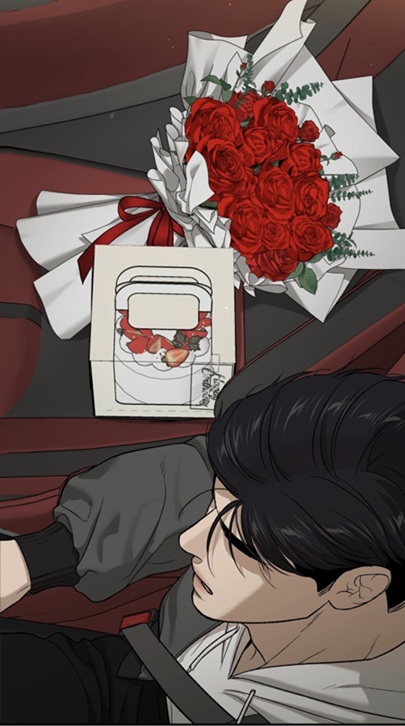 (chapter 97) toward increasing emotional fading. Earlier arrangements contain reddish tones to vivid pink traditionally associated with attachment, tenderness, living warmth, and vulnerable affection. (chapter 100) Yet as the chapter progresses, the flowers become increasingly pale, soft, and washed out, eventually moving toward orange (chapter 100), cream and almost white tones (chapter 100). This transformation matters enormously because white flowers traditionally evoke mourning, farewell, remembrance, emotional resignation, and quiet grief. The bouquets therefore begin charting Joo Jaekyung’s own psychological deterioration throughout the chapter. What initially appears as devotion slowly starts resembling mourning. The flowers do not merely reflect Kim Dan’s fragile condition; they quietly externalize Jaekyung’s exhaustion, guilt, insomnia, emotional isolation, and gradual self-erasure. In this sense, the bouquets expose that the champion himself is beginning to wither emotionally and physically.
And yet the flowers become even more psychologically disturbing once one remembers Kim Dan’s earlier relationship to them. Earlier in the story, Kim Dan openly admits that he likes the smell of flowers because they put him in a good mood, while Joo Jaekyung bluntly responds:  (chapter 31)
At first glance, the contrast appears humorous or merely reflective of personality differences. But episode 100 retrospectively transforms the scene into something much sadder. Joo Jaekyung now surrounds Kim Dan with the very objects (chapter 100) he once rejected because he desperately wants to comfort him emotionally. He instinctively tries to recreate psychological warmth through flowers because he knows Kim Dan associates them with peace and happiness.
However, in my opinion, this gesture unintentionally reproduces another hidden trauma at the same time. Throughout chapter 94, Mingwa repeatedly surrounds the young Kim Dan with flowers 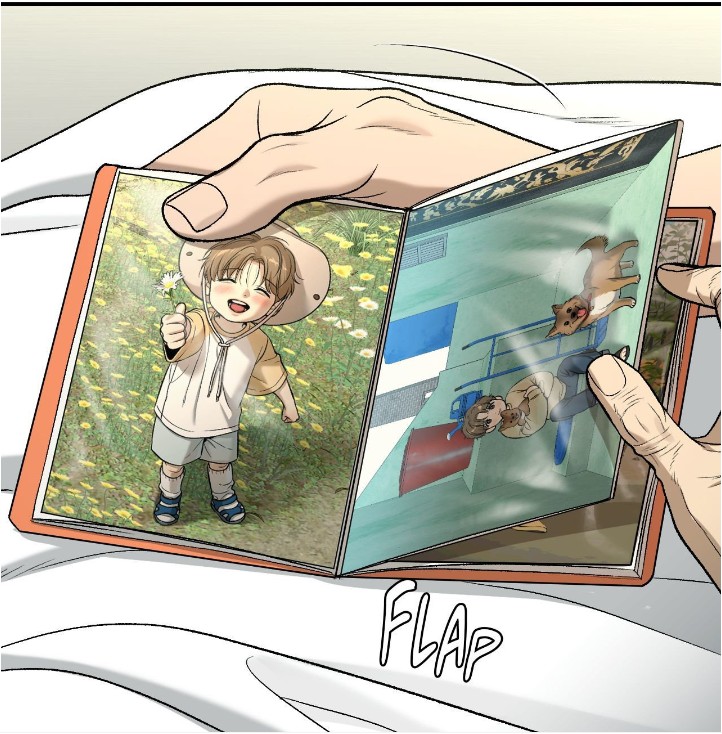 (chapter 194), plants, watering imagery, (chapter 94) and natural landscapes. We see him standing among daisies, holding flowers, and smiling inside an environment filled with softness, nature, and emotional warmth. If flowers symbolically belonged to the emotional world surrounding Kim Dan’s vanished parents, then the bouquets acquire an entirely different psychological meaning. Joo Jaekyung believes he is leaving behind comfort, reassurance, and evidence of care. Yet unconsciously, the flowers may also reconnect Kim Dan to memories of disappearance, loss, abandonment, and mourning.
 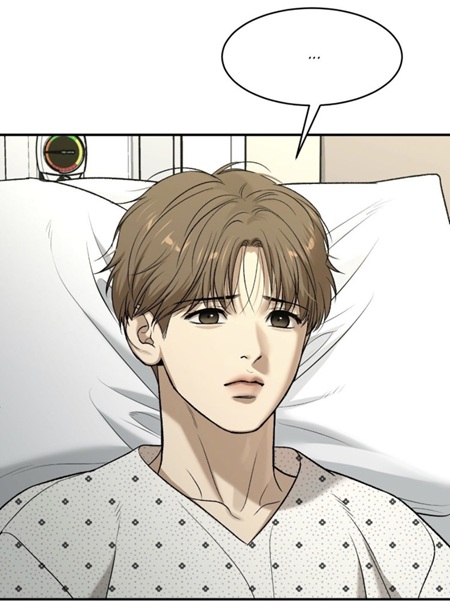 (chapter 100) Thus Kim Dan is not happy at all. The bouquets therefore become profoundly double-edged objects. They evoke tenderness while simultaneously reviving the emotional atmosphere of a childhood that vanished forever and departure.
The Emperor Learns Self-Erasure
The terrifying irony of episode 100 is that Joo Jaekyung gradually starts resembling not only Kim Dan, but also Halmoni herself. Earlier in the narrative, Kim Dan embodied exhaustion, dissociation, starvation under stress, emotional collapse, and self-neglect. 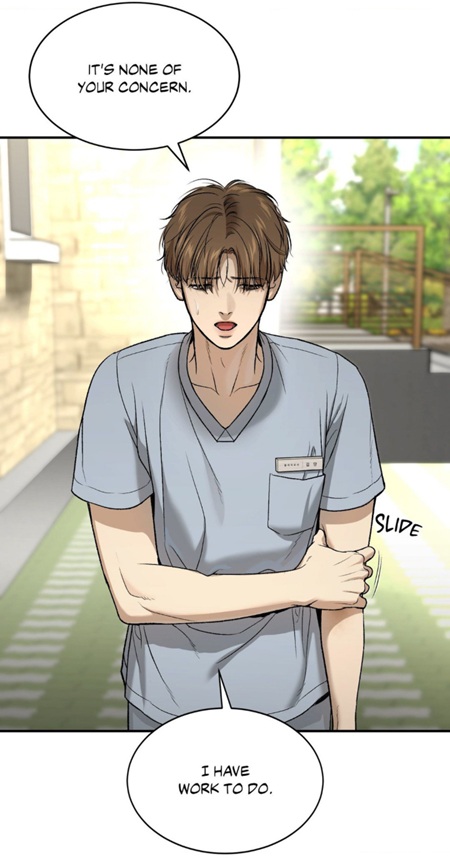 (chapter 61) But now the Emperor begins displaying the exact same symptoms. His hair is disheveled. His eyes are red from crying and sleeplessness.
 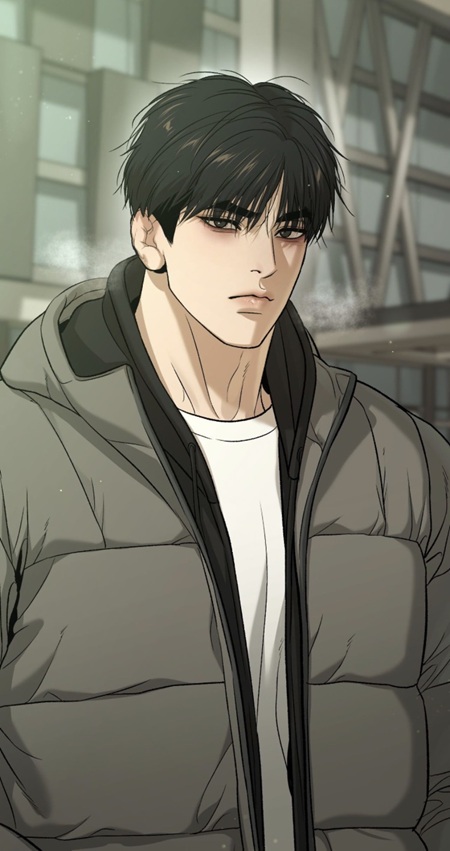 (chapter 100) His face appears hollow, wounded, and emotionally extinguished. The polished public image of the untouchable champion slowly collapses, revealing someone who has stopped taking care of himself entirely. Additionally, I assume that the cook did not return to the penthouse after Kim Dan had asked her to take the day off.
 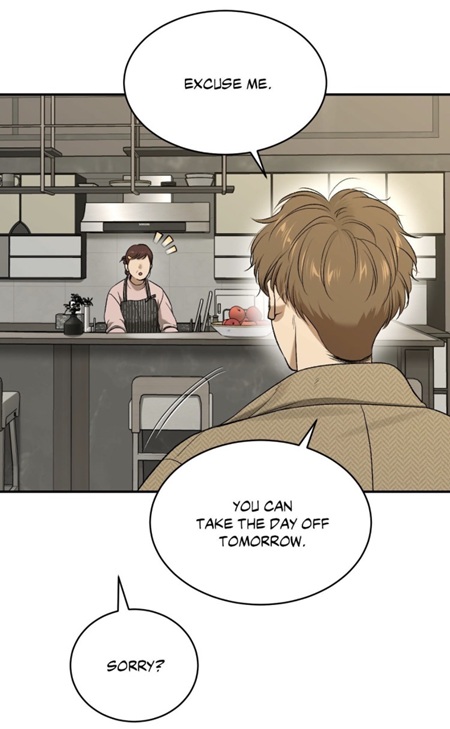 (chapter 97)
At the same time, Jaekyung unconsciously adopts Halmoni’s emotional logic. He increasingly believes that Kim Dan’s suffering originates from proximity to him.  (chapter 57) The harassment, the assault, the stabbing, and the violence surrounding the title fight all reinforce the terrifying idea that Kim Dan’s life deteriorates because he entered the champion’s world. As a result, Jaekyung arrives at the same conclusion as Shin Okja: perhaps the person he loves would be safer without him nearby.
This is why the nighttime visits become so psychologically important. 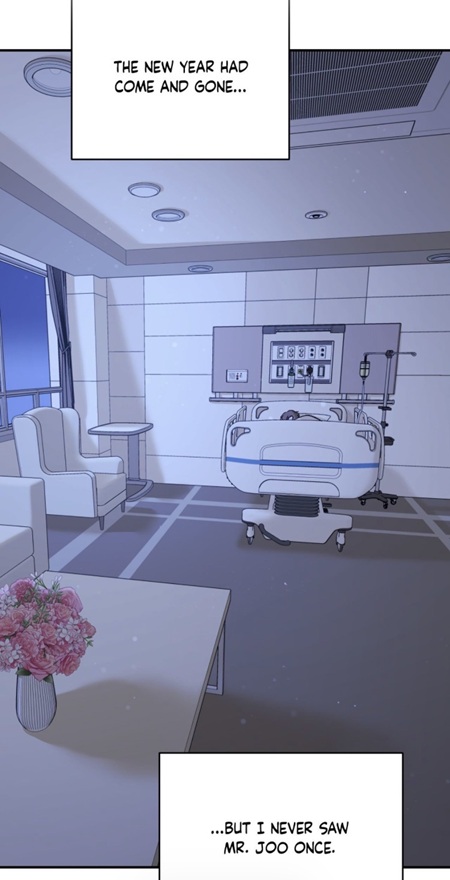 (chapter 100) Readers initially interpret them romantically, but the deeper emotional logic behind them is much darker. Joo Jaekyung is the only person who truly understands how little Kim Dan values his own life. (chapter 100) Team Black sees kindness, sacrifice, and goodness.
 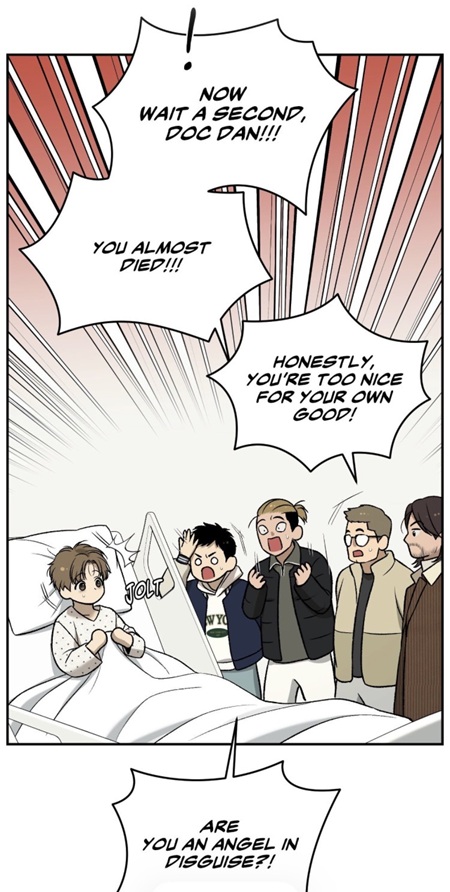 (chapter 100) They call Kim Dan an angel. But Jaekyung sees passive self-destruction. He remembers the sleepwalking, the dissociation, the emotional emptiness, and Kim Dan’s willingness to suffer in silence. Thus when Kim Dan says that it was “better” for him to get stabbed so that Jaekyung could continue fighting, the sentence can only become horrifying to the champion, especially when it reaches his ears through Park Namwook, like this:
 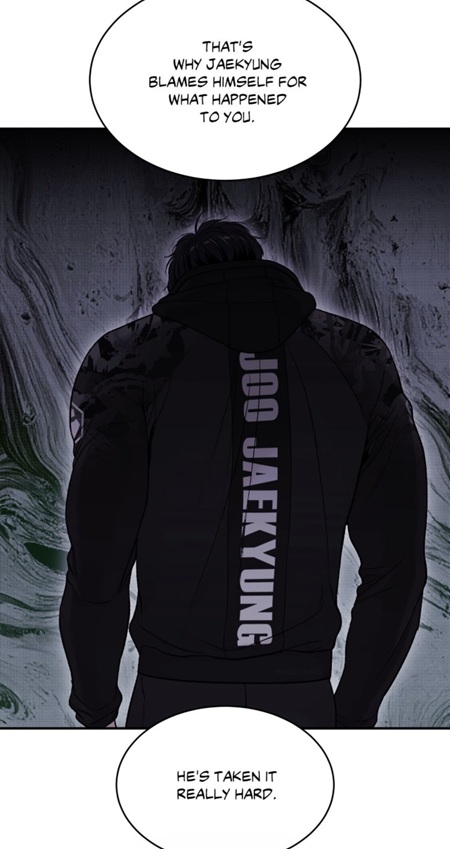 (chapter 100) Others hear selflessness. Jaekyung hears someone quietly declaring that his own life matters less than the championship belt. Kim Dan is still behaving as though his own survival matters less than the well-being, expectations, or stability of others. Importantly, these self-destructive tendencies are almost never verbalized openly. Kim Dan does not explicitly speak about wanting death.
 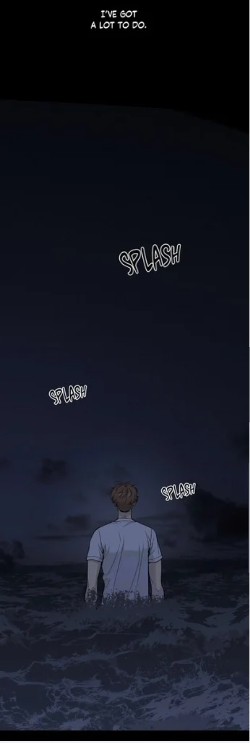 (chapter 59) Instead, the pattern emerges behaviorally through starvation, bodily neglect, overwork, emotional resignation, rejection of care, passivity toward danger, and repeated willingness to sacrifice himself without hesitation. His self-erasure slowly extends toward the body itself.
And Joo Jaekyung witnesses this repeatedly.  (chapter 79)
This is precisely why the stabbing scene affects the champion so violently. Even while bleeding out, Kim Dan’s immediate concern becomes the match and Jaekyung’s victory rather than his own survival. The moment therefore exposes something terrifying psychologically: Kim Dan still does not instinctively place his own life at the center of his emotional hierarchy. His survival remains negotiable inside his own perception. Thus when Joo Jaekyung screams:
“ (chapter 98) The reaction expresses far more than anger alone. It reveals panic, horror, and the unbearable realization that the person he loves may not value his own continued existence properly. From that point onward, the hospital arc becomes haunted not only by guilt, but by fear. Joo Jaekyung begins confronting the possibility that Kim Dan’s lifelong self-erasure could eventually become literal disappearance.
Because Kim Dan’s previous dissociative states occurred during the night, Jaekyung begins visiting him during darkness to ensure he is still resting safely. 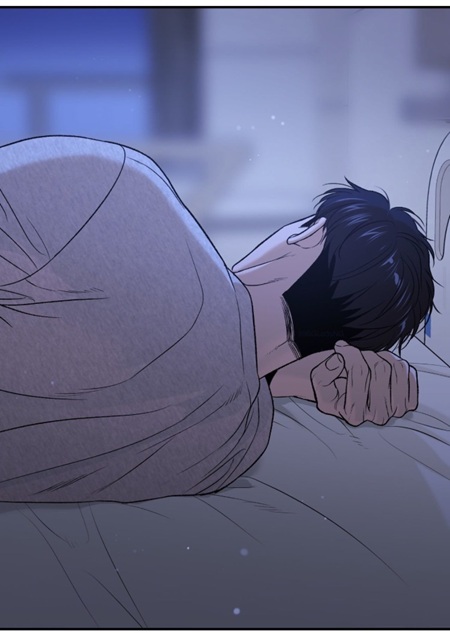 (chapter 100) In other words, the champion starts behaving like someone watching over a person with suicidal tendencies. He no longer trusts Kim Dan’s apparent improvement because the stabbing exposed something terrifying: Kim Dan’s mentality has not fundamentally changed at all. He still views himself as expendable and worthless.
Yet, the tragedy deepens further because Jaekyung himself increasingly mirrors this self-destructive behavior. Like Kim Dan earlier in the story, he begins excluding himself emotionally from the life of the person he loves. He no longer eats properly, wanders aimlessly through the night, and expresses care indirectly through silent objects instead of speaking honestly, effectively becoming a ghost himself, similar to the way Kim Dan left the penthouse  (chapter 45) to buy a key chain as a birthday present.
And yet Episode 100 simultaneously exposes the hidden shortcomings within Shin Okja’s worldview itself. Halmoni genuinely loved Kim Dan and desperately wanted him protected, financially secure, and emotionally cared for. 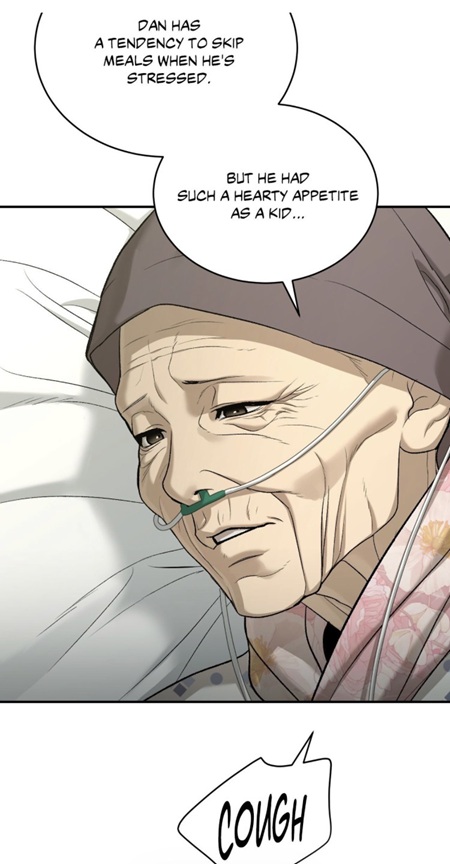 (chapter 94) Joo Jaekyung initially fulfilled this exact role. He gave Kim Dan work, stability, material protection, and relief from crushing economic pressure. But the chapter quietly reveals that Jaekyung also begins inheriting Halmoni’s deeper pathology: self-removal mistaken for love. Like Shin Okja and his hyung, he increasingly convinces himself that Kim Dan would ultimately suffer less without him at the emotional center of his life. Thus he leaves behind flowers, comfort, financial freedom, and reassurance while gradually destroying himself psychologically through absence, guilt, and emotional isolation.
At the same time, this parallel also exposes Halmoni’s own emotional blind spots. Although she encouraged Jaekyung to remain beside Kim Dan and repeatedly expressed gratitude toward him 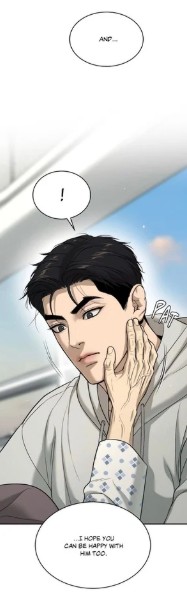 (chapter 94), she showed remarkably little curiosity about Jaekyung’s inner world, trauma, loneliness, or emotional needs. She imagined that physical strength and wealth equaled an easy life, mental and emotional health. Then the problem was reduced to a simple solution: “Be happy with Kim Dan.” But Episode 100 demonstrates that companionship alone cannot heal trauma, when both individuals continue mistaking self-erasure for care and love. You can not love someone, if you don’t love yourself first. In this sense, Joo Jaekyung gradually transforms not only into Kim Dan’s protector, but also into someone unconsciously reproducing the very emotional logic that shaped Kim Dan’s suffering in the first place.
The Fragment of an Interrupted Happiness
One of the most painful symbols in episode 100 is the small piece of birthday cake. 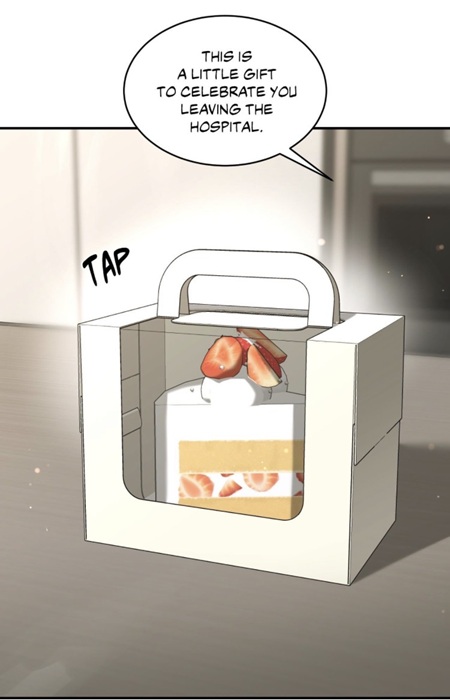 (chapter 100) Before the stabbing, Kim Dan consciously bought a cake in order to congratulate Joo Jaekyung on reclaiming the championship title.
 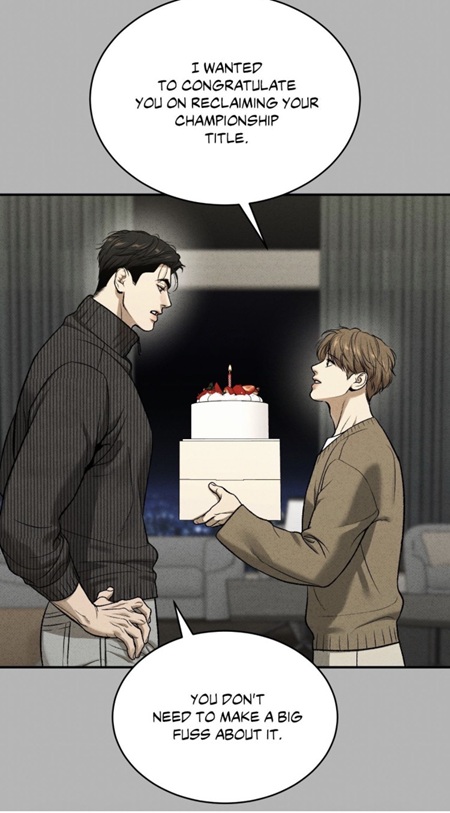 (chapter 100) And on his way home, he started imagining what would happen with this cake. The atmosphere of the scene felt so real, though it was just a dream. Soft lighting, playful intimacy, teasing, physical closeness, and domestic warmth briefly isolate the two men from the violence surrounding the outside world.
 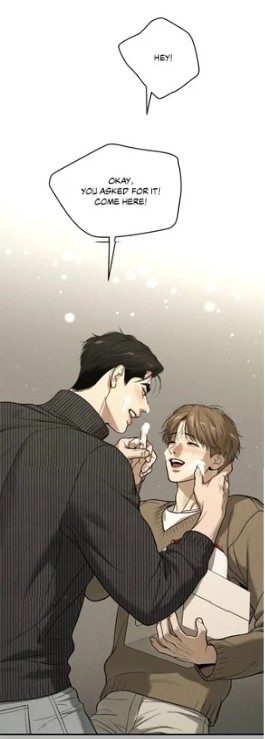 (chapter 97) For perhaps one of the first times in the narrative, Kim Dan acts not out of obligation, survival, or repayment, but out of genuine emotional desire. He wants to make Joo Jaekyung happy and have fun with him.
And then Mingwa quietly inserts the extinguished candle. 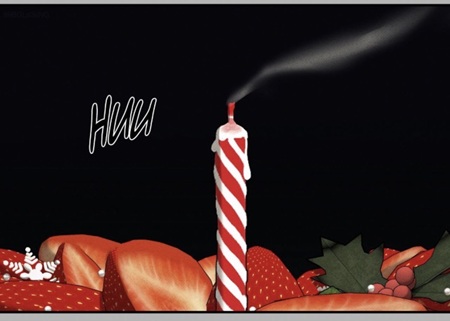 (chapter 97) The smoke rising into the darkness transforms the celebration into visual foreshadowing. The dream of happiness exists briefly, warmly, beautifully… then immediately begins dissolving into air, as if this was already announcing the future stabbing. So the assault violently interrupts the vision before Kim Dan can fully inhabit it emotionally.
This interruption matters profoundly because the scene is not merely about happiness in the present. It also reveals the emotional future Kim Dan had unconsciously started imagining. 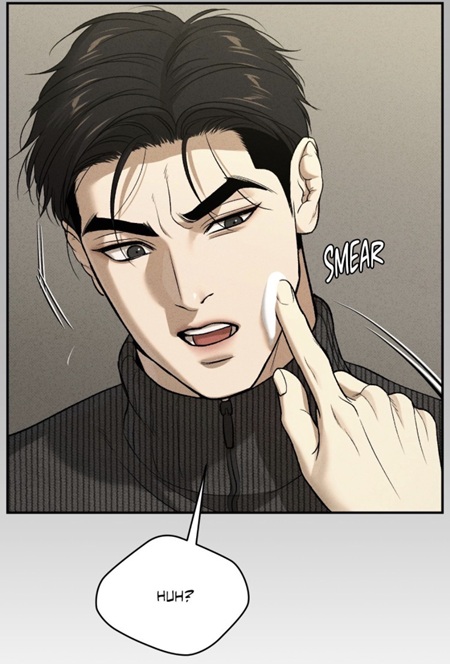 (chapter 97) The celebration was not simply about the championship victory itself. It represented the possibility that warmth, intimacy, and laughter might continue after the fight, beyond the violence of the octagon. For a brief moment, Kim Dan allowed himself to believe that happiness could survive the match and extend naturally into everyday life.
And objectively, part of this dream actually became real. Joo Jaekyung did reclaim the championship belt exactly as Kim Dan had imagined. (chapter 97) The victory truly happened. (chapter 100) Yet the emotional continuation attached to that victory was shattered before it could fully materialize. Because the stabbing occurred before the match, the triumph itself becomes psychologically contaminated. The belt survives, but the celebration dies before it truly begins.
This is precisely why the small piece of cake becomes so emotionally devastating afterward. (chapter 100) The object itself destabilizes Kim Dan because it reconnects him not merely to loss, but to dream and possibility. 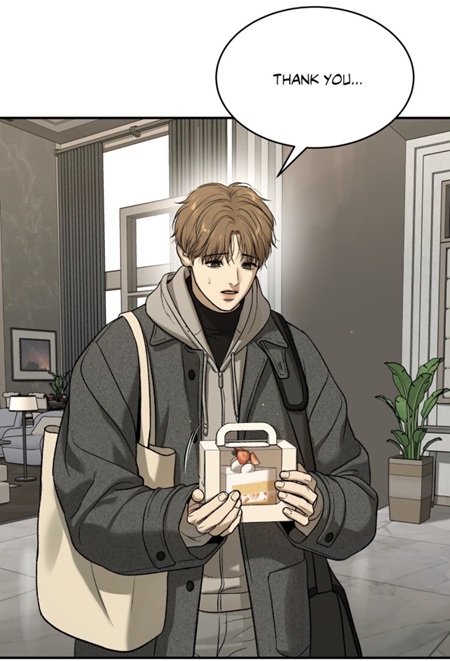 (chapter 100) The cake silently reminds him that the happiness he imagined had not been absurd or impossible. For a brief moment, reality itself had begun moving toward that future. The championship victory happened exactly as expected. Yet the companionship attached to that imagined future never arrived.
And this is where the symbolism of the strawberry cake becomes extraordinarily painful. 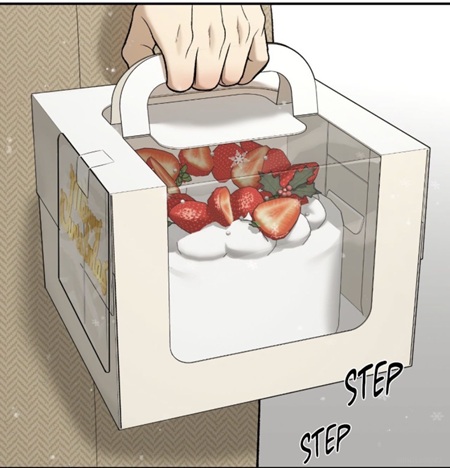 (chapter 97) What remains afterward is no longer the original cake itself, but only a single detached fragment. The large celebratory cake bearing the visible message: “Happy Birthday” disappears entirely.
This disappearance becomes even more devastating once one realizes that Joo Jaekyung himself had also emotionally anticipated Kim Dan’s birthday. 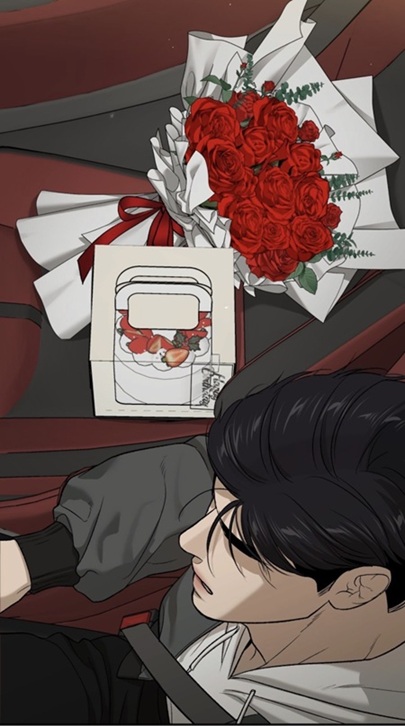 (chapter 97) The original celebratory atmosphere therefore belonged not only to Dan’s imagined future, but also to Jaekyung’s own silent desire to share happiness with him openly. Yet after the stabbing, the birthday itself becomes psychologically unbearable. Kim Dan spent that day unconscious, hospitalized, and hovering near death. Thus by offering only a small piece of cake instead of a full celebratory cake, Jaekyung unconsciously buries the birthday itself. (chapter 100) The candles disappear. The written greeting disappears. The celebration disappears. Even explicit acknowledgement of the occasion itself vanishes.
This transformation quietly reveals how deeply the stabbing contaminated Jaekyung’s relationship to happiness and celebration. 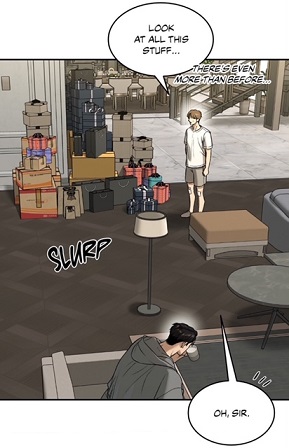 (chapter 45) Birthdays and presents didn’t exist innocently for him before, but now with this new incident, they become psychologically more than ever associated with catastrophe, interruption, and the terror of almost losing Kim Dan forever. The fragment therefore no longer functions as a birthday cake at all. It becomes reduced to something emotionally survivable: a quiet gesture of care stripped of festivity, joy, and openly shared happiness.
to conclude, the original cake had been playful, communal, emotionally open, and deeply mutual. (chapter 97) The written greeting openly acknowledged celebration, intimacy, companionship, and shared happiness. It transformed the object into something profoundly personal. Even if Kim Dan could still outwardly disguise the gesture as simple congratulations for the champion’s victory, the emotional atmosphere already belonged to something much deeper.
But afterward, none of that survives intact. The candles vanish. The greeting vanishes. The imagined celebration vanishes. Even the shared nature of the cake disappears.
What remains is only a solitary piece quietly handed to Kim Dan in silence. 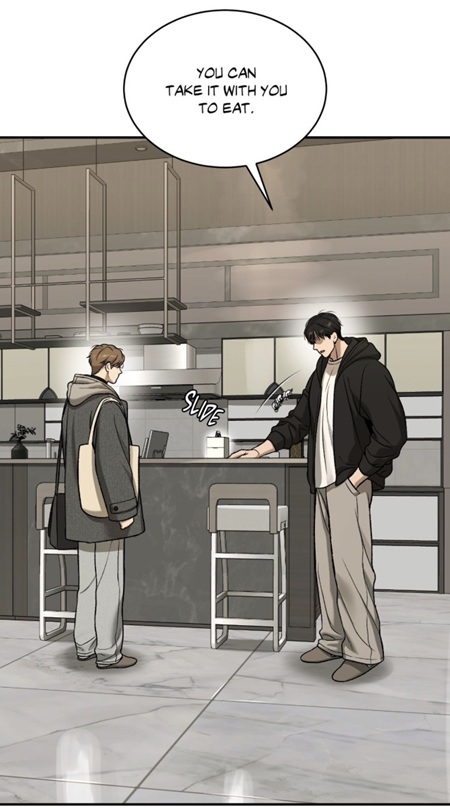 (chapter 100)
And this fundamentally changes the emotional meaning of the object. By offering only a fragment instead of openly sharing the entire cake together, Joo Jaekyung unconsciously excludes himself from the celebration itself. The gesture becomes stripped of festivity and transformed into something sober, restrained, and painfully serious. The emotional atmosphere shifts away from: 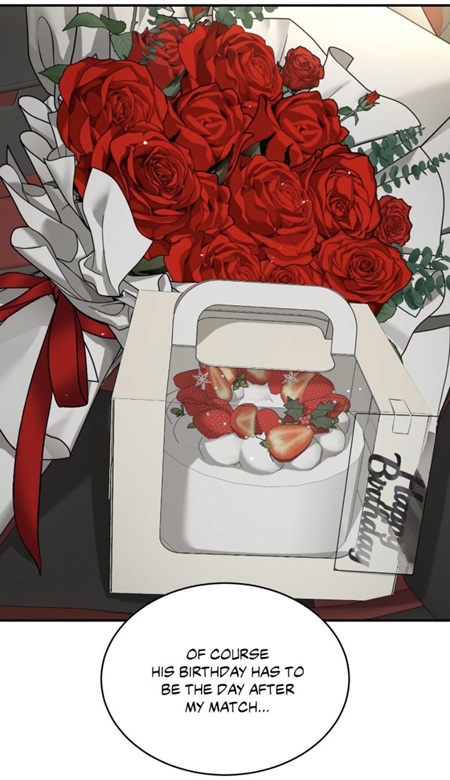 (chapter 97)
“Let’s celebrate together,” toward something much quieter: “You should eat.”
This transformation mirrors Jaekyung’s larger psychological movement throughout episode 100. After the stabbing, he increasingly removes himself not only from Kim Dan emotionally, but also from happiness itself. Just as the flowers become traces left behind without the giver openly remaining beside him, the cake becomes celebration without the celebrant. The surviving slice no longer belongs to fantasy, playfulness, or dream-like intimacy. It belongs to aftermath, guilt, recovery, exhaustion, and emotional restraint. (chapter 100)
At the same time, however, the surviving fragment still carries enormous symbolic weight because it silently preserves possibility. The cake is no longer whole, but it still exists. Happiness itself has not completely disappeared. What vanished was not the possibility of happiness, but the illusion that companionship would arrive effortlessly on its own.
This distinction becomes crucial for Kim Dan’s emotional development. (chapter 100)
Before the stabbing, the imagined celebration existed safely inside fantasy. (chapter 97) Kim Dan could briefly dream about warmth, intimacy, and emotional continuity because the future still remained unrealized and emotionally distant. But afterward, reality violently interrupts passivity itself. 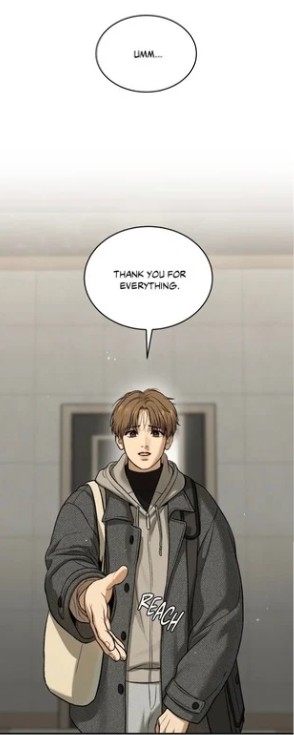 (chapter 100) Now the contract is ending. Jaekyung is beginning to erase himself emotionally. Separation becomes real. The future no longer unfolds automatically.
Thus the small piece of cake becomes much more than a symbol of interrupted happiness. It quietly confronts Kim Dan with a painful realization: 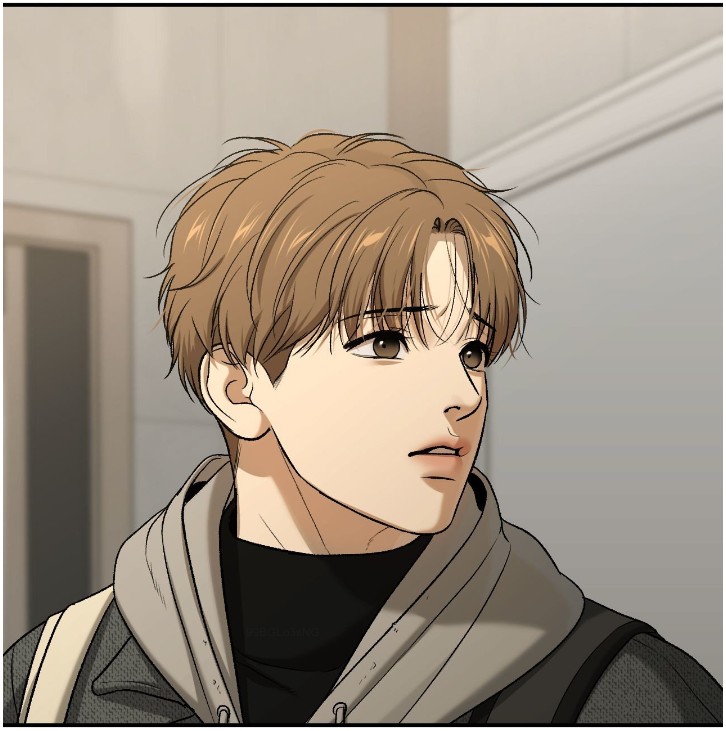 (chapter 100) companionship itself still remains possible, but only if he consciously chooses it instead of retreating from it emotionally.
This confrontation exposes the ultimate psychological friction defining Kim Dan’s internal conflict: the toxic divide between gratitude and actual happiness. (chapter 100) Throughout his entire life, Dan has used formal gratitude as currency to buy his way out of being a burden. But episode 100 quietly poses a devastating question: does gratitude ever make someone happy? Is he smiling, when he is taking his fated partner’s hand and expressing his gratitude? 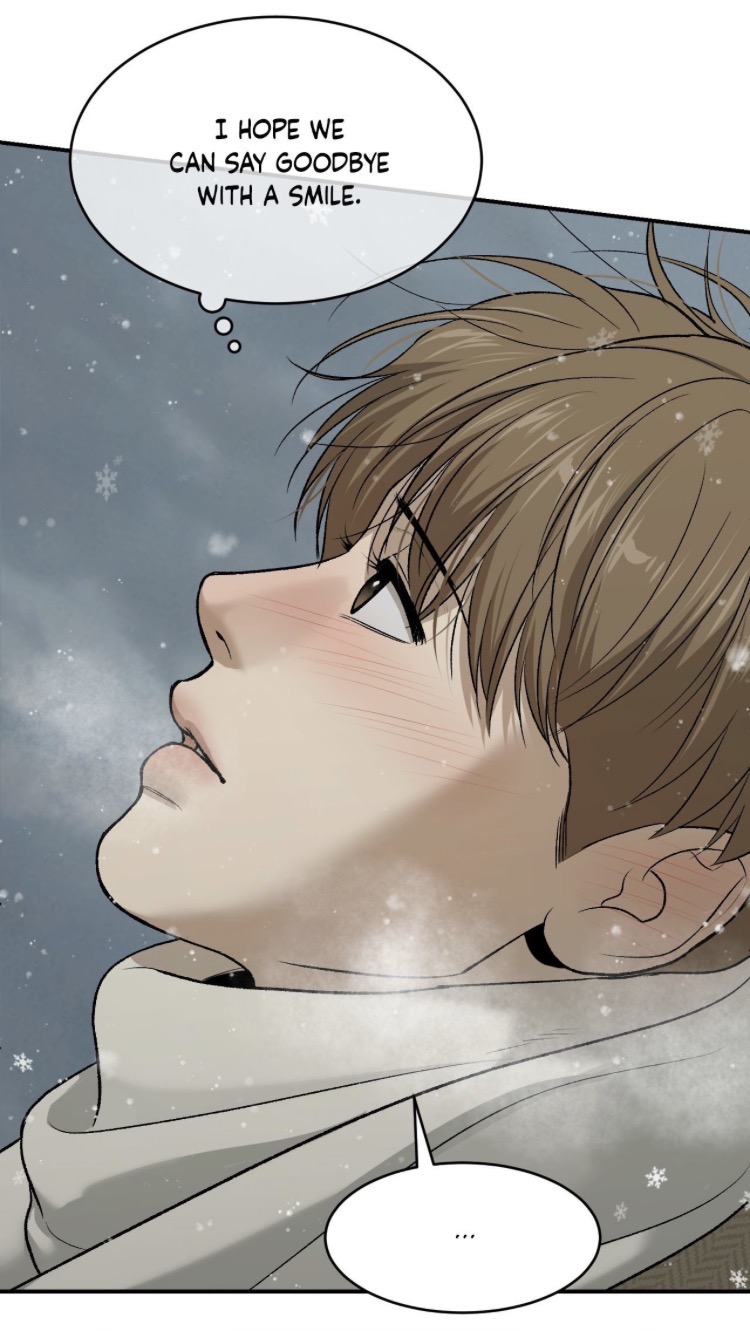 (chapter 97) For a profoundly traumatized psyche, the answer is no. Gratitude is a defensive mechanism designed to restore a transactional balance; it is an acknowledgment of a debt that must be managed. It requires a strict, professional distance to remain safe.
 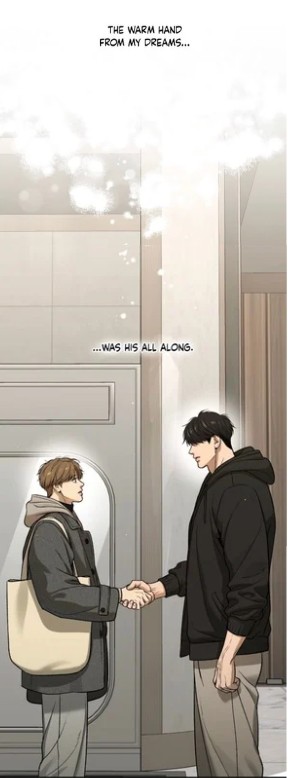 (chapter 100) Happiness, however, demands the exact opposite: it requires the total abandonment of the ledger, a surrender to vulnerability, and a willingness to occupy space in someone else’s life simply because you want to be there and are wanted as well, not because you are useful. The problem is life is not a fairy tale with a happy ending like “and they lived happily forever”.
But episode 100 quietly dismantles the fantasy that happiness means the absence of pain or struggle. The stabbing proves that suffering can violently invade even the warmest emotional moments. Life without fear, uncertainty, or wounds is ultimately an illusion.
And yet the small piece of cake simultaneously suggests something equally important. (chapter 100) A cake does not need a justification to exist. Sweetness is not something that must be earned through usefulness, victory, or repayment. Cakes are shared because human beings continue searching for warmth, companionship, and moments of joy even inside painful lives.
This is precisely what Kim Dan still struggles to understand. Throughout his entire life, he has treated happiness as something conditional:
- something that must be deserved,
- justified,
- or safely postponed until suffering finally disappears.
But episode 100 quietly reveals that companionship cannot wait for a perfect future without pain. The dream collapsed. The celebration was interrupted. Trauma invaded the imagined happiness before it could fully materialize. Yet the small piece of cake still remains.
And that remaining fragment becomes emotionally crucial because it silently insists on something neither protagonist fully understands yet: sweetness and suffering can coexist. 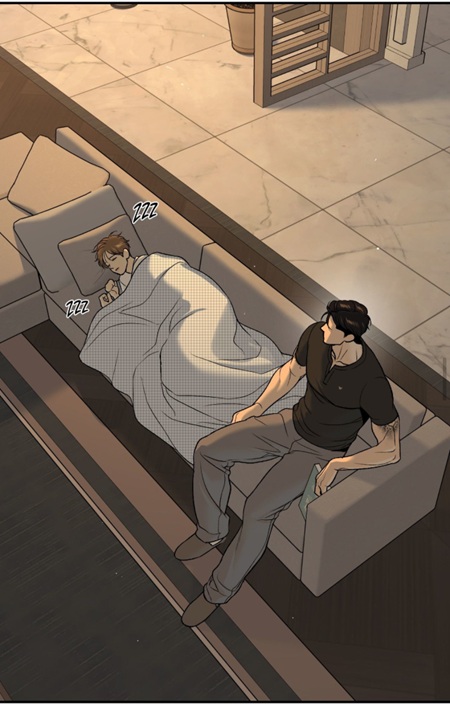 (chapter 81)
The object therefore no longer symbolizes naïve fantasy or guaranteed happiness. (chapter 100) Instead, it becomes material proof that companionship itself can still survive inside imperfect reality. The question is no longer whether life will remain painful. It will. The real question becomes whether Kim Dan and Joo Jaekyung are capable of choosing one another despite that pain instead of endlessly retreating into guilt, low self-esteem, gratitude, and emotional self-erasure.
The Architecture of an Excuse
This devastating pattern of protective alienation is exposed most cleanly by the logistical friction of Kim Dan’s return to the penthouse in Episode 100. Superficially, Dan presents his presence in the apartment as a purely transactional 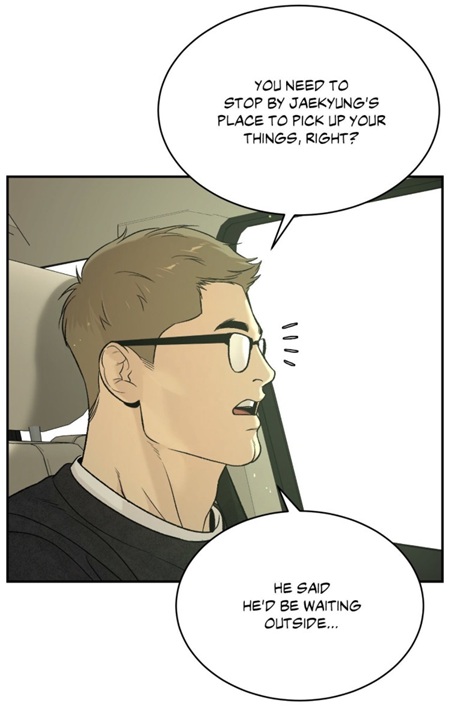 (chapter 100) administrative necessity: he must retrieve the final remnants of his worldly possessions. Yet, the narrative explicitly undermines this justification the moment Jaekyung questions the meager size of his single canvas tote bag.
 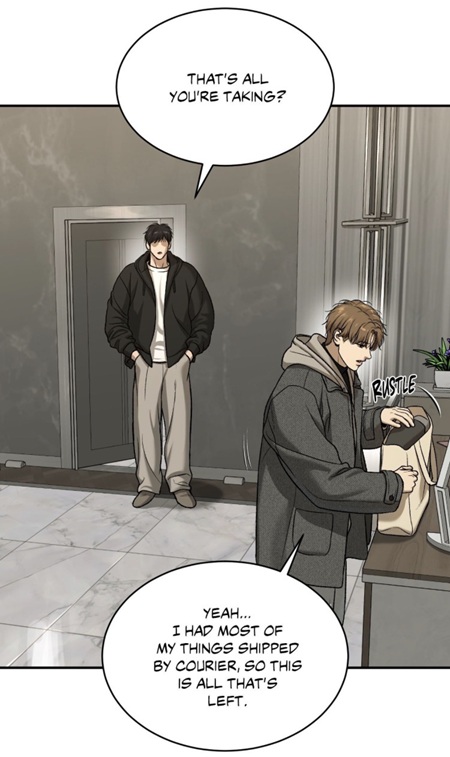 (chapter 100) Dan casually confesses that he had the vast majority of his belongings shipped ahead by a courier service.
This logistical detail betrays his entire psychological posture. If total self-erasure and a clean, unburdening departure were his true, absolute objectives (chapter 100), there was no logical reason to return to the penthouse at all. The remaining handful of items could easily have been included in the courier shipment or abandoned entirely. The return to the penthouse is, fundamentally, an excuse. It is a manifestation of what trauma psychology recognizes as a subconscious desire for interception. Dan has spent his entire life slipping away from rooms before he can be cast out, yet by physically placing his fragile, recovering body back into Jaekyung’s immediate sensory field, his actions betray an unuttered, desperate plea to be stopped. 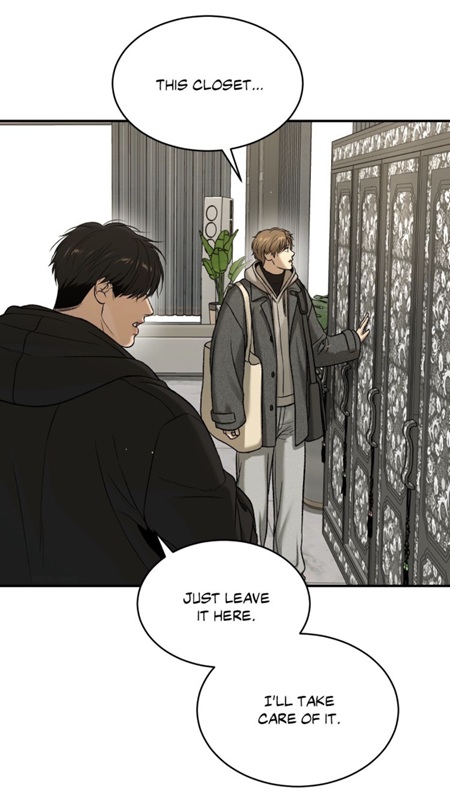 (chapter 100) That’s why each time Mingwa focuses on his facial expressions after each interaction with his lover.
 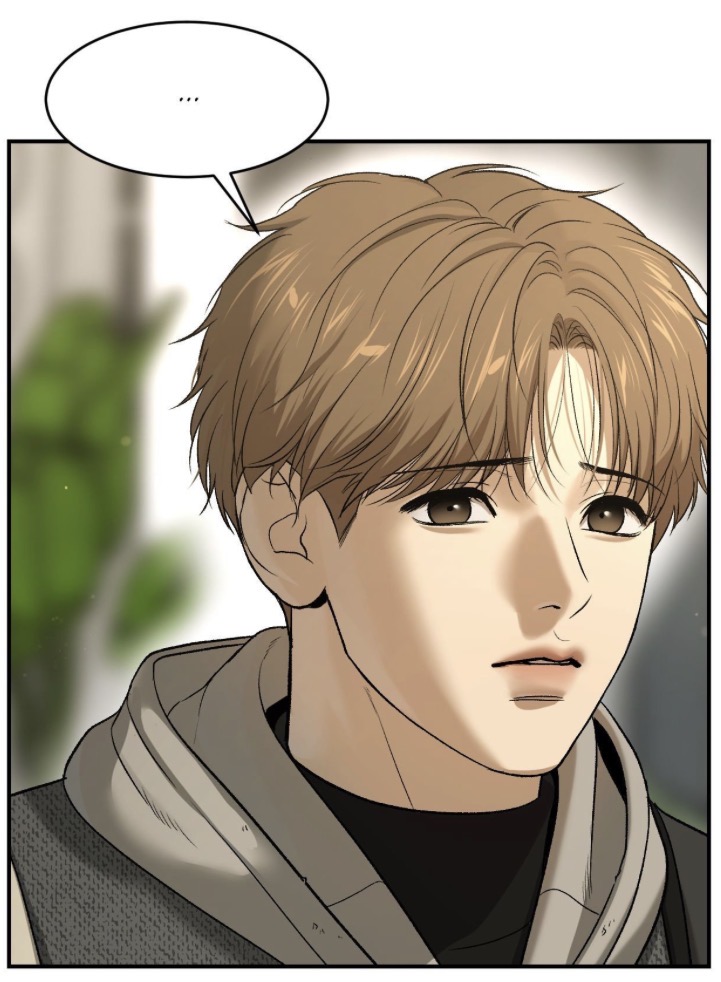 (chapter 100)
This staged closure is quietly facilitated by the manager, Park Namwook, who acts as the unwitting structural engineer of their final encounter. 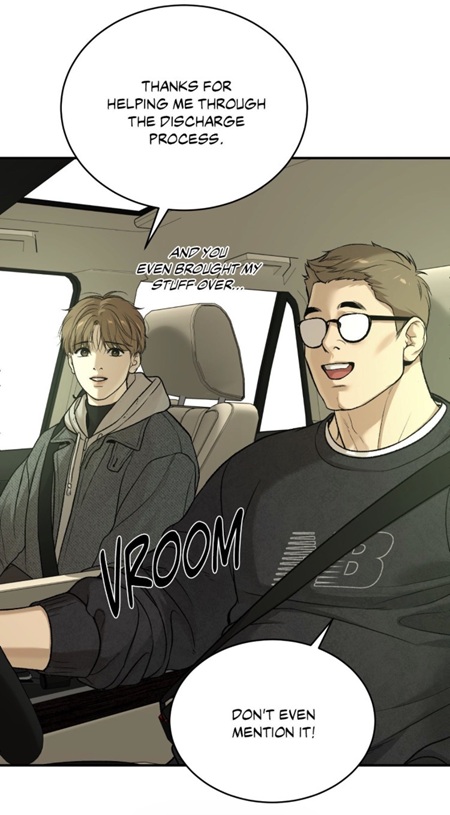 (chapter 100) The manager is the only entity who possesses the logistical knowledge of Dan’s whereabouts and timeline, making the deliberate choice to allow this meeting to occur.
 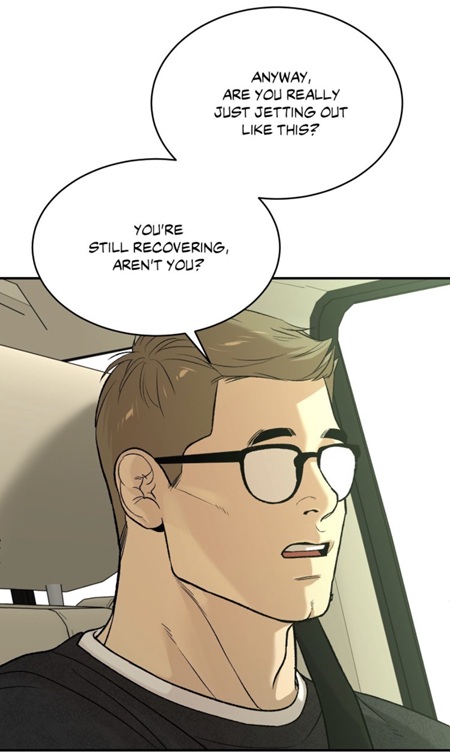 (chapter 100) For Park Namwook, bringing Dan to the penthouse is an attempt to foster a healthy, mature sense of closure between two heavily damaged men. That way, he won’t have to go through the trouble looking for the physical therapist like in episode 56 and Joo Jaekyung can move on.
Crucially, Joo Jaekyung did know Kim Dan was coming 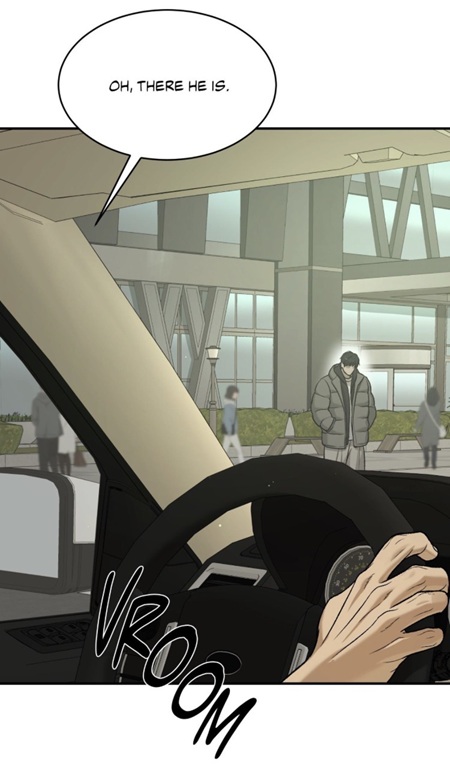 (chapter 100); as Namwook reveals in the car, the champion was actively waiting outside the penthouse threshold. Jaekyung anticipated the encounter, which makes his terrifying composure all the more devastating. He did not stumble upon Dan by accident; he prepared himself to face him. However, Jaekyung possessed absolutely no knowledge of the courier arrangement. (chapter 100) He stood waiting in the shadows expecting a standard move-out—a process that would require a massive physical effort, particularly to transport the traditional wedding cabinet that represents the absolute core of Dan’s history.
Thus, when Jaekyung stands in the doorway and questions, “That’s all you’re taking?” the query is laced with a hidden, profound panic. He looks at the tiny canvas bag and realizes, with sudden horror, that Dan did not come back to transition out of his life over days or hours; he has already systematically eradicated his own presence in secret. The revelation strikes Jaekyung like an emotional ambush. He realizes that Dan has almost left nothing behind to bind him to this home except the wedding cabinet.
This unexpected velocity of Dan’s departure triggers Jaekyung’s newly adopted script of self-erasure. Because he now believes his very proximity is a lethal contamination, he refuses to fight the departure openly. He stands paralyzed by his own guilt, operating under the catastrophic assumption that if Dan wants to vanish, letting him go is the only way to keep him safe.
The true emotional focal point of this tragic stalemate is manifested in the physical presence of the traditional Korean wedding cabinet. As Kim Dan stands before the massive, intricately patterned piece of furniture, his physical body freezes, and he trails off into a heavy, lingering silence: (chapter 100)
To understand the profound weight of this hesitation, one must contrast this moment directly with the visual composition of Episode 53.  (chapter 53) Back then, when Dan believed he was fleeing the penthouse because of his failure and promise to his grandmother, acting under the absolute threat of emotional and professional ruin, his treatment of the cabinet was violent and definitive.
  (chapter 53) He had actively dragged it out of the domestic sphere, casting it out into the sterile, exposed isolation of the public hallway. In Episode 53, throwing the cabinet away was a desperate attempt to sever his connection to the space.
By Episode 100, the cabinet is standing there, and Dan’s psychological relationship to it has completely inverted. He cannot bring himself to discard it, nor can he bear to move it. (chapter 100) In the formal shorthand of the comic, the traditional wedding cabinet—an object culturally explicitly tied to domestic permanence, matrimonial continuity, and the building of a shared home—functions as a literal stand-in for Kim Dan himself. The cabinet is Kim Dan. It is an archaic, deeply sentimental object that does not naturally belong in the hyper-modern, sterile, concrete architecture of Jaekyung’s penthouse, yet it is the only item that infuses the space with genuine warmth.
When Dan hesitates before the cabinet, staring at its surface with a hand gently raised, he is wrestling with the agonizing divide between his trauma-driven narrative and his true emotional desire. His wide, hollow stare in the close-up panel reveals the terrifying vulnerability of a person who has completely run out of scripts. By leaving the cabinet behind, Dan is stripping away his final defense mechanism. He is presenting Jaekyung with a blank slate, silently begging the champion to fill the void, to make the first move, and to shatter the professional, civil boundary that is keeping them apart. His silence is a desperate holding pattern; he wants to stay, but his pathologically low self-worth prohibits him from asking for accommodation. He needs Jaekyung to claim him.
When Jaekyung breaks the silence by commanding, “Just leave it here. I’ll take care of it,” the tragedy achieves its absolute convergence. (chapter 100) Neither man can speak the truth. Dan cannot say, “Please keep this cabinet because it represents my desire to belong to you.” Jaekyung cannot say, “Leave it here because I will ensure that it is delivered properly.” Instead, they both hide behind the sterile language of property management.
Jaekyung takes custody of the cabinet just as he took custody of Dan’s medical bills, assuming that by taking the burden of the closet, he is performing a clean act of caretaking for a man who is leaving him. Dan receives this command not as an invitation to stay, but as the final, polite closing of the account. He interprets “I’ll take care of it” as a definitive statement that his presence is no longer required to maintain the home. They are two ghosts performing a ritual of mutual rejection, entirely blind to the fact that they are looking at each other through the distorted lens of their own inherited wounds.
The Ghost Beside the Bed
Perhaps the most unsettling aspect of episode 100 is not that Kim Dan confuses dream and reality 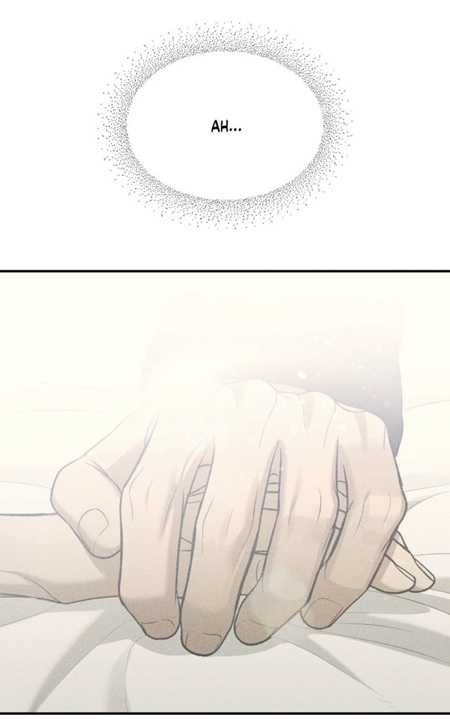 (chapter 100), but that he repeatedly experiences Joo Jaekyung’s genuine presence as something psychologically unreal. Throughout the hospital arc, the champion increasingly resembles a figure existing at the edge of consciousness itself: someone who appears during the night, leaves warmth and traces behind, then disappears again before stable daylight certainty can fully emerge. (chapter 100) Yet the episode carefully distinguishes between two different nocturnal encounters, and this distinction matters enormously.
Yet the episode carefully distinguishes between two different nocturnal encounters, and this distinction matters enormously.
The first sequence begins with Kim Dan awakening to the sensation of warmth and physical presence beside him.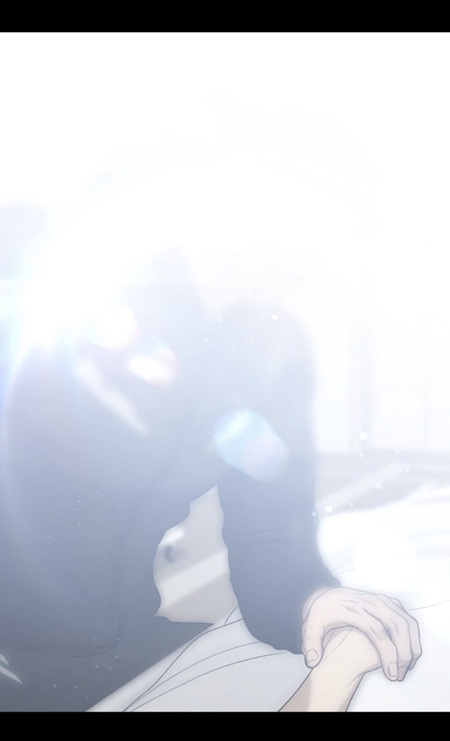 (chapter 100) The atmosphere is soft, luminous, and emotionally unstable. Jaekyung’s face gradually dissolves into sunlight itself
 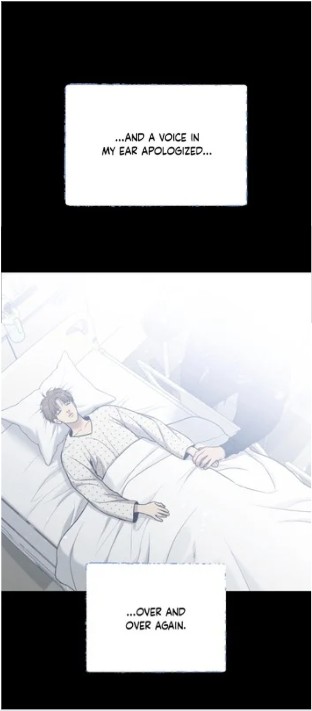 (chapter 100) while Kim Dan drifts between unconsciousness and waking reality. The sequence feels extraordinarily intimate, yet emotionally difficult to grasp. First, Kim Dan quietly concludes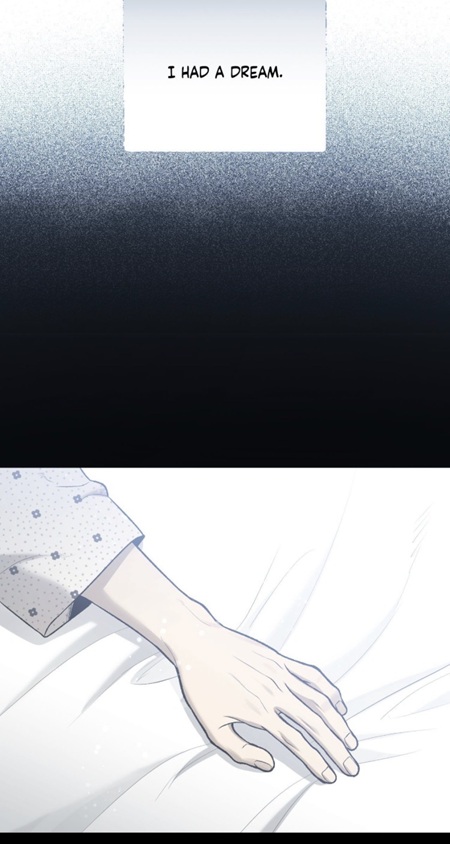
Only then does he ask himself: 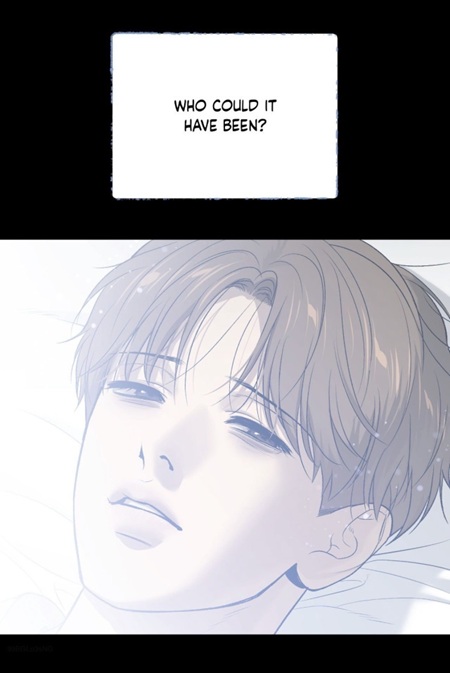 (chapter 100) Part of him wants to move toward reality.
Another part immediately transforms the experience into dream-language before the emotional implications become overwhelming.
And this is why the panel is so powerful visually as well. Kim Dan’s eyes are half-open, suspended between sleep and waking, dream and reality, denial and recognition, emotional truth and emotional self-protection.
This order matters enormously because Kim Dan instinctively classifies the experience as unreal before even fully questioning it. The emotional reflex comes first. Stable tenderness automatically becomes dream-like inside his perception. Only afterward does uncertainty emerge.
And yet the sequence itself quietly resists pure unreality. The emotional structure strongly reflects behavior readers have already objectively witnessed in episodes 99 and 100: 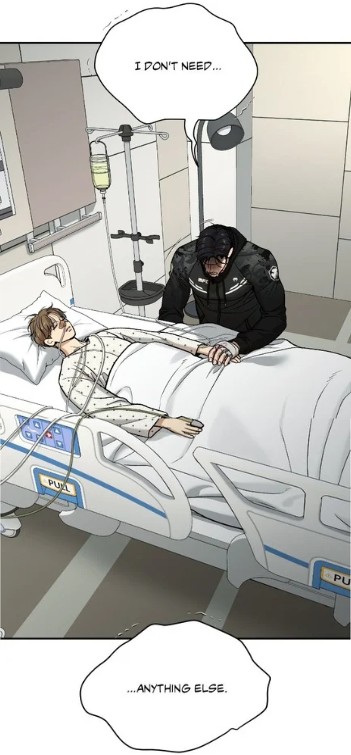 (chapter 99) Joo Jaekyung desperately holding Kim Dan’s hand, begging him to stay awake, refusing to leave his side, and remaining emotionally fixated on him after the stabbing. Because of this continuity, readers instinctively accept the warmth of the hand as emotionally real even while the scene itself remains visually suspended between dream and reality.
The second nighttime sequence becomes far more disturbing. 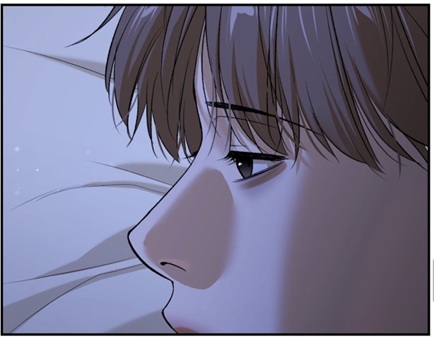 (chapter 100) Here Kim Dan half awakens and perceives Joo Jaekyung lying beside his hospital bed. (chapter 100) The scene unfolds slowly, almost silently. Kim Dan shifts his body closer toward him
 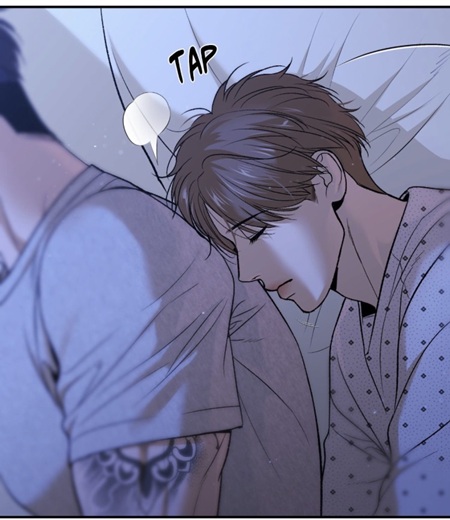 (chapter 100), and then Mingwa inserts the sound: TAP!
This detail is extraordinarily important because the sound anchors the moment materially into physical space. The scene no longer functions purely as emotional atmosphere or symbolic vision. The bodily movement creates tactile interaction. Yet immediately afterward, Kim Dan appears alone in the bed. 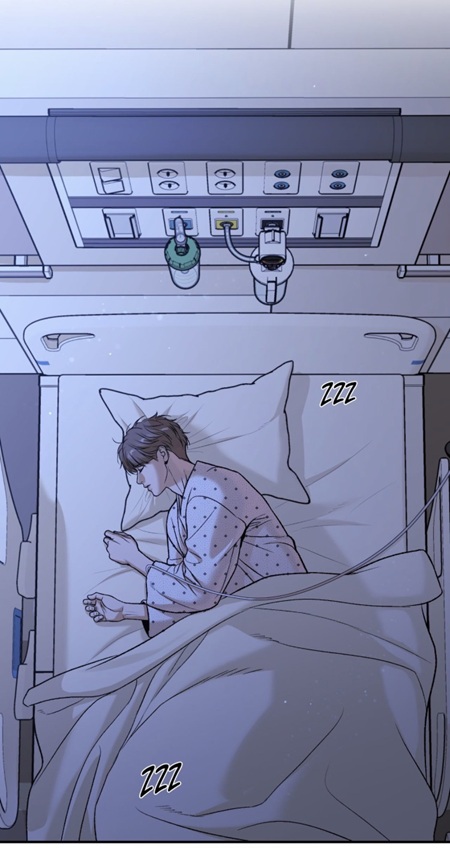 (chapter 100) It creates the illusion that the doctor had been hallucinating. But the sound “TAP” seems to indicate the opposite. Moreover, the narrative cuts toward the lonely hospital room accompanied by the statement: (chapter 100) And this is precisely where Mingwa quietly manipulates both Kim Dan and the readers simultaneously. Readers objectively know only one thing with certainty: Joo Jaekyung entered the room.
The flowers prove hidden visits. The warm hand proves physical contact. The hospital scenes confirm bodily presence. But everything concerning how long he stayed, whether he remained overnight, how exhausted he became, or whether he truly lay beside Kim Dan through the night is left deliberately unresolved. However, the sound TAP indicates that this was not only reality, but also how he acted during the night. (chapter 100) He couldn’t face his lover out of guilt, regret and pain, yet he ensured that he could fall alseep easily.
This ambiguity mirrors Kim Dan’s own fragmented emotional perception perfectly. He experiences warmth, touch, bodily closeness, and traces of companionship, yet he cannot emotionally sustain those experiences as stable reality afterward. Instead, his mind instinctively transforms presence itself into something dream-like before it can fully wound him emotionally.
This is why the lonely final bed panel becomes such an effective perceptual trap. Readers instinctively reinterpret the earlier intimacy as hallucination because the empty bed visually overrides the previous sensory evidence. But the narrative itself quietly resists this conclusion. The TAP remains. The warmth remains. The flowers remain. The tactile memory remains. Something continues contradicting the idea that Jaekyung had never truly been there. (chapter 100)
And this contradiction reveals the deeper psychological tragedy underlying Kim Dan’s behavior. Pain feels real to him. Absence feels real. Abandonment feels real. But stable companionship does not. Fully accepting the possibility that Joo Jaekyung may truly have remained beside him till he fell asleep becomes emotionally overwhelming because it would force Kim Dan to confront a terrifying realization: he is no longer merely being cared for, but genuinely accompanied.
That distinction changes everything.
A brief visit can still be rationalized. Flowers can still be interpreted as obligation or guilt. Even hidden care-taking can still remain emotionally distant. (chapter 100) But silently lying beside another person through exhaustion, darkness, and uncertainty belongs to an entirely different emotional category. It signifies companionship without function, intimacy without transaction, and presence without obligation.
And this is precisely why both Kim Dan and many readers instinctively hesitate before fully accepting the scene as reality. Mingwa deliberately traps the audience inside Kim Dan’s emotional logic. Just as Kim Dan downgrades overwhelming tenderness into dreams and unstable perceptions, readers also retreat toward the safer interpretation that the champion’s presence beside the bed must have been imaginary.
But the episode itself never fully confirms that interpretation. Instead, it quietly leaves behind tactile cracks inside the illusion of absence: a hand squeeze, bodily warmth, hidden flowers, unfinished intuition, and above all the sound of physical contact breaking the silence of the room.
Thus the true horror of the hospital scenes is not that Kim Dan hallucinates love where none exists. It is far more tragic. Kim Dan repeatedly senses genuine emotional presence, yet his trauma prevents him from fully believing in the reality of companionship before it disappears again.
The Fear of Believing in Happiness
There is another crucial psychological layer underlying Kim Dan’s confusion between dream and reality: he fundamentally does not trust happiness.
Whenever something emotionally comforting happens to him, he instinctively experiences it as unstable, unreal, or dream-like. Paris feels unreal upon waking beside Joo Jaekyung.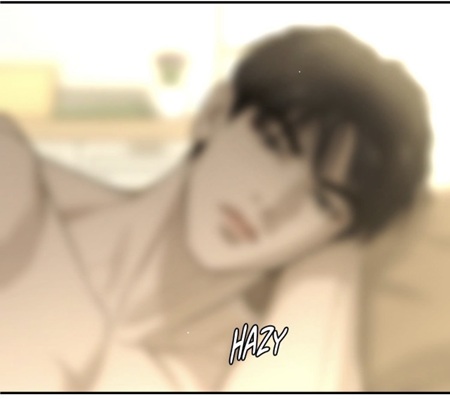 (chapter 87) The champion’s desperate plea to “stay with me” (chapter 100) becomes fragmented by unconsciousness before Kim Dan can fully absorb it emotionally. Even the warm hand beside the hospital bed is transformed into something resembling a dream rather than accepted as tangible reality.
This is extraordinarily important because Kim Dan does not struggle to recognize pain. Pain feels real to him. Obligation feels real. Guilt feels real. Exhaustion, abandonment, sacrifice, and suffering all feel emotionally trustworthy because they correspond to the logic through which he learned to survive.
But tenderness destabilizes him. Safety destabilizes him. Being wanted destabilizes him. (chapter 100) The possibility that someone would remain beside him voluntarily, not out of obligation but genuine attachment, feels psychologically unbelievable.
As a result, Kim Dan’s psyche repeatedly converts emotional warmth into something unreal before he can consciously process it. It is not that he cannot perceive affection. On the contrary, his body and senses often recognize it first through warmth, touch, and presence. The tragedy is that his conscious mind and such his senses (chapter 100) instinctively downgrades these experiences into dreams because he has been conditioned to believe that lasting happiness is temporary, fragile, and destined to disappear.
Thus recognition itself always arrives too late. (chapter 100)
Feel free to comment. If you have any suggestion for topics or Manhwa, feel free to ask. If you enjoyed reading it, retweet it or push the button like. My Reddit-Instagram-Twitter-Tumblr account is: @bebebisous33. Thanks for reading and for the support, particularly, I would like to thank all the new followers and people recommending my blog.


