
Please support the authors by reading Manhwas on the official websites. This is where you can read the Manhwa: Jinx But be aware that the Manhwa is a mature Yaoi, which means, it is about homosexuality with explicit scenes. Here is the link of the table of contents about Jinx. Here is the link where you can find the table of contents of analyzed Manhwas. Here are the links, if you are interested in the first work from Mingwa, BJ Alex, and the 2 previous essays about Jinx Why Sleeping Beauty Had to Bleed part 2 and A Ruthless Fight, A Loverboy Break
It would be great if you could make some donations/sponsoring: Ko-fi.com/bebebisous33 That way, you can support me with “coffee” so that I have the energy to keep examining Manhwas. Besides, I need to cover up the expenses for this blog.

The Warm Hand and the THUD
The final penthouse sequence becomes even crueler once one realizes that Kim Dan may be misreading the sensory evidence itself.
The squeezing and warmth of Jaekyung’s hand can function as comfort and reassurance 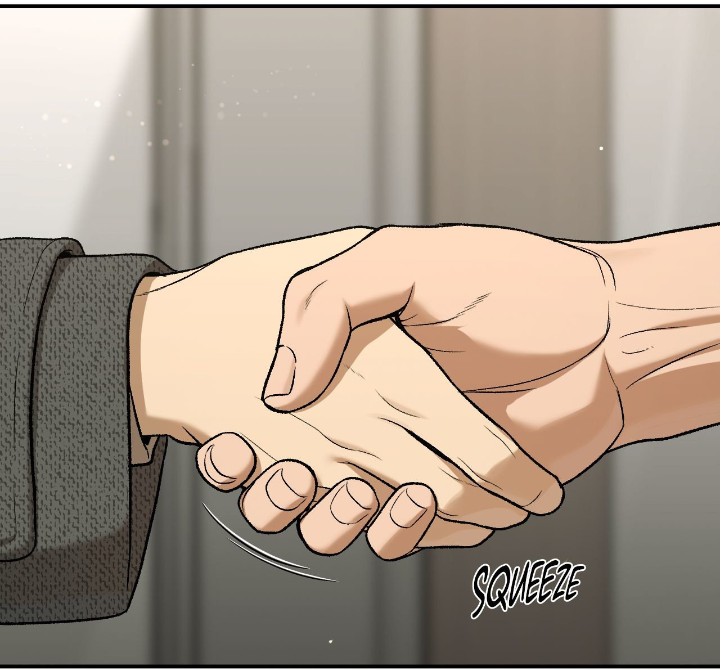 (chapter 100), convincing Kim Dan that the champion is alive, stable, and therefore ultimately “fine.” But warmth does not necessarily signify health. It can also indicate fever, exhaustion, overexertion, and a body approaching collapse. Thus the tactile comfort Kim Dan clings to may actually conceal the severity of Jaekyung’s condition rather than disprove it.
This reinterpretation fundamentally alters the meaning of the final “THUD.” 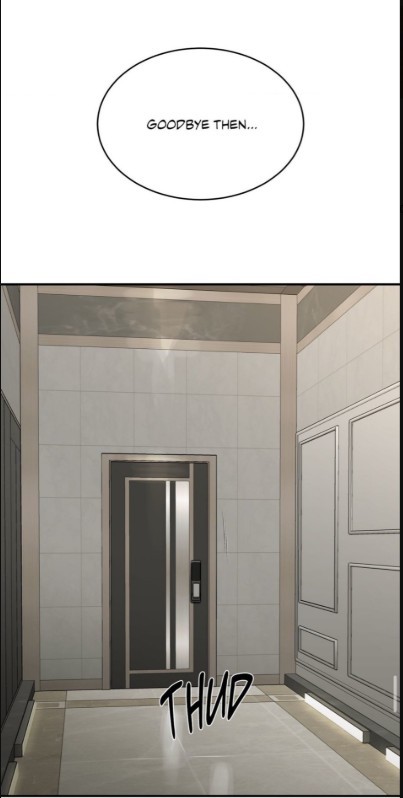 (chapter 100)
Importantly, Mingwa does not visually show the collapse or wobbling itself. Instead, she makes both Kim Dan and the readers hear it. That distinction matters enormously because if she had visually depicted Jaekyung collapsing onto the floor, the interpretation would immediately become fixed and undeniable. Instead, she traps both Kim Dan and the readers inside uncertainty or into a false illusion.
Kim Dan sees the hollow eyes, the trembling exhaustion, the devastated face 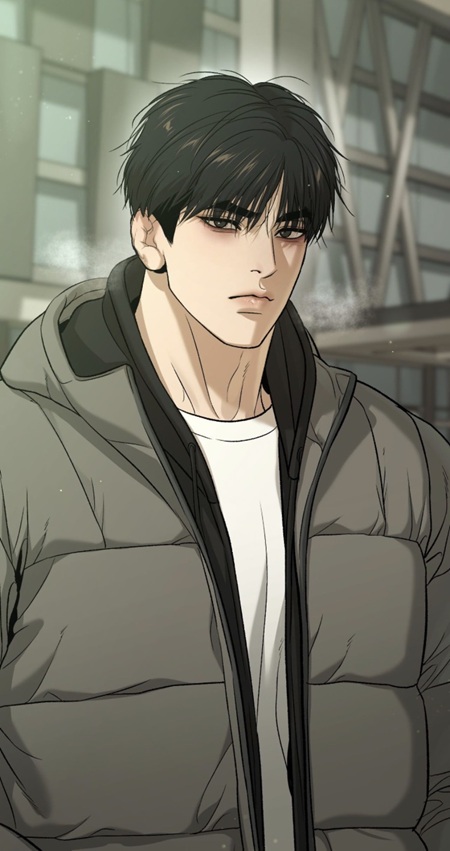 (chapter 100), the passivity, and the emotional distance. Yet he doesn’t initiate any conversation. On the other hand, the warm hand even allows him to construct a safer narrative.
 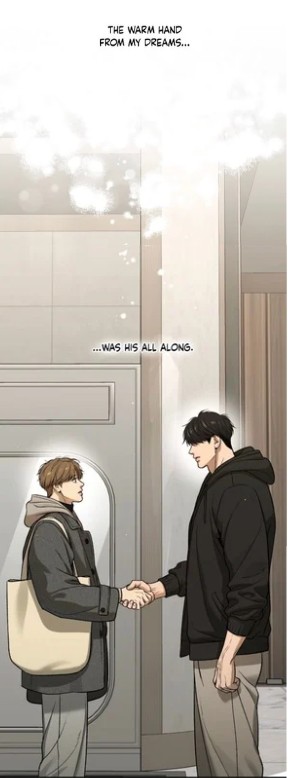 (chapter 100) The champion was not hurt, he won the match. He is warm. He will recover. There is nothing to fear.
The “THUD” violently interrupts this emotional minimization.
And the timing matters profoundly because according to me, Kim Dan has not actually left yet. The chapter only creates the illusion of departure. The words “Goodbye then…” remain suspended through the ellipsis itself. Kim Dan still stands at the entrance. He has not crossed the threshold yet. The goodbye remains emotionally unfinished. He is waiting for a response or word from his lover. 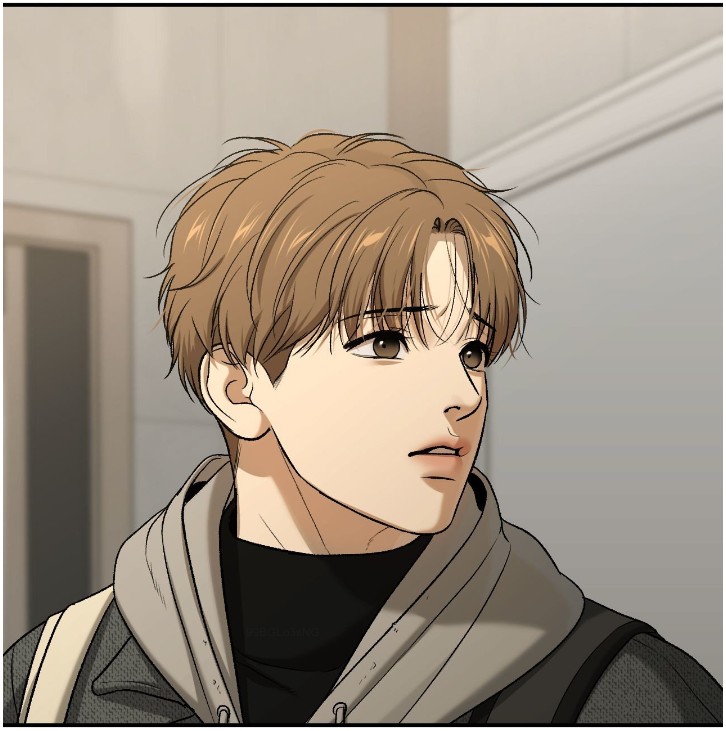 By uttering the phrase, “Goodbye then…”, Kim Dan suddenly shifts from a passive observer of his own fate to the active arbiter of the narrative. He is the one stepping forward to single-handedly determine the meaning of the separation, dictating the final emotional framing, and drawing the absolute conclusion of the relationship itself.
(chapter 100) The sound forces reality back into the sensory field before Kim Dan can finalize the goodbye psychologically.
This pivot exposes a profound structural shift: it reveals the sudden emergence of power.
This is not a display of external authority, physical dominance, or toxic control. Instead, it represents something far more critical to his psychological survival: the reclamation of narrative and emotional agency. For the first time in the text, he is no longer waiting to be discarded or directed; he is attempting to author his own ending.
Thus the “THUD” becomes the sound of reality interrupting self-erasure before separation can become real. (chapter 100) By shattering his sensory anesthesia, the physical weight of that sound completely dismantles Kim Dan’s constructed fantasy of “noble self-sacrifice.” Up until this exact threshold, his mind had processed his departure as a perfectly balanced, clean transaction. 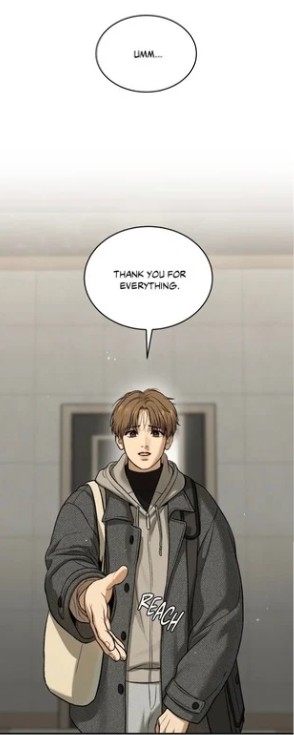 (chapter 100) In his internal trauma script, he was performing a deeply logical, protective act: paying his final respects, leaving behind the material markers of a dissolved contract, and erasing his “toxic, burdening presence” so that the champion could return to unencumbered glory.
But the unyielding gravity of the “THUD” forces a terrifying realization into his consciousness: he has completely excluded his own personhood from his moral universe. 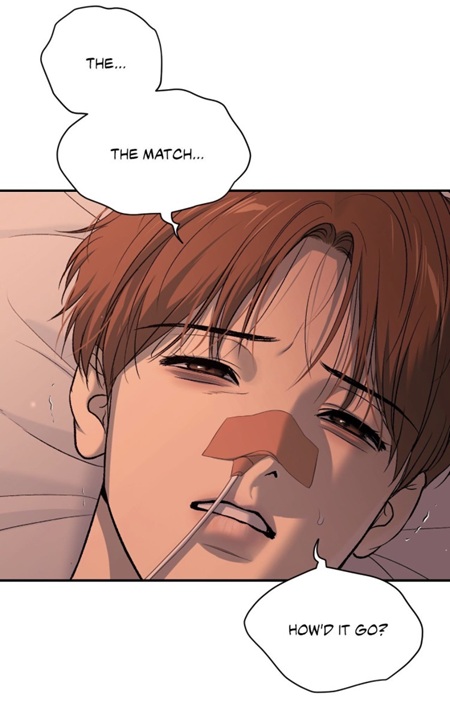 (chapter 98) While Kim Dan possessed a fierce, uncompromising moral compass when defending the life of his grandmother—violently pushing the wolf’s hand away to establish that a dying human body is infinitely more important than sex, duty, or financial leverage
 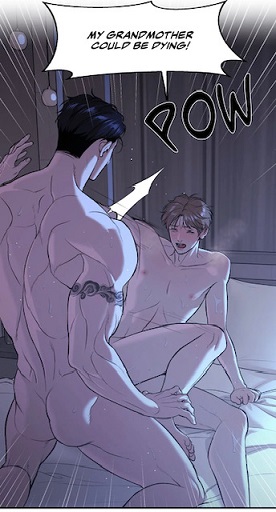 (Chapter 21)—he systematically denies himself that same basic right to exist.
When lying in a pool of his own blood in Chapter 98, reaching up to touch Jaekyung’s face, he forced a desperate mandate upon the champion: 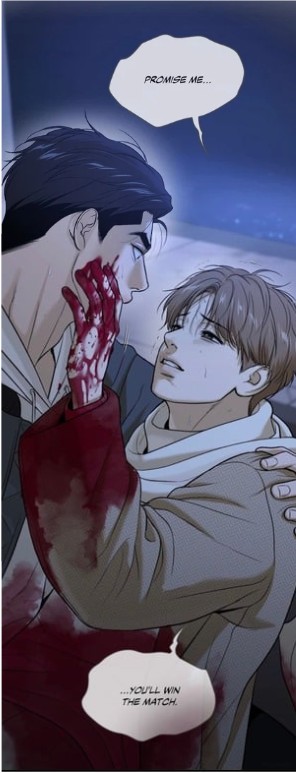 (chapter 98) In that agonizing moment, Dan entirely broke his own foundational principle. He demanded that Jaekyung prioritize performance, utility, and a championship title over a dying human life. The irony is that here, he thinks he is being selfless. Nonetheless, Doc Dan, in his pursuit of self-erasure, accidentally acts with immense psychological cruelty. He forces Jaekyung into a horrific repetition compulsion: abandoning a dying loved one for the sake of the ring.
He remains tragically blind to the profound psychological heartlessness of this request which he repeats much later. 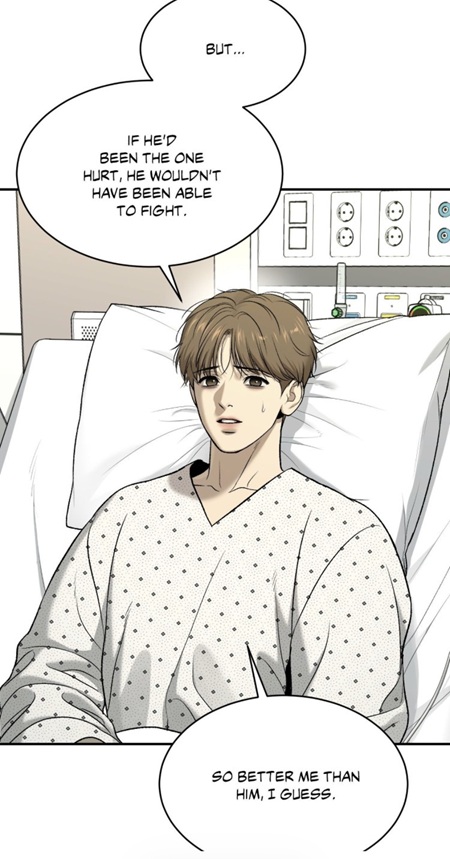 (chapter 100) For Joo Jaekyung, the match had instantly lost all meaning; his entire world was paralyzed by the terror of losing Dan. By pushing the champion to abandon his bleeding body to go perform inside an octagon, Kim Dan did not save him—he unconsciously destroyed him. He pushed a man whose childhood trauma permanently fused athletic victory with the catastrophic death of his parents
  (Chapter 73) to go repeat his ultimate nightmare.
The “THUD” at the threshold is the precise moment Kim Dan is forced to face the real-world consequences of his own words. Throughout their entire history, Dan has remained completely unable to initiate emotional intimacy, perpetually waiting for a sign from Joo Jaekyung (chapter 100), as if he wanted to be “chosen” rather than face the terrifying vulnerability of making a conscious choice himself. He wanted to be selected by the champion, to be granted permission to exist in that space, rather than taking the emotional risk to claim it. If he continues to treat his own life as expendable and vanishes into the dark, his submissive endurance ceases to be a shield—it becomes an active weapon. 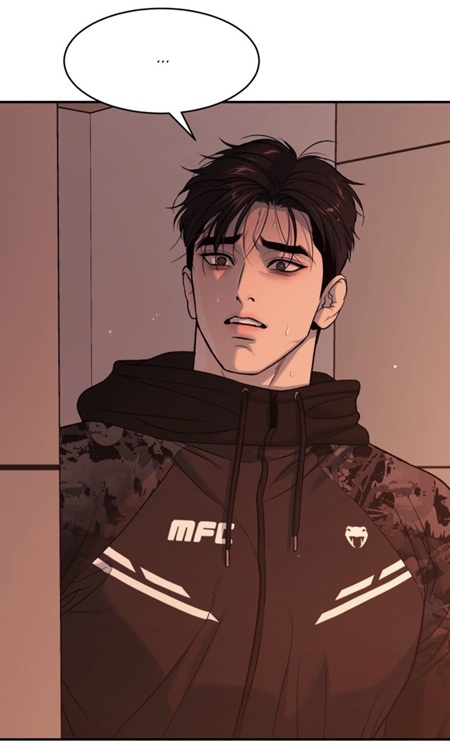 (chapter 100) His passivity would effectively sentence Jaekyung to a lifetime of crushing, unearned guilt, forcing the champion to live as a monster in his own mind, convinced his presence only contaminates and destroys.
By attempting to slip away like a grateful ghost under the guise of an polite eviction, Kim Dan stands on the precipice of becoming the active architect of another person’s ruin. The hollow echo of the penthouse layout confronts him with the ultimate baseline of psychological responsibility: gratitude cannot engineer happiness (chapter 100), and if he walks away now, he will lose everything permanently—not because he was abandoned, but because he refused to choose to stay.
Toxic Positivity and Emotional Avoidance
Episode 100 repeatedly exposes characters trying to impose the illusion that everything will be alright now onto a reality that is psychologically catastrophic underneath.
Superficially, the chapter appears filled with healing imagery. Flowers, gifts 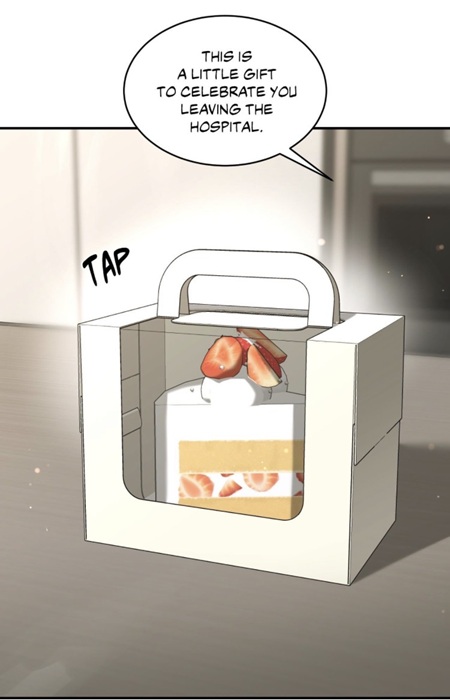 (chapter 100), warm lighting, soft dialogue
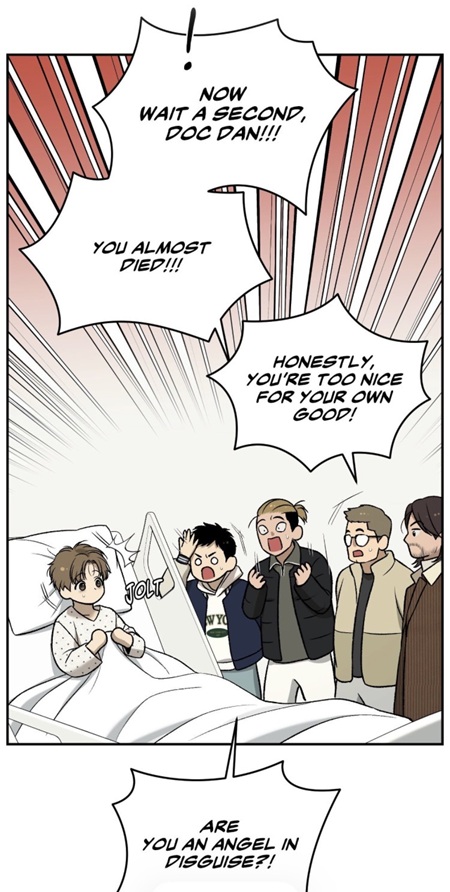 (chapter 100), survival, tenderness, and celebration aesthetically imitate recovery. And yet emotionally, the chapter feels suffocating.
Kim Dan constantly reframes catastrophe into survivable meaning. (chapter 100) At least the champion could fight. At least the title was reclaimed. At least he survived. He will recover. Everything will return to normal.
This is not healthy optimism. It is emotional minimization.
Team Black behaves similarly. Their affection is genuine, yet emotionally superficial. They celebrate survival, normalize the situation quickly, and soothe symptoms without confronting the psychological devastation underneath. Nobody openly says that something is deeply wrong. (chapter 100) In fact, they even praises him.
The final penthouse sequence therefore becomes a brutal dismantling of toxic positivity. Kim Dan tries to impose a healthy narrative onto reality. The debt is gone. The danger passed. Now he should leave. But Mingwa repeatedly inserts contradictions: the terrible face, the red eyes, the hesitation, the trembling silence, the disappointed mouth 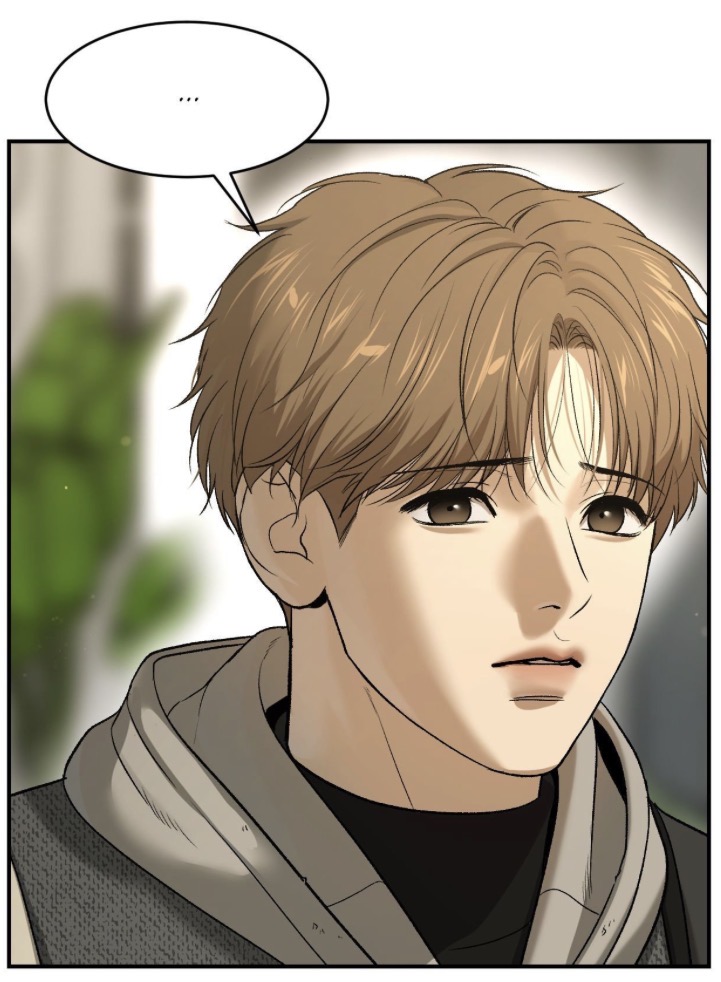 (chapter 100), the unfinished goodbye, the warm hand, and finally the THUD.
The chapter refuses emotional simplification. The body keeps revealing the truth the characters attempt to suppress verbally.
The Day Kim Dan Says “Stay With Me”
For this reason, Kim Dan’s emotional evolution cannot find its resolution in the moment Joo Jaekyung drops his armor and whispers, “Stay with me.” The phrase, though revolutionary within the champion’s own psychological history 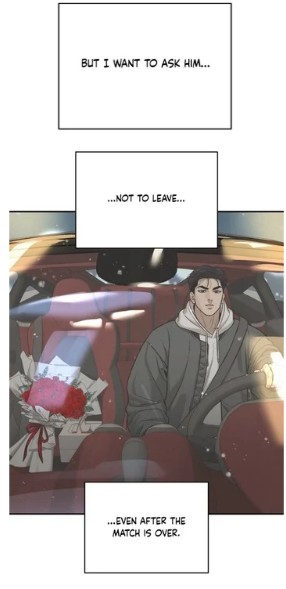 (chapter 97), remains entirely inaccessible to Kim Dan’s internal landscape. Within Dan’s trauma script, he remains the permanently expendable entity—the one who leaves quietly, adapts silently, apologizes constantly, and survives solely through systematic self-erasure.
Even after the profound physical and emotional crises of the hospitalization, his cognitive architecture is frozen in a state of hyper-vigilant transition; he prepares for a clean disappearance rather than a permanent settlement. He proceeds under the lifelong assumption that companionship is inherently temporary, strictly conditional, and destined to dissolve into an empty room the moment his immediate economic or physical utility reaches its natural expiration.
The roots of this profound emotional paralysis extend far deeper than his history with Joo Jaekyung, anchoring themselves in a foundational, intergenerational rupture. Episode 57 quietly exposes that Kim Dan’s defining psychological wound is not the surface-level humiliation of poverty, debt, or social isolation, but a deep-seated terror of broken permanence. 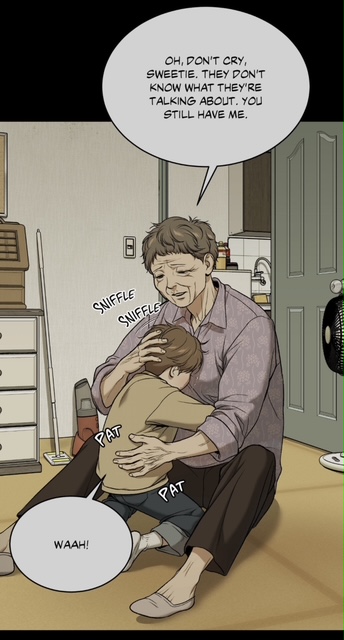 (chapter 57) In the opening movements of his recurrent nightmare, the memory presents itself under an illusion of maternal comfort. Following an episode of childhood bullying
  (chapter 57), a young Kim Dan is met with the rhythmic, tactile reassurance of his grandmother: “Grandma will always be there for you. You still have me” (Chapter 57). However, the nightmare exposes the truth: the starting point of the little boy’s suffering is the opened door:
  (chapter 57), a symbol for departure which is strongly connected to loss and grief.
This tactile grounding is structurally paramount. (chapter 57) Within the visual language of the series, the physical act of patting and touch is established as the literal definition of safety, presence, and protection. The young Dan cries, yet he surrenders completely to the belief that emotional warmth possesses the power to permanently stabilize external violence. It is this total emotional vulnerability that renders his tearful, smiling response—“Okay!”—so retroactively devastating. 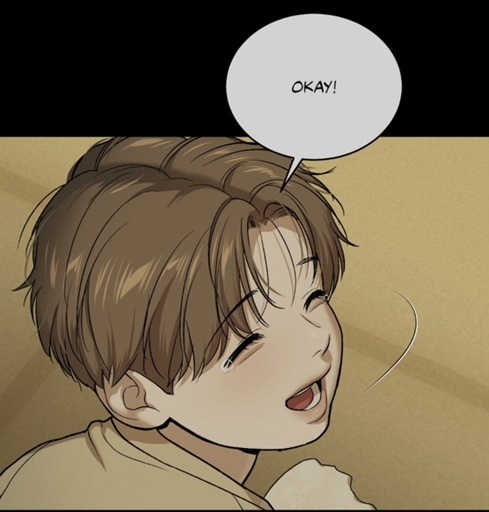 (chapter 57) It represents an absolute, unhedged contract with permanence; a child’s clean surrender to the promise that an attachment figure will remain physically and emotionally reachable no matter what hostile forces gather outside.
The Trauma of the Unfinished Departure
The structural cruelty of the nightmare, however, lies in its precise chronological sequence: first comes absolute reassurance, and then comes immediate, total erasure. The bullying itself is merely an ambient hostility; the true catastrophe is the sudden mutation of safety into a void. 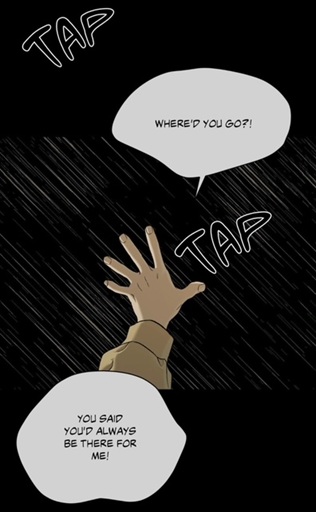 (chapter 57) The visual transition occurs through one of the most chilling images in the work: a domestic door standing wide open, leading directly into an unyielding, featureless darkness. Kim Dan stands paralyzed before this threshold, staring into the empty entrance as he quietly whispers, (Chapter 57).
The emotional structure of the nightmare unfolds through a devastating chain of associations. It begins with maternal reassurance and the promise of permanence: “Grandma will always be there for you.” For a brief moment, Kim Dan experiences emotional safety, physical comfort, and the belief that attachment can protect him from the hostility of the outside world. Yet this reassurance is immediately shattered by sudden disappearance. The opened door leading into darkness transforms the promise of permanence into a terrifying image of absence and emotional unreachability.
The Ultimate Catastrophe: The Dissolution of Roots
The small, raw mound of dirt that marks the final resting place of the unnamed puppy in Episode 59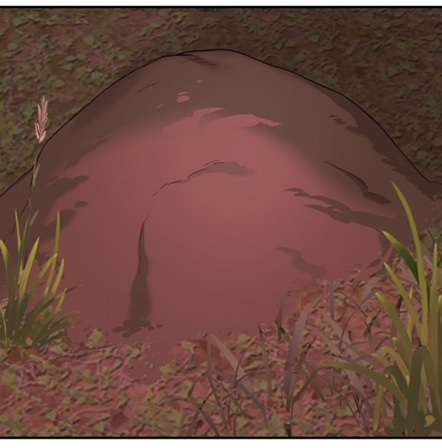 (Chapter 59) functions as a tragic monument to emotional minimization. The animal is given no name, no formal ceremony, and no structural acknowledgment within the household’s narrative. For the elderly landlord, this loss is processed through a lens of pragmatic detachment, viewed merely as a rustic, natural occurrence
  (chapter 59) or a minor rut
 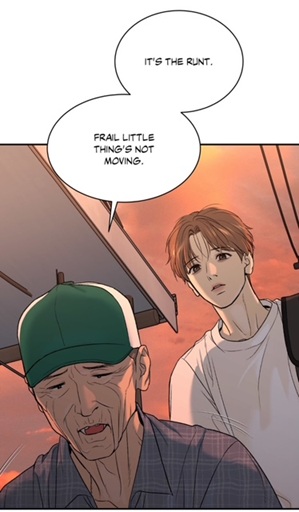 (chapter 59) in life’s ordinary routine. Because the grandfather dismisses the animal’s death as a trivial event, he lacks the psychological framework to connect it to Kim Dan’s rapid mental deterioration. He never mentions the loss to Joo Jaekyung, effectively sealing the entire event in absolute silence.
 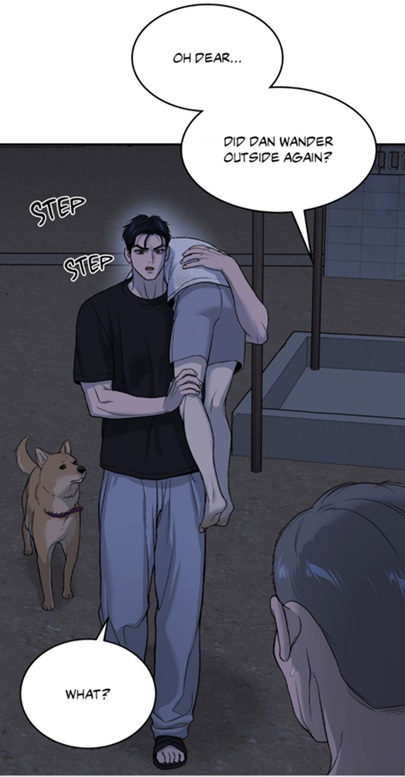 (chapter 65) By treating the puppy’s death as an unnoteworthy blip, the narrative environment strips Kim Dan of the baseline right to grieve, signaling to him that his sorrow is disproportionate, inconvenient, and ultimately invisible to the outside world.
This absolute isolation of grief yields the catastrophic psychological state exposed in Chapter 65. When the grandfather notes that Dan slips out like he is in a trance and expresses a terrifying fear that the young man might end up drowning himself in the ocean, he is witnessing a literalized enactment of Kim Dan’s trauma script. This behavior is not simple drunkenness or passive depression, but an active, sleepwalking surrender to the void. The ocean represents the ultimate space of non-existence, a vast, featureless horizon where a burdened identity can be quietly dissolved without disrupting the lives of others. When Joo Jaekyung physically intercepts Dan, lifting him out of the darkness and carrying him away from the shoreline, the physical contrast is stark. Jaekyung acts as an anchor of brute force, yet he remains completely blind to the ghost haunting Dan’s mind, pulling his body from the surf without ever reaching the unmourned graveyard hidden beneath the silence.
The true terror of this sequence lies in how the puppy’s death 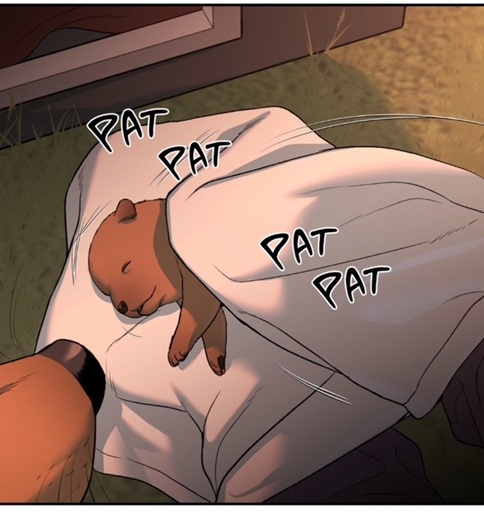 (chapter 59) interacts with Shin Okja’s terminal timeline.
 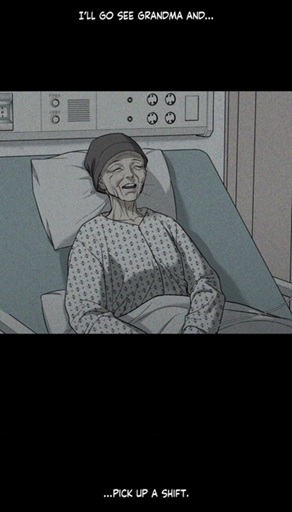 (chapter 59) With his grandmother’s days explicitly numbered, the sudden erasure of the unnamed puppy strips Kim Dan of his final buffer against the original, unresolved trauma of his life, which is the unmourned loss of his parents. While Dan consciously frames his terror as the fear of being left entirely alone in a hostile world, the deeper, more paralyzing horror is the total collapse of his past. Shin Okja is not merely his protector; she is the sole living witness to his childhood, his family, and his original identity. Because Kim Dan was never permitted to properly process, understand, or mourn the sudden disappearance of his parents, his psychological roots were already incredibly fragile. The photographs in Chapter 94 prove that his childhood was materially documented through images of flower fields and playgrounds
 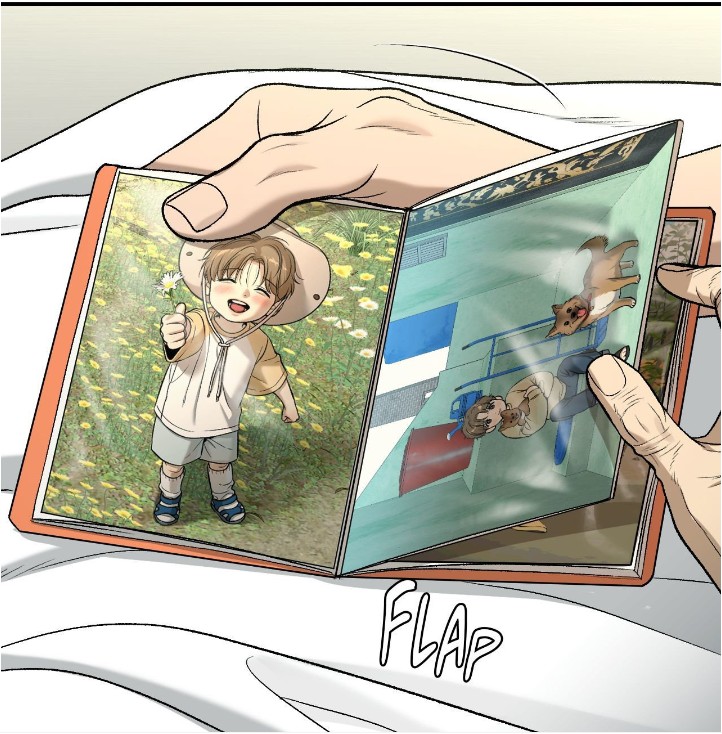 (chapter 94), yet his parents were completely erased from that visual record. When the puppy dies unnoticed and the grandmother approaches the threshold of death, Kim Dan faces an existential erasure. If the last person who remembers where he came from vanishes, then Kim Dan ceases to exist in any meaningful, continuous reality, meaning his submissive endurance and his active steps toward the ocean are the desperate measures of a man who believes he has already become a ghost. However, what the physical therapist doesn’t know is that Shin Okja that Shin Okja already shared fragments of her memories and emotional legacy with Joo Jaekyung.
 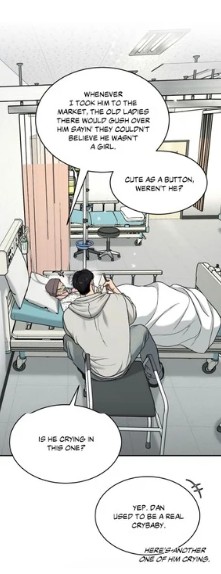 (chapter 94) By showing the champion photographs from Kim Dan’s childhood, she quietly creates continuity where Kim Dan unconsciously expects only disappearance and erasure. In this sense, her final wish almost functions like a symbolic letter left behind through the athlete himself.
 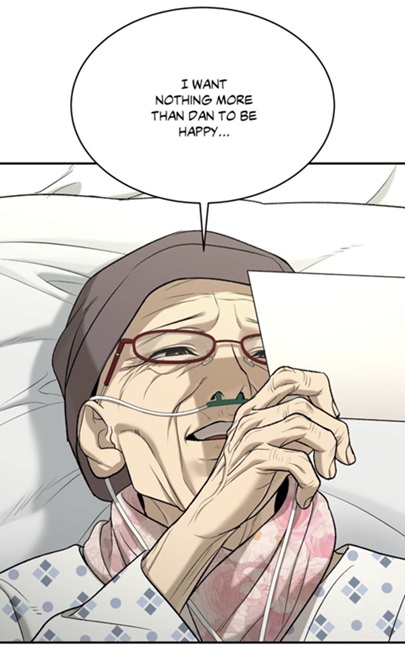 (chapter 94) When she tells Joo Jaekyung that she wants nothing more than for Kim Dan to be happy and hopes he can be happy beside him too
 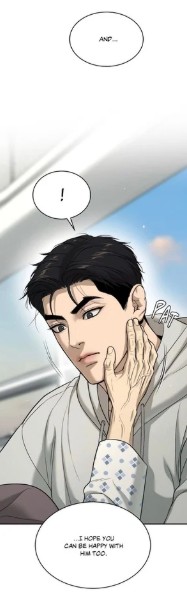 (chapter 100), she unknowingly entrusts Kim Dan’s future, memories, and emotional continuity to another person before disappearing herself.
The Ghostification of Memory
This disappearance does not function as an isolated fear connected only to Shin Okja herself. 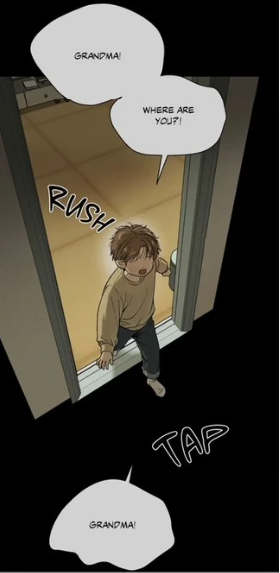 (chapter 57) Instead, it unconsciously reactivates Kim Dan’s primary unresolved trauma: the sudden loss of his parents in the accident.
 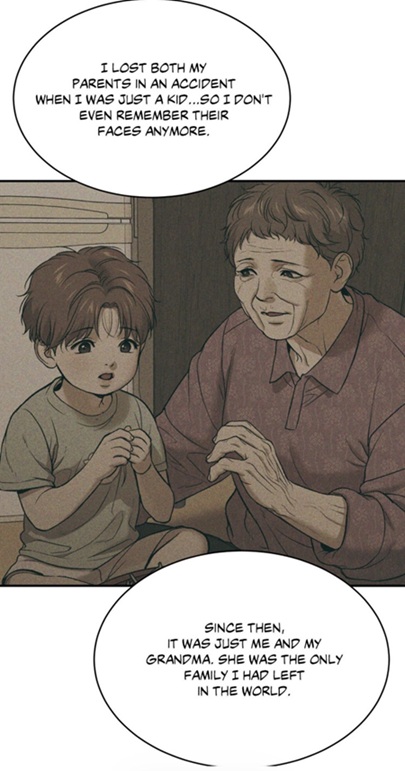 (chapter 94) Once again, someone leaves the domestic space and fails to return, forcing Kim Dan into the same helpless position of searching after an absence he cannot stop, explain, or emotionally resolve.
From this repeated experience of broken permanence emerges the survival script governing Kim Dan’s adult personality. He learns to survive not through emotional dependence or openly expressed need, but through usefulness, gratitude, debt repayment, minimization, and self-erasure. Because attachment repeatedly became associated with disappearance and loss, Kim Dan unconsciously prepares himself for abandonment before it fully arrives.
The psychological consequences of this unresolved loss extend even further than abandonment itself. Kim Dan does not simply lose people; he gradually loses the ability to stabilize their emotional reality internally. (chapter 94) When he quietly admits that he no longer remembers the faces of his parents, the statement appears deceptively simple. Yet psychologically, it reveals a catastrophic form of erasure. A face is not merely visual recognition. It anchors identity, continuity, emotional permanence, and existence itself. Without faces, loved ones gradually begin resembling ghosts.
This realization retrospectively illuminates Kim Dan’s strange confusion between dream and reality throughout episode 100. 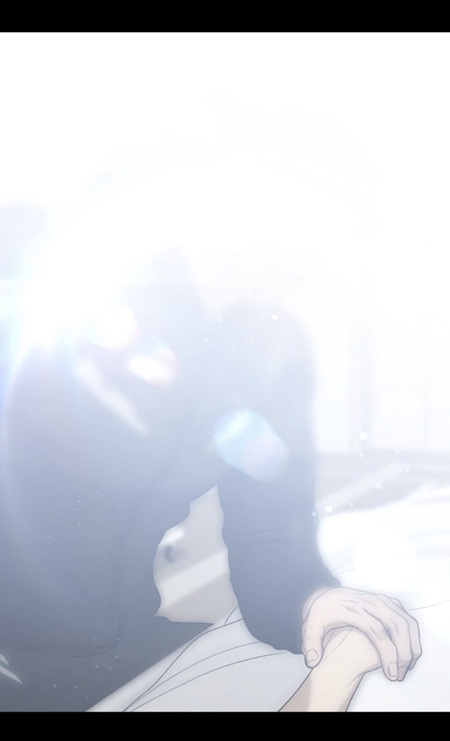 (chapter 100) Even when Joo Jaekyung physically touches him, lies beside him, squeezes his hand, and leaves behind tangible traces of his presence, Kim Dan struggles to stabilize the champion visually and emotionally. The face repeatedly appears blurred, hidden by light, partially obscured, or emotionally difficult to grasp. The body says: someone is here. But the unstable face says: they may disappear again.
In this sense, Kim Dan’s fear is not merely abandonment. It is the dissolution of emotional reality itself around attachment.
Visual Continuity and the Ghostification of Memory
And yet Mingwa quietly introduces one object that resists this entire process of emotional erasure: the amusement park photograph. 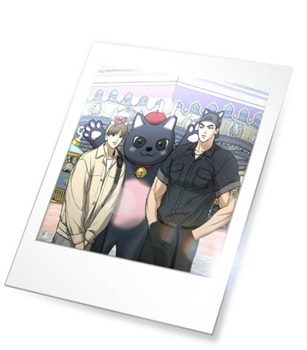 (chapter 87) Unlike the fragmented visions haunting episode 100, the picture materially preserves Joo Jaekyung outside the role of the “Emperor.” The champion appears awkward, calm, almost ordinary, participating in a shared moment rather than performing dominance publicly. For perhaps one of the first times in Kim Dan’s life, emotional continuity becomes fixed visibly instead of dissolving into absence.
This matters profoundly because the photograph directly opposes ghostification itself. Kim Dan cannot reduce the moment into pure dream, hallucination, or unstable memory. The image preserves:
- a face,
- a shared place,
- a lived moment,
- and emotional reality existing outside survival and obligation.
For perhaps the first time since the death of his parents, attachment becomes materially anchored to reality rather than threatened by disappearance. Unlike the faceless disappearance haunting his childhood memories, Joo Jaekyung remains materially visible inside the frame.
And this may explain why the present-day “champion” after the stabbing feels so emotionally disorienting. 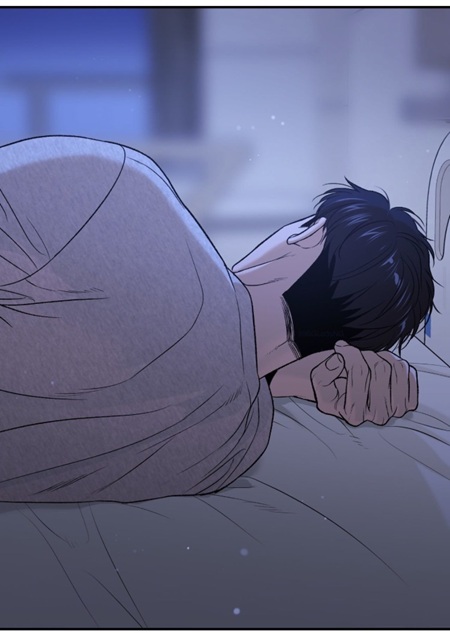 (chapter 100) The exhausted, sleepless figure wandering through the hospital at night no longer fully resembles the mythological Emperor constructed by MFC and Team Black. (chapter 100) Yet neither does he fully resemble the ordinary man preserved inside the amusement park photograph. (chapter 87) Kim Dan therefore stands psychologically between two competing realities: the collapsing public myth and the fragile private human being slowly emerging underneath it.
The photographs shown in episode 94 make this even more devastating. (chapter 94) Shin Okja preserves Kim Dan’s childhood materially: the flower fields, the playground, the puppy, the smiling child. Yet the parents remain entirely absent from the preserved emotional narrative. Even more importantly, the photographs themselves are shown not to Kim Dan, but to Joo Jaekyung. Symbolically, the champion becomes a witness to a forgotten continuity that Kim Dan himself can no longer fully access.
As a result, Kim Dan’s personal history becomes emotionally frozen around a single surviving relationship: himself and his grandmother. Everything surrounding that bond gradually dissolves into invisibility. The accident does not merely take his parents away physically; it erases emotional continuity itself. The lost family begins resembling something unreal, distant, and ghost-like inside memory.
This also explains the overwhelming terror surrounding Shin Okja’s eventual death.  (chapter 57) If she disappears too, Kim Dan unconsciously fears losing not only companionship, but the final remaining anchor connecting him to his own past and identity.
The horror of this panel is entirely acoustic and structural rather than explicitly violent. (chapter 57) The grandmother has vanished. The room remains physically ordinary, recognizable, and static, yet the emotional center that validated the space has been instantaneously wiped clean. The open doorway stands as a permanent monument to an irreversible departure. Someone has left, and Kim Dan has once again arrived too late to stop the hemorrhage.
This specific visual configuration exposes a profound sense of absolute powerlessness before disappearance. Throughout his life, Dan experiences the people and animals 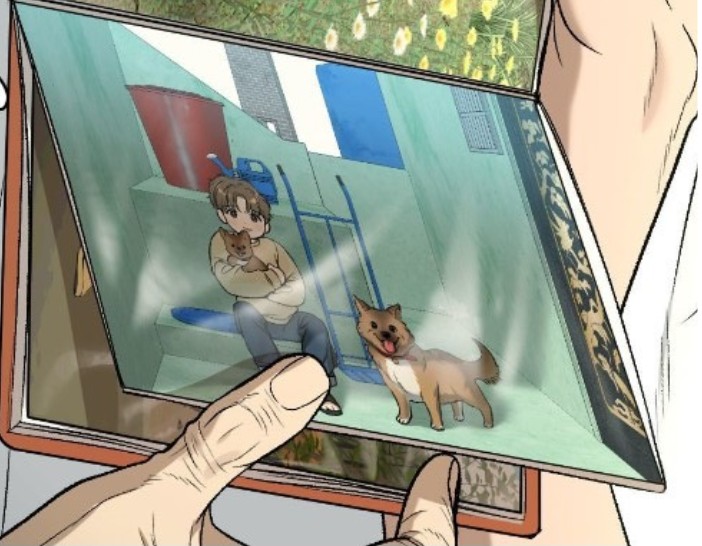 (chapter 94) upon whom his emotional survival depends as slipping away into unreachability without warning, explanation, or the possibility of interception.
This nightmare sequence does not merely depict the fear of losing Shin Okja; it functions as a psychological screen memory that reactivates the original, unresolved catastrophe of his childhood: the sudden death of his parents in an accident. The parental loss functions psychologically not as an understood transition, but as a sudden, violent departure completely stripped of emotional closure. Someone leaves the domestic sphere and simply never returns. The child is left behind to wander the empty rooms (chapter 57), searching for an explanation, a destination, or a lingering trace of continuity.
When Shin Okja later assumes the role of his sole protector, she temporarily stabilizes this primary wound  , but her eventual illness and death cause the old terror to resurface with unchecked force. The reassurance that “Grandma will always be there” collapses into the exact same darkness, rain, breathlessness, and panic that defined the loss of his parents.
This cycle of sudden, unexplained abandonment implants a devastating psychological mechanism within Kim Dan: survivor’s guilt. He internalizes the catastrophic belief that his continued existence is a fundamental material and emotional burden to those around him. He adopts an identity of extreme minimization—reducing his physical footprint, eating nothing under stress, apologizing for occupying space, and preemptively preparing for his own eviction before the other person can abandon him first. Because he unconsciously links deep emotional attachment to sudden death, ruin, or disappearance, he learns to survive by never allowing himself to believe in permanence again.
To openly ask another human being to stay beside him is an act of agency completely prohibited by his trauma script. Such a request requires a fundamental faith in the stability of the future. It requires trusting that a shared warmth will not instantly mutate into an empty hallway or a clinical operating room. Trapped within the logic of the opened door in Chapter 57, Kim Dan cannot ask anyone to remain; he can only wait in silence for the inevitable moment they vanish.
Yet one of the cruelest aspects of the relationship is that Joo Jaekyung’s care alone cannot fully dismantle the psychological structure governing Kim Dan’s self-perception. The champion provides financial stability, physical protection, rest, fun 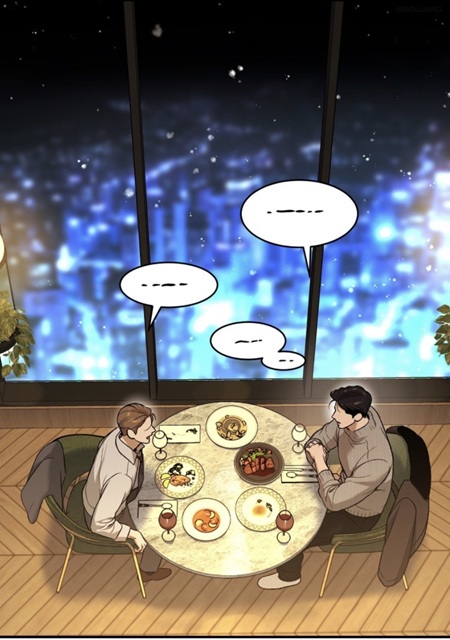 (chapter 89), emotional attachment, and eventually even places Kim Dan above the championship itself. But none of these gestures automatically erase decades of trauma, survivor guilt, and self-erasure. Kim Dan continues interpreting himself through the logic of burden, usefulness, and temporary emotional permission. As a result, even genuine love becomes destabilized inside his perception. Care transforms into guilt. Freedom feels like eviction. Presence becomes dream-like. (chapter 100) And companionship itself remains emotionally difficult to trust.
From Ghost to Sinner: The Inversion of the Trauma Script
That is why the emotional reversal of the story likely requires something much more devastating: Kim Dan witnessing Joo Jaekyung collapse.
Until now, the champion has functioned almost like a force of nature inside Kim Dan’s mind. No matter how wounded, exhausted, or emotionally unstable he became, Jaekyung always remained standing.  (chapter 69)
 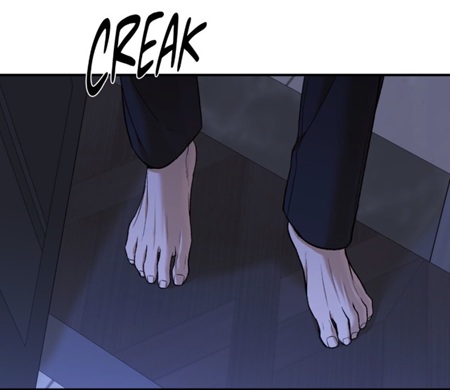 (chapter 91)
But episode 100 quietly dismantles this image. The disheveled hair, dark red eyes from crying and insomnia, starvation, (chapter 100) emotional distance, and nightly wandering all reveal someone slowly destroying himself from within.
If Joo Jaekyung’s body finally gives in — if exhaustion overwhelms him, if his legs give in or if he faints or loses consciousness directly in front of Kim Dan — then the emotional structure of the story would reverse completely. Kim Dan would suddenly experience what Jaekyung experienced in the hospital and at the seaside: the terror of watching someone he loves become physically unresponsive and getting really sick.
This matters profoundly because Kim Dan’s understanding of death has never been linked primarily to gore or violence. (chapter 59) His trauma seems connected instead to stillness, sleep 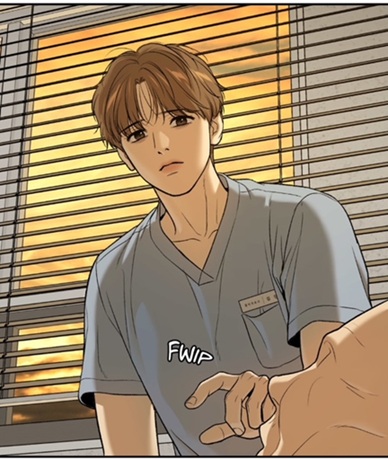 (chapter 59), silence, unconsciousness, and disappearance.
Thus witnessing Jaekyung collapse would strike directly at the center of his childhood trauma.
More importantly, such a moment would destroy Kim Dan’s ability to hide love behind gratitude. He could no longer tell himself that he stayed because he owed something. Instead, he would finally confront the truth: he cannot lose him.
And only then could Kim Dan truly say:
“Stay with me.”
Not as repayment. Not as obligation. Not as gratitude. But as pure emotional need. At the same time, speaking openly about his childhood, the accident, and the disappearance of his parents would force Joo Jaekyung to confront an important truth:Kim Dan’s suffering did not begin with him. He doesn’t know everything about him either. The champion incited the physical therapist not only to confront his traumas, but also to gather courage and affirm himself. He might have caused him some pain, but he did not create the original wounds. Long before entering the octagon’s violent world, Kim Dan had already learned to associate attachment with disappearance, guilt, and emotional instability. Besides, in reality, he is no angel either, just like him a sinner. (chapter 100)
This pivot exposes the agonizing threshold where Kim Dan undergoes a profound psychological transformation: the loss of absolute innocence and the violent birth of true adult maturity. Throughout his life, Dan has operated under the survival script of a grateful ghost, a creature who believes he must minimize his physical and emotional footprint to ensure the survival of those around him.  (chapter 53) A ghost leaves no tracks, carries no weight, and can be evicted or replaced without altering the fabric of the room it inhabited. However, the unyielding weight of the physical collapse at the threshold forces a terrifying realization into his consciousness. By witnessing the catastrophic toll his words and his impending departure have taken on Joo Jaekyung, Kim Dan is stripped of his narrative anesthesia. (chapter 98) He is forced to realize that he is not a ghost at all. Instead, he has become a sinner which is symbolized by the blood left on the athlete’s cheek that night.
This shift from ghost to sinner is monumental because a sinner possesses density, gravity, and the undeniable capacity to inflict a wound. For the first time, Dan cannot hide behind the convenient illusion of his own insignificance; he is confronted with the undeniable evidence that he has left permanent, indelible traces in the champion’s life. He is not replaceable, and he cannot vanish cleanly because his presence has already fundamentally altered the internal architecture of the celebrity. To acknowledge that he has the power to wound Jaekyung is to acknowledge his own personhood and agency.
Paradoxically, this recognition of his own capacity to cause pain becomes the first true validation of his existence as a real, impactful human being. For someone anchored in a trauma script of self-erasure, happiness always appears fragile and temporary, destined to dissolve back into an empty room. Pain, however, possesses undeniable reality. Discovering that he can wound Joo Jaekyung therefore destroys the illusion of his own insignificance.
By forcing the loss of his protective, childlike innocence, this realization marks the birth of his adult maturity. (chapter 100) He can no longer view himself as a passive victim of fate or an expendable burden. If his existence carries enough weight to cause ruin, then it also carries enough weight to cultivate healing. Consequently, his psychological survival ceases to be about achieving safety through total self-erasure. Instead, it matures into a conscious, courageous choice to engage in a mutual exchange of lasting impressions—willingly claiming the power to leave indelible traces in Jaekyung’s heart, while finally allowing Jaekyung to carve permanent, undeniable traces into his own world.
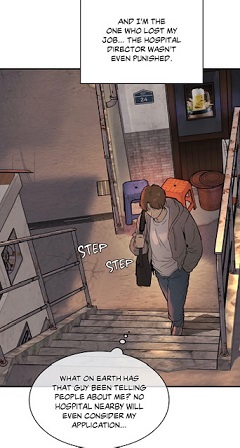
This transformation also fundamentally alters Kim Dan’s relationship to silence and moral judgment. 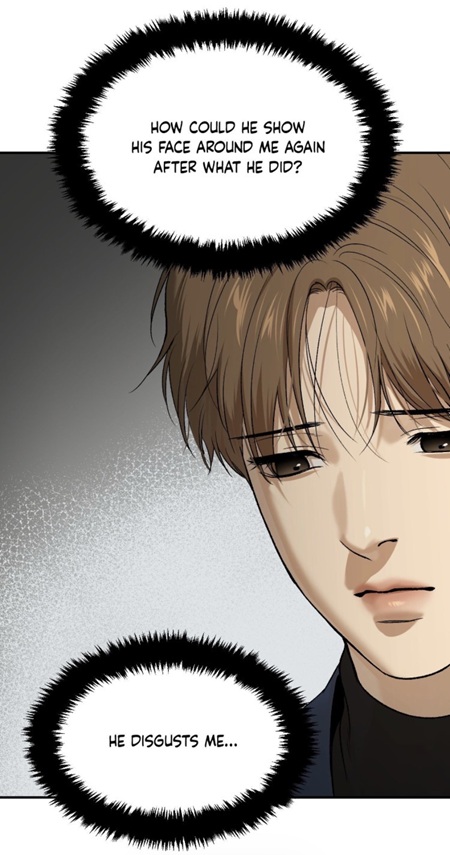 (chapter 91) Throughout the series, he remains almost completely passive toward institutional abuse and exploitation. He never openly confronts the perverted hospital director, never pursues legal retaliation against those who destroyed his livelihood
  (chapter 11), and never truly challenges the structures that repeatedly reduce him to a disposable object. His anger emerges almost exclusively toward Joo Jaekyung because the champion emotionally reaches him deeply enough to wound him personally. (chapter 100) Yet the “THUD” destroys the illusion that passivity itself is harmless. Once Kim Dan realizes that his choices possess the power to devastate another human being emotionally, he can no longer maintain the fantasy of existential insignificance. A ghost silently endures injustice because it believes it lacks the right to leave traces behind.
  (chapter 1) A sinner, however, possesses moral weight. By recognizing his own capacity to wound, Kim Dan simultaneously acquires the adult authority to judge silence, cowardice, and passivity in others as well.
The Closed Door: The Acoustic Anchor of Reality
Throughout the series, and especially within Kim Dan’s recurring childhood nightmare in Chapter 57, the open door functions as the primal image of abandonment. (chapter 57) It marks the threshold where loved ones disappear into darkness while he remains behind, powerless to stop them from leaving. In Kim Dan’s trauma logic, an open doorway is never neutral. It is a wound left permanently unresolved.
This symbolism returns with devastating force in Chapter 100. (chapter 100) Standing at the entrance of the penthouse, Kim Dan attempts to perform what he believes is a final act of noble self-sacrifice. His suspended “Goodbye then…” reflects the familiar survival strategy that has governed his entire life: leave quietly, minimize the burden, disappear before causing further damage. He still imagines departure as a clean emotional transaction, one in which he can slip away harmlessly like a grateful ghost.
The violent “THUD” of Joo Jaekyung’s collapse destroys this illusion instantly. It brings an end to the generational trauma repetition and as such Kim Dan’s jinx!  (chapter 100)
The sound functions like an acoustic shockwave tearing through Kim Dan’s entire childhood survival script. For perhaps the first time in his life, he is forced to confront the catastrophic possibility that his passivity is not emotionally neutral. By attempting to erase himself quietly, he is no longer protecting the person he loves. He is actively destroying him. In this sense, Kim Dan unconsciously begins reenacting the very trauma that shaped his own childhood. Just like the parents who vanished beyond the open doorway of his memory  (chapter 19), and just like Shin Okja repeatedly attempting to remove herself from his life for his “own good,”
 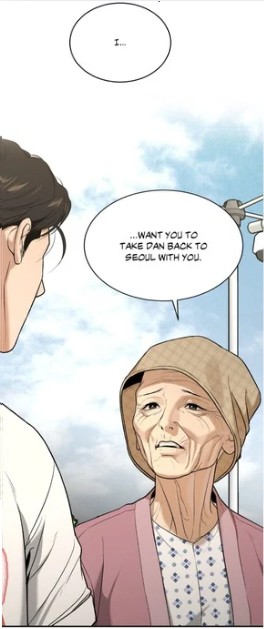 (chapter 65) Kim Dan convinces himself that disappearance is an act of love. The tragedy of the threshold scene lies precisely in this inherited logic of self-removal. He believes he is preventing suffering, while unknowingly reproducing the emotional catastrophe that destroyed him in the first place.
And this is where the scene undergoes its most profound symbolic reversal. (chapter 57) In the childhood nightmare, the open door represented irreversible disappearance and emotional hemorrhage. Here, however, the collapse effectively slams the threshold shut. The exit no longer exists psychologically. Kim Dan cannot continue drifting into the darkness as though his existence leaves no trace behind.
The apartment itself suddenly transforms. The hallway no longer offers escape into abstraction or self-erasure. The sealed space forces Kim Dan to confront the weakened body inside the room and the devastating evidence that his existence leaves real wounds behind.
This realization marks the destruction of the “ghost” identity he has inhabited for years. 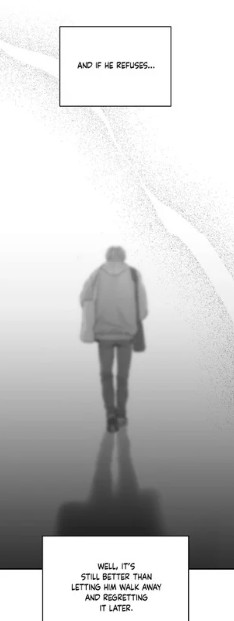 (chapter 97) A ghost passes through spaces invisibly, leaves no wounds behind, and can vanish without fundamentally altering the lives of others. Kim Dan has survived precisely by believing himself replaceable, temporary, and emotionally weightless.
But the body collapsing behind him proves the opposite.
For the first time, Kim Dan is forced to recognize that he possesses the power to wound another human being permanently. And paradoxically, this terrifying recognition becomes the first true confirmation of his own existence. (chapter 100) Pain carries undeniable gravity. Because suffering has always been the most concrete reality in Kim Dan’s life, discovering that he can inflict emotional devastation on Joo Jaekyung shatters the illusion of his own insignificance.
The threshold scene 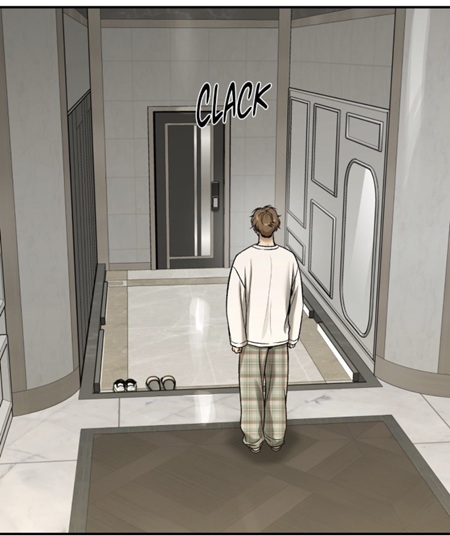 (chapter 96) (chapter 100) therefore becomes the site of an agonizing psychological transformation: the death of passive innocence and the birth of adult responsibility. Kim Dan can no longer remain a silent victim waiting to be chosen, summoned, or emotionally permitted to exist by someone else. The collapse forces him to understand that refusing to choose is itself a choice, and that disappearance can become cruelty when another person’s emotional survival depends upon your continued presence.
In this sense, the “THUD” becomes more than the sound of physical collapse. It is the acoustic force that seals the door against self-erasure. The fantasy of a painless goodbye is destroyed forever. Kim Dan is no longer allowed to vanish into darkness untouched by consequence. He must finally turn around, step away from the threshold, and confront the traces he has already carved into another person’s heart.
Two Ghosts at the Threshold
By the end of episode 100, both protagonists resemble ghosts trapped at an emotional threshold. Kim Dan believes that if he truly loves Jaekyung, he should leave and stop burdening him. 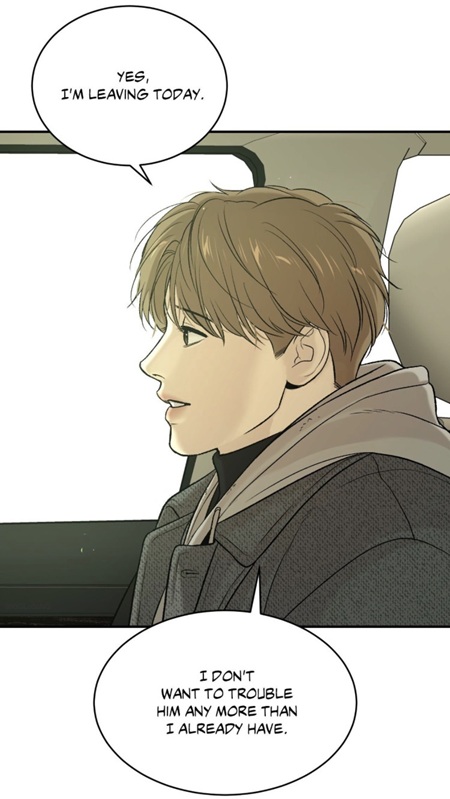 (chapter 100) Joo Jaekyung believes that if he truly loves Kim Dan, he should let him go and stop endangering him.
 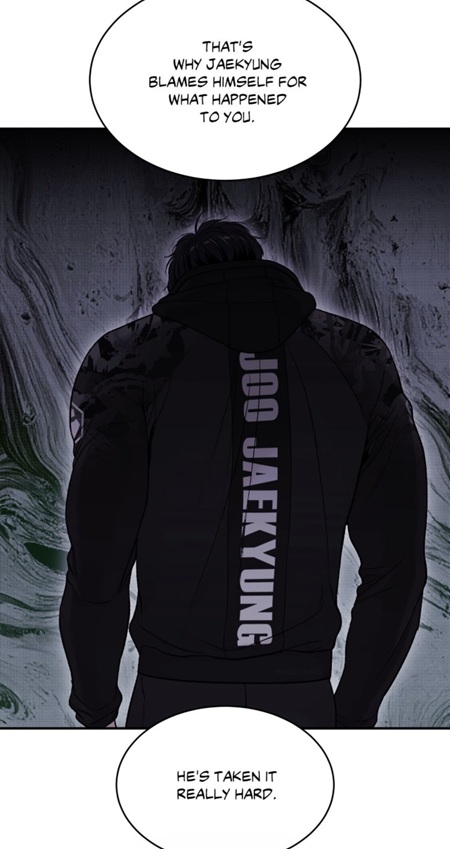 (chapter 100)
Both unconsciously reproduce the same inherited trauma logic: love through disappearance. Yet the webtoon author carefully situates this confrontation not during the stability of daytime, but at sunrise. 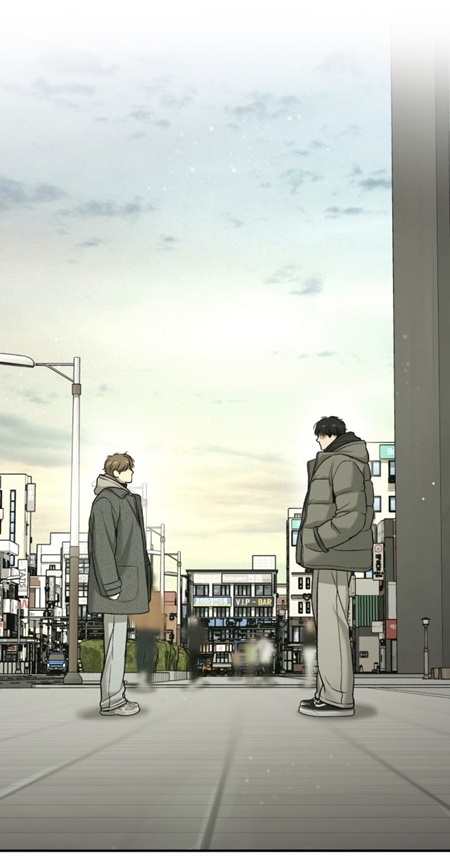 (chapter 100) The timing matters profoundly. Throughout the series, dawn repeatedly appears after moments of emotional rupture, exhaustion, or psychological transition.
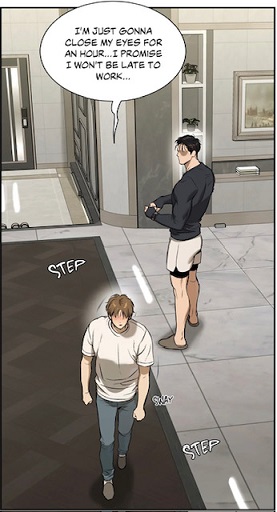
 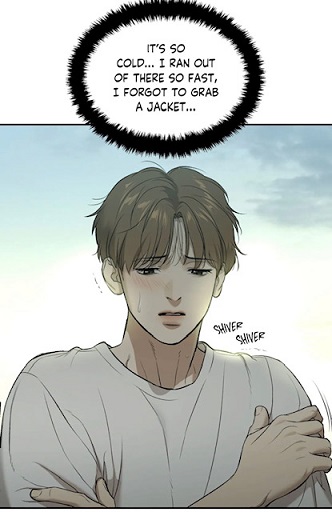 (chapter 21) Kim Dan once returned from the hospital at the break of day after another traumatic encounter, intending only to “rest for an hour” before returning to work, as though emotional catastrophe itself had to be minimized and folded back into routine immediately.
  (chapter 100)
In episode 100, however, sunrise acquires a radically different meaning. 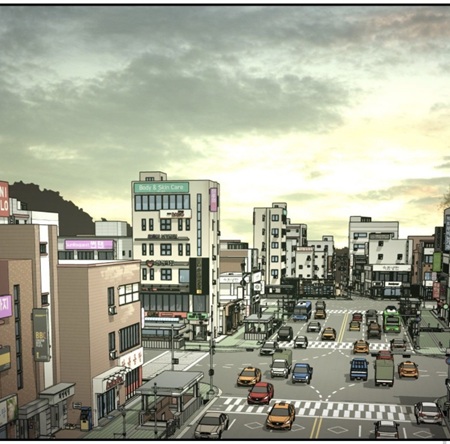 (chapter 100) Mingwa carefully emphasizes the gradual awakening of the city itself through the changing atmosphere of the streets. When Kim Dan first exits the hospital, the urban environment still feels strangely suspended and emotionally empty. The streets remain quiet, the traffic sparse, and the pale sky carries the lingering stillness of night. Both men stand isolated within this transitional hour, suspended psychologically between separation and recognition.
This is perceptible, once you contrast the traffic in the same street during the day. 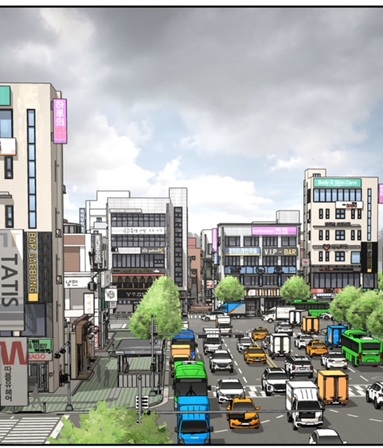 (Chapter 56) So we have to envision the following scenery in episode 100. Cars begin accumulating in the streets, intersections grow crowded, daylight strengthens, and ordinary life resumes around them. The world itself begins moving forward again.
And significantly, this transition unfolds precisely while the “Emperor” identity starts destabilizing visibly. The sleepless figure 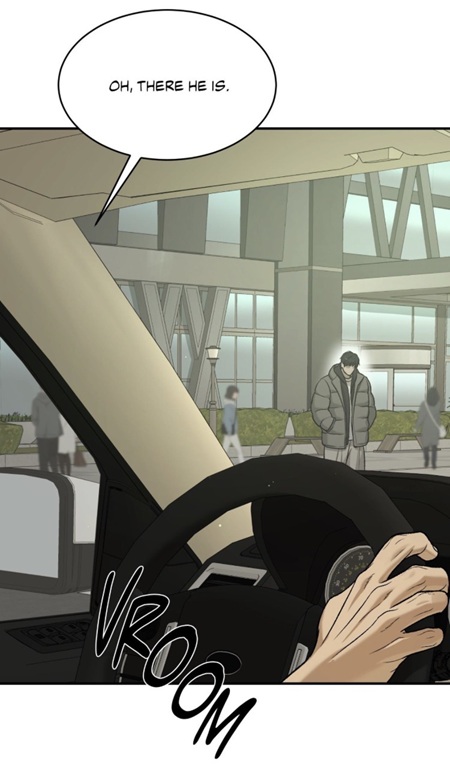 (chapter 100) standing outside the building no longer resembles the untouchable public champion sustained by MFC, Team Black, spectacle, and violence. Instead, the growing daylight increasingly exposes exhaustion, emotional fragility, insomnia, grief, and human vulnerability. (chapter 100) In this sense, the awakening city does not accompany the rebirth of the mythological fighter, but the gradual emergence of the man hidden underneath the role itself.
This may explain why Joo Jaekyung increasingly appears ghost-like throughout the hospitalization arc. 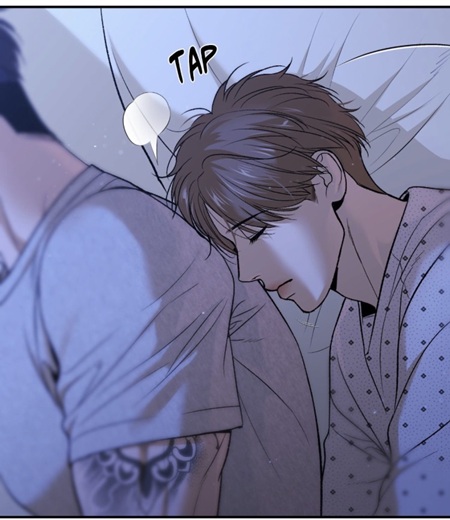 (chapter 100) He does not merely hide from Kim Dan physically. He is unconsciously shedding an identity built entirely around performance, dominance, and emotional suppression. The champion must temporarily become a ghost so that the man himself can finally emerge.
This is why the chapter feels so suffocating despite all its tenderness. The flowers are beautiful, but the giver disappears. The cake is sweet, but the celebration remains broken. The confession exists, but recognition becomes delayed. The warmth is real, but it arrives through traces left behind during darkness rather than open emotional presence.
The Managerial Ghost: Mobility versus Attachment
This transitional atmosphere becomes even more revealing once Park Namwook quietly exits the scene. 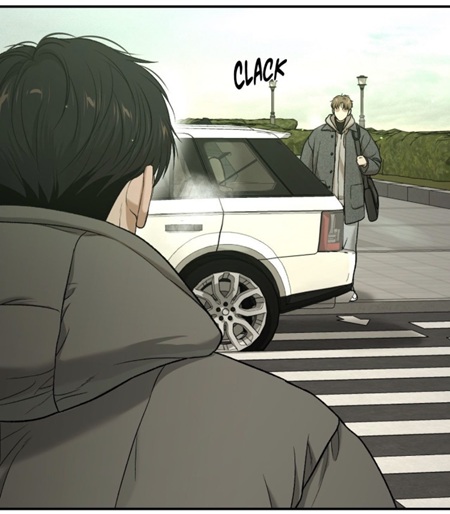 (chapter 100) After dropping Kim Dan off in front of the building, the manager simply drives away without greeting Joo Jaekyung directly or remaining beside him. The movement appears emotionally hollow, especially when contrasted with the unresolved intensity surrounding (chapter 100) “Goodbye then…”. Namwook’s departure resembles transit rather than attachment. He arrives, transports, then disappears again.
The location itself quietly reinforces this instability. (chapter 100) Park Namwook leaves Kim Dan directly beside a pedestrian crossing: a place not meant for permanence, but for transition. Symbolically, Kim Dan stands neither fully inside the old structure nor fully outside it yet. He remains suspended between identities, relationships, and possible futures. Even Namwook’s language unconsciously reflects his belief that the previous system will continue functioning normally. 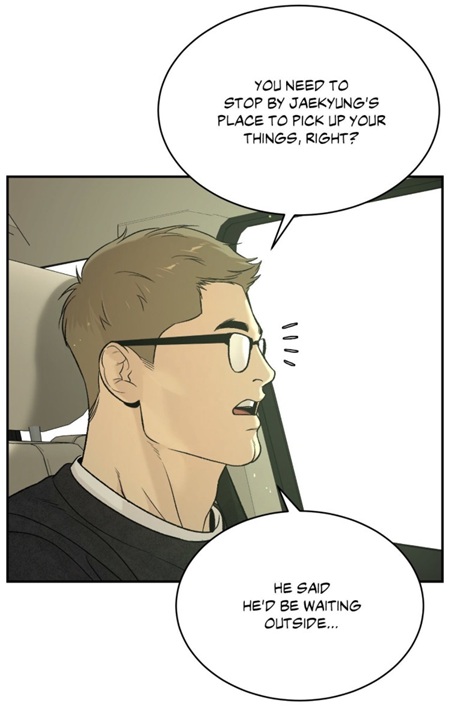 (chapter 100) He assumes Kim Dan will simply “stop by” the penthouse to collect his belongings and perhaps “visit” Team Black again later. The manager still imagines continuity, routine, and return.
 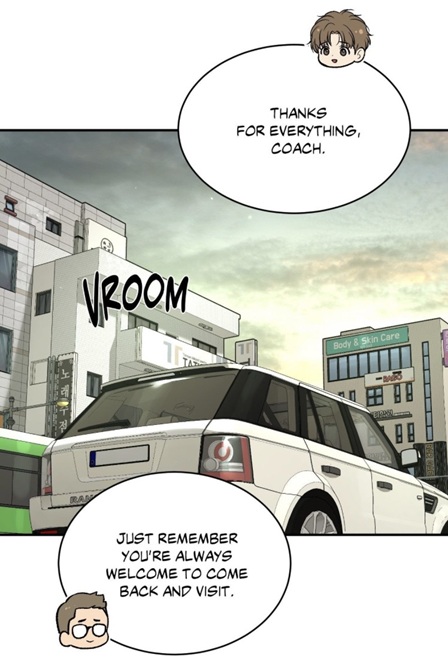 (chapter 100)
And significantly, he expects Joo Jaekyung to behave according to that same logic. In episode 95, the time visible inside the car showing 9 a.m., 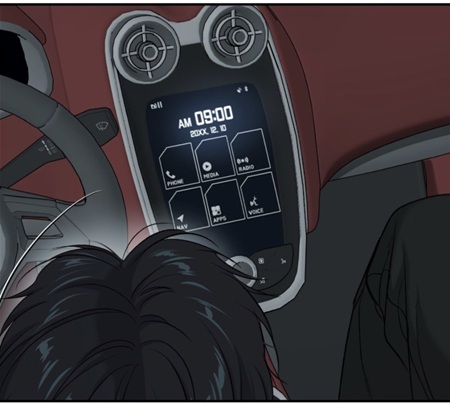 (chapter 95) reveals their routine, though here, a small transgression took place. Joo Jaekyung let Kim Dan rest a little:
 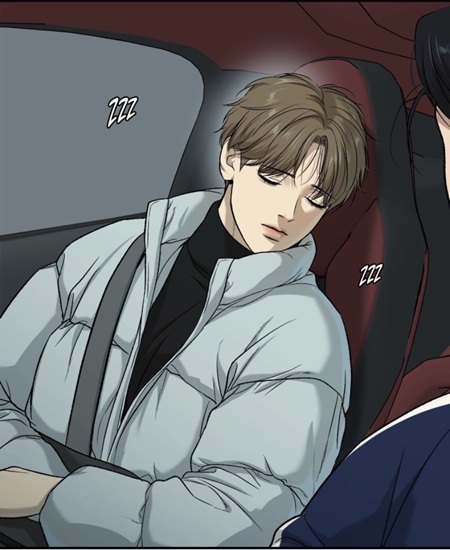 (chapter 95). This scene indicated that Joo Jaekyung had already started psychologically drifting far outside this structure. He was already prioritizing his lover. Joo Jaekyung does not wake him despite obligations, schedules, or practical inconvenience. Instead, he silently watches over him for a while and allows the moment of rest to continue. The car therefore temporarily stops functioning as transportation toward labor, treatment, or fighting. It becomes a protected space where exhaustion is permitted rather than suppressed.
So the sunrise indicates that it is much earlier than 9.00 am, an indication that Park Namwook is already going to the gym in order to “welcome” the next physical therapist. By helping him with the discharge so early, the manager avoids a goodbye between the members of Team Black and Kim Dan. (chapter 100) The sleepless wandering through hospital corridors, the nightly visits, the emotional collapse after the stabbing, and the abandonment of ordinary rhythm (no shower and jogging) all reveal someone no longer functioning according to the predictable temporality of the fighting system.
Park Namwook, however, continues organizing life through functionality, punctuality, and performance structure. (chapter 100) This explains why his farewell with Kim Dan feels emotionally procedural (chapter 100) rather than existential. He drops him off, tells him he is always welcome to visit again, then drives away. (chapter 100) The car itself begins symbolizing Namwook’s role inside Joo Jaekyung’s life: constant movement toward fights, schedules, media obligations, and professional continuity, yet strangely little emotional presence outside those structures.
This irony becomes even sharper when connected to episode 5, where Park Namwook laughed about the circumstances concerning Yosep’s divorce. 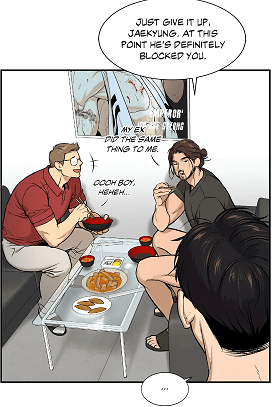 (chapter 5) Yosep had been “ghosted” emotionally by his wife, abandoned after years of prioritizing MMA over personal life. Yet episode 100 quietly suggests that Namwook himself increasingly resembles a ghost within Joo Jaekyung’s life. This explicates why he didn’t help him getting discharged from the hospital
 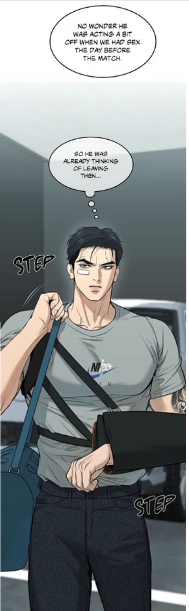 (chapter 53) contrary to the athlete. So this kindness toward the “hamster” is not truly selfless. He constantly orbits the champion professionally while remaining emotionally detached from the human being underneath the “Emperor” persona. And the best evidence is this video sent on his birthday:
 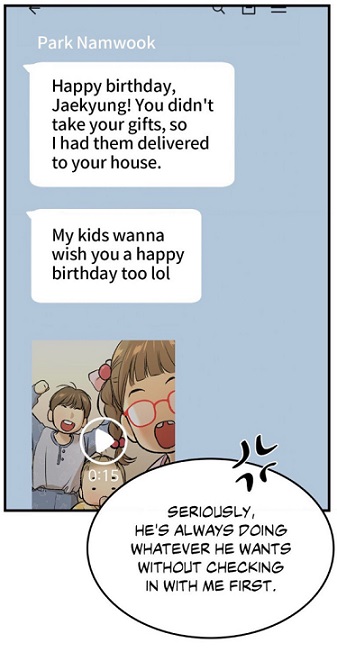 (chapter 45)
The contrast with Kim Dan therefore becomes profound. (chapter 100) “Goodbye then…” emerges from overwhelming attachment, fear of abandonment, survivor guilt, and anticipatory self-erasure. Park Namwook’s farewell, by contrast, remains rooted in managerial continuity. (chapter 100) One goodbye fears love too much. The other barely recognizes it at all.
And significantly, Joo Jaekyung waits outside. (chapter 100) Not inside the gym. Not inside the penthouse. Not inside the institutional spaces that previously defined the “Emperor.” 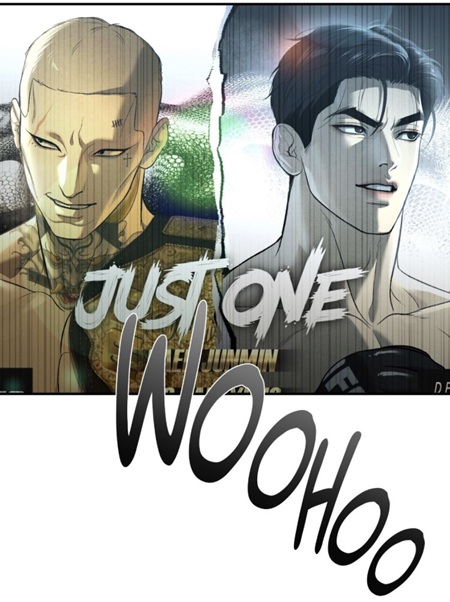 (chapter 100) He stands beyond them at dawn, beside the crossing itself, as though the story were positioning him between an ending identity and an unknown new life.
And perhaps this becomes the true tragedy of Jinx. The problem is not absence of love. The problem is that Shin Okja, Kim Dan, and Joo Jaekyung all mistake self-erasure for love itself.
Yet beneath all the silence, flowers, interrupted confessions, ghostly gestures, and unfinished goodbyes, one desperate emotional truth slowly begins emerging: Kim Dan’s journey may ultimately require something even more transformative than saying:
“Stay with me.”
Because throughout his entire life, he has always been the one left behind. (chapter 57) The child standing before the opened door. The survivor searching after disappearance. The person quietly remaining while others vanish into emotional unreachability.
Beyond the Penthouse: Moving Toward a Shared Horizon
This is why the true emotional resolution of the story may instead take the form of a radically different sentence:
“Come with me, a new version of this scene
(chapter 43)
Unlike “Stay with me,” which still implies remaining inside someone else’s space, (chapter 100) “Come with me” fundamentally reverses the structure of abandonment itself. It completely changes the geography of their relationship. It grants Kim Dan absolute agency. He is no longer walking out of an open door into darkness; he is the one opening a path forward. 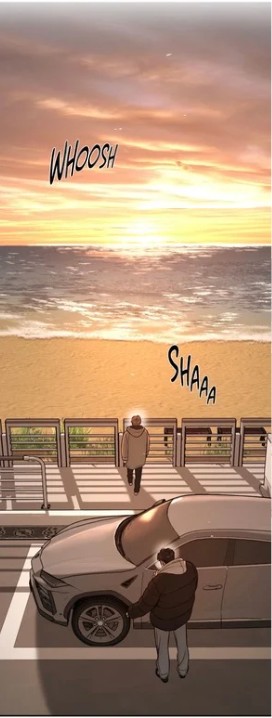 (chapter 94) He is inviting the champion into a mutual, shared trajectory.
In many ways, the story quietly foreshadows this desire much earlier through Kim Dan’s simple wish to travel together after Shin Okja leaves the hospital. 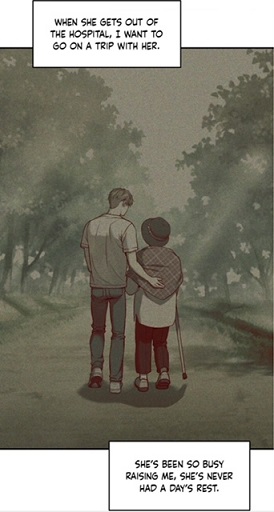 (chapter 47) At first glance, the statement appears almost painfully modest: a peaceful trip, rest, shared time, ordinary companionship. Yet symbolically, the fantasy already contains the emotional architecture of “Come with me.” The dream is not organized around labor, debt, treatment, fighting, or survival. It imagines movement detached from institutional obligation entirely.
This matters profoundly because throughout most of the series, movement itself remains tied to exhaustion and performance. Cars transport fighters toward matches. Hospital corridors lead toward illness and disappearance. The gym reduces bodies into instruments of labor and spectacle. The imagined trip in the woods quietly opposes all of these structures. It represents shared movement without destination anxiety, emotional utility, or professional function.
In this sense, “Come with me” does not simply mean romantic attachment. It signifies the possibility of constructing a life no longer governed entirely by trauma, survival, or institutional rhythm. For perhaps the first time, Kim Dan is no longer merely trying to endure another day. He is imagining a future someone else could walk beside him willingly.
It completely upends his lifelong belief that he is an expendable creature who must minimize his physical footprint to avoid being discarded.
And psychologically, this changes everything. For perhaps the first time in his life, Kim Dan would no longer be searching after someone vanishing into darkness. Instead, both men would be walking toward the same horizon together, carrying their ghosts openly rather than disappearing behind them. In this sense, the story quietly redefines the meaning of home itself. Home is no longer a fixed place haunted by abandonment, empty rooms, or opened doors. It becomes the place where the loved person remains beside you willingly.  (chapter 69) “Come with me” would illustrate this principle: life is a journey and not a destination.
Feel free to comment. If you have any suggestion for topics or Manhwa, feel free to ask. If you enjoyed reading it, retweet it or push the button like. My Reddit-Instagram-Twitter-Tumblr account is: @bebebisous33. Thanks for reading and for the support, particularly, I would like to thank all the new followers and people recommending my blog.


Merci pour le partage et bravo pour les 3 parties de l’article ! Analyses passionnantes qui mettent en valeur tous les minuscules détails imperceptibles à la première lecture, notamment la couleur des bouquets !Vivement vendredi
LikeLiked by 1 person
Merci beaucoup ☺️ J’espère que le docteur Cheolmin va apparaître bientôt. On a 3 chiffres et le 1. Le chiffre 100 reflète les personnes : Joo Jaekyung et Dan Kim sont les deux zéros et le 1: Park Namwook qui les laissent derrière.😂
LikeLike