
Please support the authors by reading Manhwas on the official websites. This is where you can read the Manhwa: Jinx But be aware that the Manhwa is a mature Yaoi, which means, it is about homosexuality with explicit scenes. Here is the link of the table of contents about Jinx. Here is the link where you can find the table of contents of analyzed Manhwas. Here are the links, if you are interested in the first work from Mingwa, BJ Alex, and the 2 previous essays about Jinx Why Sleeping Beauty Had to Bleed part 1 and part 2
It would be great if you could make some donations/sponsoring: Ko-fi.com/bebebisous33 That way, you can support me with “coffee” so that I have the energy to keep examining Manhwas. Besides, I need to cover up the expenses for this blog.
When does a curse truly disappear?
Episode 99 of Jinx initially appears to destroy the central superstition of the series. Kim Dan lies unconscious in a hospital bed. 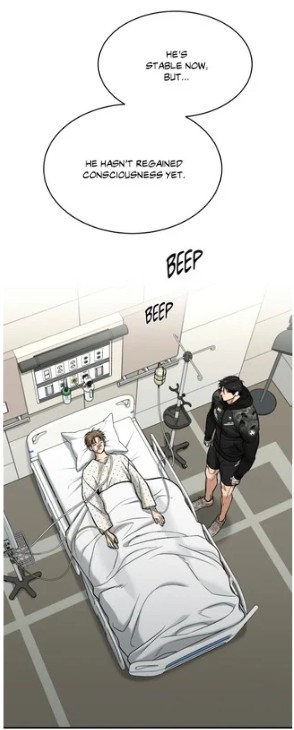 (chapter 99) He is absent from the ring. There was no sex before the match, no ritual, no “luck,” no physical reassurance. And yet Joo Jaekyung wins faster
 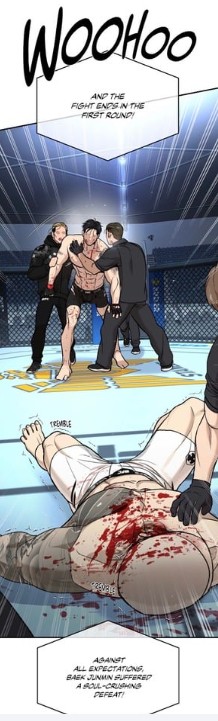 (chapter 99) and more decisively than ever before.
 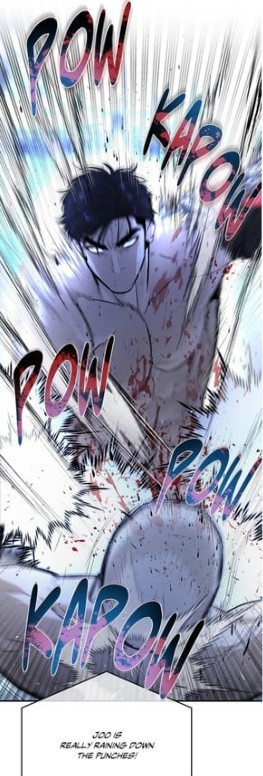 (chapter 99) At first glance, the conclusion seems obvious: the jinx is broken.
But then another problem emerges immediately. Why does this victory feel so horrifying? To the audience in front of the octagon, the champion no longer appears heroic. Baek Junmin’s face is totally ruined. 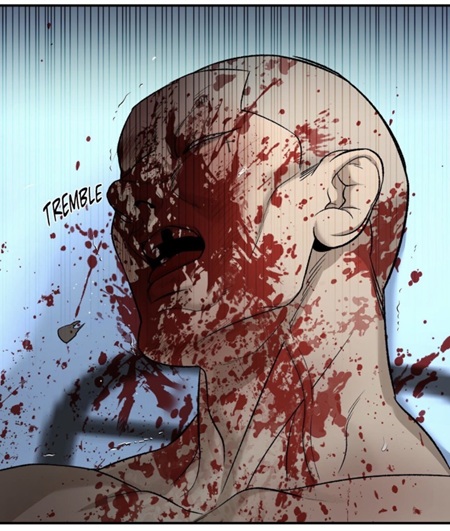 (chapter 99)
 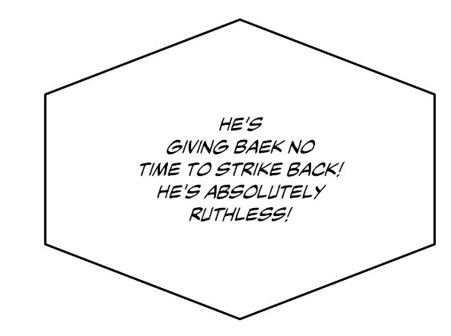 (chapter 99) The moderator repeatedly describes him as ruthless.
 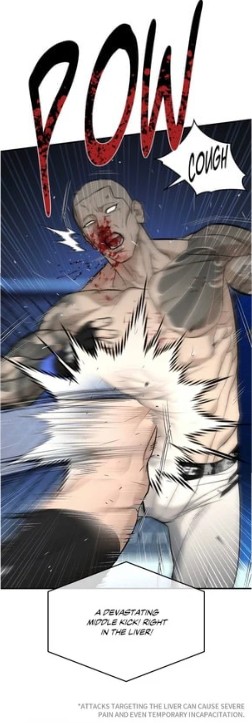 (chapter 99) The crowd boos when he leaves the cage.
 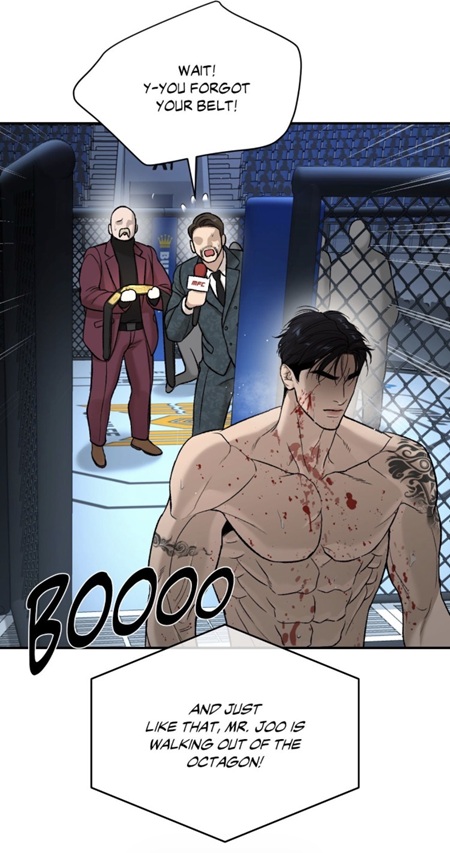 (chapter 99) He refuses the interview,
 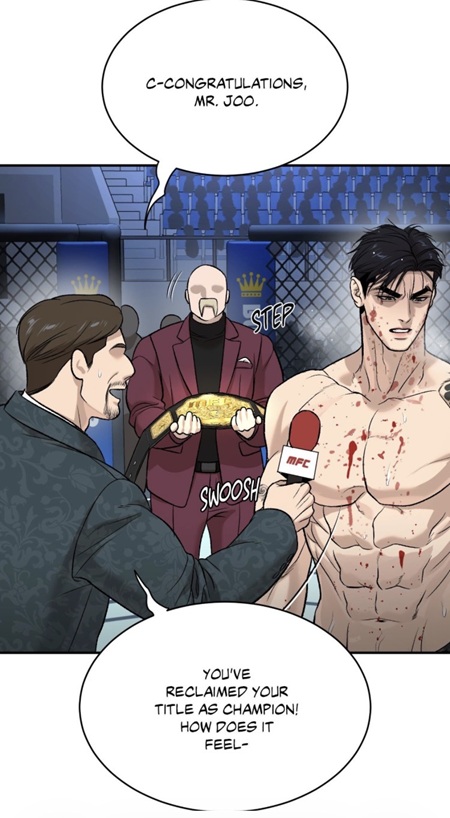 (chapter 99), ignores the CEO
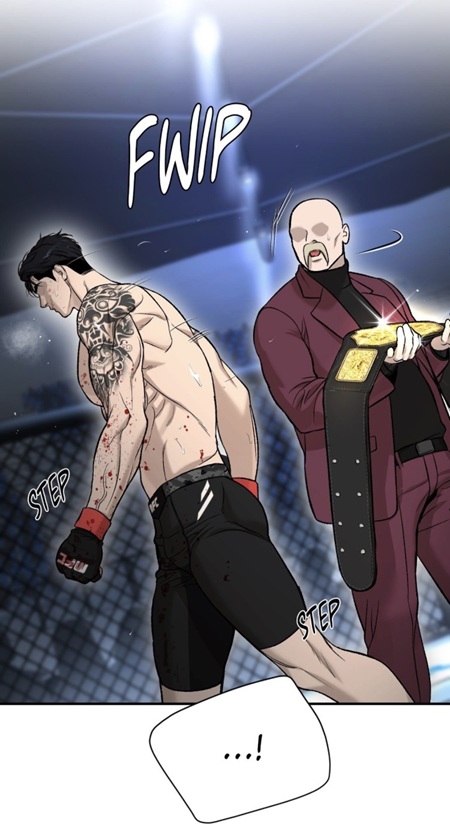 , (chapter 99), abandons the championship belt behind him, and walks away as though the victory itself had become meaningless.
Without the hidden context surrounding Kim Dan’s assault, the public sees only one thing: a frighteningly violent champion who no longer behaves like a human being.
And yet the readers know something entirely different. We know that Joo Jaekyung entered the octagon after discovering that Baek Junmin was connected to Kim Dan’s assault. 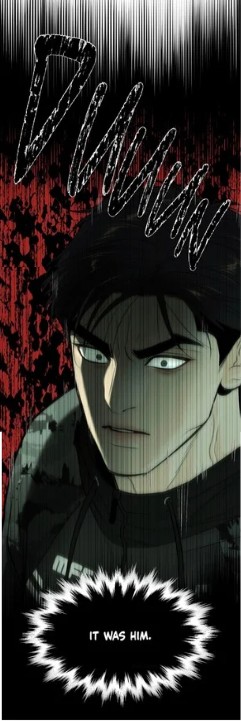 (chapter 99) We know that the fight was never truly about the belt. We know that the man appearing emotionally empty
 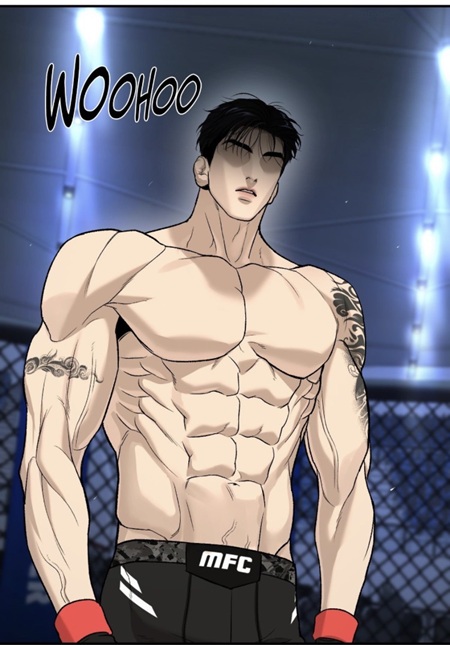 (chapter 99) inside the ring is, in reality, entirely consumed by one person lying unconscious in a hospital room.
This creates the real tension of episode 99. While outsiders witness monstrosity and rudelessness 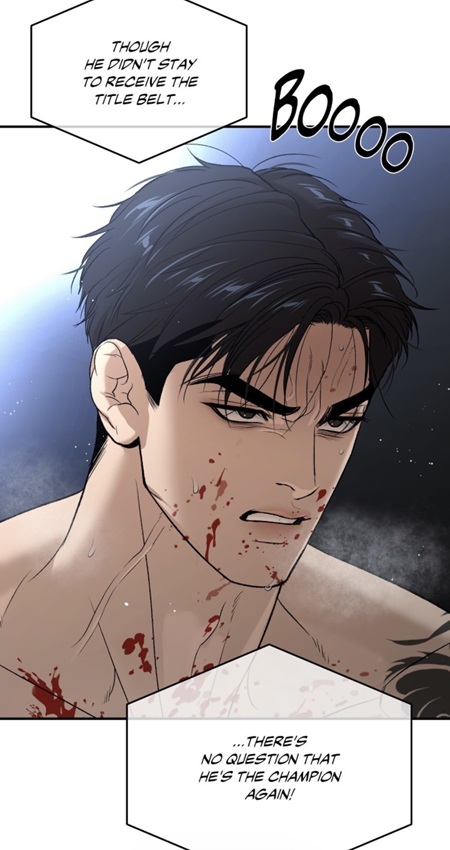 (chapter 99), the readers witness emotional clarity.
The chapter therefore reveals something far more unsettling. The jinx was never truly about sex at all. The real curse was hesitation and fear — the inability to escape the ghosts of the past. Kim Dan’s assault changes this completely. For the first time in the series, Joo Jaekyung stops fighting memory and focuses entirely on the present moment. 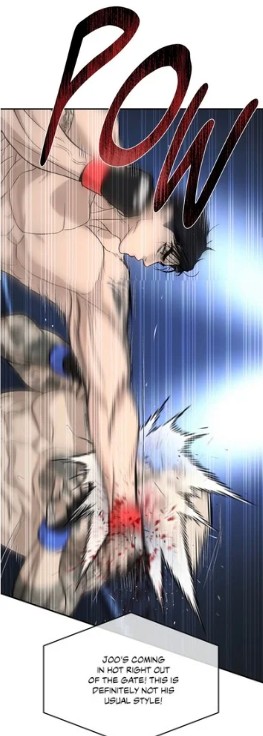 (chapter 99) That is why episode 99 feels simultaneously triumphant and tragic.
The “loverboy” insult 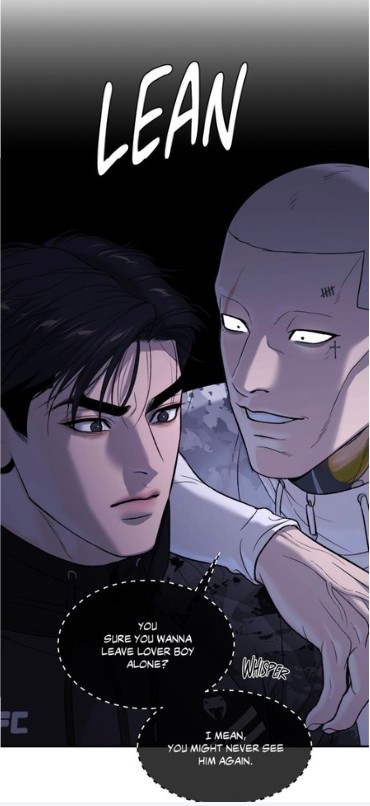 (chapter 99) intended to weaken Joo Jaekyung ultimately destroys the very hesitation that had governed him for years. But the result is terrifying to watch. The emperor wins, yet leaves the octagon looking less like a champion than like a ghost whose heart has already abandoned the arena long before his body does. (chapter 99)
The Champion Who Always Waited
One detail becomes impossible to ignore once we revisit Joo Jaekyung’s earlier fights. Again and again, his opponents attack first. Randy Booker rushes him aggressively, 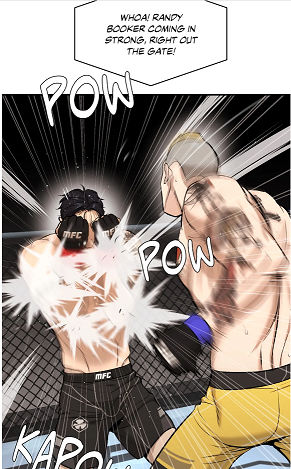 (chapter 15) Dominique lands the opening assault
 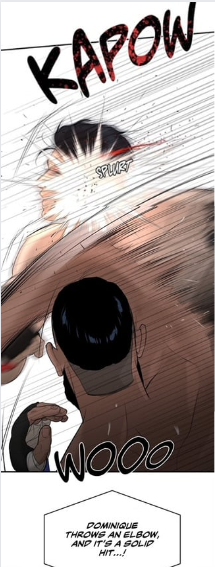 (chapter 40) while the athlete tried to avoid his attacks before
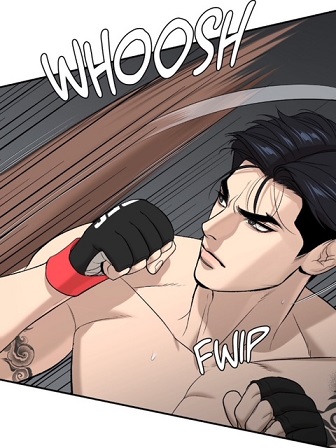 (chapter 40), Gabriel initiates the violence
  (chapter 87), and even Baek Junmin, in their first earlier encounter, attempts to establish control first.
 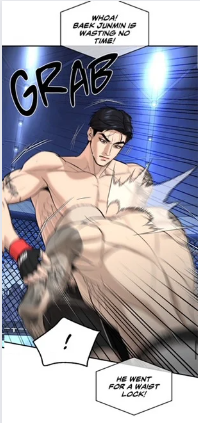 (chapter 50) Joo Jaekyung’s usual fighting style therefore follows a recognizable structure. He absorbs the opponent’s aggression
 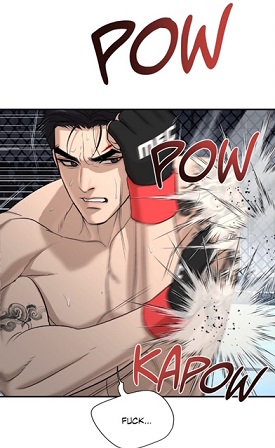 (chapter 40), studies it carefully, adapts to it, and only afterward retaliates with devastating precision.
But Episode 5 quietly introduces a striking exception to this pattern. For the first time in the series, Joo Jaekyung attacks first.  (chapter 5) The moment is brief, yet Park Namwook immediately notices that something feels fundamentally different.
 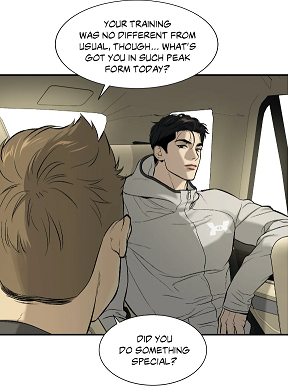 Despite training normally, Jaekyung suddenly appears unusually sharp, aggressive, and emotionally accelerated. Namwook asks whether he “did something special,” instinctively recognizing the deviation without understanding its source.
Retrospectively, the scene becomes deeply revealing. Episode 5 already foreshadows the connection between Kim Dan and the temporary collapse of Jaekyung’s hesitation. Long before Episode 99, Kim Dan had already begun interfering with the psychological structure governing the champion’s violence. Yet the difference between Episode 5 and Episode 99 remains crucial. In Episode 5, (chapter 5) the hesitation merely weakens. In Episode 99, it disappears entirely. And this is precisely why the fight against Baek Junmin feels so terrifying. The emotional fragmentation that once forced Jaekyung to wait, analyze, and psychologically endure before retaliating suddenly vanishes. For the first time in the series, he no longer enters the cage divided between past and present. He enters it whole. (chapter 99)
For years, however, this hesitation was misunderstood by everyone around him. Earlier in the story, an older coach  (chapter 75) remarked that Jaekyung performed perfectly during practice but somehow “fell short in important matches.” Park Namwook immediately interpreted this through the logic of sports psychology and asked whether the champion simply got “cold feet.” Episode 99, however, reveals how profoundly the manager and coach misunderstood him. Namwook consistently interprets Joo Jaekyung externally.
 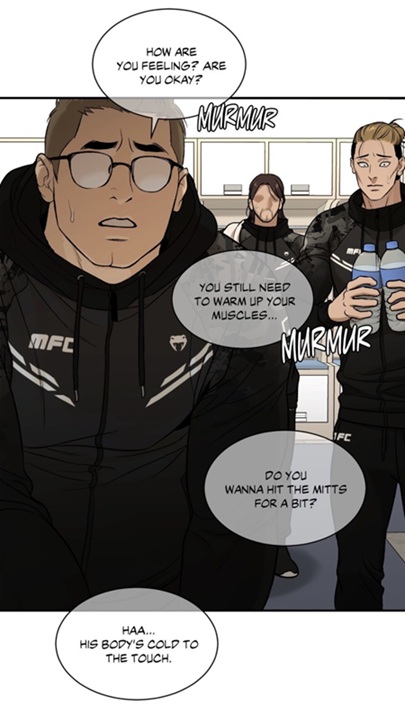 (chapter 99) Before the fight against Baek Junmin, he asks whether Jaekyung wants to warm up, whether he wants to hit the mitts, and whether he has slept enough. He notices that Jaekyung’s body feels “cold to the touch,” yet even then he still assumes that the problem must be physical, routine-based, or performance-related. This misunderstanding reveals something important about Namwook himself. First, it is clear that he is projecting his own indeciveness onto his “pupil”. Besides, he represents the institutional mentality of the gym, a worldview in which performance functions almost like a mechanical equation. Training, preparation, discipline, and focus are supposed to produce victory. To Namwook, hesitation can therefore only mean athletic anxiety or fear of failure. In his mind, the match itself is the most important reality in the room. That is why he keeps trying to solve Jaekyung’s silence through professionalism, routine, and ritual. But what the hyung never truly graps is that Joo Jaekyung is not merely an athlete struggling with nerves. He is a man haunted by memory. The “coldness” in his body was never simple fear of losing. It was emotional numbness.
 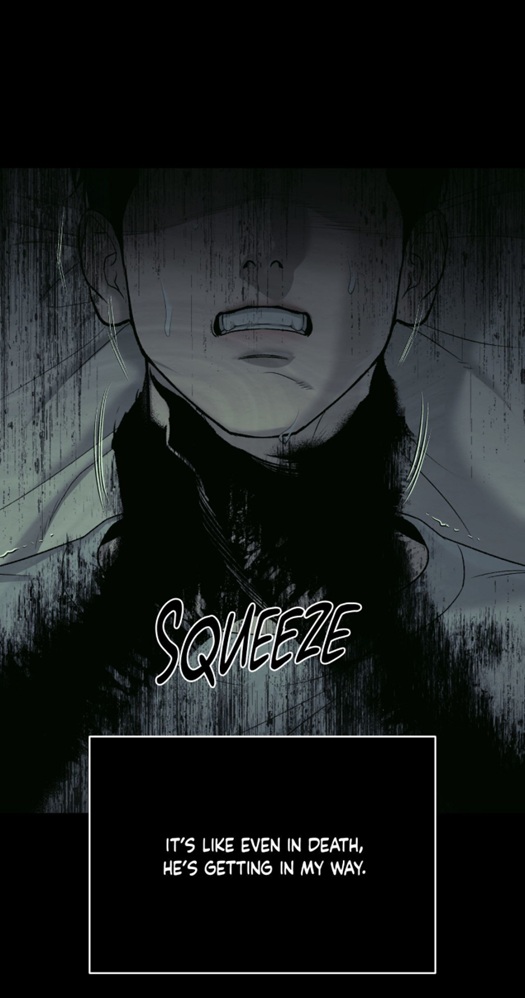 (chapter 75) Joo Jaekyung entered fights carrying invisible ghosts with him: the father, violence, hierarchy, humiliation, fear of disrespect, and the expectation of punishment and rejection. The story repeatedly shows how his father enforced authority physically.
  (chapter 72) The elder struck first.
  (chapter 72) Resistance or even “presence” was punished. Submission and later avoidance became a survival mechanism. Even later, fragments of this mentality continued reproducing themselves through figures like Hwang Byungchul.
  (chapter 74)
 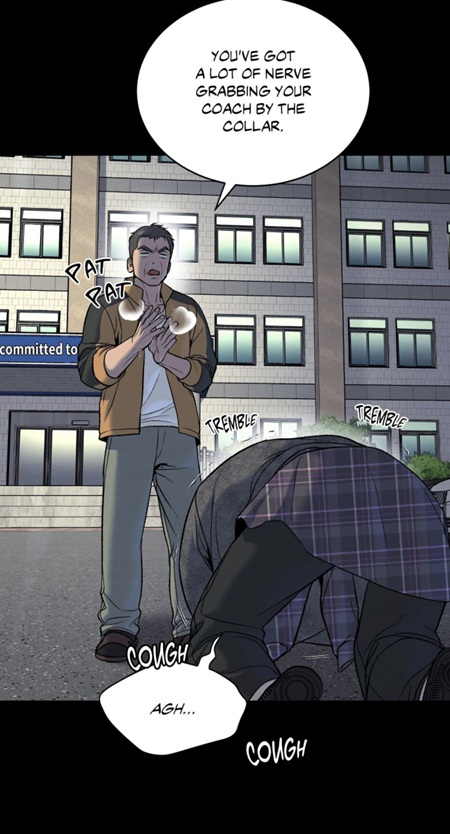 (chapter 74) As readers, we gradually realize something deeply unsettling. Joo Jaekyung unconsciously grants older men (Randy Booker, Dominic Hill, Park Namwook and Baek Junmin) the symbolic privilege of initiating violence. This explains why insults such as “baby,”
 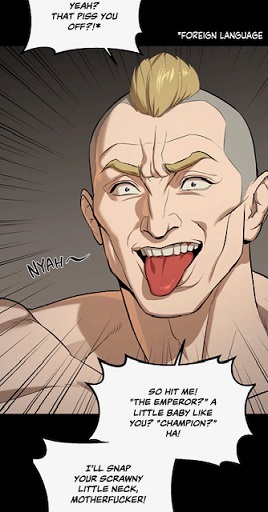 (chapter 14) “child,” and “lost puppy”
 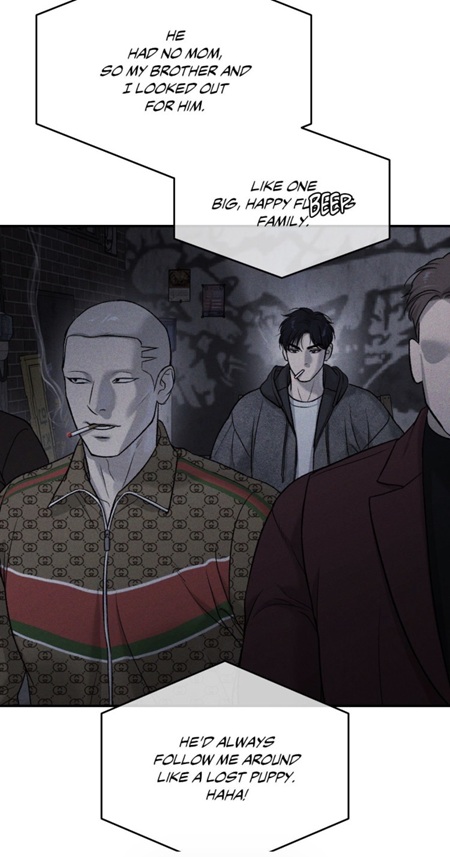 (chapter 96) carry so much narrative importance throughout the series. These words do not merely mock him. On the one hand they psychologically reflect his past fighting style (chapter 99), on the other hand they reduce him to the subordinate boy once again. But beneath this hesitation lies something even darker. Joo Jaekyung is not merely afraid of losing fights. He is afraid that his father might have been right about him all along. When his father insulted him, beat him, and treated him as worthless, the violence was never only physical. It implanted a deeper psychological curse inside the child.
 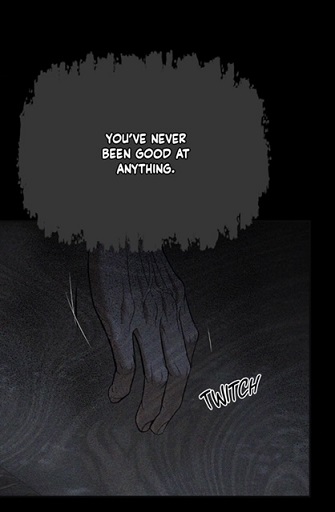 (chapter 54) Weakness became tied to identity itself. Hesitation became associated with inferiority. Emotional attachment became linked to failure and humiliation. This is why the champion’s mistrust persisted even after becoming the strongest fighter in the ring. Outwardly, Joo Jaekyung became “the Emperor.”
  (chapter 75) Inwardly, however, part of him remained trapped before the father’s judgment, still unconsciously waiting for the older man to strike first. The hesitation therefore was not simple caution. It was fear itself. It was the fear that he might truly be weak. It was the fear that he might truly be inferior. And, above all, it was the fear that he might ultimately become exactly what his father believed him to be: A loser!
 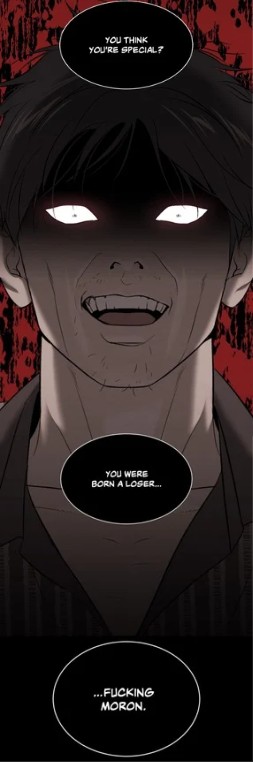 (chapter 73) And this is precisely why episode 99 changes everything. For the first time in the series, Joo Jaekyung stops fighting while carrying the father’s voice inside his mind. He is no longer hearing his voice, but only seeing his lover’s cold body.
 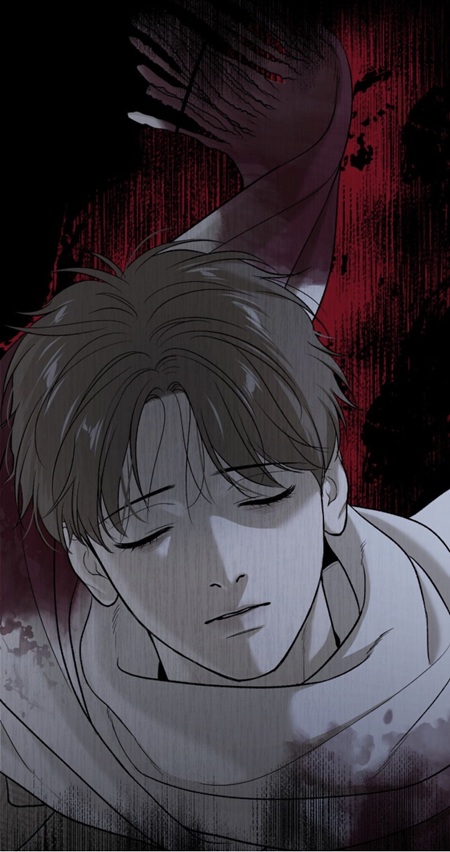 (chapter 99) The assault against Kim Dan forces him into a situation where doubt itself becomes impossible. Suddenly, something matters more than hierarchy, humiliation, fear, or inherited shame. Love overrides the old curse. And once that happens, the subordinate child disappears instantly.
The Shotgun That Backfired
Baek Junmin believes he understands the former champion perfectly. When he leans toward him before the fight and whispers, (chapter 99) he believes he has found the champion’s greatest weakness.
The insult is carefully calculated. “Loverboy” infantilizes emotional attachment and strips Kim Dan of dignity. Ironically, Kim Dan is actually older than Jaekyung — a hyung — yet Baek Junmin symbolically erases this hierarchy entirely. In his worldview, emotional attachment belongs to weakness, dependency, and humiliation. But there is another layer that makes the scene even darker. The antagonist uses the word “loverboy” through the logic of prostitution, possession, and mockery. For him, the insult reduces Kim Dan to an object of attachment, almost something transactional or degrading. Yet the wolf and Jinx-lovers know something Junmin himself does not fully understand. Kim Dan was not simply emotionally endangered. In the past, he was physically assaulted. 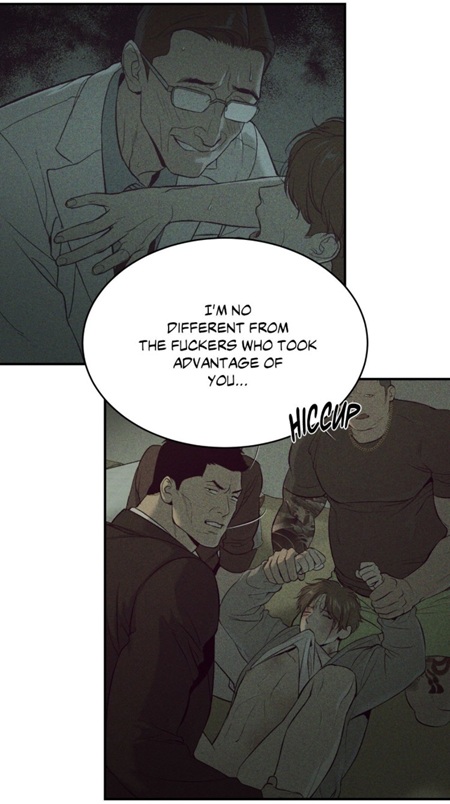 (chapter 91) The “hamster” clearly showed clear signs of PTSD during the restaurant encounter in Chapter 90.
 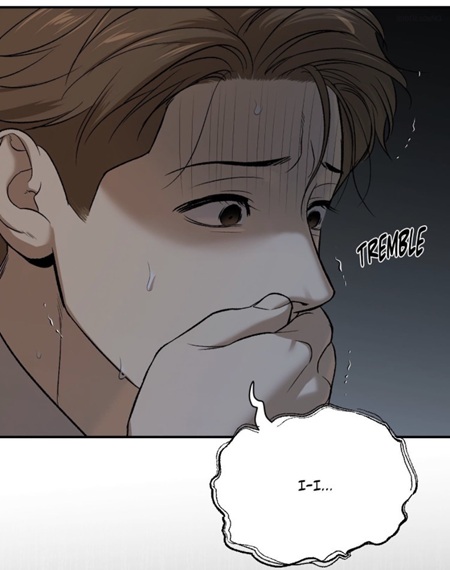 (chapter 90) The trembling, the nausea, and the paralyzing fear were not just reactions to a “fight,” but to a perpetrator who had physically violated his agency. When the former hospital director attempted to “erase” the assault through further violence (the stabbing)
 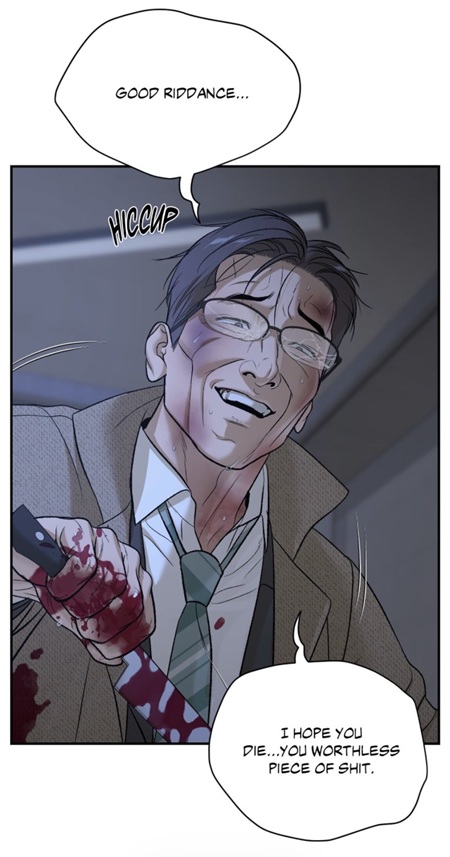 (chapter 98), it proved that to the antagonists, Dan’s body was merely a canvas for their malice.
Consequently, when Baek Junmin whispers “loverboy” in Chapter 99, (chapter 99) he is unknowingly stepping onto a psychological landmine. He believes he is poking at a romantic weakness; in reality, he is mocking a victim of a coordinated assault. This is why the insult becomes so psychologically explosive. 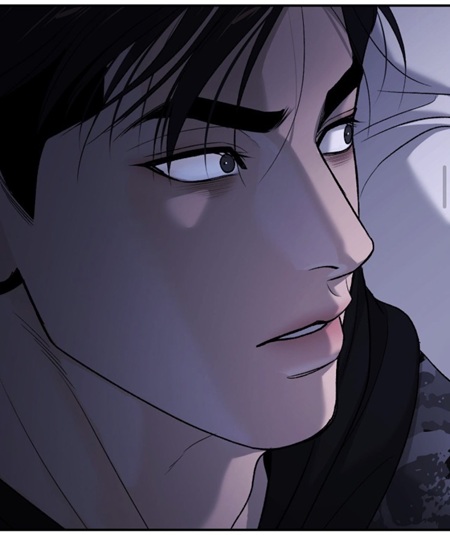 (chapter 99) For Joo Jaekyung, hearing Junmin use a “diminishing” term to describe a man who is currently lying in a hospital bed because of Junmin’s own schemes is the ultimate provocation. It transforms a standard pre-fight taunt into a disgusting trivialization of Dan’s suffering.
The “Shotgun” fires a bullet of mockery, but because of the hidden reality of the assault, it returns to him as a cannonball of absolute, righteous fury. The word therefore unintentionally collides with the reality of sexual violence and trauma. (chapter 99) This is why the insult becomes so psychologically explosive.
At the same time, Baek Junmin weaponizes morality itself. The implication is cruelly simple. While Kim Dan lies unconscious, Joo Jaekyung is here fighting for spectacle, money, and fame. The thug expects guilt, hesitation, emotional fragmentation, and inner collapse. Instead, he accidentally gives Joo Jaekyung the most powerful weapon in the entire series. Throughout the story, the “jinx” functioned as a psychological crutch disguised as superstition. The MMA fighter believed he needed the ritual beforehand in order to stabilize himself physically and mentally. 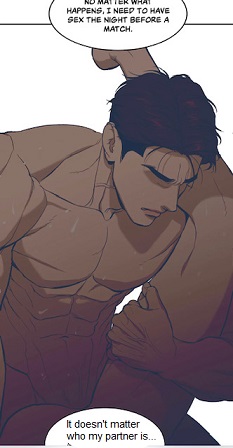 (chapter 02) This is why the superstition held so much power over him. Kim Dan unconsciously became transformed into something functional, almost mechanical: a stabilizer, a ritual, a lucky charm.
  (chapter 87) But episode 99 destroys this illusion completely. The moment Baek Junmin says “loverboy,” Joo Jaekyung is forced to confront something openly for the first time. Kim Dan is not luck. Kim Dan is not a ritual. Kim Dan is not a tool. Kim Dan is the person he loves. (chapter 99) And this realization changes the entire structure of the fight. The irony surrounding Baek Junmin’s title, “The Shotgun,”
  (chapter 49) suddenly becomes extraordinary. A shotgun is a weapon of spread, chaos, and indiscriminate destruction. The antagonist’s psychological attack functions exactly the same way.
 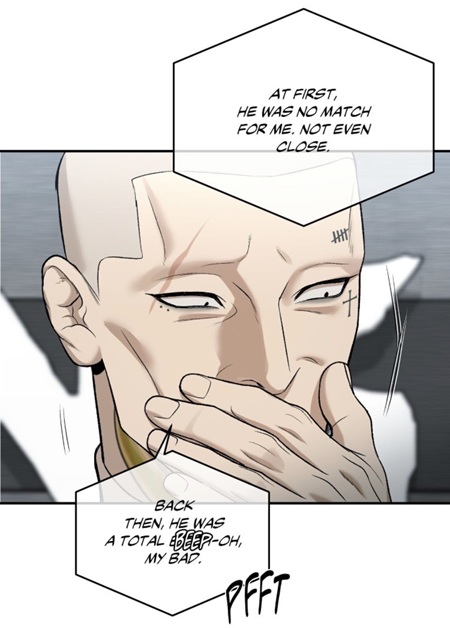 (chapter 96) He fires insults everywhere at once: infantilization, guilt, mockery, emotional humiliation, and social shame. But Joo Jaekyung’s response becomes the complete opposite: a trigger for retaliation.
  (chapter 99)
Instead of psychologically fragmenting him, the attack compresses his entire emotional world into a single point of terrifying focus. Baek Junmin tries to blow Jaekyung’s mind apart; instead, he accidentally pressurizes it. This is why the fight immediately becomes so frightening to watch.
The moderator truly emphasizes that this is “not his usual style.” (chapter 99) Joo Jaekyung gives Baek Junmin no opportunity to speak 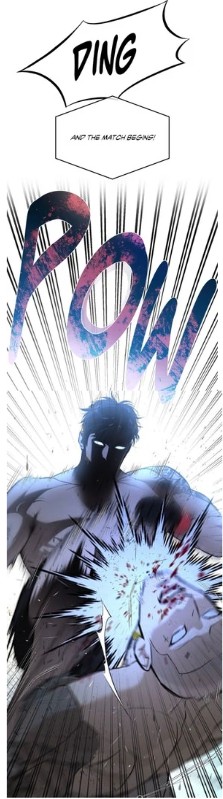 (chapter 99), recover (chapter 99), breathe
 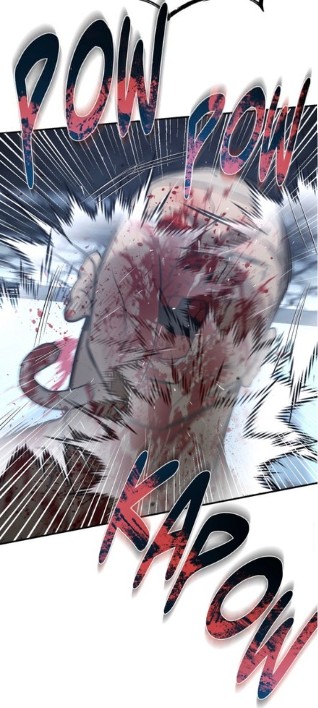 (chapter 99), or retaliate. (chapter 99) Yet despite the overwhelming brutality, his precision never disappears. The knee strikes, liver shots, uninterrupted combinations, and perfectly targeted blows reveal not emotional chaos, but emotional concentration.
And then Mingwa introduces one of the most disturbing visual details of the entire chapter: Baek Junmin’s face. (chapter 99) The shattered nose. The missing tooth. The blood covering his mouth. The trembling. Suddenly, “The Shotgun” no longer resembles a manipulative predator or rising star. He becomes reduced to raw, terrified biology. The smugness disappears entirely. And this is where the violence becomes deeply symbolic. Baek Junmin’s greatest weapon was never simply physical strength. His real power existed in his mouth:
- the whispers,
- the manipulation,
- the destabilizing insults,
- the weaponization of social morality,
- and the psychological games.
He attempted to use language itself as ammunition. Joo Jaekyung’s response is therefore horrifyingly surgical. By destroying Baek Junmin’s mouth, nose, and face, he symbolically dismantles the mechanism of the “Shotgun” itself. (chapter 99) He silences the man who attempted to psychologically break him through words.
But there’s more to it. Baek Junmin’s identity as “The Shotgun” was never about his fists; it was about his mouth. (chapter 96) His smirk was his armor 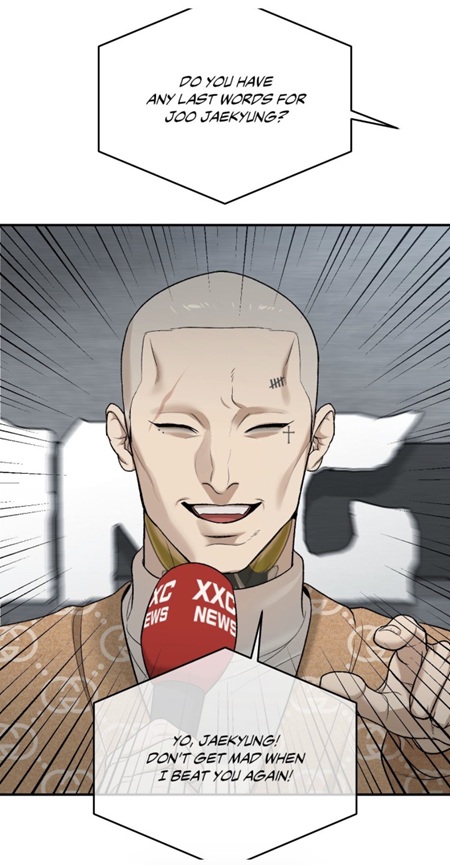 (chapter 96), a performative tool used to signal emotional superiority and untouchability. Throughout the series, he weaponized his smile to infantilize Jaekyung and degrade Kim Dan
 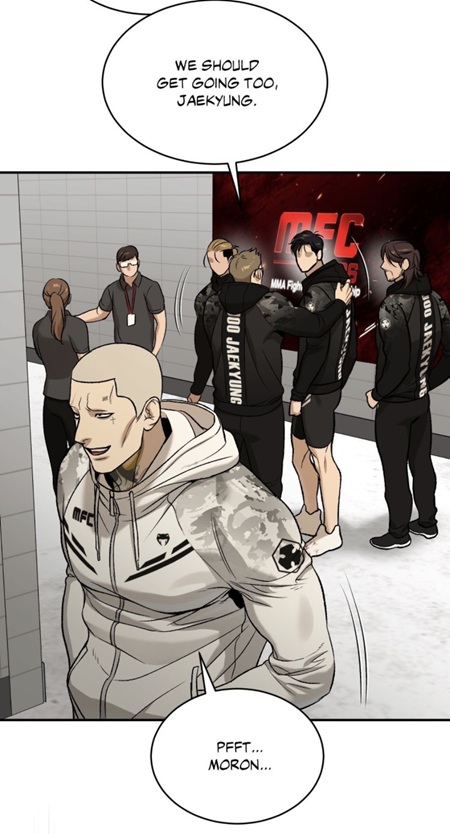 (chapter 99), positioning himself as the puppet master of the “last laugh.”
 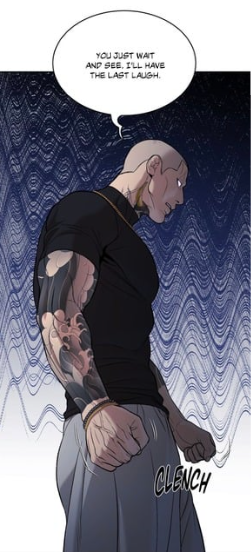 (chapter 87) In Episode 99, Joo Jaekyung deconstructs this theatricality with surgical intent. He doesn’t target the body for a standard knockout; he targets the features of expression: (chapter 99)
- The Mouth: The source of the “Loverboy” insult and the manipulative whispers.
- The Teeth: The physical foundation of the smug, predatory grin.
- The Nose: The center of the “arrogant” face that looked down on Dan’s trauma.
By shattering these specific points, Jaekyung pressurizes the “Shotgun’s” spread of insults into a single point of silence. The violence is not random; it is the literal destruction of mockery. The irony is absolute: the man who defined himself by his ability to laugh at others’ suffering is left with a face that can no longer form a smile. (chapter 99) Jaekyung didn’t just silence the “Shotgun”—he dismantled the very mechanism Junmin used to enjoy his own cruelty. To the audience, it was monstrosity; to the reader, it was the only way to truly kill the insult. This is why the violence feels so different from ordinary sports brutality. Joo Jaekyung is not simply aiming for victory. He is erasing the source of the violation.
And the irony becomes almost unbearable. Baek Junmin believes the word “loverboy” will emasculate the champion psychologically. Instead, the insult destroys the final separation inside Joo Jaekyung himself. The “Emperor” might once have fought for titles, legacy, spectators, or survival. But the “Loverboy” fights differently. 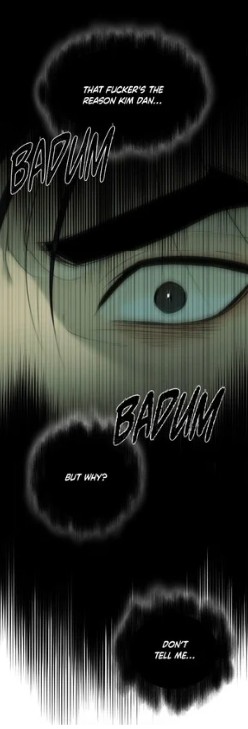 (chapter 99) He fights personally. And that is precisely why he becomes so terrifying. The crowd boos because they expected a spectacle governed by sportsmanship, hierarchy, and ritualized violence. Instead, they witness sincerity stripped completely naked. The arena ceases to resemble entertainment and begins resembling execution. (chapter 99) The public therefore interprets Joo Jaekyung as monstrous. (chapter 99) But the readers understand the deeper irony. For perhaps the first time in the entire series, Joo Jaekyung is utterly sincere inside the cage.
The Crowd of One
To understand the true weight of the “loverboy” provocation in Episode 99, we must return to the subtle transformation that began much earlier in the story, long before Baek Junmin ever whispered the word.
The shift begins in Paris. 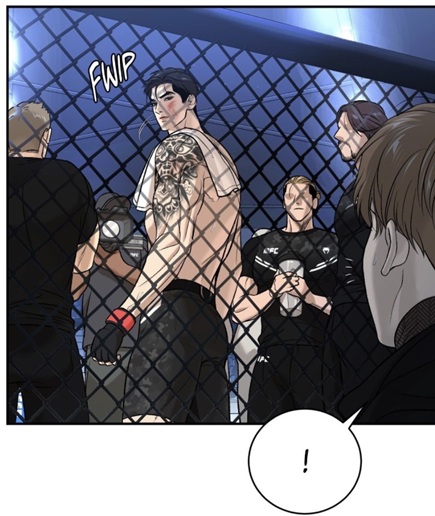 (chapter 87) Chapter 15 quietly introduces one of the most important structural changes in Jinx:
  (chapter 15) Kim Dan’s transition from a private “function” of the jinx into a visible presence within the audience itself. At first glance, the scene appears insignificant. The arena is immense, saturated with blinding lights, cameras, and noise. Joo Jaekyung stands at the center of a gigantic machinery of spectacle that elevates him into the untouchable figure of “the Emperor.” At this stage, readers are still encouraged to view him primarily as a public myth sustained by victory, fame, and domination.
And yet something changes the moment Kim Dan enters the stands. For Joo Jaekyung, Kim Dan slowly becomes what we might call:
a crowd of one.
Before Paris, approval came from conquest itself. The cheers of the audience 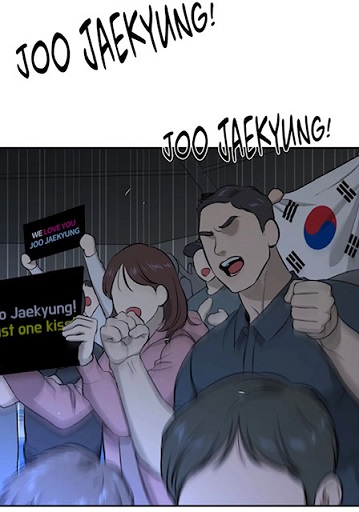 (chapter 15), the fear of opponents, the attention of cameras, the authority of the CEO, and the symbolism of the championship belt all participated in validating Jaekyung’s existence. The Octagon was not simply a workplace. It was the symbolic center of his identity.
But once Kim Dan begins watching him fight from the side, the emotional hierarchy quietly shifts. The roar of the stadium slowly fades into white noise.  (chapter 40)
This transformation becomes unmistakable in Chapter 87. (chapter 87) Mingwa deliberately changes the visual framing. Instead of emphasizing the scale of the arena, she places Joo Jaekyung behind the chain-link fence while a camera lens continues filming the “Champion” in the background. Yet Jaekyung himself looks beyond the camera entirely. His attention bypasses the world in order to search for a single face.
Then comes the deceptively simple question: 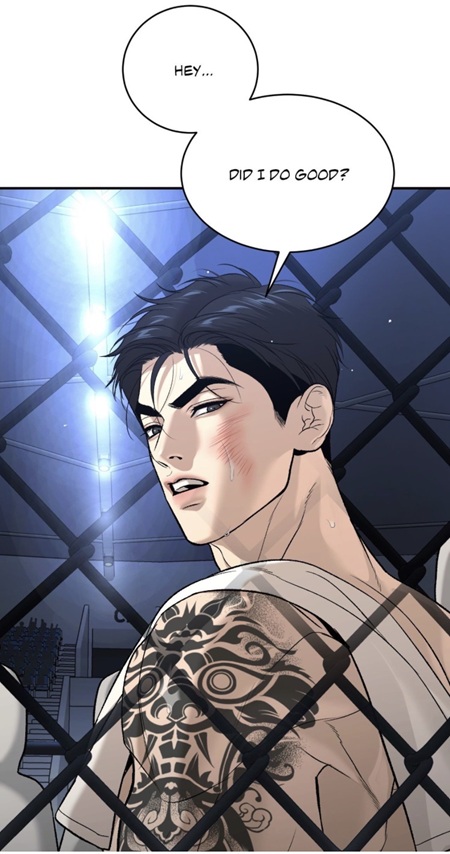 (chapter 87)
Psychologically, this moment marks a point of no return. Joo Jaekyung is no longer performing for twenty thousand spectators. He is seeking Kim Dan’s approval specifically. Public admiration has already begun losing emotional value because it is automatic, repetitive, and unconditional as long as he keeps winning. Kim Dan’s reactions, however, remain uncertain, emotionally complex, and therefore meaningful.  (chapter 87)
Paris therefore functions as the silent diagnosis of Episode 99. Long before Baek Junmin calls him “loverboy”, (chapter 99) Joo Jaekyung has already begun emotionally abandoning the arena. The “Emperor” slowly hollows out from within because another identity quietly begins taking shape beneath it:
the lover.
And this is precisely why Episode 99 feels so unsettling. (chapter 99) Once the fight against Baek Junmin ends, Joo Jaekyung behaves almost as though the Octagon itself no longer exists psychologically. He does not celebrate. He does not acknowledge the audience. He does not look at the championship belt. He ignores the interviewer. Even the CEO becomes irrelevant. Instead of remaining beneath the lights as the symbolic center of the spectacle, he walks away immediately.
This refusal profoundly unsettles the public because spectators expect ritual closure. A champion is supposed to stand proudly beneath the lights, receive the belt, address the crowd  (chapter 40), and transform violence back into entertainment. The spectacle depends on emotional resolution in order to preserve itself. But Joo Jaekyung refuses this transition entirely. He leaves the violence unresolved and emotionally raw. (chapter 99)
This rupture becomes visible even in Park Namwook’s reaction afterward. Earlier in the story, Namwook constantly spoke about Joo Jaekyung with possessive familiarity 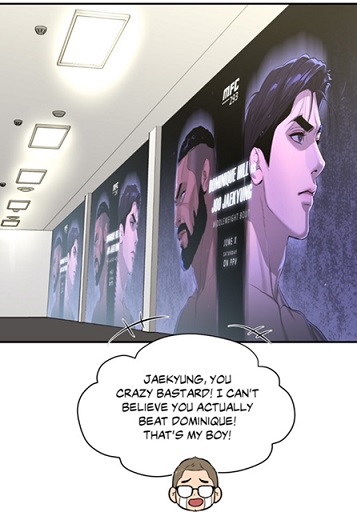 (chapter 40), treating him almost as “his” champion to manage, interpret, and direct.
 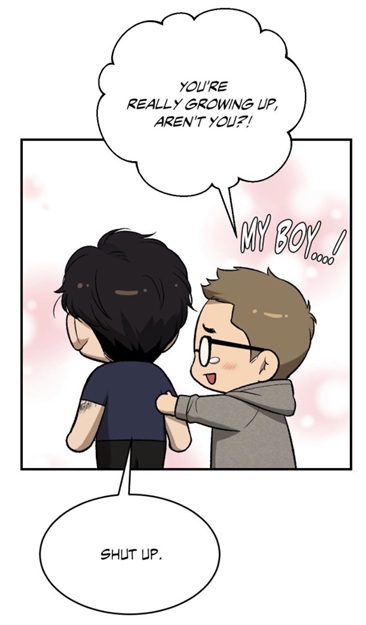 (chapter 88) But in Episode 99, his praise suddenly feels hesitant and emotionally uncertain.
 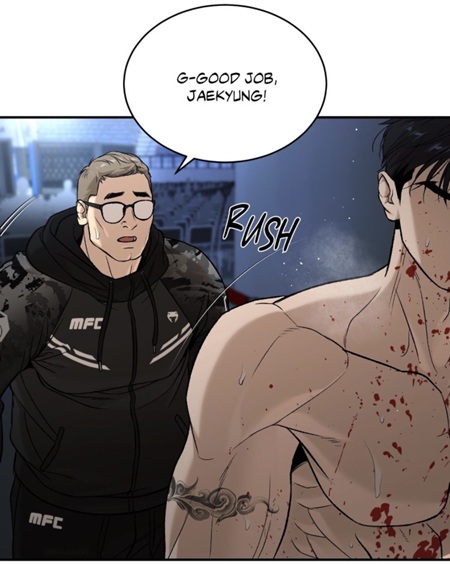 (chapter 99) The stutter in “G-good job, Jaekyung!” alongside the visible sweat drop transforms what should have been a triumphant moment into an awkward and deeply uncomfortable interaction.
Namwook instinctively rushes toward the champion as though trying to restore the old ritual structure of victory: praise the fighter, normalize the violence, and emotionally transition the spectacle back into professionalism. Yet Joo Jaekyung no longer participates in this structure at all. He does not emotionally return to the arena, the manager, or the system surrounding him.
For perhaps the first time, the manager appears confronted with something he cannot interpret, regulate, or emotionally reclaim. The discomfort visible on his face suggests an unconscious realization that the champion standing before him no longer truly belongs to him and the world of the Octagon anymore.
And this is where the “Crowd of One” dynamic becomes crucial. (chapter 99) Baek Junmin intended the “loverboy” insult to make Joo Jaekyung appear emotionally small, weak, dependent, and pathetic. Ironically, however, the insult produces the exact opposite effect. Instead of diminishing him psychologically, it radically compresses his emotional universe until everything outside Kim Dan disappears completely.
The crowd loses meaning.
The CEO loses authority.
The championship belt loses symbolic value.
Even the identity of “the Emperor” begins collapsing.
Only Kim Dan remains. And paradoxically, this narrowing of the world is exactly what makes Joo Jaekyung so terrifyingly effective inside the cage. (chapter 99)
Earlier in the series, he always fought amid psychological noise.  (chapter 75) The expectations of others, the father’s ghost, the burden of hierarchy, fear of emotional weakness, public image, and the pressure to sustain the Emperor identity all occupied space inside his mind simultaneously. Part of him always remained divided between the immediacy of the present and the weight of the past.
But in Episode 99, that noise disappears completely. (chapter 99) By trying to weaponize Jaekyung’s attachment, The Shotgun inadvertently strips away the ghosts that had governed him for years. The father’s lingering shadow, the burden of legacy, and the fear of vulnerability all collapse beneath a single emotional imperative:
protect Kim Dan and his dignity.
And once this happens, Mistrust or doubt becomes impossible. (chapter 99)
This is why the fight appears almost inhuman to spectators. The audience and the moderator witness a fighter who no longer seems connected to the ordinary emotional economy of sports entertainment. 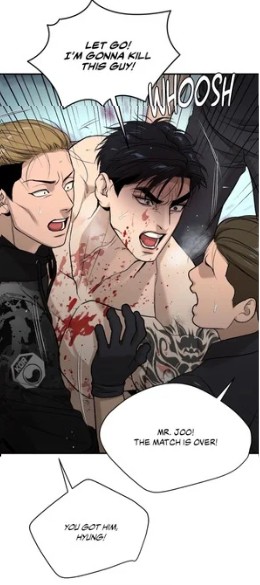 (chapter 99) There is no vanity left inside him, no desire for applause, and no hunger for symbolic recognition. The crowd cannot understand what it is witnessing because Joo Jaekyung is no longer fighting for public validation at all.
He is fighting for someone specific. That is also why the booing carries such narrative importance. Earlier in the story, crowd approval still mattered  (chapter 15) because the audience helped sustain the identity of “the Emperor.” But by Episode 99, the crowd has already lost its emotional authority over him. The boos therefore sound strangely hollow. They belong to a world Joo Jaekyung has already abandoned internally.
This is also why Mingwa’s depiction of the crowd earlier in Episode 99 becomes so significant retrospectively. 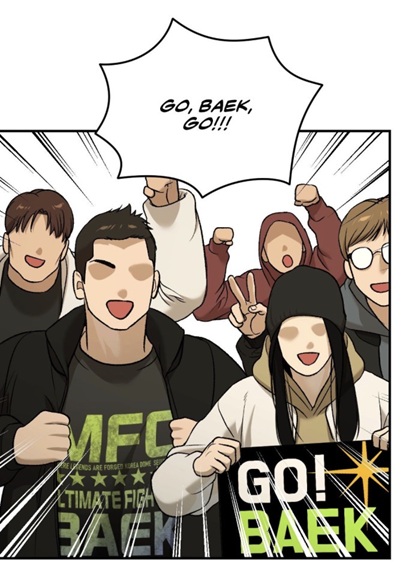 (chapter 99) Before the match begins, both groups of supporters remain visibly divided. Some cheer passionately for Joo Jaekyung
 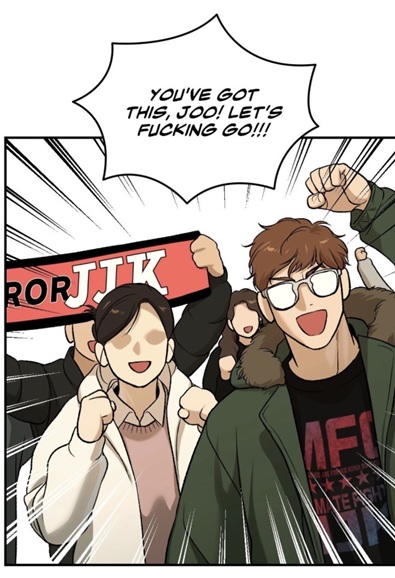 (chapter 99), while others support Baek Junmin with equal enthusiasm. Yet despite this rivalry, the audience still shares the same emotional framework. They participate in the same ritual structure of sports entertainment: choosing sides, anticipating victory, and emotionally investing themselves in the spectacle. But once Joo Jaekyung abandons the belt and walks away from the Octagon, this division suddenly disappears. (chapter 99)
The rival chants collapse into a single unified sound: (chapter 99) In other words, the crowd briefly becomes emotionally unanimous precisely at the moment Joo Jaekyung rejects it entirely.
Symbolically, this reversal is extraordinary. Earlier in the story, the collective audience helped sustain the identity of “the Emperor.”  (chapter 75) But by Episode 99, Joo Jaekyung has already emotionally abandoned that entire system. The boos therefore no longer possess true emotional authority over him. They belong to a world he has already left behind psychologically.
 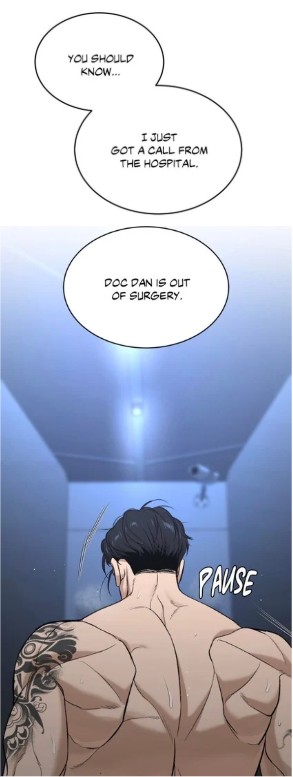 (chapter 99)
Ironically, while the crowd finally speaks with one voice, Joo Jaekyung himself no longer hears it at all. This is why he can leave the championship belt behind without even turning around. For years, the belt represented worth, hierarchy, legitimacy, and survival. In Episode 99, however, Joo Jaekyung silently chooses a fragile human body over the indestructible gold object waiting for him inside the cage. 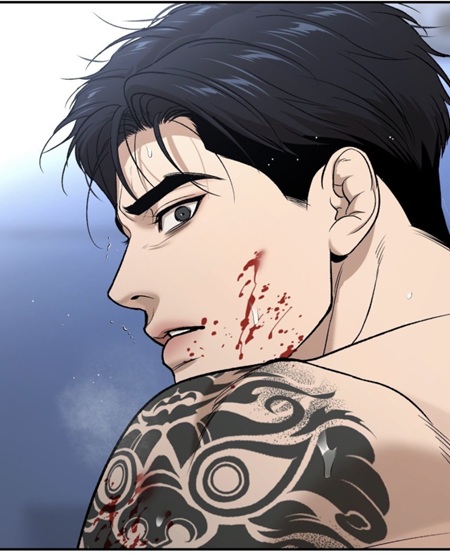 (chapter 99)
In other words, the insult intended to diminish him emotionally ultimately liberates him from the need to remain “the Emperor” at all.
The Ghost in the Ring
This emotional transformation explains why Joo Jaekyung appears so deeply unsettling throughout Episode 99. Mingwa repeatedly depicts him with shadowed or completely obscured eyes (chapter 99), while the backgrounds dissolve into blackness, fragmented speed lines, and empty space. The visual language of the chapter gradually strips away the surrounding world until only the violence remains visible. At first glance, this eyeless imagery makes him appear monstrous, detached, and almost inhuman. Yet the deeper irony is that the opposite is actually happening.
Joo Jaekyung is not emotionally absent because he enjoys the brutality of the fight. He appears ghost-like because emotionally he no longer wants to be there at all. This becomes especially important once we remember the scene before the match where he insists: 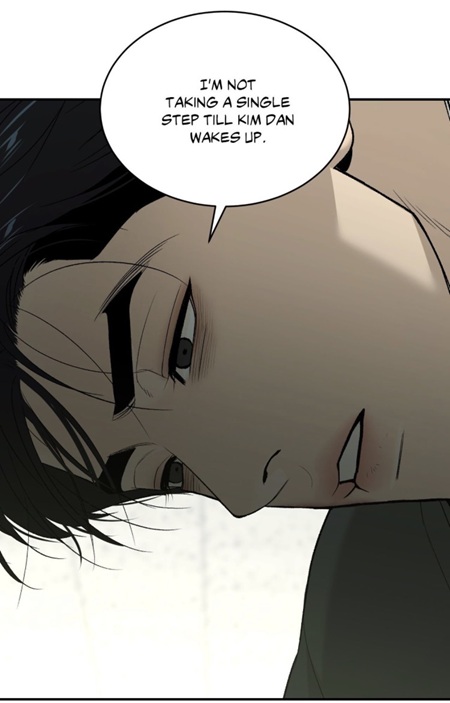 (chapter 98) That sentence completely recontextualizes everything that follows afterward. Emotionally, Joo Jaekyung had already chosen the hospital over the Octagon.
 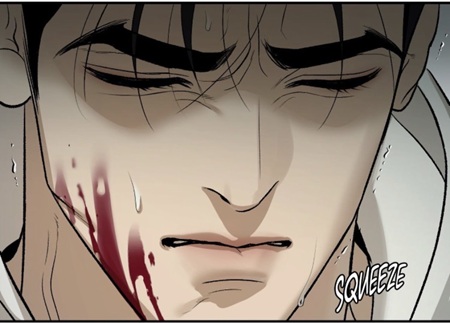 (chapter 98) The cage, once his kingdom, suddenly becomes a place of forced exile. He does not want the lights, the crowd, or the spectacle. He wants to remain beside Kim Dan. He wants proximity, silence, and reassurance. But the system surrounding him — the match, the organization, the expectations, and the machinery of professional fighting itself — forces him back into the arena before Kim Dan regains consciousness.
And this is precisely why he begins resembling Kim Dan himself. 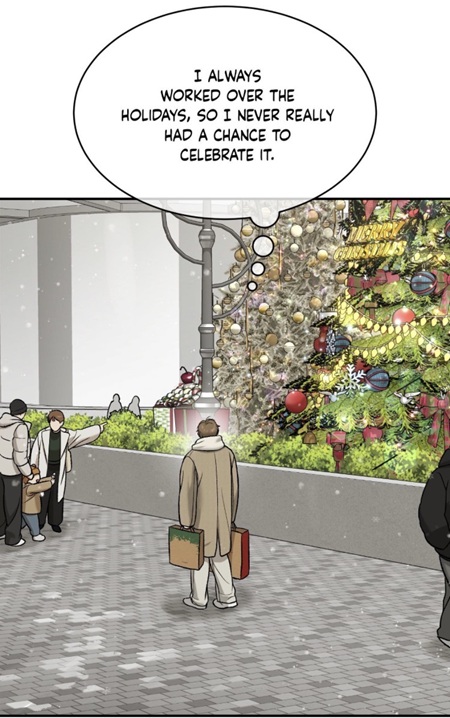 (chapter 97) Throughout the series, Kim Dan lived like a ghost. He erased himself emotionally and physically in order to survive.
 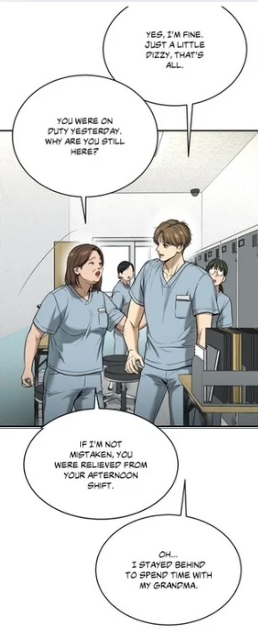 (chapter 57) He exhausted his body for others, suppressed his own emotions, accepted humiliation silently
 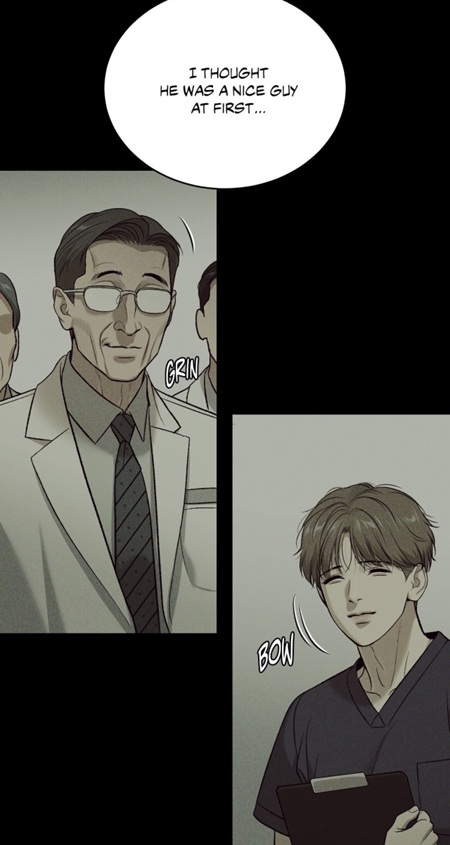 (chapter 90), and reduced himself to a functional object rather than a full human being. He moved through life almost invisibly, enduring suffering while abandoning parts of himself in the process.
In Episode 99, Joo Jaekyung briefly enters the same existential state. Hence he is not allowed to talk to the journalists before the event. Inside the Octagon, his body continues fighting, striking, calculating, and destroying with terrifying precision, but emotionally he has already left the arena behind. (chapter 99) Hence he is determined to finish this match as quickly as possible. His heart remains in the hospital room beside the unconscious man lying in bed. In this sense, the fight becomes profoundly uncanny because Jaekyung’s body operates almost independently from his emotional presence. Years of training allow him to perform absolute violence almost automatically. Baek Junmin is therefore not facing ordinary rage or uncontrolled fury. He is facing a perfectly functioning machine whose operator is psychologically somewhere else entirely.
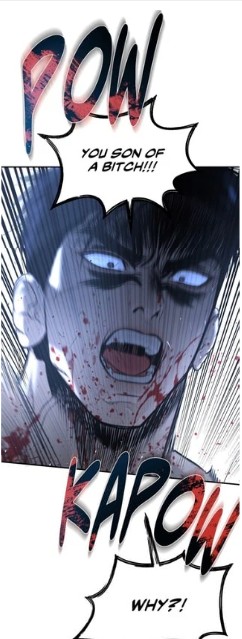
And yet Episode 99 also contains brief ruptures where the “ghost” inside the cage suddenly reveals the human being still trapped within it. One of the most striking moments occurs when Joo Jaekyung screams: (chapter 99) At first glance, the panel appears to depict pure rage. His face is distorted, his eyes are wide open, and the violence reaches an almost frightening intensity. But even here, Mingwa carefully avoids portraying him as a man lost in uncontrolled fury. The strikes remain terrifyingly accurate. His body does not flail blindly. Every movement continues targeting Baek Junmin with surgical precision. (chapter 99) This distinction matters enormously.
Joo Jaekyung is not fighting like someone consumed by chaos. He is fighting like someone whose emotional world has collapsed into a single unbearable question. Why?
The scream therefore functions on multiple levels simultaneously. (chapter 99) On the surface, he is condemning Baek Junmin directly for his choices, for the assault, for the cruelty, and for reducing Kim Dan to collateral damage within a world governed by greed, hierarchy, and spectacle. But the question also reveals something deeper psychologically. For perhaps the first time in the series, Joo Jaekyung openly confronts the absurdity of the system surrounding him.
Why is he inside a cage fighting for a championship belt while the person he loves lies unconscious in a hospital bed? Why does this world demand violence, performance, and spectacle at the precise moment when he wants to be somewhere else entirely? Why must human intimacy constantly be sacrificed to sustain the machinery of “the Emperor”? This is why the panel feels so emotionally explosive. The “WHY?!” is not merely directed at Baek Junmin. It is directed at the entire reality trapping him inside the arena.
And this is precisely where the Emperor mask finally shatters completely.
Earlier in the series, Jaekyung’s violence usually remained emotionally controlled beneath layers of arrogance 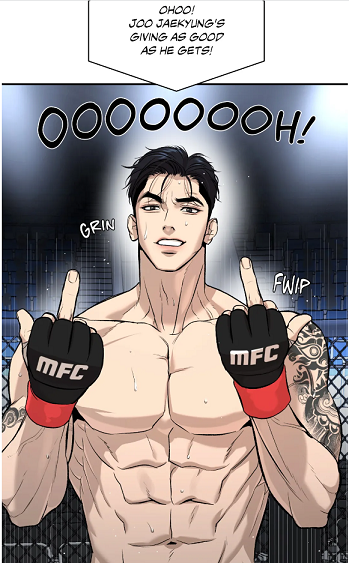 (chapter 15), intimidation, or performative dominance. Here, however, the emotional repression ruptures openly. Yet paradoxically, the loss of the mask does not weaken his precision. Instead, his years of training allow his body to continue functioning with horrifying efficiency even while his emotional state reaches a breaking point.
The result is deeply uncanny. His body performs violence automatically, almost mechanically, while his emotions remain entirely concentrated outside the cage. Mingwa reinforces this visually by stripping away the arena itself. The backgrounds dissolve into white speed lines and empty space until only Jaekyung and his target remain visible. The audience disappears. The spectacle disappears. Even the Octagon itself begins losing visual substance.
The fight stops resembling sports entertainment and starts resembling a private war. (chapter 99)
And this is why the public perceives him as monstrous. Joo Jaekyung no longer participates in the emotional economy of professional fighting. He is not trying to entertain the audience, preserve his image, or embody the symbolic role of “Champion.” To spectators, he appears frightening precisely because the normal rituals of the sport have collapsed entirely.
But the readers understand the deeper irony. The “ghost in the ring” is not a man incapable of feeling. It is a man whose feelings have become so painfully concentrated on one person outside the cage that everything inside the cage loses emotional reality in comparison.
And this is what makes the violence so terrifying. The body continues moving flawlessly, but the person inhabiting it has already departed emotionally. The Emperor’s shell remains inside the cage, mechanically “cleaning up” the threat standing before him, while the human being himself waits elsewhere.
This also gives new meaning to the “loverboy” insult. Baek Junmin intended the word to drag Joo Jaekyung back into the room emotionally through shame, humiliation, and guilt. He wanted to force the champion to confront emotional weakness publicly. Instead, the insult produces the exact opposite effect. By naming him a “lover,” Baek Junmin inadvertently gives Joo Jaekyung permission to stop caring about the Empire altogether.
The emotional hierarchy collapses instantly. The title stops mattering. The crowd stops mattering. The spectacle stops mattering. Only Kim Dan remains psychologically real.
This is why the fragmented speed lines and visual distortions (chapter 99) throughout the chapter become so significant. To spectators, they symbolize the overwhelming speed and brutality of the champion. But psychologically they also resemble static, interference, and white noise. Everything surrounding the fight begins blurring together because, from Jaekyung’s perspective, the world outside Kim Dan has already lost emotional clarity.
Even his eyes disappear.
Earlier in the series, Jaekyung’s gaze defined his identity. His eyes projected intimidation, dominance, confidence, and hierarchy before he even threw a punch. In Paris, however, that gaze had already begun changing direction. (chapter 99) Instead of seeking the crowd’s approval, he searched for Kim Dan’s reactions specifically. By Episode 99, Mingwa removes his eyes altogether because if Kim Dan is not there to watch him, then psychologically there is nothing left worth seeing inside the cage. 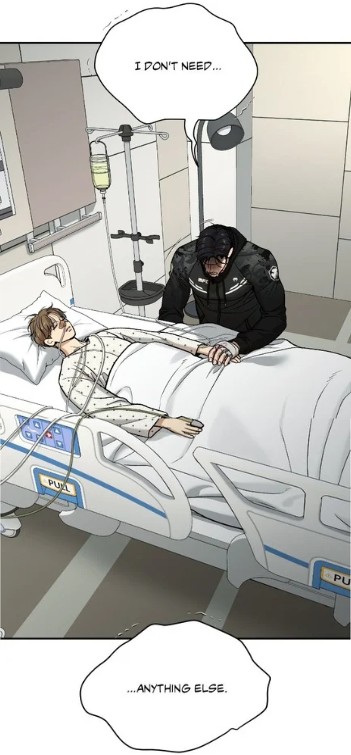 (chapter 99)
And this is why the public completely misreads him.
To outsiders, the eyeless champion appears dangerous, emotionally detached, and frighteningly cruel. They cannot see the unconscious body waiting in the hospital room, the assault that triggered the fight, or the emotional clarity behind the violence. The audience believes it is witnessing a champion who has lost his humanity. But the readers understand something far more tragic. The “ghost” inside the ring exists precisely because Joo Jaekyung has finally discovered something more important than the ring itself.
For perhaps the first time in the entire series, the Emperor no longer wants the arena. He no longer wants the gold, the cheers, the cameras, or the “last laugh.” The ghost in the cage is merely the shell of an Emperor who has already abdicated his throne. What remains is simply a man waiting for another person to wake up. 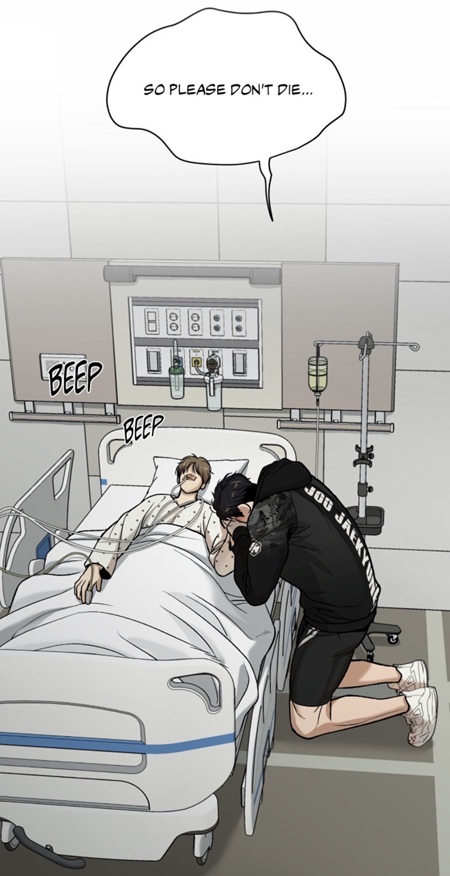 (chapter 99)
The Real Octagon
The true emotional climax of episode 99 does not occur inside the cage. It occurs afterward, inside the hospital room.
The contrast between these two spaces is extraordinary. The octagon is filled with noise, cameras, violence, lights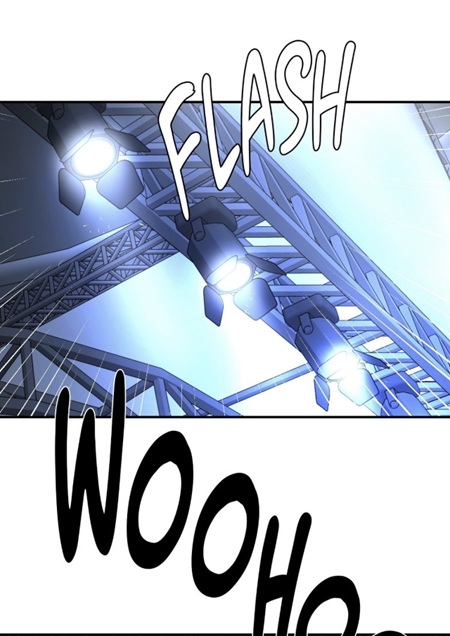 (chapter 99), money, and spectacle, yet everything inside it suddenly feels false. The championship belt becomes meaningless. The real “octagon” is the hospital room. This is where Joo Jaekyung finally stops performing.
Inside the Octagon, his body continued functioning almost automatically. Years of training allowed him to strike, calculate, and destroy with terrifying precision even while emotionally he had already left the arena behind. But the hospital room strips away that final layer of mechanical control. For the first time in the chapter, there is no audience left to confront, no opponent left to destroy, and no role left to perform. Only Kim Dan remains.
And it is precisely this silence that transforms Joo Jaekyung completely. (chapter 99)
Throughout the series, Joo Jaekyung’s relationships were governed by an unconscious fear: the fear that attachment inevitably leads to rejection. His father did not merely punish him physically. He reacted to the child’s very presence with hostility and disgust. (chapter 99) As a result, Jaekyung internalized a devastating emotional logic. Being emotionally needy made him feel unwanted. Closeness became dangerous. Vulnerability became synonymous with humiliation.
This is why his relationship with Kim Dan remained so distorted for so long. Joo Jaekyung constantly sought proximity, yet he hid emotional dependence behind sex, money, possessiveness, irritation, or authority. Genuine emotional need terrified him because emotional dependence implied the possibility of rejection afterward.
And this is precisely why Baek Junmin’s words before the fight were so psychologically destructive: (chapter 99)
“You might never see him again.”
At first glance, the sentence appears to function like simple emotional manipulation designed to induce guilt. But its true impact runs much deeper. For a brief moment, Joo Jaekyung is forced back into the emotional position of the abandoned child once again: the boy not chosen, the boy left behind 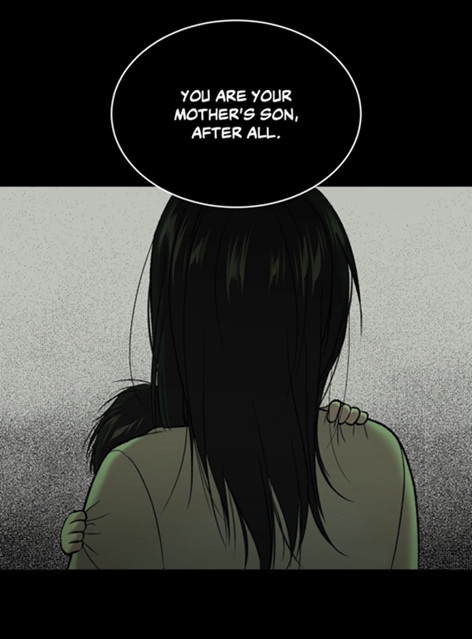 (chapter 73), the boy whose existence ultimately failed to make people stay.
Except this time, something changes fundamentally. Kim Dan cannot reject him. Kim Dan lies unconscious. 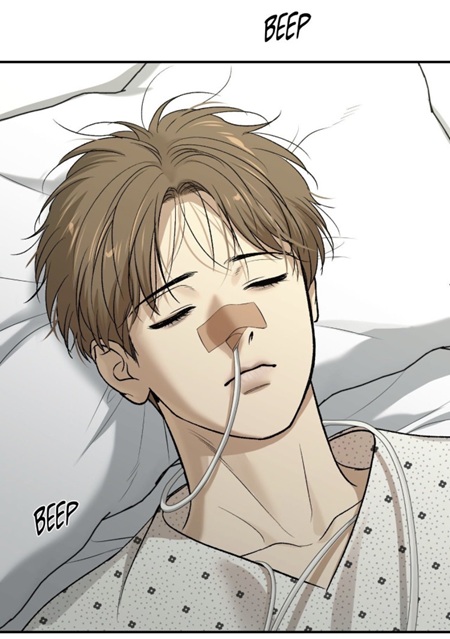 (chapter 99) The feared separation is no longer tied to humiliation, disgust, disappointment, or emotional abandonment. It is tied to death itself. (chapter 99) And this distinction completely destroys the old psychological structure governing Joo Jaekyung’s relationships.
Earlier in the story, emotional distance could still be controlled through anger, domination, emotional withdrawal, or physical possession. 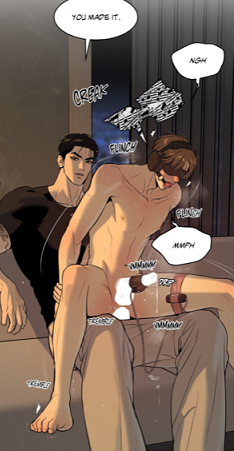 (chapter 34) Pride could function as protection because rejection still belonged to the realm of human choice. But death cannot be negotiated with. Death cannot be emotionally controlled. Death strips away performance, ego, hierarchy, and pride.
This is why the hospital scene becomes emotionally revolutionary for Joo Jaekyung’s character. For perhaps the first time in his life, he experiences attachment without interpreting vulnerability as humiliation. And Mingwa visually announces this transformation even before Joo Jaekyung begins crying. 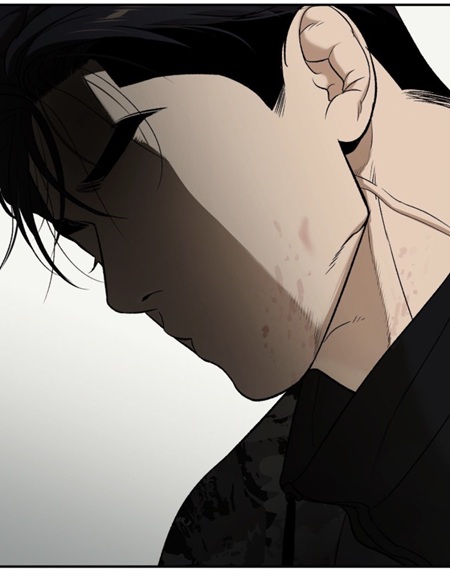 (chapter 99)
One particularly striking panel depicts him in near-complete shadow after the fight. His eyes disappear entirely, but so does his mouth. The visual effect is deeply unsettling because the image no longer resembles the “Emperor” readers have known throughout the series. Earlier in Jinx, Jaekyung’s identity was strongly tied to his gaze, his smile and speech. 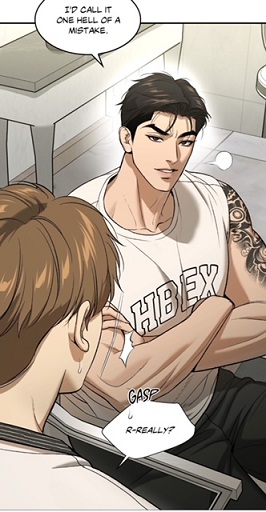 (chapter 41) His eyes projected dominance, intimidation, hierarchy, and emotional control, while his words often functioned as weapons protecting him from vulnerability. But in this moment, both are symbolically erased.
The champion who once controlled others through violence, commands, mockery, and physical presence suddenly becomes silent and unreadable. (chapter 99) This panel therefore functions almost like a metamorphosis.
Joo Jaekyung appears suspended between two emotional states: the ghost-like fighter who mechanically completed the violence inside the cage and the human being about to collapse emotionally beside Kim Dan’s hospital bed. The “Emperor” identity has not merely weakened; it is actively dissolving.
And this is precisely why the following hospital scene carries such devastating emotional weight.
Ironically, Joo Jaekyung can finally speak honestly 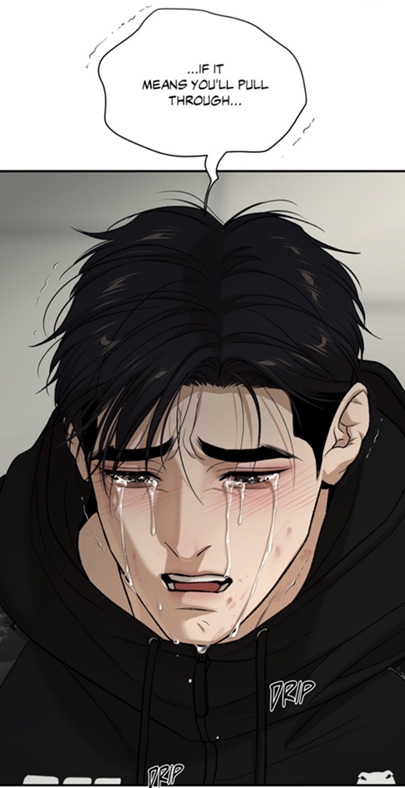 (chapter 99) only because Kim Dan cannot answer him. Kim Dan’s unconsciousness temporarily removes the immediate fear of judgment and rejection that had governed Jaekyung’s emotional life for years. His tears no longer emerge from wounded pride or fear of rejection. They emerge from something much more terrifying and much more human: the fear of irreversible loss.
That’s why his words gain enormous emotional weight. 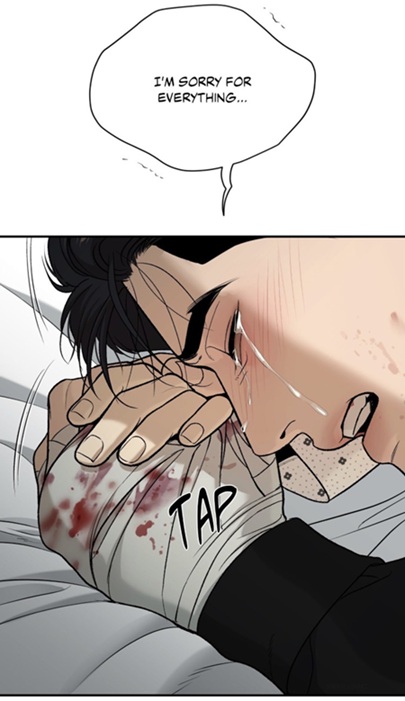
These lines matter because they are entirely stripped of control. (chapter 99) There is no aggression hidden inside them. No transaction. No domination. No pride. The “Emperor” disappears completely in this moment. (chapter 99) What remains is simply a man terrified of losing someone he loves forever. We could say, the tears wash away the “Emperor.”
Why does the wolf become so ruthless inside the ring? Because Baek Junmin accidentally destroys the old fear governing him. The child who feared rejection disappears the moment the possibility becomes death rather than humiliation. Suddenly, protecting Kim Dan matters more than hierarchy, pride, the audience, the title, or even Jaekyung’s own identity as champion. This is why the fight appears so frightening to outsiders. The public sees only violence because they cannot perceive the emotional truth behind it. They witness a ruthless champion abandoning his humanity. But the readers understand the exact opposite. For the first time in the entire series, Joo Jaekyung is not fighting to protect his ego, his title, or the image of the “Emperor.” He is fighting because someone precious might disappear forever.
The Alchemy of Tears
This visual erasure of his features leads to the chapter’s true catharsis. 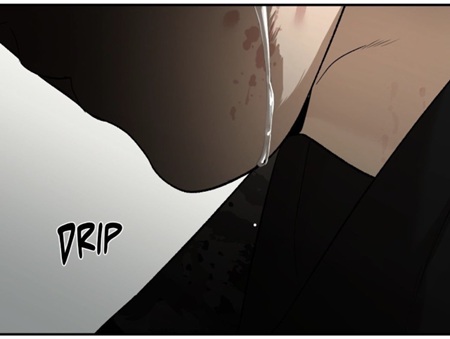 (chapter 99) When the tears finally fall, they carry a symbolic weight that transcends simple grief. Throughout the series, Jaekyung’s body has functioned as a suit of armor—a fortress of hardness, discipline, and emotional immovability. In his world, pain was always displaced; it was never felt, only inflicted upon others through violence or control. He was the man who struck, never the man who collapsed.
But beside Kim Dan’s bed, that armor finally shatters. (chapter 99) For the first time, his agony is not converted into aggression; it is allowed to remain as grief. These tears accomplish what the brutality of the Octagon never could: they return the “Ghost” to his own skin.
This scene represents an emotional rebirth rather than a collapse. The “Emperor”—an identity built entirely on suppression and invulnerability—cannot survive this level of sincerity. 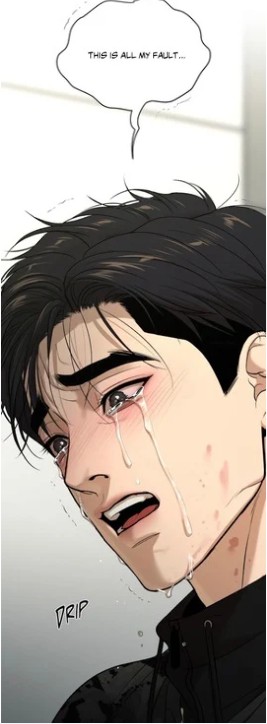 (chapter 99) The tears act as a solvent, dissolving the emotional paralysis that has governed him since his childhood. At the same time, they also allow Joo Jaekyung to confront something he had carried unconsciously for years: the guilt, fear, and emotional burden surrounding his father’s death.
  (chapter 74)
Throughout the series, Jaekyung fought as though strength itself could protect him from becoming his father. 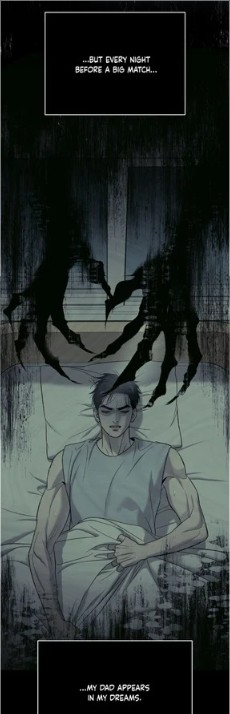 (chapter 75) Victory became proof that he was not weak, not broken, not destined to fail the same way. But this also trapped him psychologically inside the father’s shadow. Every fight became tied to survival, worth, and the terror of becoming a “loser.”
In the hospital room, however, Kim Dan’s possible death suddenly reorganizes his entire emotional world. For the first time, Joo Jaekyung is no longer fighting to justify his own existence through violence or victory. He is simply afraid of losing someone he loves. (chapter 99)
And paradoxically, this finally allows him to stop reliving his father’s death through himself. (chapter 99) The tears therefore symbolize more than grief alone. They mark the moment when the son stops trying to survive through the Emperor identity and begins existing as a human being capable of mourning, loving, and fearing loss openly.
This is why the final irony of Episode 99 becomes so powerful.
The public interprets the champion’s violence as proof that he has lost his humanity. In reality, the tears reveal the exact opposite. Joo Jaekyung cries because, for the first time in his life, he allows himself to love someone more than he fears losing himself.
And that is why Episode 99 does not merely depict the breaking of the jinx.While the public looks at the carnage in the ring and sees a man who has lost his humanity, the readers see the exact opposite. The extraordinary irony of Episode 99 is that Joo Jaekyung has never been more human than in the moment he allows himself to cry. He finally accepts a reality where loving someone else is more important than the fear of losing his own ego. The “Jinx” wasn’t just a ritual; it was a barrier. By breaking it, Jaekyung doesn’t just win a fight—he finally allows the man hidden beneath the Emperor to breathe.
Feel free to comment. If you have any suggestion for topics or Manhwa, feel free to ask. If you enjoyed reading it, retweet it or push the button like. My Reddit-Instagram-Twitter-Tumblr account is: @bebebisous33. Thanks for reading and for the support, particularly, I would like to thank all the new followers and people recommending my blog.


Merci pour le partage ! Toujours aussi passionnant à lire
LikeLiked by 1 person
De rien. Et merci pour le compliment et soutien. Je dois avouer que ceux-là se font rares, donc par moments je me demande si je dois continuer.
LikeLike
I’m going to start reading this just because of your review
LikeLiked by 1 person
Thanks a lot. 🙏😍
LikeLike