

Please support the authors by reading Manhwas on the official websites. This is where you can read the Manhwa: Jinx But be aware that the Manhwa is a mature Yaoi, which means, it is about homosexuality with explicit scenes. Here is the link of the table of contents about Jinx. Here is the link where you can find the table of contents of analyzed Manhwas. Here are the links, if you are interested in the first work from Mingwa, BJ Alex, and the 2 previous essays about Jinx Wheels 🛞 and Waves 🌊〰 -part 1 and Wheels 🛞 and Waves 〰🌳 – p️art 2 (locked)
It would be great if you could make some donations/sponsoring: Ko-fi.com/bebebisous33 That way, you can support me with “coffee” so that I have the energy to keep examining Manhwas. Besides, I need to cover up the expenses for this blog.

When you look at the illustration, your eyes are immediately drawn to the broken mirror at its center. As you can imagine, the cracked reflection, fragmented and distorted, is essentially referring to our protagonist Kim Dan. The broken mirror echoes Kim Dan’s shattered self-esteem. It is a visual representation of his inner dialogue: the doubts, fears, and insecurities that have long dictated his life. His reluctance to assert himself  (chapter 36), his tendency to retreat rather than challenge his own doubts
 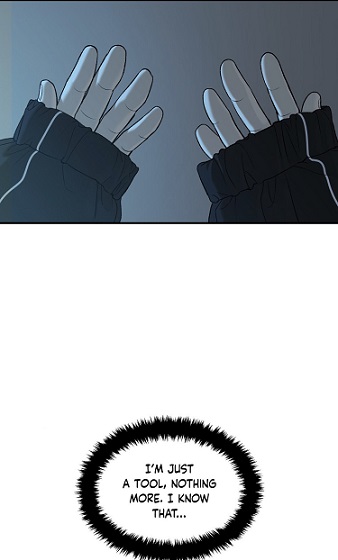 (chapter 36), and his overwhelming fear of disappointing others
  (chapter 51) are all reflections of these internalized obstacles. Recognizing them as external impositions rather than intrinsic truths is the first step to breaking free. That’s the reason why in the reflection of the broken mirror, you can detect an open window in the background. By focusing too much on his reflection, the physical therapist is trapped in his own negative world. One could perceive it as the opposite version of Narcissus. Yet rather than falling in love with his image, he sees only his flaws, reinforcing his belief that he is unworthy. The open window suggests an escape, a possibility for change, but the problem is that the main lead is too fixated on his shattered self-perception to pay attention to his surroundings. Hence he comes to neglect his own body and people next to him.
The Weight of Unseen Chains: Mental Barriers
The mental obstacles we impose upon ourselves can be some of the most difficult to overcome. In the article “The mental obstacles you put on yourself to stop moving forward” Jennifer Delgado explains that these barriers often originate from the voices of significant figures in our past. They can be parents, teachers, or even childhood bullies who shaped how we see ourselves.
‘If you pay attention to some of the phrases you say to yourself when this inner dialogue is triggered, you will realize that these phrases do not belong to you and, if you look into your past, you will find their true owner. Quoted from The mental obstacles you put on yourself to stop moving forward”
Kim Dan’s struggles reflect this reality, just as Joo Jaekyung’s nightmare  (chapter 54) suggests he too is haunted by such internalized voices. Under this new light, you comprehend why I wrote in the introduction that the broken mirror was mostly alluding to the doctor. Both protagonists are suffering from mental hurdles, trapped in a psychological prison. The significant difference is that while Kim Dan is consciously recognizing his self-doubt
  (chapter 62), Joo Jaekyung does not. The evidence for this interpretation is the champion’s nightmare: (chapter 54) Instead of realizing the words stem from an external source, an abuser from his past, he sees them as a reflection of his own fears and inadequacies. This explicates why he chose to drink. This terrible vision illustrates how internalized criticism functions: it feels personal, nonetheless its origins lie in past experiences. Both Kim Dan and Joo Jaekyung are trapped in cycles of learned helplessness, shaped by voices that do not truly belong to them. Their self-doubt was not inherent; it was shaped by the expectations and criticisms of those around them. Striking is that Mingwa let us see how these mental obstacles are born. Observe that
  (chapter 18) the doctor (chapter 36) repeated the exact same words than his boss. This means that , the doctor internalized these limiting beliefs, thinking that he was not in a position to speak up or assert himself. This explicates why he had to convince himself that he was just a tool to the athlete. This explicates why at the end, he returned the champion’s jacket. The athlete never recognized him as a stan either. Simultaneously, the athlete was also the physical therapist’s emancipator, because he encouraged him to improve his skills and knowledge
 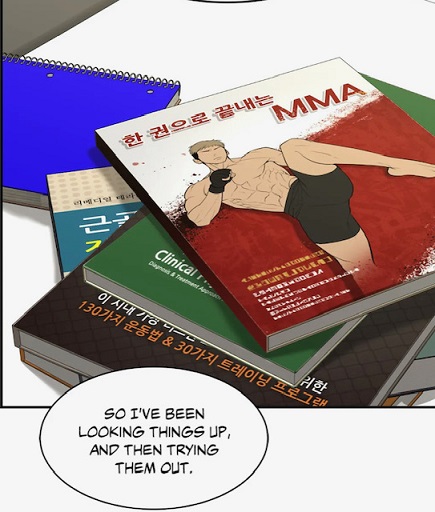 (chapter 25) Therefore the physical therapist bought books. Moreover, we should consider this argument
  (chapter 45) as a revocation of the star’s statement in episode 18. Kim Dan was no longer perceived as a tool, but as a real physical therapist. On the one hand, this request boosted the “angel’s ego”, on the other hand, he was put under immense pressure, for he was compared to his colleagues.
 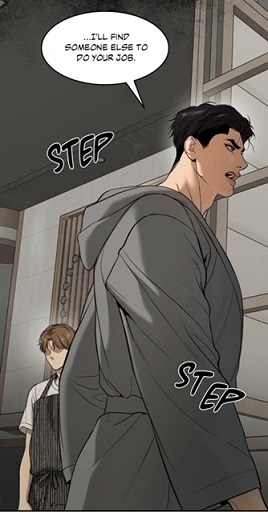 (chapter 45) Since in Seoul, Kim Dan has only been hired because of sex (Joo Jaekyung, the perverted hospital director)
 (chapter 6), he came to accept that he was not truly talented. The champion had no trust in him and later, the word jinx triggered a repressed bad memory.
  (chapter 62) Due to his bad past experiences, he concluded deep down that his CV was not reflecting the truth.
 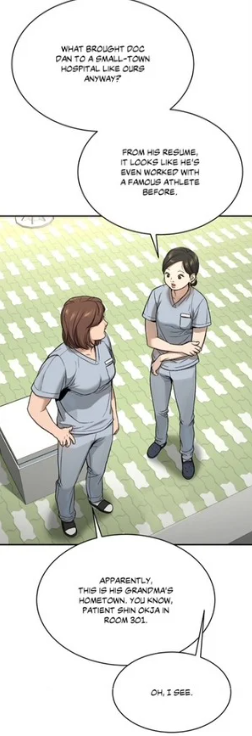 (chapter 56) That’s the reason why he was devaluing himself and as such not looking for a high position.
In her article, the psychologist outlines three primary mental barriers that keep individuals from moving forward:
- It’s not the right time – The belief that circumstances must be perfect before taking action, leading to perpetual hesitation.
- I’m not an expert – A sense of inadequacy that prevents people from trying, despite having the capability to learn and grow.
- I will surely fail – A deeply ingrained fear of failure that discourages risk-taking and reinforces insecurities,
Striking is that in season 1, we could detect these three mental obstacles in the physical therapist’s life.
His unwillingness to defy Joo Jaekyung’s dismissal in episode 48  (chapter 48) exemplifies this pattern:
  (chapter 48) It was not the right time. He assumed his voice held no weight, reflecting years of learned helplessness. It shows how Kim Dan internalizes responsibility for things beyond his control. He thinks that withholding information is an act of protection rather than avoidance. Yet in doing so, he denies himself agency in his own life.
This aligns with Delgado’s argument—these limiting beliefs were not inherent truths but external influences that he internalized, preventing him from asserting himself. Thus I deduce that Kim Dan has unknowingly adopted his grandmother’s behavior—withholding information under the justification of “protecting” others. Therefore it is not astonishing that her grandson treated her the same way. He already concealed many things from her in order to protect her, and she was his only role model. Just as she concealed things from him (like her true feelings, the absence of the parents or even the way she spoke about him behind his back), Kim Dan did the same to Joo Jaekyung in episode 48. His rationale in this scene mirrors her method of control through omission.
Season two of Jinx only intensifies these self-imposed constraints. I noticed that the switched spray incident 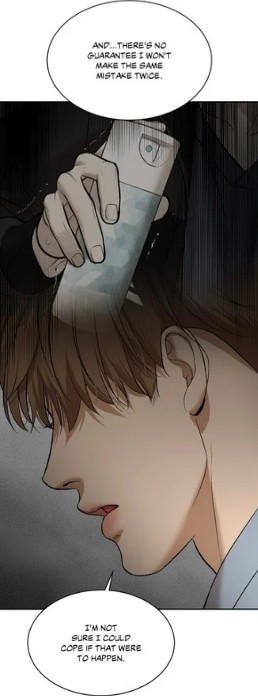 (chapter 62) completely devastated Kim Dan’s already fragile self-esteem.
 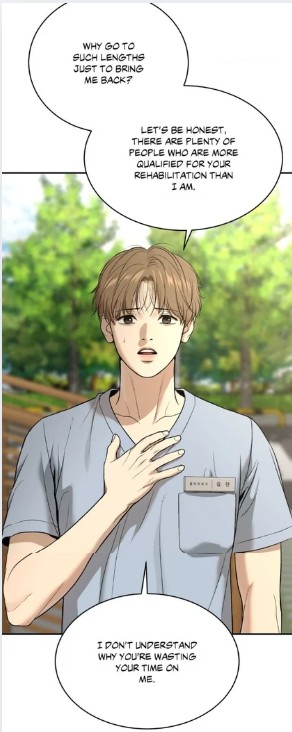 (chapter 62) First, he considers himself as waste. While in the past, he was at least a tool, he is now garbage. Hence his feelings are “trash”.
  (chapter 62) This means that in episode 62, he felt worse than in episode 18! The idioms “trash” and “waste” revealed the doctor’s own self-perception in episode 62: he saw himself as totally useless. He belonged to the “wastebasket”, just like the golden key chain.
  (chapter 46) Thus I deduce that the fate of this item echoes the doctor’s.
But let’s return our attention to his transformation in season 1. He was making progress thanks to Joo Jaekyung’s trust, but that one moment undid everything. (chapter 51) When he realized that the champion didn’t put his faith in him, he lost his motivation. This observation reminded me of the main lead’s previous statement. 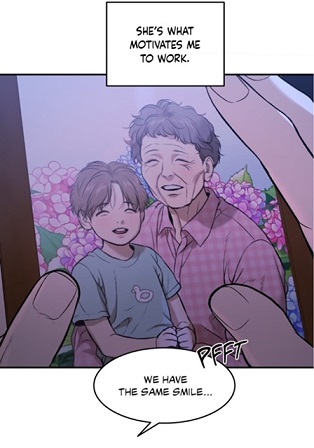 (chapter 47) He had selected this profession because of her. This shows that until now, he has never developed any ambition on his own. The loss of faith from someone he relied on for motivation made him feel completely worthless. This reinforces that his confidence and sense of direction were never self-sustained: they depended on others’ recognition. This pattern suggests that Kim Dan has never truly asked himself what he wants. His entire existence has revolved around meeting expectations, whether from his grandmother, Joo Jaekyung, or even his profession. His current crisis—feeling like waste—stems from the realization that without someone to validate his worth, he sees himself as nothing.
One might question this statement because of this scene: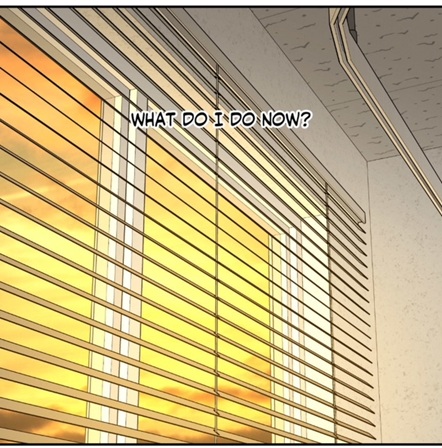 (chapter 59) However, observe that he is using the expressions “do” and “now”. This has nothing to do with the future and dreams. It is not a reflection on his own desires but rather an immediate reaction to his circumstances. His mindset is still trapped in survival mode, seeking a course of action rather than contemplating what he truly wants. His words reflect an urgency to act rather than an opportunity to dream. This highlights that he has spent his entire life making decisions based on necessity rather than personal fulfillment. Even when faced with uncertainty, he does not ask himself what he wants—only what he must do next. His transformation will only be complete when he begins to question not just how to survive, but how to live on his own terms. That’s how I realized why Mingwa put this question in front of the window covered with Venetian blinds [which made me think of this scene
  (chapter 39 – Venice, a travel to Italy]. The window with the Venetian blinds represents a metaphor for the doctor’s trapped dreams. This interpretation made me recognize another aspect. Kim Dan is pushed to meditate, when he is front of a window or better said close to the sky! Hence the hamster started thinking about his own future in the penthouse
 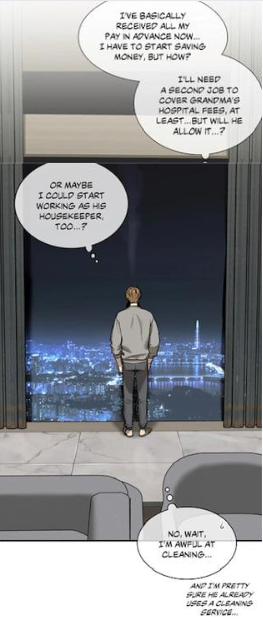 (chapter 19) or when he looked at the sun and sky:
  (chapter 41)
 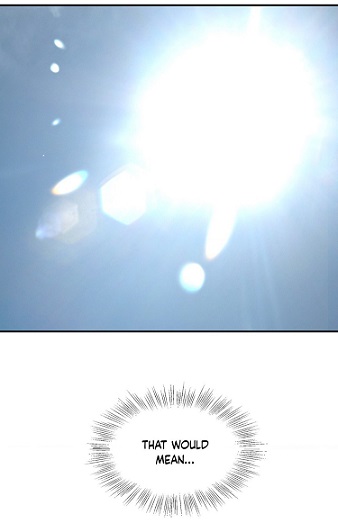 (chapter 41) And the best evidence for this interpretation and expectation is doc Dan’s cellphone screen display.
  (chapter 38) My avid readers will certainly recall that clouds embody dreams! Why? It is because in verity, doc Dan is a dreamer, an ambitious man. What caught my attention is that his contact Joo Jaekyung was not saved with a picture!! And what had motivated Kim Dan in the past?
  (chapter 47) The picture from his childhood: himself with his grandmother.
  (chapter 66) But the latter was not related to work, but to fun and nature. Striking is that Joo Jaekyung has an empty phone screen display indicating that he has no real dream on his own either:
 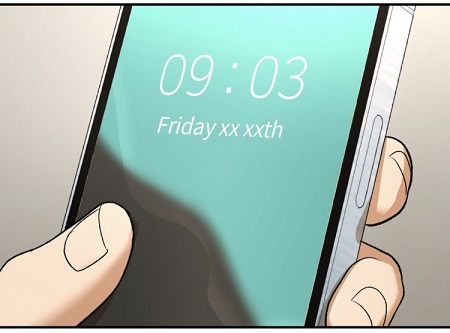 (chapter 38) No wonder why he questioned the meaning of his champion title:
  (chapter 54). He saw the belt as something rather “meaningless”.
To conclude, for the couple to break free from their terrible mindset, they need to find purpose within themselves rather than constantly seeking external validation. But let’s focus more on doc Dan again. This also ties into the broader theme of meaningful praise—instead of being recognized for what he does, he needs to be valued for who he is. How can this take place? By taking a picture together!  (chapter 43) This would boost the doctor’s self-esteem. He is not trash, but an acknowledged fan and friend. The picture would encourage the physical therapist to develop his own ambitions. As soon as I made this discovery, another detail caught my notice:
  (chapter 66) The celebrity has no picture of Park Namwook in his contacts divulging the superficiality of their relationship.
Then in her article, the psychologist mentioned two other mental barriers. “I’m not an expert”. That’s the reason why in episode 42, doc Dan used his colleague to voice his own thoughts.  (chapter 42) The problem is that the athlete took this recommendation personally. He felt as if his job as fighter was questioned.
 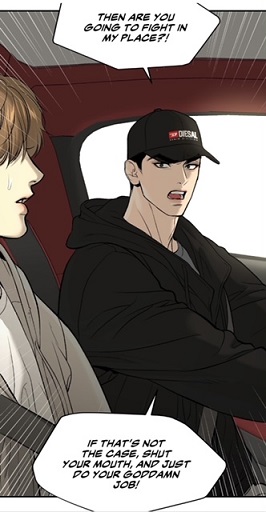 (chapter 42) As you can see, the doctor’s hesitations were exposing his mental obstacles, which was reflected in the champion’s attitude. No wonder why doc Dan chose to become a courier as a second job instead of finding a new VIP client. While the interaction between the athlete and Kim Dan in front of the hospice display the return of doc Dan’s past mental hurdles:
- I’m not an expert (chapter 62)
- It’s not the right time:
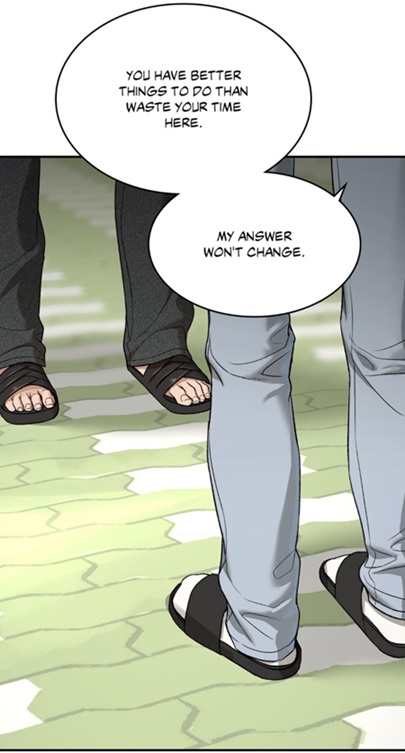 (chapter 62) According to the main lead, the champion is “wasting his time here”.
 - I will surely fail: (chapter 62)
The only difference to the past is that now the athlete could detect the presence of his partner’s negative thoughts. Nevertheless, by examining closely the statements from the main lead, I noticed other mental barriers that people place on themselves, which Delgado did not mention but are still strongly related to the other three:
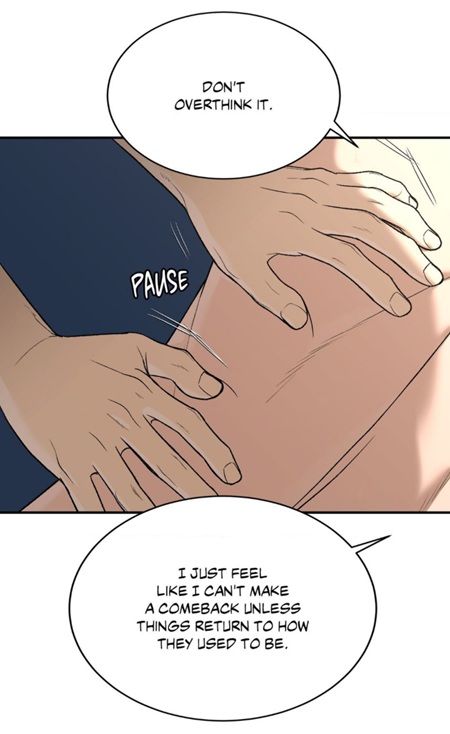
- Overthinking – Kim Dan fixates on past mistakes, questioning every action and thought. (chapter 62) Therefore the athlete tried to persuade his fated partner to accept his offer by saying this: “Don’t overthink”
 (chapter 62)
 - Catastrophizing – He assumes the worst possible outcome, believing another mistake could destroy his credibility entirely. The reality is that he expressed his regret of having used the spray:
 (chapter 57) Hence it is clear that in the future, the physical therapist would refuse to use any kind of spray. On the other hand, it is important to recall that back then, Joo Jaekyung had made the request himself:
  (chapter 49) So in the doctor’s mind, if he agreed to the champion’s request, he would be treated like in the past. He would have to simply to follow the athlete’s lead. That’s why he is imagining that he might be put in a similar situation than in the past. But there exists another reason why he refused the champion’s offer right from the start. It is because he has always perceived himself as “hands” which stand for selflessness and generosity. The latter defined doc Dan. Hence he looked at them, when he declared himself as a tool: (chapter 36) Under this new light, it occurred to me why the hamster had to reject the star’s offer right from the start. It is because he came to identify himself as the “spray”. Hence Mingwa created such panels, where Kim Dan’s terrible memories
 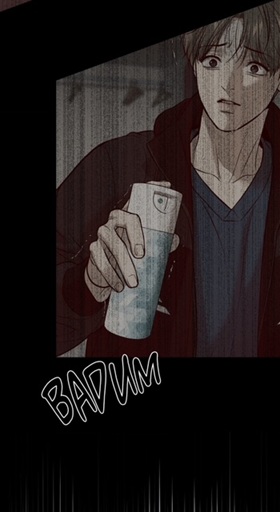 (chapter 57) (chapter 62) are combining the doctor’s hands with the spray. Then a spray is an item destined to be discarded. Is it a coincidence that Kim Dan “switched” places
  (chapter 1) with a previous PT like the spray? No wonder why he called himself “trash” in the end.
 - Preferring the comfort zone – To avoid failure, he tells himself he should step back (chapter 62) and let others handle things, rather than risk making another mistake. His patients at the hospice are all terminally ill, therefore they don’t have high expectations from him.
His belief that others are ‘wasting their time’ on him echoes a deeper conviction—that he himself is waste. By equating attention and care with wasted effort, he subconsciously devalues his own existence, reducing himself to something disposable, like the “poisoned spray”. This mindset aligns with the toxic inner dialogue shaped by years of neglect and emotional suppression. It was the one thing helping him grow, yet now, he questions whether he deserves it at all.
The Dandelion and Praise: A Fragile Symbol
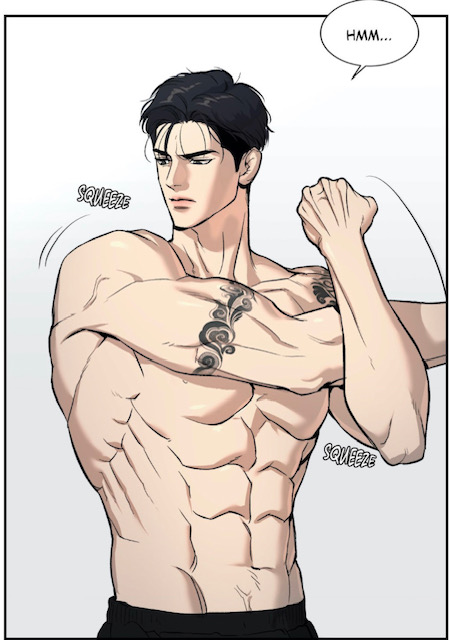
Returning to the illustration  , people might wonder why I selected dandelions as a frame for the selected.. It’s clear that the dandelions aren’t just there for aesthetic balance. Their symbolism is profound. Dandelions are often associated with childhood innocence, wishes, and fleeting moments of beauty, yet they also wither quickly, easily scattered by the wind. In the context of Jinx, they represent a transitory force—something that struggles to take root, much like the intangible and fleeting elements in Kim Dan’s life. But there’s more to it. Before delving into deeper analysis, consider this: what is the common denominator in all these scenes?
| Chapter 1 | Chapter 15 | Chapter 30 | Chapter 31 |
|---|---|---|---|
  |   |  |  |
| Chapter 40 | Chapter 43 | Chapter 56 | Chapter 62 | Chapter 66 |
|---|---|---|---|---|
  | 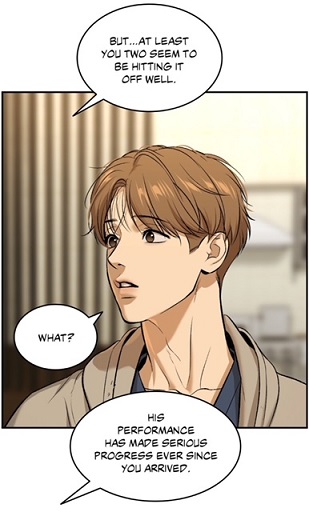 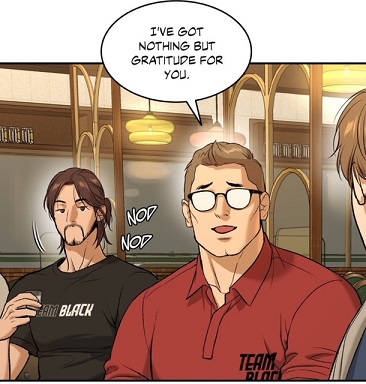 | 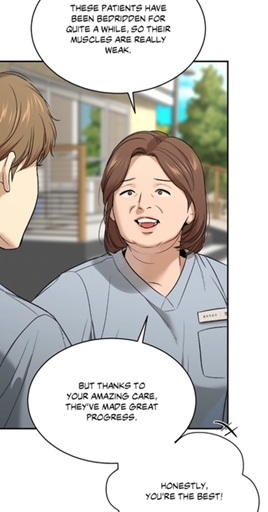 |  |  |
The answer is compliments. However, here it is important to make a distinction. In most of the selected scenes, the physical therapist is the one getting praised. In the actor’s eyes, he is not only an angel, but also the best. But why did he say that? One might say that Kim Dan offered his services for free. LOL! (chapter 31: I will explain this further below) Besides, the manager is saying that the champion’s performance has improved thanks to his presence. Halmoni is describing her grandson as a diligent and hard-working physical therapist. The nurse expressed a similar praise than the comedian. He is the best! All the support he received was linked to his job as physical therapist.  (chapter 37) Therefore it is not surprising that the main lead couldn’t view the members as friends in the end.
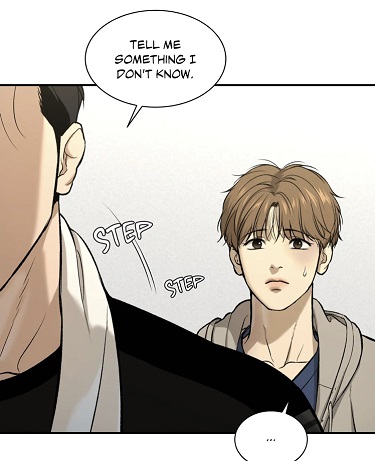
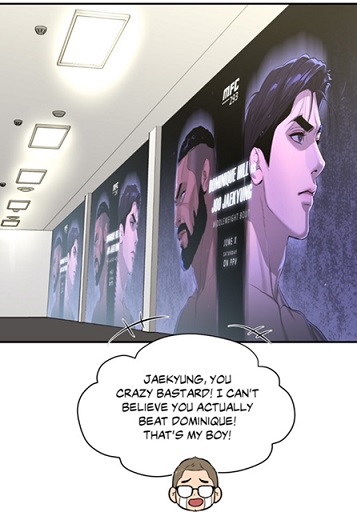
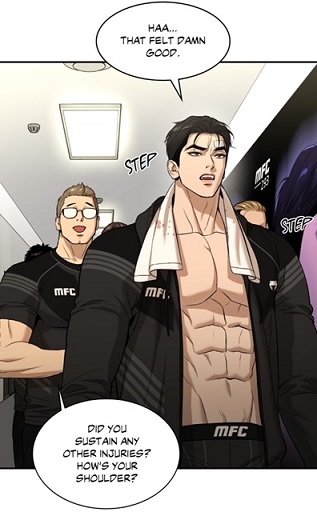
Striking is that I picked up three scenes where the “wolf” came to be praised. In chapter 15, for the first time, the doctor voiced his admiration to the athlete: “You were amazing!” to which the champion responded: “Tell me something I don’t know!” But why did he say this? It is because his manager always complimented him for his performance in the ring: (chapter 40) And now, my avid readers can sense a parallel between Joo Jaekyung’s reply and the title of this essay: “Prove me wrong again!”
Hollow Words: The Illusion of Praise
If we examine the praises Kim Dan receives throughout the series, we could see that these nice words never reached Kim Dan’s soul and heart. But why didn’t they help him to boost his ego? Delgado’s second article, Praise That Completely Destroys Children’s Self-Esteem, offers valuable insight into why:
- Focus on Ability, Not Effort – Compliments like “You’re the best” or “You have amazing care” (chapter 56) emphasize innate talent rather than the effort he puts in. This means that when he fails, he interprets it as proof that he was never truly capable to begin with.
- Exaggeration – The over-the-top gestures, like the coffee truck, feel inflated and insincere. This makes it harder for Kim Dan to genuinely believe in the praise he receives. Besides, there’s no picture of him there.
- Pressure, Not Motivation – Instead of building him up , these compliments raise expectations to an unattainable level, reinforcing his belief that he’s a fraud who will inevitably disappoint.
And now, you comprehend how I came to associate dandelion seeds to empty flatteries. The connection between dandelion seeds and hollow praise lies in their fleeting, weightless nature. Just as dandelion seeds are easily carried away by the wind, hollow compliments—those that are vague, exaggerated, or disconnected from genuine effort—disperse without truly taking root in the person they are meant to uplift. They may seem pleasant in the moment, but they fail to provide real nourishment or stability for self-esteem. Hence Potato’s admiration couldn’t move the athlete’s heart and mind:  (chapter 41) And now, you comprehend why Joo Jaekyung has always disliked his birthday and the “congratulations” from people in general. The gifts and words were like poisoned praises to his soul. They were pushing him to live like a “god”.
Dandelions are often associated with impermanence, a plant that thrives briefly before its seeds scatter, lost to the wind. Similarly, the praise Kim Dan receives—“You’re the best,” “You’re amazing,”—floats around him but never lands deep enough to strengthen his self-worth. It is momentary validation, gone as quickly as it appears, leaving him feeling just as uncertain and fragile as before.
This is why the illustration places hollow praise within the dandelion blooms—it highlights the transient, superficial nature of these compliments. Instead of fostering deep confidence, they merely swirl around him, reinforcing his feeling of disconnect between others’ perception of him and his own self-image.
That’s how I came to the first following conclusion. Dandelions and photographs serve as opposing symbols in Jinx. The dandelion seeds represent fleeting, empty compliments—words that drift away with the wind, never taking root. Conversely, photographs preserve meaningful moments (chapter 66), cementing their value over time. Unlike dandelion seeds, which scatter meaninglessly, photographs stand for memory, permanence, and proof of (genuine) human connection. 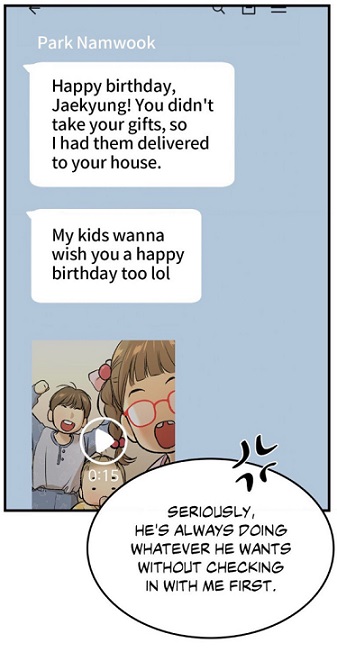 (chapter 45) Kim Dan’s only adult photograph, taken with Choi Heesung and Potato, ties into his professional world, reinforcing how his identity has always been defined by what he does rather than who he is.
  (chapter 59) While this photography was not a personal and intimate picture, it also symbolizes his first root in the little community: Light of Hope Hospice. He is part of the staff and as such of the little town. On the other side, we could say, he is gradually entering the scene as a PT. Note the contrast to the food truck: (chapter 31) There was no picture of “Angel Dan”!! It was, as if the comedian was using doc Dan’s image to promote himself 😮, similar to this scene:
 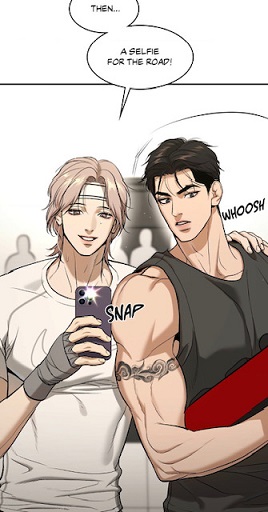 (chapter 30) In other words, it exposes the actor’s hypocrisy and wrongdoings. And now, you understand why I wrote genuine in parentheses above [proof of (genuine) human connection]. Photography in Jinx also represents the evidence of wrongdoing
 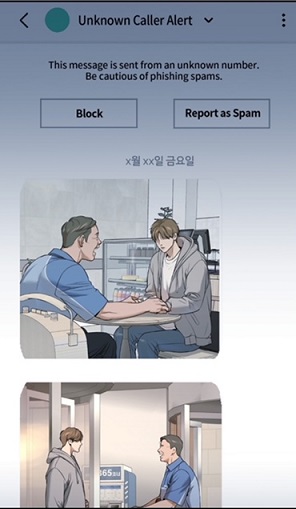 (chapter 48) and deception: (chapter 66) This picture is not just the symbol of innocence and joy, it is strongly intertwined with the vanishing of the parents. There is a secret behind this picture. Yet, for Joo Jaekyung’s, it looks like Halmoni was enough for Kim Dan, as she could make him smile once. The photography, the emblem of civilization, can be traced back, and as such exposes the identity of the perpetrators and accomplices:
 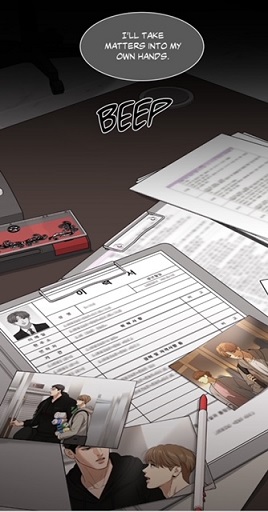 (chapter 46) The exact opposite of the dandelions.
Joo Jaekyung’s act of bringing Kim Dan to the sleep specialist is the embodiment of actions over words. 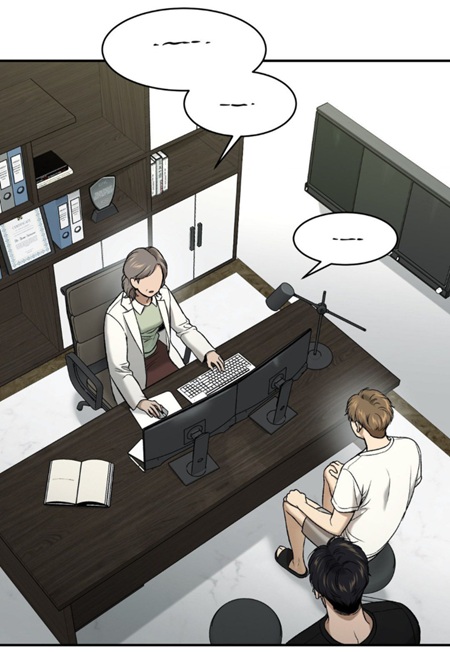 (chapter 66) It is a direct contradiction to the hollow praise doc Dan has received all his life.
 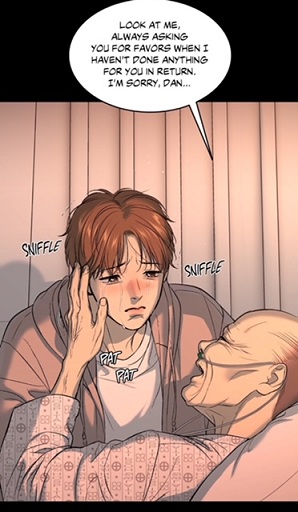 (chapter 53) He was treasurable, for he did favors to his grandmother all the time. Instead of simply saying that Kim Dan matters, the champion proves it. He challenges the physical therapist’s own perception of himself, demonstrating that he is not just useful—he is precious. Secondly by justifying his action for the doctor’s sake,
 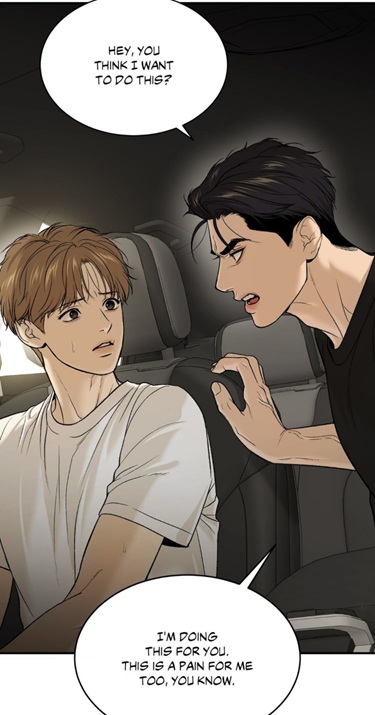 (chapter 66) he contradicts not only Kim Dan’s self-perception, but also his past accusations:
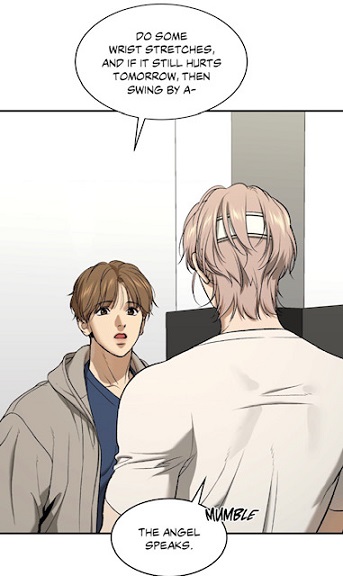
  (chapter 66) that he was merely a tool for Joo Jaekyung’s success. By taking him to the sleep specialist, the champion proves something that Kim Dan had refused to see: he matters beyond his utility. This moment mirrors Joo Jaekyung’s past words— (chapter 15) into an action that Kim Dan never expected, an undeniable truth he can no longer ignore. And keep in mind that this reply was linked to doc Dan’s praise concerning his recent fight: (chapter 15) What Joo Jaekyung wants to hear from doc Dan is that he is a good person outside the ring, he wants to be praised for his good actions too.
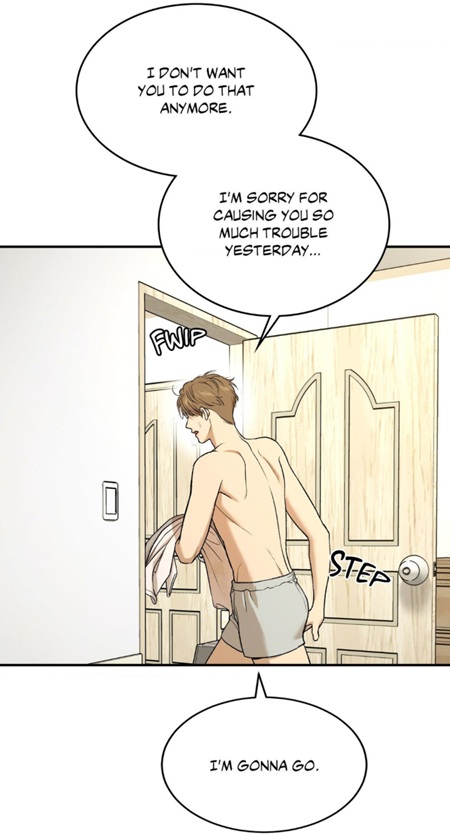
 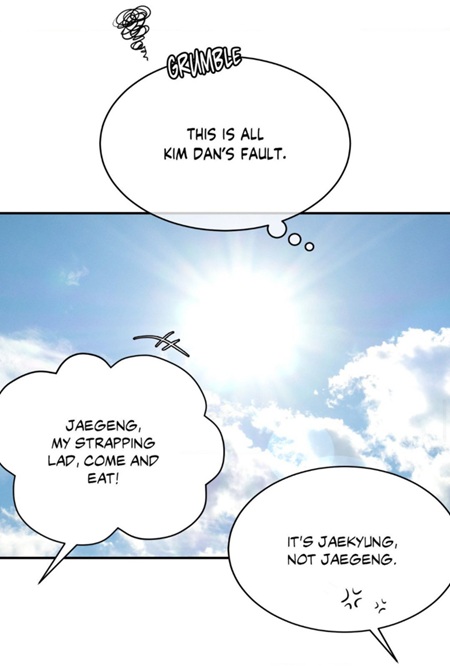 (chapter 62) This shows that deep down, he desires to obtain doc Dan’s gratitude. No wonder why he got so upset after hearing the displeased comment from Kim Dan.
  (chapter 66)
Moreover, the key chain’s presence in the dressing room  (chapter 66) reveals Kim Dan’s elevation in the champion’s life. The dressing room symbolizes privacy and closeness. No longer seen as a mere tool, Kim Dan has become an integral part of Joo Jaekyung’s world, not because of what he can do but because of who he is.
 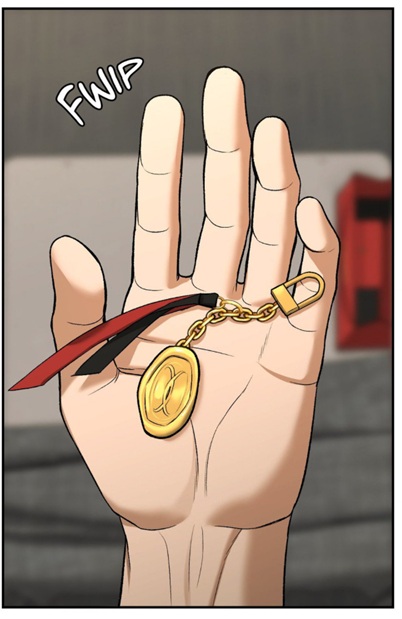 (chapter 66) Therefore the champion is holding the expensive gift with his whole hand contrary to the past:
  (chapter 55) As a conclusion, by bringing him to the sleep specialist, the star proved doc Dan’s words wrong! He told him something that doc Dan didn’t know: he is precious. He needs to pay attention to his health and body.
On the other hand, actions are not enough, in particular for both protagonists. The past words have to be erased, and this can only become effective with encouragement and good compliment. So how should compliments be in order to help the children? For praise to be meaningful, it must be like a deeply rooted plant, not a dandelion seed—grounded in reality, tied to effort rather than ability, and capable of fostering real growth. Moreover, the words have to be specific. Third, the person has to avoid exaggeration and give some motivation, like for example the picture!
The power of words
Mingwa gave us an illustration for a good appreciation: (chapter 66) The champion was praised for doing paperwork. “Good work” was specific, simple and related to an effort. Joo Jaekyung has been patient, diligent and docile in the office. For once, Joo Jaekyung was validated for something outside the ring 😉—something that had nothing to do with his physical strength or his ability to fight. That compliment planted a seed of recognition: his value is not solely tied to his role as a champion. This scene made me laugh because by giving such a flattery, the coach was not realizing that he was pushing his “boy” to take care of administrative tasks. This means that the main lead is destined to become a “white-collar”, a manager!! Kim Dan’s vision should become a reality.  (chapter 32) And now, you comprehend why the athlete didn’t fall for Park Namwook’s manipulations afterwards.
When Park Namwook tells Joo Jaekyung,  (chapter 66) “I don’t know what you’ve been up to lately…”, it carries an accusatory undertone, subtly suggesting that the champion has been avoiding him. By framing it this way, Park Namwook is not just asking about Joo Jaekyung’s well-being—he is asserting his discontent over losing control. His follow-up suggestion, “Instead of being alone all the time, why not come to the gym?”, reinforces the idea that he sees the gym as a tether, a way to keep Joo Jaekyung within his domain of influence. In addition, he is suggesting that the athlete has been using his injury as an excuse to avoid training. There’s an undertone of doubt and accusation, as if he does not fully believe the champion’s recovery process is valid or necessary. Instead of expressing genuine concern, Park Namwook is subtly framing Joo Jaekyung’s absence as a sign of laziness or avoidance. The small compliment from the manager (“good work”) represents a turning point in the athlete’s life. Park Namwook can no longer treat the athlete like in the past.
But there’s more to it. What caught my attention is that days before, Kim Dan had expressed a huge reproach to the athlete: (chapter 66) This criticism represents the negative version of the manager’s flattery. However, Kim Dan’s words left a huge impact in the champion’s mind and heart for one reason. Through his reproach, he reminded the star that he had a life outside the spotlight and ring. One might say that he was blamed for his bad behavior. Nonetheless his words implied that he viewed the celebrity as an adult, accountable for his actions! Jinx-philes will certainly recall that Park Namwook chastised the celebrity as a spoiled child  (chapter 7)
  (chapter 52) Joo Jaekyung was portrayed as someone with a bad temper and personality. The manager was focusing on the ability, was exaggerating and put pressure on him by using his hand! That’s how it dawned on me why Joo Jaekyung could become resistant to Park Namwook’s short and superficial appreciation. Doc Dan’s harsh words served as an antidote to the manager’s tactics. How so? First, Doc Dan brought up the existence of feelings which Joo Jaekyung has been denying all this time. Then he blamed the champion for his actions and not for his character contrary to the manager!! Therefore he left room for Joo Jaekyung to improve himself. The idiom “always” served as a motivation for the athlete. Here, he could change. That’s why Joo Jaekyung, though hurt and angry, didn’t leave doc Dan’s side.
 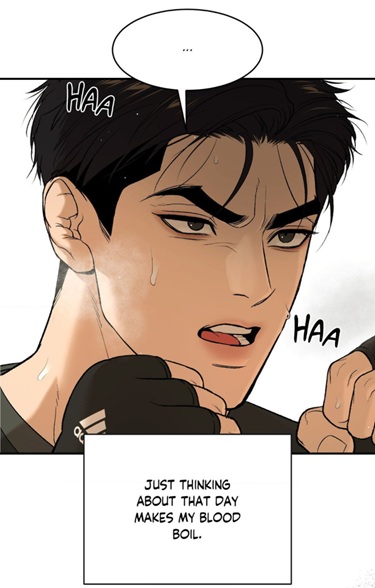 (chapter 65) At the same time, such a disapproval (chapter 64) implies the existence of past hope and expectations. This means that the star has the possibility to revive these buried expectations and hopes by acting differently. By portraying the main lead as a maniac or bad-tempered person, Joo Jaekyung had the impression that he could never change Park Namwook’s perception no matter what he did! The only way to please him was to be in the ring. This was an “immutable truth” which stands in opposition to doc Dan’s criticism (“change”, private life). As you can see, a person can change for the better not because of compliments, but also because of criticisms, a new version of this scene: (chapter 45)
The Impact: A Growing Divide
Striking is that Kim Dan was praised by the protagonist after their first meeting. The champion’s appreciation followed the principles outlined by Delgado: it was specific, effort-based, and motivating. (chapter 1) However, this recognition went completely unnoticed by Kim Dan for three key reasons. First, he was not directly mentioned in the praise, making it difficult for him to associate it with himself. Secondly, Joo Jaekyung didn’t look at him either. Then the star’s phrasing included two negative notions (“not” and “bad”) which subtly diluted the apparent respect behind his words. Rather than perceiving it as validation, Kim Dan likely dismissed it as neutral or indifferent. Finally, it is also important that doc Dan had just made a mistake before 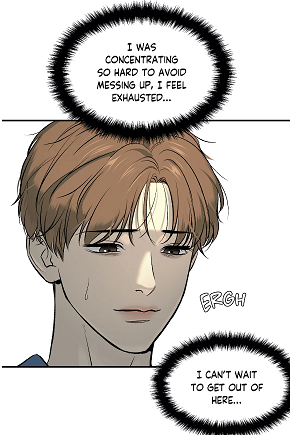 (chapter 1), hence his true desire was to run away from that place. For praise to be effective, the recipient must be open to receiving it, either by looking forward to feedback or having expectations of validation. Since Kim Dan was in a state of distress, he was unable to internalize the champion’s words, reinforcing his long-standing belief that he was invisible or unworthy of acknowledgment. That’s how the champion’s praise became a dandelion seed in the end.
Another important detail caught my attention are the grandmother’s praises. (chapter 53) (chapter 61) They are rather inconsistent and conditional. In front of Joo Jaekyung, she commends Kim Dan for his diligence and productivity, emphasizing his value based on his ability to work and fulfill responsibilities. However, when speaking about him in private or when displeased, she reduces him to his supposed vices—calling him a drinker  (chapter 65) or a smoker, hiding his sacrifices and the true causes for his struggles. Her words reinforce the idea that Kim Dan is only as good as his usefulness, that love and recognition are earned through labor, not freely given.
With such a mindset imposed on him from childhood, it becomes evident why Kim Dan does not allow himself to take breaks or seek joy for himself. Rest is seen as unearned indulgence rather than a necessity, and self-care is overshadowed by the guilt of not doing enough. His grandmother’s approval was never unconditional; it fluctuated based on how well he served her expectations. This pattern of conditional compliment shaped his self-worth, making him feel unworthy of being cared for unless he was constantly proving himself through actions. What makes this even more striking is that the praise Kim Dan receives from others follows the same pattern as his grandmother’s. Whether it’s his colleagues, the actor, the nurses, or even Park Namwook, their compliments are always tied to his work and productivity—his ability to heal, to endure 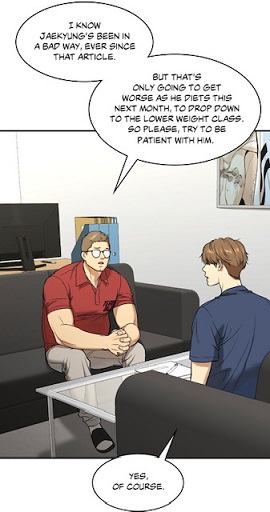 (chapter 36), or to meet expectations. None of these affirmations recognize him as a person, only as a professional fulfilling a role.
Rather than boosting Kim Dan’s self-esteem, these empty praises widen the gap between how others perceive him and how he sees himself. His inner voice, shaped by years of self-doubt, tells him that he is undeserving of these accolades. Without specific, effort-based recognition, he is unable to recognize his own progress, leaving him trapped in an endless cycle of self-doubt.
A Different Kind of Praise
This is why, as I reflected on these observations, I realized that Joo Jaekyung’s praise must be different. It shouldn’t be about Kim Dan’s work at all. It shouldn’t be another generic statement about how great he is at his job. Instead, it should focus on:
- Personal Qualities – His resilience, kindness, or courage, rather than his medical skills.
- Emotional Impact – Expressing how Kim Dan’s presence affects Joo Jaekyung on a deeper level.
- Small Acts – Noticing the little things Kim Dan does—how he cares, how he listens, how he perseveres.
Joo Jaekyung saying something as simple as “I missed your presence in the penthouse” would mean more than a thousand empty compliments. It would tell Kim Dan that he is wanted as a person, not just needed. That he matters beyond his function as a doctor. This is the type of praise that could truly help Kim Dan break free from his cycle of self-doubt.
And what is the favorite expression which comes to the champion’s mind, when he observes doc Dan’s behavior?  (chapter 18)
  (chapter 45)
 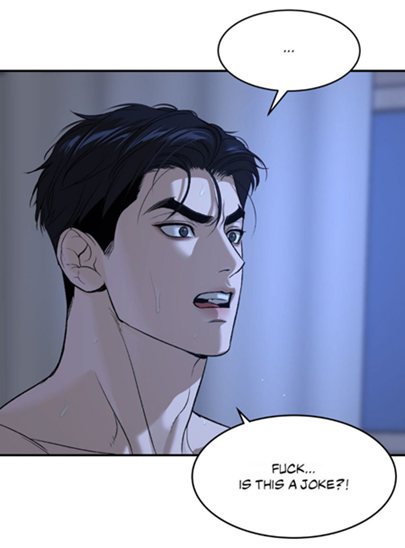 (chapter 64)
 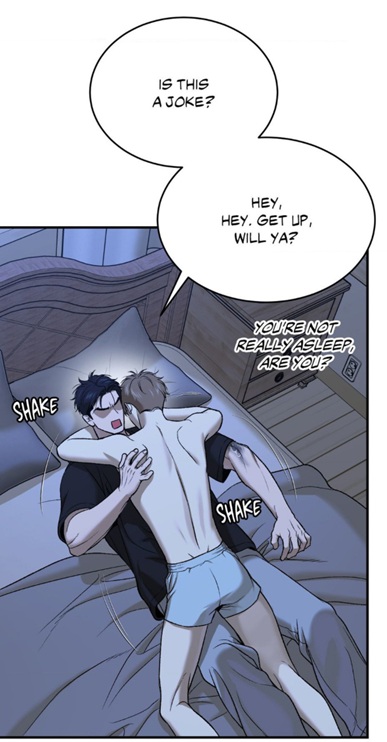 (chapter 66) Is this a joke?
Jinx-philes can notice that the champion is associating doc Dan to a JOKE! The problem is that so far the athlete used this idiom in a rather negative context. Kim Dan made the champion smile and laugh!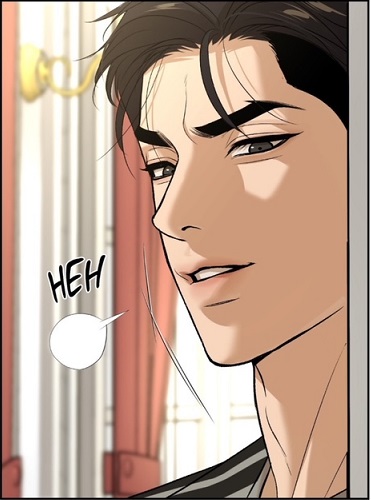 (chapter 40) However, Kim Dan has never realized it. Either he was sleeping or totally out of it (fear of sex)
 (chapter 27) It is important to recall the importance of the receiver’s mind-set. The latter has to perceive the sincerity from the speaker. Hence I come to the following deduction: The moment Kim Dan notices Joo Jaekyung’s smile and laugh, then he should come to the conclusion that he matters to the protagonist. I would even say, the two protagonists are destined to make each other laugh and smile:
  (chapter 44) This would be the best “compliment” for both of them. With Kim Dan by his side, Joo Jaekyung desires to make “jokes”. (chapter 61) No wonder why Shin Okja preferred the champion’s company to her own grandson’s. The latter would ooze such negativity and suffering that his presence reinforced her guilty conscience. His grandmother’s mood got spoiled. On the other hand, Mingwa exposed the existence of fake happiness and fun like in this scene:
  (chapter 58) The friends ignored the main lead’s emotions and struggles. In order to be able to have fun, both main leads must be freed from their past and low self-esteem.
Conclusion: Breaking the Cycle
The title “Prove Me Wrong Again” takes on multiple meanings. On one level, it reflects how Kim Dan’s struggles with self-worth repeatedly override any praise he receives. No matter how much others try to uplift him, his mind tells him otherwise. But on another level, it is a challenge—an opportunity for someone, particularly Joo Jaekyung, to show him that true validation comes from being seen, not just being useful.
Kim Dan does not need grand gestures or overblown words. He needs consistency, sincerity, and reminders that his worth extends beyond his profession. The broken mirror in the illustration reflects the damage done to his self-esteem, but the dandelions? Perhaps they represent the possibility of change—of words that, rather than fading, finally take root. Because the doctor is suffering from depression right now, it is now Joo Jaekyung’s turn to make doc Dan happy, to make him smile and laugh.
Feel free to comment. If you have any suggestion for topics or manhwas, feel free to ask. If you enjoyed reading it, retweet it or push the button like. My Reddit-Instagram-Twitter-Tumblr account is: @bebebisous33. Thanks for reading and for the support, particularly, I would like to thank all the new followers and people recommending my blog.

 Bebebisous33s' analyses in K-Dramaland and Manhwas
“His mindset is still trapped in survival mode, seeking a course of action rather than contemplating what he truly wants. His words reflect an urgency to act rather than an opportunity to dream. This highlights that he has spent his entire life making decisions based on necessity rather than personal fulfillment. Even when faced with uncertainty, he does not ask himself what he wants—only what he must do next.”– This reminded me of this idea I had of Kim Dan defining his value by how much he can work and hence get love in exchange for his usefulness, he has made it a habit to externalize his desires by projecting it on other people. We see Dan do express plans for some kind of future two times aka once when he was hoping Halmoni would praise him for keeping her wedding cabinet. Second when he wished to go to Jeju island with her “to give her much needed relaxation” when we see neither of the things Halmoni ever cared for or has shown desires for. Which could mean the desire to relax in Jeju island and live in home with Halmoni’s wedding cabinet( one of the few things which isn’t looking ugly, broken or faded in the house) are his own desires that he cannot bring himself to own.
He has defined his self worth with ONE person alone and only started to define it with another in season one via Jaekyung. This is why even sincere praises do not effect him when it comes to building his self confidence. It is indeed true that Heesung’s praise was empty for he is more enamored by Dan’s face than his willingness to help him without asking out of excessive kindness, but the praise given by Jaekyung and the Nurse in the hospice definitely build on Dan’s abilities . The difference on why he cannot internalize it like he would Jaekyung’s praises or implications of it later is because the first praise was given when he was not listening /didn’t value Jaekyung as a person and at Hospice, its the same, he doesn’t value his colleagues as friends or acquaintances and hence their praise for his care, which is indeed a skill not just an innate value , didn’t make a dent on his self esteem. This is why sometimes teenagers don’t believe or value praises from their own parents but from their friends because they think parents are innately prone to see good in their own children regardless of their actual value but friends don’t do it always.
So this is why Dan’s self esteem can indeed be rebuild via consistency and praising his efforts but also when he values the person at first, who is giving it aka Jaekyung. Jaekyung has started to rebuild his value in Dan’s eyes again by proving his gaslighting for what it is- an illusion he build it for others and self to justify his self sabotaging his own life. Soon, it can only grow from here for he has to trust Jaekyung again and depend on him to do things right after finally realizing he is making terrible decisions for himself at the moment from misplaced desire for love ( as a need to survive rather than a need for happiness) via coercive and manipulative tactics of accusation that does not match factual situations.
LikeLiked by 1 person
Yes, the presence of a friend would change his perception, but also heal the wounds from the past (bullying). In fact, once he becomes the athlete‘s first true friend, he will distinguish himself from all the others who never valued the „wolf“ as a human, but as a star.
LikeLiked by 1 person