

Please support the authors by reading the Manhwas on the official websites. This is where you can read the manhwa: Jinx But be aware that the Manhwa is a mature Yaoi, which means, it is about homosexuality with explicit scenes. Here is the link of the table of contents about Jinx. Here is the link where you can find the table of contents of analyzed Manhwas. Here are the links, if you are interested in the first work from Mingwa, BJ Alex, and the previous essay about Jinx Sound Of Water (third version)
It would be great if you could make some donations/sponsoring: Ko-fi.com/bebebisous33 That way, you can support me with “coffee” so that I have the energy to keep examining manhwas. Besides, I need to cover up the expenses for this blog.

The trigger for this essay were quotes from “The Art Of Loving”, a book written by Erich Fromm. In my essay “The Art Of Loving” I had already introduced the German-American socio psychologist, psychoanalyst, sociologist and humanistic philosopher, where I presented his definition of love: Care, knowledge, respect and responsibility. However, notice that the title of my analysis is “To give or To Take?”, which was inspired by other books from Erich Fromm: “To Have or To Be?” and “Escape From Freedom”. The reason is simple, the quotes led me to his other theories which give explanations to the origins of unhappiness or happiness. There he outlined the problems of our modern society and gave advices how to lead a good life. This brings me back to the Korean Manhwa Jinx, where (un)happiness is in the center of the story. As the seme and uke are both really miserable despite their different social status. Both believed to be jinxed. The reality is that they were trapped, and their unhappiness was the result of their own bad choices. How would Erich Fromm explain this?
1. Masters and Slaves
In works like Escape from Freedom and The Art of Loving, Fromm suggested that humans often avoid the responsibility of true freedom by conforming to societal norms, seeking authority figures to follow, or focusing on material gains. This “escape from freedom,” as he called it, results in a loss of autonomy and self-awareness, keeping individuals from mastering their own lives. While Fromm believed we have the potential for self-mastery, he cautioned that this requires a conscious rejection of limiting social pressures and a commitment to self-discovery and personal responsibility. Under this new perspective, my avid readers can grasp my selection for the heading. Freedom defines the distinction between a master and a slave—those with freedom have agency, autonomy, and control over their choices, while those without it are subject to another’s will and have nothing to give to others. It highlights how freedom is fundamental to self-determination and power, establishing a boundary between control and subservience.
1. 1. The poor child and dog
And if you read my previous analysis “Sound Of Water “, you should have realized that Shin Okja embodies the slave who chose to escape from freedom. Thus she blamed life and others (“we”) 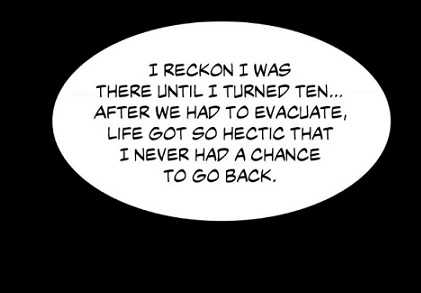 (chapter 53) for not realizing her biggest wish: to return to the West Coast. With her words, she implies that she never had any choice. Hence she is not responsible for her “misery”. However, after reading Erich Fromm’s philosophy, it becomes clear that she must have always followed social norms and listened to authority figures (parents, husband, doctors, …). That’s how she gave up on her own freedom. One might argue that her scoop of maneuver was limited due to her poverty. However, the Mother Of Pearl Wedding Cabinet is definitely expensive and no junk
 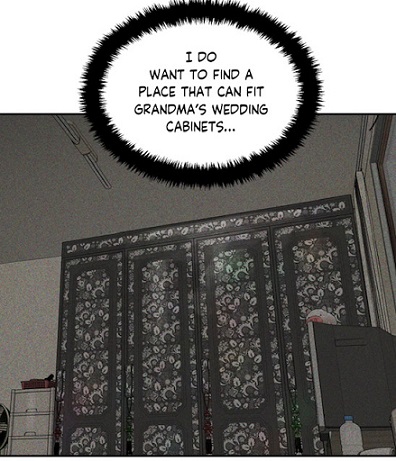 (chapter 16), especially since the latter is rather old. The grandmother could have sold it, but she never did, for the latter has a sentimental value. Consequently, I would say that she had missed her chance, and naturally her misery is the result of her own wrong choices. Under this new light, it becomes comprehensible why the grandmother portrays herself as poor who has nothing to give to her grandchild.
 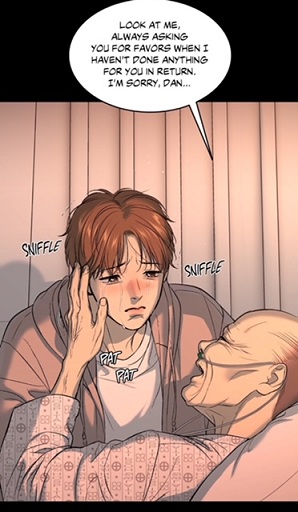 (chapter 53) As a slave, she can not become responsible for Kim Dan and his life. However, she is wrong here again. She was not entirely powerless. She could have talked about her experience with the ocean, she could have loved her grandchild more properly so that Kim Dan wouldn’t have to suffer from abandonment issues and a low self-esteem. Yes, love is something free and no one has control over the emotions of a human being. Due to her lack of self-awareness (Peter Pan Syndrom), she influenced her grandchild negatively, and the latter became a copy of herself: trapped in the past, living in an illusion and rejecting reality. Funny is that by relying on Kim Dan constantly, she was actually teaching her grandson to become accountable and independent. She was entrusting her life into his own hands. Consequently, the main lead chose to accept the deal from Joo Jaekyung during their first night and later asked for a higher salary. Finally, at the end, he chose to leave the penthouse out of obligation
  (chapter 53) (filial duty), a sign that he is not able to break free from social norms. At the same time, it displays that his feelings for Joo Jaekyung are much stronger than the ones for Shin Okja. His short time spent in the penthouse left a deep impression on him.
On the other hand, we shouldn’t overlook one important aspect. The halmeoni asked for a favor from Kim Dan, and her wish is actually the expression of her own will. In other words, she is making a choice and as such becomes responsible for her own destiny. She can no longer say that life or others had a saying in her desire and choice. That’s the reason why during that night, she turned Kim Dan into a puppy dog. 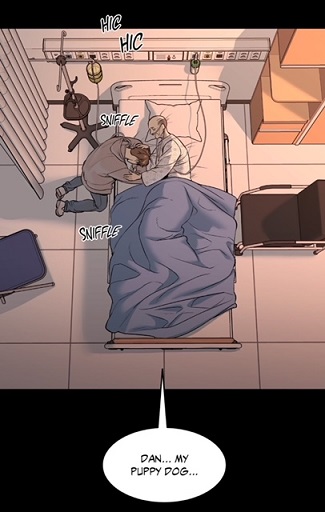 (chapter 53) Her vocabulary exposes that she became a master and in her mind, the puppy dog has to follow her owner. Therefore it is no coincidence that Mingwa created such an image:
  (chapter 53) The grandmother is now the master of her own life and Kim Dan’s. On the one hand, just before her death, she is learning to become accountable for her own life, even though I still have my doubts that she is really realizing the consequences of her choice. She is still chasing after after an illusion. As you already know, I am anticipating a rude awakening fron her part, as she can not escape from reality and her own mortality. On the other hand, with her request, she gets responsible for her grandchild’s career, and someone could criticize her for making him quit. She didn’t take his job’s obligations into consideration. Simultaneously, this image illustrates a relapse of Kim Dan. He is once again trapped, though he wished to be freed. Thus he wrote this to Joo Jaekyung:
  (chapter 53) Deep down, he would like to be recognized as a competent physical therapist. Moreover, my avid readers should recall that the champion had already noticed the change of heart in the doctor before the scheme took place.
 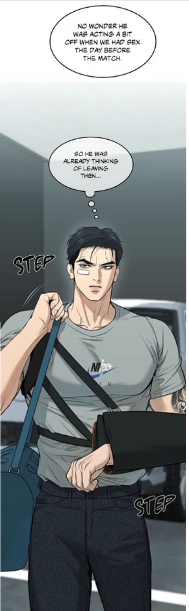 (chapter 53) So the athlete could come to the realization that his departure was related to the grandmother’s sickness and dying wish, a new version of episode 20 and 21. However, even if the fighter helps the grandmother, he can not entirely free the physical therapist. How so? It is because the doctor has to free himself, breaking free from conformity and his own psychological constraints (lack of confidence and as such courage). And the best evidence for his servitude mentality is the absence of his love confession to the athlete. He disguised it behind gratitude.
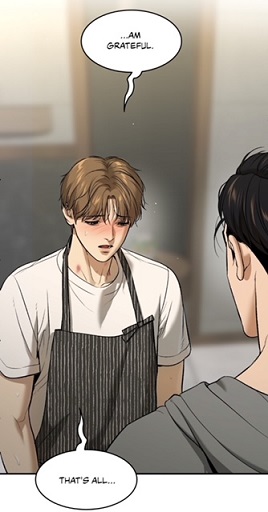 (Chapter 45) But how can he change his condition? I will give the answer below.
1. 2. The release of the rich slave
As you can imagine, the person I am referring behind this heading is the champion. Interesting is that in the story, he received the title “Emperor”. 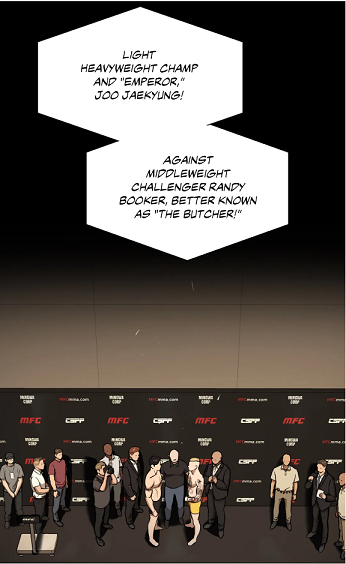 (chapter 14) Yet, the reality is that despite his wealth, he is not free at all. Actually, he reminded me of a Roman gladiator. Gladiators in ancient Rome lived under challenging and contradictory conditions. Although they were often slaves or prisoners of war, some achieved fame, wealth, and admiration comparable to modern-day sports stars. Successful gladiators could earn prizes, attract fan followings, and even enjoy certain luxuries within their restrictive lives. However, they remained under the control of their lanista (manager) or the state, with little freedom to make personal choices. They could not select their opponents or refuse combat, and each fight carried the risk of injury or death, underscoring their vulnerability and lack of autonomy despite their celebrated status.
Most gladiators were enslaved people forced to fight. But a small contingent were free-born citizens who volunteered in hopes of earning money and fame. Before they could enter combat, gladiators trained for months in specialized schools managed by wealthy investors who profited from their fighters’ success.
Contrary to popular perception, gladiators didn’t necessarily battle to the death. Instead, fighting progressed until one of them surrendered, usually by holding up a single finger. All told, only between 10 and 20 percent of gladiators died during matches—a reflection, in part, of their high financial value to investors.
It wasn’t easy for gladiators to stand out. Each warrior fought only two to three times per year, usually in events featuring 10 to 13 gladiator fights, according to Murray—with each individual match lasting about 10 to 15 minutes. But some, owing to their extravagant personalities, personal backgrounds or memorable performances, gained lasting renown via ancient artists or historians. Quoted from https://www.history.com/news/most-famous-ancient-roman-gladiators
This comparison between the main lead and a Roman gladiator reinforced my negative perception about Park Namwook. He acts as the owner of the athlete 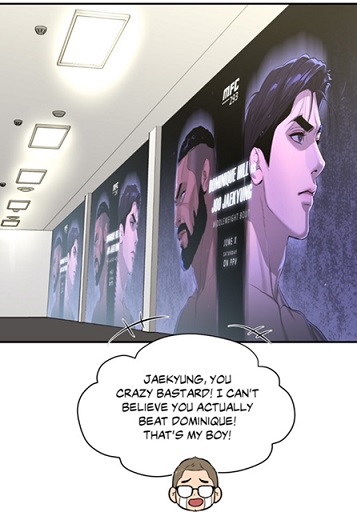 (chapter 40), though the gym belongs to the celebrity. But let’s return our attention to the American-German philosopher. The latter pointed out the importance of self-awareness and the rejection of materialism and social pressures (authority figures, conformity) in order to become truly free.
This aspect is really important, because the athlete Joo Jaekyung is a homosexual which represents a huge taboo in the MMA world. Remember my hypothesis that the jinx could also be an excuse in order to hide his own sexual orientation. 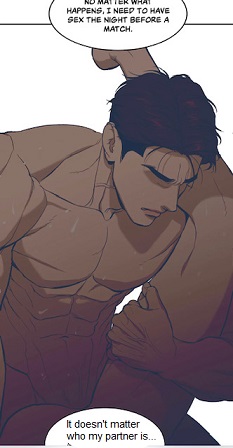 (chapter 2) Therefore sex is linked to prostitution and work. Back then, this had nothing to do with pleasure, sensuality and entertaining. It was revolving around power and domination. That way, he wouldn’t appear as weak, he is not controlled by his sexual desires and emotions. That’s how it dawned on me why the champion has been denying the existence of feelings in his past relationships. Naturally, it is possible that he got his heart broken before, but it is also possible that he could never live out his own true homosexuality. Note that his father figure, Park Namwook, has no idea about his sexual life. The athlete could fear to disappoint him. This raises the question how the manager will react, when the athlete’s secret is exposed. Should he request from his boy to organize a conference and deny the allegation there, he would divulge not only his lack of loyalty, but also his hypocrisy. Why? It is because this is something he should have organized after the last match. A conference to expose the existence of schemes. But everything got swayed under the rug. On the other hand, I deduce that if the topic of sodomy is brought up in season 2, there is no ambiguity that both main leads won’t give in to conformity and external pressure (even in the form of threats). Why? It is because during season 2, both characters will come to be true to themselves. That‘s how they can become master of their own life.
This signifies that in order to go on the past of self-mastery, the champion needs to break free from materialism  (chapter 41), from his manager’s influence (father figure) and even from the MFC world (authorities) !! What is the common denominator between these three persons? MONEY!
 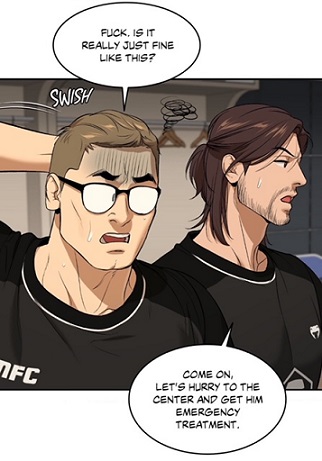 (chapter 50) Hence the last match was not cancelled in the last minute. The athlete is not fighting out of fun and passion, but out of obligation and survival. He is trapped in a world where money is everything. Thus he was always pushed to accept any challenger despite his injuries. That’s how I realized why the athlete always suspected Kim Dan of being greedy. It is because he projected his own thoughts onto his partner. However, this negative perception was definitely influenced by his “hyung”, we have the best example in episode 46. Due to Park Namwook, Joo Jaekyung was the one who was constantly thinking and talking about money in front of Kim Dan.
  (chapter 26) No wonder why he got so surprised by Kim Dan’s reaction in the locker room:
 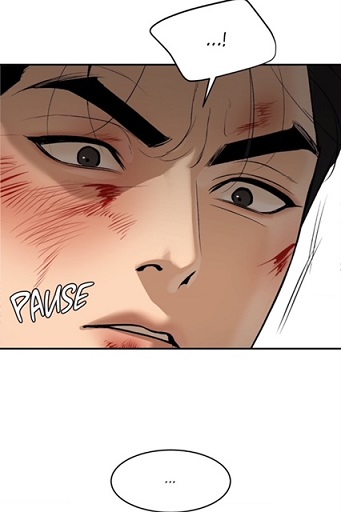 (chapter 51) He was disarmed by a single question and a shocked and disappointed face:
  (chapter 51) The question implied that the doctor had been trusting him.
1. 3. The “lanista’s” chains
We had another perfect example of “Escape from Freedom” in episode 43 at the restaurant. Note that Park Namwook underlined that the fight was the champion’s decision (chapter 43), yet he added shortly this comment: :
 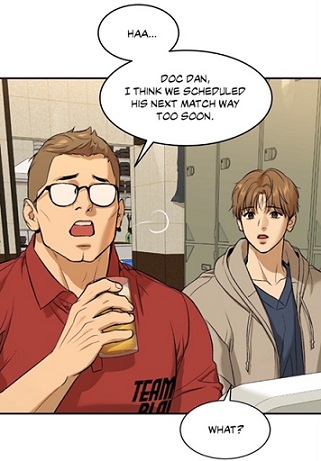 (chapter 43) The hypocrite coach utilized the personal pronoun “WE” indicating that he and his peers had played a role in the athlete’s decision. Funny is that though he complained about the schedule, he still accepted the switch of the fighter later. But he could have voiced his fears and objections. Nevertheless, he did nothing. Since I connected the halmeoni to past, I suddenly realized that the “lanista” embodies the opposite notion. He is trapped in the future, thus he is always anxious. Imagine that in that scene, they were celebrating Joo Jaekyung’s birthday, it should have been a good time. Yet, the manager kept talking about work and the future.
 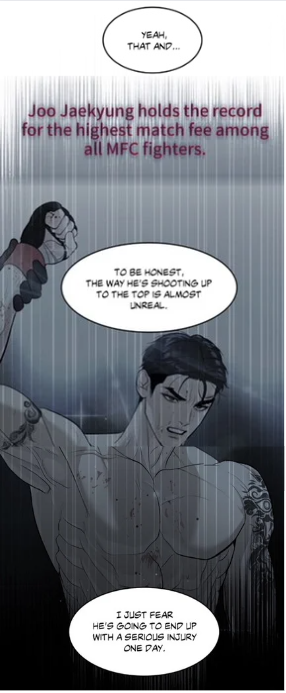 (chapter 43)
  (chapter 43) This is a sign that he was not “enjoying the present”. In my eyes, with his comments, he was actually ruining the party. Fortunately, no one paid attention to his words except the physical therapist and Yosep. By talking like that, he gives the impression that he is caring and paying attention to the fighter. Yet this is just an illusion, for he is not focused on the present. He neglected his duties, therefore the schemers were able to bring drugs to the champion’s rooms.
 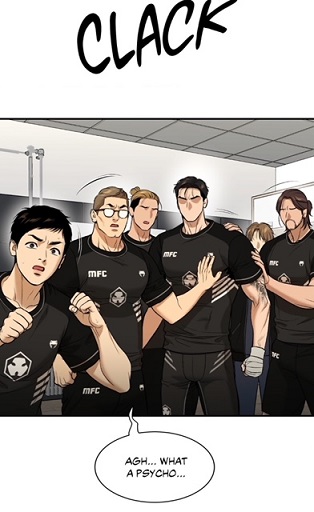 (chapter 49) Notice that he was afraid of an outburst from Joo Jaekyung in the locker room, therefore they were restraining him. This was no real protection. I am suspecting that the manager is trusting MFC and its organization. In addition, his obsession with the future explains why the athlete’s mental health has been neglected by the coach and manager. As a conclusion, Park Namwook is himself trapped in his own world: money, fear of the future and the champion‘s retirement which means the end of his own career as manager and coach. Therefore he is pushing his fighter to race against time. It is only a matter until his boy gets injured!!
This means that we should see the athlete’s suspension as his moment of release. He is no longer forced to fight. He is “abandoned” by MFC, fans and even by his manager 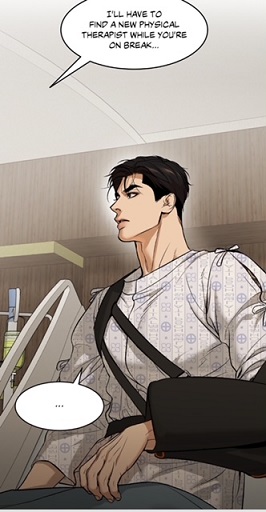 (chapter 53). The latter announces that his “boy” can take a break. What caught my attention is his idiom. The suspension got turned into a break which sounds much more positive. Interesting is that break is not only a synonym for “rest”, but also for “opportunity, chance”. This new discovery reinforces my previous interpretation: the loss of his “title” and his suspension are in verity an escape to freedom. Why? It is because he is no longer exposed to manipulations and external pressure like in episode 36:
  (chapter 36) money, social media, the agency, the lawyer, Park Namwook and Jeong Yosep. For the first time, Joo Jaekyung can think of something else other than work. Nevertheless, the athlete had not realized it yet. Striking is that the longer the fighter thought about the PT’s resignation, the longer he came to object to it.
 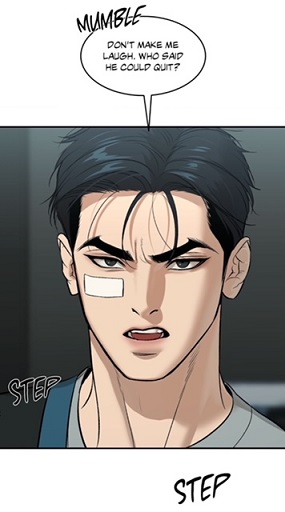 (chapter 53) This means that the fighter was acknowledging the “uke” as an important member of Team Black. In addition, he was recognizing Kim Dan’s effort and talent as PT. Moreover, it exposes the absence of change in Joo Jaekyung’s mentality. He was still “thinking” of work and fighting. It displays that the protagonist had not realized the true signification of his suspension yet. Hence the doctor’s departure was necessary. Joo Jaekyung is forced to think about his fated partner, making him forget his work and his career. His “obsession” with Kim Dan will push him to stop being a workaholic. But there is more to it.
By leaving the city behind (my prediction), the champion’s not aware that this trip will become a spiritual journey where he will discover his true self. But for that, meditation is required. In my opinion, the grandmother’s illness should serve him as a wake-up call. He spent a lot of money on her treatment, but she couldn’t be saved. It looks like he never visited her again. Should he see her again, he could get shocked. From this  (chapter 21) to this
 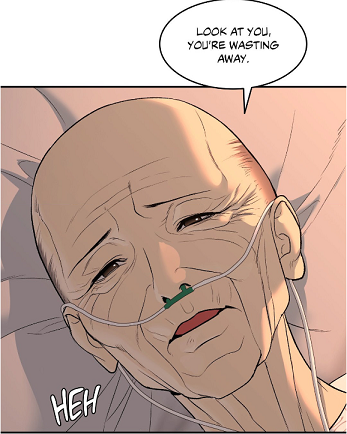 (chapter 47) Money is powerless in front of death and terrible injuries. Therefore he is lucky that his shoulder is not ruined forever. Moreover a trip represents a good metaphor for an escape, a travel is a synonym for freedom and the end of “routine”.
2. The ability to love
Far away from medias, public eyes, the agency and his manager, he can discover a different world: the West Coast and nature. And this brings me to a quote from Erich Fromm:
Paradoxically, the ability to be alone is the condition for the ability to love. (The Art Of Loving)
Through this statement, we have the explanation why Joo Jaekyung can love and why he couldn’t love Kim Dan properly in season 1. The fact that he lived alone in the penthouse is a proof of his independency  (chapter 35). However, since he didn’t spend much time in his own home, he never took the time to take care of his soulmate. By leaving the city and Team Black behind, he would become truly alone (as opposition to his trips to Busan, the States) which would give him an opportunity to become more honest to himself and to Kim Dan.
In addition, this quote exposes the absence of “unconditional love” from the grandmother. (chapter 53) So far, she could never be alone, she always needed the assistance of others: Kim Dan, the doctor, the nurse, Joo Jaekyung. She always relied on others (“we”, “life”). But it is also the same for Kim Dan who has always been listening to people, as his desire was to get accepted. His conformity led him to experience misery, as he lacked critical thinking. He never questioned people’s words, decisions or behaviors. Only thanks to his soulmate, he started changing. His psychological restrains were his abandonment issues and his low self-esteem. That’s the reason why their love couldn’t flourish in season 1. Nevertheless, Kim Dan still had a good disposition for being capable of loving someone, exactly like his fated partner. He could live on his own as well.This signifies that their future love relationship won’t be toxic, as they won’t be needy or dependent on each other, the exact opposite between the grandmother and Kim Dan or Joo Jaekyung and his hyung Park Namwook. However, this doesn‘t mean that they won‘t help each other.
I am quite certain that the fighter must have noticed the doctor’s low self-esteem in the letter. Therefore he felt bad for his reproaches and lack of trust. Remember that the champion never expressed a compliment or even showed gratitude towards the doctor.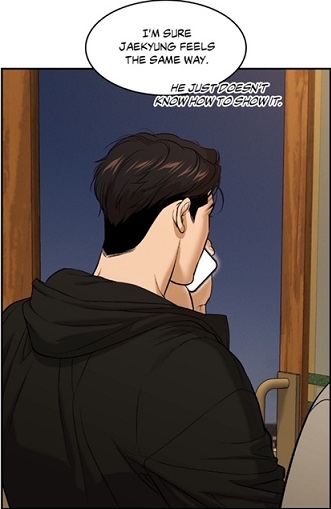 (chapter 43) In episode 1, he gave a positive feedback
 (chapter 1). Nonetheless, his words sounded more negative due to the usage of negation. Moreover, Kim Dan was too scared to take his words seriously. Consequently, it becomes obvious that Kim Dan needs to hear praises from the athlete himself. It is not just about an apology about his misjudgment, the “hamster” needs to hear from his own patient that he trusts him and his hands. Thus he wants to be needed:
  (chapter 53) This explicates why the young man kept questioning the actor’s intentions behind his gifts. He could see that the man didn’t need him. This thought displays his desire to give a meaning to his own existence as well. If he is needed, he has a reason to exist. This desire of being needed can be expressed by words, but also with the hands:
  or like this:
  And what does the hand symbolize? The latter symbolizes gratitude and love! Hence the grandmother took the MMA fighter’s hand in order to thank him.
  (chapter 22) (chapter 22) As a conclusion, love and gratitude represents the key to freedom and as such to power. And now, you comprehend why The Art Of Loving can not be separated from „Escape from Freedom“.
2. 1. Love and Power
This explains why the famous author declared this:
“For a productive character, giving is the highest expression of his abilities. It is precisely in the act of giving that I experience my strength, my richness, my power.“
This means that by giving, the person feels strong and powerful. Why? Fromm views the act of giving not as a depletion of oneself, but rather as a fulfillment and actualization of one’s capabilities. The productive character, according to him, doesn’t define himself by what he possesses or hoards, but rather by what he can give to others. It is his heart which defines his strength. Giving becomes a way of affirming one’s own power and abundance, showcasing that true fulfillment is found in one’s ability to be generous, creative, and life-affirming. Notice that the author contrasts generosity with passivity. By giving, the person becomes proactive and is no longer passive. In the past, I had described Joo Jaekyung as a person suffering from “inner passivity” [For more read “Couch Confession”]. As soon as I read the quote from The Art Of Loving, I realized why the champion disliked receiving presents 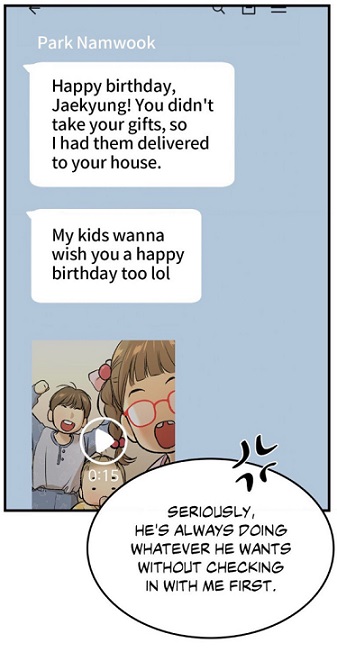 (chapter 45) so much and preferred organizing a charity event for his birthday .
  (chapter 41) Being on the receiving side makes him feel weak and powerless. He is reduced to become a passive man. Furthermore, we shouldn’t overlook that such presents are not entirely selfless. Companies or admirers have expectations from Joo Jaekyung, earning some money or getting his attention. At the same time, these presents are strongly connected to his title and fame as champion. Thus they are not taking into consideration about the athlete’s dislikes and likes. Thus he was offered a bottle of wine
 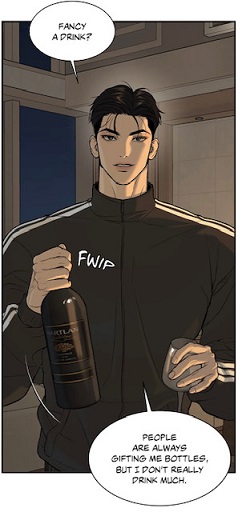 (chapter 12), though he is no drinker or he doesn’t eat cakes.
  (chapter 41) The fact that the athlete organized a charity event for his birthday exposes not only his huge heart, but also that he had long recognized the power of generosity. Under this new light, it becomes comprehensible why the champion was willing to pay off the doctor’s debts.
  (chapter 18) Here, he hoped to see gratitude on his fated partner’s face, but it didn’t happen like he imagined. Yet, notice that despite their argument, Joo Jaekyung proposed to the main lead to live with him in the penthouse:
 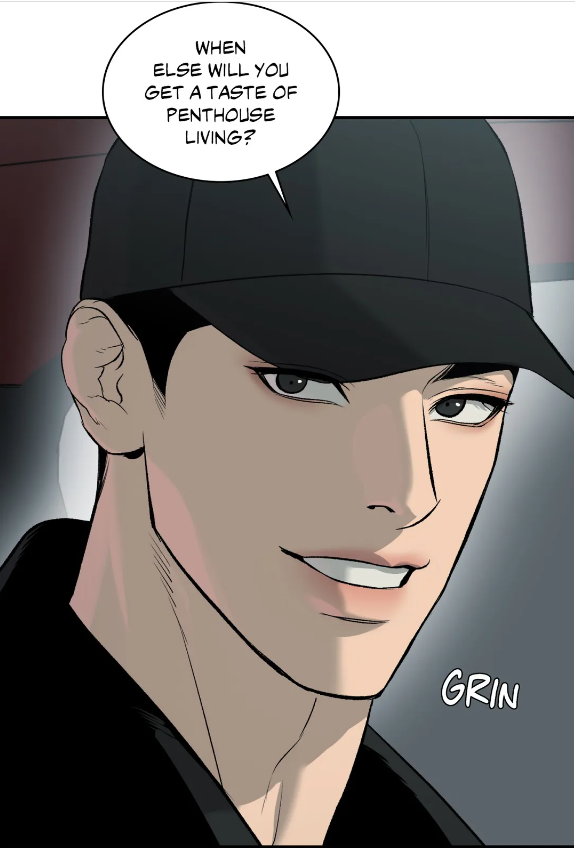 (chapter 18) His facial expression is exposing his true thoughts. He was definitely happy to help the doctor. The reason is simple. He is in control of his heart and life. This shows that deep down, the man has always had a soft heart and could find fulfillment in giving. However, the problem is that the champion had also internalized that there is nothing free in this world. Due to his past experiences, he realized that receivers would exploite his goodness. The green-haired guy was the perfect example.
  (chapter 2) Therefore it is not surprising that he kept denying his kindness to the doctor: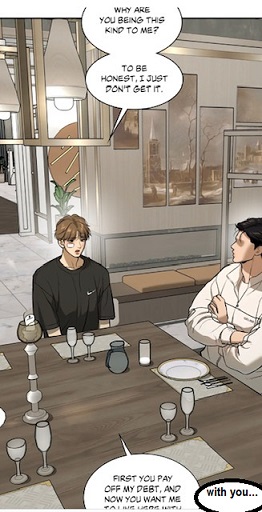
 (chapter 18) He had to, because the man was now living with him. Joo Jaekyung feared that his roommate could come to take advantage of his new position and even consider this place as his own. As you can see, the champion had long discovered the power of giving to others. Yet his problem was that he couldn’t live out this principle: he was either exploited or he has no family or close friend so far.
And now, let me ask you one question: who likes giving presents in Jinx? One might reply Kim Dan and Choi Heesung. The doctor and the actor have both something in common.  (chapter 30) They both desire to be acknowledged and appreciated.
  (chapter 45) With this image, it was, as if Kim Dan wanted to be distinguished from all the stans. Yes, I do think that this has something to do their own negative feelings. However, there is a difference between Choi Heesung and Kim Dan. Note that the gifts are related to his sponsors and the agency. They were related to his work. Moreover, the gumiho rarely gave the meals or the presents personally.
  (chapter 31)
 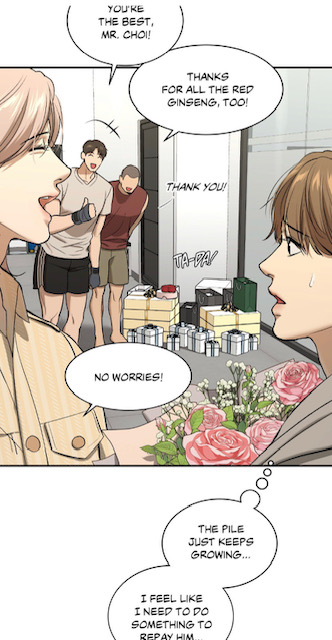 (chapter 31) Furthermore, the actor gave these things for one reason: it was to obtain the doctor’s heart or to maintain his good image as a celebrity. In other words, these gestures were not selfless at all. This explains why the athlete was so weary of such “gifts”: a return of favor or a service. But the comedian is not the only one donating things. Naturally, it is the manager Park Namwook.
  (Chapter 26)
  (chapter 36) However, my avid readers should ponder on the following aspect: how did he buy the jackets and the junk food?
 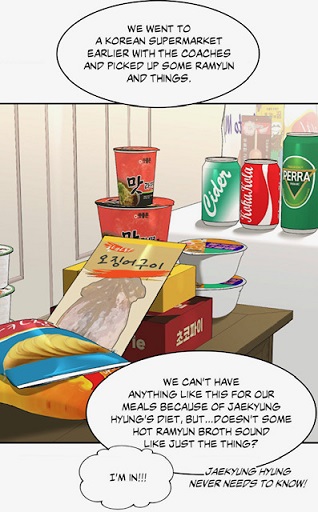 (Chapter 37) This last scene is terrible, for this purchase happened behind the boss’ back. Naturally, everything was bought with the company card!! In other words, Park Namwook’s generosity is fake, for he is not spending his own money. After this new realization, I started wondering if the athlete’s negative attitude towards Kim Dan is not the consequence of Park Namwook’s behavior as well who takes it for granted to spend money on the athlete’s account. Why did the champion anticipate an expectation from Kim Dan, when he received the keychain?
  (Chapter 45) It is because his relationship with his coach has always been based on „conditional love and expectations“. Don’t forget that the coach was particularly nice to the athlete after winning his match in Busan. He was willing to be his „servant“ in that moment. Furthermore, there exists another evidence that in episode 45 the fighter latched out on the doctor because of his unresolved feelings towards his hyung. (Chapter 45) Kim Dan had not only followed the stans‘ behavior, but also listened to Park Namwook‘s words constantly. ’
 (chapter 41) This frenzy was portrayed as something positive. Jinxworms can observe that the manager is mentioning the existence of „favors“. For me, it is no coincidence that in episode 45, the arrival from presents coming from his hyung coincides with the present with Kim Dan. It shows the underlying conflict between the celebrity and the former wrestler. Nevertheless, the fighter has not grasped it yet. So far, Joo Jaekyung has not tried to defy Park Namwook openly, to claim his place as the true owner of Team Black. We should see his words here as a first attempt to act as the boss
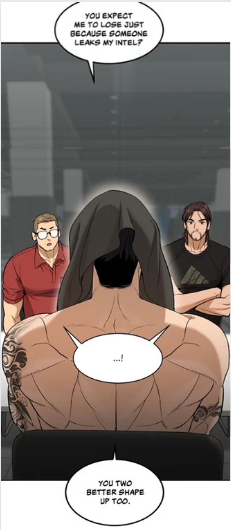 (Chapter 46) The tension reached its peak in that scene:
  (chapter 52) The manager imagined that he could act like in the past (recurring to force), for Joo Jaekyung was „used“ to take his slaps.
 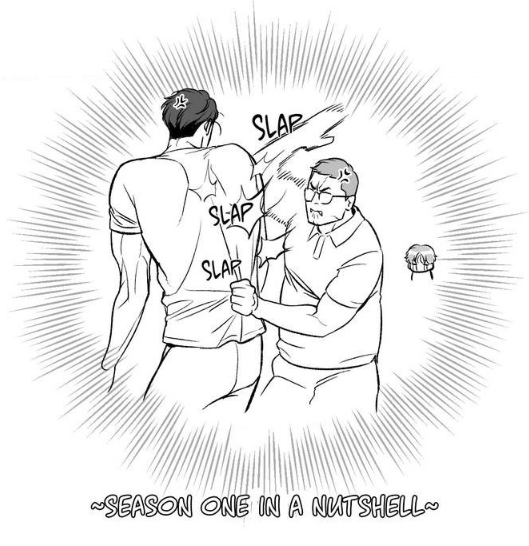 That’s where the generosity from Park Namwook comes from: he gives his punches to Joo Jaekyung and takes Joo Jaekyung‘s company for granted. And now, you comprehend why I selected such a title for this essay.
 (Chapter 26) The sparring in episode 26 represents the positive version of giving a punch and taking it. The fighter was not upset about his defeat, moreover he was acting like a real teacher asking the physical therapist to overcome his own fears. On the hand, the slap at the hospital embodies the opposite notions: resent, no real teaching, no reflection, no listening, the one slapping is not overcoming his own fears and vents his anger. The give and take in episode 26 was happiness, true generosity, self-awareness, while this slap displays misery, anger, ignorance: (Chapter 52) True generosity, for Kim Dan had risked his health for the sake of Potato.
  (Chapter 26) The contrast not only exposes Park Namwook’s fake generosity, but also his greed and selfishness. For me, he missed the opportunity, as at the gym, Kim Dan took the chance, when the athlete was distracted. Hence in my opinion, chapter 52 was the turning point in their toxic relationship. Moreover, it signifies that the manager lost his special position as hyung. Far away from the gym, Joo Jaekyung will see Kim Dan under a different light, maybe even as a true role model, for he is wearing his heart in his hand.
2. 2. The wolf, the hamster and the world
But Erich Fromm wrote this about love:
“If I can say to another, ‘I love you,’ I must also be able to say, ‘I love in you all others, I love through you the entire world, I love in you also myself.'”
For Fromm, love transcends a personal or exclusive attachment to one individual; it is a universal force that connects the self to humanity and existence as a whole. True love, in his view, is inclusive and expansive. It’s not a possessive or isolating sentiment but rather one that opens the lover to the wider world, fostering a connection to humanity and, ultimately, a deep acceptance and love for oneself.
Thus I come to the following conclusions: the moment the doctor and the champion admits their affection for their fated partner, they won’t be suffering from self-loathing or low self-esteem. But there is more to it. If you keep the quote in mind, you will realize that the champion’s affection for Kim Dan was not true love. [Like mentioned above, he couldn’t love properly] He couldn’t stand the idea of sharing his partner to others.  (chapter 7)
 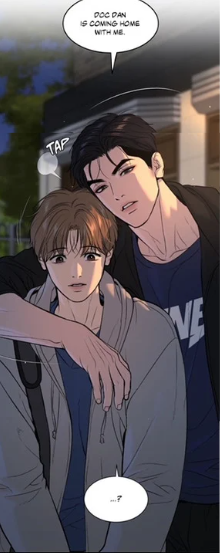 (chapter 43) He needed to seclude him from the others. But where does this possessiveness come from? In my opinion, it is not just the result of his own insecurities, but also the influence of the bad role model he had: Park Namwook. First, only in chapter 45, the manager sent congratulations from his family: (chapter 45) This means that Joo Jaekyung was never treated like a real family member. Then, due to his bad portrait of Joo Jaekyung
  (chapter 9), the manager kept creating a bad image of the athlete: brutal, moody, maniac… but the reality is that the man is actually generous and caring, like mentioned above and the coach knew this. Hence he could lie without any remorse: he is a savior and the gym owner. Moreover, the athlete can speak well and be polite.
  (chapter 22) This scene at the hospital displays that the fighter had been mirroring the behavior of his counterpart: Shin Okja is sweet and kind. And who is moody, yelling, brutal ? Park Namwook:
  (chapter 43) (chapter 52) The one who raised him like that is actually him:
  (chapter 7) Therefore I conclude that this possessiveness and obsession with Kim Dan is the result of the manager’s influence. Park Namwook treated him like a possession. And this brings me to my next part. How to become happy? One might reply: by loving someone. However, how can Joo Jaekyung drop his insecurities and open his heart like that? As you can see, we need another explanation.
3. The guide for happiness
Erich Fromm’s philosophy in To Have or To Be? revolves around two fundamental modes of existence: the having mode and the being mode. These modes represent distinct ways of interacting with the world, structuring relationships, and understanding one’s identity.
I am posting this video which I found very well made. Funny is that the blogger used a haiku to illustrate the difference between the being mode and the having mode.
3. 1. The Having Mode
In the “having” mode, identity and value are based on possessions and control over objects, people, and even oneself. The having mode is characterized by:
- Possession and Ownership: One’s self-worth and sense of security are derived from what one possesses—material wealth, status, knowledge, even relationships. (Chapter 40) This explicates why the manager is happy in this scene. Thanks to him, he earned a lot of money and felt recognized.
- Security in Stability: Individuals in the having mode seek to secure their identity through accumulation, feeling stable only when they can cling to things.
- Alienation and Objectification: Relationships and experiences become objects to be owned or controlled, reducing people and emotions to mere assets.
Fromm argues that the having mode can lead to anxiety and insecurity because possessions can always be lost or taken away. It fosters competitiveness, isolation, and a fixation on external validation, ultimately stunting genuine self-growth and connection with others. Under this light, Manhwa-philes can grasp why the athlete, pushed by his mentor, kept accepting fights after another. The champion was suffering from self-loathing, but in order to get recognition and admiration from his hyung, he needed to win. Notice how gentle and proud the man was after the victories 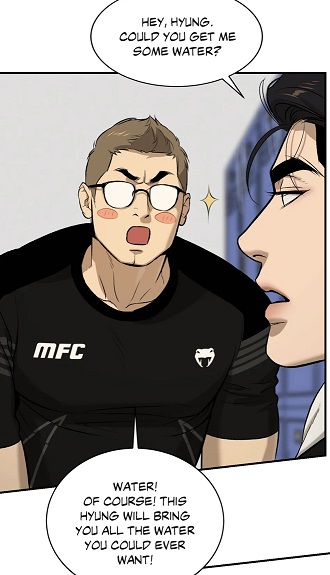 (chapter 15), but as soon as his idol lost his title and got even suspended, he yelled and slapped his fighter: (chapter 52) Why did he not blame the cheaters who had tricked Joo Jaekyung and framed the physical therapist? If you read my previous analyses about the coach, you will certain recall about my diagnosis: he seems to suffer from decidophobia. But as you can see, the man is unhappy, for he is living in the “Having Mode”. Hence he is taking no risk and letting the athlete make decisions. Furthermore, it explains perfectly why the manager lied to the members here:
  (chapter 22) Since his relationship with the main lead is so secure, he could claim the gym as his own. Notice how he treats the members here: he’s putting them under pressure, threatening them. Everything is revolving around competition, seriousness and greed. Why doesn’t Joo Jaekyung mess with his weight and nutrition? It is because his hyung made sure that the latter would fulfil all his expectations. He needs to be ready for the next fight. Why was the manager not present here?
 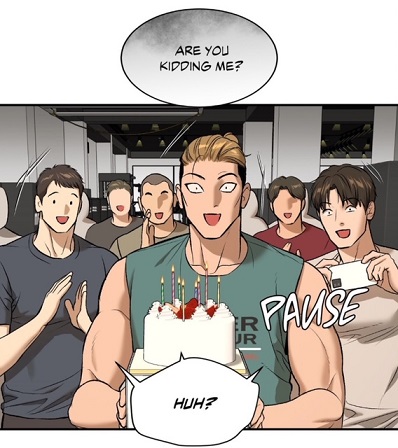 (chapter 43) This exposes his lack of engagement and indifference in the end, but this becomes even more obvious during the night:
  (chapter 43) Where was he, when his star was drunk? It was, as though he had vanished.
 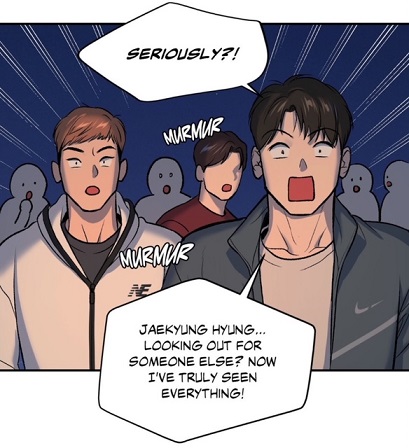 (chapter 43) But the best evidence for this interpretation is this image:
  (chapter 52) The manager is upset, because his boy lost his title and his reputation is ruined. Moreover, many members left the gym which means that the company lost a lot of money.
“If I am what I have and if I lose what I have, who then am I?”From Erich Fromm (To Have or To Be?)
This highlights the danger of building identity around possessions and the resulting vulnerability. And how did Park Namwook define himself in his life? He was a coach, a manager, the owner of Team Black…. 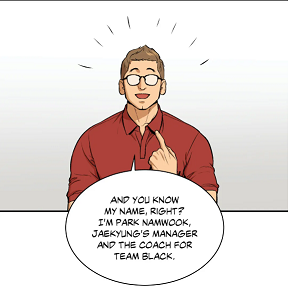 (chapter 9) However, he never presented himself as a father or a husband. It was, as if his children or wife were not a source of his happiness. Why? It is because they don’t bring money, but rather cost money. Thanks to Joo Jaekyung’s popularity, the manager could stand in the spotlight
  (chapter 40), yet notice that no fans or fighter know his name as a successful coach or manager. He is not a famous manager in the end. His income depends on the athlete’s career and victories. No wonder why he put so much pressure on his celebrity. Thus I had the following revelation: he was actually exposing his true self in front of the doctor at the restaurant. (chapter 43) Joo Jaekyung would have to pick himself up, Park Namwook wouldn’t be there in order to assist him. Why? It is because it represented his own fears. Don’t forget that he is a former wrestler and athlete. He must have experienced it. The end of his boy’s career represents the end of his own career. Hence I am suspecting that the real savior of Park Namwook was the fighter himself, as the latter offered him an opportunity to find a good job.
But there is more to it. Why did the coach neglect doctor Kim Dan 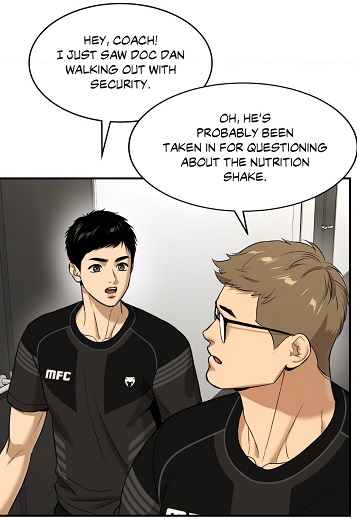 (chapter 40) in the States and even at the gym?
  (Chapter 43) It is because he doesn’t view the uke as a possession contrary to his „boy“. Why? It is because the young man doesn’t bring money or contribute to boast the manager’s self-esteem. In fact, Kim Dan is an expensive PT and the manager is aware of his high salary. Moreover, contrary to the hamster, Park Namwook was never seen in the penthouse, and the celebrity refused to invite the members. This is a clue that the champion could have refused to invite his coach there. The doctor’s stay at the penthouse is something Park Namwook discovered by accident.
 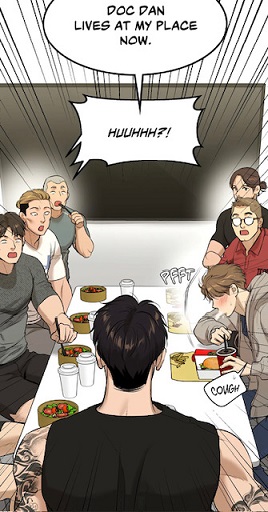 (Chapter 22) And now, it is important to recall that in the mode of Having, rivalry and competition are predominant. Therefore I deduce that deep down, the coach and manager sensed the physical therapist as a source of threat and rival. Therefore Jinx-philes shouldn’t be surprised that the coach did nothing to keep Kim Dan.
 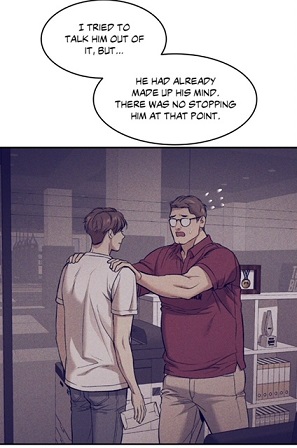 (Chapter 53) Here his gestures and words should be judged as lip-services. He can even rationalize his departure: bad luck, they save a lot of money, for the next PT will have a lower salary. In addition, Kim Dan was treated as the celebrity’s possession, therefore he used him as a tool in order to compensate the actor. The manager is definitely imagining that once the break ends, things will work like before. (Chapter 53) Here, I feel the need to add that though I am portraying the coach in a rather pejorative light, I am not saying that he is a malicious or evil man. My point is that he needs to change and realize his wrong-doings. As long as he lives in this mode, he won’t be able to be happy: always in the fear of losing his possessions. So should a separation take place, it is possible that the distance brings more clarity and helps them to improve their relationship. However, I have to admit that I wished to witness a real argument between the hyung and his pupil. A new version of this scene:
  (chapter 17)
Interesting is that the sociologist stated this as well:
“In the having mode, one’s happiness lies in one’s superiority over others, in one’s power, and in one’s capacity to conquer, to defeat, and to kill.”
With this observation, it becomes comprehensible why the coach not only used violence against the athlete but also pushed the main lead to be rough with his own body. (Chapter 43) It is not random that Mingwa showed a rough manager while complaining about his star. She was implying his responsibility for mistreating his body in this scene. Park Namwook needed to prove his superiority over the celebrity to justify his position. And he used the fighter’s good heart, trust in him and social norms to manipulate his prize and possession. As a conclusion, both characters have a toxic relationship, exactly like between the halmoni and Kim Dan.
But Kim Dan was not different from the manager. He also lived in the mode of “having”. Hence once he earned money, he would buy gifts to others:  (chapter 41) In his eyes, possessions and money determine someone’s values. Hence he bought an expensive keychain for his fated partner. Furthermore, I have been wondering if this spending is not related to Shin Okja, the latter could have been a spendthrift. In the essay „Click 📸: Between Fleeting illusions and Enduring Realities“ I had outlined that all the objects in the flat would belong to the grandmother
  (Chapter 19). Another possibility is that she made sure that her grandchild would spend money on her: (chapter 41) And this brings me to my next important revelation. The grandmother never said thank you to Kim Dan. She either apologizes (chapter 53 ) or makes it sound like a reproach „Spoil me to death“. There is no THANK YOU. She didn‘t give him her hand like in episode 22 with the celebrity as well. But there is another detail that caught my attention: the nurse mentioned the paid bills
  (chapter 22) after the departure of Joo Jaekyung, but notice how the halmeoni thanked the benefactor:
  (Chapter 22) She didn’t express the reason for her gratefulness. She didn‘t bring up the hospital bills, but she knew about it. In other words, when she showed her gratitude, she was in reality just thanking him for his company. That‘s how Kim Dan perceived it first and we should do it as well. To conclude, the grandmother is not really thankful, when it comes to money. Exactly like the manager, she takes it for granted. In fact, she gave him the yoghurt which was offered by the hospital.
  (chapter 21) One might argue that the poor woman couldn’t do much to express her gratitude. However, this is just a deception. Shin Okja could have written a letter to express her gratitude to Joo Jaekyung. Why do you think Mingwa created two scenes with a letter or card?
  (chapter 45)
  (chapter 53) The comparison lets transpire the importance of words. The champion might have judged the keychain differently, if he had read the card. But he didn’t. Another parallel between these two scenes is the rejection of a gift! However, in the final episode, Kim Dan voiced genuine gratitude towards his benefactor. The latter had allowed him to work as his PT. With the letter, he could voice his thoughts and emotions much better. And now, you realize that Shin Okja could have acted the same way. This made me realize that deep down, she resents being poor. She likes Dan spending money on her. (Chapter 41) Despite her rebuke she actually doesn’t meant it. She never actually told him to stop or rejected Joo Jaekyung‘s generosity. Instead, she made the following request to her grandson:
 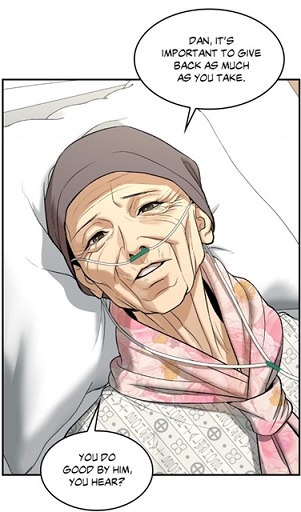 (chapter 41). He should treat the sportsman nicely (“do good”). Kim Dan is the one who should be indebted to Joo Jaekyung. However, observe what she said in front of her grandchild before: she was the one who was grateful to the main lead, and not Kim Dan!!
 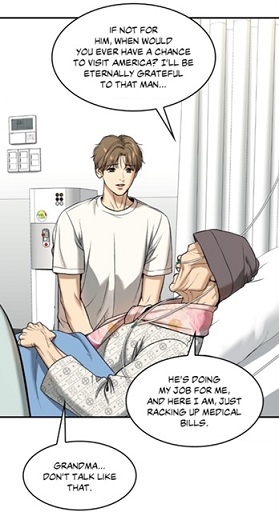 (chapter 41) She should have been the one who expressed her gratitude to Joo Jaekyung, but not Kim Dan for the trip (it was work related anyway). One might argue that the poor woman is trapped in the hospital, she can not do much. But you are wrong. She could have written a letter to her benefactor which means that she would have sacrificed some of her time for the athlete. Imagine that she had sent a message to the athlete, the latter might have decided to pay a visit to her. He is not truly heartless. With this silence, she created the impression that his assistance had changed her situation.
As you can see, she delegated her “gratitude” to her relative. Hence no wonder why Kim Dan chose to work hard for the keychain. He had to “work hard” in order to repay the huge debt (the trip to the States, the hospital). That’s why I come to the conclusion that the grandmother doesn’t represent true gratitude. She is similar to her male version: putting the responsibility on others and using words as lip-services. Simultaneously, this new discovery exposes another cause for her own suffering: she was also living in the mode of „having“. As my avid readers can notice, all the characters in Jinx were living the wrong way.
And this brings me to another aspect: Kim Dan’s diploma as physical therapist. In the having mode, education is centered on acquisition and possession of information. Knowledge is seen as something to be accumulated, memorized, and quantified—often in terms of grades, certificates, or degrees. Hence the doctor thought for a brief moment to take a MMA trainer seminar.  (chapter 22)
Focus on Outcomes Over Process: Success in the having mode is defined by external achievements, grades, or credentials, rather than by actual understanding or personal growth.
Competitive Learning: Students are encouraged to see education as a competitive endeavor, where success often involves outperforming others rather than cooperating or collaborating.
Dependency on External Tools: This mindset can make students more prone to relying on shortcuts like cheating or using AI to complete assignments without really engaging with the material. In this context, tools like AI might be used to bypass learning rather than deepen understanding, reducing education to a means to an end.
Lack of Internal Motivation: The focus on external validation makes intrinsic motivation scarce. This dependency on external rewards may undermine creativity, critical thinking, and the desire for genuine understanding, as students prioritize “having knowledge” over “being knowledgeable.”
Kim Dan was not a proud PT. In fact, he had no problem to take a job as a courier. For him, the diploma was just a piece of paper. Why? It is because he was not truly motivated to become a PT. His choice was influenced by his halmoni and his financial situation. He was doing it for the money:  (chapter 1) In other words, he was not passionate about his profession. This means that he didn’t define himself as PT due to his lack of engagement and low self-esteem. Besides, let’s not forget that he judges people based on their social status and seniority. I would even add, the main lead had not recognized the existence of his own skills (knowledge, genuineness and dedication). But by working for Joo Jaekyung, he came to enjoy his job. This explicates why he kept buying books.
 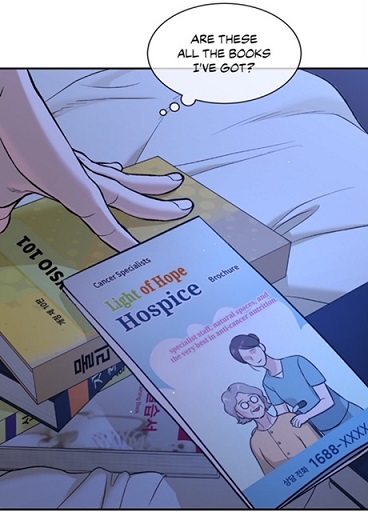 (chapter 53) He likes not only his job now, but also learning as such. This is no coincidence that education in the mode of “being” means that the focus is on learning and developing skills. Hence I still see a change in the hamster at the end of season 1: (chapter 53) He is defining himself by his skills: he is a PT!! Money plays no longer a role. He is about to live in the mode of „being“.
However, there are other students in Jinx. Fromm’s explanations about human psychology made me realize why many members from Team Black left the gym soon after the champion’s loss and bad PR:  (chapter 52) In this panel, the author let us see glimpses of their motivation and thoughts. For them, the champion has nothing to teach them, since he lost his title and is injured. This shows that they are only interested in the outcome, success and as such fame, but not in the process, how to become skilled! In other words, they see “success” as a possession. He has no title, then he has nothing to offer. They are all living in the mode of having, which can only lead to misery and even self-destruction. No wonder why they were not too upset or shocked, when they heard that the game had been rigged. But what led them to make such a decision?
Naturally, the manager played a huge role in this. The gym gave the impression that by being by the athlete’s side, they would become successful as well. Park Namwook contributed to this wrong evolution, for he didn’t confront the fighters with reality: he made false promises. 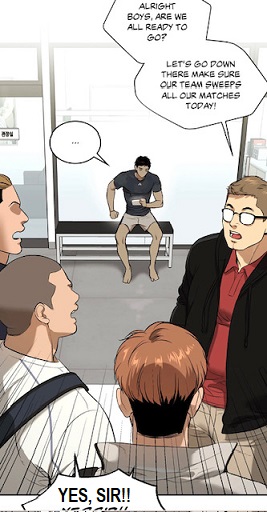 (chapter 23) Then he only focused on the “outcome” and not on the process. Hence he neglected them, delegated his task on the pressured athlete. The latter had to train them:
  (chapter 25) and
 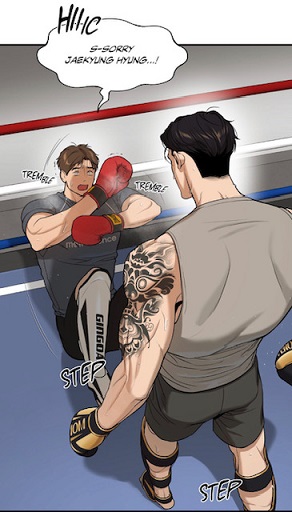 (chapter 36) In my eyes, he didn’t want to play the bad guy. The meeting or his worries were more important
 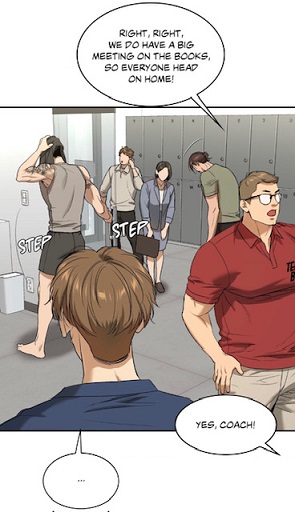 (chapter 36) than their training and career. Moreover, he kept bribing them with junk food (chapter 26) or new jackets or towels. He was only interested in getting new members, but not in developing their skills. This explains why he treated Seonho so well:
 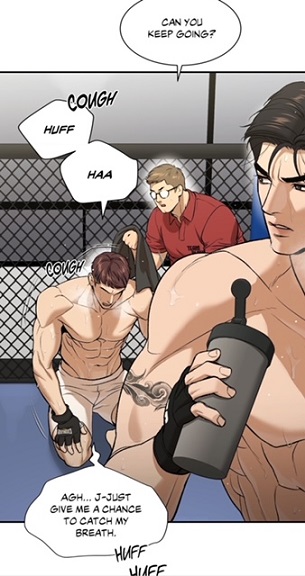 (chapter 46) The latter was a new source of income and fame. Everything was revolving around money. That’s how it dawned on me why the manager got angry for the bet in episode 26:
  (chapter 26) We shouldn’t judge his words as a verity, he was just using the doctor as a false excuse. The reality is that the sparring had brought no money at all! This fight was strongly intertwined with fun. The notion of „entertaining“ stands in opposition to money. Fun means feeling emotions and being to true one’s self. In other words, Kim Dan stands for a different notion of MMA fighting: the sportsmen shouldn’t work for money, but for fun. They are artists too. This signifies that as time passed on, the members of Team Black lost their passion for fighting
 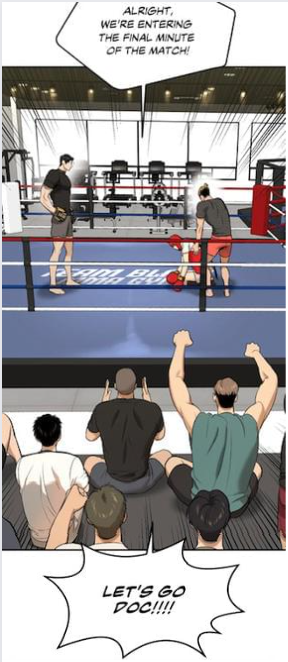 (chapter 26) and became more obsessed with possessions and fame. Potato and the remaining members represent the exceptions. They enjoyed the lessons despite the pain and struggles. The other members became dependent on external tools which led them to lose their integrity. To conclude, the reason for their disloyalty is that at the end, they had long internalized the mode of having and were just interested in getting successful.
3. 2. The Being Mode
In contrast, the “being” mode focuses on authentic self-expression, inner fulfillment, and experience rather than ownership. Key aspects include:
Living Authentically: People in the being mode derive meaning from their experiences, creativity, and actions, rather than from acquiring or possessing. That‘s why fun is so important. And who embodies fun in Jinx? Naturally Heesung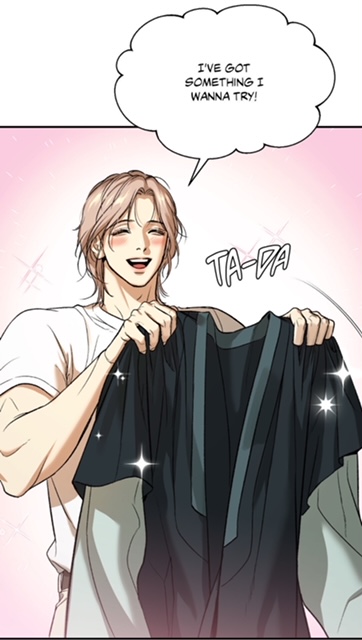 (special episode2 ), but also Cheolmin
  (chapter 13) who likes making jokes. That‘s how I came to understand why Cheolmin appeared only one time in season 1. He will come to replace the manager:
 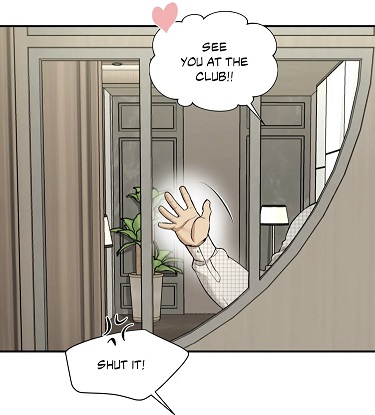 (chapter 13)
Dynamic Engagement: This mode emphasizes growth, spontaneity, and a deep, active engagement with life. Here, identity is fluid and self-renewing, driven by inner growth rather than external gains.
Connectedness and Compassion: Fromm sees the being mode as fostering a sense of unity with others and the world, as it’s grounded in compassion, shared experience, and a true sense of community.
The being mode fosters qualities like love, empathy, joy, and creativity, enabling individuals to experience life in a richer, more meaningful way.
Cheolmin stands for understanding and trust in humans. He criticized the man first, but he didn‘t imply that he had done it with bad intentions. Secondly, he believed his sunbae, 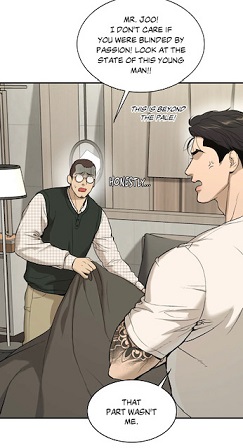 (Chapter 13) when the latter denied his responsibility. This shows that the man doesn’t mistrust people. He has faith in humans. And in this short scene, the doctor shows alle positive notions mentioned above: love, empathy, joy and creativity. Therefore I come to the following interpretation: he embodies the being mode. No wonder why he was not present in season 1. The main lead was definitely obsessed with work. Hence the moment Cheolmin’s path crosses Kim Dan’s, the funny doctor should become the hamster’s new role model.
3. 3. The Larger Philosophical Context
Fromm’s philosophy reflects a critique of modern consumerism and materialism, which, in his view, has led society towards the having mode. He argues that this mode is ultimately destructive, as it alienates individuals from their true selves and from others. The being mode, on the other hand, aligns with the principles of humanistic and existential philosophy, emphasizing the pursuit of self-actualization, meaning, and interconnectedness.
Fromm warns that without a shift from “having” to “being,” society risks falling into moral and psychological decay, driven by the insatiable quest for possessions and power. And we can observe this in Jinx. MFC and the medical world  (chapter 48) are full of greedy people who have no problems to commit crimes in order to achieve their goals (more fame, more wealth, revenge, more connections). Baek Junmin became a champion by cheating.
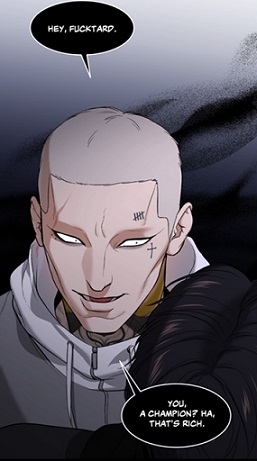 (Chapter 49) Thus he thought, the athlete had earned his title the same way. His fights were rigged, yet the verity is that the idol worked hard to achieve this level. The irony is that The Gunshot experienced much too late that his assumption was wrong.
 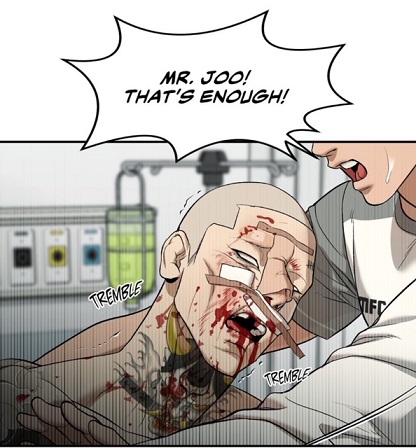 (Chapter 52) His shaking is exposing his fears. Like mentioned in the past, I am anticipating that The Shotgun will avoid a new fight with the celebrity.
Thus I interpret these two panels from Mingwa like this: They embody the mode of being. The hands are touching each other directly. They are not attached by money. Moreover, the hands express positive emotions and thoughts: support, gratitude, honesty, tenderness, acceptance and more importantly trust and fun. They are enjoying the present moment. Mingwa announced with these images the happy ending for these two characters who thought that they were jinxed. The reality is that they were responsible for their own misery.
This work urges a reassessment of values and priorities, where personal growth and human connection take precedence over material wealth and social status. And that’s where Joo Jaekyung is standing now. 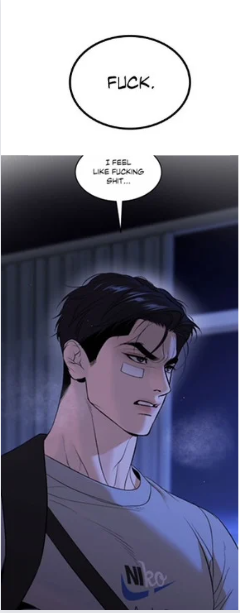 (chapter 53) He is standing at a crossroad. What does he truly want in life? Fame? More money? Or happiness and as such love and fun?
Feel free to comment. If you have any suggestion for topics or manhwas, feel free to ask. If you enjoyed reading it, retweet it or push the button like. My Reddit-Instagram-Twitter-Tumblr account is: @bebebisous33. Thanks for reading and for the support, particularly, I would like to thank all the new followers and people recommending my blog.

 Bebebisous33s' analyses in K-Dramaland and Manhwas
That was a wonderful essay! Many of the thoughts I had about Halmoni and Namwook are also reflected here for I also think the same things about them. They are parallels and foils to me- They both come across as “savior” figures. Kim Dan thinks of his Halmoni as a savior and hence feels comfortable dedicating his entire life , with no self esteem to her at the start of the story. He thinks he was a burden( Theorizing that is how his parents also made him feel) so his grandmother taking care of him is a huge responsibility she could have chosen to ignore but she didn’t. So he feels obligated to repay her kindness in her twilight years, spending exorbitant amounts of money on her ( materialistic values for not any scarf would do, it has to be a designer one. Not any keychain would do, it has to be designer one). He has come to view relationships as transactions, something he HAS to repay. Same with Namwook, although he is a showboat about it unlike Halmoni who gives backhanded reminders of her bare minimum duty as a grandmother( how she asks favor from Dan when he is crying and breaking down, not much in the way of comfort) . Everyone in the Gym knows/thinks that he saved Jaekyung’s life from going towards path of evil and illegal violence. Since there is no way any of these Gym members knew of Jaekyung since day one of his rise to fame, the only source is Namwook himself. The way Jaekyung never talks back to Namwook despite clear irritation at his actions when he becomes rough and violent, shows like Dan he also feels obligated to his Hyung and thinks of him as a savior. Hence, he barely ever complains and puts himself through punishing routine to be a champion, to make Namwook happy, to keep his charity running etc
In the end, both Namwook and Halmoni are failures in their quest to be happy and grown up because they value materials over people and let their “kids” pick up slack for things they couldn’t achieve to feel vicarious victory/finer things in life.Halmoni ‘s is more subtle since its clear she came from a better family than her current status so loss of financial standing must have been hard on her. I theorise also as the essay outline that she feels she deserves to be pampered at the end of her life, without giving much thought to her grandson’s or what would happen to him after she dies. She feels no obligation to worry about his life post college, only about her self and what she wants now. I think her eminent death made her feel anxious about all the things she missed and wanted so she is now focusing on getting it, thinking since Dan is young, he has all the time in the world to recover financially and emotionally, while she doesn’t.
This is why I think, contrary to what fandom expects, I am predicting Kim Dan will forgive and even feel Jaekyung has no need to apologize for the last match fiasco over who sabotaged him. I don’t think there would be much of a “chase” here like there was a small one in BJ Alex between Dongwoon and Jiwon( which makes sense since Dongwoon chases first but Jiwon rejected him point blank)
This generosity will make Jaekyung see that material ways to obtain happiness is meaningless, his Hyung is wrong . He would see that there is someone in his life who would unconditionally care for his well being and put him first. To be unfavorably compared, Namwook would lose his standing in Jaekyung’s eyes and Dan would take first place. Perhaps it would end with Namwook being demoted to a mere Gym manager who could no longer act like he owns Jaekyung( and hence the Gym) and would face karma for hurting Jaekyung to shut him down and dodge responsibilities in the sabotage fiasco. In turn in parallel Dan would see that when Jaekyung comes and finds him that he is not a burden to someone. He is appreciated and cared for beyond what use he can be, for Jaekyung has no reason to chase him to apologize even after Dan has left his employment. He is not blood relative, he has NO obligations to him. He is not the only PT in the world Jaekyung can call on now that Team Black has all the time in the world to pick one without next match looming in horizon. That will perhaps make Dan reflect back on his relationship with his grandmother and how he wants to redefine himself especially when she passes away.
LikeLiked by 2 people
Thanks for voicing this prediction. I was also thinking that by looking for him, he will show him that he needs him truly. He won’t call him, but seeks him. It is important, because that way the doctor will be grateful. Moreover, observe that Kim Dan judged to the conclusion that the champion would fire, but he never said it directly. Furthermore, by bringing back the doctor to his side, Kim Dan’s self-esteem can only be boosted. Hence he will decide to be present at the meetings, to protect his interests. Moreover, remember that the grandmother said that she wanted to see the ocean, it had nothing to do with him. In other words, she chose seclusion. She was not asking for his presence or company. Hence, she ends up alone. Kim Dan could say that he fulfilled her wish, and the athlete needs him, more than she does. In others words, he could use her decision and her words against her. She did not much for him, hence he needs to do something for himself, because he might regret later. He needs to think of his own future.
LikeLiked by 1 person
This quote « This generosity will make Jaekyung see that material ways to obtain happiness is meaningless, his Hyung is wrong. » made me realize another thing. The doctor will show more compassion and understanding than his own hyung who spent years by his side. He refused to show empathy to mask his own failures and anxieties. Thus I deduce that his karma should be not only to lose the champion’s trust, but also to make the same experience than his pupil and Kim Dan: expectations and responsibilities. Should he mess up, he needs to pay. In fact, the loss of his position would be a wake-up call for him that the champion is the real boss. He needs to be kinder if he doesn’t want to lose his job.
LikeLiked by 1 person
Teacher nim, I’m catching up with reading your analyses. So happy that you are still writing. I hope you have not change password.
LikeLiked by 1 person
No, I haven’t changed anything. 😉😘 wElcome back.
LikeLiked by 1 person