
Please support the authors by reading Manhwas on the official websites. This is where you can read the Manhwa: Jinx But be aware that the Manhwa is a mature Yaoi, which means, it is about homosexuality with explicit scenes. Here is the link of the table of contents about Jinx. Here is the link where you can find the table of contents of analyzed Manhwas. Here are the links, if you are interested in the first work from Mingwa, BJ Alex, and the 2 previous essays about Jinx The Unseen Game of Life and Tactile Dissonance: When Touch Falls Out of Sync
It would be great if you could make some donations/sponsoring: Ko-fi.com/bebebisous33 That way, you can support me with “coffee” so that I have the energy to keep examining Manhwas. Besides, I need to cover up the expenses for this blog.
The Champion: A Giant?
Who is the giant? The answer seems self-evident—at least at first.  (chapter 1) A towering figure, a champion, a name that carries weight across arenas and screens. Someone whose image is large enough to be printed, displayed, and recognized at a glance. And yet, that same image can be torn.
A poster is damaged. 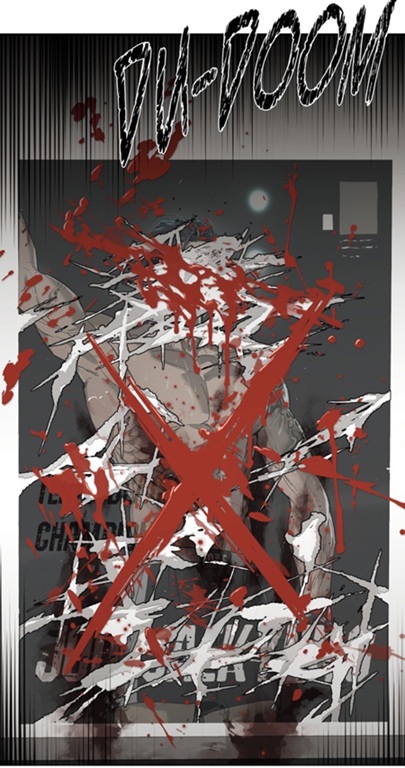 (chapter 96) Its surface scratched, its authority weakened. What was meant to represent strength suddenly appears fragile, almost replaceable. Around it, nothing changes immediately. The world continues, the match approaches, the voices keep speaking.
 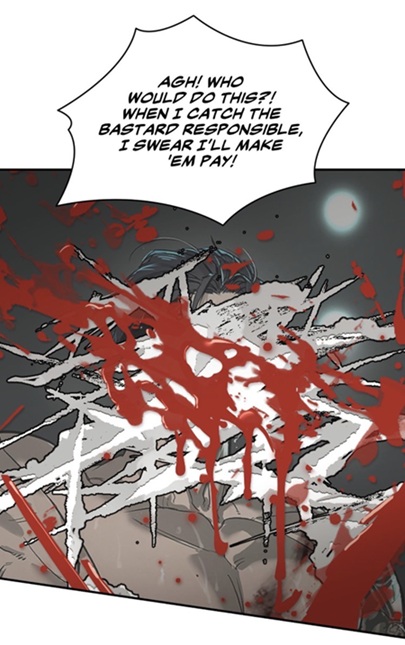 (chapter 96) But something has shifted. The image no longer holds in the same way.
At nearly the same moment, another kind of intervention takes place. 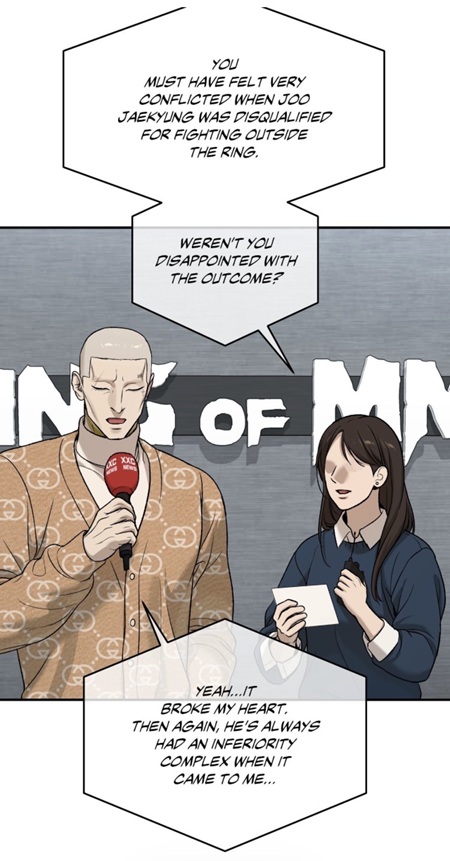 (chapter 96) Not physical, but verbal. A voice begins to recount a past—selectively, confidently, as if it had always been clear.
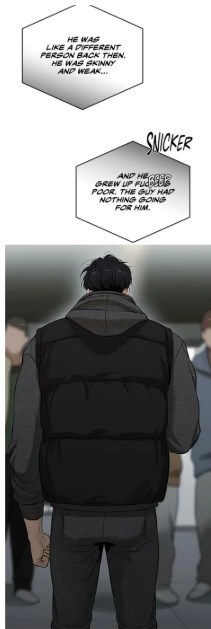 (chapter 96) Details are rearranged, others omitted. What emerges is not a lie, nor entirely the truth, but something in between: a version that is easy to follow, easy to accept, and difficult to challenge. And with it, the figure at the center begins to change.
This is not a confrontation. It is a process. What appears to be under attack is a person. But what is actually being altered is something less tangible and far more unstable: the way that person is seen. An image, once fixed, becomes negotiable. A narrative, once assumed, becomes uncertain. And suddenly, the question of strength is no longer tied to the body, but to something else entirely. 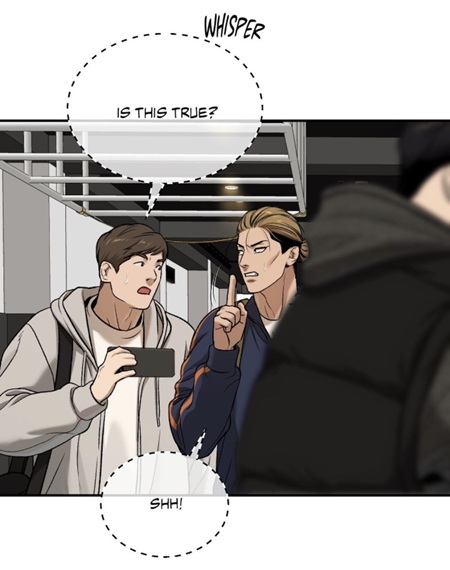 (chapter 96)
So we must ask again. If the giant can be reduced to paper, then perhaps the giant was never there to begin with. (chapter 96) Or perhaps it was never where Jinx-lovers were looking. Because if the Emperor is not the Giant, then the real one has yet to be named.
To approach this question, it is not enough to follow the fight itself. One must look elsewhere: at images that are destroyed as easily as they are produced, at voices that reshape the past in real time, and at the sequence of events that gradually transforms perception without ever appearing as a direct attack. Only by tracing these shifts—between what is shown, what is said, and what begins to disappear—can we begin to understand where power truly resides.
The Making of the Giant of Paper
Before it is destroyed, the image must first be made.
But this construction does not begin in the present. It has already taken place—earlier, more discreetly, and under different conditions. At that time, the narrative surrounding Baek Junmin followed a familiar pattern.  (chapter 47) He was introduced as the “underdog,” the one rising unexpectedly, the figure whose ascent could be celebrated. The framing was simple, effective, and, to some extent, transparent. It invited attention, but it also raised suspicion.
There were signs. Voices questioned the legitimacy of the narrative (chapter 47) 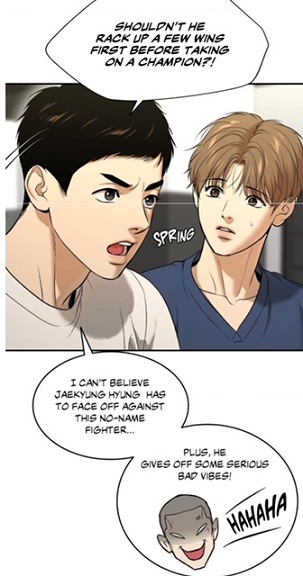 (chapter 47), suggesting that what appeared as spontaneous recognition might in fact be influenced, if not orchestrated. The idea that media coverage could be shaped (chapter 47) —financially or strategically—was not dismissed. It circulated, hesitantly, at the margins. Yet this suspicion remained limited in scope. It did not extend to the system itself. The integrity of the organization, and more specifically of the MFC, was not openly challenged. Instead, doubt was redirected toward the figure of the rising fighter. The question was not whether the structure produced the narrative, but whether Baek Junmin had benefited from it.
This distinction is crucial. By locating the potential manipulation at the level of the individual rather than the institution, the system remained intact, unquestioned, and therefore protected. What was perceived as irregularity did not lead to structural critique, but to localized suspicion. This also explicates why the main lead couldn’t find any information about Baek Junmin.  (chapter 47) The system was not yet fully opaque. It could still be glimpsed—but only indirectly, through inconsistencies that were sensed rather than fully articulated.
The present situation is markedly different. As the match approaches, the same mechanisms reappear—but without resistance. The headlines no longer build an underdog 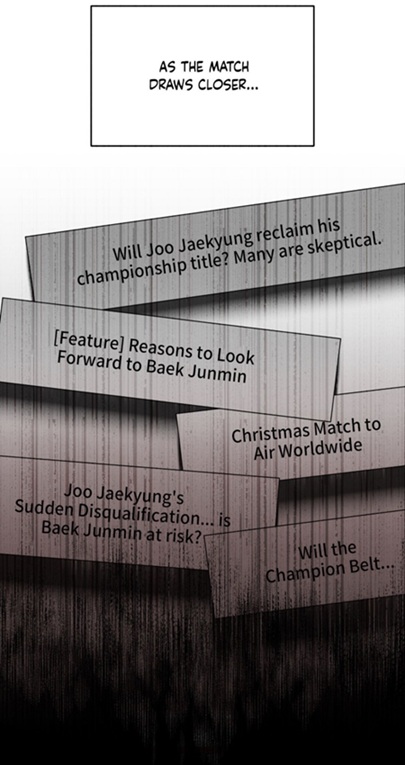 (chapter 95); they reorganize an already established hierarchy. Joo Jaekyung is no longer presented as the stable center of the narrative. Instead, uncertainty surrounds him. One headline, in particular, reveals the logic at work with striking clarity:
“Joo Jaekyung’s sudden disqualification… is Baek Junmin at risk?”
At first glance, the headline appears contradictory. A disqualification, by definition, should settle a situation. It should close the case, eliminate ambiguity, and stabilize the hierarchy. And yet, here, it produces the opposite effect. This is not a simple inconsistency. It is a deliberate construction that operates on two temporal levels simultaneously.
On the one hand, the headline refers backward. By invoking a “sudden disqualification,” it reinterprets the past. What had previously been presented as a suspension — temporary  (90 days), reversible, even later framed as recovery
  (chapter 57) — is now recoded as something definitive. (chapter 96) The shift is subtle but decisive. A suspension belongs to the logic of administration; a disqualification belongs to the logic of judgment. The suspension was grounded in medical authority. (chapter 52) It was issued by MFC doctors, as the incident took place there. It implies a temporary exclusion, a controlled interruption that does not fundamentally challenge legitimacy. The athlete remains inside—recognized, ranked, and, in principle, recoverable. Hence he was ranked as third in August.
  (chapter 69) A disqualification operates differently. (chapter 96) It does not merely suspend participation; it redefines status. It exceeds medical judgment and enters the domain of institutional authority. It relocates the athlete outside the system, not only temporarily but symbolically. What is questioned is no longer his presence, but his legitimacy. The issue is no longer whether he can compete, but whether he should have been recognized as a competitor at all.
This distinction is decisive. It points toward the involvement of the institutional hierarchy—figures such as the MFC CEO and those who operate alongside him. Hence his “invitation” for a match in Paris was never revealed to the public.  (chapter 69) The panel from chapter 47
 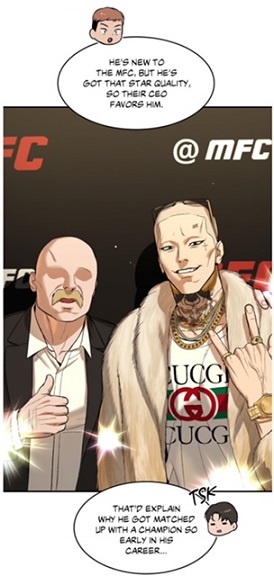 (chapter 47), makes this structure perceptible. The presence of executive figures, the proximity between management and select fighters, and the emphasis on “star quality” reveal a structure in which recognition is not solely determined by performance.
In this light, the shift in terminology acquires a broader significance. It does not simply reinterpret an event; it exposes the conditions under which decisions are made. The hierarchy of the organization is not neutral. It intervenes, adjusts, and, when necessary, redefines outcomes in order to preserve its own coherence.
By allowing the media to replace “suspension” with “disqualification,” the MFC does not intensify the punishment—it repositions the athlete. What had been a procedural measure becomes a moral and structural judgment. The shift authorizes a different interpretation of past events.
(chapter 95) In this sense, the change of terminology performs a protective function. If the situation remains a suspension, it can be contested. It leaves open the possibility of return, of reinstatement, and, crucially, of legal challenge. The athlete remains within the framework and can therefore claim rights—question prior decisions, contest irregularities, and potentially demand compensation.
A disqualification closes that space. By framing the exclusion as definitive and justified, it neutralizes the possibility of reclamation. It stabilizes the loss of the title by presenting it not as a consequence of circumstance, but as the logical outcome of misconduct. The narrative anticipates contestation and preempts it. It transforms a potentially disputable situation into one that appears settled.
This is where the broader context becomes relevant. The sequence of events—the unresolved tie  (chapter 51), the irregularities surrounding the match, the incident with the switched spray—contains elements that could be reexamined. Joo Jaekyung’s public challenge in Paris reactivates these tensions. It signals not only resistance, but the possibility of escalation. By refusing to accept the existing narrative, he reopens questions that the system had already moved to close.
From this perspective, the headline does not simply report—it anticipates. (chapter 95) It prepares the ground for a conflict that has not yet fully emerged. By framing the situation as a disqualification and by presenting the athlete as a destabilizing figure, it redirects attention away from the structural irregularities and toward individual behavior. At the same time, it reassures those who depend on the system’s stability—sponsors, partners, and institutional actors—that the situation is under control.
The transformation of language thus serves a double function: it delegitimizes the athlete while protecting the structure. Moreover, if something were to happen again—another incident, another “sudden” event, it would not appear as an isolated occurrence, but as confirmation of an already established pattern. The result is a double bind. The past justifies suspicion, while the future is prepared to confirm it.
Within this structure, Baek Junmin occupies an equally unstable position. The question of risk does not truly endanger him; it legitimizes him indirectly. By presenting him as someone who could lose what he has gained, the headline acknowledges his status without fully affirming it. He is recognized, but conditionally. His position depends less on his own victory than on the continued framing of his opponent as problematic.
What appears, then, is not uncertainty in a general sense, but a controlled instability. The narrative does not aim to clarify the situation. It aims to maintain a tension in which one figure is constantly redefined as a potential threat, while the other is never entirely secured as a legitimate successor.
Even in apparent advantage, he is not affirmed. What is striking is that, even after his so-called victory, he continues to be referred to as the “underdog” (chapter 52), notably among the members of King of MMA. This persistence is not merely rhetorical; it reflects a deeper uncertainty regarding the legitimacy of his rise. Within the fighters’ own environment, the outcome of the match is not experienced as a clear victory. Baek Junmin himself acknowledges that he was “this close to winning,”
 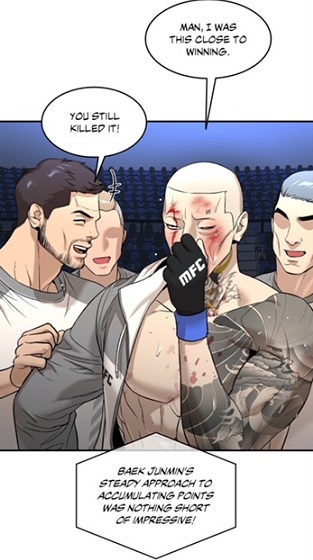 (chapter 51) implicitly confirming that the result did not establish his dominance. The tie, rather than consolidating his position, exposes its fragility.
The betting dynamics further reinforce this ambiguity. (chapter 52) While it is suggested that significant sums were placed on Baek Junmin, this perception proves misleading. The apparent support masks a more calculated position, in which the outcome itself—rather than the fighter—is the object of investment. The smile that accompanies the announcement of the tie reveals that the result was not a disruption, but a realization of expectation.  (chapter 51) So he had not bet on the Shotgun’s victory.
This distinction is crucial. What appears as confidence in Baek Junmin is, in fact, confidence in the structure that produces the outcome. The fighter becomes the visible beneficiary of a system whose logic exceeds him, while the absence of a decisive victory prevents his recognition from stabilizing. He is supported, but not validated. The problem is not that he lost. The problem is that he never clearly won against Joo Jaekyung.
In this light, the persistence of the “underdog” label is no longer paradoxical. It reflects the gap between institutional designation and experiential acknowledgment. This gap becomes even clearer when one recalls that Baek Junmin never earned the KOFC belt in the way Joo Jaekyung did.  (chapter 75) The latter’s rise was marked by a visible title, publicly attached to his name and career trajectory. Baek Junmin, by contrast, occupies the position of champion without passing through the same symbolic sequence of recognition. All this time, he was working in the shadow, in the illegal underground fighting. What he inherits institutionally, he does not fully possess symbolically. He may occupy the position of champion, but the conditions of his ascent prevent that position from being fully recognized as legitimate. The label that once signified ascent is never replaced by one that would confirm his dominance. At the same time, his stage name The Shotgun
  (chapter 49) fails to establish itself. Neither his peers nor the media adopt it. Instead, he is consistently referred to by his real name: Baek Junmin.
 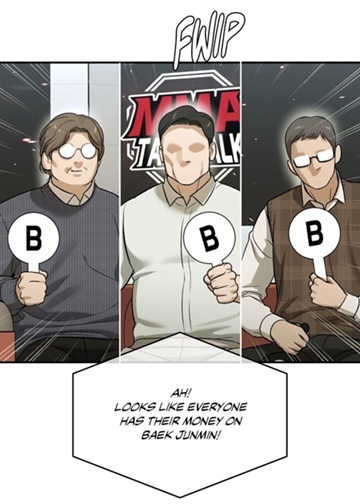 (chapter 95) This absence is not insignificant. In the world of competitive sports, a title or nickname is not merely decorative; it is a marker of recognition, a sign that an identity has been collectively validated. To name a fighter is to fix his position within the symbolic order of the sport. By refusing—or failing—to adopt his stage name, the media and his environment deny him that stabilization.
This absence of recognition is not limited to language; it extends to the level of the image. A champion, within the logic of modern sports media, is not only defined by a title but by the visual confirmation of that title. 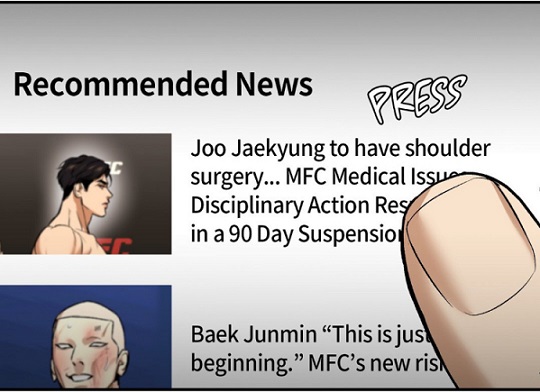 (chapter 52) Victory must be seen, fixed, and circulated in order to become real. In this respect, Baek Junmin’s position reveals a fundamental volability. His so-called victory does not produce a defining image. The match that secured his title was neither clearly decisive nor widely broadcast, leaving no shared visual reference through which his dominance could be established.
As a result, the media does not construct him as a figure. It names him, but does not show him. 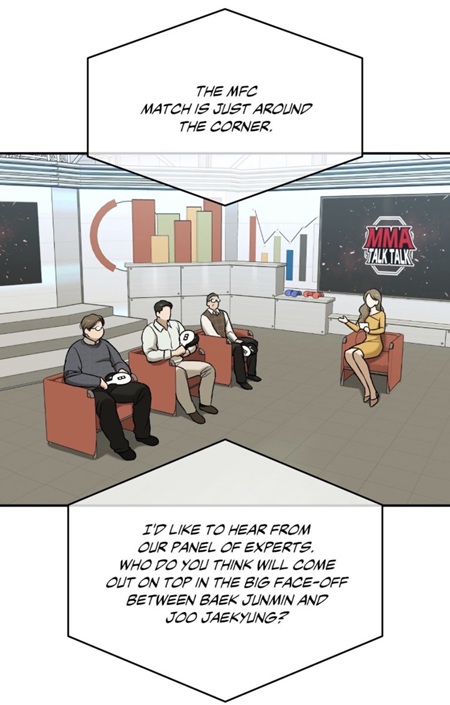 (chapter 95) It becomes more visible, if you contrast this show with the one about the celebrity in episode 52:
  (chapter 54) Instead, it continues to rely on the image of Joo Jaekyung. Even in defeat, the latter remains visually central: his body, his injuries, his presence provide the material through which the narrative is articulated.
 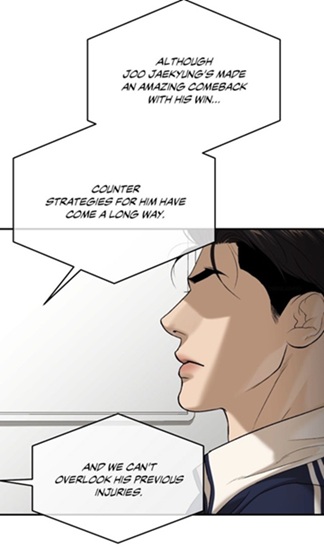 (chapter 95) The fallen champion supplies the image that the reigning one lacks. This imbalance has significant consequences.
Without a stable visual identity, Baek Junmin’s title remains abstract, insufficiently anchored in public perception. His victory does not become an event that can be collectively remembered, but a result that must be asserted repeatedly. In this sense, he occupies the position of champion without acquiring the symbolic legitimacy that would normally accompany it. He wins the position—but not the identity. He does not fight to win—he fights to be seen. And now, you comprehend why he did the interview on the day, the champion’s image got ruined. 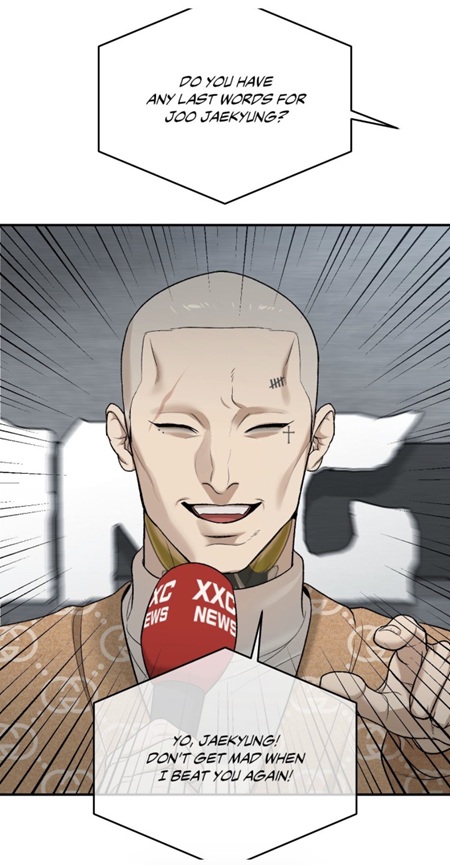 (chapter 96) The MFC may have declared him champion, yet this recognition remains institutional; it does not translate into collective acknowledgment among the masses. Hence he is never seen signing autographs.
 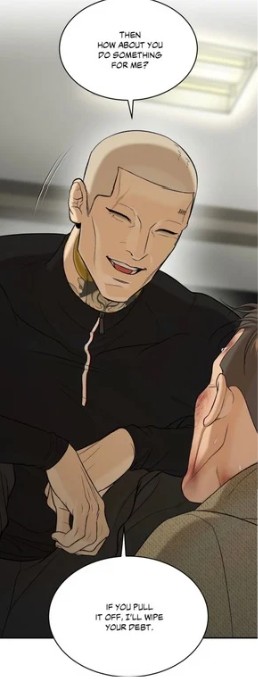 (chapter 93) He always appears sitting in the office separated from the other members. Hence, visibility must be manufactured for him to be recognized as a champion.
In doing so, it also redefines the role of Joo Jaekyung. Disqualified, he should disappear. Instead, he persists as a destabilizing presence—no longer a contender, but still a threat. His exclusion does not neutralize him; it transforms him into a figure whose very absence continues to structure the narrative. and the headlines with the sudden disqualification becomes a focal point. (chapter 96) Doubt replaces confidence. The questions posed are no longer about the rise of one fighter, but about the possible fall of another.
What is striking is not the content itself, but the absence of reaction. Where earlier moments revealed suspicion, the current ones are met with silence. Neither the fighters nor the surrounding figures openly challenge the narrative. (chapter 96) The possibility of manipulation, once acknowledged, is no longer articulated. It is as if the system no longer needs to hide. Its operations have become sufficiently integrated to function without being named.
It is within this context that the poster must be understood. (chapter 96) Its destruction does not initiate the process—it materializes it. What had been unfolding across media and digital spaces now appears in physical form. The gesture, however minimal, suggests a continuity between what is said and what is done. The narrative does not remain abstract; it produces effects.
And yet, this effect raises a deeper question about agency. At first glance, the figure associated with this transformation seems clear. Baek Junmin dominates the narrative space. His name circulates, his rise is emphasized, his position reinforced. It would be tempting, therefore, to identify him as the Giant—the one who displaces, replaces, and ultimately stands at the center of this reconfiguration.
But this identification does not hold. Because Baek Junmin does not control the narrative; he moves within it. He benefits from it, embodies it, and perhaps even believes in it—but he does not produce it. The coherence of the operation exceeds him. It extends across media outlets, digital platforms, and institutional structures that coordinate visibility, attention, and interpretation.
What emerges, then, is a different configuration of power. The Giant is not the figure that appears, but the structure that allows it to appear in a certain way. It is not located in the individual, but in the network that sustains and amplifies him. (chapter 95) Behind the visible face lies a set of interests that do not present themselves directly—economic, strategic, and, at times, illicit. The circulation of narratives is not neutral; it is tied to flows of capital, influence, and control that operate beyond the surface of the story.
In this sense, Baek Junmin is not the Giant, but its surface. (chapter 96) This becomes visible when one considers the asymmetry of representation between the two fighters. At Team Black, Joo Jaekyung’s presence is materially affirmed through the large poster displayed at the entrance. His image is fixed, visible, and collectively recognized. It establishes him not only as a champion, but as a figure whose status is publicly validated. (chapter 1) No such affirmation exists at the rival gym, King of MMA. That’s why Baek Junmin remains a champion on paper—validated by the system, but not embodied within it.
At the same time, this absence points beyond the individual. The figure that appears in the foreground conceals a more complex network of influence. Behind Baek Junmin stands not only the local structure of the gym (chapter 96), but also broader institutional connections 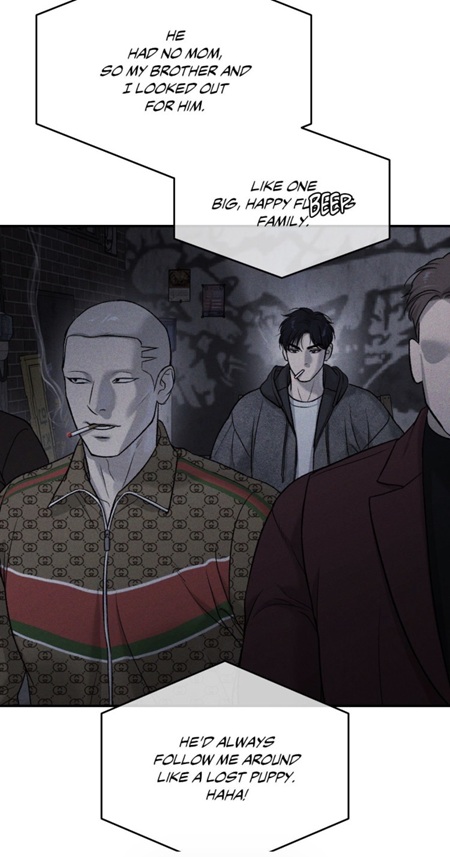 (chapter 96), including corporate interests that extend beyond the immediate context of the sport.
  (chapter 48)
The image, then, is not missing by accident. Its absence reflects a displacement: what is not consolidated at the level of the individual is sustained elsewhere, within a network that organizes visibility without fully exposing itself. He gives it form, visibility, and direction—but the force that sustains it remains elsewhere, less visible, and therefore more difficult to confront.
The ruined poster (chapter 96), then, does more than signal the fragility of an image. It reveals the presence of a system capable of extending its influence from representation to action, from discourse to intervention—without ever fully exposing itself.
And yet, this configuration produces an unexpected reversal. The figure that appears largest—the one whose name circulates, whose presence dominates the narrative—is not the one that holds power. (chapter 96) Conversely, what truly determines the outcome remains largely unseen, operating through structures that do not present themselves directly. The opposition, then, is not between two equally visible figures, but between what can be perceived and what cannot, between a presence that can be attacked and a force that cannot be easily located. Under such conditions, the struggle cannot take the form it seems to promise.
And yet, this progression leads back to the initial question. Who is the Giant? If we must finally name the Giant, we find it is not a person, but an entity: Goliath. Yet, in this modern arena, the script of the ancient myth has been inverted. Unlike the biblical Goliath—a singular, towering physical presence—this Goliath is invisible and decentralized. It is a vast network of corporate interests, manipulated media headlines, and systemic corruption. The traditional ‘Giant’ is an easy target because of its scale, but the MFC remains untouchable precisely because it hides behind its ‘paper’ constructions. 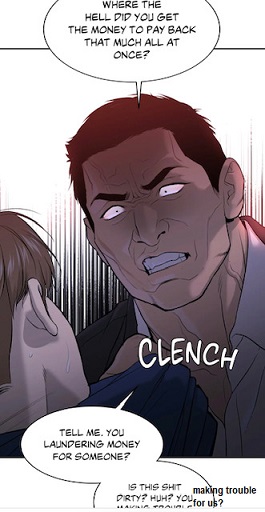 (chapter 11) It is a shadow that cannot be struck with a stone. However, this configuration reveals a fundamental weakness: the Giant is not just made of paper; it is rotting from within. If the foundation of the MFC is nourished by money laundering (chapter 48) and sustained by “paper companies,” then its strength is an illusion maintained by silence and complicity. In this light, the damaged poster in Chapter 96 (chapter 96) acts as a physical mirror for this hidden corruption. Just as the poster’s surface is scratched and its authority weakened, the system itself is rotting. The perpetrators here are not just sports managers; they are criminals operating under the guise of legitimacy—white-collar offenders hiding behind tax evasion and financial fraud.
This corruption signifies that the Giant’s power is entirely transactional. It exists only as long as the ‘papers’—the ledgers, the contracts, and the bribe receipts—remain hidden. The “paper” that grants the Giant its size is the same material that ensures its fragility. It implies that the removal of a single, strategic sheet—not a physical blow, but a structural one—could bring the entire edifice to collapse. In this light, the stone that brings down Goliath is not found in the ring, but in the hands of the law. A single police report 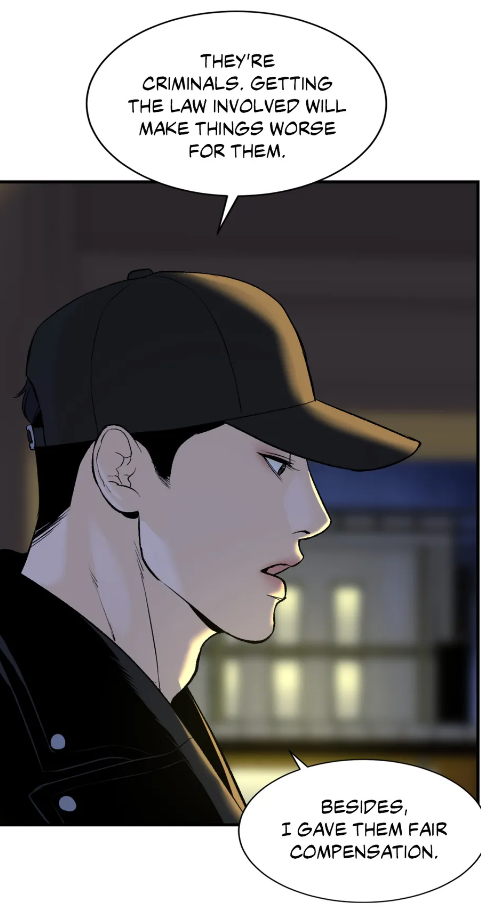 (chapter 18), a testimony, a leak of financial records, or a documented truth becomes the only weapon capable of tearing through the Giant of Paper. To destroy the narrative, one does not fight the image; one strikes the ledger.
To conclude, the threat does not come from within the arena, but from outside it. Not from physical confrontation, but from the transformation of hidden records into acknowledged facts. The Giant of Paper does not collapse under force. It collapses when what sustains it can no longer remain concealed.
The Laughter That Rewrites a Life
So if Goliath is a “Giant of Paper” (Money and Shell Companies), then this interview is the “Ink.” The money laundering creates the Giant’s body, but Junmin’s laughter and rewritten history provide the Giant’s “skin”, the part the public sees. What unfolds in the interview is not a spontaneous outburst, nor the crude provocation of a rival seeking attention. It is something far more controlled. The tone oscillates between mockery and composure 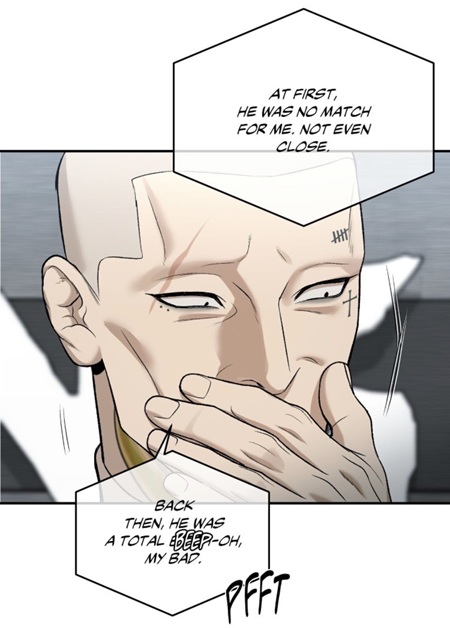 (chapter 96), between laughter and measured statements (chapter 96), as if two registers were deliberately intertwined. On the surface, Baek Junmin performs the role expected of him: the confident fighter, amused, dismissive, superior. The smirk, the laughter, the casual insults
 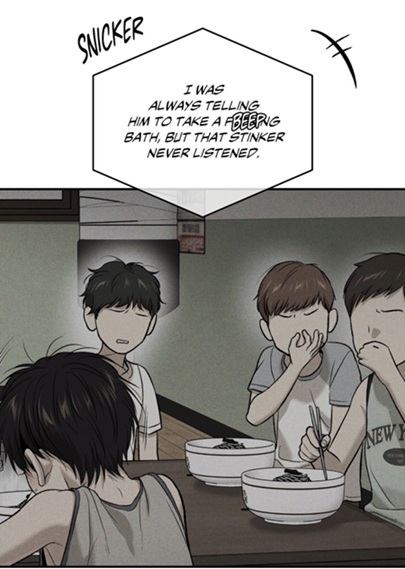 (chapter 96) — these elements construct an image of dominance that appears almost effortless. (chapter 96) And yet, beneath this performance, another layer becomes visible. The vocabulary shifts. The insults become structured. (chapter 96) The accusation of an “inferiority complex” does not belong to the same register as the crude remarks that surround it. It introduces a clinical tone, one that suggests interpretation rather than reaction. This is not the language of impulse. It is the language of framing.
This shift is not accidental. It indicates preparation. Baek Junmin does not speak as an isolated fighter improvising under pressure. His discourse bears the marks of prior construction, as if it had been shaped, filtered, and calibrated before being delivered. (chapter 96) This physical evasion—the refusal to meet the gaze of the lens—suggests a speaker who is not recounting a memory, but reciting a script. The ‘clinical’ term is a foreign object in his mouth, a tool handed to him by the ‘Giant’ behind the scenes. The alternation between vulgar insults and quasi-medical terminology creates a carefully controlled ambiguity: what is said can wound, but cannot be easily prosecuted. The insults remain indirect, the claims remain interpretative, and the responsibility is constantly displaced.
In this sense, the interview operates within a legally protected gray zone. It is not pure defamation, because it avoids explicit false statements that could be challenged in court. (chapter 96) Instead, it relies on suggestion, selective truth, and reframed memory. The figure speaking appears spontaneous, but the structure of his speech reveals constraint. Someone, somewhere, has ensured that the line is never fully crossed: lawyers, doctors… (chapter 96) Crucially, the author employs a recurring visual metaphor to mark the boundary between Baek Junmin’s calculation 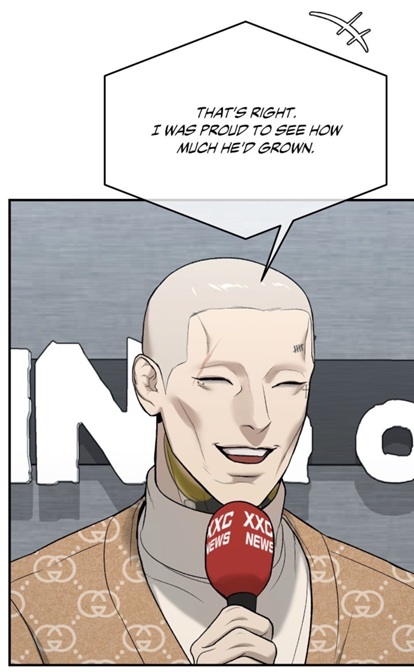 (chapter 96) and his true self. Whenever he is forced into restraint—when he must deliver the scripted, empathetic lie—his eyes are firmly shut (Chapter 96). As he claims his heart was ‘broken’ by the disqualification, he physically blinds himself to the truth of his own joy, locking his real expression behind his eyelids to maintain the professional mask. The public sees only his calculated composition.
This contrasts sharply with his open-eyed laughter elsewhere (Chapter 96). In this moment, the mask slips completely. His eyes are wide, his face is true to itself, and his smile let transpire pure disdain. Here, he reveals to the audience that he is no real friend. His words about Jaekyung’s ‘growth’ become an act of deep condensation. The closed eyes represent the restraint required to lie, but the open, mocking face is the true reflection of his contempt. However, the script lets transpire that he is the one suffering from a huge inferiority complex. (chapter 96)
This is where the role of the surrounding structure becomes visible. The discourse does not only protect the speaker; it protects those behind him. The gym, its backers, and the wider network that sustains him remain shielded. What is exposed is the target; what remains invisible is the mechanism that enables the attack.
The laughter, then, is not simply mockery. (chapter 96) It is part of the strategy. It softens the accusation, disguises intent, and transforms aggression into performance. It allows the speaker to say what must be said—while appearing not to say it at all.
This duality is essential. It allows the discourse to operate in a gray zone where it can neither be dismissed as pure aggression nor fully challenged as a verifiable claim. By alternating between vulgarity and pseudo-analysis, the speaker protects himself. The laughter and smile disarm, the terminology legitimizes. What emerges is a narrative that can circulate freely without exposing itself to direct contestation. It resembles testimony, yet avoids accountability. In this sense, the interview does not simply attack; it reorganizes.
The past becomes its primary terrain.
Rather than confronting Joo Jaekyung in the present, the discourse moves backward (chapter 96), selecting fragments of childhood and reassembling them into a coherent but partial story. Absence is introduced where complexity once existed. (chapter 96) The mother disappears, reduced to a simple fact—“he had no mom”—as if this absence were self-explanatory, requiring no further inquiry. The father is not mentioned at all. With this omission, an entire dimension of the champion’s history is removed, along with the implications it carries. What remains is a simplified figure, detached from lineage, stripped of context, and therefore easier to redefine. This absence becomes all the more striking, when one recalls that Baek Junmin only began interacting with the main lead after the death of his father, himself a former boxer.  (chapter 74) The omission cannot therefore be reduced to coincidence. It suggests either a lack of knowledge regarding this dimension of the past, or a deliberate decision to leave it unaddressed. In both cases, the effect is the same: a crucial element of the champion’s formation is excluded from the narrative, preventing any recognition of continuity, inheritance, or transmission.
The moment his existence becomes publicly acknowledged, the narrative constructed by Baek Junmin begins to collapse. What was presented as a story of weakness and isolation is recontextualized through lineage and inherited proximity to the world of fighting. Even if the father did not train him—and indeed opposed boxing—his presence reintroduces continuity where the interview imposed rupture. At the same time, at no moment, the Shotgun brought up the physical abuse from Joo Jaewoong, so Baek Junmin’s hypocrisy gets exposed (“It breaks my heart…”). Besides, this revelation risks extending beyond the individual case. It reopens the question of the structural links between combat sports and illicit networks  (chapter 73), a connection that the narrative had carefully displaced. What appears as a personal account thus becomes unstable, exposing not only its own inconsistencies, but the broader system it sought to conceal.
But let’s return our attention to the Champion in Paper. The latter inserts himself into that past. (chapter 96) He becomes the one who “looked out for him,” the one who was followed, the one who observed, judged, and ultimately surpassed. The relationship is rewritten as hierarchical and unilateral. He was the hyung who knew everything better, and Joo Jaekyung was just stubborn. (chapter 96) What might have been coexistence becomes dependence. What might have been proximity becomes subordination. In doing so, Baek Junmin does not merely diminish the other; he constructs himself as the necessary reference point through which that past can be understood.
And yet, this reconstruction is unstable.
Because it encounters a form of resistance that does not depend on counter-speech, but on the persistence of verifiable traces. 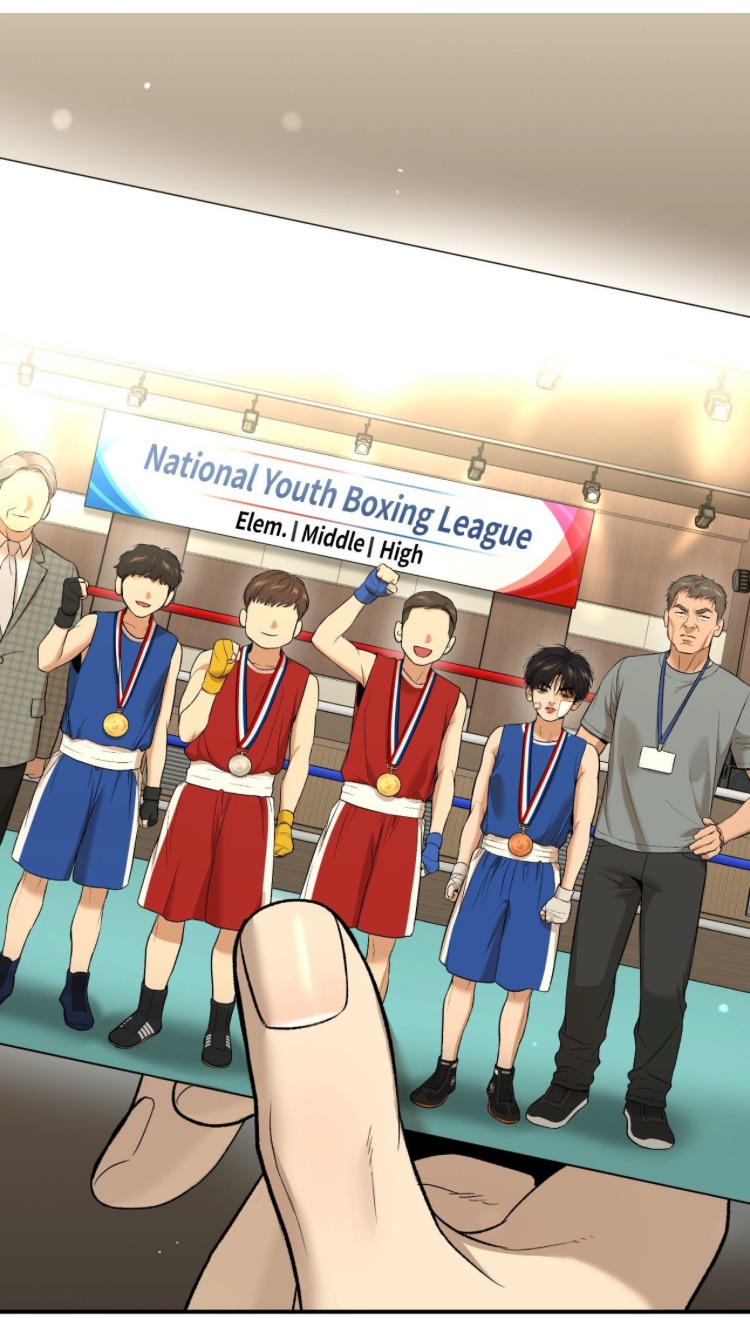 (chapter 71) The photograph of the young fighter with his coach introduces a contradiction that the interview cannot fully absorb. It does not merely suggest discipline or continuity; it attests to a process that precedes and exceeds the narrative imposed upon it. The trajectory it reveals is not incidental, nor dependent on a single relationship, but anchored in duration, training, and transmission.
This contradiction is reinforced by another element. On the night of his father’s death, Joo Jaekyung had already won his first boxing tournament  (chapter 73). This detail is decisive. It establishes that his development was already underway, and that his formation cannot be reduced to the simplified account presented in the interview. It also repositions Hwang Byungchul. Far from being the negligible or ineffective figure implied indirectly by the discourse, he appears as part of a structure that enabled this early progression.
What emerges, then, is not simply an alternative narrative, but the presence of a witness. A successful coach and gym owner 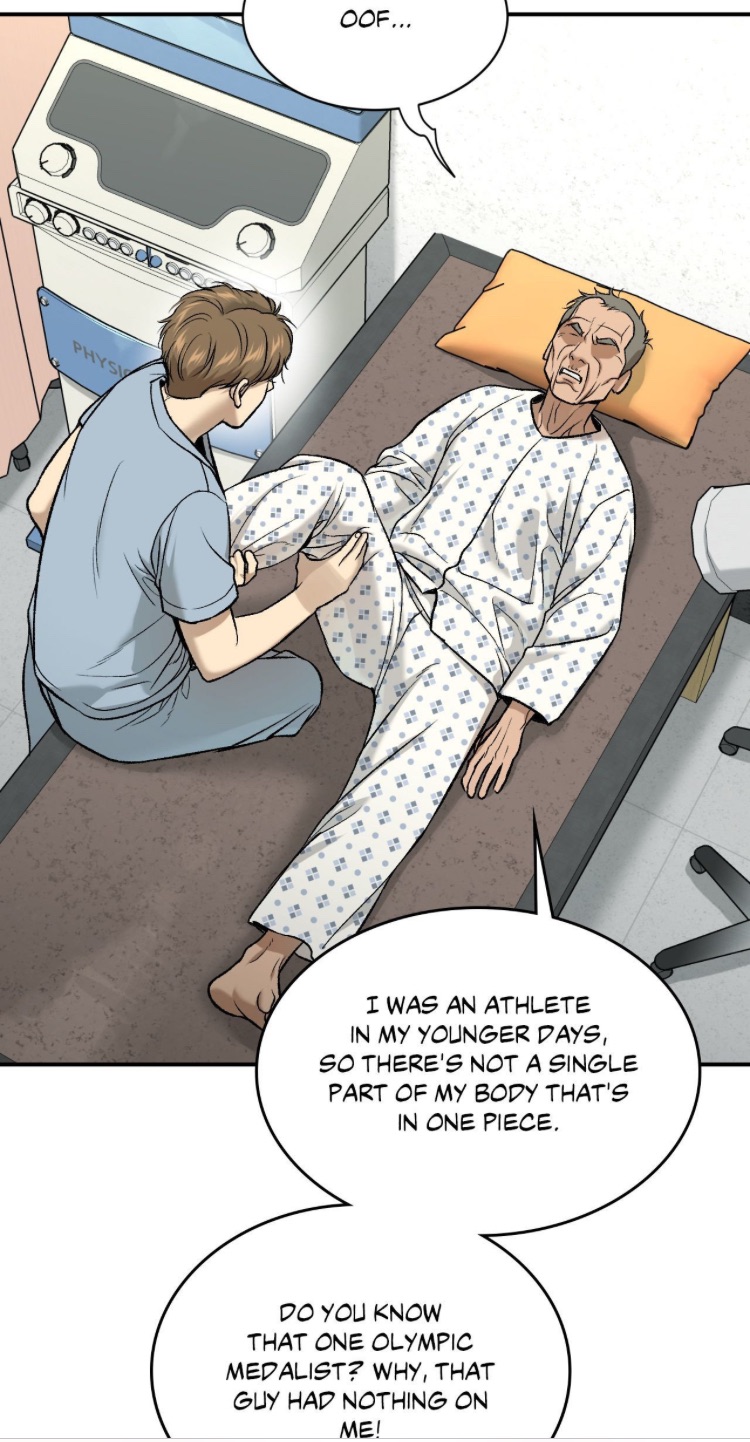 (chapter 71) , the tournament, the documented progression—these elements introduce points of verification that resist the logic of selective reconstruction. The past is not entirely available for reinterpretation; parts of it remain anchored in events, relations, and figures that can contradict the imposed version. On the other hand, the Champion in Paper has only his recollection as evidence which is based on the narration of others.
This is precisely what Baek Junmin fails to account for. His discourse is structured by comparison and hierarchy, focused on the figure of the main lead as an isolated reference point. In doing so, it overlooks the broader network of relations within which that figure was formed. The result is a narrative that appears coherent, but rests on an incomplete—and therefore unstable—foundation.
This is precisely what the interview seeks to neutralize. By reducing the past to a series of humiliating details—isolation, poverty, neglect, weakness—it transforms development into deficiency. The years of training disappear behind anecdote. Dedication is replaced by ridicule. The champion is no longer someone who became strong, but someone who was once weak. The temporal movement is inverted. Growth no longer leads forward despite his claim,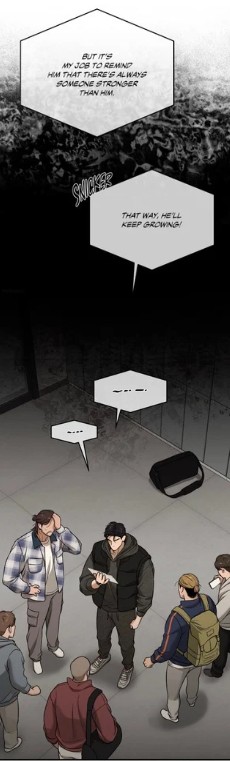 (chapter 96); it is used to anchor the subject in a diminished origin that can be continuously recalled and reactivated.
In this sense, the strategy aligns with the earlier shift from suspension to disqualification. It is not enough to destabilize the present; the past must also be rewritten. Only then can the figure be fully redefined. And yet, this operation produces an unintended effect.
By insisting on hierarchy, by constantly positioning himself above, Baek Junmin reveals the very limitation that structures his discourse. He can only define himself in relation to another. He only knows one world: social darwinism, while Mingwa via Shin Okja and the landlord are promoting “mutual aid”. His identity depends on comparison (chapter 96), on opposition, on the maintenance of a vertical order in which he occupies the superior position. This is why the notion of “inferiority complex” becomes central. It is projected outward, attributed to the other (chapter 96), but it simultaneously exposes the logic that governs his own position. Without that hierarchy, his discourse loses its foundation.
This dependency explains why his recognition remains incomplete. Despite the visibility granted by the interview, despite the circulation of his name and statements, he does not acquire a stable identity as champion. He is present everywhere, yet never fully constituted. The system amplifies his voice, but does not anchor his image. He speaks, but does not replace. The absence noted earlier persists. His figure remains suspended, contingent on the very narrative he helps to produce.
This is where the notion of a Pyrrhic victory becomes relevant. (chapter 96)
The attempt to destroy the opponent’s image does not result in consolidation, but in exposure. By bringing the past into public discourse, by mobilizing language that exceeds his own register, by aligning himself so visibly with a broader narrative apparatus, Baek Junmin reveals the conditions that sustain him. The interview does not conceal the system; it makes it perceptible. The coordination between discourse, timing, and prior events—such as the vandalized poster (chapter 96) —suggests an operation that extends beyond the individual. What was meant to appear as personal testimony begins to resemble a structured intervention.
Even the proximity to cyberbullying operates within this ambiguity. (chapter 95) The content humiliates, distorts, and circulates widely, yet it remains carefully calibrated. It avoids direct falsification, relies on selective truth, and frames interpretation as opinion. This positioning allows it to evade legal accountability while maximizing its effect. The attack is real, but its form protects it from being easily named as such.
In the end, the interview does not establish Baek Junmin as the Giant.
It confirms his role within the system that produces the Giant. He acts, speaks, and provokes, but the coherence of the operation does not originate with him. It passes through him. And in doing so, it exposes both his intention and his limitation. He seeks recognition through destruction, but what he ultimately reveals is the structure that makes such destruction possible.
The Echo of Laughter: When Others Begin to See
The interview does not end with the one who speaks. (chapter 96) What is said circulates, settles, and reaches those who were never meant to be its primary audience. Its impact is not measured by its accuracy, but by the way it interferes with existing perceptions. It does not simply construct a narrative; it tests how that narrative will be received, absorbed, or resisted. In this sense, its true effect becomes visible only when it encounters those who carry fragments of the past it attempts to rewrite.
The Bad Coach and his Dump Gym
For Hwang Byungchul, this encounter produces a rupture. Until this moment, his position had been defined by distance and partial understanding. He had witnessed certain events, sensed irregularities, and yet never fully questioned the structure within which they occurred. His interpretation of the past remained localized, focused on individual decisions  (chapter 74) rather than systemic conditions. Thus he accepted that his body as a fighter got so damaged. (chapter 71) And he did not have a physical therapist back then either. The interview disrupts this equilibrium. By erasing his role
 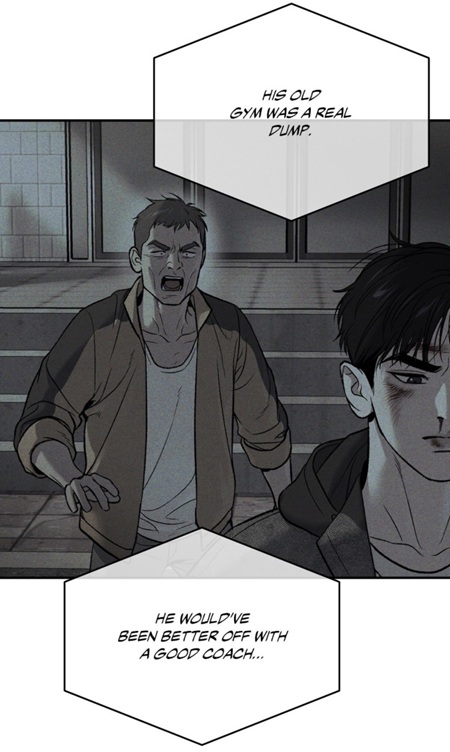 (chapter 96) —by reducing the champion’s formation to failure, neglect, or insignificance—it forces a confrontation the coach had previously avoided.
Baek Junmin’s words disturb that stability in another aspect: the champion’s mother. For Hwang Byungchul, her absence had long been integrated into a tragic but coherent explanation. She had left 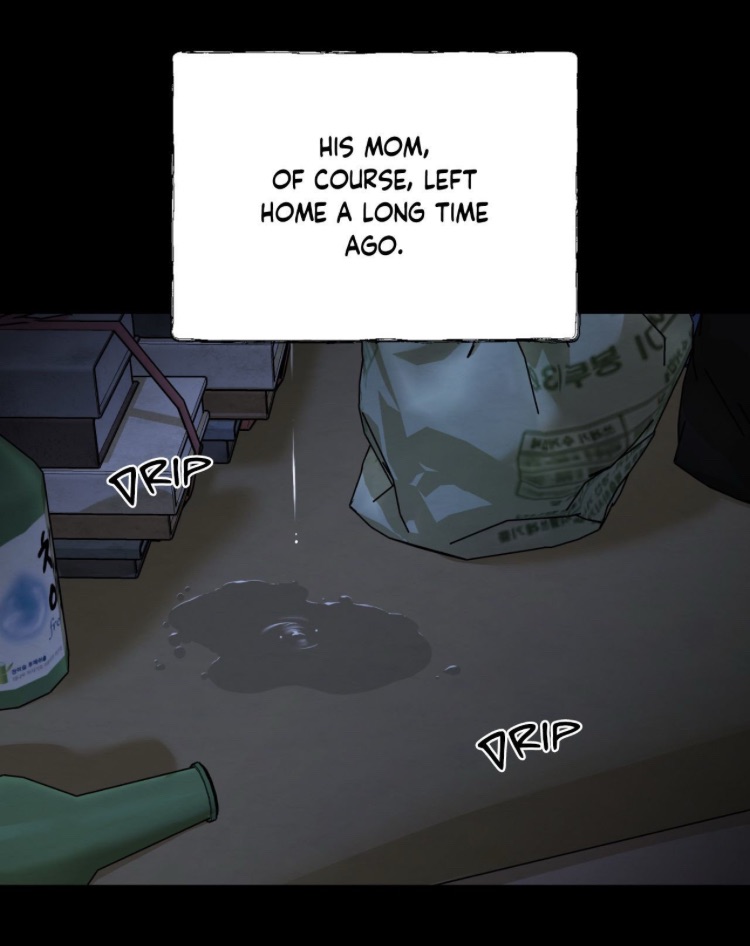 (chapter 72), yes, but she had reasons. The father was violent, the household unstable, and escape could therefore be understood as a form of necessity. In this interpretation, the mother’s departure remained painful, but intelligible. What he failed to ask, however, was the decisive question: if she left to save herself, why did she leave the child behind? Why was the boy not taken with her? For him, absence did not mean abandonment. He still had a positive vision of the mother: caring and selfless.
  (chapter 74) The interview brutalizes this unresolved contradiction by collapsing it into a simpler formula: (chapter 96) That statement is false in one sense, since Hwang Byungchul knew she existed, but it also exposes the existential truth he had failed to confront. The child may have had a mother in biography, yet he was lived and treated as if he had none. What Hwang Byungchul had accepted as abandonment with reasons now reappears as a far more troubling failure of protection.
The same pattern returns in his understanding of bullying. Hwang Byungchul had once witnessed mockery 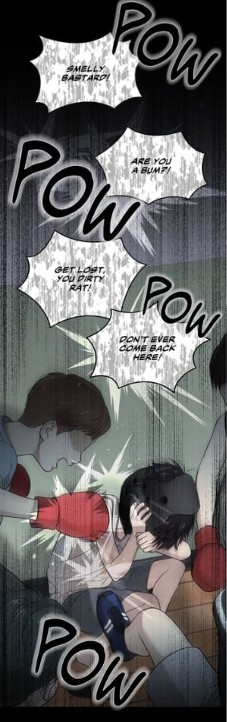 (chapter 72) and humiliation directed at the young fighter. But he interpreted it as an isolated incident, something that could be resolved by intervention, discipline, or the simple restoration of order.
  (chapter 72) In doing so, he mistook a visible moment for the whole of the problem. He overlooked the impact on the little boy’s soul. What Baek Junmin reveals—despite his malicious intentions—is that (chapter 96) this mockery was not occasional. It was structural. It became a gossip. The insults about smell, weakness, dependency, and social inferiority do not describe a single event; they evoke an entire environment in which the child was continuously reduced, laughed at, and pushed to the margins. The director of the gym had believed that stopping one episode meant ending the problem. The interview forces a more painful recognition: he had not grasped that ridicule was not an interruption in the boy’s life, but one of its formative conditions.
This is why I believe that the interview must have affected him so deeply. Sure, he might have felt insulted by such comments, (chapter 96) Yet, Baek Junmin’s statement compels the former coach to revisit the foundations of his own understanding. He had totally misjudged the mother, his image of her was influenced by his own projection and experience. Thus he had not grasped the champion’s suffering: the longing for his mother and her betrayal. The bullying he had witnessed, he had not truly measured. The ruthlessness he later attributed to the champion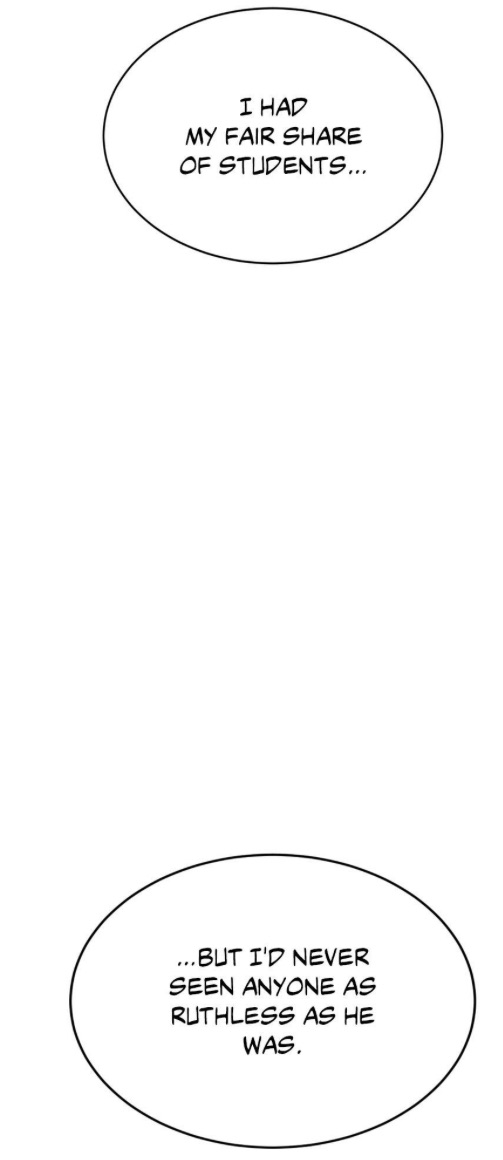 (chapter 71), as if it were an exceptional trait now begins to look like the product of a much longer history of humiliation, abandonment, and misrecognition.
In this sense, Baek Junmin’s version does not become powerful because it is true. (chapter 96) It becomes dangerous because it exploits gaps that were already there. Hwang Byungchul is not destabilized by a complete fabrication, but by a narrative that twists fragments of reality he himself had once simplified. The interview therefore produces a delayed crisis of interpretation. It reveals that what he took for explanation had often been only a way of stopping inquiry too soon.
What is at stake for him is not merely recognition, but responsibility. The narrative he hears does not simply contradict his experience; it exposes its limits. What he once perceived as isolated incidents now appears as part of a larger configuration he failed to grasp. The figure he believed he understood is re-presented in a way that both distorts and reveals. In this tension, a new possibility emerges: not the recovery of a stable truth, but the realization that his previous certainty was incomplete.
This delayed recognition extends even further. Until now, Hwang Byungchul had been confronted with a fact he could not fully explain: Joo Jaekyung never contacted him. 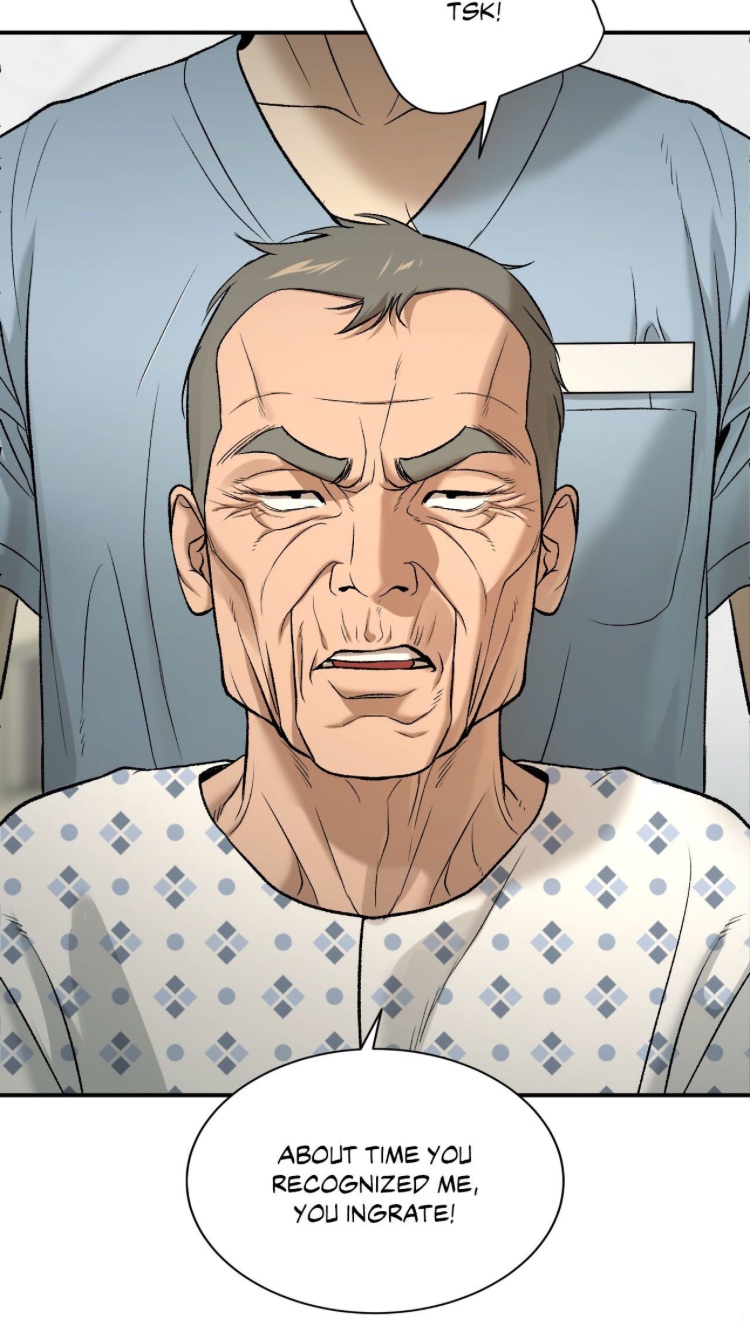 (chapter 71) Not once. Despite the years of training, despite the shared history, despite the role he himself believed to have played
  (chapter 74), the champion had cut all contact without explanation. This absence had remained unresolved, almost suspended—something to be accepted, but not truly understood. Hence he became resentful.
The interview alters that. By reconstructing a childhood marked not by isolated hardship (chapter 96) but by continuous ridicule, it introduces a new interpretative frame. The gym, which Hwang Byungchul had perceived as a place of discipline and formation, reappears under a different light. It was also a space where the young fighter had been exposed, diminished, and observed by others without protection. But furthermore, the mockery existed outside that environment and Hwang Byungchul had no idea about it.
This realization produces a shift that is both subtle and decisive. The silence of Joo Jaekyung no longer appears as distance, indifference, or ingratitude. It becomes legible as avoidance. Not of the coach as an individual, but of everything he represents: a place, a period, a configuration of relationships in which humiliation and growth were inseparably intertwined.
In this sense, the absence of contact is no longer a mystery. It is a continuation. What the interview does, then, is not simply distort the past. It forces Hwang Byungchul to recognize his own shortcomings. The bond he believed to exist was real—but it was not the only one. Alongside discipline and effort, there had always been something else: exposure, vulnerability, and the gaze of others.
The Grandmother’s Hero
If the interview unsettles Hwang Byungchul by forcing him to reinterpret the past, its effect on Shin Okja can only follow a darker, more intimate path. It does not invite analytical distance; it collapses distance altogether.
The words about the absent mother resonate with a haunting familiarity. For Shin Okja, (chapter 96) is not a piece of news; it is a recognizable configuration of suffering.  (chapter 65) The simplified narrative offered by Baek Junmin aligns too easily with her own history of hardship. But this immediacy has a cost. By recognizing the pain, she risks accepting the distorted framework through which it is presented.
The Collapse of the “Best Effort” Myth
This recognition forces a reassessment of her own narrative. For years, Shin Okja’s internal conviction was built on a single idea: she had done her best to raise Kim Dan  (chapter 65), even if it was never enough. Her role was defined by sacrifice, by the necessity to protect and sustain the “child” she still perceives in him—someone to be fed, guided, and contained rather than allowed to stand fully on his own.
Baek Junmin’s account destabilizes this framework. (chapter 96) By presenting a version of Joo Jaekyung who grew up without stable protection—without consistent care—the interview challenges the assumption that such protection is the decisive condition for survival. If the celebrity was once weak, isolated, and exposed, yet became the strong and composed figure she now sees, then his development cannot be fully explained through the model she has relied on. One could say that to Shin Okja, the black wolf is a “Giant of Flesh and Bone”—someone whose strength is real—which makes her realize that her grandson, and her own history, have been built on “Paper.” (the pictures of Kim Dan’s childhood).
At the same time, this confrontation extends beyond Joo Jaekyung and returns to Shin Okja’s own past. For years, she had described Kim Dan as an orphan—a term that appears factual, but in reality simplifies a far more complex history. The photographs contradict this reduction.  (chapter 94) They attest to the existence of parents, of a prior life, of relationships that were not entirely erased but quietly set aside.
In this sense, Shin Okja did not simply care for Kim Dan; she also reshaped the narrative of his childhood. By presenting him as an orphan, she created a version of the past that was more coherent, more manageable, and easier to endure. In other words, she rewrote the past out of guilt and “protection”. The ambiguity surrounding his parents—their absence, their responsibility, their place in his life—was not explored, but neutralized.
This alteration, however, is not without contradiction. While Shin Okja presents Kim Dan’s past as one of absence, the present remains marked by a persistent trace: debts. Unlike Joo Jaekyung, who endured poverty but was not bound by it, Kim Dan’s life is structured by an obligation he cannot escape.  (chapter 7)
This aspect is notably absent from her own account. When she speaks of the past on the beach, she evokes hardship, sacrifice, and endurance, yet she avoids addressing the existence of this burden. 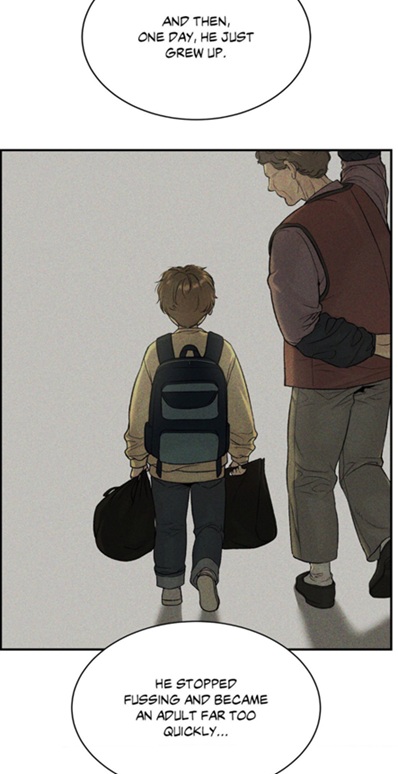 (chapter 65) The debt is not mentioned; it is simply endured. In doing so, its cause is displaced, if not entirely obscured.
But debt is never neutral. It implies a prior history, a chain of decisions and responsibilities that cannot be reduced to absence. In this sense, it contradicts the narrative of orphanhood she has constructed. It suggests that the past was not erased, but transformed into a silent obligation carried into the present.
The interview reactivates this contradiction. (chapter 96) By reducing Joo Jaekyung’s childhood to a simplified narrative of poverty and abandonment, it mirrors the very mechanism through which Shin Okja has spoken about Kim Dan. Yet the presence of debt prevents such simplification from holding entirely. It anchors the past in the present, making it impossible to maintain a version of events in which nothing preceded her care.
Baek Junmin’s interview reactivates this suppressed dimension. By reducing Joo Jaekyung to a child “without a mother,” it reproduces the very mechanism Shin Okja herself had employed. The parallel is difficult to ignore. What appears as manipulation in one case reflects a similar simplification in the other.
Taking Strength for Granted
This realization forces Shin Okja to confront a dimension of Kim Dan’s past she had long underestimated. When he was hurt, her response had always been immediate and absolute: to reassure him, to remain by his side, to insist that her presence was enough. 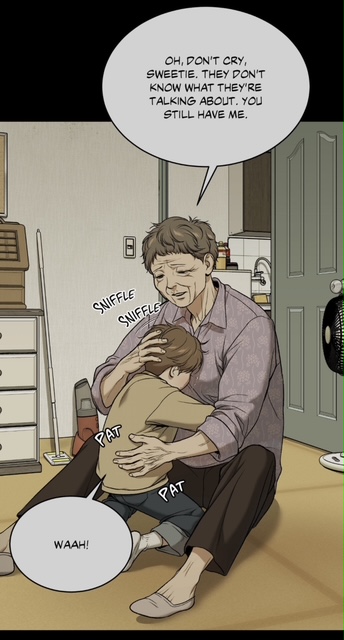 (chapter 57) It was not only a gesture of comfort; it was a conviction. It implied that the absence of others could be compensated by her own care.
But this belief now reveals its limits. Kim Dan’s suffering was not confined to the private sphere. It extended into the social space, where absence became stigma  (chapter 57), and where being “different” invited mockery and exclusion. What Shin Okja had perceived as a problem of loneliness was also a problem of exposure and humiliation.
In this sense, her care did not eliminate the wound; it coexisted with it. She protected him from being alone, but not from being seen by others in a way that diminished him. The interview reactivates this overlooked dimension. By describing Joo Jaekyung as a child who was mocked and reduced, it forces her to recognize that Kim Dan may have endured something similar—even while she believed she had protected him. (chapter 57) And exactly like the director of the gym, what she imagined as a single incident, was not. It followed the main lead constantly.
This realization reveals the limits of her perspective. Shin Okja had taken Joo Jaekyung’s strength as something self-evident. 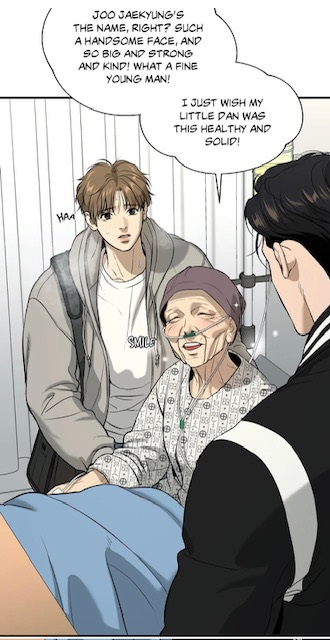 (chapter 21) She perceived him as a finished figure—healthy, solid, and self-sufficient—without questioning the conditions that made such stability possible. Even when she turned toward him with warmth
 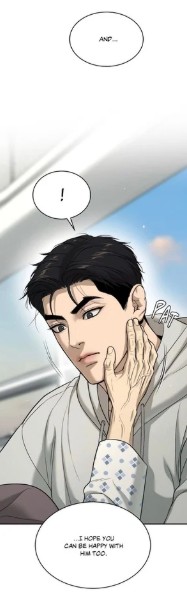 (chapter 94), her perception remained structured by Kim Dan. She acknowledged his place beside her grandson, but not the history that had formed him. She had never asked him any question in the end.
A dissonance emerges. If a child can grow up and become strong without the form of protection she considers essential, then the meaning of her own care becomes uncertain. (chapter 65) The question shifts: not whether she cared, but how that care has shaped the one who received it.
The contrast takes on the form of a mirror. Kim Dan continues to struggle with basic acts such as eating 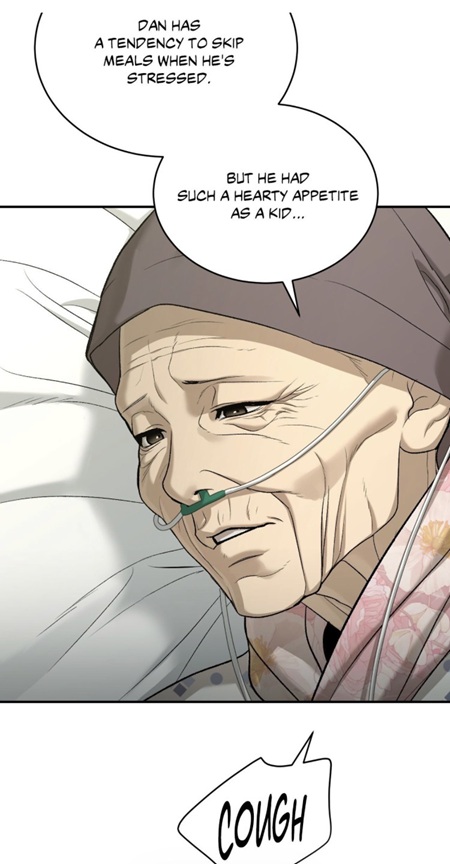 (chapter 94), withdrawing under pressure rather than sustaining himself. While Jaekyung’s strength appears to have been forged under conditions of absence, Kim Dan’s fragility seems to persist within the structure of her presence.
In this sense, the interview does not only reshape her perception of Joo Jaekyung. It fractures the image she had constructed of her own life. For years, she had organized her story around sacrifice. She had done her best, endured hardship, and carried responsibility for Kim Dan. This narrative gave coherence to her actions. But the existence of another child—equally abandoned, yet differently formed—introduces a contradiction she can no longer ignore.
It displays her own shortcomings as well.
Not as a lack of care, but as a limit in perception. She acted, protected, and endured, but without fully questioning the effects of her own form of care. In doing so, she may have replaced one form of absence with another form of dependency.
The Hesitation of the Heart
Shin Okja does not reject the narrative, but she can no longer fully accept her own. The interview generates a space of hesitation—a subtle but decisive shift in which the image she had constructed begins to destabilize. For the first time, the narrative does not pass through her unchanged.
The interview sought to fix Joo Jaekyung’s meaning as a failure. Instead, it unsettles the foundation of Shin Okja’s identity as a caregiver. By exposing the champion’s past vulnerability, Baek Junmin unintentionally reveals the limits of her own understanding. The laughter that accompanies the discourse continues to circulate (chapter 96), but for Shin Okja, it no longer confirms anything. It becomes a source of volability.
And within that uncertainty lies a consequence that has yet to unfold. The past she had simplified can no longer remain closed. What was once presented as settled now demands to be reconsidered. The interview does not simply alter her perception of Joo Jaekyung—it compels her to reopen the question she had avoided: the story of Kim Dan’s parents, and the truth she chose not to tell.
The Hamster, The Stone and The Giant
If the earlier parts exposed how the image is constructed, manipulated, and weaponized, the final movement begins where all structures fail: in the body. Kim Dan’s injured hand is not a minor detail.  (chapter 96) It marks the collapse of his function. Up to this point, his position remained stable precisely because it was limited. He could stay at Joo Jaekyung’s side
 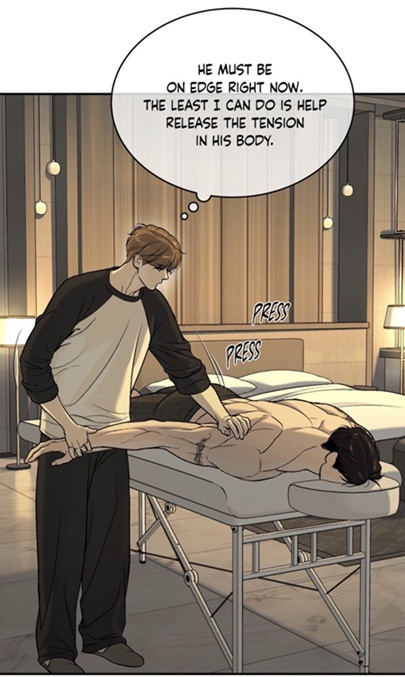 (chapter 96) without confronting what that presence truly meant, because he occupied a role. He was the physical therapist. His gestures, his proximity, his care—all of it could be justified, contained, and, above all, depersonalized.
The injury disrupts this equilibrium. Without his hand, he can no longer act. He can no longer treat, no longer intervene, no longer define himself through usefulness. The role disappears, and with it, the distance it maintained. What remains is no longer a function, but a presence. No longer a professional relation, but a personal one. At this point, concealment becomes impossible. Because what had remained unspoken now demands articulation. If he is no longer “needed” as a therapist, then why does he remain? And if he chooses to remain, on what grounds?
For the first time, Kim Dan cannot rely on necessity. He must decide.
The Two Triangles: A Structure That Must Be Chosen
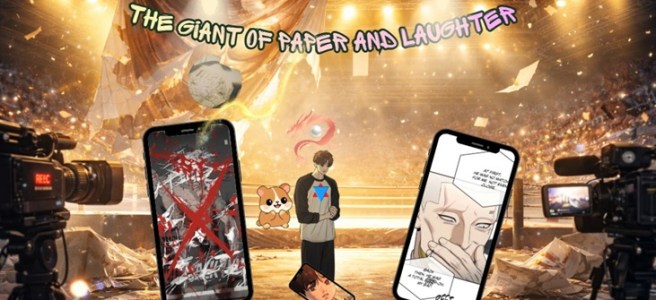
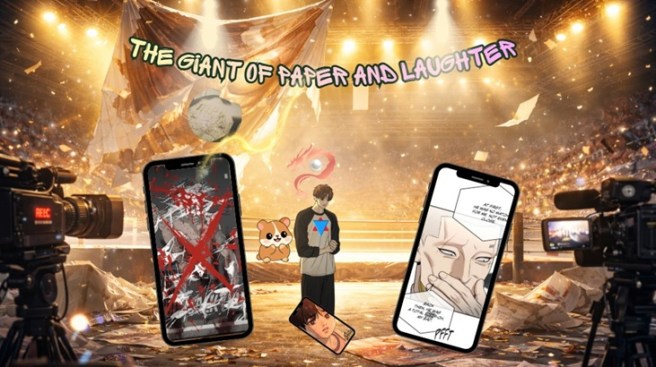
When you look at my illustration, you will realize that I added a star on the physical therapist’s shirt. 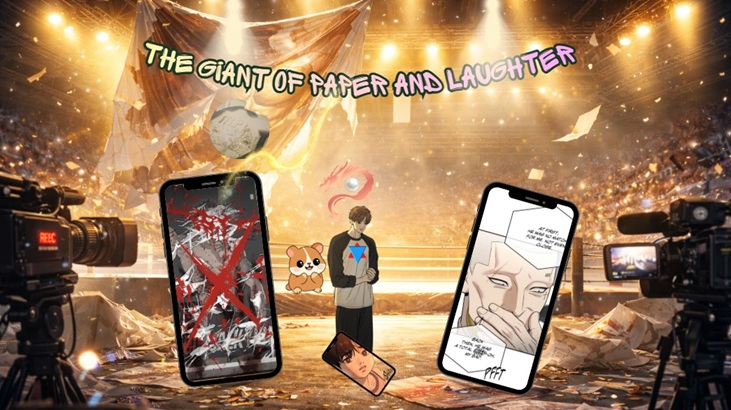 The addition of the star on the therapist’s uniform is more than a “badge of office”; it is a geometric prophecy. It represents the intertwining of two disparate lives—the red triangle of Jaekyung’s force and the blue triangle of Dan’s empathy. When these two triangles overlap, they create a structure (The Star) that is far more stable than the ‘Paper Giant’ of the MFC. This star is naturally a reference to the star of David. But at the same time, I wanted to avoid any reference to religion as such. The star of David is created by 2 triangles intertwined together. And the moment you accept that each main lead represents one triangle, you realize that both can become the star of David, once they become a team and a couple.
Until now, the connection between Joo Jaekyung and Kim Dan existed, but it remained indirect. It was sustained through intermediaries, through roles, through asymmetries that prevented true alignment. Joo Jaekyung’s red triangle was defined by force, hierarchy, and isolation. Kim Dan’s by care, dependency, and containment. The two structures intersected, but they did not yet stabilize into a shared configuration.
The injured hand alters this balance. (chapter 96)
It removes Kim Dan from the passive stability of his role and forces movement. He can no longer remain the one who adapts, who follows, who responds. He must now step into the point of intersection—the space where both triangles meet. And this space is not given. It must be chosen.
At this stage, Shin Okja’s position becomes decisive. (chapter 94) Throughout the narrative, she functioned as a center of gravity, bringing both structures into contact without resolving them. She connected, but she also maintained separation—protecting, guiding, and, at times, limiting.
Now, this role shifts.
By confronting her own shortcomings—by recognizing both the limits of her protection and the reality she had obscured—she no longer holds Kim Dan in place. Instead, she allows for movement. Not through direct intervention, but through the collapse of her previous certainty. She does not create the union. But she makes it possible.
David Against the Giant
Within this configuration, the opposition can now be clearly defined. The Giant is not Joo Jaekyung. It is not really Baek Junmin. It is the structure that produces images, controls narratives, and sustains itself through circulation—media, institutions, capital, operating without a single visible center. It is Goliath.
Not because it is singular, but because it is diffuse, difficult to locate, and nearly impossible to confront directly. Against it stands not a figure of strength, but a transformation of position. Kim Dan does not oppose the Giant through force. He has none. His injured hand marks precisely this limitation. He cannot act within the logic imposed by the system.,
And yet, this limitation redefines the confrontation. Because David does not prevail by matching strength. He prevails by refusing the conditions under which strength is measured. The ‘hamster’—Dan’s symbolic identity—is the stone that brings down Goliath. Not because it strikes a blow, but because it represents a pure relation (family and companionship) that the corporate system cannot monetize or understand. Goliath falls because he cannot compute the value of a love that requires no ‘function.'”This is where Joo Jaekyung becomes decisive.  (chapter 88) The “hamster” is not an isolated symbol. It has been shaped in relation to Joo Jaekyung—through proximity, through tension, through a form of attention that is neither hierarchical nor purely functional. If Kim Dan embodies connection, Joo Jaekyung embodies determination and direction.
 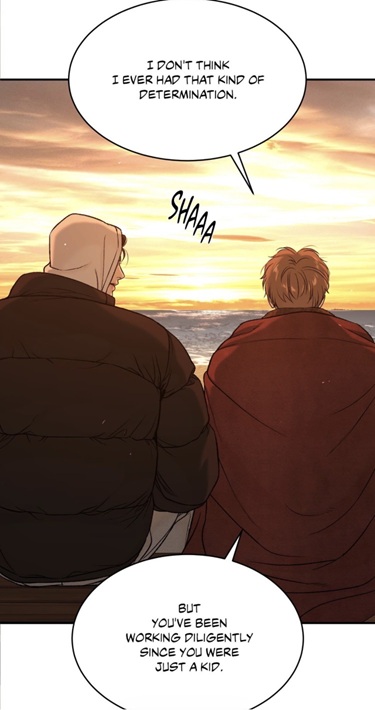 (chapter 94) What emerges between them is not dependency, but a potential alignment. That’s the reason why I believe that contrary to that morning
  (chapter 96), Kim Dan might decide to follow Joo Jaekyung. (chapter 96) Is it a coincidence that his pajamas are black and white, the two colors of the yin and yang?
Kim Dan’s decision—to remain, to speak, to step forward without the protection of his role—is therefore not an individual gesture. It is the moment where both trajectories intersect. He does not act as a therapist. He does not act as someone who is “needed.” He acts without function. He becomes the hamster, and as such the companion and family. And this changes the terms entirely.
Because the system depends on roles: the fighter, the doctor, the champion, the underdog. These roles can be named, framed, circulated, and manipulated. They can be turned into headlines, into narratives, into images. But what cannot be easily captured is a relation that escapes these definitions.
And now, let me ask you this: what does Joo Jaekyung desire from Kim Dan in the end? To be looked at 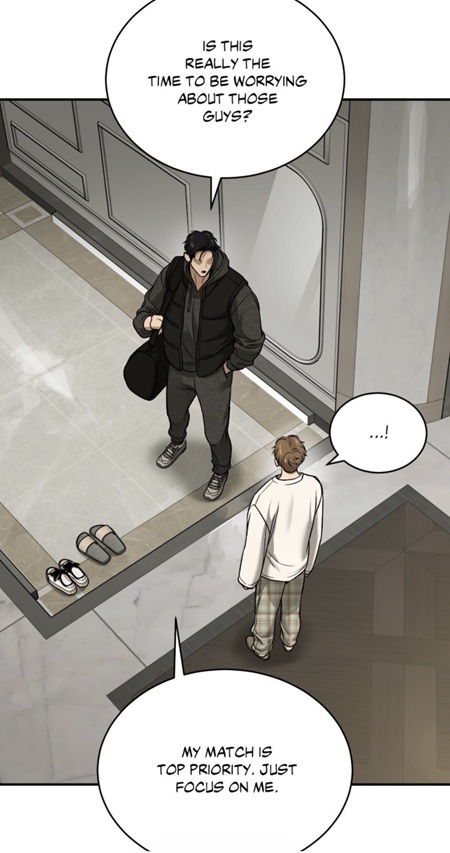 (chapter 96) and as such to be loved, something his mother never did.
 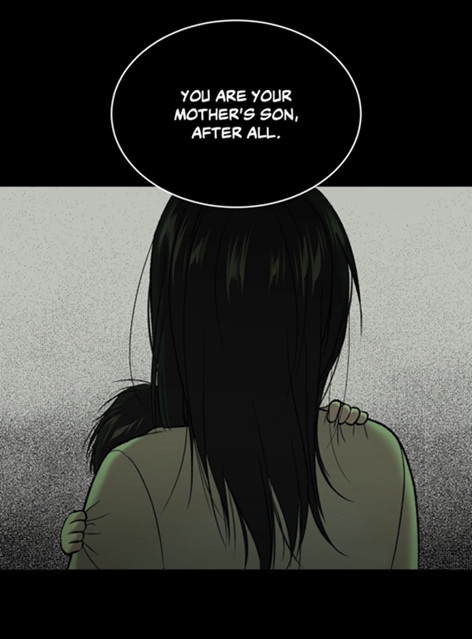 (chapter 73) Even with an injured hand, he can do this. As you can see, I am full of hope.
From Laughter to Meaning
At this point, the motif of laughter undergoes a decisive transformation. Until now, laughter functioned as a weapon. (chapter 96) It diminished, exposed, and rewrote. In Baek Junmin’s discourse, it accompanied the reconstruction of the past, turning memory into ridicule and experience into spectacle. What he did not know is that he was acting like Joo Jaewoong. 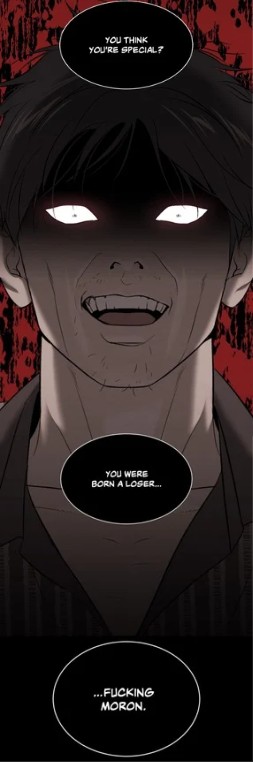 (chapter 73) His words are punctuated by smirks, interruptions, and mockery. The childhood he evokes is not one of growth or development, but of humiliation, hierarchy, and control. (chapter 96)
What is striking, however, is what is absent. (chapter 96) There is no trace of joy, only resent. No trace of play. No trace of shared experience (chapter 96) that would give meaning to the past beyond domination. Everything is reduced to struggle, inferiority, and dependence. Childhood, in his account, is not a space of formation, but a field of comparison.
This absence is not insignificant. It reveals a fundamental limitation. As Aristotle suggests, Pleasure in the job puts perfection in the work. 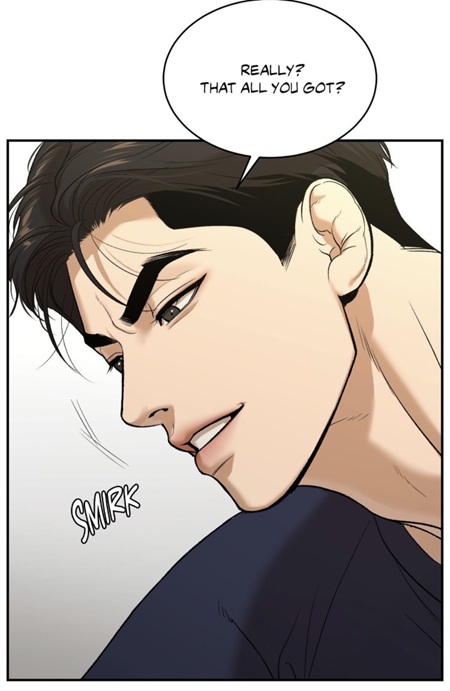 (chapter 88) Without it, action becomes mechanical, external, and ultimately unsustainable. What is done without pleasure cannot reach completion, because it remains detached from the subject who performs it.
 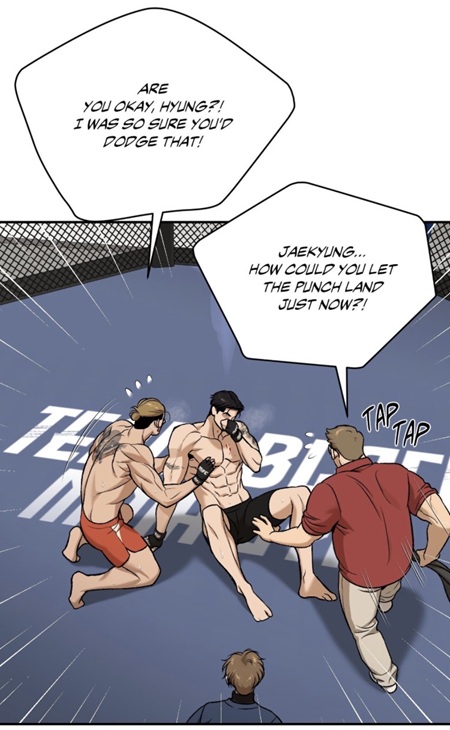 (chapter 95)
In this light, Baek Junmin’s narrative exposes its own failure. He speaks of training (chapter 96), of hierarchy, of superiority—but never of enjoyment. His relationship to fighting is entirely structured by comparison and domination. It is something to win, to prove, to impose—not something to inhabit. As a result, his position remains fundamentally unstable. He can occupy the role of champion, but he cannot embody it. He performs strength, but does not internalize it. His smile contrasts so much to the champion’s after his first victory. (chapter 73)
This is why his laughter remains empty. 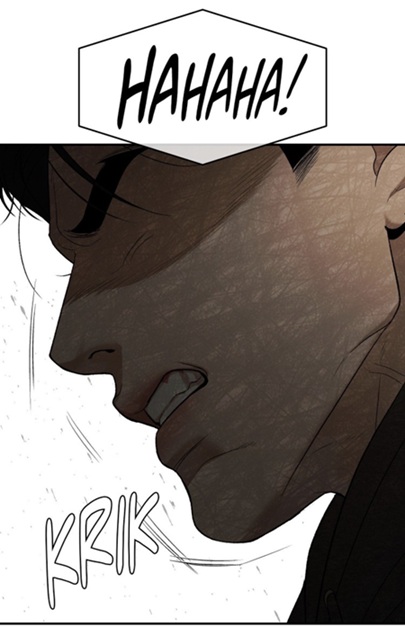 (chapter 96) It is directed outward, against the main lead and others, and depends entirely on their diminishment. It cannot sustain itself. It requires a target. In contrast, Kim Dan is associated with a different form of laughter.
  (chapter 27) The hamster—seemingly insignificant—represents companionship, warmth, and a form of joy that does not depend on hierarchy or recognition.
This laughter is not directed at someone. It is shared. And this distinction is decisive. Because it introduces a form of meaning that cannot be produced or controlled by the system. It cannot be staged, monetized, or weaponized. It exists outside the logic of visibility that governs the Giant. At this stage, the opposition is no longer between two fighters, but between two forms of value:
one that circulates, amplifies, and consumes
and one that connects, sustains, and transforms
The End of the Circle, The Beginning of Another
Episode 96 marks the closure of a cycle. 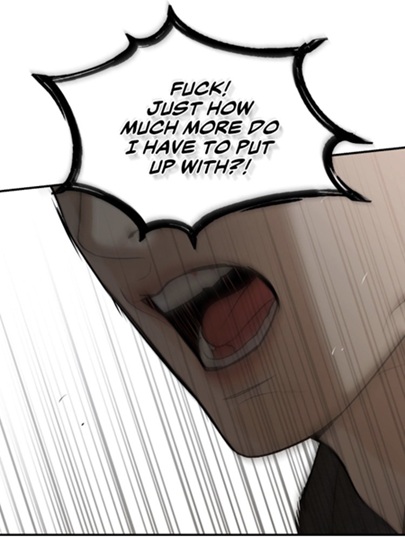 (chapter 96) The athlete voiced his distress, exhaustion and loneliness. The mechanisms that structured the previous movement—manipulation, narrative control, role-based identity—reach their limit. The image is destabilized, the past is rewritten, the system becomes visible.
But this closure does not conclude the movement. It opens a threshold. 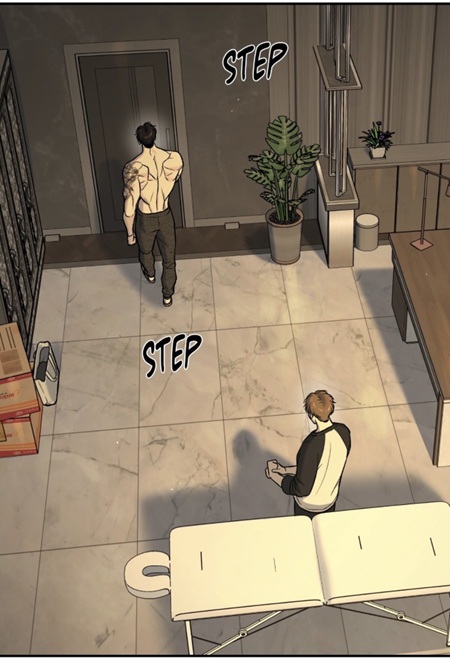 (chapter 96)
What follows does not extend what came before. It interrupts it. And this new cycle does not begin with a fight. It begins with a decision. The question is no longer external. It cannot be delegated, postponed, or reframed. Should he follow the champion’s words—or respond to what those words conceal? 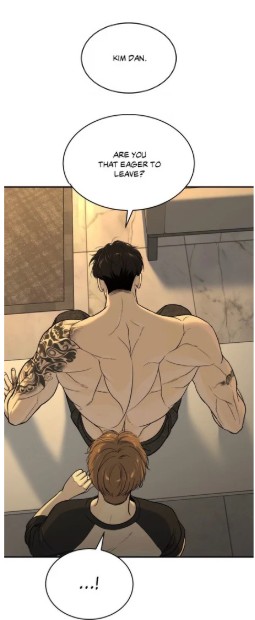 (chapter 96) “I want you to stay!” To obey the word is to remain a servant; to hear the silence behind the word is to become a partner.
Because Joo Jaekyung’s command to leave is not neutral. 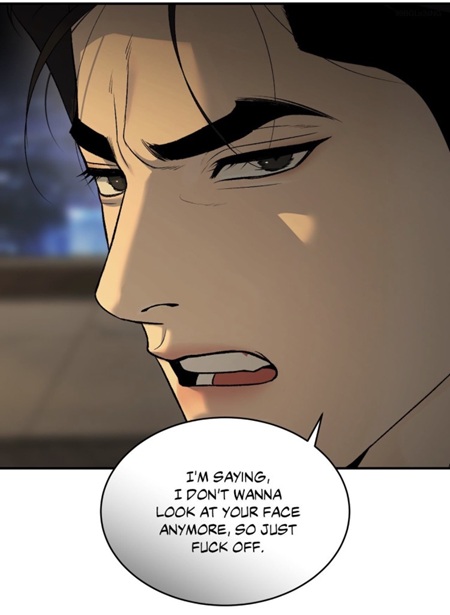 (chapter 96) It’s the consequence of pain, it belongs to the logic of rupture, of protection through distance, of a structure that resolves tension by separation. To obey would be to repeat the past—to accept absence as the only possible form of resolution. To follow the athlete, however, would be something else entirely. Not obedience to his words, but an understanding of what they conceal. Not submission, but a deliberate alignment: an act of commitment. A decision to remain—not because he is told to, but because he chooses to.
The Giant remains. The structure persists. But for the first time, it is no longer the only force shaping the outcome. Because David has entered the field. Not as a figure of opposition. But as a position that refuses to be absorbed.
PS: My prediction is that the doctor goes to the bathroom, where the athlete is! A new version of this scene, but here, the roles would be switched.  (chapter 30) Let’s not forget that the champion’s “jinx” is linked to the smell, something which Baek Junmin revealed earlier. (chapter 96)
Feel free to comment. If you have any suggestion for topics or Manhwa, feel free to ask. If you enjoyed reading it, retweet it or push the button like. My Reddit-Instagram-Twitter-Tumblr account is: @bebebisous33. Thanks for reading and for the support, particularly, I would like to thank all the new followers and people recommending my blog.

 Bebebisous33s' analyses in K-Dramaland and Manhwas