
Please support the authors by reading Manhwas on the official websites. This is where you can read the Manhwa: Jinx But be aware that the Manhwa is a mature Yaoi, which means, it is about homosexuality with explicit scenes. Here is the link of the table of contents about Jinx. Here is the link where you can find the table of contents of analyzed Manhwas. Here are the links, if you are interested in the first work from Mingwa, BJ Alex, and the 2 previous essays about Jinx Why Sleeping Beauty Had to Bleed part 2 and A Ruthless Fight, A Loverboy Break
It would be great if you could make some donations/sponsoring: Ko-fi.com/bebebisous33 That way, you can support me with “coffee” so that I have the energy to keep examining Manhwas. Besides, I need to cover up the expenses for this blog.
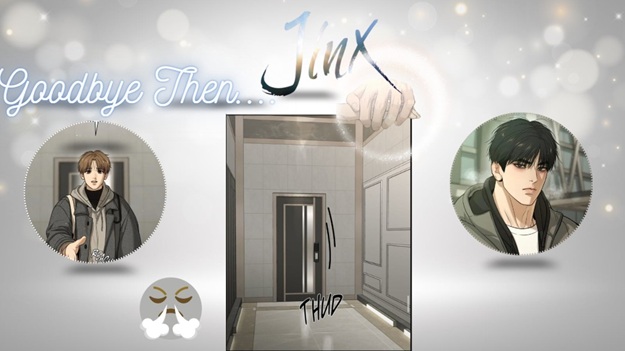
The Ghosts in the Warmth: Why Episode 100 Left Us Cold
Episode 100 of Jinx left many readers strangely unsatisfied. Some felt frustrated 😤, others emotionally empty. A few among us — readers, fans, longtime Jinx-lovers — even believed that this chapter resembled an ending so much that Mingwa herself had to clarify publicly (on X) that the story was not over. Some readers even considered dropping the story entirely. That alone says a great deal about the emotional violence of this chapter.
When a story’s atmosphere becomes so suffocating that readers instinctively want to step away from it, something unusual has happened. Dropping the story almost becomes a survival instinct. Remaining inside the narrative means remaining trapped in that freezing penthouse together with Kim Dan and Joo Jaekyung, surrounded by silence, distance, and unresolved pain.
But why did this episode create such discomfort? 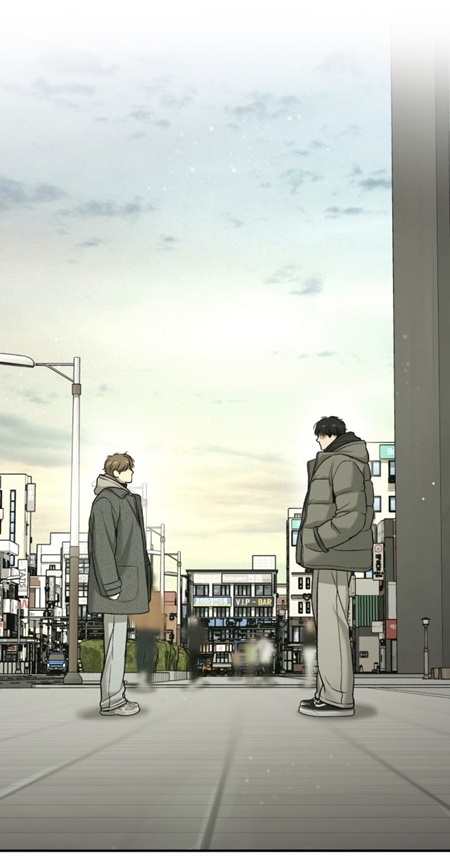 (chapter 100) Why does a chapter filled with flowers
 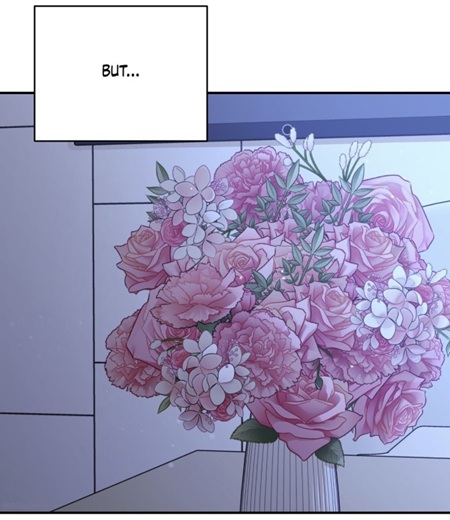 (chapter 100), warmth
 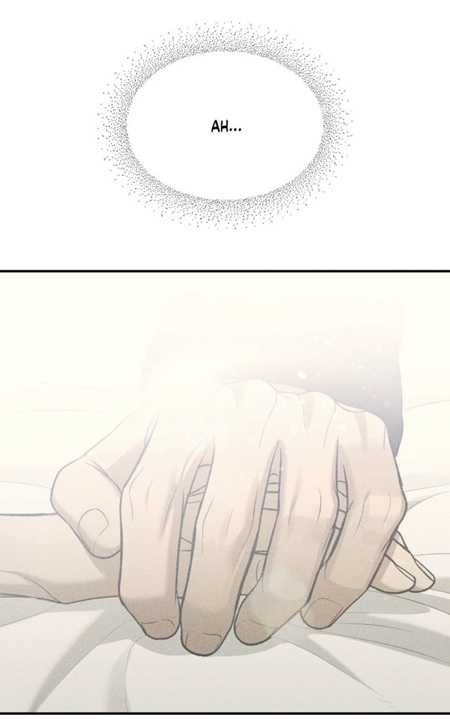 (chapter 100), survival, and reunion
 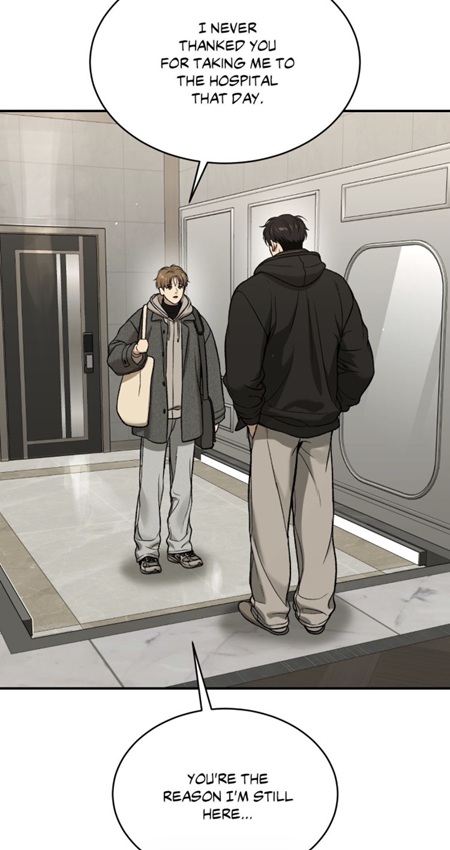 (chapter 100) feel so painfully cold? Why does “Goodbye then…”
 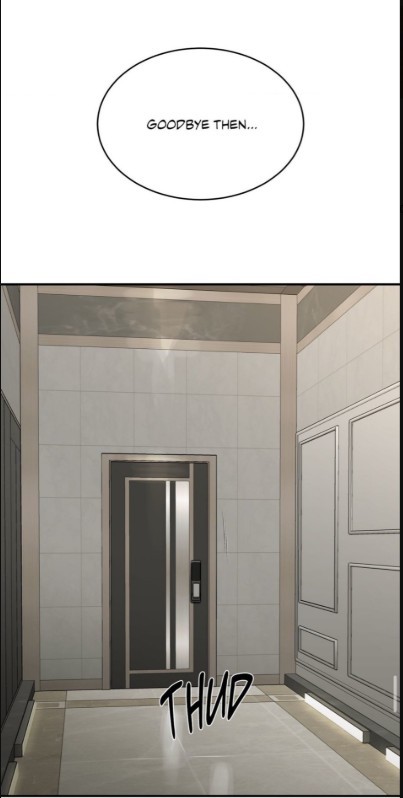 (chapter 100) sound more violent than the stabbing itself?
And perhaps the most disturbing question of all: how did Kim Dan and Joo Jaekyung end up acting like ghosts around each other?
For dozens of chapters, readers endured intense angst, toxic power dynamics, emotional repression, and physical trauma while holding onto a collective expectation: eventually, communication and emotional honesty would heal the damage. 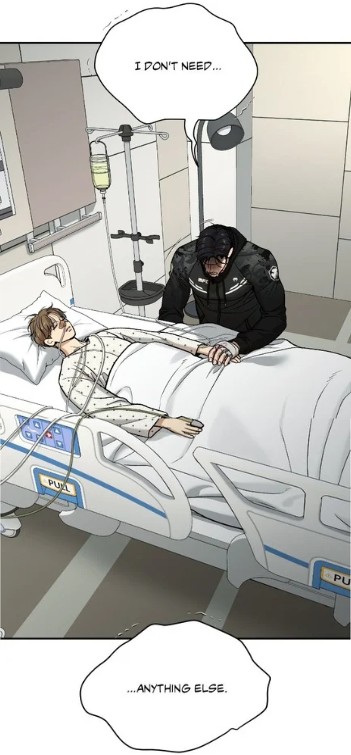 (chapter 99) Episode 100 appeared to be that turning point. The stabbing should have shattered the emotional walls between the protagonists. Many expected tears, confrontation, confession, catharsis. Instead, Mingwa deliberately subverted the classic romance payoff. Rather than an emotional embrace, readers received silence, hesitation, distance, and a strangely clinical handshake.
 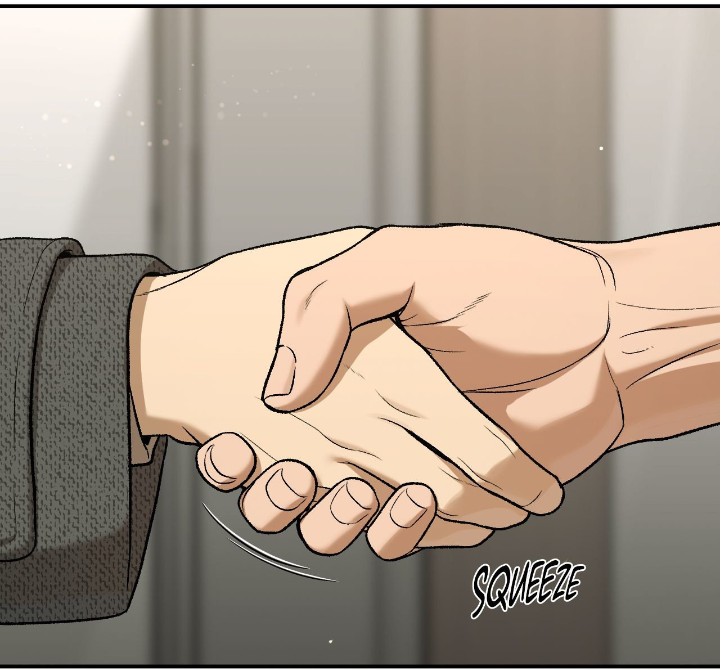 (chapter 100)
For many readers, that absence of catharsis felt almost unbearable. The realization suddenly emerged that the road toward healing might be just as long, painful, and exhausting as the road toward destruction itself.
At the same time, episode 100 strips away much of the fictional distance that once existed between the protagonists and the audience. Earlier in the story, Joo Jaekyung often functioned as a larger-than-life “red flag” character: 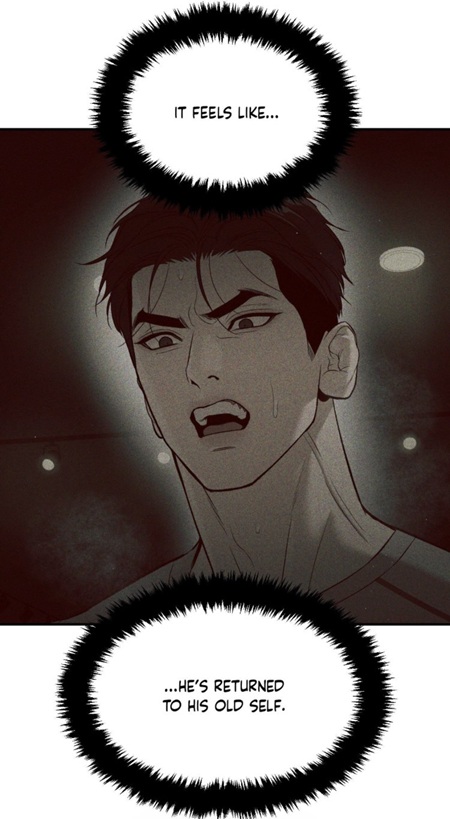 (chapter 96) dramatic, excessive, intimidating, almost unreal. But the tragedy presented in this chapter feels painfully ordinary in comparison.
 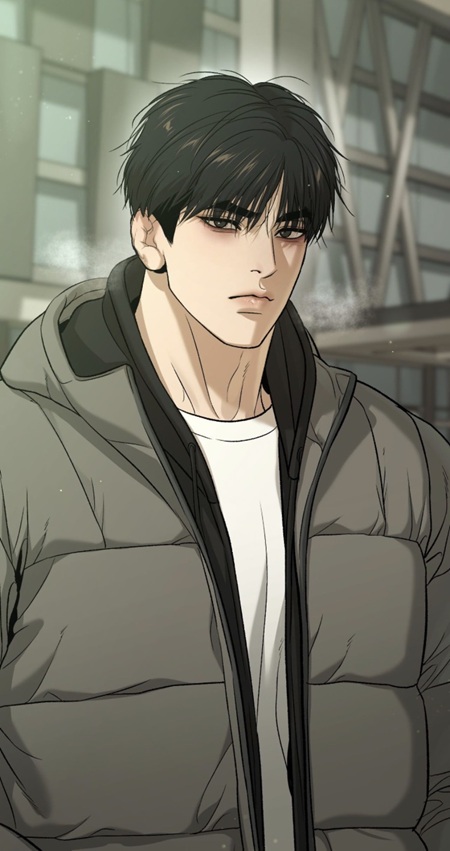 (chapter 100) Two people paralyze each other through assumptions, guilt
 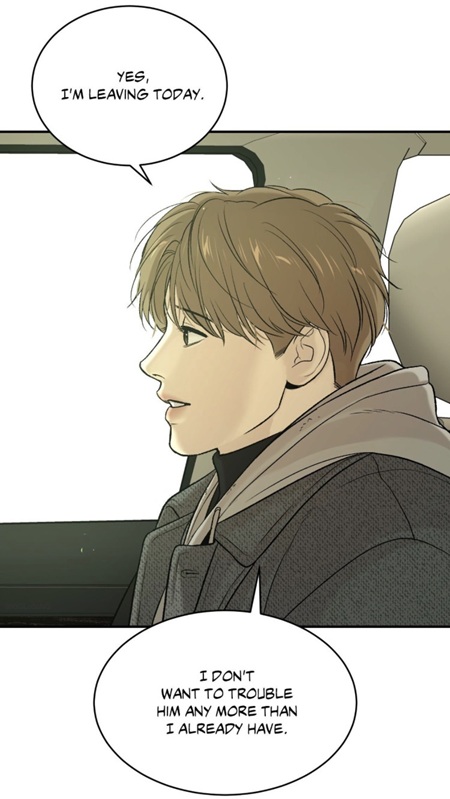 (chapter 100), low self-esteem
 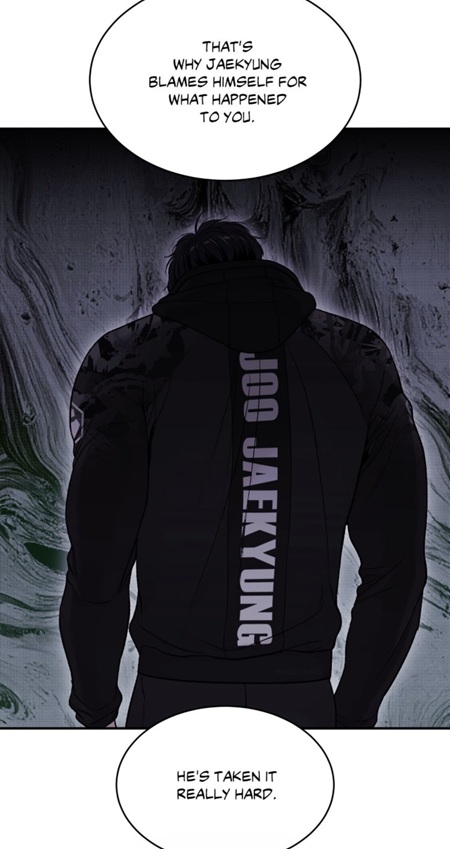 (chapter 100), fear of vulnerability, and lack of communication. Neither asks the questions that truly matter.
 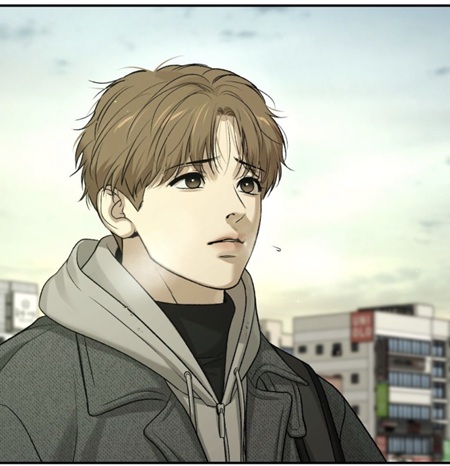 (chapter 100) Neither says what they genuinely feel.
 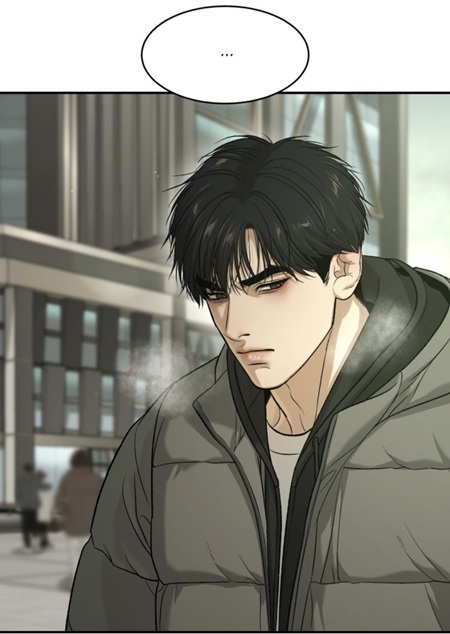 (chapter 100) Almost everyone has experienced a relationship, friendship, or family dynamic damaged not by hatred, but by silence and emotional avoidance. That realism transforms the chapter into something deeply uncomfortable because the fantasy slowly disappears, leaving behind a frighteningly human mirror.
Readers blamed Kim Dan for his passivity and self-sacrificial tendencies. 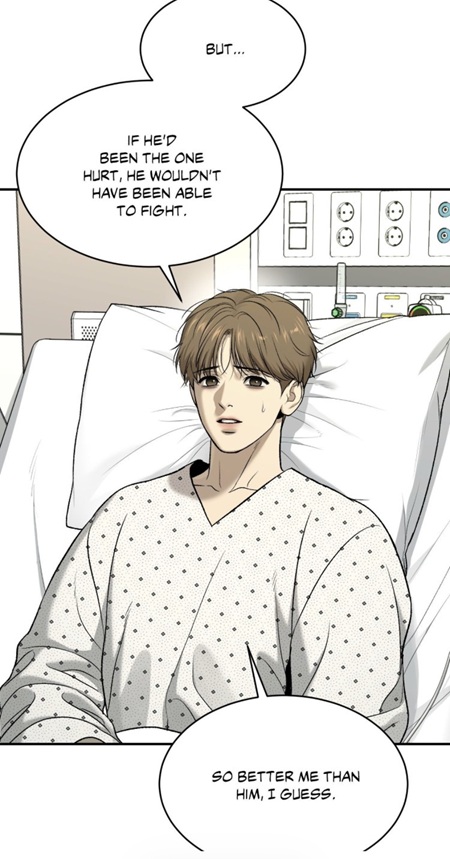 (chapter 100) Others condemned Joo Jaekyung for his emotional withdrawal and ghost-like behavior.
 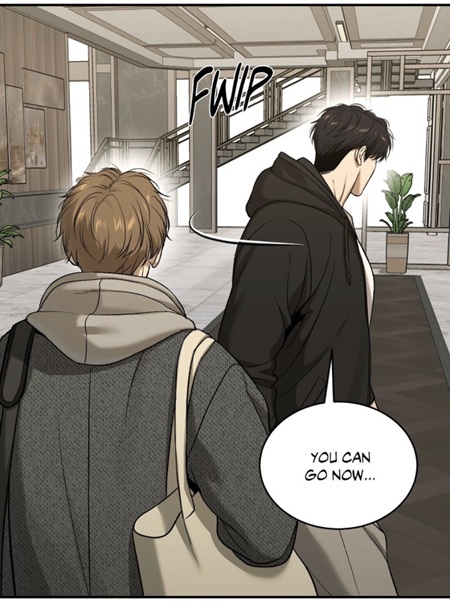 (chapter 100) Yet perhaps the real mystery of episode 100 is not who was right or wrong. Perhaps the more important question is this: how did two people who clearly long for each other become so incapable of speaking honestly at the very moment they needed it most?
The deeper one looks into this chapter, the stranger and more painful it becomes. Like wine slowly revealing hidden notes over time, episode 100 transforms upon rereading. Details that initially appeared insignificant — a warm hand, a bouquet of flowers, a hidden night visit, a missing conversation, a closed penthouse door, a simple “THUD” (chapter 100) — gradually begin forming another story beneath the surface.
A story not about the absence of love, but about the terrifying consequences of silence and secrecy.
The Counterfeit Departure
The final emotional image of episode 100 is not the handshake between Kim Dan and Joo Jaekyung, but the empty entrance of the penthouse accompanied by the words: (chapter 100) and the unsettling sound effect:
“THUD.”
This distinction is extremely important because the handshake itself does not yet create the impression of definitive separation. 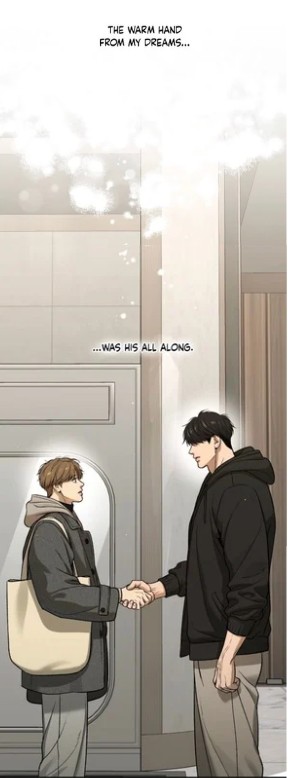 (chapter 100) On the contrary, the scene still contains physical proximity, warmth, gratitude, and mutual recognition. The handshake almost functions as an acknowledgment of everything the two protagonists survived together, but also as a quiet expression of thanks. Kim Dan recognizes the champion’s help, while Joo Jaekyung finally allows physical contact to occur without violence, coercion, or sexual tension. The emotional atmosphere only becomes truly haunting once Mingwa deliberately removes both protagonists from the frame itself, leaving behind nothing but the silent entrance and the implication of departure. (chapter 100)
Even the wording of the farewell creates ambiguity. Without the points of suspension, “Goodbye then” would sound definitive, emotionally sealed, almost like the final sentence of a completed story. Yet the ellipsis fundamentally changes the atmosphere of the phrase. The farewell suddenly becomes suspended, unfinished, hesitant. Kim Dan does not simply say goodbye; he trails off emotionally.
The word “then” itself is equally fascinating because it weakens the apparent finality of the separation. It functions as a temporal marker suggesting postponement:
not now,
after this,
later.
The phrase therefore already contains the contradiction defining the entire chapter. Verbally, Kim Dan enacts separation. Emotionally, however, he still remains attached to Joo Jaekyung. The title quietly preserves the possibility of continuation, just as the chapter itself refuses to provide true emotional closure.
Why end the chapter there?
Doors in Jinx are never neutral architectural elements.  Throughout the story, they repeatedly symbolize secrecy
  (chapter 7), emotional distance, hidden truths, privacy, abandonment, and separation
 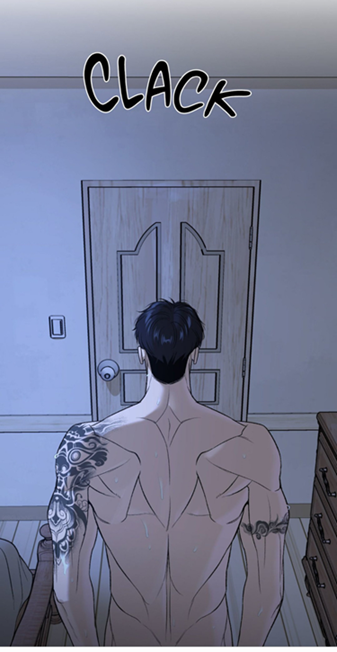 (chapter 64). A closed door immediately creates the impression that something has ended. (chapter 100) Someone has left. Access has been denied. Naturally, many readers instinctively interpreted this panel in the simplest possible way:
Kim Dan has already left the penthouse.
And once this assumption is accepted, the chapter suddenly feels final. The emotional logic becomes brutally simple. The debt is gone. The fight is over. The criminals were arrested. 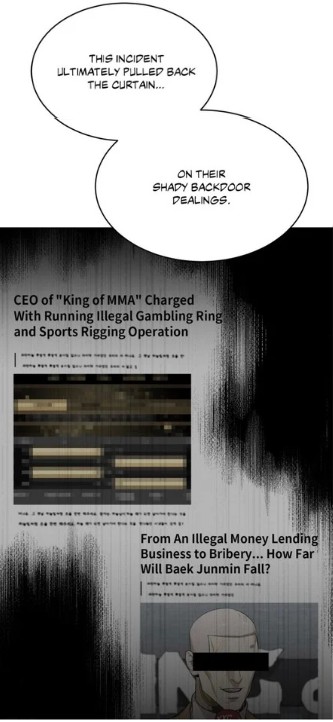 (chapter 100) The protagonists separate. The door closes. The story ends. It almost resembles the conclusion of a dark fairy tale where the suffering has finally reached its endpoint.
The problem is that the panel itself is far more ambiguous than it initially appears. (chapter 100)
The entrance is empty, yes, but the image does not actually show Kim Dan leaving the apartment. On the contrary, the scene remains strangely suspended. Mingwa does not show the elevator descending, the street outside, or Kim Dan physically walking away.  (chapter 4) Instead, she traps both the reader and the characters inside the penthouse itself, forcing us to stare at an almost silent threshold. (chapter 100)
This detail becomes even more significant when we observe the scene immediately preceding the “goodbye.” Kim Dan and Joo Jaekyung still stand physically facing one another. 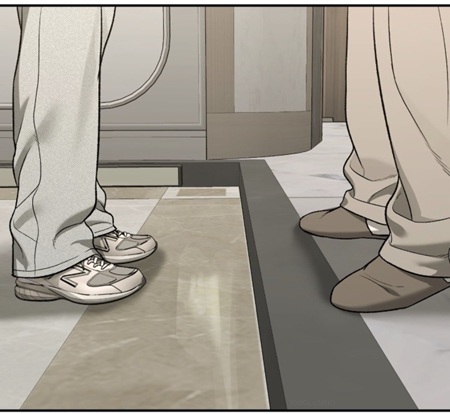 (chapter 100) Their feet remain oriented toward each other at the entrance. In Jinx, body positioning often reveals emotions that words suppress, and here the contradiction is devastating. Verbally, both protagonists are enacting separation. Physically, however, their bodies still seek connection. Neither truly turns away. The image therefore creates emotional suspension rather than emotional closure.
This is precisely why Mingwa does not show the actual departure itself at the end of the chapter. Emotionally, the separation remains incomplete because the protagonists themselves are incapable of fully separating from one another. The final panel traps both the characters and the audience inside the threshold between staying and leaving. (chapter 100)
The farewell scene itself becomes even more painful when placed beside earlier internal monologues from Joo Jaekyung that gain new meaning in retrospect. Earlier in the story, the champion silently admitted: 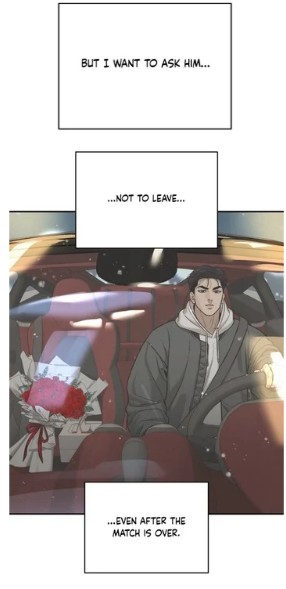 (chapter 97) Another scene reinforces this same emotional desire:
 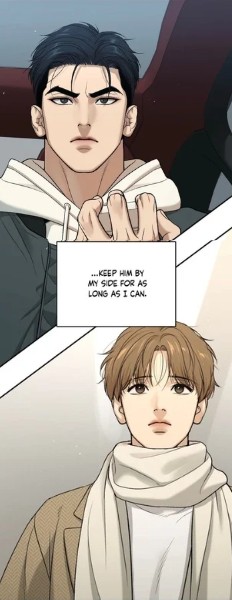 (chapter 97) These confessions reveal that beneath the aggression, possessiveness
 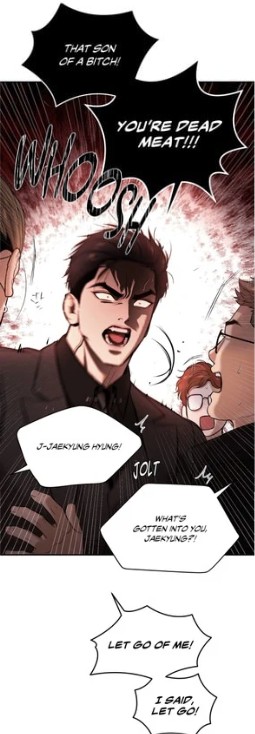 (chapter 82), and obsession with fighting and Kim Dan stood a much simpler fear: abandonment.
Yet when episode 100 finally confronts him with the possibility of Kim Dan truly leaving, Joo Jaekyung says the exact opposite of what he once desired. Instead of asking him to stay, he turns his head away and quietly says: (chapter 100) The Korean version with “가” (“Ka”) makes the moment even harsher because of its simplicity. It is short, direct, emotionally stripped bare:
Go.
And suddenly, the scene exposes the champion’s loneliness with devastating clarity.
Kim Dan stands before him carrying his bag, partially turned away, visually resembling the blurred image of departure from Jaekyung’s earlier imagination. 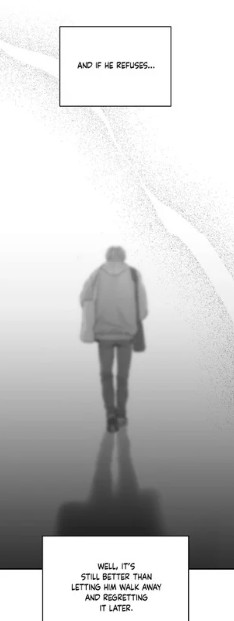 (chapter 97) At the same time, Joo Jaekyung himself avoids looking directly at him. Both characters physically reproduce emotional withdrawal. Neither can fully face the other because both are trapped inside fear, guilt, longing, and self-suppression.
Most tragically, Joo Jaekyung participates in the very abandonment he fears. Rather than risking rejection by asking Kim Dan to stay, he verbally permits the separation himself. The scene therefore does not portray emotional indifference, but defensive surrender. (chapter 100) The champion who once appeared emotionally untouchable reveals himself incapable of expressing the one thing he truly wants:
“Please stay with me.”
At the same time, both protagonists are now attempting to love through self-removal.
This emotional mirroring becomes even more fascinating when connected to the idea of tactile dissonance developed earlier in the story. (chapter 95)  Ironically, the eight-day separation did not emotionally distance the protagonists from one another. Quite the opposite. During this period, they became increasingly synchronized mentally and emotionally.
 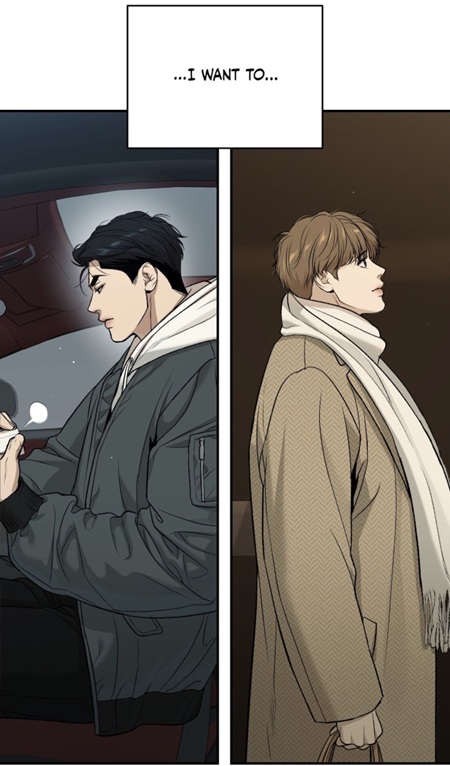 (chapter 97) Their thoughts, fears, and desires slowly began aligning almost unconsciously. Yet this growing emotional attunement produces a tragic paradox: they become so psychologically similar that they can no longer recognize their own reflection inside the other person. (chapter 100) (chapter 100) The real tragedy of episode 100 is therefore not emotional distance, but excessive emotional synchronization without communication.
Kim Dan increasingly convinces himself that he represents a burden (chapter 100) and even a threat to Joo Jaekyung’s career. The harassment, the public humiliation, the scandal surrounding the championship, and the stabbing itself all reinforce the idea that remaining beside the champion will only continue damaging his reputation and future.
Joo Jaekyung, meanwhile, arrives at the opposite side of the same tragedy. He increasingly perceives himself as a source of contamination and danger. (chapter 100) The harassment, Kim Dan’s suicidal despair, the sleepwalking, the stabbing, and the violence surrounding the championship all reinforce the terrifying idea that Kim Dan suffers because he entered his world. In his eyes, Kim Dan’s life is now endangered because of him.
Ironically, this emotional synchronization does not bring them closer together communicatively. Instead, it pushes both men toward the same logic of self-removal. (chapter 100) Kim Dan leaves because he believes the champion will recover better without him. Like out of sight, out of mind! Joo Jaekyung lets him go because he believes keeping him close will only expose him to more suffering.
Thus, both silently cooperate in mutual abandonment while simultaneously longing for the exact opposite.
Even the sound effect deserves closer attention. (chapter 100) Many readers automatically interpreted “THUD” as the sound of a closing door. Well, the Spanish translation is indeed “Clack” and not thud. So one might jump to the conclusion that there’s an error in the English version. Yet visually, the effect does not fully behave like one. The vertical motion lines suggest movement from top to bottom rather than the lateral motion usually associated with a door shutting. The sound resembles impact, instability, or collapse more than simple departure. This becomes particularly interesting when compared to earlier scenes such as episodes 57 and 61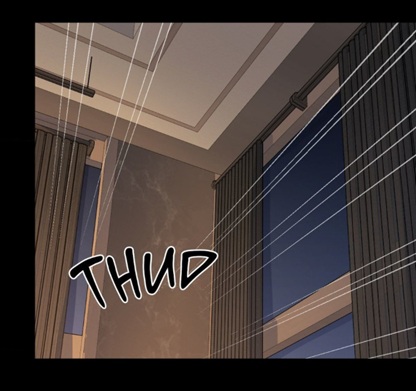
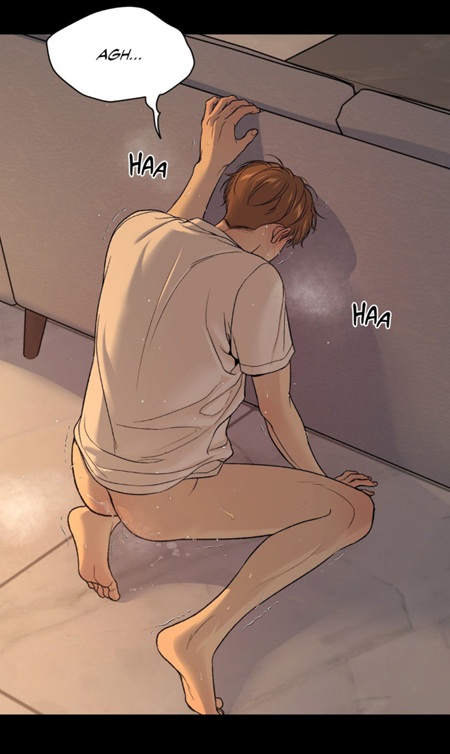 (chapter 61)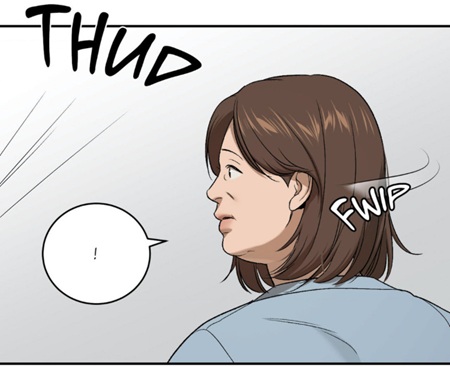
 (chapter 57), where emotional shock and physical weakness are visually connected to walls, imbalance, and bodies searching for support. The ambiguity becomes important because chapter 100 never clearly identifies (chapter 100) who destabilizes physically in that moment. Readers instinctively assume Kim Dan has already left, but the visual language simultaneously leaves open another disturbing possibility: that someone inside the penthouse is collapsing.
In other words, the panel may not depict emotional closure at all. It may instead depict destabilization. This possibility completely transforms the emotional meaning of the chapter. The “goodbye” no longer functions as a clean farewell, but almost like a psychological blow. Words can kill. And here, Kim Dan’s calm “Goodbye then…” lands with the violence of an invisible wound.
The choice of the empty entrance as the final image therefore reveals something important about reader psychology as well. The chapter creates the illusion of a completed fairy tale ending while simultaneously making that ending feel emotionally wrong. Earlier in the story, Kim Dan unconsciously adopted this exact logic himself through the expression:
 (chapter 41)
Like a little boy trying to force reality into the structure of a fairy tale, he attempts to convince himself that the story has now reached its proper conclusion. 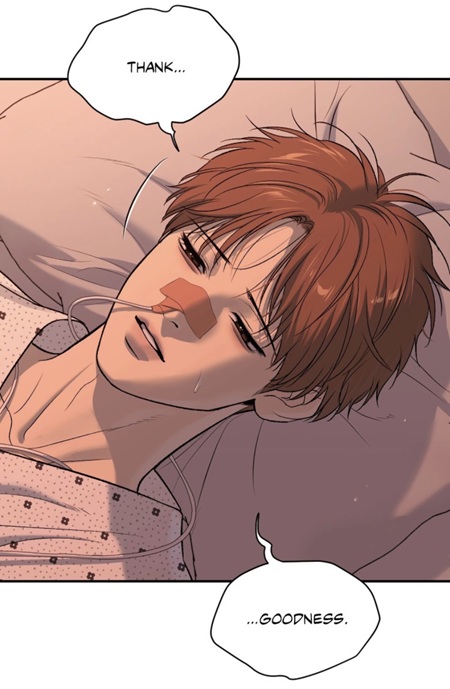 (chapter 100) The champion won. The villains were punished.
 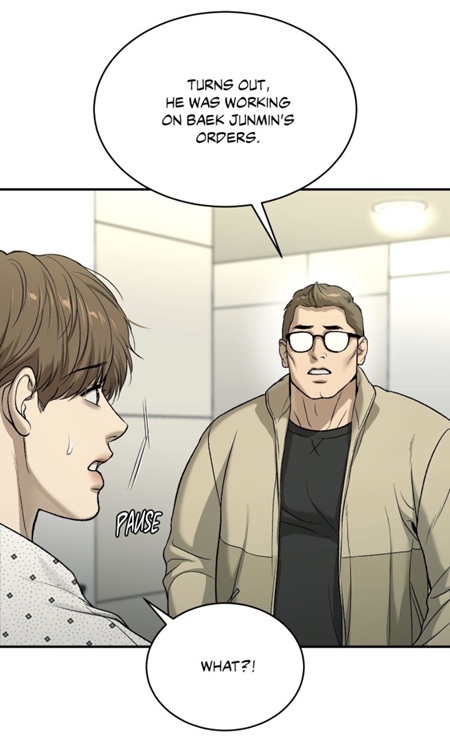 (chapter 100) The debt disappeared.
 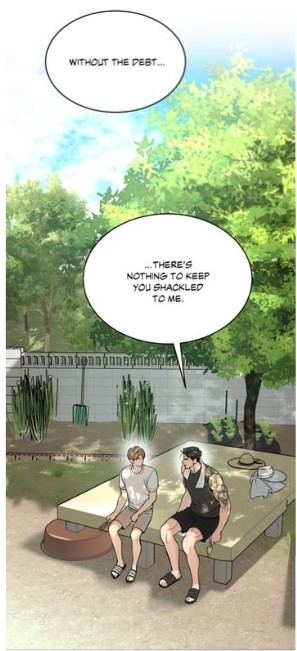 (chapter 77) Therefore separation must be the correct final step.
Yet Mingwa visually undermines this interpretation at every turn. (chapter 100)
The penthouse feels too empty, too silent, too cold, and too unresolved. The atmosphere resembles not peace, but haunting. Instead of emotional catharsis, the reader experiences emotional suspension.
Perhaps this explains why so many readers reacted so strongly to episode 100. The chapter weaponizes absence itself. Mingwa does not simply separate the protagonists; she traps both the characters and the audience inside uncertainty. The zoom on the closed entrance intensifies this sensation even further. Readers feel suffocated because the panel transforms the penthouse into a frozen emotional space where communication has failed completely.
The door therefore symbolizes much more than physical departure. It becomes the visual embodiment of the chapter’s central tragedy: two people standing on opposite sides of an emotional threshold (chapter 100), unable to reach one another despite desperately longing to do so.
What A Little Wimp
Before examining the significance of the handshake itself, we must return to one of the earliest emotional patterns established in the story: Kim Dan’s awkward departure after treating Joo Jaekyung at the gym. After accidentally crossing a physical boundary 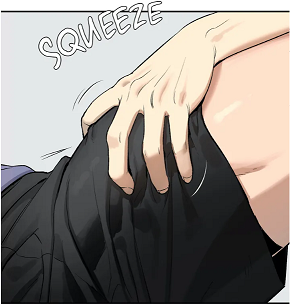 (chapter 1) and leaving himself totally embarrassed
 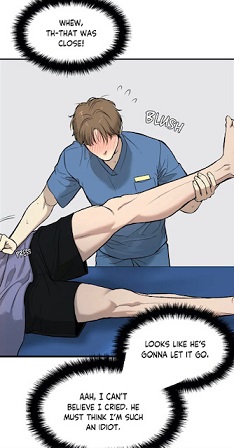 (chapter 1), the physical therapist has only one thought in mind: to run away. Before opening the door, he nervously stammers
 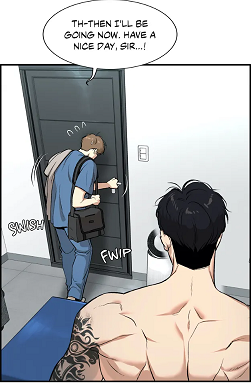 (chapter 1) and hurries away. Joo Jaekyung’s reaction after his departure is dismissive and mocking:
 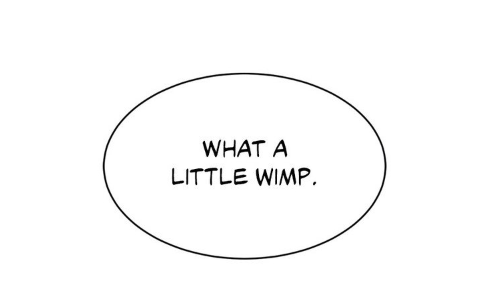 (chapter 1)
At first glance, the scene appears almost comedic. Kim Dan blushes, panics, avoids eye contact, and escapes after touching the champion too intimately. Yet retrospectively, this moment establishes an important pattern: touch  (chapter 1), admiration
  (chapter 1), destabilization, and departure are already intertwined from the very beginning. Kim Dan does not simply treat Joo Jaekyung’s body; he admires it through his hands and eyes, marveling at how different it is from every other client he has known. The accidental touch breaks the professional frame, and the result is immediate flight. (chapter 1)
This early departure quickly becomes part of Jaekyung’s mental archive. In episode 4, he does not actually witness Kim Dan leaving the penthouse (chapter 4); he only discovers the empty bed afterward. 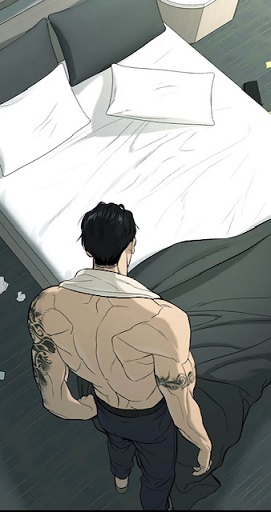 (chapter 4) The absence itself triggers projection. He imagines Kim Dan walking away, already converting disappearance into an internal image. Later, in episode 53, this fear becomes reality: Kim Dan truly leaves the penthouse
  (chapter 53), and this time the departure is explicitly shown. In his own mind, the doctor does not intend to return. By episode 97, the image repeats once more (chapter 97) when Jaekyung admits that he wants to ask Kim Dan not to leave, yet immediately imagines him walking away if he refuses. Significantly, as the figure of Kim Dan recedes into the distance, a heavy, creeping darkness swallows the panel. The shadow beneath Dan’s feet bleeds forward, stretching into a profound black void that anchors itself directly to Jaekyung’s perspective. This visual graduation of shadow reveals that Kim Dan’s departure is no longer just a hypothetical exit; it is an oncoming emotional eclipse. Jaekyung’s subconscious recognizes that if Dan walks out that door, the ensuing darkness will be absolute—a trauma from which the champion will not be able to recover.
This is why the line “What a little wimp” becomes deeply tragic in retrospect. The supposedly untouchable champion has become the one haunted by departure. The man who once mocked Kim Dan’s awkward escape now fears being left behind so intensely that he projects abandonment before it even happens. Hence he turns away like Kim Dan in episode 1. (chapter 100)
This fear cannot be separated from Jaekyung’s family wound. The image of his mother, presented entirely through her back and her silence 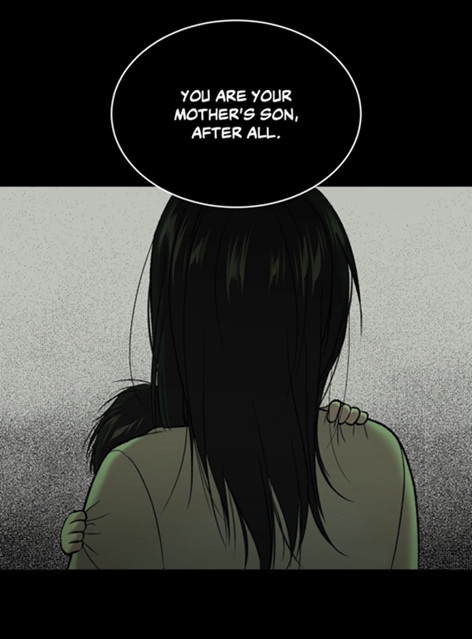 (chapter 73), suggests not only physical departure but permanent emotional inaccessibility. His father’s bitter line—“You are your mother’s son, after all”—reveals that this silence wounded him too. The father was not merely angry because the mother left; he was wounded by the way she left: without true confrontation, without emotional clarity, and perhaps with some distant promise that never became presence. The turned back, the heavy silence, and the unresolved farewell became the core of Jaekyung’s inherited trauma. He stops fighting for the relationship itself
  (chapter 72) and begins fighting merely against the clock, trying to finish a transaction before the countdown hits zero. This memory exposes a foundational trauma. To a young Jaekyung, his mother’s disappearance was directly tied to a transactional failure—his father’s inability to stop her or provide financial security. Consequently, Jaekyung internalized a distorted lesson: love is not protected through vulnerability, communication, or emotional pleading. Love is protected through material capacity and performance. In his child mind, a countdown began: he had to grow up, amass immense wealth, and become powerful enough to buy back his mother’s presence.
Tragically, this transactional clock is the exact blueprint he uses when Kim Dan enters his life. We see the definitive script for this transactional countdown written explicitly by Jaekyung himself in episode 77. Sitting on a wooden platform under a rare, open sky, the champion retreats into the safety of a contract to mask his growing vulnerability, declaring: (chapter 77) This is no coincidence that as he sets this absolute deadline, Mingwa frames Jaekyung from behind  (chapter 77) He turns his back entirely, casting his face in shadow and physically reproducing the visual motif of his childhood trauma. He is verbally establishing a countdown while visually acting out an ending. By telling Dan that their proximity is strictly bounded by the final bell of the title match, Jaekyung constructs the very cage that will later paralyze him.
Consequently, as the title match draws closer in episode 95, this psychological clock accelerates to a suffocating degree Surrounded by chaotic media headlines speculating about his imminent match and the possible collapse of his career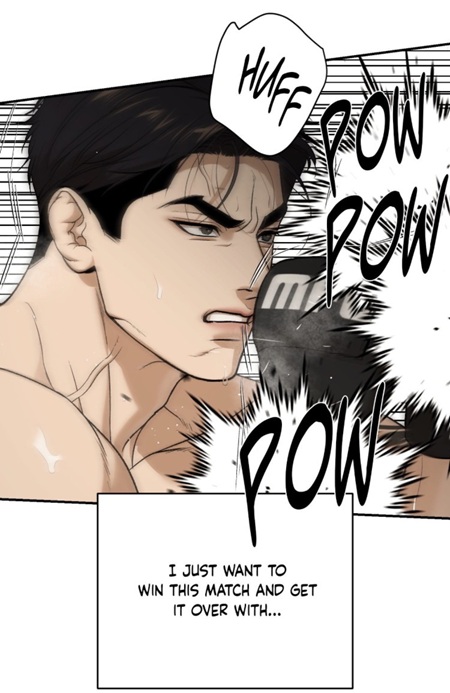 (chapter 95), Jaekyung’s mental space becomes a dark, claustrophobic cage. While sparring, his only internal thought is sheer exhaustion: “I just want to win this match and get it over with…”
Therefore it is not surprising why he chose to listen to his manager and distanced himself from his fated partner. In a sense, he first stops fighting for Kim Dan and begins fighting merely to reach the end of the timeline. The championship ceases to represent ambition, glory, or even personal desire; it becomes an expiration date. Increasingly, the champion loses the ability to project himself into the future at all.
This is precisely why his later thoughts become so devastating. When Jaekyung admits: (chapter 97),
the importance lies not only in the fear of abandonment, but in the word ask itself. For perhaps the first time in the story, Jaekyung unconsciously accepts Kim Dan’s freedom to choose. He no longer thinks in terms of ownership, obligation, or debt. Deep down, he already understands that once the match ends, Kim Dan will be free to leave him behind.
Yet even here, Jaekyung’s emotional framework remains tragically incomplete. Although he has begun abandoning the logic of ownership, he still cannot truly imagine a future built upon mutual existence rather than temporary possession. His thoughts remain structured around the championship timeline itself. The title match continues functioning as the organizing principle of reality. Even the phrase:
“…even after the match is over”
reveals the limitation of his emotional imagination. Jaekyung can imagine asking Kim Dan to remain. He can imagine losing him. He can imagine surrendering him. But he still cannot truly imagine simply living with him.
In other words, the champion still thinks in terms of “having” rather than “being.” [For more read the essay The Art of Loving] ]The relationship continues existing psychologically as something bounded by deadlines, countdowns, and expiration points. Once the contractual structure dissolves, Jaekyung unconsciously reaches the edge of his own emotional framework. The countdown ends, yet nothing replaces it.
And tragically, this realization does not awaken hope inside the champion, but resignation. Even before Kim Dan makes any choice himself, Jaekyung emotionally begins surrendering him. (chapter 97) The man once defined entirely by his monstrous willpower gradually loses his fighting spirit altogether. He no longer fights for a future with Kim Dan; he merely tries to endure the final countdown before the separation he already believes inevitable.
Therefore, when Kim Dan stands before him in episode 100 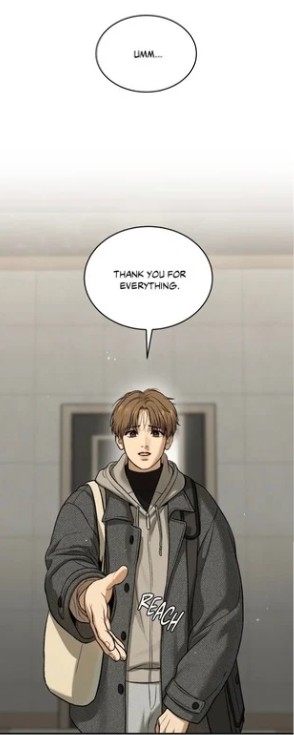 (chapter 100), Jaekyung is not reacting only to the present moment. He is reacting to a projected abandonment shaped by earlier departures, his parents’ history, the transactional contract he wound up himself, and the immense guilt he carries over the violence surrounding Kim Dan. The champion now knows about the harassment, the attempted sexual assault orchestrated through the former director of the hospital, the suicidal despair, the sleepwalking, the stabbing, and the terrifying chain of events connected to the championship itself. Increasingly, Jaekyung no longer sees himself merely as someone who might lose Kim Dan emotionally; he sees himself as the center of a destructive orbit that continually places Dan in danger. He seems to think, he is Kim Dan’s jinx. (chapter 100) That’s why Joo Jaekyung is no longer fighting, he has already anticipated the loss.
Ironically, by episode 97, Kim Dan himself has already begun unconsciously stepping into a completely different emotional mode. While Jaekyung remains trapped inside countdowns, departures, and anticipatory endings, the physical therapist instinctively begins imagining ordinary relational existence. This contrast becomes particularly visible with the hamster’s dream 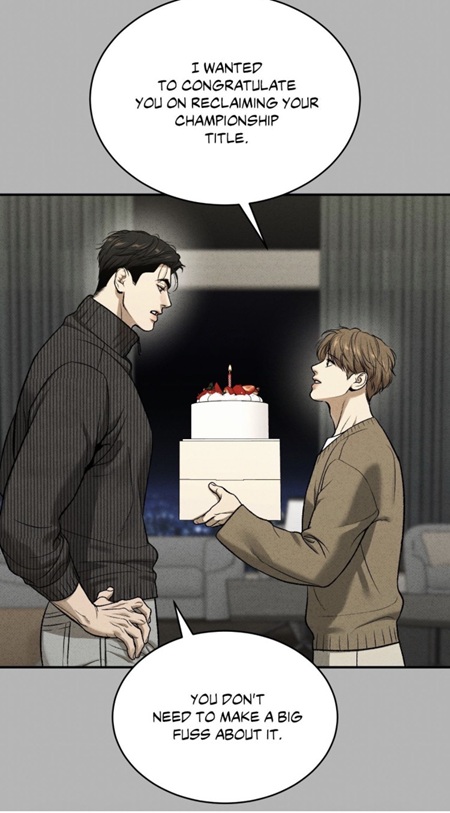 (chapter 97) , where Kim Dan arrives with a cake to celebrate Jaekyung reclaiming his championship title. The atmosphere of the interaction is striking precisely because of its normality. There is no treatment session, no debt, no violence, no professional obligation dominating the exchange. For this brief dream , Kim Dan behaves less like an employee or caretaker and more like someone already sharing daily life with the champion.
 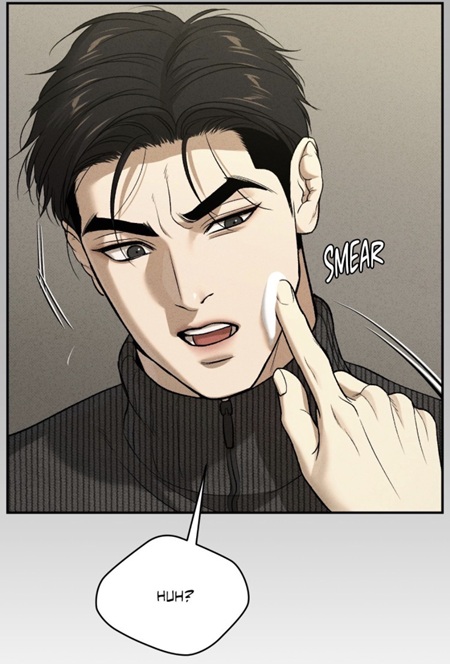 (chapter 97)
The small gesture of smearing cream across Jaekyung’s face becomes symbolically important for this reason. Kim Dan momentarily strips the champion of his overwhelming public aura and interacts with him through casual intimacy rather than admiration or fear. Unlike Jaekyung, Kim Dan unconsciously possesses fragments of an ordinary emotional model inherited from his life with his grandmother and parents: shared meals, small celebrations, routine care 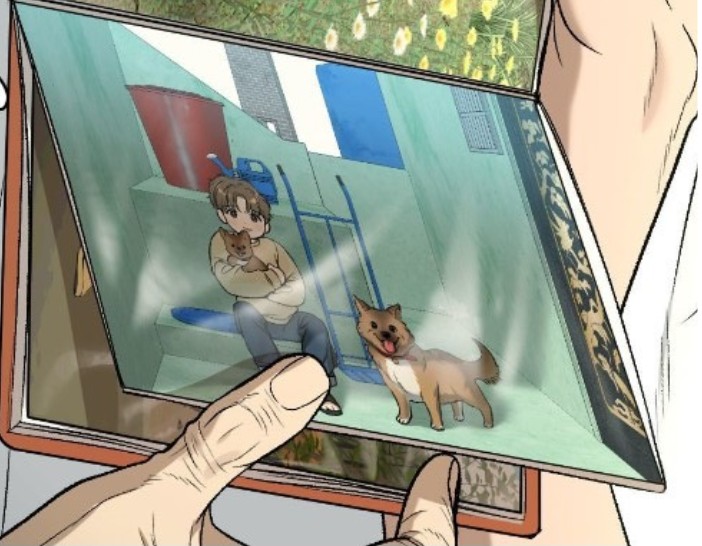 (chapter 94), and domestic familiarity. While the champion imagines endings, Kim Dan quietly begins imagining continuity.
The Warm Hand against the Jinx
This is precisely why the handshake matters so much. 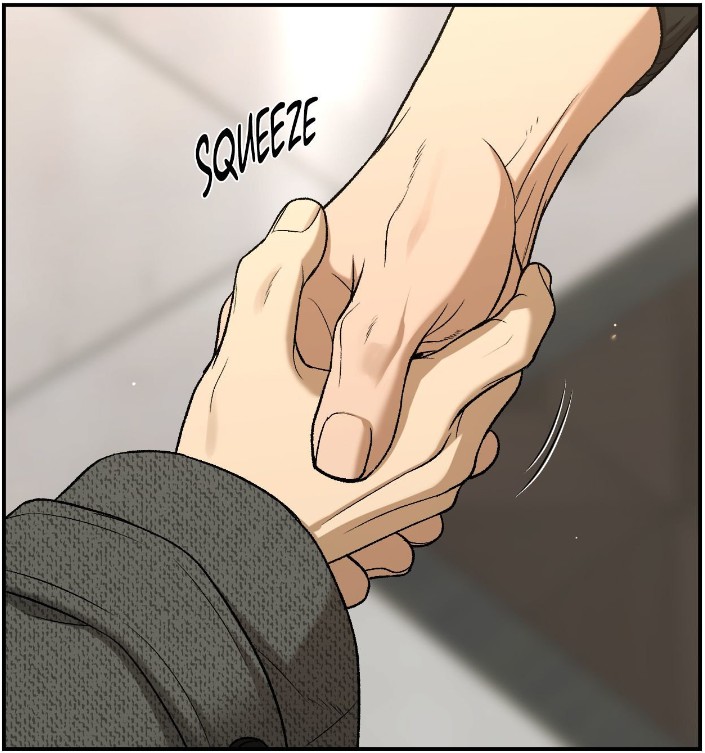 (chapter 100) It takes place right before Jaekyung tells Kim Dan to go. For one fragile moment, the projected departure is completely interrupted. Kim Dan is still there. His hand is still warm. The contact is no longer like that first treatment at the gym, where touch was mixed with embarrassment and professional confusion. (chapter 100) This time, touch becomes mutual recognition and reciprocity.
The tragedy is that this recognition does not yet become speech. The handshake briefly suspends the counterfeit departure, but it does not break the silence. After this fleeting moment of contact, Jaekyung retreats straight back into fear and self-removal. Unable to ask Kim Dan to stay, he turns away and says the exact opposite of what he wants: (chapter 100)
The handshake is not the end of the separation. It is the last, desperate interruption before the logic of abandonment reclaims them both.
This is where the spatial layout of the penthouse entrance exposes the final structural contradiction. (chapter 100) When Kim Dan stands before the champion, he is positioned directly in front of the door as though physically replacing it, turning his own body into the threshold. Yet meticulously, Mingwa leaves a massive, artificial gap between the physical therapist and the actual exit behind him. This distance is no coincidence. The vast, empty space behind Dan acts as a visual vacuum—a psychological buffer zone proving that while he is verbally enacting separation, he has not yet crossed the literal threshold.
He is suspended inside a vacuum of his own making, his hand still reaching forward toward connection while the enormous void at his back quietly threatens to swallow the moment whole.
Crucially, this gap represents a profound, hidden chance. It is the positive reflection of “distance.” By leaving such a significant space between his body and the door, Kim Dan has physically delayed his own exit, leaving a literal runway of time and possibility open. The finality of the goodbye has not yet been sealed; the door remains far behind him.
The ultimate tragedy of episode 100 is that Joo Jaekyung completely fails to recognize this positive reflection. (chapter 100) Poisoned by the creeping darkness of his own nightmares, the inherited trauma of his mother’s silence, and the immense guilt surrounding Kim Dan’s suffering, the champion no longer recognizes the distance as a space to step forward and intervene. Instead, his fear of vulnerability completely distorts his perception. He reads the gap not as an opportunity to change the script, but as an approaching, inevitable eclipse.
To protect himself from the pain of watching Dan step backward into the void, Jaekyung surrenders defensively—he turns his head away, preparing himself not to look back, and actively seals the very abandonment he was given a chance to prevent.
No, Joo Jaekyung is no little wimp, but rather a lost puppy frozen upon a threshold of his own making, completely blind to the choice standing before him. Yet because the contract has dissolved and the debt has disappeared, this wide, uncrossed emptiness also remains a radical space of possibility. For the first time, the relationship is no longer mediated by obligation, transaction, or countdown.
And perhaps this finally becomes Kim Dan’s chance to recognize Jaekyung’s paralysis, step into the gap himself, and prove his love and care without expecting anything in return.
Before the counterfeit departure can fully reclaim the scene, Mingwa inserts one final, crucial interruption: the handshake (chapter 100). Significantly, this gesture does not function as a standard goodbye. In ordinary social language, a handshake belongs either to a formal greeting or to a completed farewell. Here, however, the contact appears before Kim Dan says goodbye and before any true separation has taken place. Structurally, the handshake suspends the departure rather than confirming it.
This detail becomes even more meaningful when contrasted with the protagonists’ first encounter at the gym. Back then, there was no mutual greeting ritual between them.  (chapter 1) Kim Dan bowed nervously while Joo Jaekyung remained emotionally detached, dominant, and superior. Their relationship began asymmetrically: champion and therapist, admired body and embarrassed observer. After accidentally crossing a physical boundary during treatment, Kim Dan fled the room in humiliation, unable to withstand the emotional destabilization caused by touch itself. No reciprocal gesture softened the imbalance. There was no handshake, no equal acknowledgment, and no mutual recognition.
Episode 100 quietly upends that entire foundation. (chapter 100)
For the first time, both protagonists voluntarily reach toward one another at the exact same emotional level. Neither obligation, debt, nor treatment mediates the contact. (chapter 100) The gesture is entirely mutual and even reciprocated, both squeeze each other’s hand. (chapter 100) And unlike the first touch at the gym, which produced panic and flight, this touch produces a profound illumination. Kim Dan’s little gesture exposes a gradual metamorphosis, he becomes more proactive. Hence his fingers linger on the MMA fighter’s skin. 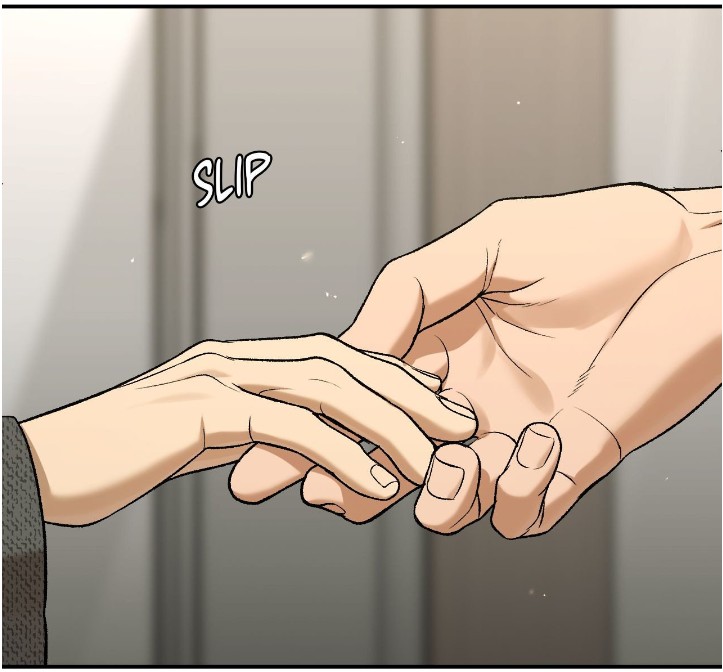 (chapter 100)
  (chapter 87) It becomes even more obvious, once compared with their hand gesture in Paris.
Unlike chapter 1, however, Kim Dan does not flee from the emotional intensity created through touch. This time, he consciously remains present. While extending his hand, he hesitates softly: (chapter 100)
The hesitation still reveals vulnerability, yet vulnerability no longer produces escape. Instead, Kim Dan deliberately chooses acknowledgment. This detail is crucial because the gratitude expressed here cannot be reduced to money, debt, treatment, or material compensation. In fact, the scene occurs precisely after the contractual framework governing their relationship has dissolved. The debt is gone. The transactional structure has collapsed. Therefore, Kim Dan’s gratitude suddenly becomes profoundly human rather than functional. He is no longer thanking:
- an employer,
- a client,
- or a benefactor.
He is thanking Joo Jaekyung himself.
For perhaps the first time in the story, Kim Dan consciously chooses to close the emotional distance between them instead of running away from it. The hand extended toward Jaekyung therefore becomes far more than a polite social gesture. It becomes Kim Dan’s first genuine attempt to acknowledge their relationship openly and properly.
The importance of this moment lies in what Kim Dan suddenly realizes through physical contact itself. 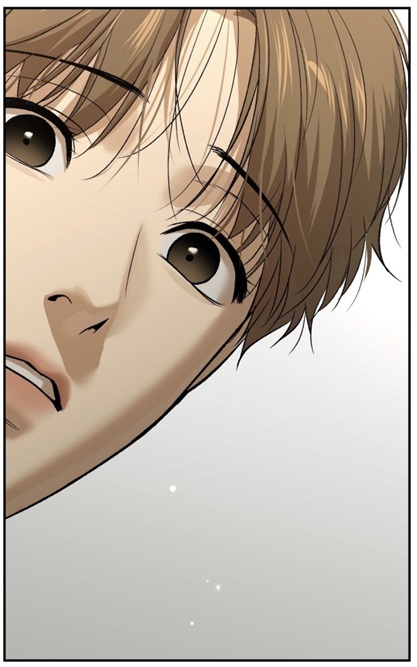 (chapter 100) Until now, the physical therapist remained trapped inside a distorted emotional narrative shaped by silence, institutional misunderstanding, his grandmother’s sacrificial principles, and Park Namwook’s logic of performance
 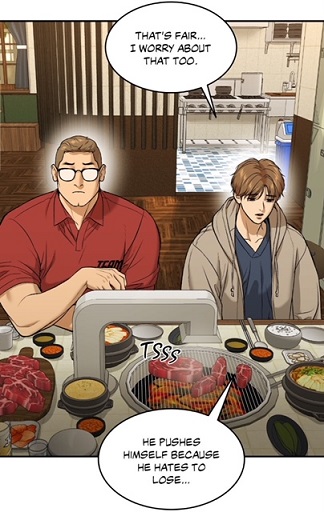 (chapter 43) and Hwang Byungchul’s wrong interpretation
  (chapter 70). Kim Dan had unconsciously learned to interpret Joo Jaekyung primarily as “the champion”: an untouchable entity sustained solely by victory, driven by a hatred of losing, and emotionally fulfilled through performance alone. This explicates why the “hamster” had made the following request:
 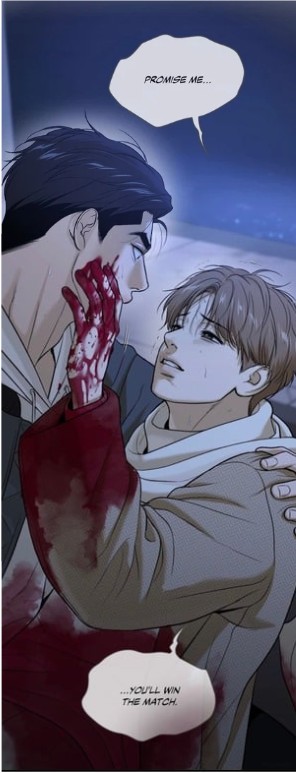 (chapter 98)
This misunderstanding becomes painfully visible during the hospital scenes. When Park Namwook explains that the culprit acted under Baek Junmin’s orders (chapter 100) and that Jaekyung blames himself for the attack (chapter 100), the manager unintentionally frames the entire assault through championship logic. The implication quietly becomes that Kim Dan was hurt because he stood too close to the champion, because enemies targeted Jaekyung, and because the title match had to continue.
As a result, doc Dan immediately internalizes guilt through a logic of substitution. He responds: (chapter 100) The statement is devastating because it fuses the two oppressive ideologies that have shaped Kim Dan’s entire life. From Park Namwook and Team Black, he inherited the belief that the championship comes first and that Jaekyung’s happiness depends entirely upon winning. From his grandmother, he inherited the logic of total self-erasure: if suffering must exist in the world, it should fall squarely upon him. Yet the sentence also reveals something even more tragic: Kim Dan still cannot fully imagine the depth of Joo Jaekyung’s emotional attachment to him. By concluding that it was “better” for him to become the victim, he unconsciously reduces the wolf’s suffering to the temporary inconvenience of a threatened match. In doing so, he actually denies the existence of the champion’s true feelings altogether. Kim Dan still sees “the Emperor,” the fighter obsessed with victory, rather than the terrified man who would have suffered infinitely more from losing him than from losing any championship belt. Thus before losing consciousness, he still had this image of the main lead: The Emperor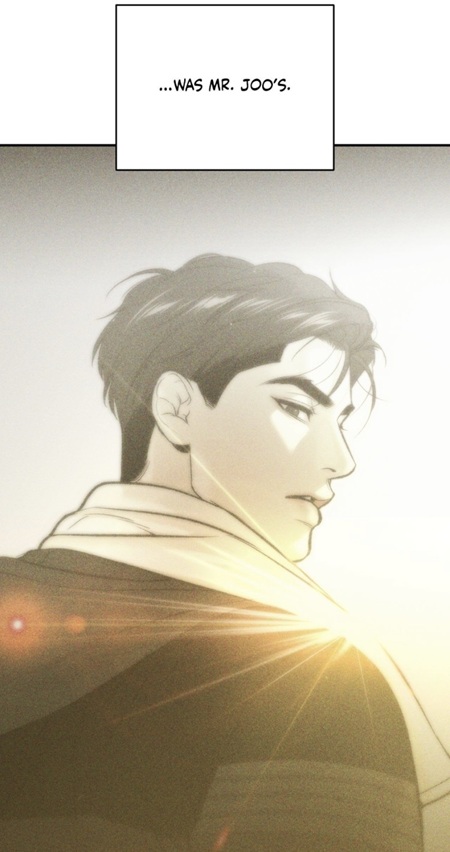 (chapter 100)
And perhaps this is the most disturbing implication of all. Even after the stabbing, Kim Dan still unconsciously evaluates the situation through the same brutal performance logic governing the fighting world itself: as long as the champion successfully won the match, the suffering required to secure that victory becomes psychologically acceptable. In this sense, Kim Dan does not yet fully confront what the championship truly cost Joo Jaekyung internally. (chapter 100)
After all, Kim Dan never witnessed the psychological destruction surrounding the fight itself. He did not see the emotional collapse hidden behind the title defense, the confrontation with Baek Junmin afterward, or the horrifying guilt poisoning the victory from within. Thus, while Kim Dan begins sensing the champion’s warmth emotionally, he still hesitates to recognize the full extent of the suffering hidden beneath the belt.
The tragedy, therefore, is not simple blindness. Kim Dan is beginning to perceive the truth, yet accepting it fully would force him to confront something unbearable: the possibility that the very victory he believed he protected may have shattered Joo Jaekyung psychologically instead and he might be responsible for his “ruthlessness and destruction”.
So the tragic irony is that the very thing Kim Dan believes he protected—the fight itself—is precisely what begins destroying Joo Jaekyung emotionally. Had the match been postponed, Jaekyung would never have encountered Baek Junmin afterward, never acquired the horrifying knowledge surrounding the assault, and never fused the championship psychologically with harassment, violence, guilt, and emotional collapse. Thus, while Kim Dan believes his sacrifice saved Jaekyung’s future, the victory title increasingly becomes a toxic poison inside the champion’s mind. Hence the young man looks so terrible despite his “victory”. (chapter 100)
And remarkably, almost nobody around them notices this internal collapse. Inside the hospital room, 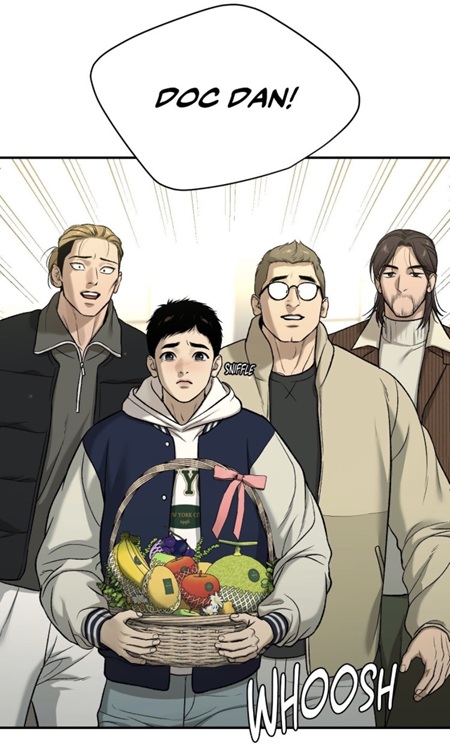 (chapter 100), Kim Dan is constantly insulated by a loud wall of warmth, visitors, food, and collective reassurance. Team Black worries boisterously about him
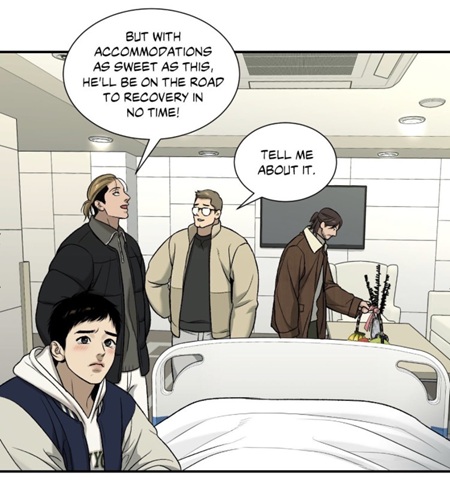
 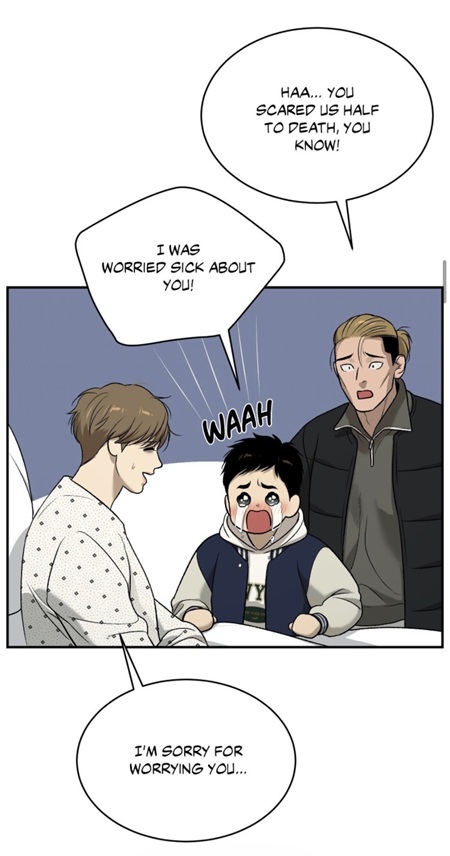 (chapter 100), jokes around his bed admiring the comfort of the room
 (chapter 100), scolds him affectionately,
 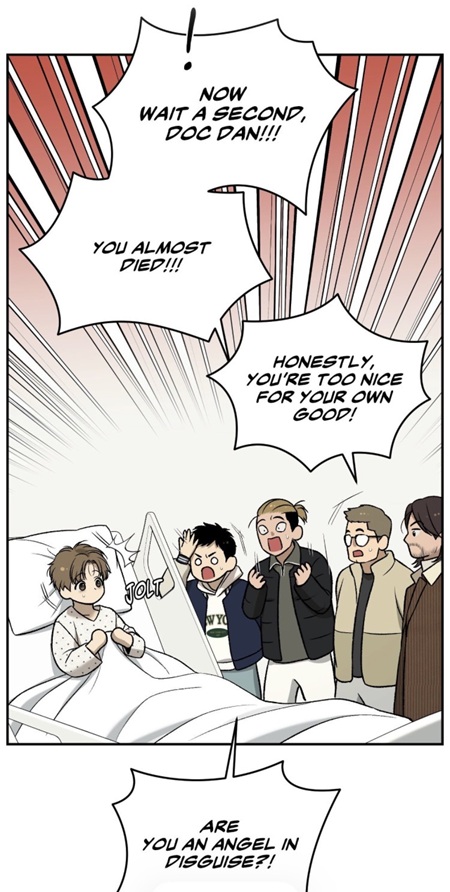 (chapter 100) and celebrates his survival. This lively atmosphere gradually reconstructs a superficial sense of normality. Meanwhile, Joo Jaekyung exists almost entirely outside this emotional circle. To the world, the champion is still perceived as rude, unmovable, and heartless,
 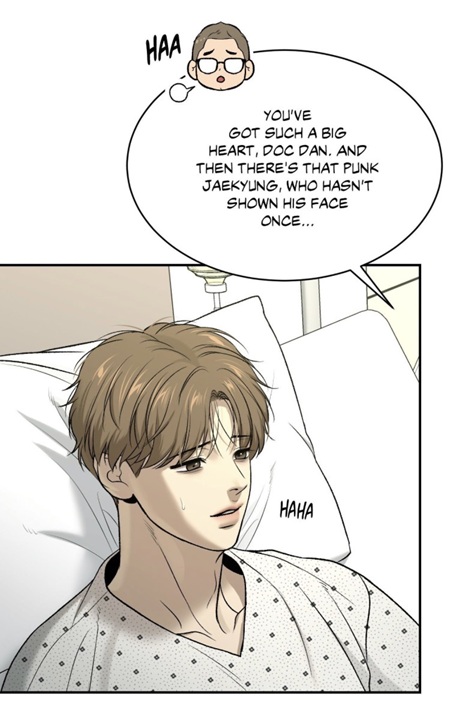 (chapter 100) while the members of Team Black get to play the roles of “affectionate and concerned” companions.
 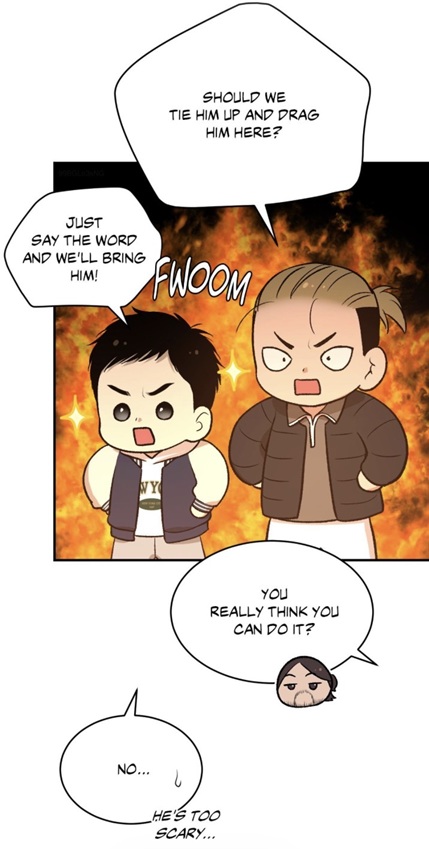 (chapter 100) Even when people discuss Jaekyung, they rarely speak about his exhaustion, fear, loneliness, or his disintegration as a human being. Why? Because they simply do not see it and believes in their hyung’s statement, the manager. They remain entirely blind to the human being beneath the title. They speak only of the match, the culprit, the belt, and his capacity to perform. Because he won the last fight, they treat him as an object that functions correctly, while keeping their distance from his harsh demeanor. They essentially avoid him as a temperamental monster, completely oblivious to the fact that they are leaving a deeply traumatized, lost puppy entirely on his own.
But there is a sharper edge to this scene: Team Black’s affection reveals itself as naive and profoundly superficial. They easily follow conventional social norms—bringing gifts (chapter 100), crying at a bedside—but their care lacks real, grounding intimacy. Neither Potato and Oh Daeyhun were present at the hospital in the hallway in front of the surgery room. None of them have stayed by Jaekyung’s side to offer real comfort 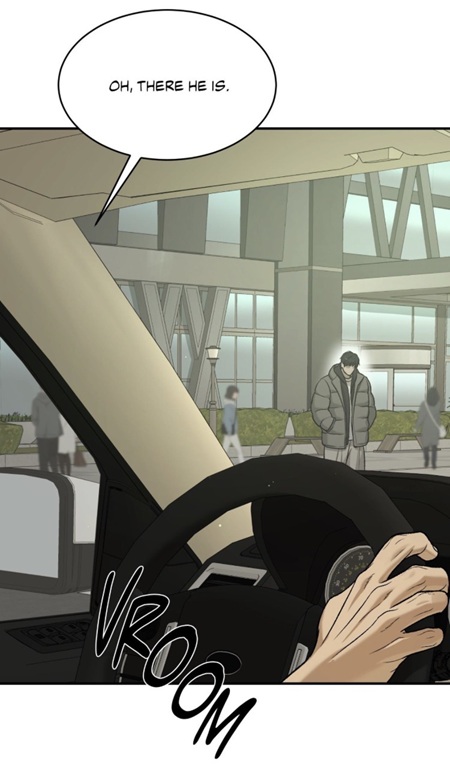 (chapter 100), thus the manager doesn’t leave his car to greet his boss and champion. He simply drops the physical therapist and drives away. But let’s return our attention to the scene at the hospital. Crucially, none of them correct the physical therapist when he pathologically apologizes for getting hurt. When Kim Dan stammers, (chapter 100), his words expose a deep reservoir of guilt and fractured self-esteem. Instead of challenging this unhealthy mindset, the crowd validates it by accepting the apology and coddling him as an “angel”. (chapter 100) And perhaps this image of the “angel” explains the deeper tragedy perfectly.
An angel is expected to comfort, heal, protect, and endlessly give. People receive warmth from angels, but rarely ask whether angels themselves are bleeding internally. Thus, Team Black fails to recognize that Kim Dan’s goodness itself has become pathological. They cannot see that his self-sacrifice contains a hidden violence directed against himself.
Therefore, it is entirely unsurprising that when Kim Dan finally walks out of that hospital, his internal narrative remains completely unchanged. (chapter 100) Because none of the members around him possessed the depth to correct his self-sacrificial logic, he still views himself exactly as he did before: as an inconvenient burden, a magnet for trouble, and someone who brings nothing but danger into the champion’s orbit. And note that the manager not only is not thanking him for his services but also is not determined to stop him from leaving. 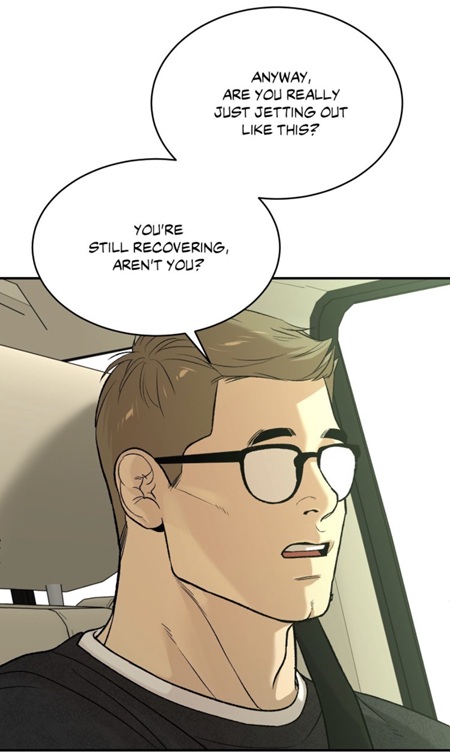 (chapter 100) For him, physical therapists can be easily replaced. Hence no tears and no handshake before the separation.
This is precisely why the handshake becomes so overwhelming for Kim Dan. Through touch, he suddenly realizes the truth. Joo Jaekyung had visited him for real. (chapter 100) At the same time, he gradually grasps that beneath the terrifying public image (chapter 100), Joo Jaekyung had quietly remained anchored beside him all along. The warmth in the champion’s hand reveals a hidden emotional reality that words denied. Thus, when Kim Dan thinks (chapter 100), the scene becomes far more than a romantic revelation. It is an emotional awakening. For the first time, Kim Dan realizes that the ‘Emperor’ was never emotionally distant by nature, only buried beneath fear, silence, and performance. The warmth in his hand reveals something profoundly human beneath the armor.
Importantly, this tactile recognition also begins transforming Kim Dan’s own inner world. For most of the story, he defined himself through usefulness, shame, and emotional disposability. He believed people kept him nearby only because he served a practical function: grandson, therapist, debtor, caretaker. Even his relationship with Jaekyung remained psychologically filtered through utility. 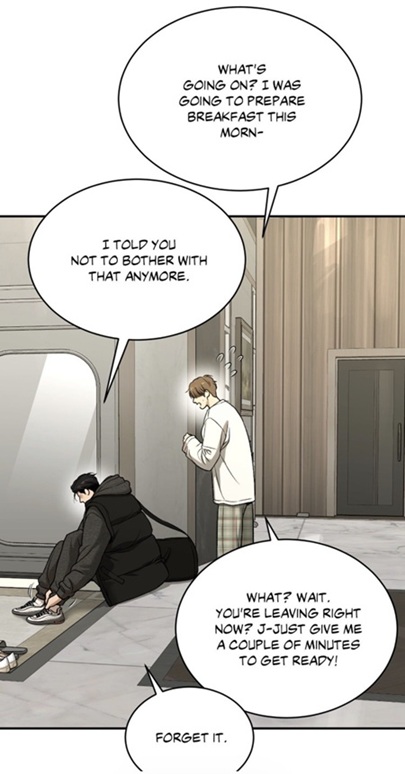 (chapter 100) Once the debt disappeared and the championship was reclaimed, Kim Dan instinctively assumed that his role in the champion’s life had ended too.
But the handshake completely destabilizes this entire belief system. Not only the dream became a reality, but also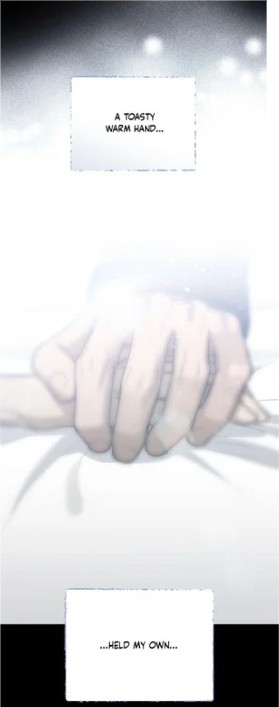 (chapter 100) the warmth in Jaekyung’s hand reveals that Kim Dan had never merely been “useful.” He had become emotionally necessary. For one fragile moment, Kim Dan experiences himself not as a burden, an obligation, or a temporary possession, but as someone genuinely cherished.
This is why the tiny sparks surrounding the scene matter so much (chapter 100). Earlier in the story, the relationship between the protagonists was repeatedly associated with an invisible, chaotic electricity pulling them together. 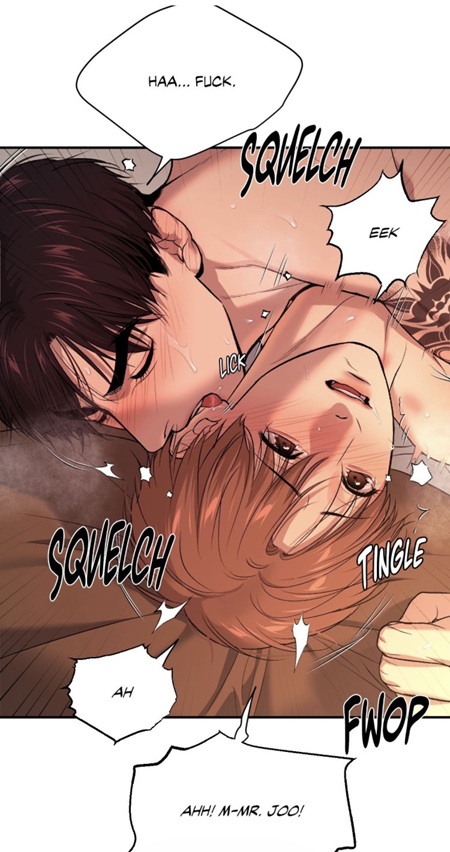 (chapter 86) Episode 100 revives this visual motif, yet transforms its meaning entirely. (chapter 100) The sparks no longer represent physical attraction or dangerous obsession; they resemble embers of emotional recognition finally igniting inside Kim Dan’s consciousness.
Significantly, however, only Kim Dan’s eyes contain visible light in these panels. (chapter 100) He is finally seeing the athlete’s warmth and care. Joo Jaekyung himself appears emotionally dimmed, exhausted, and internally extinguished. 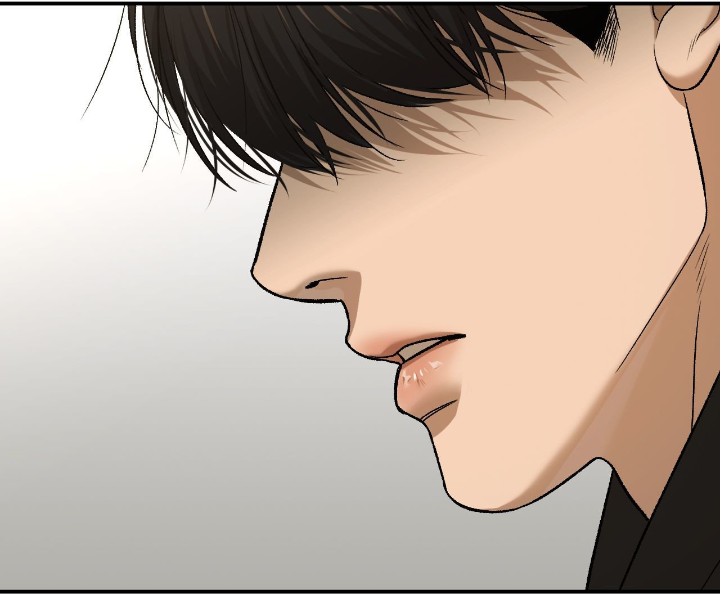 (chapter 100) Here, he is even portrayed as eyeless, as if he had lost his soul.
 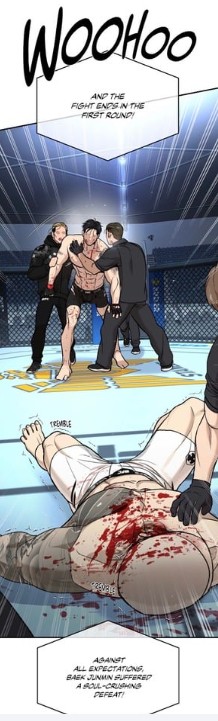 (chapter 99) The asymmetry is devastating. It almost feels as though the champion transfers his final remaining warmth and energy into Kim Dan through the handshake itself. (chapter 100) While Kim Dan awakens emotionally, Jaekyung continues withering inwardly beneath the weight of his guilt, his resignation, and his anticipatory loss.
And perhaps this is the cruelest irony of the scene. Through touch, Kim Dan is not yet fully understanding the love intellectually, rather he is beginning to sense it emotionally.
The realization remains tactile, intuitive, incomplete, and almost dreamlike. Yet at the exact same moment, the man extending that warmth no longer believes anyone will truly remain beside him once the final bell has rung. That’s the reason why the physical therapist looks back at his lover 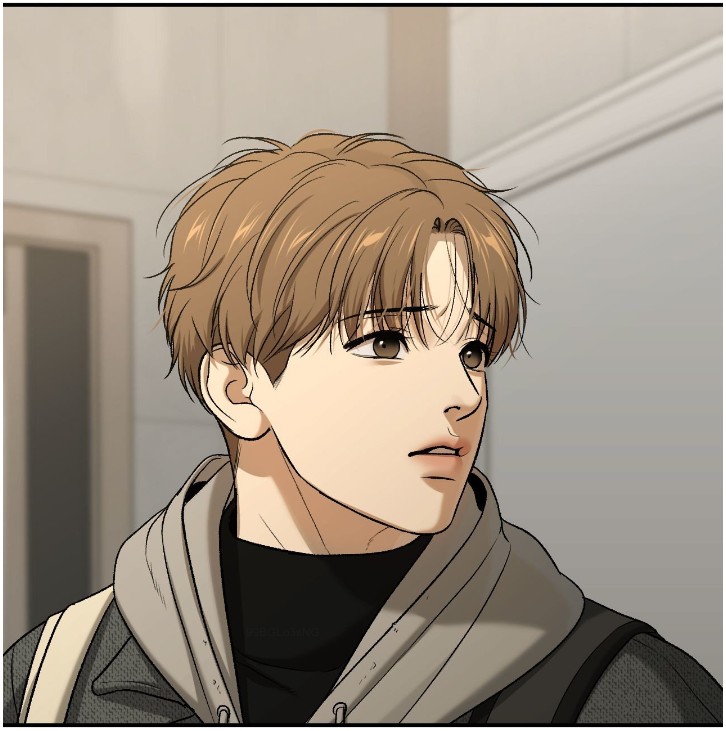 (chapter 100), he is detecting lingering feelings.
The handshake scene ultimately transforms not only Kim Dan’s perception of Joo Jaekyung, but the meaning of the jinx itself. (chapter 100) Until now, Kim Dan never truly questioned the existence of the curse surrounding the champion. 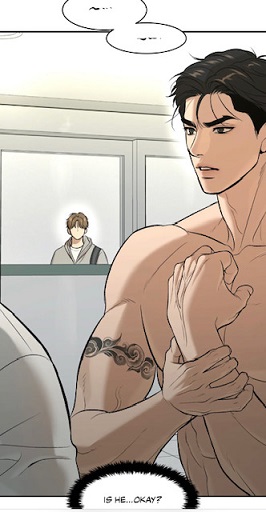 (chapter 27) He simply accepted it as an immutable part of reality. The “jinx” appeared almost supernatural: an ominous, mechanical force attached to Joo Jaekyung’s body, his victories, his violence, his rituals, and his frightening aura. Even the title of the series carried something cold, clinical, and oppressive. The word itself evoked danger, misfortune, contamination, and inevitability.
But episode 100 quietly begins dismantling this darkness.
When Kim Dan grasps Jaekyung’s hand, something extraordinary happens psychologically. Human warmth suddenly illuminates what fear, silence, and mythology had concealed for nearly one hundred chapters. 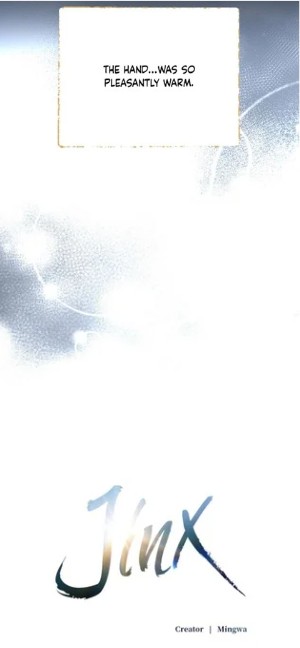 (chapter 100) Mingwa reinforces this revelation visually in a remarkable way. Immediately after Kim Dan describes the hand as “pleasantly warm,” the title Jinx itself reappears, glowing softly inside a luminous white space (chapter 100). The contrast with the earlier, heavy atmosphere of the story is striking. The title card no longer feels entirely dark. For the first time in the series, light enters the concept itself.
It is almost as though a hidden truth finally begins surfacing: the real curse was never supernatural fate, sexual ritual, or victory alone.
The true “jinx” was emotional isolation. It was the inability to communicate honestly. The inability to believe oneself worthy of love without usefulness, sacrifice, or performance. The inability to ask someone to stay. The inability to recognize the humanity hidden beneath fear, armor, and symbolic roles.
And perhaps this is why the scene begins subtly echoing Michelangelo’s The Creation of Adam. 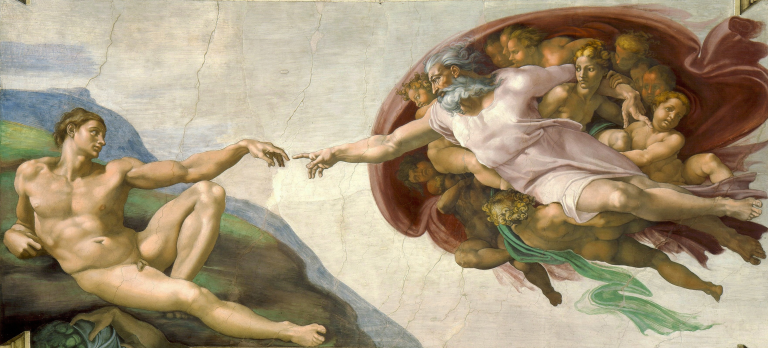
For nearly one hundred chapters, Jinx maintained a distorted version of that hierarchy. Joo Jaekyung existed as the towering “God” of the ring, wielding sovereign physical control, while Kim Dan remained the fragile mortal perpetually subjected to debt, rules, contracts, and bodily domination.
Yet as their fingers meet, Mingwa quietly reverses the entire structure. (chapter 100)
Kim Dan now stands upright, initiating the contact himself and reaching voluntarily across the emotional void. Meanwhile, Joo Jaekyung has become the limp, exhausted, emotionally paralyzed figure. His hand no longer stops gripping or possesses. Instead, it grows passive, heavy, and fragile as the fingers slowly begin slipping away.
This is precisely why the handshake becomes symbolically revolutionary. For one brief moment, the protagonists connect outside the toxic logic that governed their relationship for so long: no debt, no contract, no treatment, no championship, no transaction, and no performance. Only warmth.
But this is precisely where the tragedy deepens. Kim Dan is not a triumphant savior breathing life into a grateful recipient. He is still an insecure young man desperately searching for confirmation (chapter 100) that the warmth he sensed was real. He needs Jaekyung to tighten the grip, speak honestly, or offer any sign that he is wanted for more than his usefulness.
Instead, Joo Jaekyung retreats behind silence once again and delivers the devastating command: (chapter 100) This instruction seals Kim Dan’s internal misinterpretation completely. Paired with the slipping handshake, the sentence convinces him that the timeline established back in episode 77 has finally reached its inevitable conclusion. The transaction is over. The debt is dead. He is free to leave.
Yet the tragedy runs even deeper because Kim Dan does not perceive his own departure as abandonment at all. On the contrary, he genuinely believes he is acting lovingly and correctly by removing himself from Jaekyung’s orbit.
And in doing so, he unconsciously reproduces the exact emotional logic that shaped his own life and suffering.  (chapter 57) Long before episode 100, his grandmother attempted to push him away through almost identical reasoning.
  (chapter 57) Feeling powerless, burdensome, and guilty for his slow emotional deterioration, she repeatedly urged him to return to Seoul, live his own life, and stop “wasting away” beside her. Her love expressed itself through self-removal. Rather than openly asking Kim Dan about the reasons behind his pain, she tried to free him from herself before death could do it instead. She thought, she had the solution to the problem, because she believed she knew why!
Kim Dan internalized this worldview completely. Thus, when he prepares to leave the penthouse, he unknowingly imitates Halmoni’s sacrificial logic almost perfectly. He believes to know the athlete. Like out of sight, out of mind. Joo Jaekyung will stop suffering. (chapter 100) Love becomes synonymous with disappearing for the other person’s sake.
And devastatingly, Joo Jaekyung reproduces the exact same pattern simultaneously. Back on the beach, the champion promised: 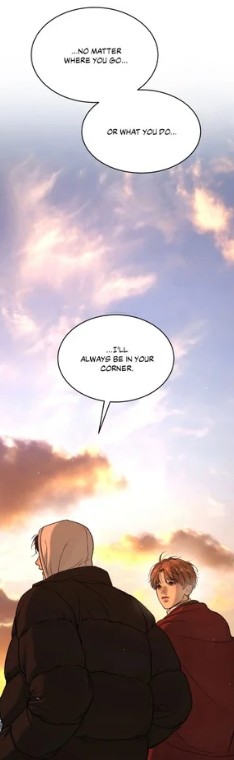 (chapter 95) At first glance, the sentence appears comforting and romantic. Yet retrospectively, the structure of the promise reveals a deeply corrupted blueprint for attachment. First, Jaekyung imagines Kim Dan leaving long before he ever asks him to stay. Even his love remains psychologically organized around future abandonment. Jaekyung’s words directly mirror the childhood promise made by his own mother—who told him she would watch over and support him from far away, leaving him with nothing but an inaccessible back and a heavy, permanent silence.
 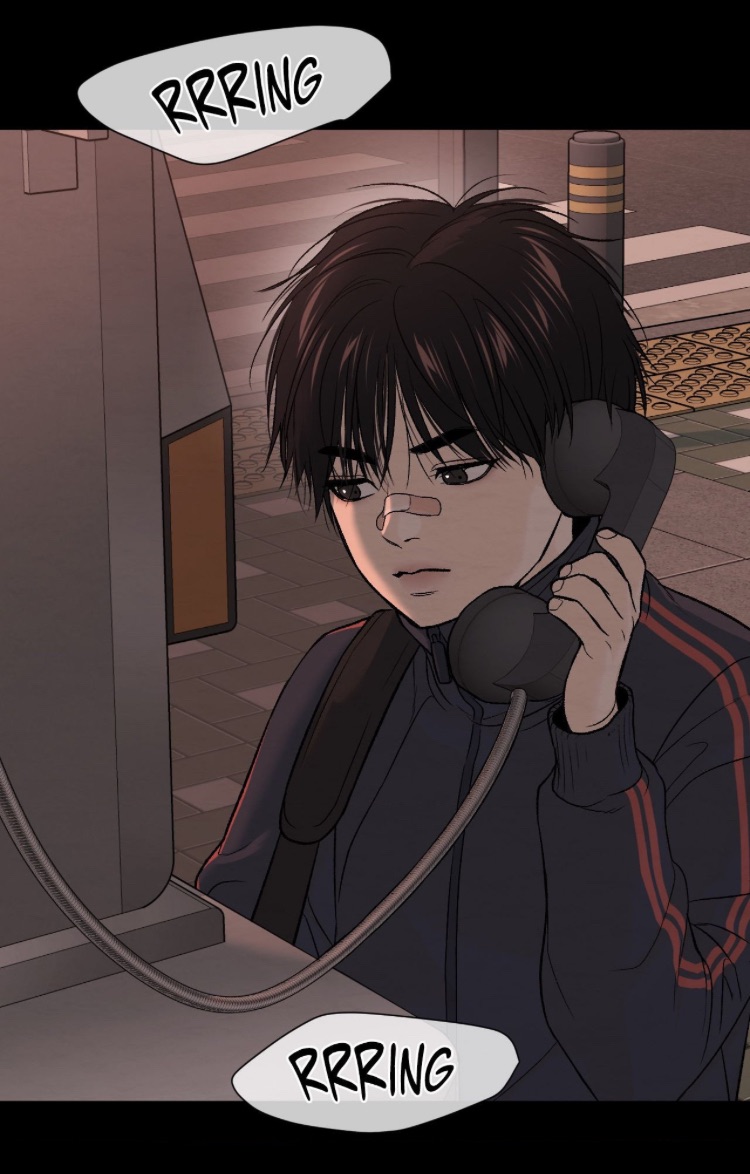 (chapter 72) But the ultimate cruelty of the narrative is that his mother’s promise was an absolute lie.
  (chapter 74) She did not watch from afar out of tragic necessity; she remarried, built an entirely new family, and willfully discarded Jaekyung to start a life where he had no place.
Thus, by episode 100, both protagonists express love through identical acts of self-erasure.
Kim Dan believes:
“If I want to help him feeling less guilty, then I should leave.”
Joo Jaekyung believes:
“If I want to protect him, I should let him go. He is getting hurt because of me. I am his jinx.
Neither realizes that they are silently reproducing the same inherited trauma script. And so, while still standing inside the vast uncrossed emptiness of the penthouse entrance, Kim Dan quietly utters: (chapter 100) The sentence acts like a psychological blade directly through Jaekyung’s deepest childhood wound. It confirms the terror haunting him since his mother’s disappearance and rejection: once the transaction ends and usefulness expires, people inevitably walk away. They don’t stay willingly, only because of money.
Then comes the devastating thud. Not the sound of emotional closure, but the sound of total collapse.
The monstrous willpower that carried Joo Jaekyung through brutal title fights, public scrutiny, and lifelong isolation suddenly evaporates beneath the unbearable weight of abandonment. The Emperor collapses on the threshold of his own making, similar to this nightmare:  (chapter 79)
 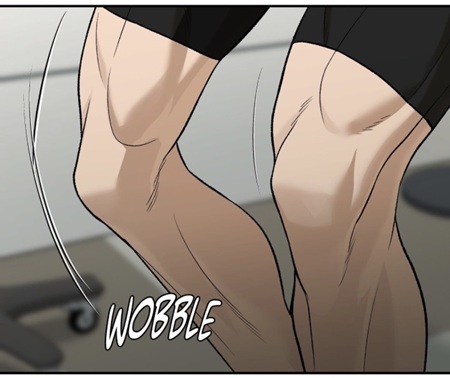 (chapter 99) Joo Jaekyung can only collapse under the weight of his immense knowledge and guilt: the hospital director, Baek Junmin, the switched spray (chapter 100). He almost killed a man, just like he did with his “father”.
And if my theory is true, then this is the moment where Kim Dan may finally begin understanding the champion properly for the first time. The terrifying realization finally emerges: beneath the armor, Joo Jaekyung suffers from the very same abandonment terror and low self-esteem that shaped Kim Dan’s own life. Because suddenly, the “Emperor” no longer resembles a distant monster at all.
He resembles a child, and not just a patient. Just like Halmoni. Just like Kim Dan himself.
The lost puppy hidden beneath the armor finally becomes visible. 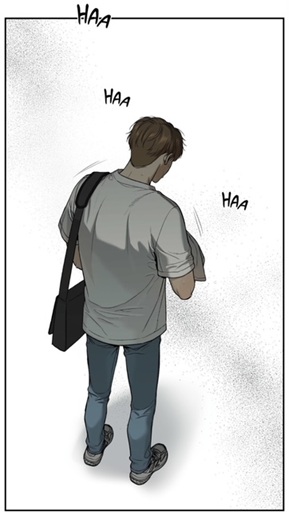 (chapter 59) And because Kim Dan still has not crossed the literal threshold , the collapse does not function as an ending, but as a confrontation with reality “sound THUD. (chapter 100) The counterfeit departure shatters completely. For the first time, Kim Dan stands before someone who is entirely incapable of saving himself.
And perhaps that is the true, revolitonary meaning of the scene. (chapter 100) The illusion of the untouchable Emperor cannot survive a collapse, and the myth of the unbleeding Angel cannot withstand a genuine psychological crisis. Episode 100 destroys both false frameworks simultaneously, leaving only two human beings at the entrance, waiting to see if anyone has the courage to reach back across the gap.
A HIDDEN REQUEST
Many readers walk away from this devastating cliffhanger feeling deeply frustrated with Joo Jaekyung. Across the fandom, the same complaint echoes repeatedly: “Why didn’t he just open his mouth?” “Why didn’t he ask Kim Dan to stay like he originally wanted to?”
The bitter irony, however, is that episode 100 already contains the request. I now invite my attentive readers to return carefully to the chapter itself and search for the exact panel where Joo Jaekyung’s true desire surfaces.
Once you find it, the emotional meaning of the entire chapter begins shifting.
Suddenly, episode 100 no longer feels like the story of a man incapable of asking someone to stay, but the story of two people trapped inside a far more complex emotional silence. And perhaps this is why episode 100 feels so haunting and terrible.
In the second part of this essay, we will examine why Joo Jaekyung gradually starts resembling a ghost himself — and how the chapter repeatedly buries his voice beneath misunderstanding, distance, and interruption.
Feel free to comment. If you have any suggestion for topics or Manhwa, feel free to ask. If you enjoyed reading it, retweet it or push the button like. My Reddit-Instagram-Twitter-Tumblr account is: @bebebisous33. Thanks for reading and for the support, particularly, I would like to thank all the new followers and people recommending my blog.

 Bebebisous33s' analyses in K-Dramaland and Manhwas
Merci pour le partage ,Ça aide à patienter en attendant le prochain épisode
LikeLiked by 1 person
Oui, beaucoup de gens attendent le prochain épisode avec impatience, surtout un tel épisode.
LikeLike